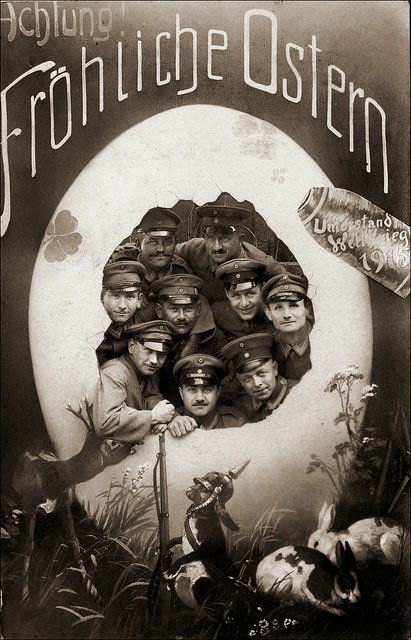
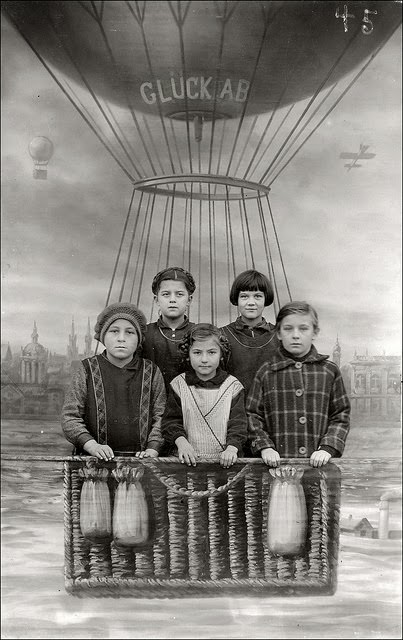
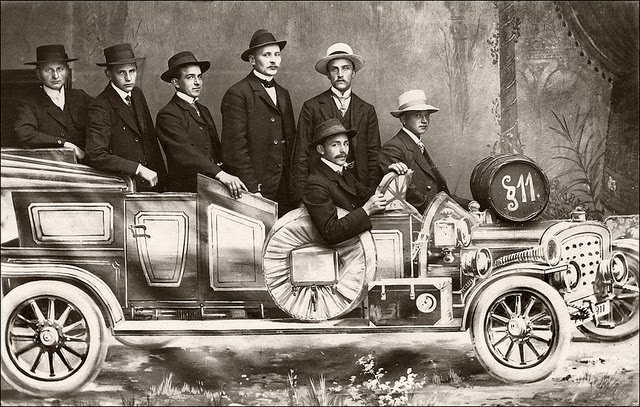
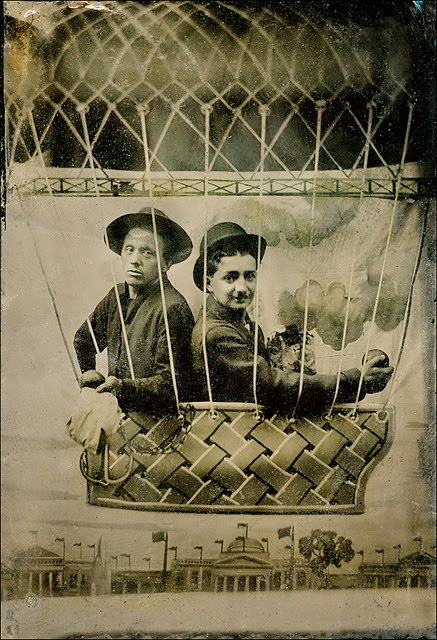
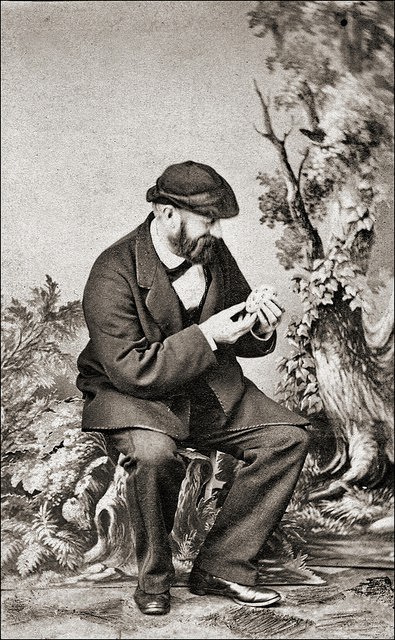
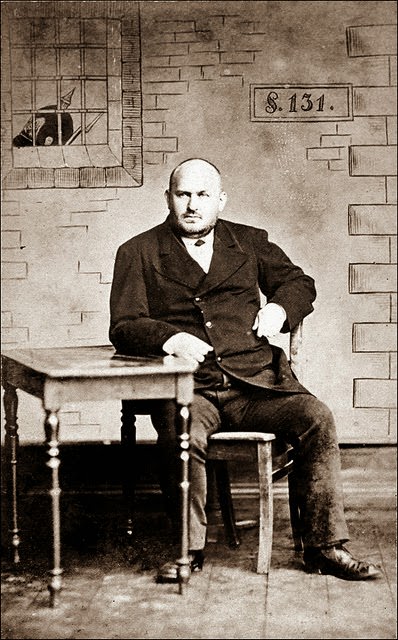
In the early 1900s, German portrait studios offered far more than stiff poses against plain curtains. Artists painted enormous canvas backdrops that placed ordinary people aboard steamships, inside hot air balloons, or perched on crescent moons. Real props — handlebars, car frames, and rope bridges — jutted into the frame, blending with the painted scene to complete the illusion.
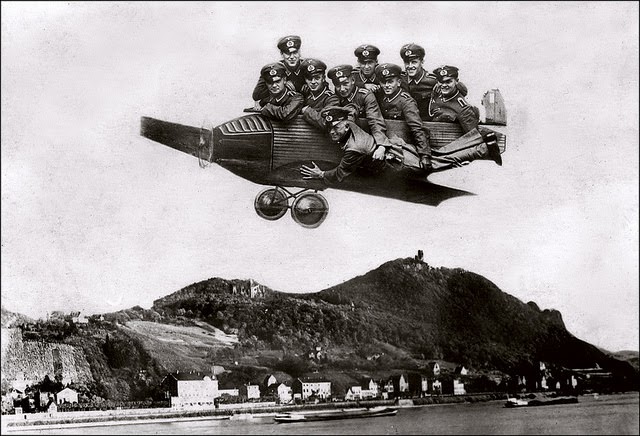
Photographers positioned their subjects with precision so that painted shadows, horizons, and scale matched the real bodies in front of them. A person could appear to tower over a tiny town below or dangle from a cartoonish rope bridge. Studios invited clients to sit in painted cars, their legs hidden behind a board to mimic the look of someone actually driving.
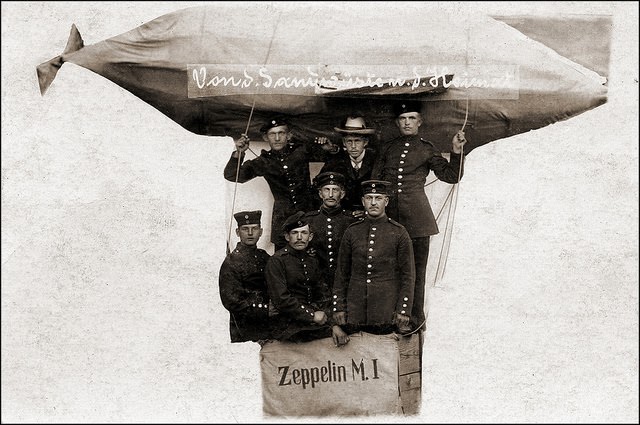
![[Factually Corrected] National Gas Congress and Exhibition in Shepherd's Bush, London, 1913.](https://www.bygonely.com/wp-content/uploads/2025/08/Quirky_German_Studio_Portraits_3.jpg)
The humor was deliberate. Exaggerated perspectives made scenes both comical and charming. A shopkeeper from Bremen could look like a daring pilot. A housewife from Cologne could appear to be sailing down a river with friends. For a small fee, anyone could stage a fantasy adventure.
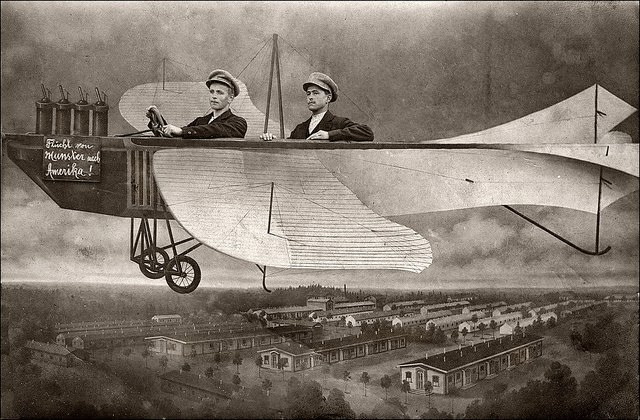
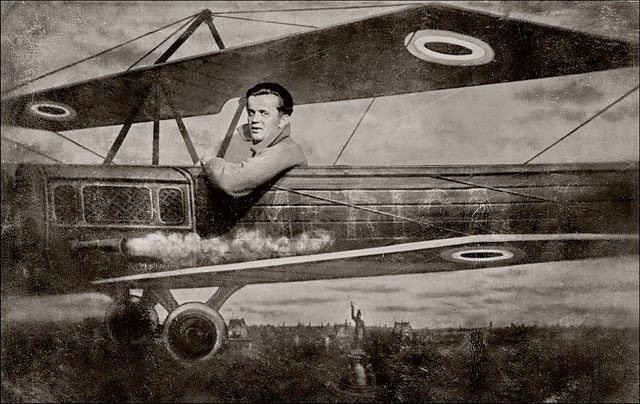
Many of these portraits were printed as postcards and mailed to relatives across Germany and abroad. Their lighthearted scenes stood out sharply from the usual stiff formality of studio portraiture, and recipients often tucked them into family albums.
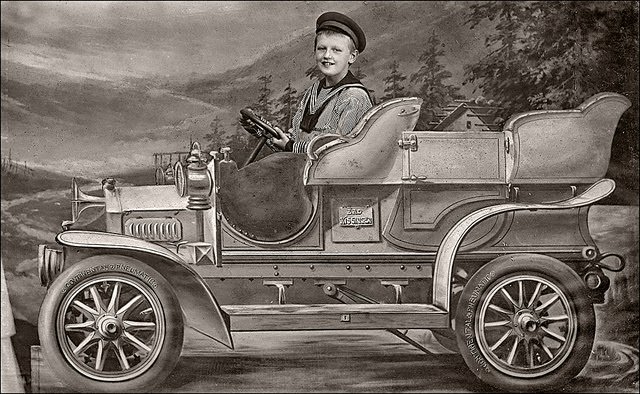
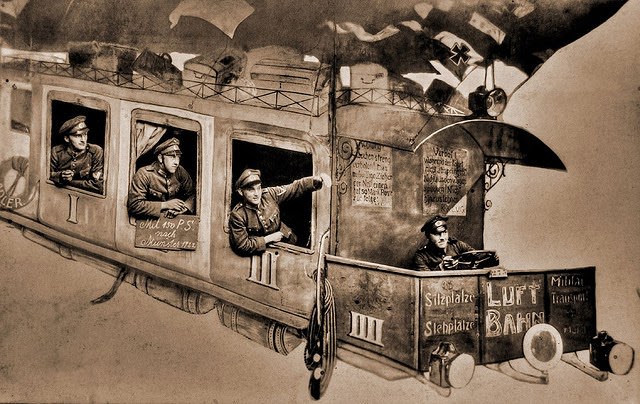
Studios reused these painted canvases for years, offering customers a rotating menu of whimsical scenes. Artists had to account for the camera’s specific viewpoint — painting with careful attention to perspective and scale so the illusion only worked from one angle: the lens.
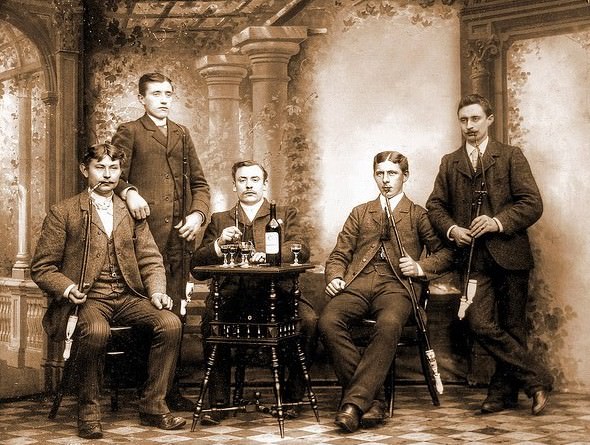
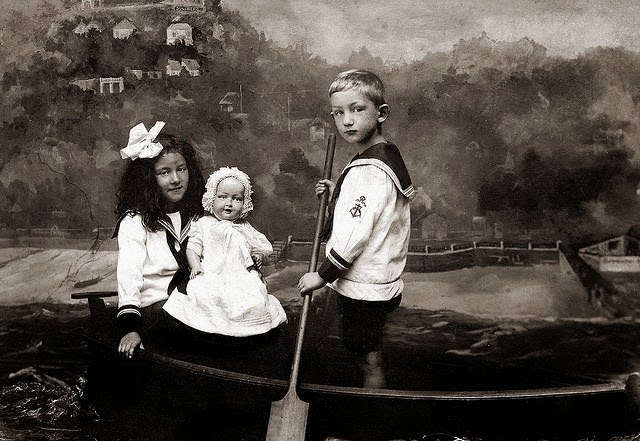
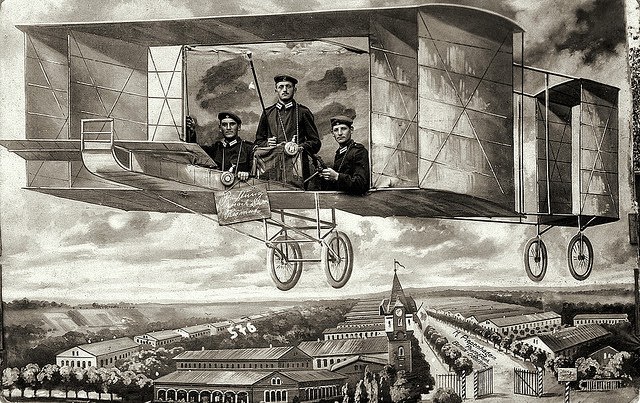
The practice was not exclusive to Germany. Studios in Japan and across Europe adopted similar techniques, each adapting local scenery and cultural humor to their backdrops.
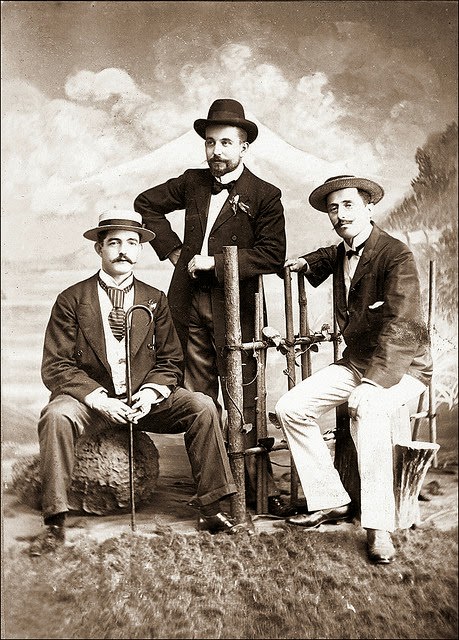
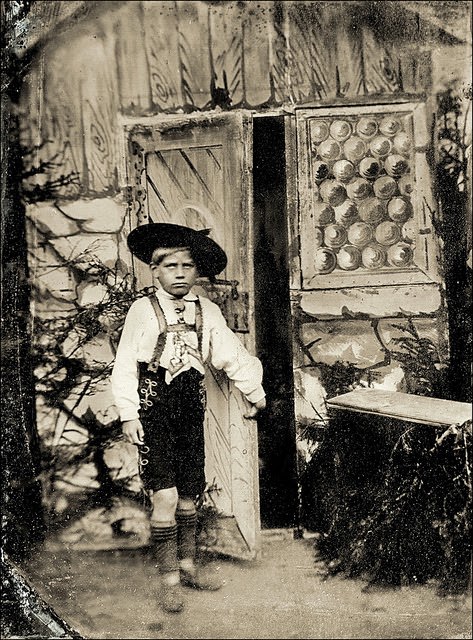
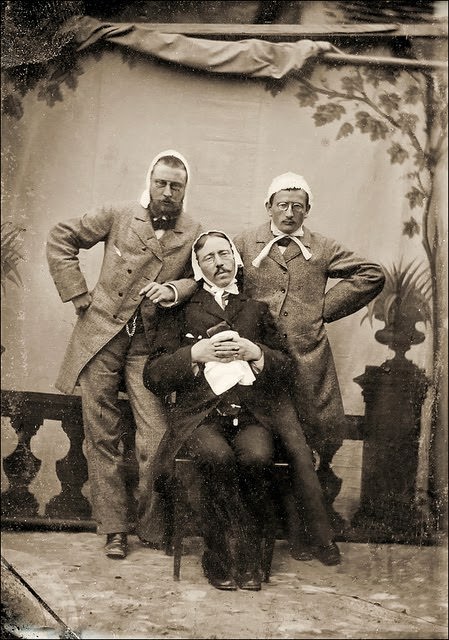
Earlier cabinet card photographers in the 1870s and 1880s laid the groundwork, painting elaborate landscape backdrops for theatrical and portrait use. By the turn of the century, the craft had sharpened considerably, with scenes ranging from Mediterranean coasts to Rhine Valley vistas.
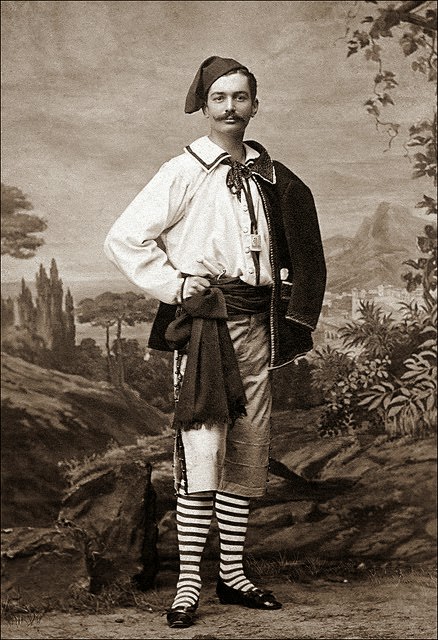
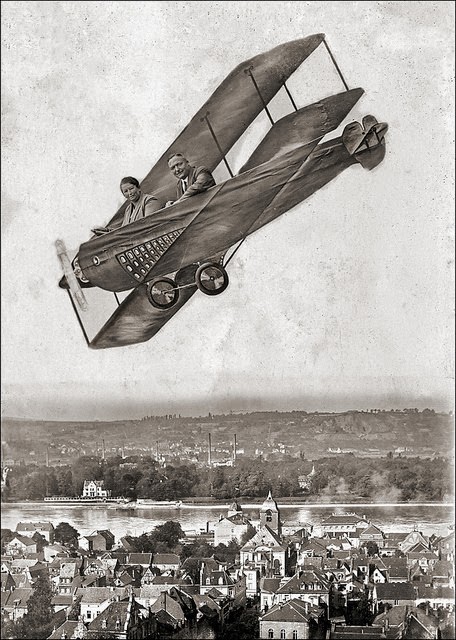
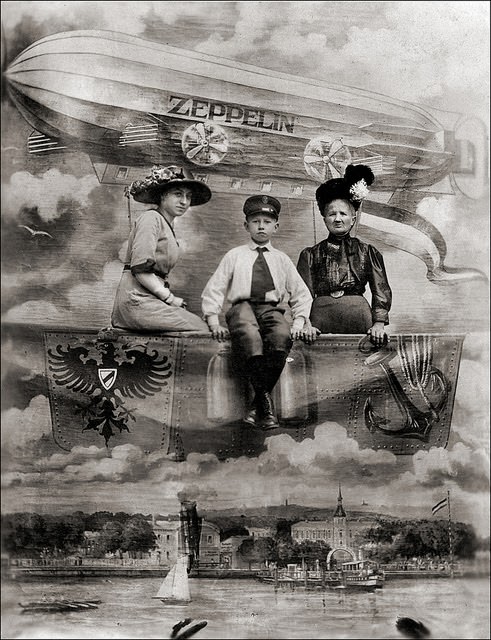
Tintypes and CDV-format portraits from this era survive in large numbers, preserving the texture of these painted scenes in remarkable detail. The backdrops themselves rarely survived — worn out and discarded after years of use — making the photographs the only record of the canvases that once stood behind them.
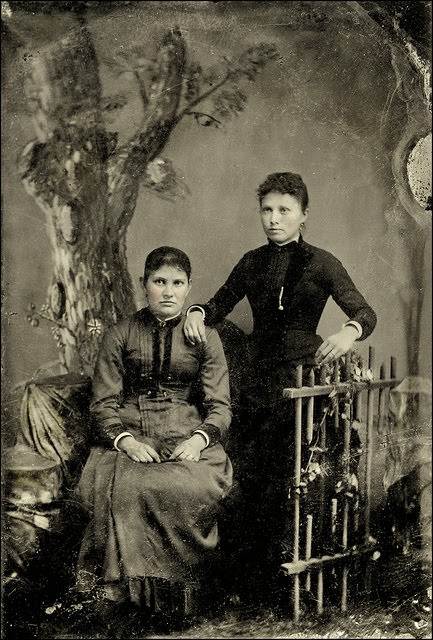
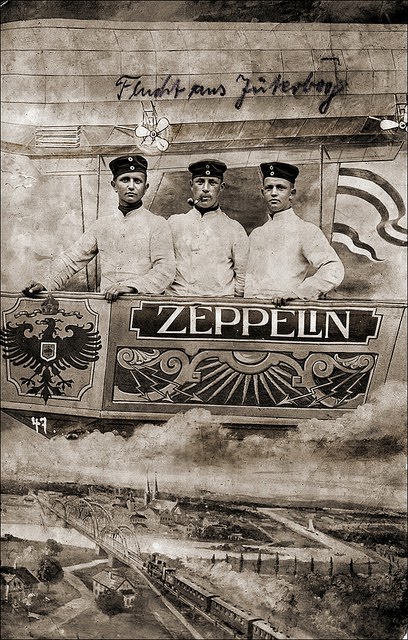
Military camps were fertile ground for backdrop photography. Soldiers stationed far from home used these studios to send cheerful or humorous images back to their families — a lighthearted gesture amid the harsh realities of garrison life and wartime.