

Dallas in the 1980s was a city in motion. As the ninth-largest city in the United States, it held a population of over 1.34 million people and carried a reputation far beyond its size. It was home to the largest arts district in the country, a sprawling public library system, and a cultural calendar packed with opera, ballet, musicals, and symphony concerts. But on the street level, Dallas had its own distinct energy — one shaped by cowboy fashion, country and disco music, and a downtown grid buzzing with construction cranes, corner bars, and department stores.
One of the decade’s defining cultural events was the Texxas Jam, an annual rock festival held at the Cotton Bowl that drew massive crowds each summer. Live music was woven into the fabric of Dallas life, and the festival captured the city’s loud, unapologetic spirit. Meanwhile, the streets were already beginning to feel the strain of a growing population. Traffic congestion was a real and daily concern, which eventually pushed the city to replace the Dallas Transit System with Dallas Area Rapid Transit — a move that reshaped how residents moved through the city. These photographs, taken throughout the 1980s, document what Dallas looked and felt like during that pivotal decade.
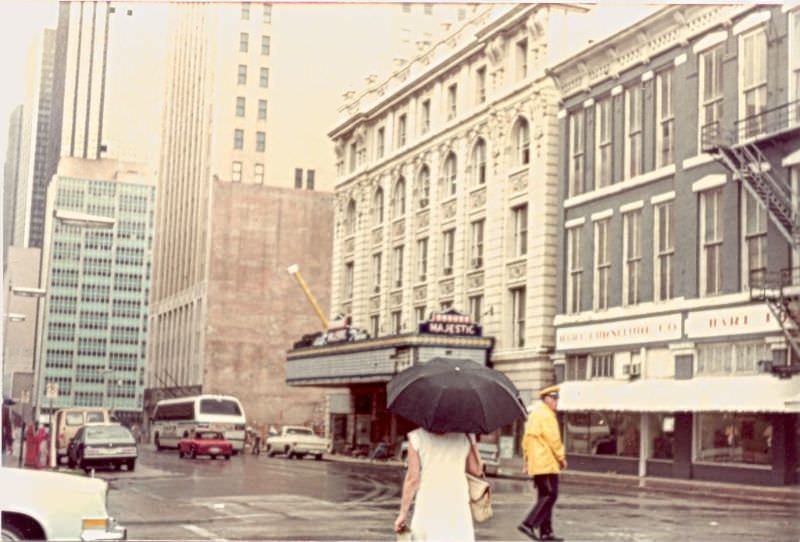
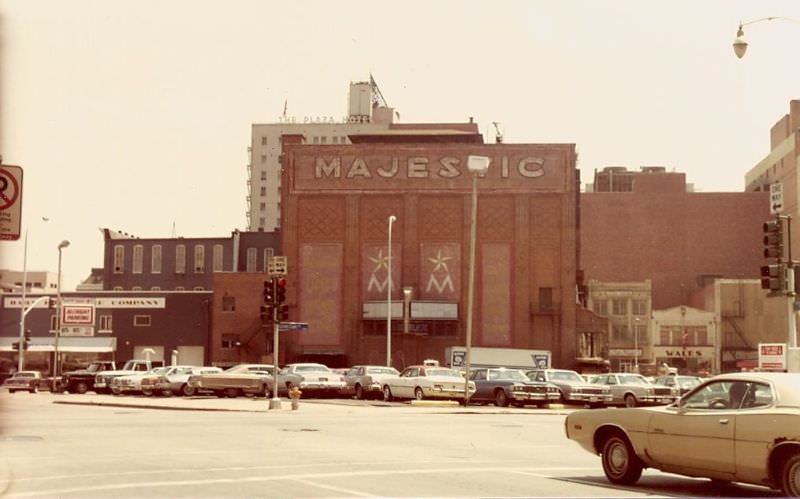
The Majestic Theatre stood as one of Dallas’s most storied buildings long before its restoration gave it a second life. Built in 1921, the theater once hosted vaudeville acts and later became a premier movie palace. By the time these photos were taken, it had fallen into disrepair — its ornate facade weathered, its interior worn. The images of it before restoration offer a rare look at what was nearly lost.
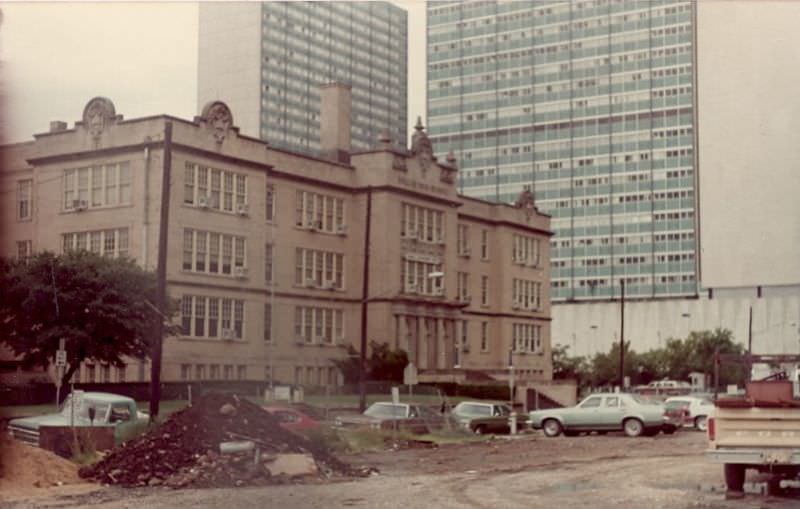
Dallas High School, widely known as Crozier Tech, was one of the city’s oldest educational institutions. Originally opened in 1915, the school served generations of Dallas students before eventually being converted for other uses. Its brick exterior and institutional architecture made it a recognizable piece of the downtown landscape well into the 1980s.
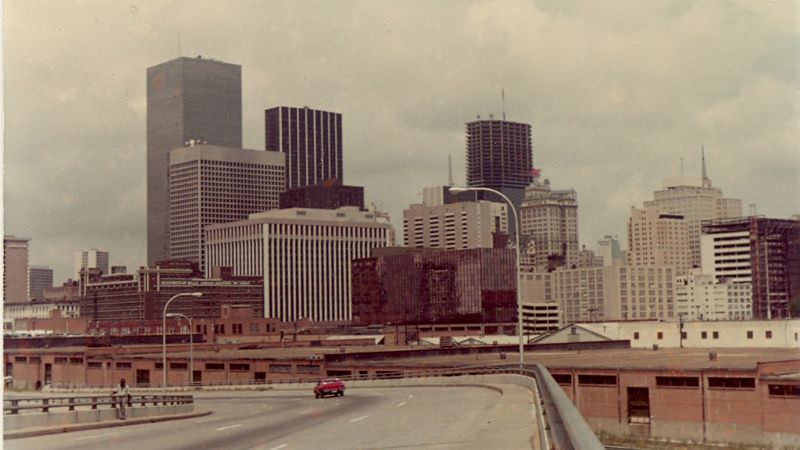
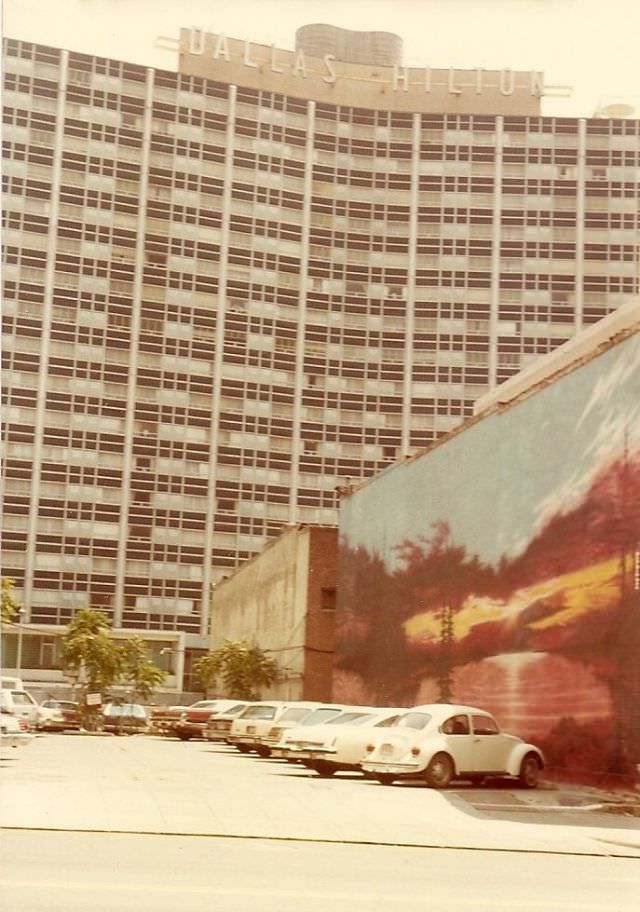
The Dallas skyline of the 1980s told the story of a city building itself up fast. New towers rose alongside older commercial buildings, and the contrast between decades of architecture was visible from almost any vantage point. The downtown core was dense and active, with construction sites competing for space with established landmarks across the grid.
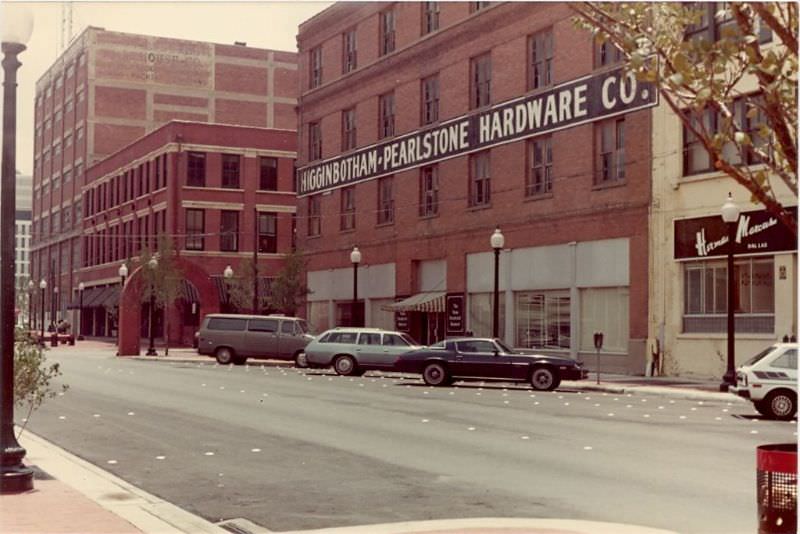
The West End district in the 1980s was undergoing a transformation from a mostly industrial warehouse zone into a destination for dining and entertainment. Red brick warehouses that once stored goods became restaurants, bars, and shops. The area drew both locals and tourists, and its streets took on a lively character that was distinct from the more formal financial district nearby.
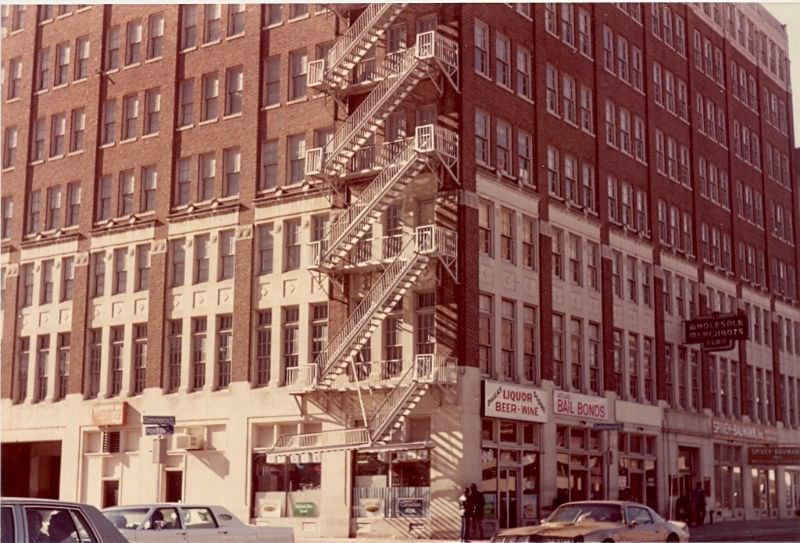
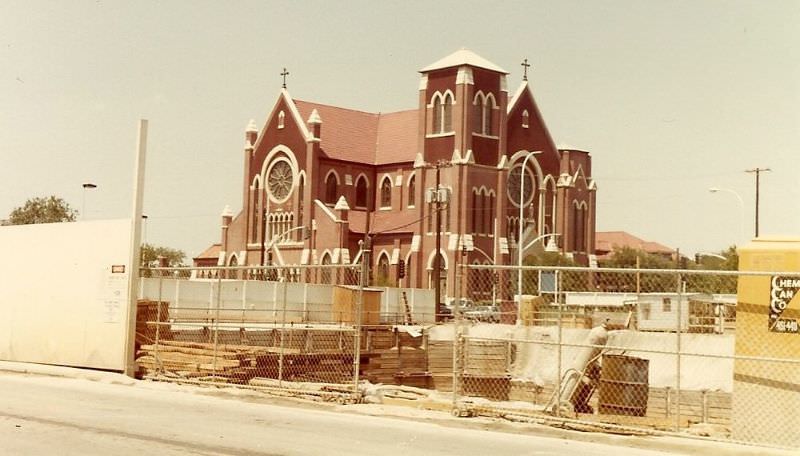
The Cathedral Santuario de Guadalupe, located on Ross Avenue, served as the mother church of the Diocese of Dallas. Dedicated in 1902, it was a prominent landmark in the city’s religious and architectural history. By 1981, its Gothic Revival towers were a familiar sight on the Dallas skyline, rising above the surrounding blocks as a steady anchor in a changing neighborhood.
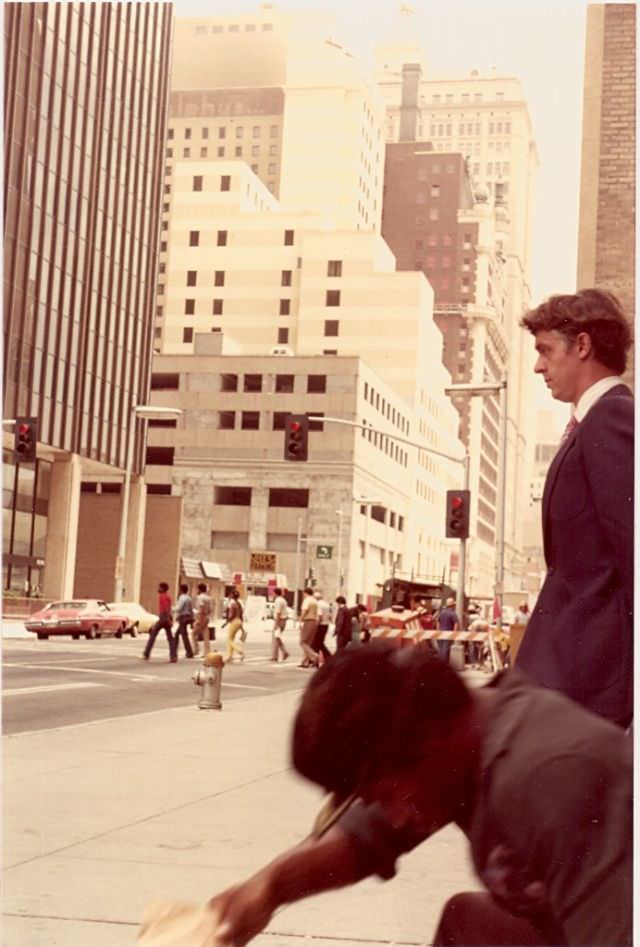
Commerce Street was one of Dallas’s main downtown corridors in 1981, lined with hotels, retail businesses, and civic buildings. Foot traffic was steady during business hours, and the street reflected the mixed-use character of the downtown core — old storefronts sitting beside newer developments, pedestrians navigating wide sidewalks between parked cars and bus stops.
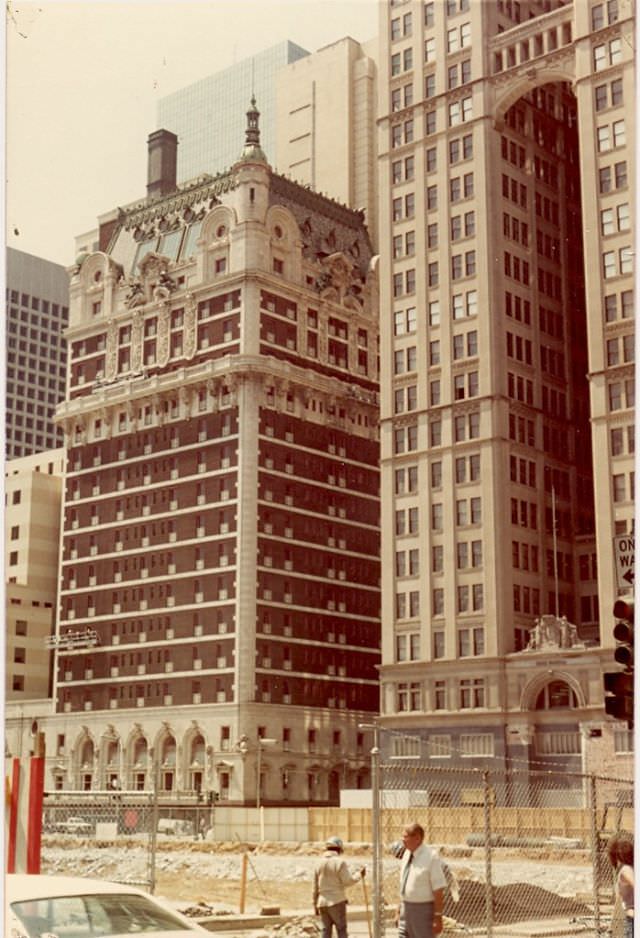
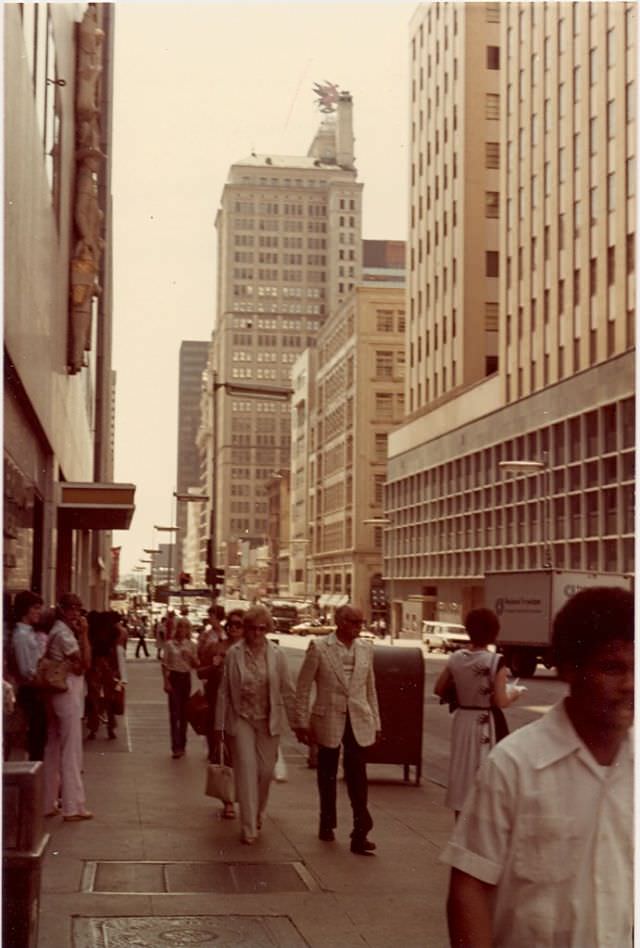
The Adolphus Hotel, built in 1912 by beer baron Adolphus Busch, was one of the grandest buildings in Dallas. Its Baroque-style facade stood across from active construction sites in 1981, a sign of the constant redevelopment pressing against the city’s older architecture. The nearby Magnolia Oil Building, topped by its famous flying red horse sign, was another fixture of the downtown skyline.
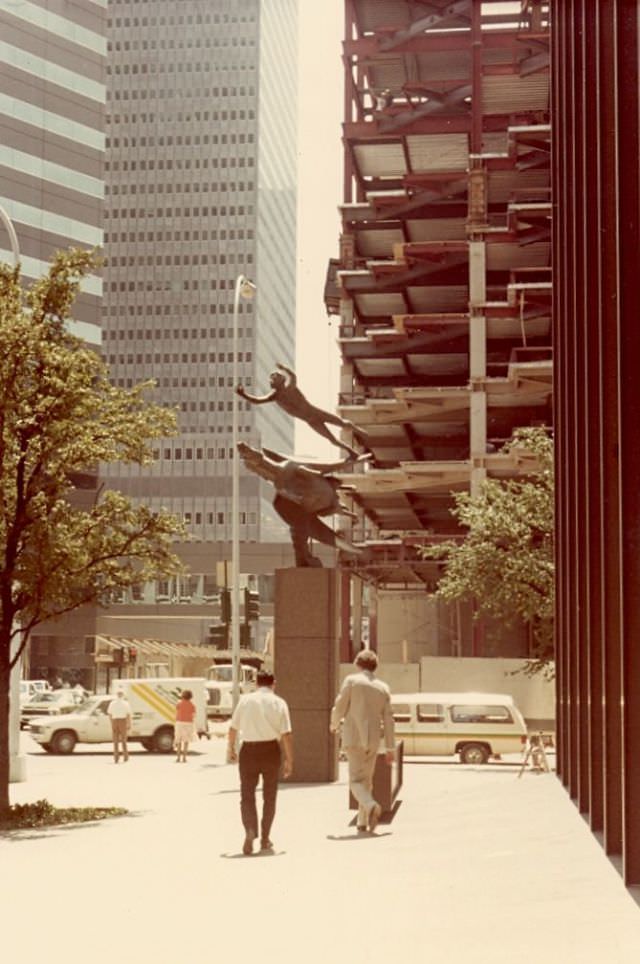
The Harwood Center was one of several office towers taking shape in downtown Dallas during the early 1980s. Construction crews worked through the year as the city’s commercial real estate market expanded rapidly. The building boom of this era added millions of square feet of office space to the central business district, reshaping the skyline block by block.
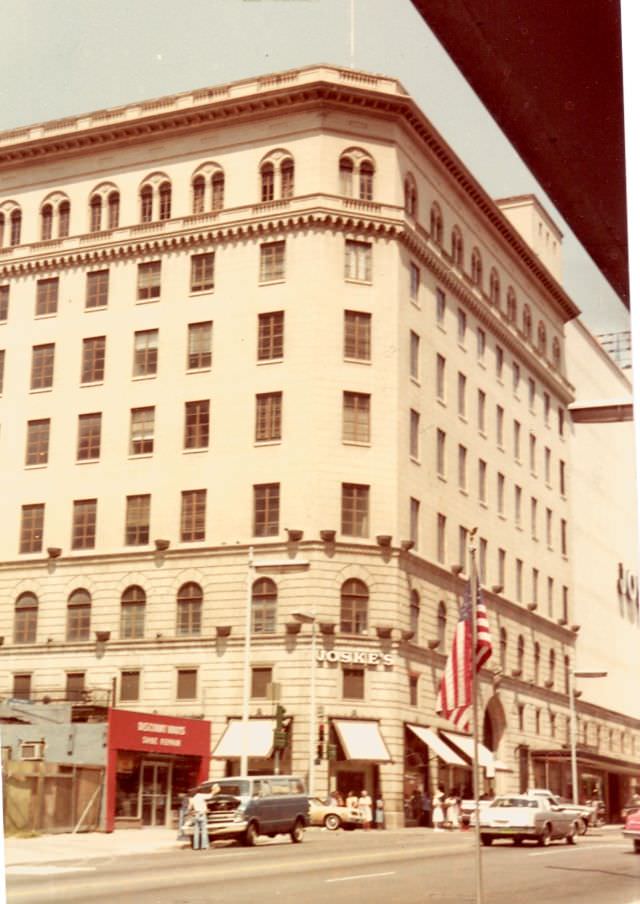
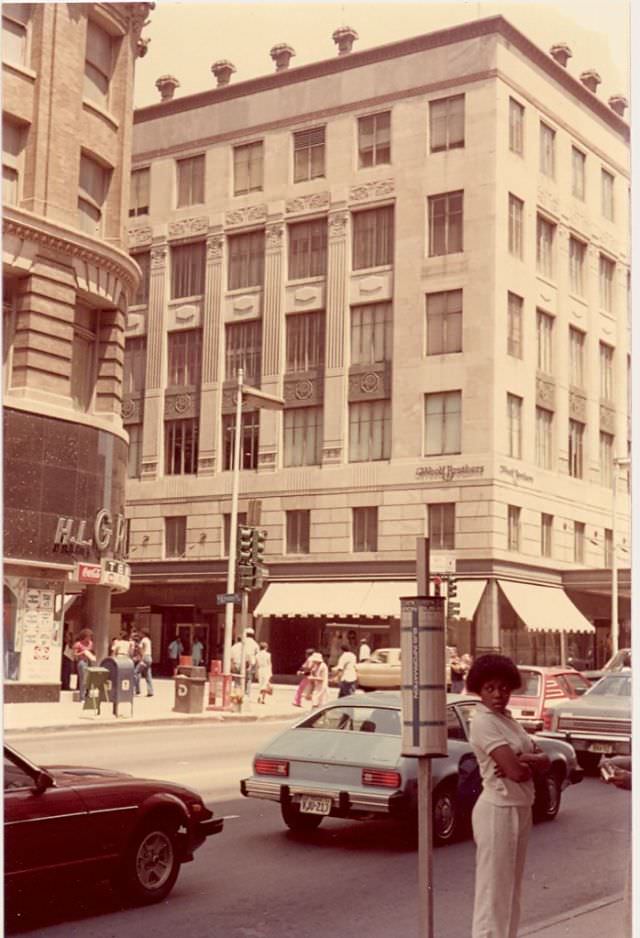
Joske’s was a Texas-based department store chain that operated a location in downtown Dallas at the corner of Main and St. Paul. The store was part of a broader retail scene that kept downtown Dallas commercially active through the early part of the decade, before suburban shopping malls began drawing customers away from the city center.
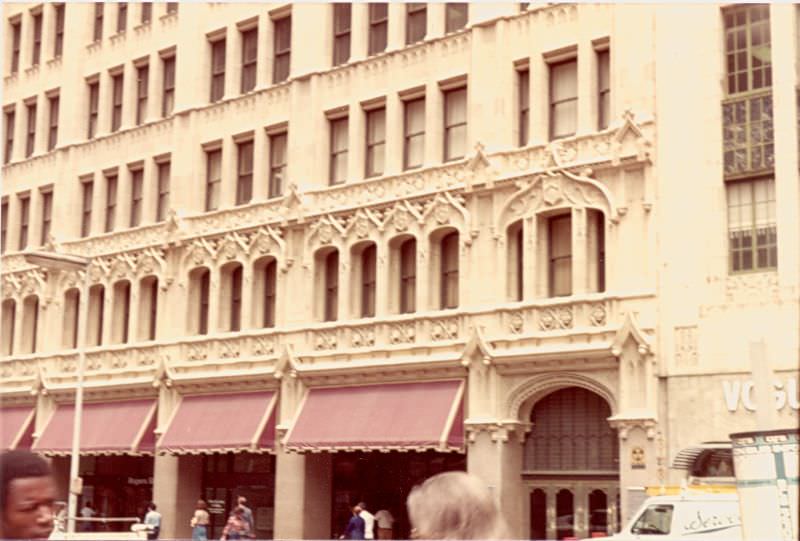
The Kirby Building, completed in 1913, was one of Dallas’s early skyscrapers. Its terracotta-clad exterior and classical detailing made it stand out among the more utilitarian commercial buildings of the era. By 1981, it remained a functioning office building, its early twentieth-century design intact amid the newer towers rising around it.
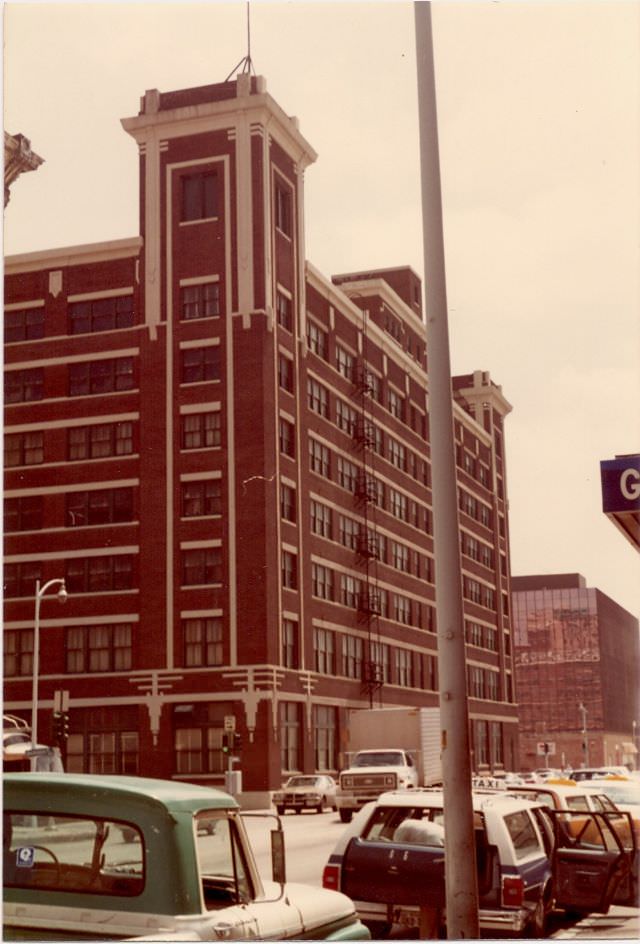
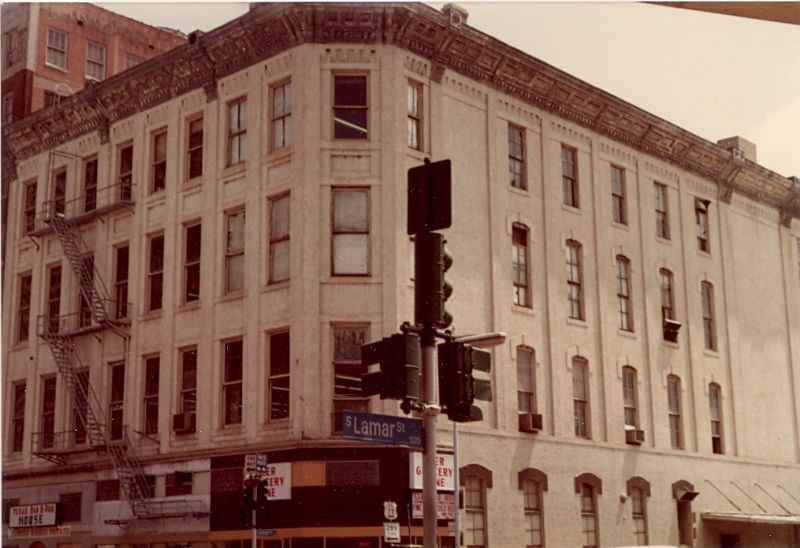
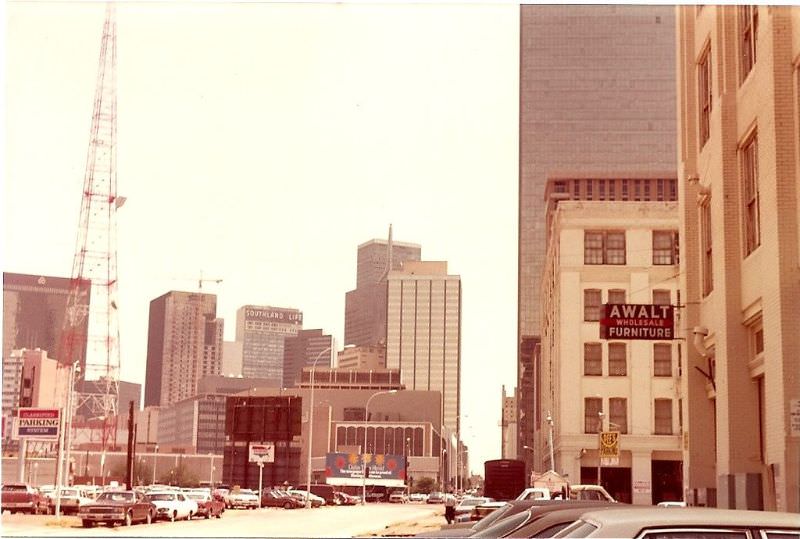
Pacific Street offered a clear view of how Dallas’s downtown streets were organized in 1981 — wide lanes flanked by mid-rise commercial buildings, with larger towers visible in the distance. The street’s eastern stretch, photographed from multiple vantage points that August, captured the layered depth of the city’s built environment at a moment of active change.
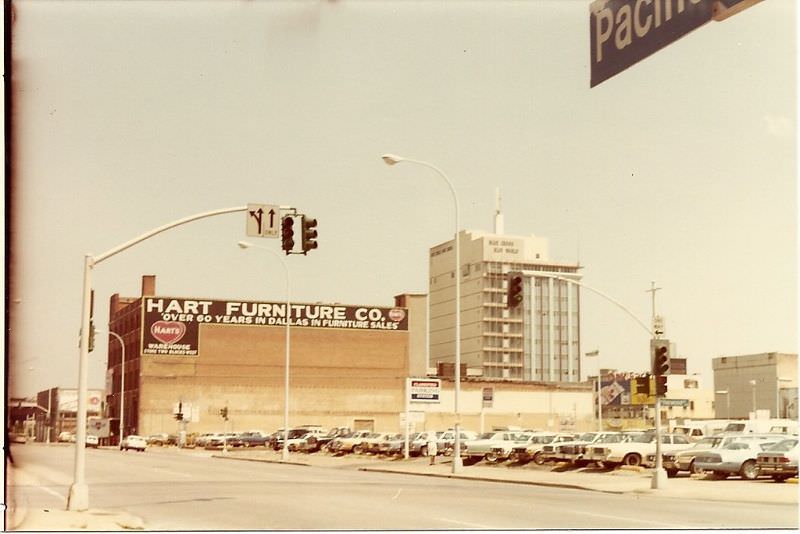
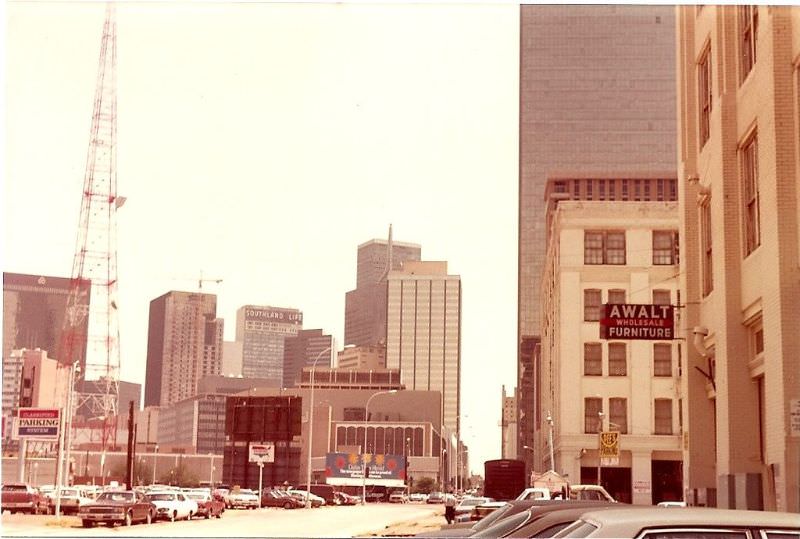
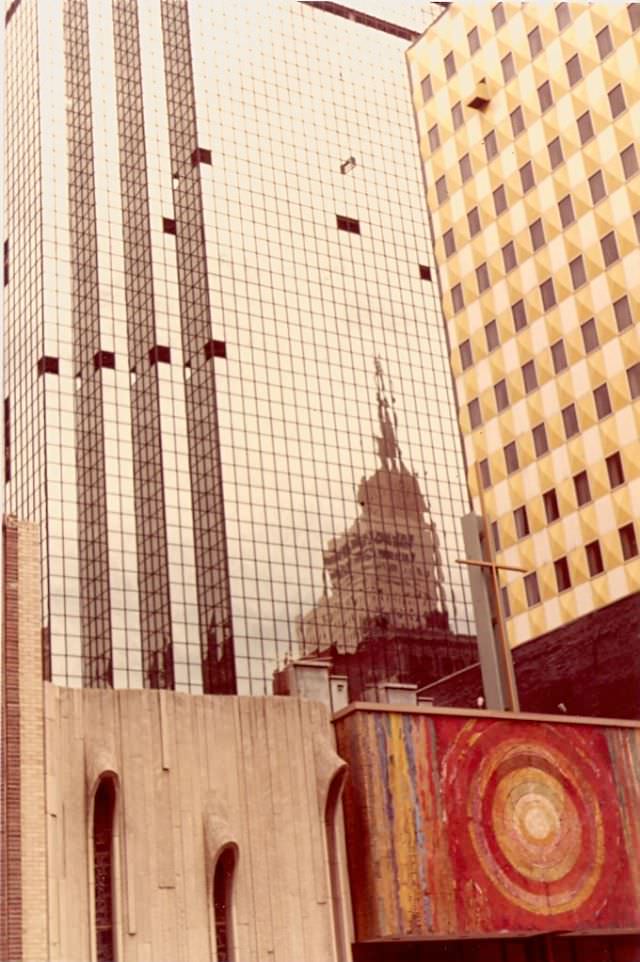
Main Street was the commercial spine of downtown Dallas. Retailers, banks, and office buildings lined both sides of the street, and it remained one of the busiest pedestrian corridors in the city. The 1981 photographs show a street still very much alive with foot traffic and storefront activity, even as the broader retail landscape was beginning to shift.
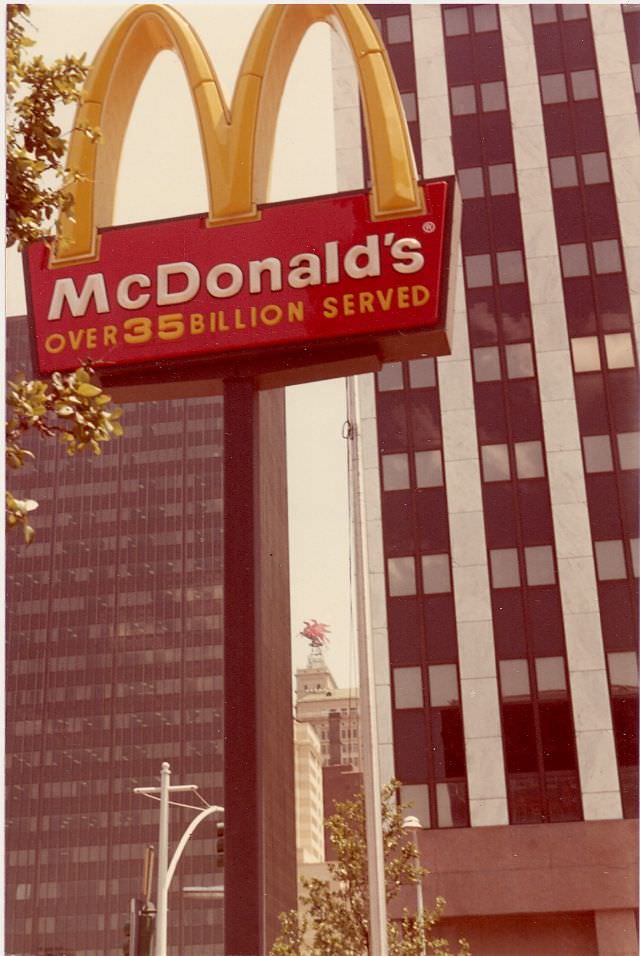
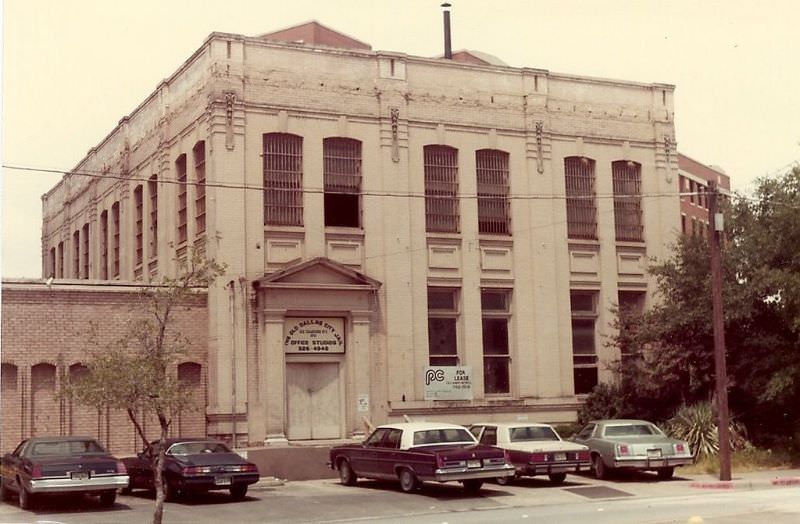
The old Dallas City Jail was a remnant of the city’s earlier municipal infrastructure, still standing in 1981 well past its original purpose. Buildings like this one dotted the downtown landscape, serving as physical reminders of the city’s earlier decades before urban renewal and redevelopment projects cleared many of them away.
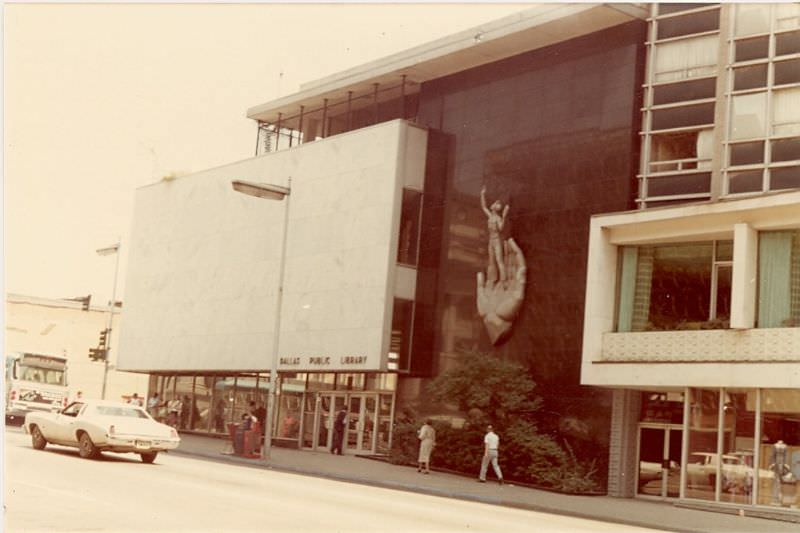
The old main library on Commerce Street was part of the Dallas Public Library system — one of the largest such systems in the country. The library’s presence on Commerce placed it at the center of the city’s civic and intellectual life. Dallas took pride in its literary culture, and the public library was a cornerstone of that identity throughout the 1980s.
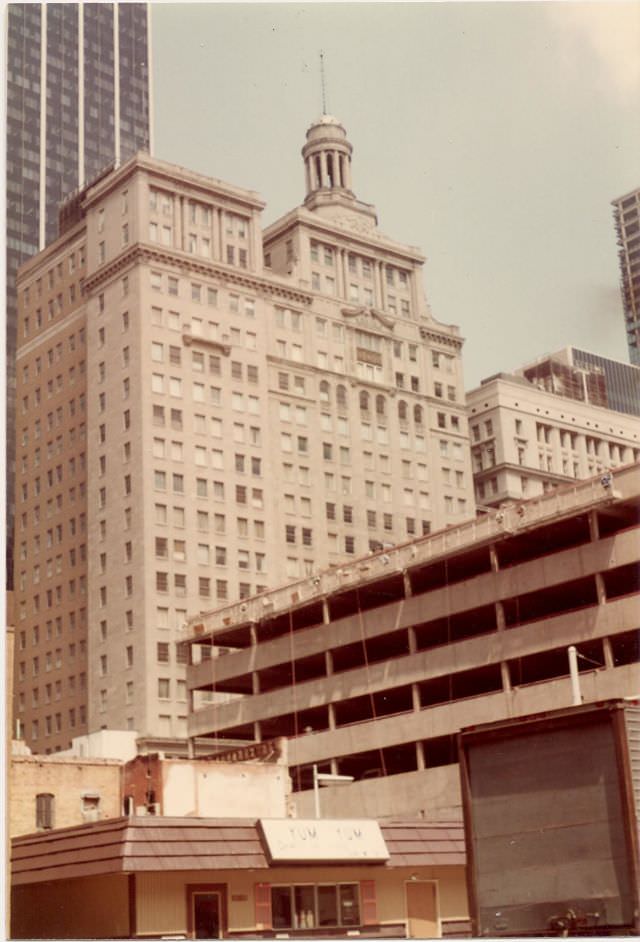
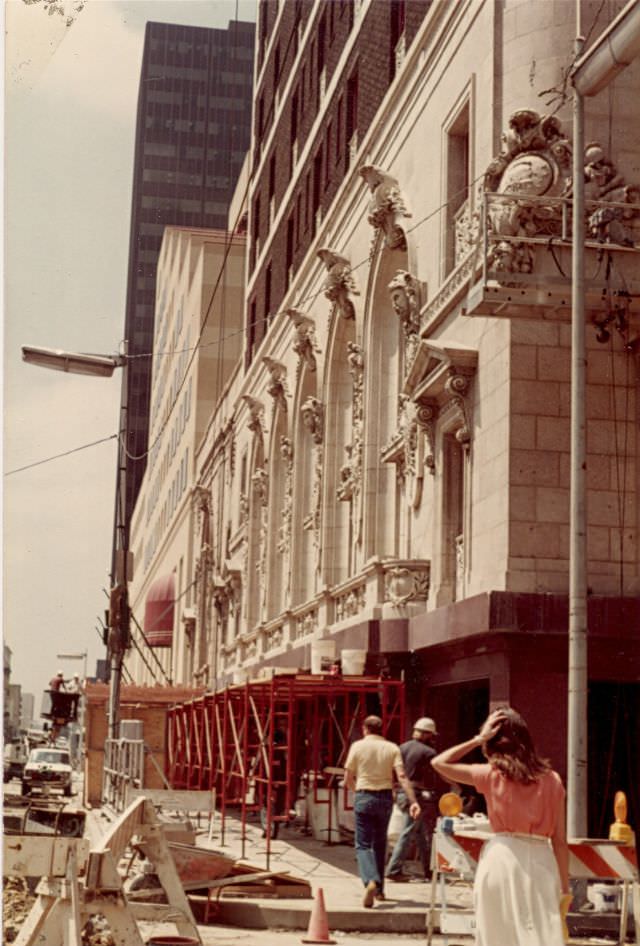
By September 1981, the exterior of the Adolphus Hotel was undergoing active restoration work. The effort to preserve and rehabilitate the hotel was part of a broader trend in Dallas during this period, as property owners and city planners worked to maintain the downtown core’s historic buildings while accommodating new development around them.
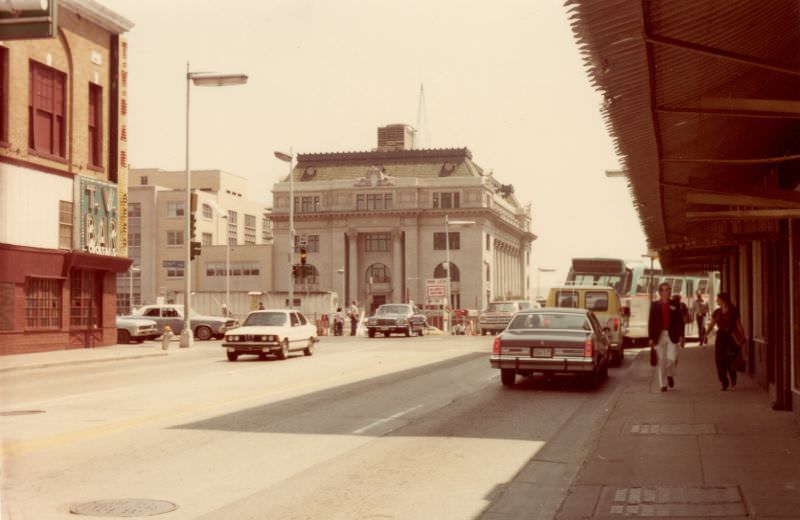
Elm Street’s bar scene in 1981 was a mix of working-class spots and neighborhood regulars. The T.V. Bar at Elm and Harwood was one of several small establishments clustered in that part of downtown, serving the people who lived and worked nearby. These street-level businesses gave the city’s lower blocks a lived-in, gritty character that stood apart from the polished office towers above.
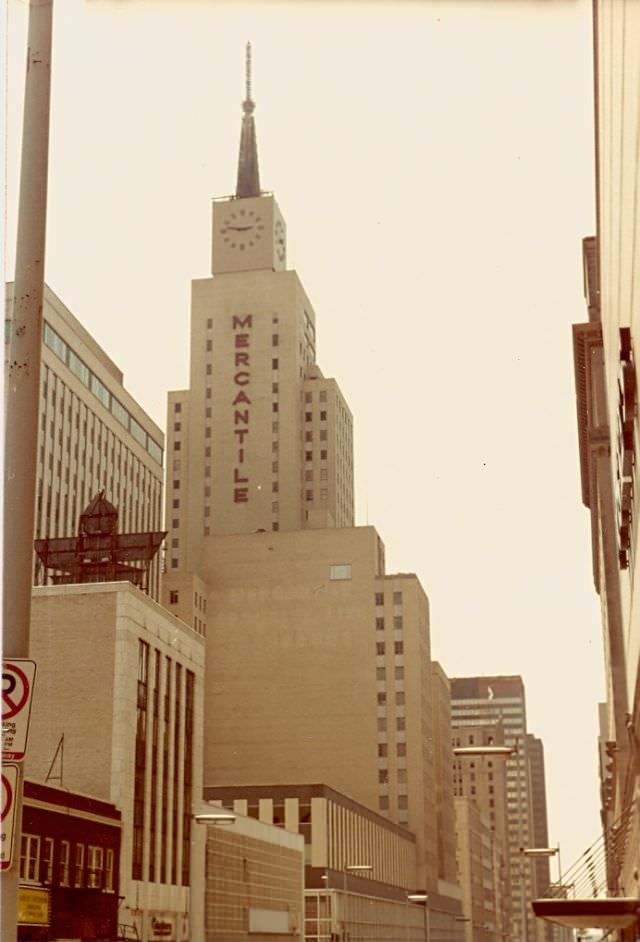
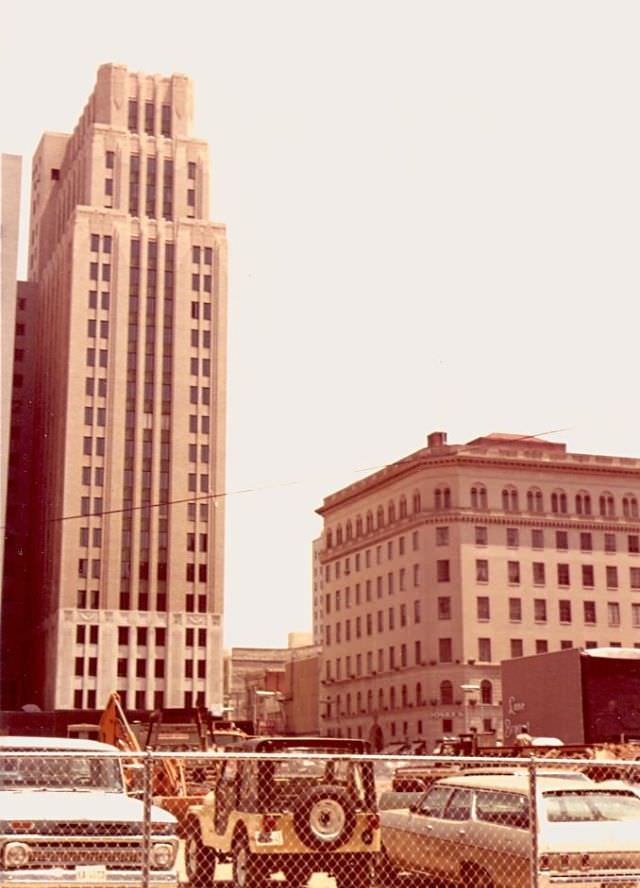
The Tower Petroleum Building, completed in 1931, was a handsome Art Deco tower that anchored its block on Elm Street. Its limestone facade and vertical lines were characteristic of the period’s commercial architecture. The building stood alongside Joske’s department store as part of the dense commercial fabric that defined central Dallas in the early 1980s.
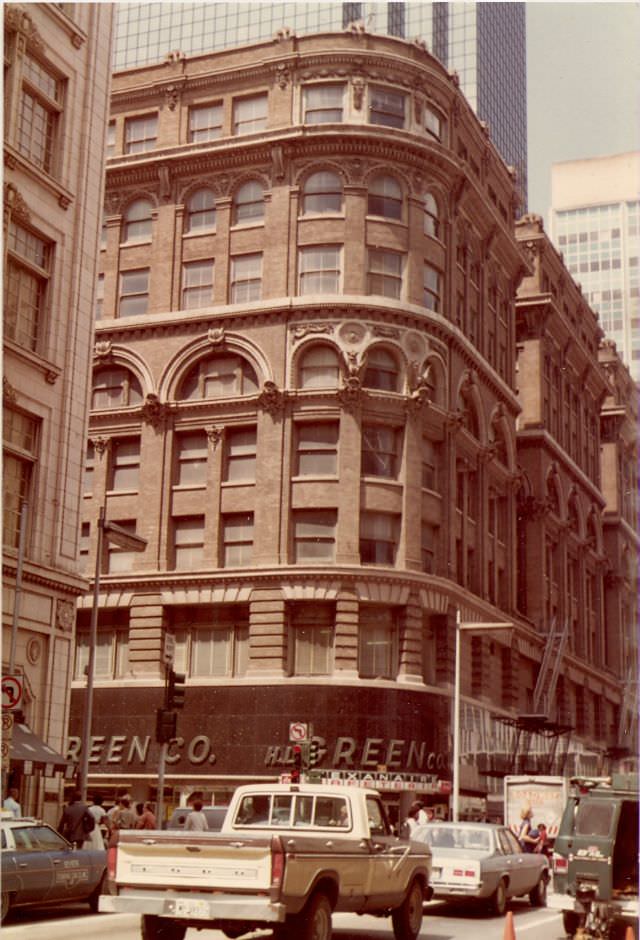
The Wilson Building at Main and Ervay was one of Dallas’s most architecturally distinctive structures. Completed in 1904 and expanded in 1907, it featured elaborate terracotta ornamentation across its facade. By 1981, it had transitioned through various uses since its original days as a retail and office building, but it remained an important part of the downtown streetscape.
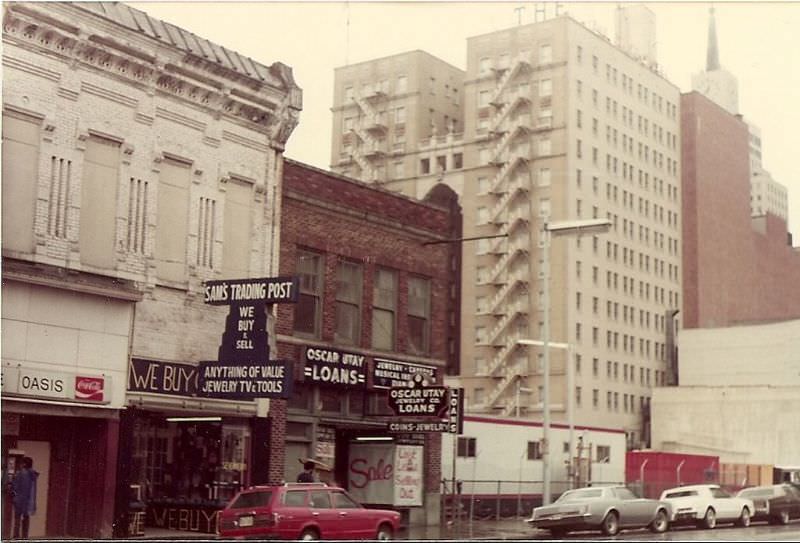
By 1982, the blocks just east of Harwood on Elm Street still held a collection of small, independent businesses that had been fixtures in that part of downtown for years. Pawn shops, bars, and trading posts operated side by side, catering to the foot traffic that moved through the area daily. These establishments painted a vivid picture of street-level commerce in early-decade Dallas.
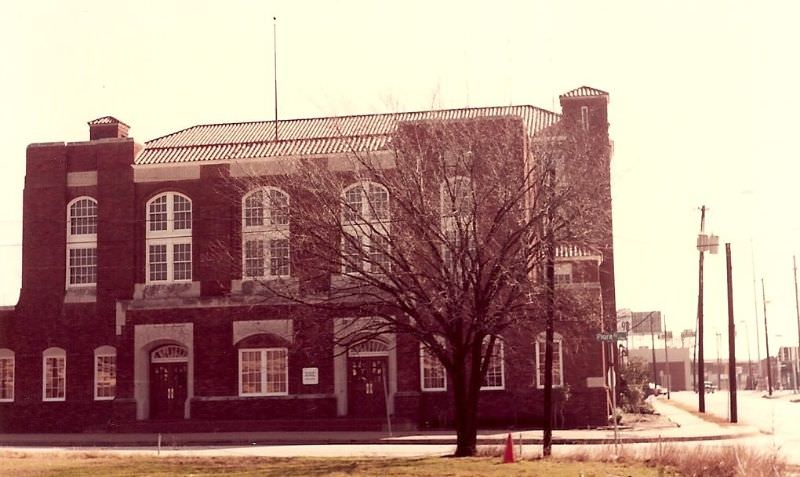
The Moorland YMCA on Flora Street and Boll was a historically significant facility in Dallas. It served the city’s Black community during the era of segregation, providing a space for recreation, education, and social activity when other facilities were off-limits. By 1982, the building stood as a physical marker of that history in the neighborhood.
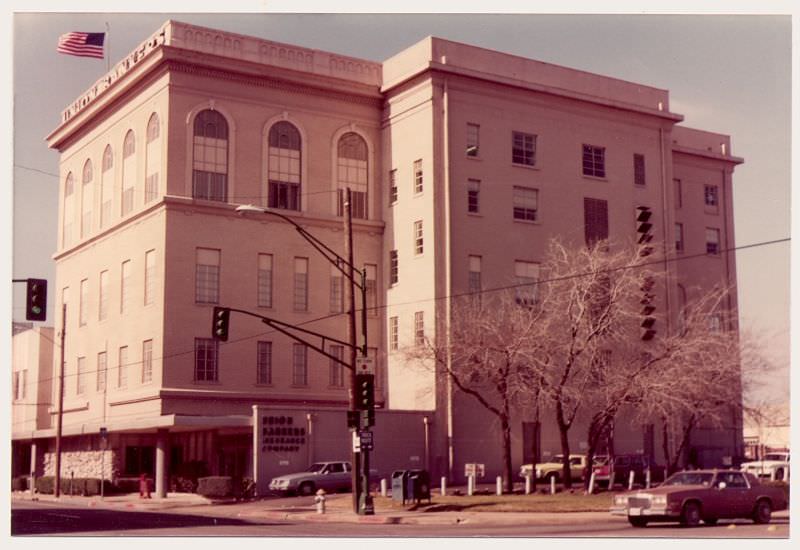
As Dallas moved into the mid-1980s, the financial sector remained a dominant force in the city’s economy. Bank buildings and financial institutions occupied prime real estate throughout the downtown core, and new projects were breaking ground even as older institutions held their ground on established corners.
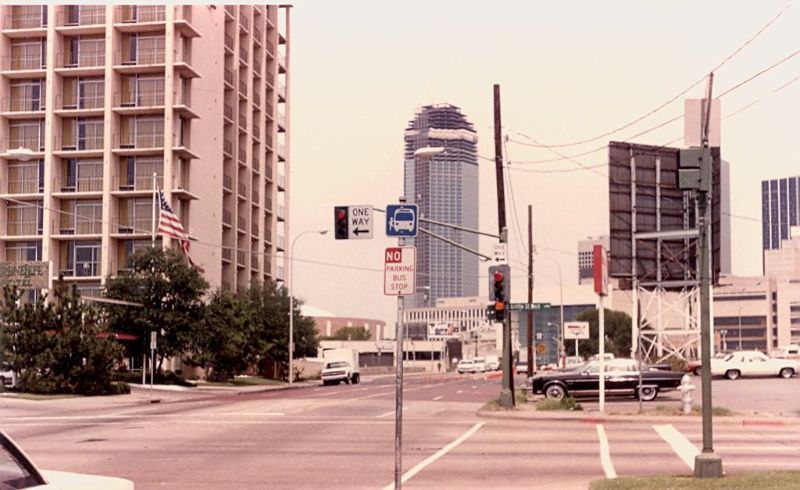
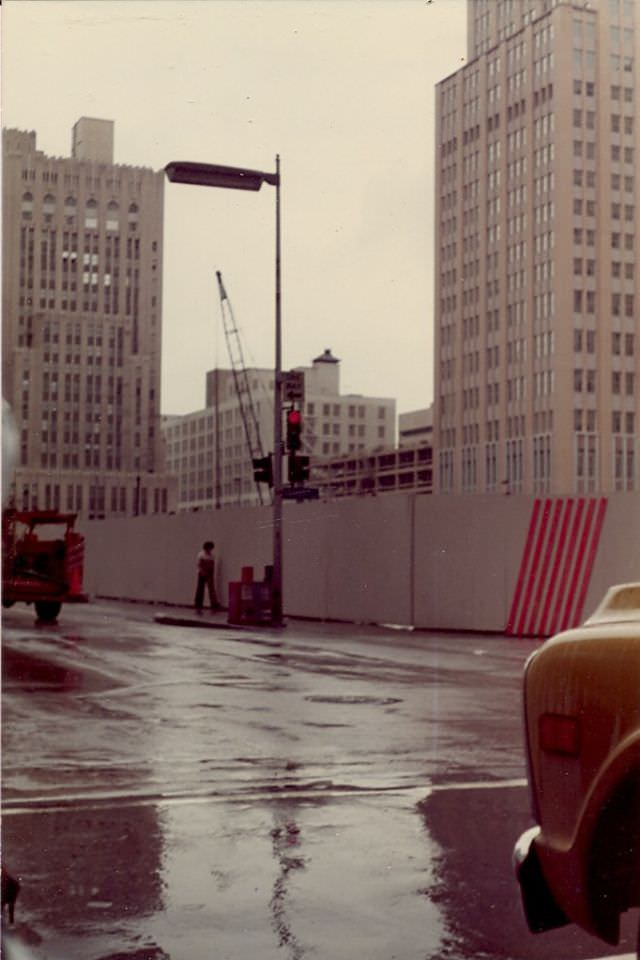
The intersection of Akard and Commerce in 1984 captured the density of downtown Dallas at mid-decade. The streets were busy with both vehicle and foot traffic, and the surrounding buildings reflected the mix of eras that characterized the district — early twentieth-century masonry structures standing beside glass-and-steel towers that had gone up in the preceding decade.
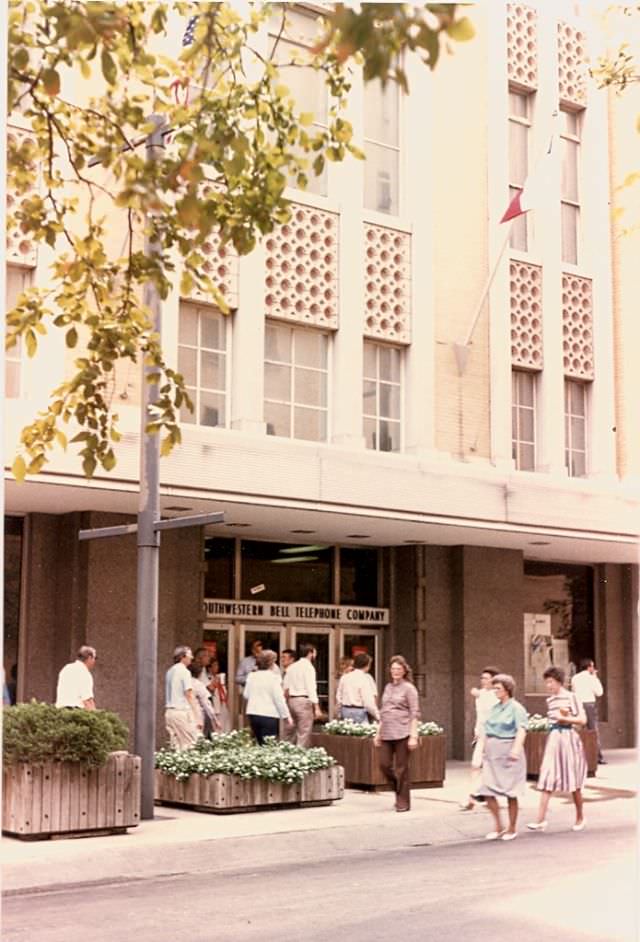
The Southwestern Bell Telephone Company building was a fixture in Dallas’s downtown landscape by 1984. Telecommunications infrastructure was expanding rapidly during this period, and Southwestern Bell operated as the dominant phone provider across a wide swath of the southern United States. Its Dallas building stood as a symbol of that reach, a utilitarian but significant structure in the city’s commercial core.

Dallas is a weird weird wonderful place
To be fair, while Austin often gets a reputation for being weird, let’s not forget that Dallas can also be pretty strange.
Austin’s brand of “weirdness” is akin to that of an eccentric uncle who always seems to be up to something peculiar, leaving you unsure of what to expect – perhaps they’ll get a little too close for comfort one day.