In the 1950s, Libya was one of the poorest and least developed countries in Africa. That changed dramatically in 1959 when massive oil reserves were discovered beneath the desert. A decade later, Colonel Muammar al-Gaddafi seized power, abolished the Libyan monarchy, and set the country on a completely different course. The oil wealth that had gone largely untapped would now, under his rule, fund a sweeping transformation of Libyan society.
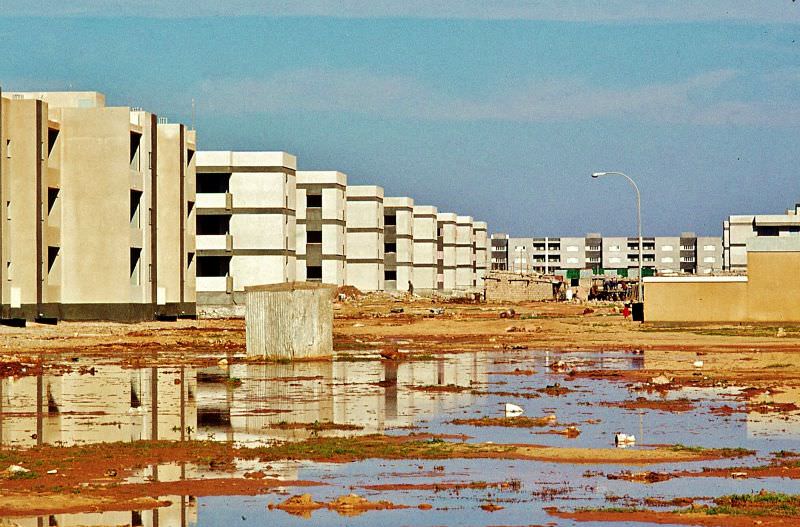
One of Gaddafi’s first moves was to redirect oil revenues toward the Libyan people. The government launched ambitious programs covering healthcare, education, housing, and public works. Electricity and basic food items were heavily subsidized. GDP rose to its highest levels in the country’s history. The physical landscape of cities like Benghazi began to change rapidly, with new residential blocks rising alongside older, traditional neighborhoods.
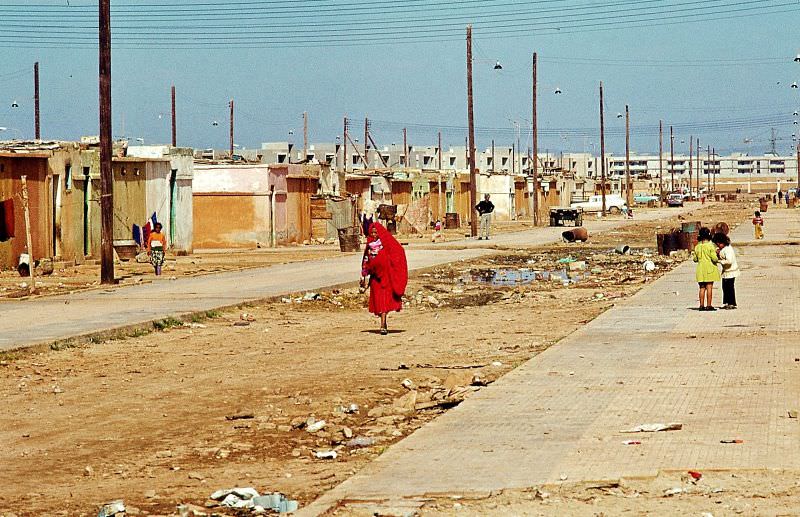
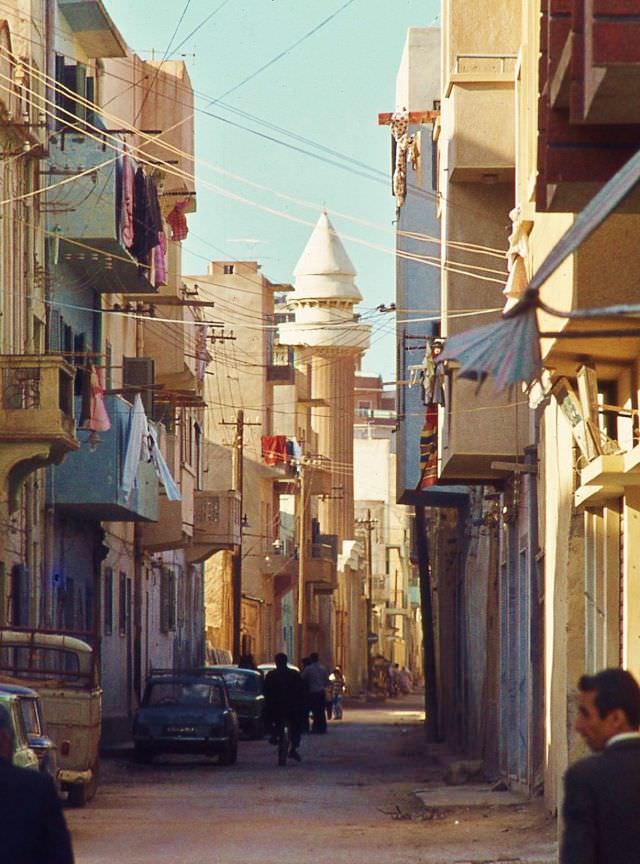
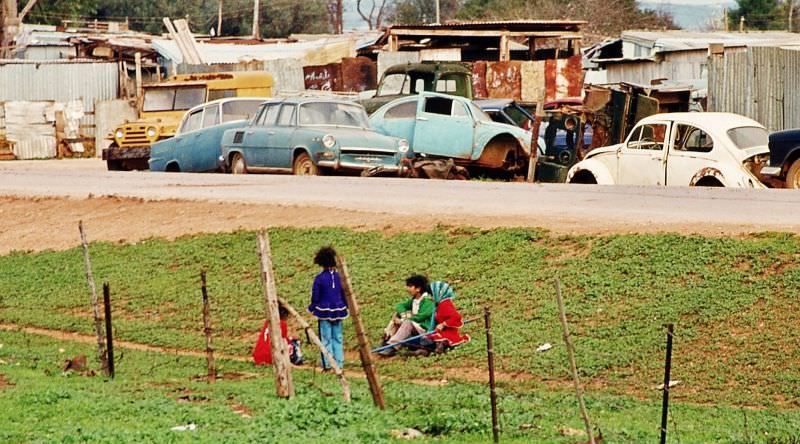
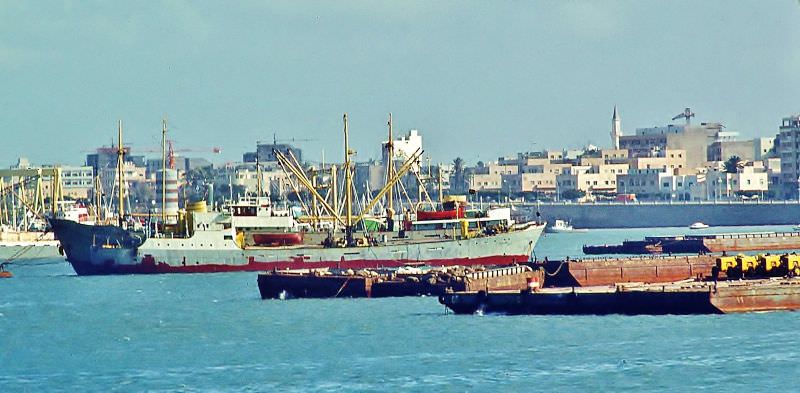
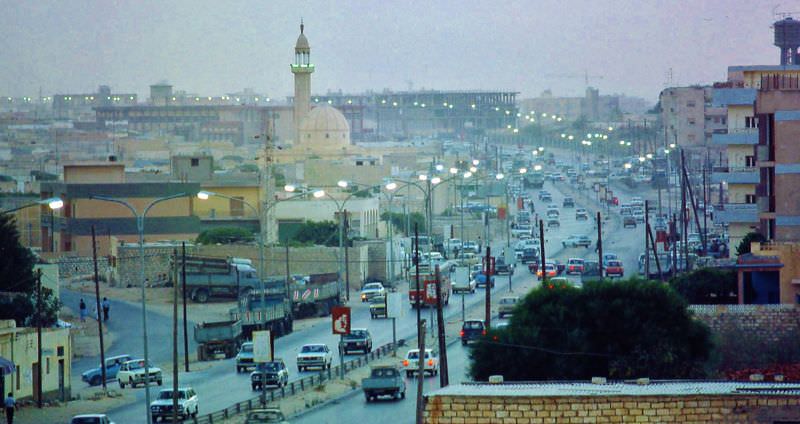
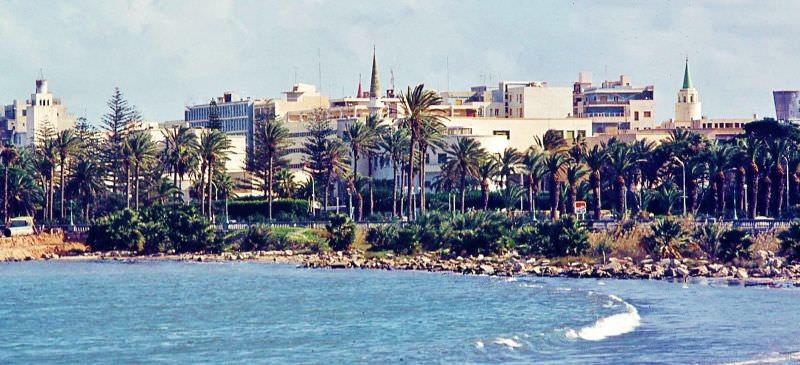
Benghazi, Libya’s second-largest city, served as a focal point of this urban shift. Streets that had once been lined exclusively with low-rise traditional buildings now had modern apartment blocks appearing on the horizon. Life on the ground, however, kept much of its familiar rhythm. Children played in the streets, vendors filled the markets, and the city hummed with the ordinary activity of a society in the middle of change.
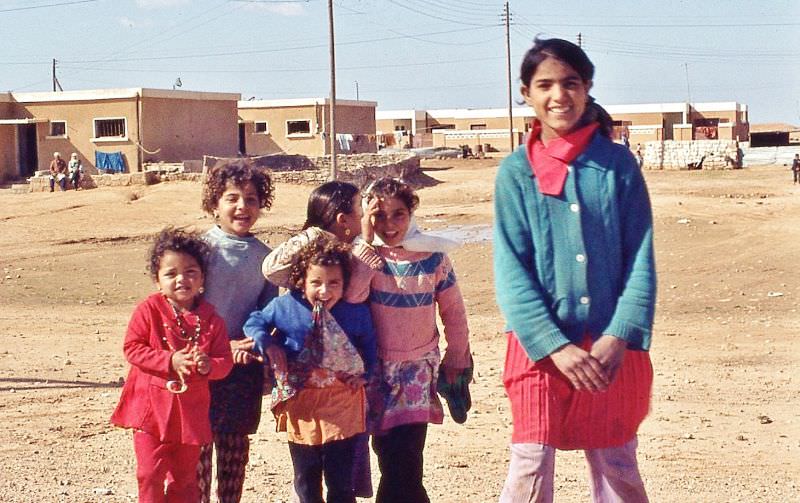
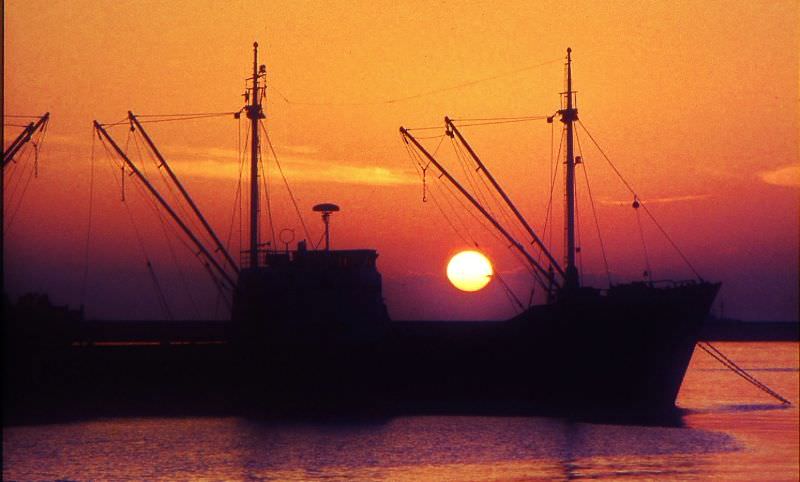
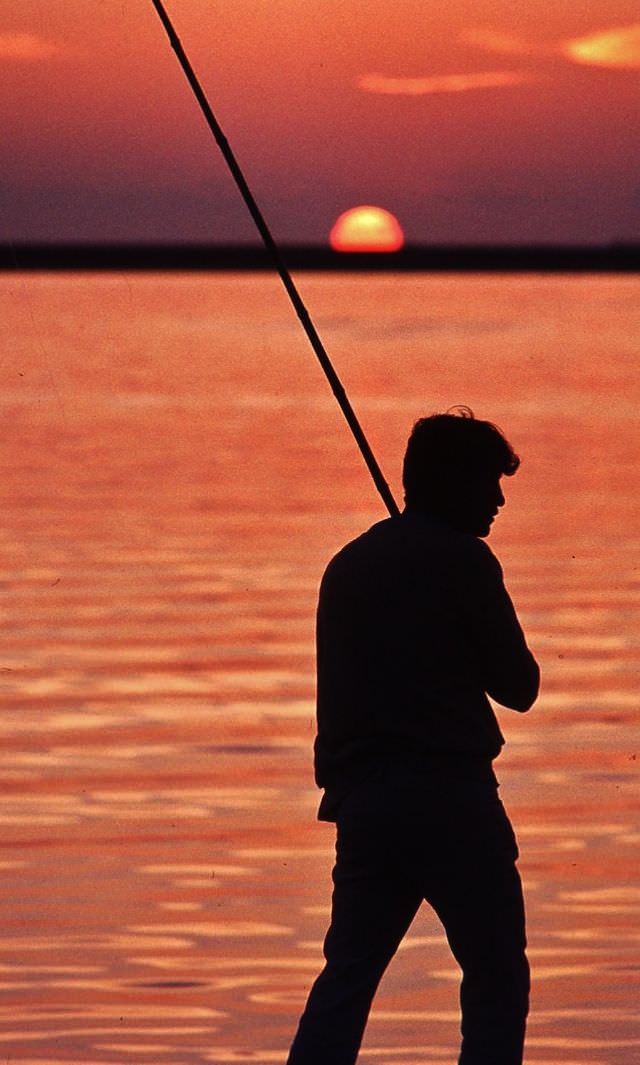
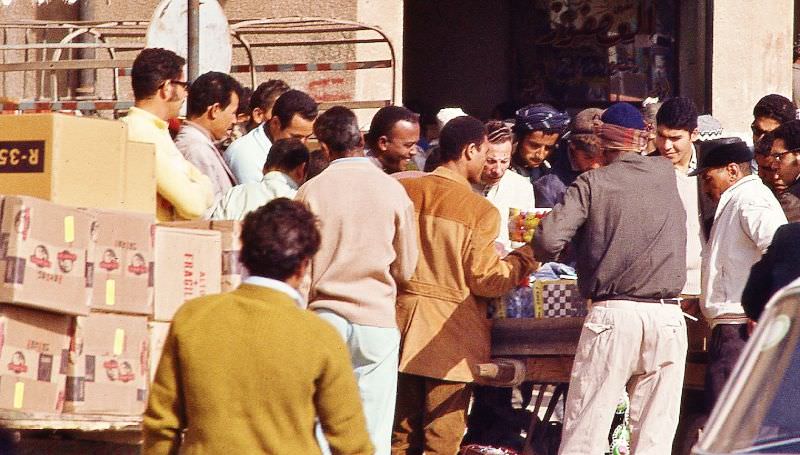
The harbour at Benghazi remained central to the city’s identity. Fishing was not just an economic activity — it was a daily practice woven into the community’s routine. The souk, the traditional open market, was equally vital. Merchants sold everything from fresh produce to household goods, and the narrow lanes buzzed with traders and buyers moving through stalls piled high with goods.
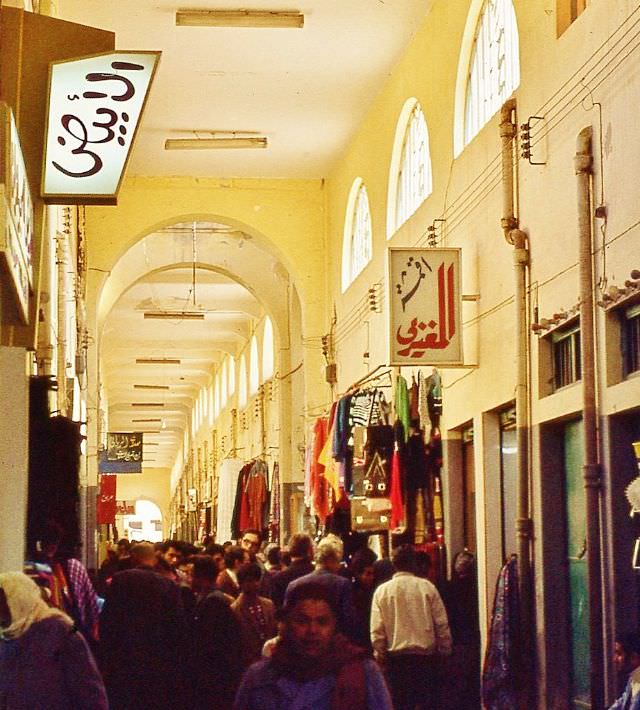
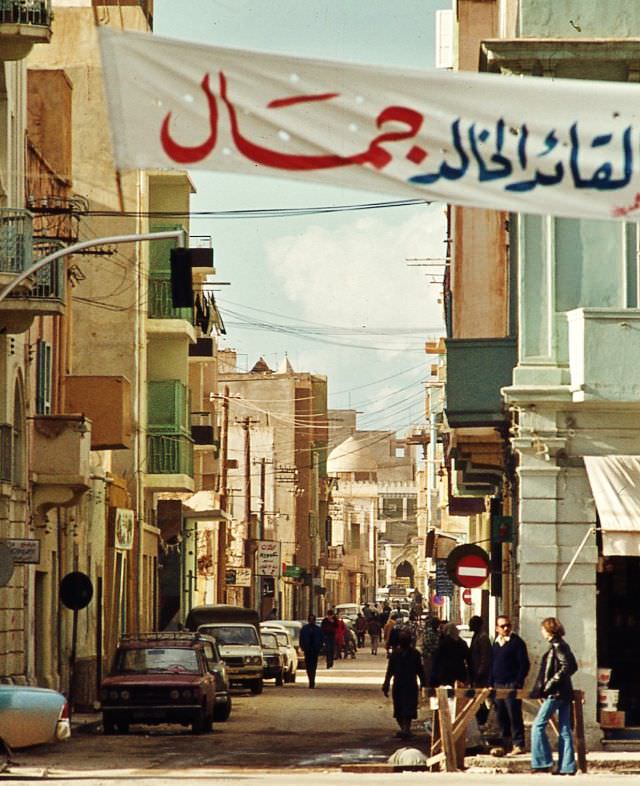
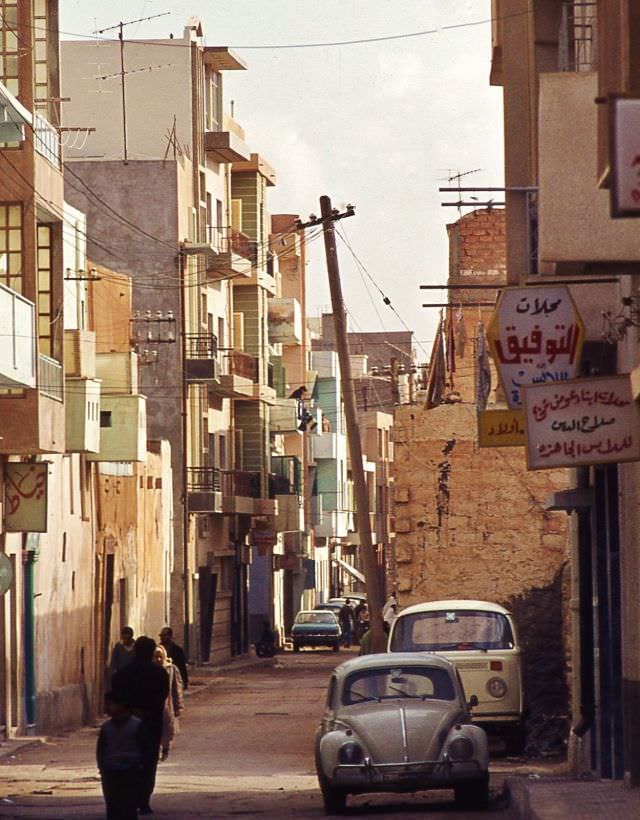
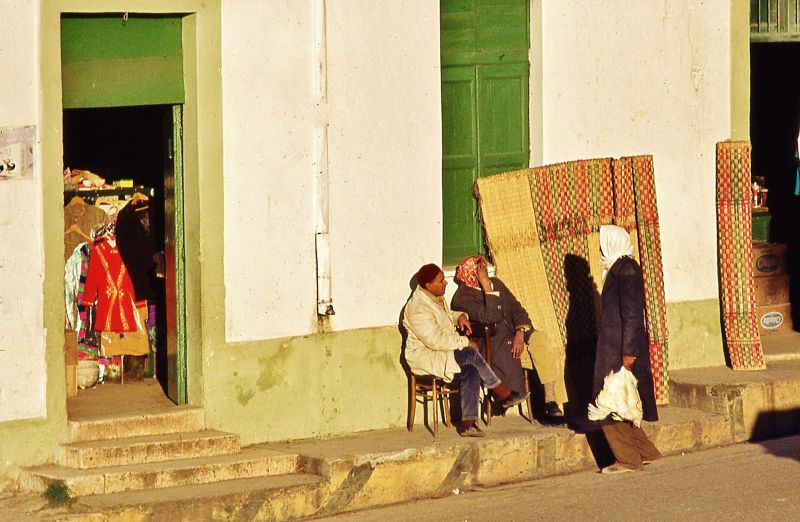
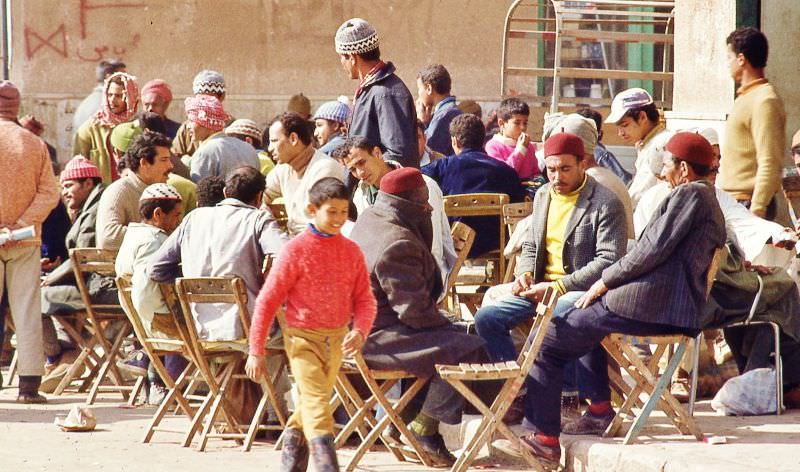
Street life in Benghazi during the 1970s was layered and lively. Men gathered outside cafes, shopkeepers stood in doorways watching pedestrians pass, and the city’s mix of Italian colonial architecture and local building styles gave its streets a distinctive look. Libya had been an Italian colony until 1943, and that architectural presence was still visible throughout the urban fabric.
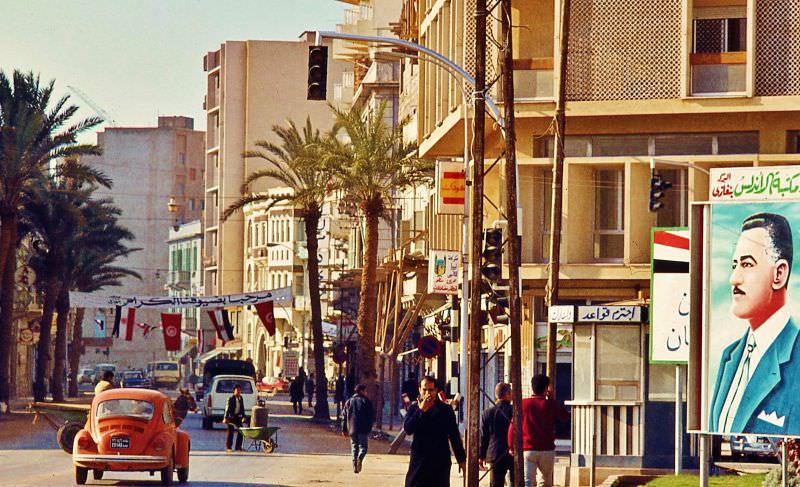
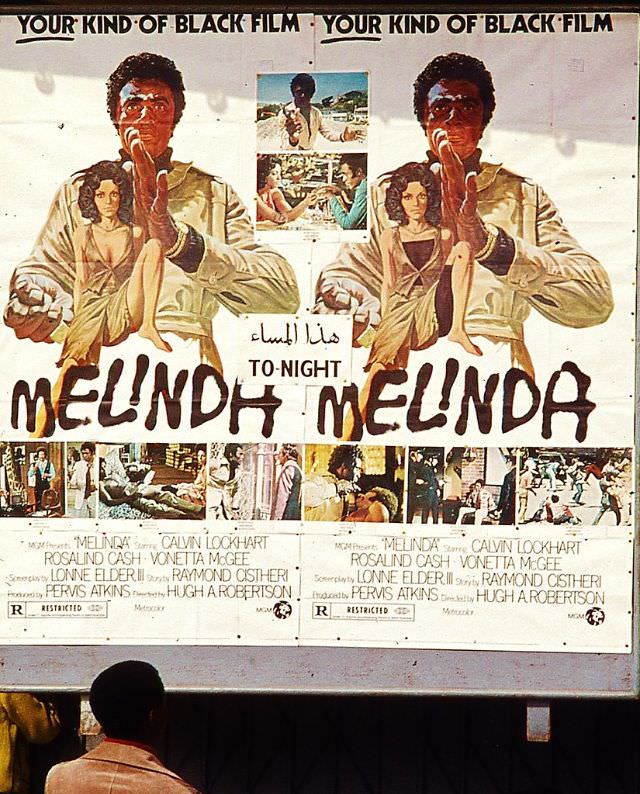
Entertainment was part of daily life too. Cinema posters advertised films on the sides of buildings, and small shops of every kind lined the commercial streets. Benghazi had a strong merchant culture — locally owned stores selling food, clothing, and everyday goods formed the backbone of the city’s economy at the street level, long before the oil-sector bureaucracy became the dominant employer.
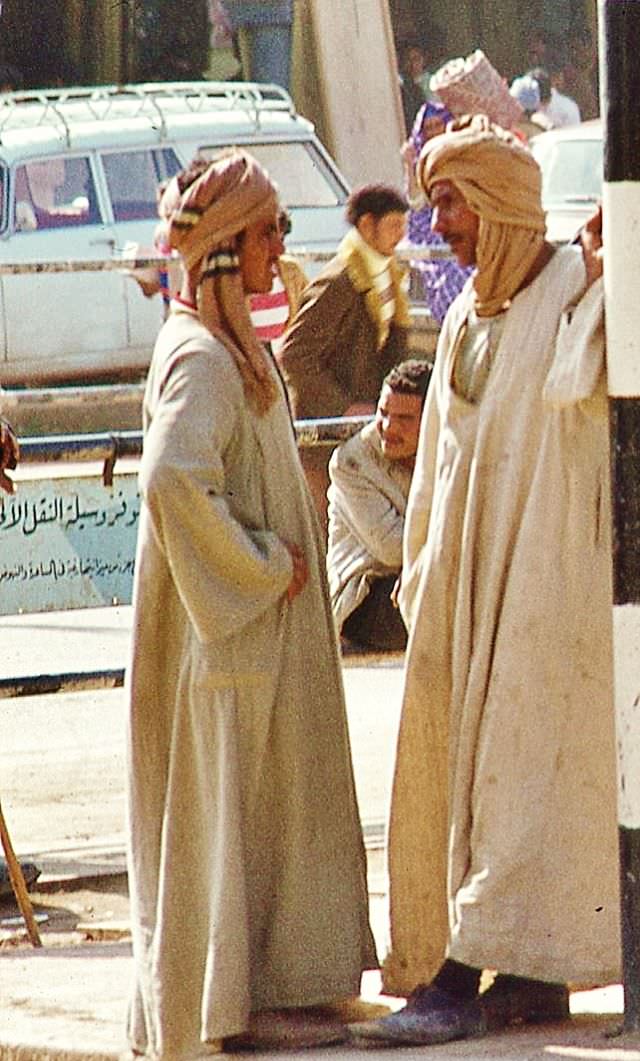
Libya’s oil boom attracted workers from across North Africa and beyond. Immigrant laborers arrived in significant numbers to take part in the country’s construction and industrial projects. They could be found throughout Benghazi, working on building sites and gathering in public spaces during breaks. The government’s industrial and agricultural development programs, launched in the 1970s specifically to reduce dependence on oil exports, created steady demand for this labor.
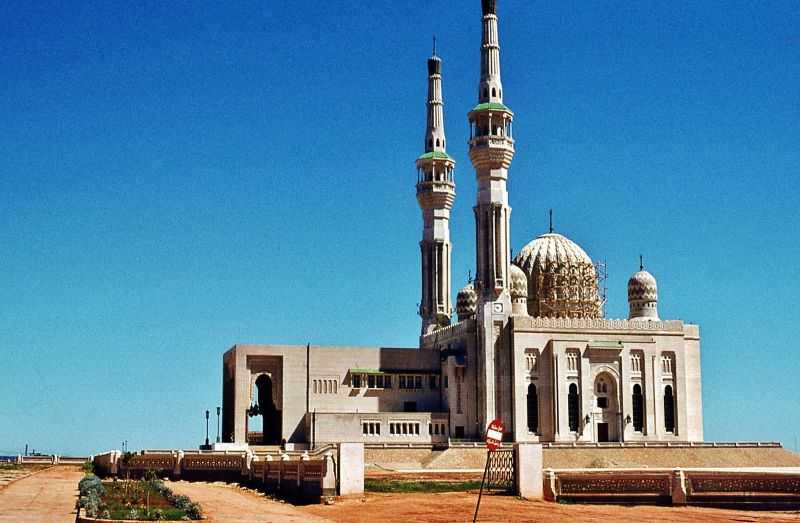
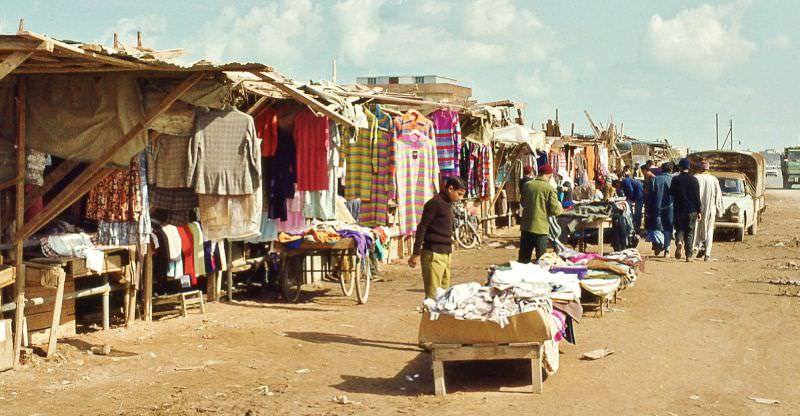
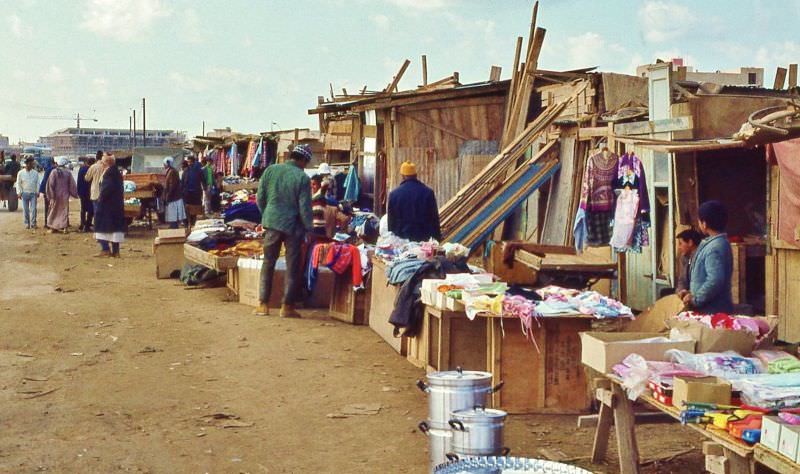
Religious and civic construction moved forward alongside residential development. New mosques went up across Benghazi as the government invested in public infrastructure. Street markets continued to operate as the most accessible points of commerce for ordinary Libyans, selling fresh produce, spices, and dry goods out in the open air, just as they had for generations.
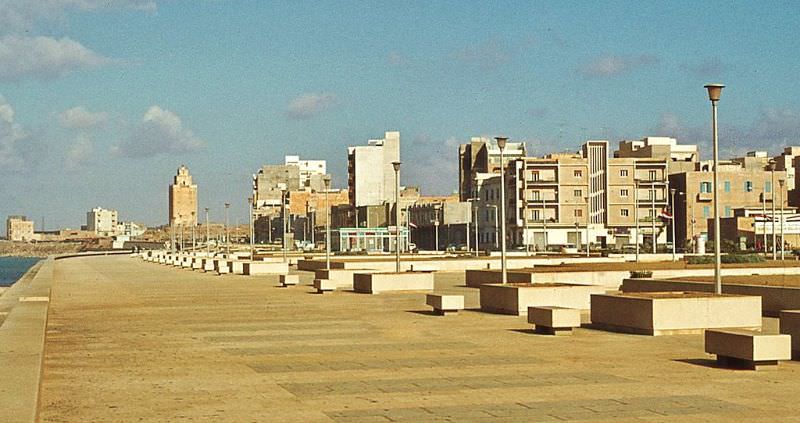
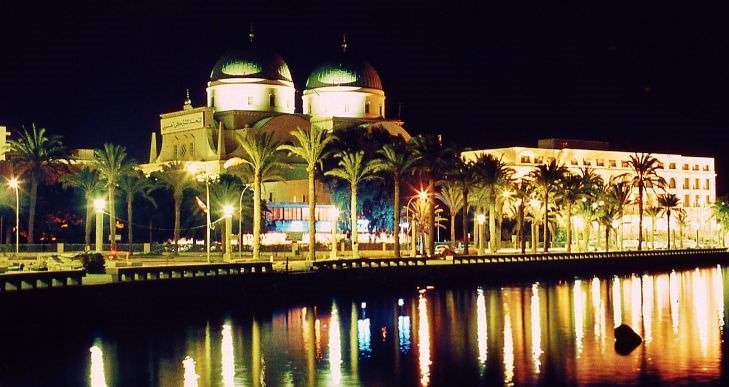
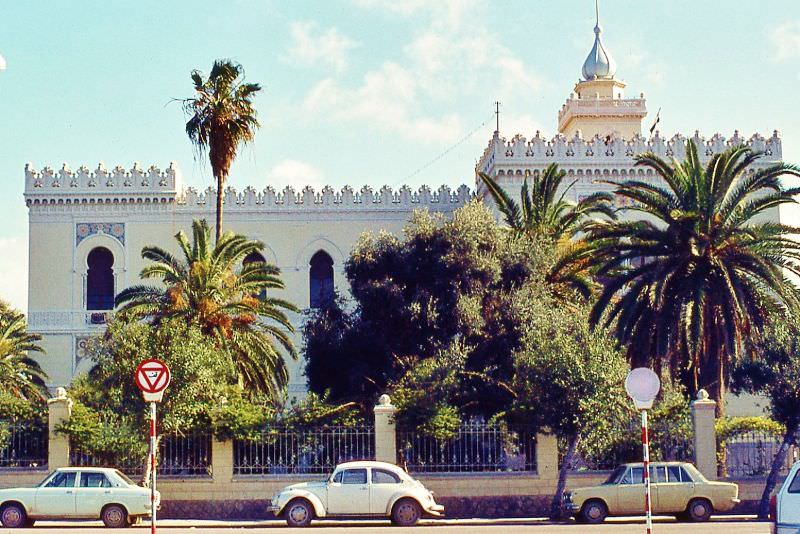
The Corniche — the seafront promenade running along Benghazi’s coastline — was one of the city’s most recognizable public spaces. Residents walked along it in the evenings, and it offered a clear view of the Mediterranean. Nearby landmarks from an earlier era remained standing, including the former Roman Catholic Cathedral and the Gezzira Palace Hotel, both remnants of the Italian colonial period that the city had not yet demolished or repurposed.
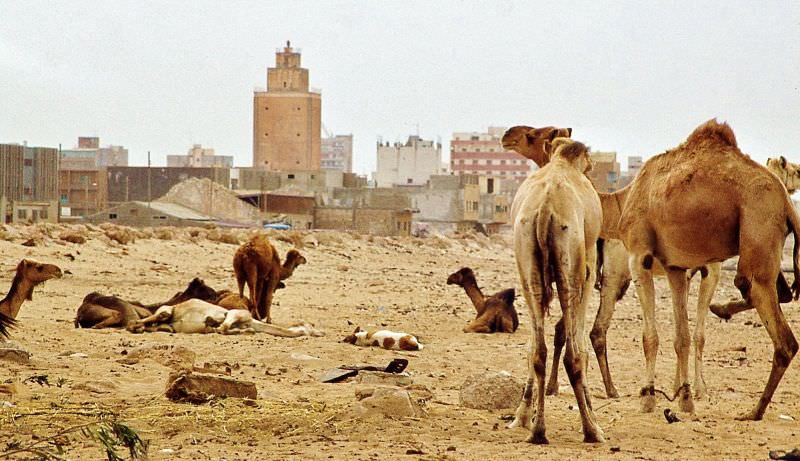
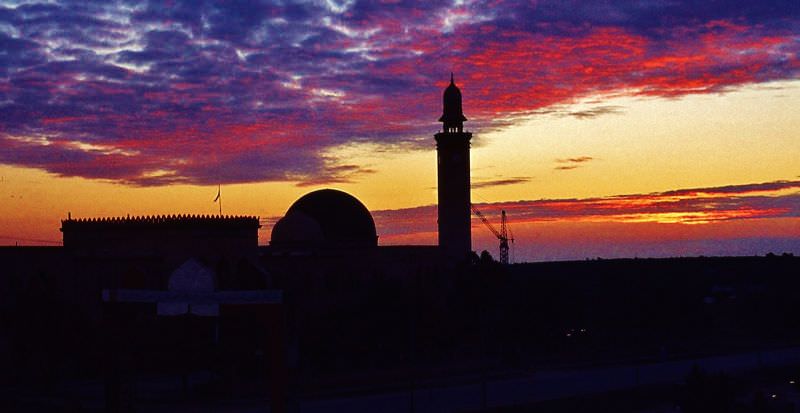
Beyond Benghazi, the northeastern city of Beida offered a different kind of scene — quieter, elevated in terrain, and bathed in the warm tones of the North African sunset. Further east lay one of Libya’s most extraordinary historical sites: the ancient Greek city of Cyrene, founded in 631 BC. By the 1970s, the ruins at Cyrene were among the best-preserved Greco-Roman sites in the entire Mediterranean world.
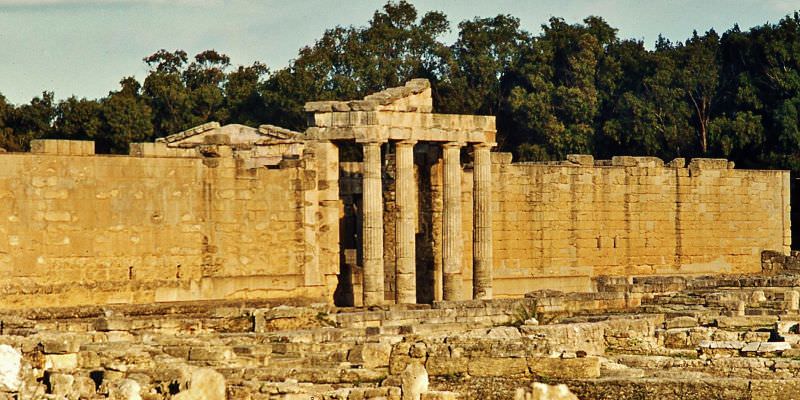
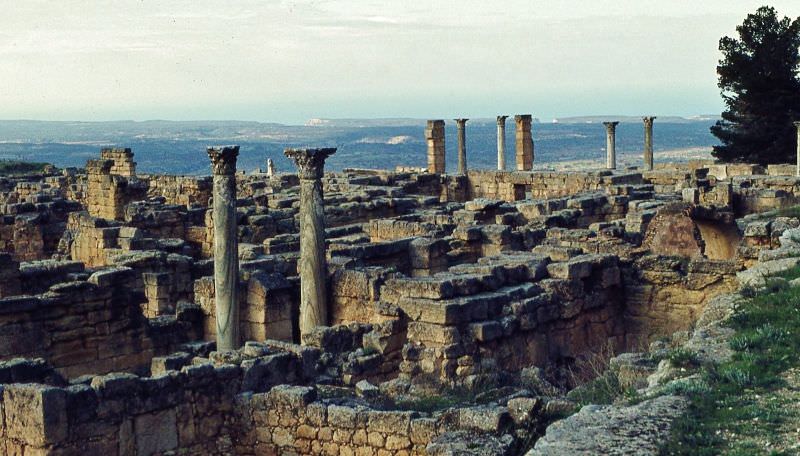
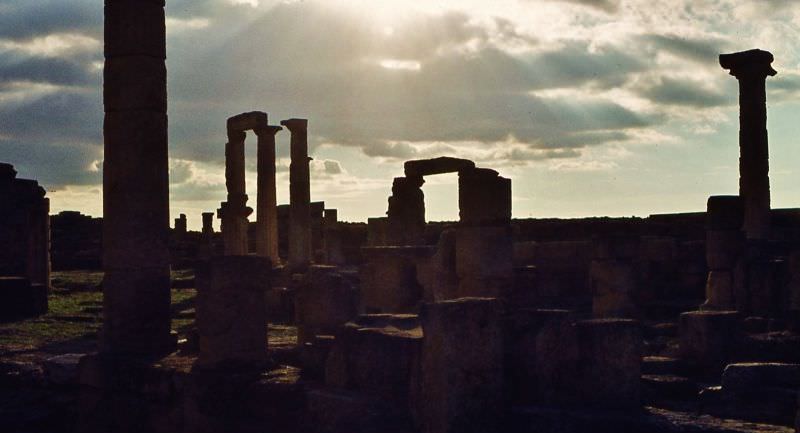
The ruins of Cyrene, located roughly 70 miles east of Benghazi, included temples, public squares, and colonnaded streets that dated back more than two thousand years. The Temple of Apollo stood as the site’s most iconic structure. From the heights of Cyrene, the Mediterranean coast was visible far in the distance, a reminder of how strategically this ancient city had been placed by its Greek founders.
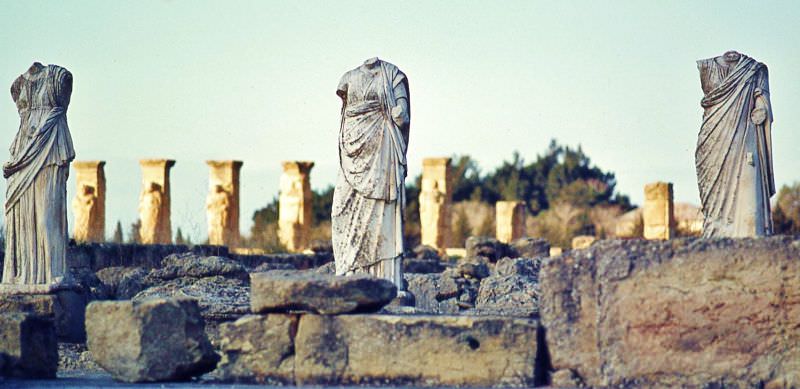
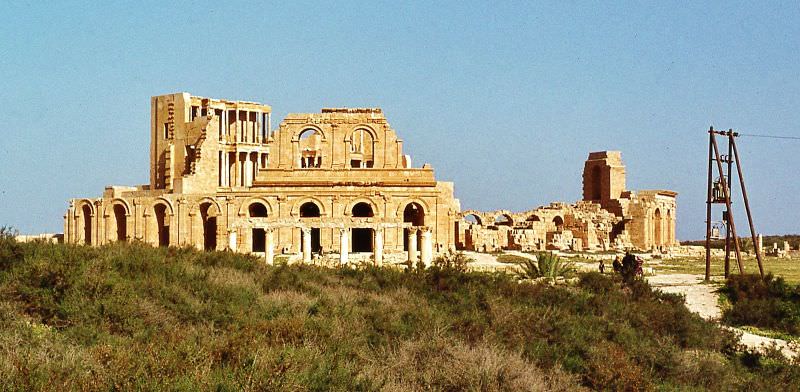
On Libya’s western coast stood another set of ancient ruins: Leptis Magna. Once one of the most important cities of the Roman Empire, Leptis Magna was the birthplace of Emperor Septimius Severus. Its amphitheatre, still largely intact in the 1970s, gave visitors a direct sense of the scale and ambition of Roman-era construction. The stone seating, the stage, and the surrounding architecture remained in remarkable condition after nearly two millennia.
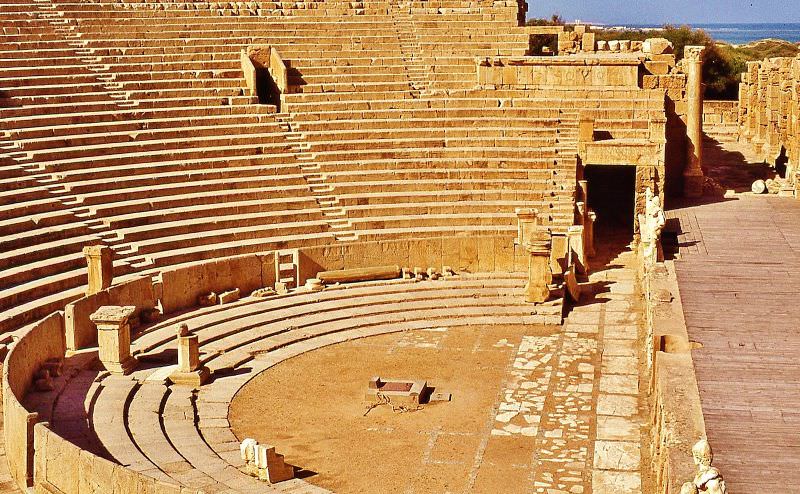
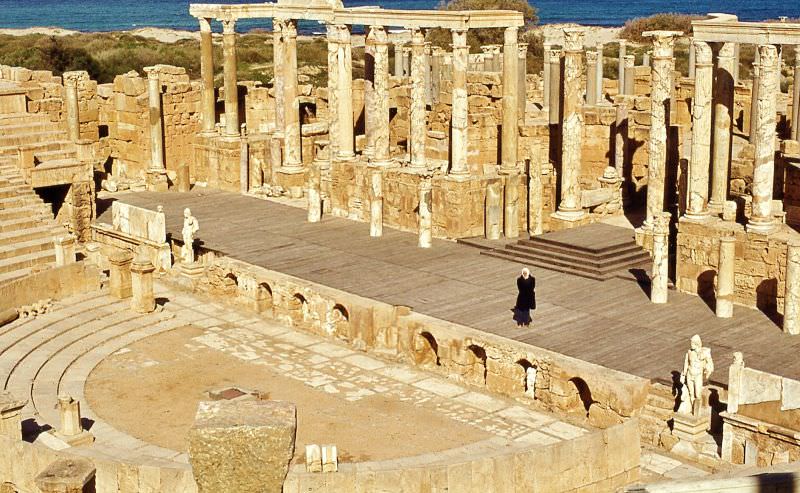
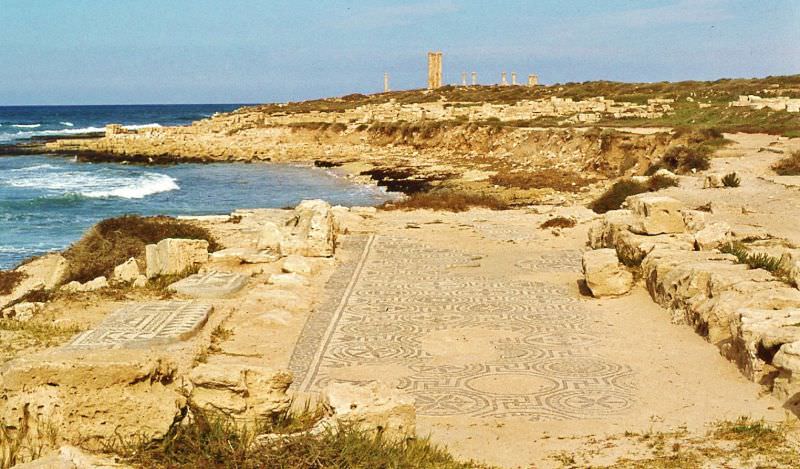
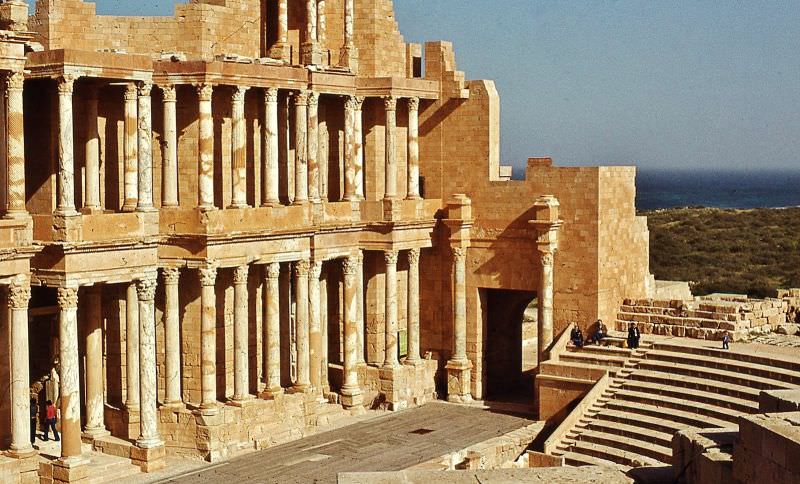
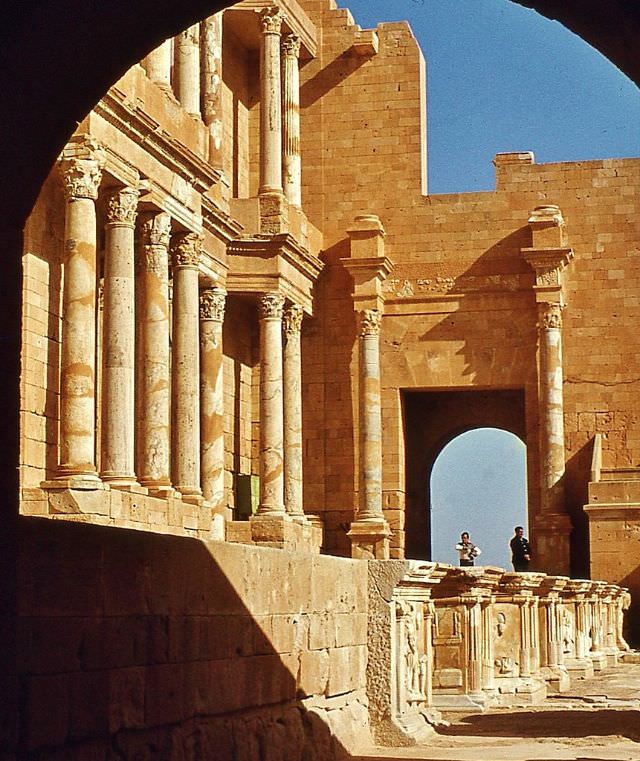
Further along the coast, the ancient city of Sabratha contained one of the most spectacular Roman theatres in North Africa. The theatre at Sabratha, built in the second century AD, featured a towering three-story stage facade decorated with columns and marble panels. In the 1970s, it was still used occasionally for performances, and its condition made it one of Libya’s most visited ancient sites.
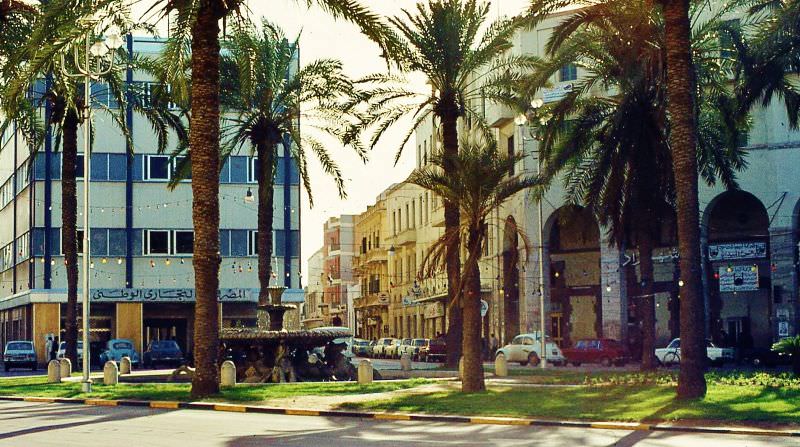
Tripoli, the capital, showed a more polished face of 1970s Libya. The Corniche in Tripoli ran along the seafront and was flanked by modern buildings and colonial-era architecture. The city’s streets were busier and more commercially developed than Benghazi’s, reflecting its status as the country’s political and economic center. In 1973, the Gaddafi government nationalized the petroleum industry, putting Libya’s most valuable resource firmly under state control, and Tripoli became the hub of that apparatus.
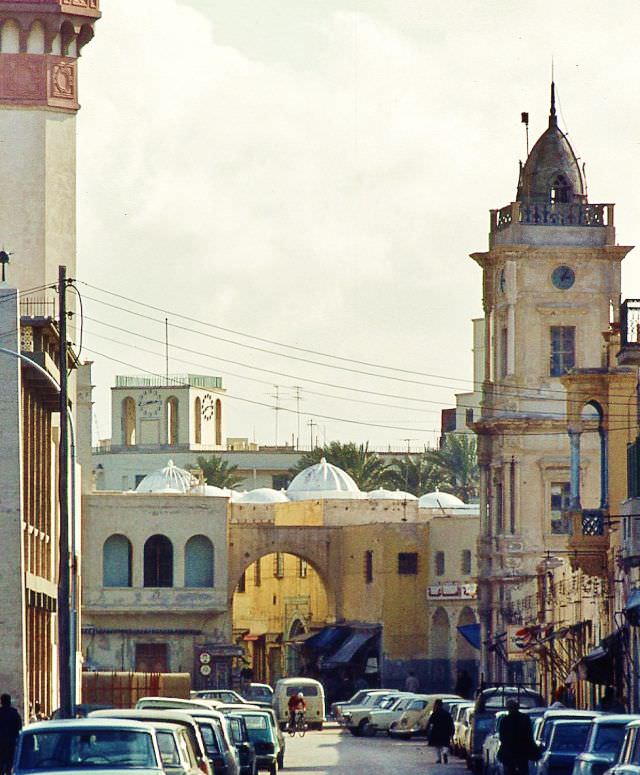
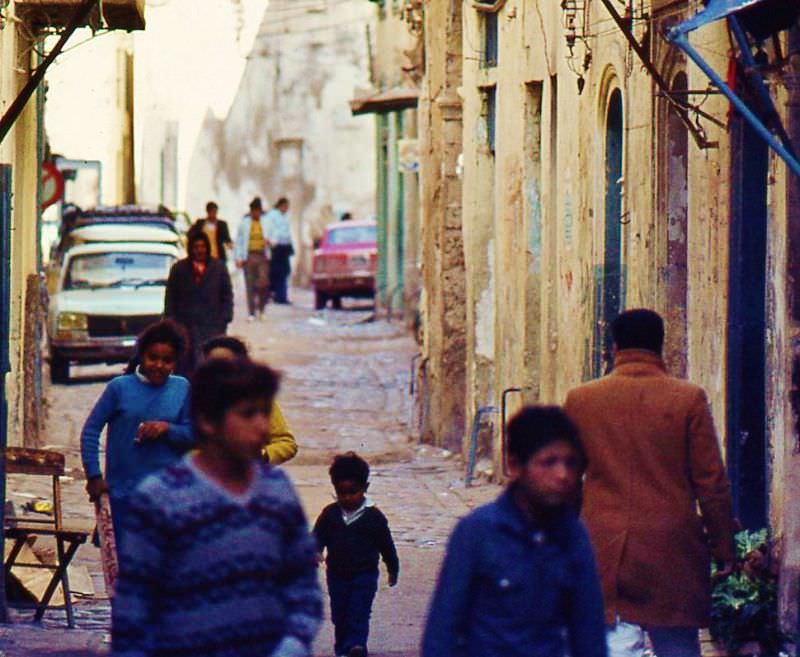
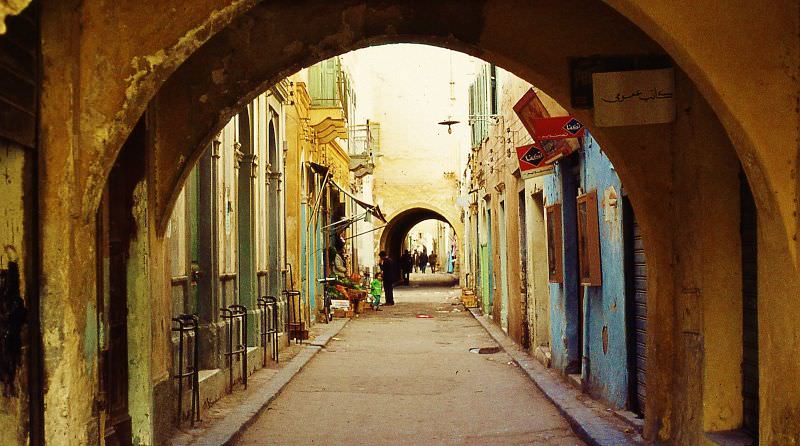
At street level in Tripoli, daily commerce carried on much as it did in Benghazi. The old souk near the medina was a dense network of covered lanes where vendors sold produce, textiles, and household items. The entrance to the souk opened onto a different world from the modern city outside — dim, crowded, and filled with the sounds of bargaining. Nearby, the Italian Bank building stood as another reminder of Libya’s colonial past, its facade unchanged from the era of Italian rule.
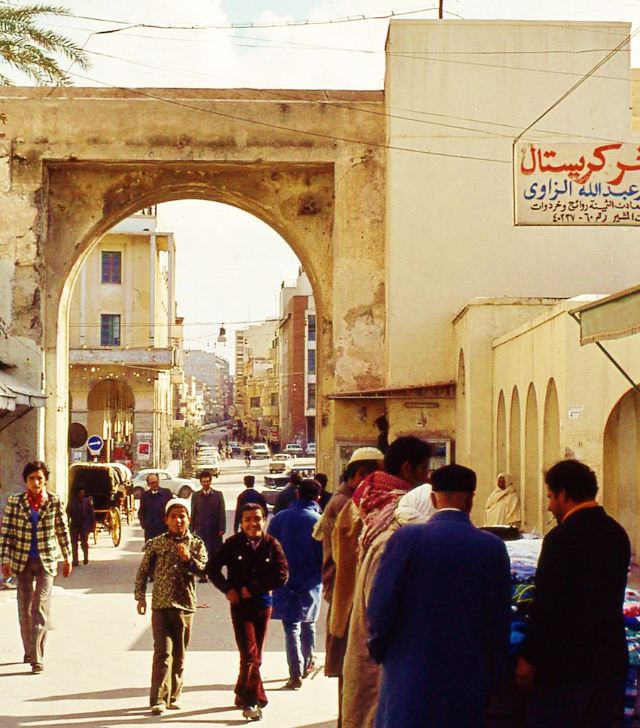
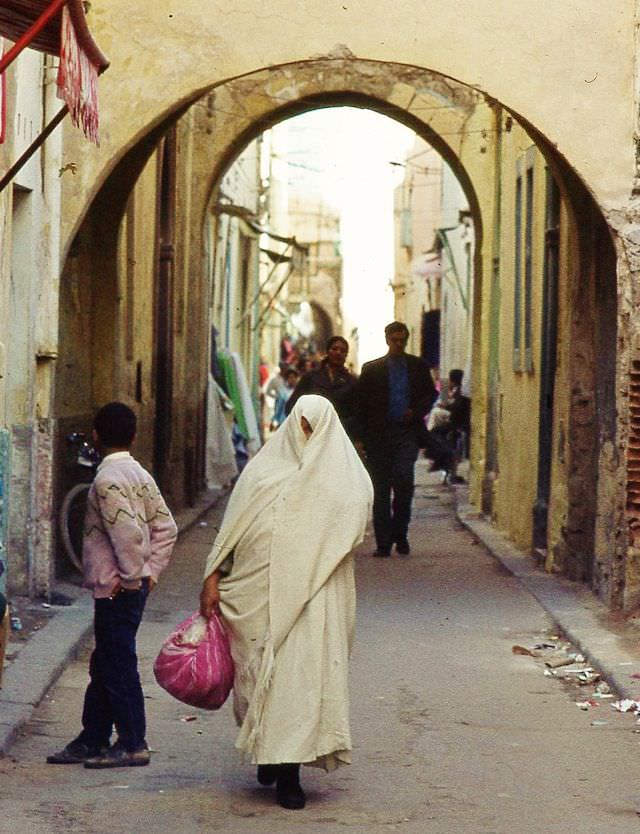
Inside the old souk, sellers arranged whatever goods they had — a few oranges, a bunch of carrots — on tables or on the ground. The market reflected the reality of an economy still in transition, where traditional small-scale trade existed alongside the government’s large-scale spending programs. Tripoli’s castle, the Red Castle or Assaraya al-Hamra, dominated the seafront skyline and had served as the seat of Libyan governance across multiple eras of rule.
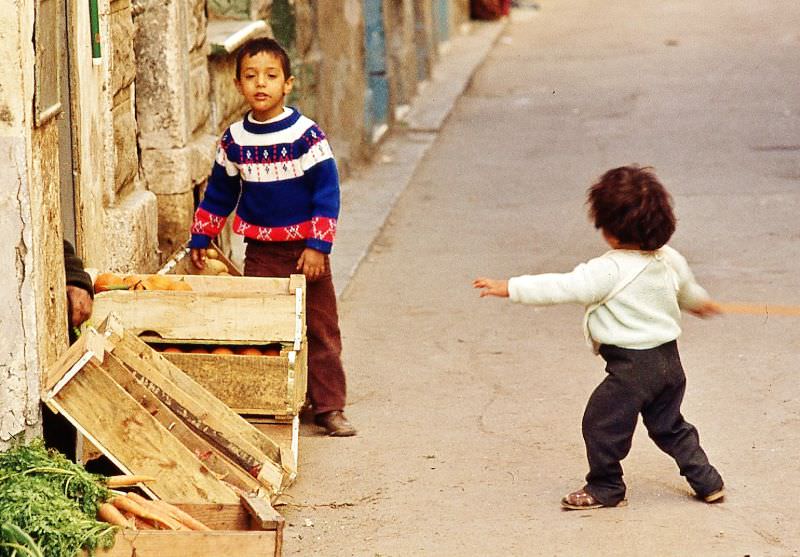
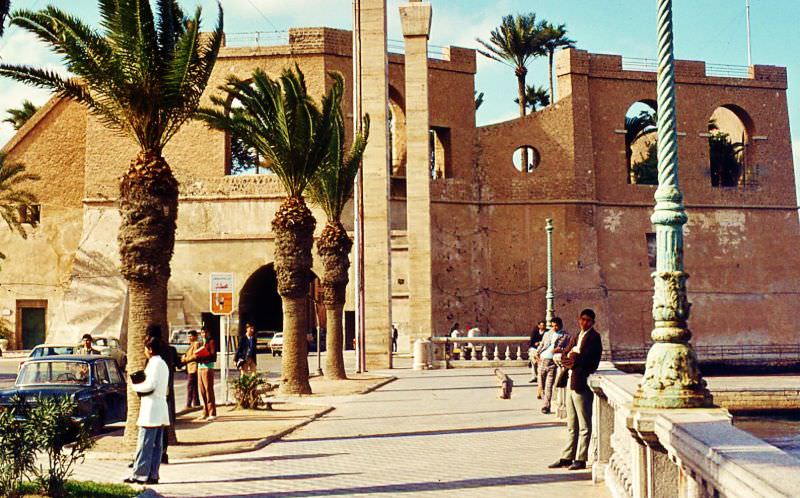
The old souk of Tripoli and the city’s broader town center captured the dual nature of Libya in the 1970s — a country sitting on enormous oil wealth, pushing forward with modernization, while its streets, markets, and ancient stones told the story of a much longer and more layered history. These photographs document that specific moment, when a country in rapid transition still carried the visible traces of everything it had been before.