
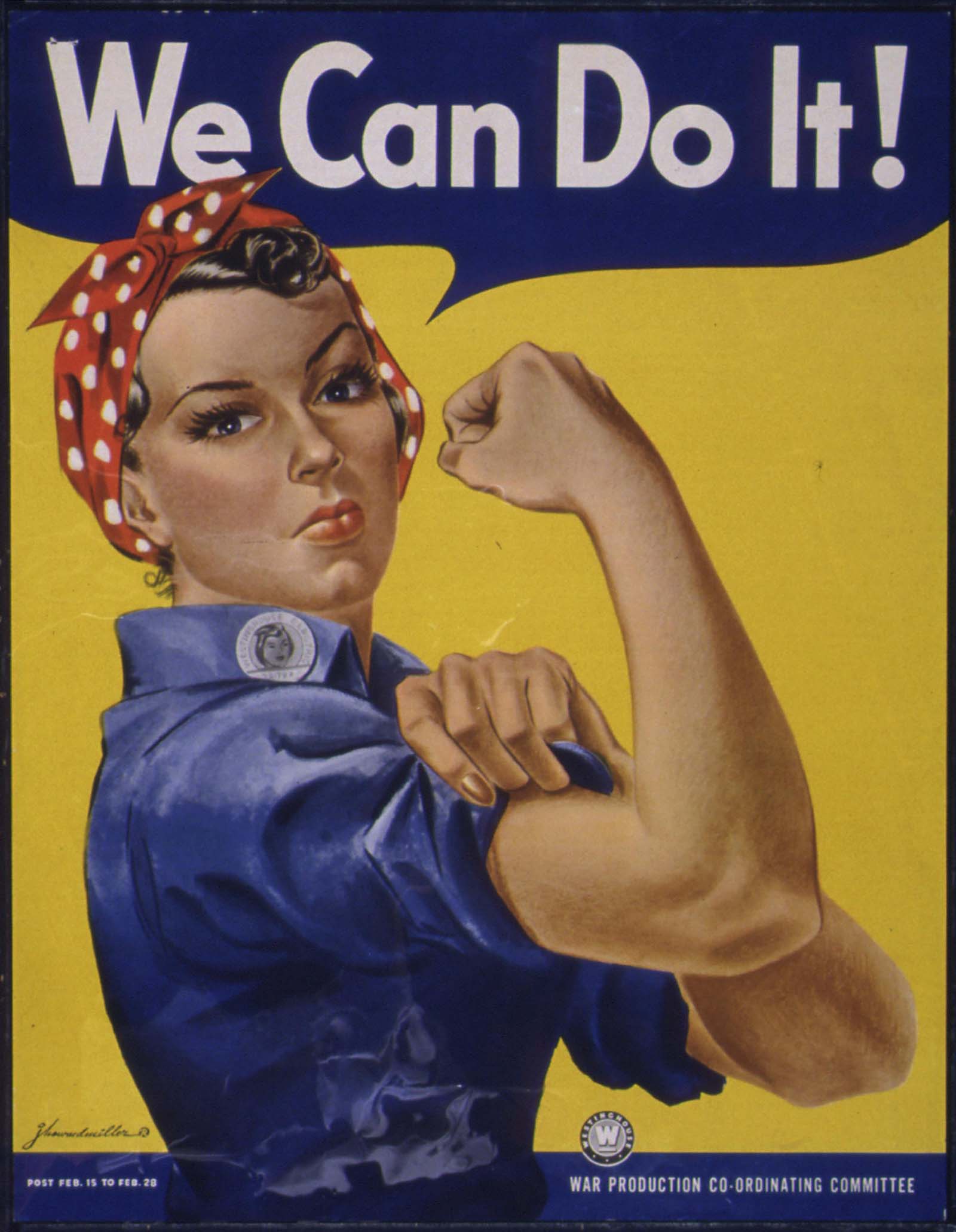
When the United States entered World War II, millions of men left their jobs to enlist. Factories that had once been filled almost entirely with male workers suddenly had far too few hands. Women stepped in to fill that gap — and they did so in numbers that no one had anticipated. The female share of the U.S. workforce climbed from 27 percent in 1940 to nearly 37 percent by 1945. By that same year, close to a quarter of all married women held jobs outside the home.
The aircraft industry saw the most dramatic shift of any sector. In the years before the war, women made up just 1 percent of aviation’s workforce. By 1943, that number had surged to 65 percent — more than 310,000 women building the planes that fought the war. Plants in California, Ohio, Tennessee, and across the country ran around the clock, and women were at the machines for every shift.
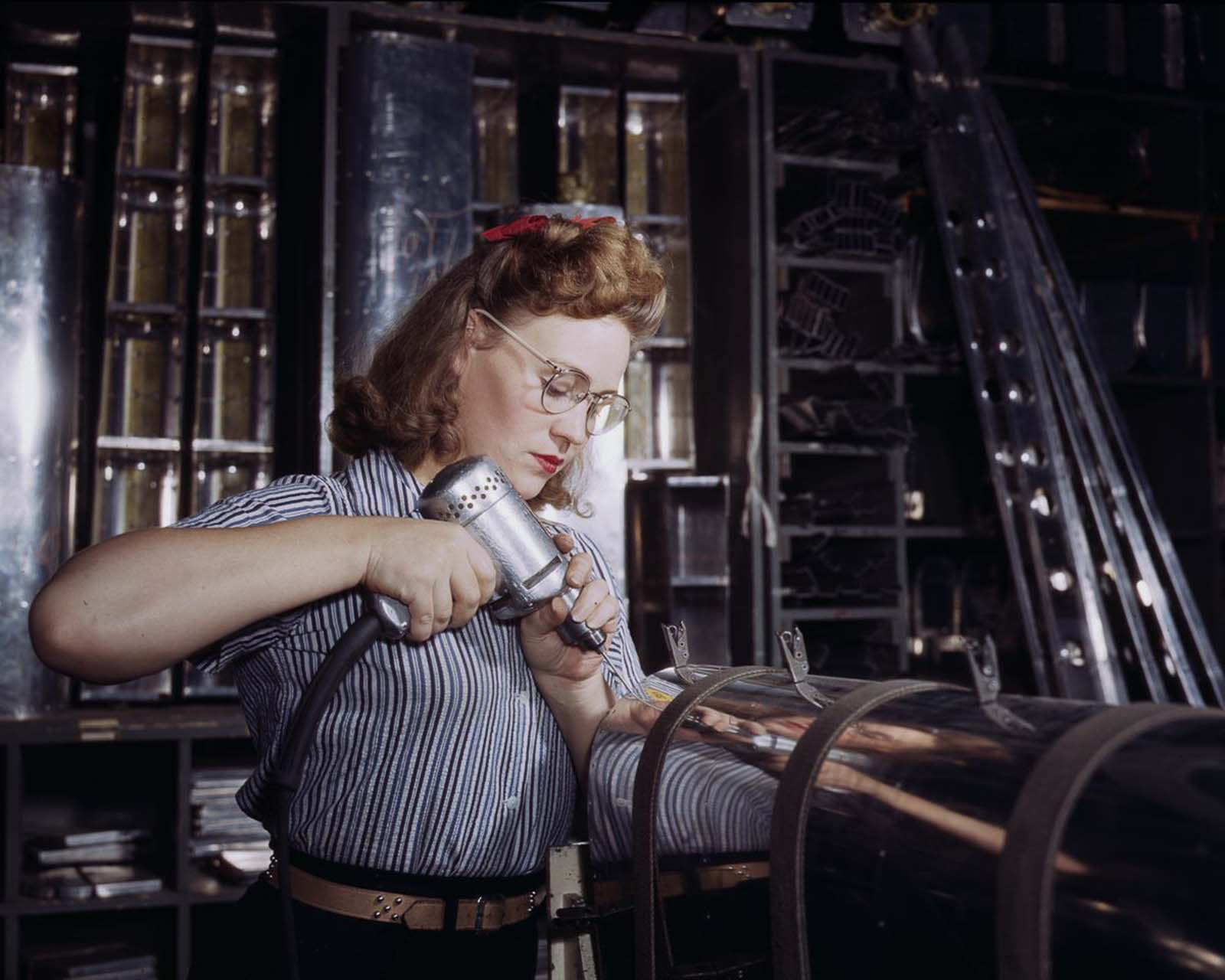
Riveting was one of the first jobs women were assigned, and they took to it quickly. Factory supervisors noted that the skill set transferred well from sewing — threading, aligning, fastening — and women who had spent years assembling garments found the physical logic of riveting familiar. Training courses were set up specifically for women who had never worked in a factory, including recent high school graduates and homemakers entering the workforce for the first time.
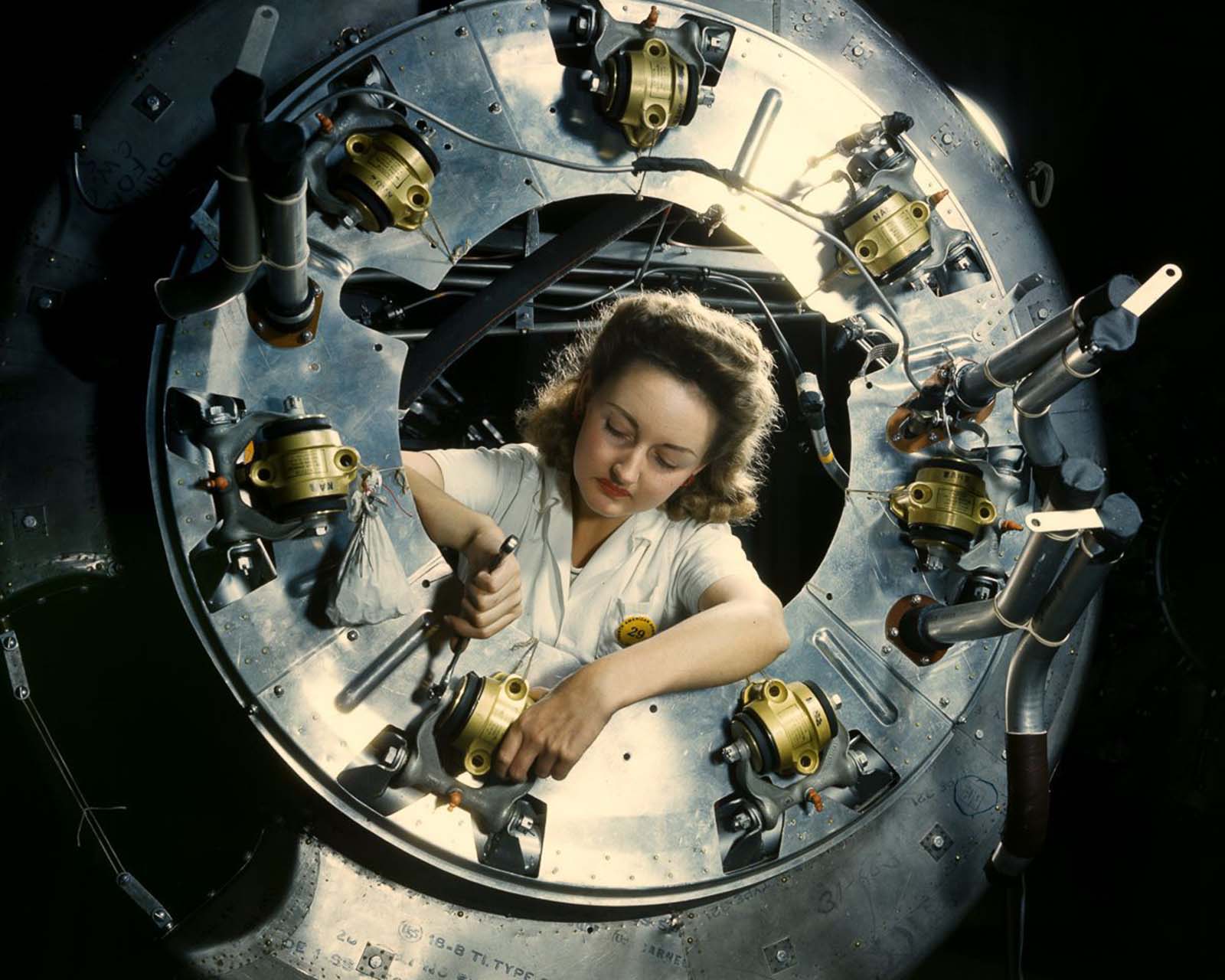
North American Aviation’s plant in Inglewood, California, was one of the largest producers of military aircraft in the country. Workers there built the B-25 Mitchell bomber and the P-51 Mustang fighter. Photographer Alfred T. Palmer documented the plant in vivid color in 1942, capturing women at every stage of production — from drilling rivet holes in frame members to assembling cockpit shells and wing sections.
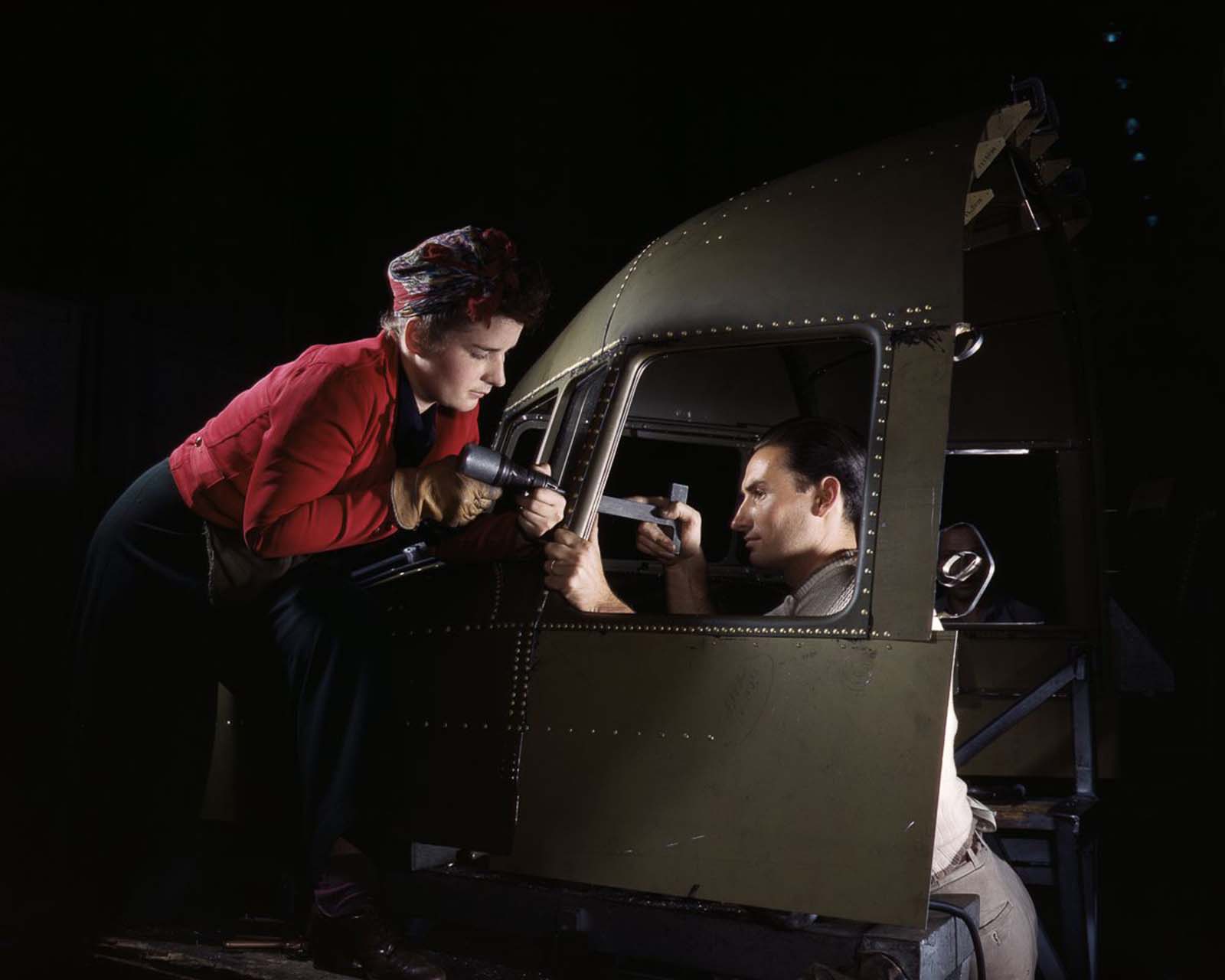
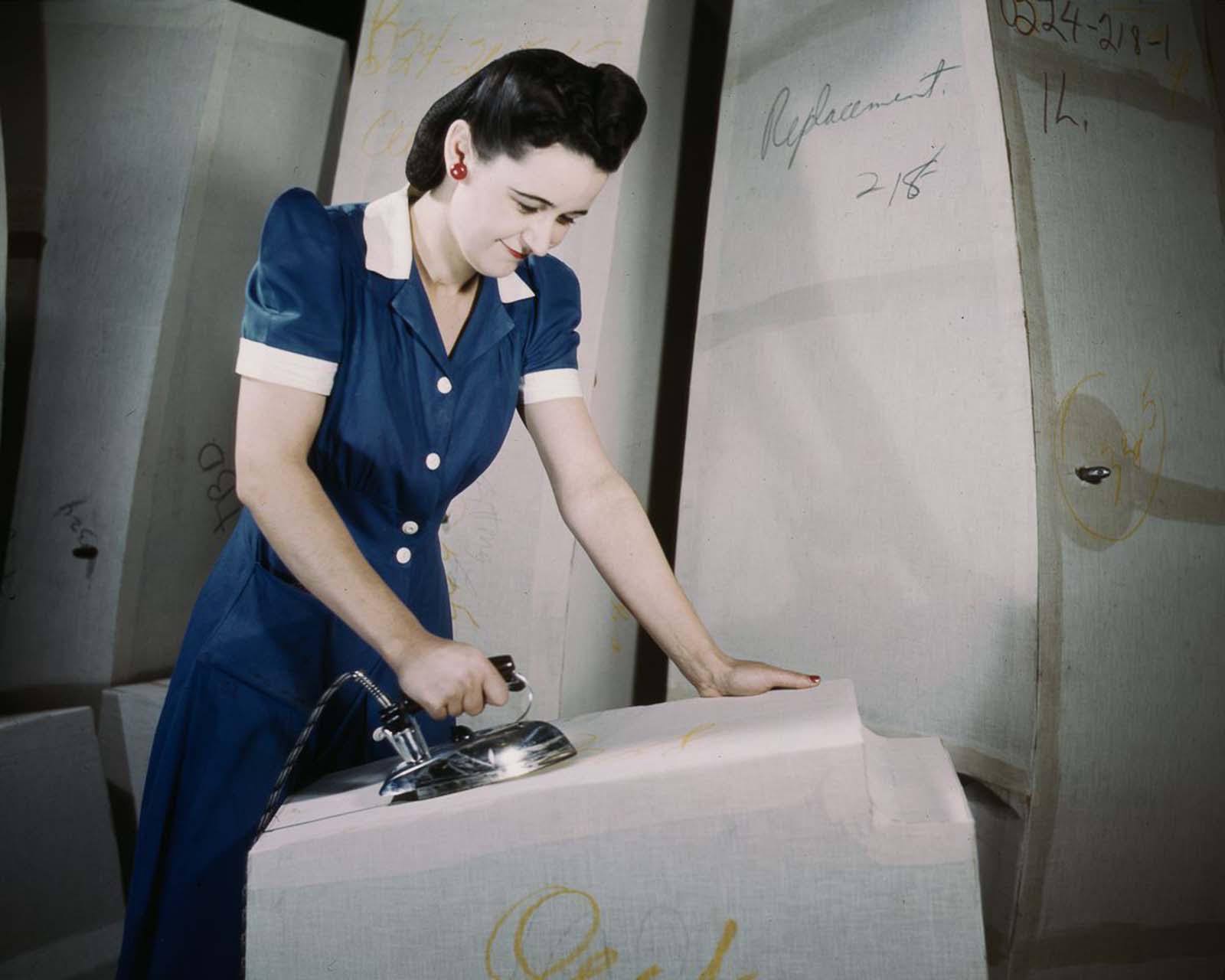
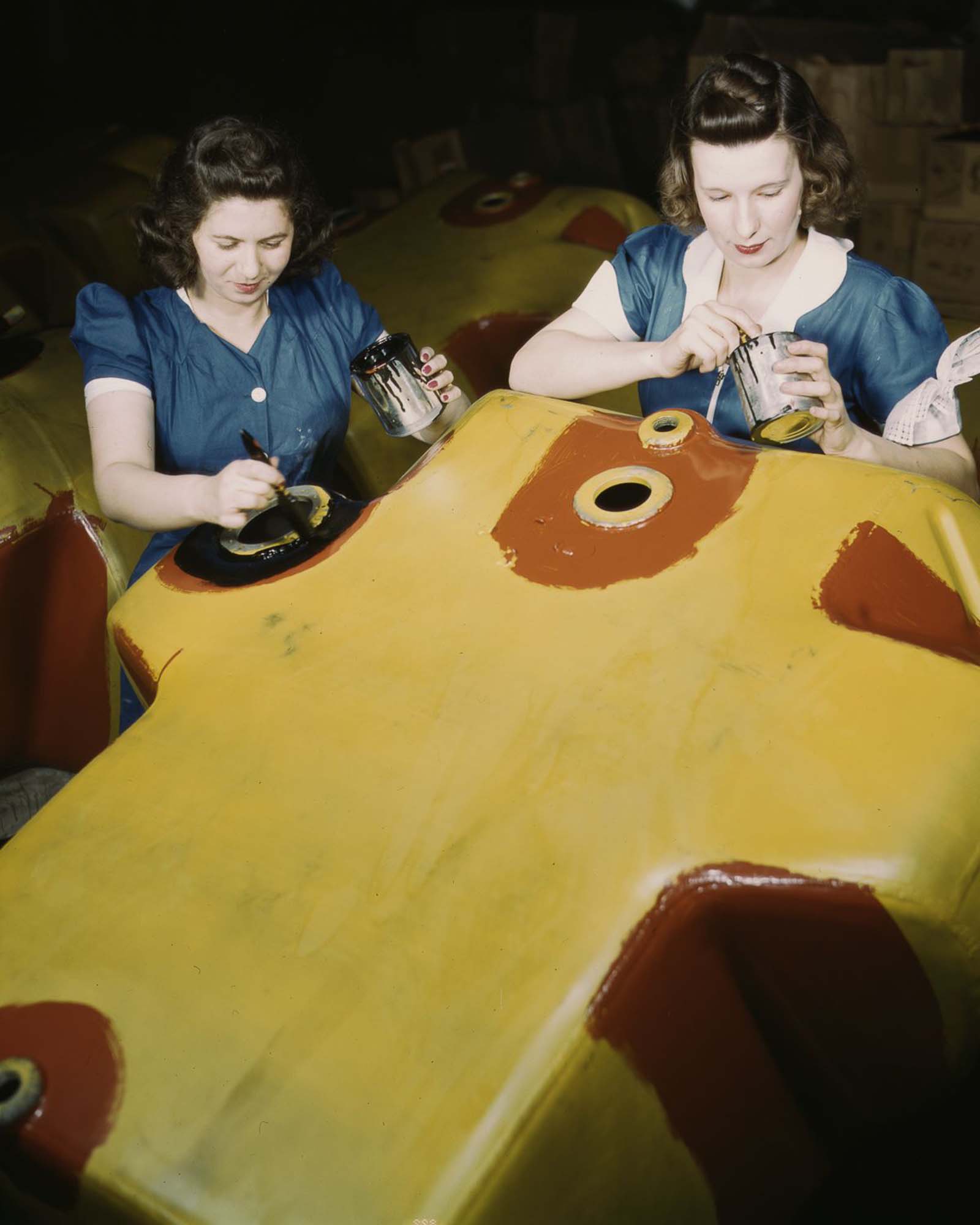
Aviation wasn’t the only industry where women took on essential roles. In Akron, Ohio, the Goodyear Tire and Rubber Company and its aviation division, Goodyear Aircraft Corporation, employed women in both manufacturing and technical roles as early as 1941. Workers there produced self-sealing fuel tanks — a critical safety feature that prevented bombers from exploding when hit by enemy fire — along with other aircraft components.
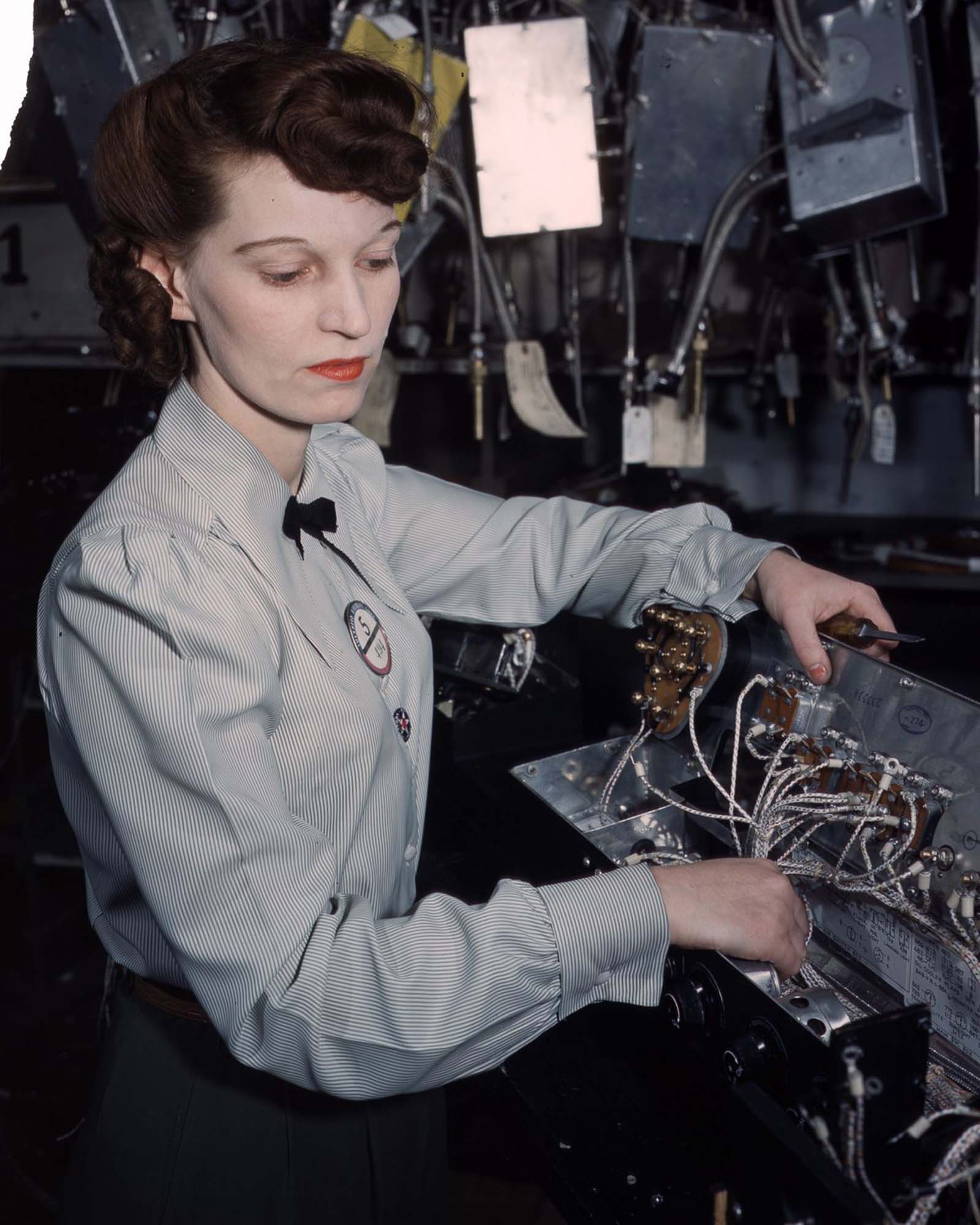
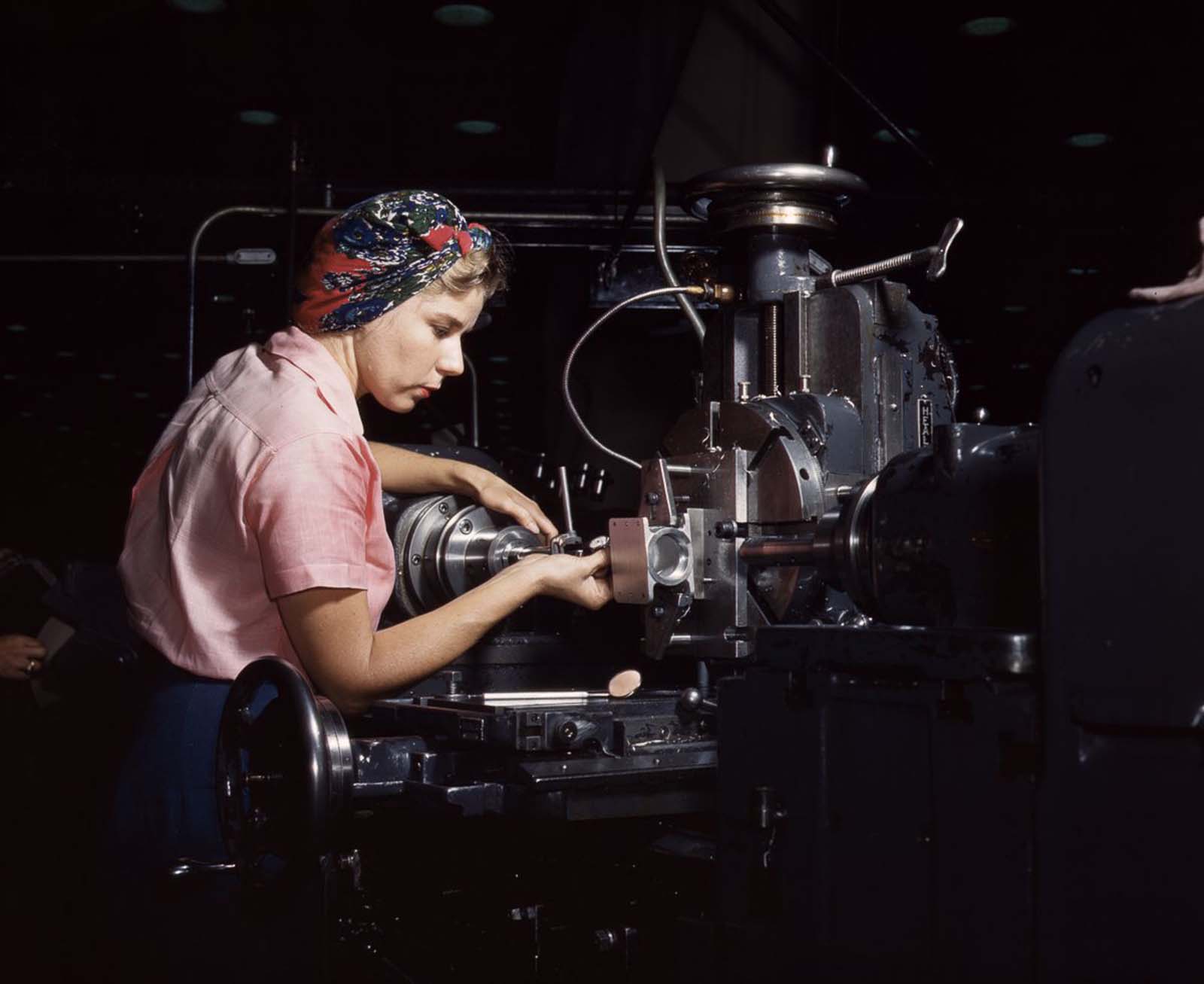
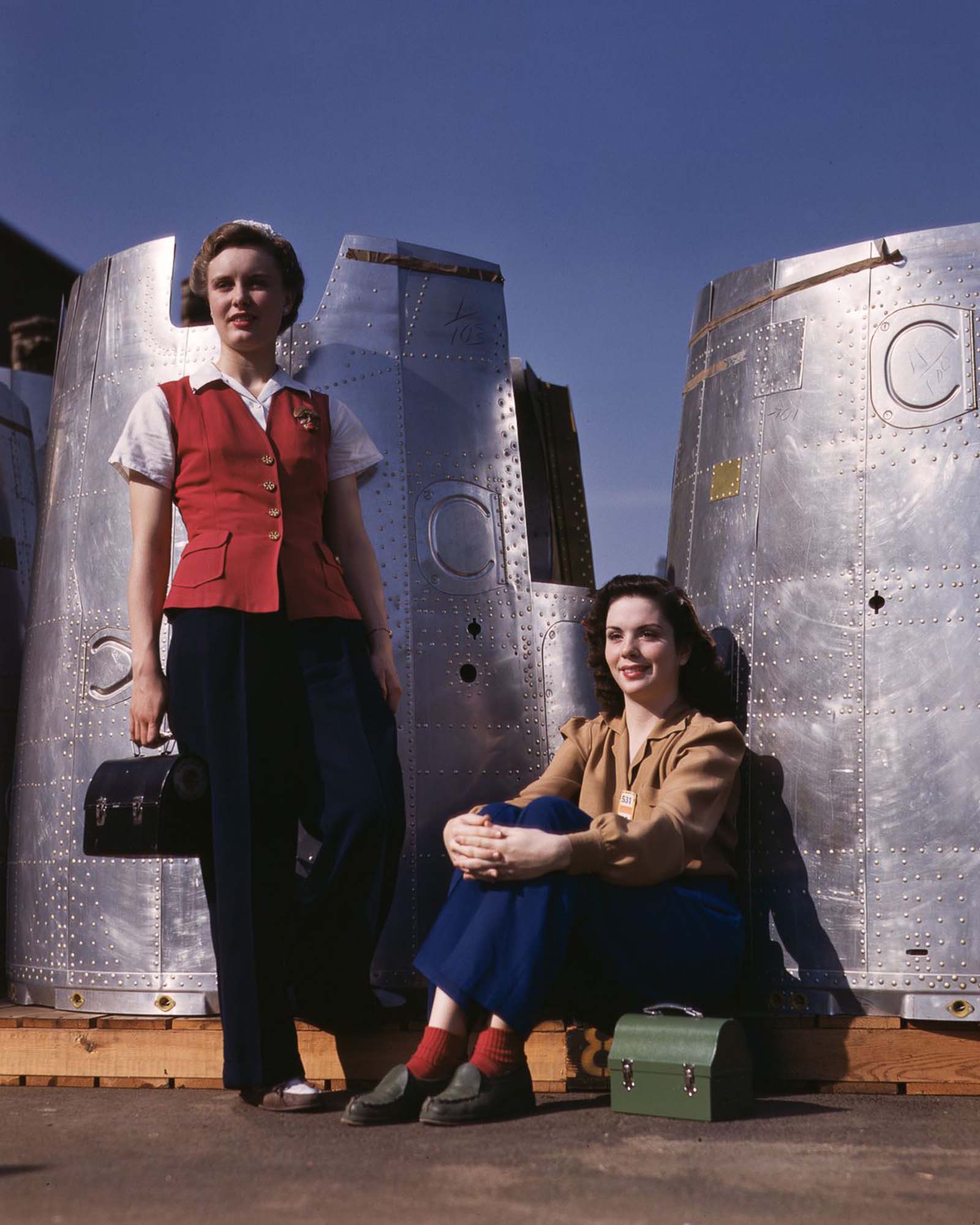
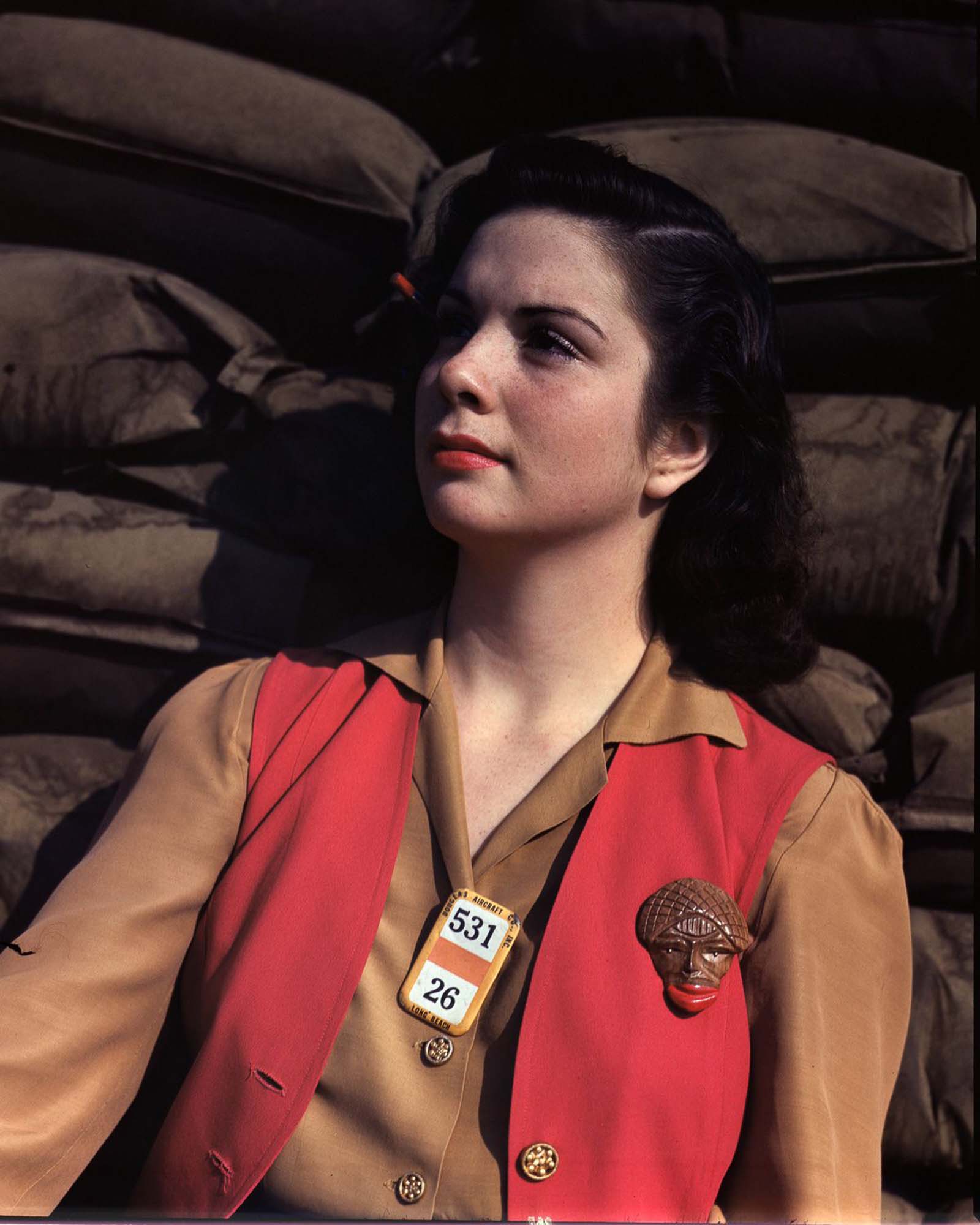
At the Douglas Aircraft Company plant in Long Beach, California, women worked on some of the most complex parts of military aircraft. Inspectors checked wing components on C-47 transport planes, machinists operated precision equipment, and electrical workers handled intricate wiring inside bomber fuselages. Some painted radium onto the tiny markings of cockpit instrument panels so pilots could read them in complete darkness at altitude.
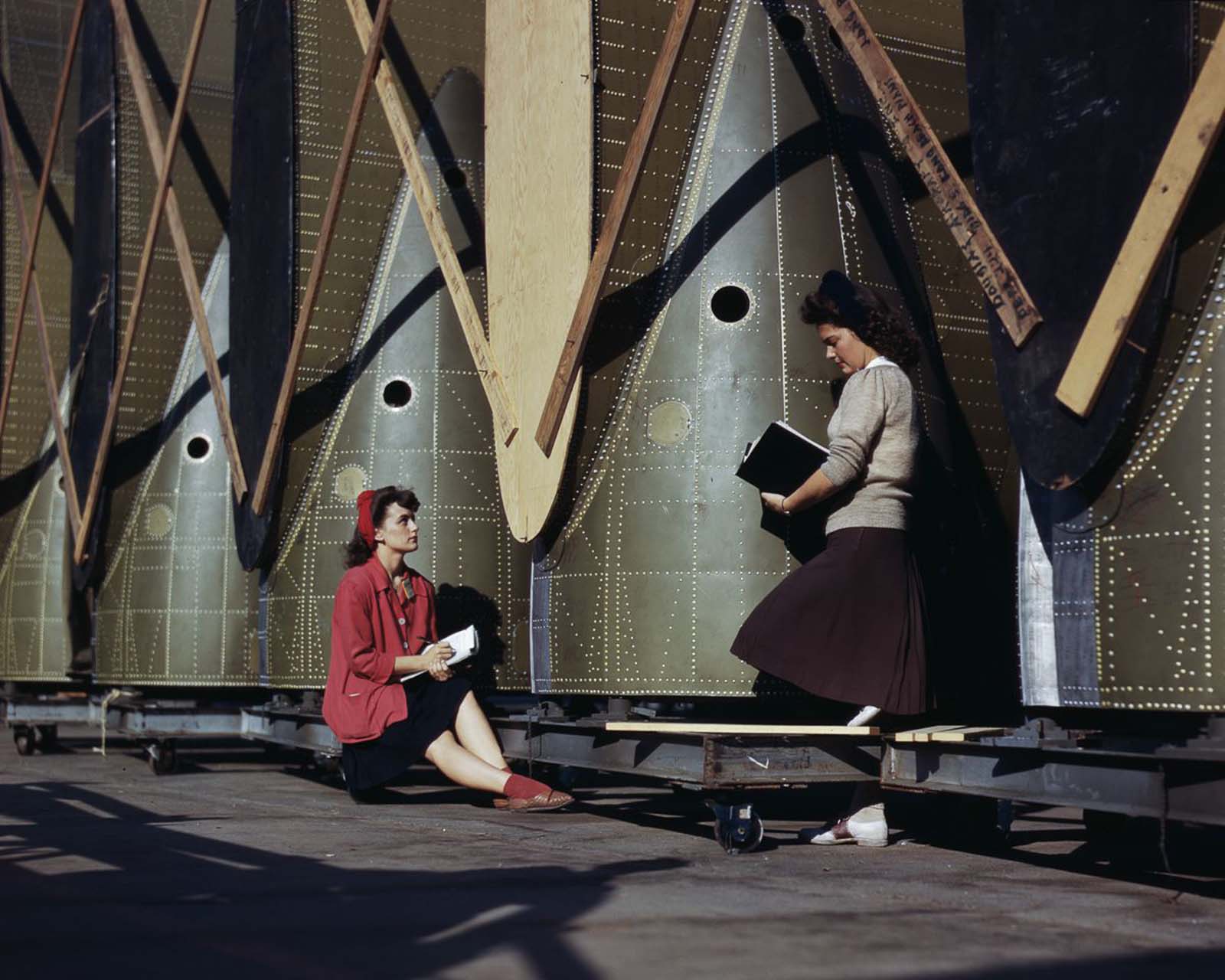
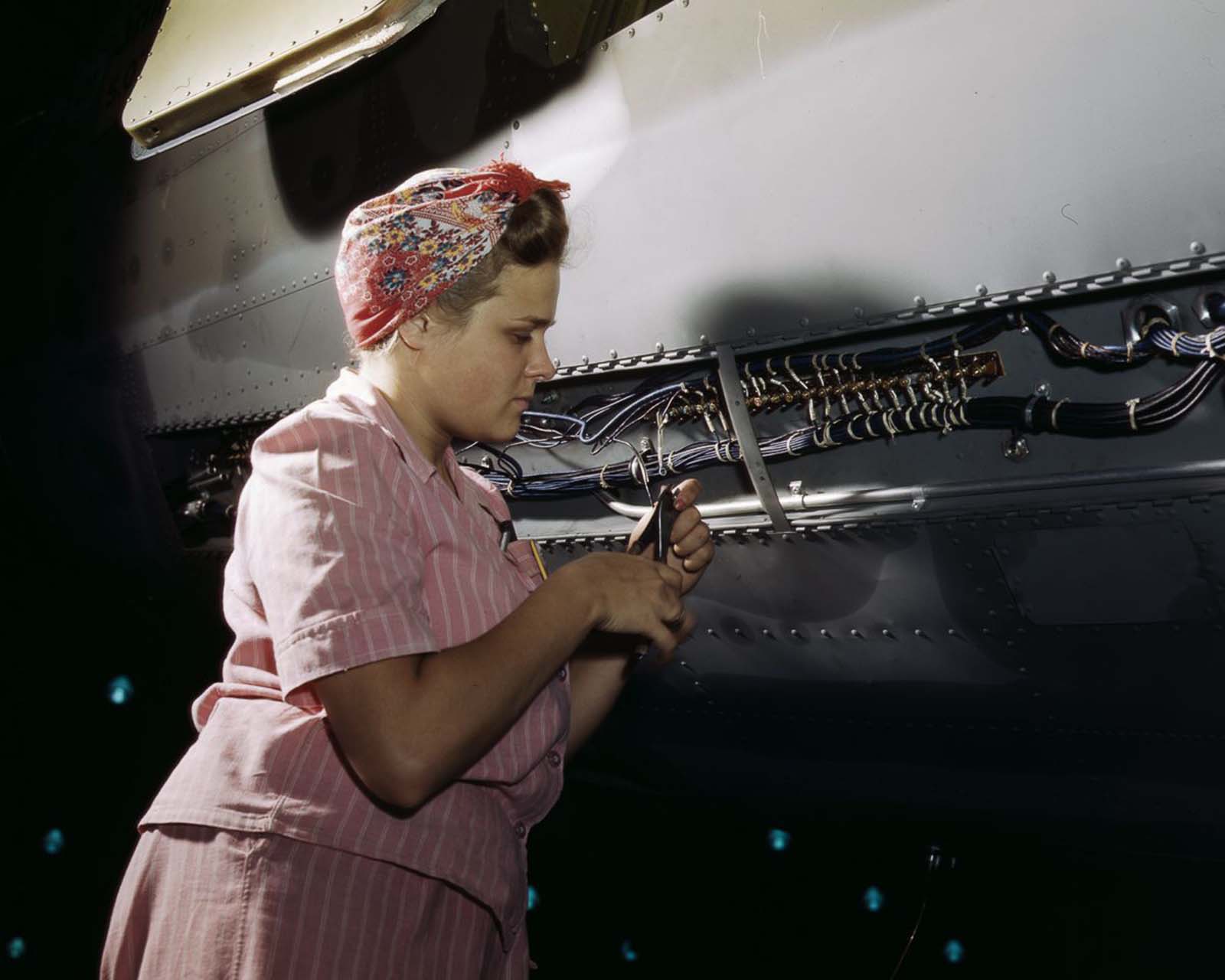
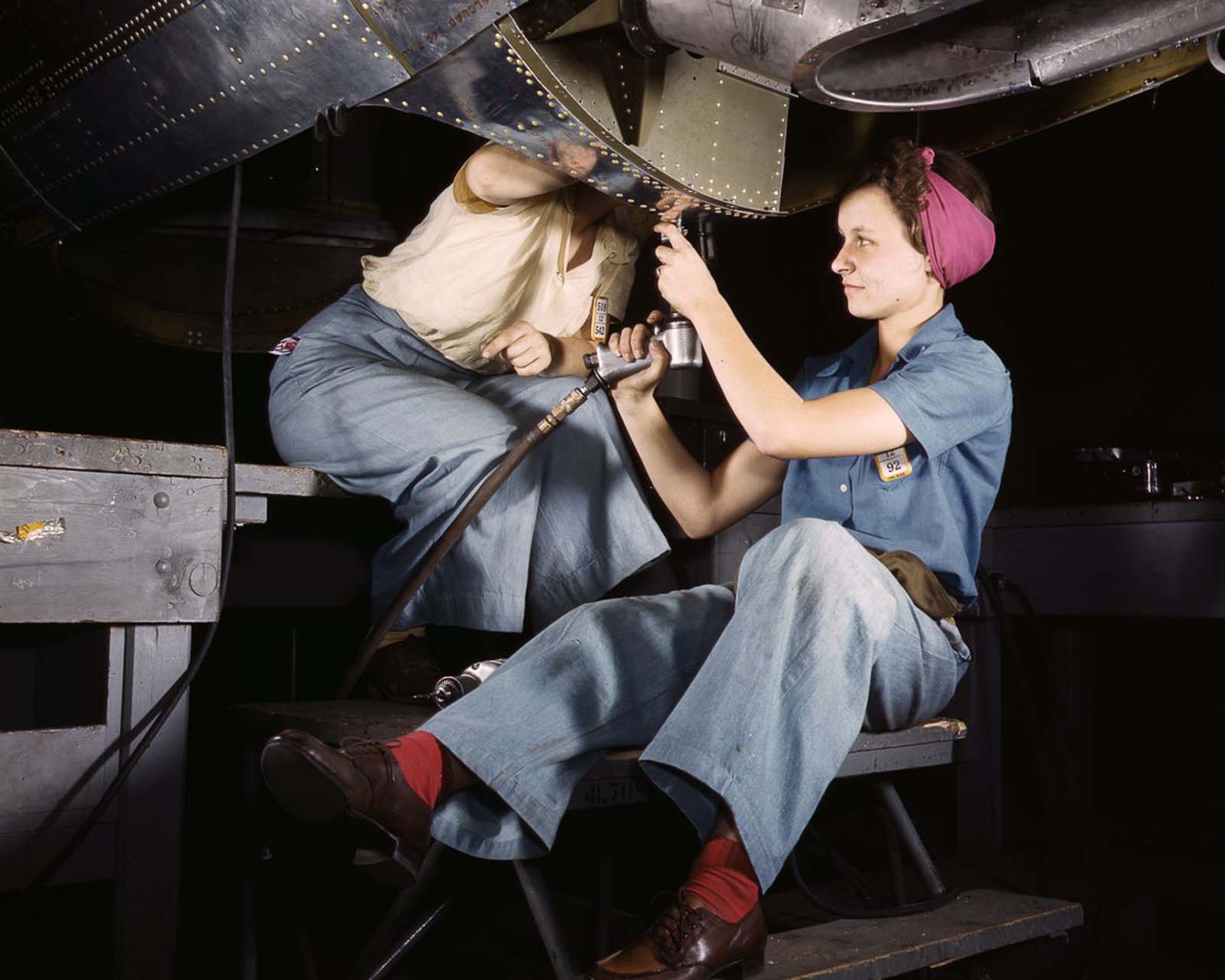
The work was physically demanding. Women crawled inside fuselages, climbed scaffolding around massive bomber airframes, and operated heavy machinery including hydraulic presses that stamped and cut metal parts. Others ran overhead cranes to move large plane components across factory floors. The jobs required strength, precision, and the ability to learn new technical skills under the pressure of wartime production quotas.
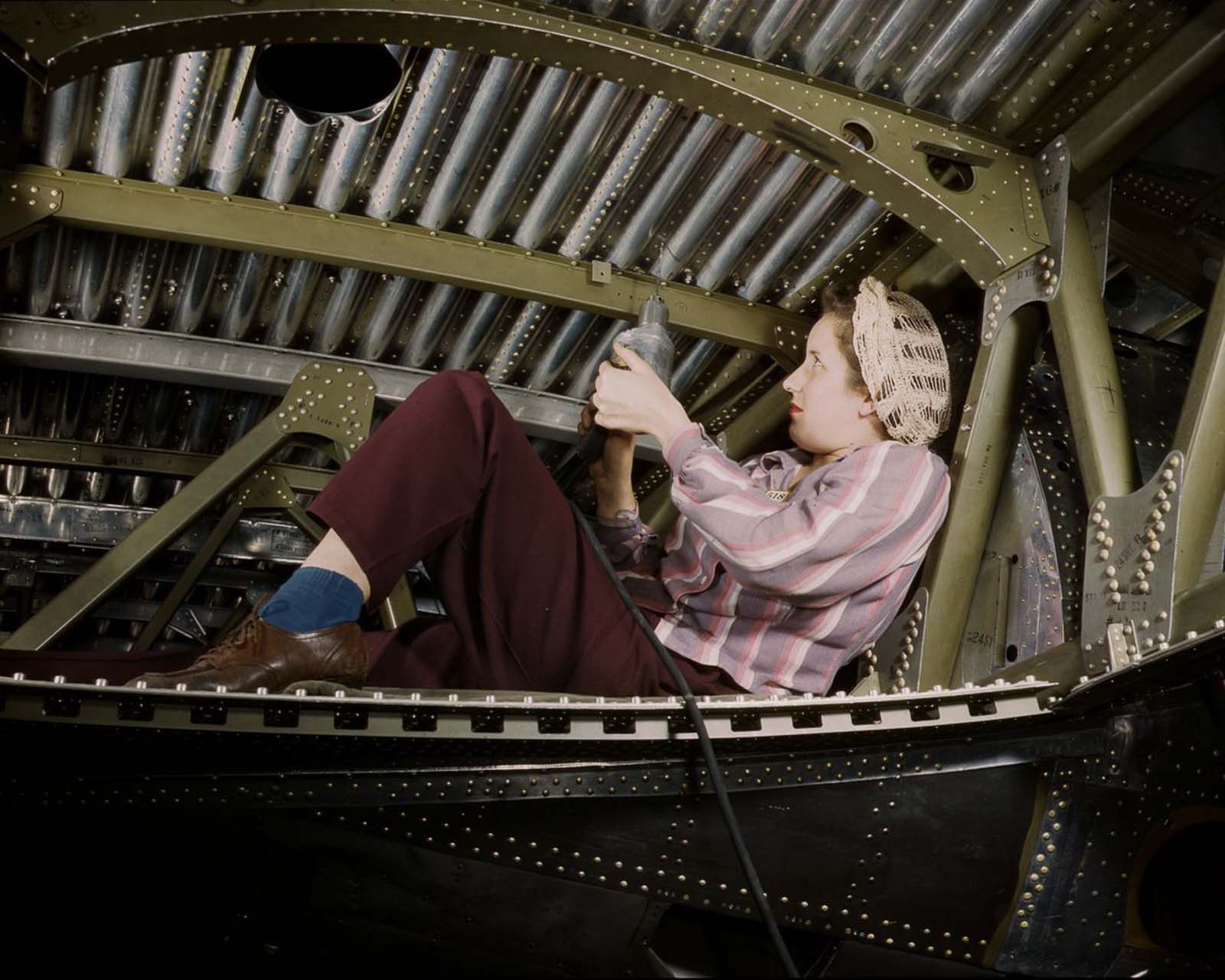
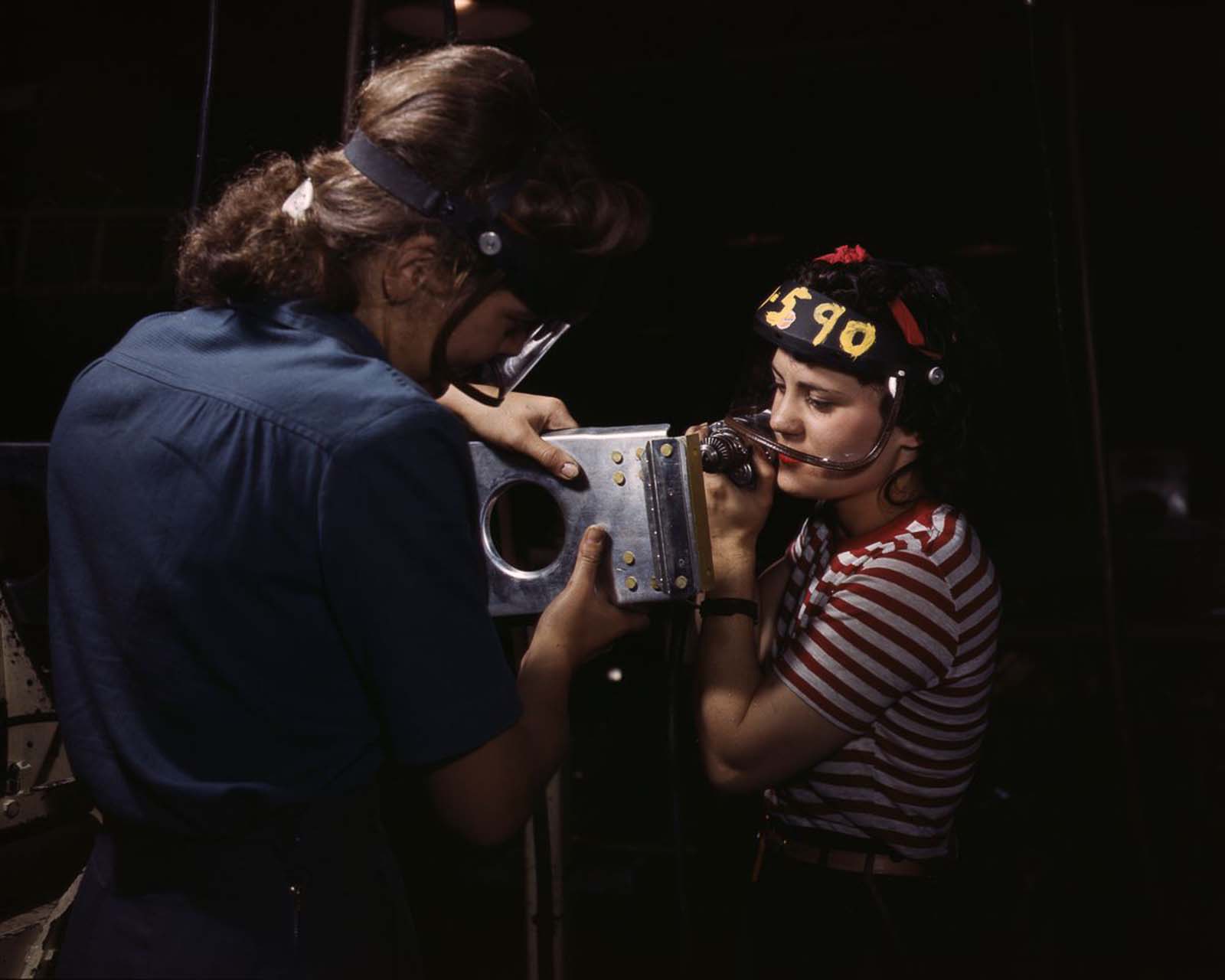
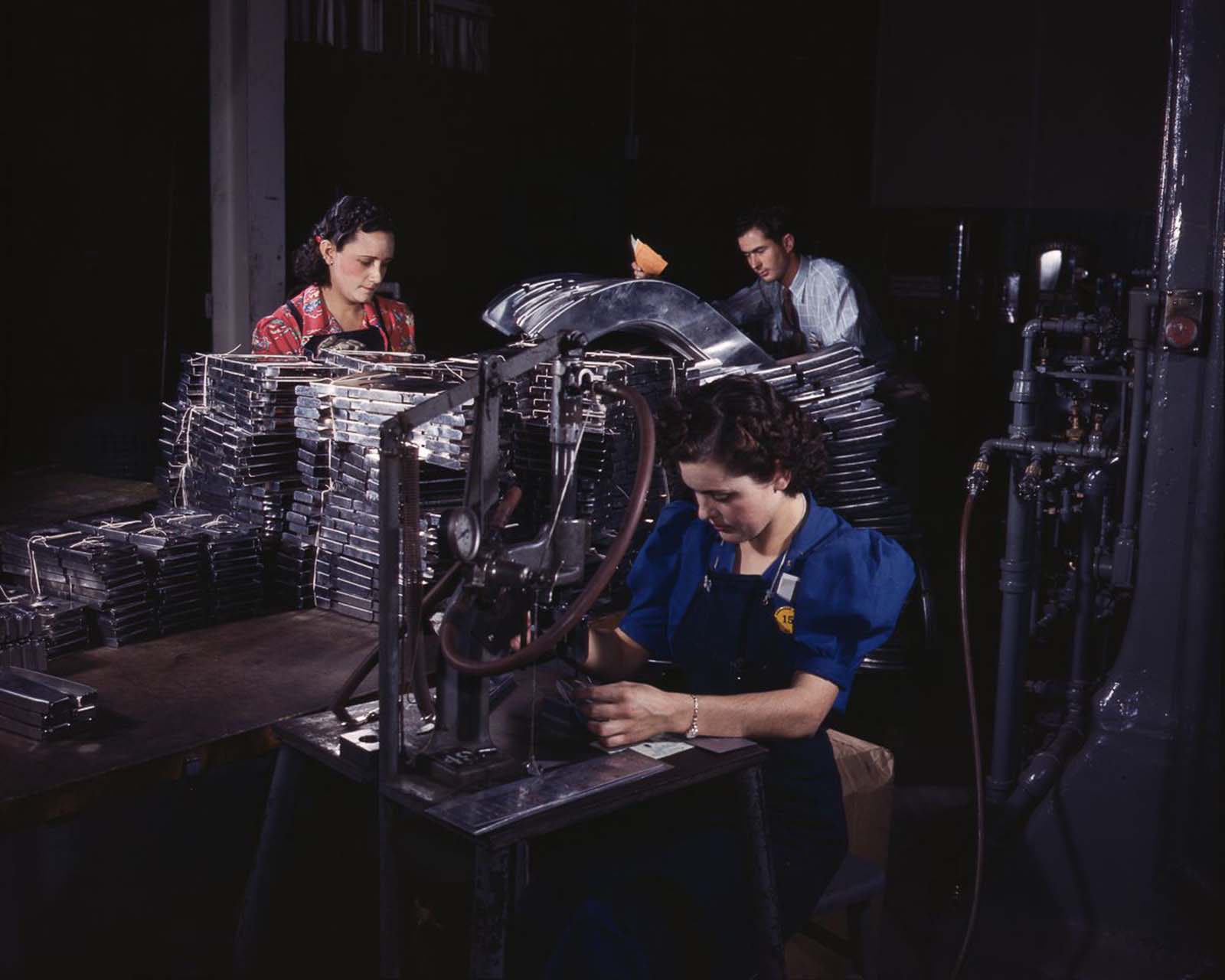
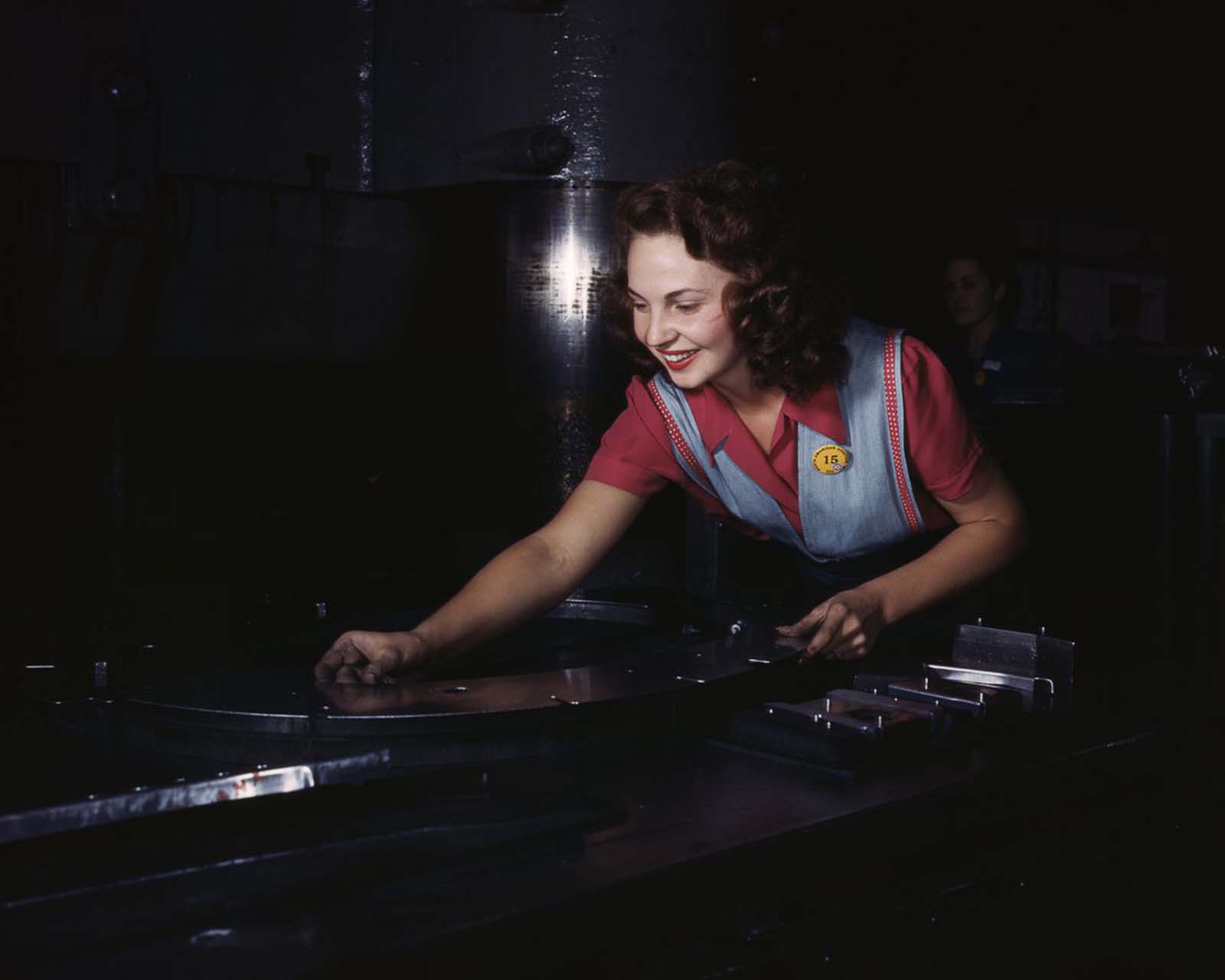
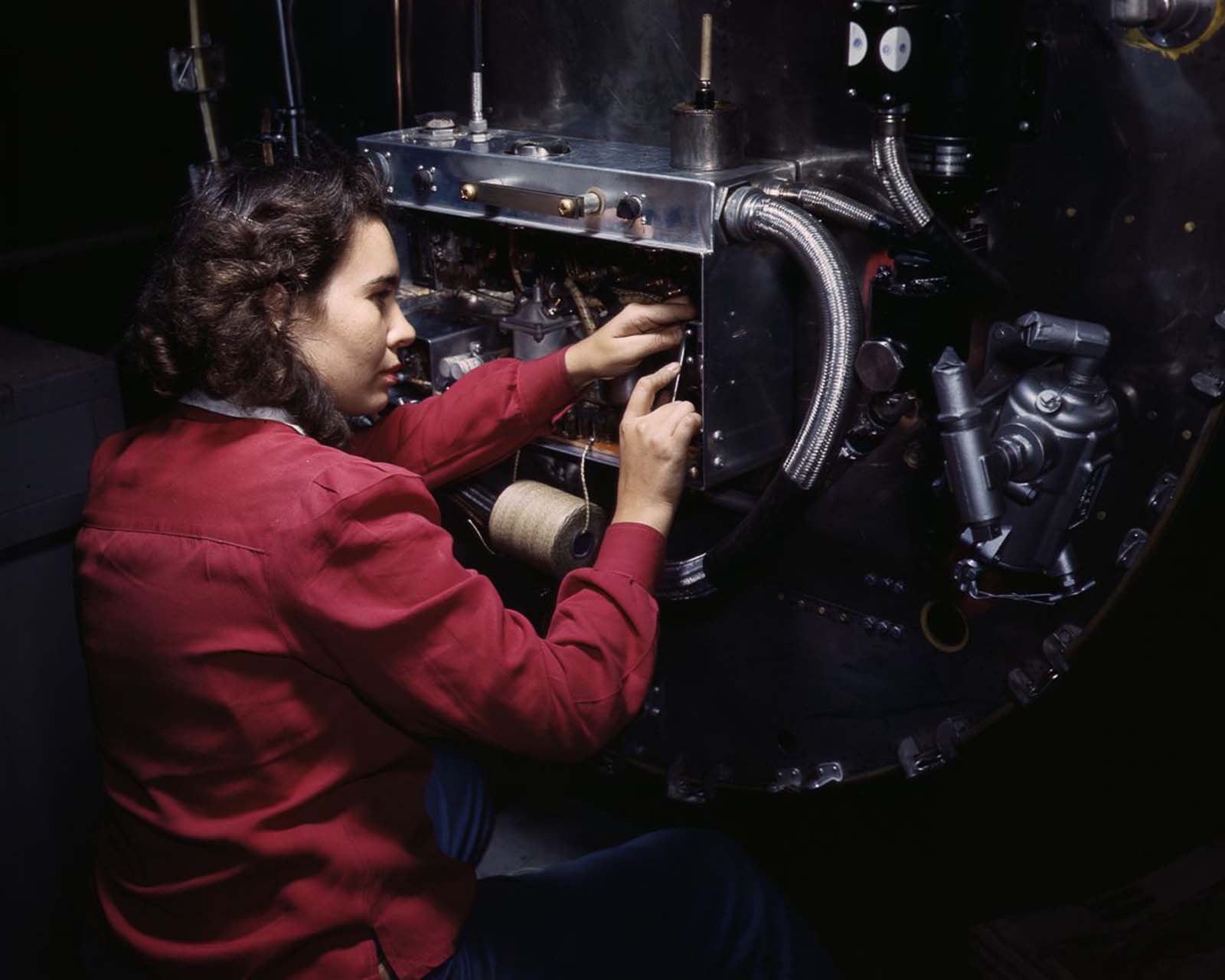
Quality control was just as important as production speed. Women inspectors examined finished components and flagged any part that didn’t meet specifications before an aircraft was cleared for flight. Those planes were then often ferried to military bases by female pilots of the Women Airforce Service Pilots (WASP) program, meaning women were involved at nearly every step — from the factory floor to the cockpit.
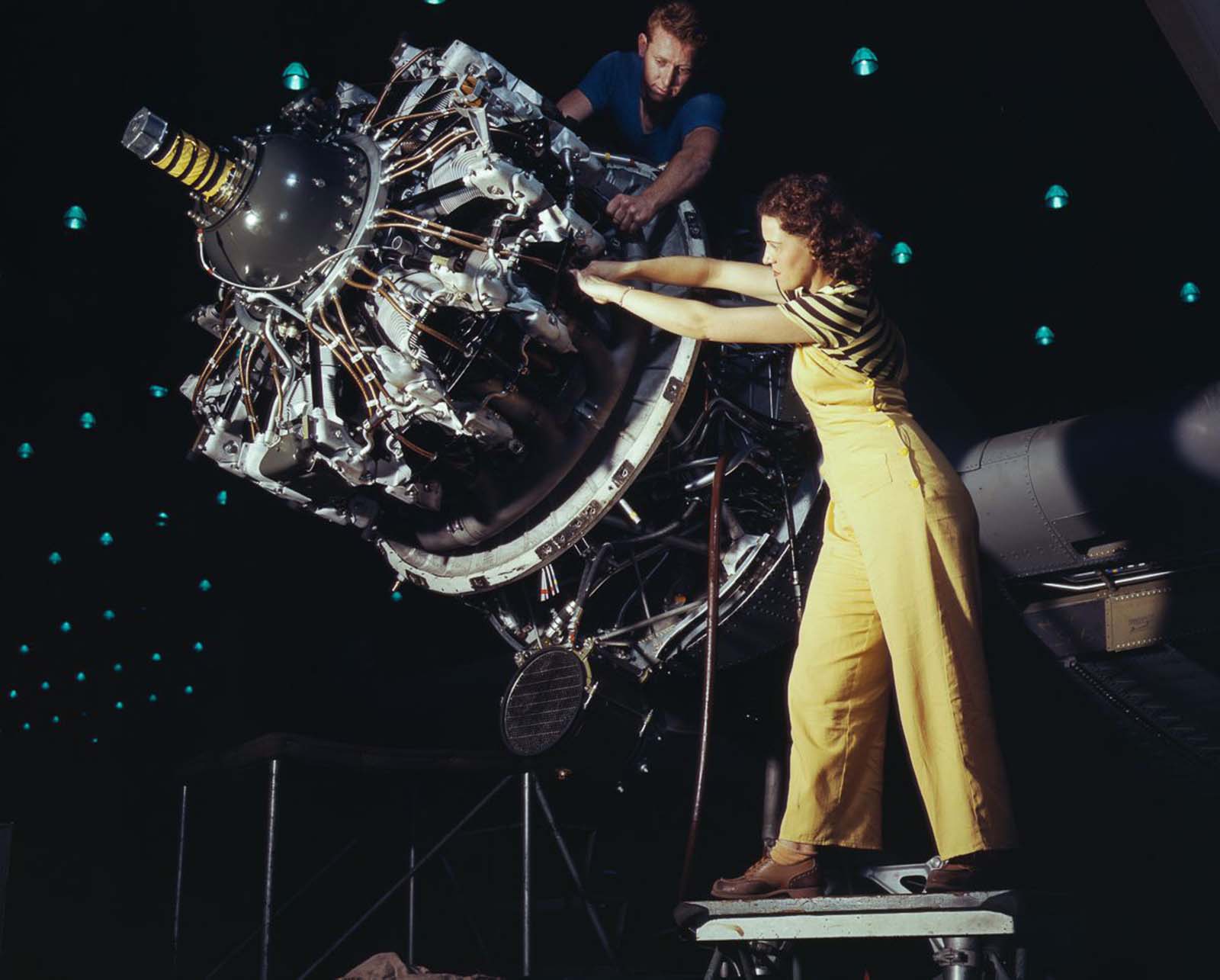
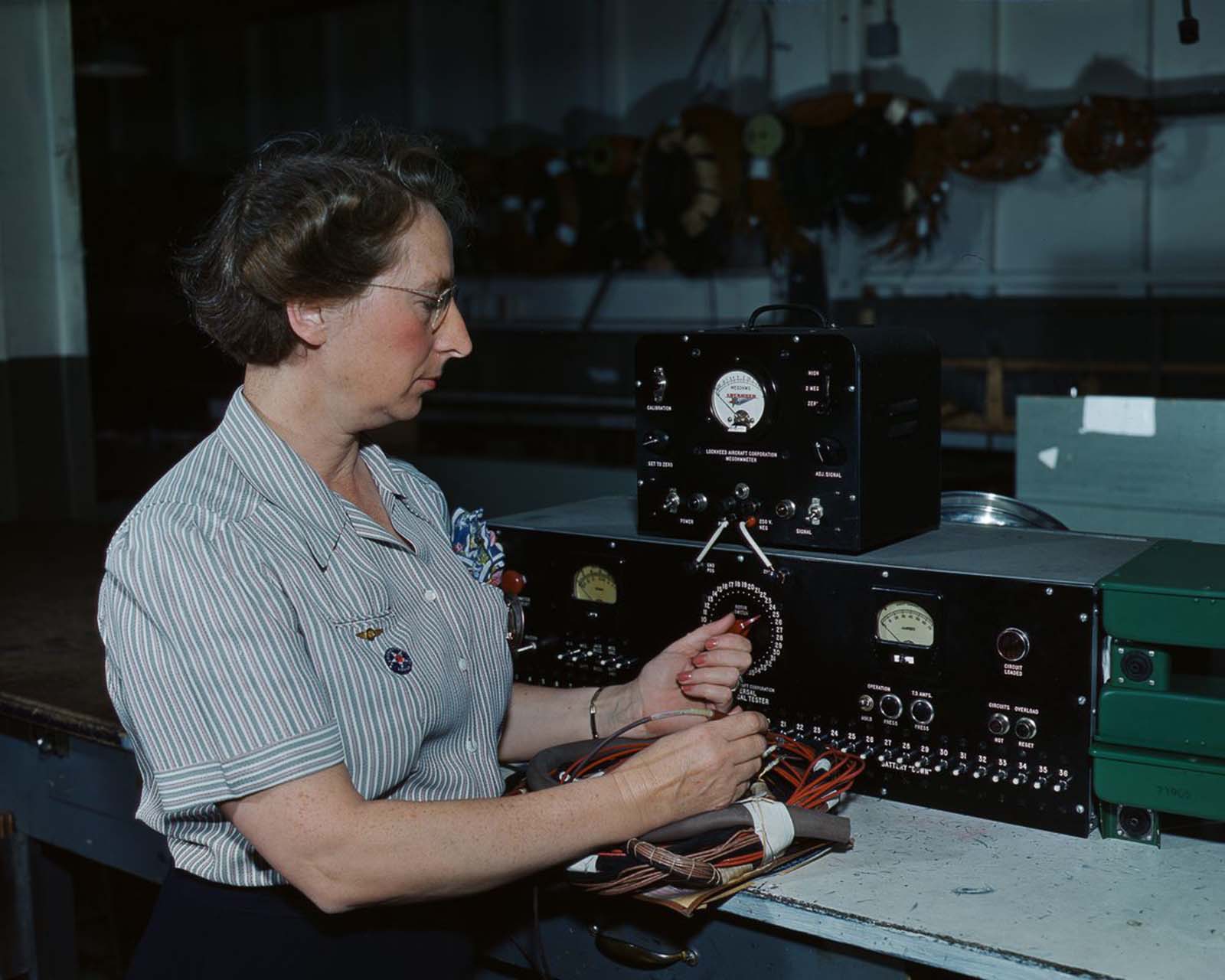
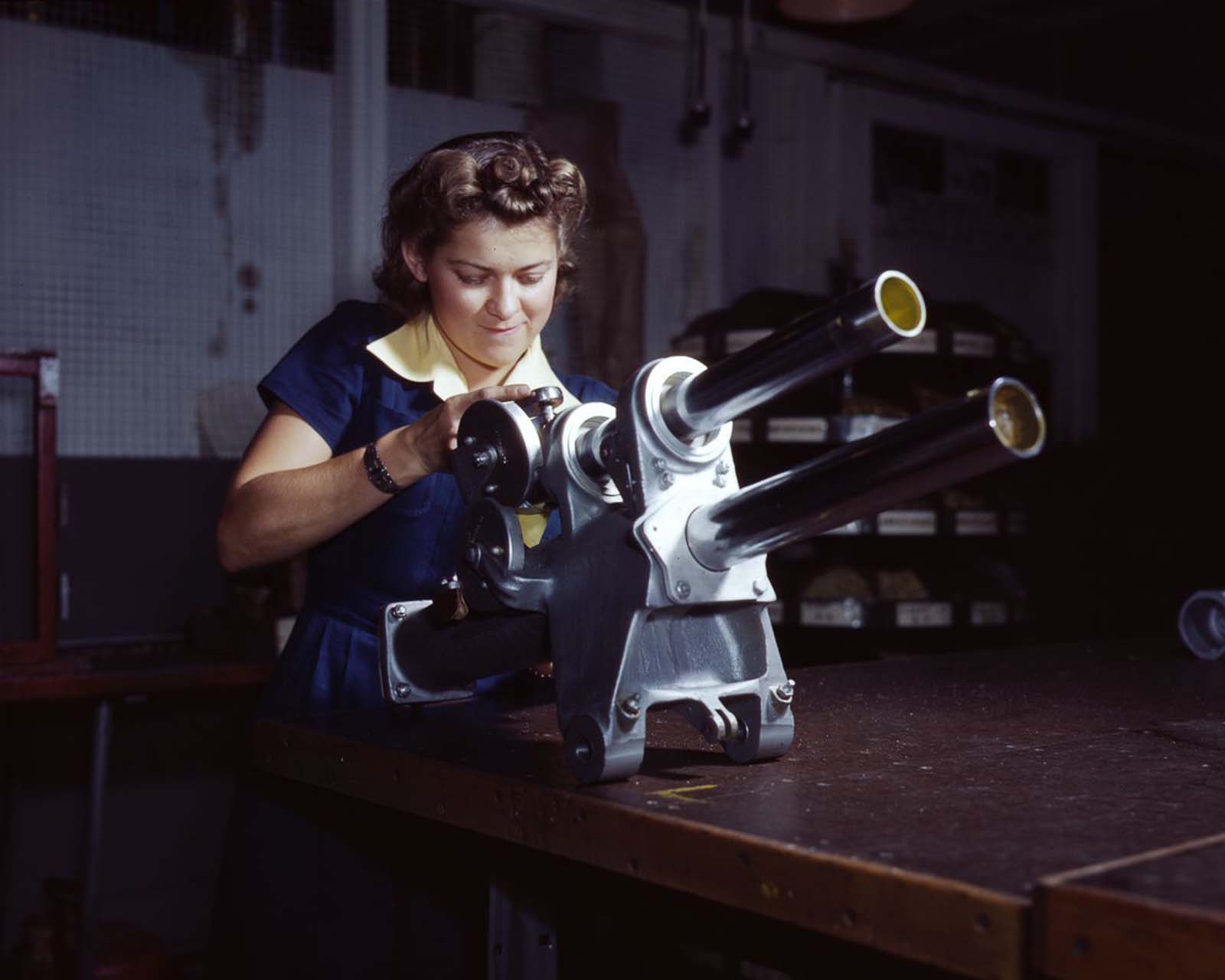
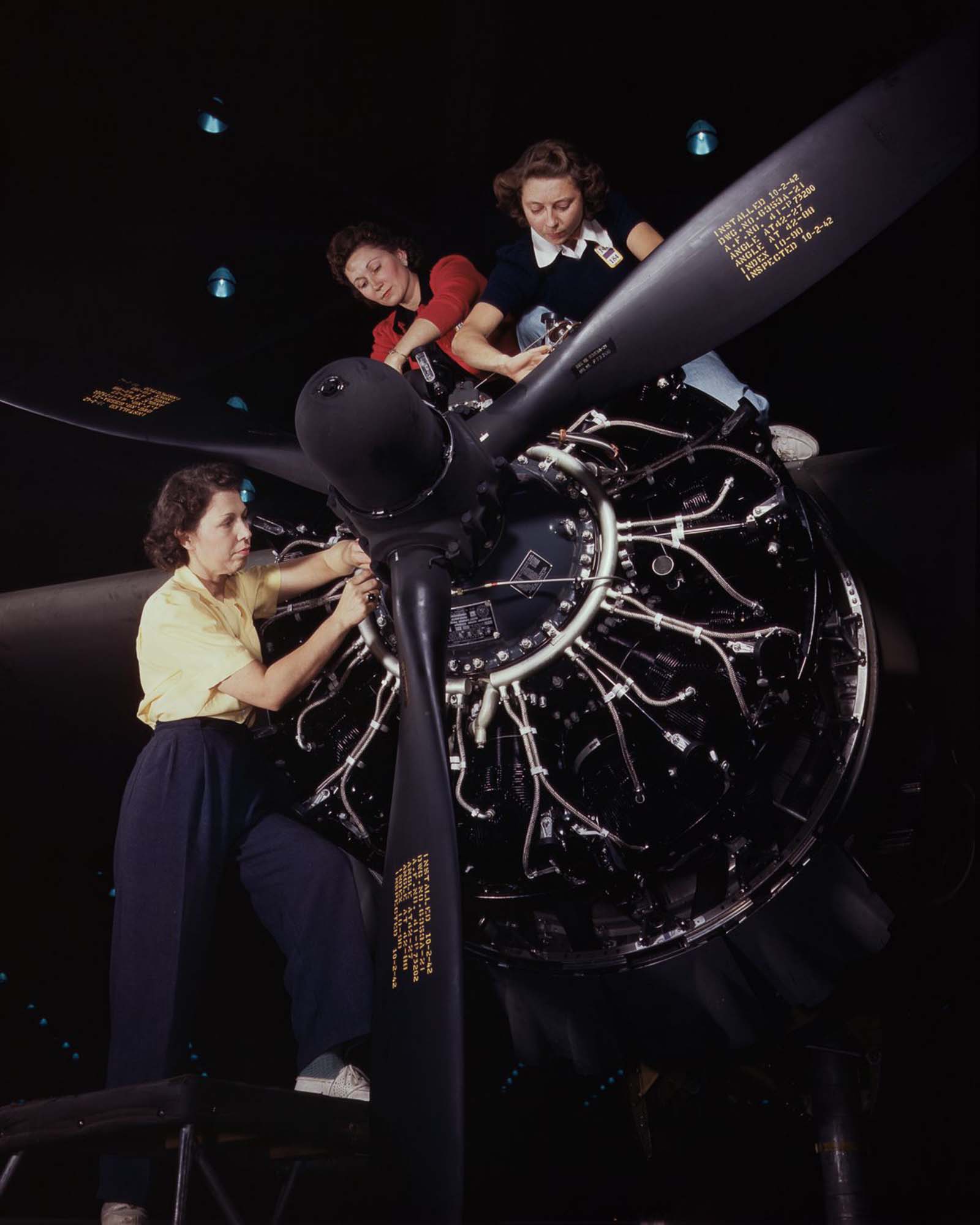
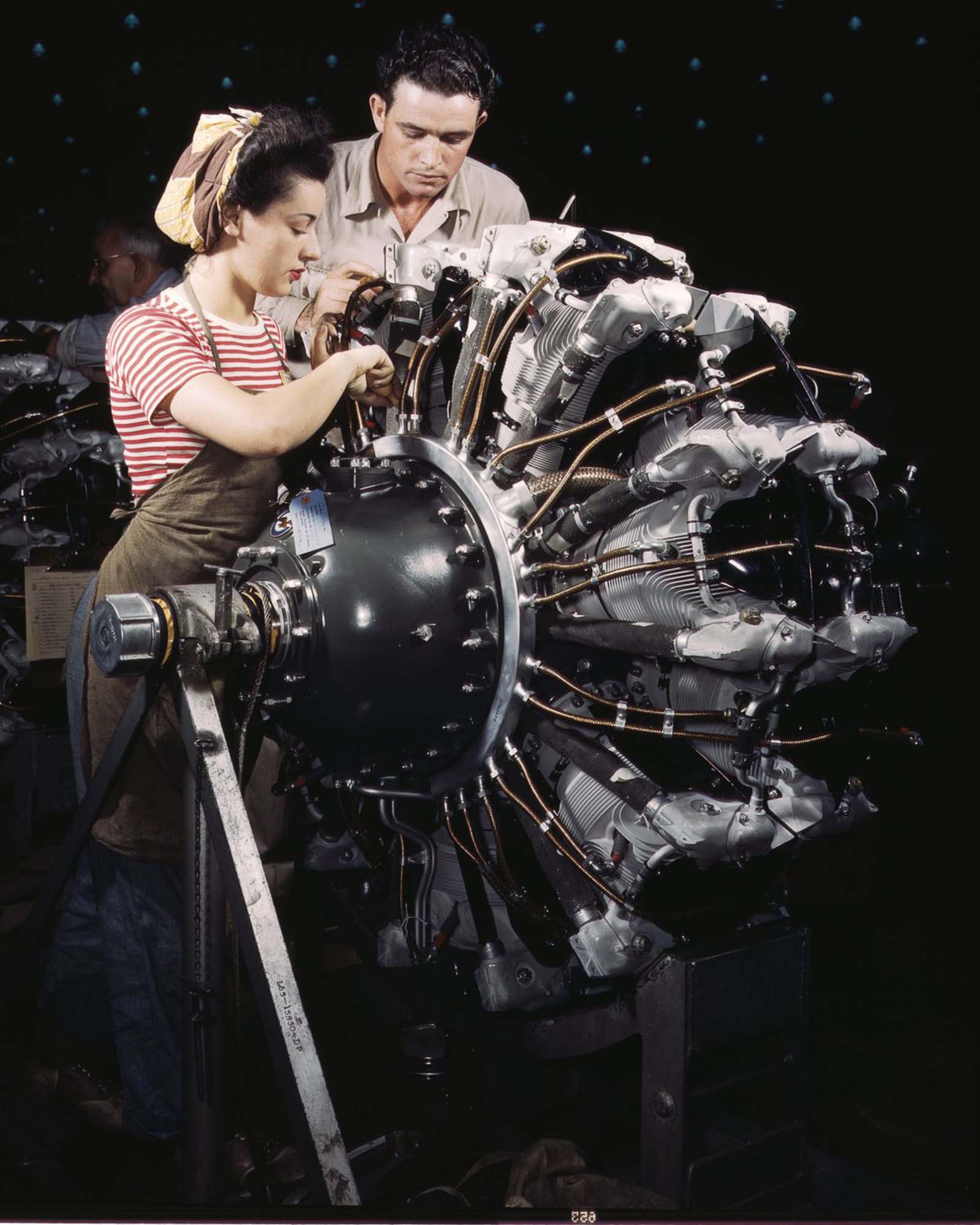
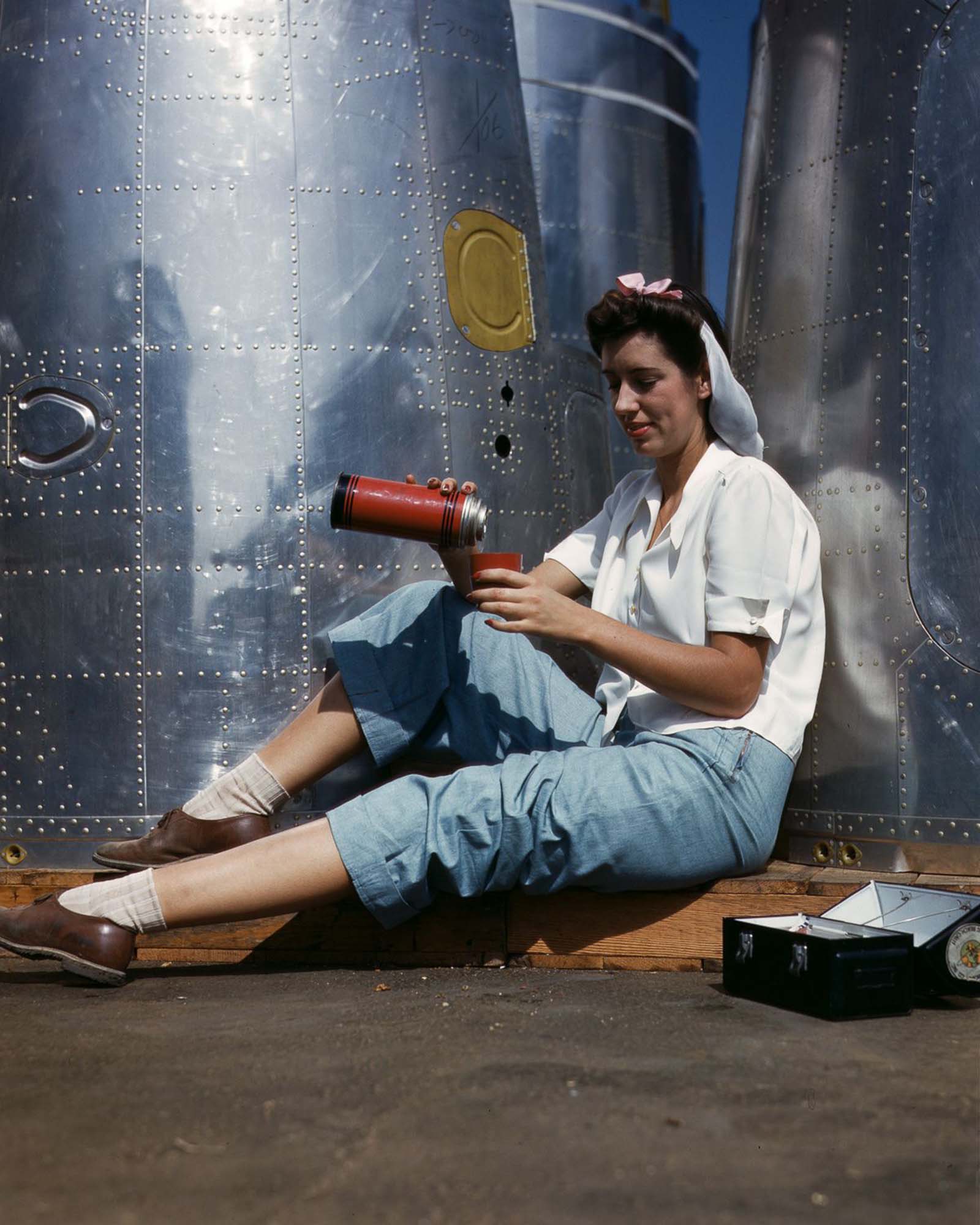
Life inside the plants wasn’t entirely defined by the work itself. Lunch breaks offered a brief pause in the noise and pace of production. Palmer photographed workers resting beside massive nacelle parts, eating alongside the same machinery they operated all day. These quiet moments, captured in the same rich color as the work shots, show the full picture of daily life on a wartime factory floor.
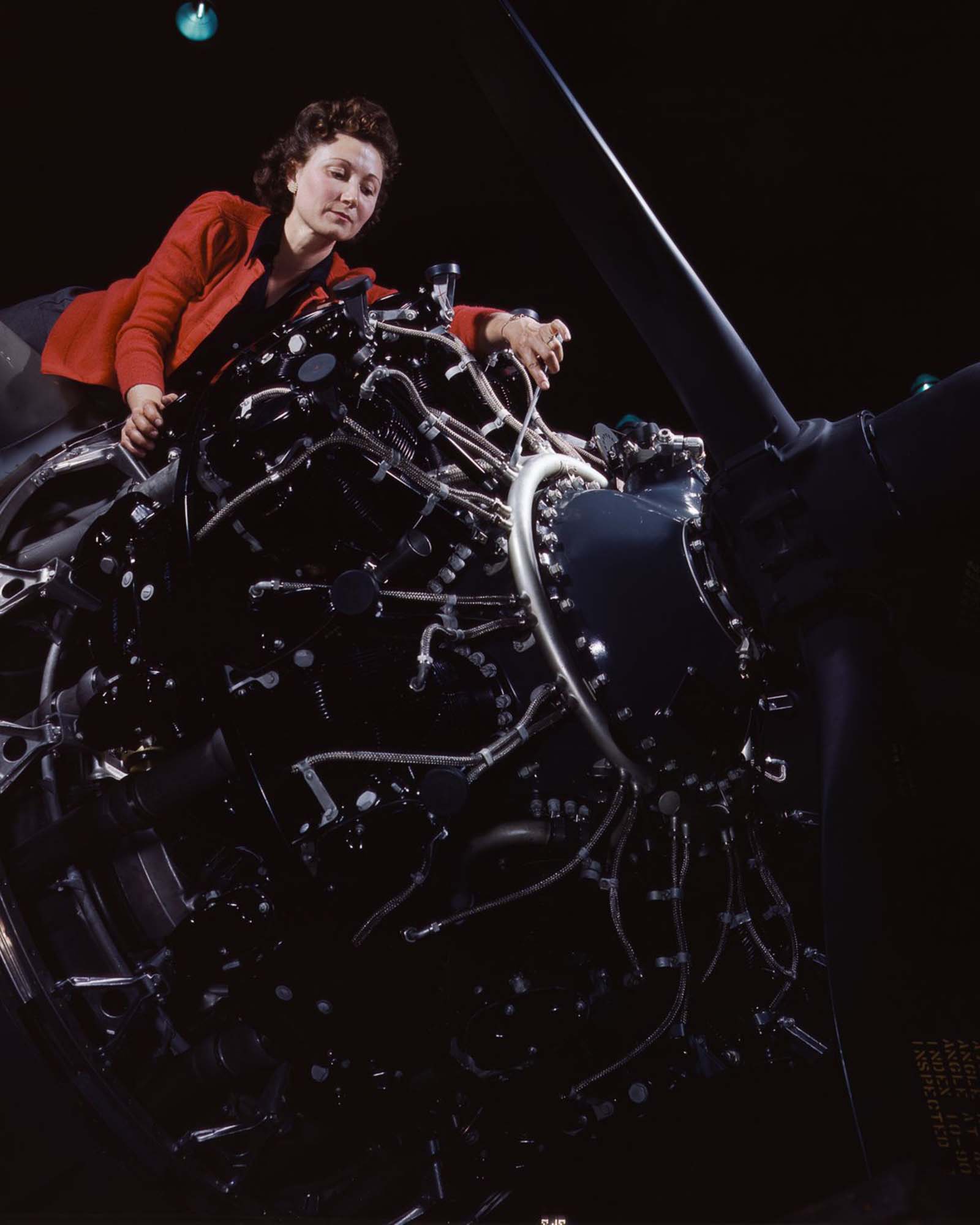
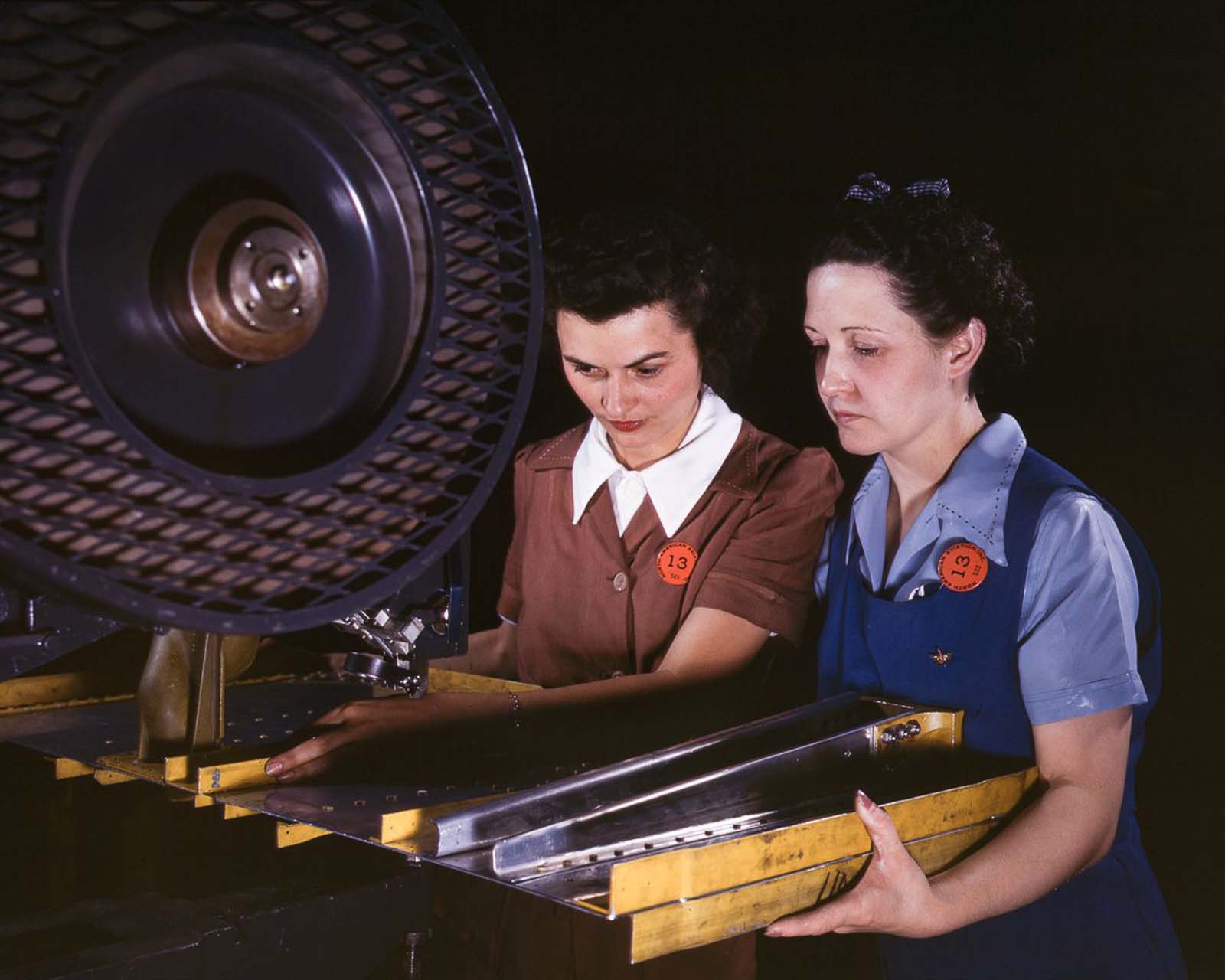
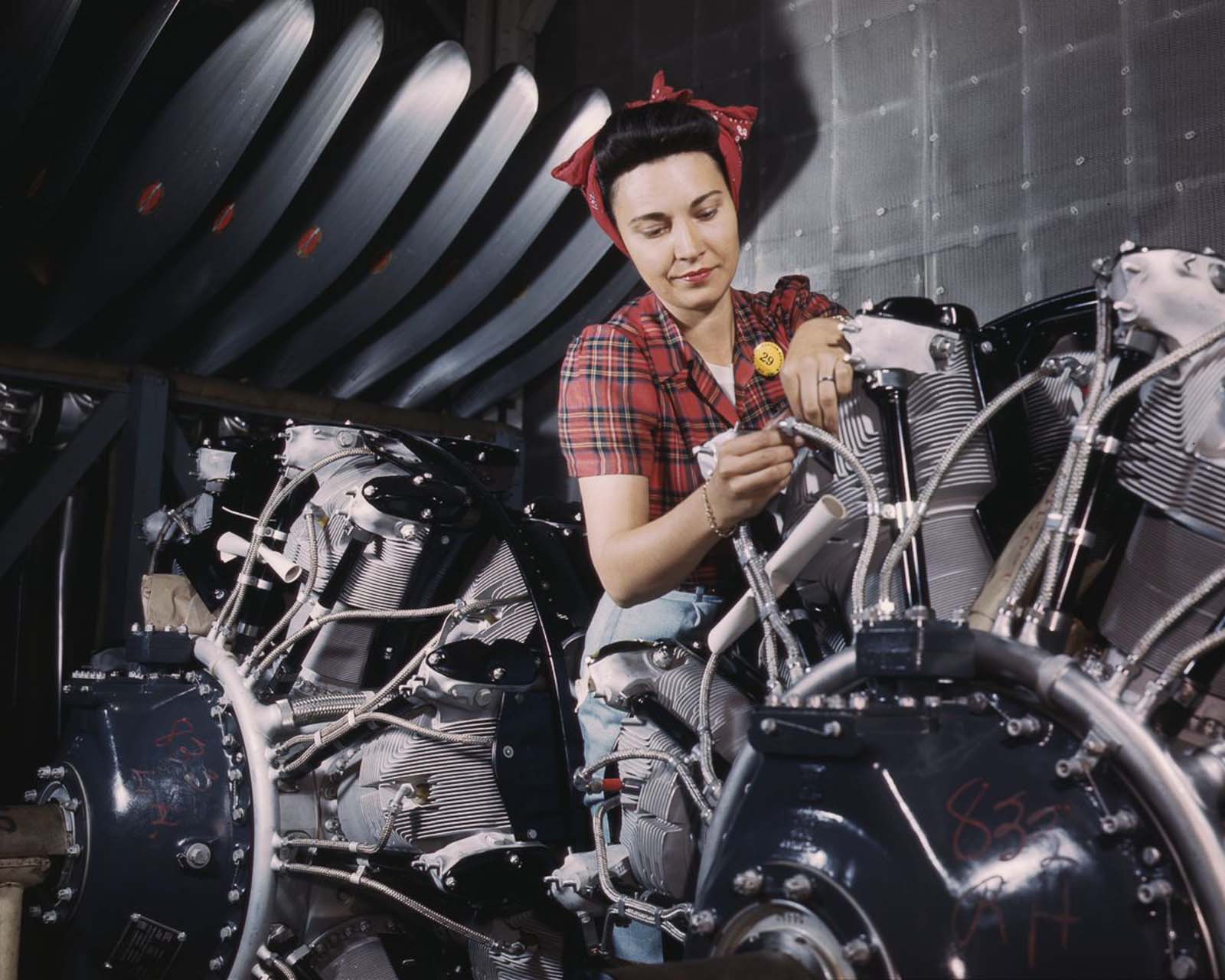
By 1943, Palmer’s lens had also turned to the Vultee Aircraft factory in Nashville, Tennessee, where workers were producing the A-31 Vengeance — a single-engine dive bomber used by Allied air forces in the Pacific and Burma. Women there drilled rivets, worked on horizontal stabilizers, inspected tubing, adjusted wheel wells, and touched up U.S. Army Air Forces insignia on finished fuselages before the planes left the plant.
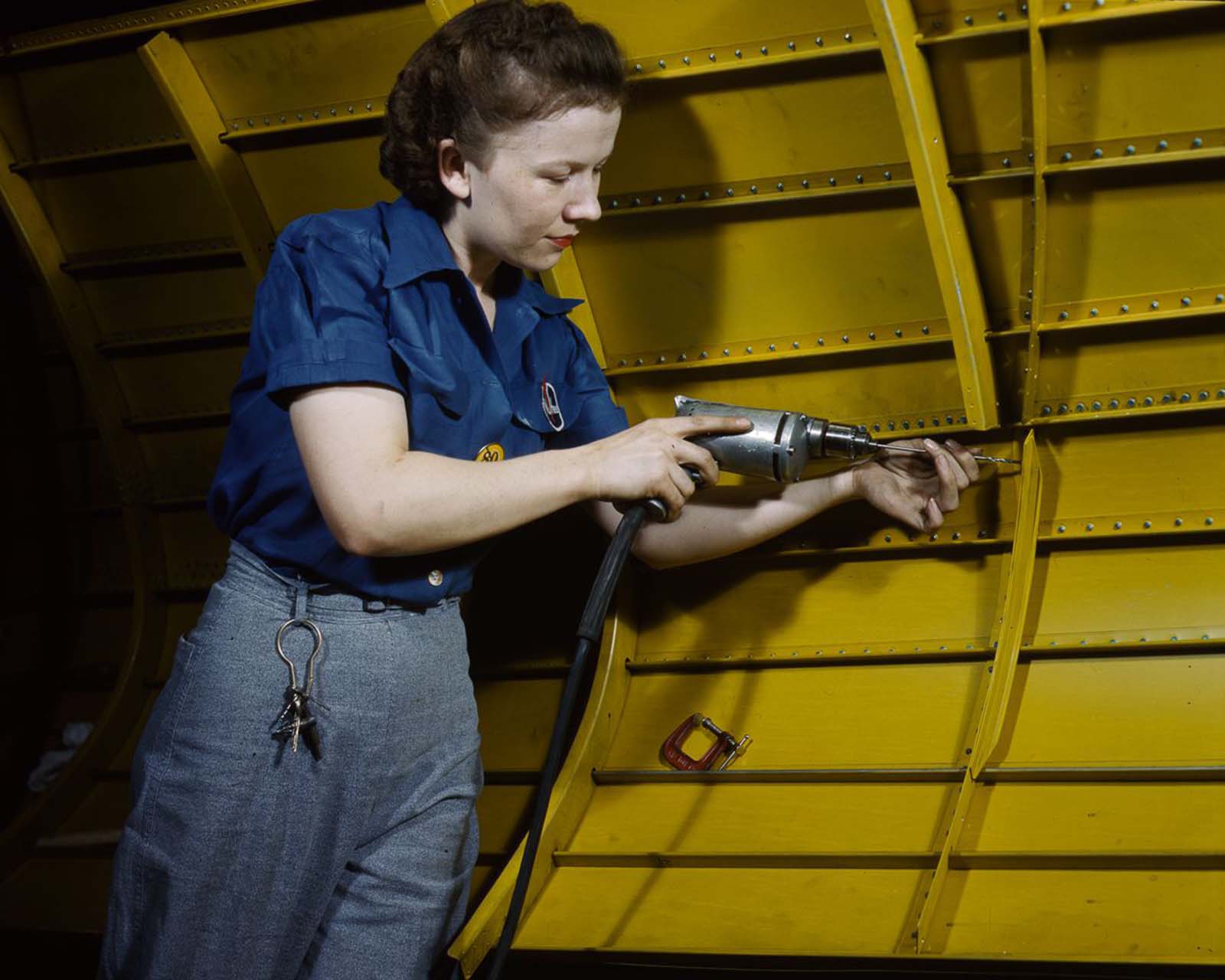
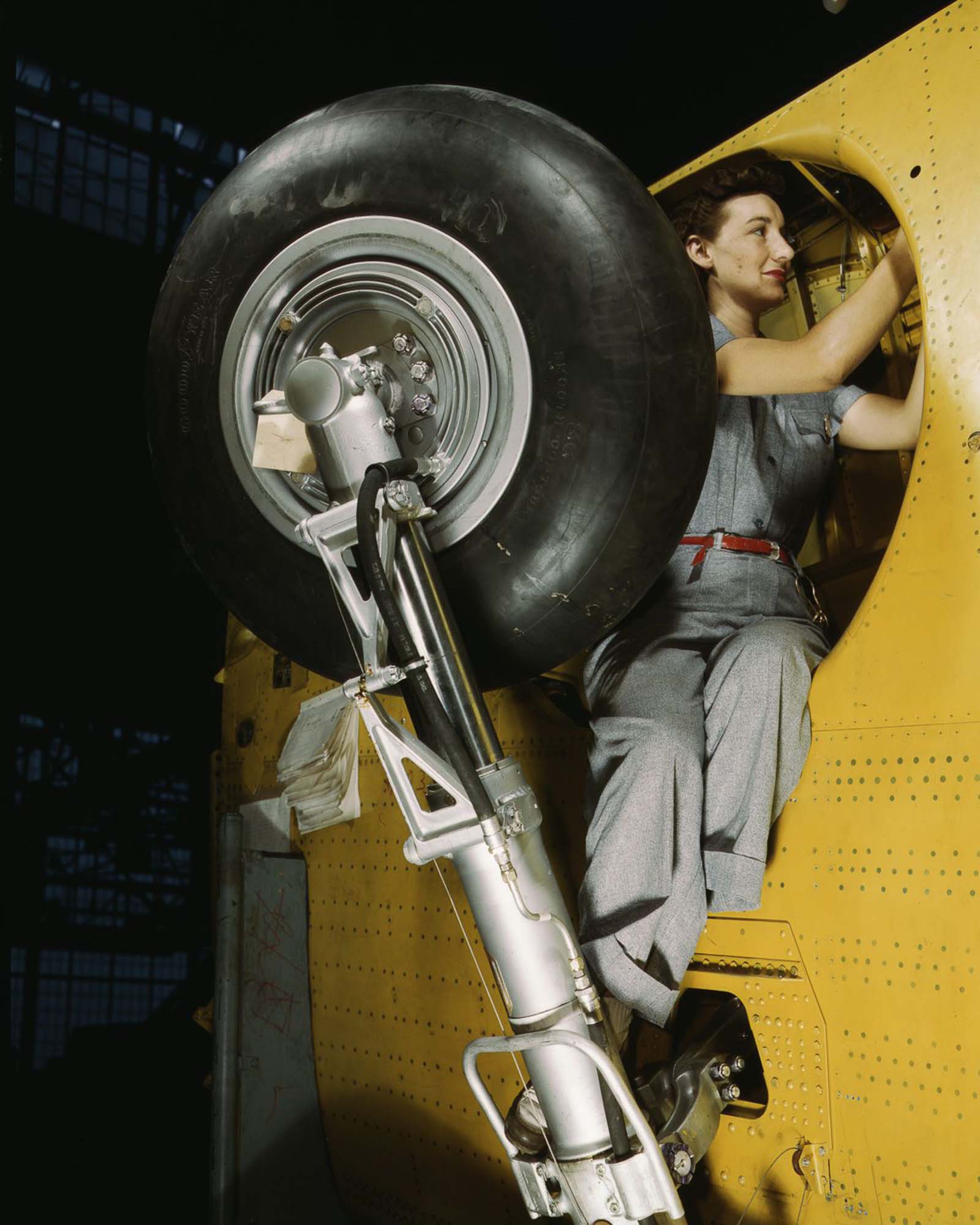
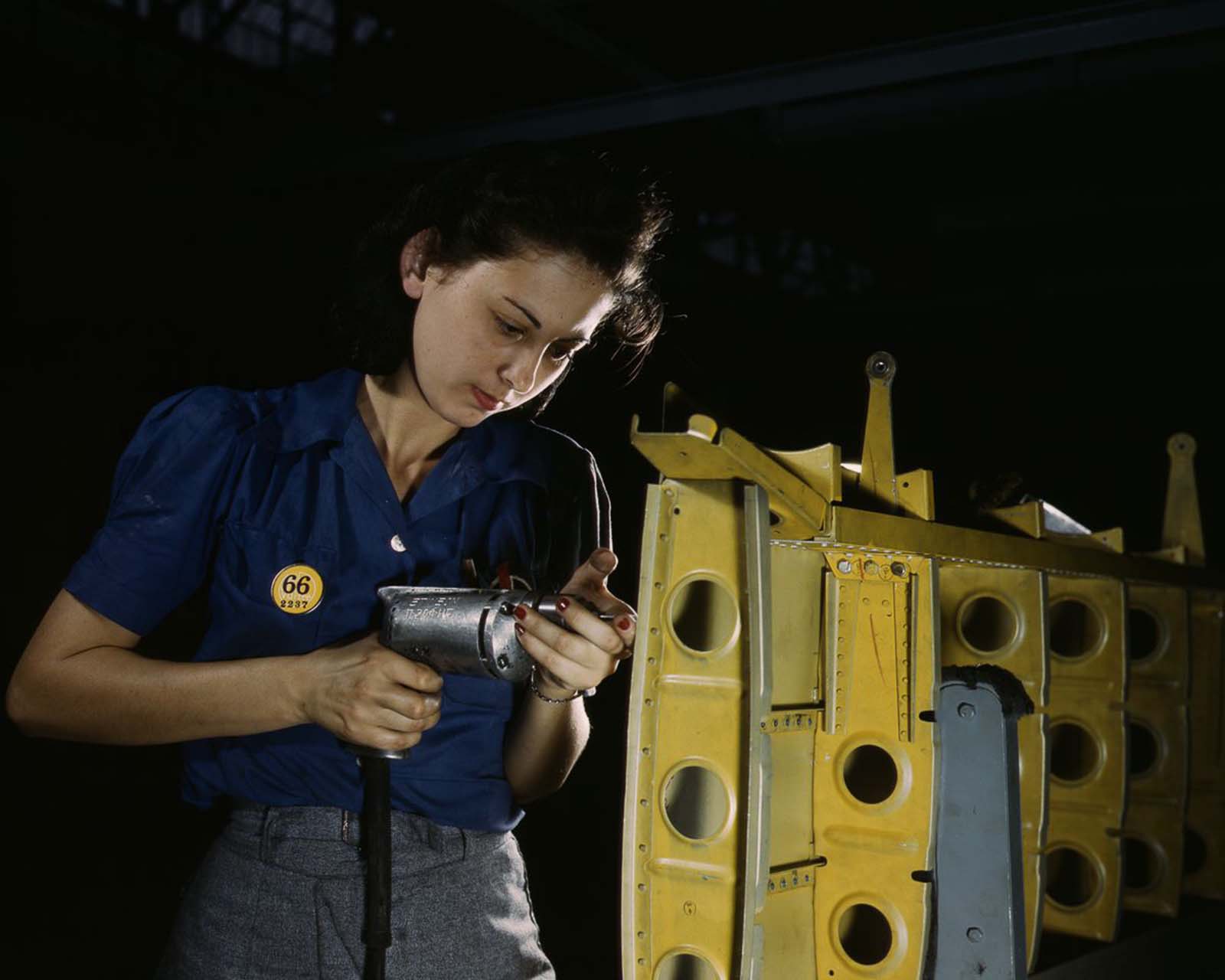
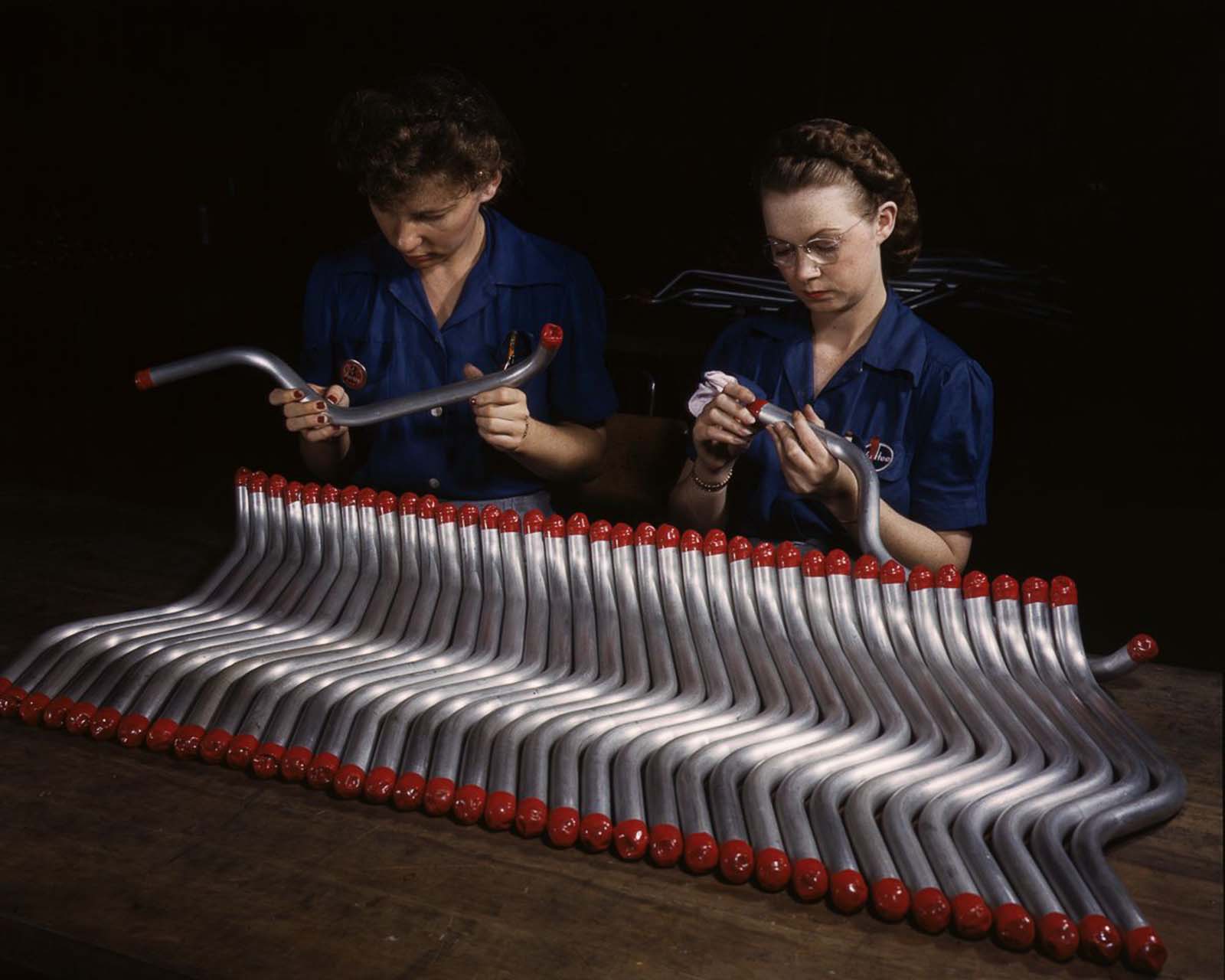
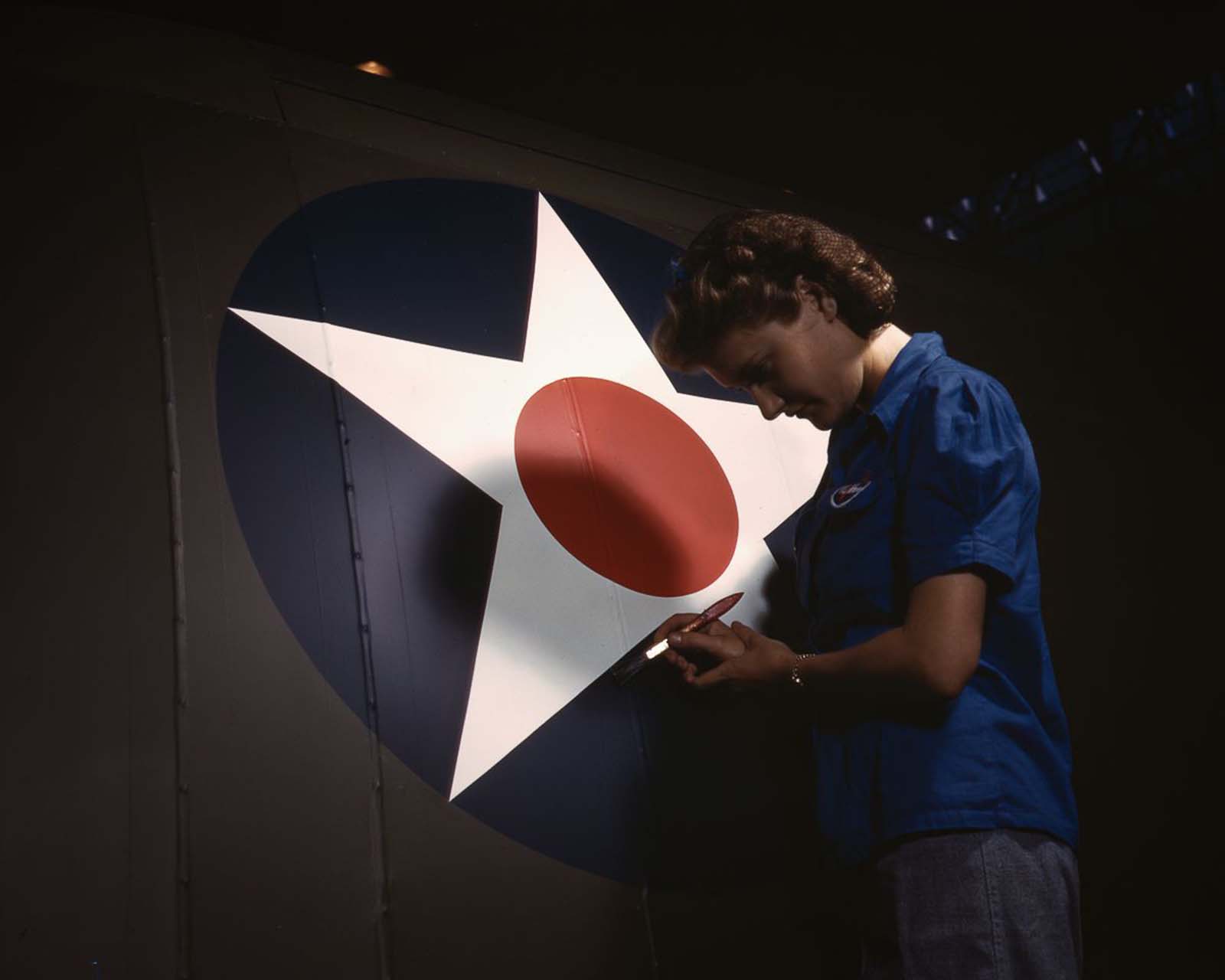
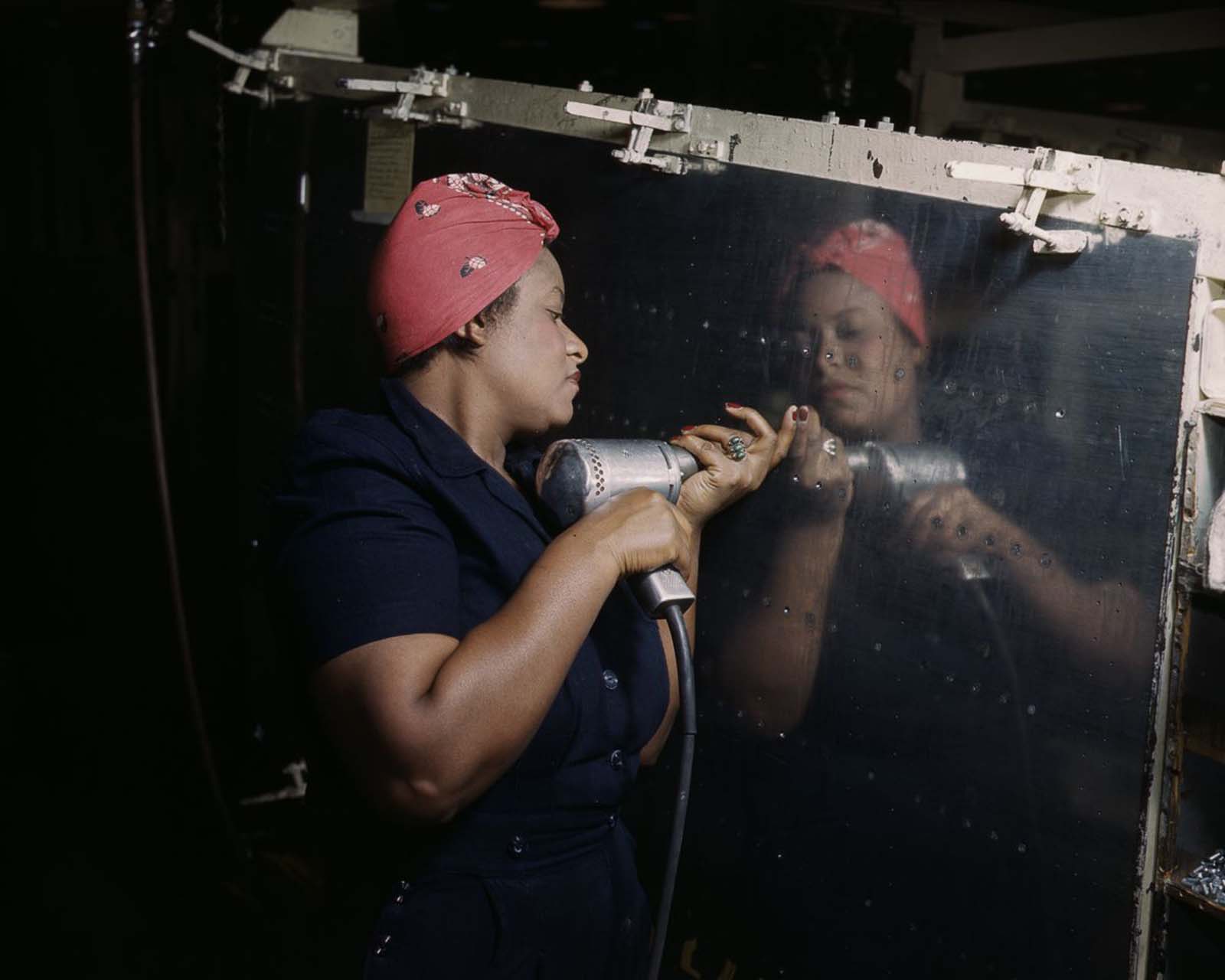
Palmer shot all of these photographs in color using Kodachrome film — a format rarely used for documentary work at the time. The result is a collection that feels strikingly immediate. The images were commissioned by the U.S. Office of War Information and are now held in the Library of Congress. Aircraft plants were the most heavily photographed sites, but women also worked in steel mills, shipyards, munitions factories, and automobile plants throughout the war. Most returned to domestic life or lower-paying jobs when veterans came home in 1945, as factories scaled back and rehired the men they had released to the military.



