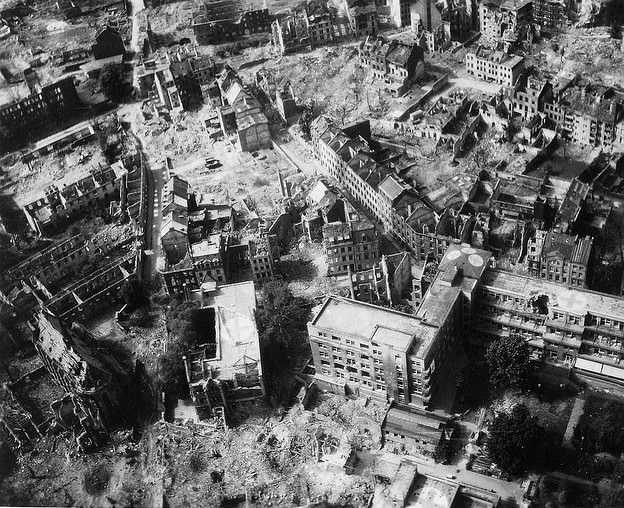
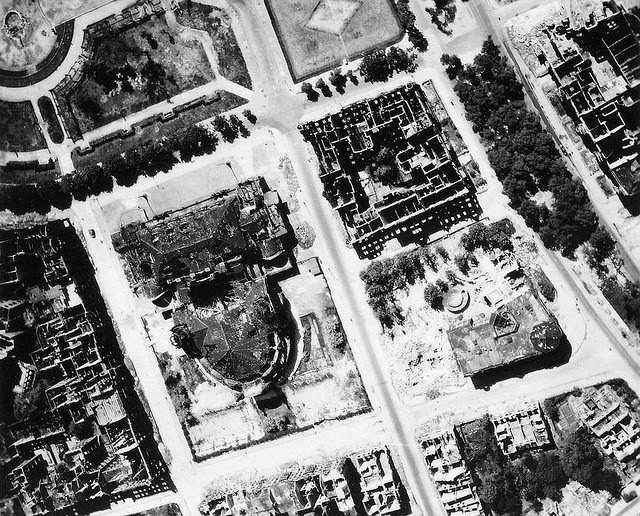
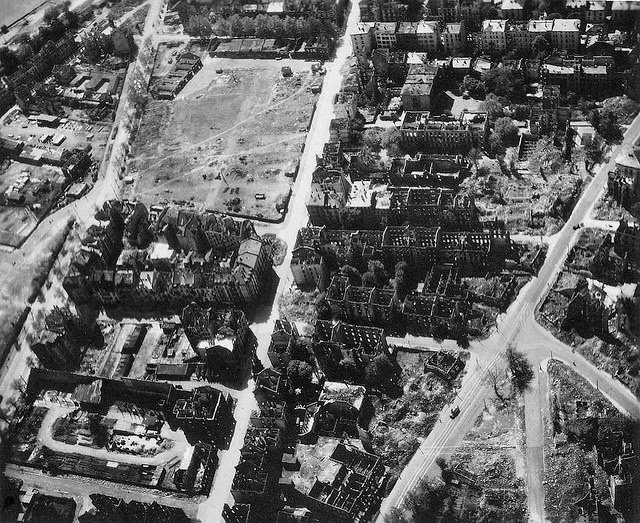
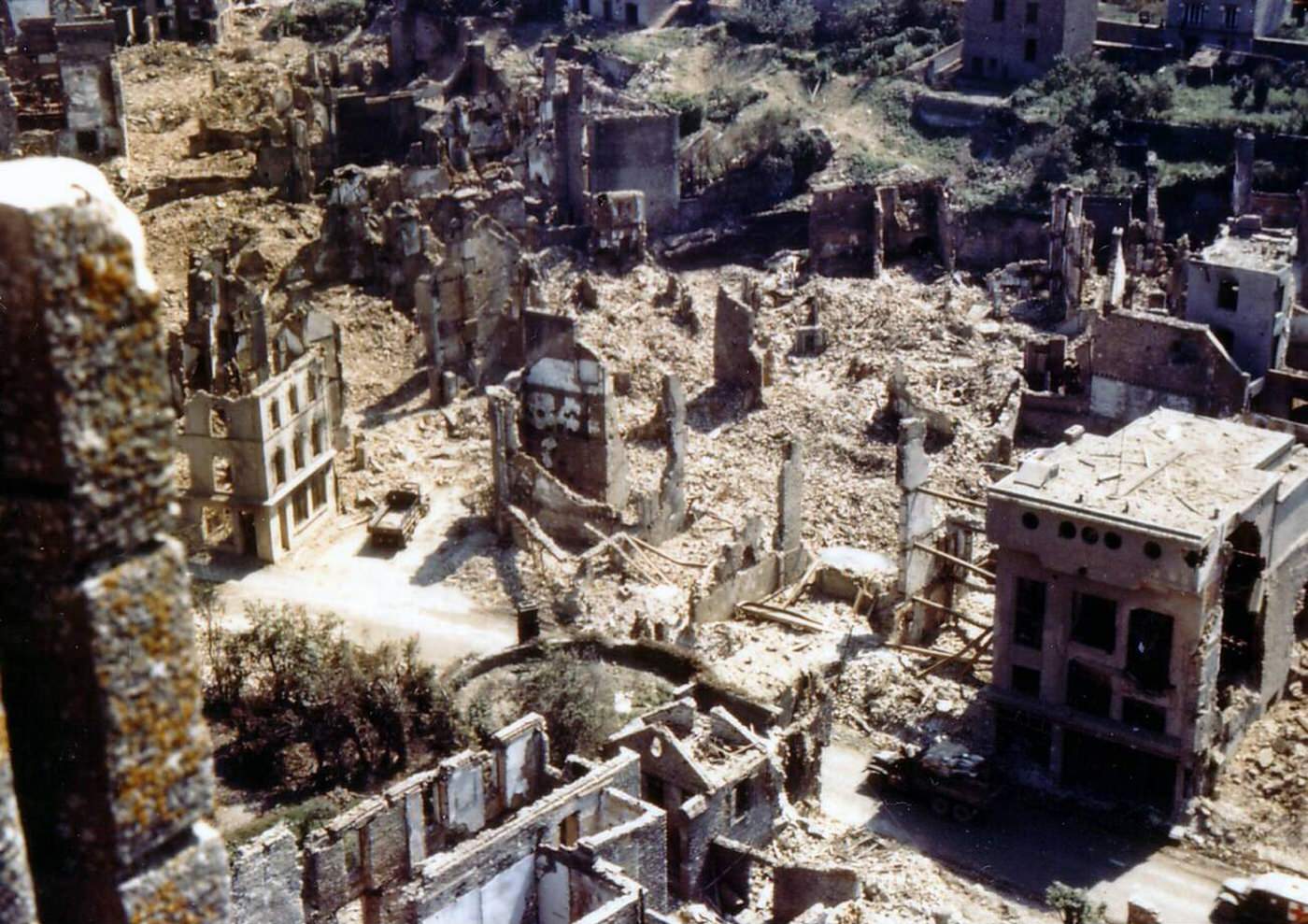
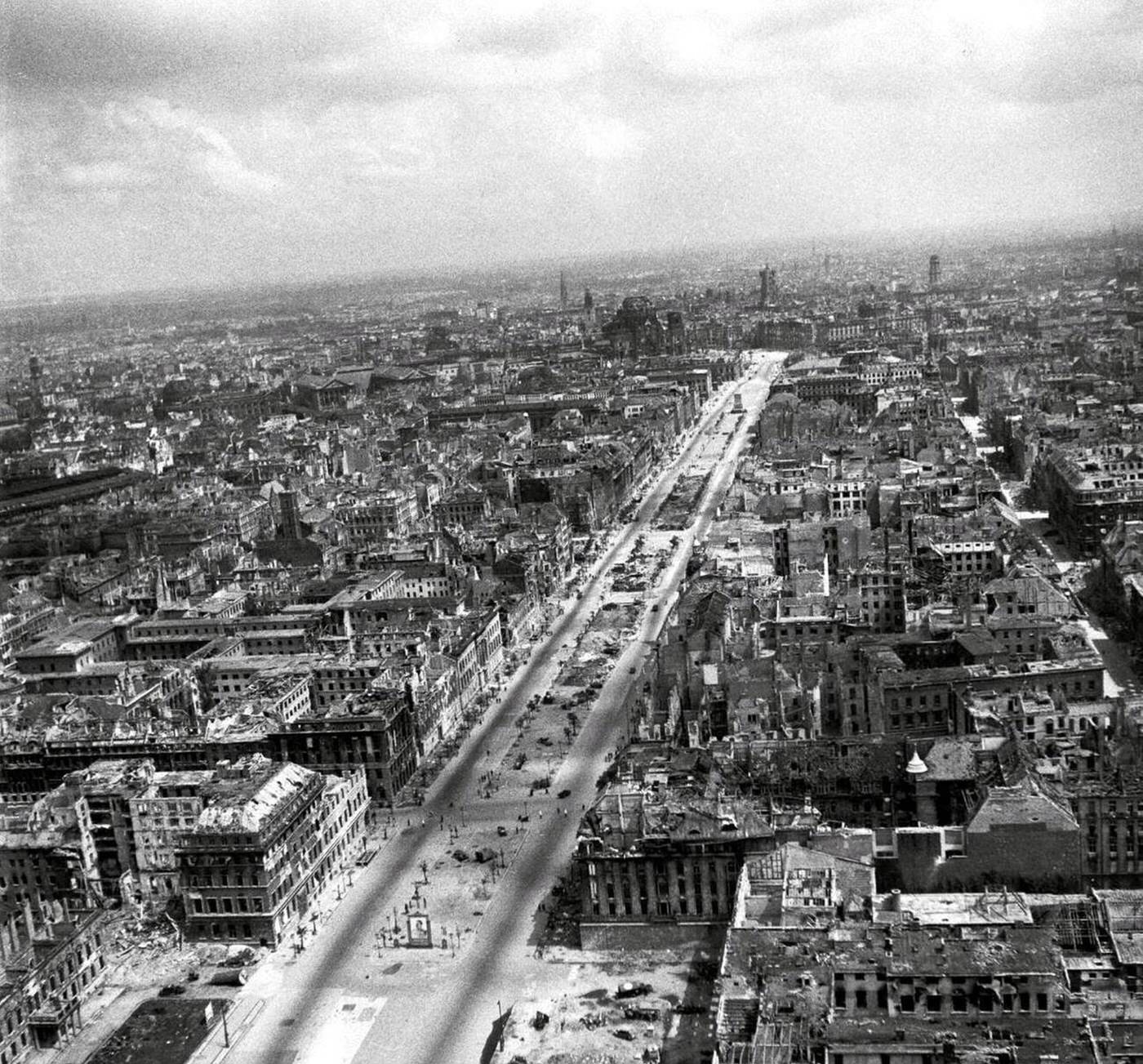
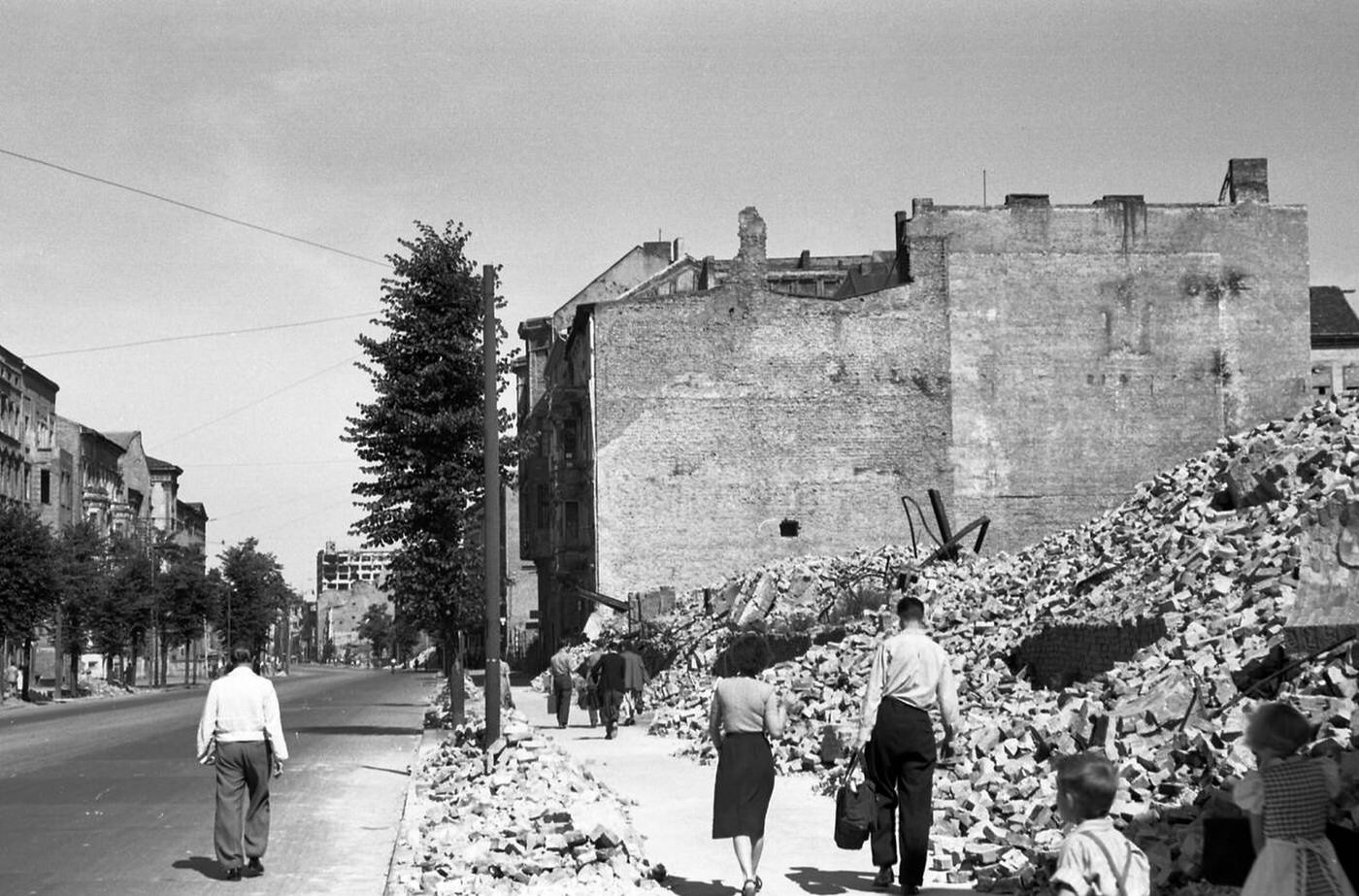
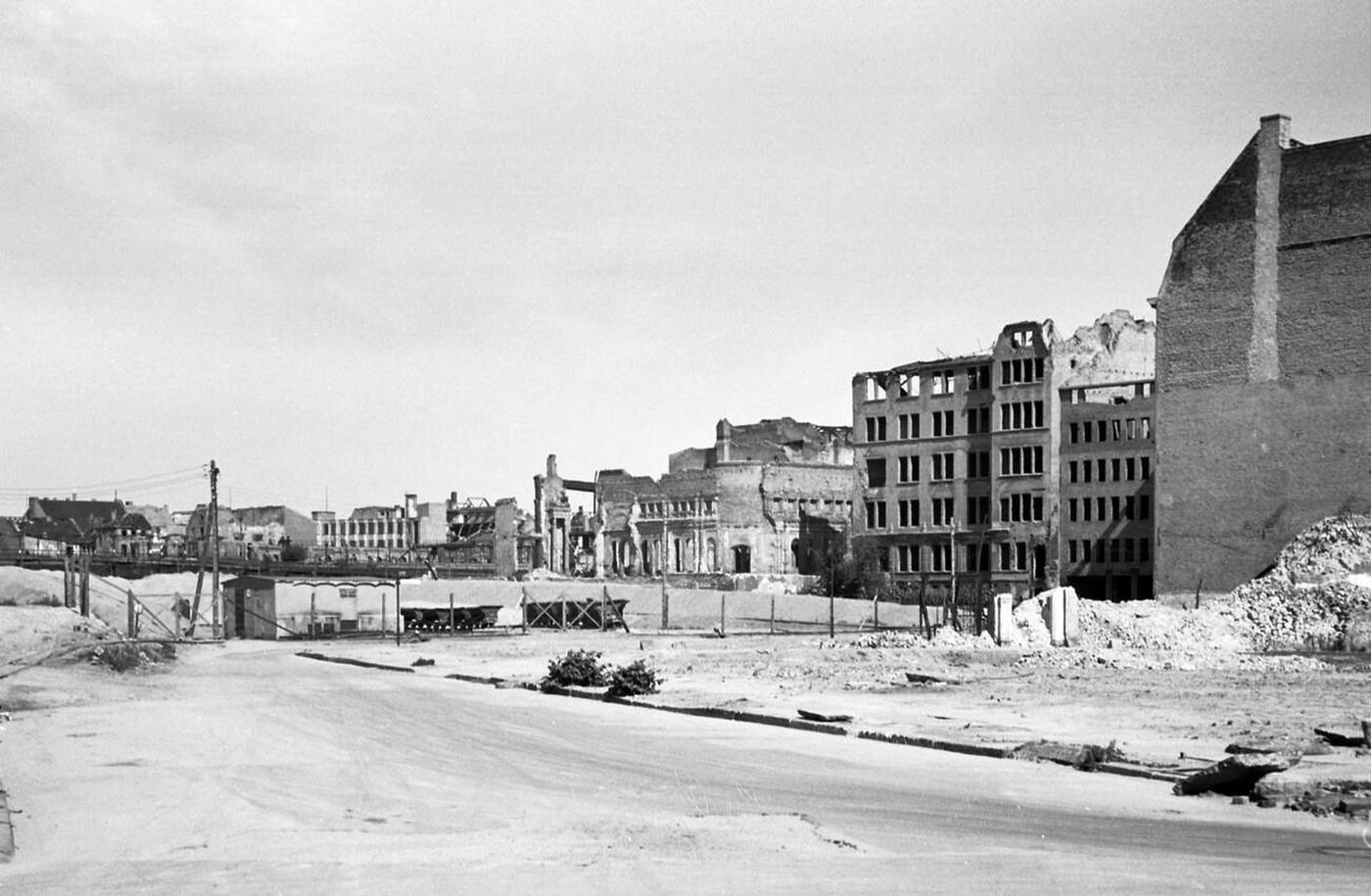
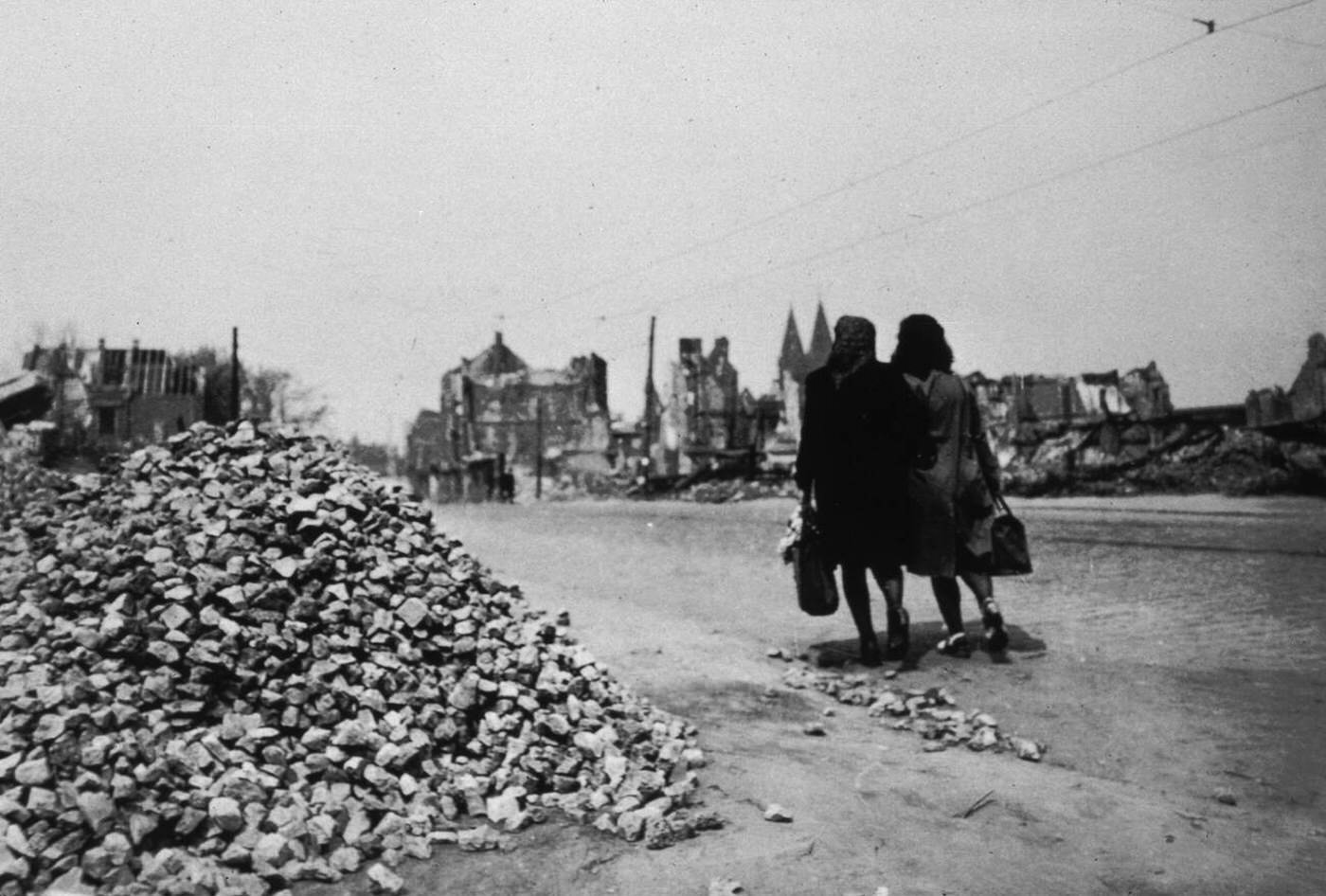
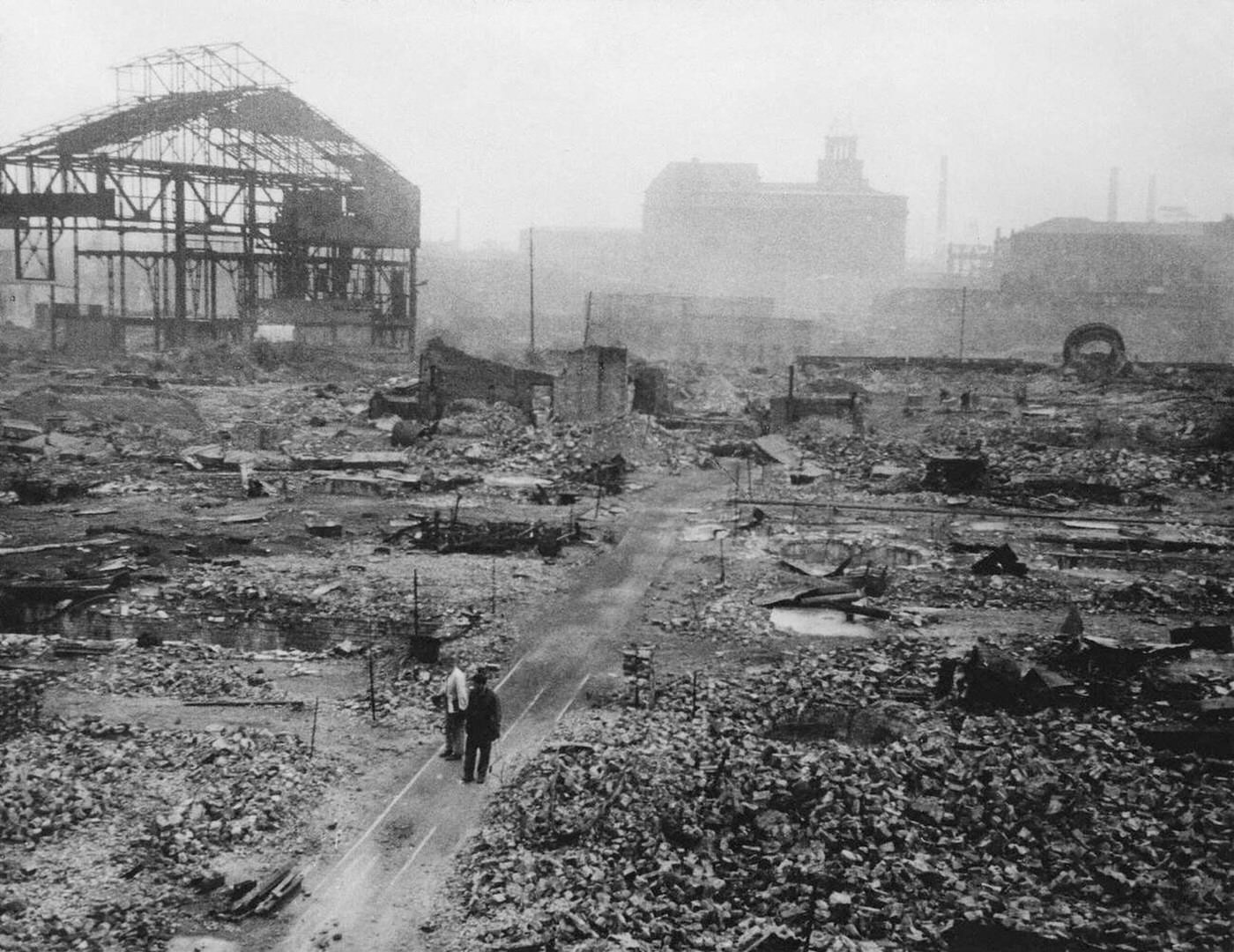
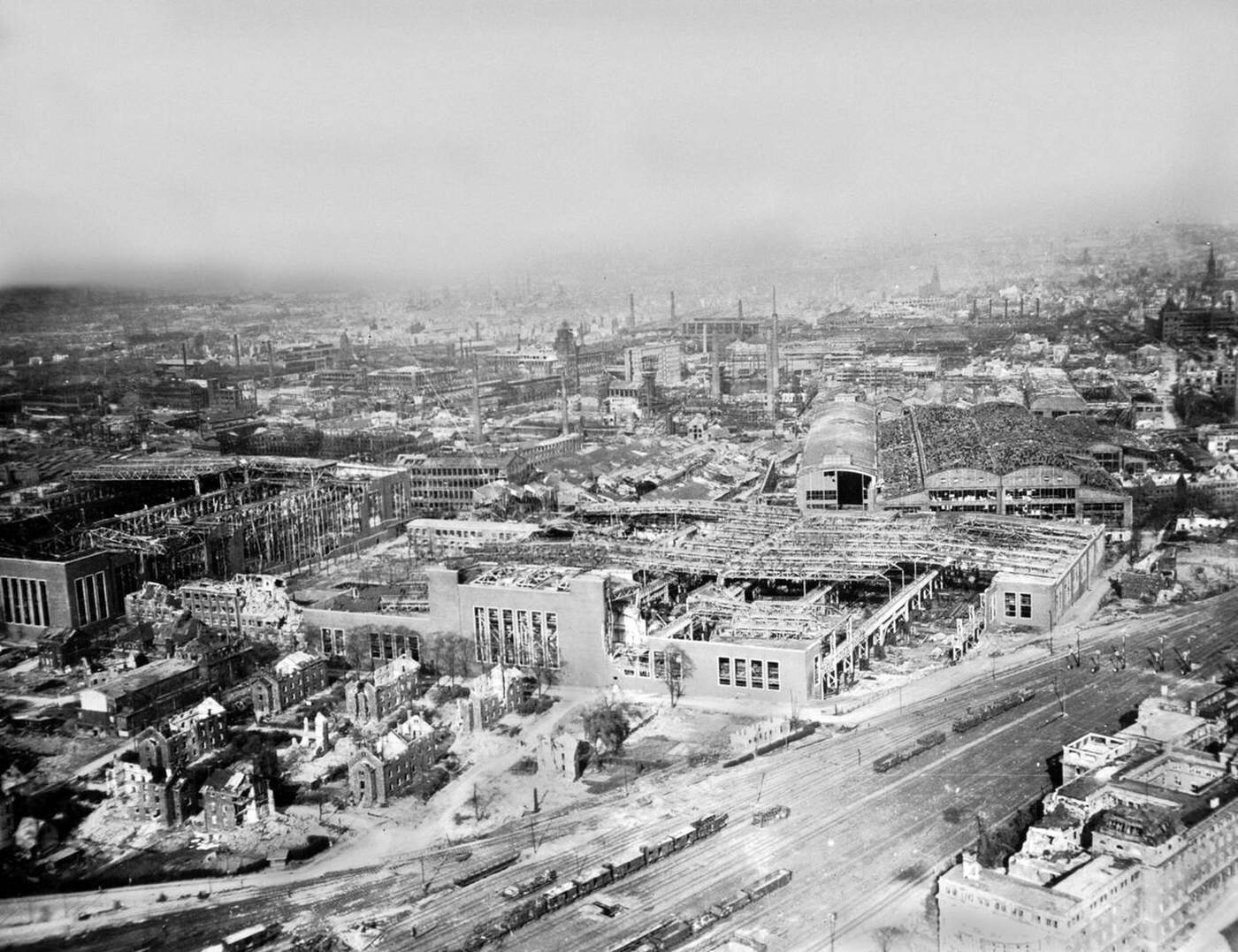
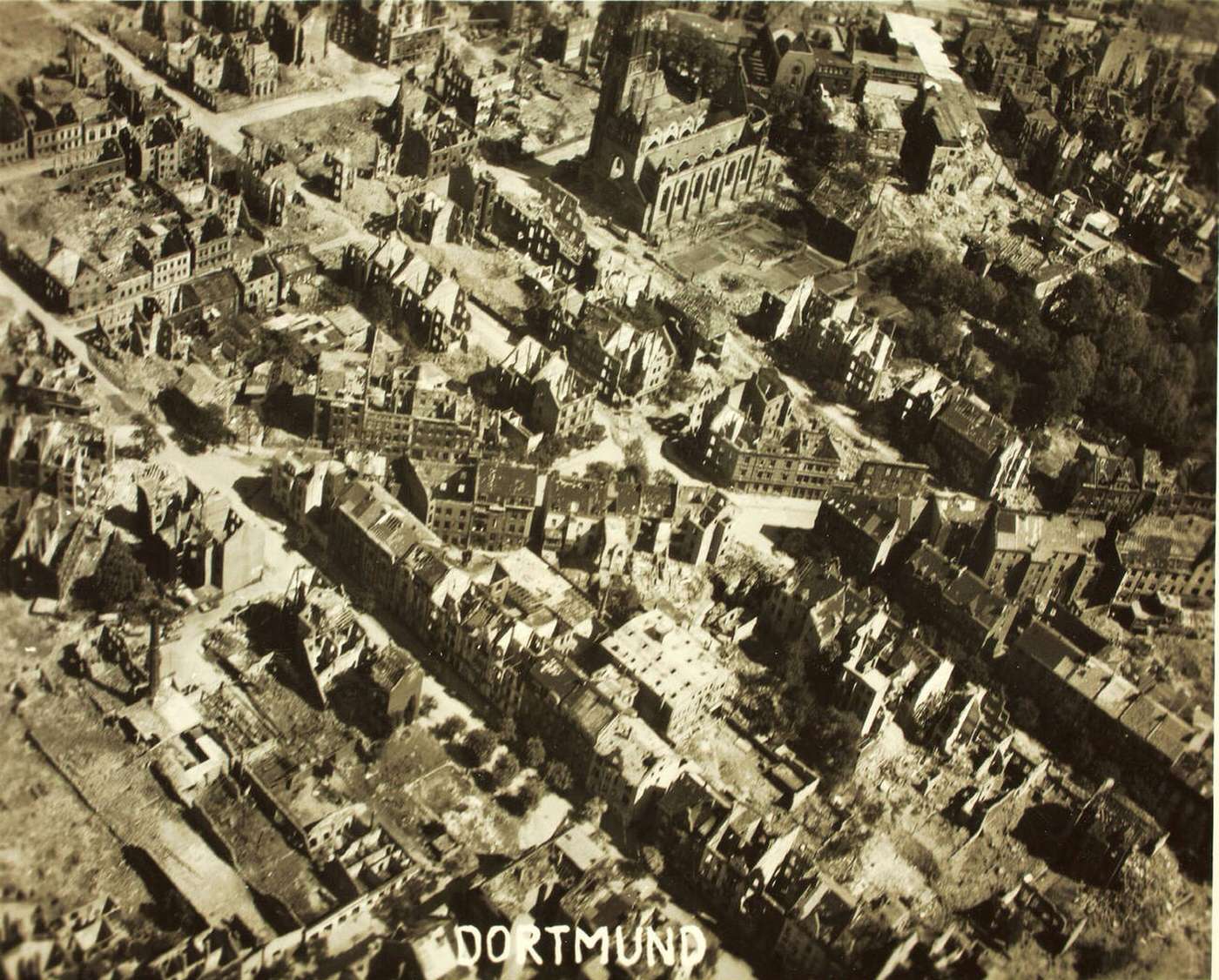
By 1945, the cities of Nazi Germany were unrecognizable. What had been thriving urban centers—filled with churches, rail stations, market squares, and factories—had been reduced to vast fields of rubble. The Third Reich, which had launched the most destructive war in human history, was now absorbing its full consequences. Allied bombers had been at work for years, and by the time ground forces closed in from east and west, entire neighborhoods across Germany existed only as broken walls and ash.
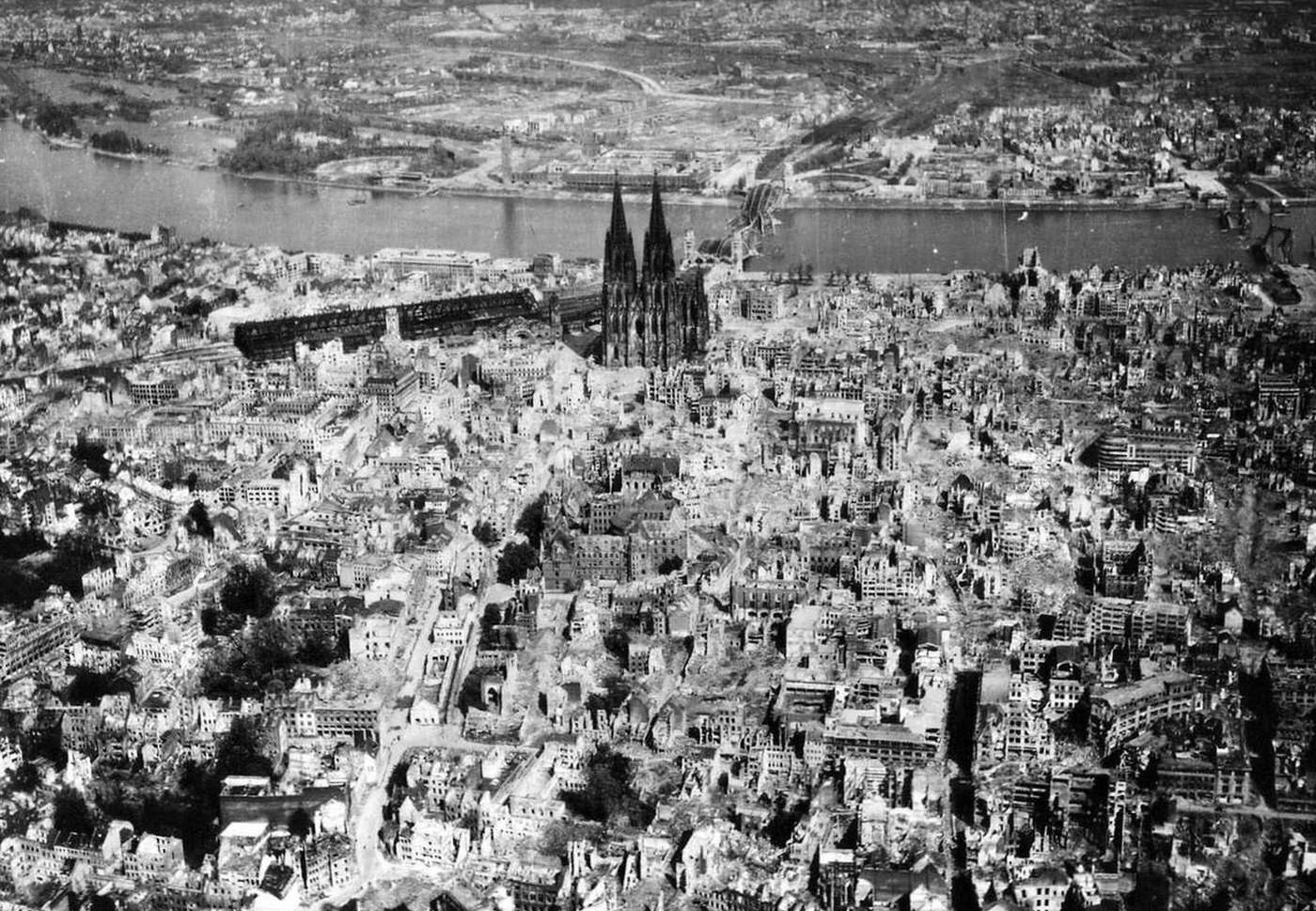
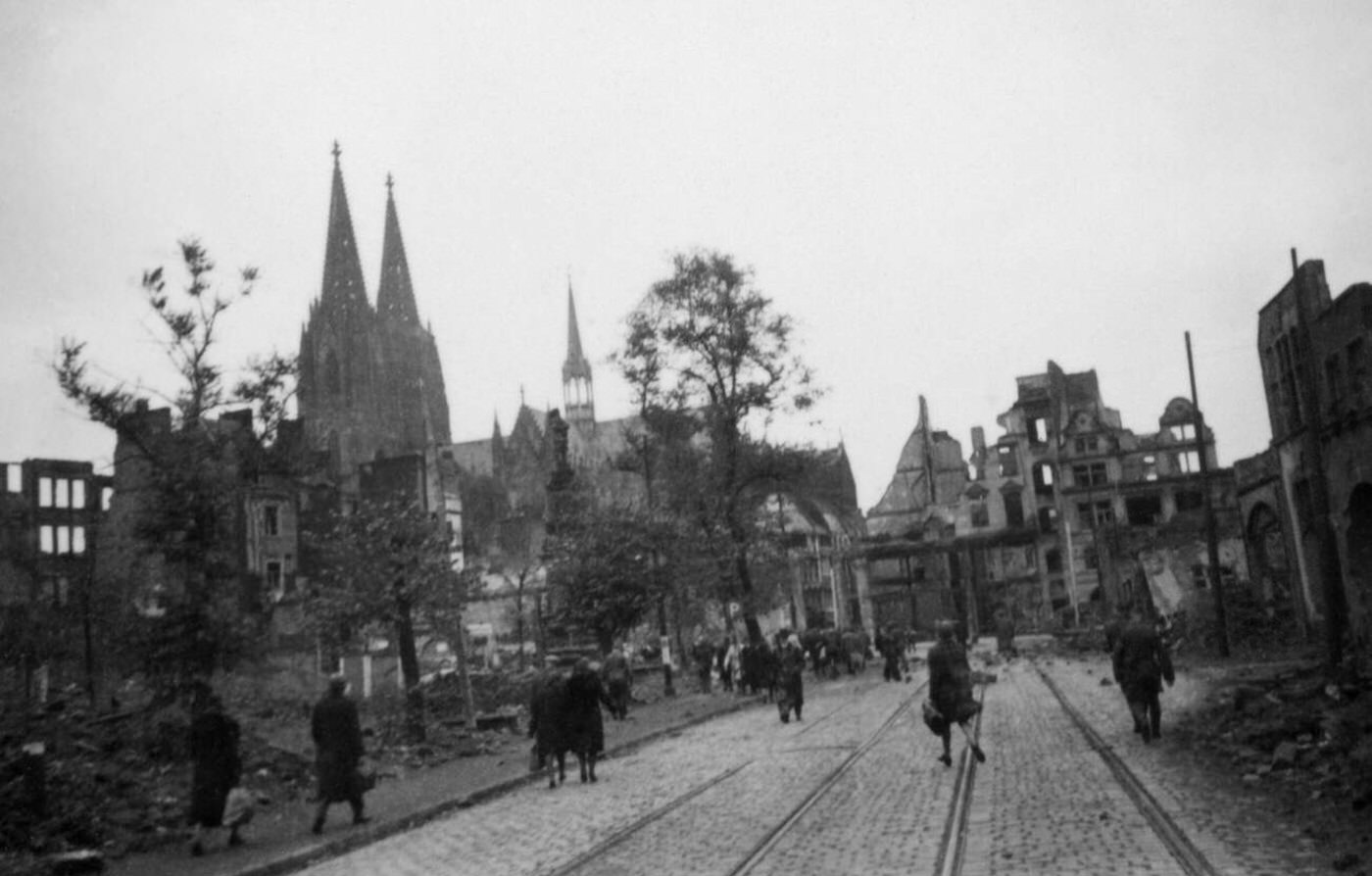
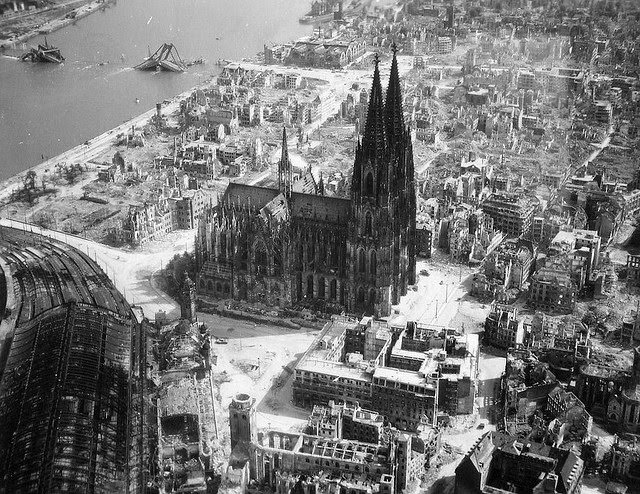
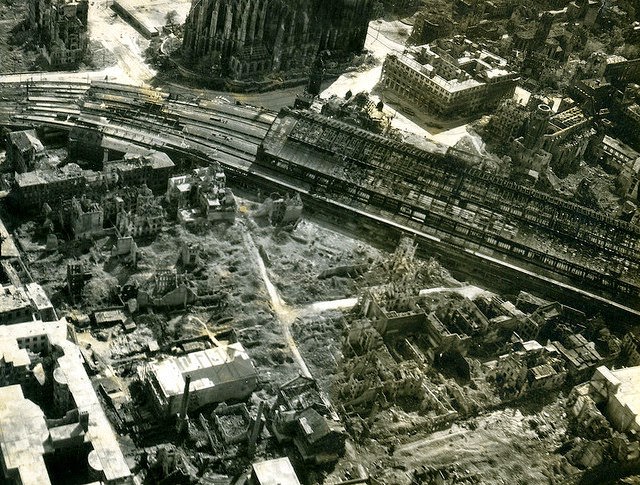
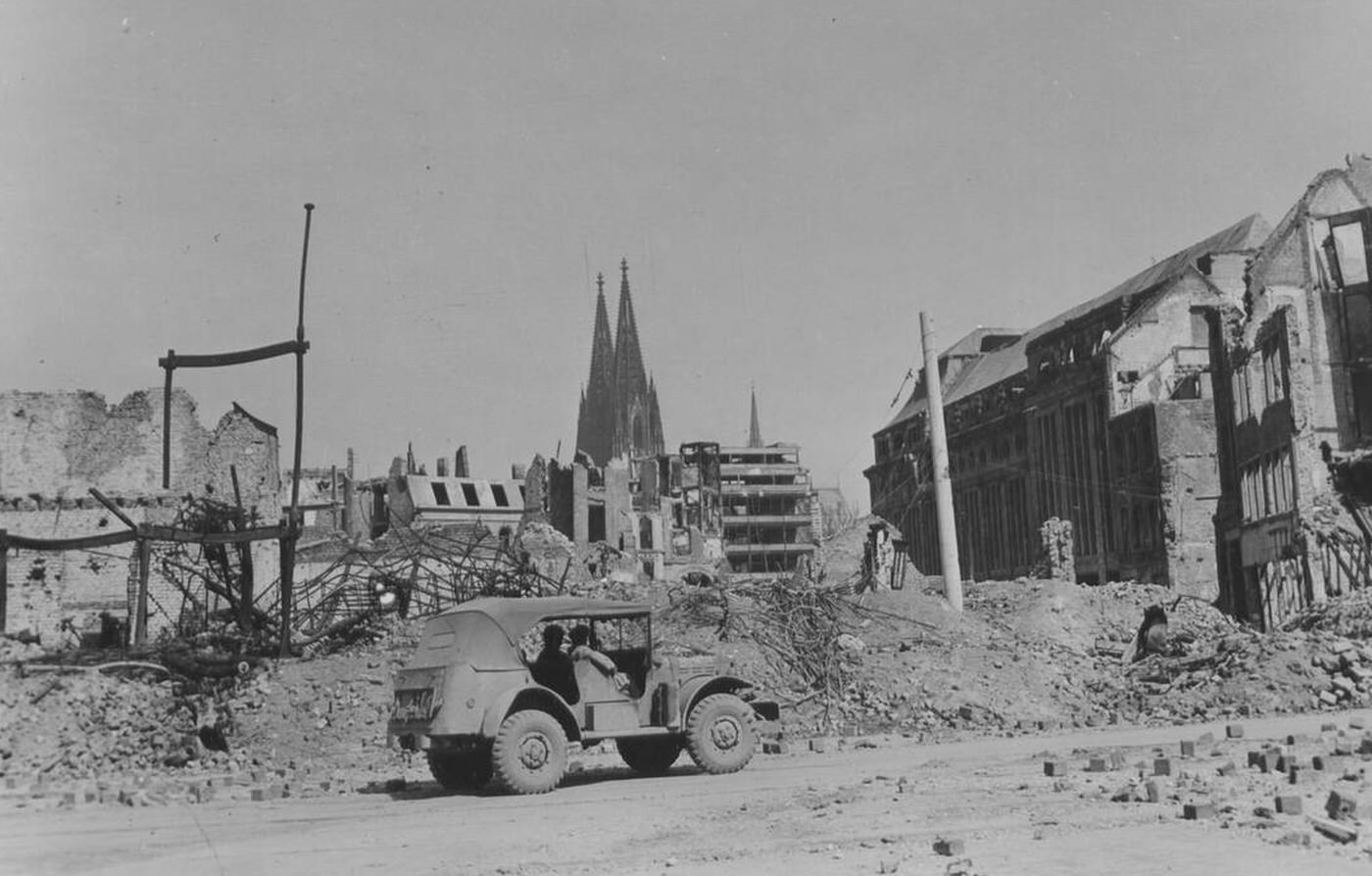
Cologne Cathedral stands tall amidst the ruins of the city after allied bombings, 1944.
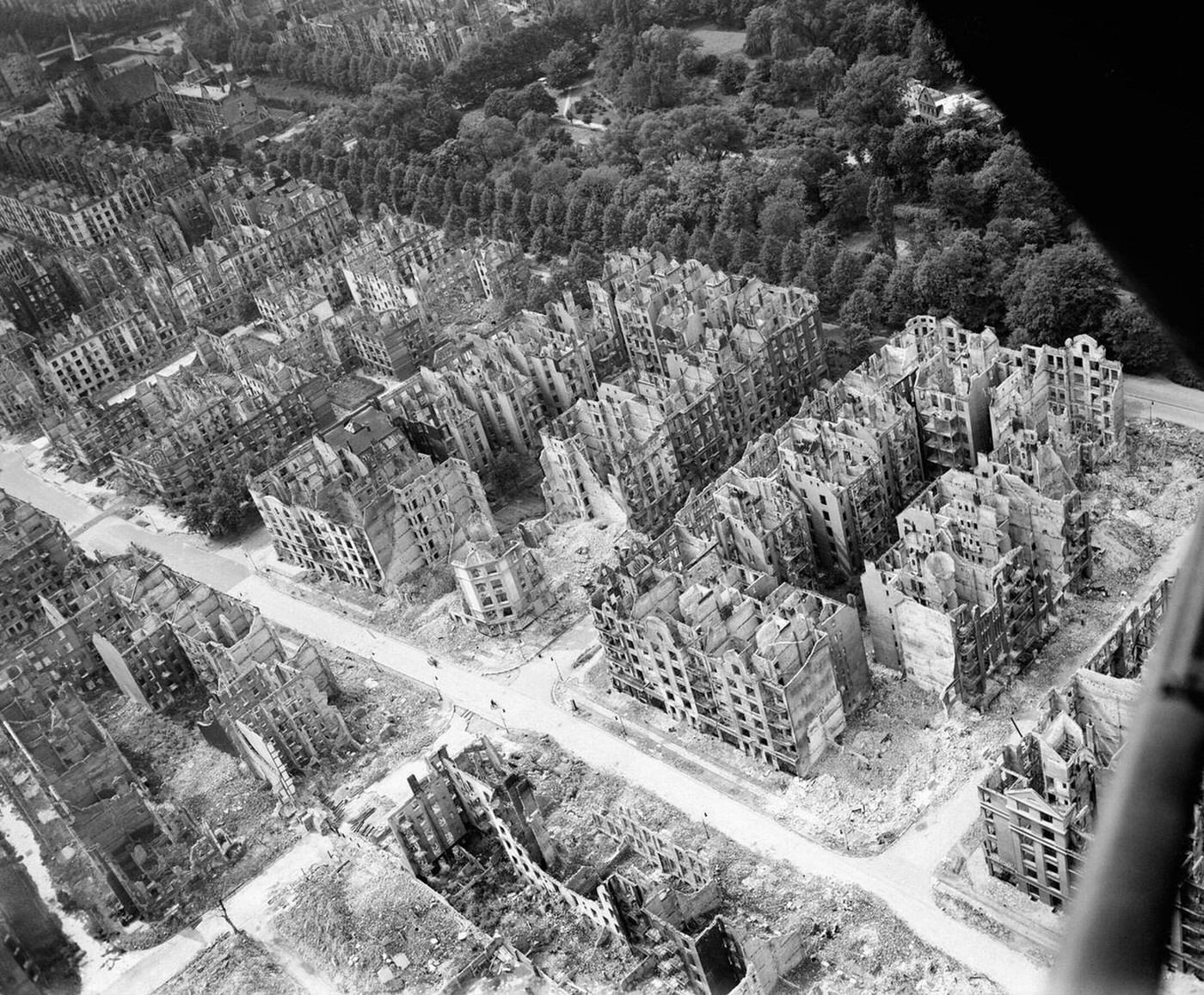
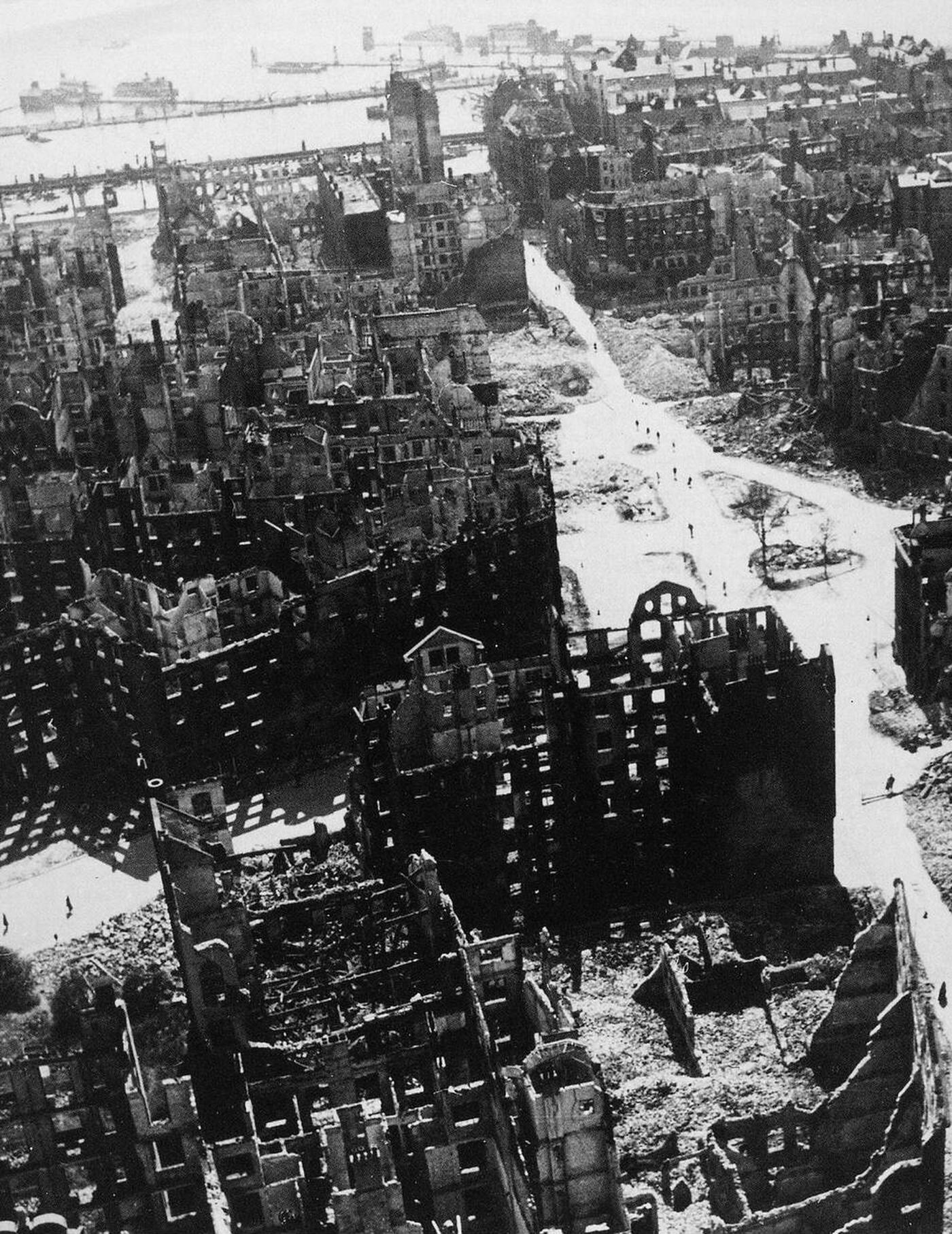
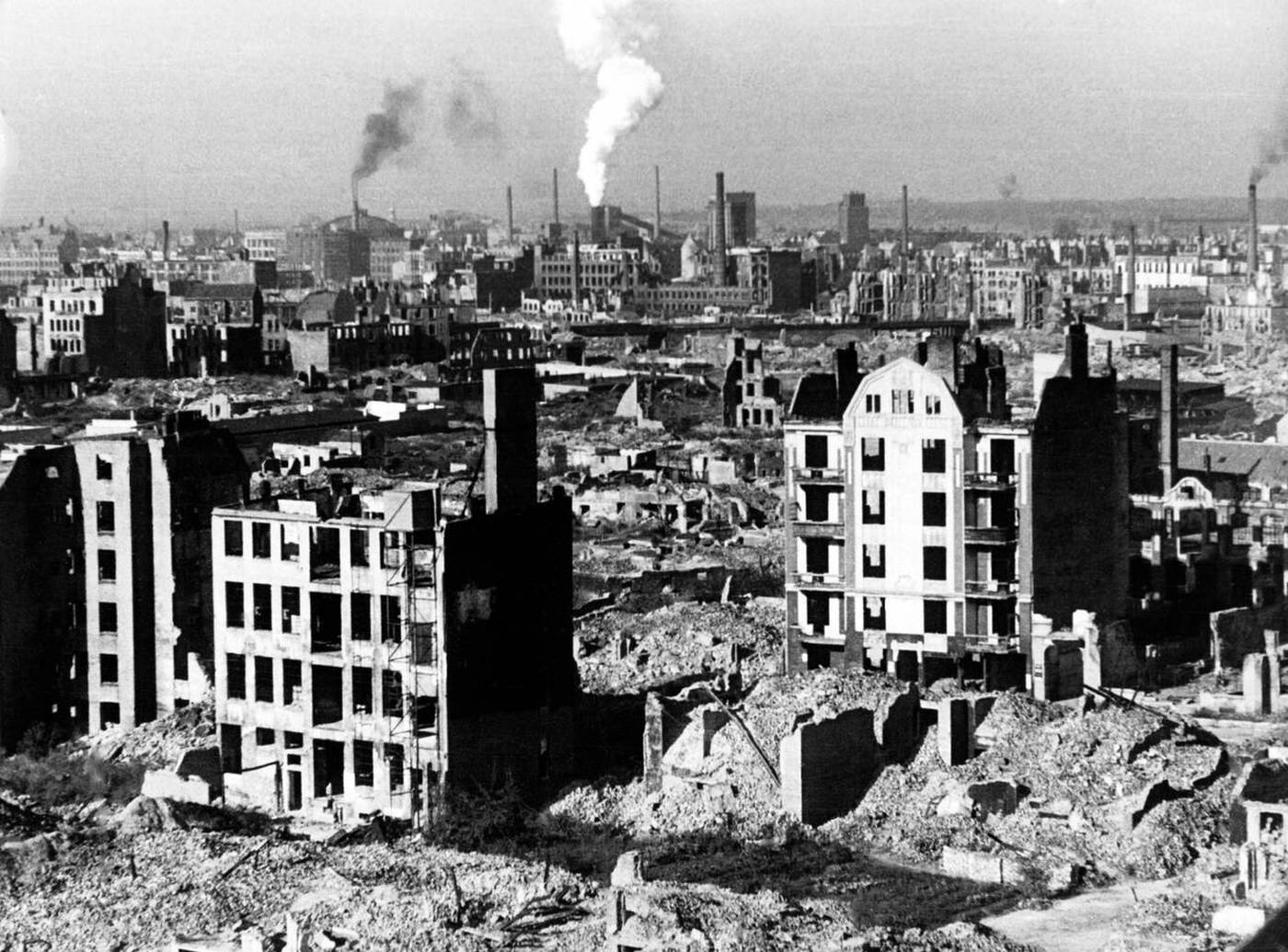
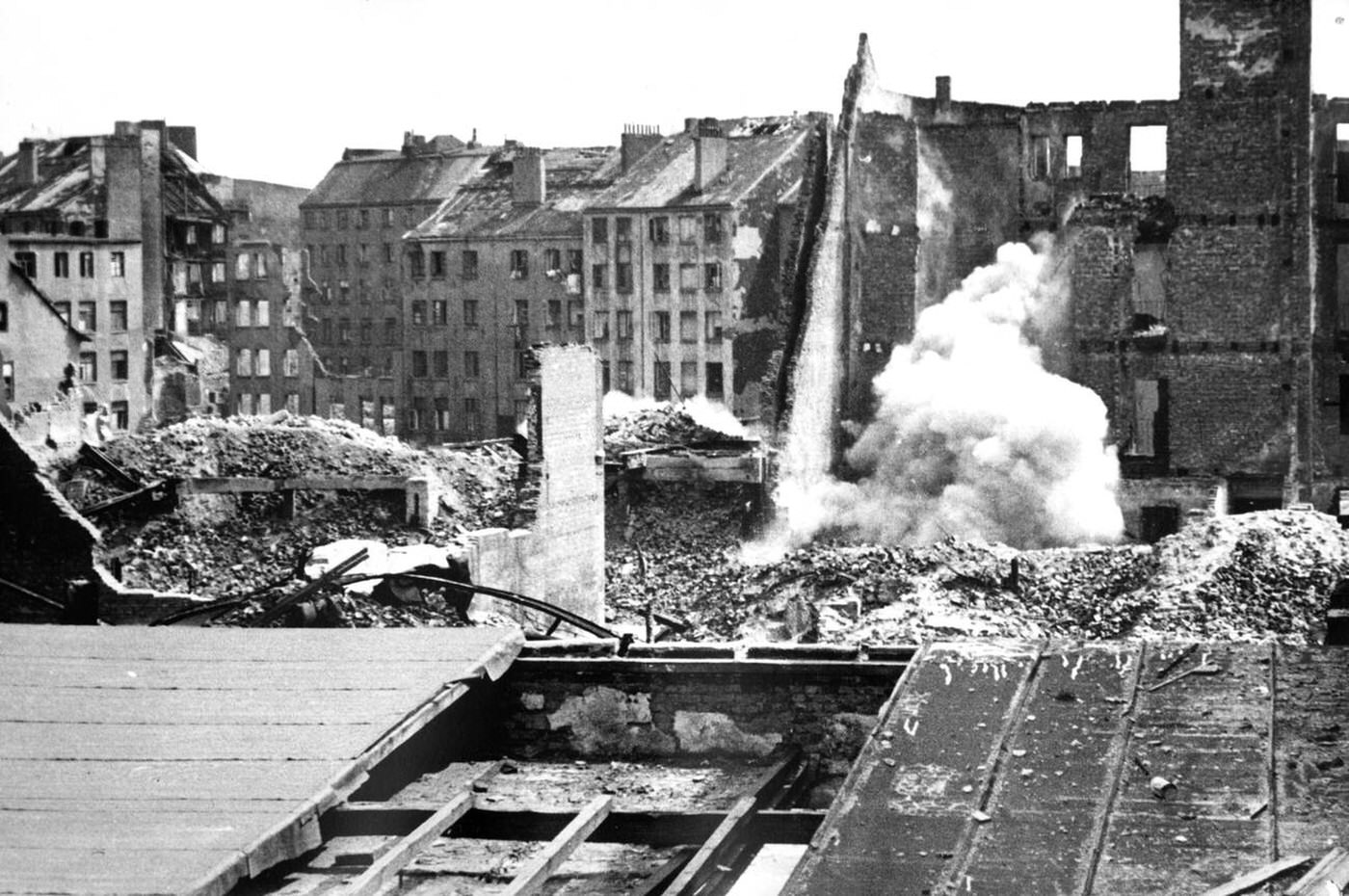
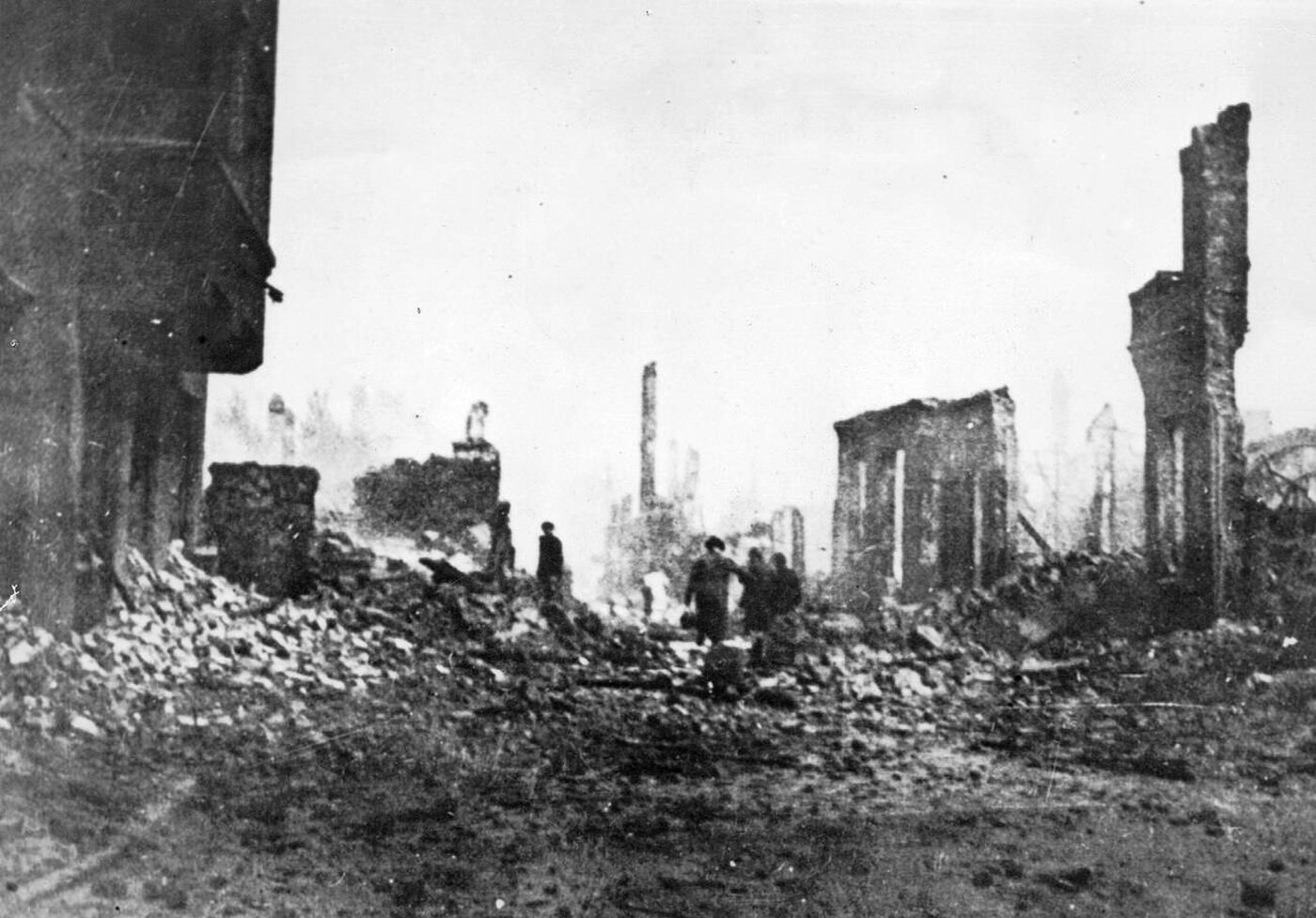
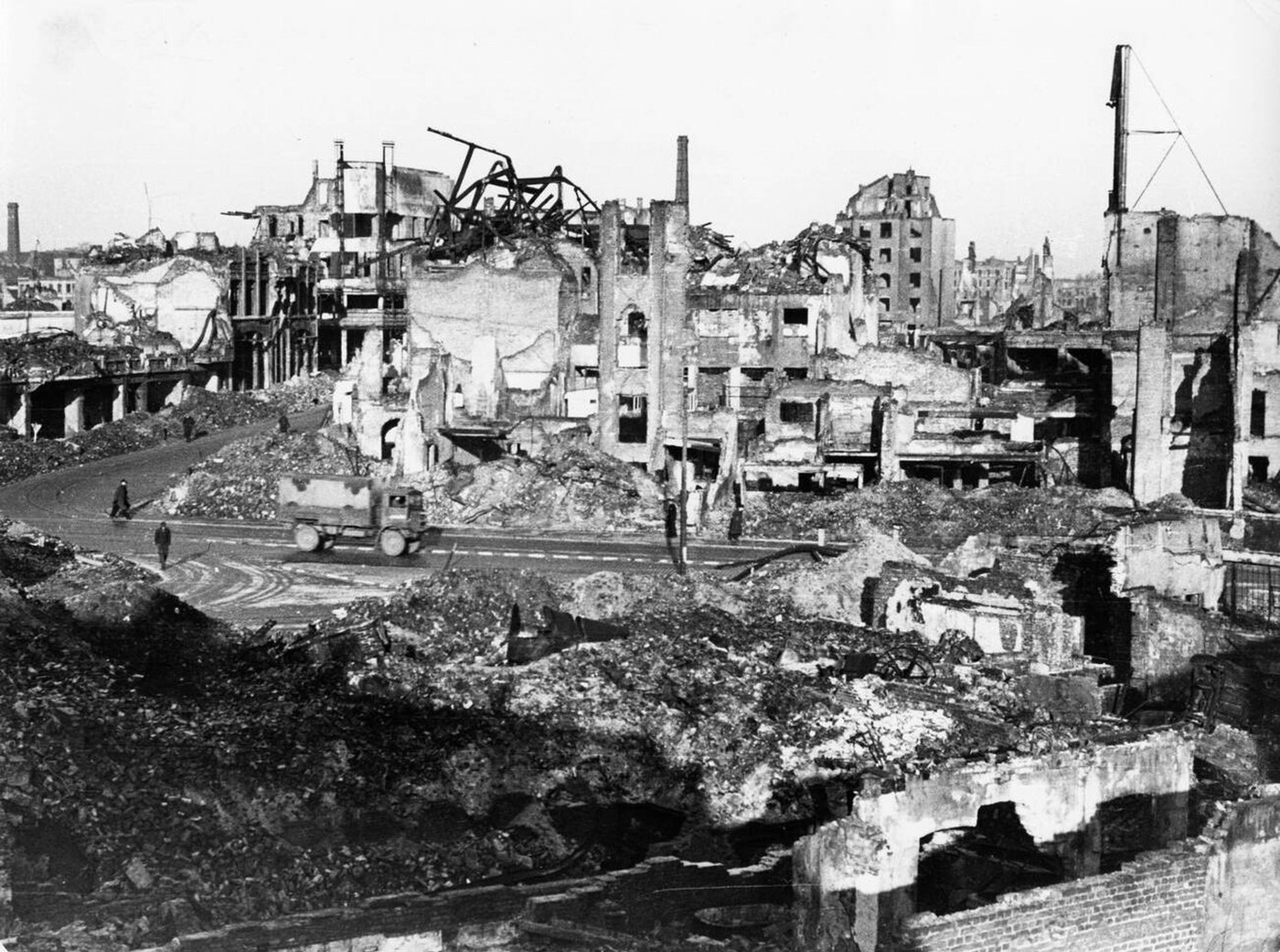
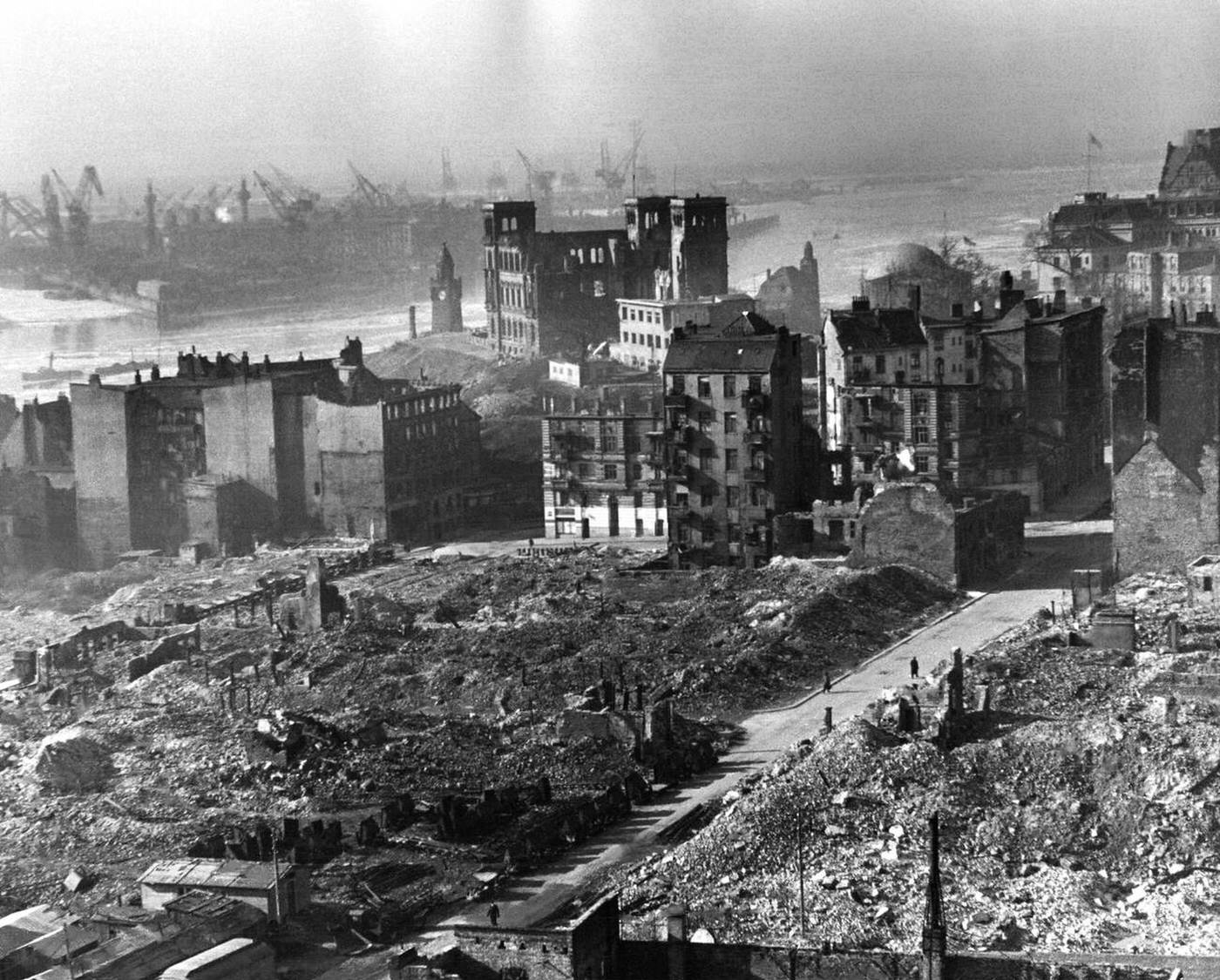
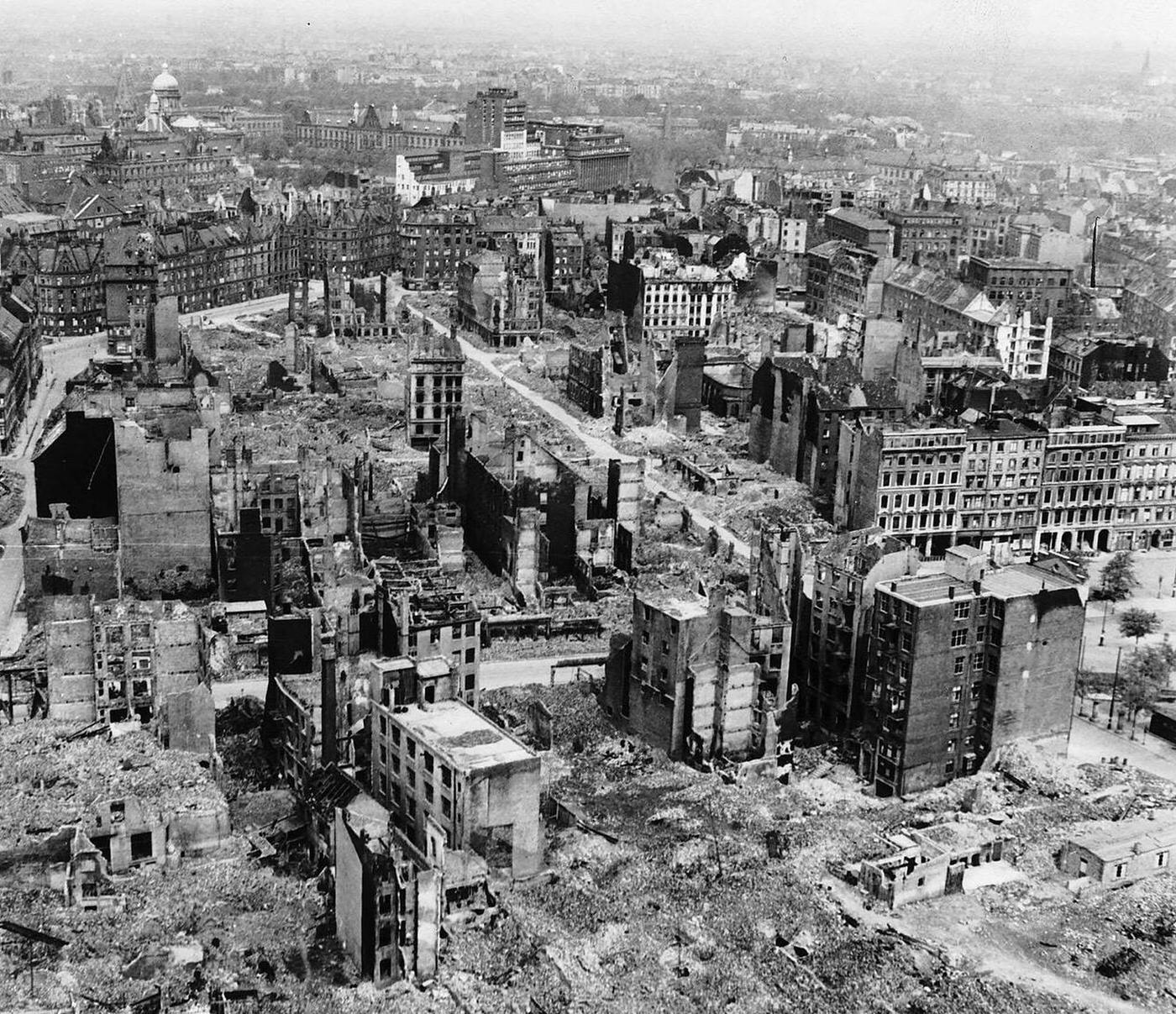
The Allied strategic bombing campaign targeted Germany’s ability to fight. Factories, rail lines, fuel depots, and bridges were priority targets. But the bombs did not fall with surgical precision. Entire city blocks were destroyed. Hamburg, Cologne, Dresden, and dozens of other cities were hit repeatedly. The RAF carried out massive nighttime raids while the U.S. Army Air Forces struck during the day. The combined effect was devastating. In Hamburg during Operation Gomorrah in late July 1943, a firestorm ignited by incendiary bombs created a self-sustaining column of fire that consumed entire districts. Temperatures inside the firestorm reached nearly 800 degrees Celsius. Tens of thousands of civilians died in a matter of days.
The Eilbek district of Hamburg after the firestorm which developed during the raid by Bomber Command, Operation GOMORRAH, 1943.Hamburg after Operation Gomorrah, 1943.
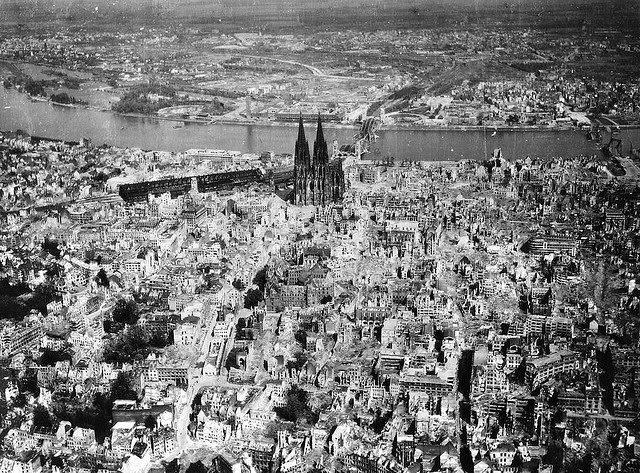
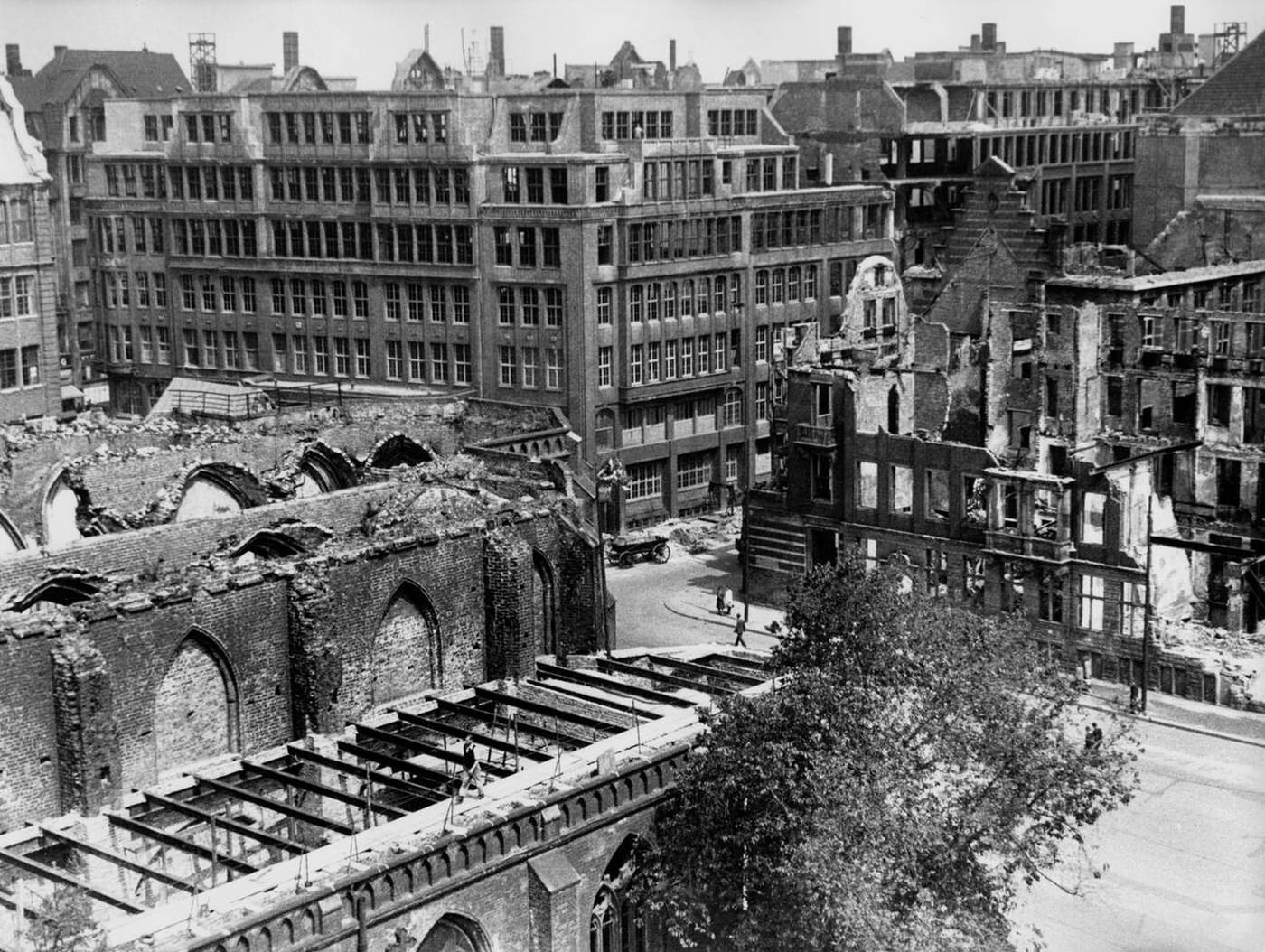
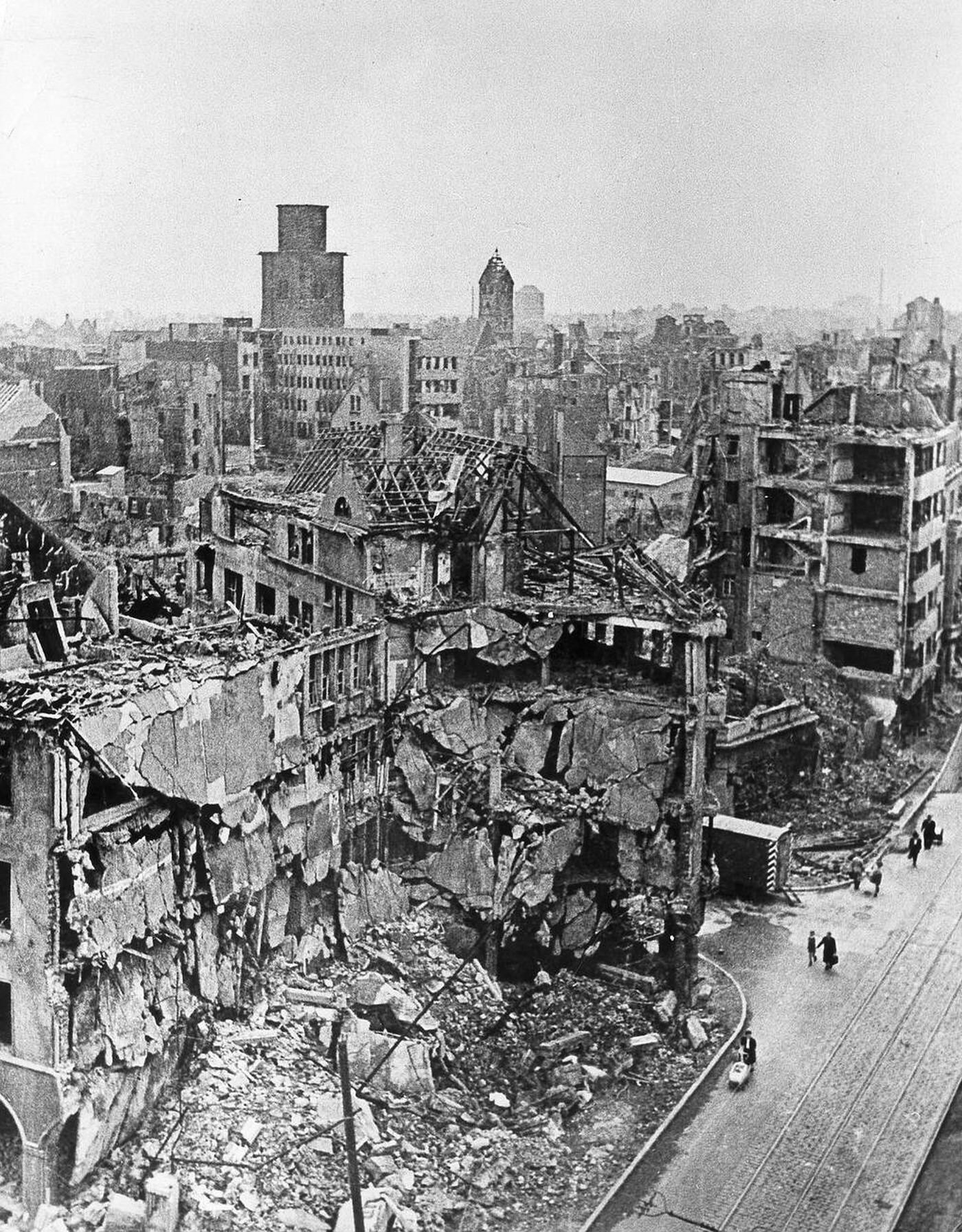
Cologne was bombed over 260 times throughout the war. By 1945, roughly 95 percent of the city center had been destroyed. The famous Cologne Cathedral, one of the largest Gothic cathedrals in the world, survived largely intact despite the devastation surrounding it—its twin spires rising above a landscape of collapsed buildings and empty streets. The contrast between the standing cathedral and the total ruin around it became one of the most photographed sights of the war.
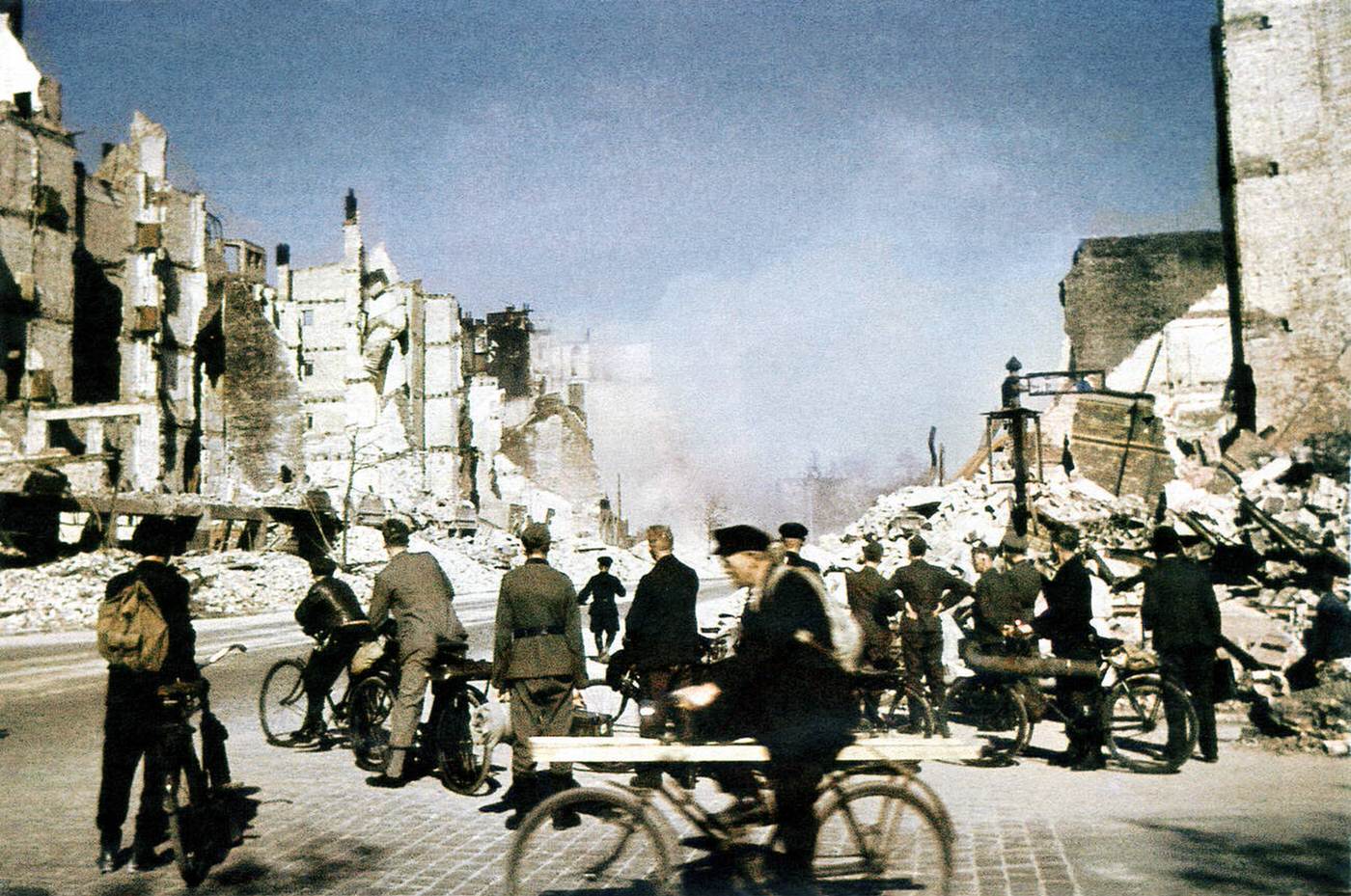
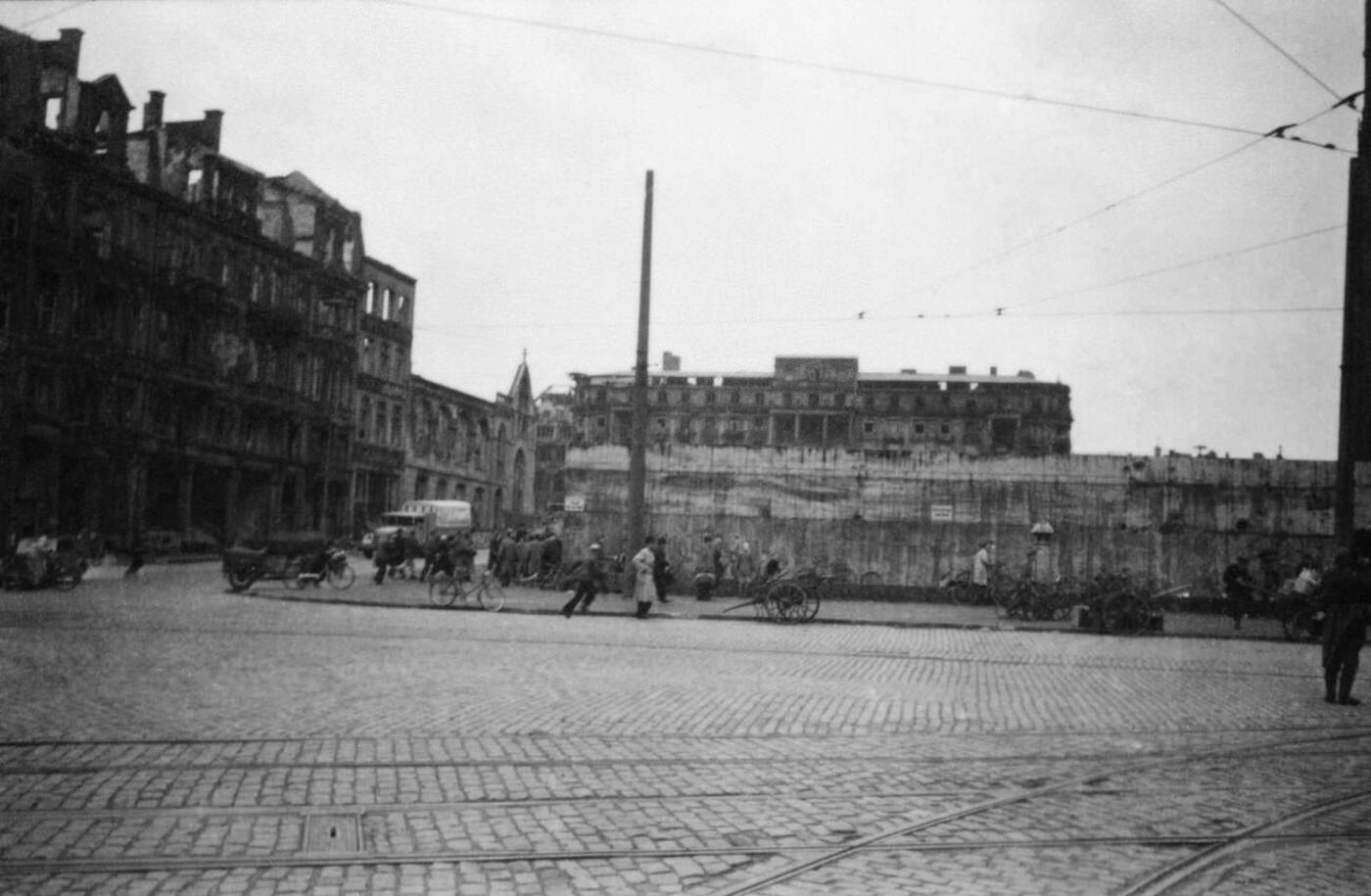
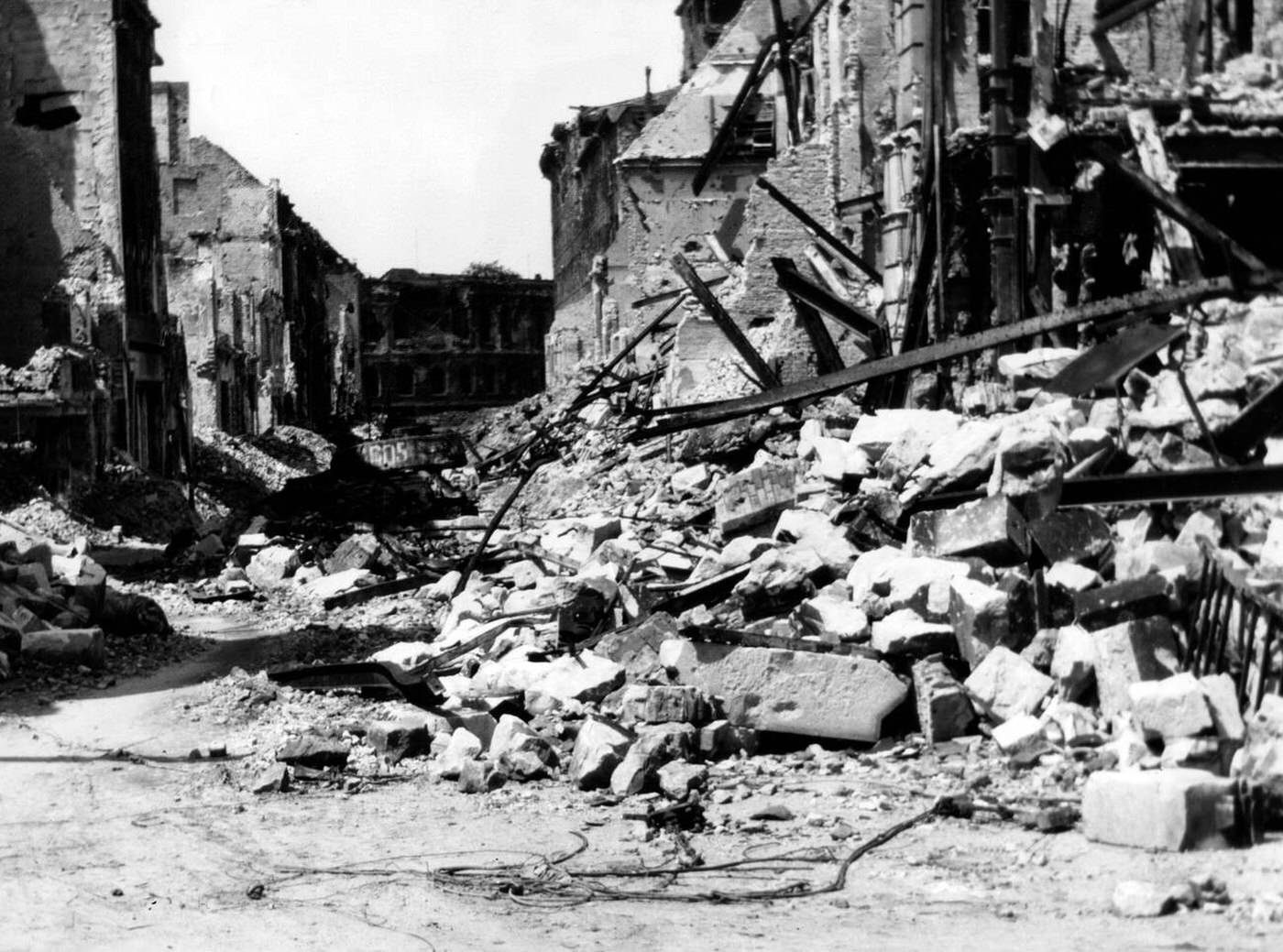
Cologne Cathedral amidst the ruins of Cologne after allied air raids in World War Two, 1944.Street scene in Cologne after an Allied air raid, 1944.
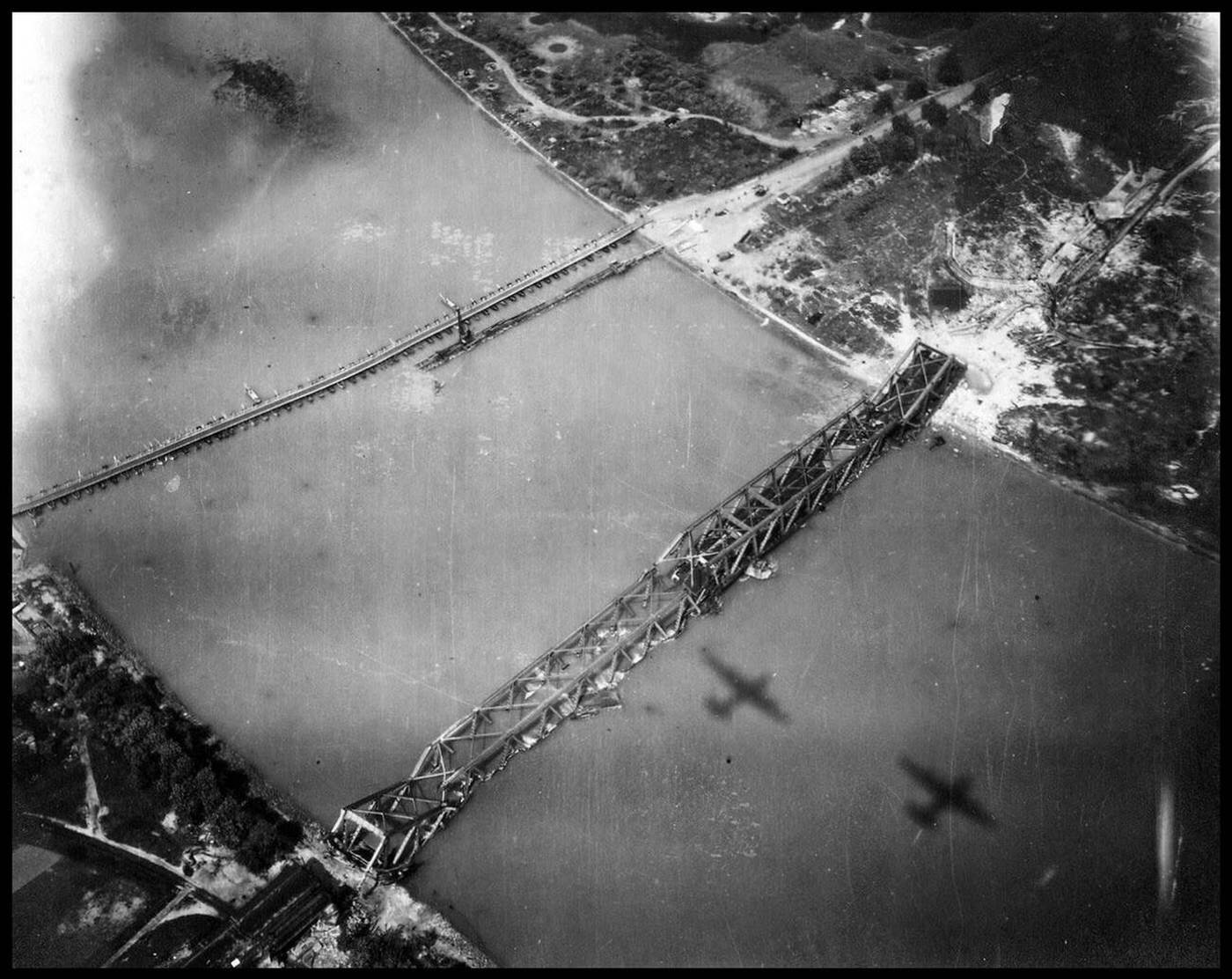
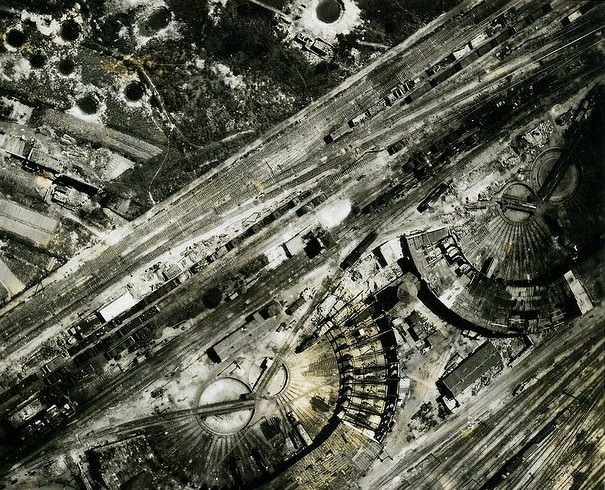
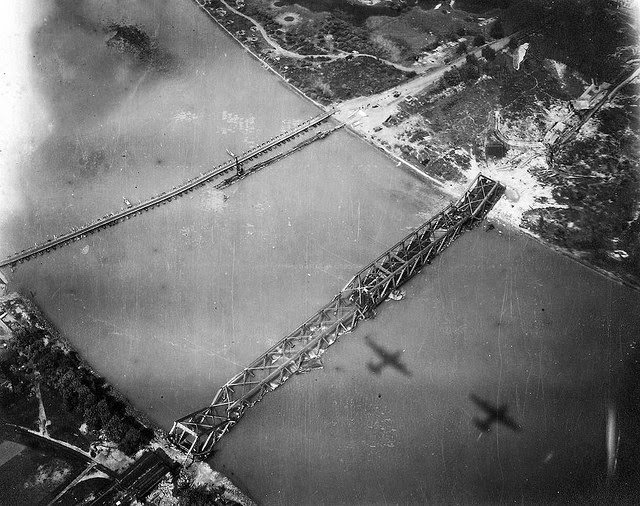
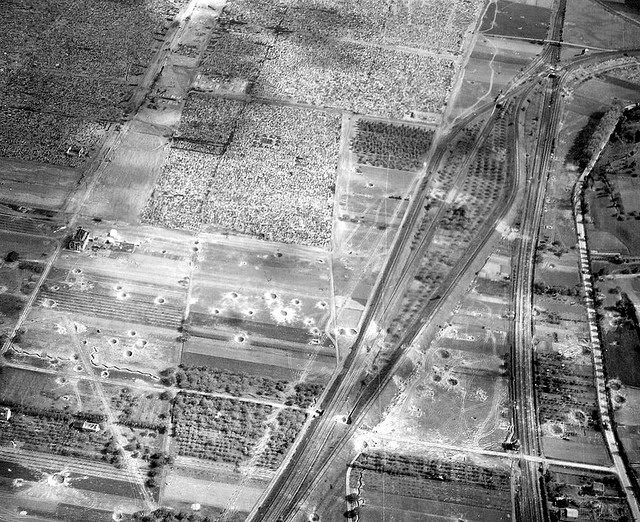
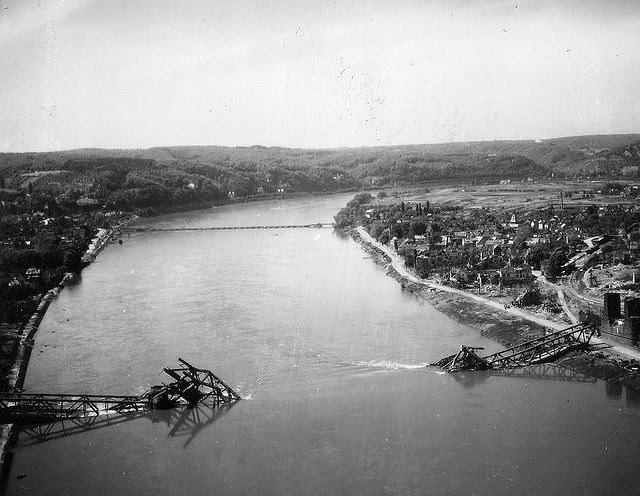
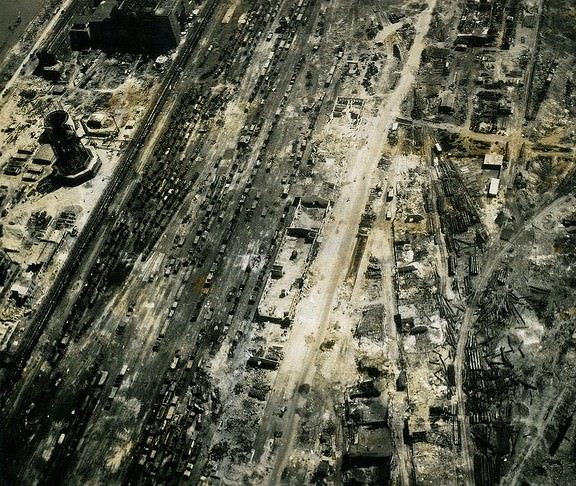
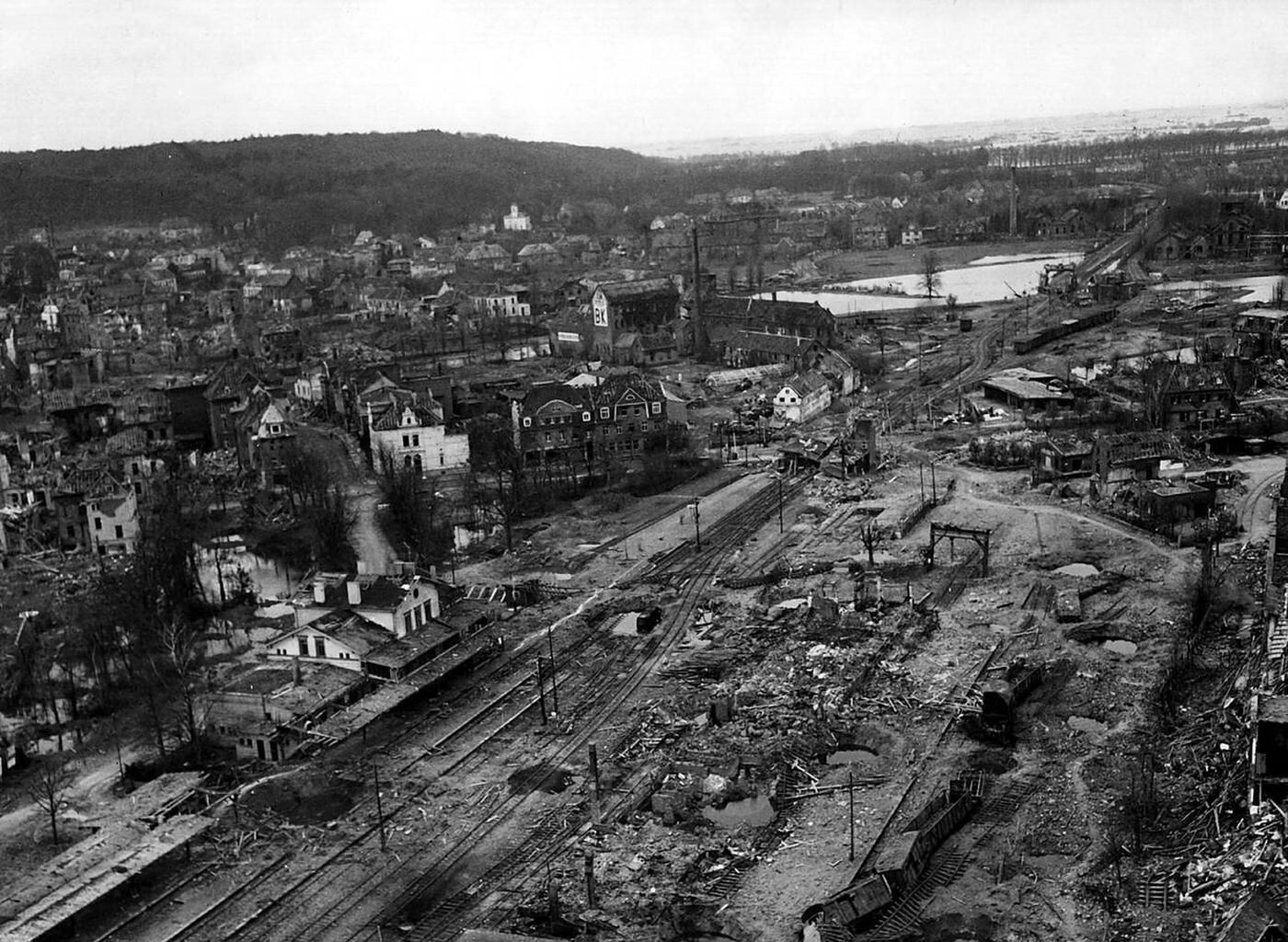
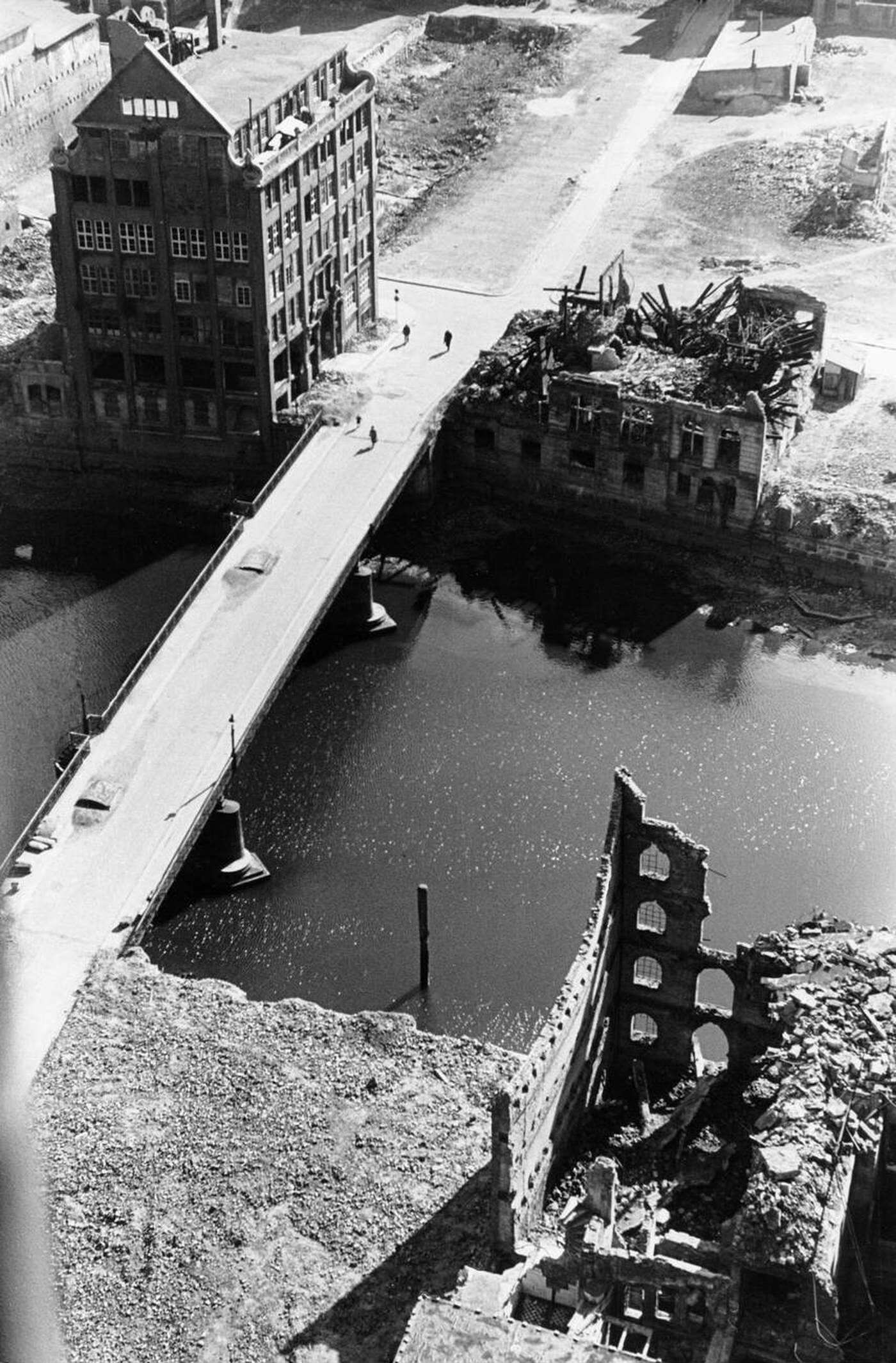
Transportation networks were a critical target. Rail yards, bridges, and transfer stations were bombed repeatedly to choke Germany’s supply lines. Without functioning railways, moving troops, ammunition, and food became nearly impossible. Bombed-out rail yards sat twisted and silent. Bridges over the Rhine and other major waterways were destroyed one by one, cutting off German forces from reinforcements and retreat routes.
Bombed Railroad Transfer StationBridges over the River Rhine
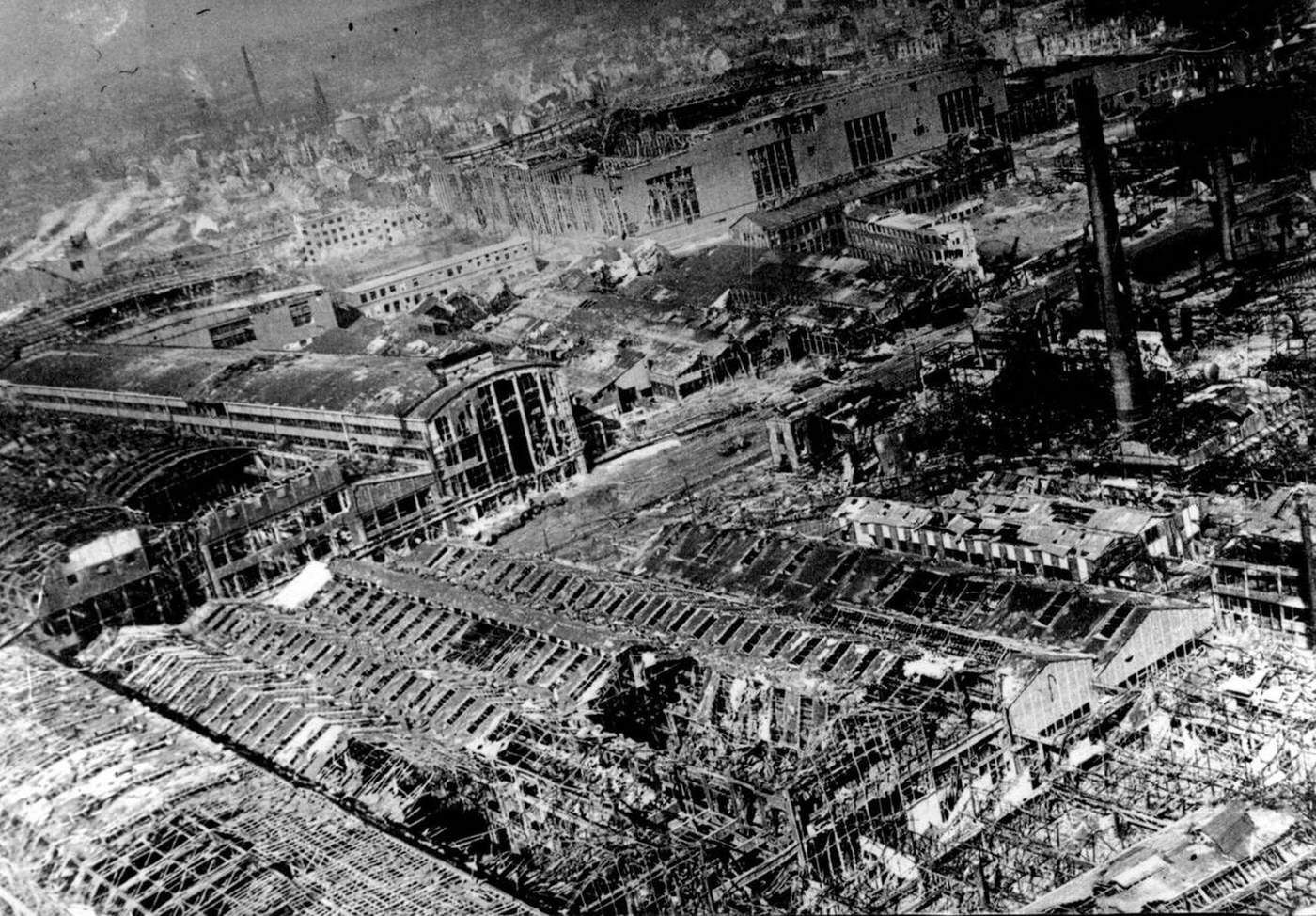
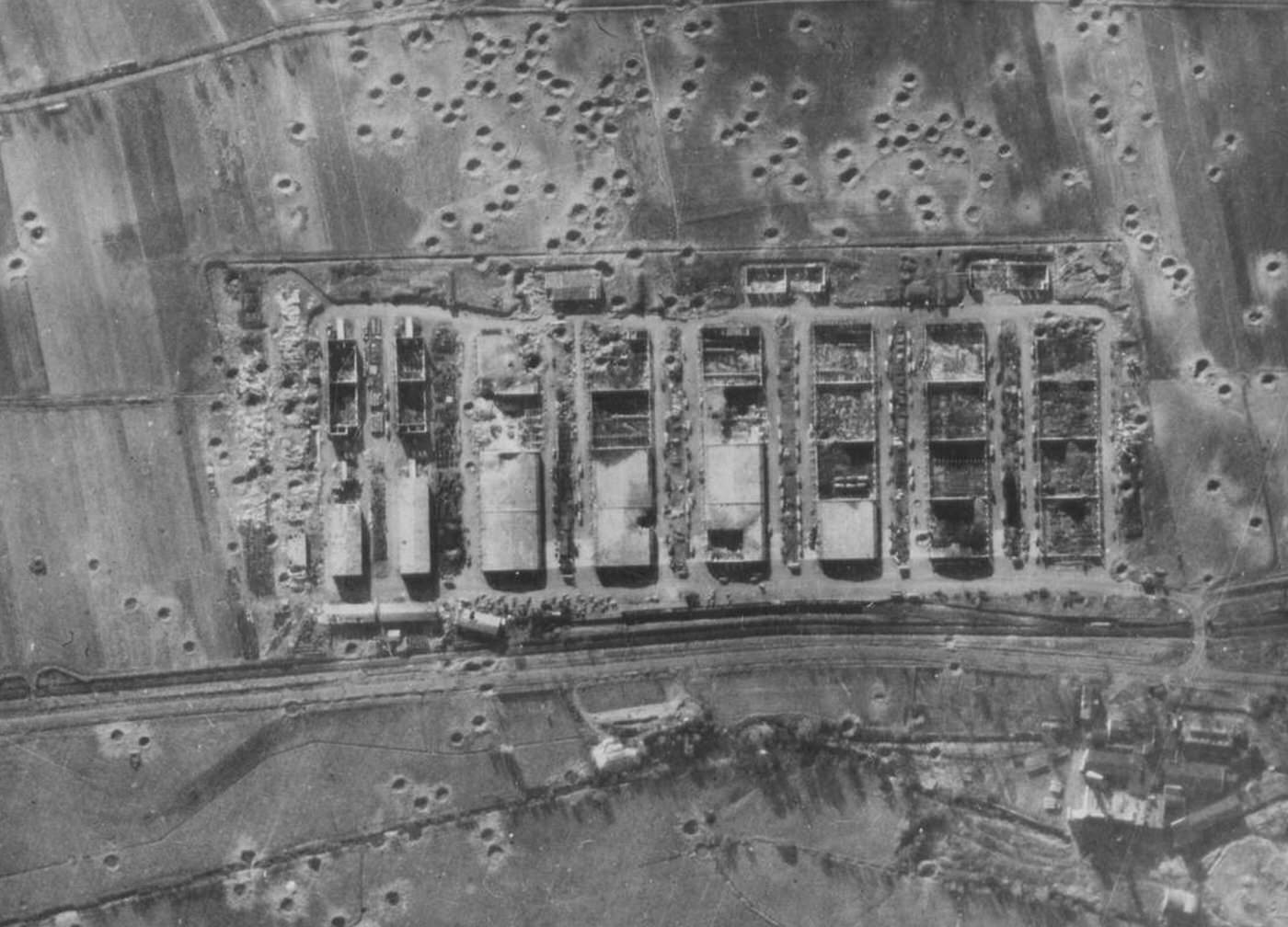
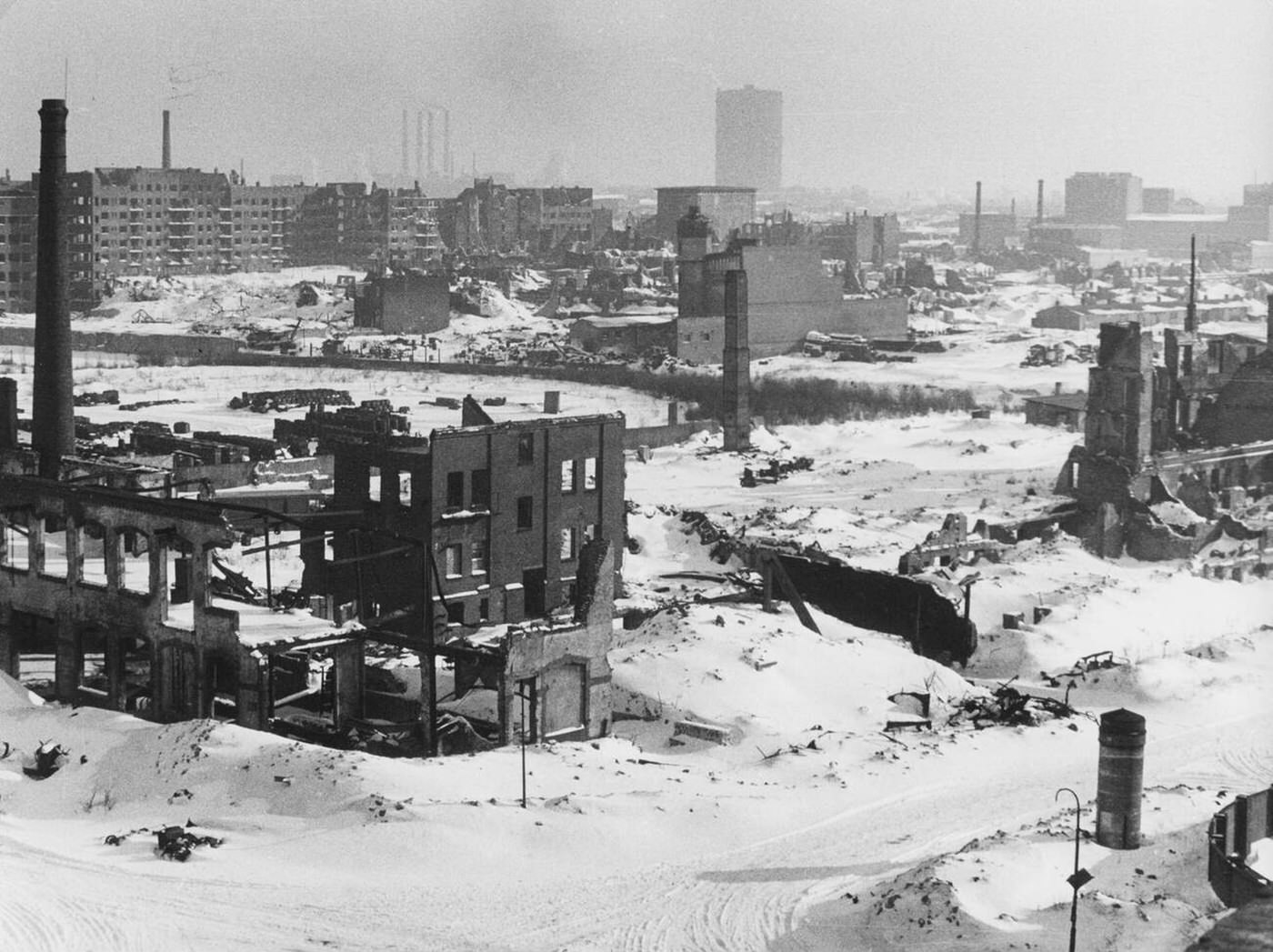
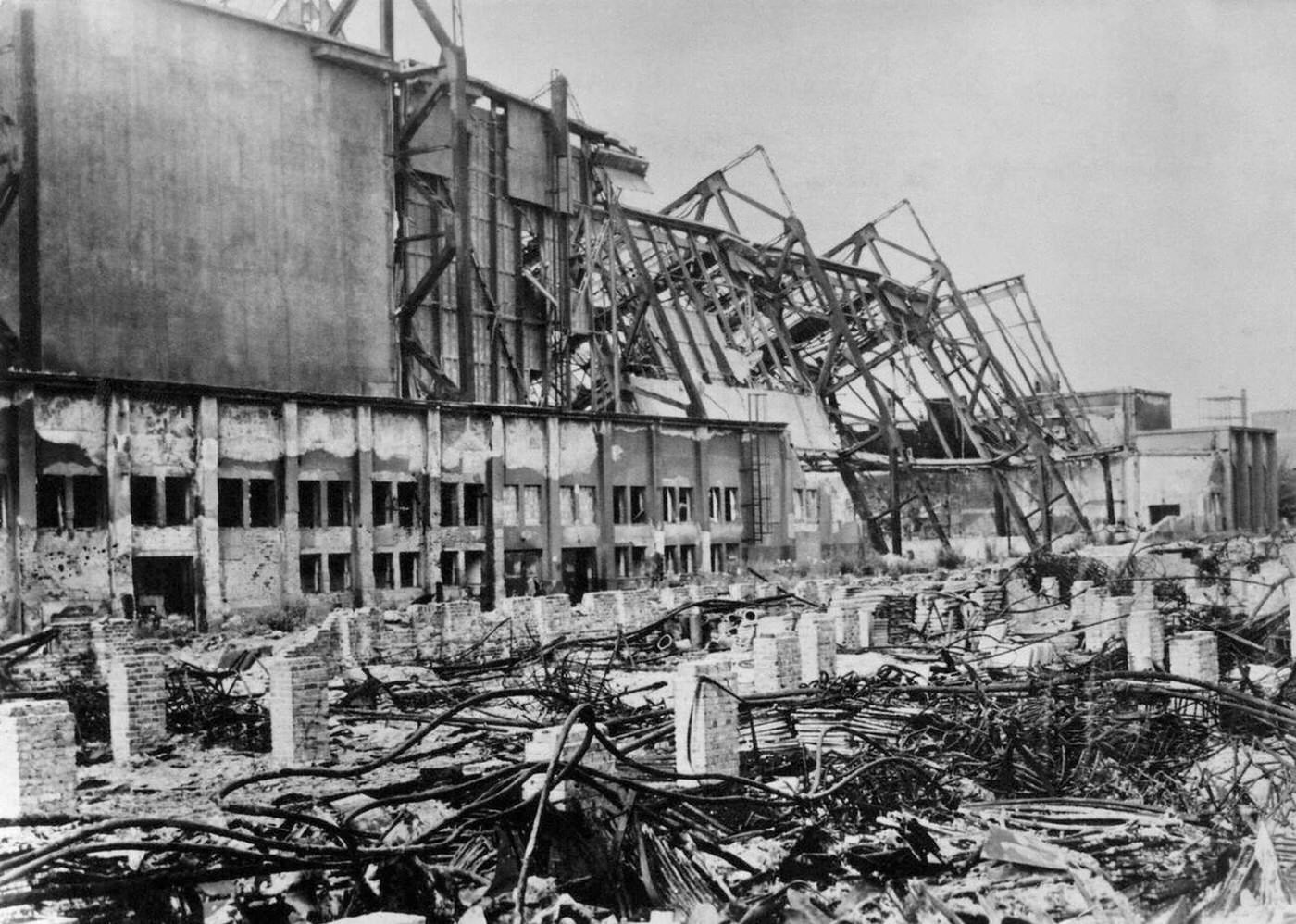
Germany’s industrial heartland in the Ruhr Valley was systematically dismantled from the air. The Krupp weapons factories in Essen, which had supplied the Wehrmacht with arms since the beginning of the war, were bombed into wreckage. Essen itself was hit so many times that aerial photographs from 1945 show a city that is barely recognizable—block after block of roofless shells and rubble-choked streets.
An aerial view of the devastated Krupps works at Essen, 1945.Aerial view of devastated town of Essen, 1945.
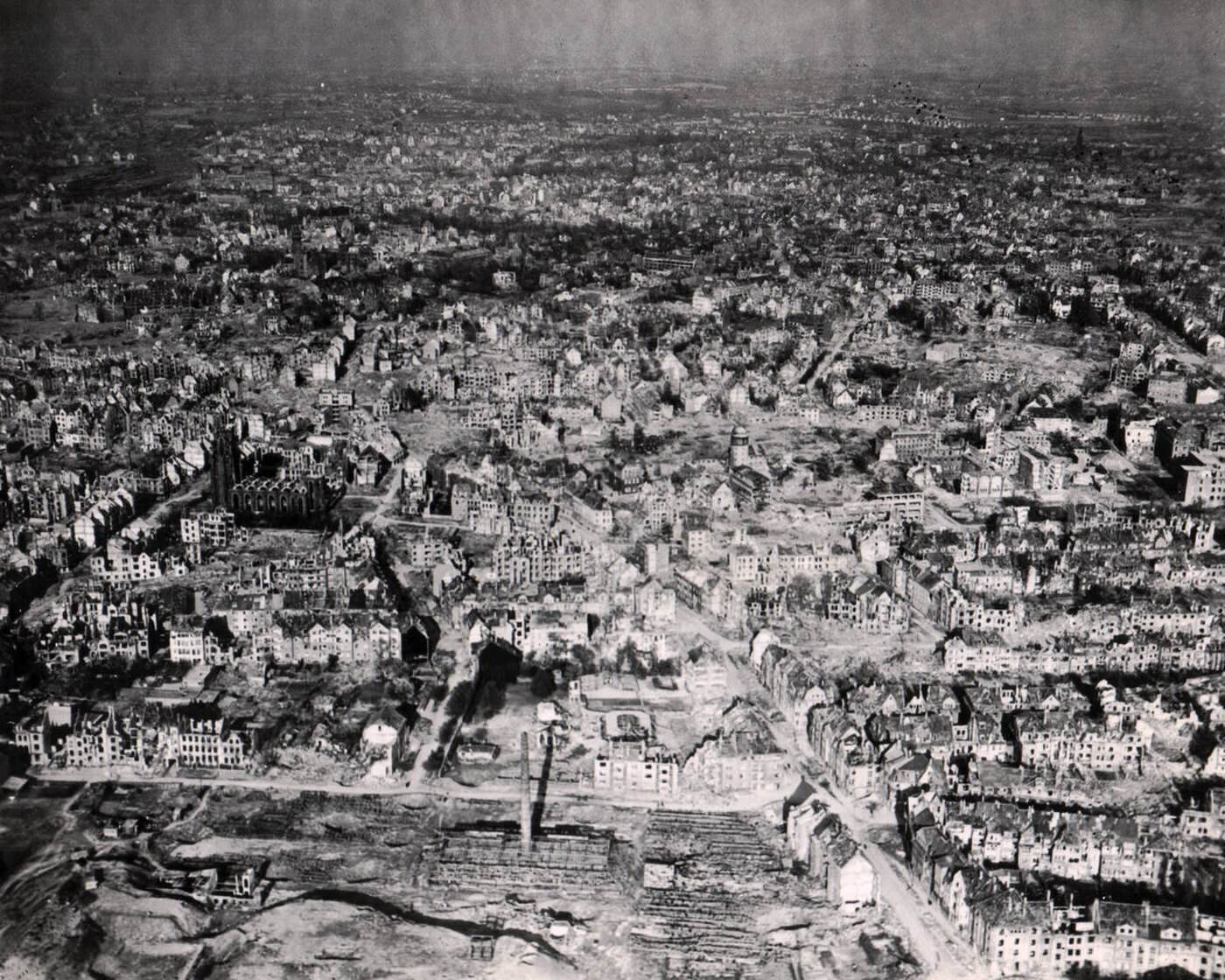
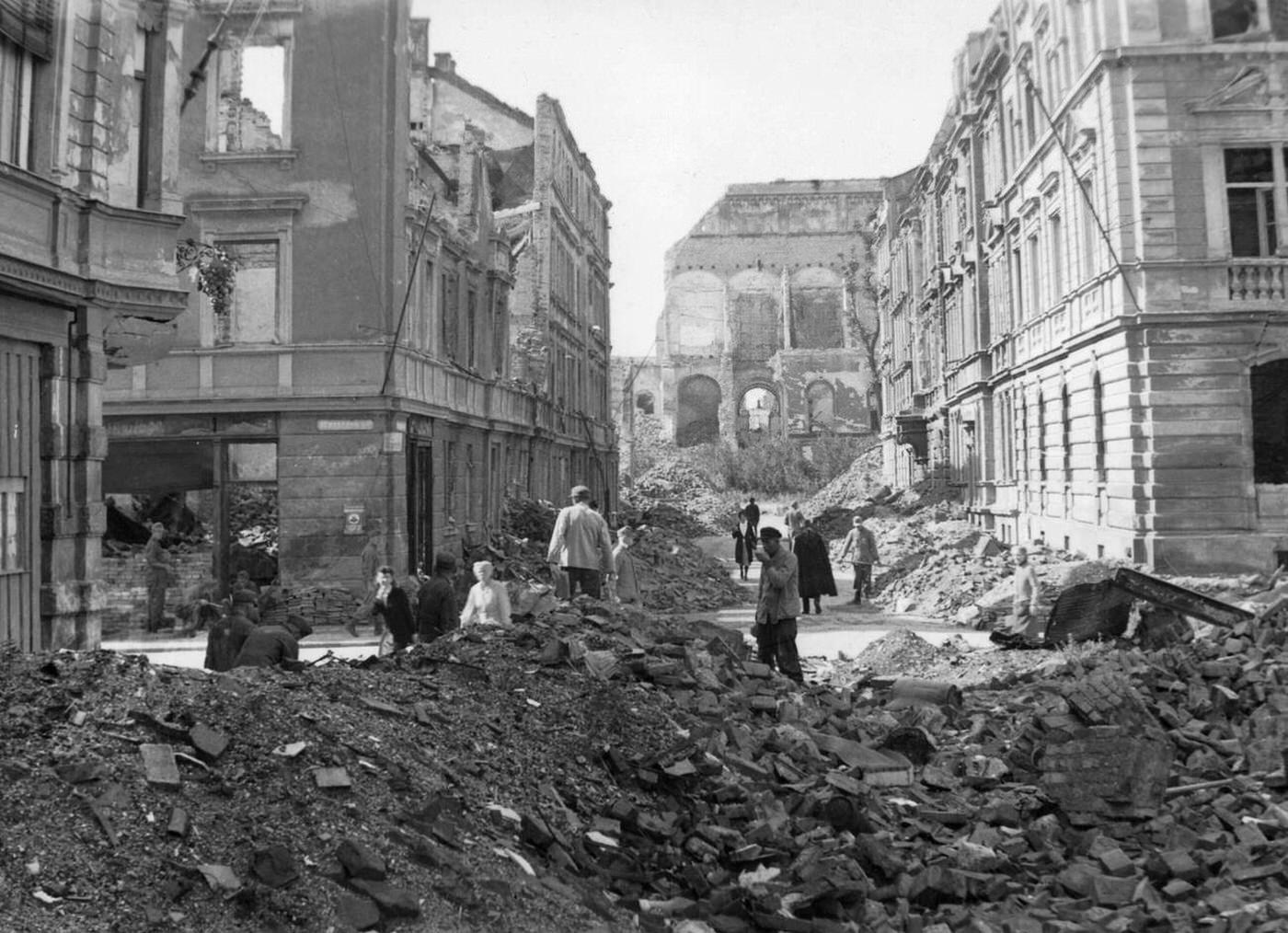
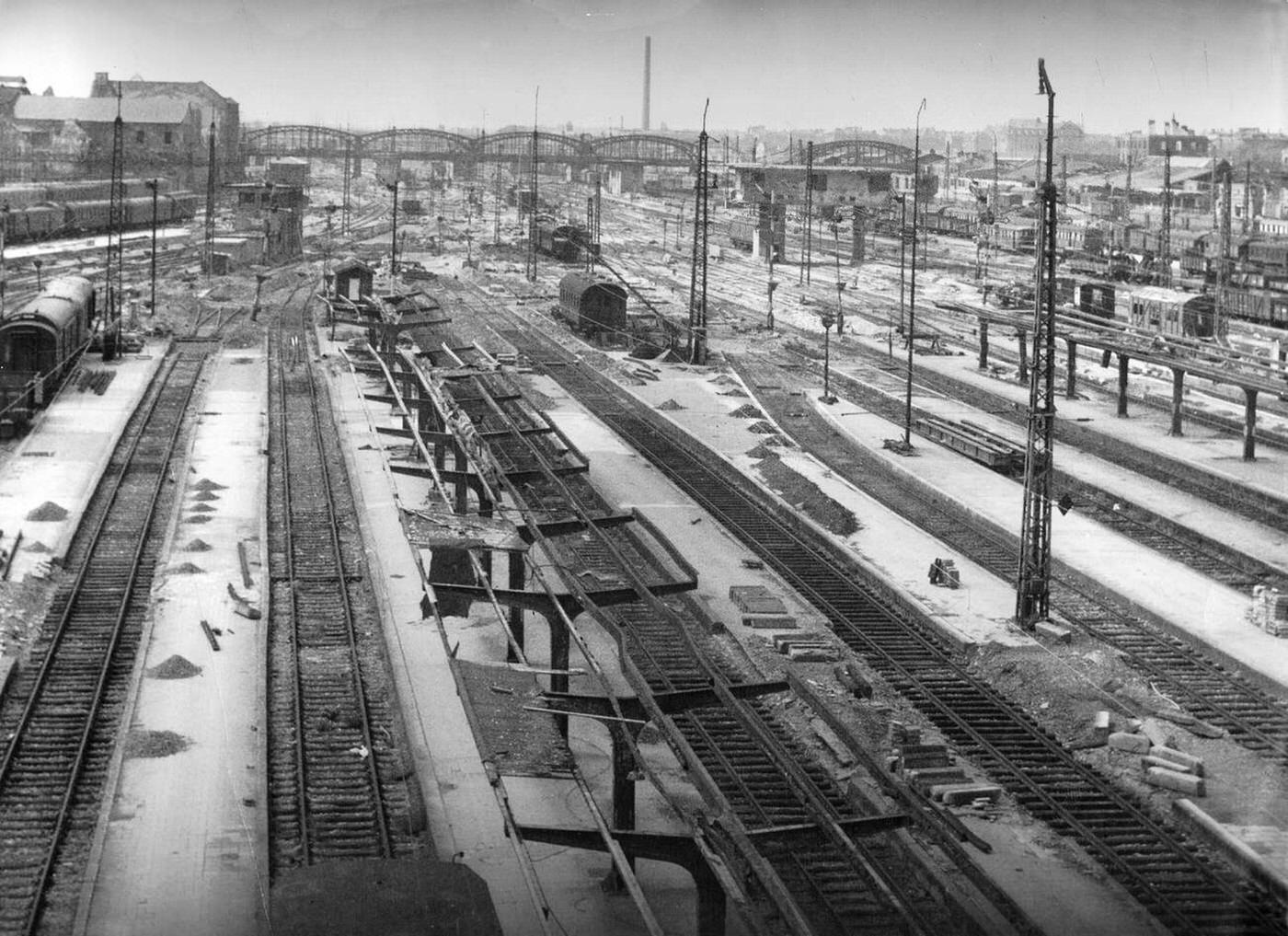
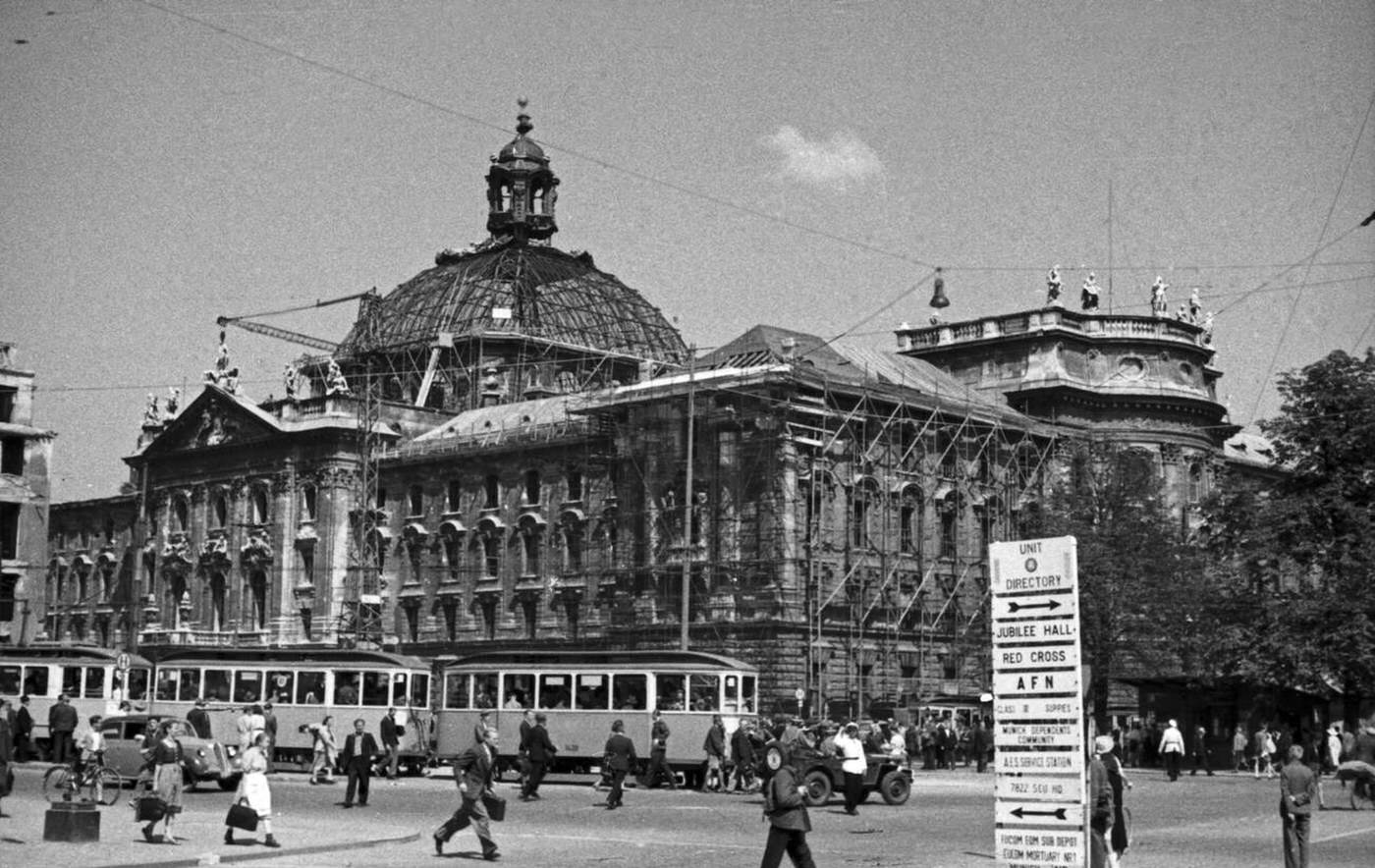
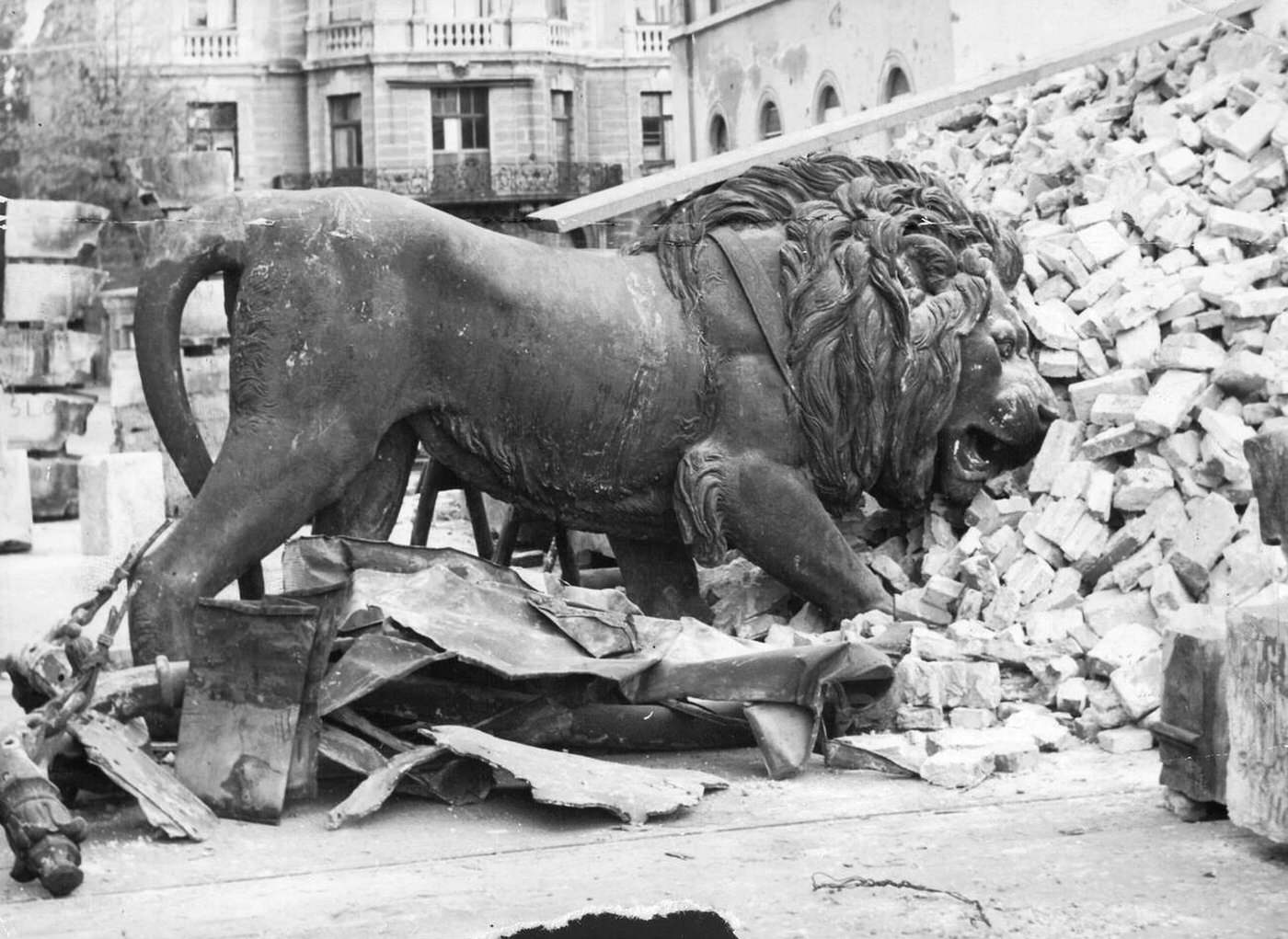
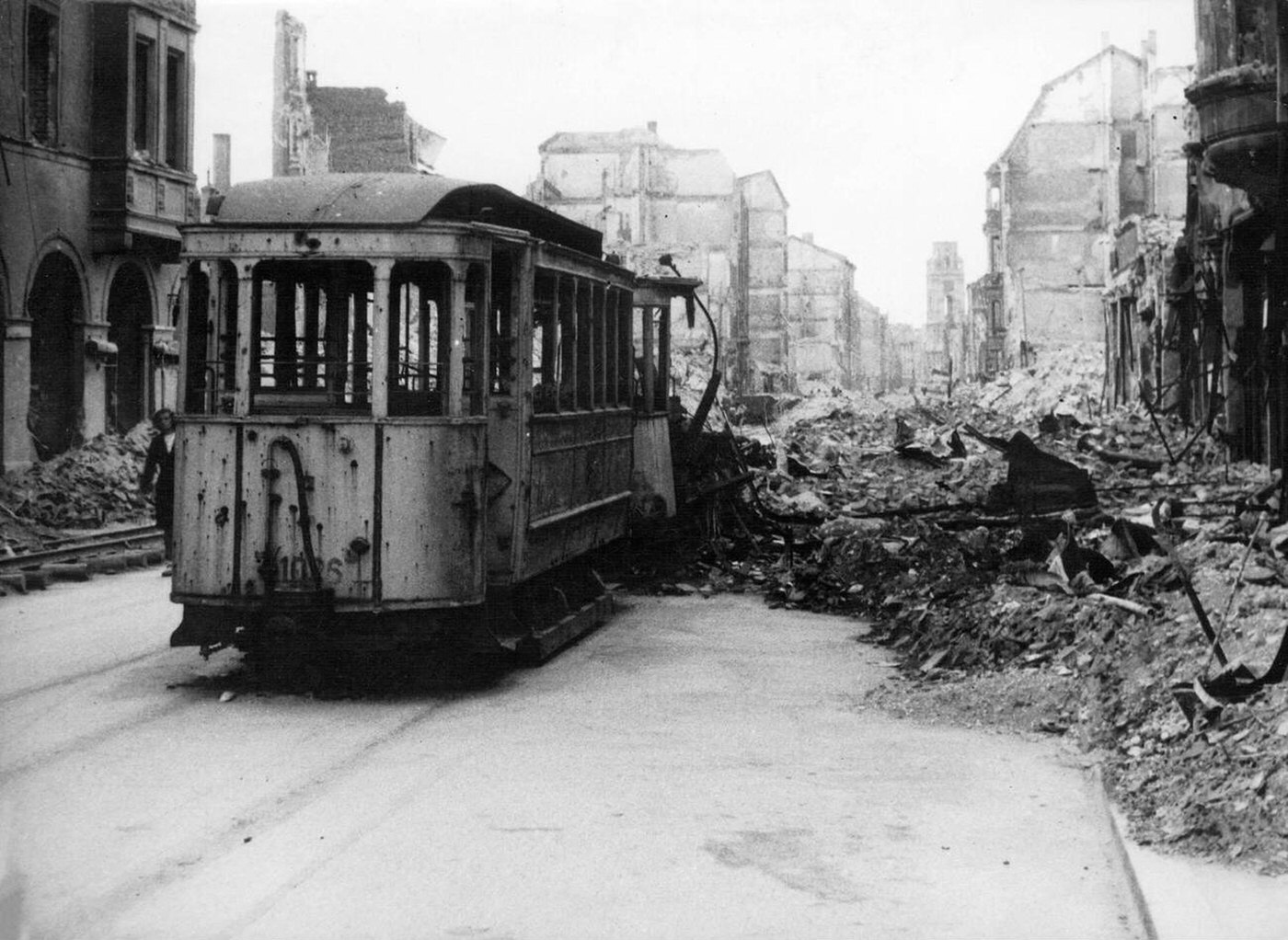
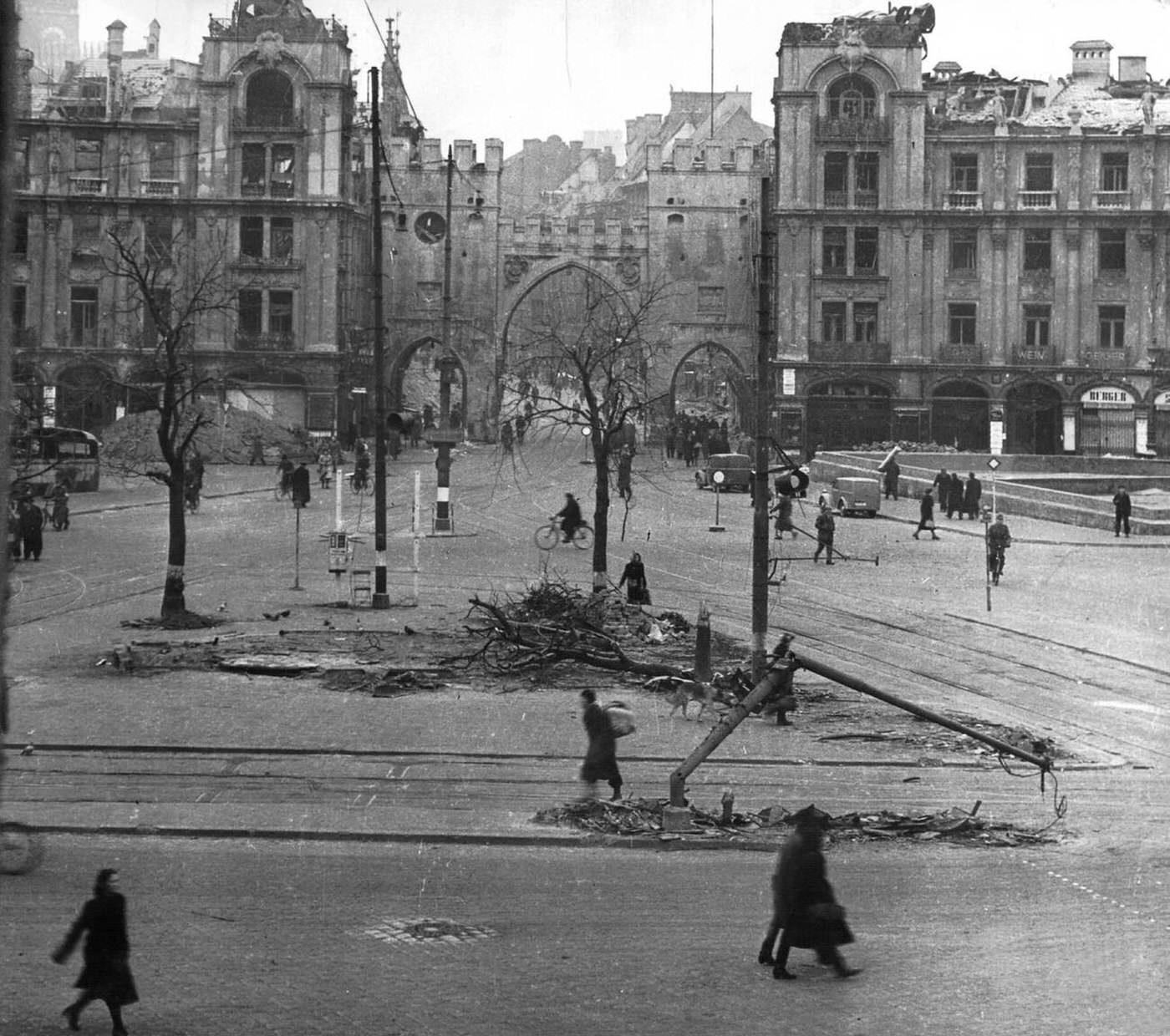
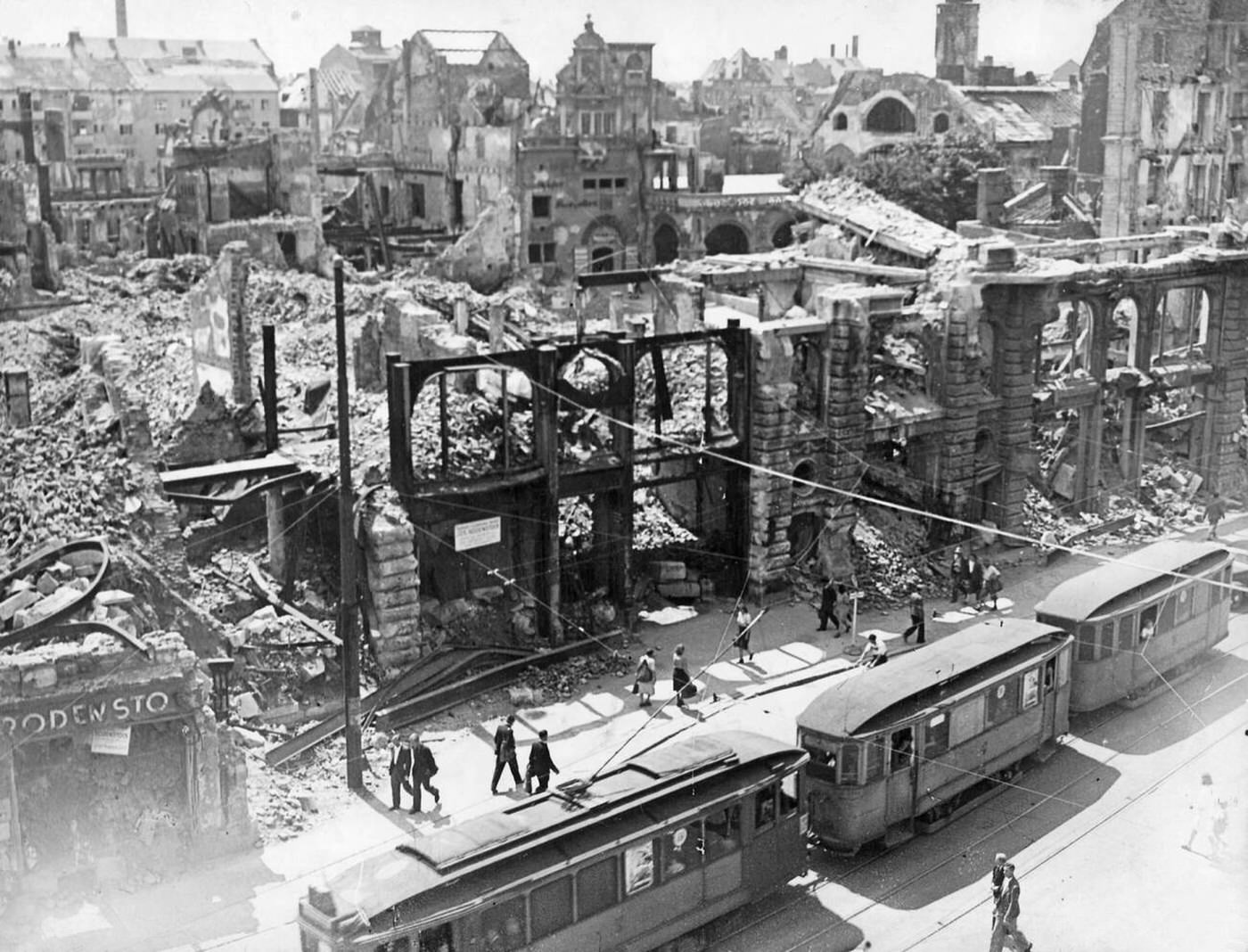
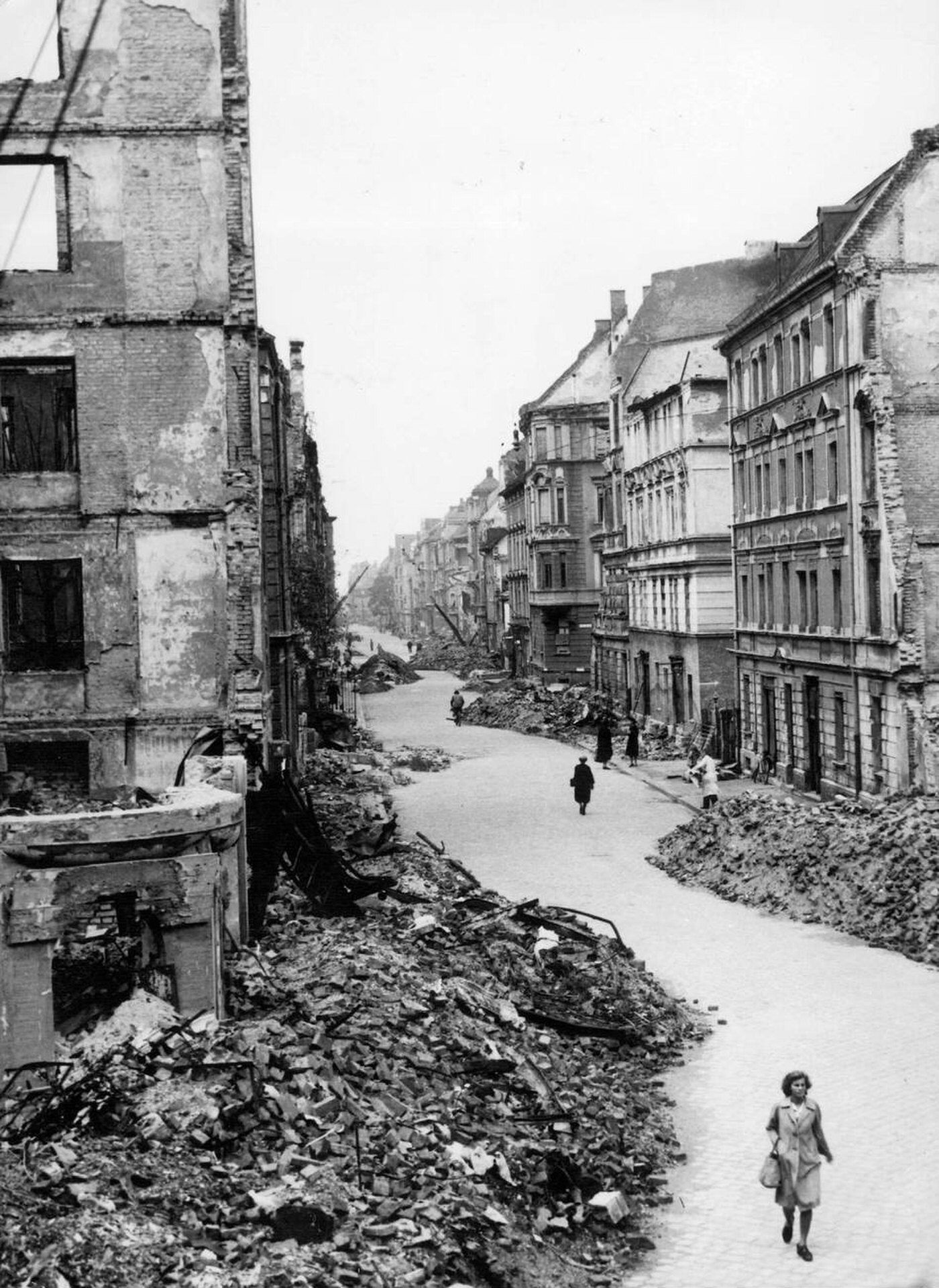
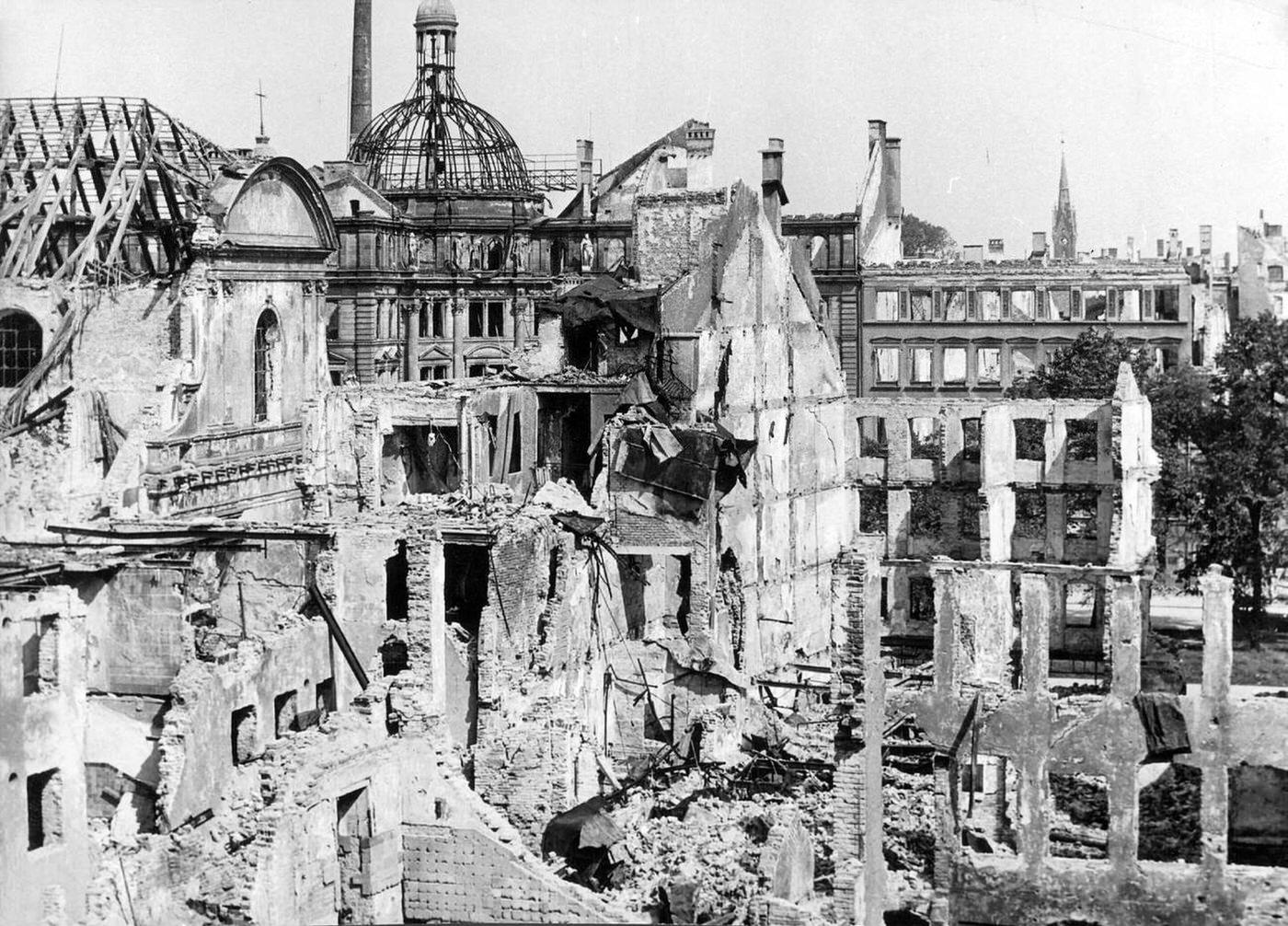
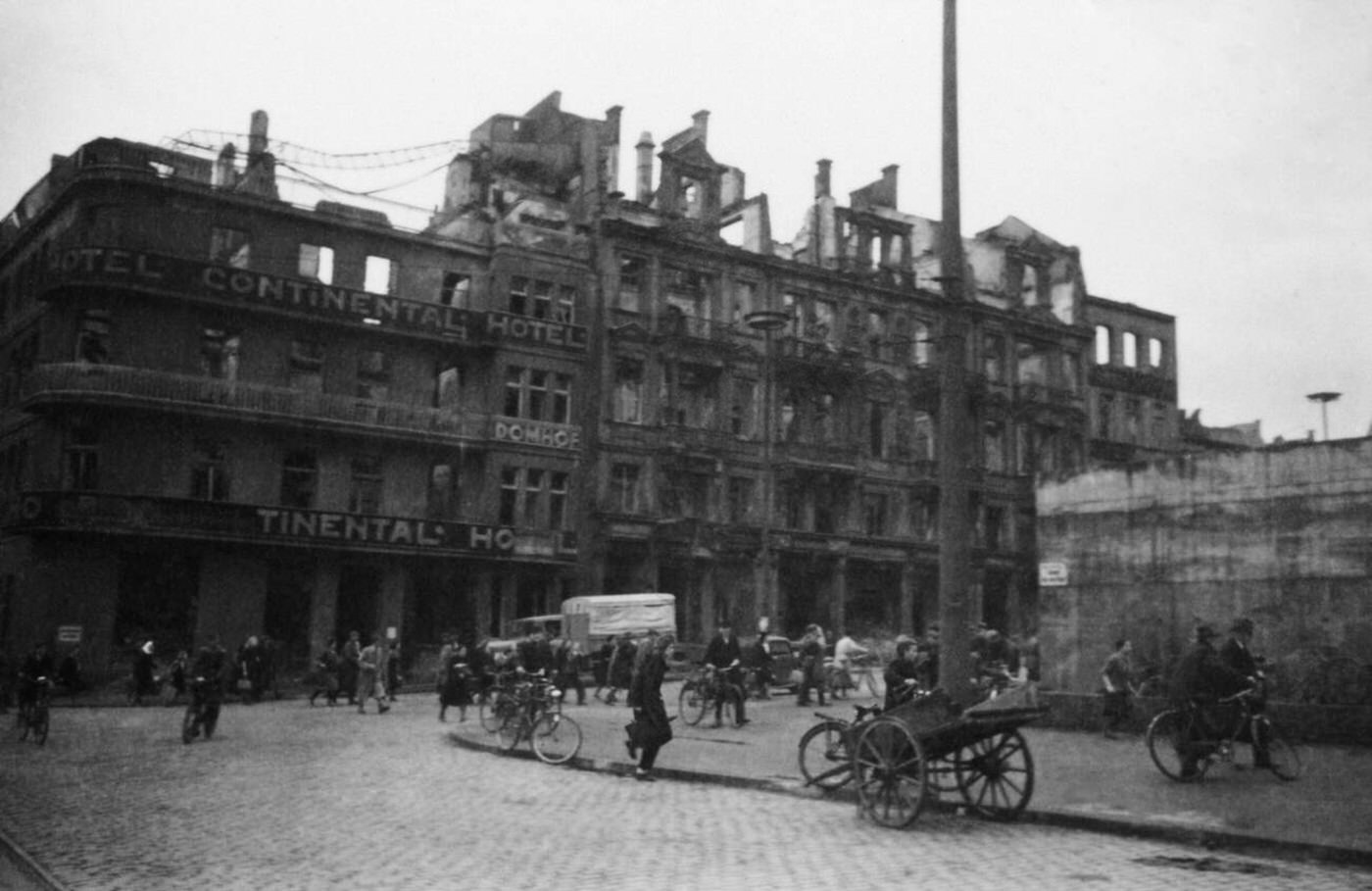
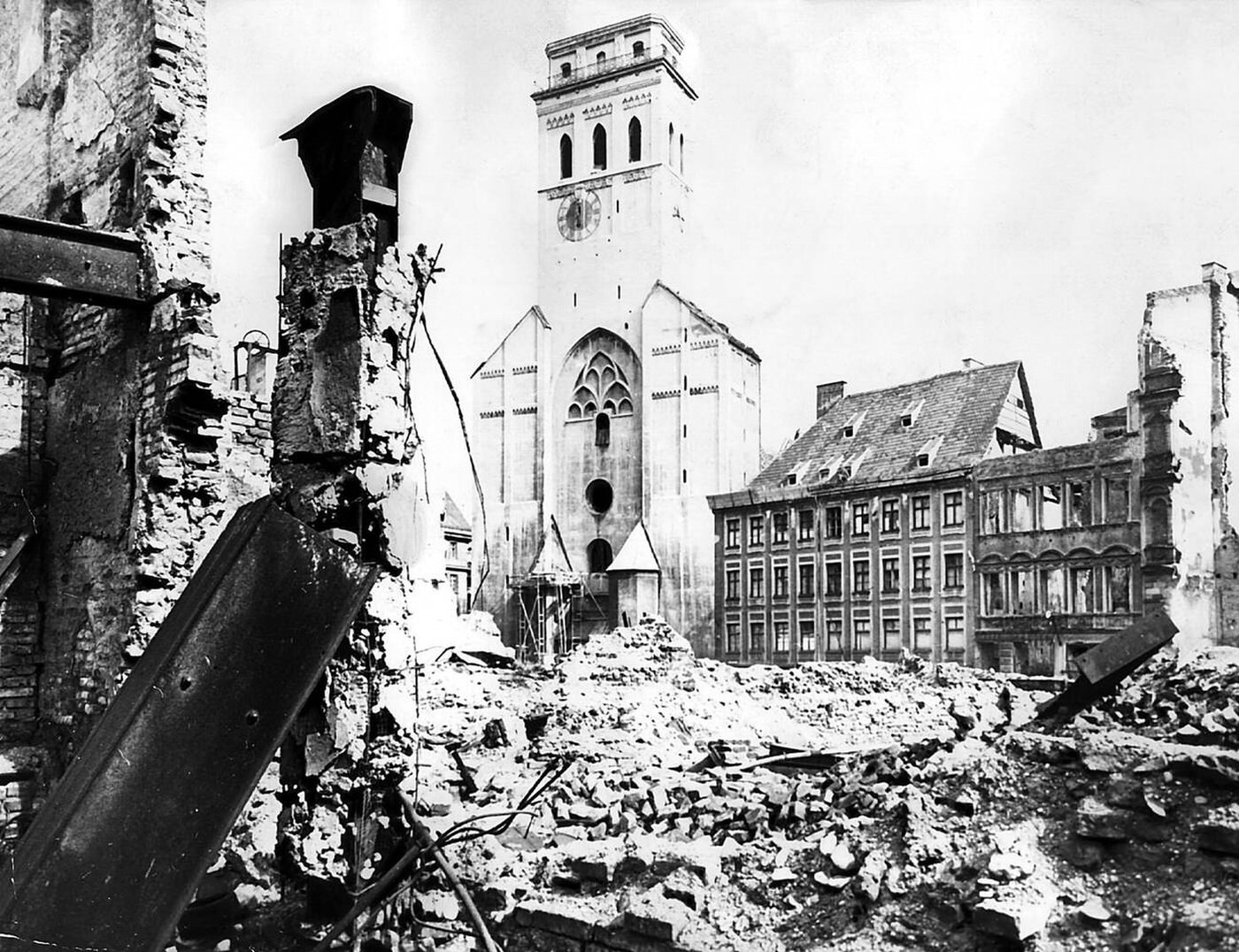
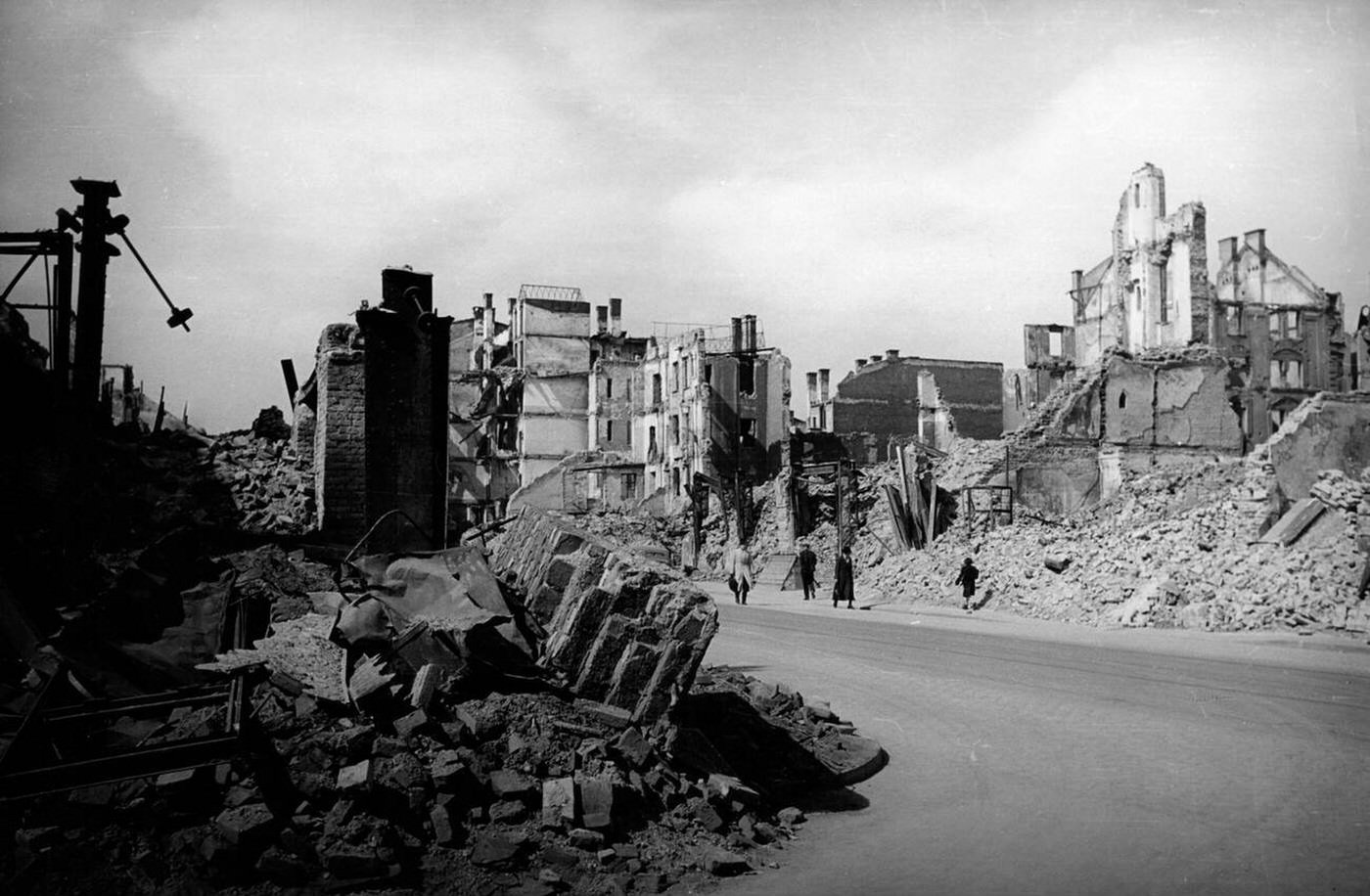
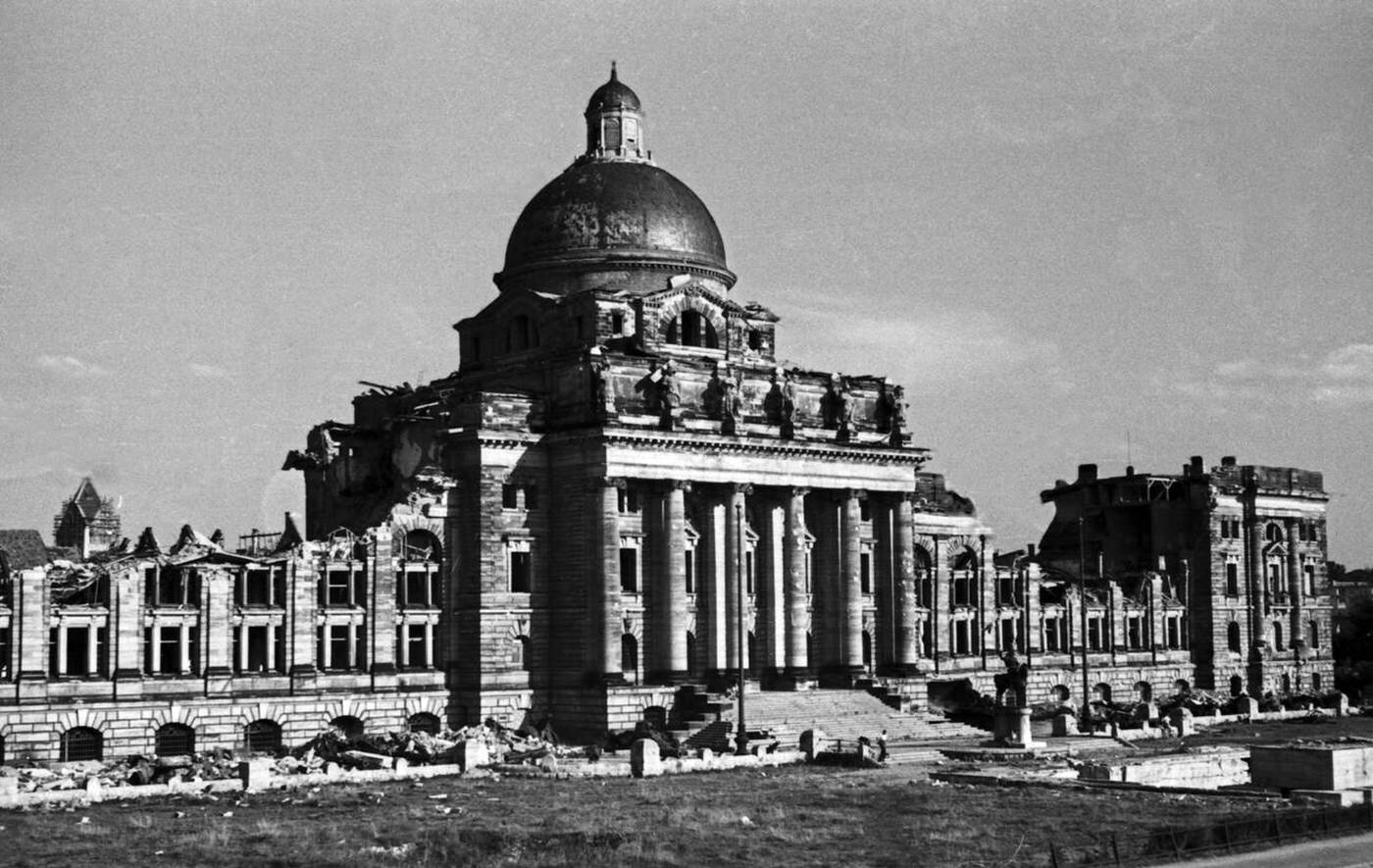
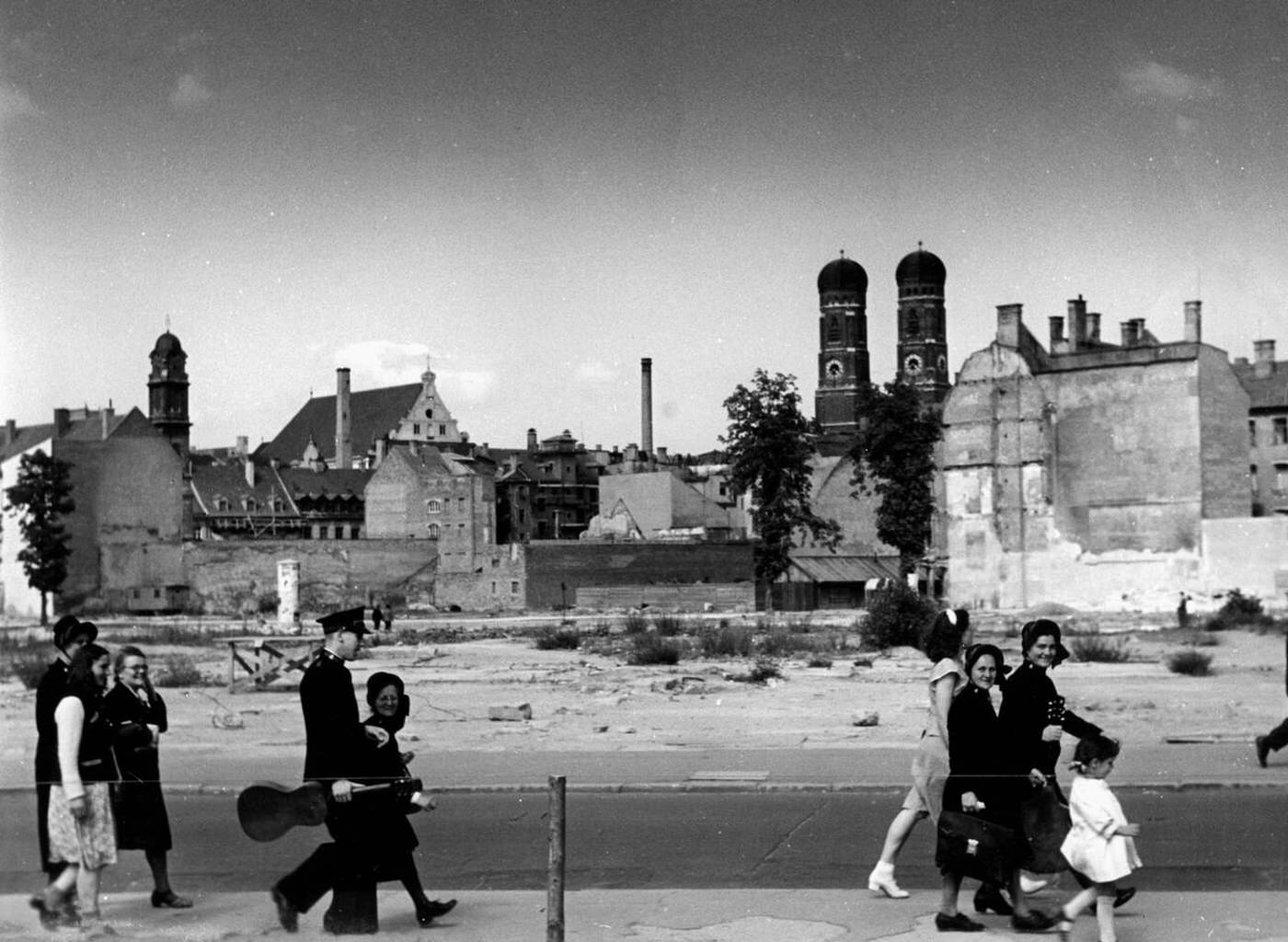
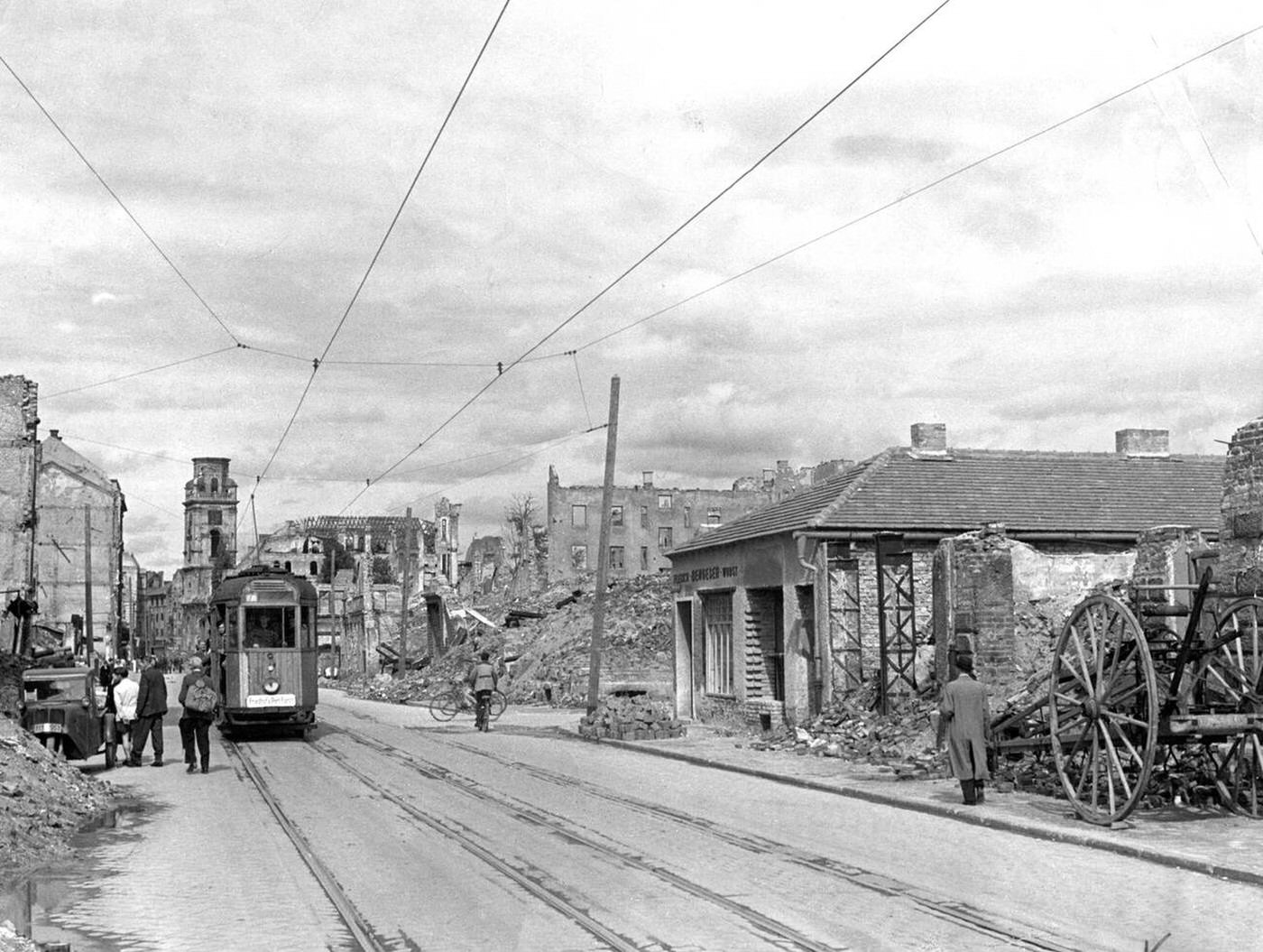
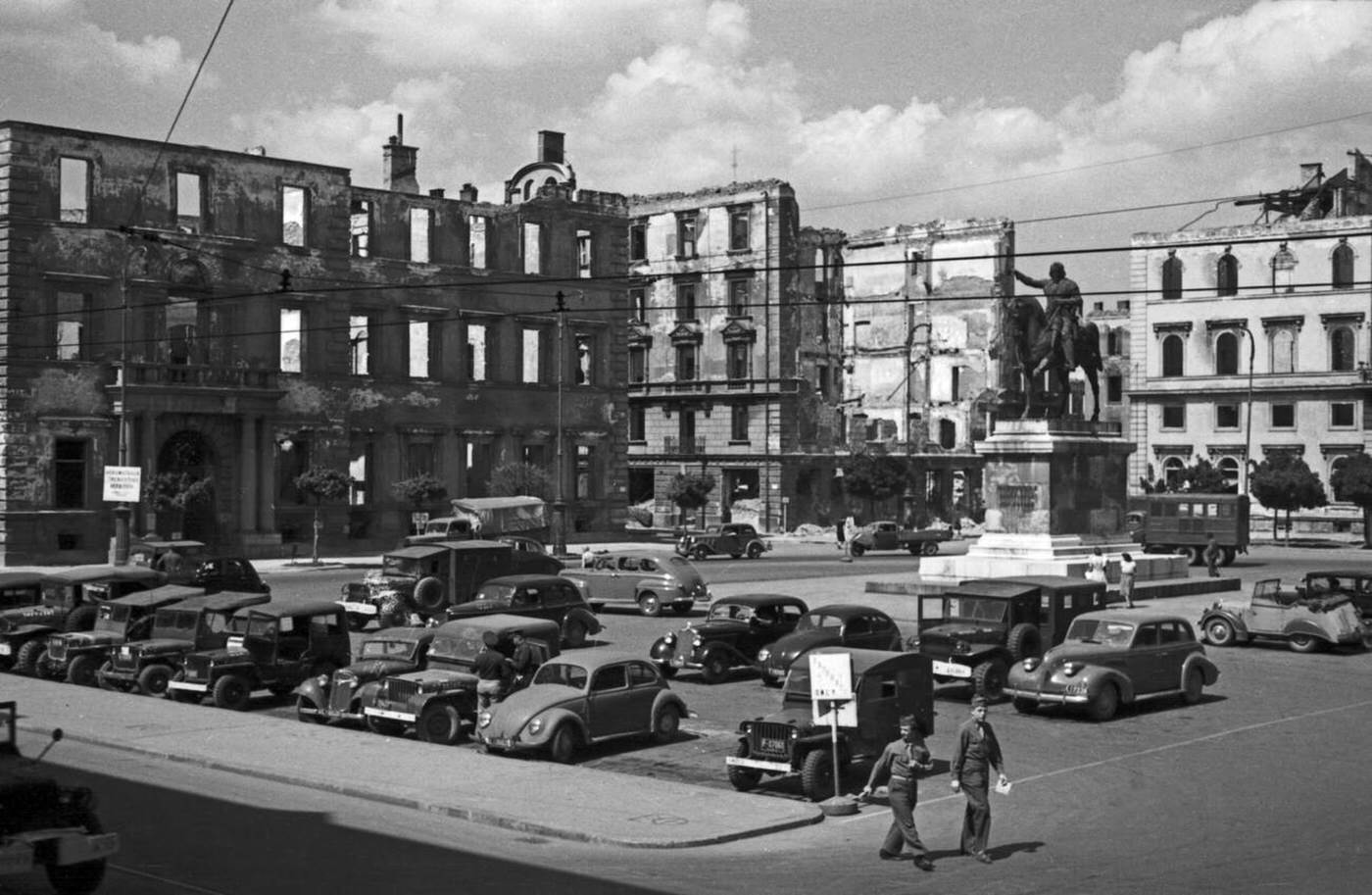
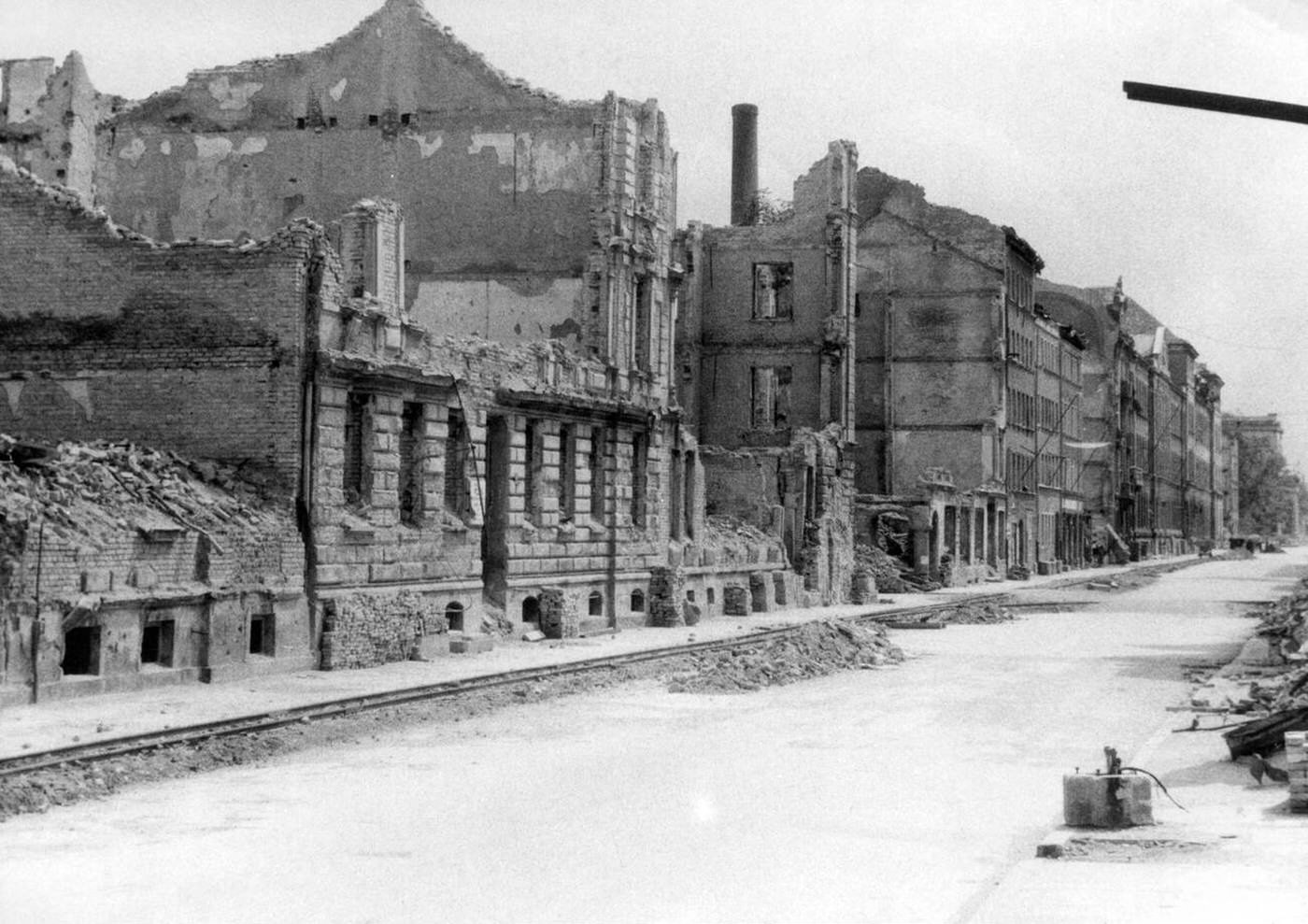
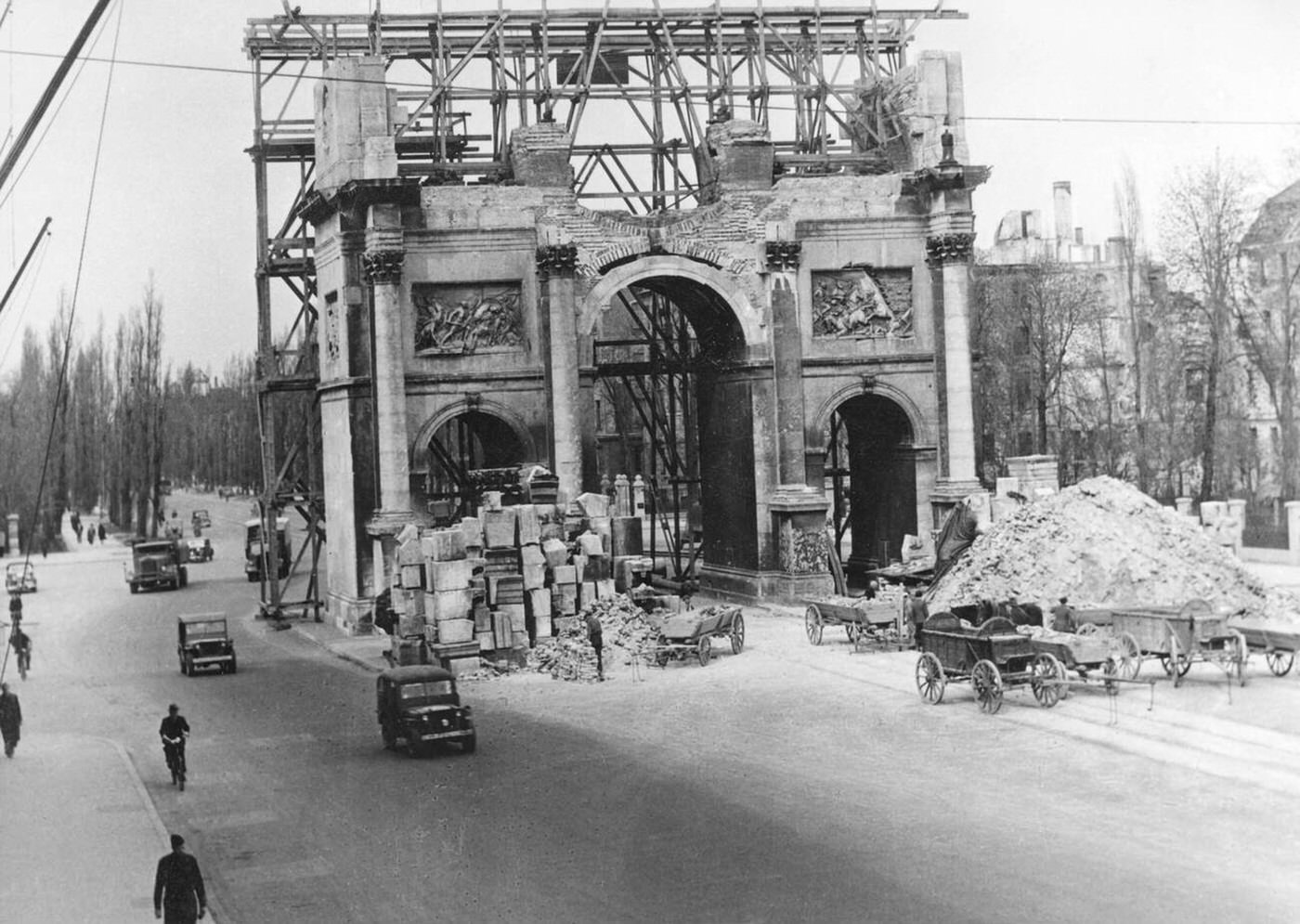
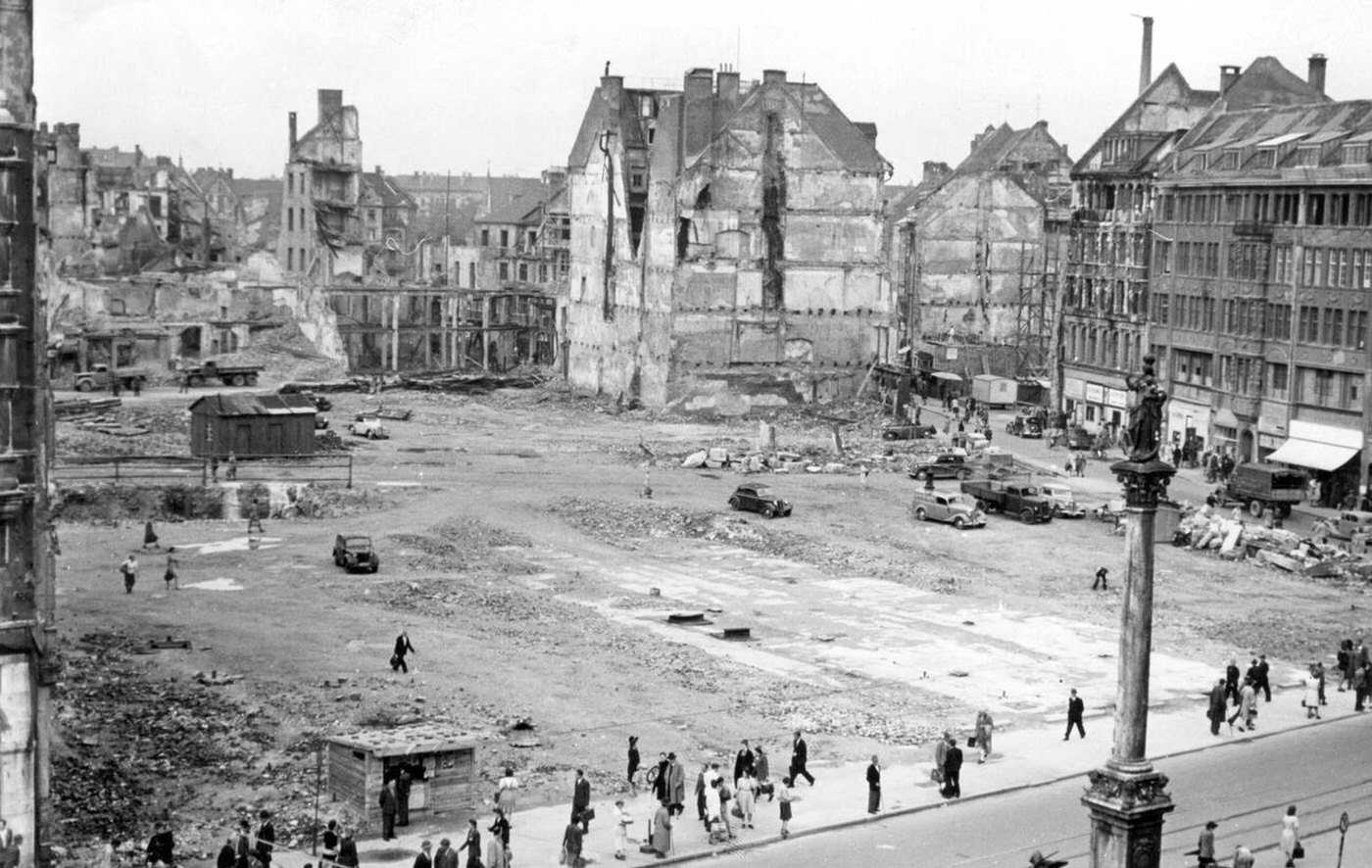
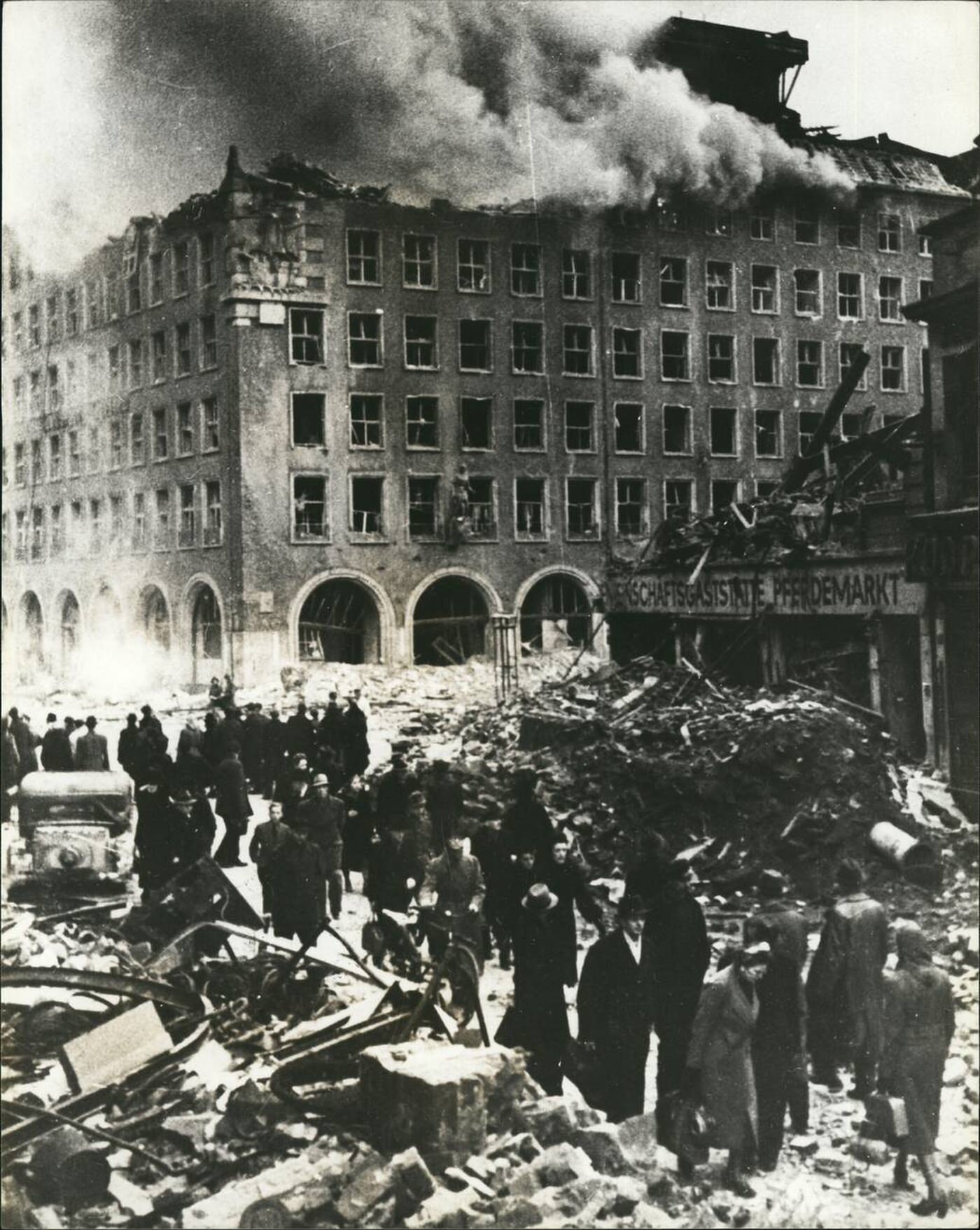
Munich, the birthplace of the Nazi movement, was also heavily bombed. The city was struck by Allied air raids 71 times between 1940 and 1945. Historic landmarks fell alongside factories and rail stations. The Neue Pinakothek art museum, the Palace of Justice, the State Chancellery building, and the city’s main railway station were all severely damaged or destroyed. Munich’s streets were buried under mountains of brick and concrete by the time the war ended.
People cleaning up rubble after an Allied bombing at the intersection Schellingstrasse Schraudolphstrasse in Schwabing, Munich; in the background is the destroyed Neue Pinakothek, 1945.The destroyed railway tracks of the Munich Central Station after the Second World War, 1945.Ruins of palace of justice at Prielmayerstrasse street in Munich, Germany, 1940s.
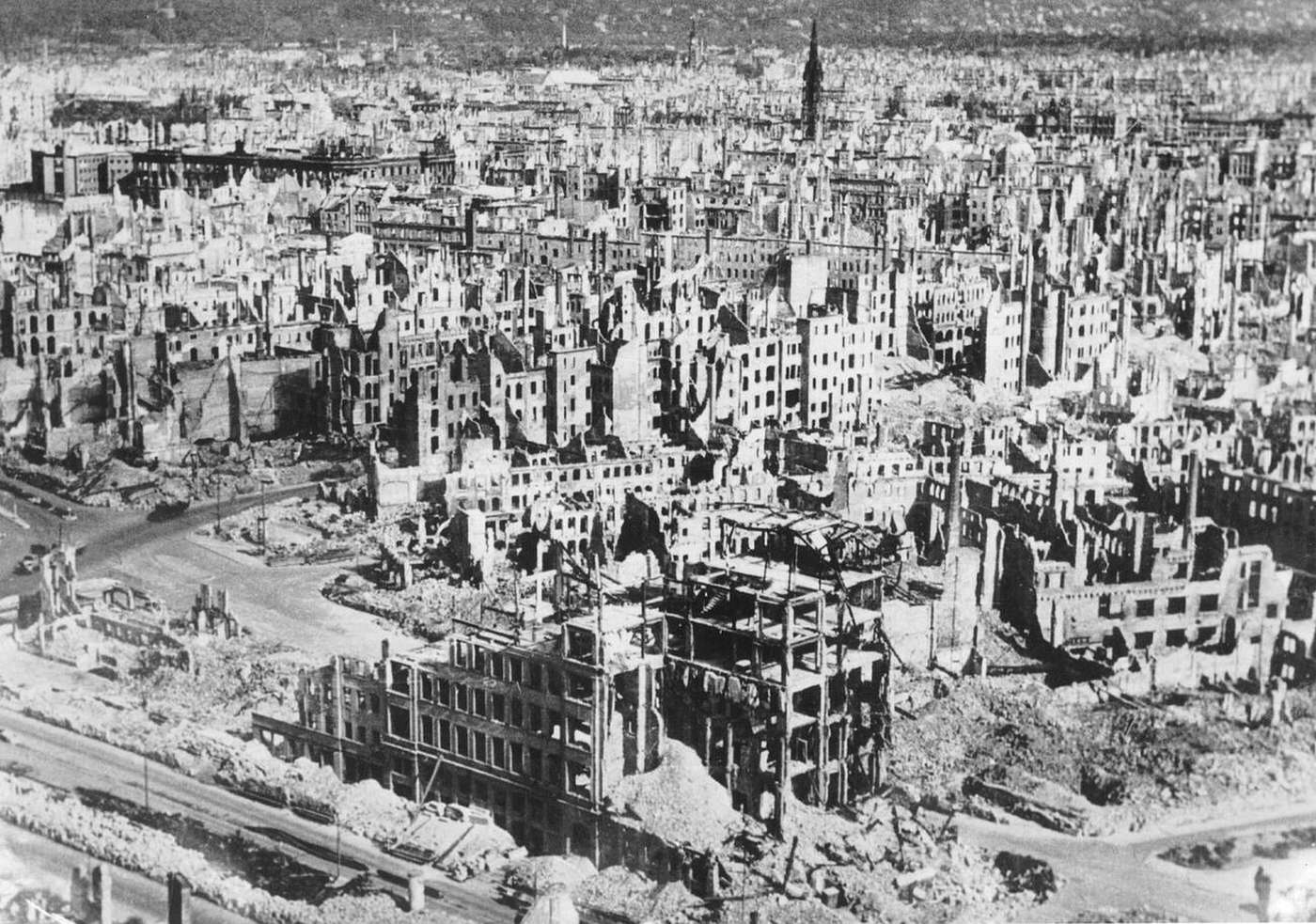
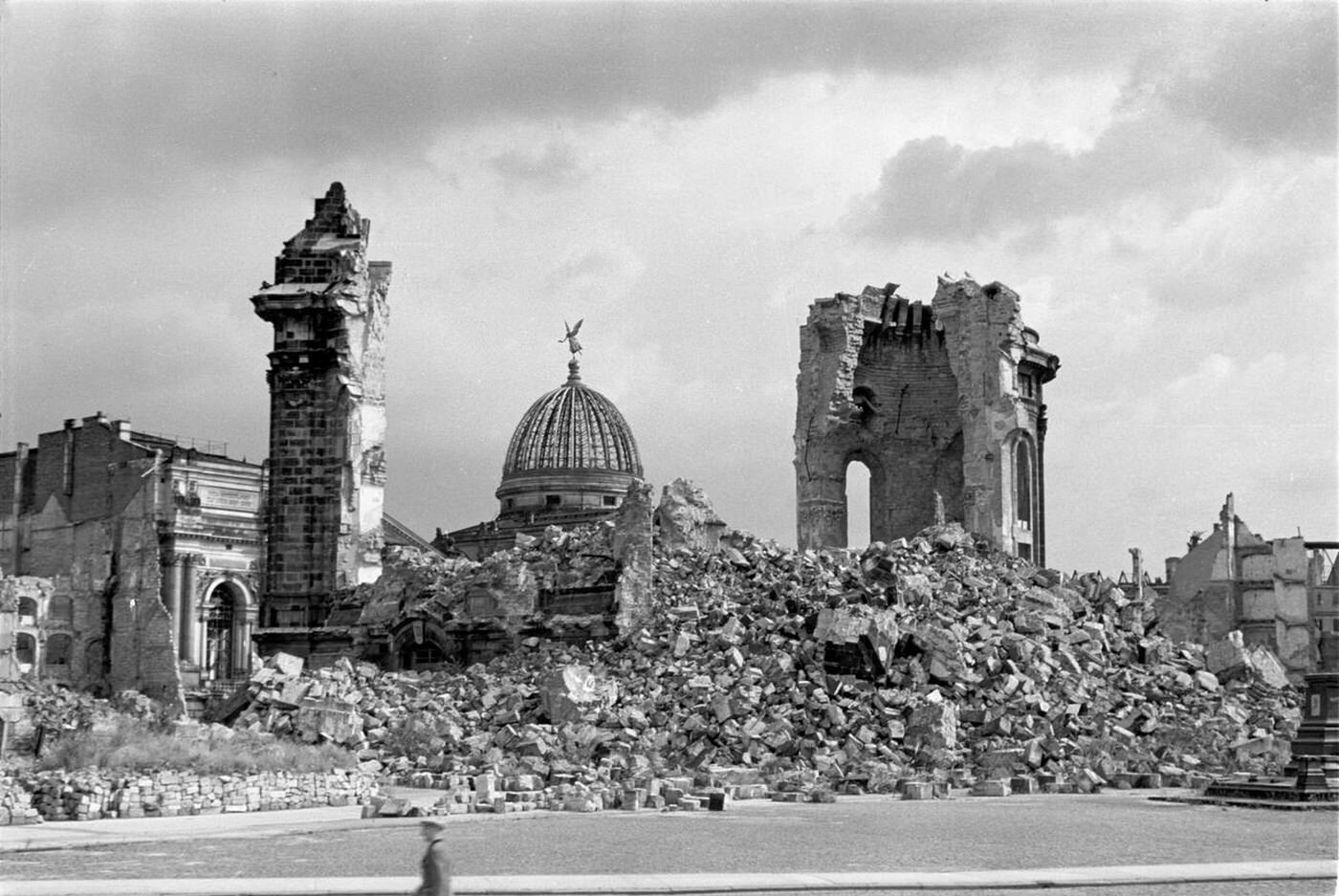
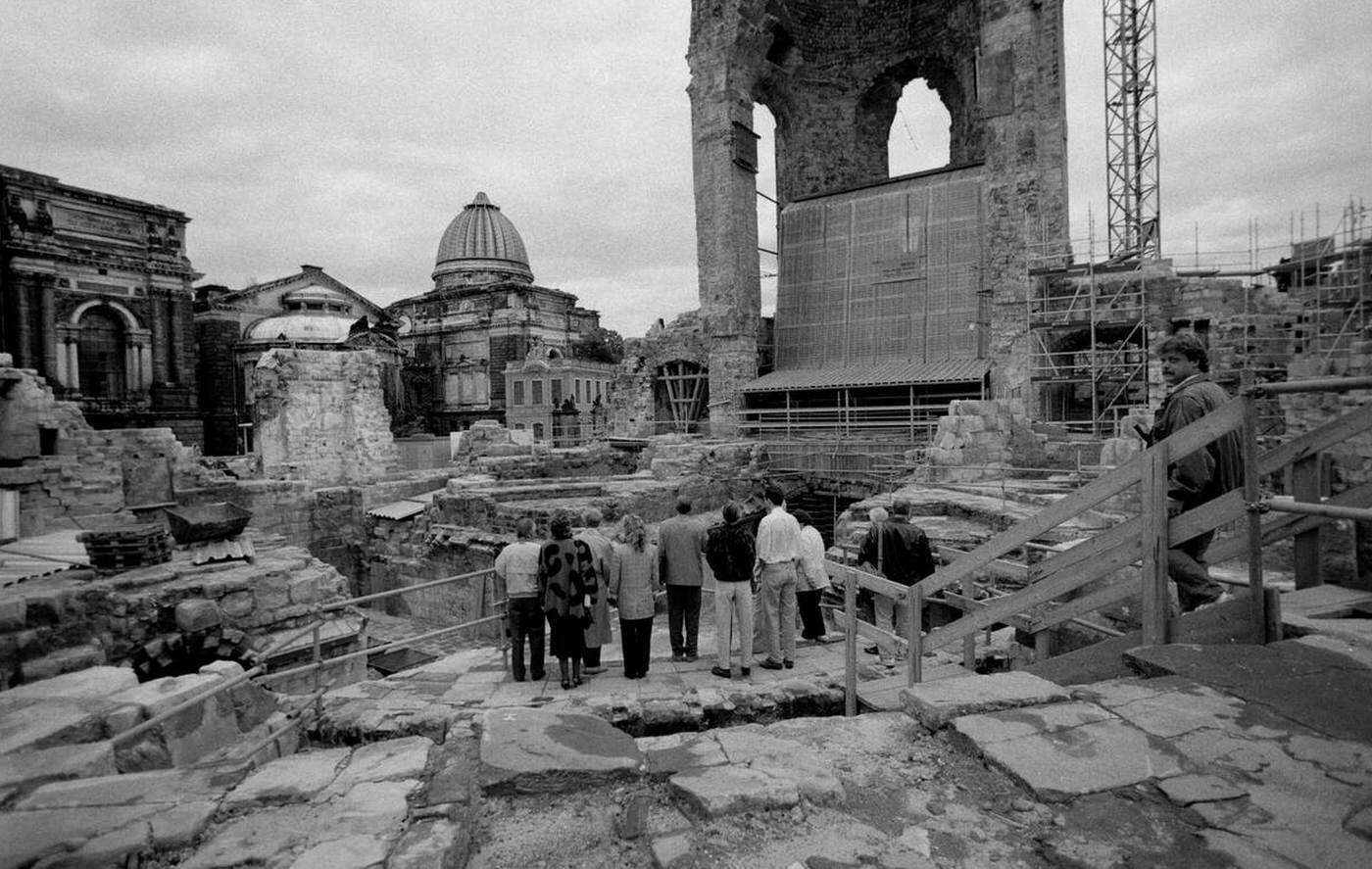
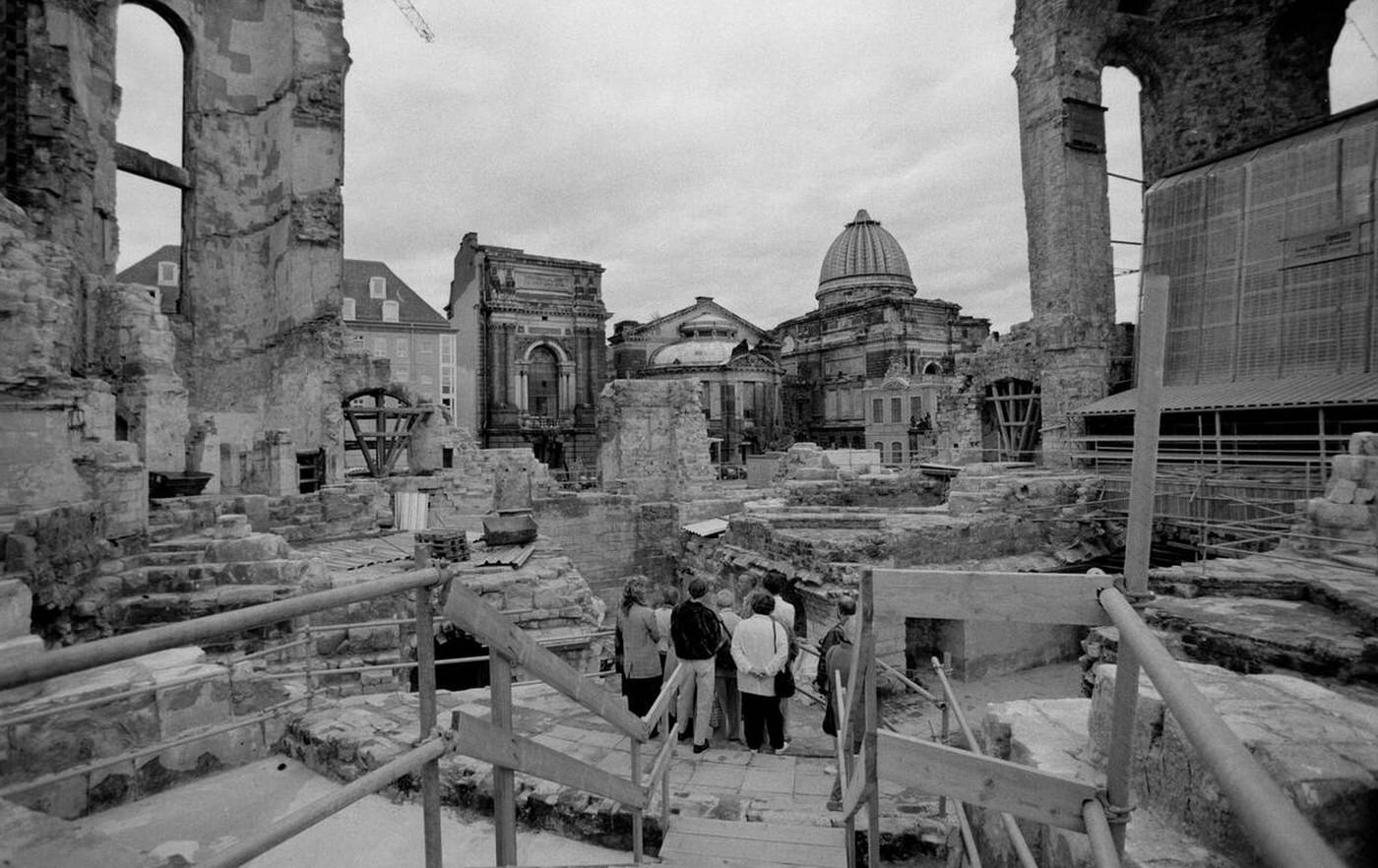
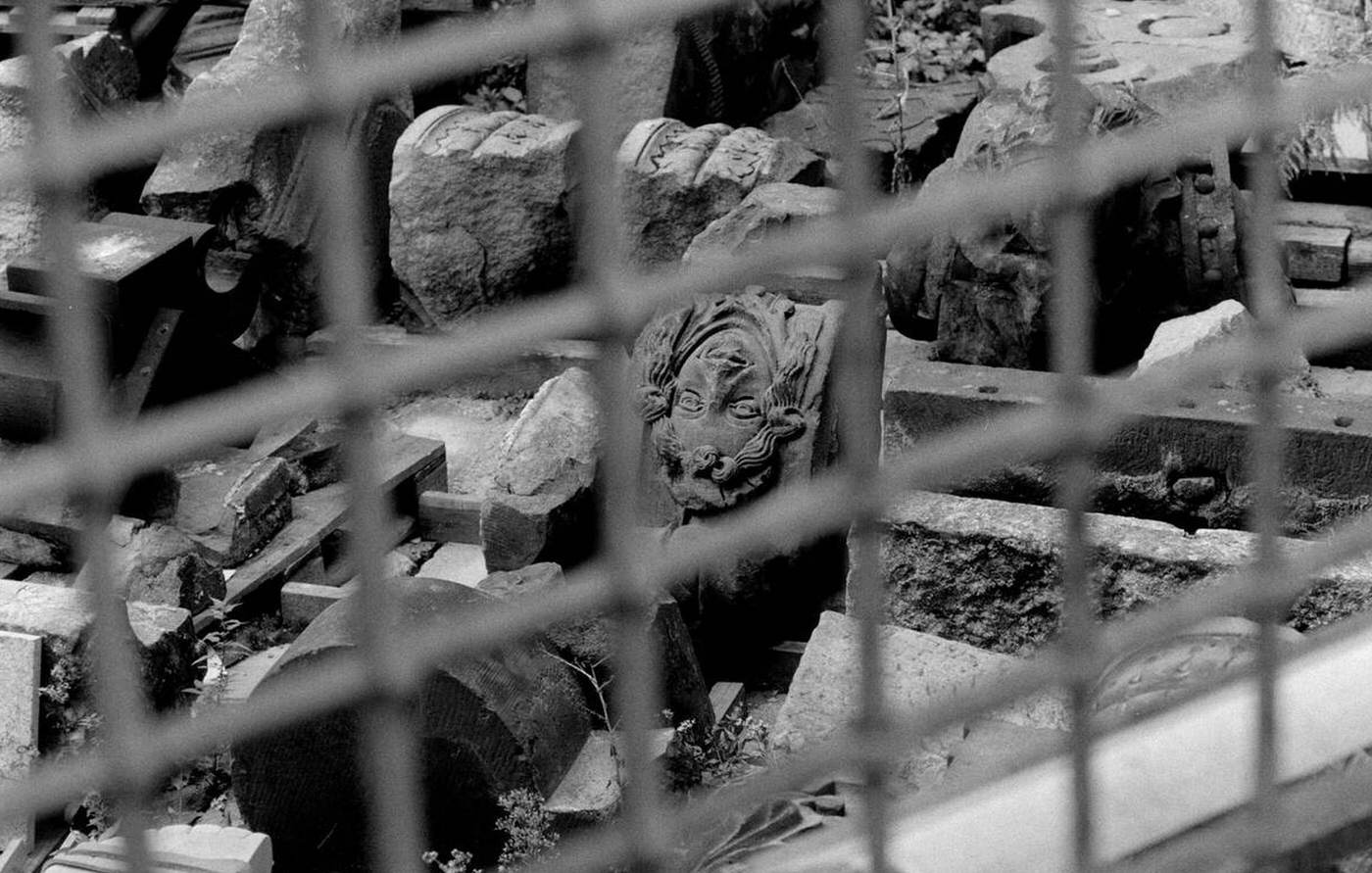
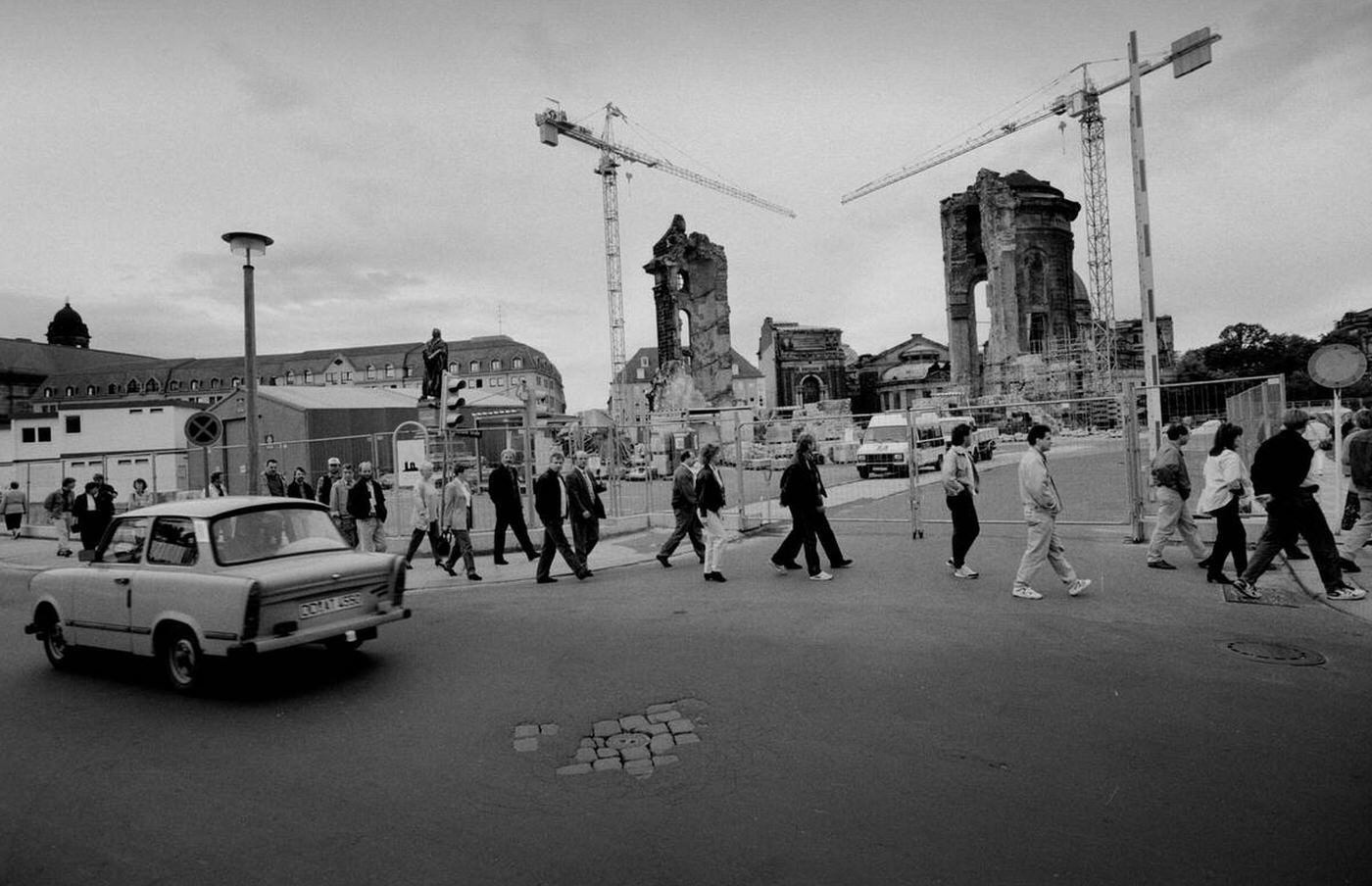
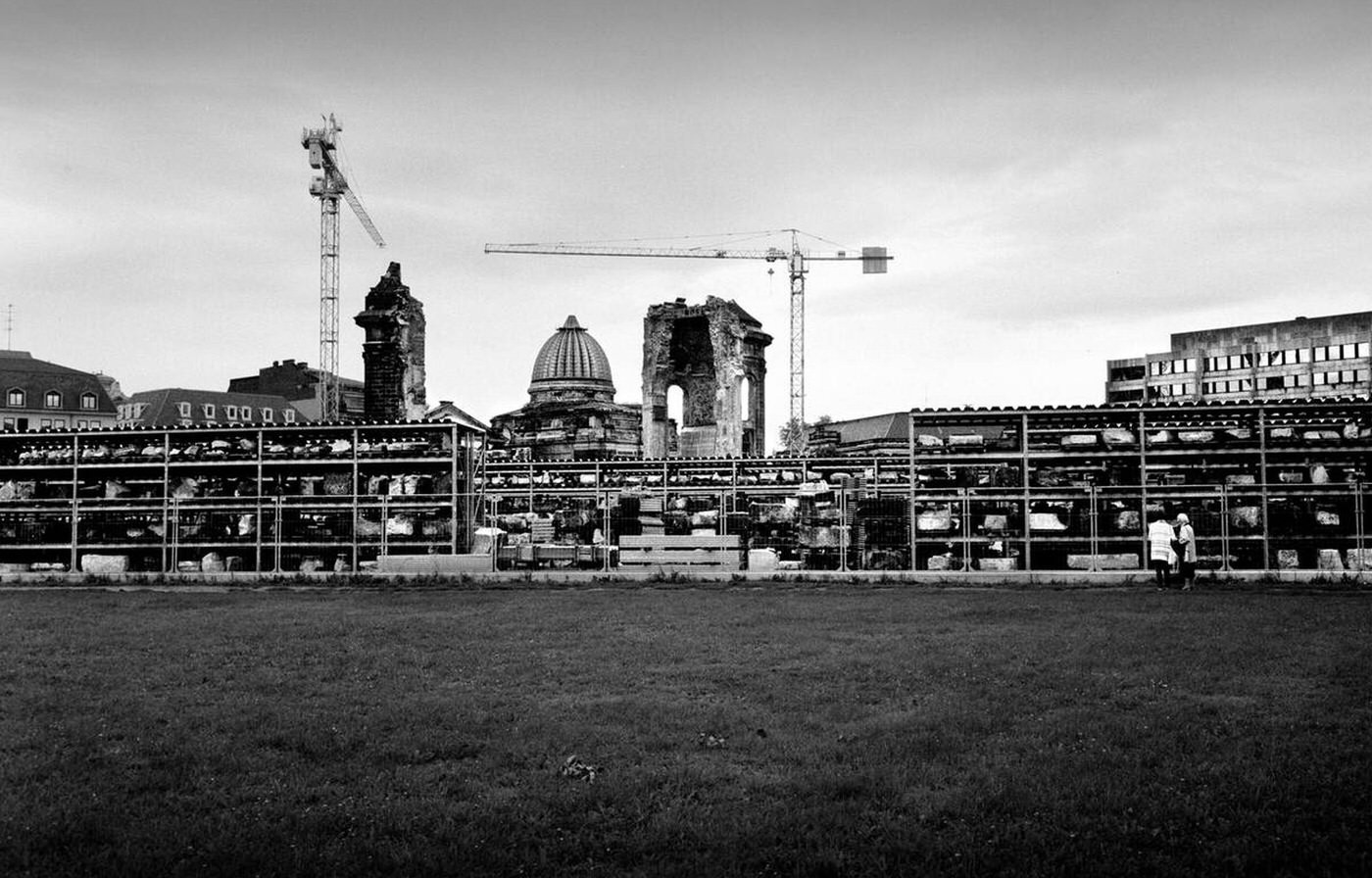
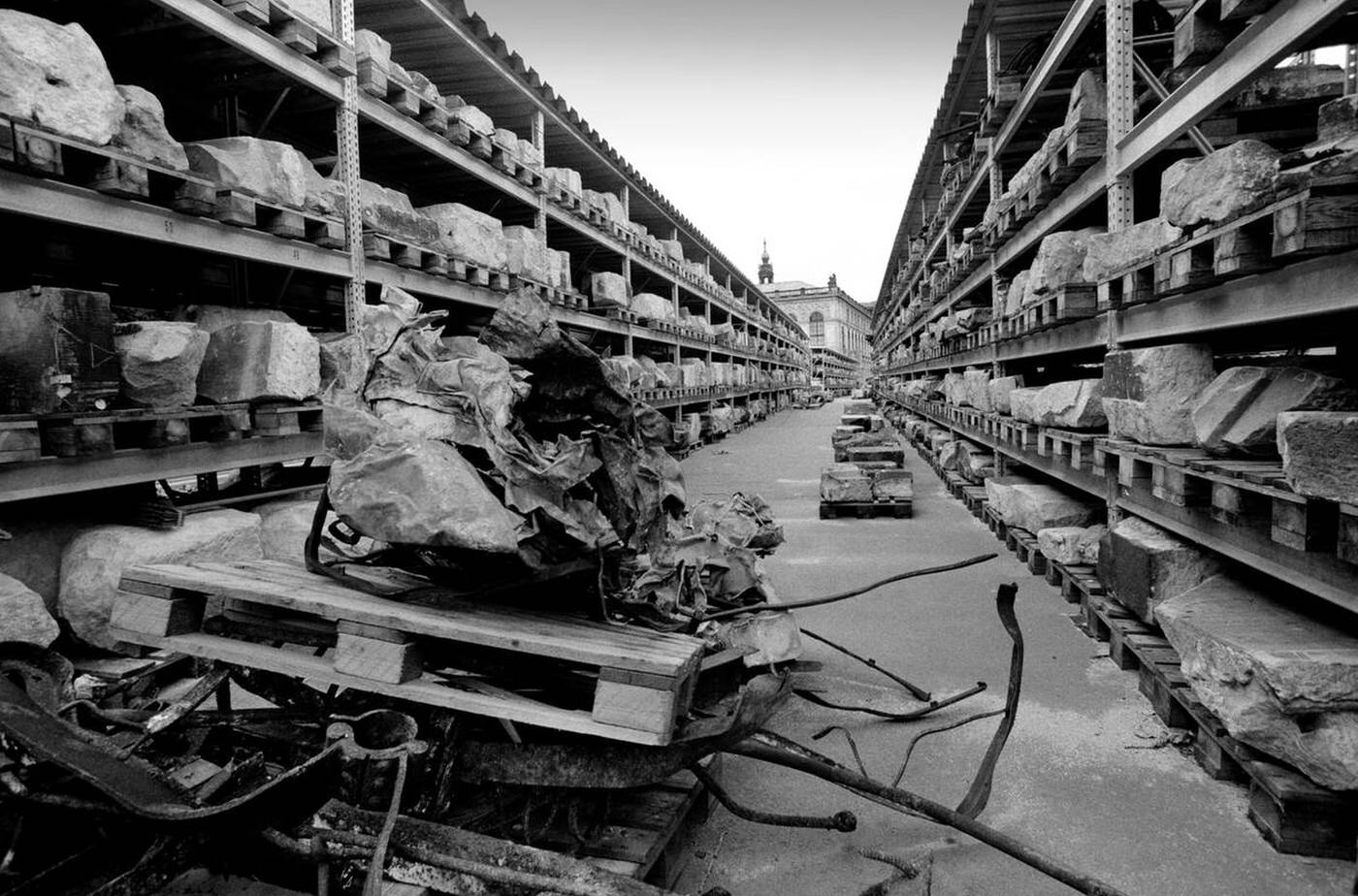
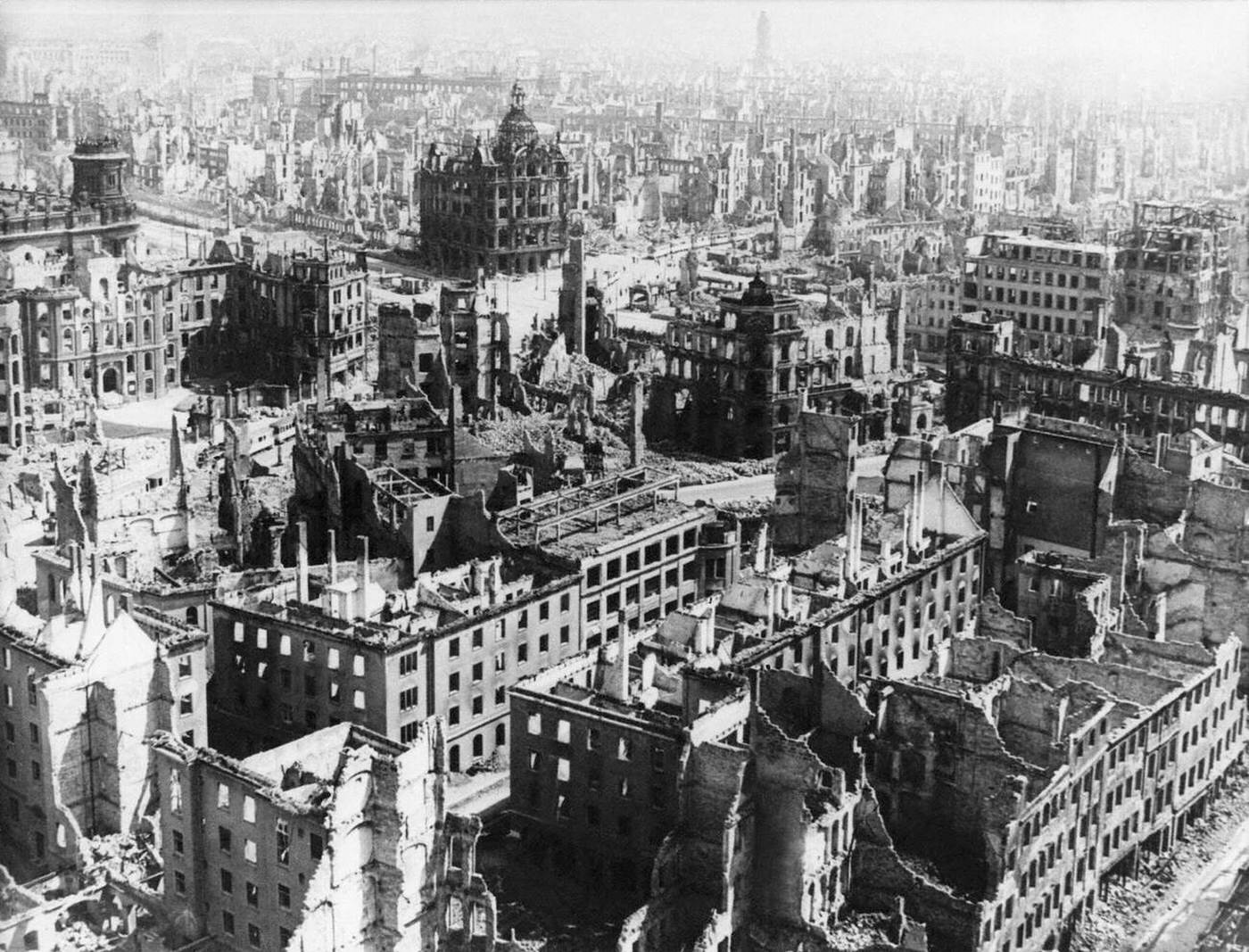
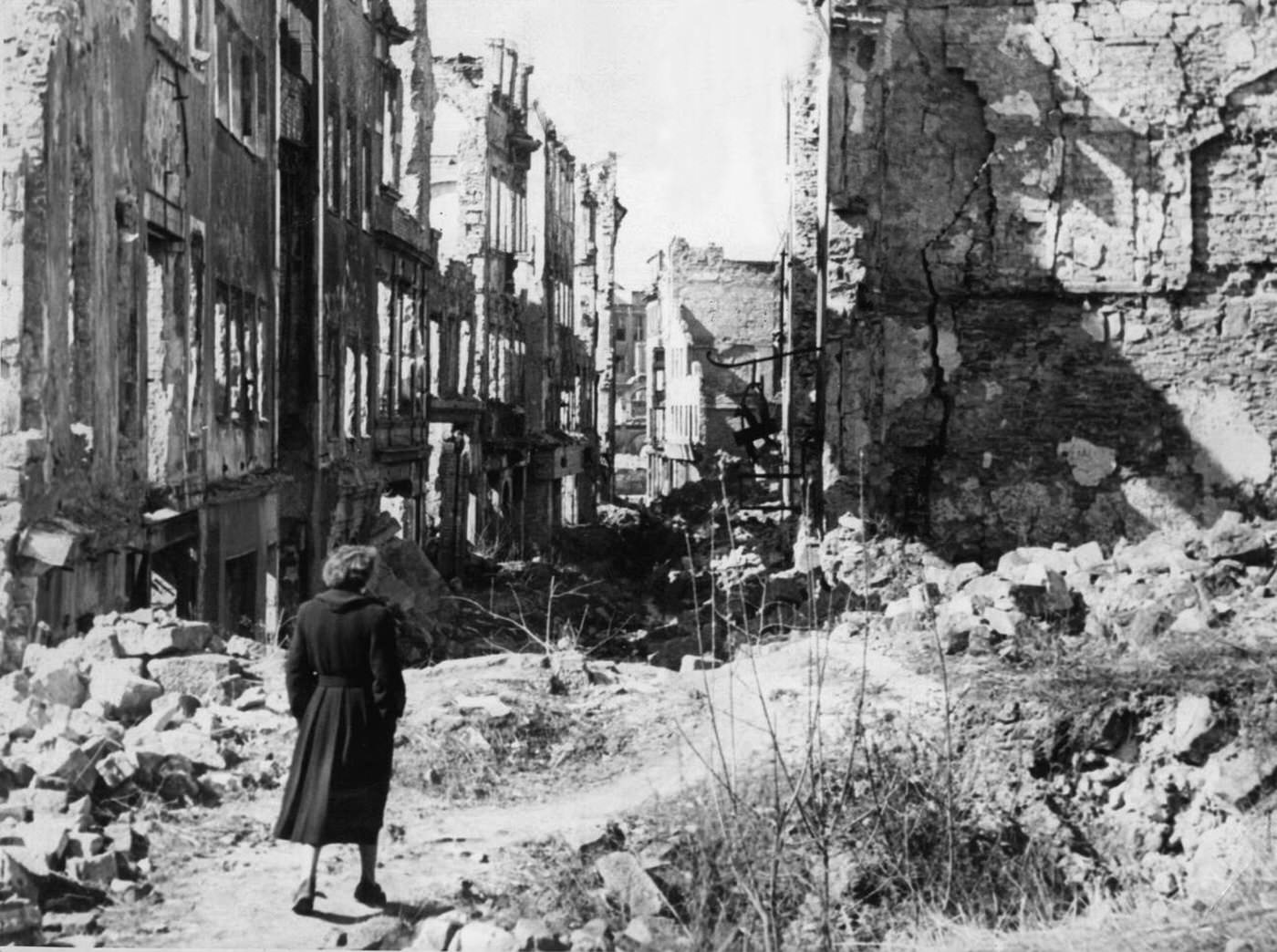
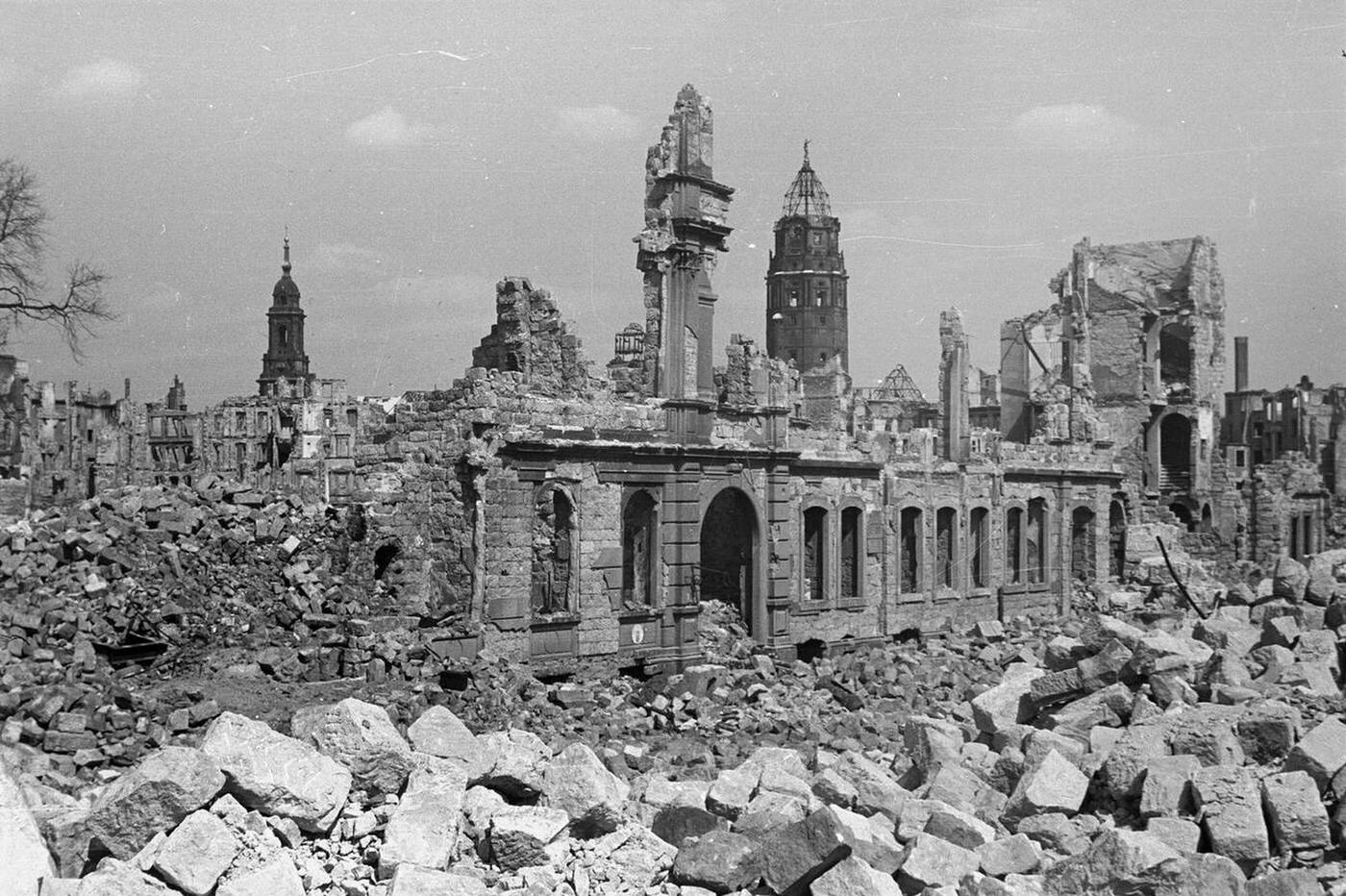
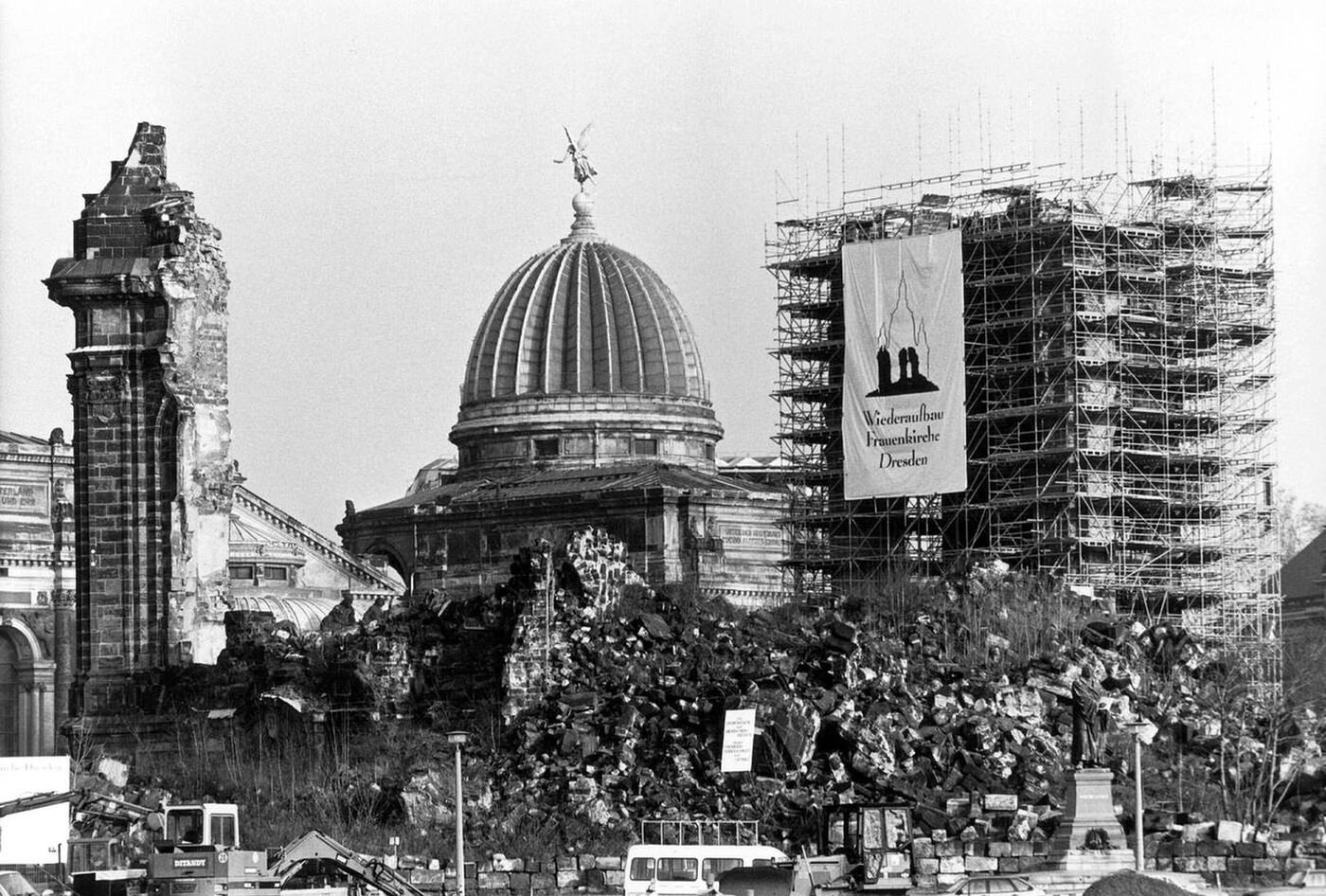
Dresden was bombed in February 1945, late in the war but with tremendous force. The RAF and USAAF carried out a series of raids that triggered a firestorm across the city center. The Dresden Frauenkirche, one of Germany’s most celebrated baroque churches, collapsed two days after the raids. Its ruins sat in place for decades, preserved as a war memorial. Reconstruction began only after German reunification in 1990 and was completed in 2005.
Dresden had been made level with the ground during the air raids, 1945.Ruins of the Dresden Frauenkirche with the dome of the Dresden Academy of Fine Arts in the background, 1945.The ruins of the Dresden Frauenkirche destroyed during bombing in February 1945 being prepared for reconstruction after reunification, 1994.
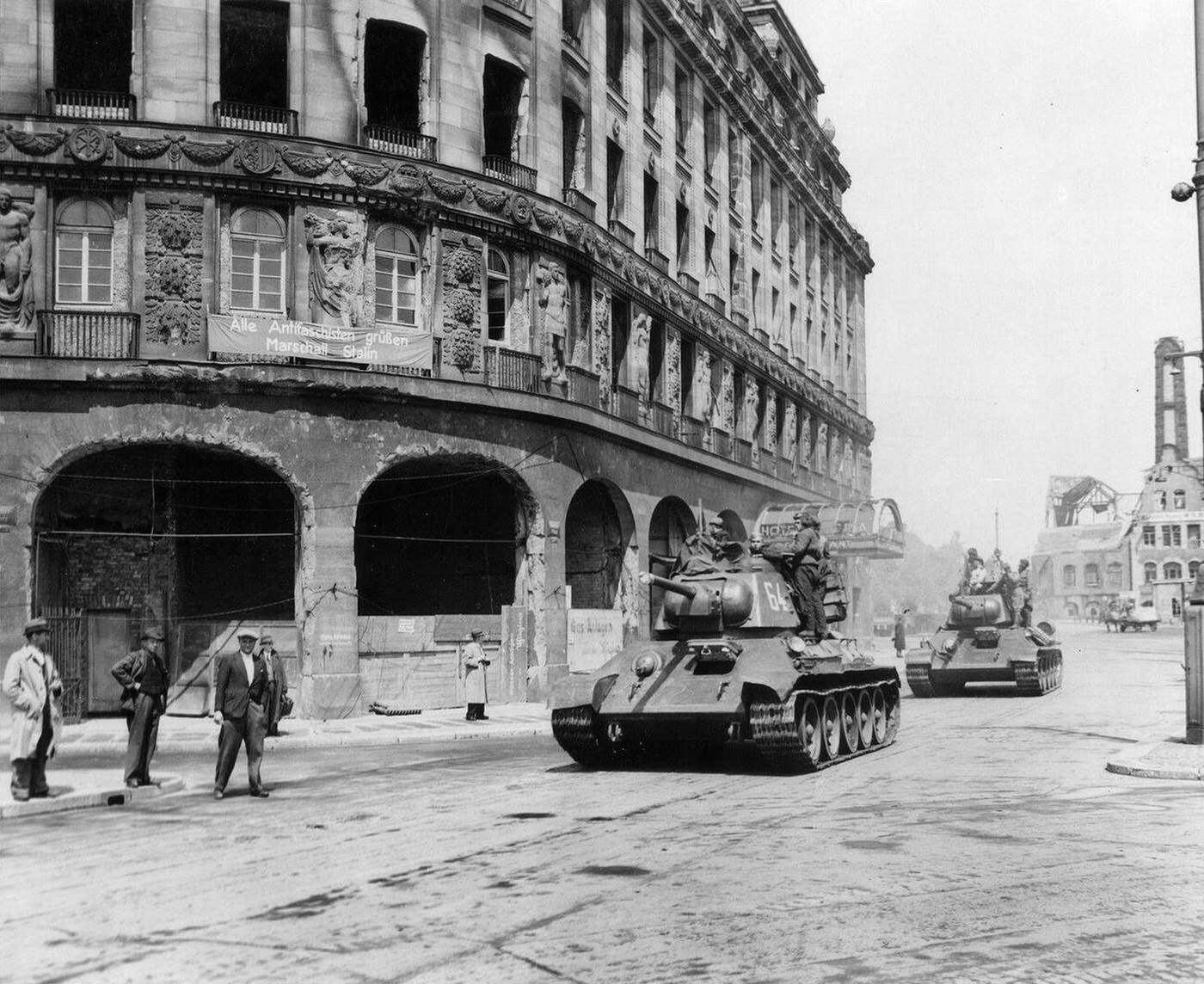
While bombs fell from above, the Soviet Red Army was grinding westward across the Eastern Front. The fighting in the East was the largest land conflict in human history. After catastrophic German defeats at Stalingrad and Kursk, the Wehrmacht never recovered its offensive capability. By early 1945, Soviet forces were crossing into Germany itself. Every town in their path became a battlefield. German forces, including teenage members of the Hitler Youth and elderly men conscripted into the Volkssturm militia, were ordered to defend every position to the last.
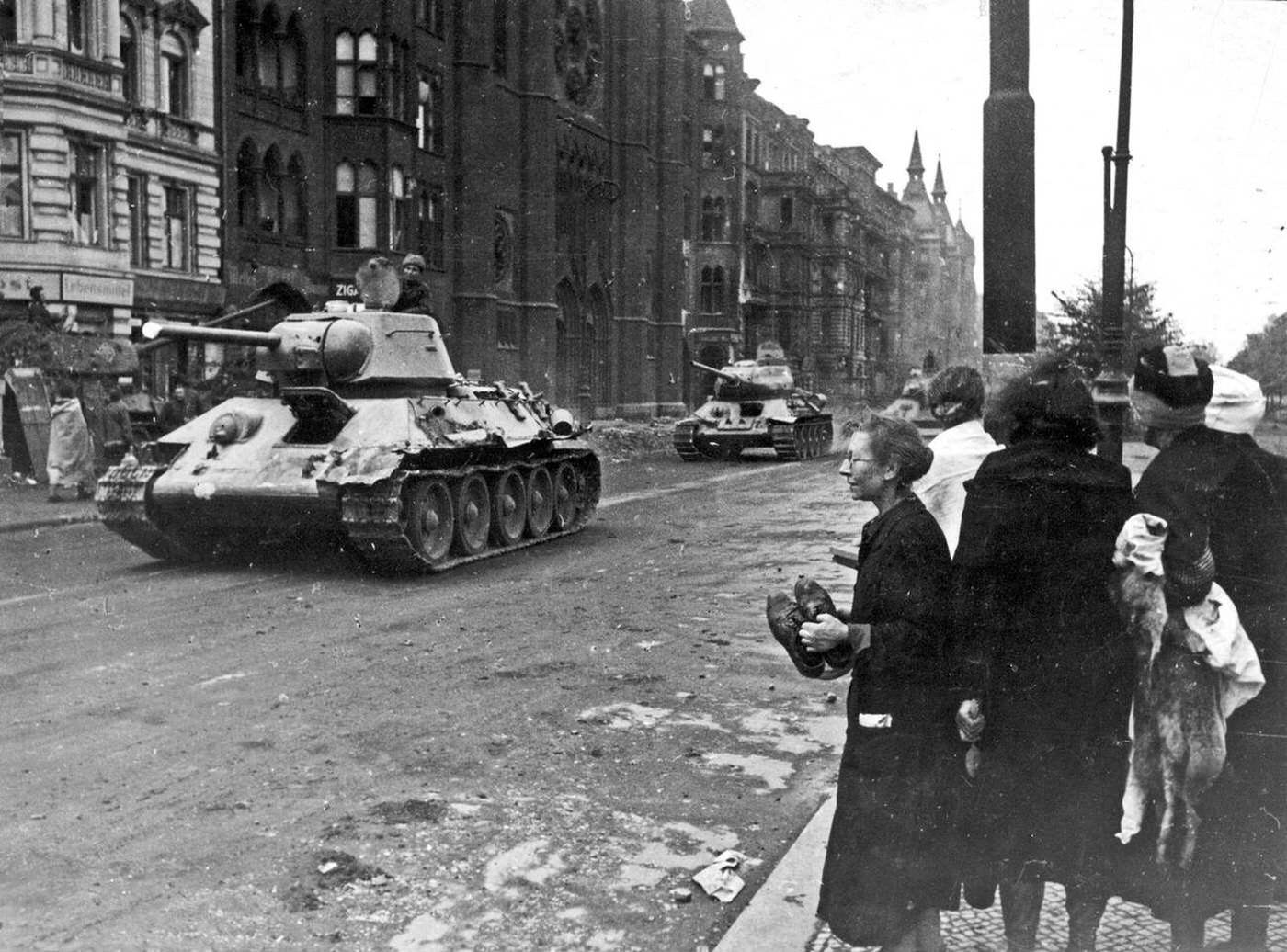
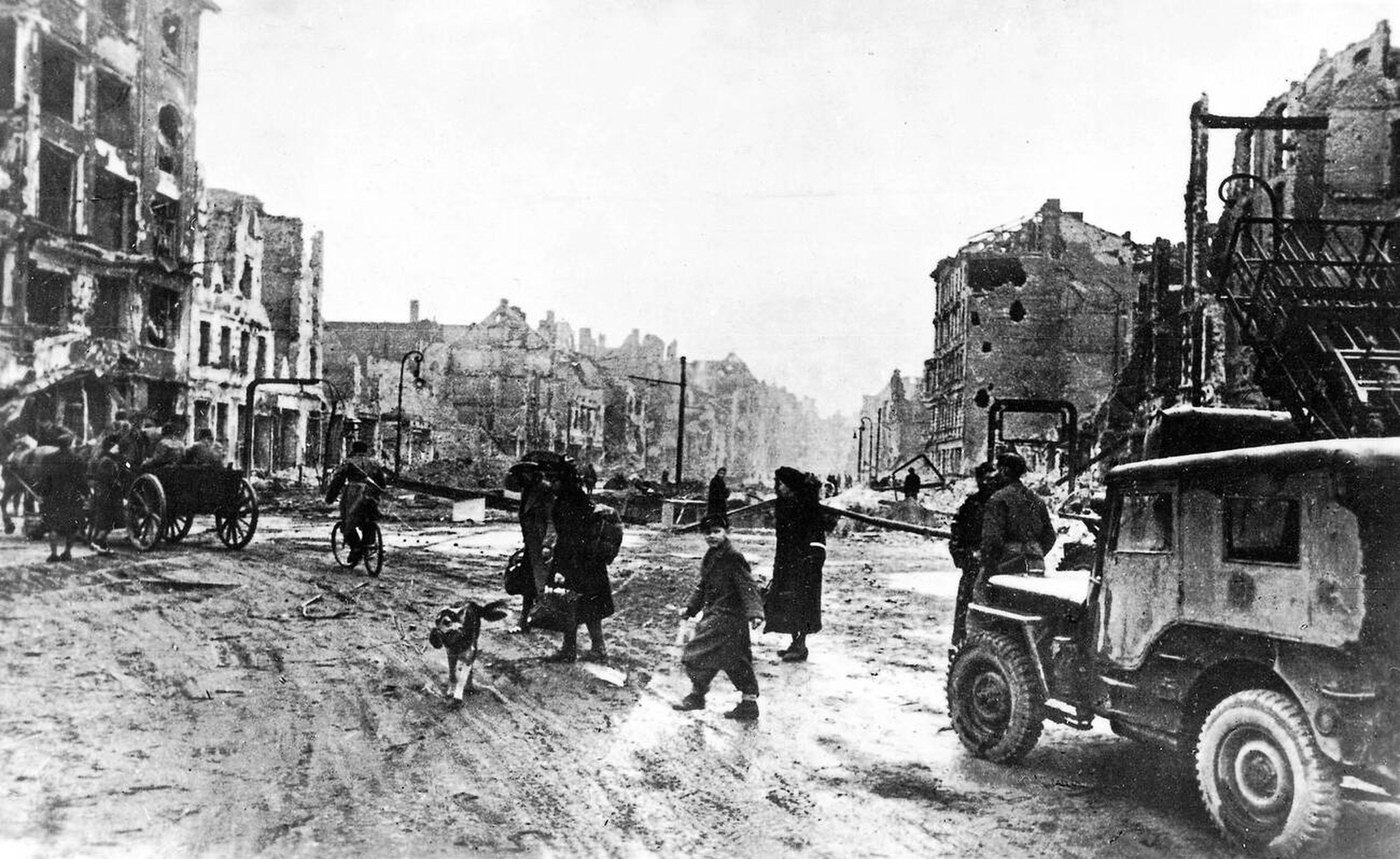
Red Army tanks in Leipzig during the Soviet advance through eastern Germany; the sign on the building reads “All anti-fascists welcome marshal Stalin”.Russian tanks enter a ruined Berlin watched by a group of women, 1945.
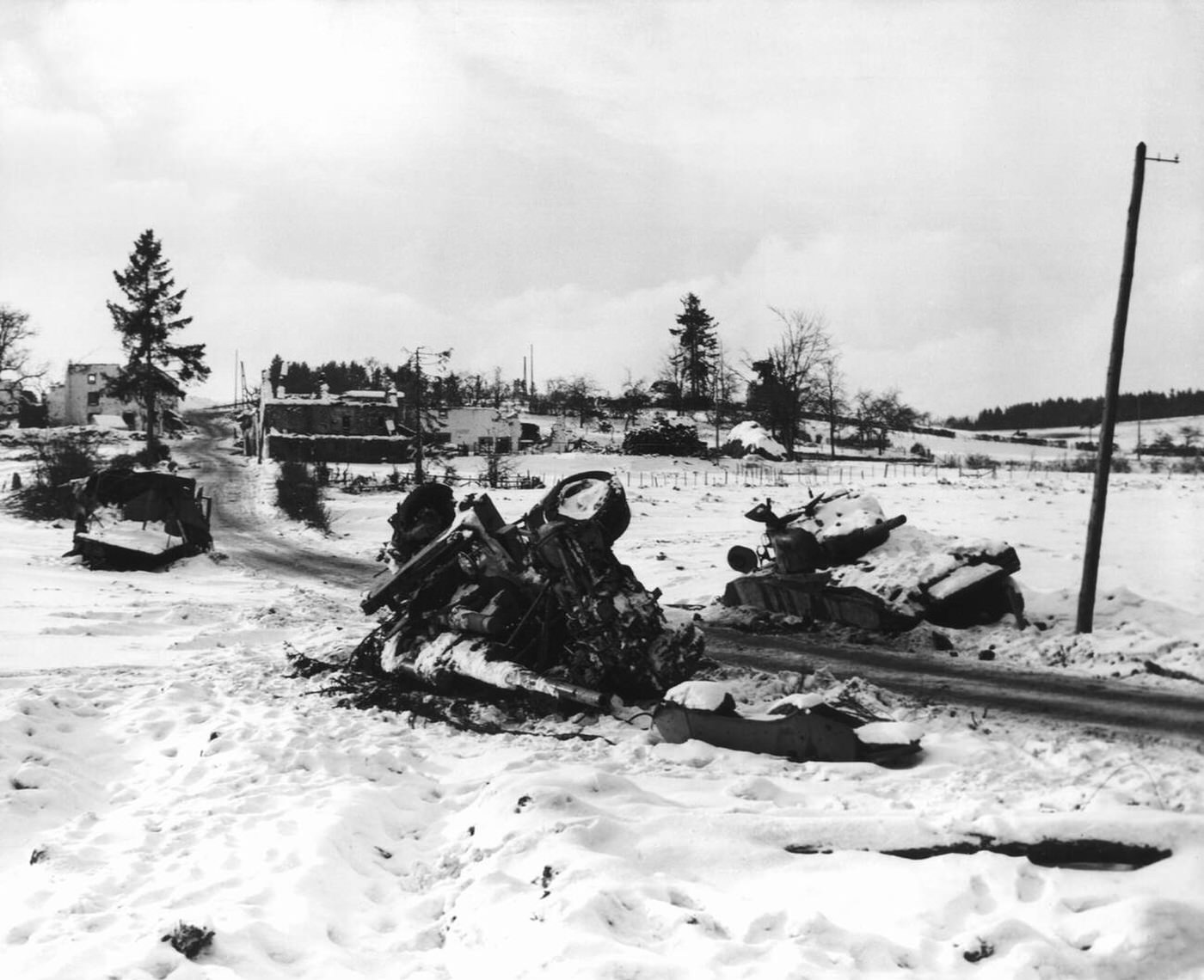
From the west, American, British, Canadian, and other Allied forces had broken out of Normandy and pushed through France into Germany. The Battle of the Bulge in December 1944 and January 1945 was Germany’s final offensive in the West. It failed. After that, Allied armies swept east toward the Rhine. They liberated concentration camps at Dachau, Buchenwald, and other sites, confronting the full scale of Nazi atrocities. German resistance stiffened at river crossings, city bridges, and fortified towns, but it could not stop the advance.
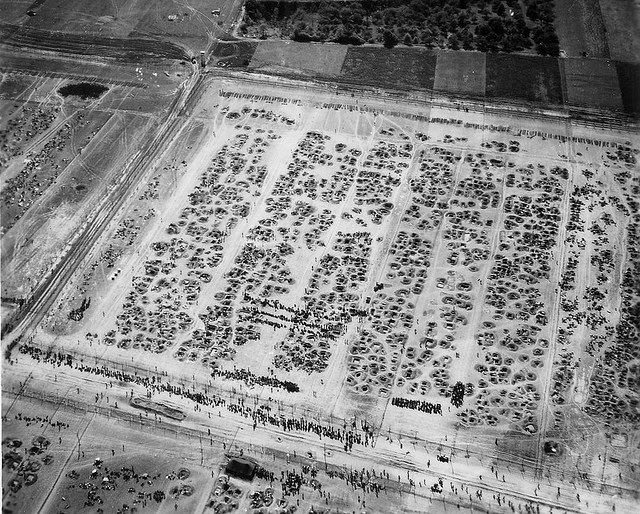
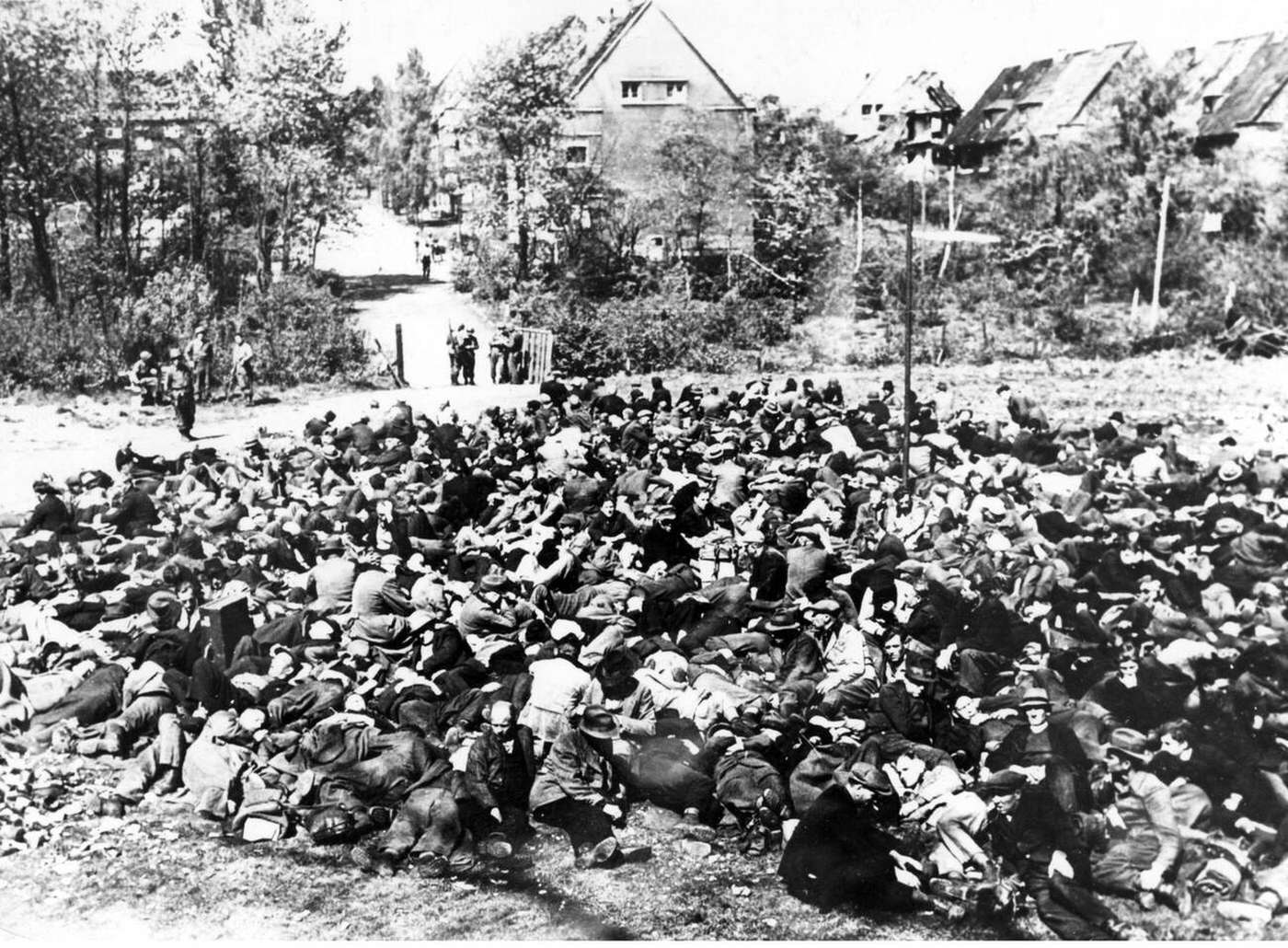
Destroyed equipment after an attack of the 35th US Division against Lutremange, Western Front, Battle of the Bulge, 1945.POW Camp in Remagen, Germany
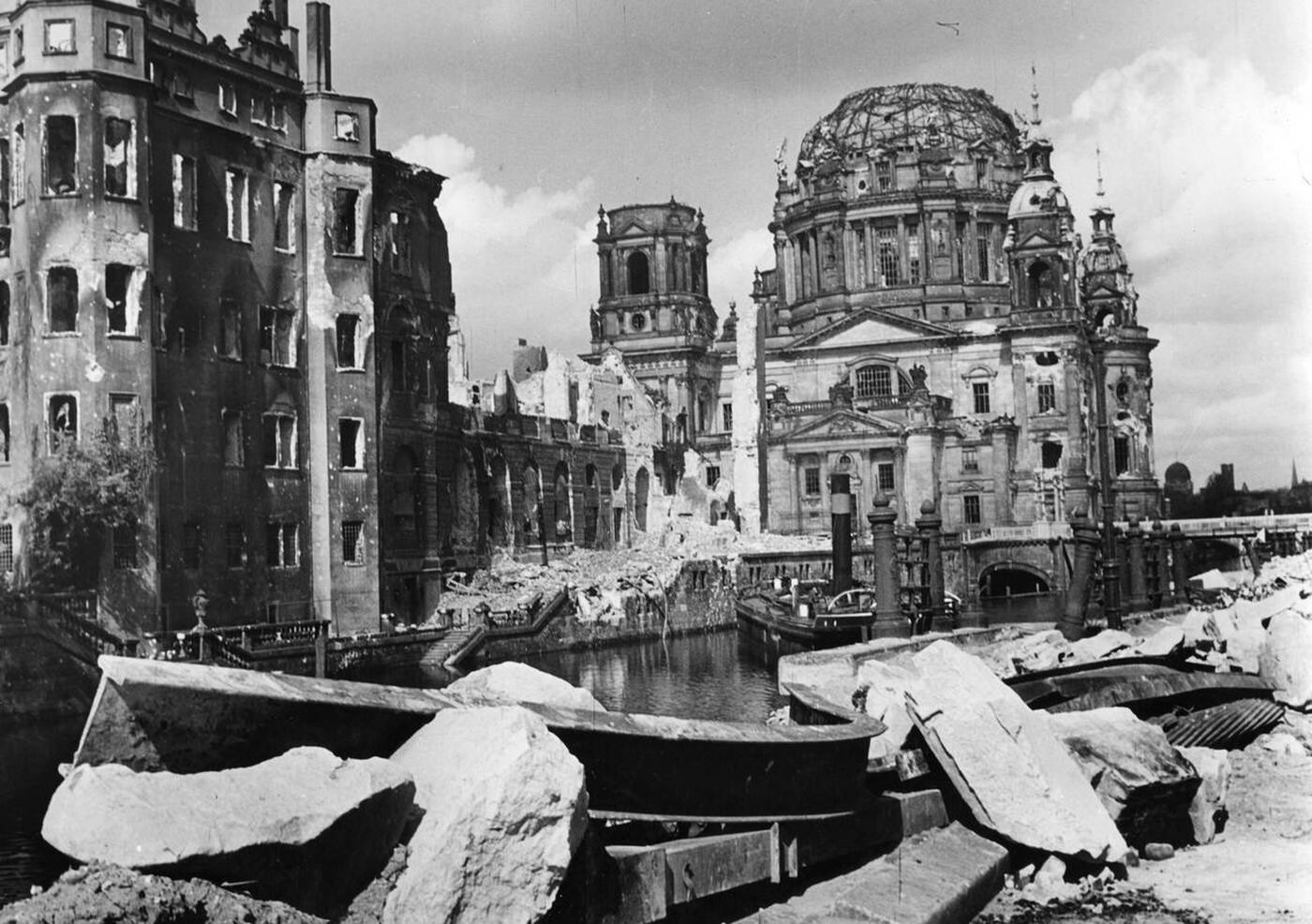
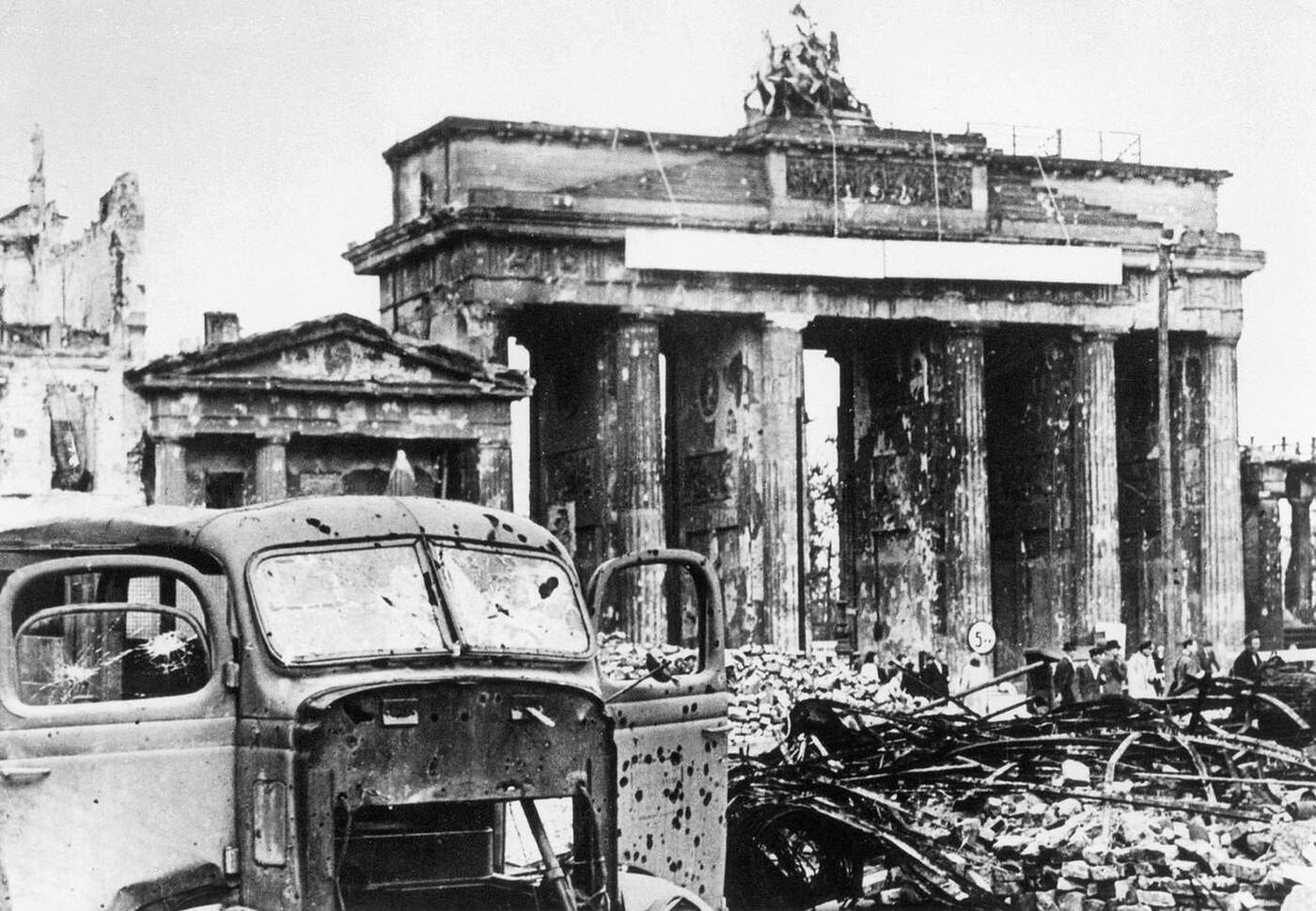
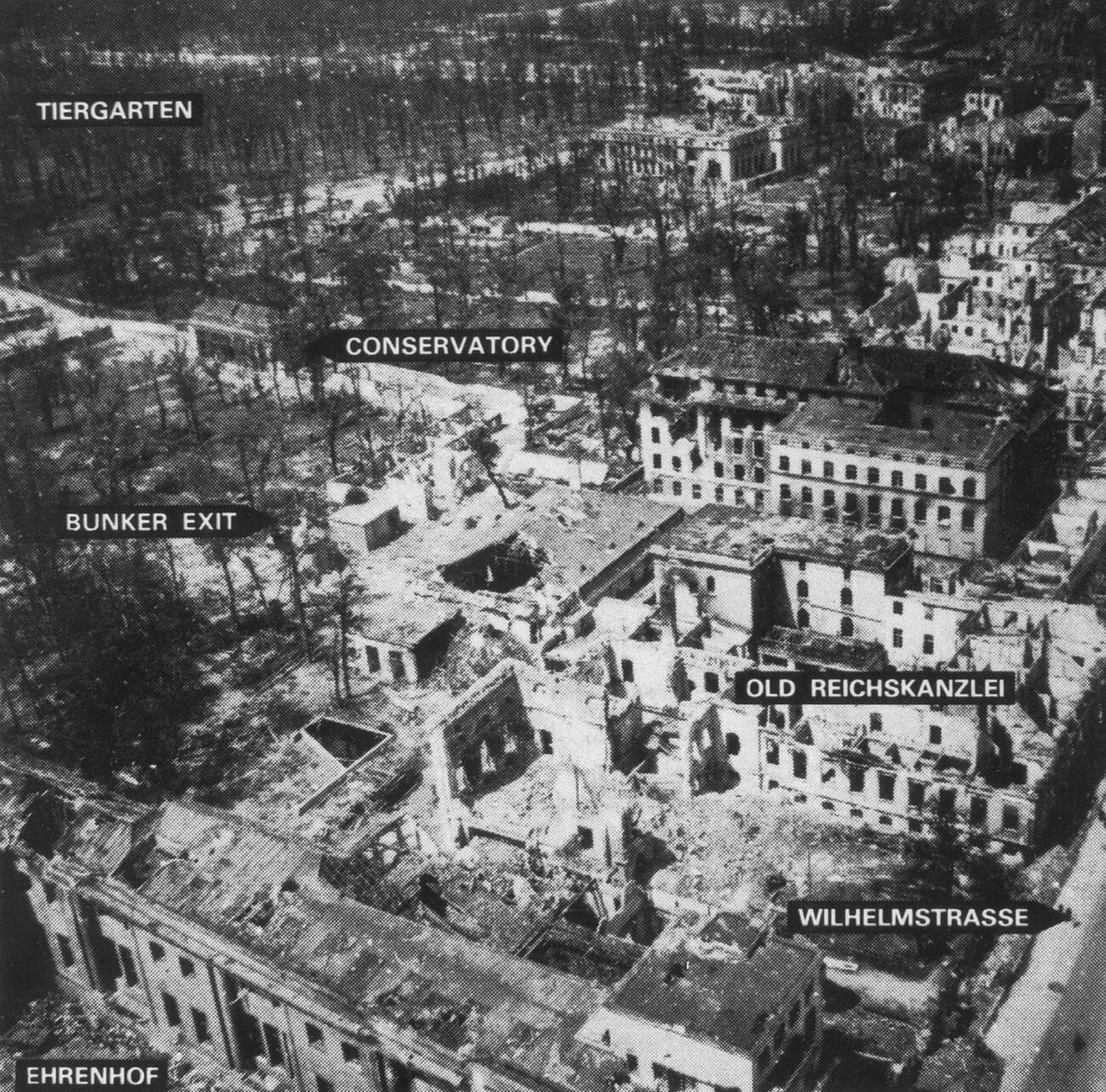
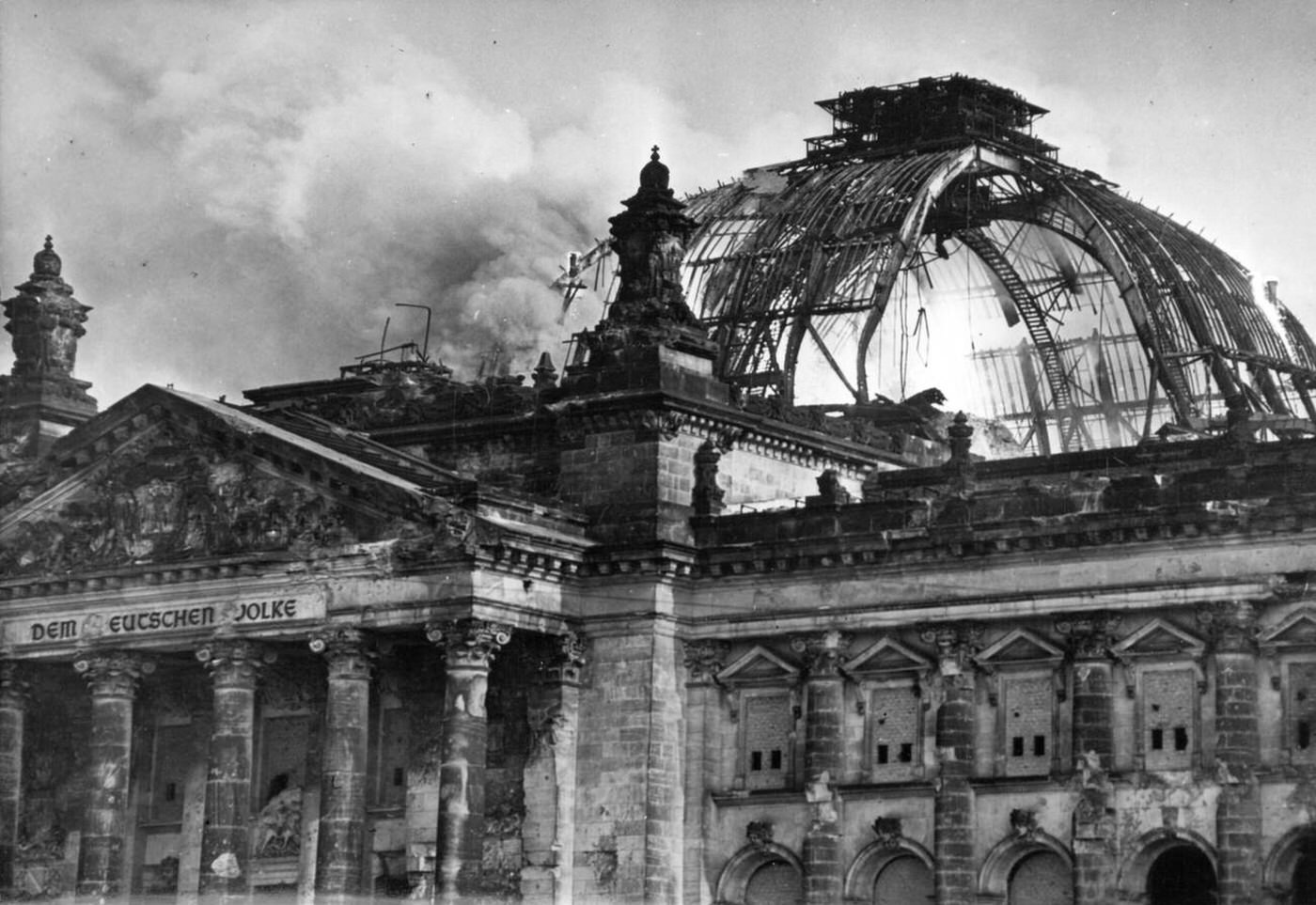
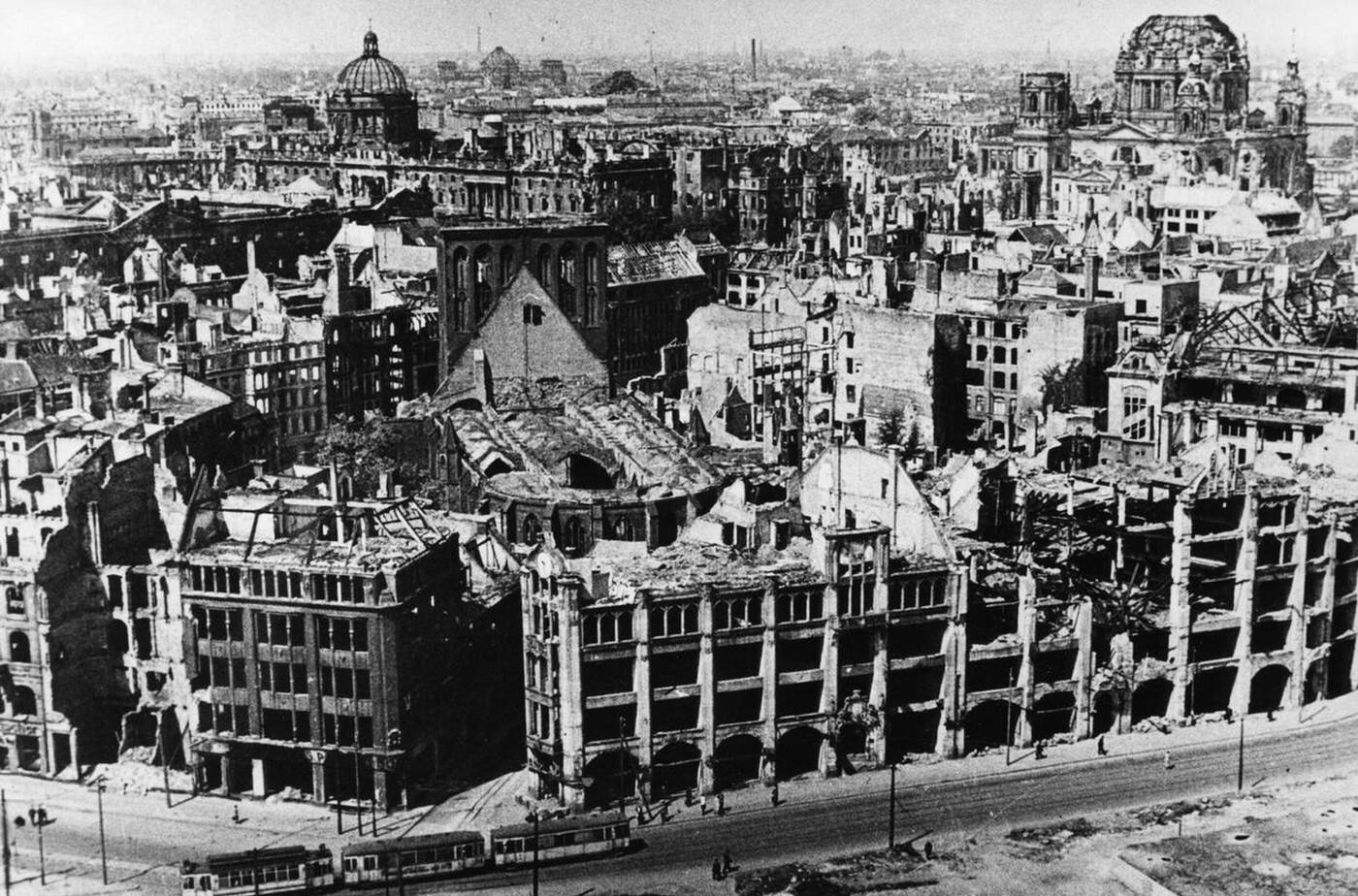
The Battle for Berlin began in April 1945. Soviet forces encircled the city and launched a massive artillery and air assault. Hitler, refusing to flee, remained in a bunker beneath the Reich Chancellery. The fighting inside Berlin was brutal—street by street, building by building. The city’s grand avenues were blocked by rubble and barricades. Civilians hid in cellars as Soviet artillery pounded every remaining structure of significance. The Reichstag, the Brandenburg Gate, and the Reich Chancellery itself were all badly damaged in the final days of fighting.
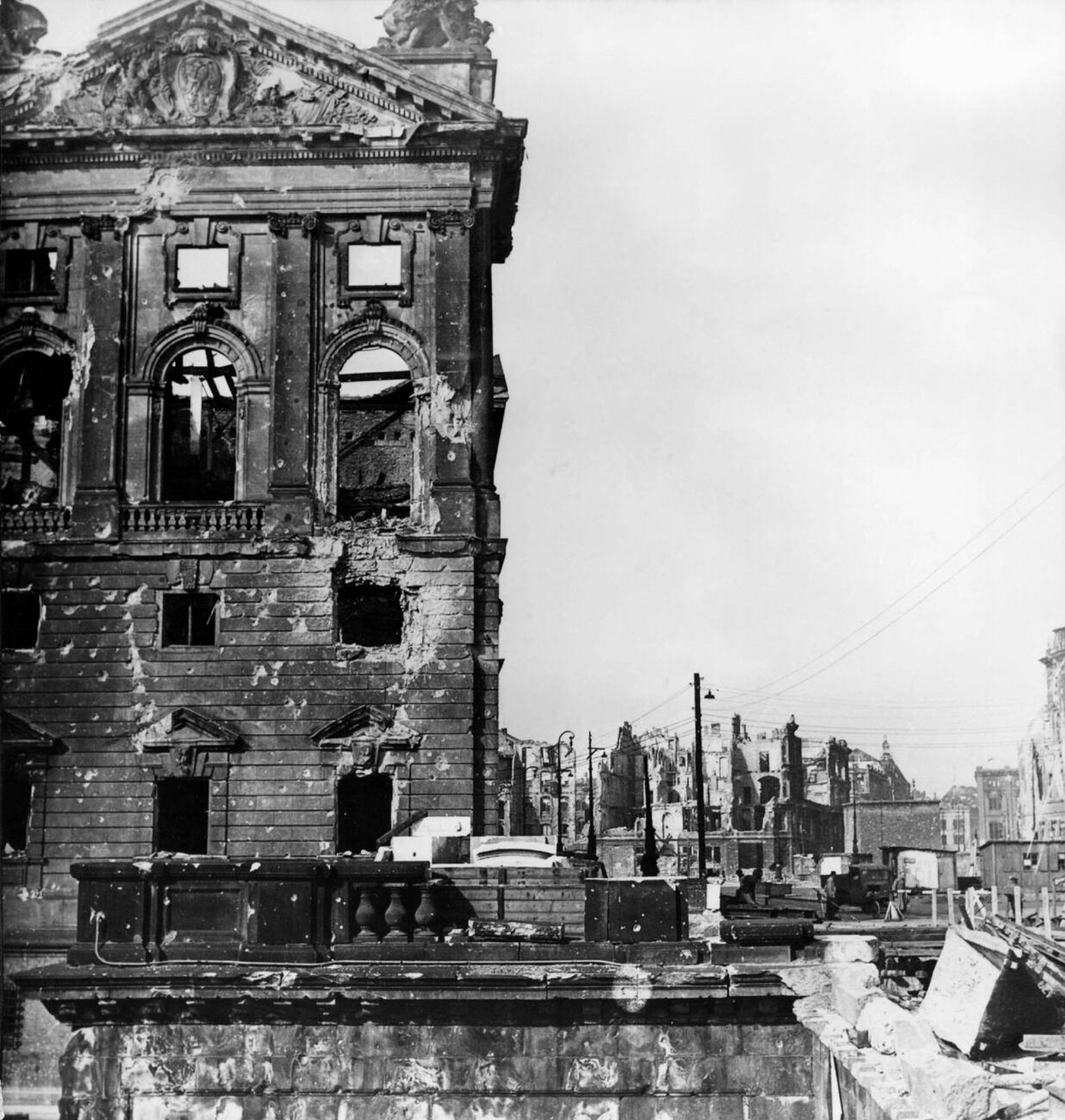
View of the destroyed city of Berlin with the Berlin Dome and part of the ruined castle, 1945.The Brandenburg Gate after the fighting ended in the city, 1945.The destroyed buildings of the Old and the New Reich Chancellery in the Wilhelmstrasse in Berlin, 1945.
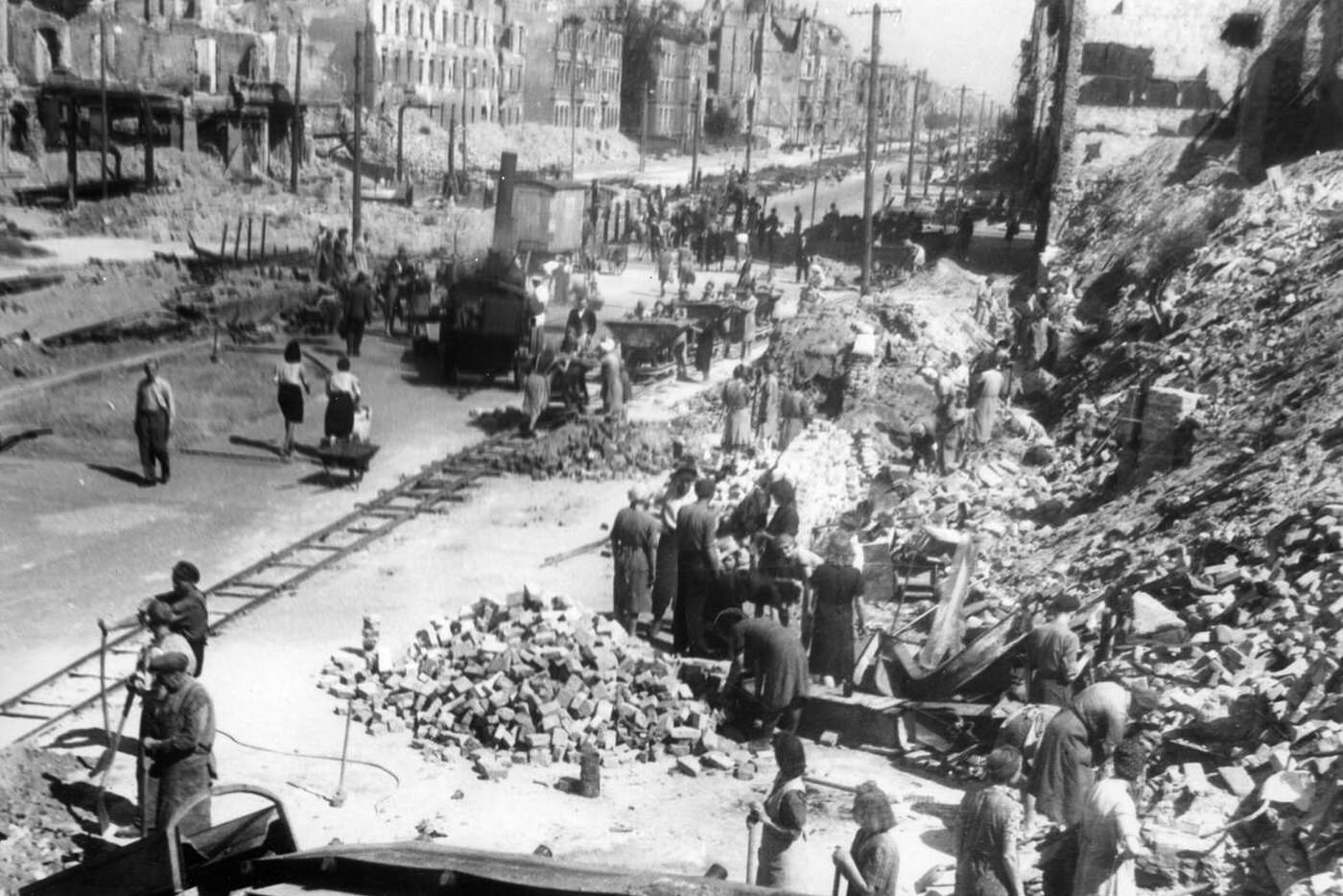
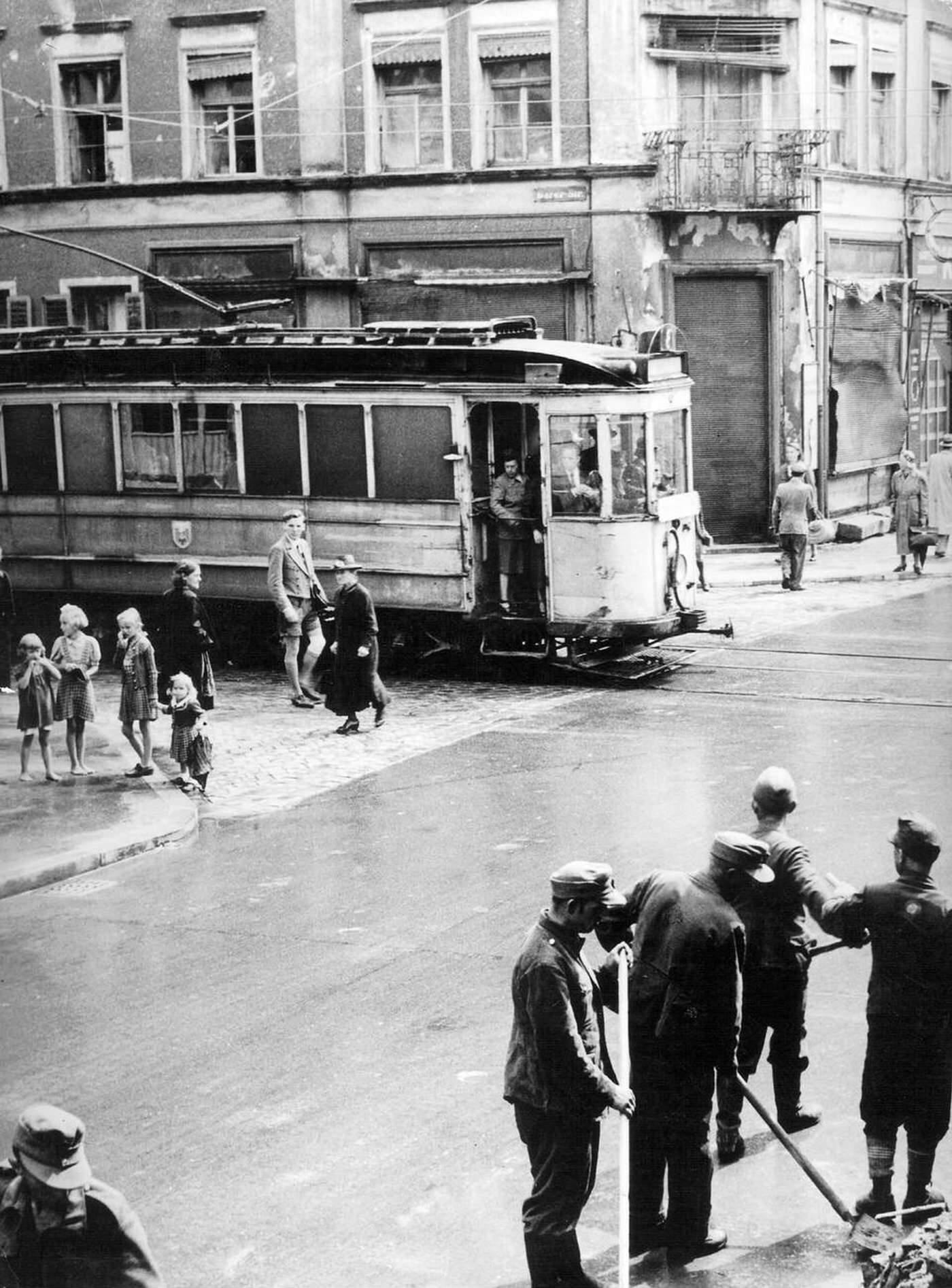
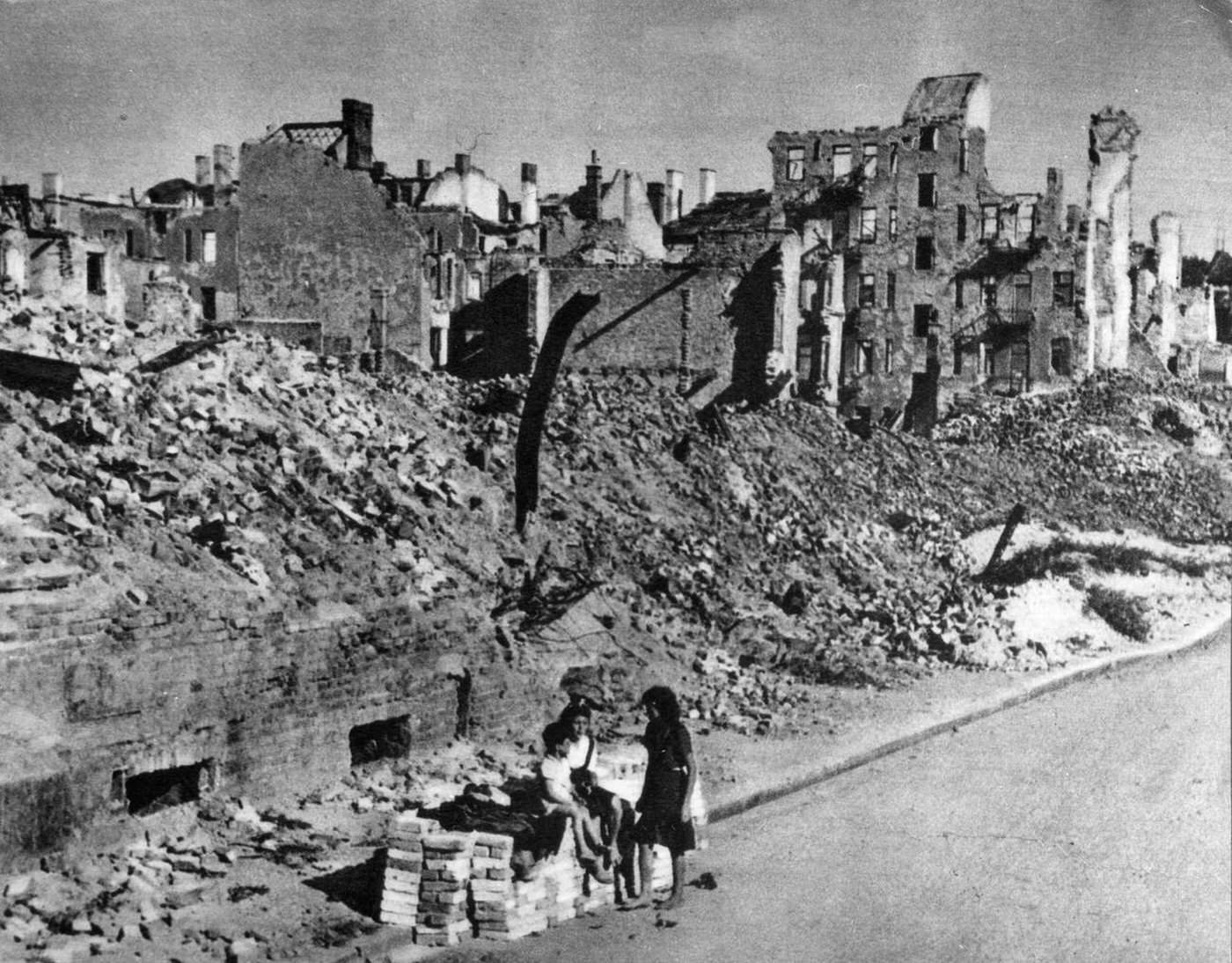
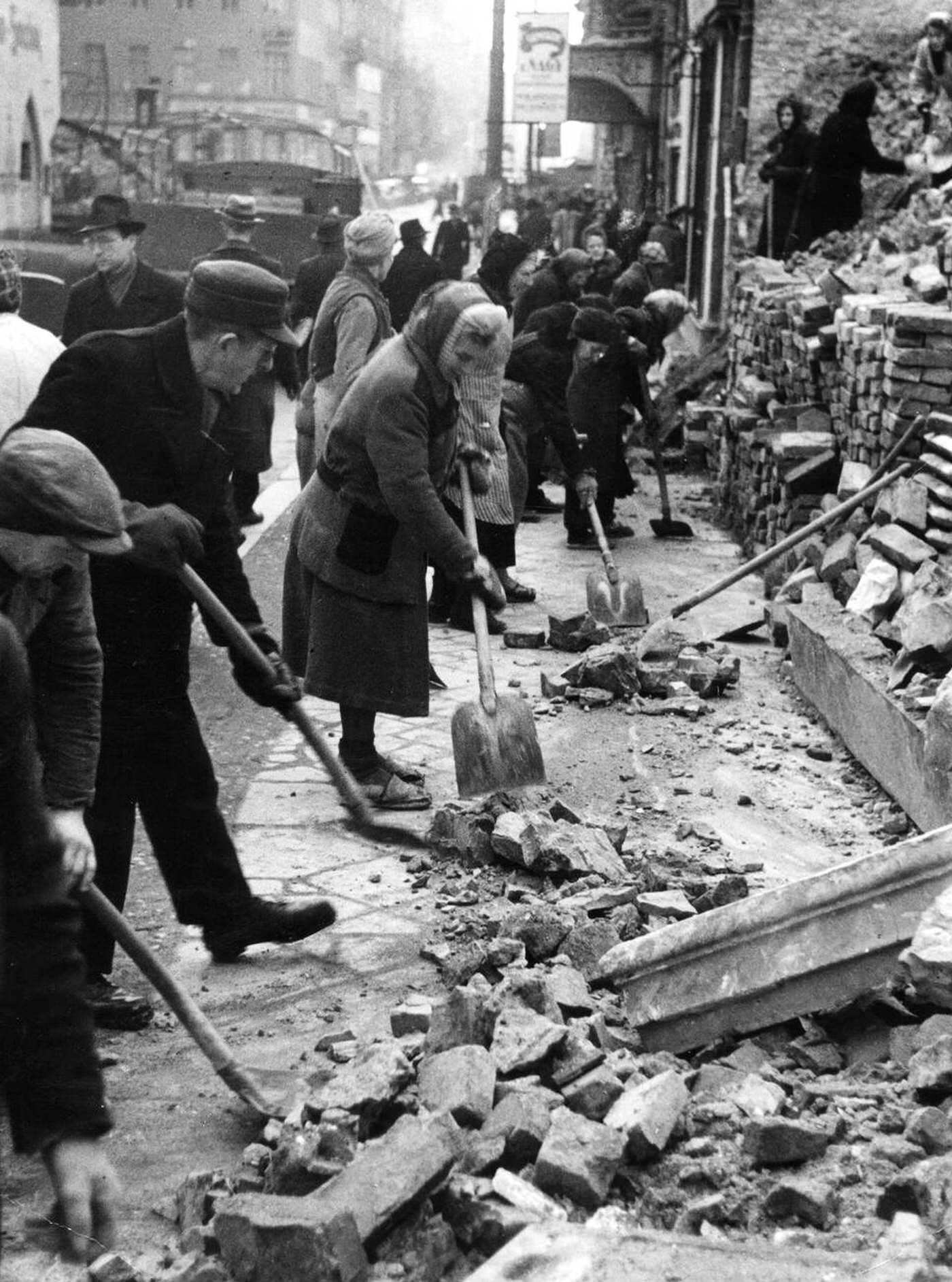
When the fighting stopped, the scale of destruction was staggering. Berlin’s population had endured years of bombing followed by weeks of urban combat. Millions of Germans—soldiers and civilians—were dead. The survivors emerged from cellars into a landscape almost entirely composed of ruins. Women known as Trümmerfrauen, or ‘rubble women,’ formed organized teams to clear debris brick by brick. German prisoners of war were also put to work clearing the wreckage. The physical task of rebuilding was so immense that ruins remained visible in many German cities well into the 1950s and 1960s.
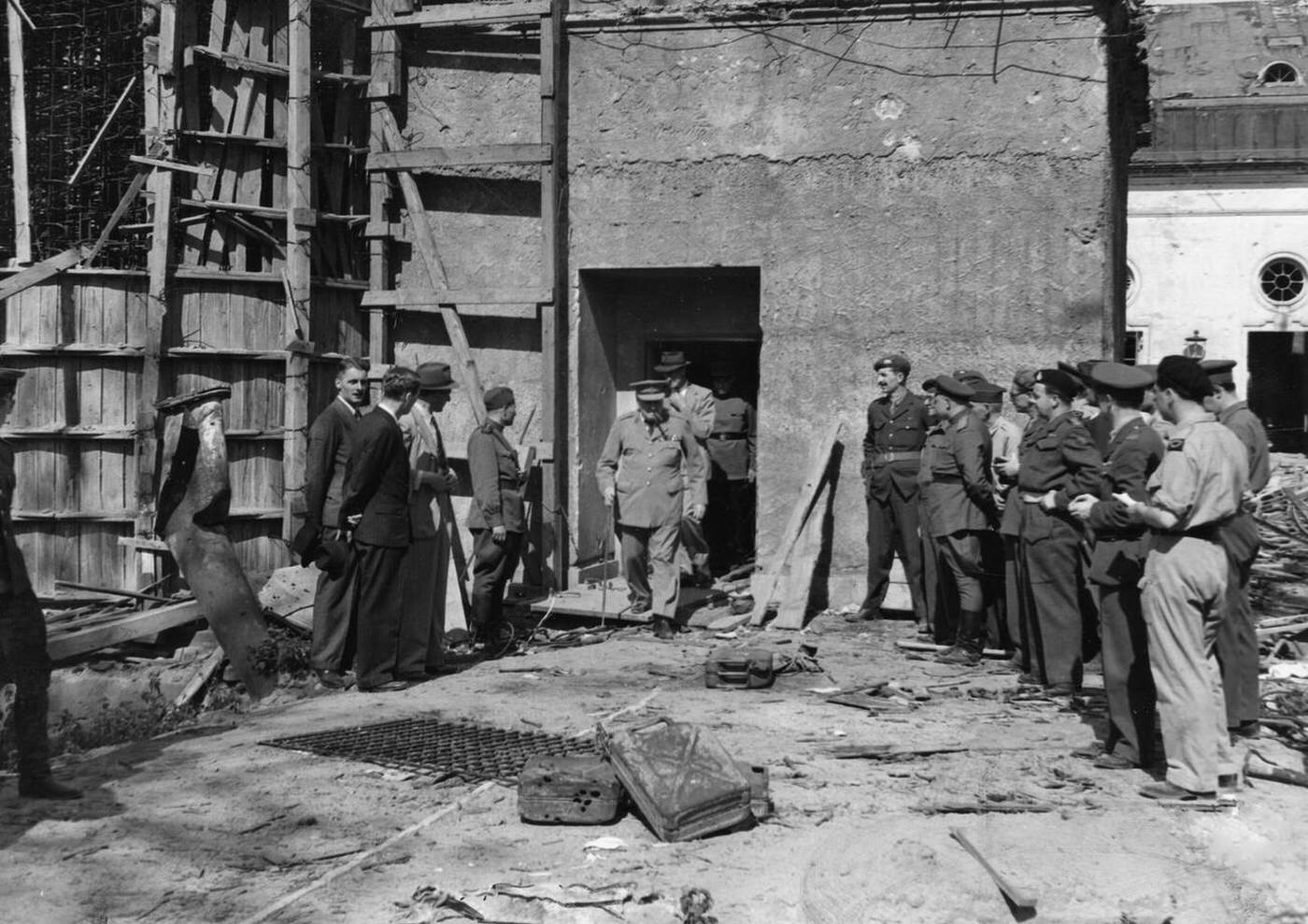
Women and men are pictured clearing the ruins in Berlin, 1945.German war prisoners clean up debris from the road, 1945.British Prime Minister Winston Churchill leaves the destroyed Reich Chancellery after the Second World War ended, Berlin, Germany, 1945.
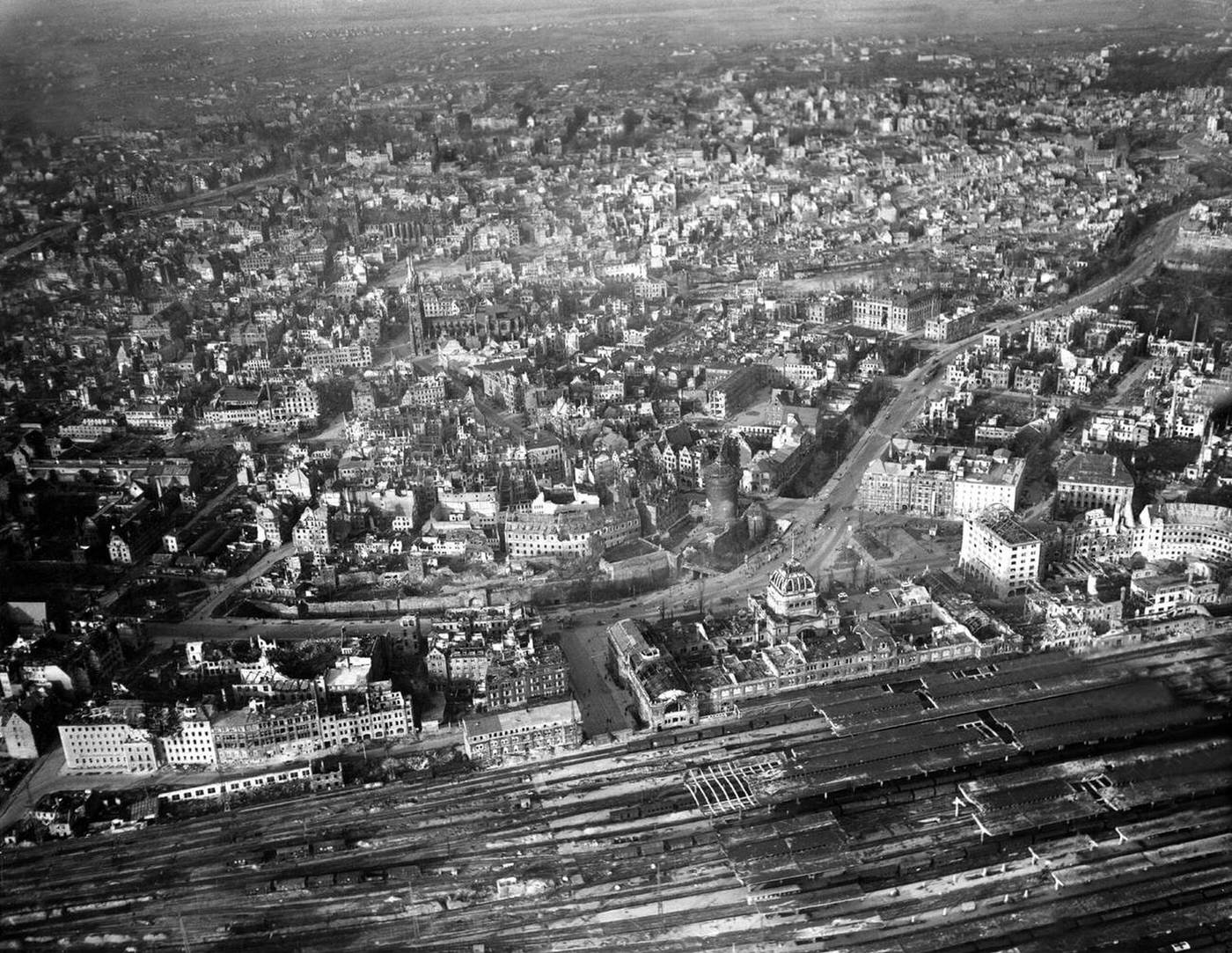
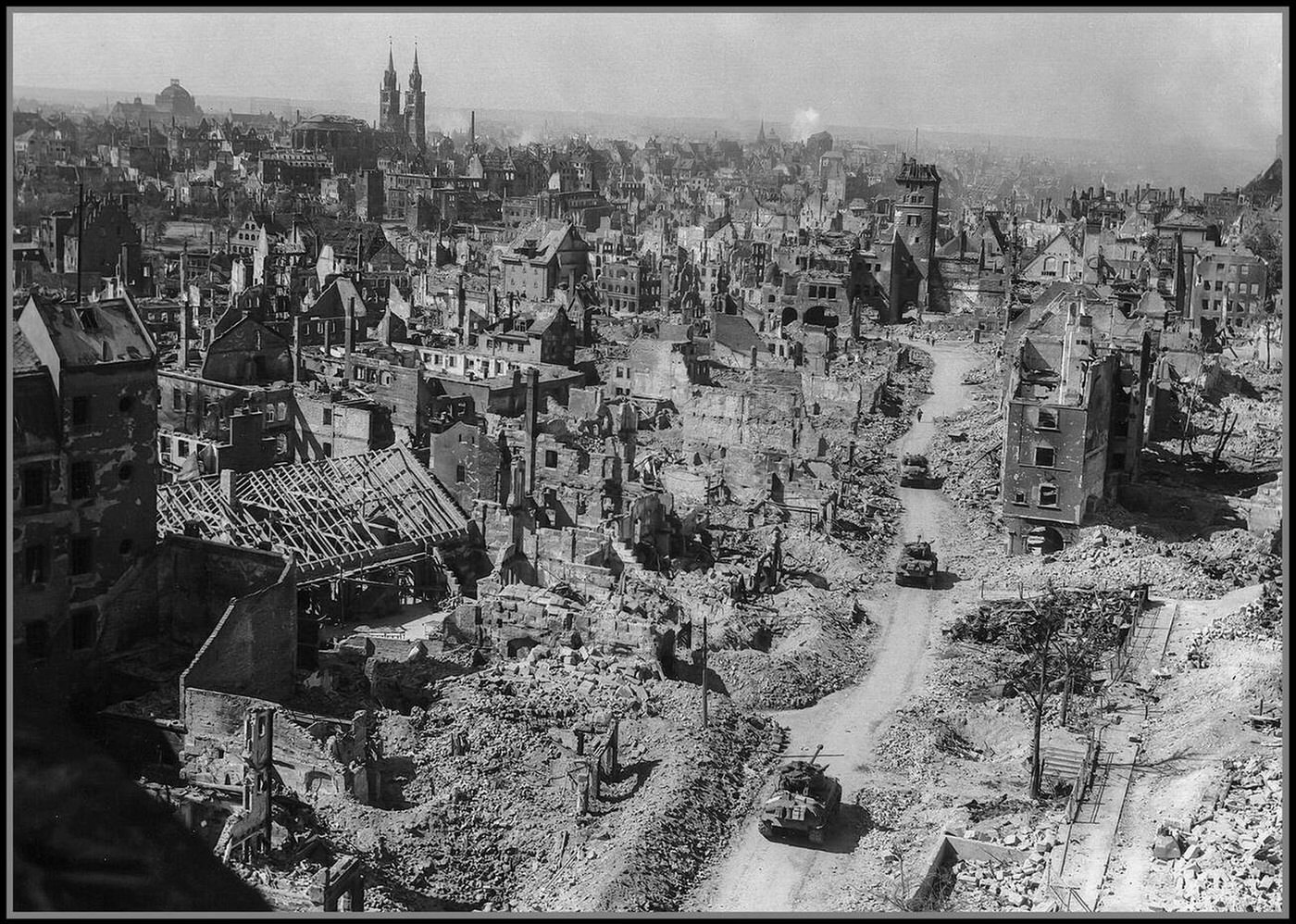
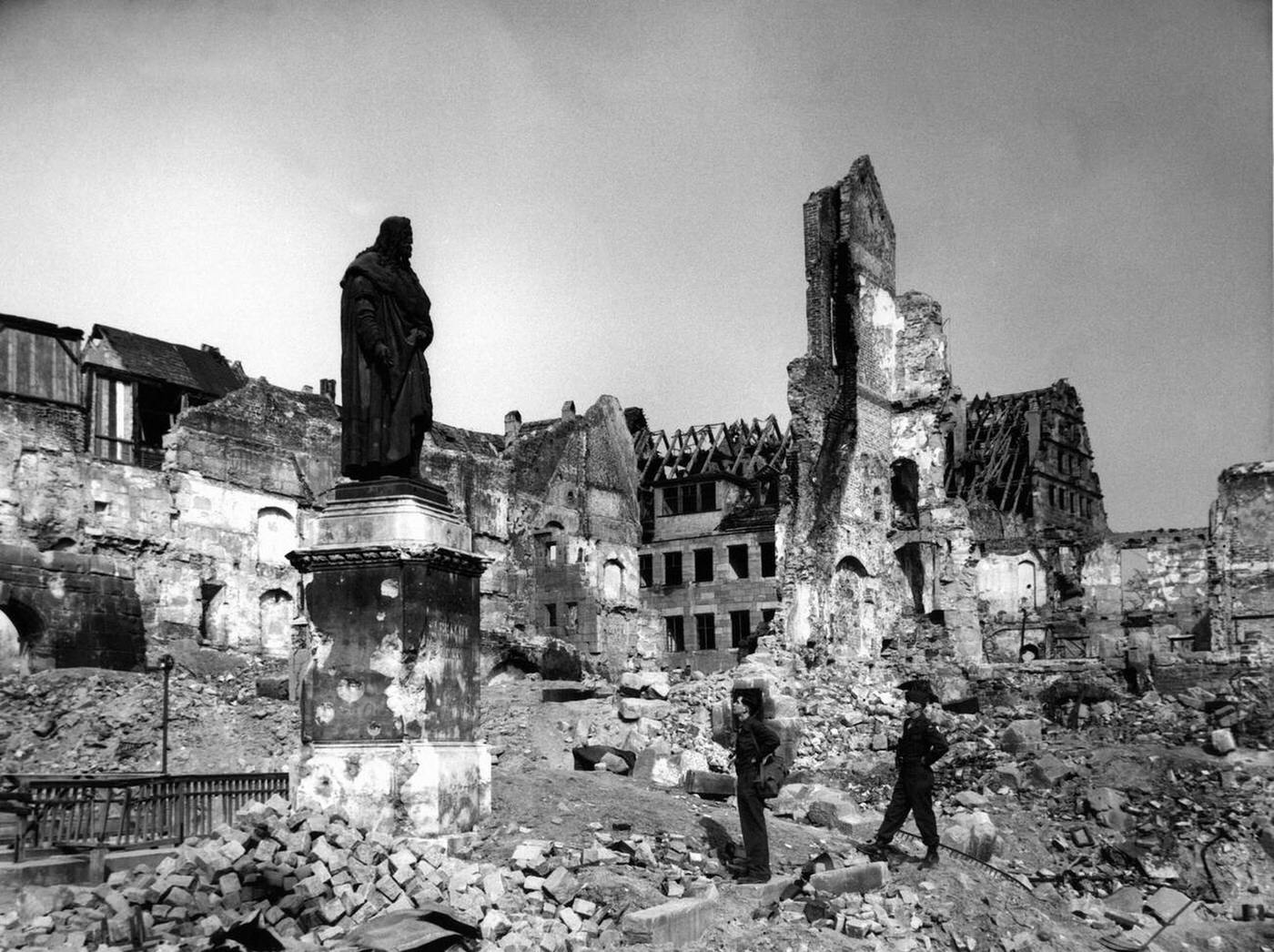
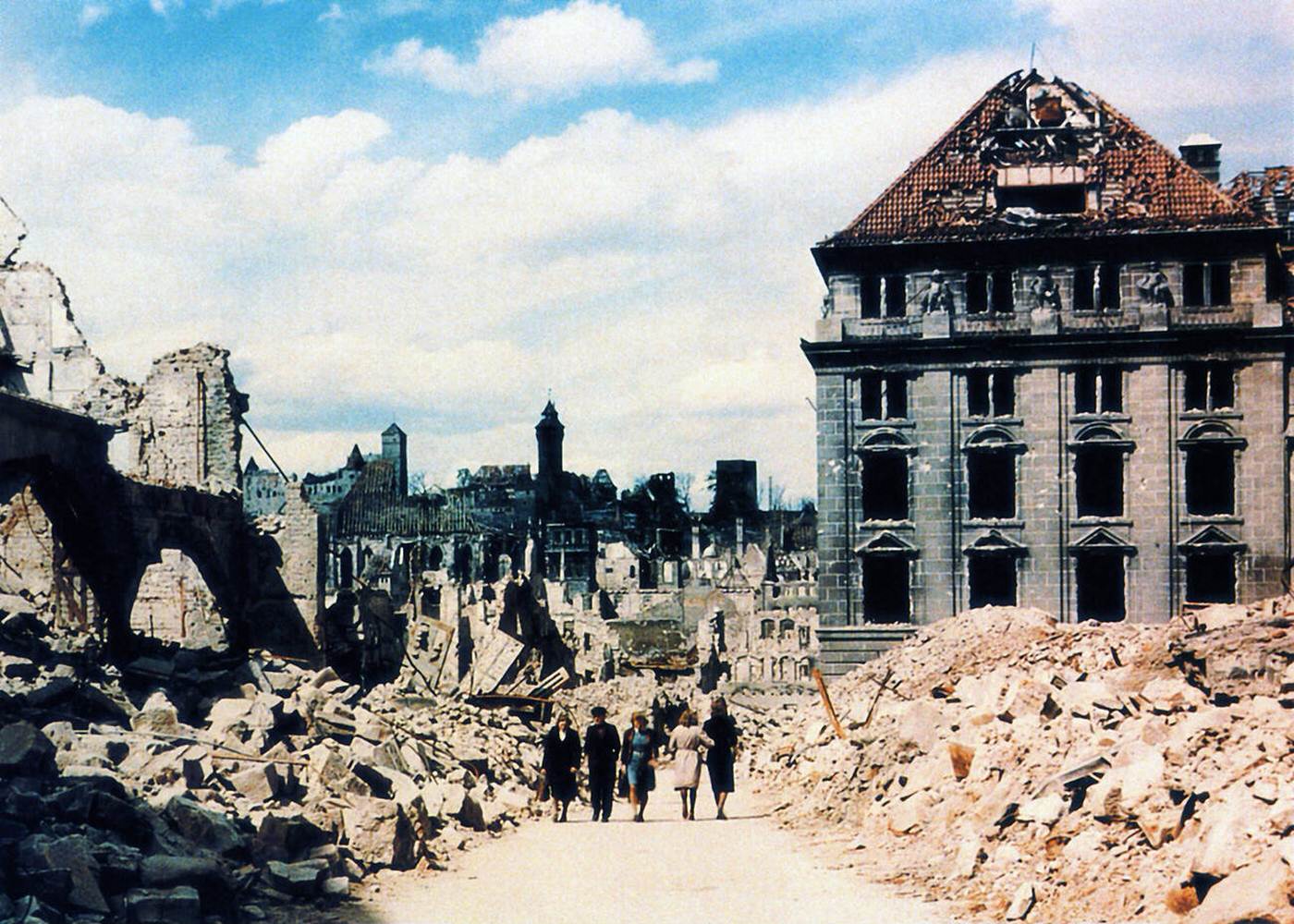
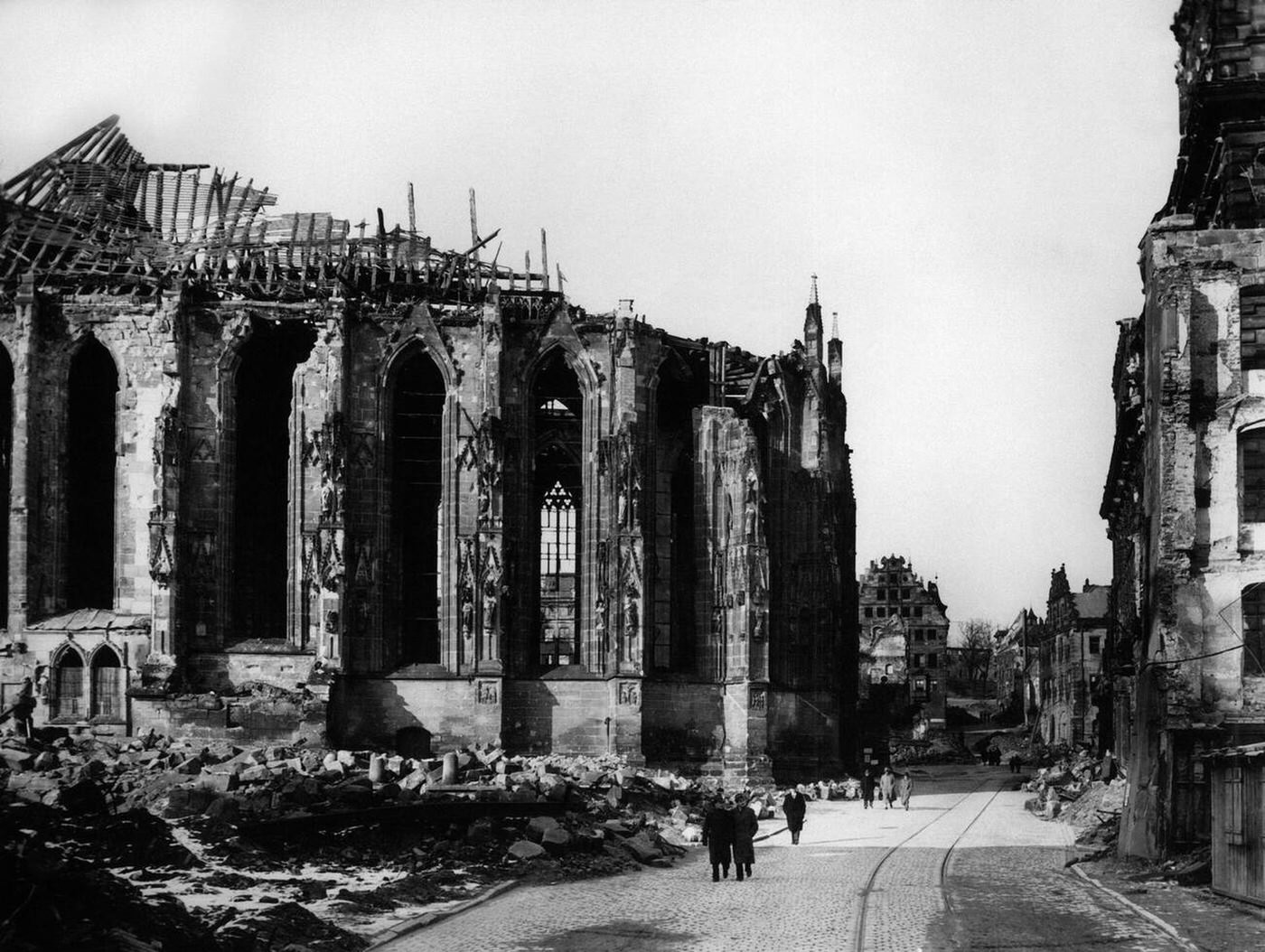
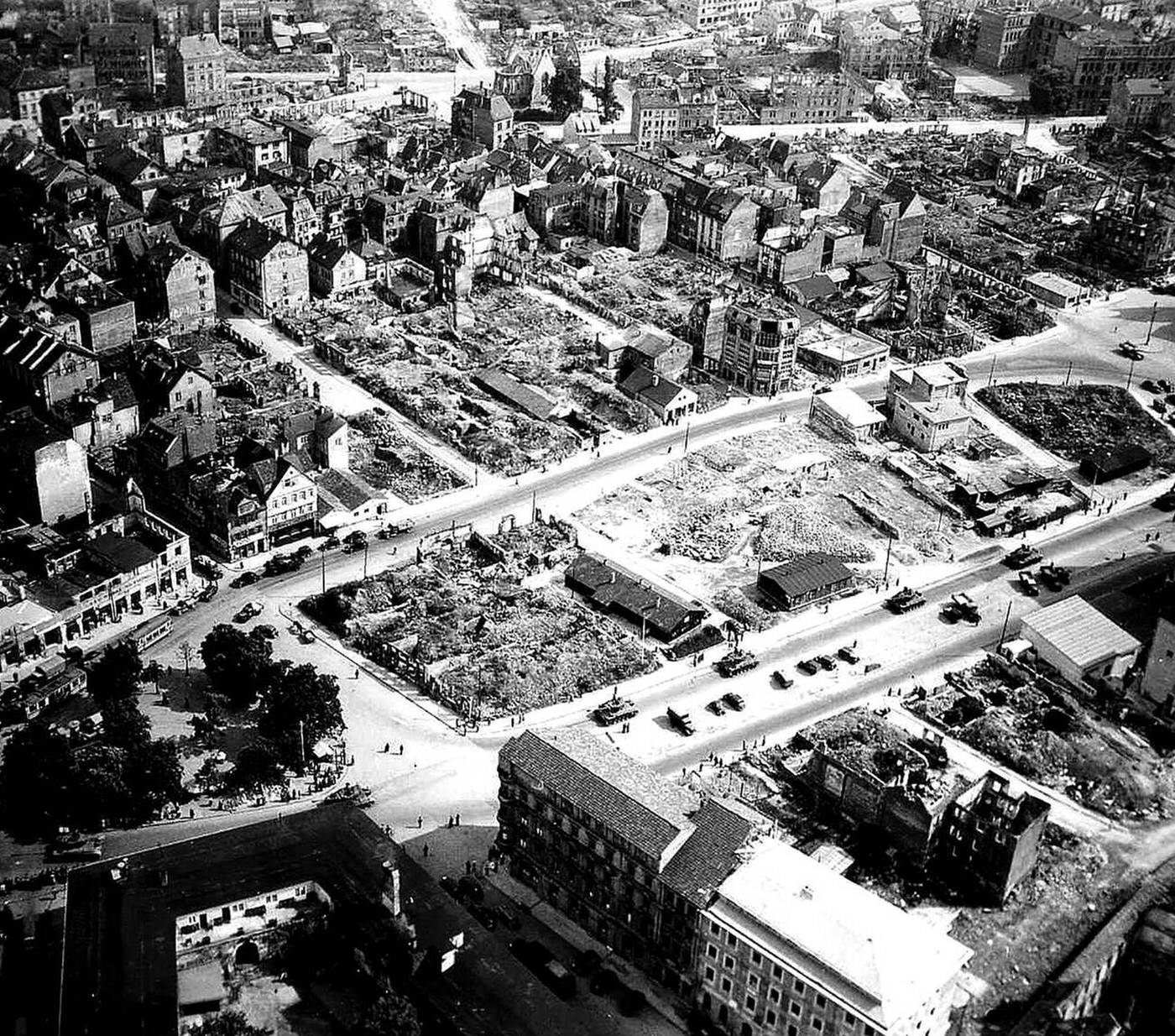
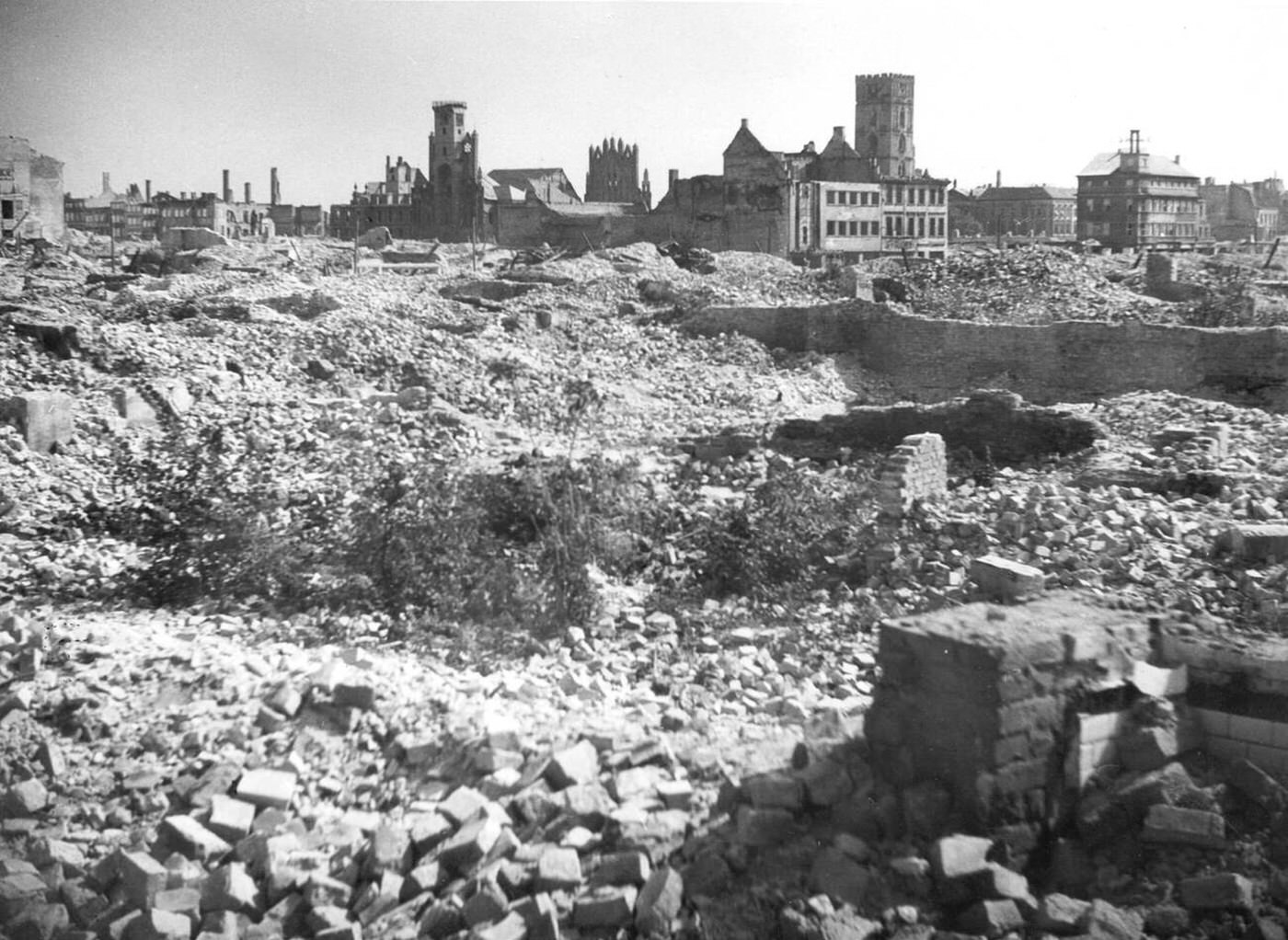
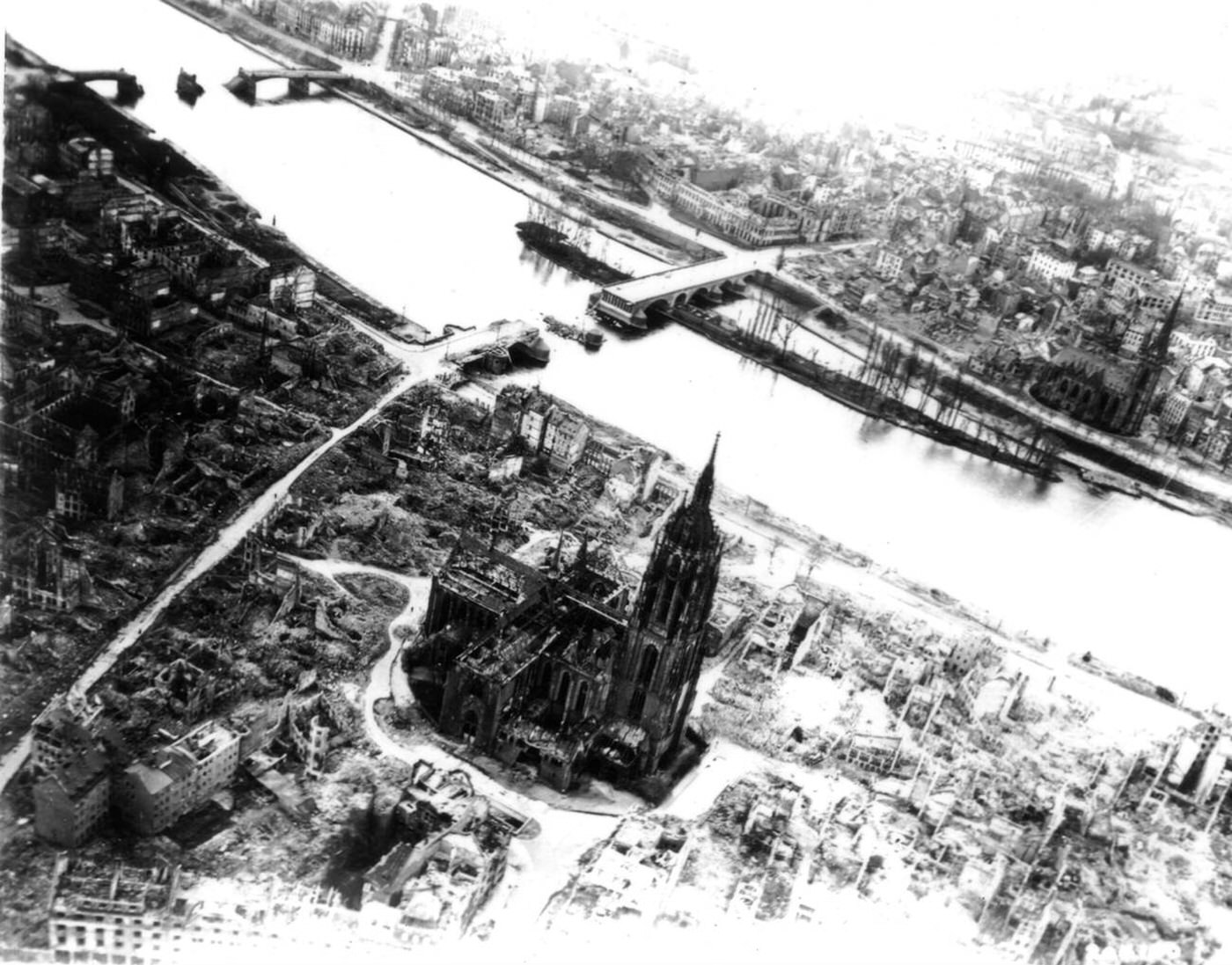
Frankfurt, Nuremberg, Dortmund, and dozens of other cities shared the same fate. Nuremberg, the city where the Nazi Party had staged its enormous annual rallies, was left in ruins by repeated Allied bombing raids and then ground fighting as American forces entered in April 1945. Its medieval old town, its churches, and its civic buildings were reduced to empty shells. Allied tanks rolled through streets where propaganda had once proclaimed Germany’s invincibility.
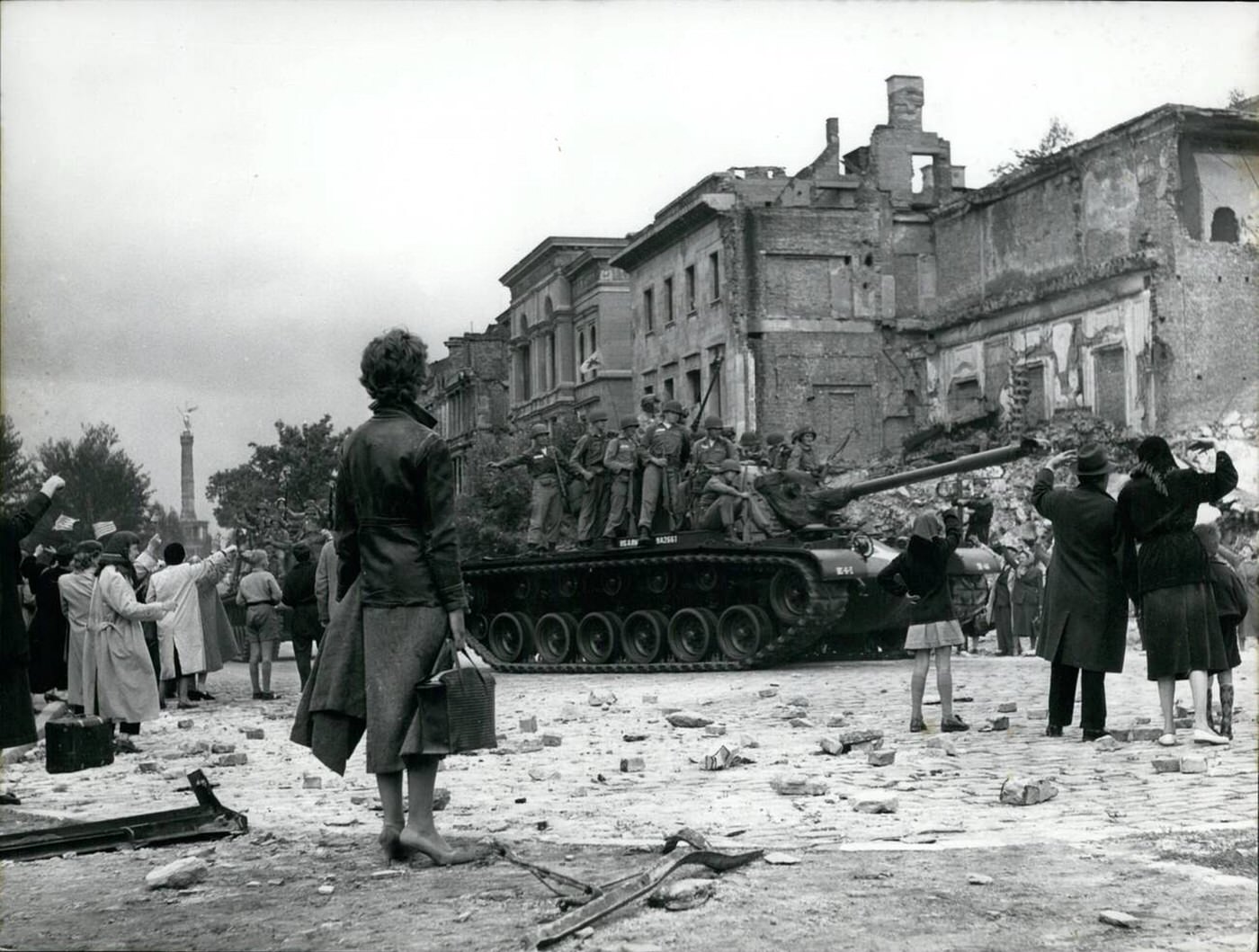
Aerial view of the central station and the city centre after the Allied air raids, Nuremberg, 1945.Allied tanks roll into a bomb shattered Nuremberg, 1945.View of the destroyed city of Nuremberg, with statue of Albrecht Duerer, 1945.
The photographs collected here document this destruction across dozens of German cities. They show bombed-out rail yards, collapsed bridges, gutted factories, and streets buried in rubble. They show civilians picking through wreckage, soldiers in surrender, and cities that were entirely unlivable. These images are not simply records of military victory or defeat—they are a direct visual account of what total war does to a civilization when it is turned back on itself.
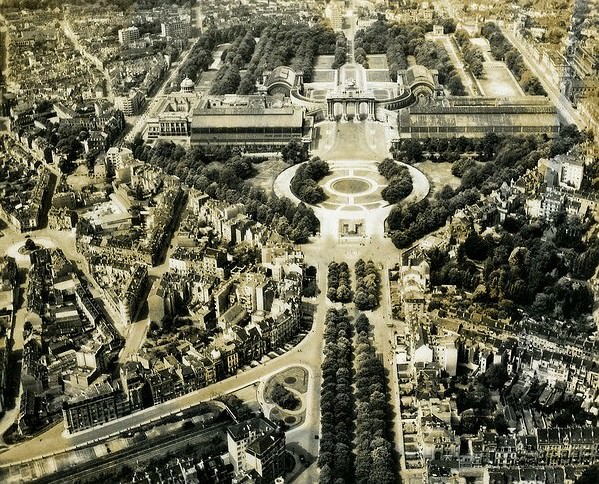
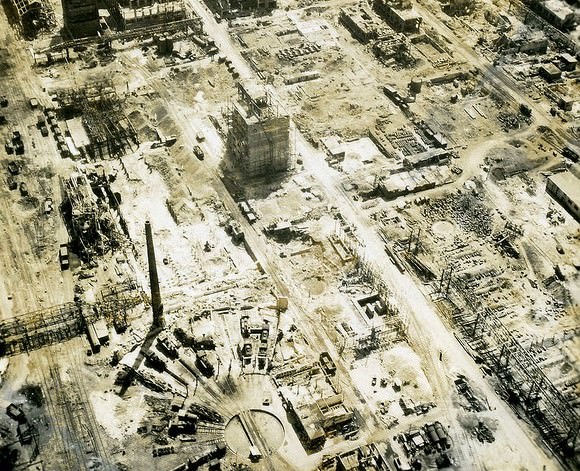
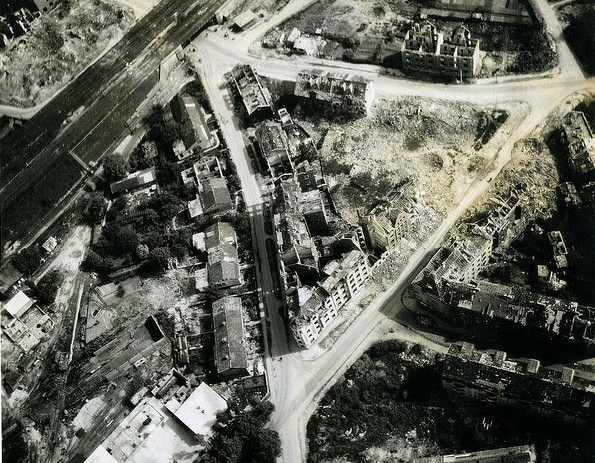
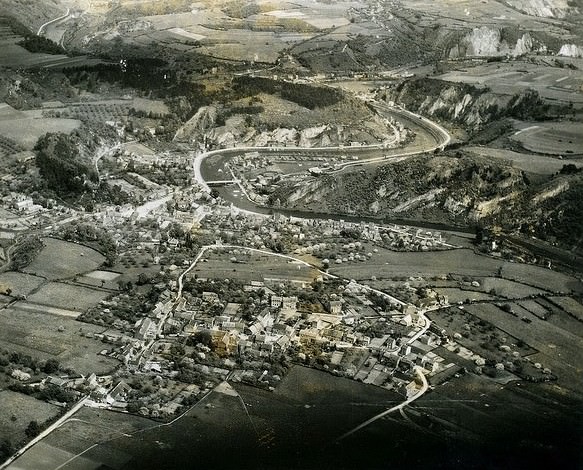
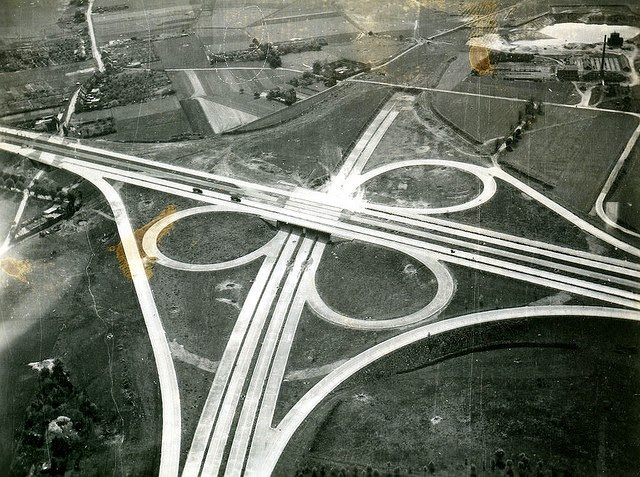
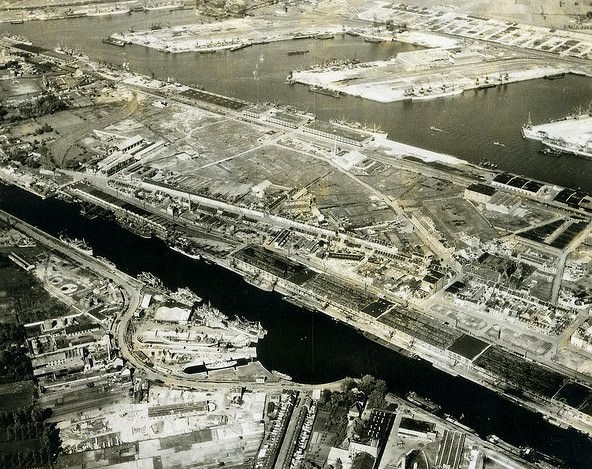
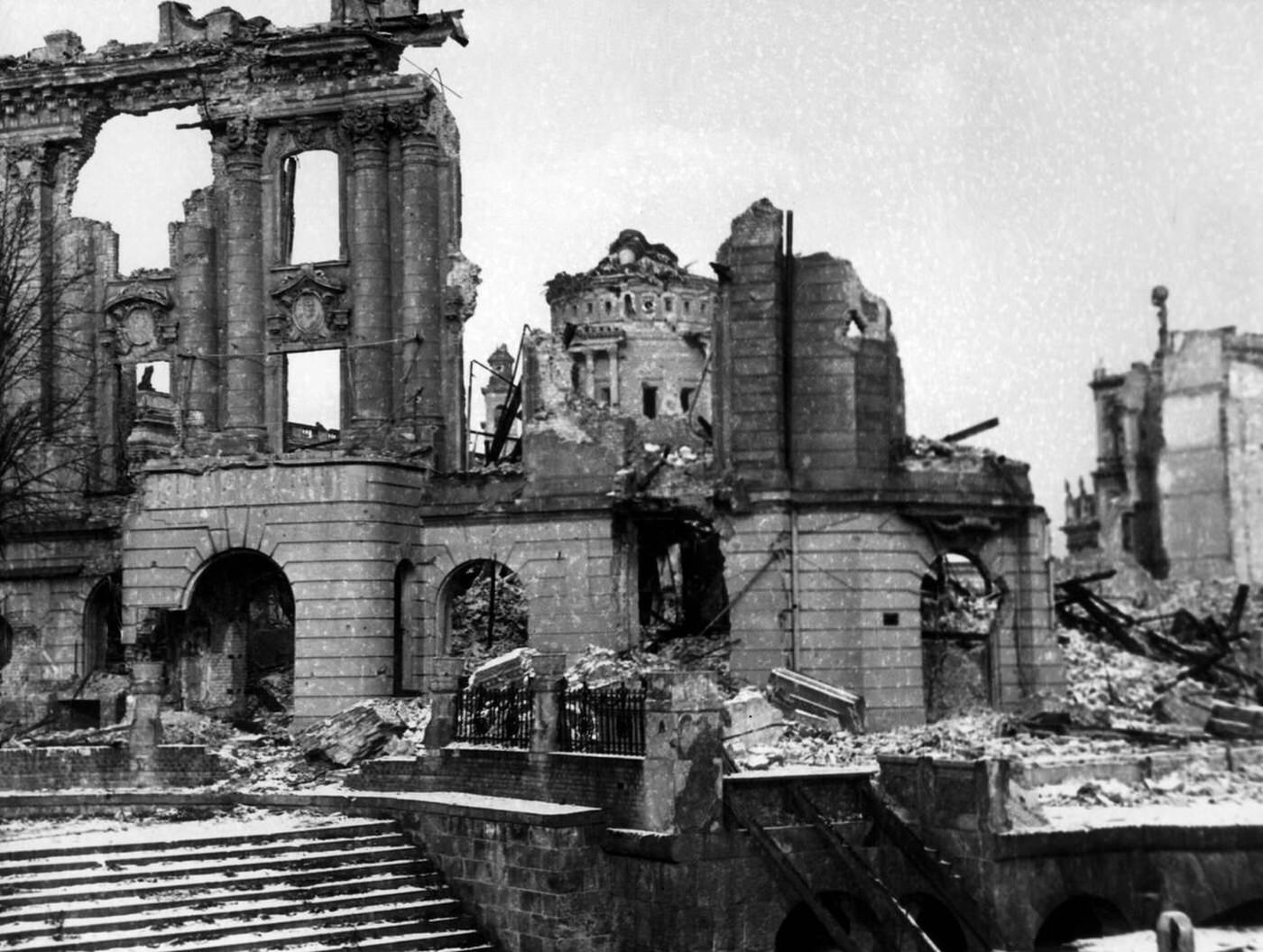
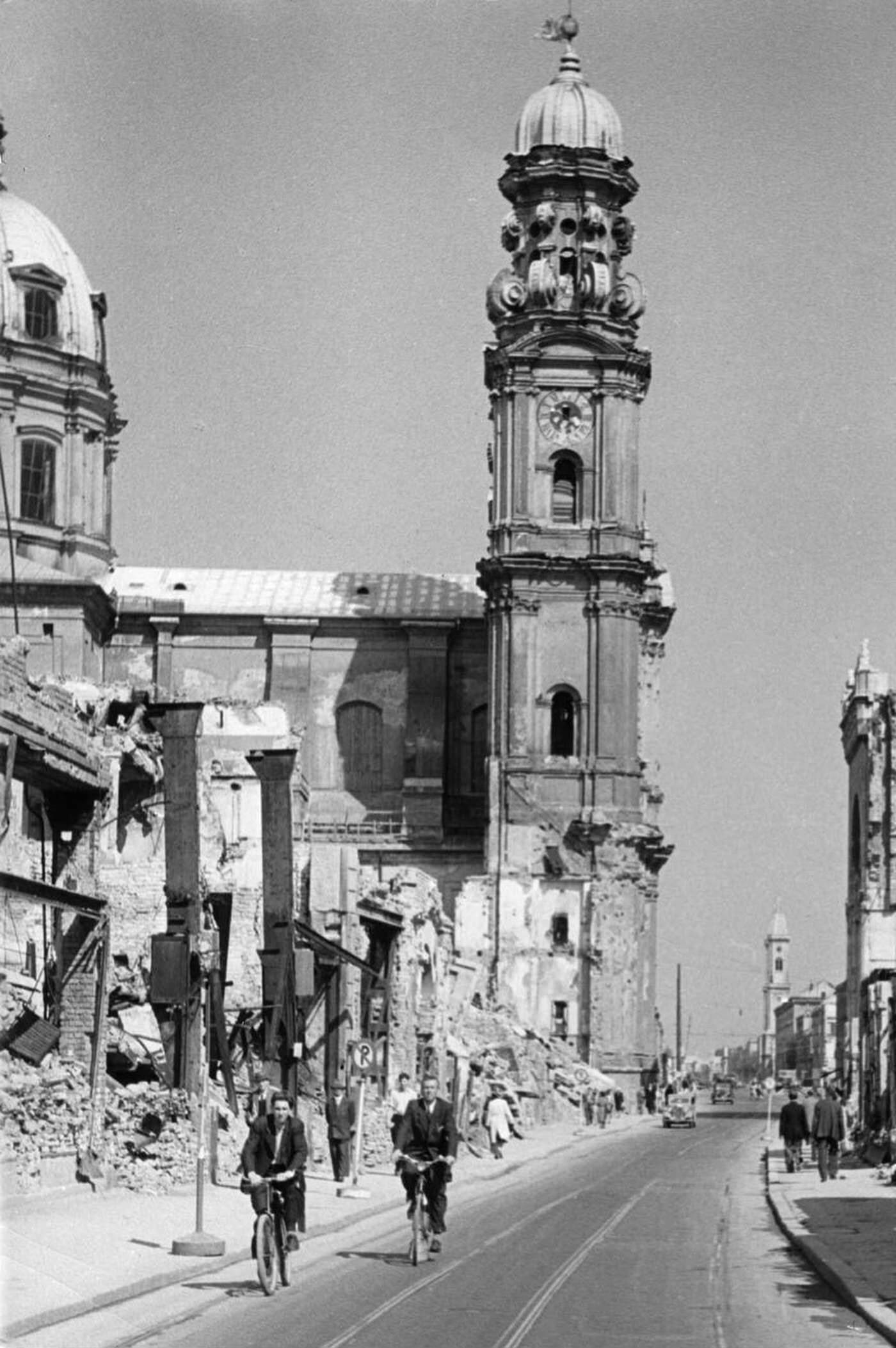
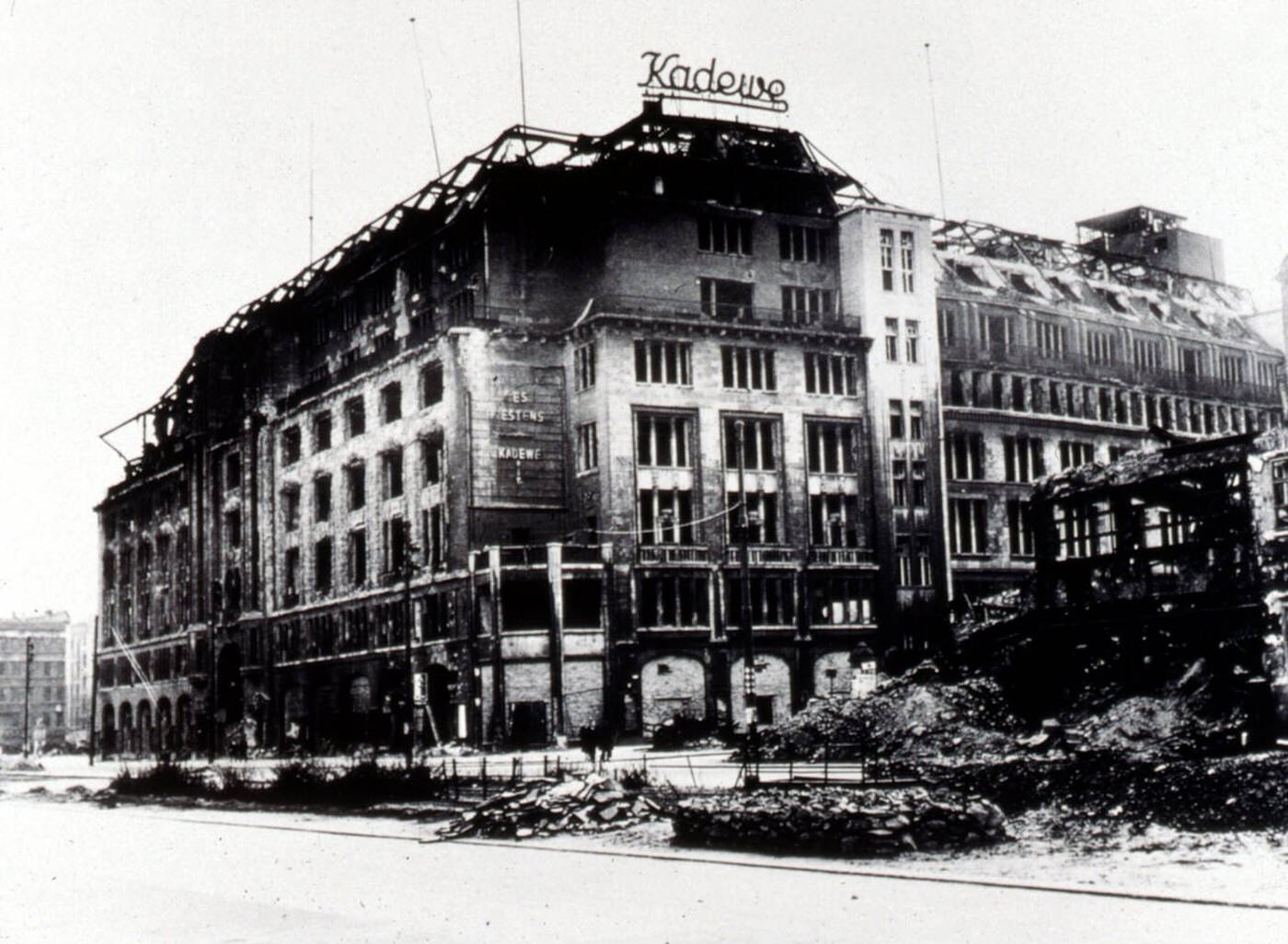
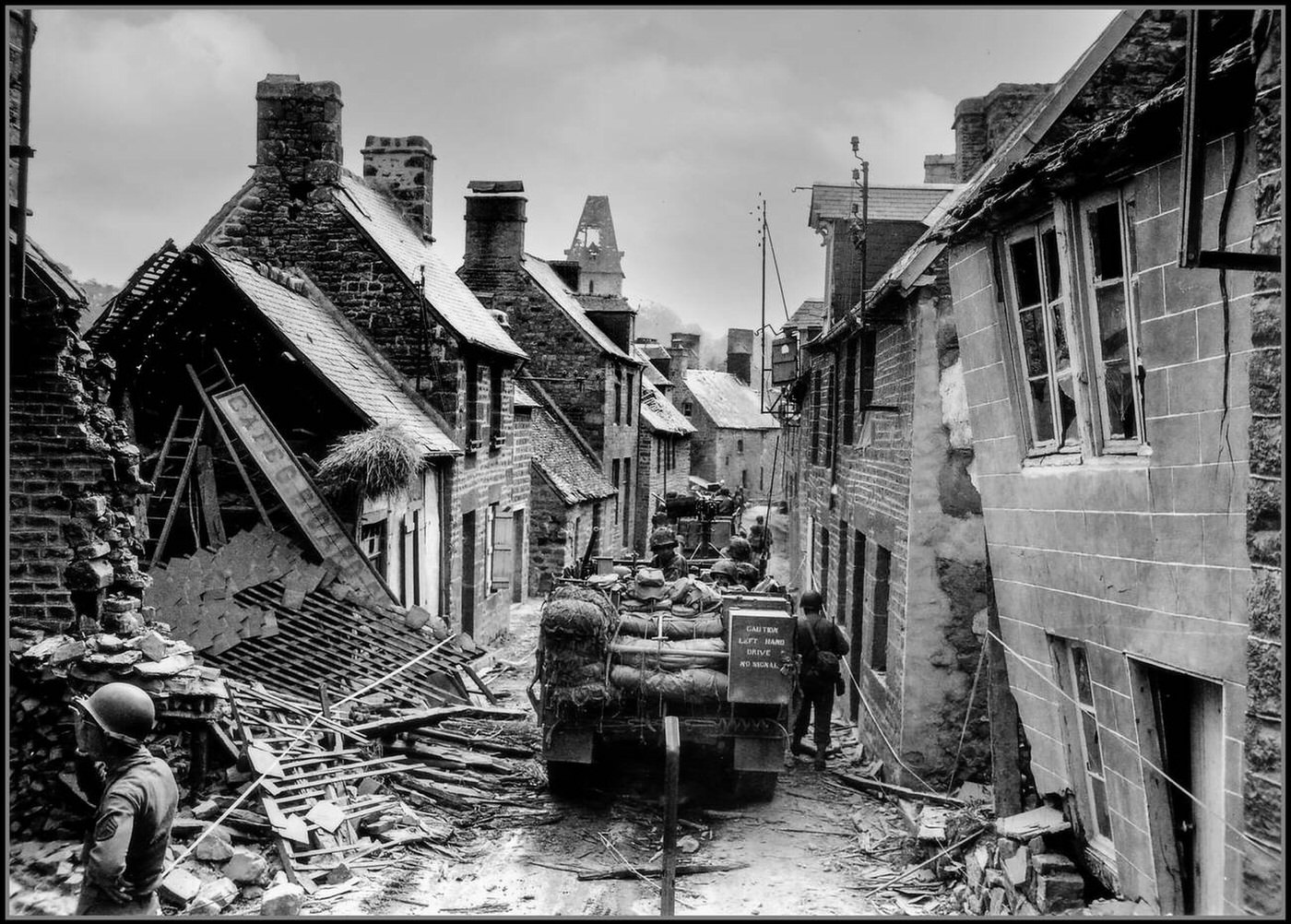
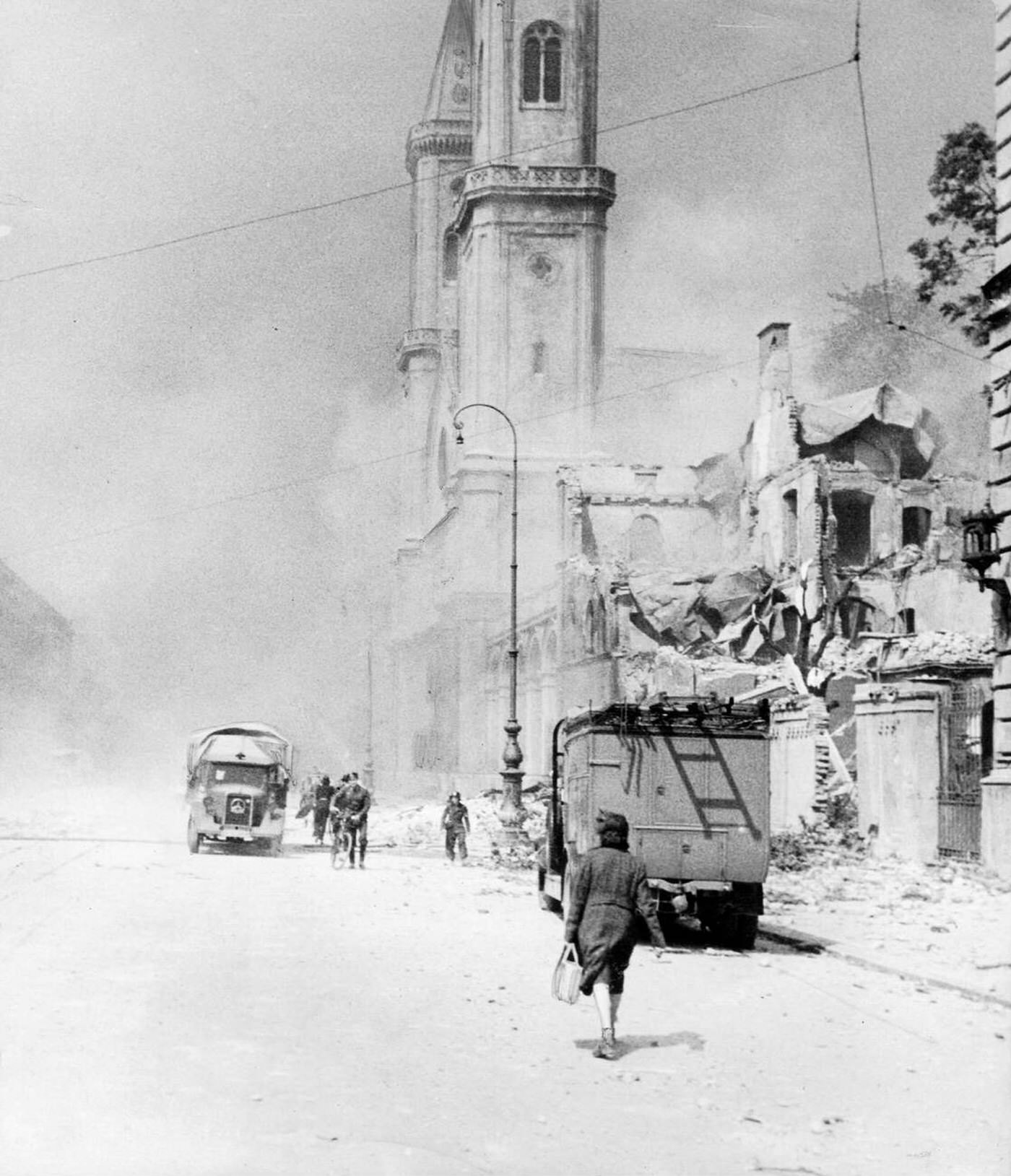
Cologne Cathedral During WWIIPOW’sFrankfurt at MainCologne, GermanyBombed BridgeBombed HospitalBomb DamageRoofless BuildingsCinquantenaire ParkIndustrial DistrictTriangular City BlockComblain-au-Pont, BelgiumRail Yard by a RiverCloverleaf in KölnShipping Port in BelgiumCologne Railyard and CathedralFlakThe German town of Kleve after an Allied air raid, 1945.Ruin of the Neuer Marstall (New Stable) shortly after the end of World War II, Berlin, Germany, 1945.The ruins of Berlin after the end of the Second World War, 1945.The deserted and partly destroyed city of Berlin after World War II, 1958.The deserted and partly destroyed city of Berlin after World War II, 1958.The partially destroyed city of Berlin after World War II, 1958.The ruins of the Dresden Frauenkirche destroyed during bombing in February 1945 being prepared for reconstruction after reunification, 1994.The ruins of the Dresden Frauenkirche destroyed during bombing in February 1945 being prepared for reconstruction after reunification, 1994.The ruins of the Dresden Frauenkirche destroyed during bombing in February 1945 being prepared for reconstruction after reunification, 1994.The ruins of the Dresden Frauenkirche destroyed during bombing in February 1945 being prepared for reconstruction after reunification, 1994.The ruins of the Dresden Frauenkirche destroyed during bombing in February 1945 being prepared for reconstruction after reunification, 1994.Potsdam after the Allied bombing raid, with the destroyed City Palace, 1945.Theatinerkirche, destroyed after WWII, Munich, Germany, 1949.Kaufhaus des Westens (KaDeWe) after an Allied air raid, Berlin, Germany, 1943.Street scene in Cologne after an Allied air raid, 1944.American M2 Half-Tracks slowly traverse the ruined rue Saint Michel in Lonlay L’Abbaye after fierce battles with occupying forces of Nazi Germany after the initial assault on D-Day, 1944.Smoke after a bombing attack on Munich, 1945.
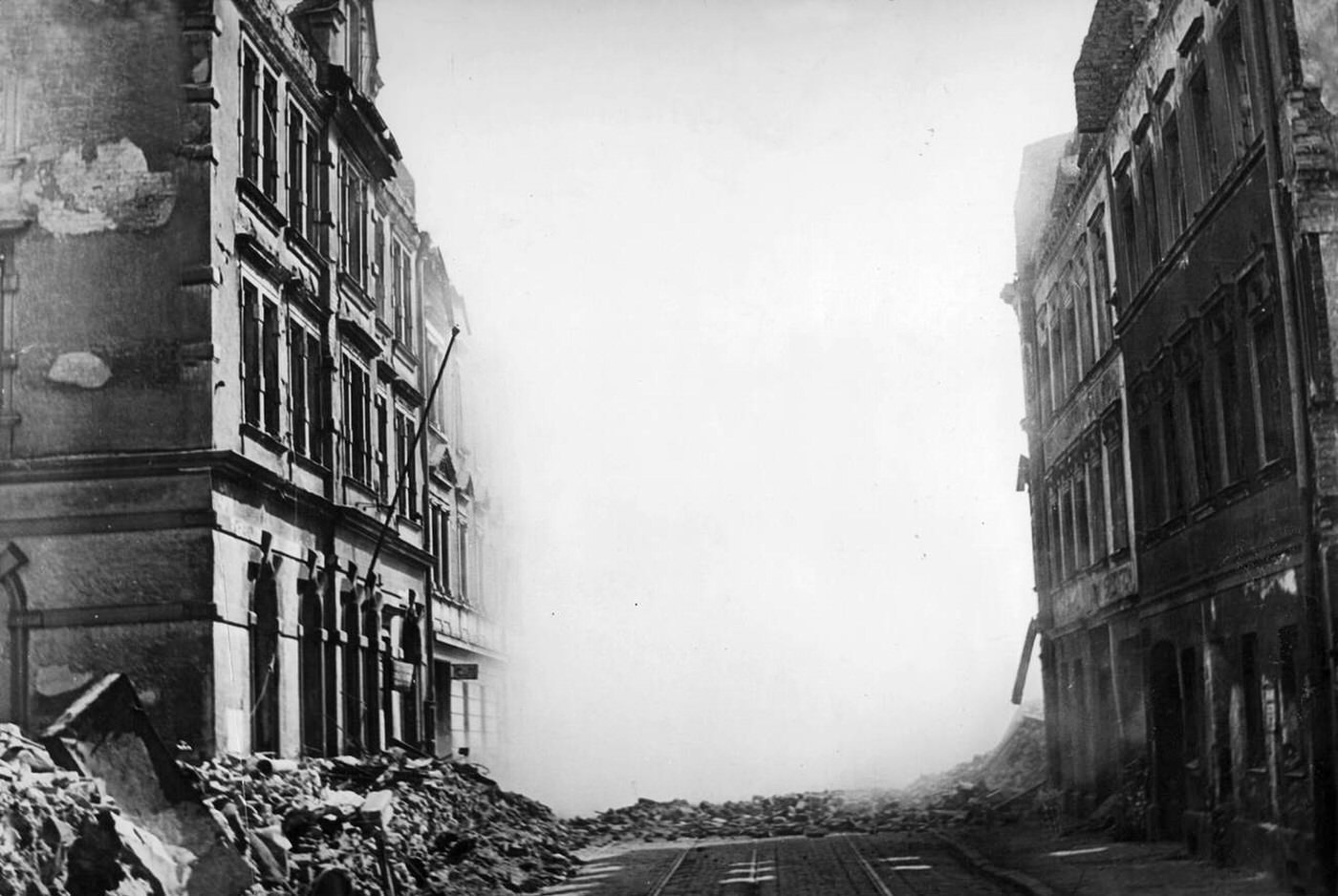
The destroyed Ludwigstrasse after an Allied bombing, 1945.
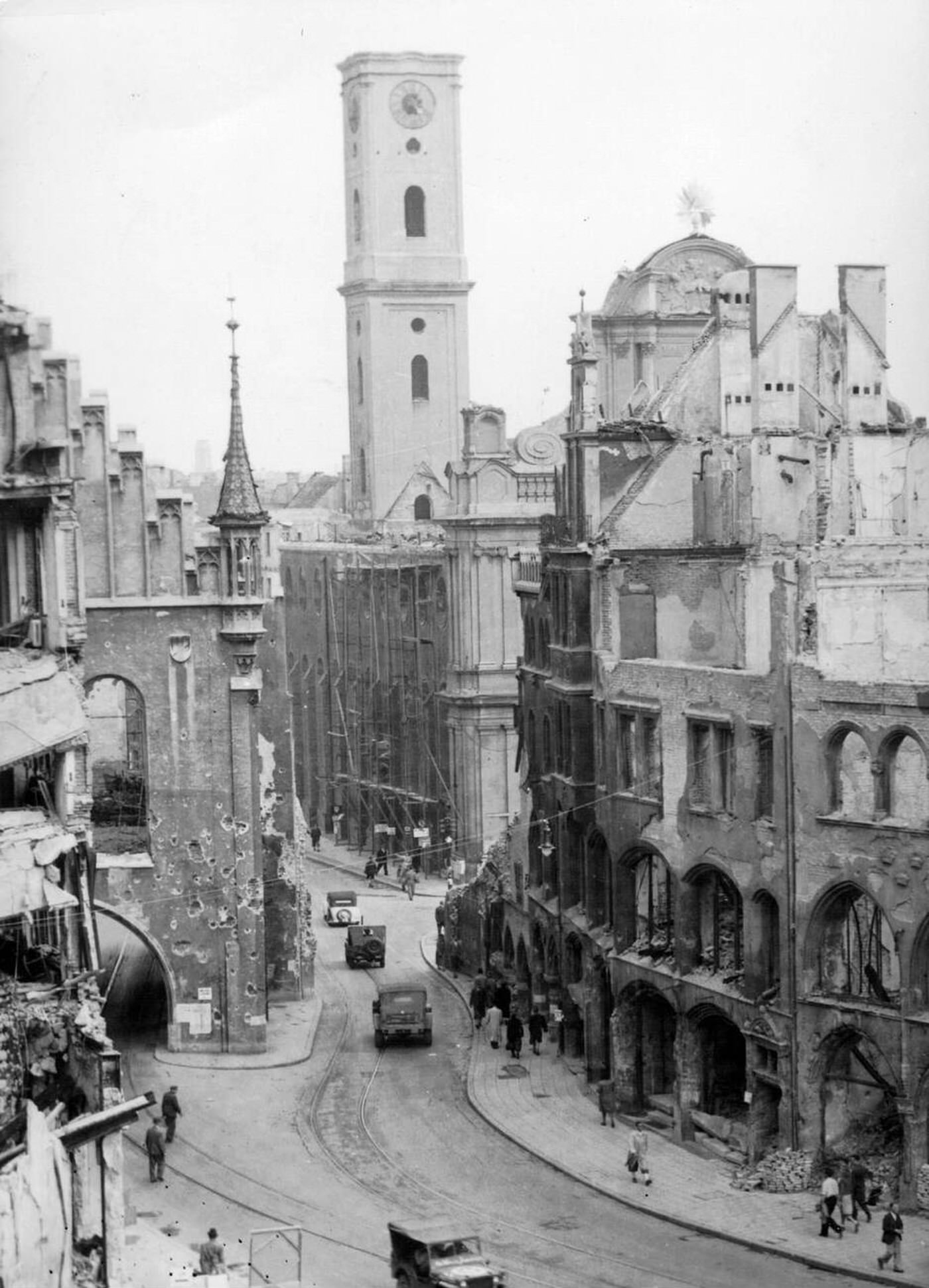
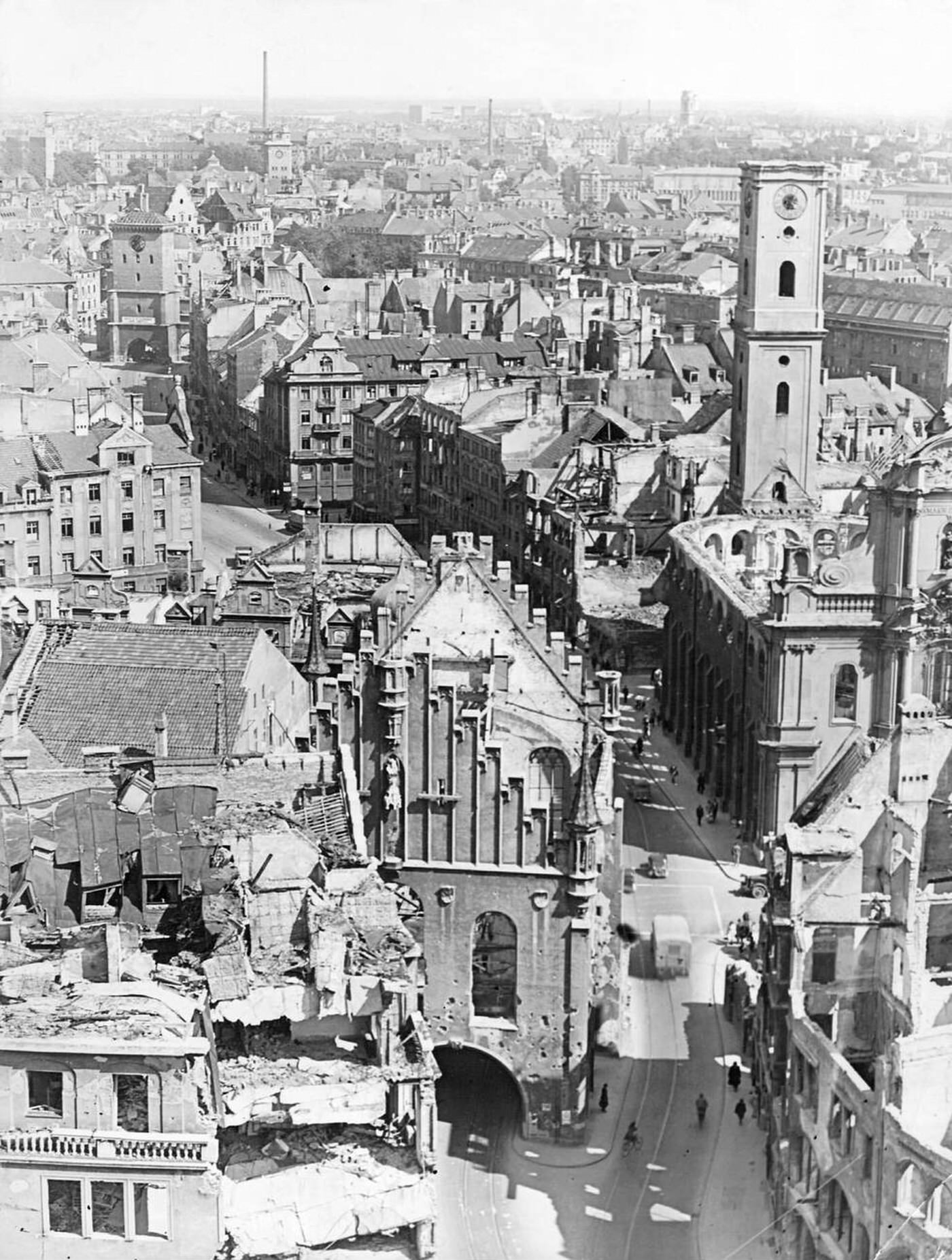
View from the New Town Hall on the Old Town Hall and the Heiliggeistkirche after the Second World War, 1945.
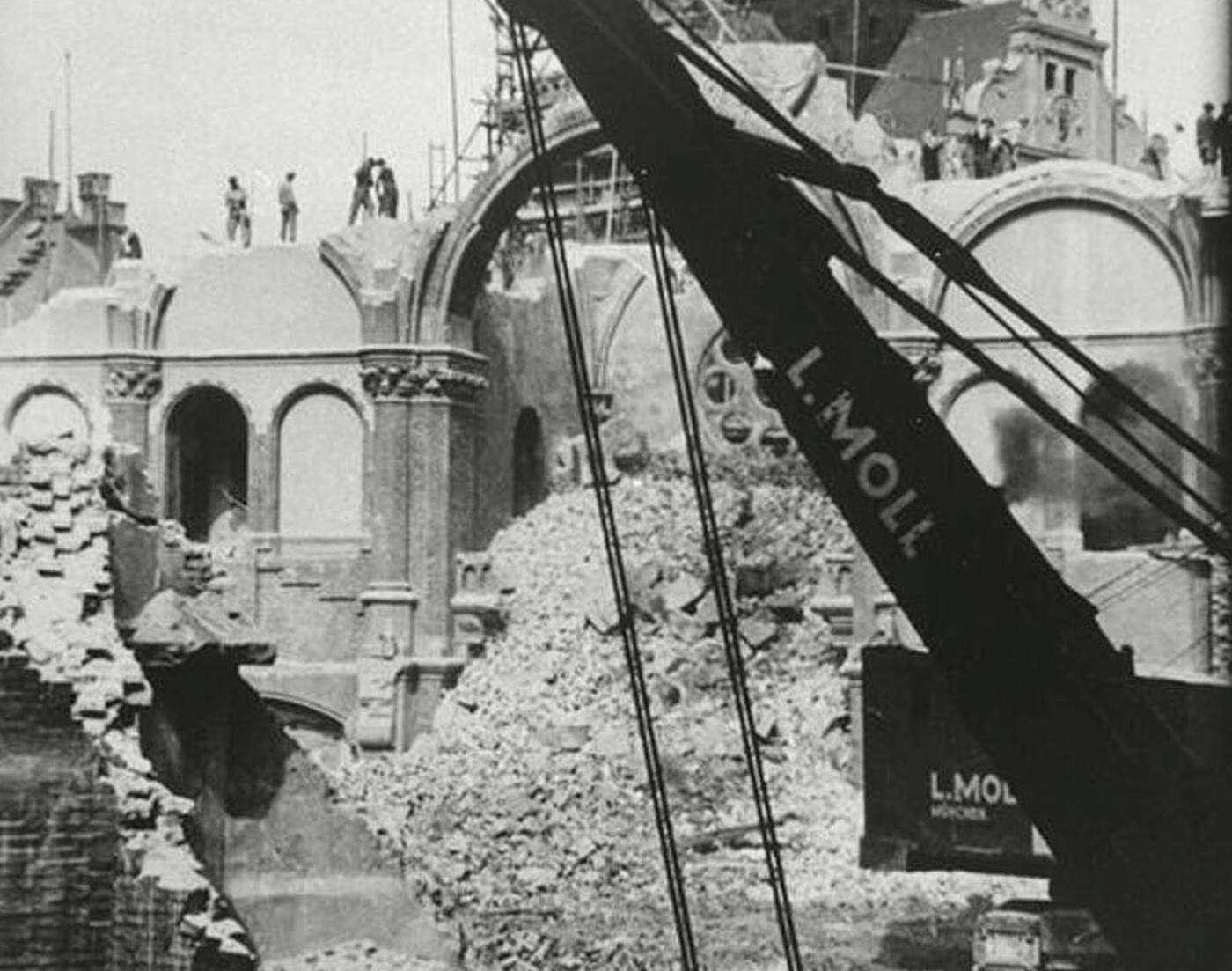
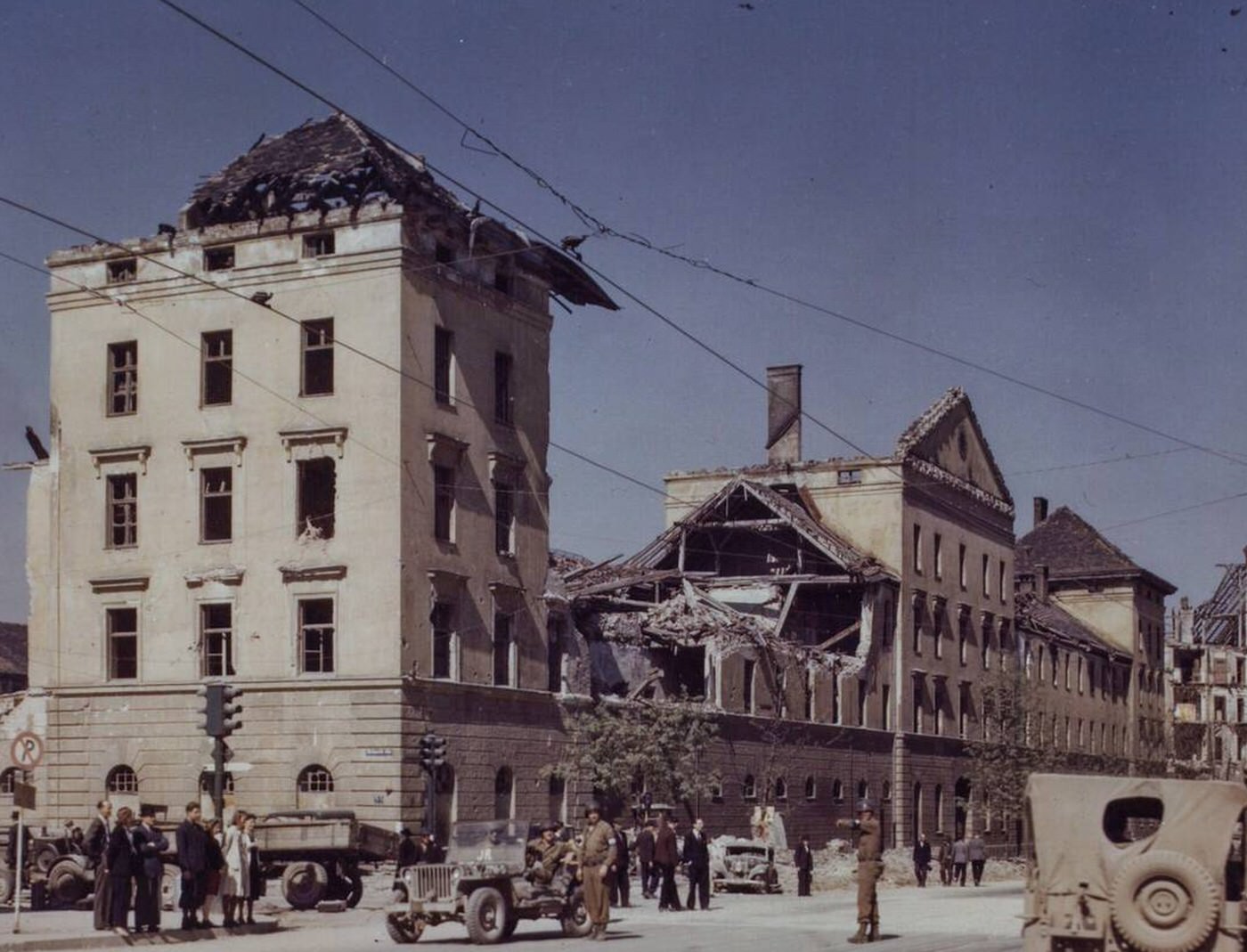
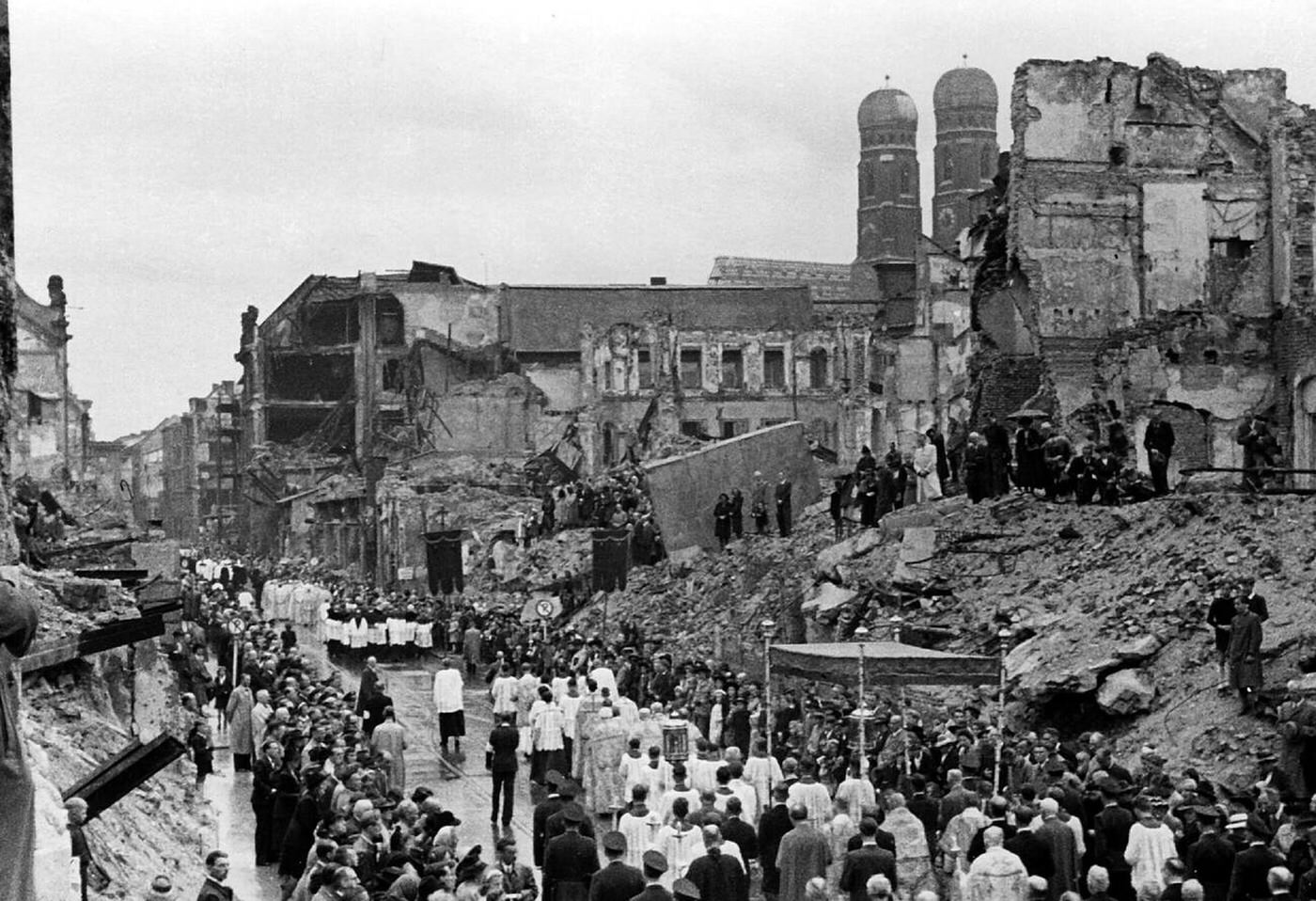
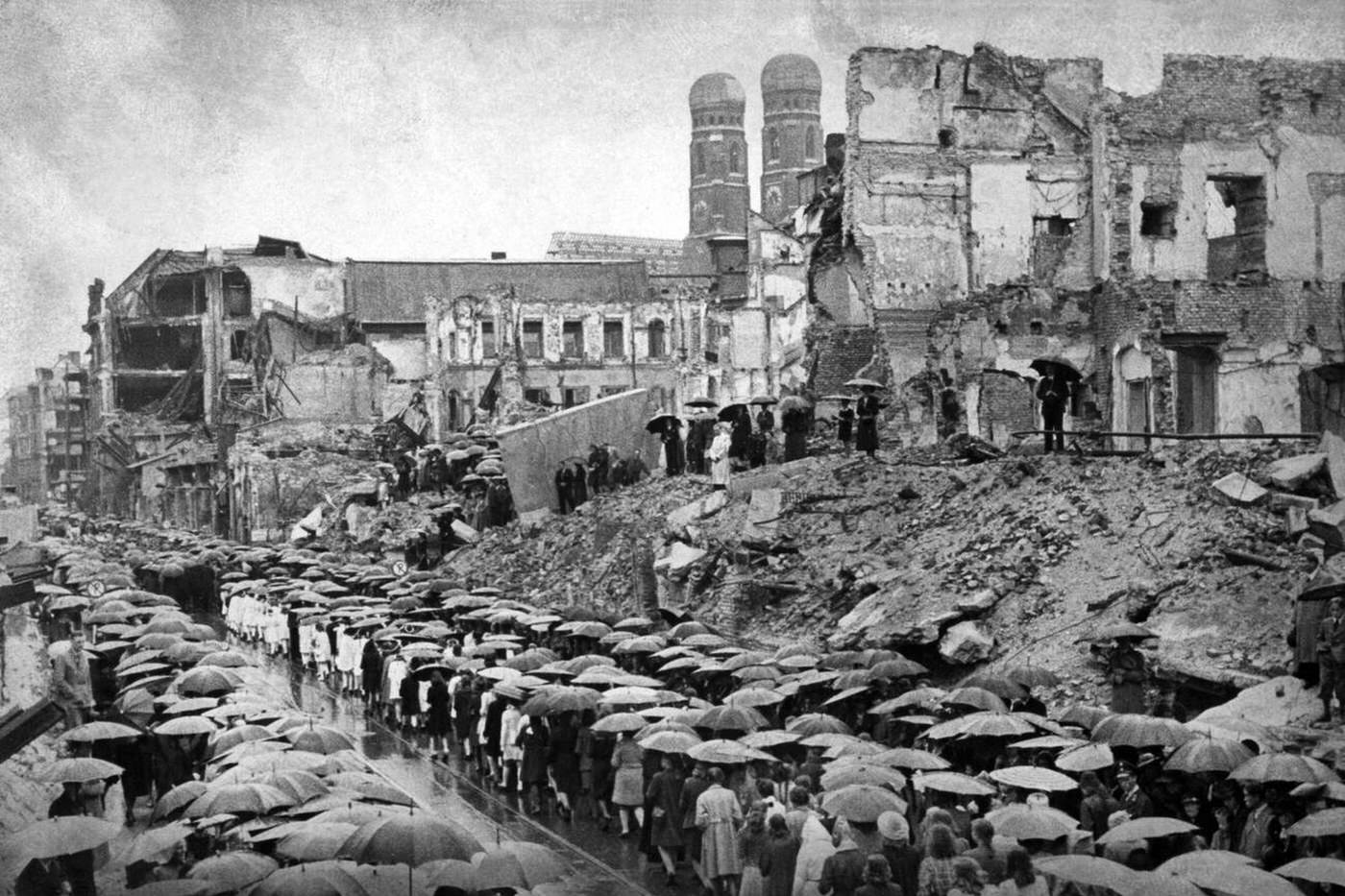
The Bavarian lion from Munich’s Victory Gate in a pile of rubble after the Second World War, 1945.A burned out tram and rubble in the Augusten Street after the Second World War in Munich, Germany, 1945.People at the Stachus after an Allied air raid, 1945.Ruins and debris in the Bayerstrasse after the Second World War, 1945.The streets of Munich filled with rubble after the Second World War, 1945.Ruins and debris in the Munich city center after the Second World War, 1945.View of the damaged Old Town Hall and Heiliggeistkirche after the allied bombing in Munich, Germany, 1945.Street scene in Cologne after an Allied air raid, 1944.Ruins Of Cologne, Germany After Bombing By The 9Th Af, 1945.Street scene in Cologne after an Allied air raid, 1944.The Bettenhausen ordnance depot at Kassel, Germany, after 8th Air Force heavies attacked, 1944.The Munich Synagogue, destroyed during the November Pogroms (Kristallnacht), with a crane in the foreground.Ruins around Saint Peter’s Church, Munich, Germany, 1945.Ruins in Munich, 1945.Hess Street, Munich, 1945.Ruins of Bayerische Staatskanzlei building at Munich, Germany, 1940s.Military Police direct traffic on Zweibrucken Strasse, Main Street of Munich, with rubble from Allied bombing attacks.Corpus Christi procession on Theatinerstrasse, Munich, 1946.Ruins and the Frauenkirche in Munich, 1945.Corpus Christi procession on Theatinerstrasse, Munich, 1946.Ruins at the Augustinstrasse in Munich after the end of the war; in the background is the church of St. Joseph, 1945.Wittelsbacherplatz square with equestrian statue of Maximilian I at Munich, Germany 1940s. (No date)The Theresienstrasse in Munich after the war, 1945.Reconstruction of the Munich Siegestor that was destroyed by air raids, 1945.Clean up work at the Marienplatz in Munich after the end of the war, 1945.
Ruins of Hamburg, 1940.
View of Hamburg from a church tower one month after Operation Gomorrah, 1943.
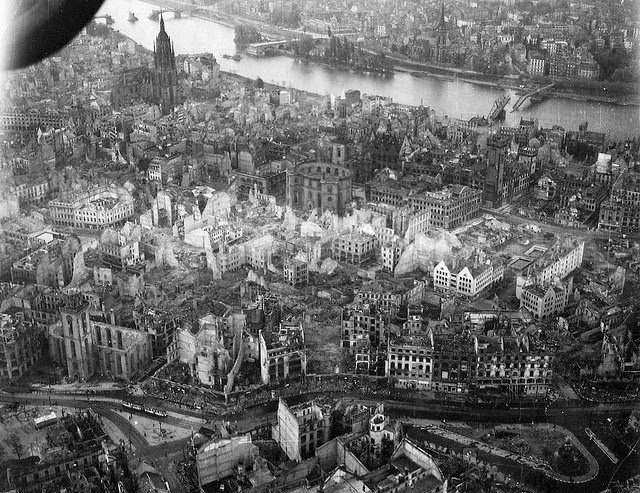
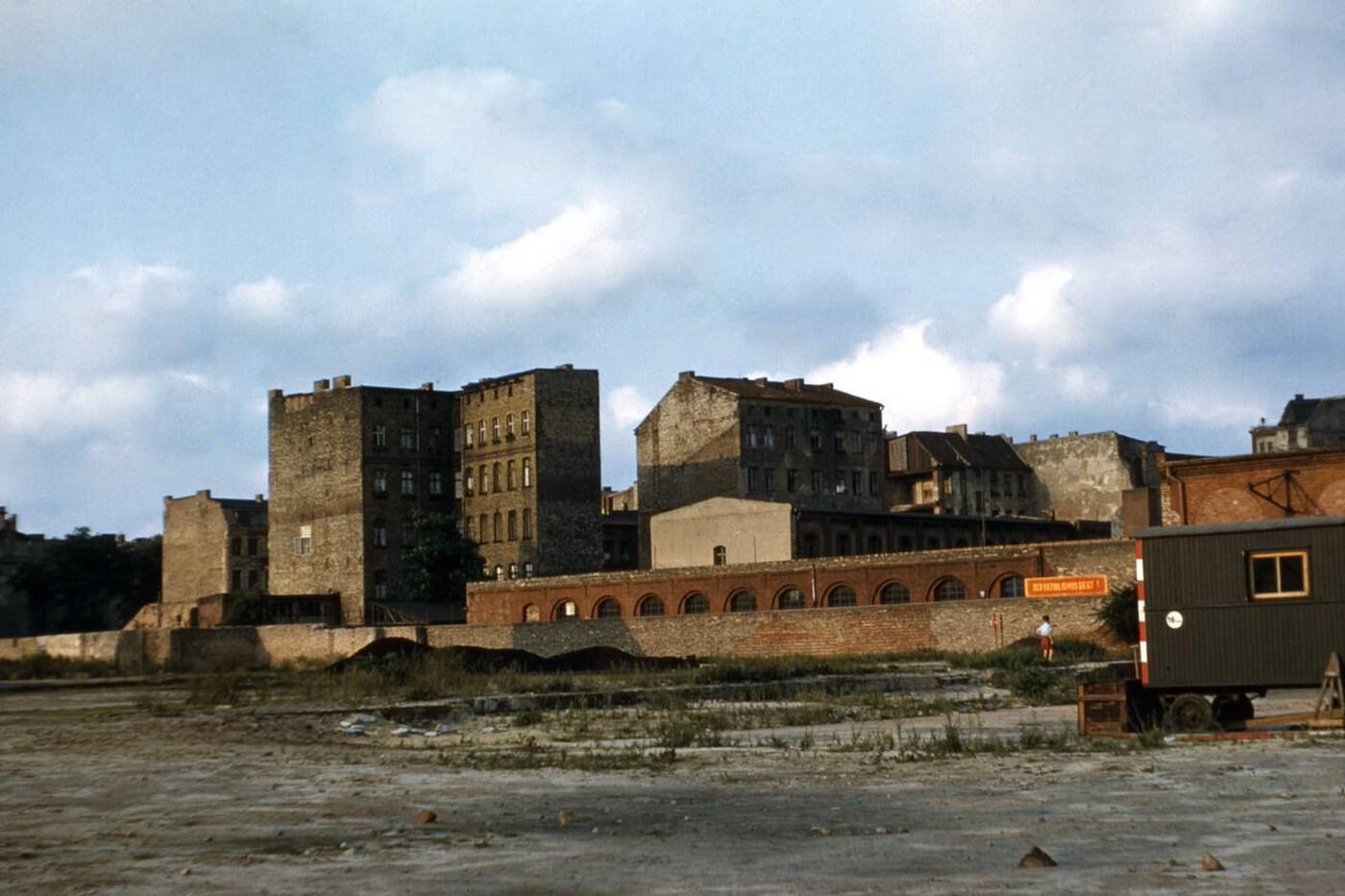
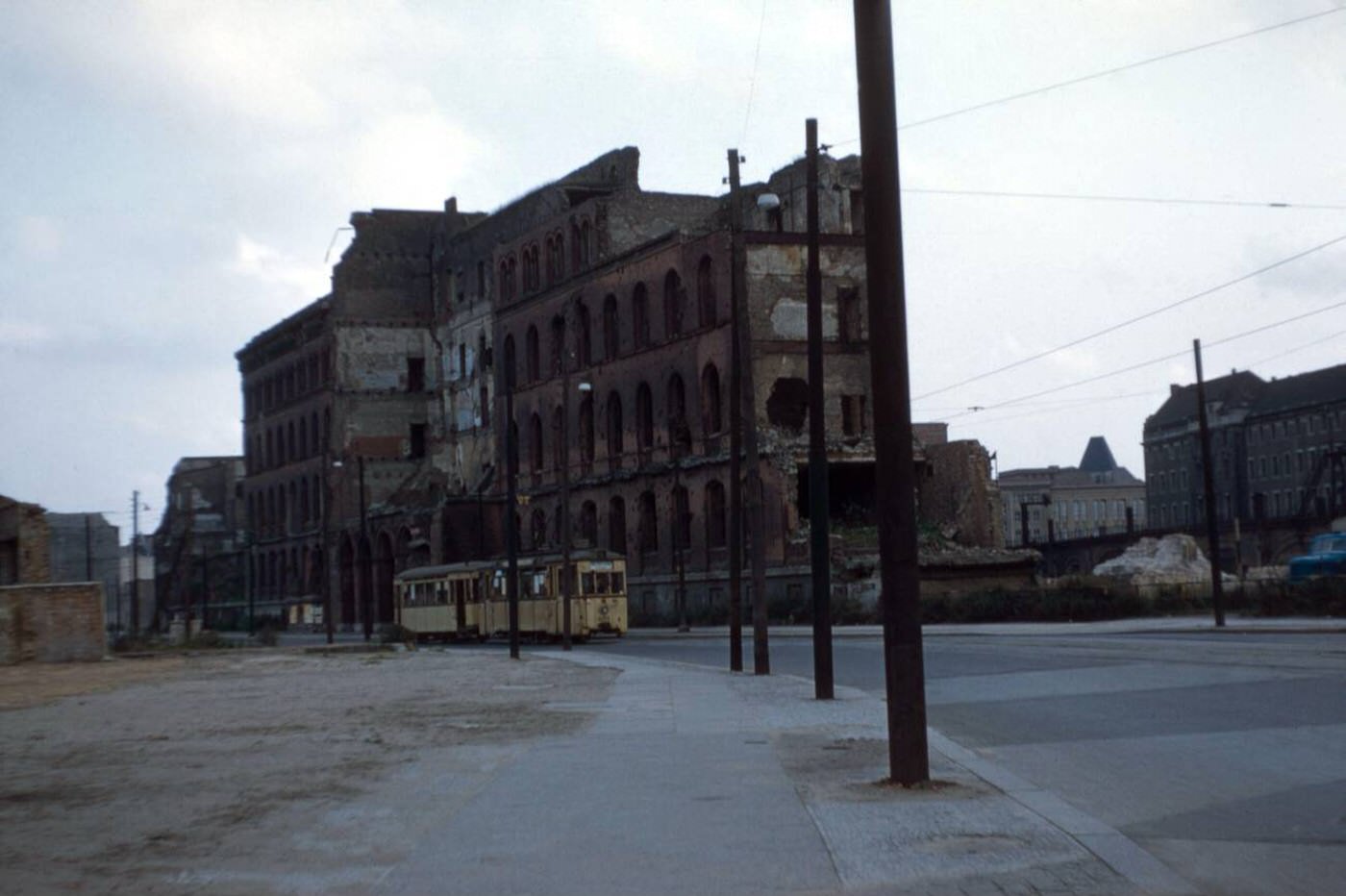
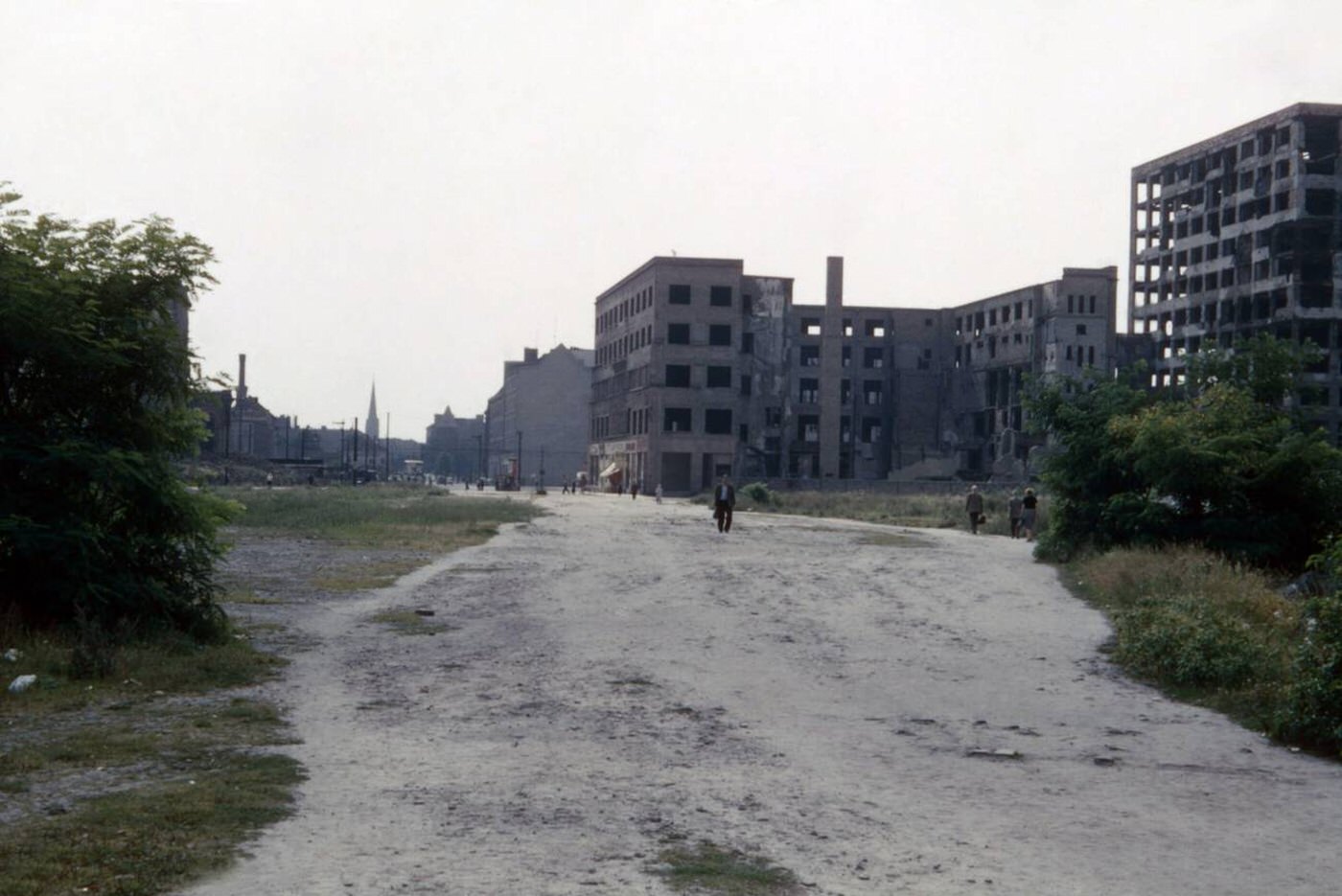
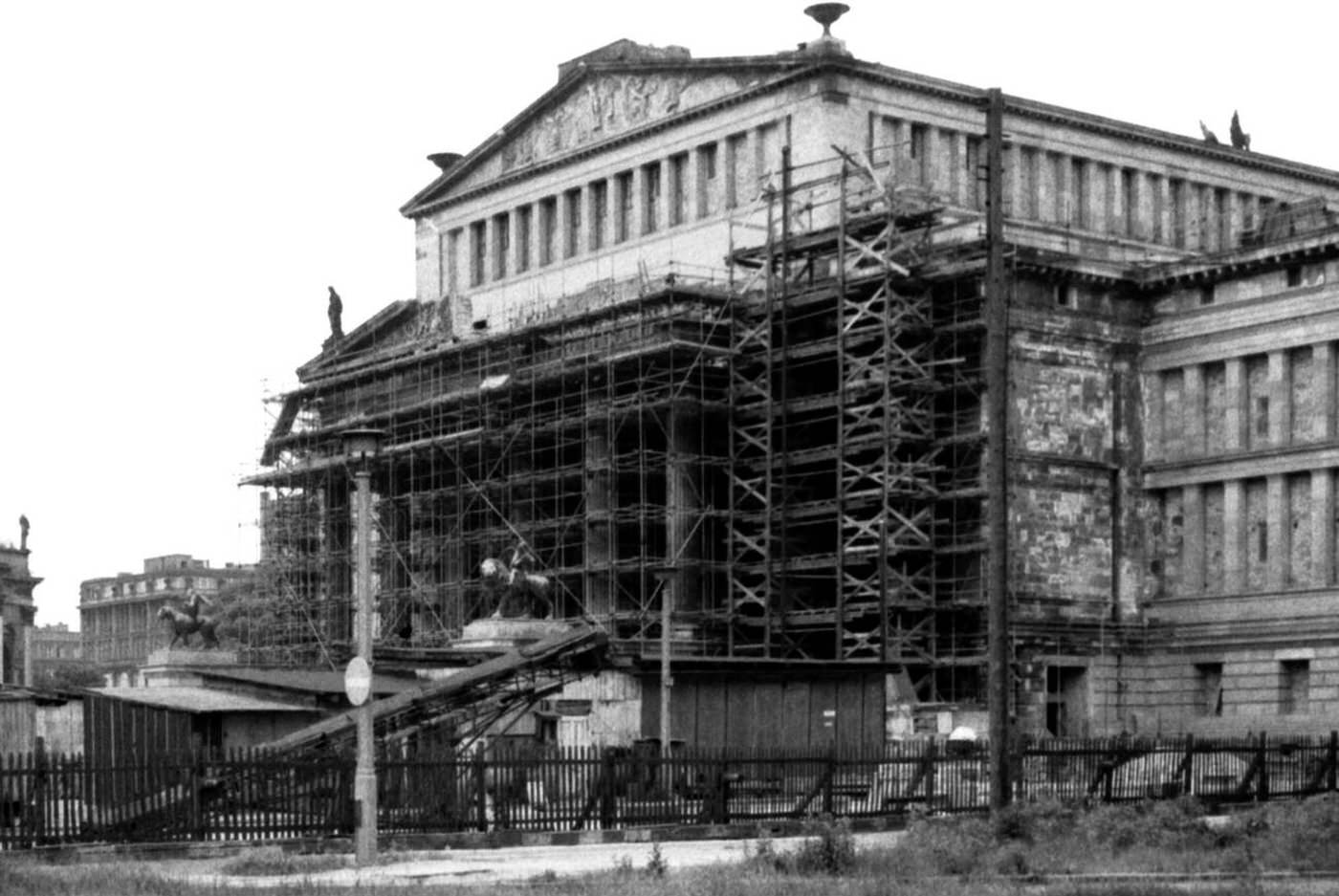
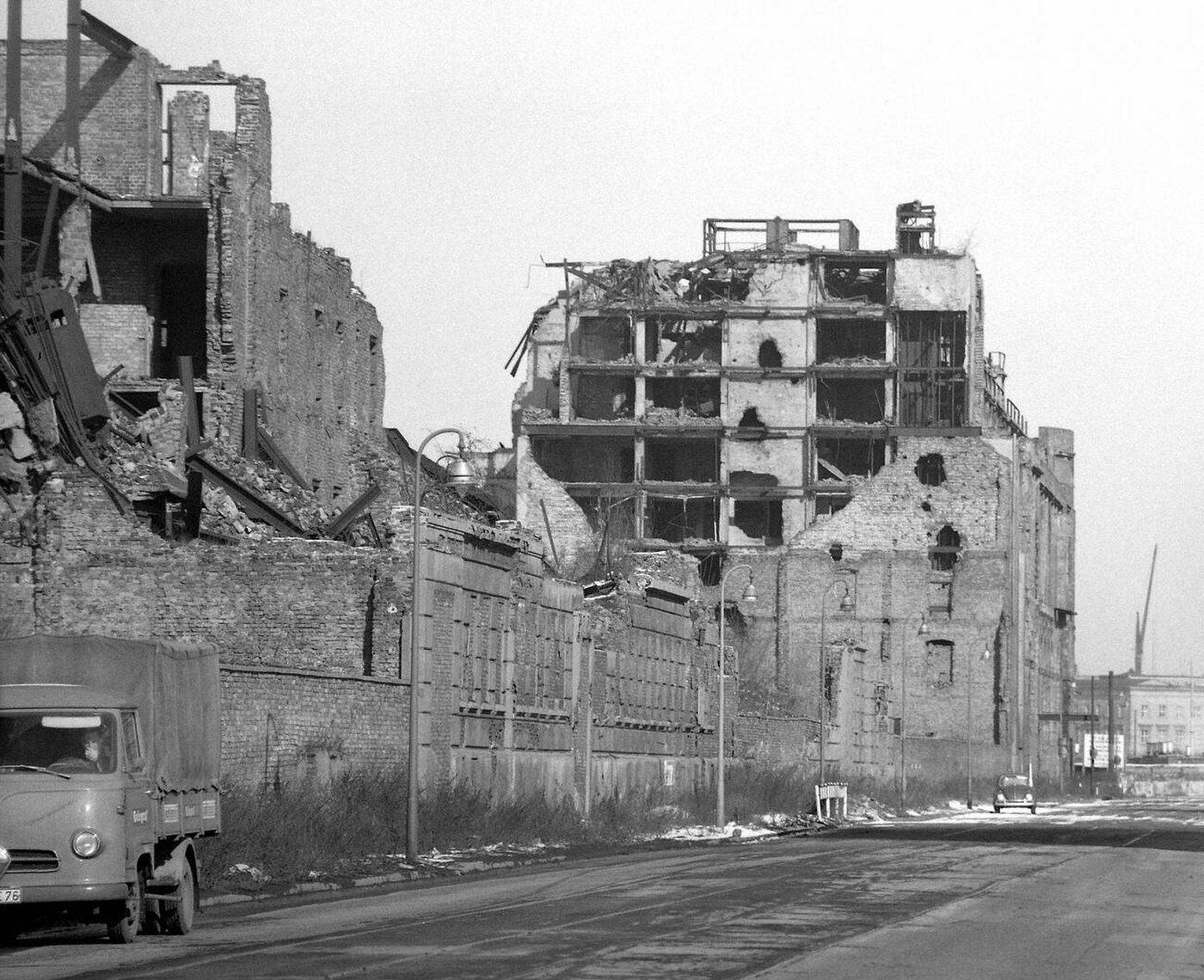
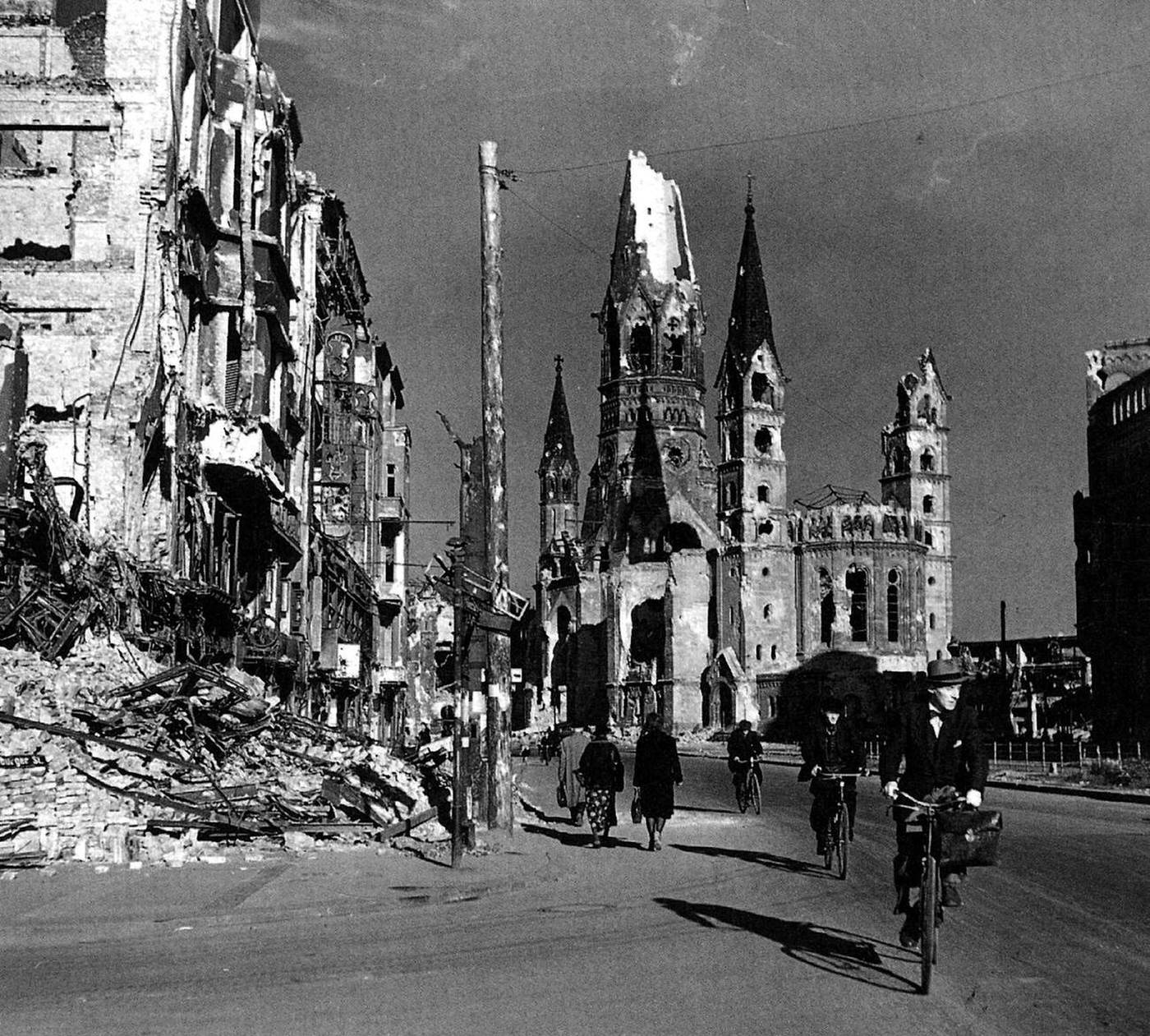
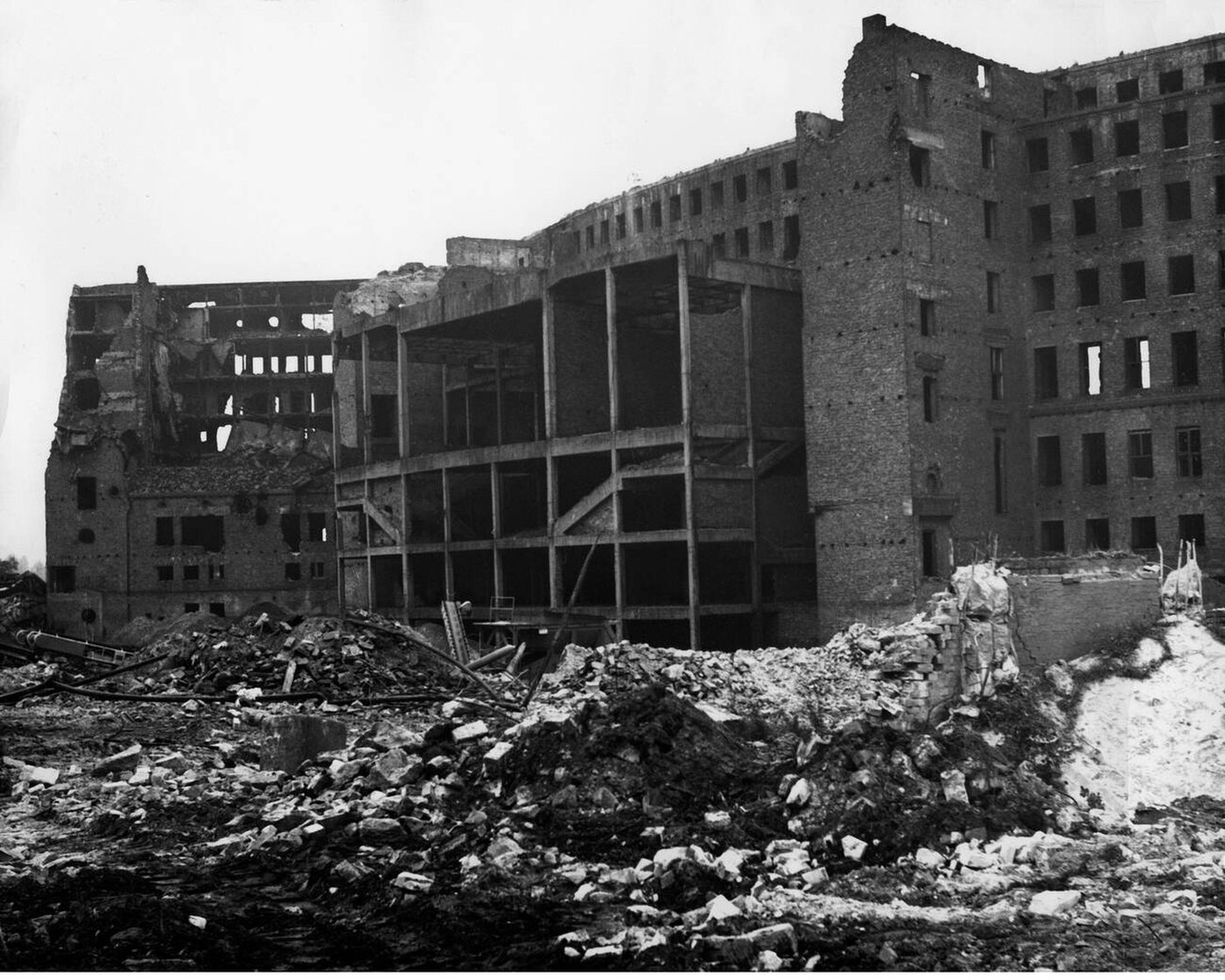
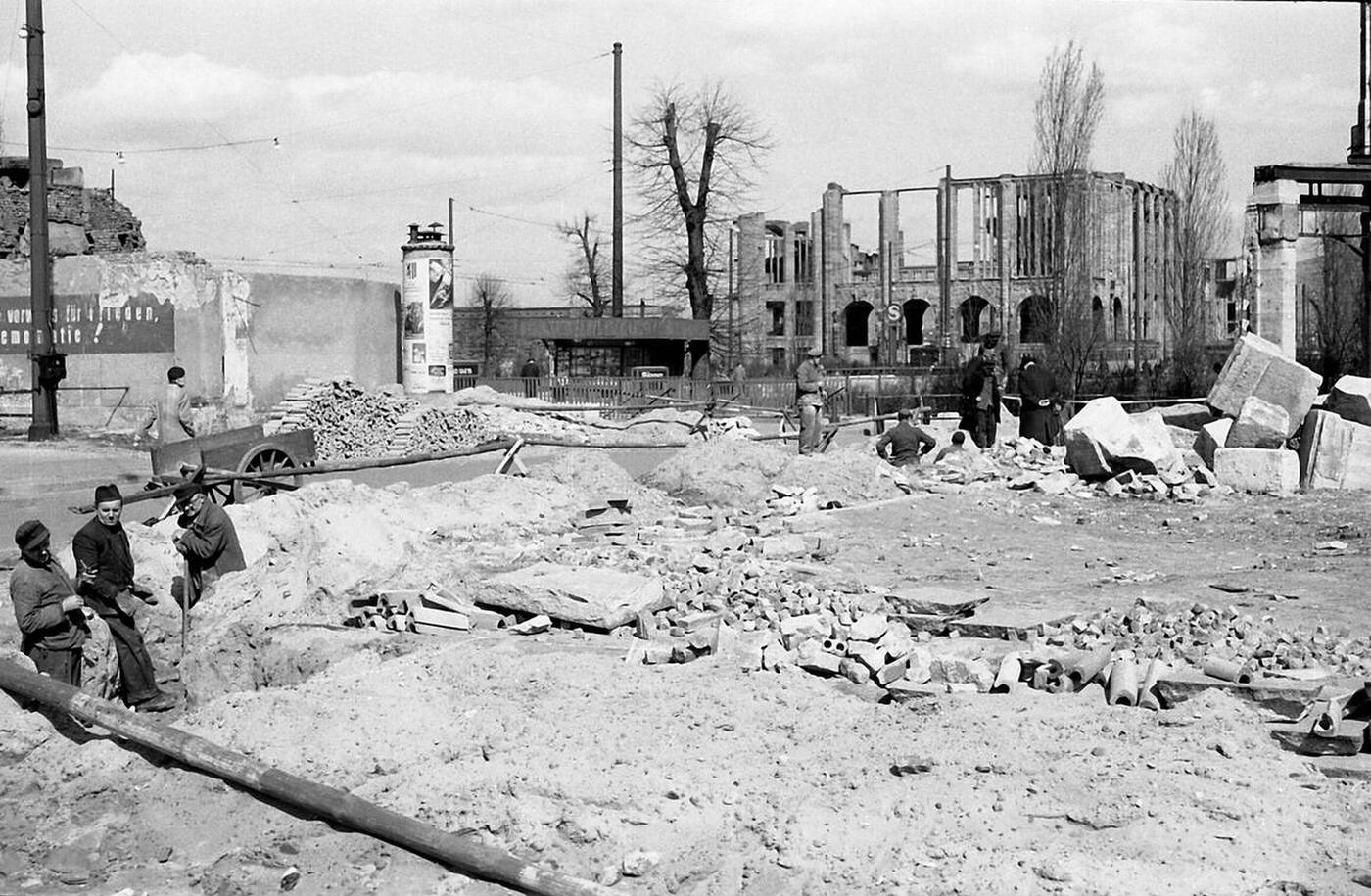
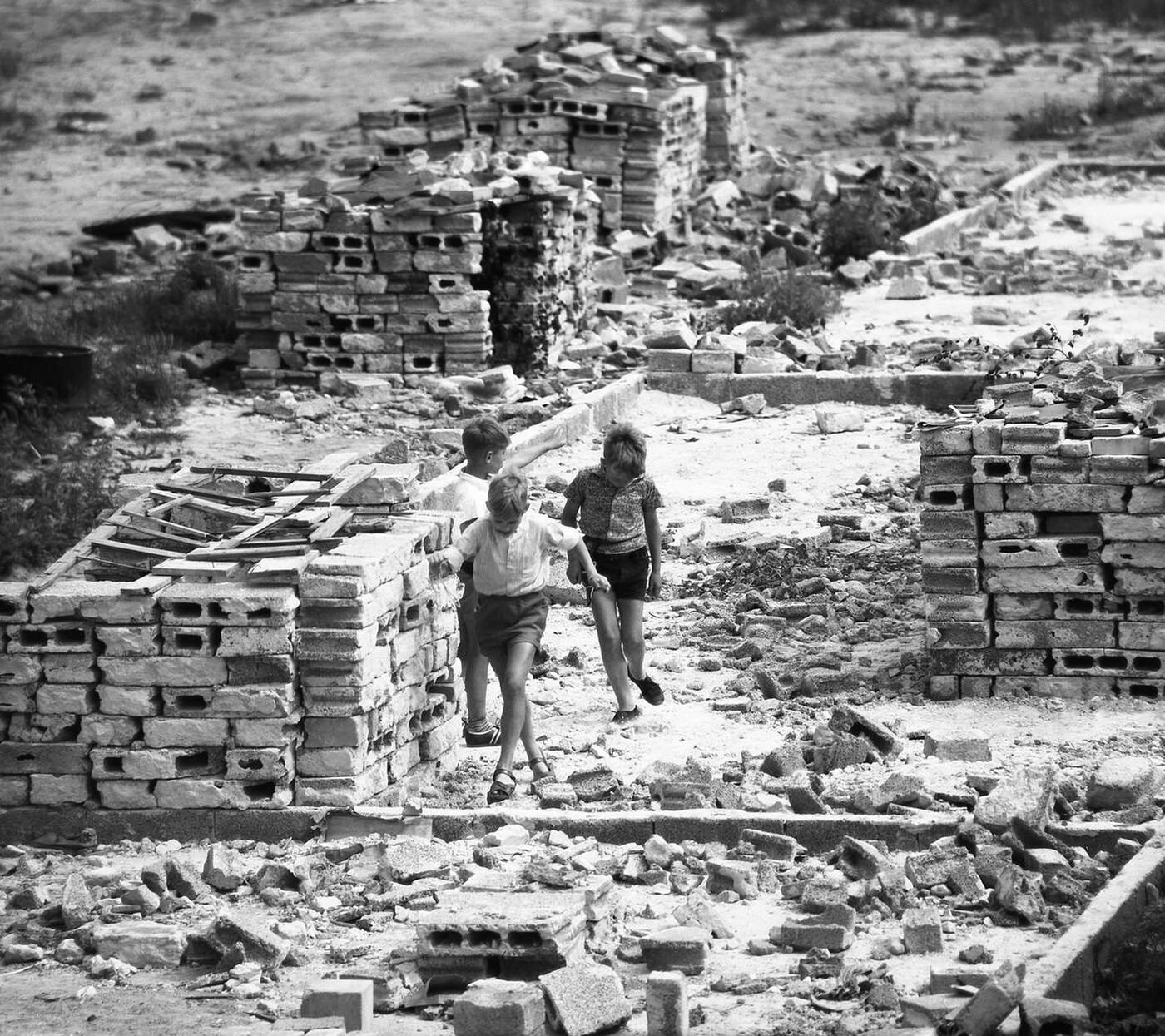
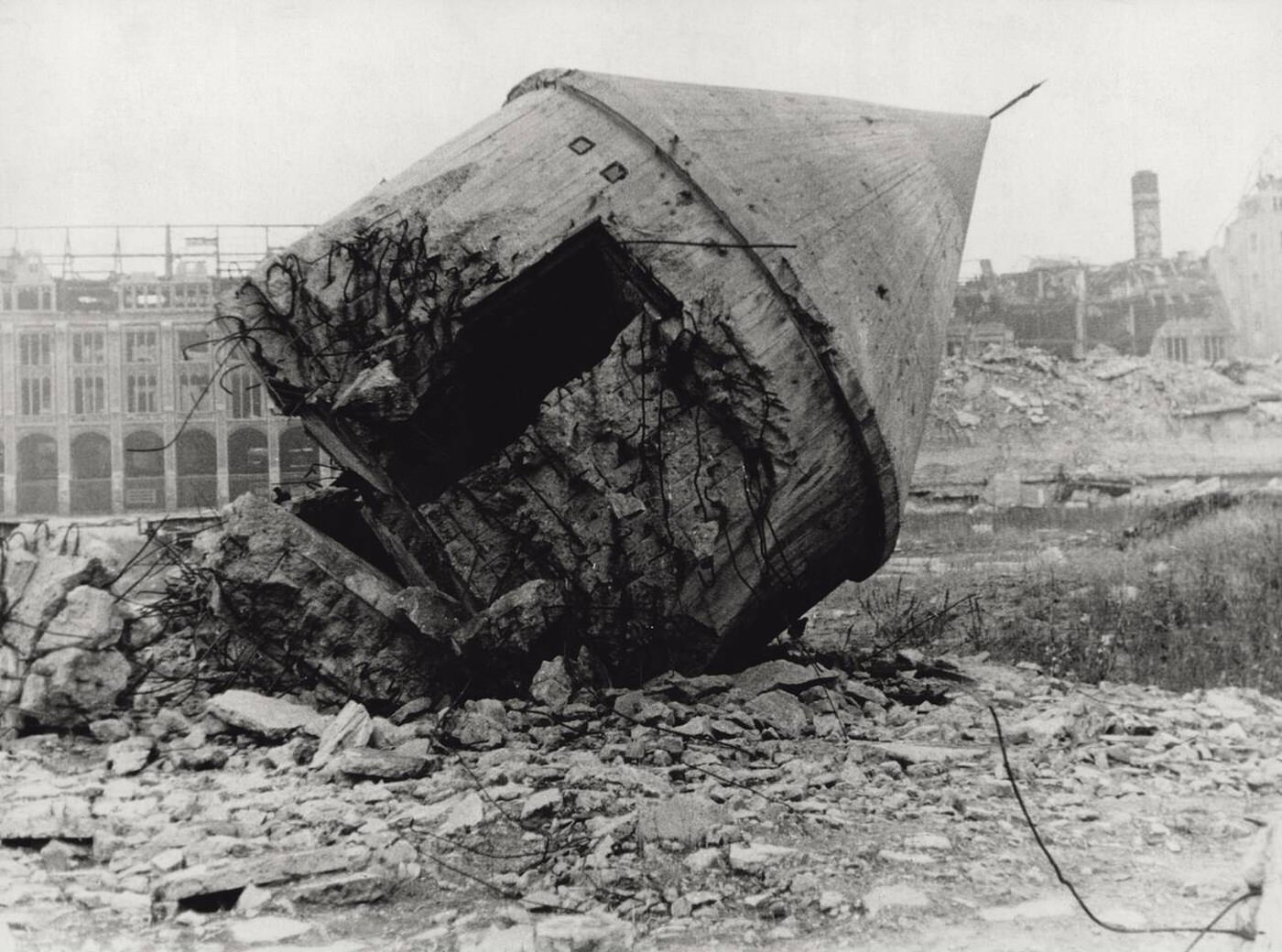
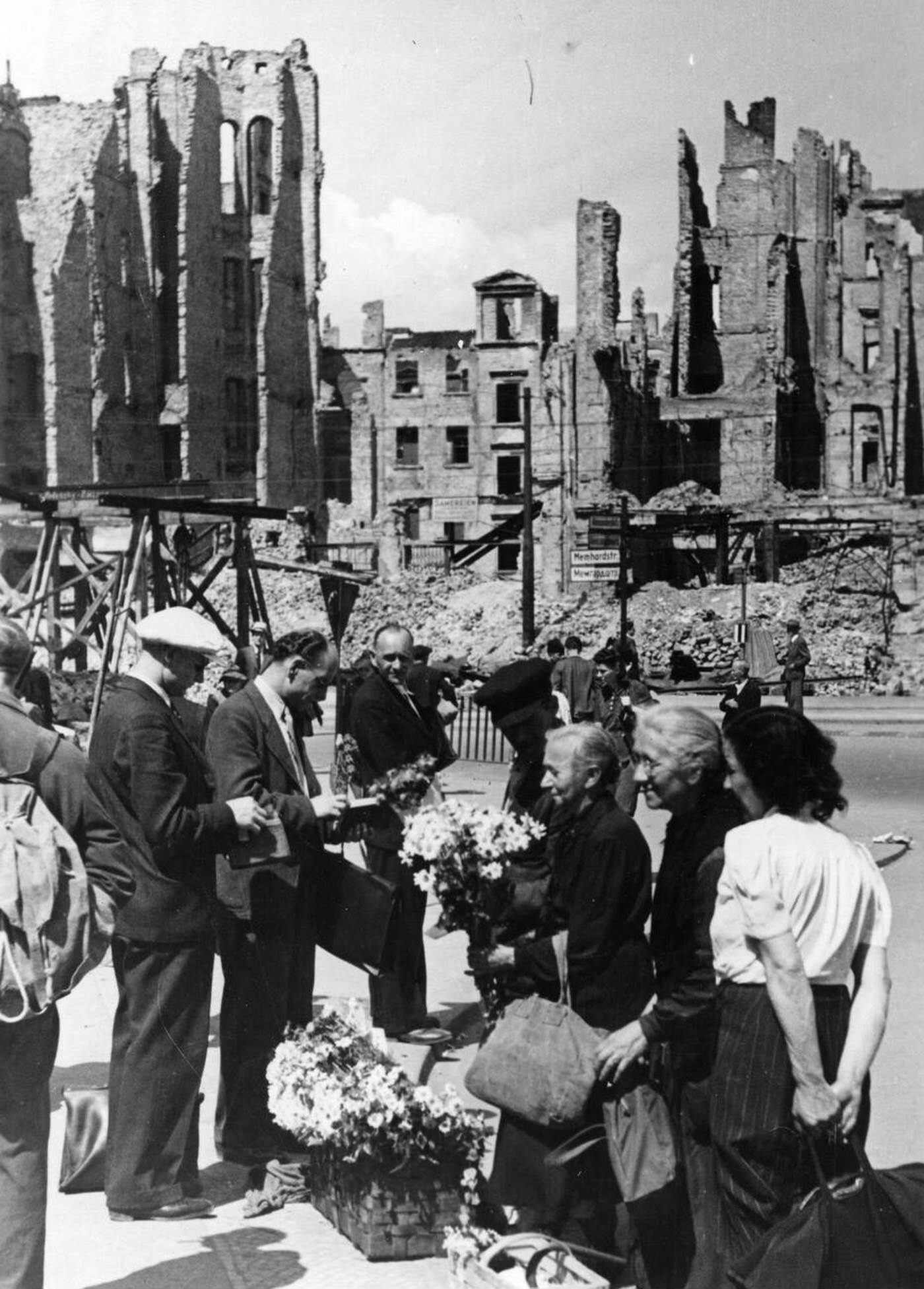
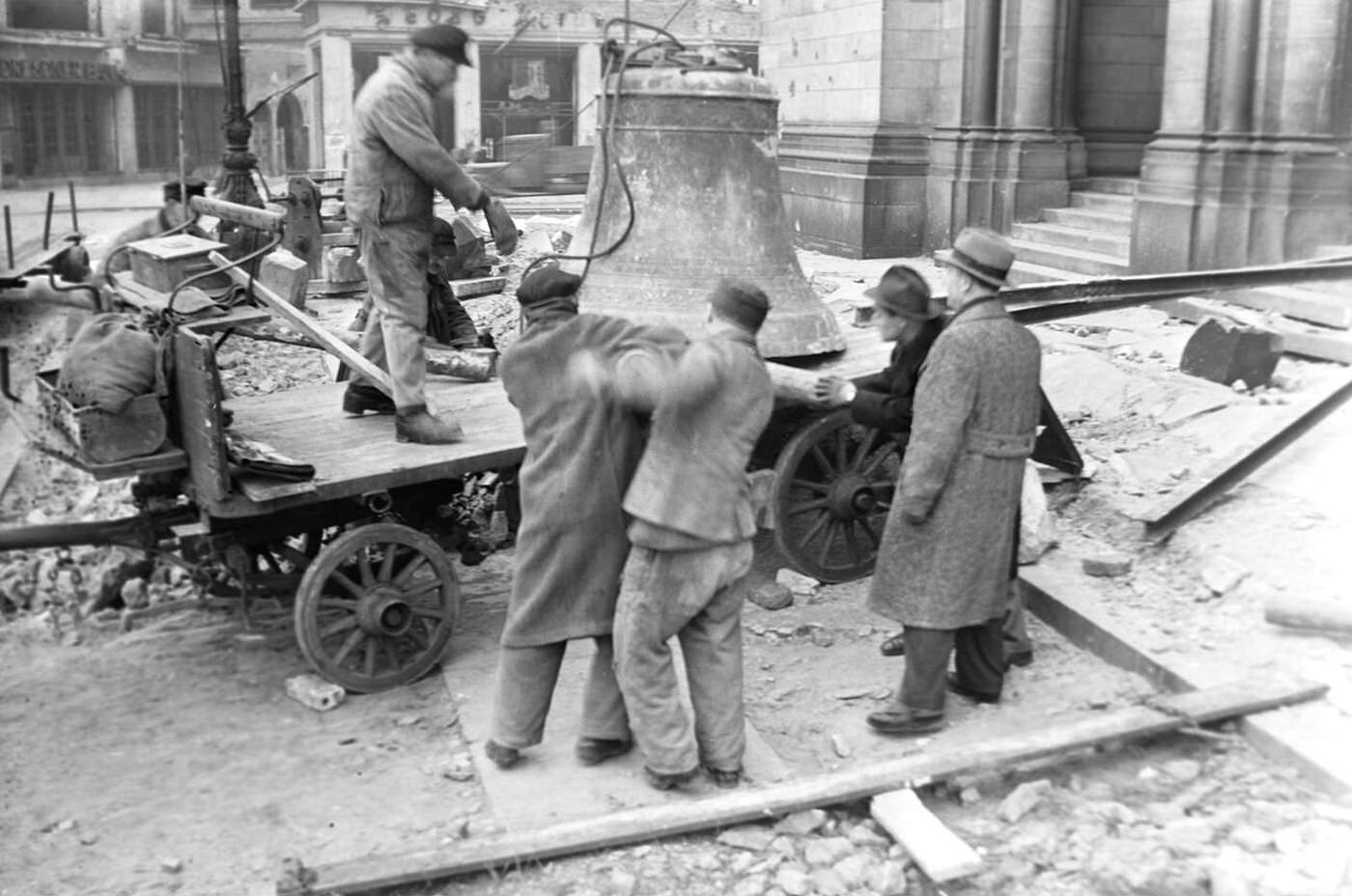
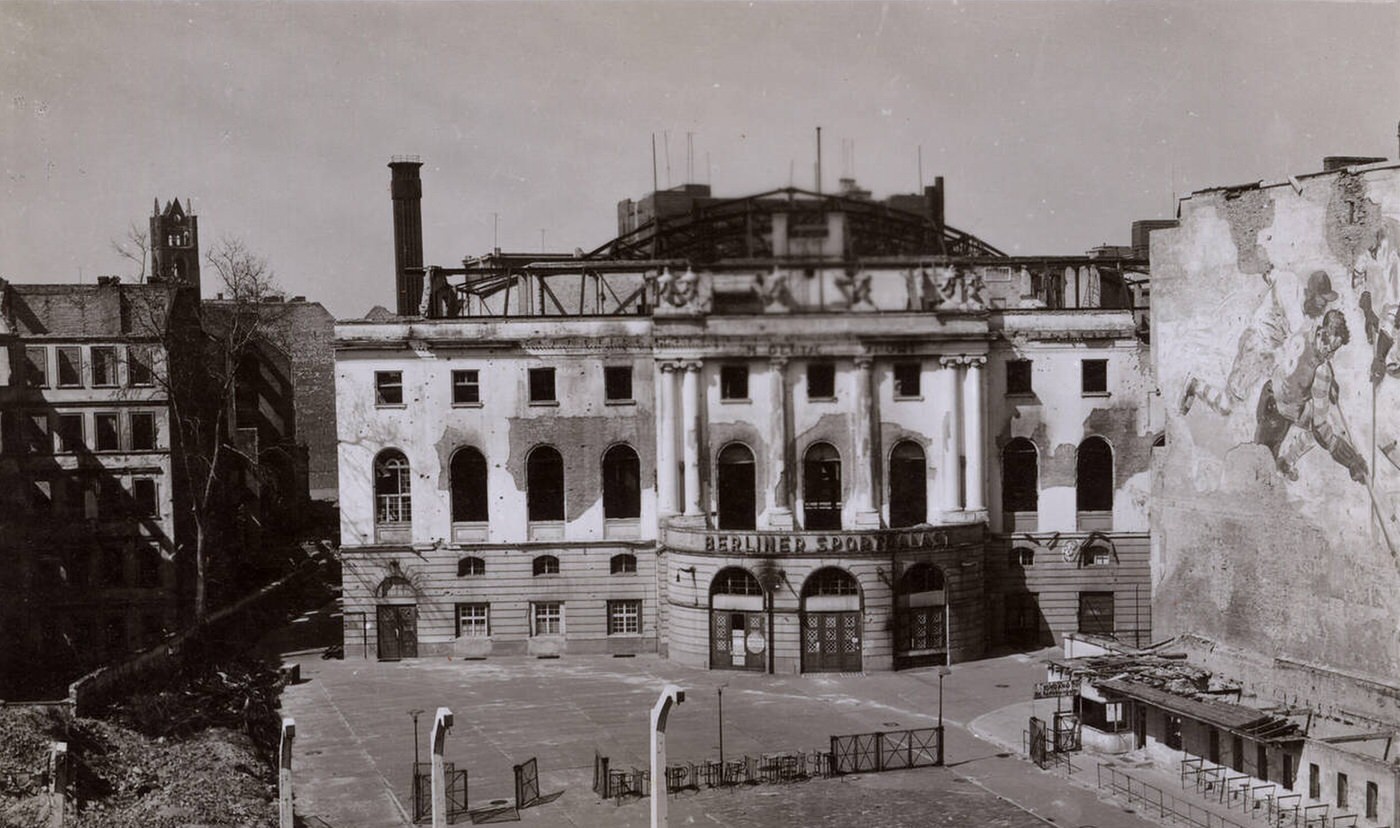
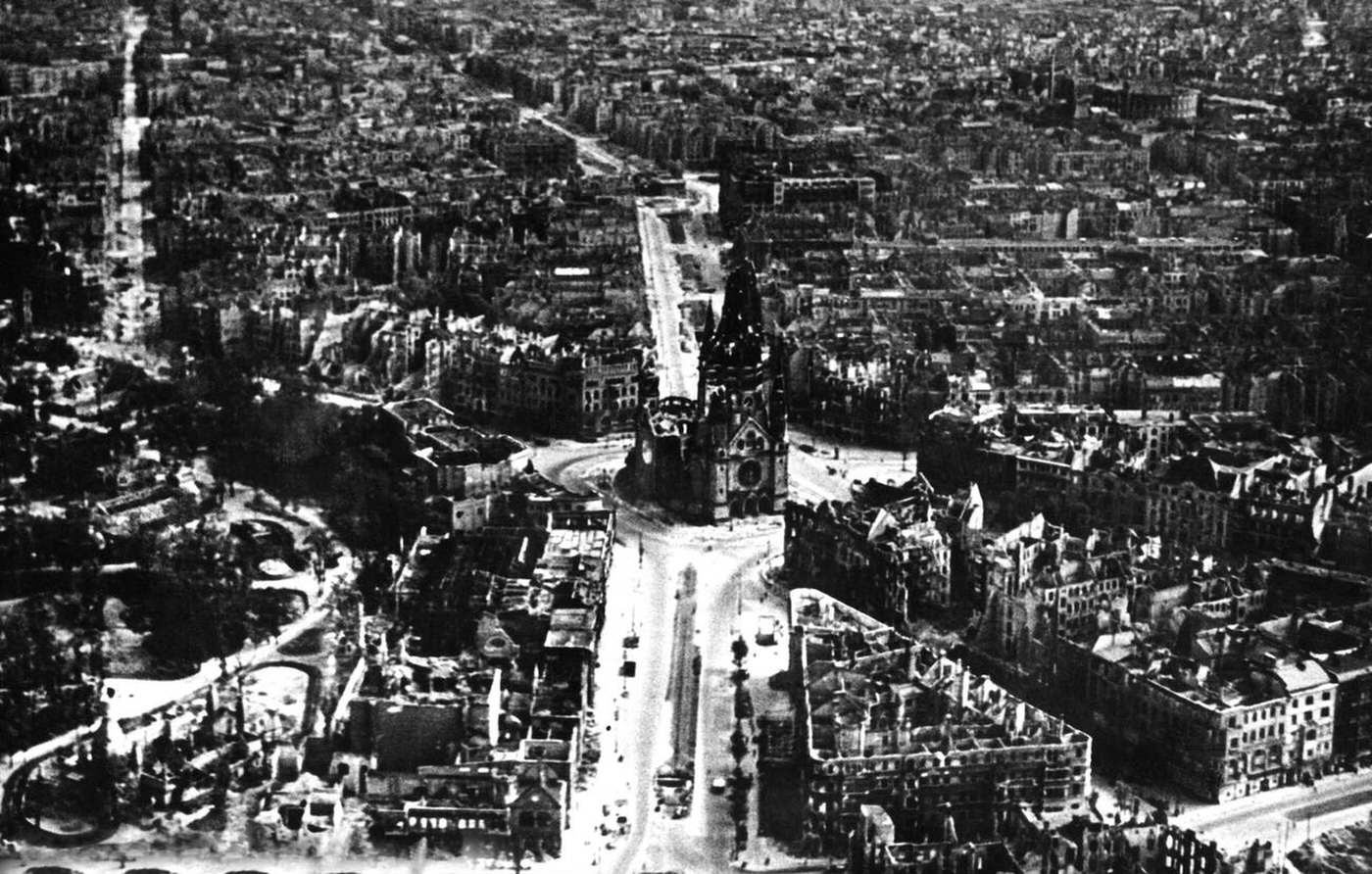
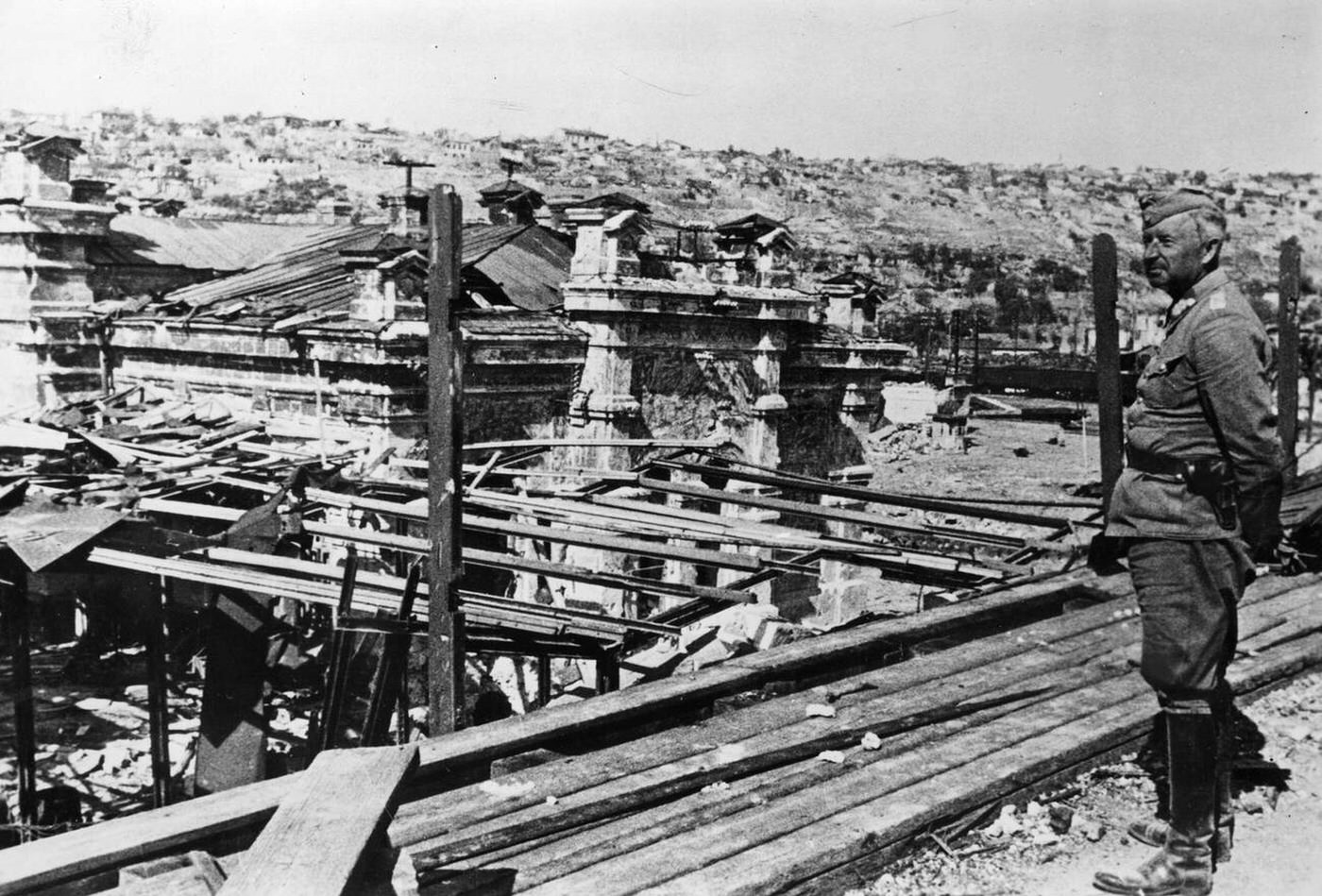
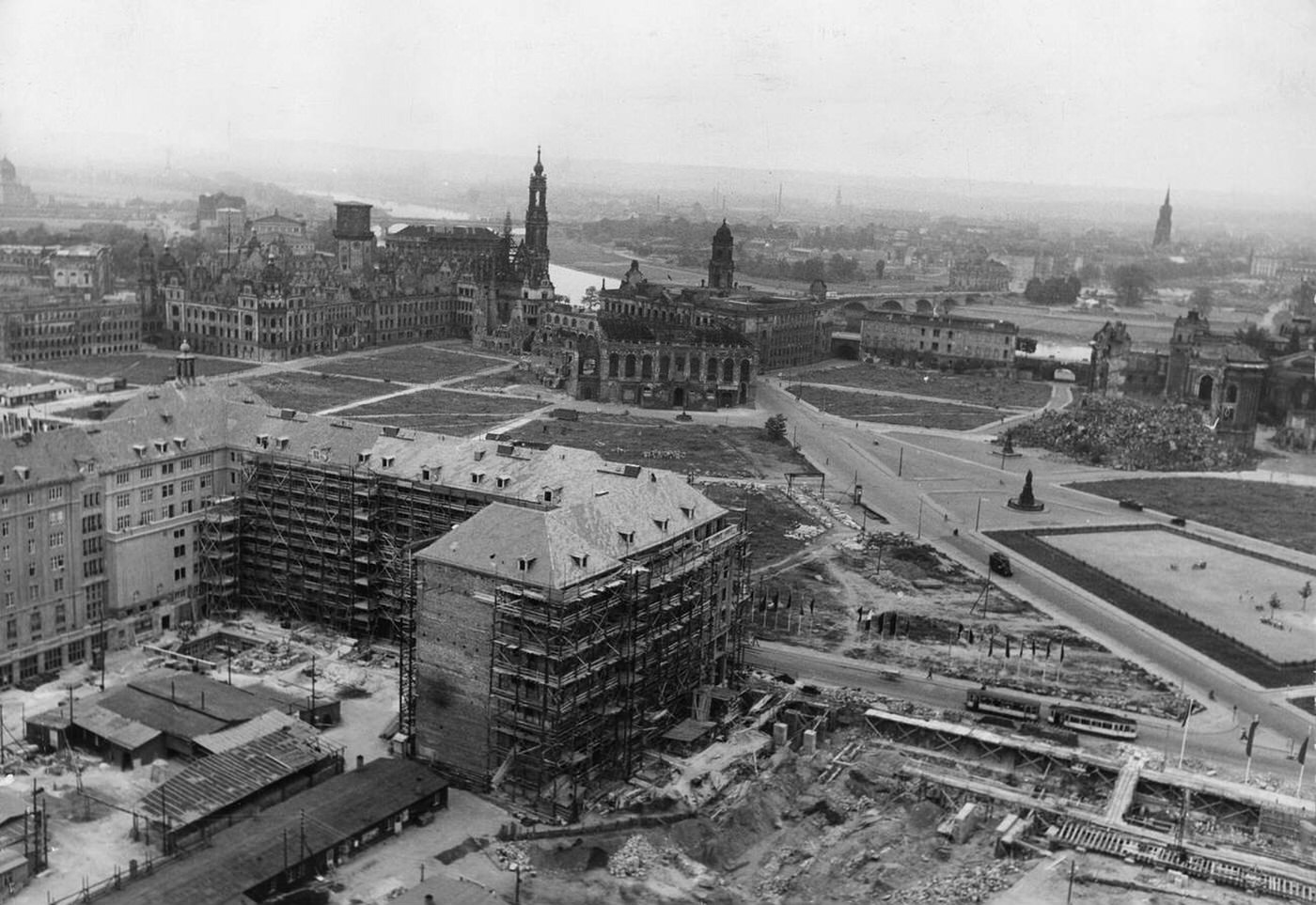
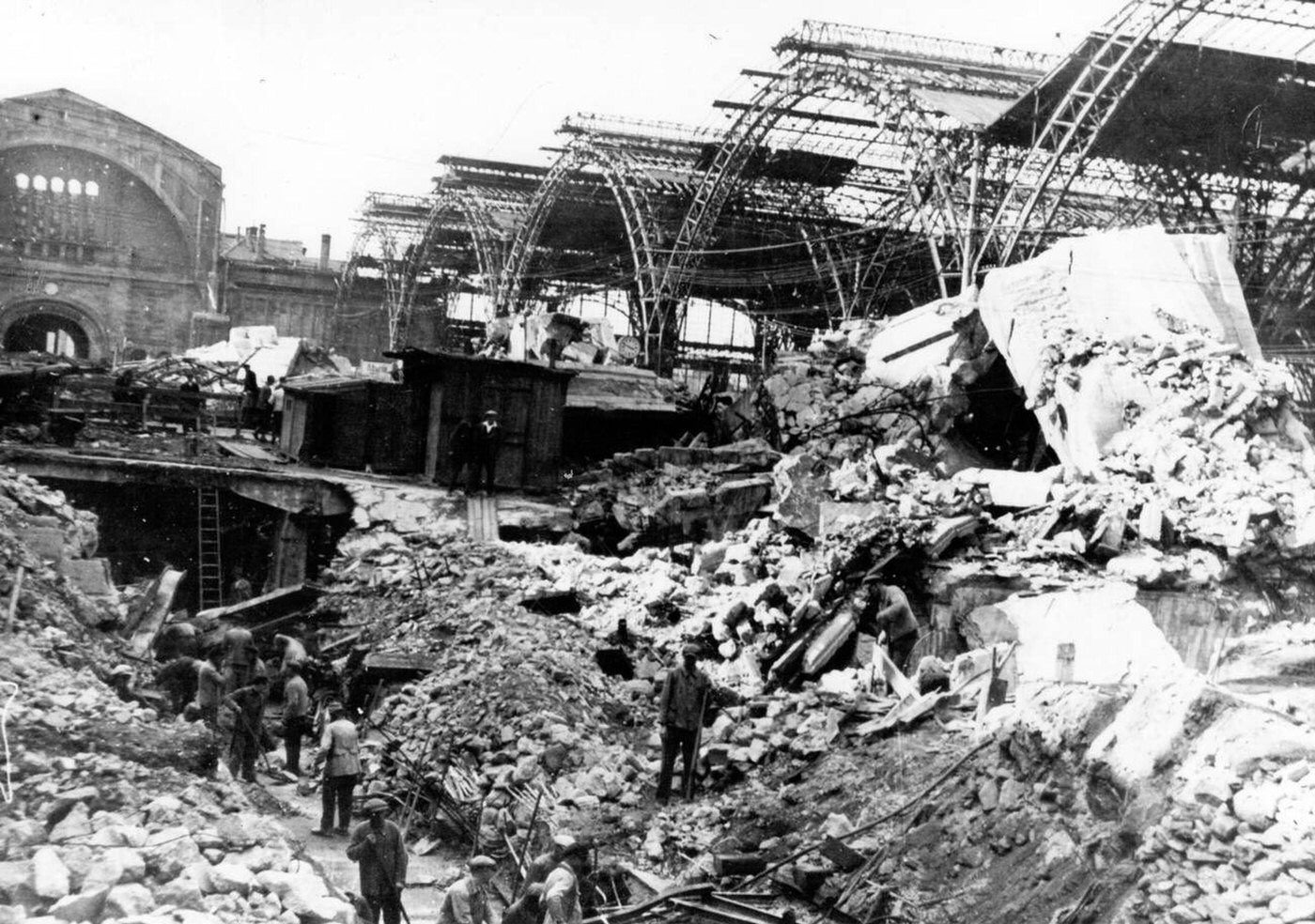
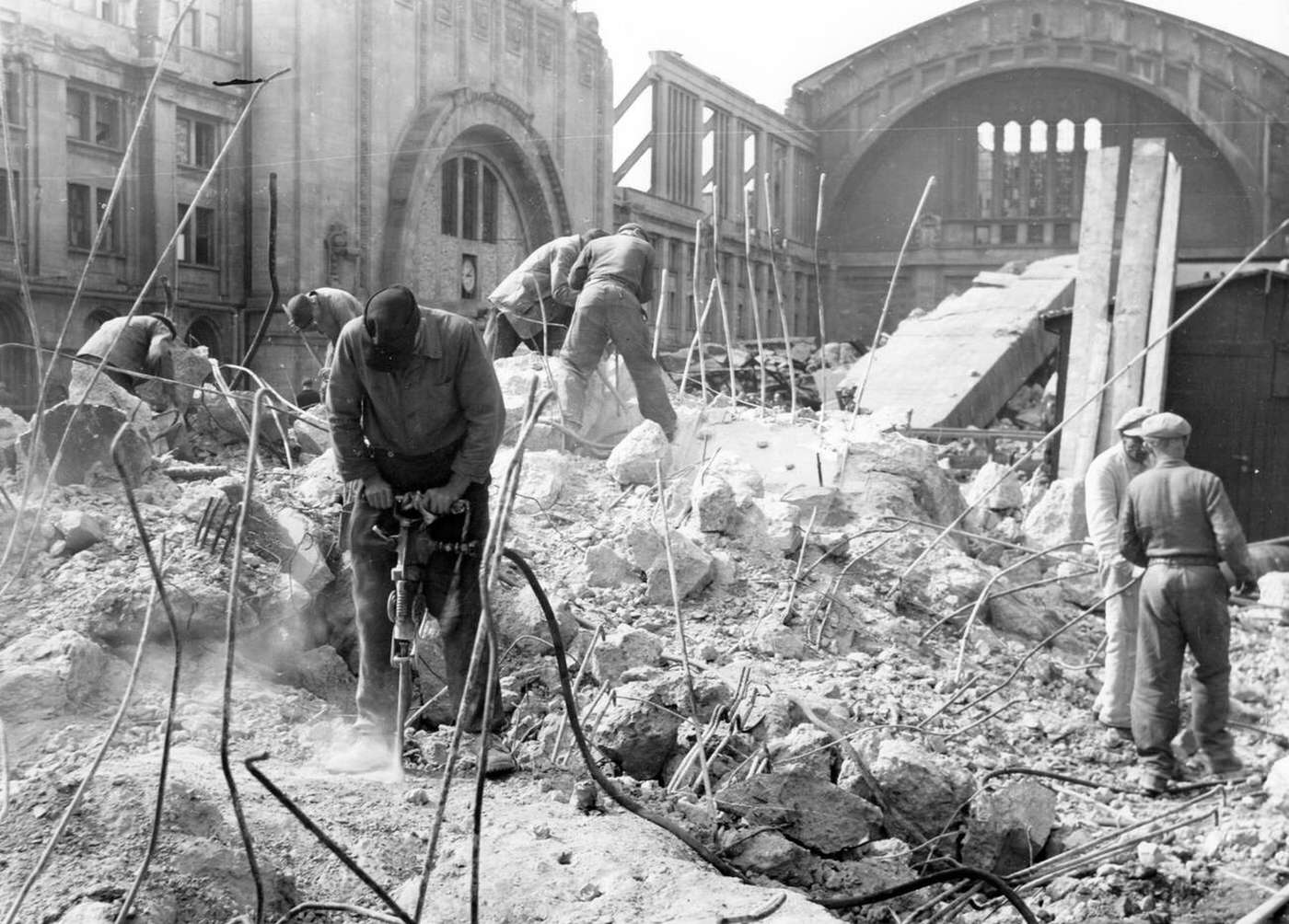
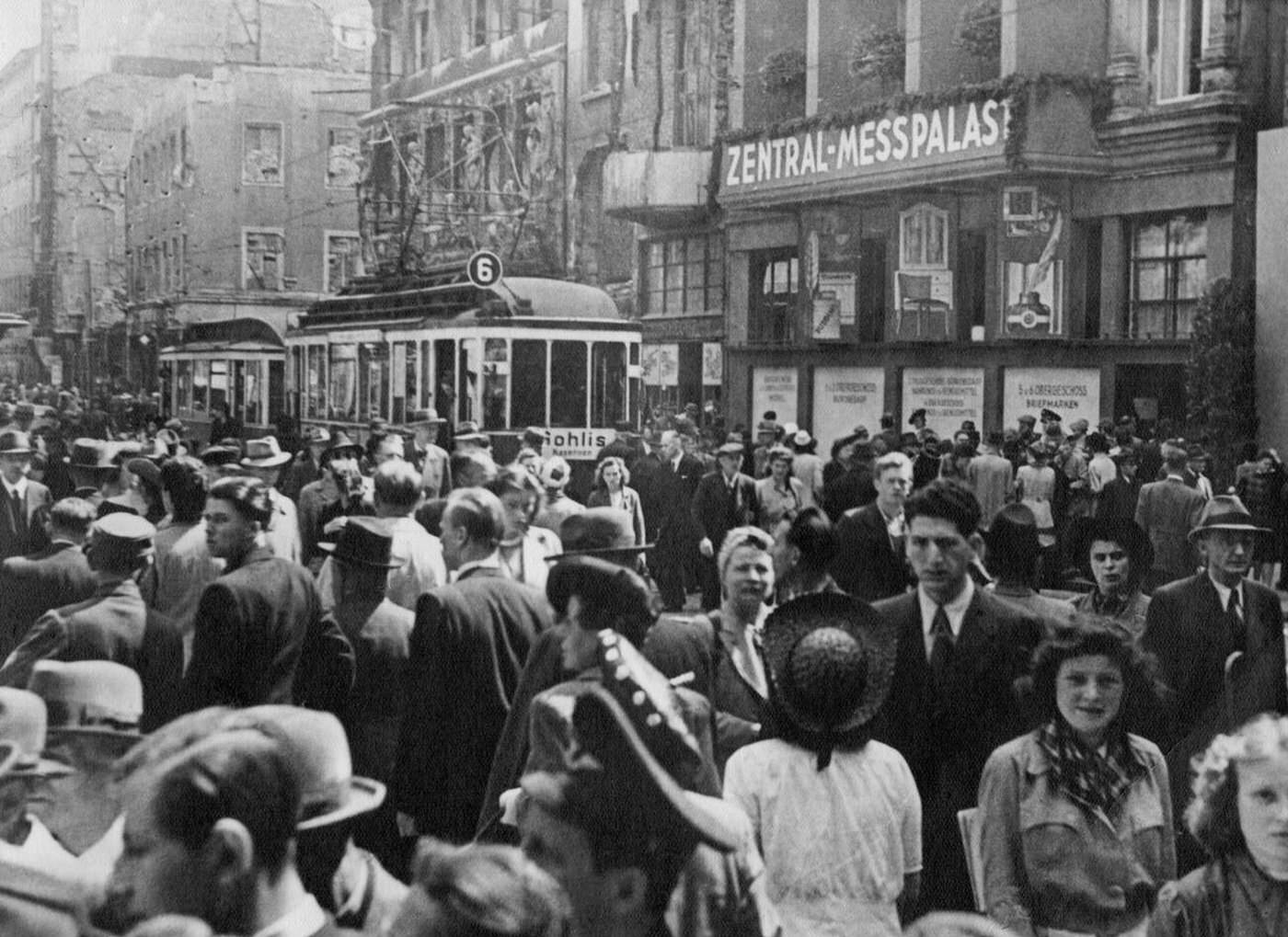
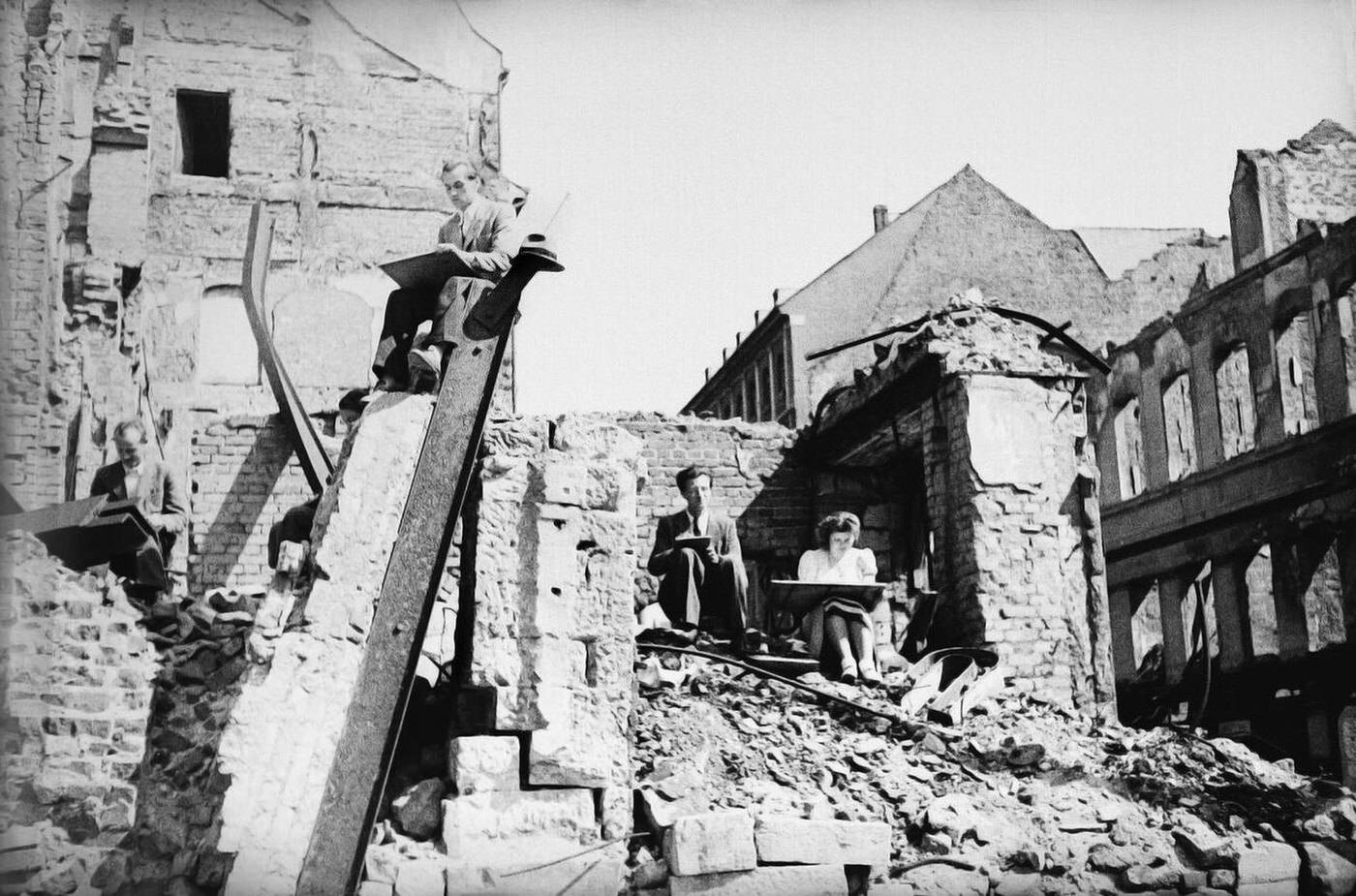
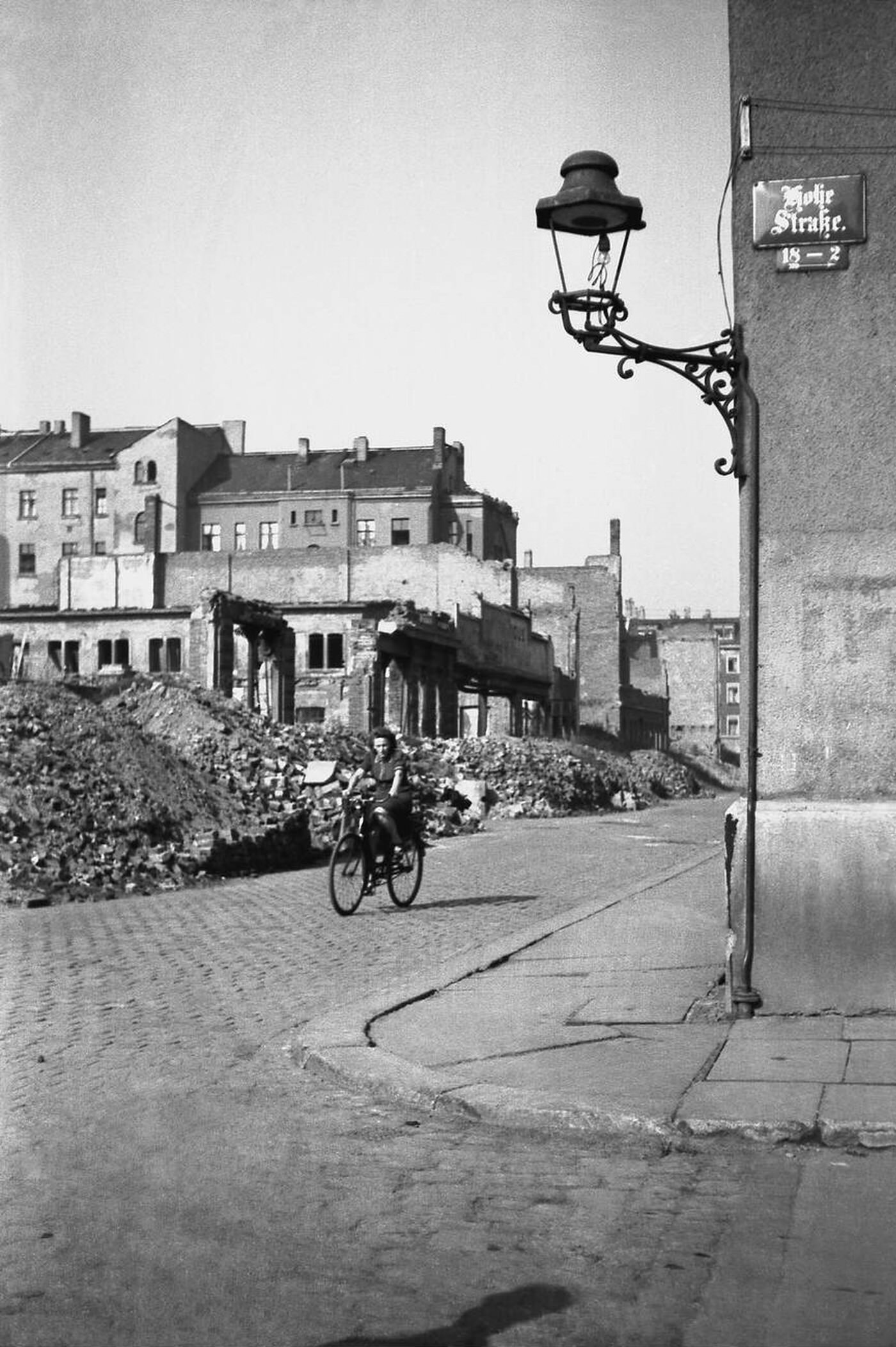
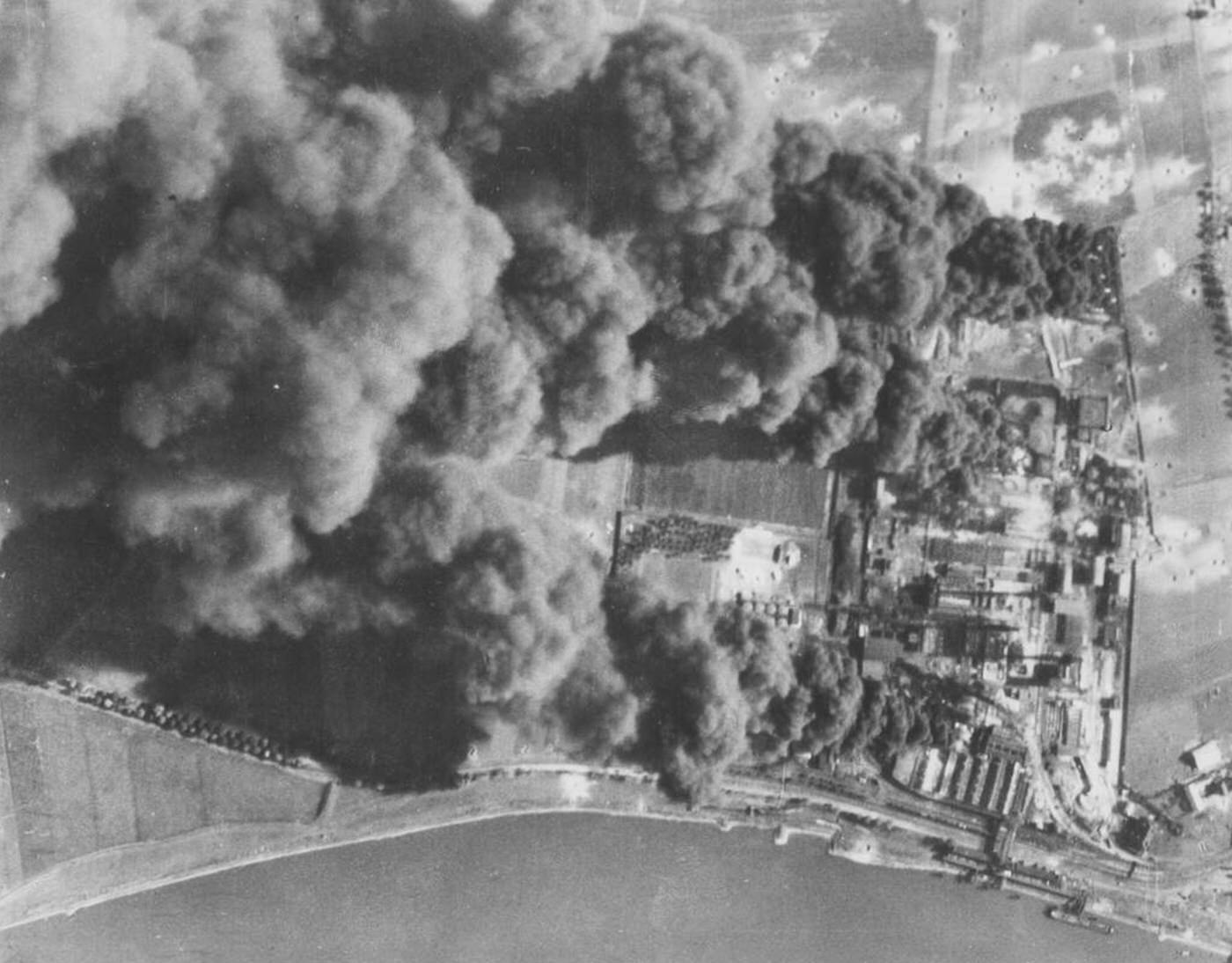
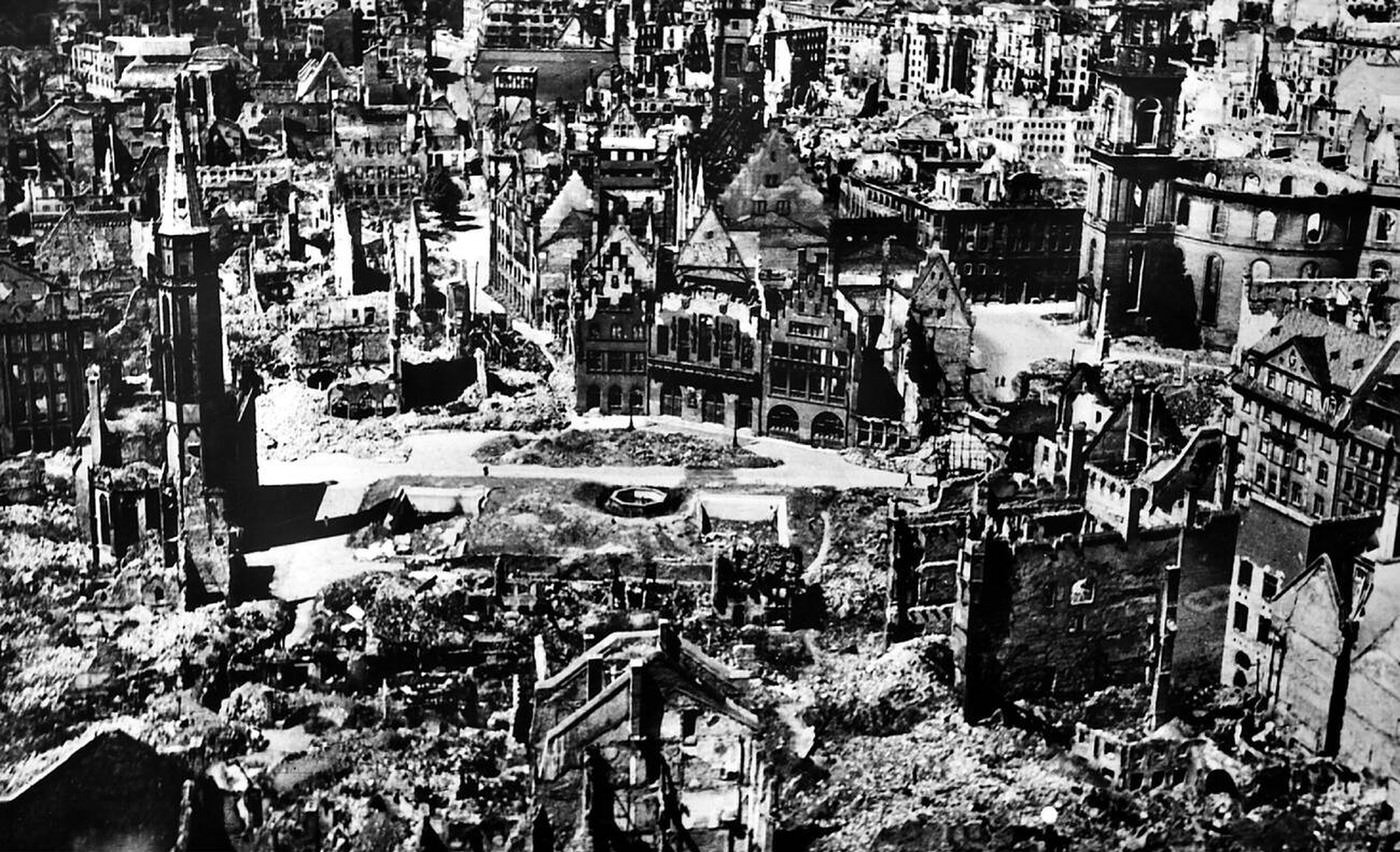
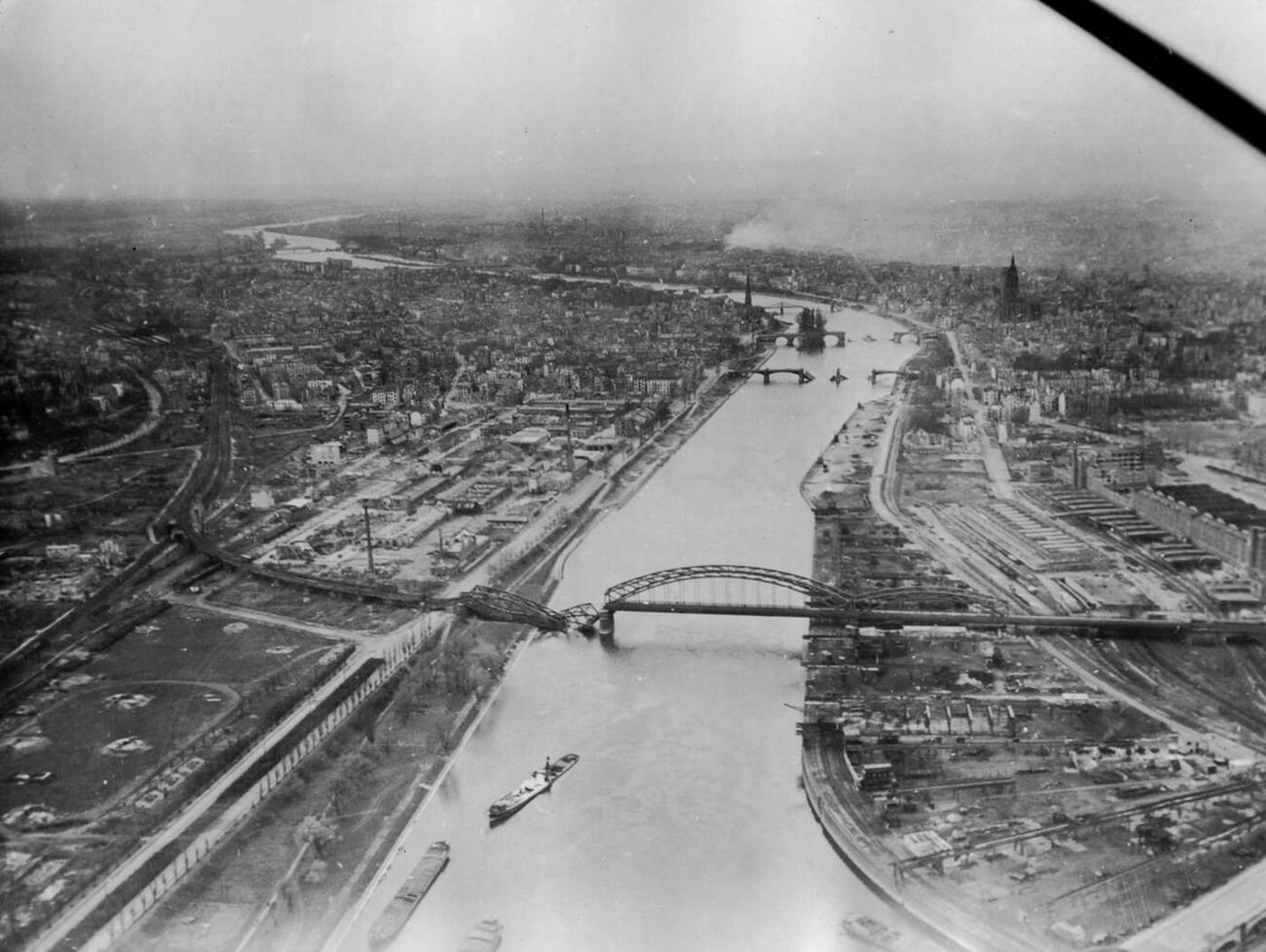
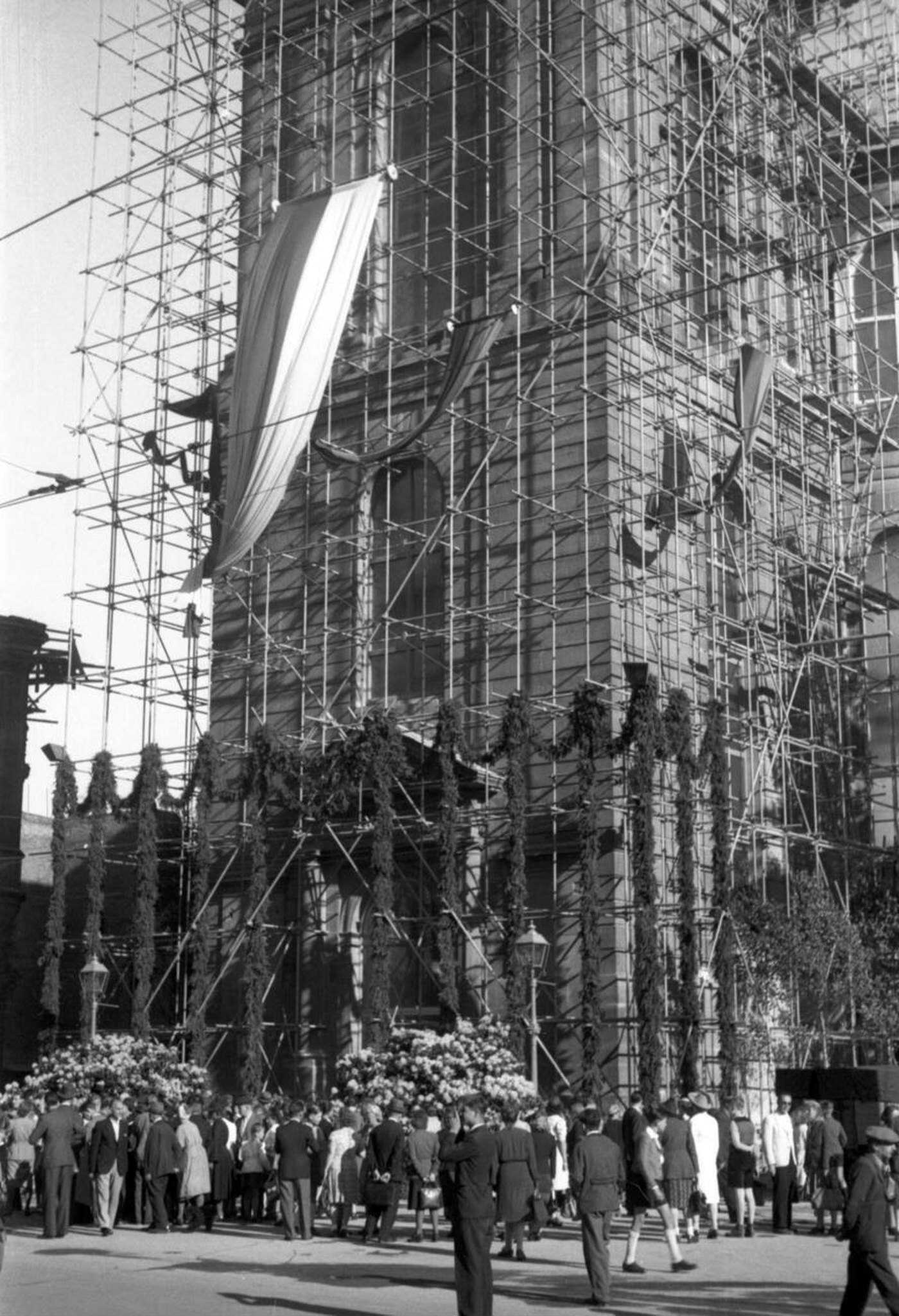
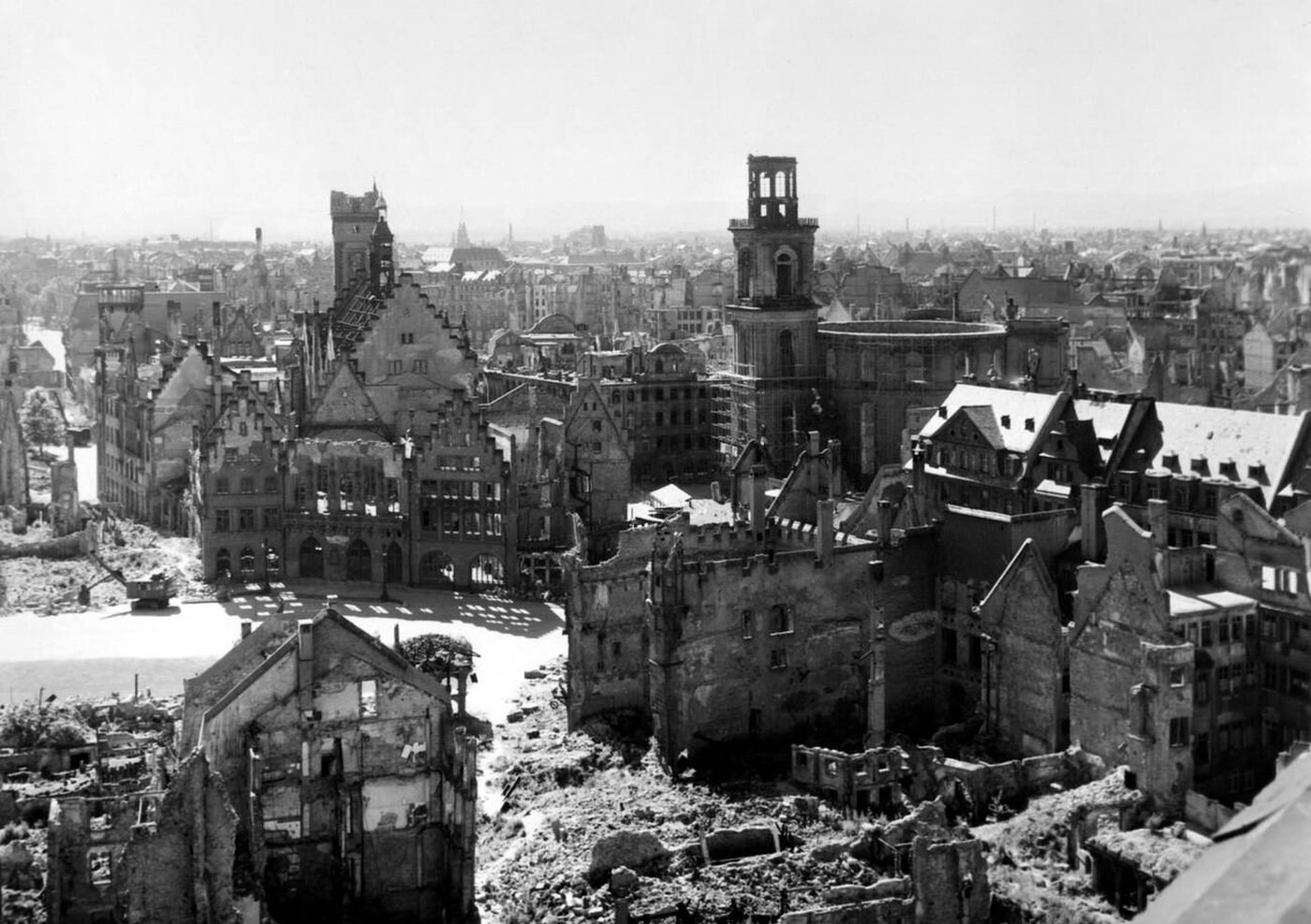
View of destroyed Barmbek, Hamburg, 1947.Demolition of a ruin in Hamburg Altona, Pepermölenbek, 1946.Reimersbrücke over the Nicolaifleet with rubble, Hamburg, 1947.View of ruins from the tower of St. Jacobi church, Hamburg, 1948.View of war damage in Rothenburgsort in Hamburg Hammerbrock, 1946.Destruction in Hamburg, 1943.Ruins at the Nobistor in Hamburg, Klaus-Stallknechtstraße, 1945.View from the Michel in Hamburg over the ruins of the city center to the harbor, 1947.Bomb damage to New Hamburg, 1945.Ruins of the former theater on Gendarmenmarkt in East Berlin, 1973.Ruins at the Stresemannstrasse in Berlin, 1964.Cleanup after a bombing raid on Berlin, near Cafe Kanzler, 1945.View of the destroyed Kaiser Wilhelm Memorial Church, Berlin, 1945.World War II ruins of Berlin, 1945.Ruins of Berlin at the end of World War Two, 1945.Debris of a destroyed house in the Stresemannstrasse, Berlin, Germany, 1950.Cityscape, Harbor Place, Berlin, Germany, 1950.Ruin of the broadcast plant or Zwietusch factory, Siemensstadt, Berlin, 1950s.Construction site at the Potsdamer Platz in Berlin with ruins in the back, 1954.Blasting of the cupola of the Reichstag building in Berlin, with fire after the failed first attempt, 1954.The Americans enter the destroyed Berlin in the film ”Fraeulein”, 1958.Children playing in the rubble in Berlin-Mariendorf, 1962.View from the crossing Andreasstrasse to Alexanderplatz, Berlin-Friedrichshain, 1945.Ruins of houses from 1945 onwards, West-Berlin.View over the ruins of the Nikolaiviertel in Berlin after the end of World War II; in the foreground, the destroyed St. Nicholas’ Church, 1945.View of the remains of a turret, containing an emergency exit for the Reich Chancellery bunker, blown up by the Russians, Berlin, 1945.Women sell flowers in front of the ruins of houses on Memhardstrasse street near Alexanderplatz in Berlin, 1945.The last bell from the Kaiser Wilhelm Memorial Church destroyed during WWII is salvaged in Berlin-Charlottenburg, 1948.Sport Palace, Potsdamerstrasse, Berlin, 1945.View of the destroyed city of Berlin at the Kaiser Wilhelm Memorial Church, 1945.Nuremberg, Ruins, People, walking, bombed-out, city, 1945.View of the destroyed city of Nuremberg, St. Sebald church, 1945.Wehrmacht Field Marshal Erich von Manstein looking at the ruins of Sebastopol, 1944.Ruins of Dresden, 1945.A woman walks down a street in Dresden after the war.Christianstraße (today Leningrader Straße) with rubble and ruins in Dresden; in the background are the Dresden Kreuzkirche and the New Town Hall, 1946.Destroyed Frauenkirche in Dresden; reconstruction is planned, 1991.View on the destroyed Dresden, 1956.People remove debris at the main train station in Leipzig, 1947.People remove debris at the main train station in Leipzig, 1945.Traffic on Grimmaische Strasse Street during the Autumn Fair in Leipzig; in the background is the Zentral-Messpalast, 1946.Students drawing between the ruins, Leipzig, 1947.Woman on a bicycle riding through ruins, Leipzig, 1947.Ruins of the Leipzig Fair buildings, 1945.Krupp workers after the occupation of Essen by the Americans, 1945.Two German women walk in the ruins of the city of Essen after the Allied forces bombing, 1940s.Krupp factories of Essen in ruins, 1947.Krupp Plant destroyed by Allied bombing in Essen, 1945.Aerial reconnaissance photograph showing the aftermath of bombing raids over Dortmund, 1941-1945.Dortmund destroyed by air raids, 1945.Flames burst through the black smoke from burning oil storage tanks and installations at the Nonheim oil refinery, 1945.Tanks and vehicles of the 2nd Armored Cavalry Battalion, 2nd Armored Division, pass through Stuttgart, 1950.The embattled city of Frankfurt an der Oder is a wasteland of ruins, 1945.Destroyed Frankfurt on the Main, 1945.Aerial view of the blasted town of Frankfurt on Main, 1945.Ruins and reconstruction of St Paul’s Church in Frankfurt, 1945-1949.Destroyed Frankfurt on the Main, 1945.The cathedral area in ruins after Allied bombings, Frankfurt, 1945.
Andrew Thompson is an archaeologist and historian who specializes in the study of war and conflict. He writes about the brutal history of warfare, including the World Wars and other significant conflicts. Through his work, he aims to deepen our understanding of the human cost of conflict and inspire us to work towards a more peaceful future.