A traditional Scottish wedding in the 1980s was a rich mix of old customs, formal dress, and family pride. These weren’t just ceremonies — they were full-day events shaped by generations of tradition. The details mattered: what the bride wore, how the groom dressed, who walked her down the aisle, and how the couple left the church. Every element had meaning, and the photos from these weddings capture all of it.
Before the ceremony even began, the groom and his best man had a job to do — keep calm and wait. The anticipation of the bride’s arrival was a moment all its own.
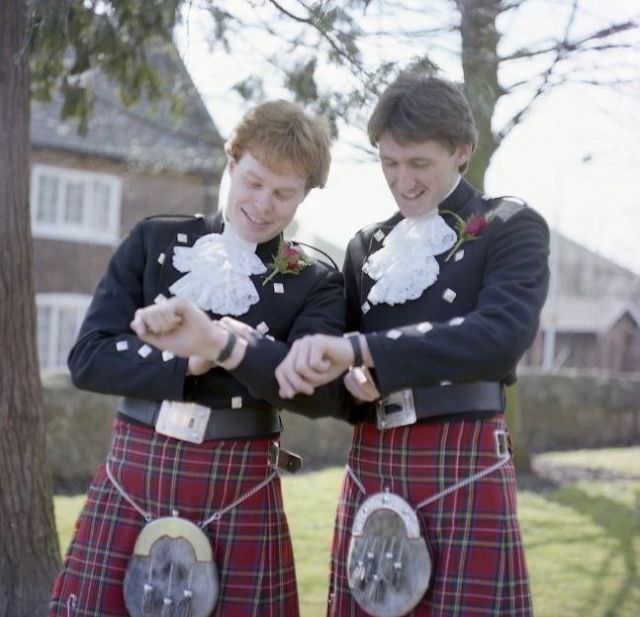
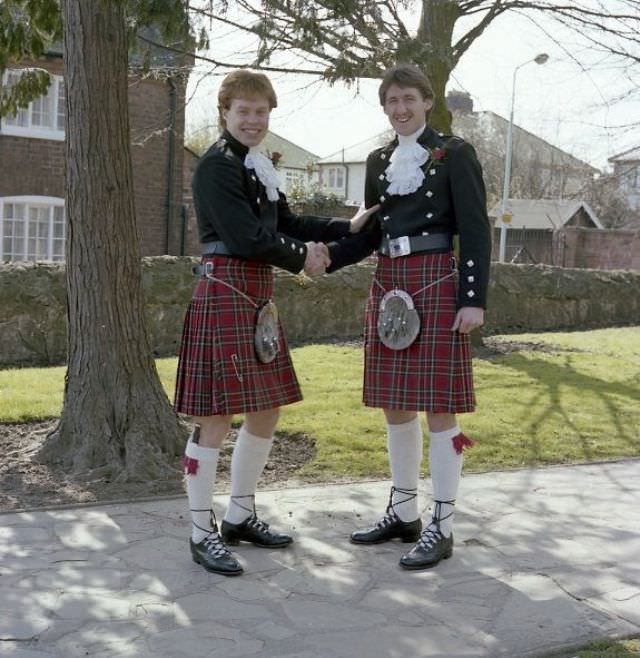
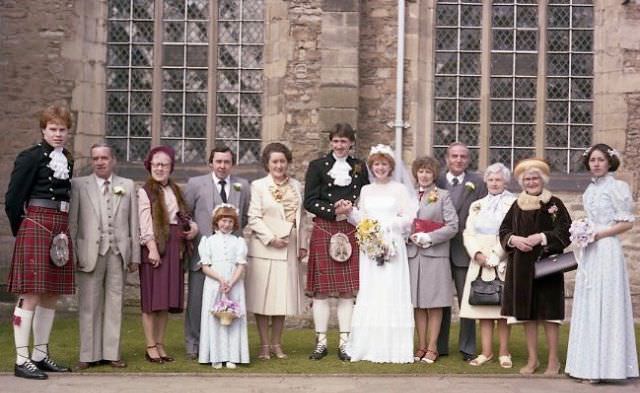
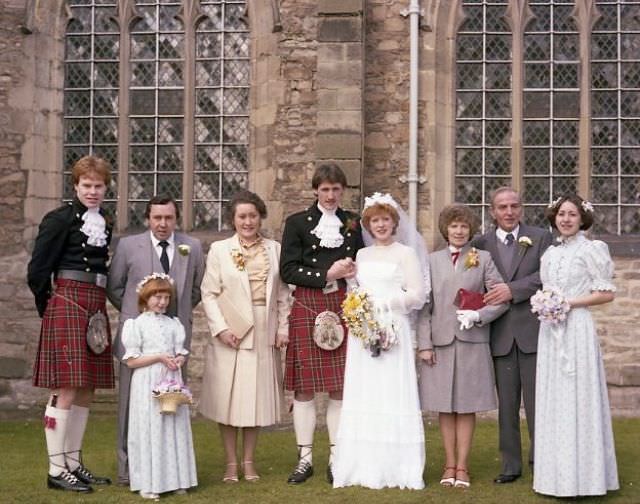
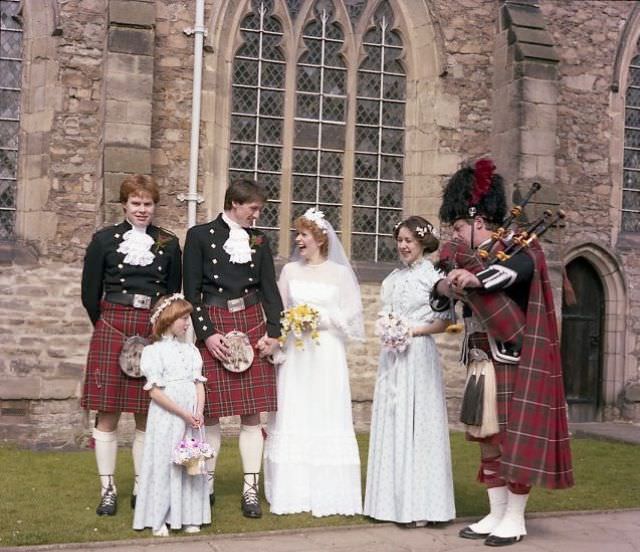
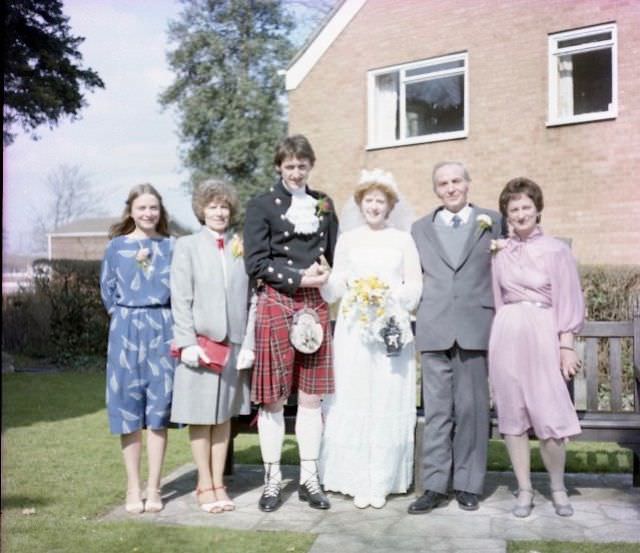
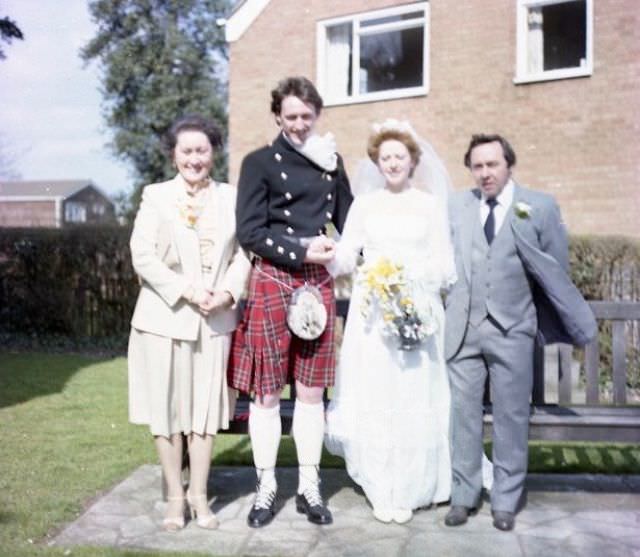
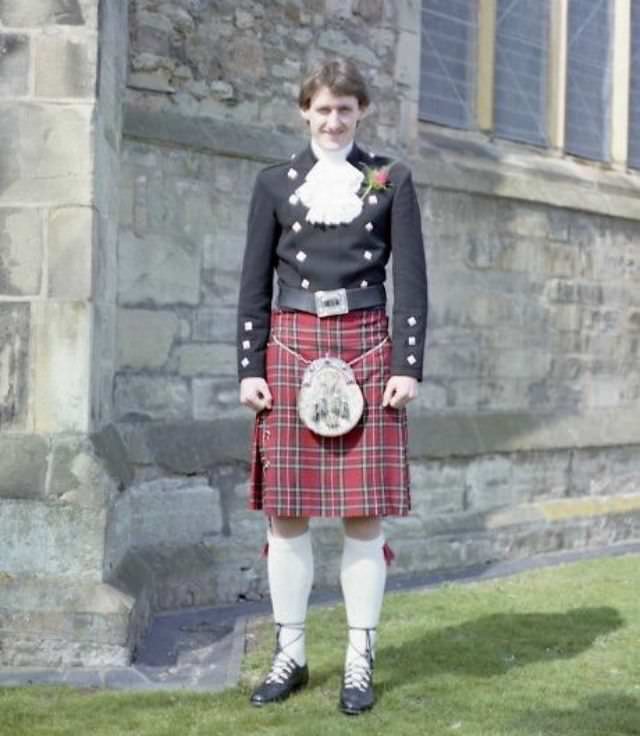
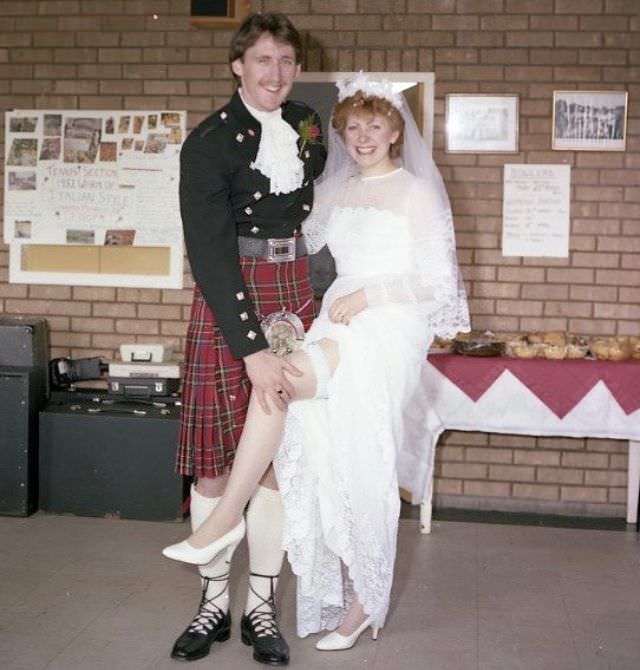
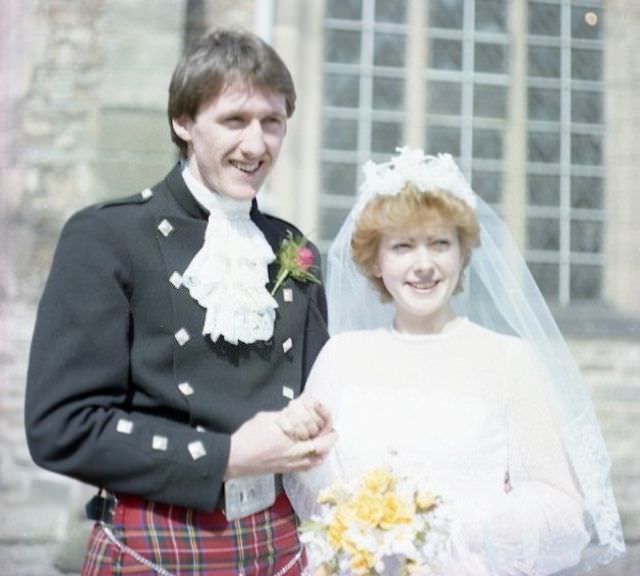
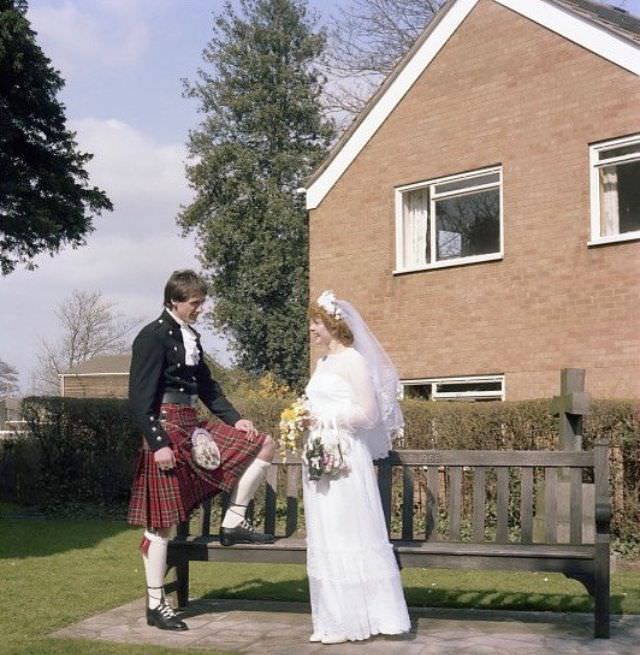
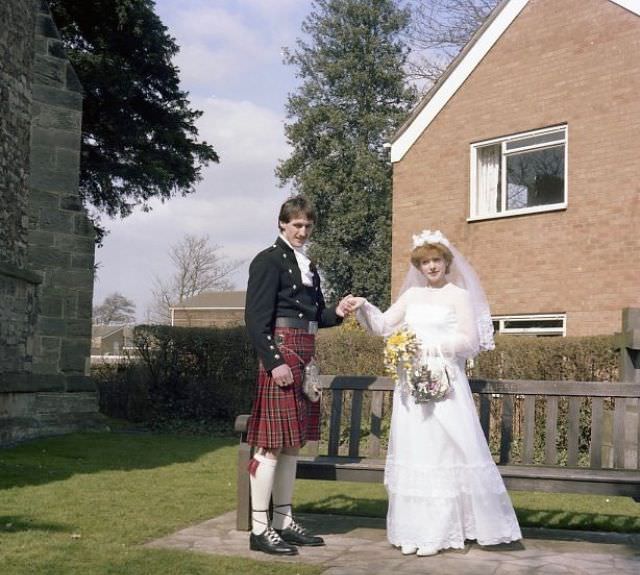
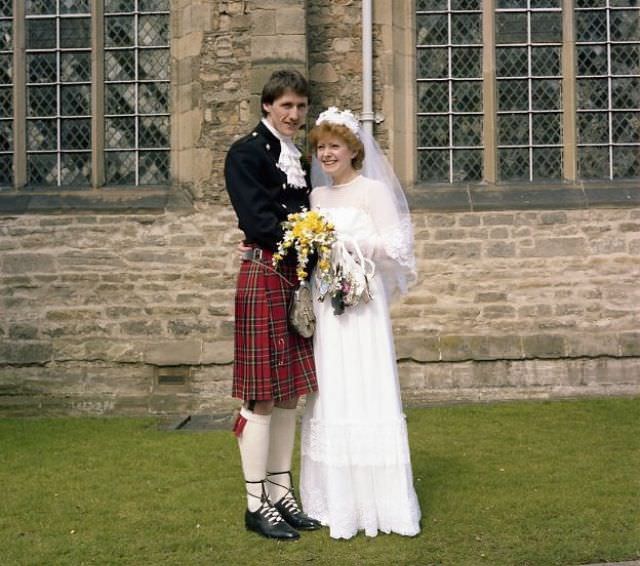
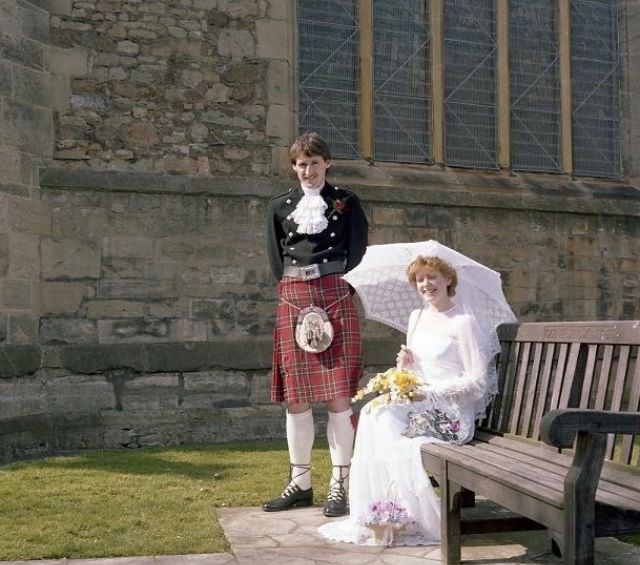
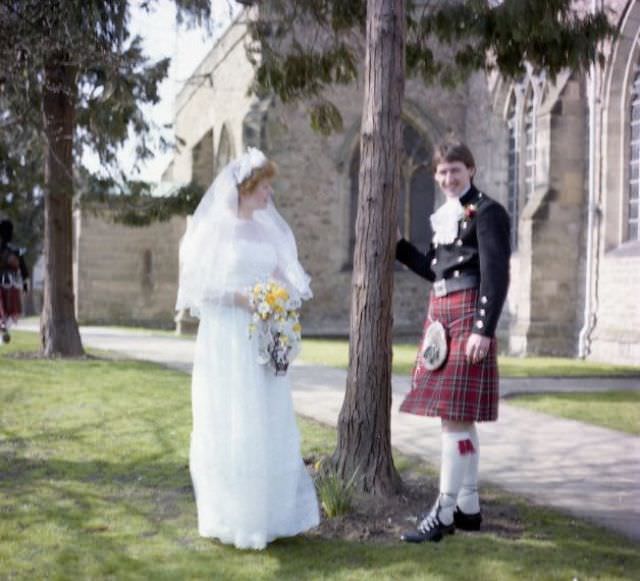
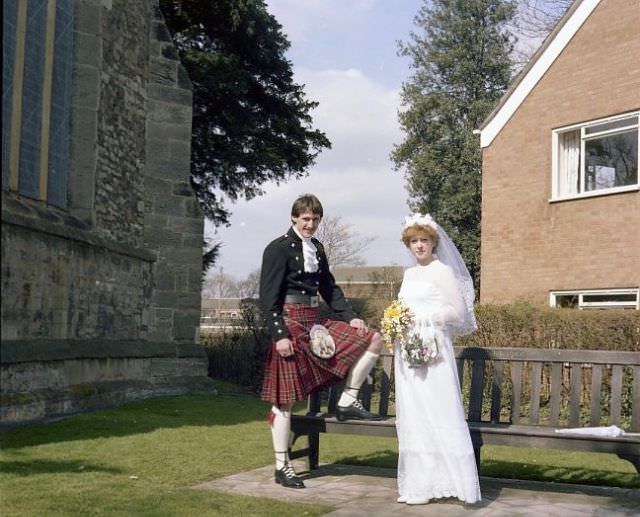
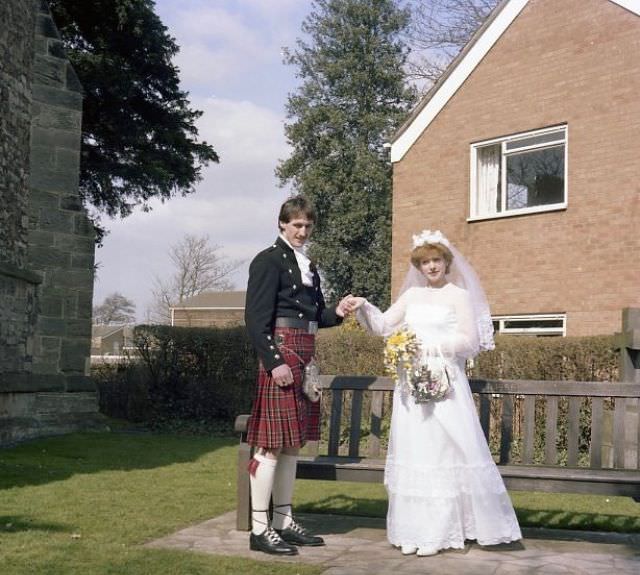
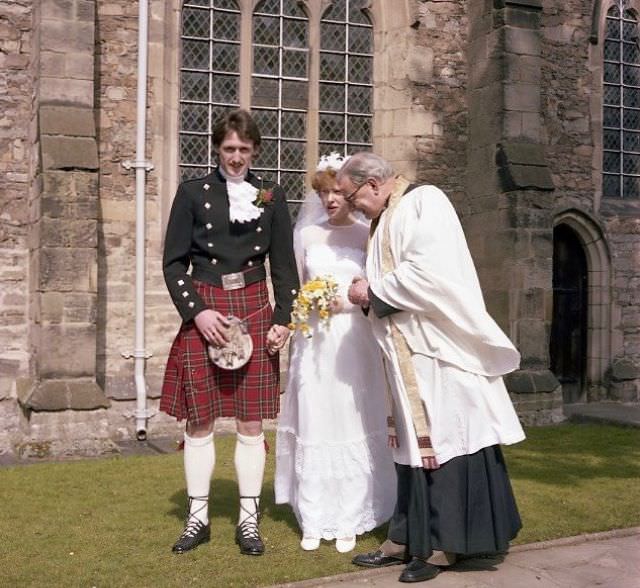
The Scottish groom’s outfit was one of the most distinctive parts of the day. He wore full Highland dress: a kilt in his clan’s tartan, a kilt pin, a sporran with a chain strap, tartan or white hose, a jacket, shirt, and bow tie. Tucked into the top of his hose was a sgian dhubh — a small black-handled knife with deep roots in Scottish tradition. Completing the look were gillie brogue shoes, a style tied to the Scottish Highlands.
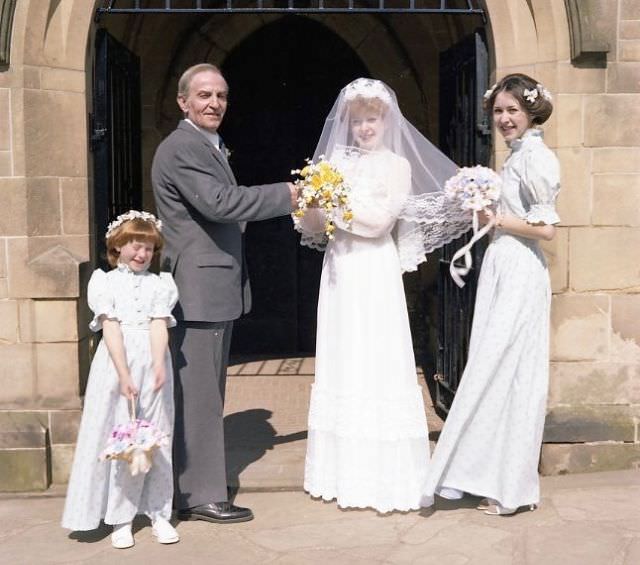
For the bride’s father, the wedding day carried its own quiet weight. Walking his daughter to the altar was both an honor and a farewell.
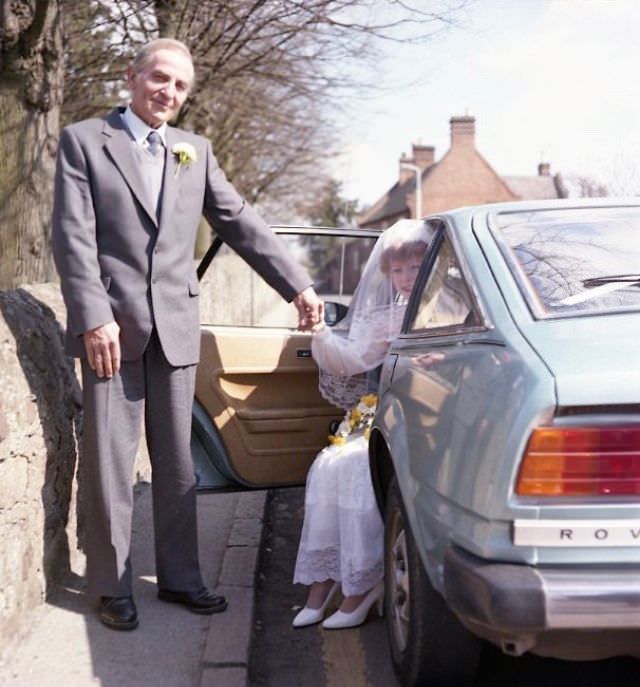
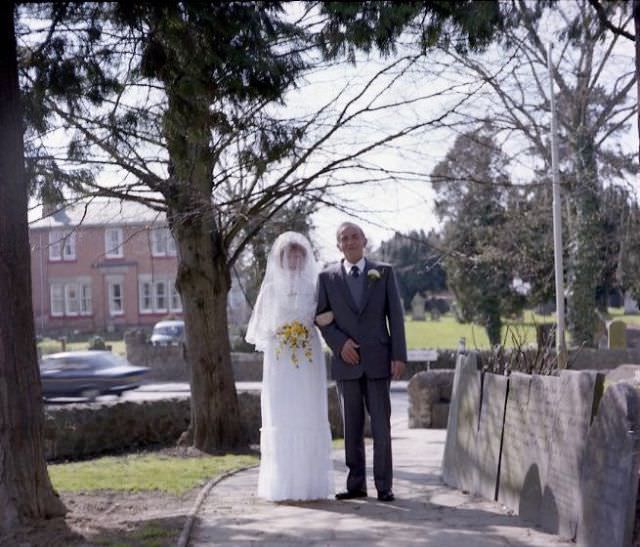
The bride followed the familiar “something old, something new, something borrowed, something blue” tradition. The “something old” was typically passed down from her mother — a piece of jewelry or a keepsake meant to carry the wisdom of the women before her. The “something new” was a gift marking the start of her new life. The “something borrowed” came from a happily married couple, bringing good luck into the marriage. And “something blue” was almost always a blue garter, worn as a symbol of love and modesty.
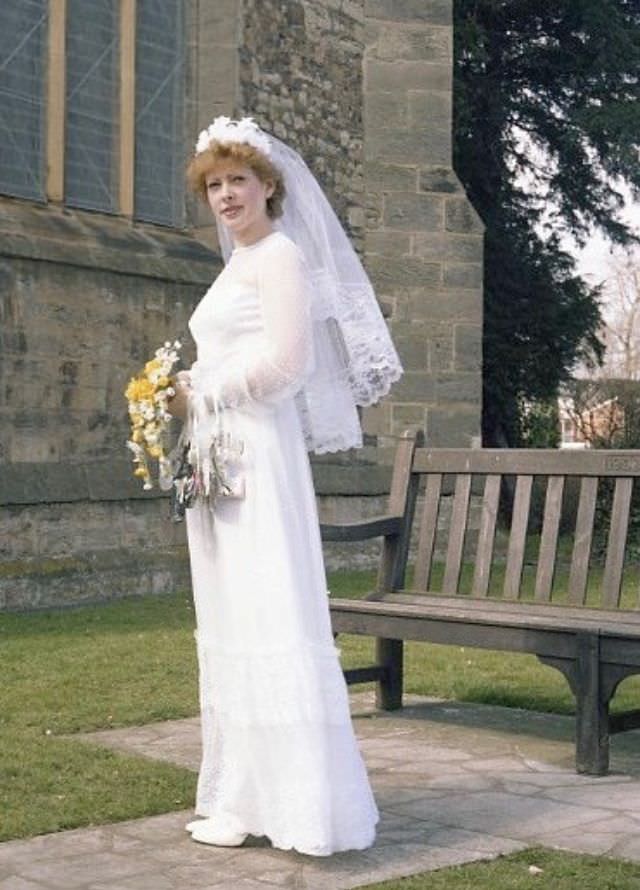
The bride wore a white gown, a veil, and a tiara. Her bridesmaids’ dress color and style were entirely her choice — a small but meaningful power that let her shape the look of the entire wedding party. These decisions were taken seriously, and the results showed in the coordinated, elegant photos that survive from this era.
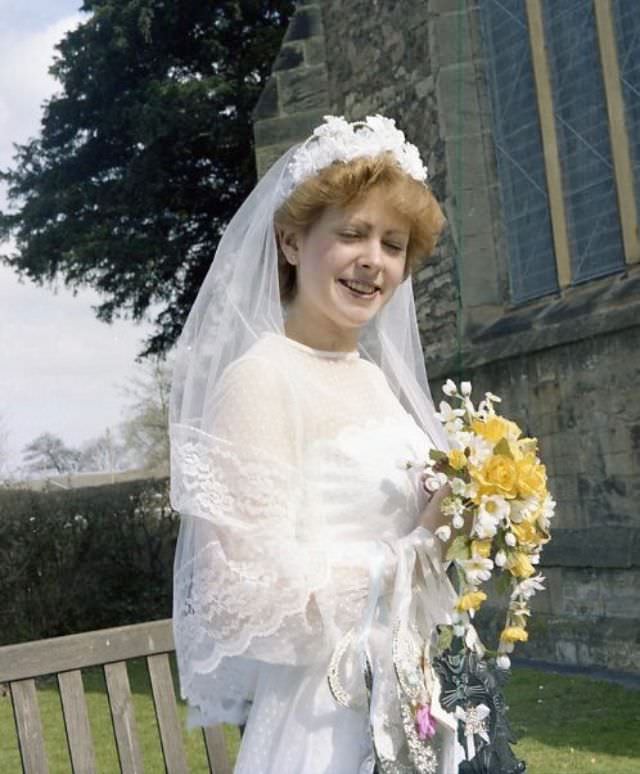
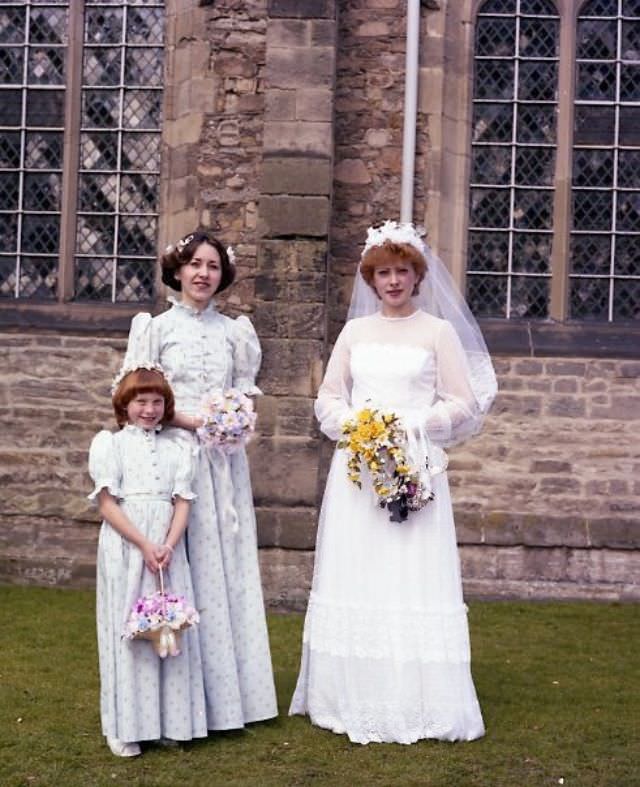
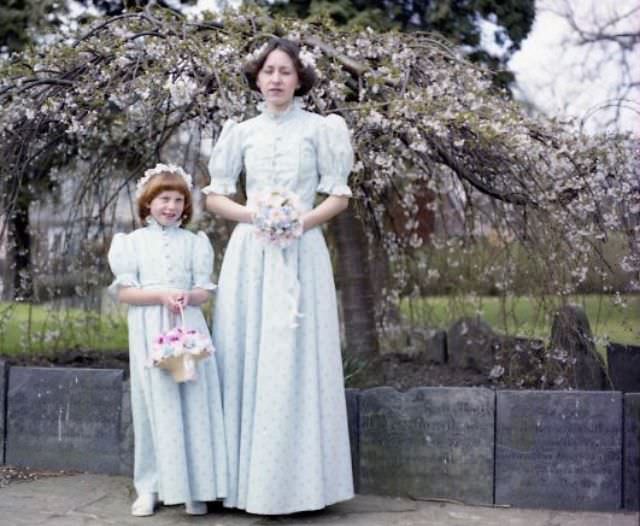
The walk into the church was a moment the whole crowd watched. Family and guests gathered outside, and the arrival of the bridal party signaled that the ceremony was about to begin.
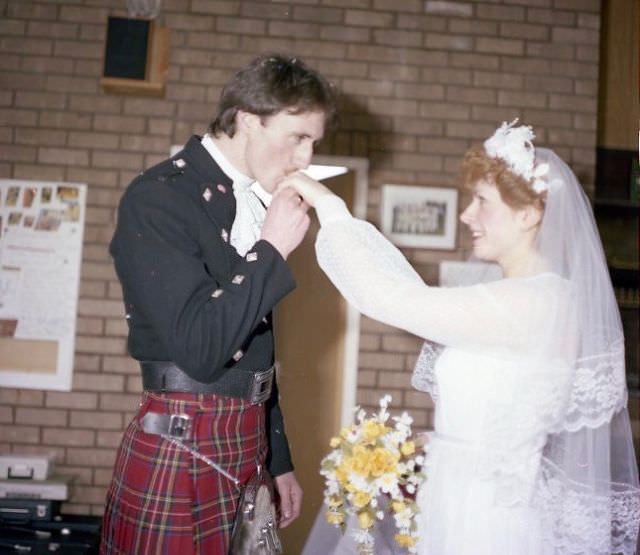
Once inside, the ceremony moved through its formal steps — vows, rings, and the signing of the wedding certificate. That document made it all official, and couples often kept it as one of their most treasured keepsakes.
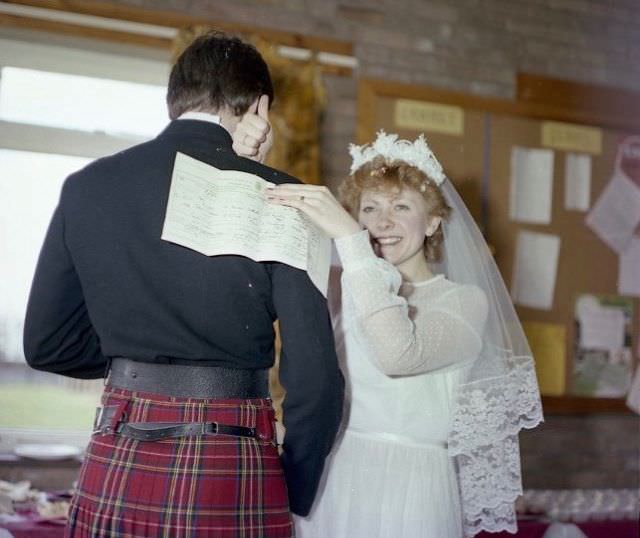
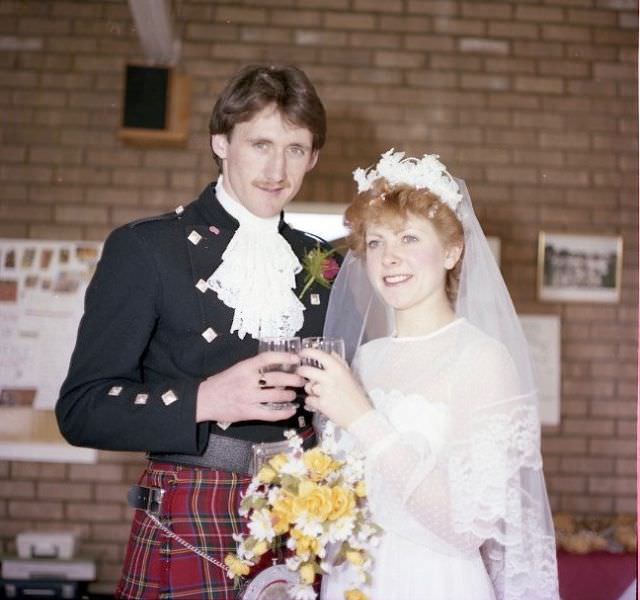
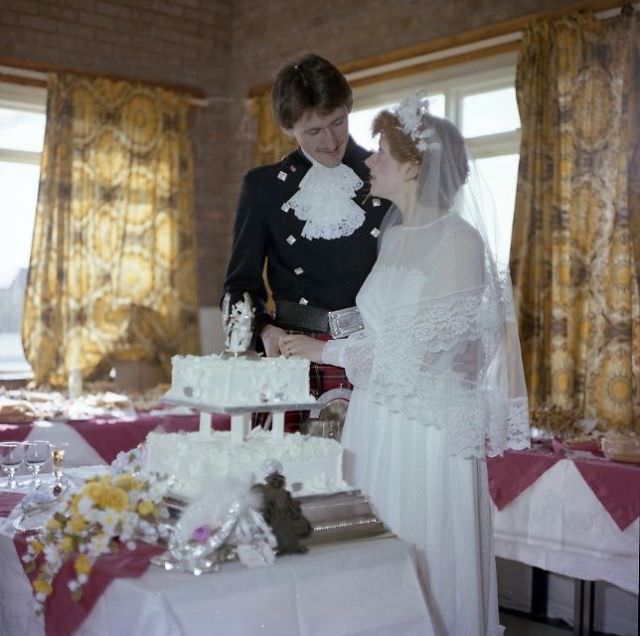
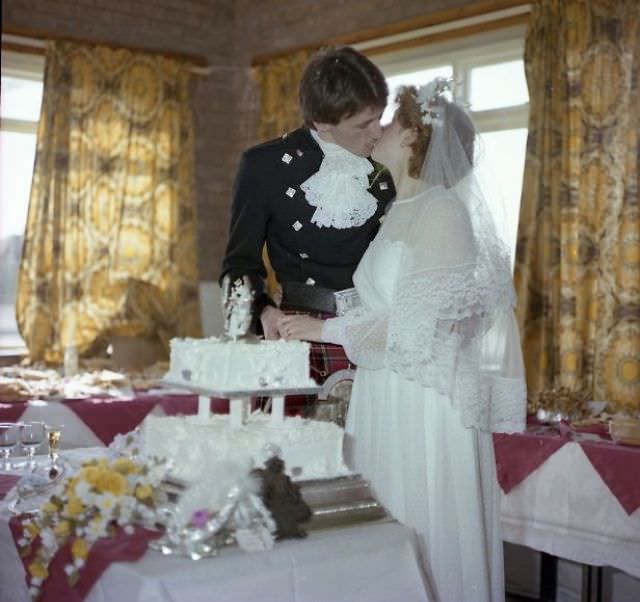
The reception brought its own set of traditions. Cutting the cake together was a shared act that the whole room gathered to watch, and stealing a private moment amid the celebration was something every couple managed to find.
One of the most iconic features of a Scottish wedding was the bagpiper. Couples were traditionally piped out of the church after the ceremony, the sound of the pipes filling the air as they stepped into their new life together. The piper was not just a performer — he was part of the ceremony itself.
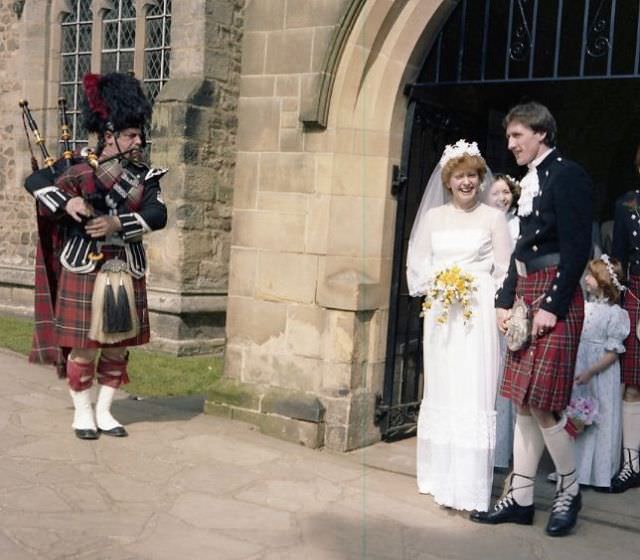
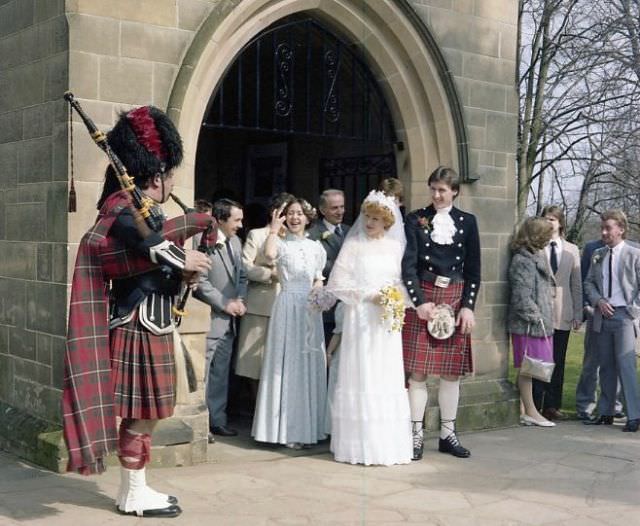
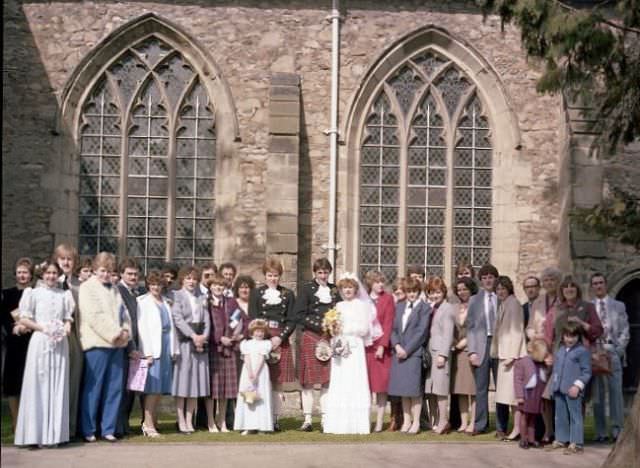
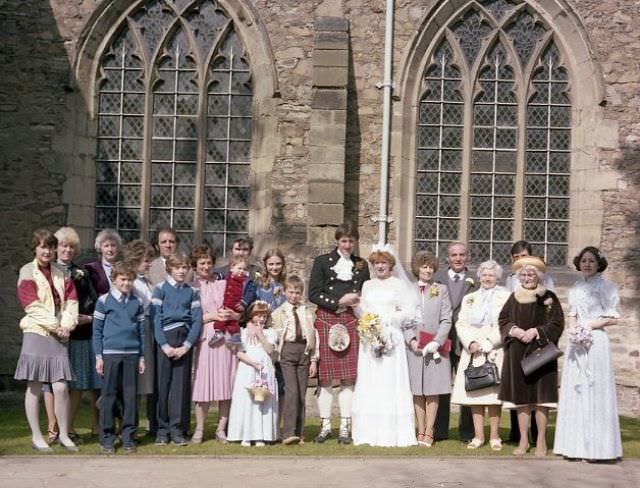
After the ceremony, it was time for photos — and plenty of them. The couple posed together in every combination: just the two of them, with parents, with the full wedding party, and with guests.
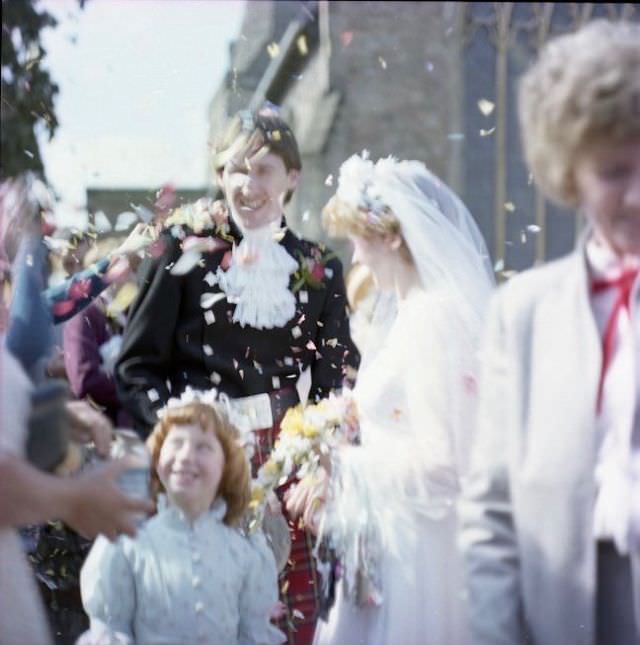
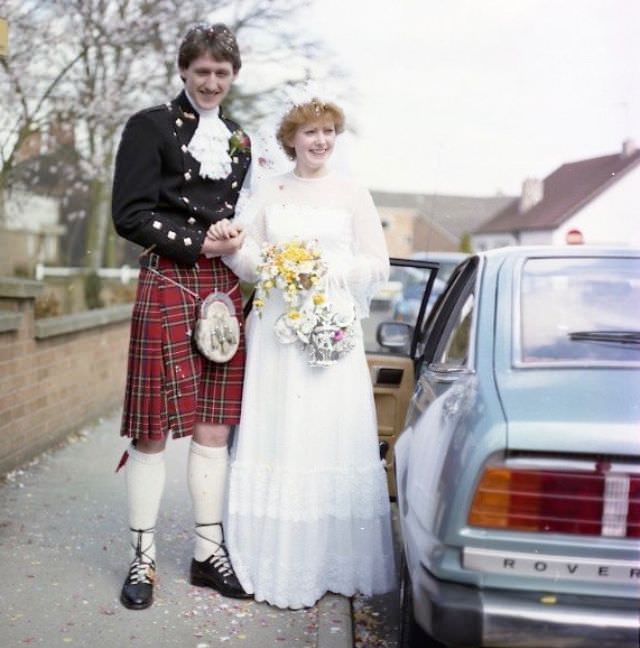
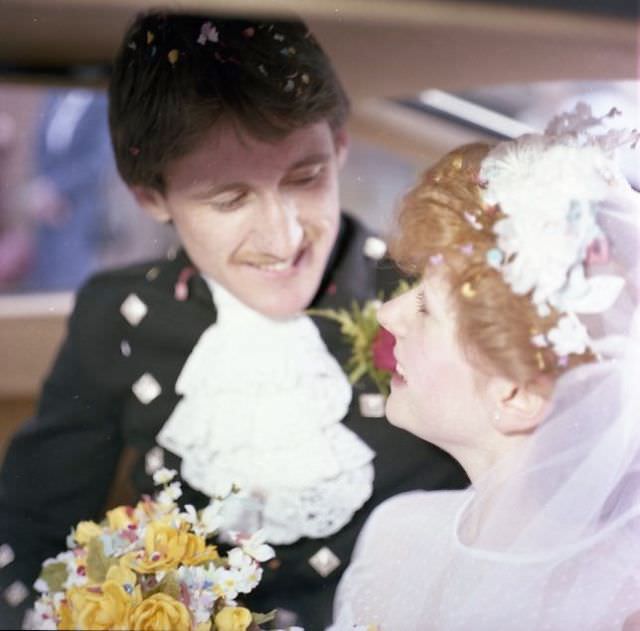
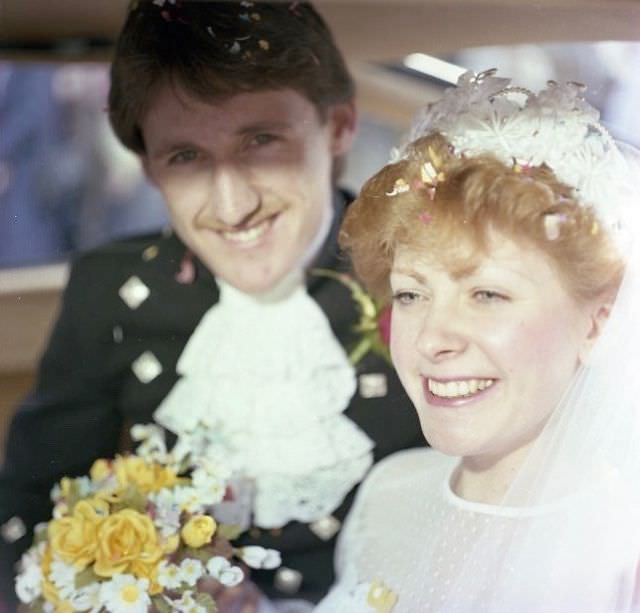
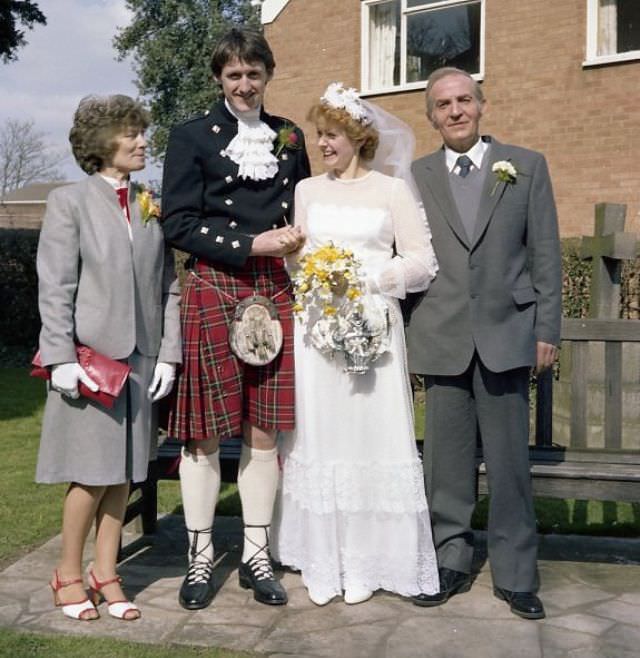
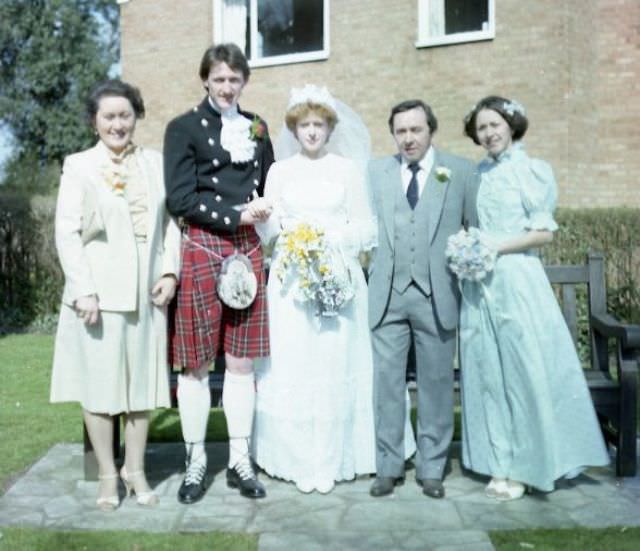
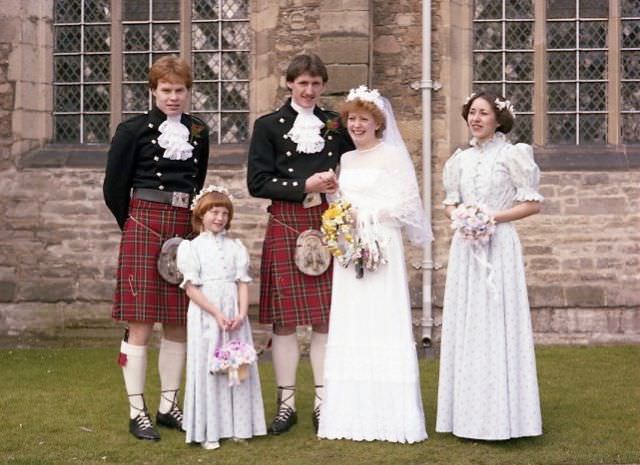
The formal portraits of bride and groom were a staple of 1980s wedding photography. Couples posed in churches, gardens, and on steps — wherever the light was good and the backdrop felt right. These images were meant to last, and they have.
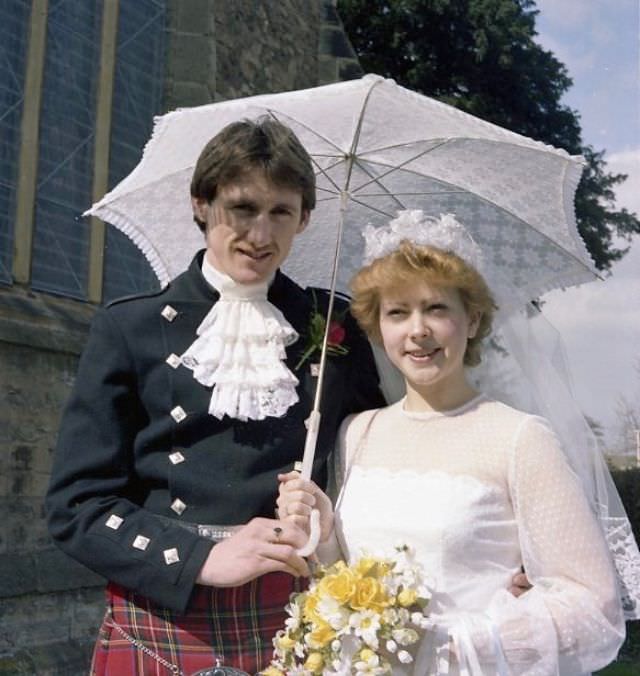
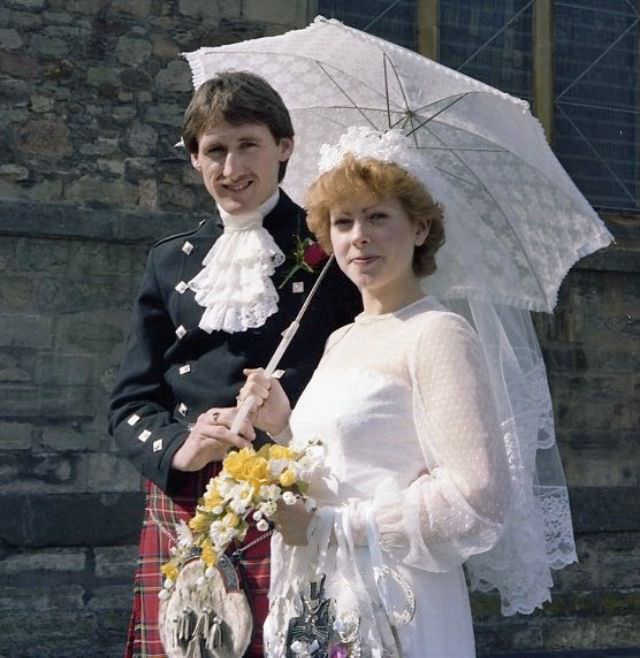
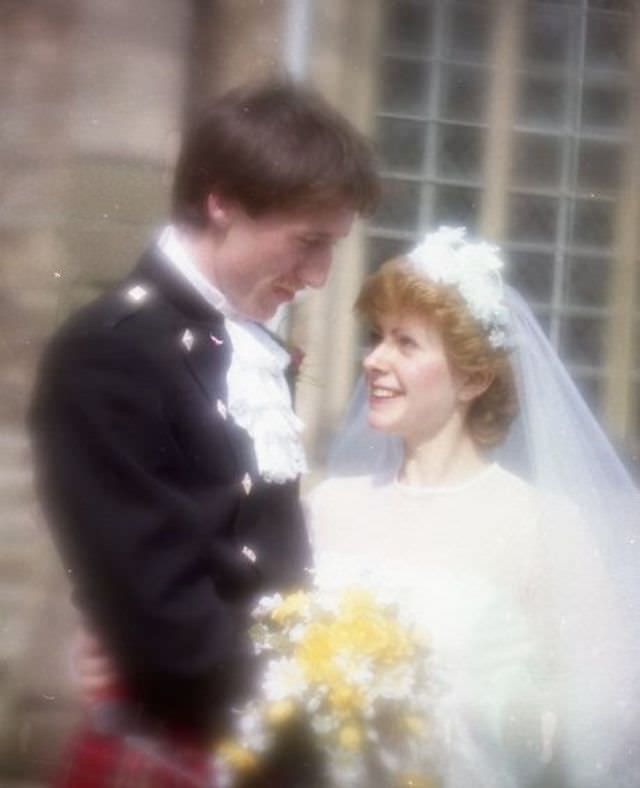
The priest or minister who led the ceremony was often included in the photos as well, standing with the couple as a record of who officiated the day. Then came the congratulations — a long receiving line of handshakes, hugs, and warm words from everyone who attended.
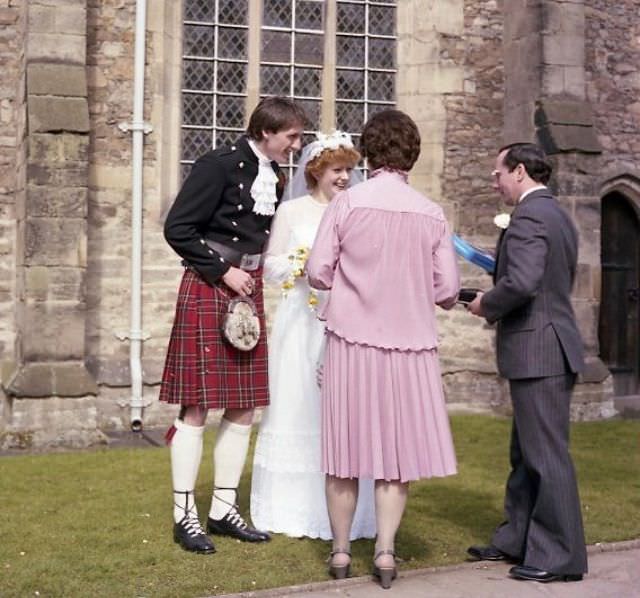
Family photos rounded out the day’s album. These group shots brought together parents, siblings, grandparents, and cousins — everyone who had gathered to mark the occasion. They are now some of the most treasured records of what Scottish family life looked like in the 1980s.