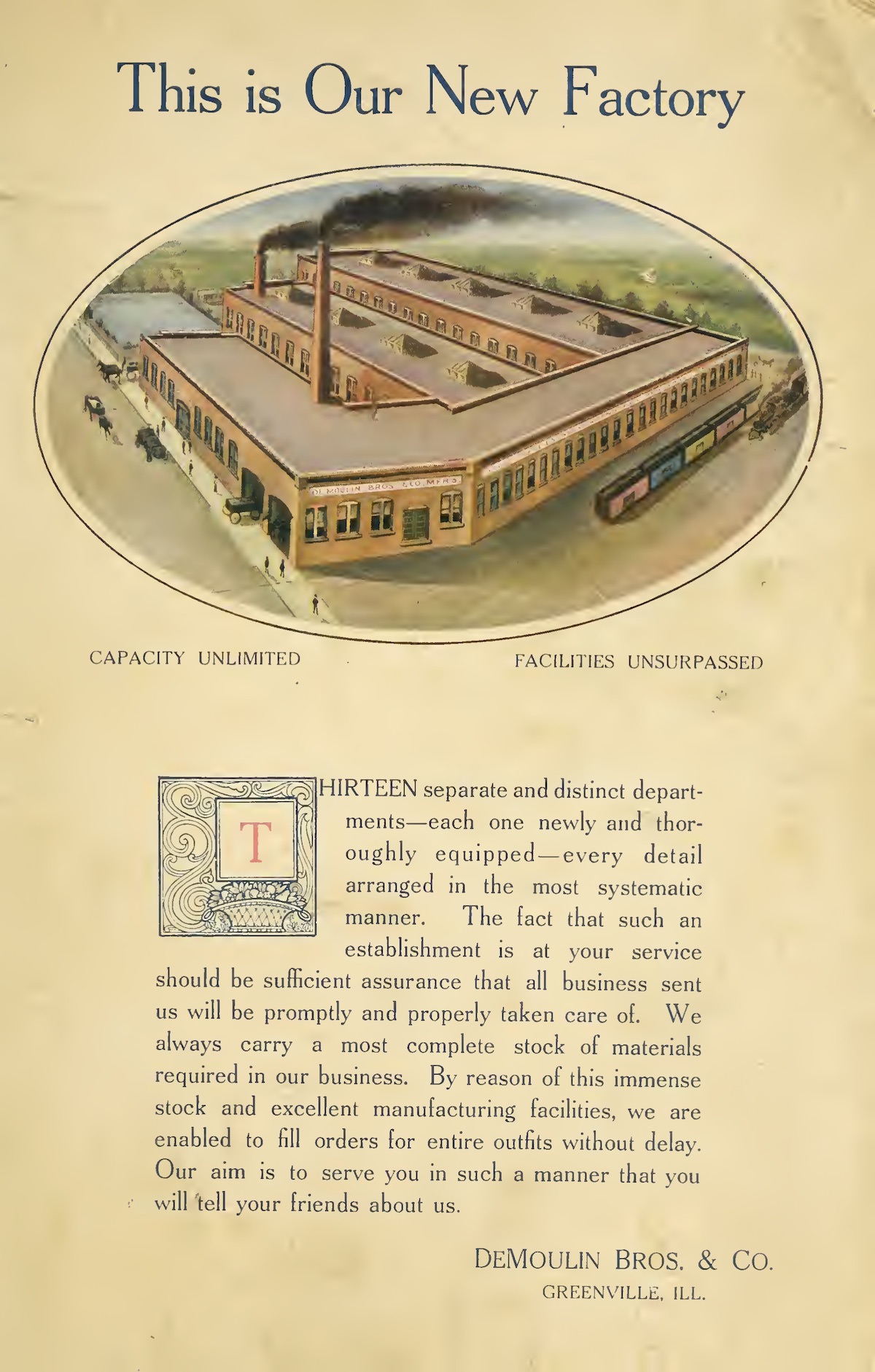
In 1908, a company called DeMoulin Brothers & Co., based in Greenville, Illinois, published a catalogue unlike anything sold in a general store. It was a full product line of initiation devices — mechanical contraptions, trick furniture, electric gadgets, and theatrical props — all designed to haze, frighten, and physically test the men seeking membership in lodges, fraternal orders, and social clubs across America. The catalogue’s tone was completely businesslike, as if the company were selling farm equipment or dry goods.
The opening statement from DeMoulin Brothers read: “WE MAKE EVERYTHING FOR EVERY LODGE — Our extended experience, our knowledge of the wants of our customers, and our advantages over other manufacturers enable us to furnish superior grade of goods at prices that defy competition.” The company promised free advice, prompt correspondence, and absolute confidence in every item listed. Their guarantee was straightforward: “Every article in this catalog is guaranteed to be exactly as represented.”
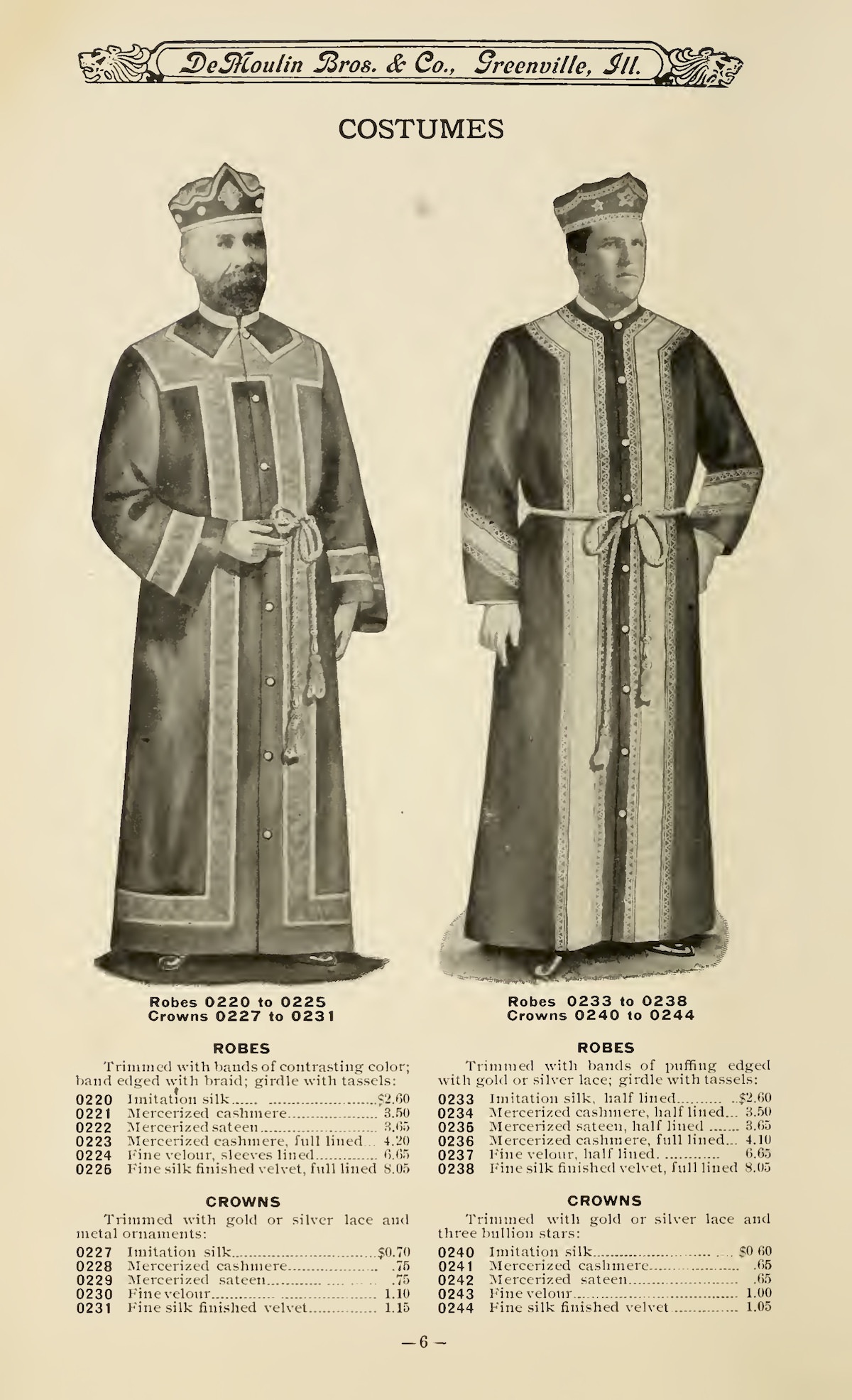
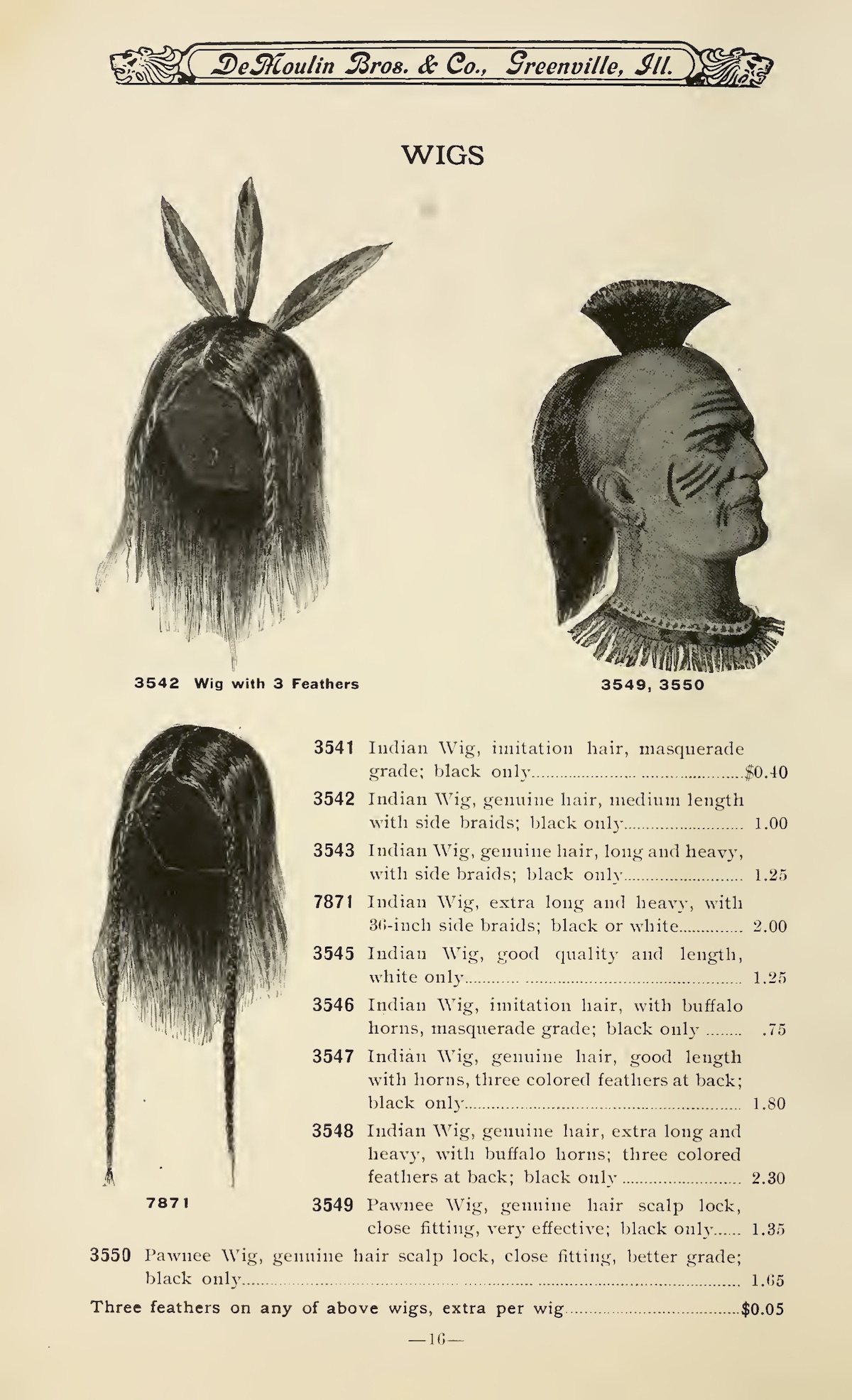
The men who ran these lodges took their rituals seriously. Initiation was not a casual affair — it was a structured ordeal meant to test a candidate’s nerve and commitment. To pull it off convincingly, the lodges needed costumes and theatrical props that set the right atmosphere from the moment a new candidate walked through the door.
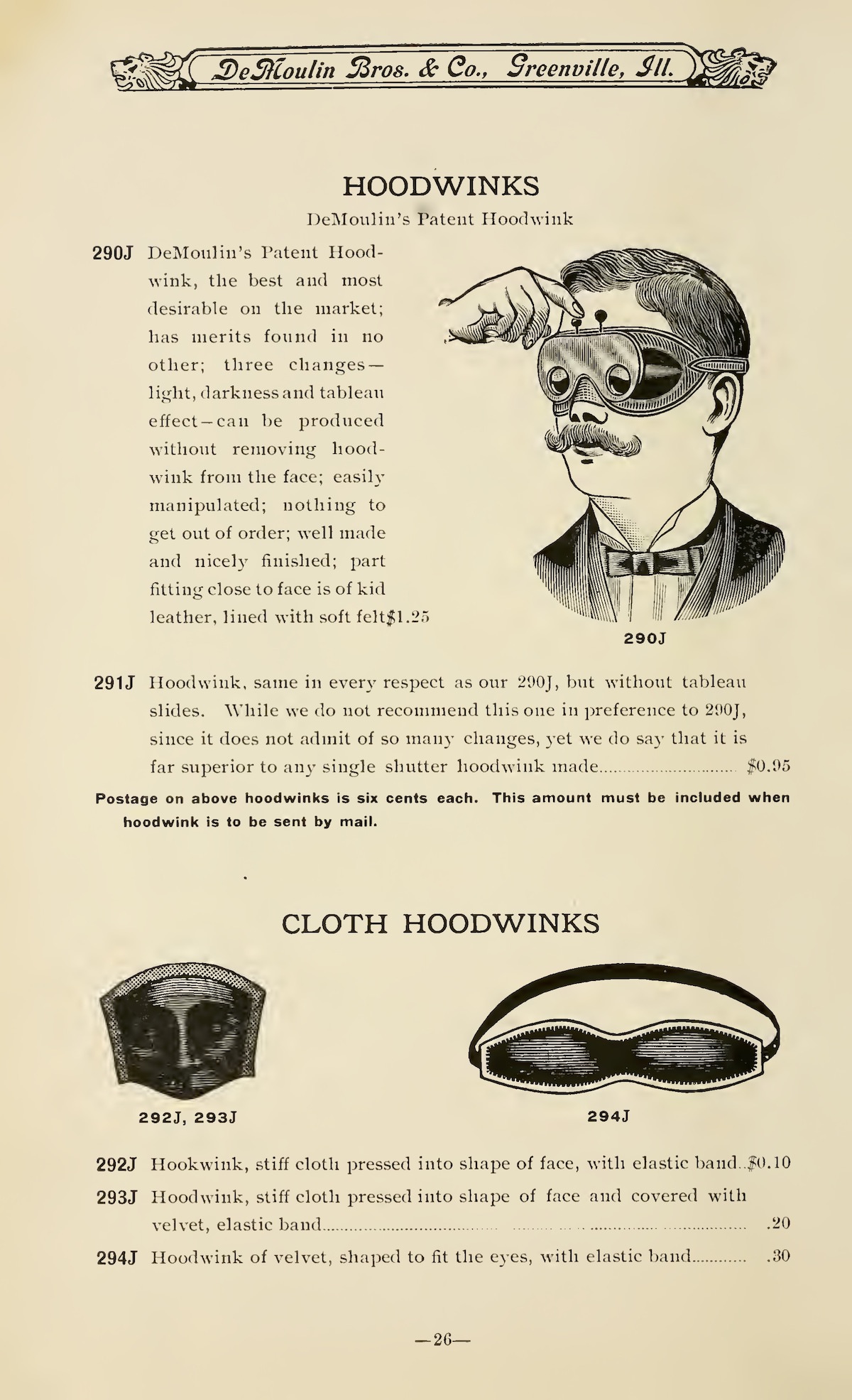
Once the stage was set, the candidate’s senses were deliberately cut off. Hoodwinks — essentially blindfolds — were placed over the initiate’s eyes so he could not see what was coming next. This was a standard first step in many lodge rituals, designed to build suspense and keep the candidate off-balance for everything that followed.
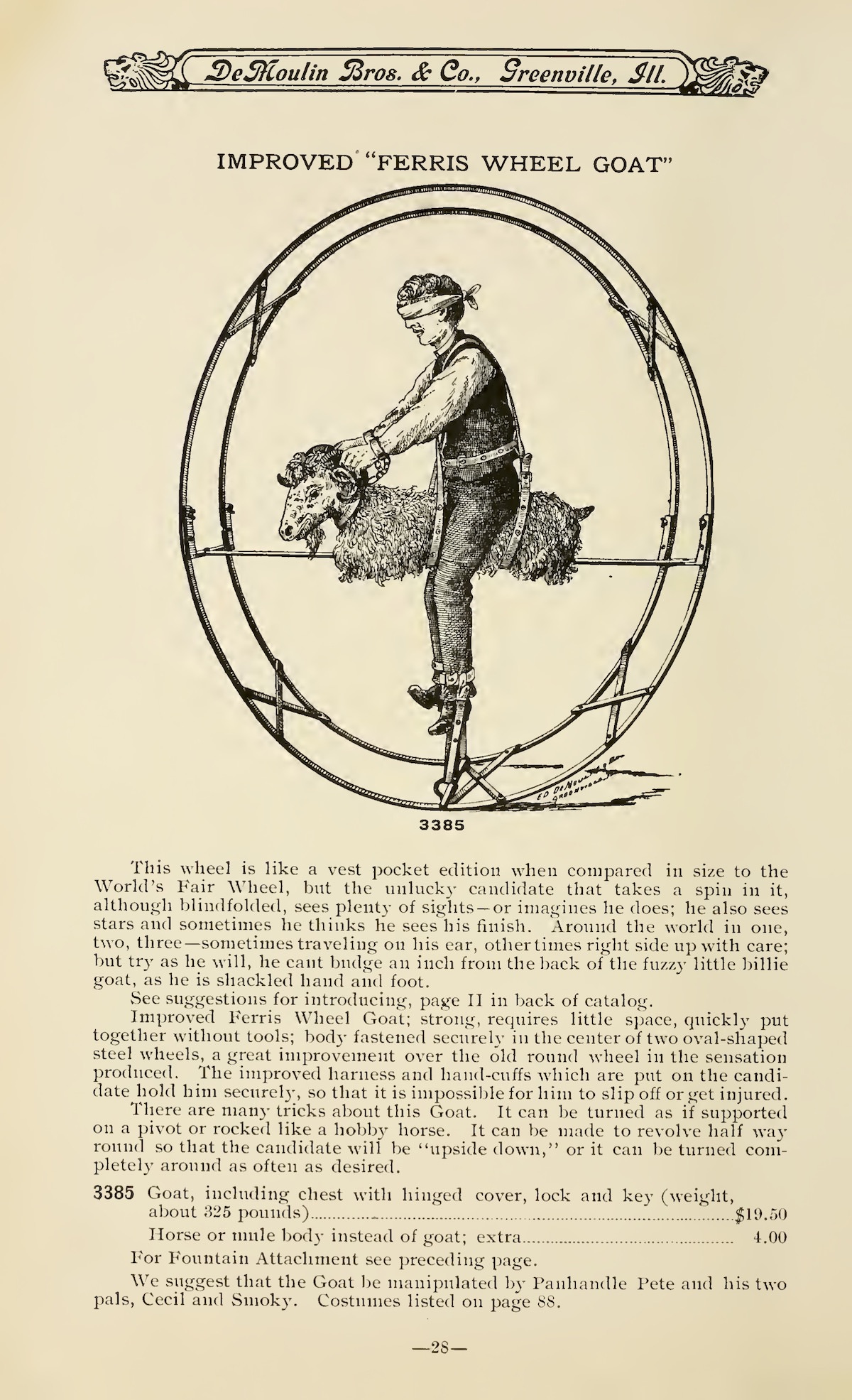
With the blindfold in place, the real devices came into play. The “Ferris Wheel Goat” was one of the catalogue’s more elaborate mechanical offerings. A blindfolded initiate would be strapped onto a rotating frame and spun, leaving him completely disoriented, with no idea which direction was up or what was about to happen next.
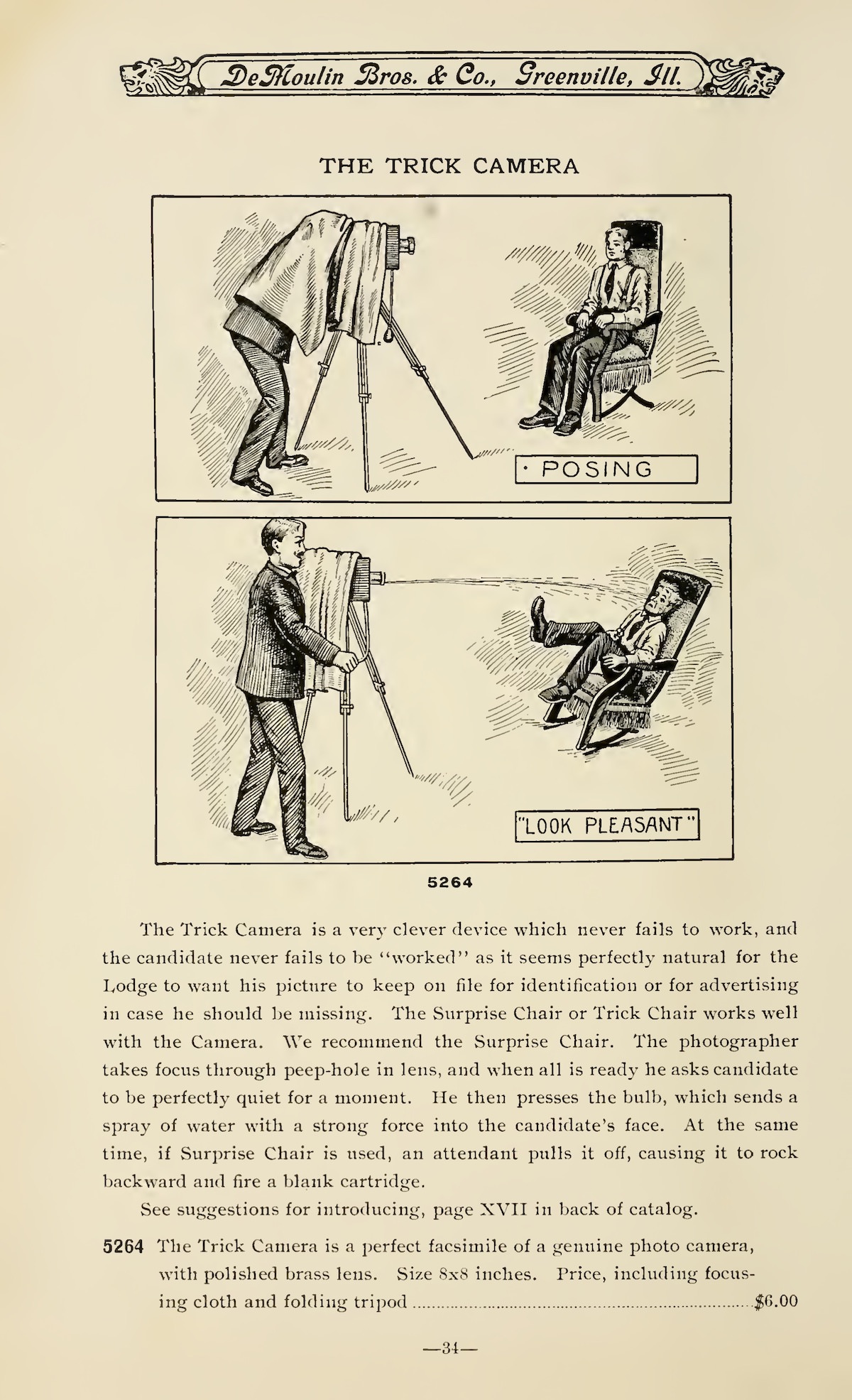
Not every device relied on motion. Some played tricks on the initiate’s mind through deception. The Trick Camera, for example, was designed to humiliate rather than physically disorient — a candidate posed for what he believed was a photograph, only to find the experience turned into a prank at his expense.
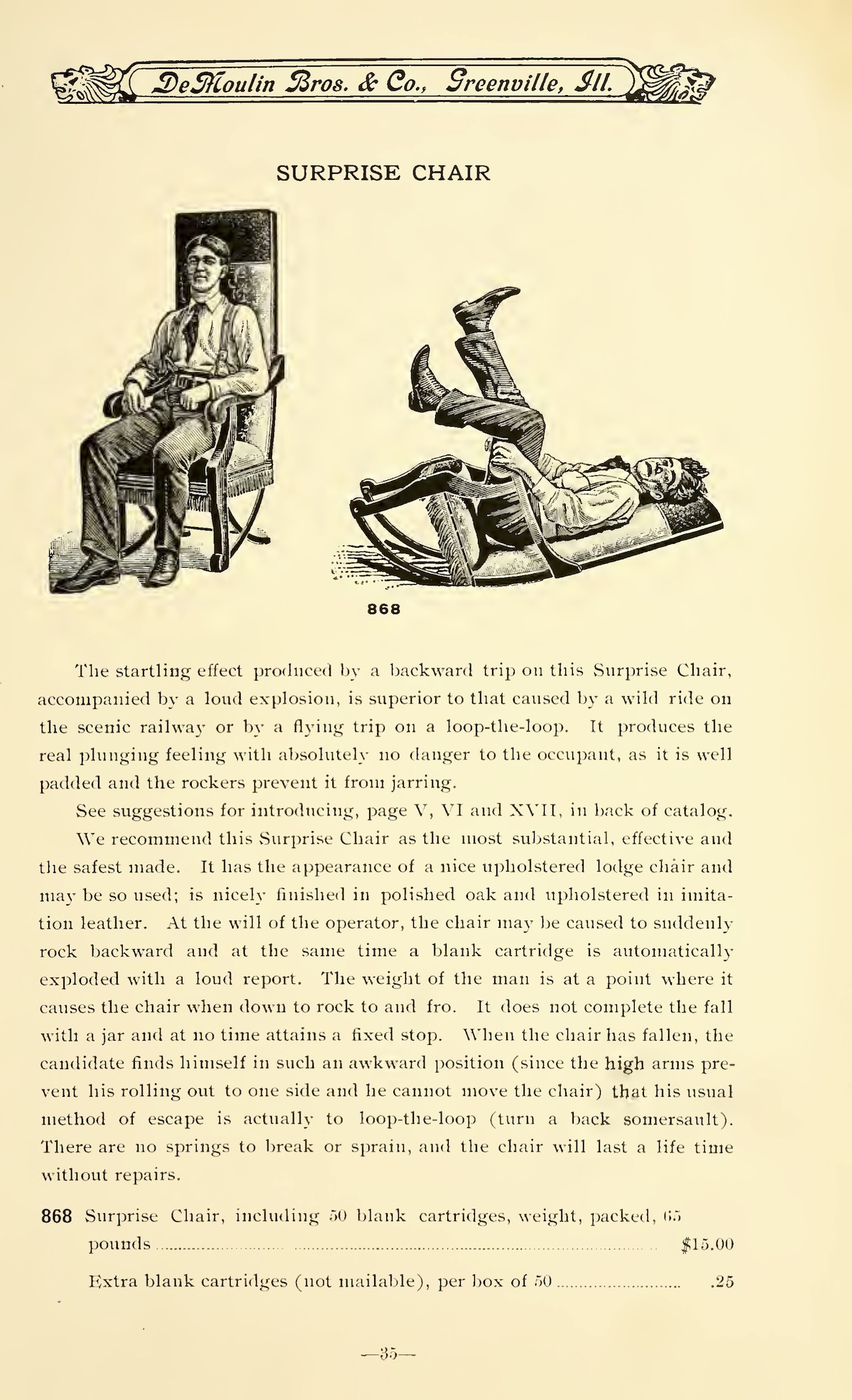
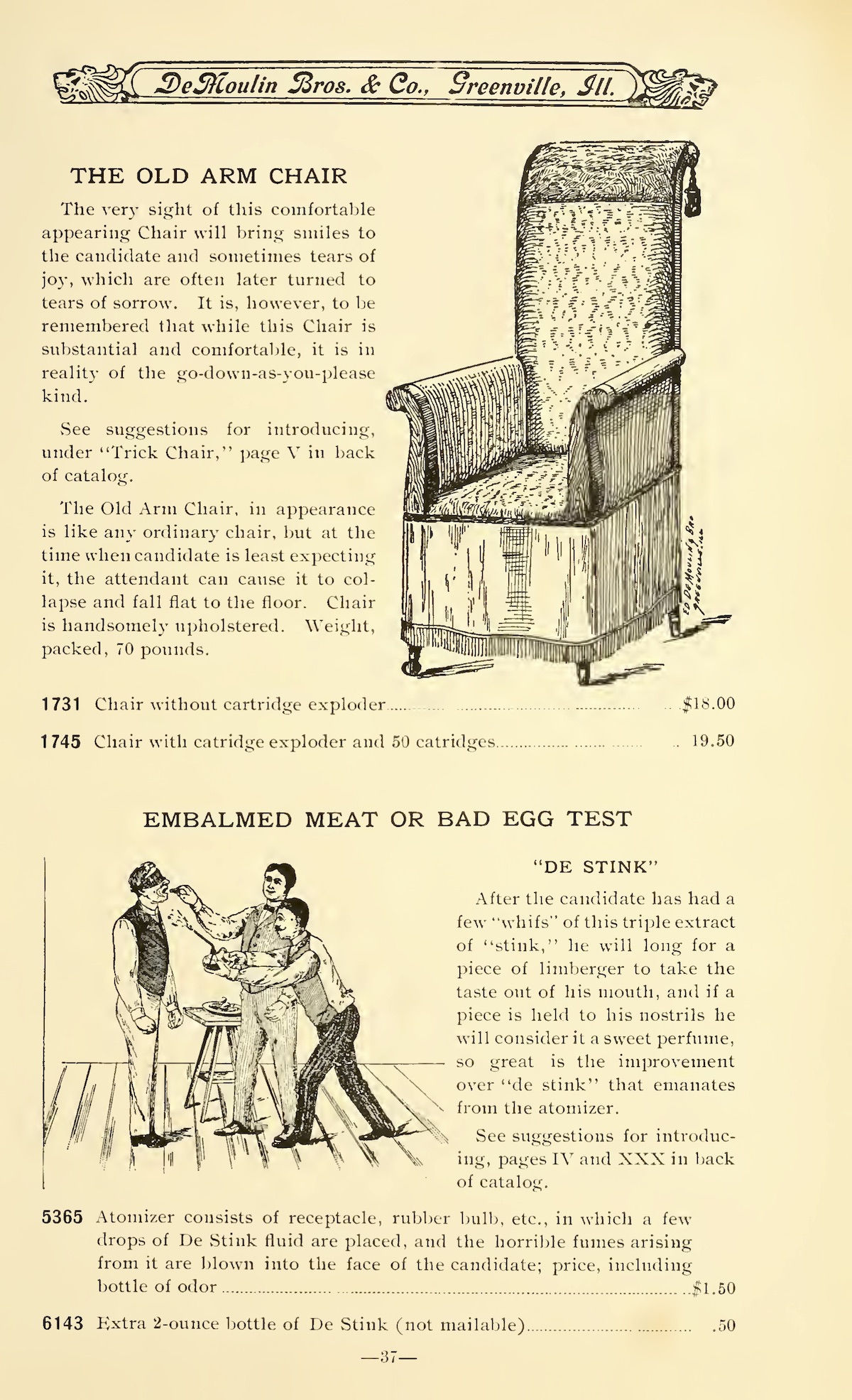
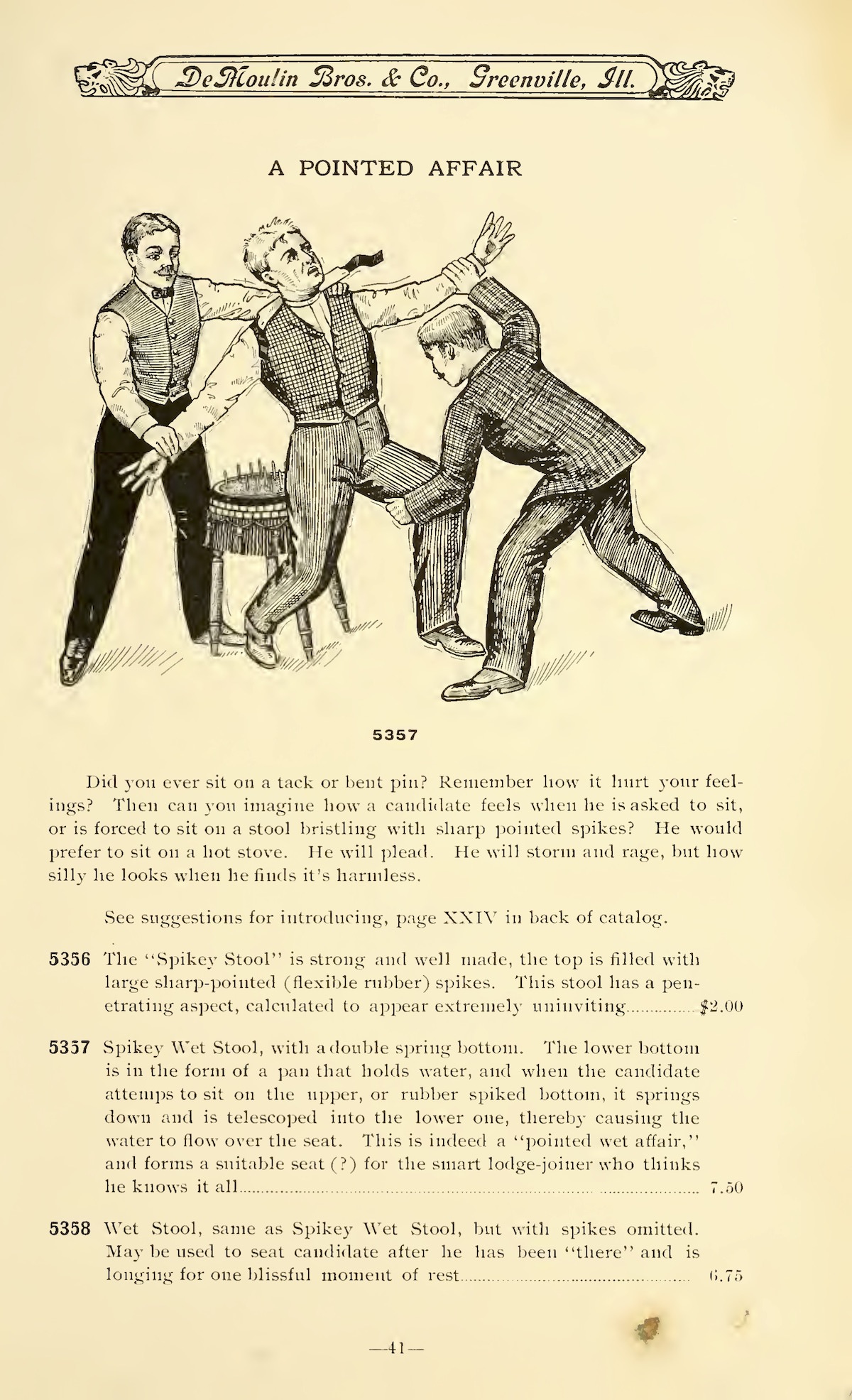
Furniture was another category DeMoulin Brothers weaponized. Chairs were a particular specialty. The Surprise Chair and the Old Arm Chair both looked like ordinary seating, but were rigged to deliver an unexpected jolt — whether mechanical, electrical, or otherwise — the moment the initiate sat down.
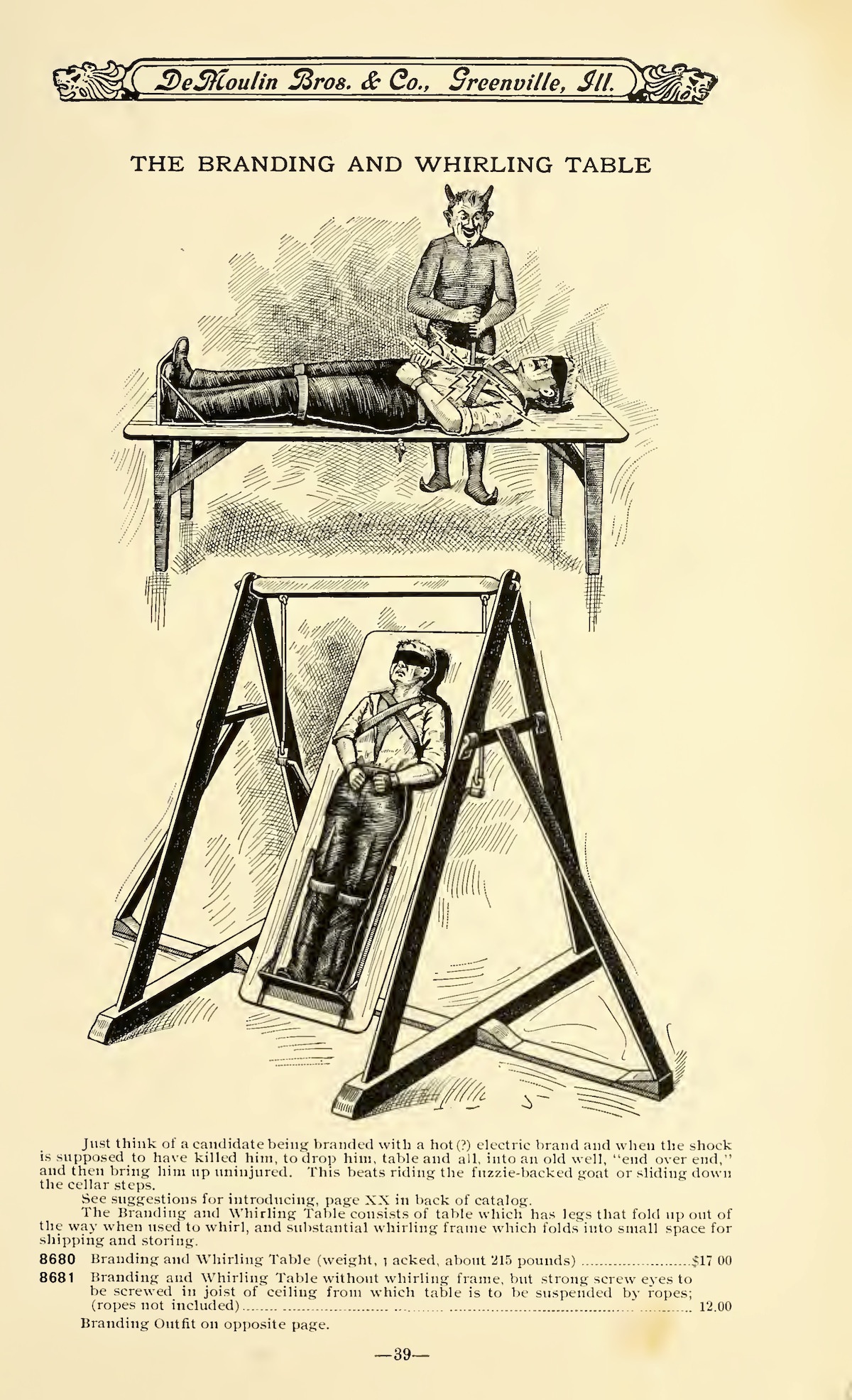
The Branding and Whirling Table combined two forms of initiation stress in one device. A candidate would be strapped to the table, spun to destroy his sense of direction, and then subjected to a simulated branding — designed to make him believe, at least for a terrifying moment, that a hot iron was being pressed against his skin.
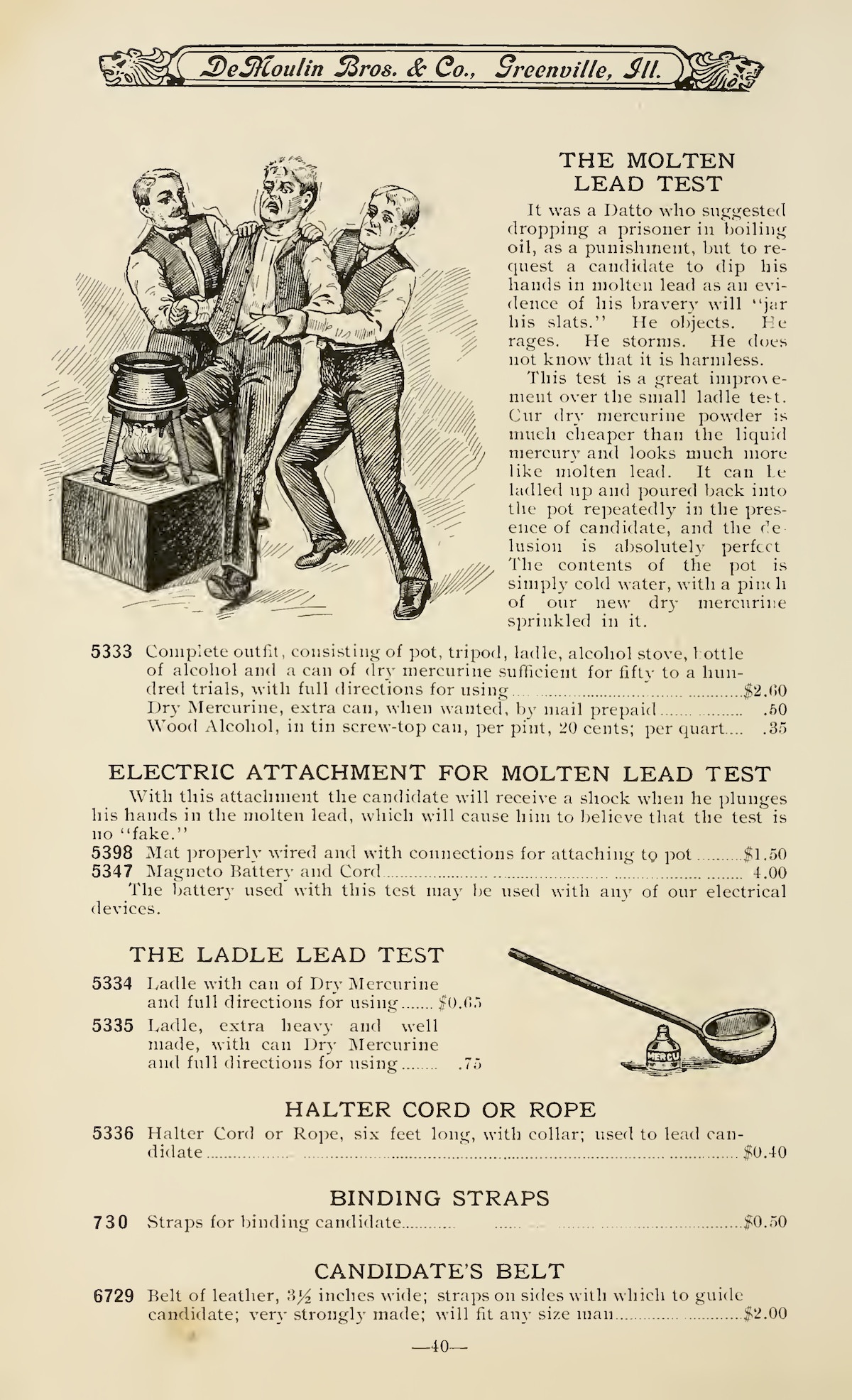
The Molten Lead Test carried the same logic of simulated terror. The initiate was made to believe he was about to plunge his hand into molten metal. The actual mechanics were designed to be safe, but the psychological effect was the point — to see whether the candidate would flinch or hold his nerve under what felt like a genuine threat.
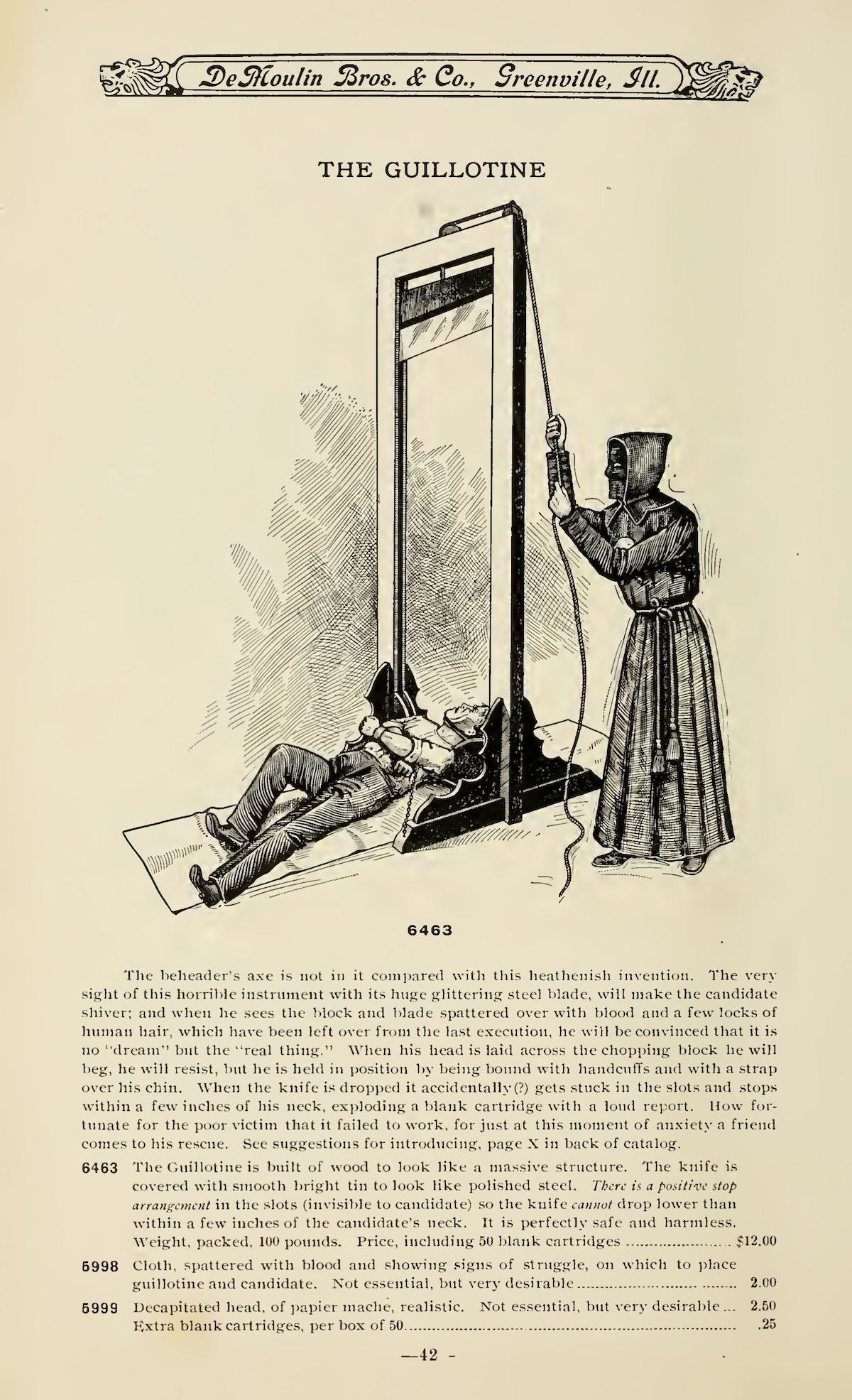
Perhaps the most dramatic item in the catalogue was the Guillotine. Built to look authentic, it placed the initiate’s head and wrists in a wooden stock and then dropped a blade — which stopped short of causing real harm, but delivered a convincingly terrifying experience. The theatricality was entirely deliberate.
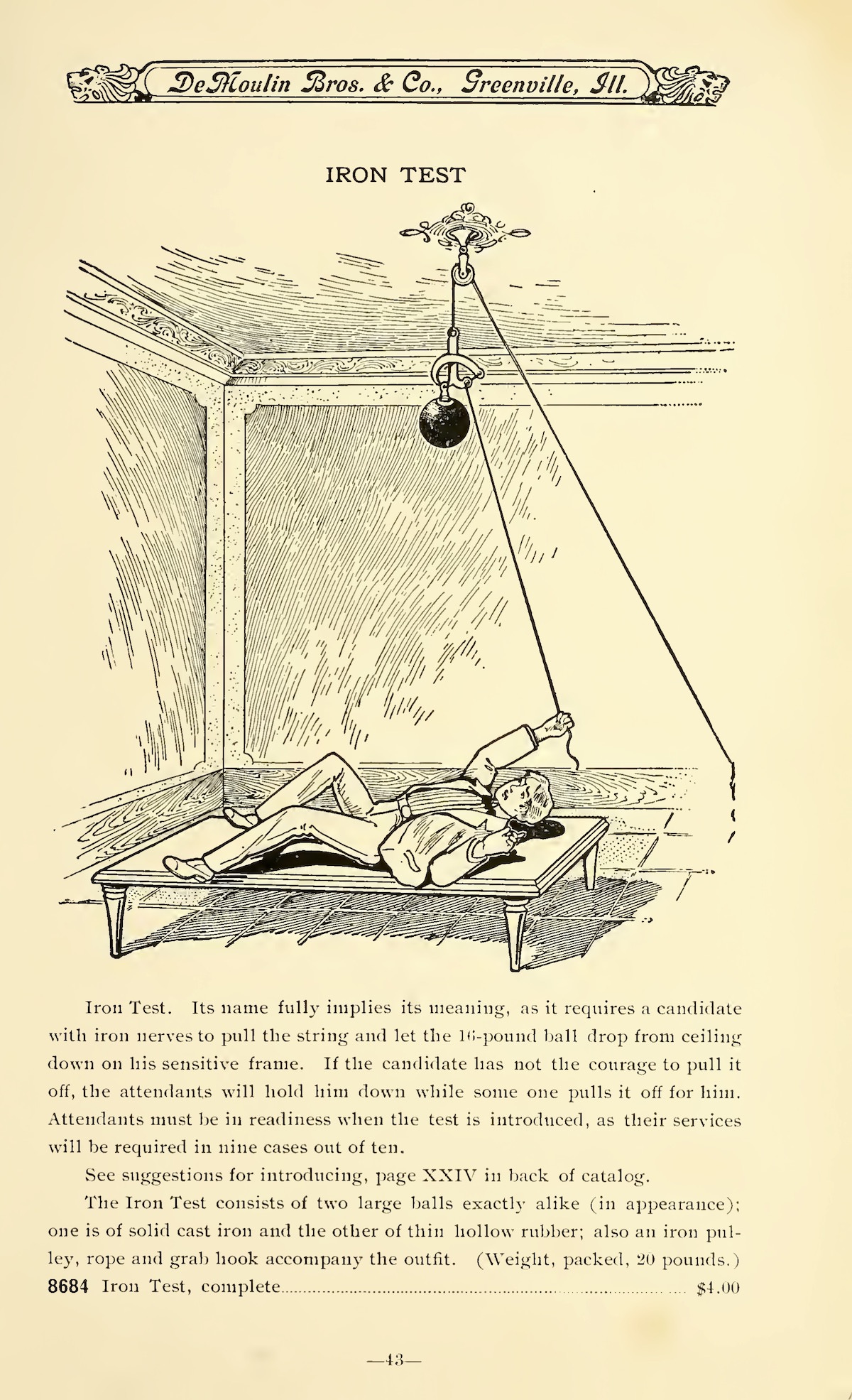
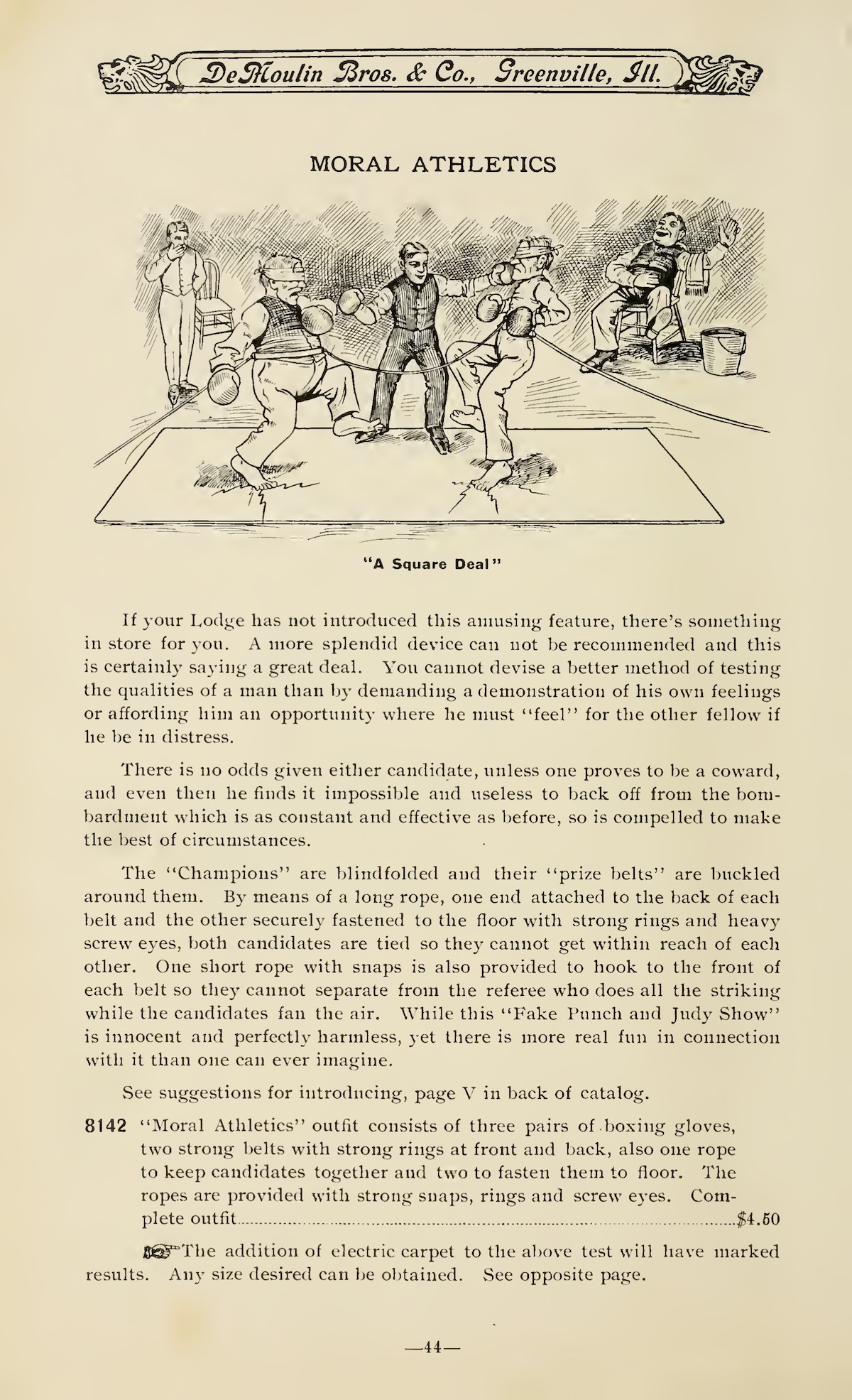
Physical tests continued with the Iron Test, which challenged the initiate’s strength and endurance. Alongside it, the catalogue offered “Morla Athletics” — a category of physical initiation challenges that pushed candidates through demanding exercises as part of proving themselves worthy of membership.
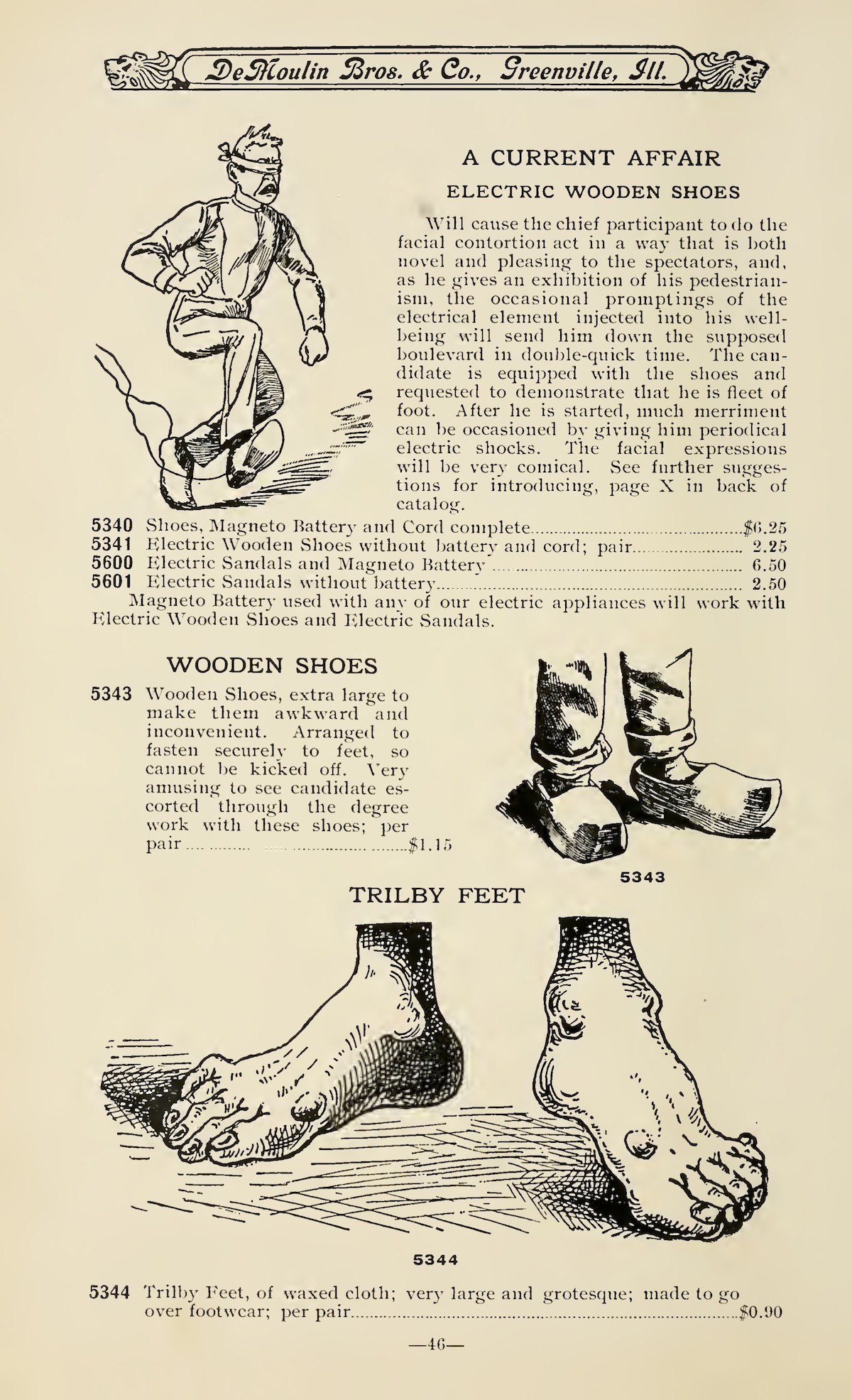
DeMoulin Brothers also sold Electric Wooden Shoes — footwear fitted with a mechanism to deliver an electric shock to the wearer. The candidate would put them on as instructed, not knowing what they contained. The shock that followed was part of the initiation’s designed ordeal.
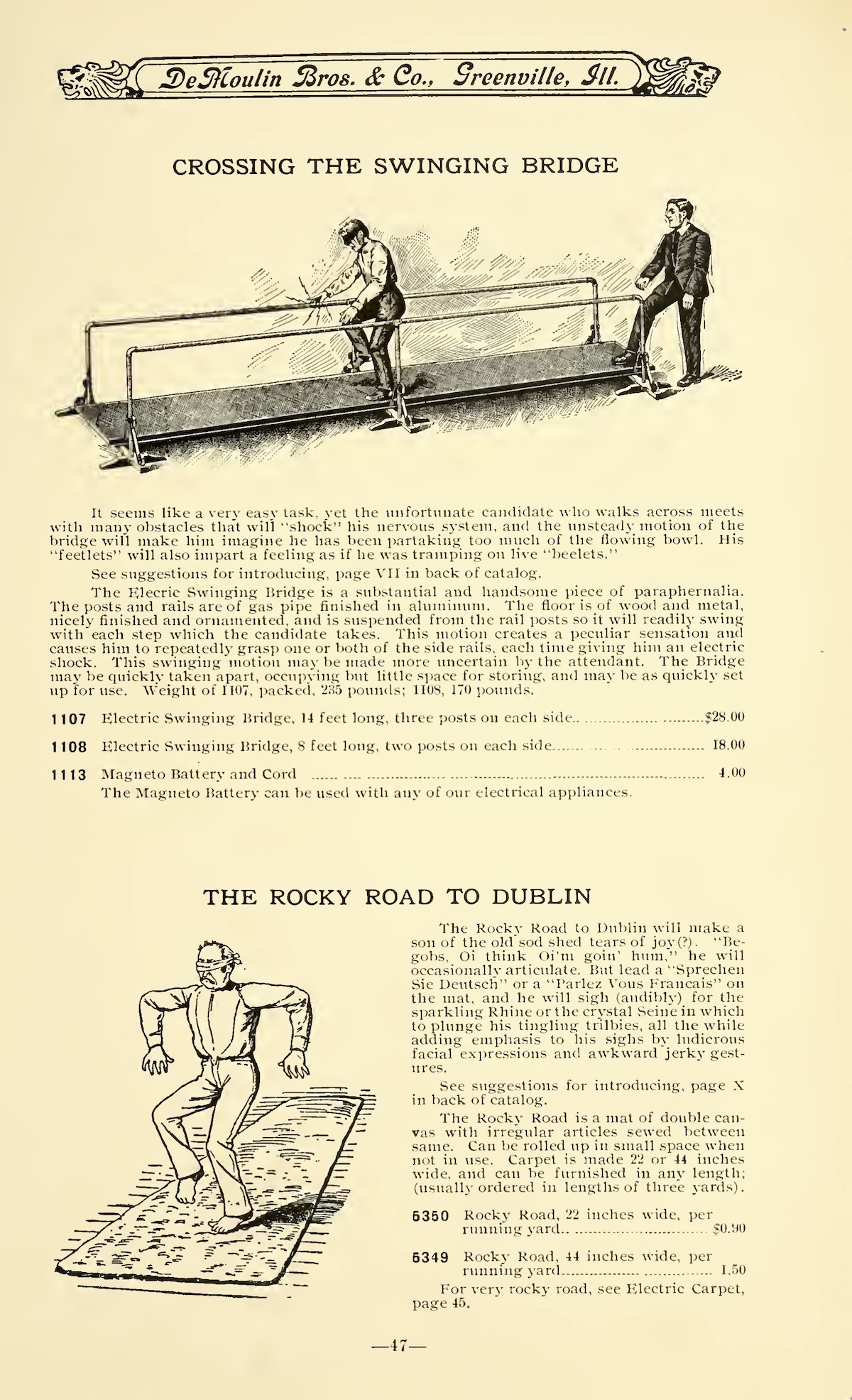
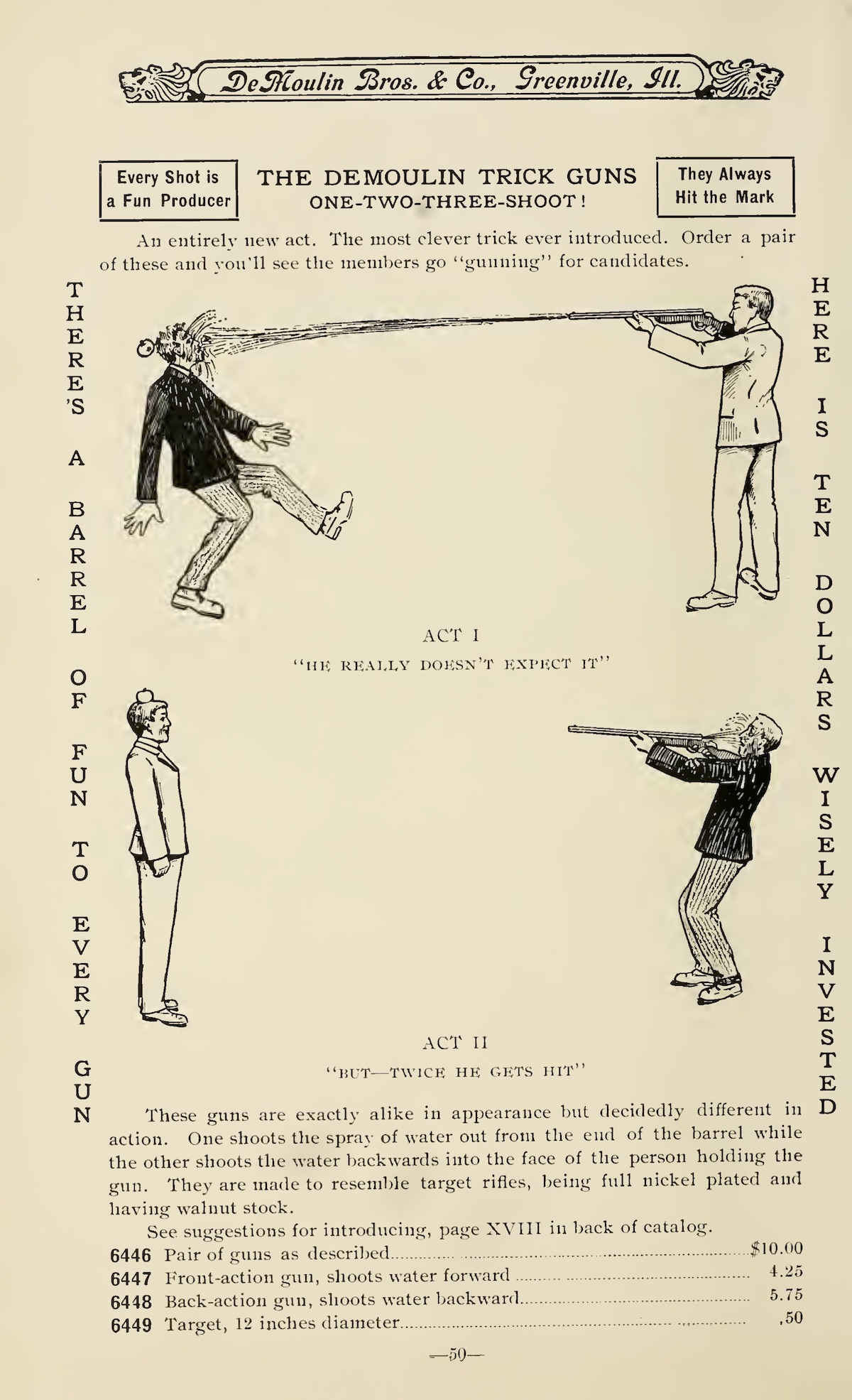
Balance and physical disorientation were key themes throughout the catalogue. The Swinging Bridge forced an initiate to cross an unstable suspended walkway, testing his composure when the ground beneath him would not stay still. Meanwhile, the DeMoulin Trick Guns added a theatrical element — weapons rigged to produce a startling effect rather than an actual discharge.
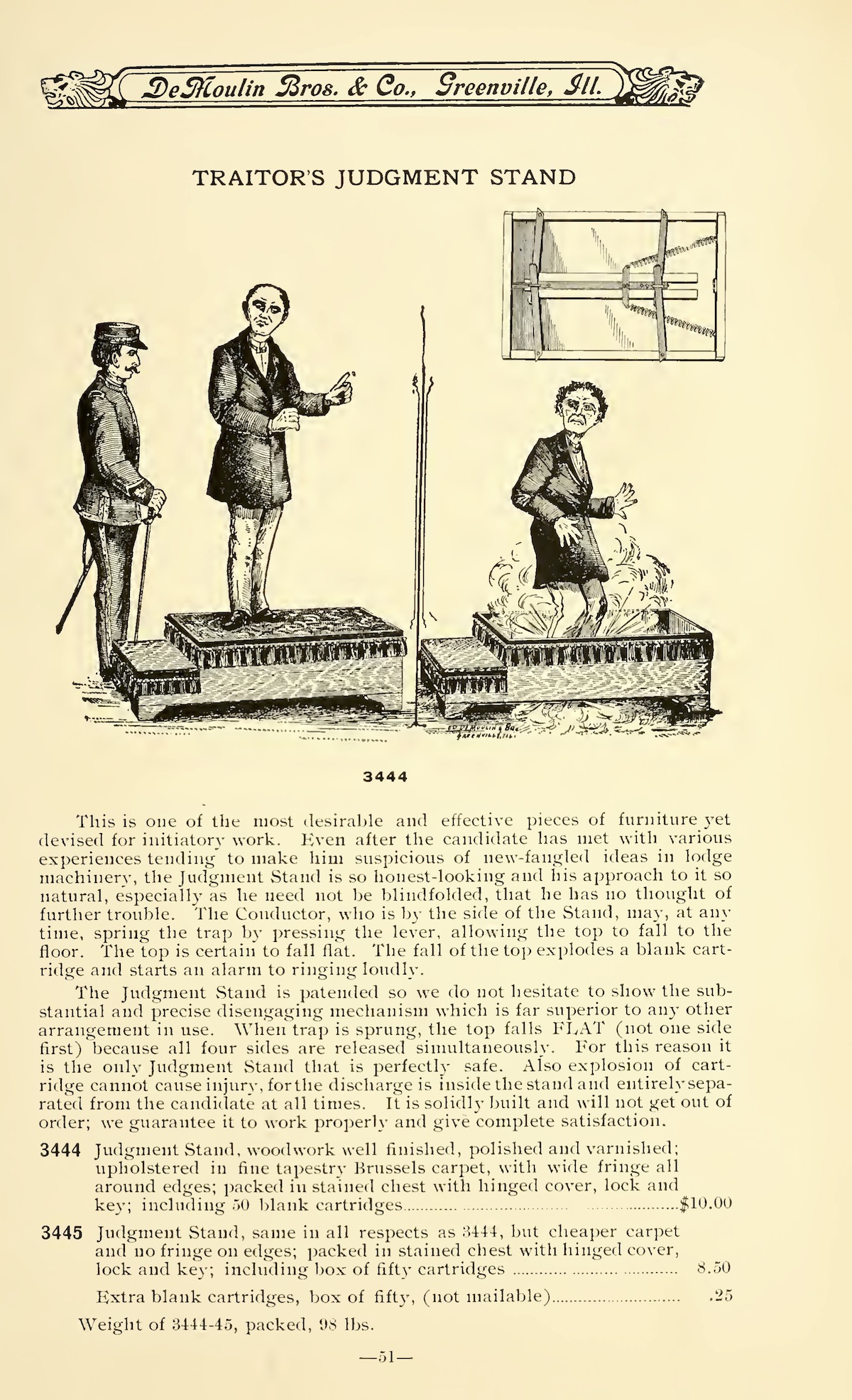
For lodges that wanted to stage a formal judgment ritual, the Traitor’s Judgment Stand gave the proceedings a court-like weight. The initiate stood before the assembled membership in a posture of submission and accountability, reinforcing the lodge’s internal hierarchy and the gravity of seeking admission.
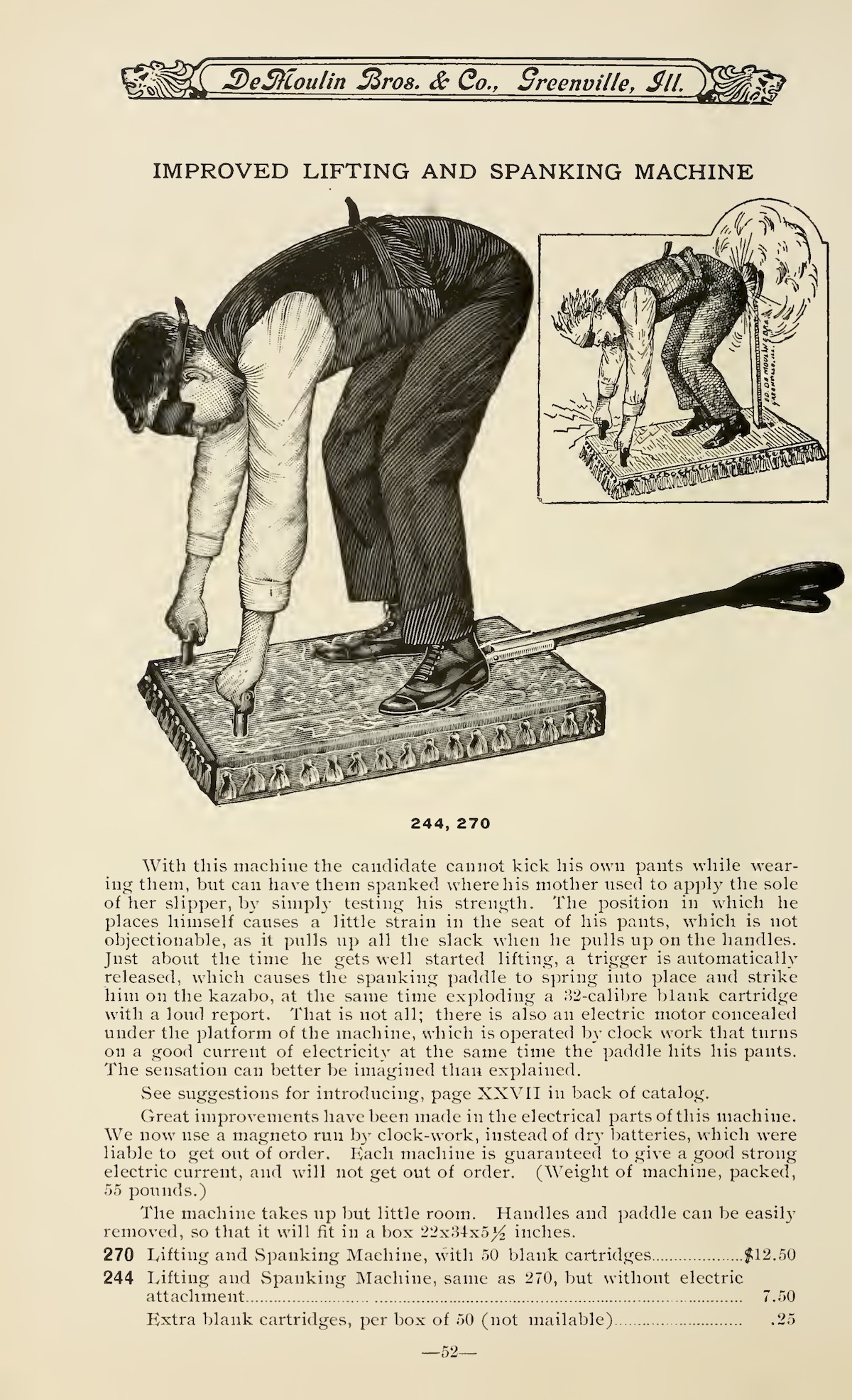
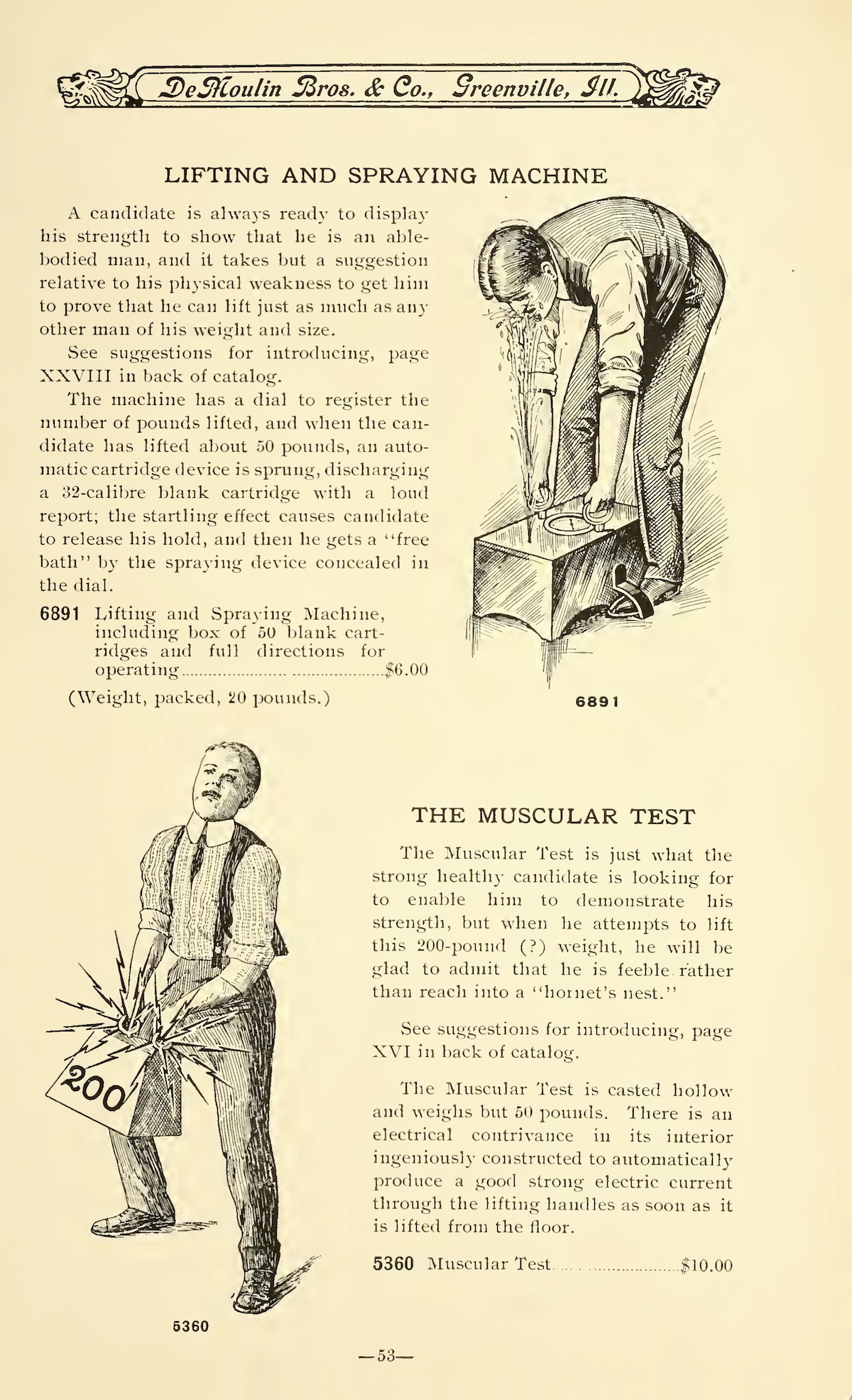
The Lifting and Spanking Machine and the Lifting and Spraying Machine were among the catalogue’s more directly physical offerings. Both were mechanical devices designed to grab and maneuver the initiate against his will — one delivering corporal punishment, the other a soaking. Neither required any elaborate performance. The device did the work.
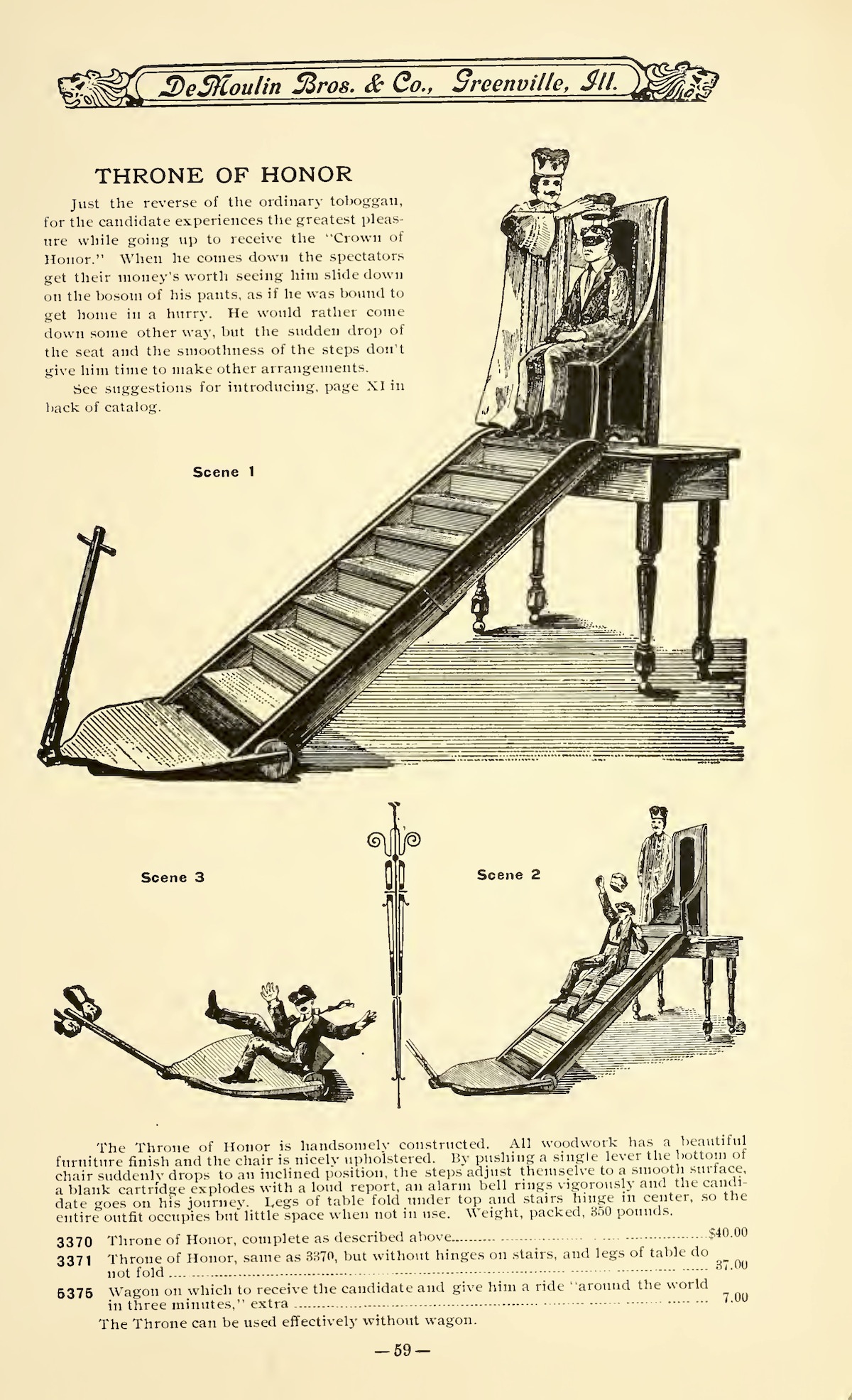
At the end of the initiation ordeal, the successful candidate was welcomed with ceremony. The Throne of Honor seated the newly accepted member in a place of formal recognition — a deliberate contrast to everything he had just been subjected to, and a signal that the hazing was over and brotherhood had begun.
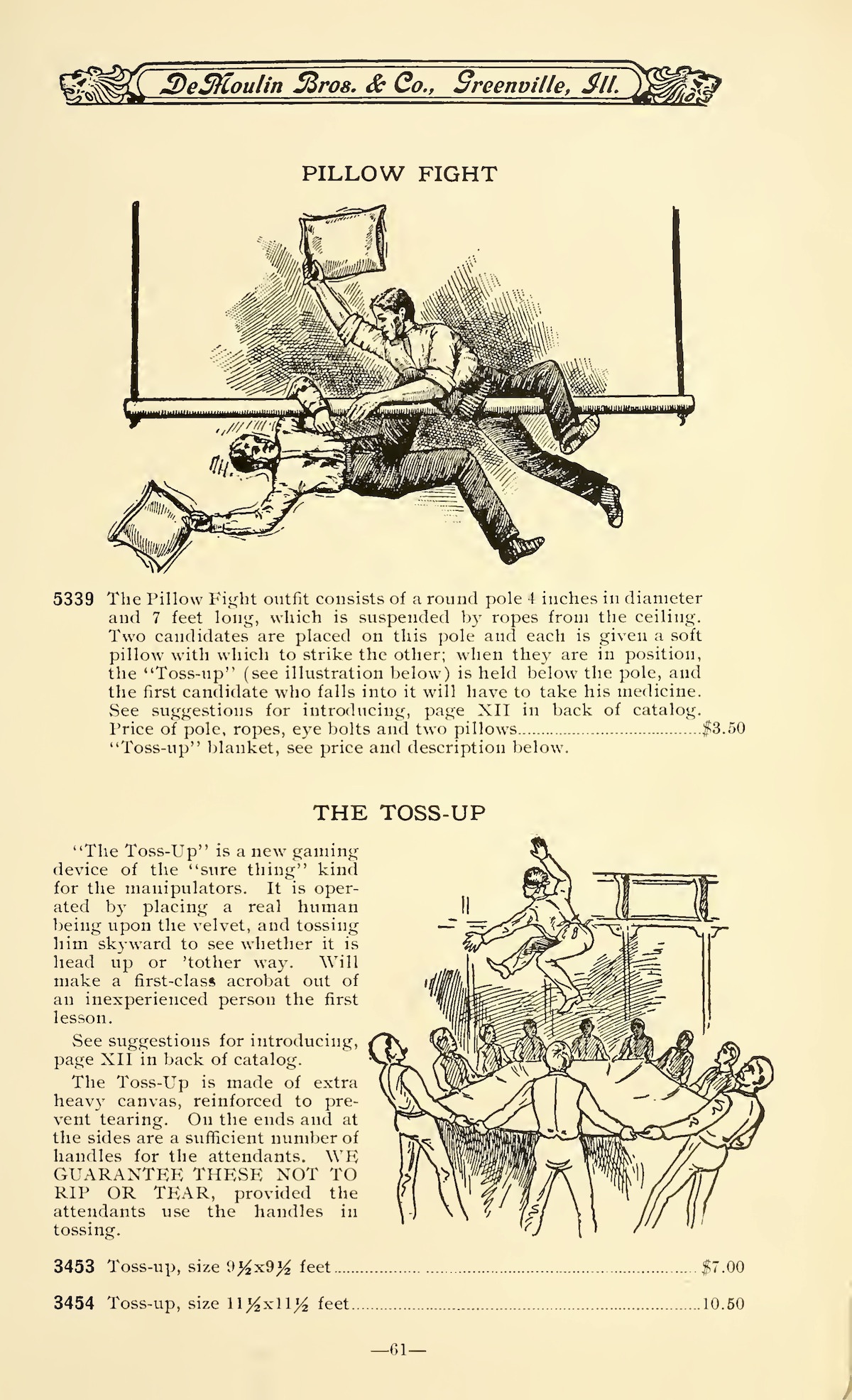
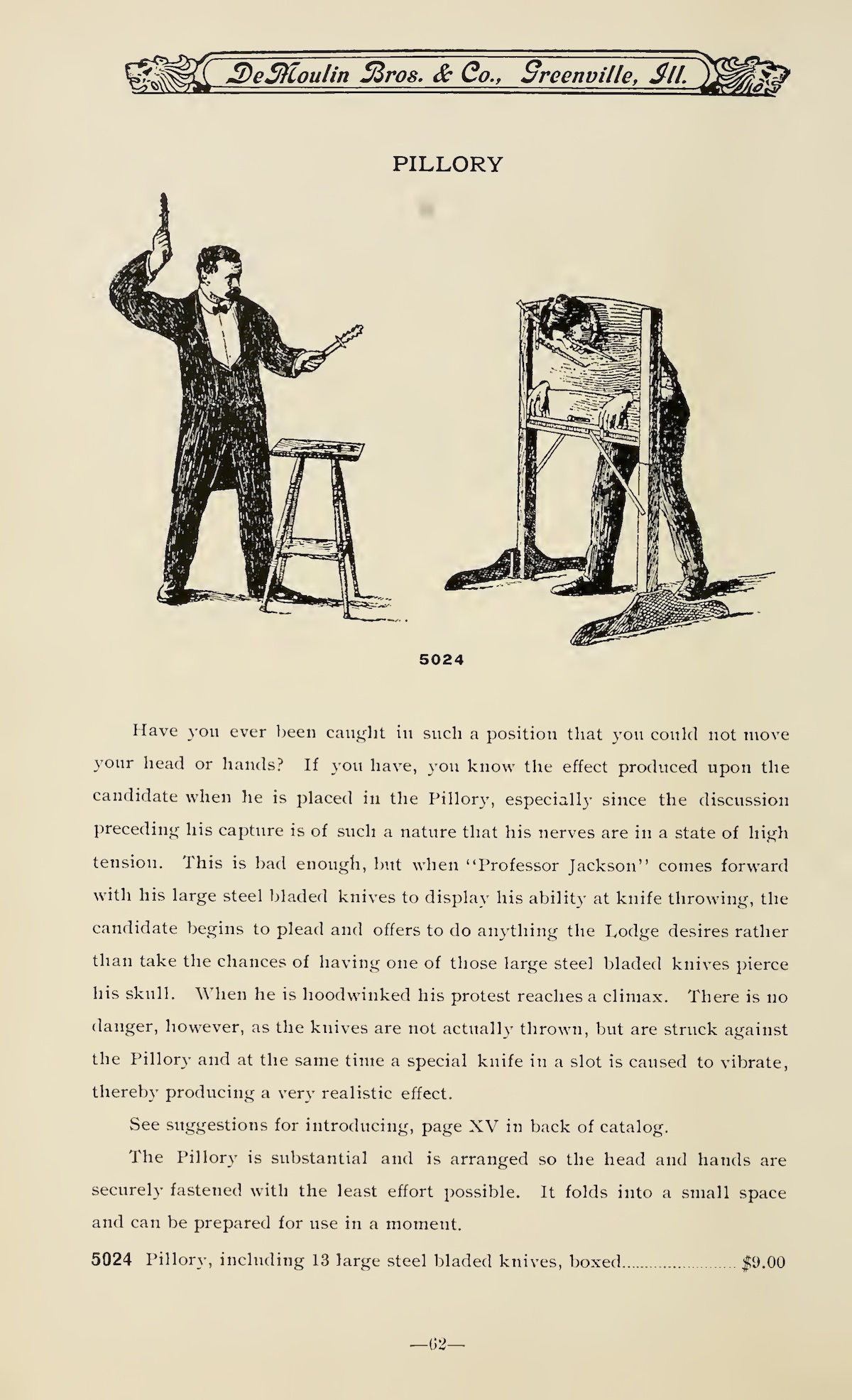
Not everything in the catalogue was sinister in nature. The Pillow Fight and the Pillory offered lighter, more comedic hazing options — the kind meant to embarrass rather than frighten. The Pillory, a classic wooden stock for the head and hands, was a staple of public humiliation with centuries of history behind it, here repackaged as fraternal entertainment.
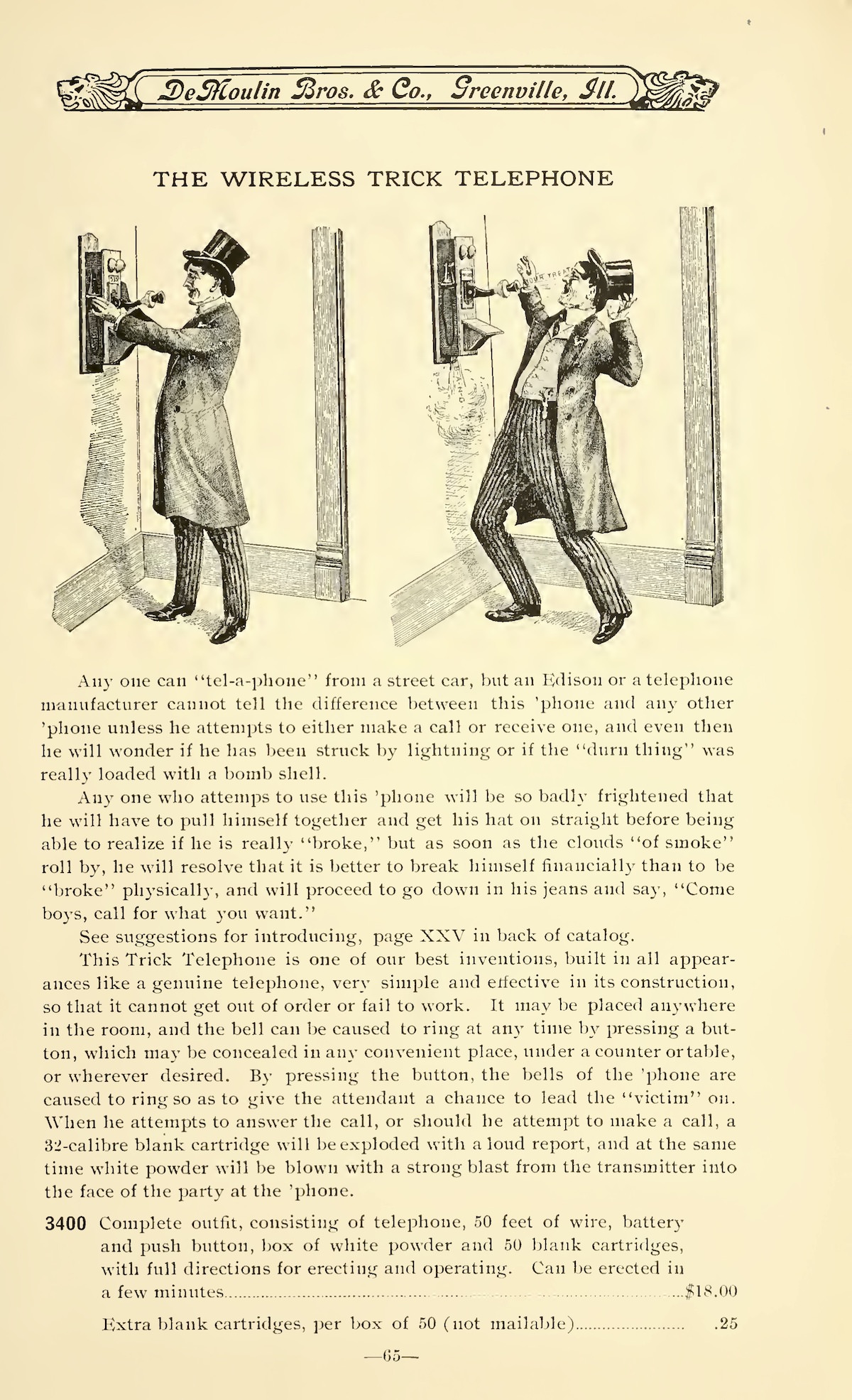
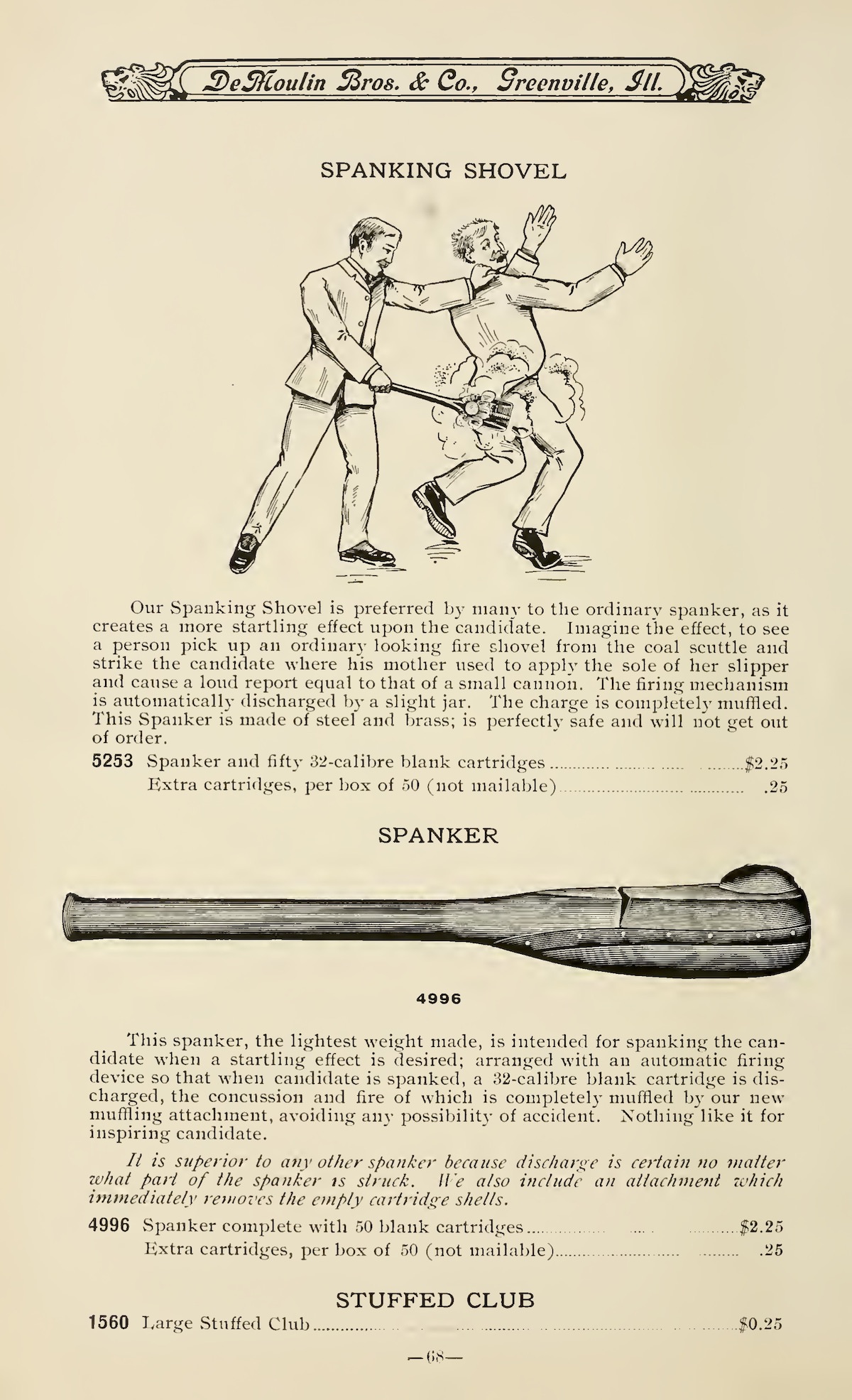
The Wireless Trick Telephone was another device built around deception. The initiate would be handed what appeared to be a functioning telephone, only for the device to behave in an unexpected and humiliating way. The Spanking Shovel, by contrast, required no technical trickery — it was exactly what its name suggested, a paddle shaped like a shovel, used to deliver physical punishment during the ritual.
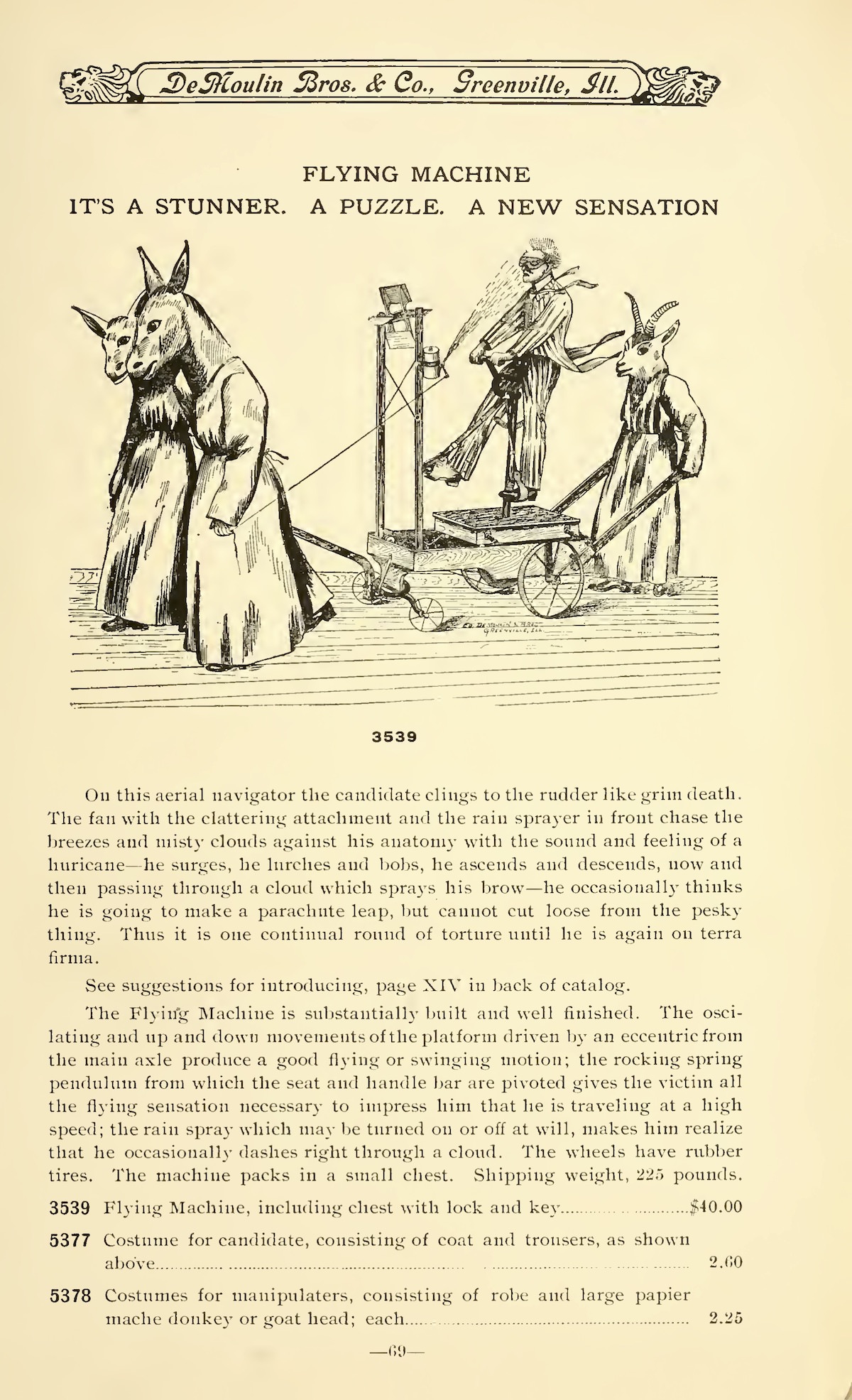
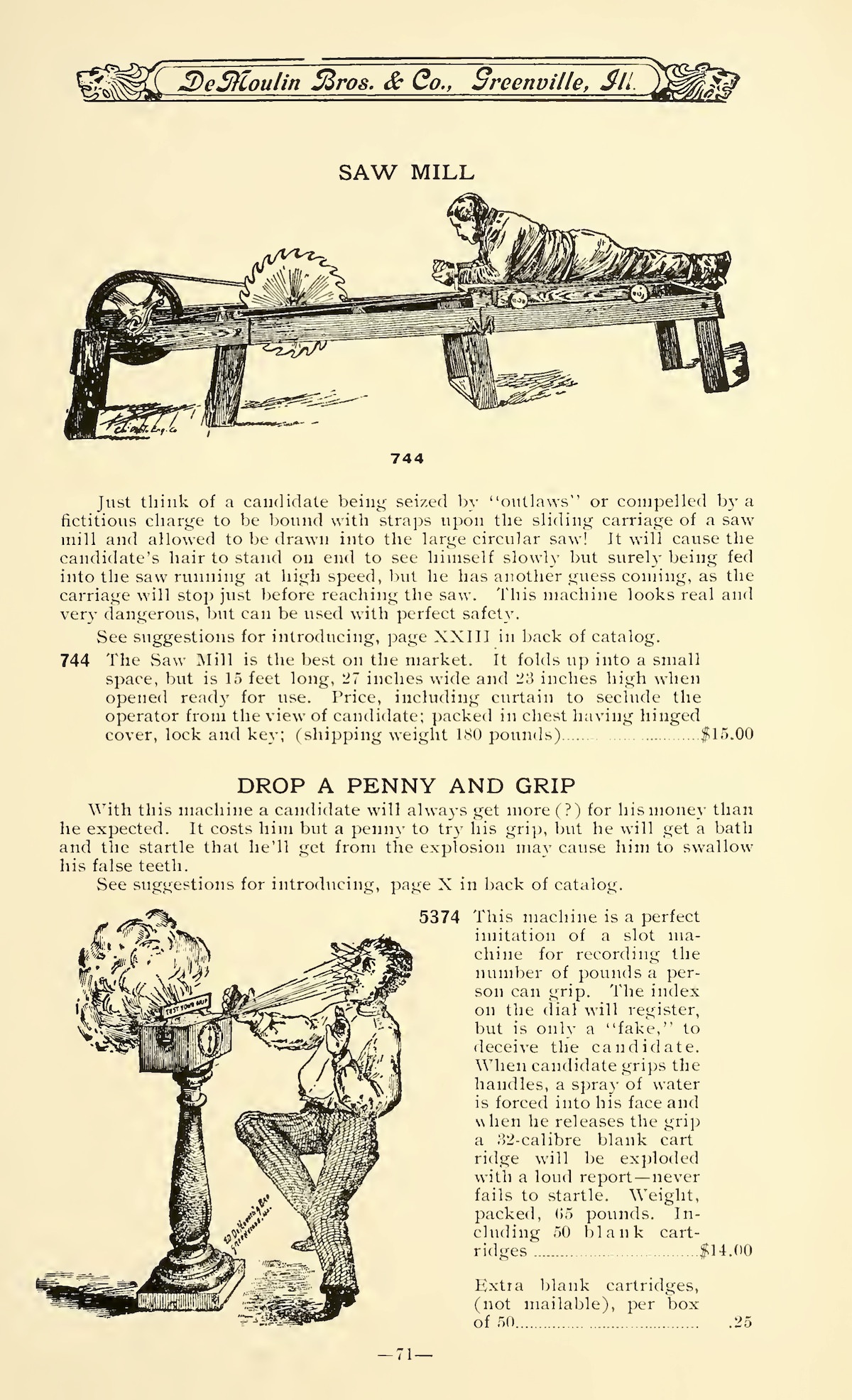
The Flying Machine and the Saw Mill rounded out the more elaborate mechanical entries. The Flying Machine simulated the sensation of flight or freefall — a full-body disorientation experience. The Saw Mill placed the blindfolded candidate in what appeared to be a life-threatening industrial scenario, using sound, movement, and sensation to convince him he was about to be cut in two.
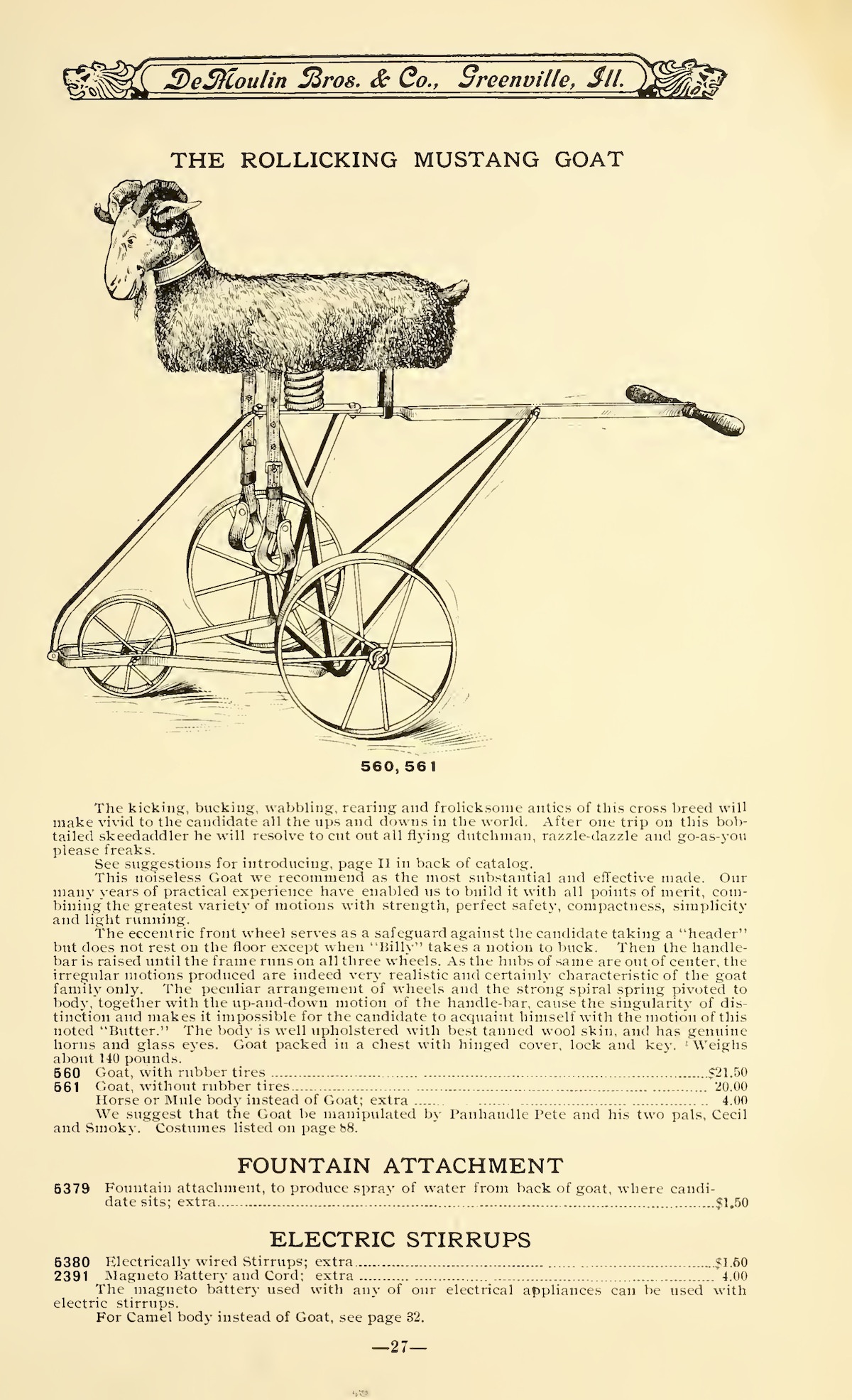
The Rollicking Mustang Goat closed out the catalogue’s mechanical animal category. Like the Ferris Wheel Goat, it was a bucking, spinning device that threw the rider around and left him unable to anticipate its next move. The men who designed, sold, and used these devices were the same generation that later marched through the trenches of World War I, endured the Great Depression, and fought in World War II. They understood hardship as a way of building character — and the DeMoulin Brothers catalogue was simply their commercial answer to that belief.