

The 1960s arrived like a storm. Across the United States, old certainties were cracking apart — in courtrooms, on street corners, in college dormitories, and at the launch pads of Cape Canaveral. St. Louis sat squarely in the middle of it all. The city was not a passive observer of the decade’s upheavals. It was a stage where civil rights battles were fought, where spacecraft were designed and built, and where a skyline was being remade block by block. What follows is a look at St. Louis during one of the most turbulent and consequential decades in American history.
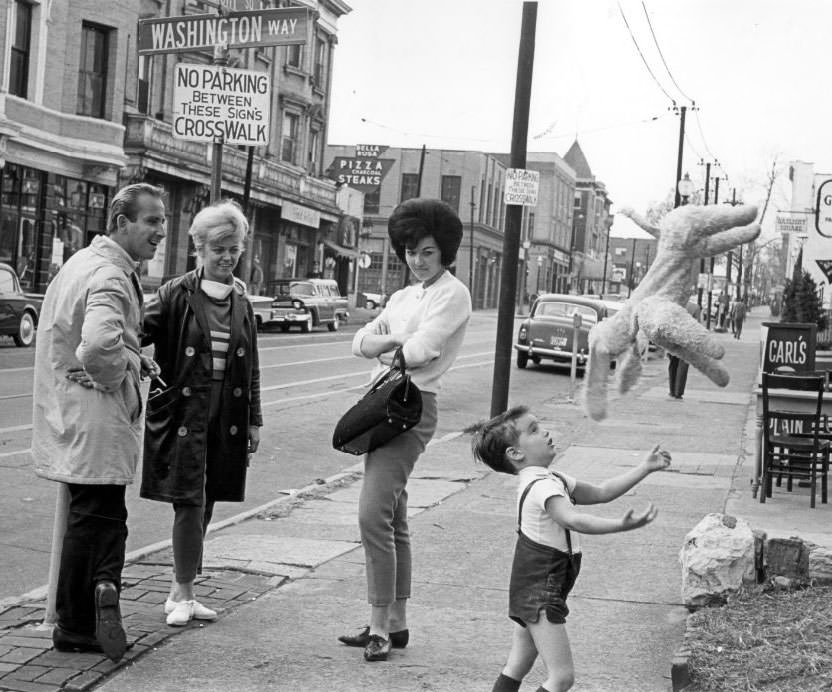
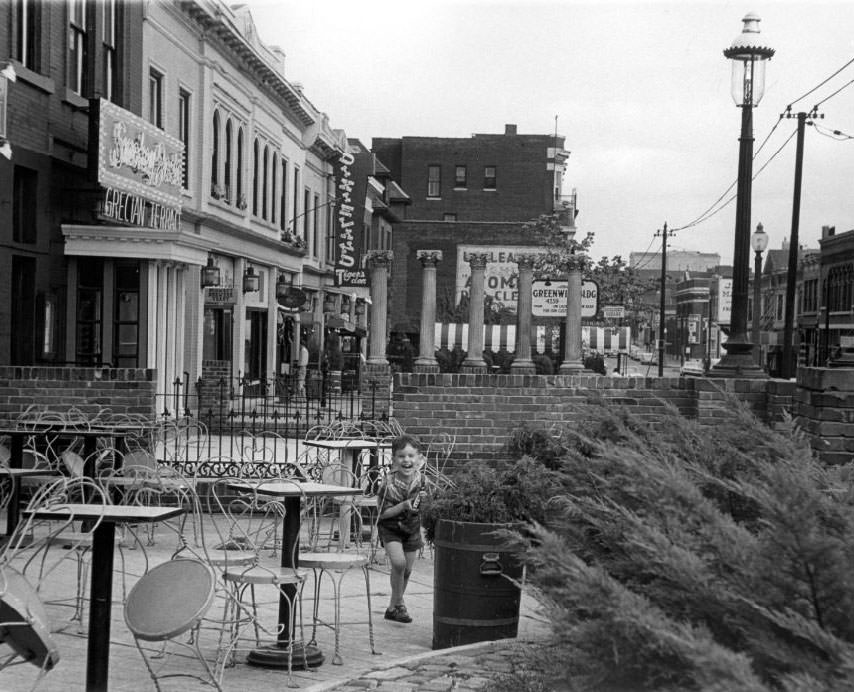
At the start of the decade, St. Louis still carried much of its mid-century character. Neighborhoods like Gaslight Square had become gathering spots for artists, writers, and musicians. Coffee shops, jazz clubs, and small theaters lined the streets there, drawing a crowd that was hungry for something different from the post-war suburban routine. The counterculture had not yet fully bloomed, but its seeds were already being planted in places exactly like this.
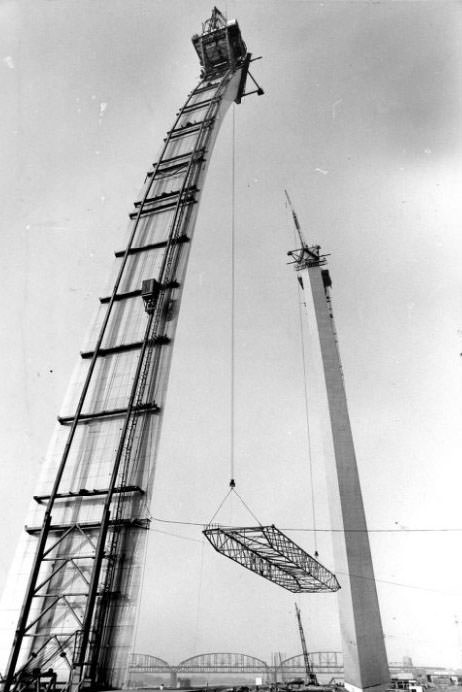
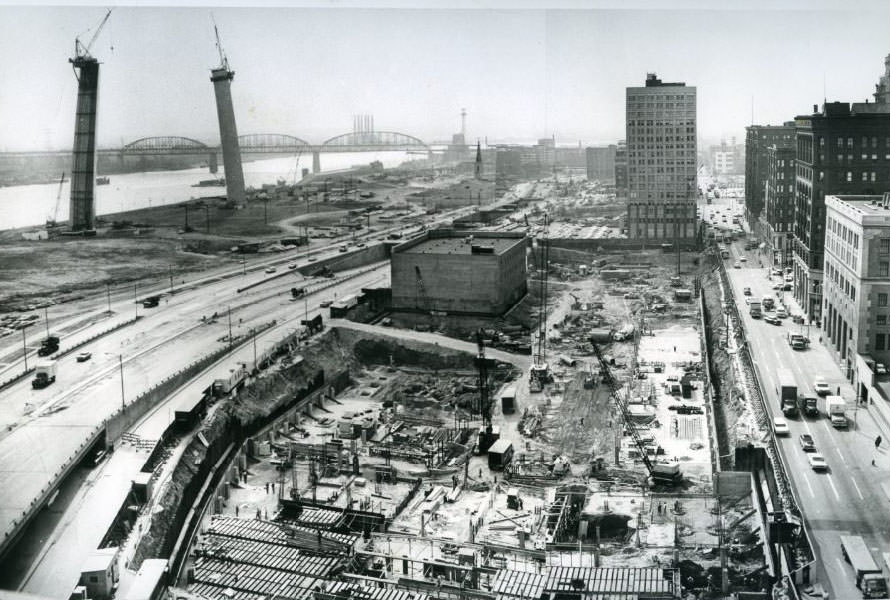
Perhaps no single image defined St. Louis’s ambitions in the 1960s more than the Gateway Arch. Construction on the stainless steel monument began in 1963, and it rose steadily over the decade as a symbol of westward expansion and American ingenuity. The project transformed the city’s riverfront, displacing older structures and reshaping the eastern edge of downtown entirely. By the time the two legs of the Arch met at the top in October 1965, the city had a landmark that announced itself to the world.
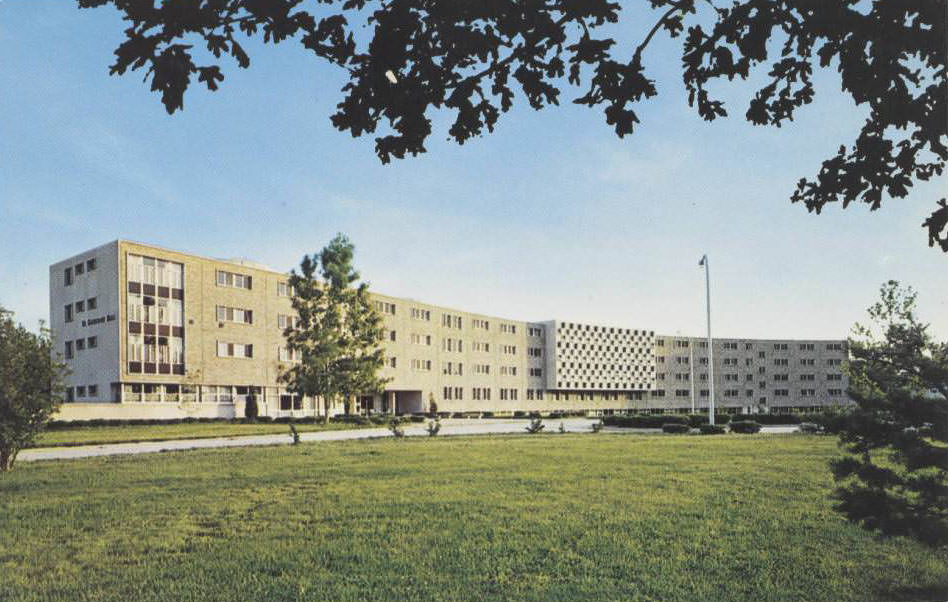
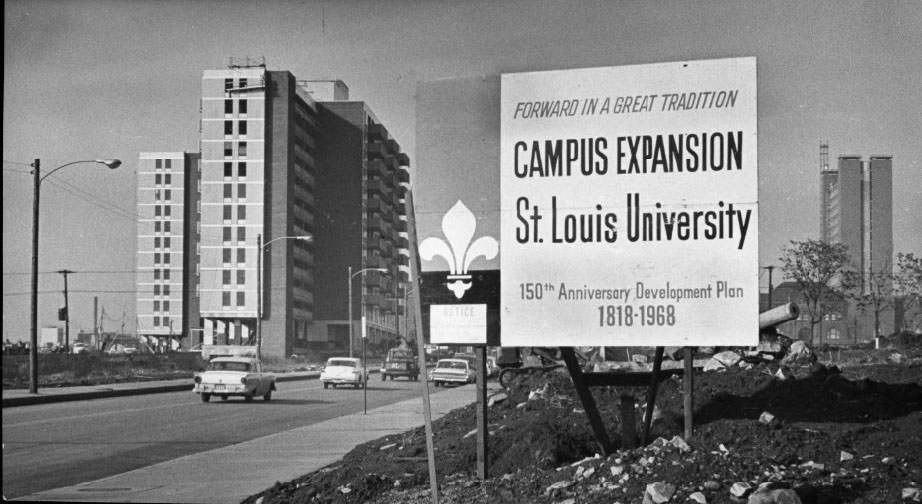
Education was expanding across St. Louis at the same time the city was reshaping its skyline. Institutions like Marillac College served growing student populations, and St. Louis University was pushing outward into surrounding neighborhoods. The decade brought a broader push for access to education that ran parallel to the civil rights movement — both were, at their core, demands for equal participation in American life.
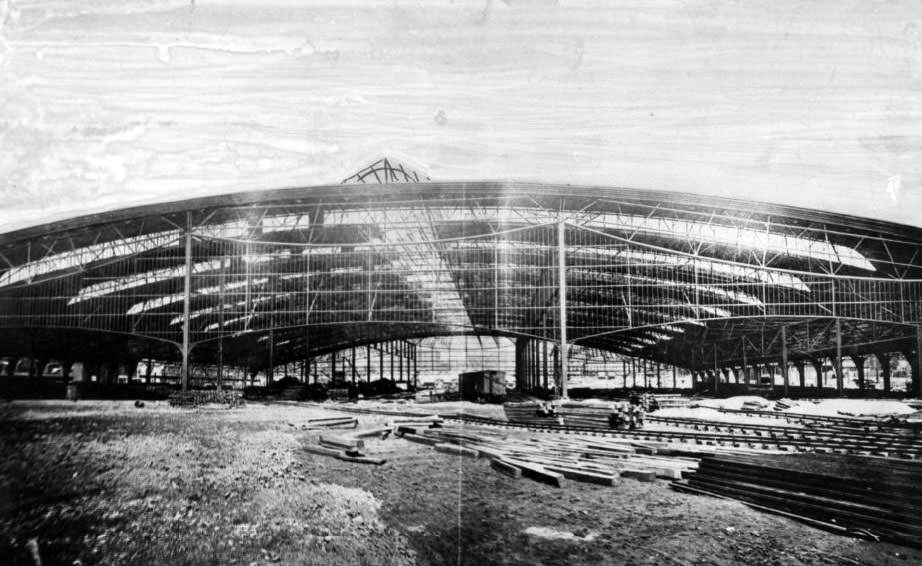
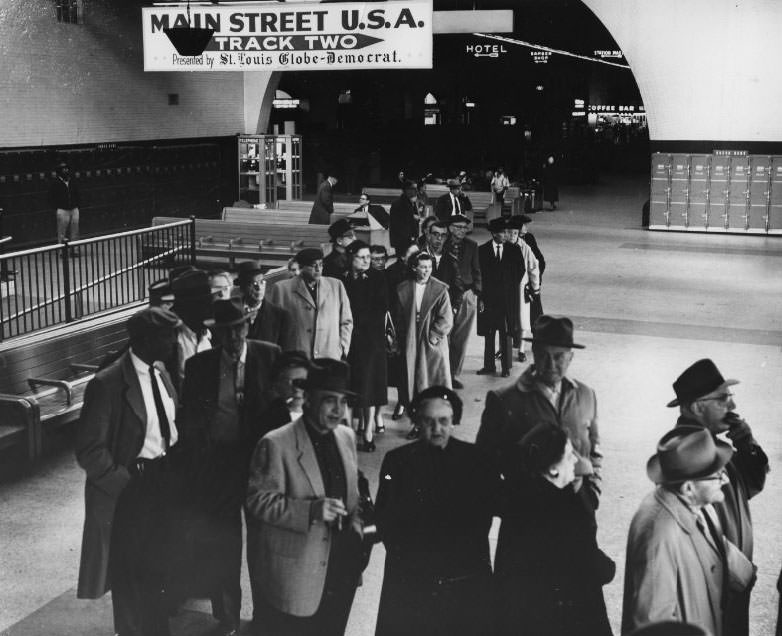
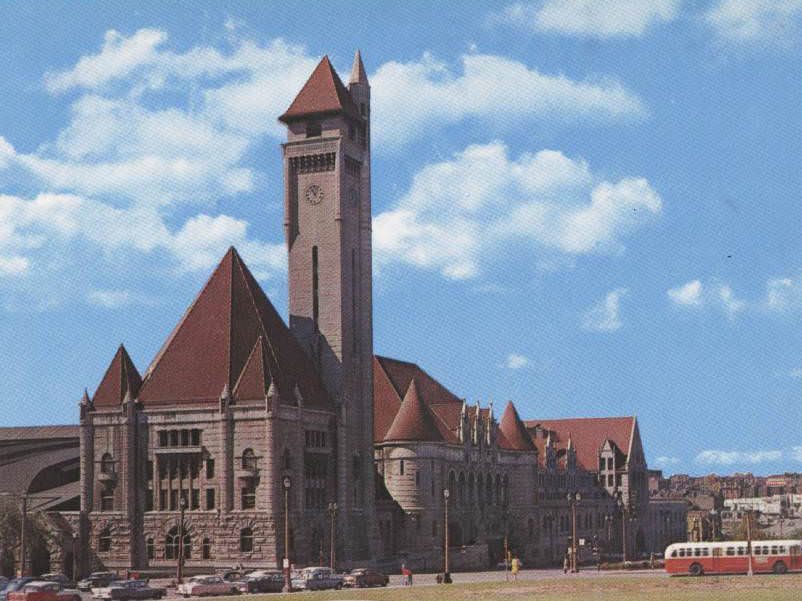
The city’s commercial arteries were busy. Union Station, one of the grandest train stations ever built in America, was still handling passenger rail at the start of the decade. Washington Avenue hummed with department stores, offices, and foot traffic. These streets formed the backbone of a city that, despite the changes pressing in from every direction, still operated on a familiar rhythm of work, commerce, and daily life.
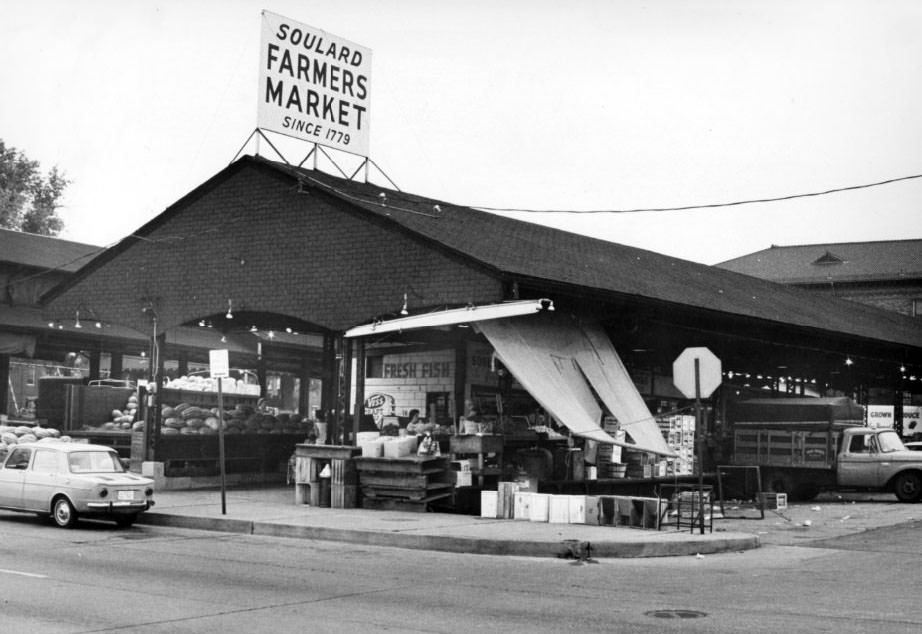
Down in Soulard, the open-air farmers market had been a fixture of St. Louis life since the 1770s. In 1960, it was still drawing residents from across the city to buy fresh produce, meats, and local goods. The market anchored a neighborhood that was one of the city’s oldest, a place where working-class families had lived for generations. While downtown was being rebuilt and reimagined, places like Soulard Market provided a sense of continuity.
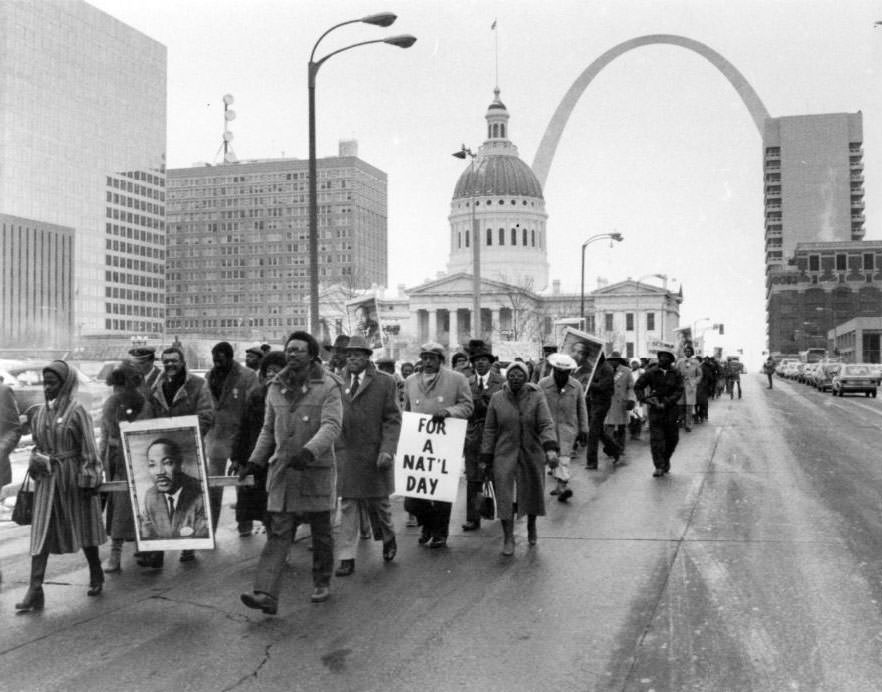
The civil rights movement came to St. Louis not as a distant news story but as direct action in the streets. Percy Green, a Black civil rights activist, became one of the city’s most prominent voices for racial equality. In 1964, Green and fellow activist Richard Daly climbed the unfinished Gateway Arch to protest job discrimination in the city’s construction industry. Their demonstration was bold, dangerous, and deliberately impossible to ignore. Green went on to found ACTION — Action Committee to Improve Opportunities for Negroes — which kept sustained pressure on employers and institutions across the city.
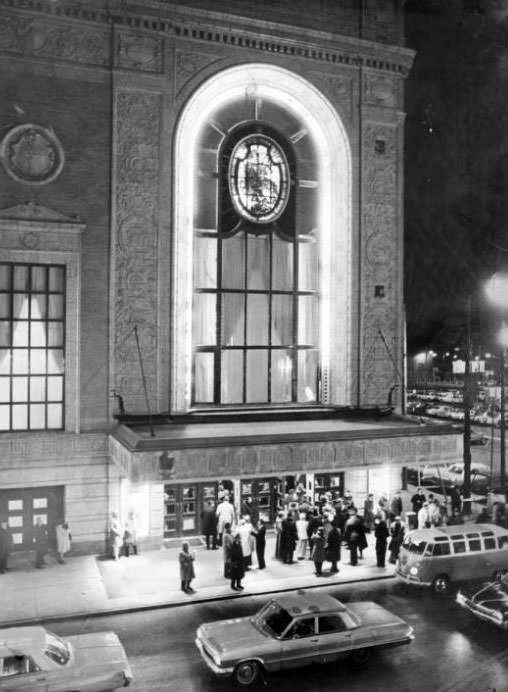
Powell Symphony Hall opened on Grand Boulevard in 1925, but by the 1960s it had become one of the city’s most important cultural institutions. The St. Louis Symphony Orchestra, one of the oldest in the country, performed there to packed houses throughout the decade. The hall represented a more formal strain of St. Louis culture, one that existed alongside the club music, folk singers, and protest songs filling venues like the ones in Gaslight Square just a few miles away.
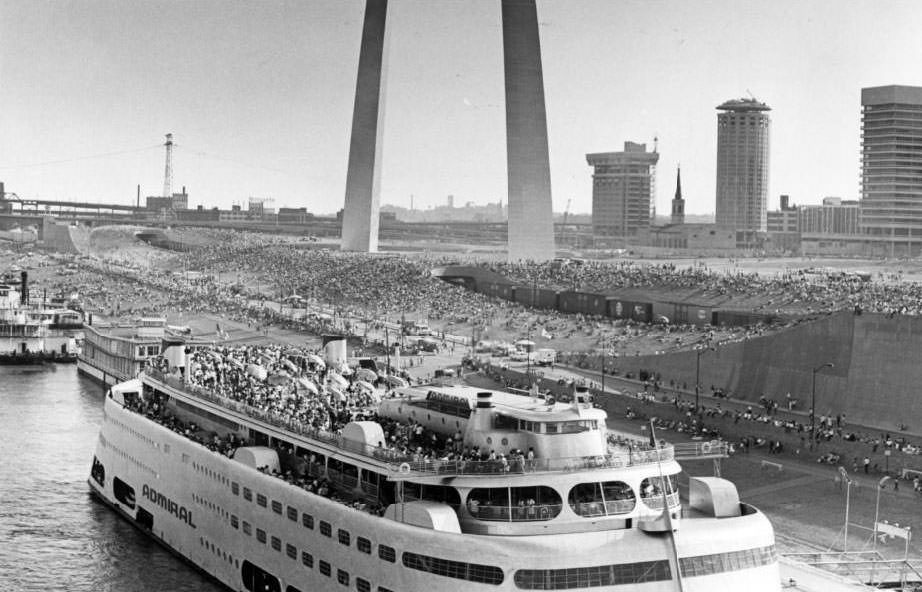
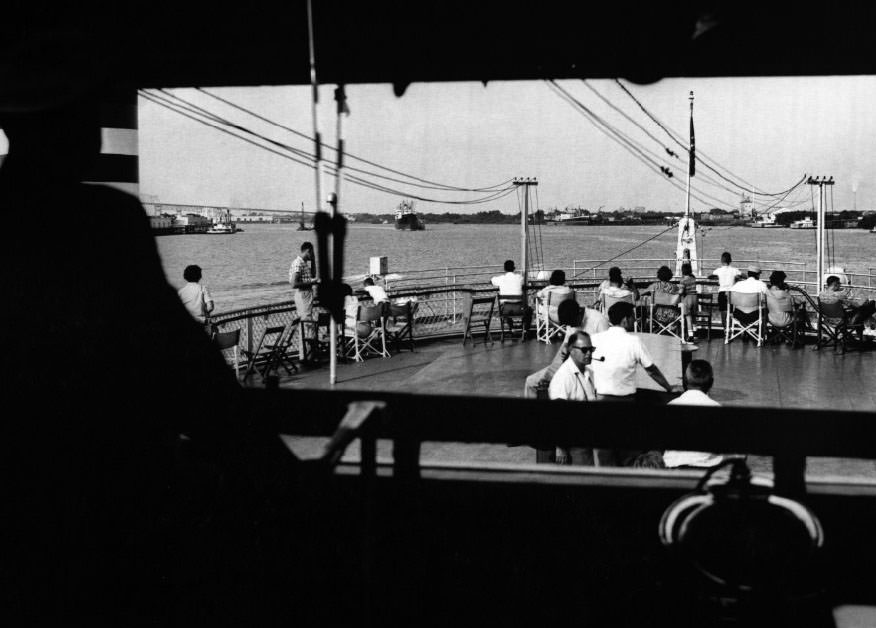
The SS Admiral, a massive art deco excursion boat, still cruised the Mississippi River at the start of the decade. It had been a St. Louis entertainment landmark since the 1940s, carrying passengers up and down the river for dances, dinners, and sightseeing. As the 1960s wore on, the boat struggled to remain profitable. It represented a kind of riverboat leisure culture that was being slowly replaced by newer forms of entertainment and a city that was looking forward rather than back toward the river.
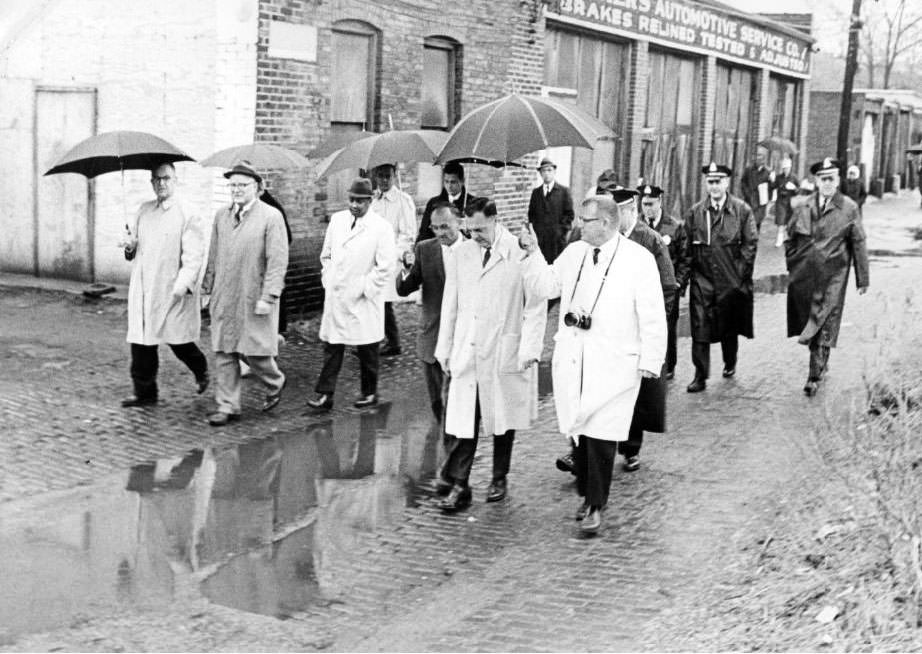
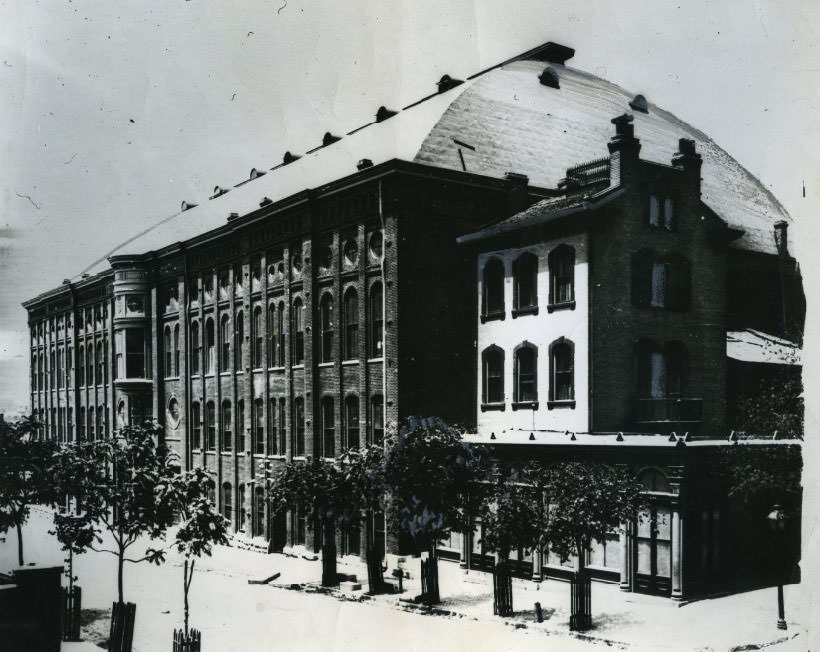
Urban renewal was one of the defining forces reshaping St. Louis during the decade. The city had already demolished much of Mill Creek Valley by the late 1950s in one of the largest slum clearance projects in American history, displacing tens of thousands of residents — the overwhelming majority of them Black. That displacement continued to ripple through the 1960s as families scattered and neighborhoods were rebuilt or left empty. City-led initiatives like Operation NEAT aimed to clean up blighted areas, but critics argued these programs served developers and planners more than the residents who had been displaced.
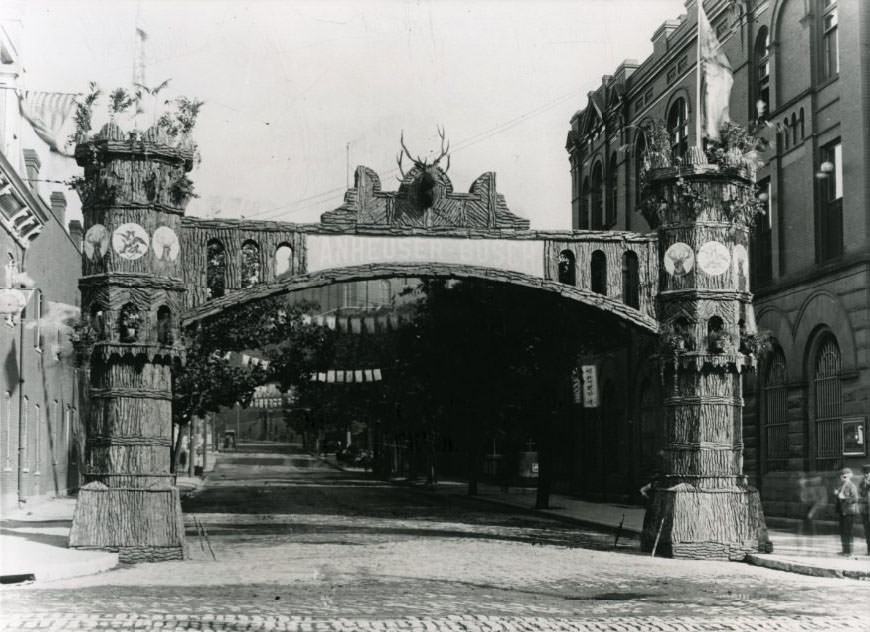
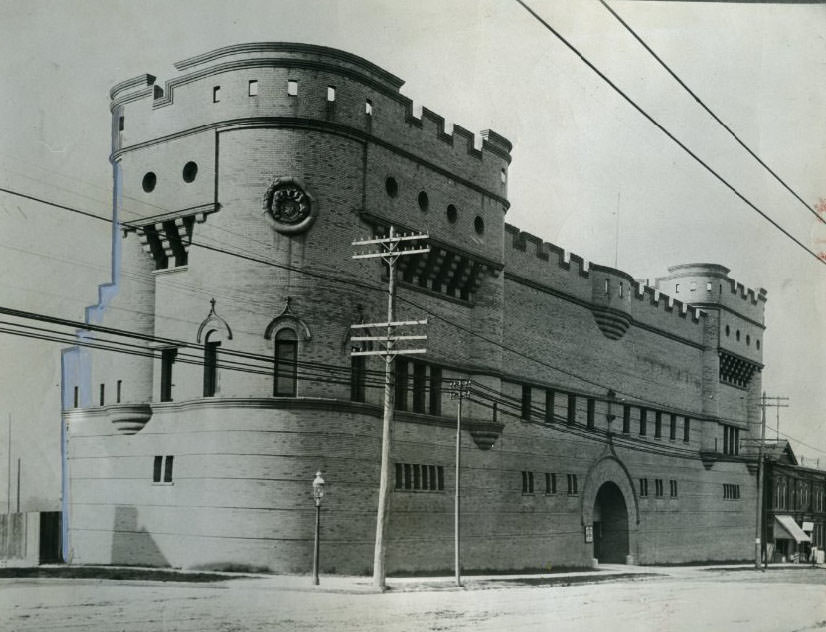
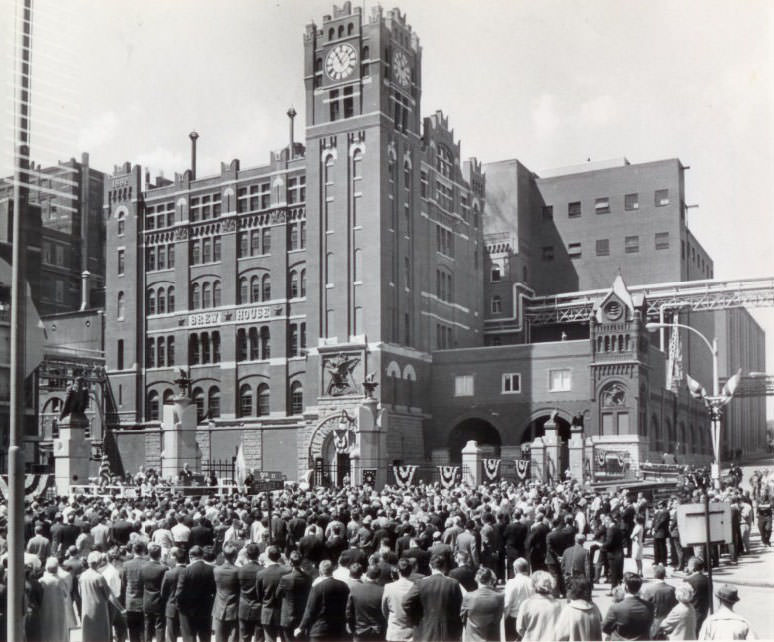
Anheuser-Busch was one of the city’s largest employers throughout the decade. The brewery at Pestalozzi Street had been a St. Louis institution since the 19th century, and during the 1960s it continued to expand. The company built new offices and celebrated landmarks on its campus. Budweiser advertising was everywhere, and the brewery’s presence was so central to the city’s identity that it was nearly impossible to separate St. Louis from beer, just as it was impossible to separate the city from baseball and the Cardinals.
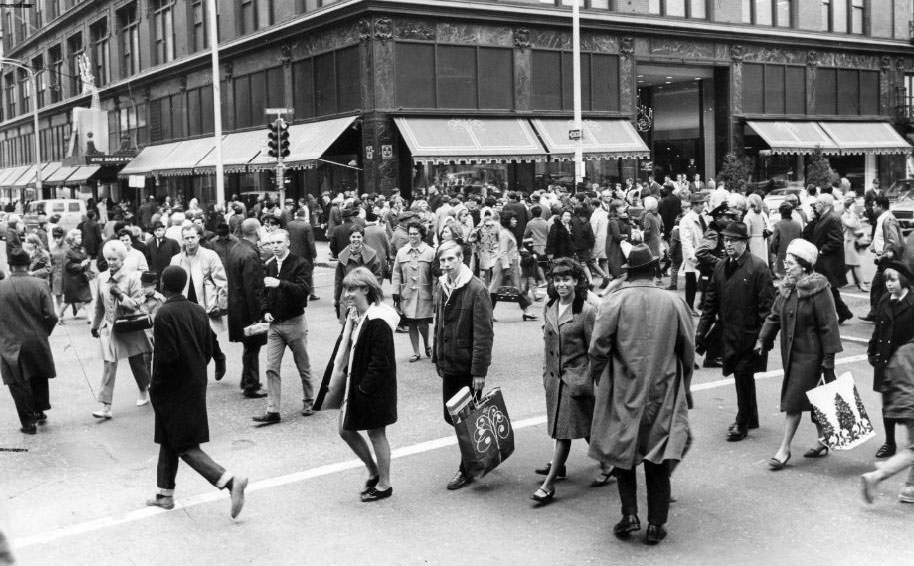
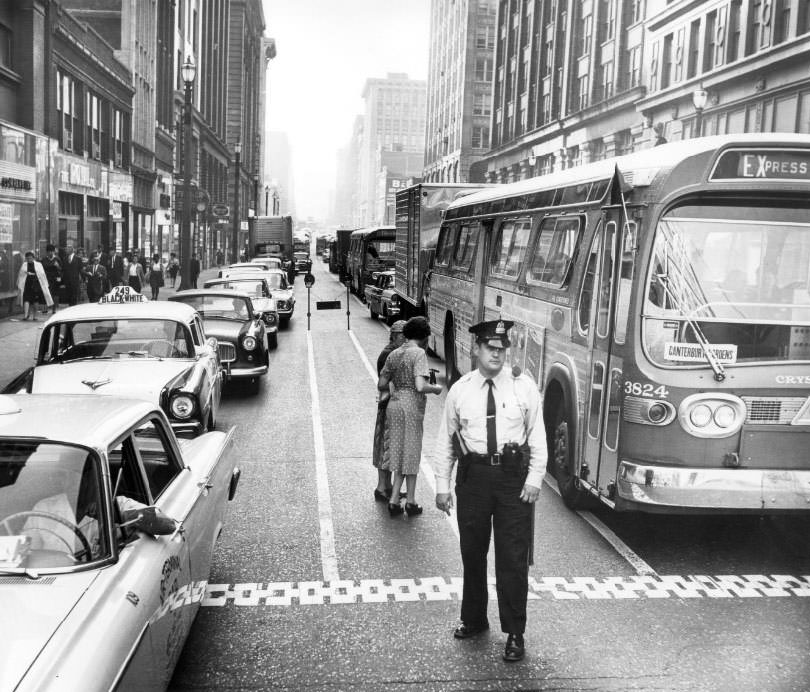
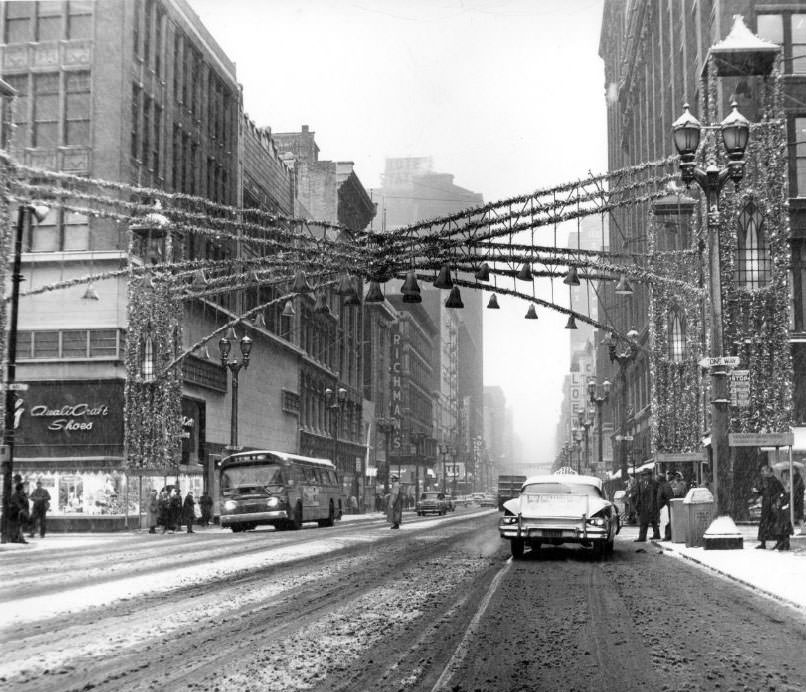
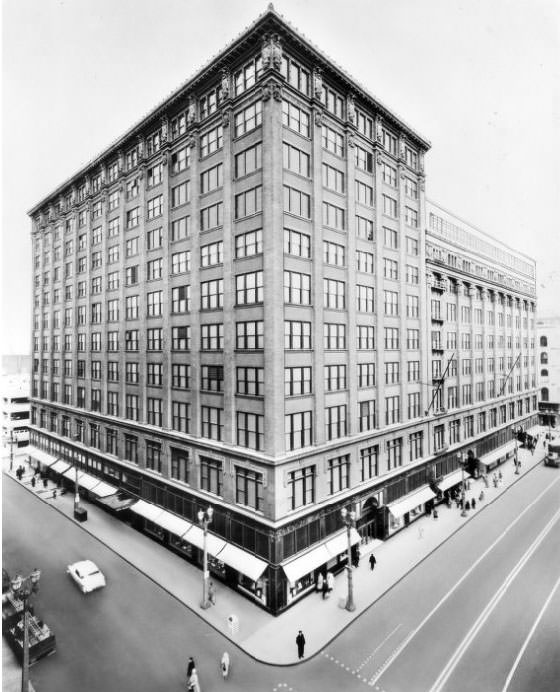
Downtown St. Louis was still a genuine commercial center in the early 1960s. Department stores like Famous-Barr and Stix, Baer & Fuller drew shoppers from across the metropolitan area. The intersection of 7th and Washington was one of the busiest in the city, and holiday shopping seasons packed the sidewalks with crowds that rivaled any major American city. But this energy was fragile. Suburban shopping malls were opening throughout the decade, and each year more retail dollars left the city for the surrounding counties.
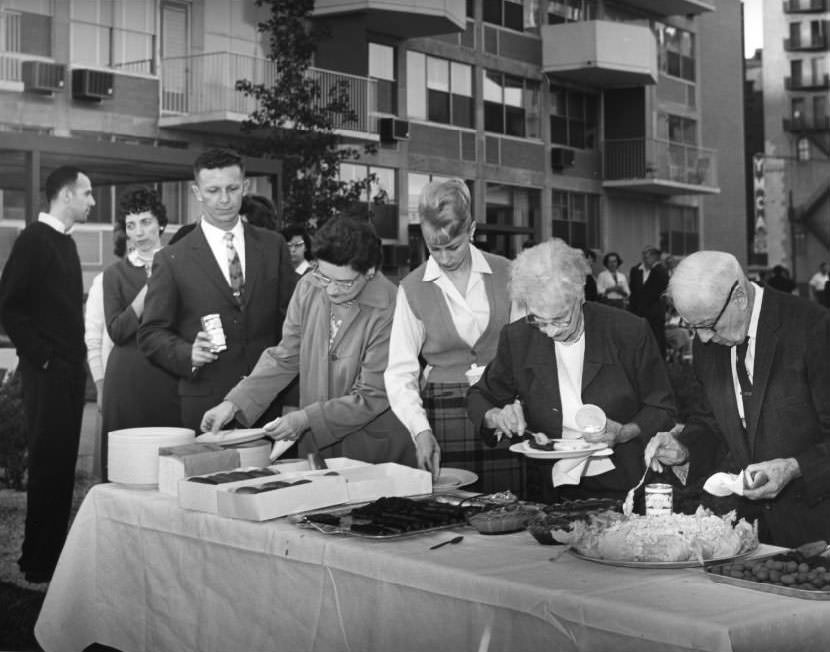
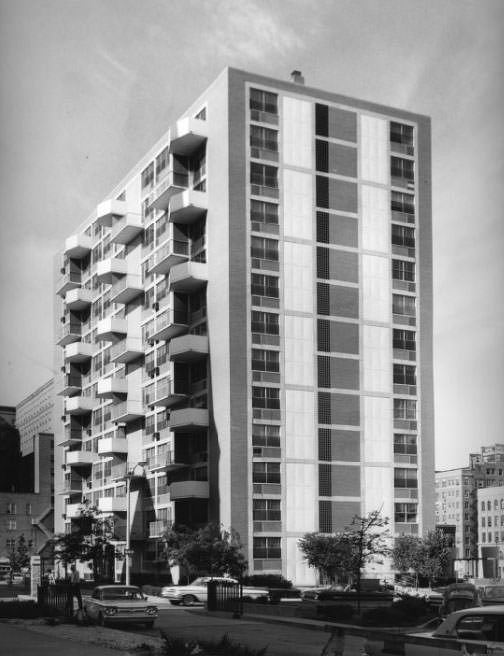
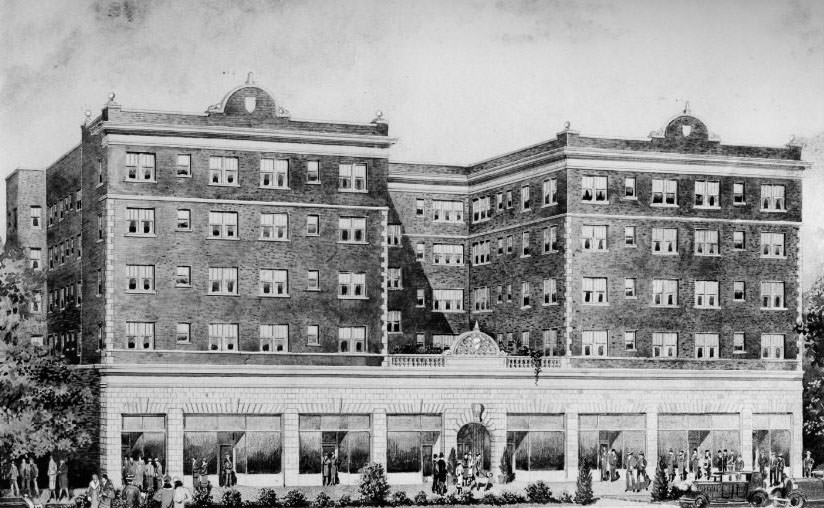
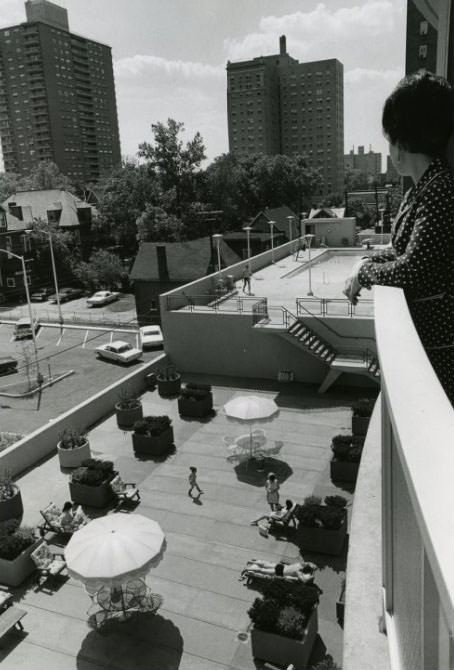
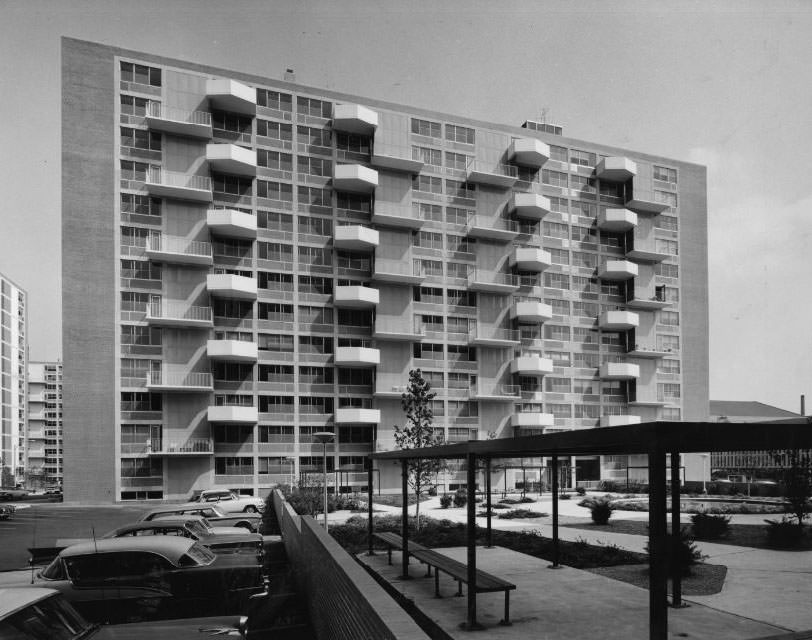
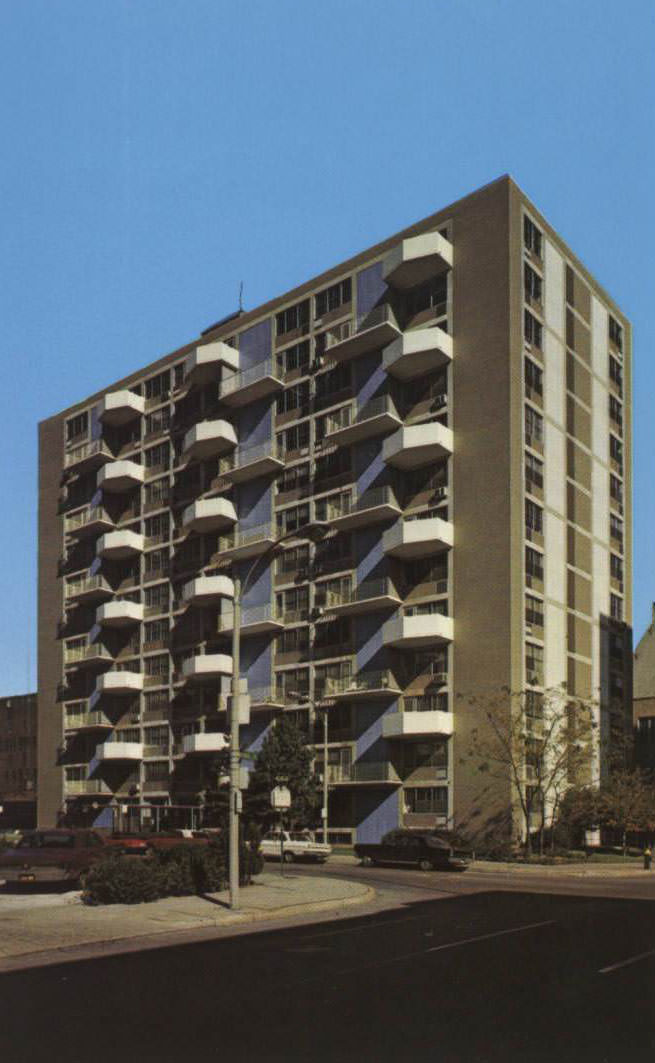
New apartment complexes were rising across the city and its inner suburbs throughout the decade. The Plaza Apartments represented a push toward modern, amenity-rich urban living. Buildings marketed themselves with swimming pools, manicured patios, and social activities — a lifestyle pitch aimed at young professionals and middle-class families who might otherwise be tempted by the new suburban subdivisions. Construction on many of these projects was not without conflict. A strike by hoisting engineers of Local 513 halted work on the Plaza Apartments in 1960, leaving ironworkers idle in the 1600 block of Pine Street.
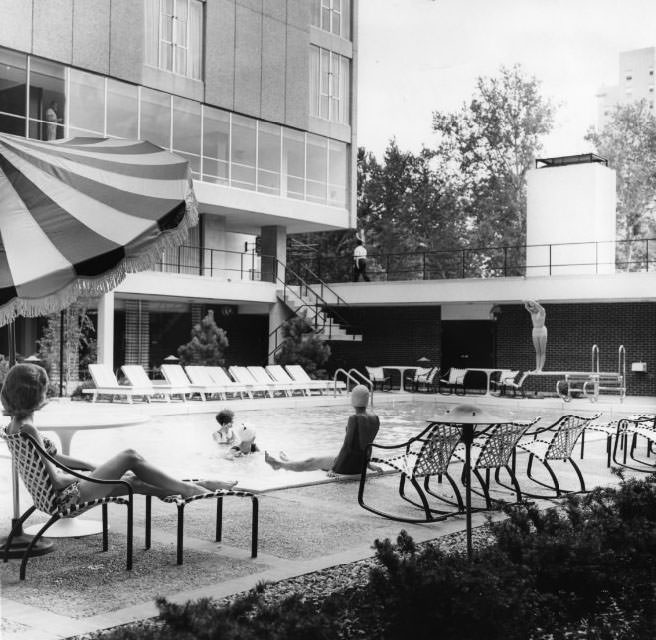
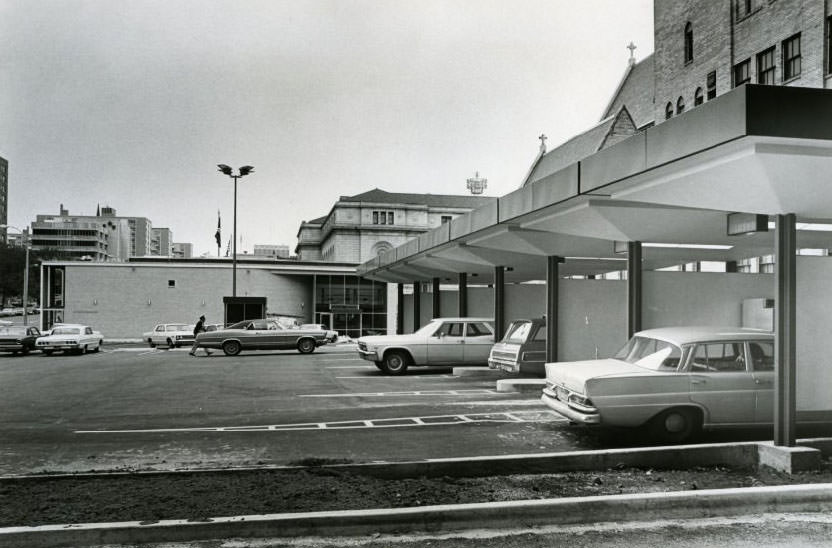
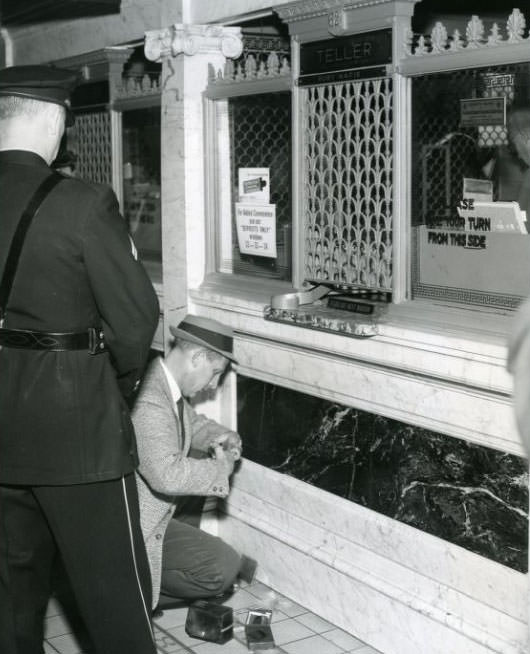
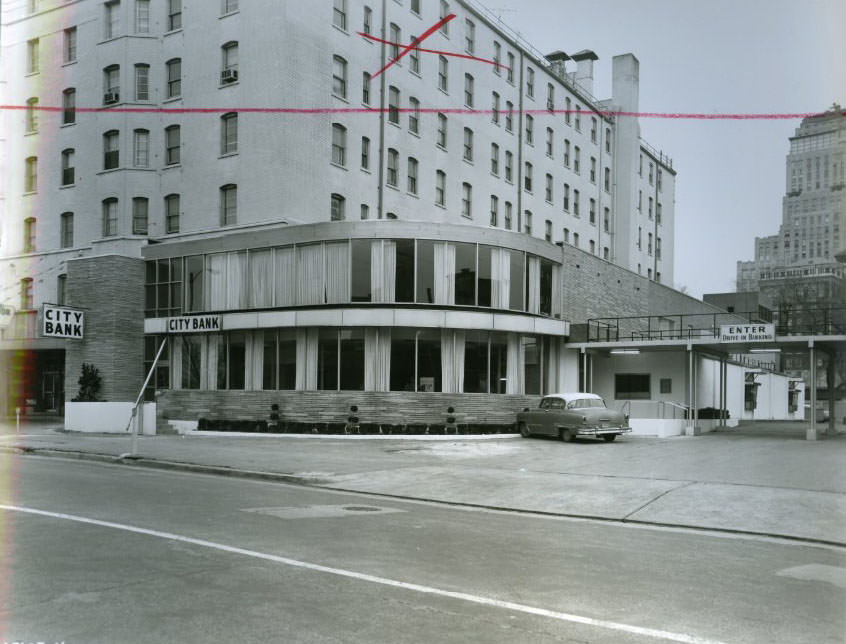
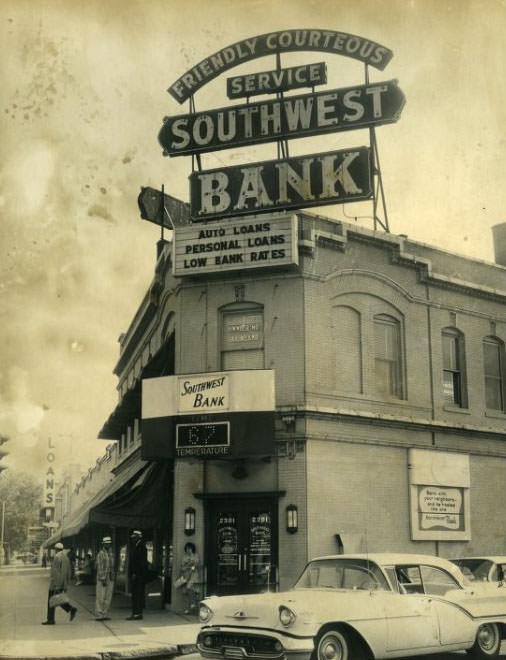
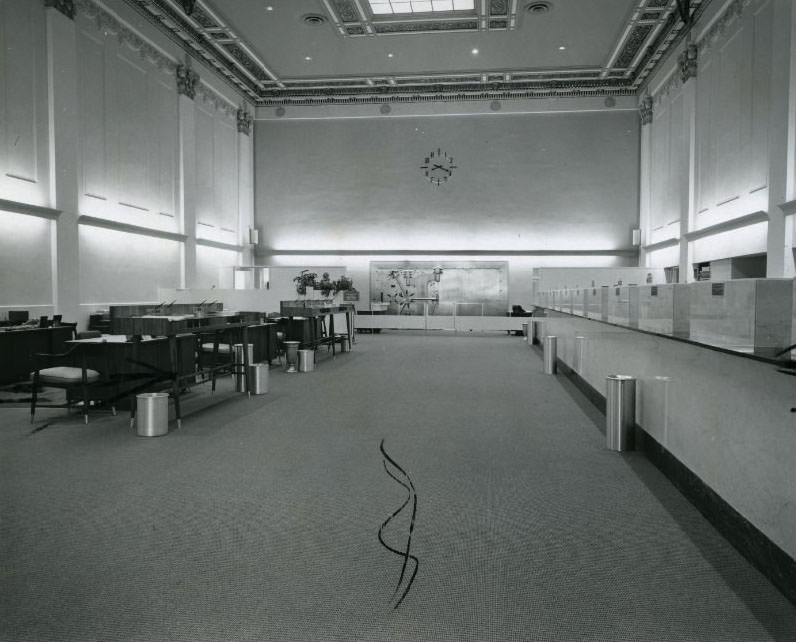
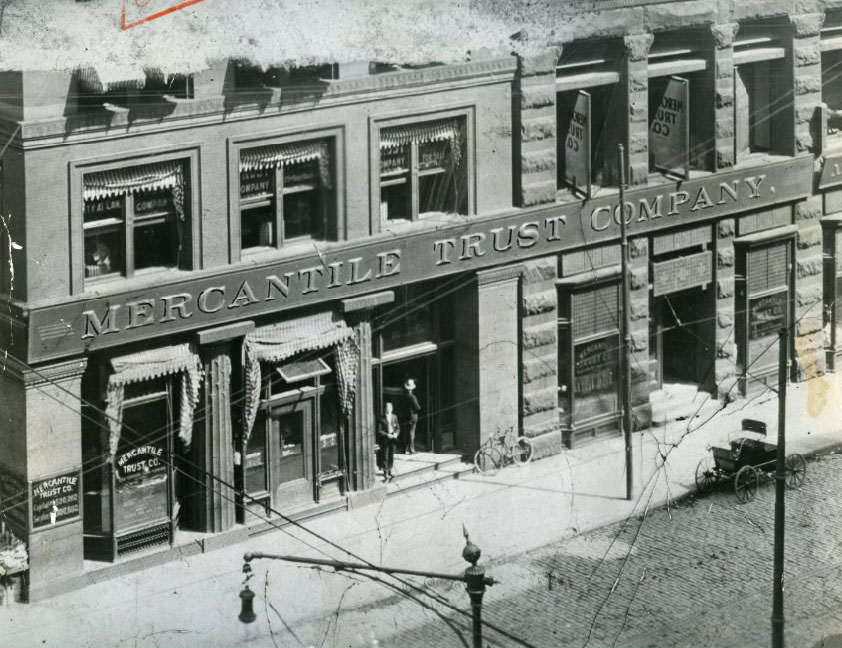
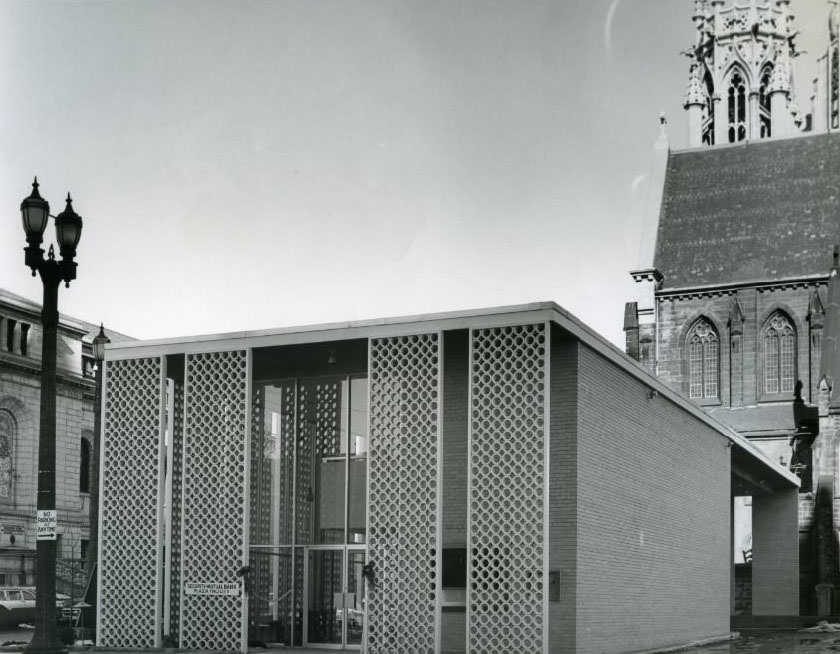
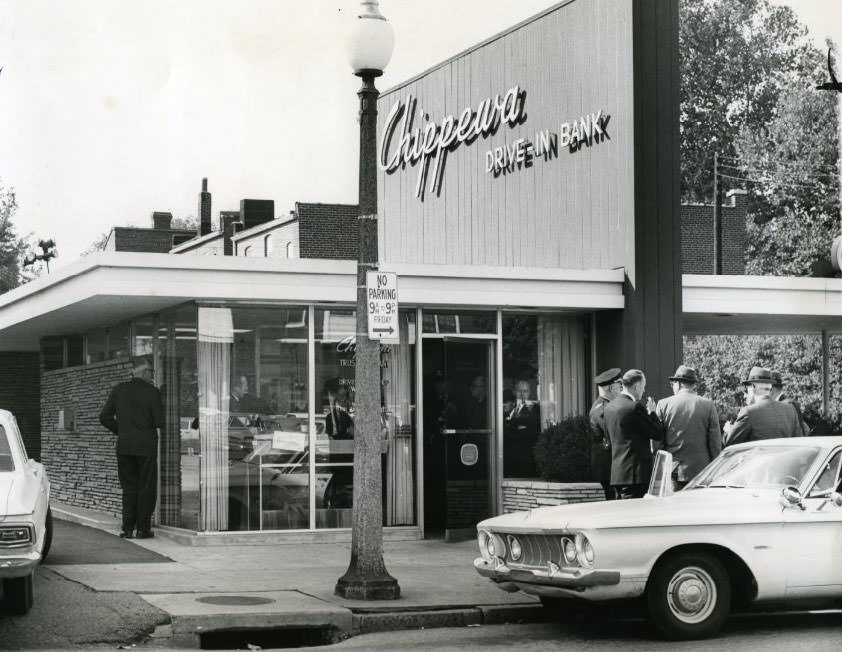
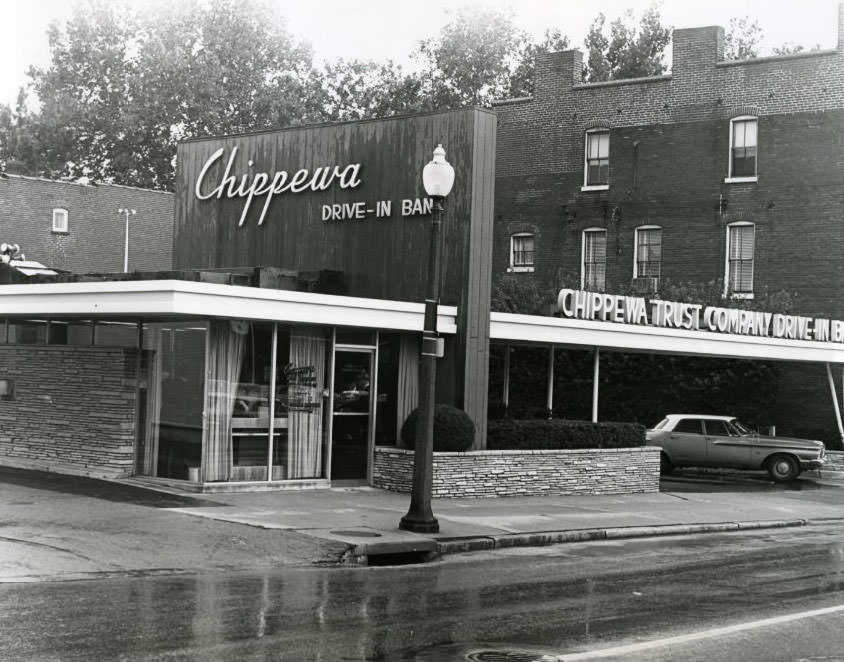
St. Louis’s banking sector was modernizing rapidly. Mercantile Trust Company introduced drive-up service windows, reflecting a broader shift in American consumer culture toward convenience and the automobile. Banks were also expanding into new neighborhoods, erecting modern buildings designed to signal stability and forward momentum. Not every interaction with these institutions was routine — a bank teller at Gateway Bank triggered a security camera on two armed gunmen, and a detective was photographed dusting for fingerprints at Mercantile Trust after a criminal incident, both captured in the city’s press.
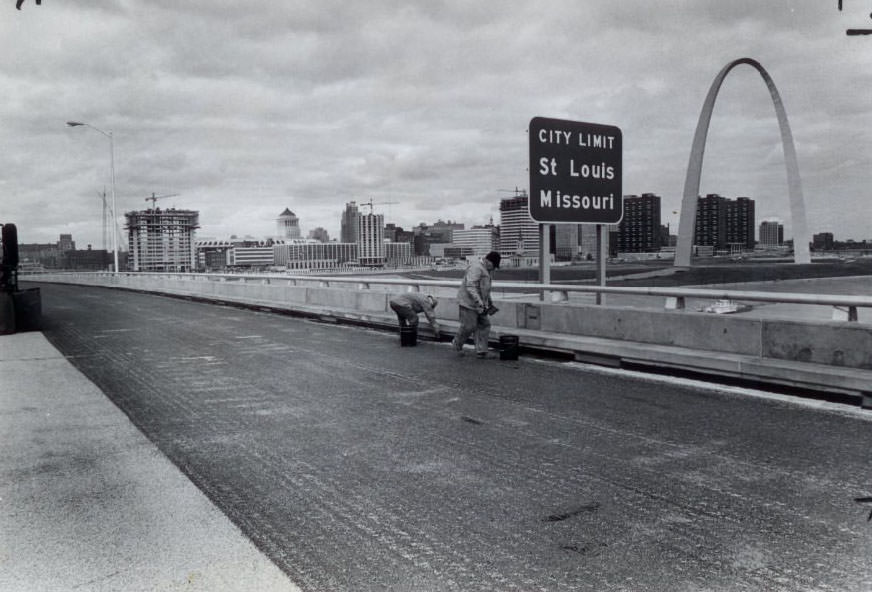
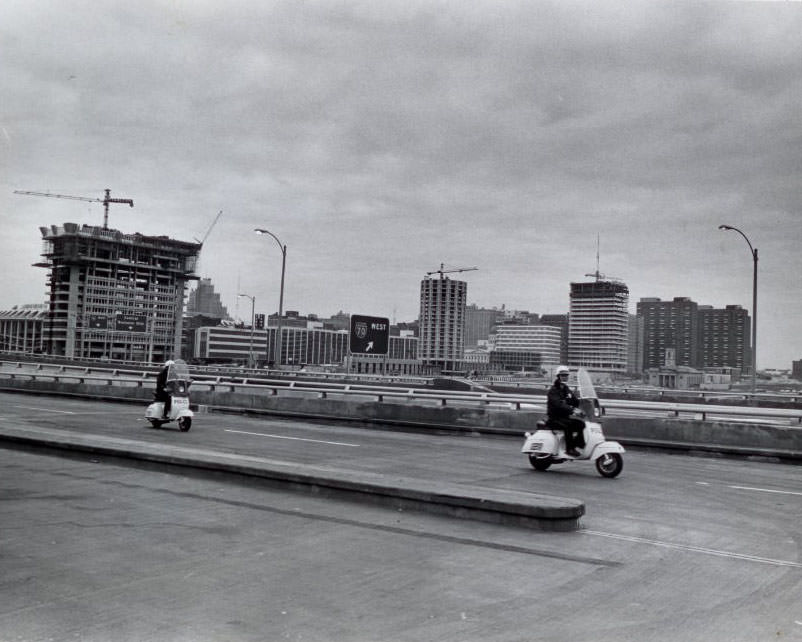
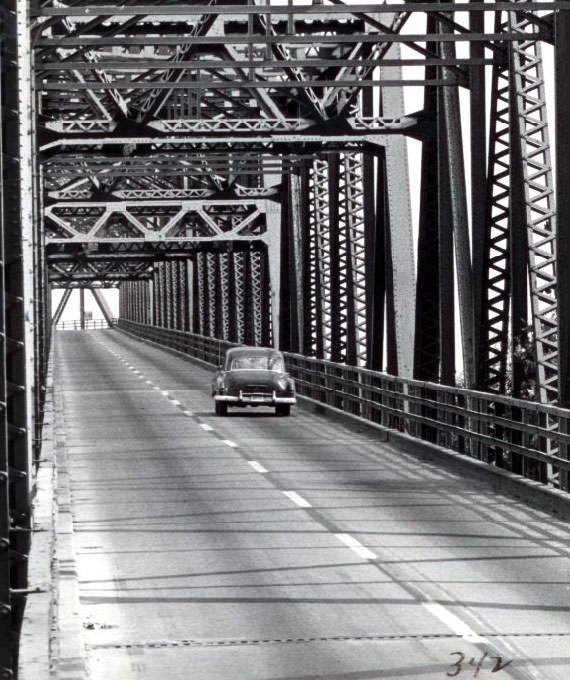
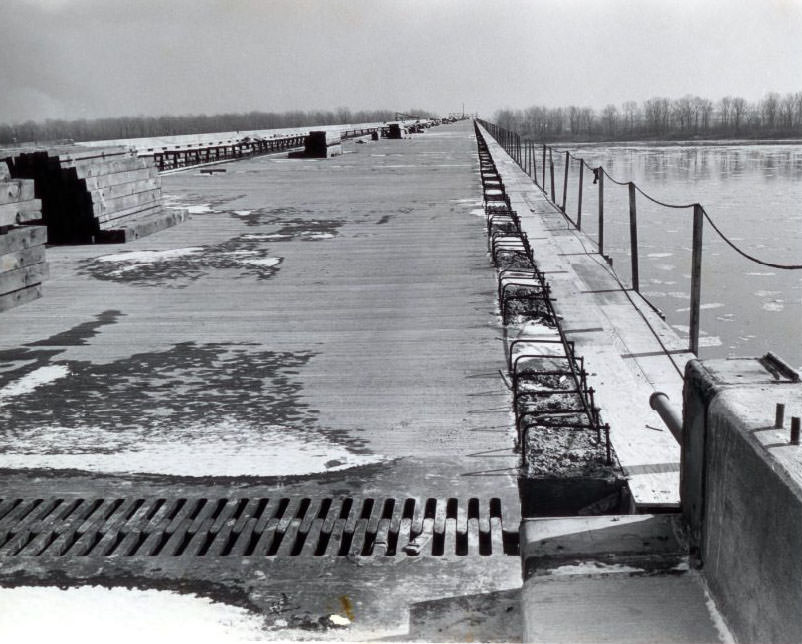
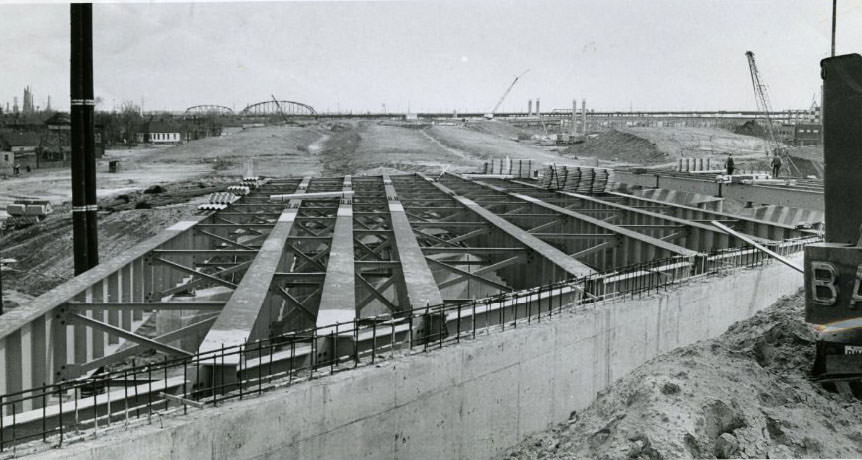
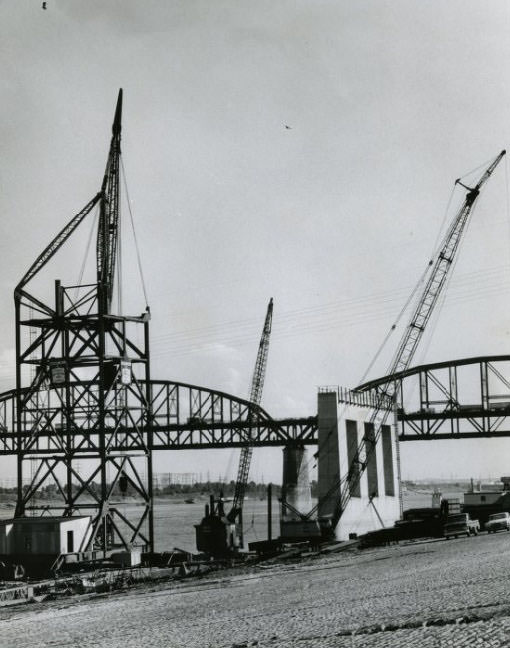
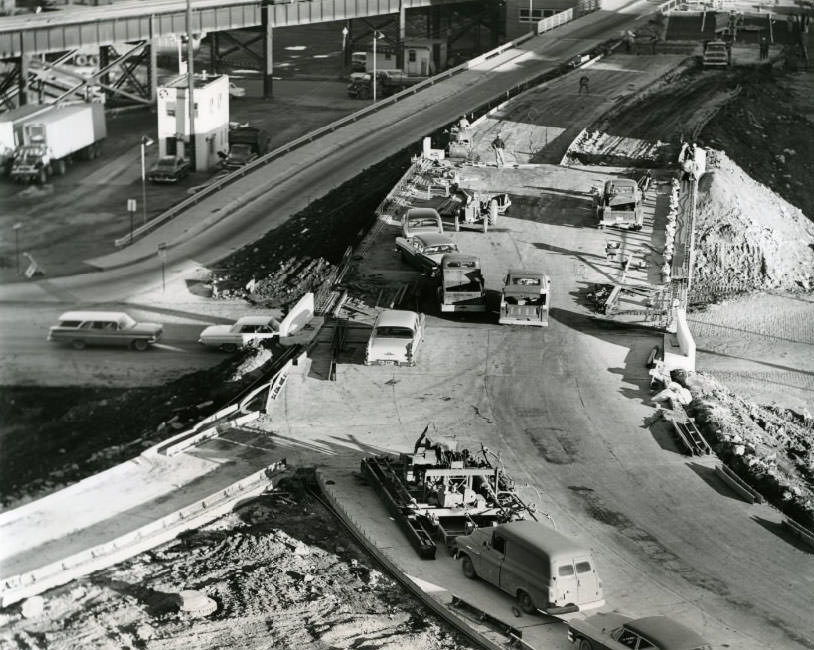
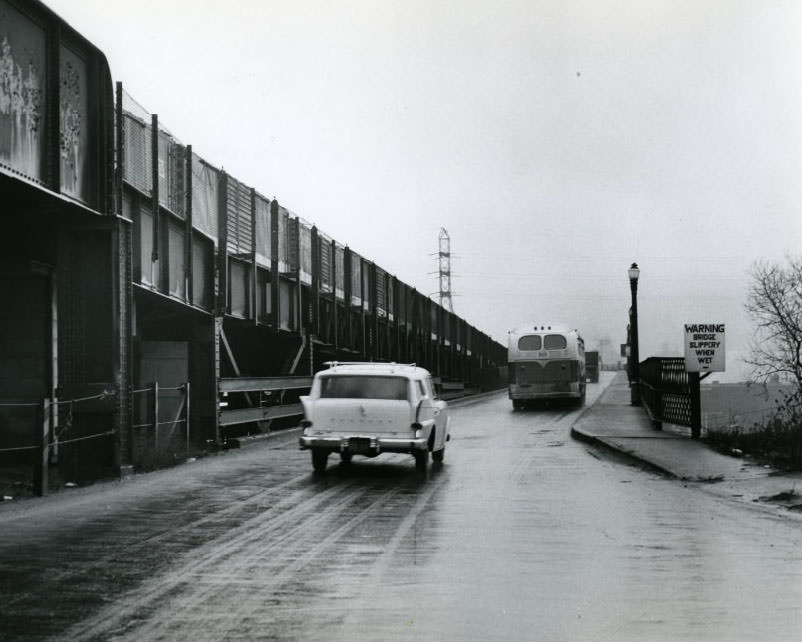
The Poplar Street Bridge, which carries Interstate 64 and Interstate 70 across the Mississippi River, was one of the decade’s most significant infrastructure projects. Work on the bridge was plagued by disputes and delays. By 1967, paving was underway and police escorts were accompanying activity on the span, reflecting the scale of the project and the public attention it received. The bridge connected Missouri and Illinois and was a critical link in the national highway system being built outward from St. Louis.
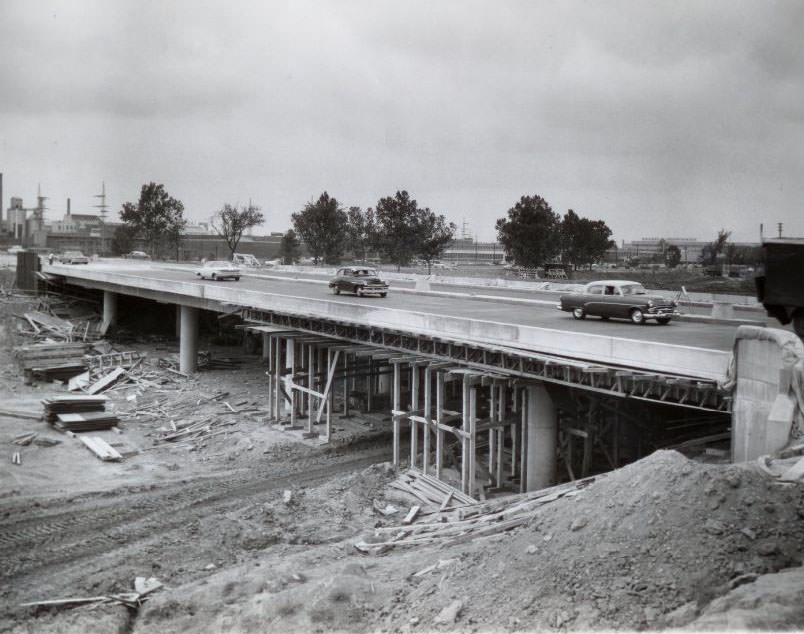
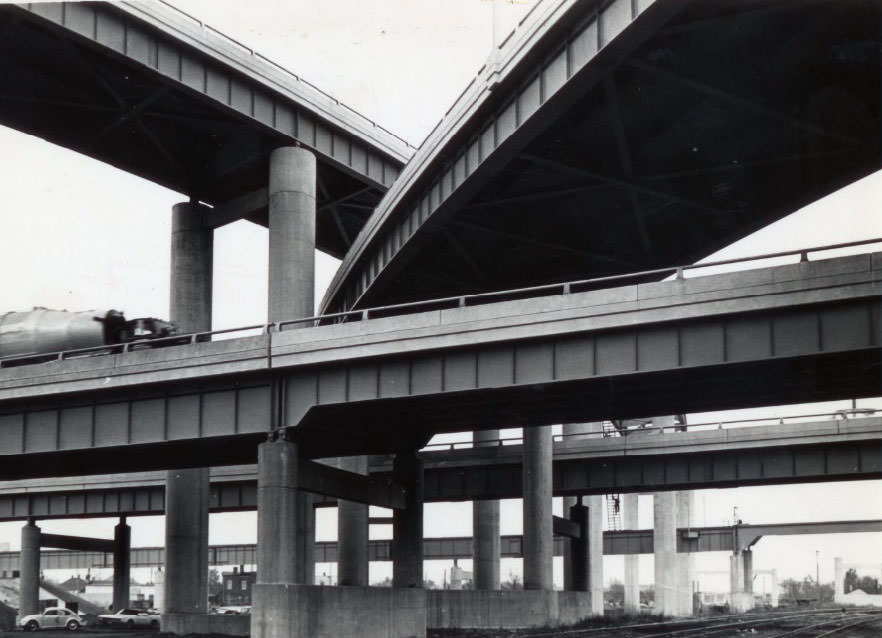
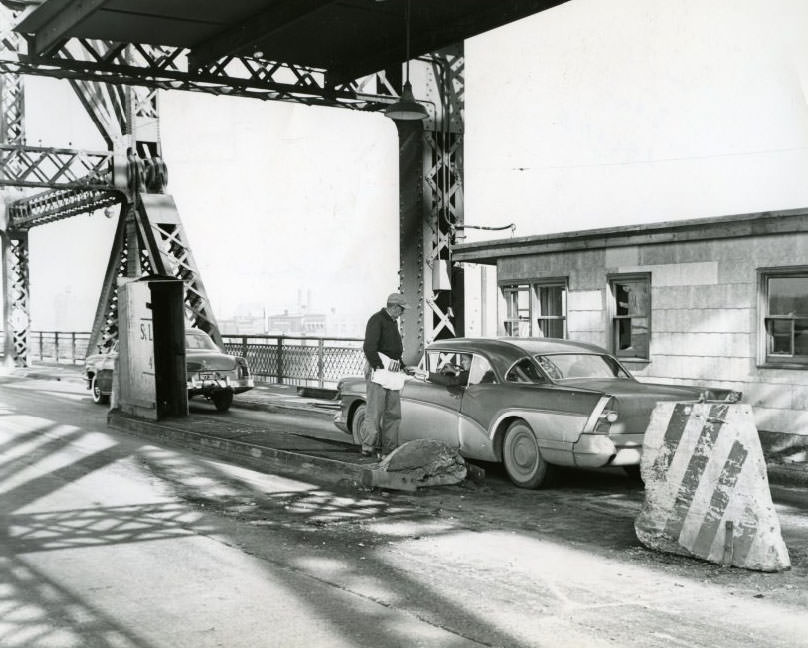
Infrastructure investment was reshaping how St. Louisans moved through their city and across the river. New bridges, highway ramps, and road improvements were under construction throughout the decade. The Chain of Rocks Bridge on Interstate 270 had its railings installed along the eastbound lanes. The Eads Bridge, one of the oldest steel bridges in the country, remained in use but faced recurring challenges from Mississippi River flooding. The MacArthur Bridge continued toll collection while a new approach was built to link it directly to Chouteau Avenue.
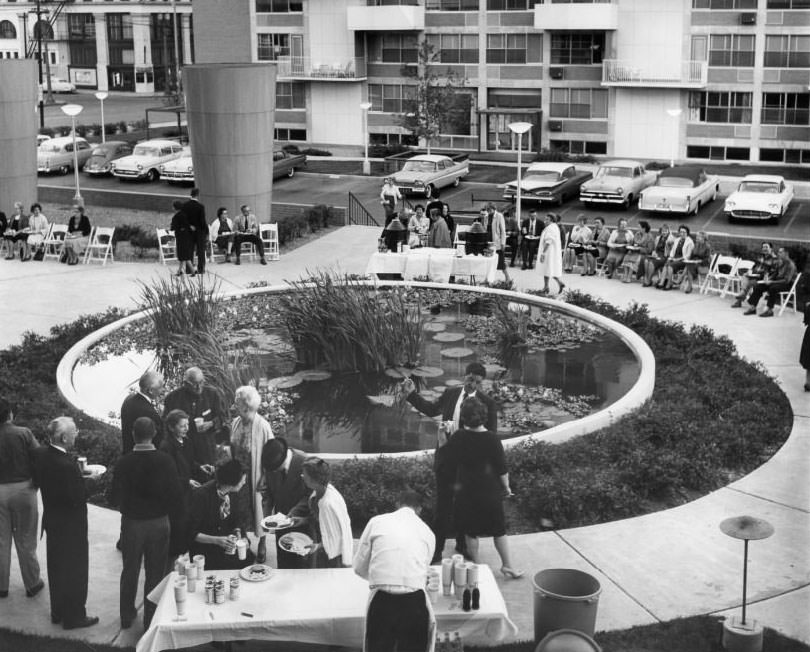
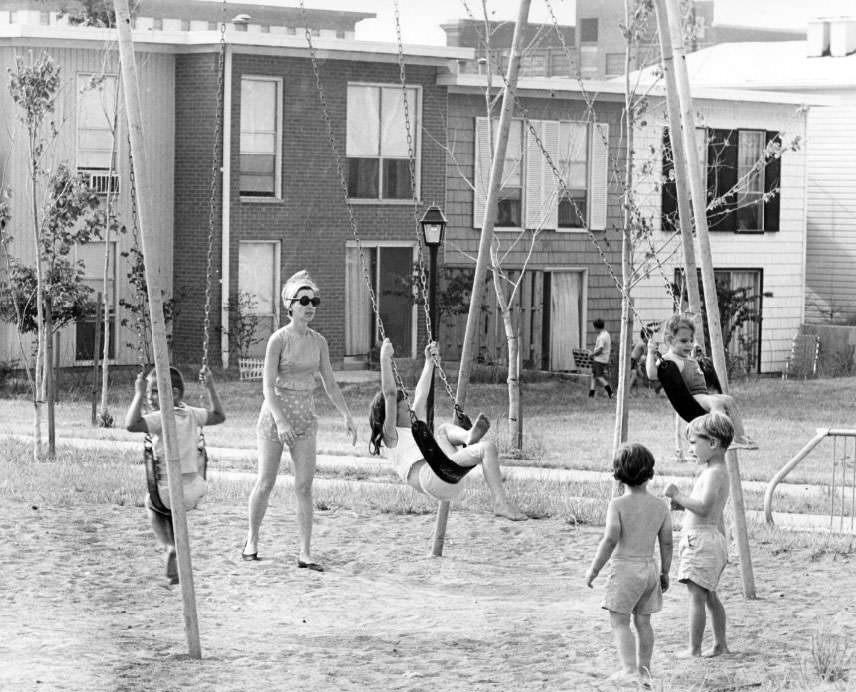
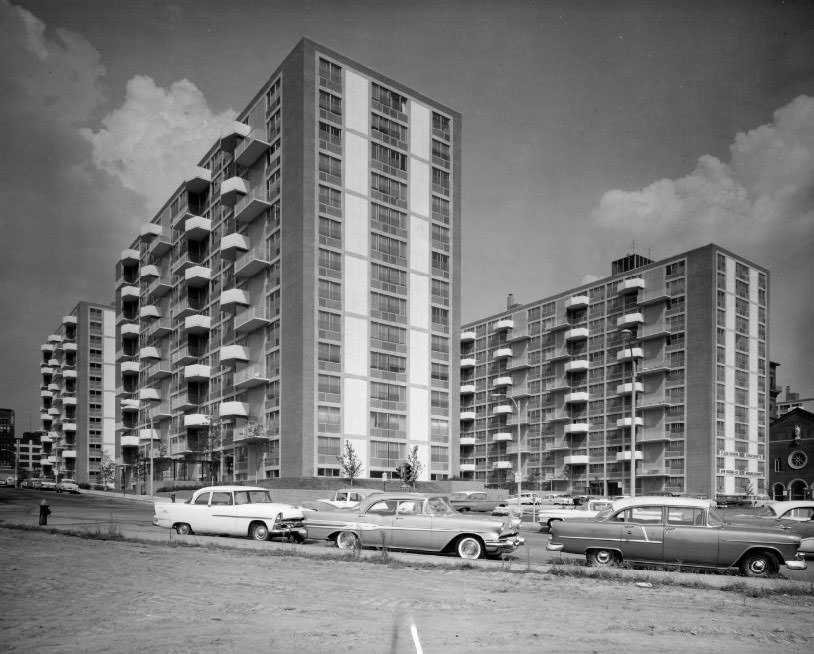
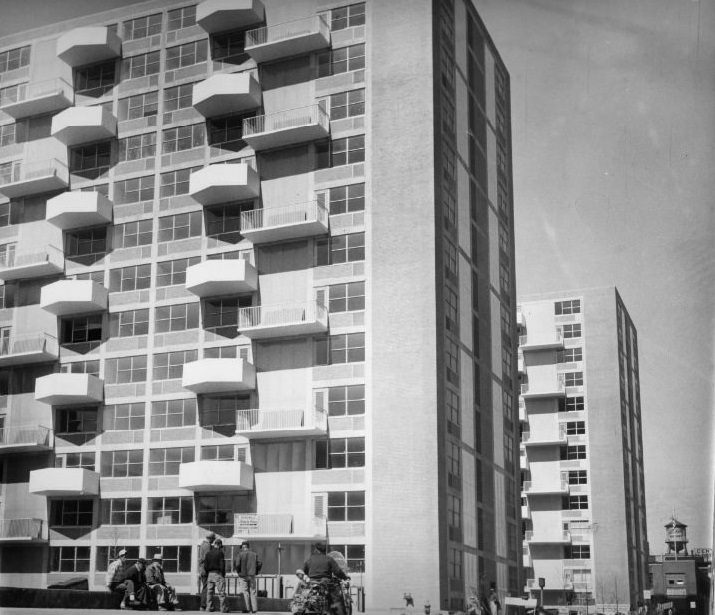
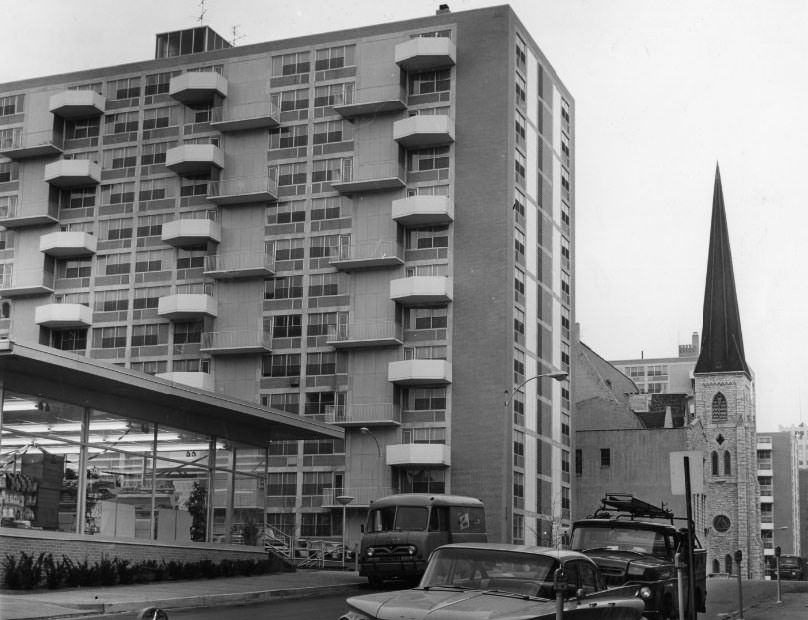
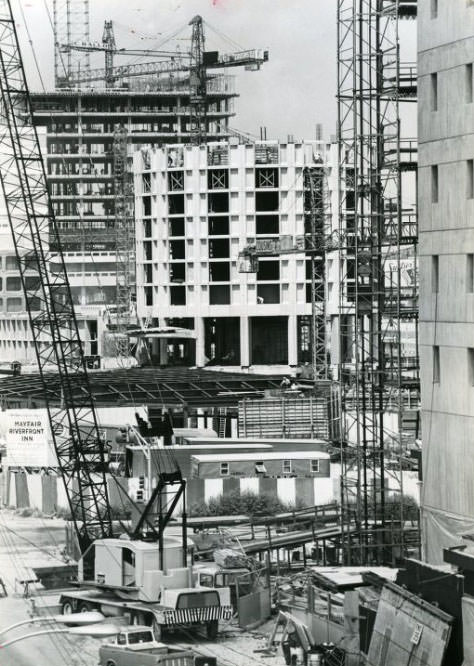
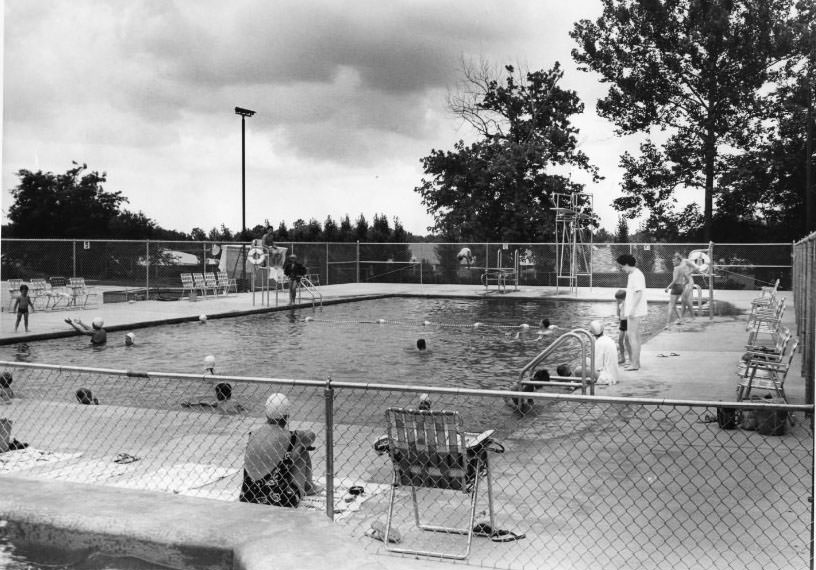
Social life in 1960s St. Louis was shaped as much by the city’s changing geography as by the decade’s larger cultural shifts. Apartment communities organized their own social events — patio parties, poolside afternoons, picnics — creating self-contained social worlds within the urban landscape. Meanwhile, the Mansion House Apartments, a high-rise development on the riverfront, was under construction throughout much of the decade. In 1965, a workman died in a fall at the Mansion House site, one of many tragic accidents that marked the era’s frantic pace of building.

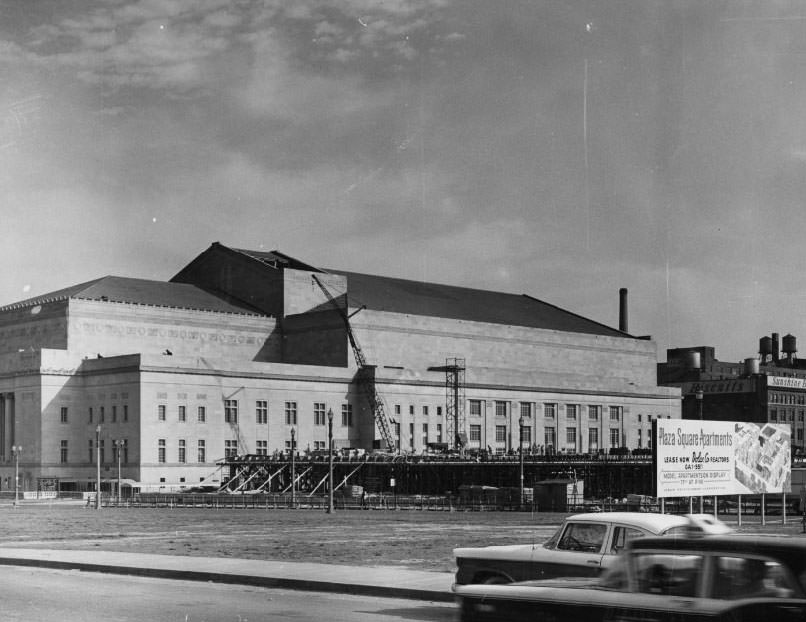
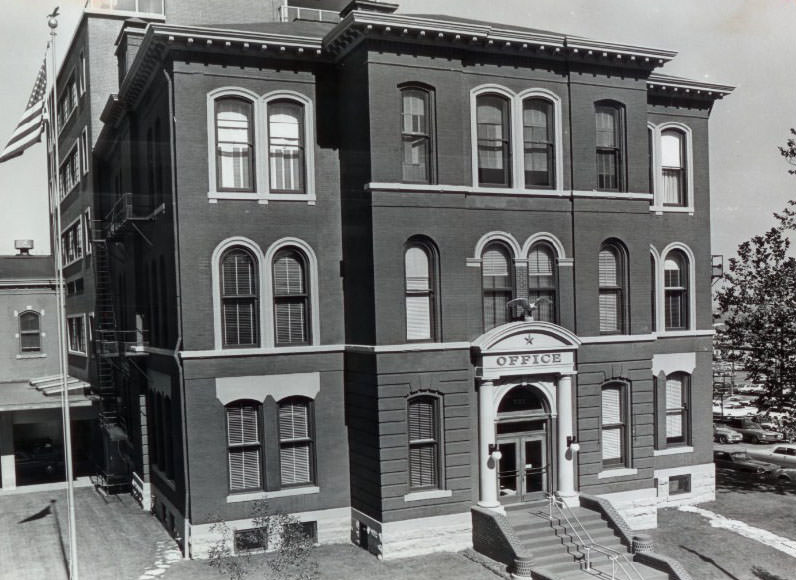
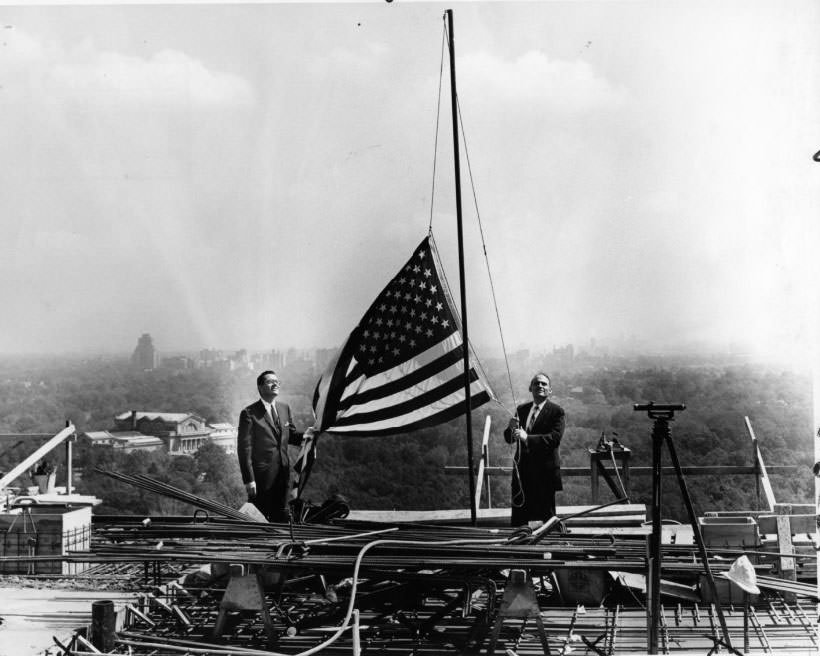
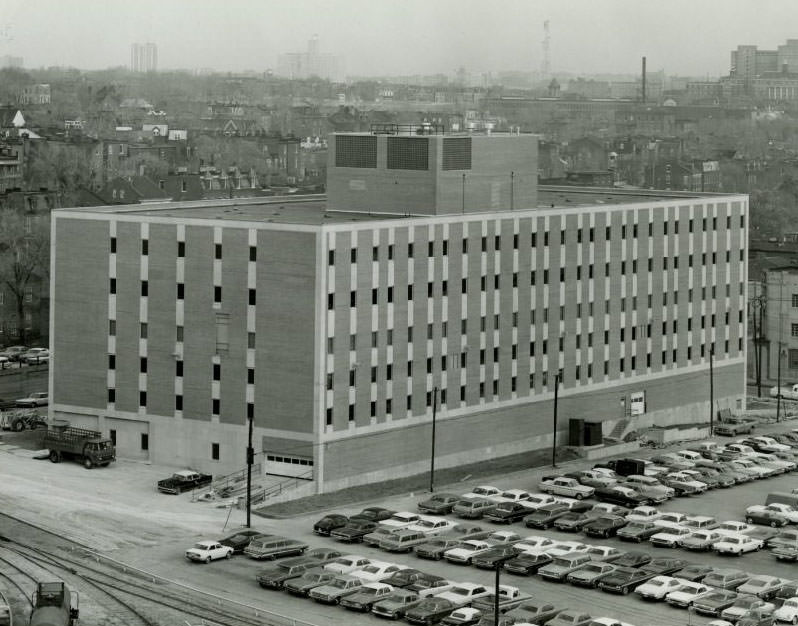
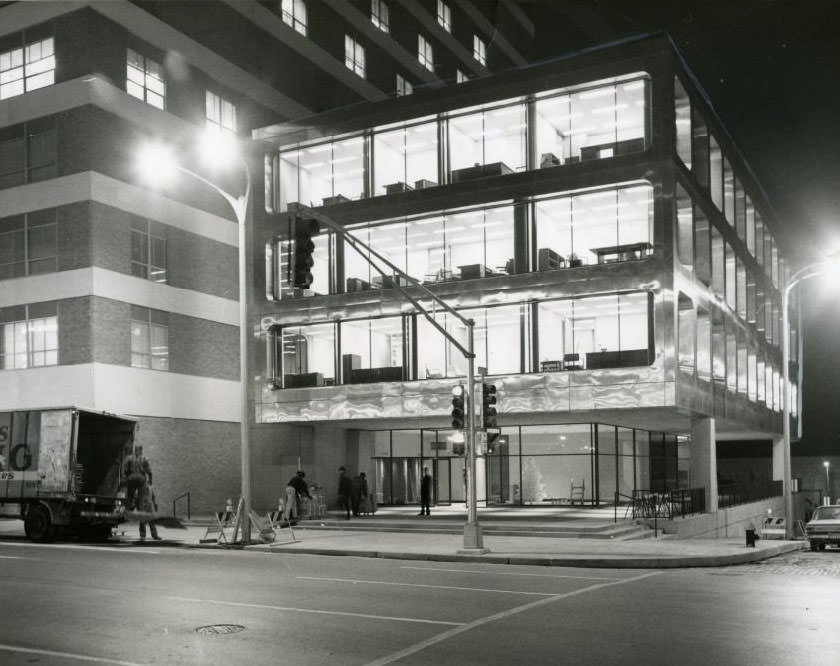
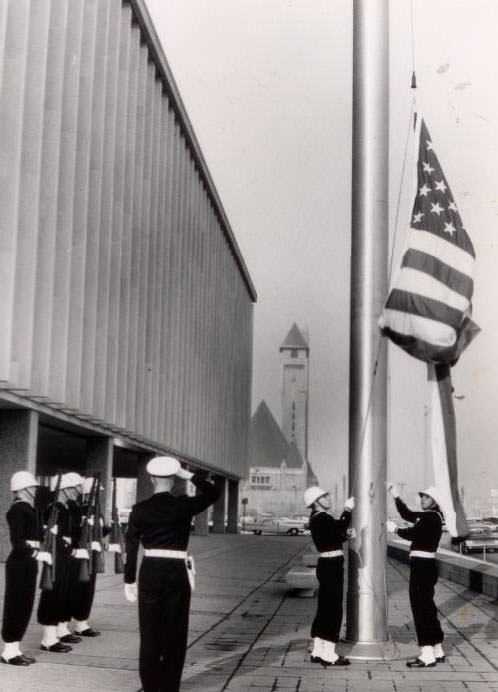
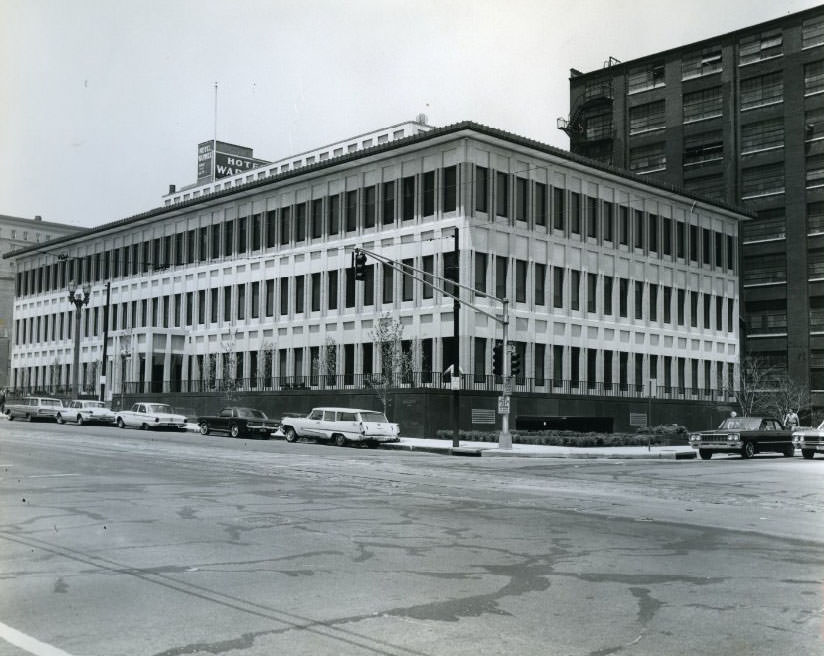
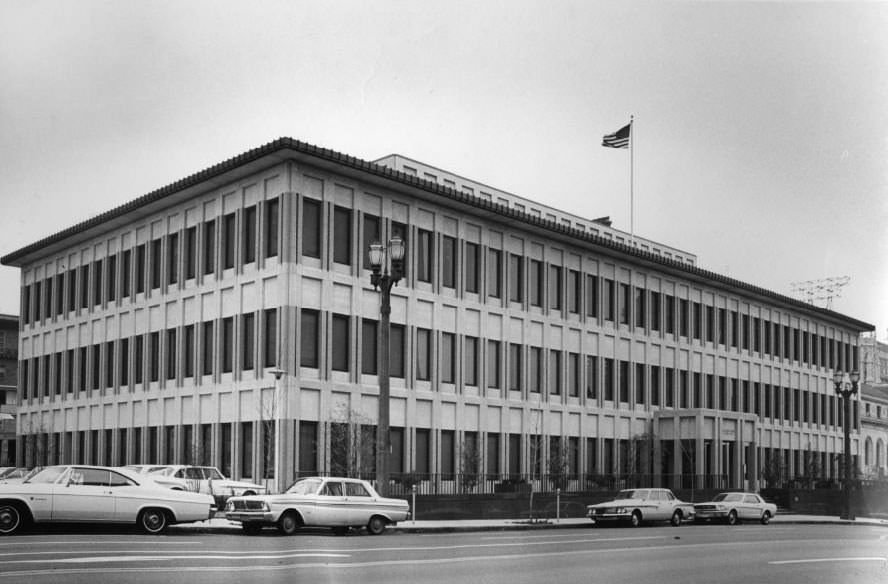
Federal investment in St. Louis during the 1960s was substantial. A new federal building rose downtown, with flag-raising ceremonies and dedication events marking its completion. The Federal Records Center was built to handle the administrative demands of a growing government presence in the region. New employment security offices opened with formal dedication ceremonies. These federal projects brought construction jobs, government employment, and a physical expansion of the state’s presence in the city’s landscape.
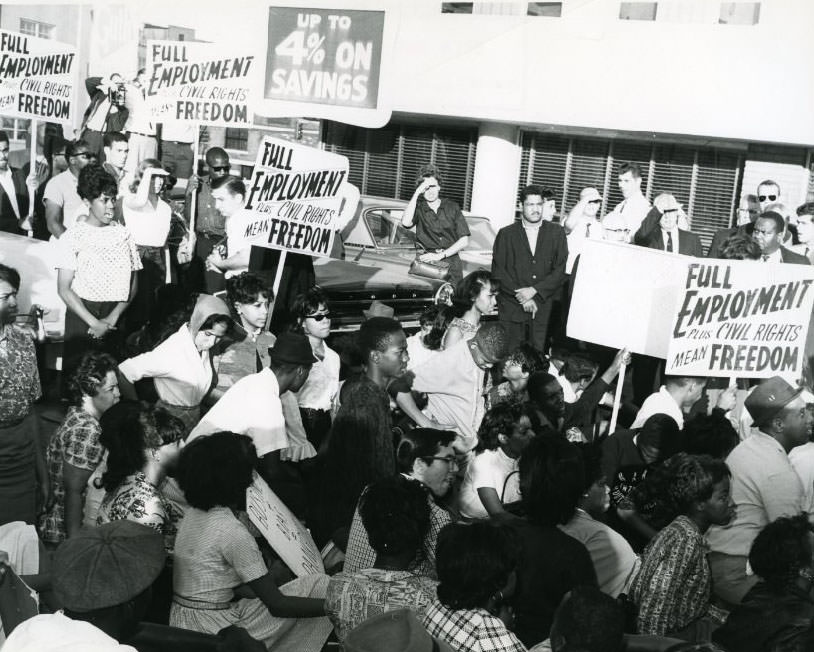
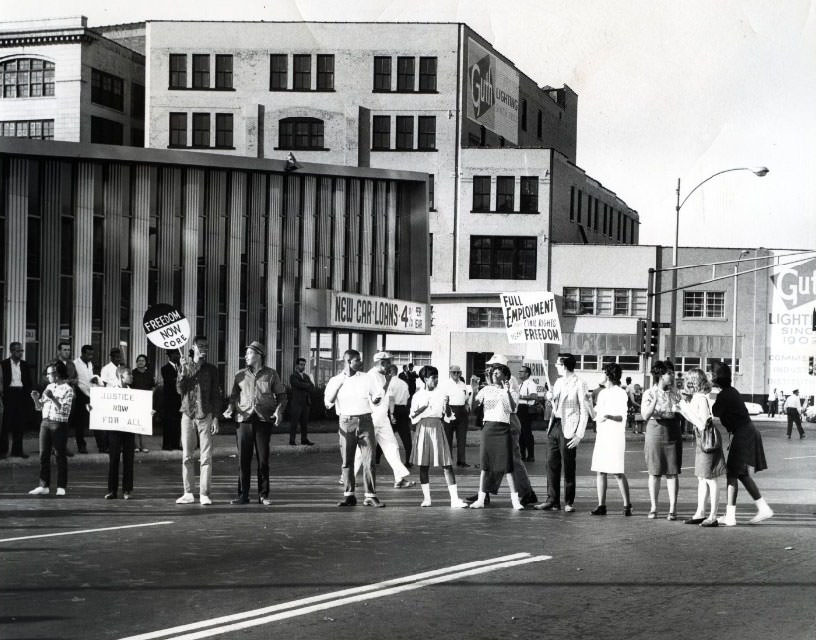
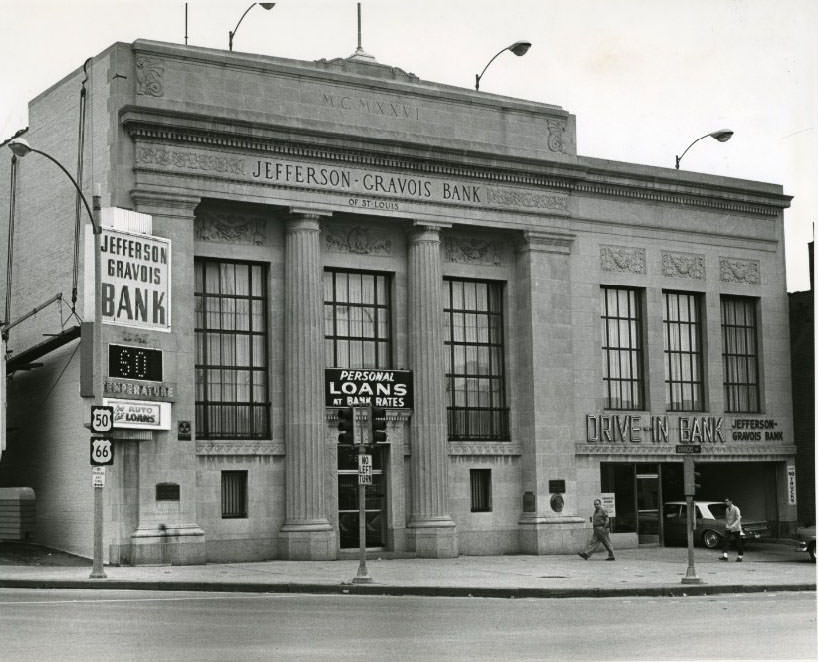
Labor was a constant undercurrent in the city’s story. Iron workers, hoisting engineers, construction laborers, and brewery workers all organized through their unions and were not afraid to walk off the job. Picket lines appeared outside not just construction sites but also retail chains like Harvey and financial institutions like Jefferson Bank and Trust. That bank became a flashpoint for civil rights activism when protesters demonstrated outside its doors, demanding that Black applicants be hired for positions beyond the most menial roles. The protests at Jefferson Bank drew arrests, national attention, and sustained demonstrations in 1963.
St. Louis’s role in the space race is one of the decade’s most remarkable and often overlooked stories. The McDonnell Aircraft Corporation, headquartered at Lambert–St. Louis Municipal Airport, designed and built the Mercury and Gemini spacecraft. Every American astronaut who flew in those programs rode into space in a capsule made in St. Louis. When John Glenn became the first American to orbit the Earth in February 1962, the spacecraft that carried him — Friendship 7 — had been assembled on the north side of the city. The pride felt across St. Louis was immediate and deep.
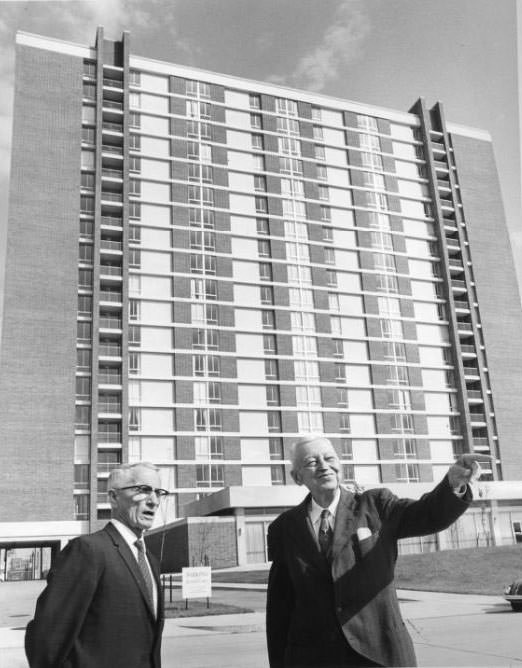
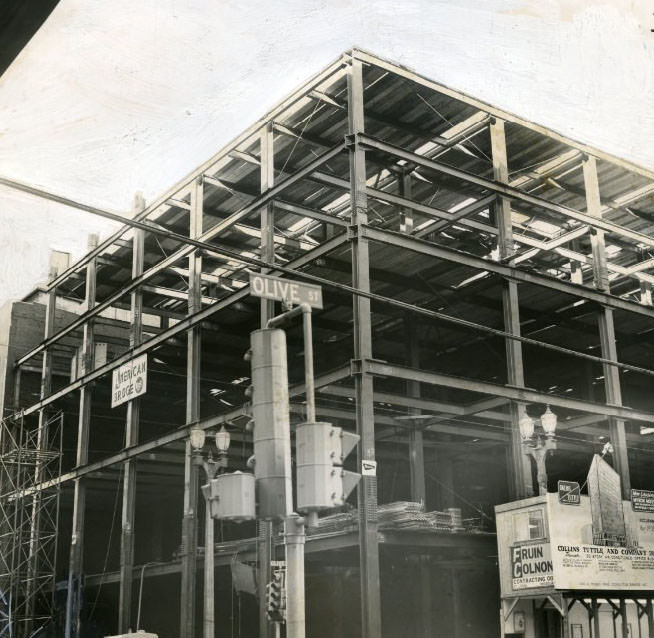
Alongside gleaming new apartments for young professionals, St. Louis was also investing in housing for the elderly. Heritage House, a 19-story retirement community, was under construction in 1960. Its steel framework stood out on the skyline like a giant billboard, as one newspaper caption described it. The Marmaduke Apartments were purchased for an aged care project. These developments reflected a recognition that the city’s aging population needed dedicated housing as family structures changed and adult children moved to the suburbs.
The Jefferson Bank and Trust protests became a defining civil rights moment for St. Louis. Demonstrators stood outside the bank in peaceful picket lines, demanding the hiring of Black employees in clerical and professional positions. When the bank refused and sought court injunctions, demonstrators defied the injunctions and were arrested. Some protesters were sentenced to jail time. The campaign drew comparisons to demonstrations in Birmingham and Atlanta and established a new level of direct-action civil rights organizing in Missouri.
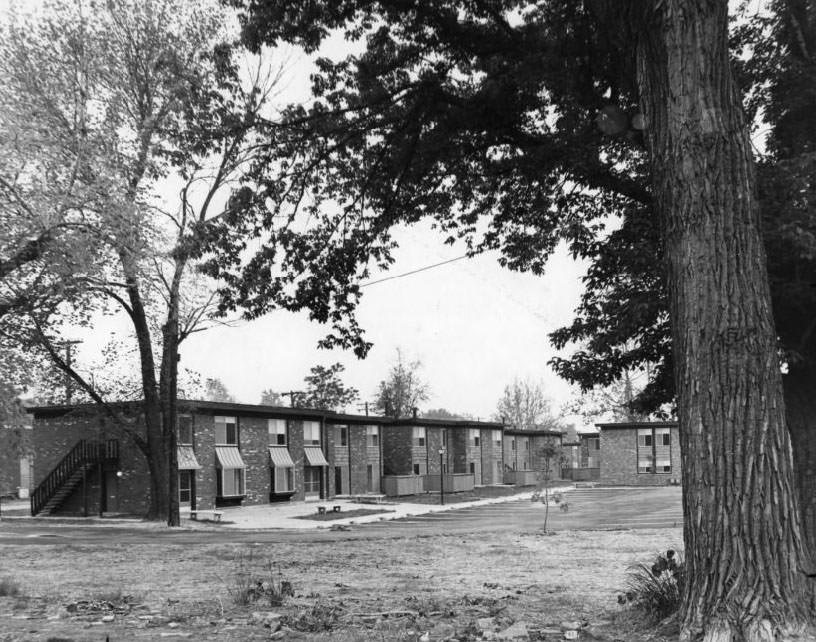
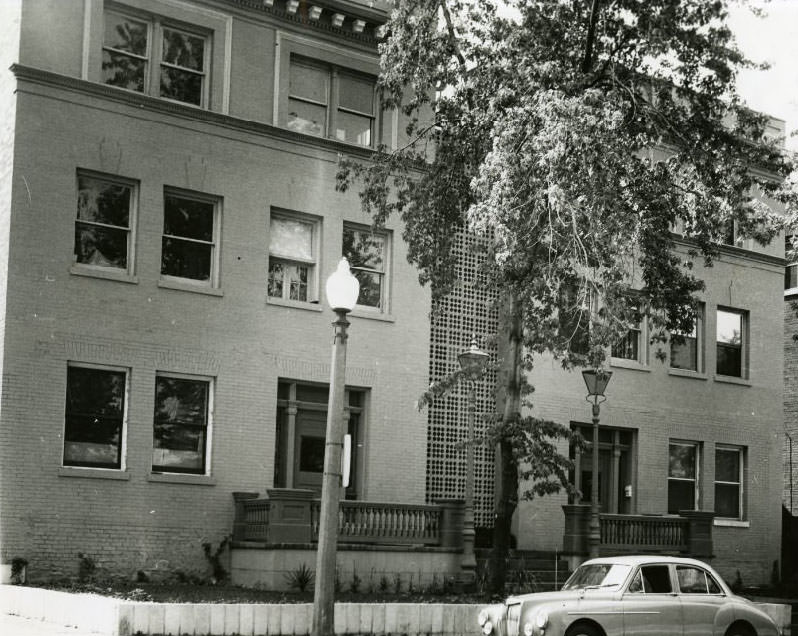
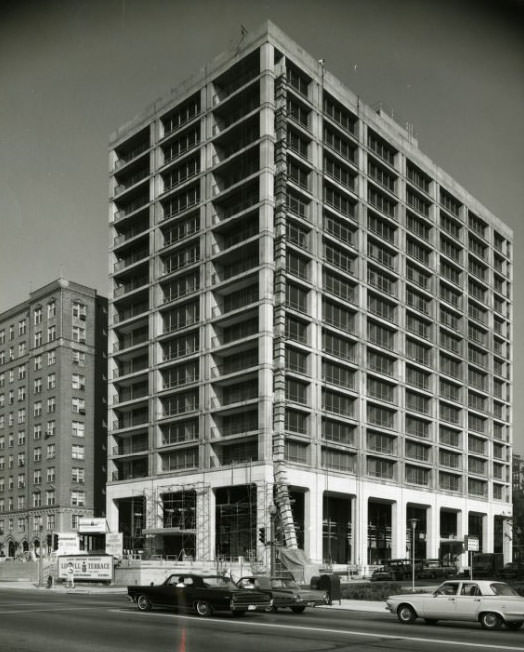
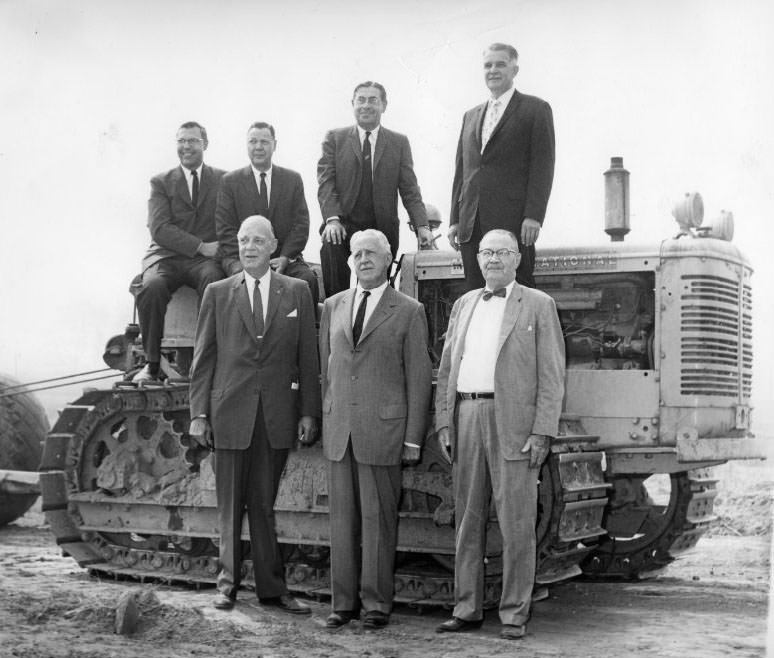
The apartment construction boom of the 1960s transformed dozens of St. Louis neighborhoods. New buildings replaced vacant lots and aging structures on Delmar Boulevard, Lindell Boulevard, Hodiamont Avenue, and West Pine. Some projects, like the Grand Tower Apartments, were tied directly to university expansion — St. Louis University used residential development as a way to extend its campus footprint westward. Groundbreakings were treated as civic events, with ceremonies, speeches, and photographs marking the start of each new project.
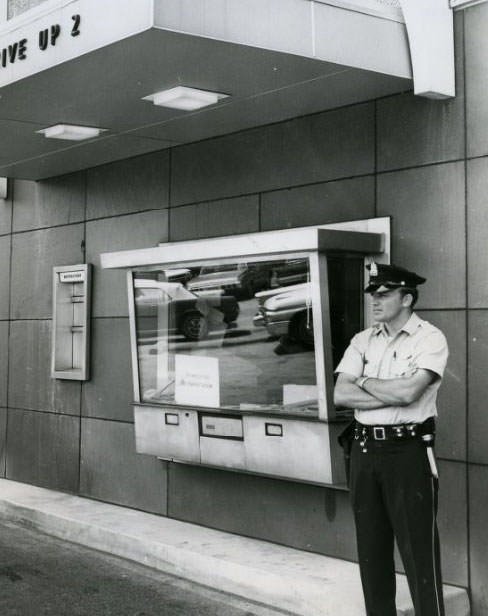
Crime was a fixture of the city’s news coverage throughout the decade. Armed robberies at banks made front-page headlines. A security camera at one branch captured images of two gunmen. A patrolman stood guard outside the Gateway Bank at 3412 Union after a teller was held up. Fingerprint technicians were called in to work scenes at Mercantile Trust. The city’s police department, meanwhile, was itself a target of civil rights criticism — protesters challenged discriminatory practices in hiring and enforcement throughout the decade.
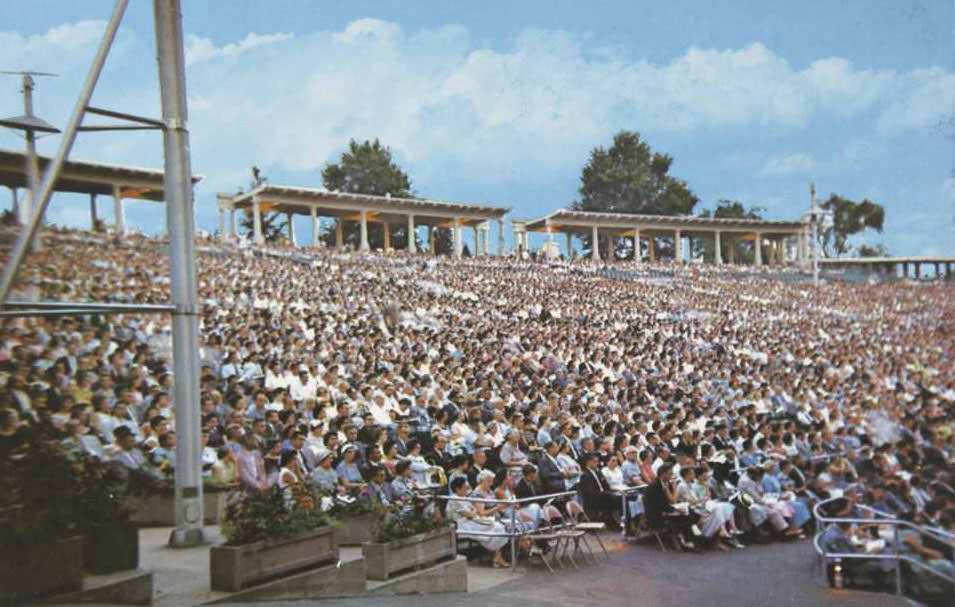
The music scene in St. Louis during the 1960s was rooted in blues and soul but stretching outward in every direction. The city had deep connections to the blues through artists who had passed through over the decades, and that tradition fed into the sounds coming out of clubs and small venues across the city. Meanwhile, the Municipal Opera — the Muny — continued to draw massive summer crowds to its outdoor stage in Forest Park, staging Broadway productions under the open sky for audiences numbering in the thousands.
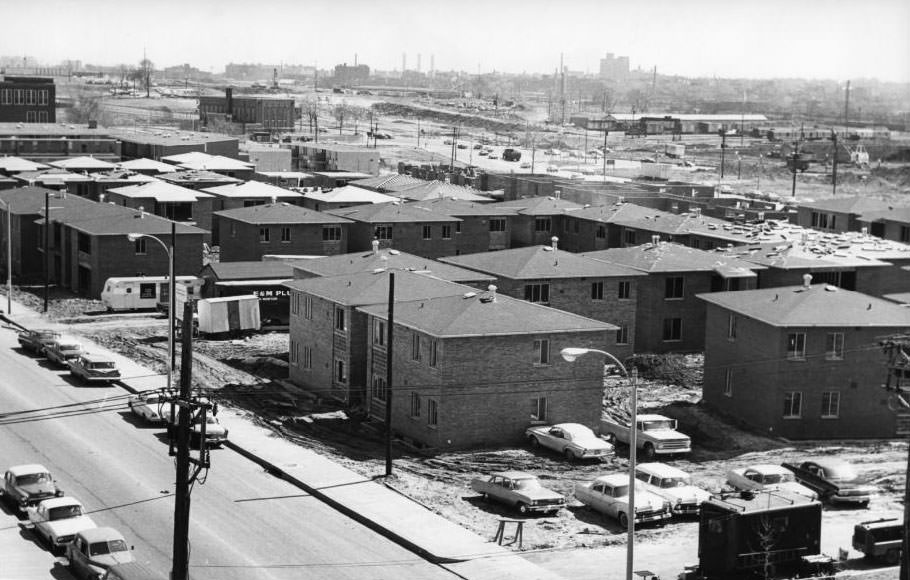
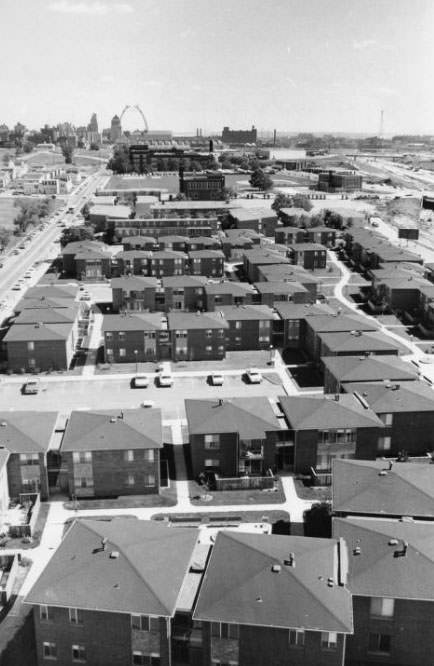
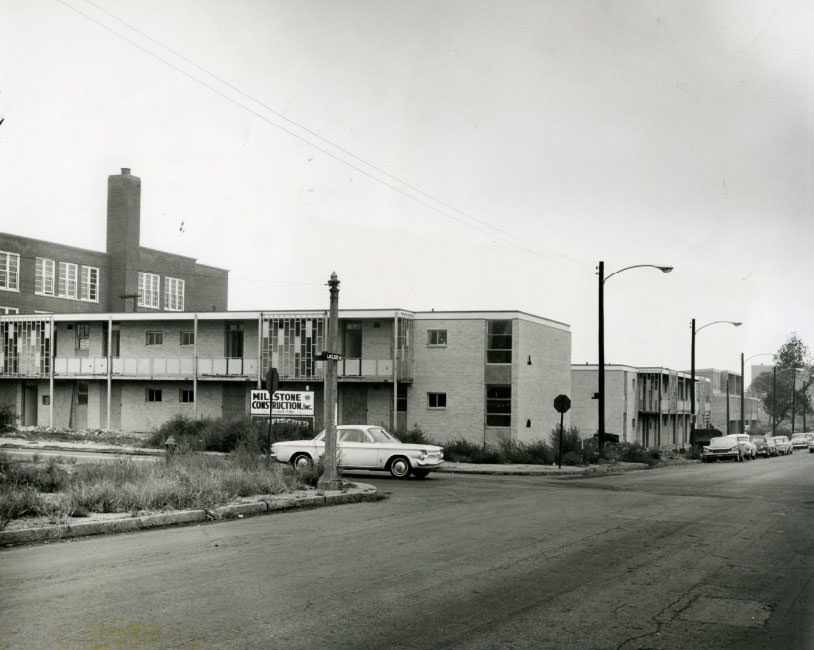
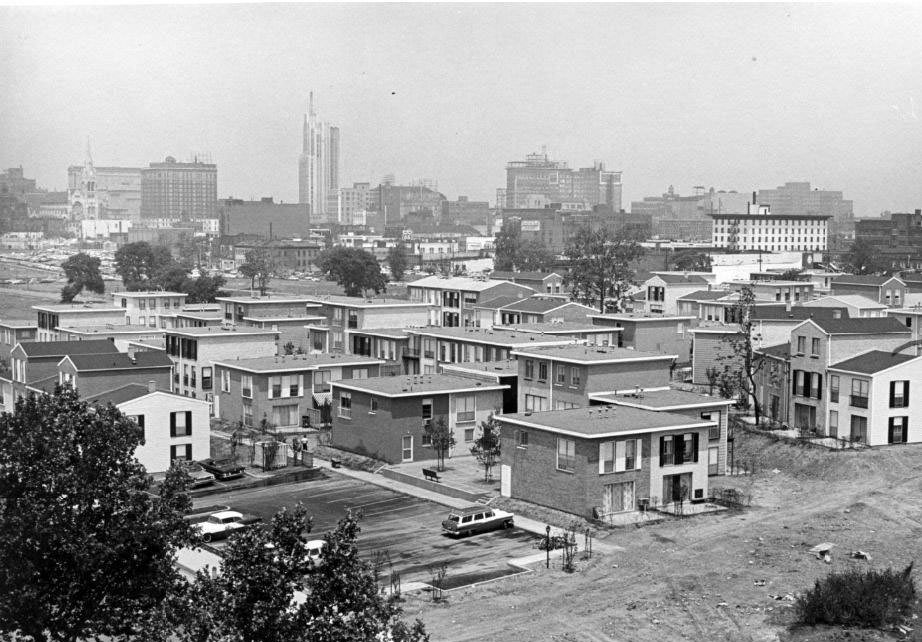
The Grand Forest low-rise apartments in Mill Creek Valley were nearing completion ahead of schedule as 1960 began. The development was part of the massive redevelopment of the valley that had followed the demolition of the old neighborhood. The town house units there had enough applications to fill all 279 units before construction was finished. For city planners, this was a success story. For the thousands of former residents who had been displaced to make the project possible, it told a more complicated story about who the city was being rebuilt for.
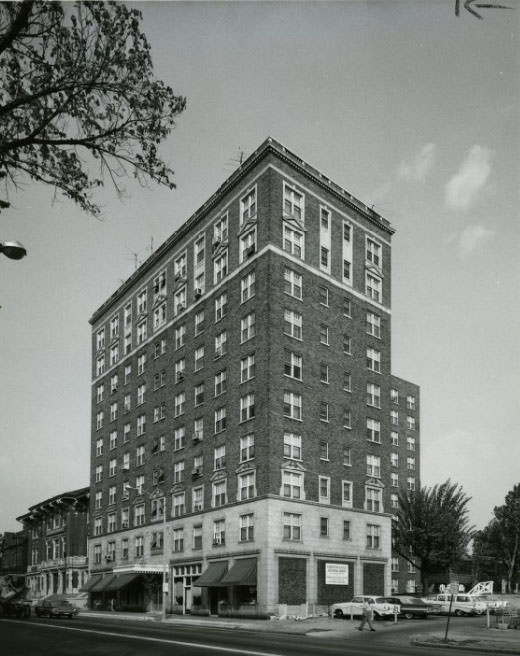
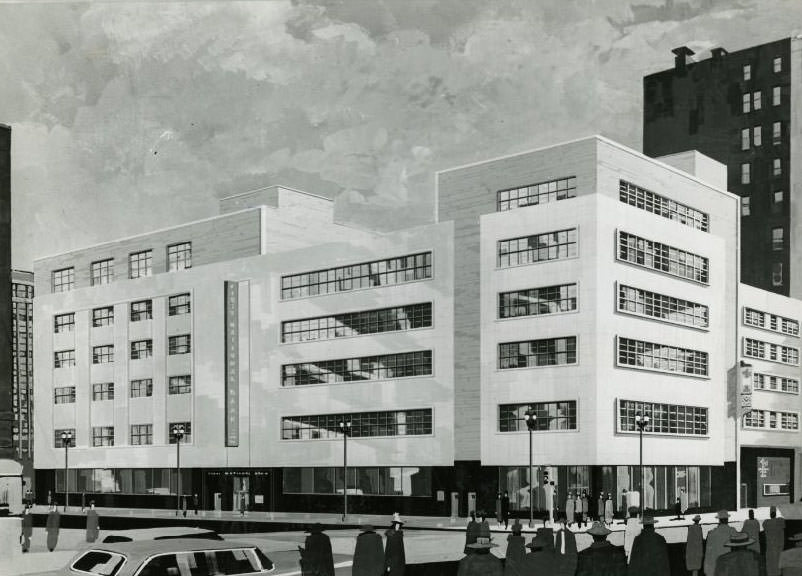
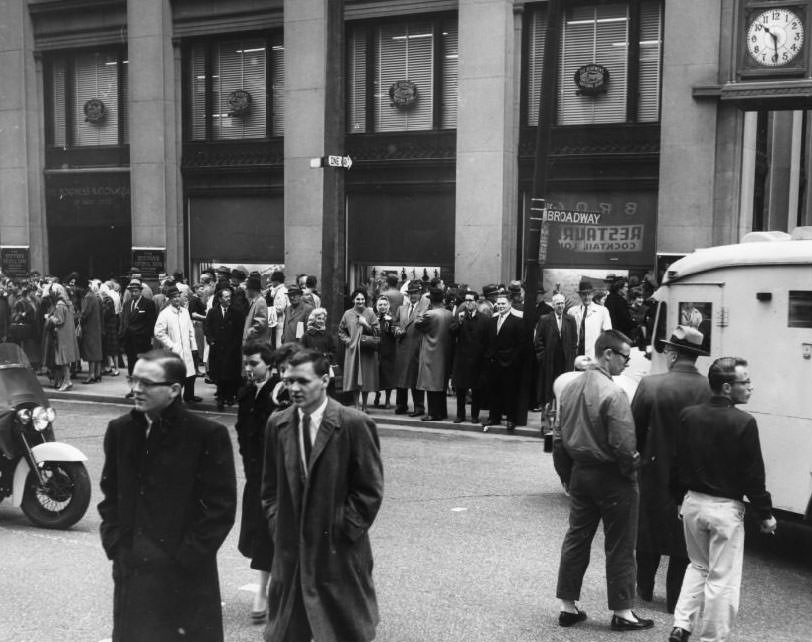
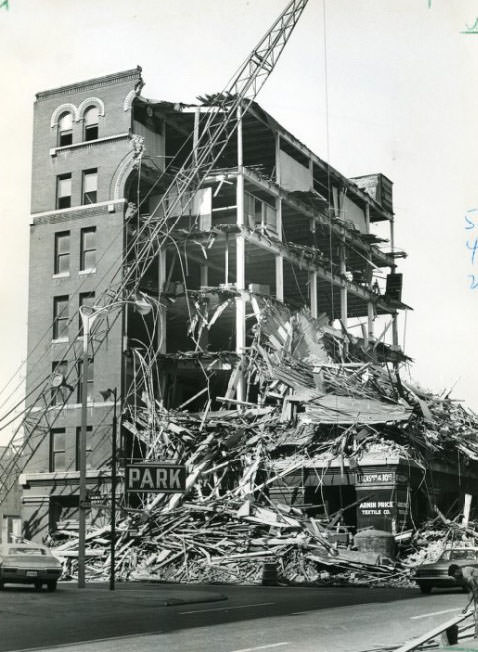
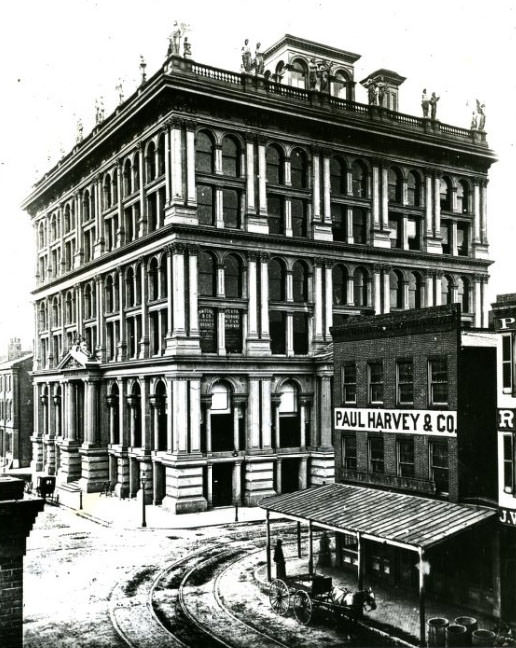
St. Louis’s older buildings were giving way throughout the decade. Historic structures at 11th and Washington were coming down by 1967. The Continental Building on Olive Street was sold under foreclosure in 1962. The ornate Singer Building at Broadway and Locust, which had been one of downtown’s showpieces during the 19th century, was among the landmarks documented in photographs as the city grappled with what to preserve and what to tear down. A seven-story building at 10th and Lucas was demolished in 1968 to make way for a parking lot.
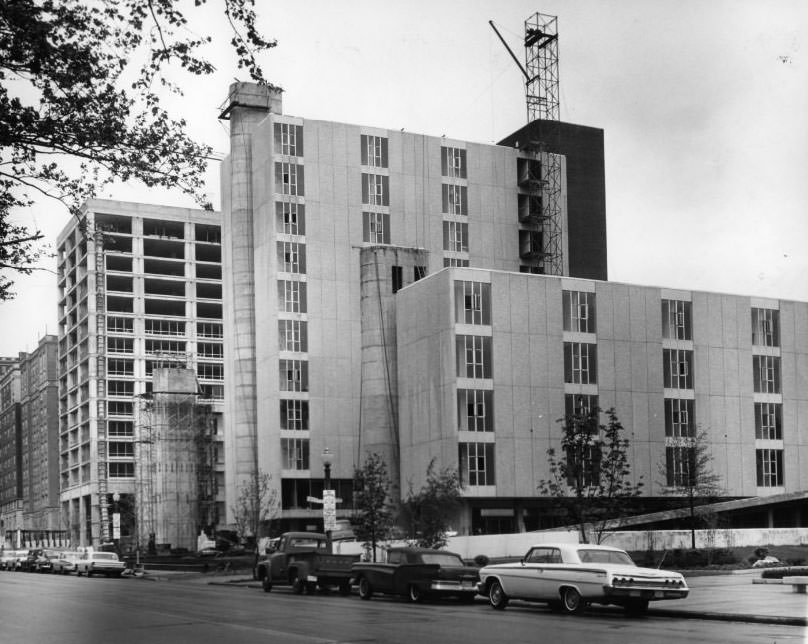
Motor hotels like the St. Louis de Ville catered to a traveling public increasingly oriented around the automobile. The interstate highway system was still being completed, and St. Louis sat at the junction of major east-west and north-south routes. Travelers stopping in the city expected modern amenities — pools, air conditioning, televisions in every room. These motor hotels were as much a product of the highway age as the bridges and ramps being built across the city’s landscape.
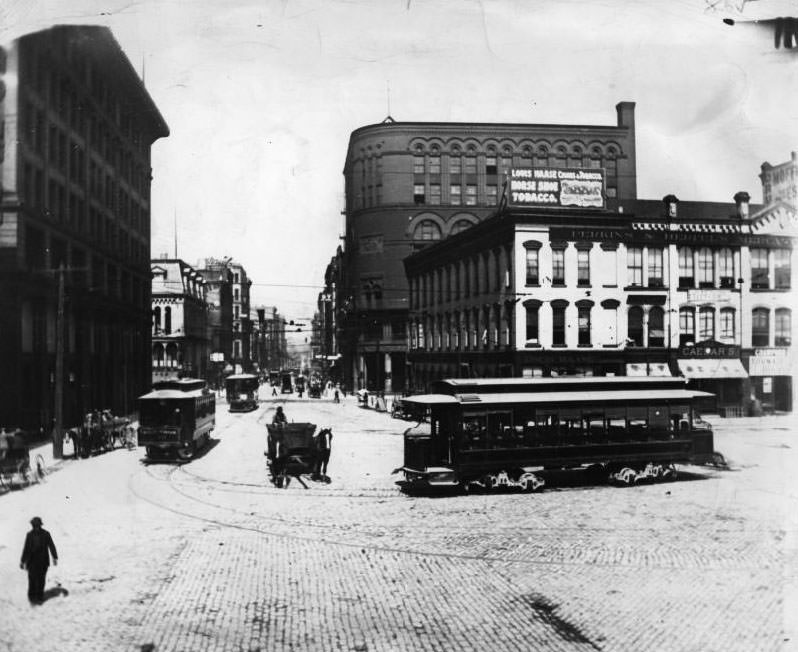
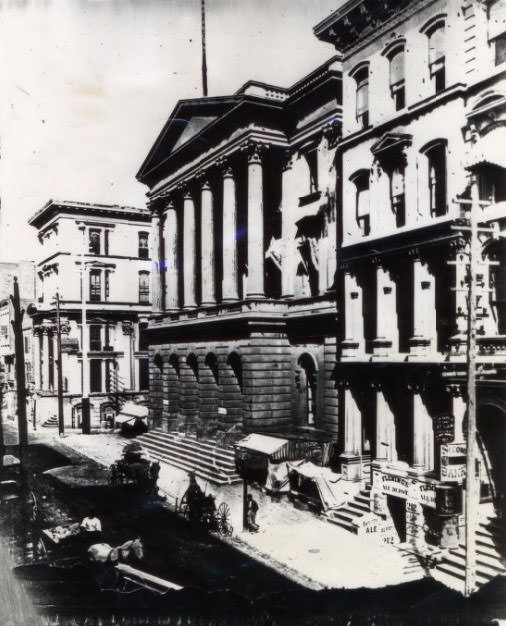
St. Louis’s architecture carried the weight of its history even as new construction rose all around. The old Boatmen’s Bank at Third and Washington had been photographed in 1949 as it looked during the Spanish-American War era. The Republic Building at Third and Chestnut, completed in 1873, was described at the time as one of the finest newspaper establishments in the country. The city’s first courthouse under United States rule after 1804 still stood at Third and Plum. These buildings were documented throughout the early 1960s, as if the city sensed they would not stand much longer.
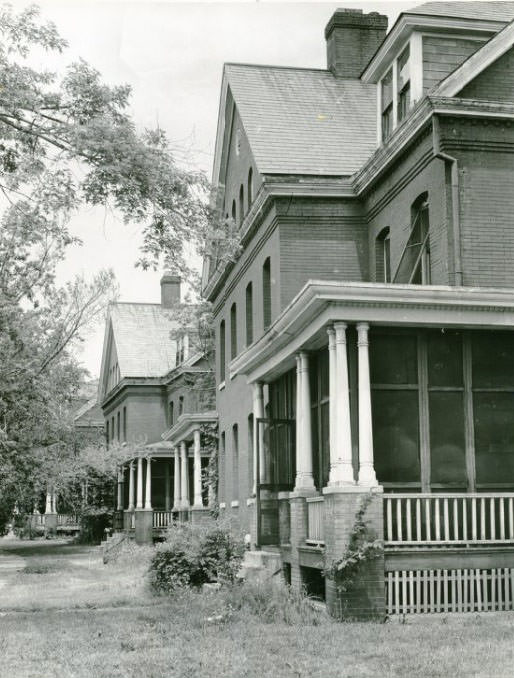
The housing market in St. Louis during the 1960s was deeply shaped by race. Redlining by banks and insurance companies restricted where Black families could buy homes. Real estate agents steered buyers by race. When Black families did move into previously all-white neighborhoods, white flight often followed within months. Open housing activists, including members of Percy Green’s ACTION organization, challenged these practices through protests and legal action. The Civil Rights Act of 1968, which included the Fair Housing Act, was a direct response to exactly these conditions — but enforcement in St. Louis and cities like it remained uneven for years.
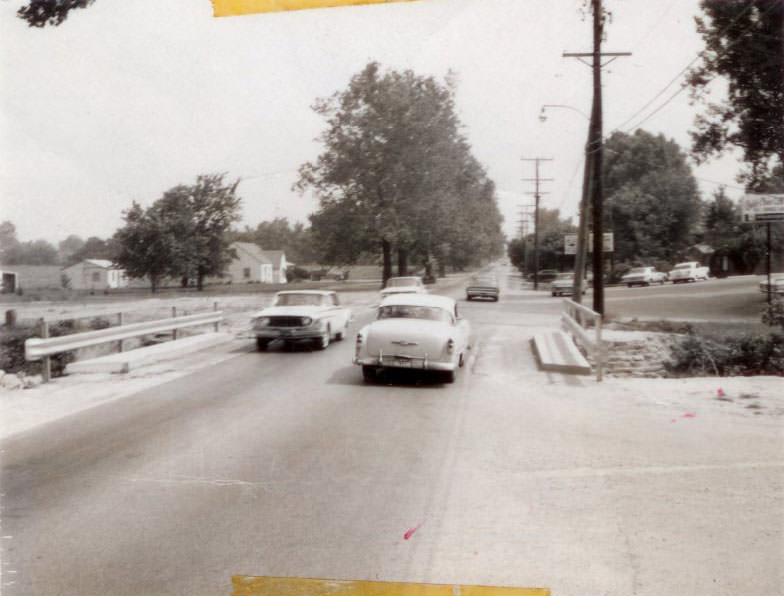
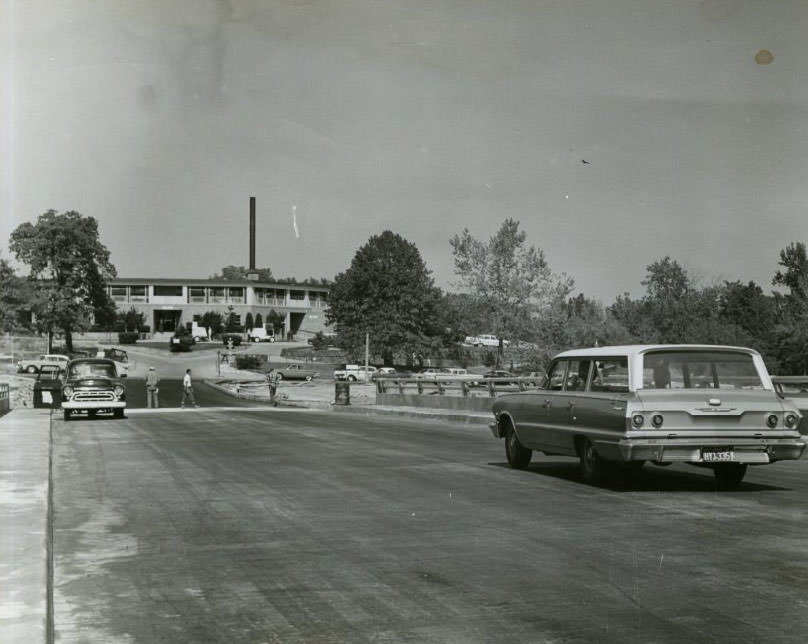
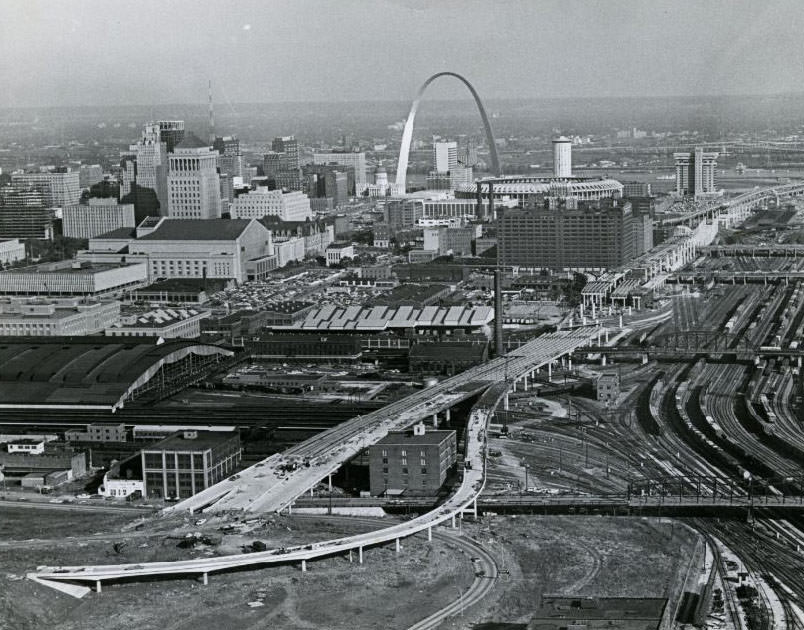
The Poplar Street Bridge dispute dragged on for years. Arguments over design, contracts, and construction methods delayed the project repeatedly. By 1966, work was finally advancing on the east approach. A police escort accompanied activity on the bridge in 1967 as paving proceeded. When the bridge finally opened, it carried the combined traffic of two major interstates across the Mississippi and became one of the most heavily used river crossings in the country.
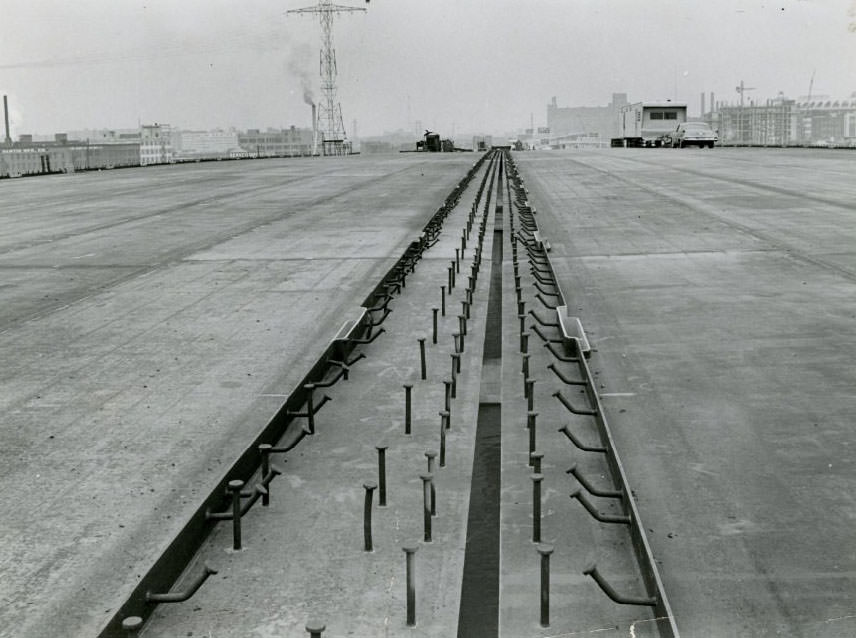
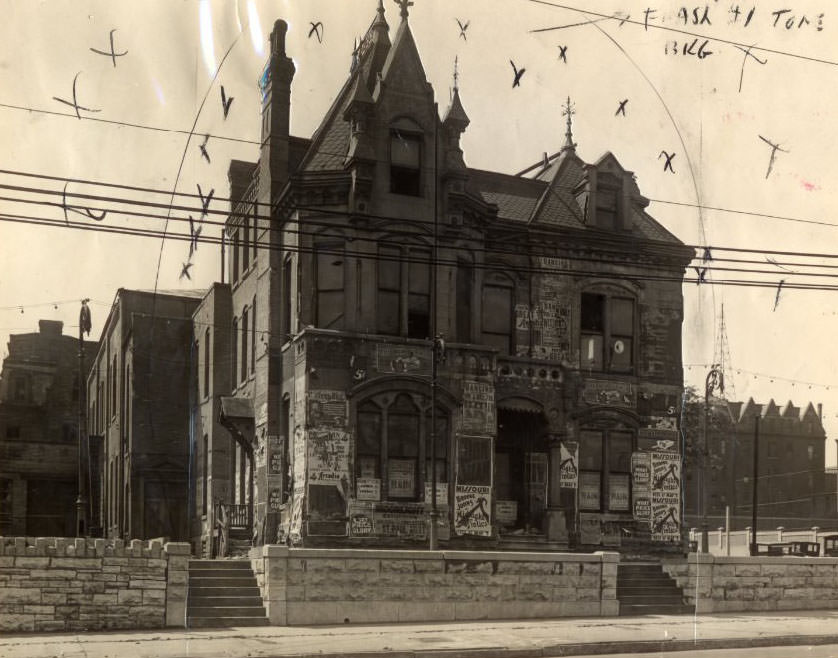
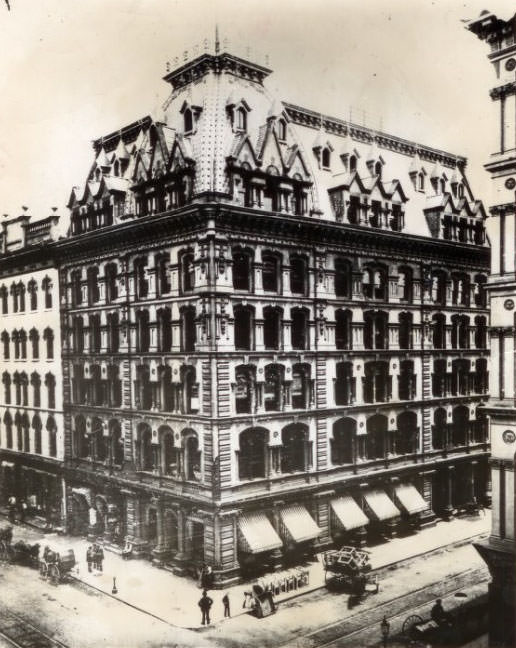
Preservationists and developers were in constant conflict over the fate of St. Louis’s older structures. The Jefferson Club building at Grand and Pine, the Palace Stables from the 1880s at 2938 Olive, and the old United States Customs House were all being photographed and documented as their futures remained uncertain. Some would survive; many would not. The city’s newspapers regularly ran features on these historic structures, acknowledging their place in the city’s story even as the wrecking crews moved closer.
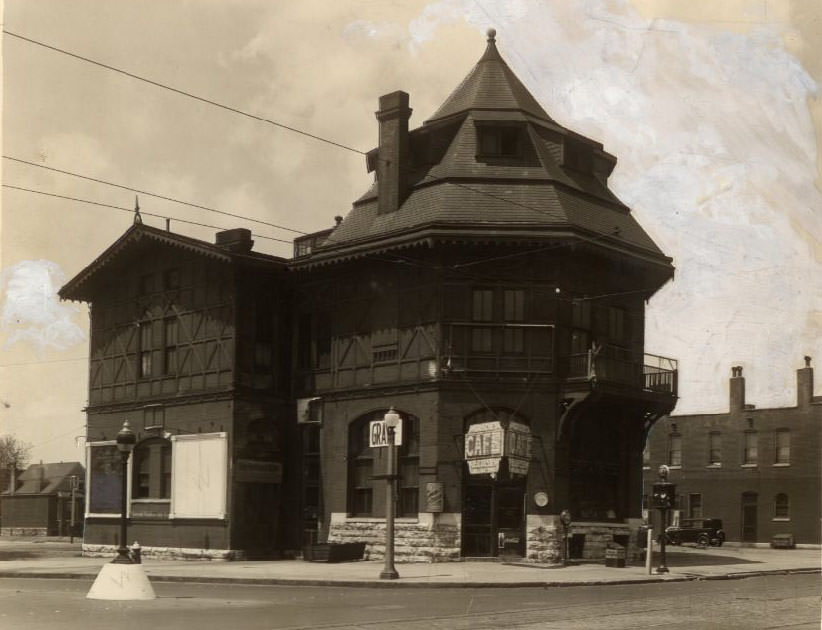
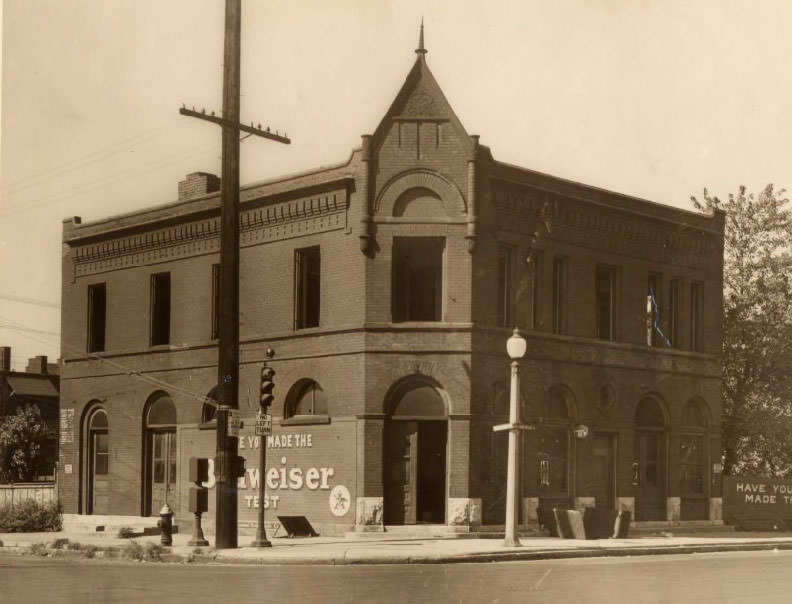
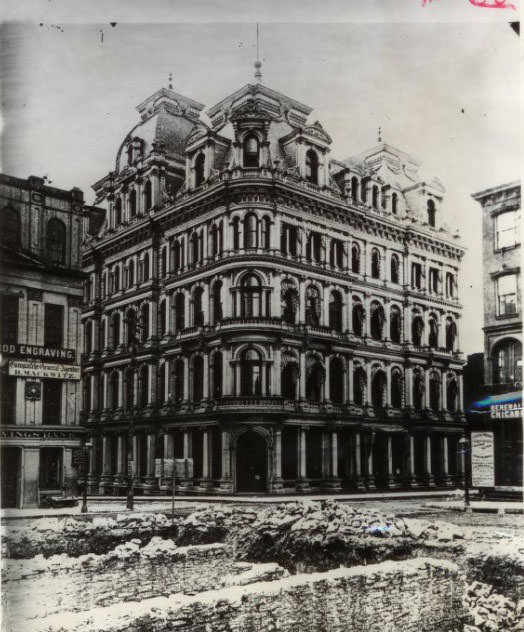
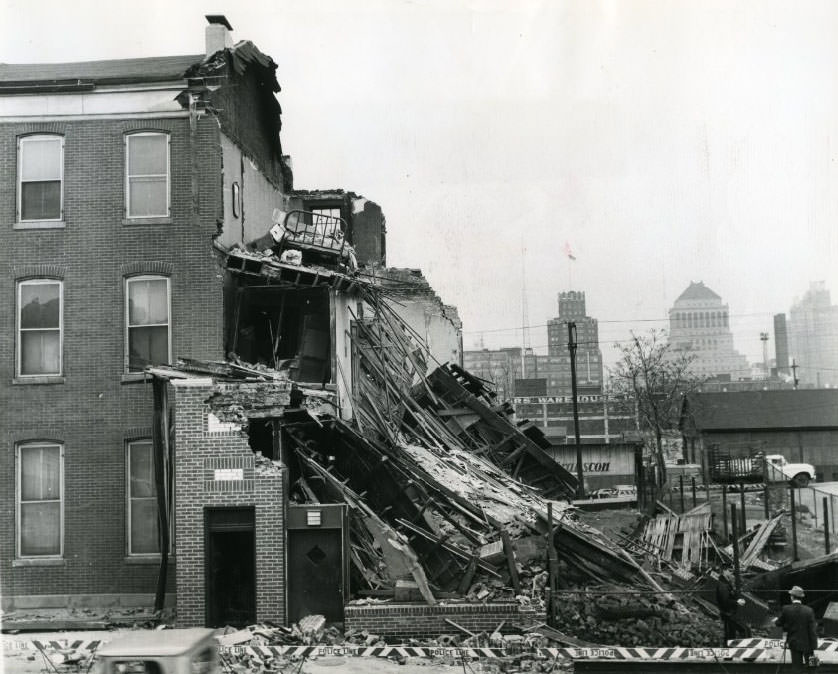
North St. Louis was experiencing particular strain during the decade. Neighborhoods that had been stable working-class communities were showing signs of disinvestment. Vacant buildings were appearing on streets like DeTonty. Tenement buildings owned by city aldermen were photographed and scrutinized in the press. Building collapses — on Biddle Street, on Henrietta Street, on Palm Street where four children were injured — made clear that the city’s housing stock in many areas was deteriorating faster than it was being replaced.
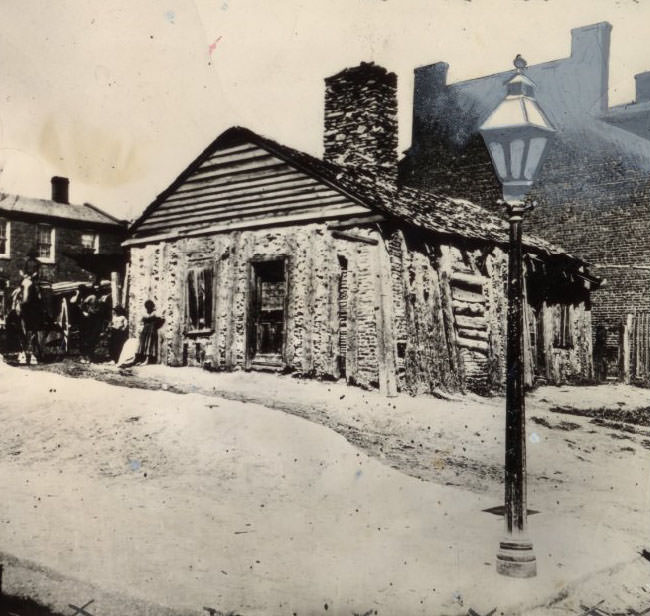
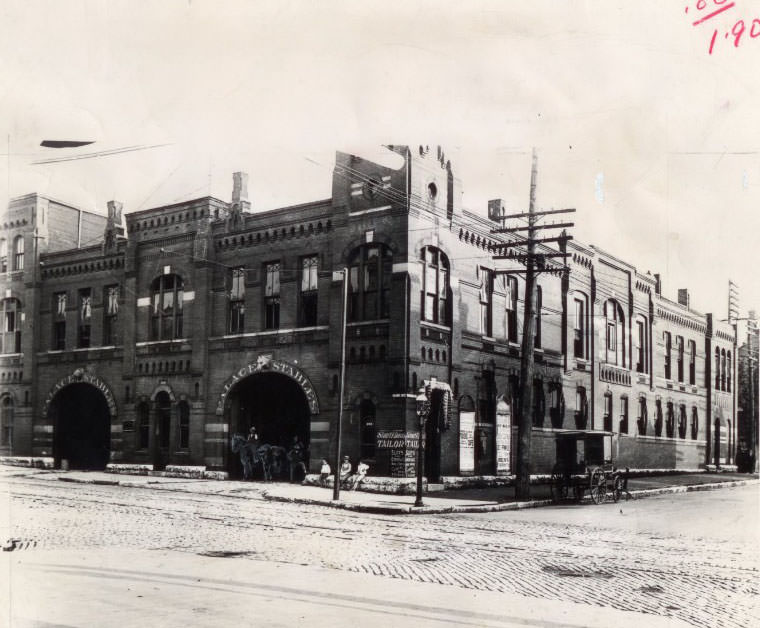
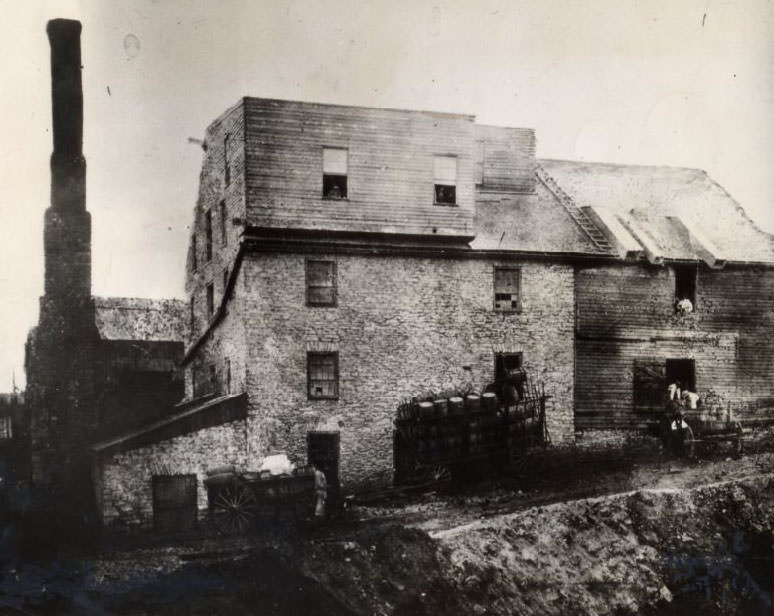
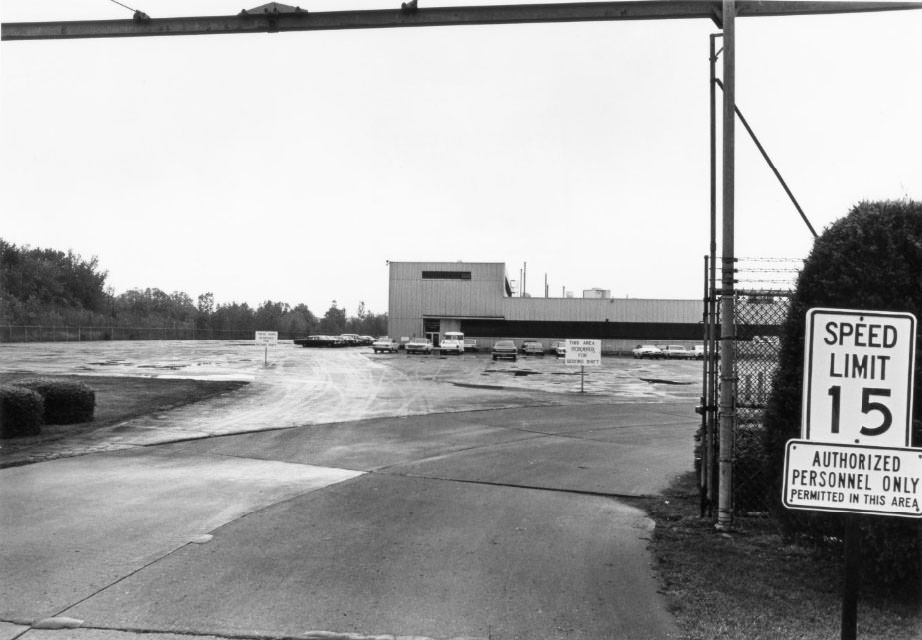
Industrial St. Louis was changing shape. The Carter Carburetor Plant and the American Zinc Company’s new building at 20 South Fourth Street represented different ends of the industrial spectrum — one a legacy manufacturer tied to the automobile industry, the other a firm moving into modern headquarters. The Kroger Company sold its office and warehouse facilities on South Thirty-ninth Street. Grain elevators along the river remained active, though a dust blast at a Continental Grain Company elevator at 7900 Van Buren Street in 1962 caused significant damage.
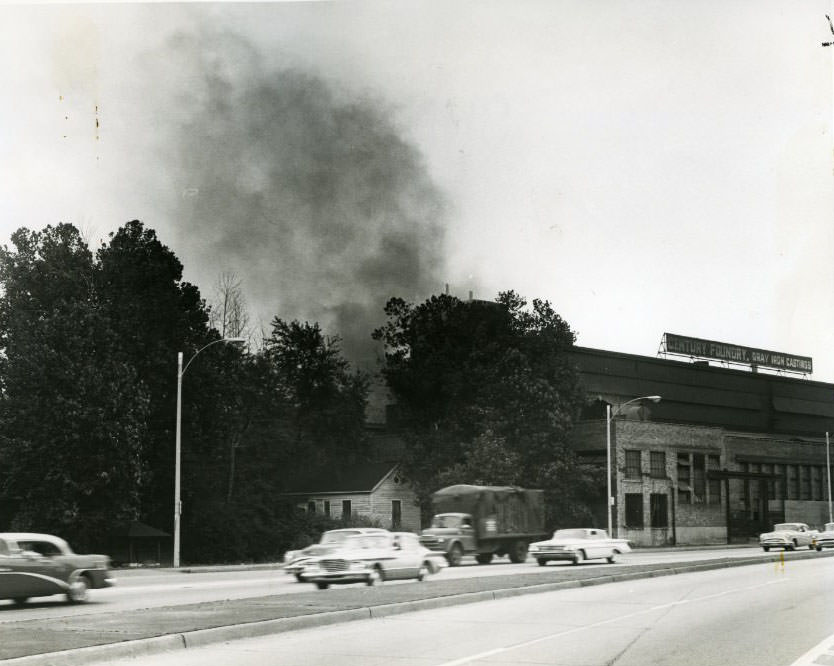
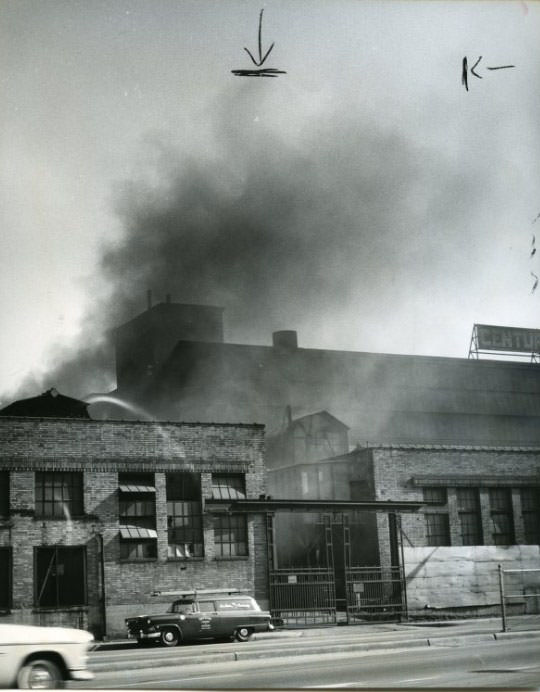
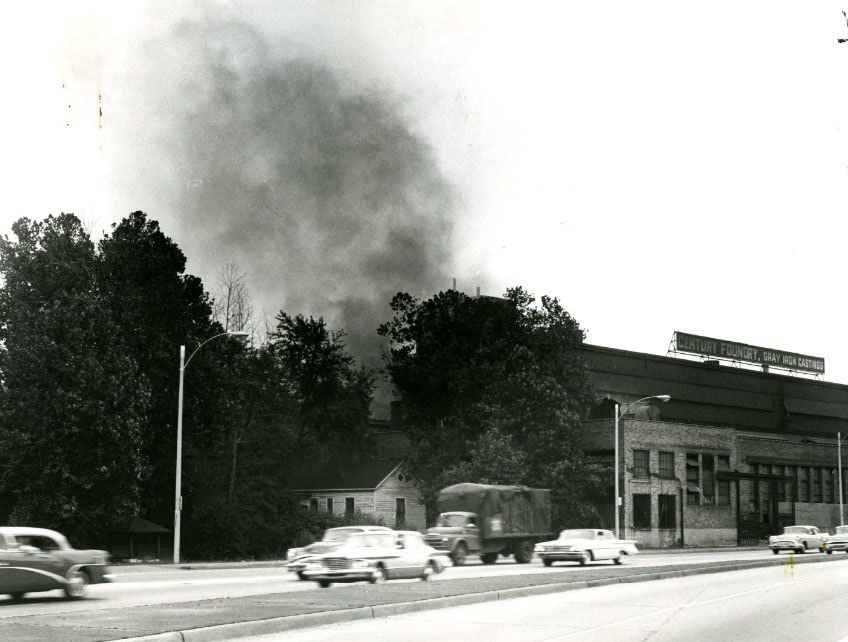
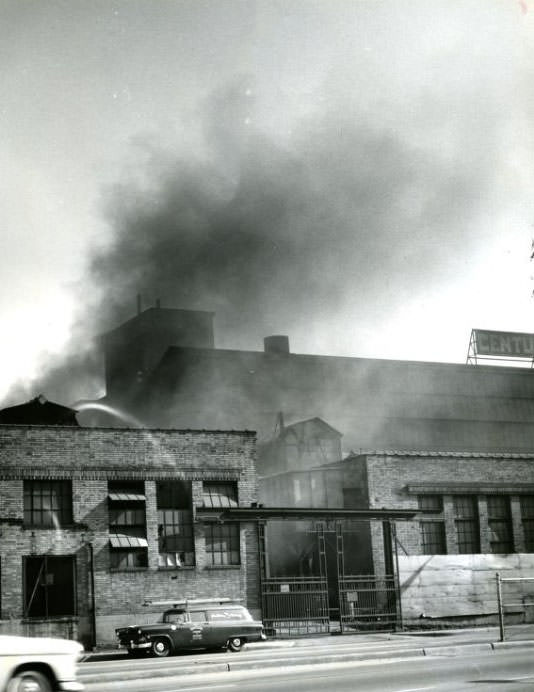
The Century Foundry at 3711 Market Street became a local symbol of the city’s industrial pollution problem. Smoke poured from the foundry in photographs taken in 1961, and city officials were photographed at the scene as public pressure over air quality mounted. St. Louis had long struggled with air pollution — the city had passed landmark smoke control ordinances in the 1940s — but industrial operations like the foundry continued to draw complaints from residents and scrutiny from the press well into the 1960s.
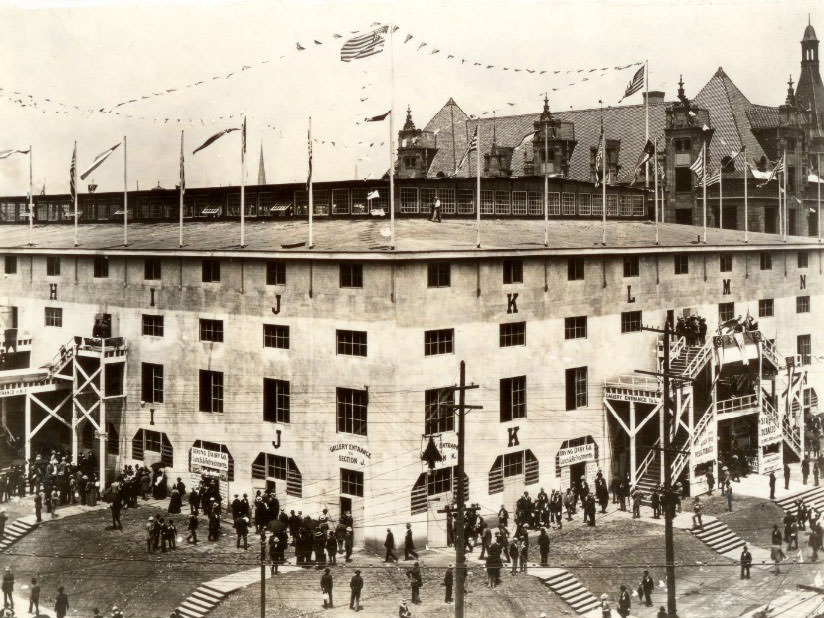
Busch Memorial Stadium opened in 1966, replacing the old Sportsman’s Park on the north side. The new stadium sat downtown, near the Gateway Arch, and was designed as a multipurpose facility for both the Cardinals baseball team and the football Cardinals. Its opening was a major event for the city, drawing lines of fans outside its gates from the very first baseball clinic. The stadium anchored a vision for a revitalized downtown riverfront that city planners and civic leaders had been promoting throughout the decade.
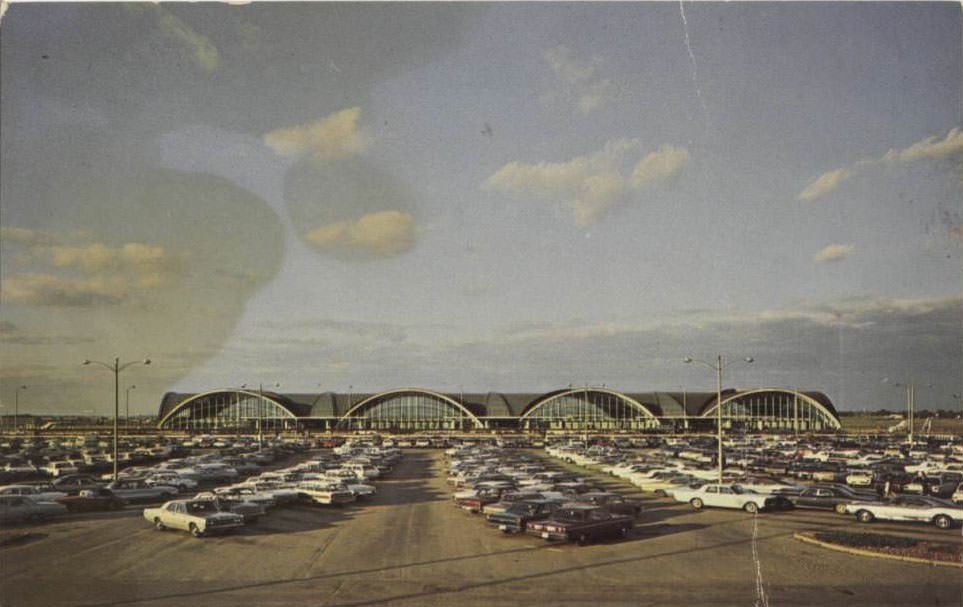
Lambert–St. Louis Municipal Airport was itself modernizing throughout the 1960s. A new terminal building with expanded parking facilities reflected the dramatic growth in commercial air travel. McDonnell Aircraft’s presence near the airport made the site something more than a regional hub — it was a place where the work of the space age was being done on a daily basis. Workers who assembled Gemini capsules in the morning could watch commercial jets depart for cities across the country in the afternoon.
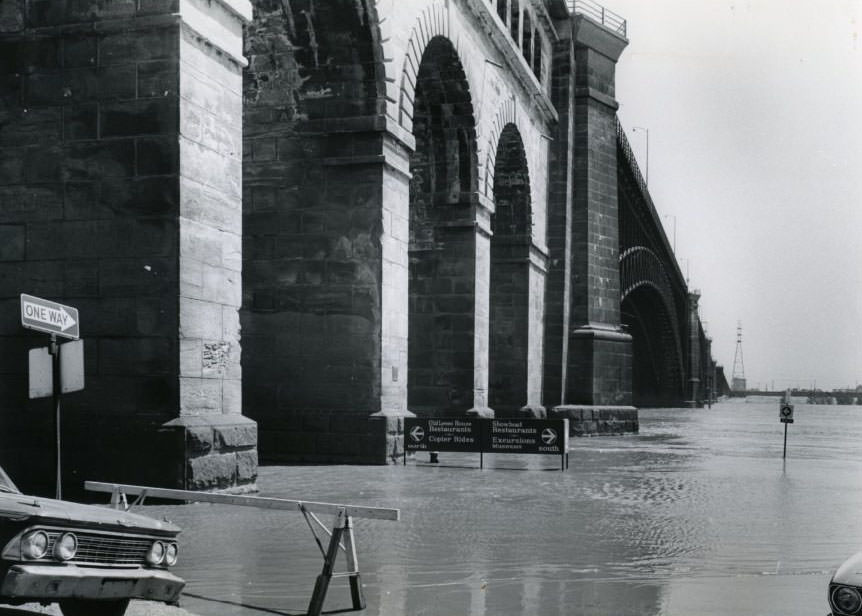
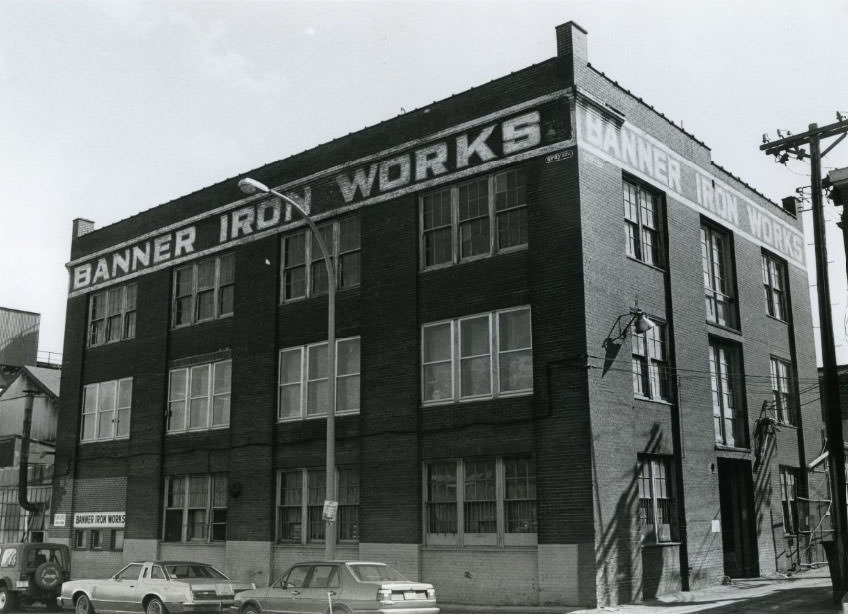
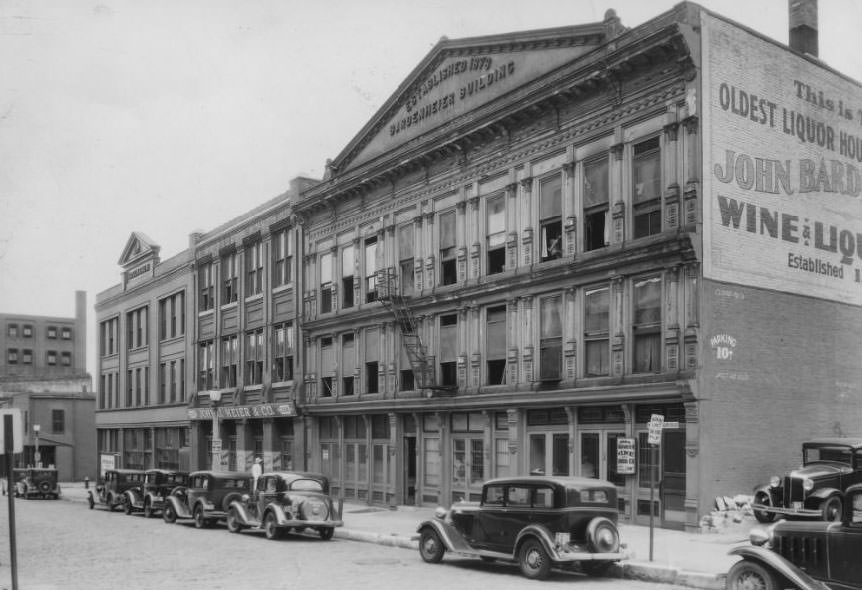
The Mississippi River remained central to St. Louis’s identity throughout the decade. The Eads Bridge, completed in 1874, was still in daily use but posted warnings about slippery conditions in wet weather. Flooding periodically closed sections of the riverfront. The Bardenheier Wine & Liquor building sat along the old riverfront, a remnant of the 19th-century commercial waterfront that the Gateway Arch project was in the process of transforming. The river gave the city its original reason for being, and in the 1960s, it was being reframed as a scenic backdrop for tourism rather than a working industrial corridor.
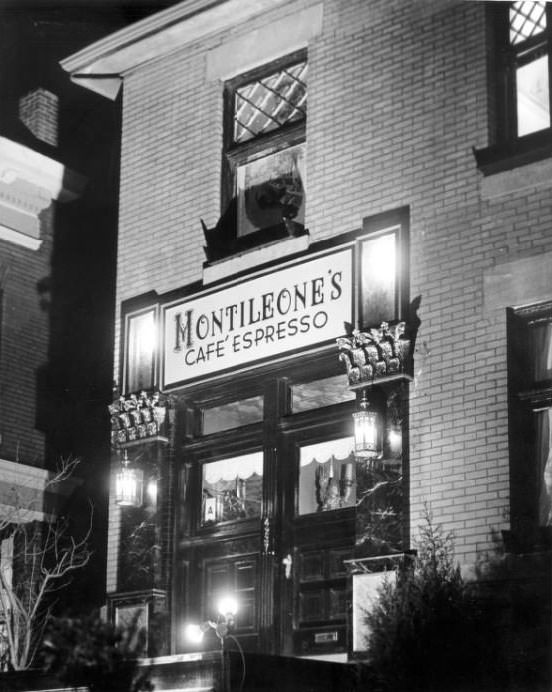
The espresso cafés appearing in neighborhoods like Gaslight Square signaled the counterculture’s growing presence in St. Louis. Places like Montileone’s Café Espresso offered a different kind of gathering space — quieter than the clubs, more intimate, and hospitable to the folk singers, poets, and political activists who were becoming more visible across the city. This was where conversations happened about the war in Vietnam, about the civil rights movement, and about the broader question of what kind of country the United States wanted to be.
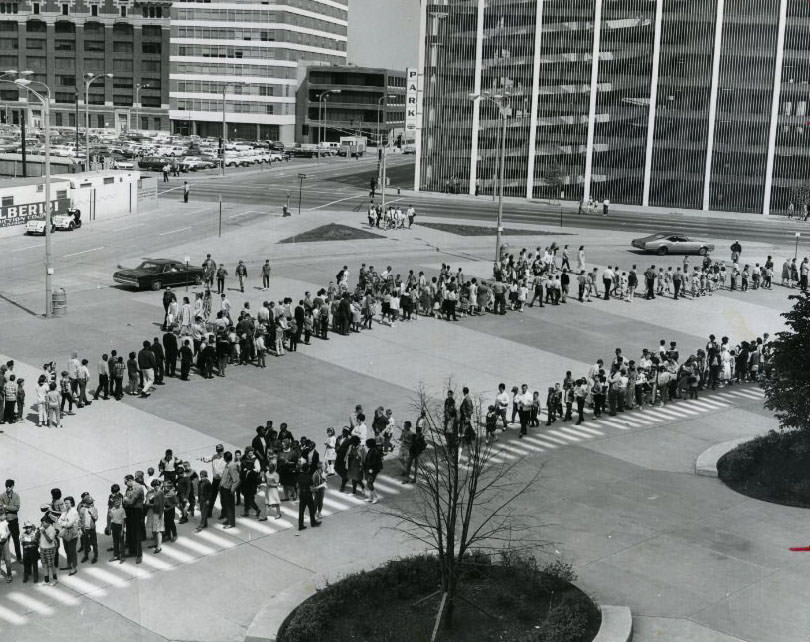
Baseball remained the city’s most consistent source of civic pride. The Cardinals had won the World Series in 1964, defeating the New York Yankees in seven games, and they would win again in 1967, defeating the Boston Red Sox. Bob Gibson, Lou Brock, and Curt Flood were among the players who defined those championship teams and became household names across St. Louis. Lines of fans forming outside the stadium for clinics and events were a regular sight, and the Cardinals gave the city a shared identity that cut across some — though not all — of its deep social divides.
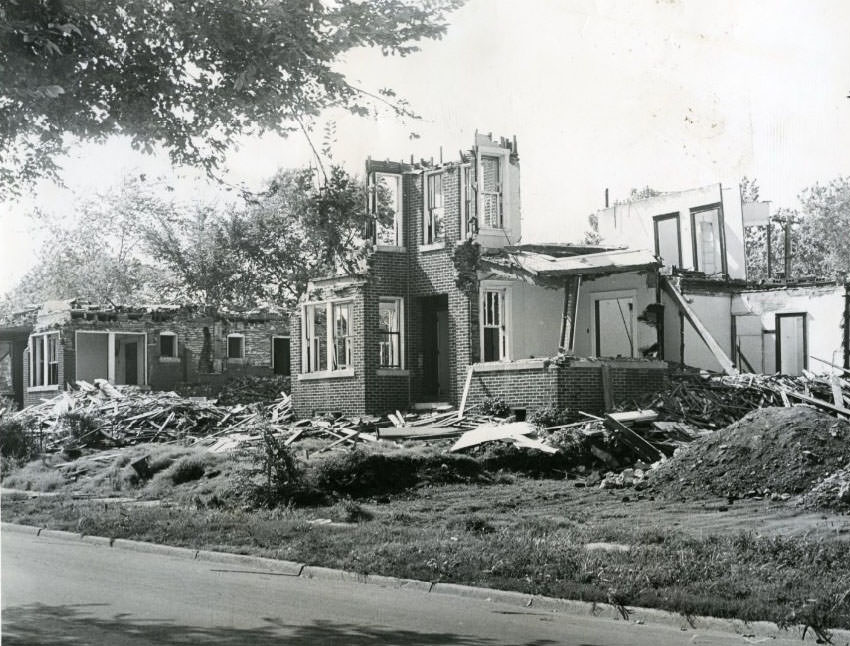
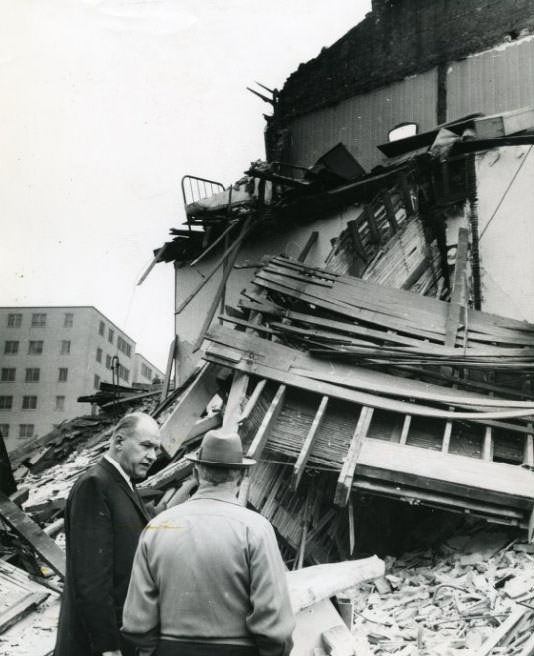
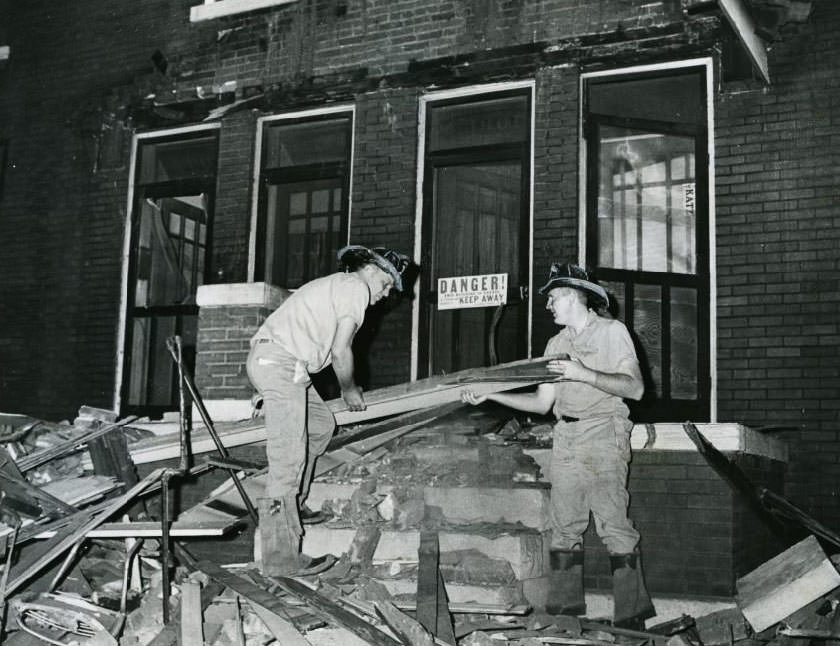
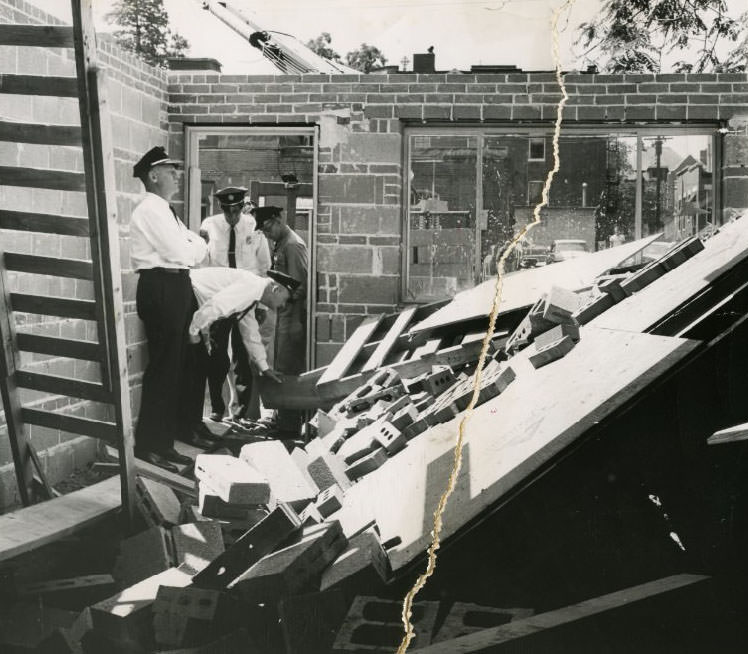
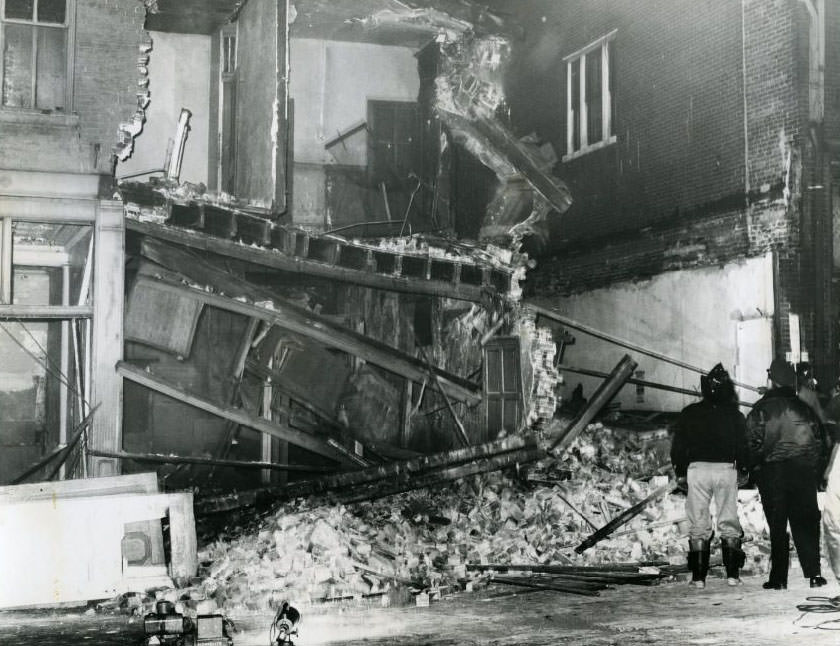
Building collapses were not isolated events in 1960s St. Louis. Structures at Chouteau Avenue, Biddle Street, Henrietta Street, and Palm Street all failed during the decade, injuring residents and drawing the attention of public safety officials. Acting Director of Public Safety William Trantina was photographed at the scene of the Chouteau Avenue collapse. The Leisure Lounge on Chouteau Avenue was reduced to wreckage. These incidents were symptoms of a housing stock that had been neglected for decades, particularly in neighborhoods where landlords had little incentive to maintain properties.
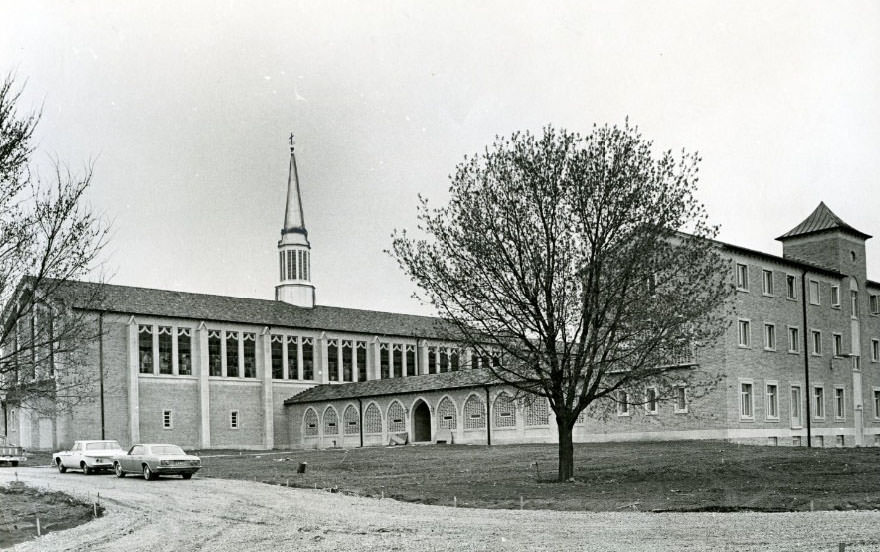
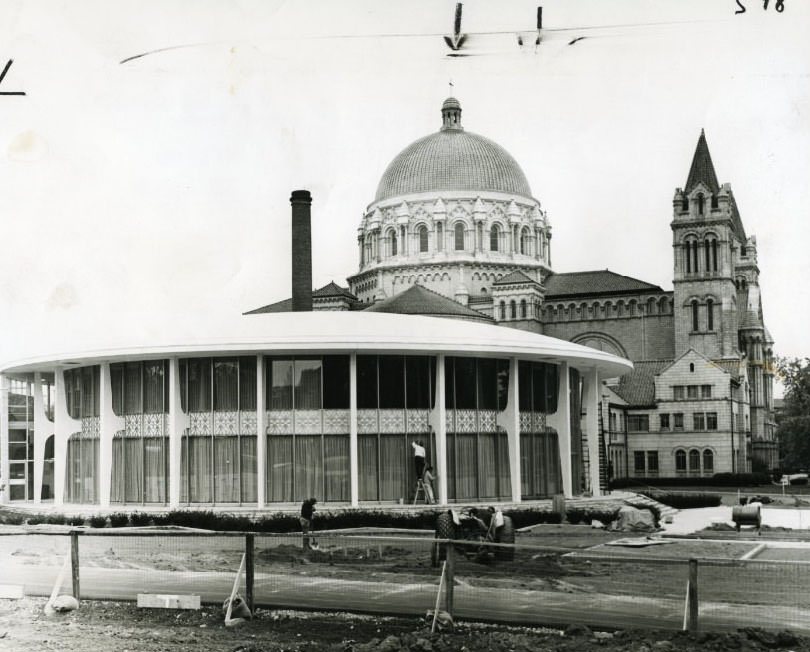
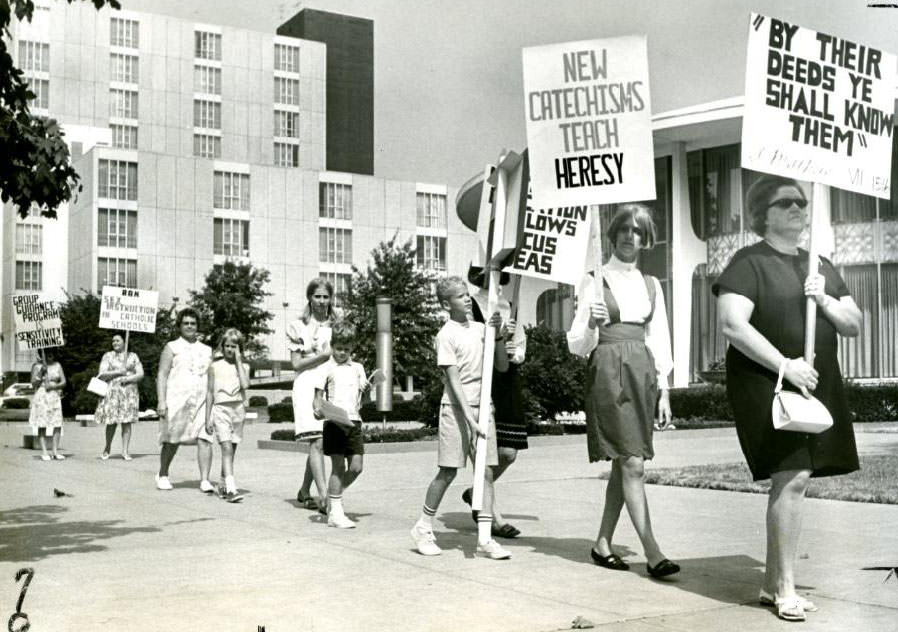
Religious institutions remained deeply embedded in St. Louis life throughout the decade. The Catholic Archdiocese of St. Louis was completing a new chancery building to house its administrative headquarters. The Benedictine Sisters maintained their convent and novitiate. But the Church was not immune to the decade’s conflicts. In 1969, Catholic parents and children picketed the chancery, protesting decisions being made by Church leadership. The Second Vatican Council, which concluded in 1965, had set off debates within American Catholicism that played out in pews and parking lots across St. Louis.
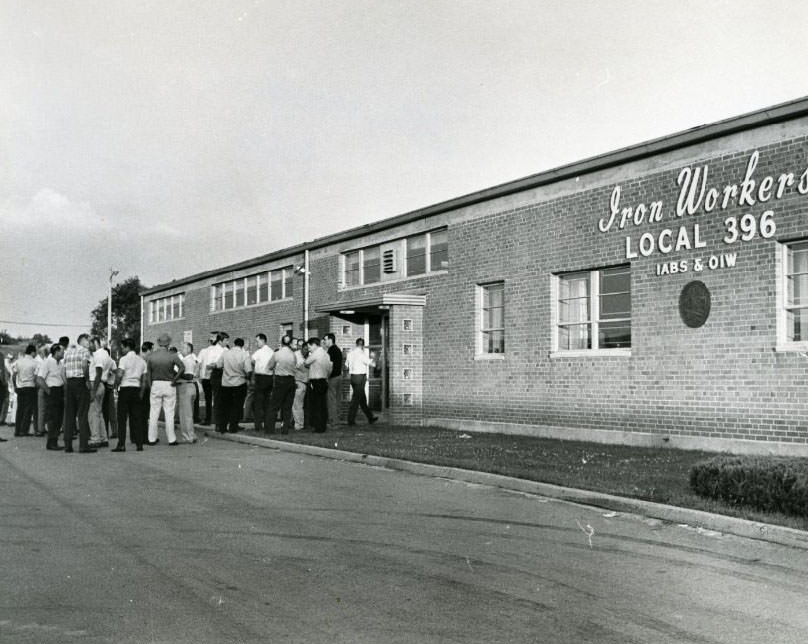
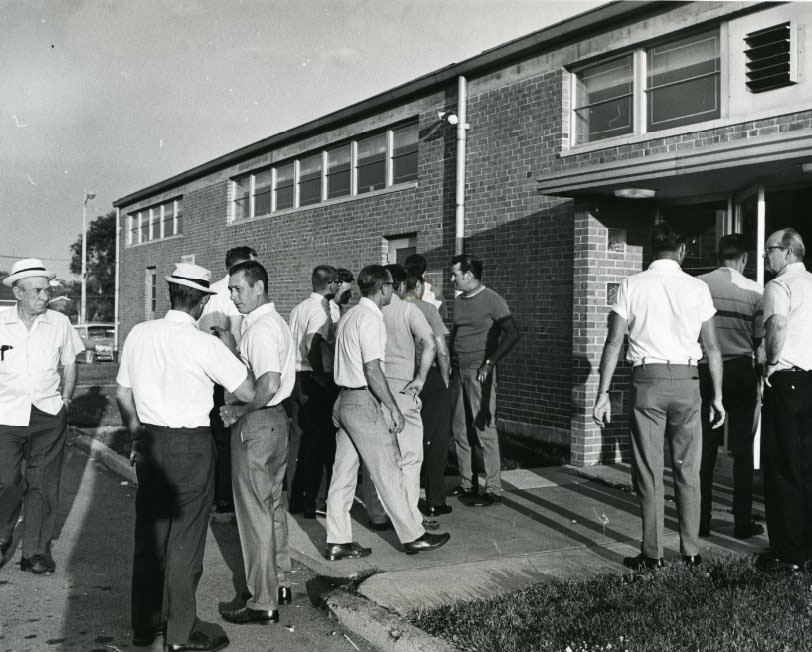
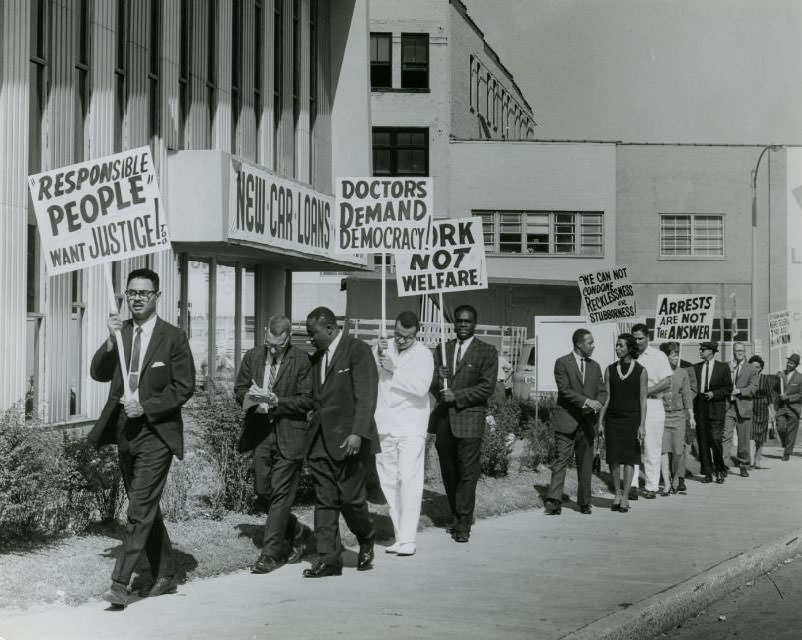
The Jefferson Bank protests brought together students from Washington University and St. Louis University with community activists and established civil rights leaders. CORE — the Congress of Racial Equality — was centrally involved, as was the local NAACP chapter. Demonstrators blocked entrances, chained themselves to doors, and staged sit-ins inside the bank. When a judge issued injunctions, the protesters violated them deliberately, accepting arrest to highlight what they called the injustice of protecting a discriminatory institution with the power of the courts.
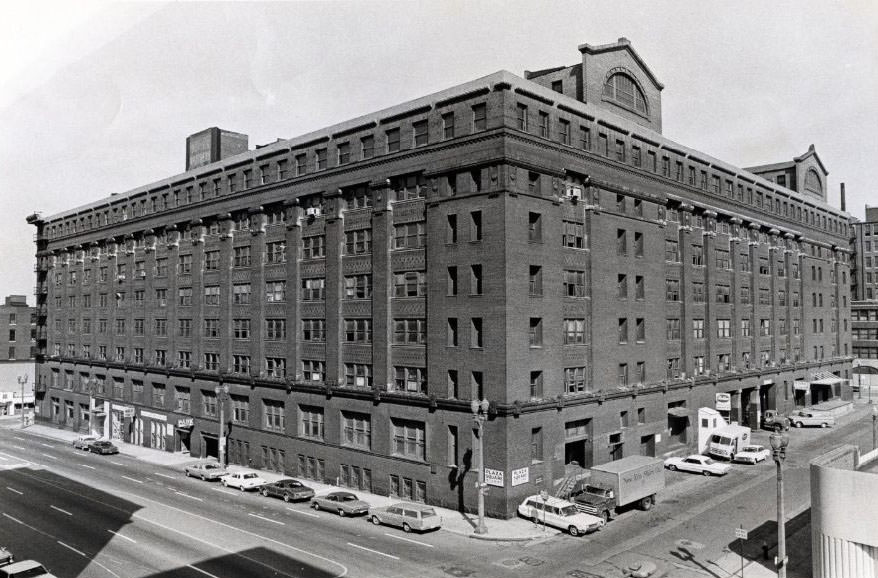
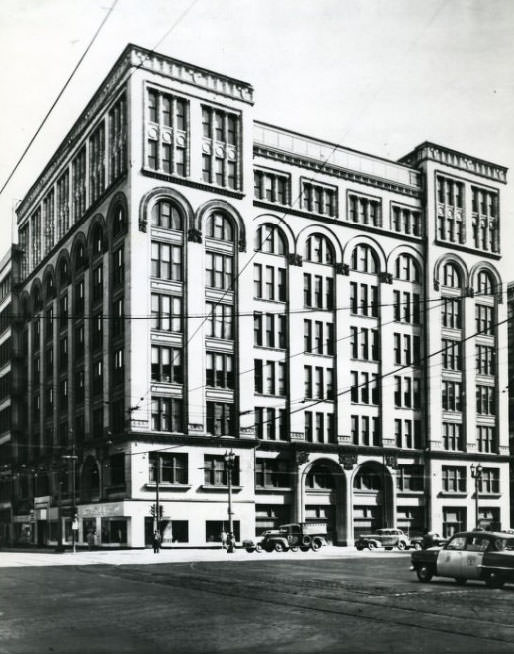
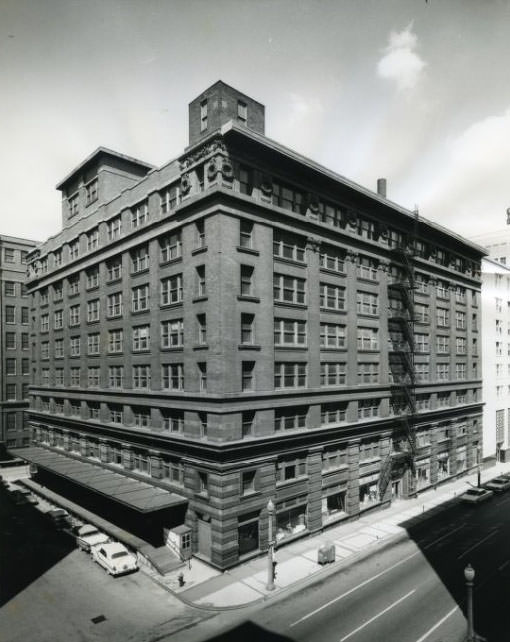
The Butler Brothers Building on Washington Avenue was one of the city’s great warehouse structures, a survivor of the pre-automobile commercial era when goods moved by rail and river. By the 1960s, buildings like this one were being repurposed or left vacant as the industries that had filled them relocated or disappeared. The Ely and Walker Building nearby told a similar story — a warehouse district that had once been the economic engine of the city was slowly becoming something else, though no one was entirely sure what.
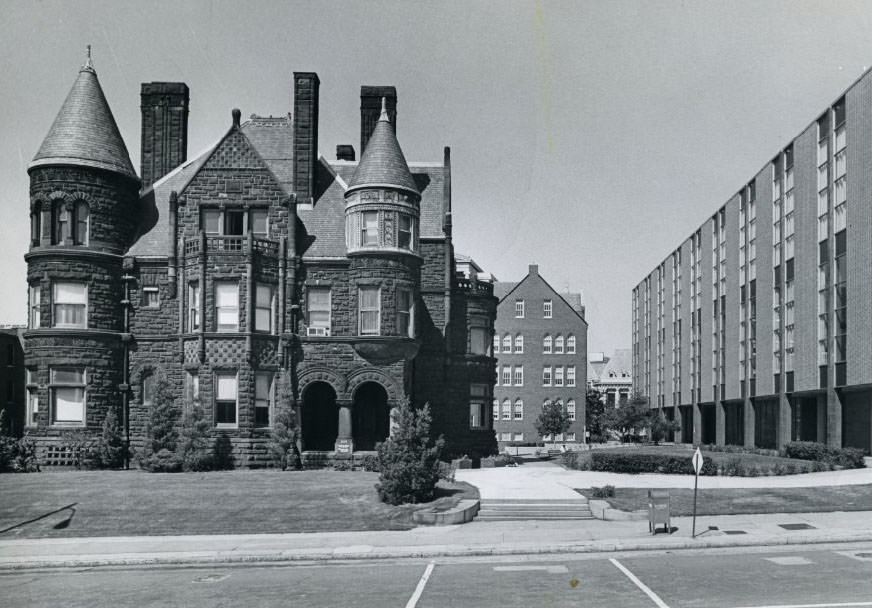
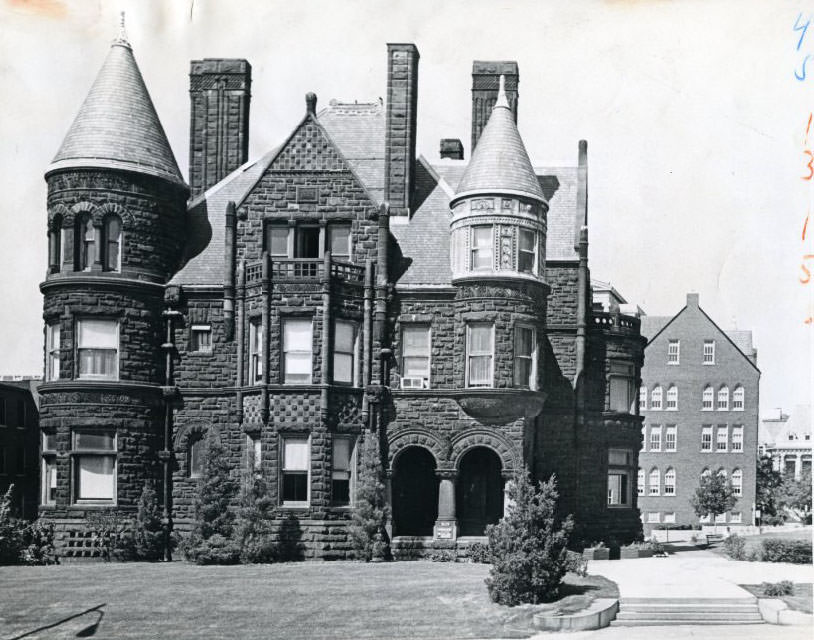
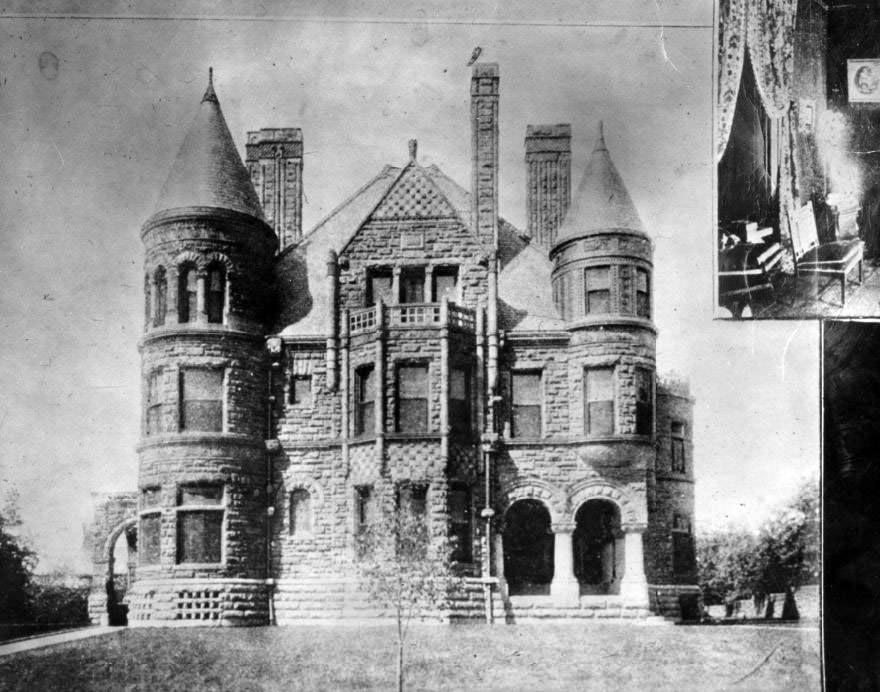
The Samuel Cupples House on the campus of St. Louis University was a Richardson Romanesque mansion built in the 1890s. By 1960, it had been absorbed into the university and was being used as a gallery and administrative space. Its survival was not guaranteed — dozens of comparable mansions across the city had been demolished in the preceding decades. The Cupples House represented the kind of architectural heritage that preservation advocates were fighting to protect even as the city’s redevelopment machine kept running.
St. Louis’s population was falling throughout the decade. The city had peaked at just over 856,000 residents in 1950 and was losing people to the suburbs with each passing year. By 1970, the count would drop below 625,000. This outward migration was driven by highway construction, suburban housing development, school desegregation resistance, and the deliberate policies of institutions — banks, real estate agencies, insurance companies — that made it easier for white families to leave the city than to stay. The construction boom in the city’s apartment market was, in part, an attempt to halt that slide.
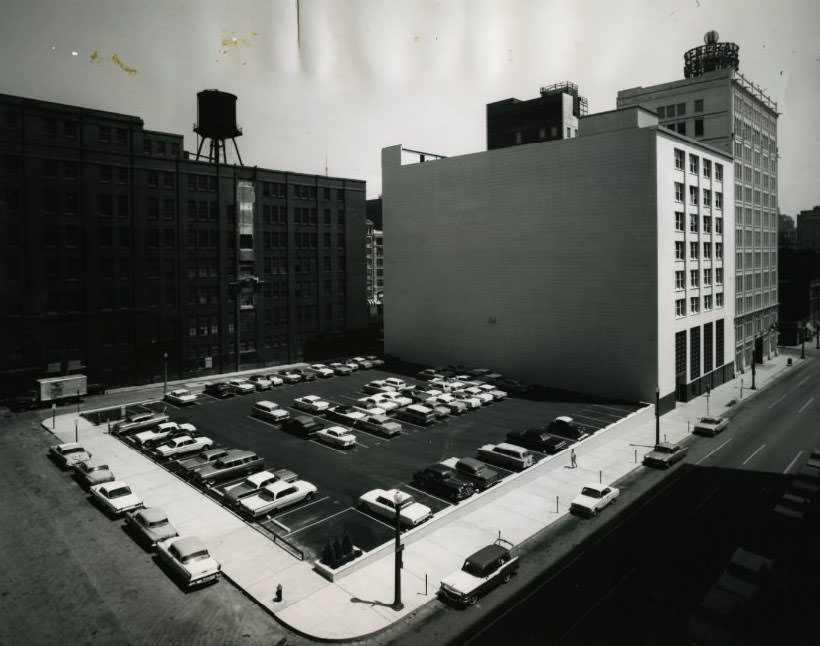
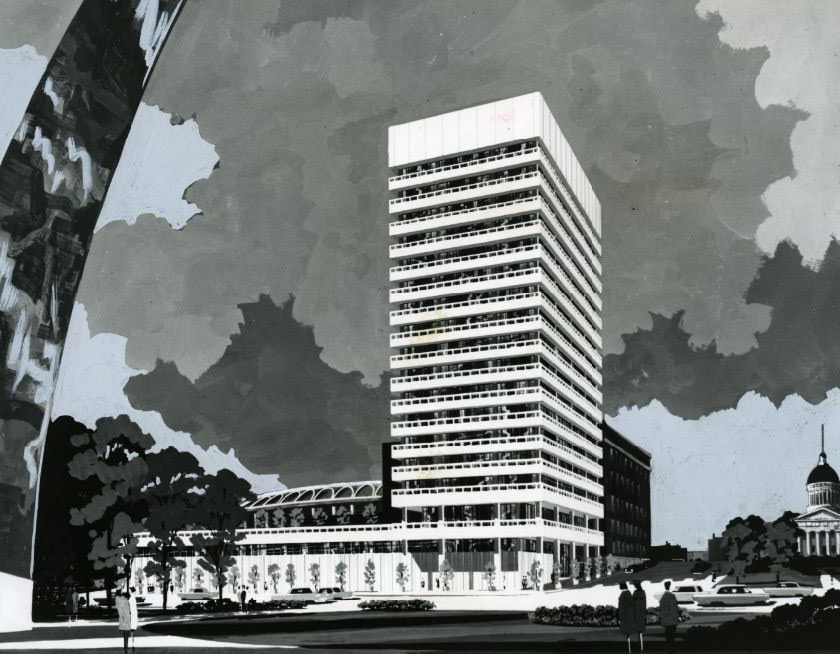
Plans for a 20-level office building at Third and Market, near both the Gateway Arch and the new Busch Stadium, represented the ambition of the city’s riverfront redevelopment vision. The Transurban Redevelopment Corporation was among the private entities pushing development in the newly cleared area east of downtown. Whether these plans would fully materialize remained an open question as the decade ended, but the architectural drawings and groundbreaking ceremonies reflected a genuine belief that St. Louis could use the Arch as a catalyst to reinvent its downtown core.
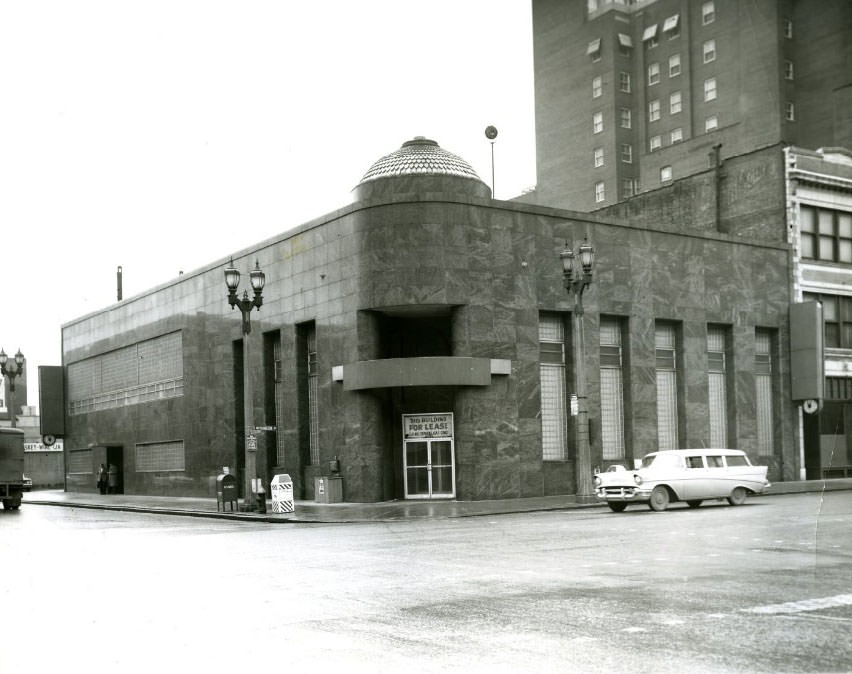
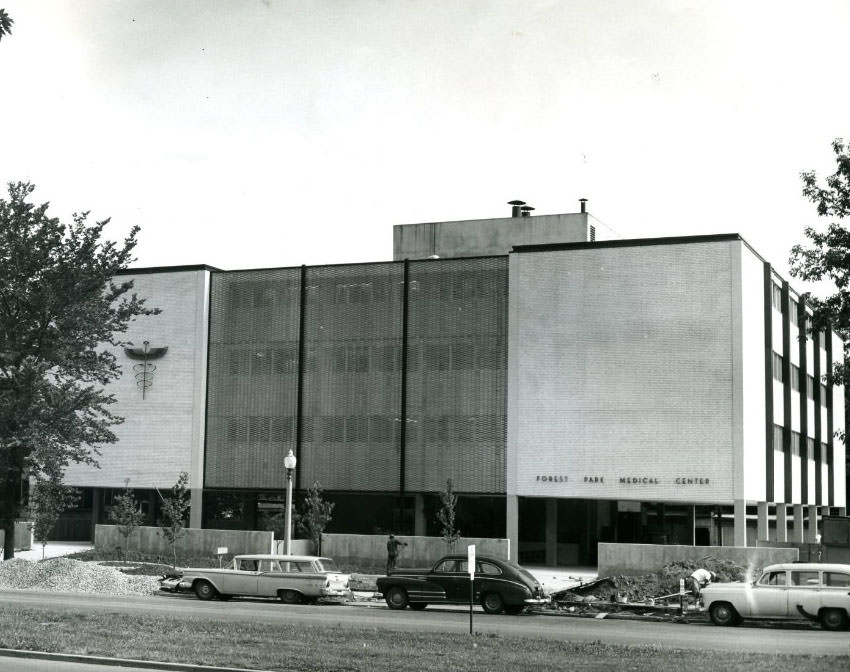
Forest Park anchored the western edge of the city throughout the 1960s. The park housed the zoo, the Art Museum, the History Museum, the Muny, and the jewel-like Jewel Box greenhouse. Forest Park Medical Center served patients from across the region. The park itself was a free public space where residents of every background could spend an afternoon, and it remained one of the things that made St. Louis genuinely livable even as the decade’s conflicts and dislocations accumulated.
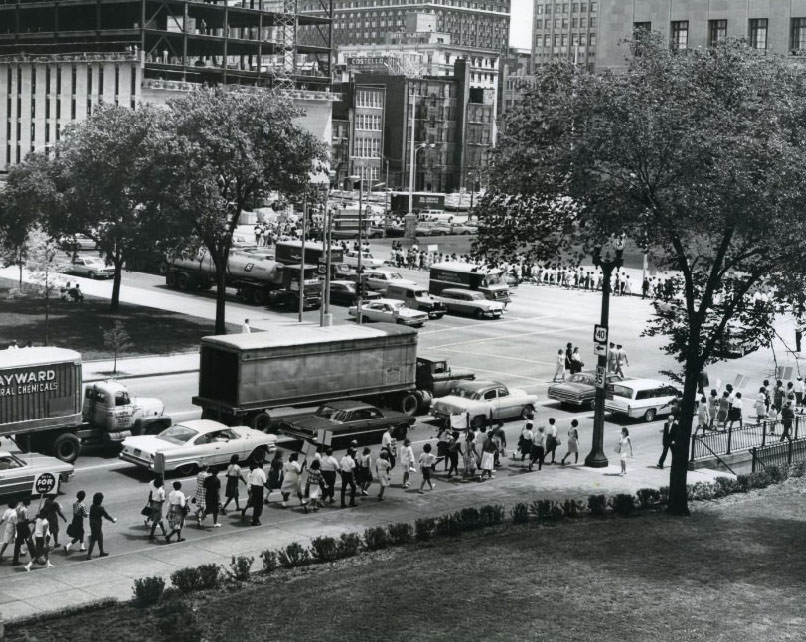
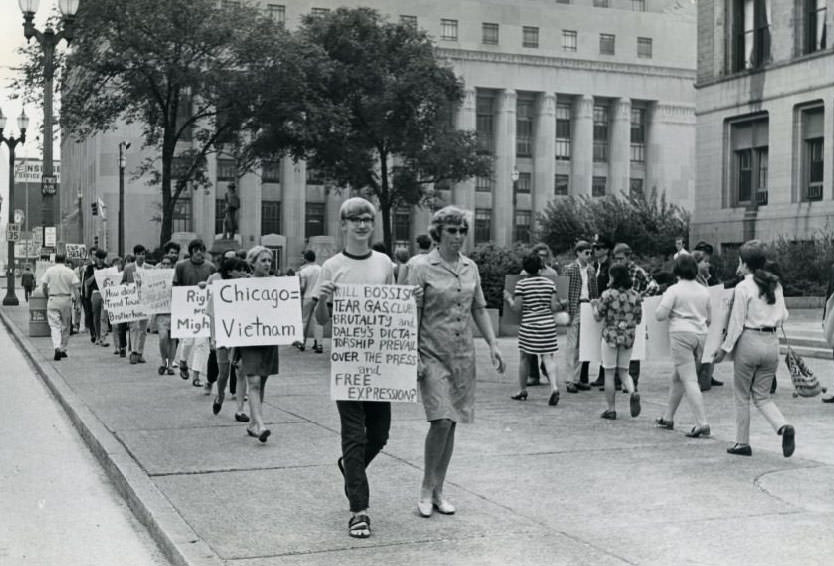
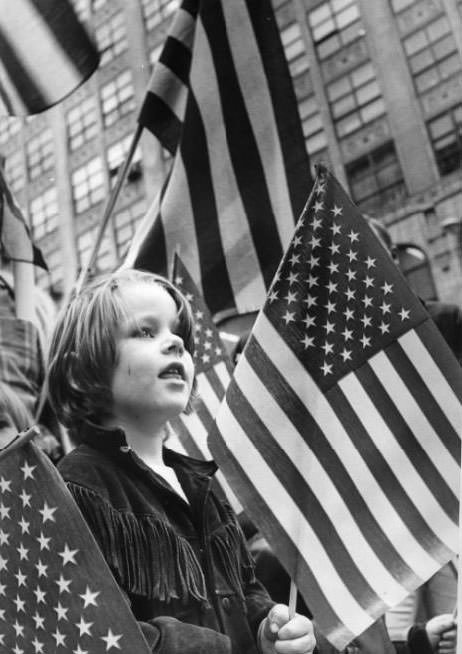
Protest was not limited to civil rights. By 1968, demonstrations outside City Hall brought crowds into the streets over a range of grievances. School children paraded on Market Street. Labor pickets appeared outside stores and banks. Antiwar protesters gathered in parks and plazas. The city’s public spaces became contested ground, with each march or demonstration adding to a cumulative sense that the old order of the city — its racial hierarchies, its corporate power structures, its political arrangements — was being challenged from every direction simultaneously.
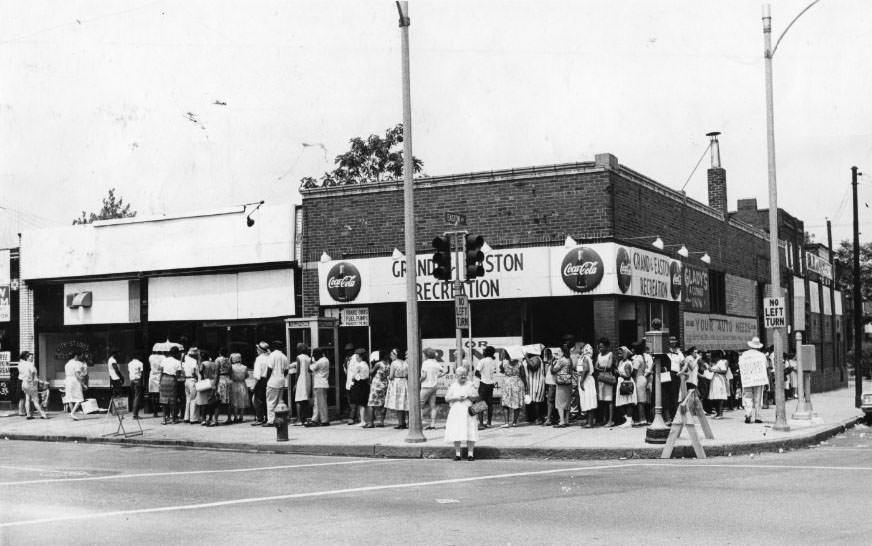
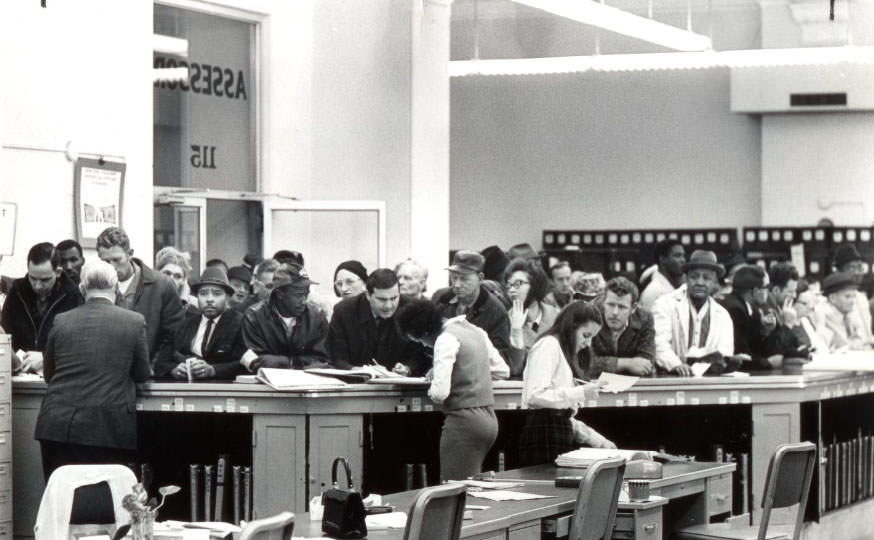
Lines at the St. Louis Food Stamp Office on North Grand Avenue told the other side of the decade’s economic story. While new apartment towers rose downtown and aerospace engineers drew spacecraft in the northern suburbs, a significant portion of the city’s population was lining up for food assistance. Poverty in St. Louis was concentrated geographically and racially. The same redlining and discriminatory practices that shaped housing also shaped employment and access to economic opportunity. The War on Poverty programs of the Johnson administration brought some federal dollars to the city, but demand consistently outran resources.
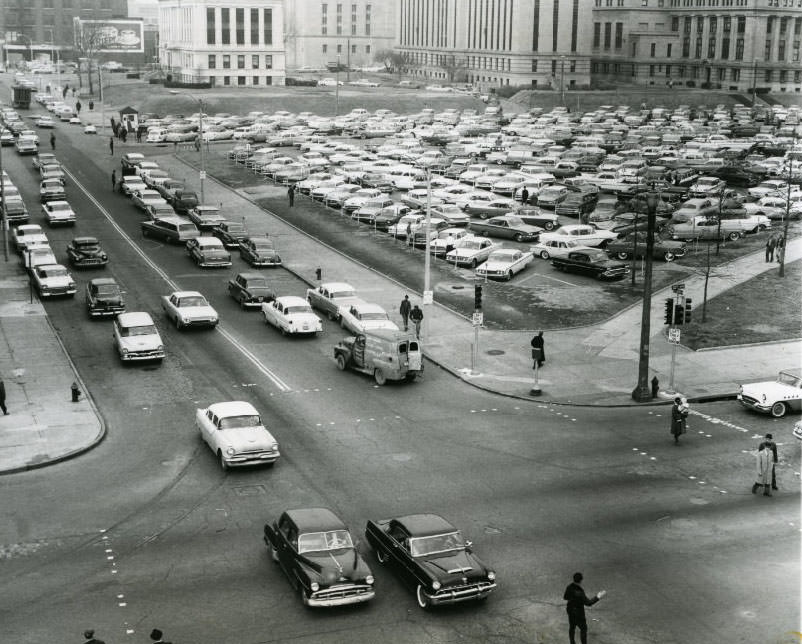
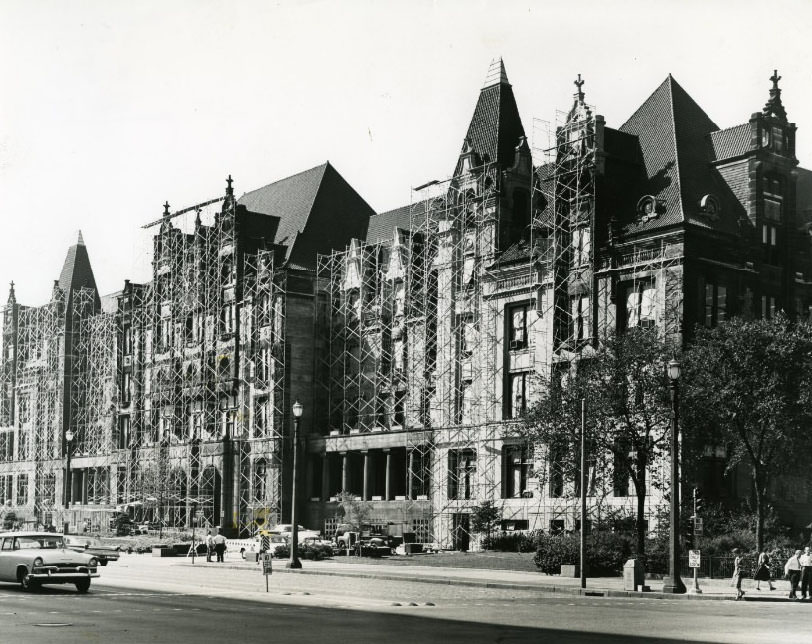
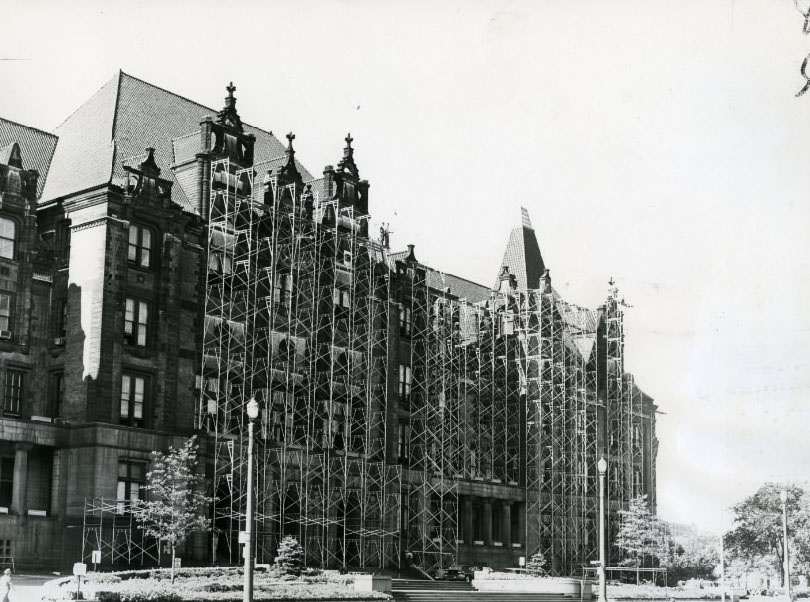
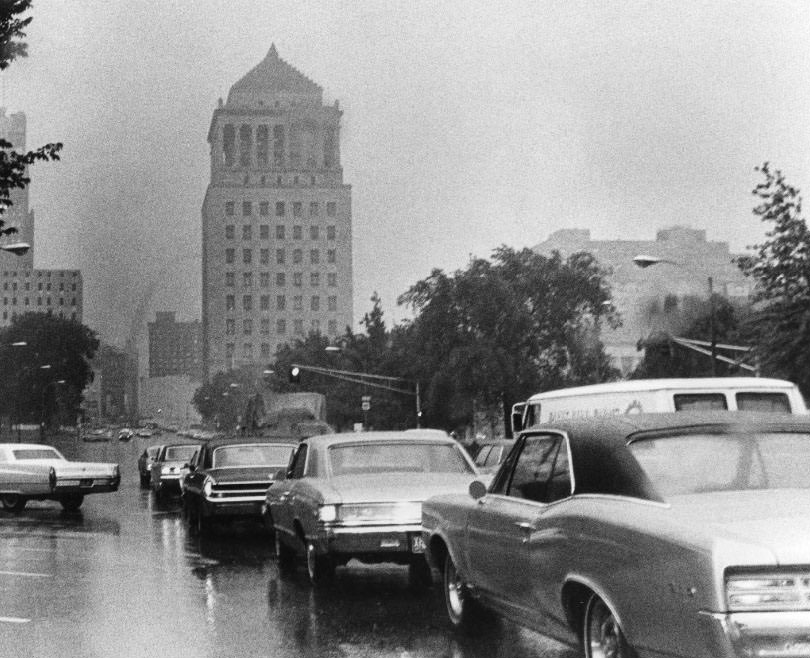
City Hall sat at the center of St. Louis’s political life throughout the decade, both literally and figuratively. It was the target of protests, the scene of ceremonial dedications, and the place where decisions about urban renewal, zoning, and public safety were made. Traffic jams at 12th and Clark reflected the volume of people who came to city hall on daily business. School children paraded past it on Market Street. It was cleaned each fall, photographed regularly, and treated as the symbolic heart of a city that was simultaneously proud of its past and anxious about its future.
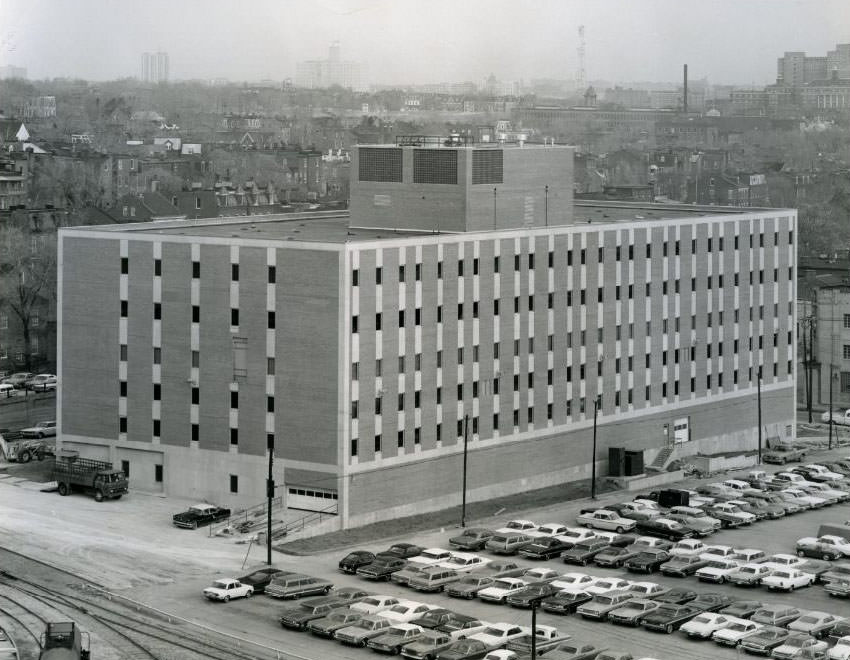
As Anheuser-Busch prepared to complete its new office building in early 1969, St. Louis was ending the decade in a complicated state. The Gateway Arch was complete and drawing visitors from across the country. Busch Stadium was full on summer evenings. The Gemini program had concluded, and McDonnell was already working on contracts related to the Apollo program and beyond. New apartment buildings stood where old neighborhoods had been demolished. The Jefferson Bank protesters had forced real changes in hiring practices. And the streets that had seen peaceful picket lines in 1963 had seen angrier crowds by 1968.
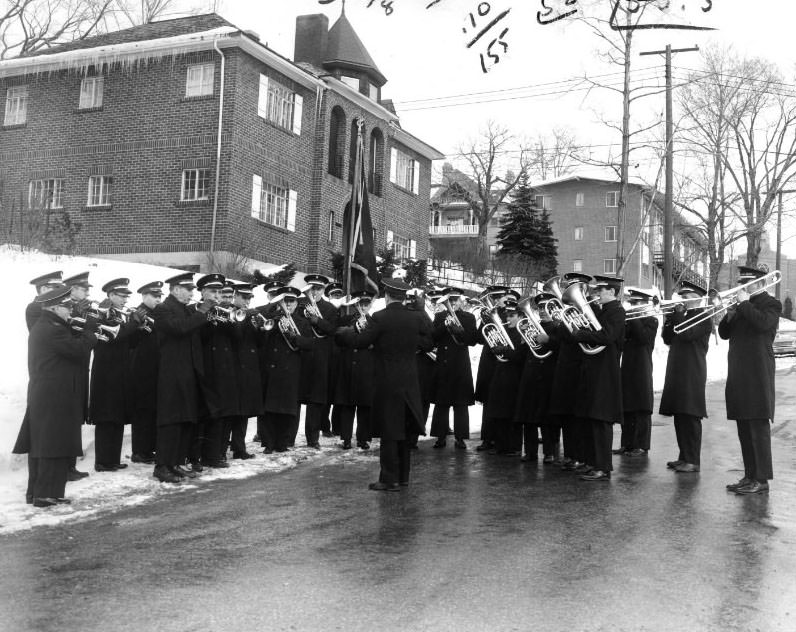
The Concordia Turners, one of the city’s oldest German-American civic organizations, were still holding meetings and events in the early 1960s. Their school of physical training on the south side had been a fixture of community life since the 19th century. Their continued presence, alongside the Salvation Army band playing on street corners and the Roosevelt High School students attending classes on Hartford Street, was a reminder that St. Louis was, above all else, a city of neighborhoods — each with its own institutions, its own rhythm, and its own relationship to the decade’s upheavals.
The riverfront skyline by 1967 looked nothing like it had at the start of the decade. The Gateway Arch dominated the view. Busch Memorial Stadium sat just to the west. New office towers were rising nearby. The old 19th-century commercial buildings that had once crowded the waterfront were gone, replaced by open plazas, parking areas, and the infrastructure of the national park that surrounded the Arch. The transformation was dramatic and deliberate, the product of decades of planning, federal funding, and the kind of top-down urban renewal that remade American cities in the postwar era.
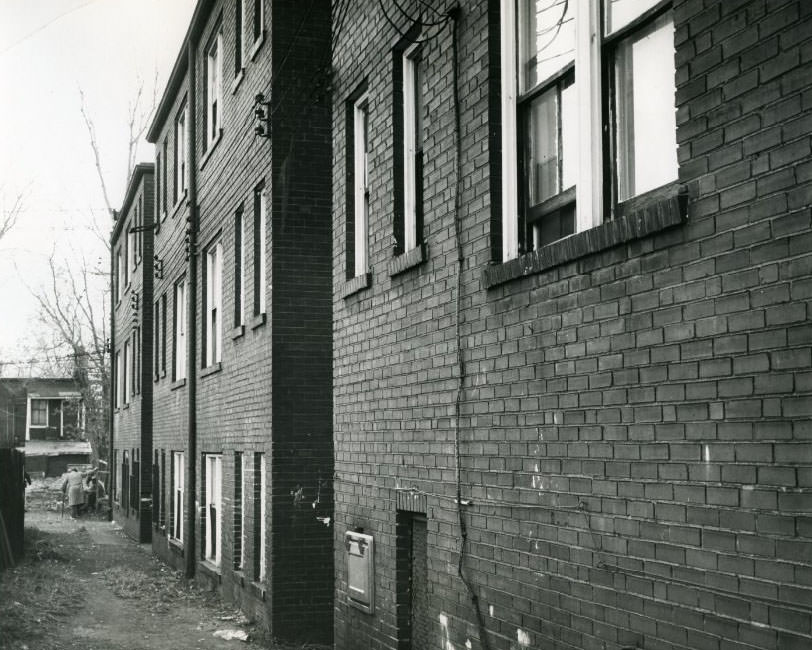
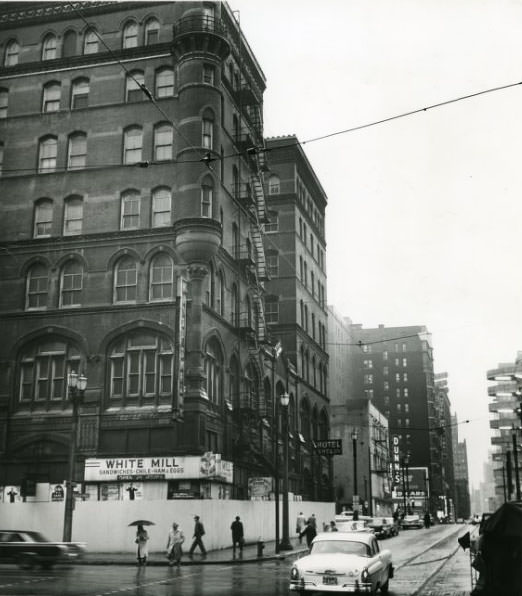
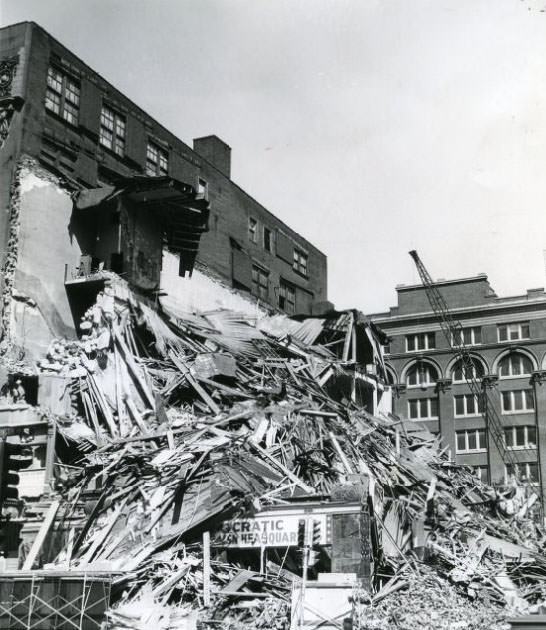
The Hotel Shelby and dozens of other old commercial buildings were shuttered or demolished during the decade. Their closings reflected the broad contraction of the city’s downtown as businesses, residents, and eventually anchor institutions followed the population to the suburbs. The buildings that came down at 11th and Washington in 1967 had stood for generations. Their removal opened up parcels for redevelopment, but in many cases those parcels sat vacant for years before anything new was built on them.
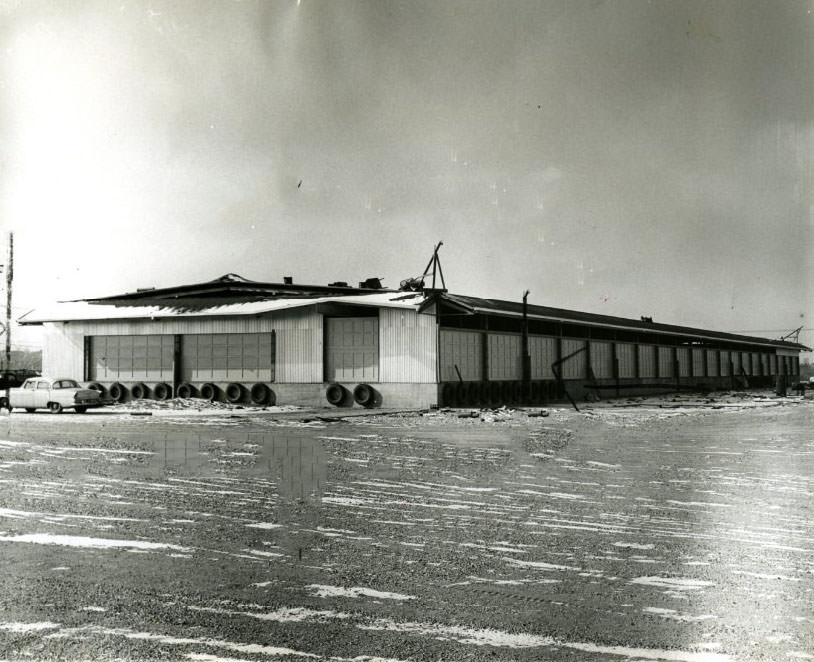
Mill Creek Valley, once home to more than 20,000 people, was being redeveloped in the early 1960s as a mixed-use area of low-rise apartments, town houses, and new industrial facilities. A new industrial building went up there in 1962. The parcels along Compton Avenue were filling in. City planners pointed to these developments as proof that the demolition and displacement of the 1950s had been necessary and productive. Critics pointed to the same developments as proof that a thriving Black neighborhood had been destroyed to build things that primarily served other constituencies.
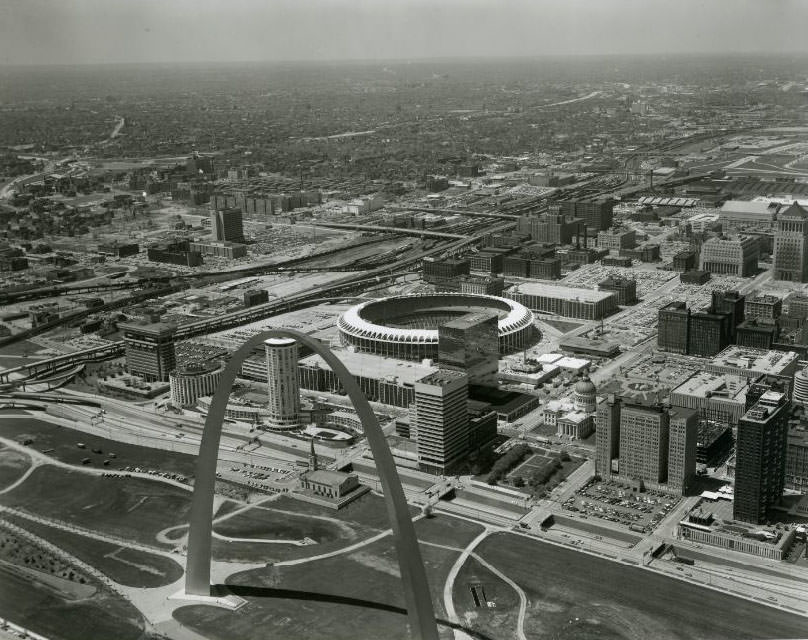
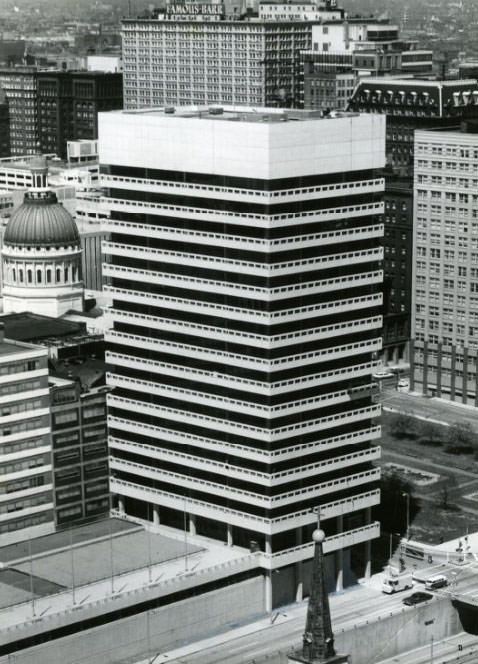
From the air, the Gateway Arch and Busch Memorial Stadium together formed the image that St. Louis wanted to project to the world: modern, aspirational, and built for the future. The aerial view showed a downtown that had been reshaped by a decade of investment and demolition. What it could not show was the full human cost of that reshaping — the families who had been moved, the neighborhoods that had been erased, the protests that had demanded something better. The 1960s in St. Louis were a decade of construction and destruction running side by side, each one inseparable from the other.
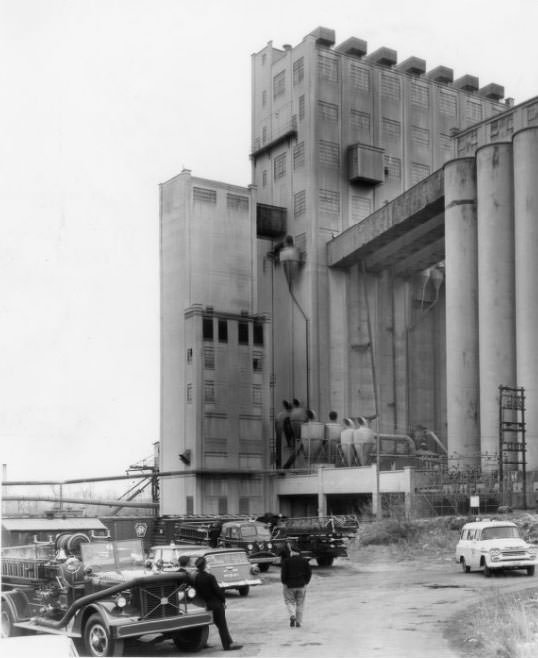
Industrial accidents punctuated the decade. The dust blast at the Continental Grain Company elevator in 1962 was one of the most dramatic, destroying equipment and raising serious questions about safety conditions at grain handling facilities along the river. Grain elevators were inherently dangerous — dust explosions had been killing workers in such facilities for over a century — but the economic pressure to keep operations running fast and lean made safety improvements difficult to enforce. The incident at Van Buren Street was not the city’s first grain elevator disaster and would not be its last.
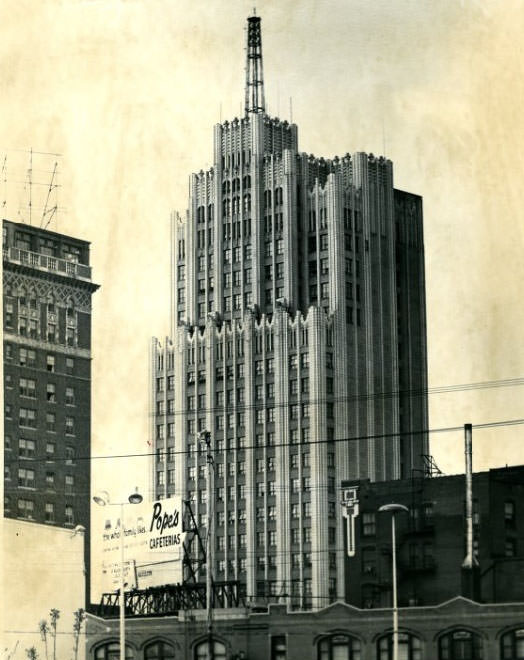
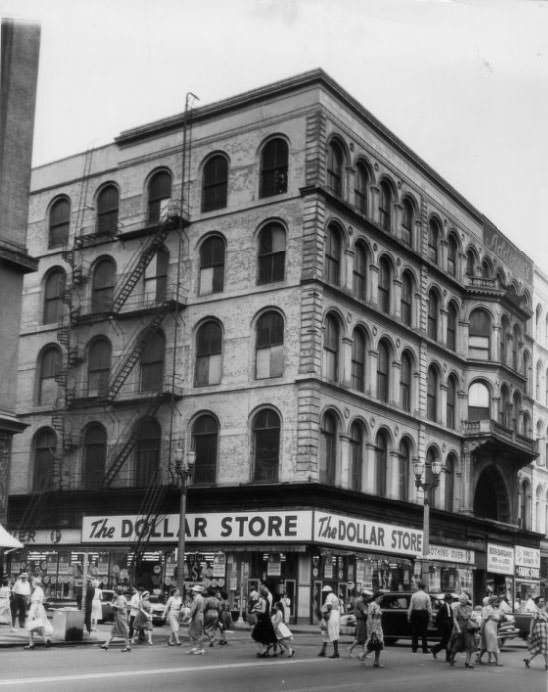
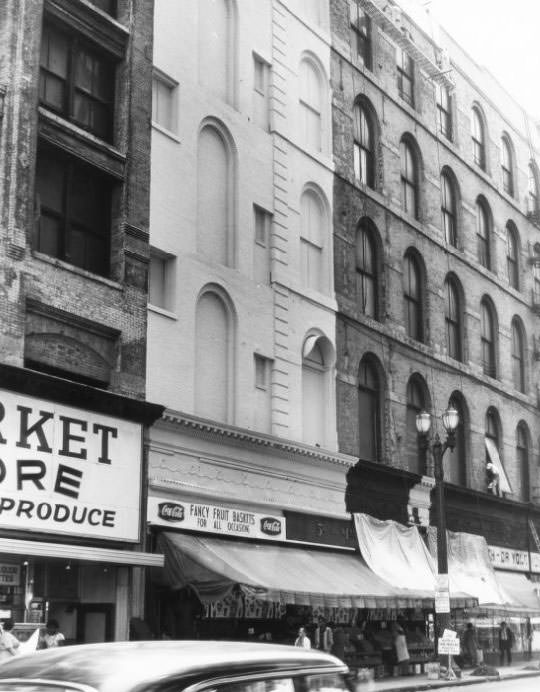
The foreclosure sale of the Continental Building on Olive Street in 1962 was emblematic of the financial stress running through parts of the city’s commercial real estate market. Even as new buildings were going up, older ones were failing. The Dollar Building, photographed in 1961 and again in 1963 through the surrounding businesses that depended on foot traffic from it, illustrated how closely the fortunes of small businesses were tied to the larger structures that anchored their blocks. When an anchor closed or changed hands, the ripple effects moved quickly through the surrounding commercial ecosystem.
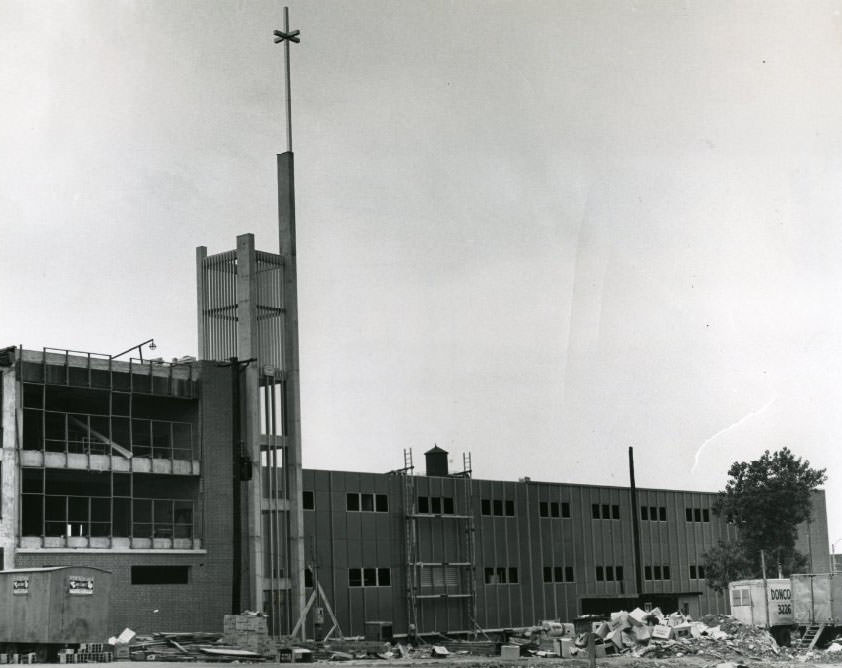
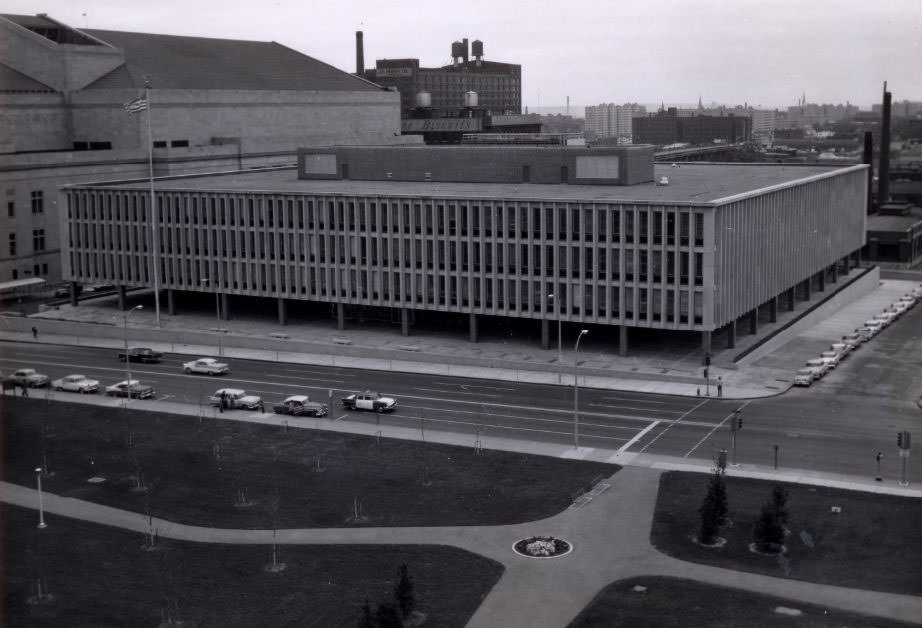
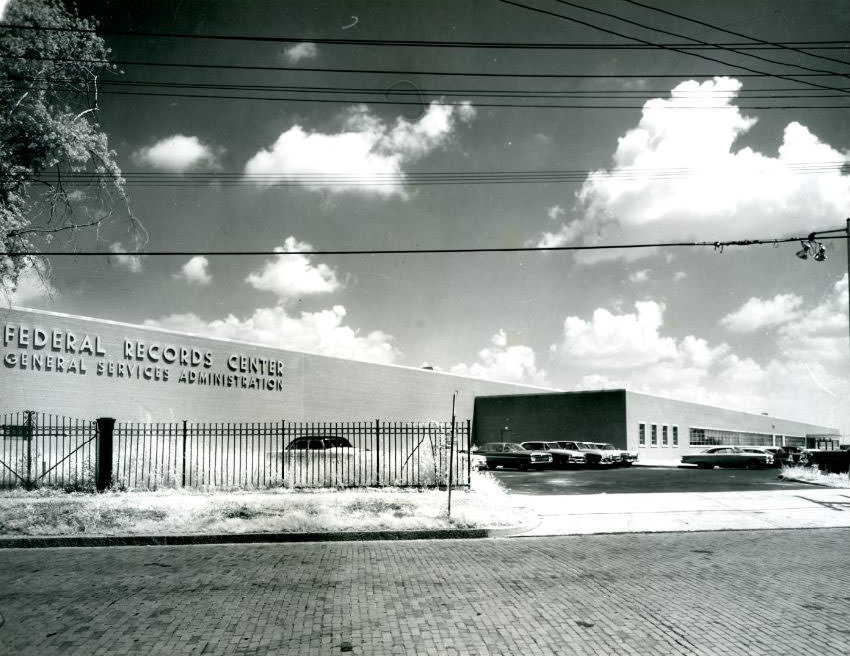
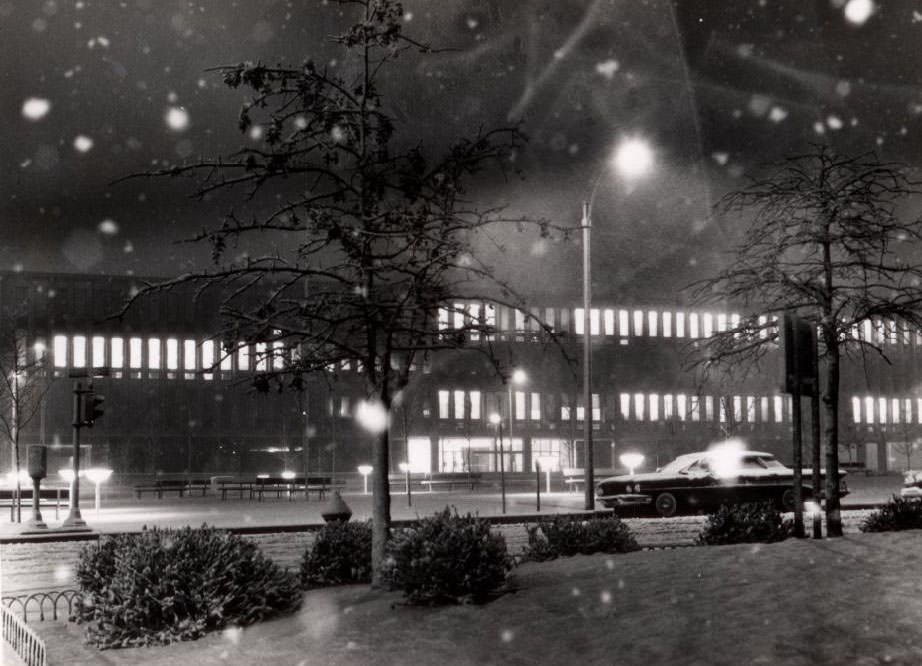
Federal investment flowed into St. Louis throughout the decade through multiple channels. The new federal building downtown was among the most visible investments, with its flag-raising ceremony in 1963 and its lights burning through the night in 1964 marking the pace of activity inside. The Federal Land Bank of St. Louis and the Farm Credit Banks of St. Louis both moved into new headquarters in 1966, consolidating agricultural finance operations for a broad region. These institutions connected the city to the rural economy of Missouri and the surrounding states, a reminder that St. Louis remained a regional center even as it grappled with its own internal challenges.
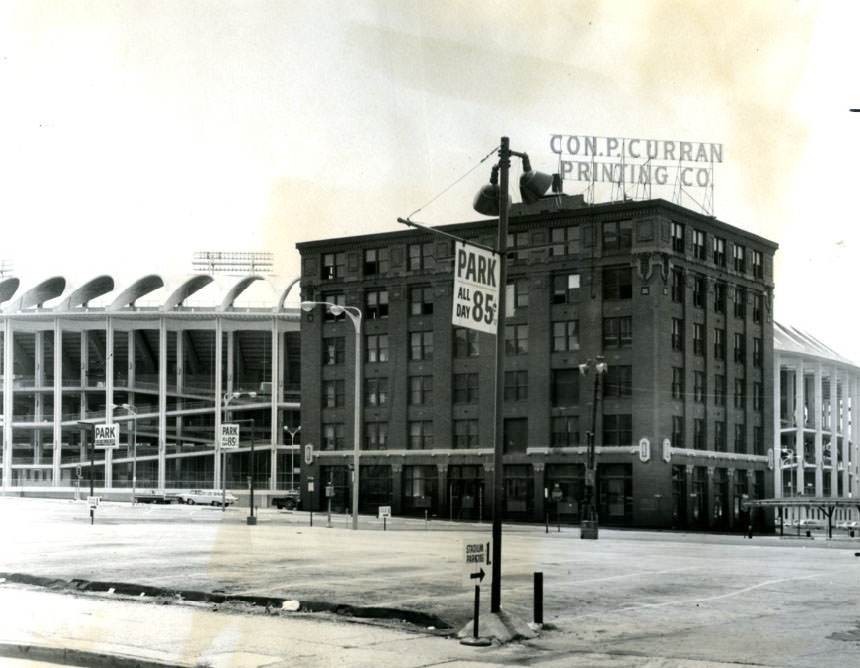
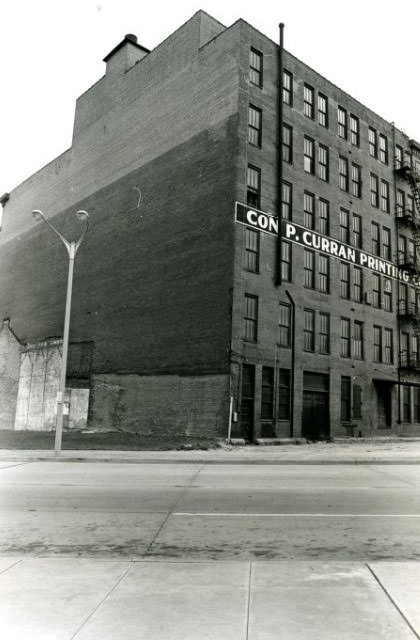
Printing and publishing remained significant industries in 1960s St. Louis. The Curran Printing Company building, documented in 1967, was described in press coverage as well-built — a straightforward acknowledgment of the craftsmanship that had gone into the city’s older commercial structures. The Globe-Democrat and the St. Louis Post-Dispatch were both major regional newspapers, and their photographers and reporters produced the visual record that survives today as evidence of the decade’s events. Without that press coverage, much of what is known about protests at Jefferson Bank, building collapses on Biddle Street, and smoke pouring from the Century Foundry would not exist.
Crime reporting in the city’s newspapers was detailed and direct. Named individuals appeared in crime alert photographs in 1967. Bank robbery suspects were identified in print. Detectives were photographed on the job. The city’s police department was expanding and modernizing throughout the decade, adding equipment and officers as the urban crime rates that were rising across America’s cities climbed in St. Louis as well. At the same time, the department’s relationship with Black residents was deeply strained, a tension that civil rights organizations documented and protested throughout the decade.
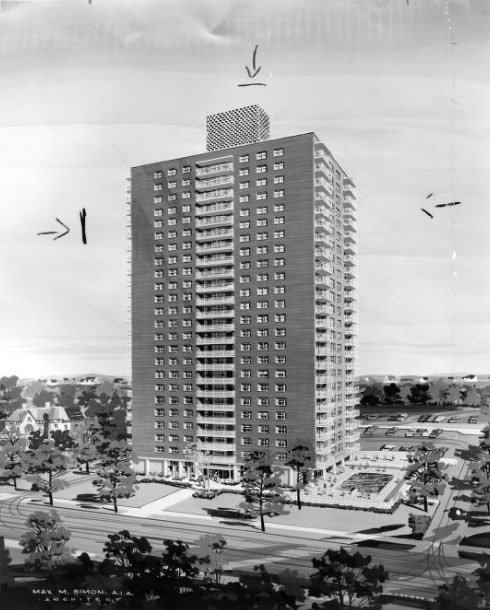
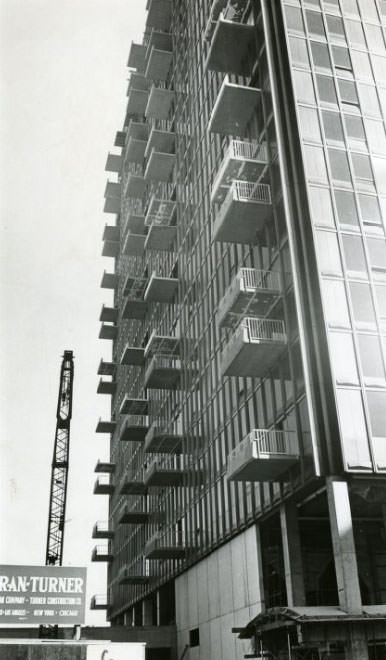
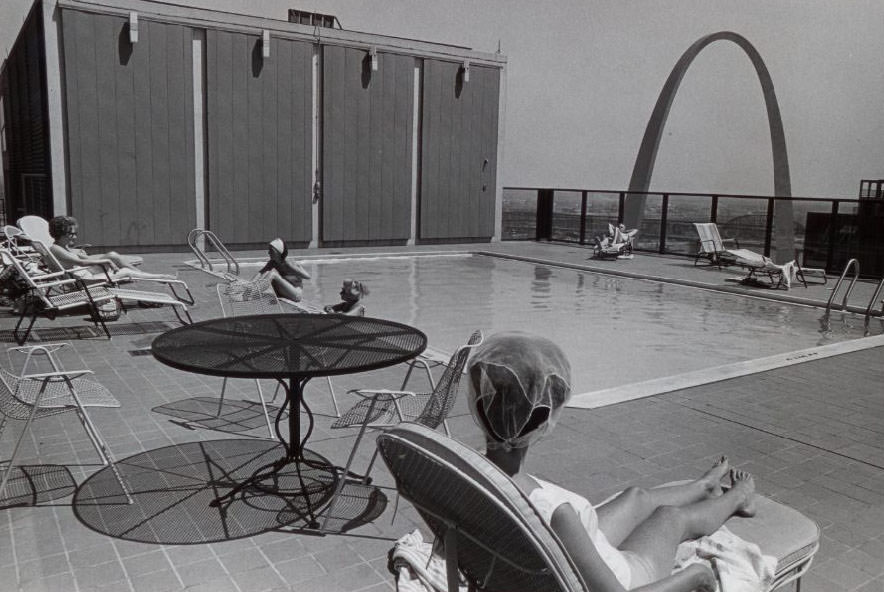
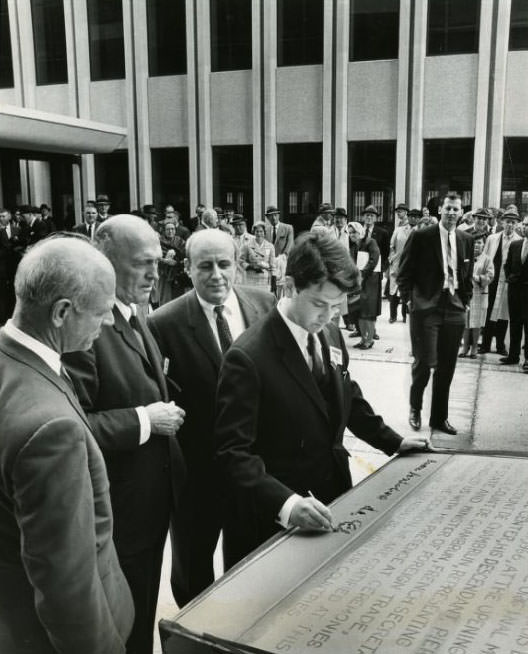
The Mansion House Apartments on the riverfront were completed by 1967, with residents photographed poolside in what would become one of the city’s most distinctive high-rise residential addresses. The path to completion had included the death of a construction worker who fell at the site in 1965. The cornerstone had been signed with ceremony in 1960. The whole arc of the building’s development — from groundbreaking to tragedy to completion and occupation — compressed many of the decade’s themes into a single project: ambition, risk, labor, and the human cost of building a city.
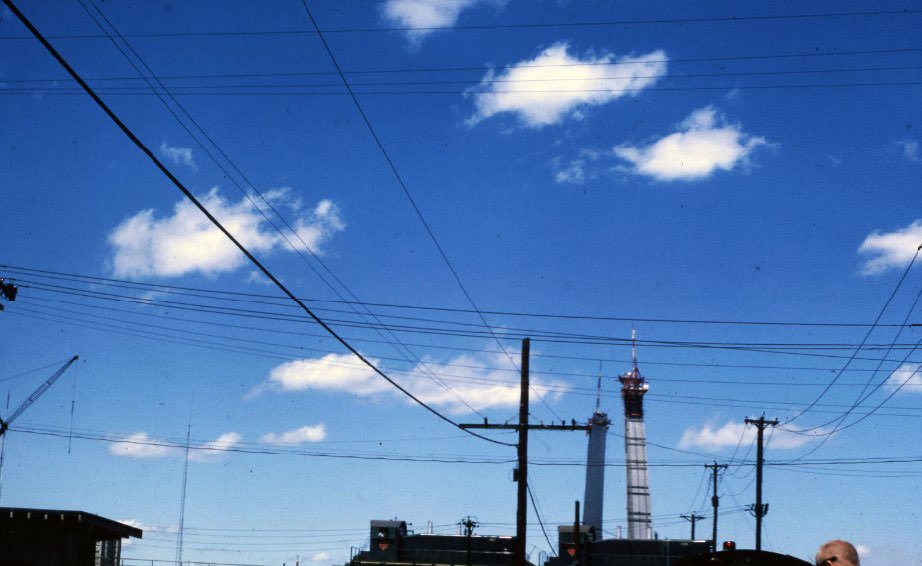
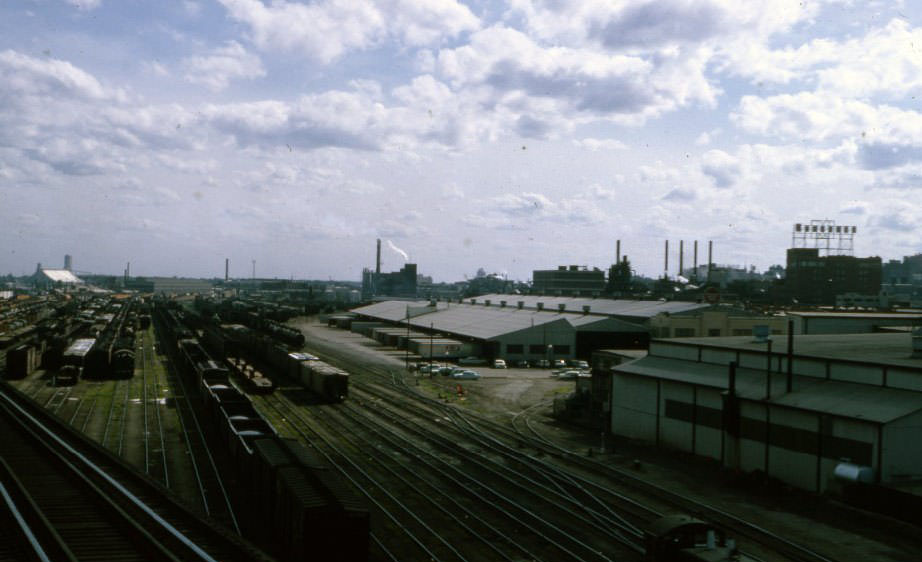
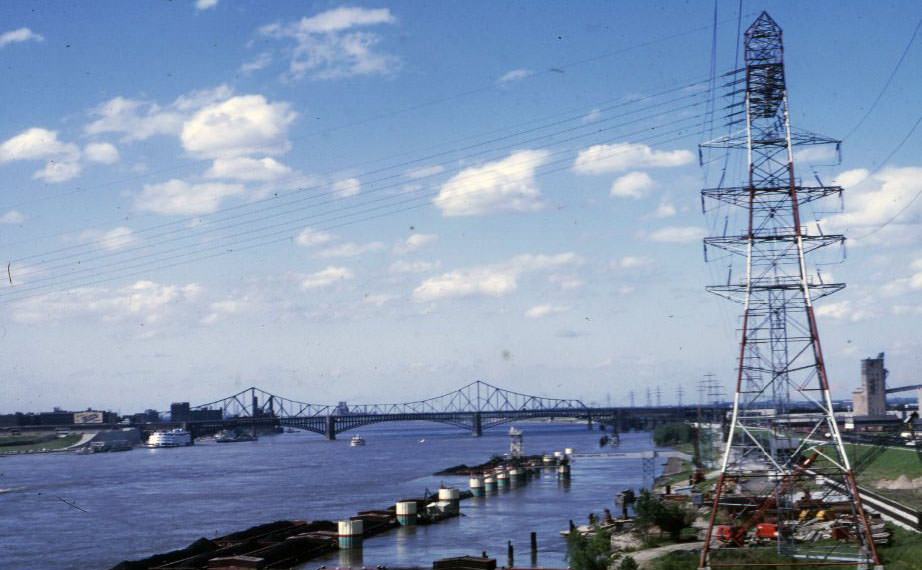
The Manufacturers Railway Special, photographed near the MacArthur Bridge and along the river in 1965, was a piece of the industrial transportation network that still moved freight through the city. St. Louis had been a railroad hub since the mid-19th century, and even as the interstate highway system was reshaping how goods moved across the country, rail remained central to the city’s industrial economy. The river and rail infrastructure together had made St. Louis great, and they continued to function as the backbone of the city’s freight operations even as passenger rail declined.
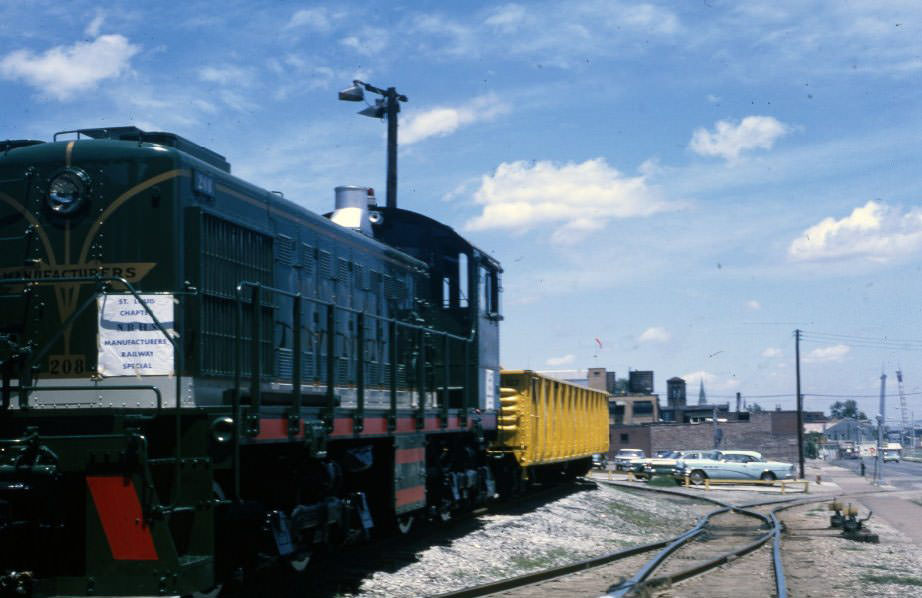
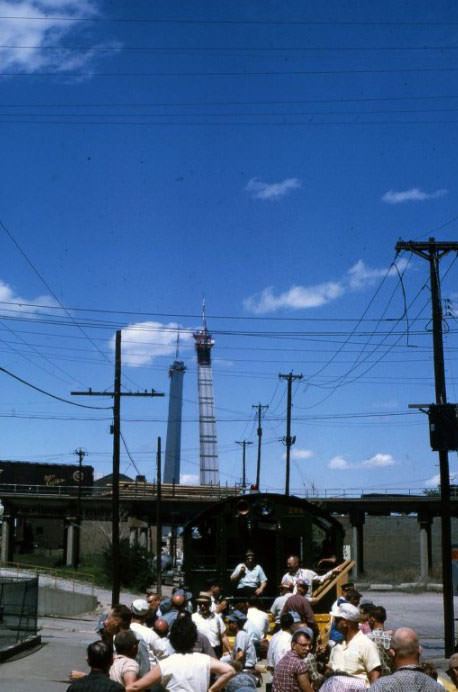
By 1965, the Gateway Arch was visible from across the city — from the Manufacturers Railway line, from Union Station’s platforms, and from the neighborhoods south of downtown. Its rising presence was a constant reminder of what the city was building toward, even as Union Station itself was beginning to show the strain of declining passenger rail ridership. The station, once the busiest in the country by some measures, was processing fewer trains each year as airlines and automobiles claimed more and more of the traveling public.
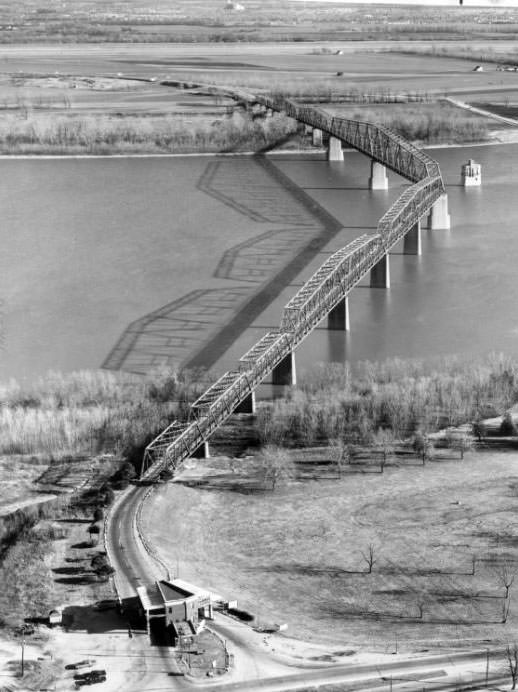
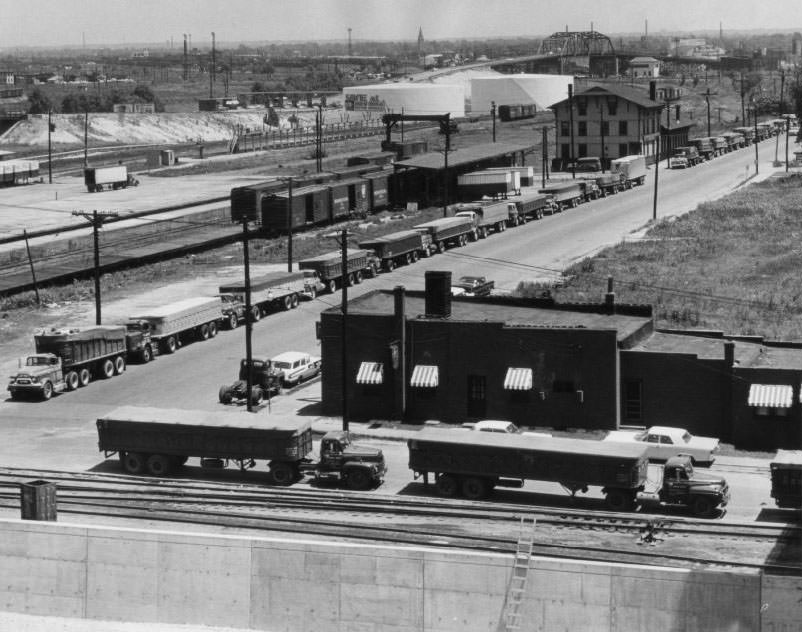
The Chain of Rocks Bridge on Interstate 270 was handling growing volumes of traffic by 1967 as the highway system feeding into it was completed. The bridge sat at the northern edge of the city, spanning the Mississippi at a point where the river contained an unusual 22-degree bend. Its distinctive design made it one of the more recognizable river crossings in the region, and its integration into the interstate system brought a new wave of through traffic to the north side of St. Louis County.
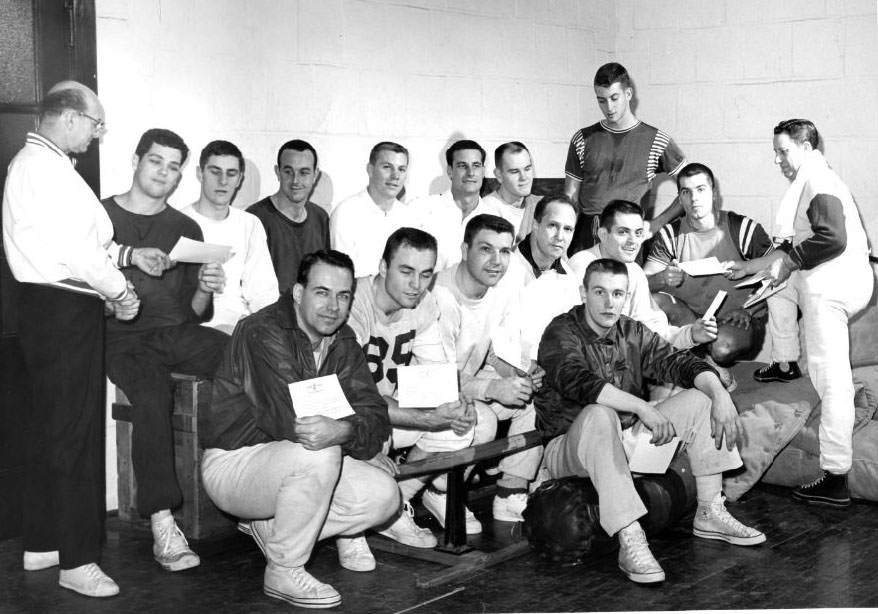
Sports beyond baseball were also part of the city’s life in the 1960s. Players’ conditioning classes graduated participants in 1961. The Concordia Turners continued their tradition of physical training and gymnastics. St. Louis had been a boxing city and a wrestling city, with events regularly drawing crowds to venues across town. The city’s sports culture was diverse and grassroots, extending far beyond the professional teams into the gyms, parks, and recreation centers where ordinary residents competed.
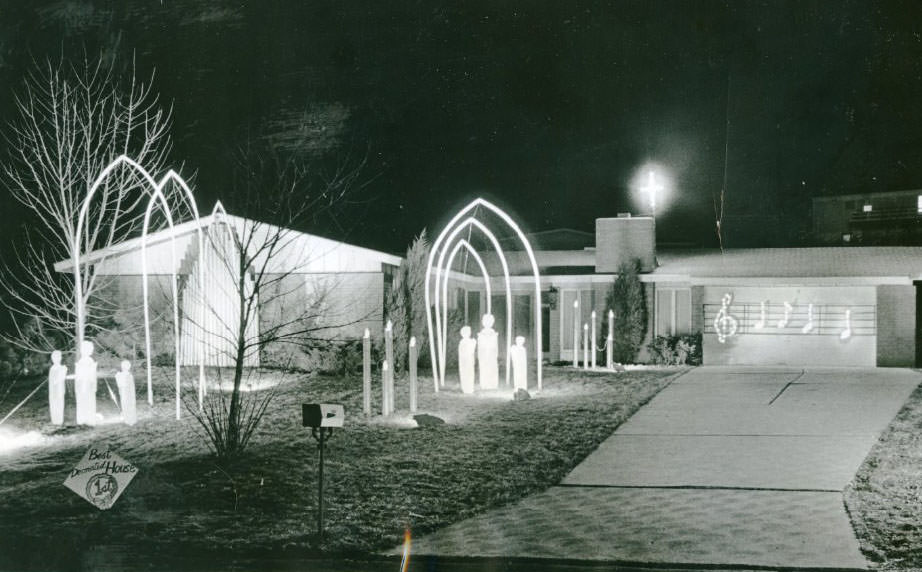
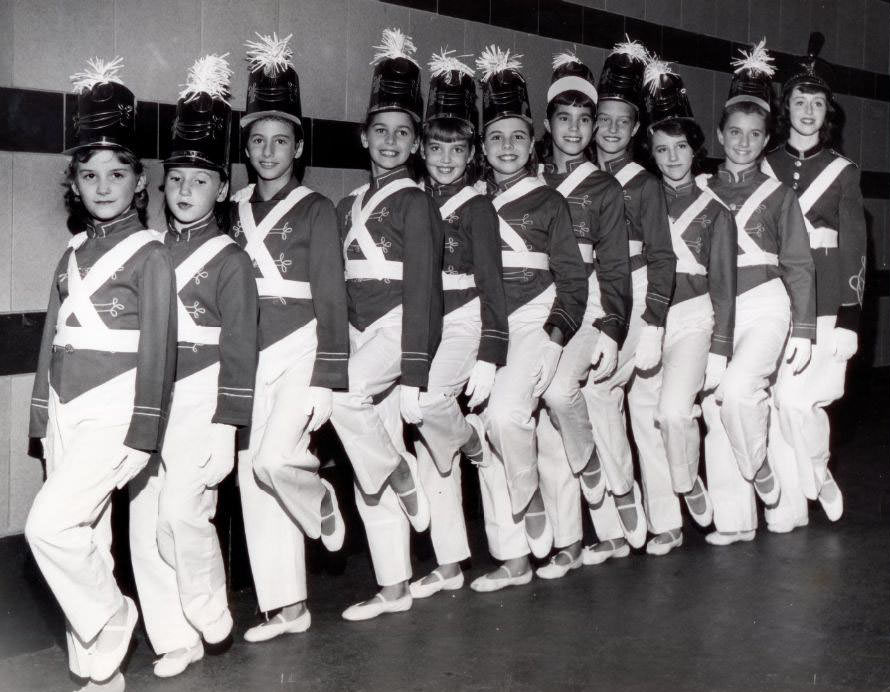
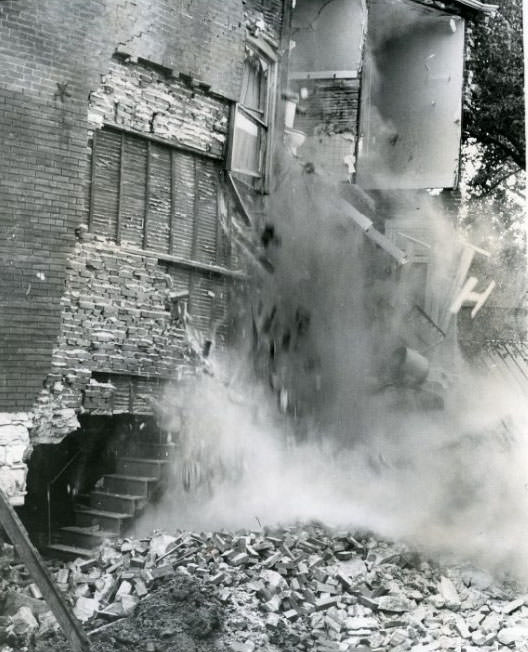
Fashion shows, holiday lighting contests, and neighborhood picnics coexisted in the 1960s St. Louis calendar alongside protests, building collapses, and civil rights confrontations. The city was not simply a place of crisis — it was a place where people lived full lives, celebrated their neighbors, dressed up for events, and competed for the best holiday lights on the block. These ordinary community rituals mattered precisely because they provided continuity and normalcy in the middle of a decade that was anything but normal.
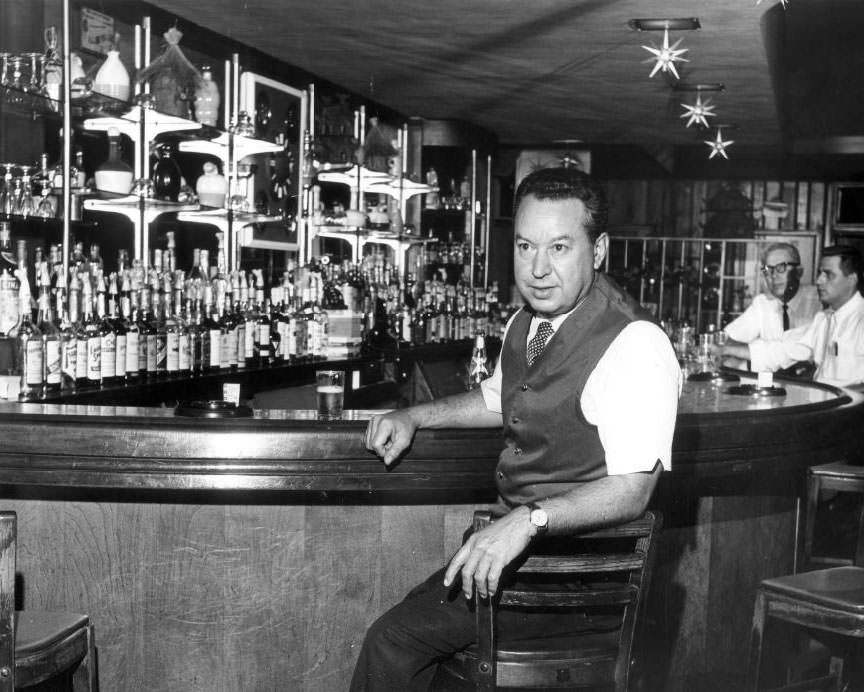
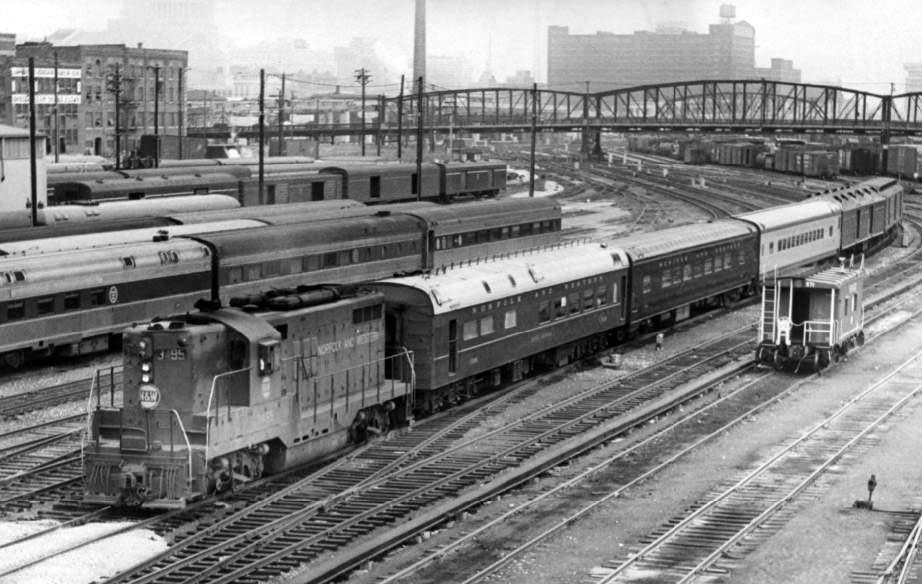
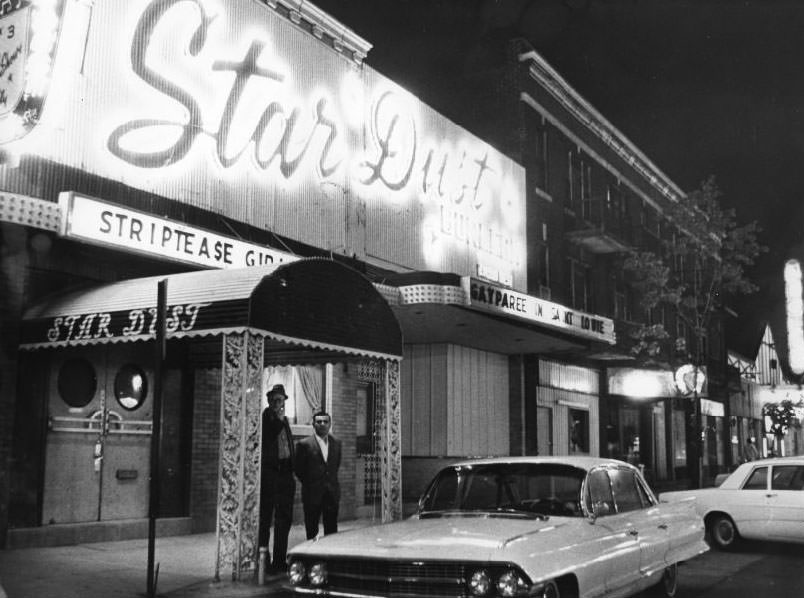
The Chi Chi Room and venues like it were part of a nightclub and lounge culture that stretched across the city’s neighborhoods and commercial strips. St. Louis had a strong tradition of Italian-American, German-American, and African-American entertainment and dining venues, and these establishments served both as gathering places and as proving grounds for local musicians and performers. The city’s restaurant and bar culture was, in its own way, a reflection of its ethnic geography — distinct neighborhoods, distinct cuisines, distinct musical traditions all existing in close proximity.
School children parading on Market Street in 1960 were growing up in a city that was changing faster than any single generation had previously experienced. By the time those children finished high school, a man had walked on the moon — in a spacesuit partially developed with expertise from McDonnell Aircraft just north of where they stood. The Gateway Arch had risen from nothing to 630 feet. Two Cardinals World Series championships had been won and celebrated in the streets around them. And the civil rights movement had reshaped, at least formally, the legal structure of the country they lived in.
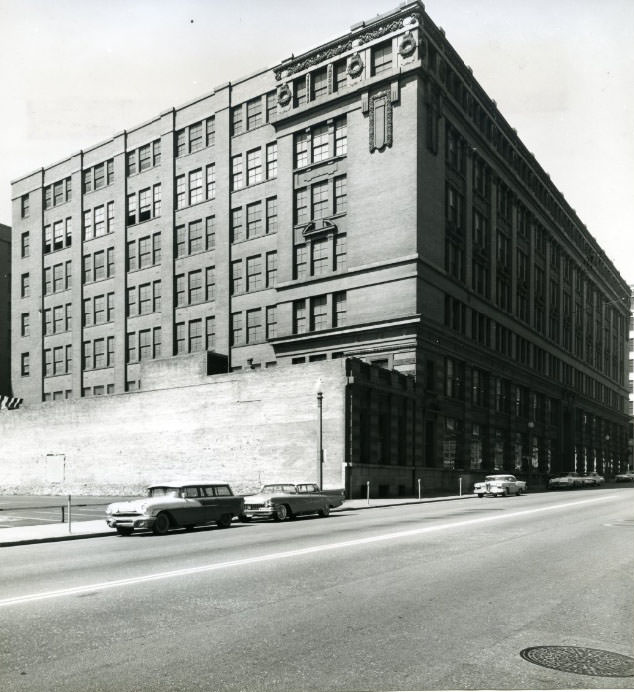
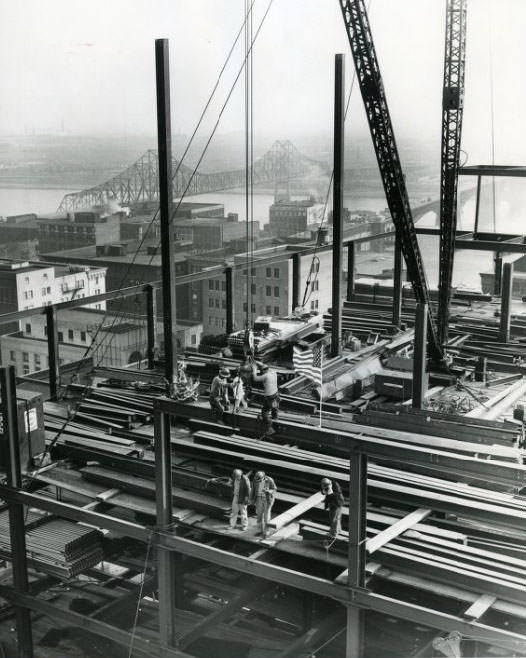
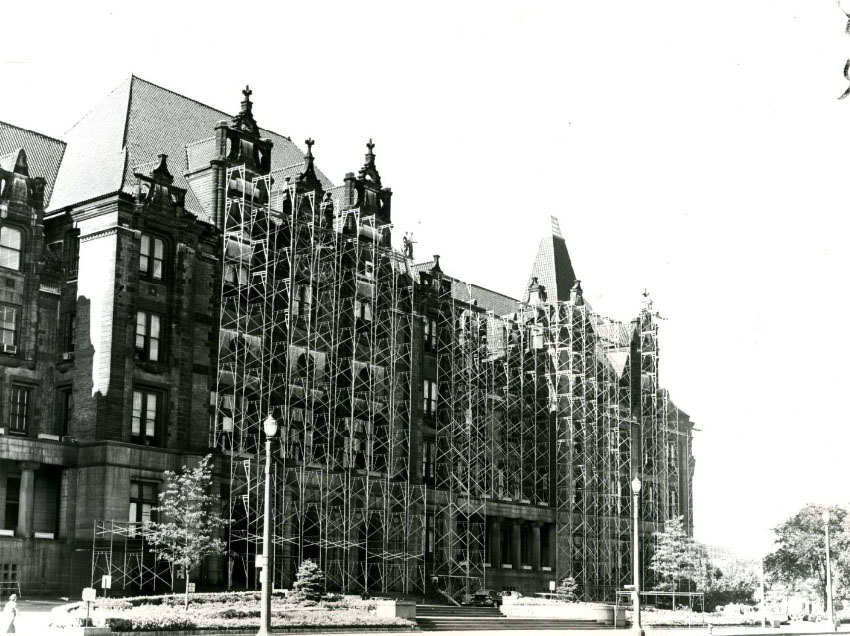
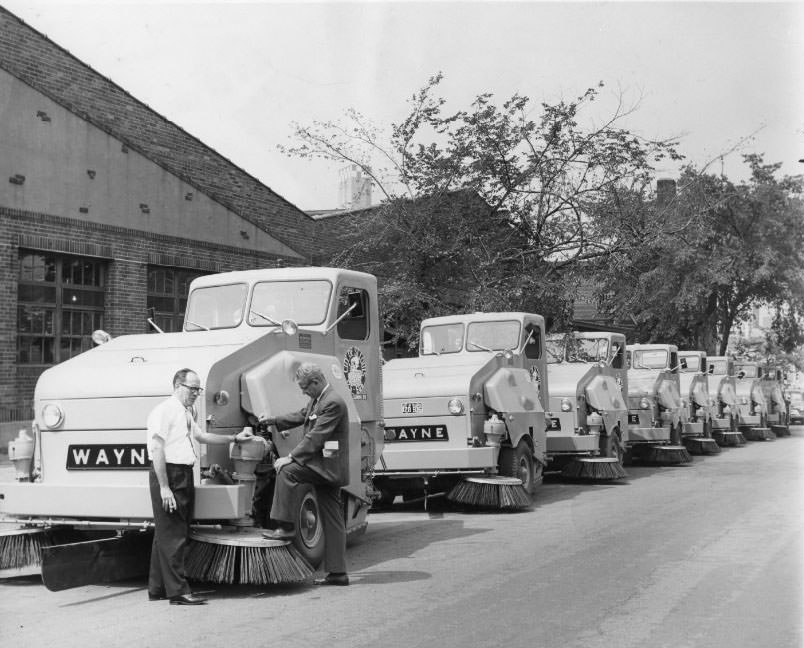
Construction was the dominant sound of 1960s St. Louis. Executive office buildings, apartment towers, federal buildings, bridges, highway ramps, and brewery offices all rose during the decade. The Street Department maintained facilities at 2604 Hampton. New street sweepers were inspected and put into service. The city’s physical infrastructure was being upgraded and expanded even as its social infrastructure was under severe stress. These two realities — the sound of cranes and the sight of protest signs — defined the city as much as the Arch that was rising on its eastern edge.
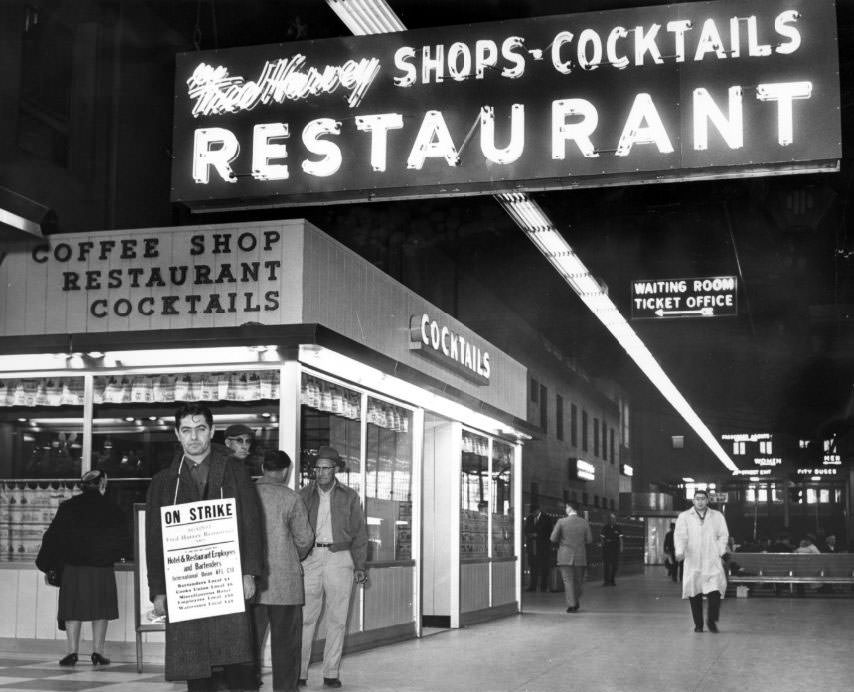
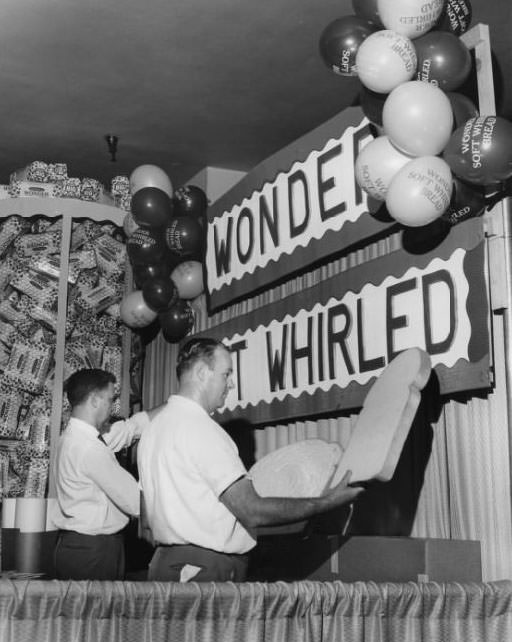
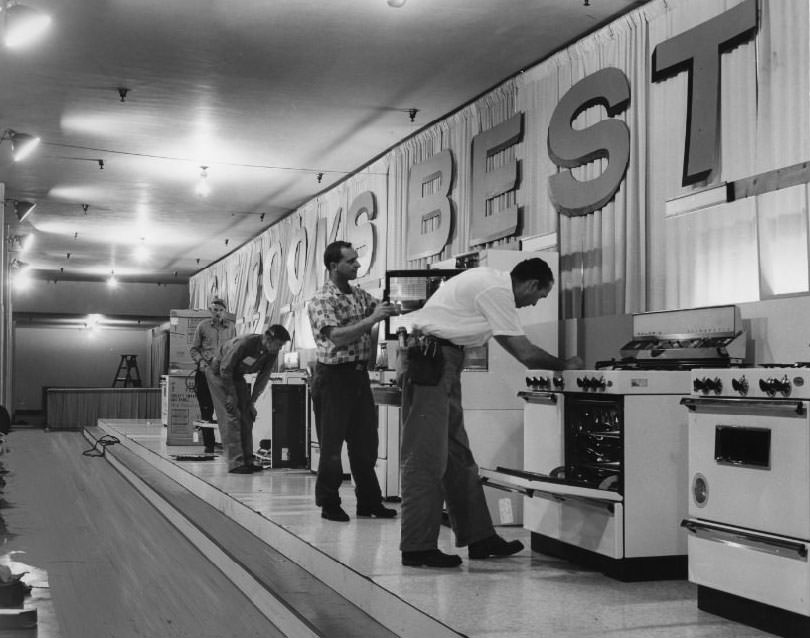
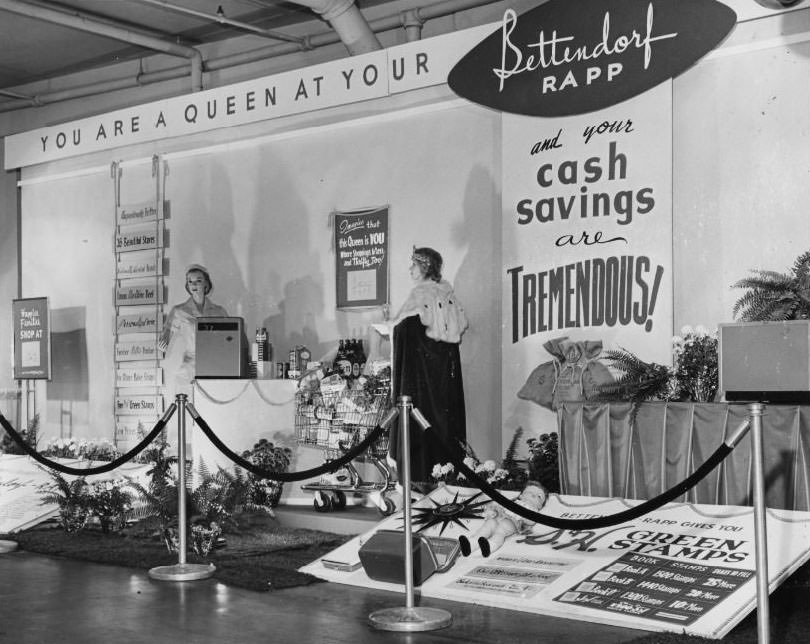
Consumer culture was vibrant in the city’s commercial spaces. Department store displays competed for attention on downtown sidewalks. The Wonder Bread display at a trade show reflected a national moment when branded consumer goods were asserting themselves in American homes with new force. Bettendorf-Rapp and other retailers maintained prominent showroom presences. The Globe Show drew exhibitors from across the region. These commercial events kept downtown alive even as the first waves of suburban retail began to draw shoppers away from the city center.
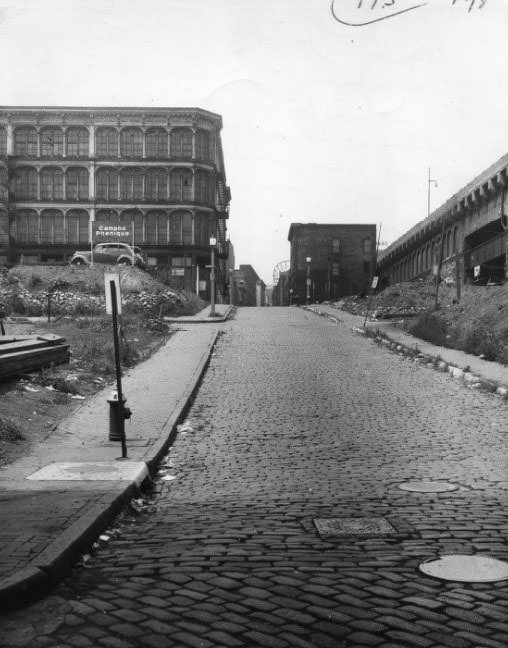
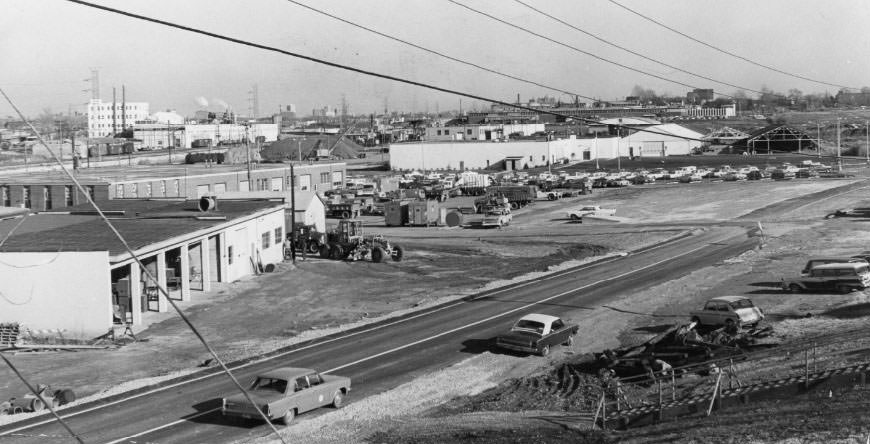
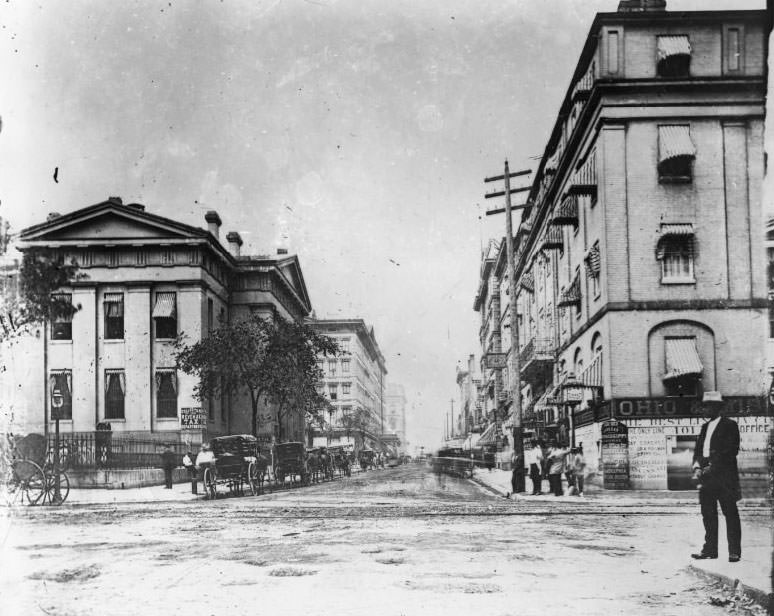
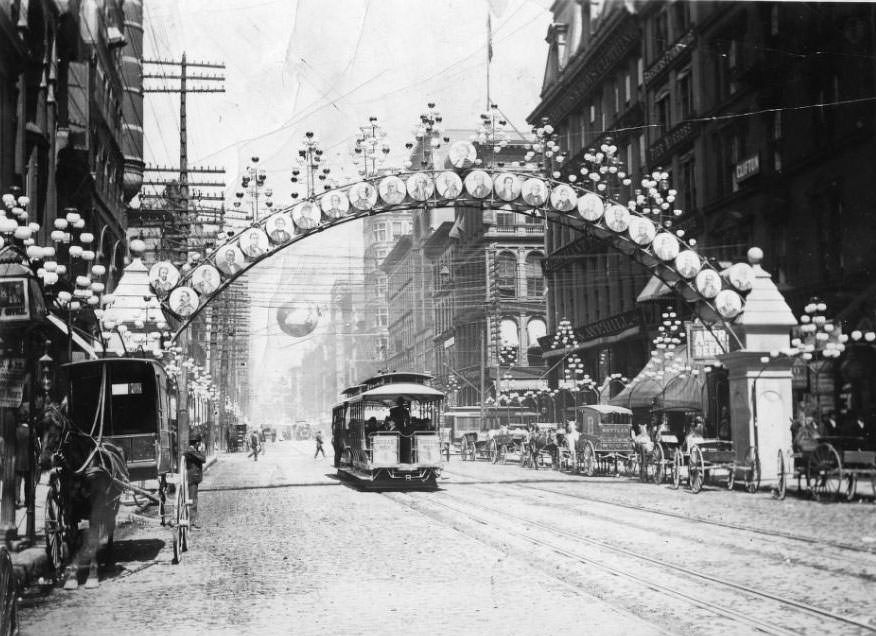
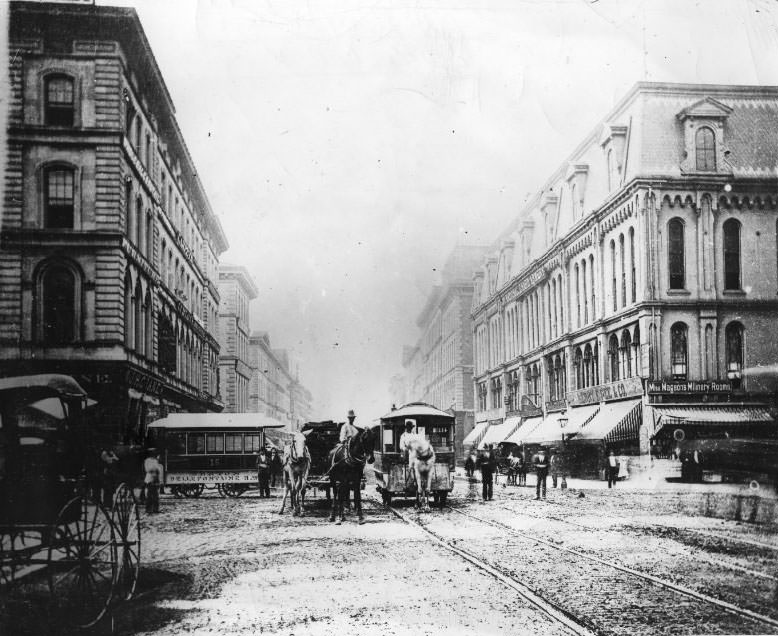
Washington Street looking west in 1960 showed a city still dense with commerce and pedestrian activity. Telephone lines and poles created a maze above the street-level activity. Broadway and its intersecting streets were busy with vehicles and foot traffic. The Fourth Street corridor — photographed repeatedly from multiple angles and directions throughout the decade — showed a downtown that was being documented even as it was being transformed. Photographers captured Fourth at Chestnut, at Locust, at Washington, and at Olive, creating a systematic record of a streetscape that was changing year by year.
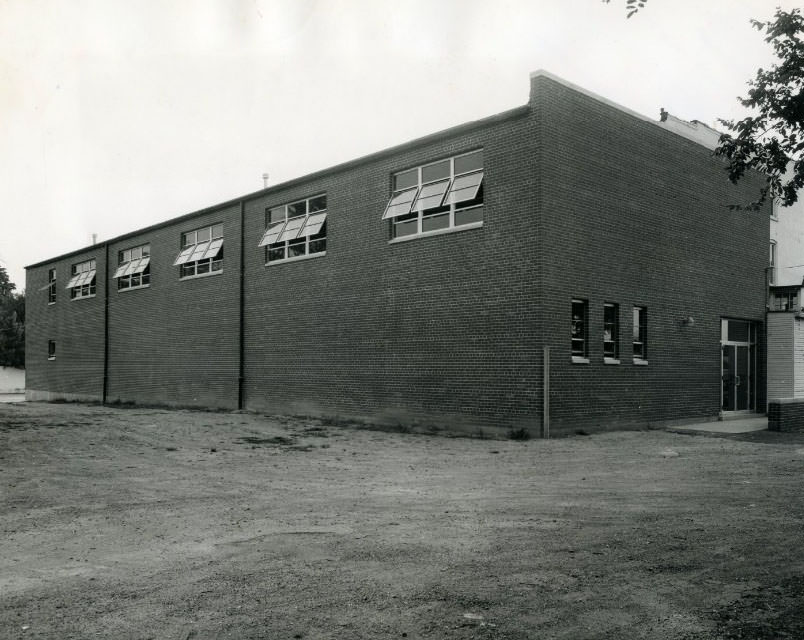
The Concordia Turners organization, with its roots in German immigration and its tradition of physical culture and civic engagement, continued to hold meetings and training sessions in the early 1960s. Their school building was photographed in 1963. Their members gathered in 1960. The organization represented a strain of St. Louis civic life that stretched back to the 19th century — German-American mutual aid, athletic competition, and political engagement — and its continued activity in the 1960s was a reminder of how deep the city’s immigrant community roots ran.
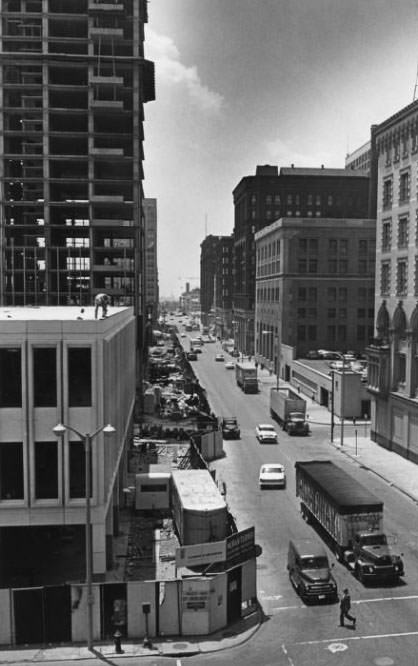
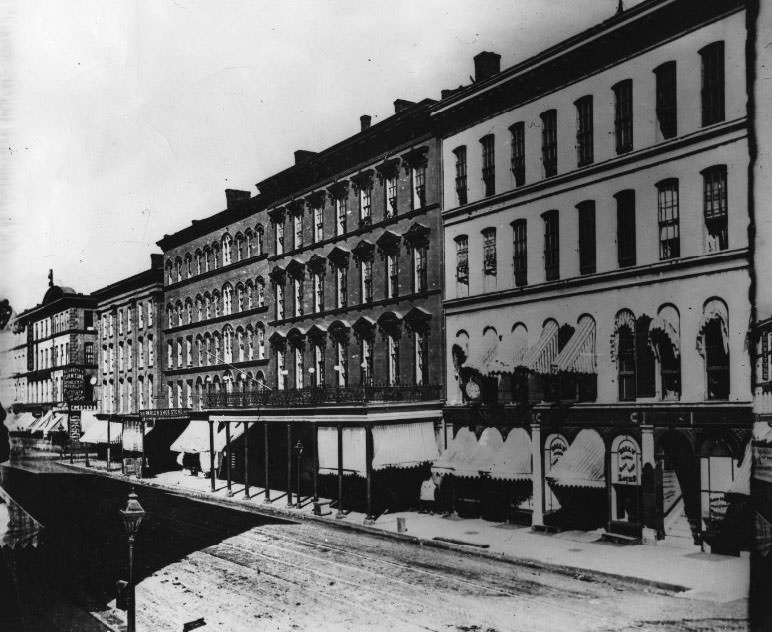
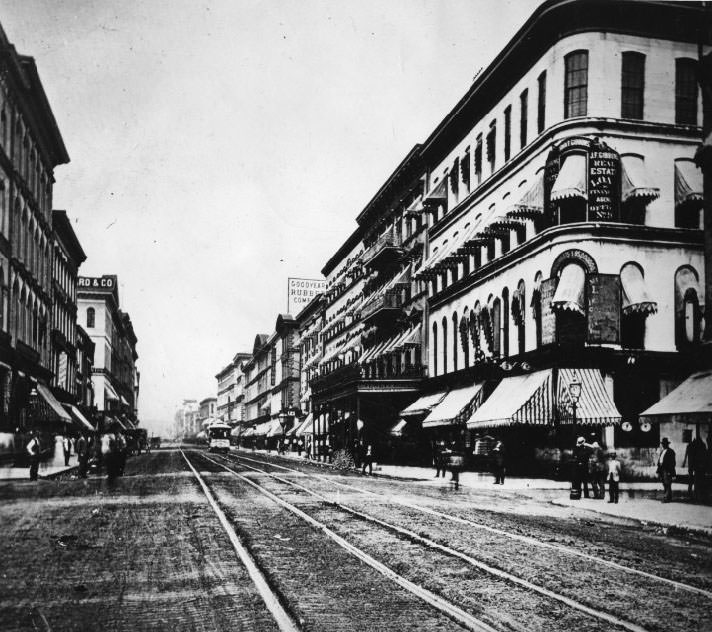
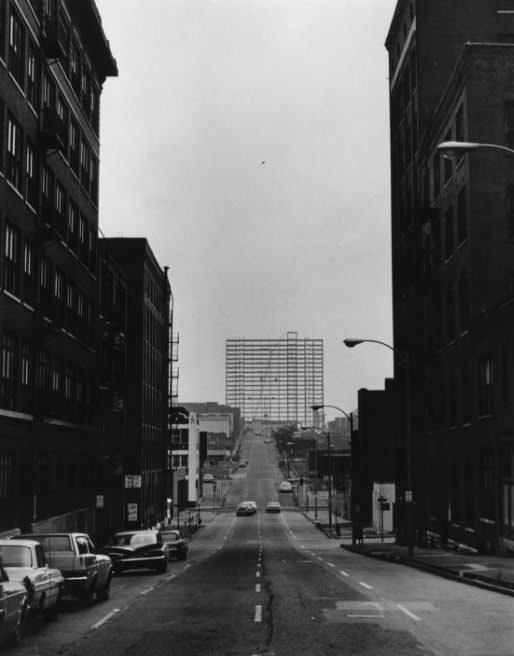
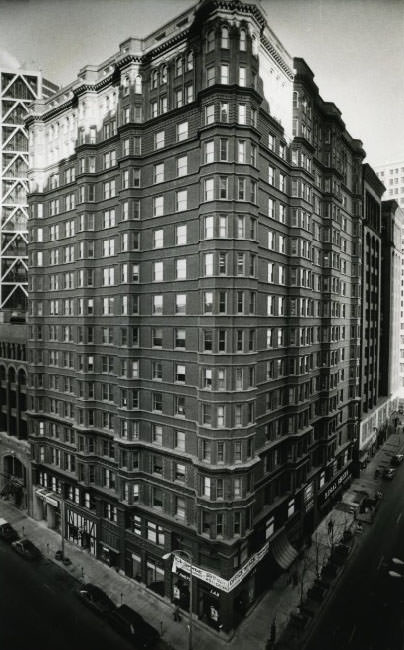
The canyon of construction that characterized downtown St. Louis in 1960 reflected a city caught between two versions of itself. The old commercial buildings and hotels of the 19th and early 20th centuries still lined many blocks, their facades familiar to anyone who had grown up in the city. Between and behind them, cranes and steel frameworks announced the new city taking shape. The Everett House on Fourth Street, visible in photographs from the era, was one of dozens of structures whose futures were uncertain as the decade opened.
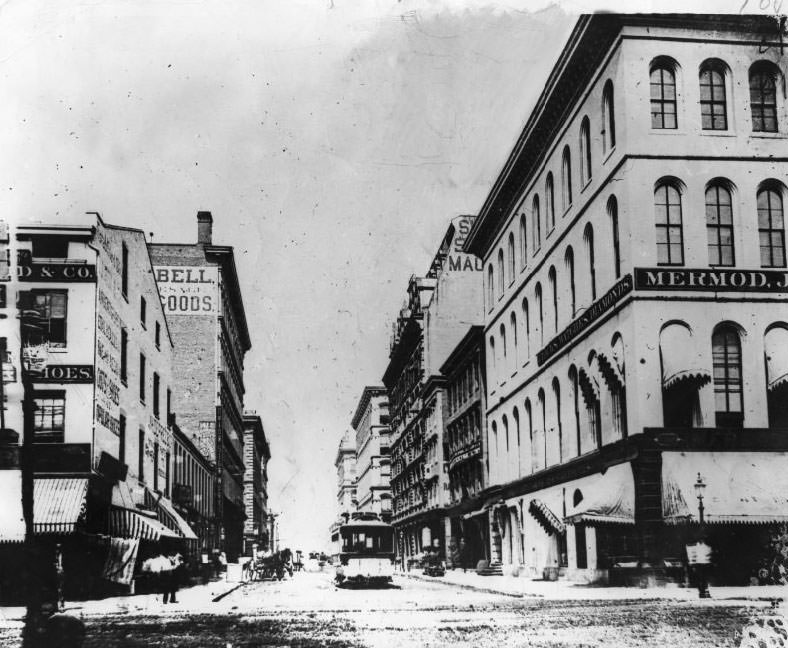
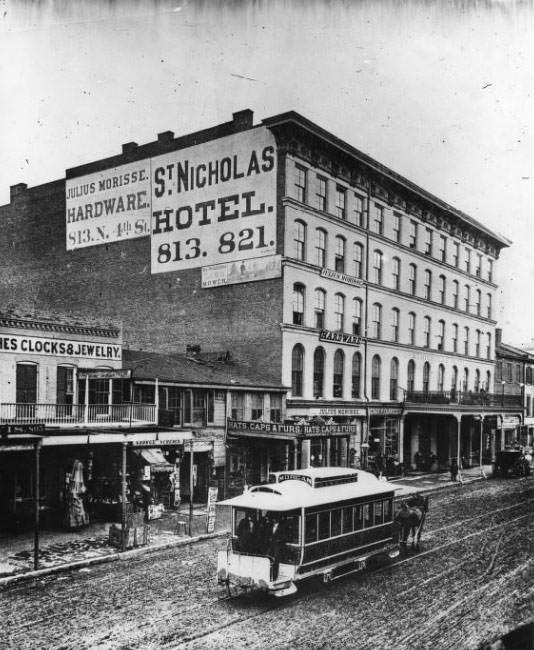
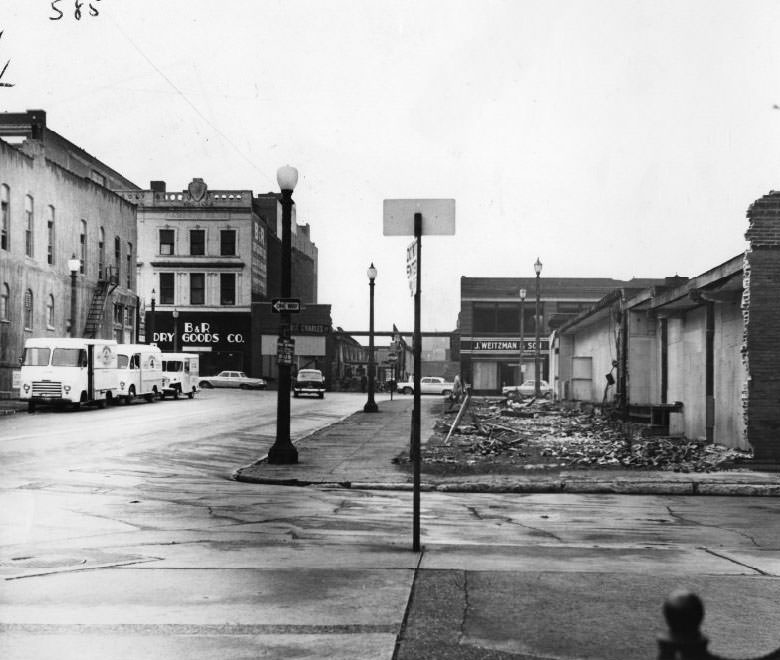
Preparing the right-of-way for new highway construction required clearing buildings and relocating residents and businesses. This process, repeated across dozens of St. Louis neighborhoods during the 1950s and 1960s, was rarely straightforward. Holdout property owners, legal disputes, and condemnation proceedings delayed projects and added costs. The preparation of rights-of-way was where the abstract ambitions of city planners met the concrete reality of people’s homes and livelihoods — and the collision was frequently painful.
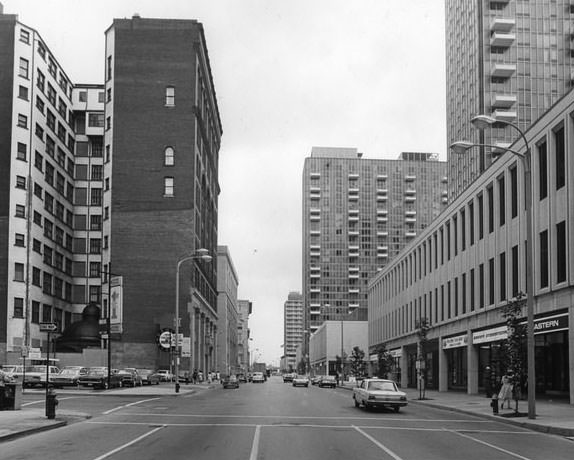
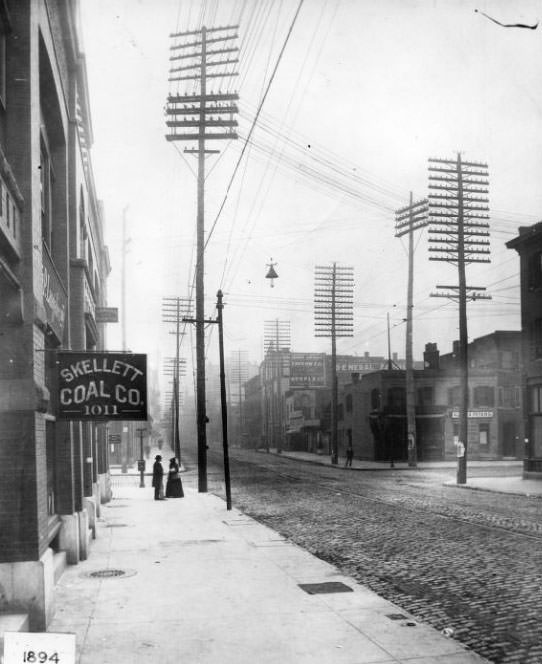
The maze of telephone lines and poles above St. Louis streets in 1960 was itself a symbol of the city’s aging infrastructure. Overhead wiring had been strung across the city for decades, and by midcentury the tangle above many commercial streets was dense and chaotic. Modernization projects throughout the decade worked to place utilities underground in some areas, particularly in the zones being redeveloped near the Arch and downtown. But in most neighborhoods, the poles and wires remained, a practical if unglamorous part of the city’s daily functioning.
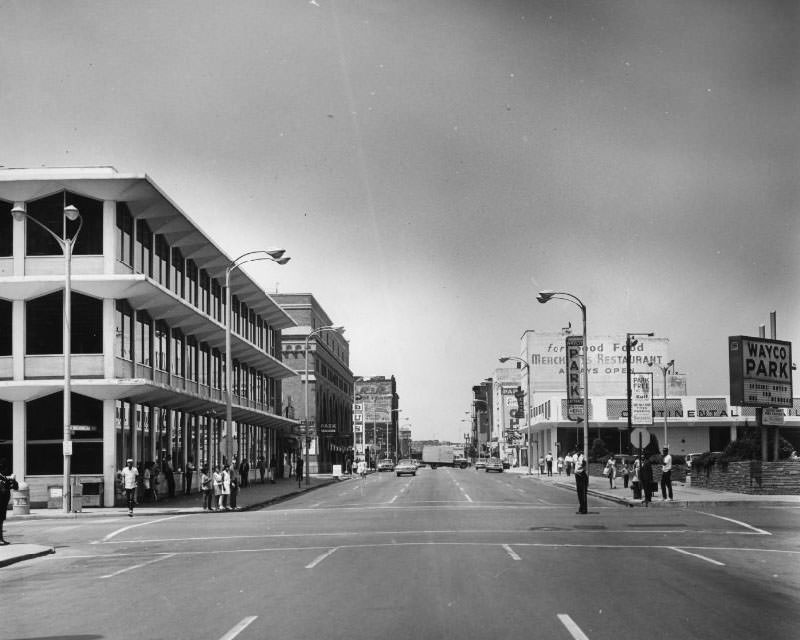
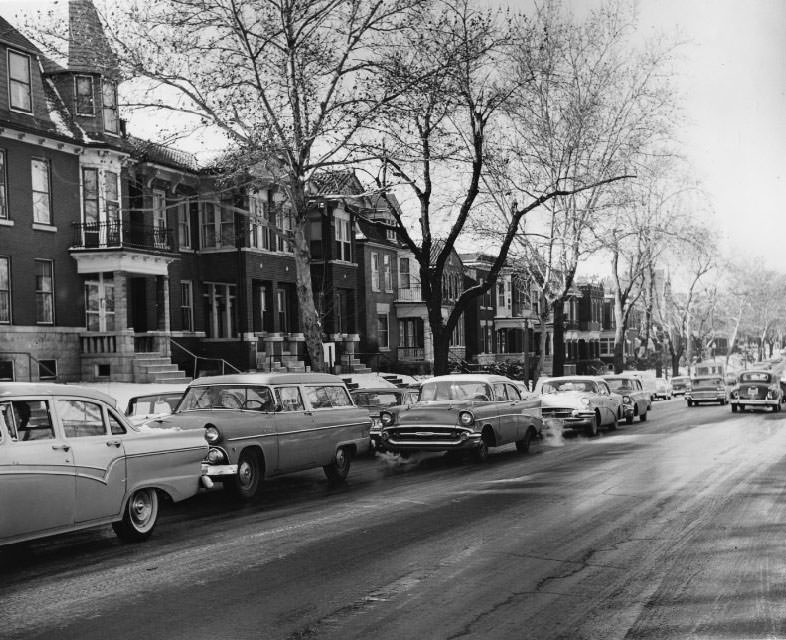
DeBaliviere Avenue in the western part of the city connected Forest Park to the neighborhoods spreading northward toward University City and the inner suburbs. Broadway, running north-south through the heart of the city, linked neighborhoods from the industrial south side to the commercial center. Arsenal Street, Branch Street, and Chestnut Street each told a different story about the city’s geography and the people who lived and worked along them. Together, these street photographs assembled a portrait of a city that was simultaneously proud of its density and anxious about its direction.
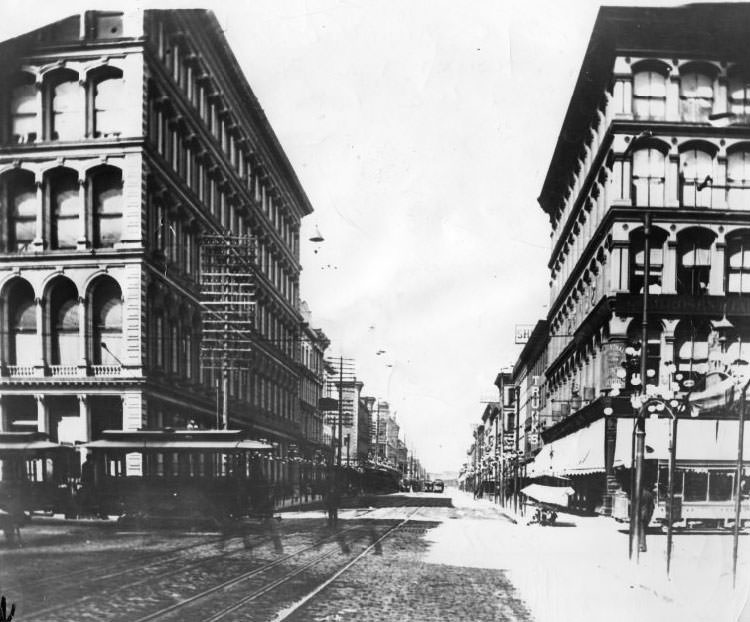
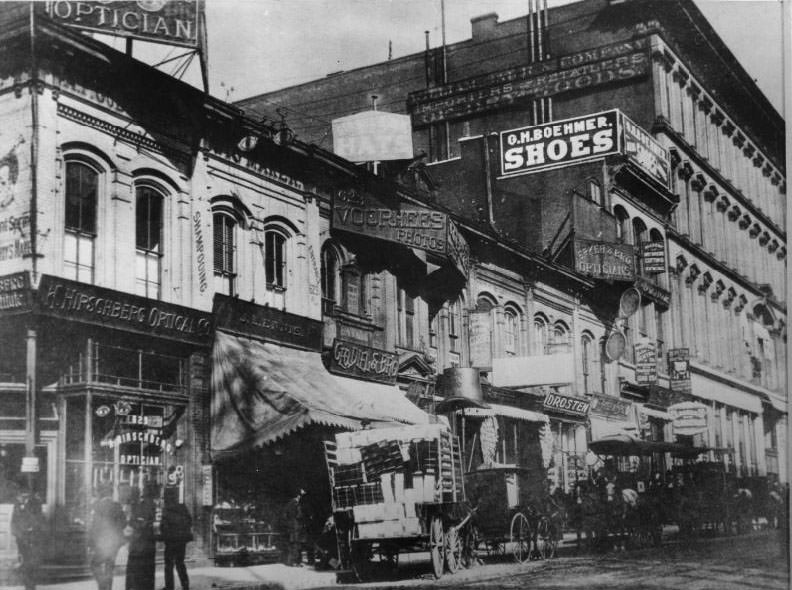
Old commercial establishments like F.W. Drosten’s at 619 Olive — once the third door west of Barr’s Dry Goods — were being documented as the city changed around them. The St. Louis that existed before the automobile, before the interstate, and before urban renewal was preserved almost entirely in photographs like these. The storefronts, the signage, the streetcar tracks still visible in some pavement — all of it was being quietly swept away as the decade progressed, leaving the photographs as the primary record of what had once stood there.
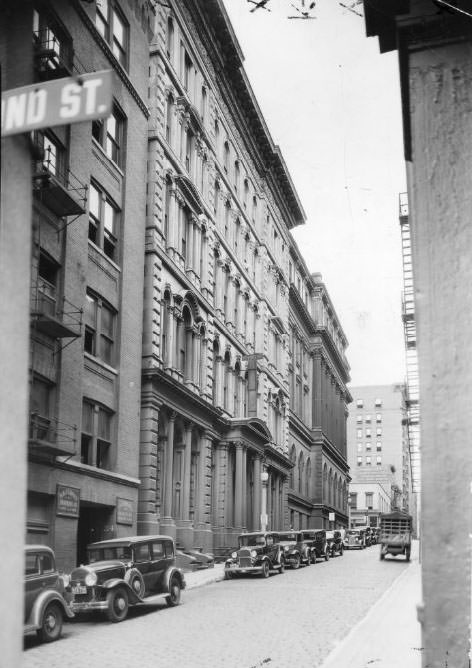
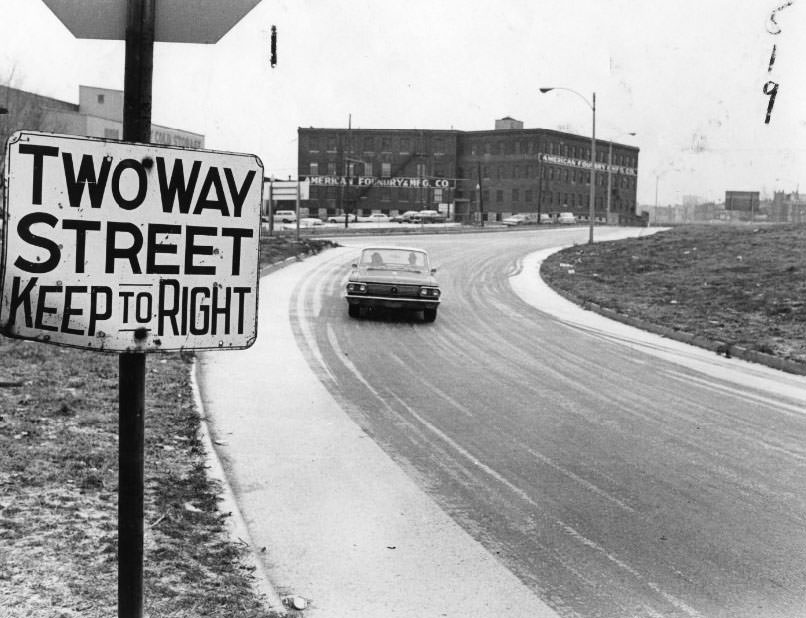
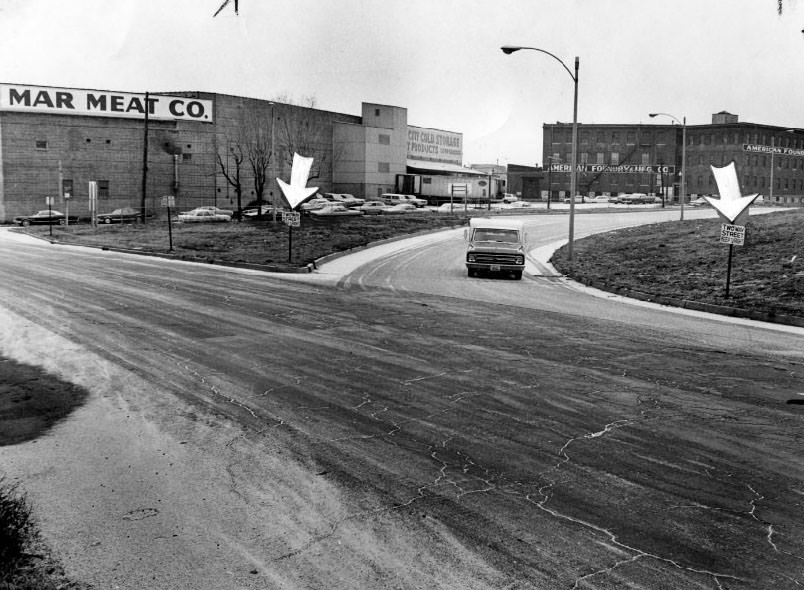
Traffic management became a serious concern as Interstate 70 was integrated into the city’s street grid. Signs directing drivers on the Branch Street exit were photographed and annotated in the press, reflecting the genuine complexity of merging high-speed highway traffic with an older urban street network that had been designed for slower speeds and lower volumes. The interstate system brought efficiency at a regional scale but created friction and disruption at the local level, a tension that city engineers worked to manage throughout the decade.
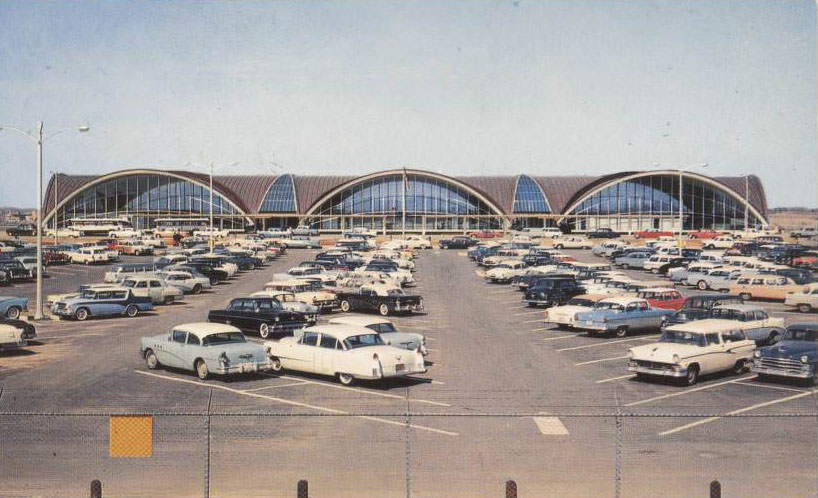
Lambert–St. Louis Municipal Airport’s expanded terminal and parking facilities in 1960 were already busy with the traffic of a city connected to national air routes. The airport sat in St. Louis County, north of the city limits, and its growth was both a symbol of regional prosperity and a driver of suburban development in the surrounding municipalities. Bethesda General Hospital and its associated Bethesda Town House facility on the south side of the city served a different function — providing medical care and transitional housing for patients in a city where hospital access was still stratified by race and income.
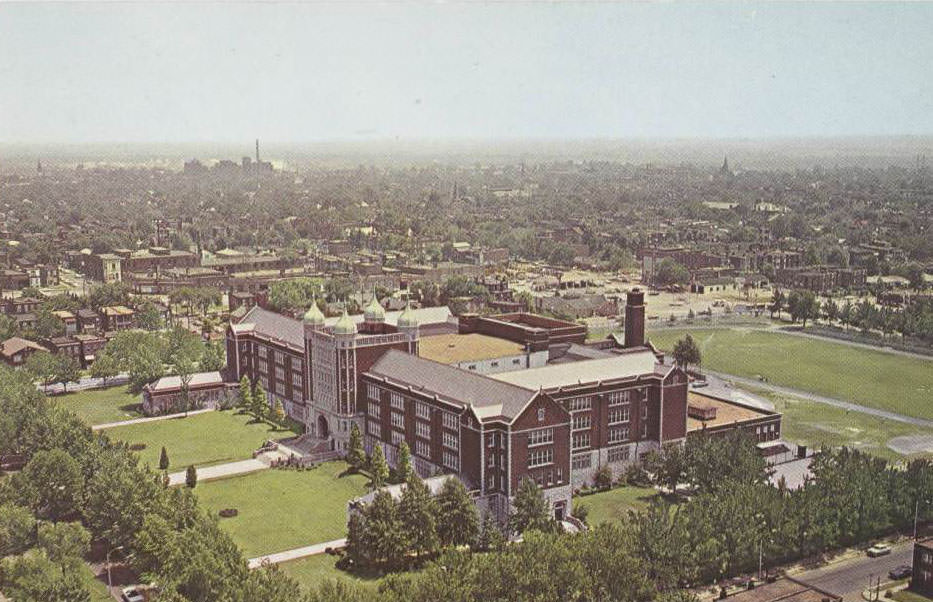
Roosevelt High School on Hartford Street in south St. Louis was one of dozens of public schools educating the city’s children through the turbulent decade. Public school desegregation — mandated by the Supreme Court’s 1954 Brown v. Board of Education ruling — was still being implemented unevenly across Missouri in the early 1960s. St. Louis’s public schools were officially desegregated, but residential segregation ensured that most schools remained racially homogeneous in practice. The schools were a front line of the civil rights struggle even when no protests were taking place outside their doors.
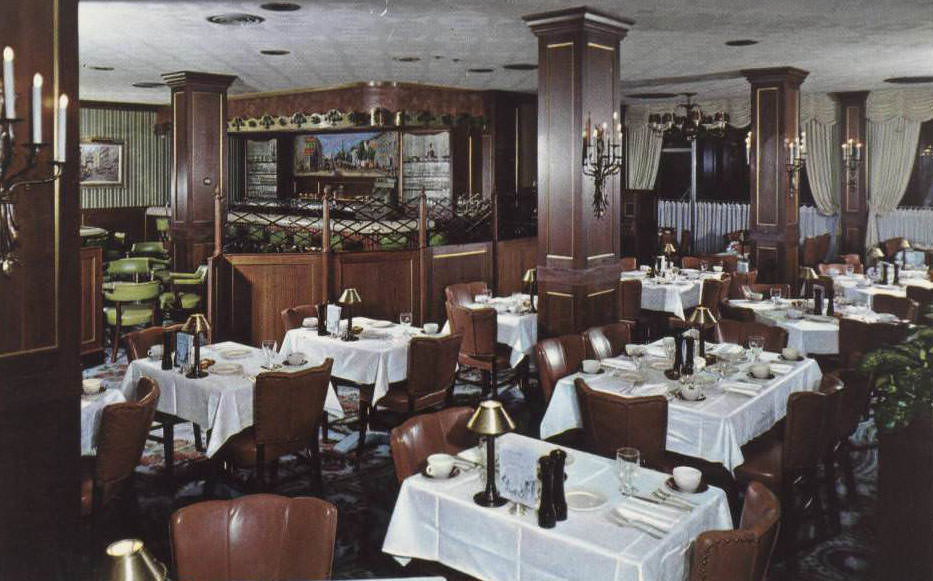
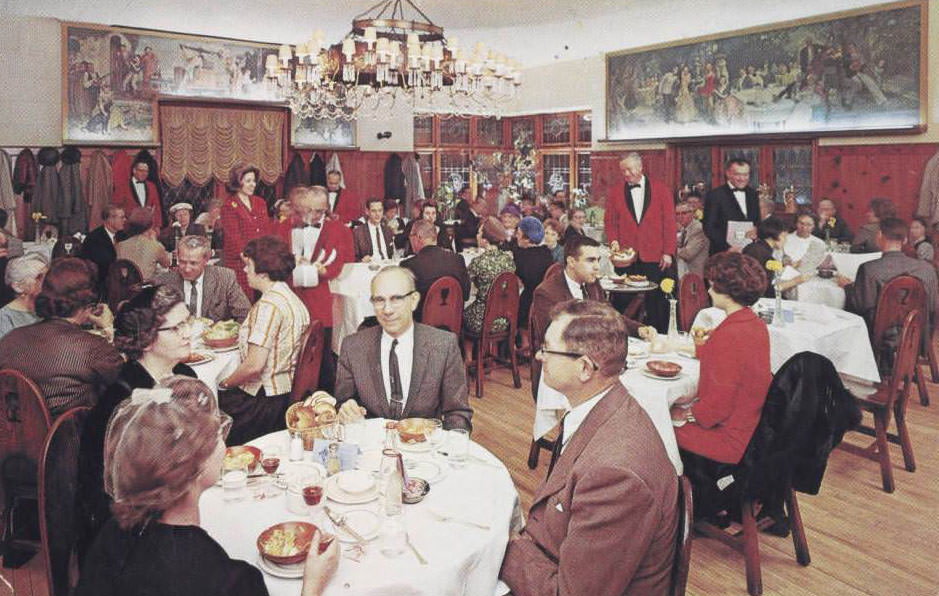
Restaurants like Henrici’s, with its cocktail lounge and white-tablecloth dining, served a clientele that was comfortable and largely white in the early 1960s. The city’s restaurant scene was, like its housing market and its employment practices, shaped by segregation. As the decade progressed and civil rights laws began to take effect, these establishments faced pressure to open their doors to all customers. Some did so willingly; others resisted. The dining rooms and cocktail lounges of St. Louis were, in their own quiet way, sites of the same struggle playing out in banks and construction sites and courthouse steps across the city.

Many of those dates are off by decades or more, including the suggestion that the Spanish American War occurs in 1949, and a photo allegedly from 1960 which features the arch and Busch Stadium II.