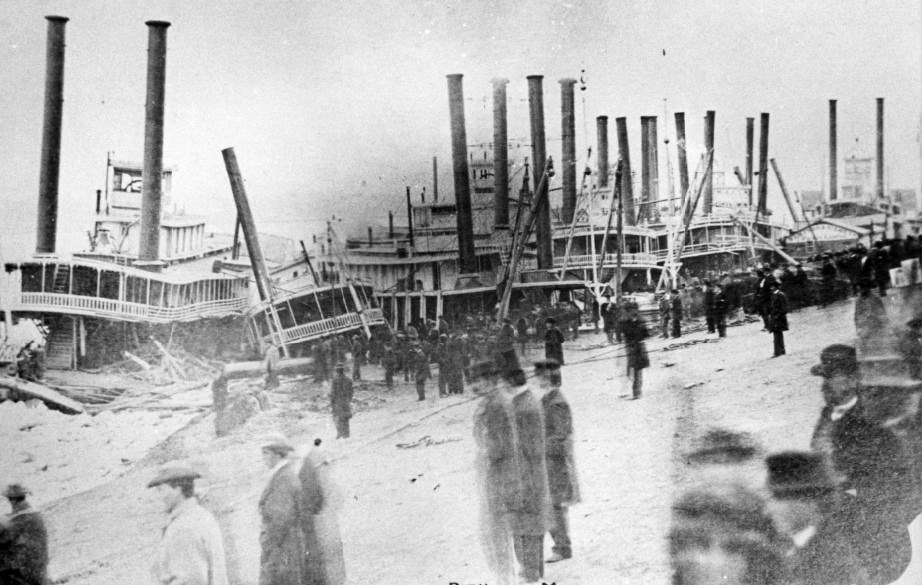
By the 1860s, St. Louis was one of the most important cities in the United States. Sitting along the western bank of the Mississippi River in Missouri, it was home to roughly 160,000 people — a population large enough to make it one of the country’s biggest urban centers at the time. Its location made it a natural gateway to the West, serving as a key departure point for settlers and traders heading out along the Oregon and Santa Fe trails.
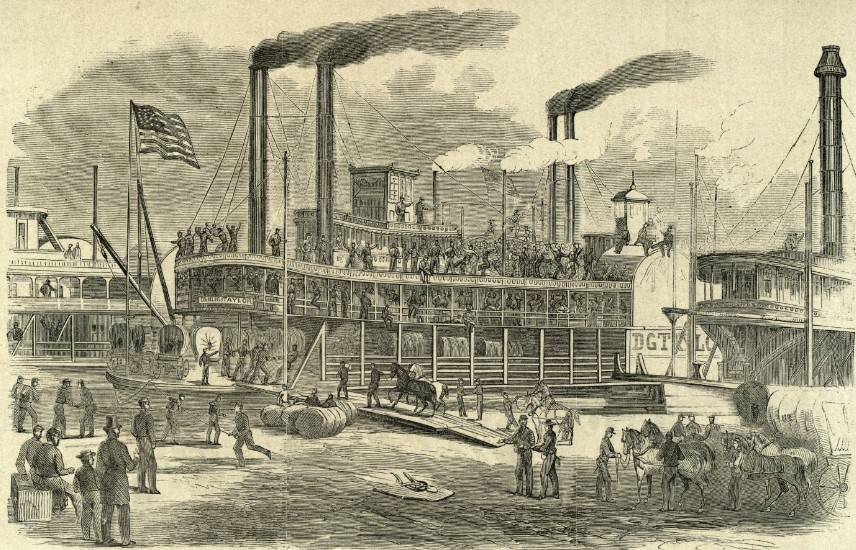
The Mississippi River was the city’s lifeblood. Steamboats and sternwheelers moved constantly along the waterfront, hauling goods, passengers, and mail up and down the river. The St. Louis levee was one of the busiest stretches of waterfront in the entire country, packed with vessels of all sizes loading and unloading cargo.
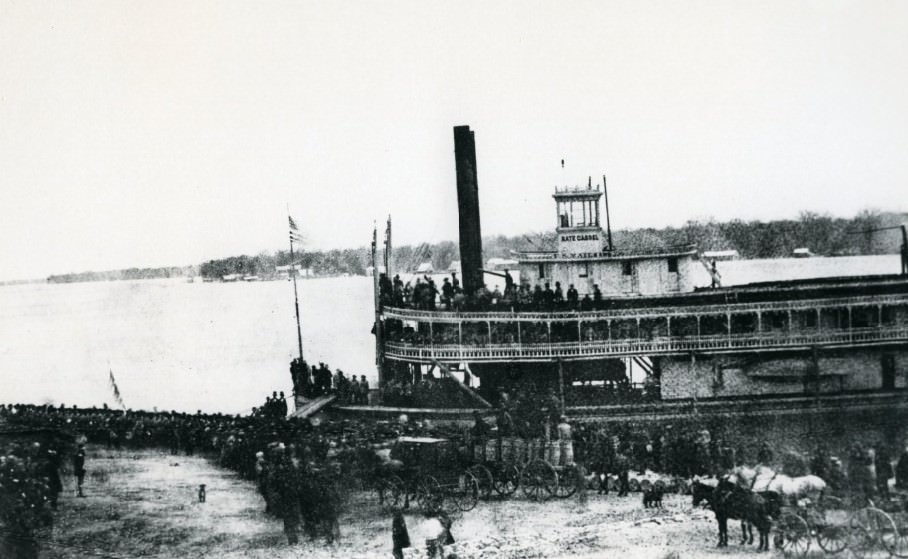
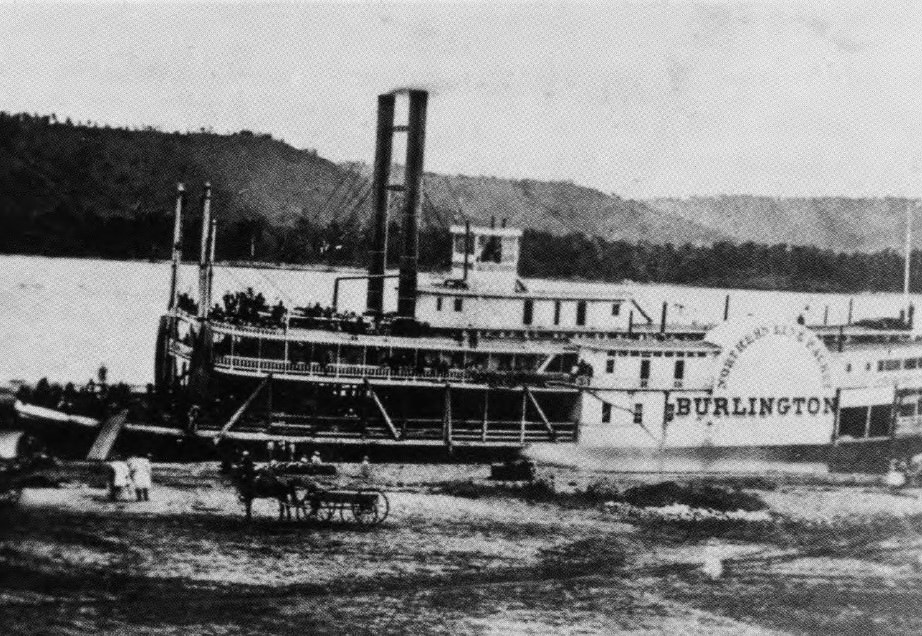
Vessels like the Kate Cassel were a common sight on the river before the war years wore the fleet thin. Steamers crowded the levee at all hours, and the waterfront buzzed with dockworkers, merchants, and travelers. The Steamer Burlington was another fixture of this era, representing the constant flow of commerce that kept the city running.
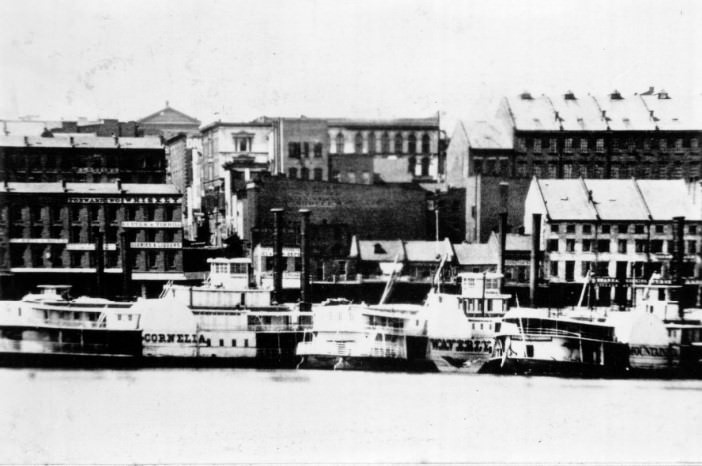
Even as war loomed, commerce along the levee continued. Steamers like the Cornelia and Waverly kept trade moving through the mid-war years, a sign of how deeply St. Louis depended on river traffic to sustain its economy.
Away from the water, St. Louis was a thriving industrial city. Its factories produced iron and steel used in buildings, bridges, and infrastructure across the region. Breweries, ironworks, and cotton mills all operated within the city limits. The street scenes of the time reflect this commercial energy — a city that was building, buying, and selling at a rapid pace. The intersection of 2nd and Market Streets in 1860 captured this urban momentum well.
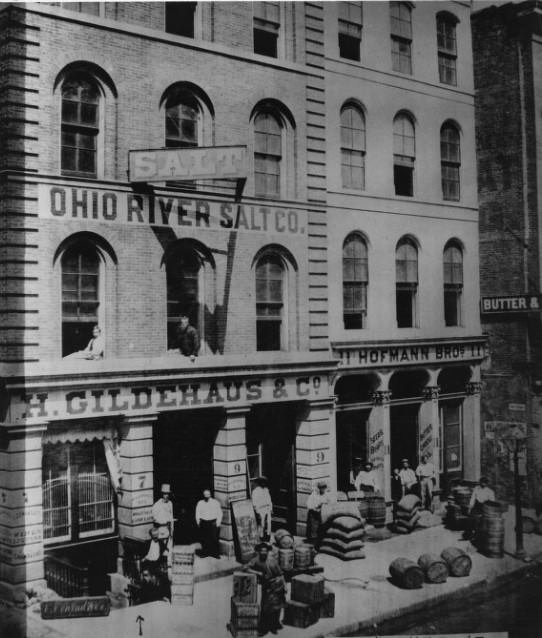
Streets throughout the city were packed with foot traffic, horse-drawn wagons, and business activity. The term ‘traffic jam’ applied just as much to 1860s St. Louis as it does today, with congested roads a routine part of city life.
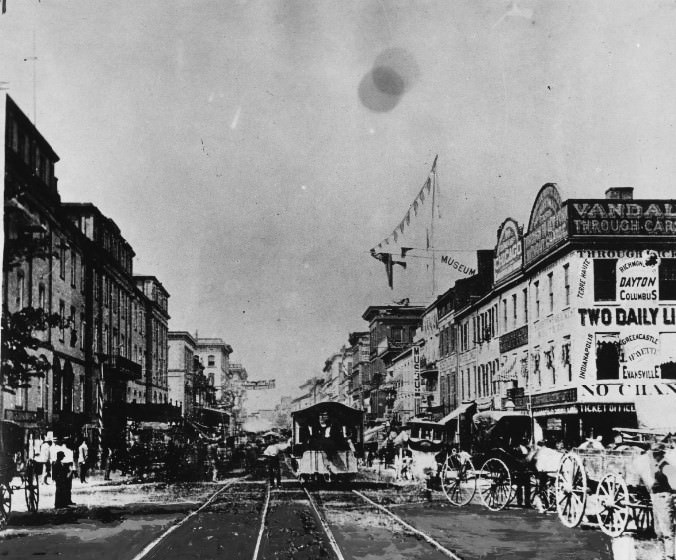
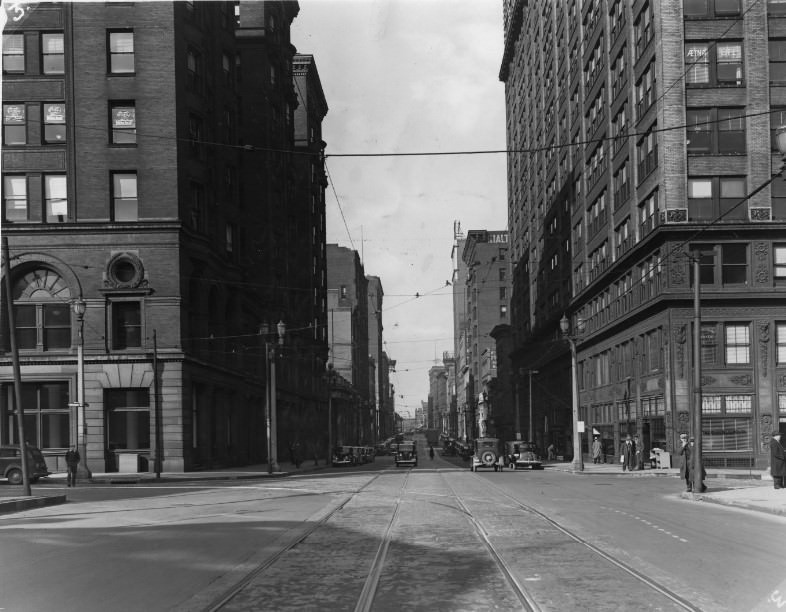
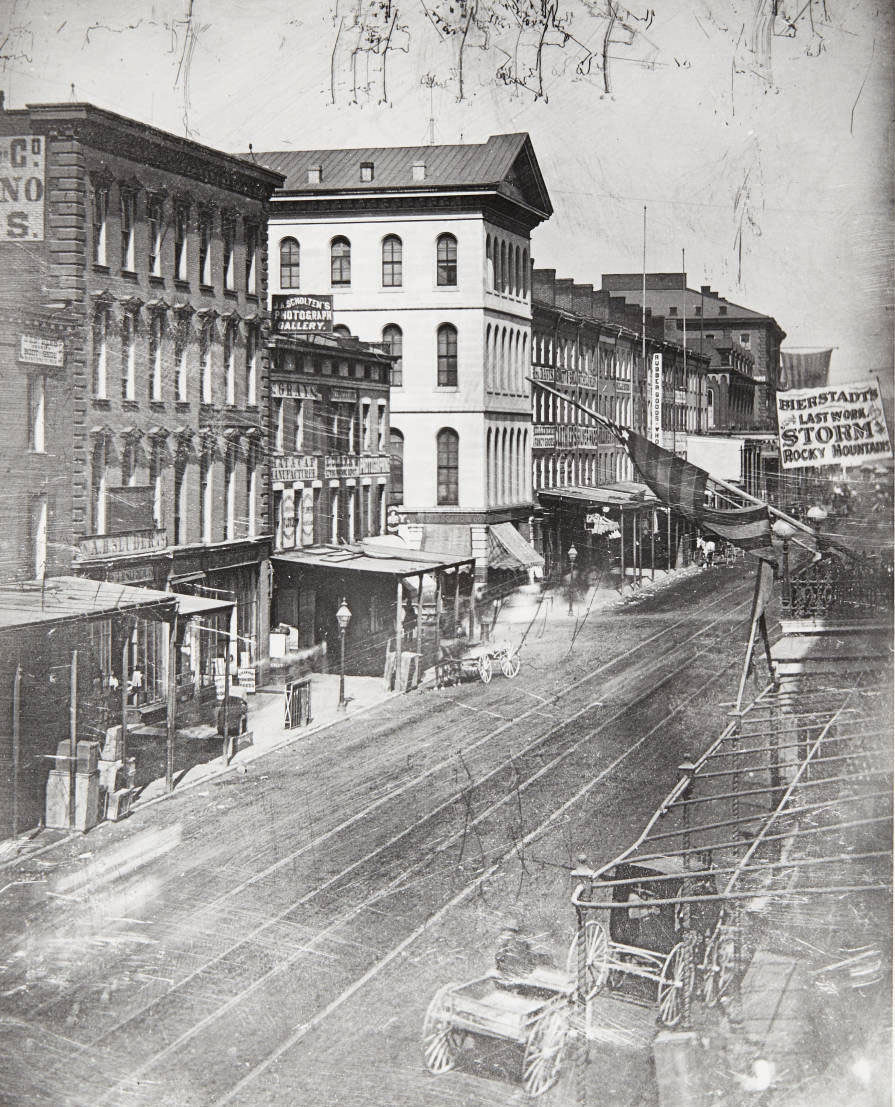
Fourth Street was one of the city’s busiest commercial corridors. Shops, studios, and storefronts lined the block, drawing customers from across the city. Among the businesses visible in period photographs is J.A. Scholten’s Photography Gallery, a reminder that the camera was already an established part of urban life by this decade.
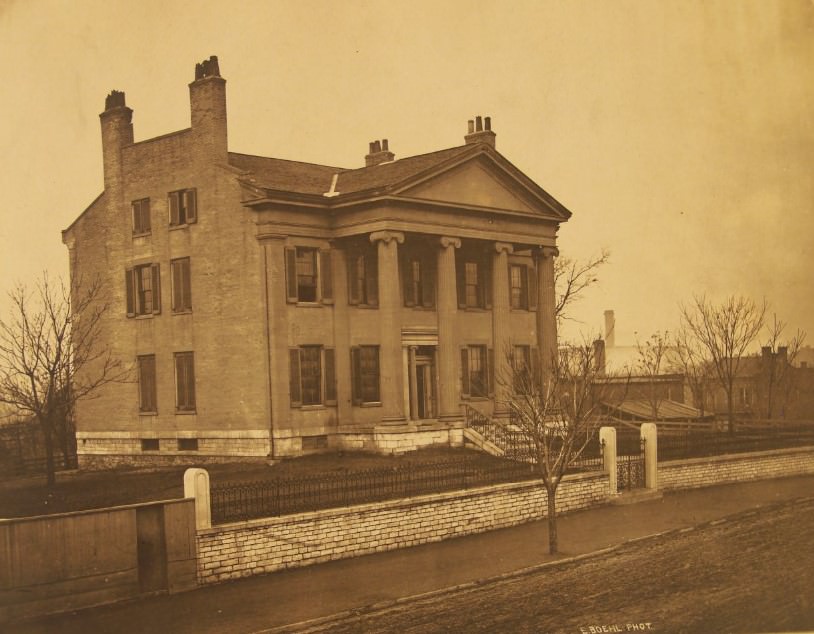
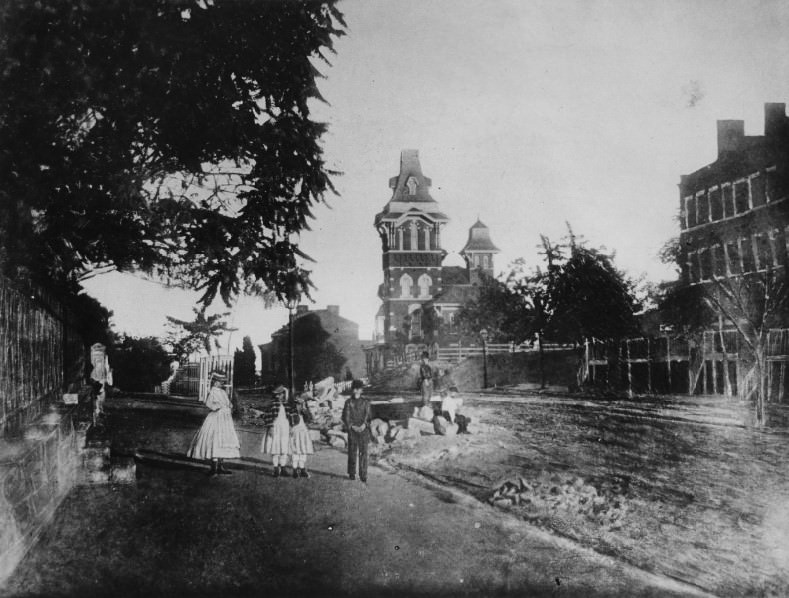
The Chouteau Mansion stood as one of the city’s most recognizable landmarks, a relic of the old French Creole families who had shaped St. Louis long before American statehood. By the late 1860s, the old estates of the founding families sat in growing tension with a city that was modernizing fast. The corner of Chouteau and 15th Street showed a different, more working-class side of the city — dense, functional, and already evolving.
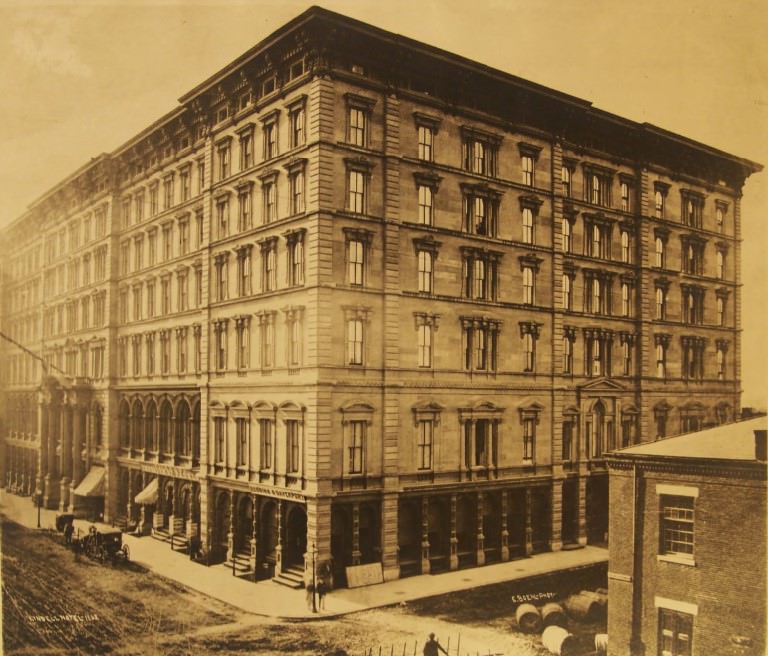
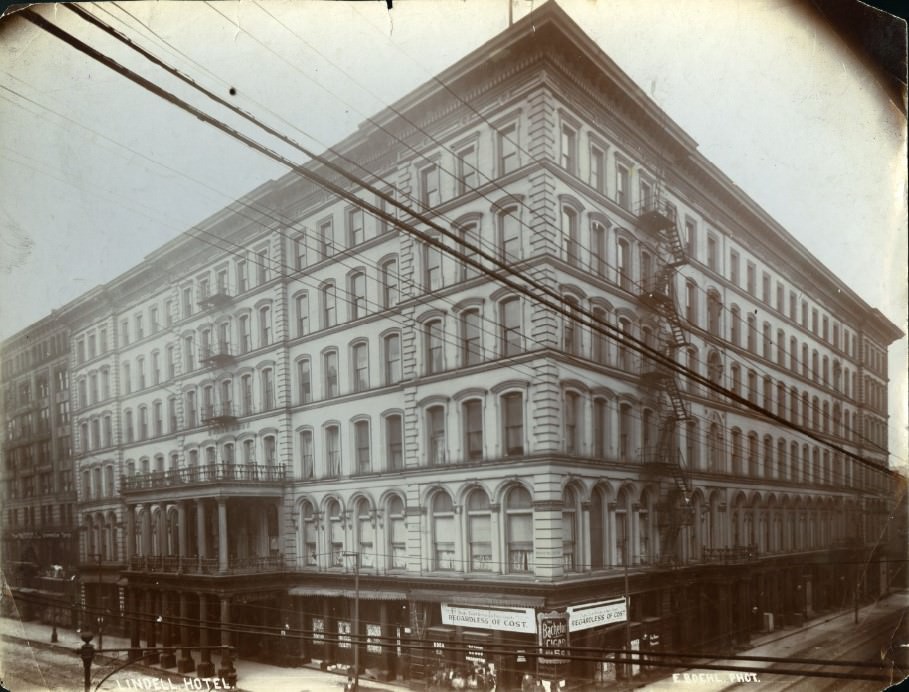
For travelers and city visitors, the Lindell Hotel at Eighth and Washington was the premier destination in St. Louis. It was considered one of the grandest hotels in the entire country during its time. In 1867, it burned to the ground — a dramatic loss for a city that had come to see it as a symbol of its prosperity and ambition.
Missouri was a border state during the Civil War — officially part of the Union, but deeply divided in its loyalties. St. Louis reflected that division sharply. Pro-Confederate sentiment ran strong in parts of the city, while Union supporters worked to keep Missouri from seceding. The city became a staging ground for military operations, hosting training camps and hospitals for wounded soldiers. The embarkation of the Ninth Missouri Regiment from St. Louis was one of many scenes of soldiers shipping out to the front.
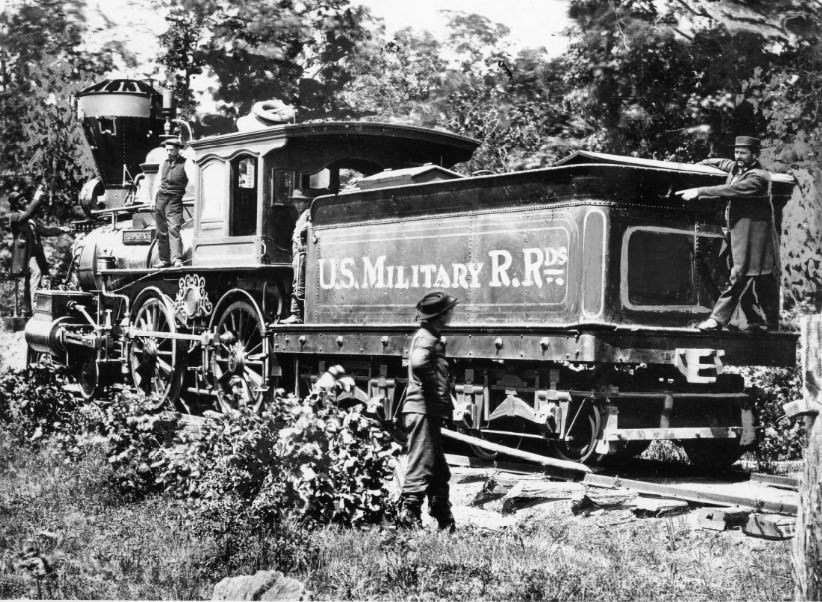
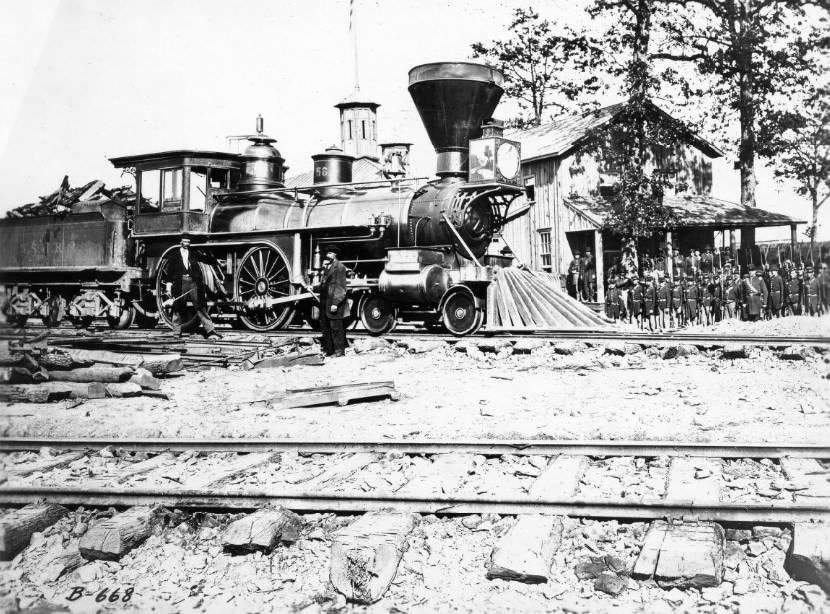
The U.S. Military Railroad played a critical role in supplying Union forces throughout the war. Locomotives like the Fred Leach and Engine No. 56 were part of the military’s effort to move troops and supplies quickly across the region. These machines represented a new kind of warfare — one driven as much by logistics and industrial capacity as by battlefield tactics.
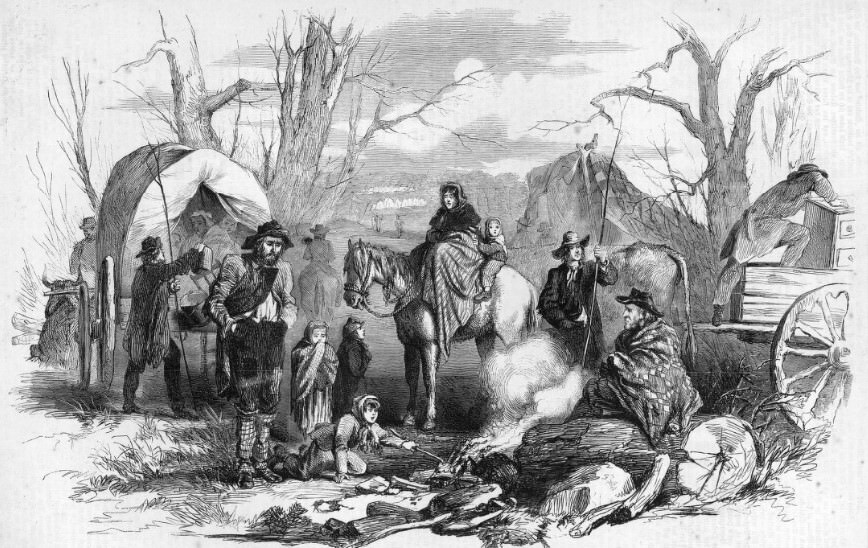
The war displaced thousands of Missouri civilians. Families loyal to the Union were sometimes forced from their homes in contested areas of the state and made their way to St. Louis for safety. These refugees arrived with little, seeking shelter in a city already strained by wartime pressures.
Slavery was legal in Missouri throughout much of this era, and St. Louis was home to active slave traders and slave owners. African Americans in the city faced severe discrimination and segregation in nearly every aspect of daily life. The racial tensions that ran through St. Louis in the 1860s were not a backdrop to the city’s story — they were central to it. Enslaved people and free Black residents alike lived in a city that simultaneously boasted of its wealth and enforced brutal social hierarchies.
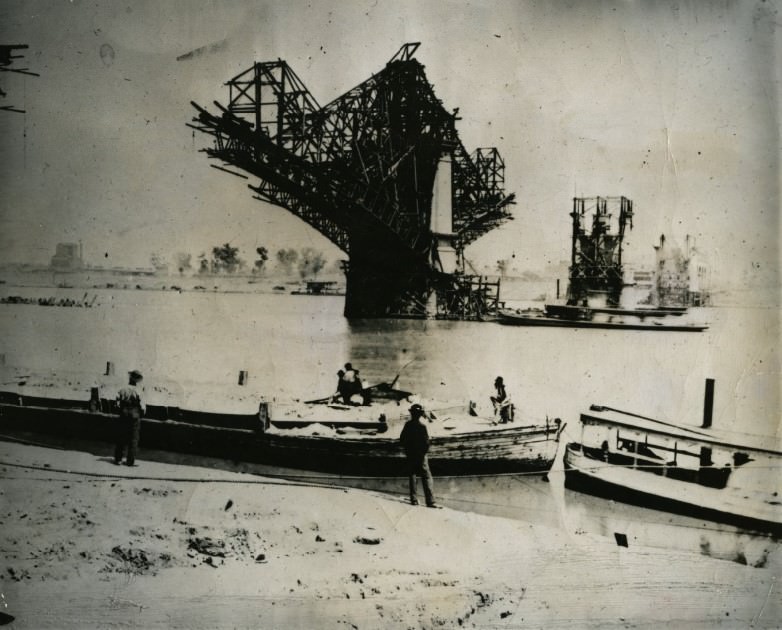
Even as the war wound down, St. Louis was already looking ahead. Construction on the Eads Bridge began in 1867, an engineering undertaking that aimed to span the Mississippi River and connect St. Louis directly to Illinois. The bridge, designed by James B. Eads, was a massive iron and steel structure that would take years to complete. Its construction in the years immediately following the war showed the city’s drive to rebuild and expand its reach.
The reach of St. Louis extended far beyond its city limits. The river trade that flowed through the levee connected the city to places as distant as Bighorn, Montana, where steamboat routes pushed deep into the frontier. A photograph from Cora, Montana in 1865 captured just how wide the network tied to St. Louis truly was.