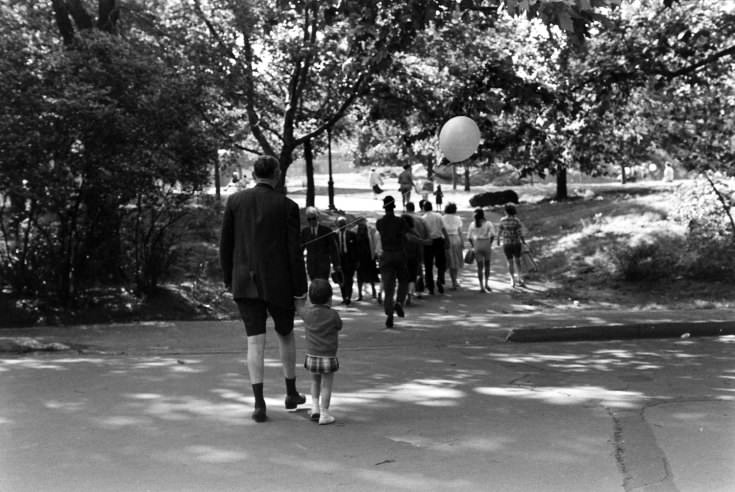
In the summer of 1961, Central Park was more than a patch of green in the middle of Manhattan — it was a full world of its own. Stretching across 800 acres, the park offered something for nearly everyone: open lawns, shaded paths, ponds, and the large man-made body of water known as The Lake. Photographer Leonard McCombe captured it all for LIFE magazine, documenting the rhythms of daily life inside the park’s borders.
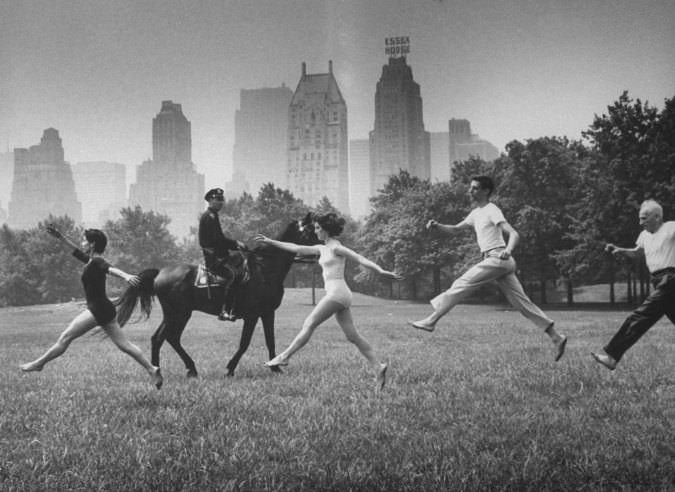
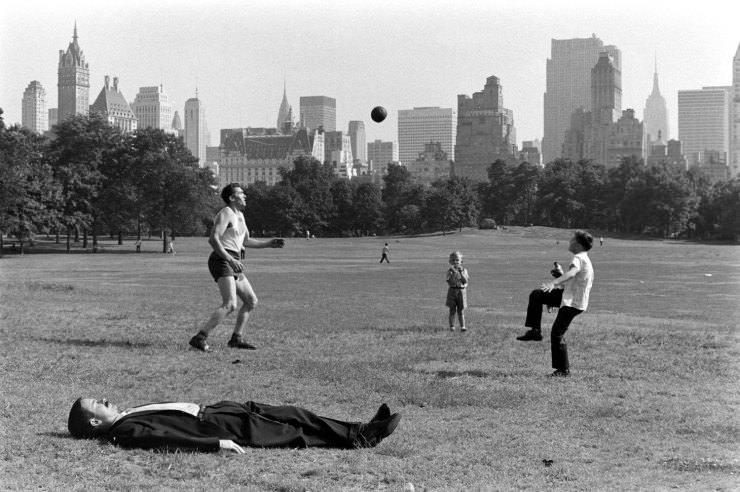
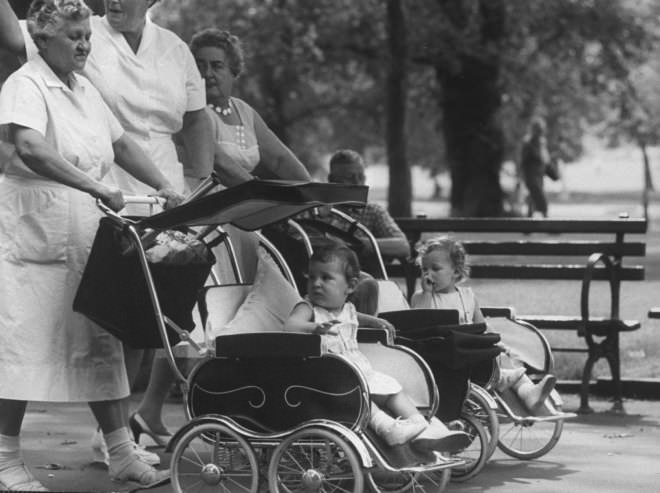
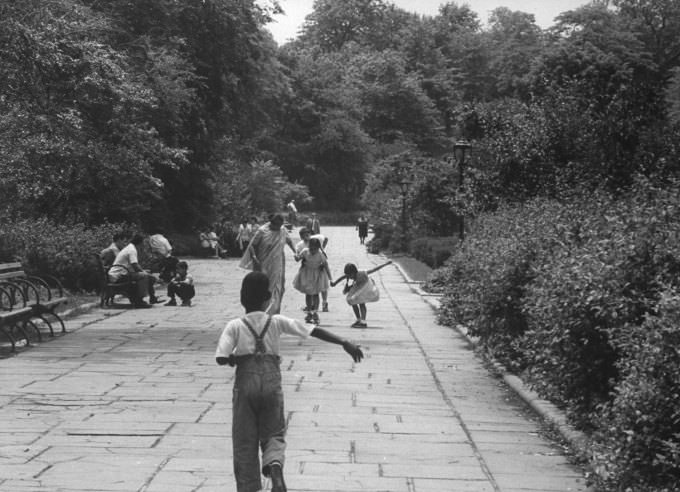
New Yorkers used the park in every way imaginable. On the great lawns, people spread blankets, read books, or simply sat in the shade. Benches along the miles of winding pathways filled with people resting, chatting, or watching strangers pass by. Others came to perform — or simply to move.
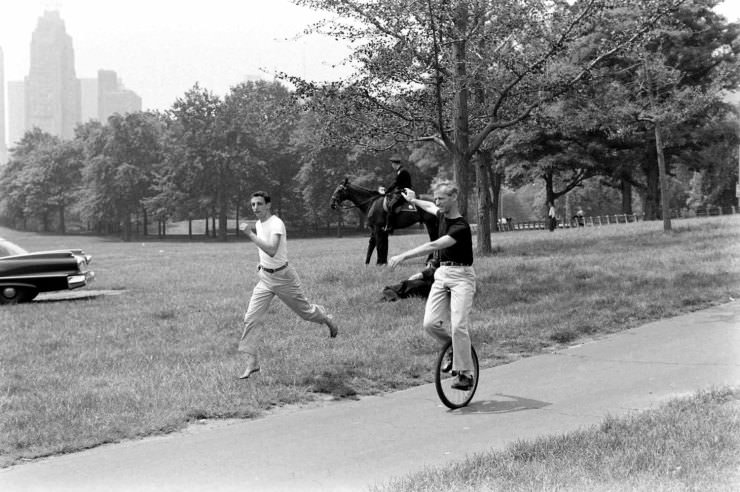
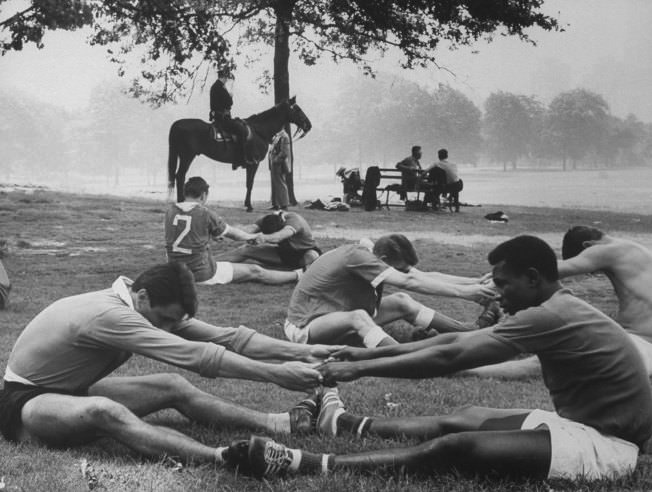
Sports were a big part of park life. Soccer players warmed up on the grass before matches, while the park’s open spaces made room for athletes of all kinds.
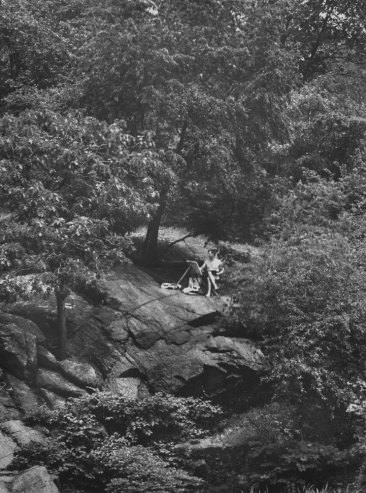
For those seeking quiet, the park’s secluded corners offered real solitude. Artists set up easels in tucked-away spots, working undisturbed by the city roaring just beyond the tree line.
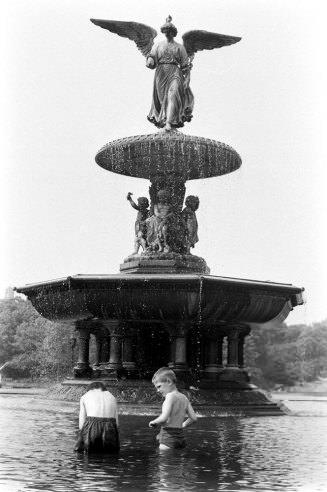
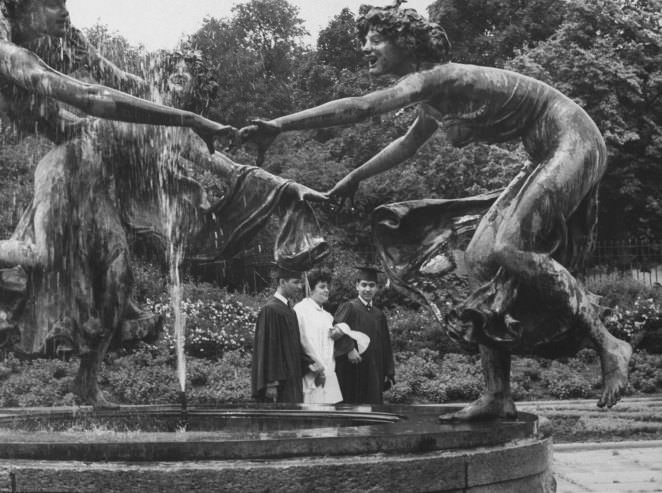
At the center of the park’s formal design stood Bethesda Fountain, one of its most recognizable landmarks. The surrounding terrace drew crowds on sunny afternoons, serving as a natural gathering point.
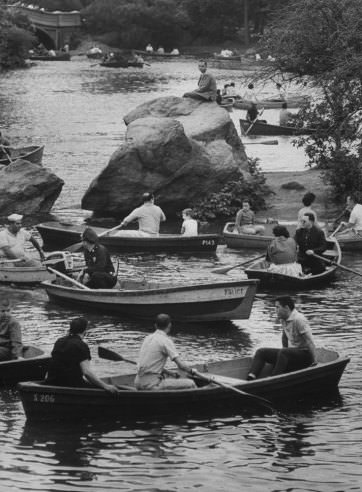
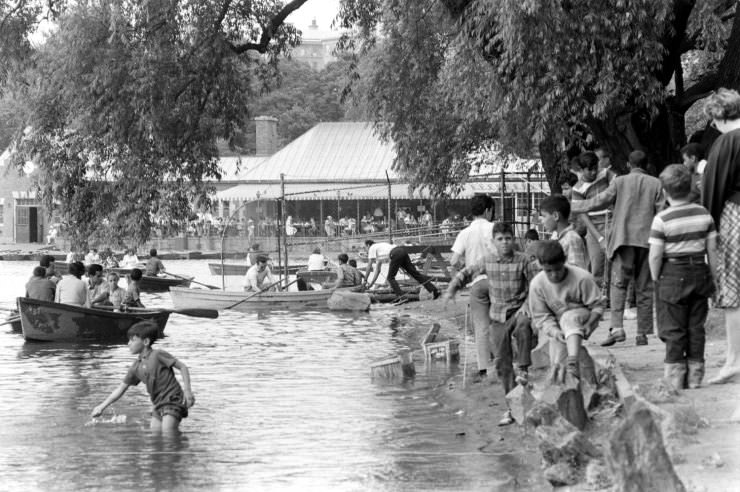
Out on The Lake, rowboats cut slowly through the water. Renting a boat was a popular pastime, giving city residents a rare chance to be on the water without leaving Manhattan.
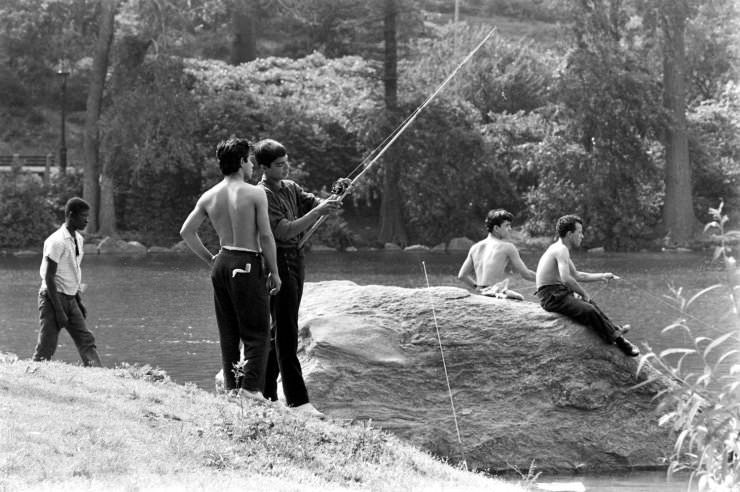
Fishing was another draw. The park’s ponds held enough fish to keep anglers busy on warm afternoons.
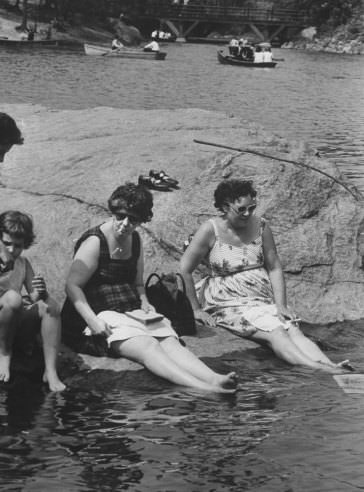
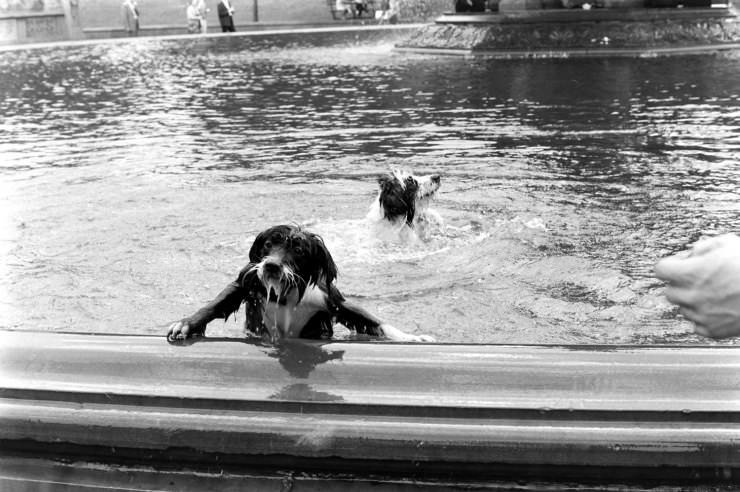
When the heat peaked, New Yorkers found creative ways to cool down. Sunbathers dangled their feet in the water, stealing relief wherever they could find it.
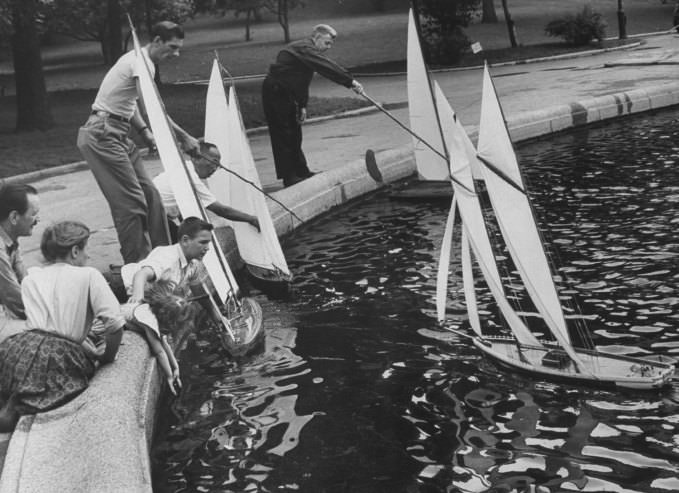
Conservatory Pond was home to a dedicated community of model sailboat enthusiasts. Hobbyists guided their miniature vessels across the water’s surface with remarkable care and skill.
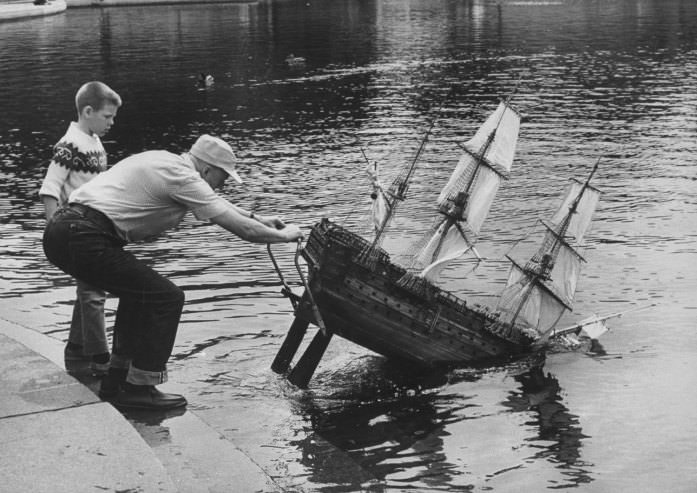
Among the regulars at Conservatory Pond was Arthur Langton, who built and launched a detailed replica of Nelson’s flagship Victory.
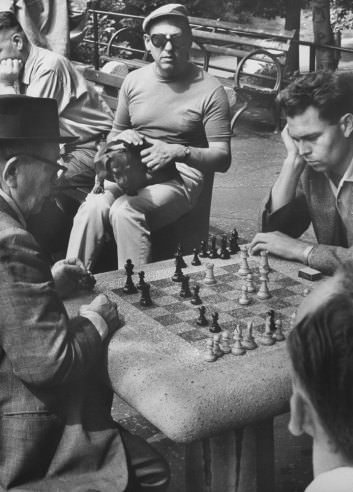
Away from the water, chess players occupied park tables in focused, quiet competition — a tradition in New York public spaces that ran deep by 1961.
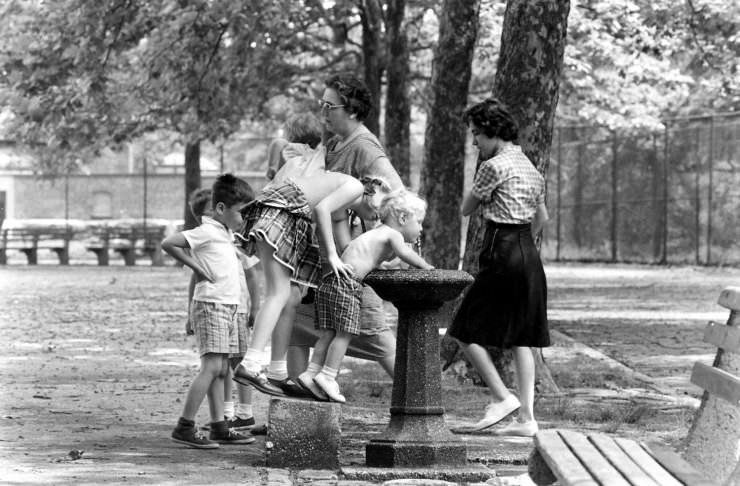
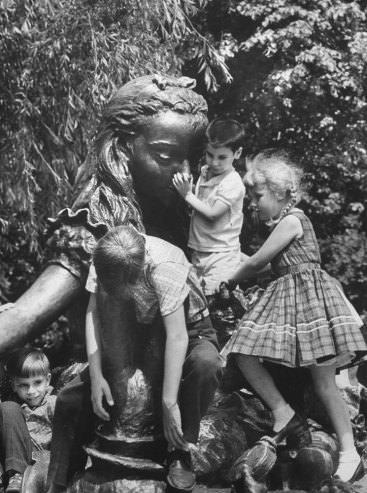
Children flocked to the bronze Alice in Wonderland sculpture, climbing freely over Alice, the Mad Hatter, and the other Lewis Carroll characters cast in metal.
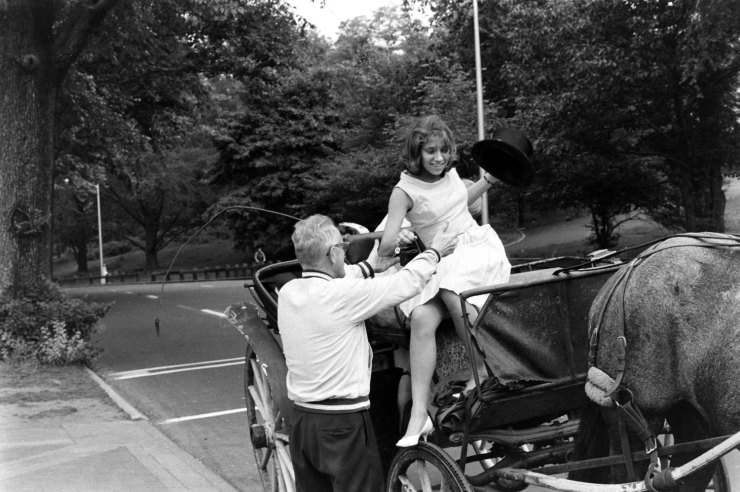
Horse-drawn carriages remained a fixture of park culture in 1961, carrying riders along the broad paved drives in a tradition stretching back to the park’s earliest days.
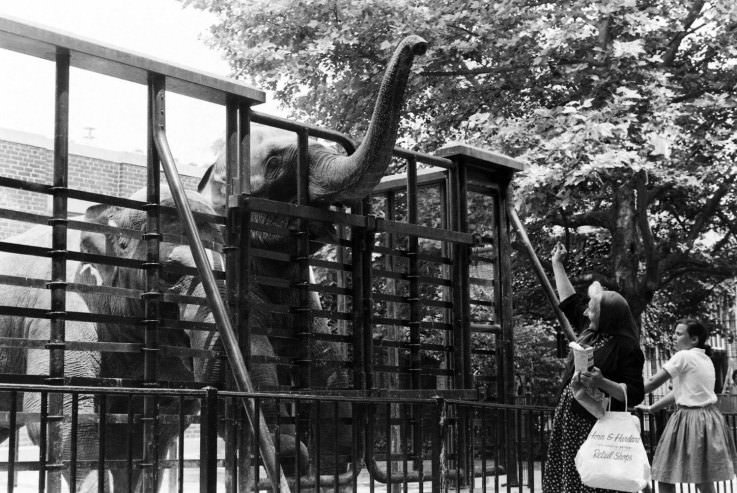
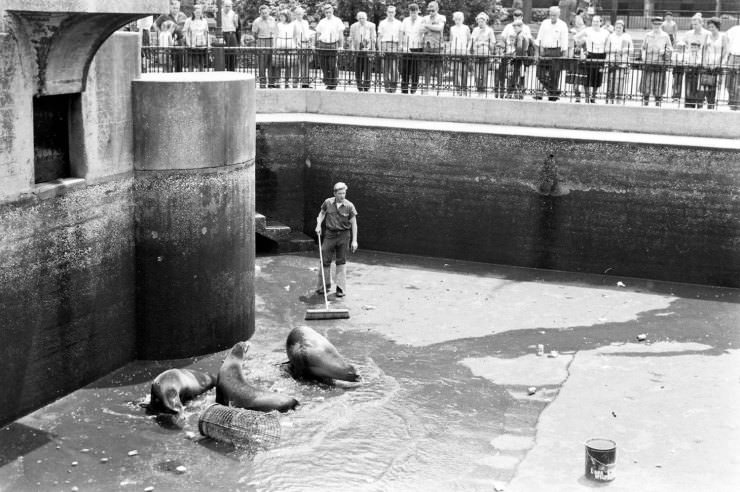
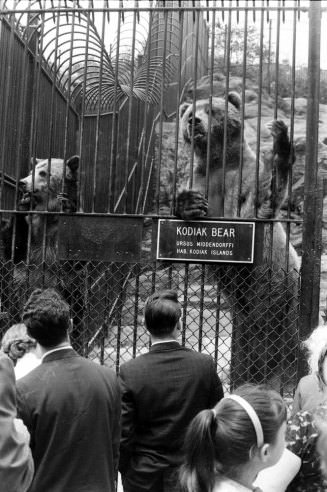
Central Park also housed a zoo in its northeast corner. In 1961, visitors could see elephants, seals, and Kodiak bears up close — a striking contrast to the urban density just outside the park walls.
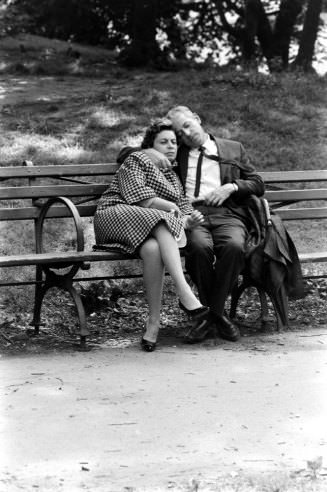
Quieter moments were just as common. Couples shared benches in the shade, and horse-drawn carriages continued to offer rides to those who wanted a slower pace through the park’s scenic routes.