
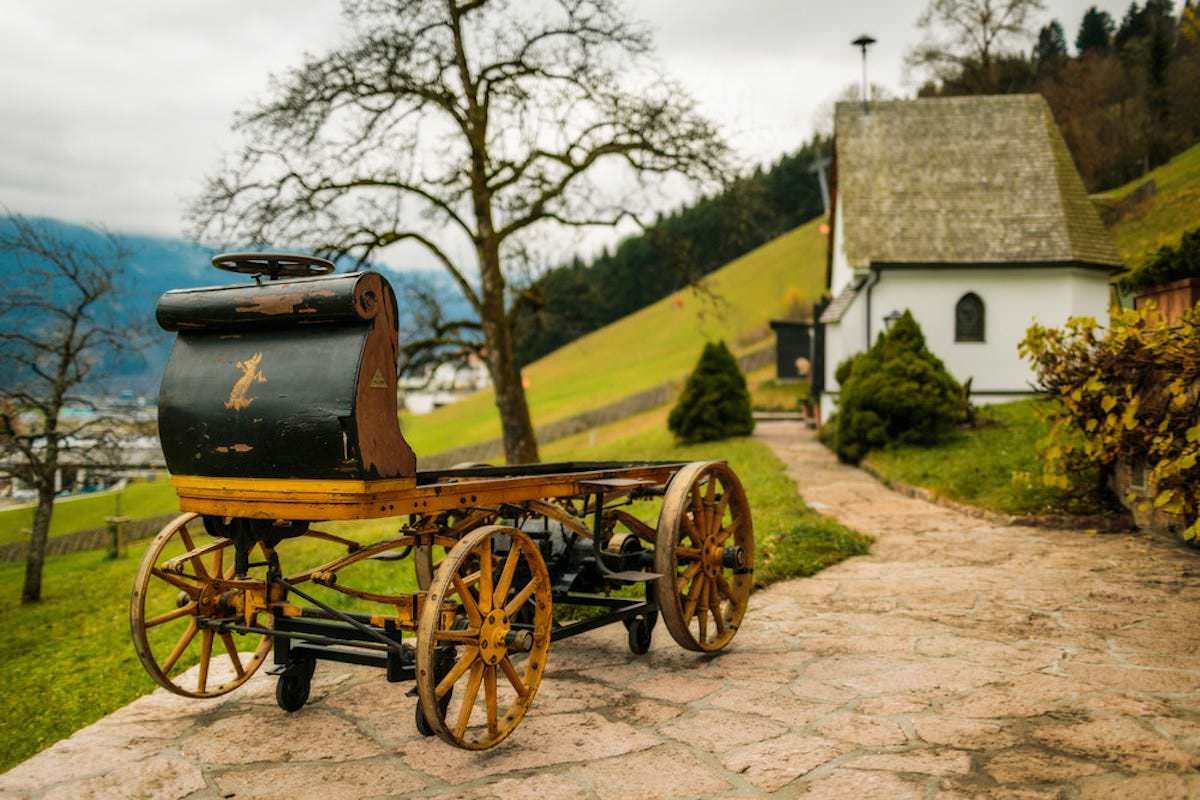
In 2014, workers sorting through an old shed in Austria made one of the most extraordinary finds in automotive history. Sitting undisturbed since 1902 was the P1 — the very first car Ferdinand Porsche ever built. It had been hidden away for over 112 years, and almost no one knew it still existed.
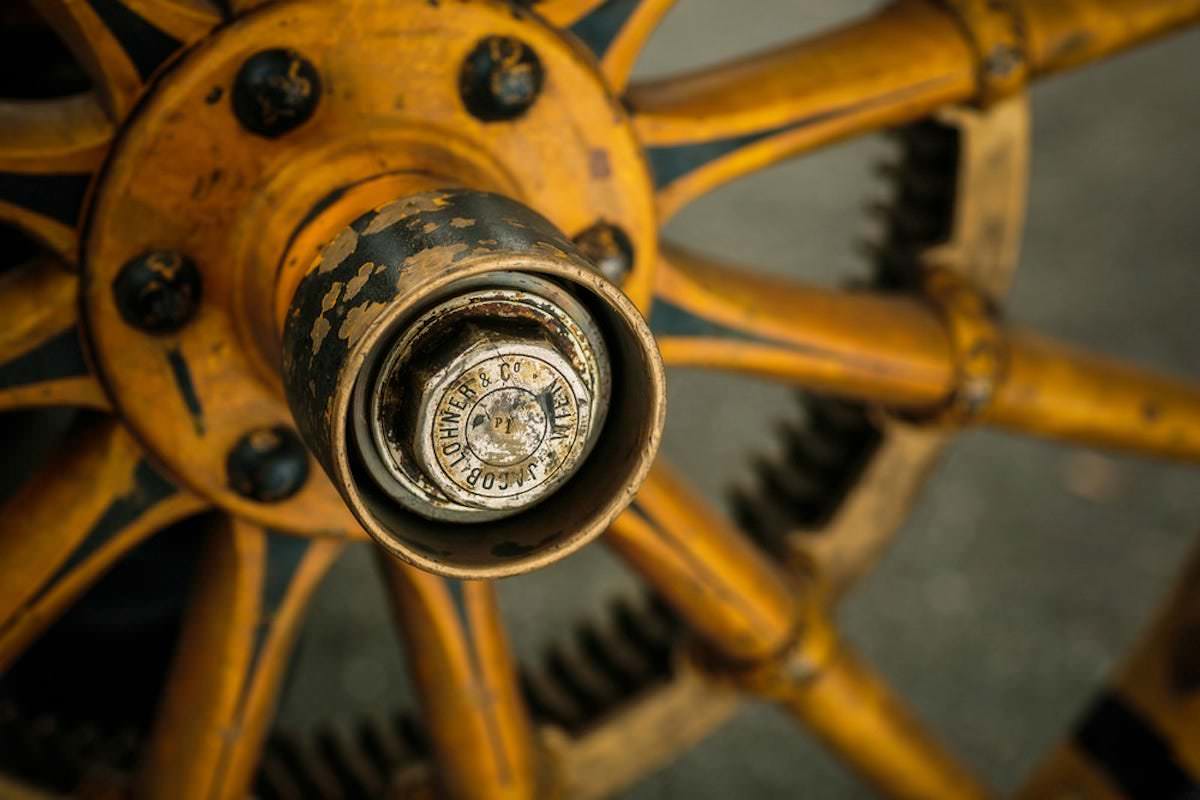
Ferdinand Porsche was born in 1875 in what is now the Czech Republic. From a young age, he was drawn to electrical engineering. By the time he turned 25, he had already done serious work in the field of electric vehicles. He took a job with Lohner & Co., a Viennese company best known for building high-end carriages. It was there that Porsche designed an electric hub motor — a motor built directly into the wheel hub — a concept that was far ahead of its time. That work gave him the foundation to build something entirely his own.
Porsche completed the P1 in 1898. The name stood for “Porsche Number 1,” and it was exactly that — his first car. He debuted it at a public street demonstration in Vienna, where it drew significant attention. At a time when most people still relied on horse-drawn carriages and early gasoline engines were loud and unreliable, the P1 rolled quietly through the streets of the Austrian capital under electric power.
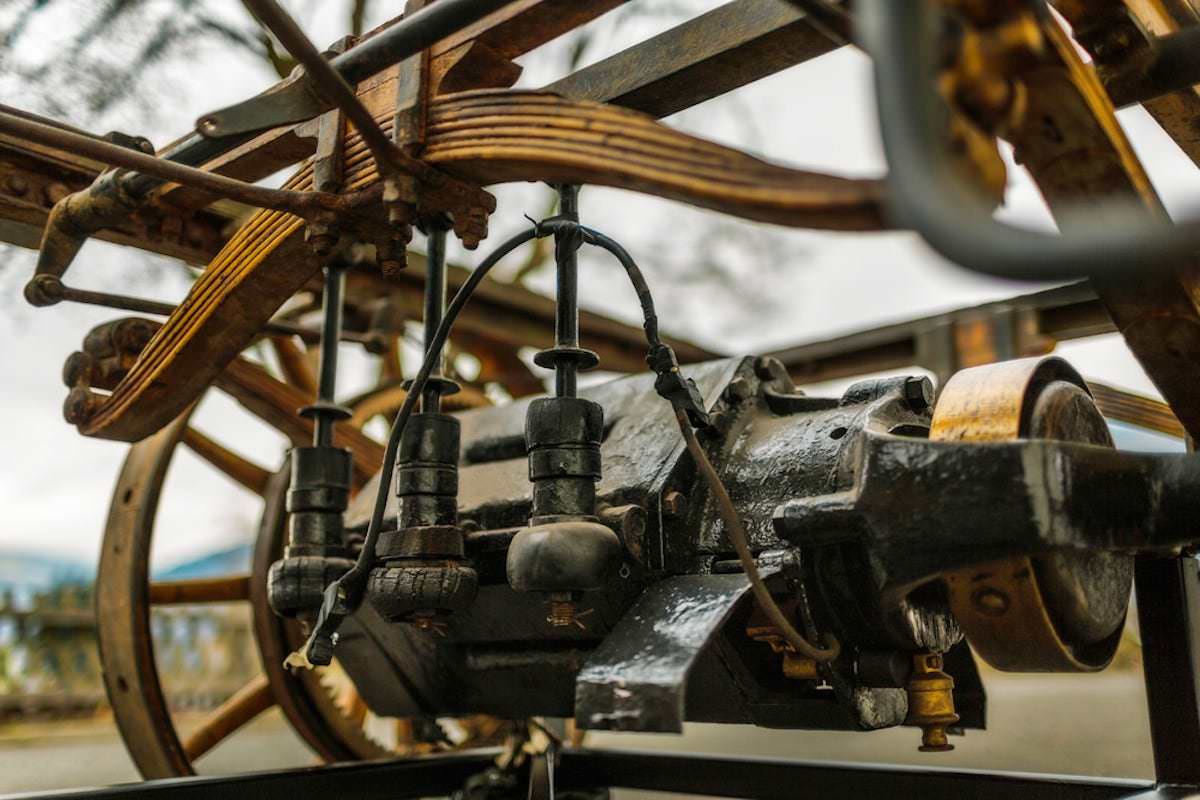
The technical details of the P1 were remarkable for 1898. The car was powered by a rear-mounted electric motor that produced 3 horsepower under normal conditions and could push out 5 horsepower when overloaded for short bursts. Its top speed was 22 miles per hour — fast enough to outrun a horse at a gallop. The battery system consisted of a 44-cell, 80-volt lead-acid setup, and on a full charge, the P1 could travel up to 50 miles. That range figure would be competitive even by early 21st-century standards for small electric vehicles.
The chassis was deliberately lightweight. Porsche understood that battery technology in the 1890s was heavy and limited, so reducing the weight of everything else was essential to getting decent range and performance. The car’s design also showed an awareness of aerodynamics — not a common concern among engineers of that era.
After its debut, the P1 was used for a few years and then simply stored. By 1902, it had been parked in a shed and left alone. The world moved on. Gasoline engines became dominant. Ferdinand Porsche went on to design other legendary vehicles. The P1 sat forgotten, gathering dust in Austria for more than a century.
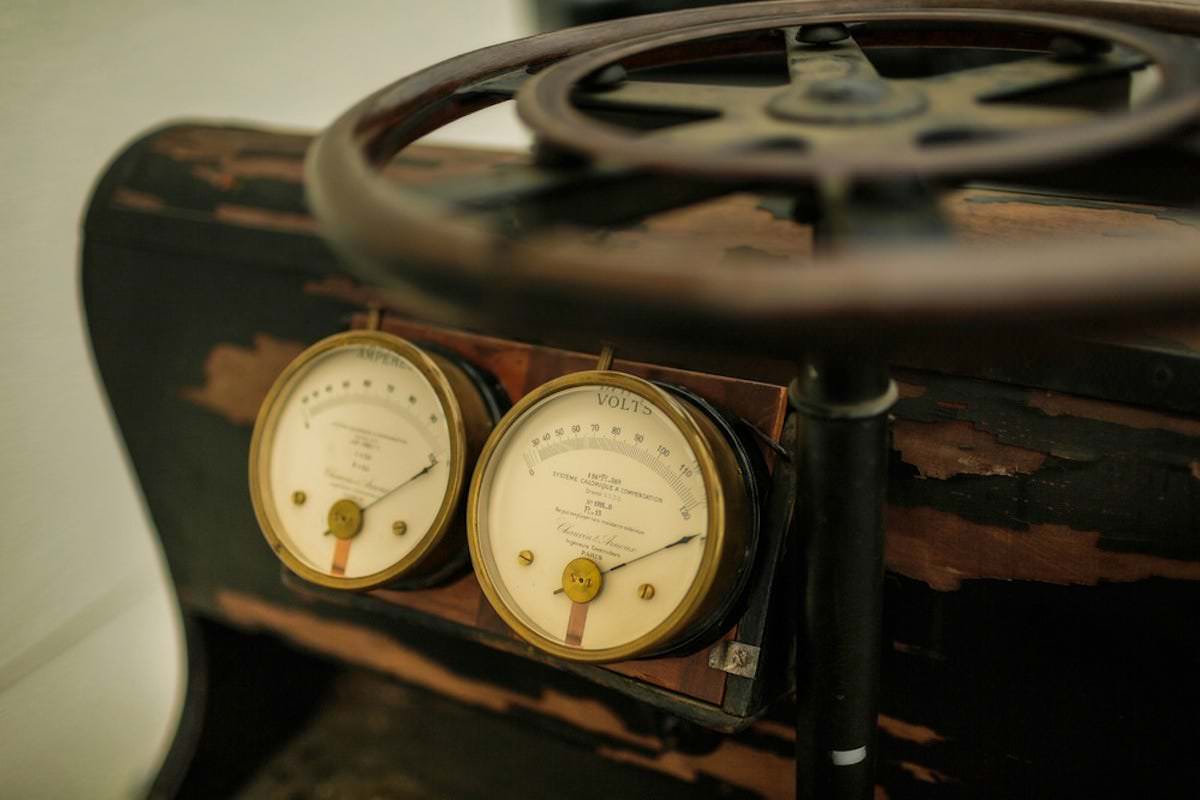
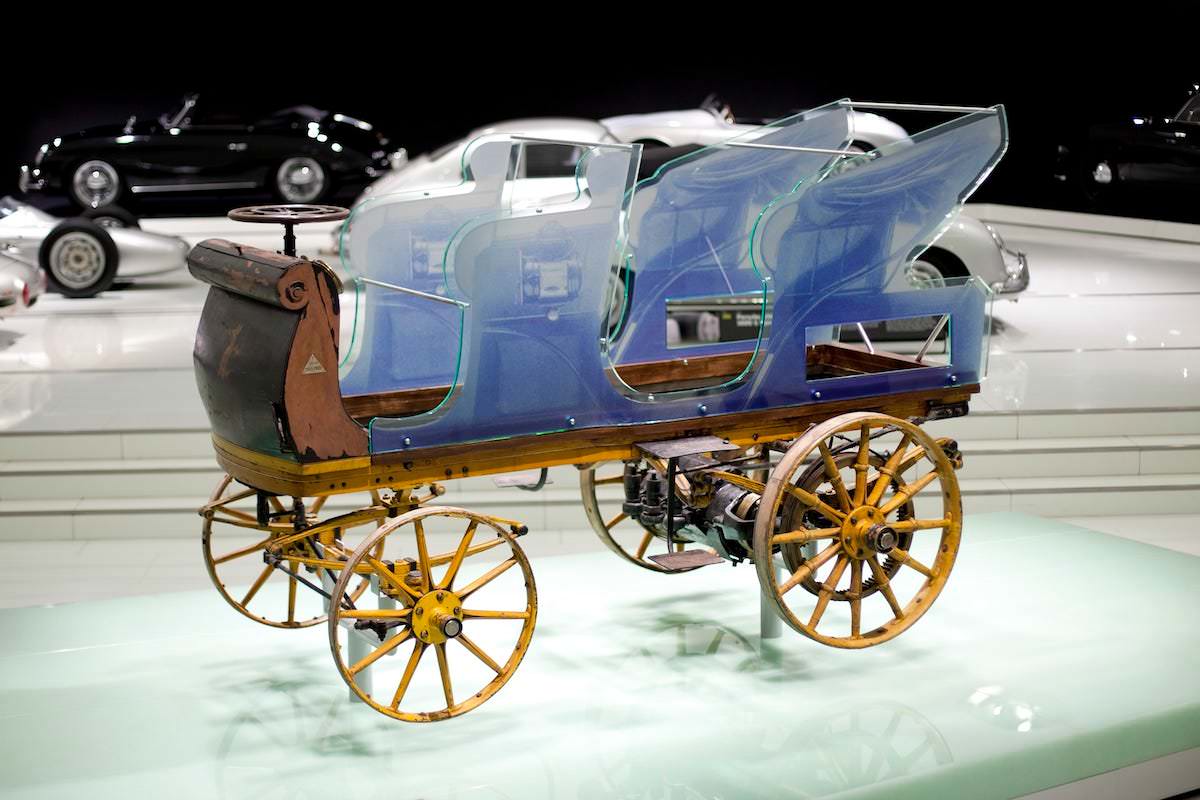
When it was finally found in 2014, the condition of the car surprised everyone. Over 112 years in storage had taken a toll, but far less than anyone expected. The electric motor was still functional. The steering wheel, dashboard, and wheels were all well-preserved. The craftsmanship Porsche had put into the vehicle in 1898 had held up through decades of neglect. What was missing were the original batteries, the seats, and parts of the bodywork — components that had either been removed or had deteriorated beyond saving.
Restoring the P1 came with a unique set of challenges. The team at the Porsche Museum in Stuttgart took on the job of preserving the car while also making it presentable for public display. Replacing missing parts with modern replicas risked undermining the vehicle’s historical authenticity. For the missing seats, the restorers chose blue translucent plastic — a deliberate choice that signals to visitors that these parts are not original, while still giving a clear sense of how the car would have looked when Porsche first drove it through Vienna.
Today, the P1 holds a place of honor at the Porsche Museum in Stuttgart, Germany. Visitors can stand next to the car that started it all — a quiet, electric vehicle built by a 23-year-old engineer in the final years of the 19th century, rediscovered by accident more than a hundred years later, and now preserved as one of the most important artifacts in the history of the automobile.

First Porsche was electric. It turns out all the ICE engine cars aren’t the “real” Porsches.
Porsche finally getting back to its roots!
Has the deviated wood-paneling too, really nice spec
Whoa way ahead of the game. That’s exactly the conclusions I would have come up with
Great to see that it stands in the Porsche museum. I hope to make my way there someday to see this centerpiece of the collection
Okay…that’s really fucking cool! And I love how they choose to replicate the missing pieces – preserving all of the remaining original elements, including the imagination involved in its creation.
Nice, the first electric Porsche.
Saw this in Stuttgart last year, it’s very cool (at least, what’s left of it).
While it’s cool that this car exists, that article couldn’t possibly be more “AI wrote this.”
But it was amusing to hear that an 1898 car with 3hp and a top speed of 21mph boasted “a keen understanding of aerodynamics.”