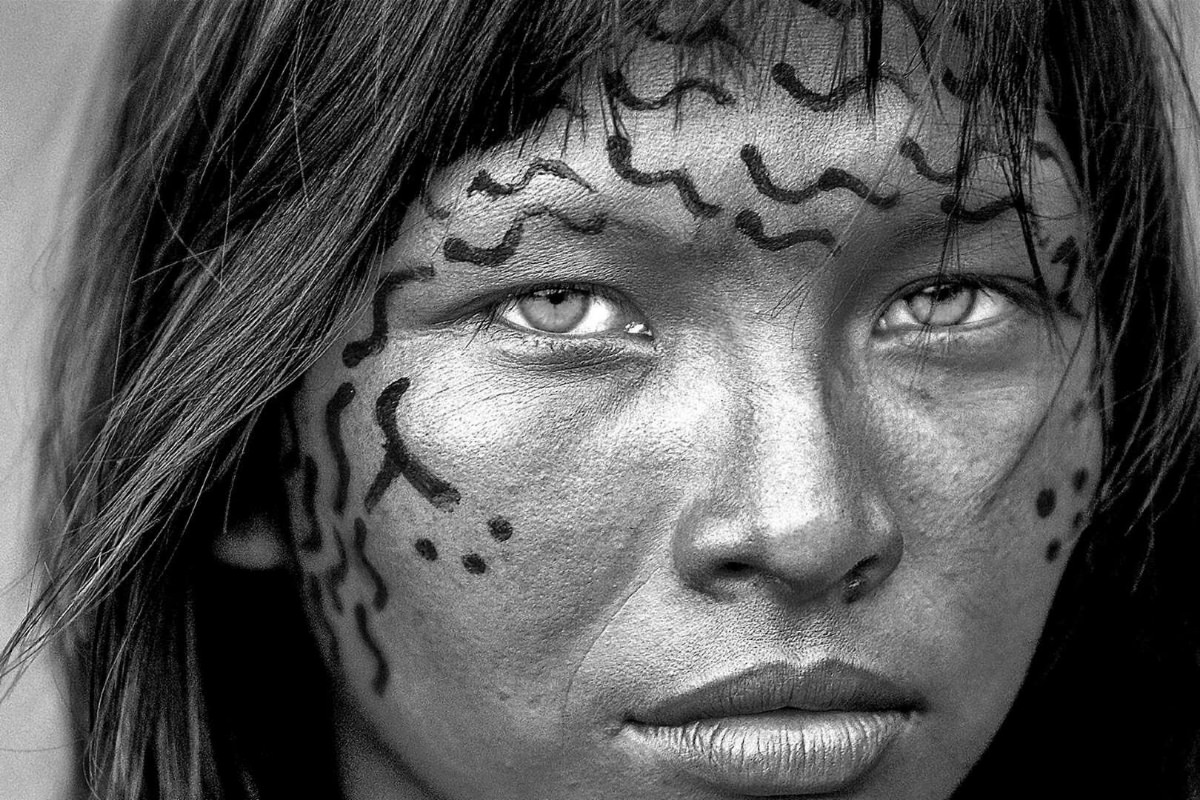
In 1997, photographer Richard Stuckert trained his lens on a 22-year-old woman named Penha Goez, a member of the Yanomami tribe living deep within the Amazon Rainforest. The resulting portraits are more than photographs — they are precise, unfiltered records of a person and a people at a defining moment in history. Penha Goez was not a symbol or a subject chosen at random. She was a young woman living the full, complex life of her community, and Stuckert’s images make that clear.
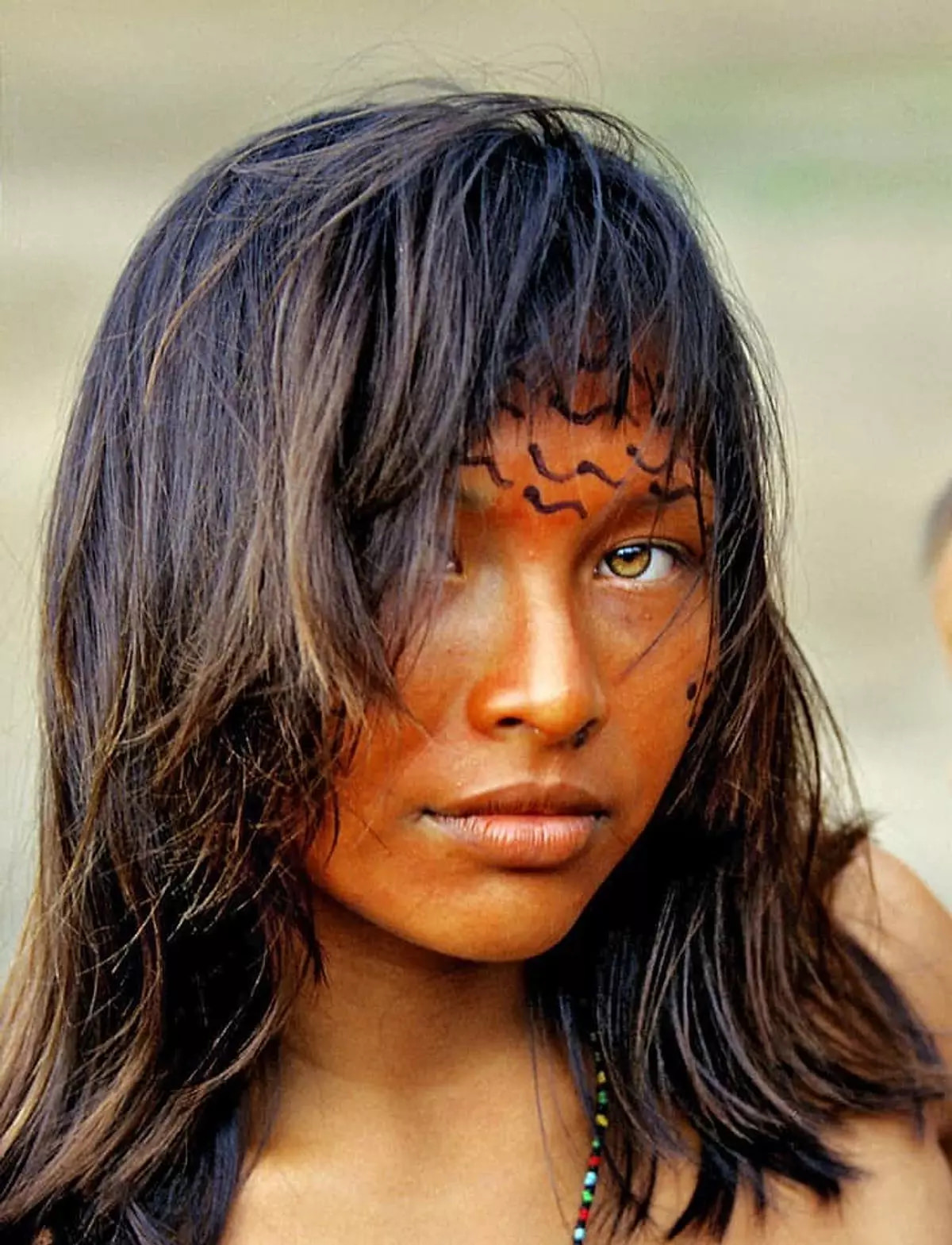
The Yanomami are one of the largest indigenous groups in the Amazon, with around 35,000 members spread across approximately 250 villages. Their territory straddles the border between Brazil and Venezuela, covering a vast stretch of dense rainforest that has been their home for centuries. Life in these villages is organized around strong social bonds and a set of practices that have sustained the community for generations — subsistence farming, hunting, fishing, and the gathering of forest resources. Each of these activities is woven into a daily rhythm shaped entirely by the land around them.
The Yanomami hold a deep spiritual relationship with the natural world. Their rituals and belief systems are not separate from their environment — they grow directly out of it. Shamans play a central role in Yanomami spiritual life, communicating with forest spirits known as xapiri to protect the health and well-being of their communities. These ceremonies are not occasional events but an ongoing part of life, connecting the living to the land, the forest, and the forces they believe move through both. Penha Goez, at 22, lived within this world fully. As a young adult woman in a Yanomami village, her days would have involved food preparation, craft work, child-rearing duties, and participation in the social life of her community. Yanomami villages are built around a large communal structure called a shabono — a circular, open-air building where families live, work, and gather together. The shabono is the center of village life, and nearly every daily activity takes place either within it or in close relation to it.
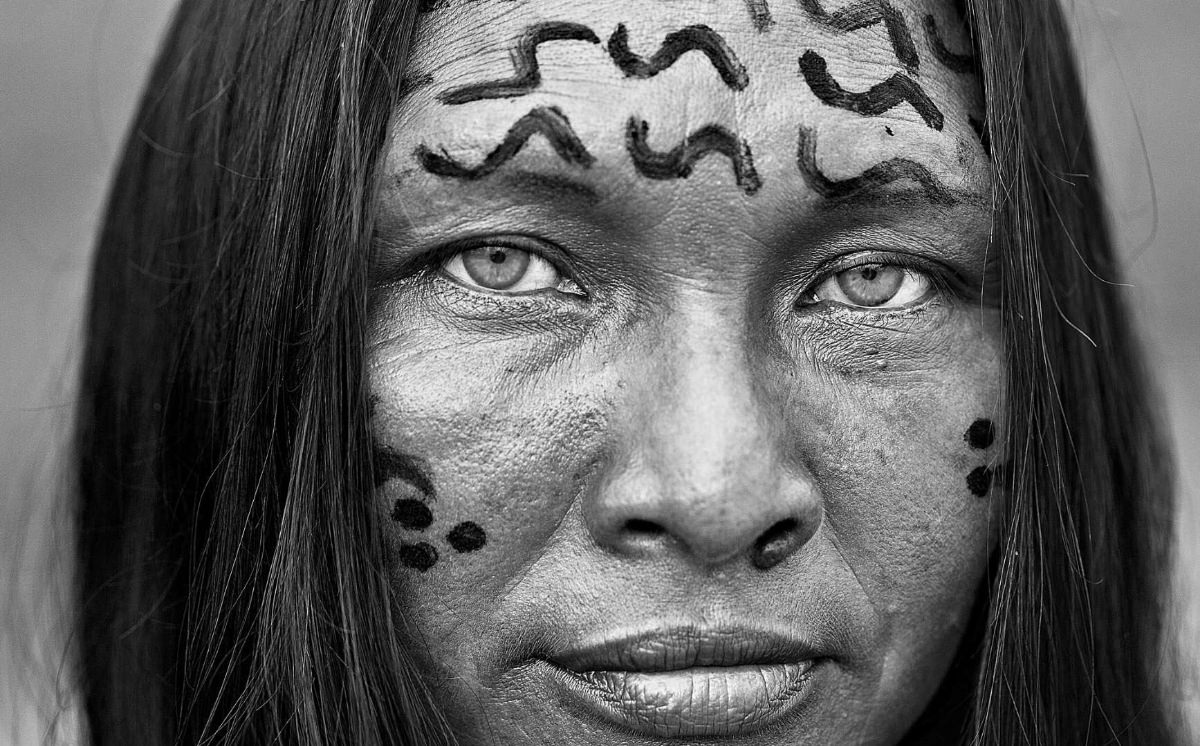
By the time Stuckert photographed Penha Goez in 1997, the Yanomami had already endured decades of devastating contact with the outside world. Gold miners — known in Brazil as garimpeiros — had been pushing into Yanomami territory since the 1980s, bringing with them disease, violence, and the destruction of rivers and forest land. A malaria epidemic tied directly to illegal mining killed hundreds of Yanomami between 1987 and 1990. The Brazilian government officially demarcated Yanomami land in 1992, but enforcement remained inconsistent, and illegal incursions continued. Deforestation pressures were also mounting across the broader Amazon basin throughout the 1990s. International environmental organizations were drawing attention to the rate at which rainforest was being cleared for cattle ranching, agriculture, and logging. The plight of indigenous communities like the Yanomami became part of that larger conversation, though often in ways that stripped individuals of their specificity, reducing entire peoples to abstractions in a political debate. Stuckert’s portraits of Penha Goez cut against that tendency. Her face, her posture, her presence in the frame — these details anchor the viewer to a specific person rather than a generalized cause. The photographs document not just her features but the visual language of her community: body paint, ornamentation, and the physical setting of village life all appear as context that gives her portrait meaning. These are not staged or romanticized images. They are records taken in the moment, with the directness that defined Stuckert’s documentary work. The year 1997 placed these portraits in a period when global awareness of the Amazon was high, but actual conditions for many of its indigenous inhabitants remained under severe pressure. Mining, land conflicts, and the slow erosion of traditional territories continued despite international attention. For the Yanomami, the 1990s were a decade of both legal recognition and persistent threat — a contradiction that defined the experience of many indigenous groups across South America during that era. What Stuckert captured in Penha Goez was the face of someone living through that contradiction without the distance that outsiders often brought to it. She was 22 years old, living in one of the most biodiverse places on earth, in a community with its own history, politics, and internal life. The portraits hold all of that, without explanation or editorializing — just the clear, precise record of a person and her world.