The bicycle did not appear overnight. It took more than a century of tinkering, failed prototypes, and bold experiments before the machine we recognize today came together. The story begins in 1817, when German baron Karl von Drais unveiled what he called the Draisine — a wooden, two-wheeled frame with a padded seat and a basic steering bar. There were no pedals. Riders straddled the frame and pushed themselves forward with their feet, gliding along like an oversized scooter. It caught on fast, especially among the wealthy, and set off a wave of invention that would not slow down for decades.
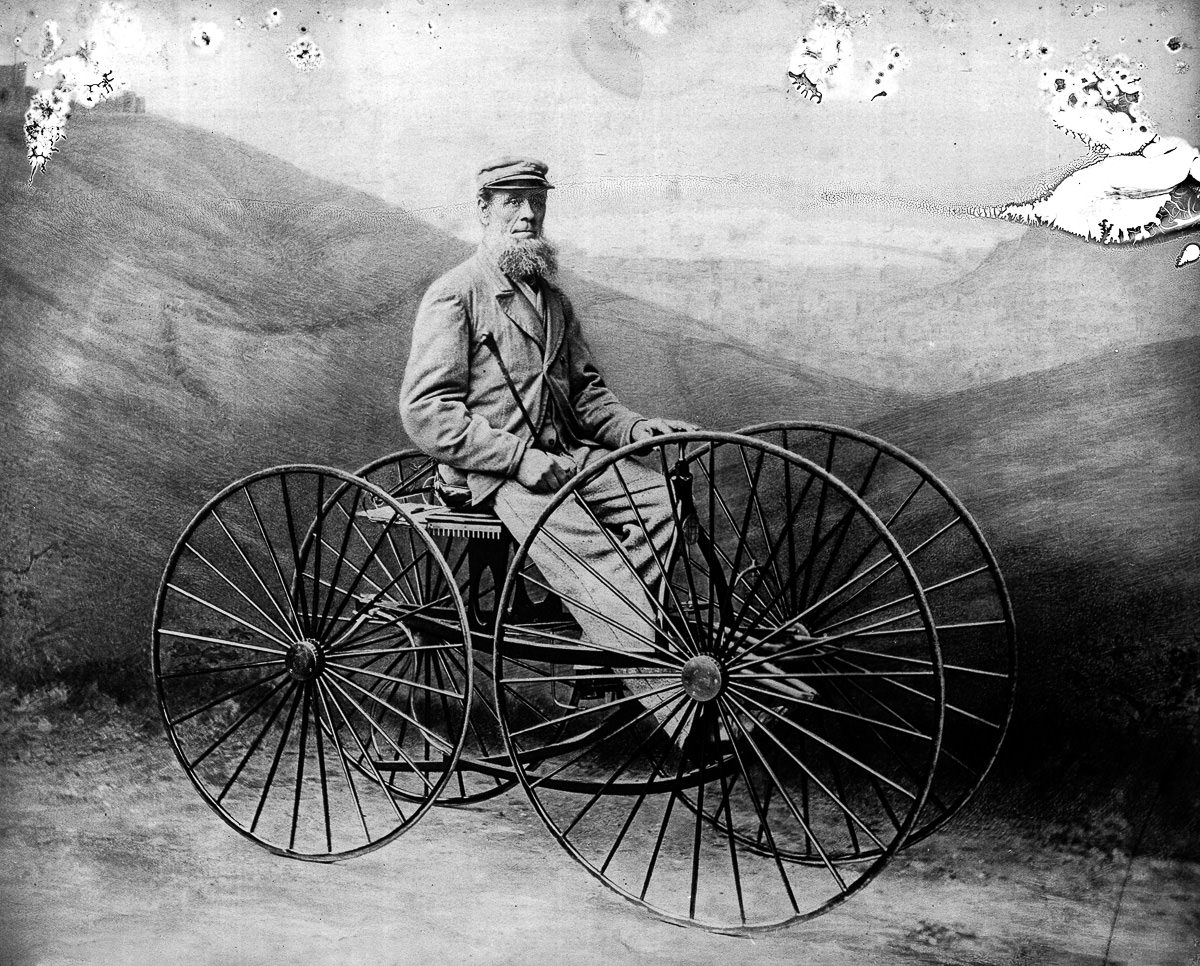
By the 1860s, French carriage makers Pierre and Ernest Michaux had attached pedals directly to the front wheel of the Draisine, producing what became known as the Velocipede. On smooth surfaces it worked well enough, but on cobblestone streets the jarring ride earned it a blunter nickname: the Boneshaker. Despite the discomfort, it was a genuine leap forward. Riders could now travel faster and farther without touching the ground, and organized races began appearing across Europe. Cycling clubs formed, and the sport took on a social life of its own.
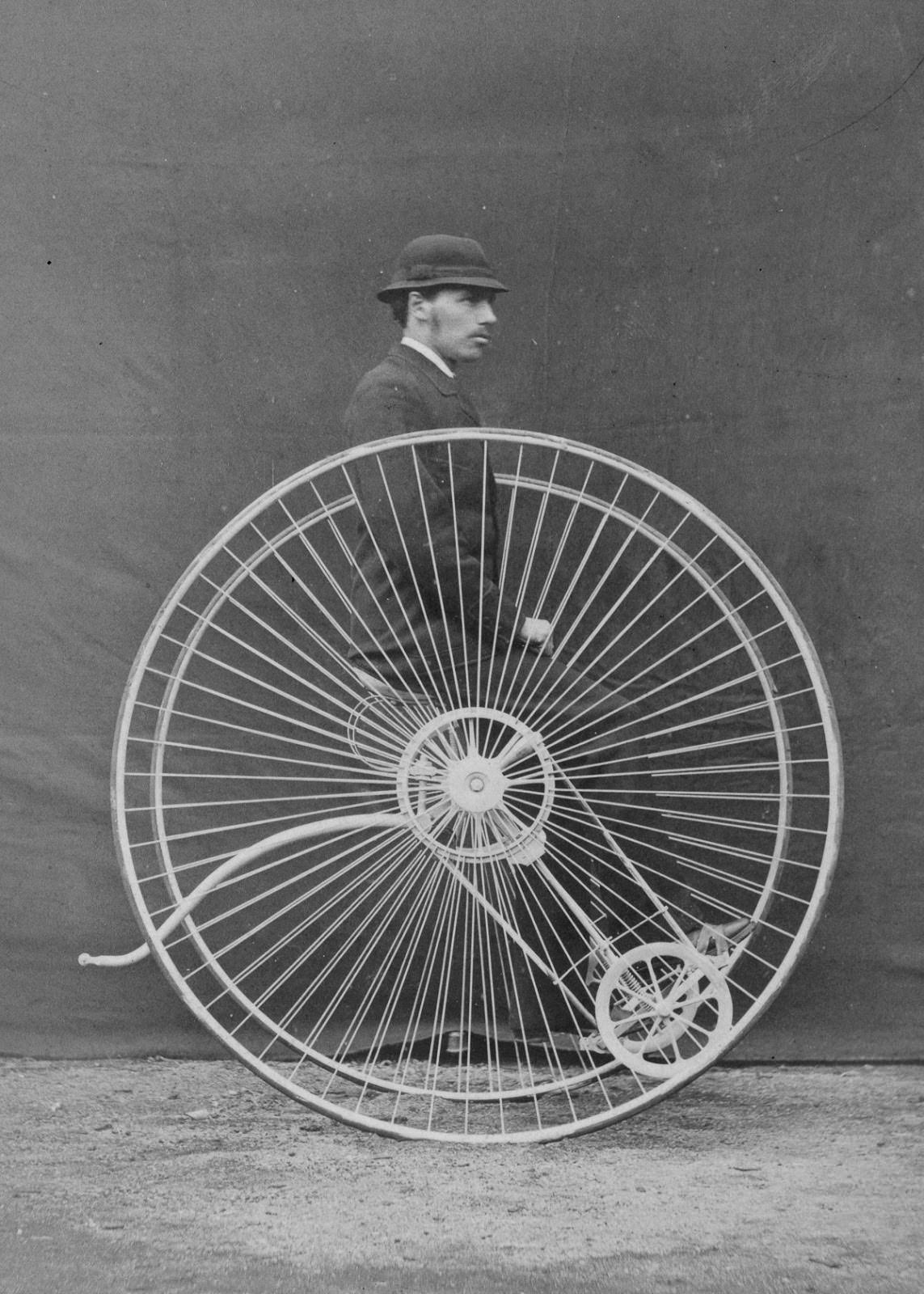
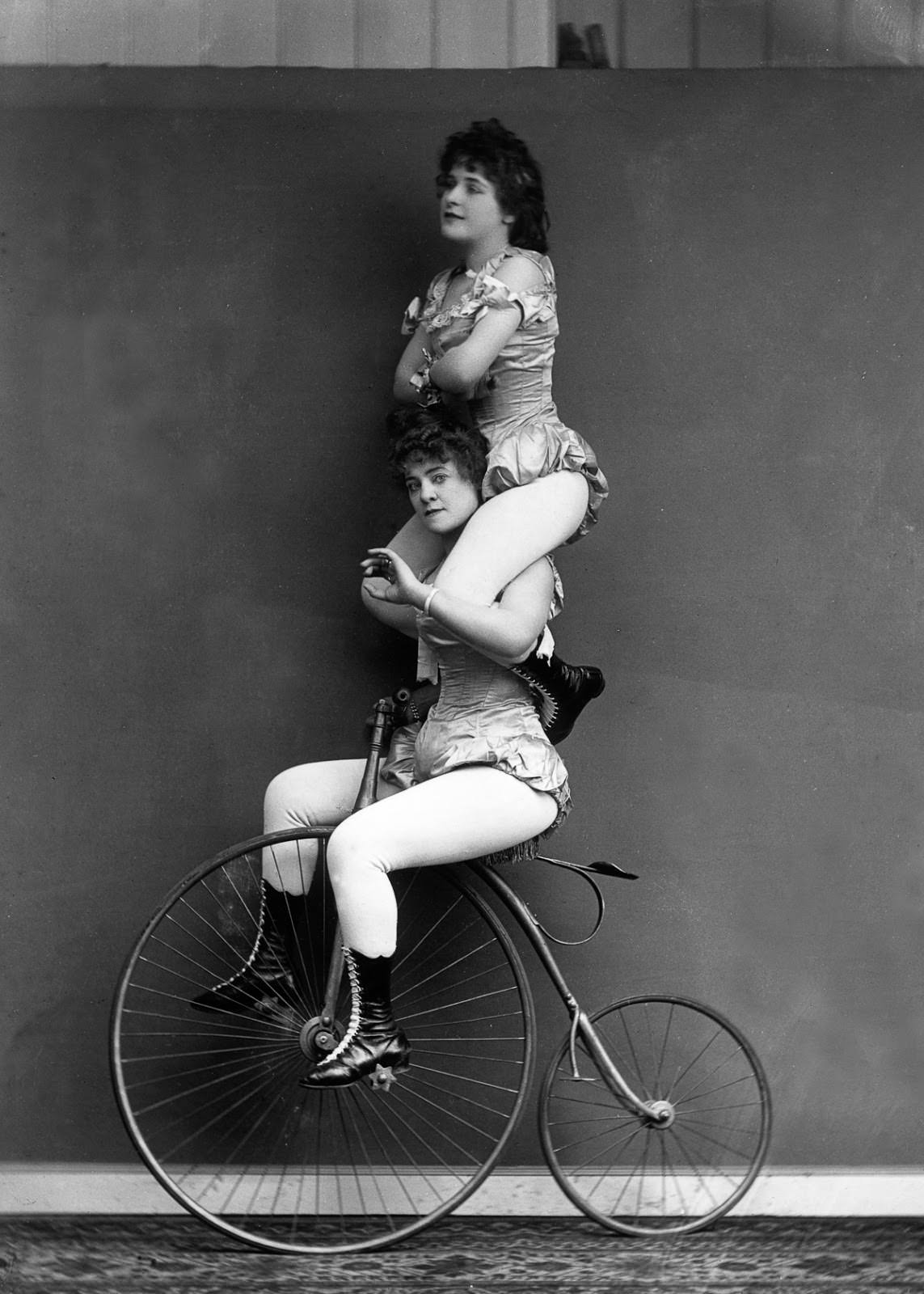
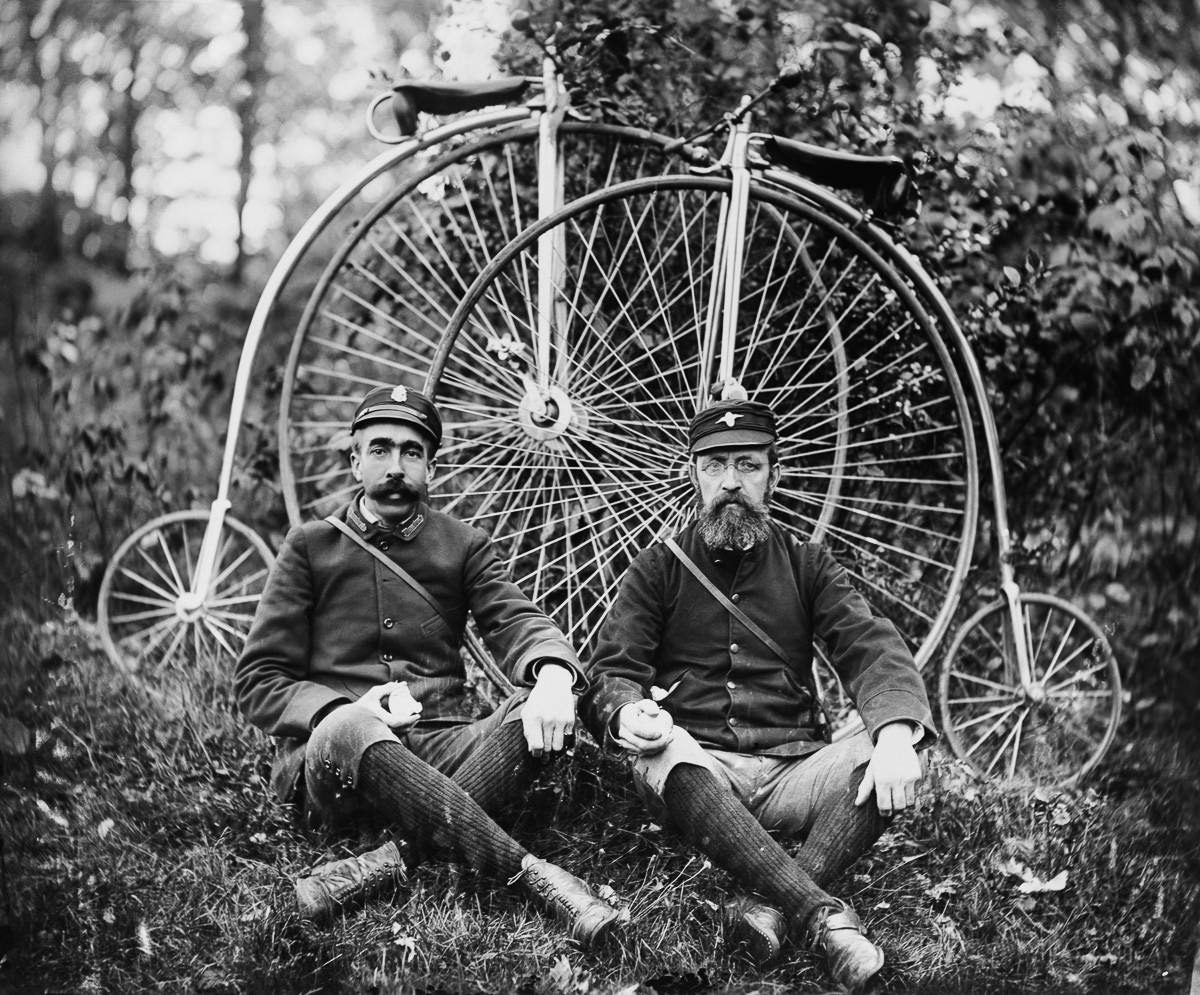
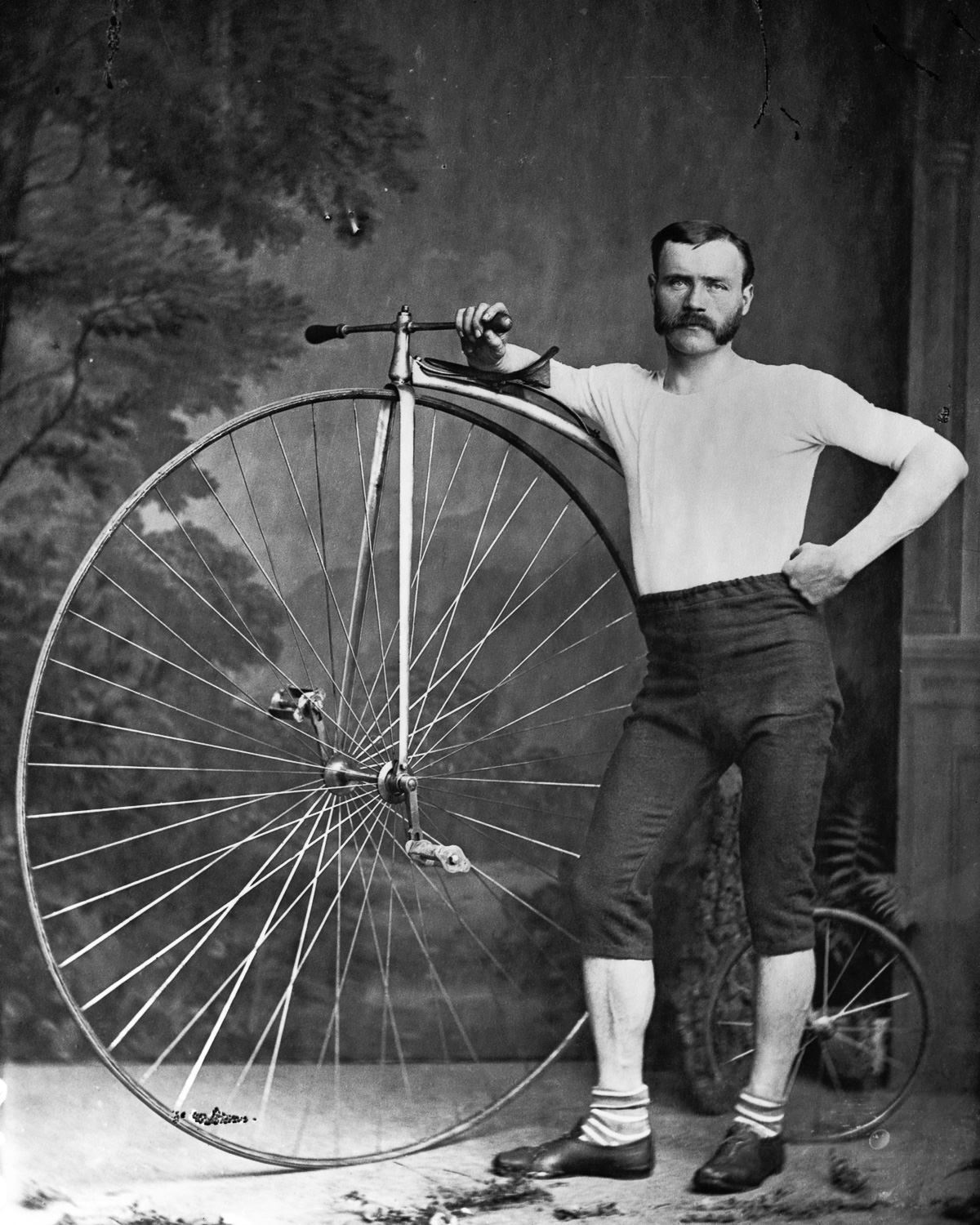
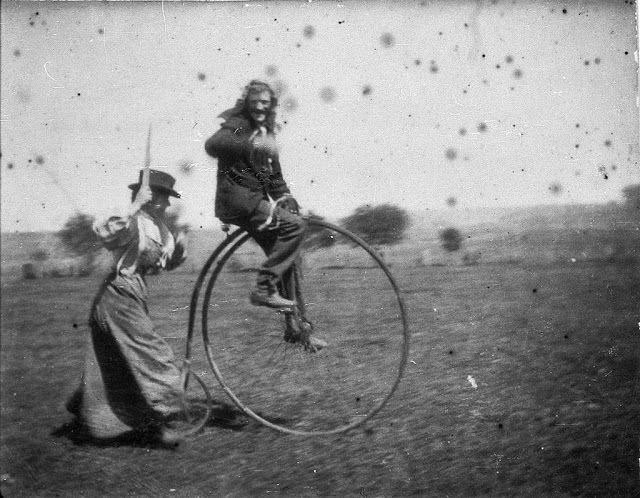
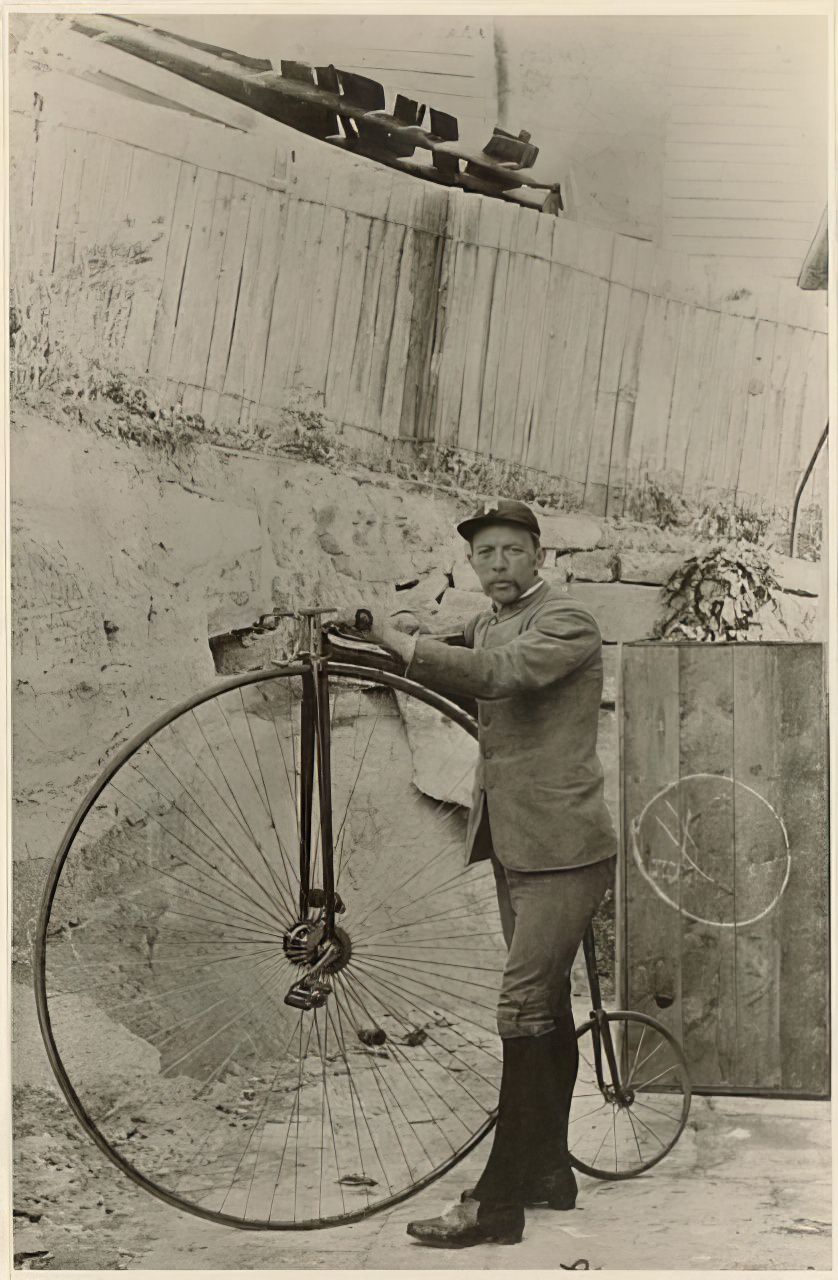
The 1870s brought the Penny-farthing, one of the most recognizable — and dangerous — machines in cycling history. Its front wheel could stand as tall as five feet, while a tiny wheel at the rear barely touched the ground. The design worked because a larger wheel covers more ground with every rotation, meaning higher speeds with the same pedaling effort. But mounting one required real athleticism, and a sudden stop often sent the rider flying headfirst over the handlebars. That didn’t stop crowds from gathering to watch skilled riders perform feats of balance and nerve.
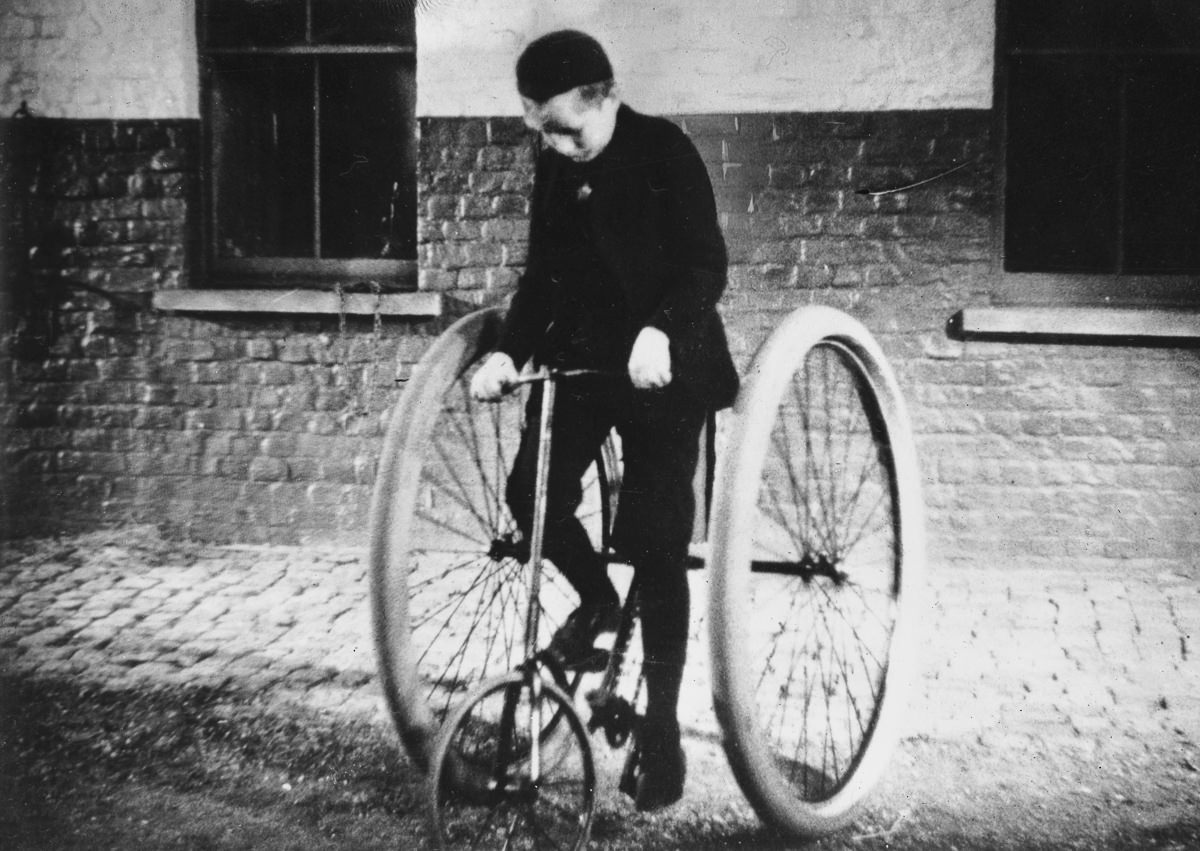
In 1888, Irish veterinarian John Boyd Dunlop developed inflatable rubber tires to spare his son’s tricycle rides on rough roads. The invention transformed cycling. Pneumatic tires absorbed shocks that solid wheels could not, dramatically improving comfort and control. Around the same time, competitive cycling was growing into a serious international sport. In 1889, Berlin hosted the first world cycling championship, drawing elite riders and massive public attention.
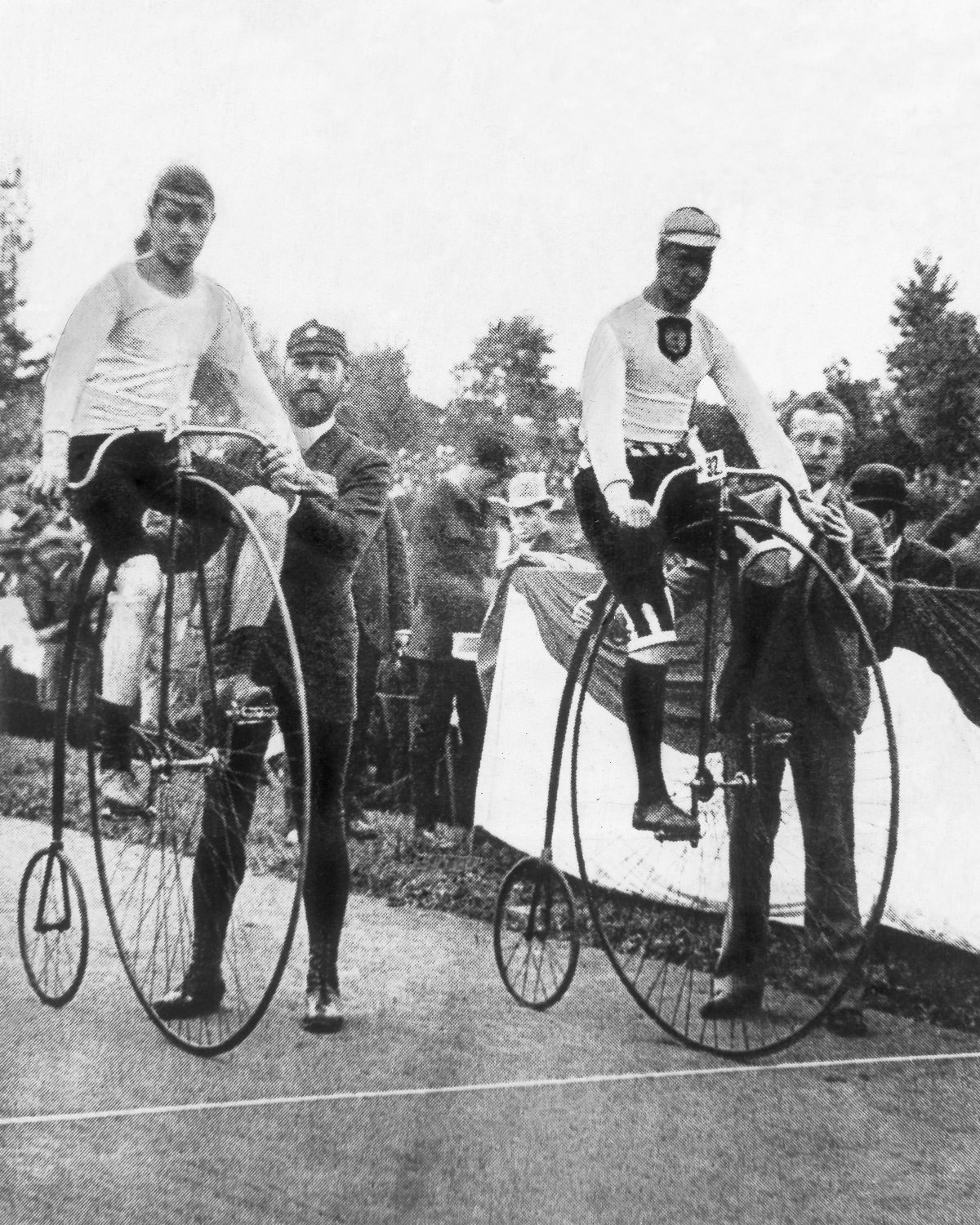
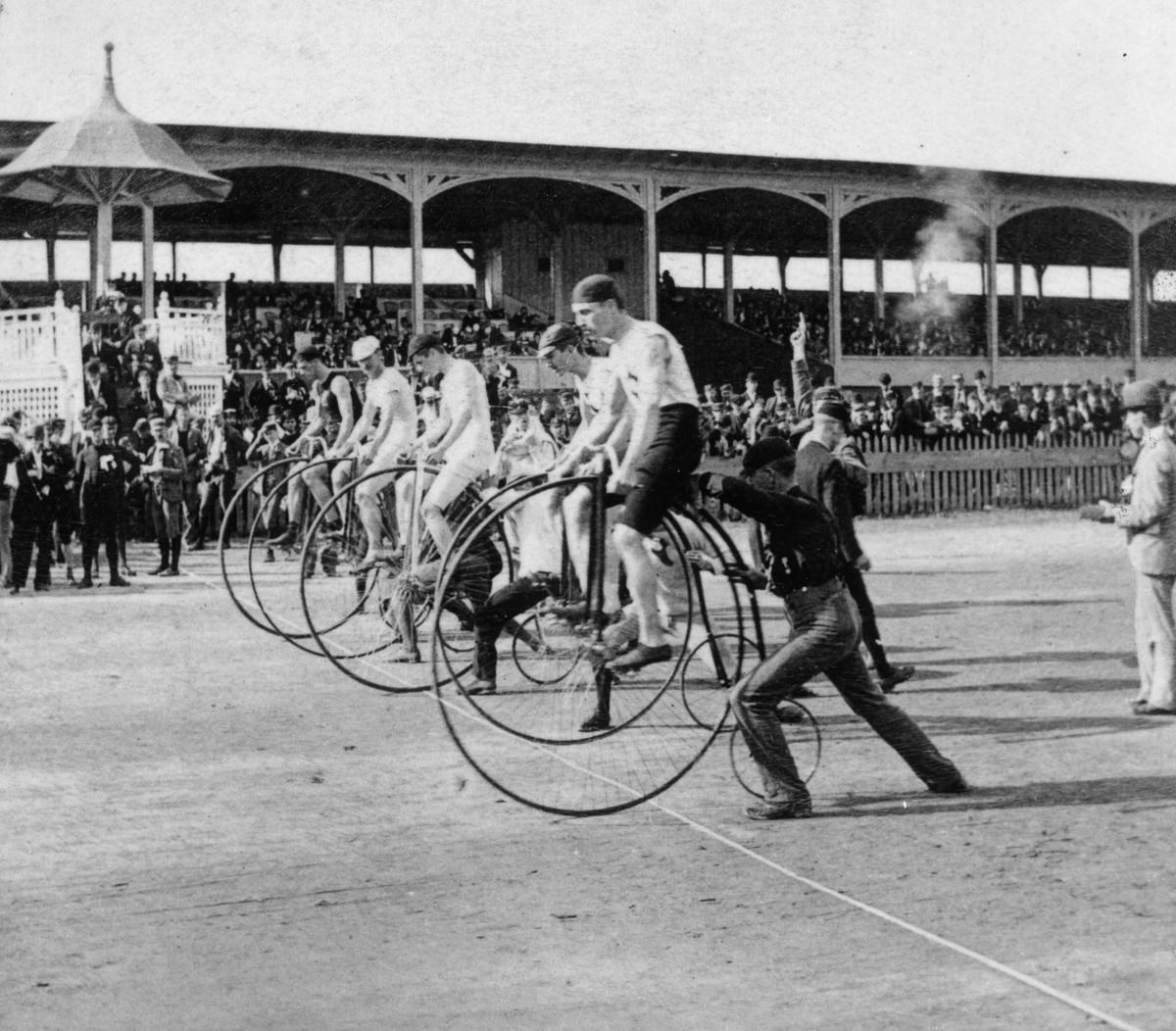
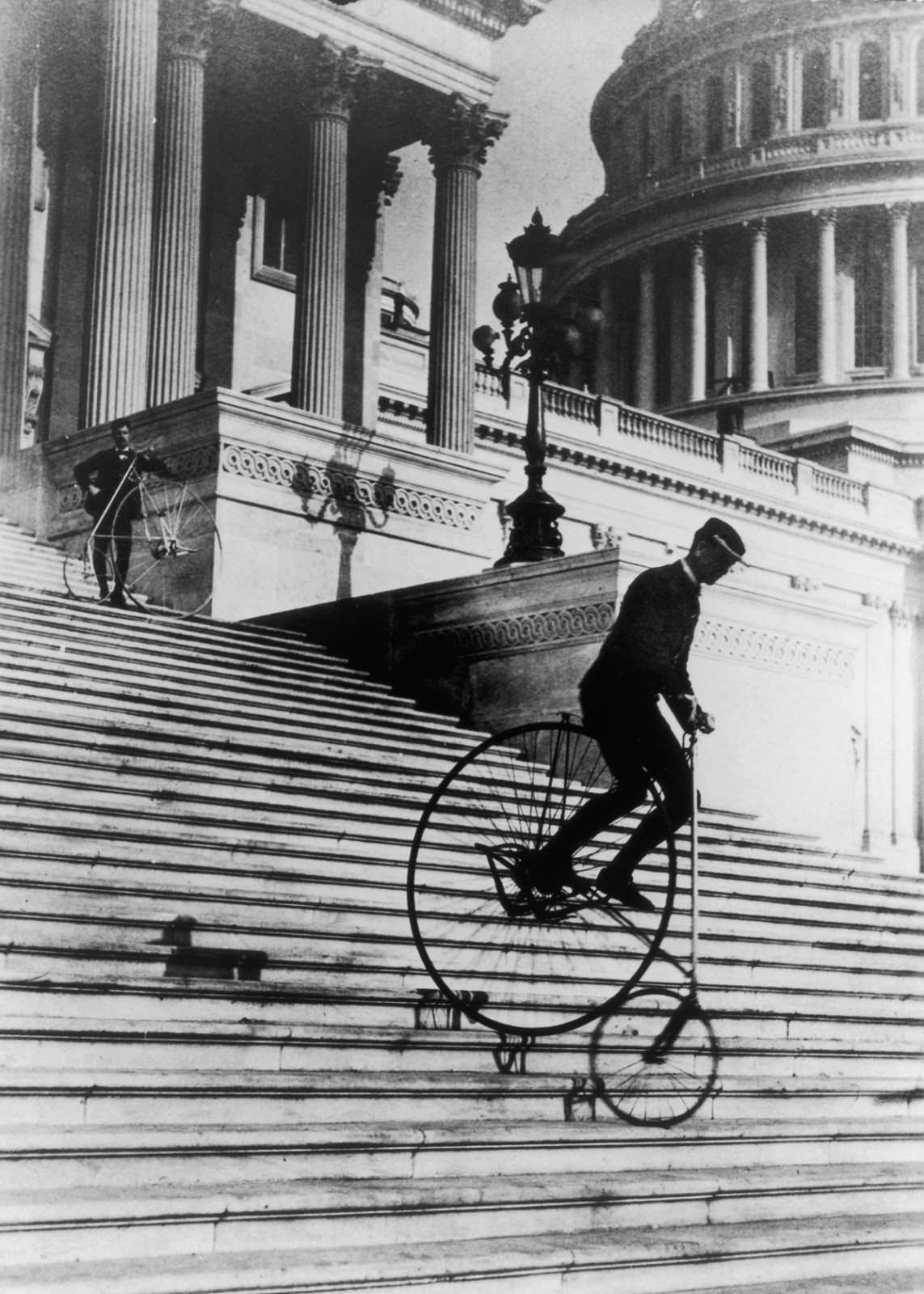
The Penny-farthing remained a fixture in racing and public spectacle well into the 1890s. In New York, riders lined up to race them competitively, while in Washington D.C., a group of men famously rode them down the steps of the United States Capitol building. Victorian-era cyclists pushed the machine to its limits, performing elaborate balancing acts and stunts for crowds that came specifically to watch.
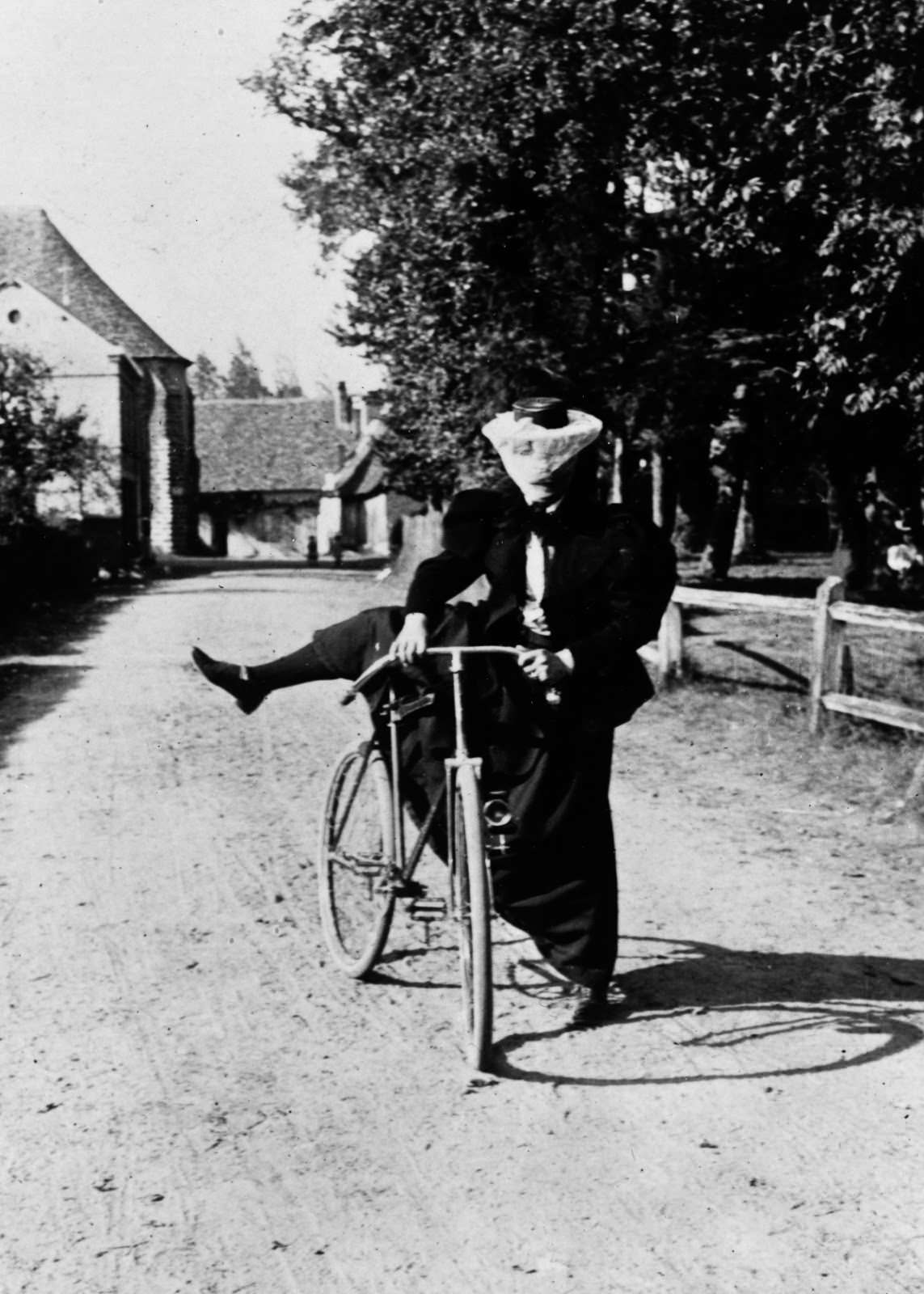
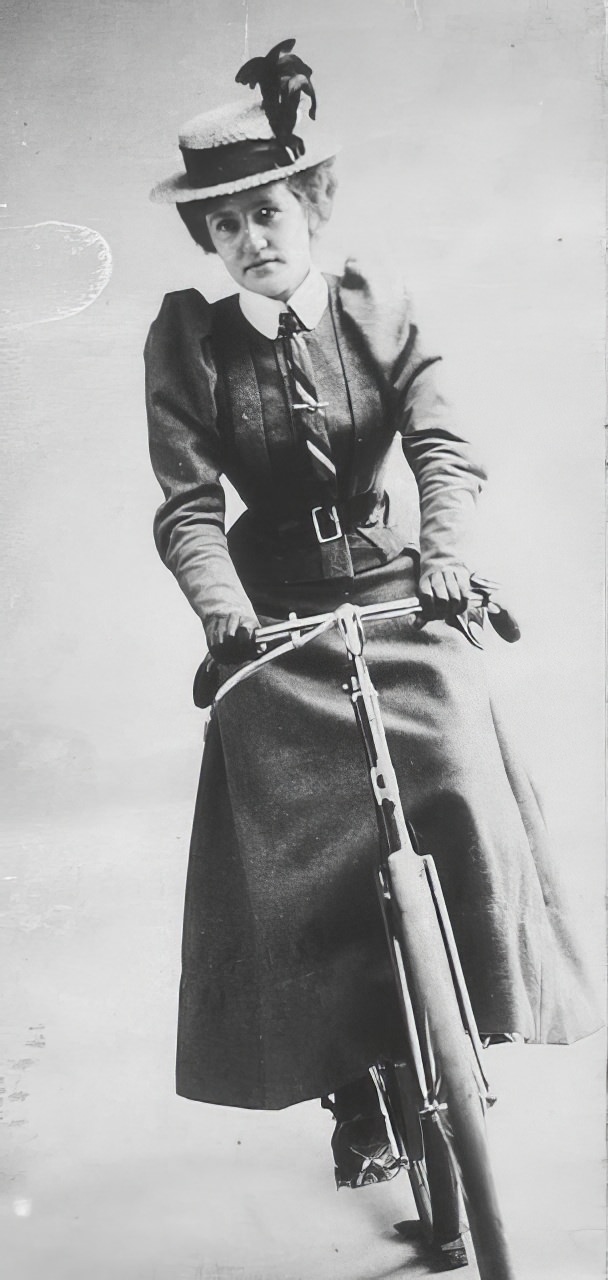
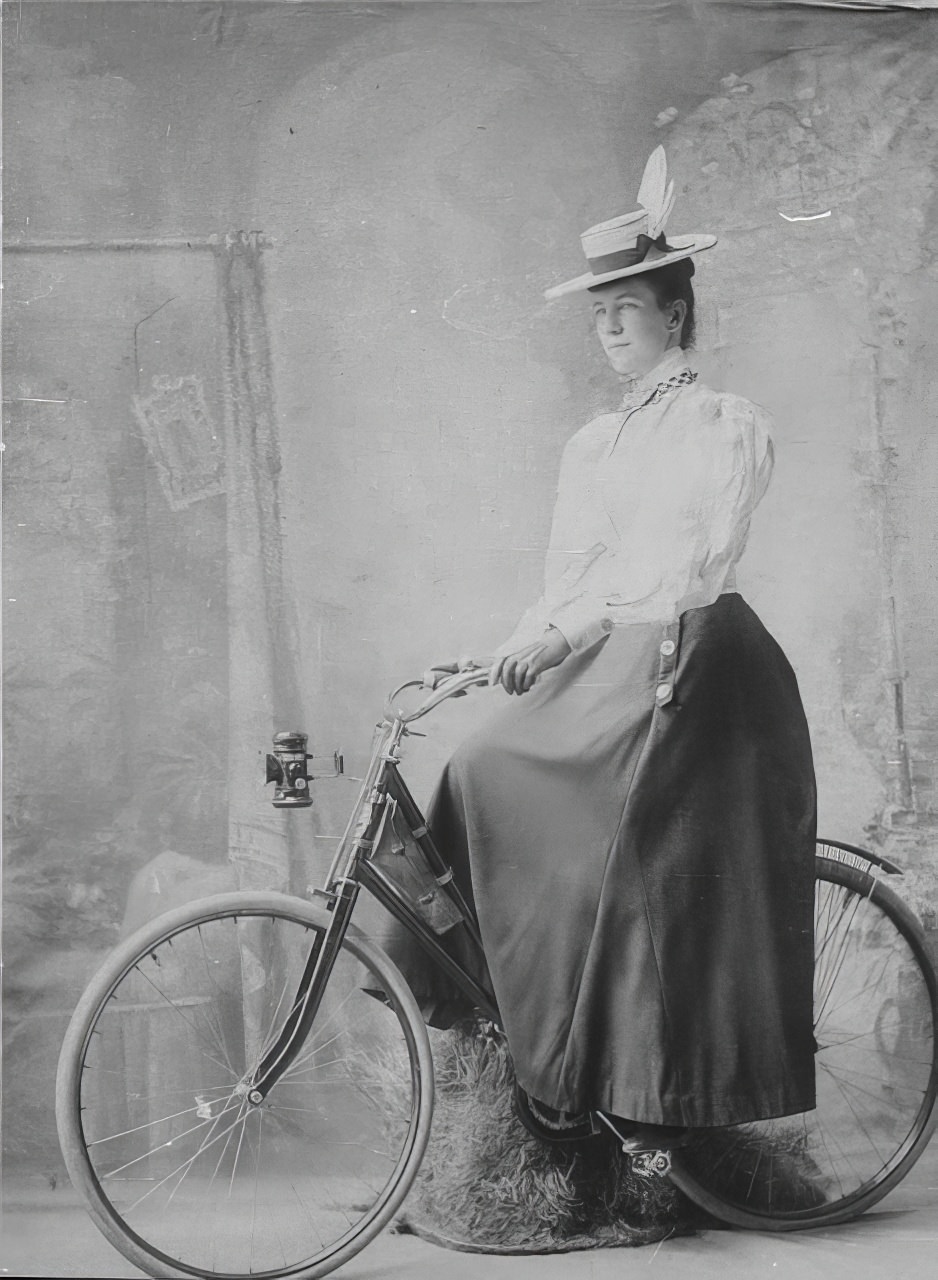
The Safety Bicycle, which arrived in the 1880s, changed everything. It featured two wheels of equal size, a chain connecting the pedals to the rear wheel, and a diamond-shaped frame. The result was a stable, manageable, and affordable machine that almost anyone could ride. Women, who had largely been shut out of cycling by the physical demands of the Penny-farthing, took to the Safety Bicycle in large numbers. The lower frame and balanced design made riding practical without requiring athletic training, and female cyclists became a common and celebrated sight.
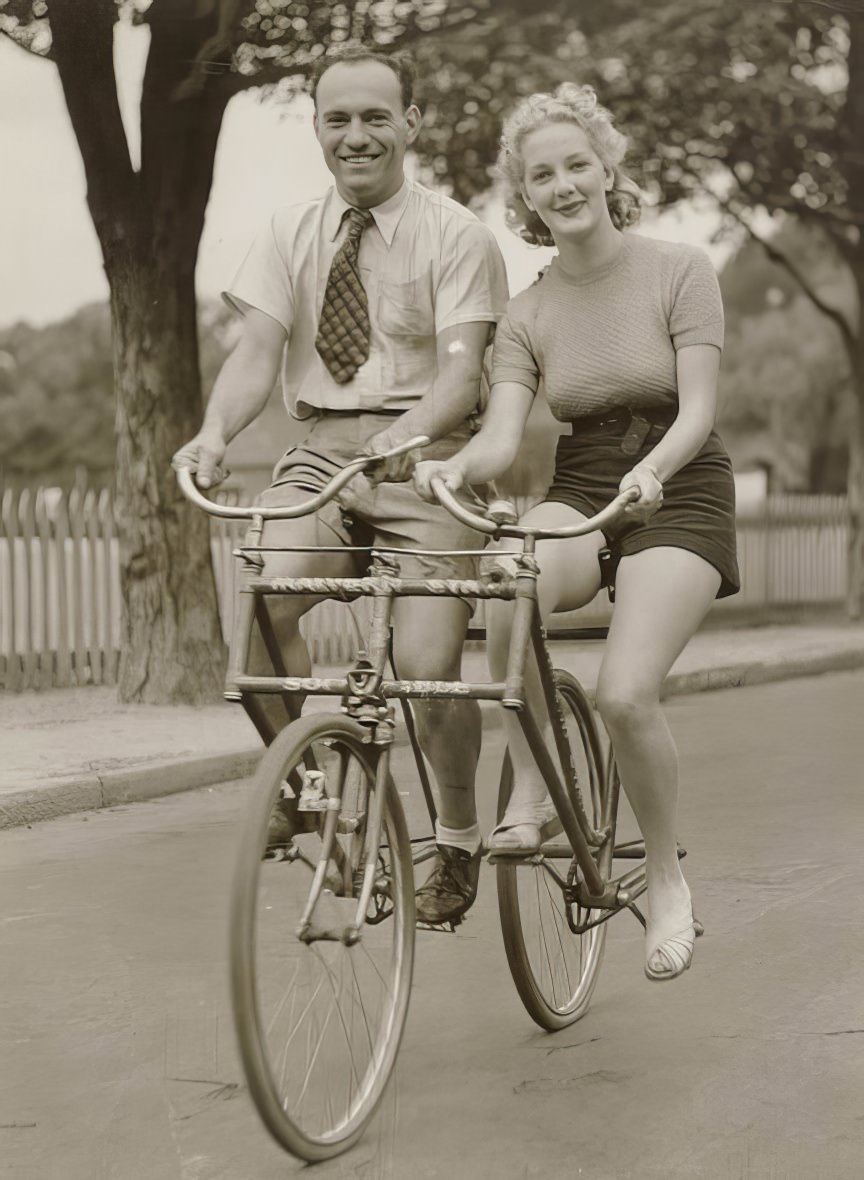
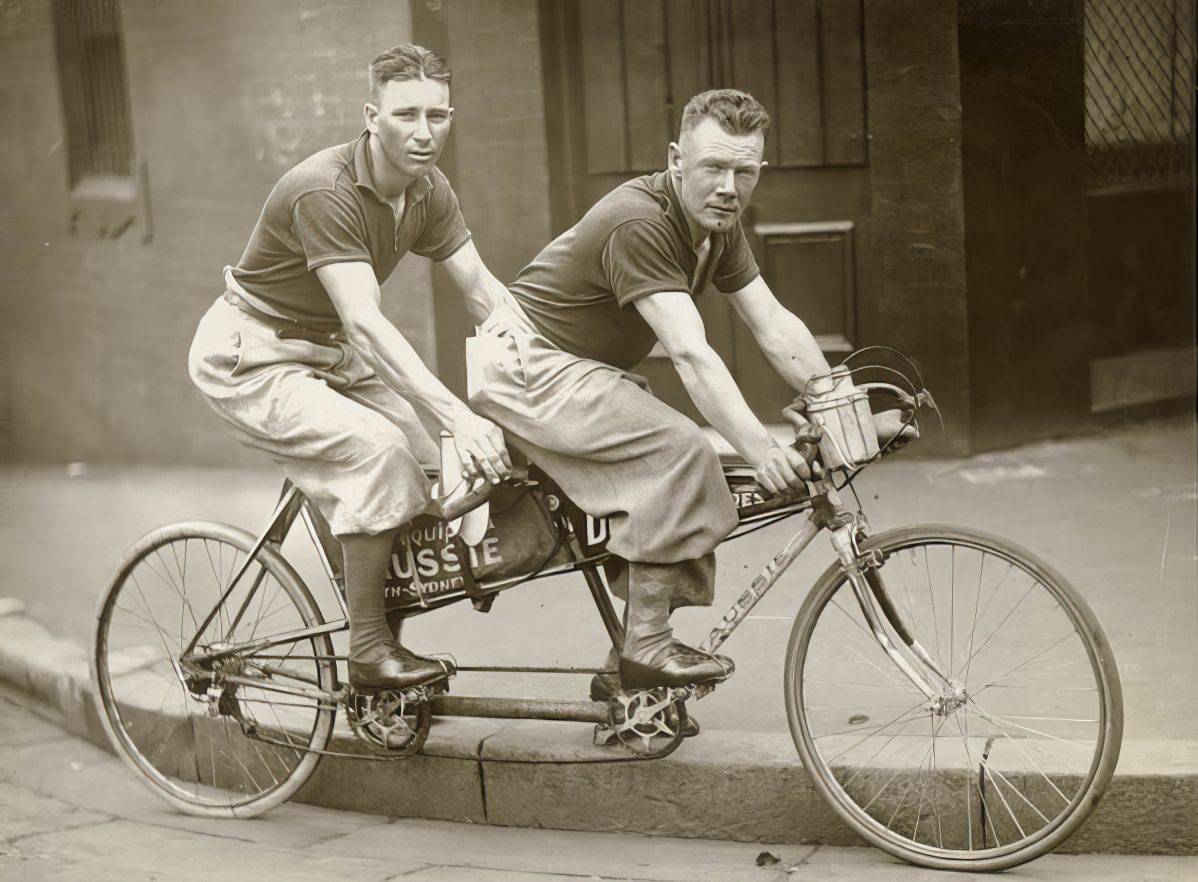
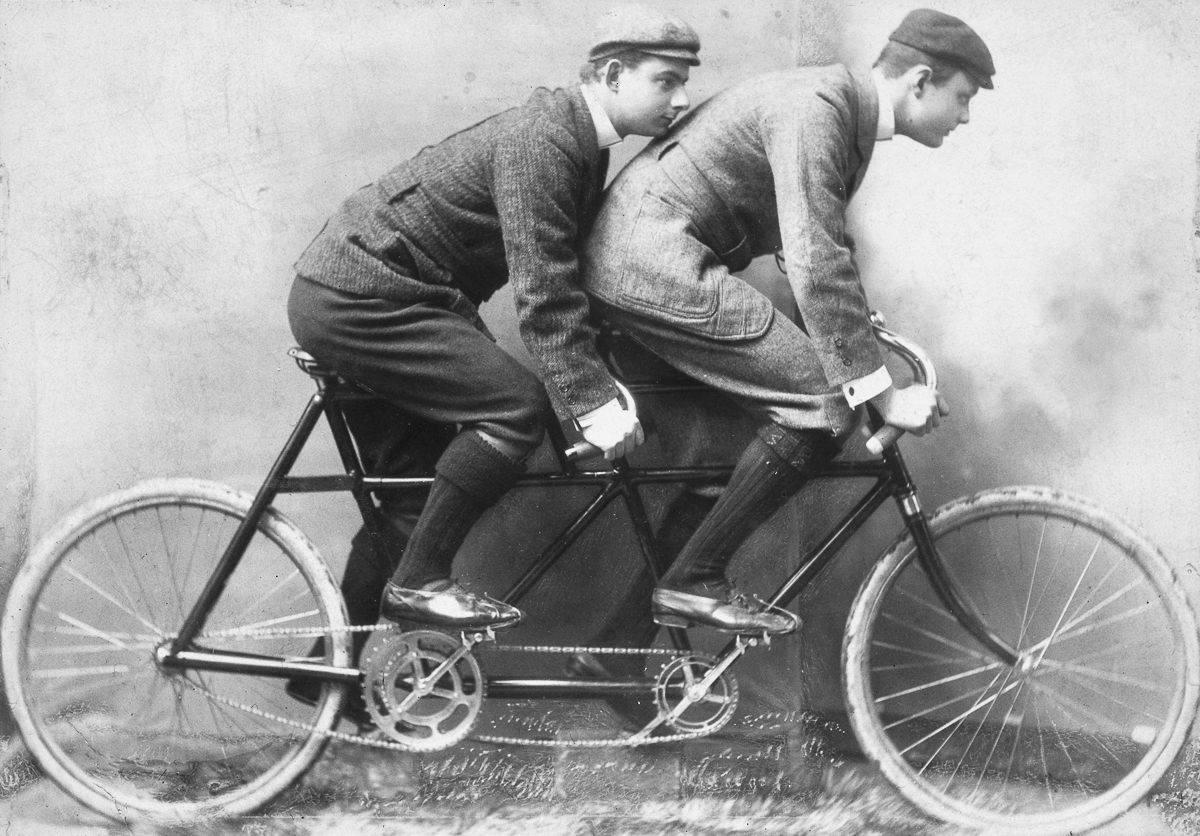
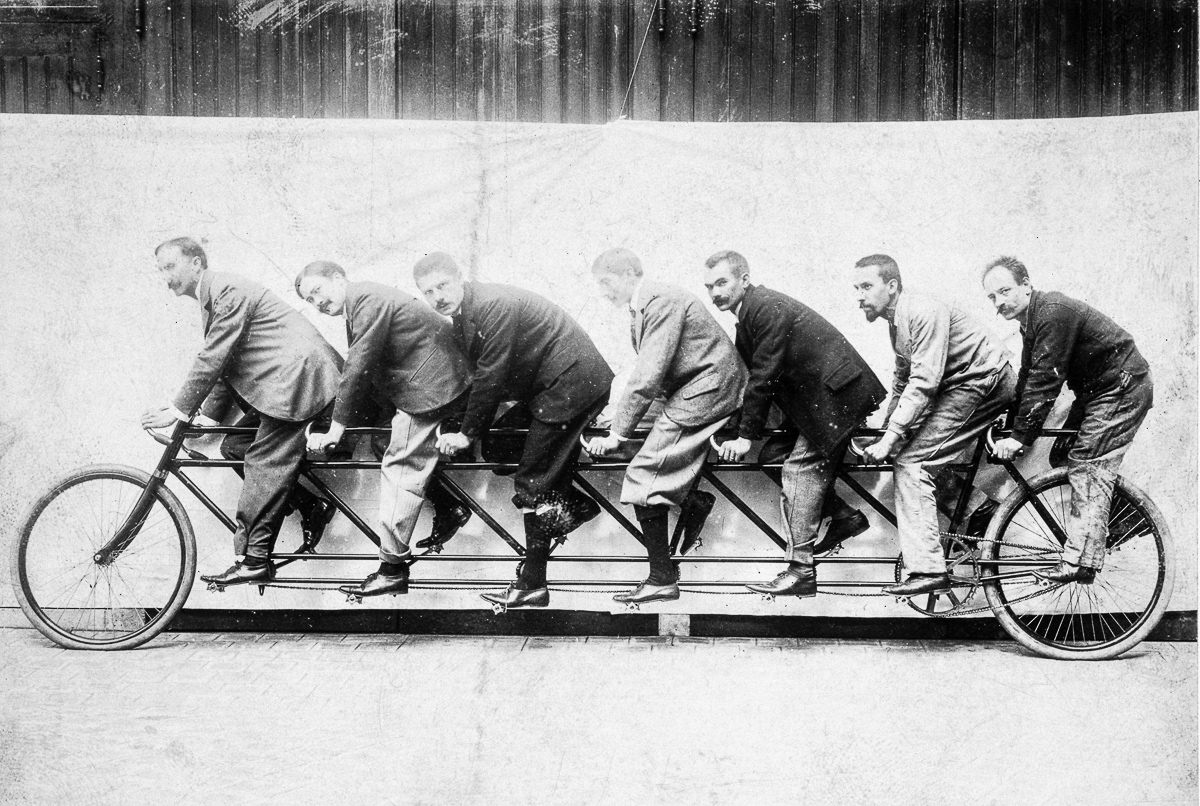
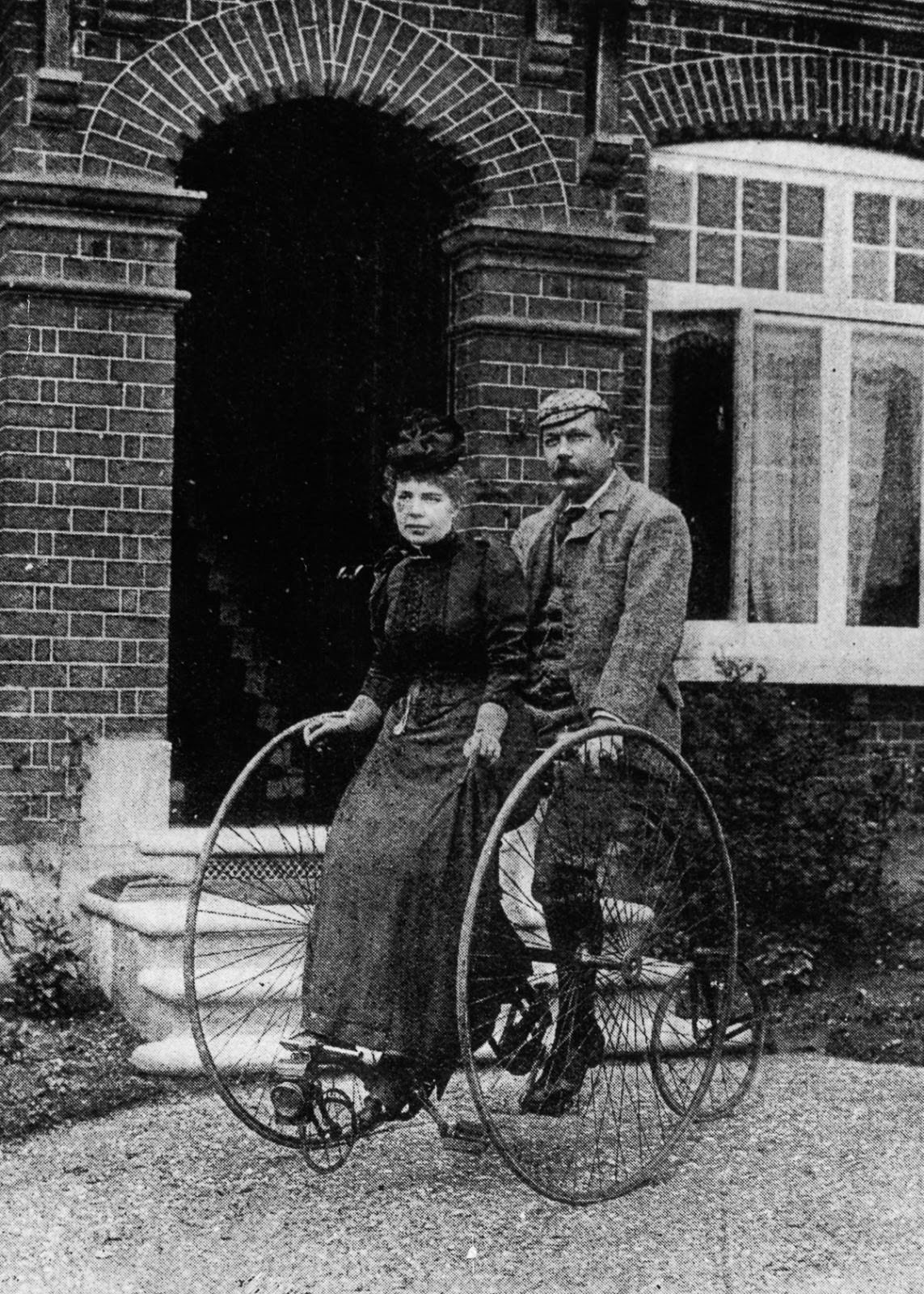
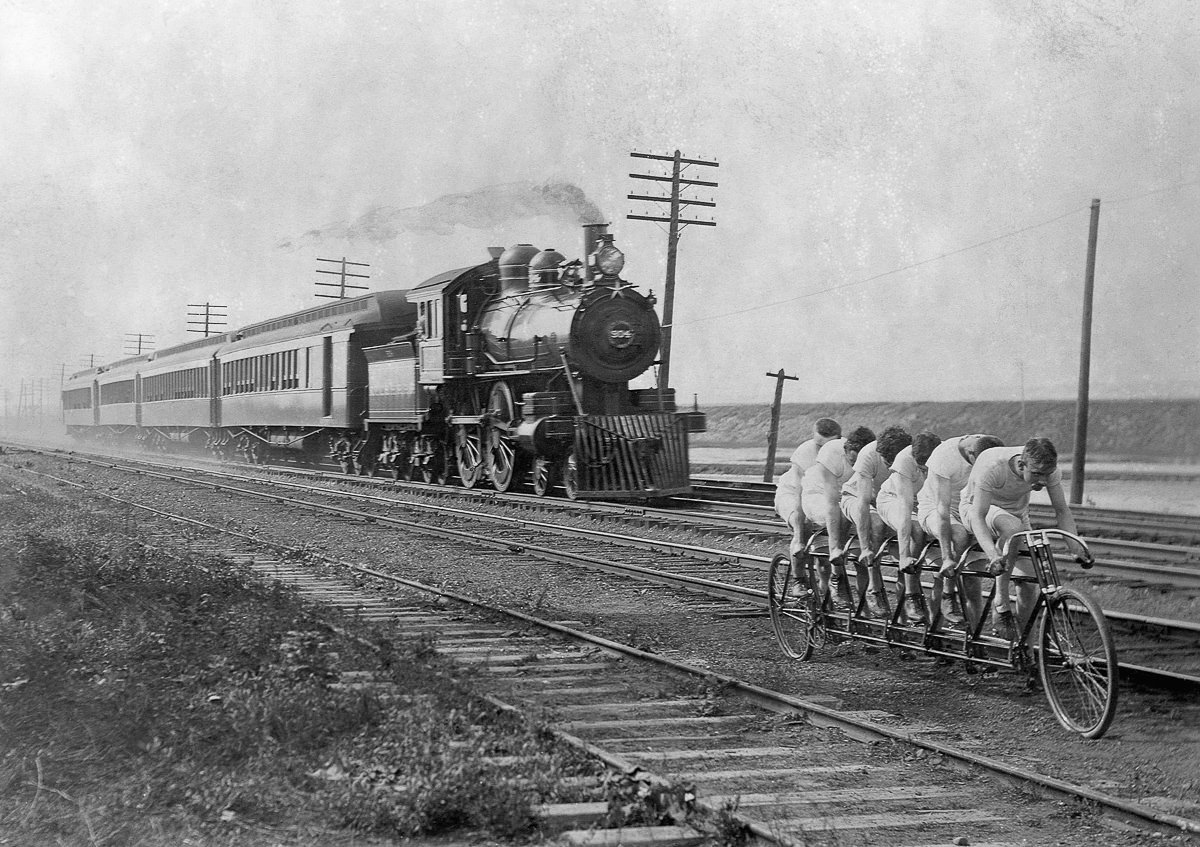
Tandems — bicycles built for two — became a popular social fixture during the 1890s. They attracted riders from all walks of life. Charles Stewart Rolls, who would later co-found Rolls-Royce, was photographed riding a tandem with a fellow Cambridge student in 1895. That same year, Arthur Conan Doyle, creator of Sherlock Holmes, rode a tandem tricycle with his wife. Multi-rider machines grew even more ambitious: a seven-man tandem was photographed in 1895, requiring all riders to pedal in perfect unison. Manufacturers and promoters leaned into the spectacle, staging races and stunts that blurred the line between sport and showmanship.
In 1895, a group of men rode Penny-farthings down the steps of the U.S. Capitol, and around the same time, cycling clubs across the world were organizing century rides — 100-mile routes completed in a single day — as a test of endurance and group spirit. “Wheelmen” clubs posed proudly with their high-wheelers, and the social dimension of cycling became as important as the sport itself.
One of the more audacious stunts of the era came in 1896, when a team called “The Stearns Sextuplets” — six men on a multi-rider bicycle — attempted to outrace a steam train pulling four cars. Cycling thrived on this kind of theater. The public loved the contest between human endurance and mechanical power, and events like this drew crowds that few other sports could match.
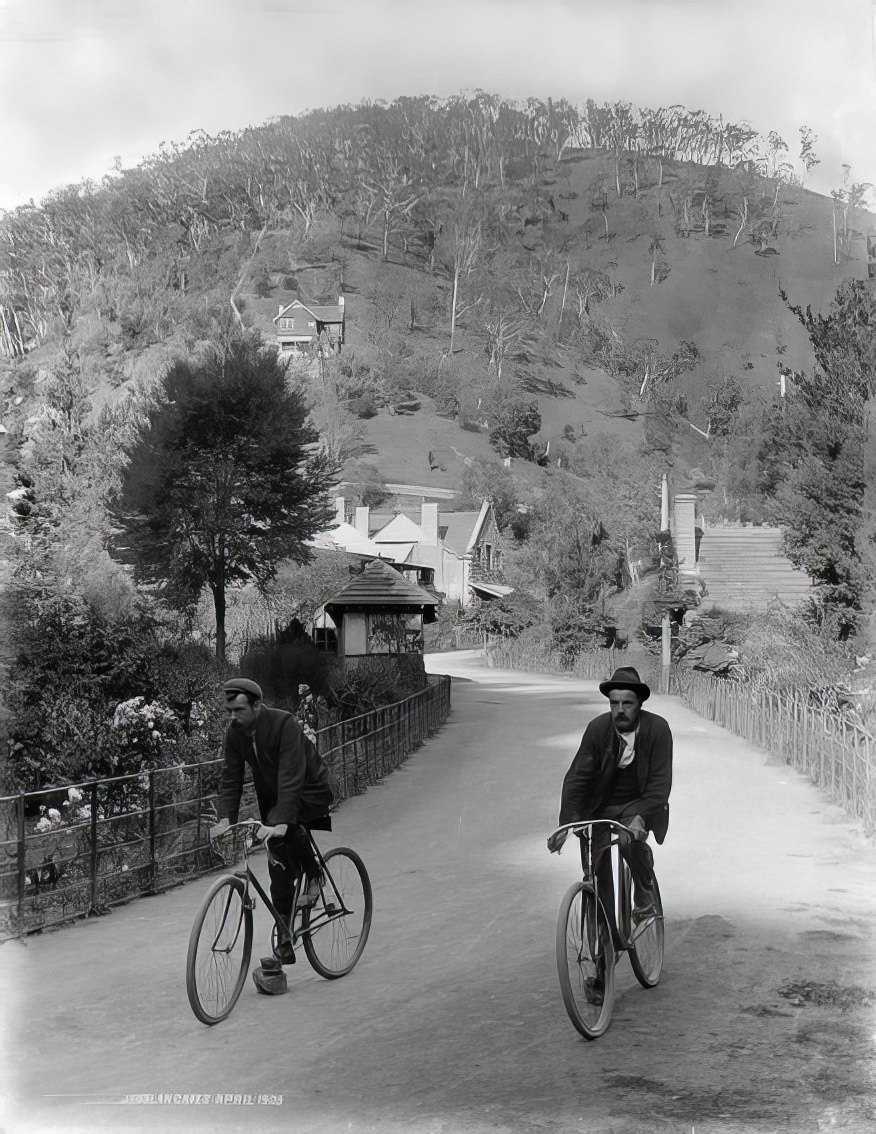
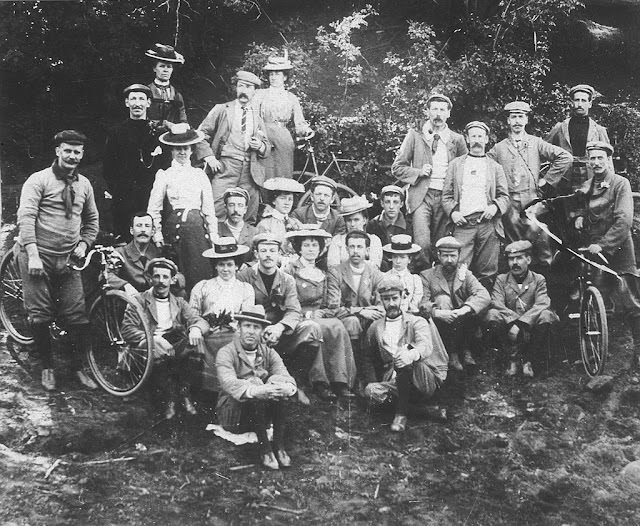
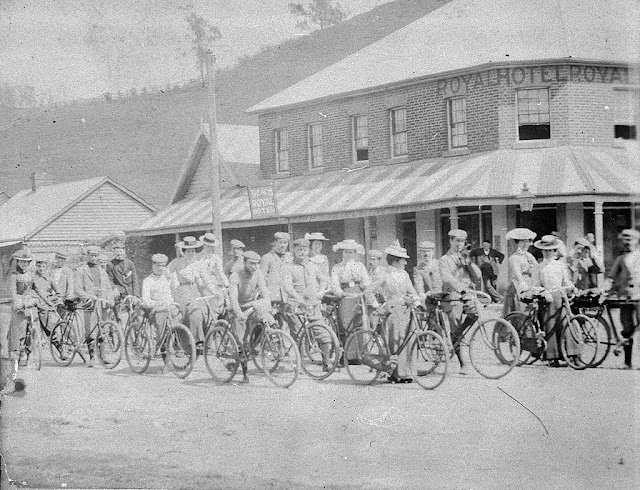
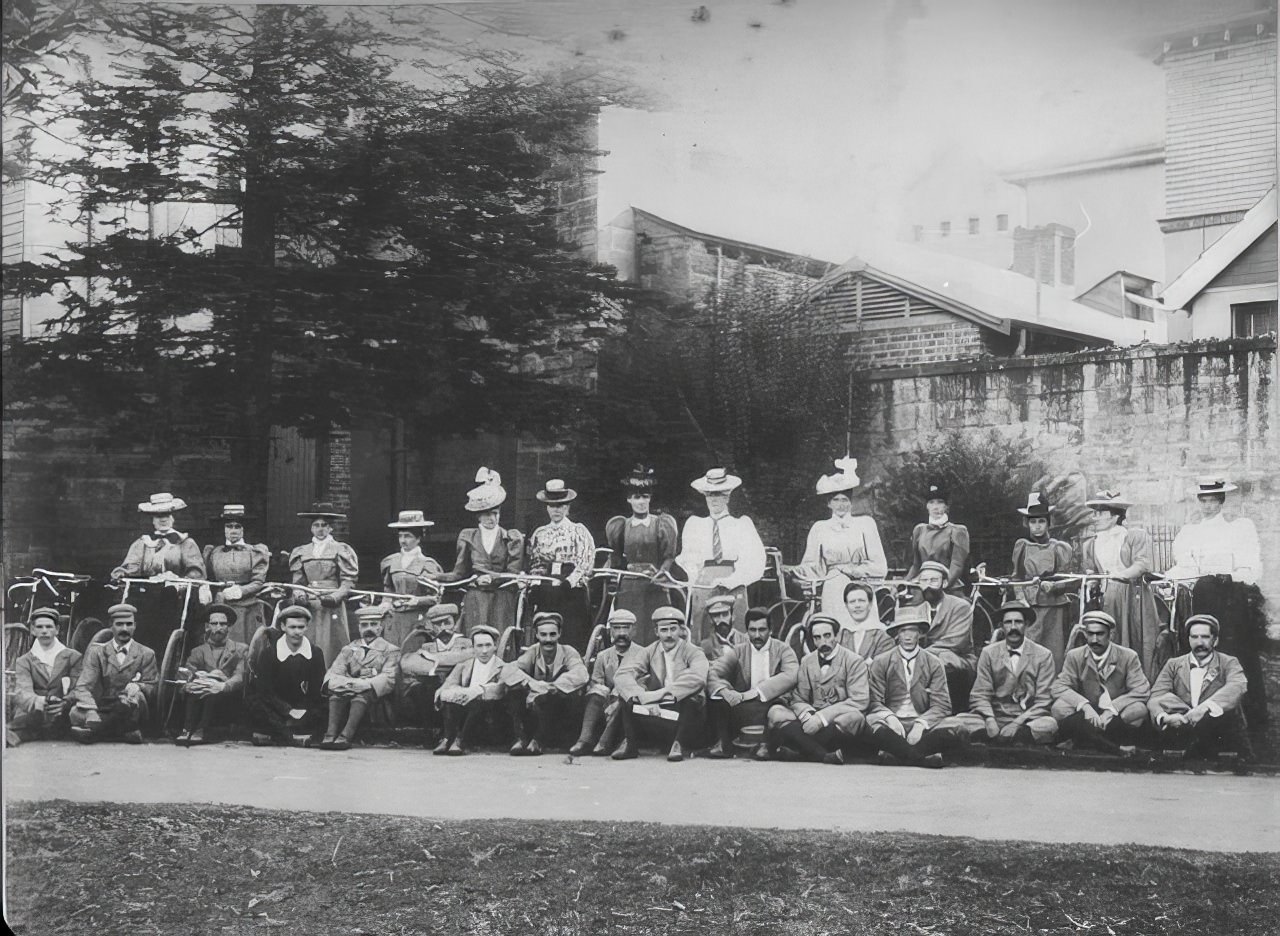
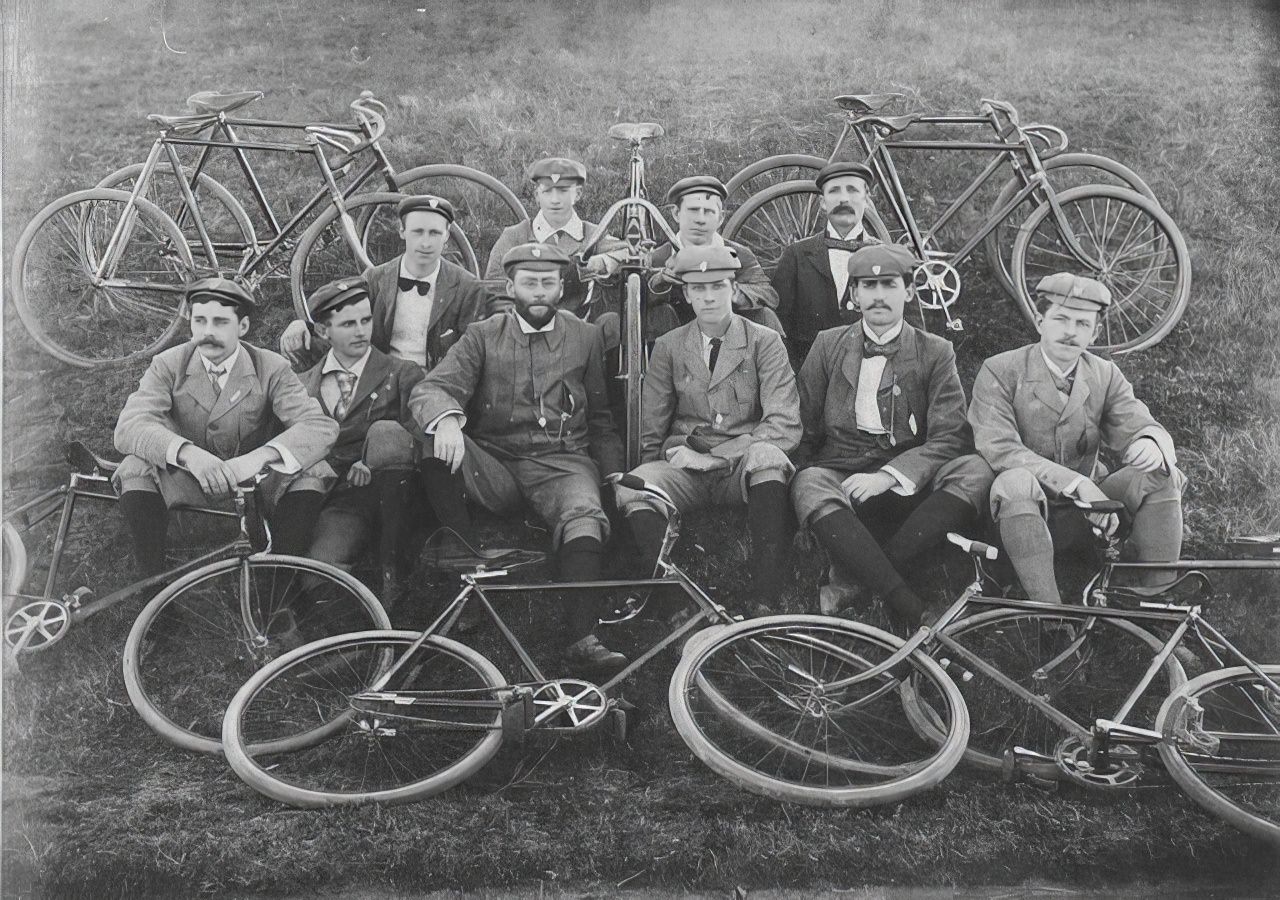
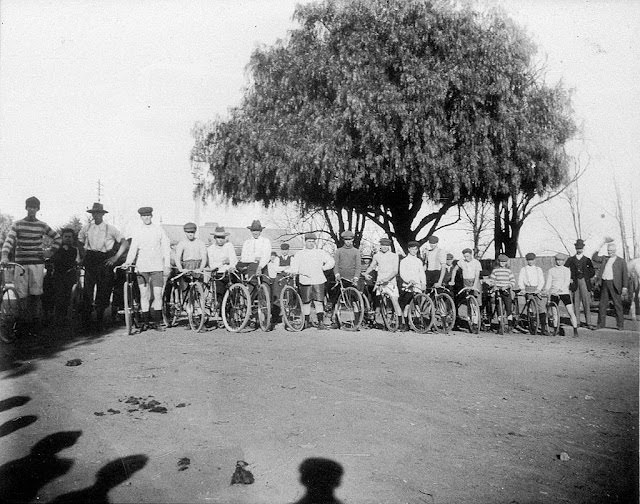
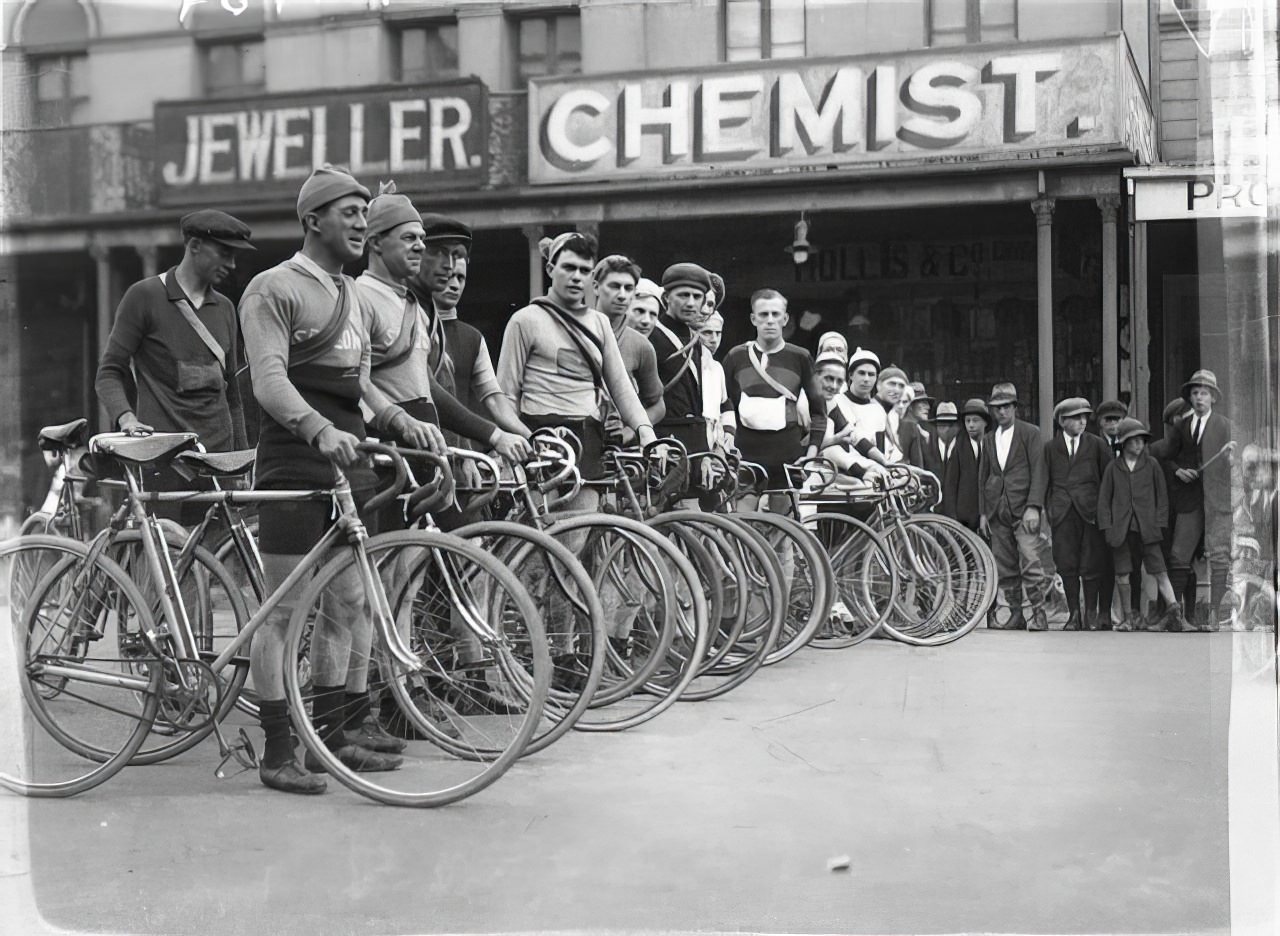
By the turn of the century, bicycle clubs had spread to Australia, where groups like the Waratah Rovers Bicycle Club organized multi-day tours through New South Wales. A 1900 photograph taken at Picton captures club members mid-tour on a route running from Sydney through Campbelltown, Appin, and Bulli to the South Coast — a serious undertaking on the roads of the era. The Palace Emporium Bicycle Club and the Scone Bicycle Club were holding organized century rides and road races, reflecting how deeply cycling had taken root in Australian sporting culture.
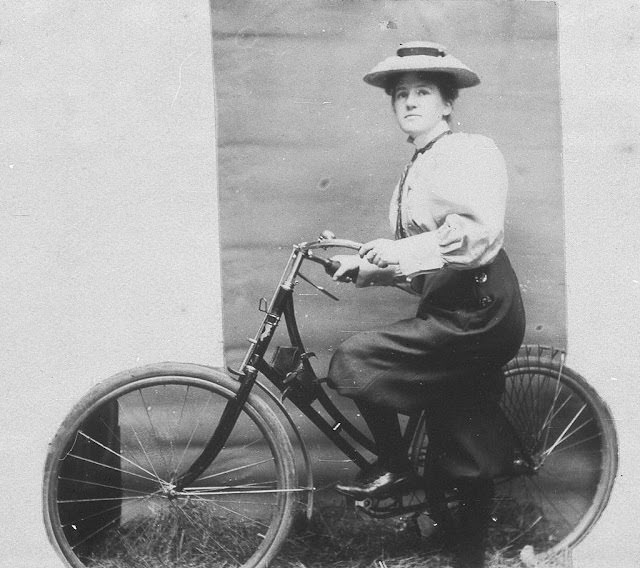
Women in Australia rode just as freely as men. Annie Dawson Wallace was photographed in 1899 — first in a studio portrait astride her bicycle, and then outdoors wearing trousers, a quietly radical choice at the time. The bicycle gave women a practical tool for independence that required no horse, no driver, and no chaperone. A schoolteacher named Miss Marley at Narraburra School used hers to reach a rural posting that would otherwise have been inaccessible.
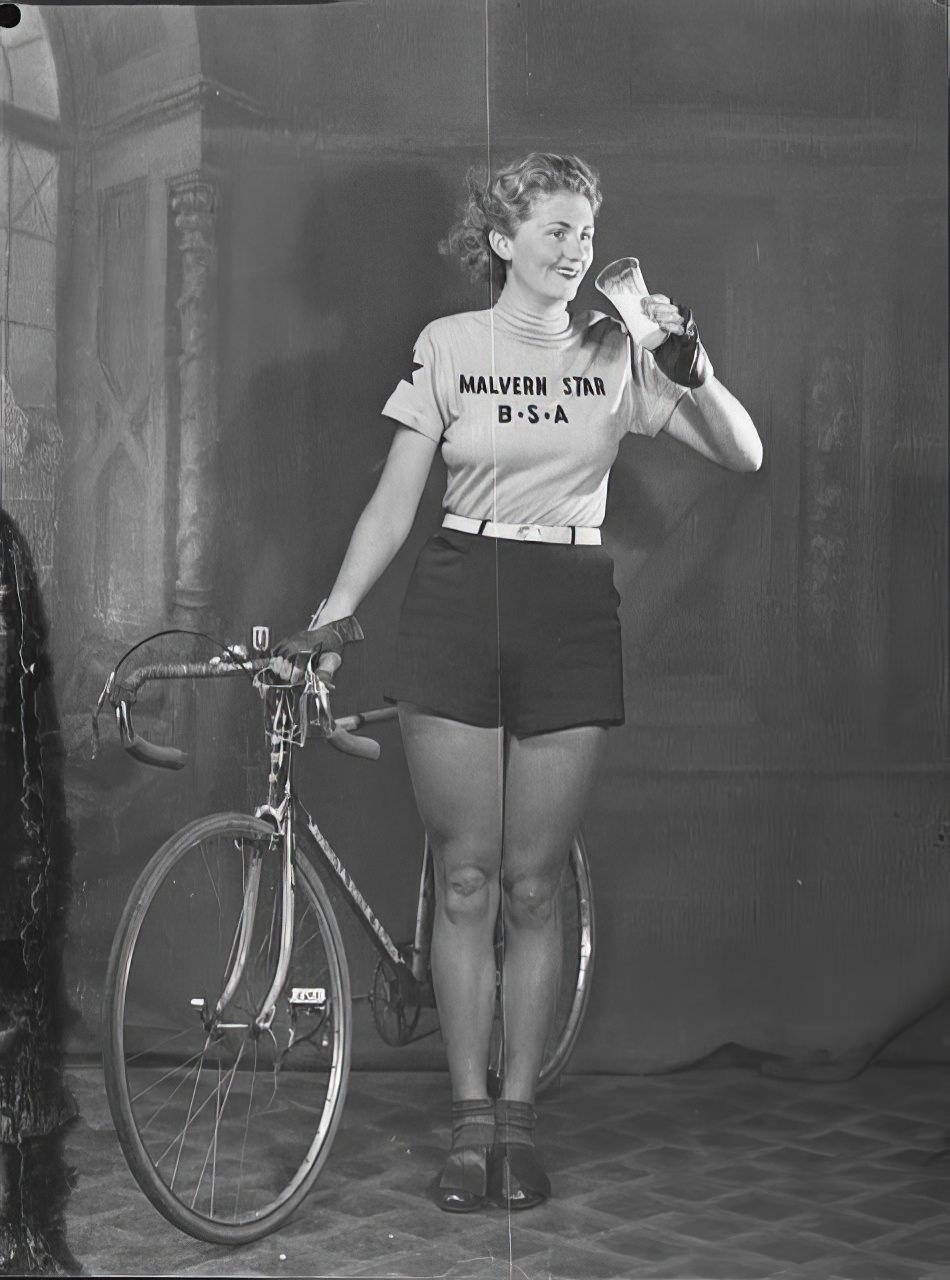
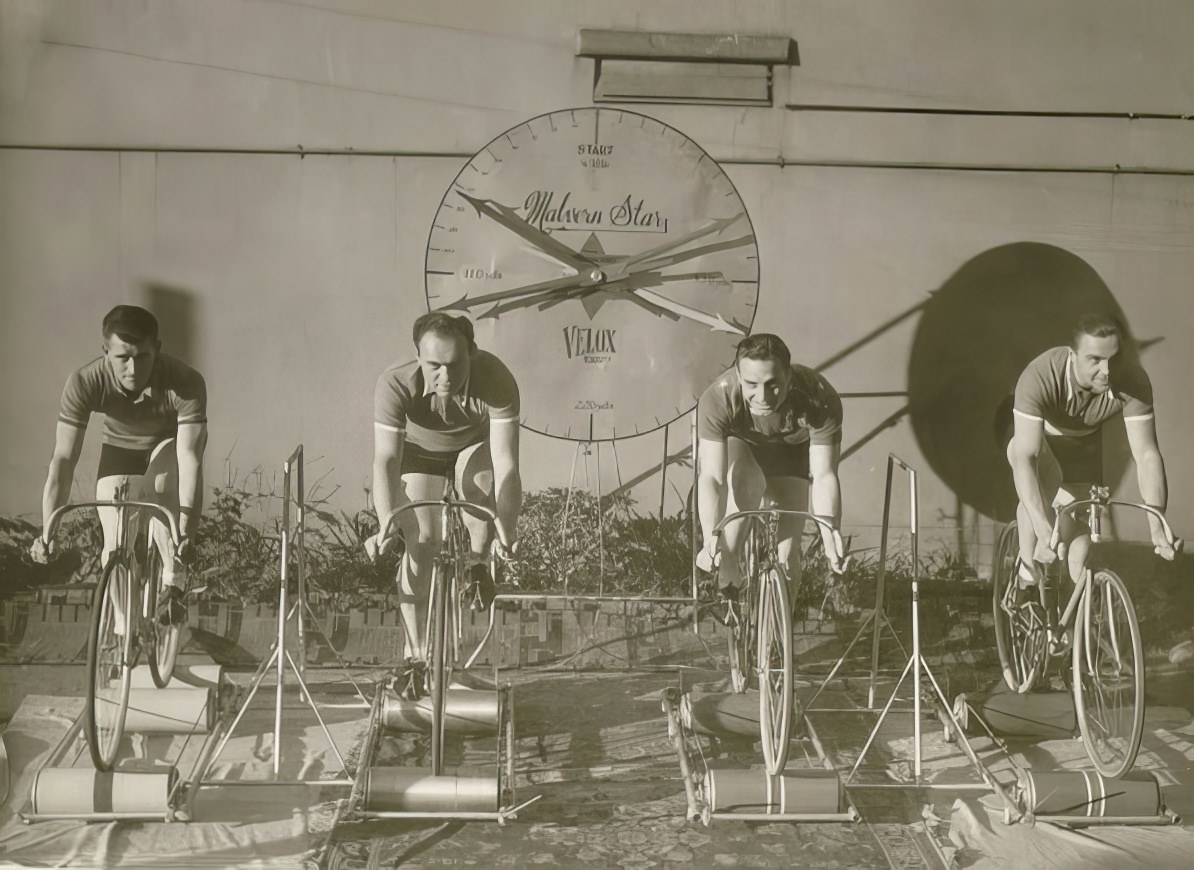
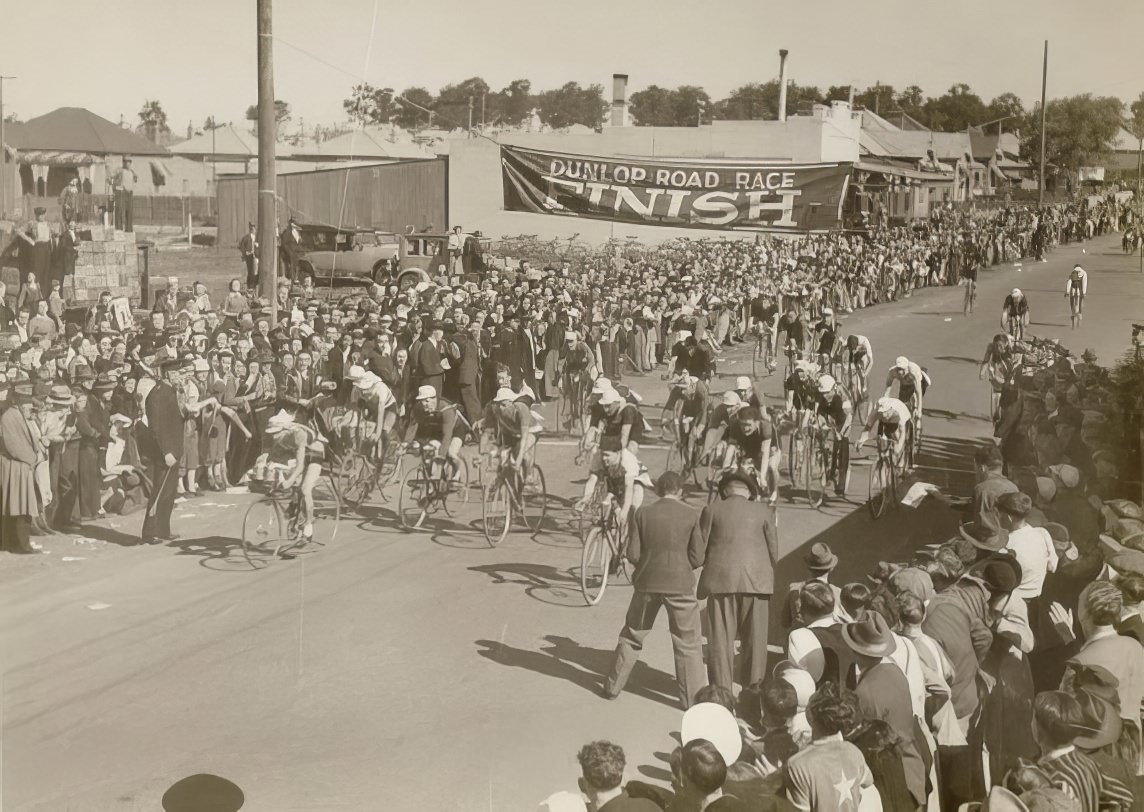
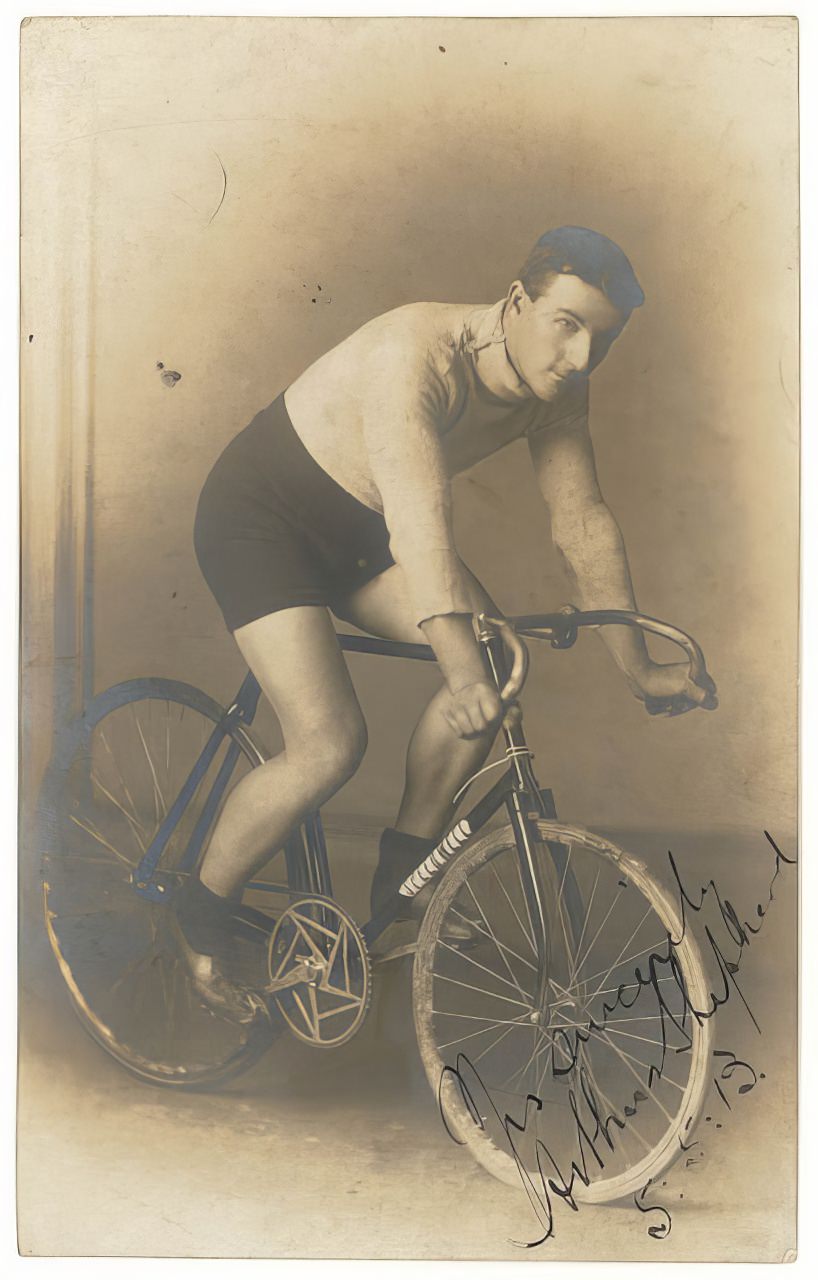
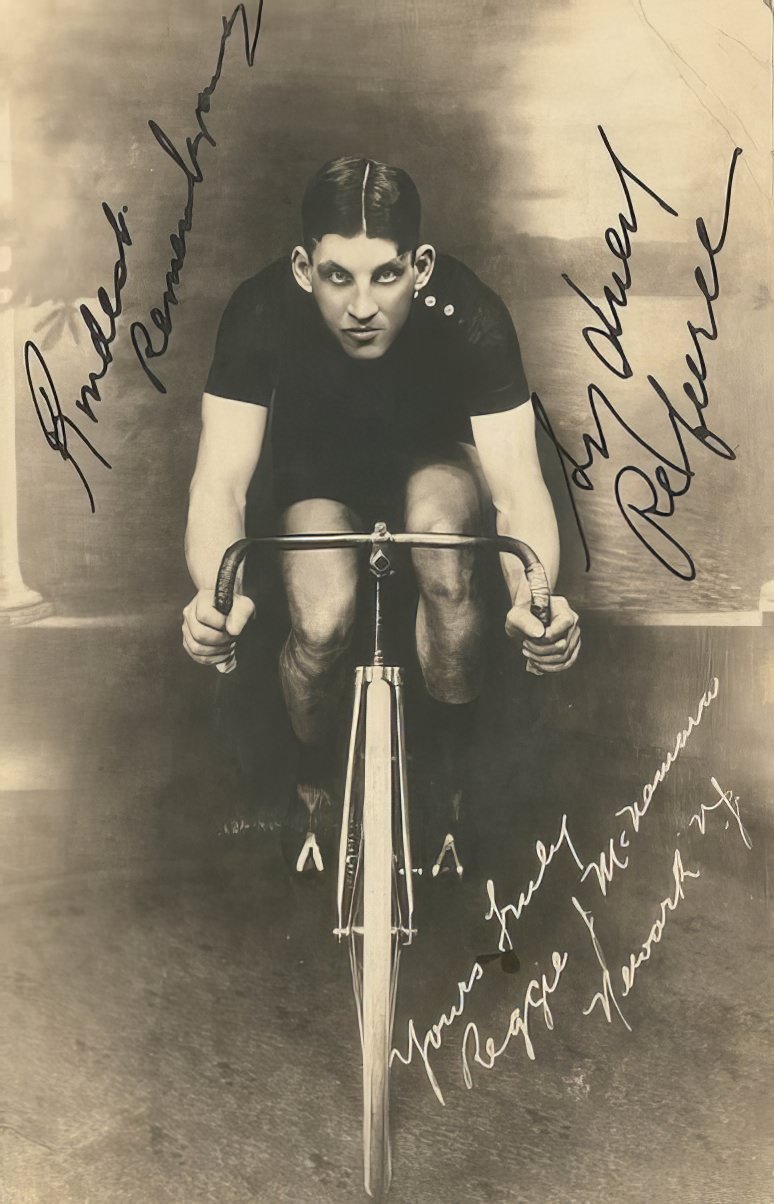
Cycling also shaped Australian competitive sport well into the 20th century. The Goulburn to Sydney Dunlop Road Race drew large fields of competitors, and riders like A. H. Sheppard won national championships in the 1910s. Reggie ‘Iron Man’ McNamara, a champion Australian cyclist whose career stretched remarkably into the early 1970s, became a legendary figure in long-distance racing. Hubert ‘Oppy’ Opperman, perhaps the most celebrated Australian cyclist of his generation, broke records on Malvern Star bicycles and became a national sporting hero.
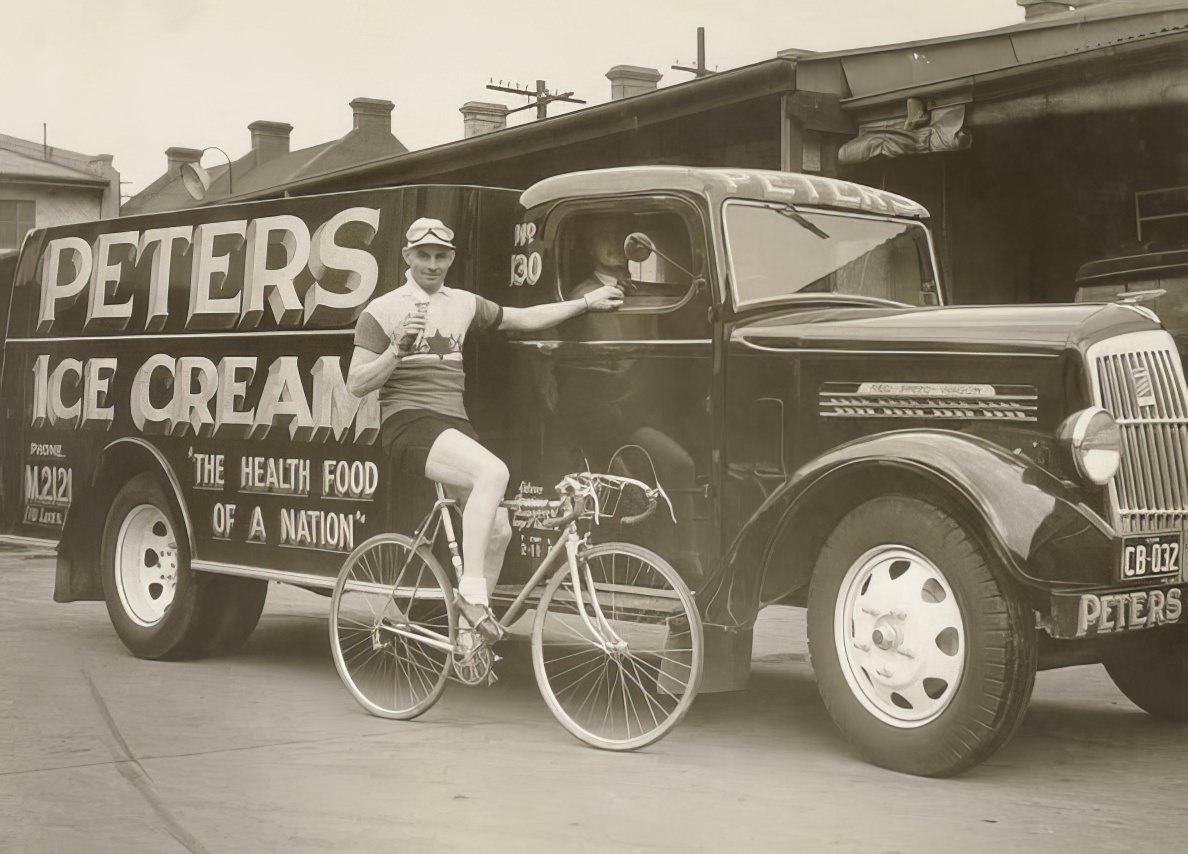
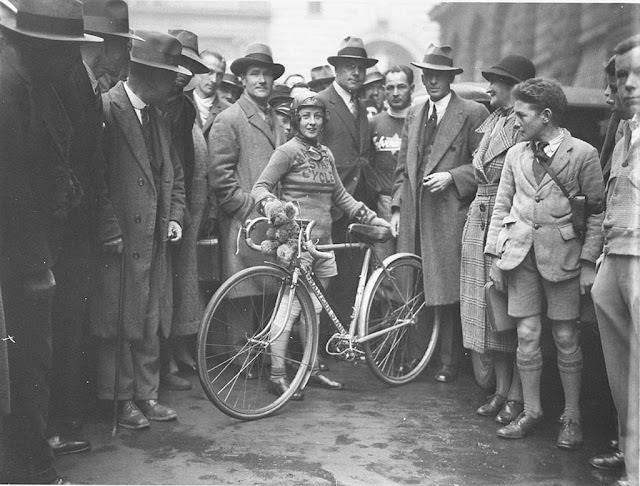
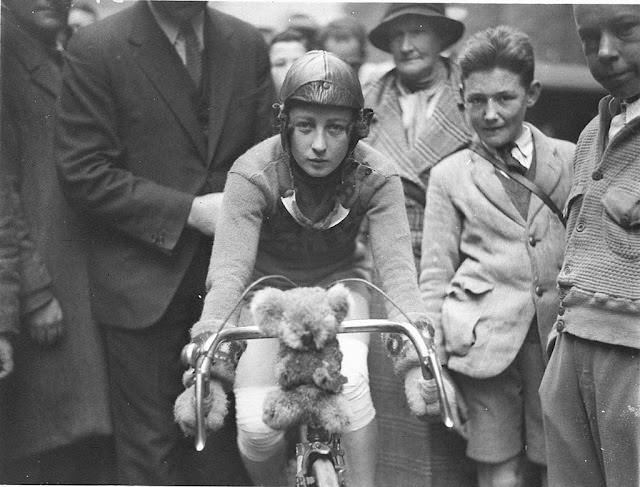
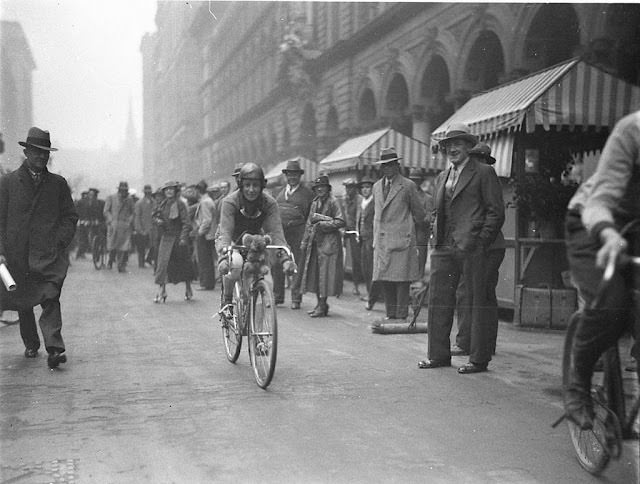
The Malvern Star brand became synonymous with Australian cycling ambition. In 1934, Billie Samuels set off from Martin Place in Sydney for Melbourne on a Malvern Star bicycle, her koala bear mascot fixed to the handlebars. The ride attracted press coverage and public interest, capturing a moment when long-distance cycling by women was still newsworthy and genuinely admired.
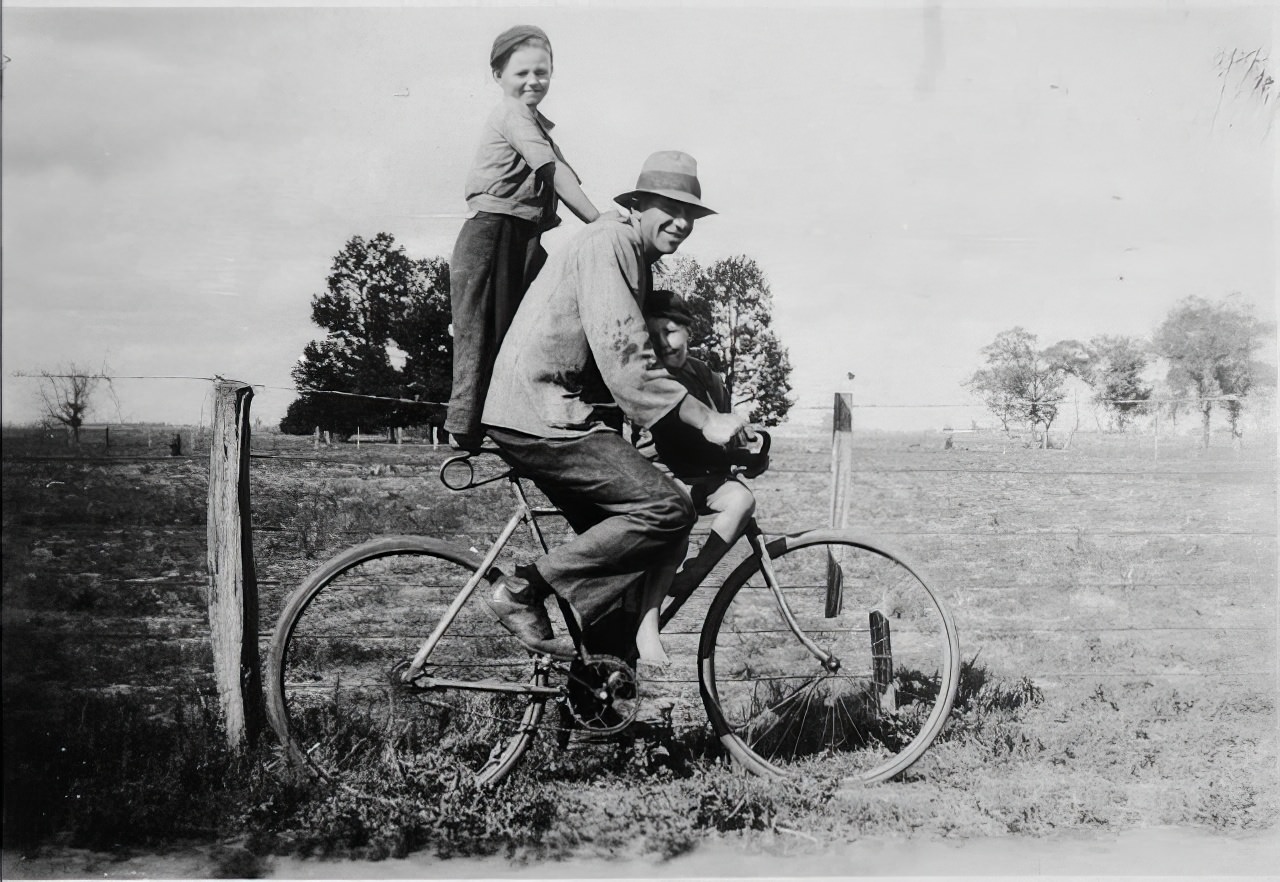
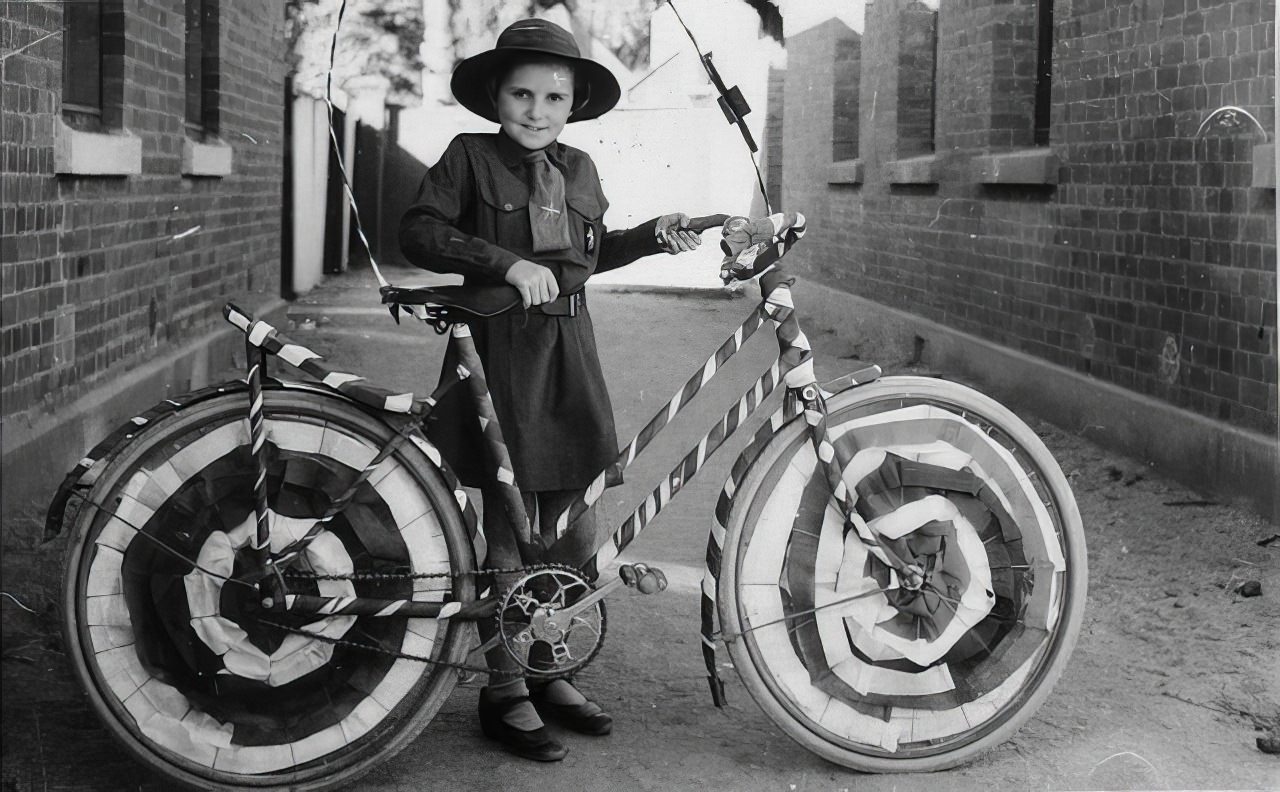
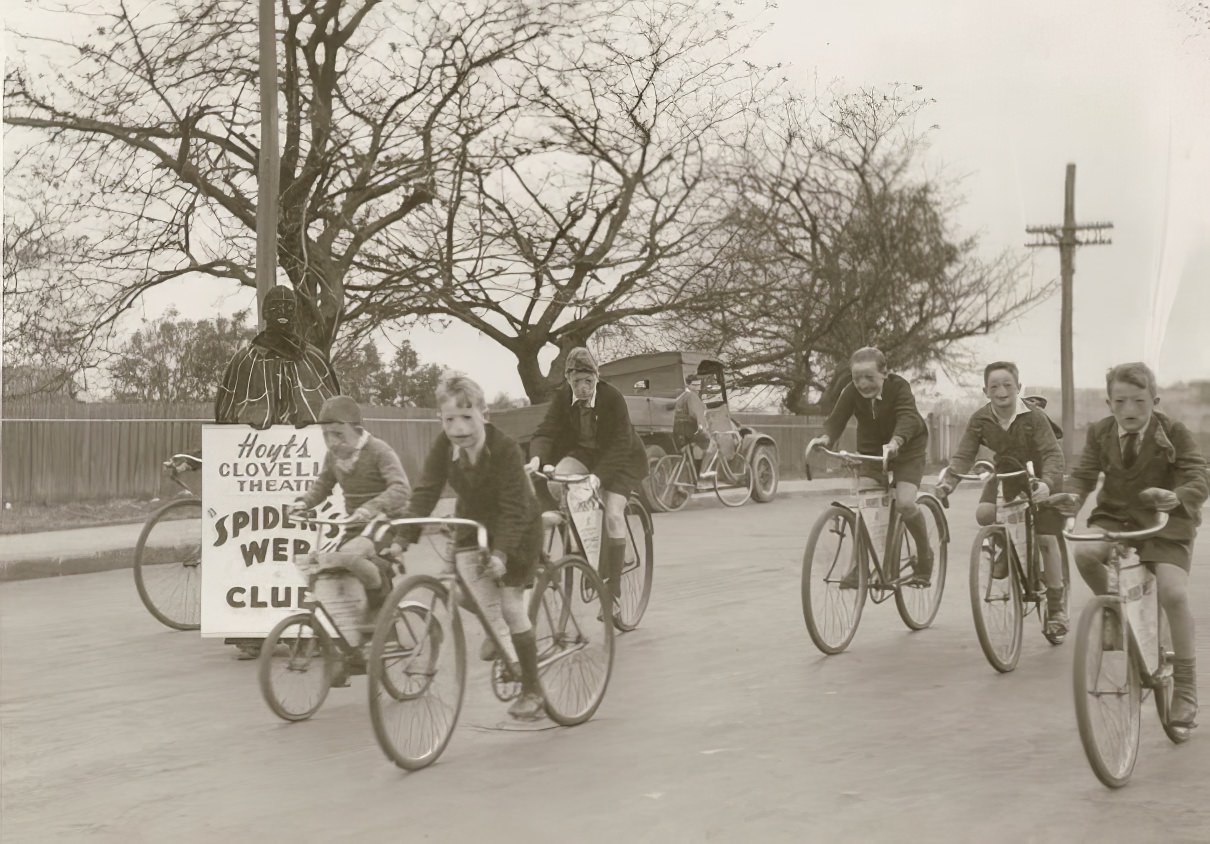
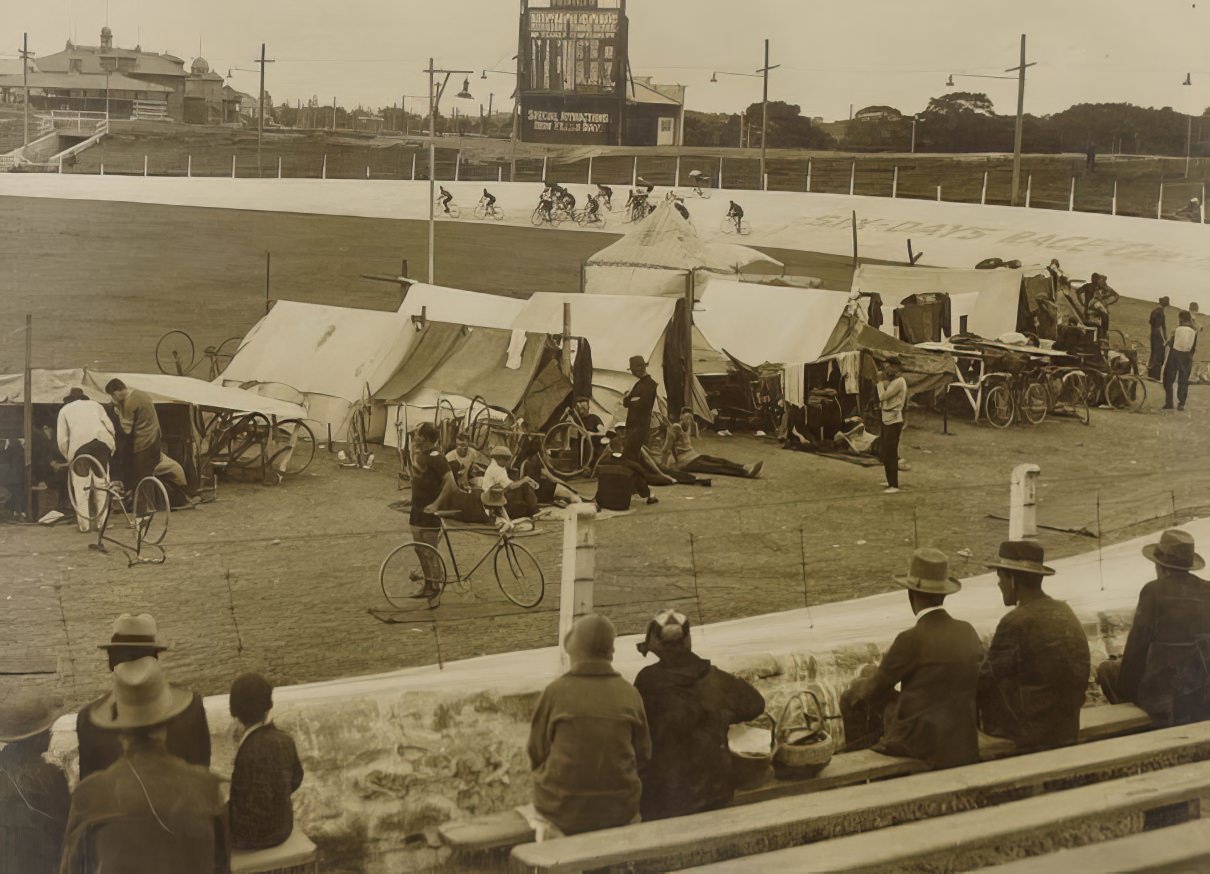
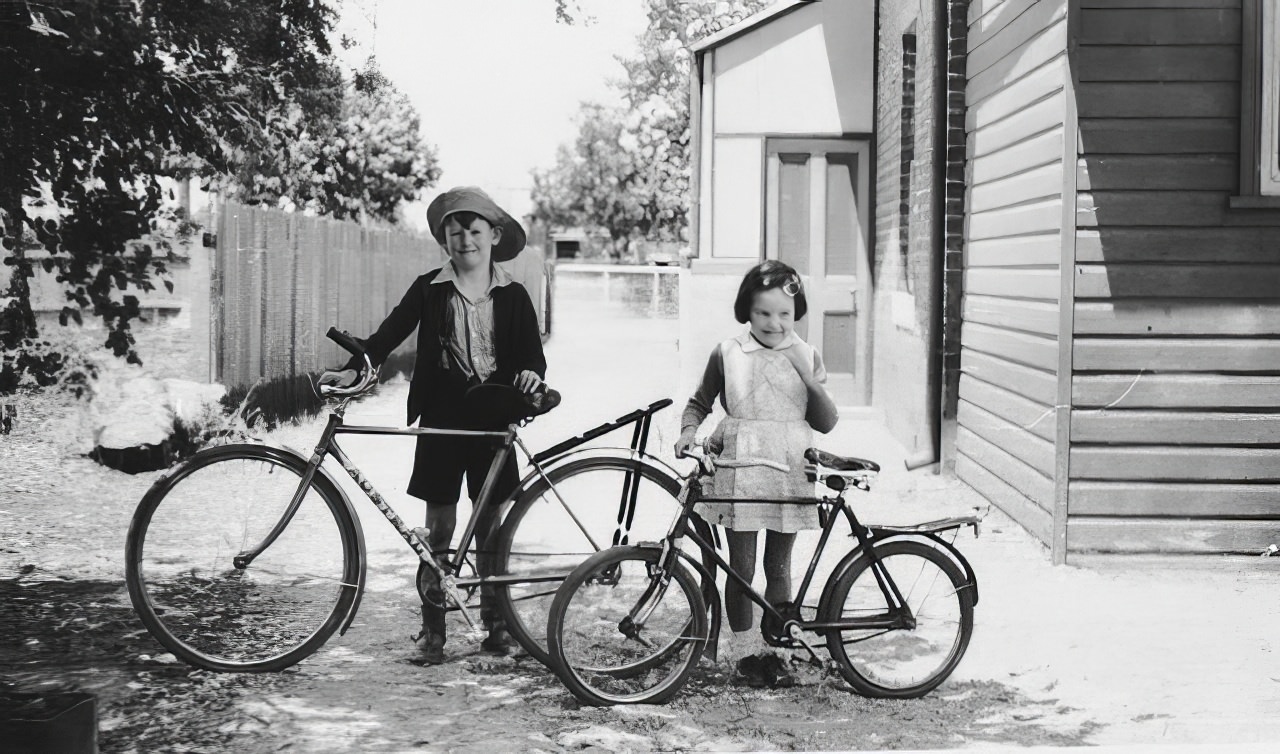
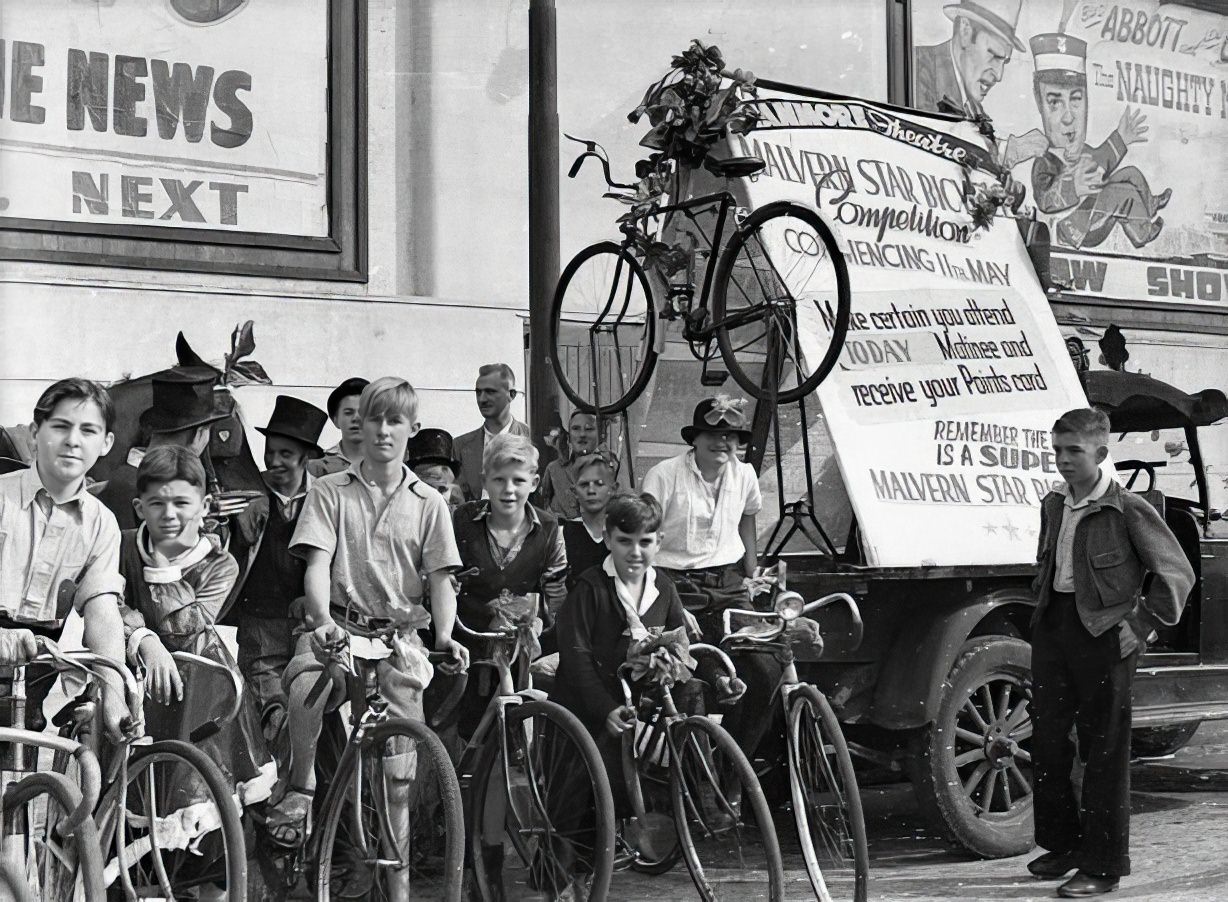
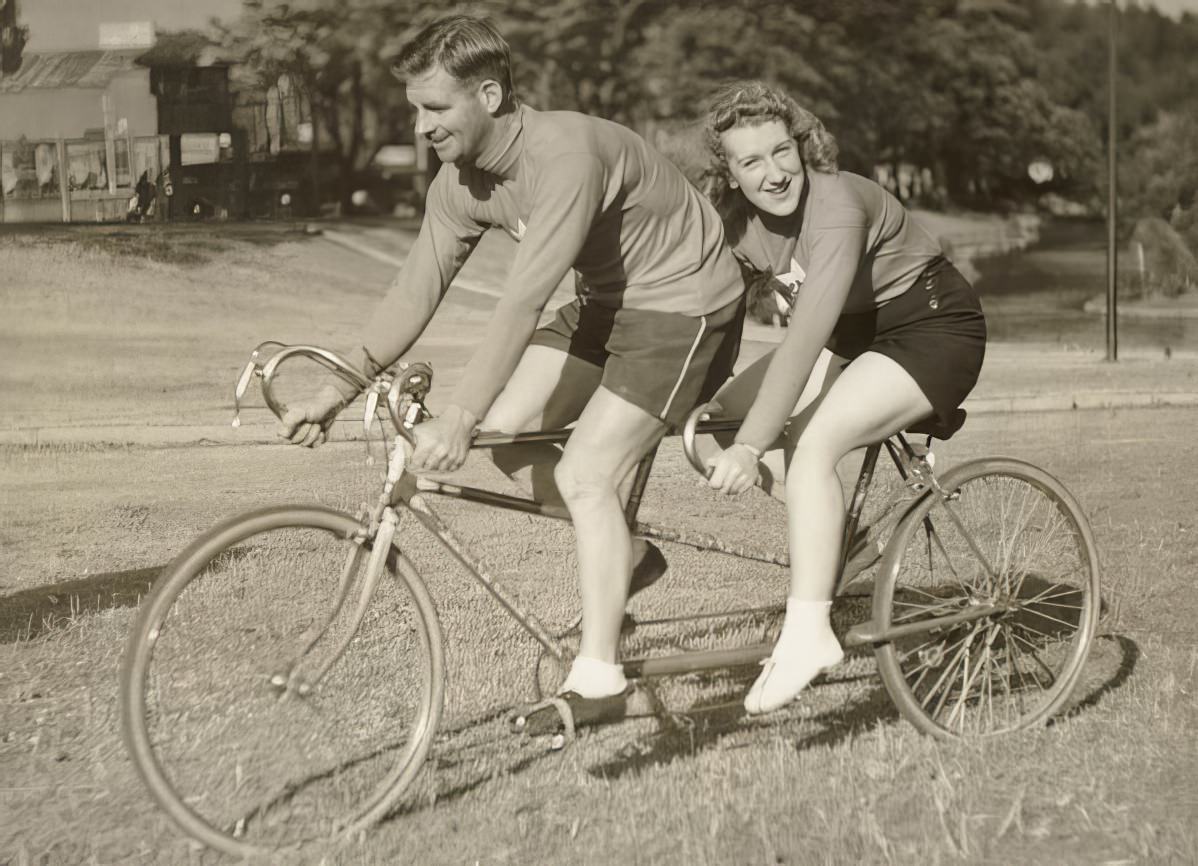
Through the 1930s and 1940s, cycling remained woven into everyday Australian life. Tandems were ridden for leisure, velodrome racing packed venues at Moore Park in Sydney, and promotional events tied bicycles to everything from milk campaigns to theatre competitions. Children rode to picture houses and formed clubs around their favorite serials. Cycling was not a niche hobby — it was how ordinary people moved, competed, and gathered.