Going to the movies in the 1910s was nothing like the experience we know today. Theaters were still finding their footing, audiences were a wild mix of classes and backgrounds, and nobody had yet agreed on how a person was supposed to behave while watching a film. To solve that problem, theater owners came up with a clever solution: glass slides projected onto the screen between reel changes. These slides — sometimes called lantern slides — delivered instructions, warnings, and gentle reminders directly to the crowd. Some were polite. Some were blunt. A few were downright bizarre by today’s standards.
Early movie theaters only had one projector. When a reel ran out, a staff member had to swap it for the next one by hand. That gap in the screening — sometimes several minutes long — gave theater owners the perfect opportunity to flash messages at the audience. Rather than leaving the screen blank, they used illustrated glass slides to fill the time. The result was a collection of some of the most revealing social documents of the era.
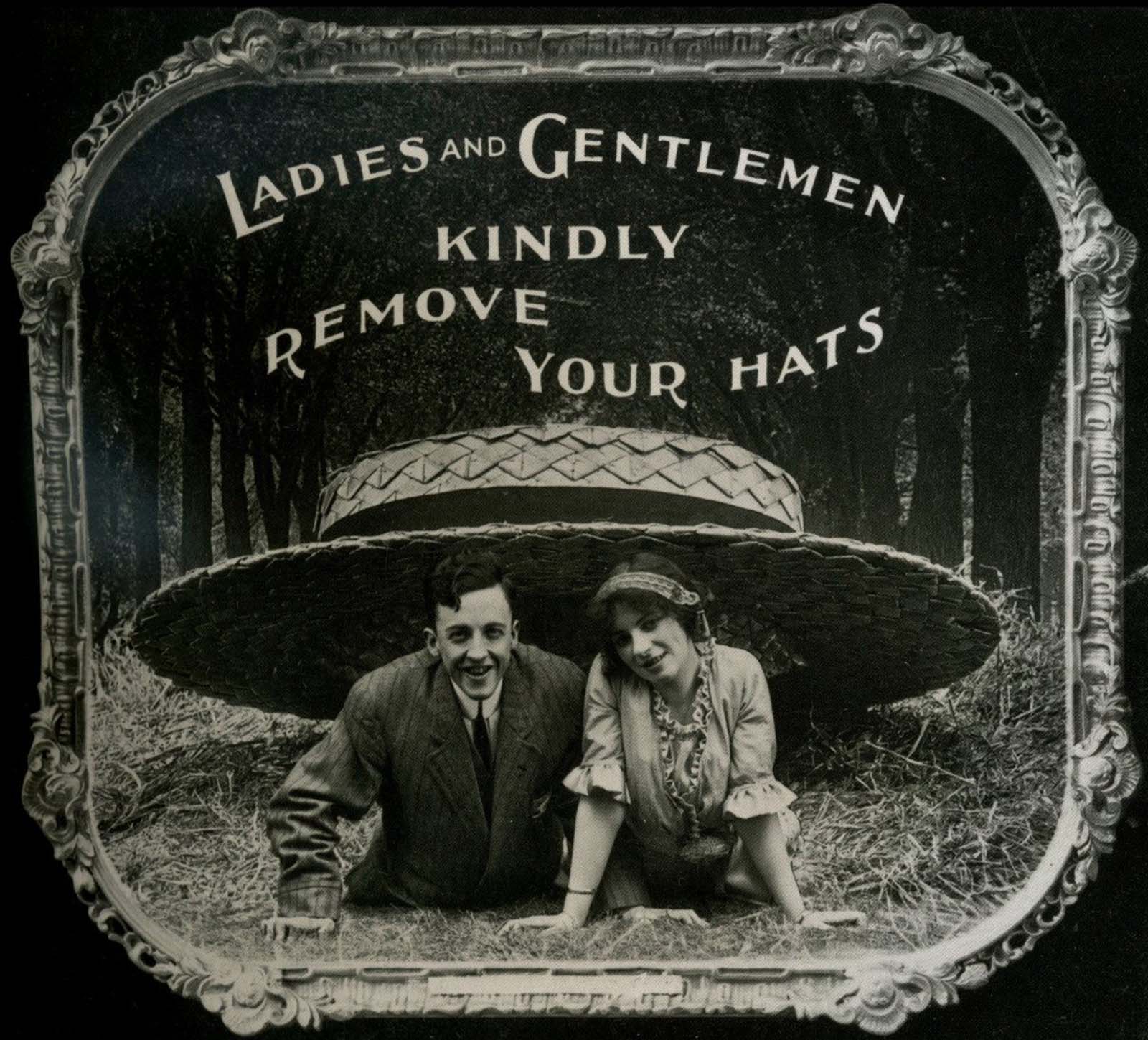
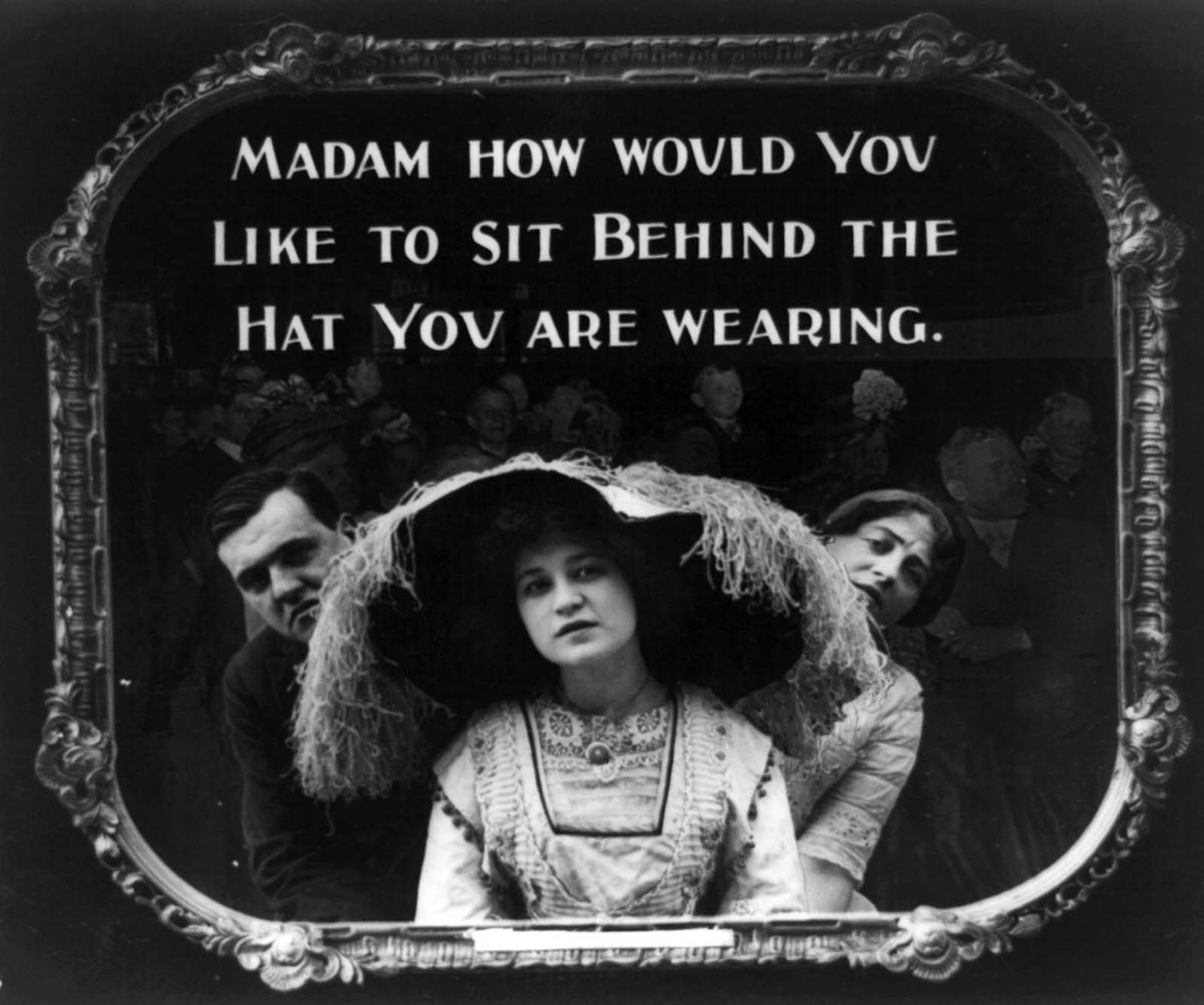
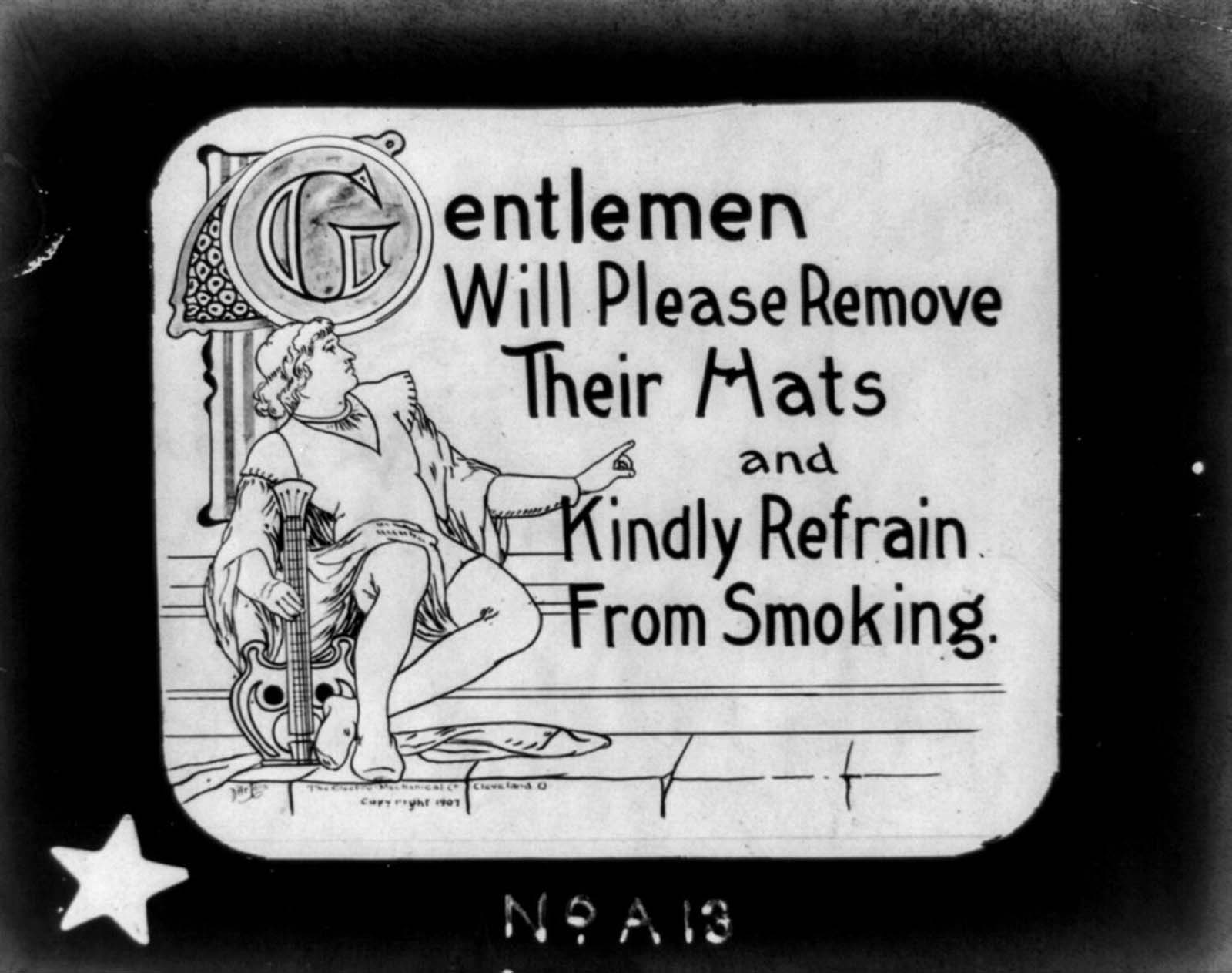
One of the most repeated complaints from early cinema audiences was the hat problem. Women’s fashion in the 1910s featured towering, wide-brimmed hats decorated with feathers, ribbons, and sometimes entire artificial birds. These fashionable creations were spectacular to look at — unless you were sitting behind one in a darkened theater. Theaters across the country displayed slides asking, and sometimes demanding, that women remove their hats before the film began.
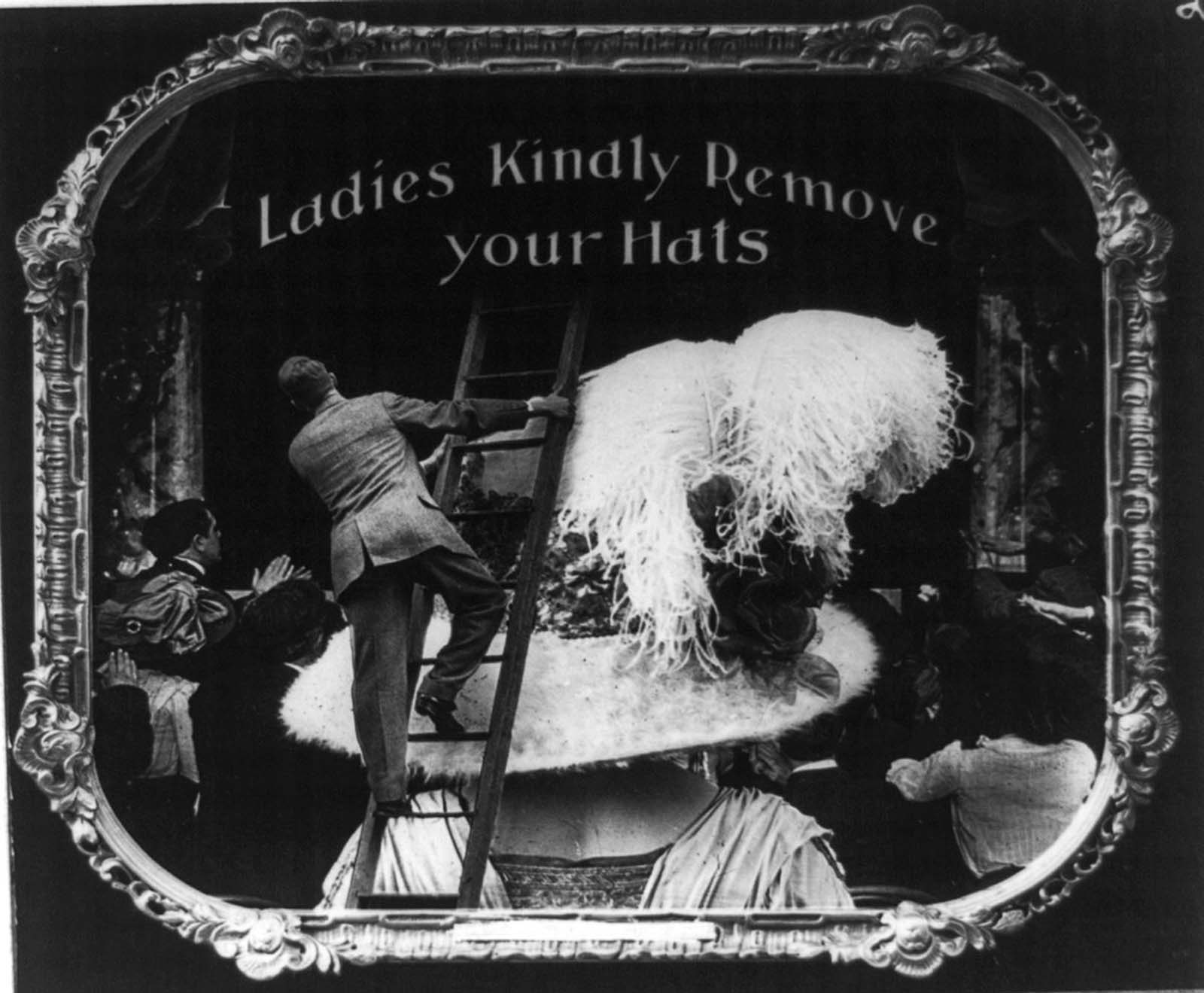
The hat issue was taken seriously enough that theaters used humor to drive the point home. One well-known slide illustrated the absurdity of the situation by showing a man with a ladder trying to see over a woman’s enormous hat. The joke landed, but the frustration behind it was real. Sightlines mattered, and an unremoved hat could ruin the viewing experience for an entire row of patrons.
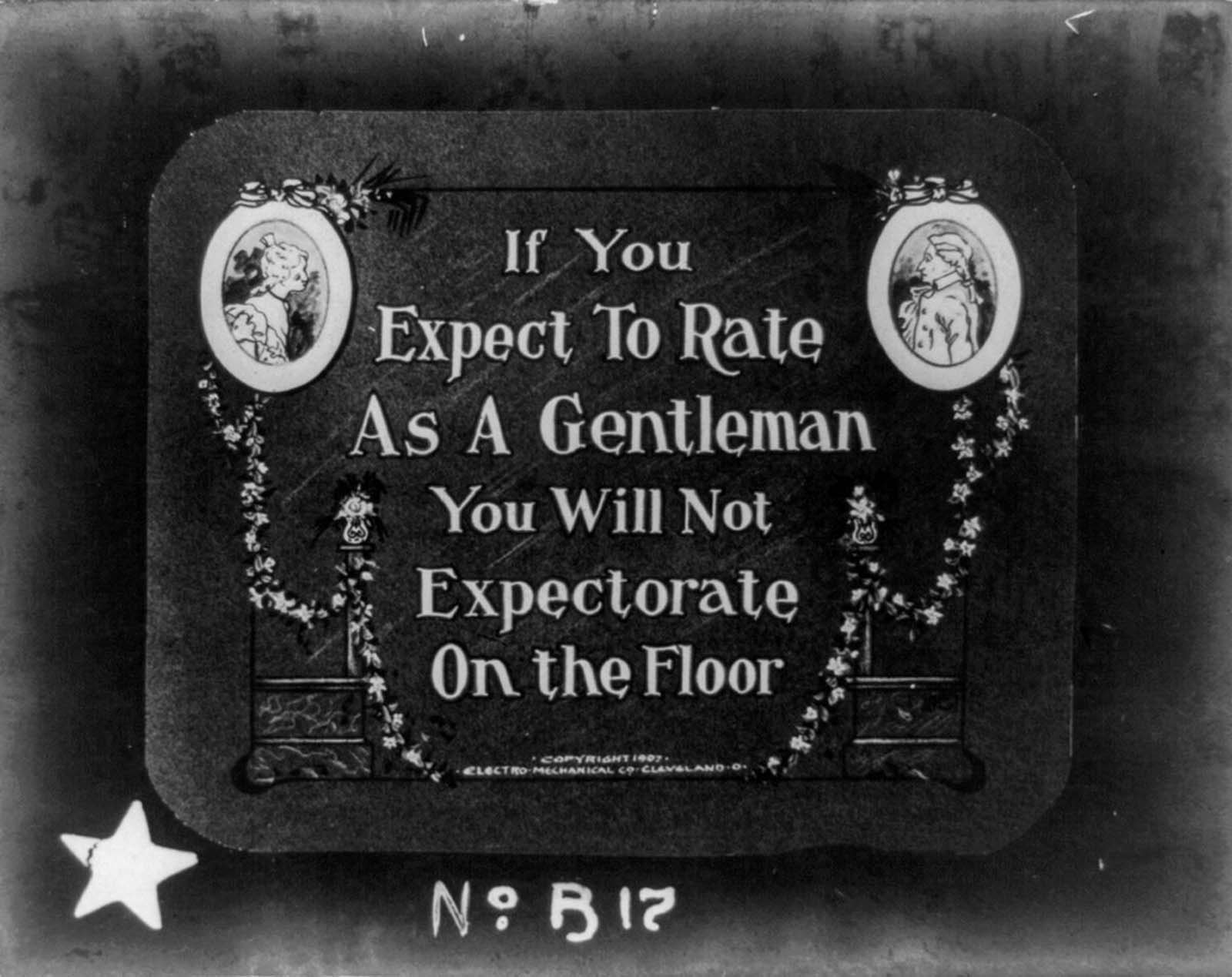
Noise was another major battleground. In the early silent film era, some talking was considered acceptable — audiences weren’t yet trained to sit in total silence the way they are today. But there were limits. Theaters drew a firm line at loud talking, shouting, and the particularly offensive habit of finger-whistling. Whistling loudly with two fingers in your mouth was a common crowd response at the time, borrowed from outdoor events and sporting matches. Inside a theater, it was considerably less welcome.
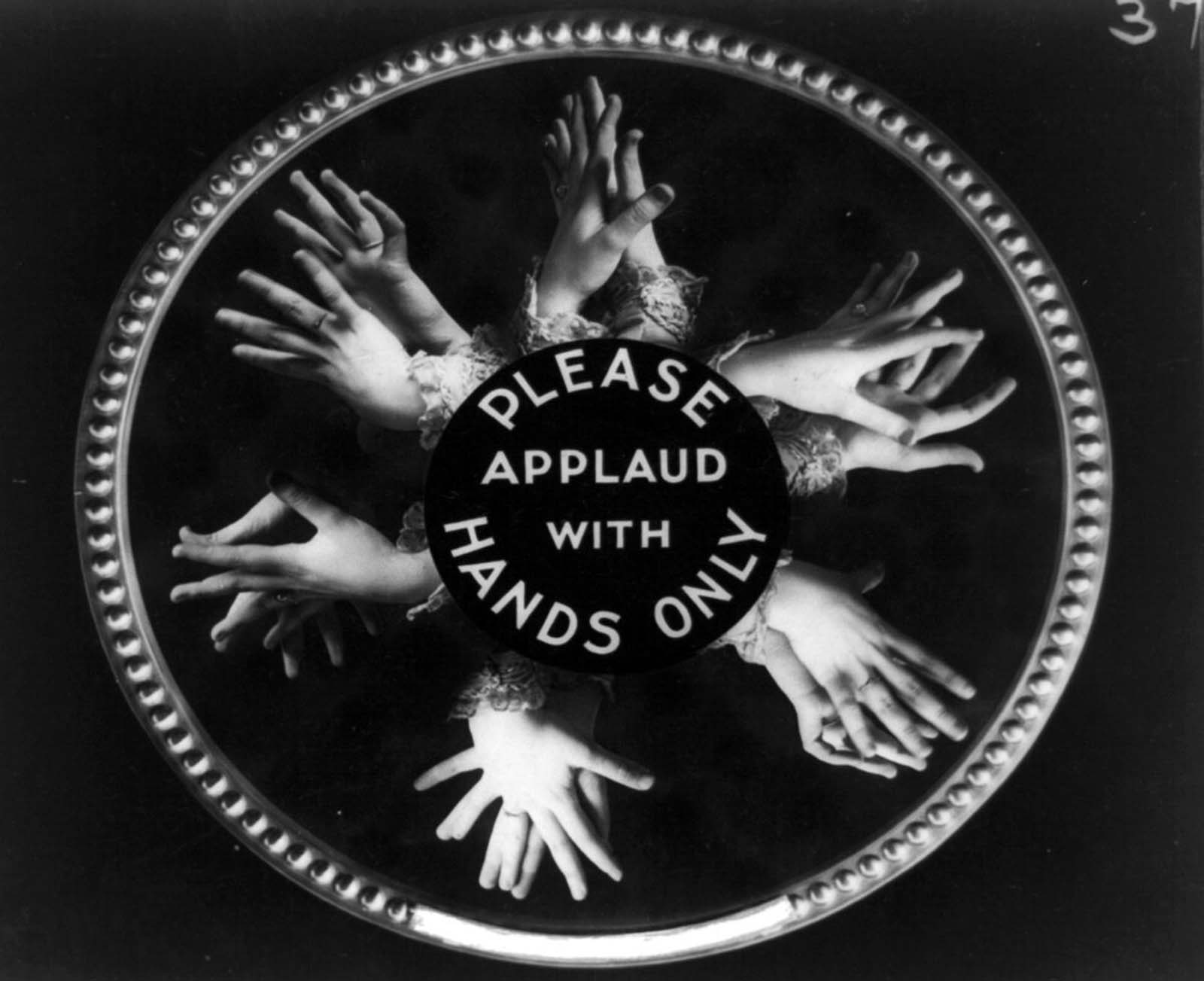
Theaters wanted audiences to show enthusiasm — applause was encouraged and expected. But they wanted it done properly. Slides instructed patrons to “applaud with hands only,” cutting off any rowdier forms of appreciation before they started. This kind of rule tells us a lot about the audiences of the time: people who came from live theater, vaudeville, and outdoor events, where cheering loudly was perfectly normal.
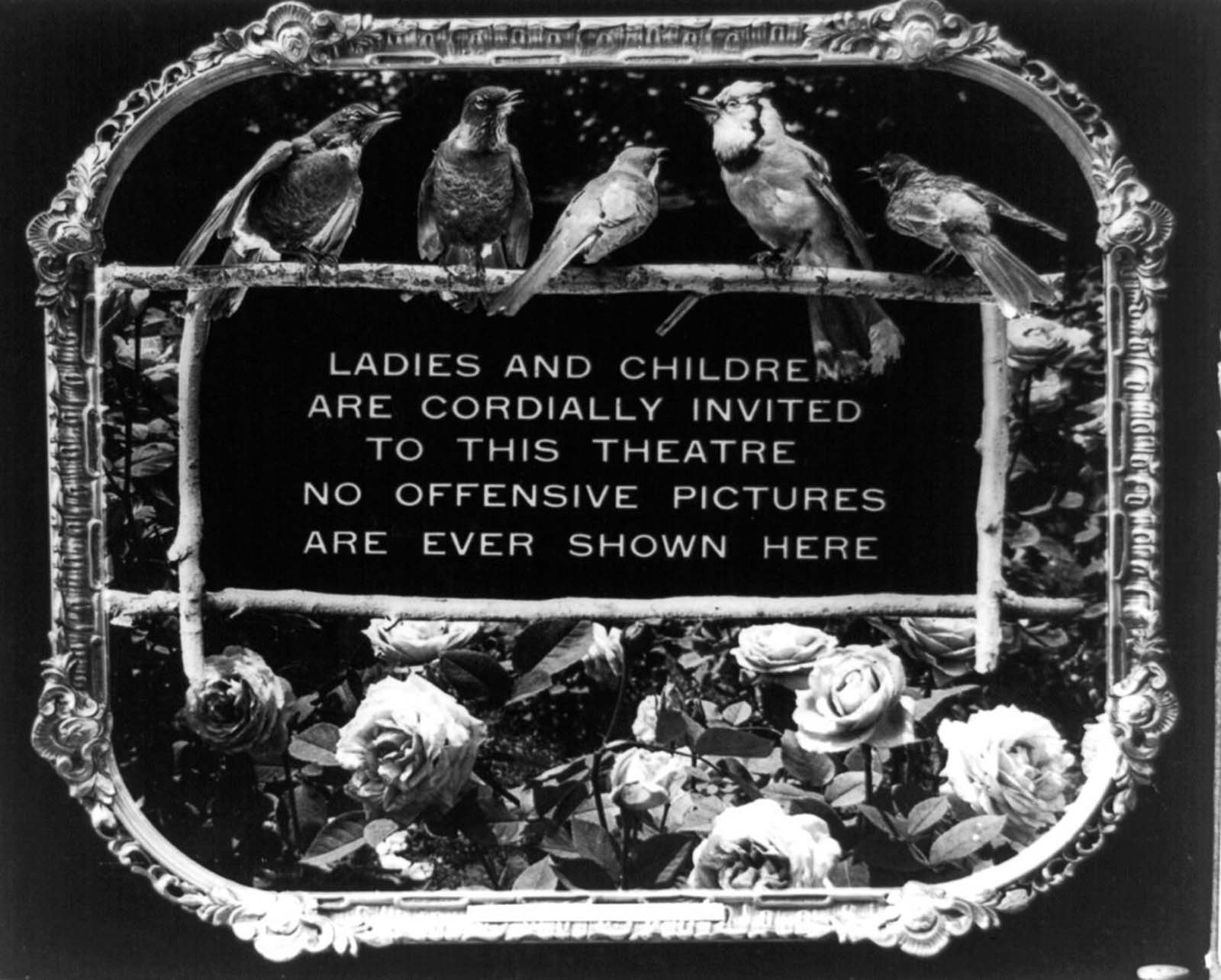
Early movie theaters, especially nickelodeons — named for their five-cent admission price — had a reputation problem. They were seen as rough, low-class establishments, not the kind of place a respectable woman would visit alone. To change that image, some theaters projected slides explicitly welcoming women and children and promising that no offensive material would be shown. The goal was simple: make the theater feel safe enough for families.
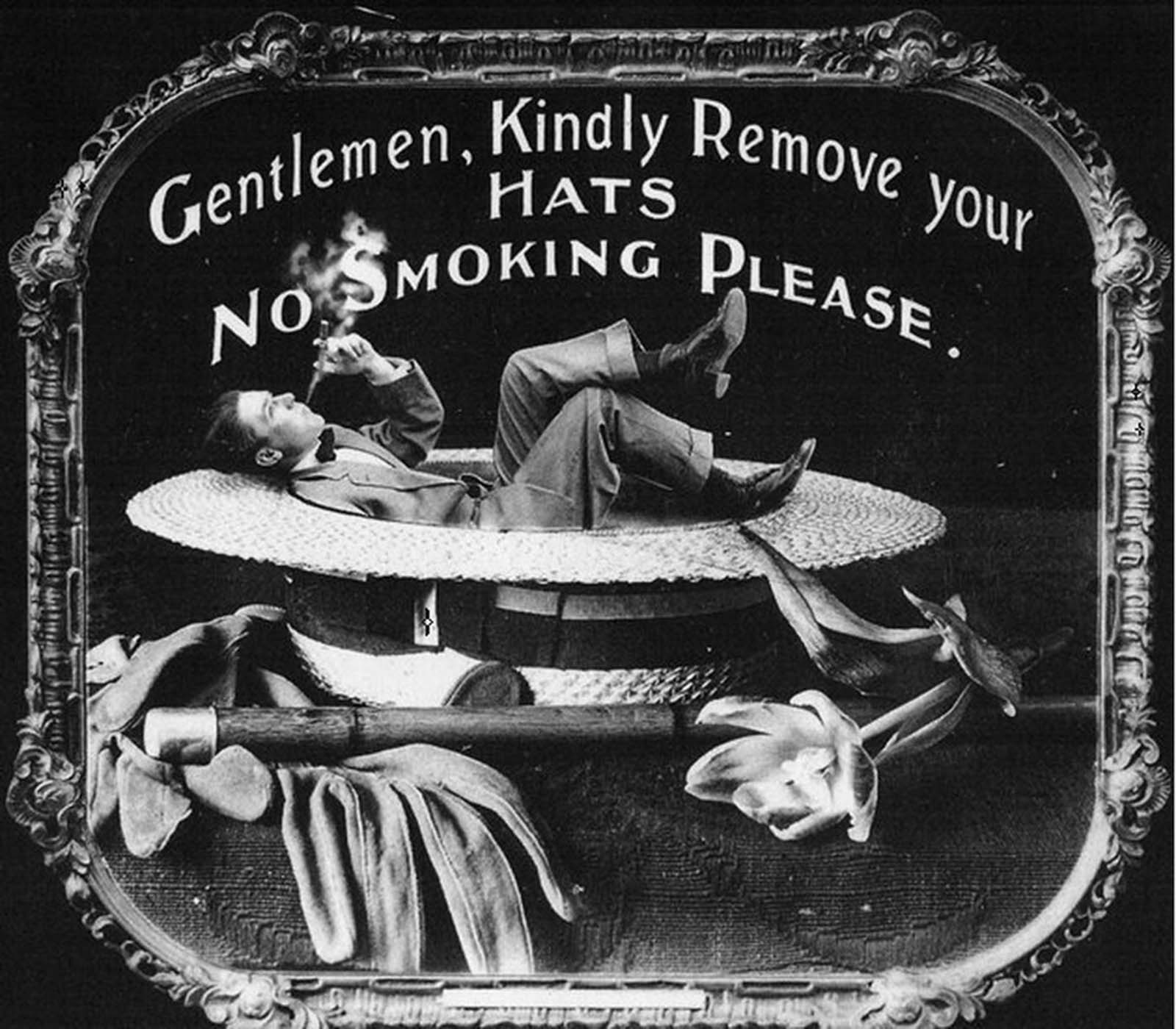
Smoking was a constant issue. In 1912, theaters were already projecting slides asking audience members to keep their cigarettes put away during screenings. This wasn’t just about comfort — early film stock was highly flammable, and a lit cigarette in a crowded theater packed with nitrate film reels was a genuine fire hazard. The no-smoking rule was one of the more practical pieces of etiquette on the list.
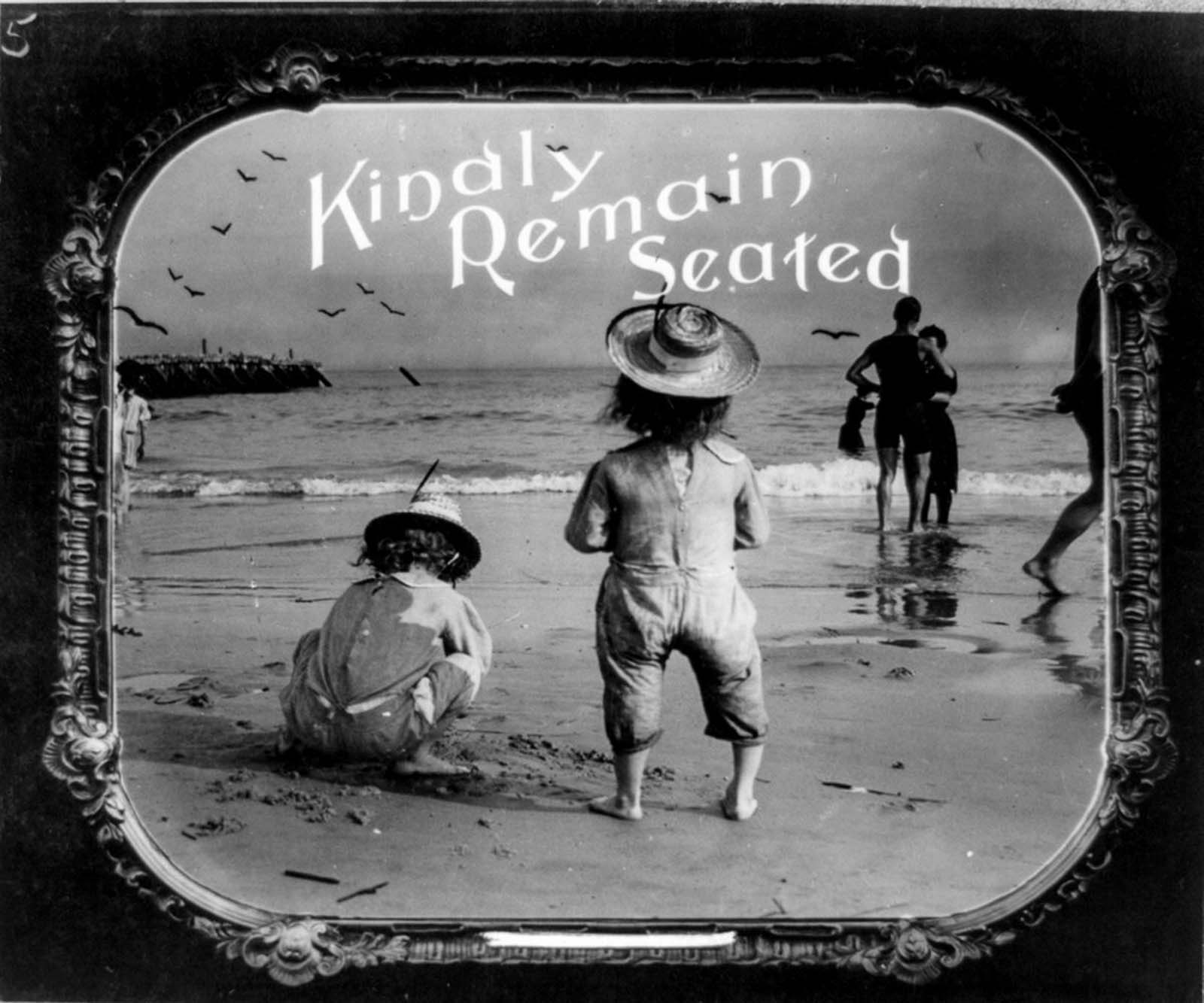
Unlike modern theaters with assigned seating and set showtimes, early nickelodeons operated on a continuous loop. Films ran back-to-back, and patrons could walk in at any point, stay through the end, and then watch the beginning of the film they’d missed. Some screenings lasted as little as ten minutes, covering comedies, melodramas, travel documentaries, and dance performances. People moved around freely, which made “remain seated” a rule that needed to actually be stated.
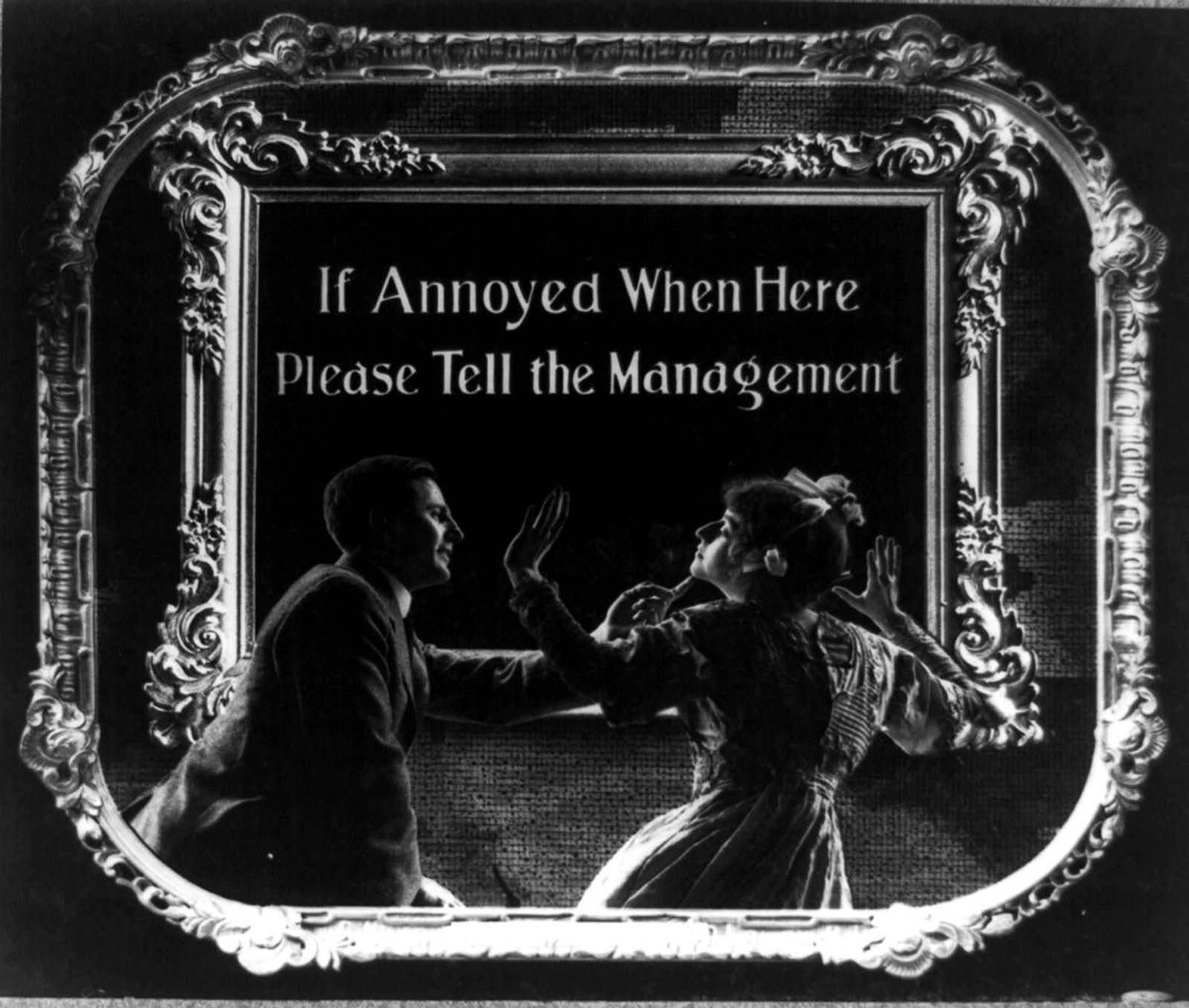
The mixing of men and women in darkened theaters, something that was far less common in the Victorian era, created new social problems. The cover of darkness gave certain men the opportunity to harass women sitting near them. Theaters responded by projecting slides that directly addressed this behavior — instructing women to report any unwanted contact to theater management immediately. This was the early 20th century’s version of a harassment reporting policy, spelled out on a glass slide in a darkened room.
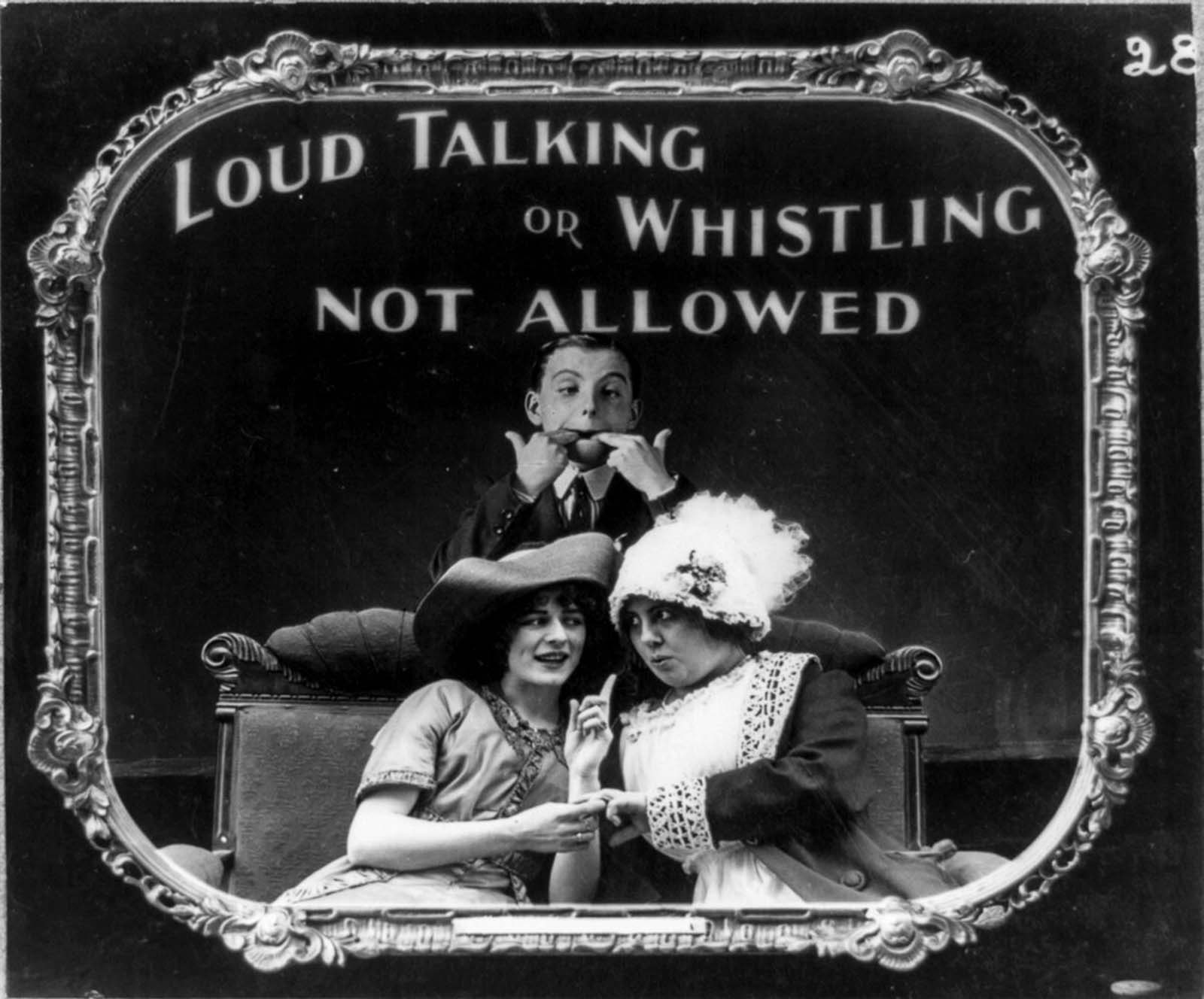
The mixed makeup of audiences — different social classes and races sharing the same space — added tension that theater owners were keenly aware of. The slides served a dual purpose: keeping order while also reassuring certain audience members that their presence was welcome and their safety was being considered. The language used in these slides was carefully chosen to be firm but non-alienating.
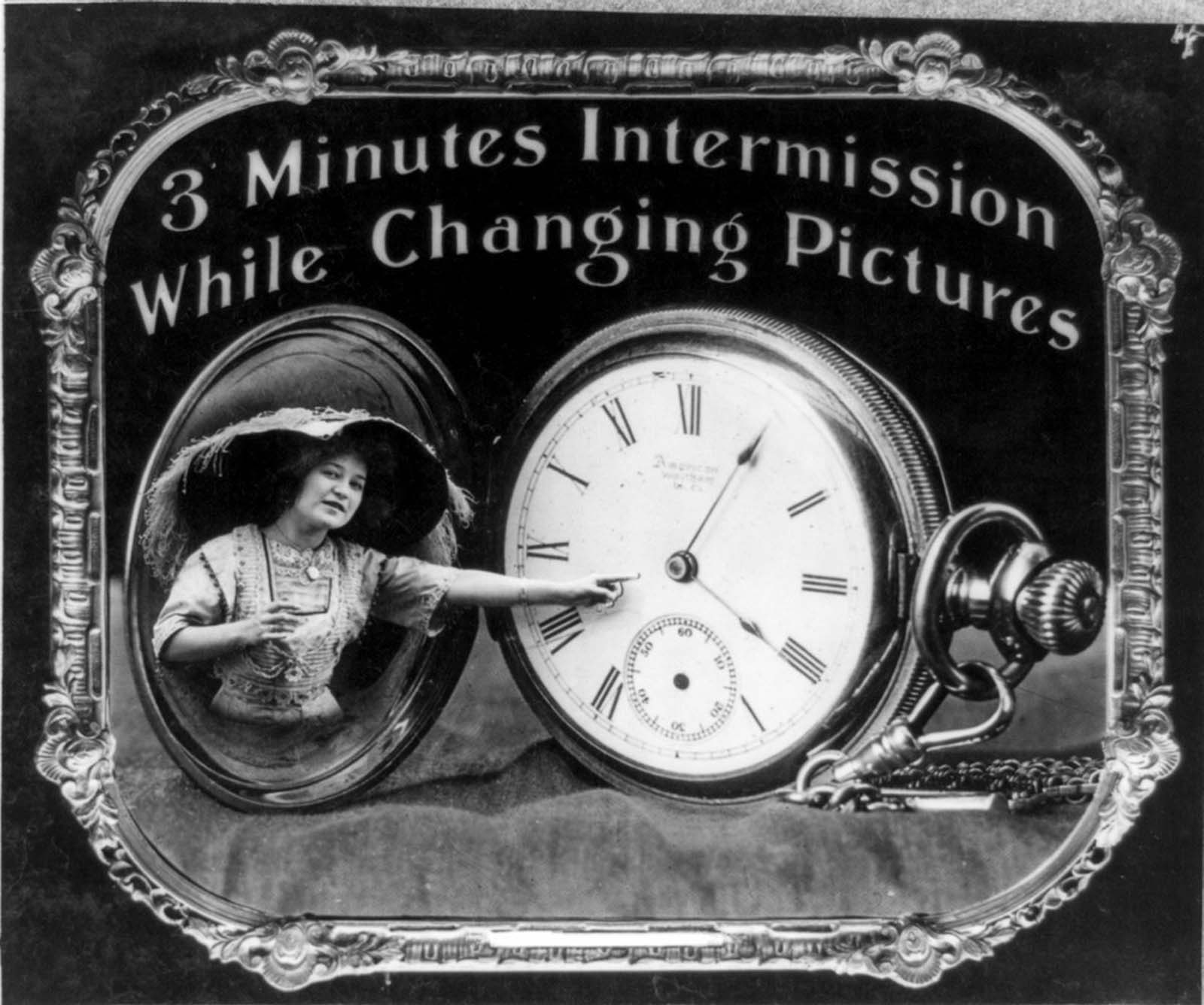
Between reel changes, theaters also used the intermission slide as a moment to communicate lighter, more practical information. Some slides announced that there would be a short wait while staff changed the film. Others used charming, unrelated images — photographs of nature, animals, or everyday scenes — as a backdrop for the message. The tone of these intermission slides was usually relaxed and good-humored.
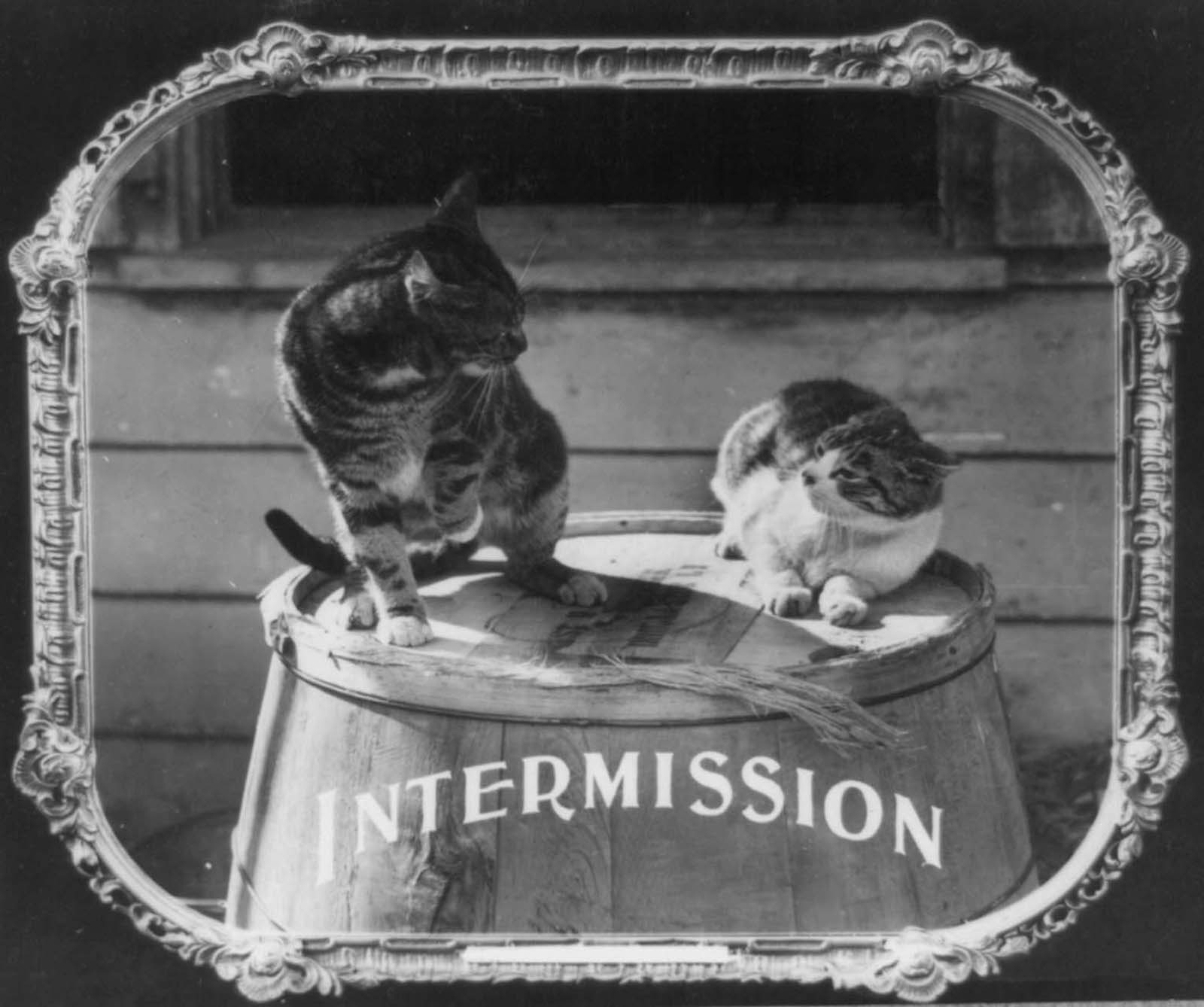
The imagery chosen for some slides had nothing to do with the message being delivered. A photograph of two cats lounging on a barrel, for example, was paired with the word “intermission.” The charm of the image was the point — it kept audiences relaxed and in their seats during the break rather than flooding the aisles.
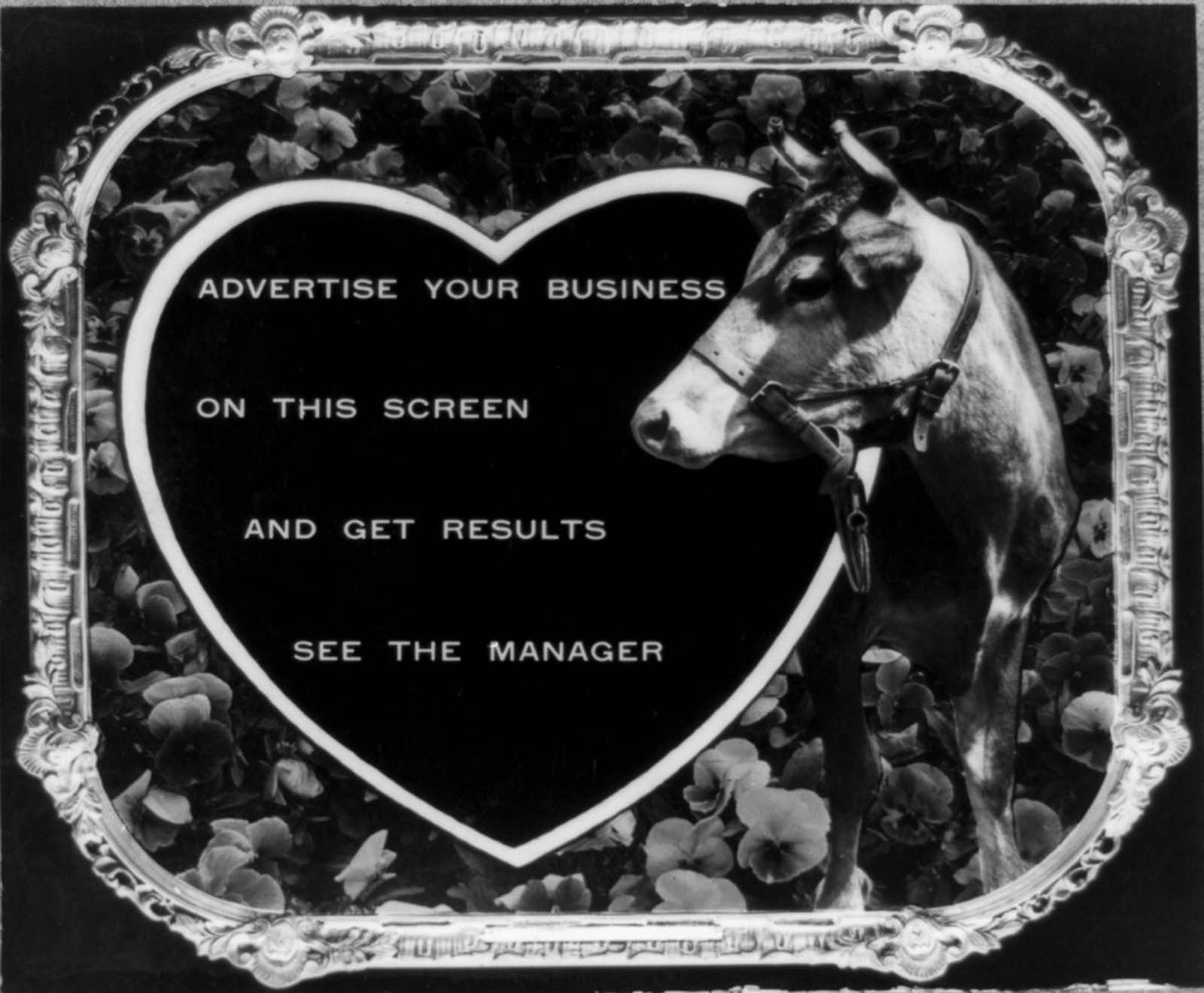
Not every slide was about behavior. Theater owners also used the captive audience to their advantage by running slides that promoted their own business services. Some encouraged patrons to speak with the manager about advertising opportunities, turning the reel-change break into something resembling a commercial break. It was an early and practical form of in-theater advertising.
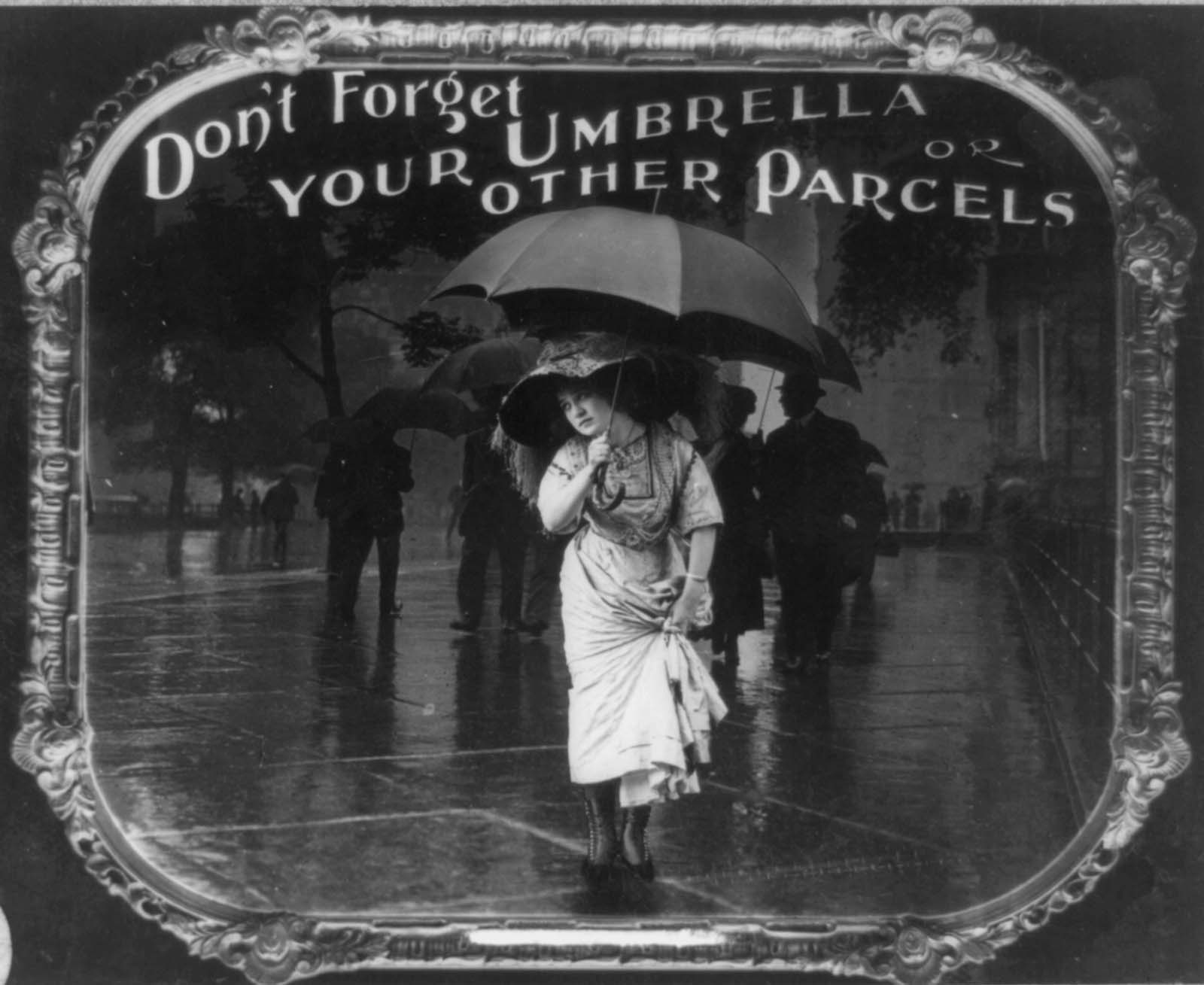
Some slides were purely informational, with no etiquette angle at all. One well-documented example simply warned audience members that they might want an umbrella when they left, suggesting rain was expected. In an era before smartphones and constant weather updates, a slide like this was genuinely useful to the people sitting in the theater.
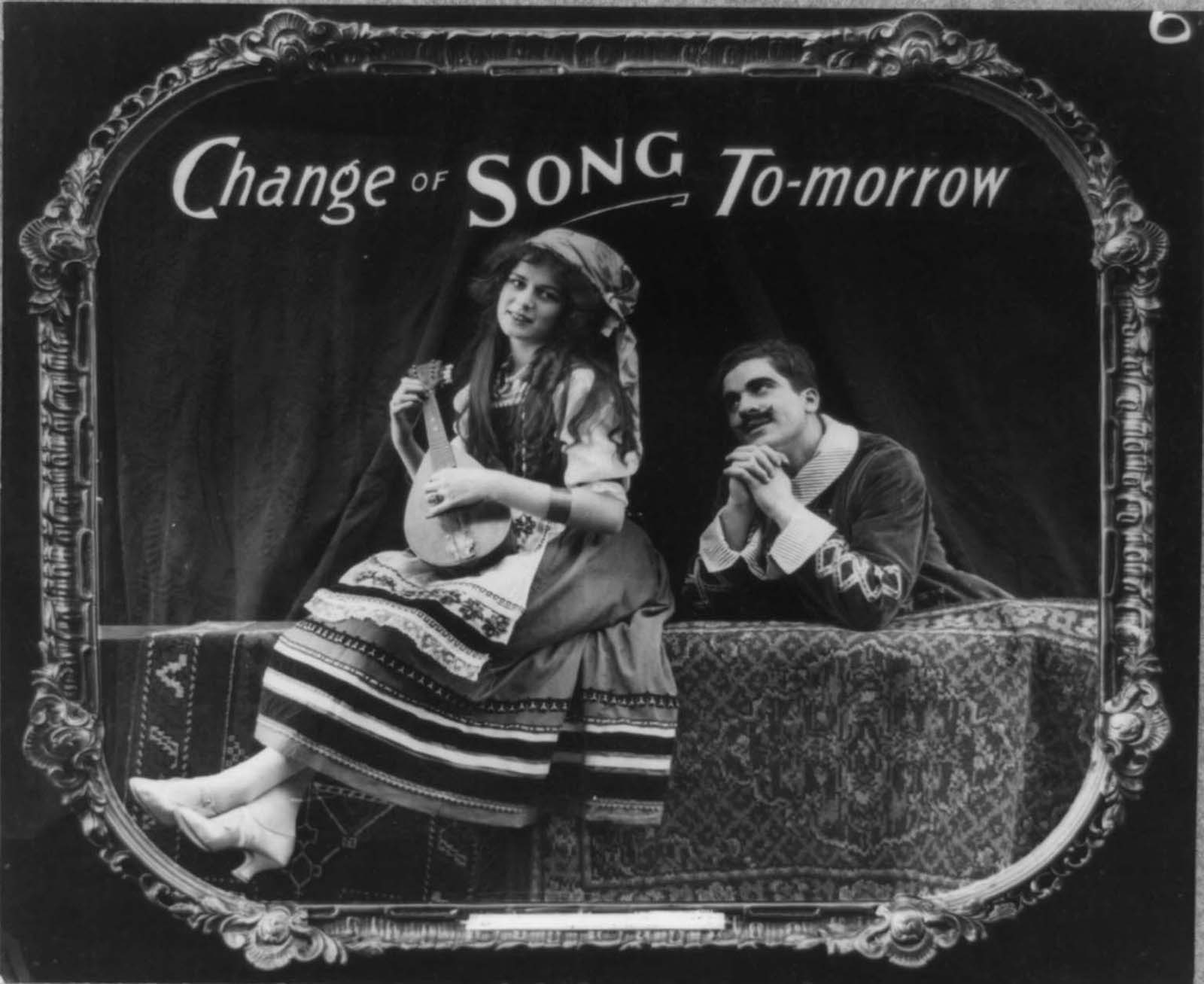
Live music was a standard feature of silent film screenings. A pianist, organist, or small ensemble would perform alongside the film, providing sound where the movie itself had none. The images used on intermission slides sometimes reflected this musical atmosphere, featuring performers and instruments as a nod to the live entertainment that accompanied every showing.
By 1910, tens of millions of Americans were visiting nickelodeons and movie theaters every single week. The five-cent ticket price made movies accessible to nearly everyone, drawing in working-class families, immigrants, and city dwellers who had never had affordable entertainment options before. Managing that enormous and diverse crowd required more than just ushers — it required a whole system of projected social instruction delivered one glass slide at a time.
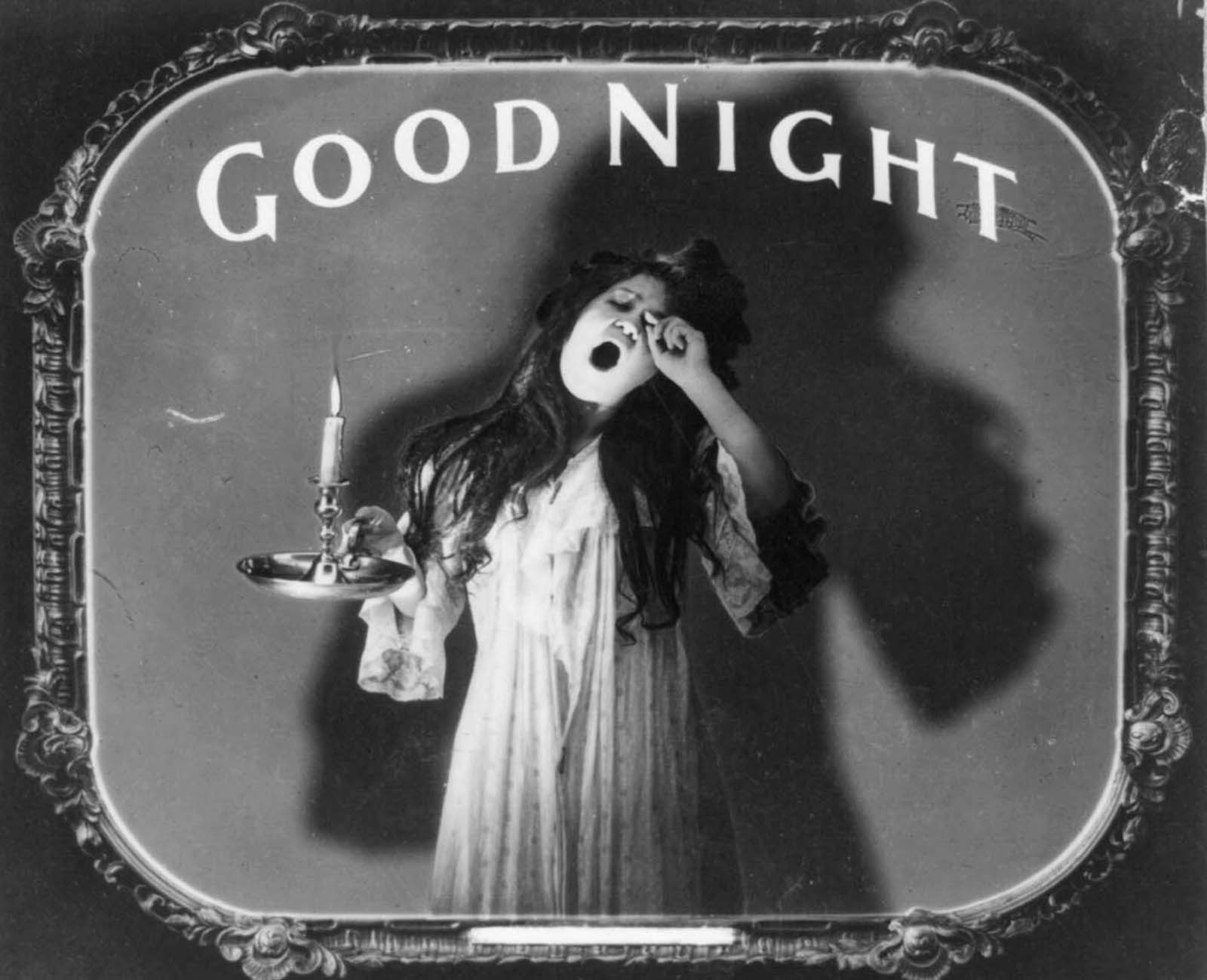
When the final reel ended, theaters even had a slide for that. A woman yawning and holding a candle, paired with the word “Goodnight,” sent audiences home with a gentle nudge. It was a fitting end to an experience governed from start to finish by projected instructions — a world where even saying goodbye required a glass slide and a projector.