Born Margaret Anne Mary Mundy in 1915, Meg Mundy was an English-American model and actress whose career placed her at the very center of mid-century American fashion. By the 1940s, she had become one of the most recognizable faces in print, signing with the prestigious Ford Modeling Agency — the same agency that represented some of the most iconic models of the era. Her look was striking and precise, the kind that photographers and fashion editors sought out again and again.
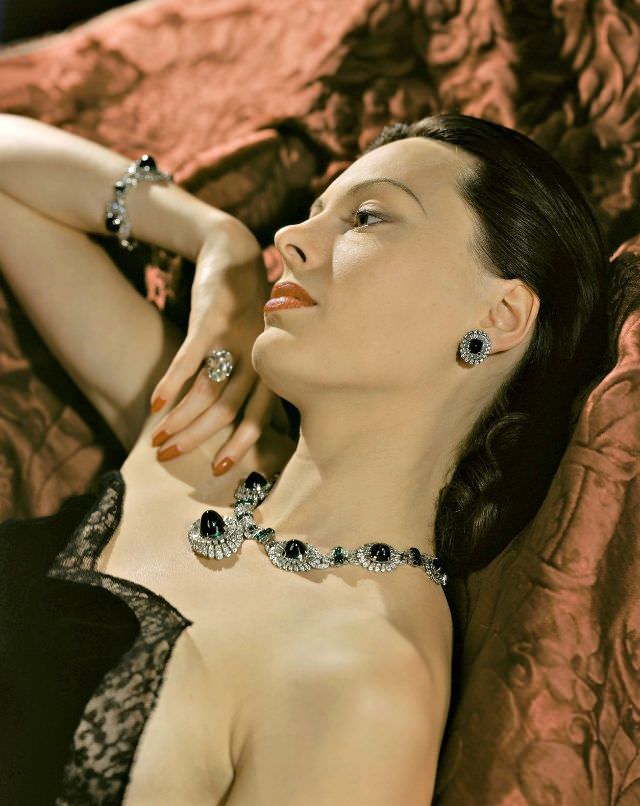
Meg graced the covers and editorial pages of Vogue, Harper’s Bazaar, and Glamour, appearing in spreads that showcased both high fashion and accessible style. Her earliest Vogue appearances came in 1940, when she modeled everything from fine jewelry to high-end outerwear — often photographed in elaborate, carefully composed looks that reflected the elegance of the era.
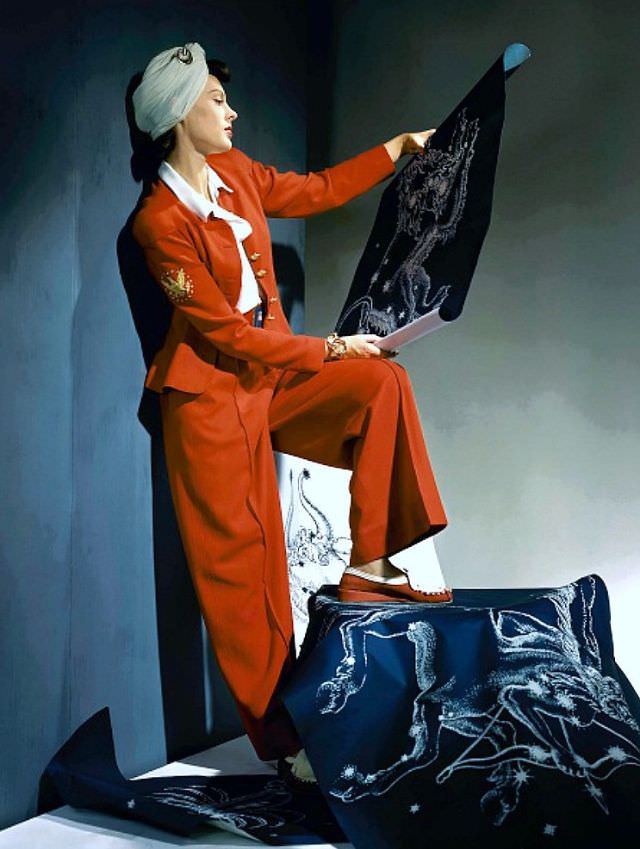
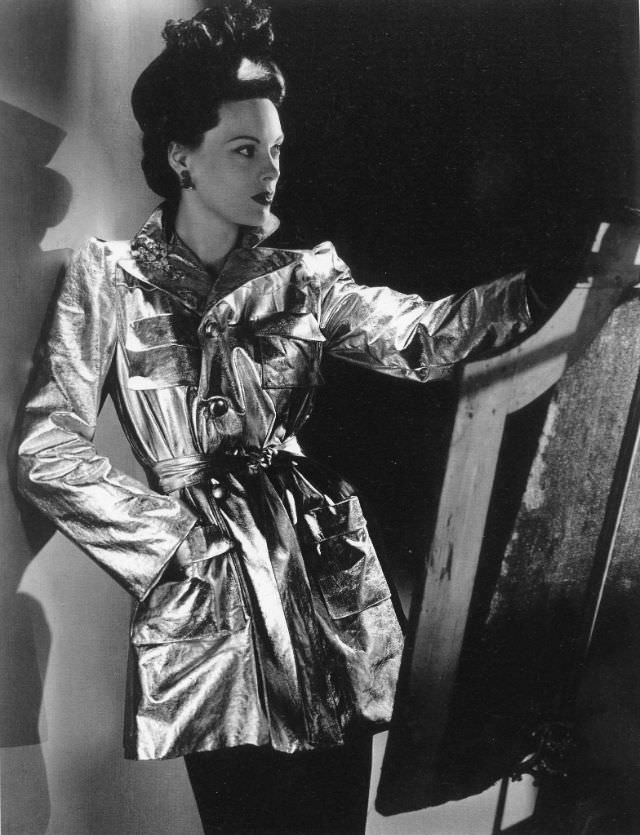
In the fall of 1940, Vogue featured Meg in a 22-carat gold-washed kid trench coat by Mainbocher — one of America’s most celebrated designers at the time. Mainbocher was known for dressing socialites and royalty, and having Meg front his designs spoke to her standing in the industry. The image is a clear example of how she embodied the refined, polished aesthetic that defined prewar fashion.
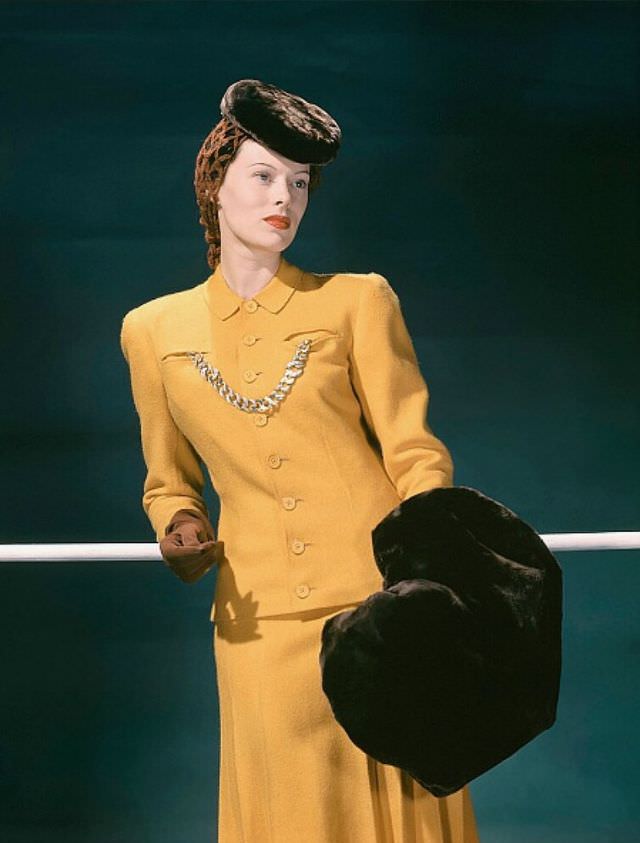
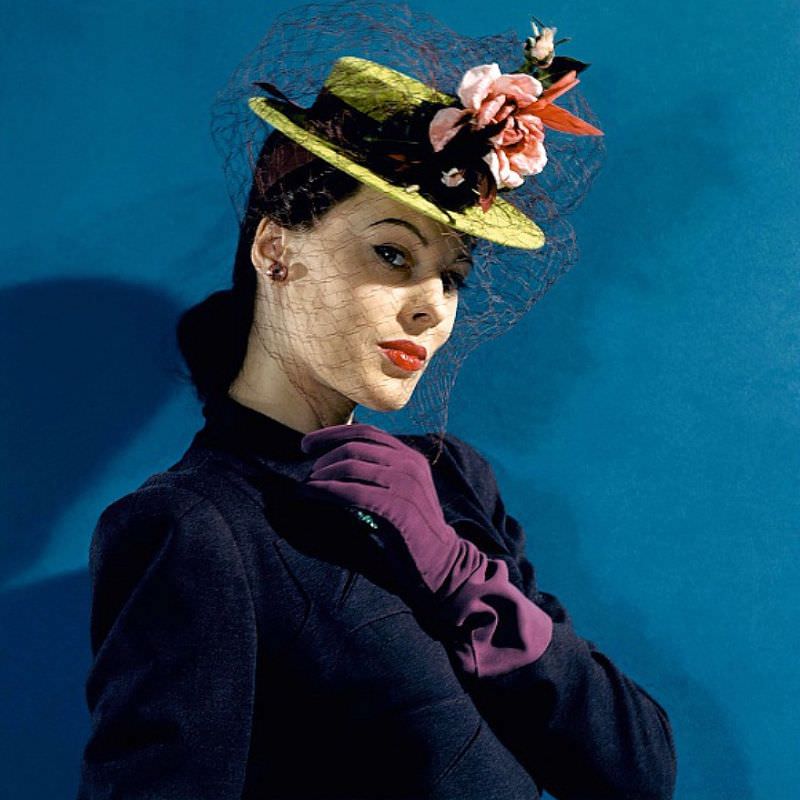
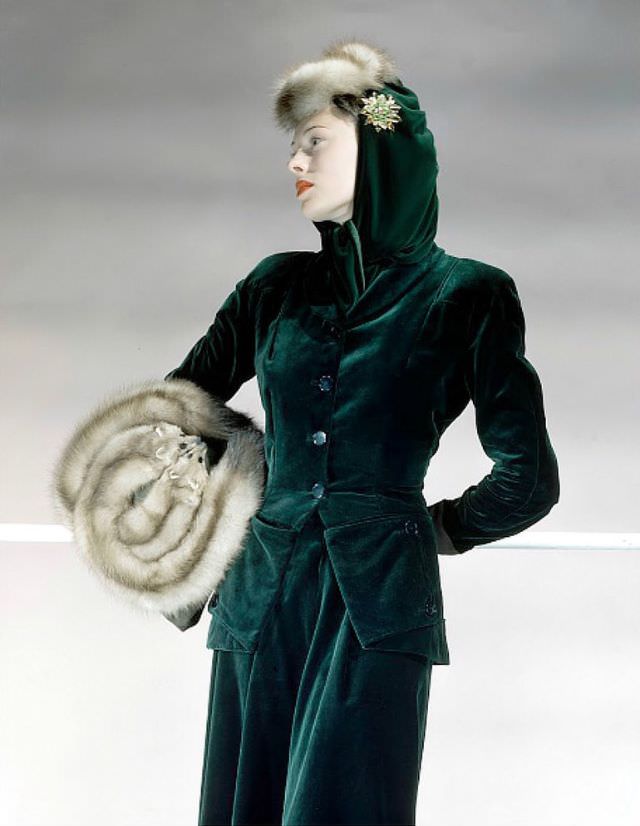
By 1941, Meg was appearing in Vogue with striking seasonal looks — wool suits in bold colors, fur-trimmed accessories, and elaborate millinery. A yellow wool suit paired with a brown sealskin hat and muff showed how fashion at the time leaned on rich textures and coordinated accessories as a mark of sophistication.
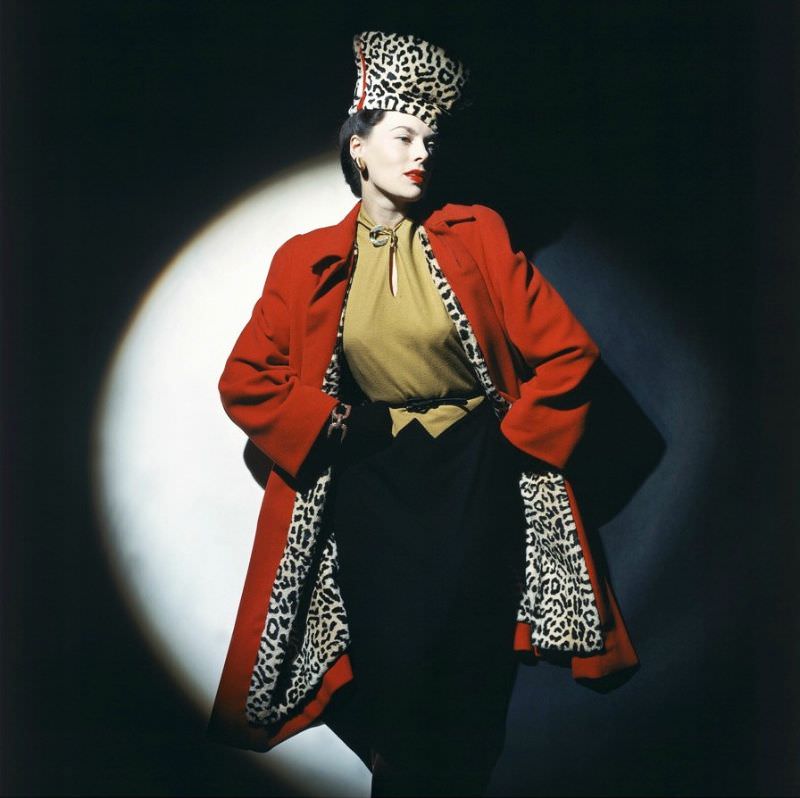
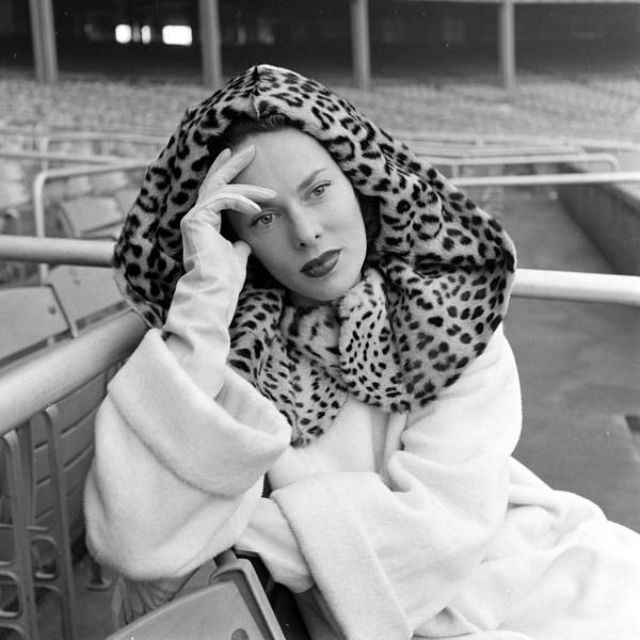
Wartime restrictions on fabric and materials shaped American fashion in 1942, but the industry adapted with creativity. That year, Meg modeled a two-toned wool jersey dress from Young-Times, worn beneath a red Forstmann wool coat lined in leopard-stenciled rabbit fur — a design that balanced wartime practicality with the glamour readers still expected from their fashion magazines.
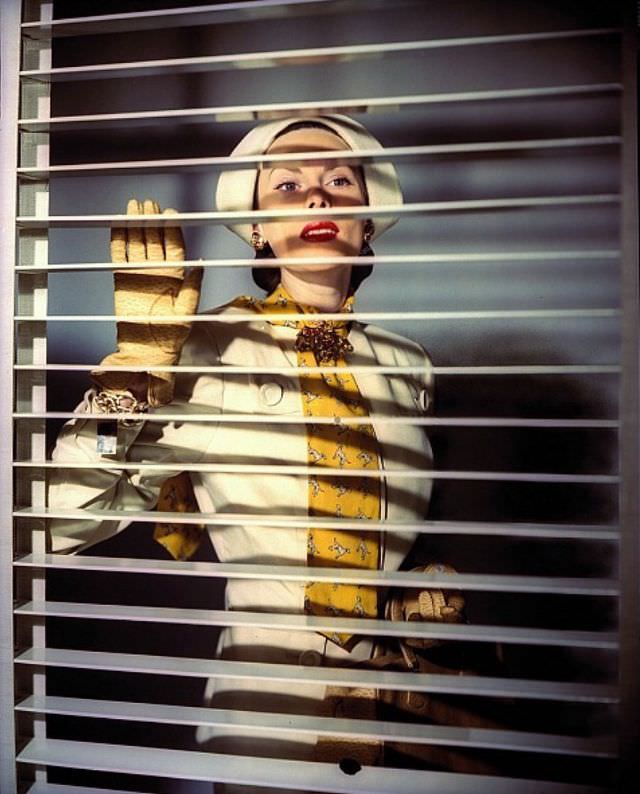
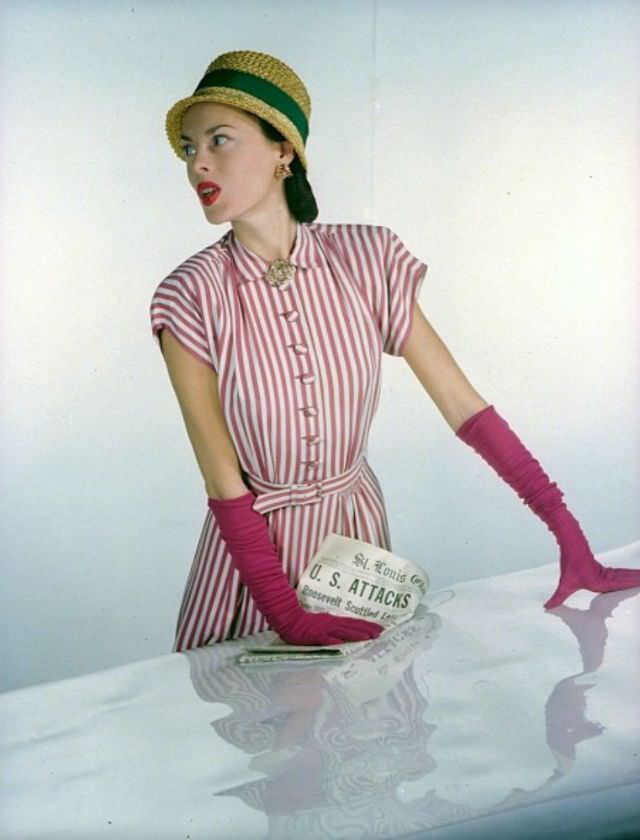
Through the mid-1940s, Meg continued to appear regularly in Vogue, modeling summer suits, printed shirtwaist dresses, and sophisticated outerwear. A 1944 shoot featured her in a crisp white summer suit with a yellow terrier print cravat, while a 1945 spread showed her in a red and white striped rayon crêpe dress by William Bass — both images capturing the practical-yet-polished direction of wartime American style.
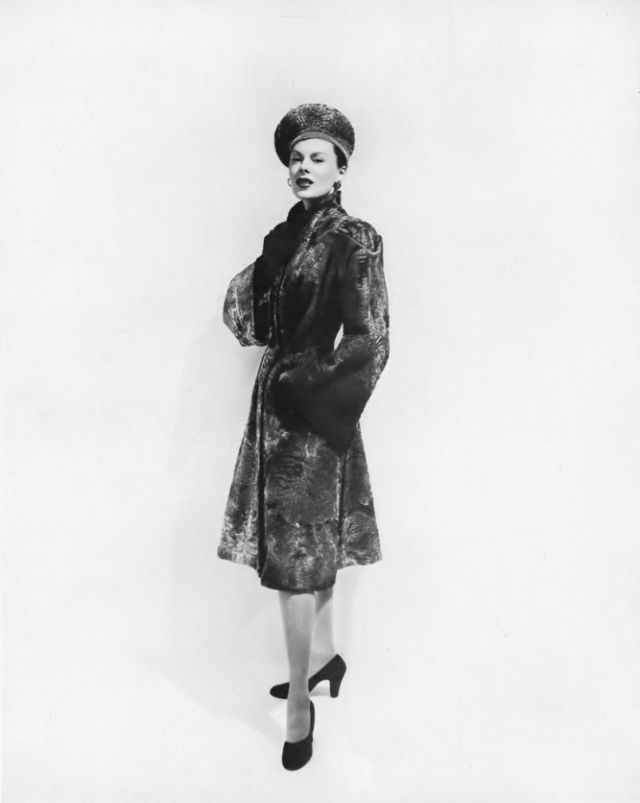
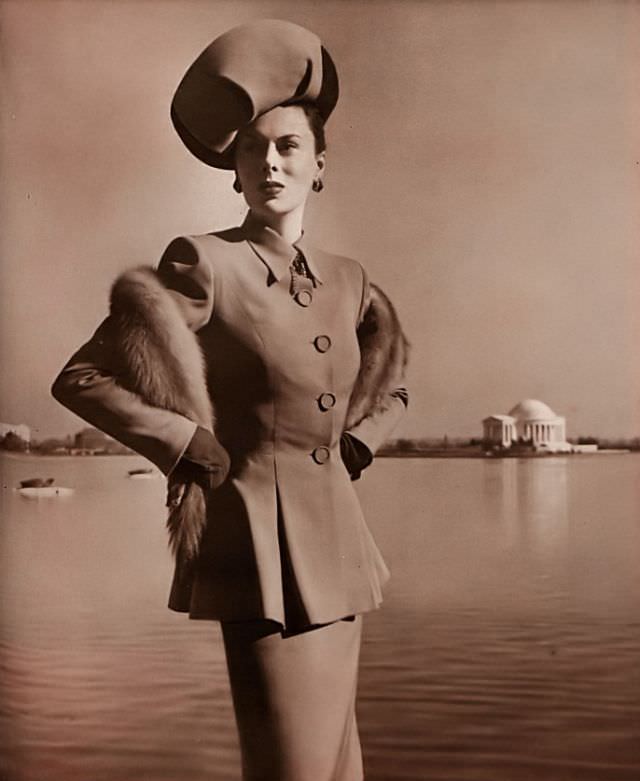
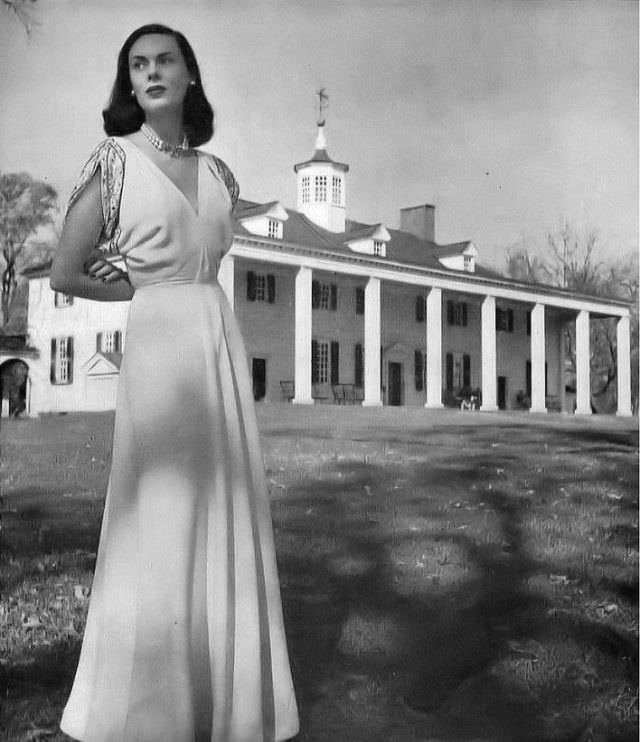
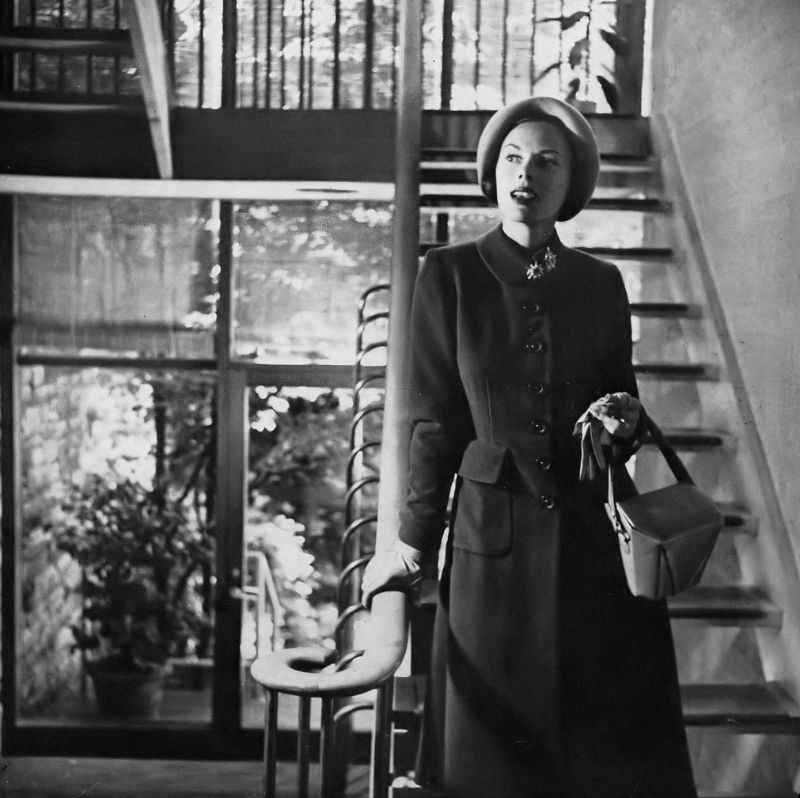
The postwar period brought a renewed energy to fashion, and 1946 marked one of Meg’s most prolific years in print. She appeared across both Vogue and Harper’s Bazaar in a wide range of looks — from a gray Russian broadtail coat and matching beret made to order at Henri Bendel, to a finely tailored suit by Philip Mangone. One notable image placed her at George Washington’s Mount Vernon in a gown by Hattie Carnegie, merging American history with high fashion in a way that was distinctly of its time.
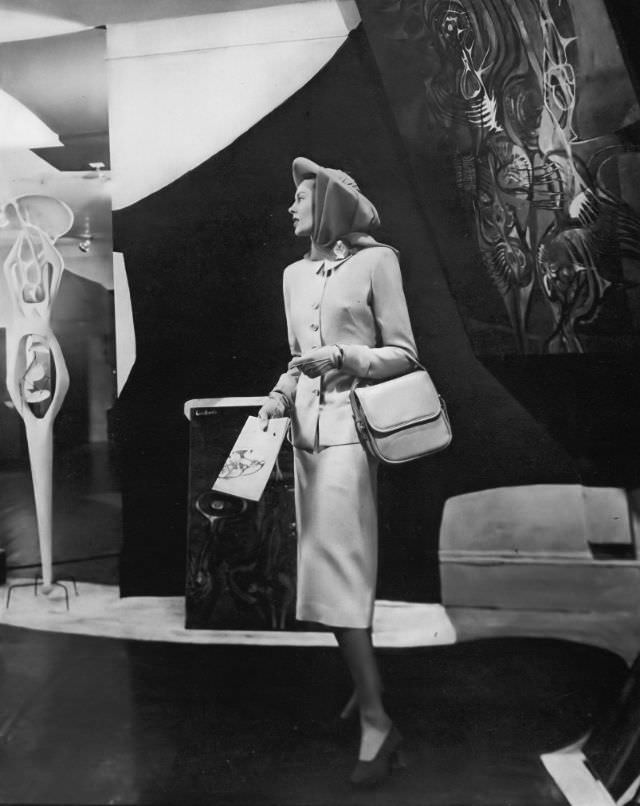
Harper’s Bazaar was equally eager to feature Meg throughout 1946. She appeared in a worsted suit of pink-on-black stripes by Miron, a navy-blue dress interlaced with a polka-dot sash by Pattullo, and a silk crêpe dress by Rose Barrack. These appearances showed her range — moving easily between structured tailoring and softer, more fluid designs.
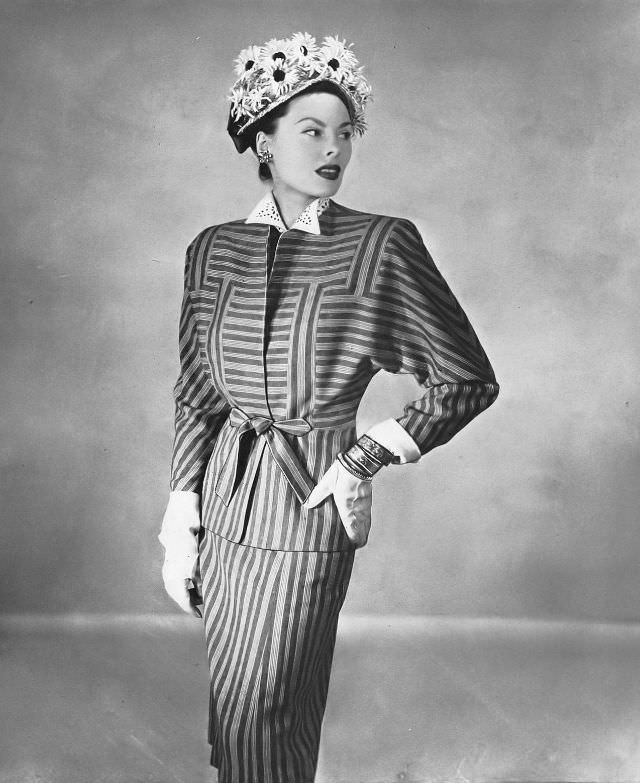
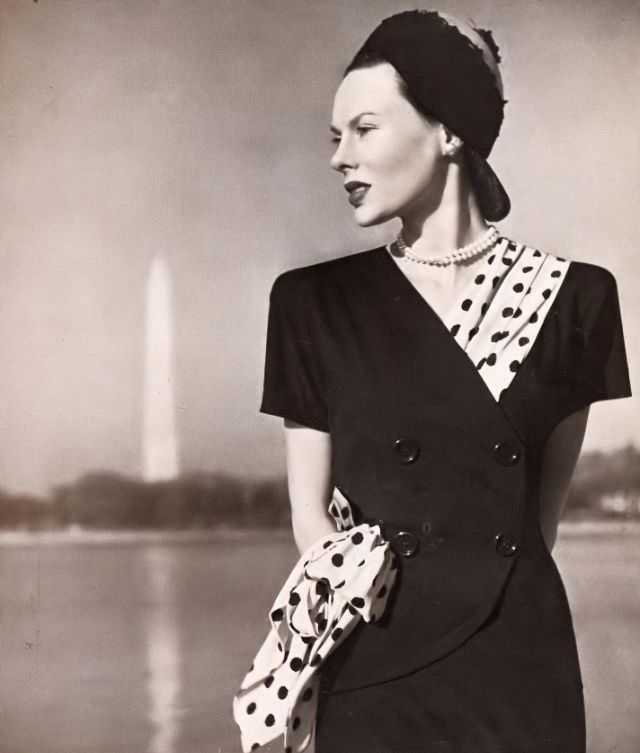
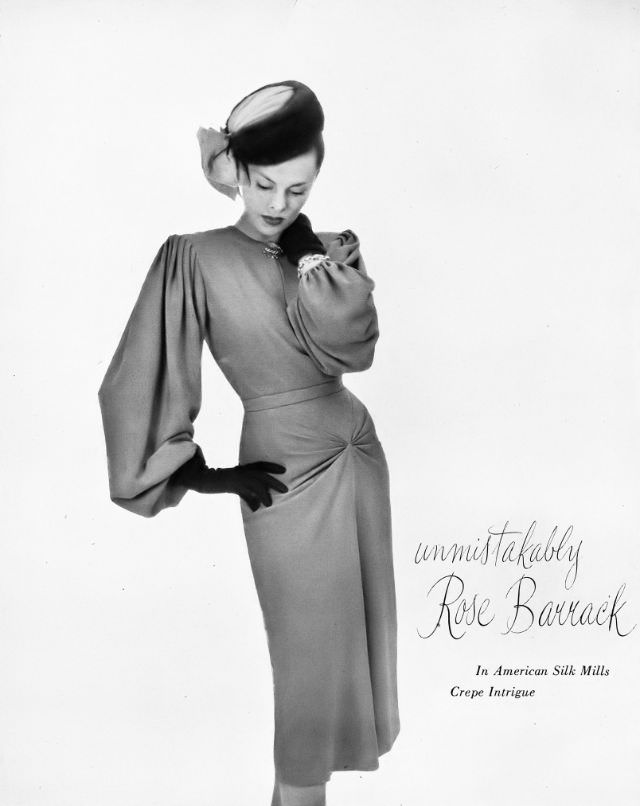
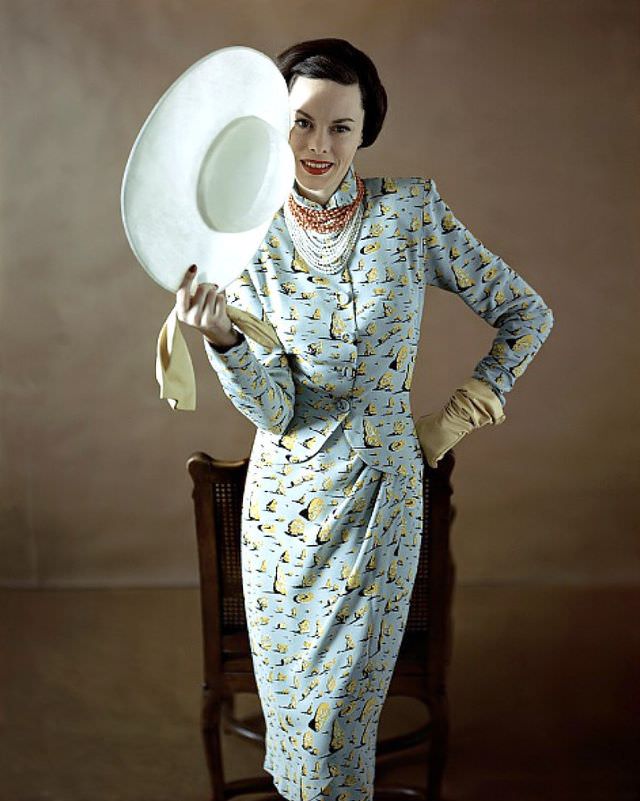
By 1947, Meg’s presence in fashion editorial reached its peak. She worked with a remarkable roster of designers and retailers, appearing in Vogue and Harper’s Bazaar almost monthly. One especially striking spread featured her in a coat-dress by Mildred Orrick — a city-black waffle-piqué design paired with a straw harlequin-shaped hat and white calf bag by Bienen-Davis, all available at Bergdorf Goodman. Another notable look that year featured a dress and jacket printed with Salvador Dalí’s ‘Desert Rocks’ design, part of Vogue’s own pattern line.
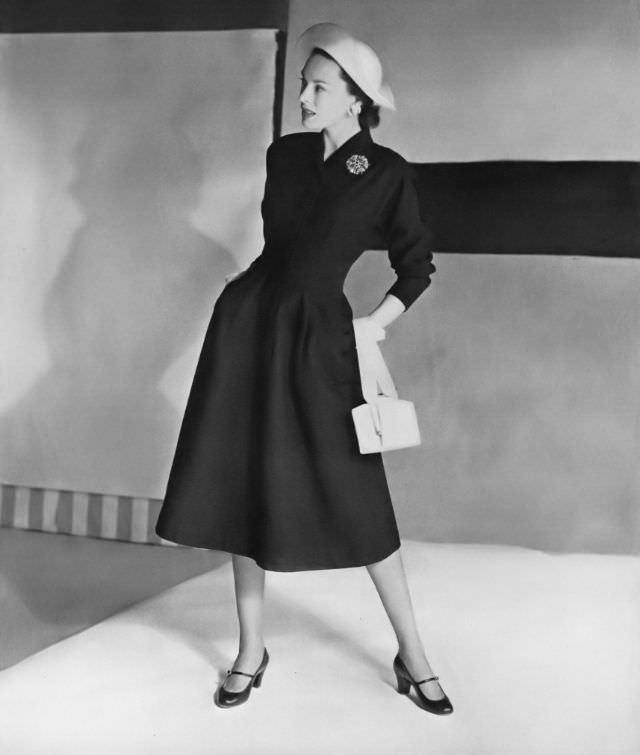
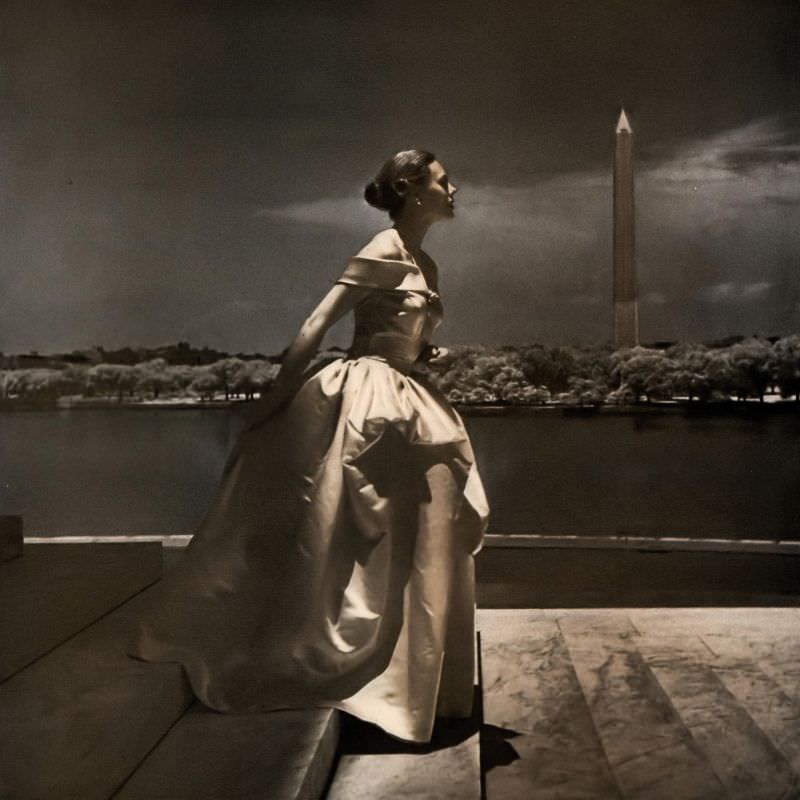
Evening wear was equally well-represented in Meg’s 1947 portfolio. She modeled a slipper-satin gown by Nettie Rosenstein for Vogue’s October issue, and a silver satin evening dress by Jack Herzog for Harper’s Bazaar’s November issue — a shoulder-baring design finished with a fichu of folds. The range of what she modeled in a single year, from casual suits to formal gowns, reflected both her versatility and the sheer volume of demand for her image.
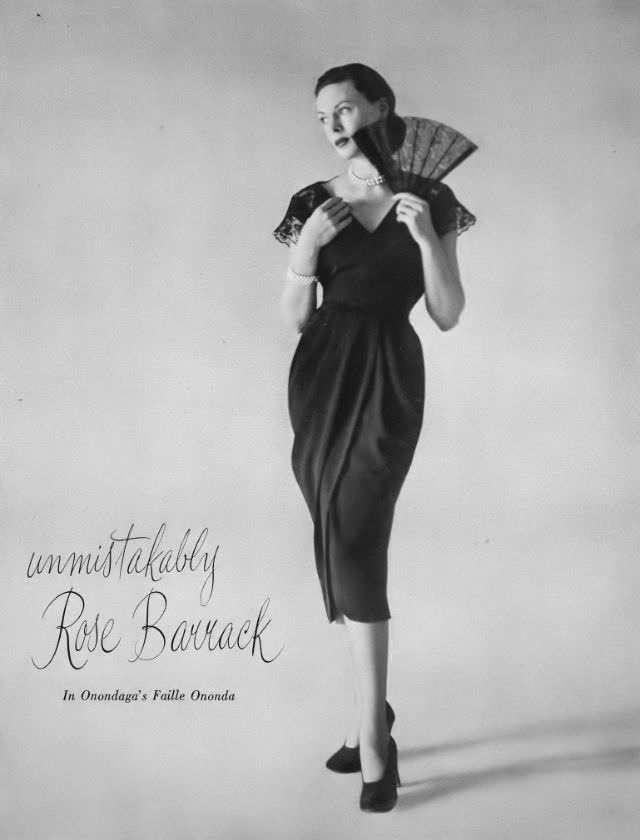
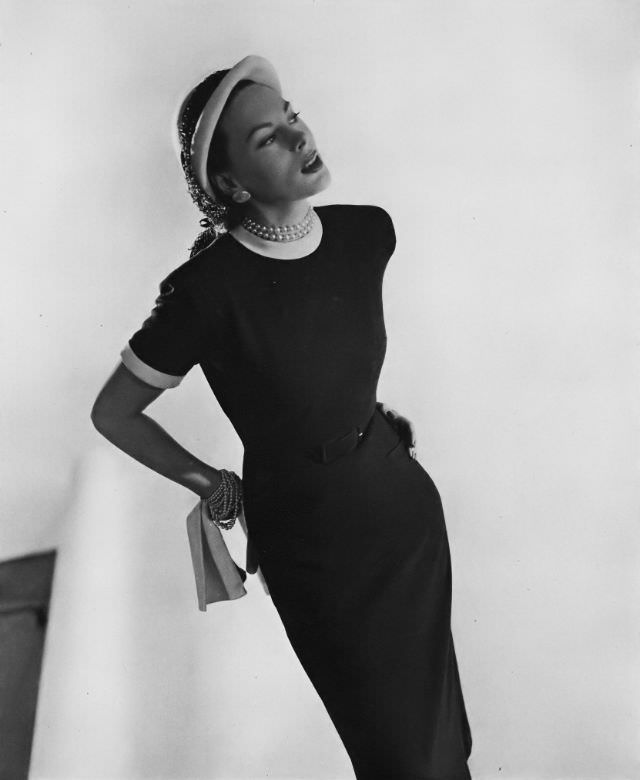
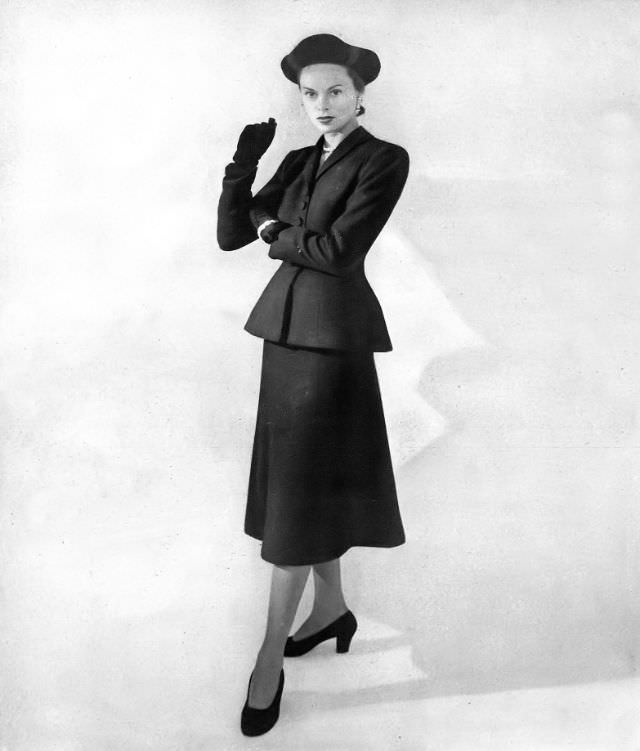
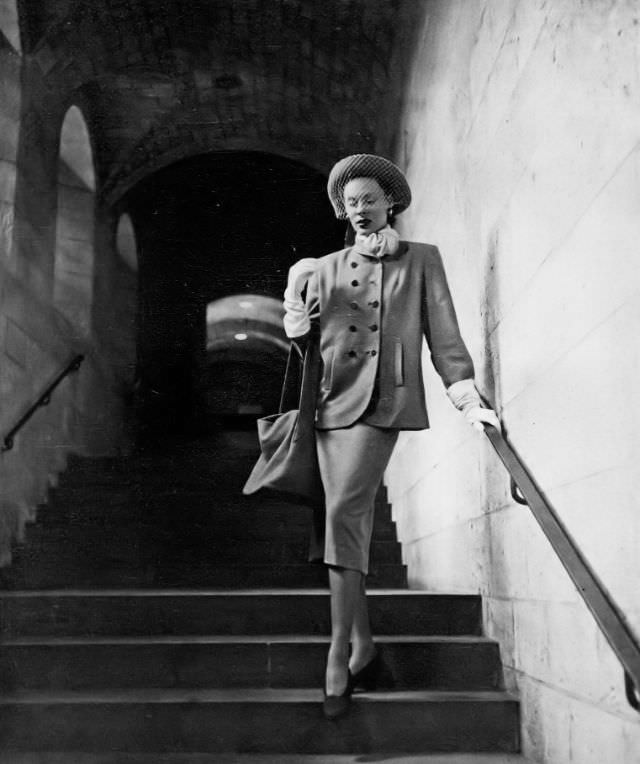
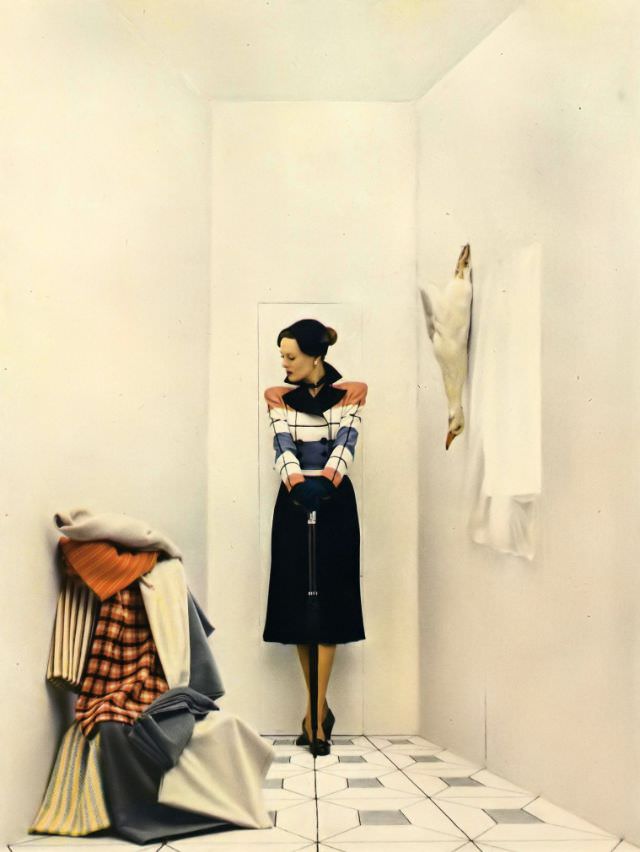
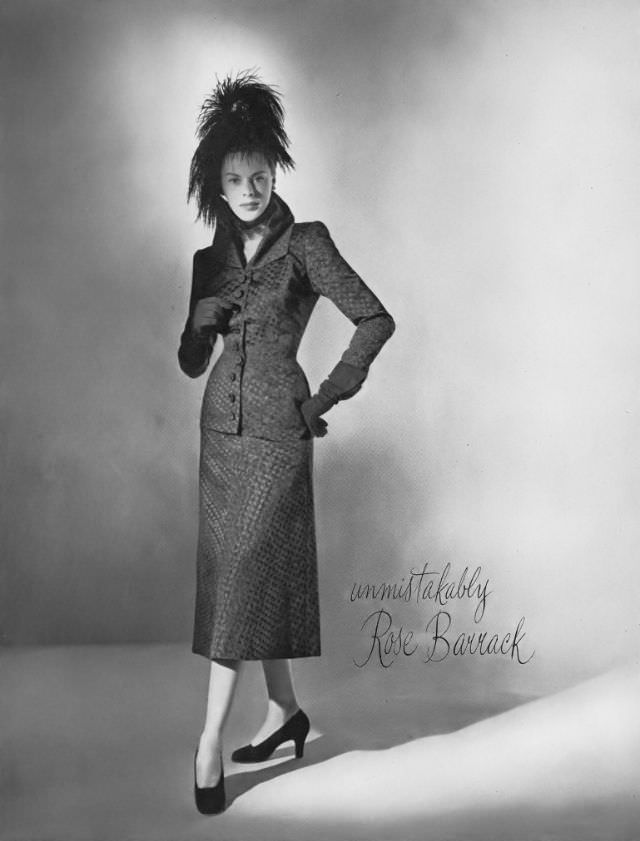
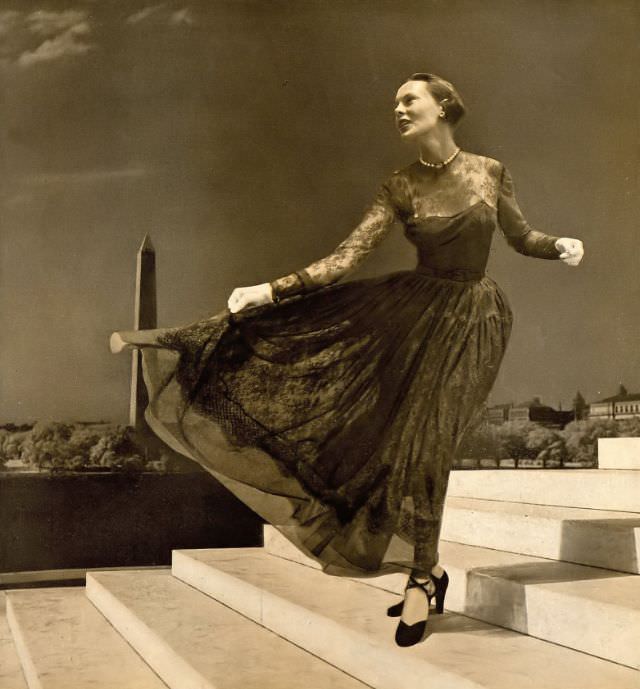
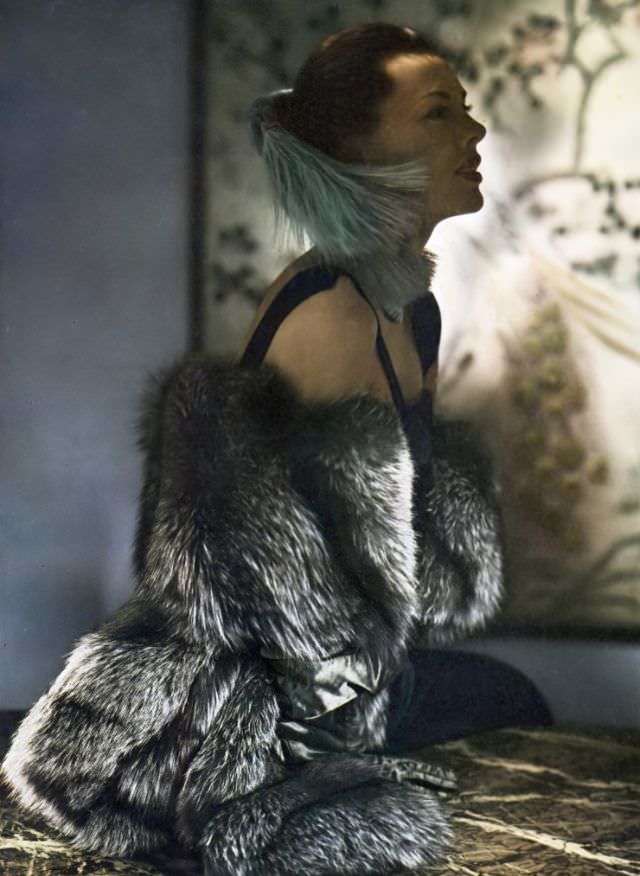
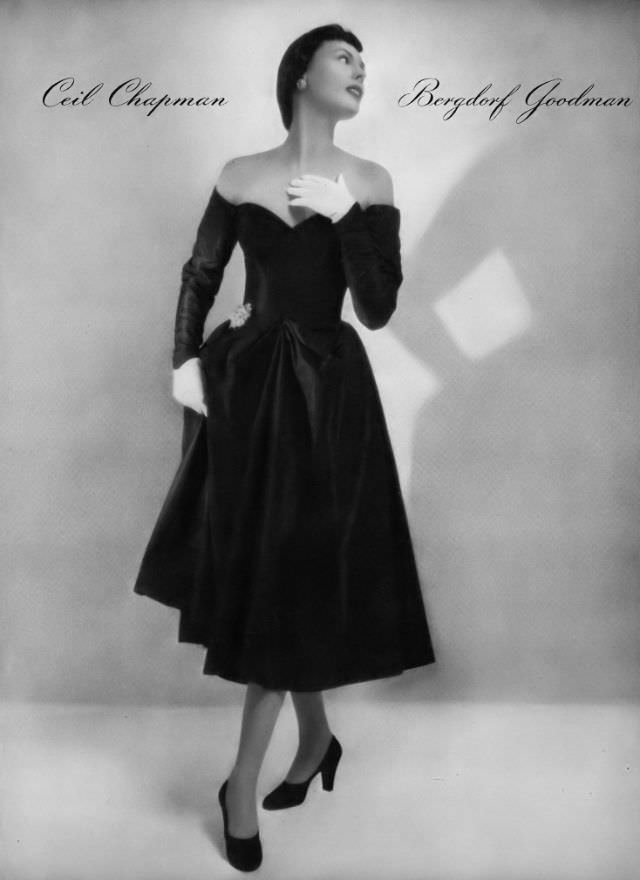
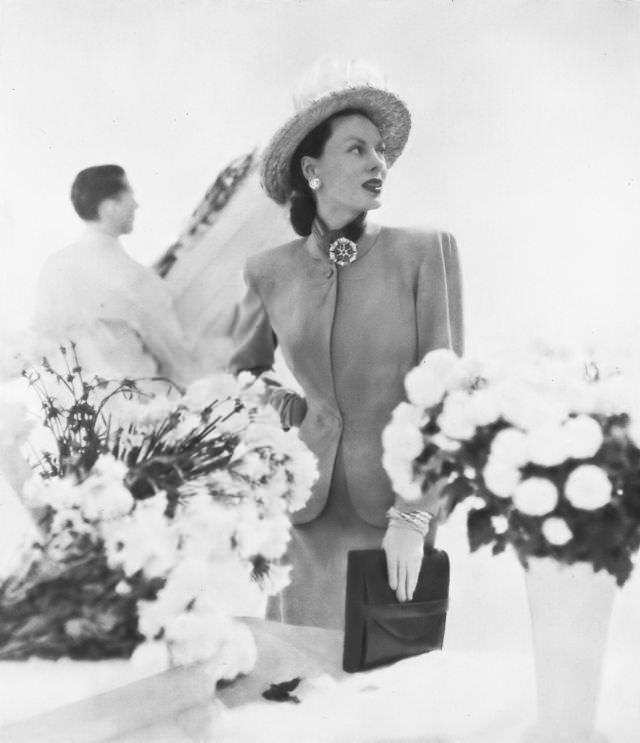
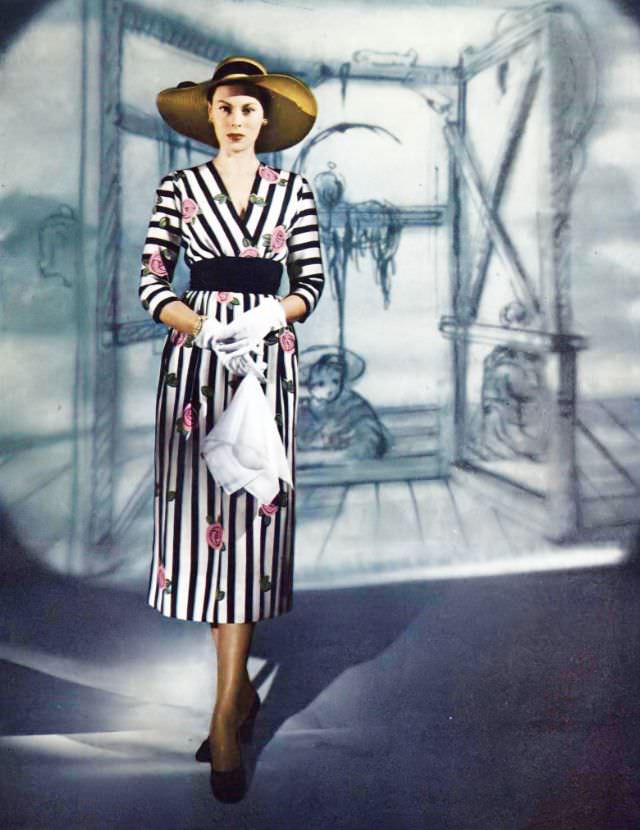
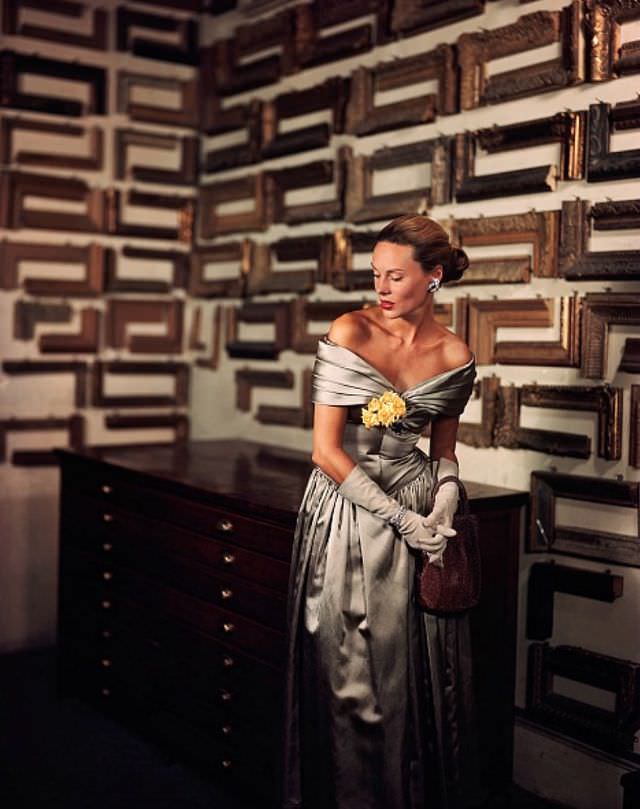
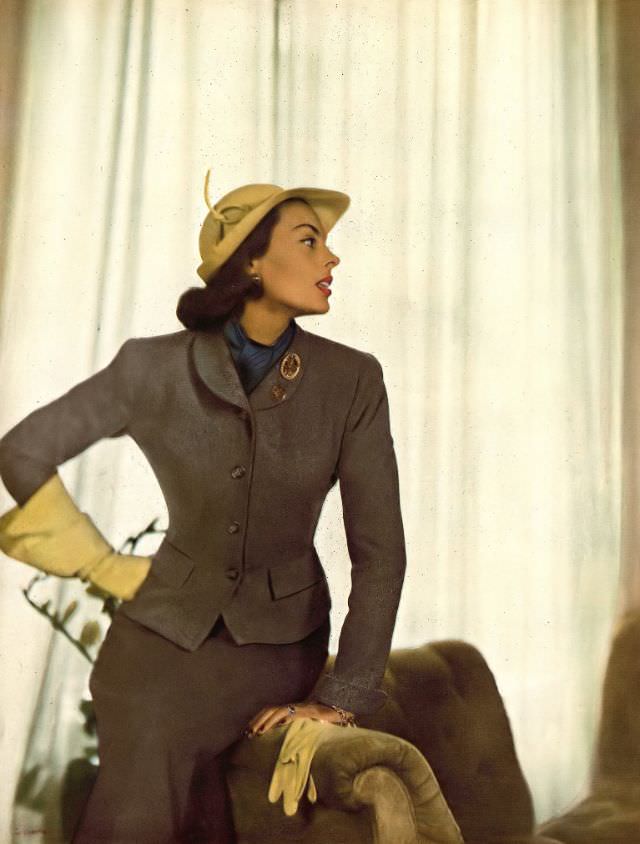
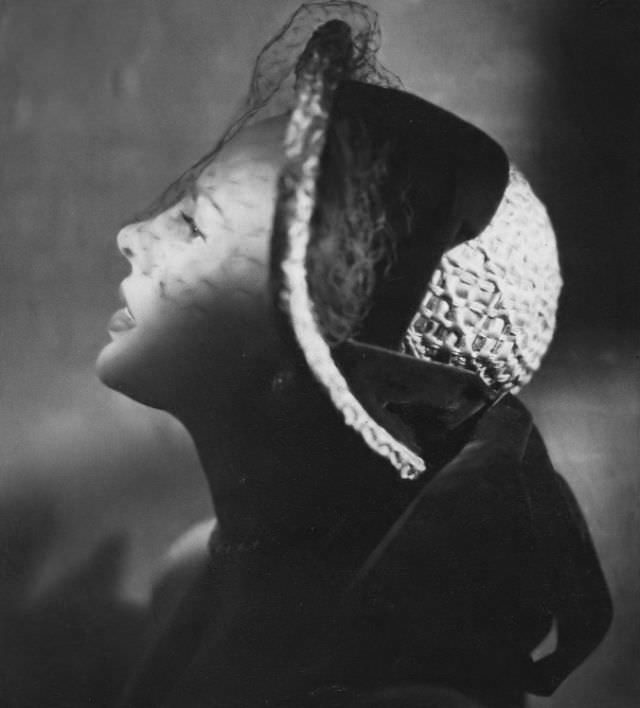
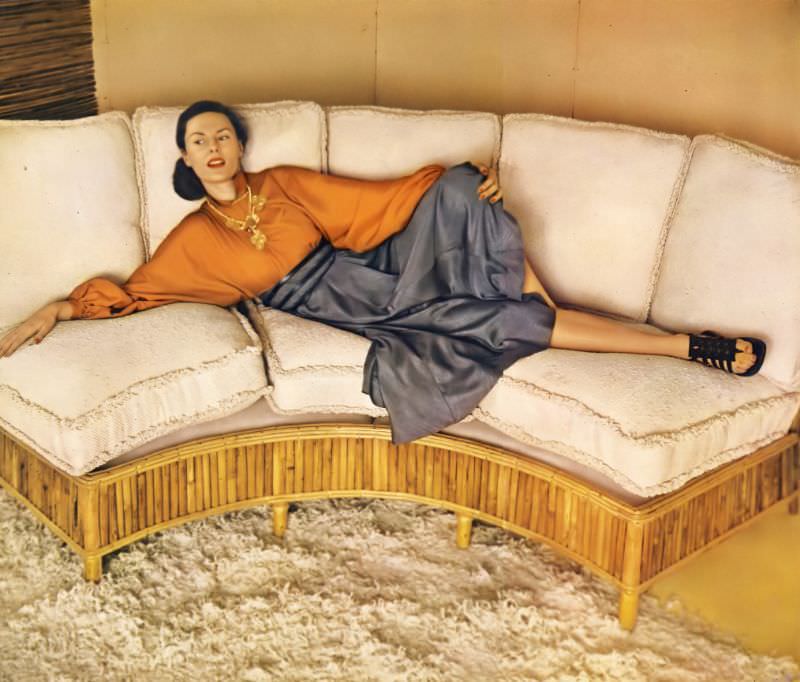
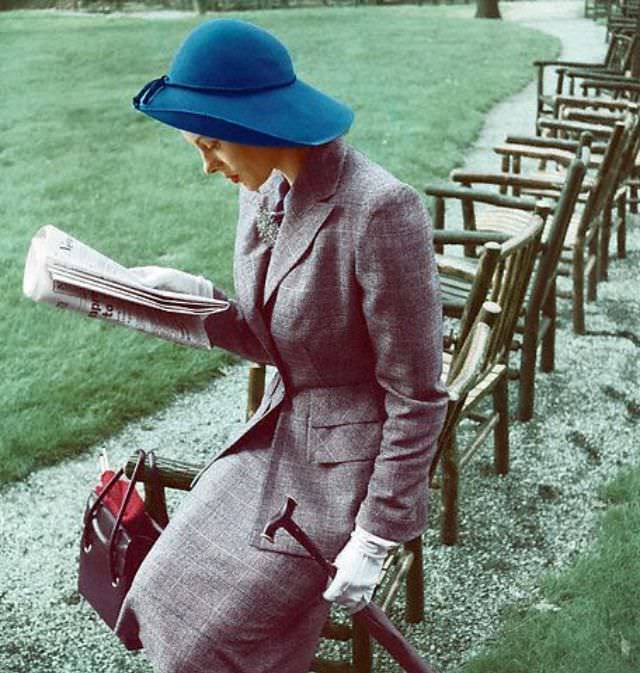
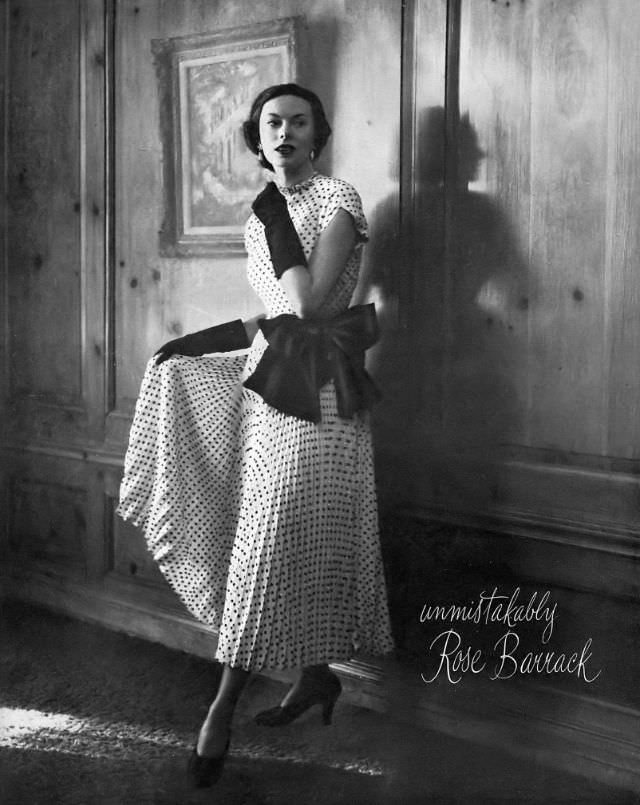
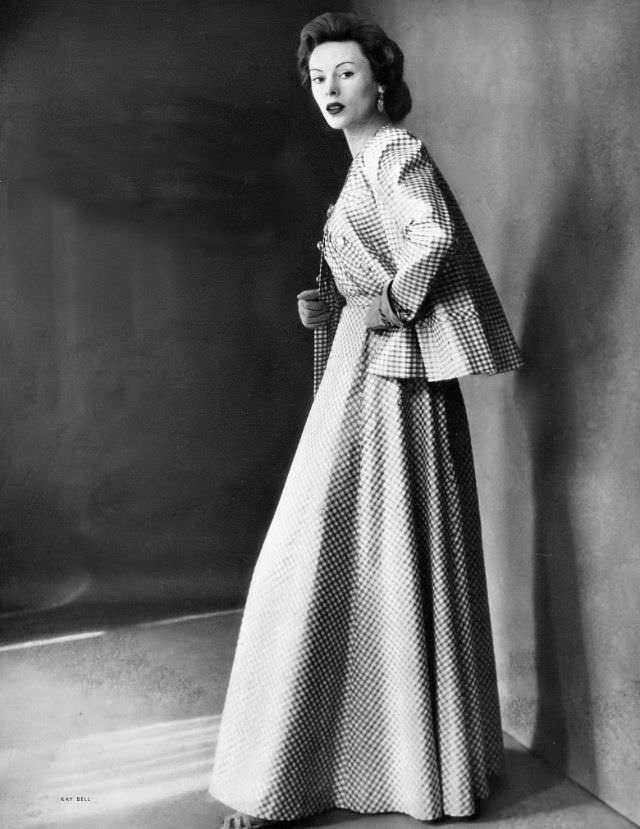
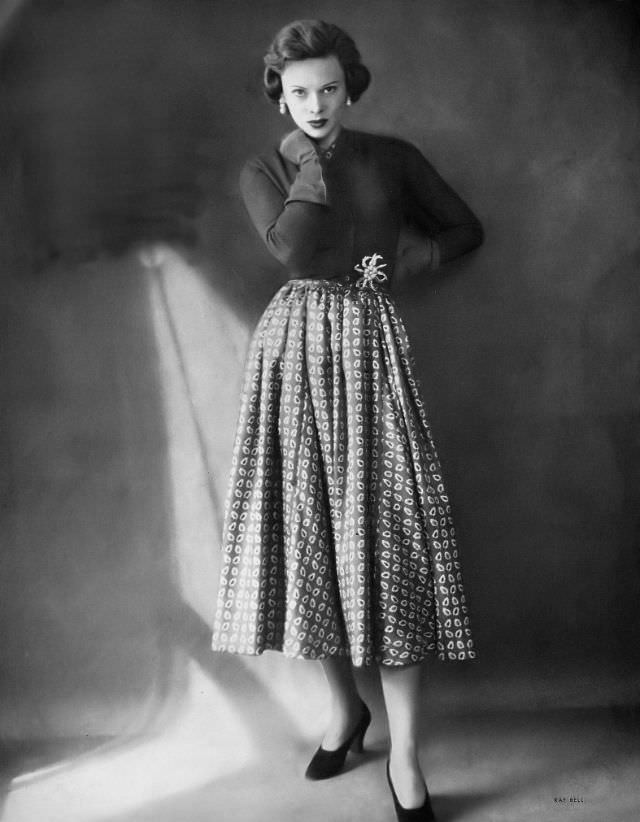
In 1948, Meg appeared alongside designs from Mainbocher once more — this time in a long evening dress and jacket of off-white cotton checked in gold Lurex, and a ruby red cashmere cardigan cut at the waist worn over a ruby and green tie silk dress. The latter also featured a jeweled starfish by Jean Schlumberger, one of the era’s most admired jewelry designers. Both looks appeared in Harper’s Bazaar’s May 1948 issue. An earlier spread that year showed her in a black dotted silk dress fully covered in sequins, with a full pleated skirt tied at the waist with a large black bow — a design by Rose Barrack, a designer she had worked with repeatedly across her career.
Beyond modeling, Meg Mundy built a serious career as an actress. She appeared in the films The Marrying Kind and Fatal Attraction, and became a recognizable face on television through soap operas including The Guiding Light and The Doctors. Her role as Mona Aldrich Croft on The Doctors earned her a Daytime Emmy nomination — a recognition that placed her among the most respected performers in daytime television. She continued modeling well into her later years, working across two decades with the most prominent fashion publications and designers in the country.