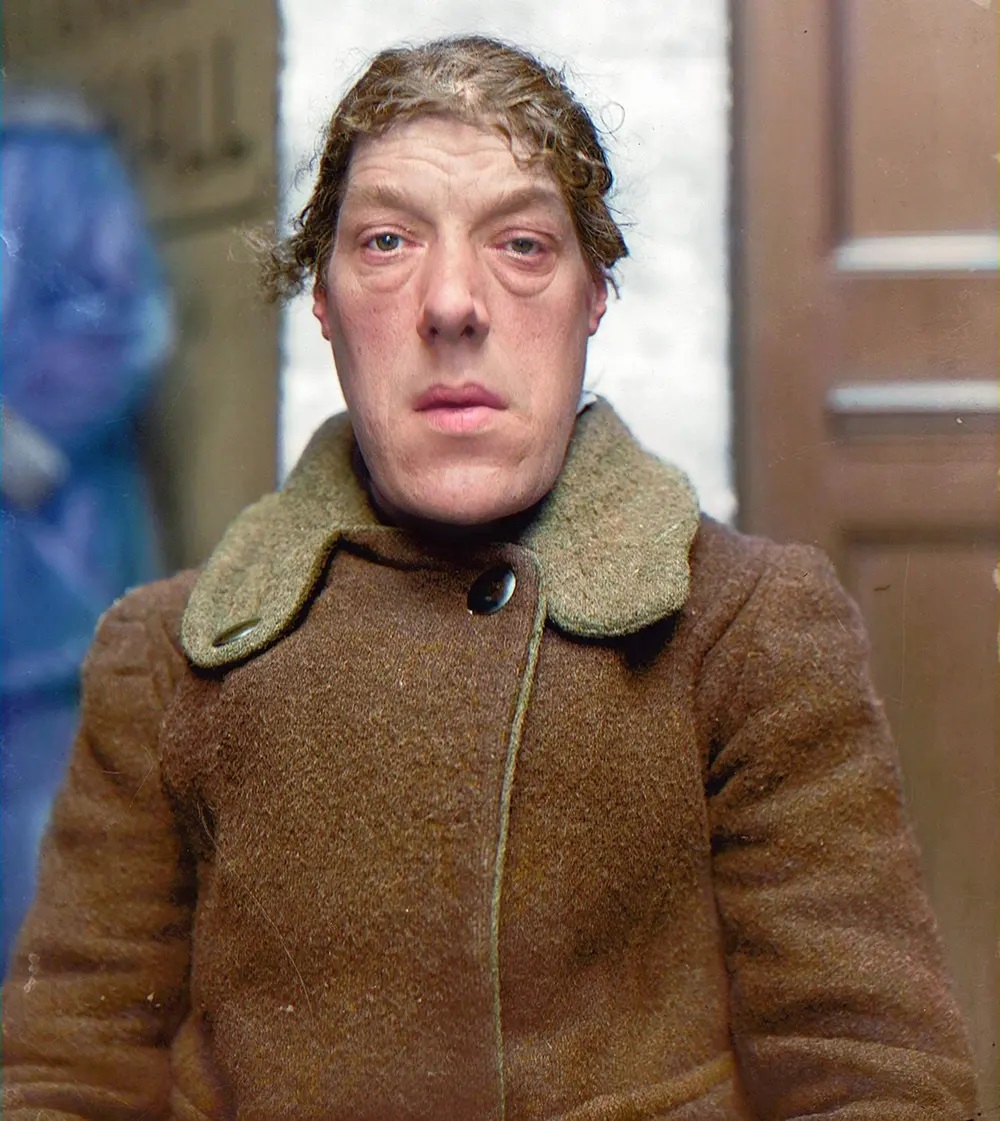
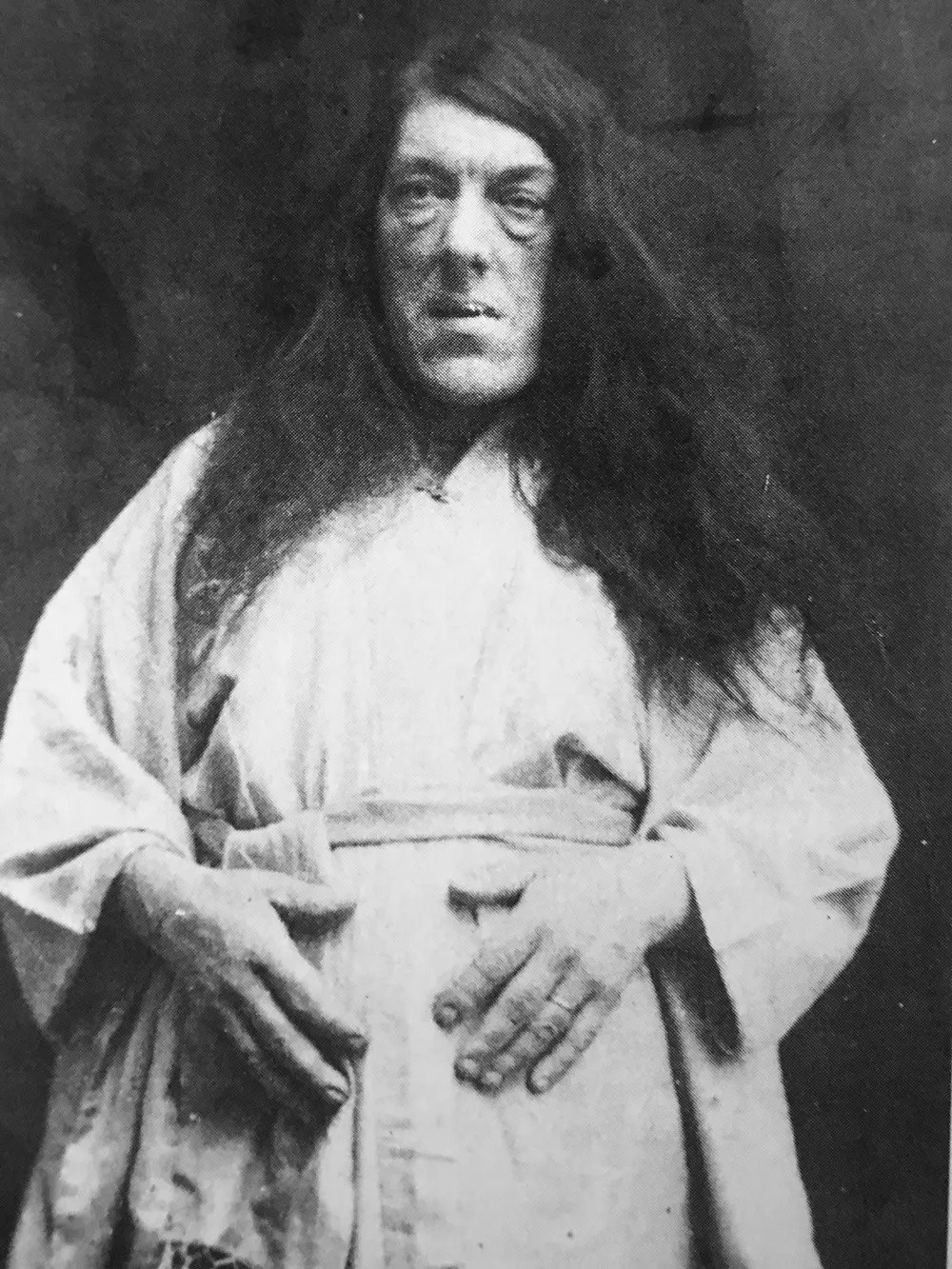
Mary Ann Bevan was born in London, England, in 1874 — a woman whose life was defined not by who she was, but by how she looked. From birth, she carried a rare genetic disorder called neurofibromatosis, also known as von Recklinghausen’s disease. It caused benign tumors called neurofibromas to grow on her nerves, skin, and bones throughout her body. As the condition progressed, it severely disfigured her face. That disfigurement would eventually become the centerpiece of a career she never planned for.
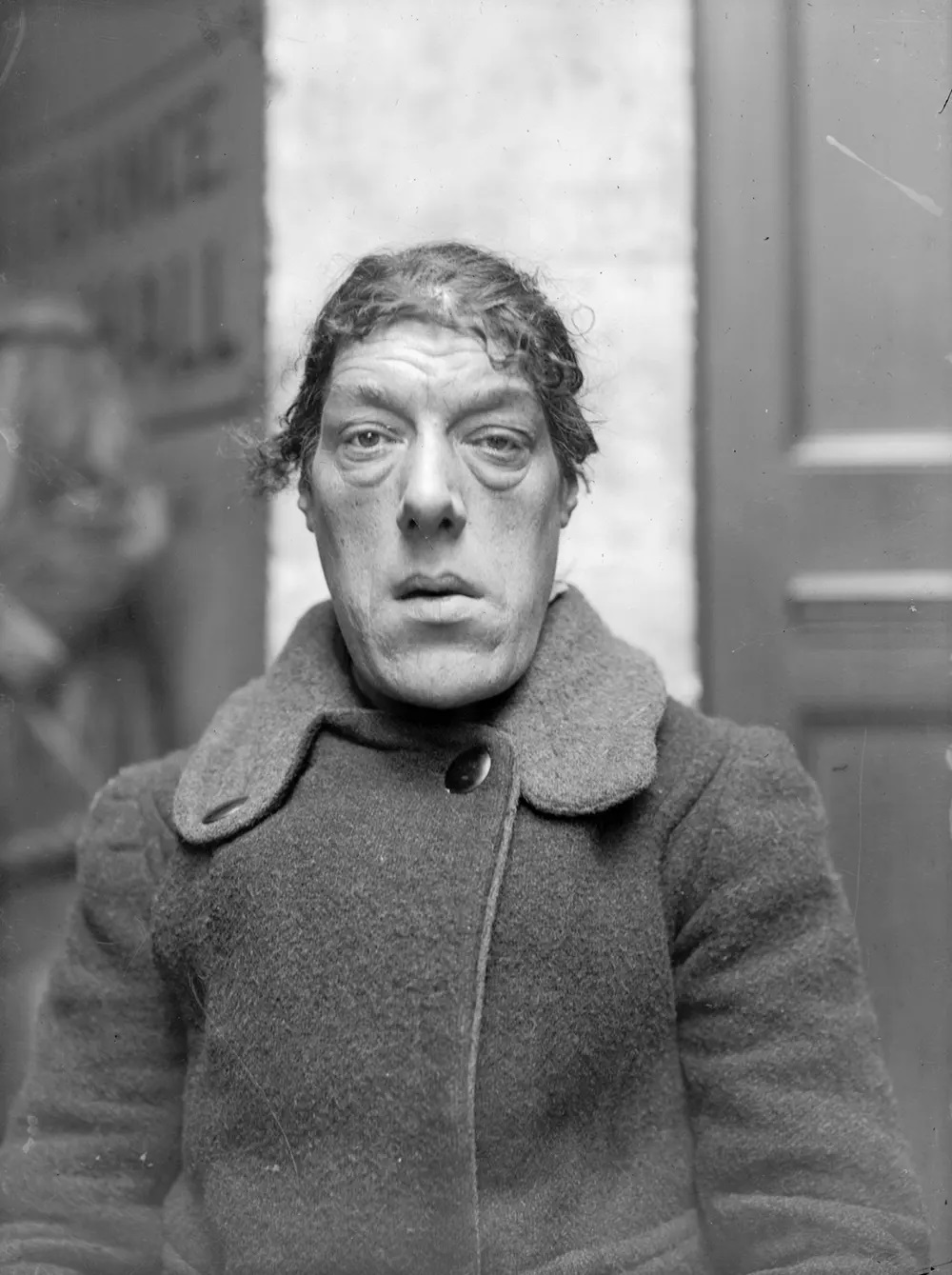
Neurofibromatosis Type 1, the form Bevan had, is caused by a mutation in a gene that controls cell growth in the nervous system. It follows an autosomal dominant inheritance pattern, meaning a person with the condition has a 50% chance of passing it on to each of their children. The tumors it produces can appear anywhere on the body. Beyond the visible growths, the condition can also cause large discolored patches on the skin, as well as loss of vision and hearing. In Bevan’s case, the tumors concentrated on her face, gradually altering her features as she aged.
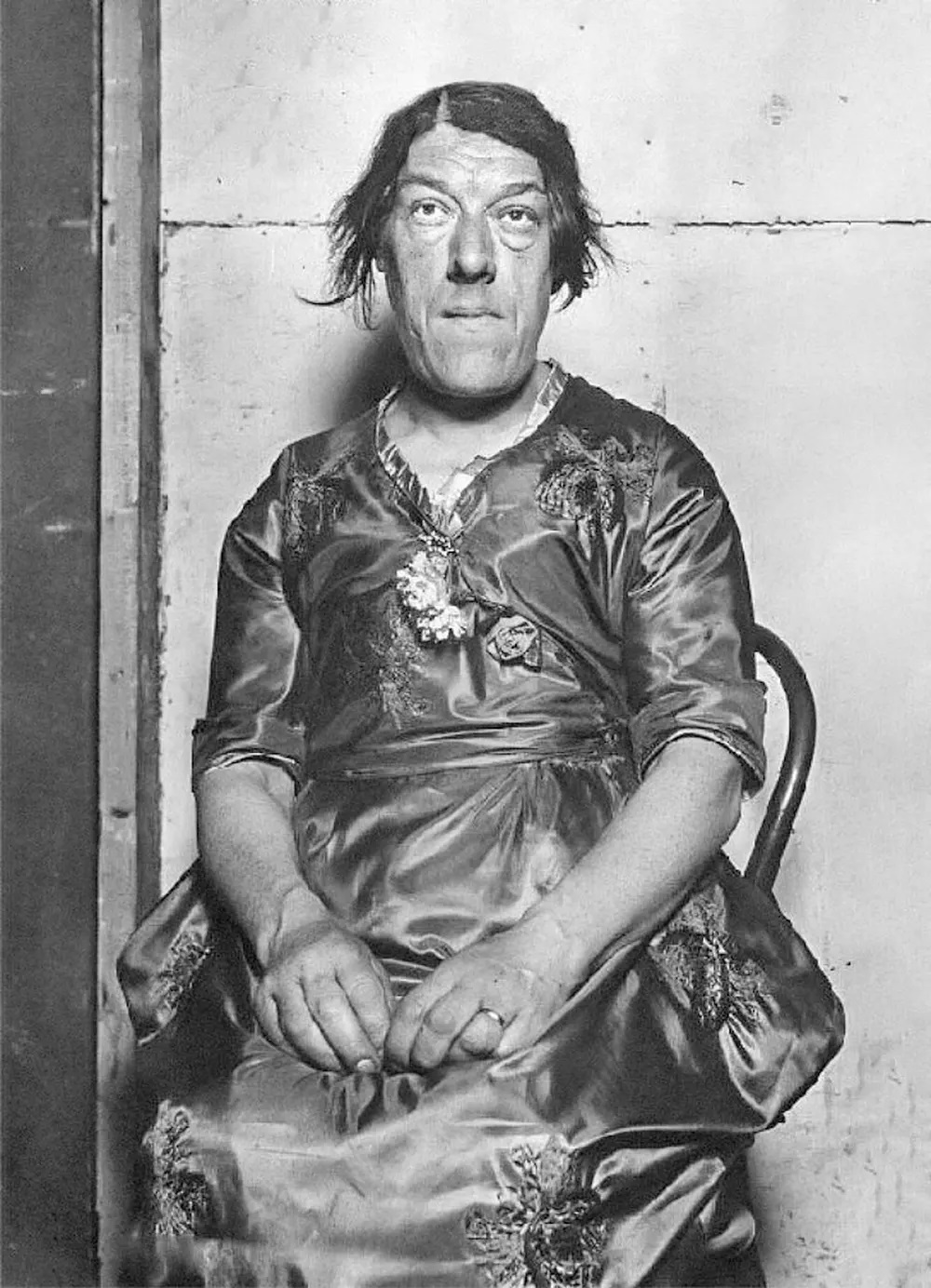
Despite her condition, Bevan was educated and literate at a time when many people with disabilities were denied basic schooling. She could read and write, and by accounts of those who encountered her, she was sharp, personable, and quick with conversation. But the world around her did not make room for those qualities. She was bullied regularly and found steady employment nearly impossible to secure. The barriers were not just social — they were practical and relentless.
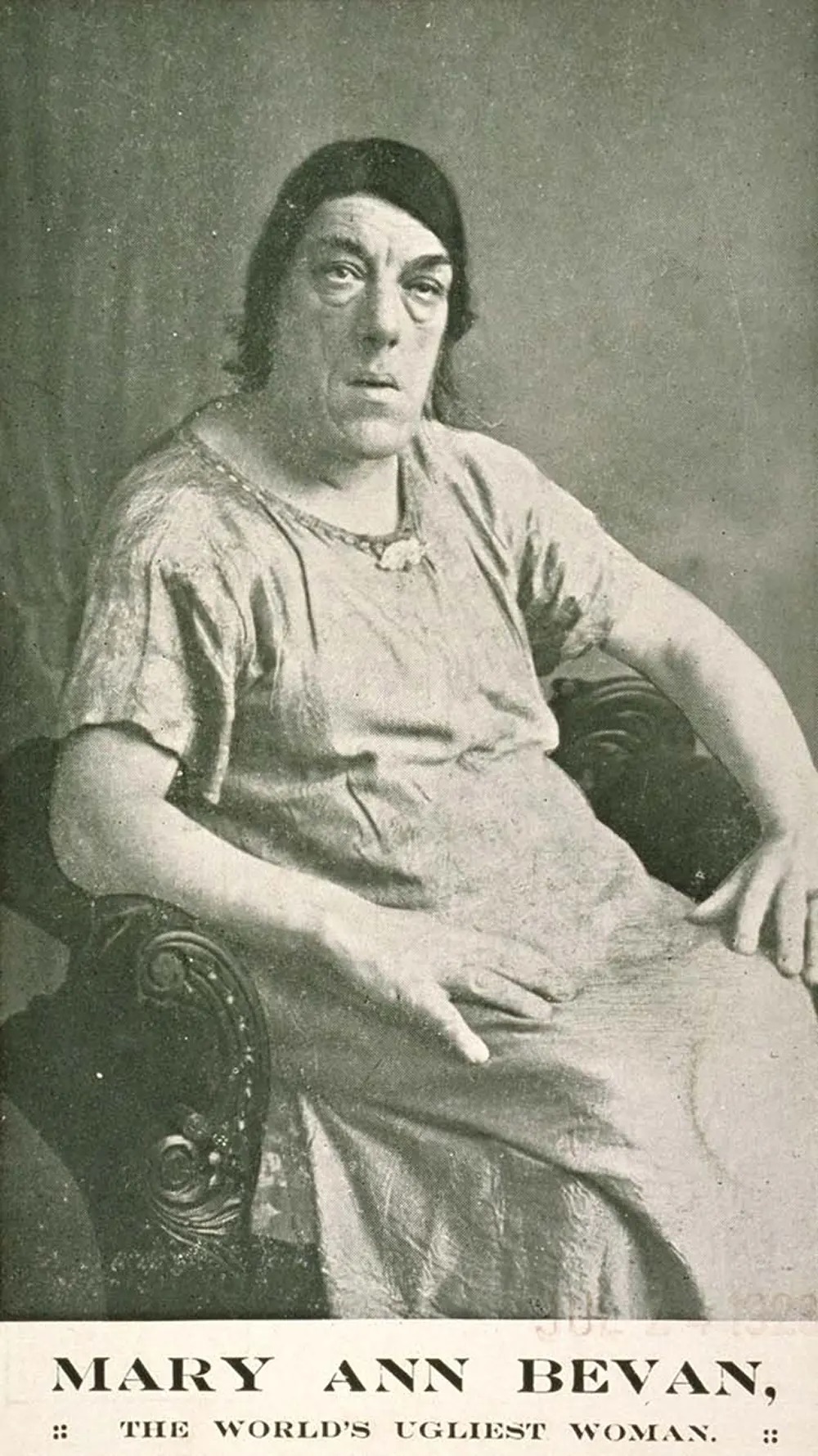
Faced with few options, Bevan turned to the one industry that would have her: the sideshow circuit. Traveling with circuses and fairs across Europe and the United States, she was billed under brutal labels — “The Ugliest Woman in the World” and “The Elephant Man’s Daughter.” These titles were not chosen by her. They were crafted by promoters who understood that public curiosity about physical difference was a reliable source of ticket sales. Bevan became the product.
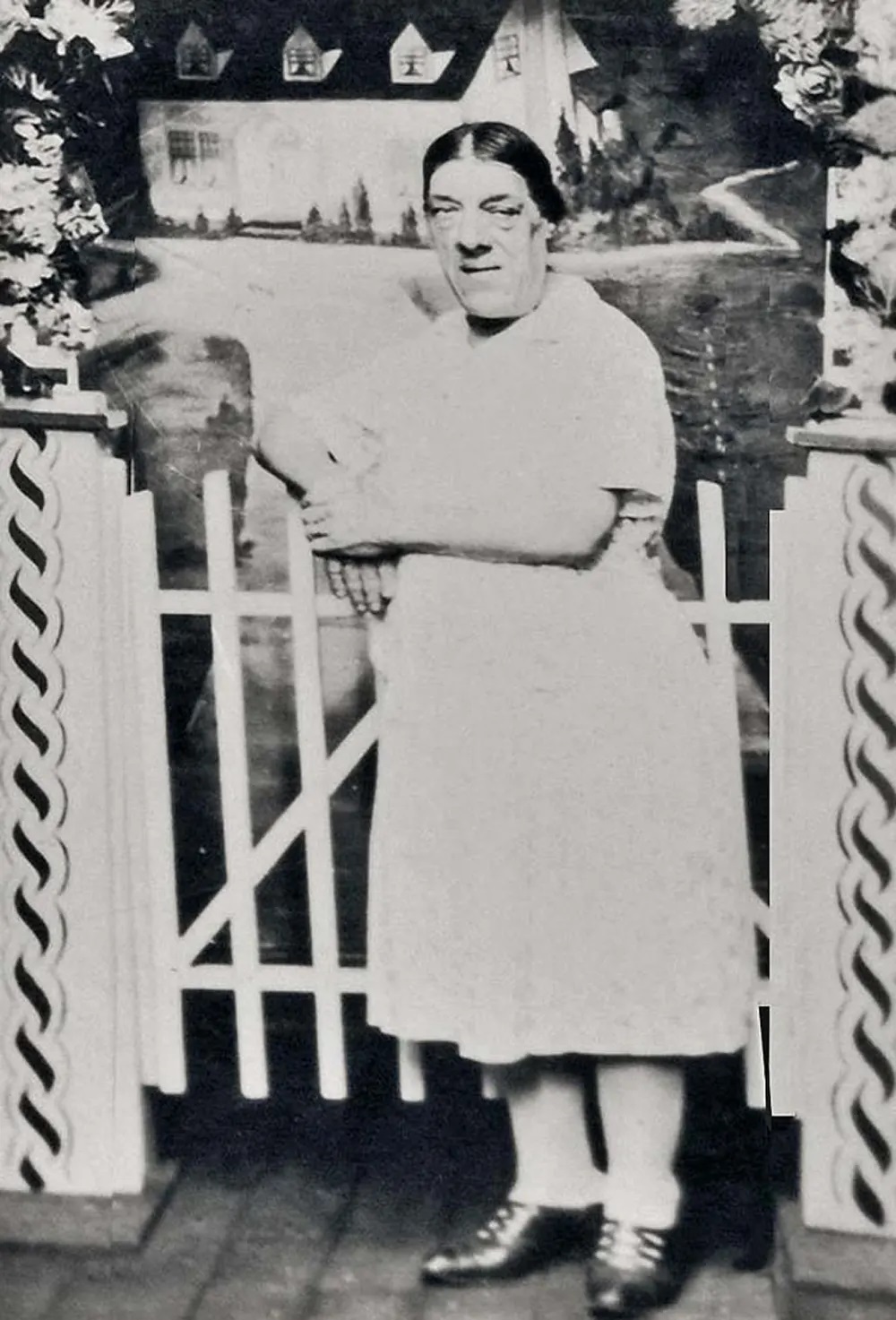
Bevan was a mother. She had children who depended on her financially, and her sideshow earnings were the means by which she kept them housed and fed. That context matters. Her decision to perform was not made in a vacuum — it was made under economic pressure, in a society that offered women with her condition almost no other path to income. She stood before jeering crowds and curious strangers because it paid, and because her children needed her to.
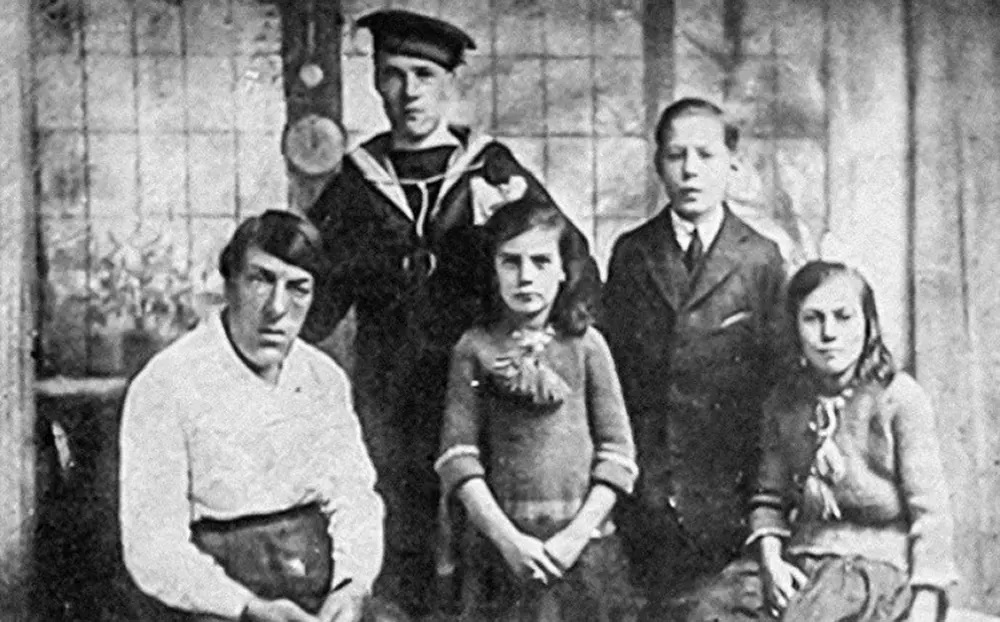
On the performance floor, Bevan did not shrink. Audiences who came expecting a silent, passive spectacle encountered something different. She engaged them directly, spoke with wit, and held conversations that caught people off guard. Her good humor was noted repeatedly by those who saw her perform. Whether that warmth was genuine, performed, or some mix of both, it left an impression that outlasted the shows themselves.
The sideshow world Bevan inhabited operated with clear rules: performers with physical differences — labeled “freaks” by the industry — were paid to be stared at. The pay was typically low. Dignity was not part of the transaction. Promoters profited far more than the performers themselves, and the performers had little legal or social protection. For someone like Bevan, entry into this world meant accepting those conditions or going without income entirely.
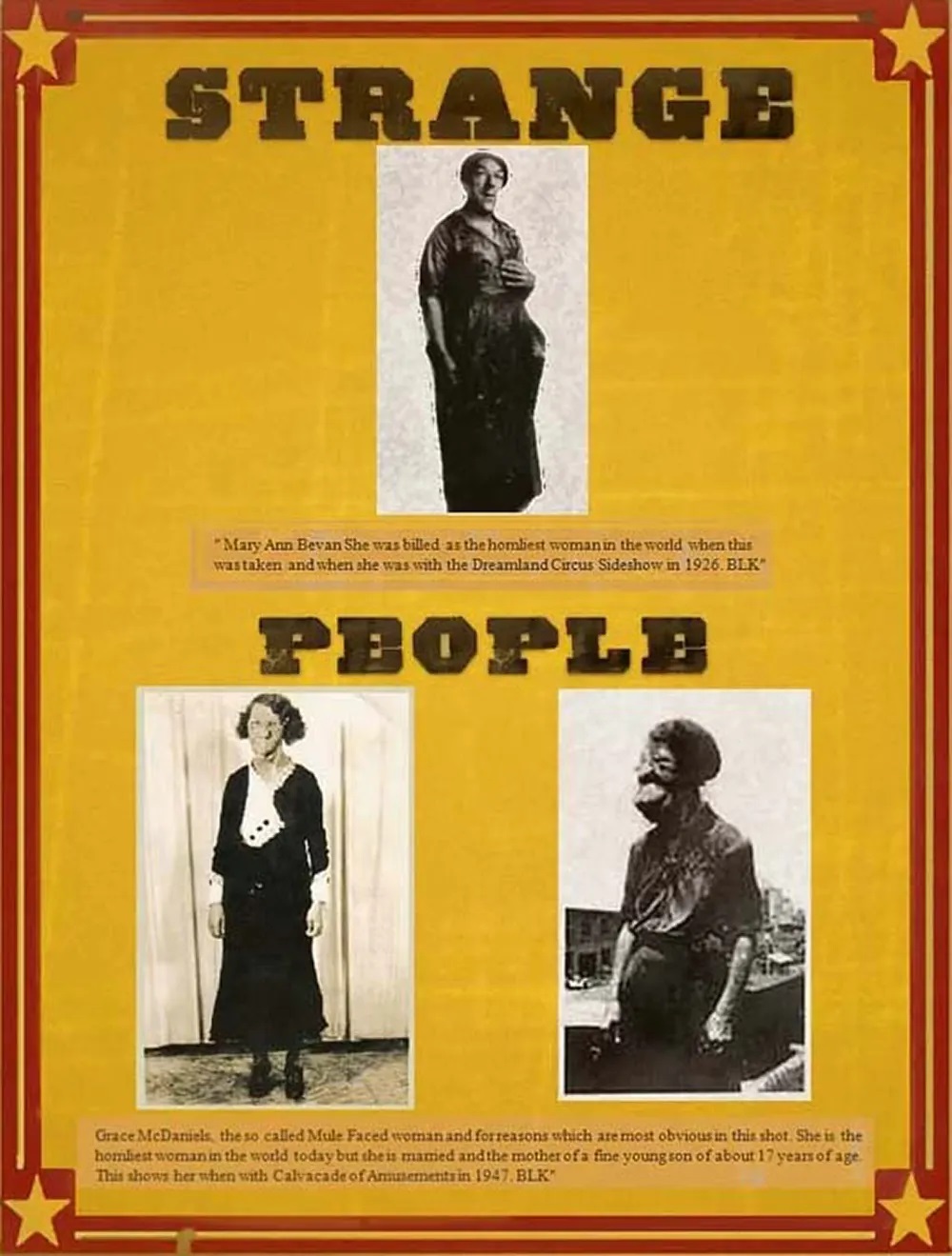
Sideshow lineups in the late 19th and early 20th centuries regularly featured people with physical abnormalities, genetic conditions, and unusual body proportions. They were presented as curiosities — wonders from the margins of human experience. Audiences paid to look, and the industry was profitable enough to sustain dozens of traveling shows across two continents. Bevan was one performer among many caught inside that machinery.
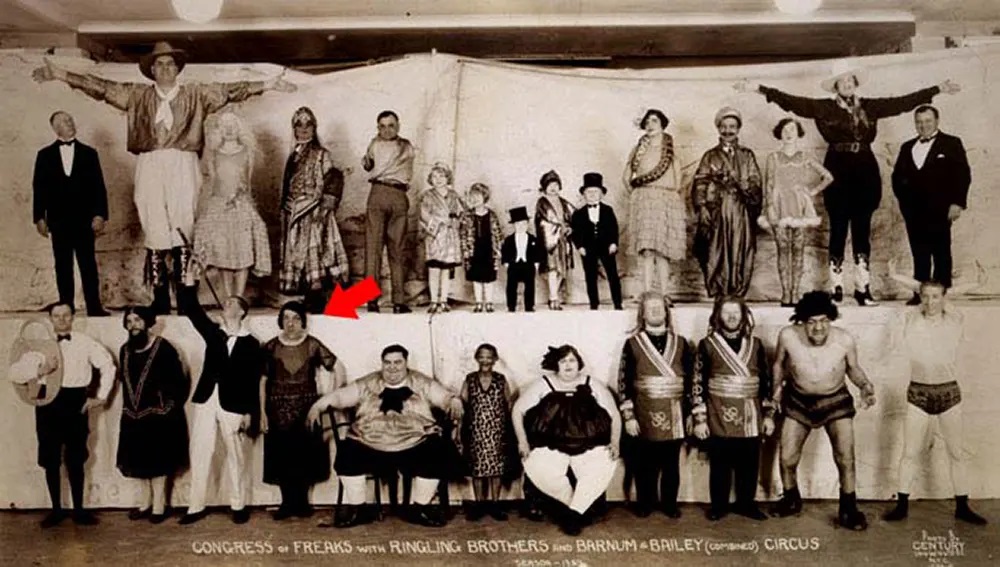
Bevan stepped away from performing in the 1920s. After years on the circuit, she withdrew from public life and spent her remaining years in obscurity. She died in London in 1927 at the age of 53. There was no grand farewell, no formal retirement announcement. She simply stopped, as quietly as a person who had spent decades being loudly displayed could manage.
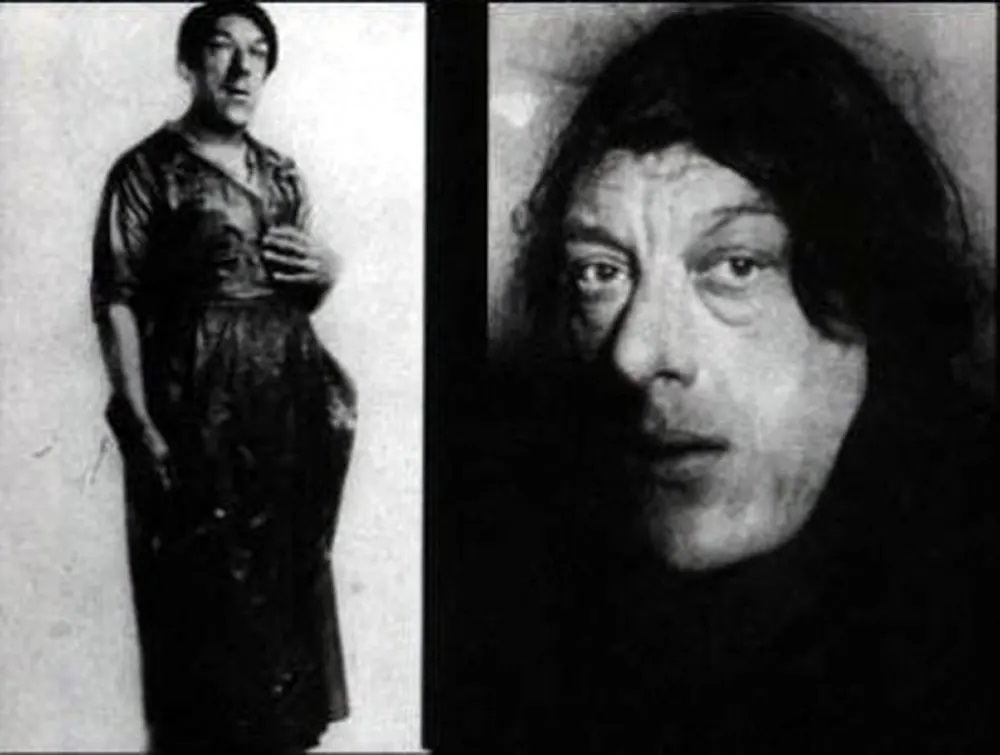
The photographs of Mary Ann Bevan that survive today are a direct window into how she was framed and sold. Promotional images emphasized her disfigurement, staged to maximize the visual contrast between her face and conventional standards of appearance. They were marketing tools first. But they also preserve the record of a real woman — educated, funny, determined, and working with whatever the world left available to her.