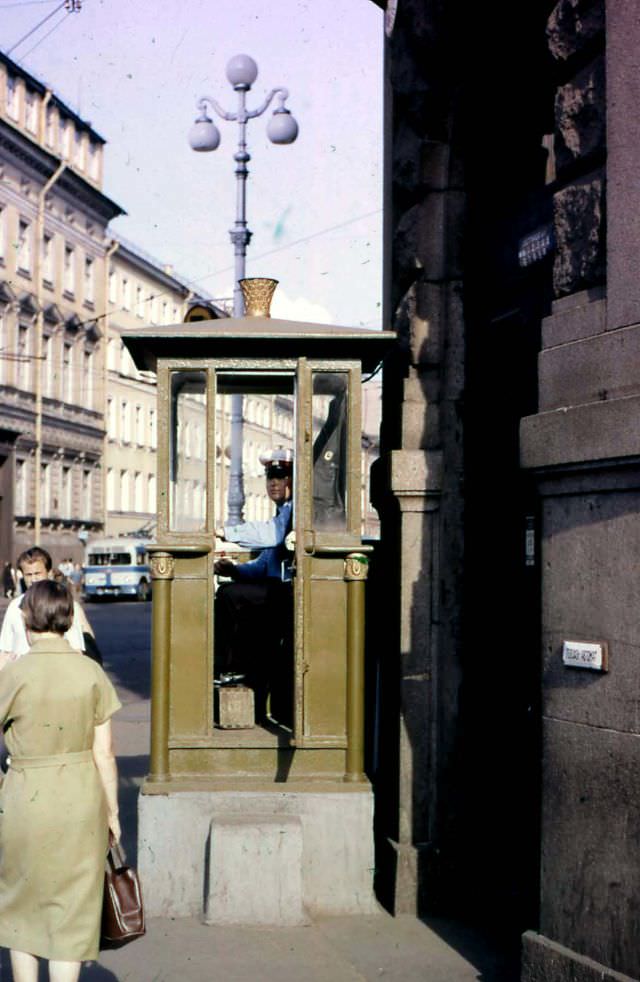
In the 1960s, Leningrad — known today as Saint Petersburg — was a city on the move. The war had left deep scars, but by the mid-1960s the city had climbed back to its prewar population of three million people. New residential districts were rising on the outskirts, the Metro system was running after opening in 1955, and on May 8, 1965, the Soviet government awarded Leningrad the honorary title of Hero City, recognizing its extraordinary suffering and resistance during the 900-day siege of World War II. The city shared that honor with Stalingrad, Sevastopol, and Odesa.
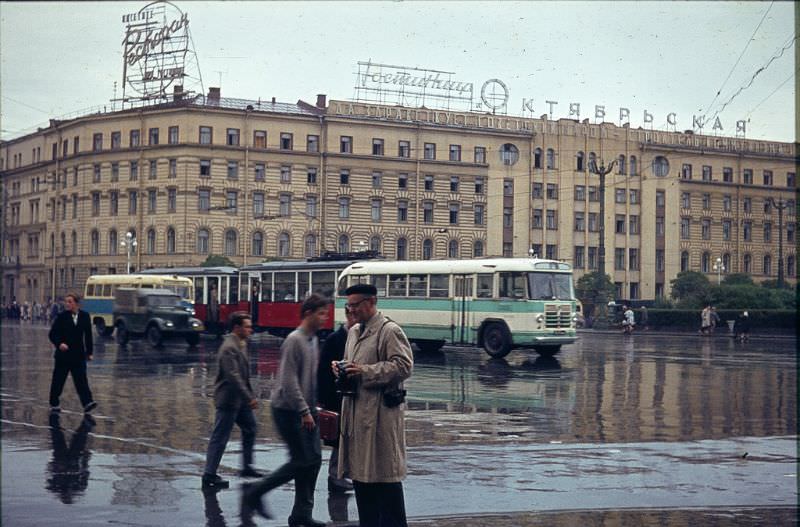
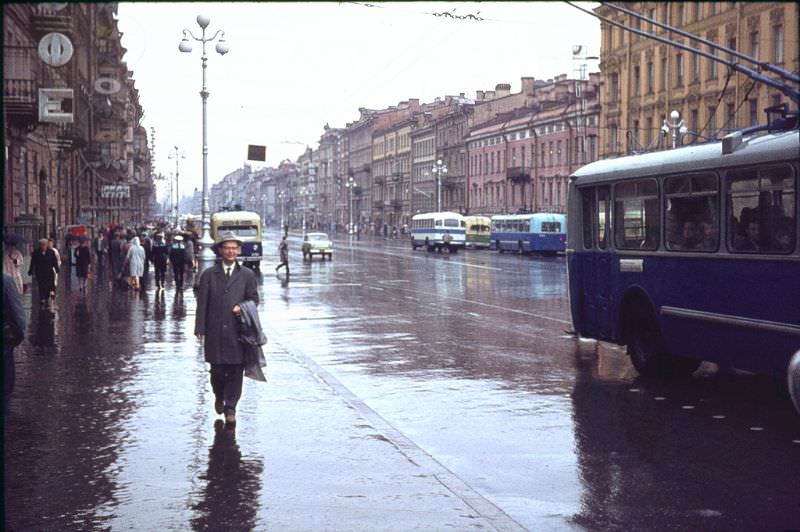
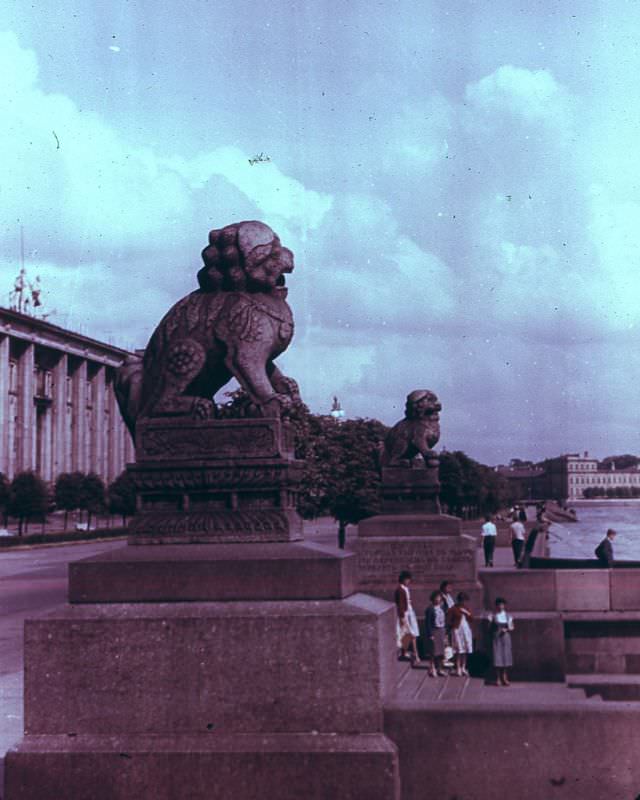
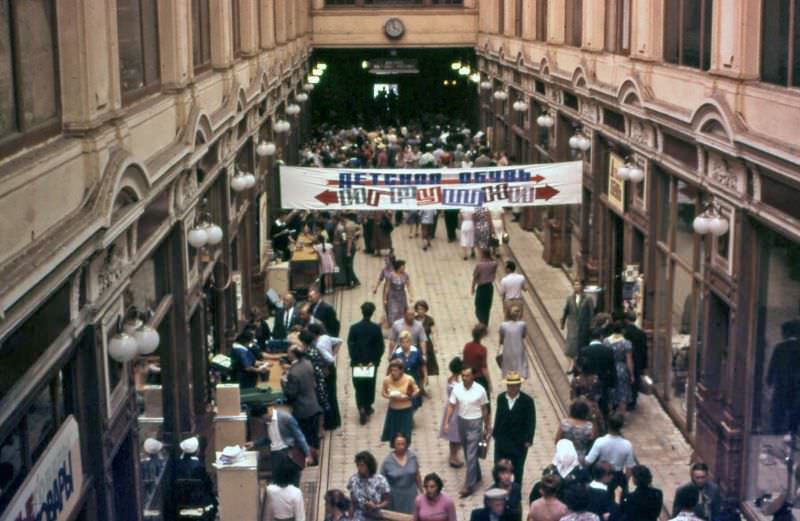
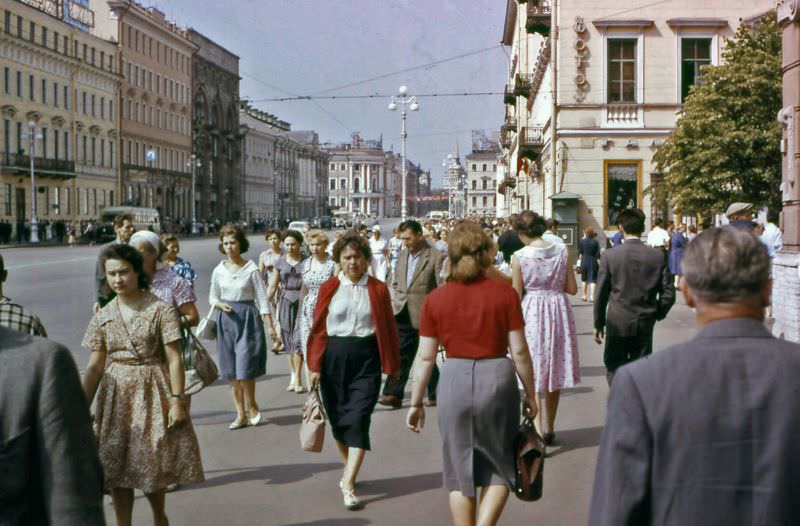
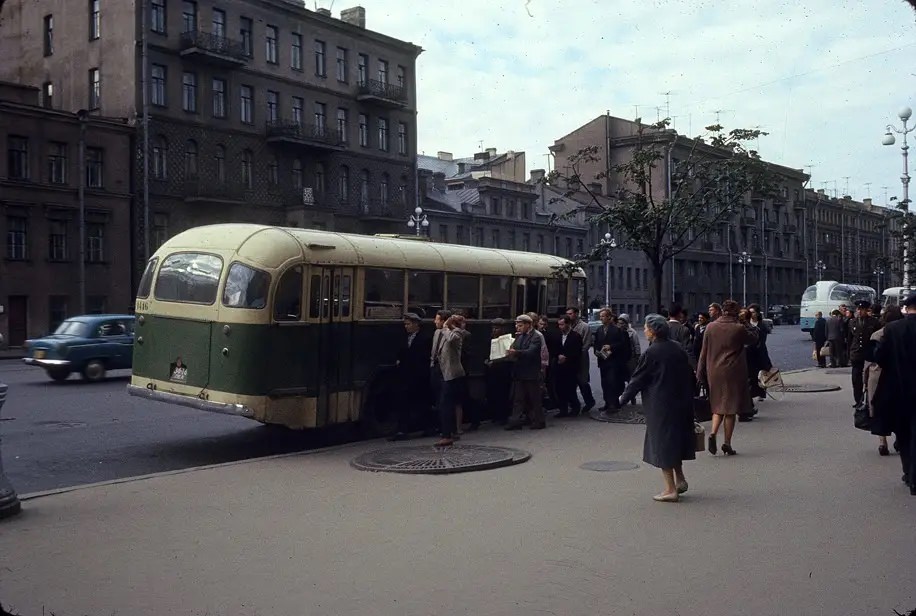
The streets of 1960s Leningrad told the story of a Soviet city balancing its imperial past with its communist present. Broad boulevards lined with 18th- and 19th-century architecture carried trams, buses, and a growing number of cars. Pedestrians moved at a steady pace past grand facades that had survived both revolution and siege.
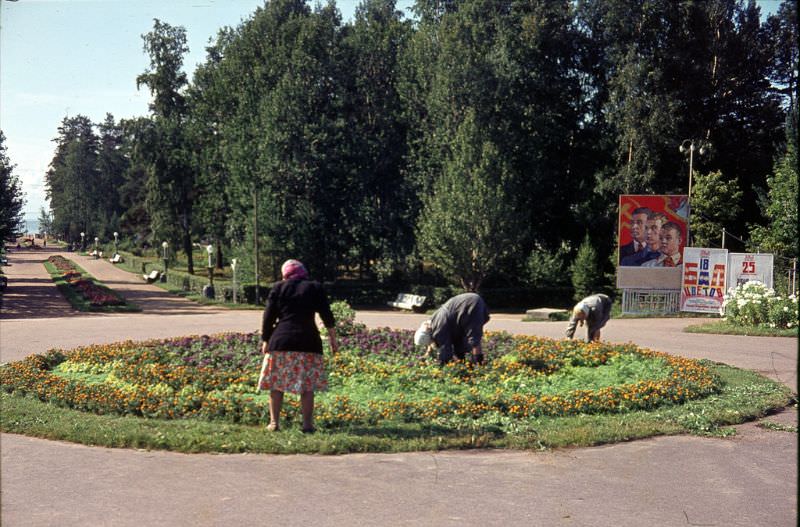
Beyond the city limits, places like Zelenogorsk offered green escapes along the Gulf of Finland. The town, located about 50 kilometers northwest of Leningrad, was a popular spot for city residents seeking fresh air and open parkland.
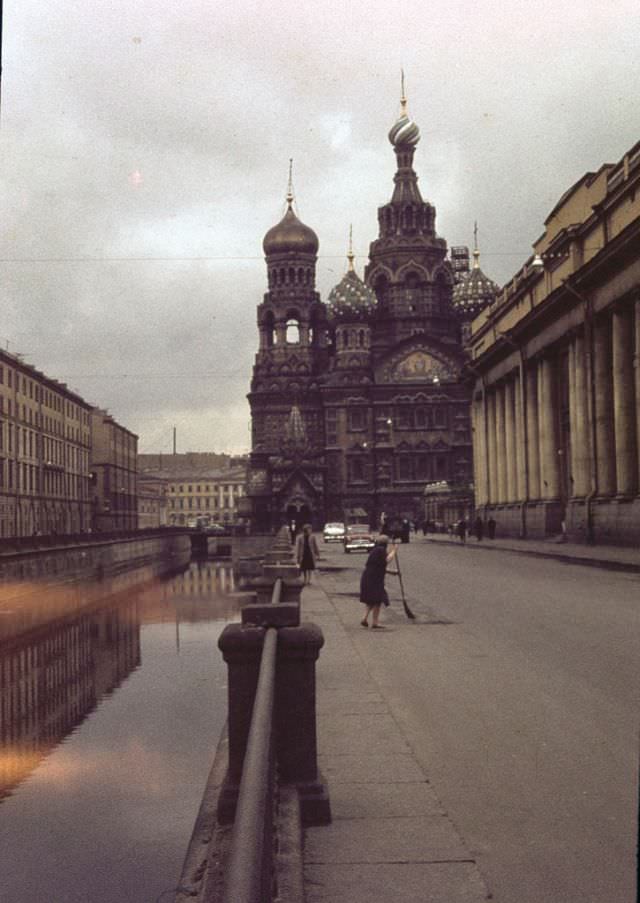
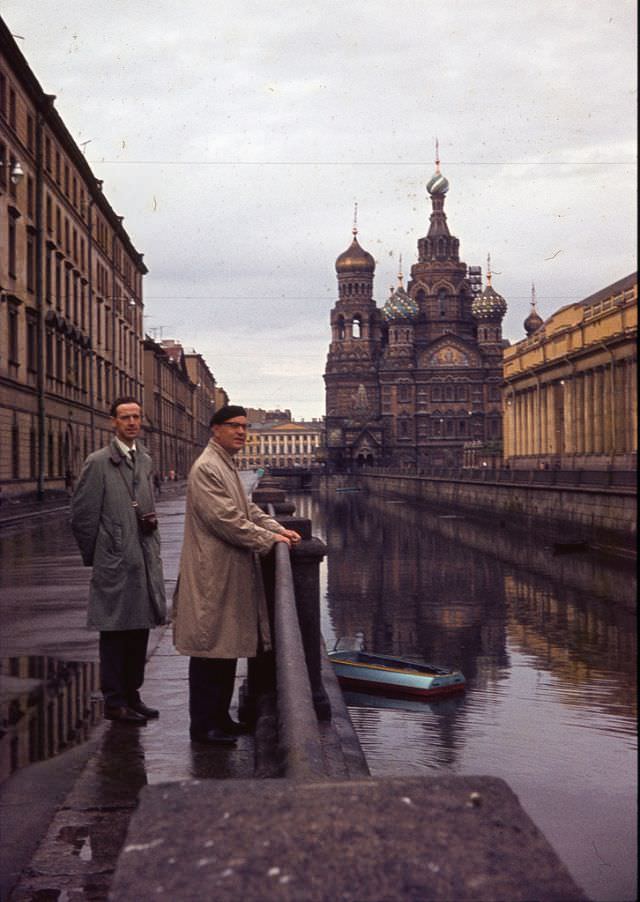
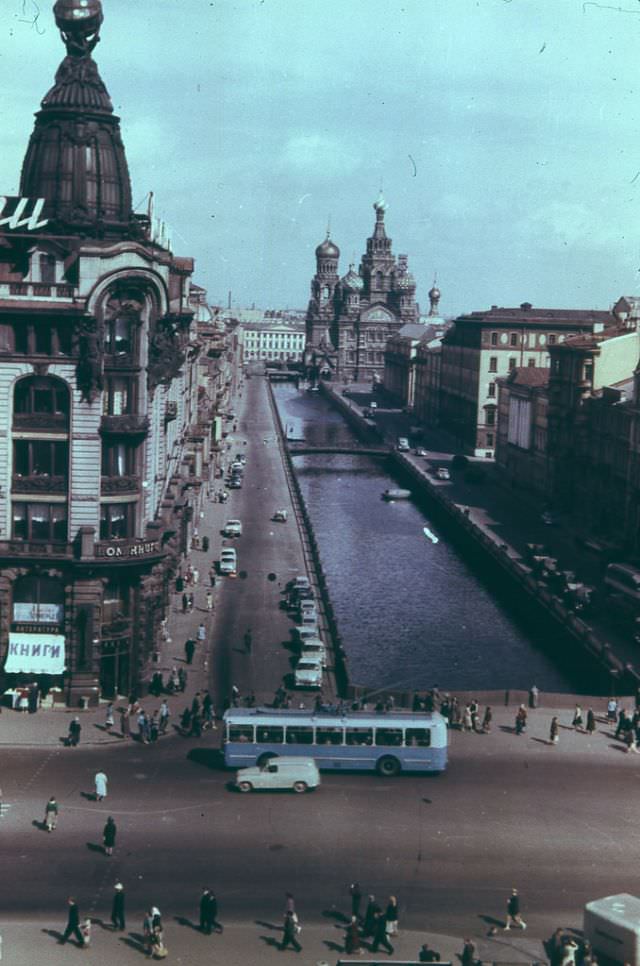
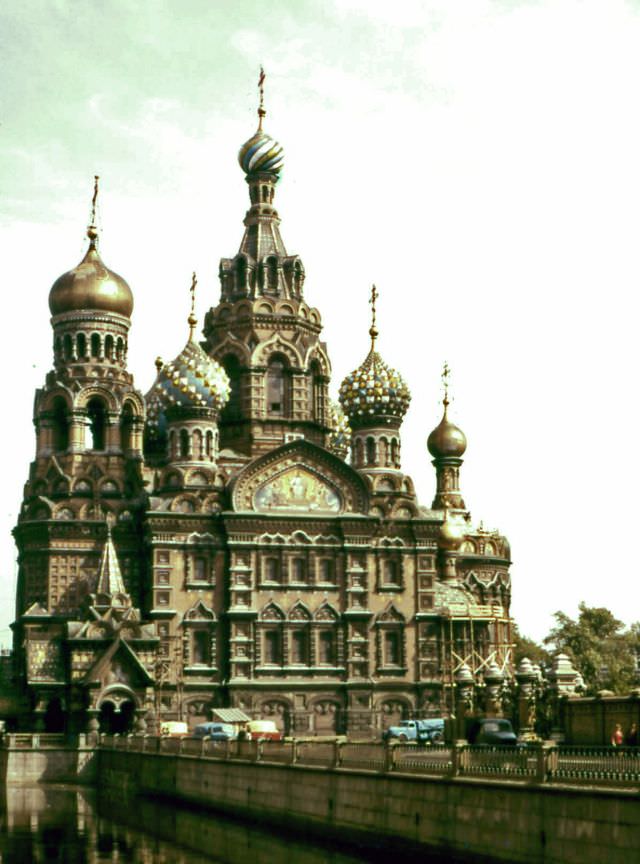
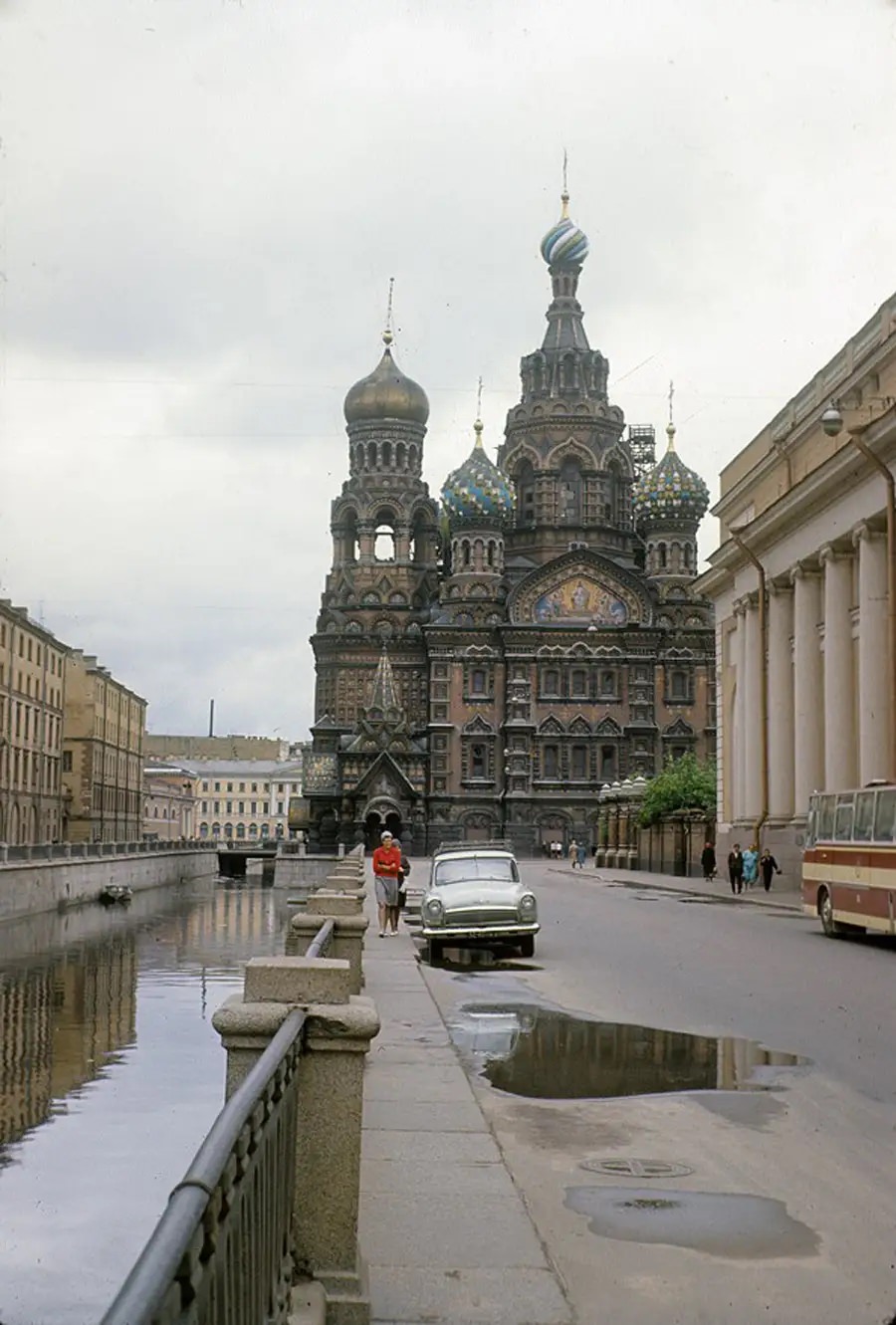
Leningrad’s religious landmarks remained standing despite decades of Soviet atheist policy. The Church of the Resurrection of Jesus Christ — better known as the Church of the Savior on Blood — stood on the Griboedov Canal, its colorful onion domes a striking contrast to the surrounding neoclassical cityscape.
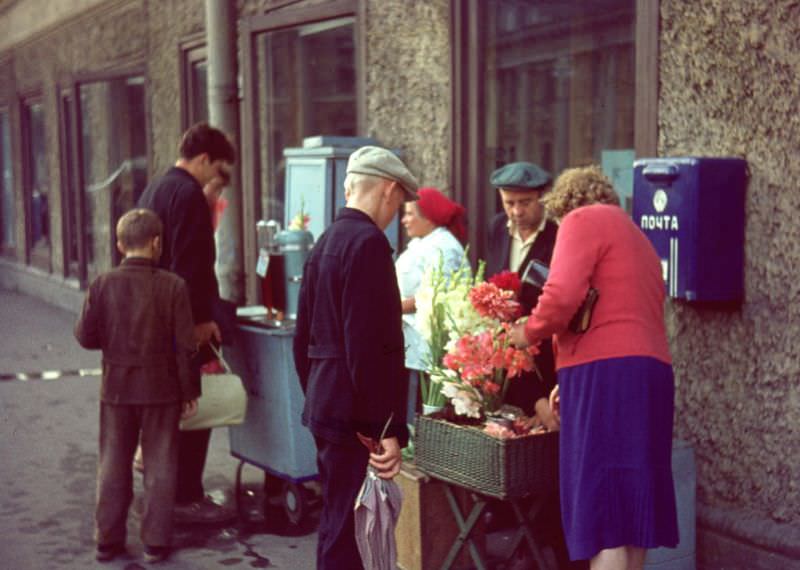
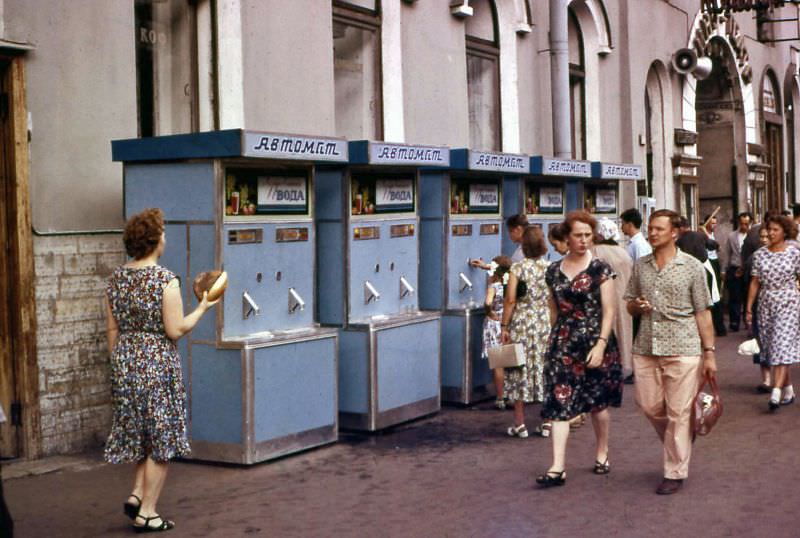
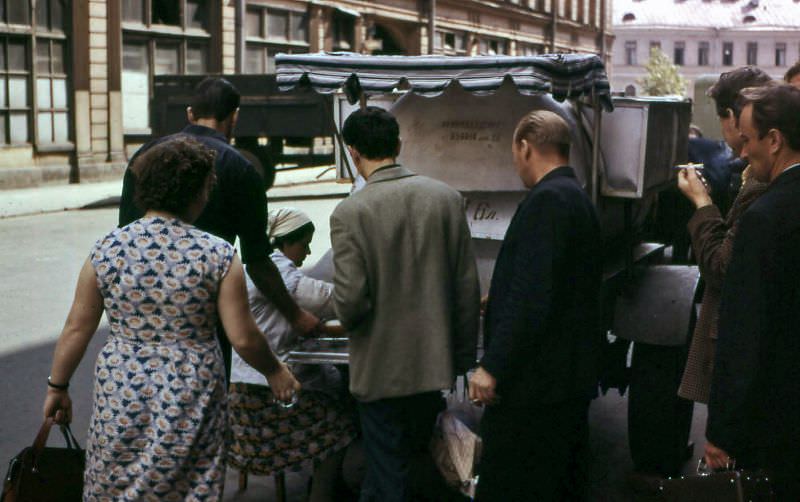
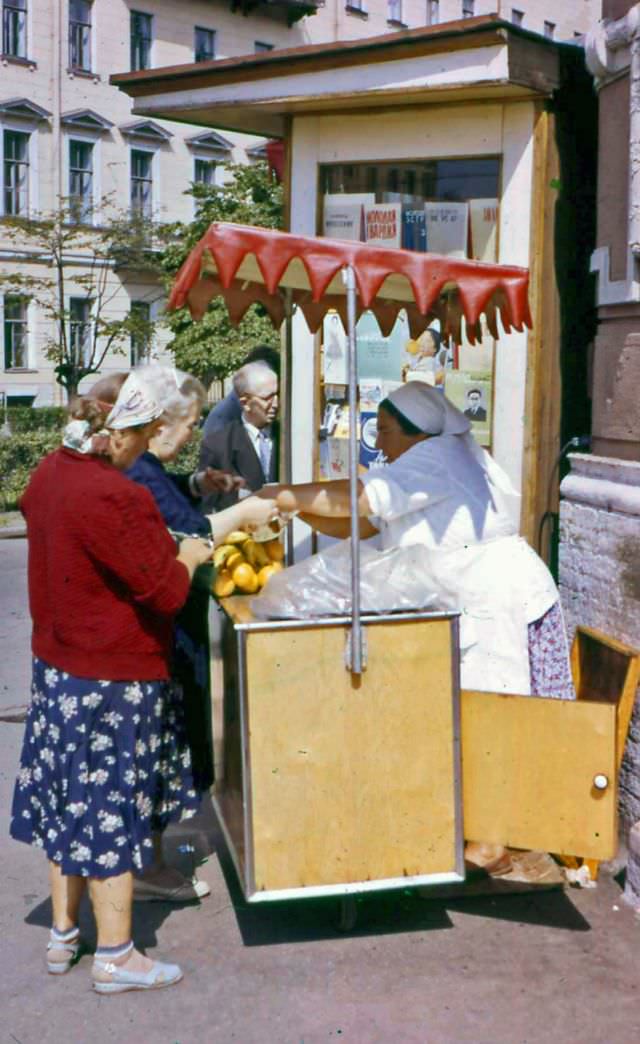
Everyday commerce played out on the sidewalks. Street vendors sold flowers and fizzy soda water from small stalls and carts, a familiar sight across Soviet cities. These small transactions were part of the daily rhythm of life in Leningrad.
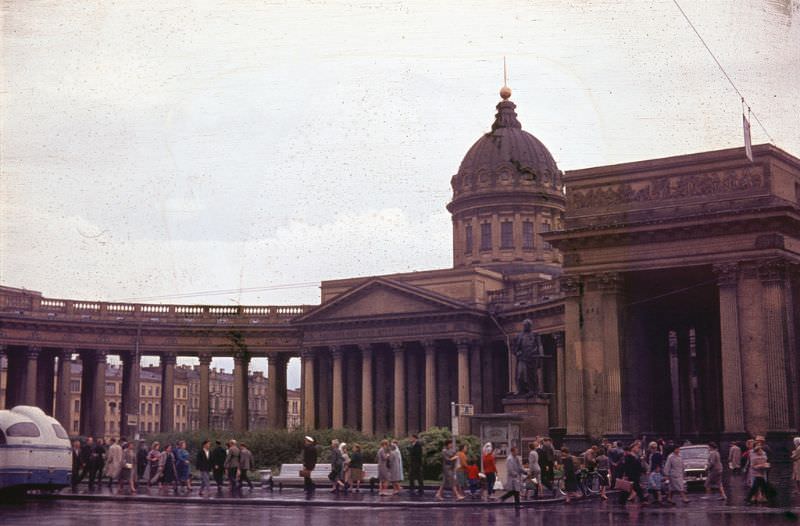
Kazan Cathedral, built in the early 1800s and modeled after St. Peter’s Basilica in Rome, dominated Nevsky Prospect. During the Soviet era it functioned as the Museum of the History of Religion and Atheism — a pointed political use of one of the city’s most recognizable religious buildings.
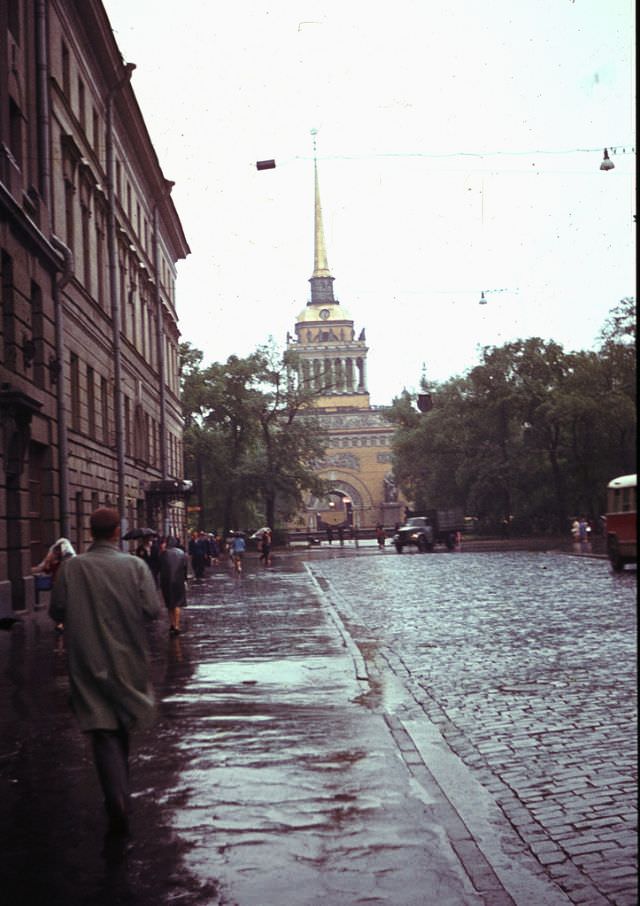
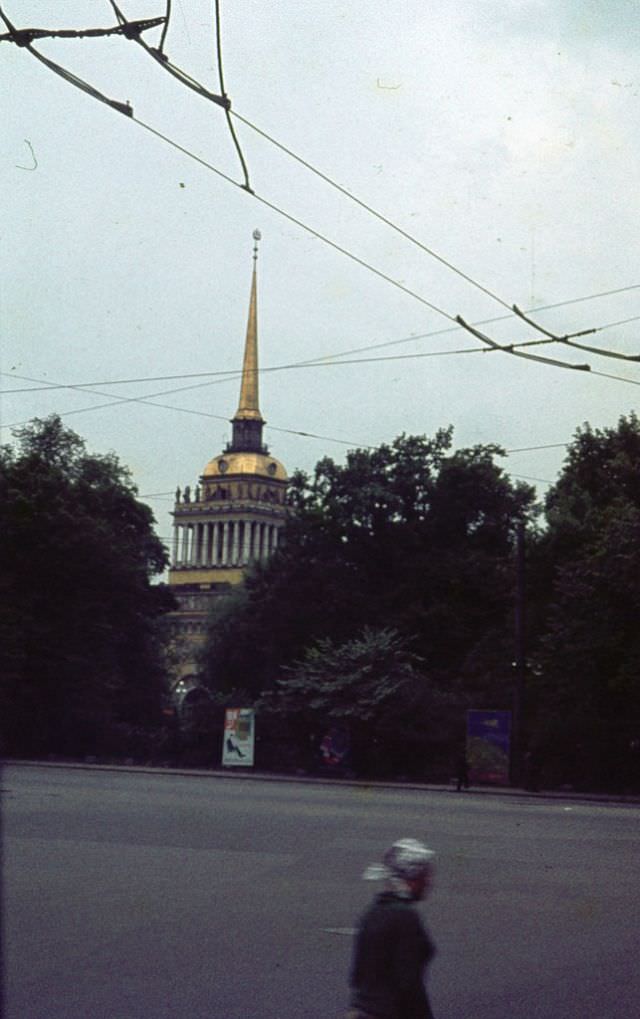
The Admiralty building, with its gilded spire rising above the Neva riverfront, remained one of the most recognizable symbols of Leningrad. Originally built as a naval headquarters under Peter the Great, it anchored the western end of Nevsky Prospect and served as a navigational landmark across the flat city skyline.
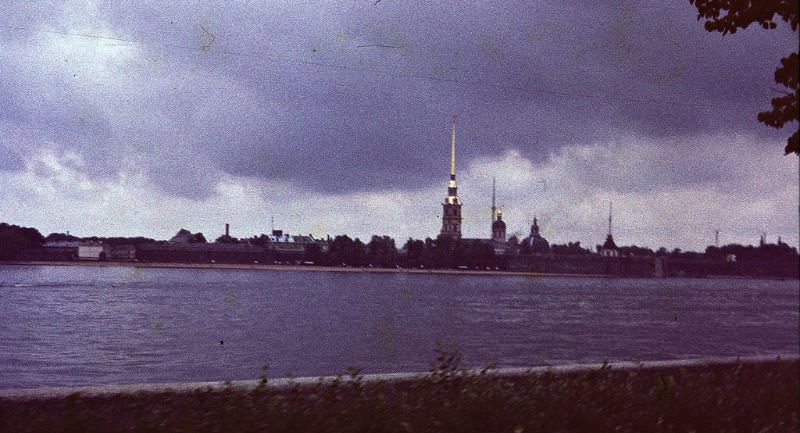
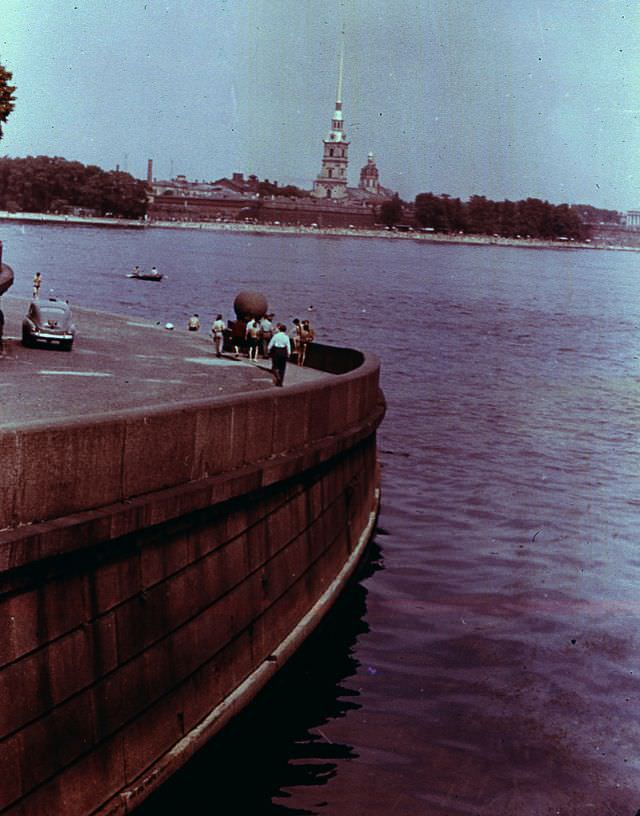
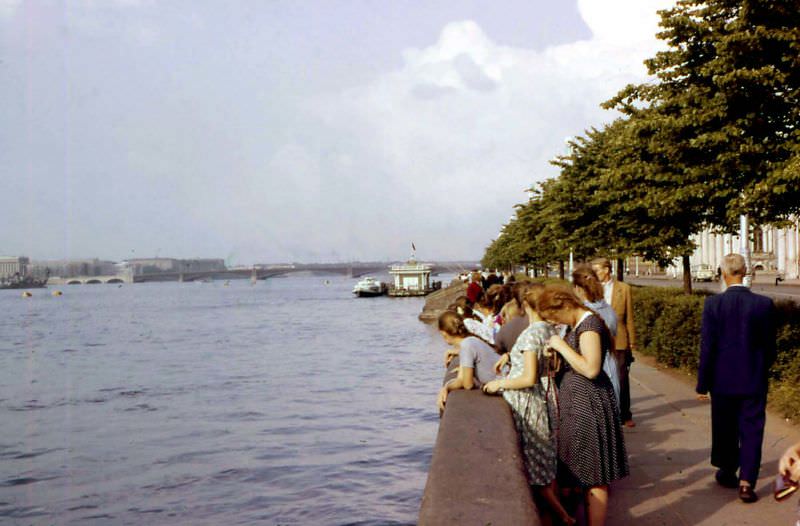
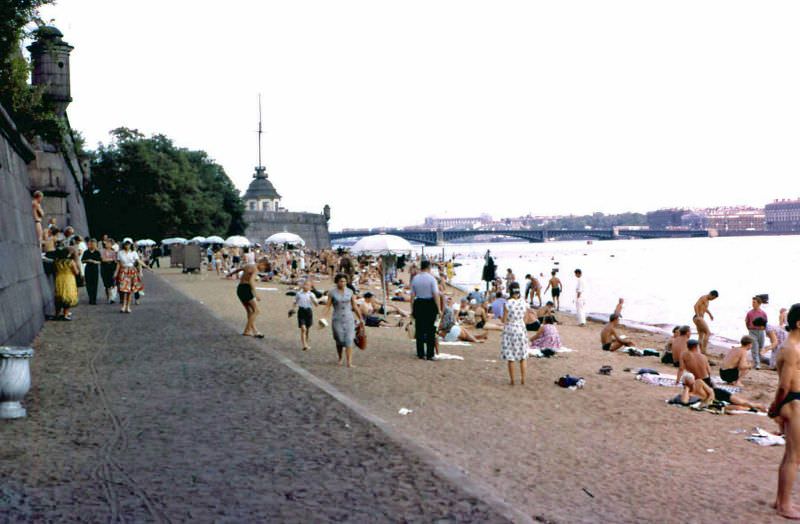
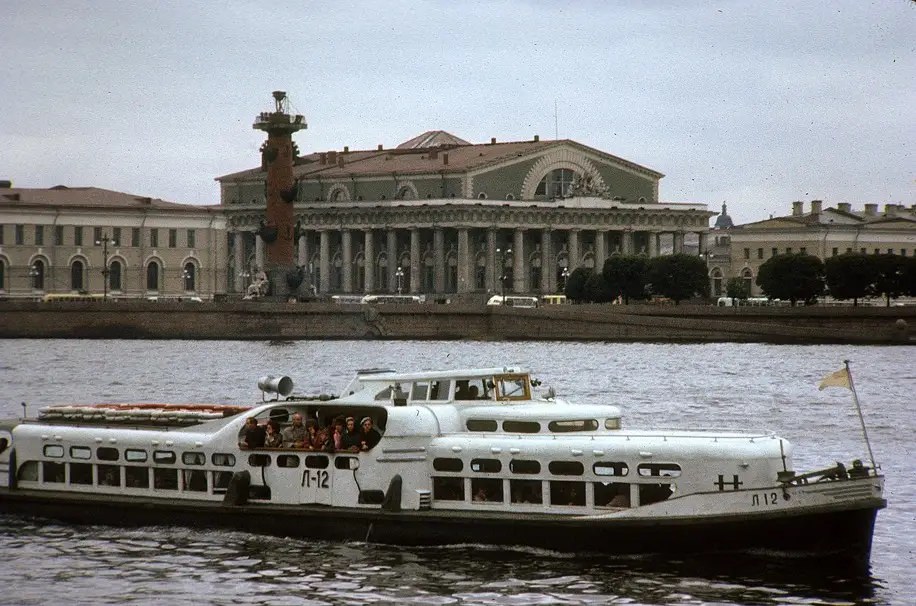
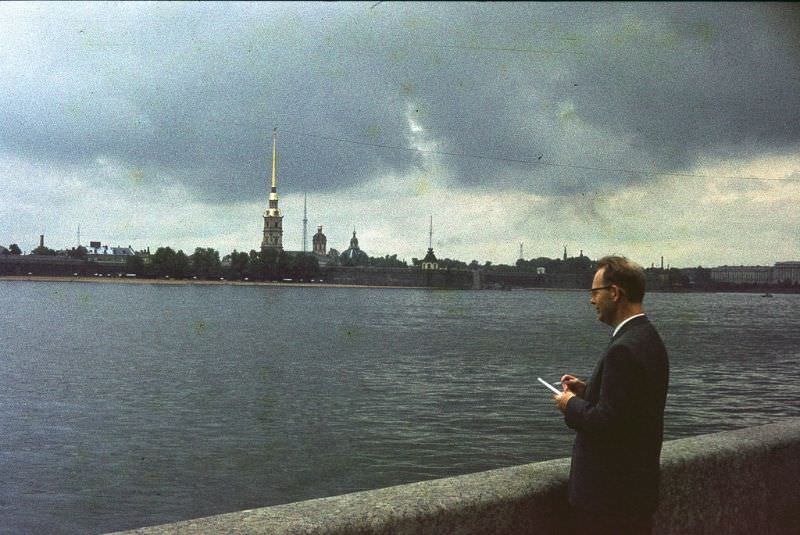
Across the Neva, the Peter and Paul Fortress stood on Zayachy Island, its cathedral spire the tallest point in the city for much of its history. Founded by Peter the Great in 1703 as the original core of the city, by the 1960s it drew steady streams of visitors.
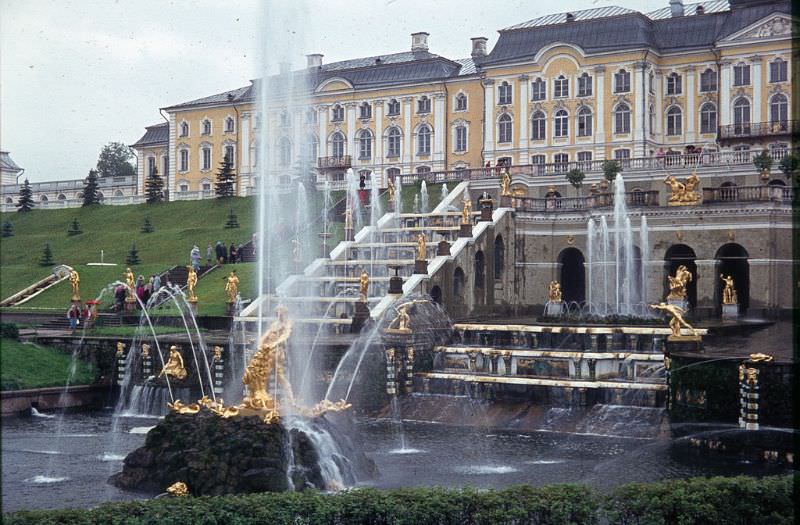
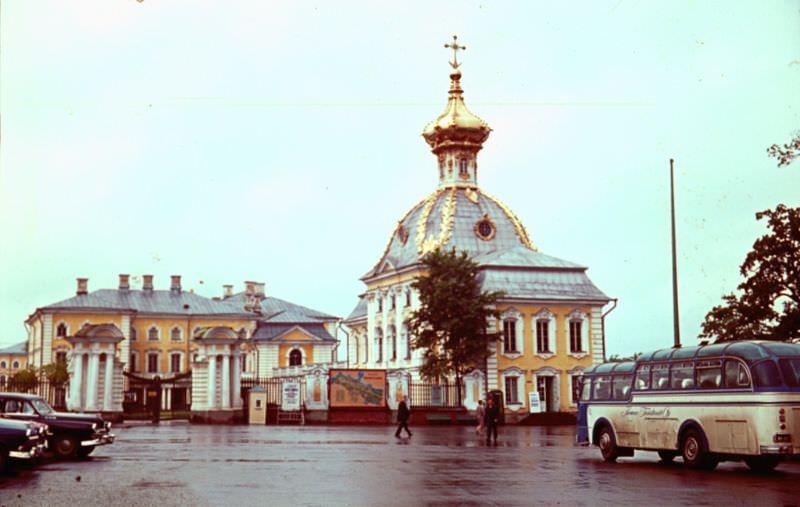
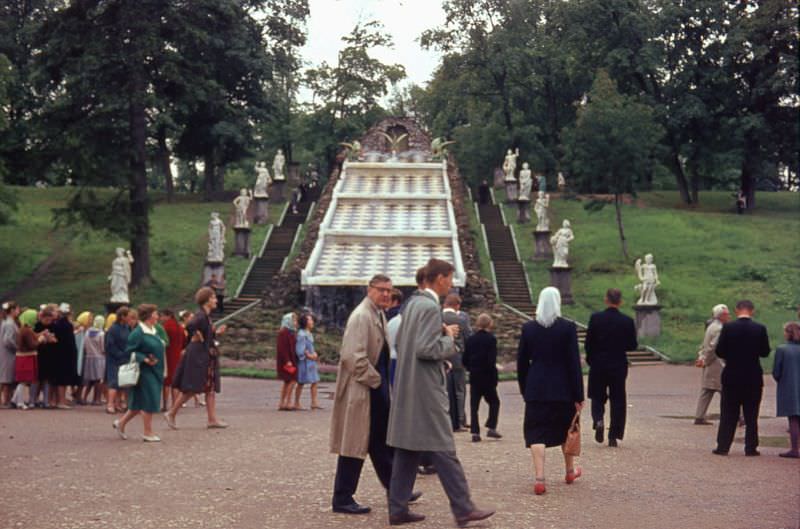
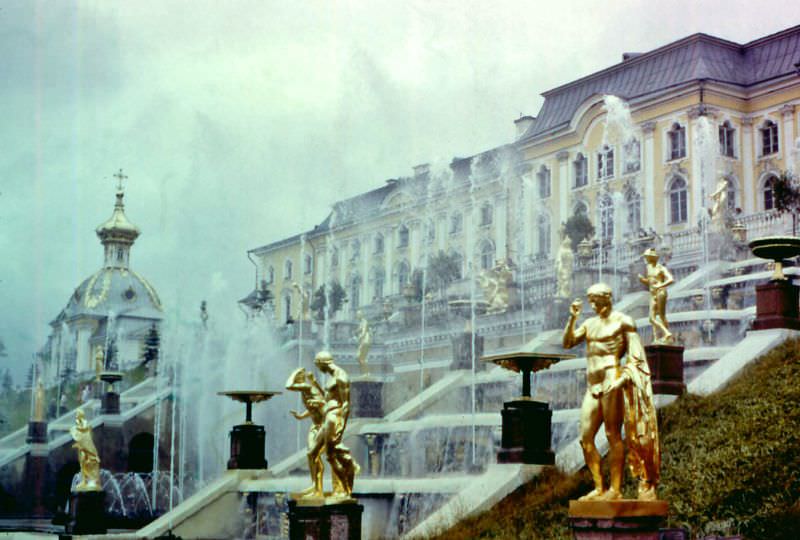
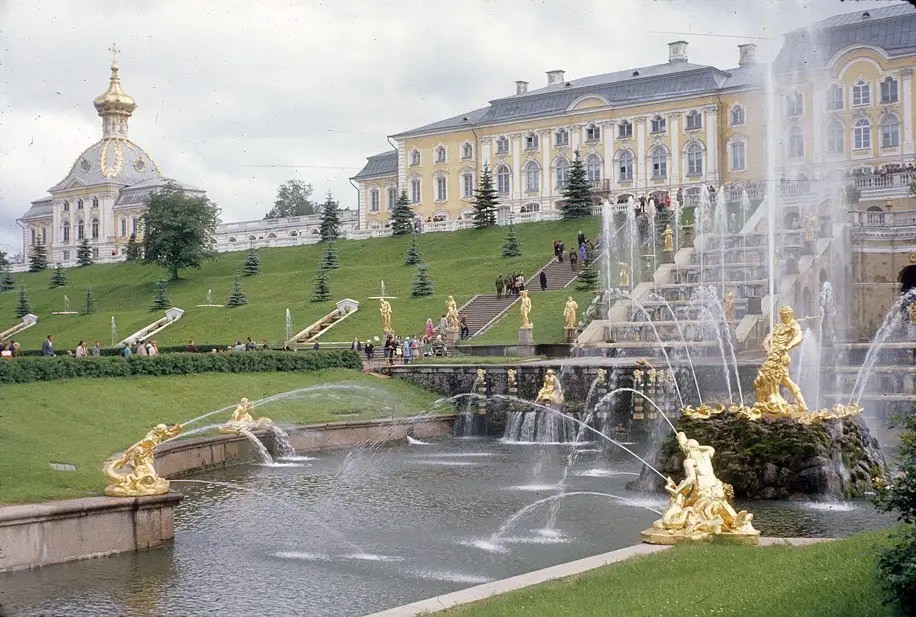
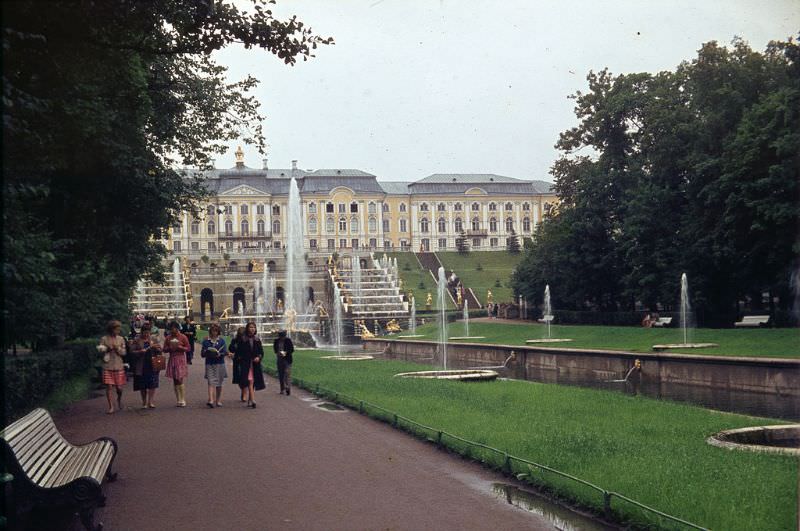
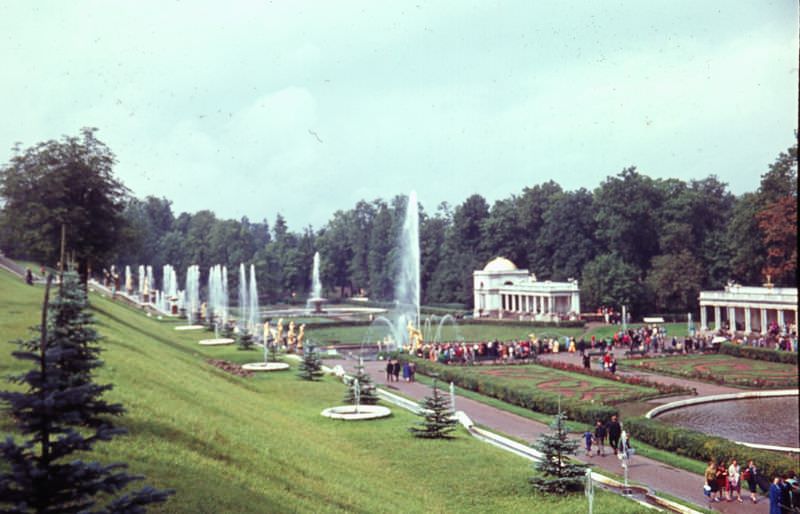
West of the city along the Gulf of Finland, Peterhof Palace was one of the crown jewels of Leningrad’s tourist circuit. Built under Peter the Great and often compared to Versailles, its Grand Cascade featured dozens of gold-painted statues and over 60 fountains cascading down toward the sea.
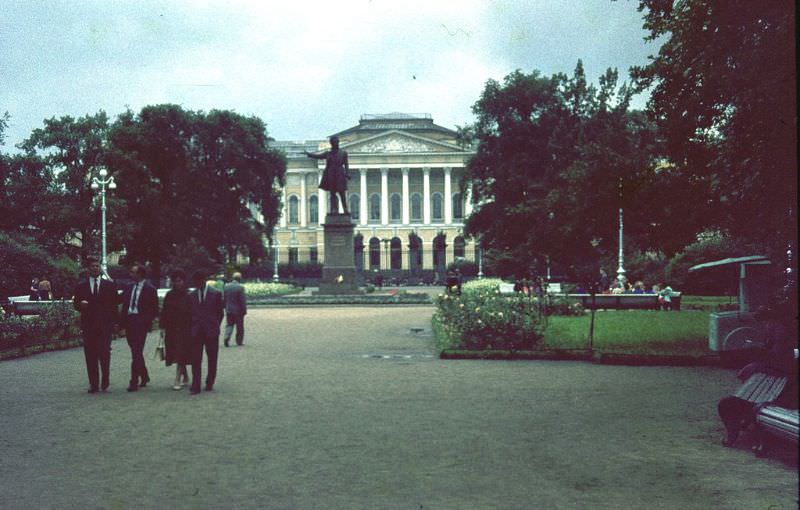
Back in the city center, the Russian Museum on Arts Square displayed one of the world’s largest collections of Russian fine art. In front of it stood a bronze monument to Alexander Pushkin, Russia’s most celebrated poet, a fixture of the surrounding square.
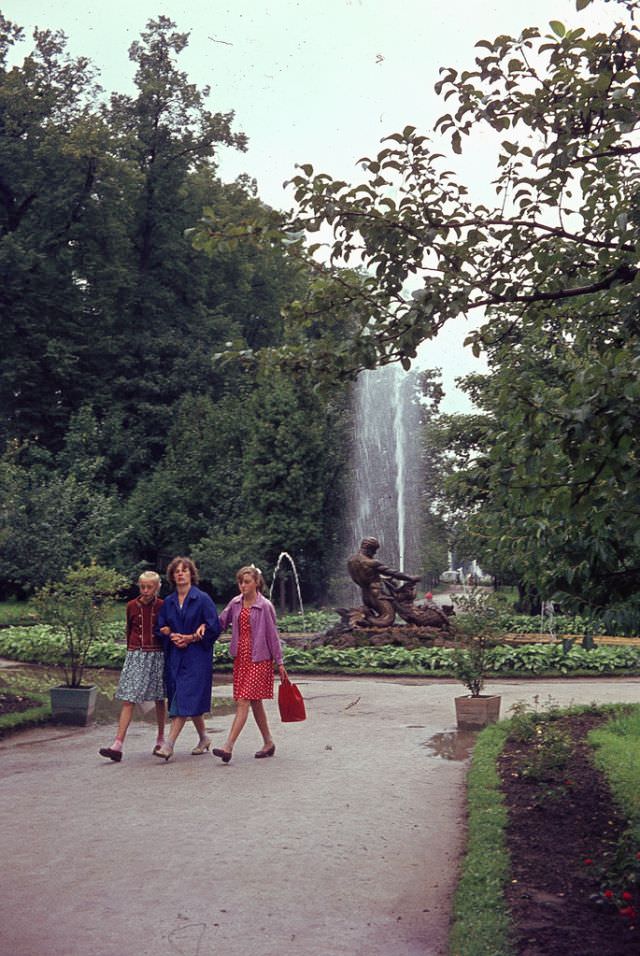
The Samson Fountain at Peterhof was the centerpiece of the entire ensemble. The statue shows the biblical Samson forcing open the jaws of a lion, with a jet of water shooting nearly 20 meters into the air. The original statue was looted by German forces during the occupation and replaced with a new casting after the war.
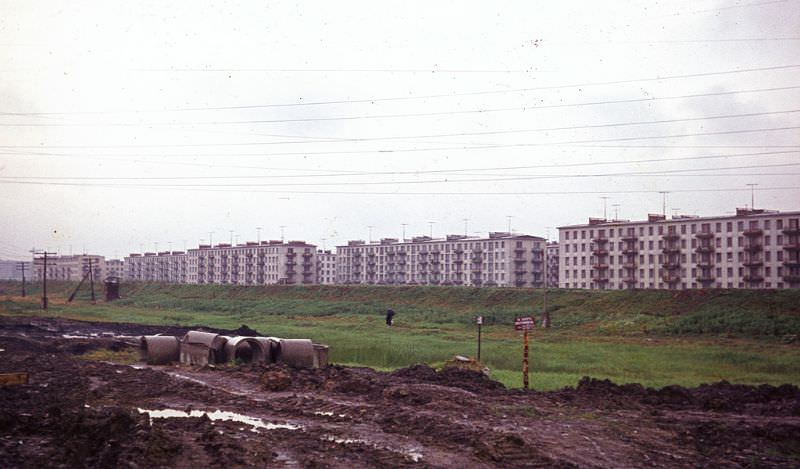
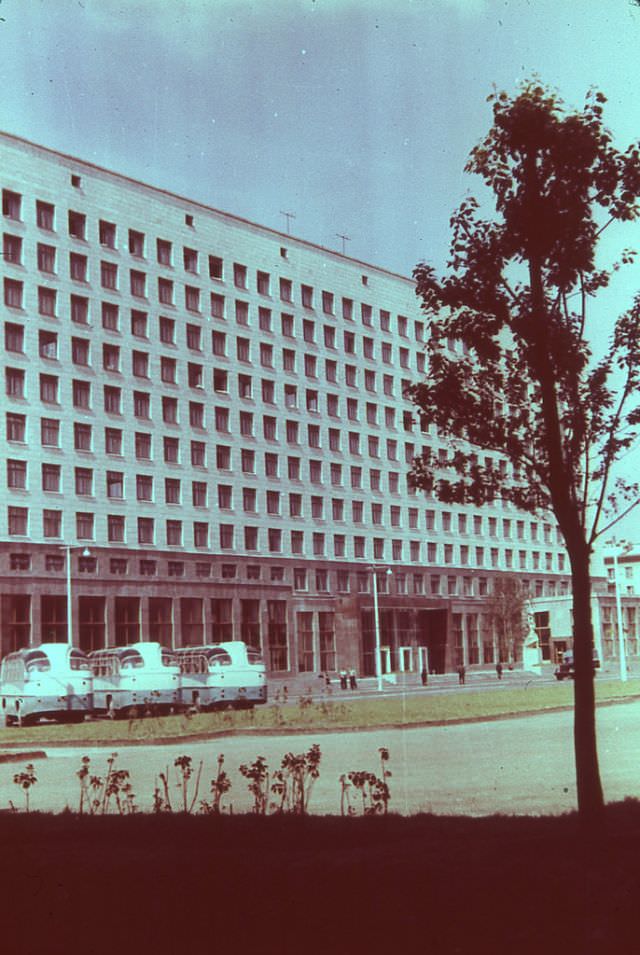
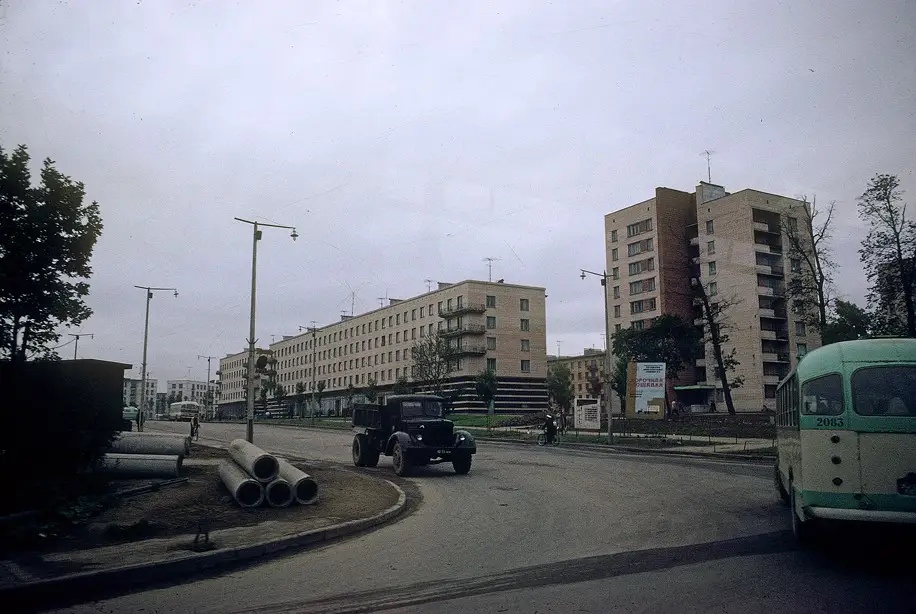
On the outskirts of the city, large blocks of Soviet-style apartment buildings were going up to house Leningrad’s growing population. These standardized prefabricated buildings — known as khrushchyovki — were a nationwide solution to the postwar housing shortage, built quickly and in large numbers throughout the 1960s.
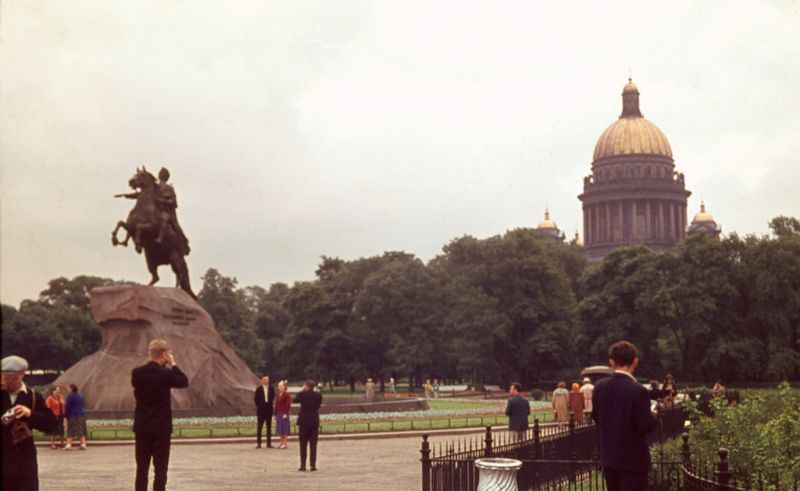
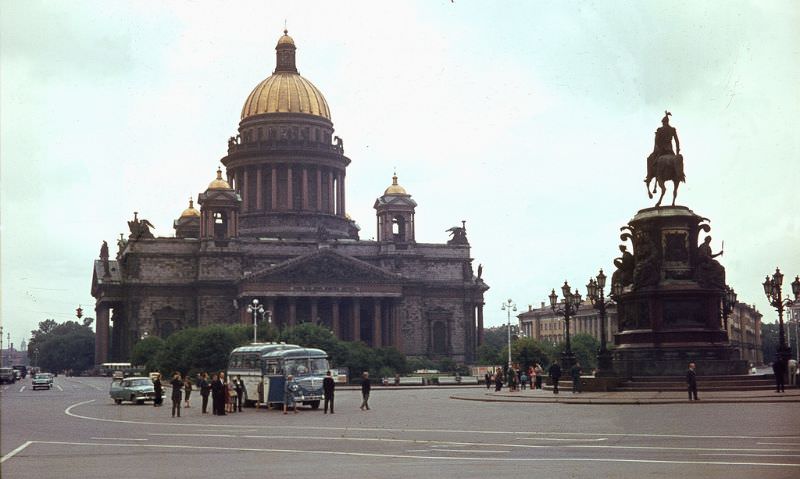
St. Isaac’s Cathedral, one of the largest domed churches in the world, presided over St. Isaac’s Square near the Neva. Like Kazan Cathedral, it had been repurposed under Soviet rule — functioning as an anti-religious museum — but remained open to the public as a museum and architectural monument.
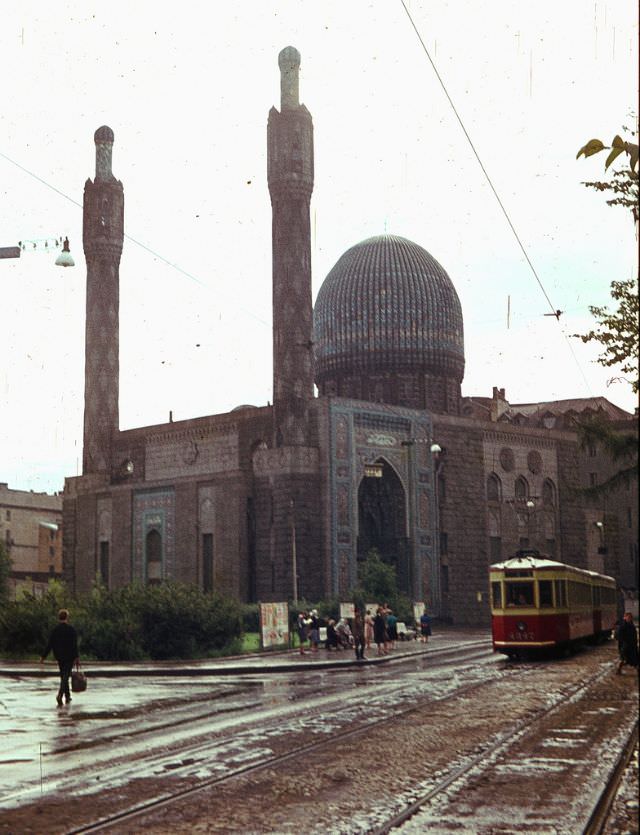
The Blue Mosque, completed in 1913 and modeled after the Gur-e-Amir mausoleum in Samarkand, was one of the largest mosques in Russia. Though religious activity was heavily restricted under Soviet rule, the building survived and served Leningrad’s Muslim community.
Peterhof’s grounds held more than just the Grand Cascade. The Chess Mountain — a cascading slide decorated with a chessboard pattern and dragon sculptures at its sides — was one of several smaller fountain features spread across the palace gardens.
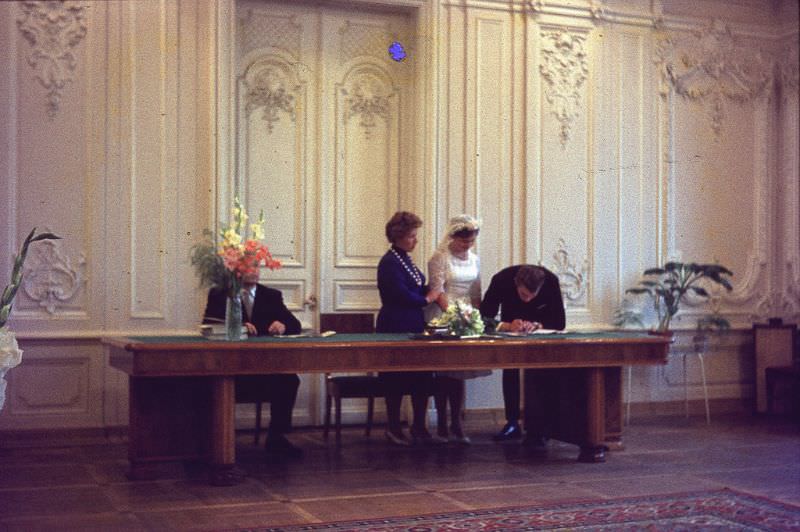
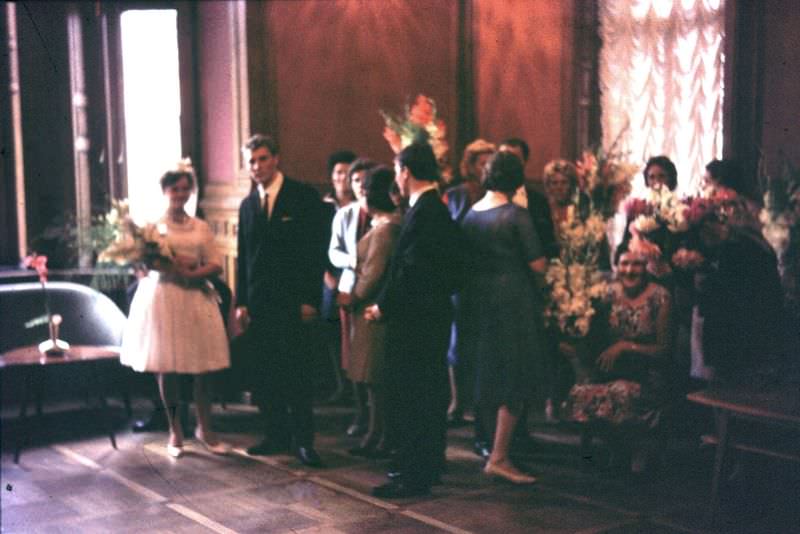
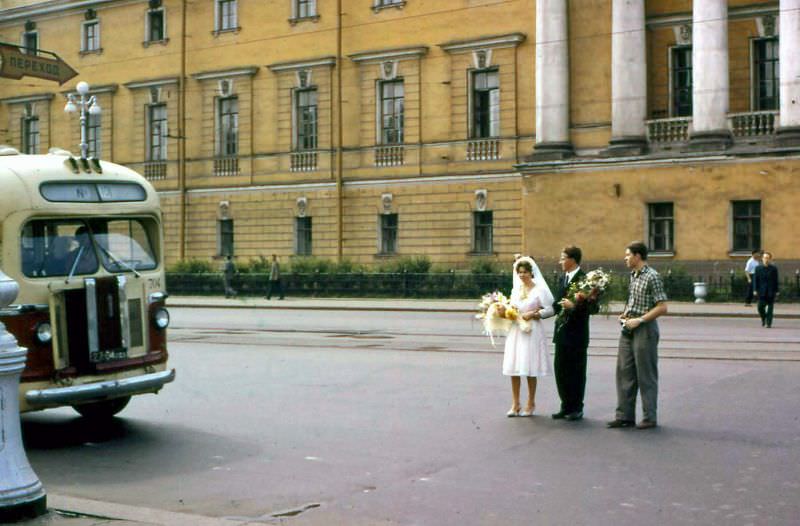
Soviet wedding ceremonies in the 1960s followed a set routine. Couples registered at a civil registry office called a ZAGS, then often gathered with family and friends at landmarks across the city for photographs. The Winter Palace steps and the banks of the Neva were popular backdrops.
By 1968, Leningrad’s canal district remained one of the most photographed corners of the city. The Church of the Savior on Blood, rising dramatically above the Griboedov Canal, was built on the exact spot where Tsar Alexander II was assassinated in 1881. Its exterior was modeled closely on St. Basil’s Cathedral in Moscow.
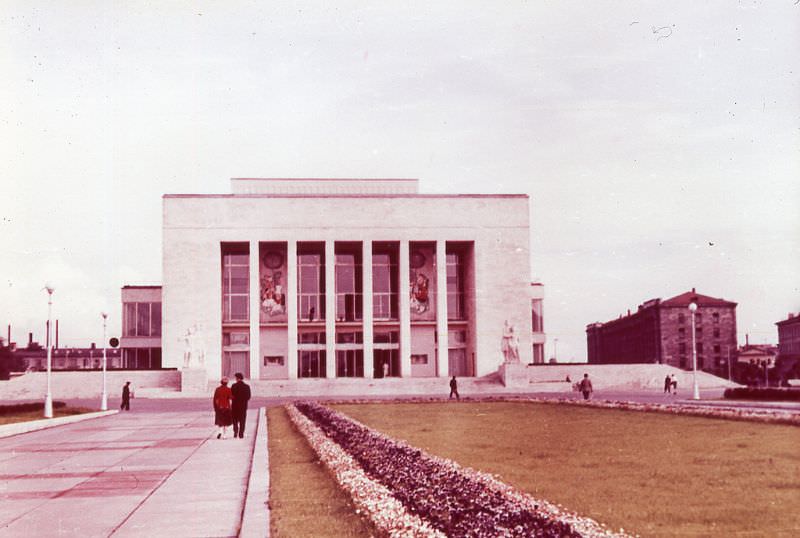
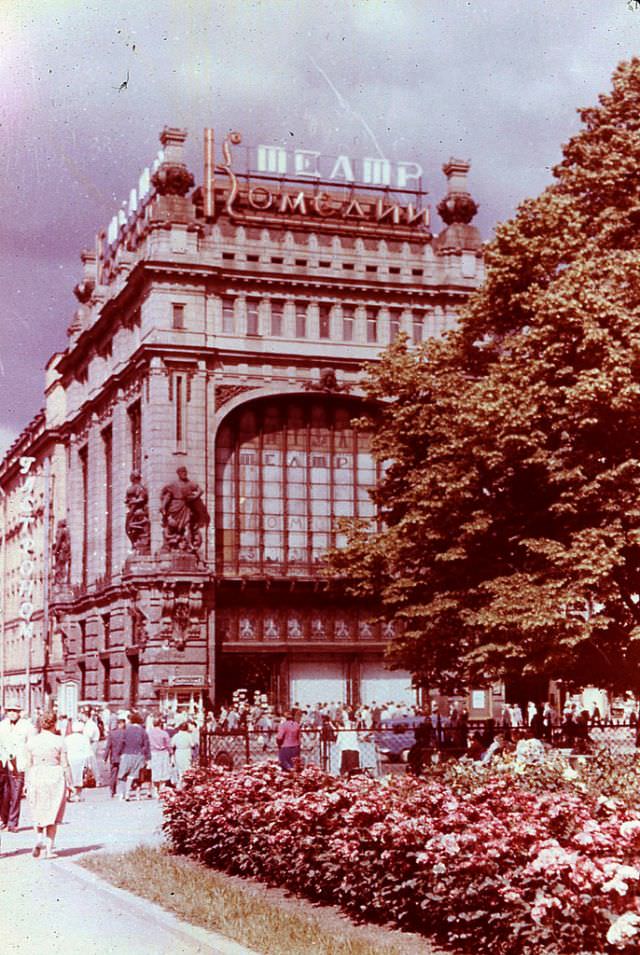
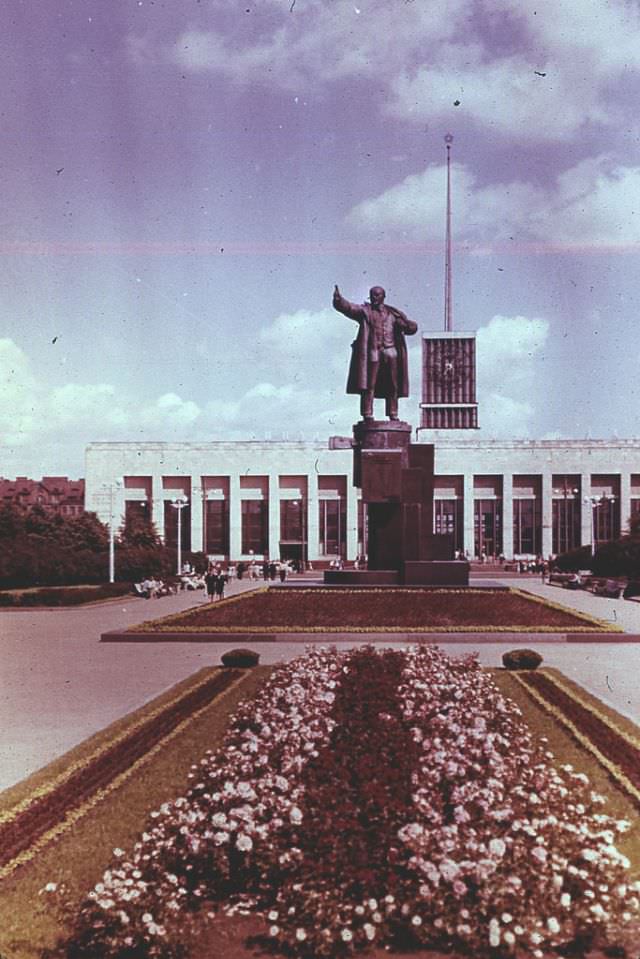
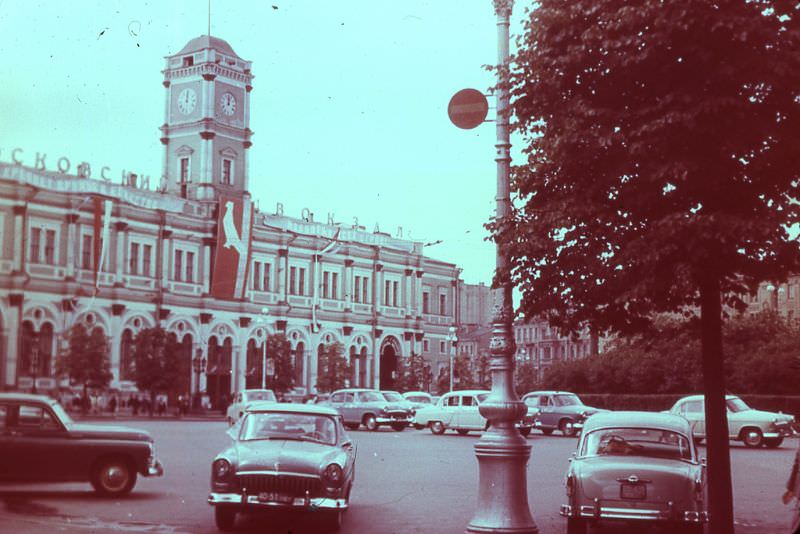
At Finland Station, a large bronze statue of Lenin marked the spot where he arrived by train in April 1917 after years in exile, stepping onto a platform and delivering a speech that helped set the Bolshevik Revolution in motion. The monument was a pilgrimage point for Soviet citizens and foreign visitors alike.
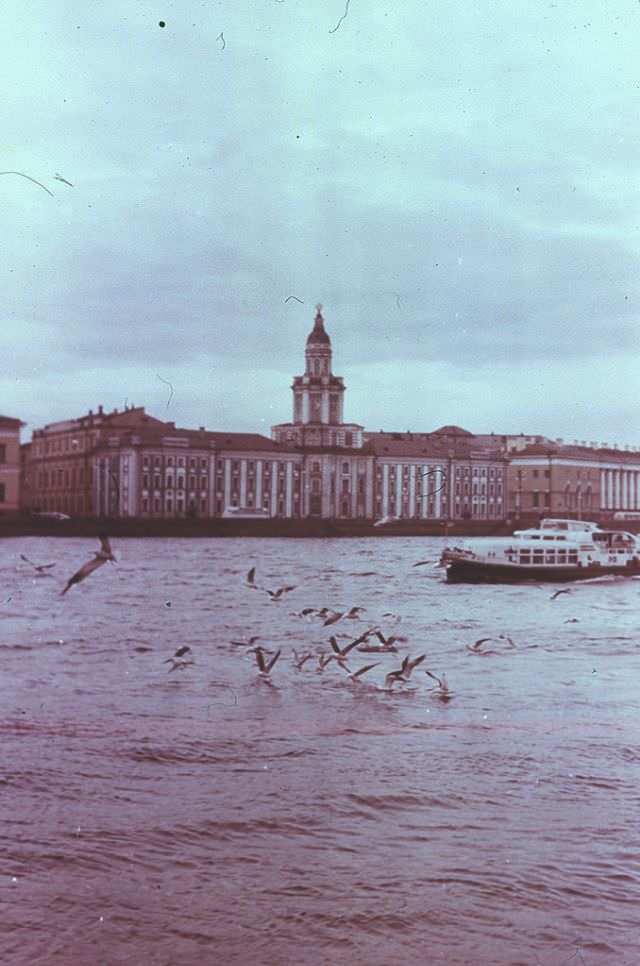
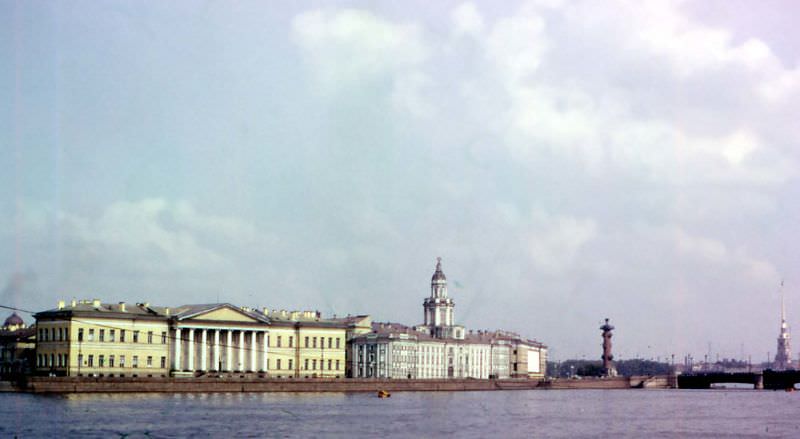
On Vasilievsky Island, the old Academy of Sciences building — by 1968 home to the Lomonosov Museum — stood as one of Leningrad’s oldest scientific institutions. Named after Mikhail Lomonosov, the 18th-century polymath considered the father of Russian science, the museum preserved his instruments, manuscripts, and personal effects.
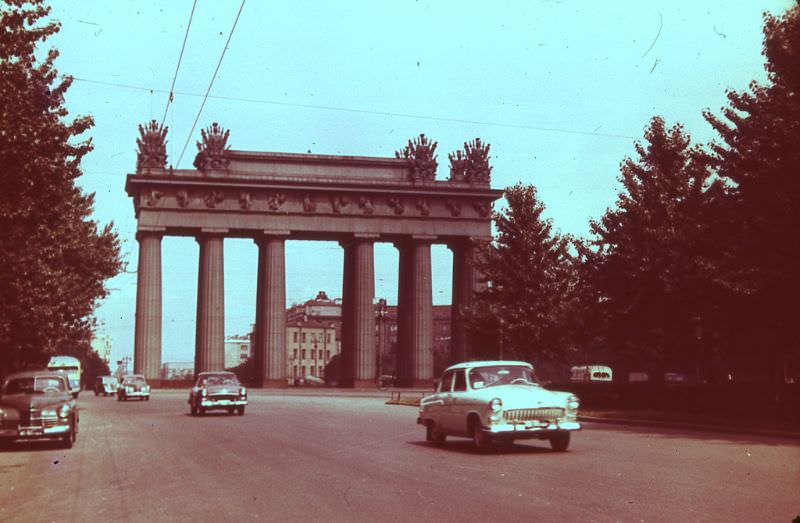
Along the Moscow Road leading south out of the city, a large monument commemorated the Soviet victory over Nazi Germany. This stretch of road had seen heavy fighting during the siege, and the memorial served as a constant reminder of what the city had endured.
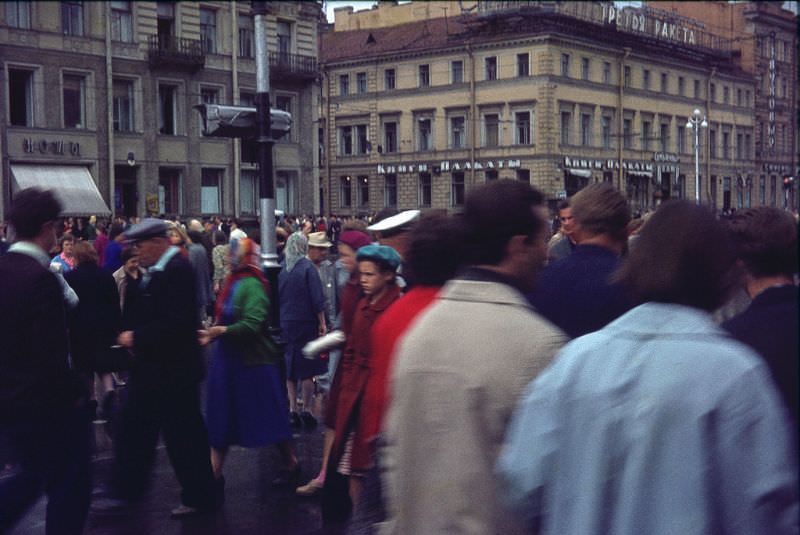
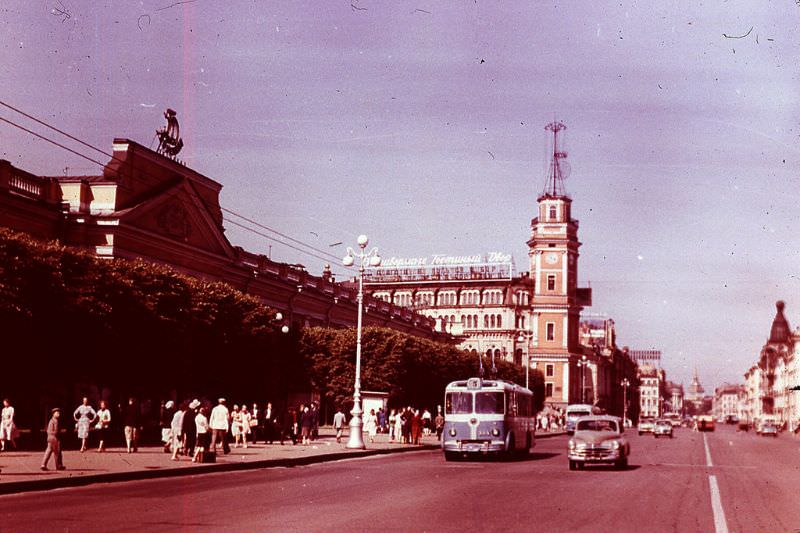
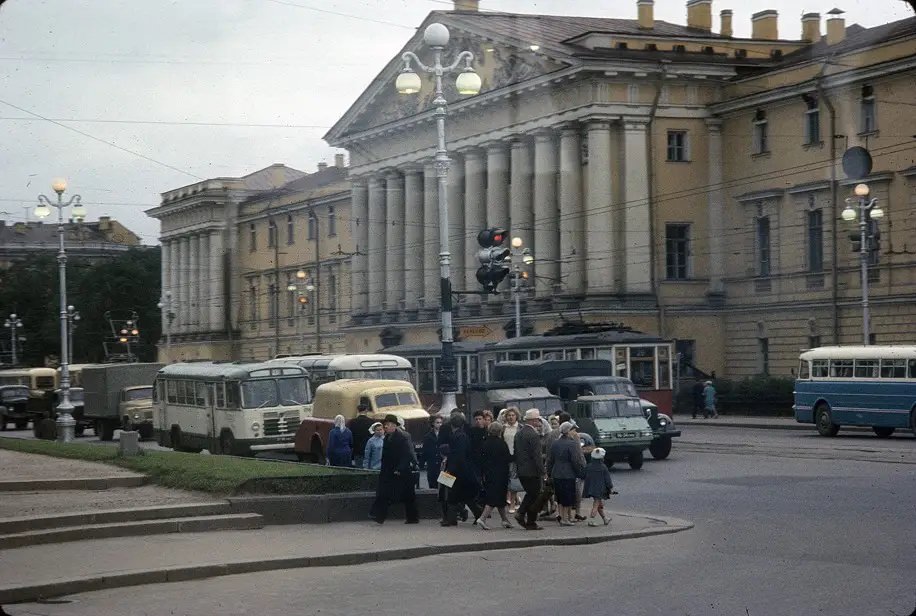
Nevsky Prospect, Leningrad’s main thoroughfare running nearly five kilometers from the Admiralty to the Alexander Nevsky Monastery, was the commercial and cultural spine of the city. In the 1960s it carried heavy foot traffic, trams, and buses past bookshops, department stores, cafes, and theaters.
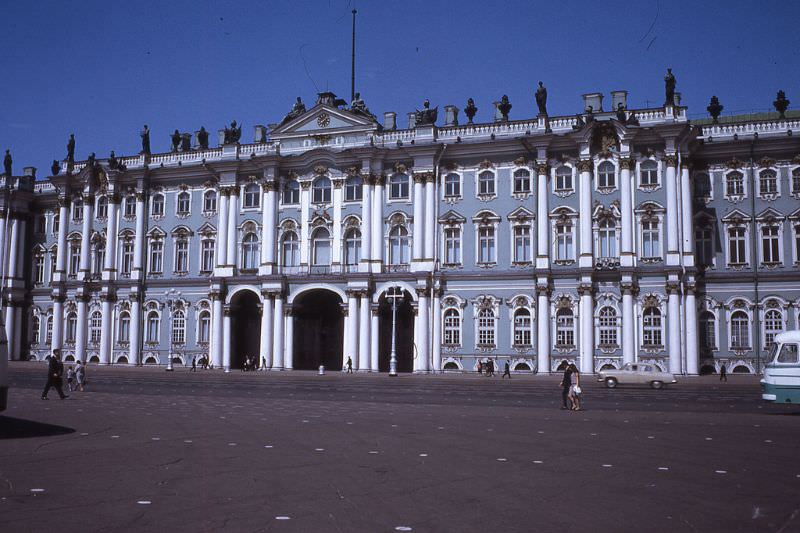
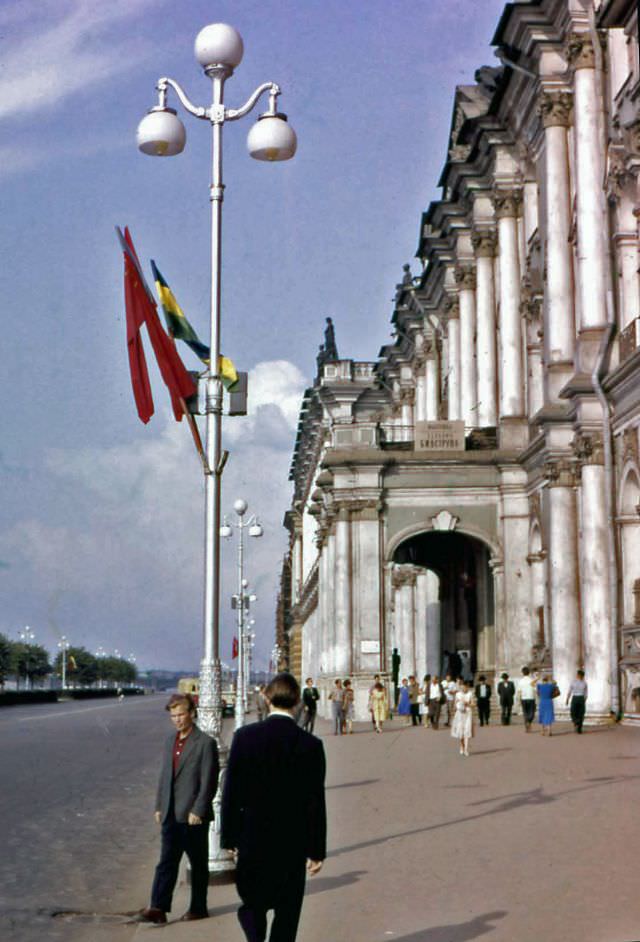
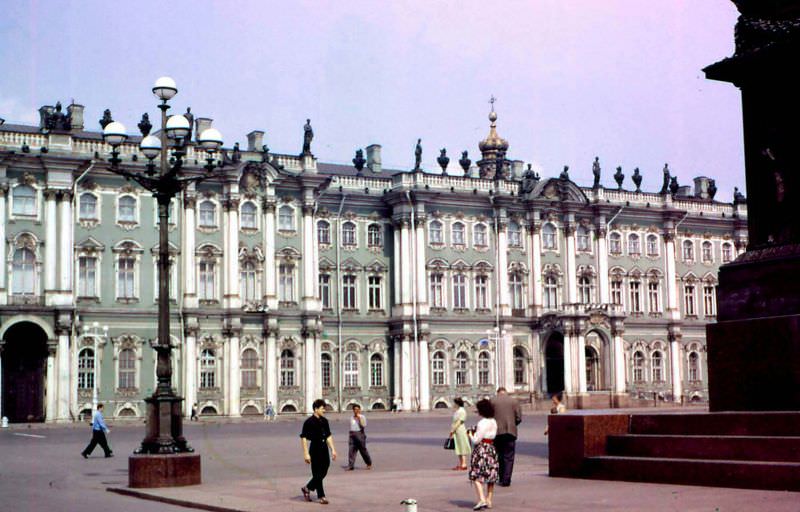
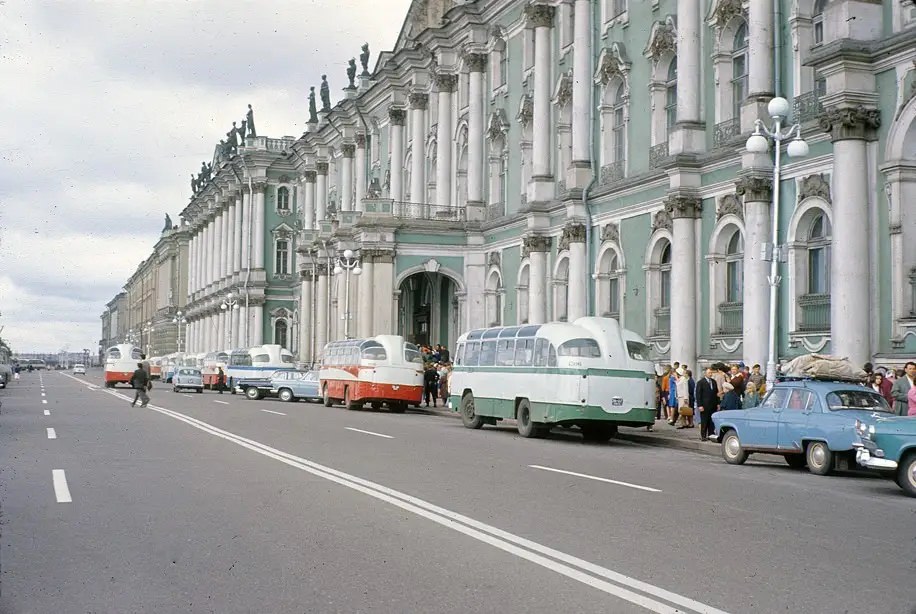
Palace Square, with the Winter Palace stretching across its northern edge, was the ceremonial heart of the city. The palace — home of the Hermitage Museum — held one of the largest art collections in the world, and its green-and-white baroque facade drew visitors from across the Soviet Union and beyond.
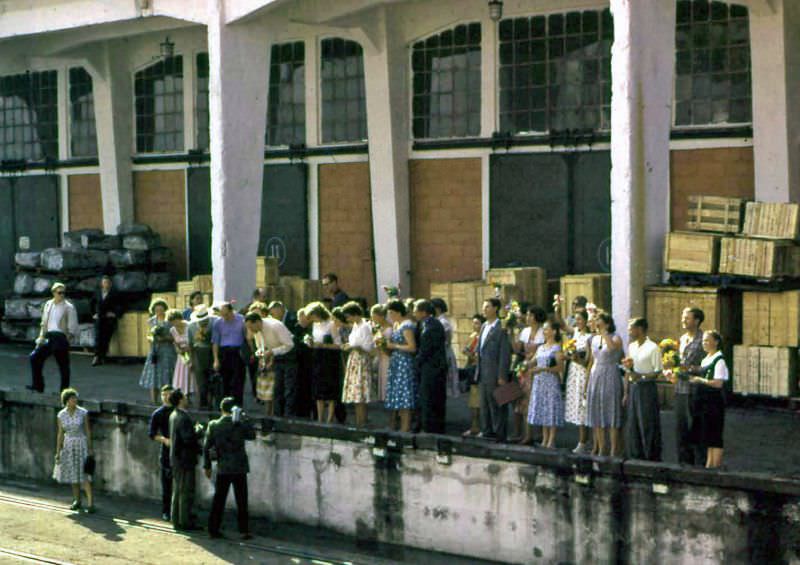
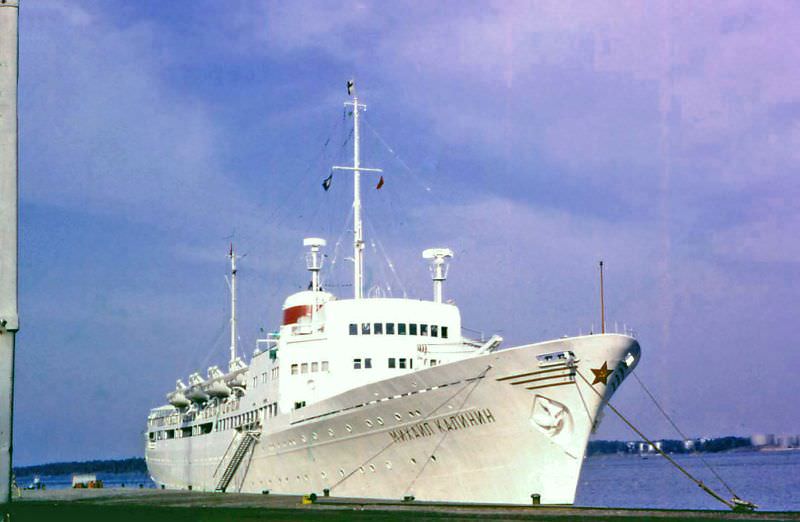
Foreign tourists arriving by ship received organized welcomes at the port. Travel to the Soviet Union was tightly managed — visitors moved through the country on guided itineraries, staying at approved hotels and accompanied by state-assigned guides.
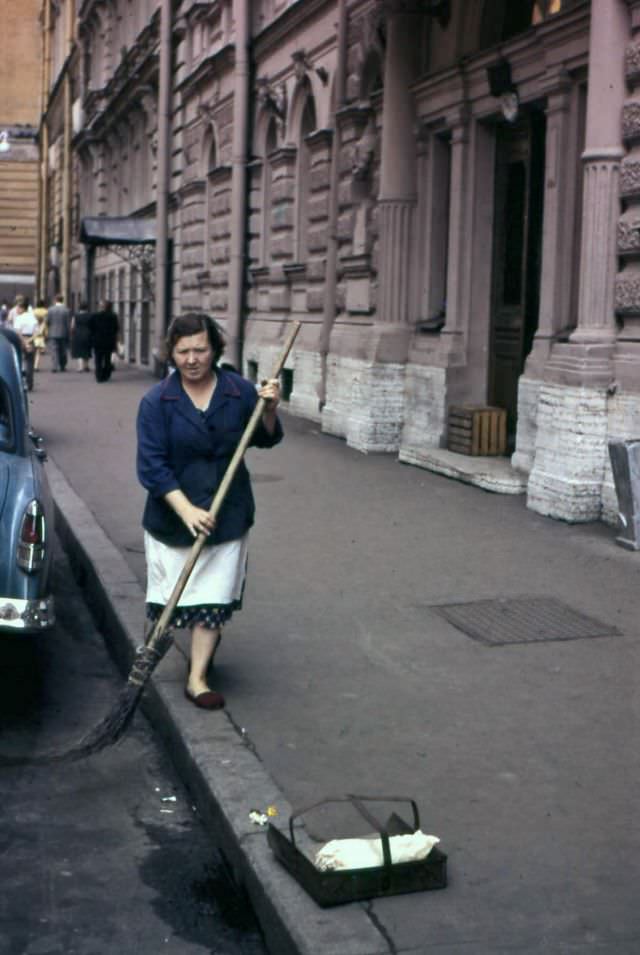
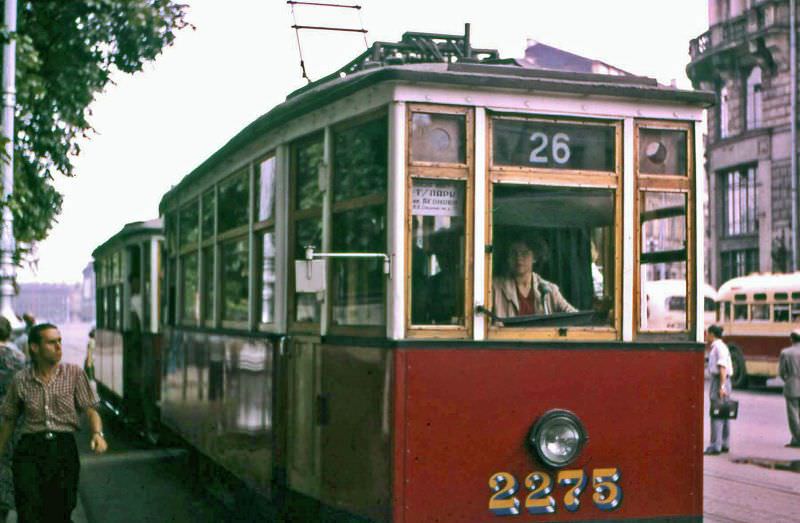
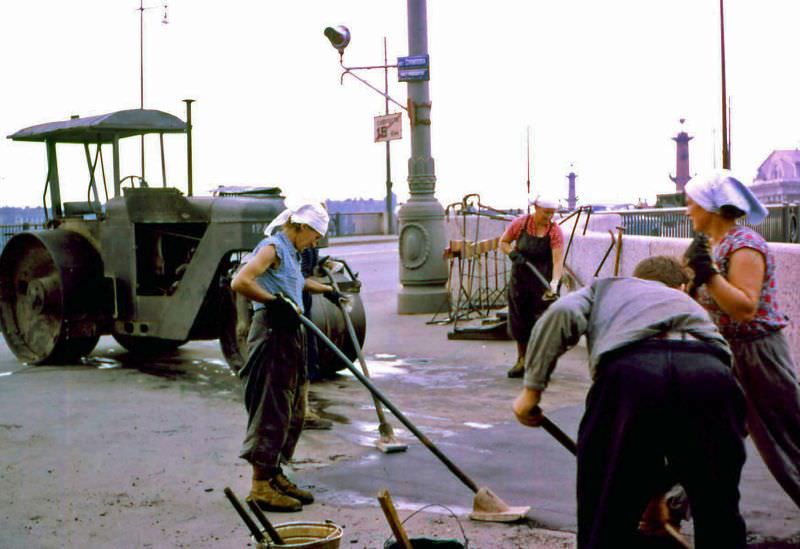
Women held a wide range of jobs across the city, including ones that in many countries at the time were seen as male-dominated. Street cleaning, road repair, and driving trams were all roles filled by women in 1960s Leningrad. These photographs capture that reality plainly.
Public drinking water dispensers were a common feature on Leningrad’s streets. These cold water machines — often coin-operated and fitted with a shared glass — were a standard part of Soviet urban infrastructure throughout the 1960s.
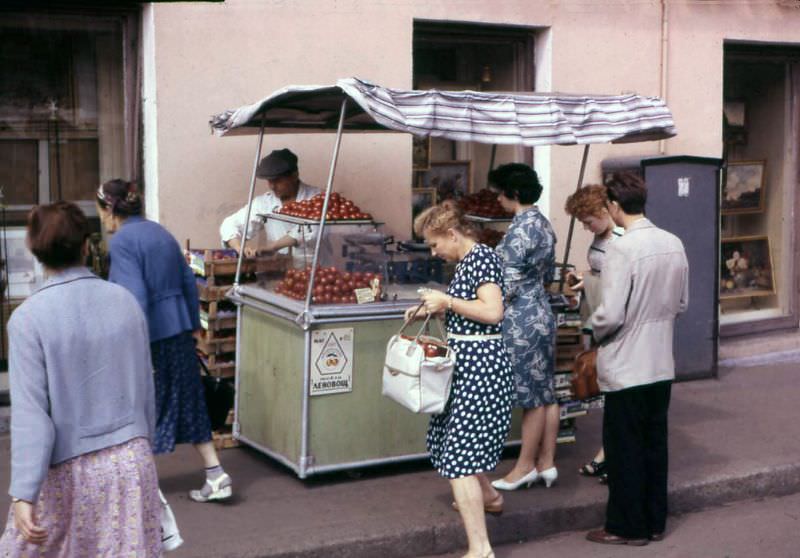
Open-air markets gave residents access to fresh produce and goods that were not always available in state-run shops. Vendors set up wooden stalls loaded with vegetables, fruit, and other items, and haggling — though not officially encouraged in the Soviet system — still happened.
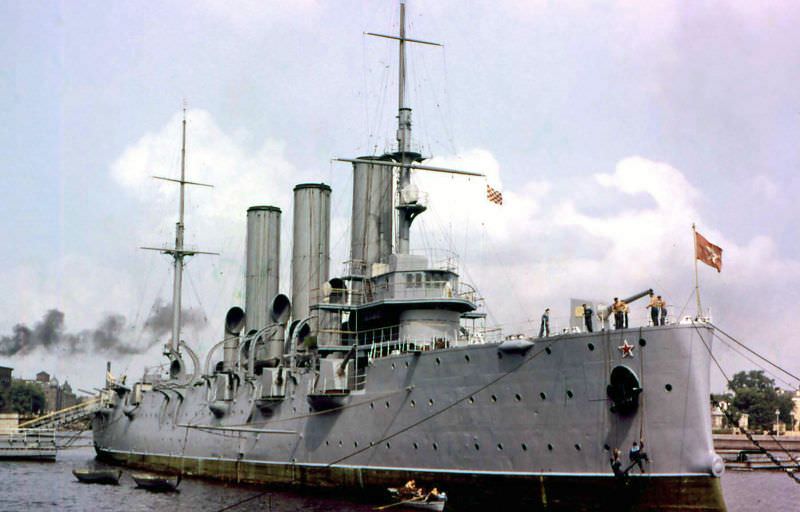
The cruiser Aurora, moored on the Neva near the Nakhimov Naval Academy, was one of the most symbolically charged objects in all of Leningrad. On the night of October 25, 1917, a blank shot fired from its bow gun gave the signal for the Bolshevik storming of the Winter Palace, marking the start of the October Revolution.
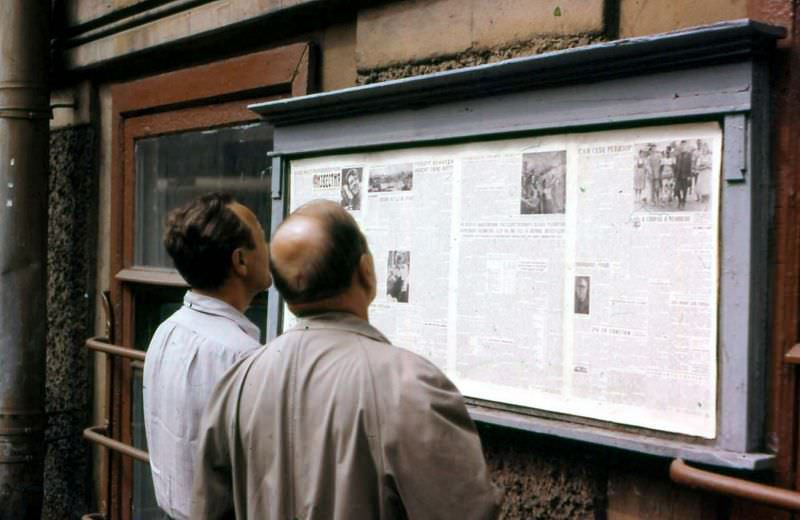
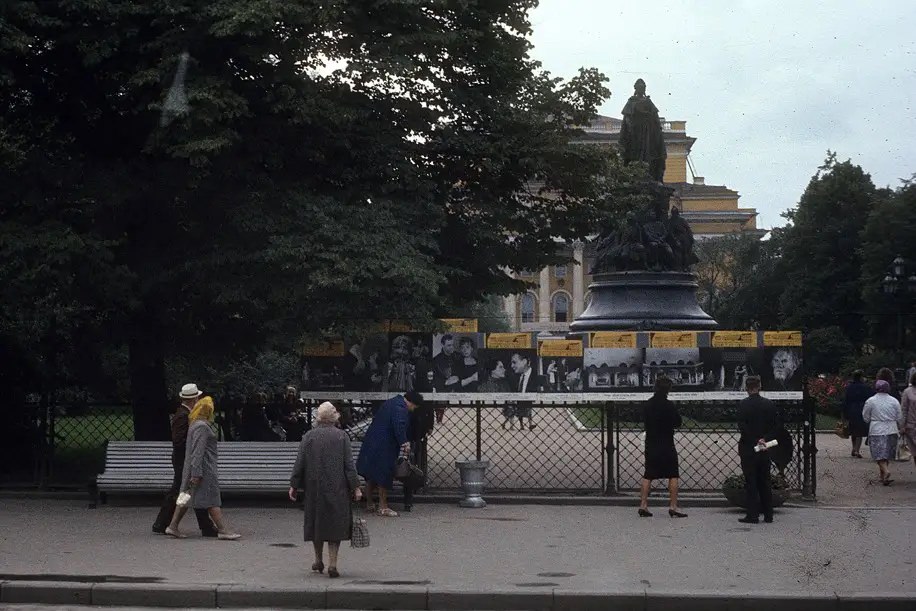
News and public information reached citizens through press boards mounted in public spaces. These outdoor bulletin boards displayed newspapers under glass panels, allowing passersby to read the latest state-approved news without buying a copy. They were a fixture of Soviet city life.
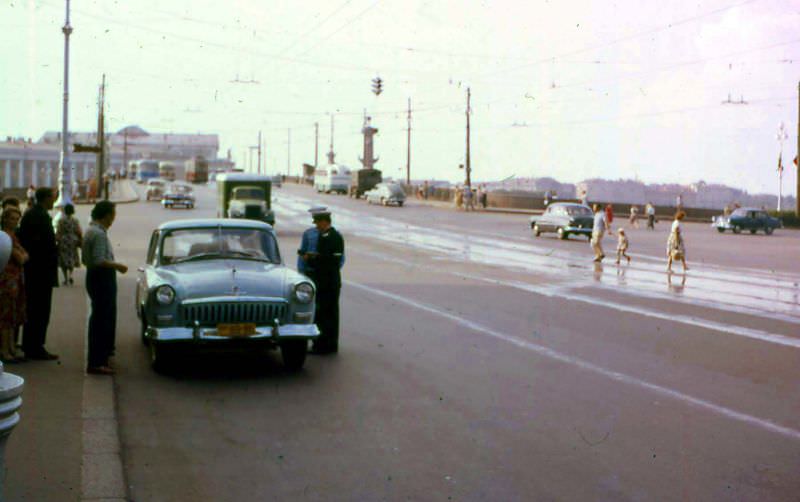
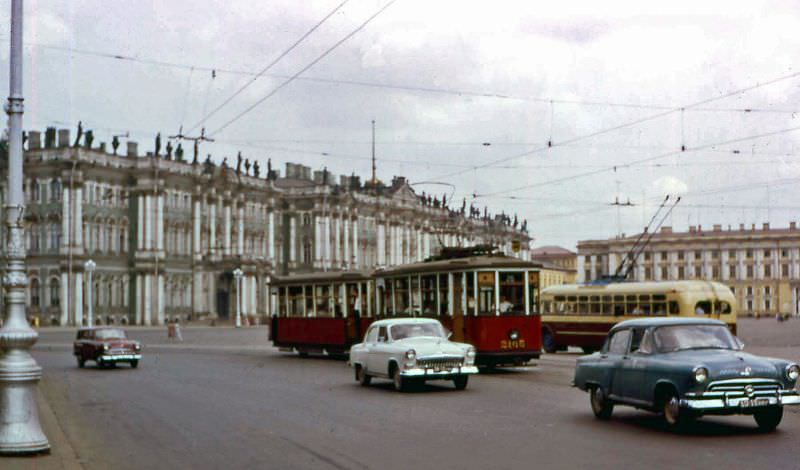
Outside the Winter Palace, trams and cars moved steadily through the wide streets bordering Palace Square. The Hermitage, spread across several connected buildings along the Neva embankment, housed over three million items — paintings, sculptures, jewels, and antiquities gathered over centuries of imperial collecting.
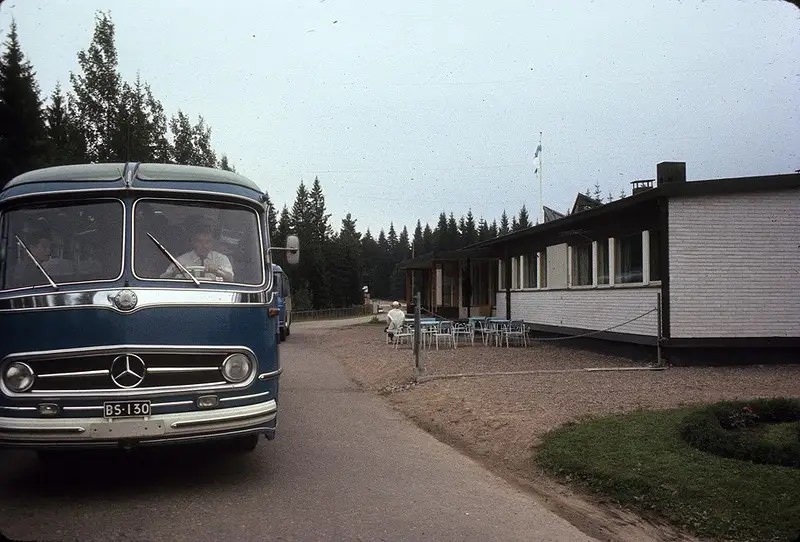
Foreign tourists entering the Soviet Union from Finland crossed one of the most closely watched borders in the world. Groups traveled by bus from the Finnish border through Vyborg and on toward Leningrad, stopping at designated checkpoints along the way.
Once in the city, tourists were taken directly to approved hotels. Meals were served on-site, itineraries were fixed, and movement outside organized tours was restricted. Every part of a foreign visitor’s stay was carefully managed by Intourist, the Soviet state travel agency.
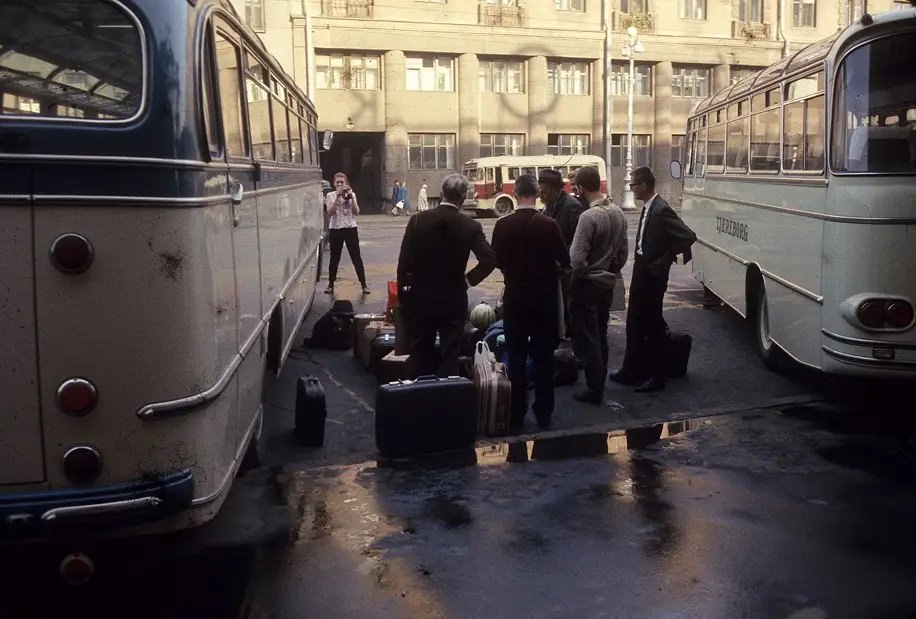
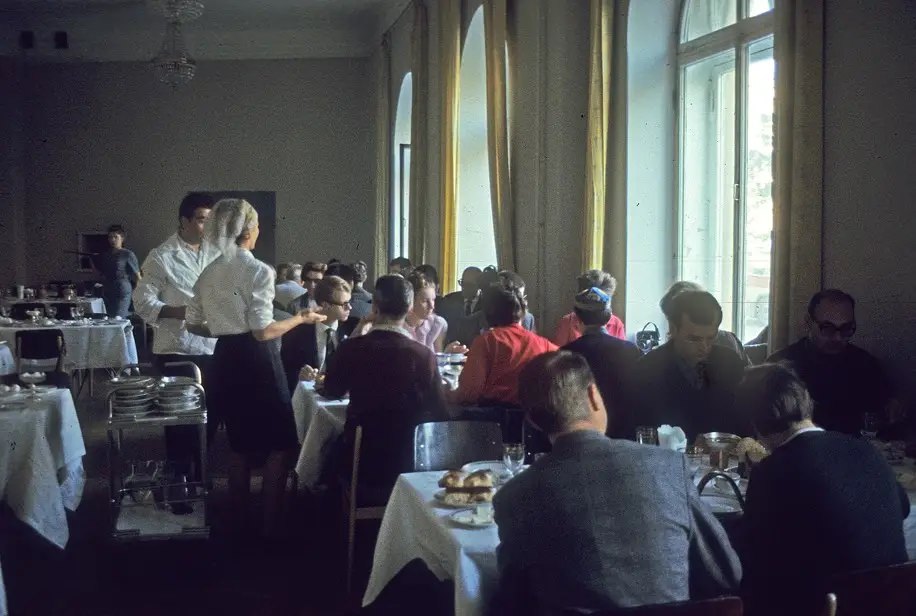
Guided tours took visitors to the city’s major landmarks, moving them from one approved site to the next. Interaction with ordinary Soviet citizens was limited but not impossible. Some tourists managed brief conversations with local children, one of the few unscripted moments visitors experienced.
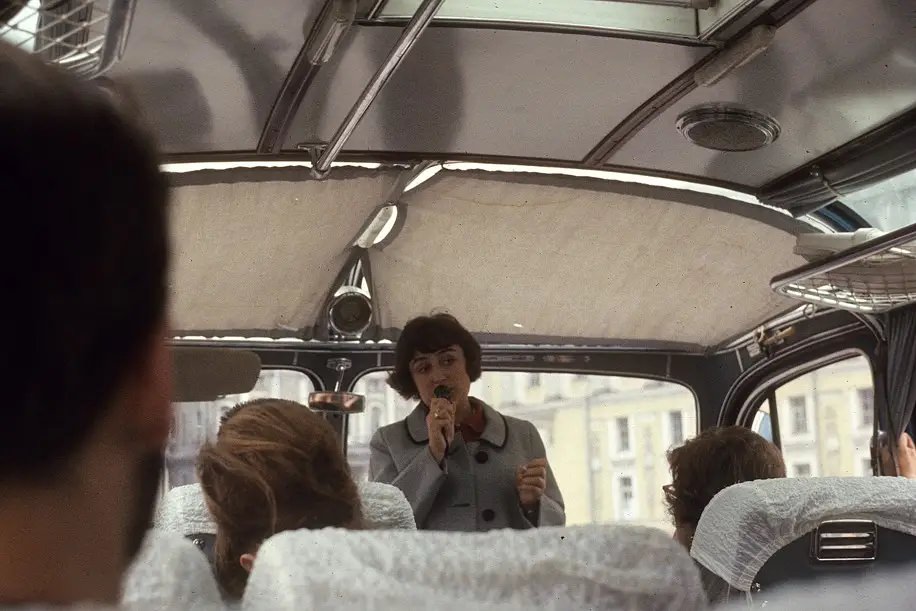
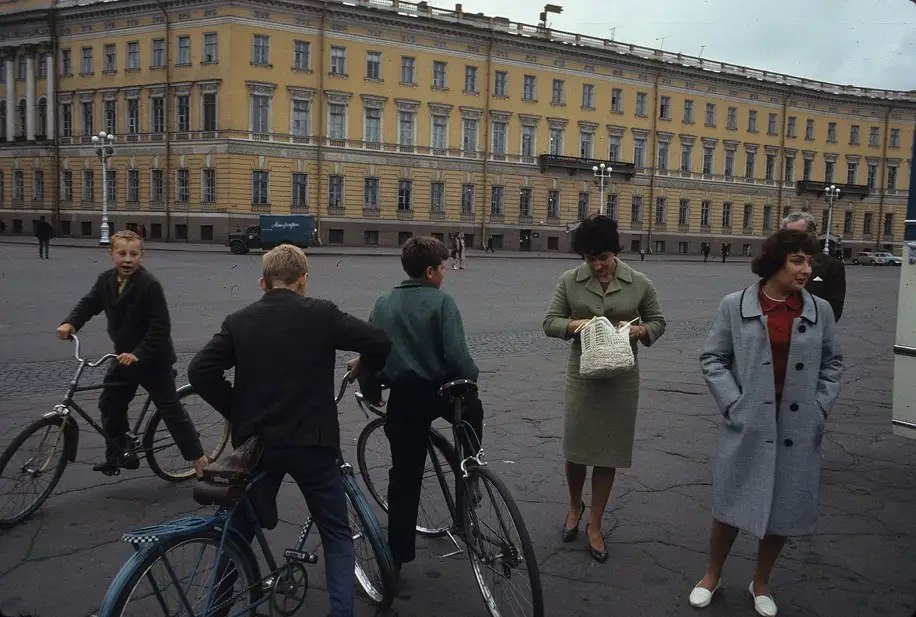
On Ostrovsky Square, the monument to Catherine the Great — Empress of Russia from 1762 to 1796 — stood surrounded by figures from her reign. The bronze statue, erected in 1873, depicted her holding a scepter, with some of her most famous statesmen and military commanders gathered around the base of the pedestal.
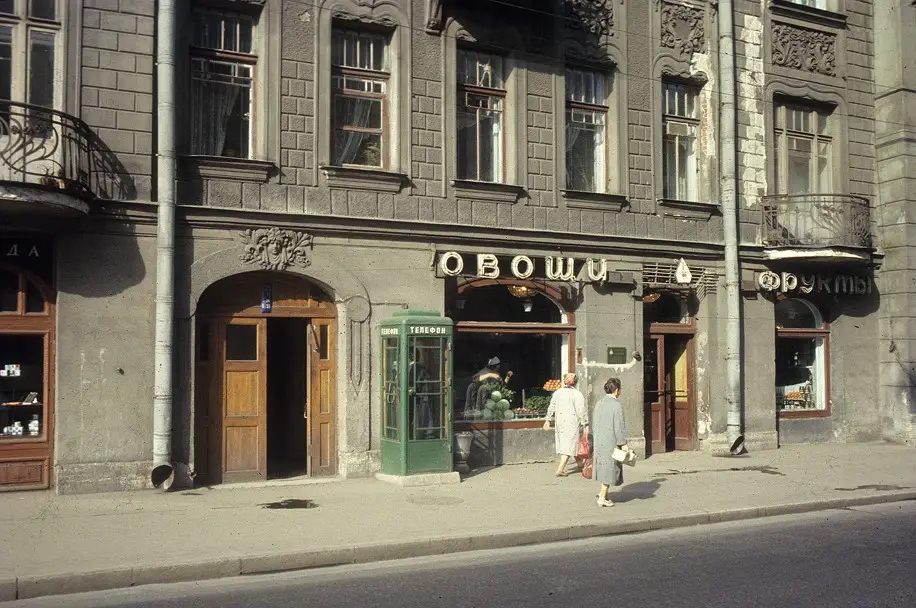
Even small pieces of urban infrastructure documented in these photos tell a story about daily Soviet life — the public phone booths lining city streets, the organized neighborhood blocks, and the steady expansion of residential areas on the city’s edges.
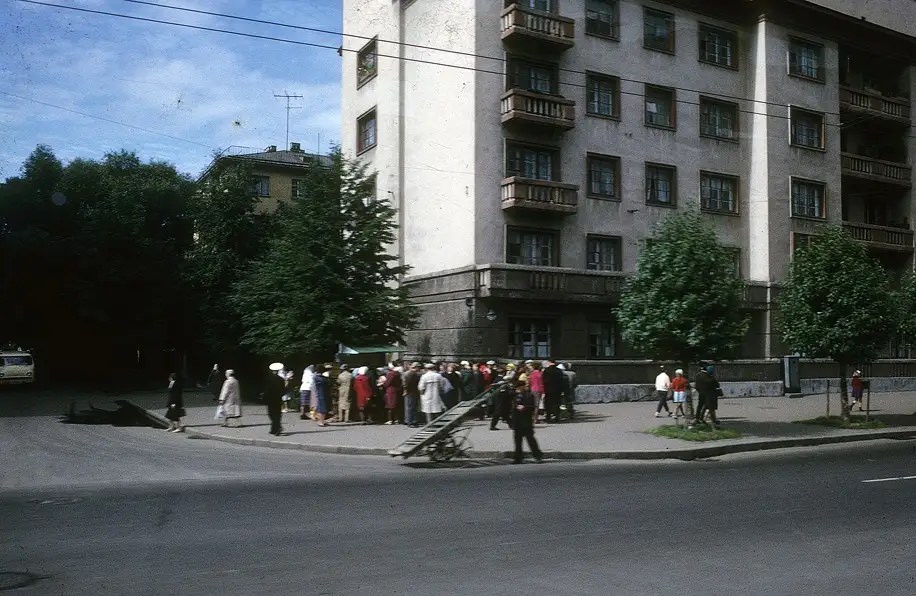
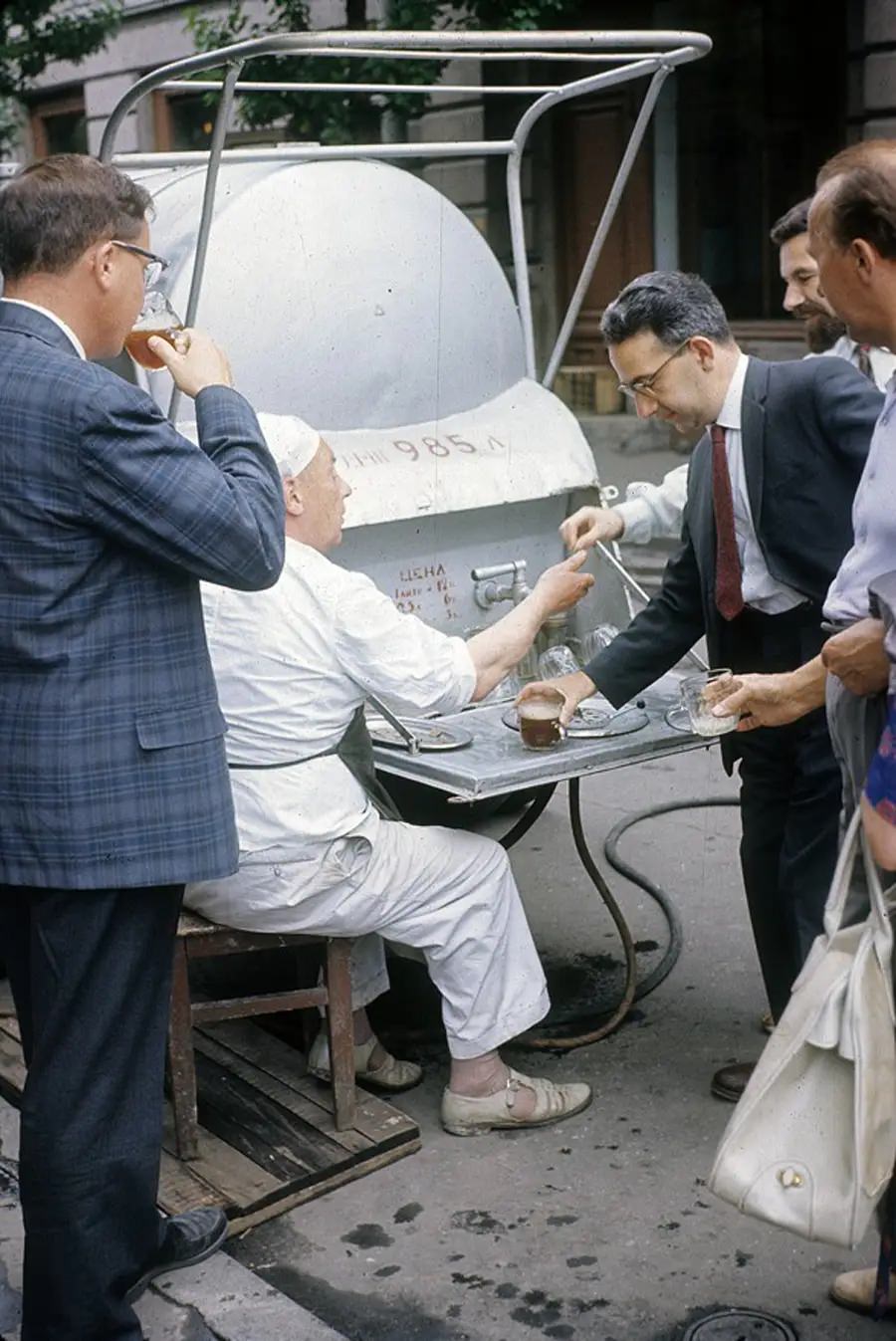
Kvass — a lightly fermented drink made from rye bread — was one of the most widely consumed beverages in the Soviet Union. Street vendors sold it from large yellow tank trucks parked along the sidewalk, ladling it into shared mugs or disposable cups. It was cheap, widely available, and deeply embedded in Russian food culture.
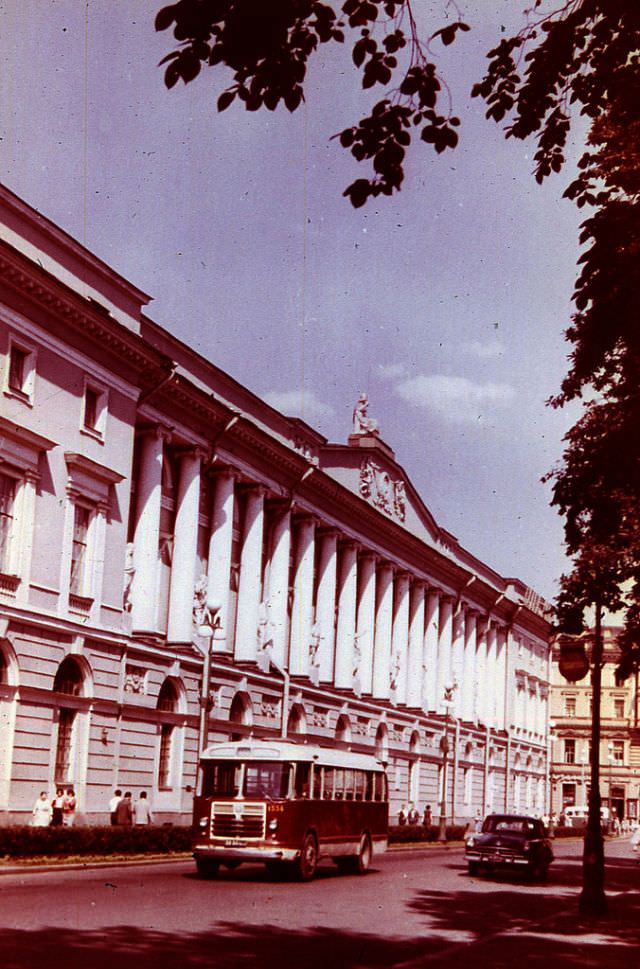
The Saltykov-Shchedrin Public Library on Nevsky Prospect was one of the largest libraries in the Soviet Union, holding tens of millions of items including rare manuscripts and early printed books. Named after the 19th-century satirist Mikhail Saltykov-Shchedrin, it was a central institution in Leningrad’s academic and cultural life.
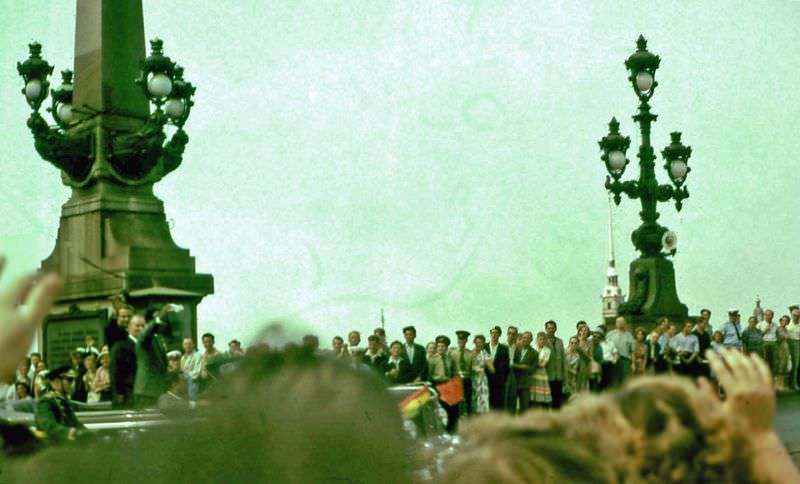
The presence of uniformed police and plain-clothes security personnel was a constant feature of Soviet public life. Citizens were aware of being observed, and the system of surveillance extended from official checkpoints to neighborhood informants. These photographs capture a city that, on the surface, looked like any busy European metropolis, but operated under very different rules.