By the early 1970s, Leningrad was home to roughly four million people, and the city was growing fast. New residential districts were being built across the outskirts to keep pace with the rising population. Cultural institutions were taking shape too — the Dostoevsky Museum and the Rimsky-Korsakov Museum both opened during this decade. In 1974, the Na Fontanke Youth Theatre welcomed its first audiences. Then in 1975, a monument was unveiled to honor the victims and defenders of the Siege of Leningrad, one of the deadliest sieges in history. These photos, taken throughout the 1970s, offer a street-level look at a city that was simultaneously honoring its past and pushing toward the future.

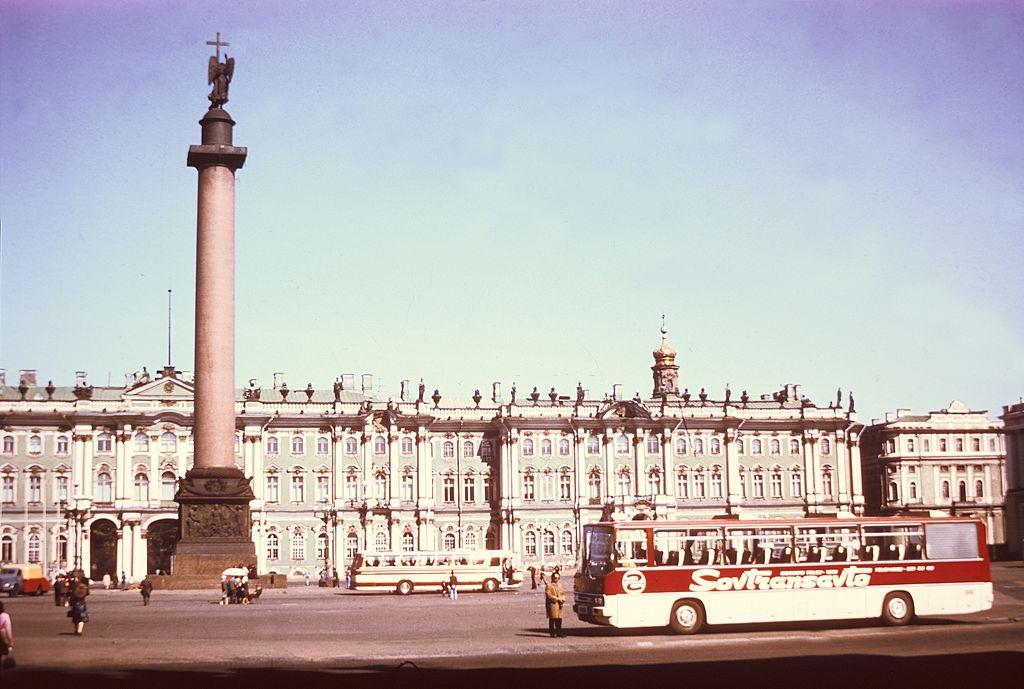
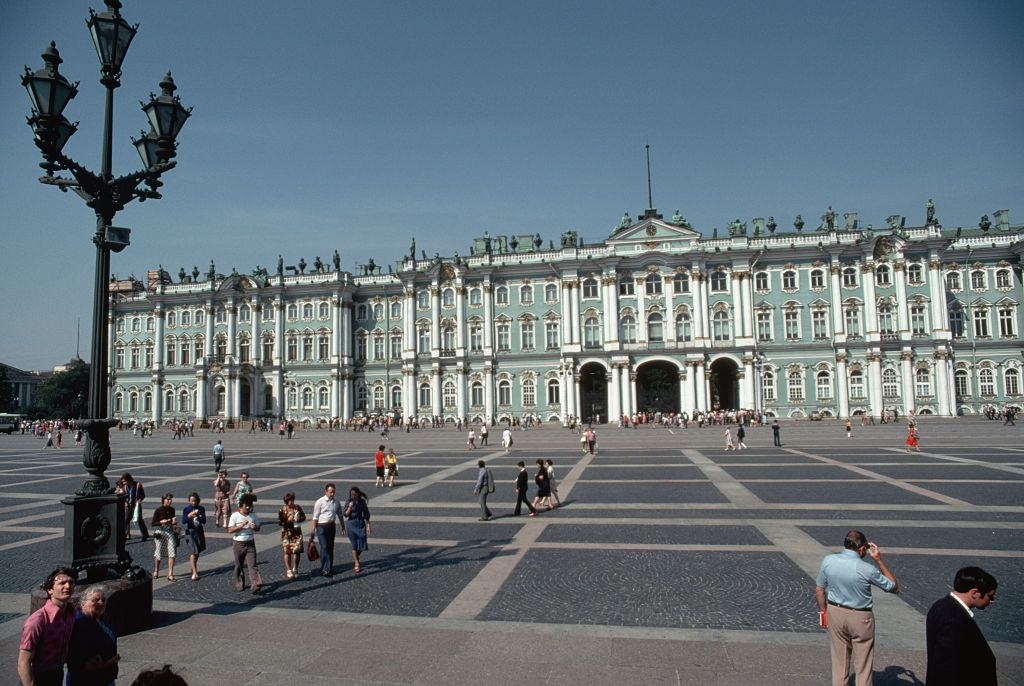
Dvortsovaya Square — Palace Square — sat at the heart of the city’s identity. Flanked by the Winter Palace and the General Staff Building’s sweeping arc, it served as the backdrop for state ceremonies and public gatherings. The Alexander Column at its center, standing over 47 meters tall, needed no bolts or anchors to stay upright — its sheer weight held it in place. In the early 1970s, the square was a regular destination for both locals and foreign visitors.

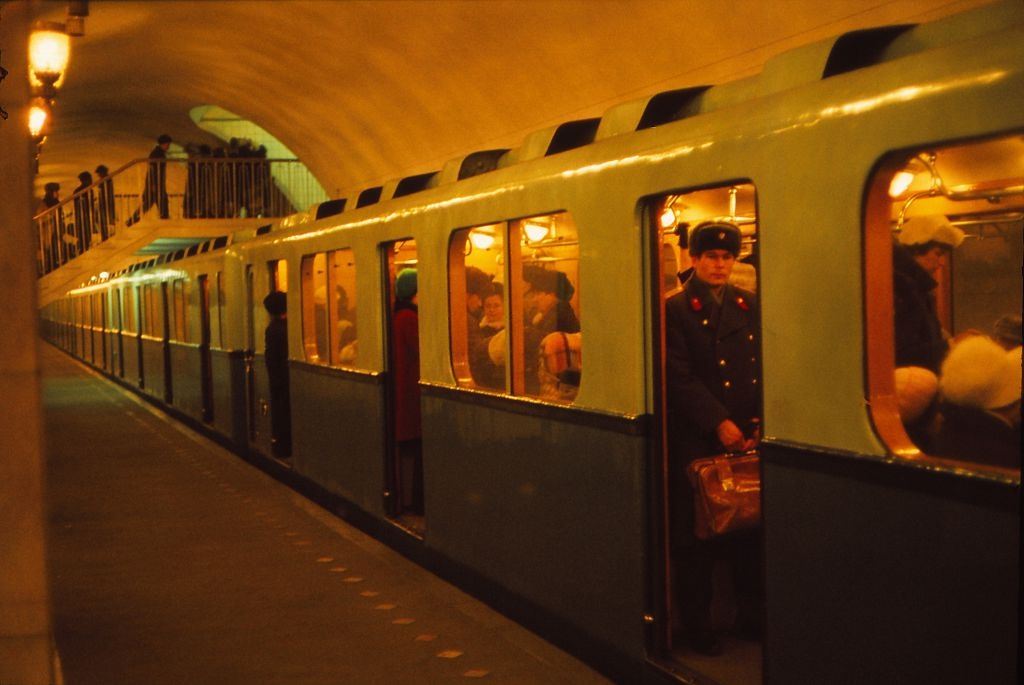
Getting around the city meant relying on the metro, and Leningrad’s underground railway was already well established by 1970. The system was known for its deep stations, ornate interiors, and high passenger volumes. As new residential neighborhoods expanded further from the city center, the metro became even more essential for daily commuters.

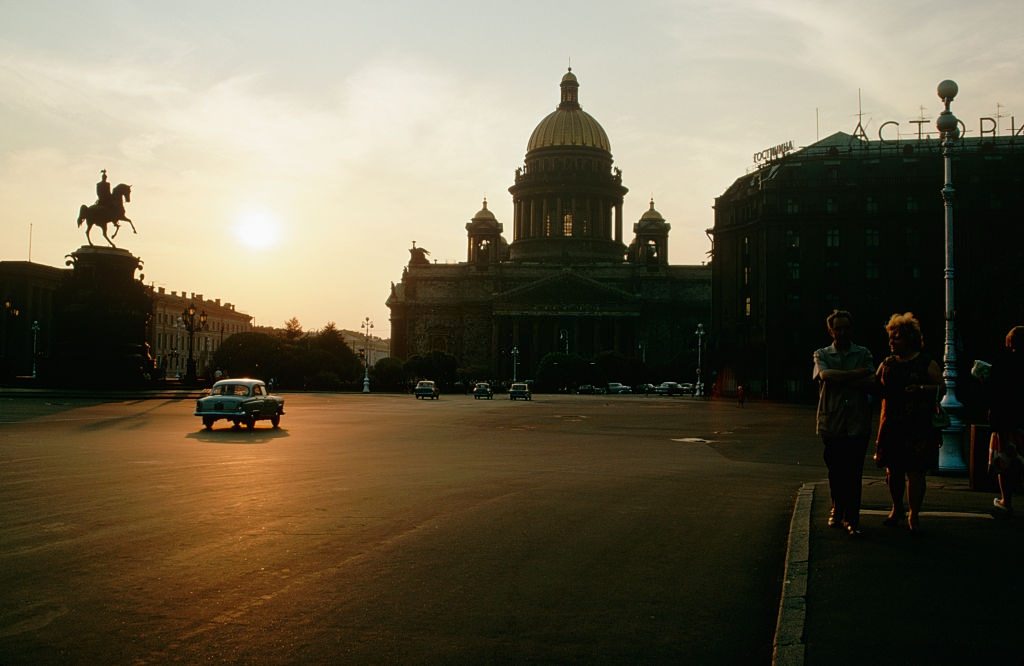
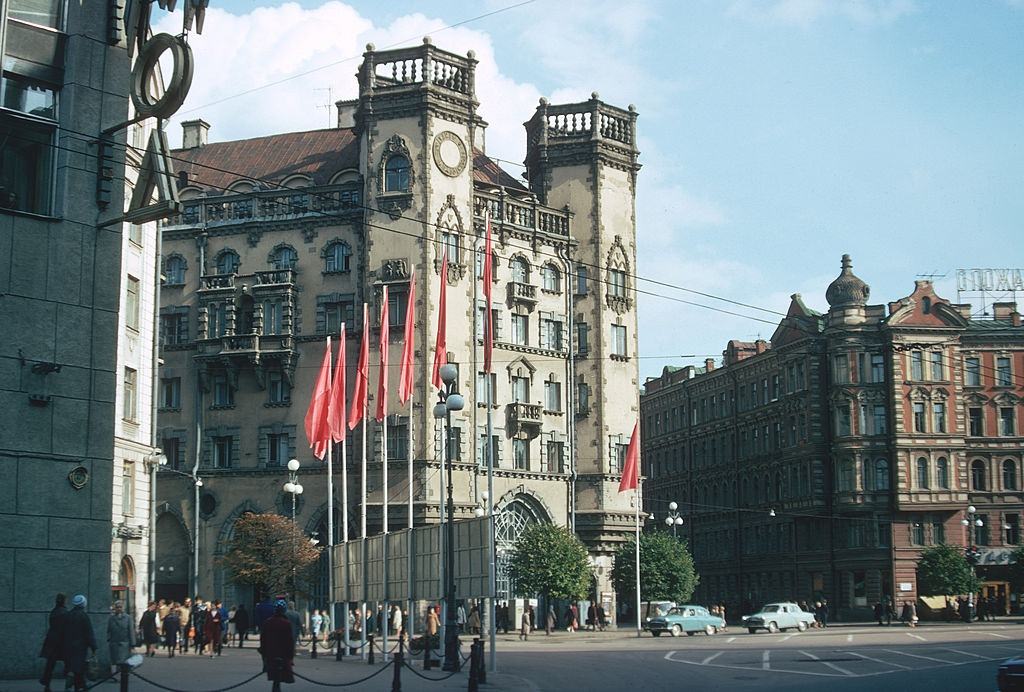
St. Isaac’s Cathedral dominated the city’s skyline and the streets around it reflected Leningrad’s imperial architectural heritage. Wide roads, classical facades, and the constant movement of pedestrians defined this central zone. The area around the cathedral drew both worshippers and tourists, even as the Soviet state kept religion firmly in the background of public life.

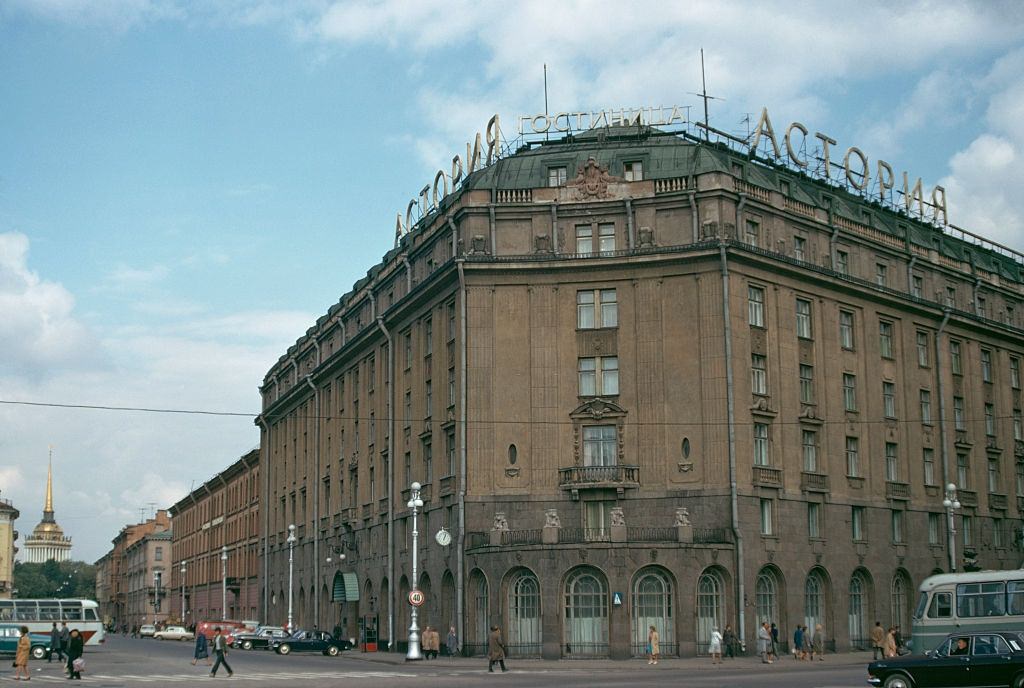
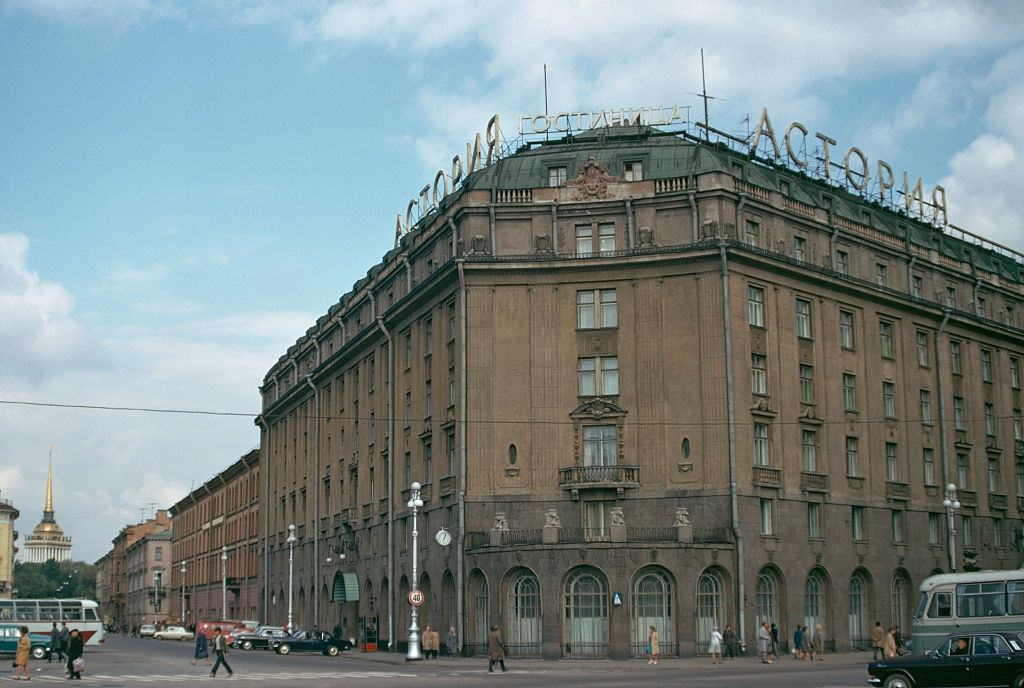
Just steps from the cathedral stood the Hotel Astoria, one of Leningrad’s most prestigious addresses. Built in the early 20th century, it had hosted foreign dignitaries, artists, and military figures over the decades. By the 1970s it remained one of the few places in the city where visitors could expect Western-style accommodations.

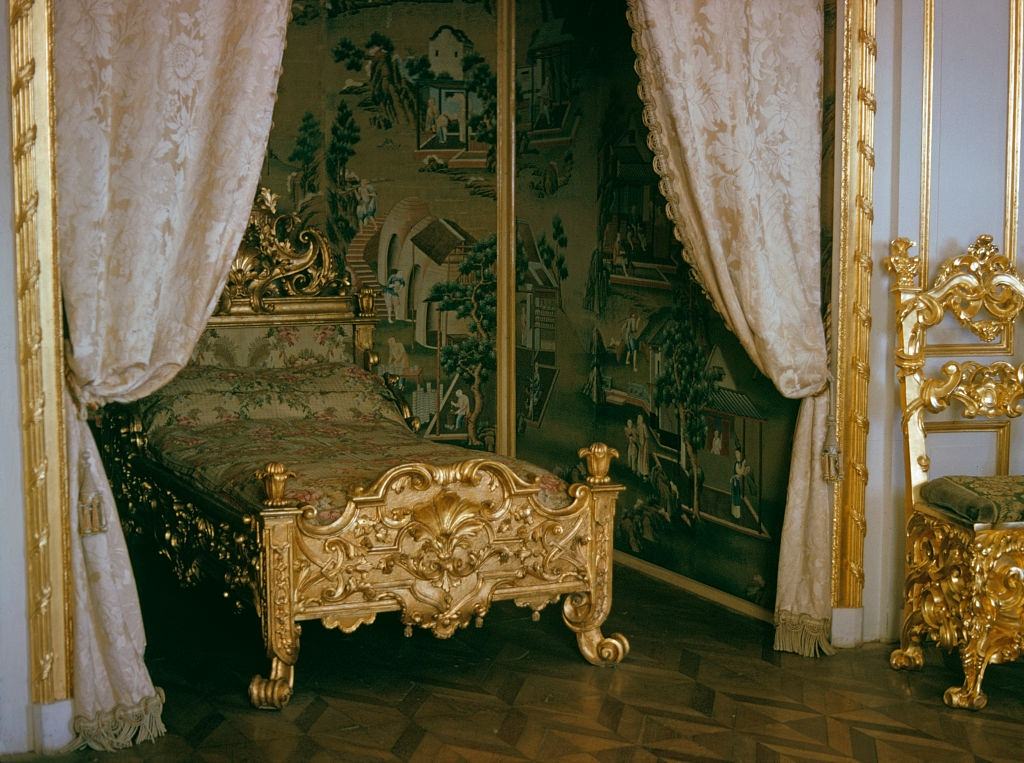
A short distance away, the Hermitage Museum held one of the world’s greatest art collections inside the former Winter Palace. Its interiors were as much a spectacle as the artworks themselves. Gold-leaf ceilings, parquet floors, and rooms decorated in distinct national styles gave visitors a sense of the extravagance of the imperial court. This bedroom, with its gold bed and hand-painted Chinese wallpaper, was one of the palace’s more striking private chambers.

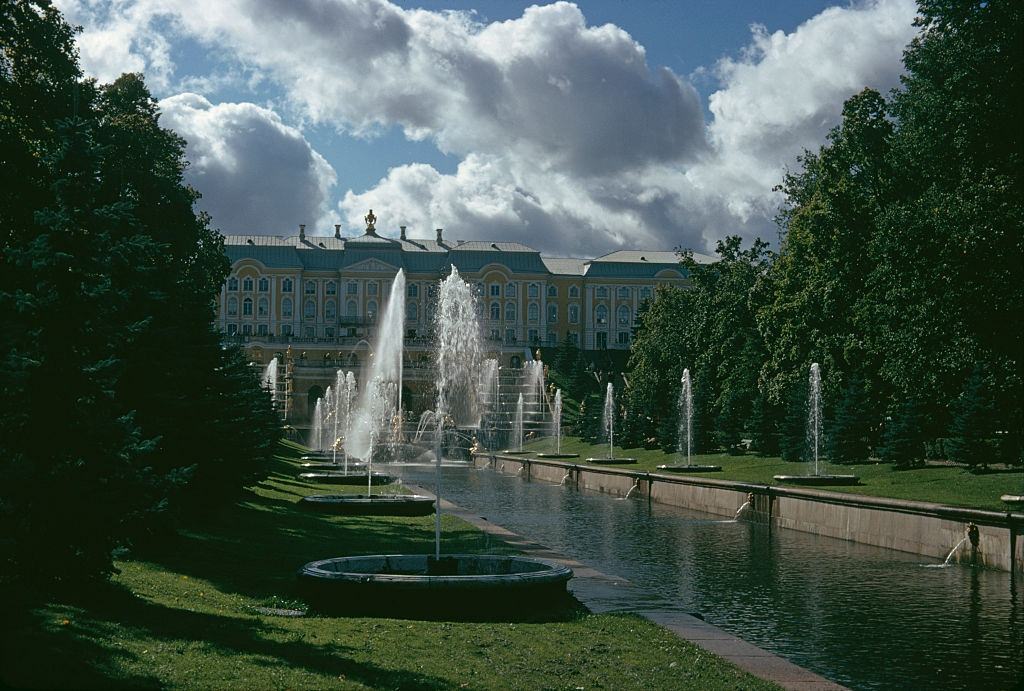
Outside the city, Peterhof Palace offered another glimpse into imperial Russia’s appetite for spectacle. The Grand Cascade — a system of 64 fountains, over 200 bronze sculptures, and three waterfalls — ran down from the main palace toward the Gulf of Finland. It was commissioned by Peter the Great and completed in the early 18th century. By the 1970s it had been fully restored after severe damage during World War II and was a major draw for Soviet tourists.

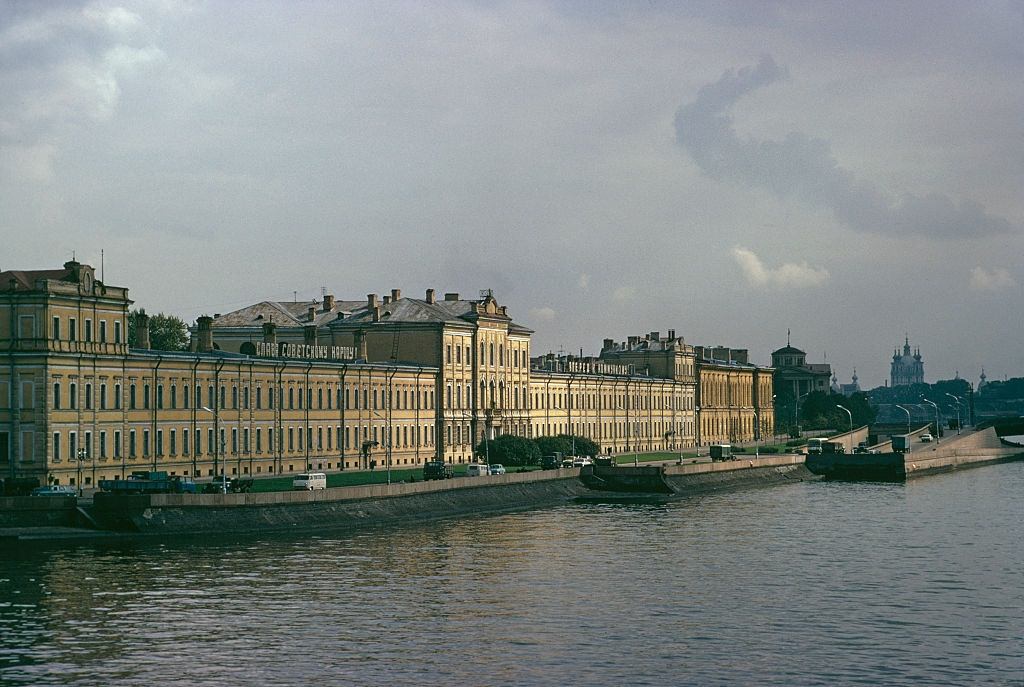
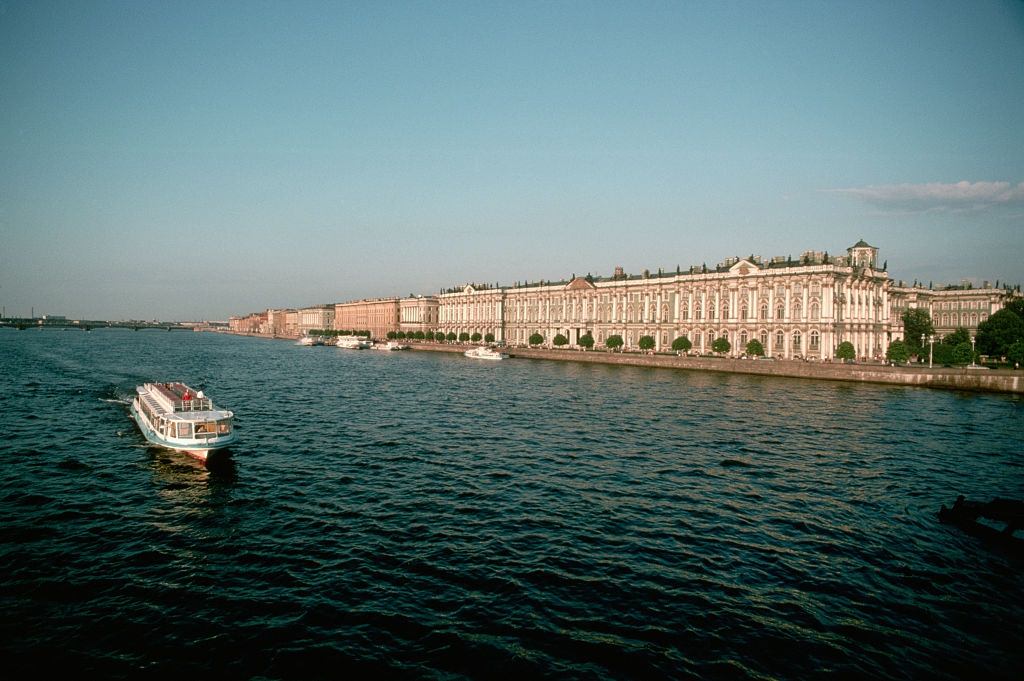
Back in the city, the River Neva was the artery that connected Leningrad’s neighborhoods, ports, and landmarks. Its banks were lined with palaces, administrative buildings, and embankments that had barely changed in appearance since the 18th century. Cargo ships, ferries, and smaller boats shared the wide waterway throughout the warmer months.

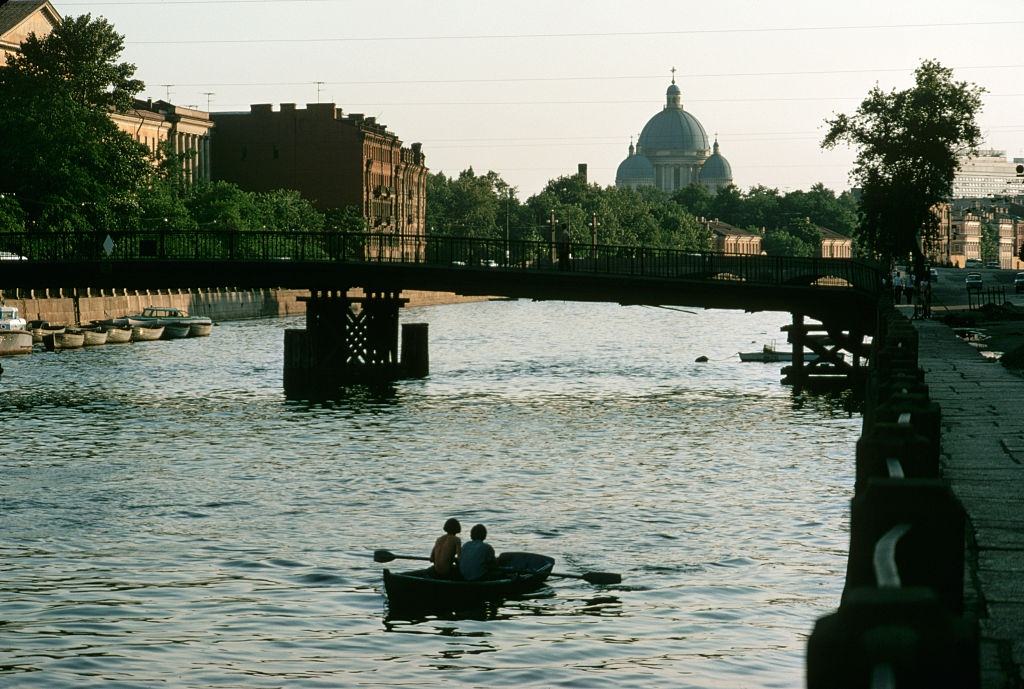
Leningrad’s canal network was just as characteristic as the Neva itself. Dozens of smaller waterways cut through the city’s historic core, crossed by hundreds of bridges. Rowing a small boat beneath those bridges was a common leisure activity in summer, offering a quiet view of the city from water level.

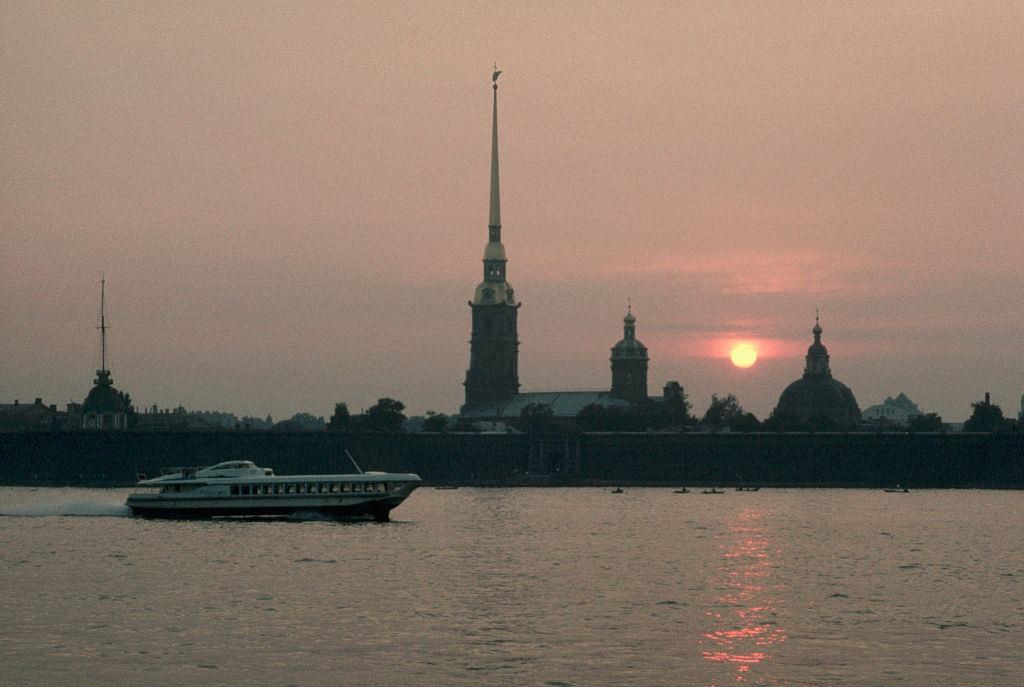
Summer nights in Leningrad had their own character. During the White Nights — roughly from late May to mid-July — the sky never fully darkened, and the city stayed active well past midnight. Passenger boats running along the Neva were a popular way to experience the phenomenon, gliding past illuminated embankments under a sky that never quite turned black.

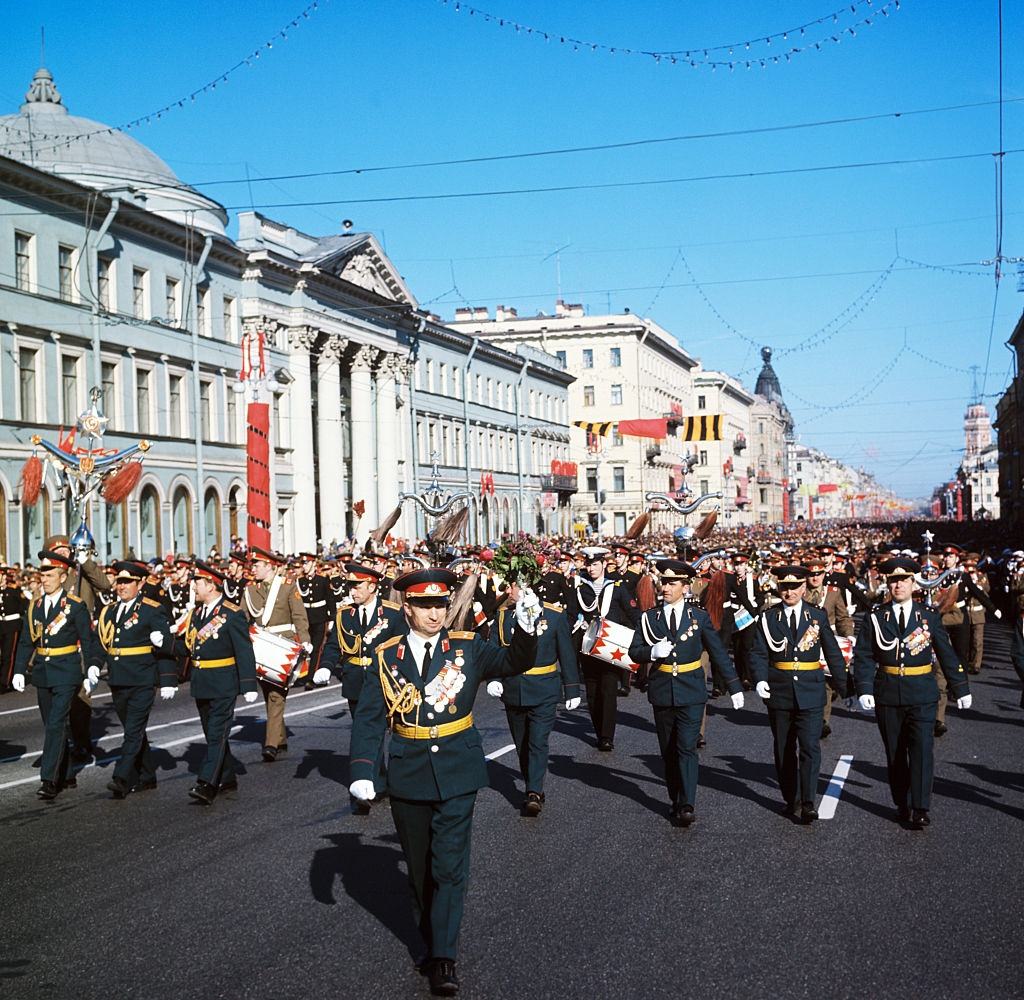
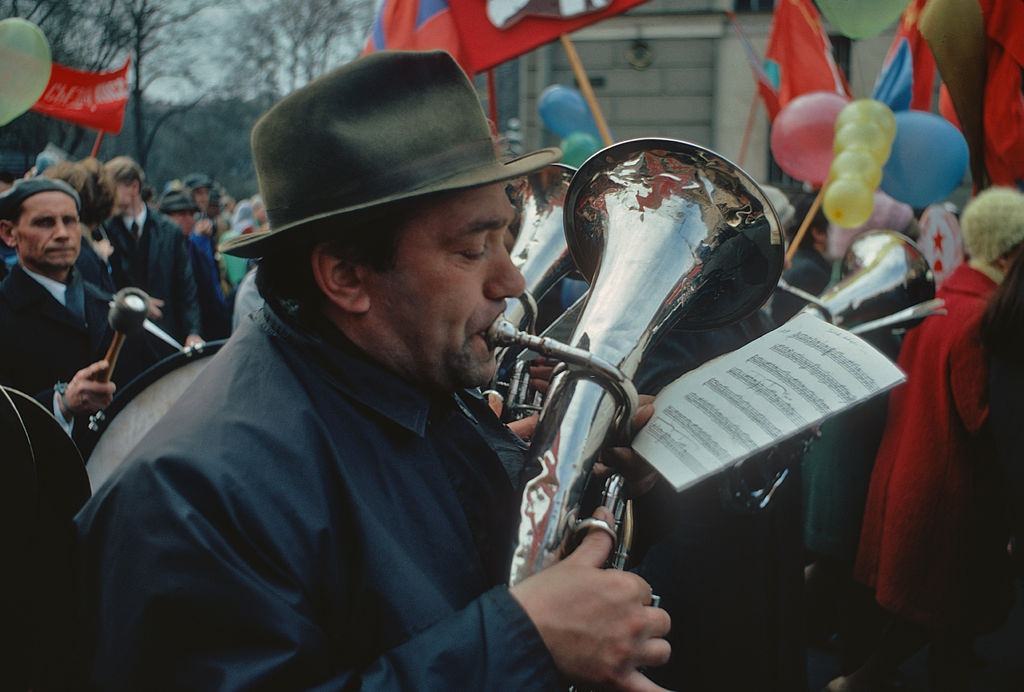
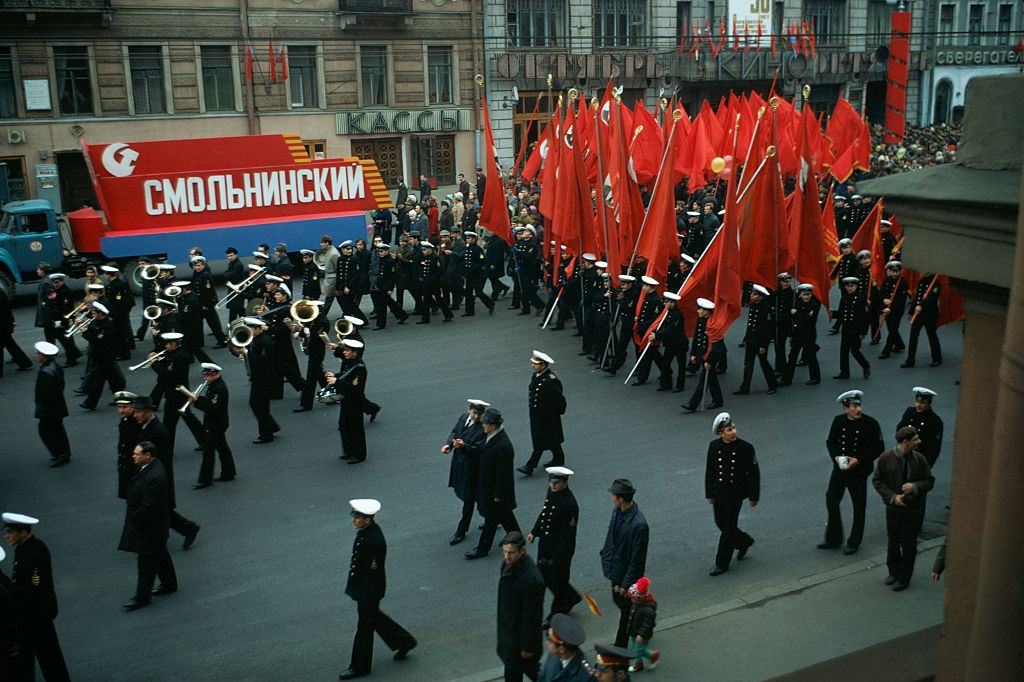
Nevsky Prospekt was the city’s main boulevard and the center of public life. On May Day — May 1st — it filled with marchers, musicians, and spectators as part of the annual International Workers’ Day celebration. Brass bands were a fixture of the parade, their music carrying over the heads of the crowd. The holiday was one of the most widely observed in the Soviet calendar.

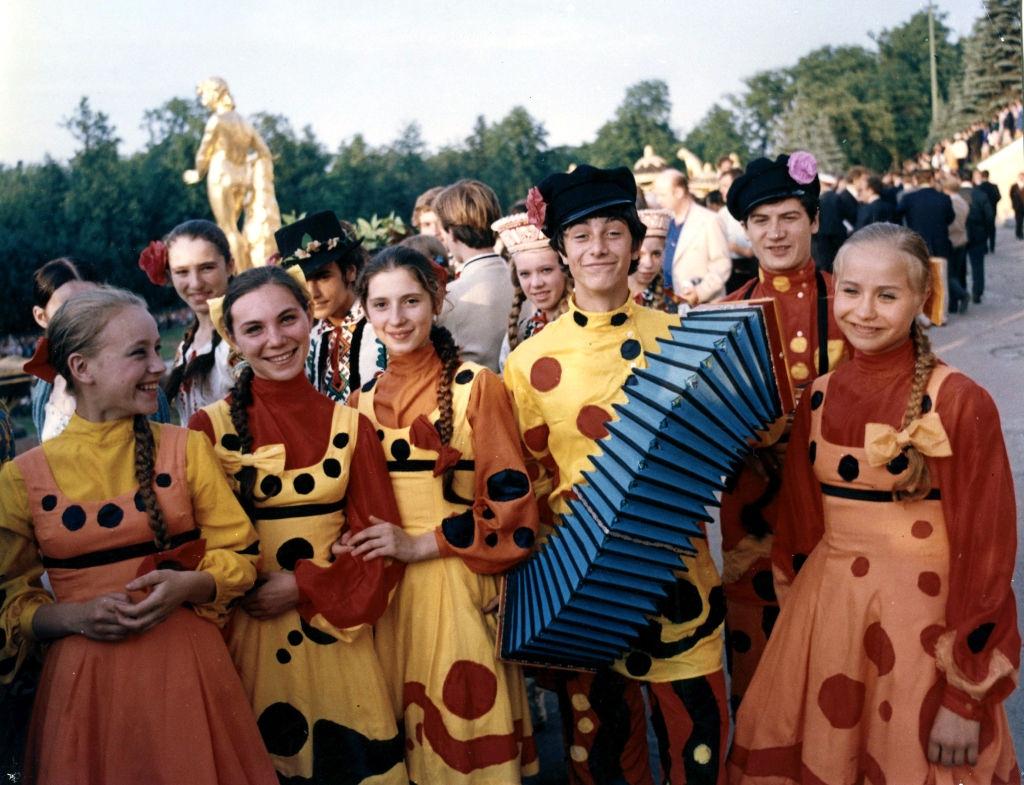
Beyond Soviet domestic holidays, Leningrad also hosted international events that reflected the USSR’s diplomatic relationships. In July 1972, a festival brought together young people from the Soviet Union and the German Democratic Republic — East Germany — in a display of socialist solidarity. Events like this were common across Soviet cities during the Cold War era, reinforcing ties between the Eastern Bloc countries.

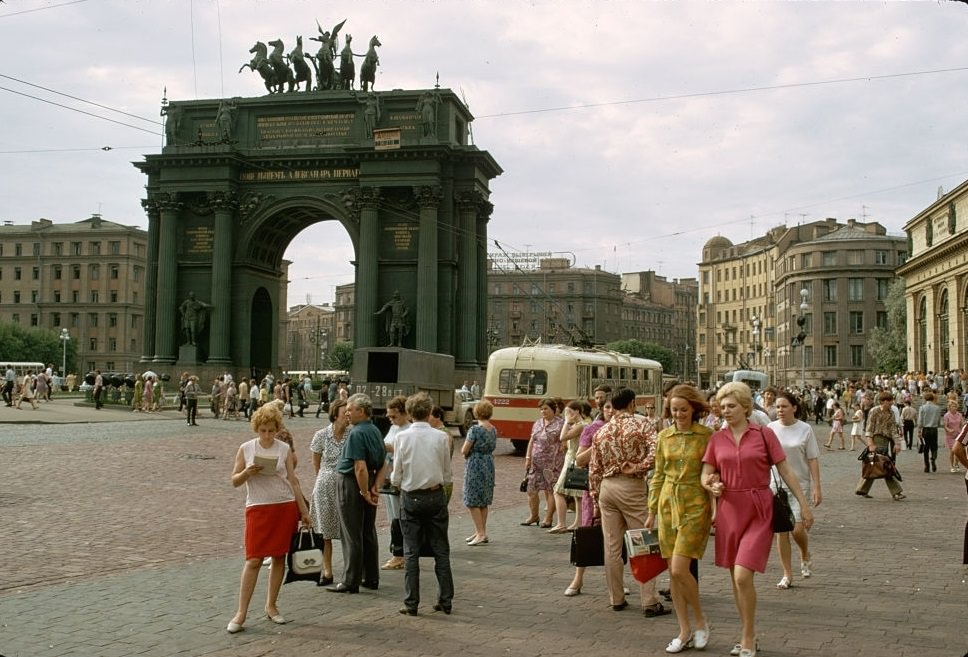
Leningrad’s most famous landmark, the Narva Triumphal Arch, stood at the western edge of the city center. Built to commemorate the Russian victory over Napoleon, it was reconstructed in stone in 1834 after an earlier wooden version. By the 1970s it marked the entrance to one of Leningrad’s older working-class districts.

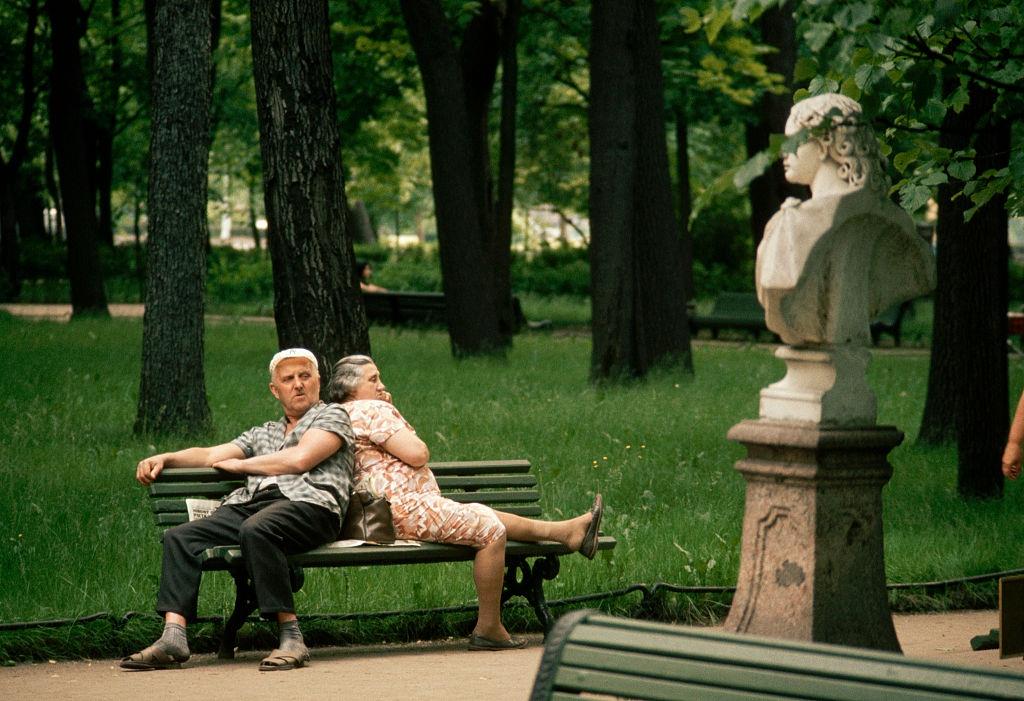
Ordinary life unfolded alongside the grand monuments. In the city’s parks, residents spent afternoons on benches, watching the world pass. Older Leningraders — many of whom had survived the 900-day siege in the early 1940s — were a common presence in these public spaces.

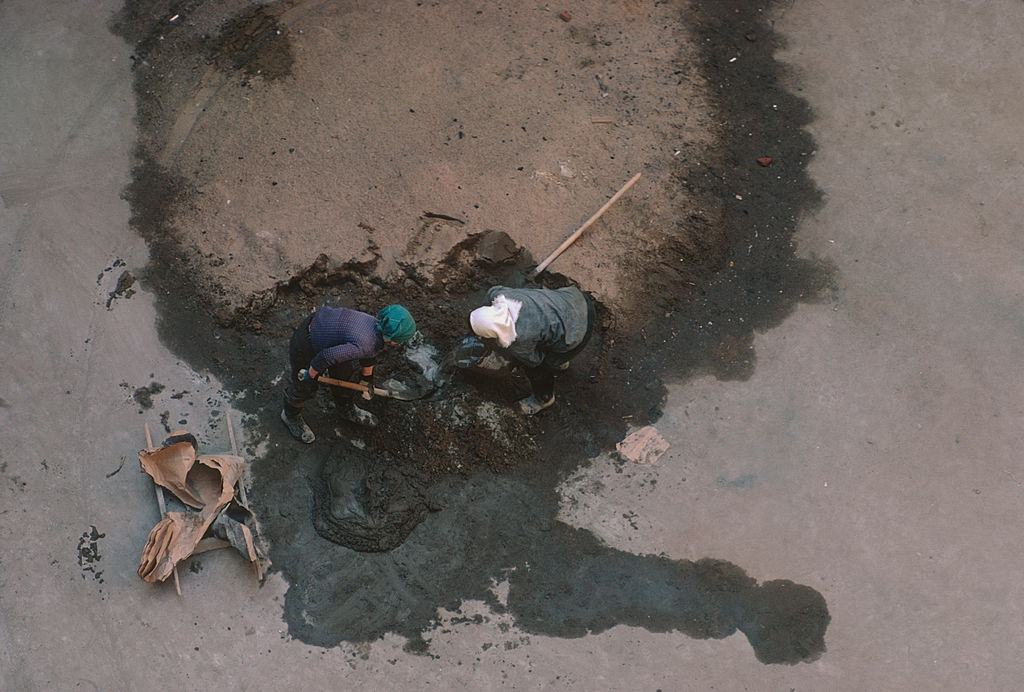
Road maintenance in Soviet Leningrad was often carried out by women, a reflection of broader labor patterns in the USSR where women filled many physically demanding roles in infrastructure and construction. Seeing women working on road repairs was not unusual on the city’s streets in the early 1970s.

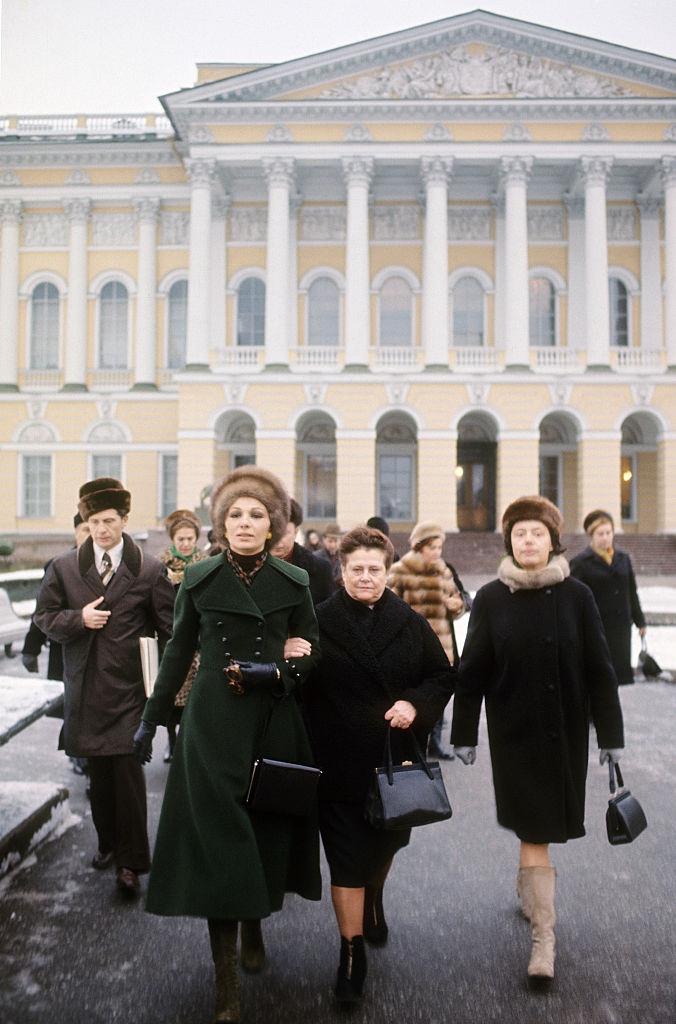
Foreign dignitaries visited Leningrad throughout the decade. Empress Farah Pahlavi of Iran was among those who traveled to the city in 1970, a period when Iran and the Soviet Union maintained cautious but functional diplomatic relations under the Shah’s government.

The Winter Palace, which housed the Hermitage Museum, was one of the most visited sites in the entire Soviet Union. Its jade-green and white facade stretched along the Neva embankment for nearly 230 meters. The building had survived revolution, siege, and the passage of centuries, and by the mid-1970s it received millions of visitors each year.

Victory Day, celebrated on May 9th, was the most emotionally significant public holiday in Leningrad. The city had endured a siege that lasted from September 1941 to January 1944, during which an estimated 800,000 to one million civilians died, mostly from starvation. The annual parade was both a military display and a deeply personal commemoration for a city that had lost an enormous share of its population.

The Leningrad Garrison Orchestra performed at these ceremonies year after year, providing the musical backbone of the Victory Day parade. By 1978, the parades had grown into large-scale events with coordinated marching units, military bands, and massive crowds lining Nevsky Prospekt.

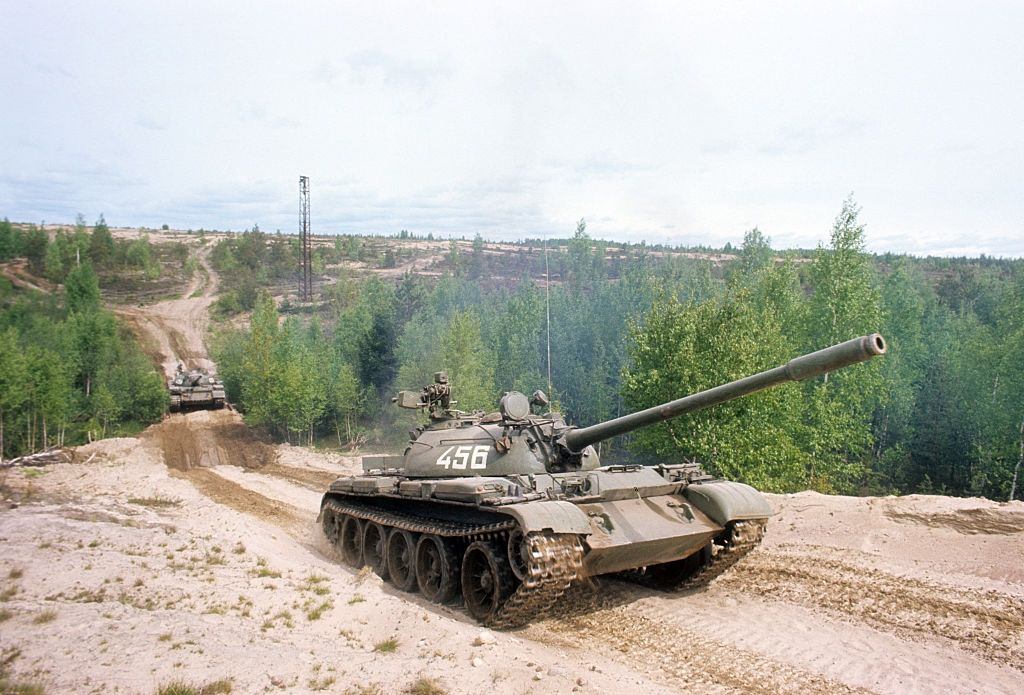
Military drills were also part of life in Leningrad during this era. The Sever — meaning ‘North’ — drill in 1976 brought tanks of the Leningrad Military District into formation in the city, a reminder that despite the cultural and civilian character of everyday Leningrad, it remained a significant military and strategic center for the Soviet Union.

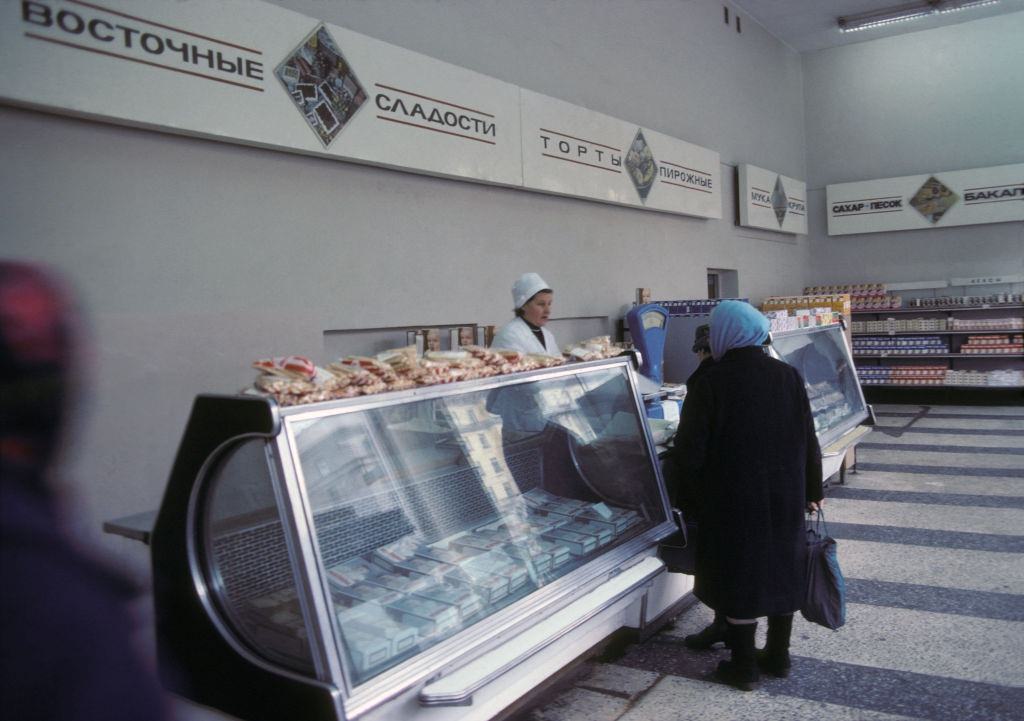
Day-to-day shopping in Leningrad looked very different from stores in Western cities. Soviet retail followed a centrally planned model where goods were produced and distributed by the state. Shelves were often stocked with a limited range of items, and shortages of certain products were common. This October 1977 photograph captures a typical city store of the period.

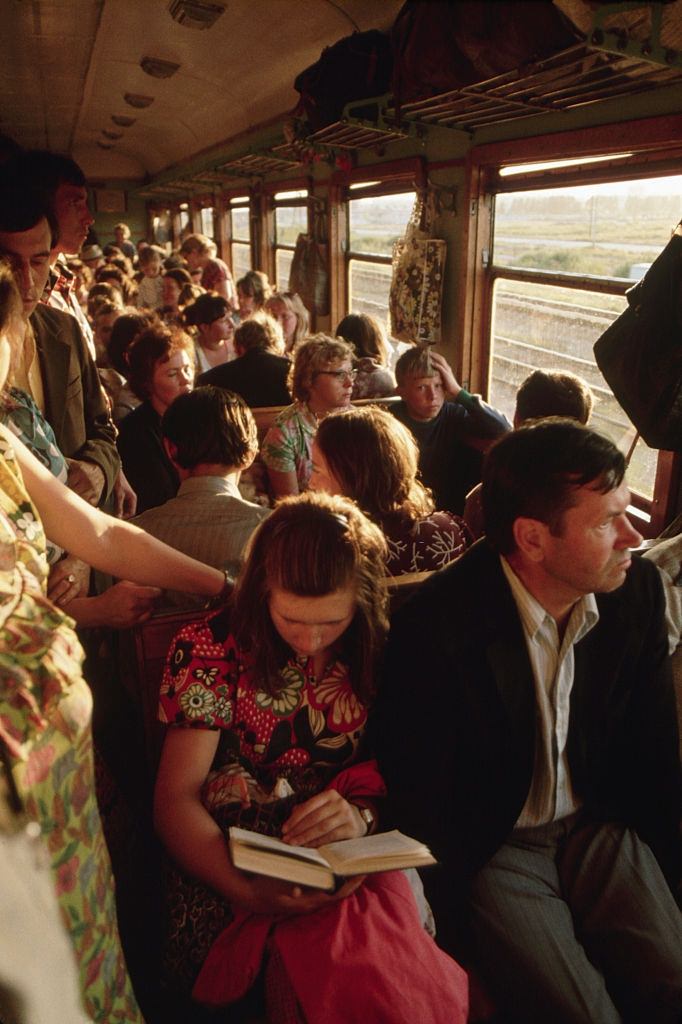
Visitors returning from Pushkin — the town south of Leningrad that was home to the Catherine Palace — crowded onto trains back to the city. The Catherine Palace, with its famous Amber Room and gilded baroque exterior, was one of the most popular day trips from Leningrad, drawing tourists from across the Soviet Union and abroad.

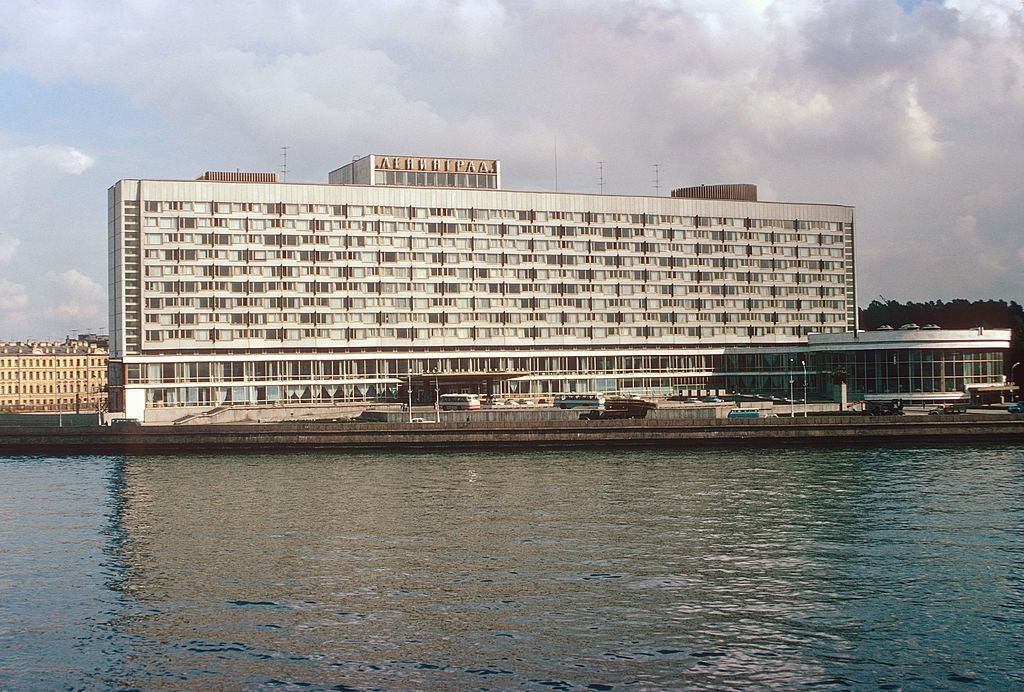
Hotels like the Leningrad and the Astoria served the steady flow of domestic and foreign tourists who passed through the city throughout the decade. The Hotel Leningrad, situated on the banks of the Neva, offered direct views of the river and was considered one of the city’s modern accommodations by Soviet standards.


City squares across Leningrad reflected the scale of Soviet urban planning. Wide open spaces framed by large institutional buildings were a common feature, designed to accommodate public gatherings and military parades. These spaces also functioned as everyday transit hubs for commuters and pedestrians moving through the city.


By the end of the decade, the Winter Palace and the Hermitage continued to stand as the defining image of Leningrad — a city that carried centuries of Russian history in its architecture while functioning as a major Soviet metropolis of nearly five million people.