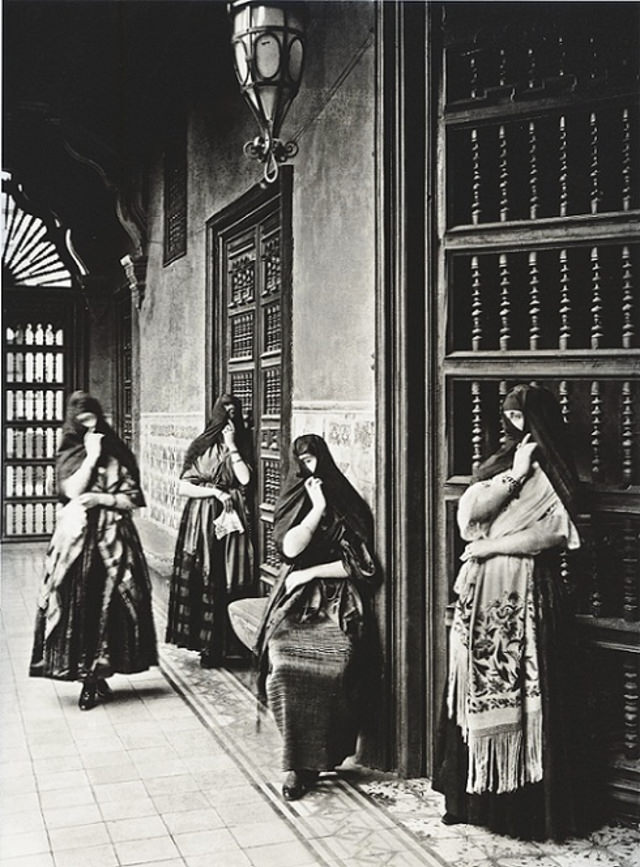
In the streets of Lima, Peru, during the late 19th century, a figure stood out unlike any other. She moved through the crowd with her entire body wrapped in cloth, her face completely hidden — except for one eye. This was the Tapada Limeña, and her look was no accident. It was a deliberate, carefully constructed statement made of two garments that worked together to conceal almost everything.
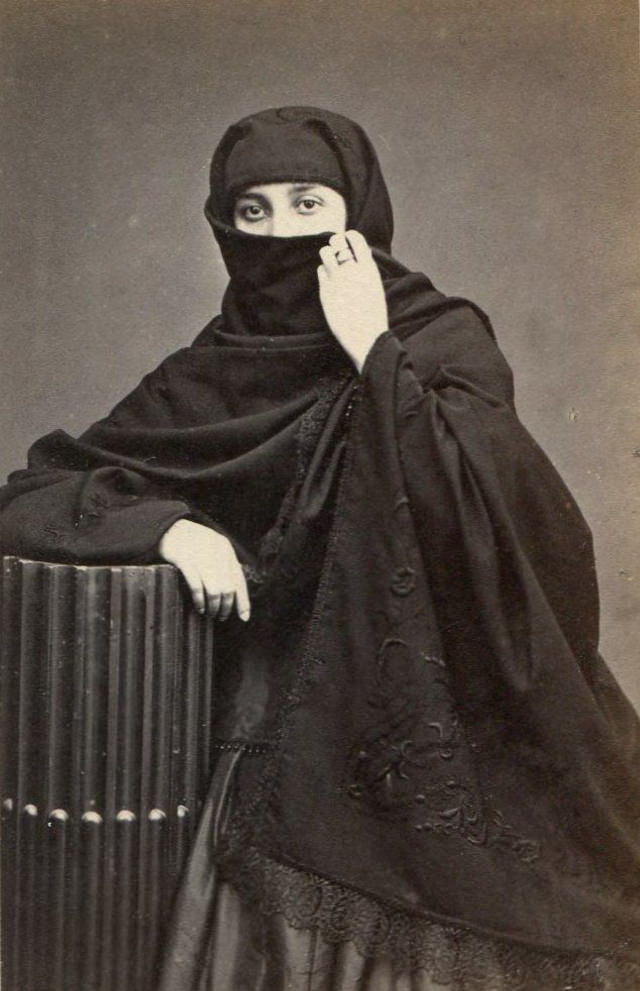
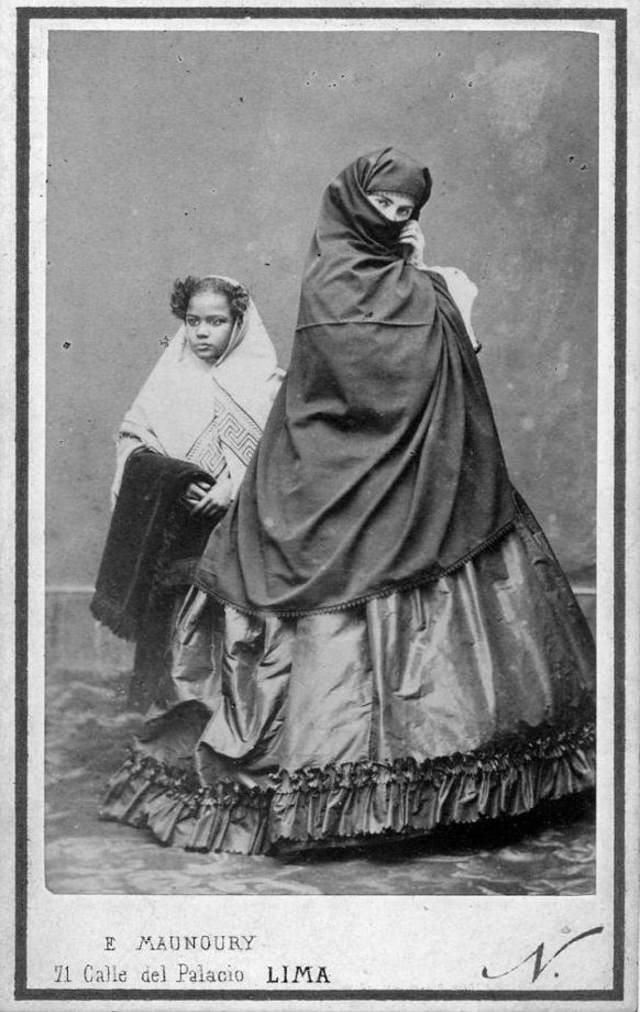
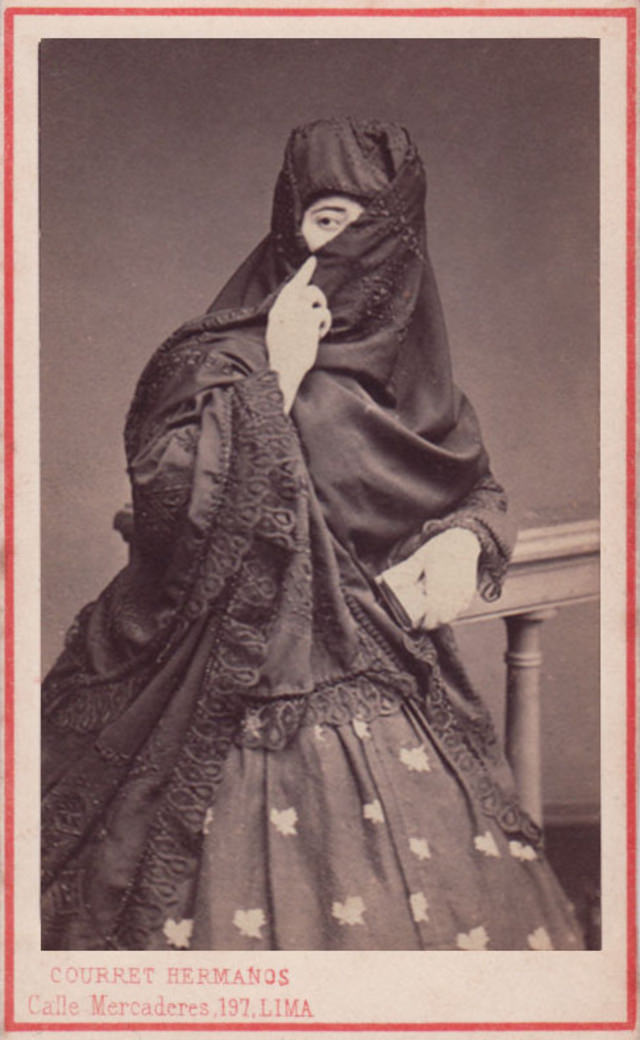
The costume had two main parts: the saya and the manto. The saya was an overskirt worn tight around the waist. It was cut and fitted to hug the body’s shape, and it was short enough to reveal the wearer’s feet and ankles — a bold detail for the era. The manto was a thick veil or wrap that fastened at the back of the waist. From there it was pulled up and over the head, covering the face, shoulders, and most of the body in a single sweep of heavy fabric.
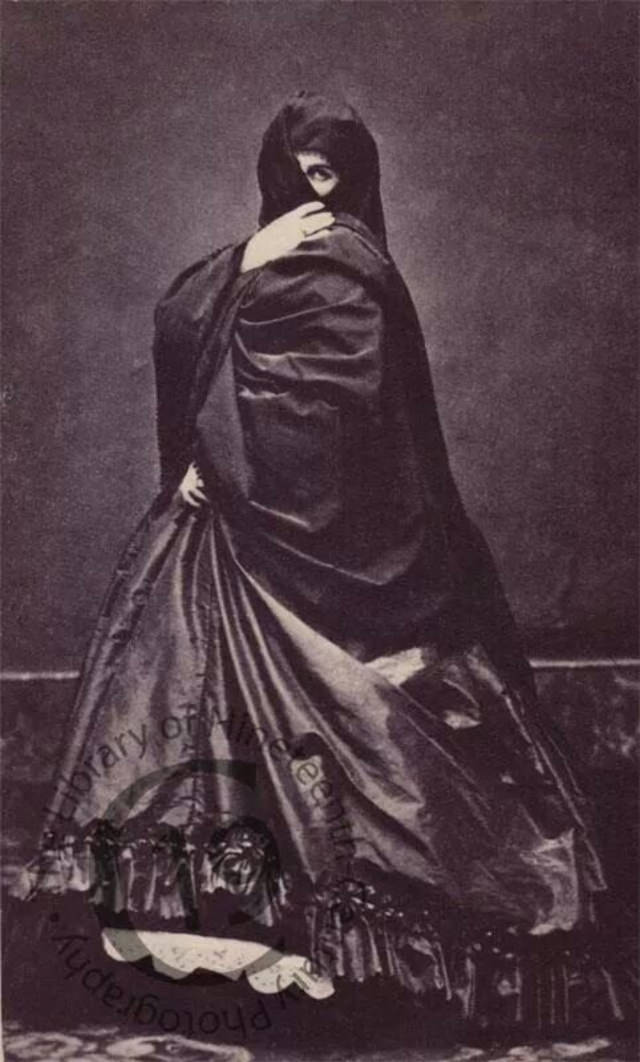
What made the manto truly striking was the precision of how it was worn. The fabric was pulled so tightly across the face that only a small triangular opening remained — just large enough for one eye to look through. Not two eyes. One. The woman could see the world clearly, but the world could barely see her at all.
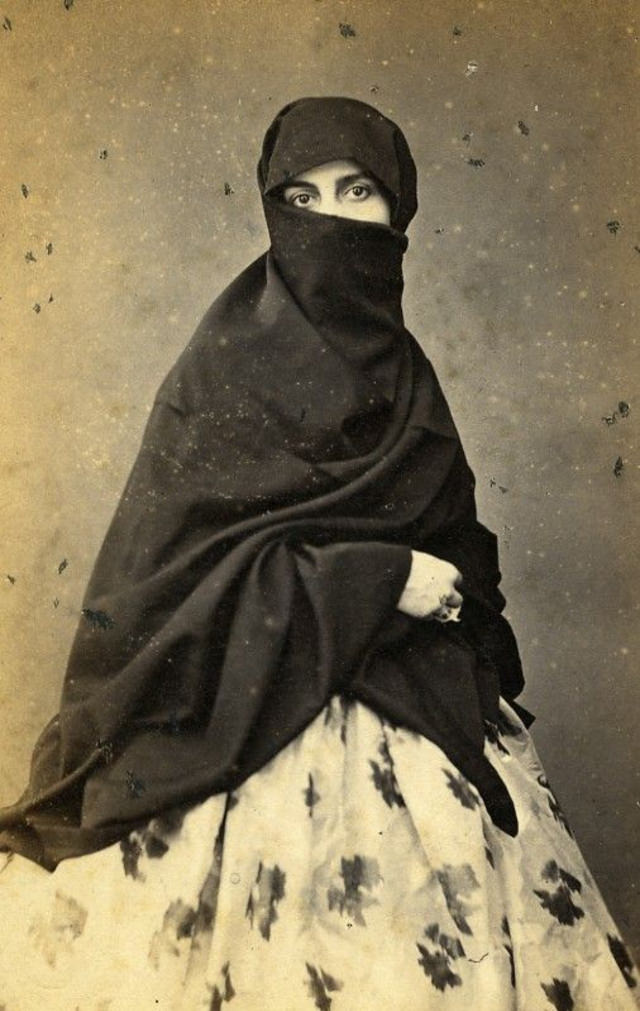
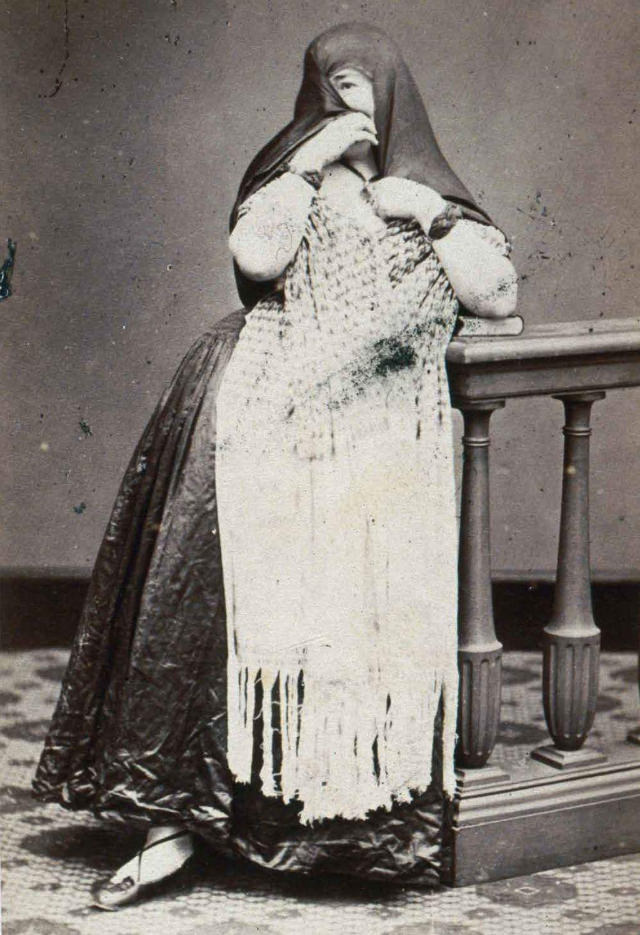
This single exposed eye became the defining feature of the Tapada Limeña. It created an air of total mystery. Observers on the street had no way to identify the woman beneath the manto. She could be wealthy or poor, married or single, young or old. Her social position, her race, her family name — all of it disappeared under the cloth. In a society where those distinctions mattered enormously, that erasure was powerful.
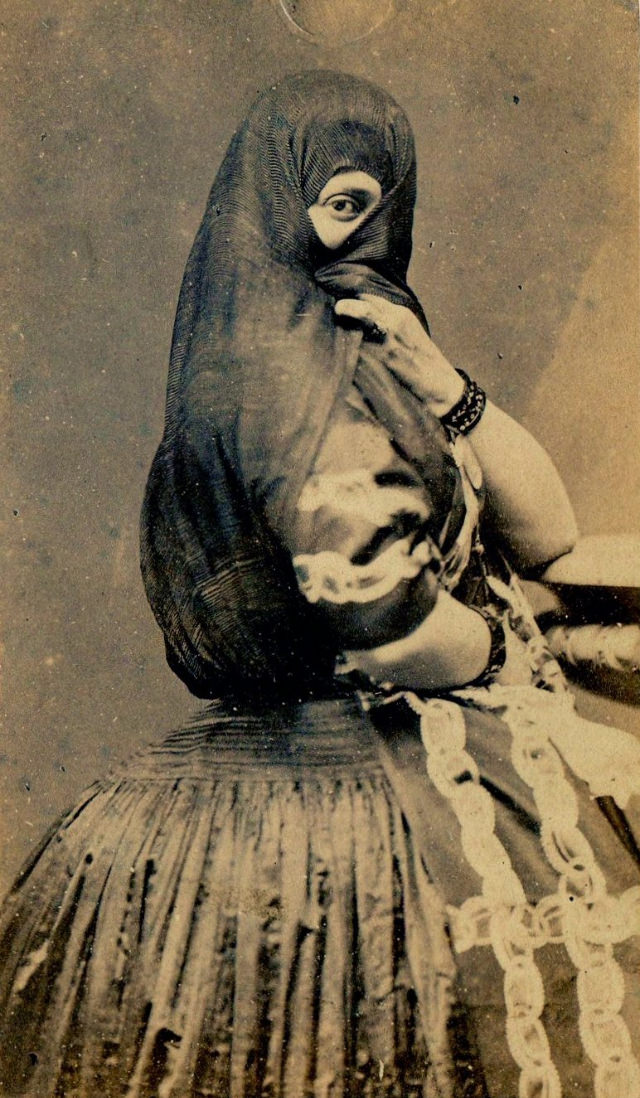
The anonymity the costume provided gave Tapadas Limeñas a kind of freedom that was otherwise unavailable to women in 19th-century Lima. A woman in her full saya and manto could walk through the city, attend public gatherings, speak to strangers, and move through spaces that were normally closed off to her — all without anyone knowing who she was. Identity, in the hands of the Tapada, became something she controlled entirely.
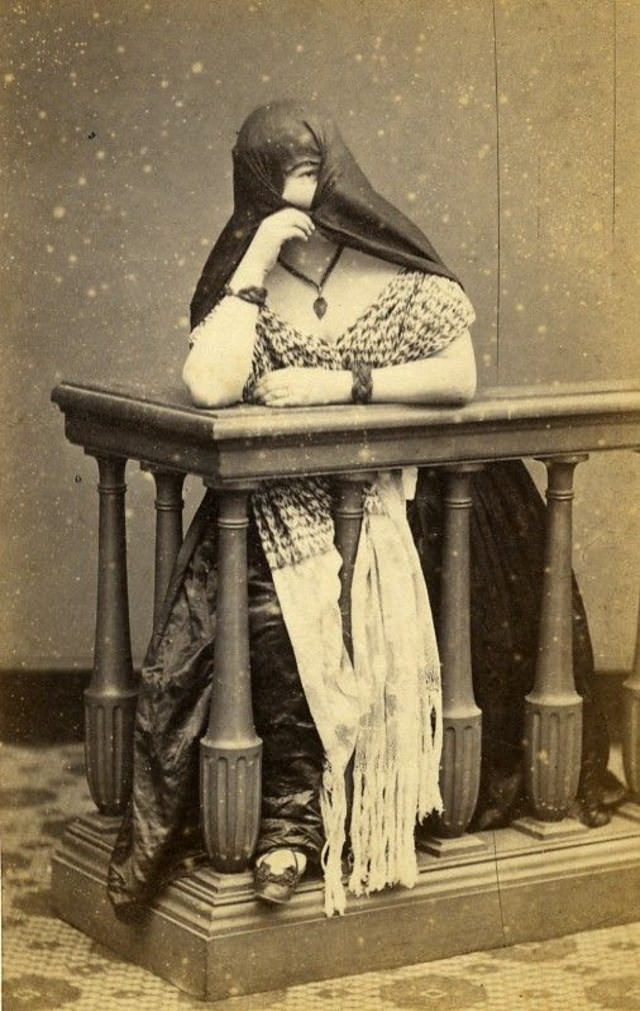
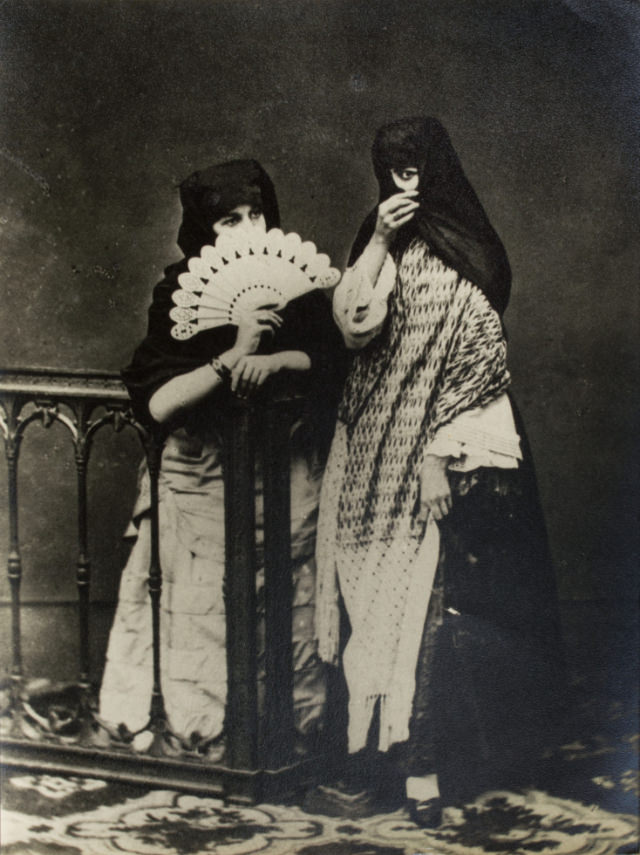
The effect of the costume on those who encountered it was significant. The combination of a body-hugging saya that drew attention to the figure below the waist and a face hidden entirely above it created a striking contrast. Men in Lima found the Tapadas deeply compelling — the visible shape of the body paired with total facial concealment made the women seem exotic and untouchable. The mystery was the attraction.
That attention did not go unnoticed by those in power. The Catholic Church in Lima took a strong position against the saya and manto. Church officials argued that the costume was immodest and that the anonymity it granted allowed women to behave in ways that were considered inappropriate. Civil authorities agreed, and laws were passed formally prohibiting the costume.
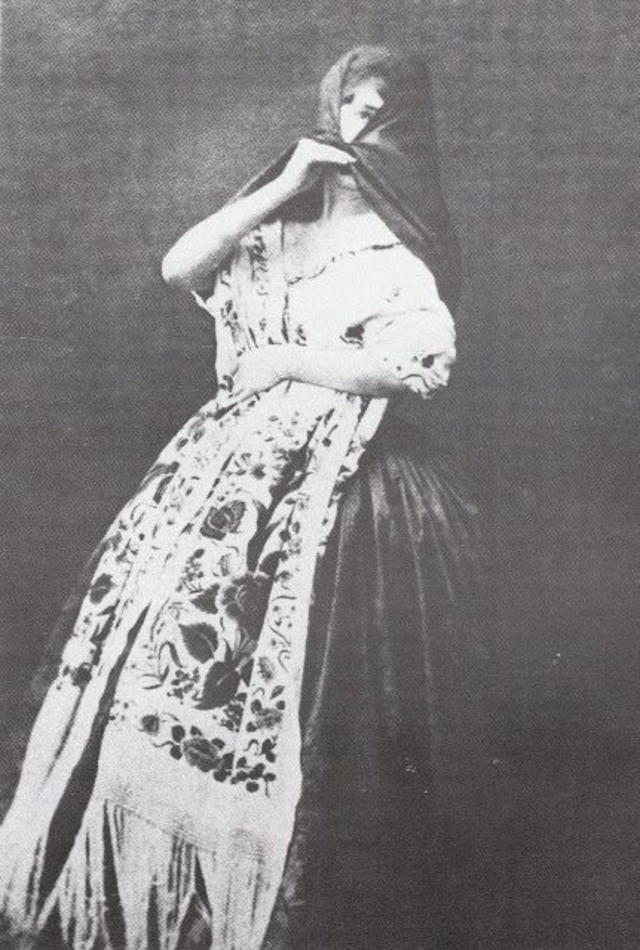
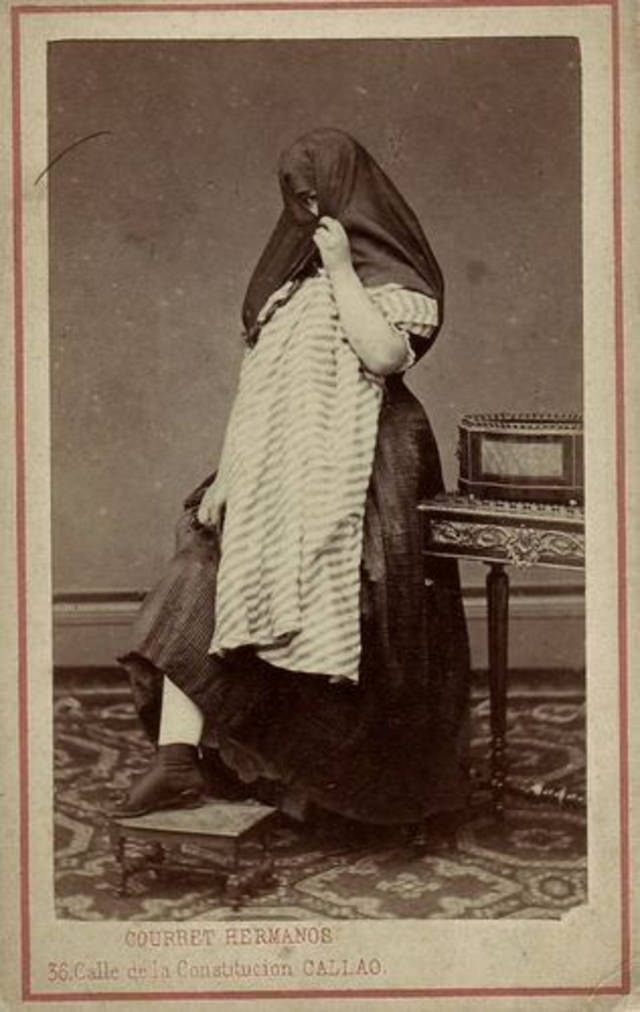
The bans did not work. Women in Lima continued wearing the saya and manto well into the late 19th century, openly ignoring both Church pressure and legal prohibition. Enforcement was difficult in practice — after all, if you cannot identify a woman, you cannot easily punish her. The costume’s anonymity protected the women even from the consequences of wearing it.
The women who wore the Tapada costume defended it on moral grounds, arguing that covering the body was itself a form of modesty and propriety. But the practical reason ran deeper than ethics. The saya and manto gave them something rare: freedom of movement, freedom from judgment, and freedom from being recognized. Giving that up meant giving up the one space in Lima where a woman could exist outside the expectations placed on her.
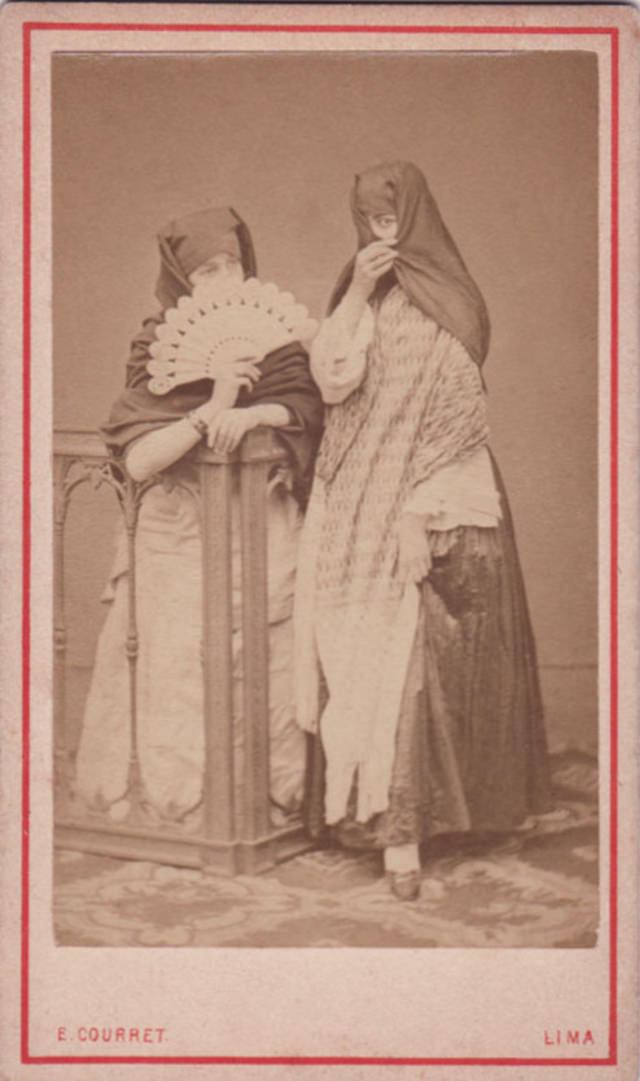
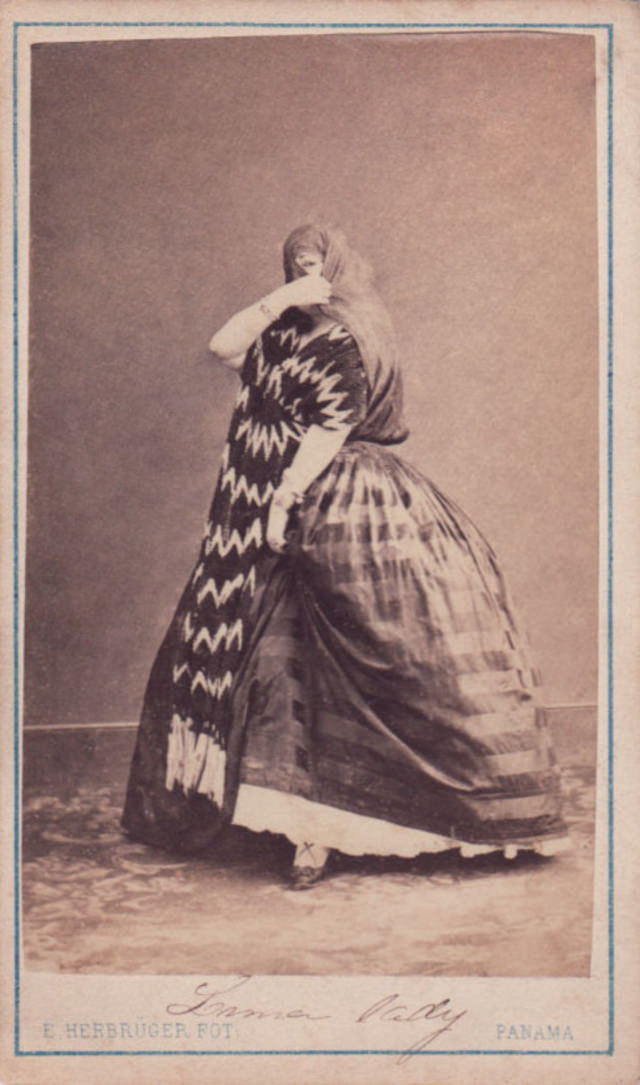
The saya itself evolved over time. Early versions were looser, but by the 19th century the fit had become very tight — tailored to emphasize the waist and hips. The ankle-length hem was short by the standards of the day, and showing the feet and lower legs in public was considered provocative. The combination of tight fit and exposed ankles made the saya a statement on its own, even before the manto was added.
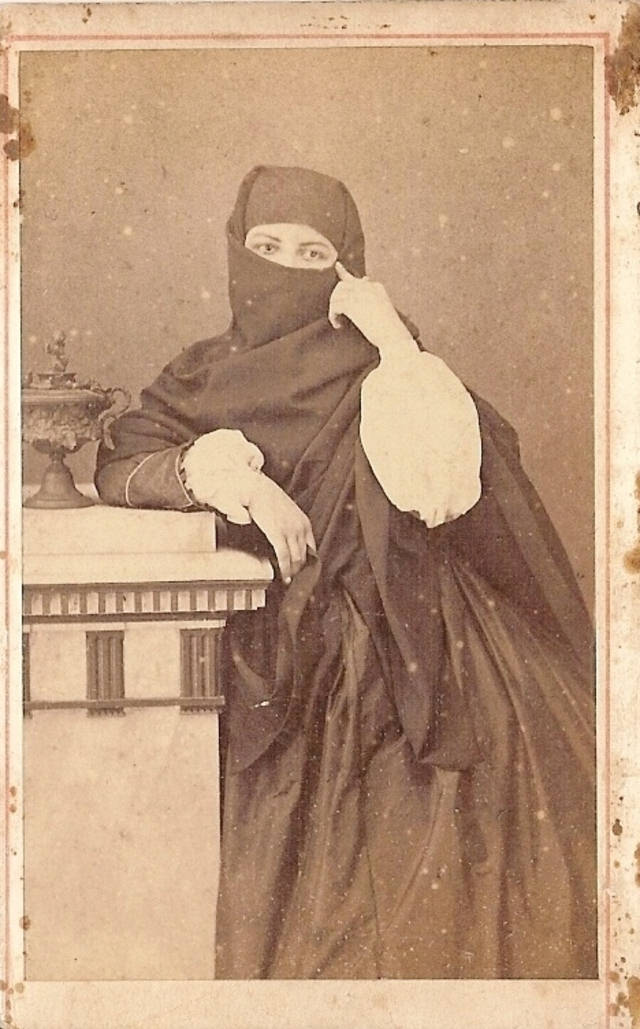
The manto, meanwhile, required skill to wear properly. Pulling the thick fabric tightly enough across the face to leave only that single triangular gap for one eye was not easy. It needed practice to do correctly. Women who mastered it were wearing the result of careful effort, not a casual style choice. The look was precise and intentional from the waist up to the top of the head.
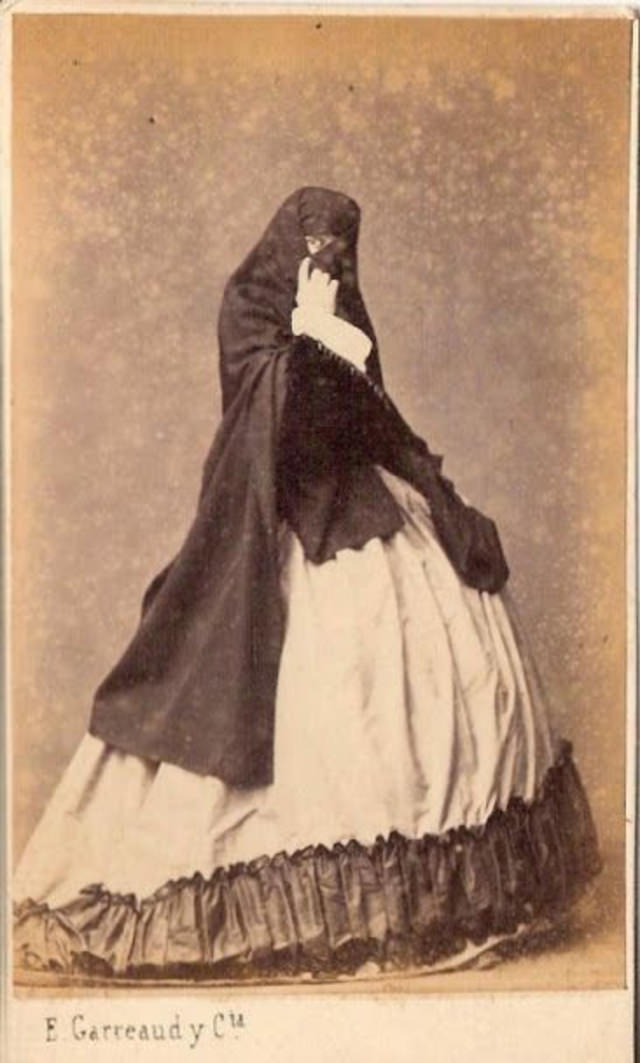
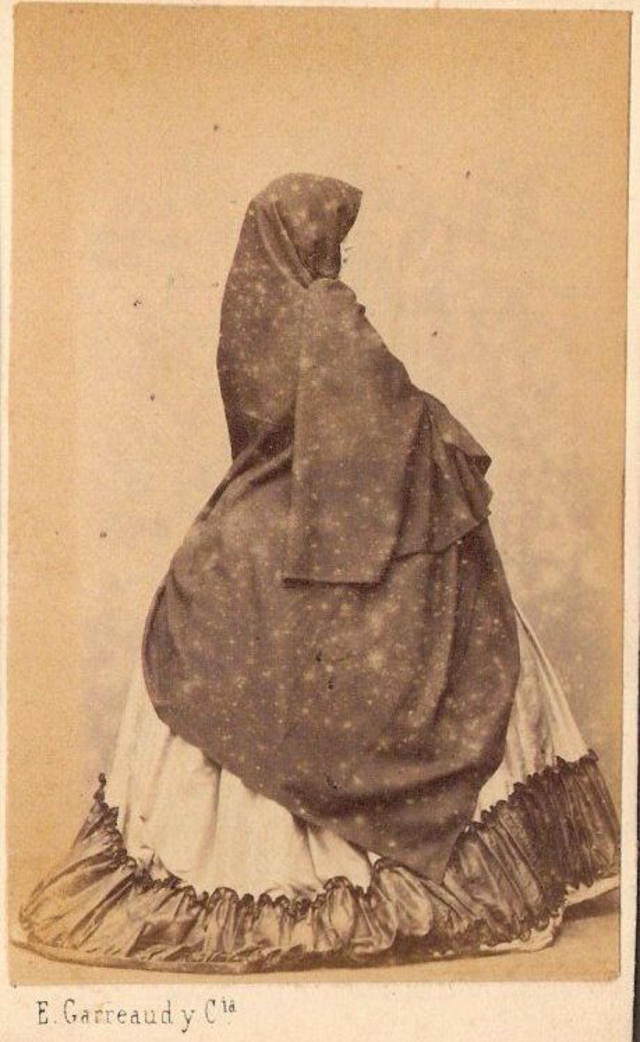
Travelers who visited Lima during this period frequently wrote about the Tapadas in their journals and letters. Foreigners were consistently surprised by the sight — a city full of women moving freely through public spaces while remaining completely unidentifiable. European visitors in particular noted how different it was from anything they had seen at home. The Tapada Limeña was, by any measure, one of the most distinctive street-level phenomena in 19th-century South America.