Long before the La-Z-Boy became a fixture in American living rooms, it started as a simple idea in Monroe, Michigan. In 1927, cousins Edward M. Knabusch and Edwin J. Shoemaker invested in the local furniture business with one clear goal: to build a chair that matched “nature’s way of relaxing.” Their first prototype was shaped from orange crates — a wood-slat porch chair fitted with a reclining mechanism. After refining the design, they upholstered it and pitched it as a year-round chair for the home. To name it, they held a public contest. The winning entry was La-Z-Boy.
The brand grew steadily in Michigan, but national recognition took longer. During World War II, La-Z-Boy paused civilian production and turned to making tank seats for the military. After the war ended, the company returned to consumer furniture at exactly the right moment. Televisions were hitting the market, and millions of Americans were moving to the suburbs. A comfortable recliner and a brand-new TV set turned out to be a natural match, even without La-Z-Boy ever marketing it that way.
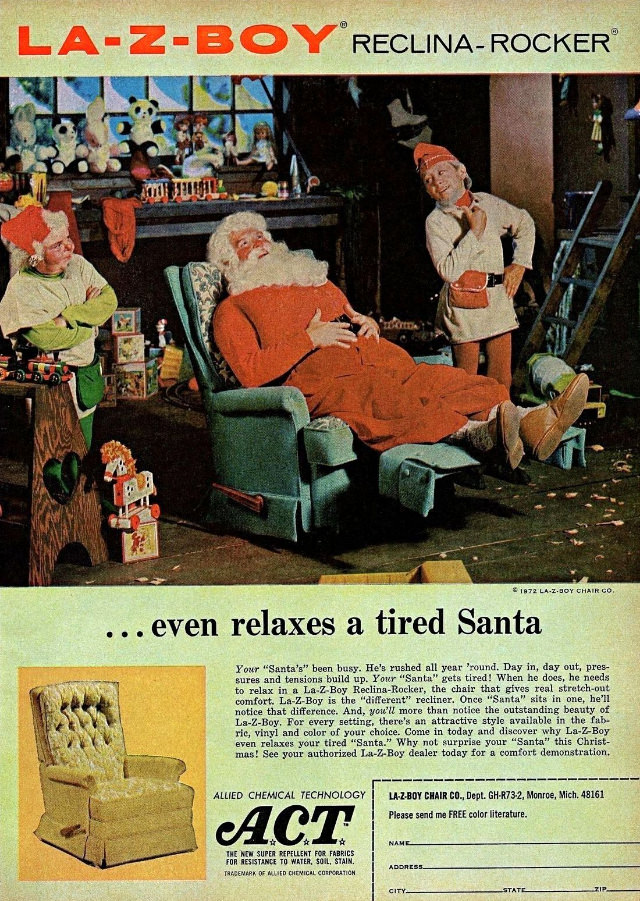
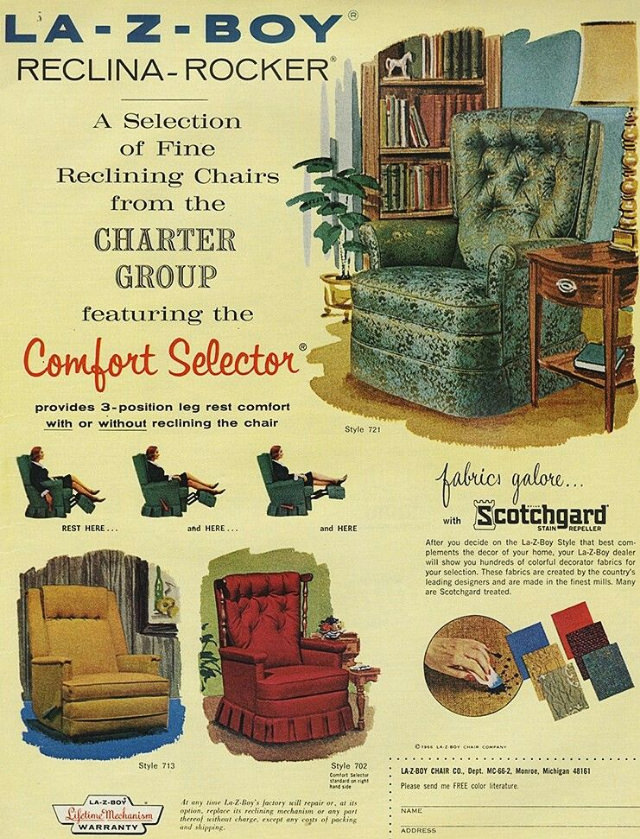
The next major leap came in 1960 with the debut of the “Reclina-Rocker.” This chair combined a spring-driven rocking motion with a stable, anchored base. A side lever operated the reclining function and extended a footrest. It was a practical, comfortable design that appealed to a wide range of buyers and pushed La-Z-Boy firmly into the mainstream.
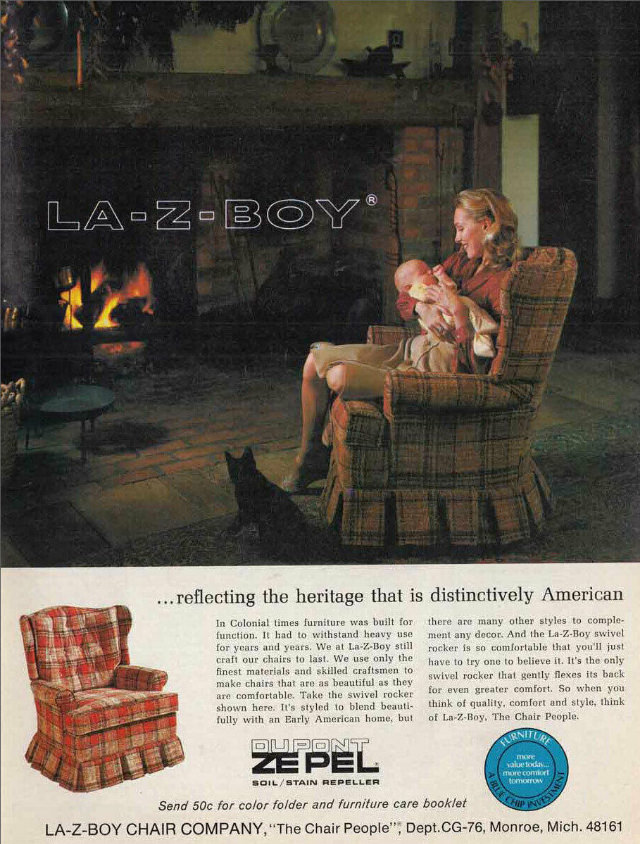
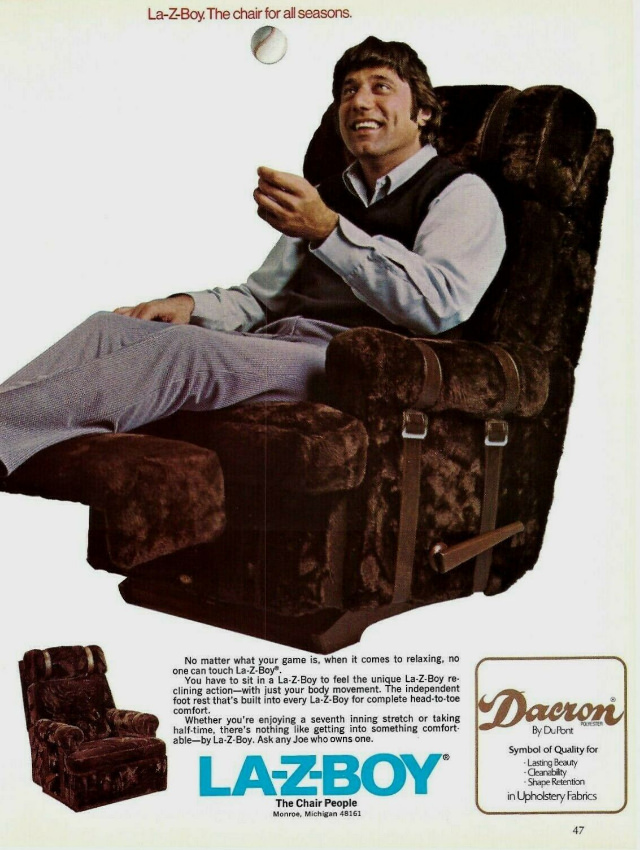
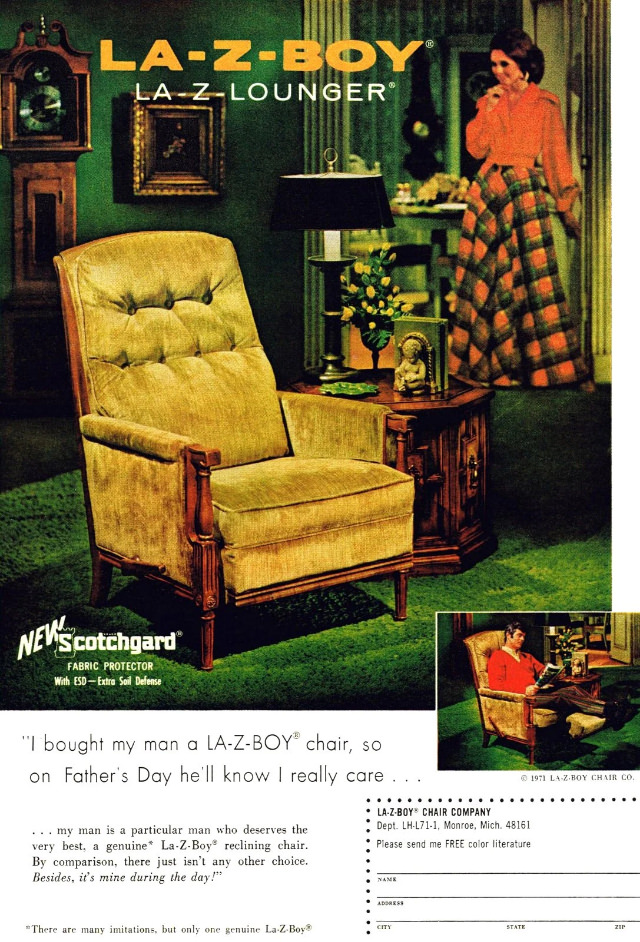
By the time the 1970s arrived — the era of bell-bottoms, disco, and bold design — La-Z-Boy was ready to innovate again. The company released the Lounger, a new recliner that could sit just inches from a wall and still recline fully. This solved a real problem for smaller rooms and made the chair far more practical for everyday home layouts.
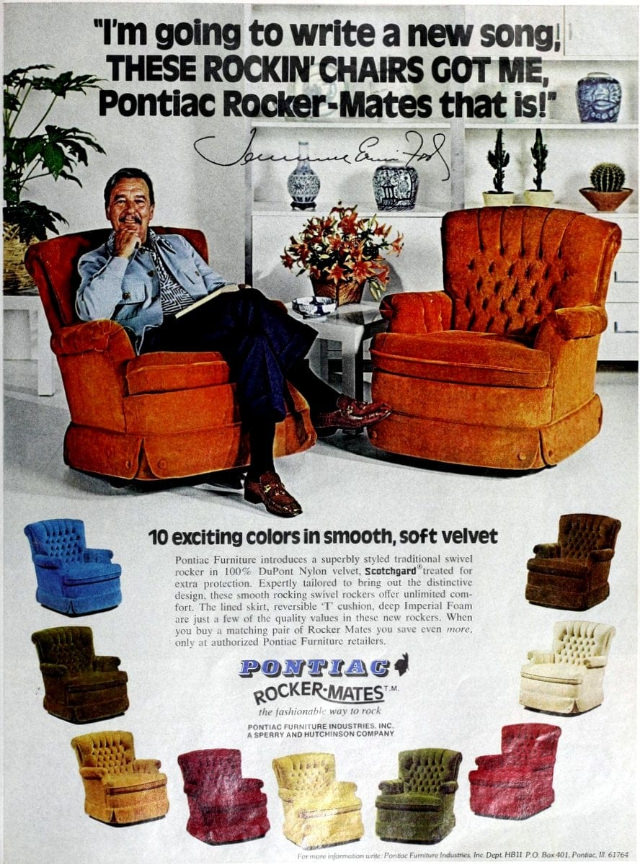
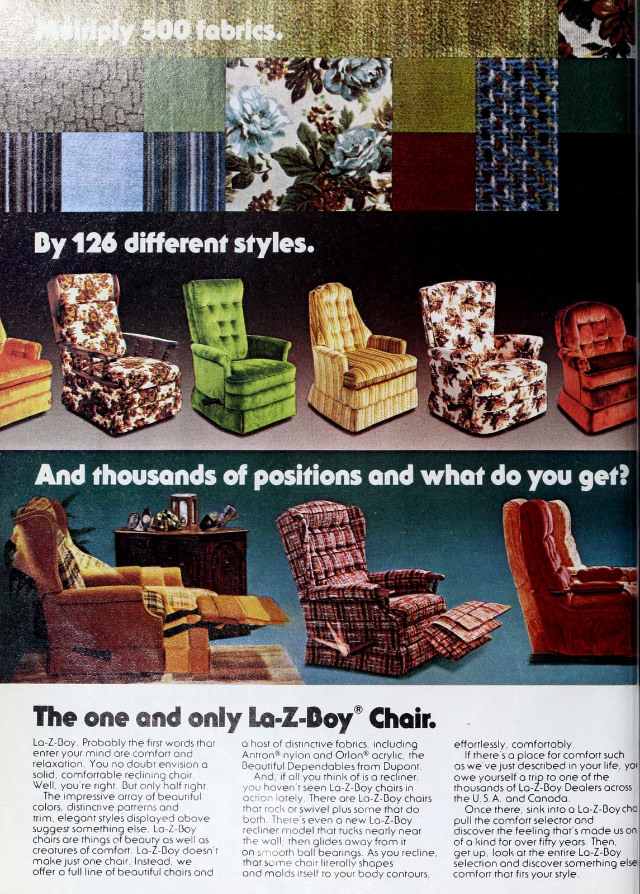
The 1970s also pushed La-Z-Boy into entirely new markets. The company began producing swivel and reclining desk chairs built for heavy daily use. Hospitals, nursing homes, and offices took notice. These chairs offered something rare — durability and comfort in one package. It was a significant expansion beyond the living room.
As new products reached new customers, La-Z-Boy’s advertising had to keep up. The company leaned into celebrity partnerships to get attention. Johnny Carson, the king of late-night television, became one of the brand’s most recognizable faces. His relaxed, witty persona was a natural fit for a company selling comfort.
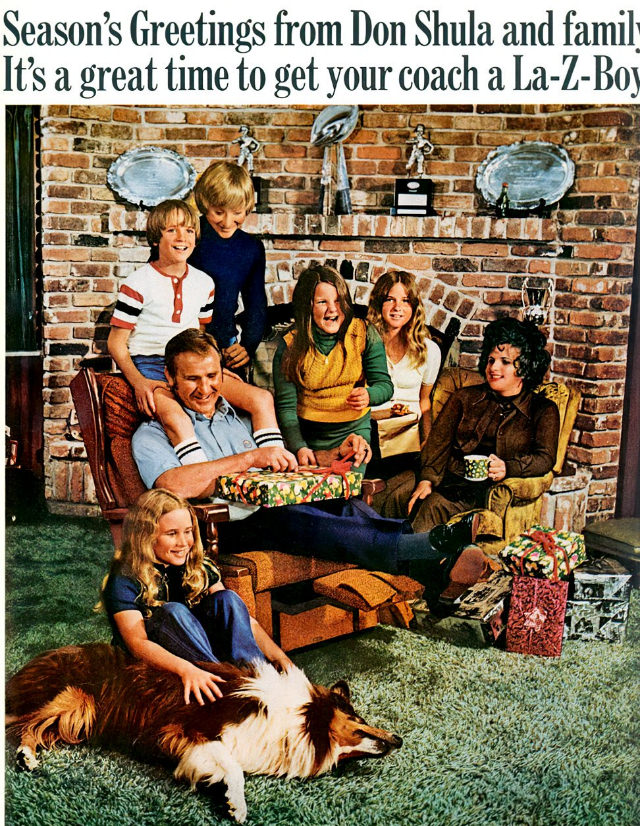
Football star Alex Karras and actress Susan Clark also appeared in La-Z-Boy campaigns. The pairing of a tough NFL lineman with a cozy recliner made for a memorable contrast that stuck with viewers. Mr. Magoo, the famous nearsighted cartoon character, also lent his bumbling charm to the brand in animated promotions.
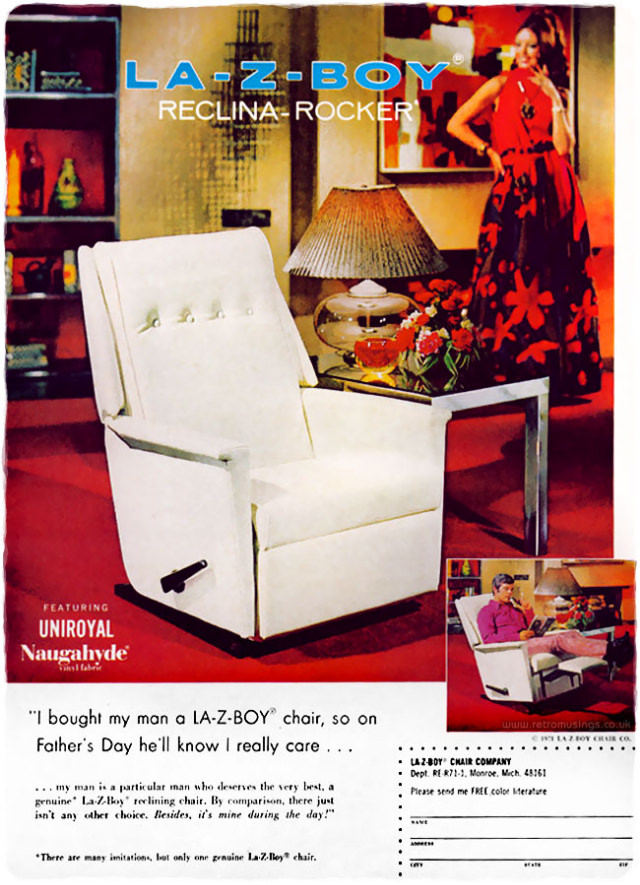
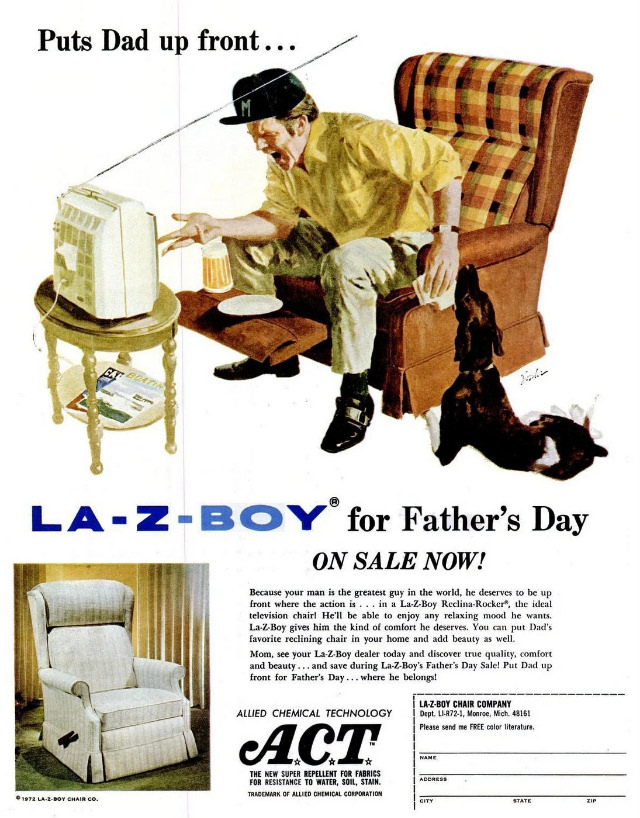
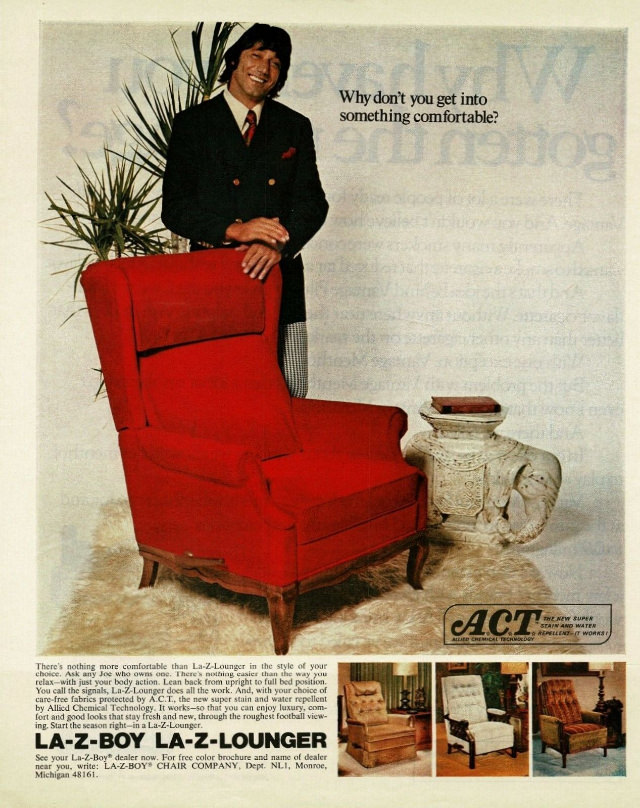
Uncle Sam even made an appearance in La-Z-Boy’s ad lineup during this period. Using such a patriotic icon sent a clear message: this was an all-American chair for all-American homes. The ads of the 1970s were bold, colorful, and confident — very much a reflection of the decade itself.
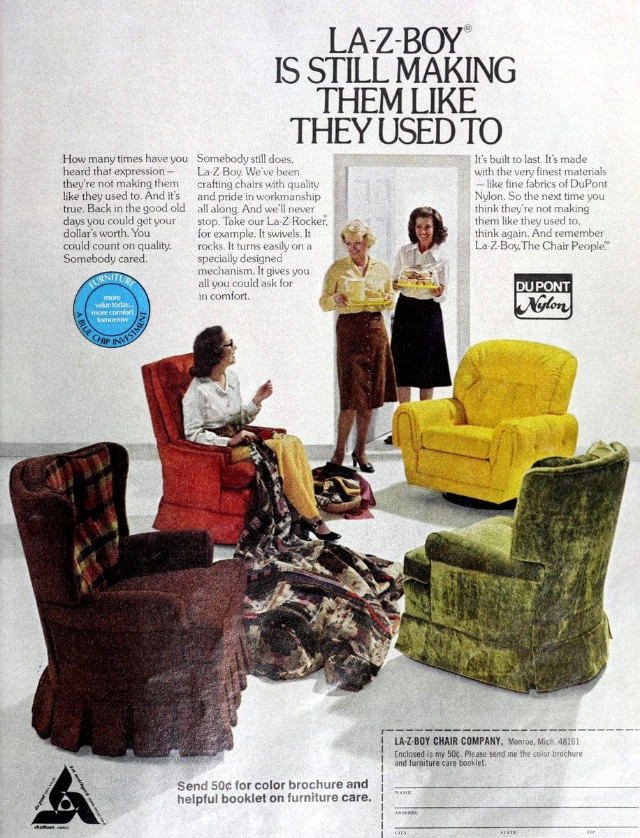
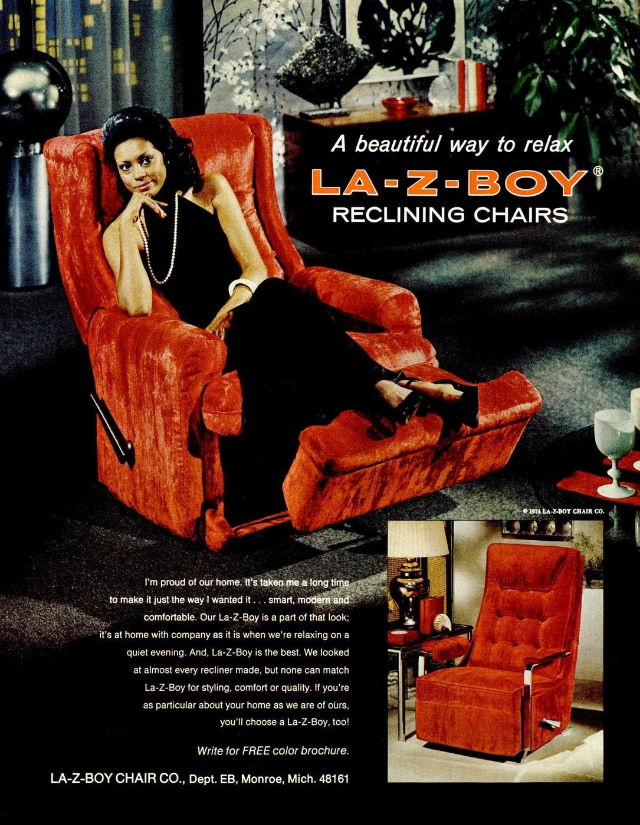
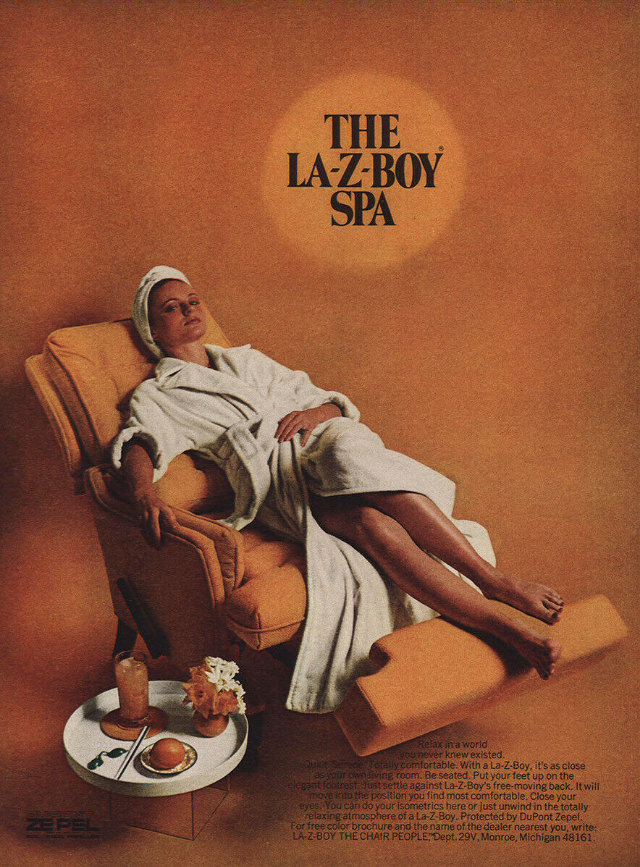
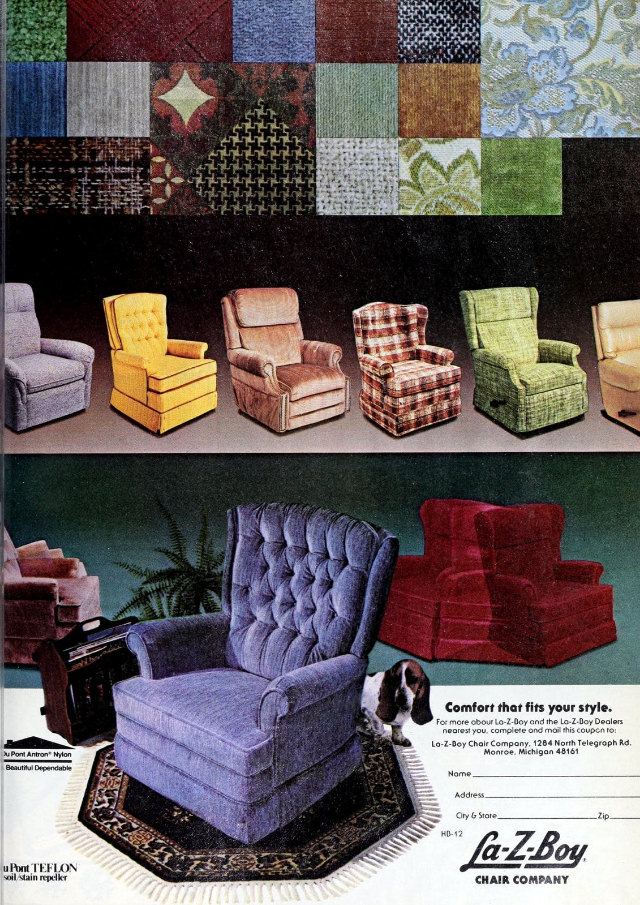
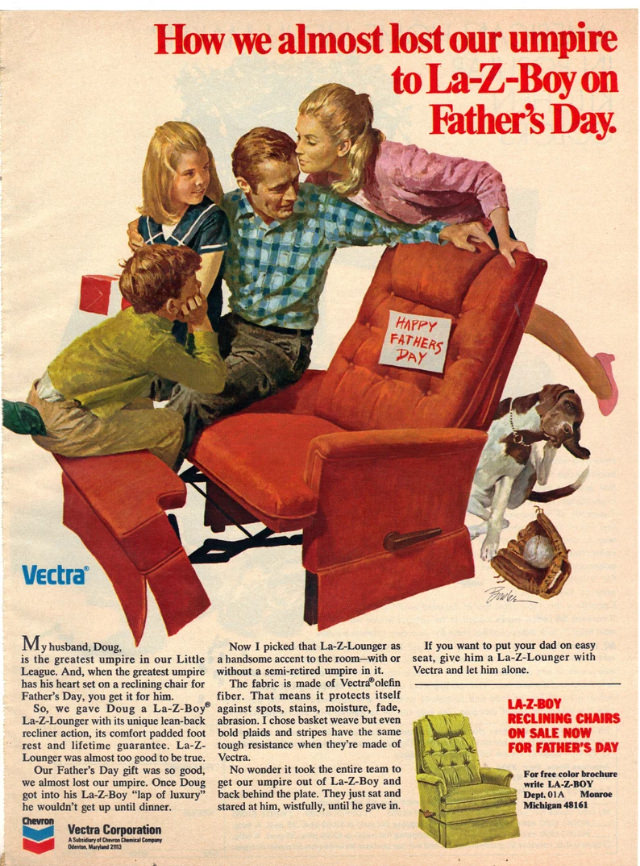
The print ads from this era are a fascinating time capsule. The color palettes, the fonts, the clothing worn by models, and the interior design of the rooms shown all capture a very specific moment in American home life. These weren’t just product advertisements — they were a window into how families lived, relaxed, and spent time together in the 1970s.
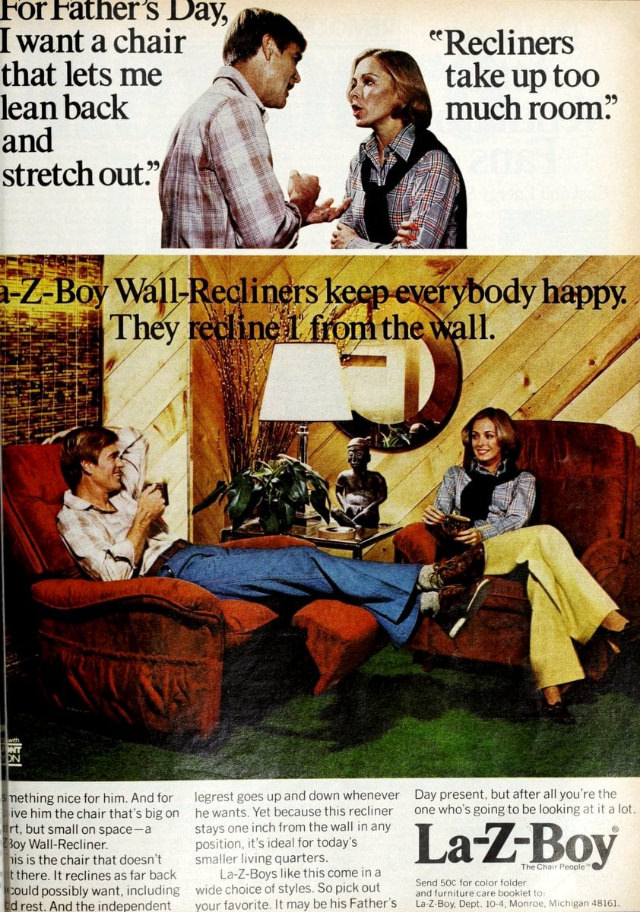
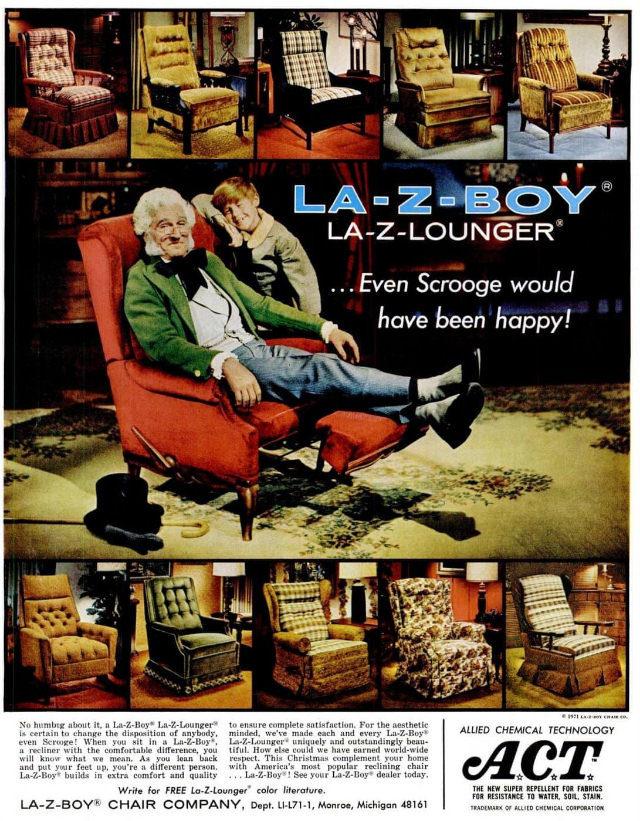
La-Z-Boy’s ads consistently emphasized value, comfort, and style. Many campaigns highlighted the range of fabric and color options available, showing that a recliner didn’t have to look bulky or out of place. The company worked hard to position its chairs as furniture worth showing off, not hiding in a corner.
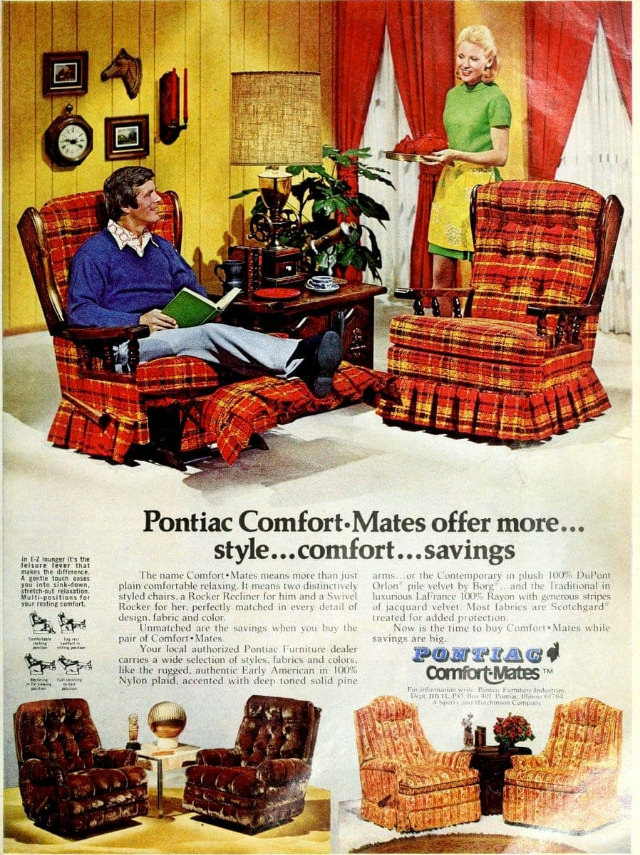
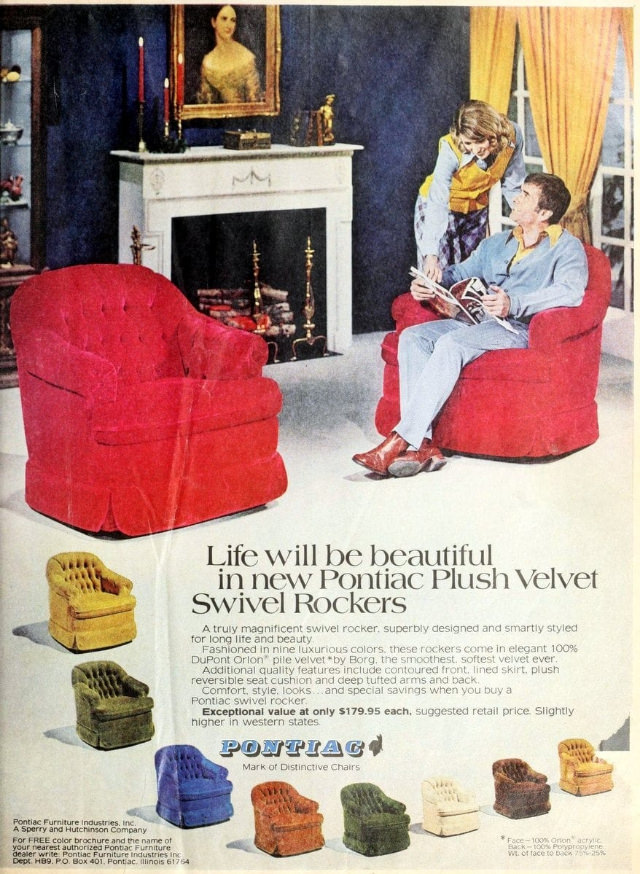
Flipping through these vintage ads today, it’s easy to see why the brand resonated so strongly with the American public. Each page combined sharp marketing with a product that genuinely delivered on its promise. From orange-crate prototype to national icon, La-Z-Boy built its reputation one well-rested American at a time.