
in

Historical Photos of Kansas Houses and Buildings in the Late 1940s

Between 1947 and 1949, a photographer moved through the towns, back roads, and rural stretches of northeastern Kansas with a camera. The resulting images form a detailed record of everyday architecture — residential streets, rural schoolhouses, country churches, and commercial buildings — centered primarily around Lawrence and extending toward Topeka. Lawrence sits in Douglas County along the Kansas River, and by the late 1940s it was already a well-established university town with a dense mix of Victorian-era homes, brick commercial blocks, and neighborhood churches. These photographs capture that built environment before major postwar development changed it.
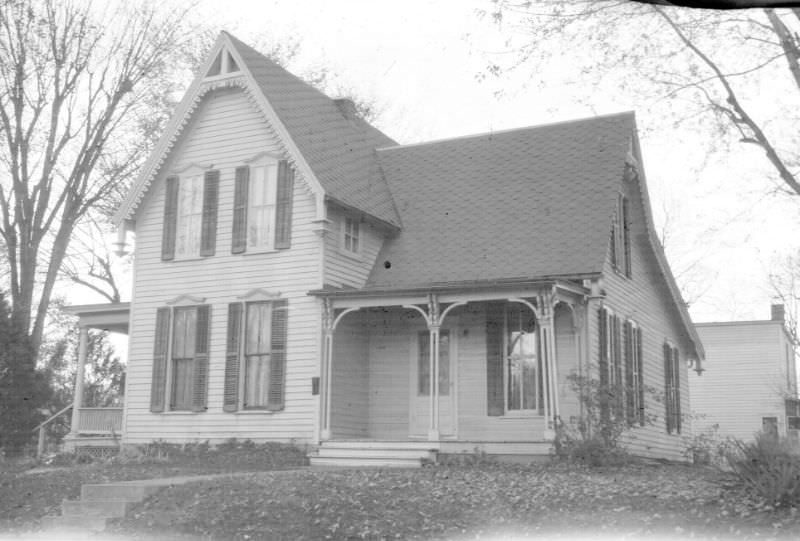
9th and Alabama St., Lawrence, Kansas, November 1947

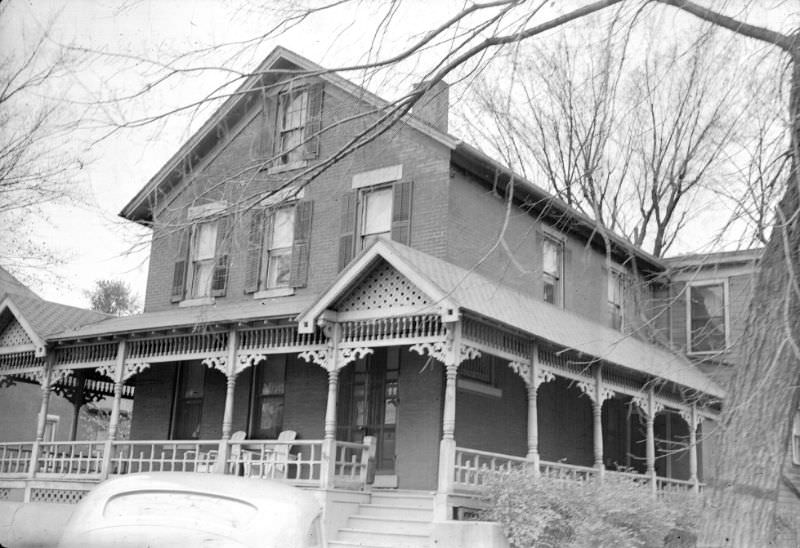
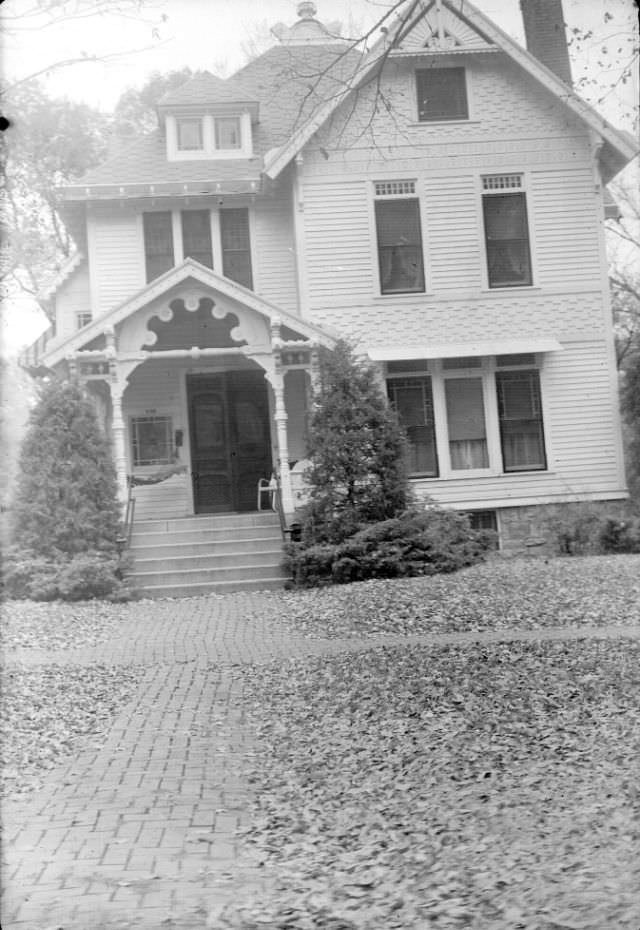
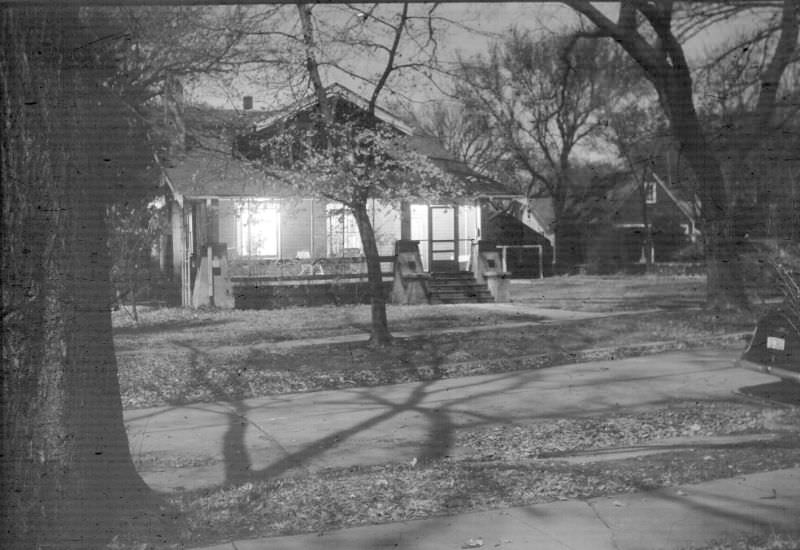
The residential streets of Lawrence in November 1947 were lined with homes ranging from modest wood-frame houses to ornate Victorian designs. Several photographs focus on the 600 and 700 blocks of Louisiana and Vermont Streets, where decorative architectural details were still common. One home on the 700 block of Vermont Street features a gingerbread porch — the kind of intricate wooden trim that was popular in the late 19th century and rarely survived into the mid-20th century intact.
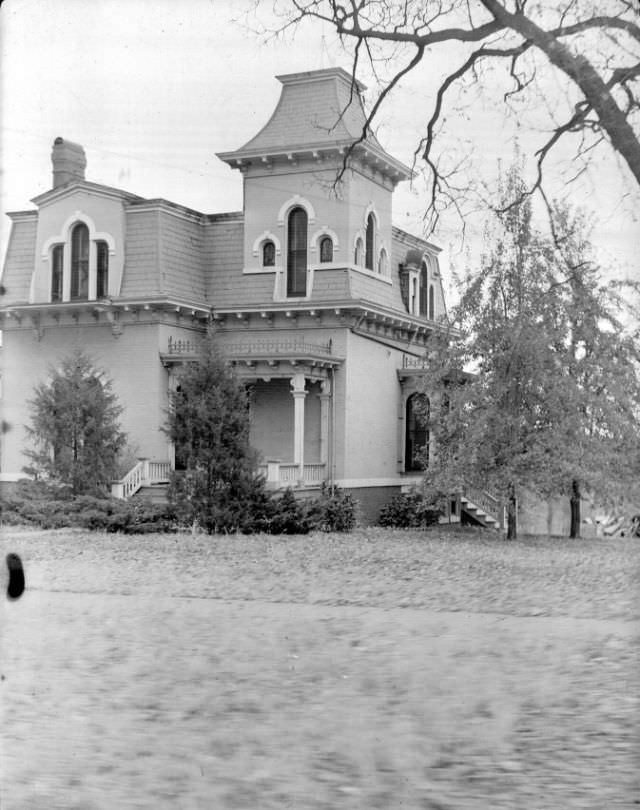
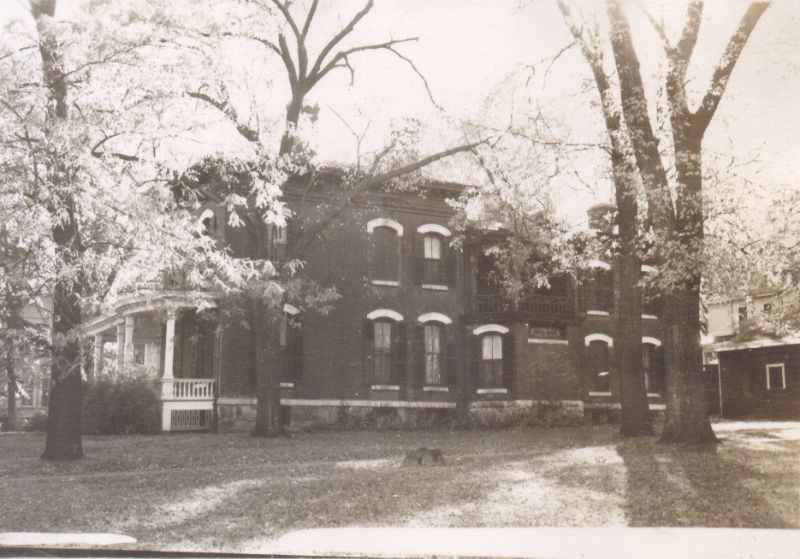
304 Indiana St., Lawrence, Kansas, November 1947
603 Ohio St., Lawrence, Kansas, circa 1947

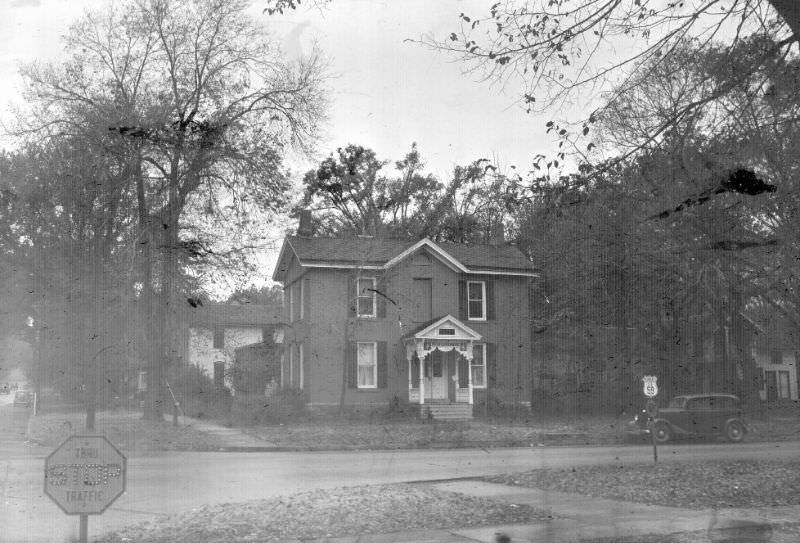
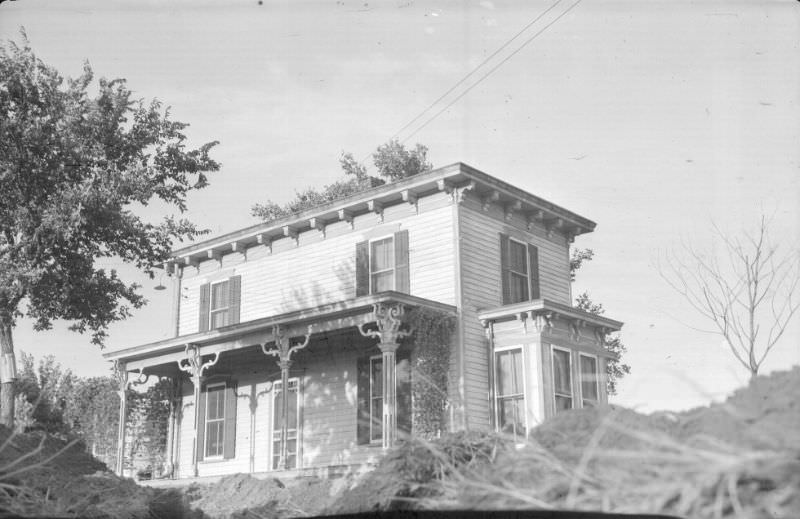
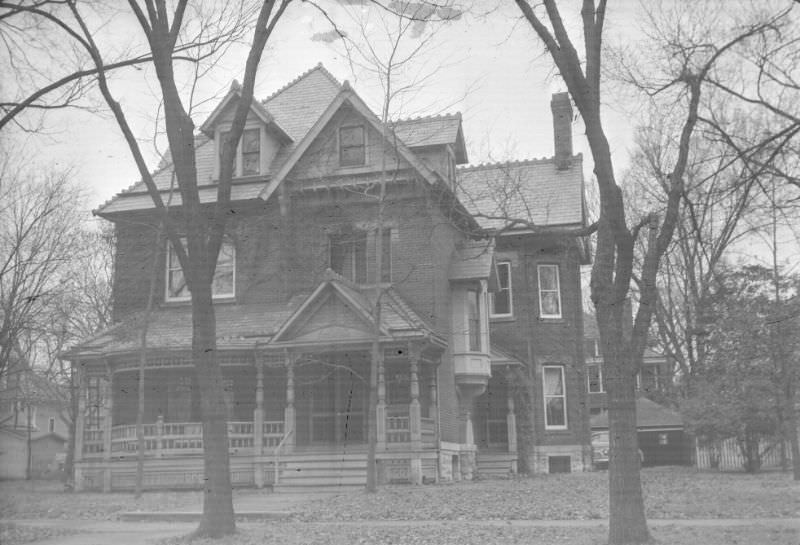
Victorian architecture appears repeatedly across the collection. A brick Victorian on the 600 block of Louisiana Street and a wood-frame Victorian on 6th Street between Ohio and Louisiana both show the variety of styles built during Lawrence’s late 19th-century growth period. A third Victorian on 6th Street stands near a road sign for US 59 and K-10, anchoring the image geographically within the town’s street grid.
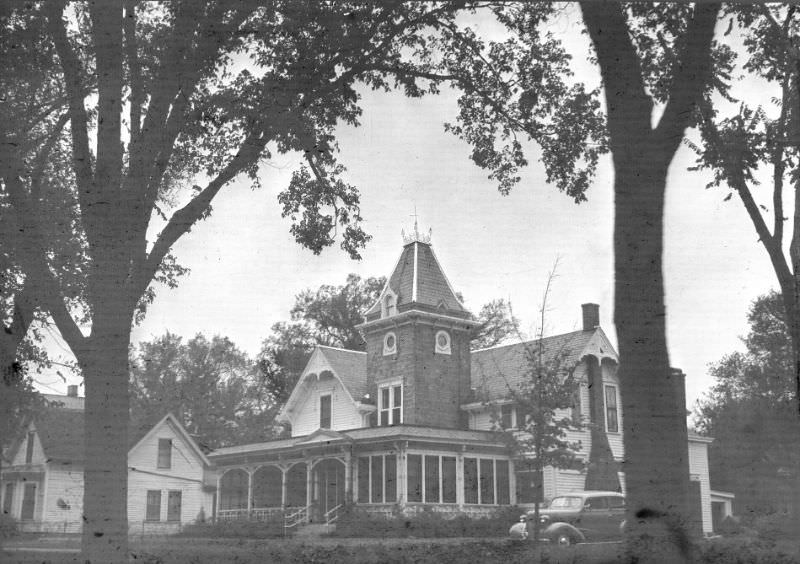
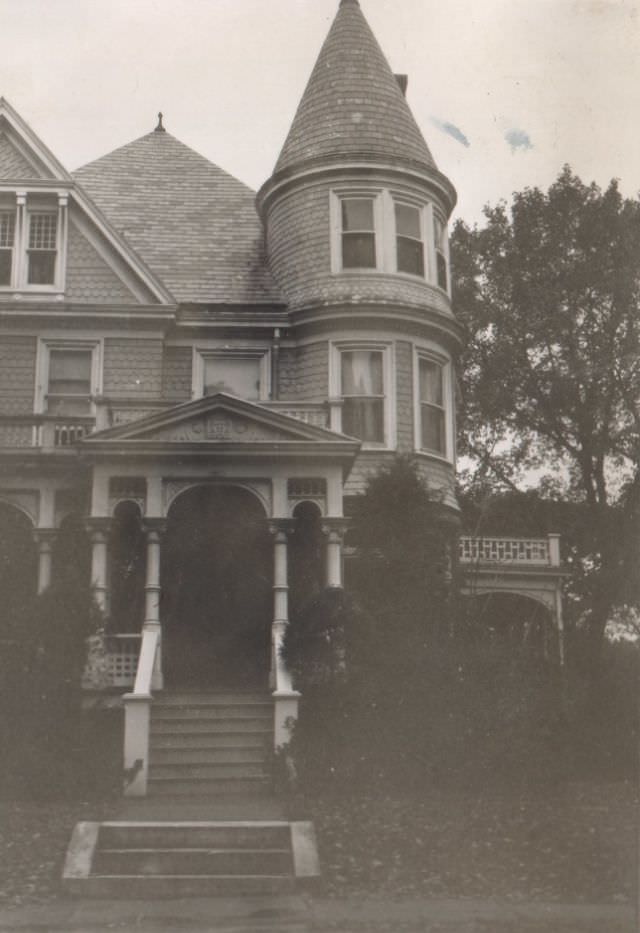
615 Louisiana St., Lawrence, Kansas, November 1947
701 Louisiana St., Lawrence, Kansas, November 1947
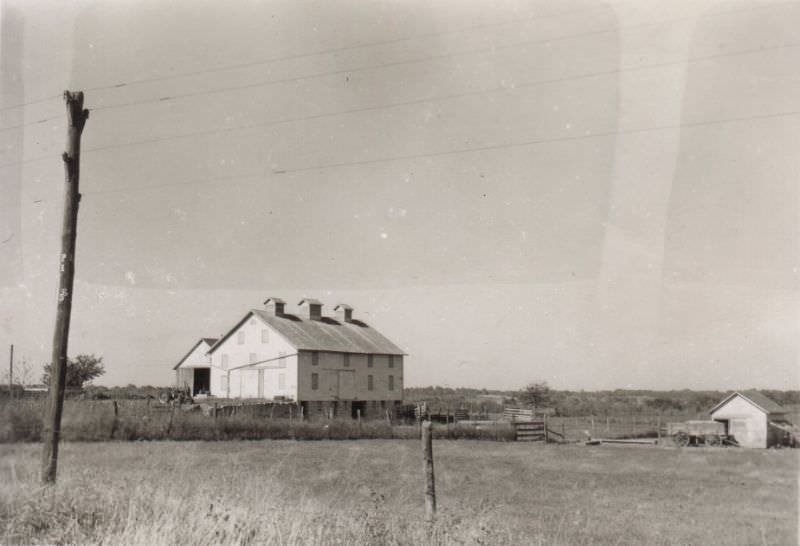
Barn, Lawrence, Kansas, October 1947

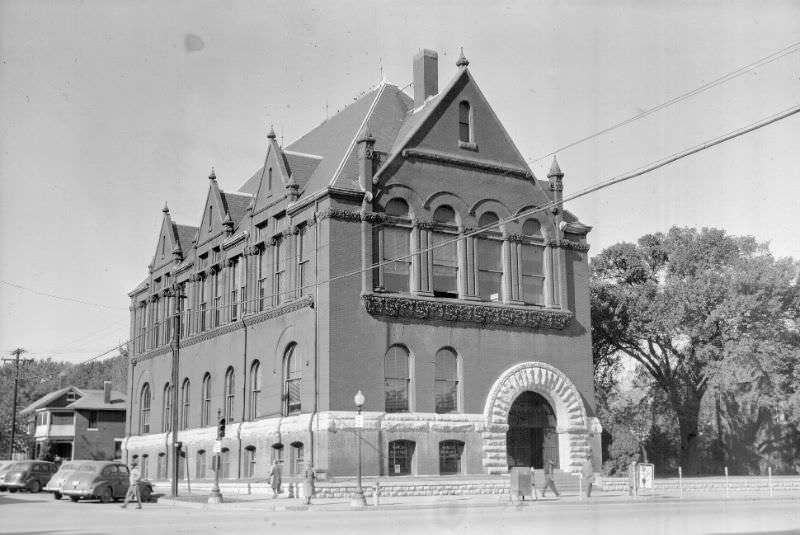
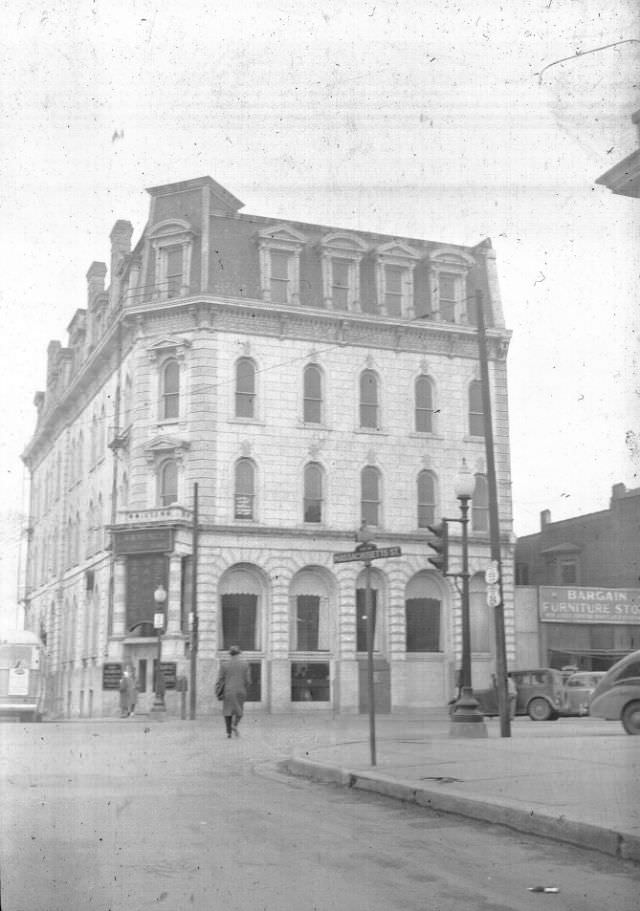
Not all of the subjects were residential. The BPOE — Benevolent and Protective Order of Elks — lodge at 700 Vermont Street and the Lawrence National Bank Building at 7th and Massachusetts represent the town’s commercial and civic architecture. The Watkins Bank Building, photographed in 1949, is another landmark in Lawrence’s downtown core. These structures reflect the durable masonry construction common to Midwestern commercial districts built between 1880 and 1920.
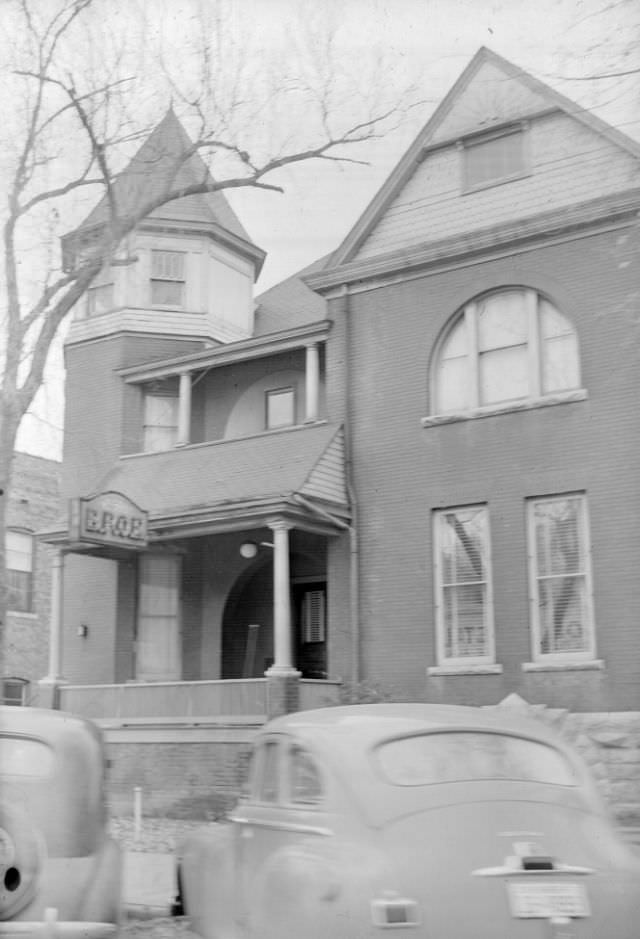
BPOE, 700 Vermont St., Lawrence, Kansas, November 1947
Brick Victorian, 600 Block of Louisiana St., Lawrence, Kansas, November 1947

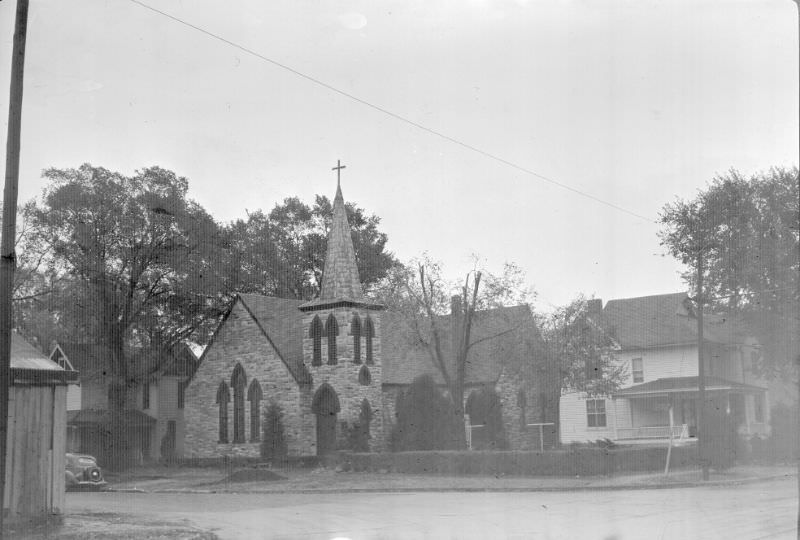
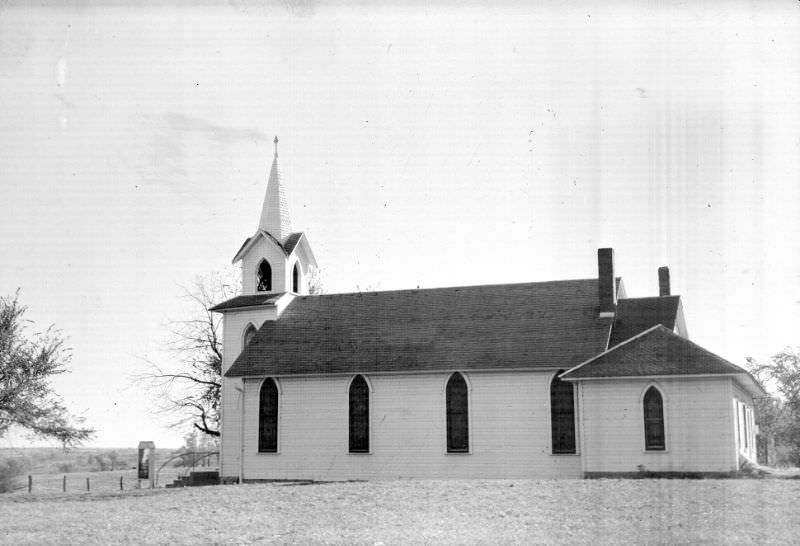
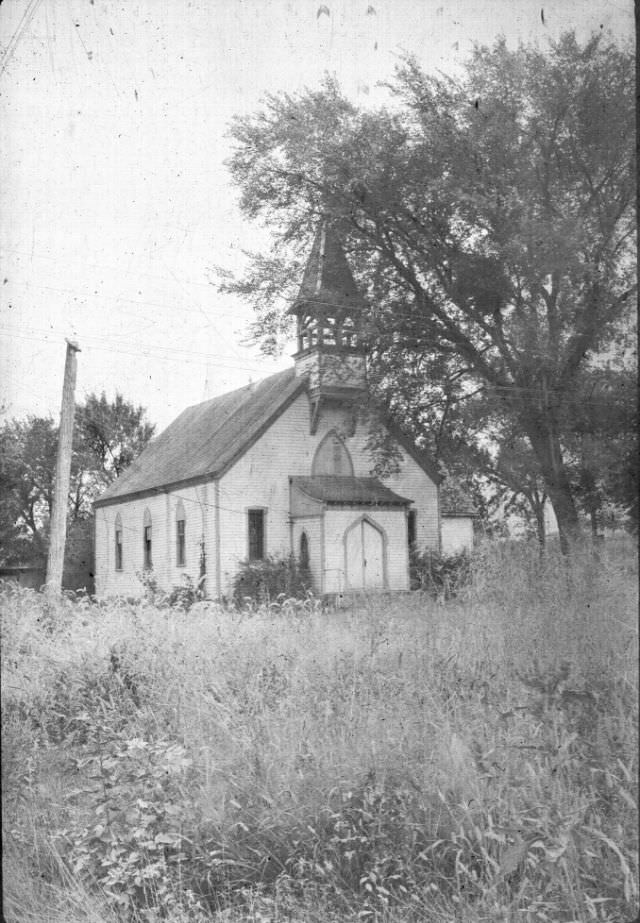
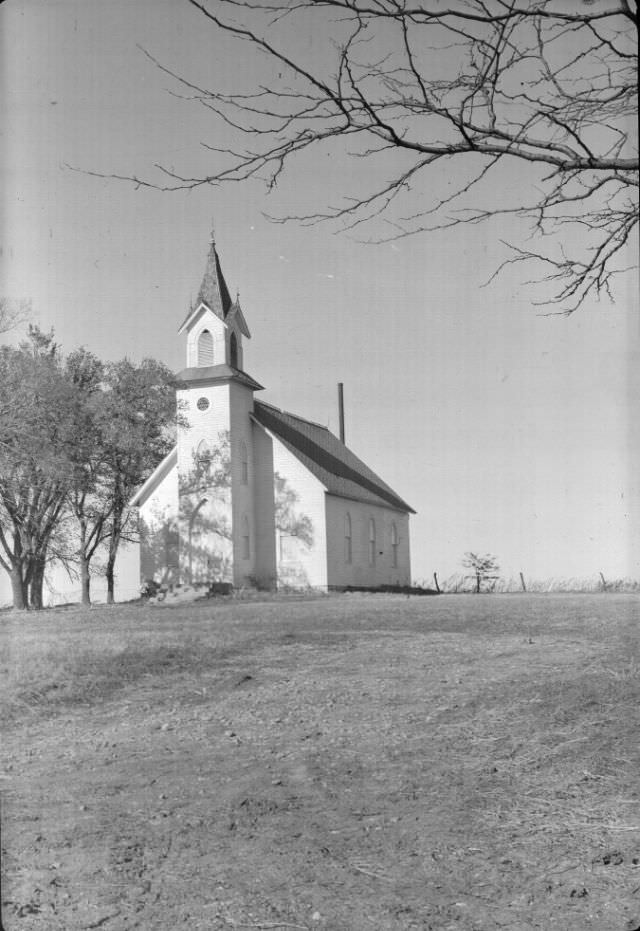
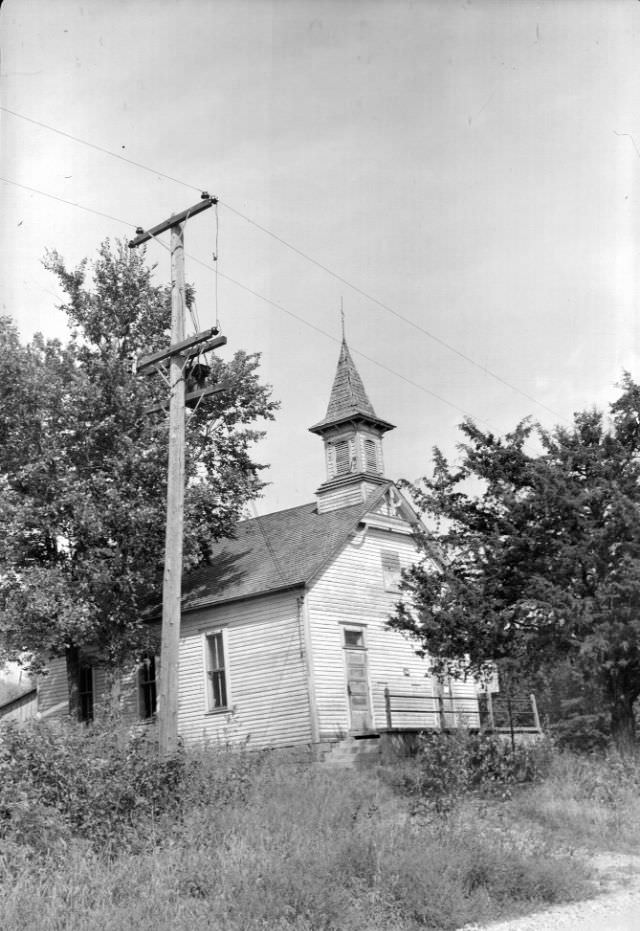
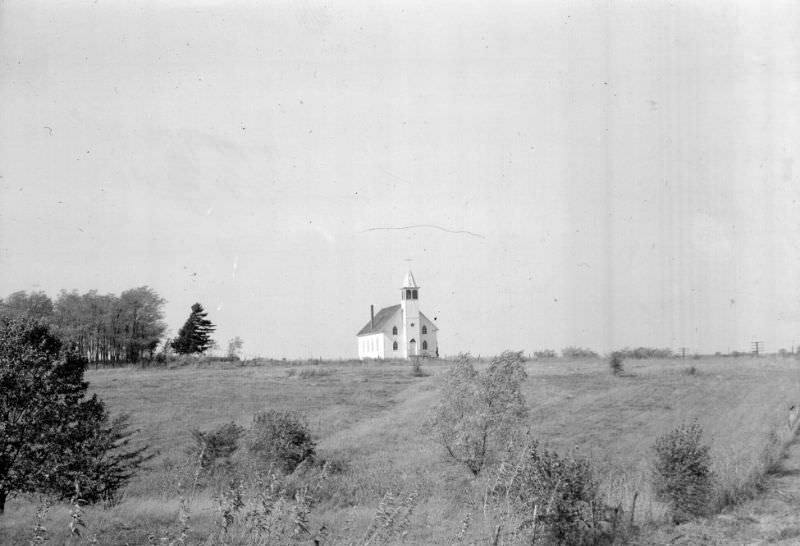
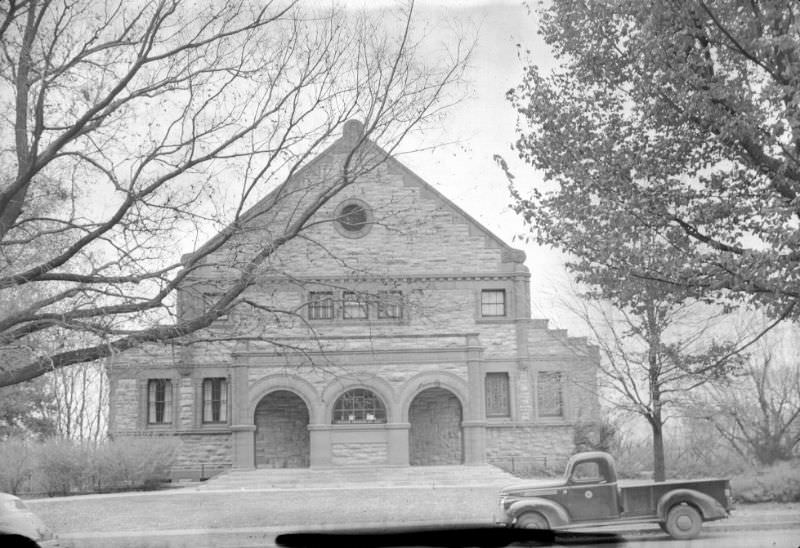
Churches are among the most frequently photographed subjects in the collection. In December 1947, construction was underway at 15th and Massachusetts — most likely the Central United Methodist Church. The English Lutheran Church at 11th and New Hampshire and St. Joseph Church in Topeka, photographed in January 1948, represent both neighborhood congregations and larger urban parishes. Rural churches also appear: the Vinland Church, the Wellman Church, the McLouth Baptist Church, and the Methodist Episcopal Church near Berryton all show the small, plainly built houses of worship that served farming communities throughout Douglas and surrounding counties.
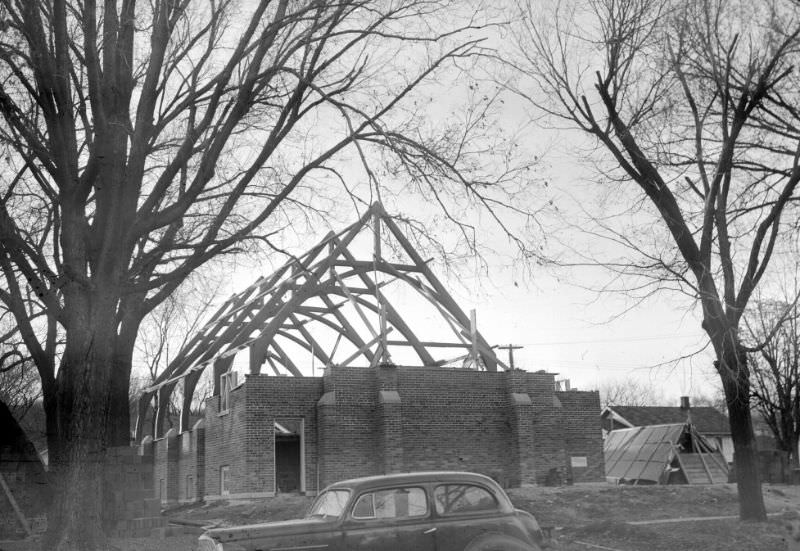
Church construction (probably this would be Central United Methodist Church), 15th and Massachusetts, Lawrence, Kansas, December 1947
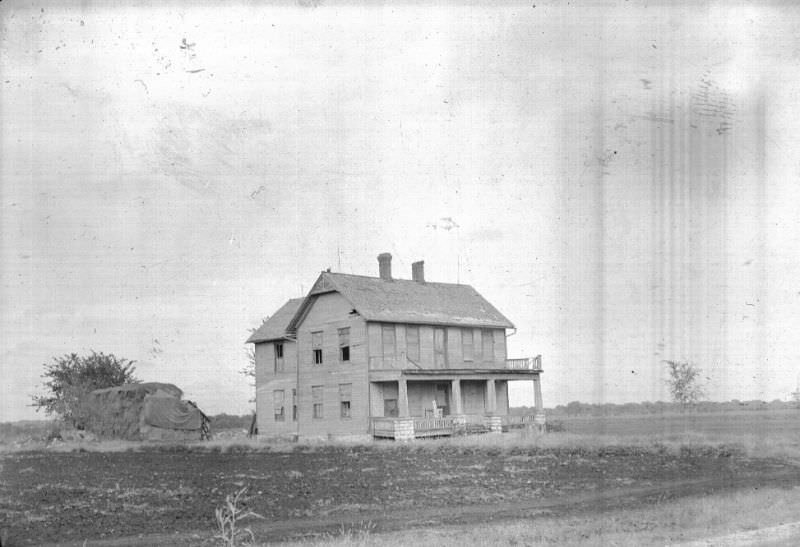
Empty Farmhouse on Clinton Road past Lone Star turn, Douglas County, Kansas, October 1947
English Lutheran Church, 11th St. and New Hampshire St., Lawrence, Kansas, November 1947
House with gingerbread porch, 700 Block of Vermont St., Lawrence, Kansas, November 1947

One historically significant stop in the collection is Lane University in Lecompton, photographed in October 1947. The building also served as the Territorial Capitol of Kansas during the 1850s, when Lecompton was the seat of the territorial government during the violent political struggle over whether Kansas would enter the Union as a free or slave state. By 1947, the building had long since been repurposed, but it remained standing as a direct architectural link to one of the most contested chapters in American pre-Civil War history.
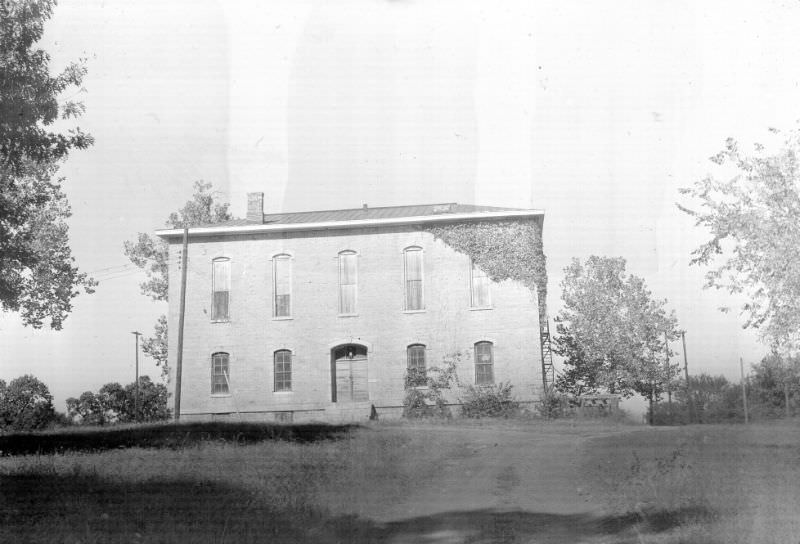
Lane University / Territorial Capitol, Lecompton, Kansas, October 1947
Lawrence National Bank Building, 7th and Massachusetts, Lawrence, Kansas, November 1947
McLouth Baptist Church, McLouth, Kansas, November 1947

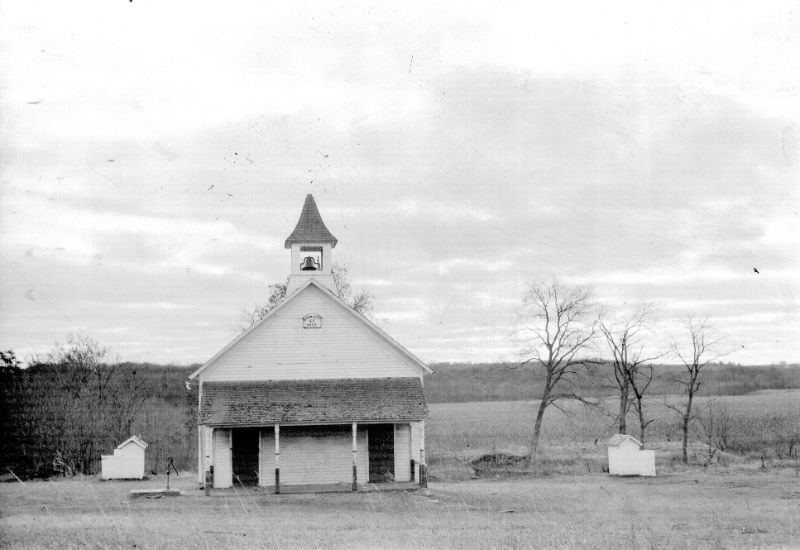
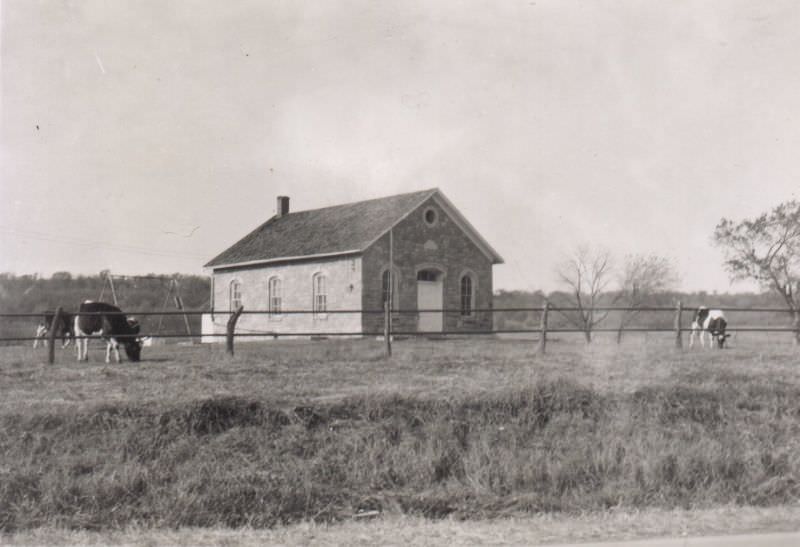
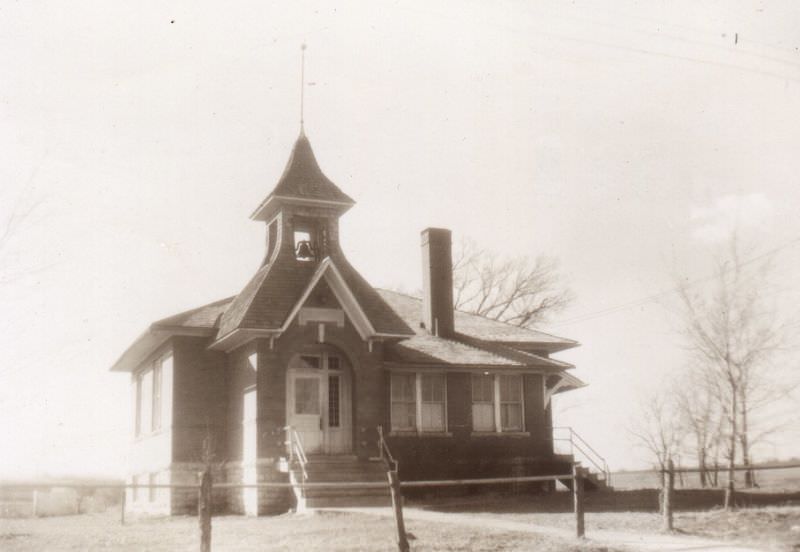
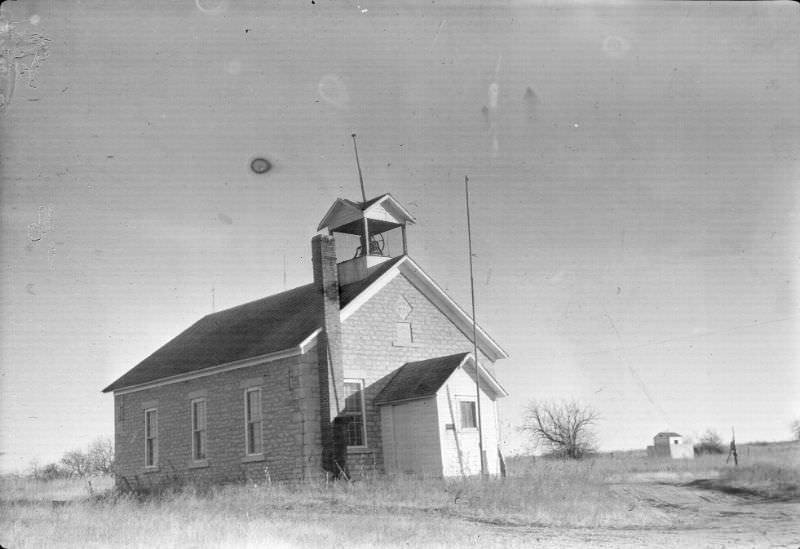
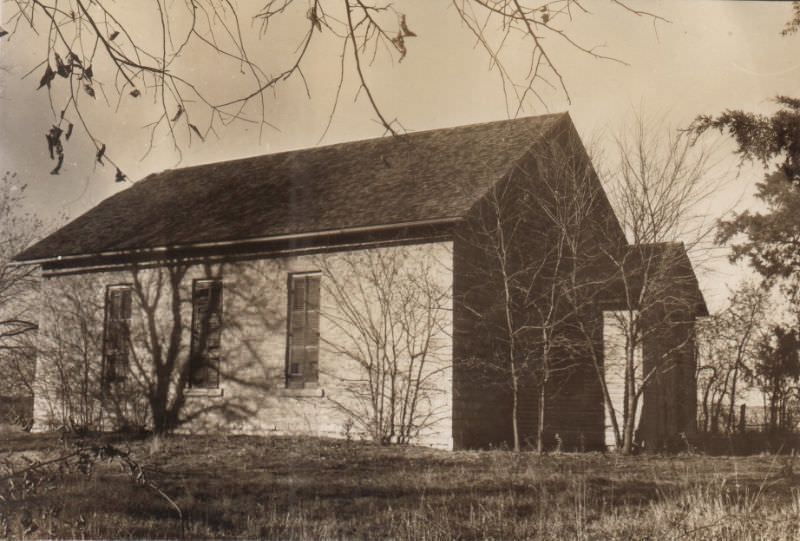
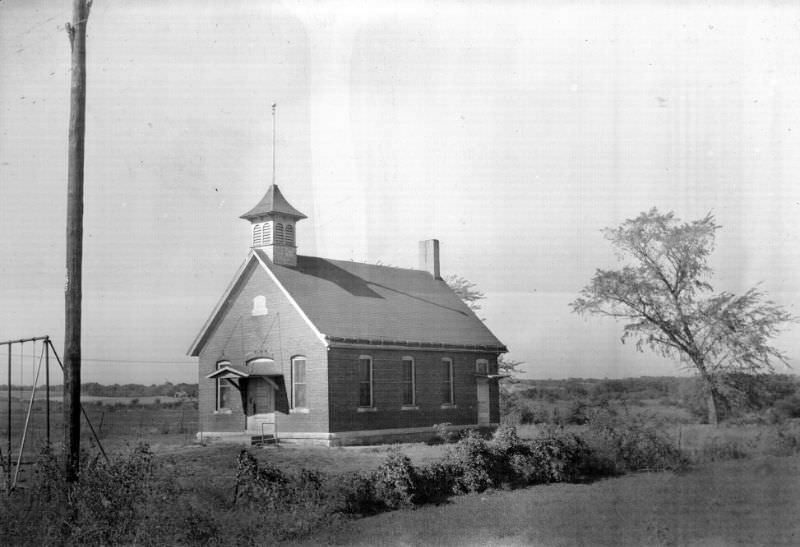
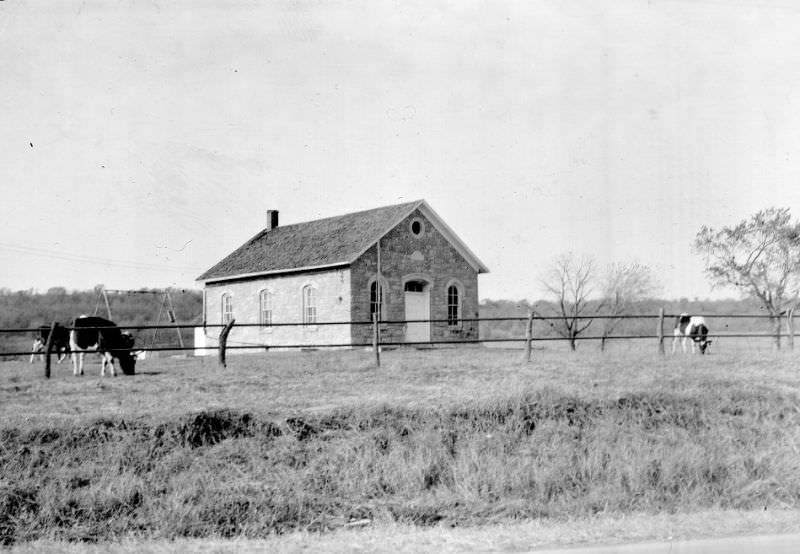
Rural schoolhouses make up a substantial portion of the photographs. Schools identified by district numbers — No. 37, No. 38, No. 48, No. 62, and No. 78 — were scattered across Douglas County and the Topeka area. These one- and two-room schools were the standard form of public education in rural Kansas well into the mid-20th century. Several are built from stone, a material common in eastern Kansas where limestone was quarried locally. The stone schoolhouse photographed around Lawrence in 1949 is a strong example of this regional building tradition.
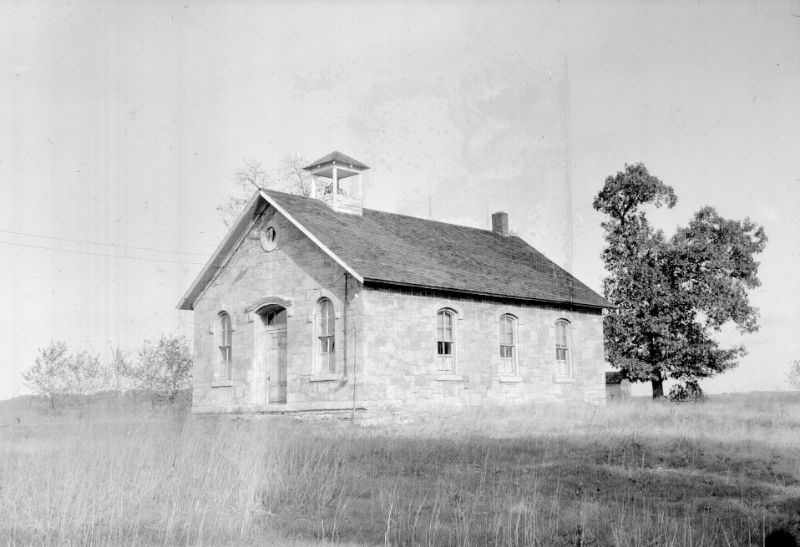
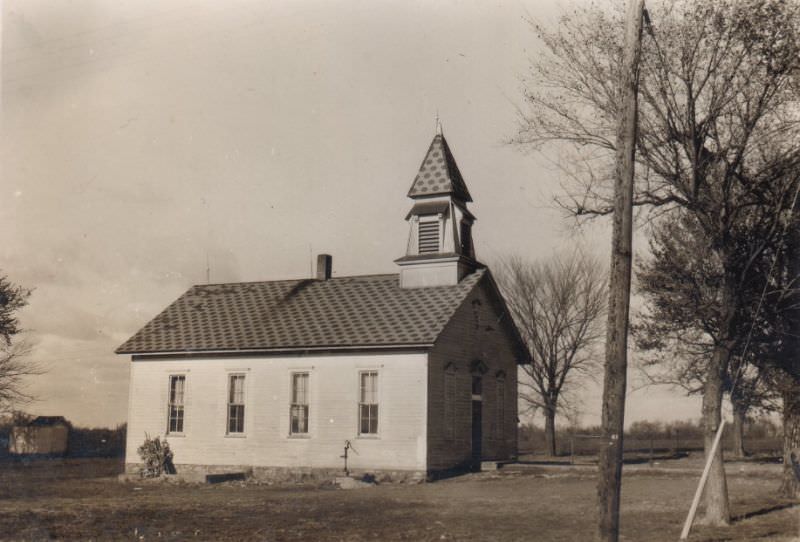
Pony Creek School, No. 37, somewhere in the Lawrence-Topeka, Kansas, November 1947
School District 38, Southeast of Topeka, near Shawnee Lake, Kansas, November 1947
School District 48 on Red Star Road from Topeka to Lawrence, Kansas, November 1947
School No 78, Highway 40, Northwest of Lawrence, Kansas, November 1947
School, Northwest of Lawrence, Kansas, 1947

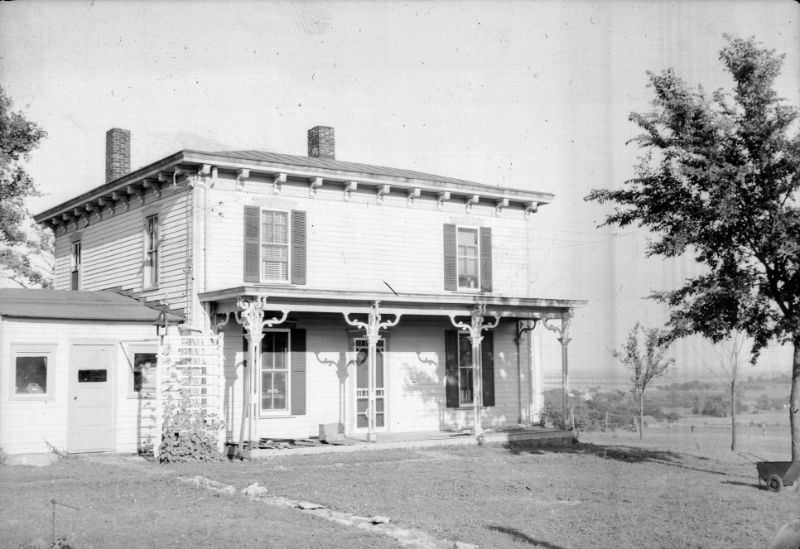
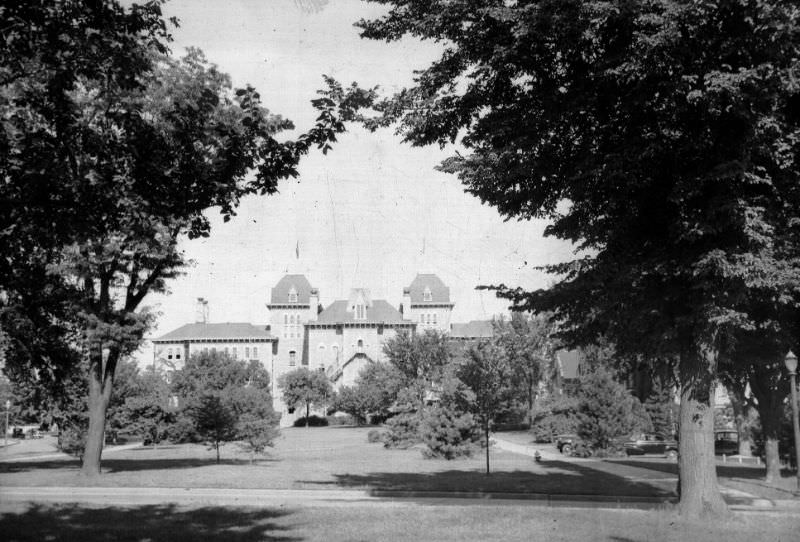
In Topeka, the Sweet Mansion at 3rd and Topeka Boulevard stands apart from the rural subjects photographed elsewhere. It represents the grander residential architecture built by prosperous Kansas families in the late 19th century. The 1949 photographs extend the record further, adding an Italianate farmhouse in Lawrence, the Nickerson House, Baker’s House on Mississippi Street, and Spooner Hall — home of the Thayer Museum — on the University of Kansas campus. The University of Kansas itself also appears in the 1949 images, its hilltop campus buildings visible against the Kansas skyline.
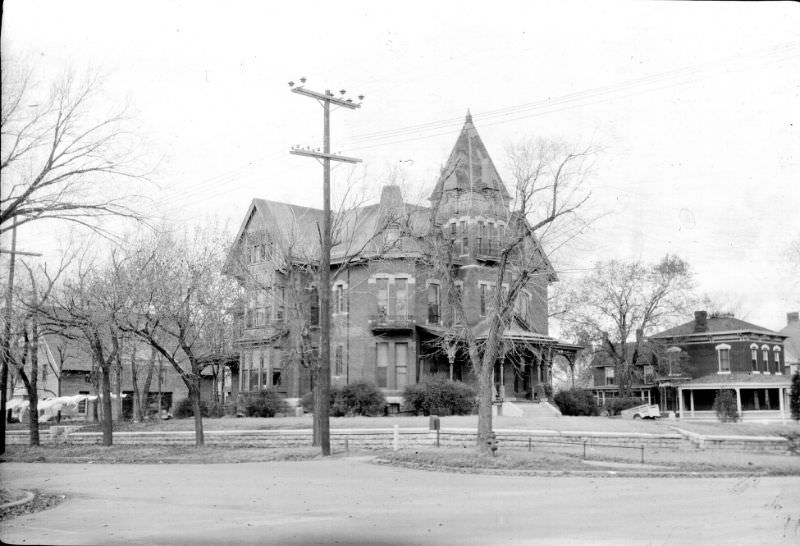
The Sweet Mansion, 3rd and Topeka Blvd., Topeka, Kansas, November 1947
Victorian house on 6th St., between Ohio and Louisiana St., Lawrence, Kansas, November 1947
Victorian house. Road sign is for US 59 and K-10. Somewhere on 6th Street, Lawrence, Kansas, November 1947
Vinland Church, Kansas, November 1947
Wellman Church, Kansas, November 1947

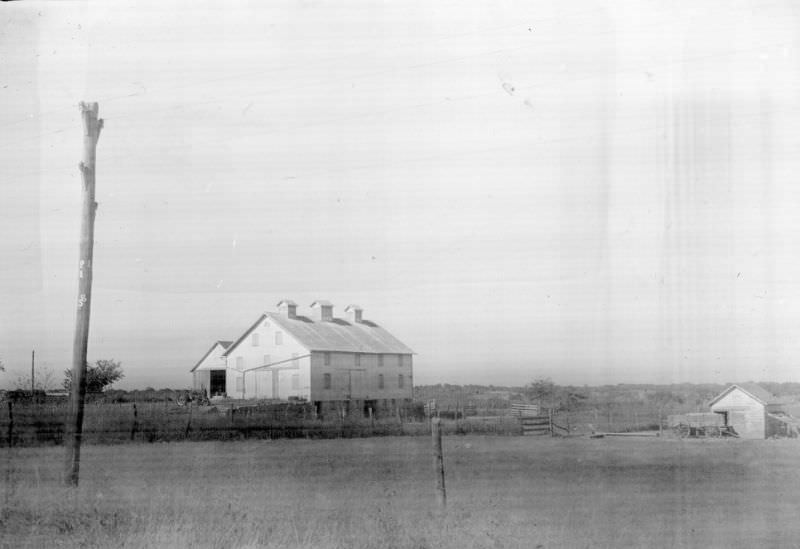
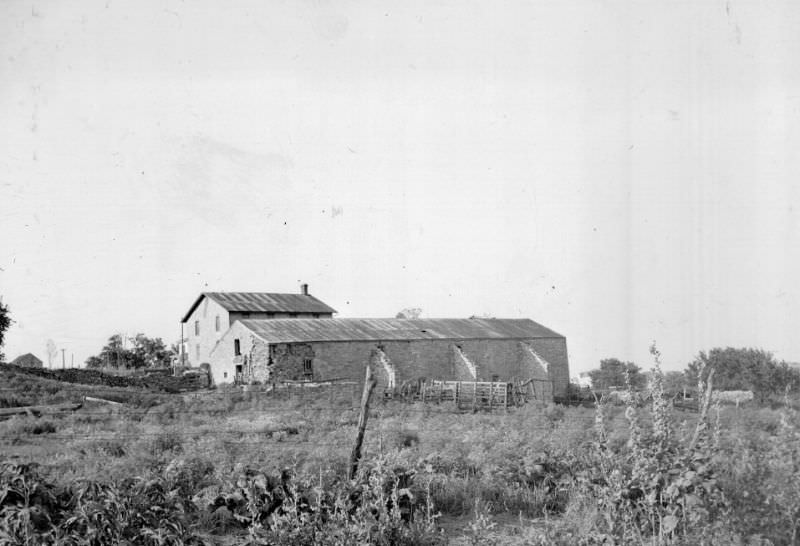
Barns and farm structures also appear throughout the collection. A barn photographed in Lawrence in October 1947, a second in Douglas County in 1949, and a stone barn near Lawrence round out the agricultural side of the record. Farm buildings in eastern Kansas were often constructed from the same native limestone used for schoolhouses and churches, giving the rural landscape a visual consistency tied directly to local geology. Taken together, these photographs document a cross-section of mid-century Kansas architecture — from the university campus to the county road schoolhouse — at a moment just before widespread suburban development began to reshape the region.
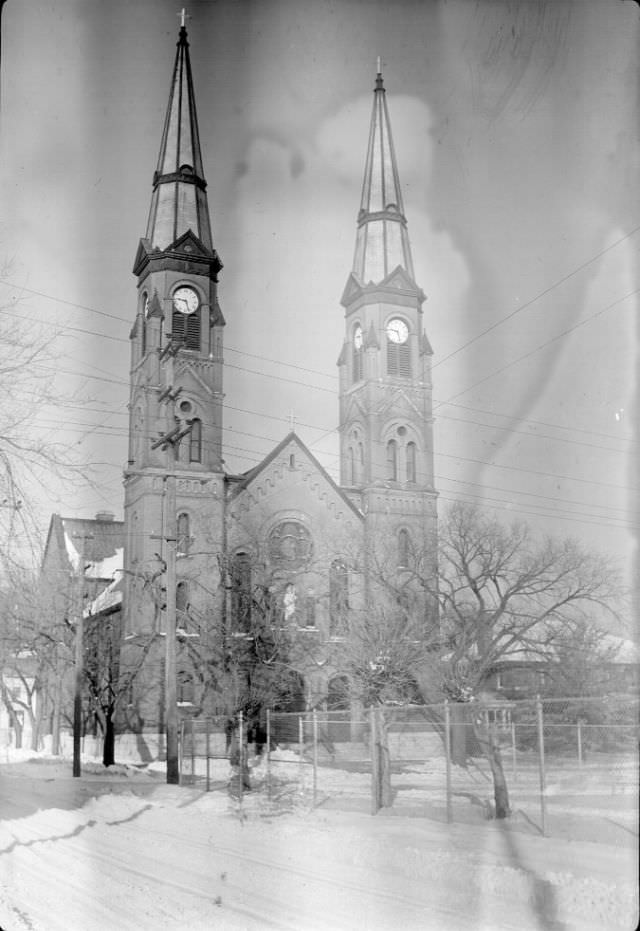
St Joseph Church, Topeka, Kansas, January 1948
Baker's House, 1655 Mississippi St., Lawrence, Kansas, 1949
Baker’s House, 1655 Mississippi St., Lawrence, Kansas, 1949
Barn, Douglas County, Kansas, 1949
Church, somewhere in the Lawrence-Topeka, Kansas, 1949
District 62 School, Douglas County, Kansas, 1949
Italianate farmhouse, Lawrence, Kansas, 1949
Kansas Church, Douglas County, 1949
Methodist Episcopal Church near Berryton, Kansas, circa 1949
Nickerson House, Lawrence, Kansas, 1949
Schoolhouse, Douglas County, Kansas, 1949
Stone barn, somewhere near Lawrence, Kansas, 1949
Stone schoolhouse, around Lawrence, Kansas, 1949
Thayer Museum (Spooner Hall), Lawrence, Kansas, 1949
University of Kansas, Lawrence, Kansas, 1949
Watkins Bank Building, Lawrence, Kansas, 1949
Enjoyed this post? Get new ones in your inbox.
Avatar of Aung Budhh

Written by Aung Budhh

Husband + Father + librarian + Poet + Traveler + Proud Buddhist. I love you with the breath, the smiles and the tears of all my life.

Leave a Reply

Your email address will not be published. Required fields are marked *