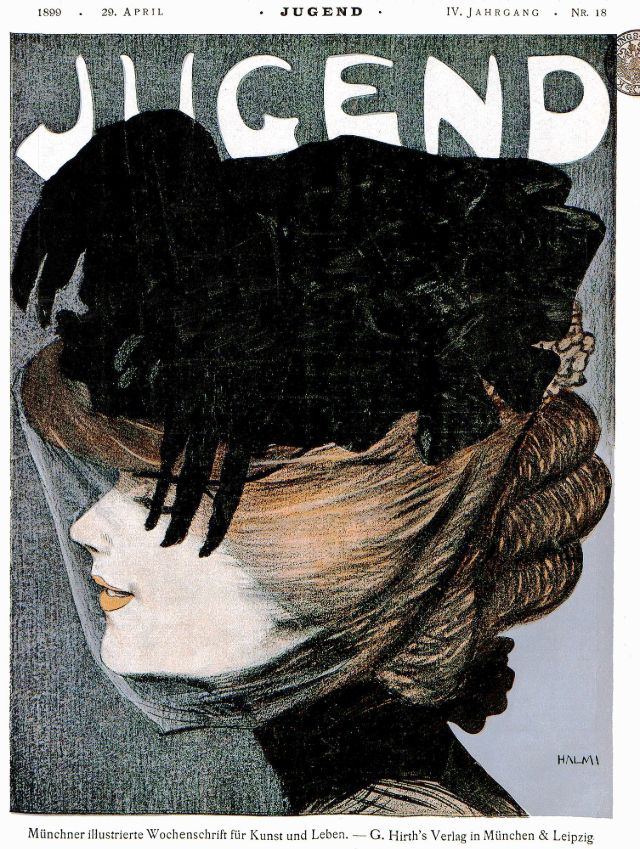
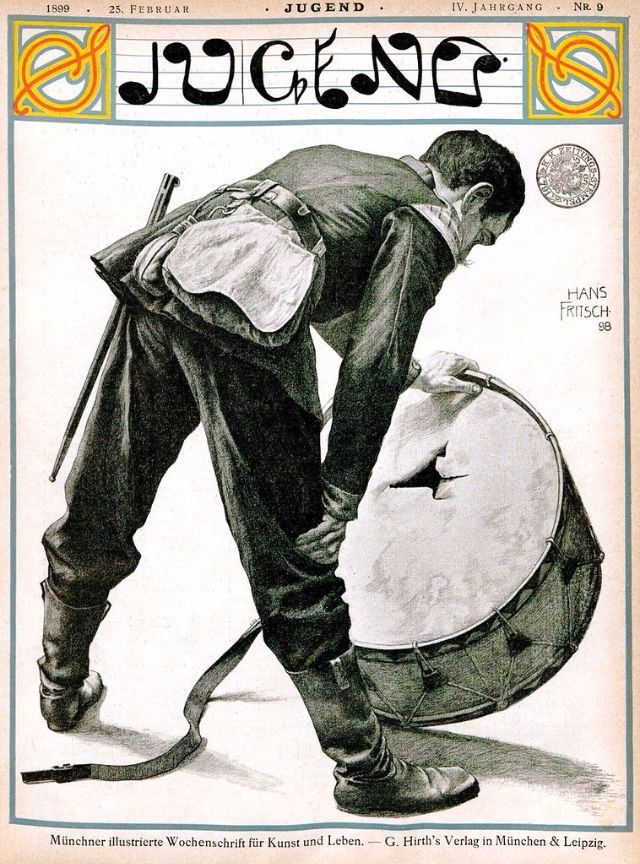
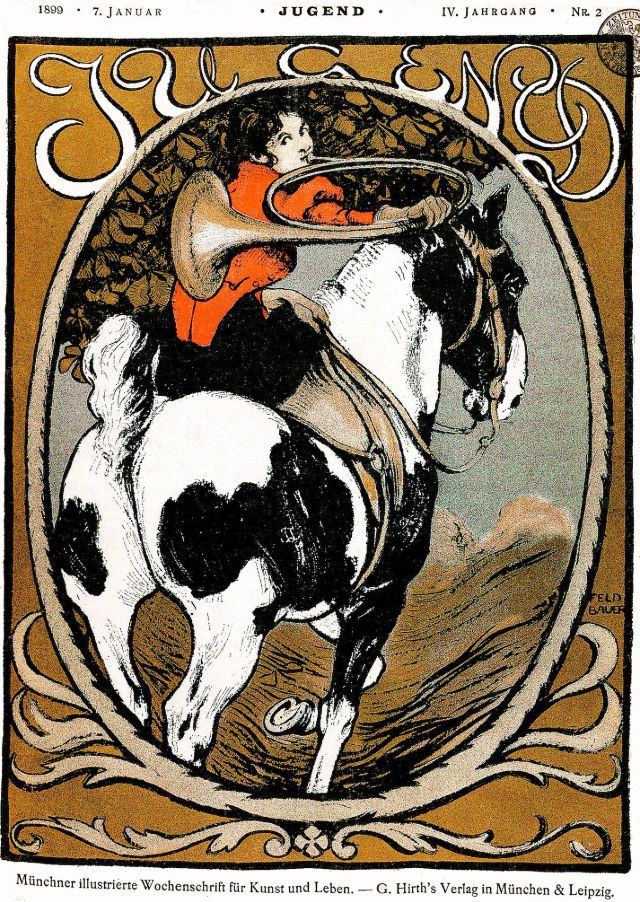
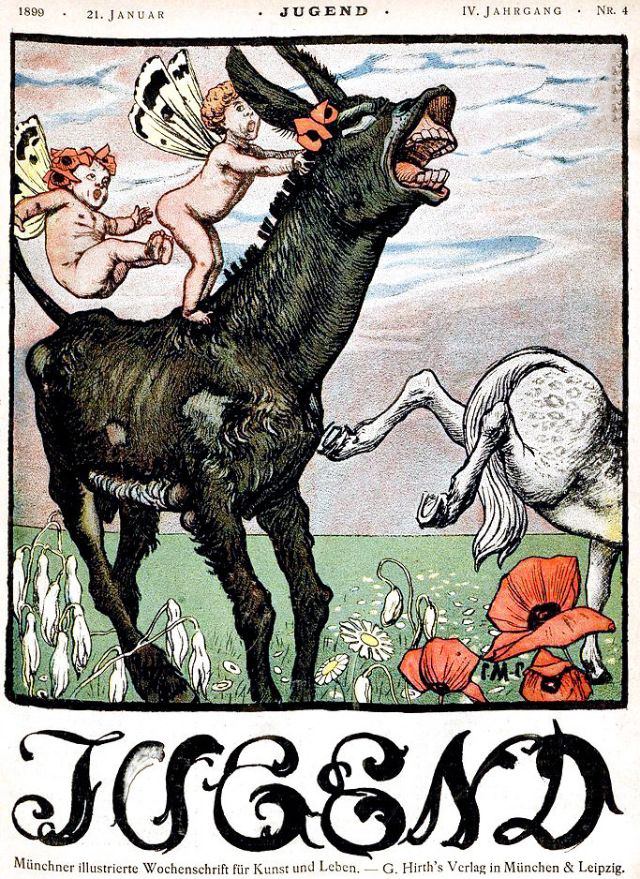
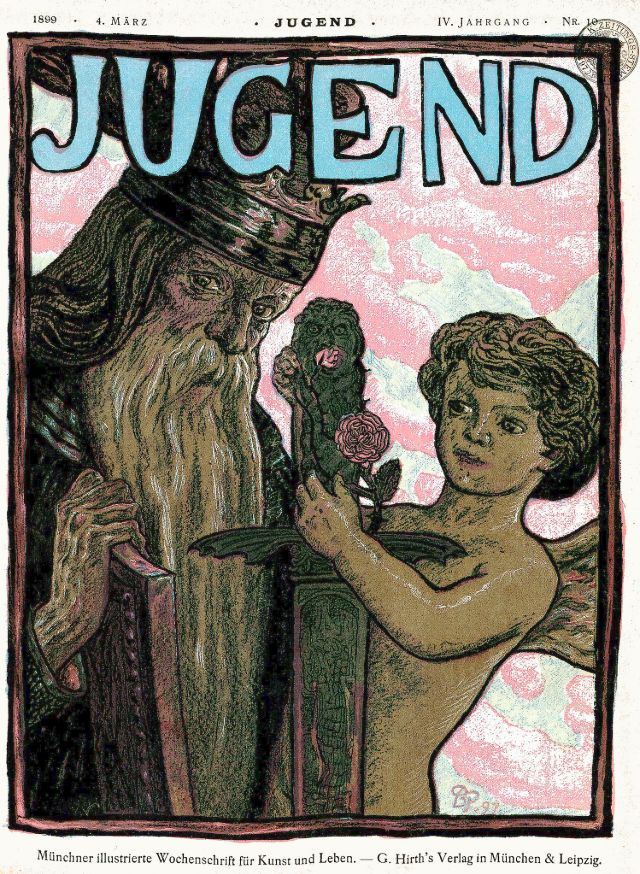
In 1896, a new magazine hit the streets of Munich and immediately turned heads. It was called Jugend — German for “Youth” — and it ran from 1896 all the way to 1940. Publisher Georg Hirth founded it and served as its editor until his death in 1916. What started as a showcase for German arts and crafts quickly became the defining voice of a bold new visual style.
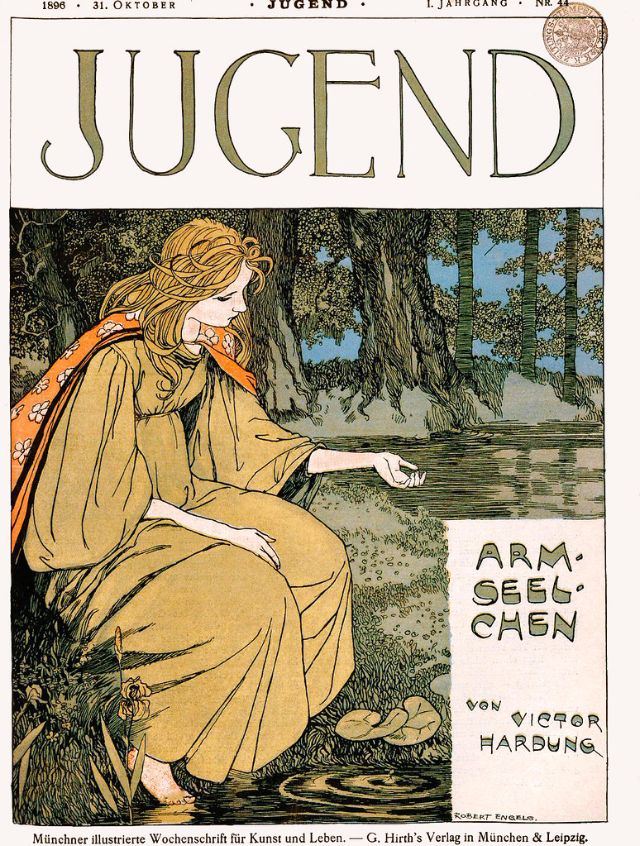
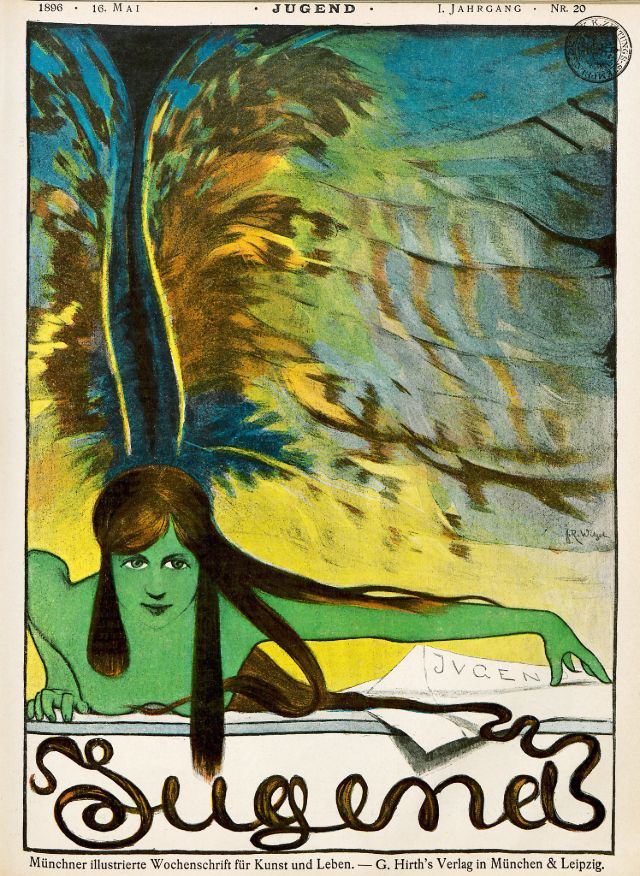
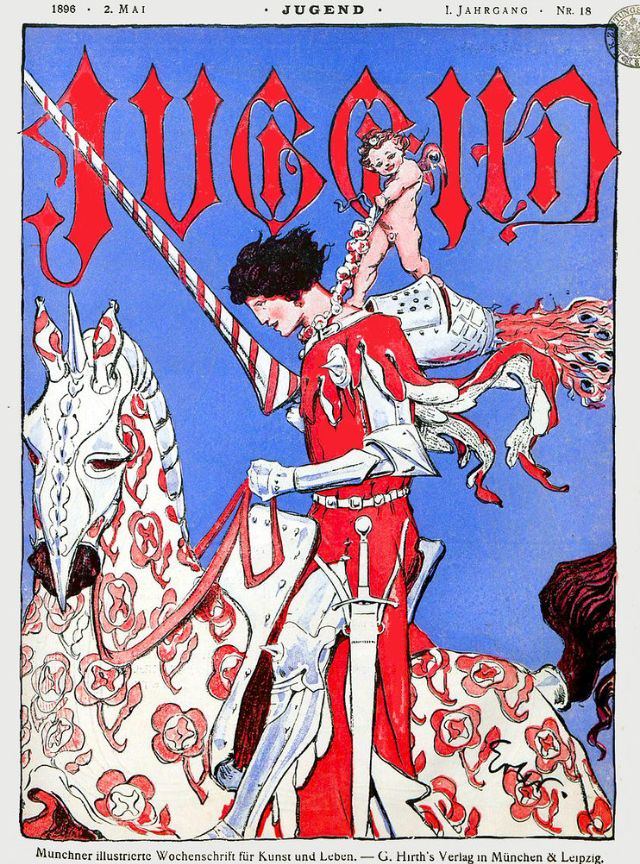
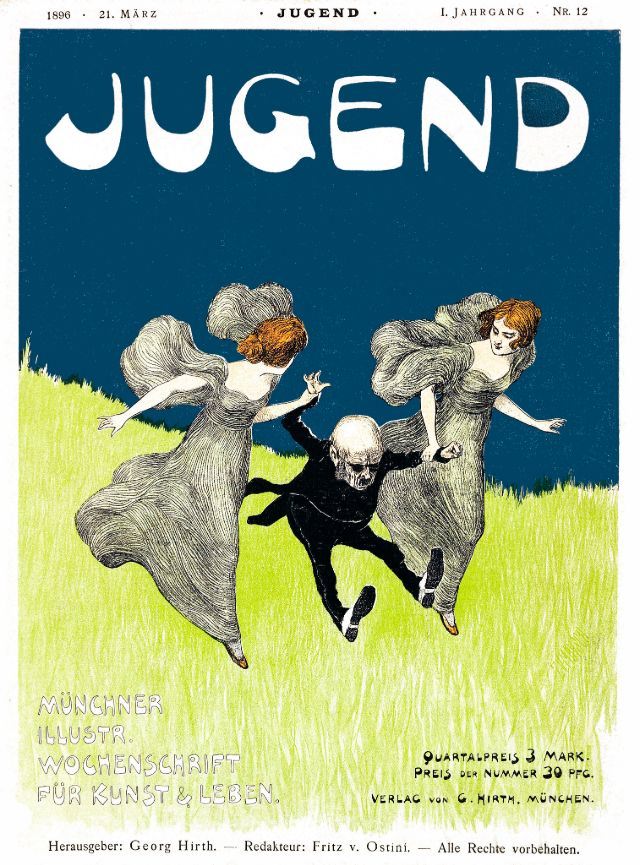
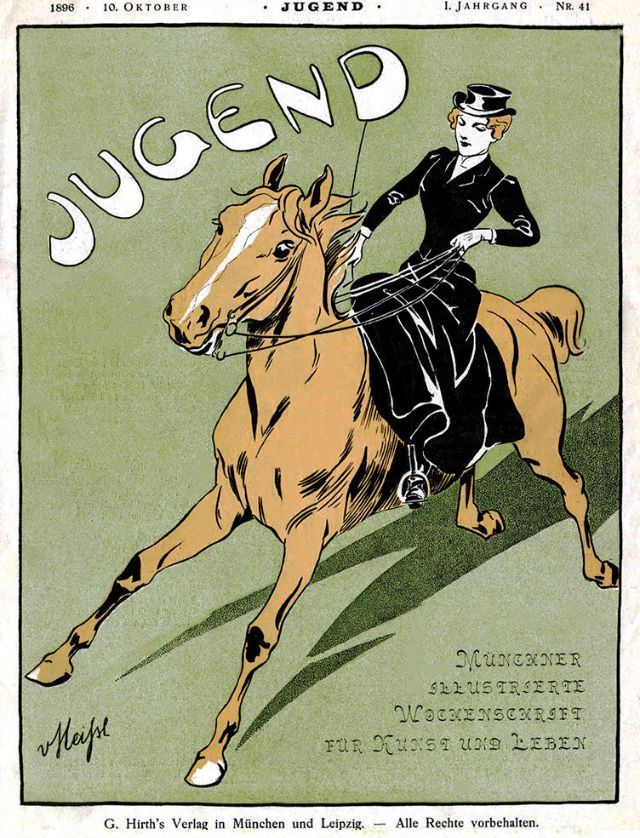
The magazine’s covers were immediately striking. Critics praised them as “astonishingly brilliant,” and the editorial tone inside the pages was described as “radical.” Together, those qualities made Jugend far more than a trade publication. It became a cultural force, sparking the Jugendstil — or “Youth Style” — movement across Munich, Weimar, and the Darmstadt Artists’ Colony.
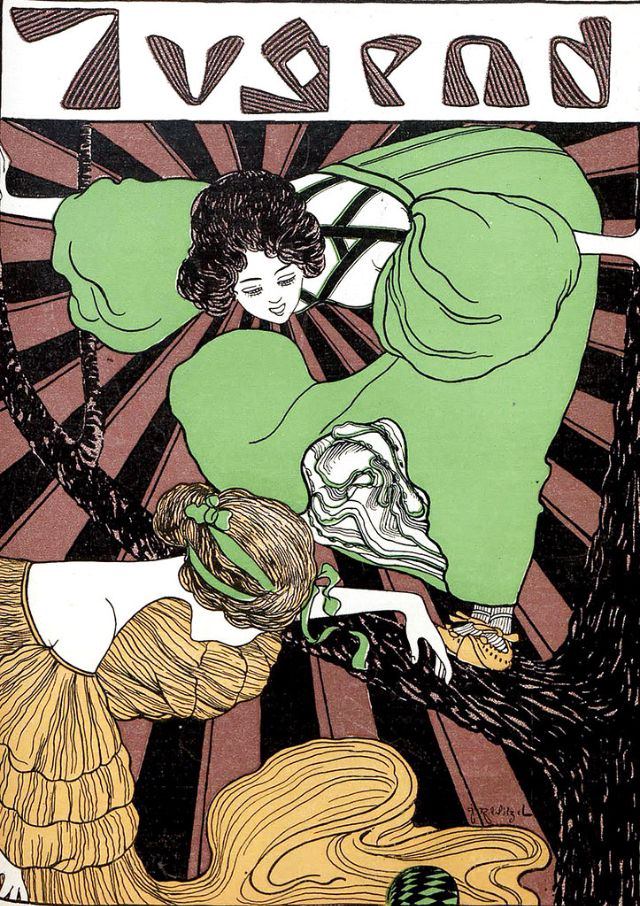
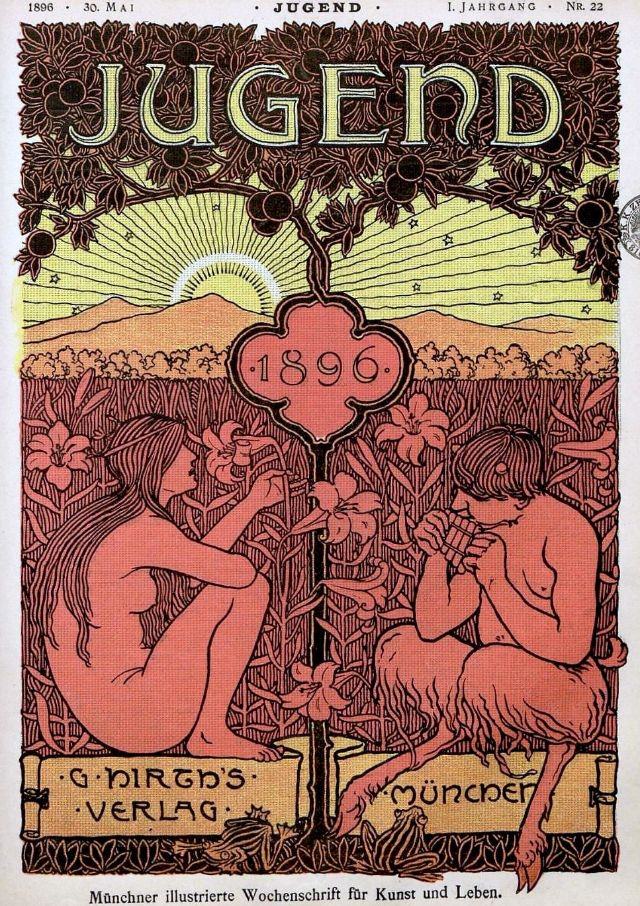
Jugendstil was Germany’s version of Art Nouveau — a style built on flowing lines, organic forms, and decorative beauty. The covers of Jugend were the movement’s most visible advertisement, printed weekly and placed in the hands of readers across the country. Each issue’s cover was a small work of art in its own right.

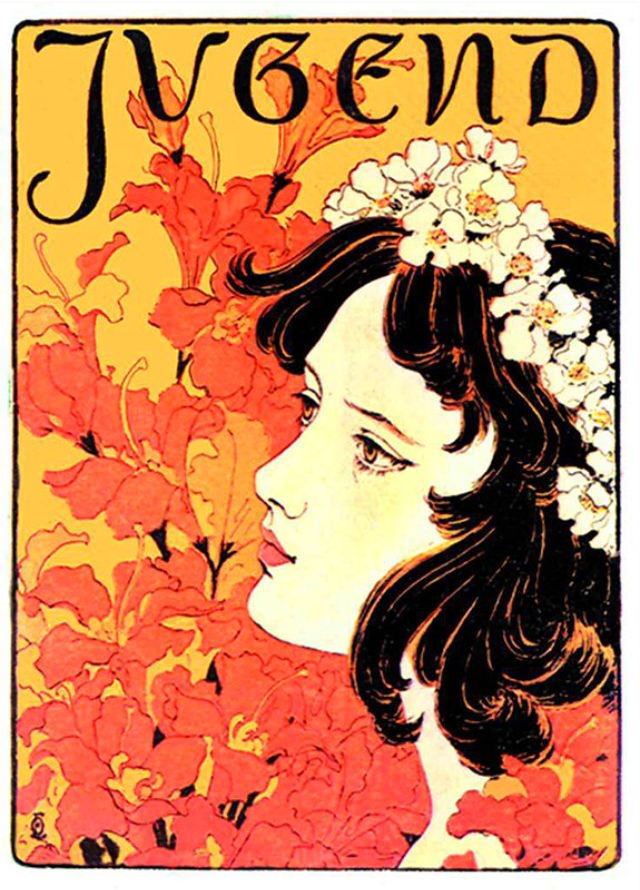
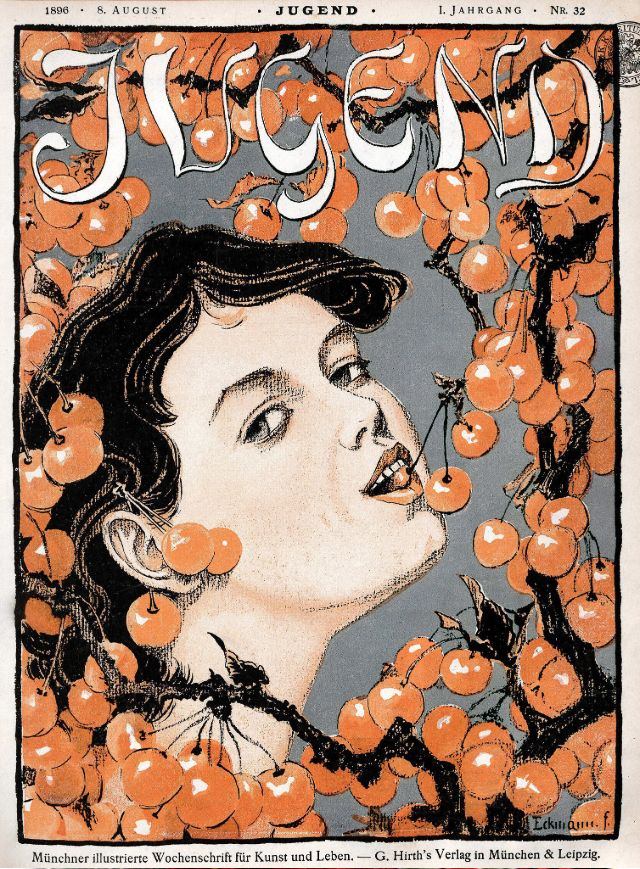
The first full year of publication — 1896 — produced some of the most recognizable covers in the magazine’s history. Artists worked within a consistent format but pushed it in different directions, blending botanical illustration, portraiture, and decorative lettering into covers that felt both modern and deeply rooted in craft tradition.
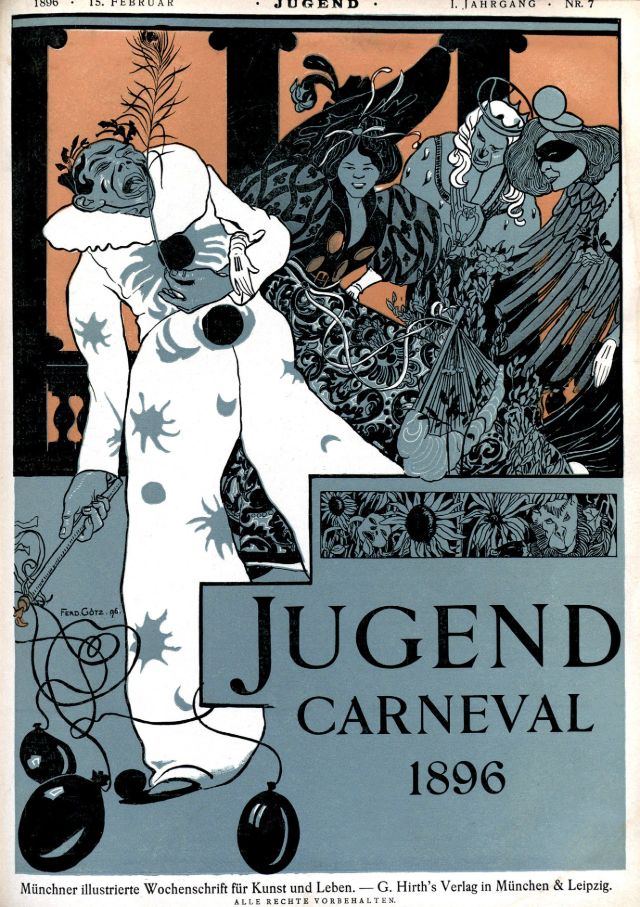
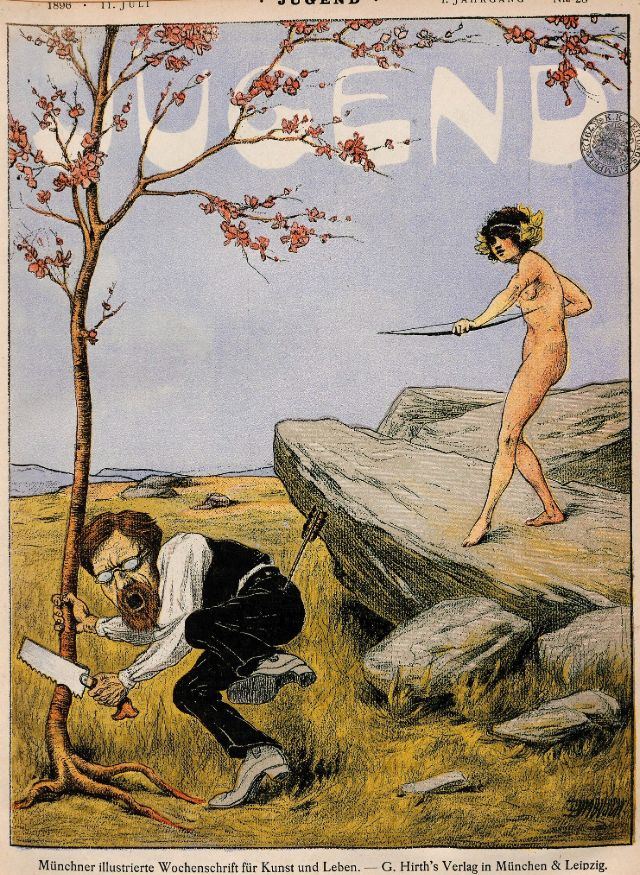
Jugend did not operate in isolation. Several other German magazines launched around the same time, including Pan, Simplicissimus, Dekorative Kunst (“Decorative Art”), and Deutsche Kunst und Dekoration (“German Art and Decoration”). Together, these publications caught the attention of wealthy industrialists and aristocrats, who began pouring money and interest into the new aesthetic movement.
That upper-class patronage pushed Jugendstil beyond flat graphic design and into architecture, furniture, jewelry, and everyday objects. The style spread from the printed page into buildings and interiors across Germany. By 1897, the magazine’s covers were reflecting this expanding artistic ambition.
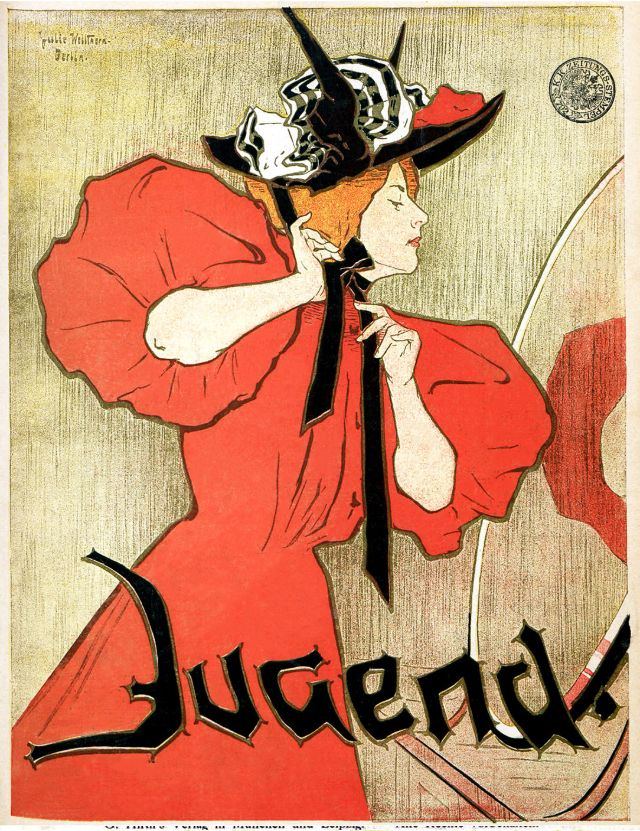
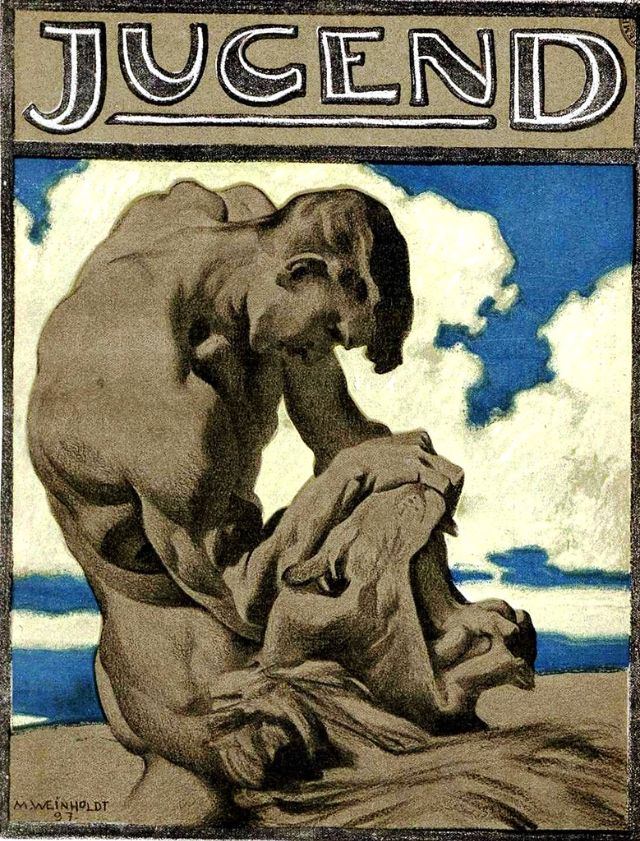
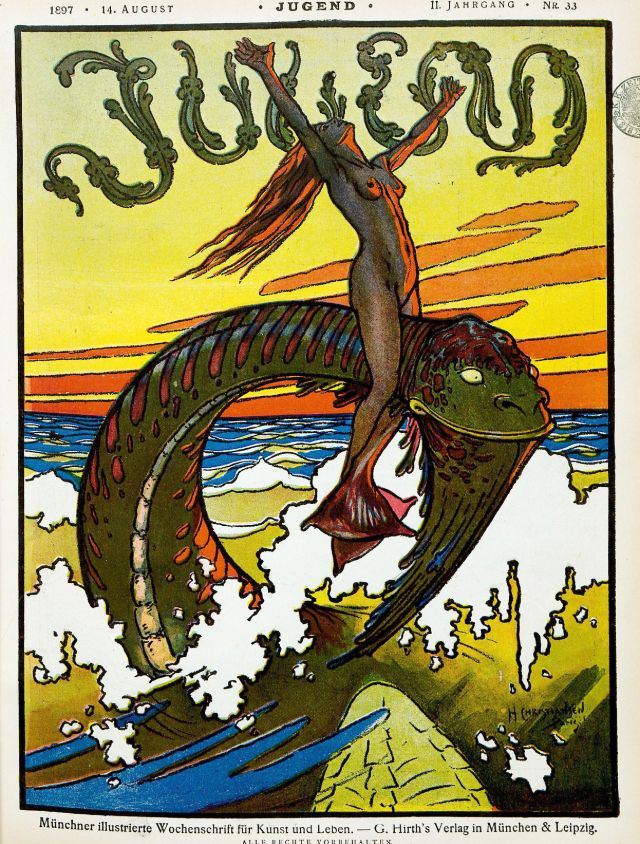
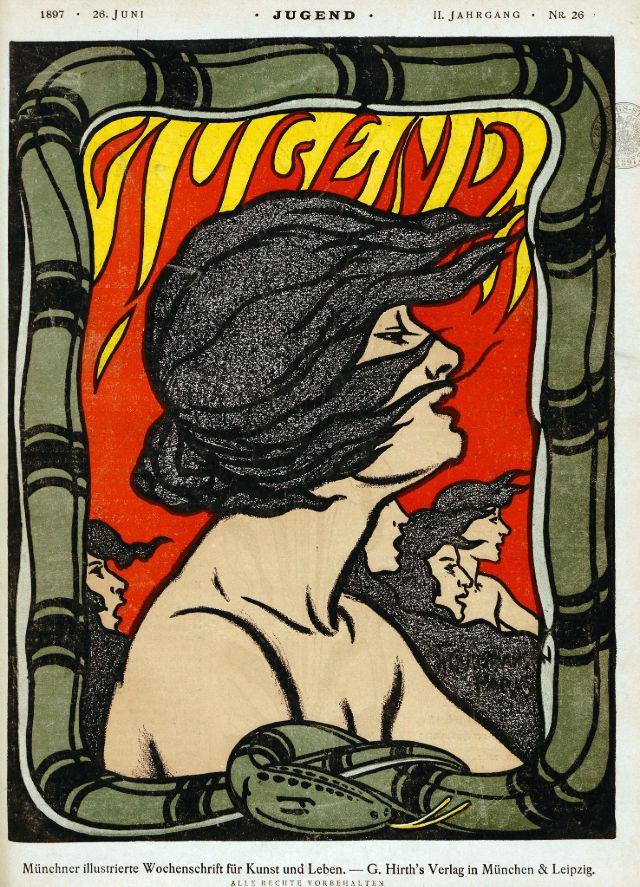
The 1897 covers show a growing confidence in the style. Compositions became more complex. Decorative borders took on heavier, more architectural shapes. Color use grew bolder. The artists contributing to Jugend were not just illustrators — they were actively shaping what German visual culture looked like.
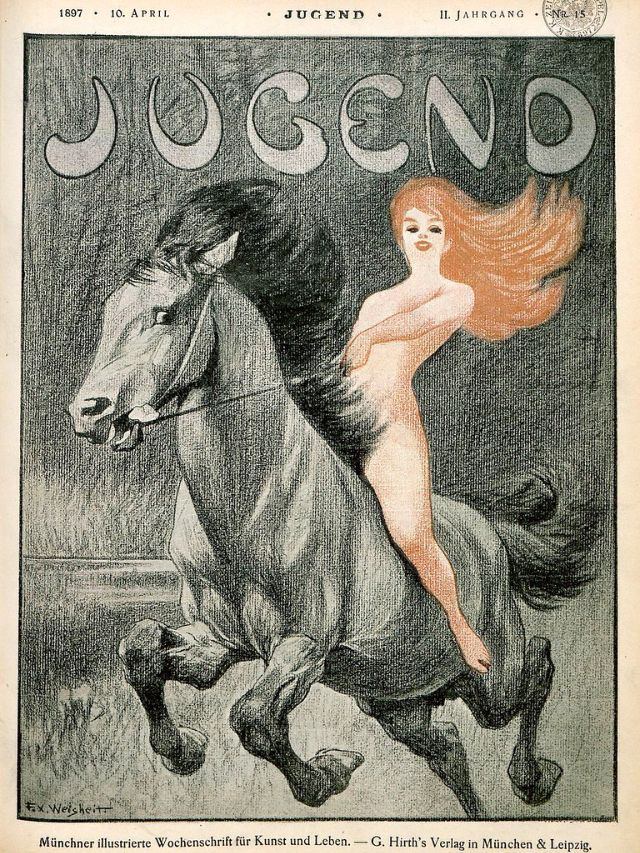
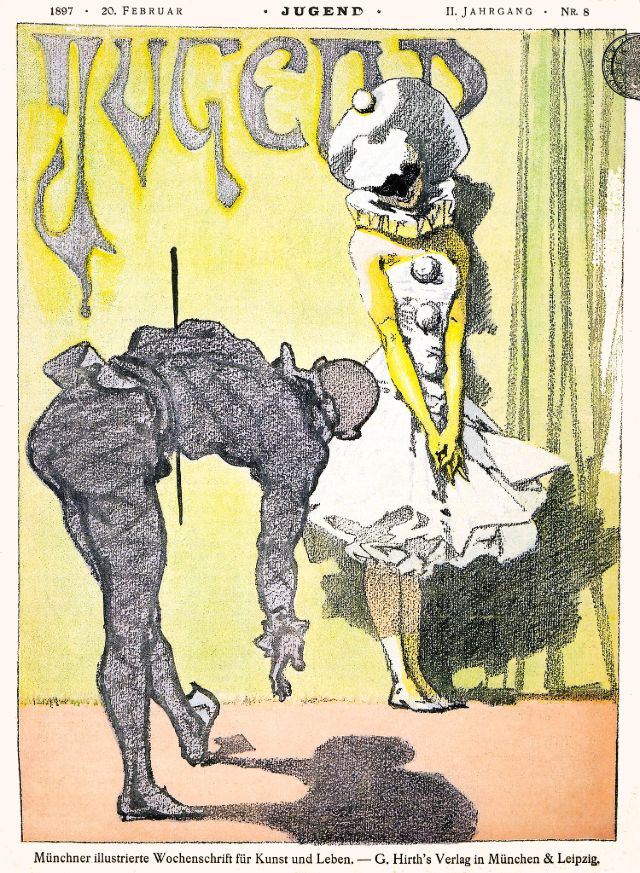
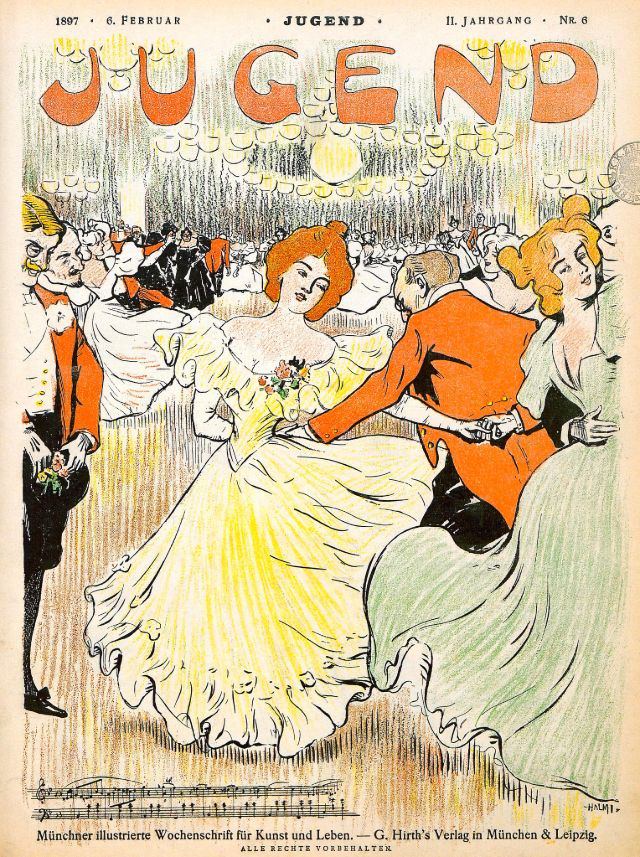
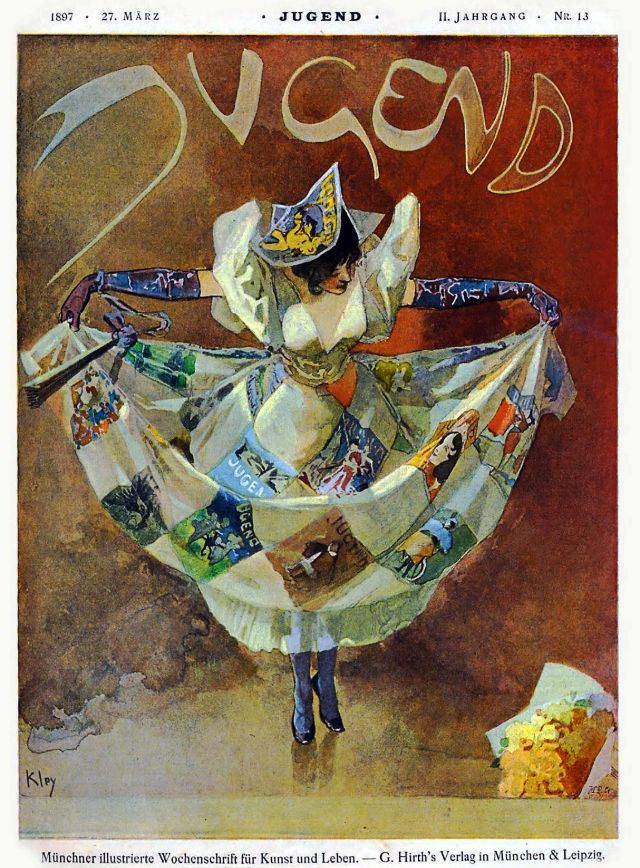
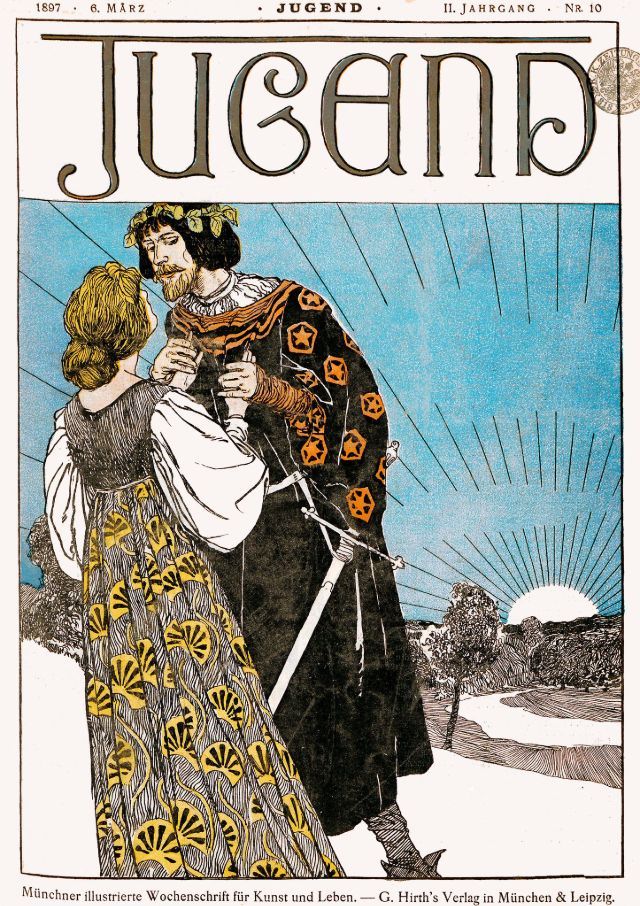
By 1898, the magazine was firmly established as Germany’s premier art publication. Its covers from that year show a refined mastery of the Jugendstil vocabulary — sinuous lines, stylized natural motifs, and elegant figure work that balanced beauty with graphic clarity.
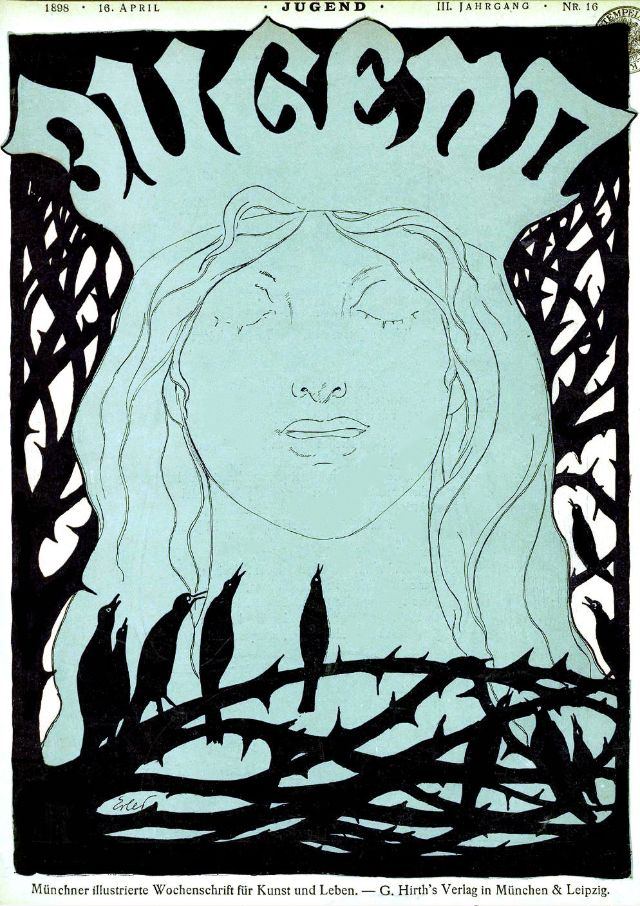
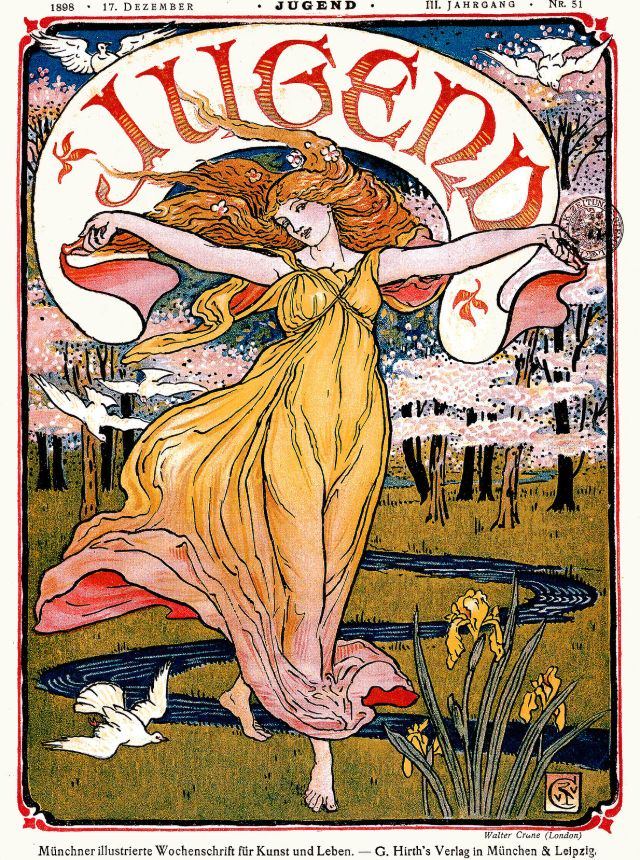
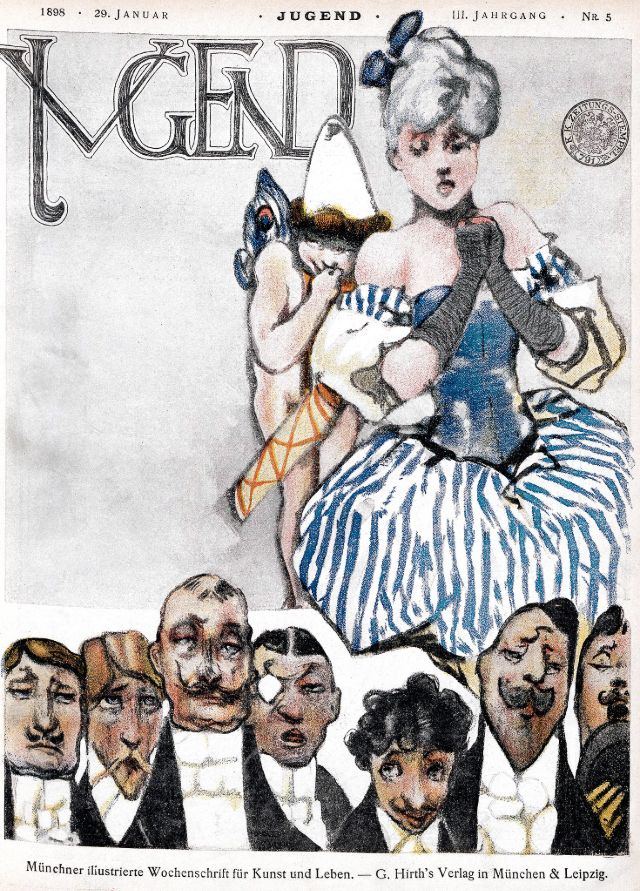
Germany’s longstanding gesamtkunstwerk tradition — the idea of a “synthesized artwork” that unifies all art forms — ran through everything Jugend published. That tradition eventually absorbed and reshaped the Jugendstil impulse, merging it with other currents to give rise to the Bauhaus movement in the early 20th century. The seeds of that transformation were planted in these very pages.
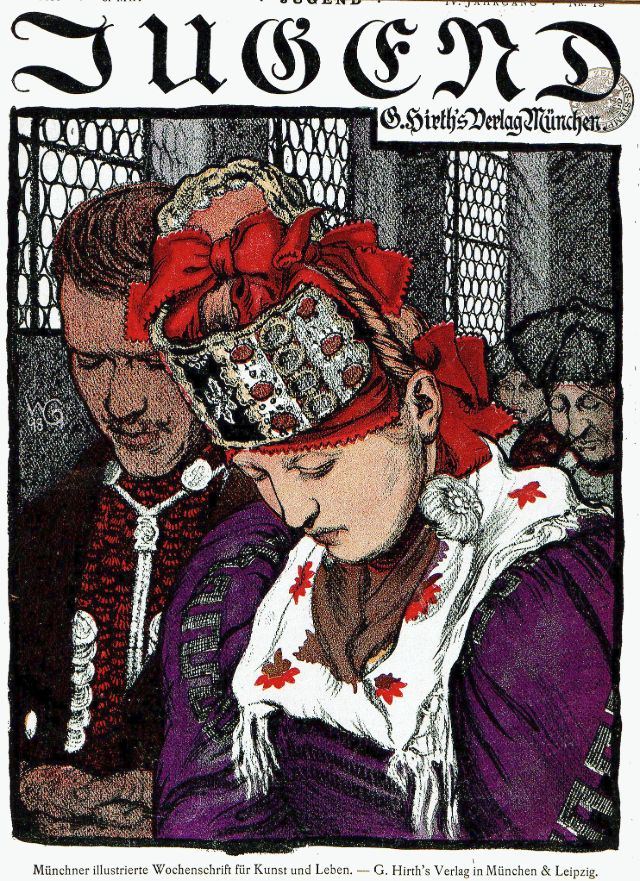
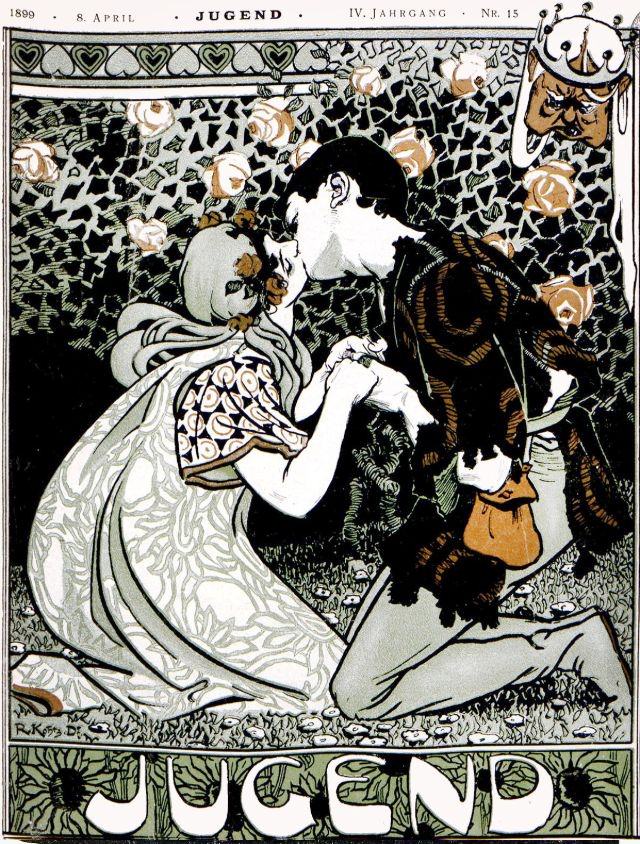
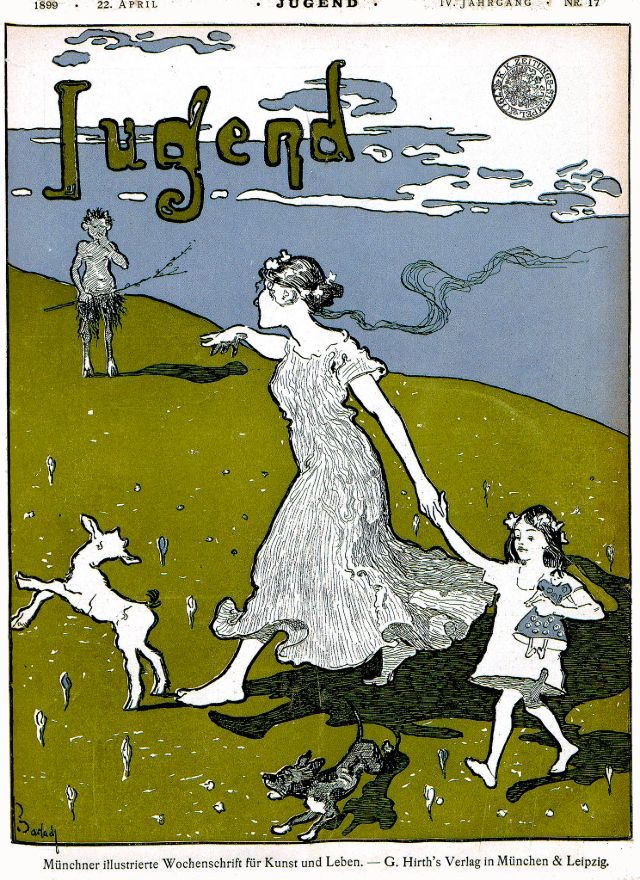
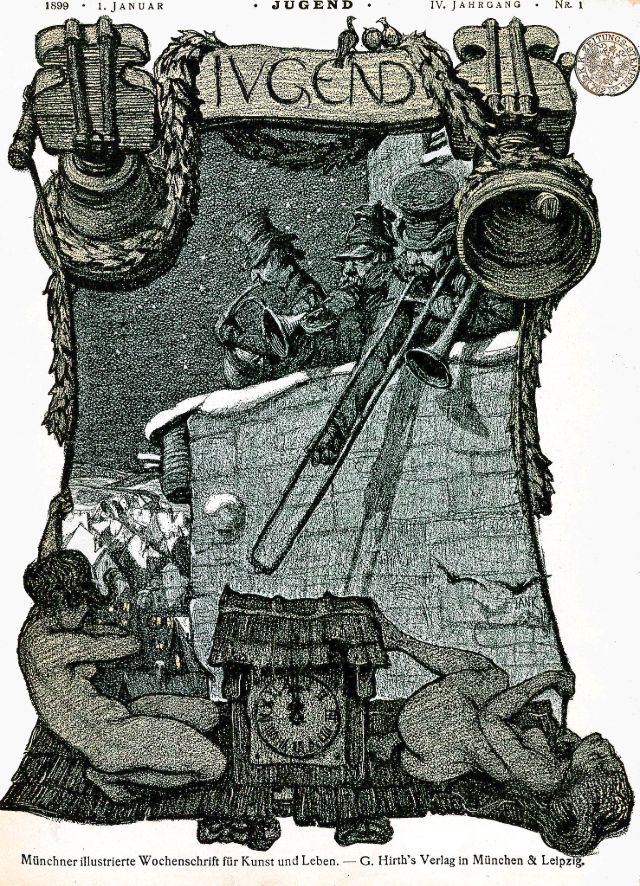
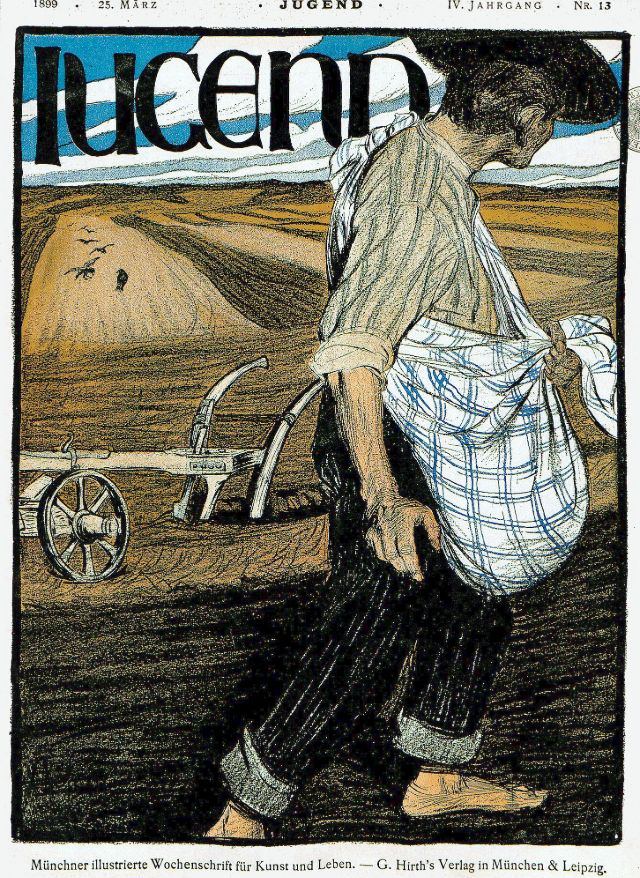
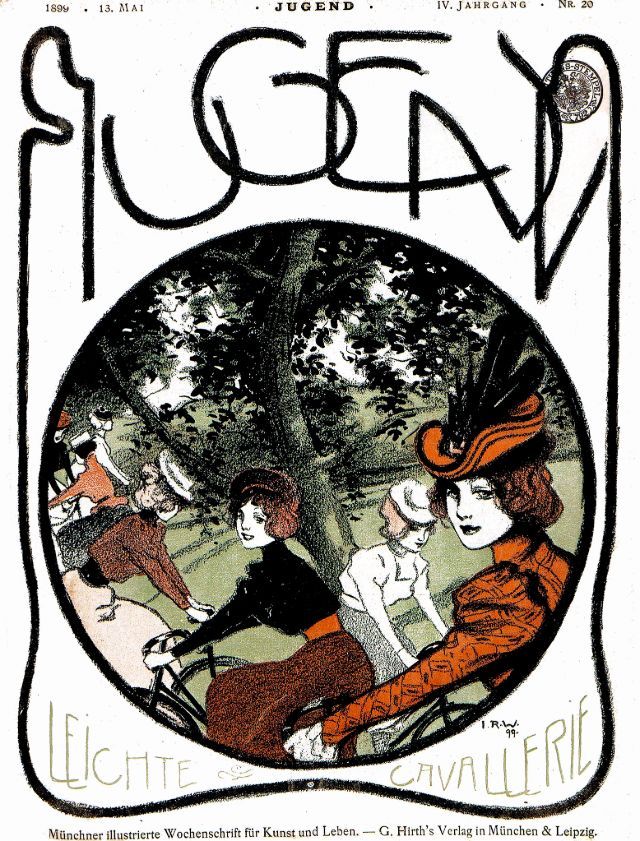
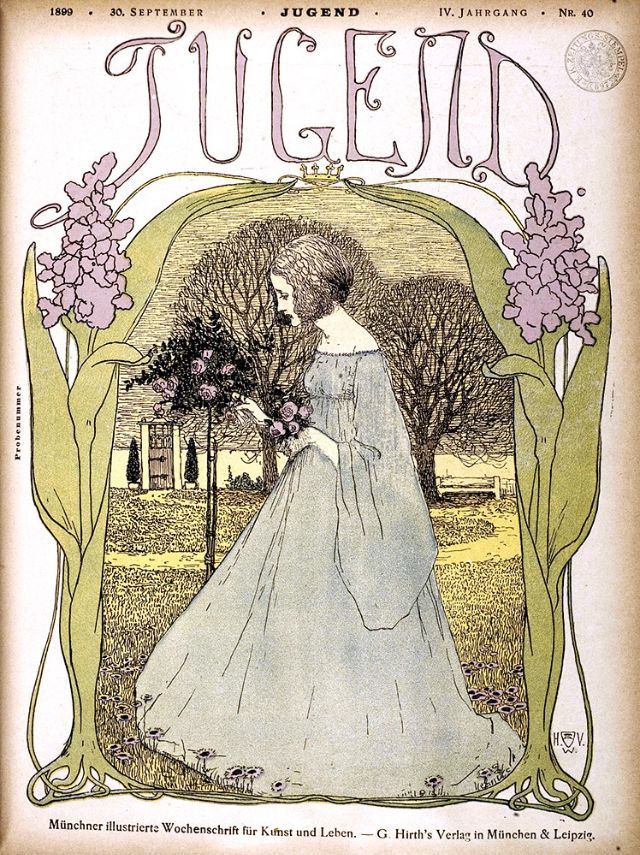
The 1899 covers represent the final stretch of the magazine’s founding decade. Across more than three years of weekly issues, Jugend had produced an extraordinary body of cover art — varied in subject, unified in spirit, and consistently high in quality. The range of work from this single year alone shows just how many talented artists were drawn to the publication.