
By the 1980s, Czechoslovakia was under serious strain. The economy had been weakening for years, hurt by shrinking markets for its exports, unfavorable trade terms with key suppliers, and factories packed with outdated machinery that could no longer compete. The communist government kept daily life running on the surface, but the cracks were visible. These photographs, taken across the country during that decade, capture a society caught between a rigid political system and a population quietly pushing back against it.
Deep beneath the Slovak landscape, one of the country’s most remarkable natural sites offered a rare escape from the tensions above ground. Dobšinská Ice Cave, a UNESCO-listed cavern in the Slovak Ore Mountains, drew visitors into a frozen underground world of ice columns, floors, and waterfalls that had been forming for thousands of years.
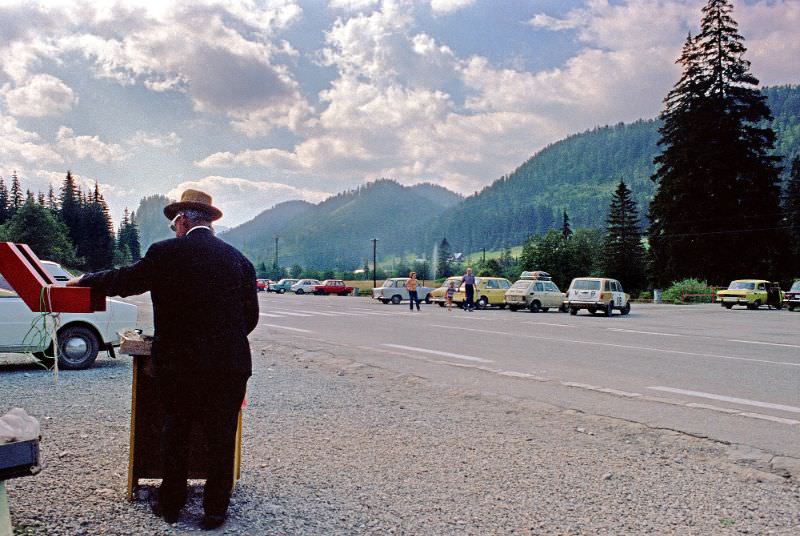
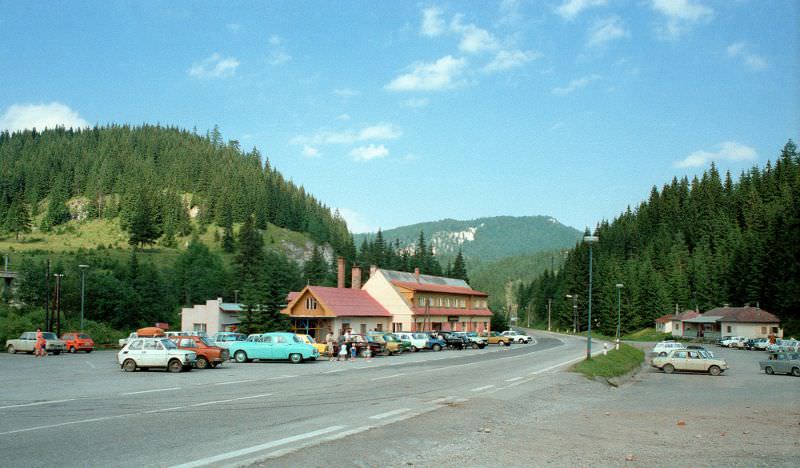
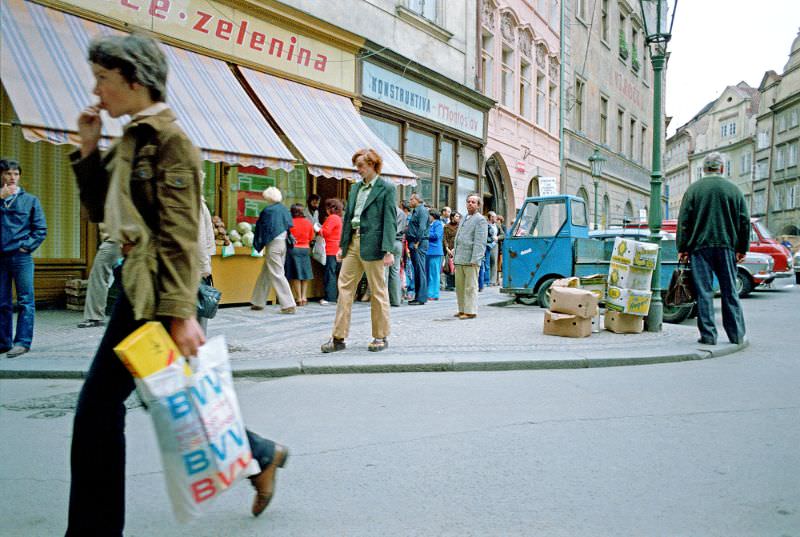
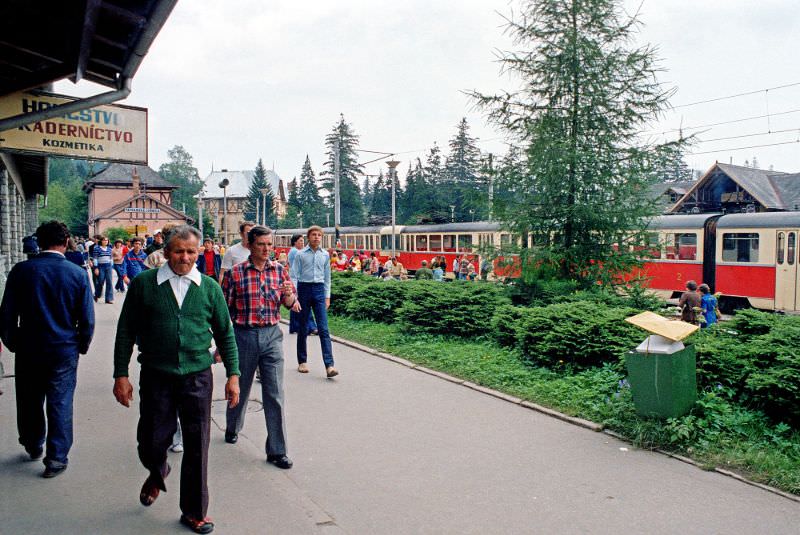
Further north, the city of Poprad sat at the foot of the High Tatras and served as a gateway to Slovakia’s mountain region. Its streets in the 1980s reflected the everyday rhythm of a mid-sized communist-era city — state-run shops, public transit, and the quiet routines of ordinary people going about their lives under a system that controlled most aspects of daily commerce and movement.
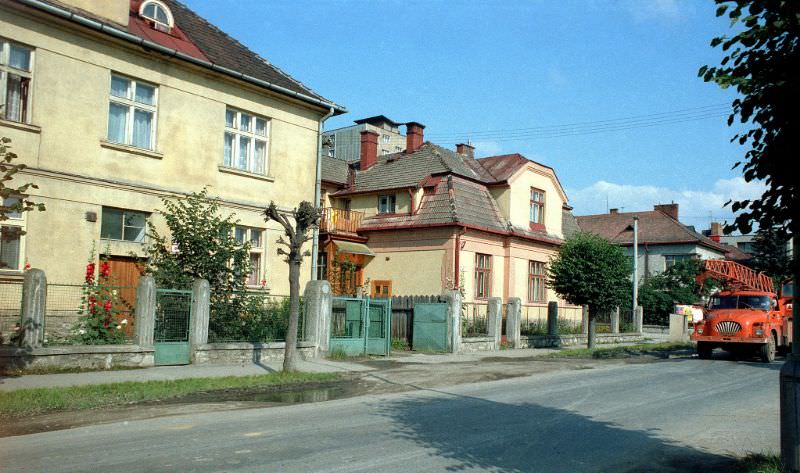
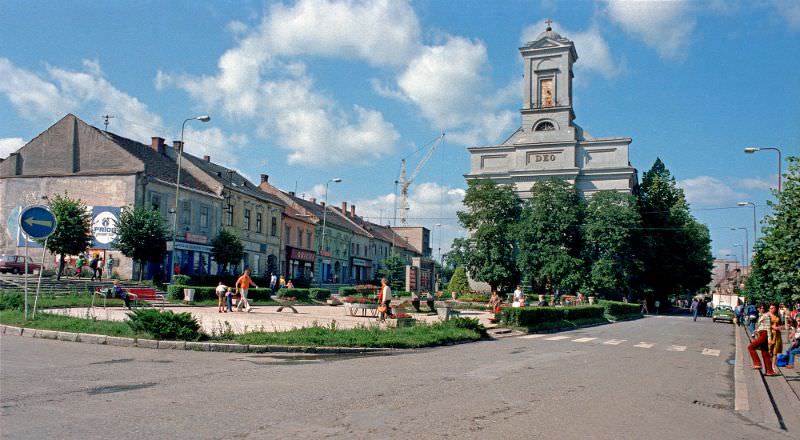
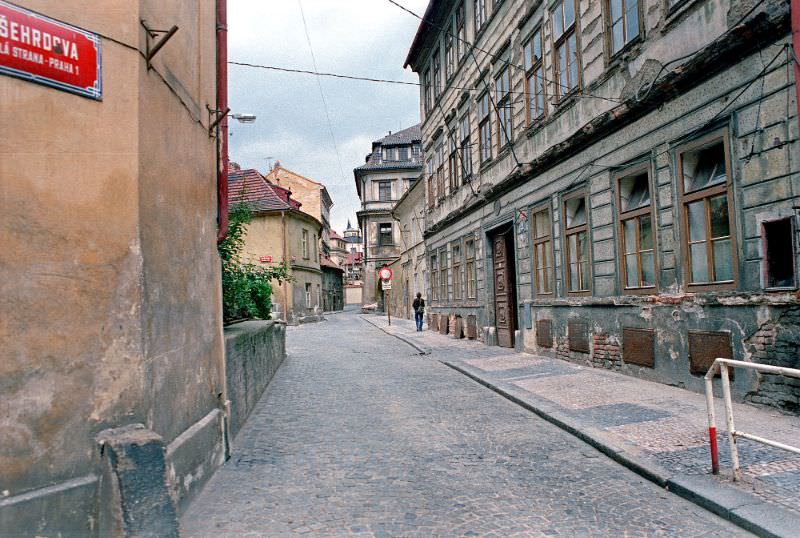
Prague, the capital, was the center of political and cultural life in Czechoslovakia. Its architecture spanned centuries — Gothic spires, Baroque palaces, and Art Nouveau facades all standing side by side. But behind the beauty, the city was also the seat of a government that monitored dissidents, restricted free speech, and kept a tight grip on public life.
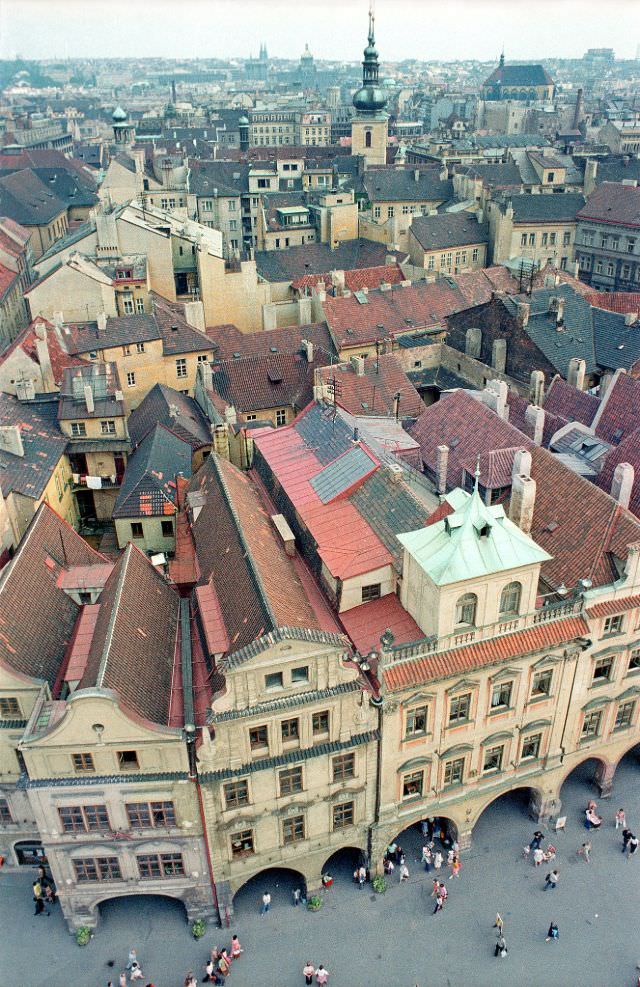
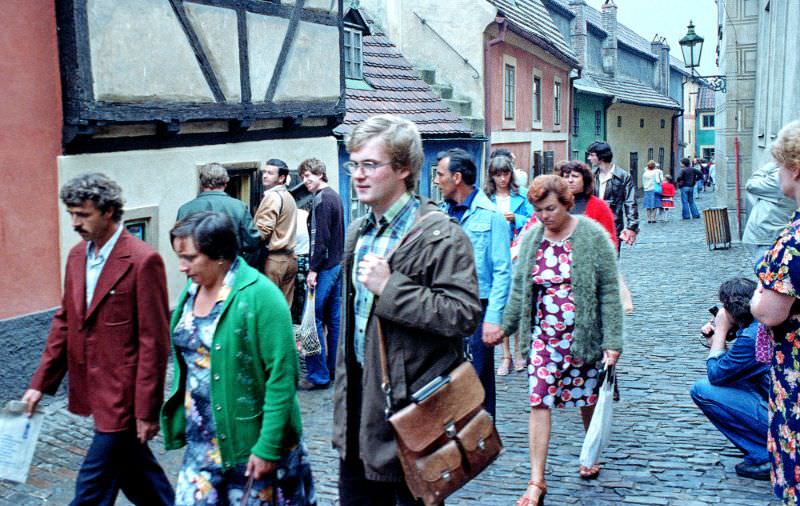
Prague Castle loomed over the city from Hradčany Hill, as it had for over a thousand years. In the 1980s, it remained a symbol of state authority. Below it, the city’s metro system — modern, efficient, and heavily Soviet in design — moved workers and residents through a city that showed two faces: the historic grandeur the state promoted to tourists, and the gray uniformity of life under central planning.
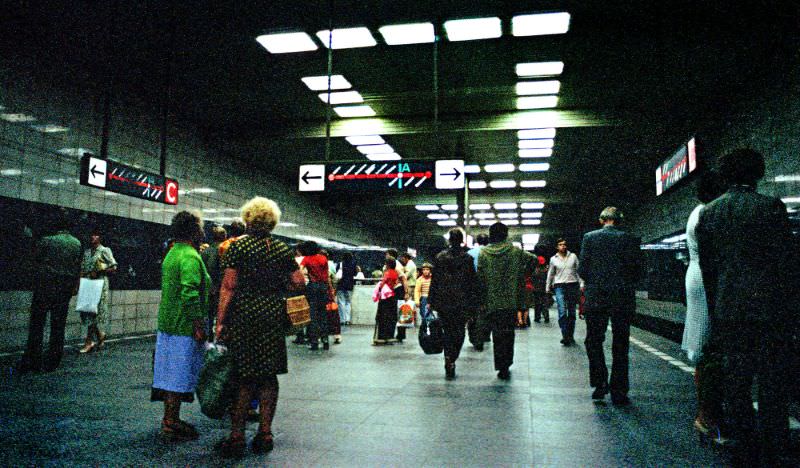
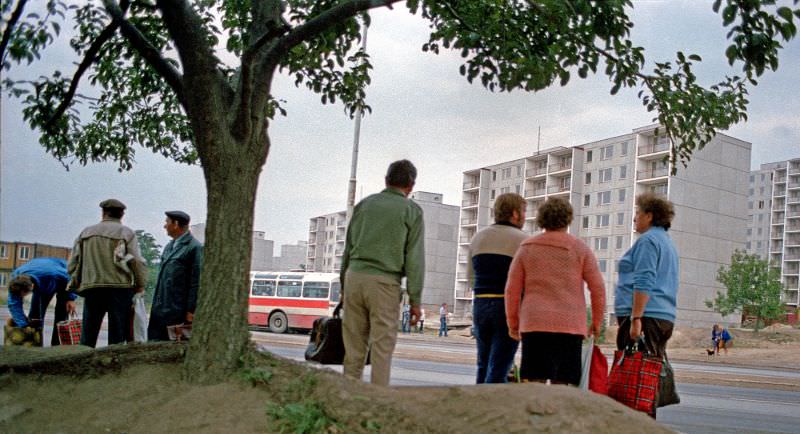
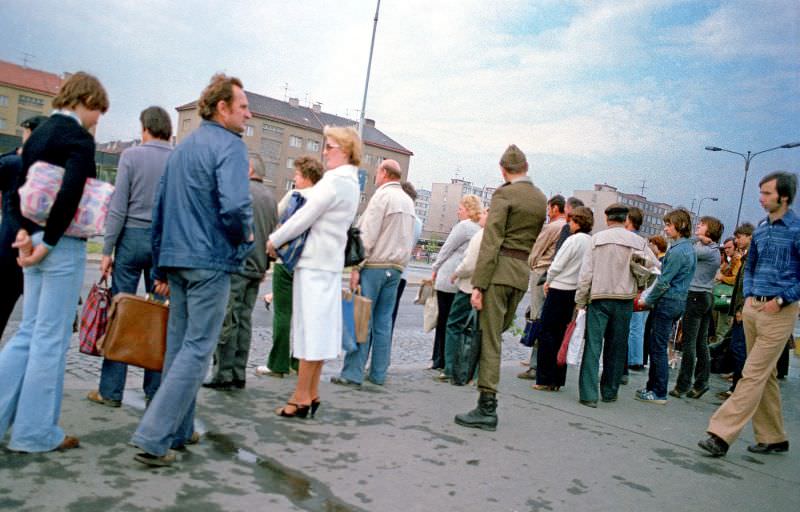
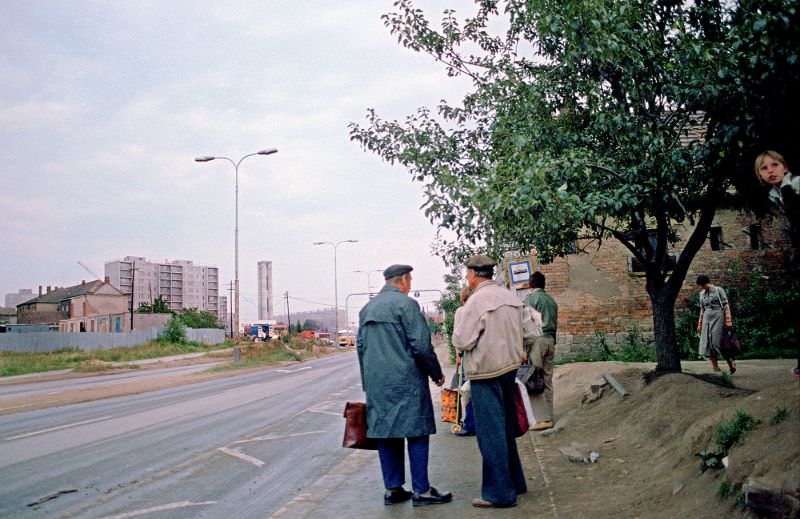
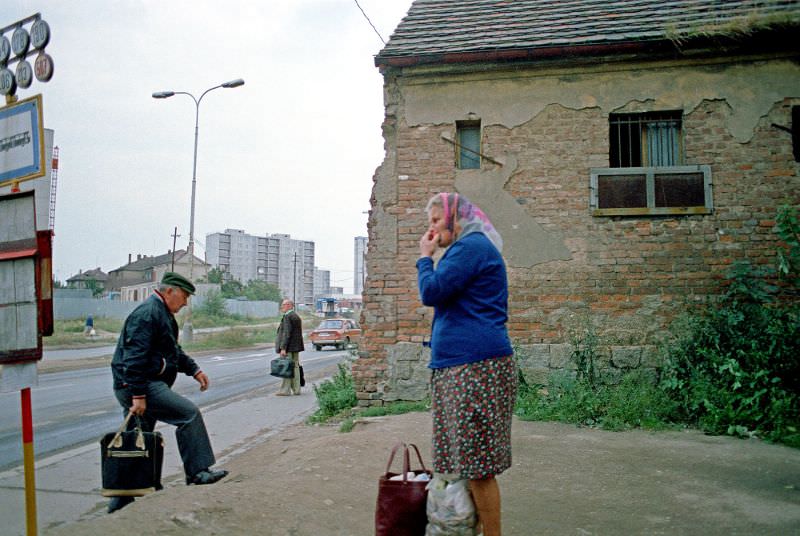
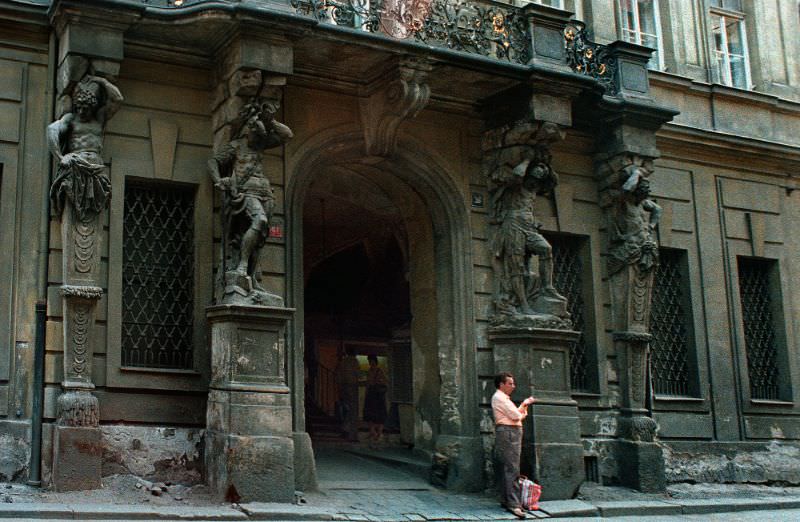
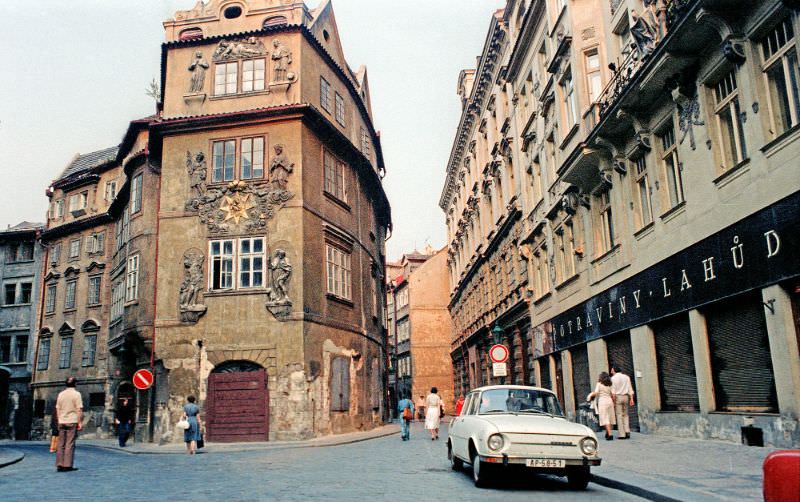
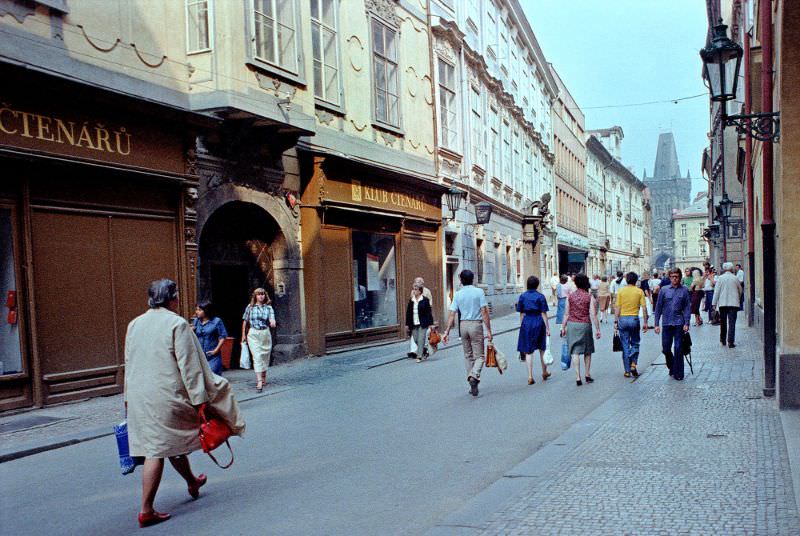
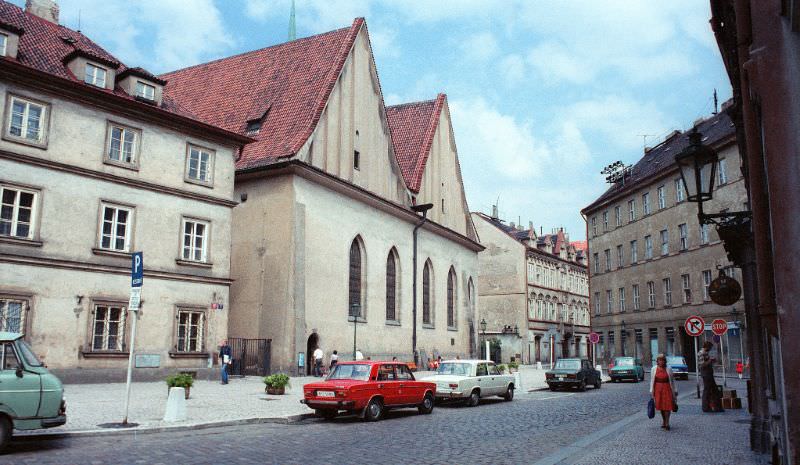
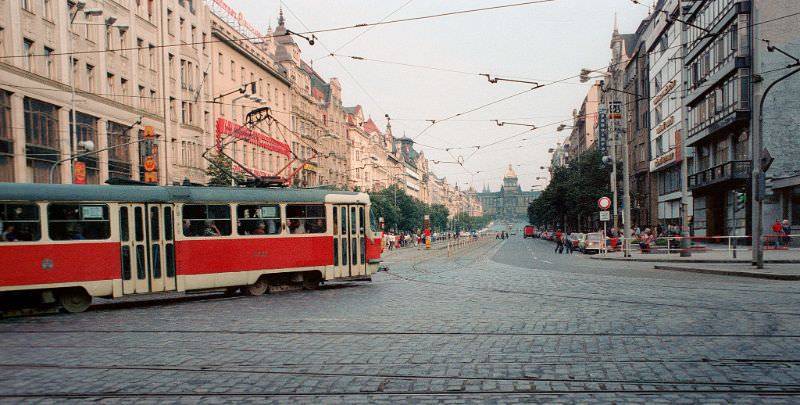
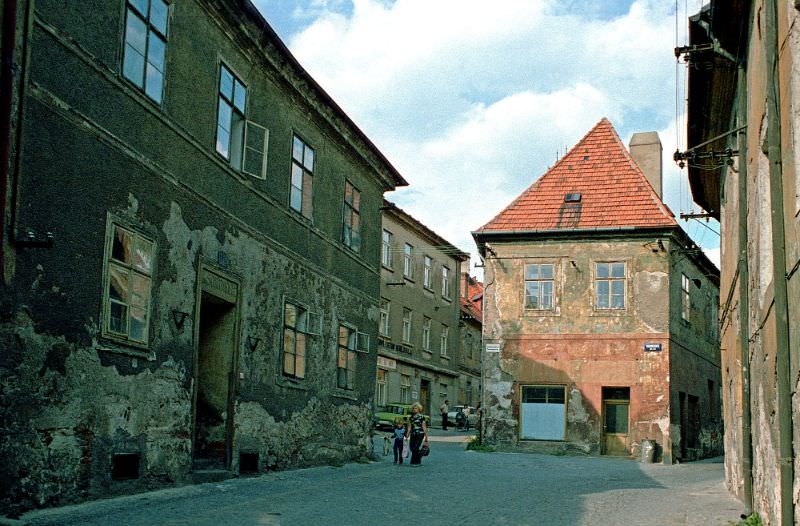
Street-level Prague in this period was a mix of the ancient and the Soviet-modernized. Trams rattled past medieval buildings. State-issued signage and drab storefronts sat beneath ornate 19th-century facades. People dressed practically, queued for goods, and navigated a city where public space was tightly managed by the state.
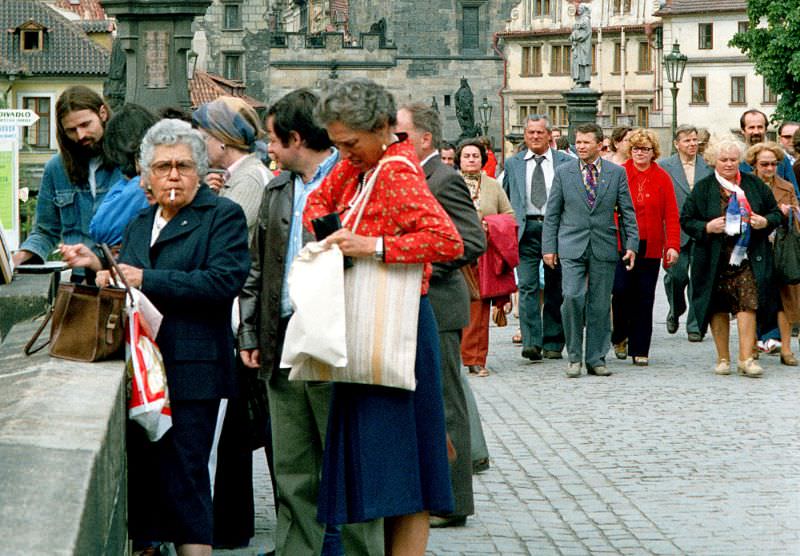
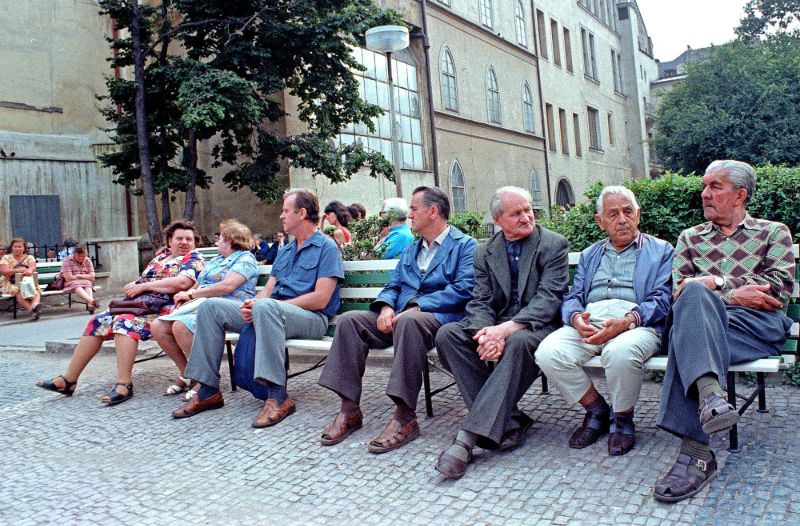
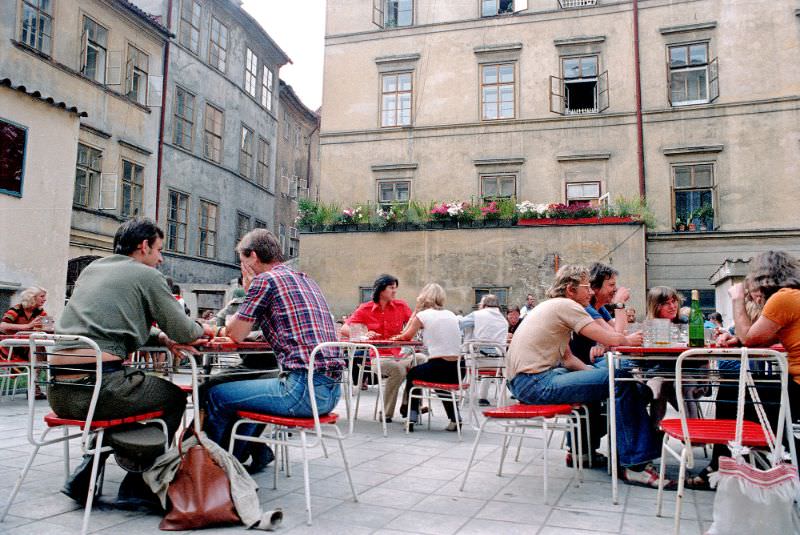
Parks and public squares in Prague offered residents small moments of stillness. The benches, squares, and open spaces captured in these photographs show a city that, despite its political climate, still had a human texture — couples sitting together, children playing, workers resting between shifts.
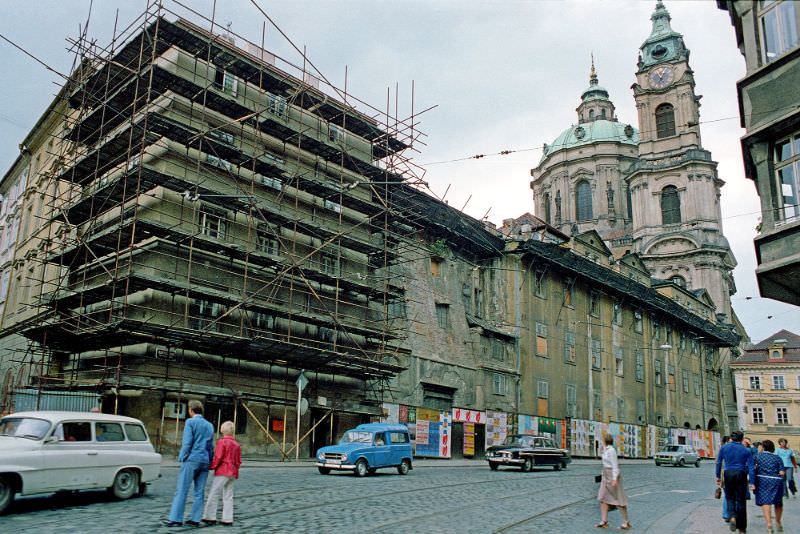
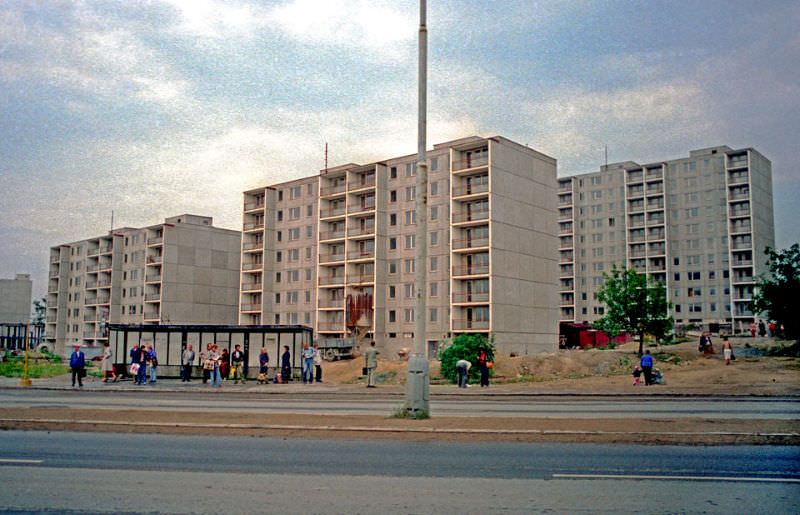
Construction sites were a common sight in 1980s Prague. The communist government invested in large-scale housing projects and infrastructure, though quality was often sacrificed for speed and quantity. The prefabricated apartment blocks — known as paneláky — became one of the most visible marks of the era across every Czechoslovak city.
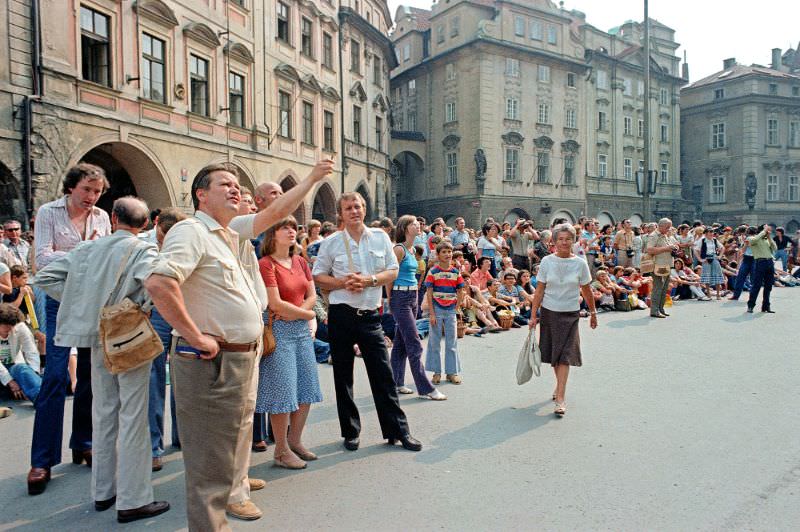
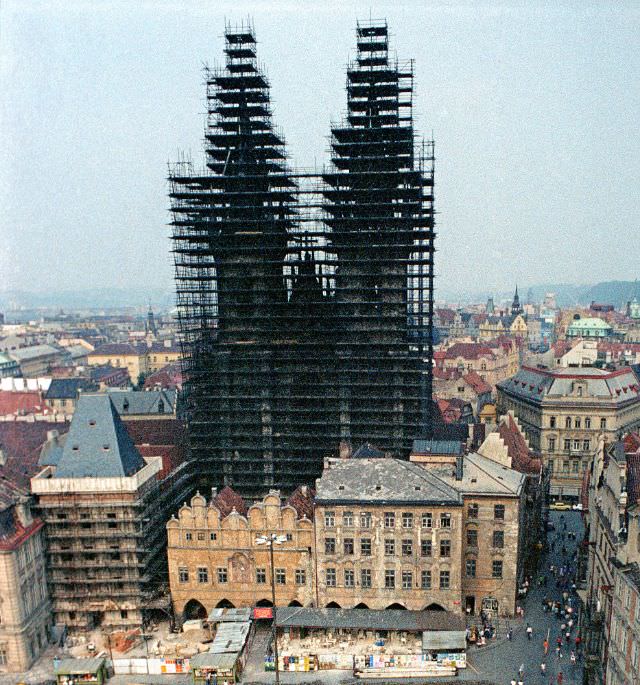
Old Town Square was one of Prague’s most iconic spaces, anchored by the medieval Astronomical Clock and the twin-spired Týn Church. In the 1980s, tourists from Eastern Bloc countries visited alongside Czechs who had grown up with these landmarks as part of their daily backdrop. The square had witnessed enormous historical events — and it would witness more before the decade was over.
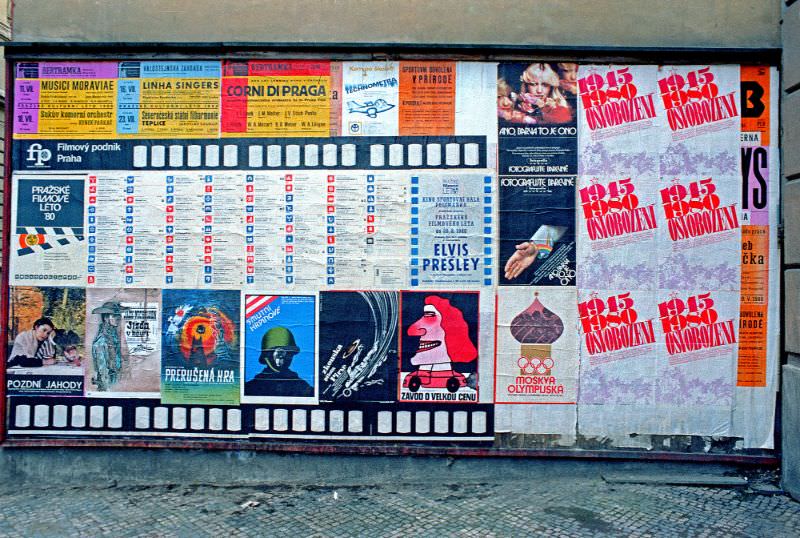
Posters plastered across Prague’s walls told the official story the state wanted its citizens to believe — slogans about solidarity, progress, and socialist unity. Meanwhile, the city’s sídliště, or housing estates on the outskirts, were home to hundreds of thousands of residents living in the blocky, repetitive apartment complexes that defined communist urban planning across Eastern Europe.
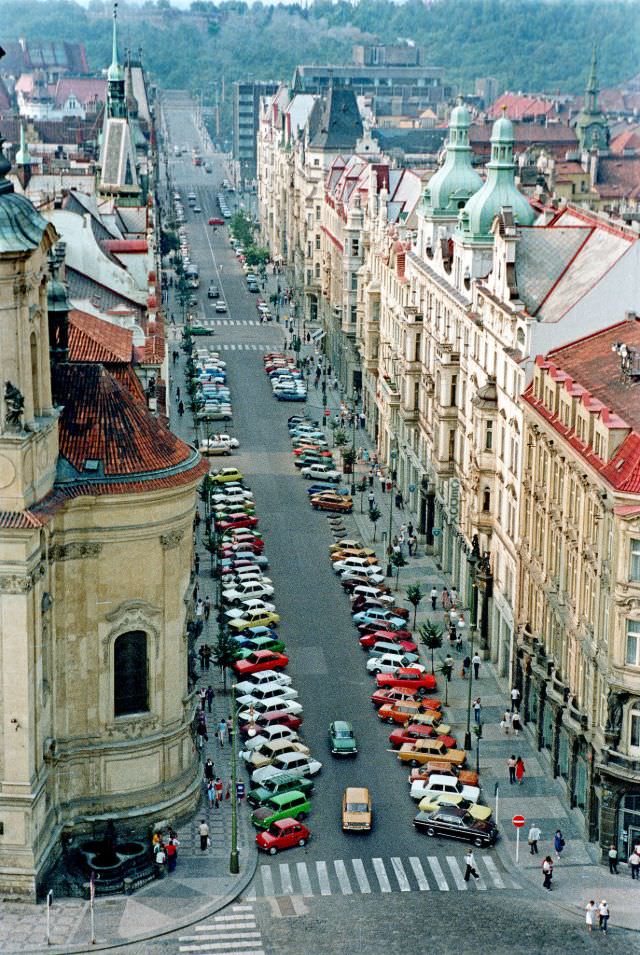
Václavské náměstí — Wenceslas Square — was the commercial and political heart of Prague. Stretching nearly 750 meters through the city’s New Town, it had been the site of historic protests before and would be again. In 1989, it became the focal point of the Velvet Revolution, when mass demonstrations there forced the communist government to step down. But in the 1980s, it was still a wide boulevard lined with hotels, shops, and the ever-present signage of the communist state.
In Slovakia, Štrbské Pleso — a glacial lake high in the High Tatras — was a popular resort destination. The area attracted skiers in winter and hikers in summer. Even under communism, the natural beauty of the Tatras drew visitors from across the country, and the state invested in resort infrastructure there as a showcase of socialist leisure.
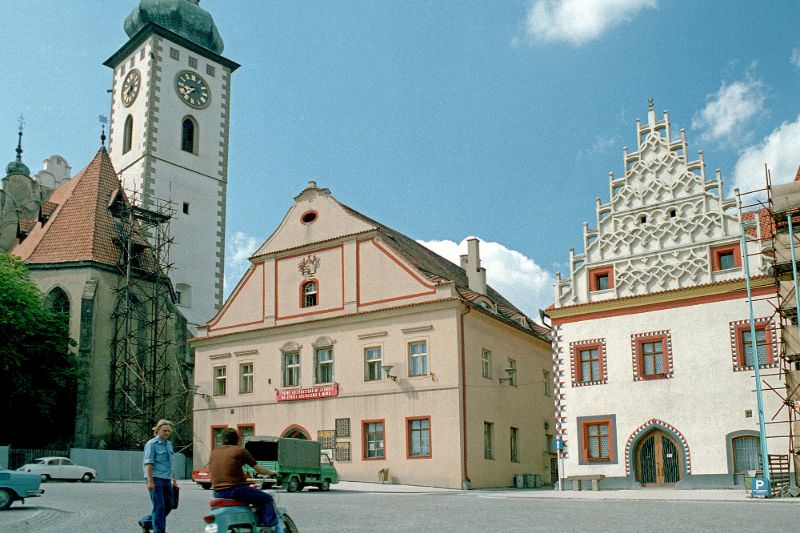
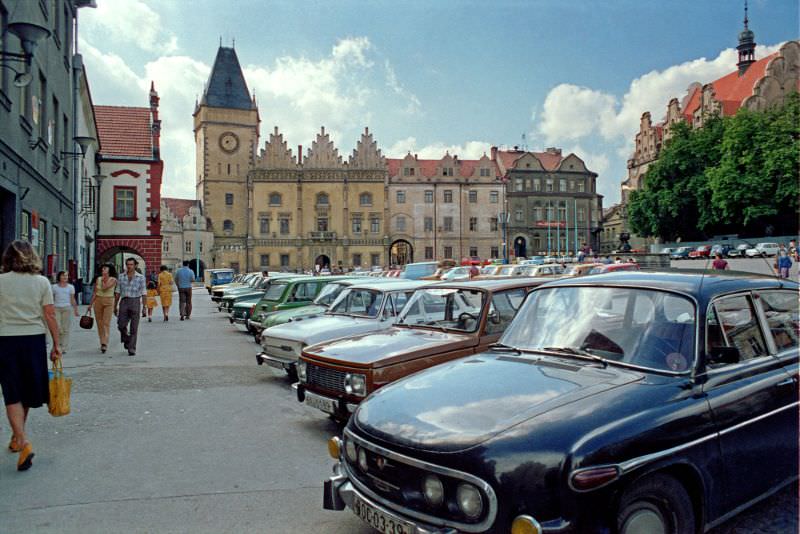
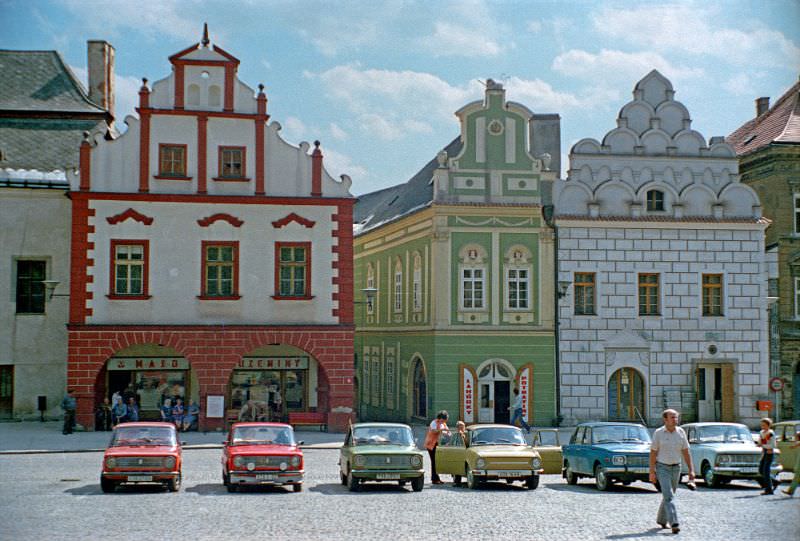
South of Prague, the historic town of Tábor carried the deep legacy of the Hussite movement from the 15th century. By the 1980s, its medieval architecture and cobblestone squares were preserved but overlaid with communist-era signage and infrastructure. One photograph captures a poster bearing the Czech slogan reading: “V pevné internacionální jednotě na stráži socialismu a míru” — “socialism and peace through international solidarity” — a phrase that summed up the official ideology still being broadcast to the public even as the system began to crack.
On March 25, 1988, thousands of Slovaks gathered in Bratislava for what became known as the Candle Demonstration. Participants held lit candles in a peaceful show of support for religious freedom and human rights — two things the communist government had long suppressed. Police broke up the gathering, but the demonstration marked a clear and public sign that resistance was growing. Just over a year later, the Velvet Revolution would end communist rule entirely. By June 1990, Czechoslovakia held its first free elections. The Civic Forum and Public Against Violence won decisive majorities, and Václav Havel was re-elected as president the following month. The new government began privatizing state enterprises, overhauling foreign policy, and writing a new constitution. In June 1991, the last Soviet troops left Czechoslovak soil, and the Warsaw Pact was formally dissolved the following month. On January 1, 1993, Czechoslovakia peacefully split into two independent nations: the Czech Republic and Slovakia.





Everything looks dirty and grey. Everyone looks sad. A sad time indeed.
The centre of Prague looked as if the Second World War had just ended.
These were tourist spots, and the metro improved a lot of areas in the 1980s. It was like the end of World War 2 if there were photos from Karlin and Zizkov. Some of the locations were off-the-beaten-path or in remote areas, so he visited tourist spots like Tatry and Tabor. Liberec in 1982 was also awful and dirty, but that was a better city.
My memory recalls these scaffolds, remarkably a few near Malostranské námst.
The ubiquitous gray and grime of socialist welfare.
I watched How to Drown Dr. Mráček and it was quite fascinating to compare the places I know from today with the ruins in that movie.
these pictures were taken in some of the best areas the country had to offer, such as Prague and Poprad, which are heavily frequented by tourists. If the author had ventured to the border regions or countryside, they would have seen what looked like active war zones, as is the case with many old cities.
It’s difficult to say what’s sadder – the fact that old, beautiful buildings were demolished in favor of ugly concrete panel blocks as makeshift housing with the promise of a brighter future where everyone would have a house built by the collective, or that many of these unsightly buildings are still standing and serving their purpose to this day with no suitable replacement in sight.
Old city photos ( old town Bratislava) where junkies had a heroin niddle ( nose, whatever) to hand relationship please
*nemam fotky a milion situacii som zažil. 90s az 2010
páči sa mi, že na uliciach (možno okrem výkladov) neboli žiadne reklamy, ale zase autá mohli asi parkovať aj v sakristii kostola. Sú všade
Reklamy neboli lebo sukrovny sektor neexistoval 😃 Mama do teraz spomina ako v telke bola reklama na jablka. Na obrazovke kopa jablk, prisla ruka, jedno jablko zobrala a hlas povedal “Jablká! Jablká! Jablká!”. A to bolo vsetko 😃 Ziadna znacka, ziadny nazov obchodu, nic. Jablka pestoval len stat a kupit sa dali len v statnych podnikoch. Vybavene 😃
Prechodná fáza zo socializmu do demokracie (post-socializmus)
Ach to boli krasne casy, po Banskej Stiavnici jazdili trolejbusy…
Polka fotiek oznacenych ako Banska Stiavnica je Banska Bystrica