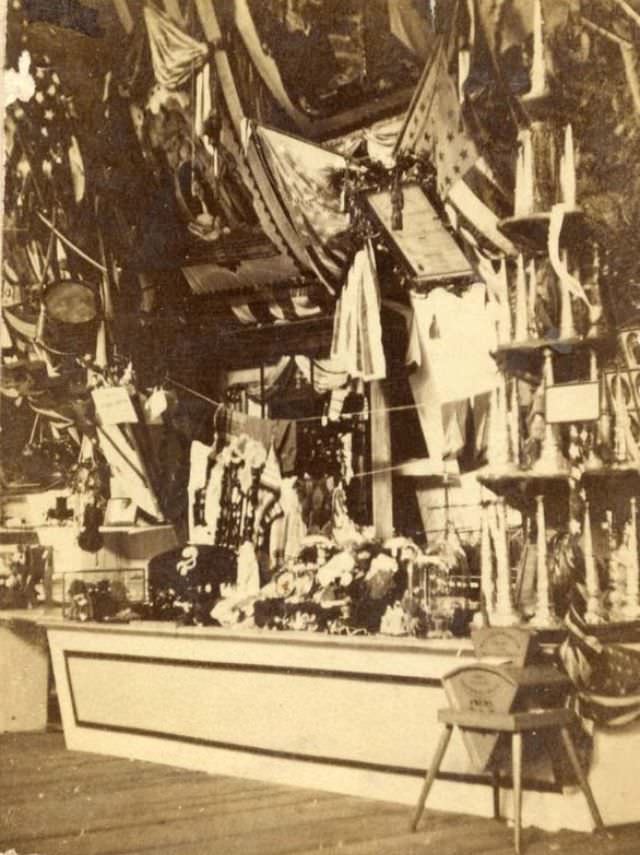
In the summer of 1876, Philadelphia became the center of the world. The Centennial International Exhibition — officially titled the International Exhibition of Arts, Manufactures, and Products of the Soil and Mine — opened its gates on May 10, 1876, and ran through November 10 of that year. It was the first official World’s Fair ever held in the United States, and it was staged for a very specific reason: to mark the 100th anniversary of the signing of the Declaration of Independence.
The fairgrounds were built inside Fairmount Park, stretching along the Schuylkill River. Landscape architect Herman J. Schwarzmann designed the grounds and several of its key buildings. Thirty-seven countries sent exhibits, and more than 10 million people walked through the gates over the course of six months — a staggering number at a time when the entire U.S. population was around 46 million.
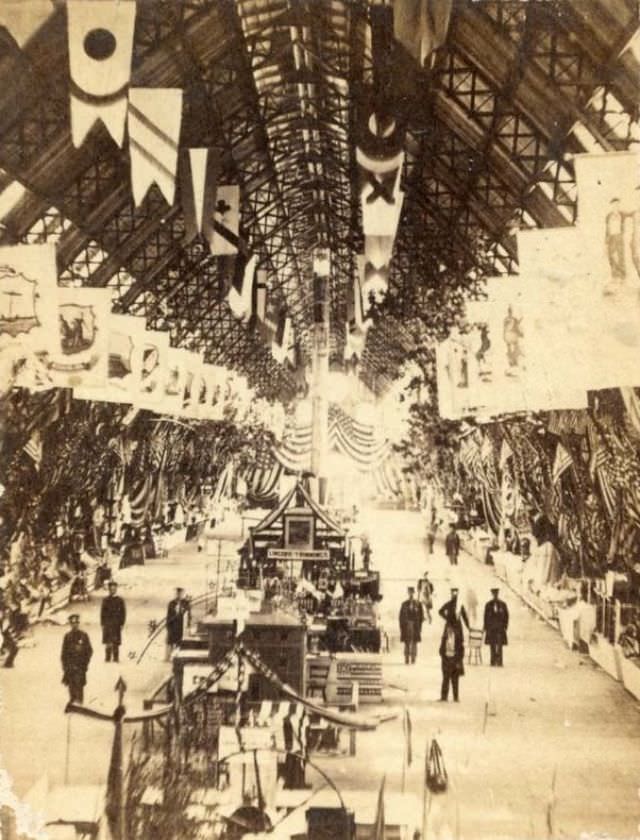
Union Avenue served as one of the main thoroughfares cutting through the fairgrounds. Wide, tree-lined, and bustling with visitors, it connected the major exhibition halls and gave the site a sense of grandeur that matched the occasion. The sheer scale of the grounds impressed even seasoned travelers of the era.
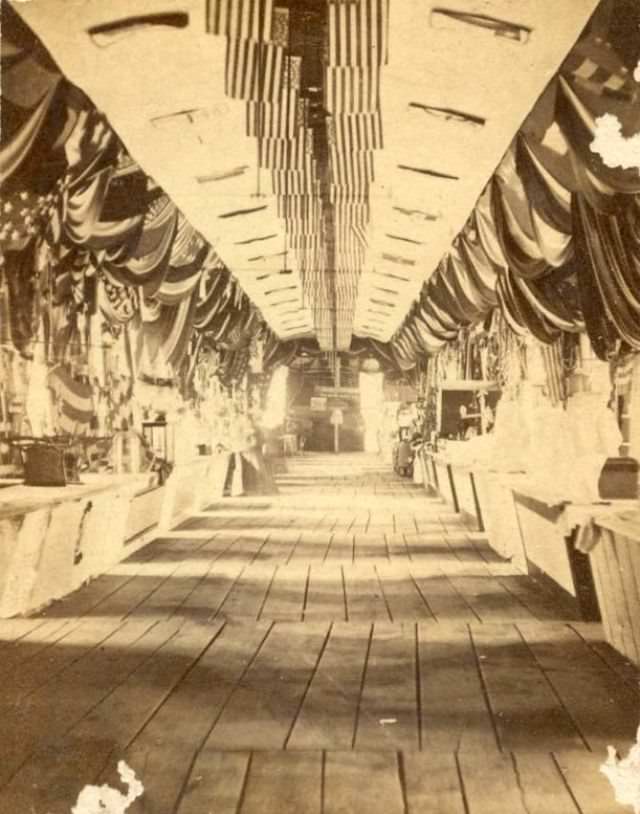
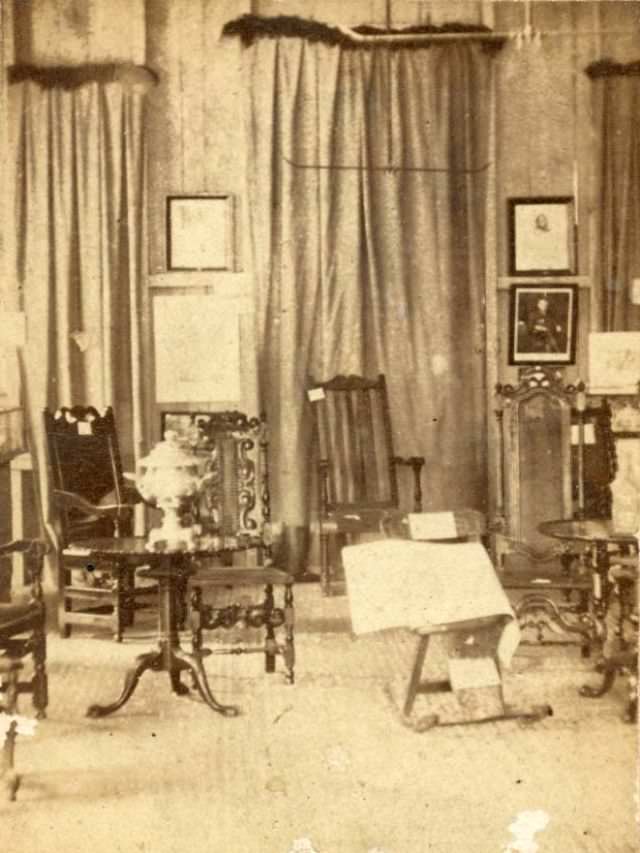
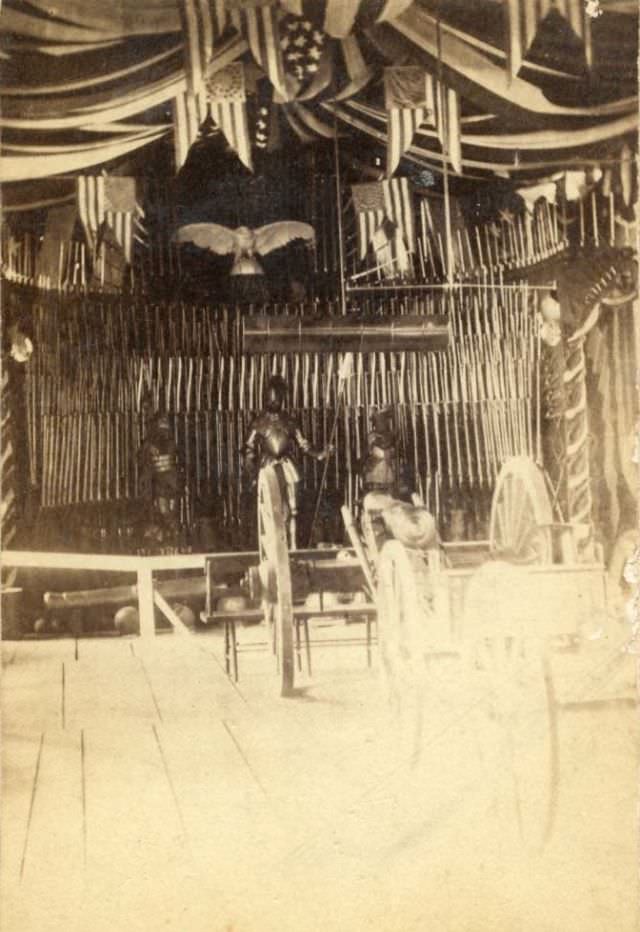
The exhibition was divided into dozens of departments, each dedicated to a specific category of human achievement. From fine art and agriculture to military hardware and industrial machinery, the breadth of what was on display reflected the ambitions of a nation a full century old. One of the most striking sections was the Arms and Trophy Department, which displayed weapons, military hardware, and ornamental trophies from the United States and participating nations.
Art held a prominent place at the exhibition. Memorial Hall, a grand permanent structure built specifically for the fair, housed an enormous collection of paintings and sculptures from around the world. The building itself — constructed of granite, marble, and glass — was one of the few structures intended to survive after the fair closed. Its interior galleries were filled from floor to ceiling with works representing dozens of national traditions.
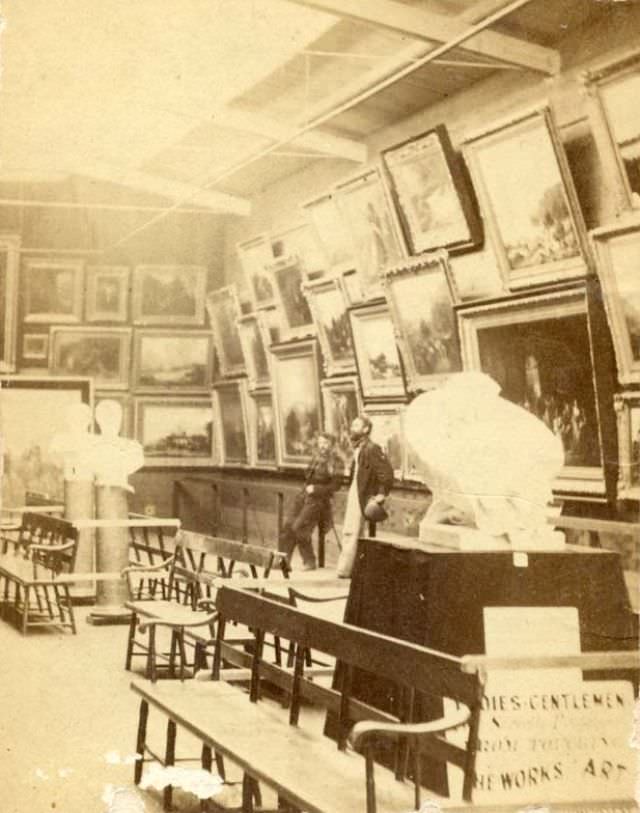
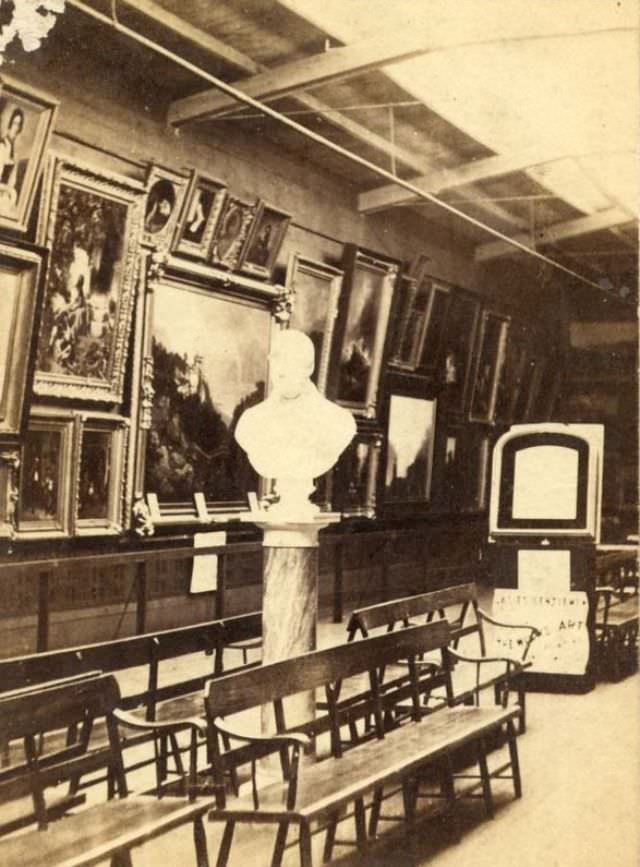
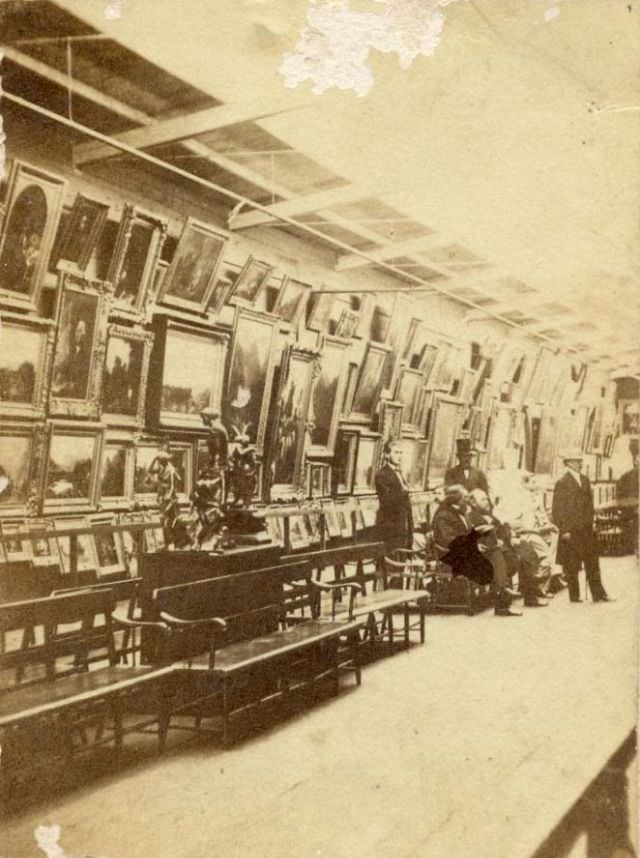
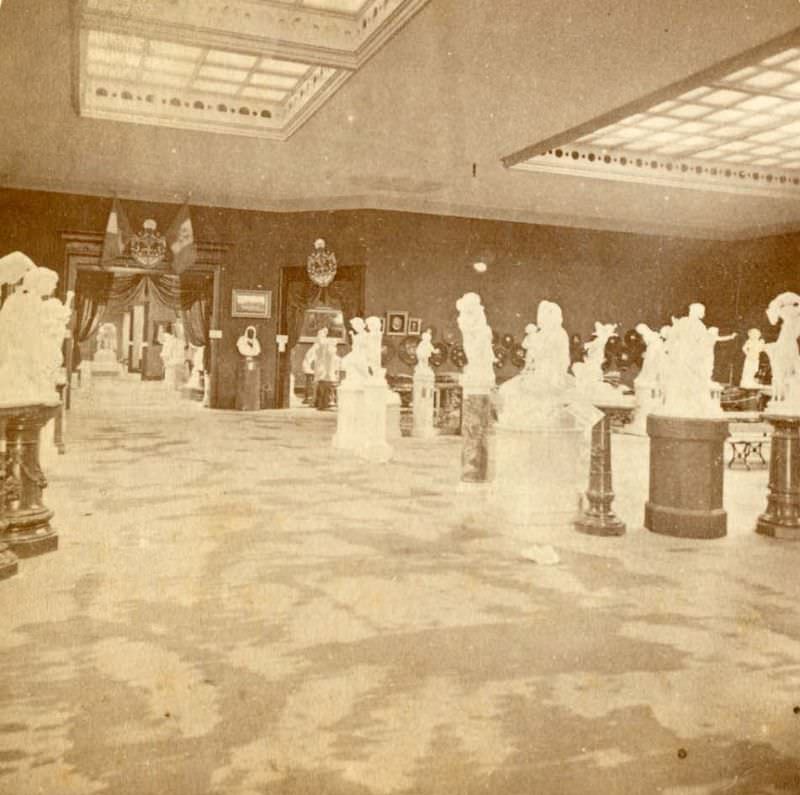
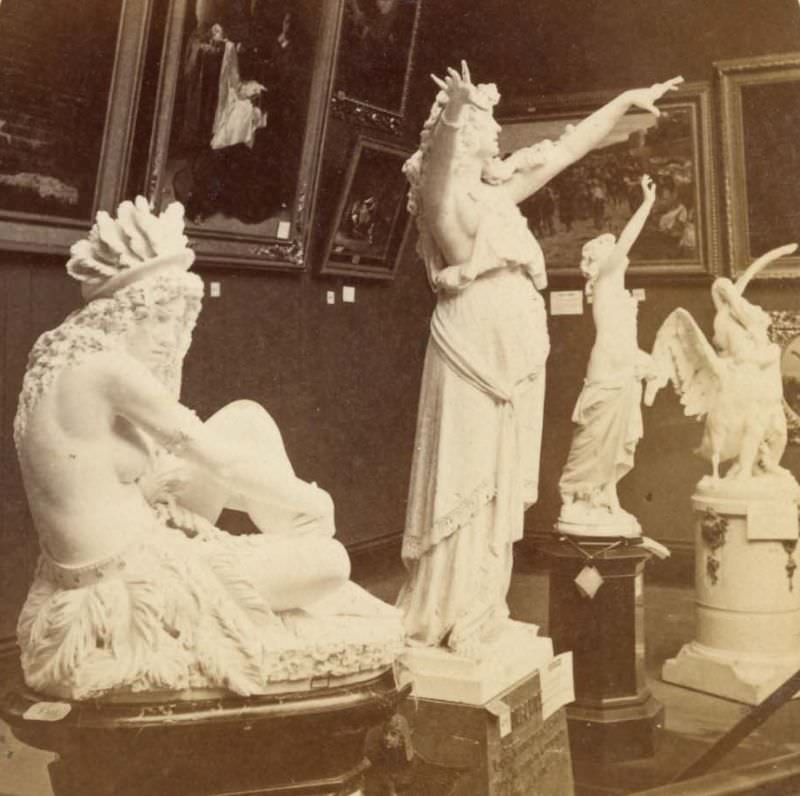
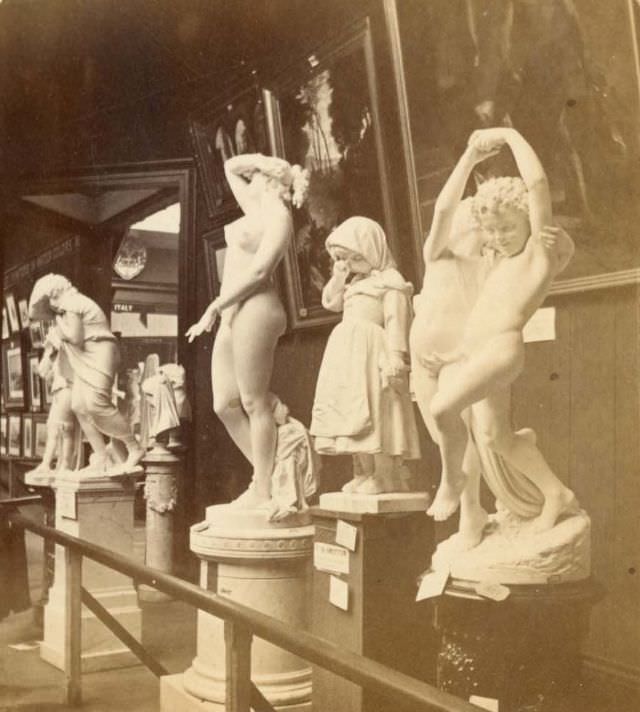
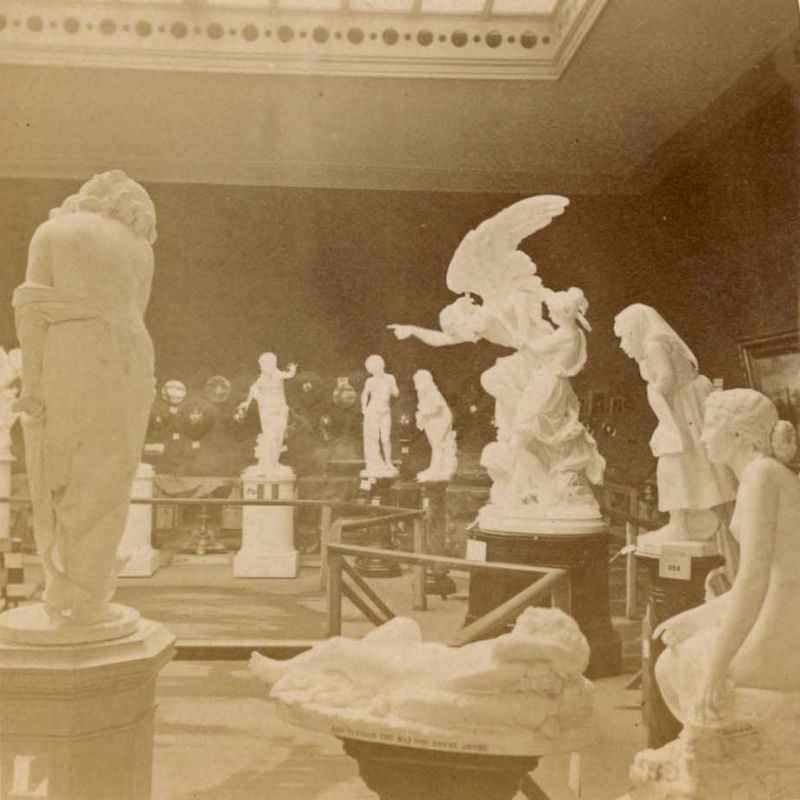
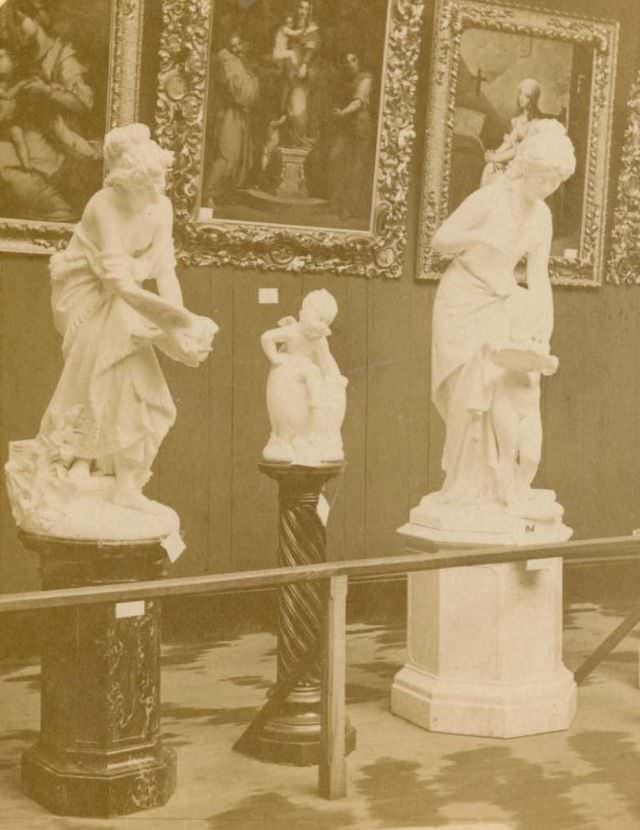
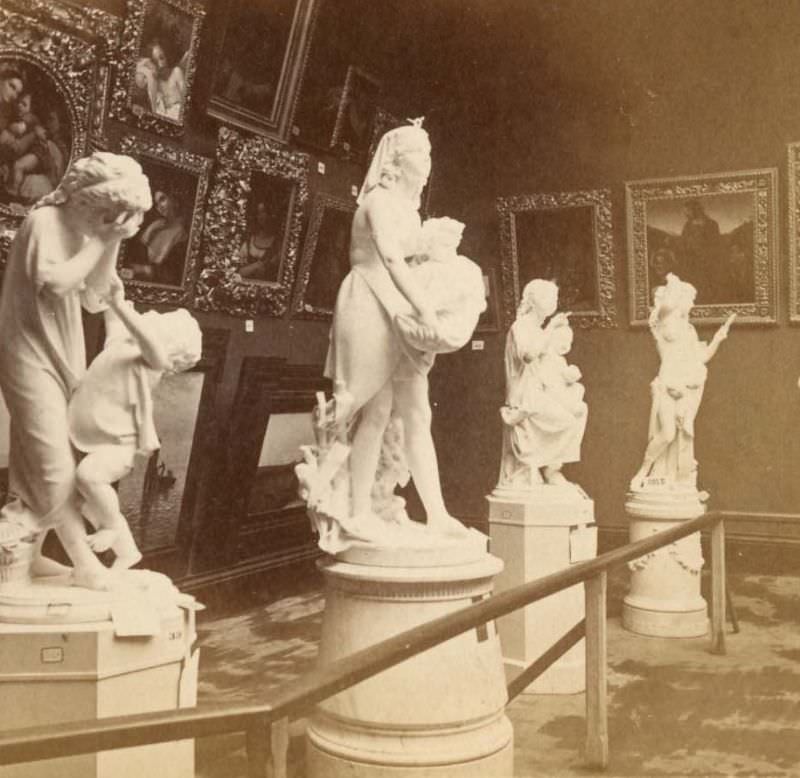
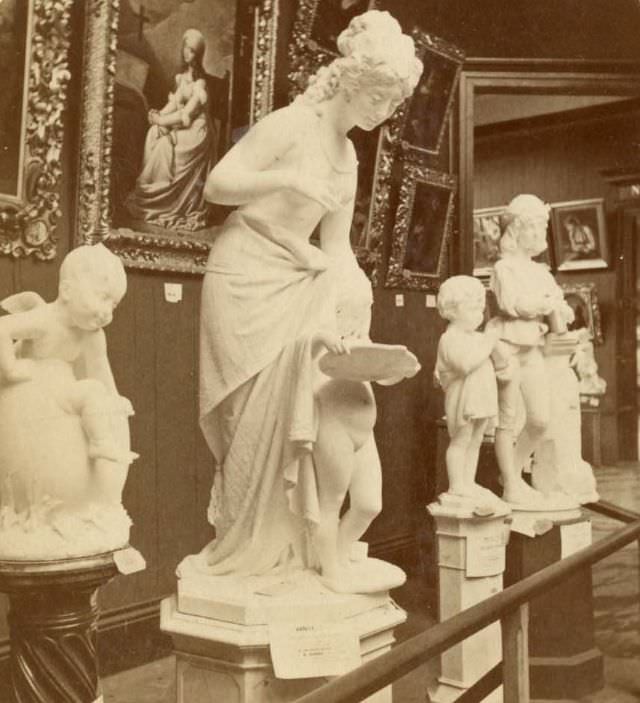
Italy contributed one of the most celebrated art displays at the fair. Its exhibit filled the Art Annex of Memorial Hall with sculptures, paintings, and decorative works that drew enormous crowds. Italian craftsmanship — particularly in marble sculpture — was widely regarded as among the finest in the world at the time, and the Philadelphia exhibit did nothing to change that reputation.
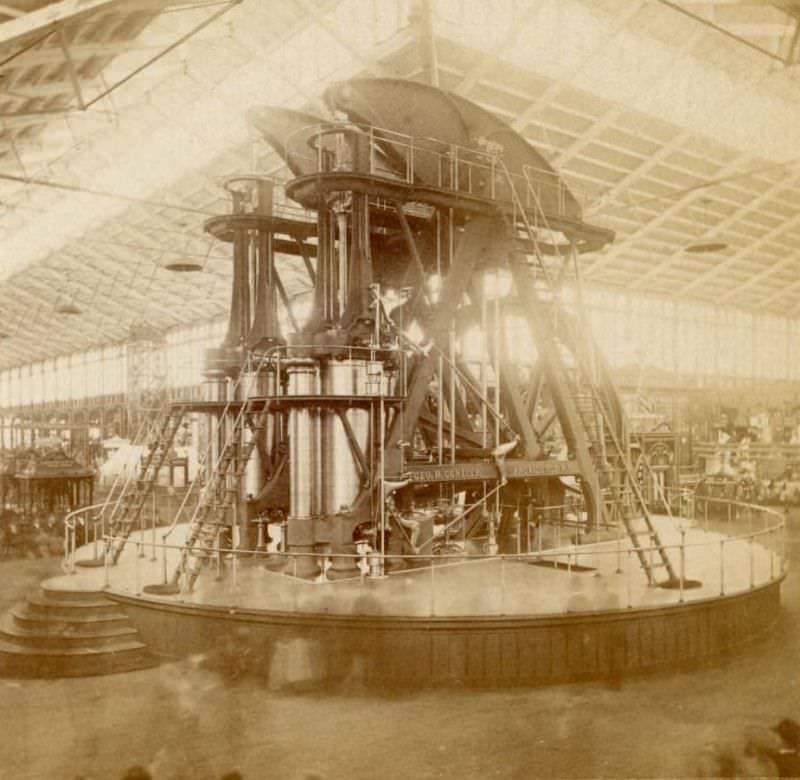
Machinery Hall was the industrial heart of the exhibition and arguably its most talked-about space. At its center stood the Corliss Steam Engine, a massive double-action steam engine standing 45 feet tall and weighing 650 tons. On opening day, President Ulysses S. Grant and Emperor Dom Pedro II of Brazil turned its starting valves together, setting the entire hall’s machinery in motion. It was the most powerful steam engine in the world at the time.
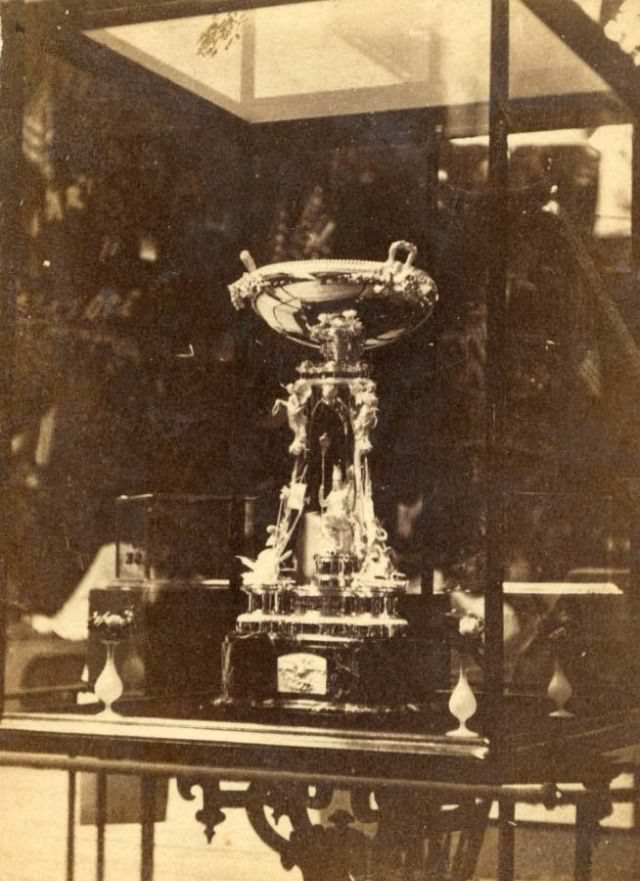
American silver manufacturers used the fair as a stage to showcase their finest work. Reed & Barton, a Massachusetts silversmith founded in 1824, displayed elaborate silver pieces inside the Main Exhibition Hall. Their exhibit drew attention for its technical precision and decorative ambition. The Department of Silverware more broadly featured contributions from domestic and international makers.
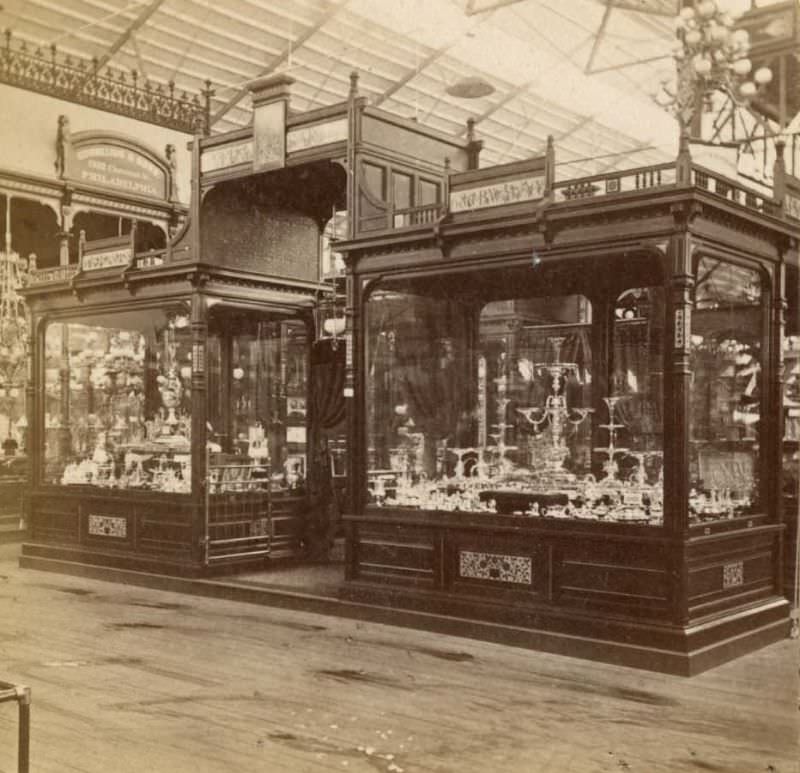
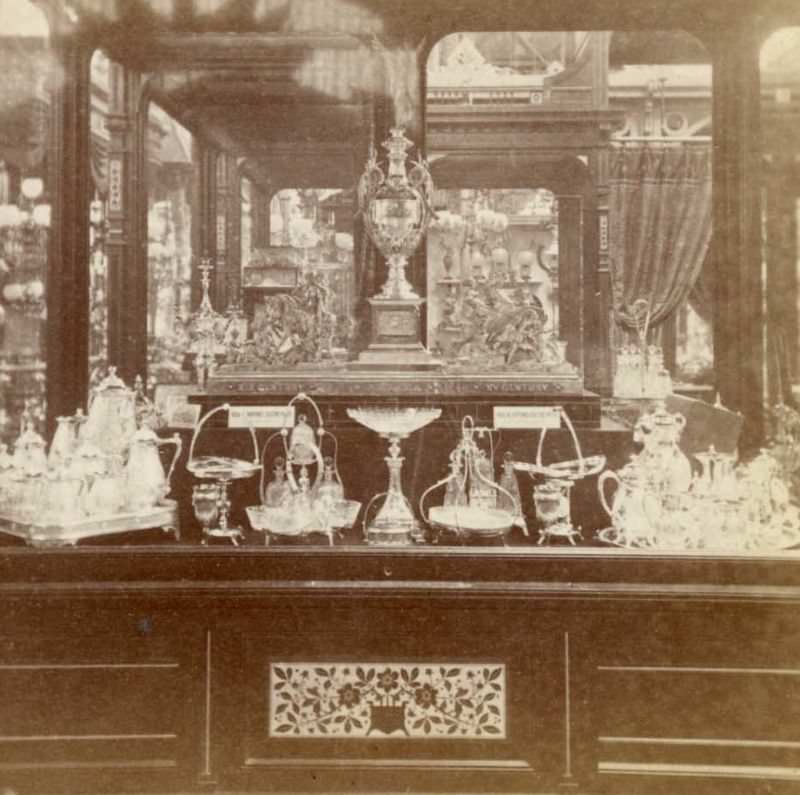
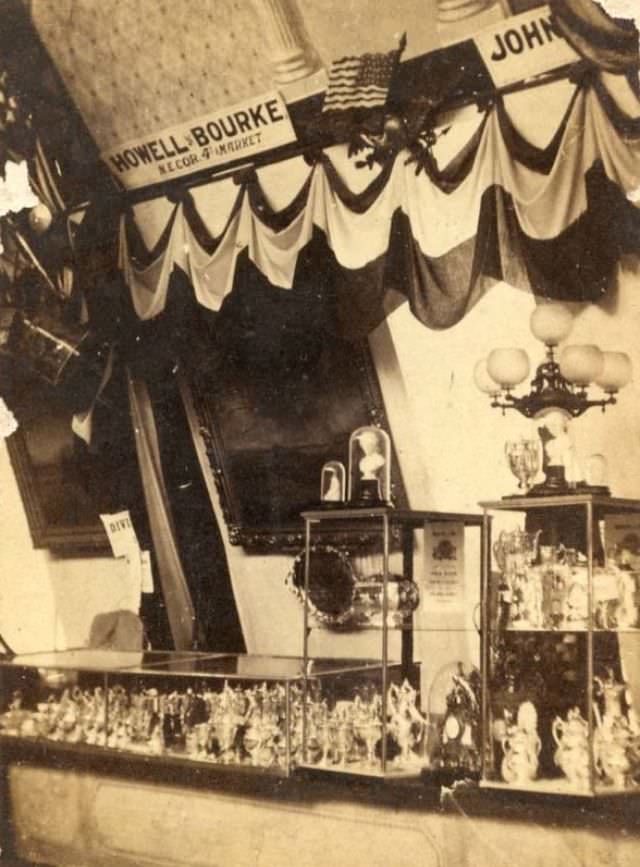
The Union Vase was one of the most remarked-upon individual objects at the entire exhibition. A massive decorative vase symbolizing national unity, it drew steady crowds throughout the fair’s run. Objects like it illustrated how the exposition was as much a celebration of American identity as it was a trade and technology showcase.
History was on display in tangible form throughout the fairgrounds. Among the most visited historical artifacts was the carriage that had once belonged to George Washington. For many Americans making the trip to Philadelphia in 1876, seeing a physical object connected to the founding generation made the centennial celebration feel real and personal.
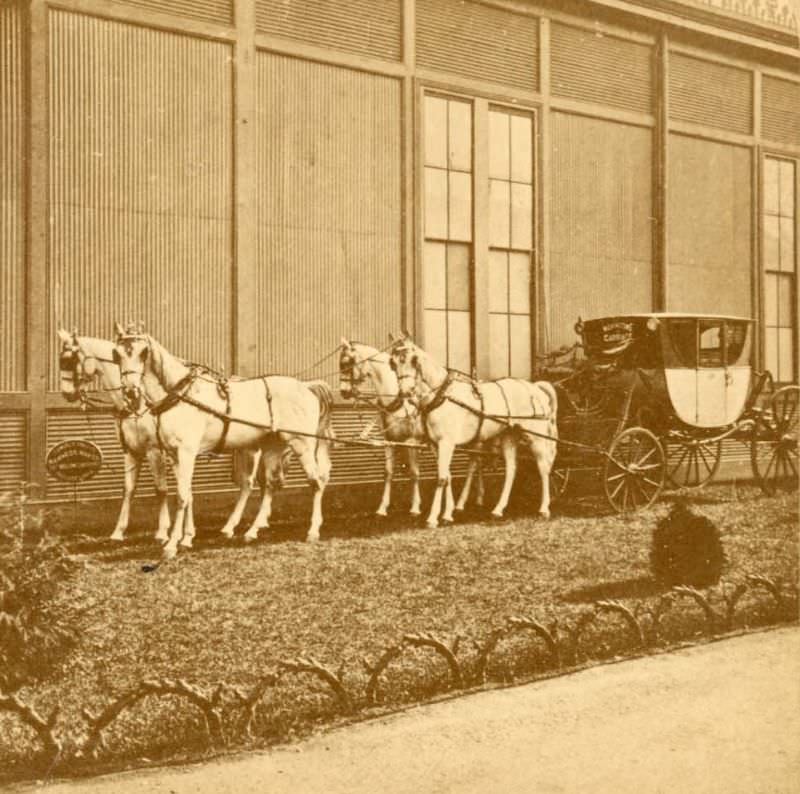
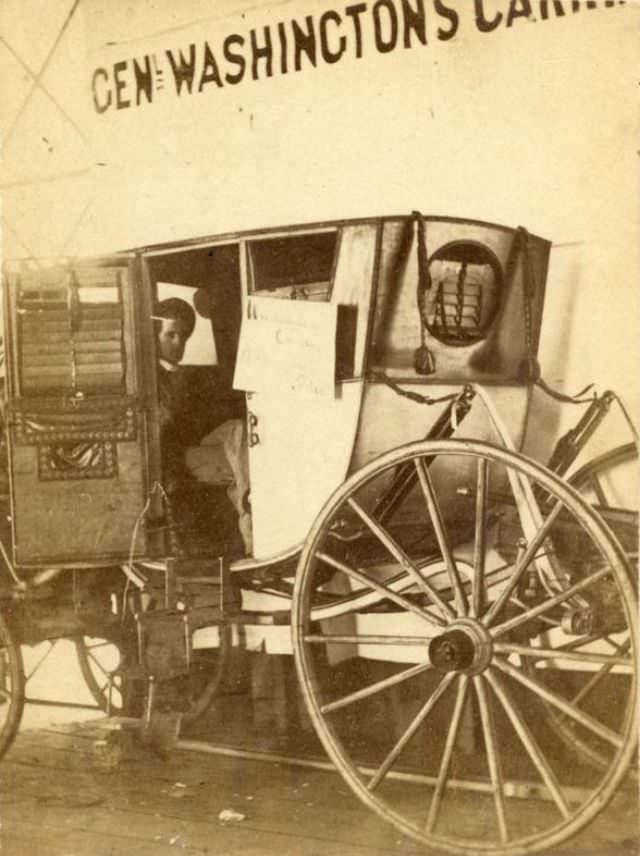
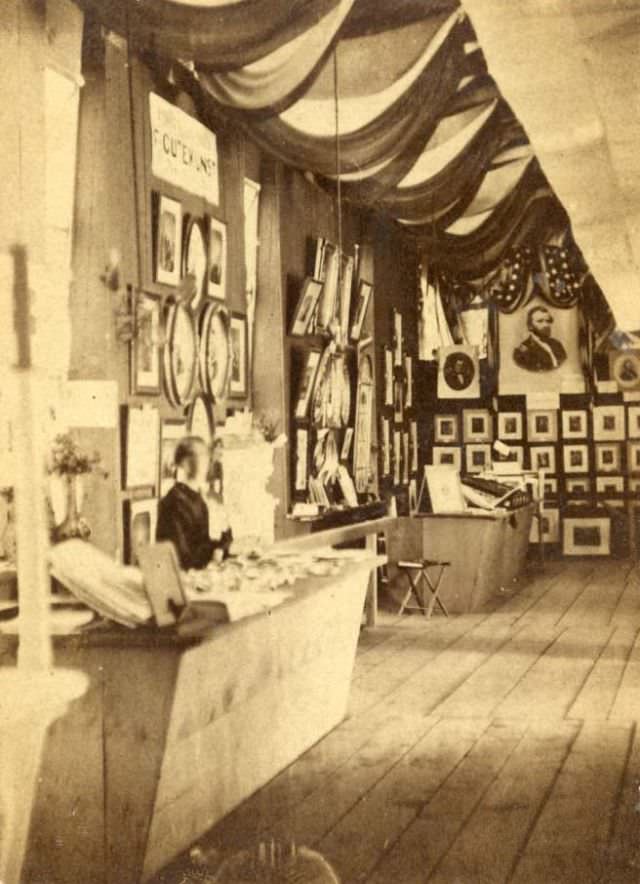
The Relics and Curiosities section offered visitors a wide assortment of rare and unusual objects. Nearby, the Photograph Department gave the emerging art and science of photography its own dedicated space, reflecting just how seriously the medium was being taken by 1876. Photography had only been in widespread use for a few decades, and its presence at the fair signaled a new era in visual documentation.
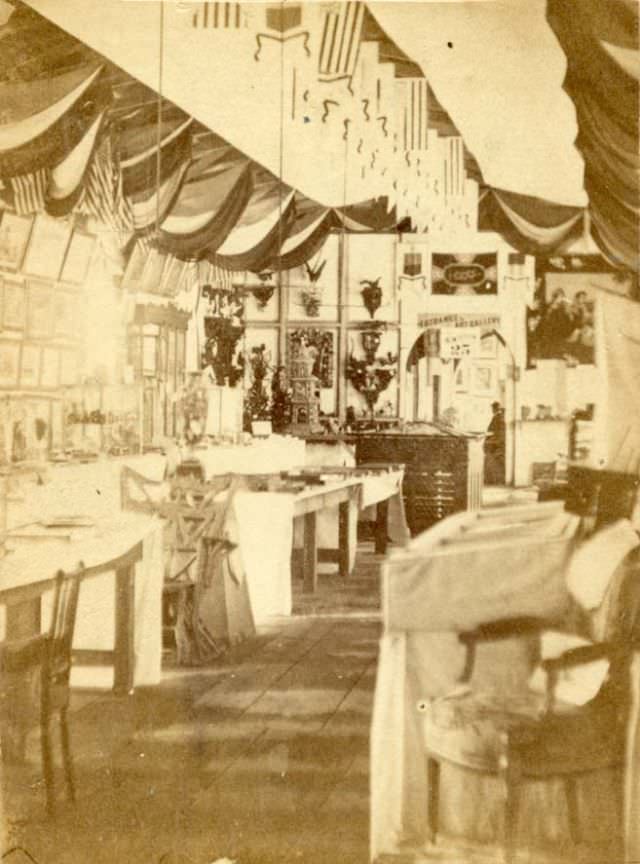
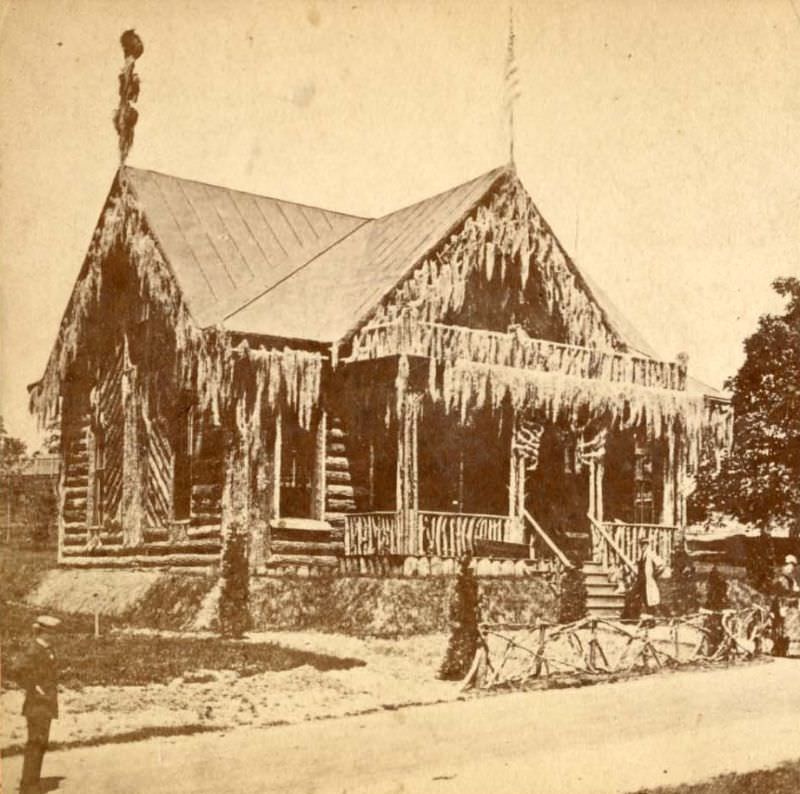
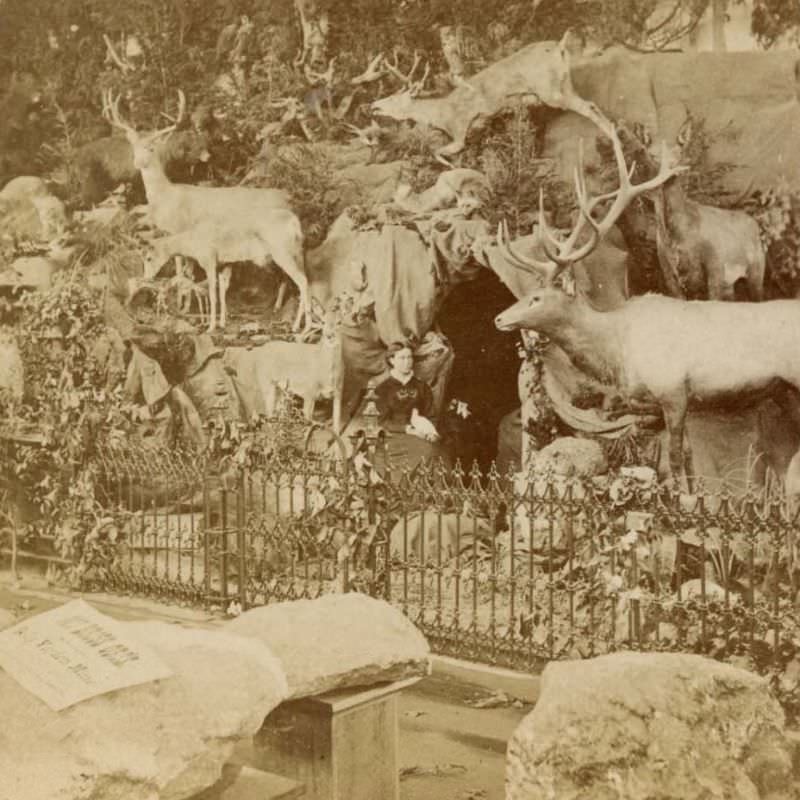
Individual states built their own structures on the fairgrounds. The Mississippi State Building and the Colorado State Building each gave their respective states a dedicated space to present regional identity, resources, and culture. Inside the Colorado building, Maxwell’s Rocky Mountain Museum offered visitors a glimpse of the American West — a region that still captured the national imagination during this period of westward expansion.
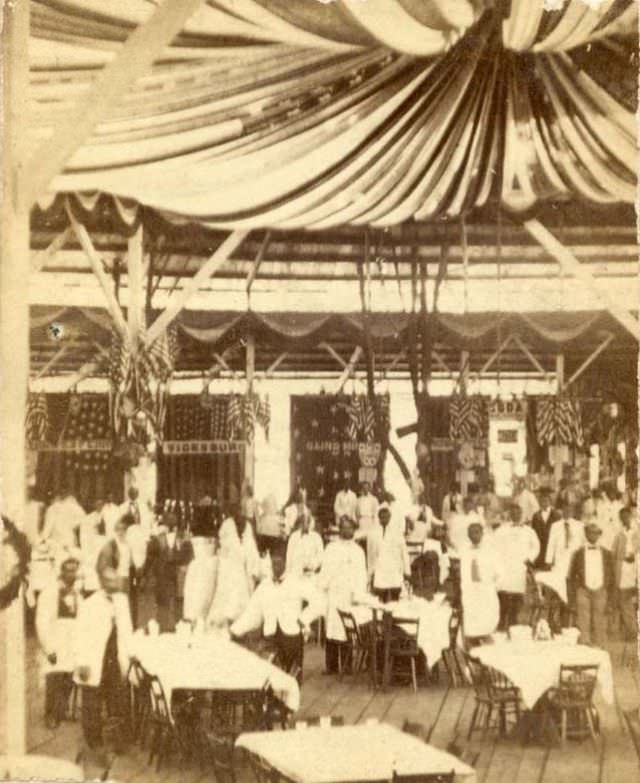
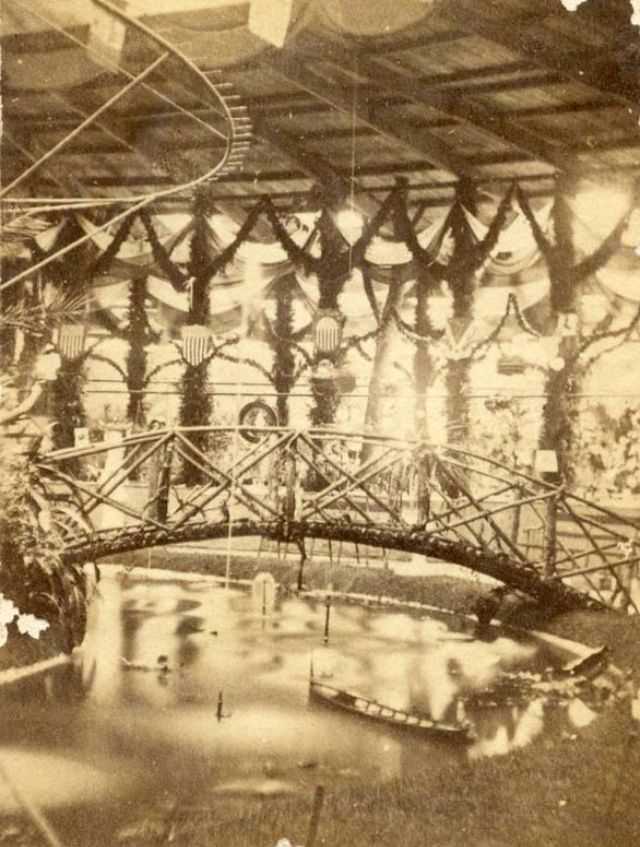
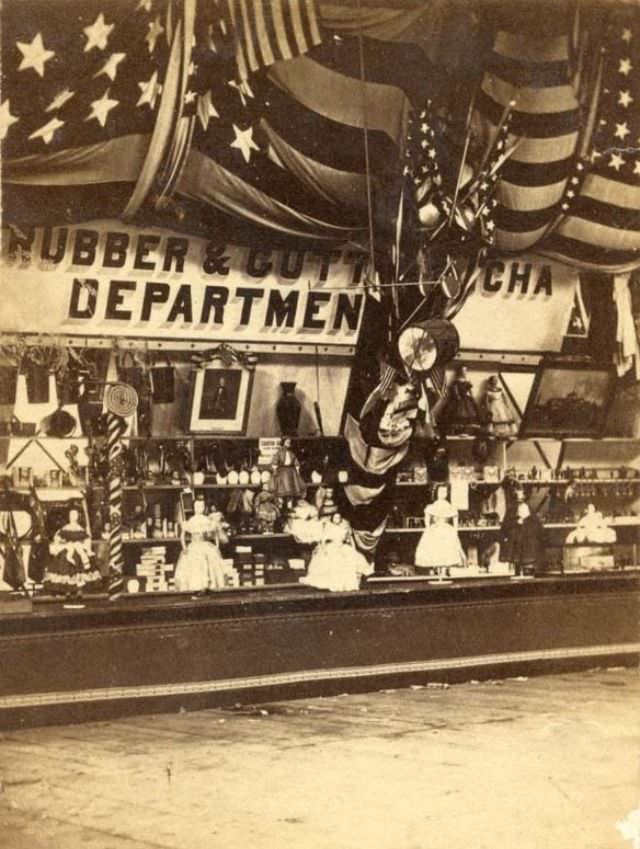
Beyond the grand exhibition halls, the fairgrounds offered a full range of visitor amenities. The Refreshment Saloon catered to the daily crowds, while Horticultural Hall — another of Schwarzmann’s permanent structures — featured a dramatic rustic bridge over indoor plantings and water features. The India and Gutta Percha Department displayed materials and goods from South Asia, while the Firemen’s Department put firefighting equipment and demonstrations on proud display.