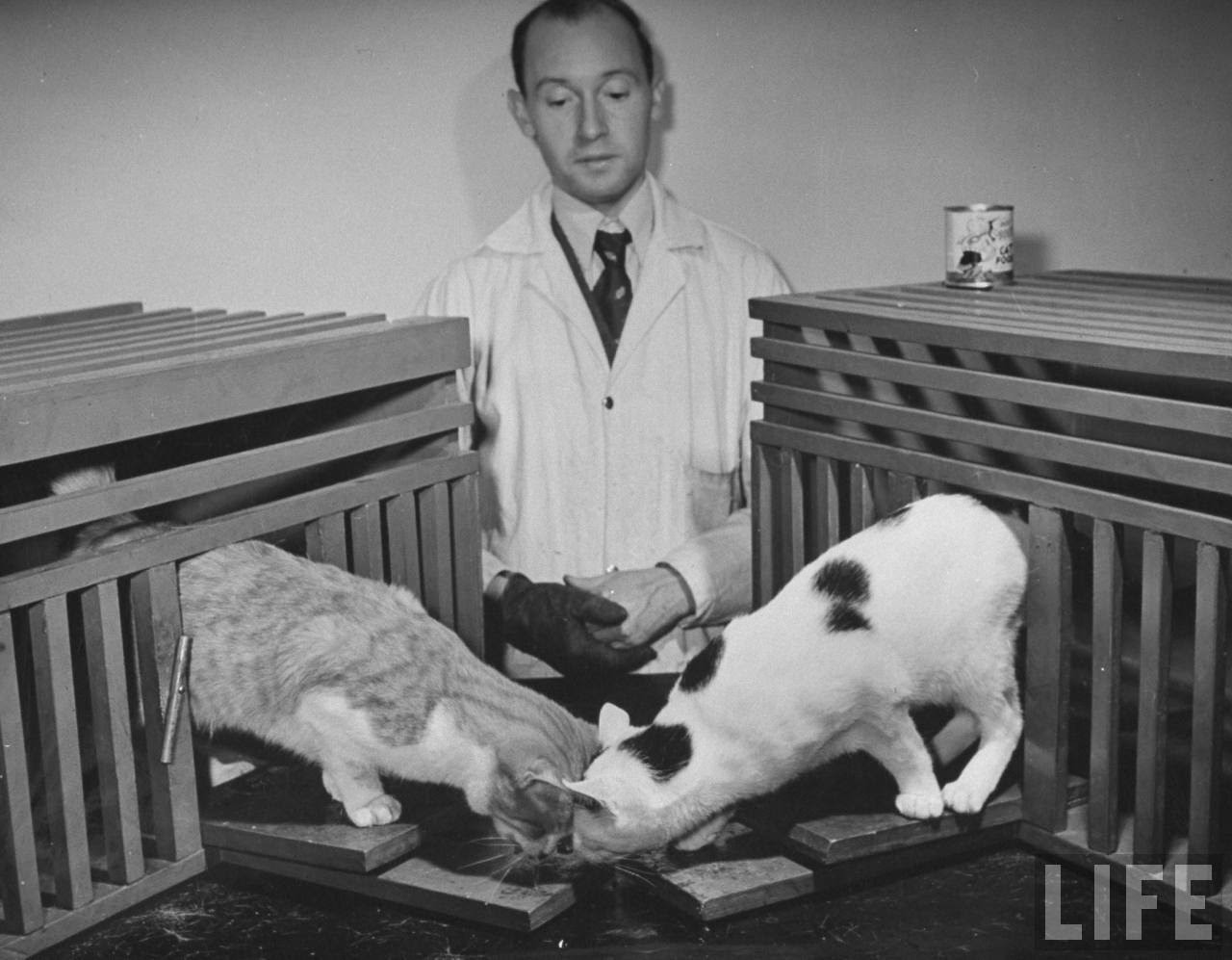
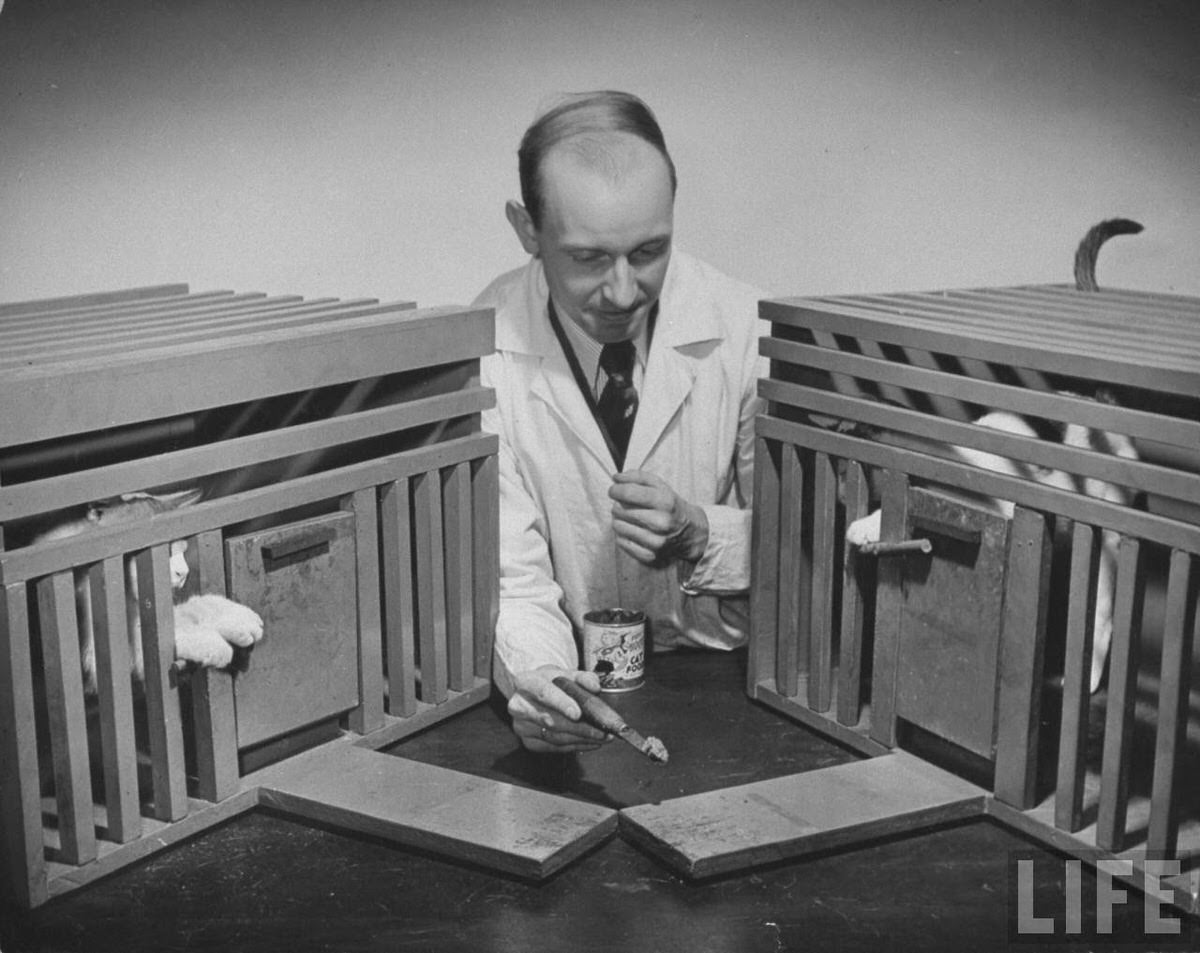
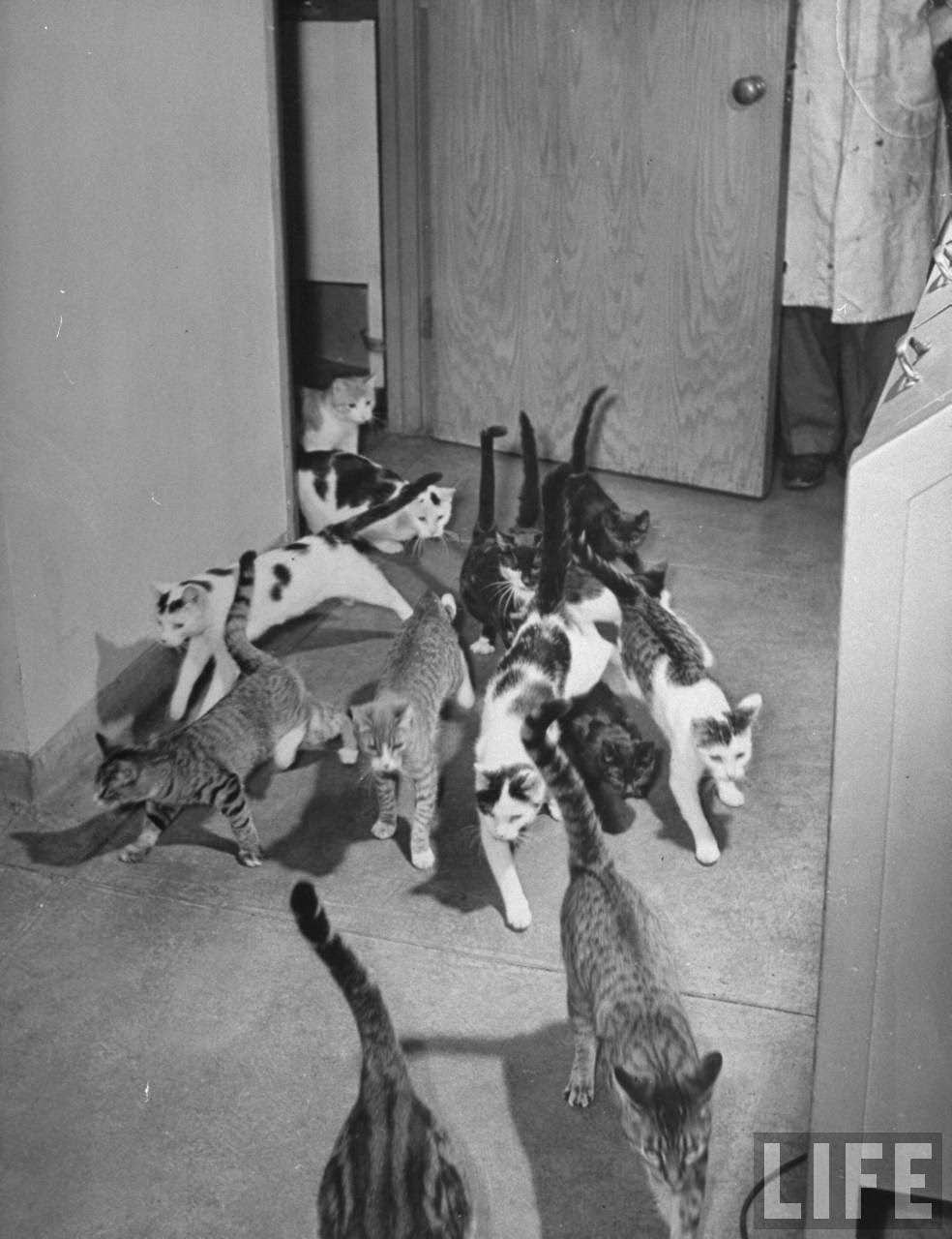
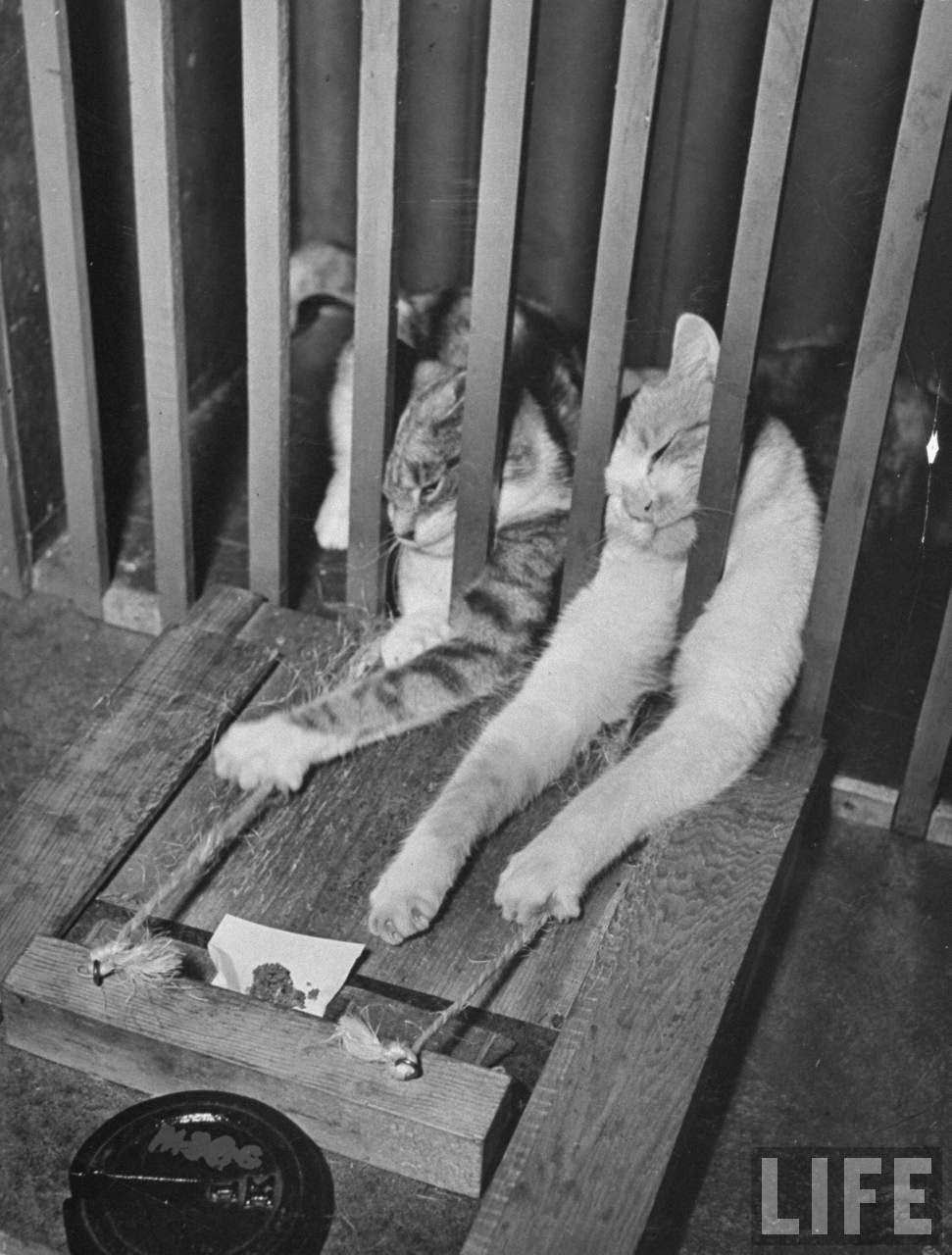
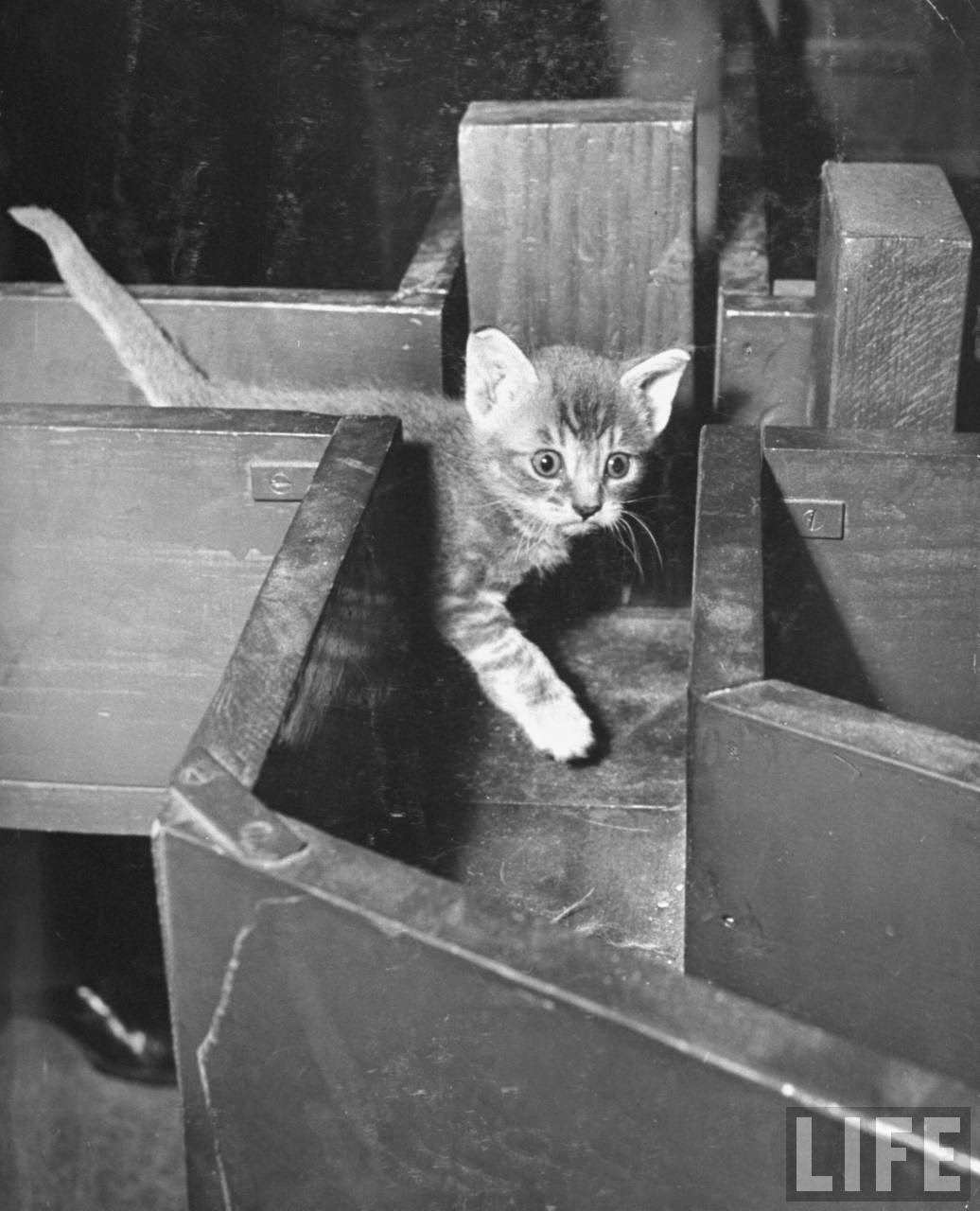
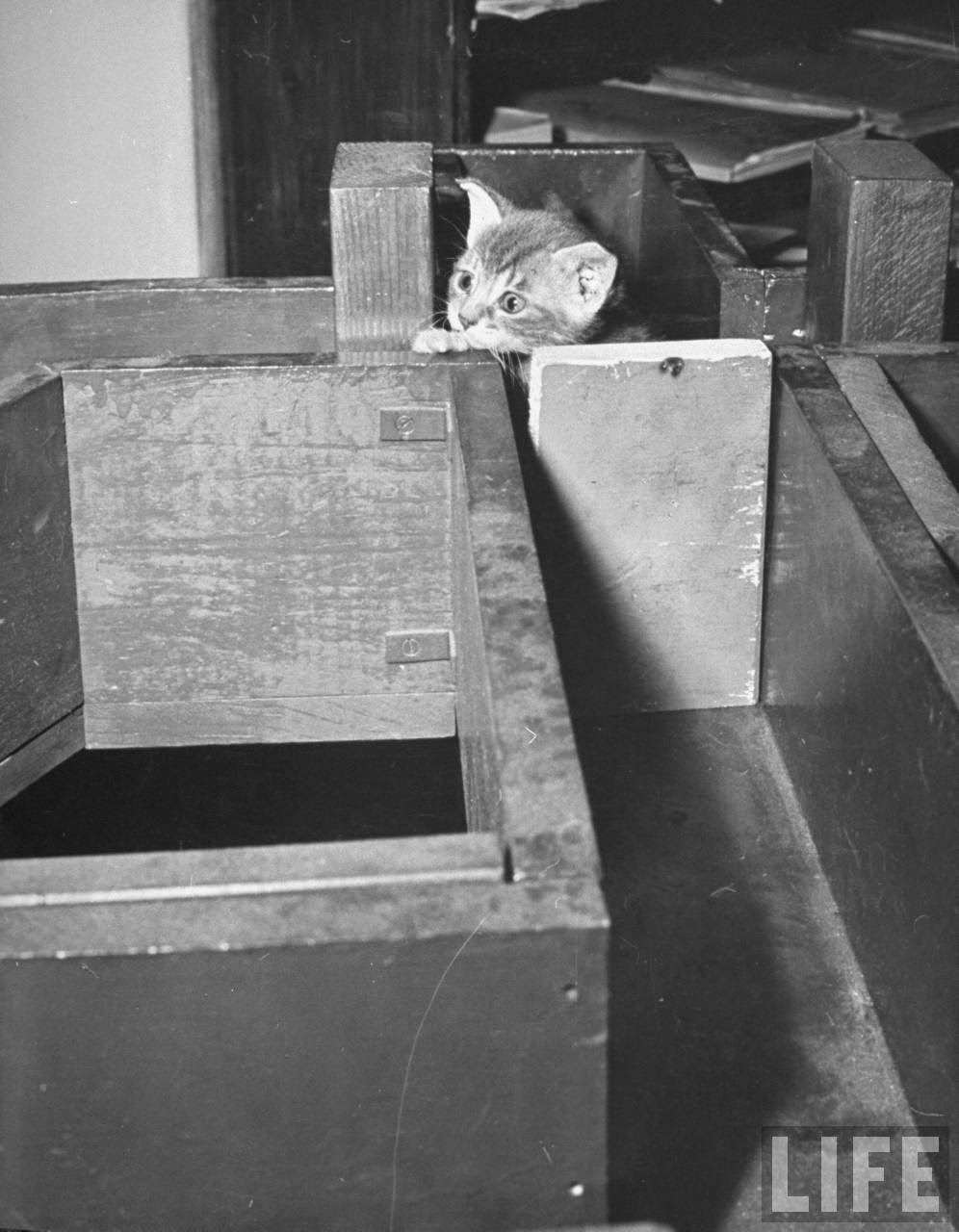
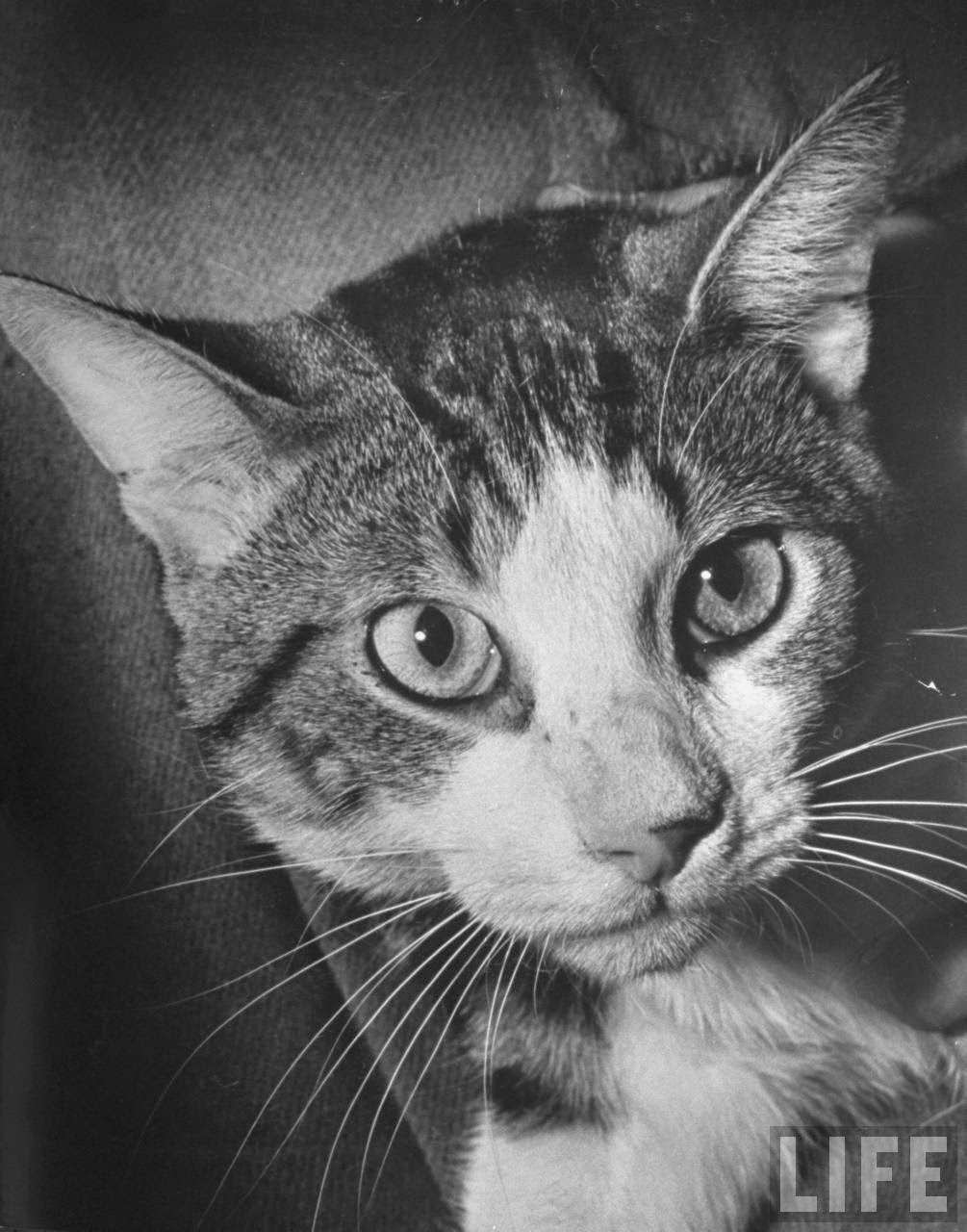
In 1941, psychologists at Brooklyn College set out to settle a long-standing debate about animal intelligence. While dog owners frequently boasted about their pets’ ability to learn tricks, cat owners claimed their pets were simply too independent to perform on command. To test this theory, the researchers designed a series of problem-solving tasks specifically for felines. They placed the cats in a controlled laboratory environment to observe their ability to learn and reason. LIFE photographer Nina Leen documented these trials, capturing the cats as they navigated obstacles to earn a reward.
The Puzzle Box Challenge
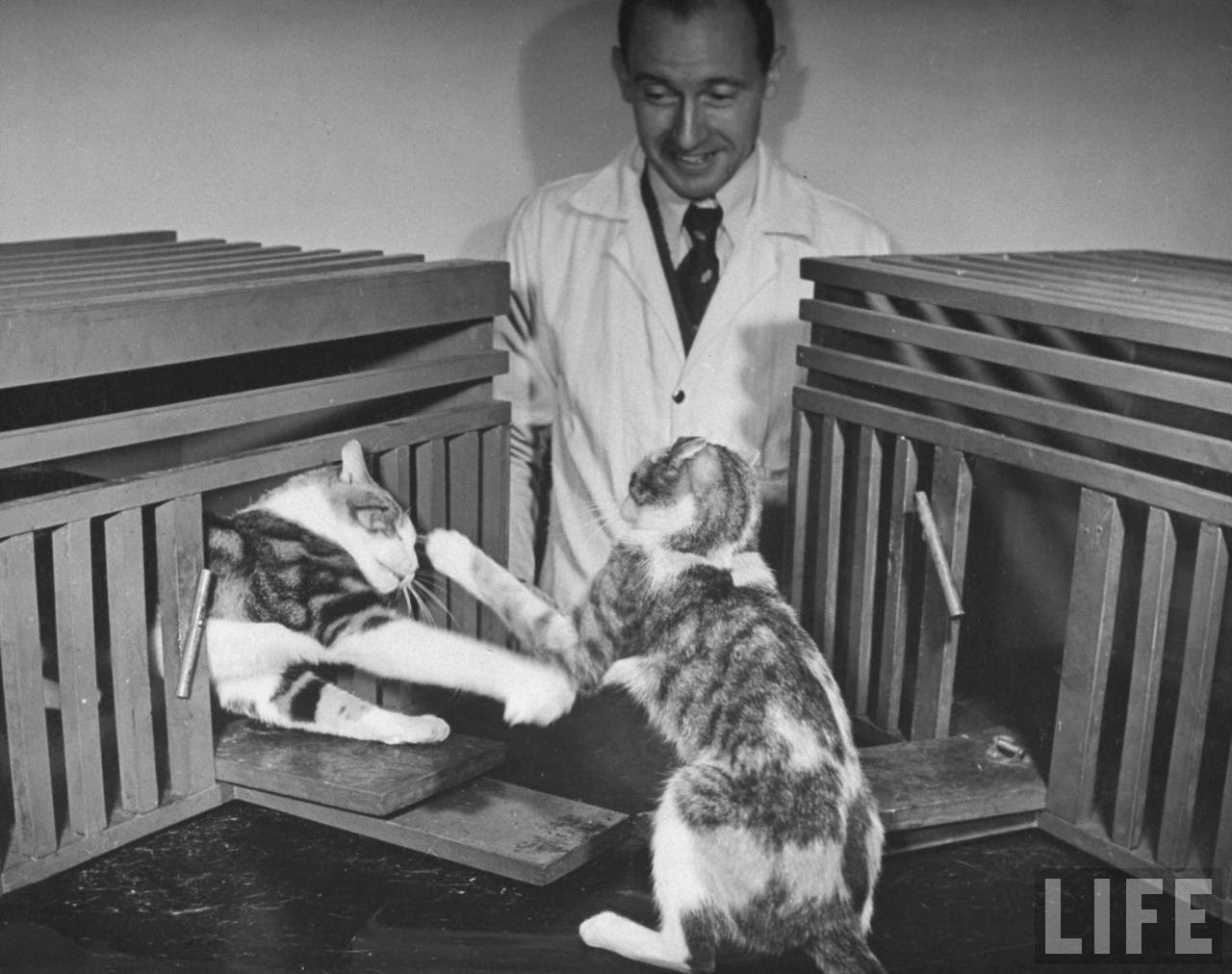
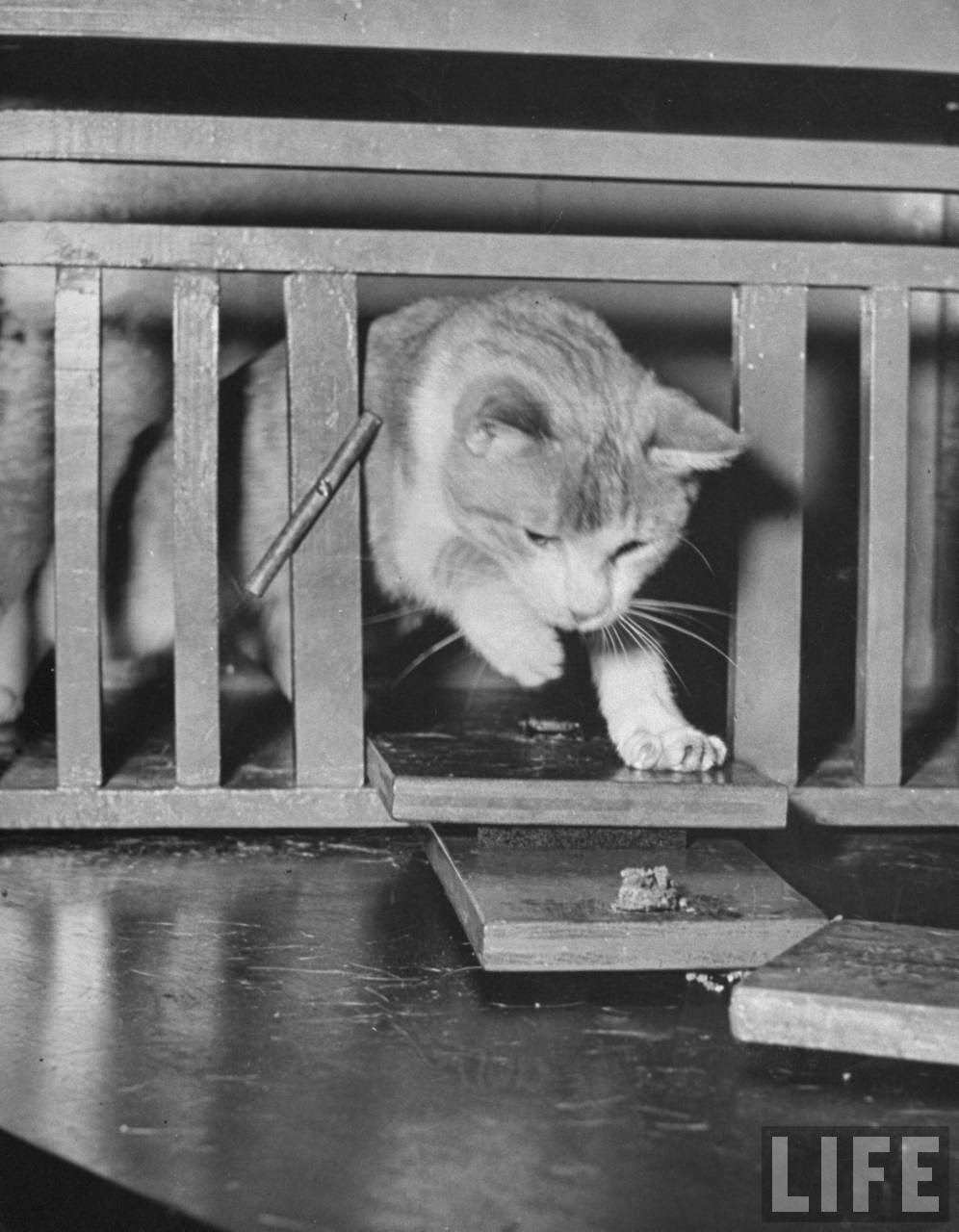
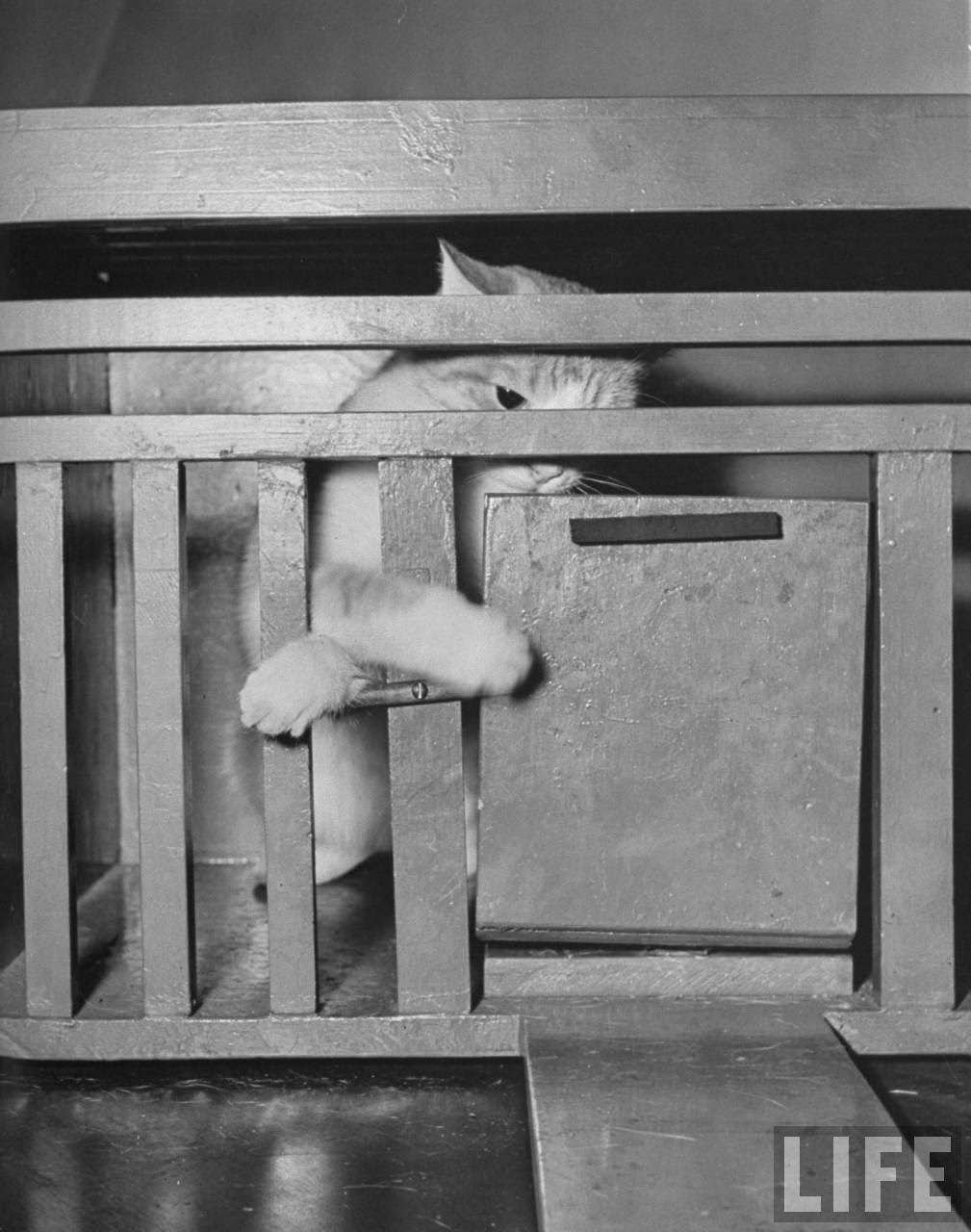
One primary experiment involved a custom-made wooden puzzle box. The researchers placed a hungry cat inside the crate, which was locked with a mechanical latch. A distinct floor pedal or a hanging string inside the box triggered the door to open. Outside the bars, a plate of food sat just out of reach. The cat had to figure out that pressing the pedal or pulling the string released the door. Initially, the cats pawed randomly at the bars. After accidentally triggering the mechanism once, they quickly learned to associate the action with the escape. Within a few trials, the cats calmly walked into the box, pressed the lever immediately, and stepped out to eat.
Read more
The String Pulling Test
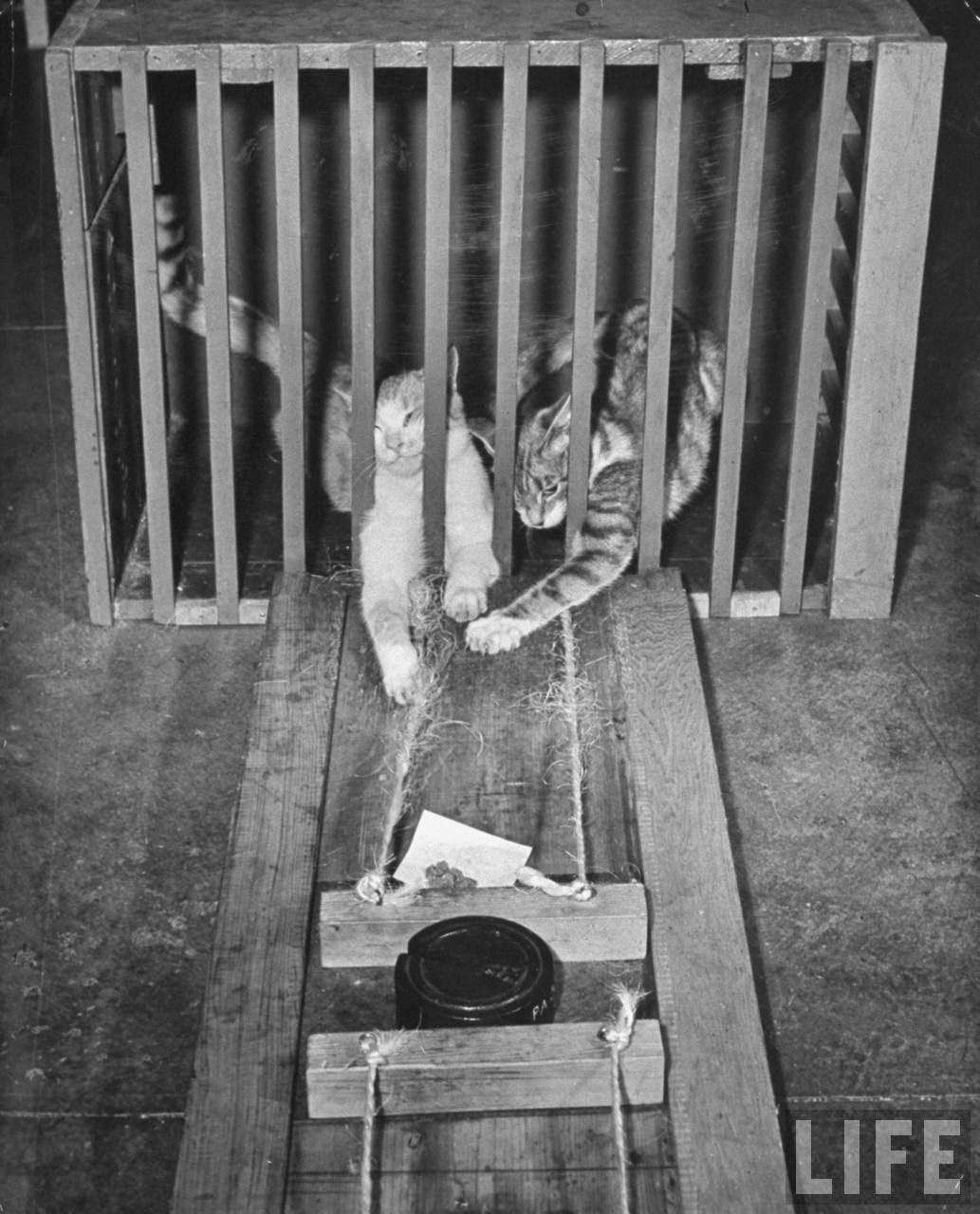
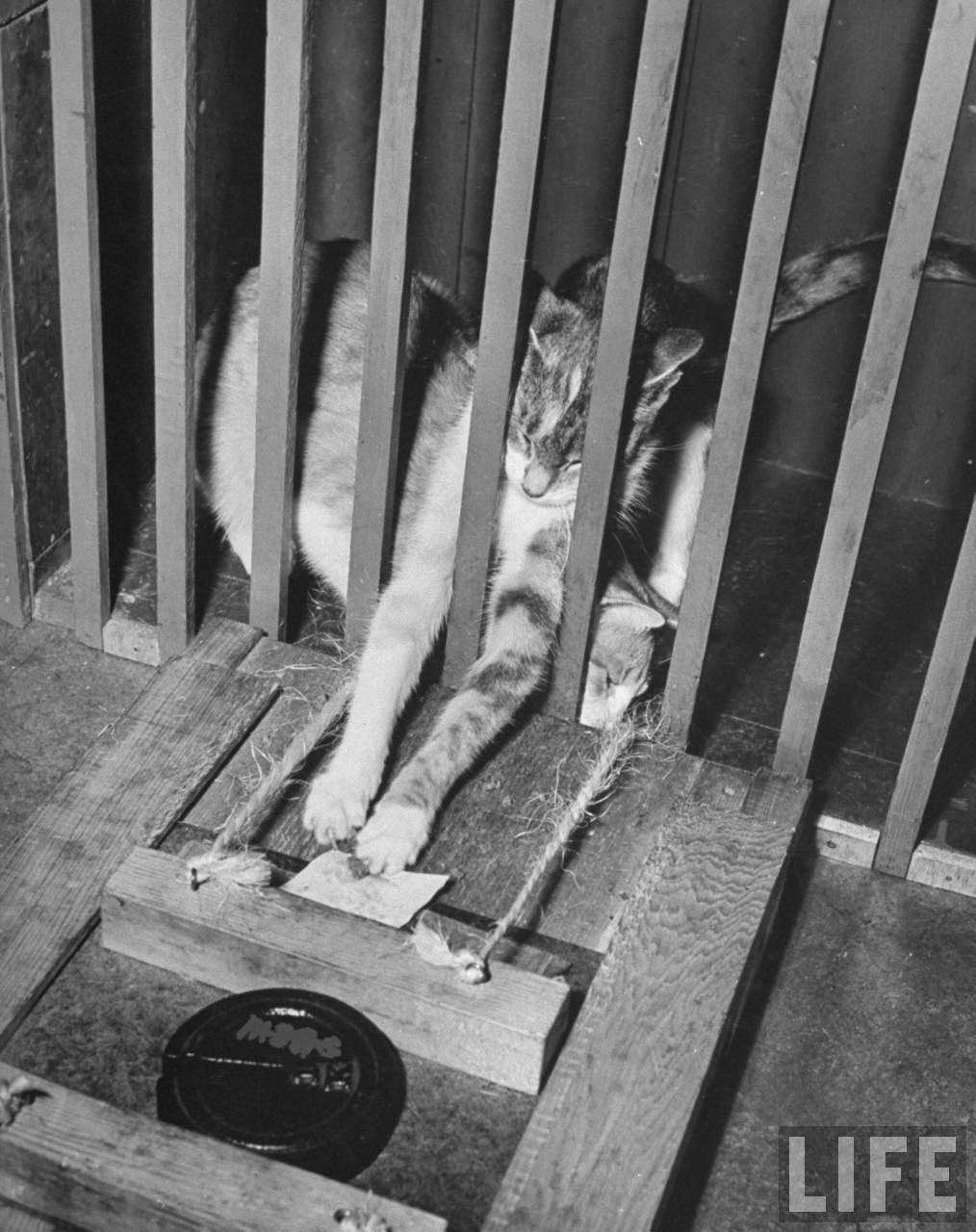
Another test measured the cats’ ability to understand physical connections. The scientists placed a piece of meat behind a wire fence where the cat could not reach it with its paws. They tied a long string to the food and laid the end of the string near the cat. To get the reward, the animal had to realize that pulling the string brought the meat closer. The subjects observed the setup intently. Unlike dogs, which often barked or tried to force their way through the barrier, the cats used their paws to hook the string and drag the prize within reach.
Complex Mazes and Cooperation
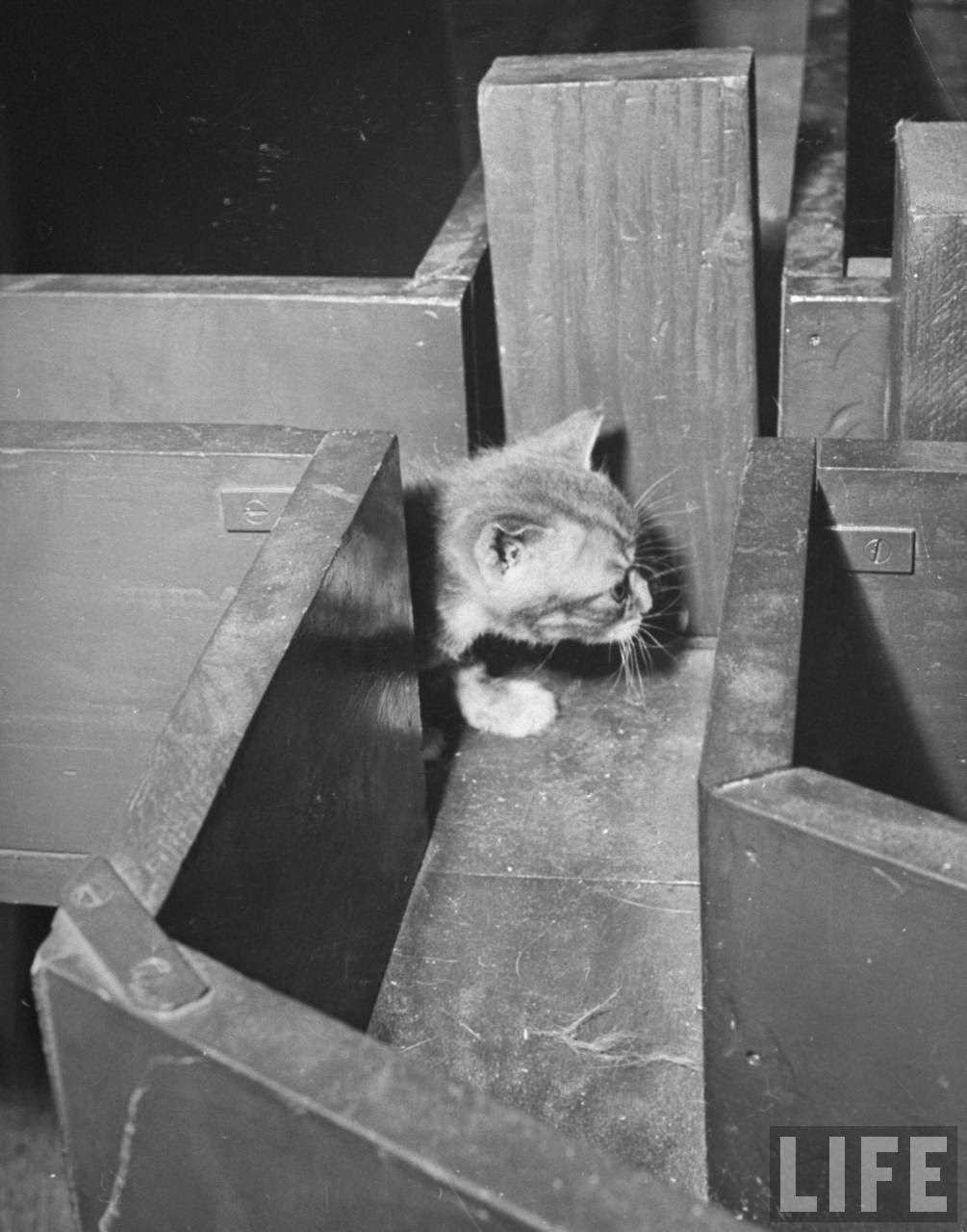
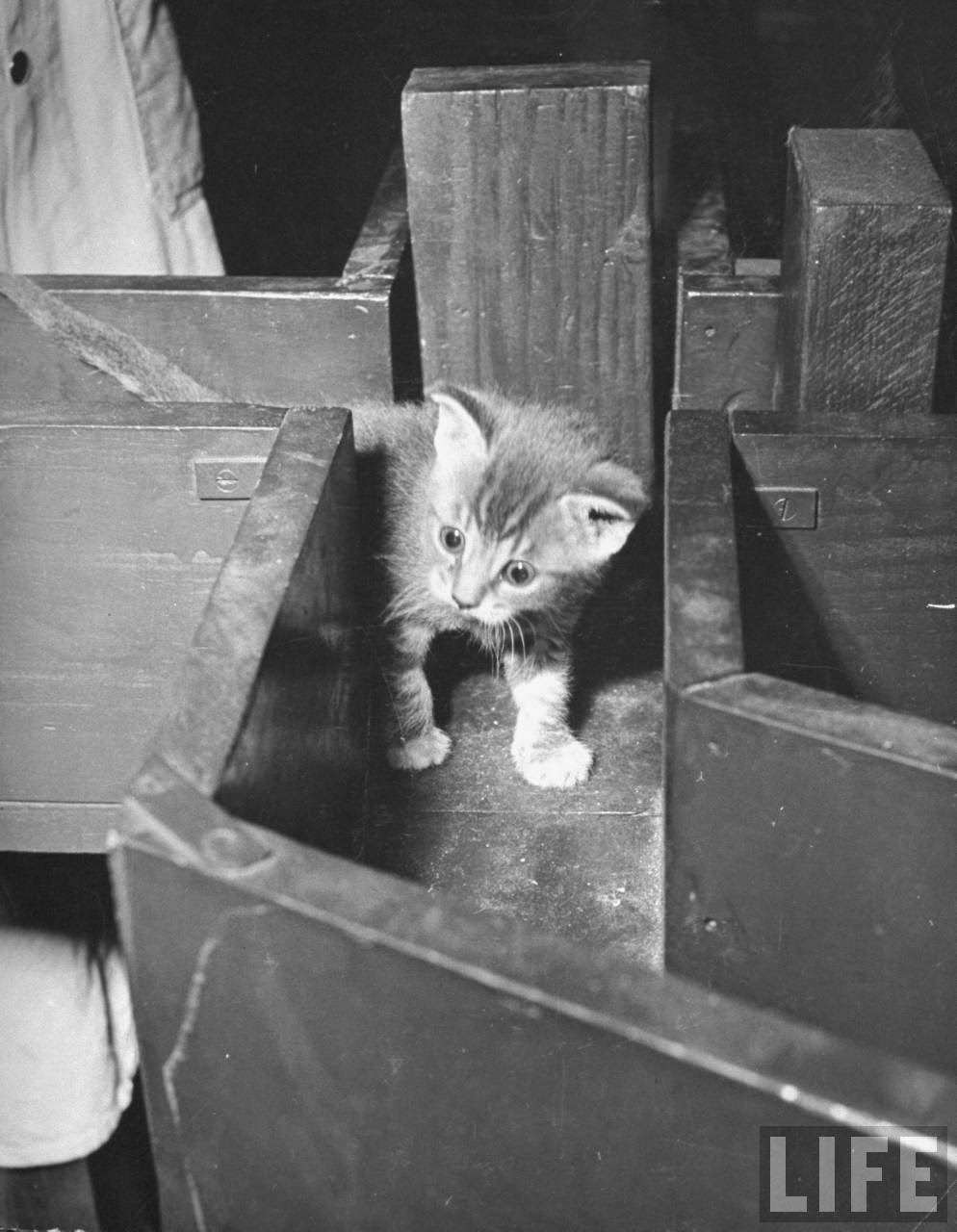
The final stage of testing introduced complex mazes to evaluate memory and spatial awareness. The psychologists constructed narrow pathways with dead ends and wrong turns. The cats had to memorize the correct route to find their food bowl at the finish line. In some variations of the experiment, two cats had to work in the same space. They navigated the tight corridors without aggression, often following one another to the goal. These tests proved that the cats possessed a high capacity for learning through observation and trial and error, driven entirely by the promise of a meal rather than a desire to please a human handler.