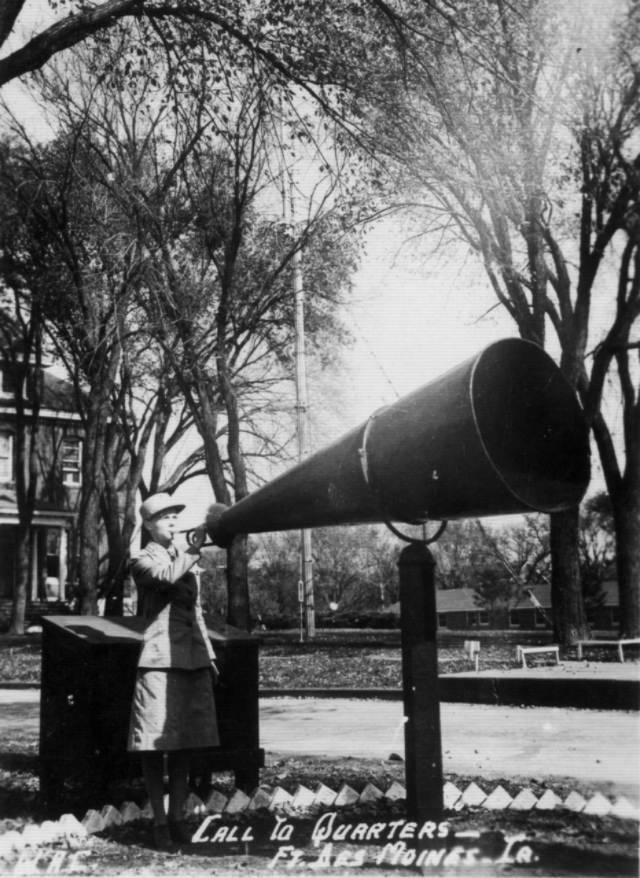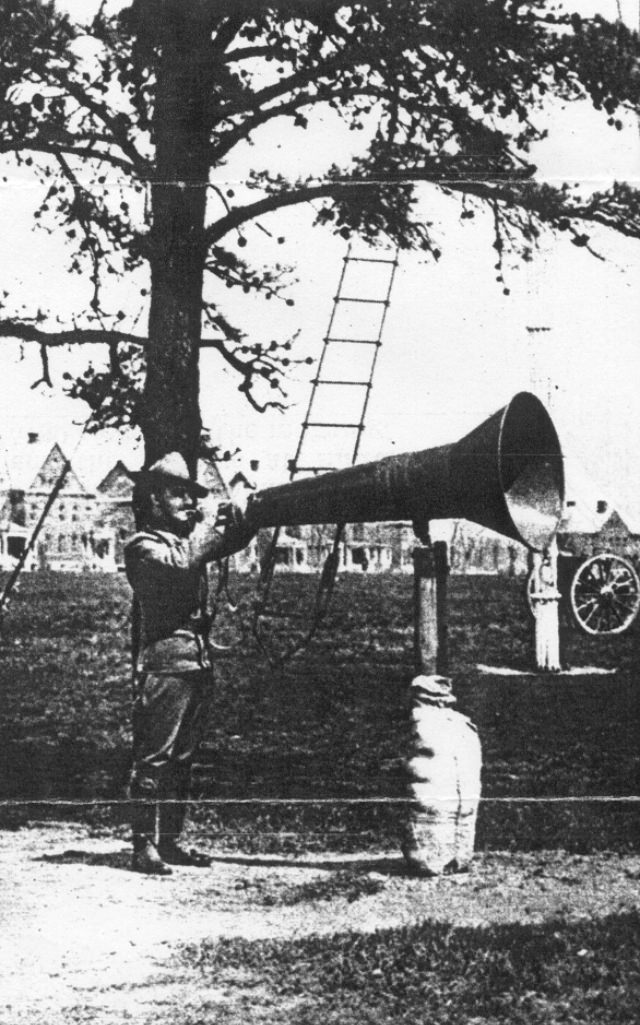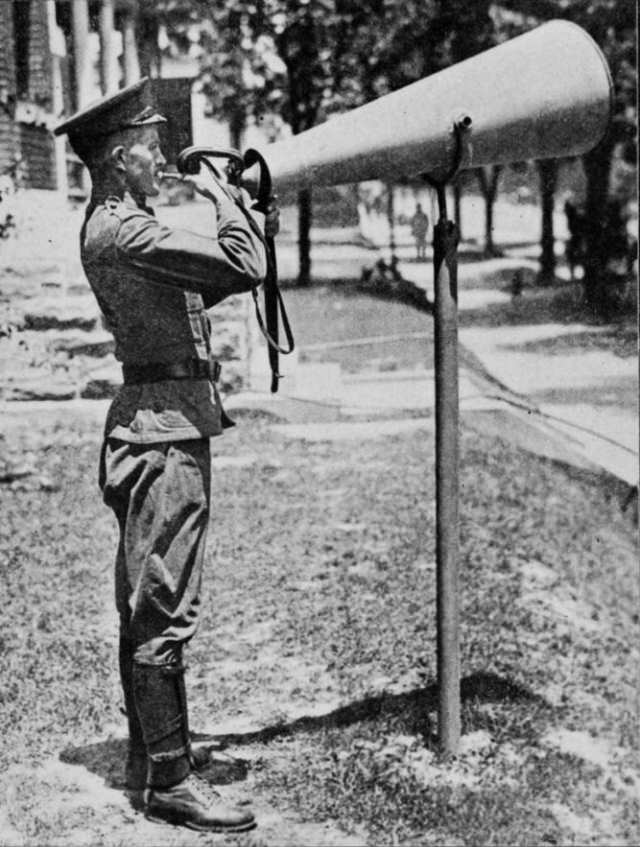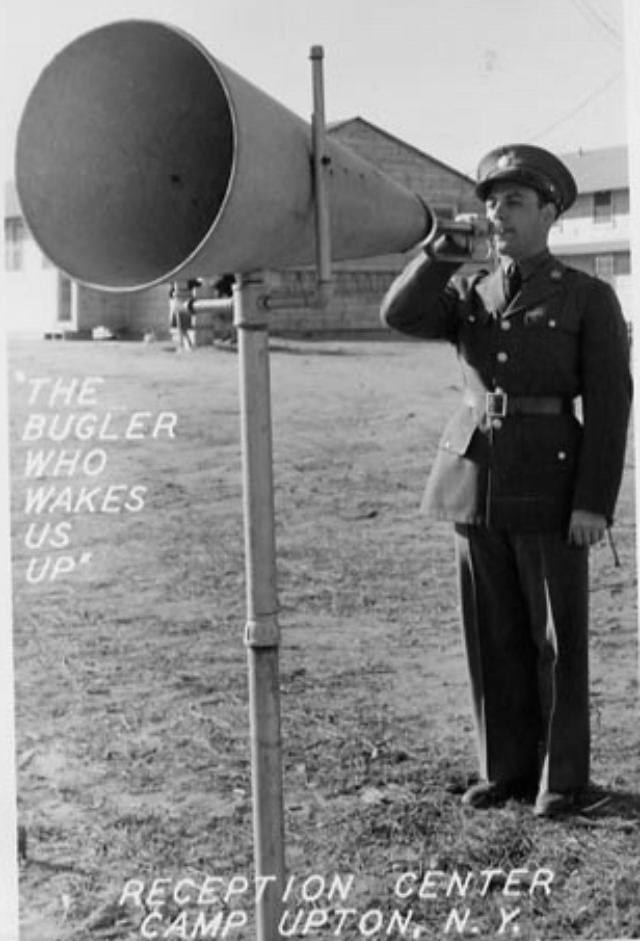

On military garrisons during World War II, getting a bugle call to reach every corner of a large base was a real challenge. A bugler standing in an open field could only project sound so far. The solution was a purpose-built tool: the bugle megaphone. These large, horn-shaped devices were designed to take the bugle’s signal and push it across a much wider area than any single player could manage alone.
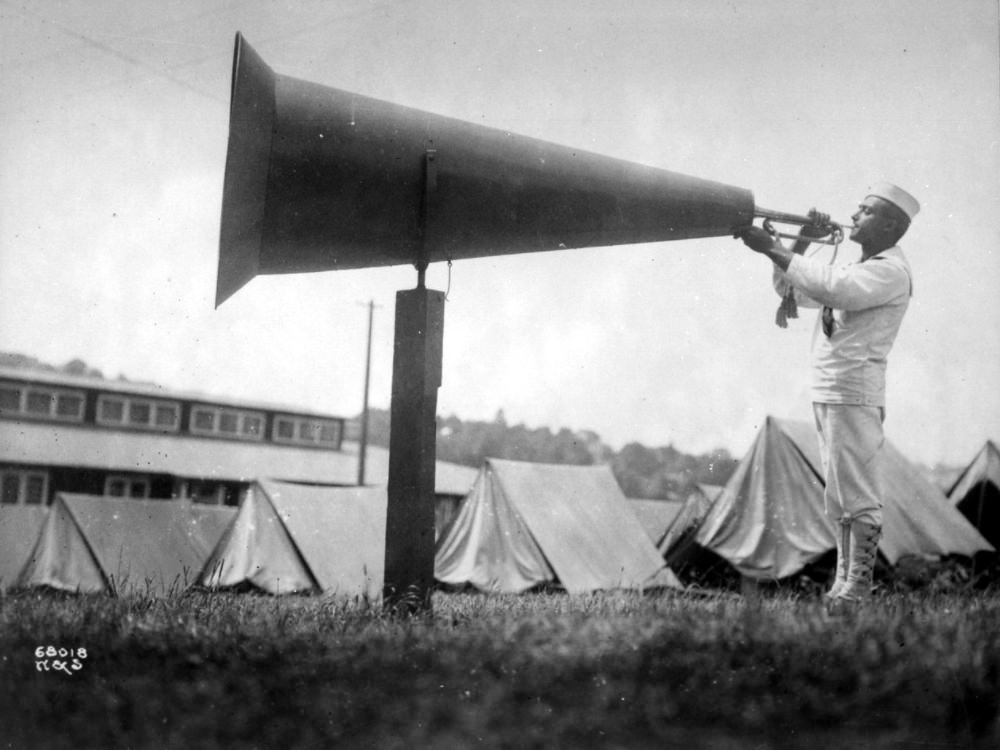
Bugle megaphones were typically mounted on posts near the main flagpole or at garrison headquarters — the two most central and visible points on any base. Placing them there made practical sense. Commands and bugle calls needed to reach soldiers across sprawling grounds, and these locations offered the best range. The mounting post included a swivel mechanism, which allowed the bugler to rotate the megaphone and point it in any direction, ensuring sound coverage across the full garrison.
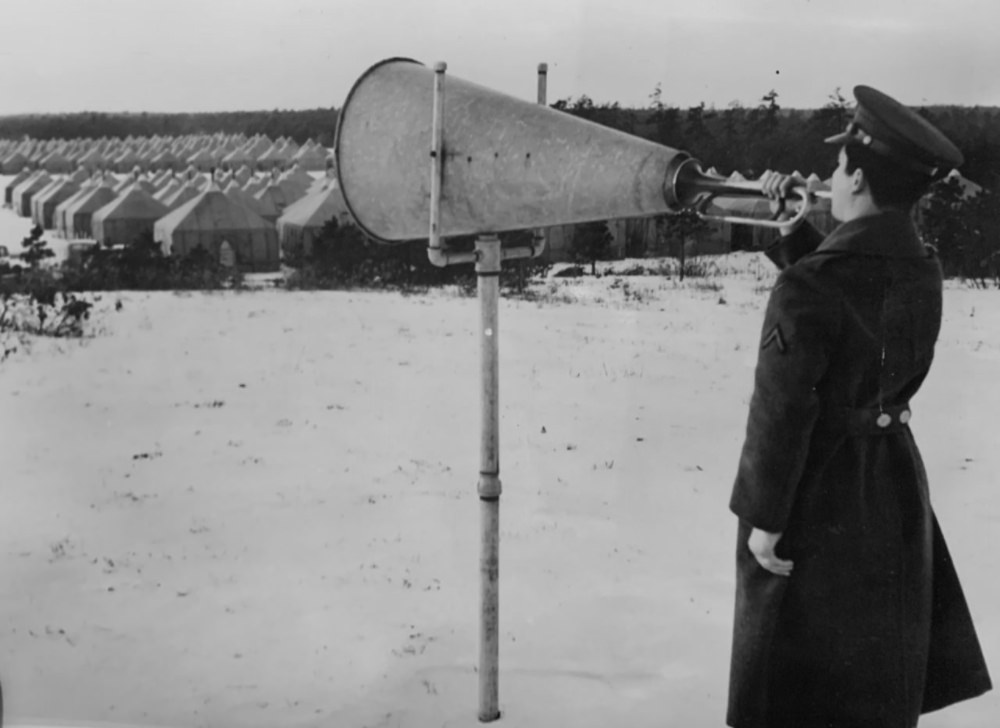
A megaphone works by guiding sound waves rather than simply making them louder. Sound enters the narrow end of the horn and travels outward through the wide, flared opening. This shape focuses the sound waves into a forward-moving beam instead of letting them scatter in all directions. The result is a stronger, more directional signal that carries farther across open ground.
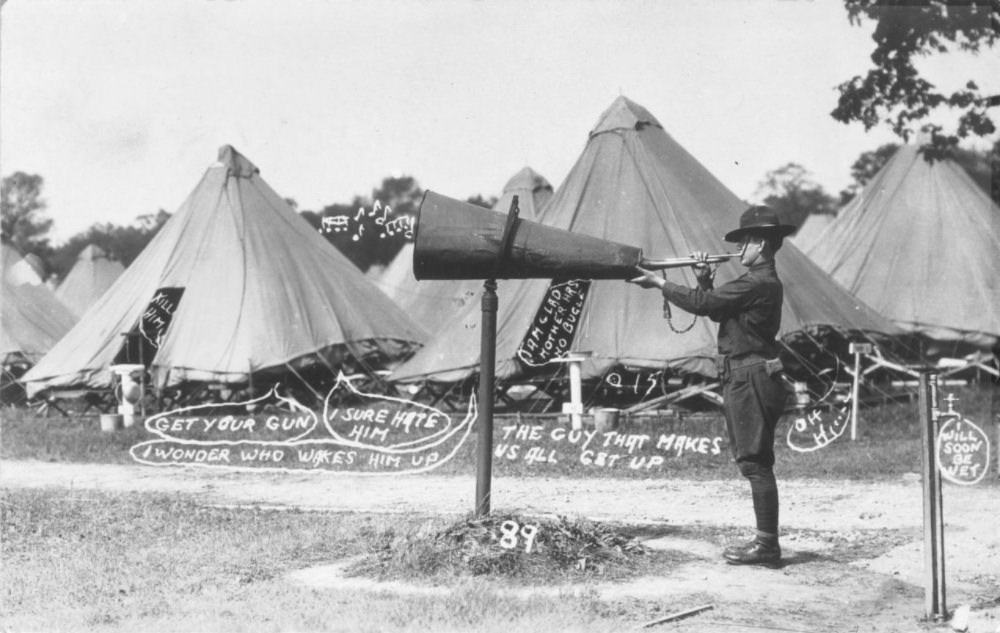
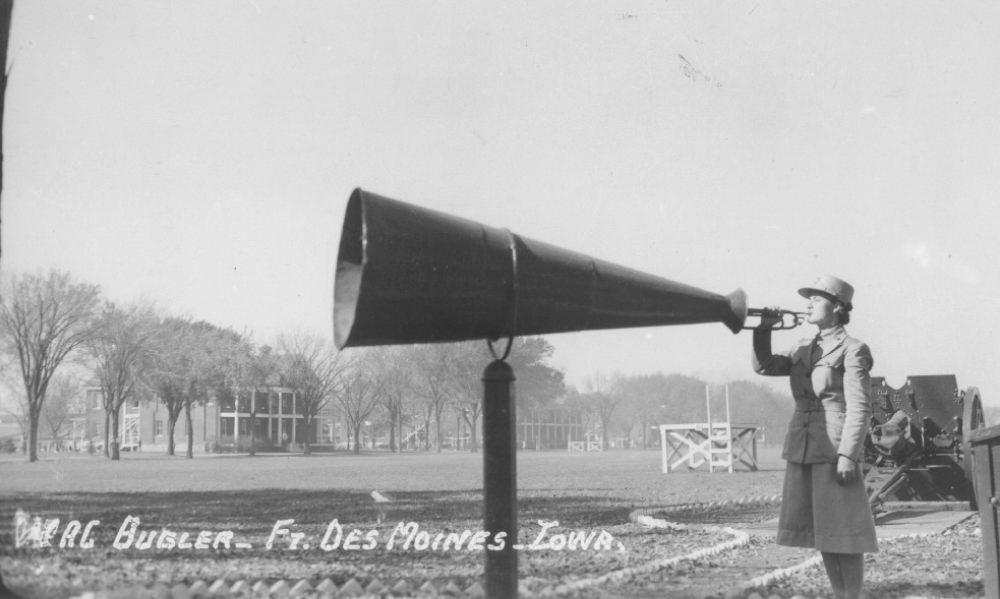
The physics behind the megaphone also explains why it amplifies sound so effectively. By increasing what is called acoustic impedance — essentially the resistance that sound meets as it moves from the source into the air — the horn matches the output of the sound source to the surrounding environment. For a vocal megaphone, this means the vocal cords produce more usable sound power. For a bugle megaphone, the same principle applies to the instrument’s bell, allowing more of the bugle’s energy to transfer into the air efficiently.
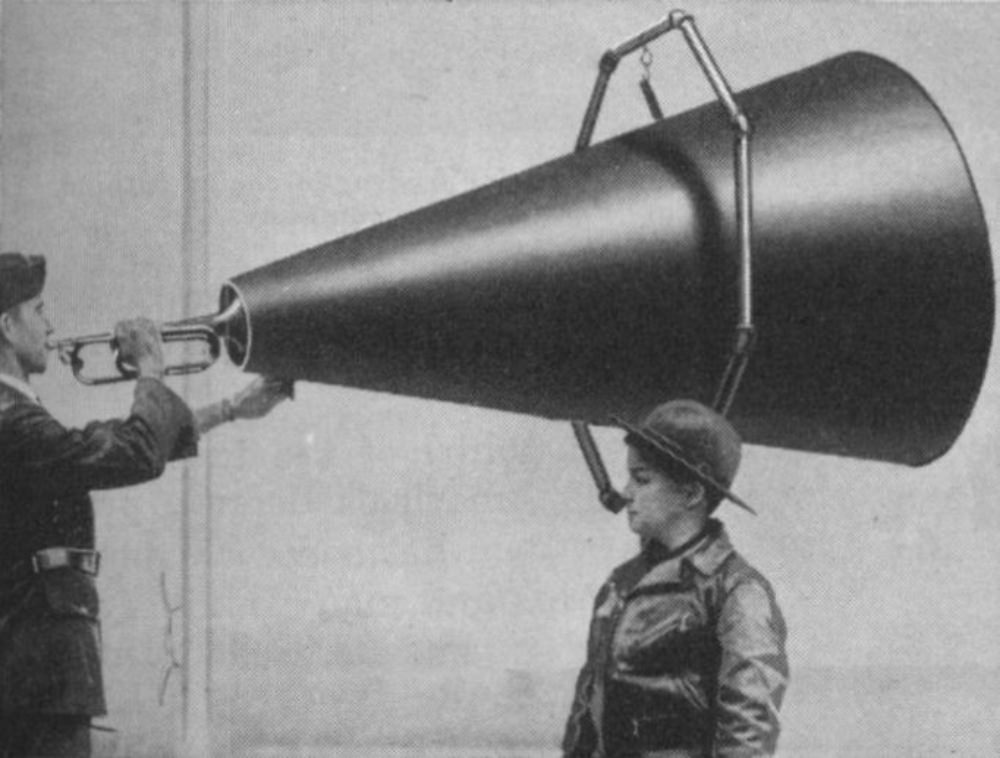
One trade-off with megaphones is a degree of sound distortion. The device responds more strongly to higher sound frequencies than lower ones. This means the tone of a bugle call heard through a megaphone sounds slightly different from the same call played in the open air. The higher notes come through with greater emphasis, while lower tones lose some of their natural depth. For military purposes, this was an acceptable compromise — clarity at distance mattered far more than tonal accuracy.
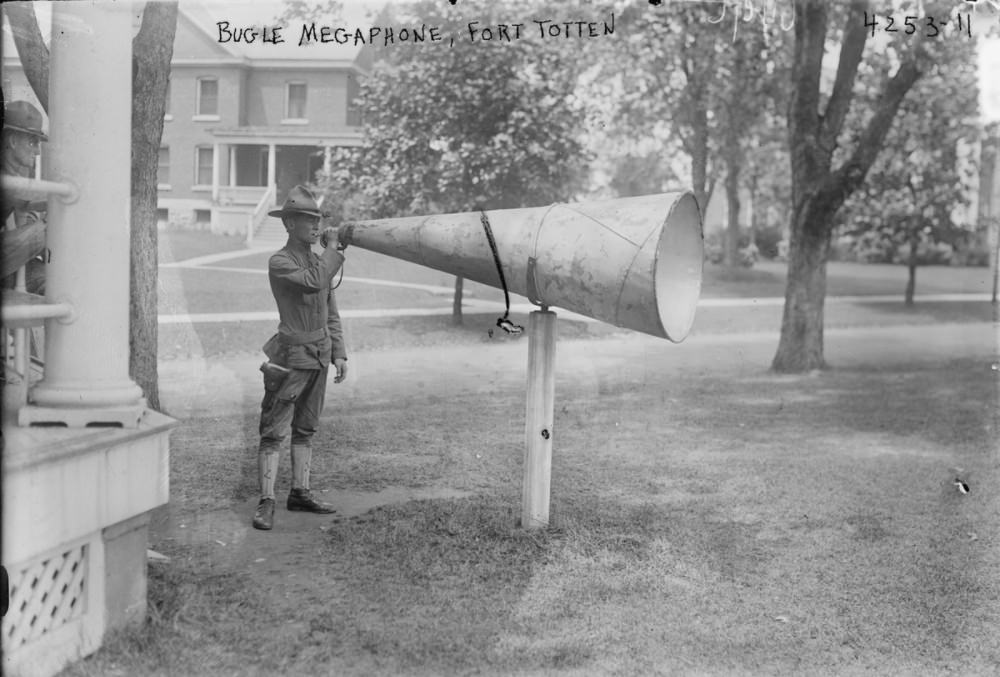
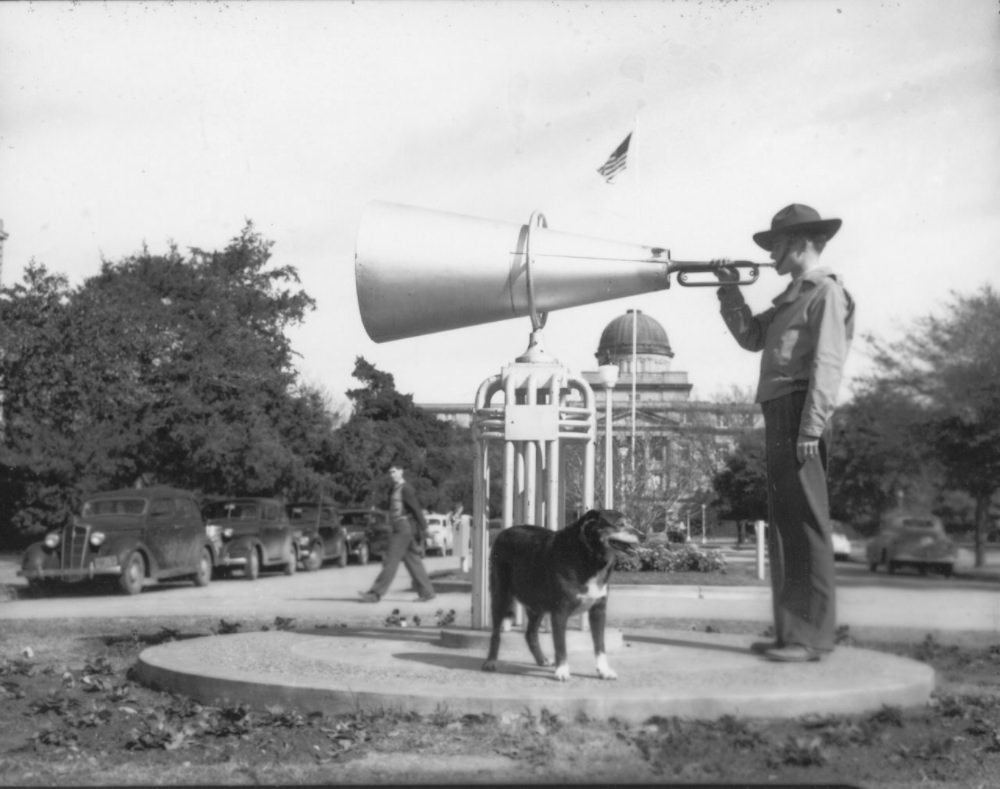
Standard megaphones, the kind used by coaches or crowd controllers, are portable and handheld. The bugle megaphone used on garrisons was a far larger, fixed version of this concept. Its size alone gave it greater amplification power. When a bugler played reveille, taps, or any other standard call into one of these mounted horns, the sound traveled across distances that would have been impossible without it.
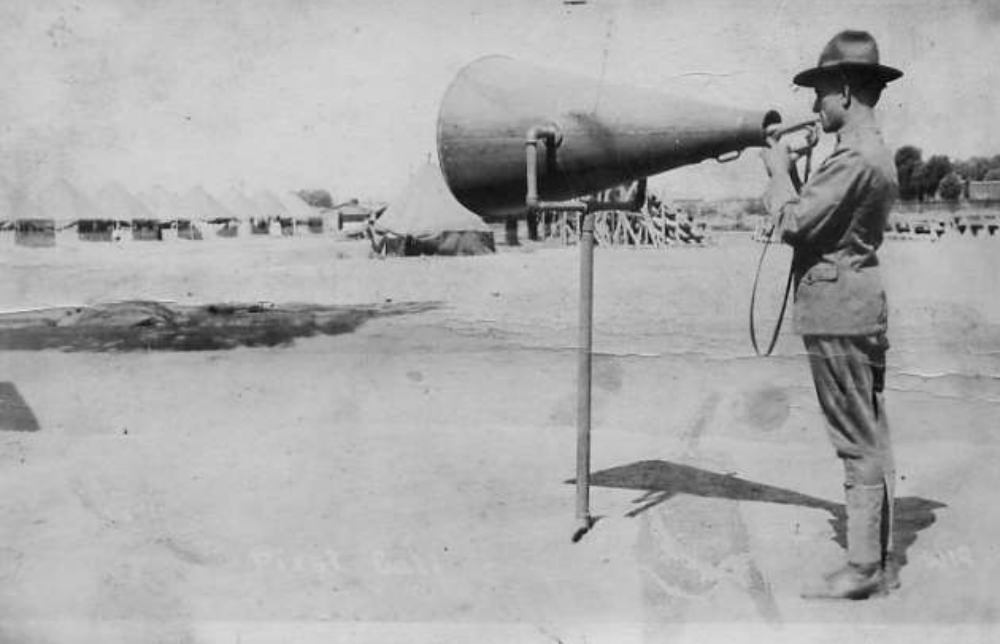
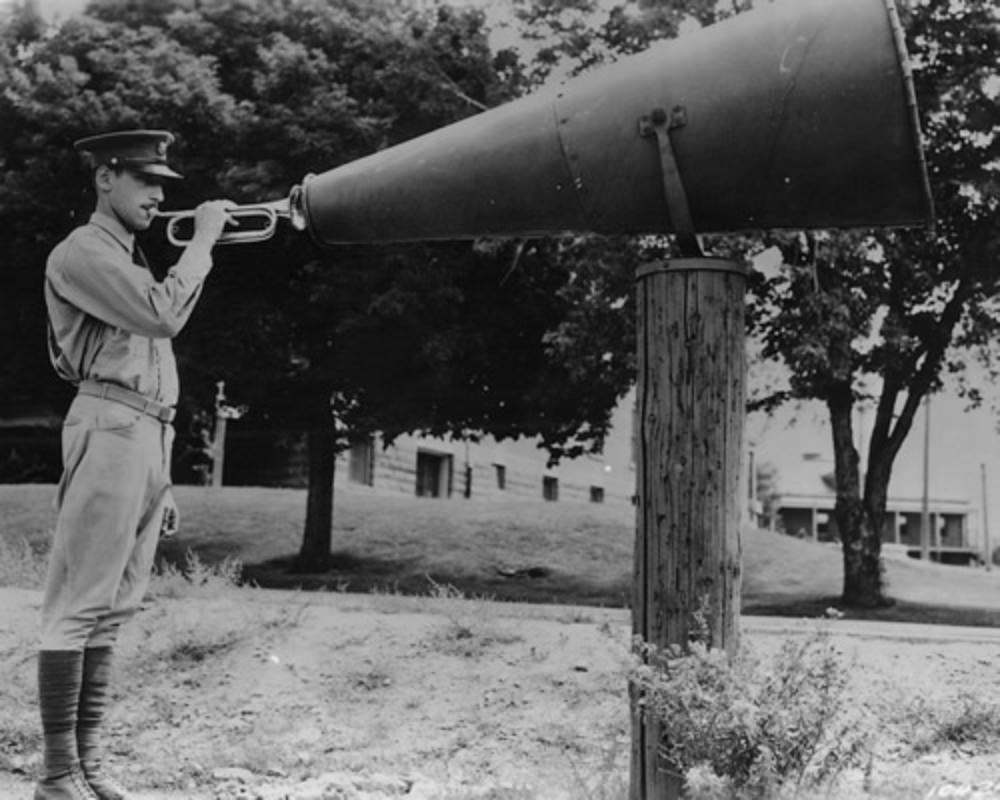
The swivel mount was a key feature that separated the garrison megaphone from a simple stationary horn. A fixed horn only serves the area directly in front of it. With a swivel, one bugler could cover the full 360-degree layout of a base without moving from the post. This made it a highly efficient tool for a single soldier to communicate across an entire installation.
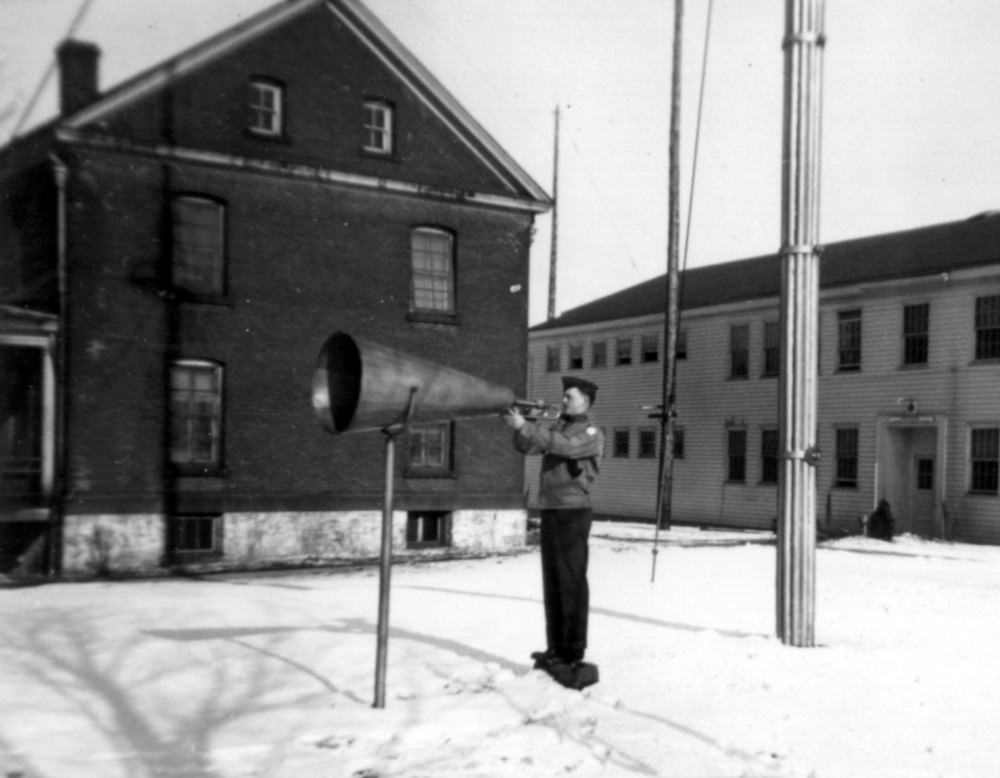
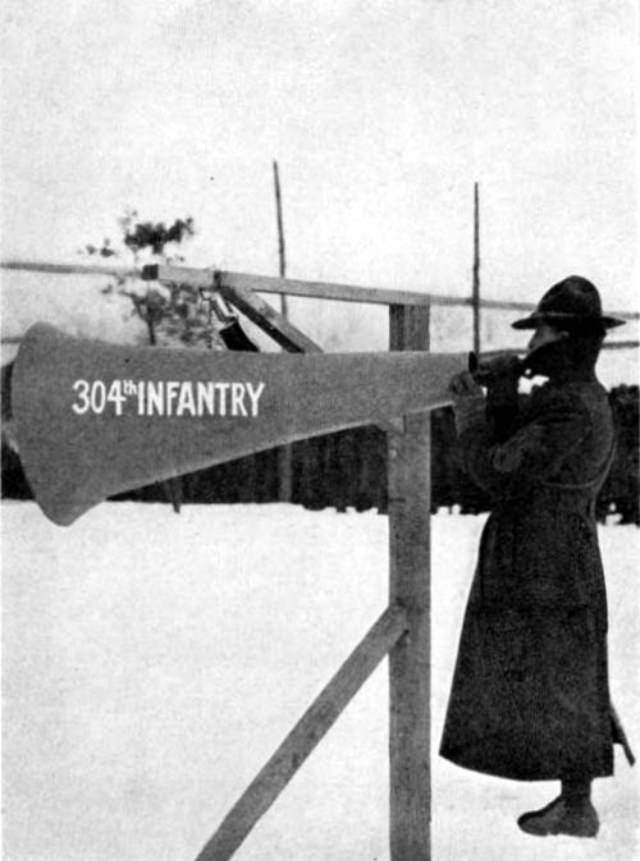
These devices represent a straightforward but clever piece of military engineering. No electronics, no power source, no moving parts beyond the swivel — just the geometry of a horn doing exactly what physics allowed it to do.