In the summer of 1940, the United States Army stood at a crossroads. War had already swept across Europe, and German armored units had torn through France with stunning speed. The Army’s response was to create the Armored Force — a new branch dedicated entirely to tanks, armored doctrine, and the soldiers who would crew them. Fort Knox, Kentucky, became its home.
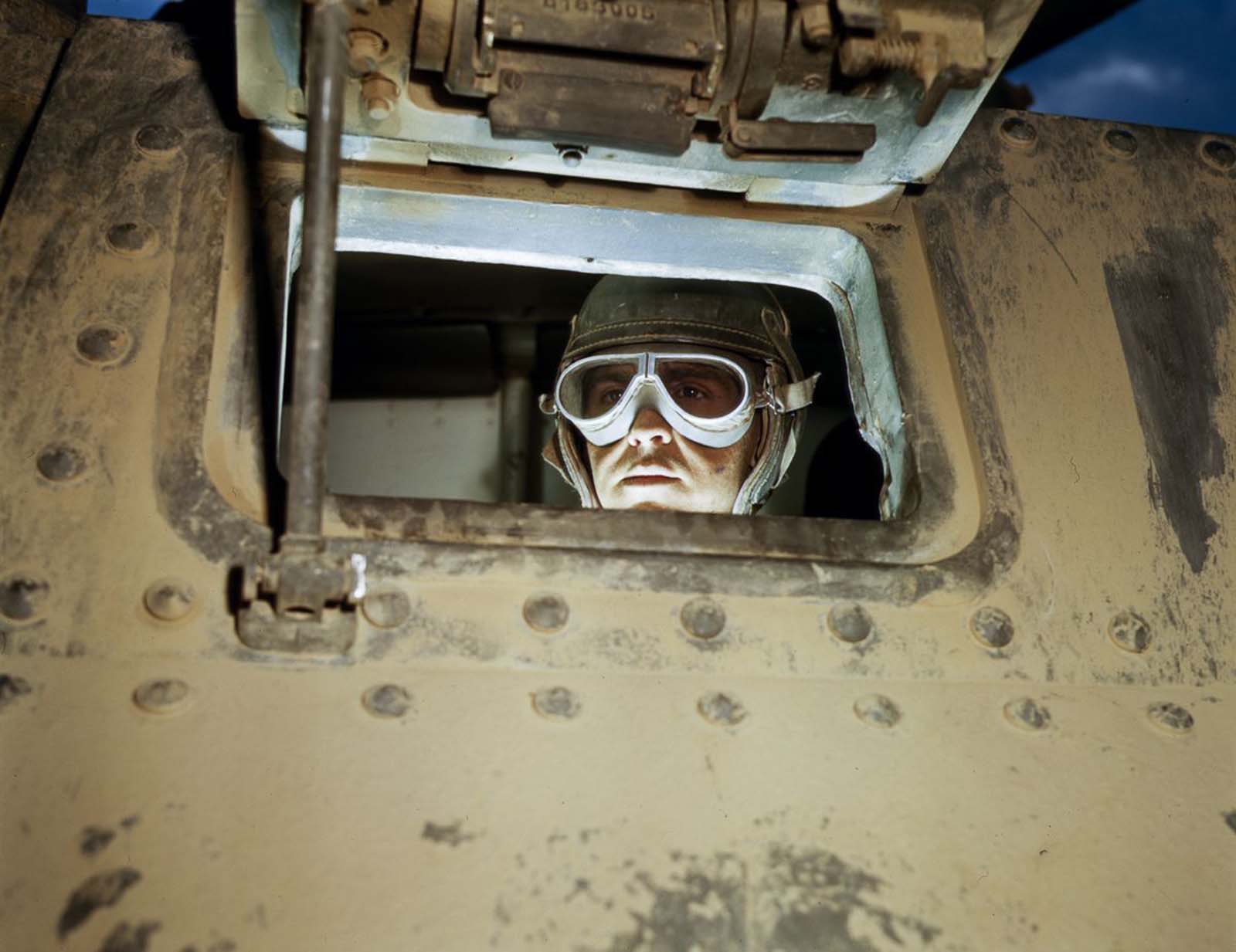
Fort Knox had a longer mechanized history than most people realize. As far back as 1931, Camp Knox served as a training ground for the mechanized cavalry. It became a permanent garrison in 1932 and was officially renamed Fort Knox. The 1st Cavalry Regiment (Mechanized) arrived shortly after, and by 1936, the 1st and 13th Cavalry Regiments had merged into the 7th Cavalry Brigade (Mechanized). When Germany’s blitzkrieg tactics proved devastatingly effective in 1939 and 1940, the Army moved fast. In July 1940, the 7th Cavalry Brigade was reorganized as the 1st Armored Division, and the new Armored Force officially stood up at Fort Knox.
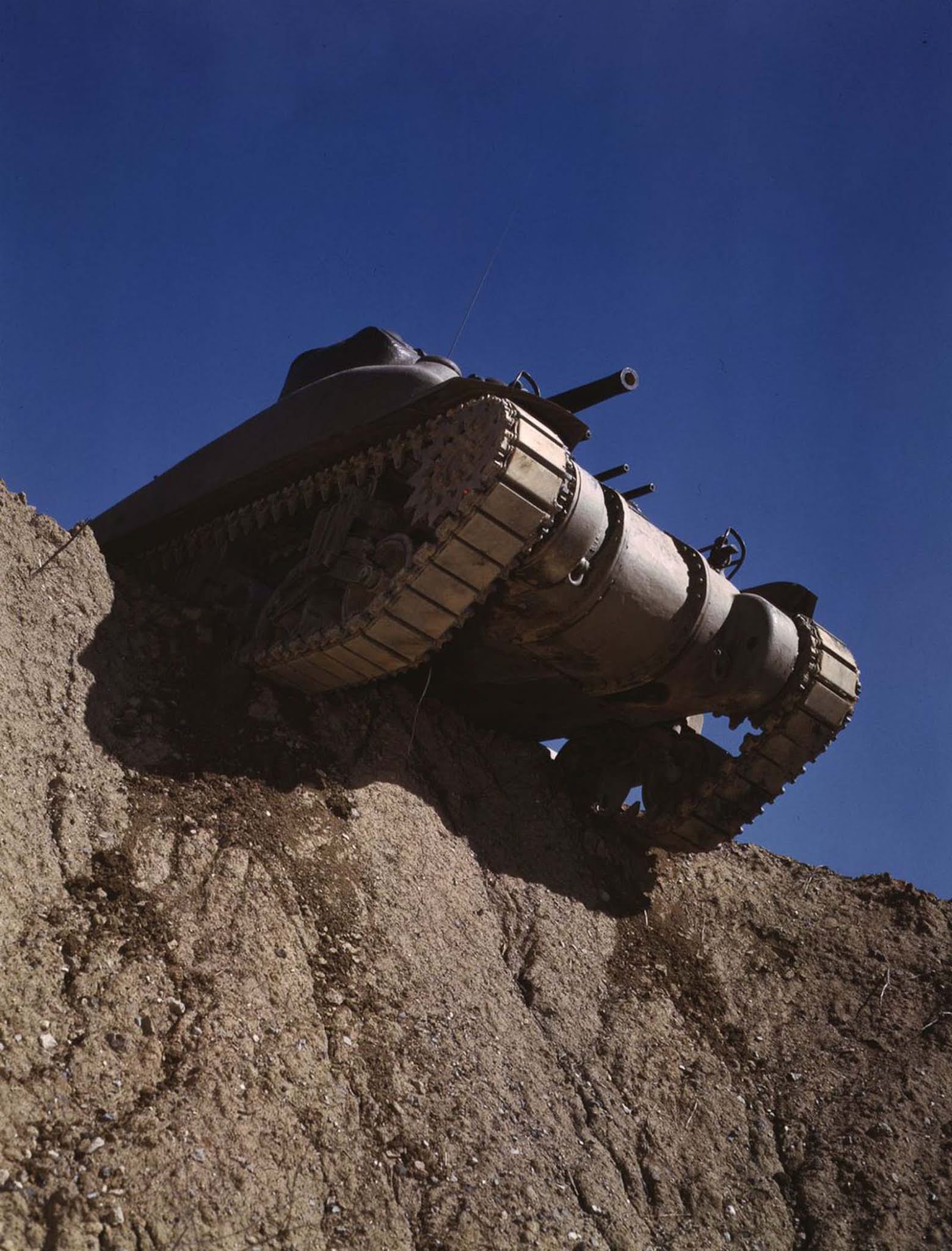
Thousands of citizen soldiers poured into Fort Knox under the Selective Service system. Most had never been near a tank. The post had to grow rapidly to handle them — by 1943, Fort Knox contained 3,820 buildings spread across more than 106,000 acres. In 1942, Office of War Information photographer Alfred T. Palmer visited the installation and captured the training in vivid color. His photographs show men and machines at a pivotal moment in American military history.
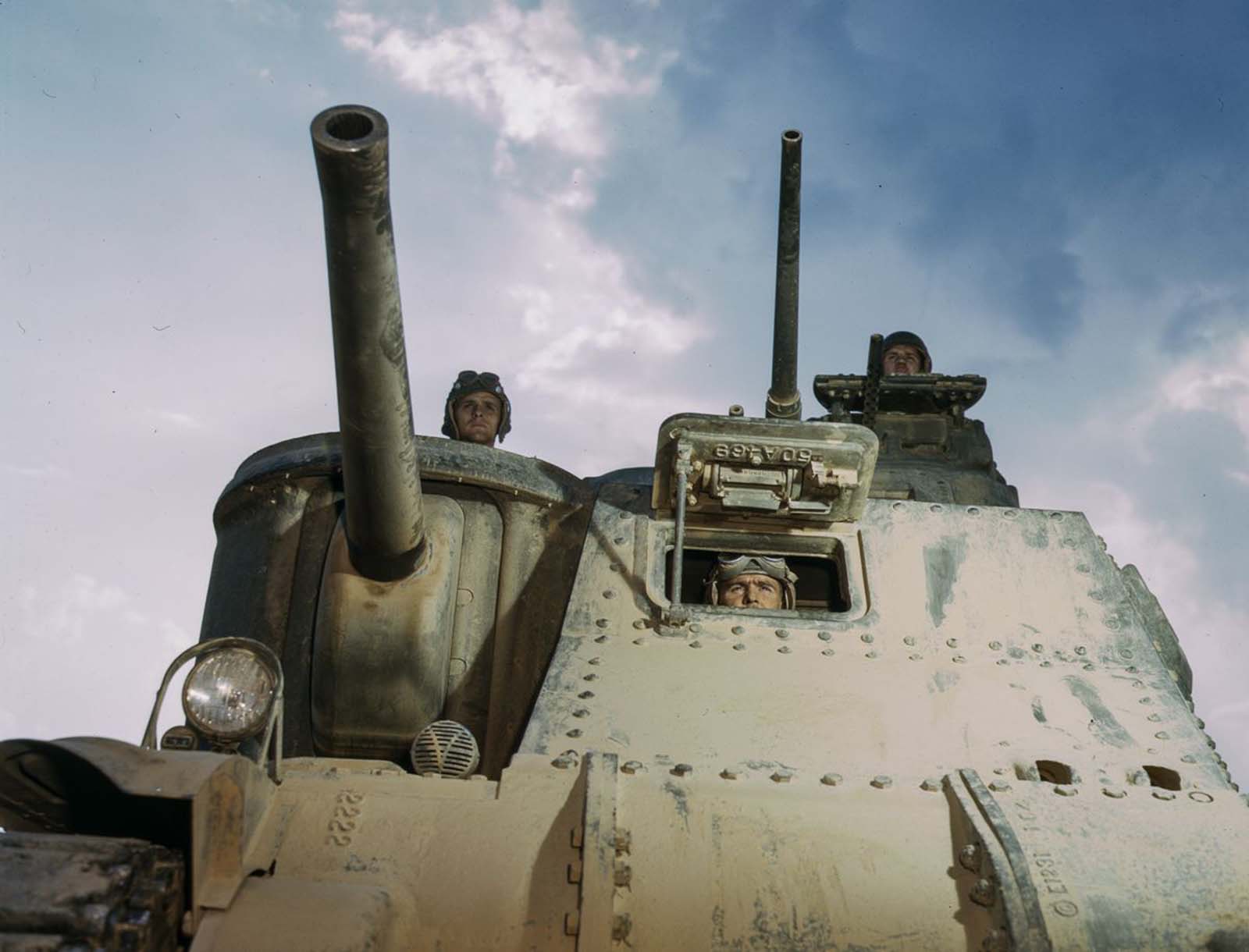
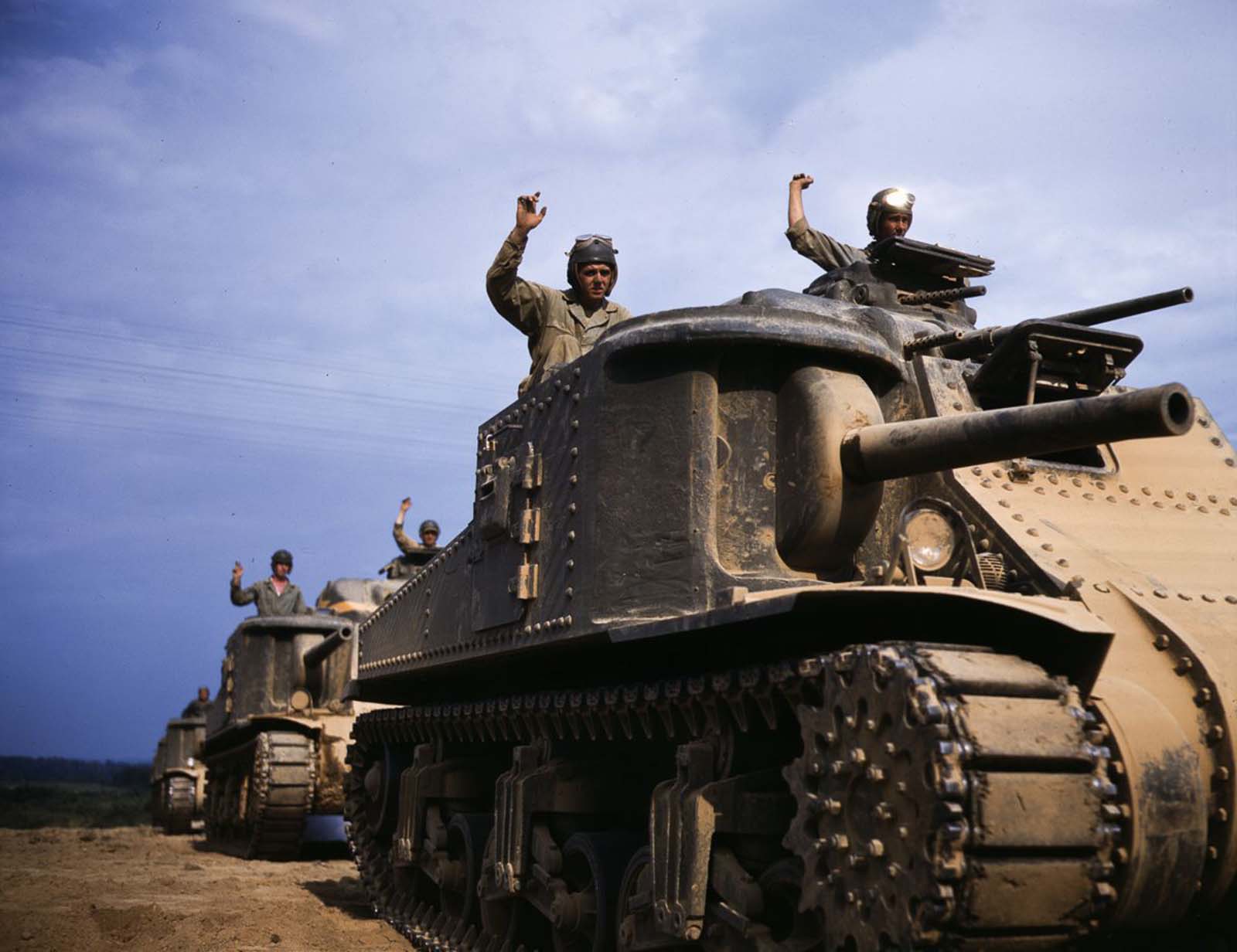
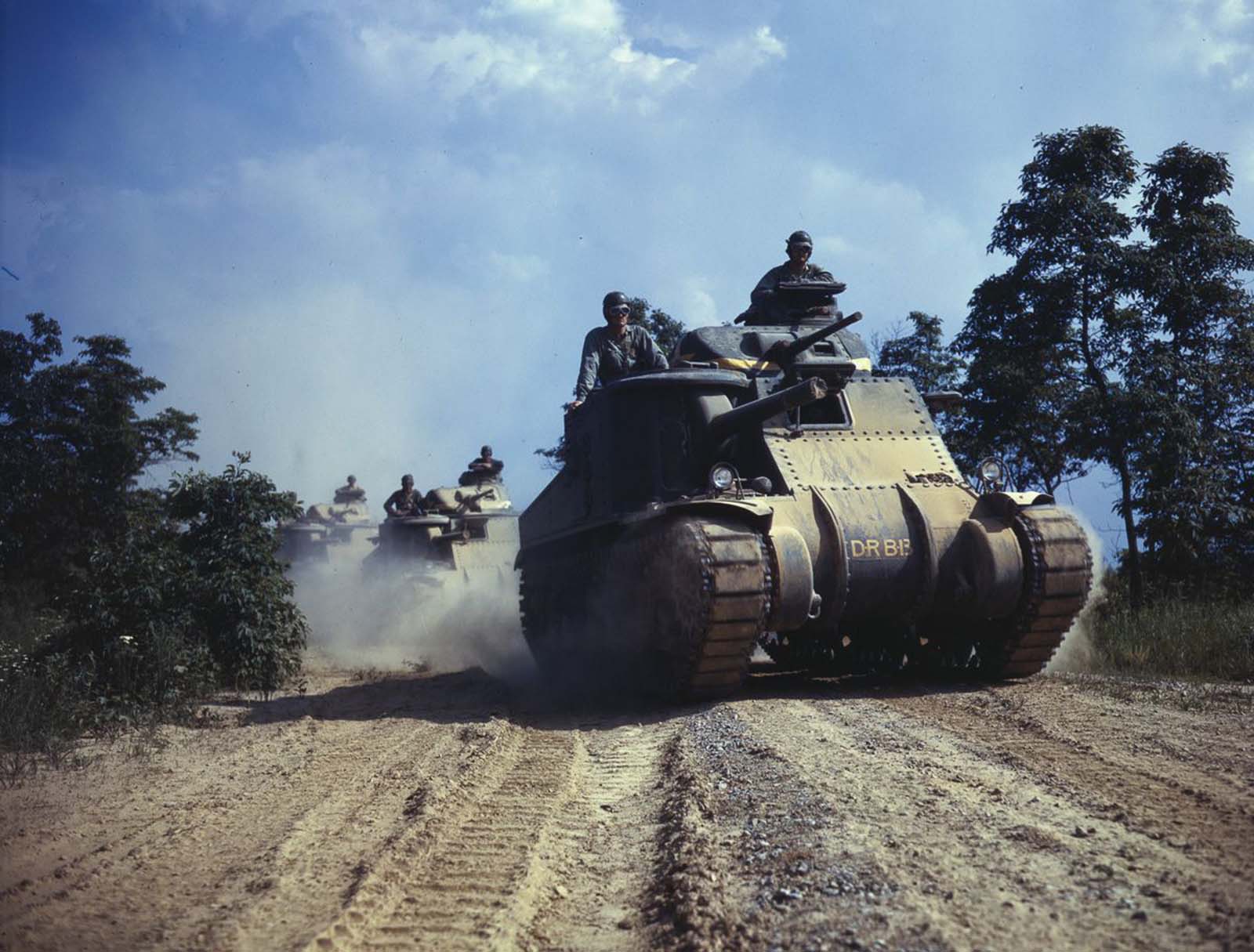
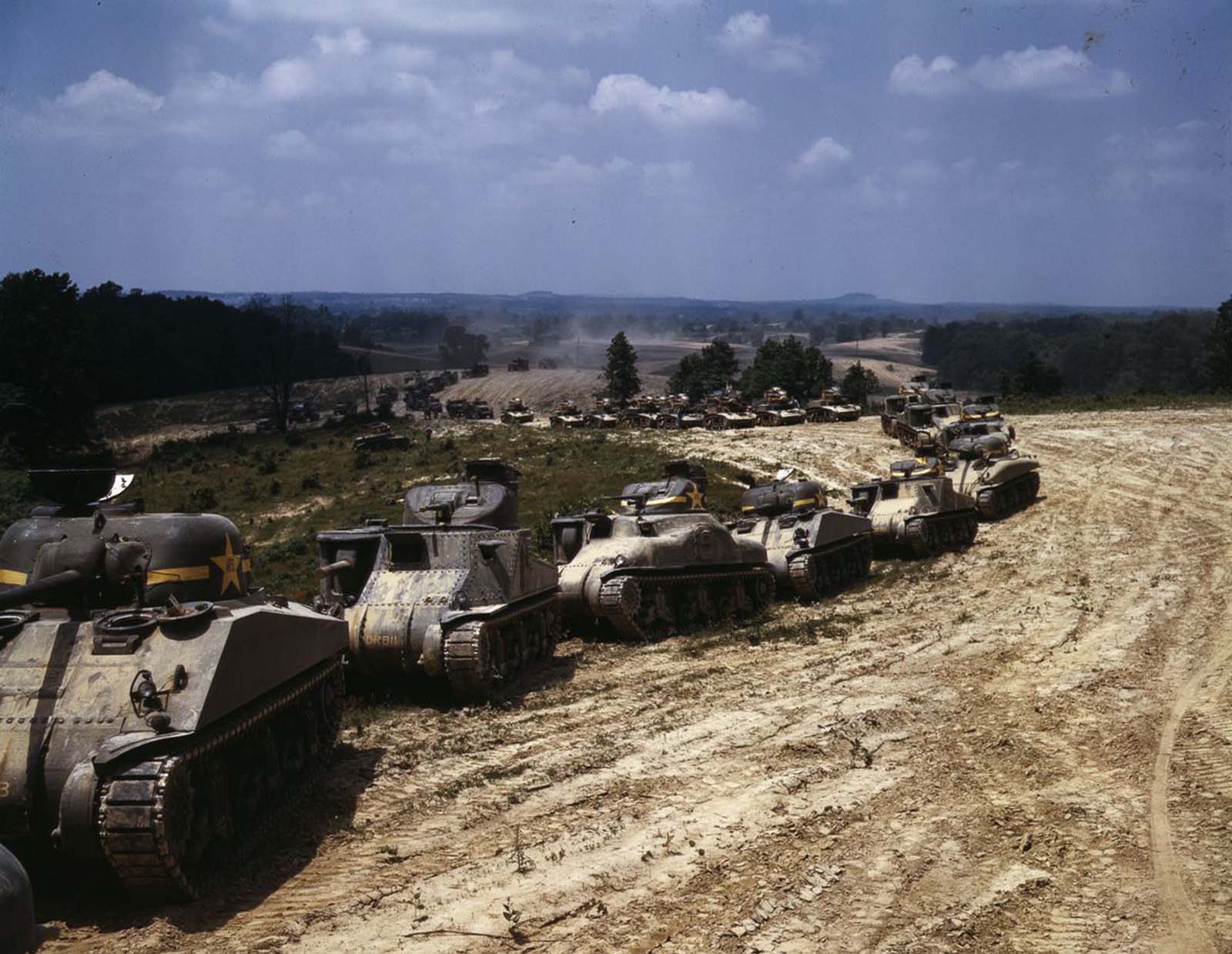
Palmer’s photos document at least four variants of two tank types. The most common machine in the images is the M3 Lee, a medium tank built on 1939 technology. It was designed and mass-produced as a stopgap — the Army needed tanks in large numbers quickly, and the Lee filled that gap. It was not a cutting-edge design, but it was available. The Army’s most widely used tank at the time was actually the M3 Stuart, a light tank that was well built but already becoming outdated by 1942.
The newer M4 Sherman was just entering production in February 1942, right around the time Palmer took these photographs. The Army was preparing to ship M4A1 Shermans to North Africa, where they would replace British tanks lost during the fighting in the Western Desert. In the early battles against German armor in North Africa, the M4 and M4A1 performed well. The Sherman was a capable machine for its time.
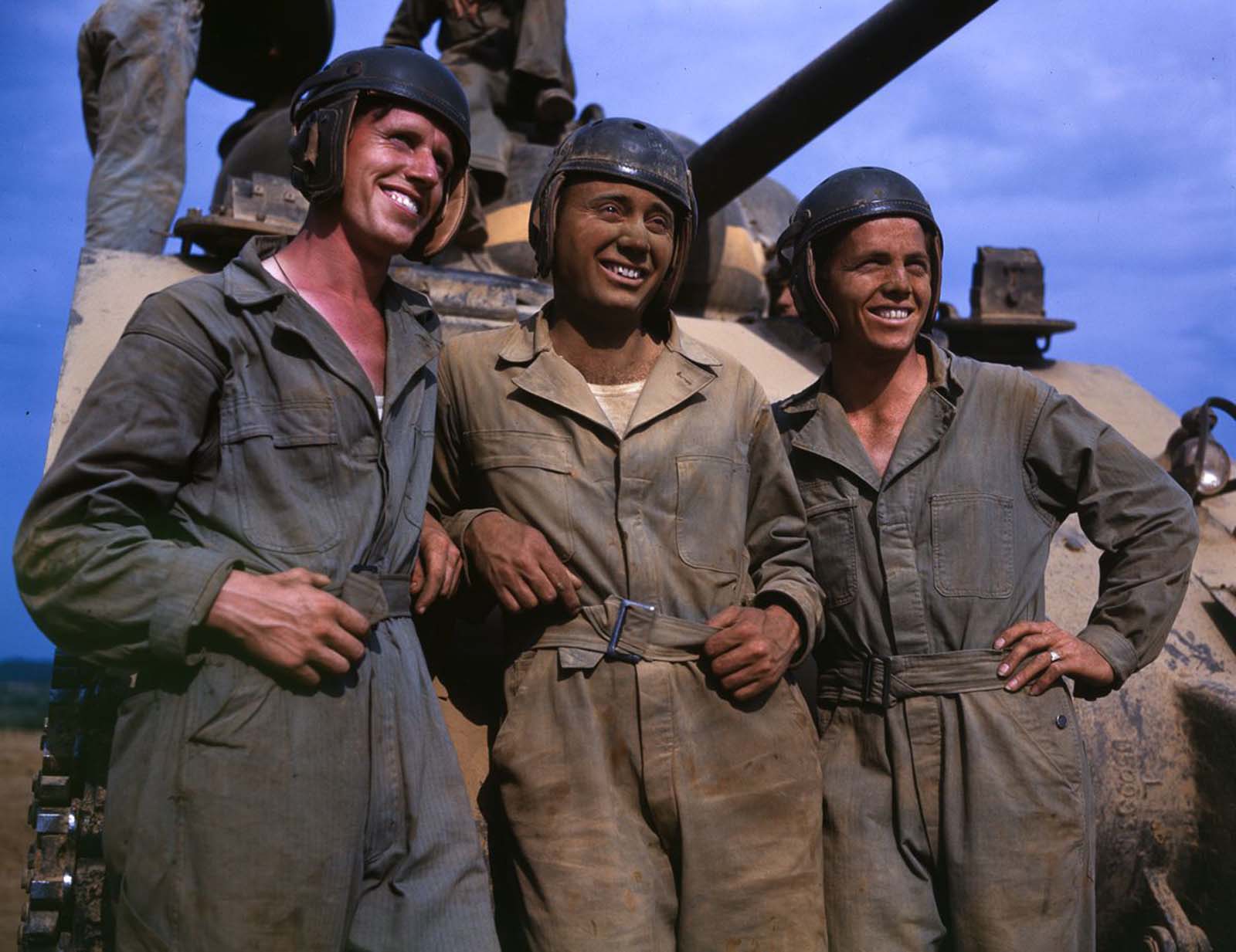
However, the Army chose to prioritize production over continuous improvement. Rather than developing more powerful guns and heavier armor as the war evolved, commanders believed upgrades could wait while factories focused on output. That decision had real consequences for the soldiers who crewed these tanks later in the war. The Sherman, while not the death trap it was sometimes labeled — particularly after modifications — fell behind German tank development as the conflict wore on, and Allied crews paid the price.
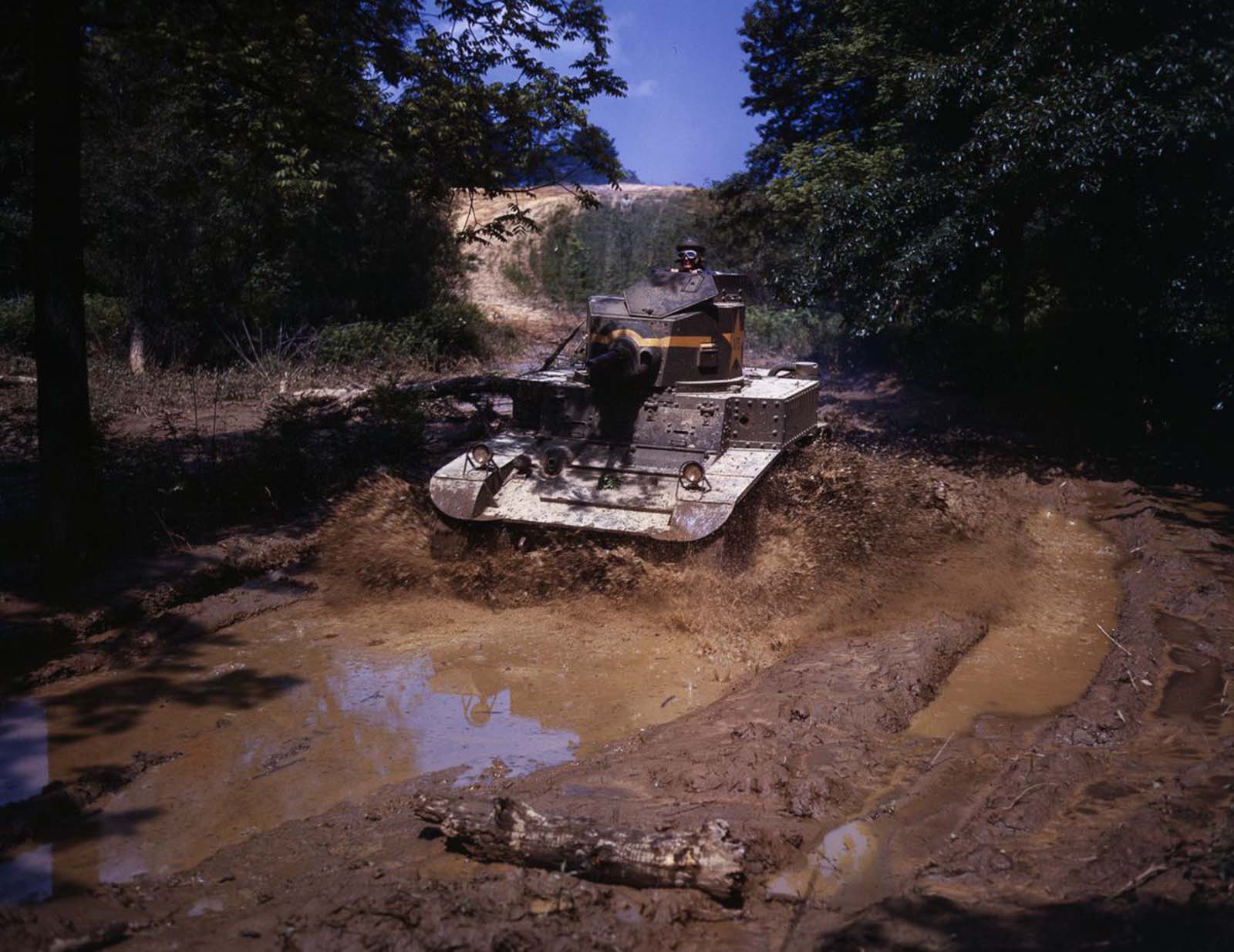
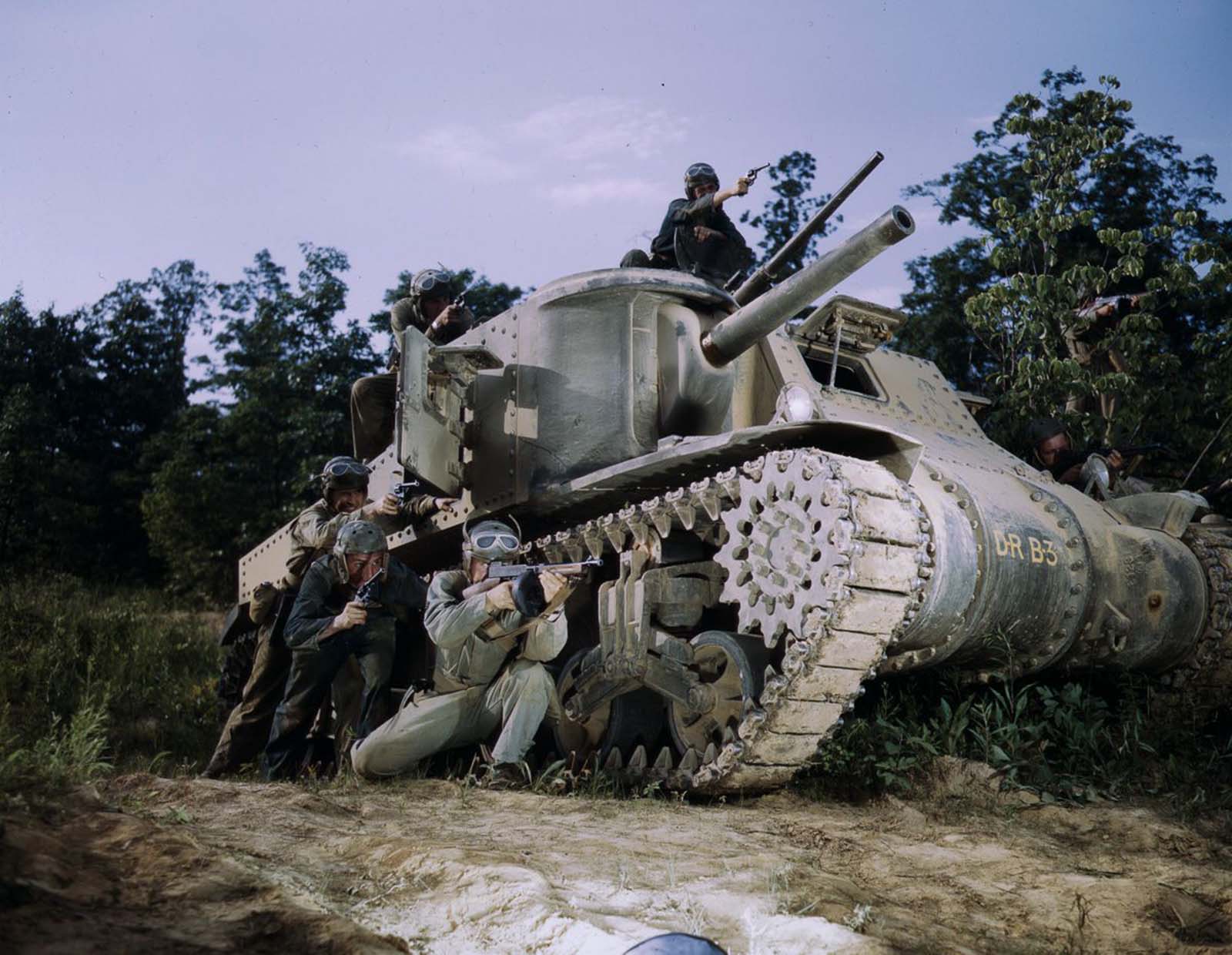
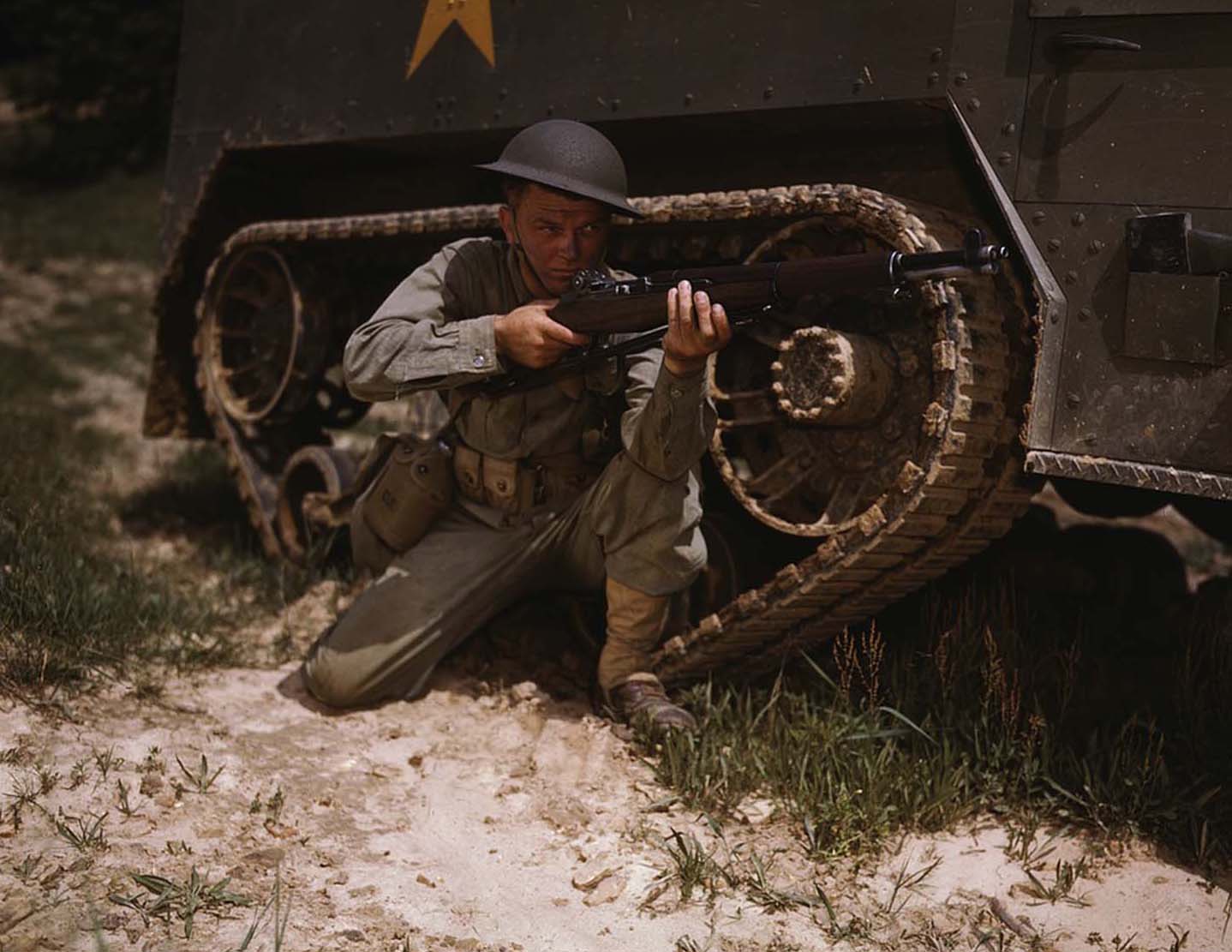
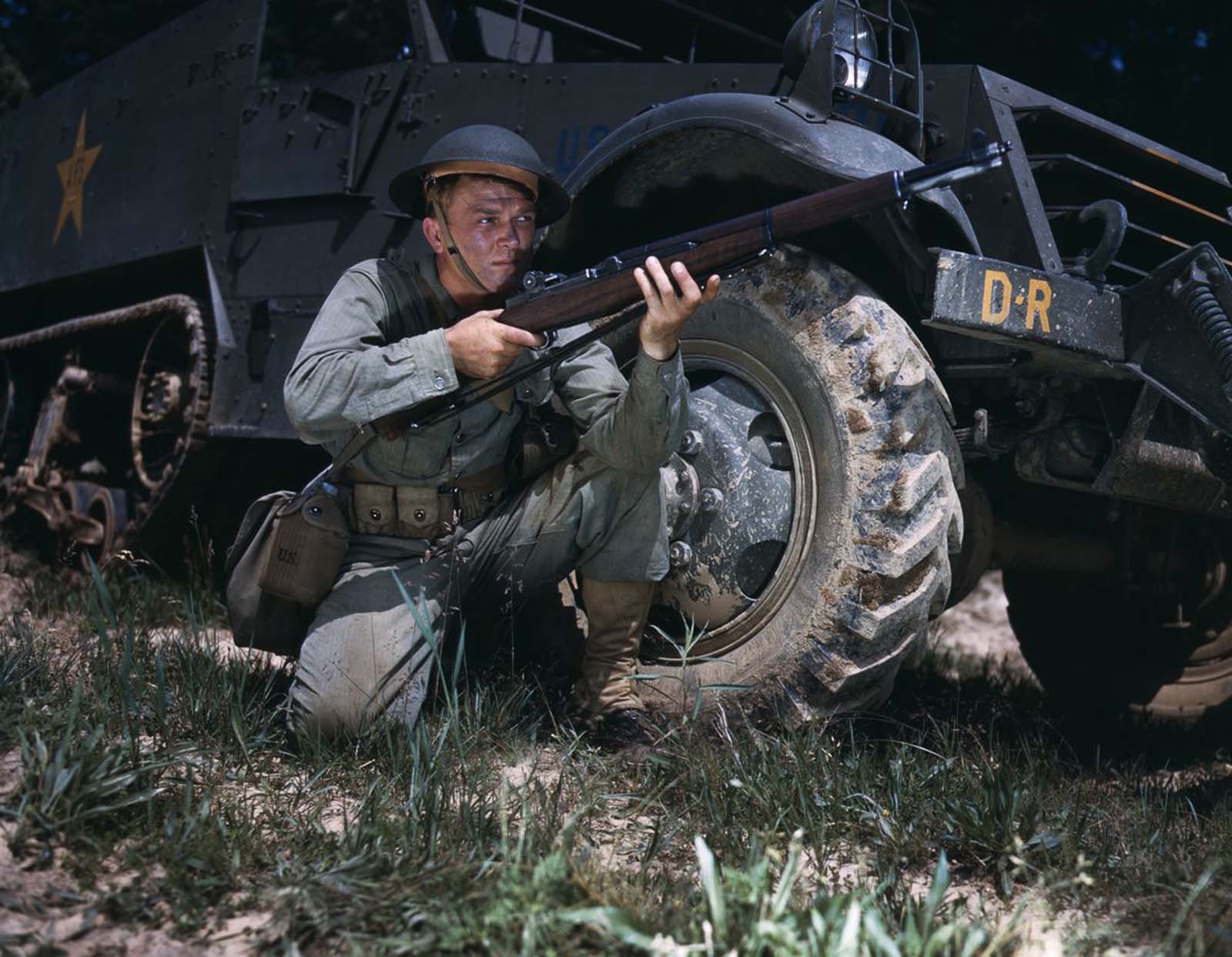
Palmer’s images go well beyond tanks. They show infantrymen training alongside armored vehicles, a reminder that tank warfare was never a solo act. Armored units operated with infantry, mechanics, and support crews all working in coordination. Some of the tanks in the photos are without weapons — pulled together for the photographer to document the training environment rather than combat-ready configurations.
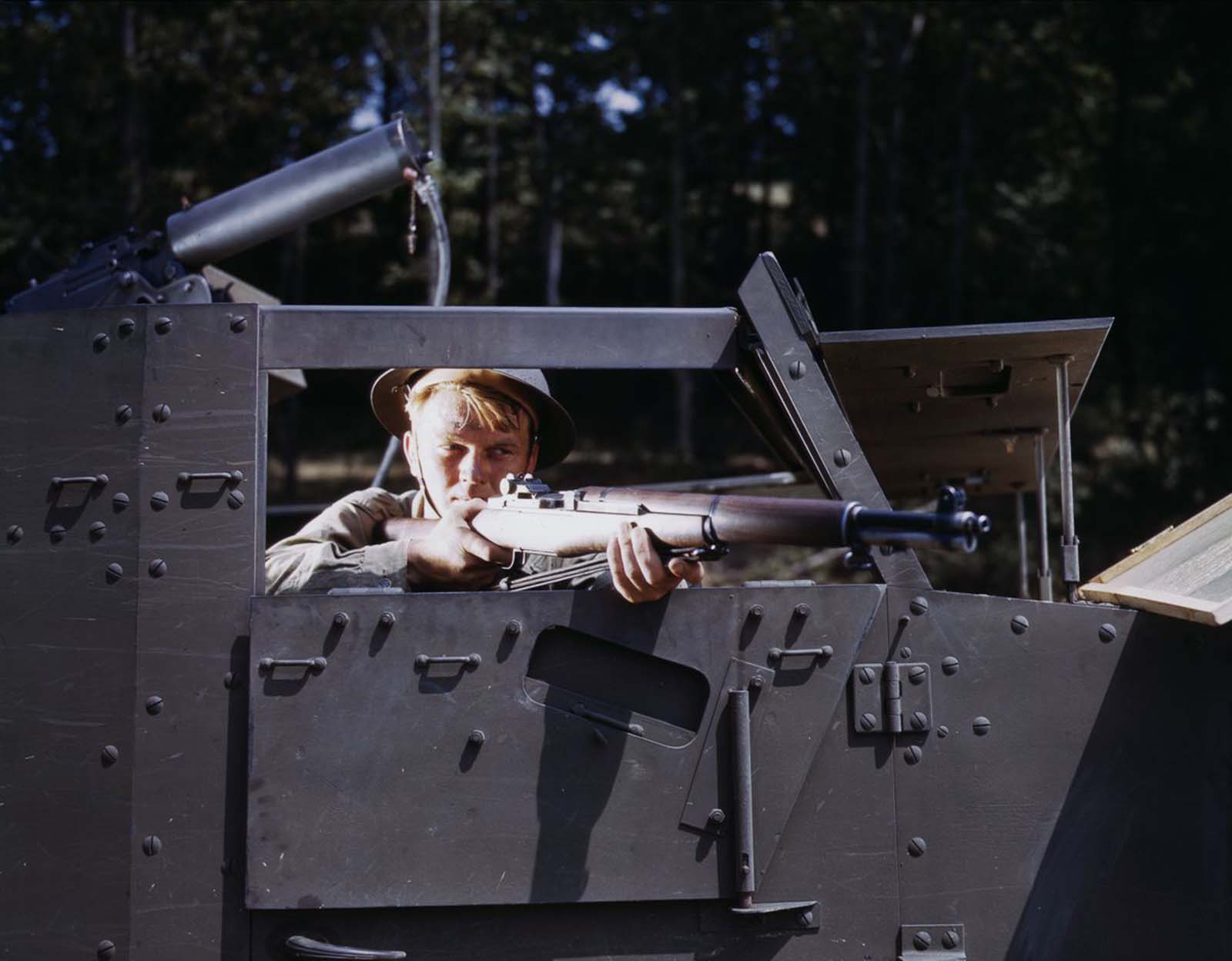
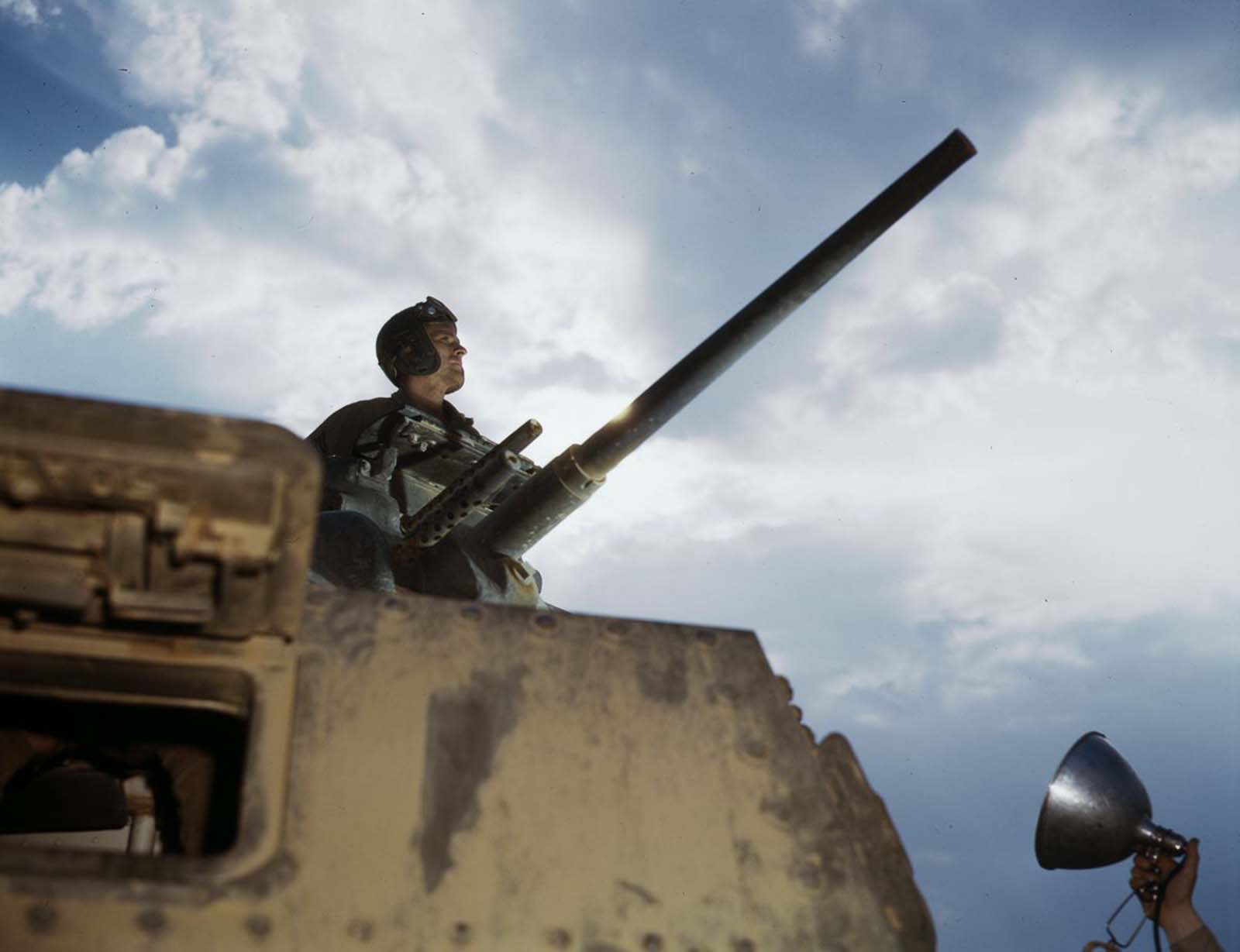
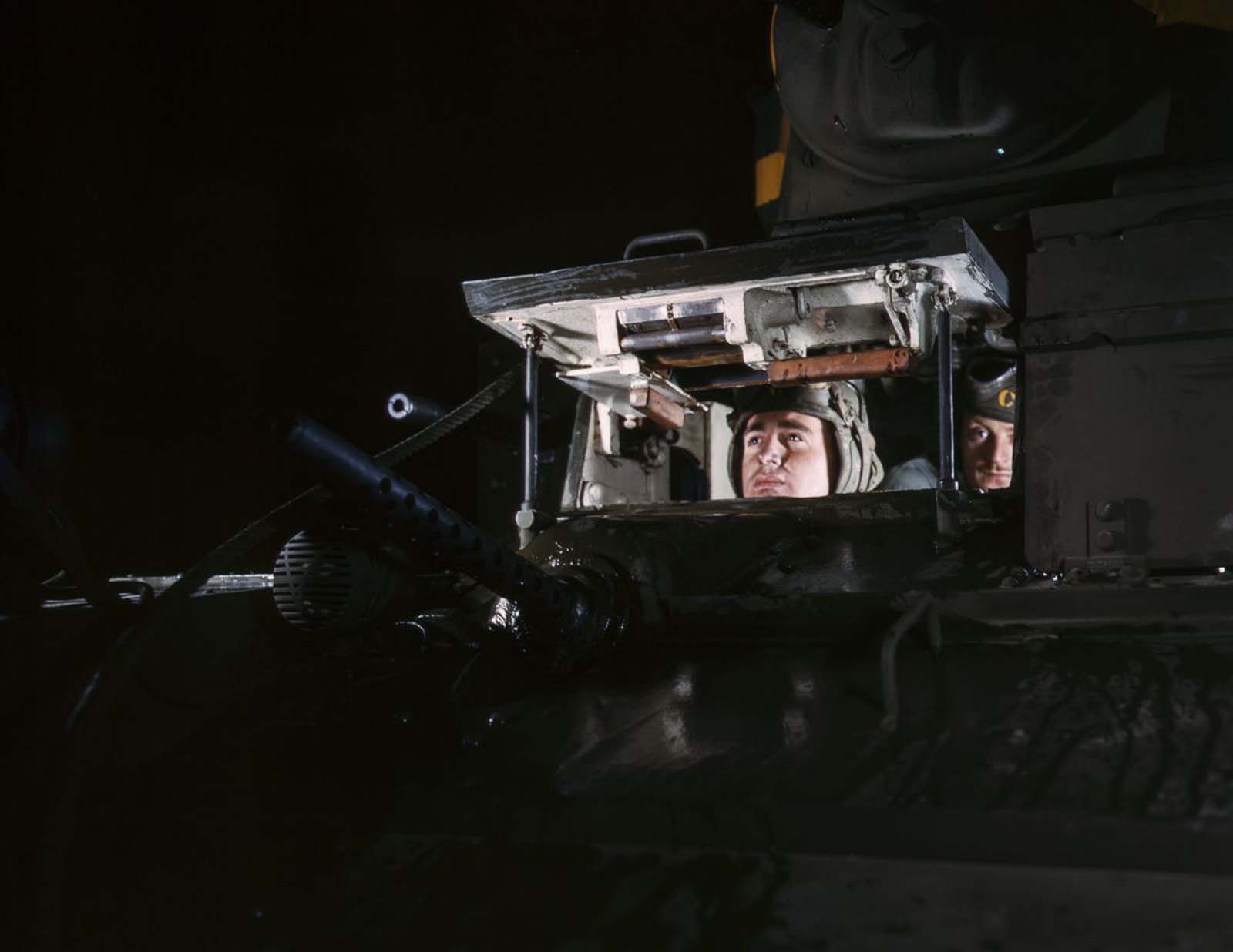
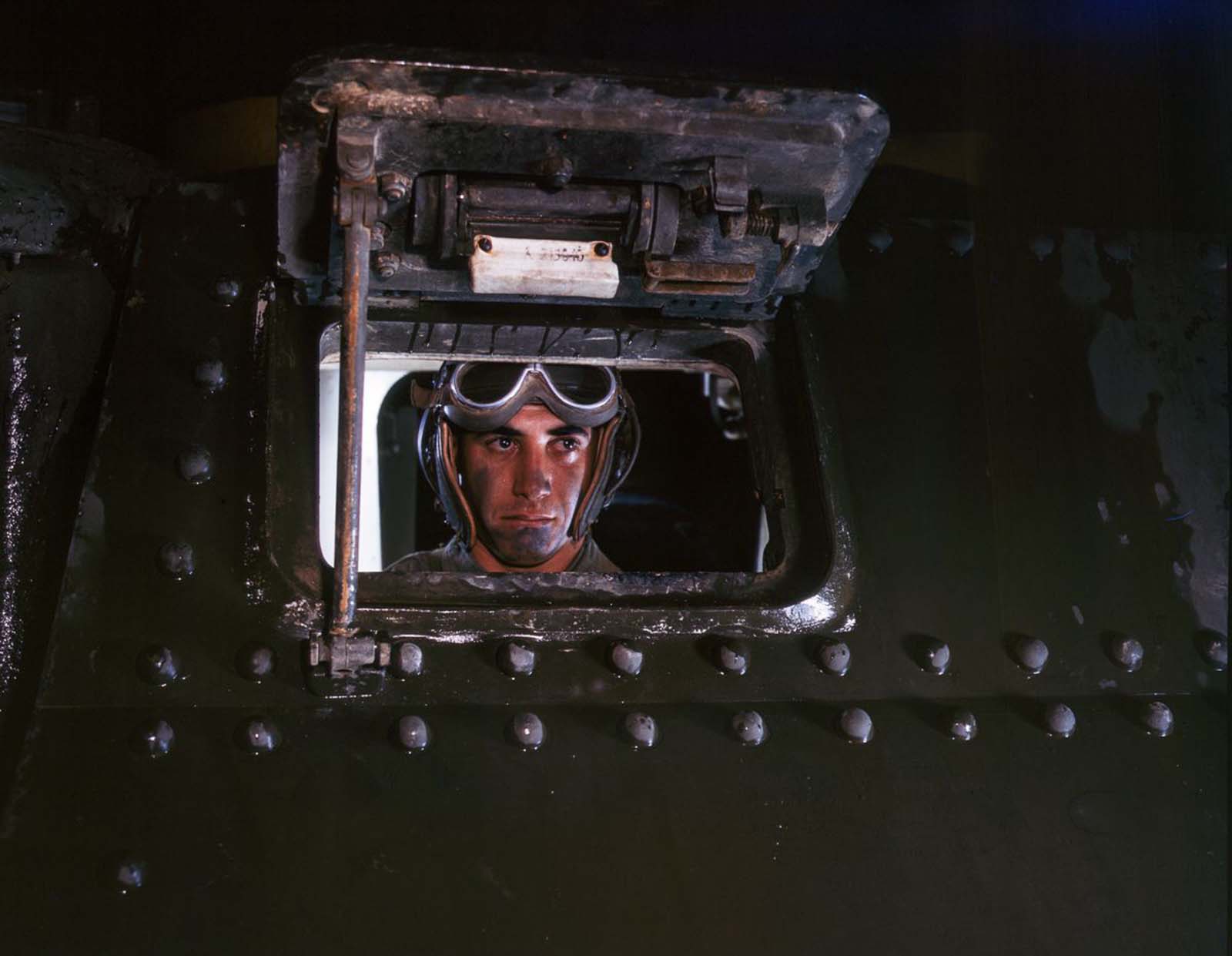
The men in these photographs were not professional soldiers. Most were ordinary Americans drafted into service and handed over to the Armored Force at Fort Knox. They learned quickly. Instructors drilled them on tank operation, gunnery, tactics, and maintenance — everything needed to function as a crew under fire. The training was intense by design, because the Army knew these men would be in combat within months.
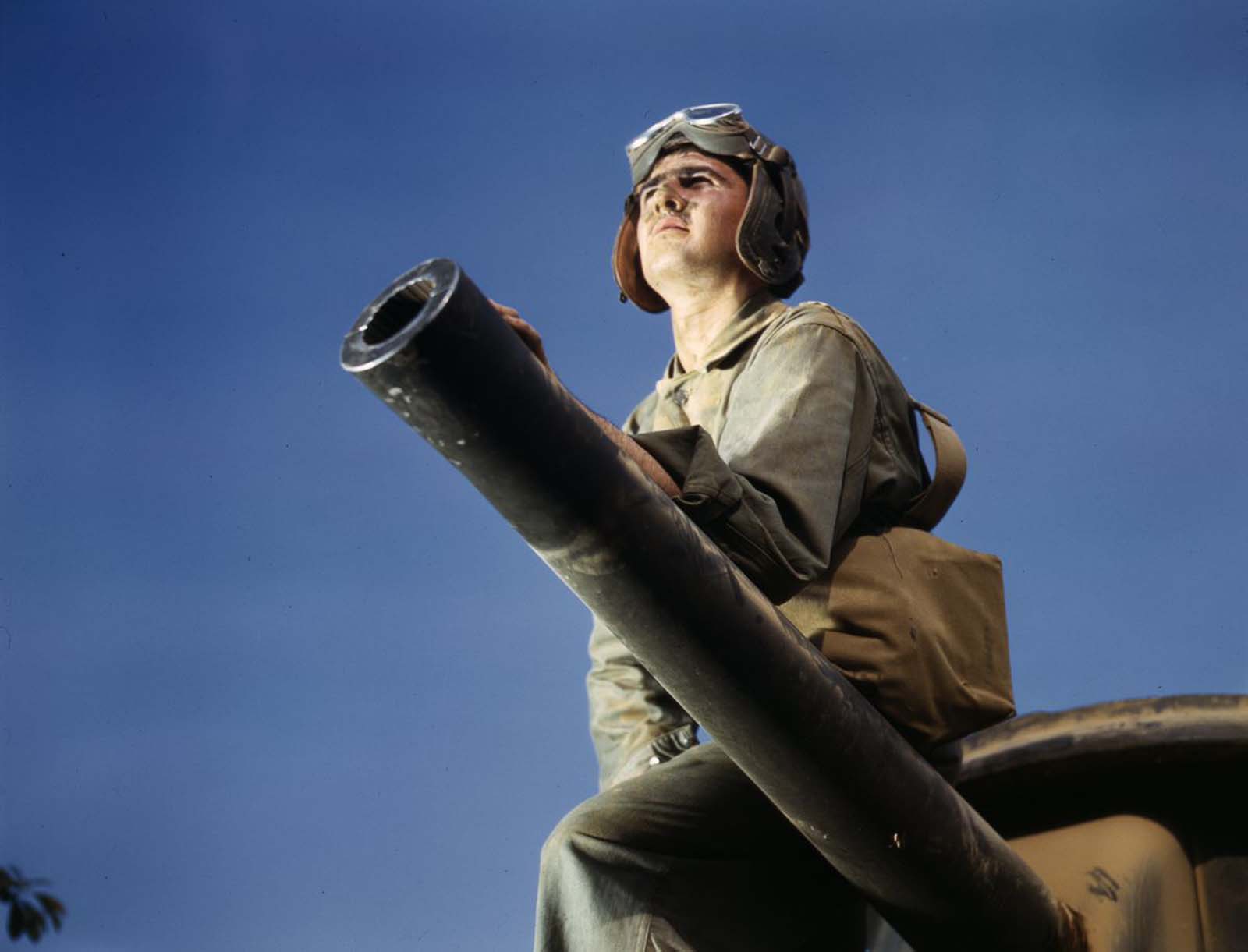
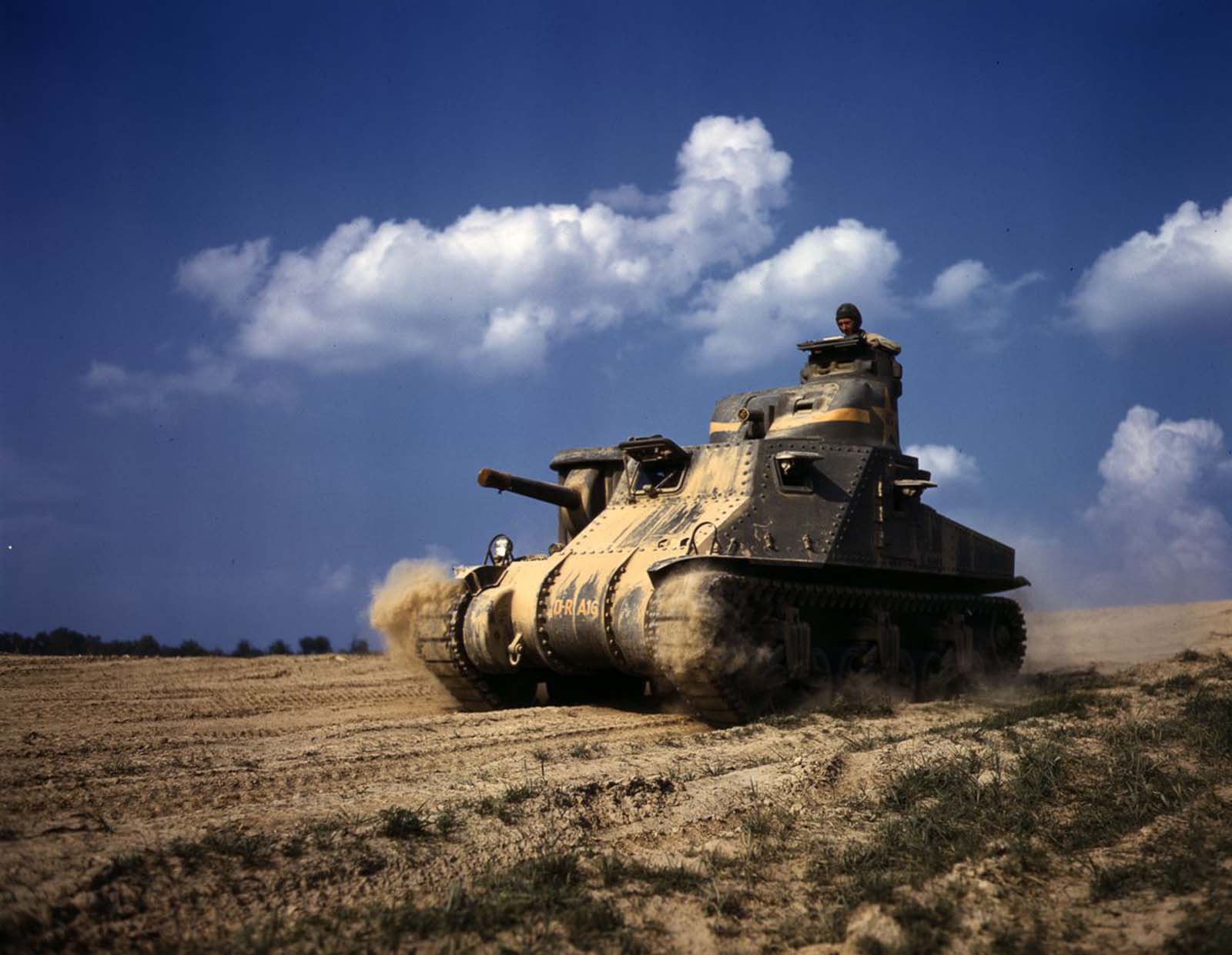
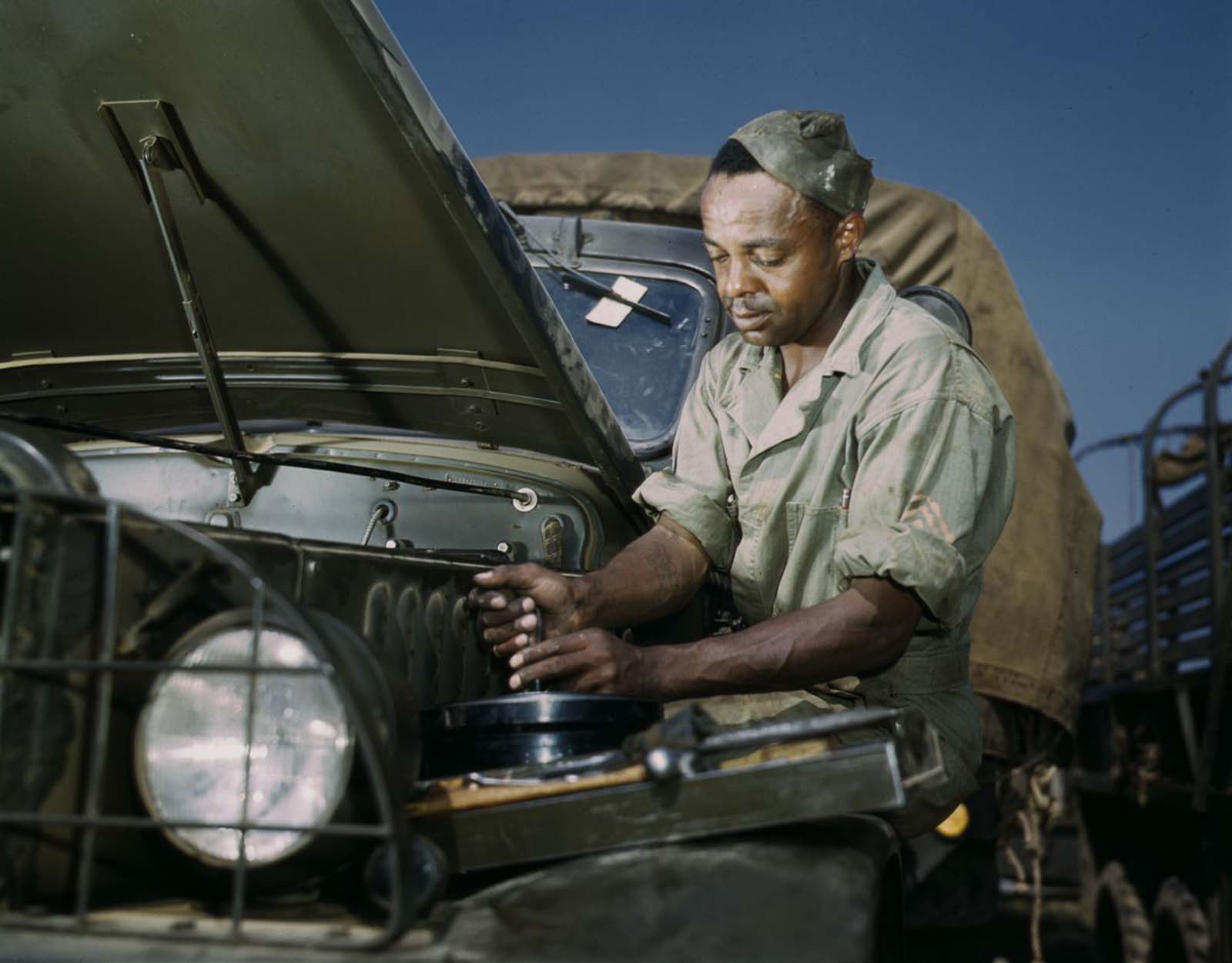
Keeping tanks running was as important as knowing how to fight them. Maintenance crews worked constantly on engines, tracks, and weapons systems. A tank that broke down in the field was a liability, and the men trained at Fort Knox were expected to handle basic repairs themselves.
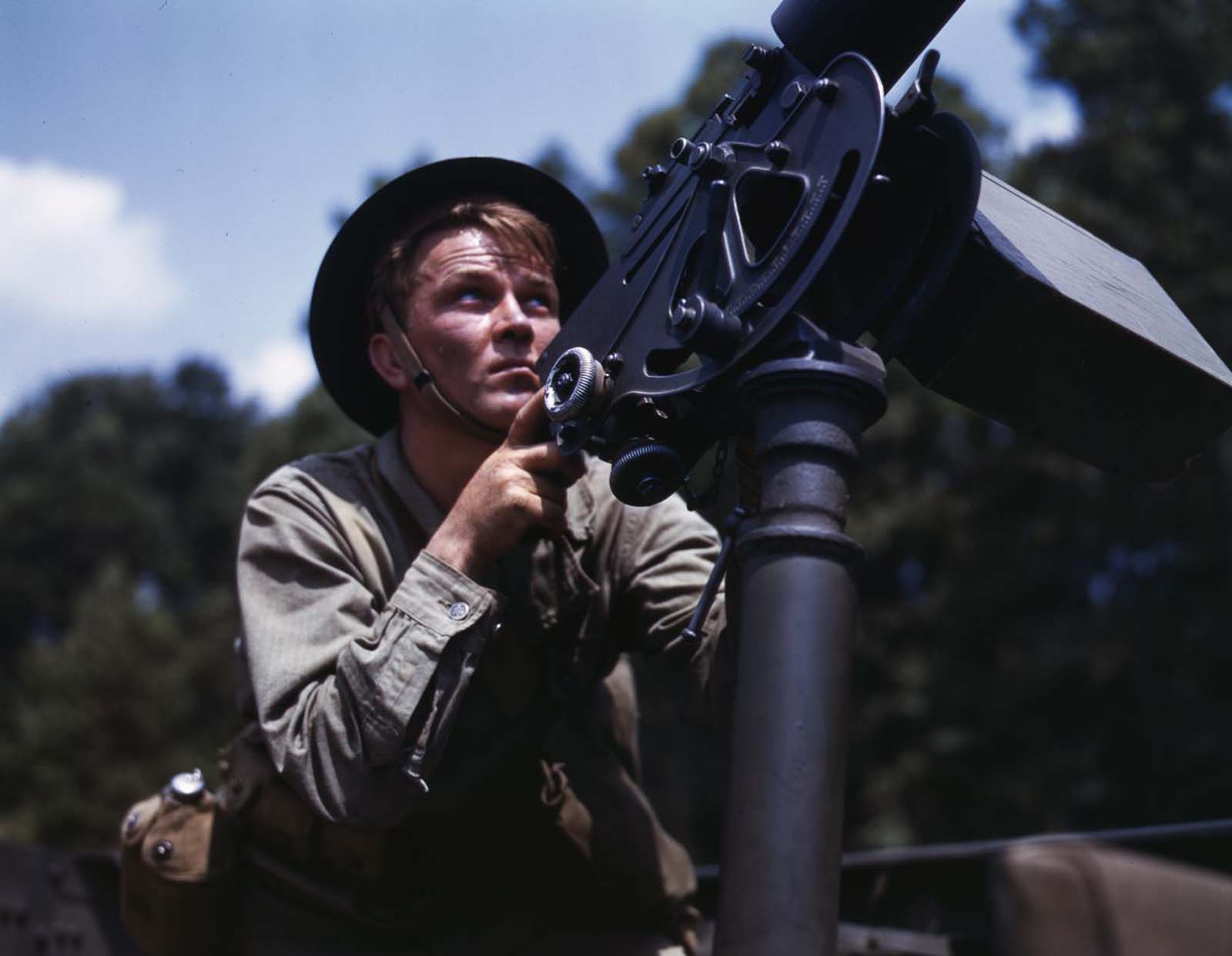
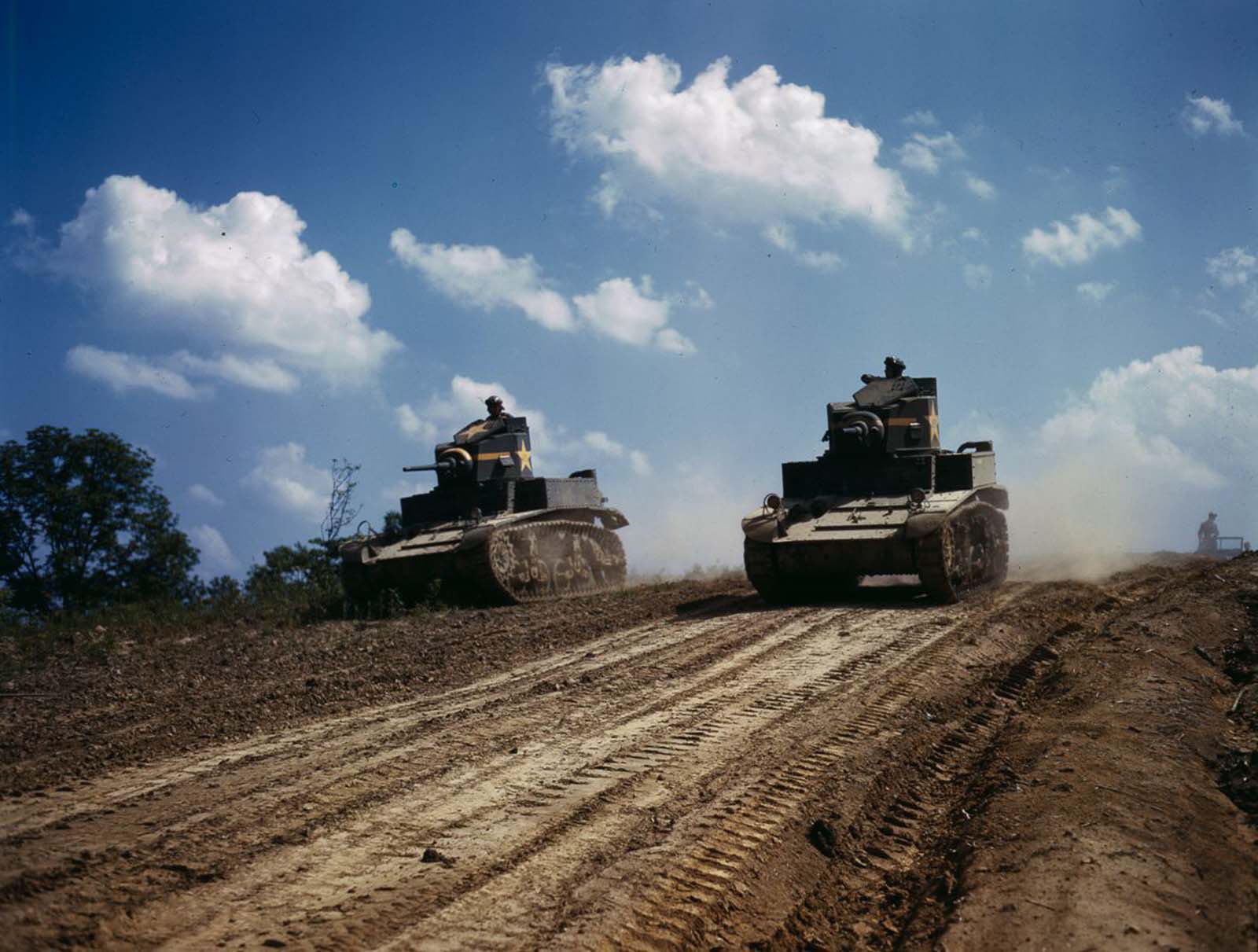
Palmer’s use of Kodachrome color film sets these images apart from most wartime documentation. Black-and-white photography dominates the visual record of World War II, which can make the era feel distant. These color photographs close that distance sharply. The uniforms, the olive-drab paint on the hulls, the dust on the training grounds — all of it reads as immediate and real.
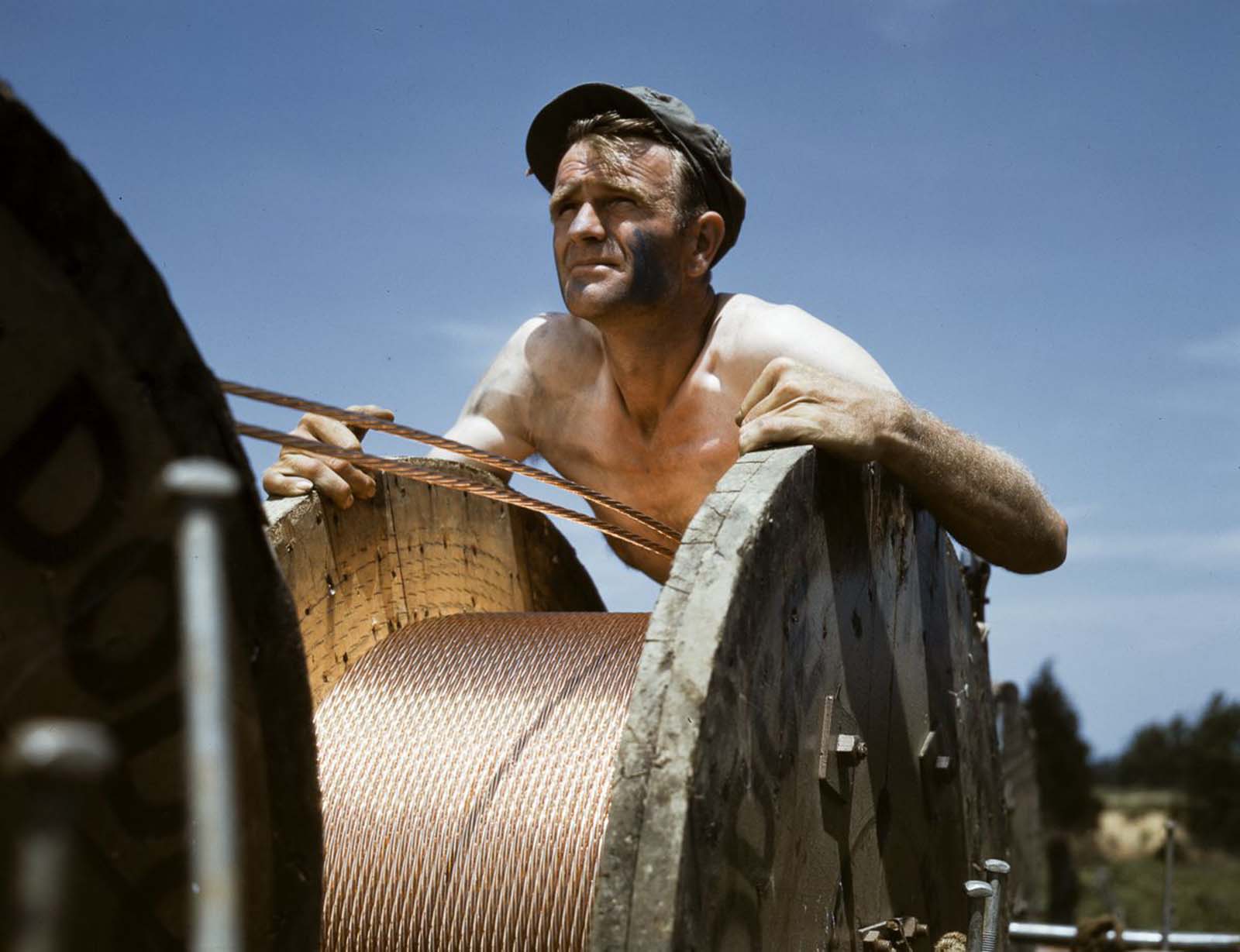
Fort Knox itself was still under construction when Palmer arrived. The post’s rapid expansion required not just new barracks and training fields but entirely new infrastructure — roads, utilities, and power lines to support a population that had swelled almost overnight.
The scale of armored training operations at Fort Knox is visible in Palmer’s wide shots. Columns of M3 tanks roll across open ground, crews moving through maneuvers that replicated the conditions they would face in North Africa and, later, Europe. Every exercise was preparation for a fight that was already underway elsewhere in the world.