
Bettie Page is one of the most recognizable faces in American pop culture history. Known as the “Queen of Pinups,” she became a defining figure of the 1950s with her bold personality, striking looks, and a fearless attitude in front of the camera. Her photographs were pinned up on walls in military barracks, garages, and even painted on the sides of fighter aircraft. She was everywhere — and decades later, she still is.

Bettie was born on April 22, 1923, in Nashville, Tennessee. Before modeling, she worked as a secretary at a New York office. She entered the modeling world at the age of 27 — later than most — but her timing turned out to be perfect. In 1950, photographer Jerry Tibbs took her first pinup photographs on a Coney Island beach. Those early shots launched one of the most talked-about careers in modeling history.


Her signature look was hard to miss — jet-black hair cut in heavy bangs, a bright smile, and a confidence that came through in every shot. She had a natural ease in front of the camera that photographers found rare. That quality helped her rise fast in a competitive industry.


Bettie quickly became a cover girl for several men’s magazines of the era, including Wink, Titter, Eyeful, and Beauty Parade. Her biggest mainstream moment came in January 1955, when she appeared as the Playboy Playmate of the Month. That single appearance put her in front of a massive national audience and cemented her status as a household name.


From 1952 to 1957, Bettie worked with Irving Klaw, one of America’s first photographers known for fetish content. Their shoots together covered themes of abduction, domination, and bondage — subjects that were considered extremely taboo at the time. These photos were sold through mail-order catalogs and drew the attention of both fans and government investigators. In the mid-1950s, Klaw was called before a U.S. Senate subcommittee investigating obscene materials. Bettie herself testified before the committee.


Despite the controversy, the public’s appetite for her photos never slowed down. Historians estimate that over 20,000 photographs of Bettie were taken during her modeling career. Even today, copies of her vintage photos sell by the thousands every year. Her image has appeared on everything from lunchboxes and comic books to tattoos and fine art prints.


Bettie also worked with the Camera Club of New York, an amateur photography group that gave members access to models for practice sessions. She posed for dozens of hobbyist photographers through the club, and many of those candid, natural shots became some of her most beloved images.


Her poses ranged from playful beach shots in two-piece swimsuits to more dramatic studio setups with props and costumes. She worked in both black-and-white and color photography, and her comfort with both formats made her versatile across different publications and styles.


By the late 1950s, Bettie stepped away from modeling almost entirely. She left New York, went through a period of religious conversion, and largely disappeared from public life. For years, her whereabouts were unknown, which only added to her mystique. Fans searched for her. Journalists tried to track her down. She gave very few interviews and avoided the spotlight completely.


During her time away from the public eye, interest in her work didn’t fade — it grew. The 1980s and 1990s brought a major revival of Bettie Page’s image. Artists, filmmakers, and fashion designers rediscovered her photos and introduced them to a whole new generation. Rockabilly culture, retro fashion, and the alt-pin-up scene all drew heavily from her aesthetic.


In 1998, Bettie finally gave a rare phone interview to the Los Angeles Times, one of her first public statements in decades. She expressed surprise at how popular she had remained and said she was glad her photos made people happy. She never appeared in public for photographs again, wanting fans to remember her as she looked in her prime.


The sheer range of her photo catalog is part of what makes her so fascinating. Some shots are soft and cheerful — a girl laughing on a beach or posing in a polka-dot bikini. Others are theatrical and intense, shot under studio lights with dramatic shadows. Together, they show a woman who was fully in control of her image, no matter what the setup was.


Many photographers who worked with her noted how professional she was on set. She arrived prepared, took direction well, and rarely needed multiple attempts to nail a shot. For someone who came to modeling later in life and with no formal training, her instincts were unusually sharp.


Her body of work with Irving Klaw remains the most discussed chapter of her career. The bondage and fetish photographs they produced together were unlike anything widely available to the American public at the time. While those images were controversial, they also helped pave the way for broader conversations about adult expression and censorship in America.


Bettie Page spent her final years in Los Angeles, living with her brother. In December 2008, she was hospitalized after developing pneumonia. After three weeks in the hospital, she suffered a fatal heart attack and died on December 11, 2008, at the age of 85.


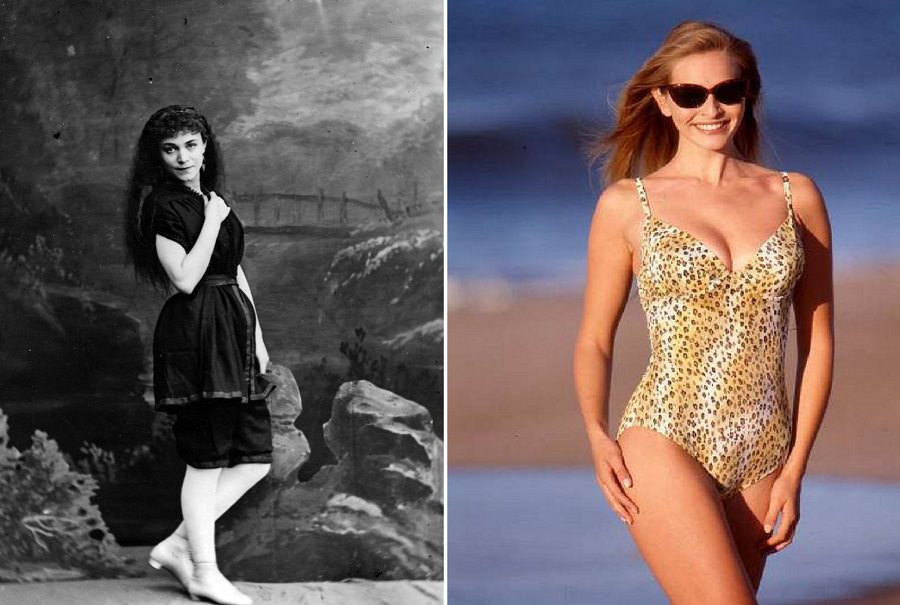
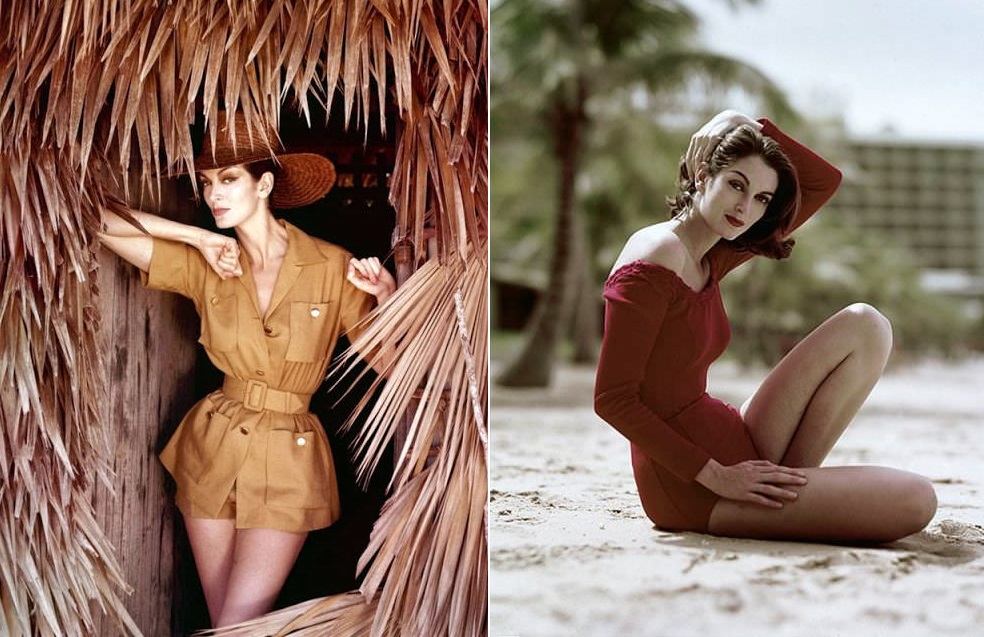
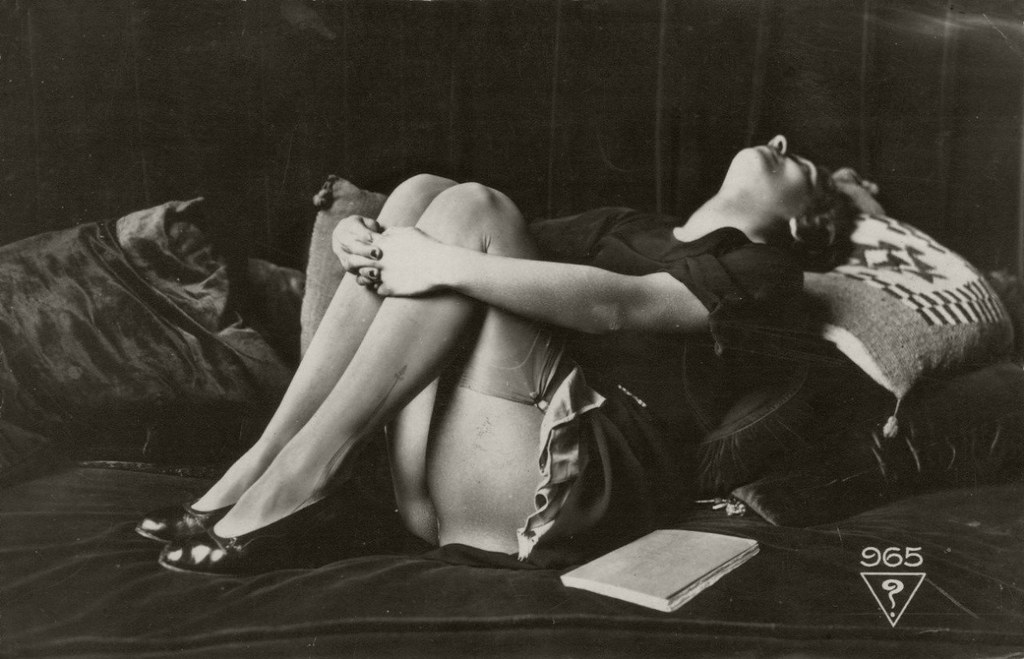
The photos below represent a broad cross-section of her career — from her earliest beach shots to her more elaborate studio work. Each one captures a different side of the woman who became one of the most photographed models of the 20th century.




If there was a God Bettie would still be with us
Should be over 100 years old come on give her a break
why are the pretty ones always crazy?
If I remember correctly, she was abused a lot.
She was abused by her father, emotionally by her mother, sexually assaulted by a group of five men in her 20s, and had few violent encounters with boyfriends.
Perfect woman 💕
Those curves. Dat back end!
Lordy.
In the days when boobs could not defy gravity and were real. Bettie, you are the last bastion of natural beauty!
She was not famous or infamy internally. She posed for all those pictures, but avoided all the attention. In the end, she seemed to be a very god-fearing woman.
Such a sexy woman
Best waist ever
Looks a bit like Barbi Benton.
Itsy-bitsy teeny-weeny…
As Norm would have said, hotter than a two dollar pistol.
That chain-link fence is impressive for its era.
The swimsuits and other outfits of Bettie Page always seem to be much more flattering for her figure than photos I see of most other pinup models from the same era, even though I do not know anything about fashion or sewing. I assume this is because she designed and sewed her entire wardrobe herself. She had a hard life before and after her modeling career – from being molested by her father as a child, to missing out on many of the money that was generated from her image, to dealing with mental illness later in life – but she was a talented and influential woman.
Boobs were pointier back in the day
She was once the most photographed person in the world (until very recently, I would guess).
Younger than Christopher Lee
The girl every rockabilly girl wants to be
beauty standard was much different
She’s pretty but her waist looks slightly uncanny valley