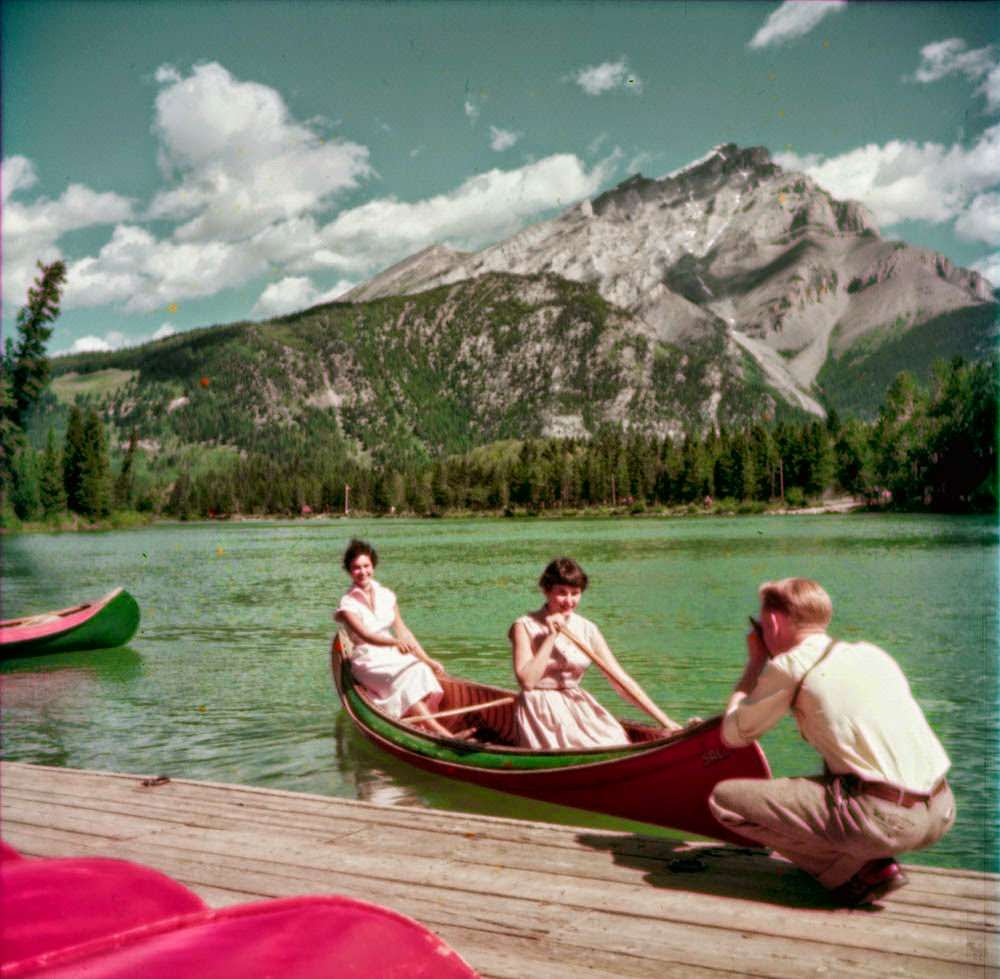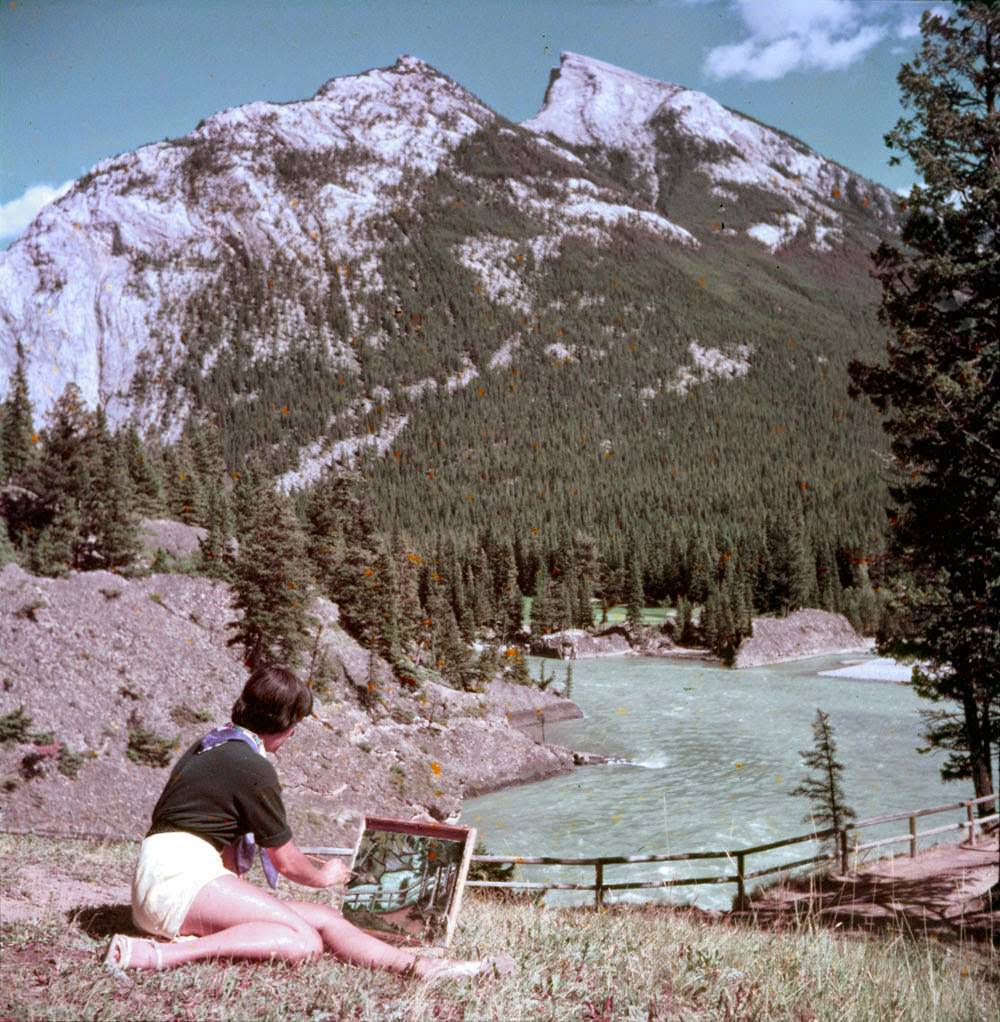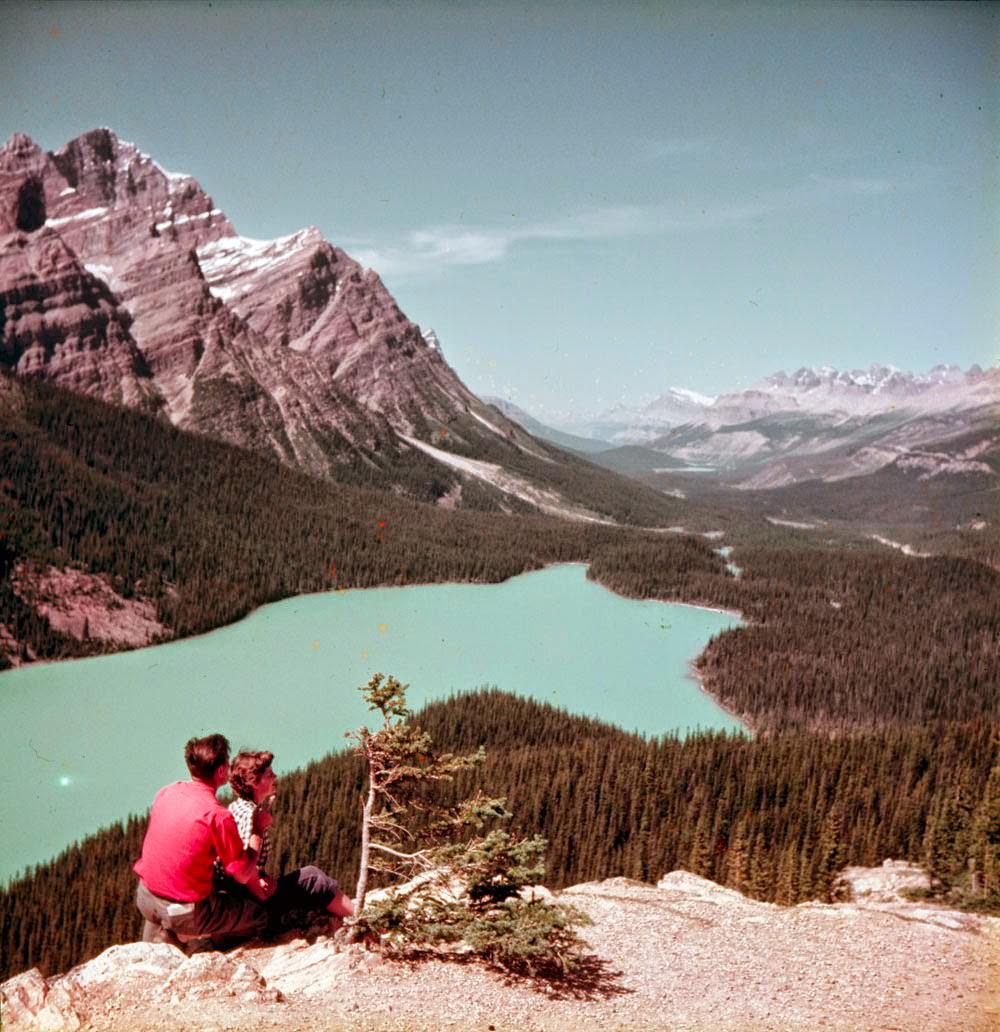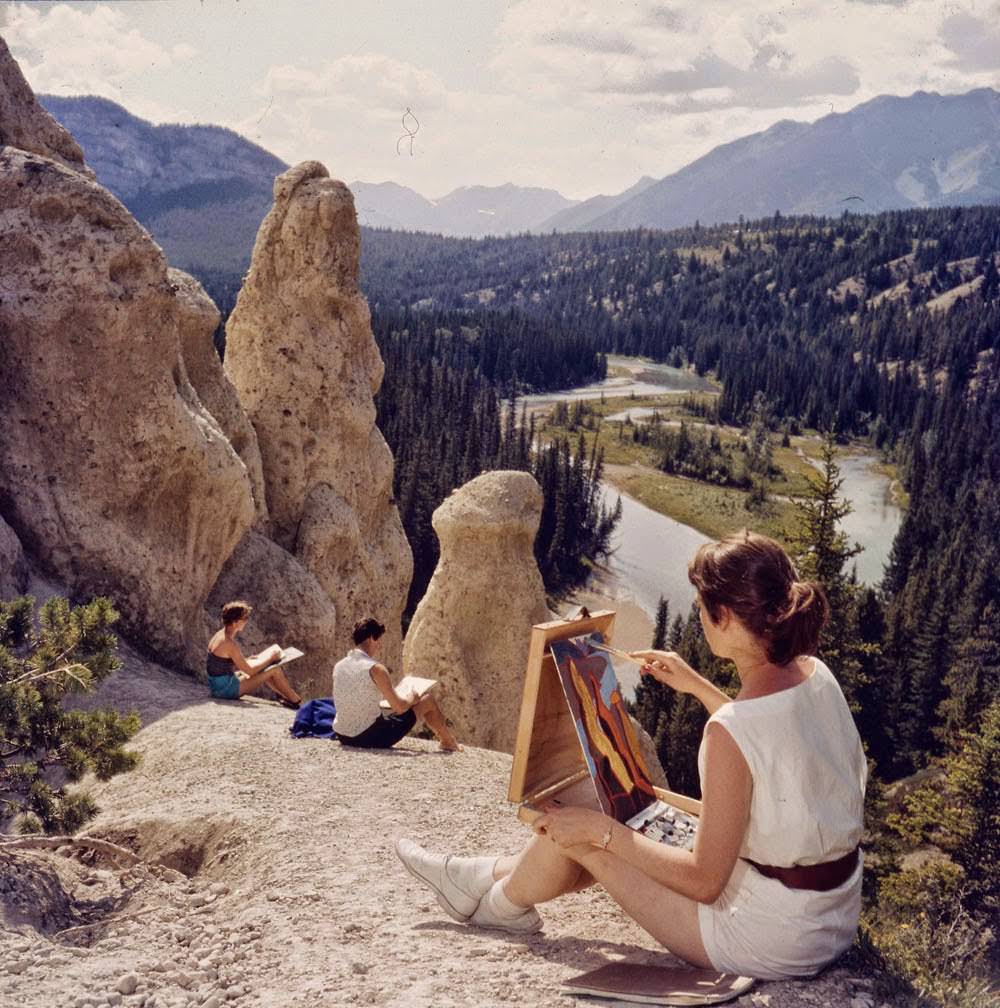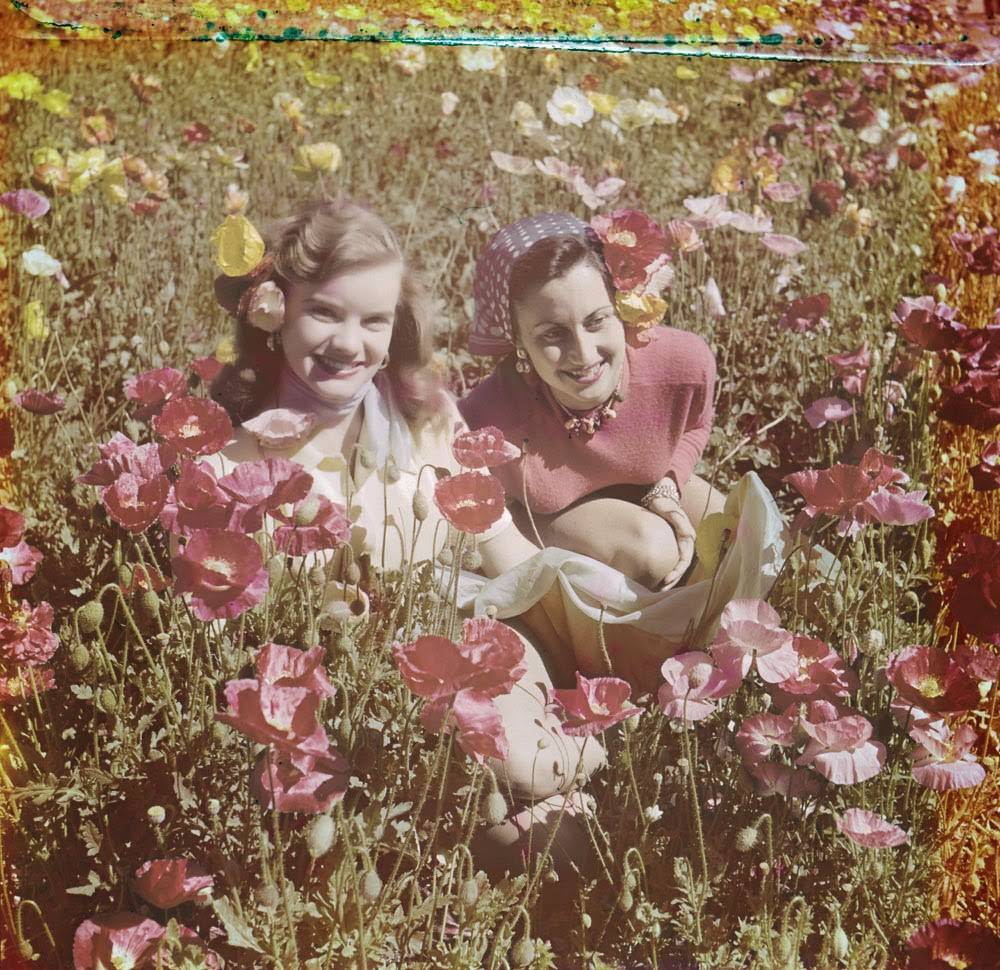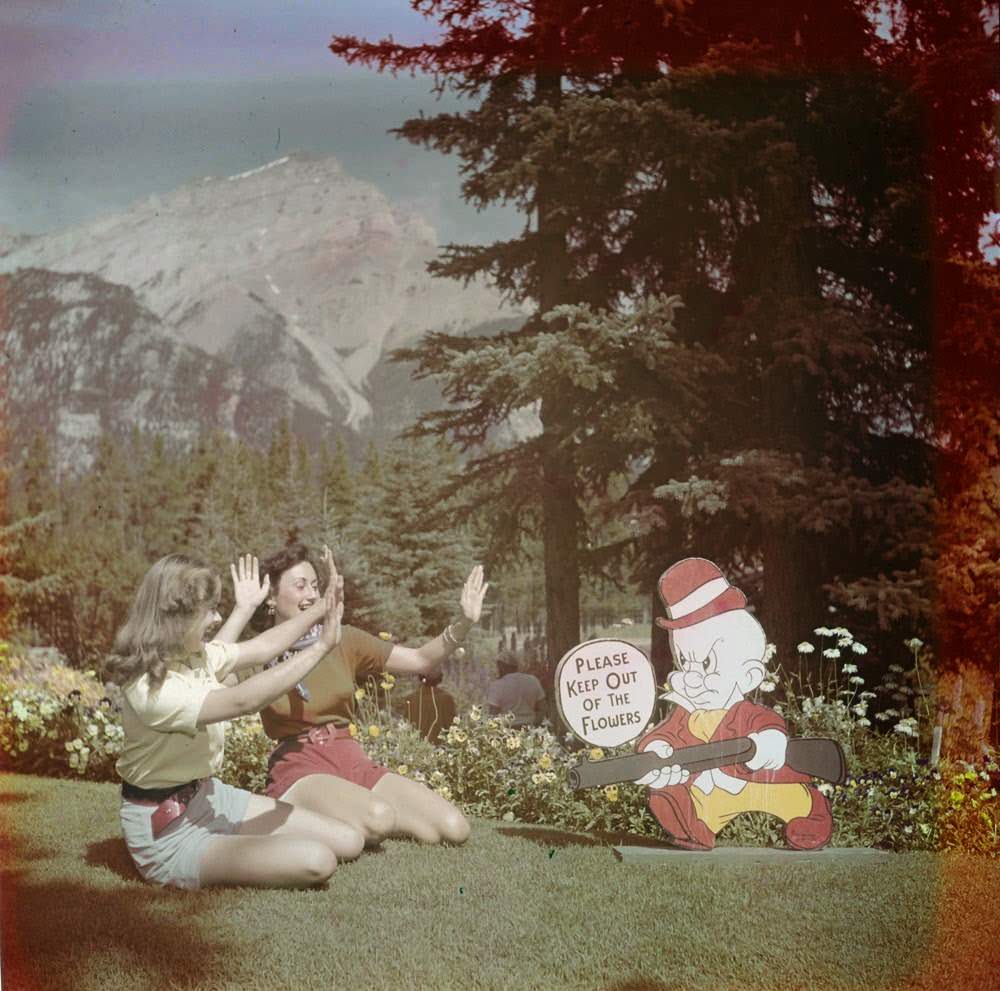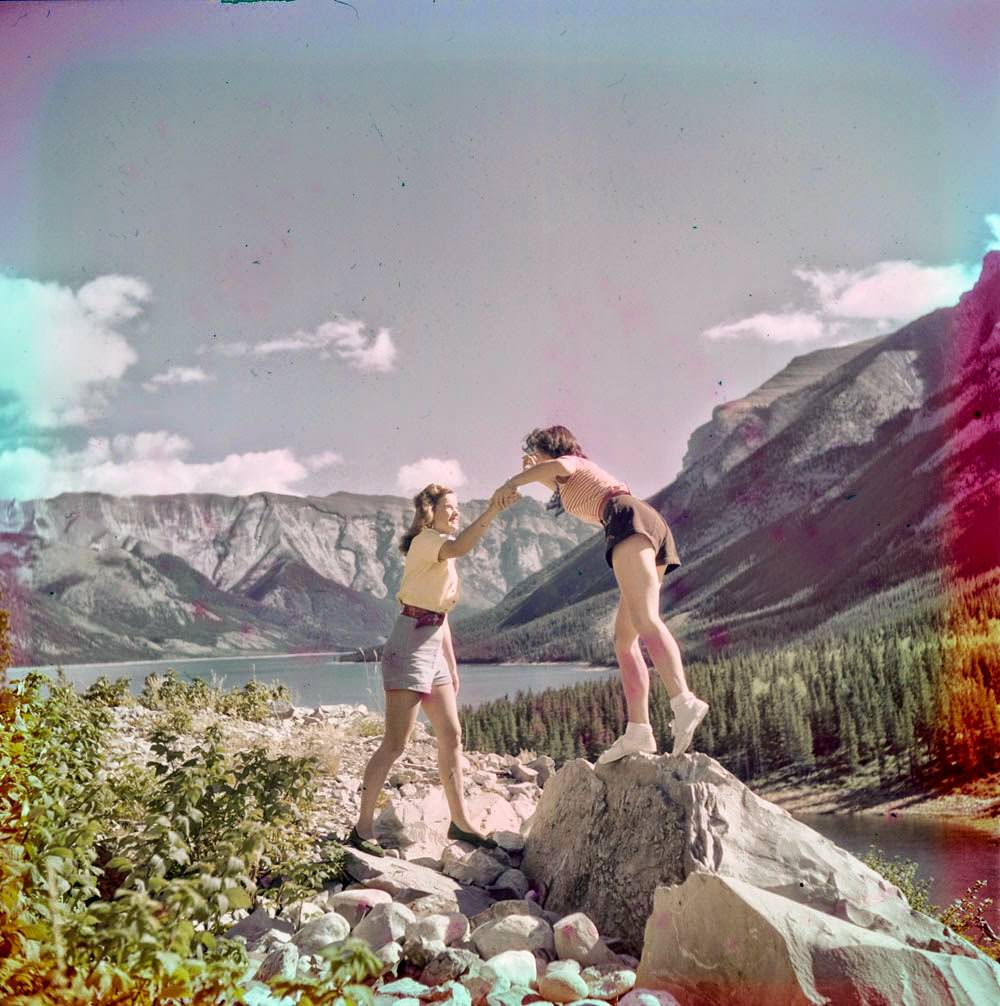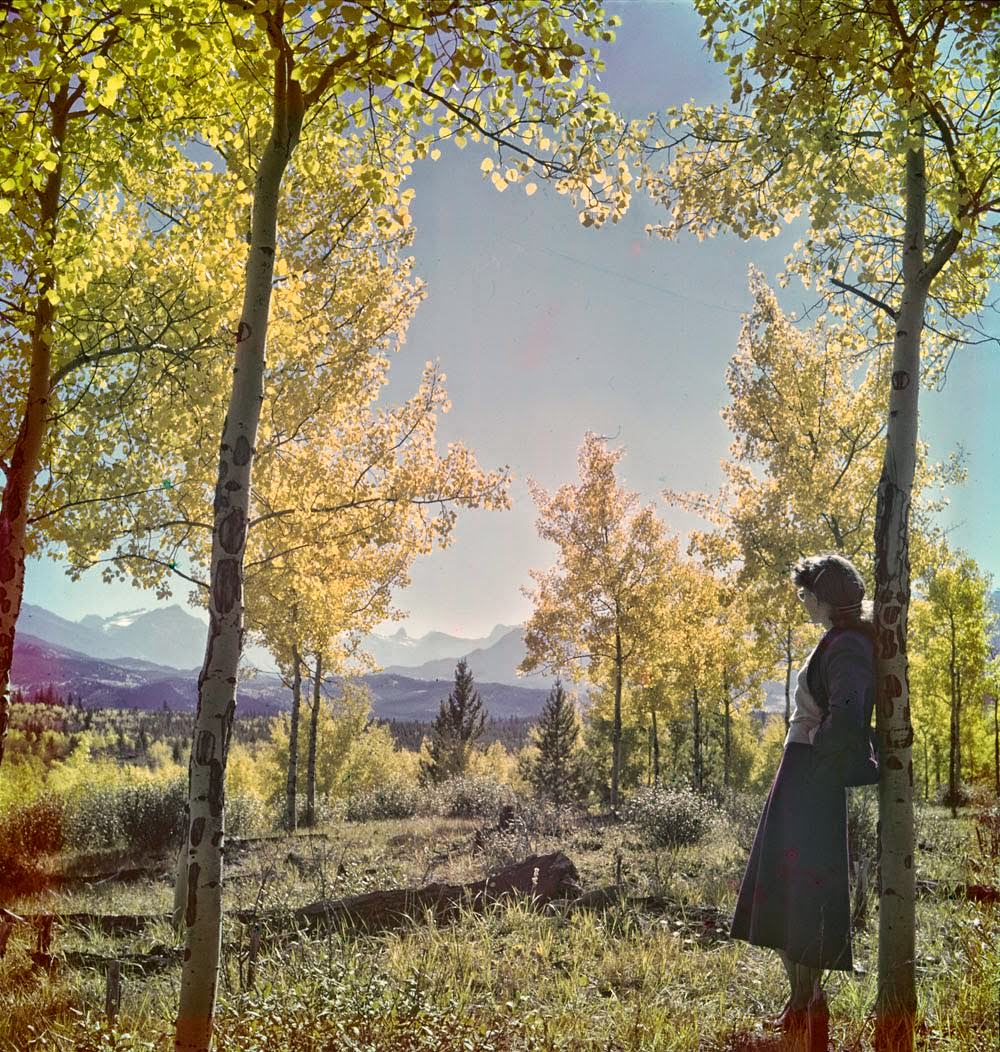

By the 1950s, the Town of Banff transformed into a premier destination for the modern motoring tourist. Families packed into large, chrome-trimmed sedans and station wagons to navigate the winding roads of the Canadian Rockies. The recent improvements to the highway system made the mountains accessible to ordinary people, not just the wealthy elite. Visitors entered the park through stone gates, paying a small fee to drive their vehicles into the heart of the national park. Parking lots filled with colorful automobiles boasting tailfins and whitewall tires. This era marked a shift from train travel to the freedom of the open road, changing the rhythm of the town completely.
Bustling Banff Avenue
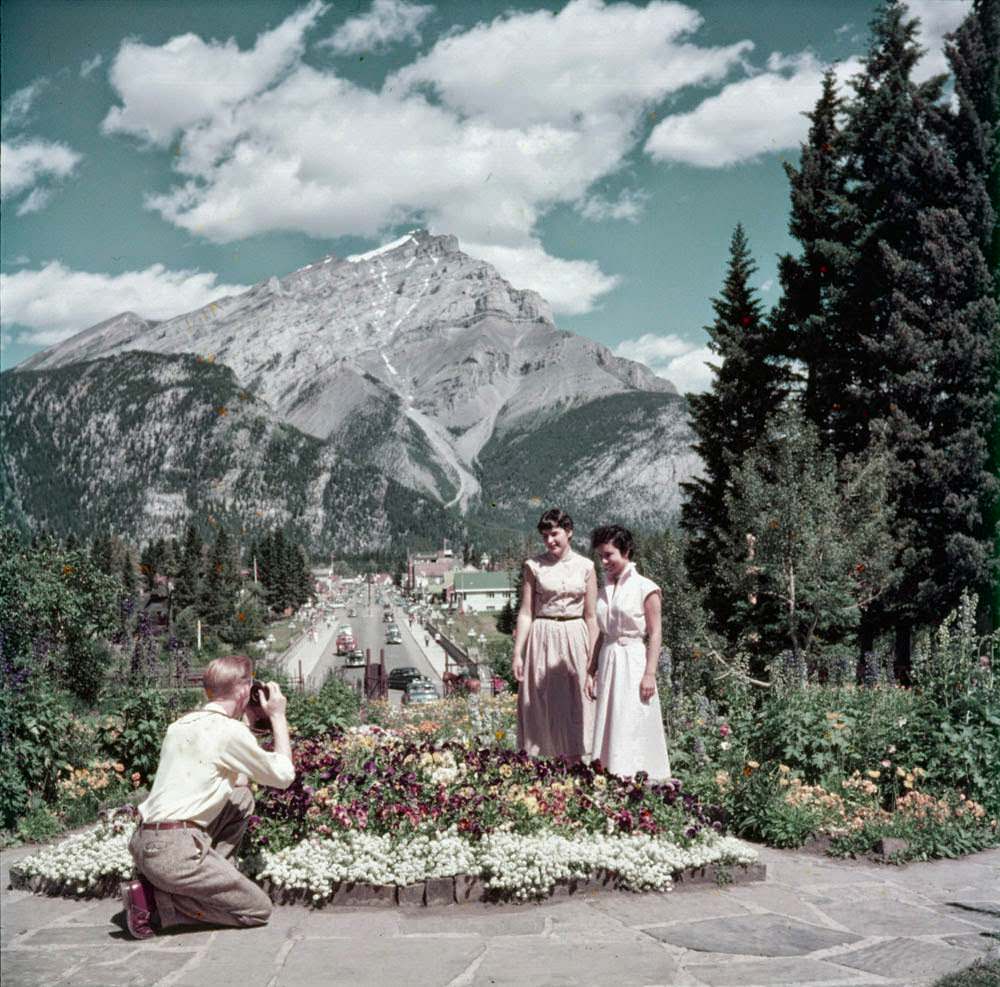
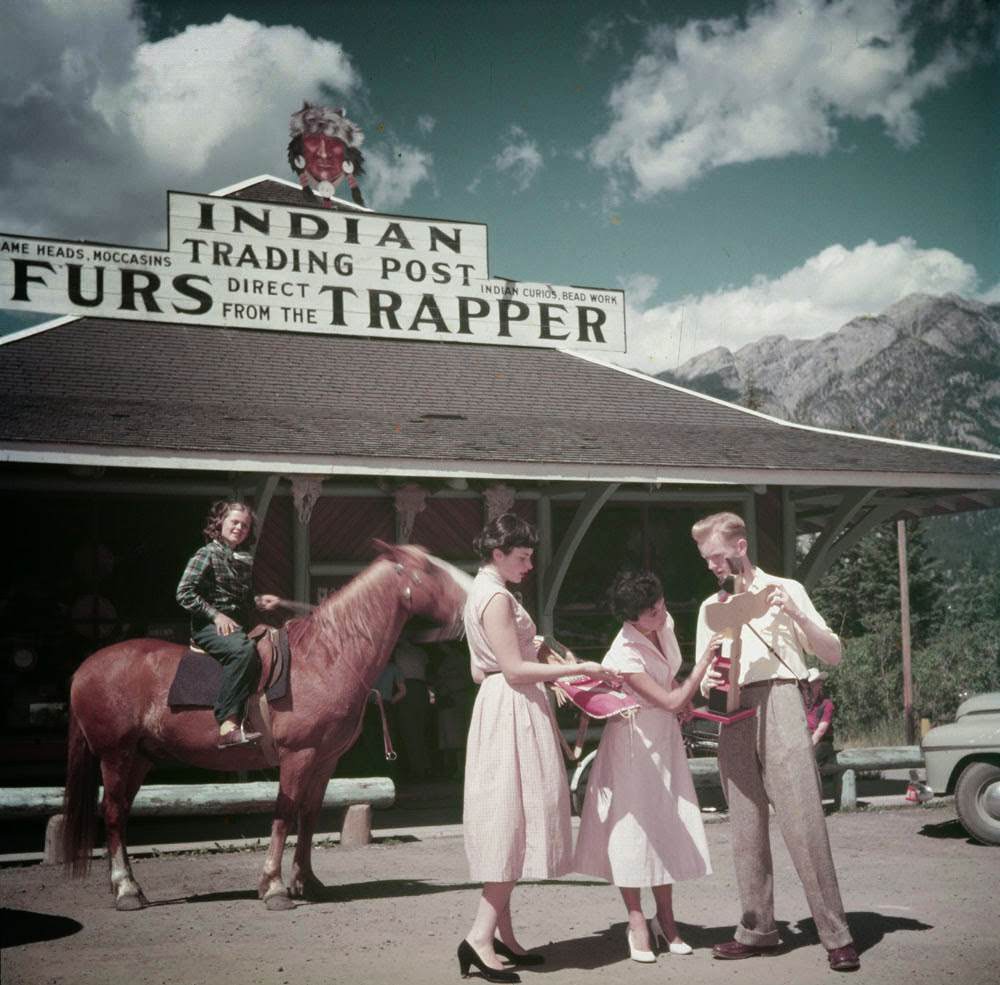
Banff Avenue functioned as the commercial spine of the community. The wide street lined up perfectly with the towering face of Cascade Mountain, creating a dramatic backdrop for shoppers. Low-rise buildings constructed of stone and wood housed drugstores, souvenir shops, and tearooms. Tourists walked the sidewalks in rolled-up jeans and cardigans, purchasing moccasins, postcards, and Hudson’s Bay blankets. neon signs began to appear, advertising vacancies at local lodges and motels. The King Edward Hotel stood as a central meeting point where locals and visitors mixed in the dining room.
Read more
The Castle in the Rockies
The Fairmont Banff Springs Hotel dominated the landscape just south of the Bow River. In the 1950s, this massive stone structure operated with the precision of a small city. Bellhops in pillbox hats moved luggage through the grand lobby, which featured high ceilings and antique furniture. Guests dressed formally for dinner, with men in suits and women in evening gowns filling the Alhambra Dining Room. Outside, golfers played on the course that wound along the river beneath Mount Rundle. The hotel maintained its reputation as a luxury enclave, distinct from the more casual motor courts springing up near the town entrance.
Dangerous Wildlife Encounters
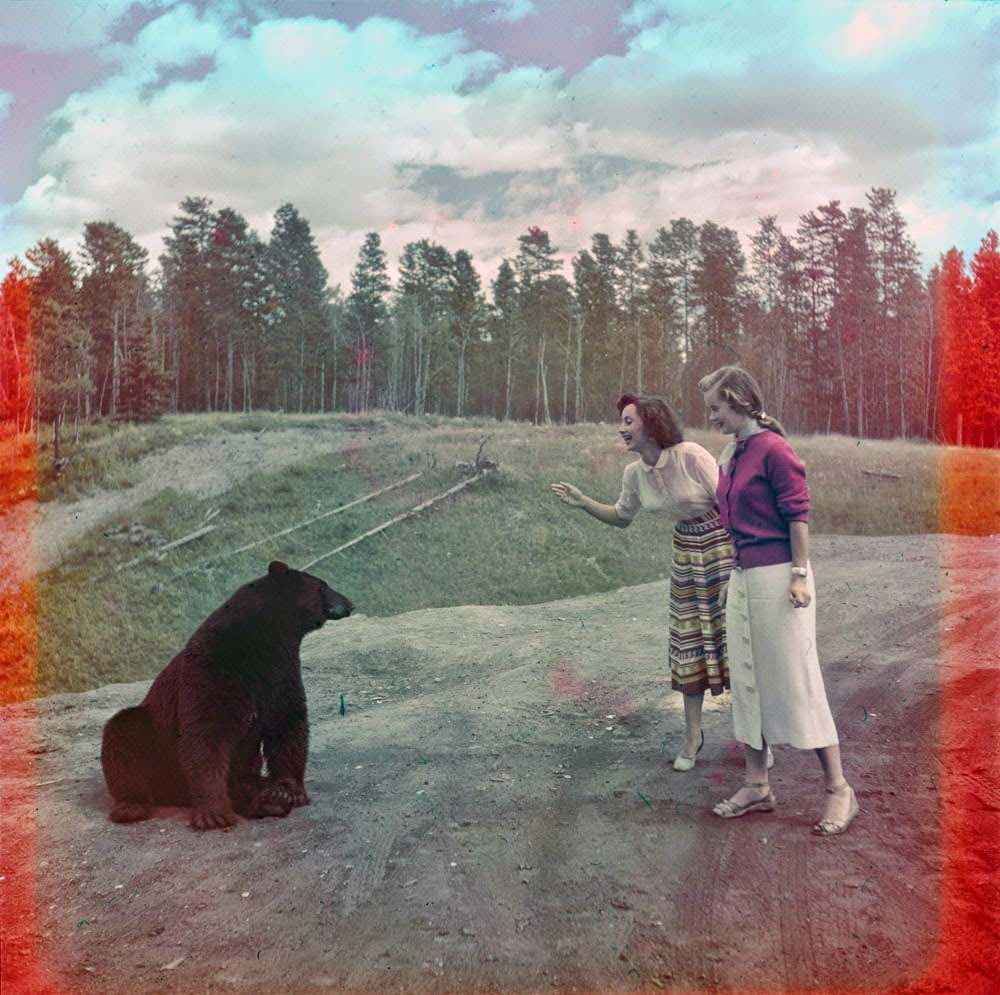
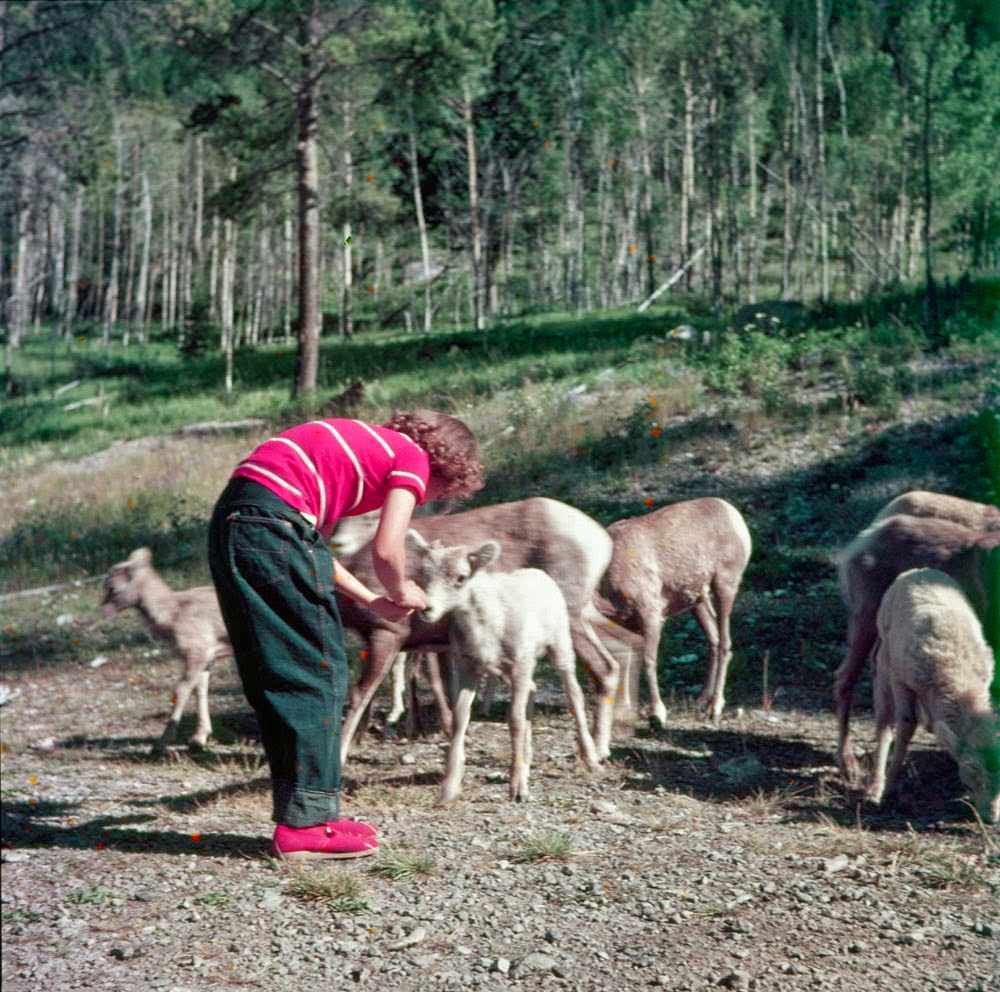
Interactions with wildlife in 1950s Banff lacked the safety regulations found today. Black bears frequently wandered into the townsite and along the highways. Tourists viewed these animals as photo opportunities rather than dangerous predators. Cars stopped in the middle of the road, creating “bear jams” as drivers rolled down windows to hand-feed sandwiches and apples to the bears. A popular, albeit hazardous, evening activity involved visiting the town dump. Crowds gathered in their cars to watch bears scavenge for food in the open refuse piles, treating the event like a spectator sport.
Winter Recreation and Hollywood Glamour
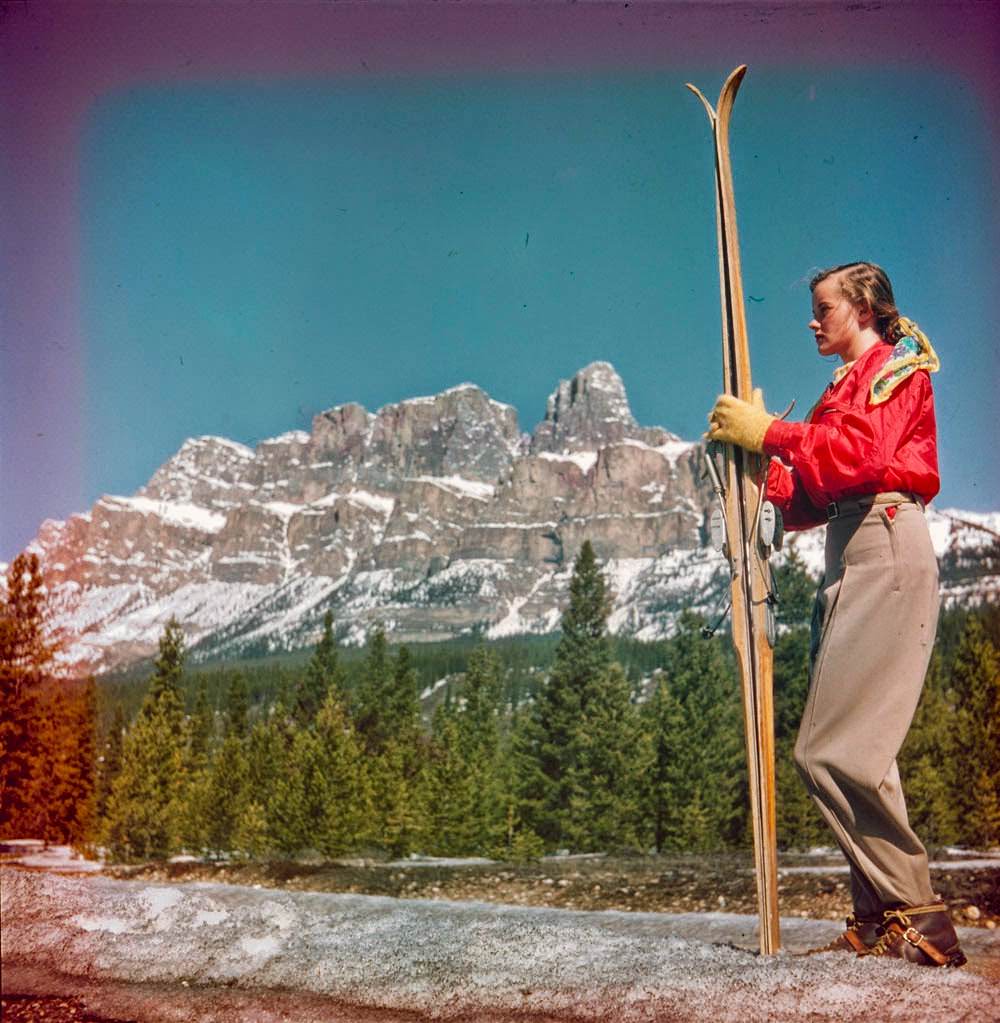
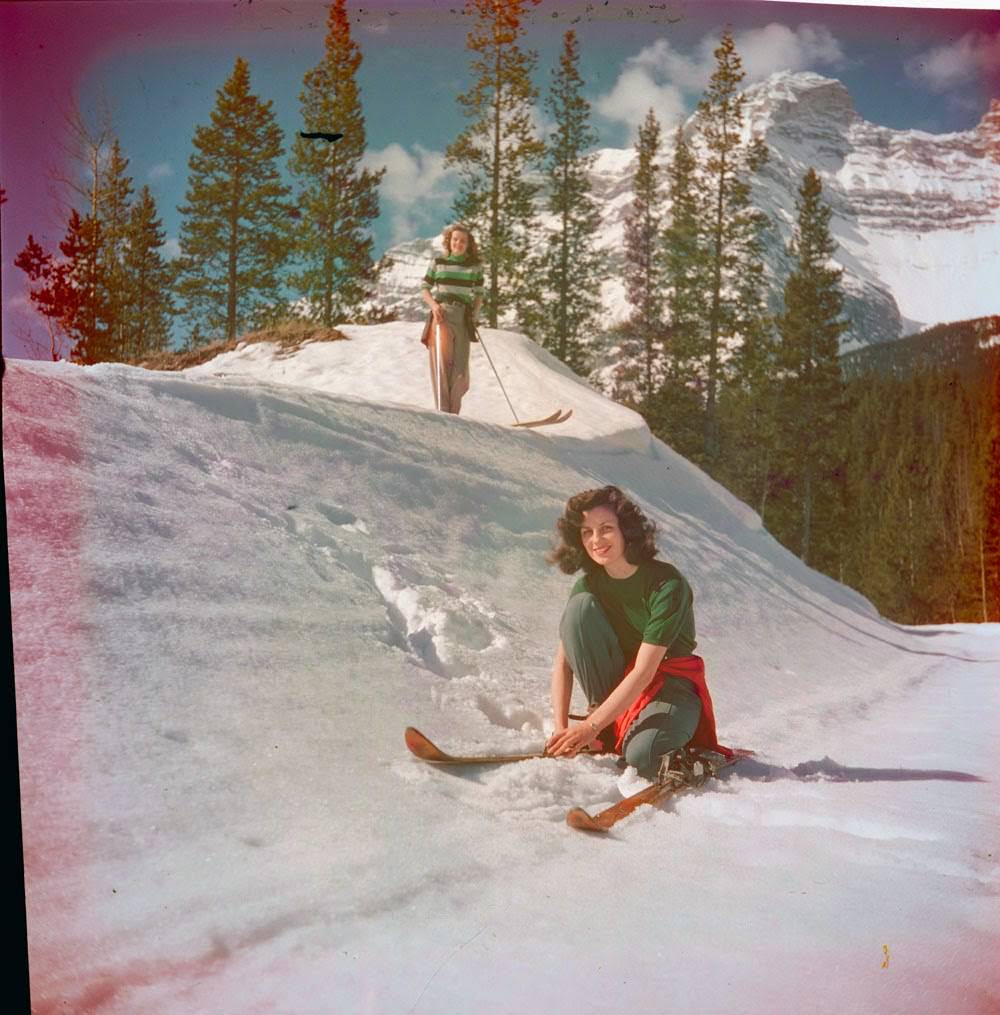
While summer brought the road trippers, winter attracted a growing community of skiers. Mount Norquay, overlooking the town, featured one of the steepest chairlifts in North America. Skiers utilized long wooden skis and leather boots to navigate the challenging runs. The town also gained international attention during this decade due to Hollywood film productions. In 1953, Marilyn Monroe arrived in Banff to film River of No Return. Her presence caused a stir among the residents, as she stayed at the Banff Springs Hotel and frequented local spots, cementing the town’s status as a glamorous mountain retreat.
Soaking in the Springs
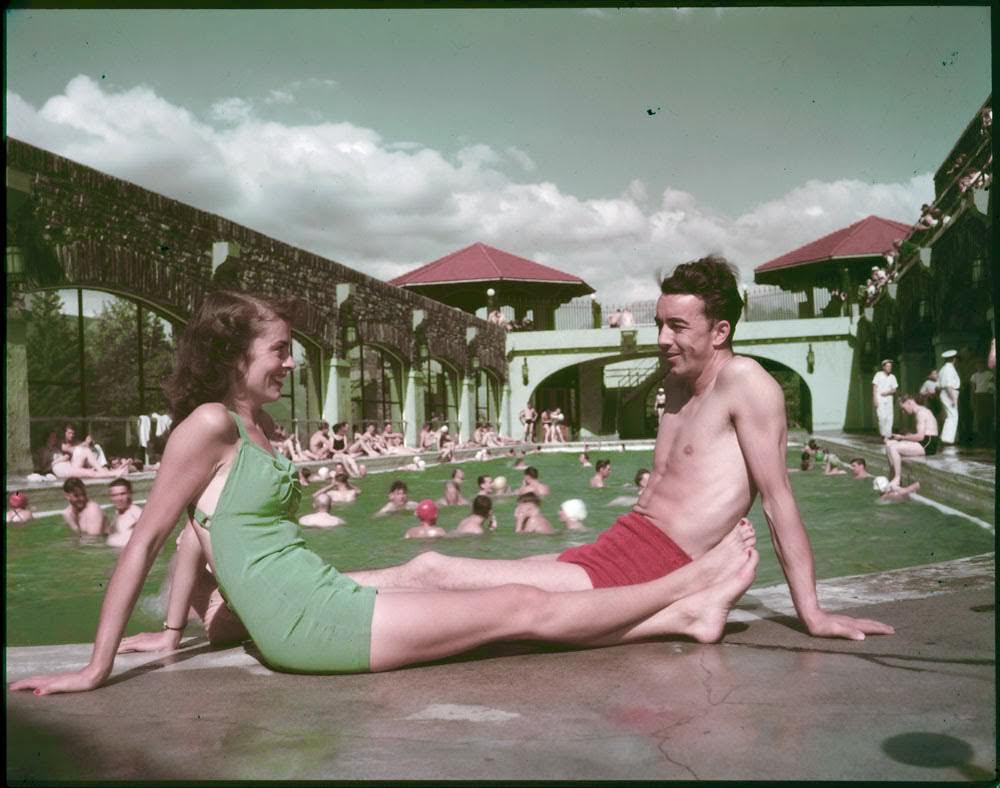
The Upper Hot Springs remained a constant draw regardless of the season. A stone bathhouse famously constructed in the 1930s served thousands of visitors in the 50s. Swimmers rented old-fashioned woolen swimsuits at the counter before stepping into the steaming mineral water. The outdoor pool offered a view of the Bow Valley, often obscured by thick mist rising from the heat. It served as a communal relaxation spot where tired hikers and skiers soaked their muscles. The scent of sulfur hung in the air, a signature characteristic of the town’s geothermal heritage.