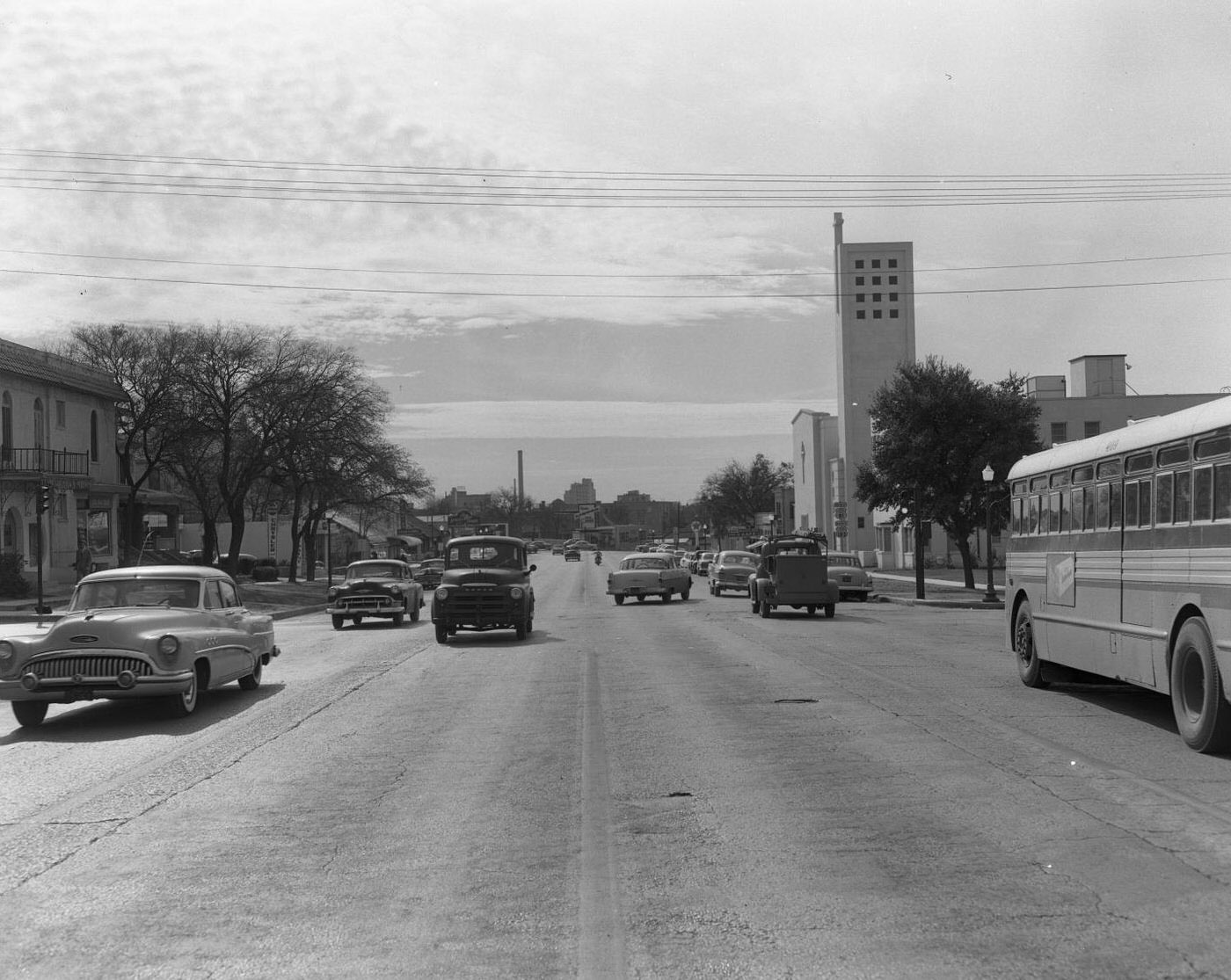
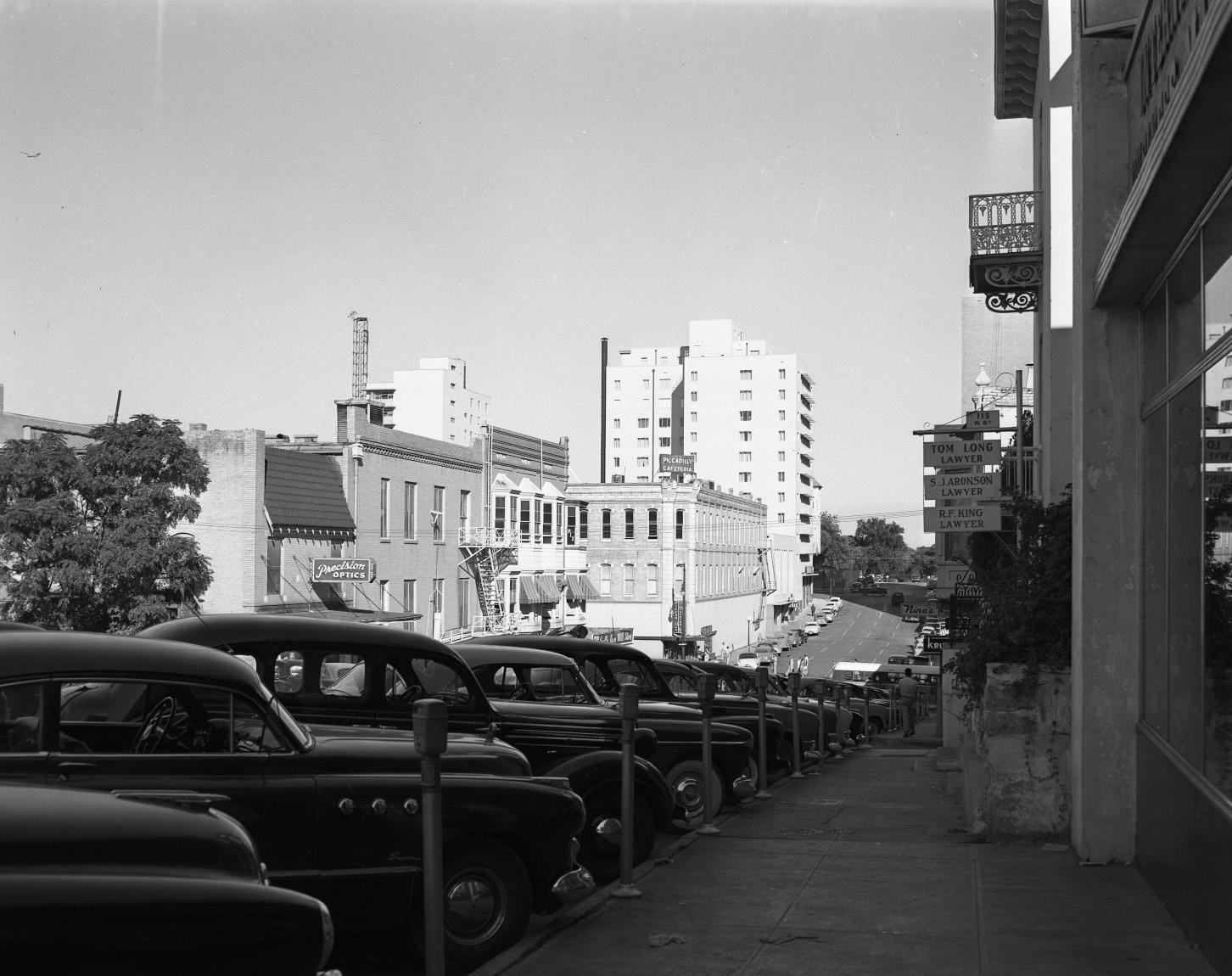
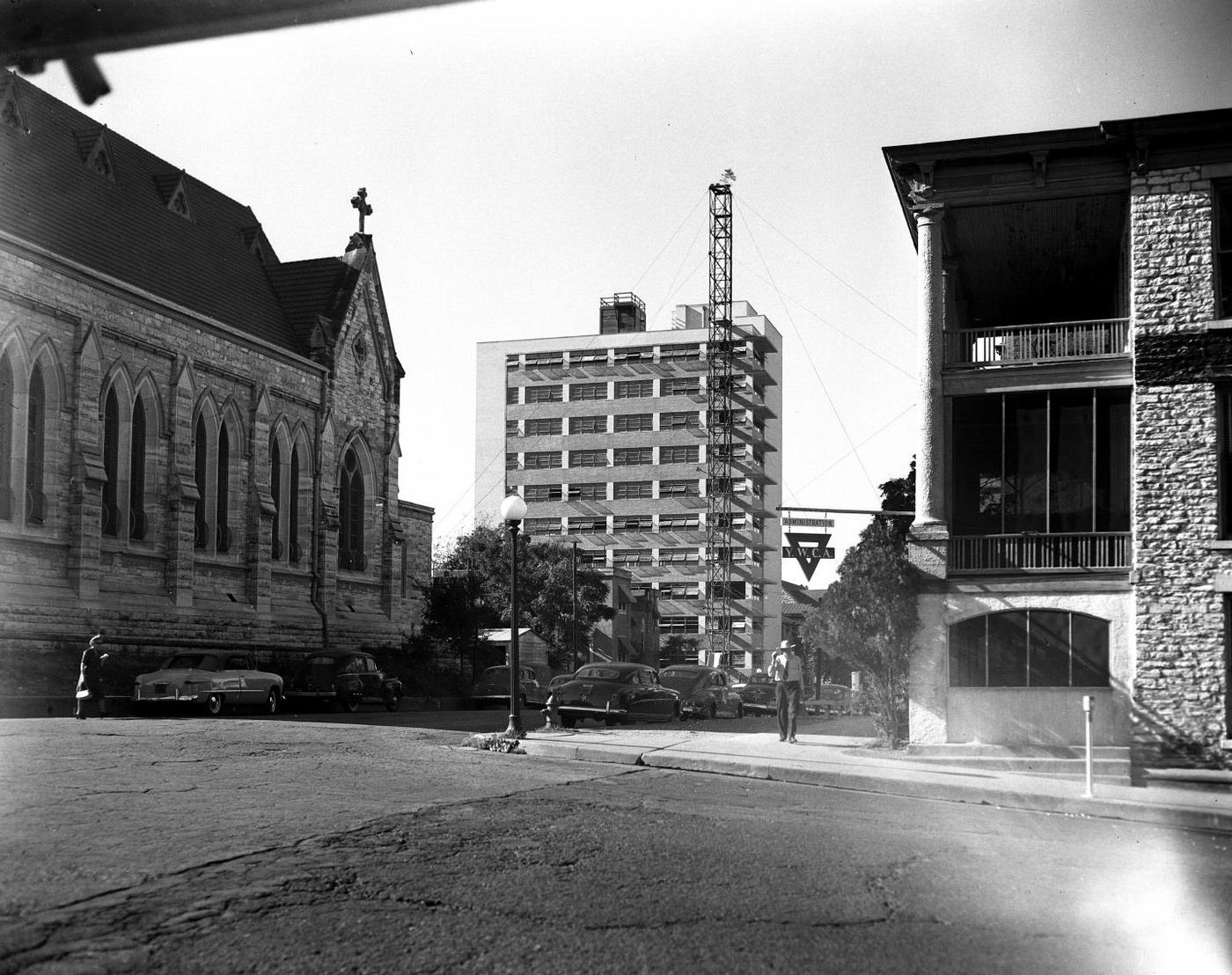
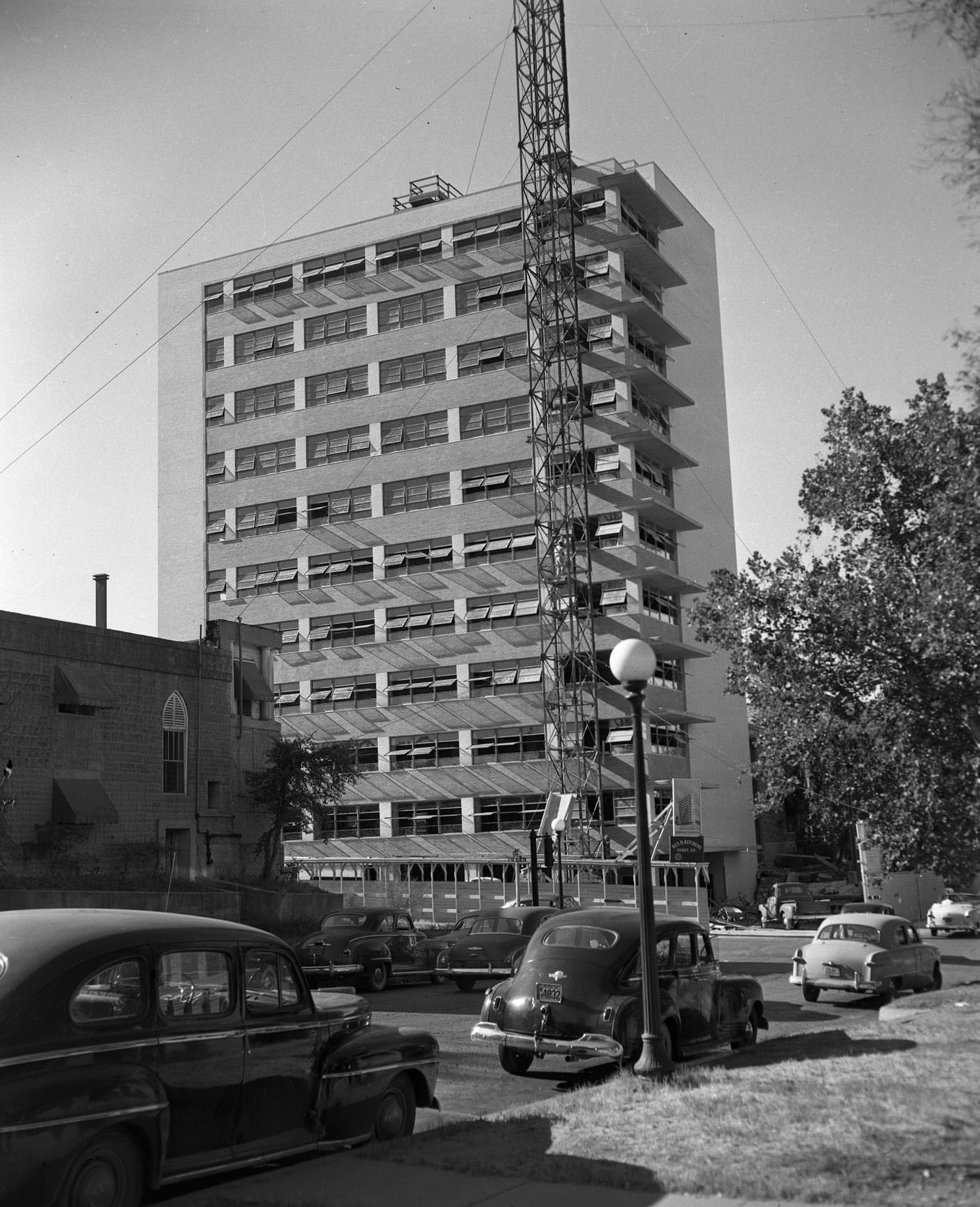
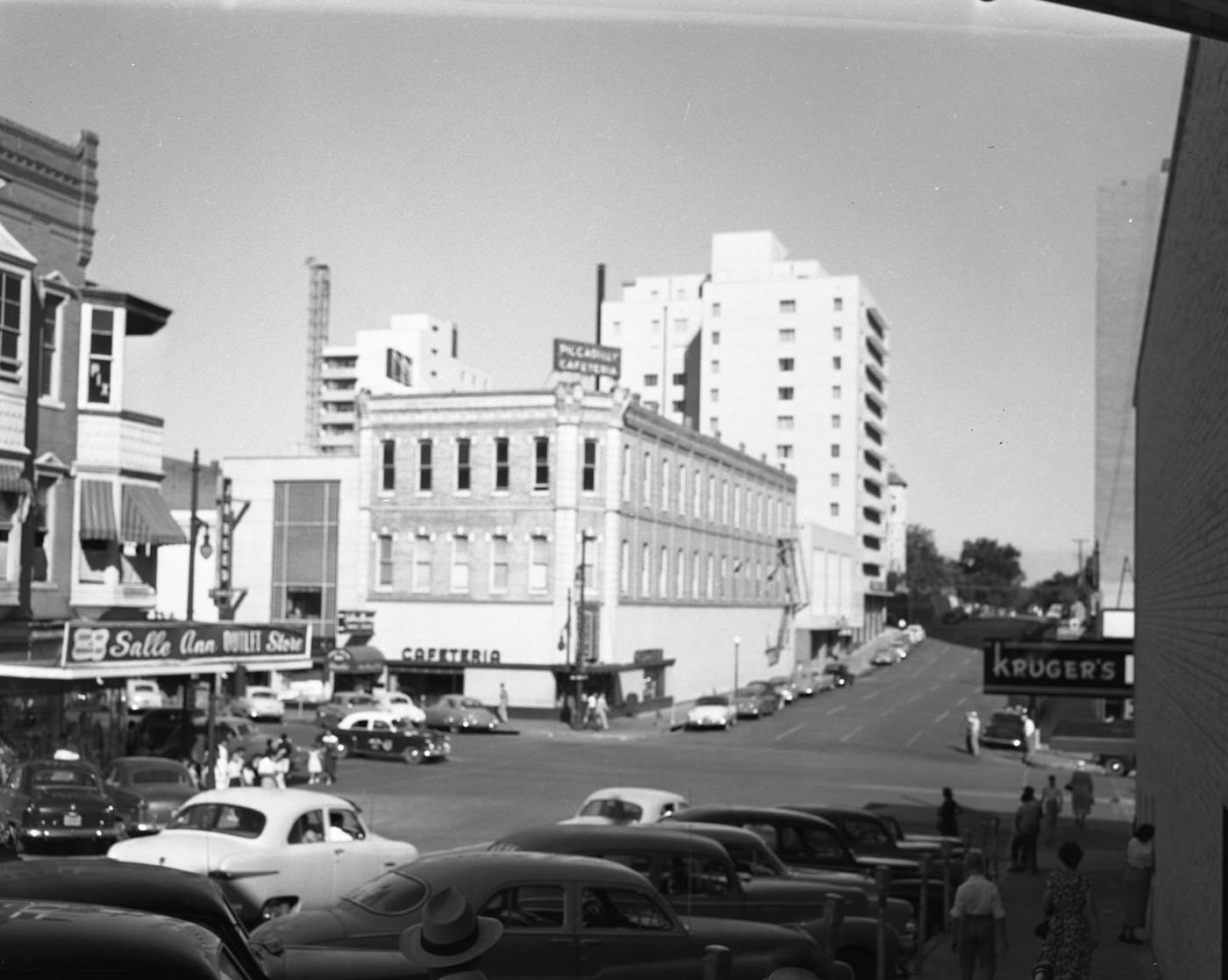
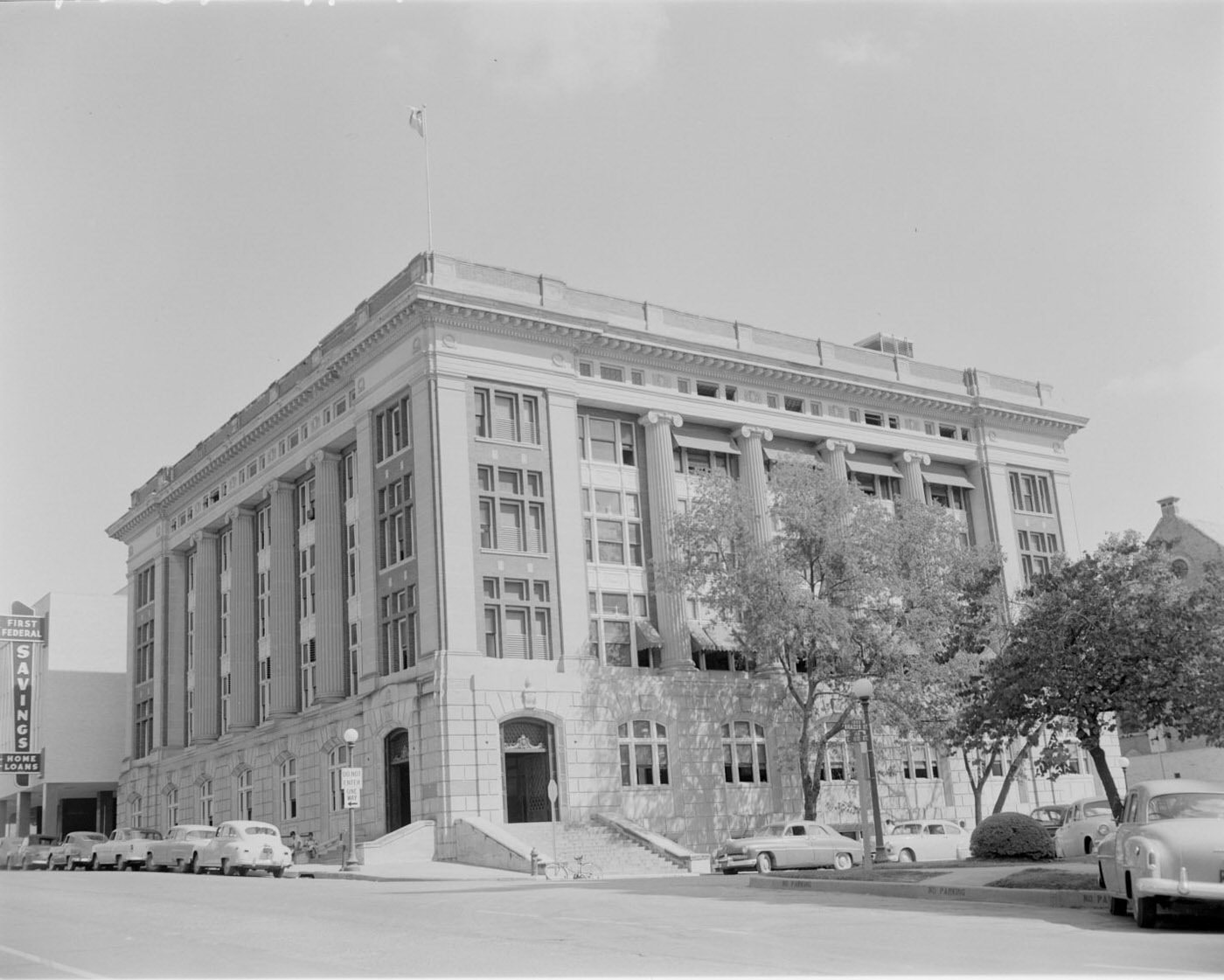
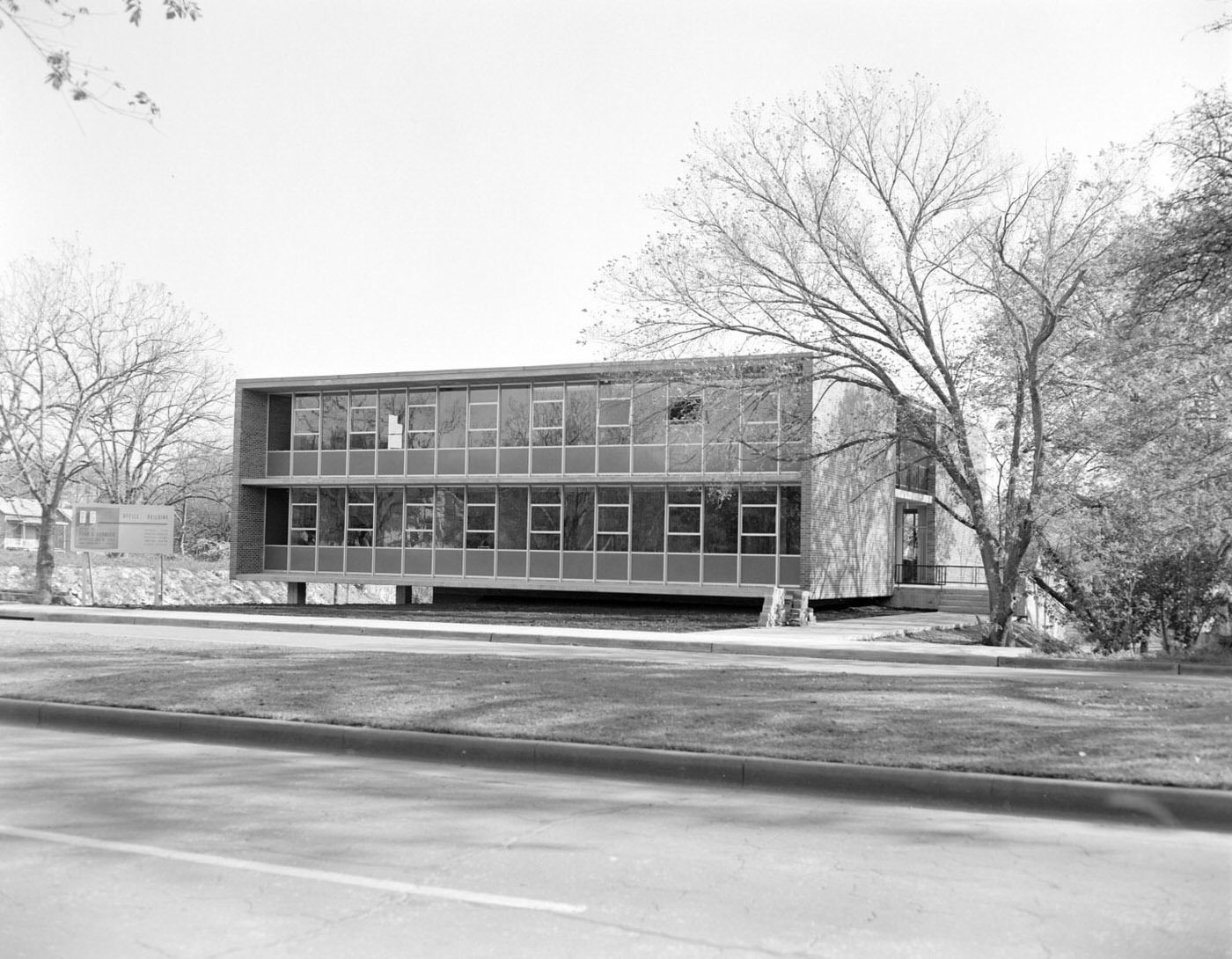
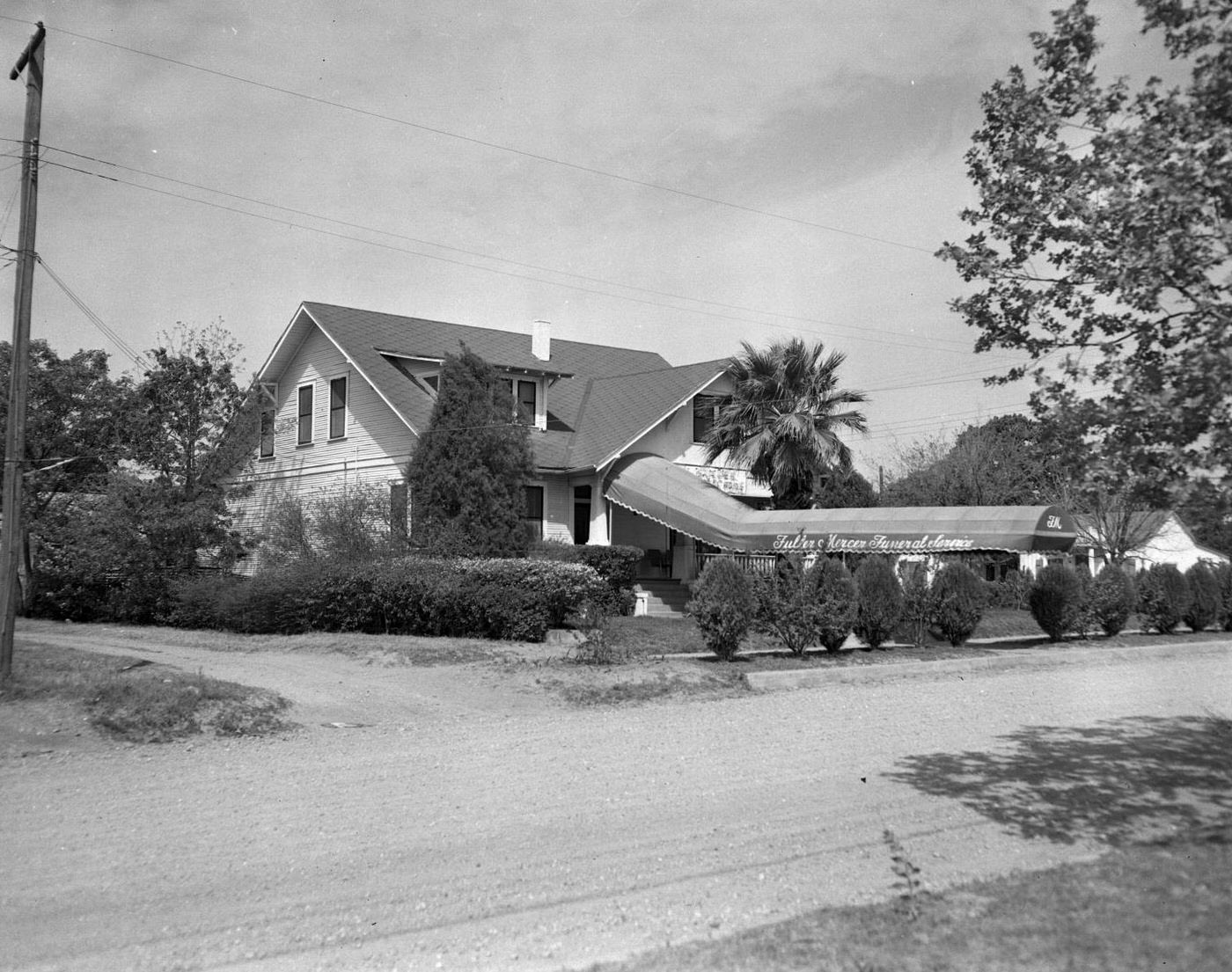
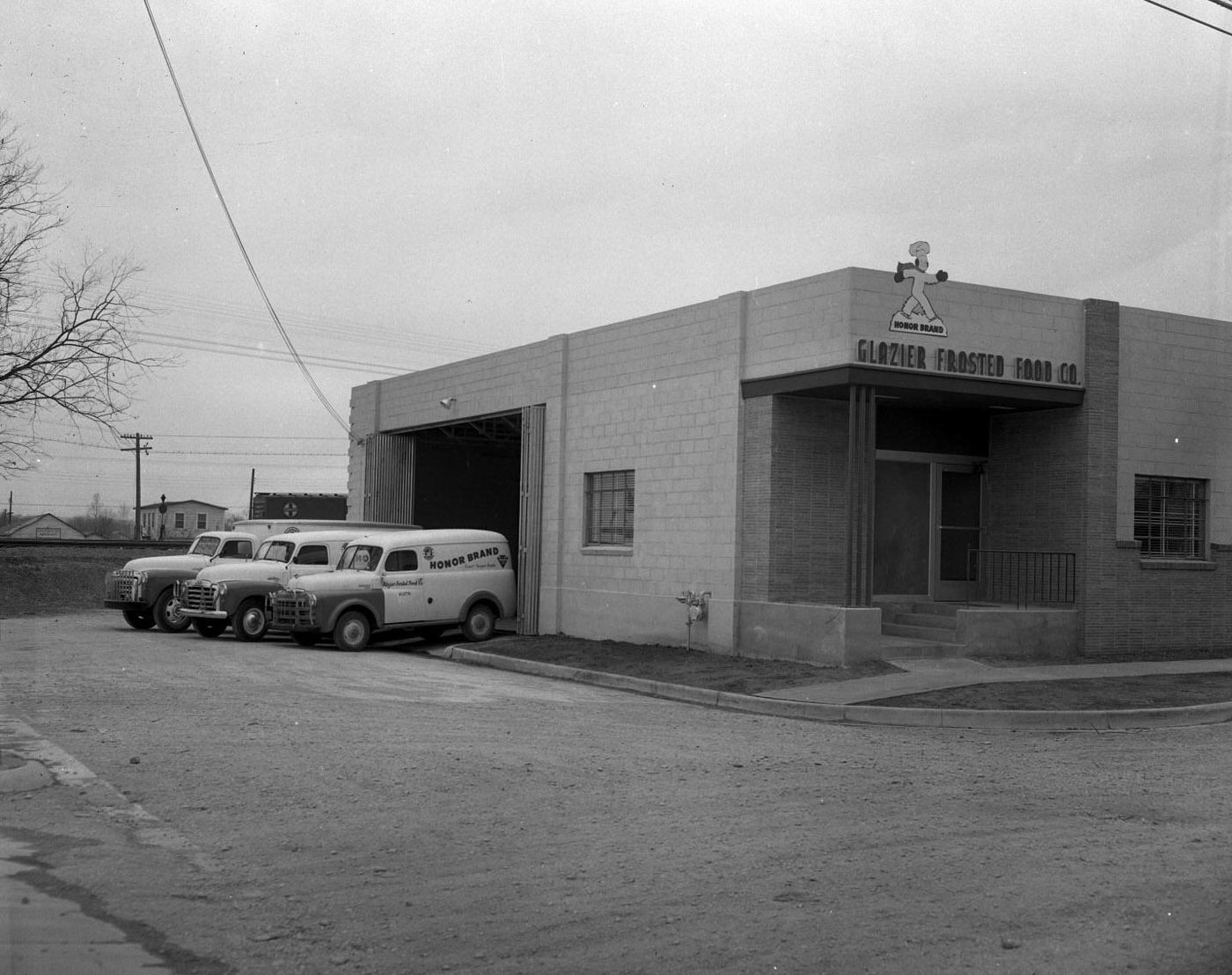
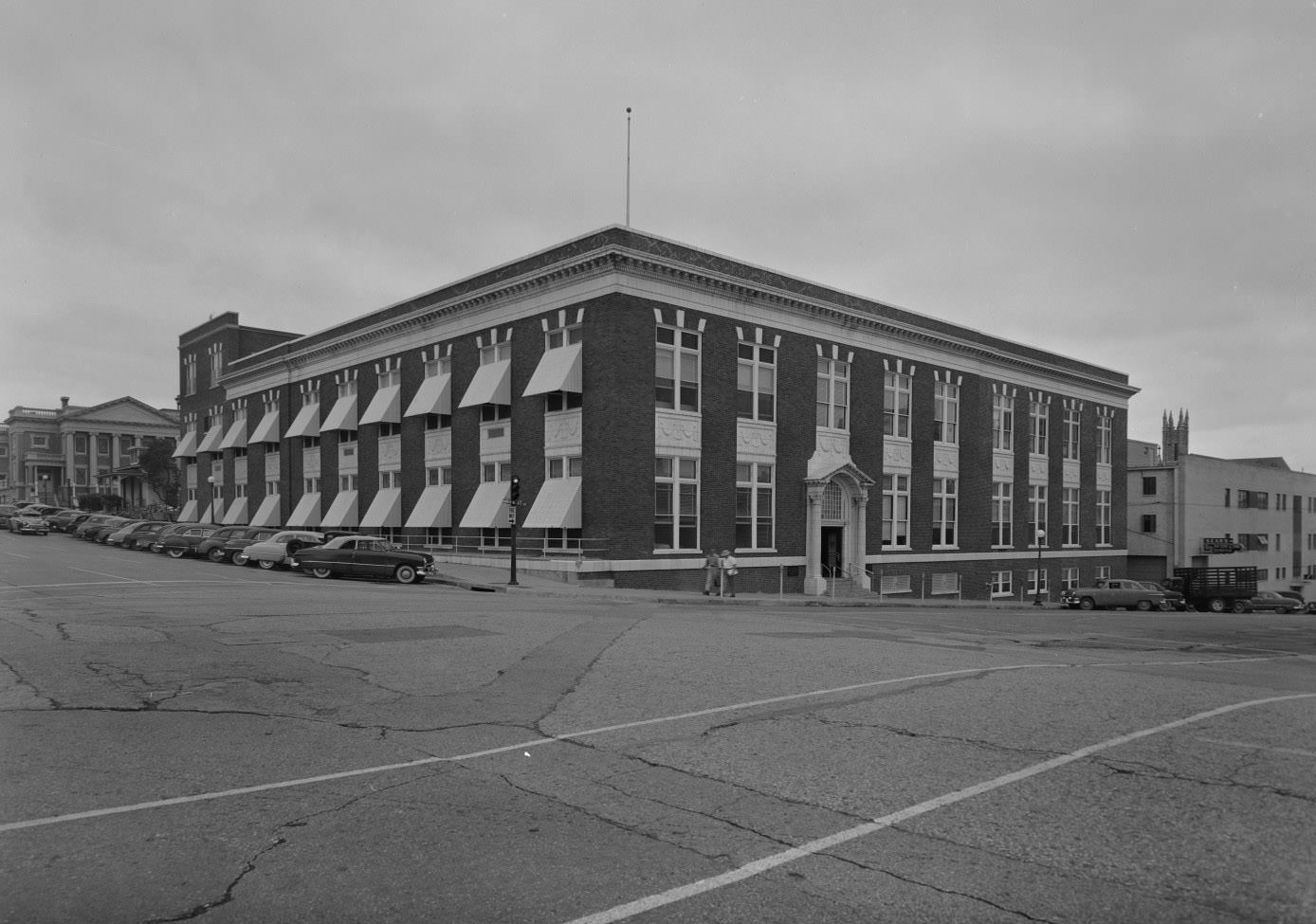
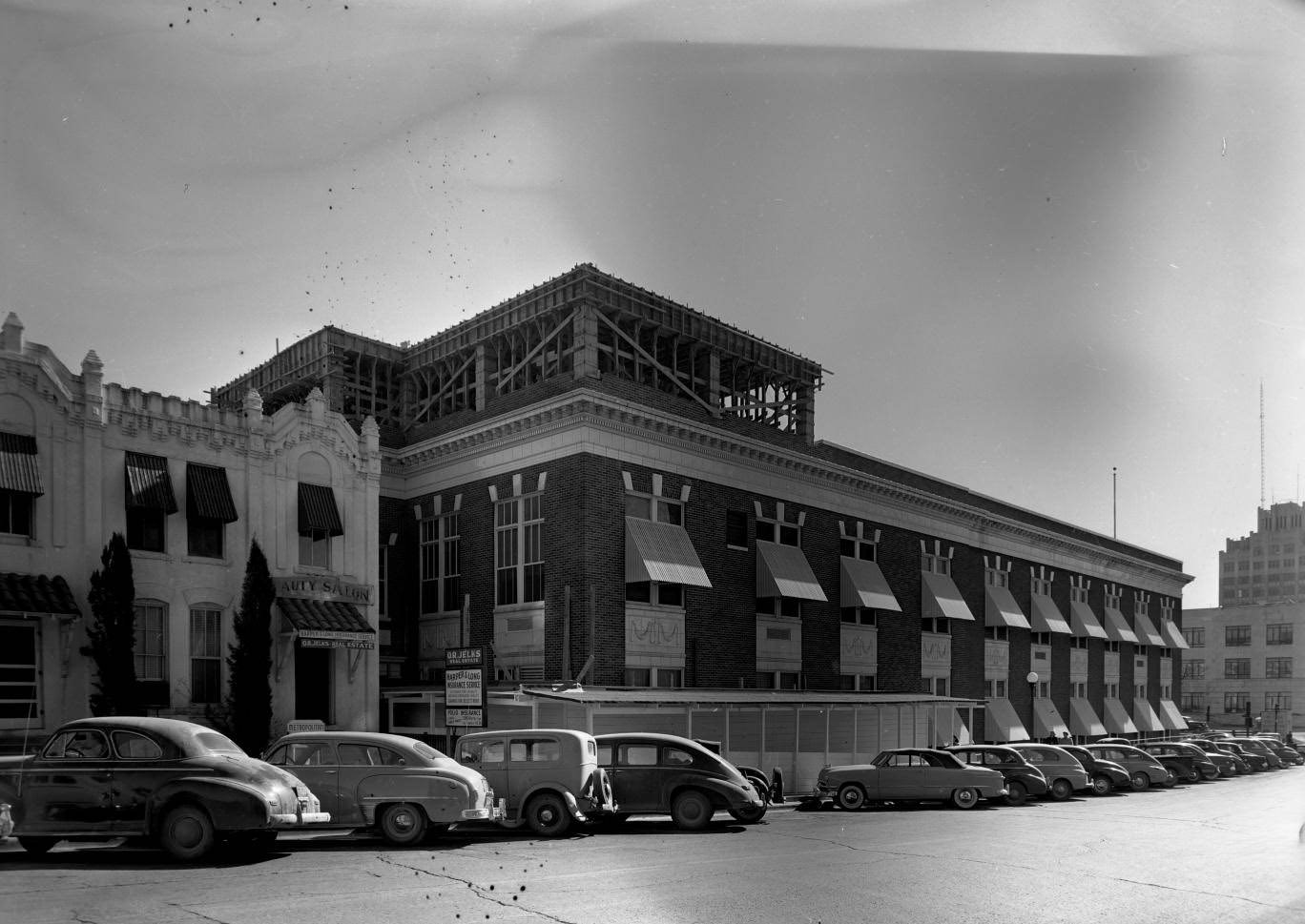
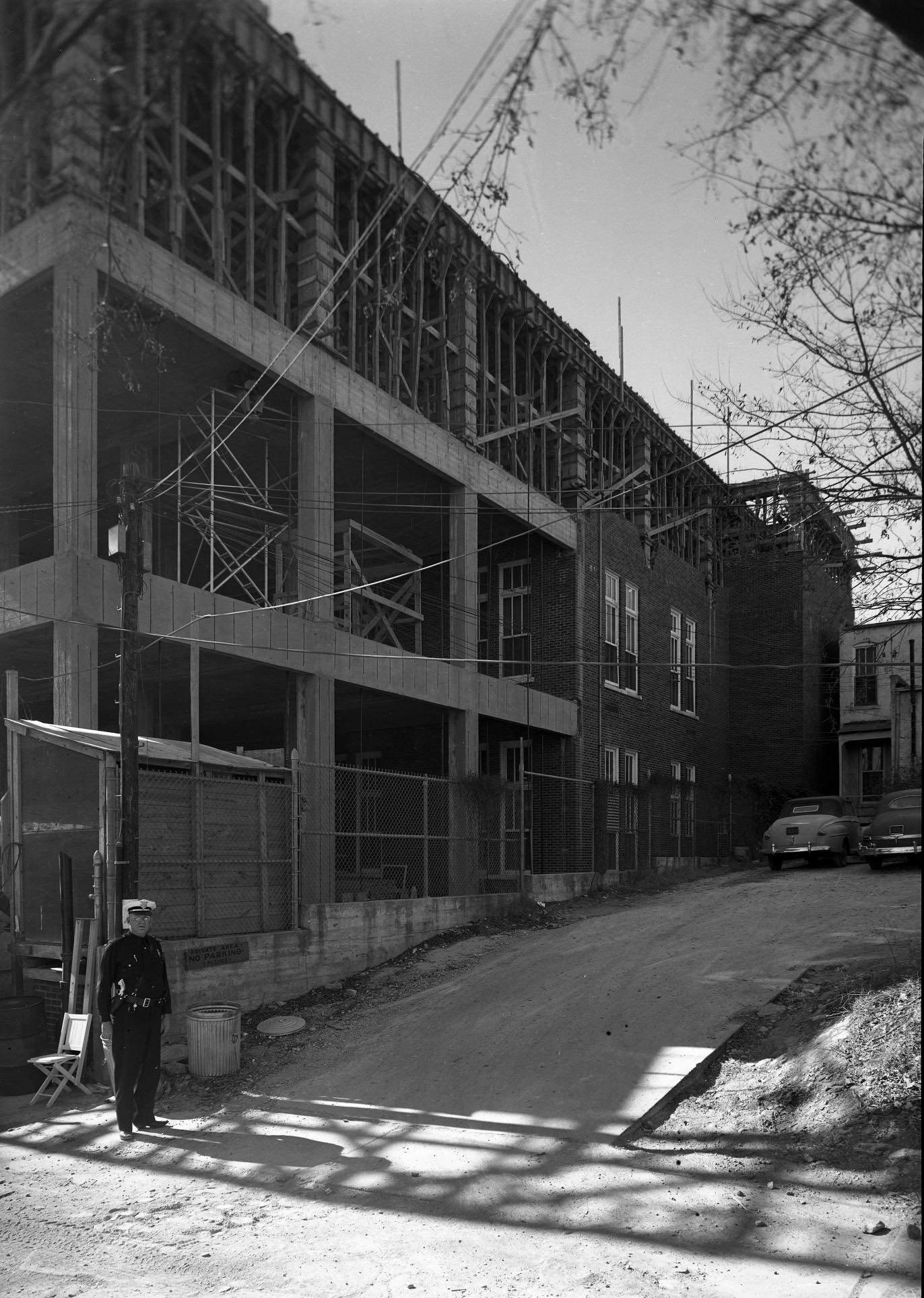
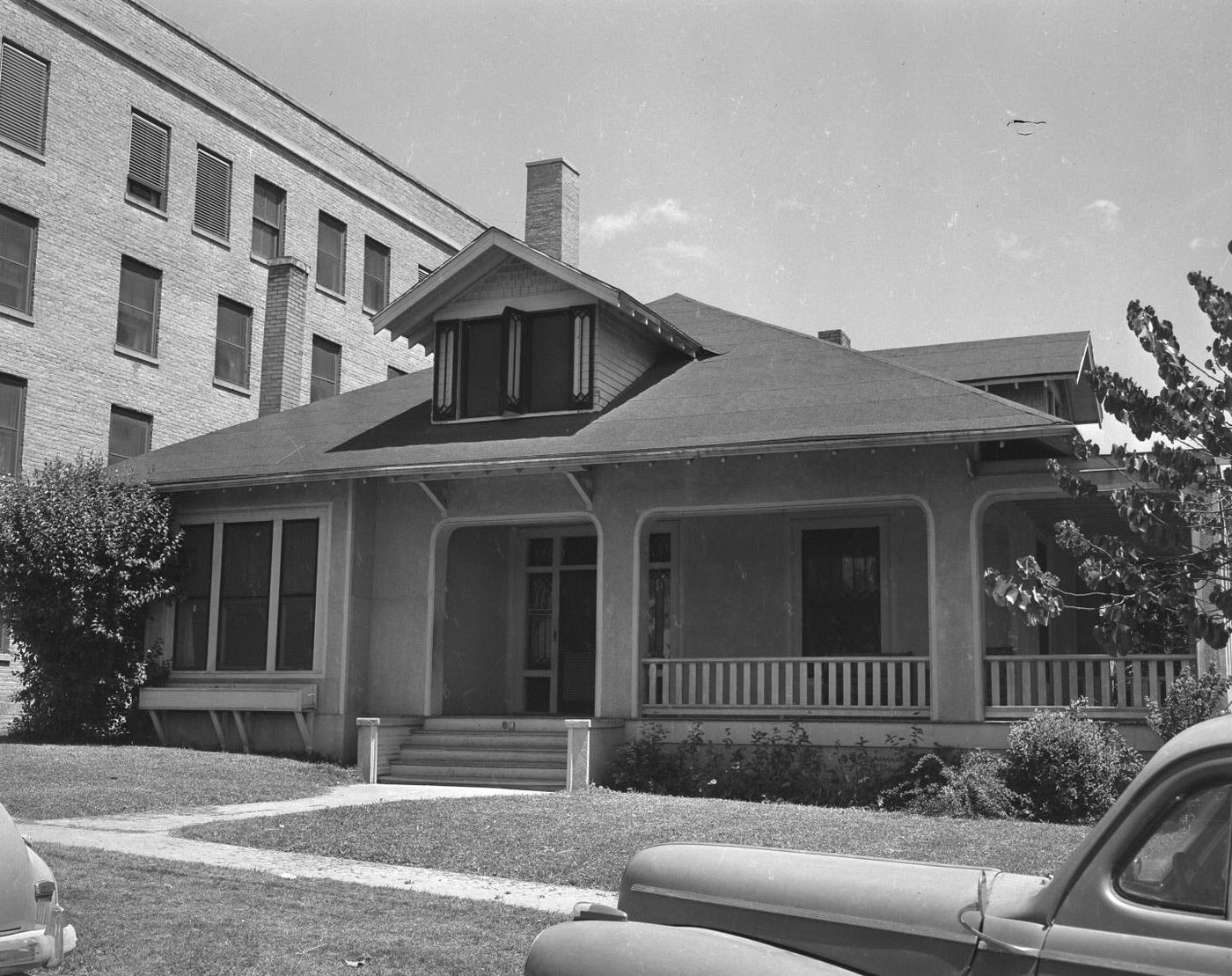
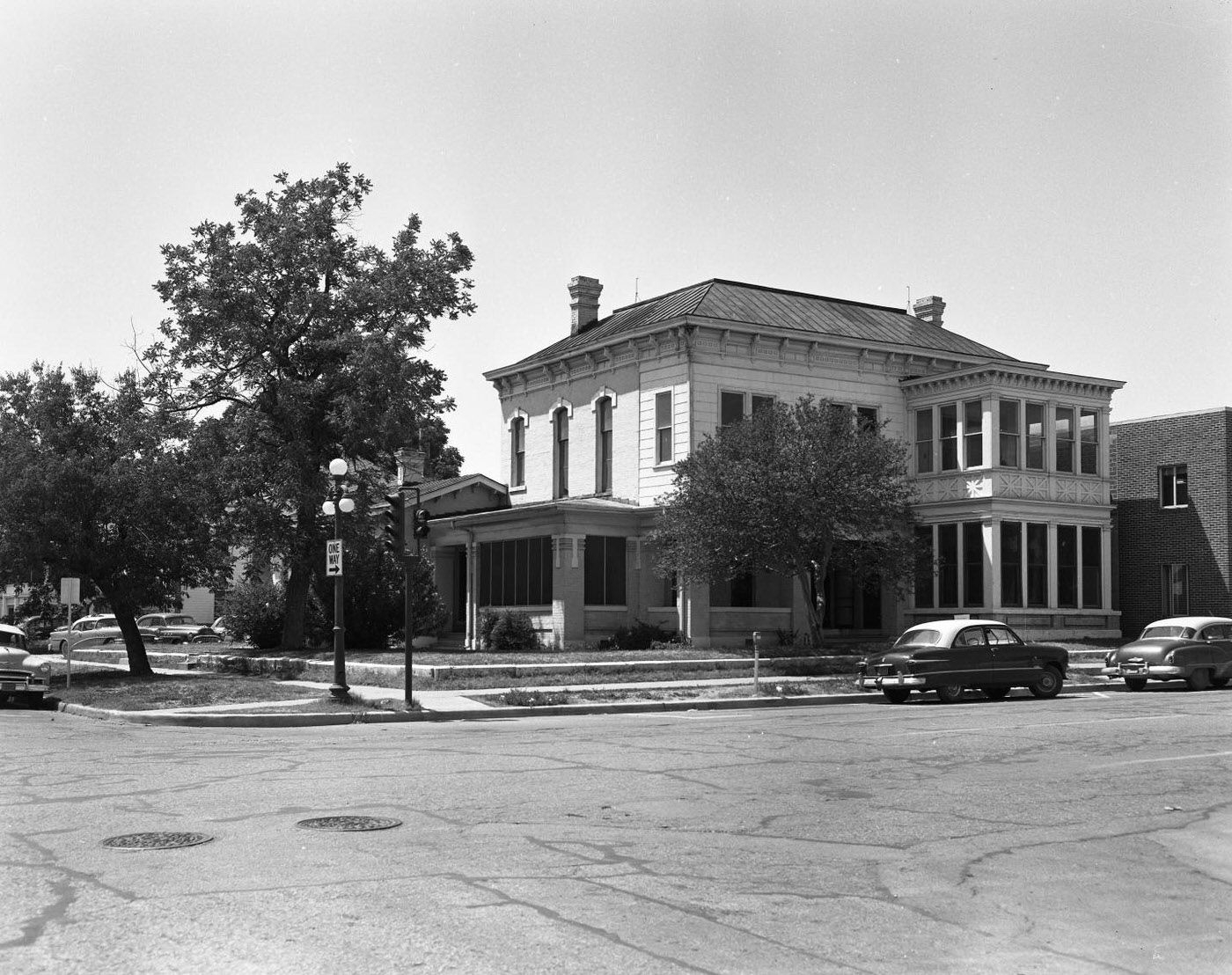
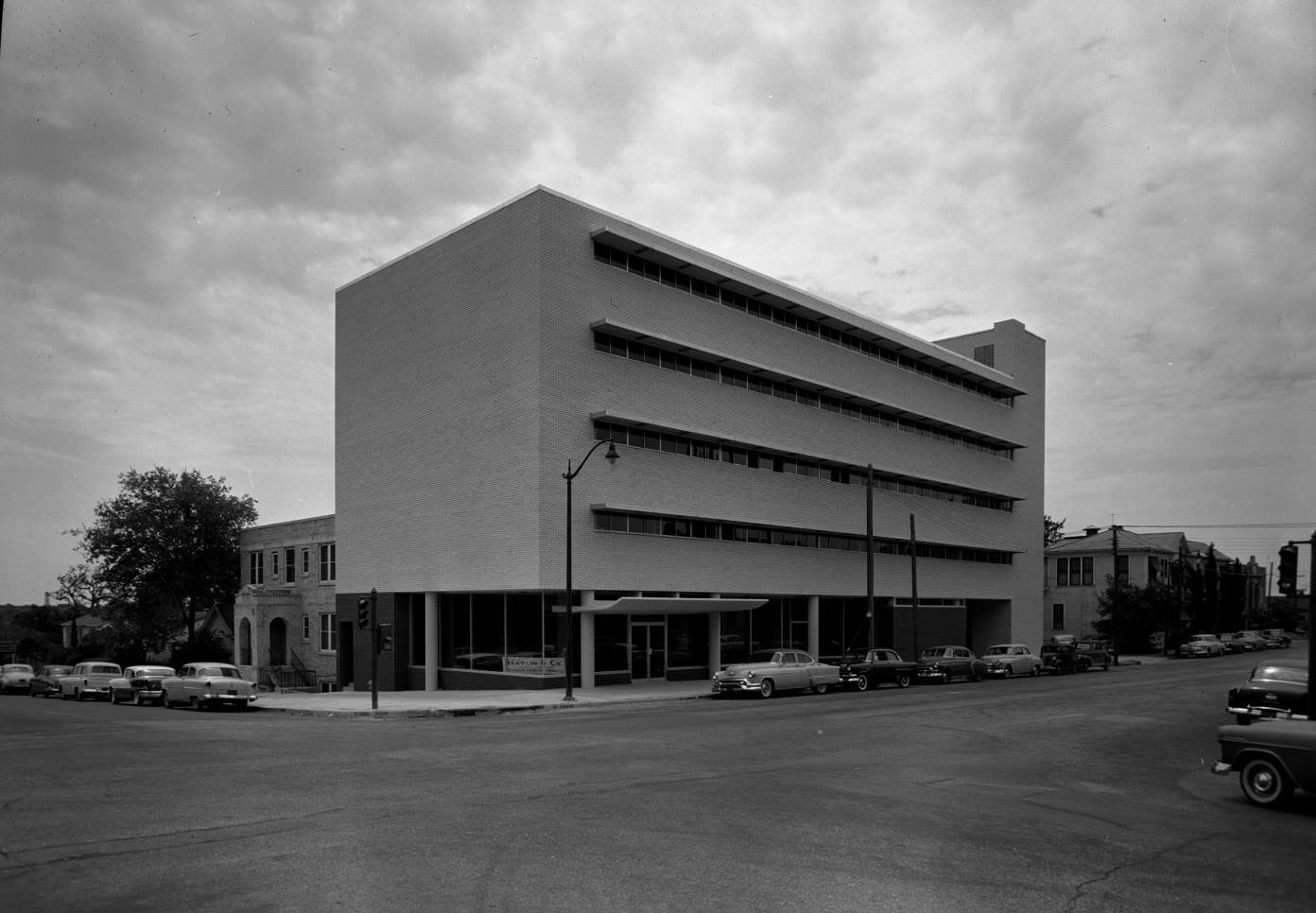
Austin in the 1950s was a city on the move. The decade opened with the United States riding a wave of post-World War II economic growth, and Austin absorbed that energy in a big way. New businesses opened, new roads were paved, new schools were built, and new neighborhoods pushed outward from the city’s core. These photographs capture that transformation in remarkable detail — streets lined with cars, construction crews at work, storefronts freshly painted, and institutions taking shape for generations to come.
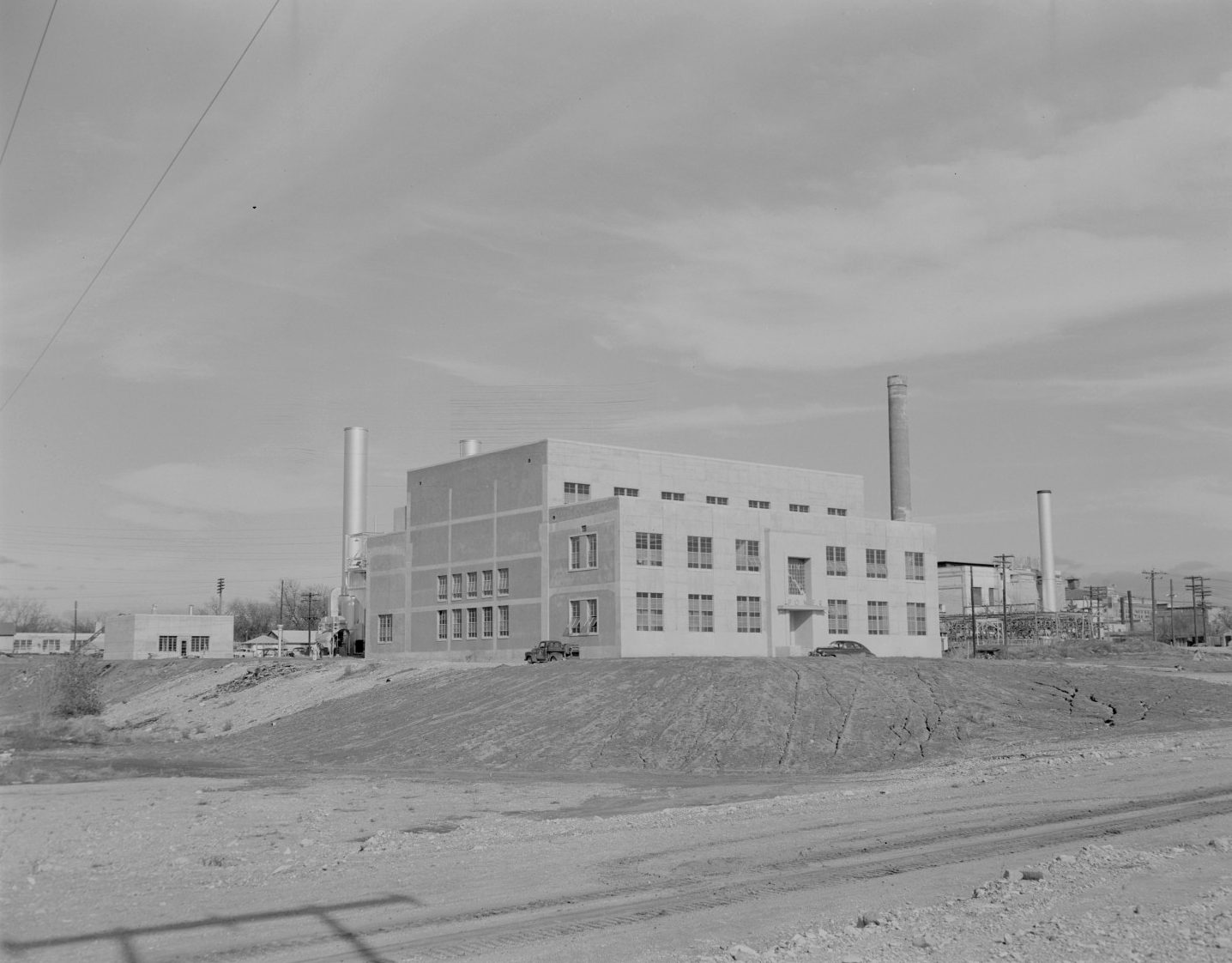
Seaholm Exterior City Power Plant in Austin, Texas, 1951
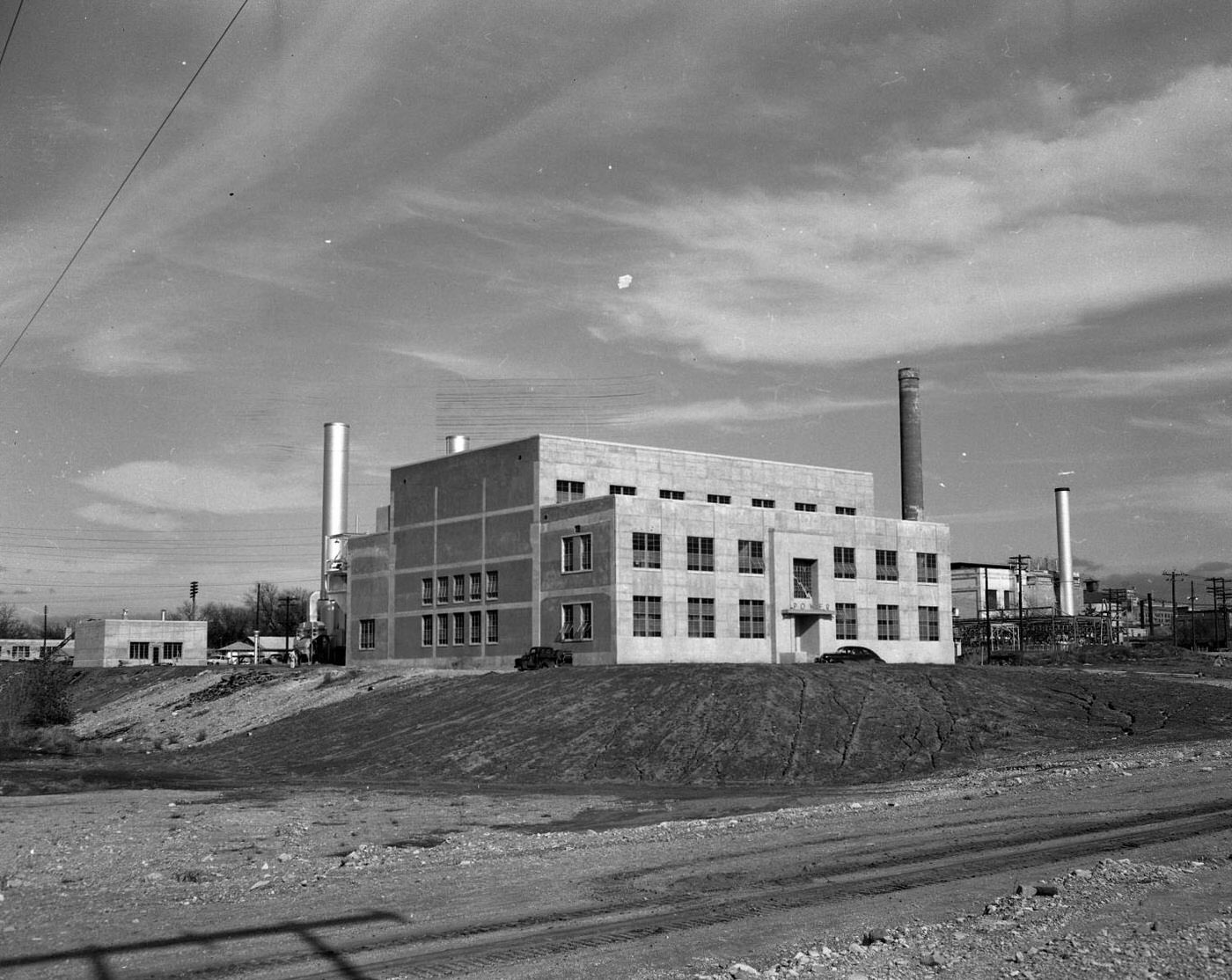
Keeping the lights on for a growing city required serious infrastructure. The Seaholm Power Plant on the west bank of the Colorado River stood as one of Austin’s most important industrial landmarks. By 1951, the plant and its surroundings were still being developed, with parked cars and unfinished grounds visible nearby. It powered homes, businesses, and the expanding university community that was reshaping the city’s identity.
Seaholm Power Plant, Unfinished Surroundings and Parked Cars, 1951
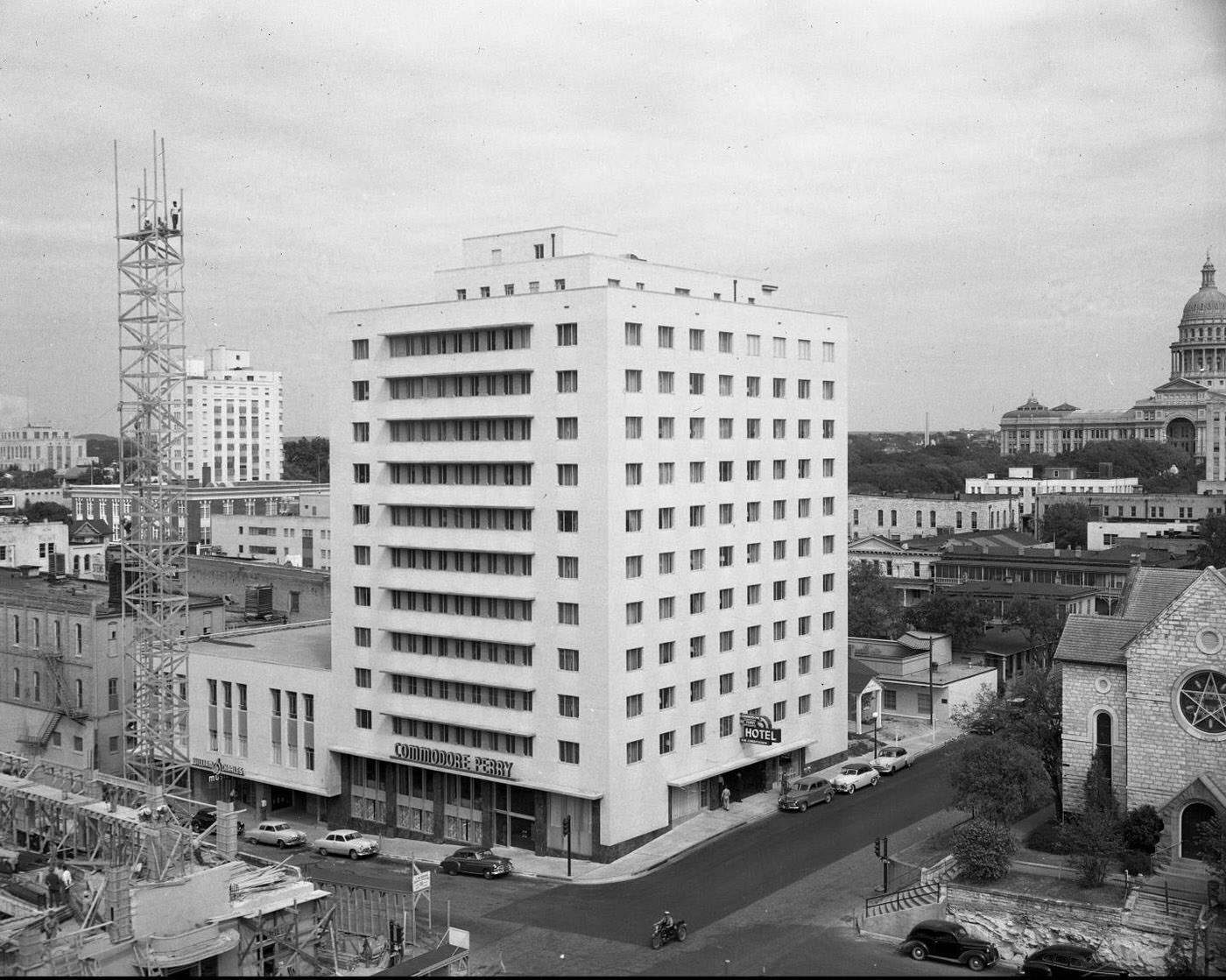
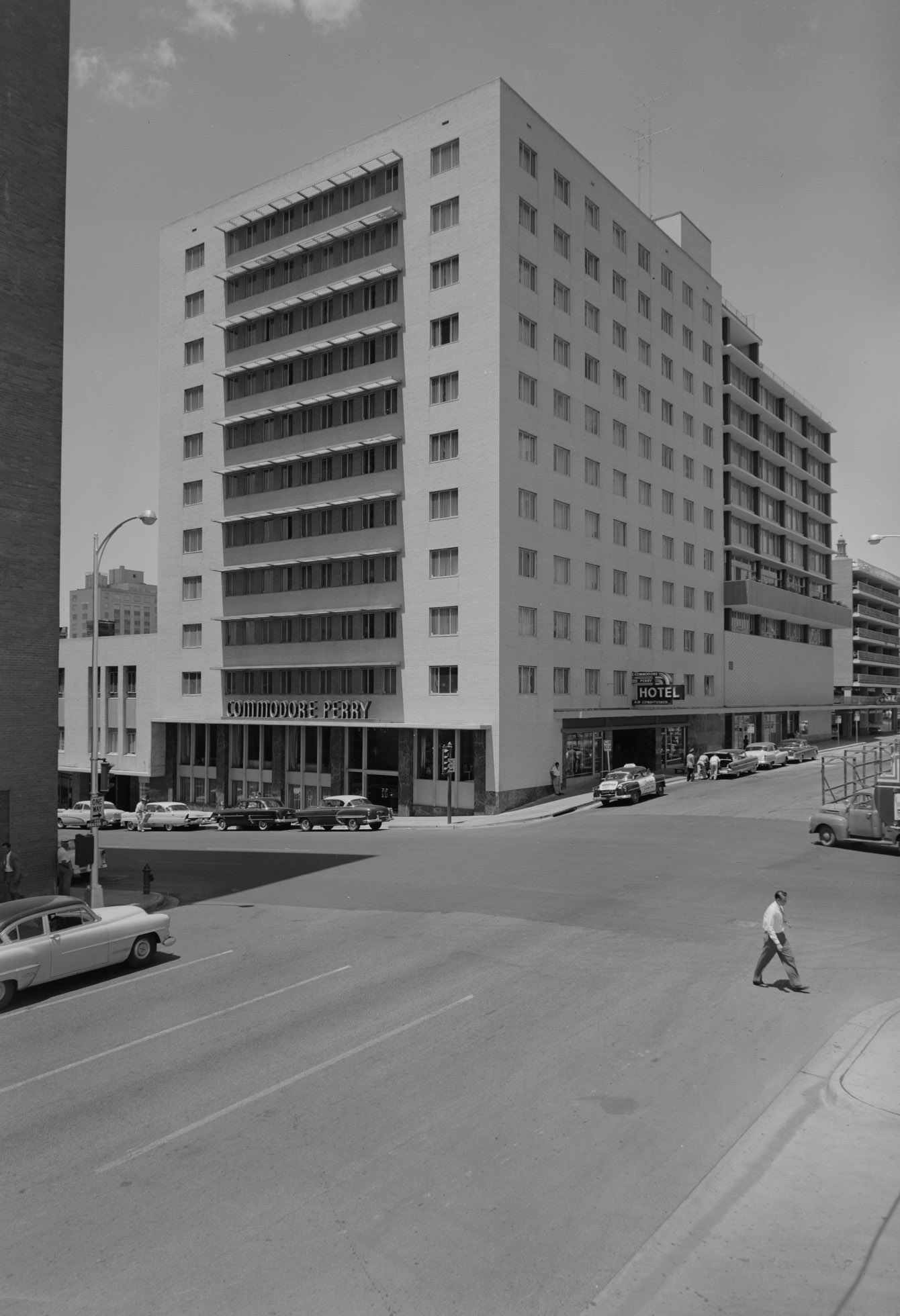
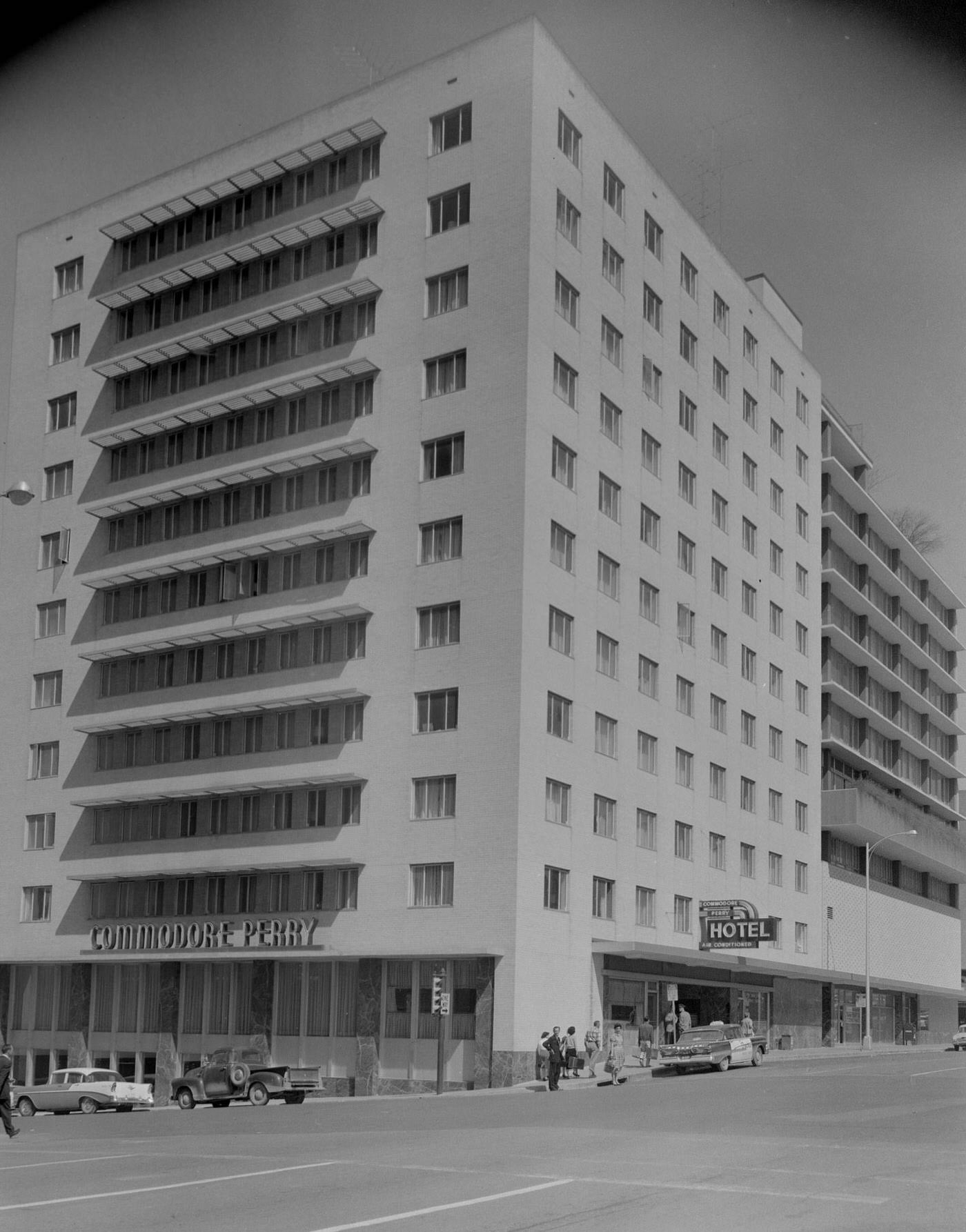
Downtown Austin anchored the decade’s commercial life. Congress Avenue was the main artery, lined with hotels, theaters, shops, and government buildings. The Commodore Perry Hotel was one of its most recognizable landmarks, photographed multiple times throughout the decade as the street around it continued to evolve.
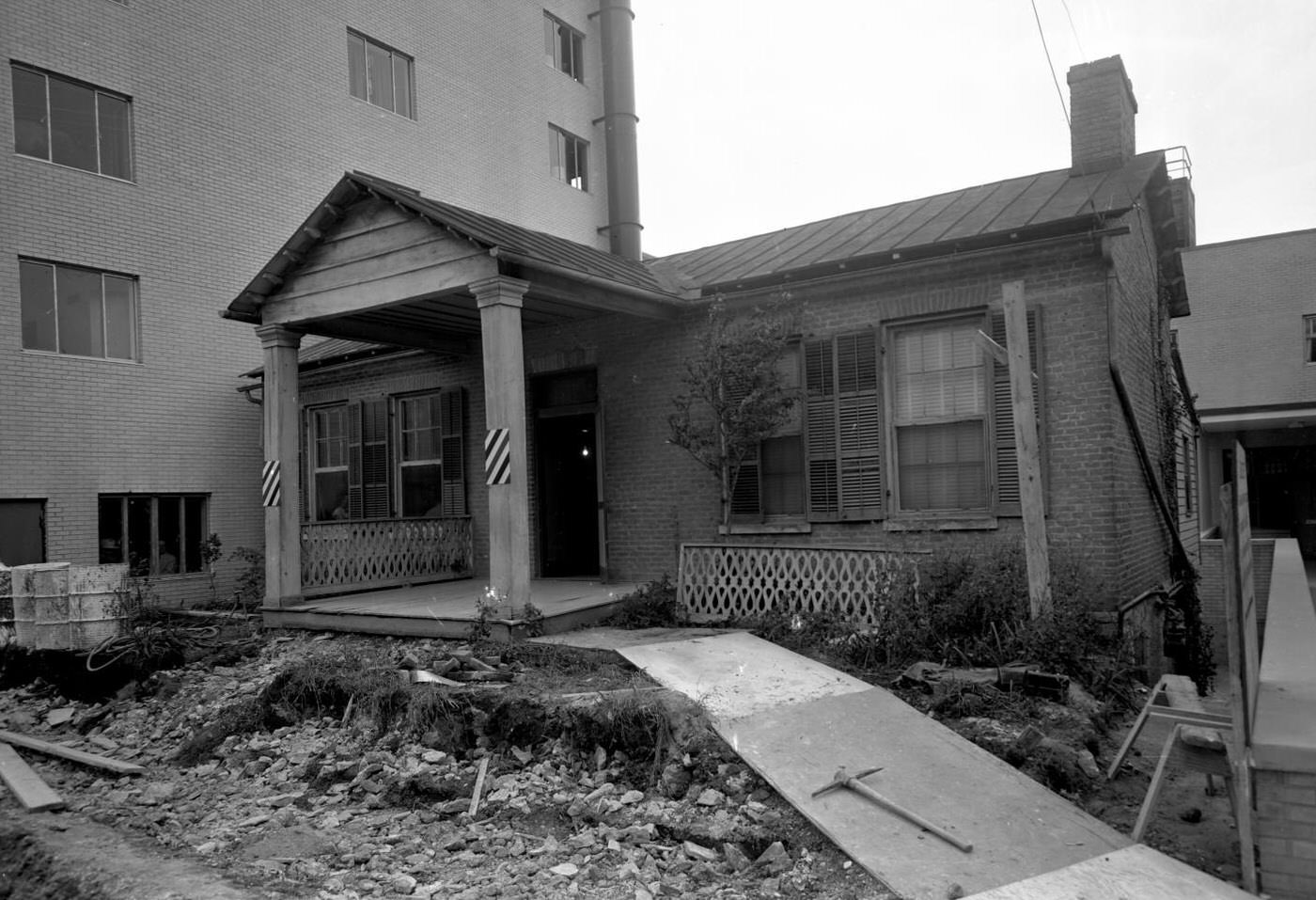
Exterior of the Commodore Perry Hotel, 1950Streetside View of Commodore Perry Hotel, 1956Construction Underway at Old House Adjacent to Commodore Perry Hotel, 1950
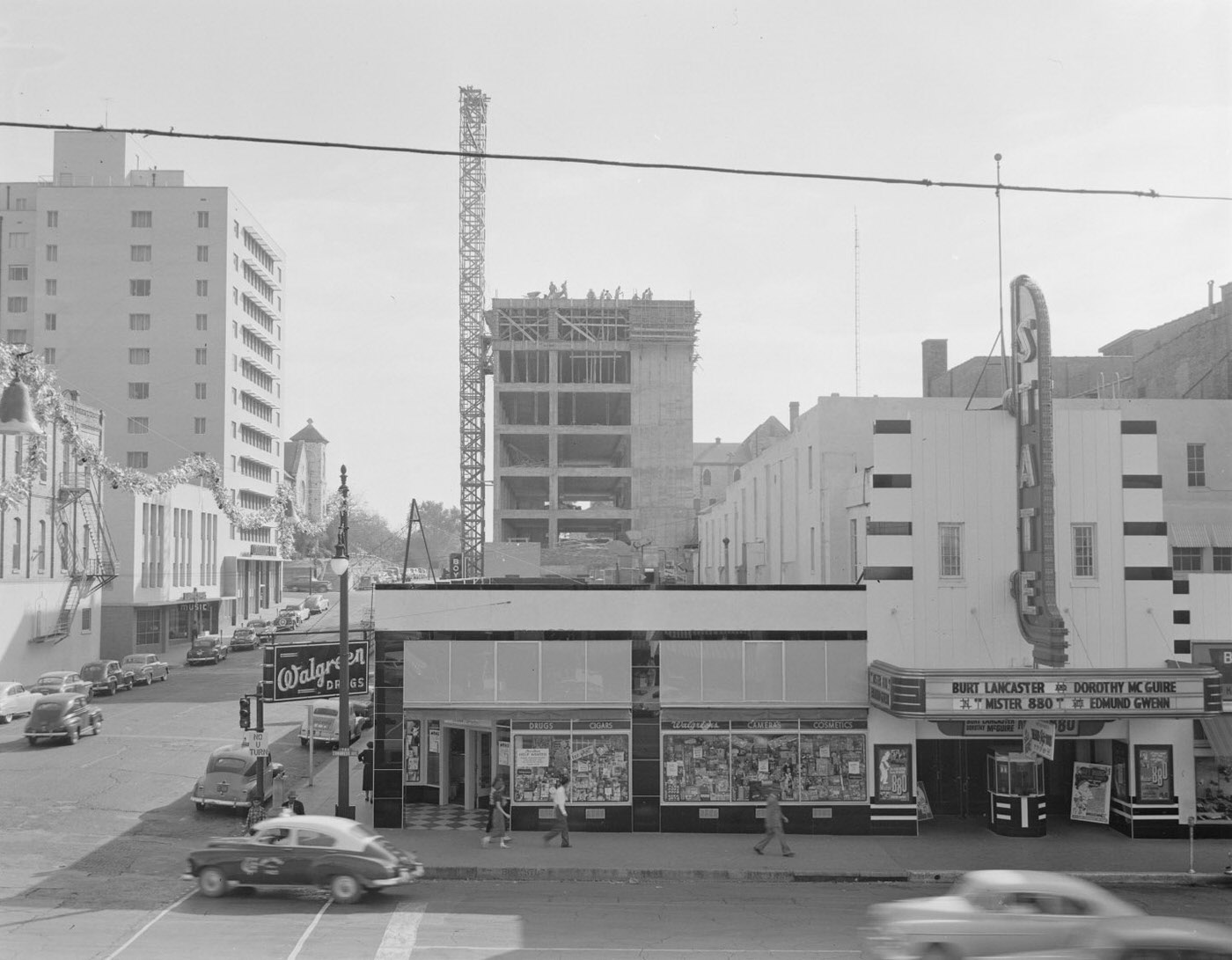
The corner of Congress Avenue and 6th Street buzzed with activity. The State Theater drew crowds, and the sidewalks reflected the rhythm of daily commerce in a mid-century Southern capital city.
Congress Ave and the State Theater in Austin, Texas, 1950
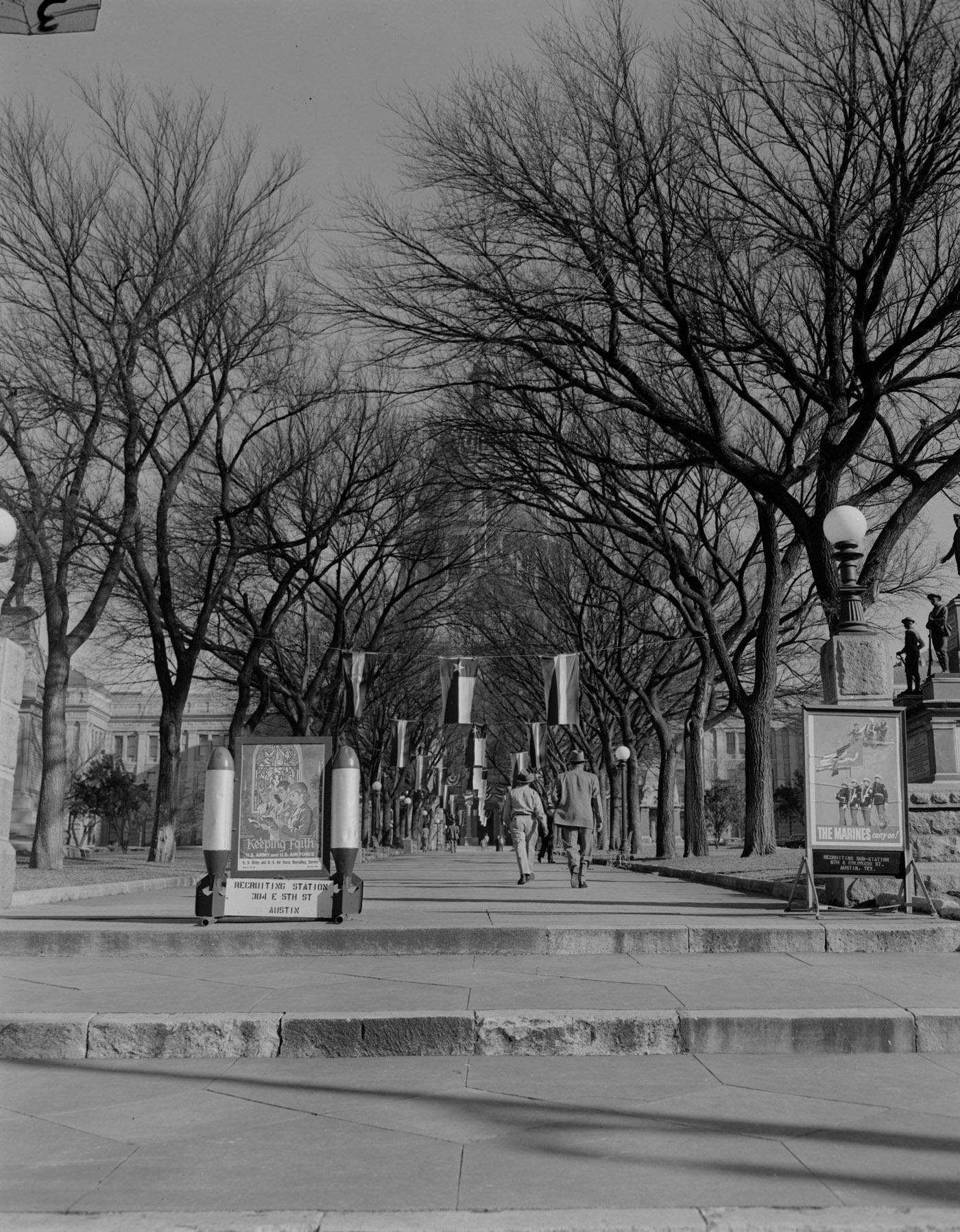
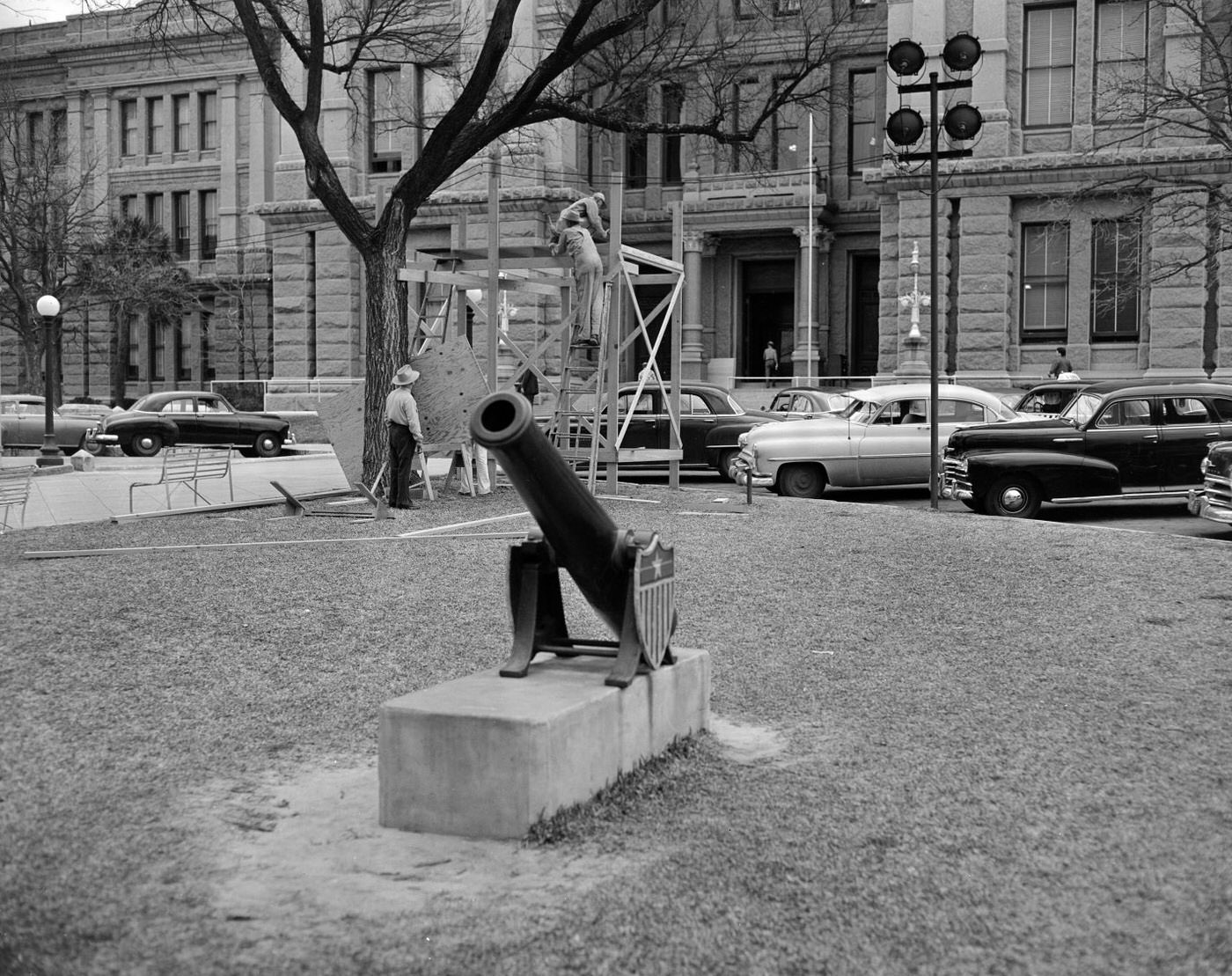
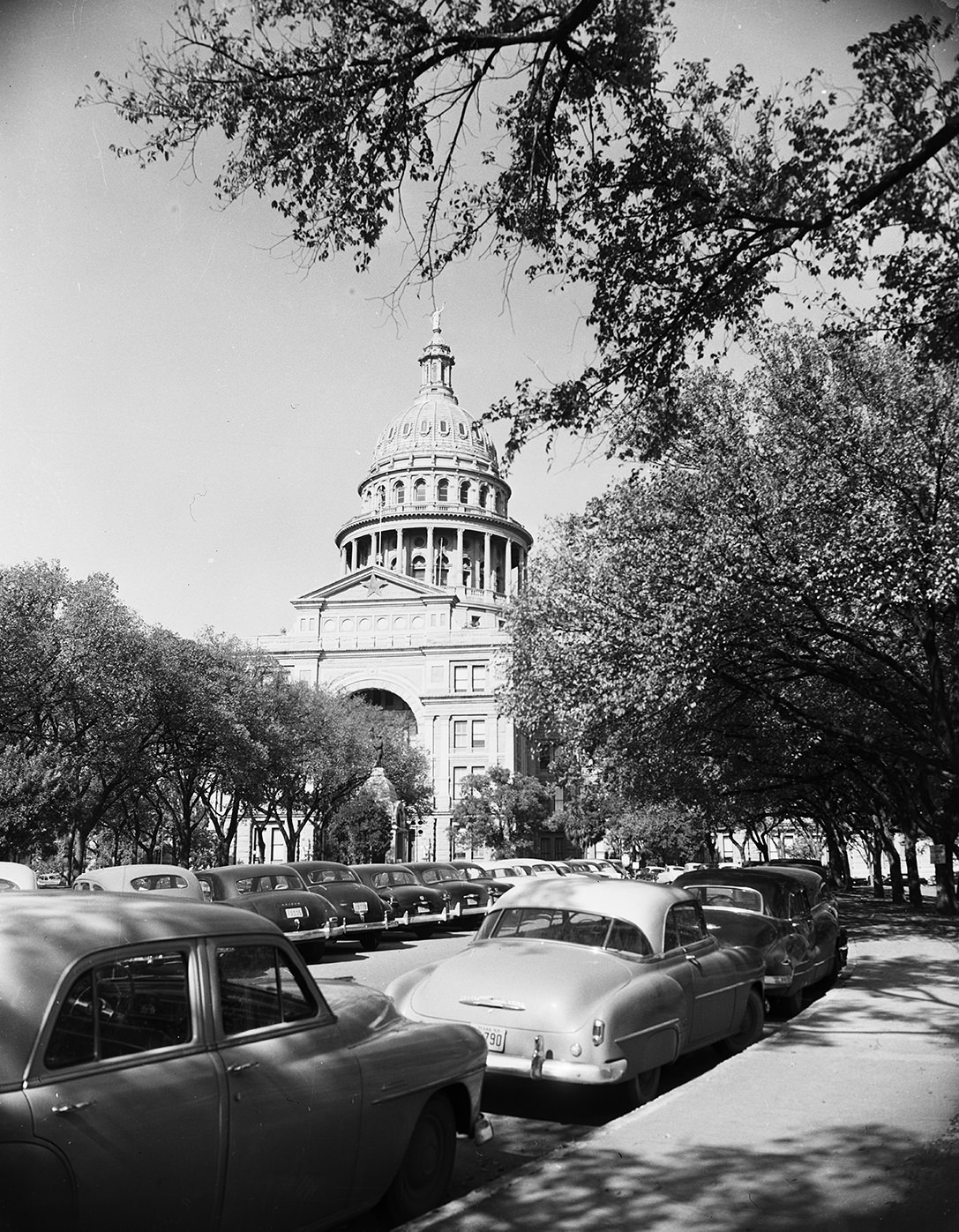
Austin’s role as the state capital of Texas shaped its built environment more than almost any other factor. The Texas State Capitol dominated the skyline and the city’s civic imagination. By the late 1950s, a front-facing photograph of the Capitol showed a building that remained largely unchanged in appearance but surrounded by a modernizing city. Preparations for Governor Allan Shivers’ inauguration in 1953 brought workers, platforms, and crowds to the Capitol grounds.
Front View of the State Capitol, 1959Final Preparations for Gov Allan Shivers’ Inauguration at Capitol, 1953Final Preparations for Gov Allan Shivers’ Inauguration, Recruitment Poster, 1953Men Building Platform for Gov Allan Shivers’ Inauguration, 1953
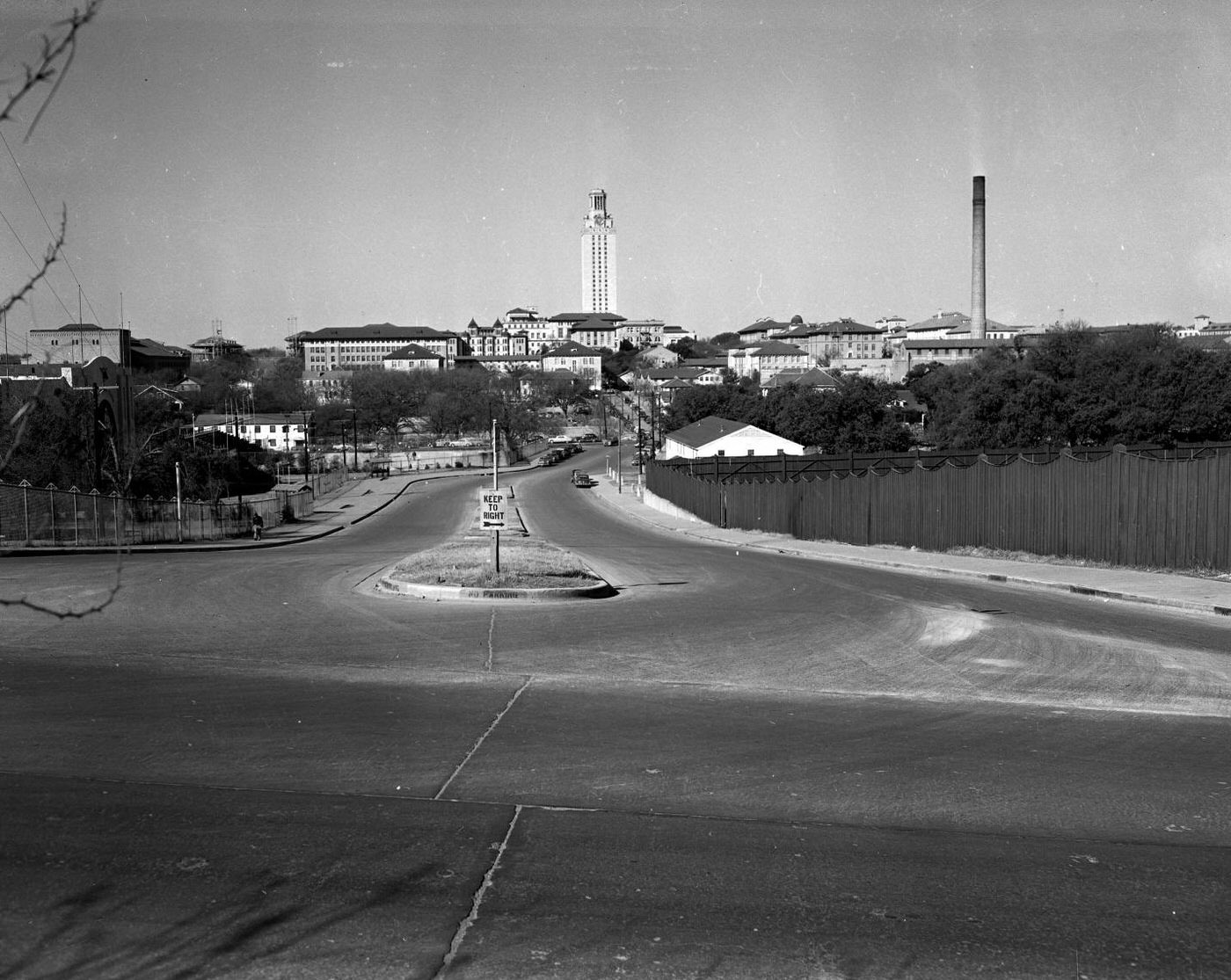
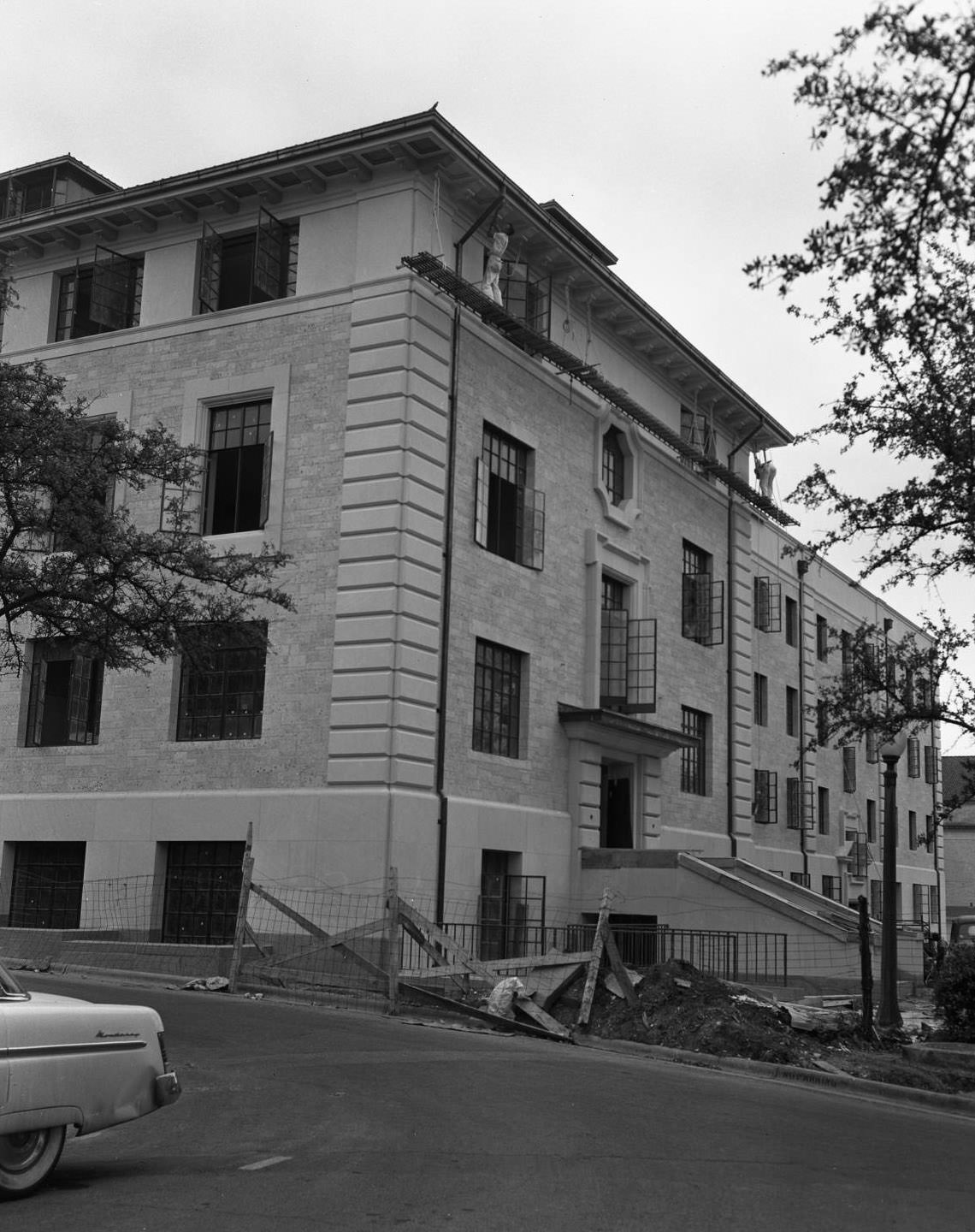
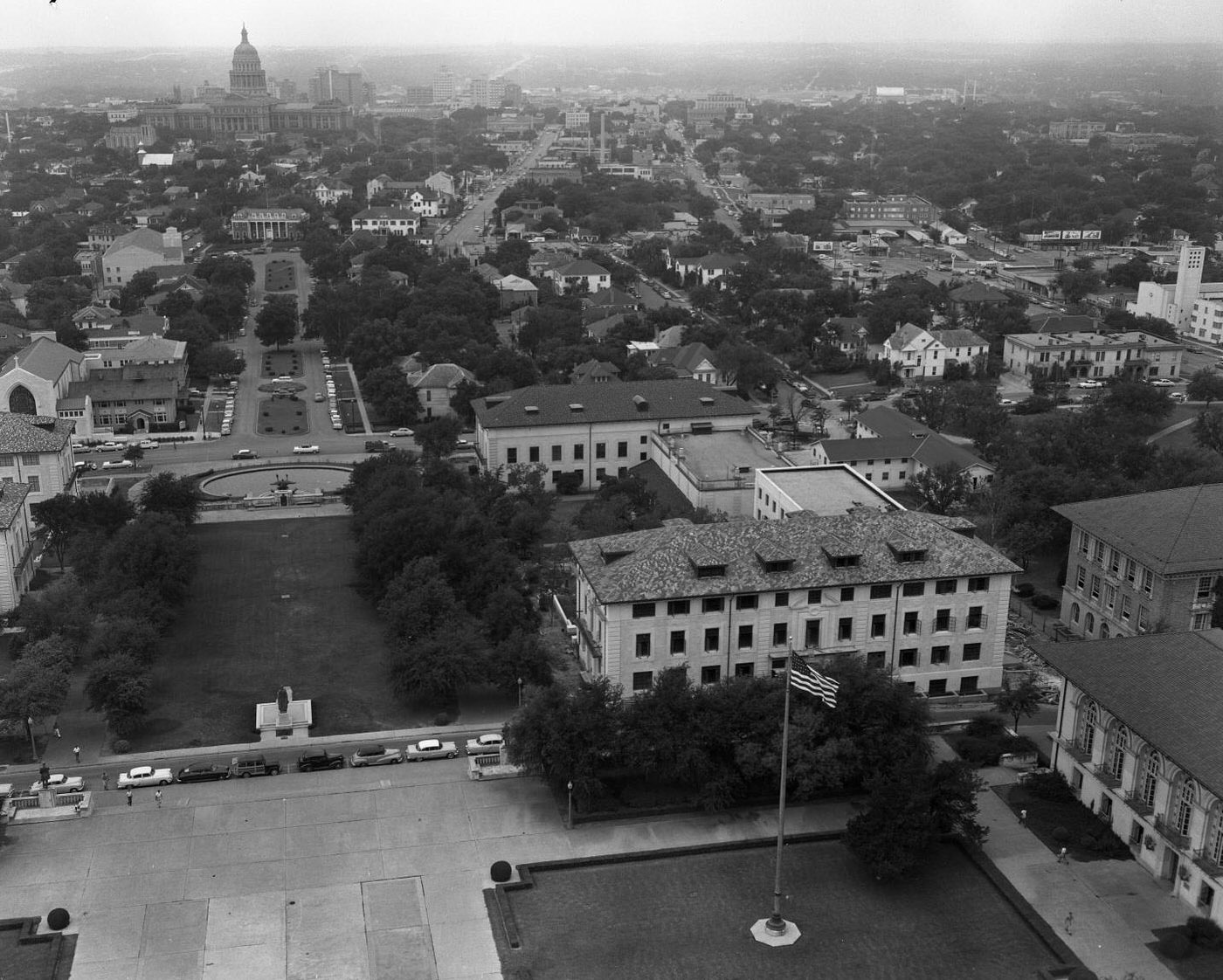
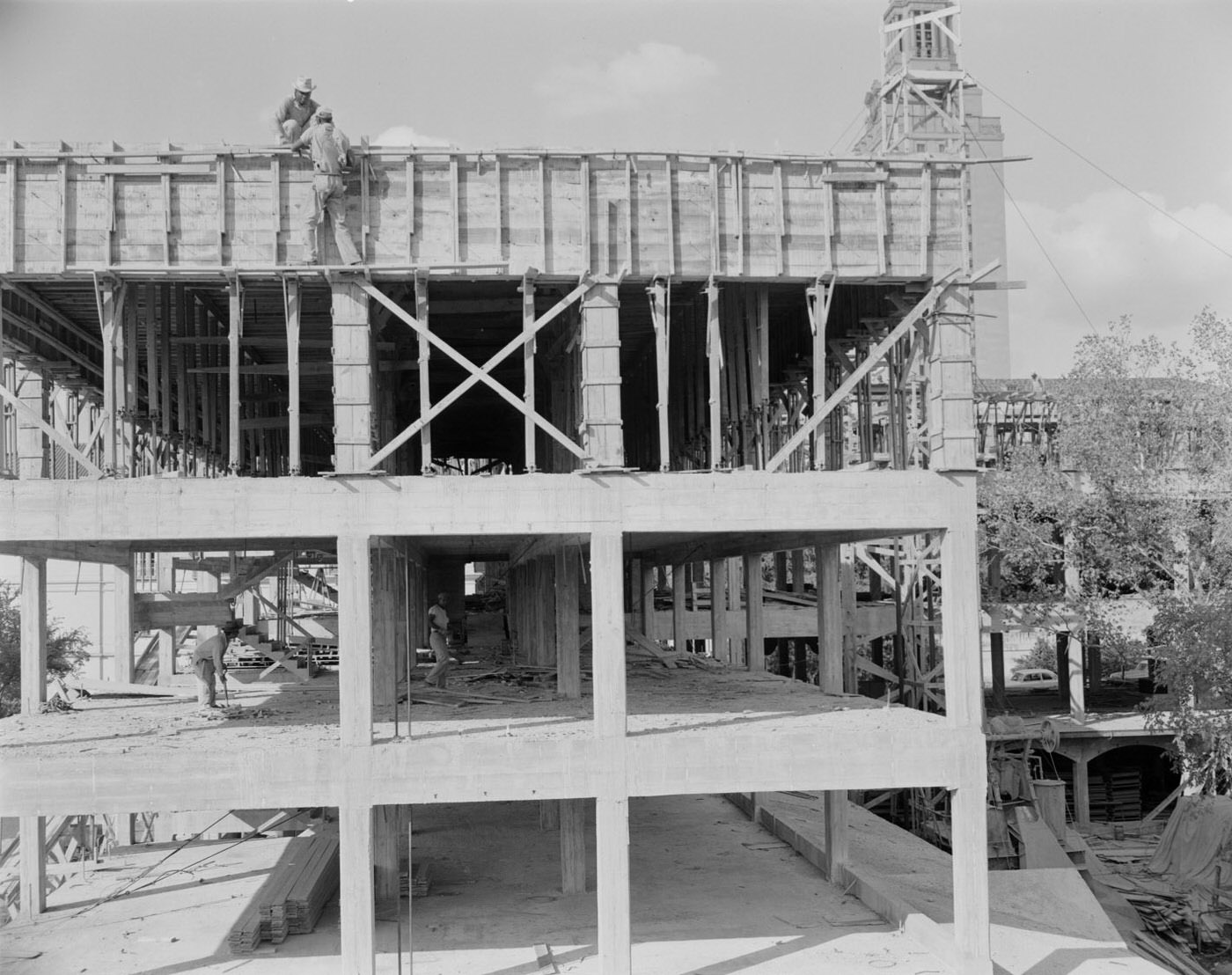
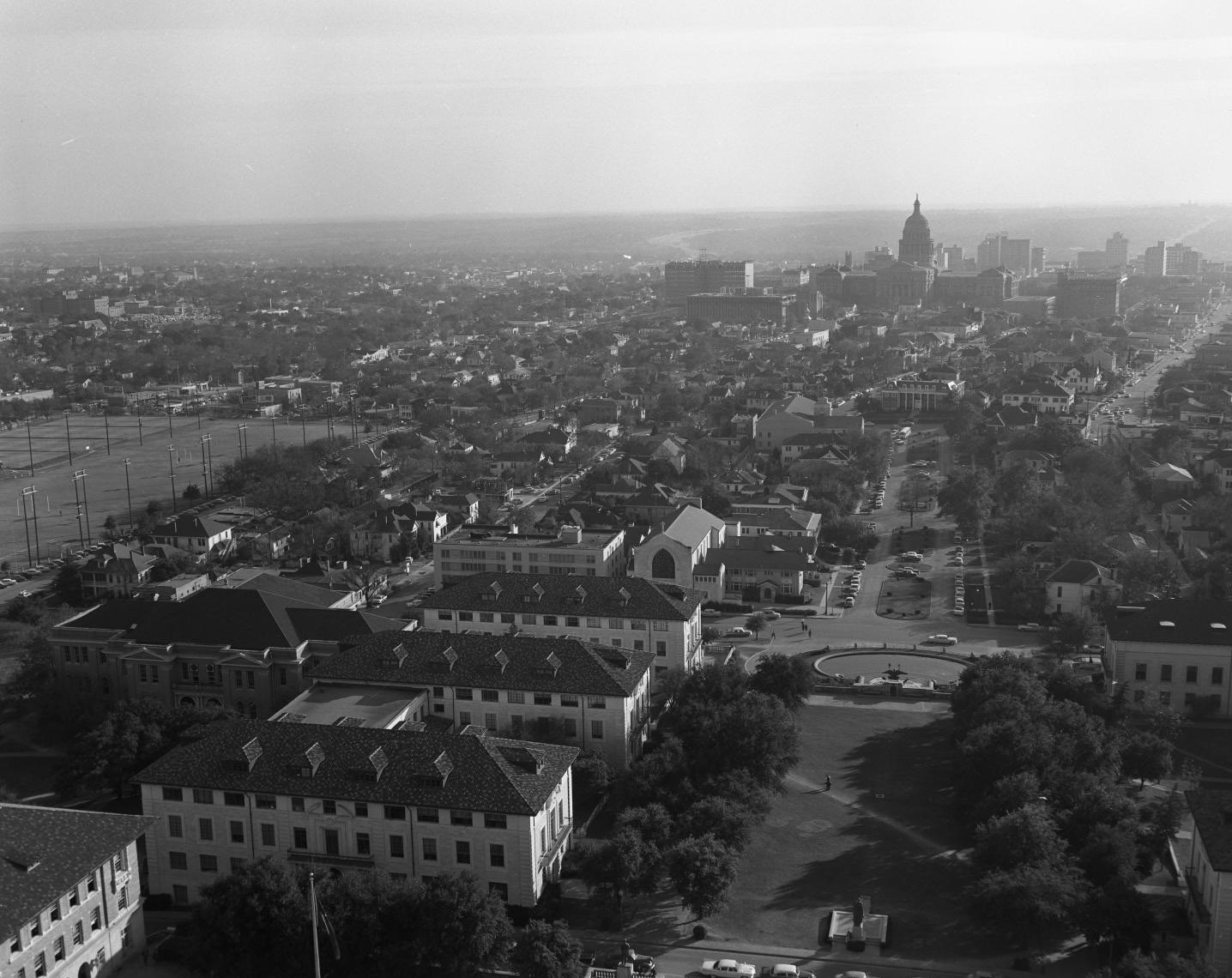
The University of Texas at Austin was a driving force behind the city’s growth. Student enrollment climbed steadily during the decade, and the campus expanded to keep pace. Construction fencing appeared around new buildings in 1951, and by mid-decade, workers were raising steel frameworks for additional facilities. Calhoun Hall stood as one of the campus’s prominent structures, visible both at ground level and in an aerial photograph alongside the State Capitol.
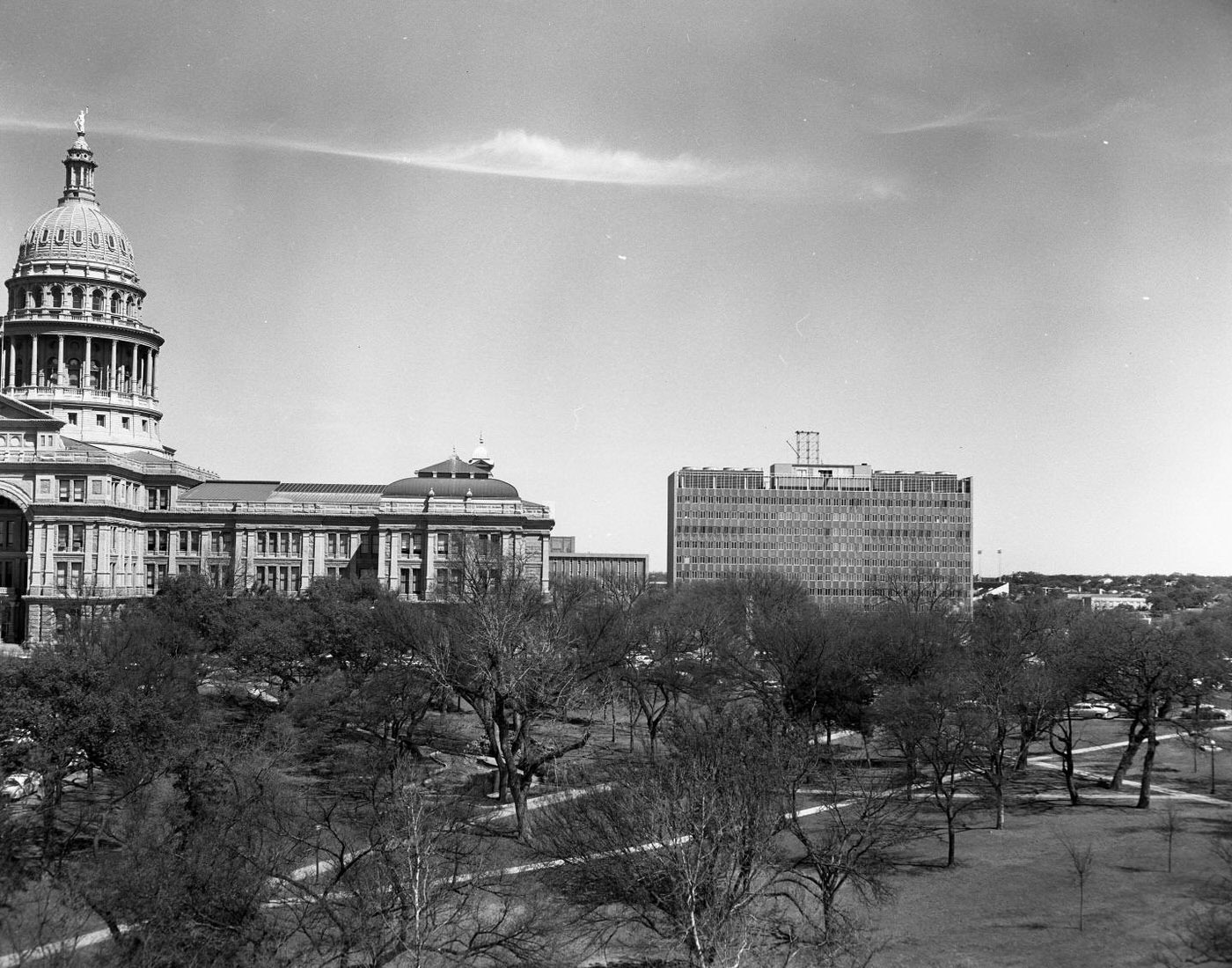
Construction Fencing at the University of Texas at Austin, 1951Calhoun Hall on the UT Campus, 1955Aerial View of Calhoun Hall and Texas State Capitol, 1955University of Texas, Construction Workers on Building Framework, 1954
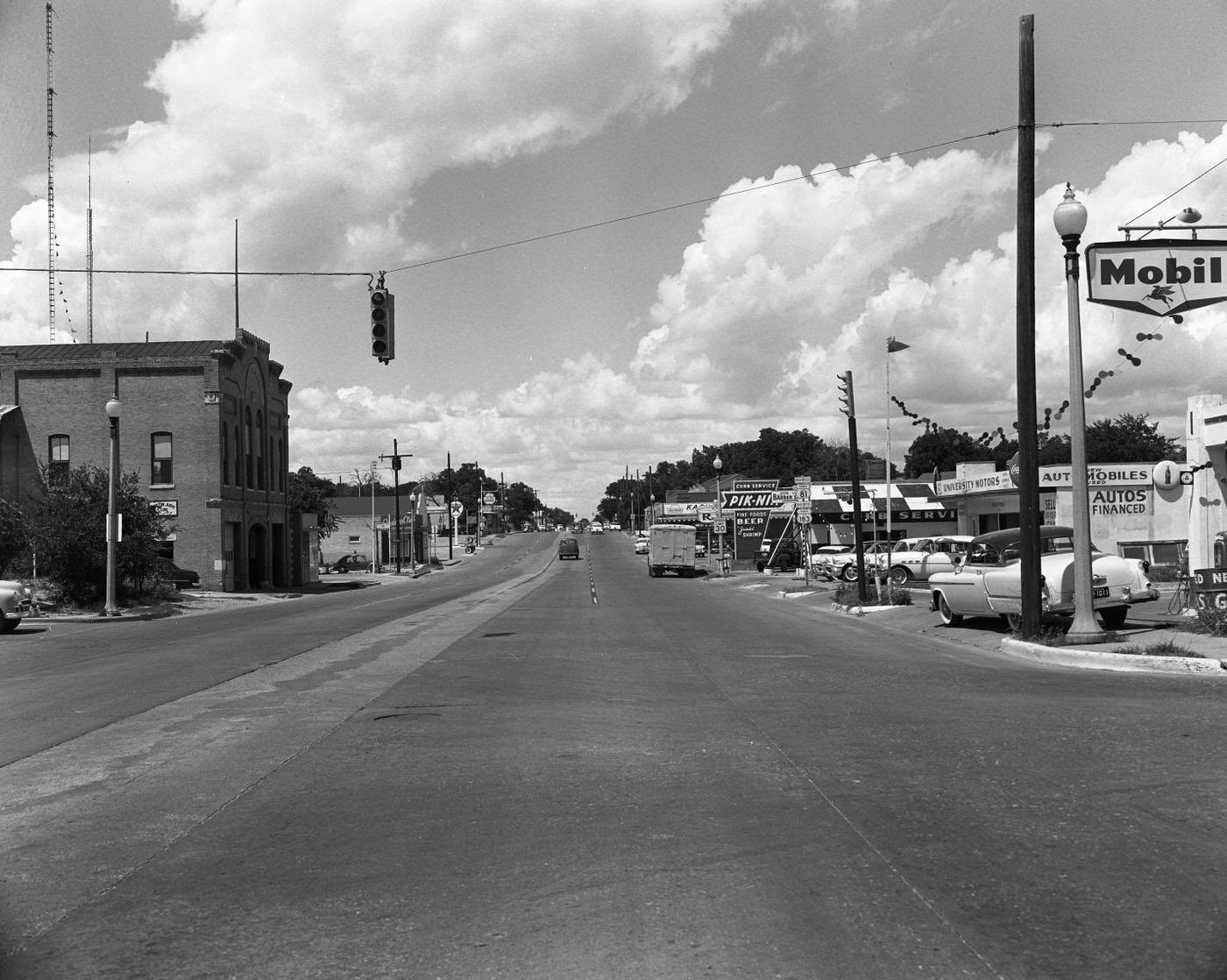
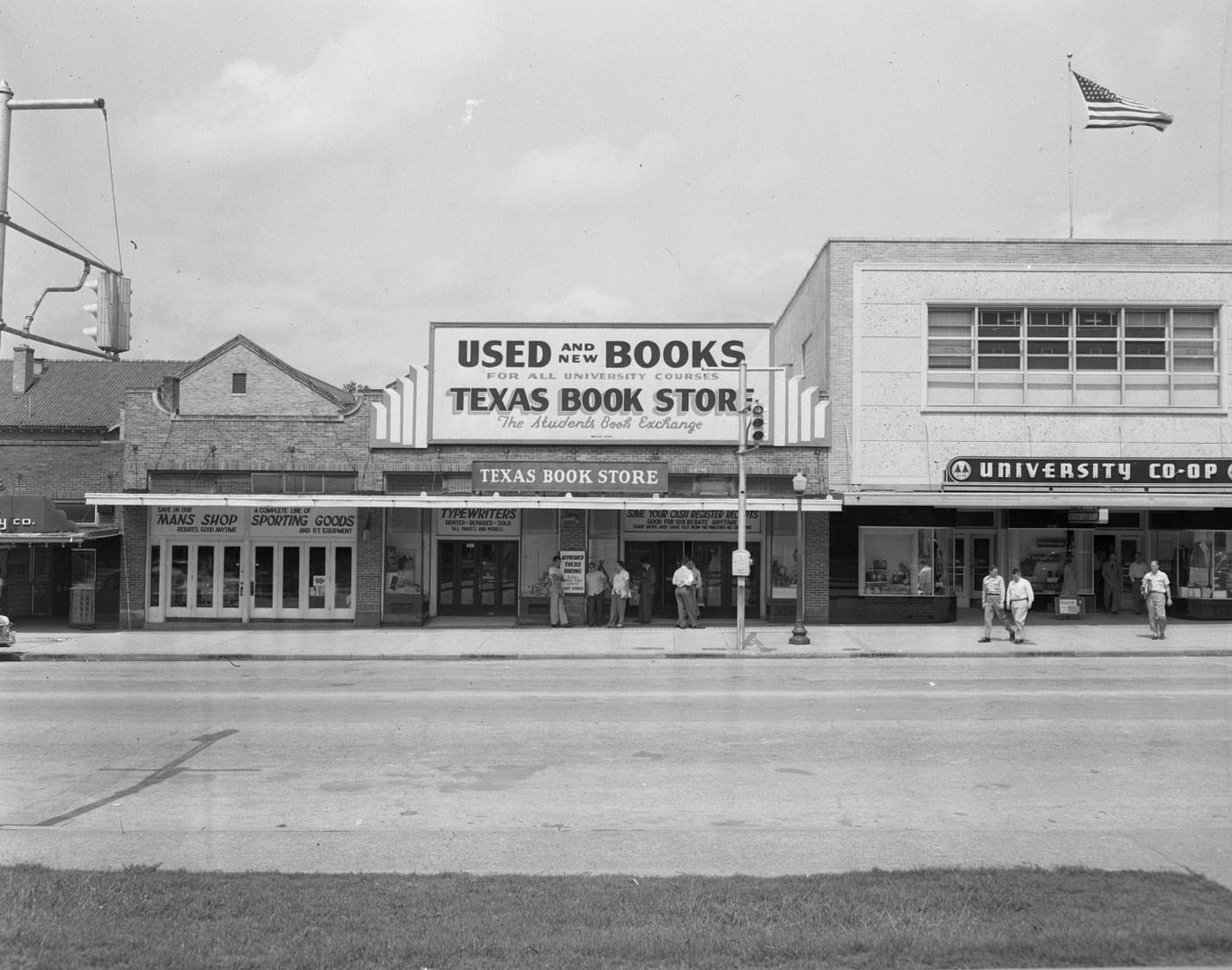
Near campus, Guadalupe Street served as the commercial spine of student life. Bookstores, diners, and small shops lined the sidewalks, and the street hummed with foot traffic from students and faculty alike. The Texas Book Store and University Co-Op were fixtures at the northern end of the drag as early as 1951.
Guadalupe Street View from 30th St., 1958Guadalupe Street View from 16th St. and San Antonio St., 1951Guadalupe Street Scenes Near UT Campus, 1955Texas Book Store and University Co-Op on Guadalupe Street, 1951
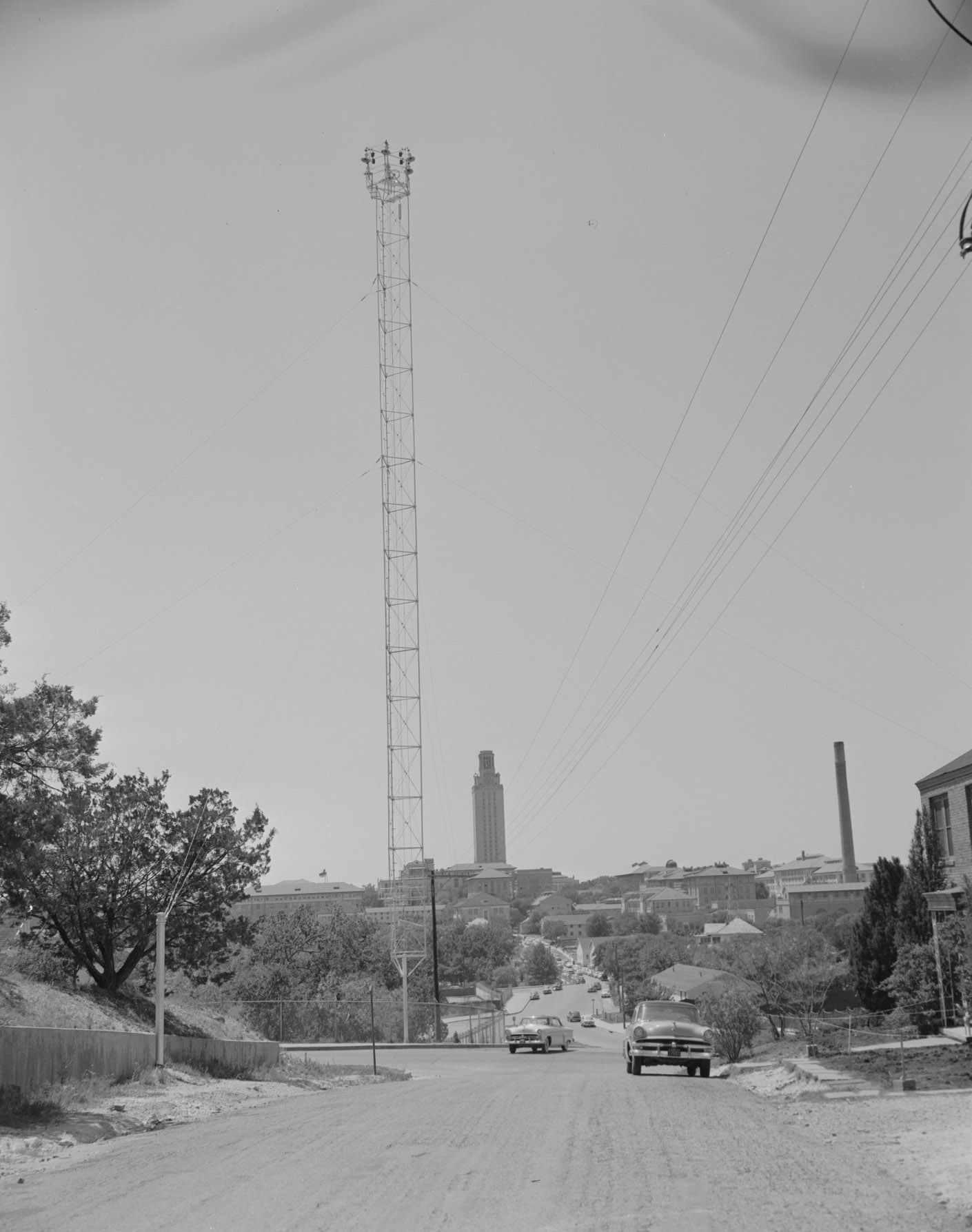
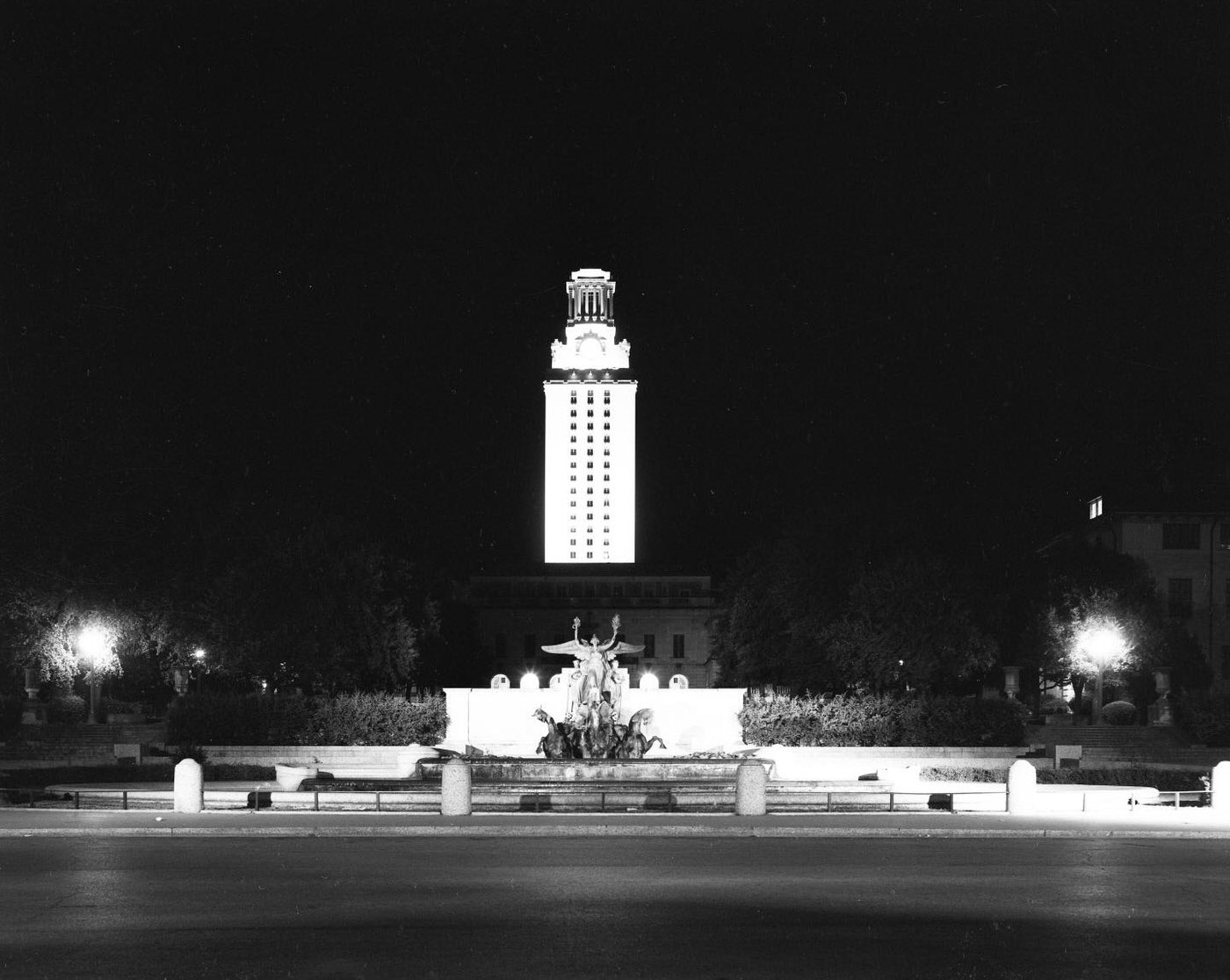
The UT Tower was more than a building — it was the city’s most iconic vertical landmark. A moonlight tower photograph from 1954 framed the two towers together in the same shot. By 1957, a night photograph showed the UT Tower lit up against the dark sky, a sight that had become synonymous with Austin’s identity.
Moonlight Tower Leading to UT Tower, 1954Night View of Lit UT Austin Tower on 21st Street, 1957Southward View of UT Austin Tower on South Mall, 1958
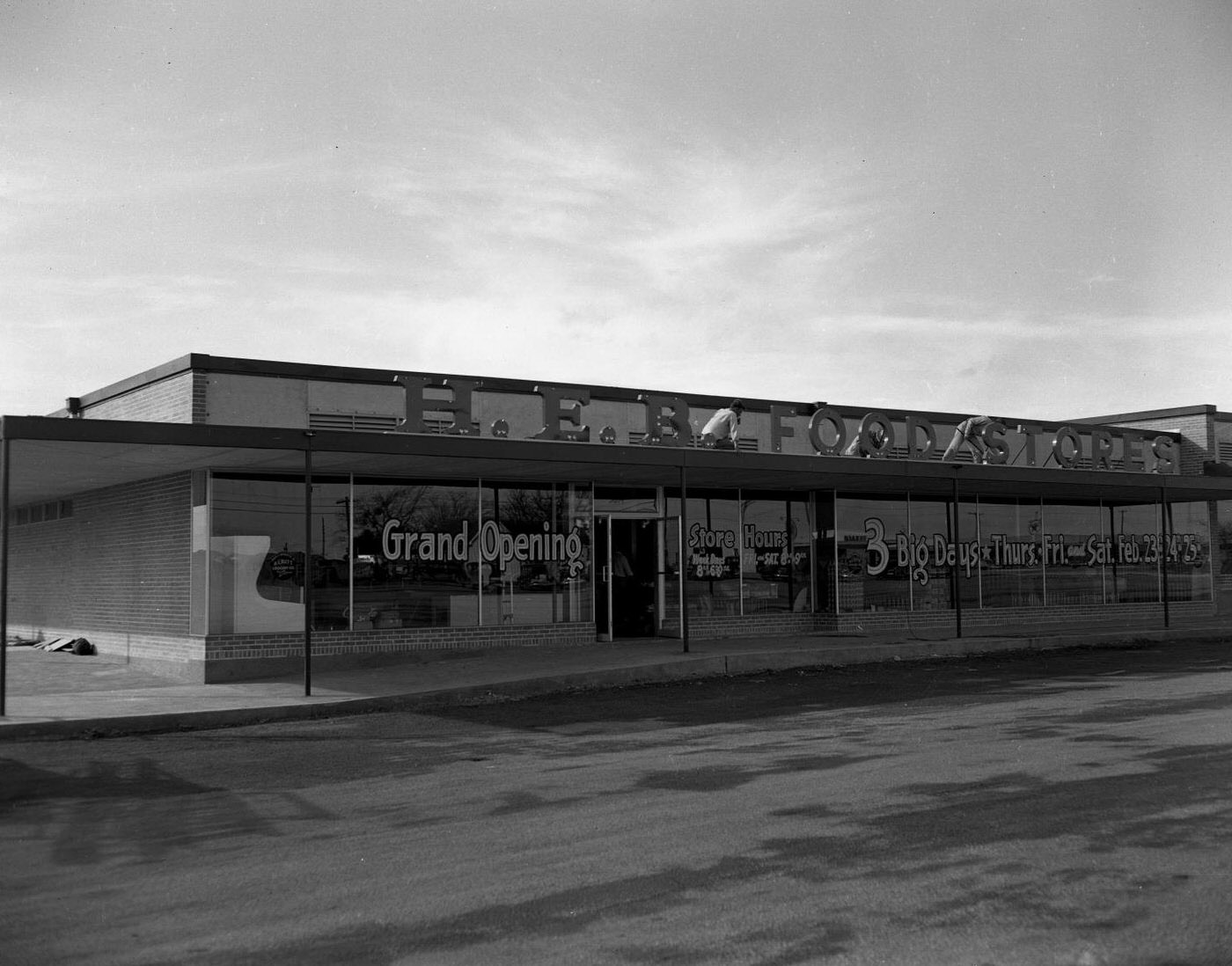
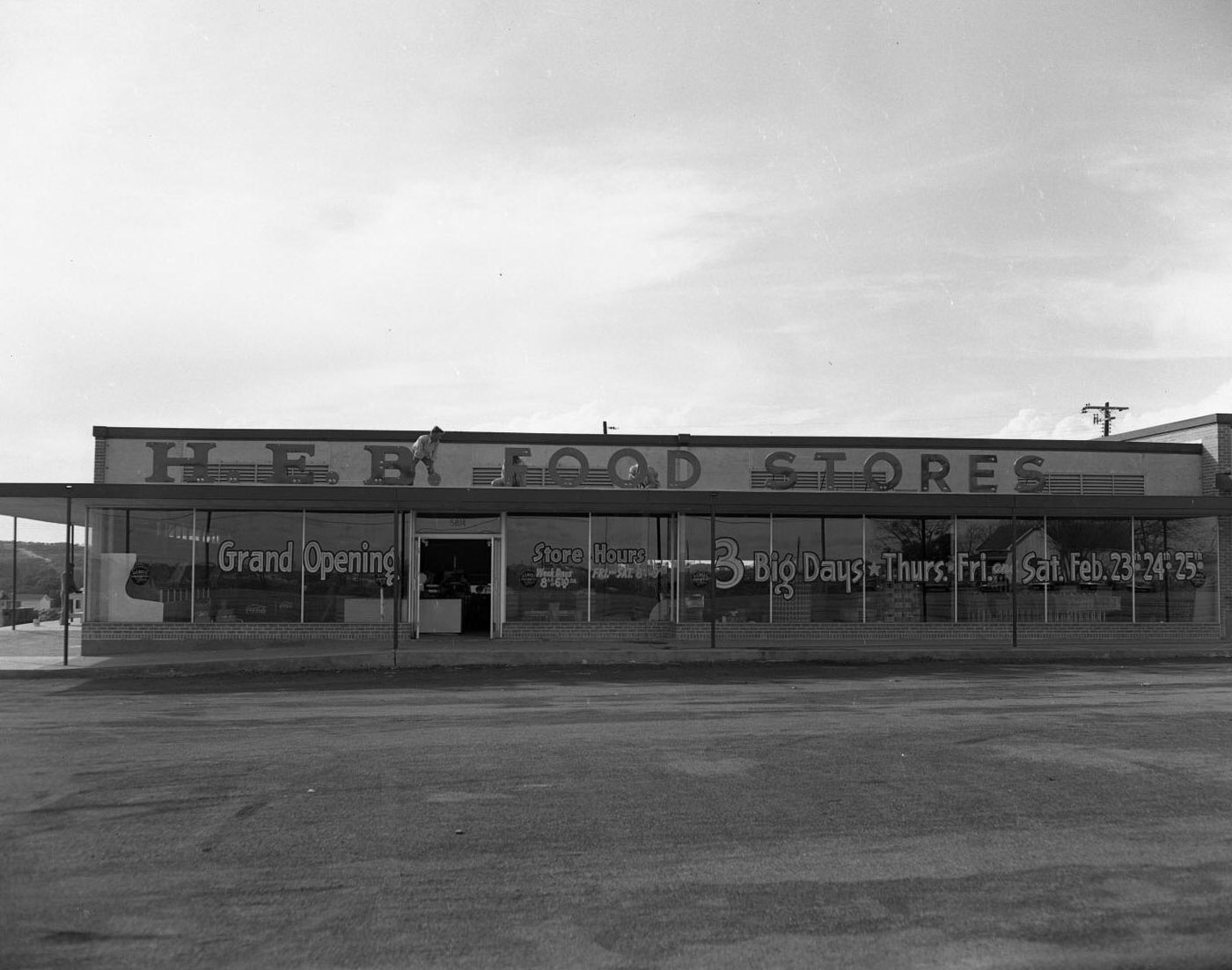
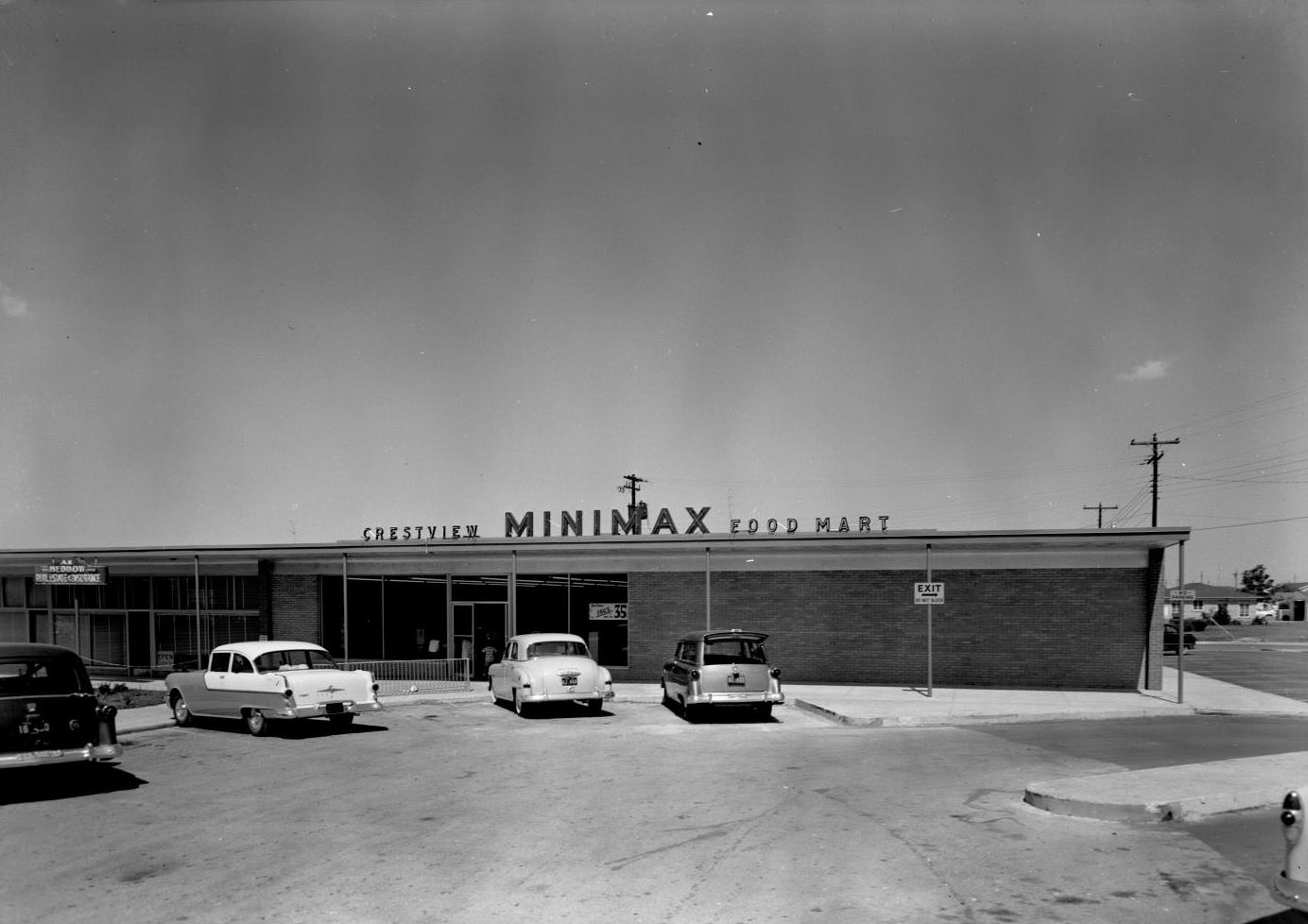
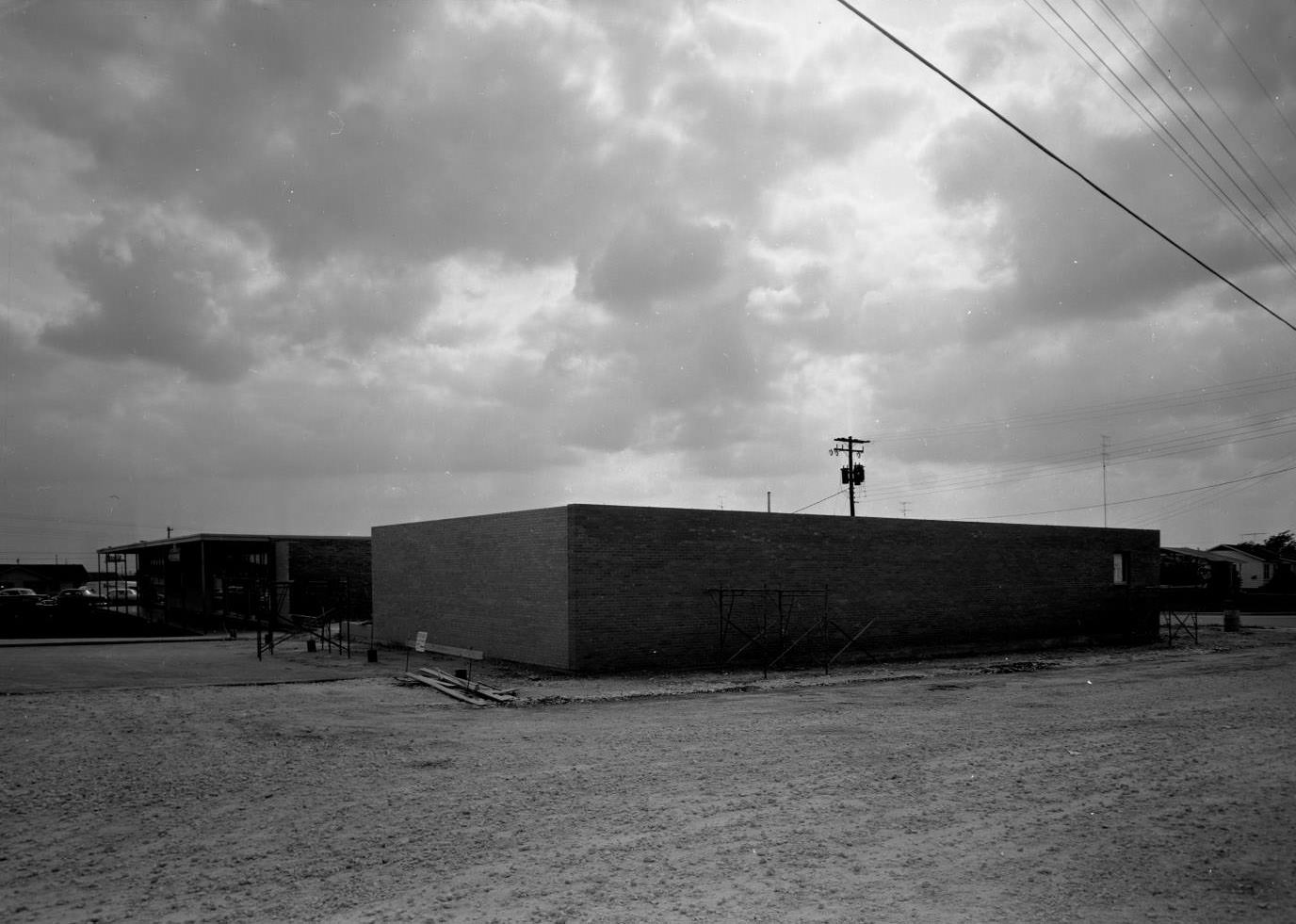
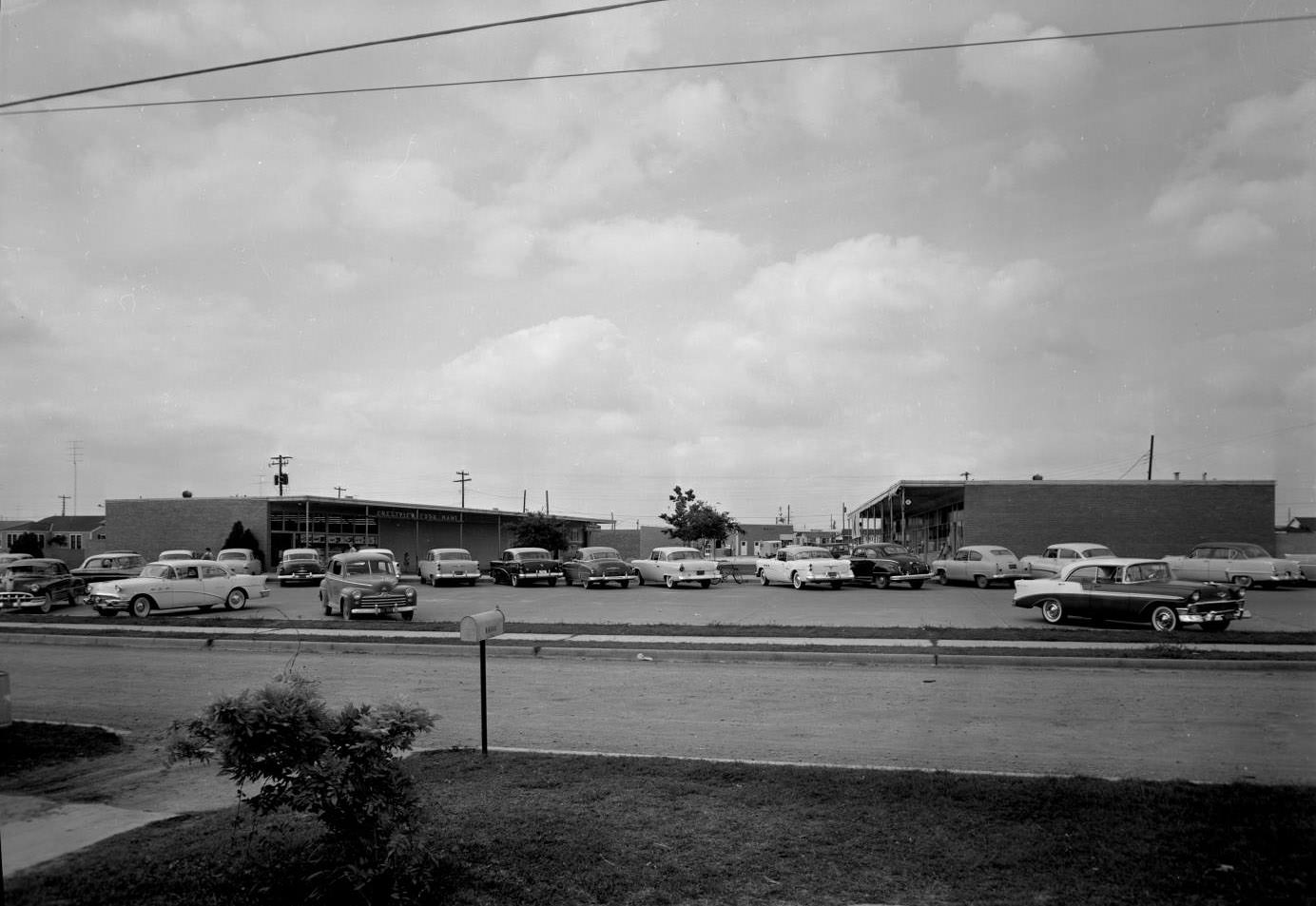
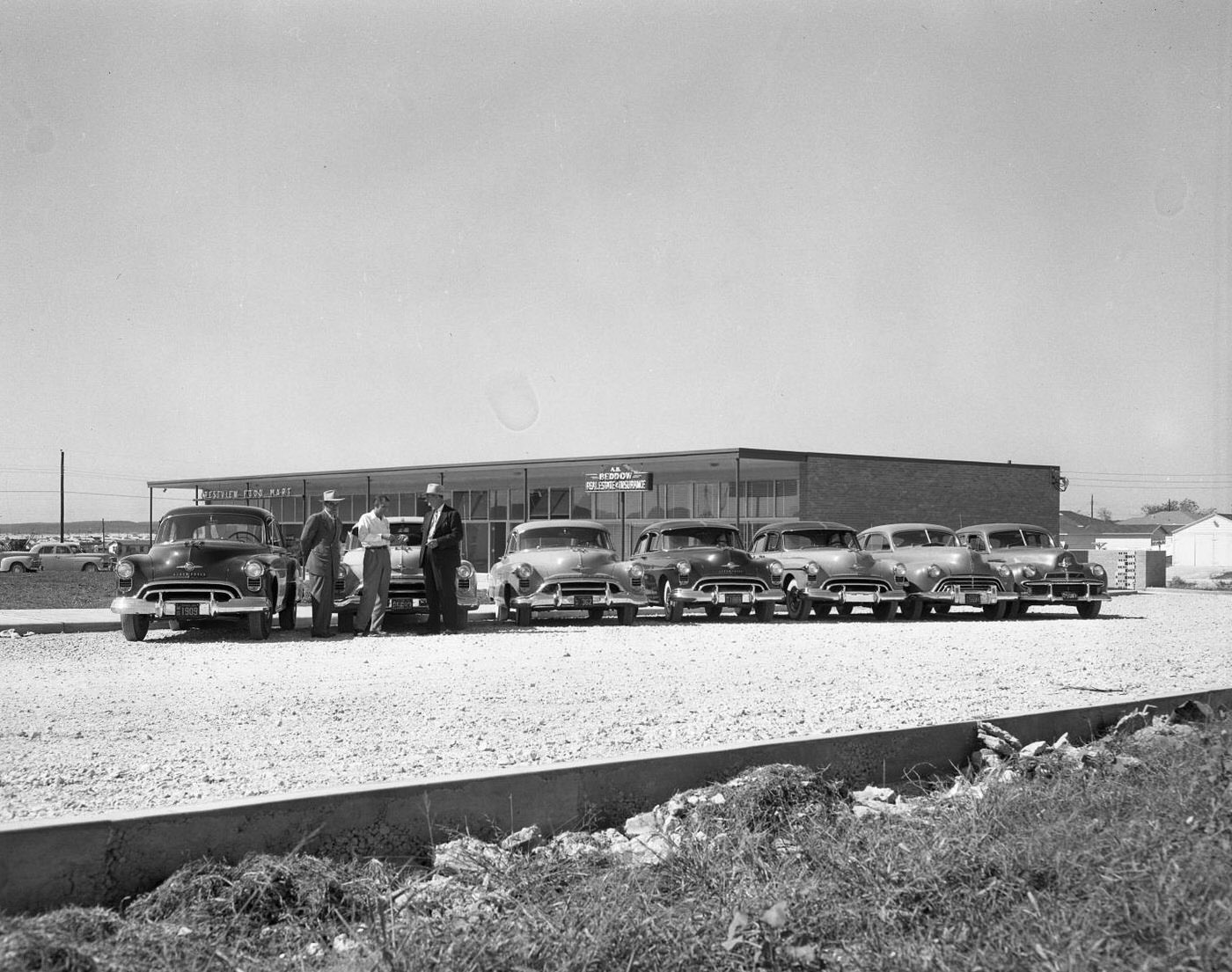
Austin’s suburbs took shape rapidly during the 1950s. The Allandale and Crestview neighborhoods north of the city drew families who wanted new homes away from the urban core. The HEB grocery store at Allandale Village was photographed on opening day in 1950, with workers visible on the roof and an otherwise empty parking lot below. Within a few years, that lot would rarely be empty.
H.E.B Food Store at Allandale Village with Workers, 1950Shopping Center With HEB, Allandale Village, Empty Parking Lot and People on Roof, 1950Crestview Minimax Food Mart and Parking Lot, 1956Loading Dock at Crestview Shopping Center, 1956Parking Lot of Crestview Shopping Center, 1956
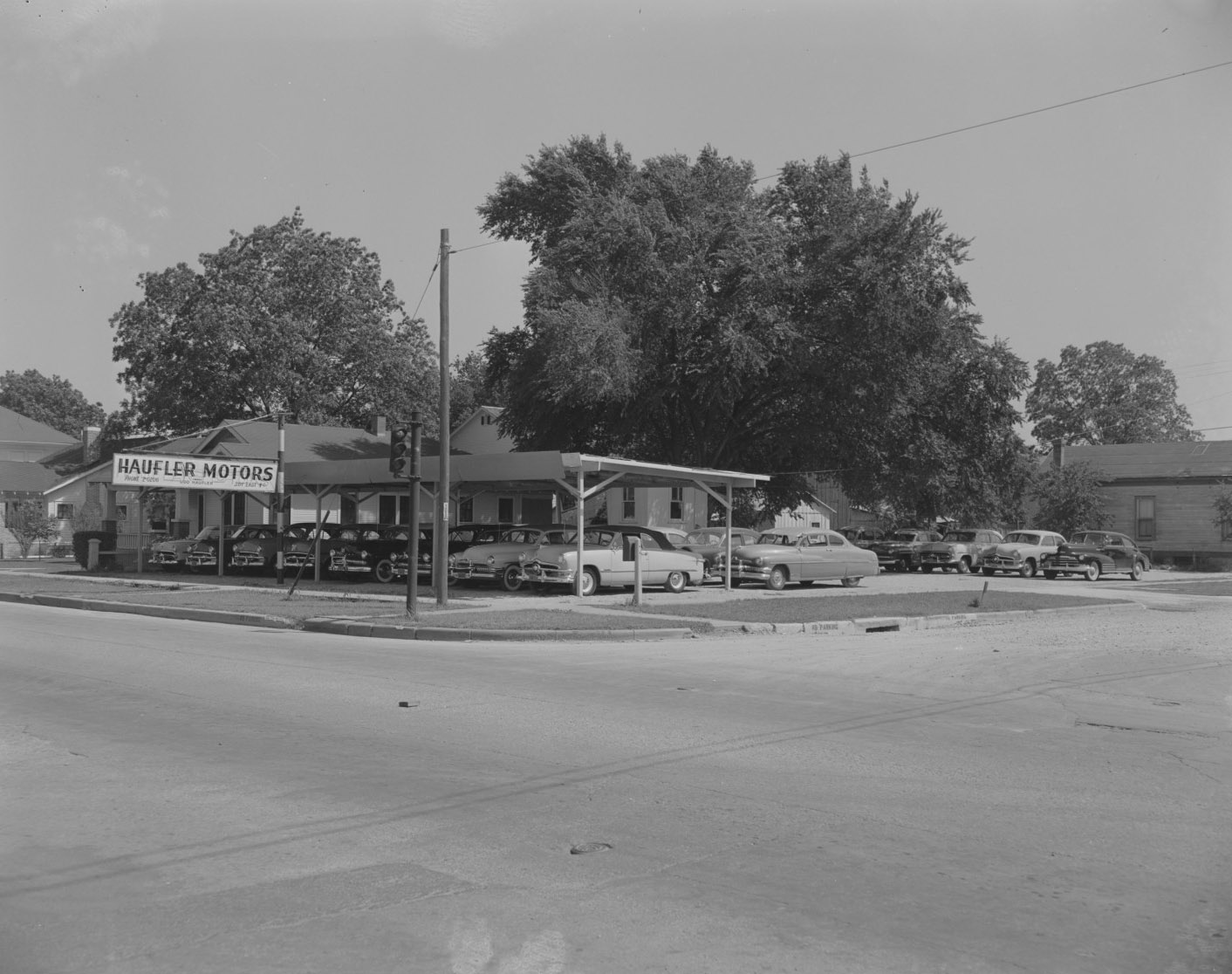
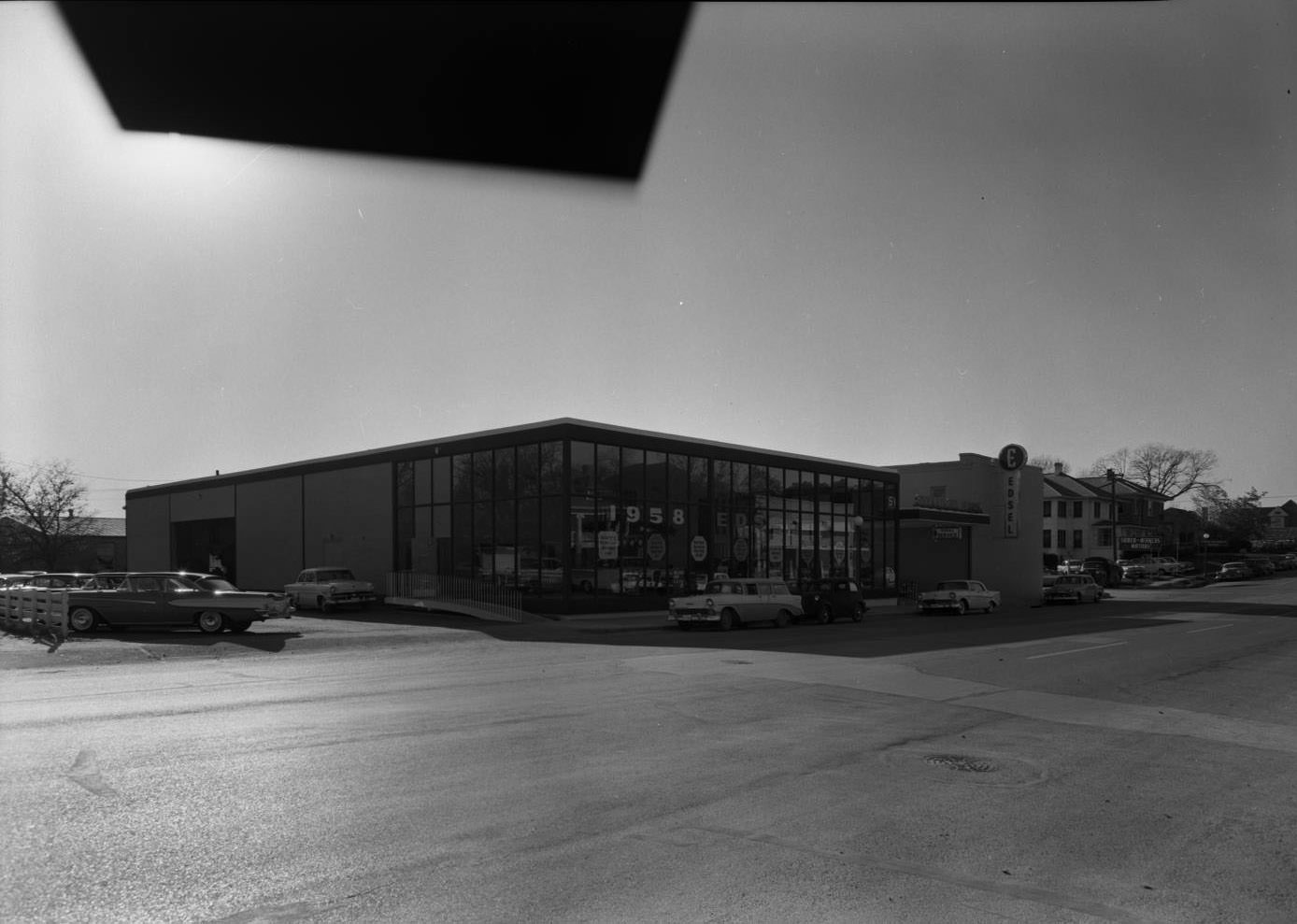
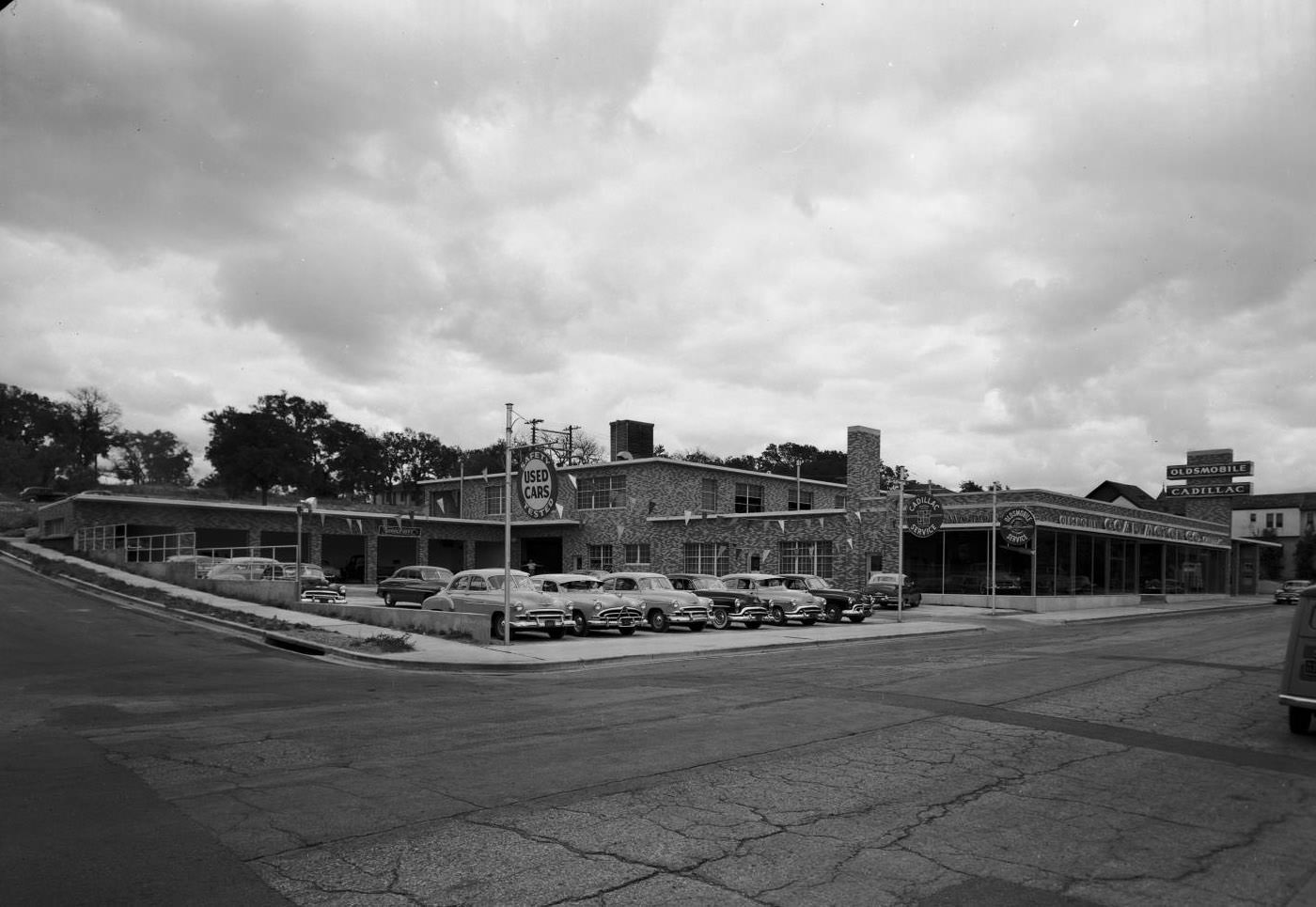
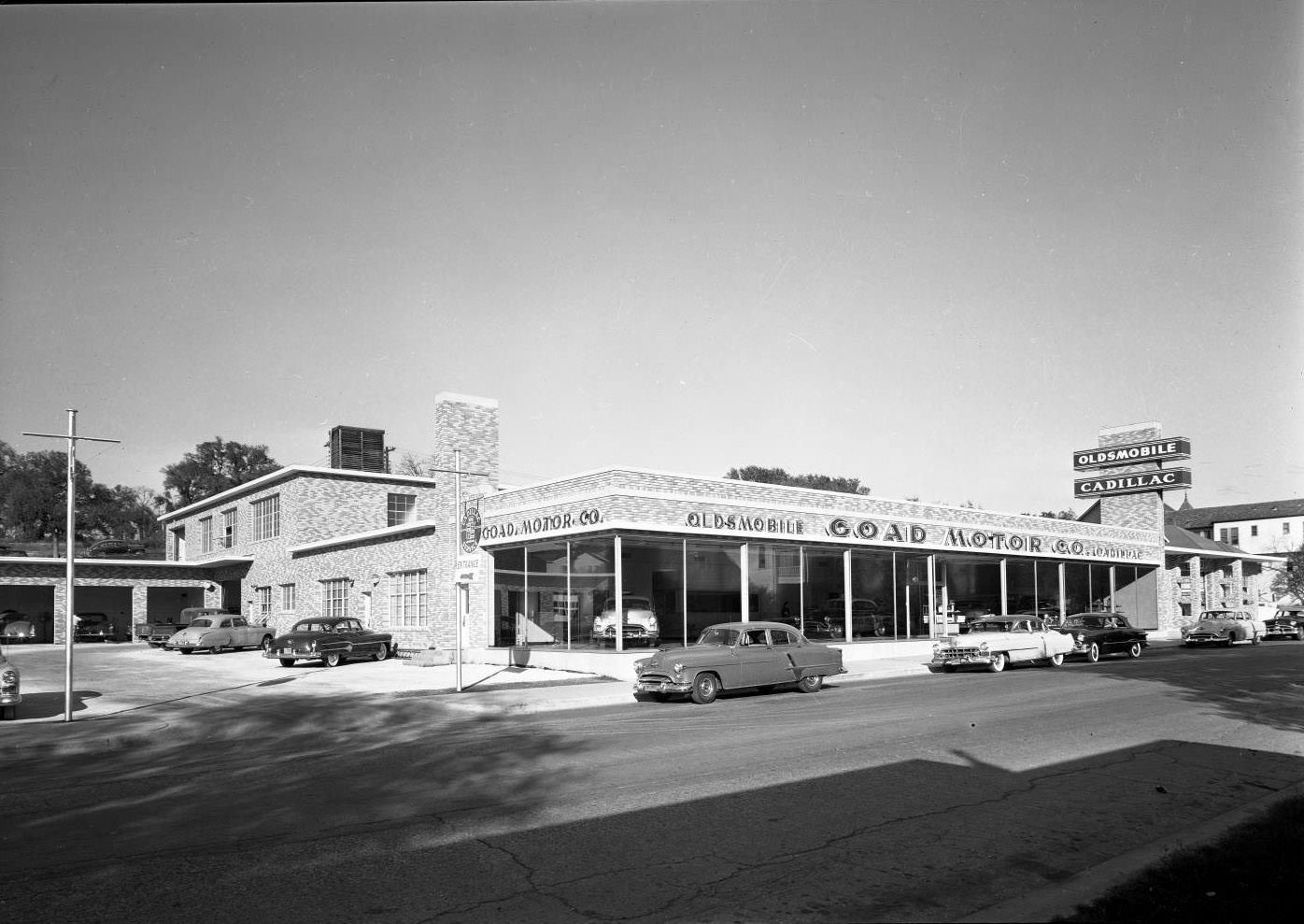
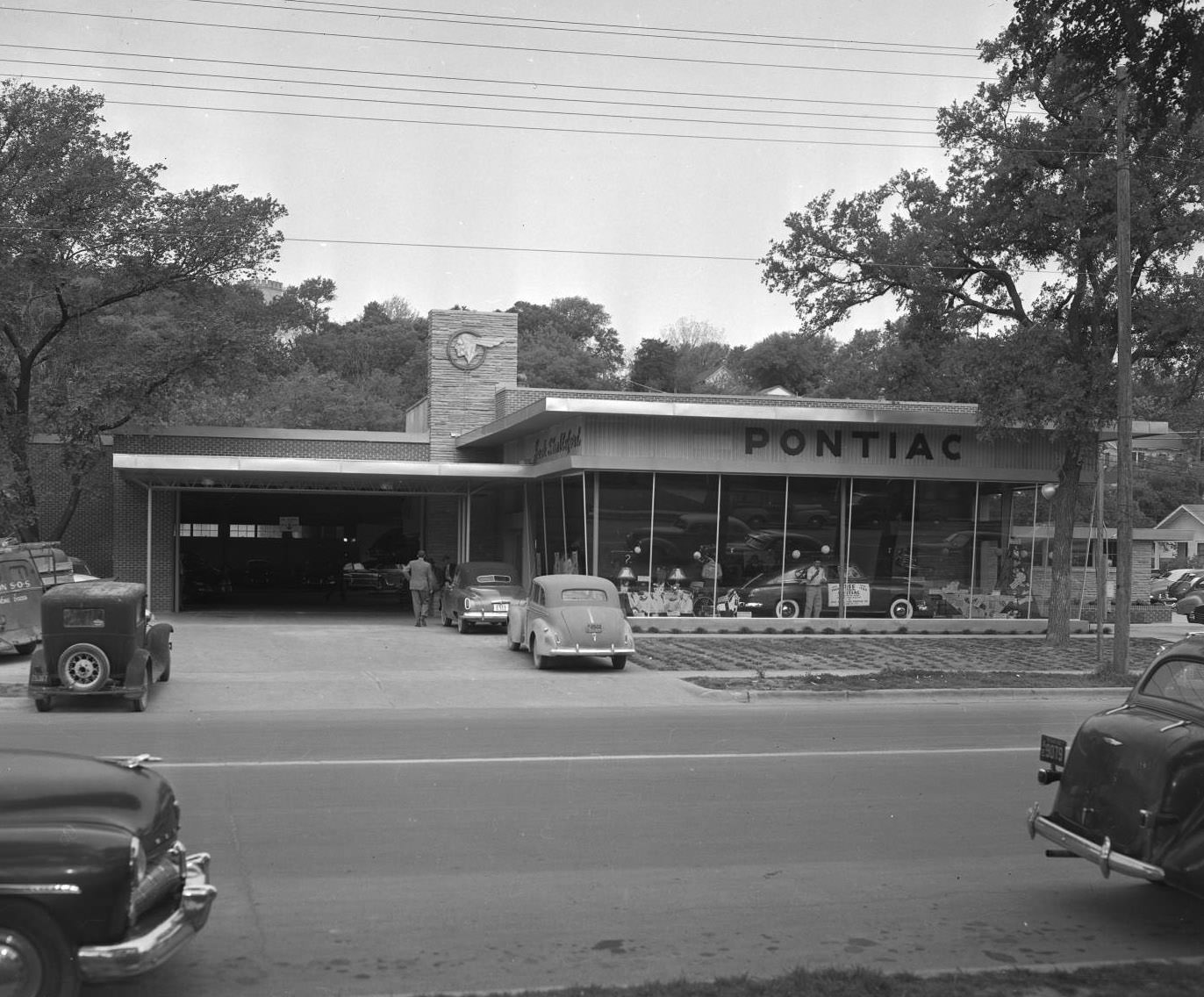
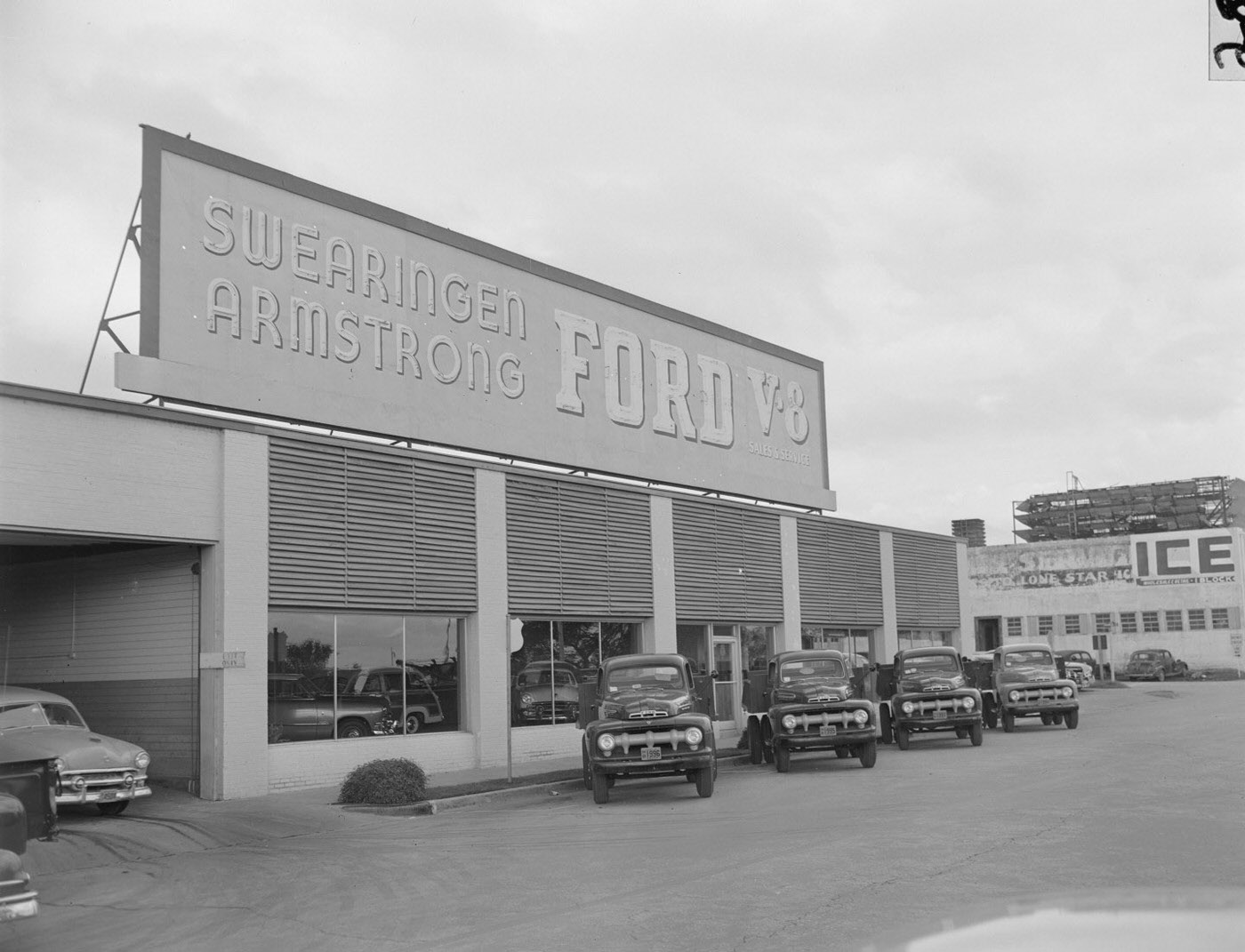
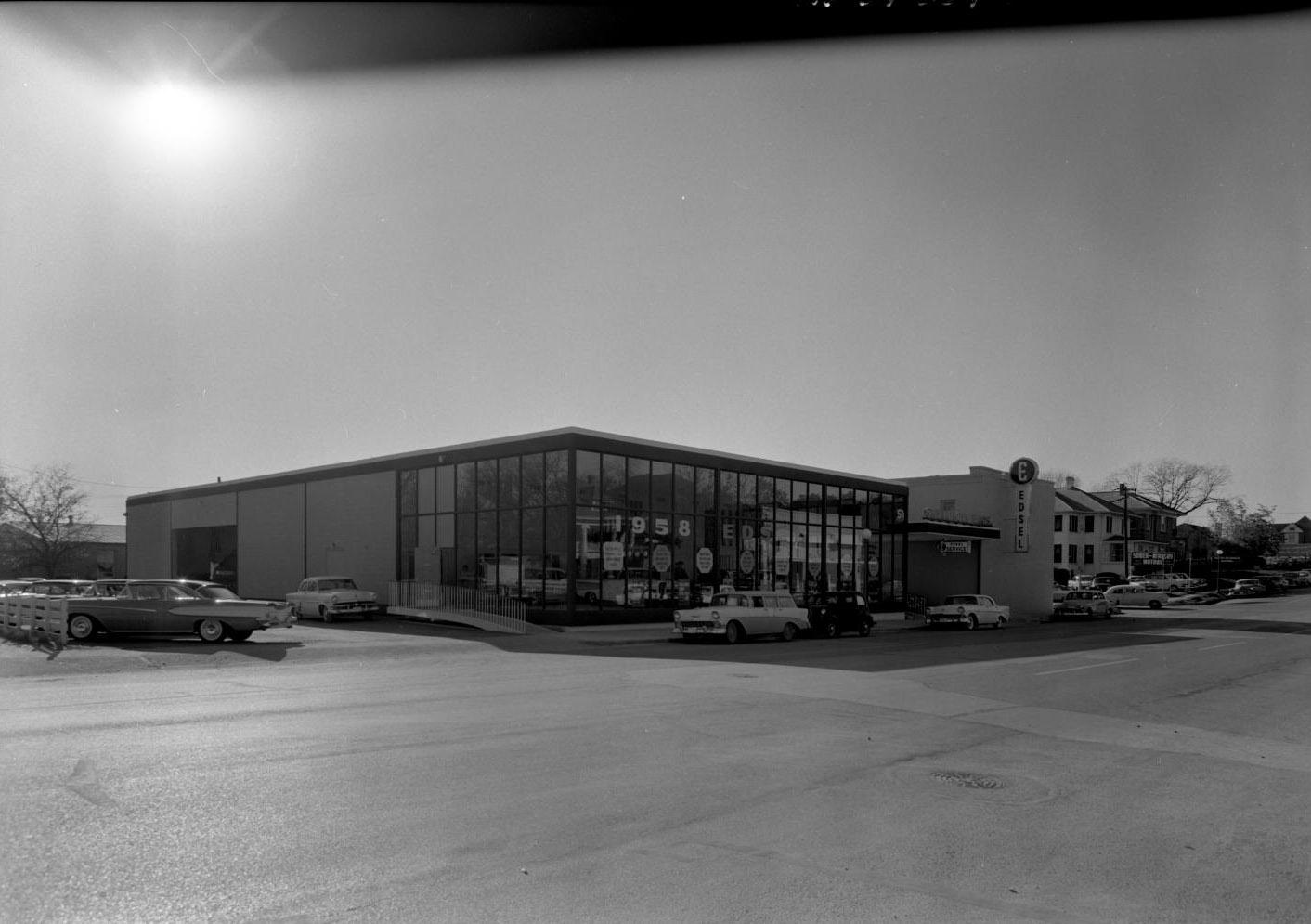
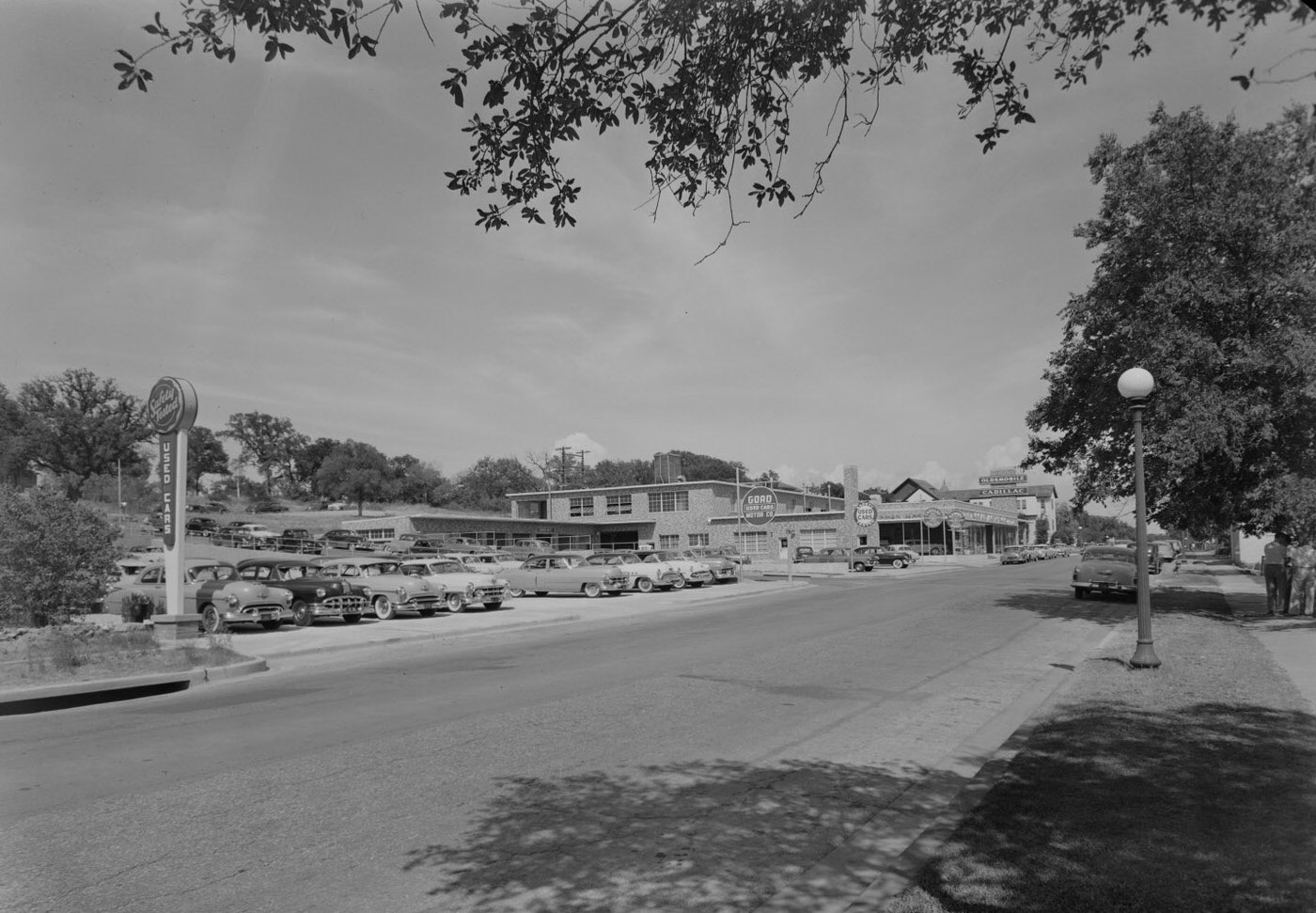
The car defined how Austinites moved through their city. Gas stations appeared on nearly every major corner, and automobile dealerships were among the most photographed commercial buildings of the era. Dealerships like Swearingen Armstrong Ford, Goad Motor Oldsmobile Cadillac, Jack Stableford Pontiac, and Haufler Motors lined the city’s main roads. In 1957, Swearingen Brothers added an Edsel dealership — Ford’s infamous new model that would prove to be one of the biggest automotive failures in American history.
Display of Autos with Men Standing Near, 1950Haufler Motors Exterior with Cars for Sale, 1953Swearingen Brothers Edsel Dealership Exterior, 1957Goad Motor Oldsmobile Cadillac Dealership, 1952Goad Motor Company Building and Lot, 1951Jack Stableford Pontiac Dealership at 1020 Lamar Blvd, 1950Swearingen Armstrong Ford V-8 Dealership, Austin, 1951Swearingen Brothers Edsel Dealership and Suber-McAngus Motors, 1957
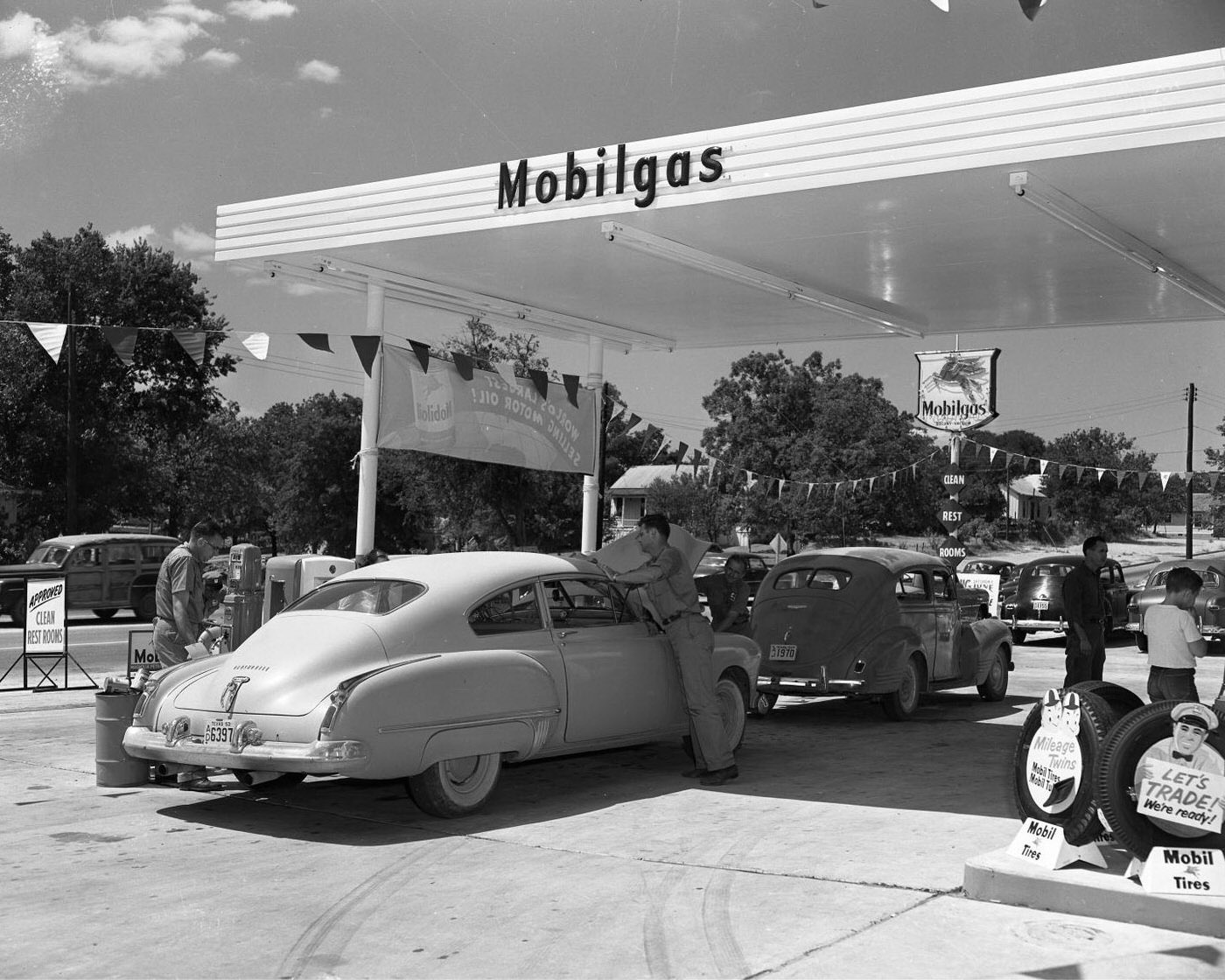
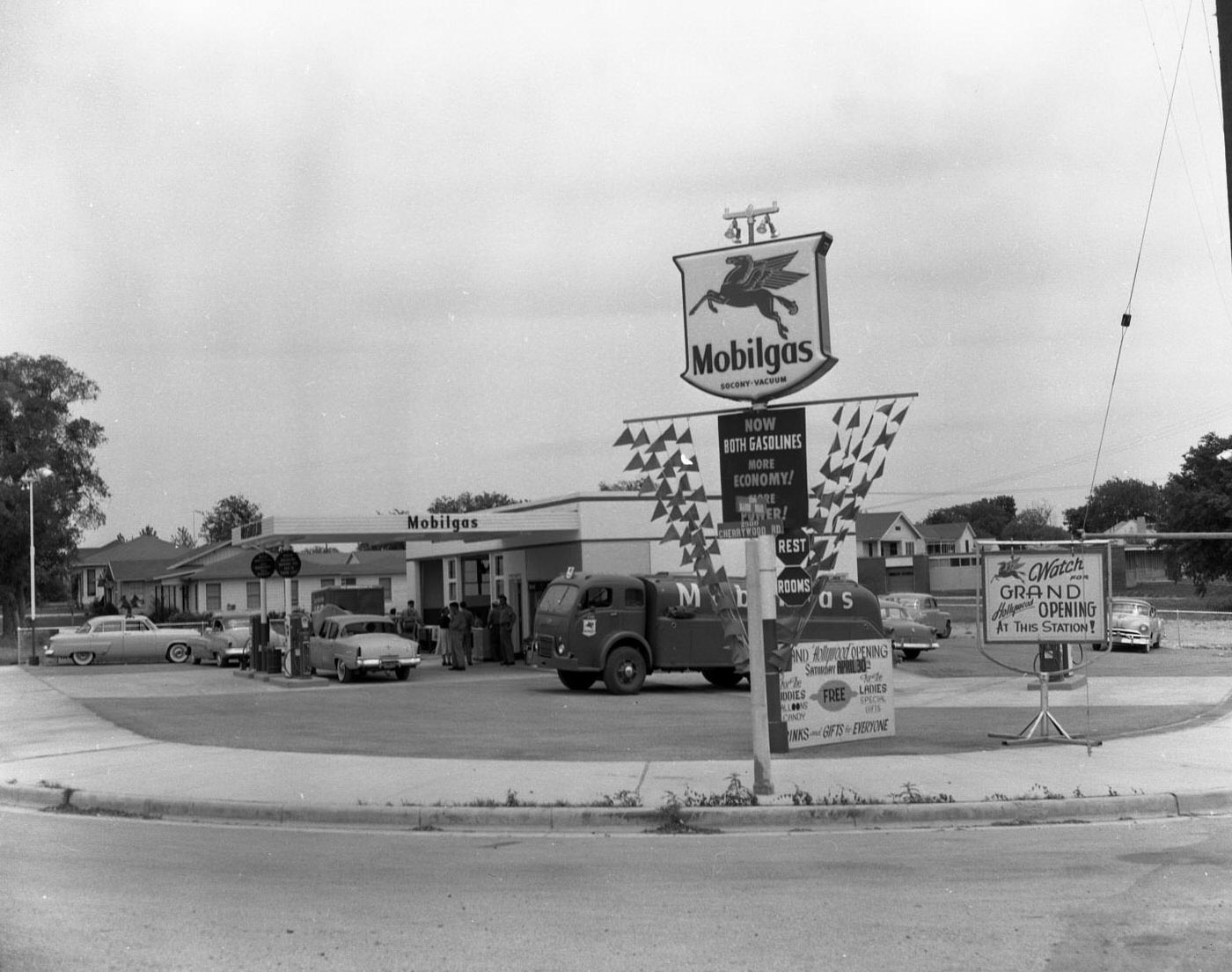
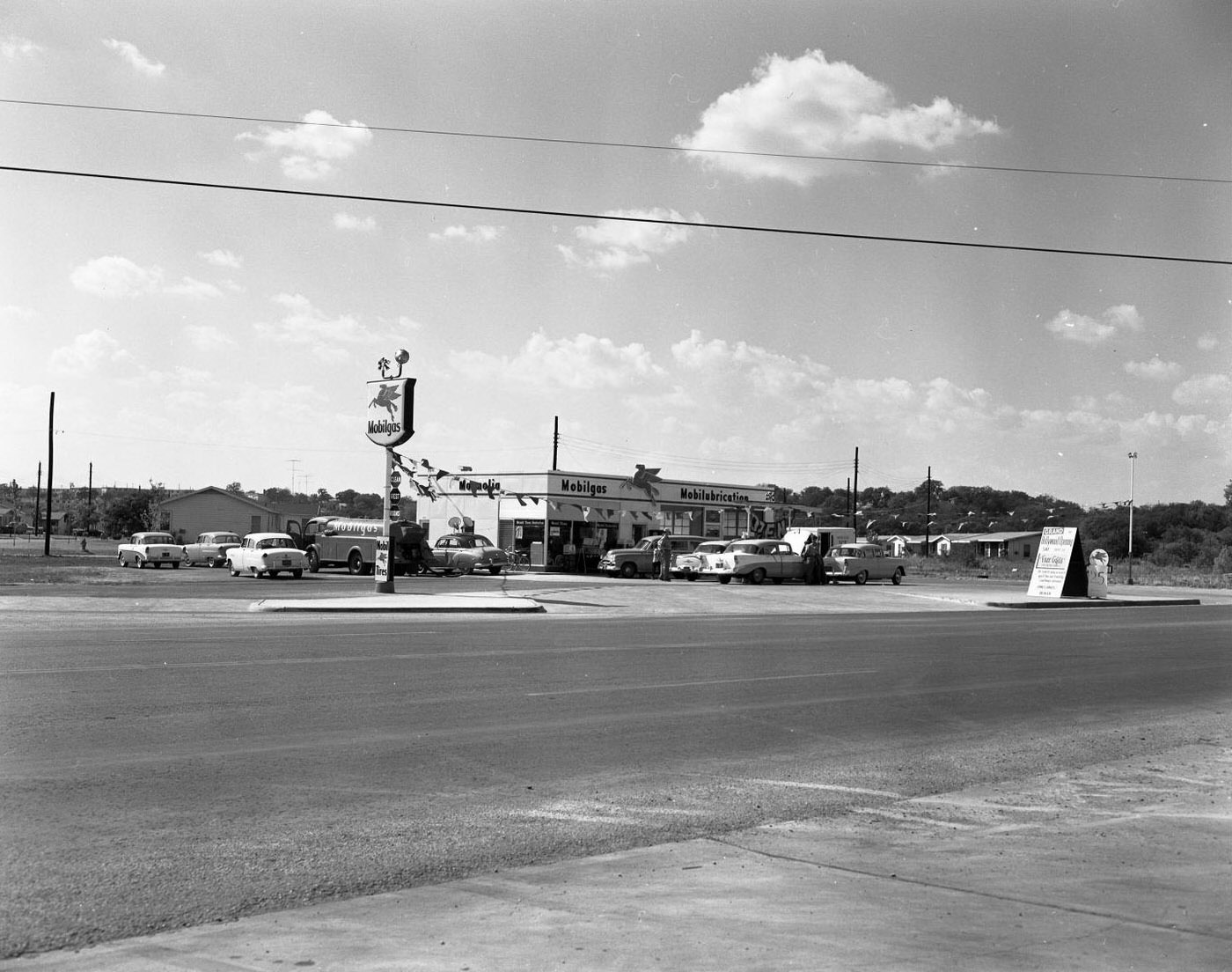
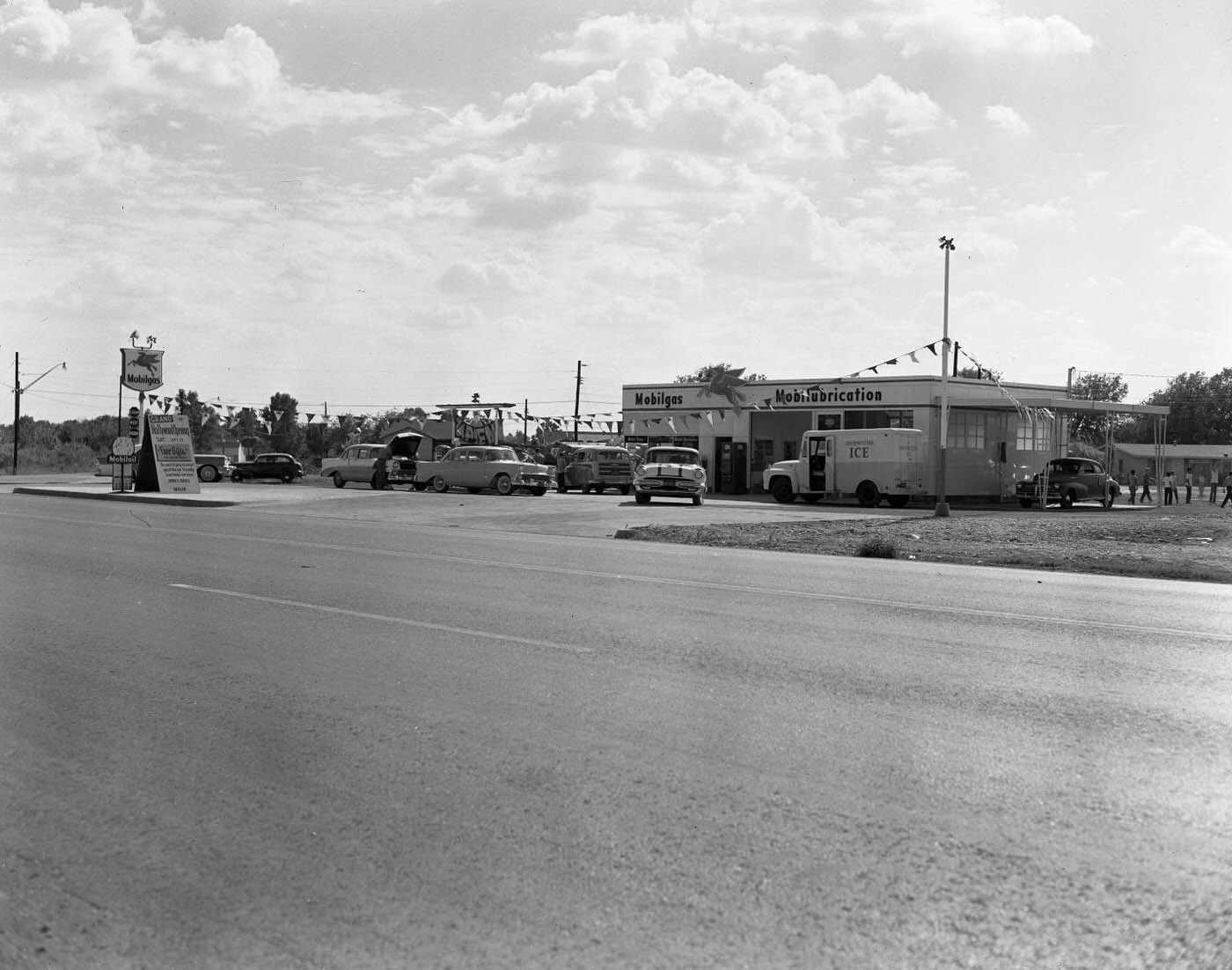
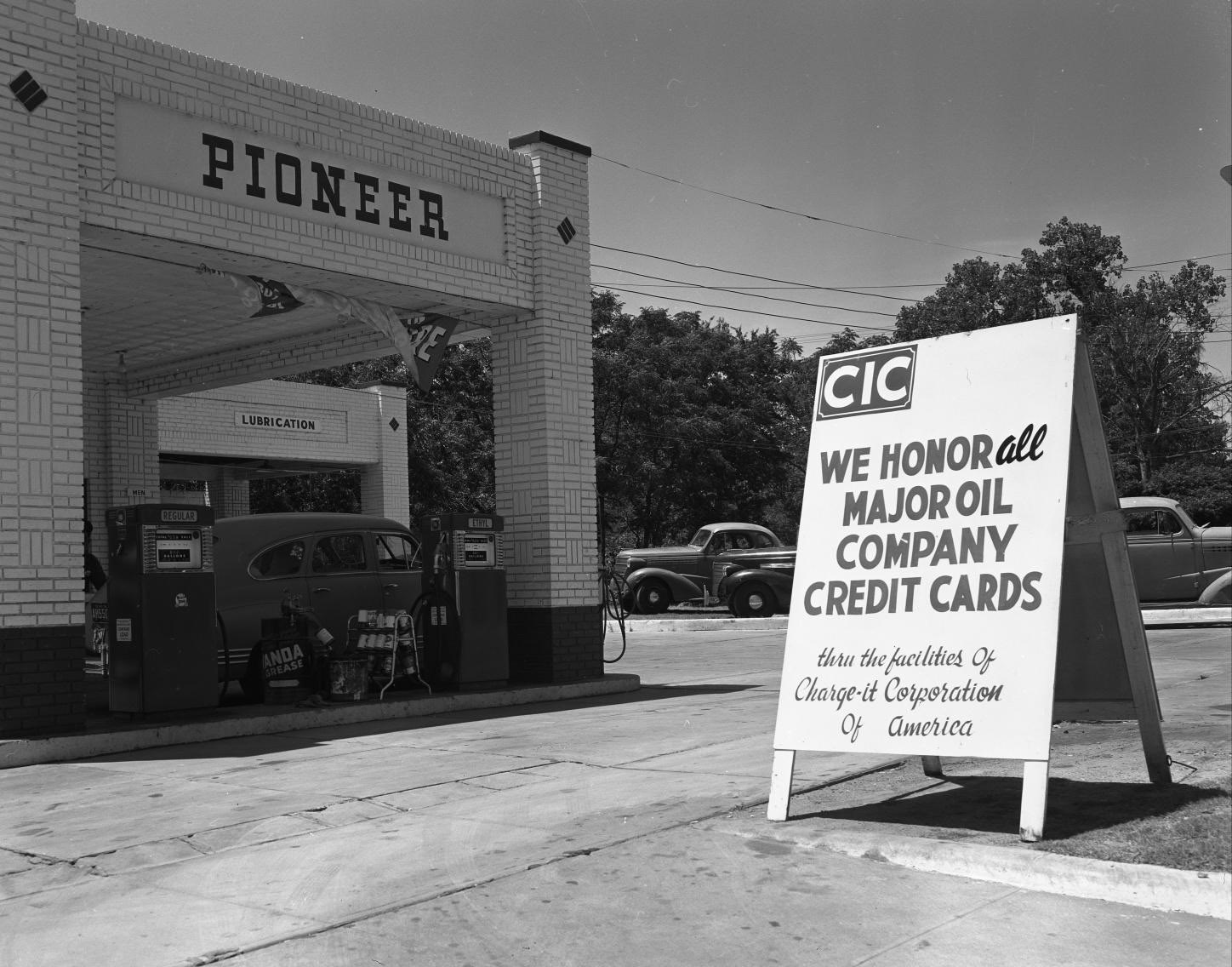
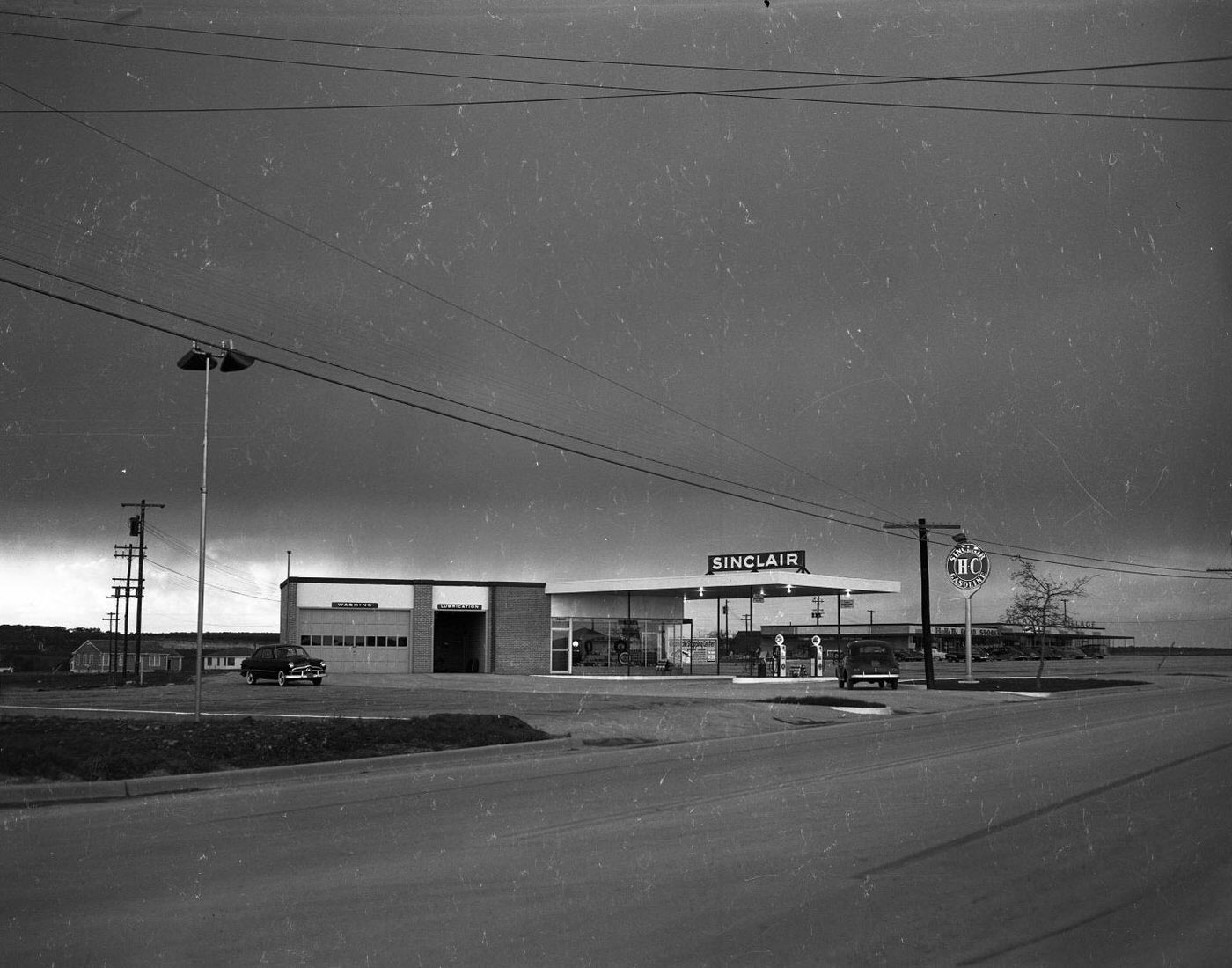
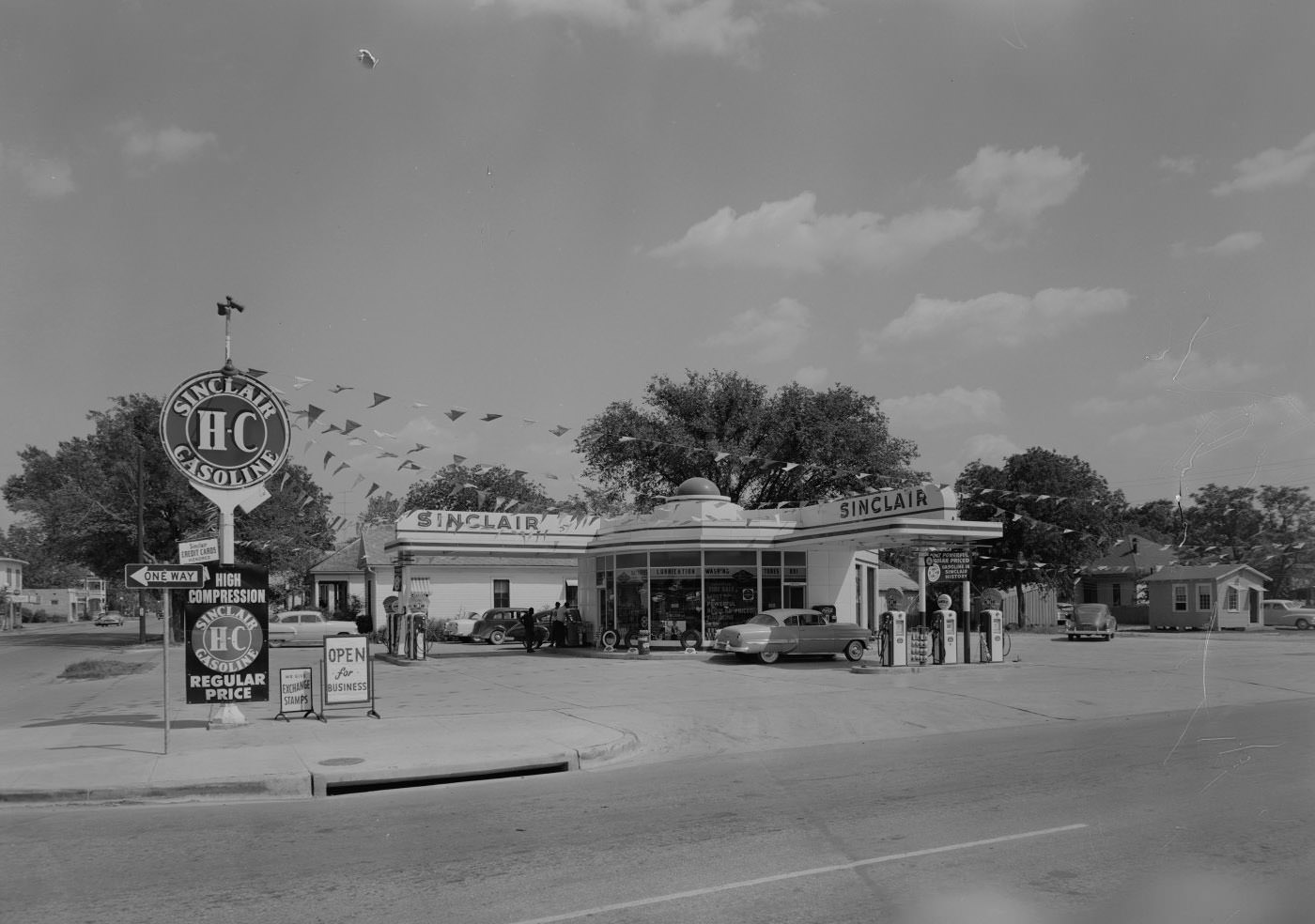
Gas stations were equally abundant. Mobilgas, Sinclair, and Pioneer stations all operated prominent locations throughout Austin. A 1953 photograph of a Mobil station on Lamar Boulevard captured the familiar red Pegasus logo that motorists across the country recognized at a glance. The Sinclair station at Allandale Village was photographed in 1950 with the new shopping center visible in the background — a scene that perfectly encapsulated the car-centered suburb taking shape.
Mobil Gas Station on Lamar Blvd, 1953New Magnolia Mobilgas Service Station at 2901 Cherrywood Rd, 1955Mobilgas Station at Airport & Gunter, Wide Exterior, 1956Mobilgas Station at Airport Blvd & Gunter, 1956Pioneer Service Station with Car at Pump, 1956Sinclair Gasoline Station, Allendale Village Shopping Center in Background, 1950Sinclair Stations, Exterior at 801 E. 1st St. With 3 Men and Parked Cars, 1955
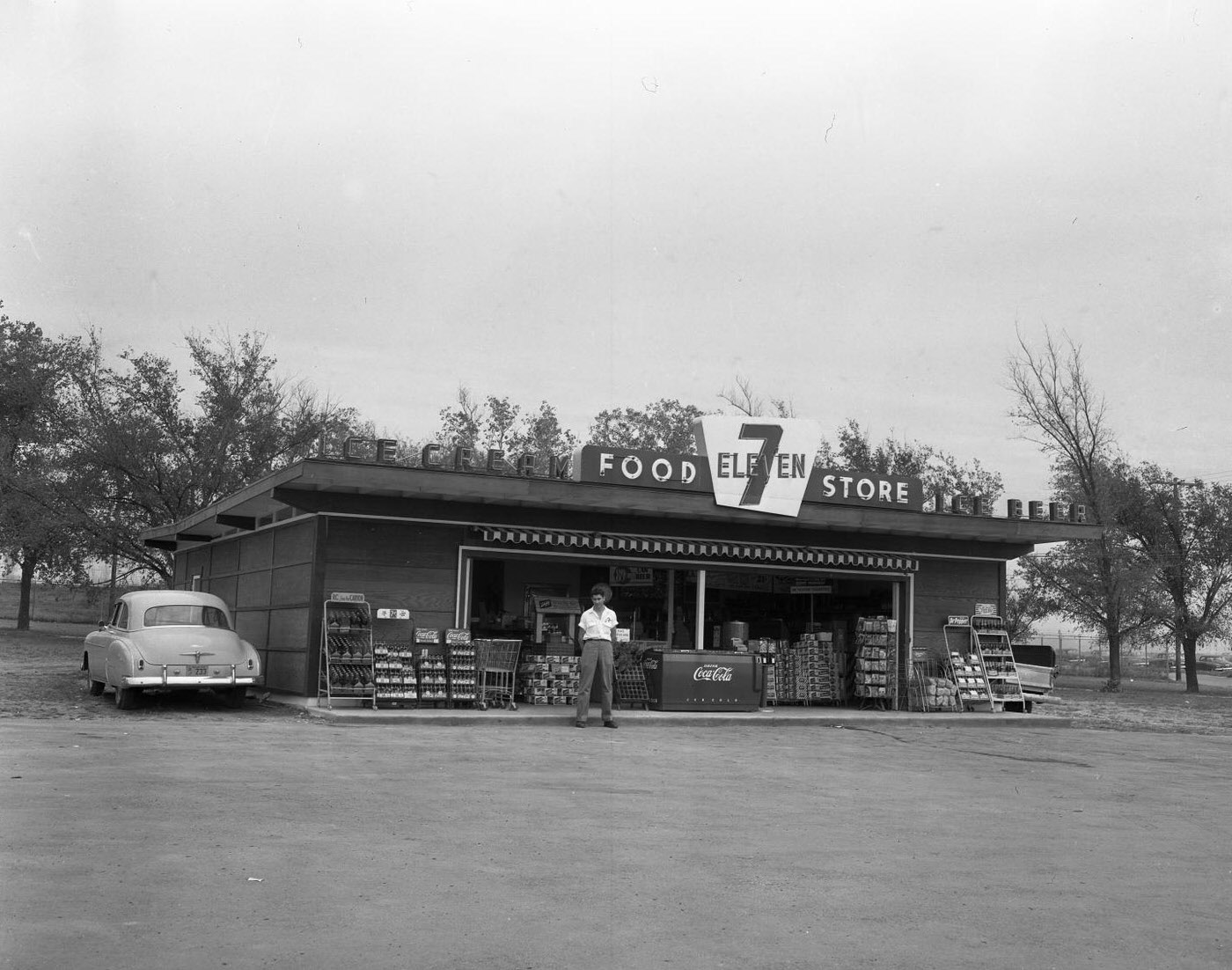
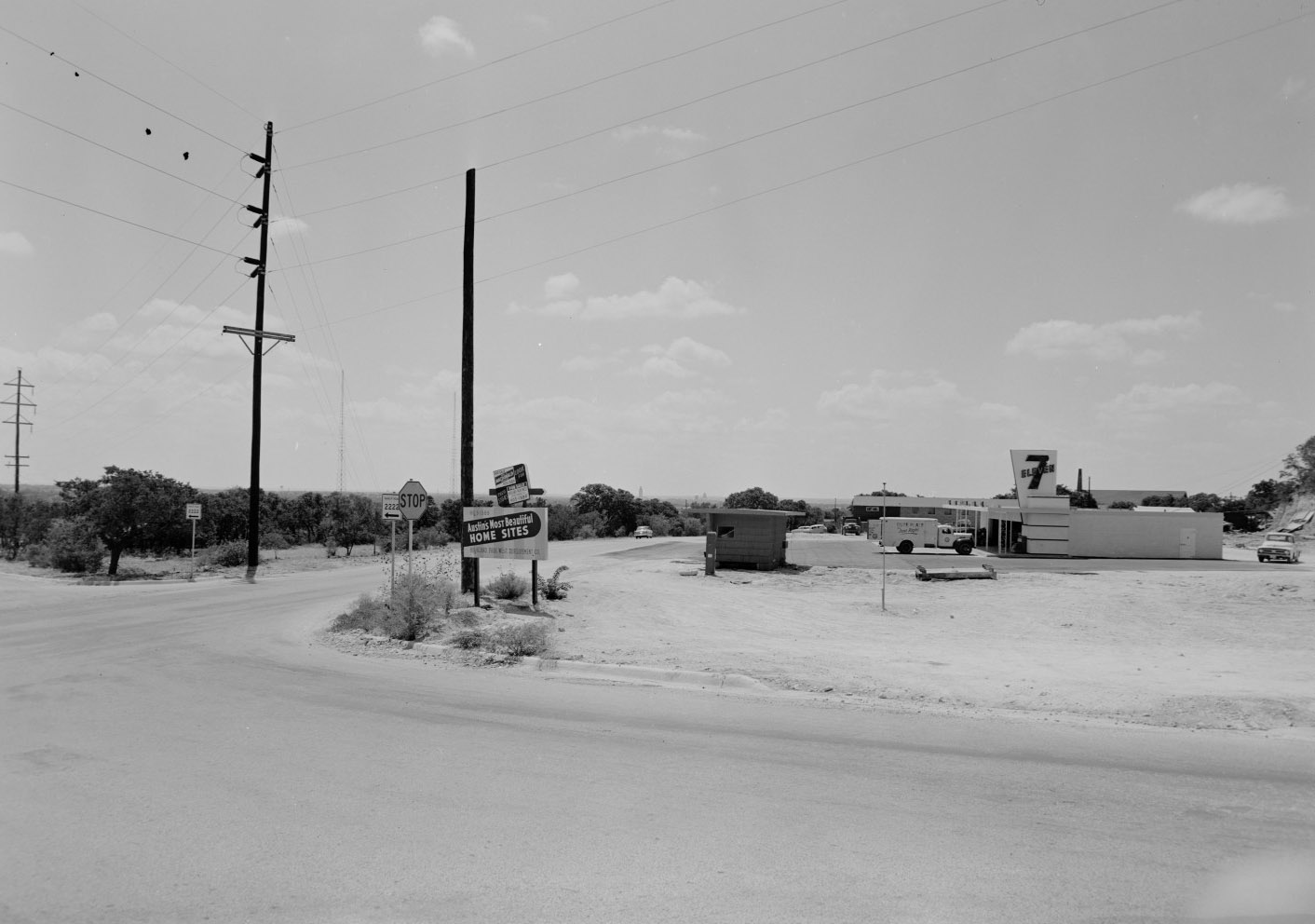
The 7-Eleven convenience store chain was expanding rapidly in Texas during this period. A 1953 photograph showed a man standing outside one of Austin’s early 7-Eleven locations. By 1957, another store appeared along Ranch Road 2222 amid new home sites, reflecting how far suburban development had stretched from the city center.
Man Standing Outside 7-Eleven Store, 1953Ranch Road 2222 en Route to Home Sites, Features Early 7-Eleven, 1957
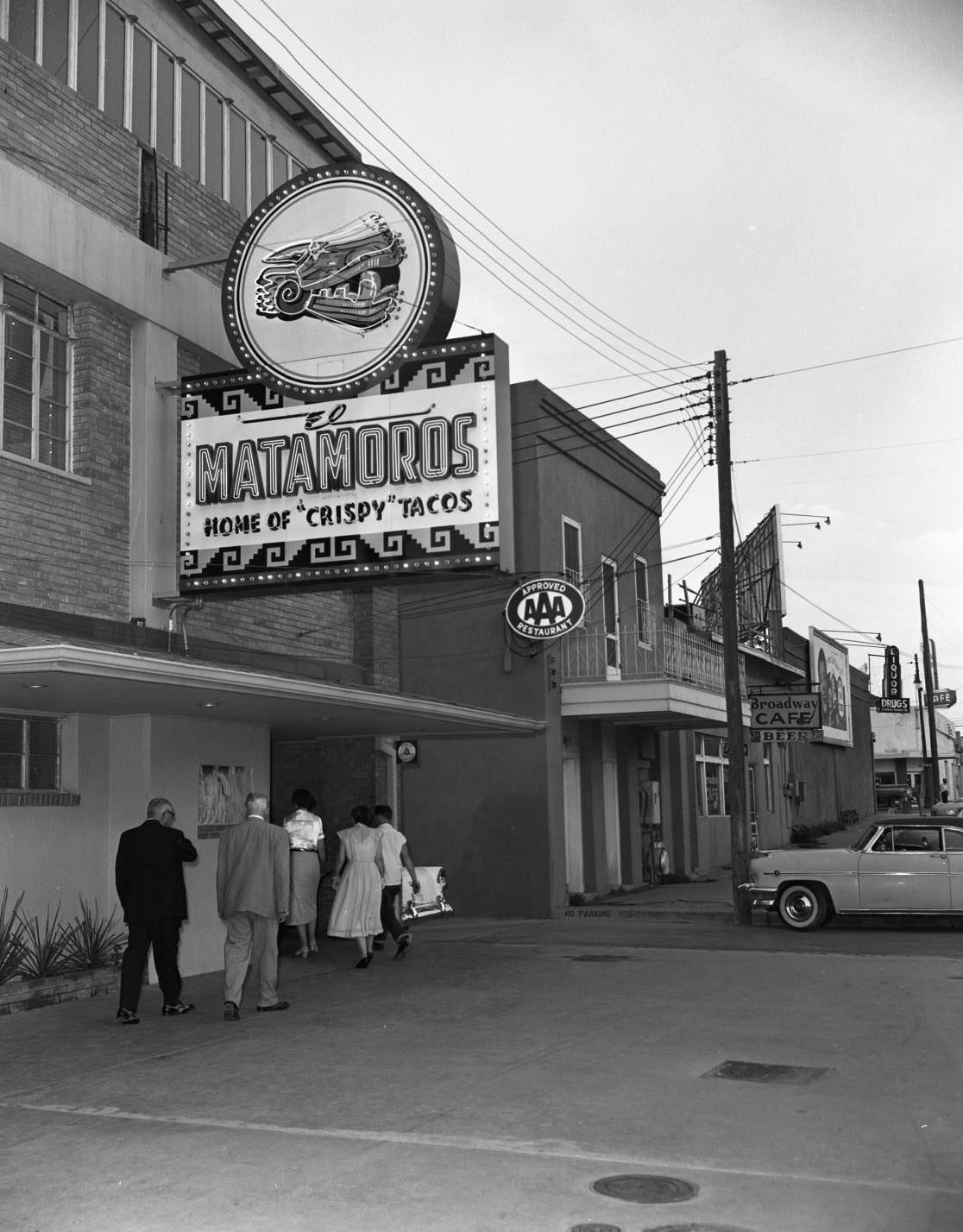
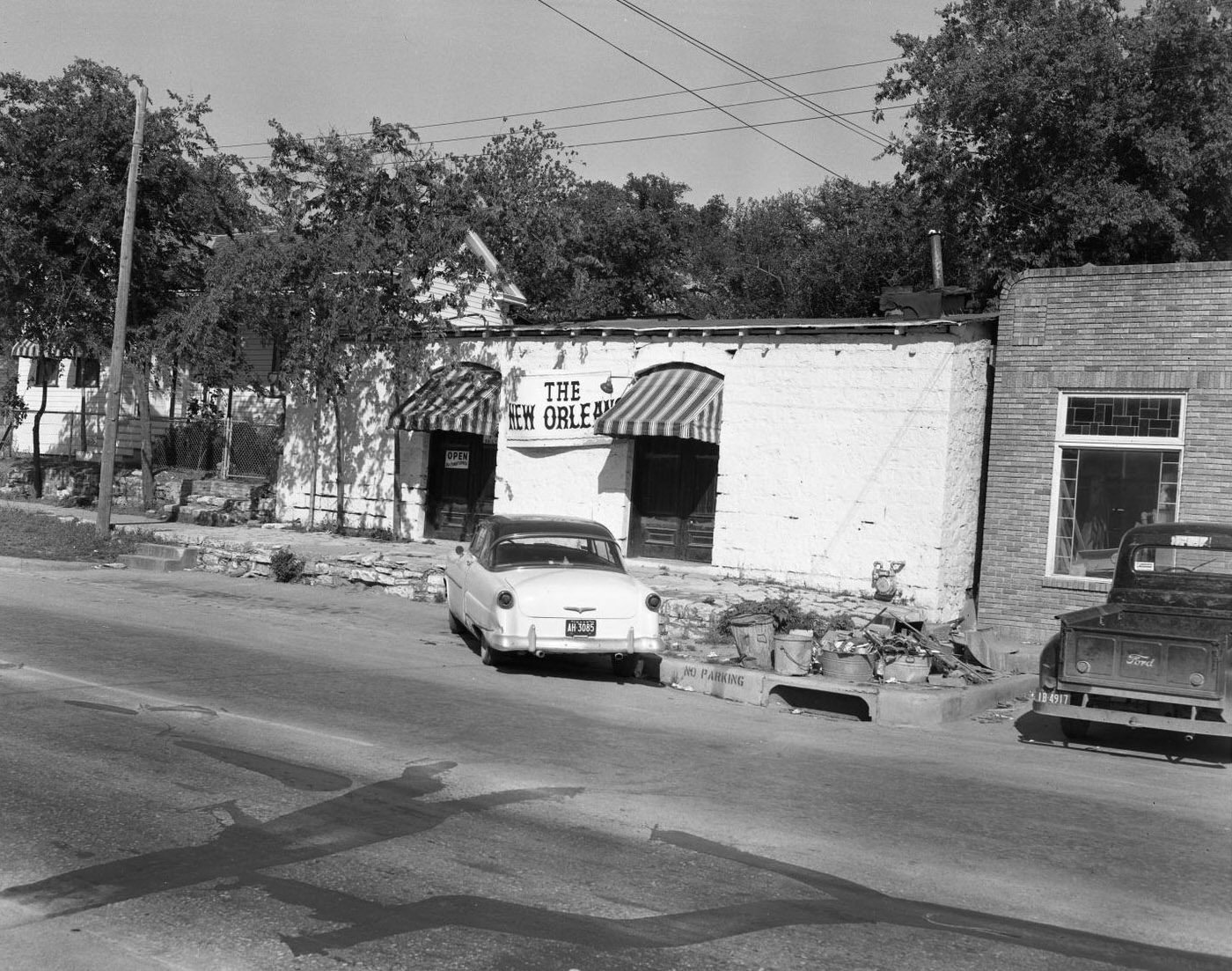
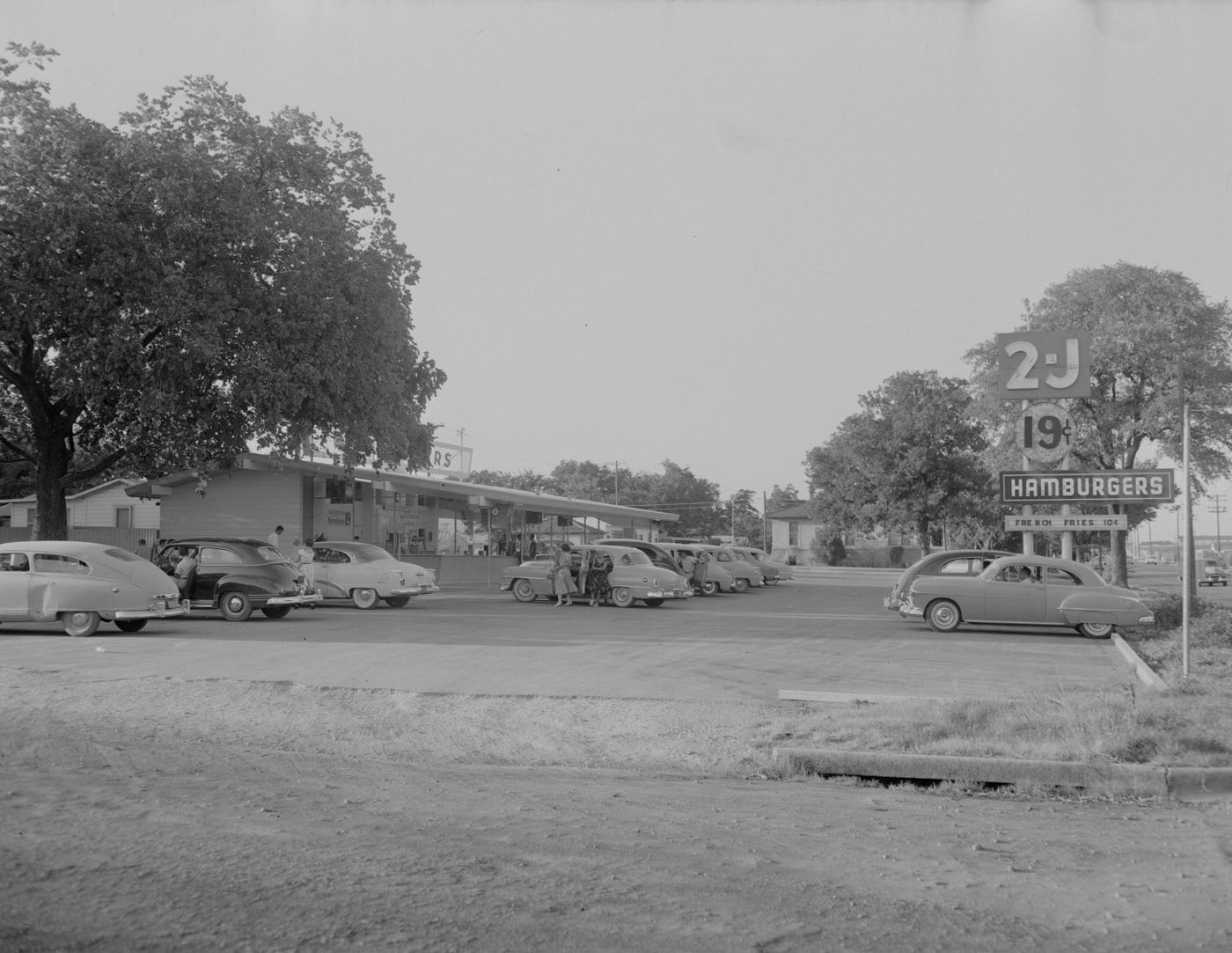
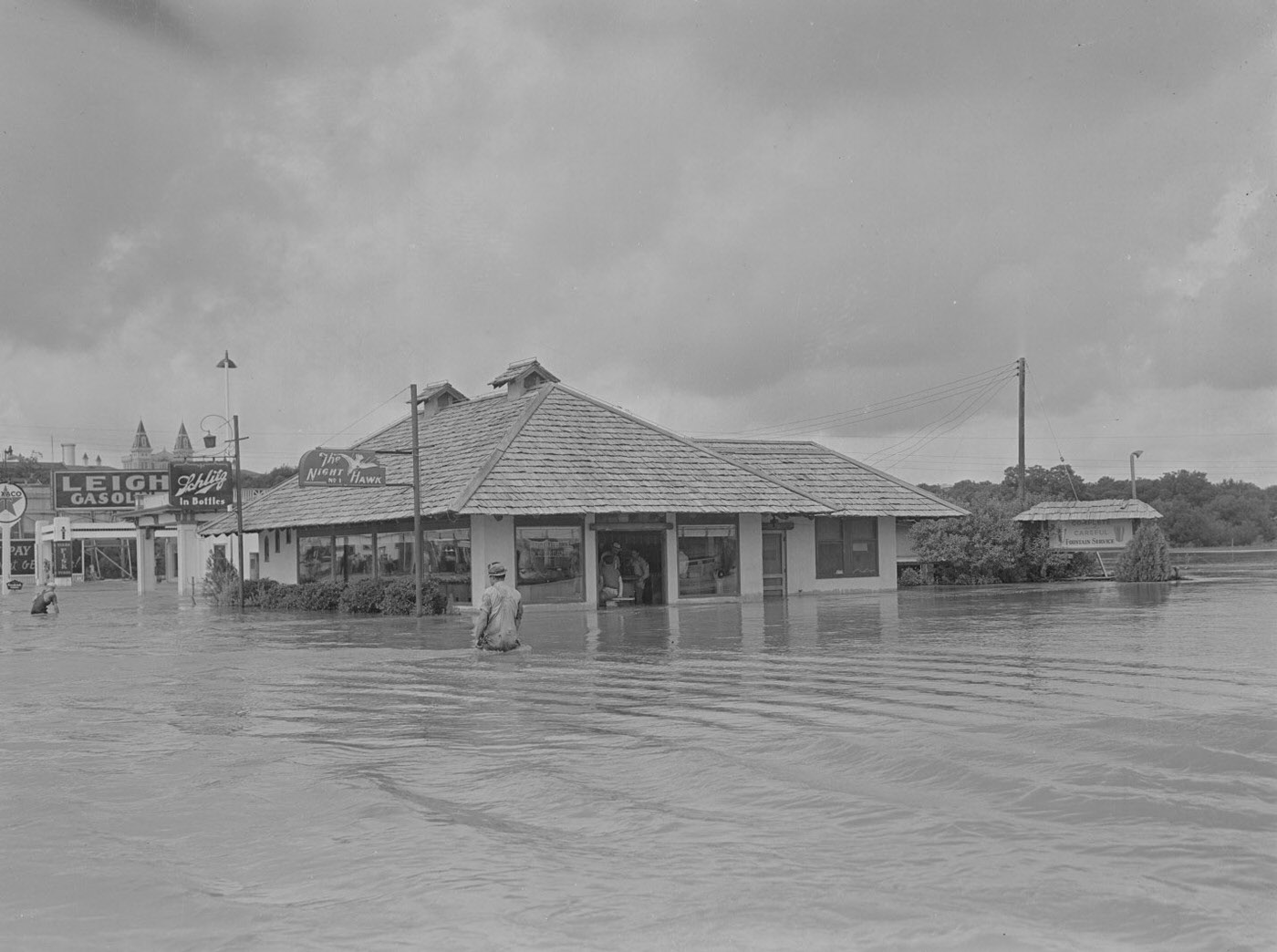
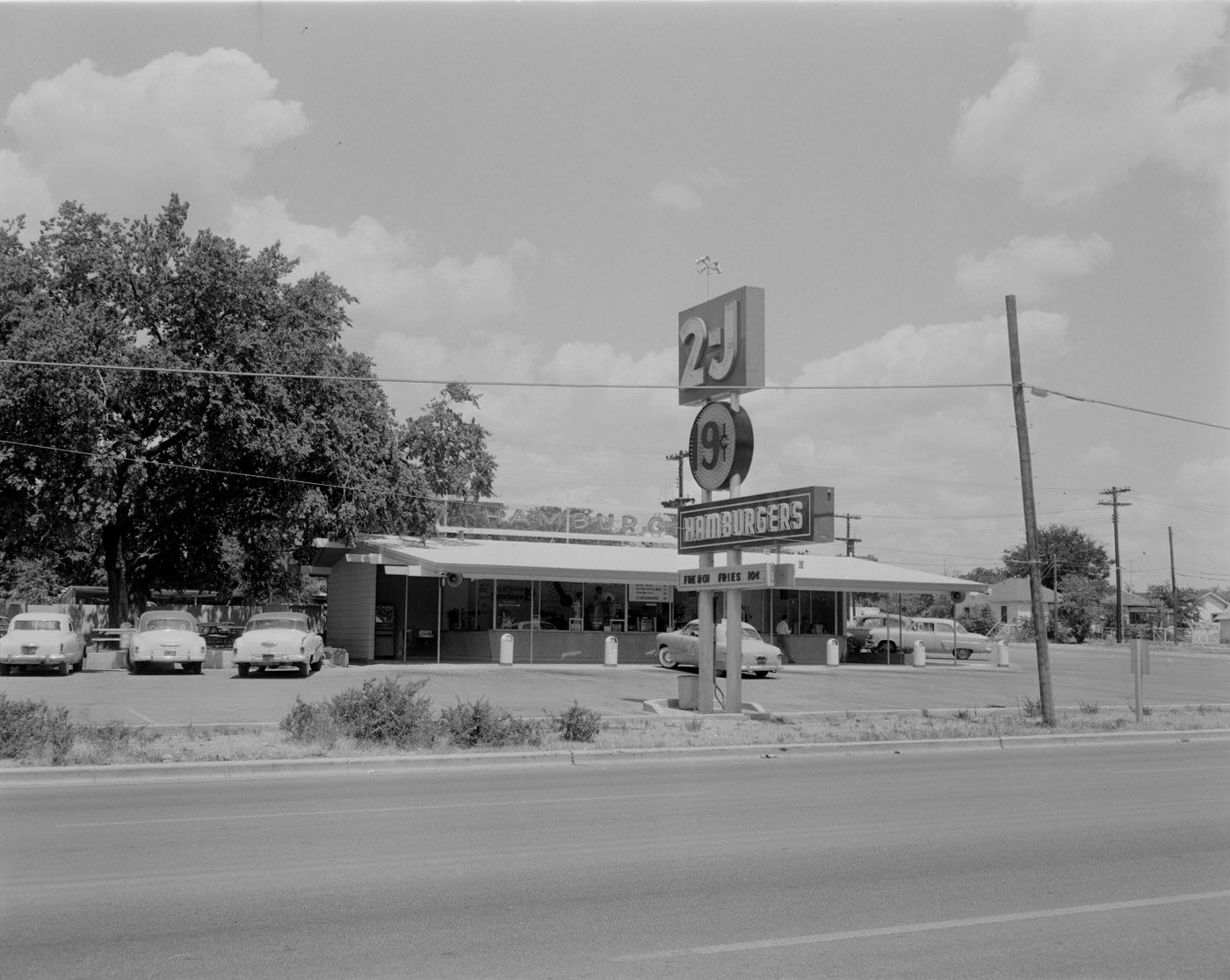
Food and dining in 1950s Austin ranged from neighborhood groceries to drive-in hamburger stands. The 2-J Hamburgers outlet on Congress Avenue drew customers with cars parked out front. El Matamoros advertised its “crispy tacos” in 1957, an early sign of Austin’s deep connection to Mexican food culture. Night Hawk Restaurant was a local institution, and its 1957 flood photograph — showing the building surrounded by rising water during the San Gabriel Flood — became one of the decade’s more dramatic images.
El Matamoros, Home of the “Crispy Tacos,” 1957The New Orleans Club Featuring Ernie Mae Miller at the Piano, 19502-J Hamburgers Outlet with Cars and Customers, 1954Night Hawk Restaurant During 1957 Flood, 1957
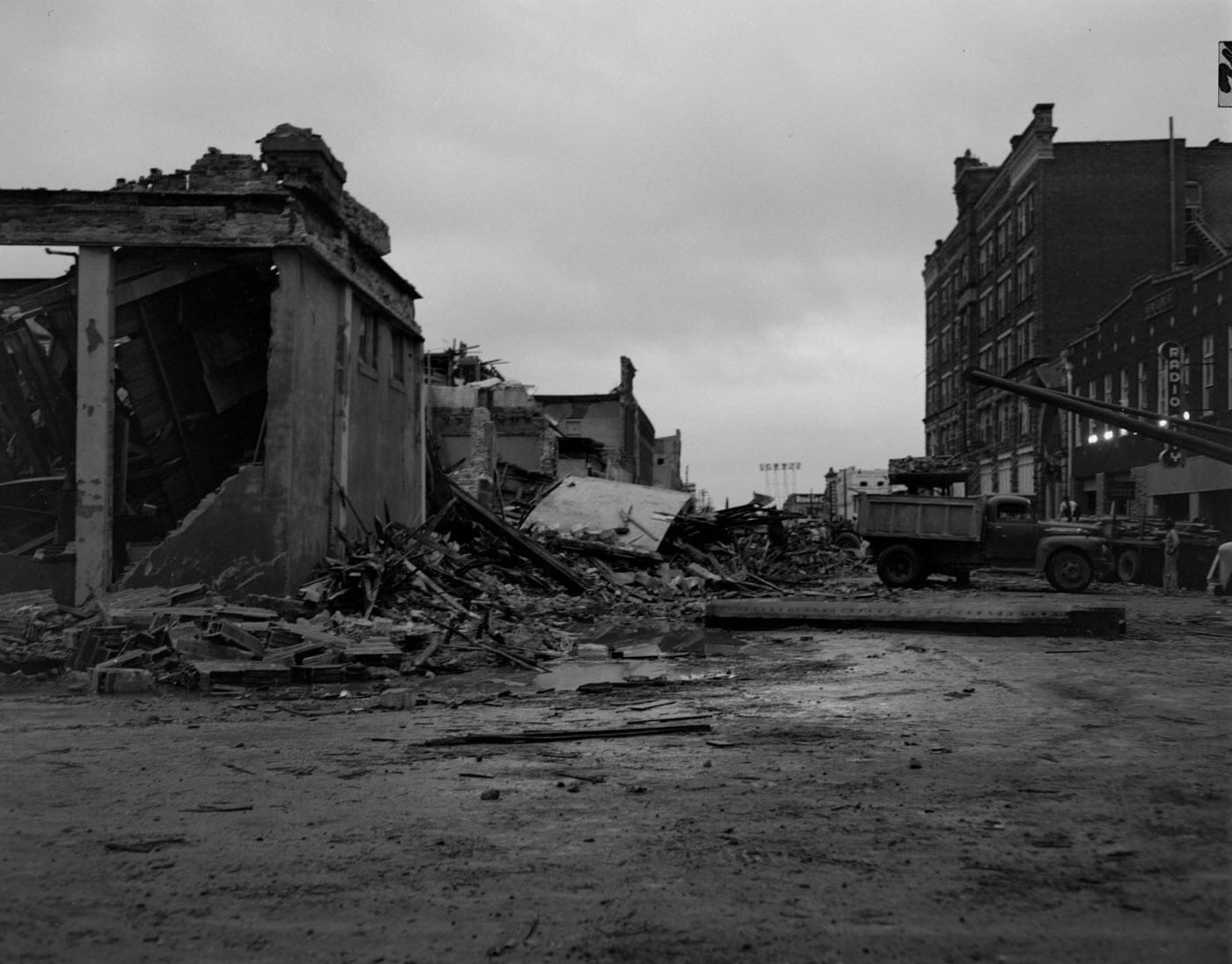
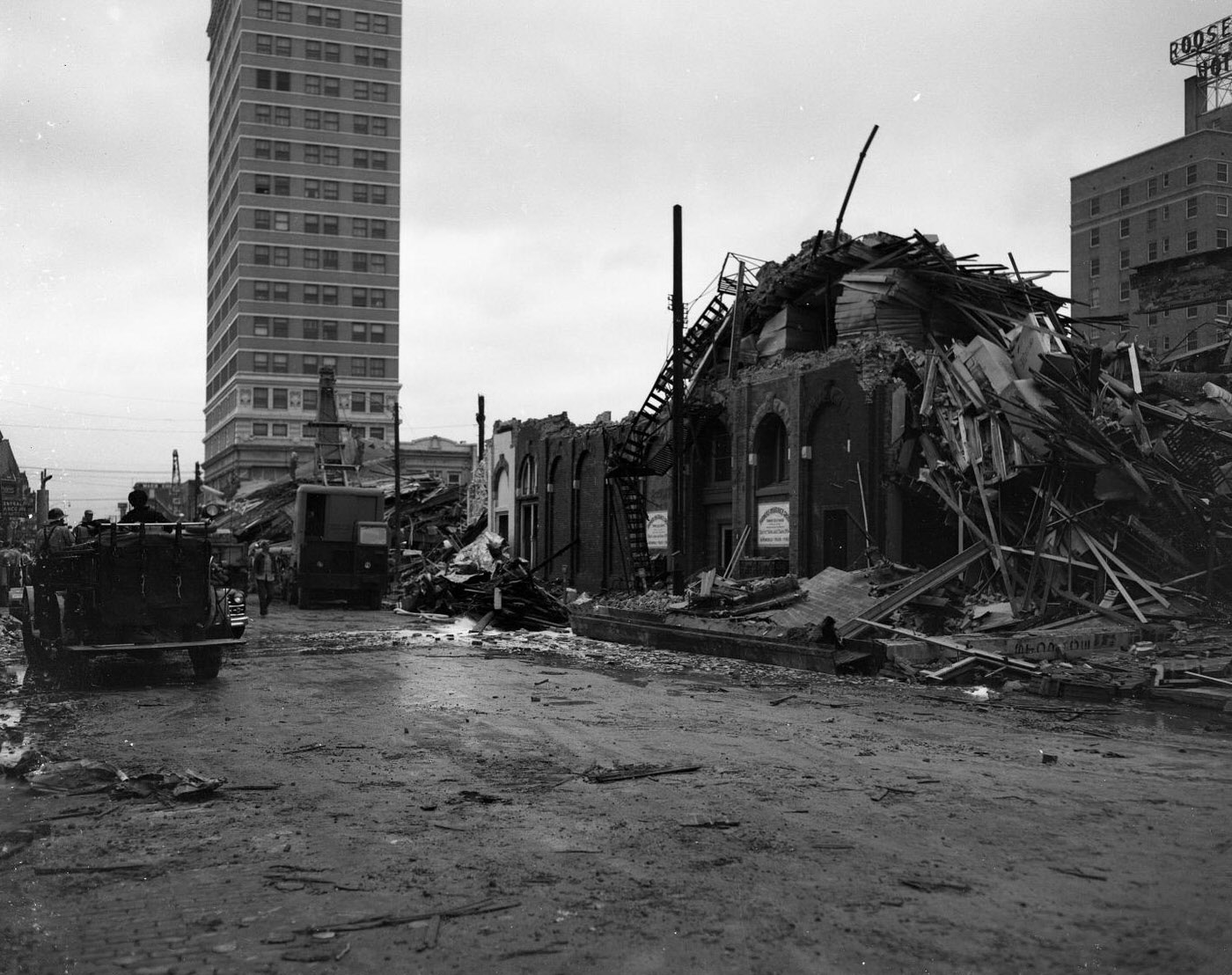
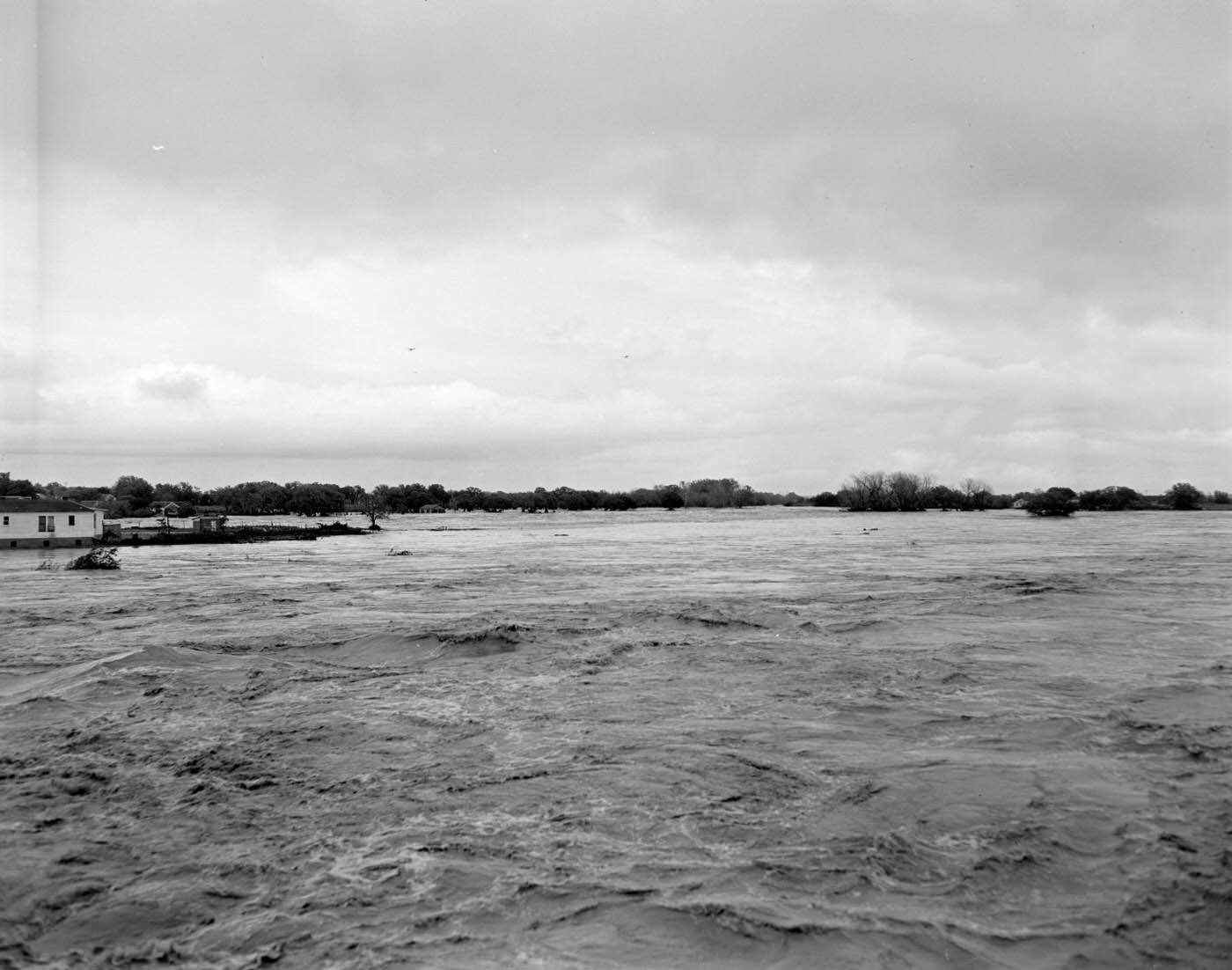
Natural disasters struck the region more than once during the decade. In 1953, a tornado hit Waco and sent debris as far as Austin. Photographs from that year showed debris-covered streets and partially demolished buildings — a stark reminder of how violent Texas weather could be. The 1957 San Gabriel Flood caused significant property damage, submerging homes and businesses under muddy water.
Debris on Street from Waco Tornado in Austin, Texas, 1953Partially-Demolished Buildings After Waco Tornado, 1953Flooded House During San Gabriel Flood, 1957
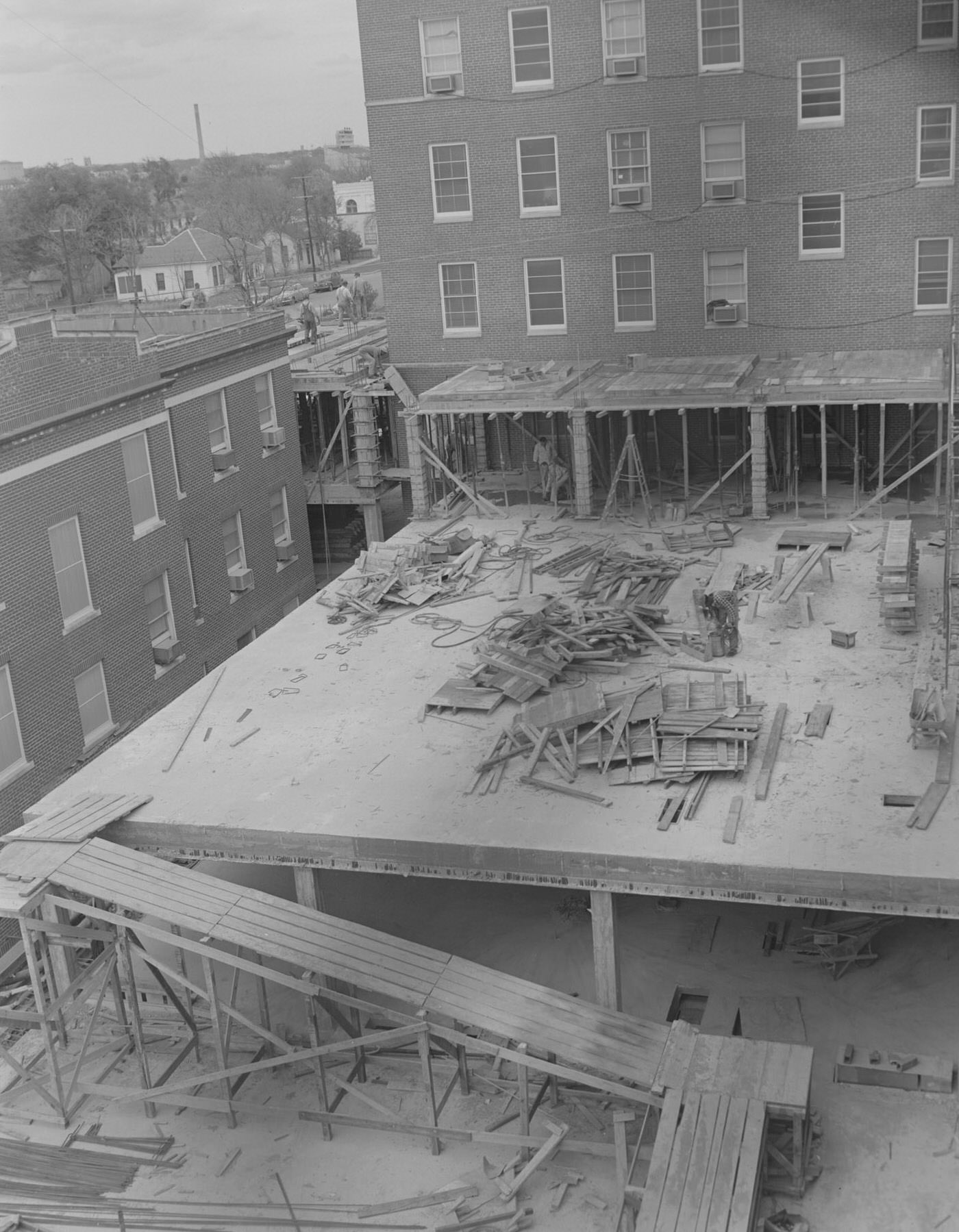
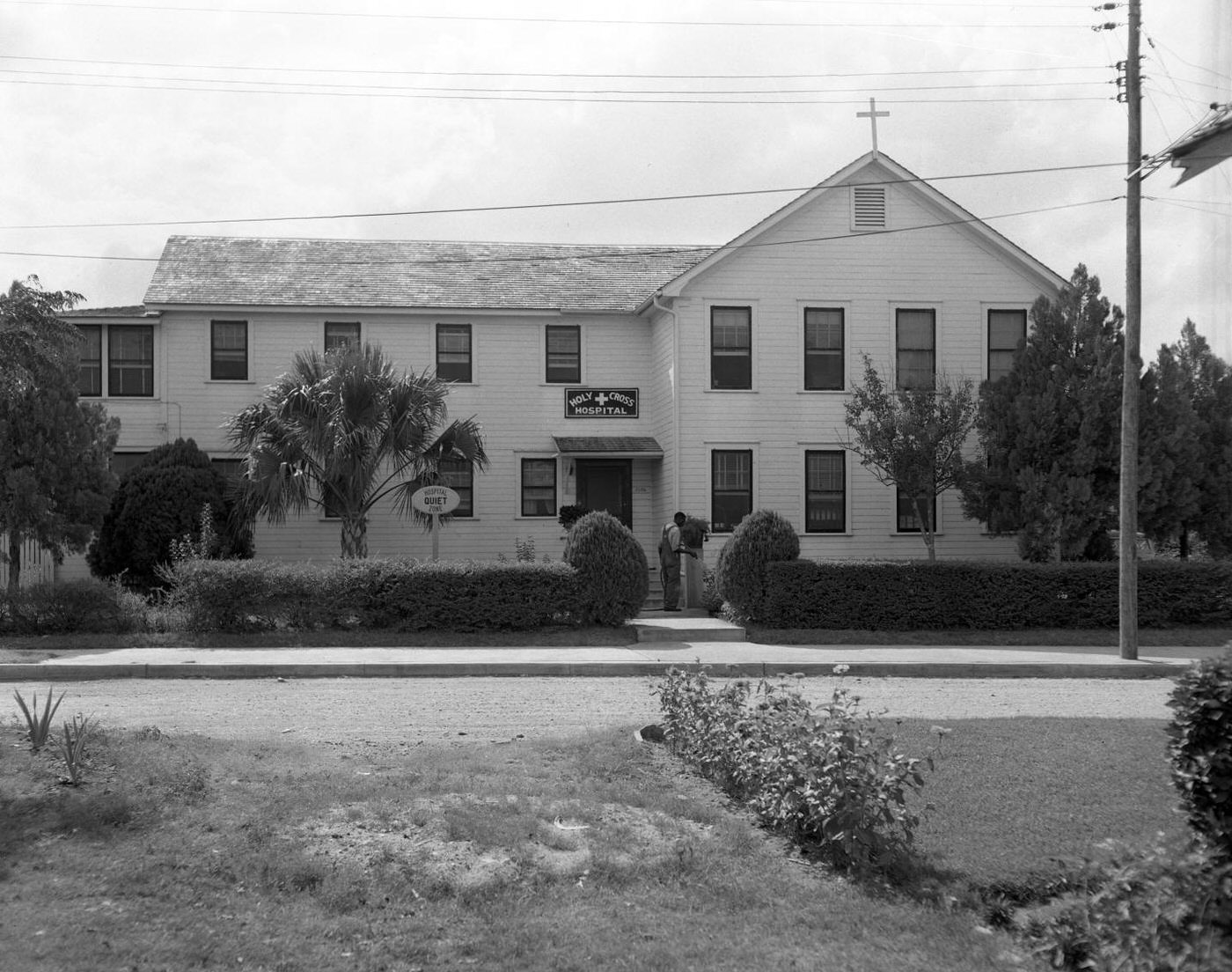
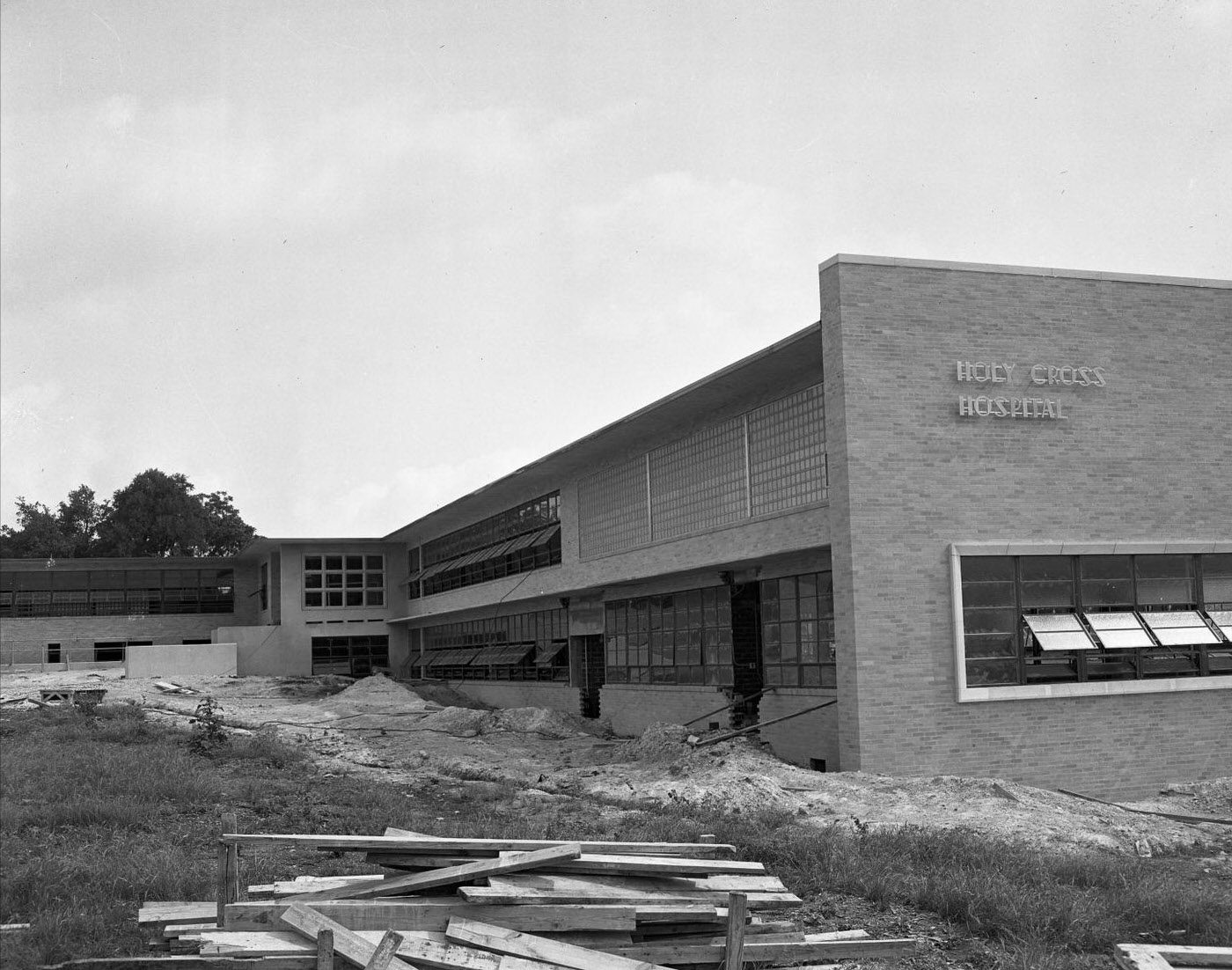
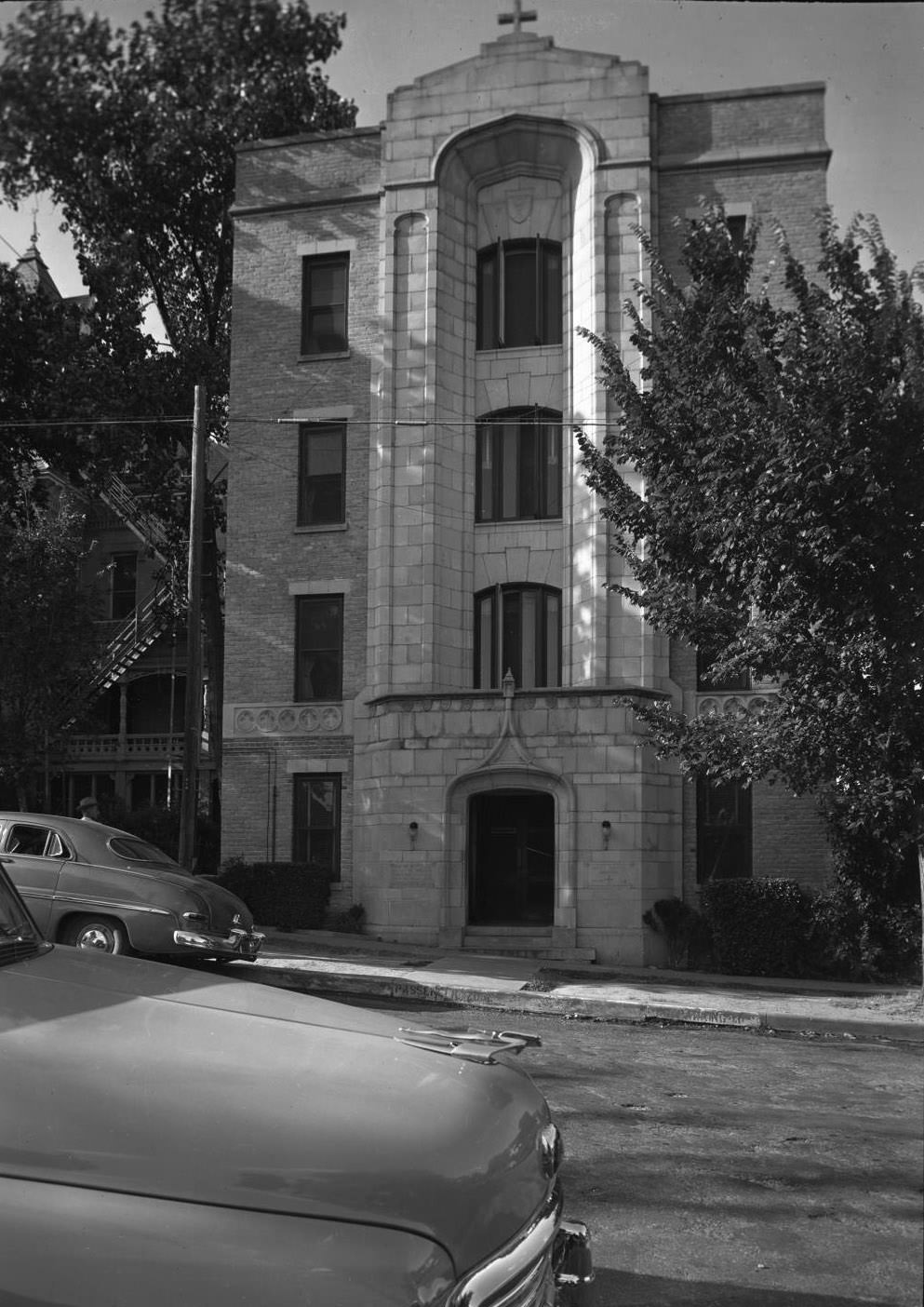
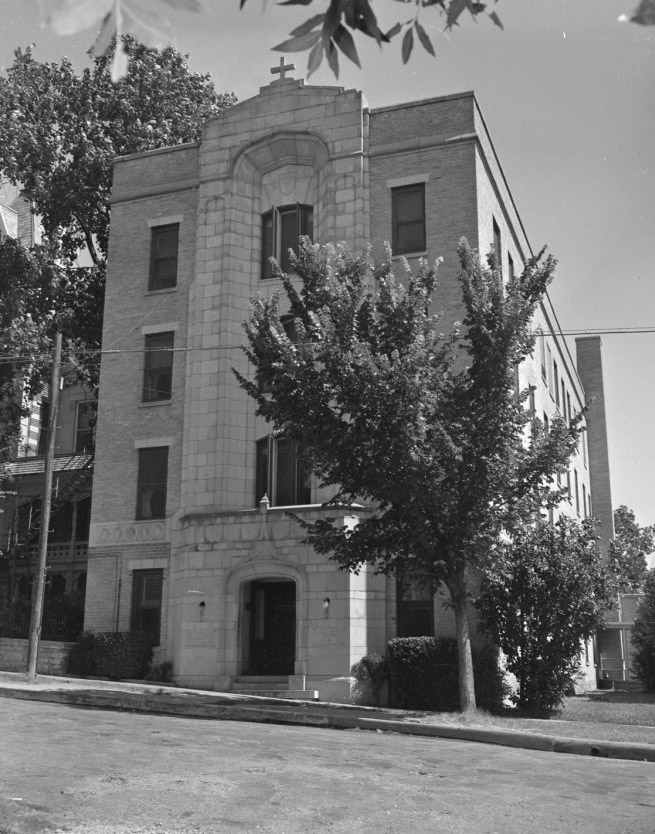
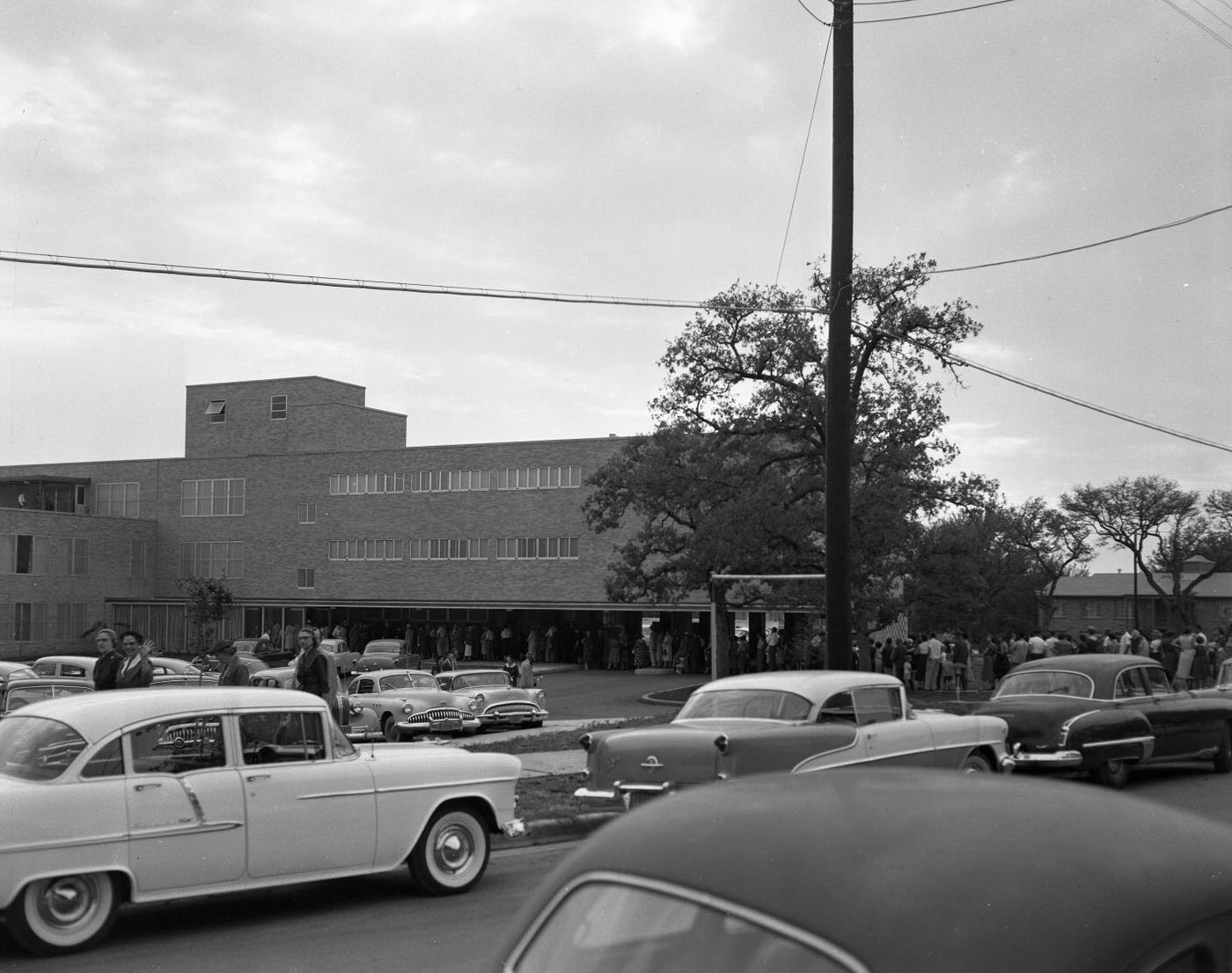
Healthcare in Austin expanded considerably during the decade. Brackenridge Hospital added a new wing by 1955, while Holy Cross Hospital was under construction as early as 1950. St. David’s Hospital opened a new building mid-decade to a packed parking lot and large crowds. These were institutions built to serve a rapidly growing population.
Brackenridge Hospital Addition Under Construction, 1955Holy Cross Hospital with Man Watering Yard, 1950New Holy Cross Hospital Under Construction, 1950
Exterior View of St. David’s Hospital on 606 W. 17th Street, 1950
Exterior of St. David’s Hospital, 1950
St. David’s Hospital Opening Day Packed with Cars and People, 1955
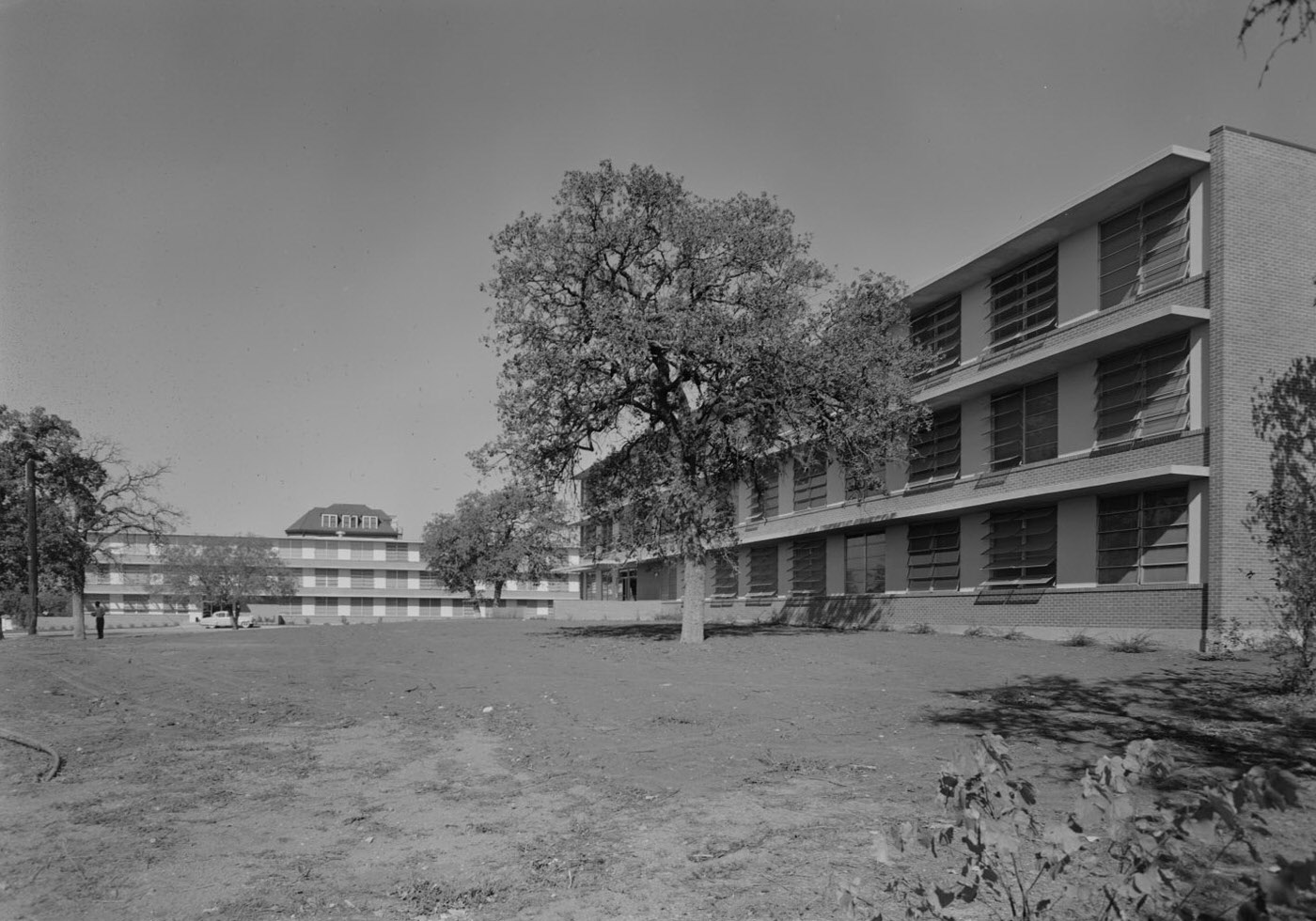
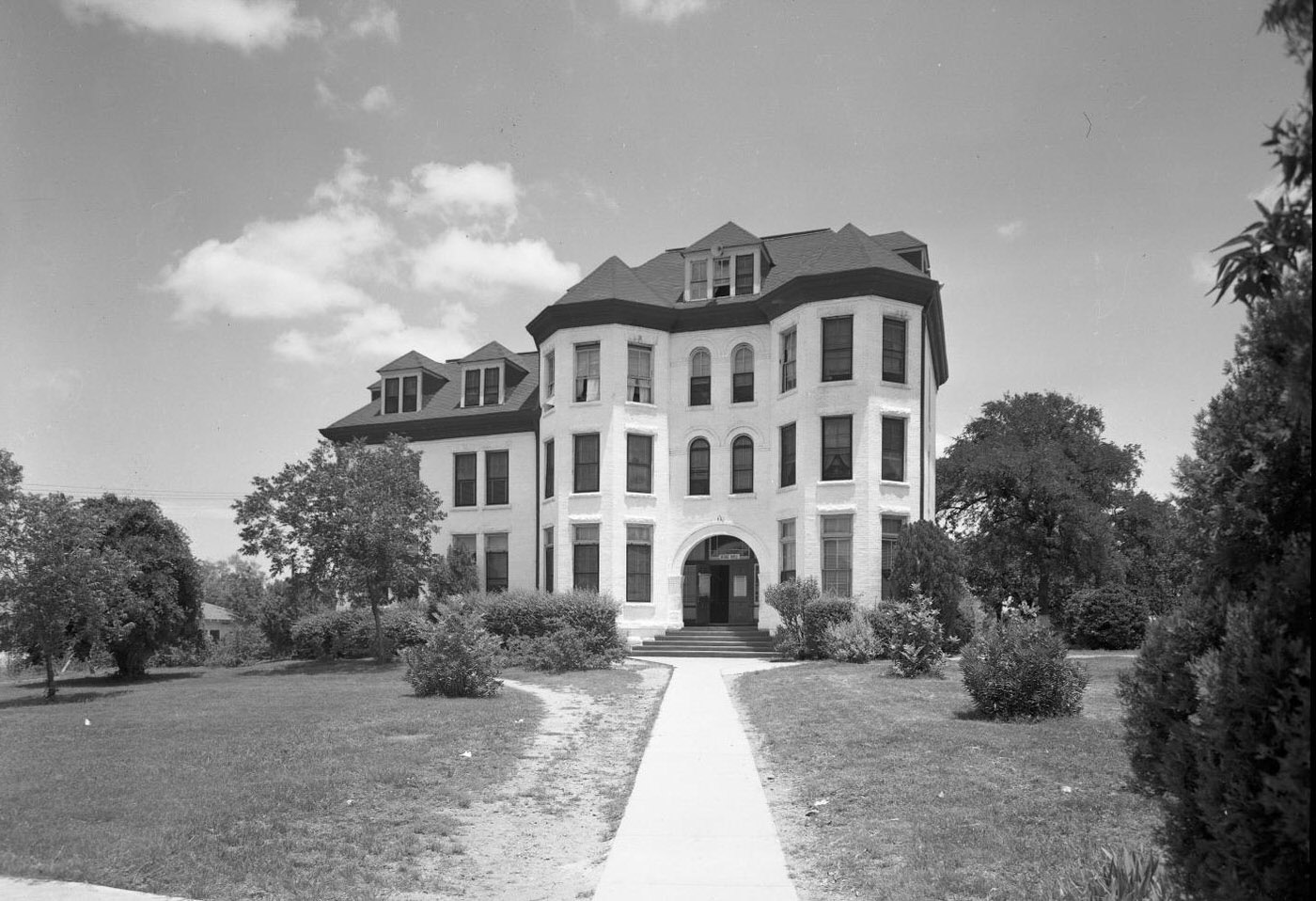
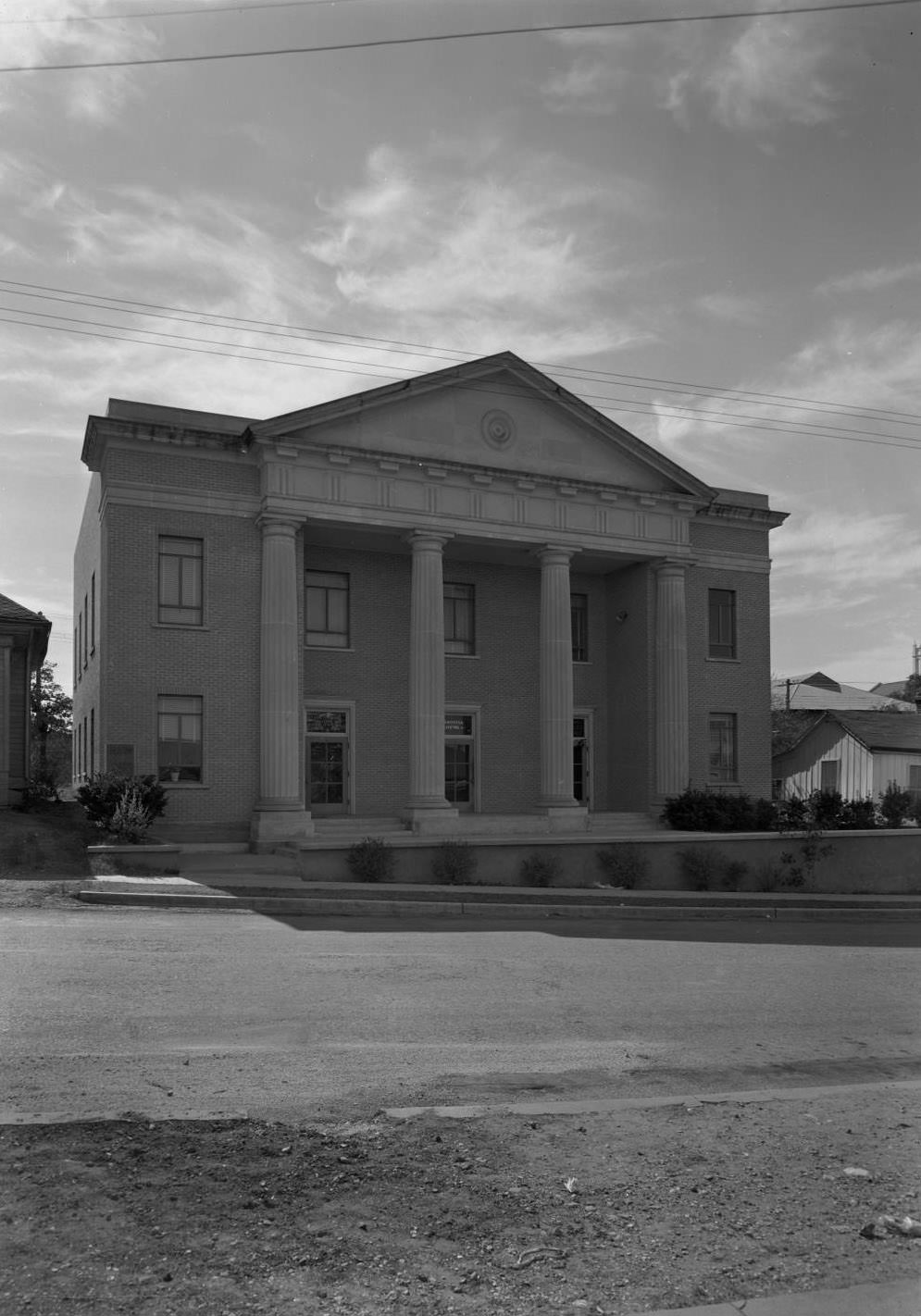
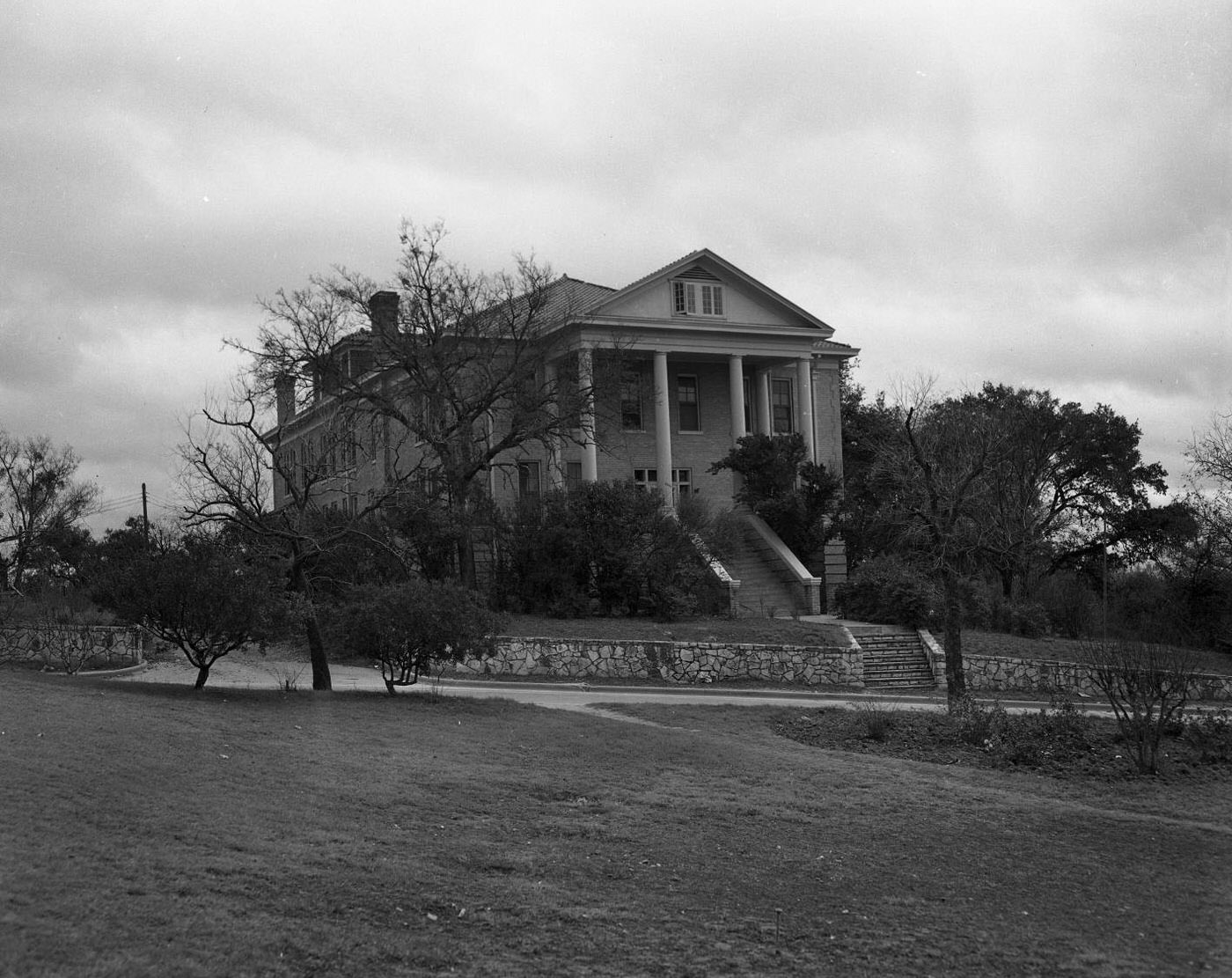
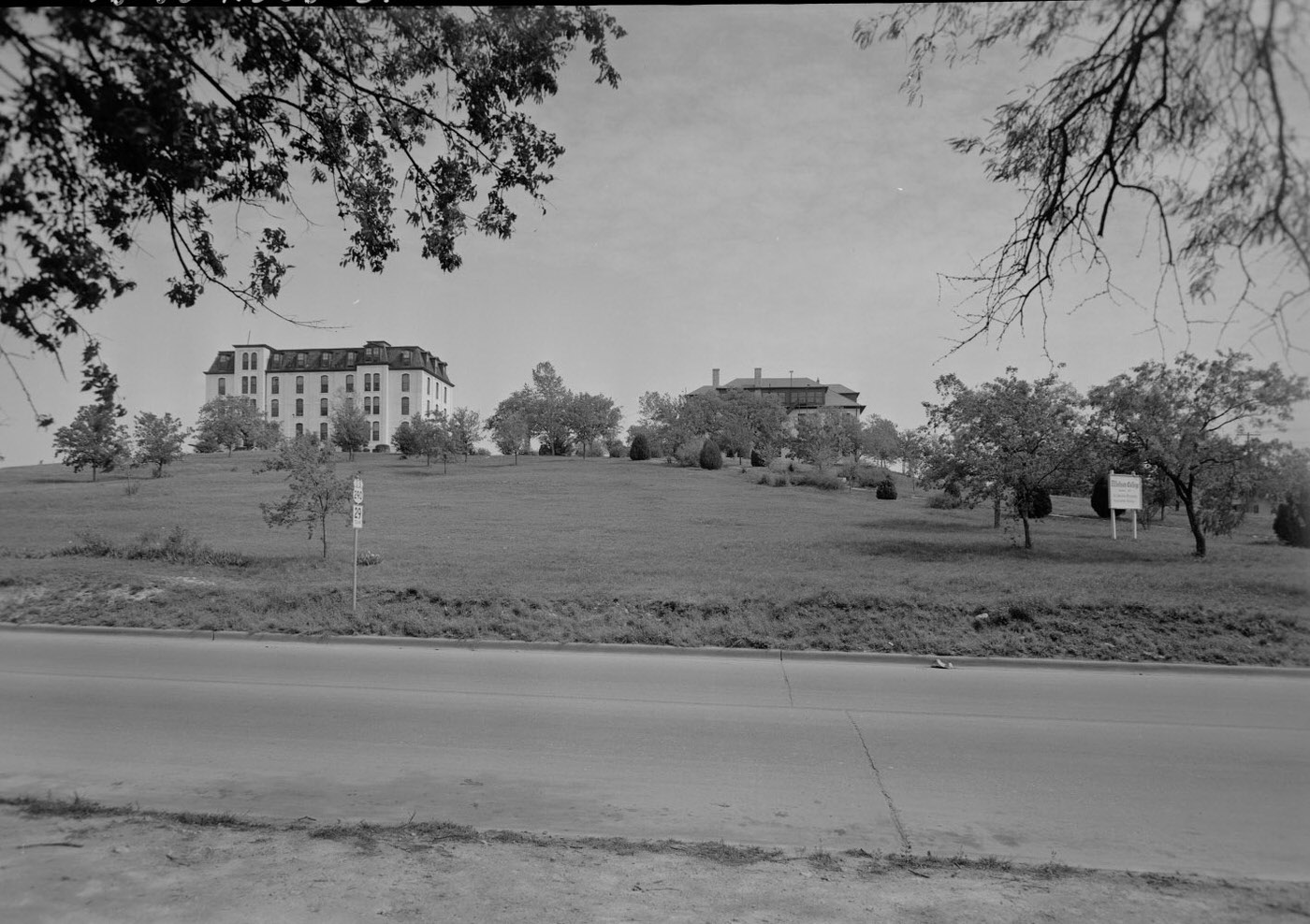
Austin’s Black community maintained its own institutions throughout the era of racial segregation. Huston-Tillotson College — formed from the merger of Samuel Huston College and Tillotson College — served as the primary higher education institution for Black Austinites. Both campuses were photographed in 1950, showing their buildings and grounds during a period when integration was still years away. The Negro Masonic Temple at 1017 E. 11th Street documented another pillar of the East Austin community.
Exterior of Dormitories at Huston – Tillotson College, 1956Exterior of Beard Hall at Huston-Tillotson College, 1950Negro Masonic Temple at 1017 E. 11th Street, 1955Samuel Huston College, Building on Campus, 1950Exterior View of Tillotson College Buildings on a Hill, 1950
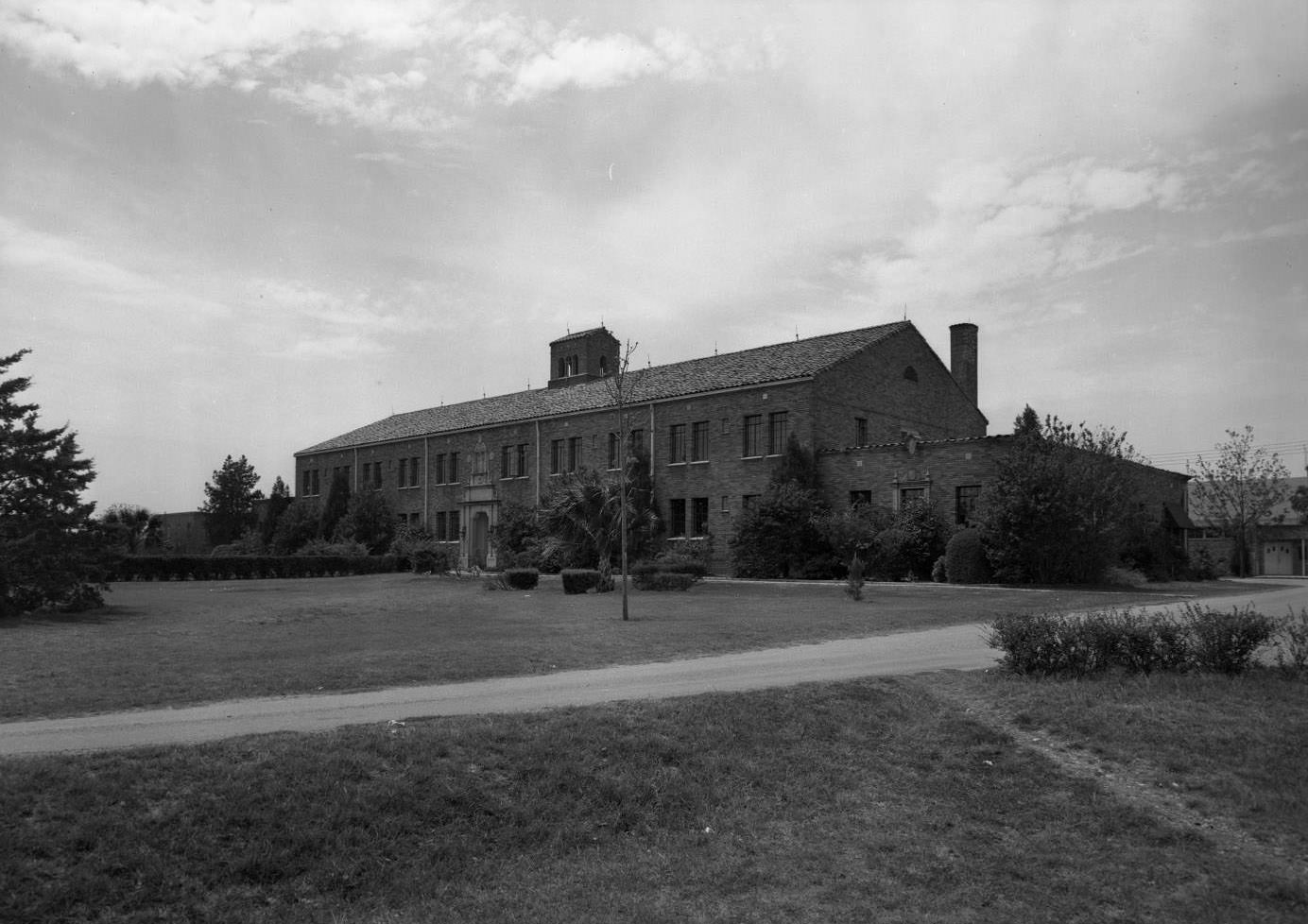
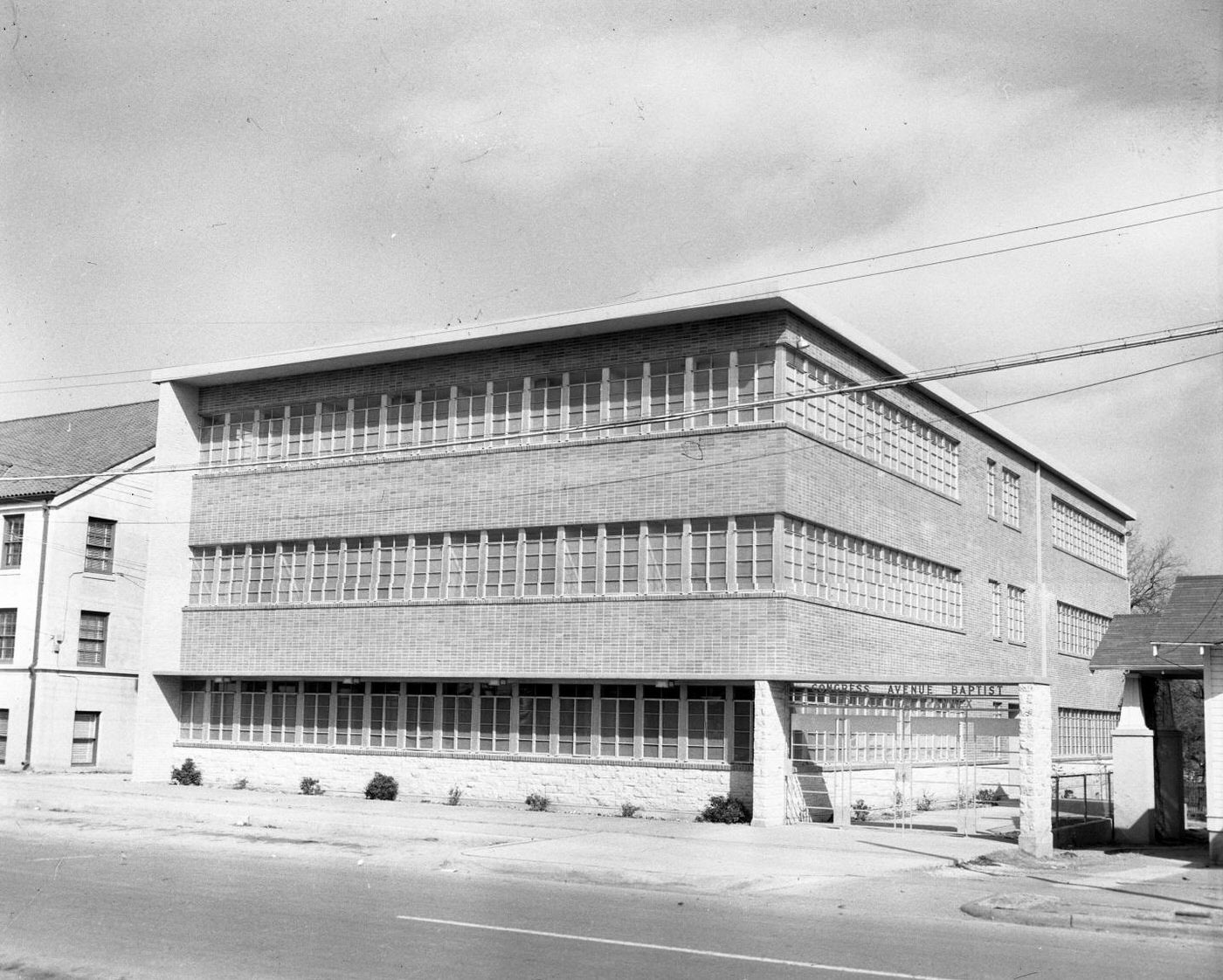
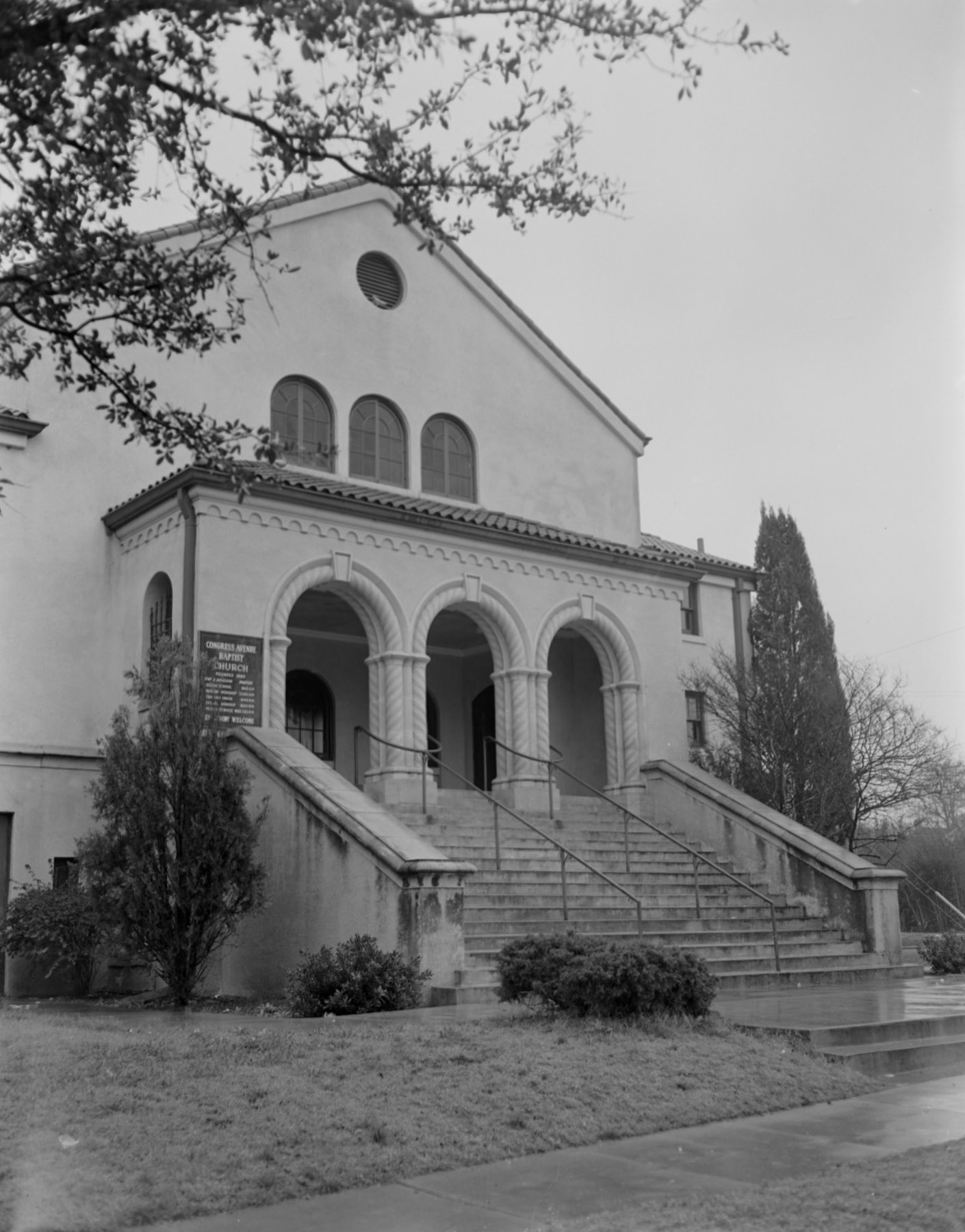
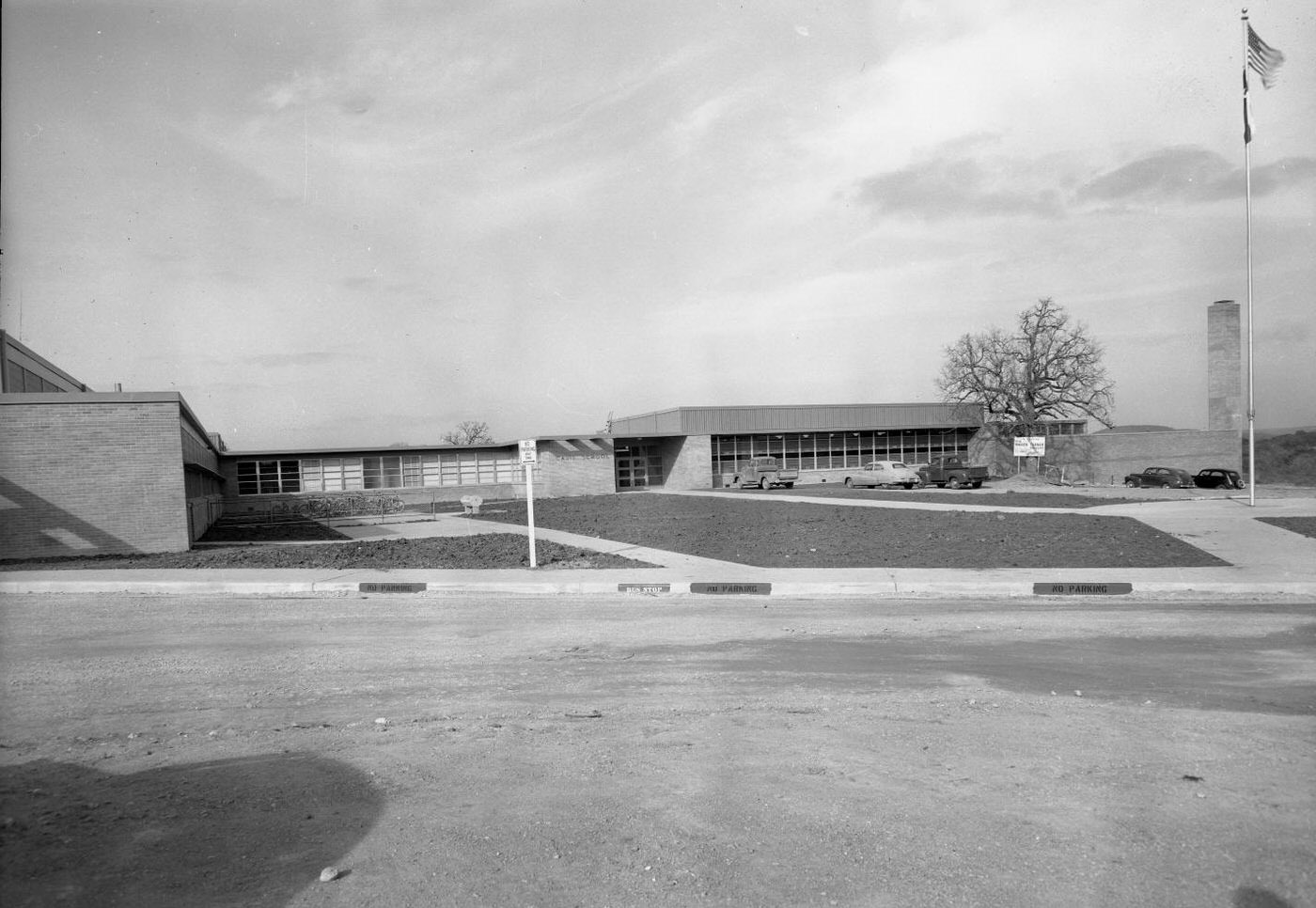
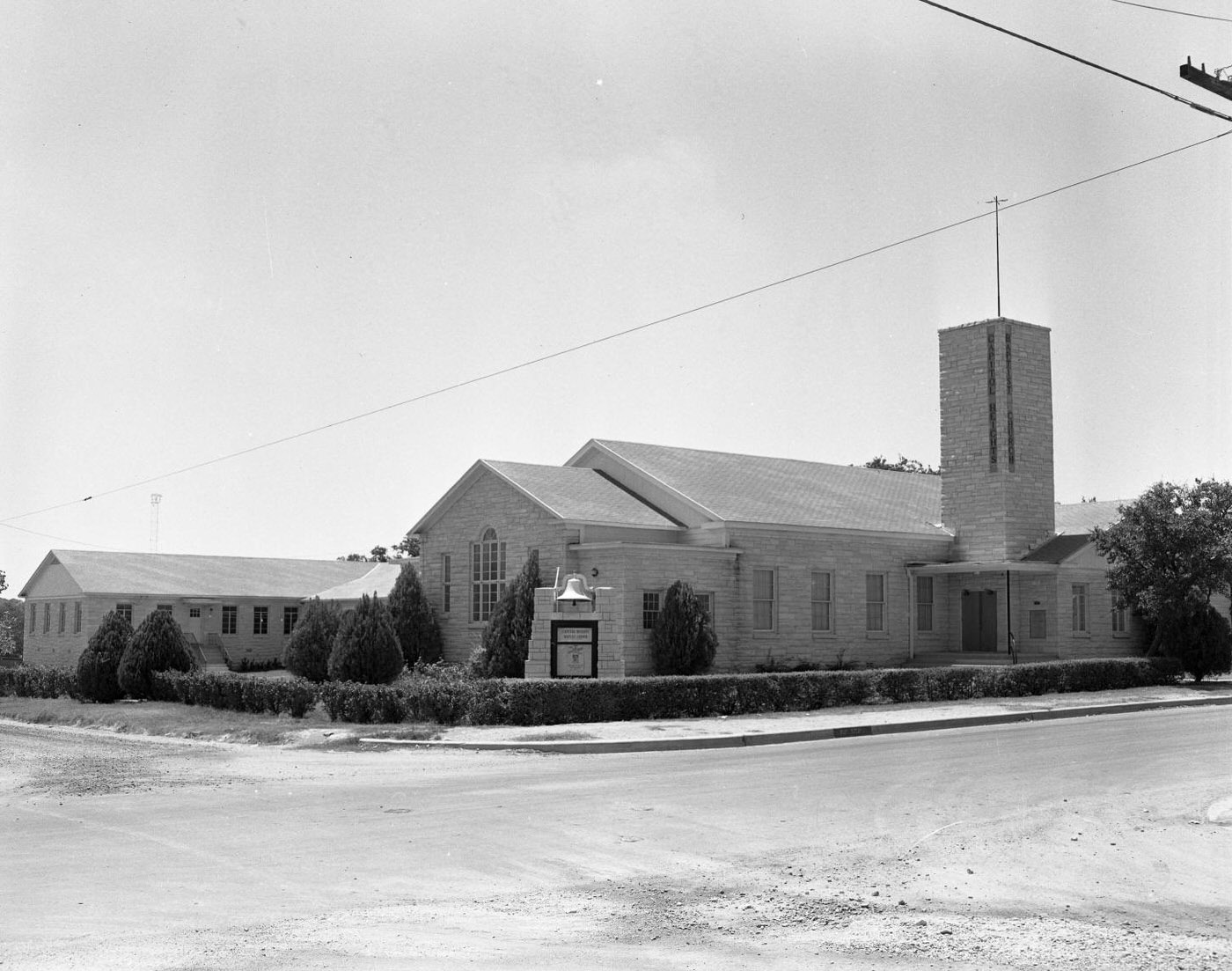
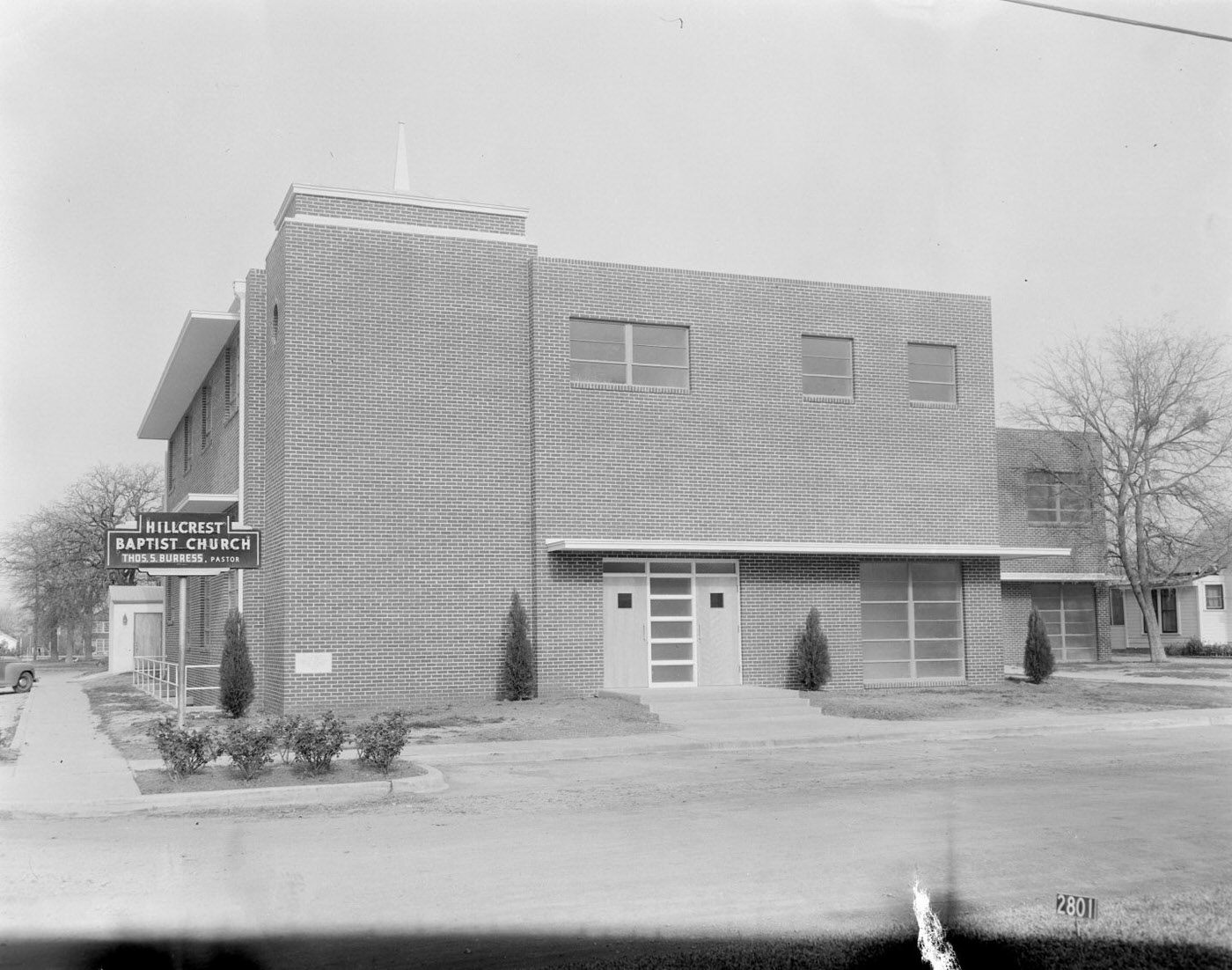
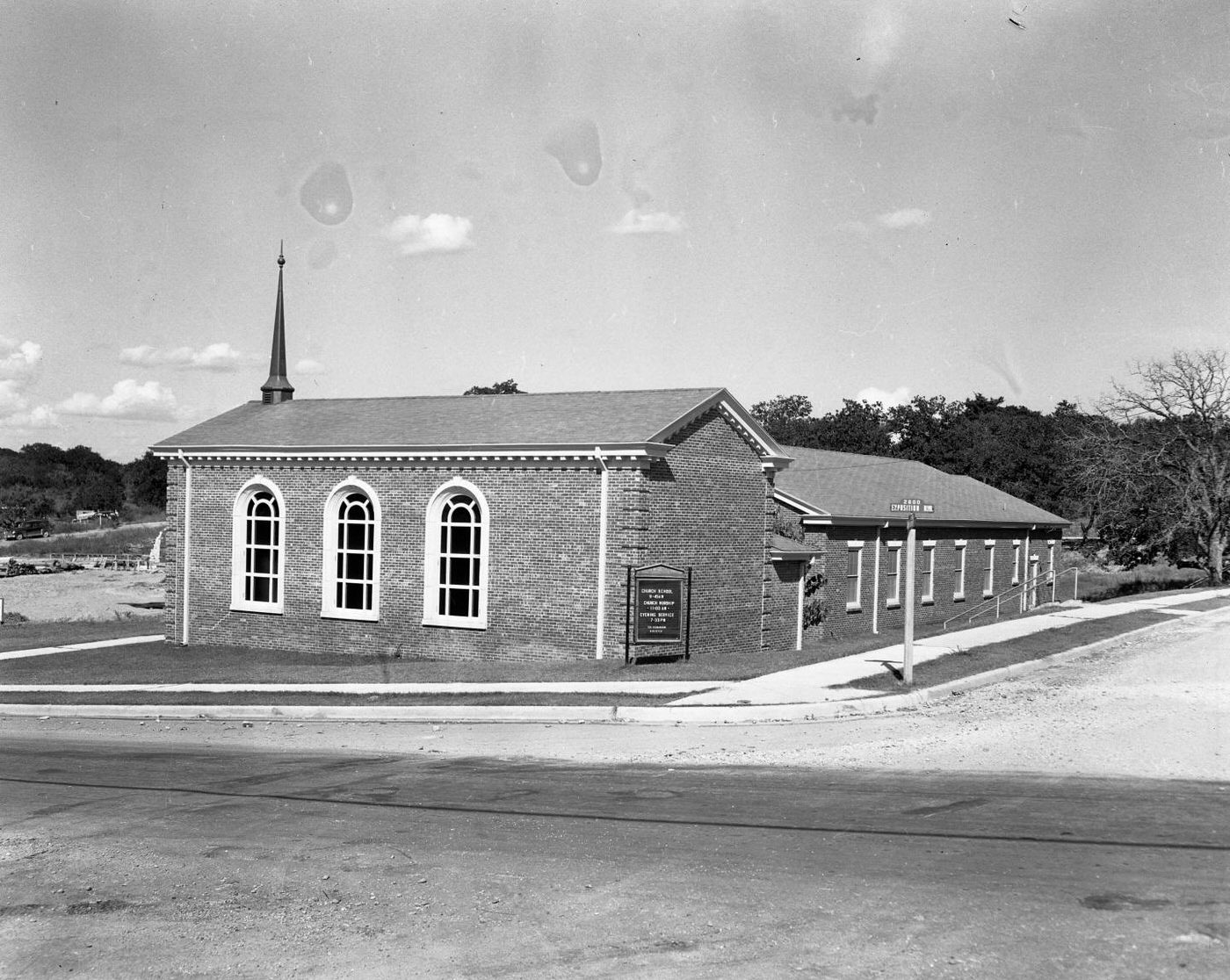
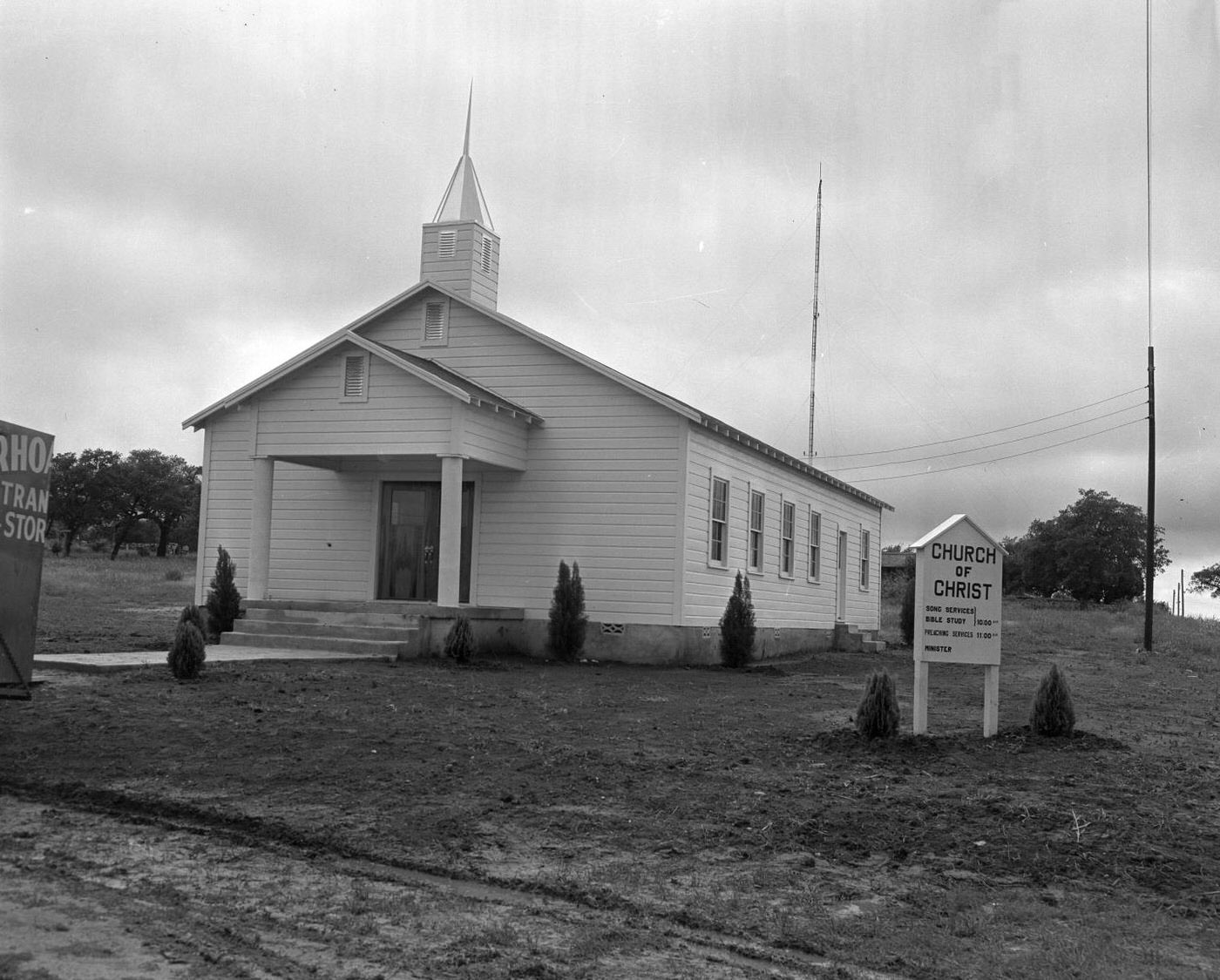
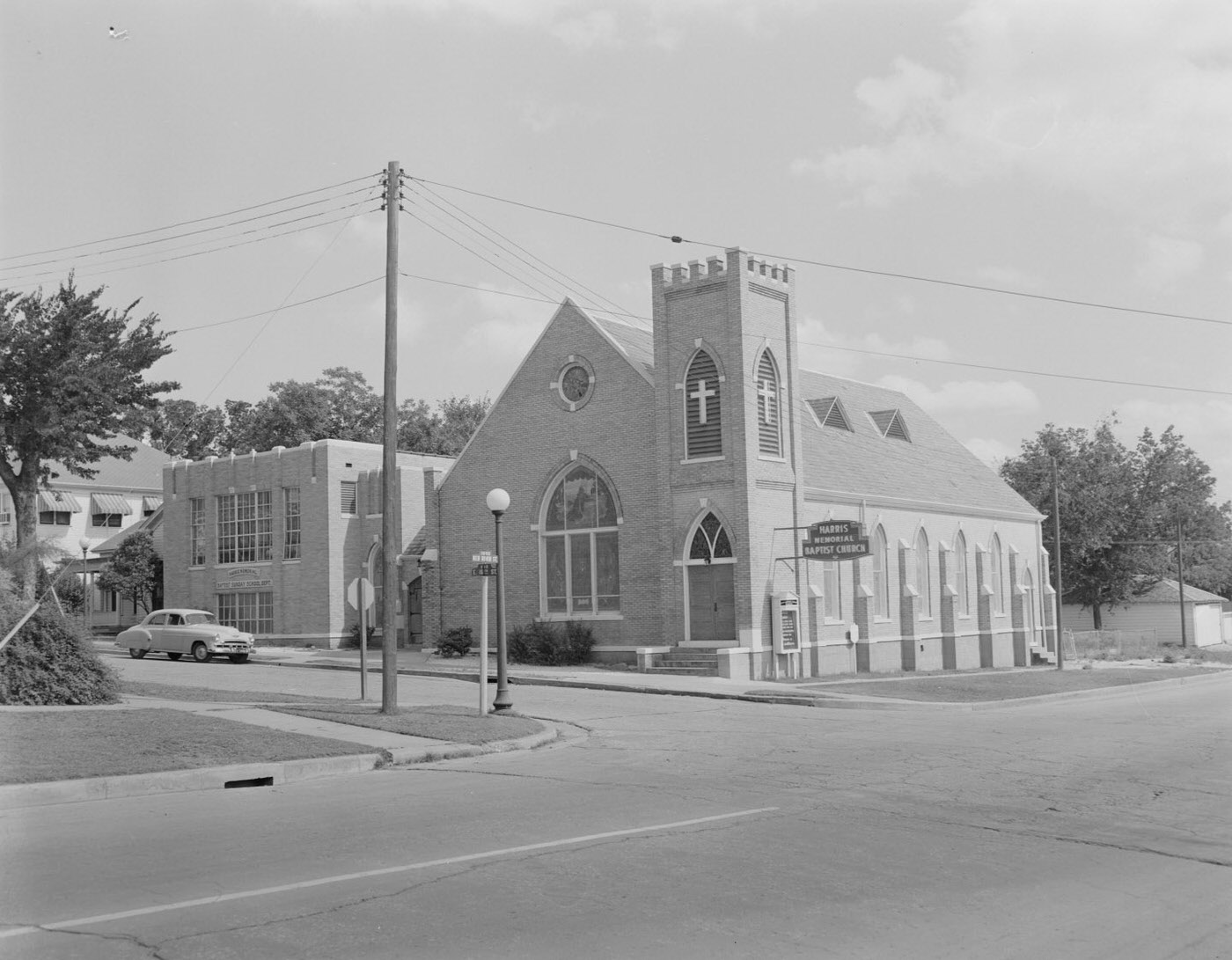
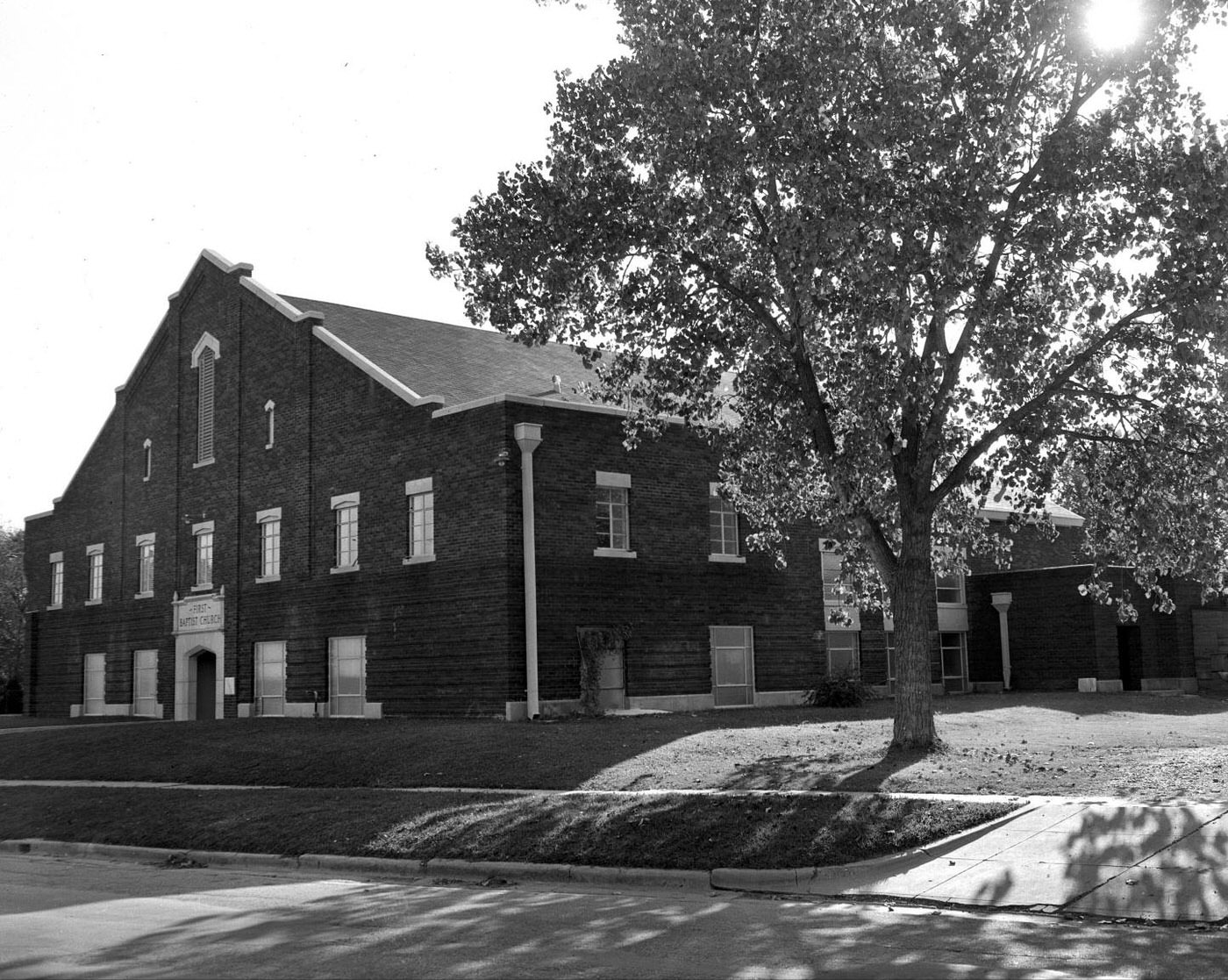
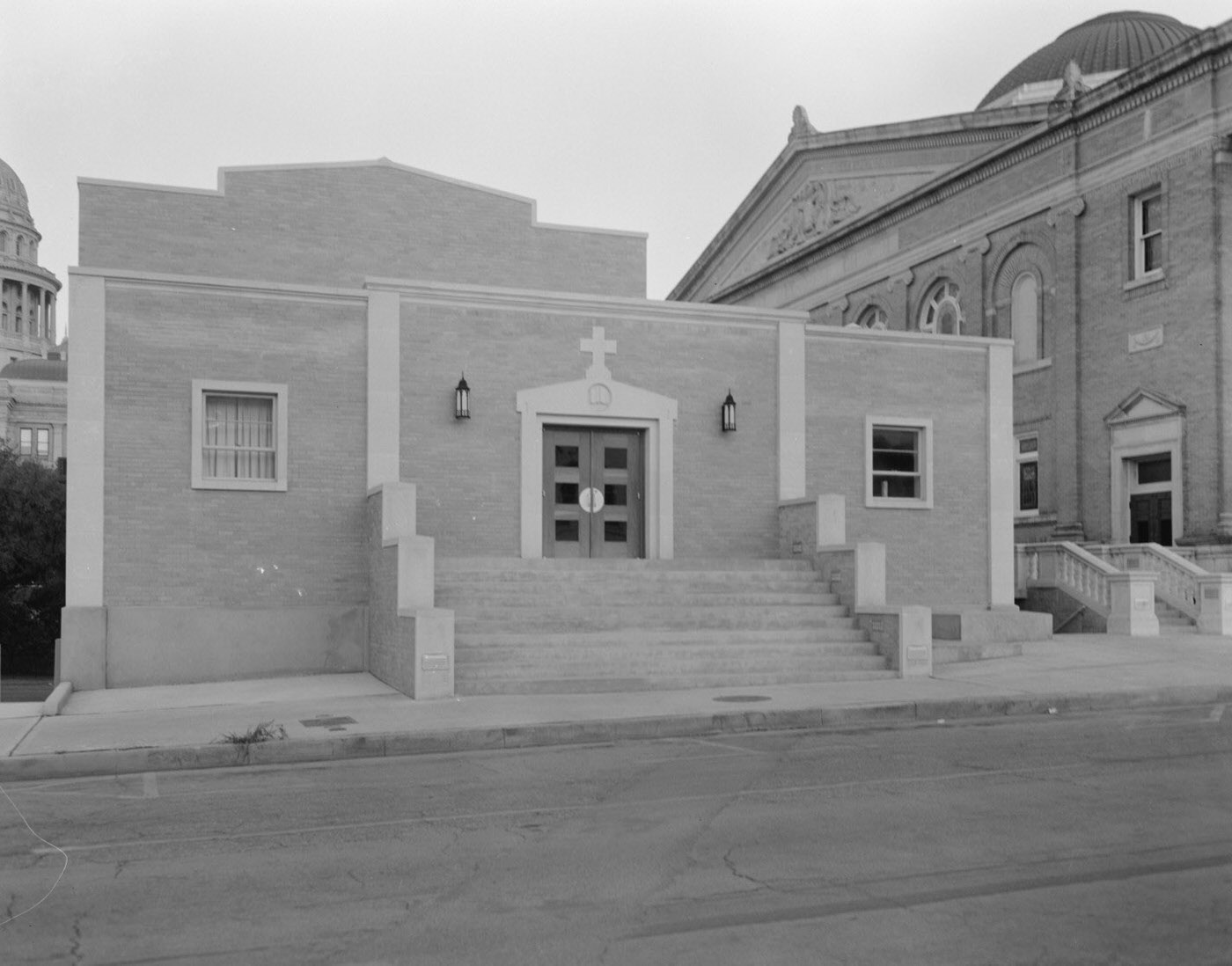
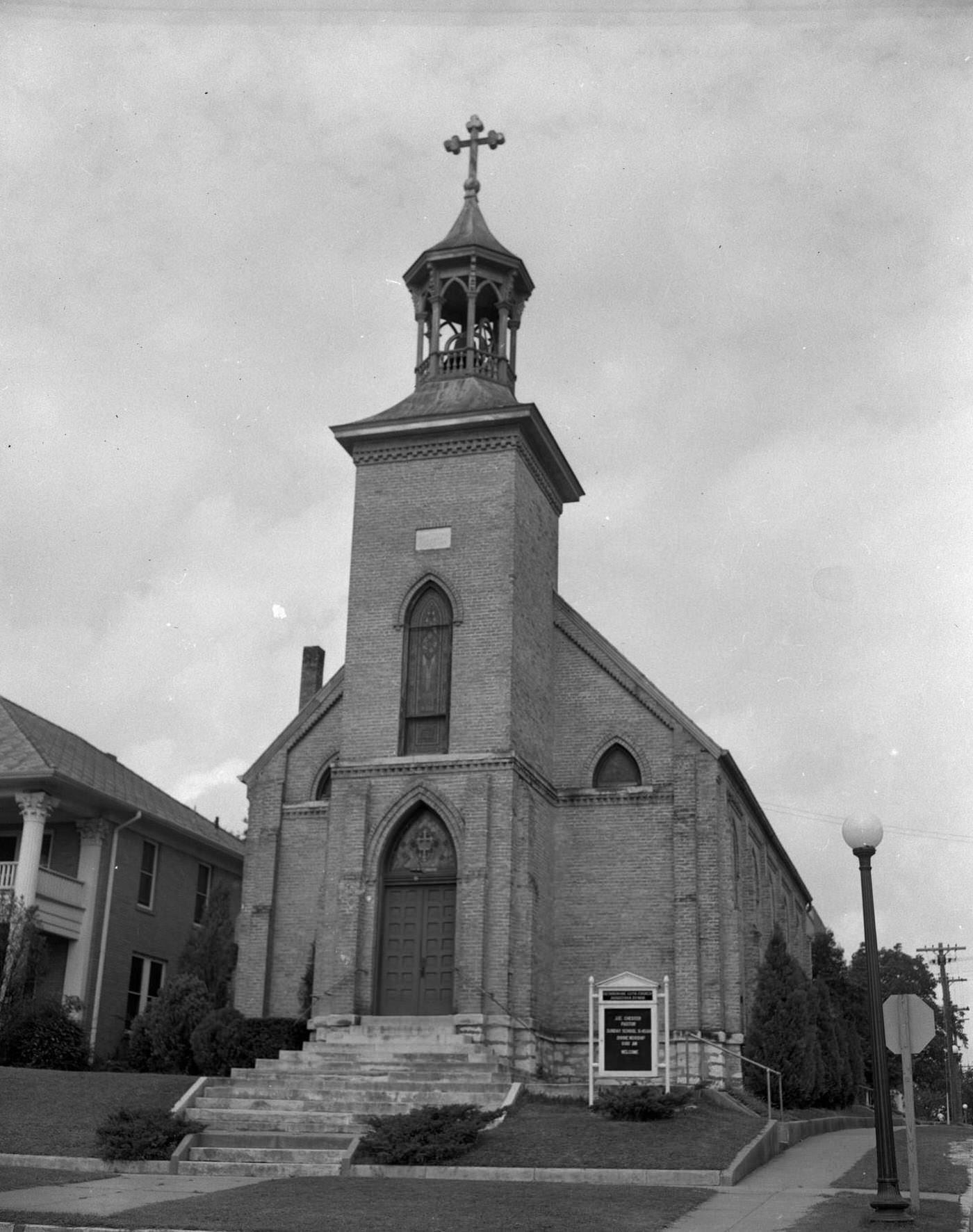
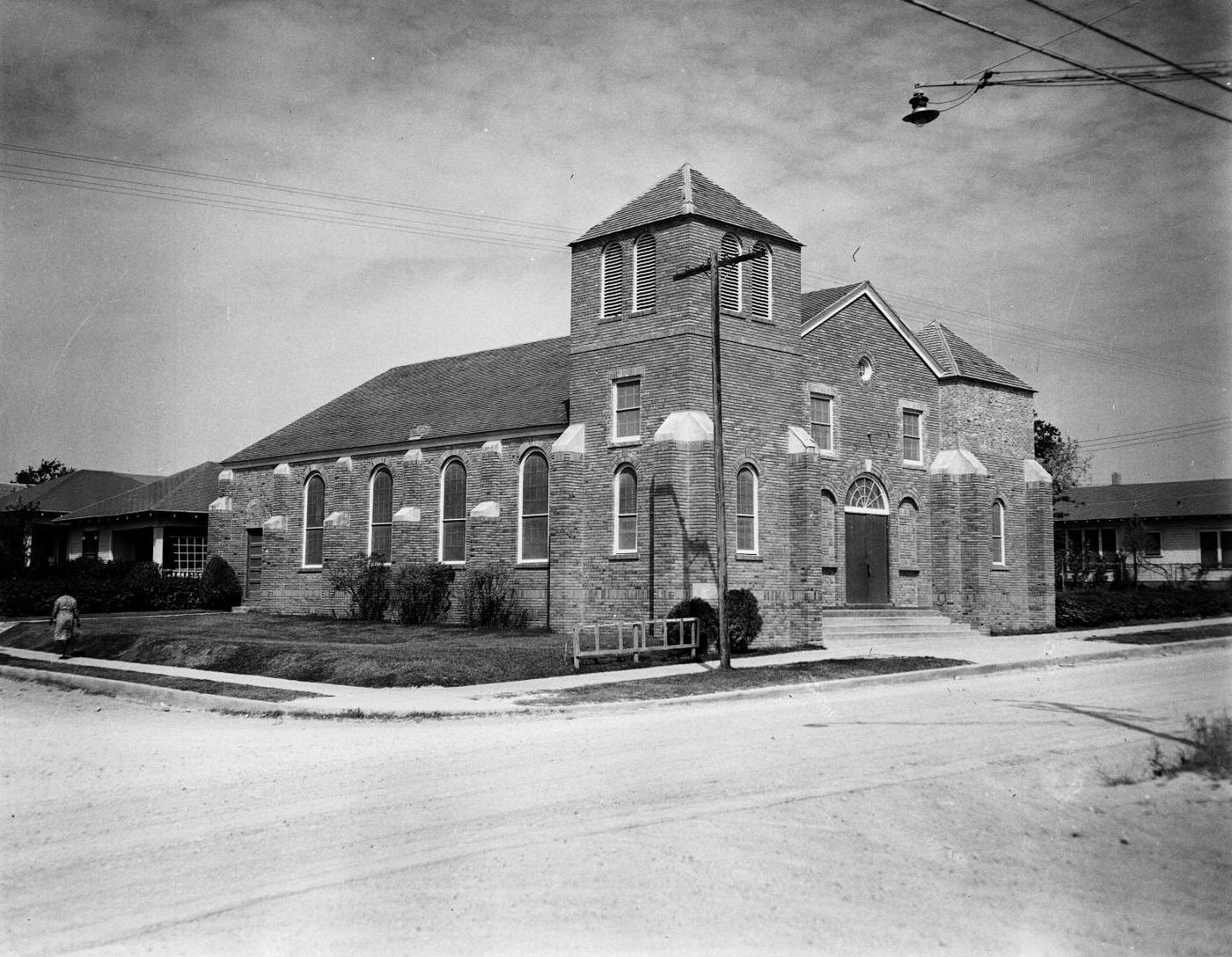
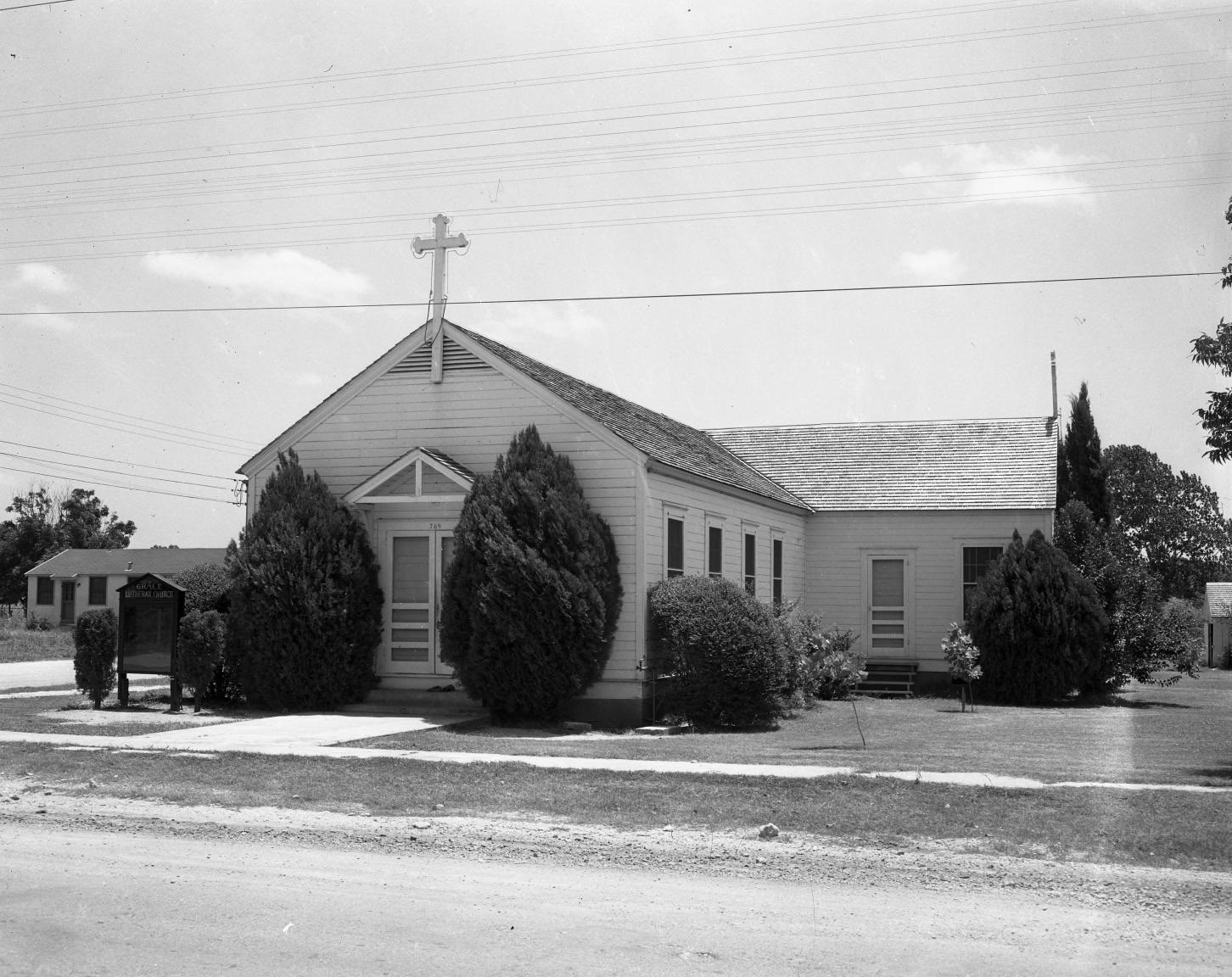
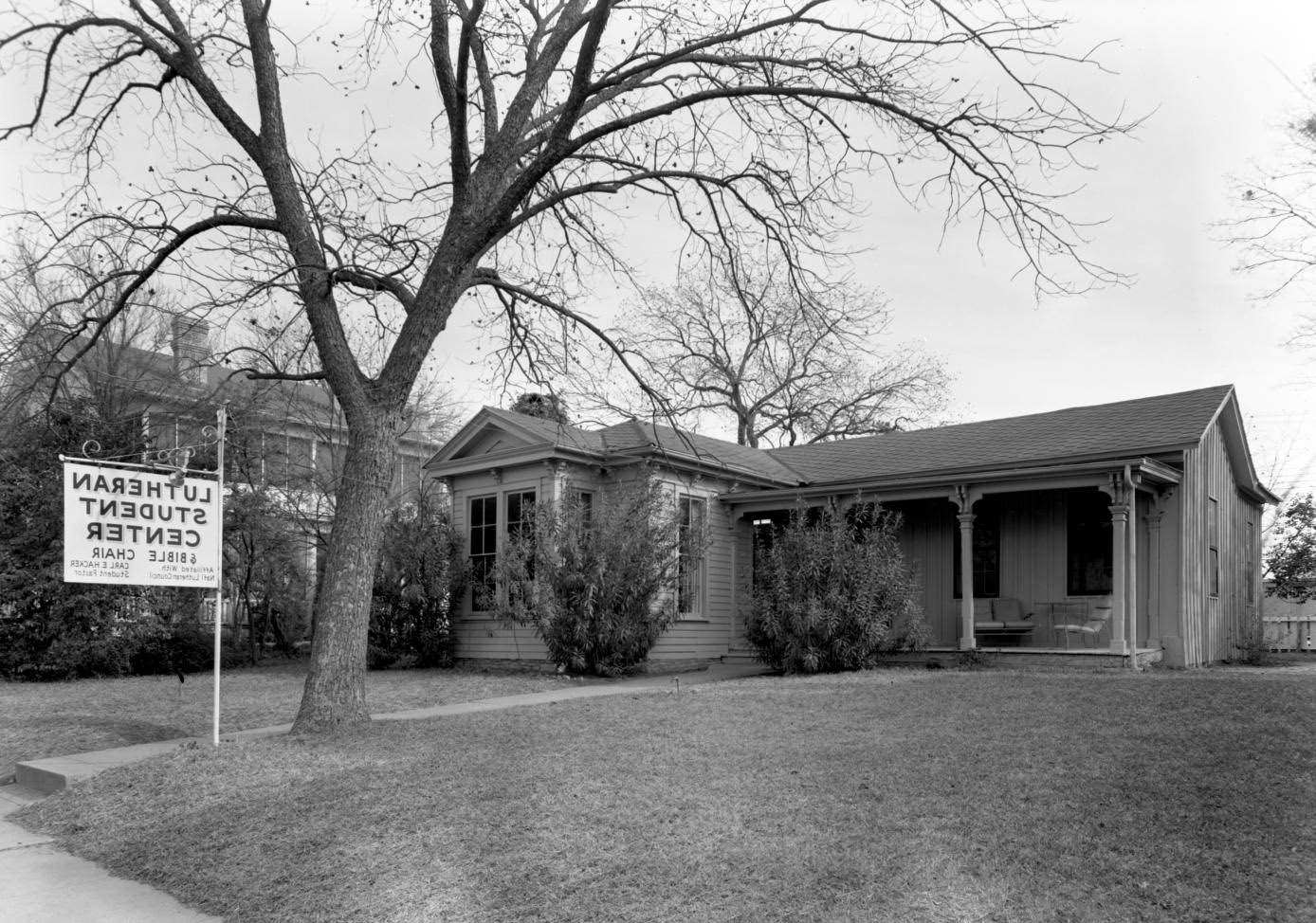
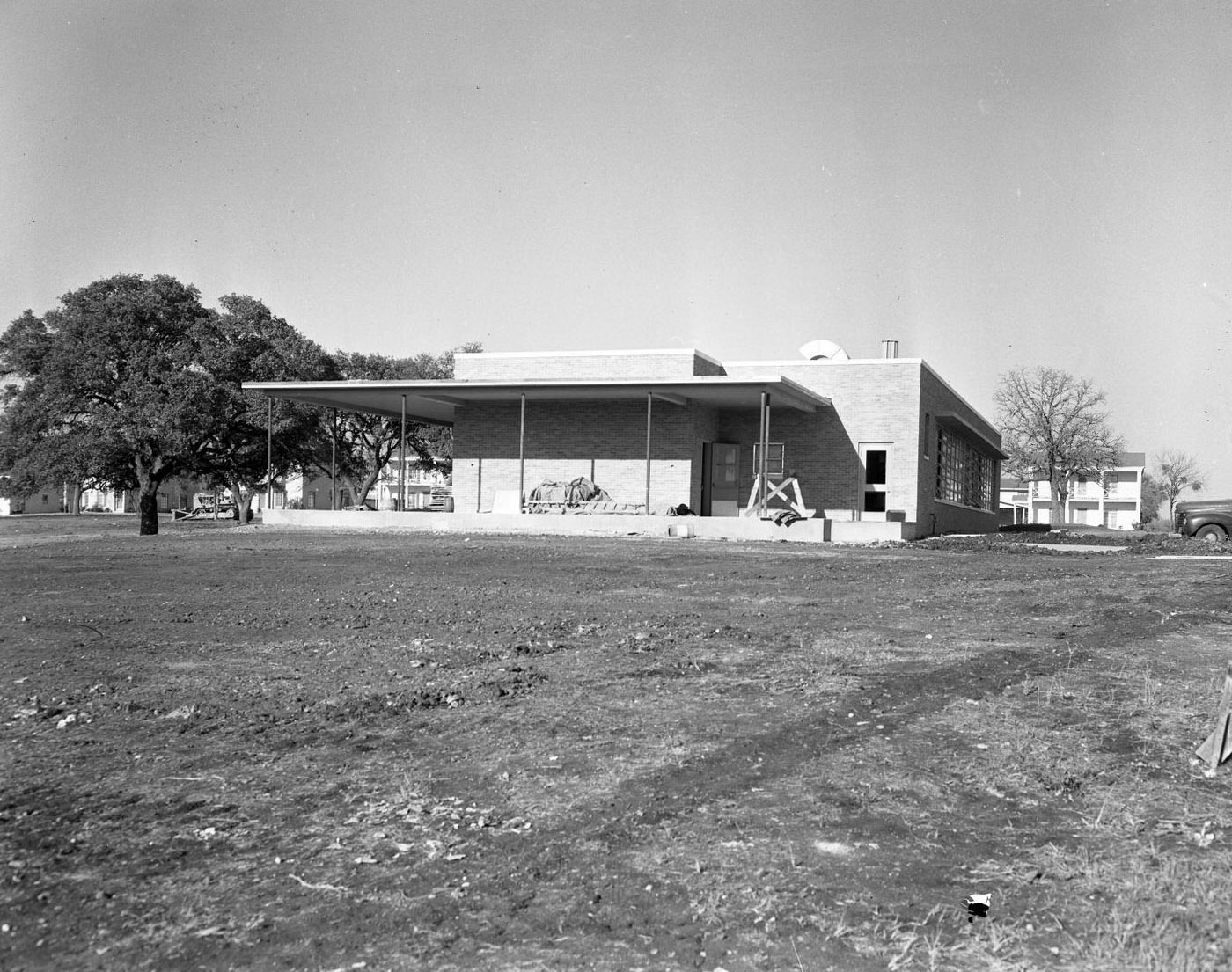
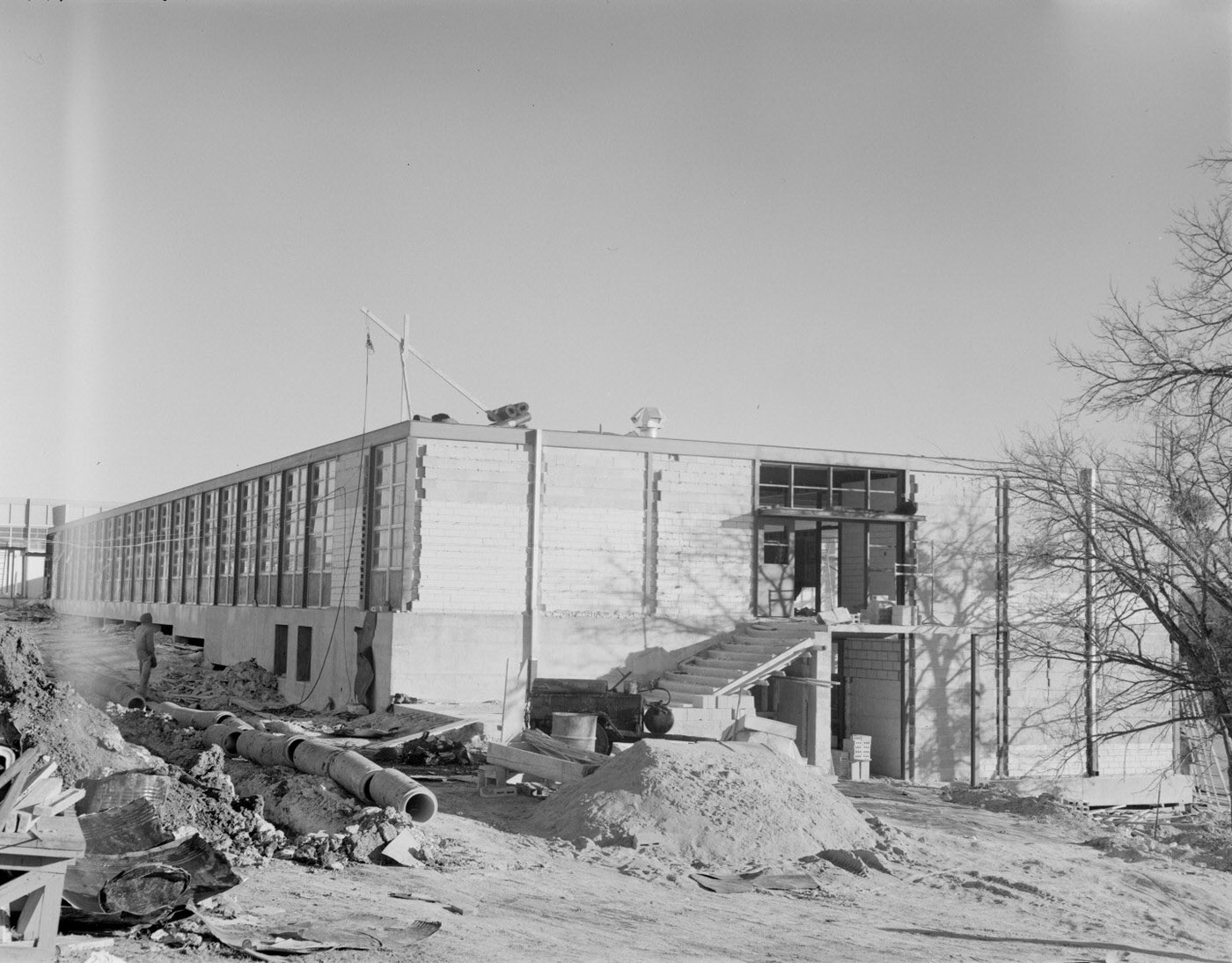
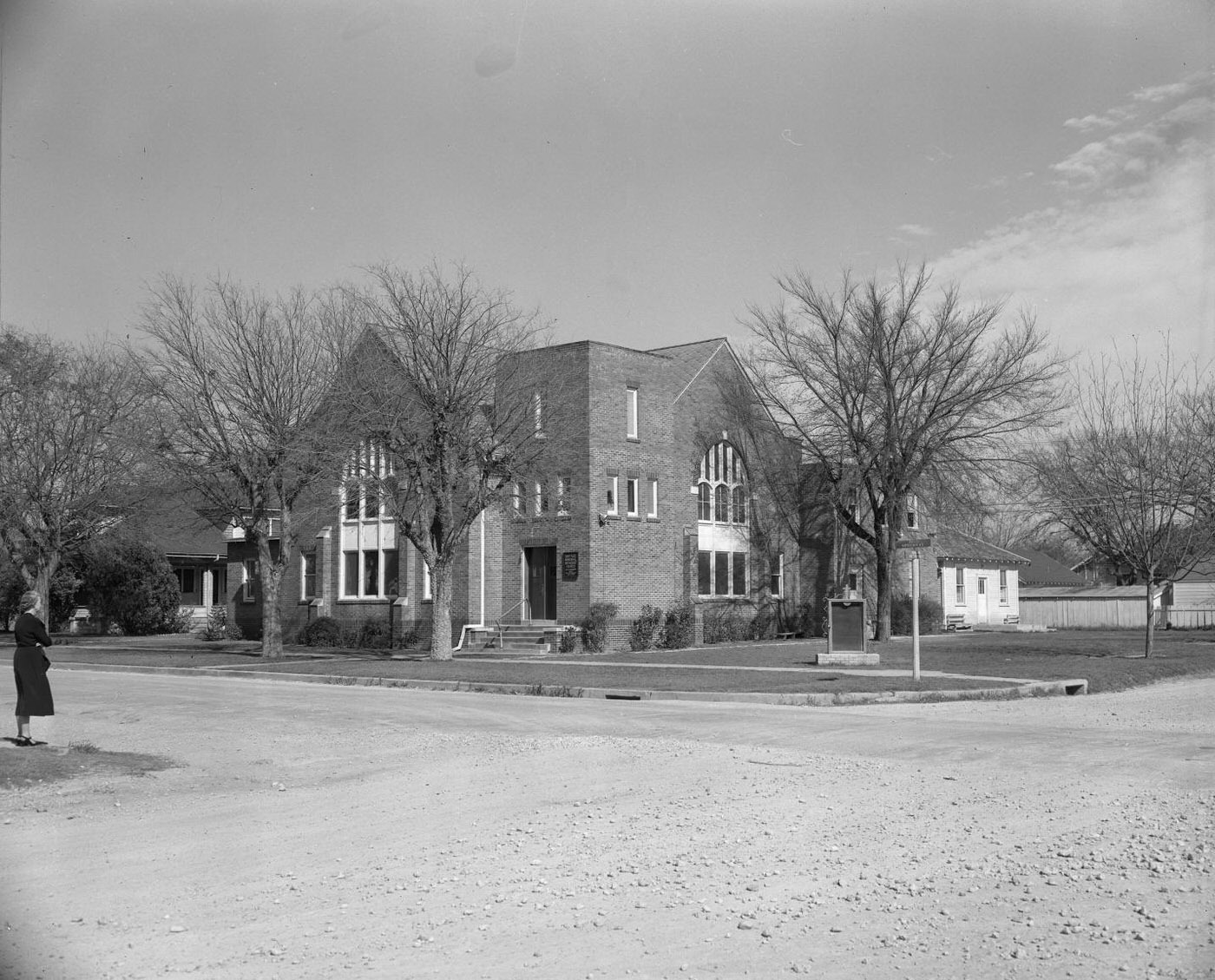
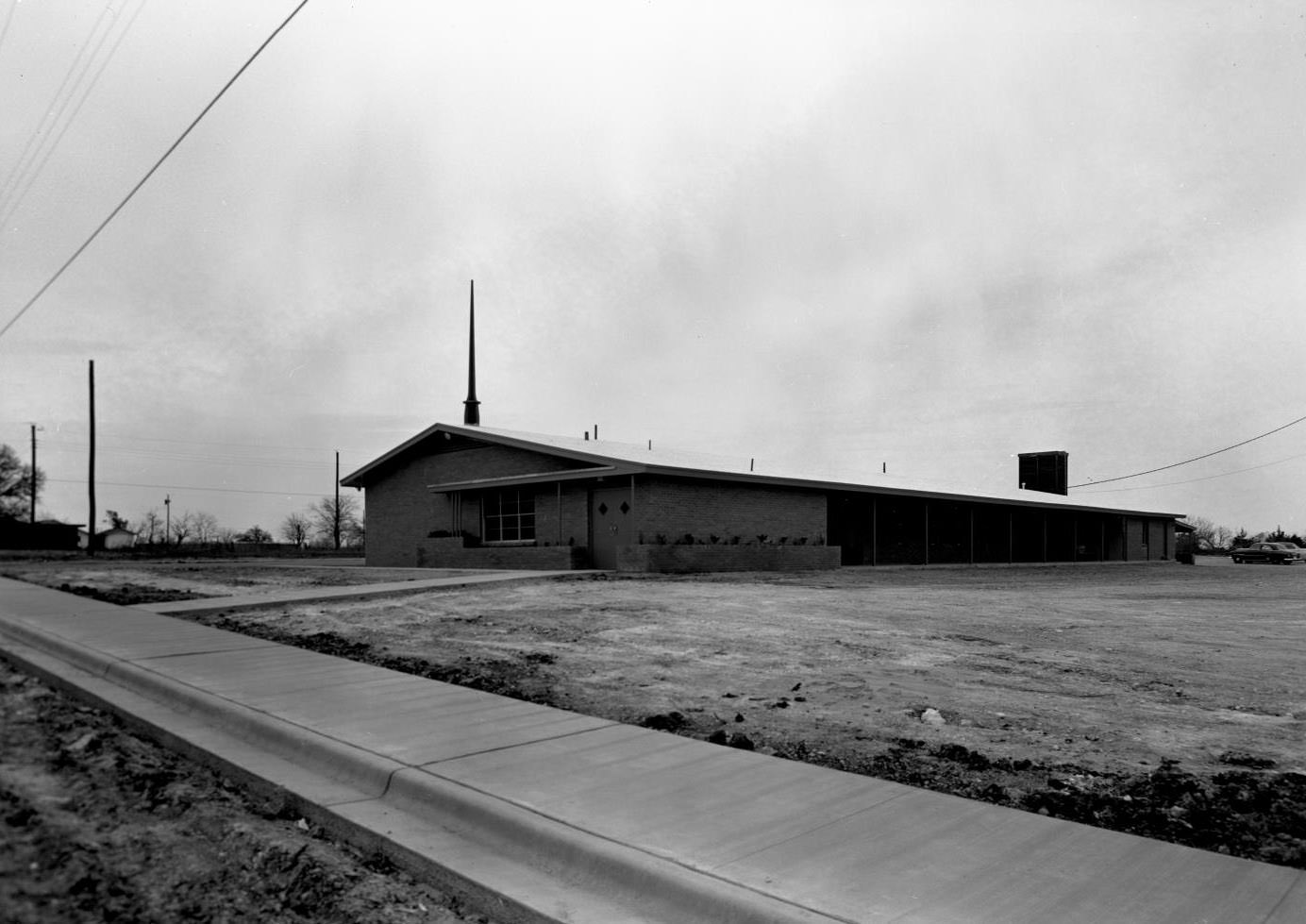
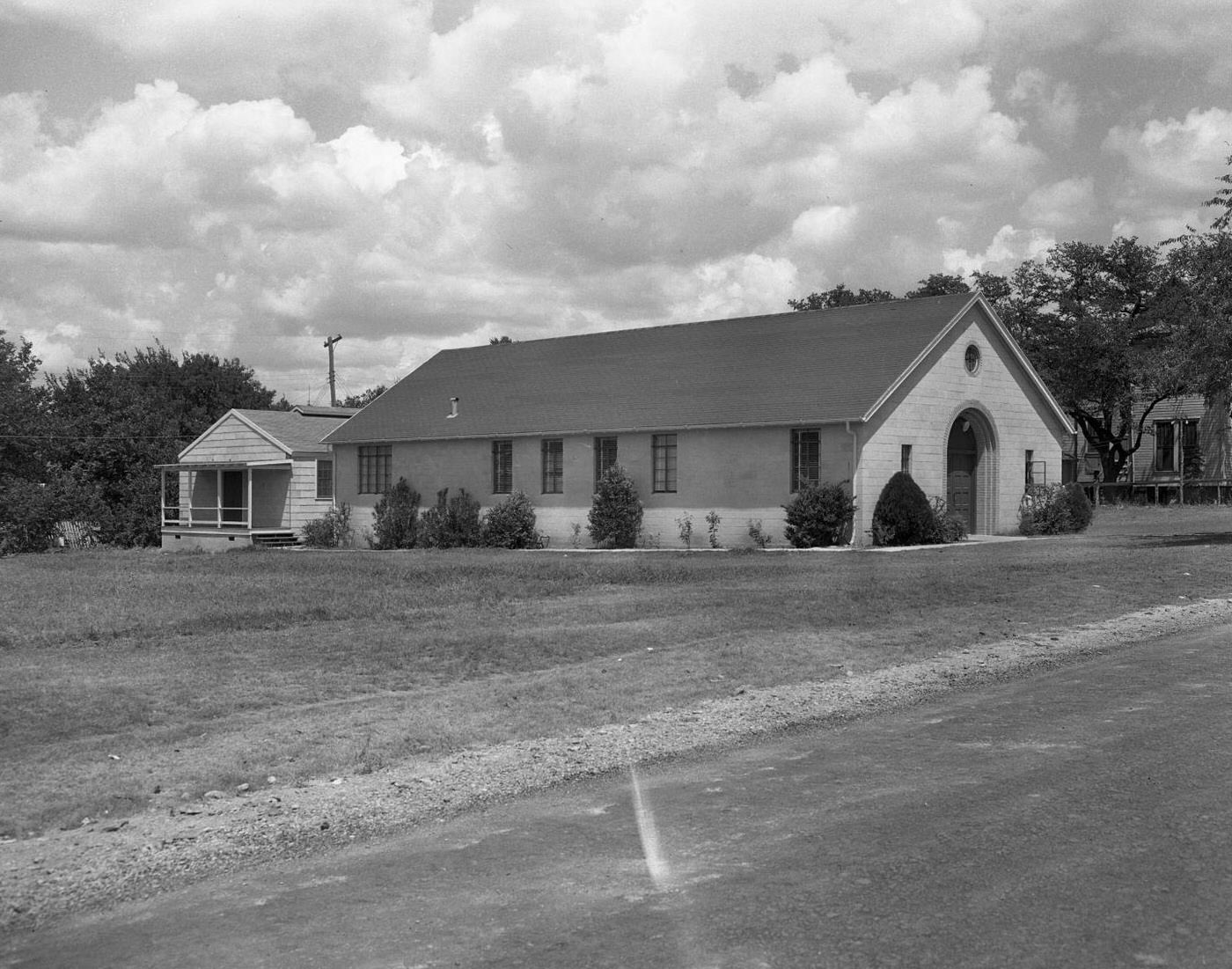
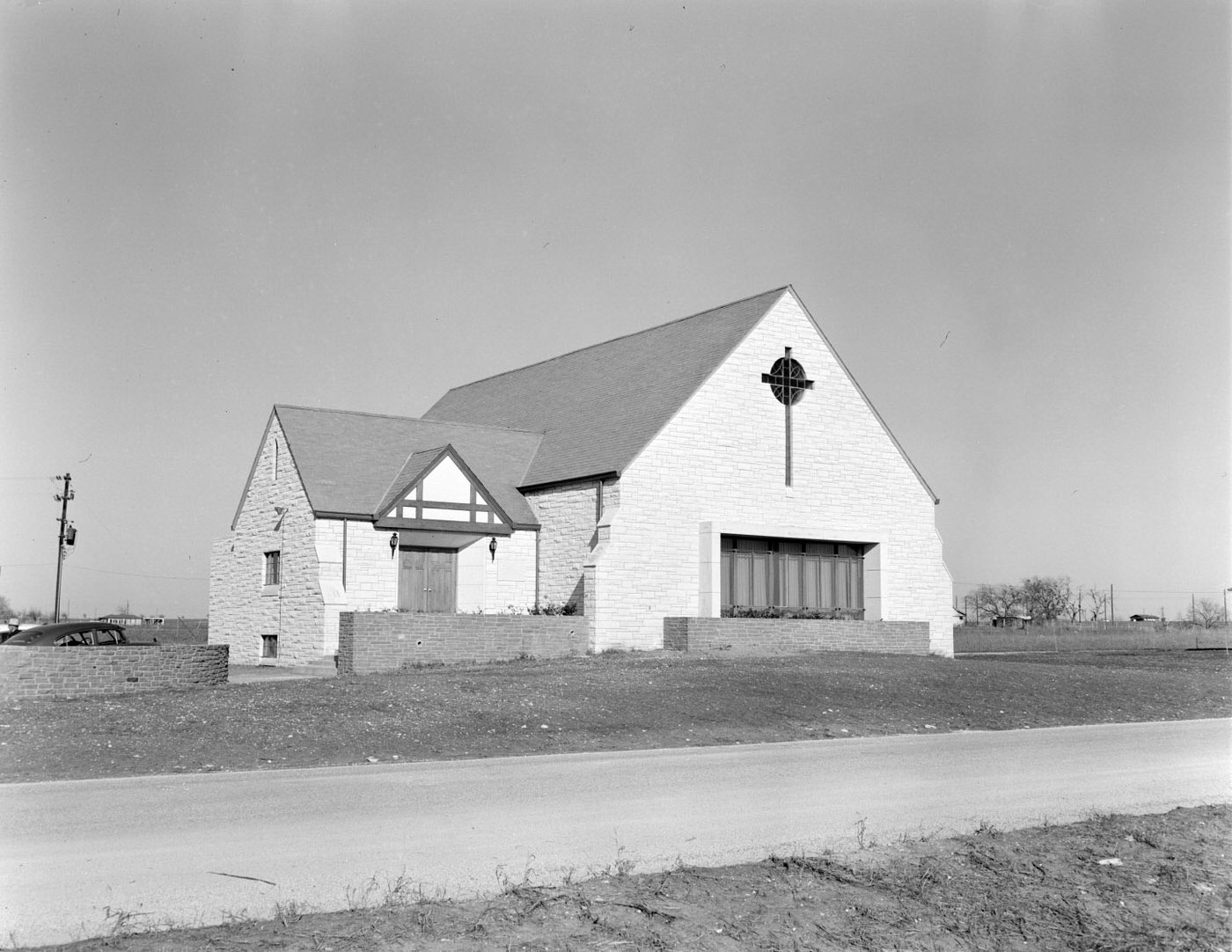
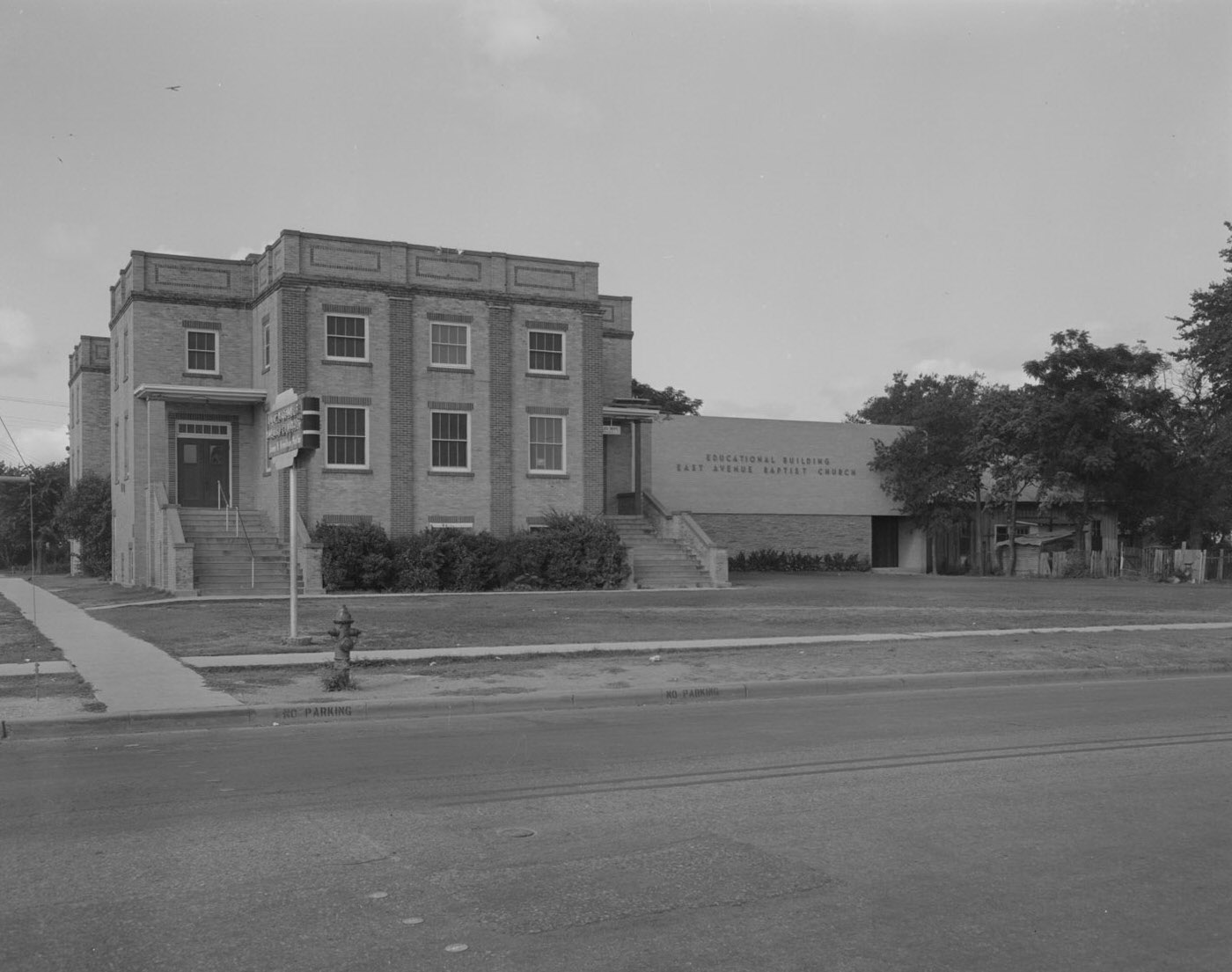
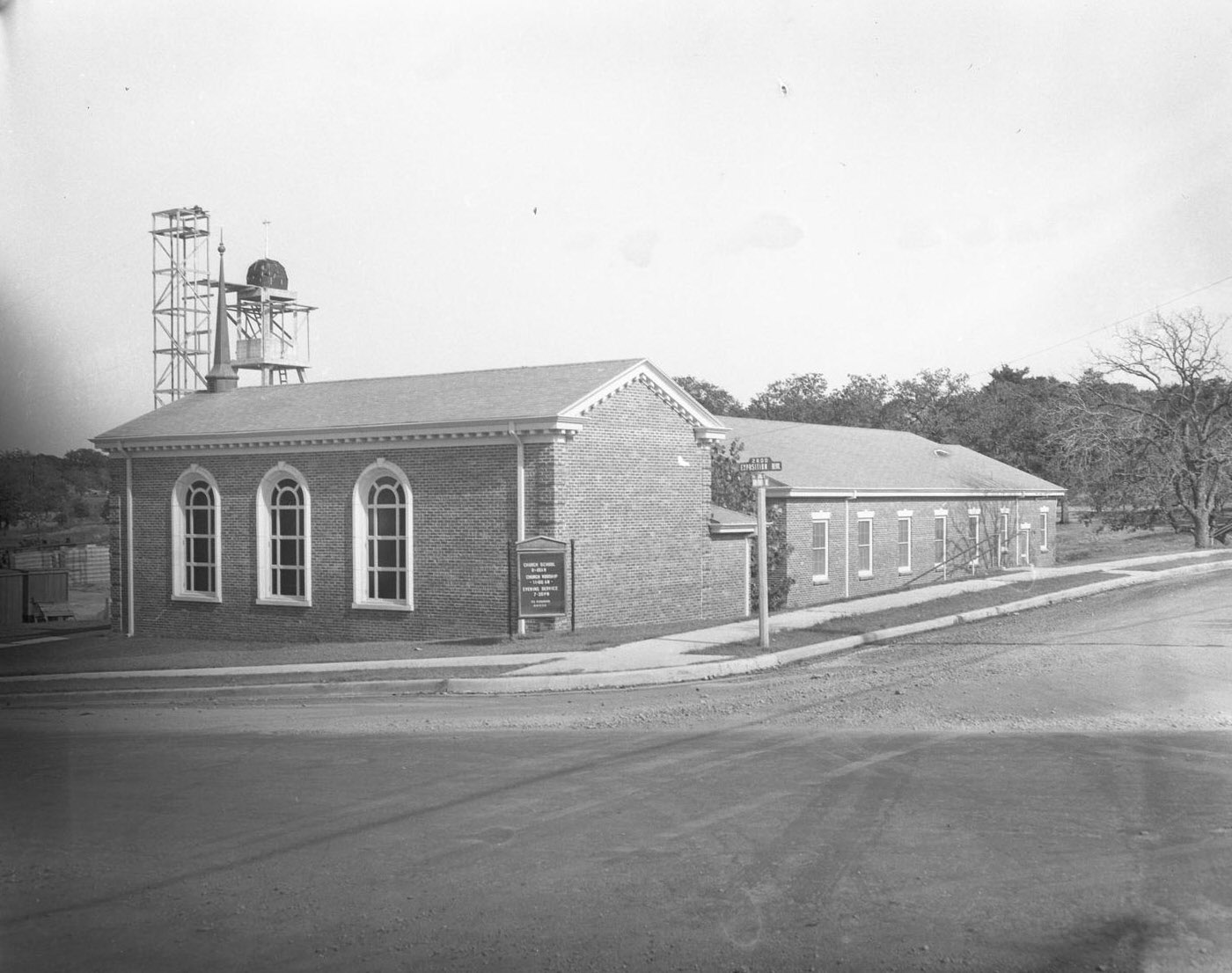
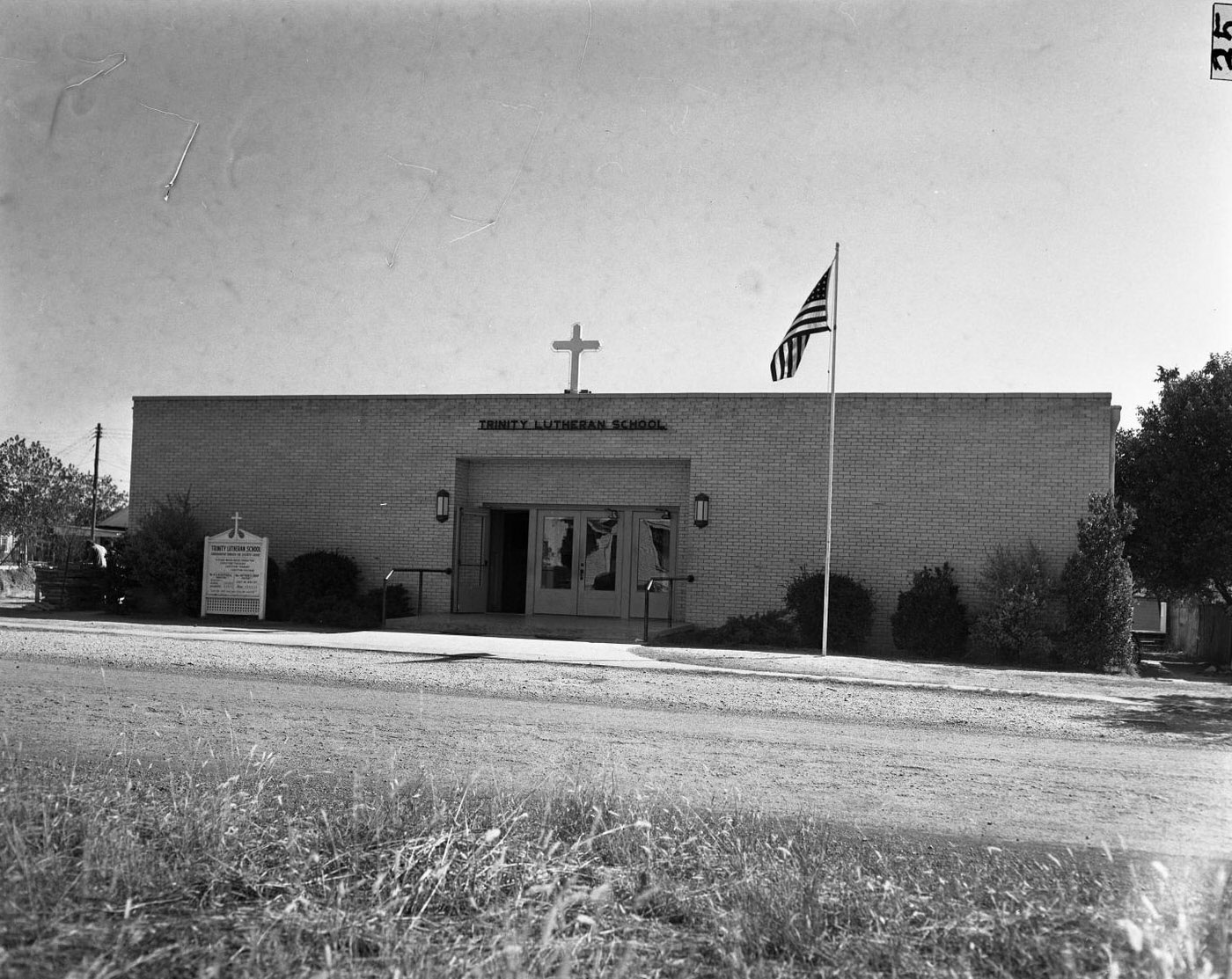
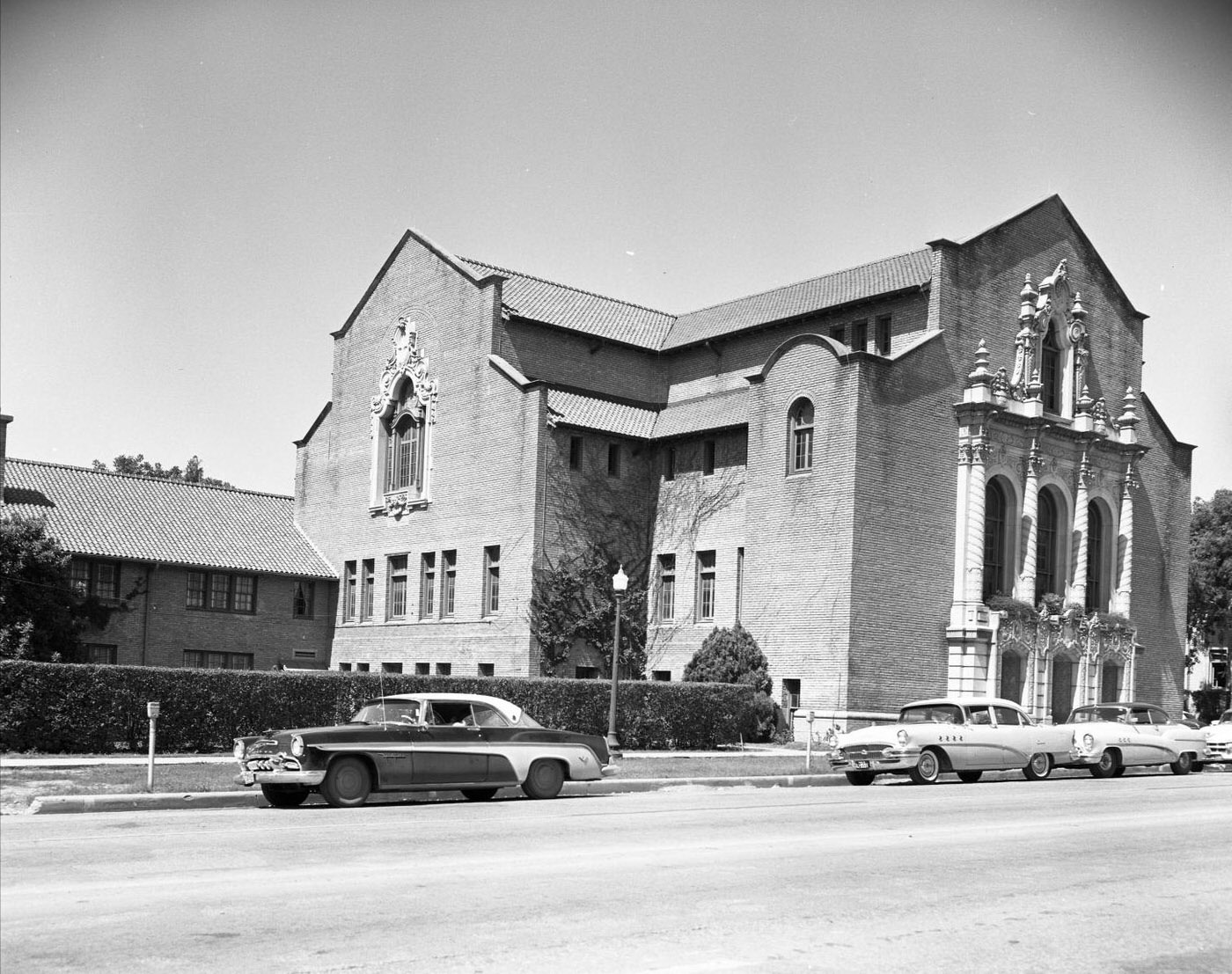
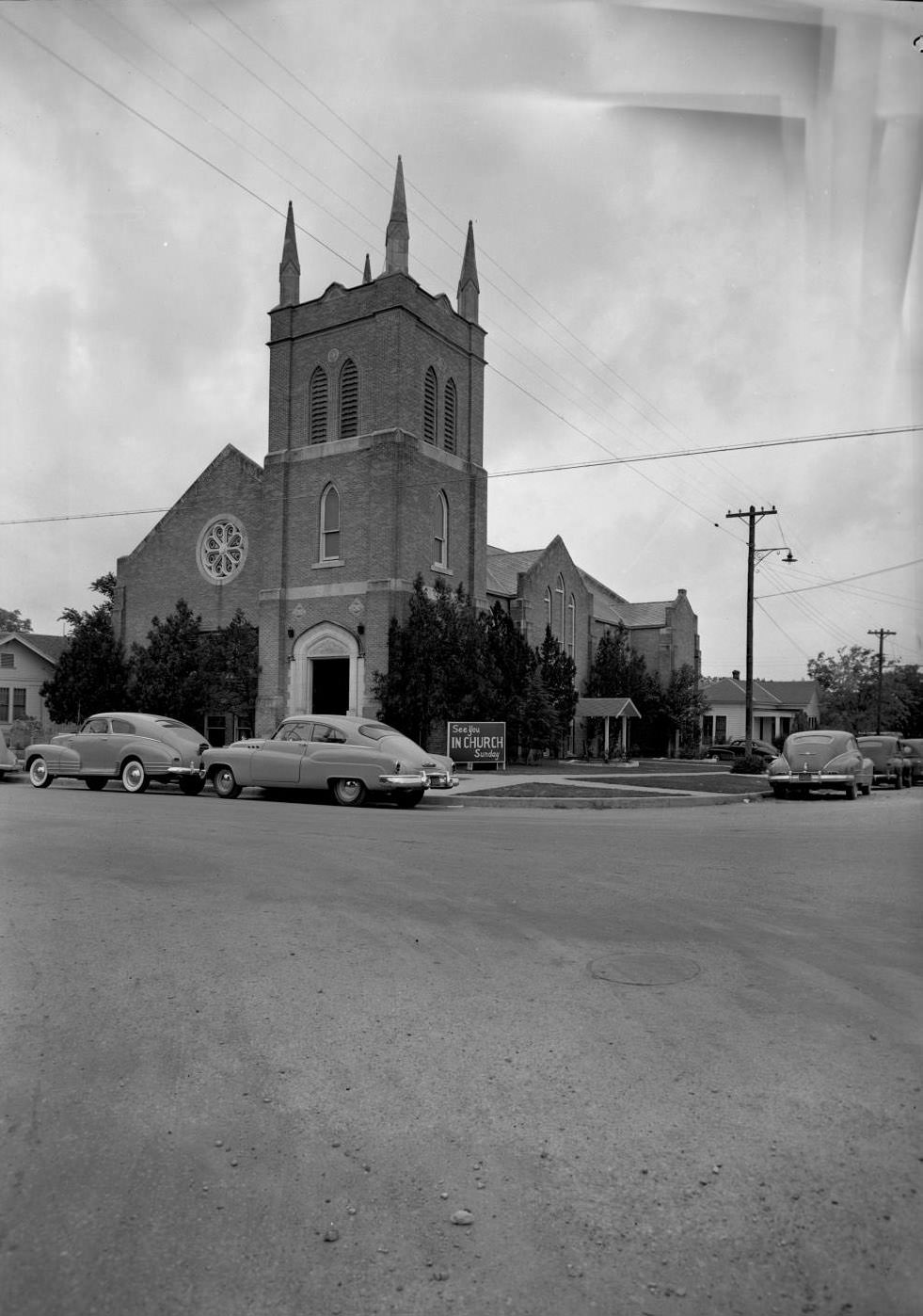
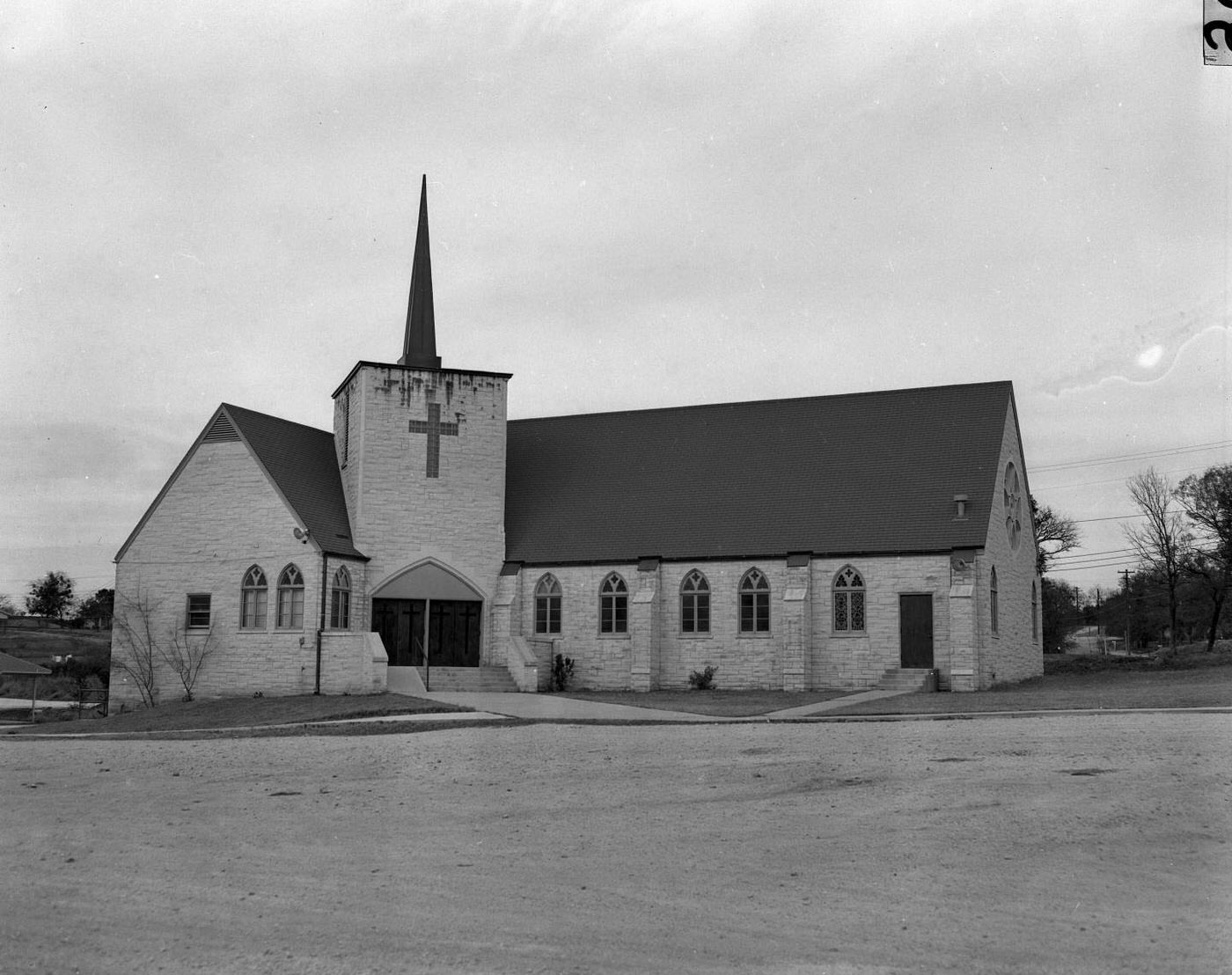
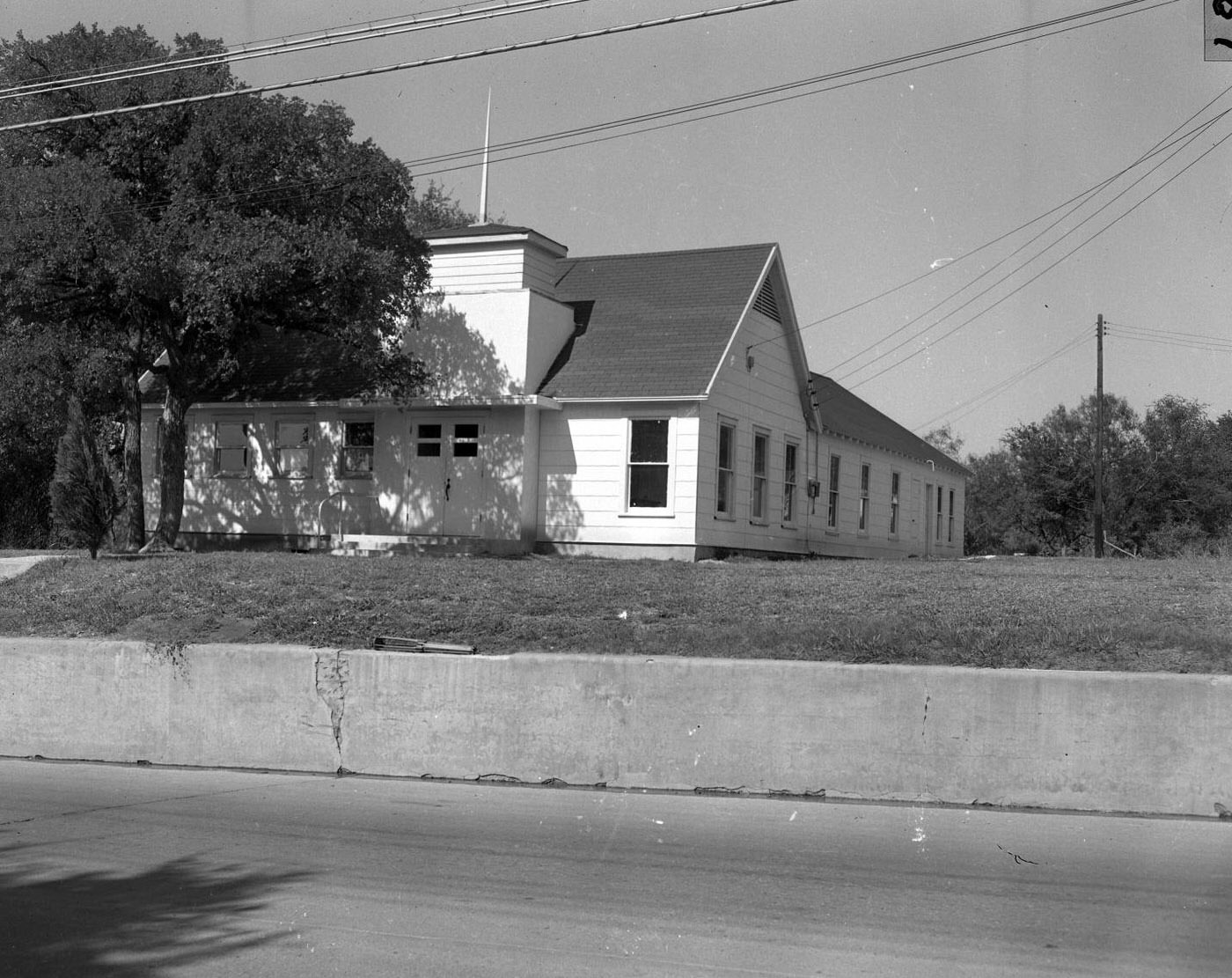
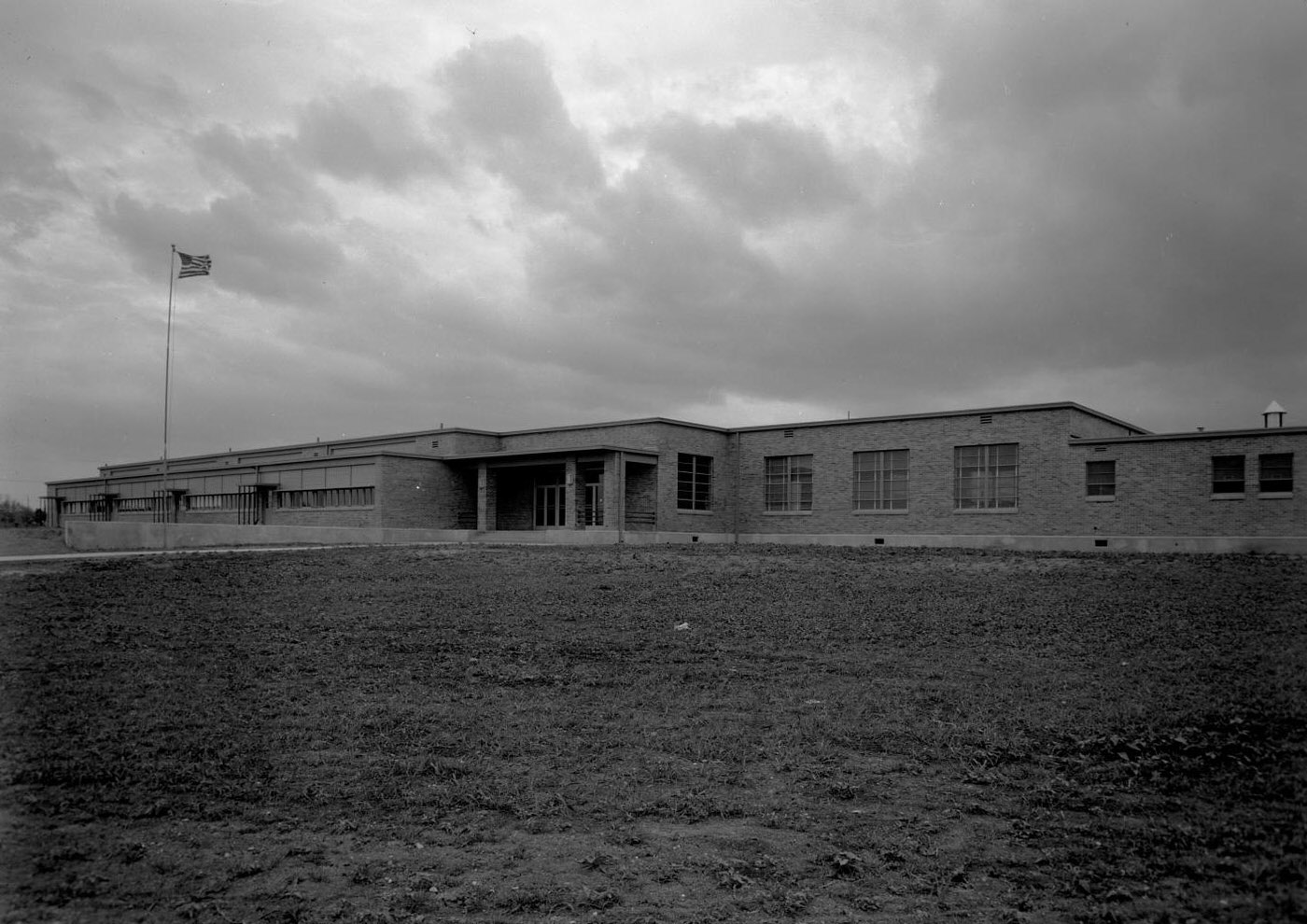
Churches were woven throughout every corner of Austin. Baptist, Methodist, Lutheran, Catholic, and Episcopal congregations all built or expanded during the 1950s, leaving a dense record of religious architecture across the decade. Schools kept pace with the boom as well. Casis Elementary, Maple Wood School, Pearce Jr. High, and Zilker Elementary were all photographed either under construction or newly completed, their grounds and buildings testament to the school-age population swelling with baby boom children.
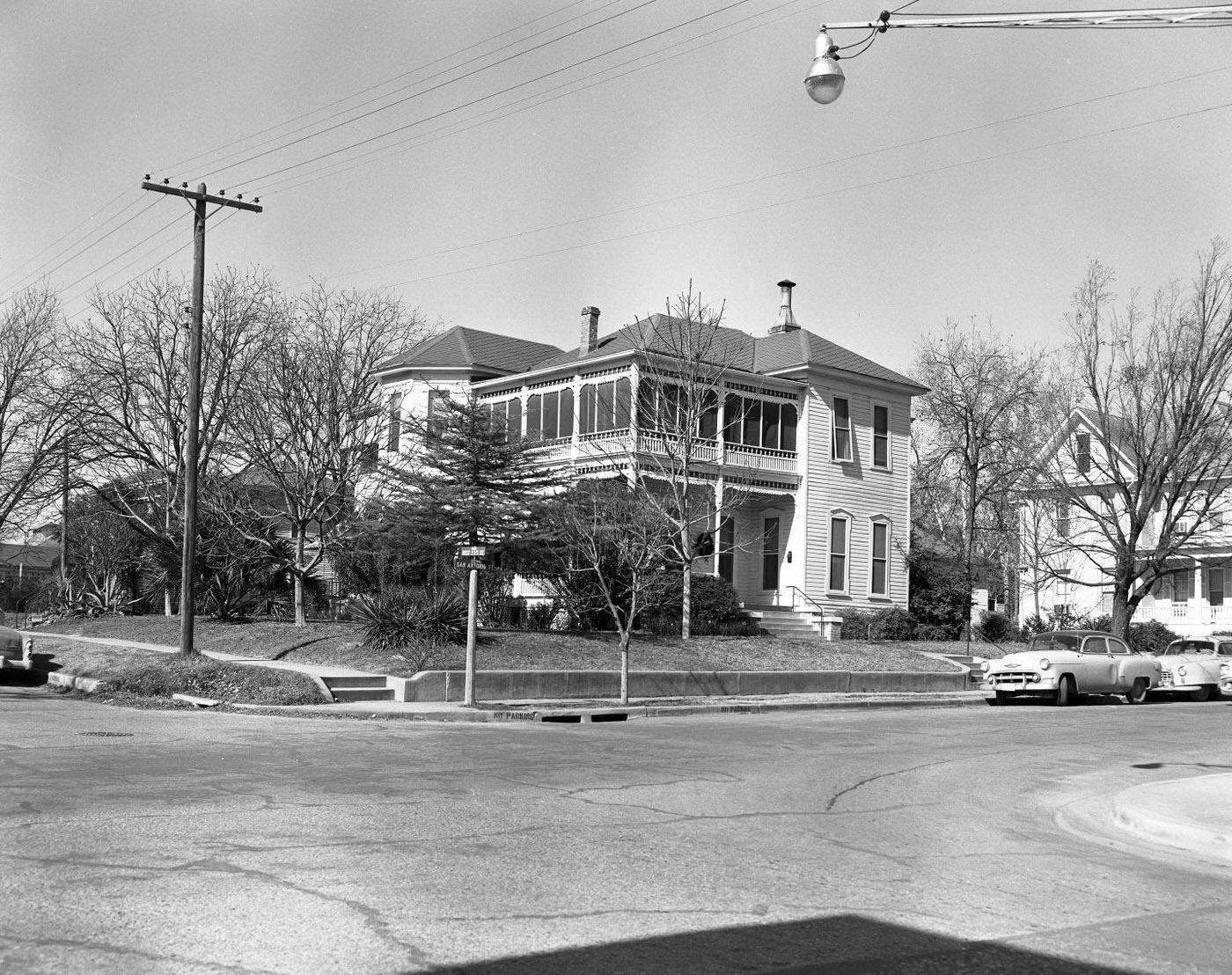
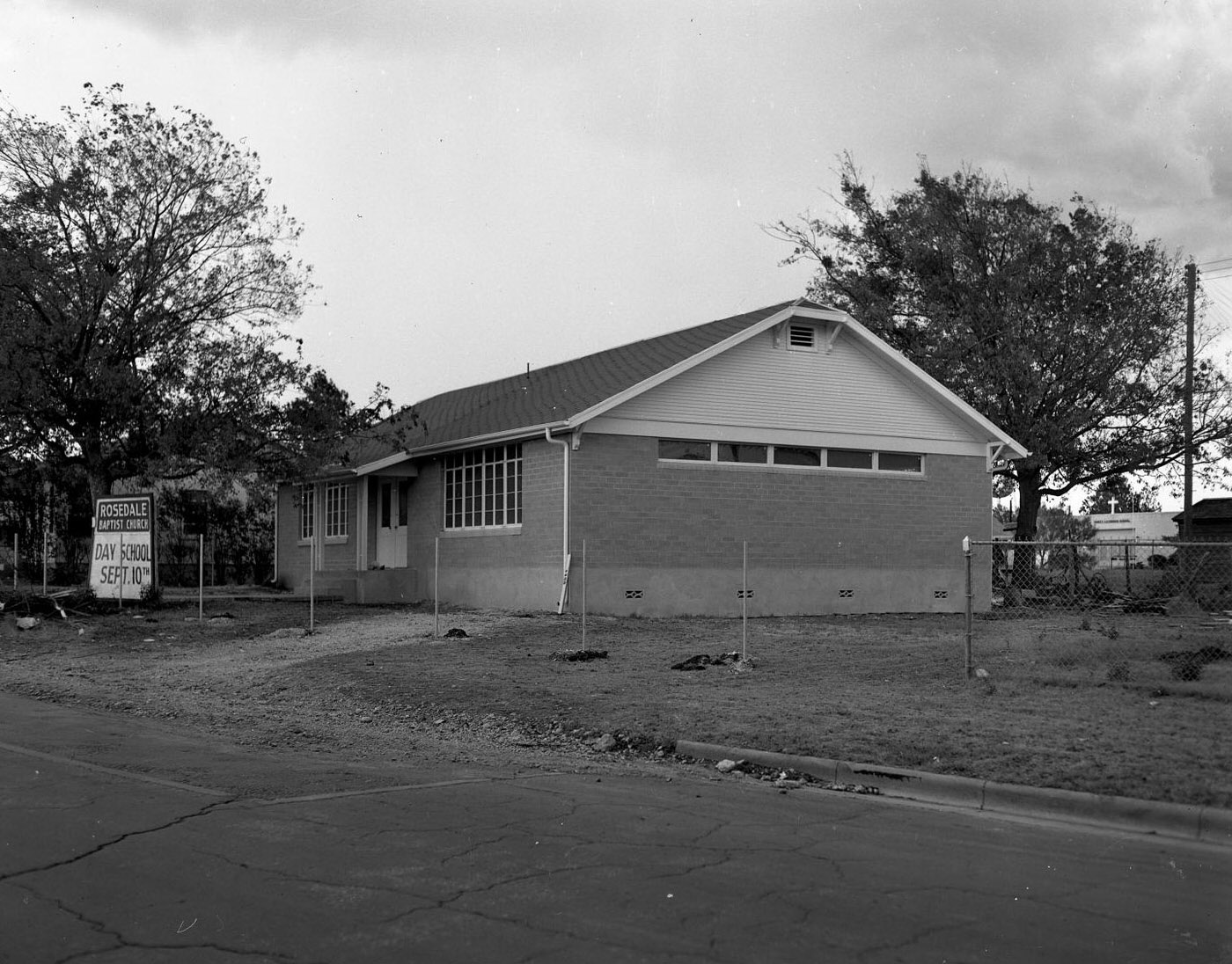
Exterior and Grounds of Concordia College, 1950Exterior of Congress Avenue Baptist Church Education Building, 1951Baptist Church Exterior in Austin, Texas, 1950Casis Elementary School with Parked Cars, 1951Brick Church with Tower and Adjacent Building, 1950Hillcrest Baptist Church Exterior with Sign, 1954Tarrytown Methodist Church Rear View, 1950Church of Christ Building Exterior, 1950Harris Memorial Baptist Church with Stained Glass, 1954First Baptist Church in Taylor, Texas with Tree, 1950First Methodist Youth Building in Austin, 1953Gethsemane Lutheran Church on Congress Avenue, 1950Church on Corner Lot, 1950Grace Lutheran Church Exterior, 1950Lutheran Student Center at 2200 San Antonio Street, 1957Lutheran Student Union House at W. 22nd St and San Antonio, 1957Maple Wood School Under Construction, 1950Pearce Jr. High School Under Construction, 1958Rosedale Baptist Church, Exterior at 1300 W. 44th St., 1951Shettles Memorial Methodist Church, Corner of 40th & Speedway With Woman Across Street, 1950South Austin Baptist Church, Exterior View, 1957South Austin Christian Church, Exterior View, 1950St. Louis Catholic Church with Stained Glass Cross, 1955Construction at St. Stephen’s Episcopal School, 1950East Avenue Baptist Church Street View, Austin, 1953Northeast Corner of Tarrytown United Methodist Church, 1950Exterior of Trinity Lutheran Church and School, 1951Exterior of University Baptist Church Main Chapel, 1958Exterior of Wesley Chapel Methodist Church, 1950Exterior of Westminster Presbyterian Church, 1951Shoal Crest Baptist Church, Exterior View, 1951Exterior of Zilker Elementary School and Grounds, 1950
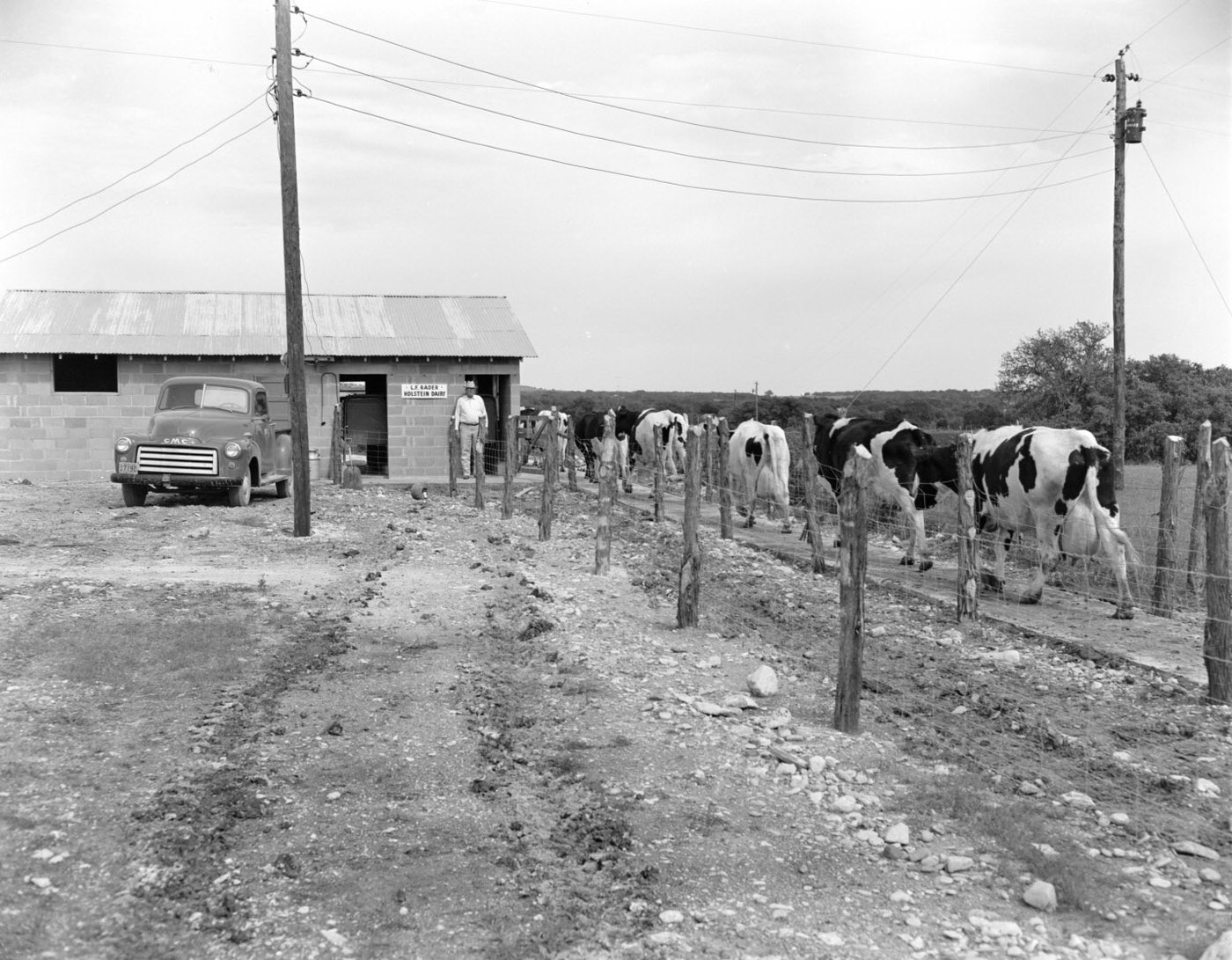
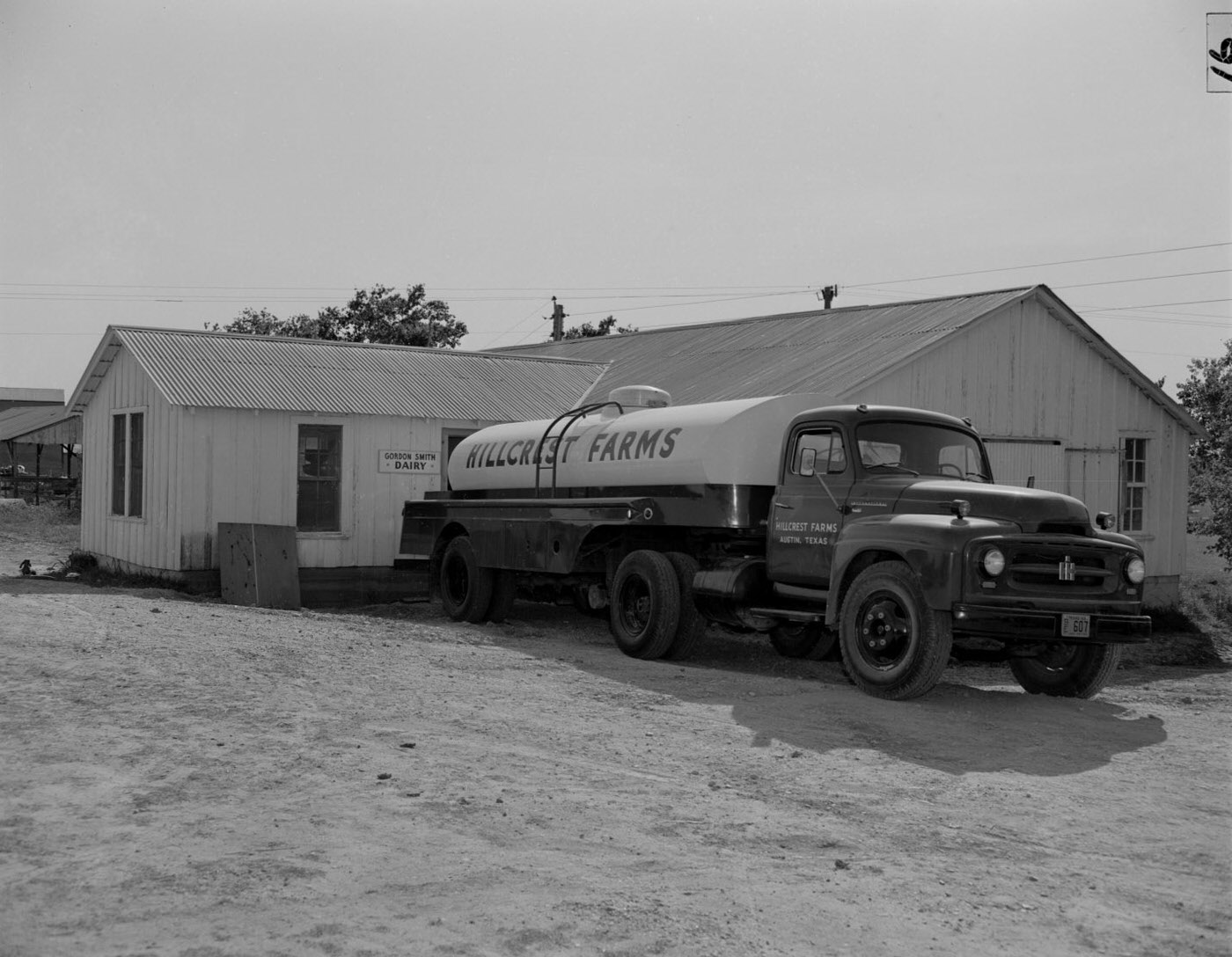
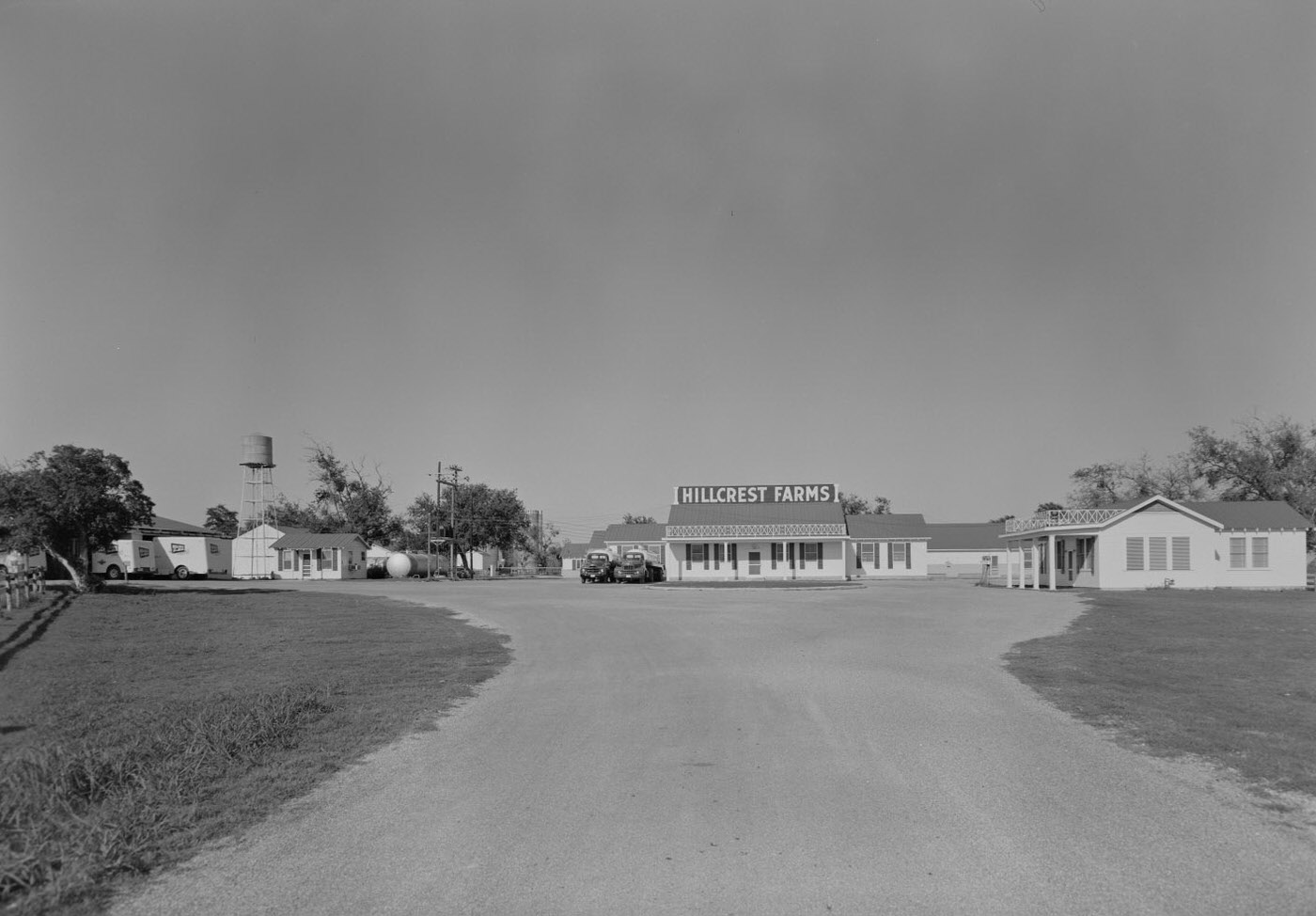
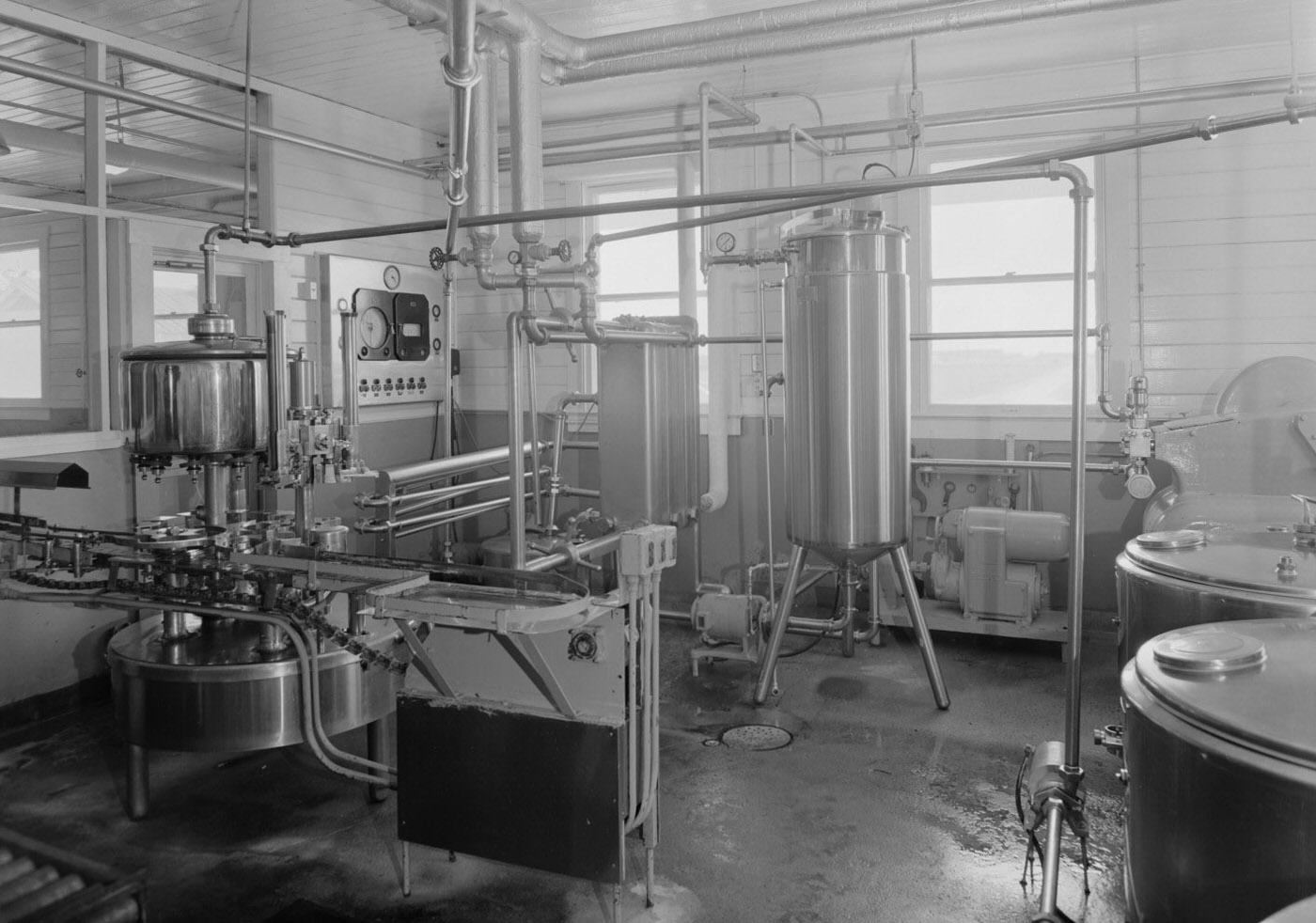
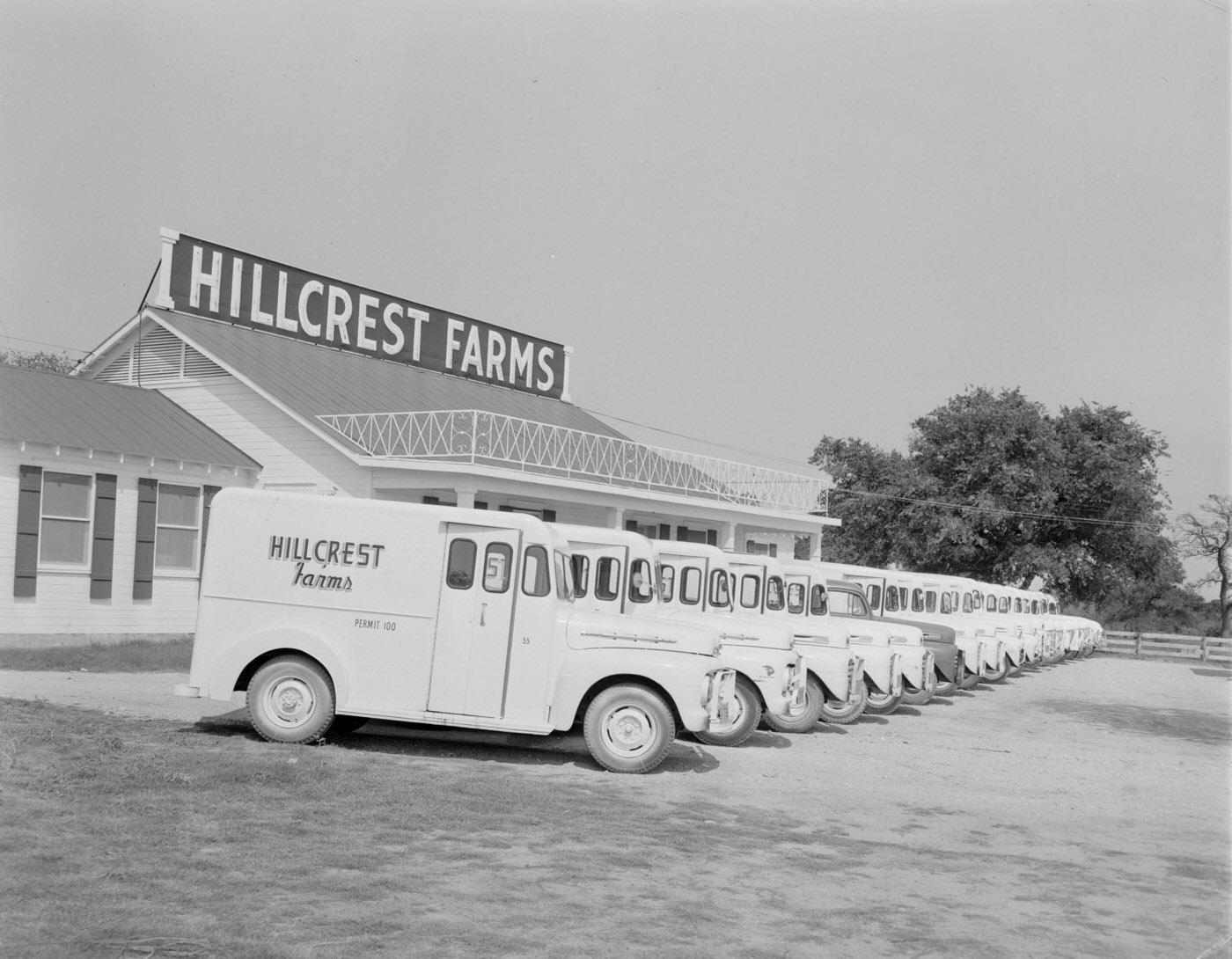
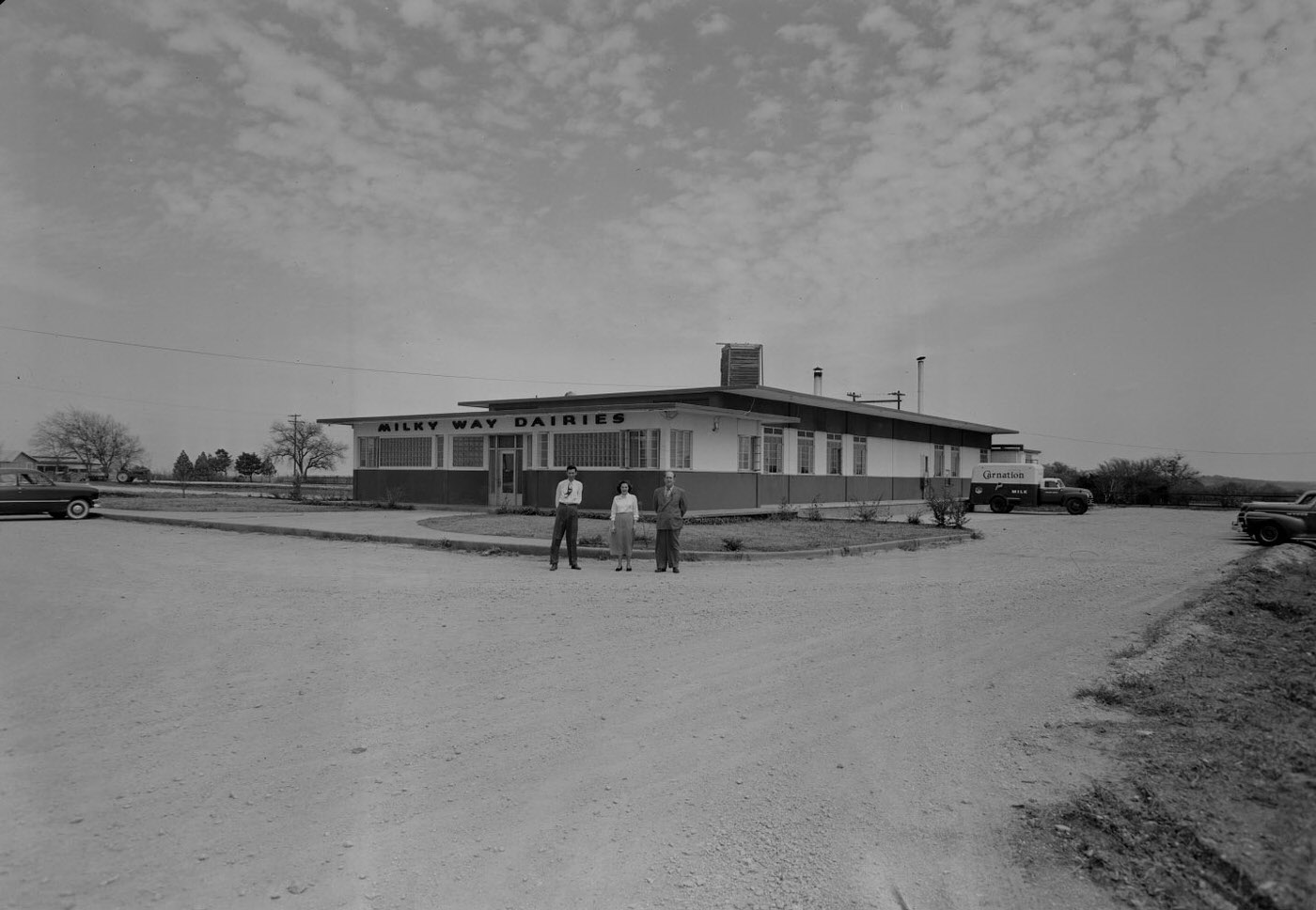
Agriculture and dairy farming still played a visible role in Austin’s economy. The L.F. Rader Holstein Dairy, Gordon Smith Dairy, Hillcrest Farms, and Milky Way Dairies all operated during the decade, their trucks and equipment photographed in detail. The Herman Heep Ranch appeared in multiple 1957 photographs, including one showing hail damage to a residence on the property. These operations existed alongside the suburb-building and highway construction that would eventually push farmland further from the city.
Cows Approaching L. F. Rader Holstein Dairy, 1953Gordon Smith Dairy with Milk Truck, 1953Hail-Damaged Residence on Herman Heep Ranch, 1957.Building on Herman Heep Ranch, 1957.Exterior View of Hillcrest Farms with Trucks, 1957.Interior of Hillcrest Farms with Dairy Equipment, 1957.Hillcrest Farms Dairy Trucks in Austin, Texas, 1951.Milky Way Dairies Executives Outside Building, 1951
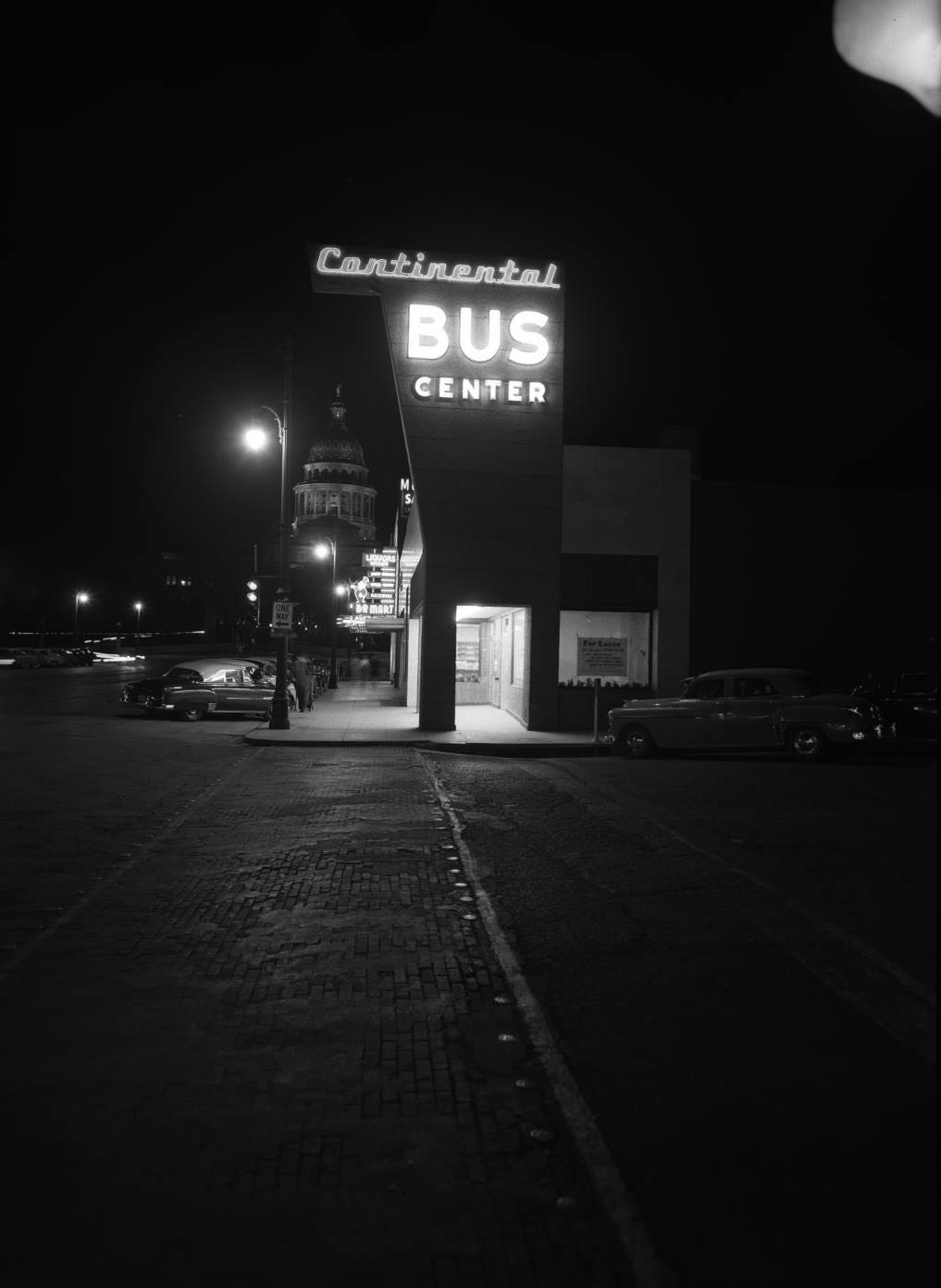
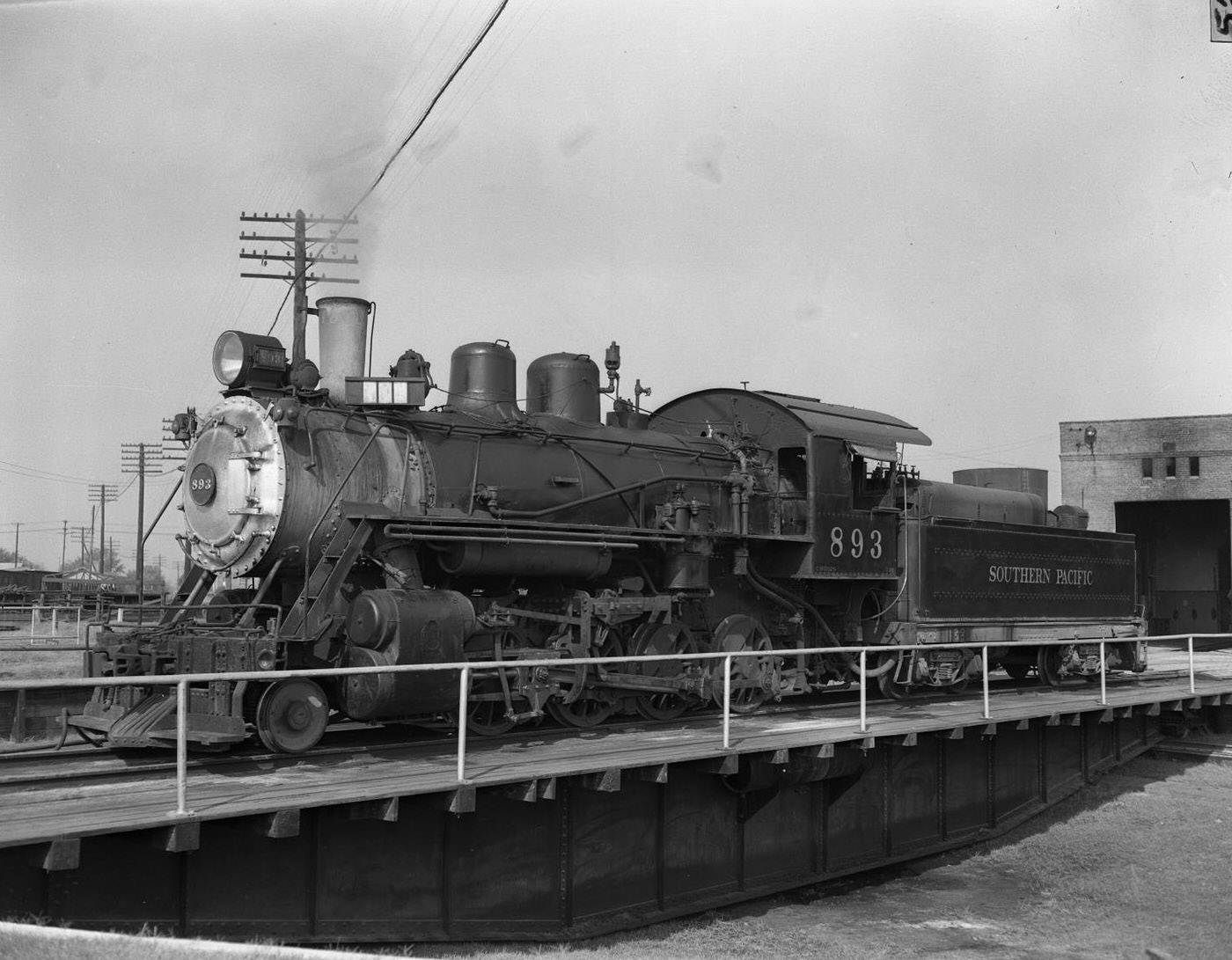
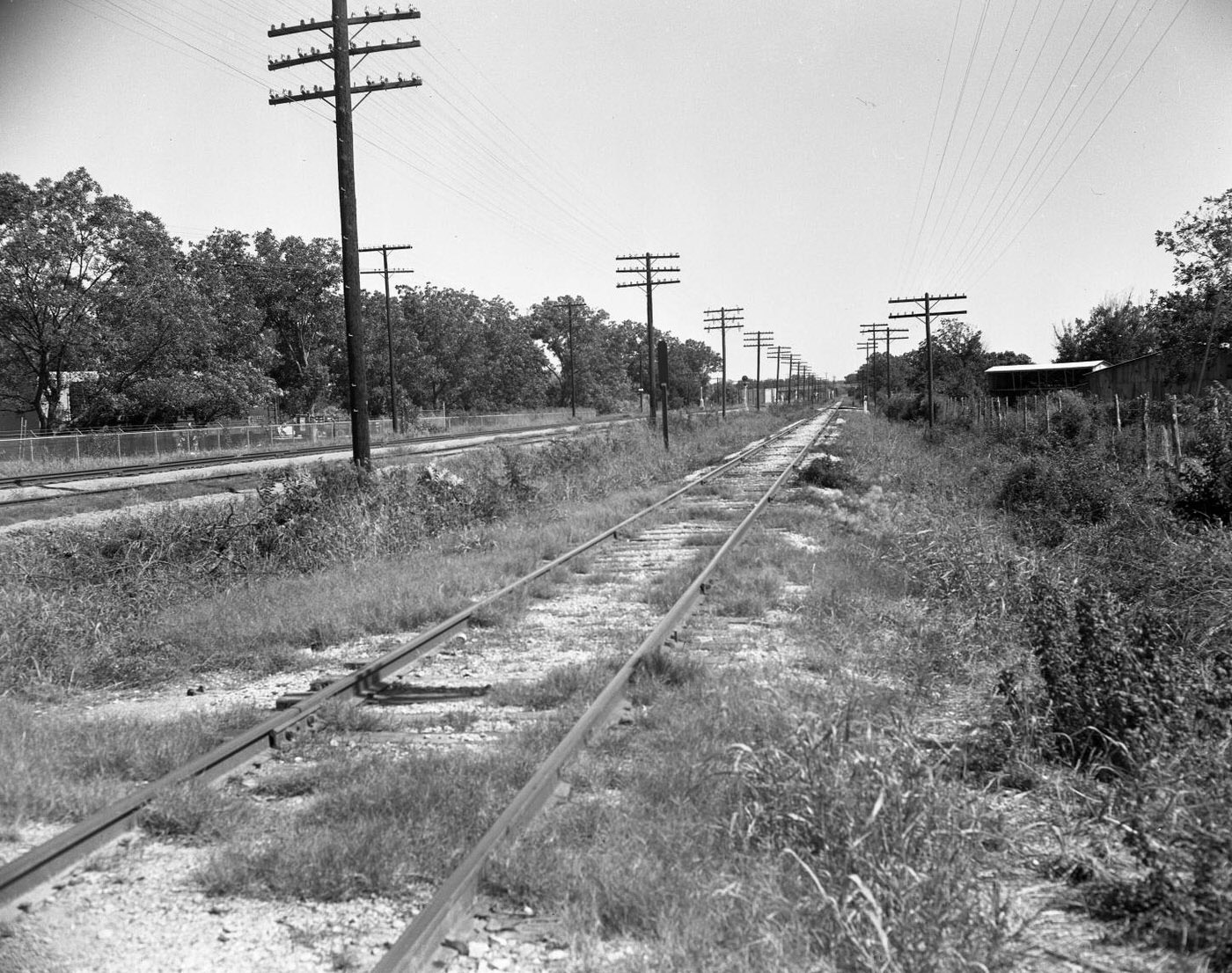
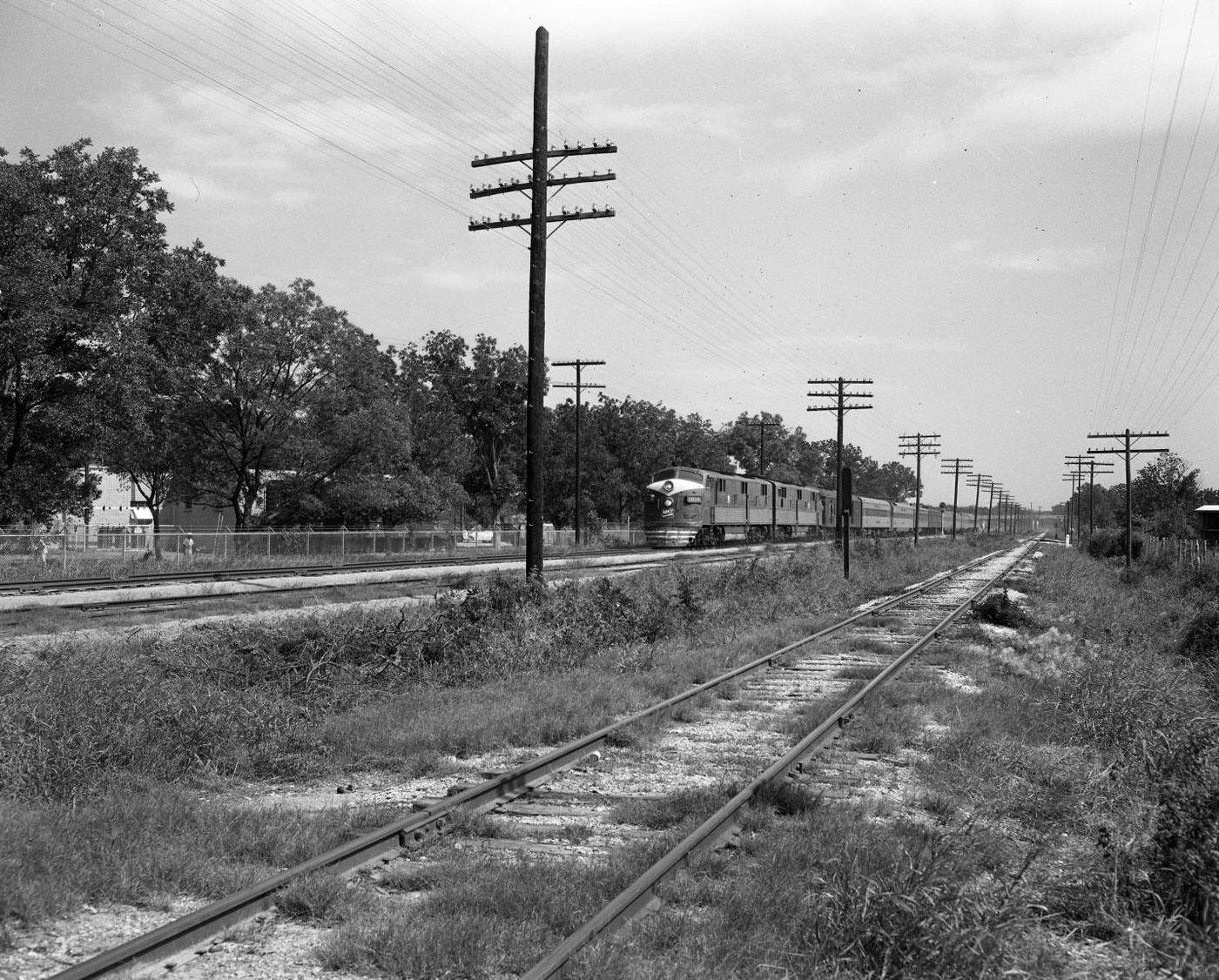
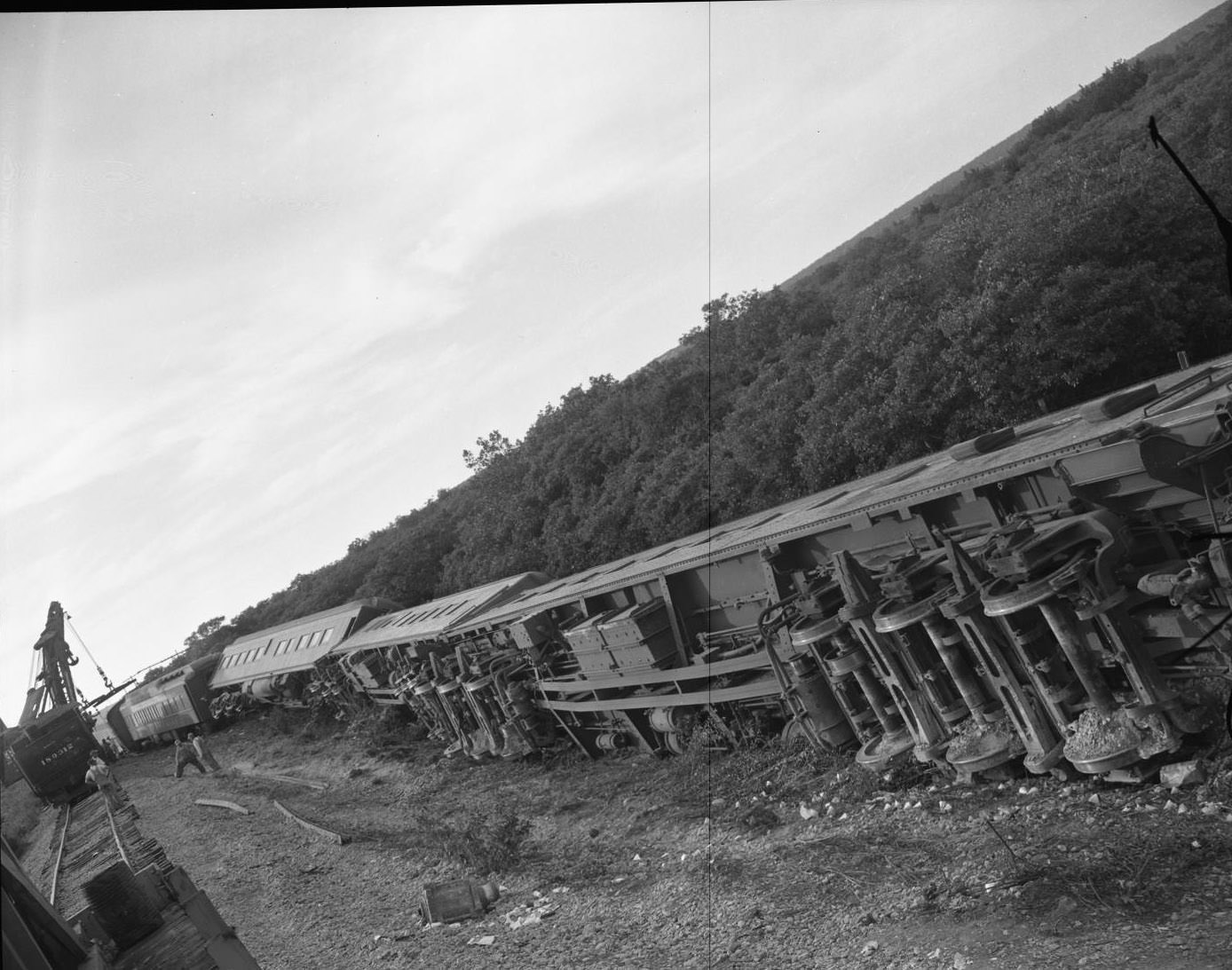
Transportation infrastructure saw heavy investment during the 1950s. New highways were under construction, and the Continental Bus Center at 1001 Congress Avenue served as a major transit hub, photographed at night in 1952 with its lights illuminating the street. Southern Pacific’s Engine 893 was captured in a 1952 photograph, while train tracks stretching through the Texas countryside appeared in images from 1954. A dramatic train wreck at Lampasas in 1950 showed a derailed engine with a crane working in the background.
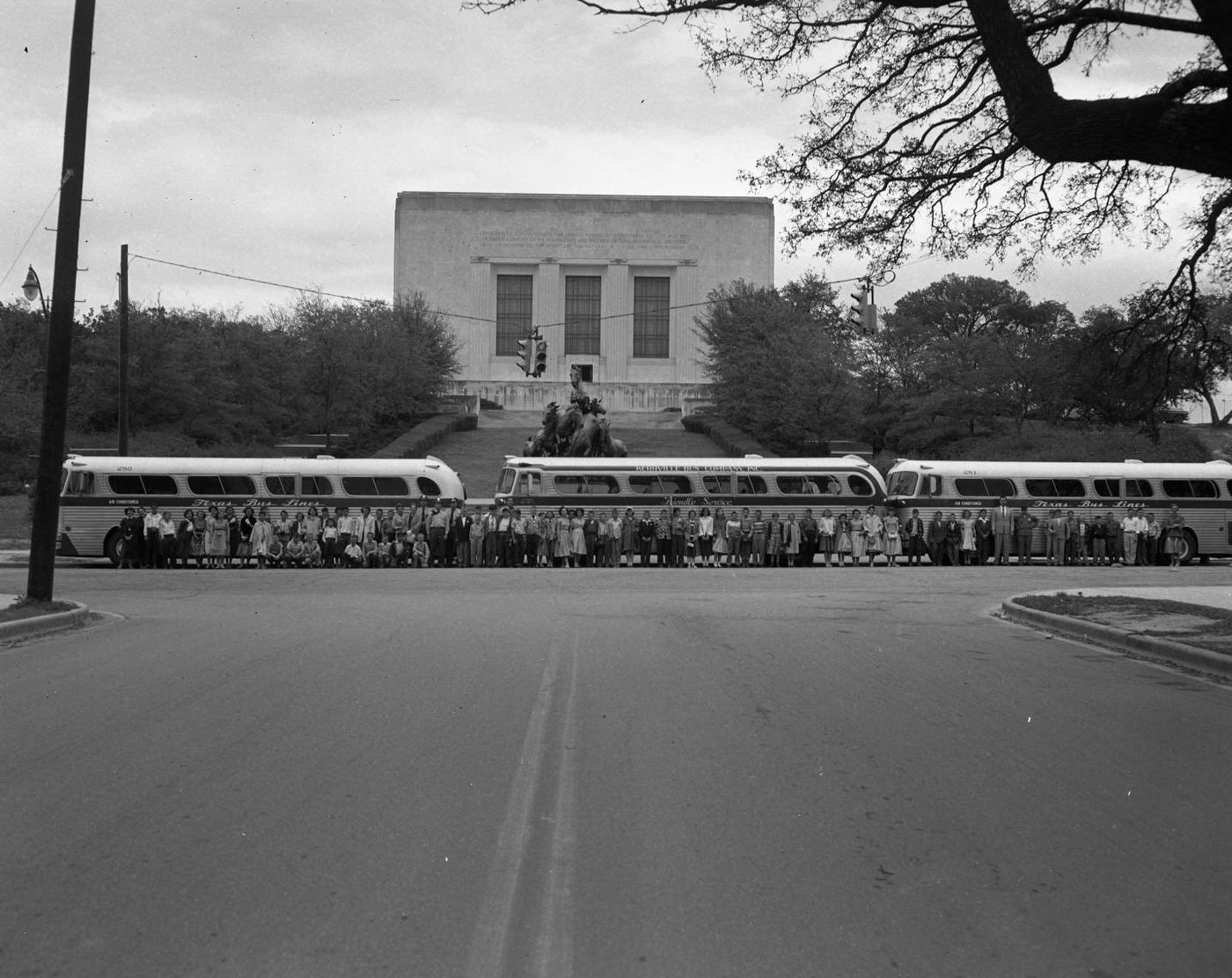
Night View of Continental Bus Center, 1001 Congress Avenue, 1952Southern Pacific Engine 893, Black and White Negative Photograph, 1952Texas Bus Lines at University of Texas Campus, 1956Train Tracks in Countryside, 1954Train Approaching on Tracks in Countryside, 1954Train Wreck at Lampasas with Crane in Background, 1950
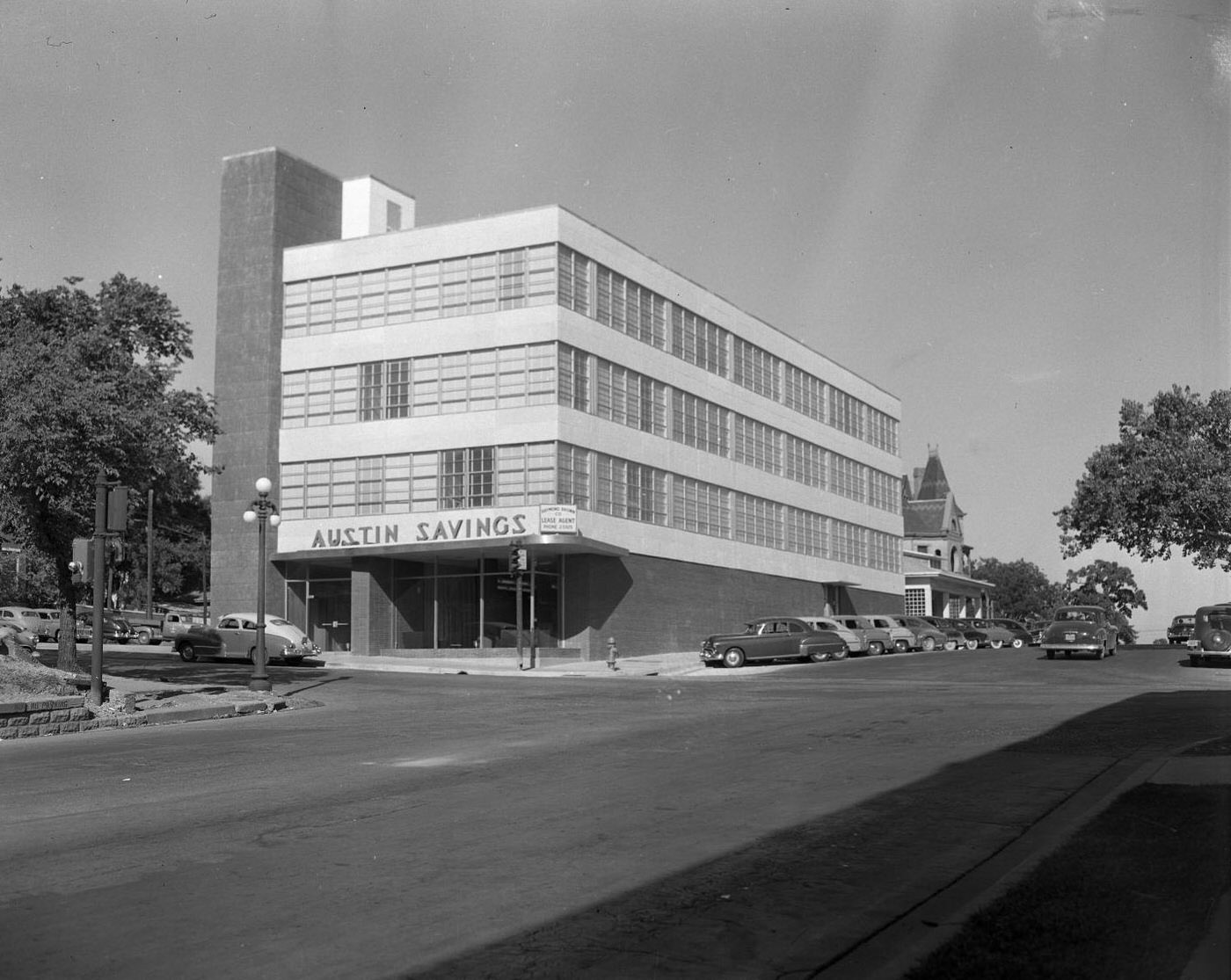
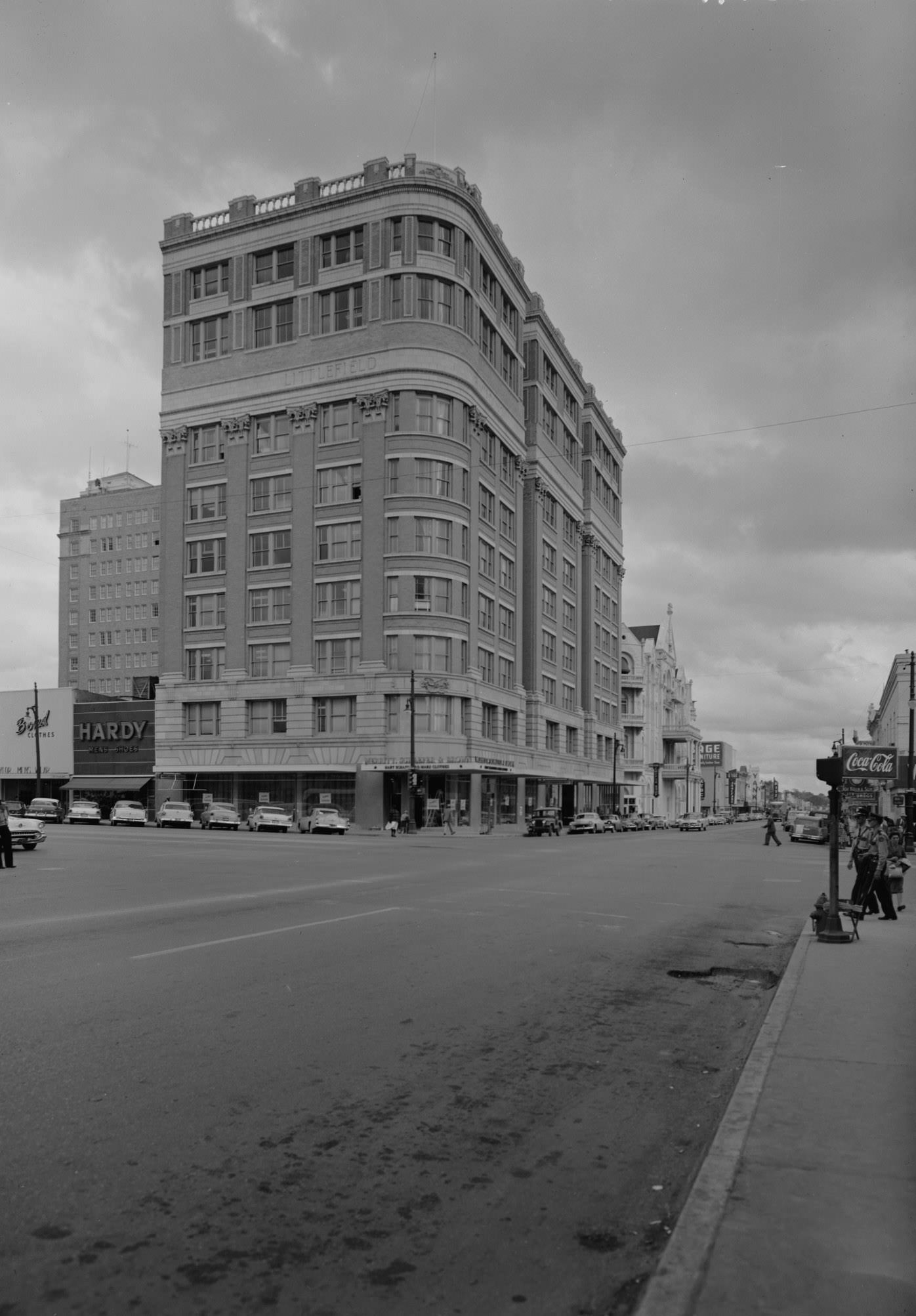
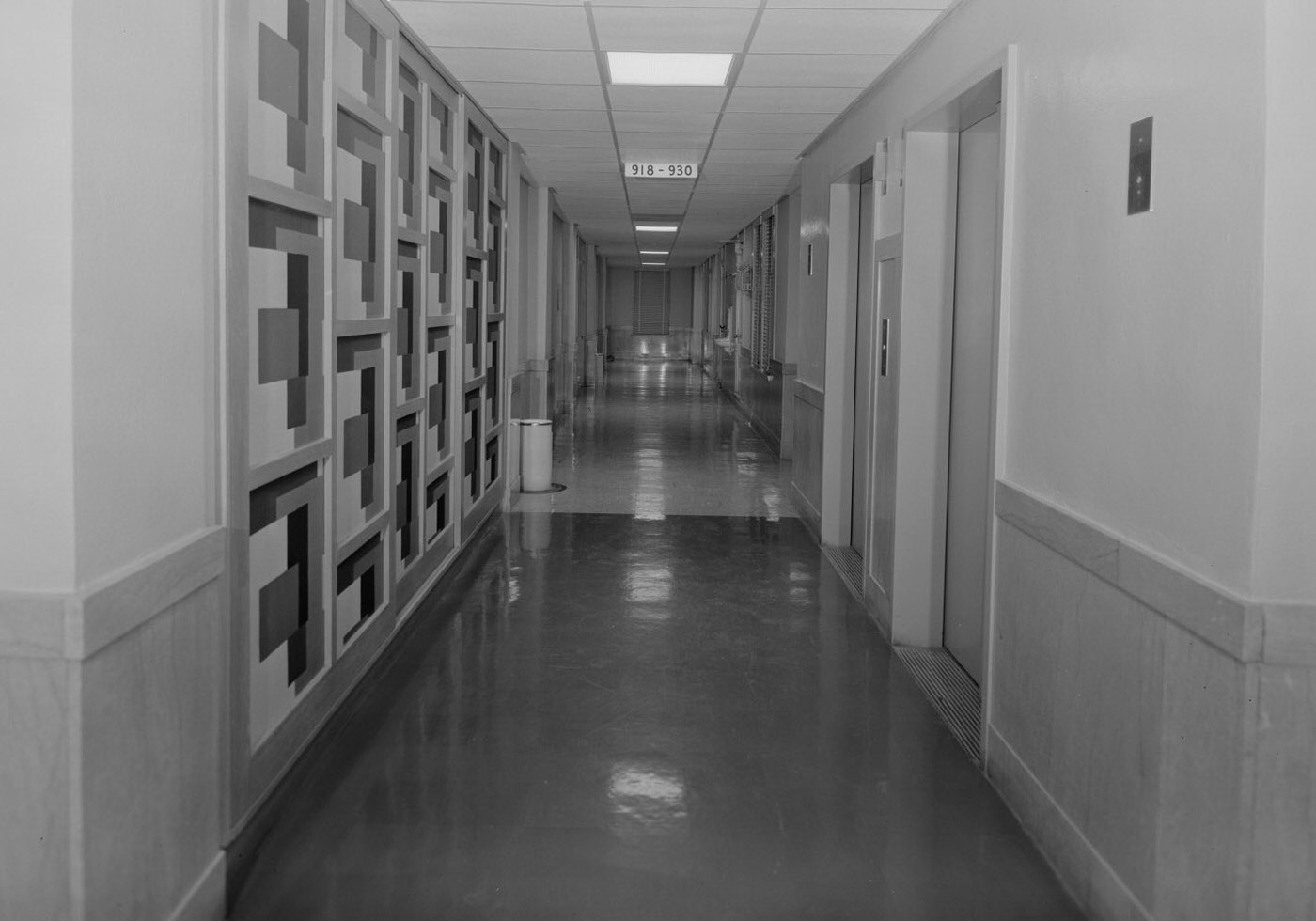
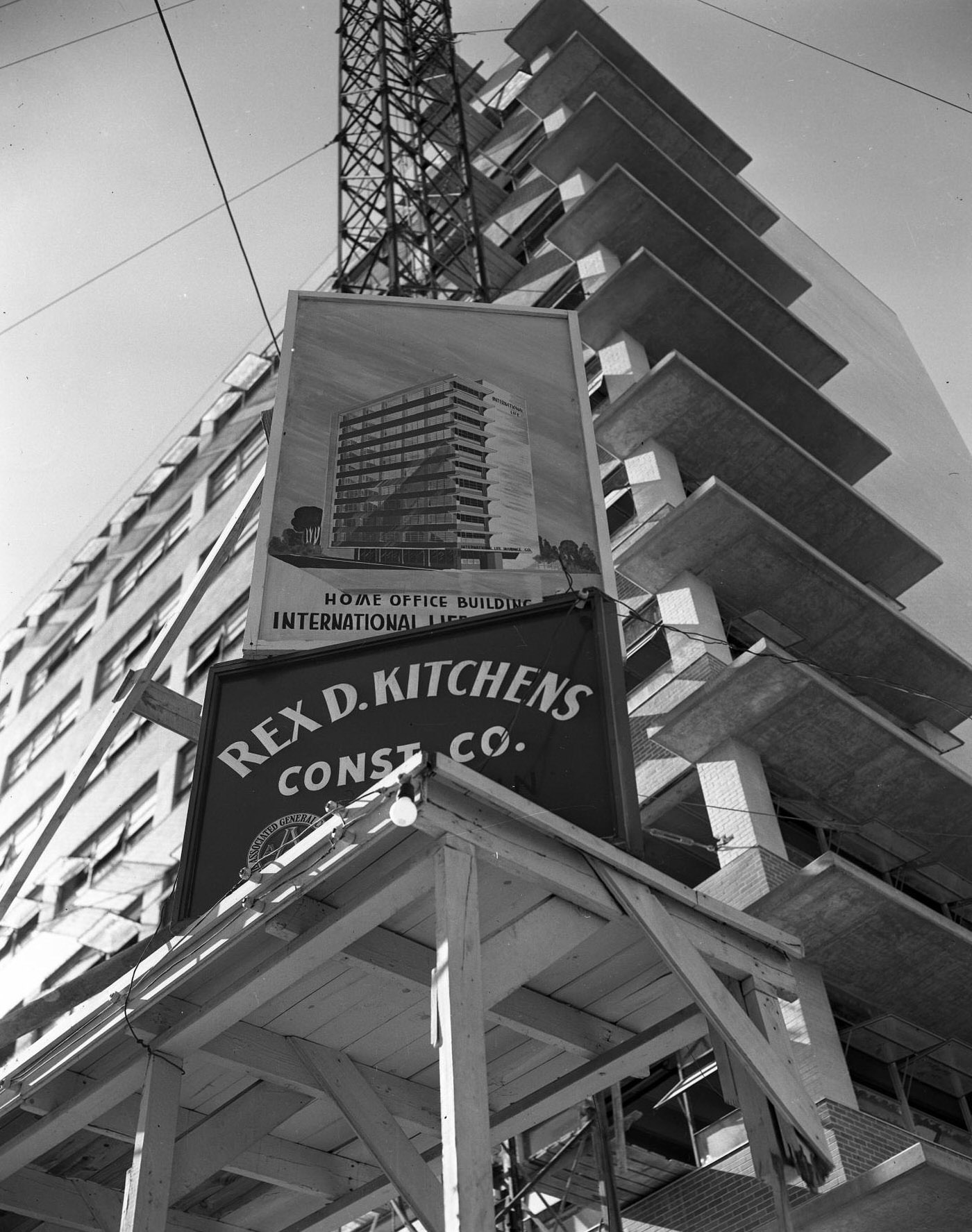
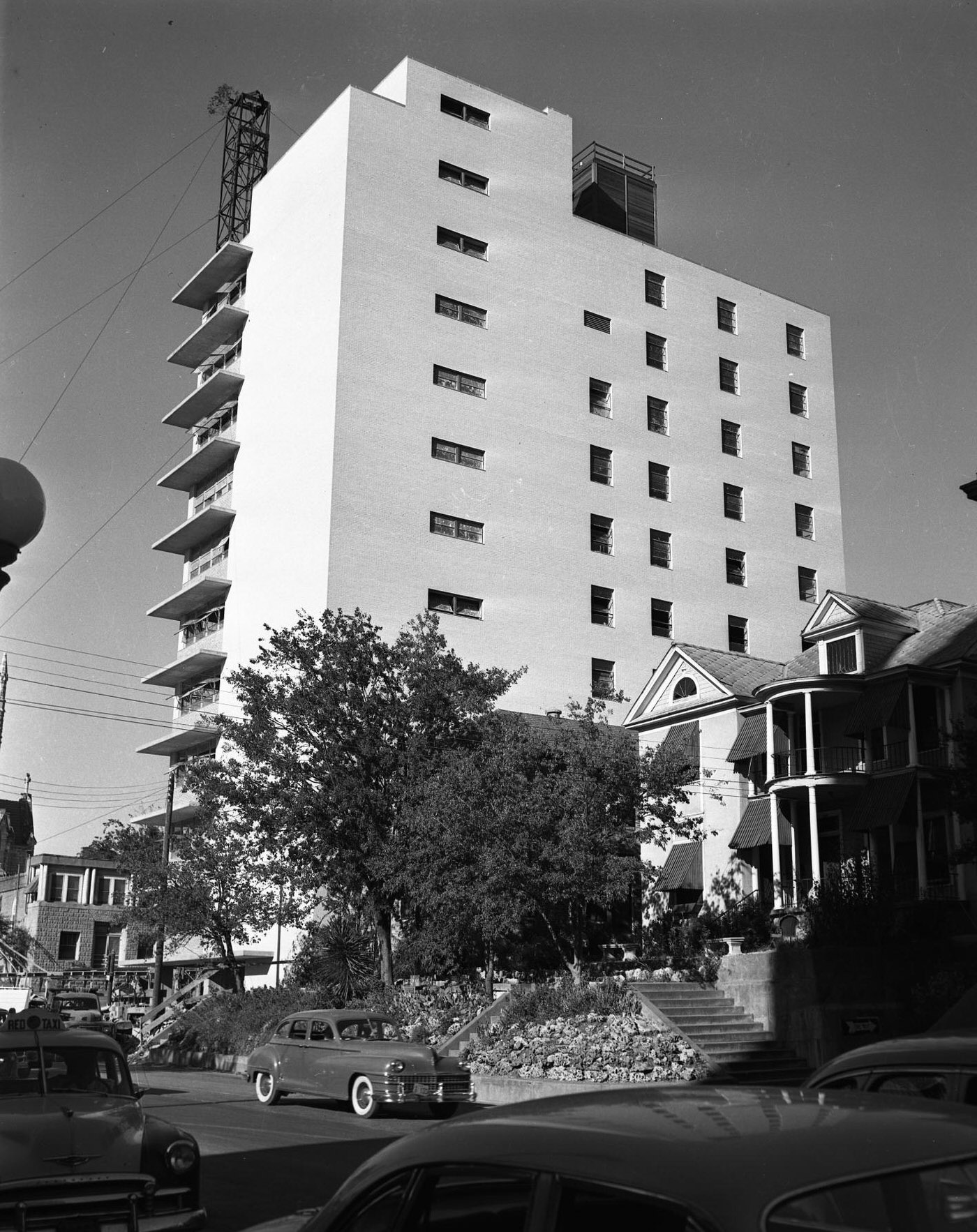
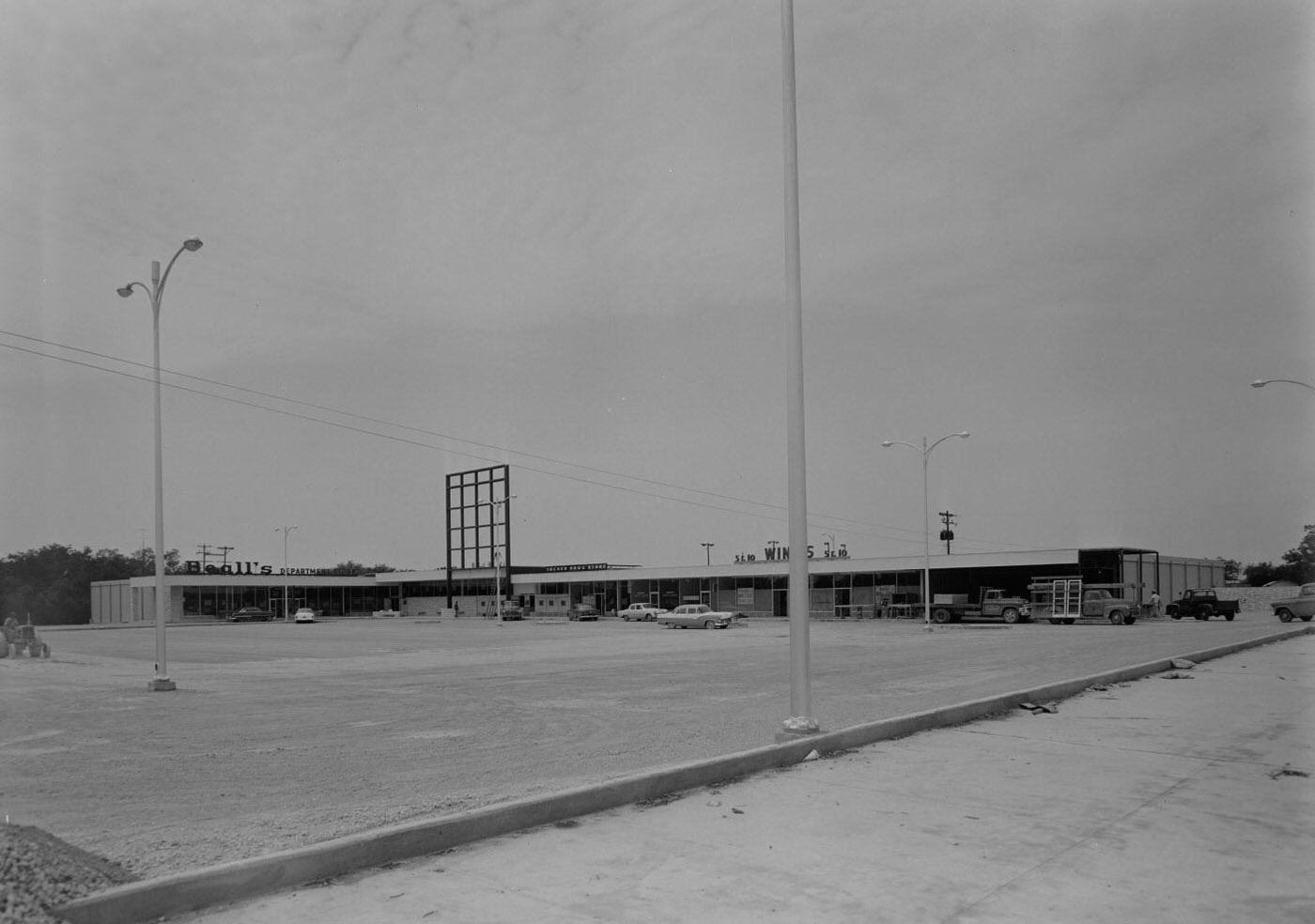
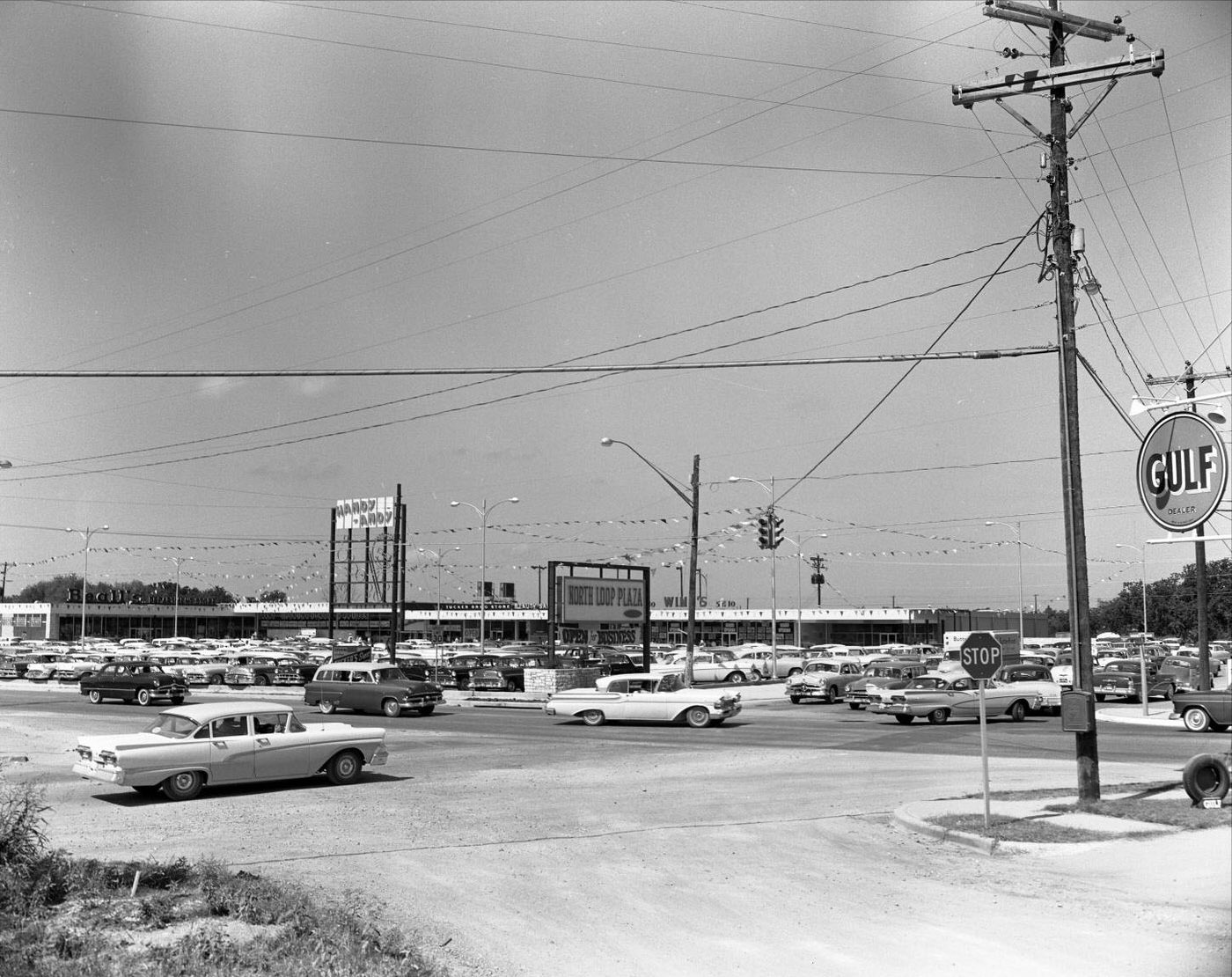
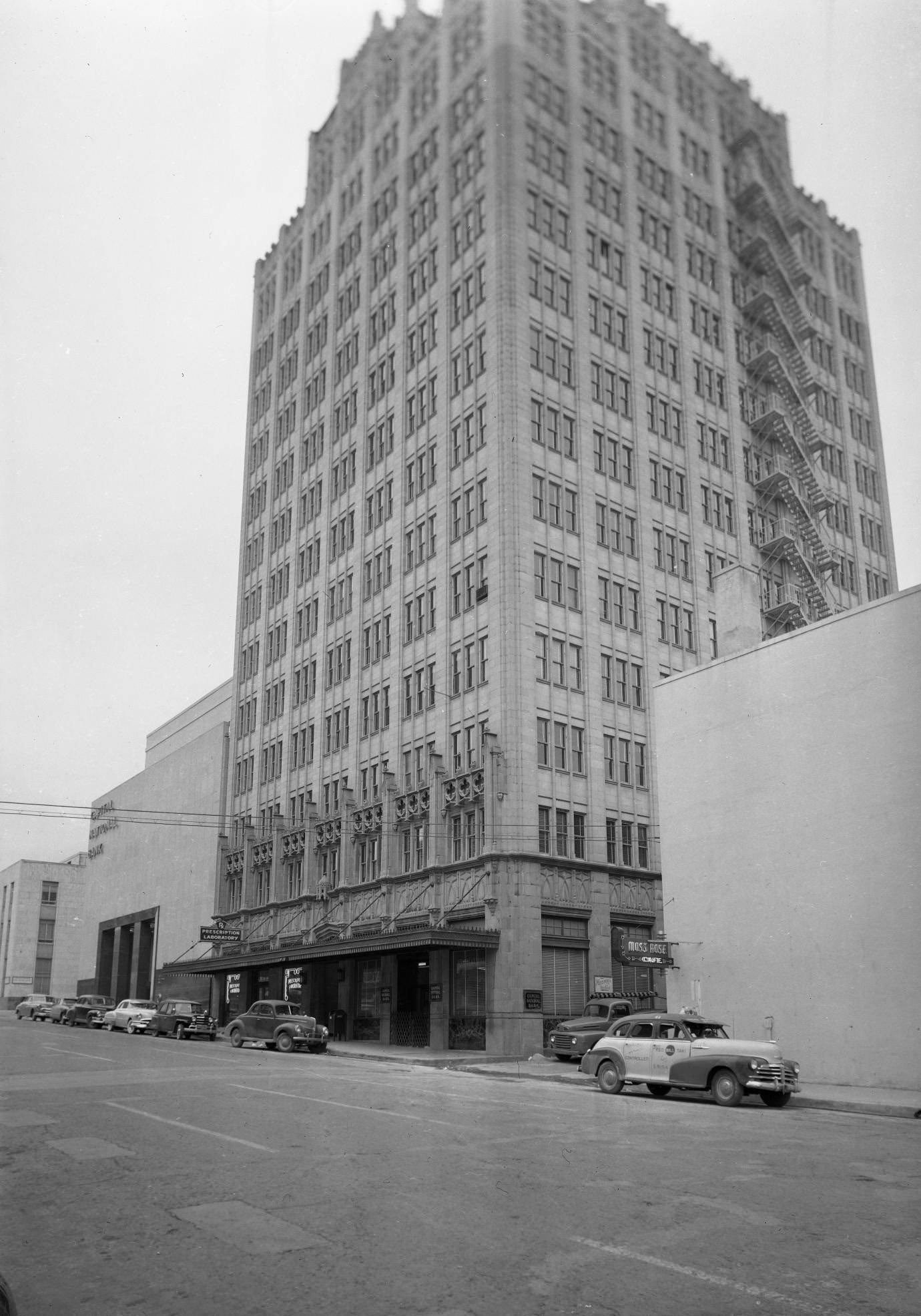
Commercial construction in central Austin ran at a steady pace throughout the decade. The International Life Insurance Building at 9th and Brazos was photographed from multiple angles during its 1951 construction. The Littlefield Building and Norwood Tower remained prominent downtown fixtures. New retail strips were rising across the city — North Loop Shopping Center opened in 1958 with a packed parking lot on its first day.
Austin Savings and Loan Building Exterior, 1951Littlefield Building with Street Activity, 1958Interior Hallway of Littlefield Building, 1958
Construction of International Life Insurance Building at 9th and Brazos, 1951
Construction Site View at 800 Block of Brazos, 1951
Construction Site View from 100 Block of W. 8th St, 1951Construction Site View from E. 10th and Brazos, 1951Building Under Construction at 900 Block of Brazos, 1951Construction Site View from 100 Block of W. 8th St, 1951Construction of North Loop Shopping Center, 1958Opening Day at North Loop Plaza Parking Lot, 1958Norwood Tower and Capital National Bank Building, 1952
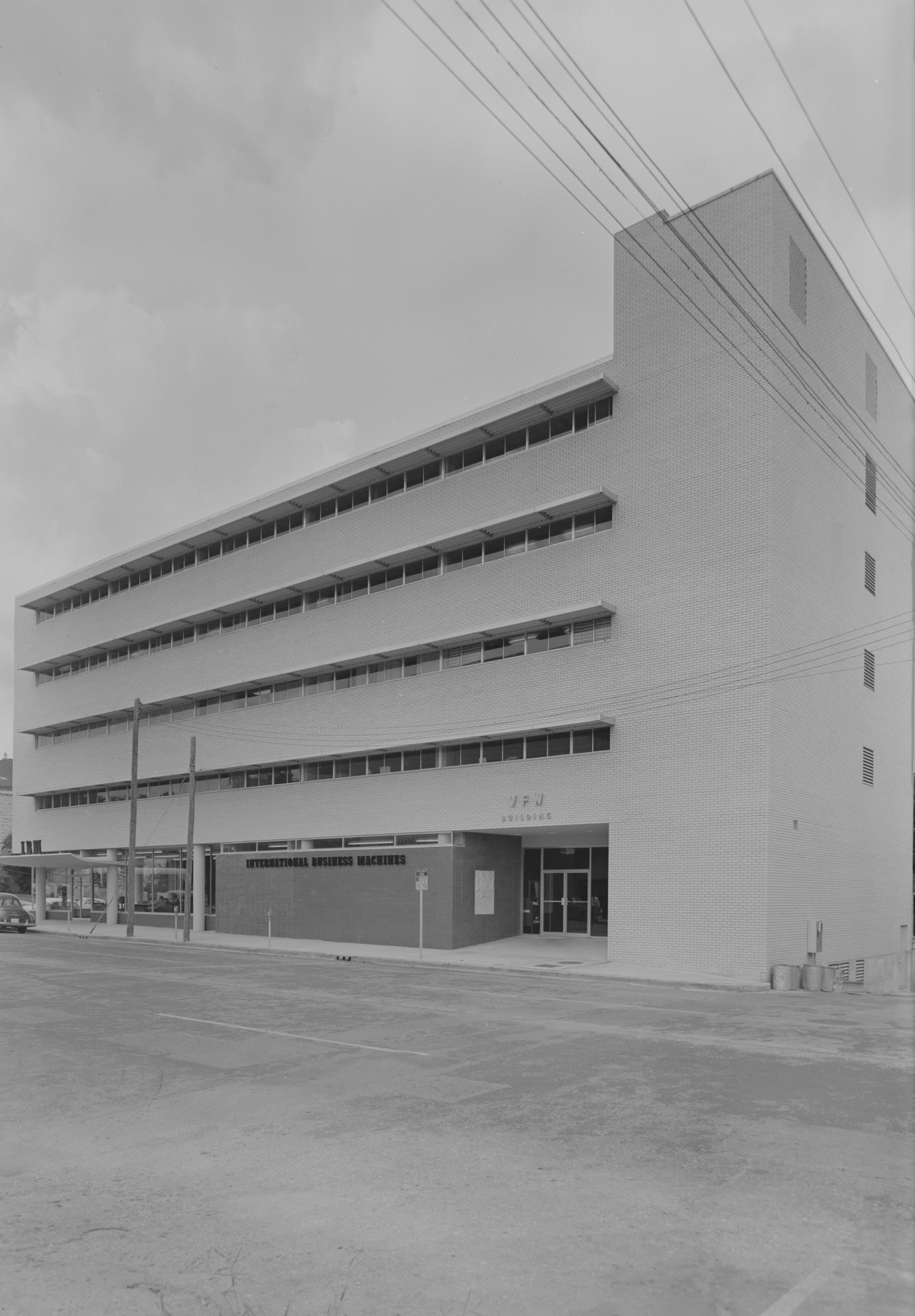
Technology companies began establishing a presence in Austin during this period. A 1957 photograph of a VFW building showed IBM signs on its exterior, an early marker of the tech industry taking root in the city. The convergence of the university’s research capacity and the arrival of companies like IBM laid the groundwork for what Austin would eventually become.
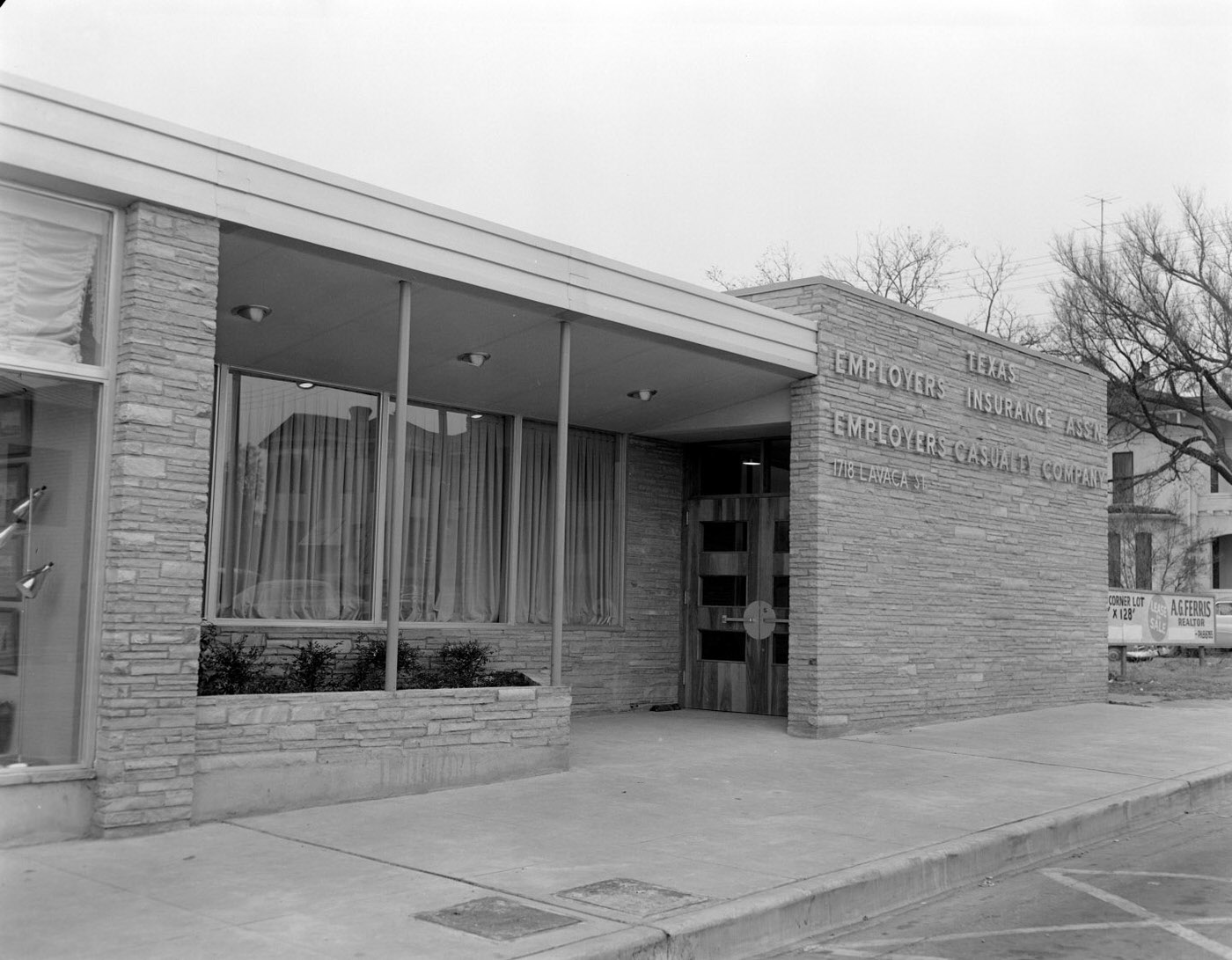
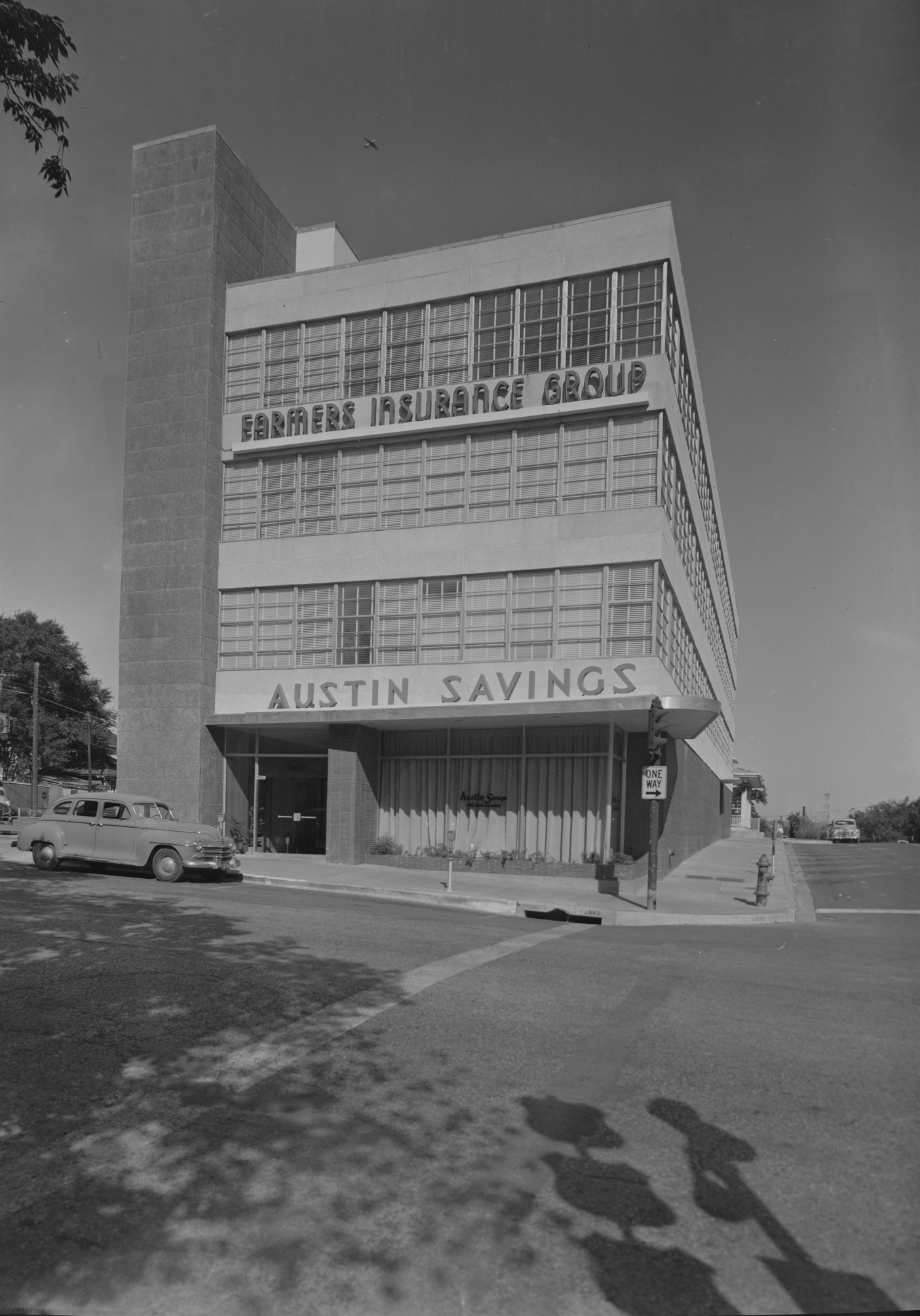
Exterior of VFW Building with IBM Signs, 1957Texas Employees Insurance Association Building, 1955Building Housing Farmers Insurance and Austin Savings, 1952
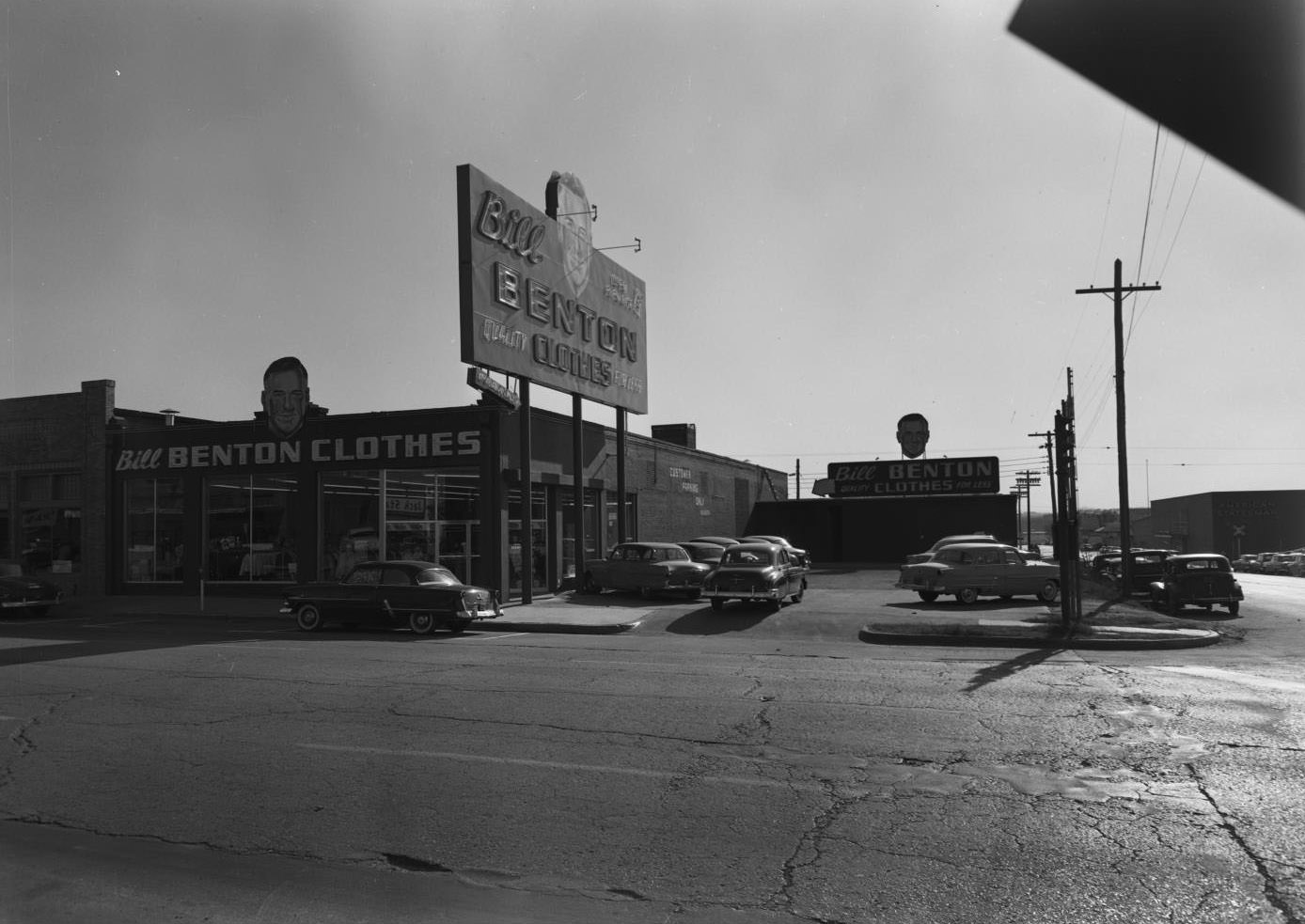
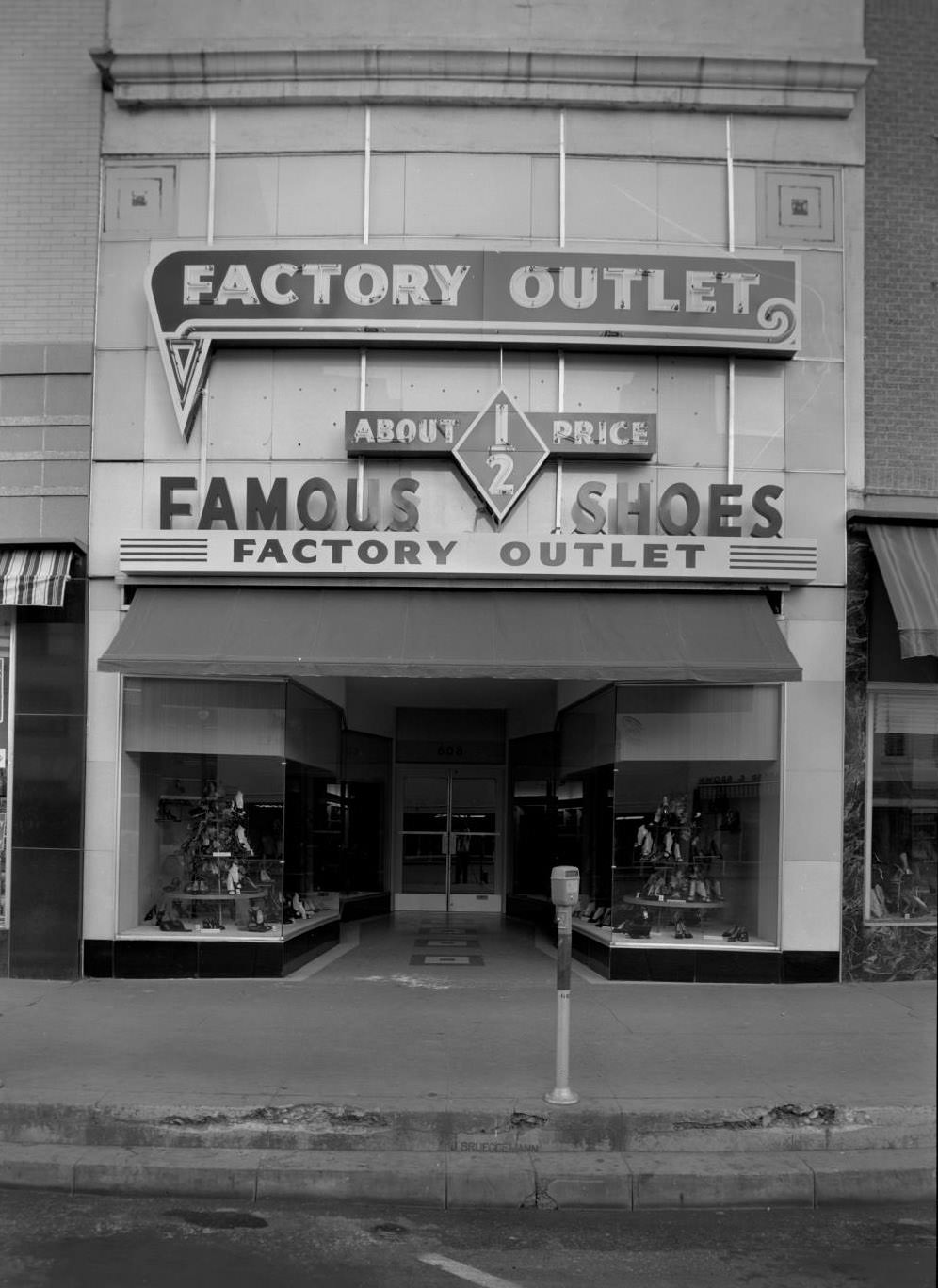
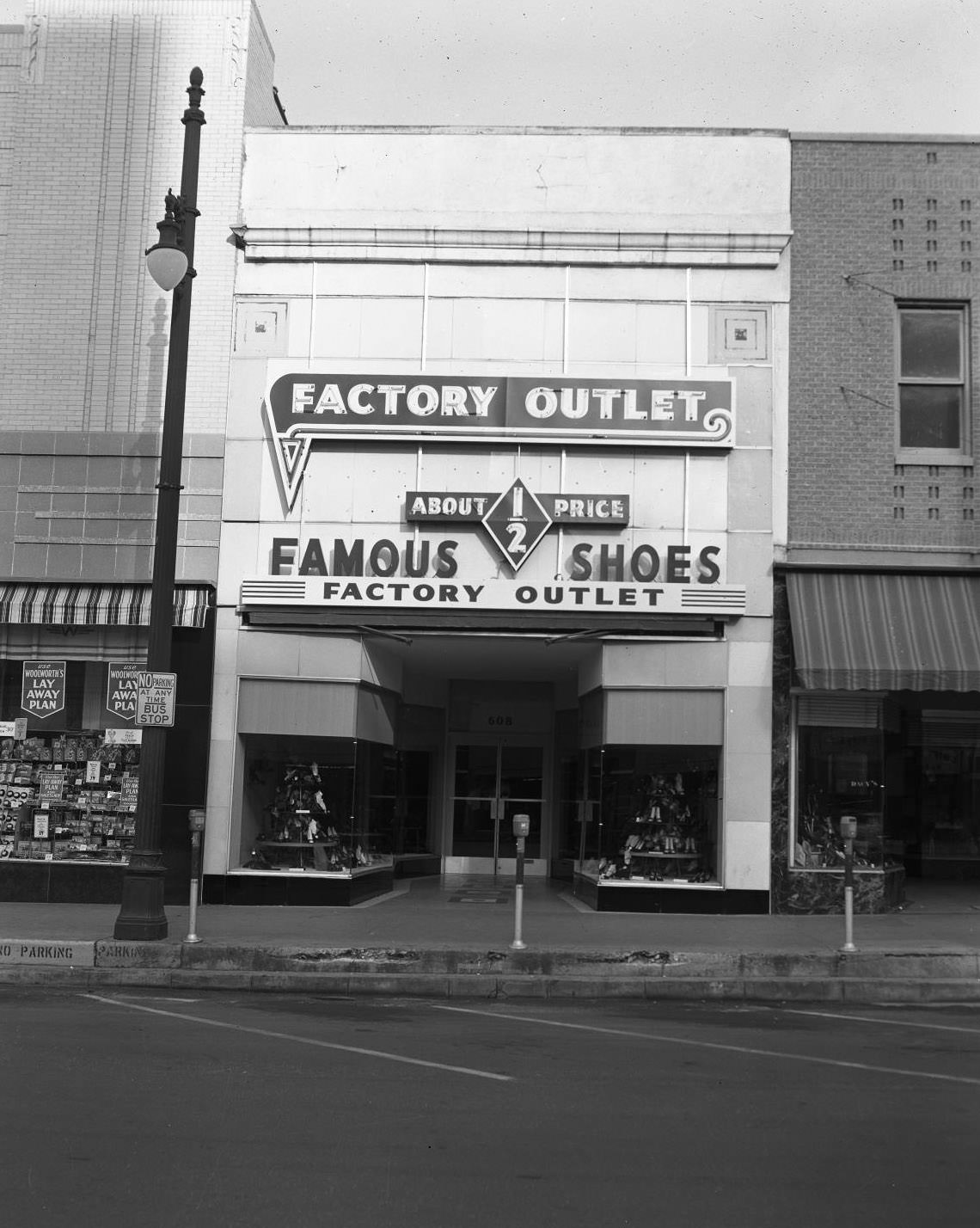
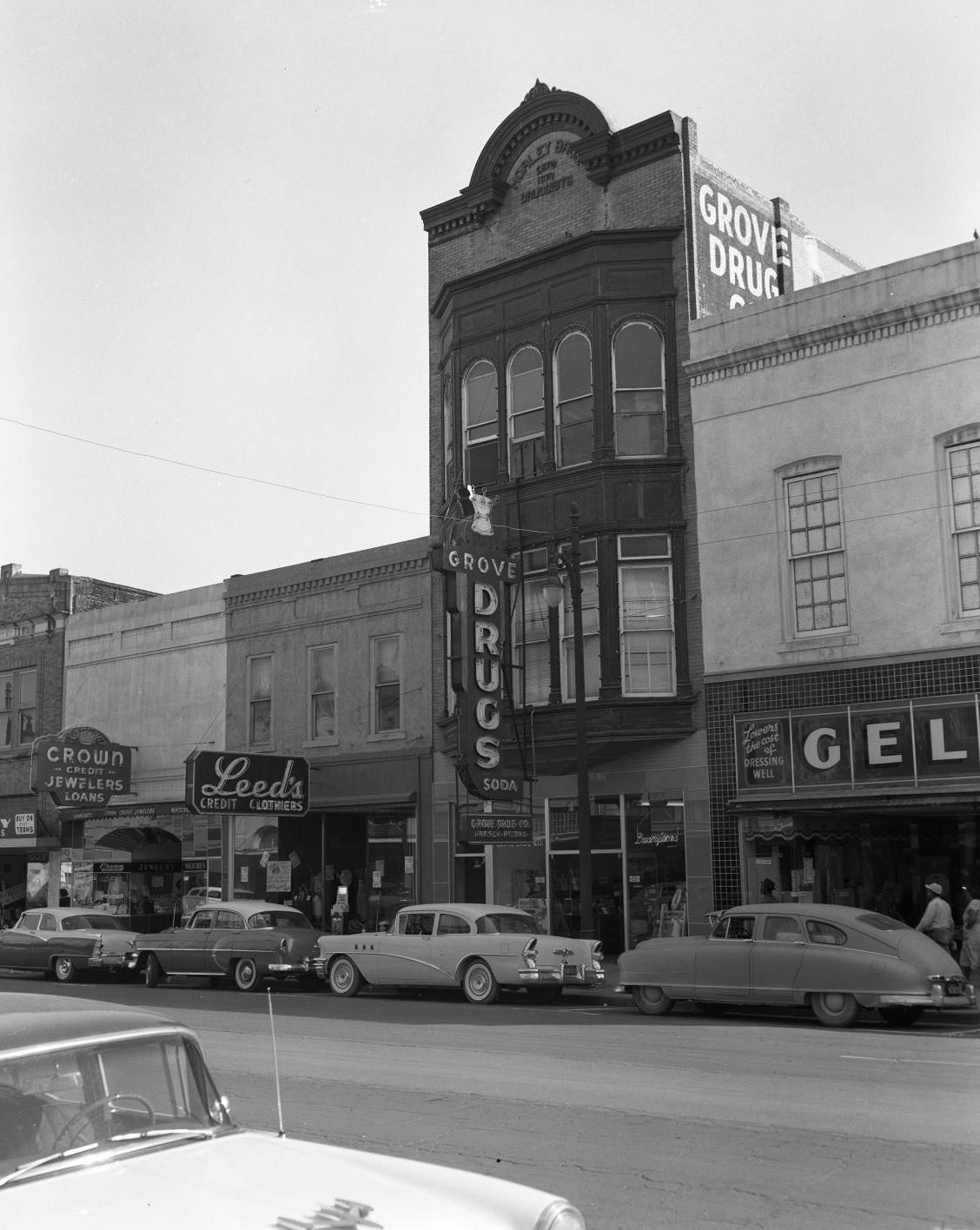
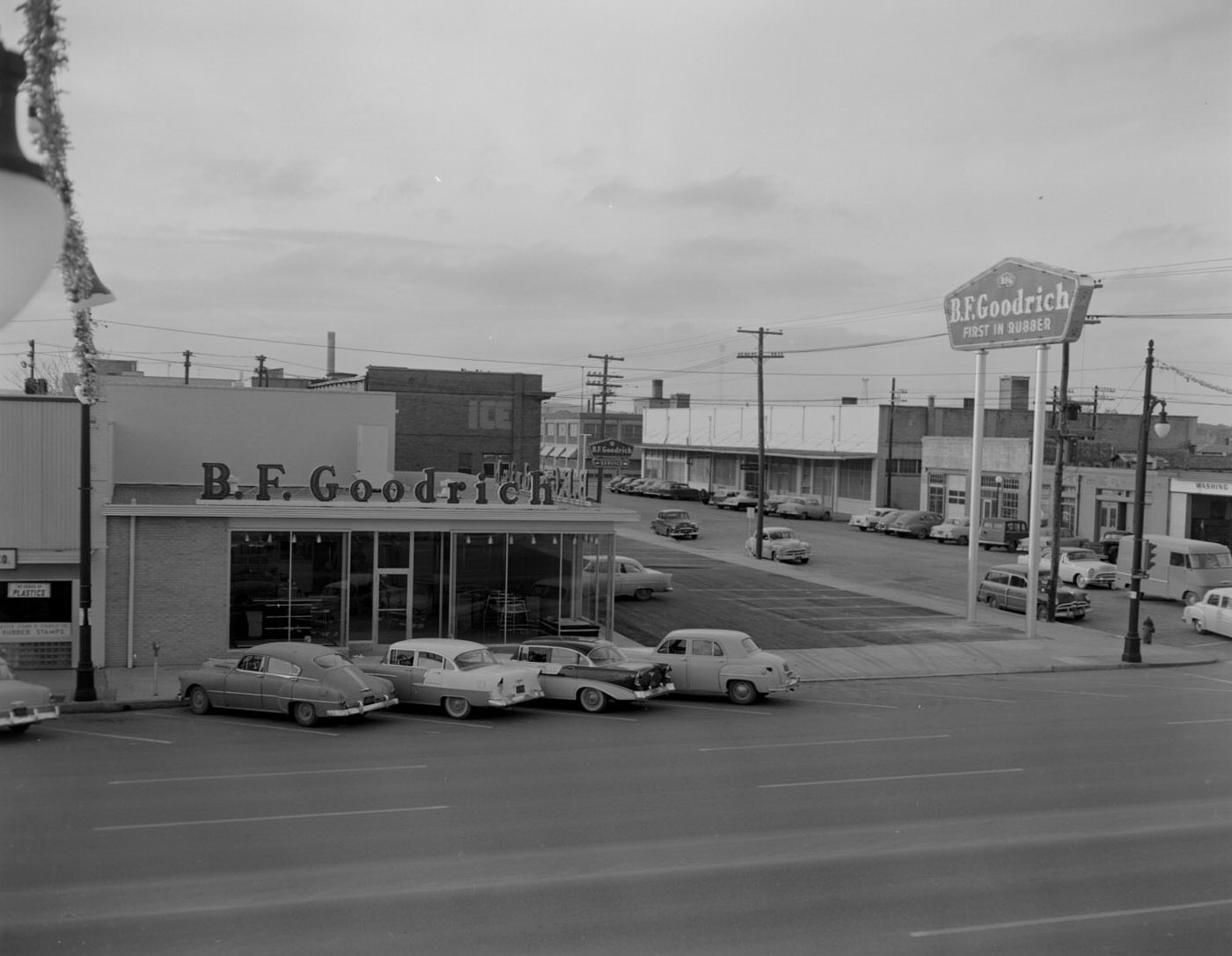
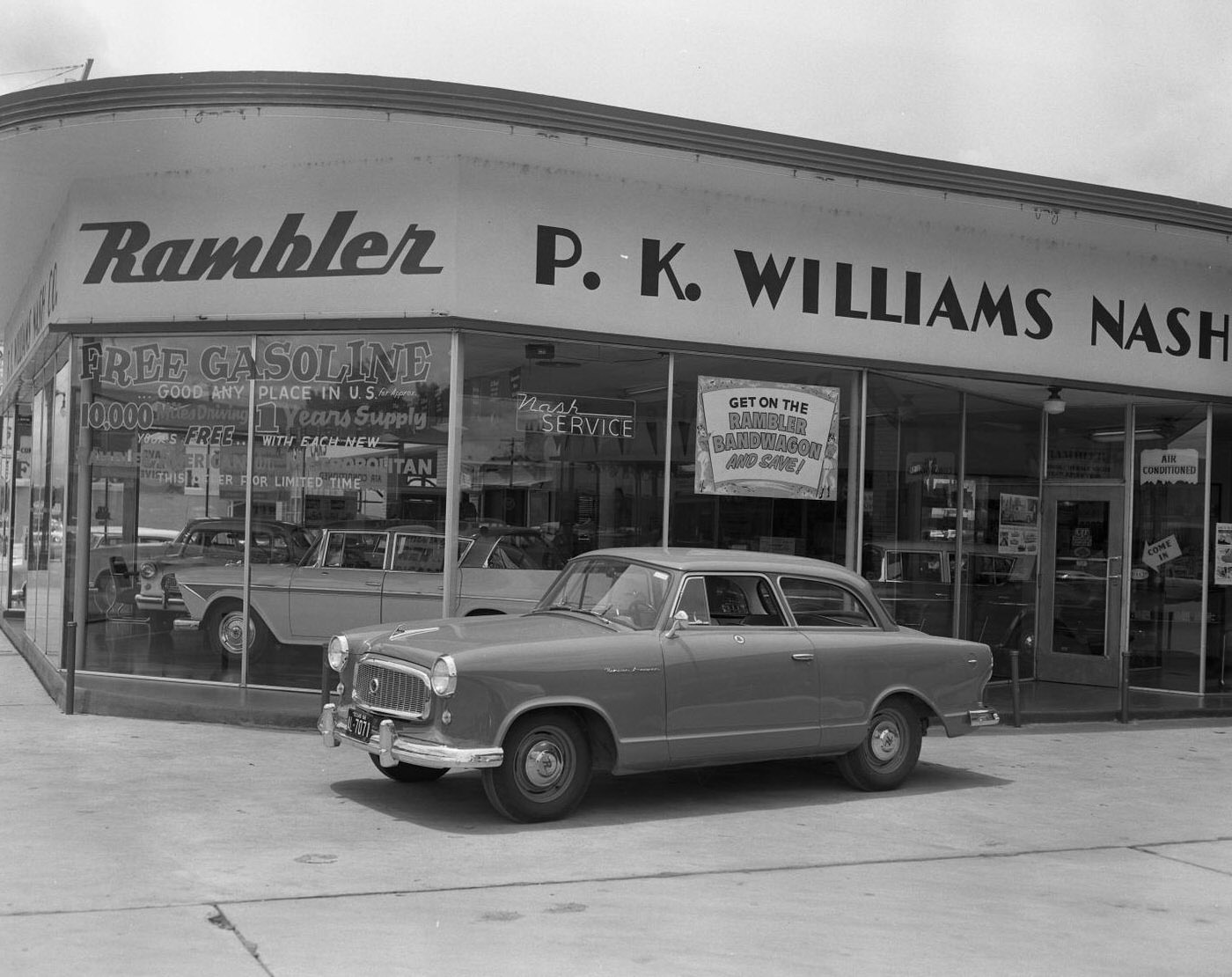
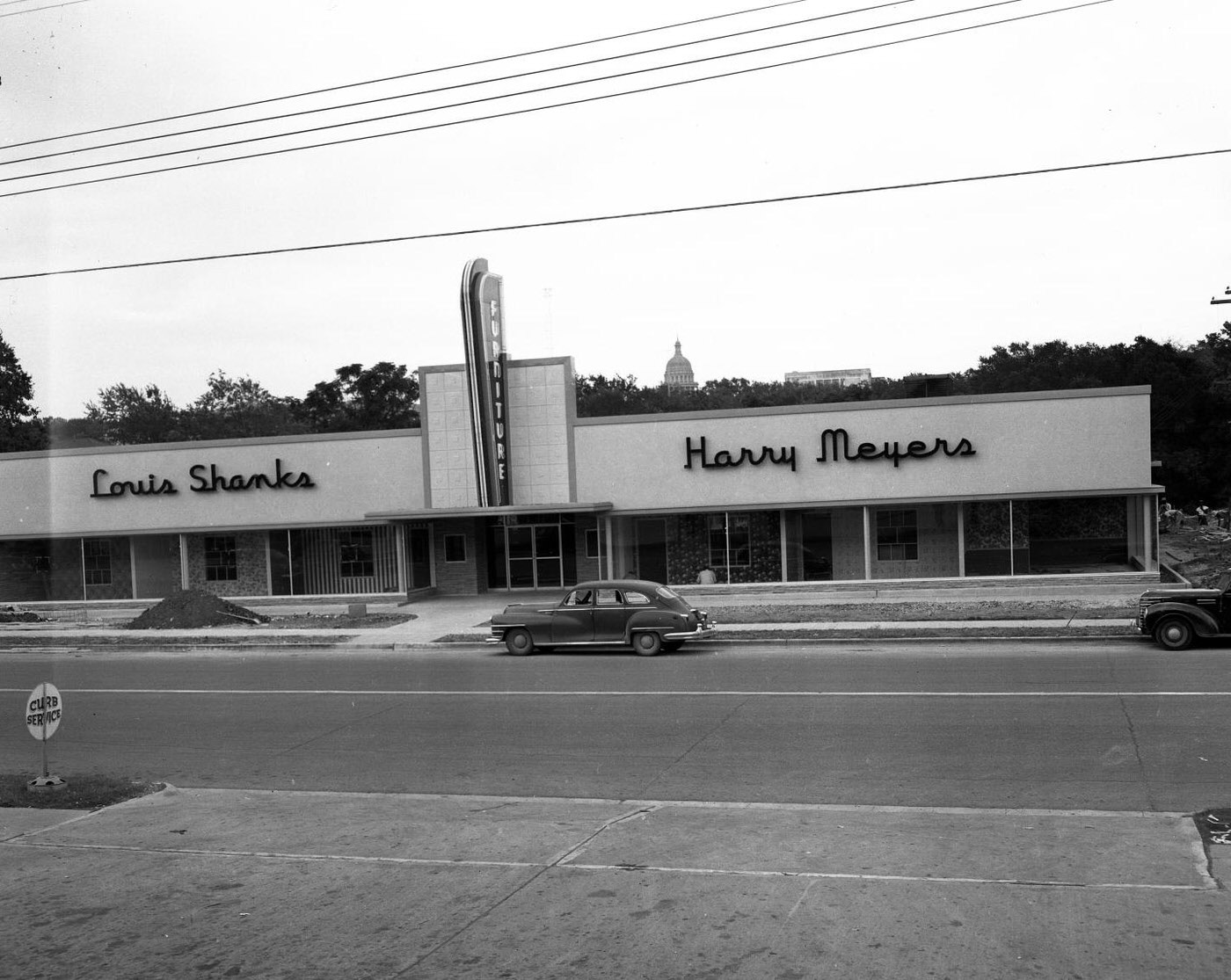
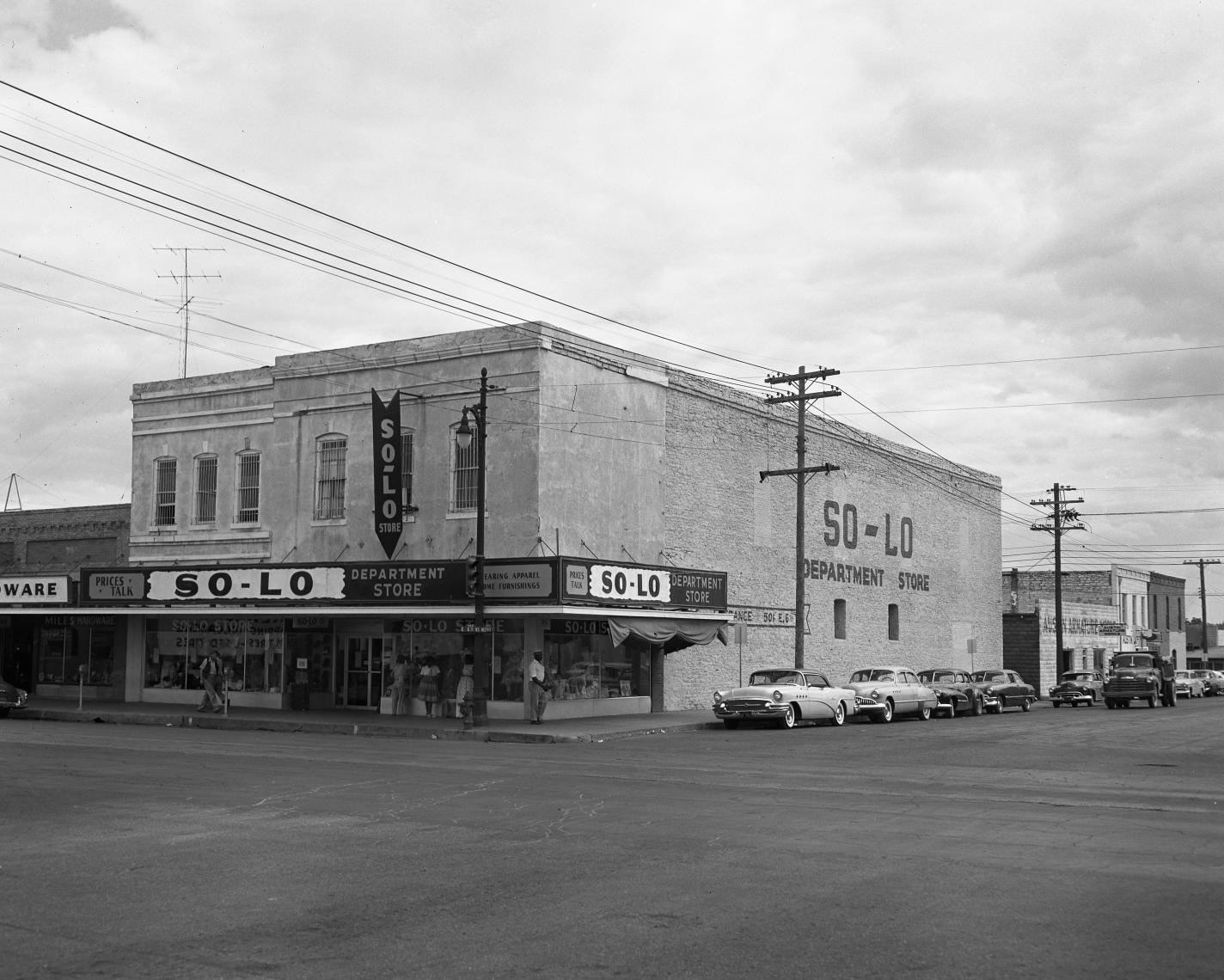
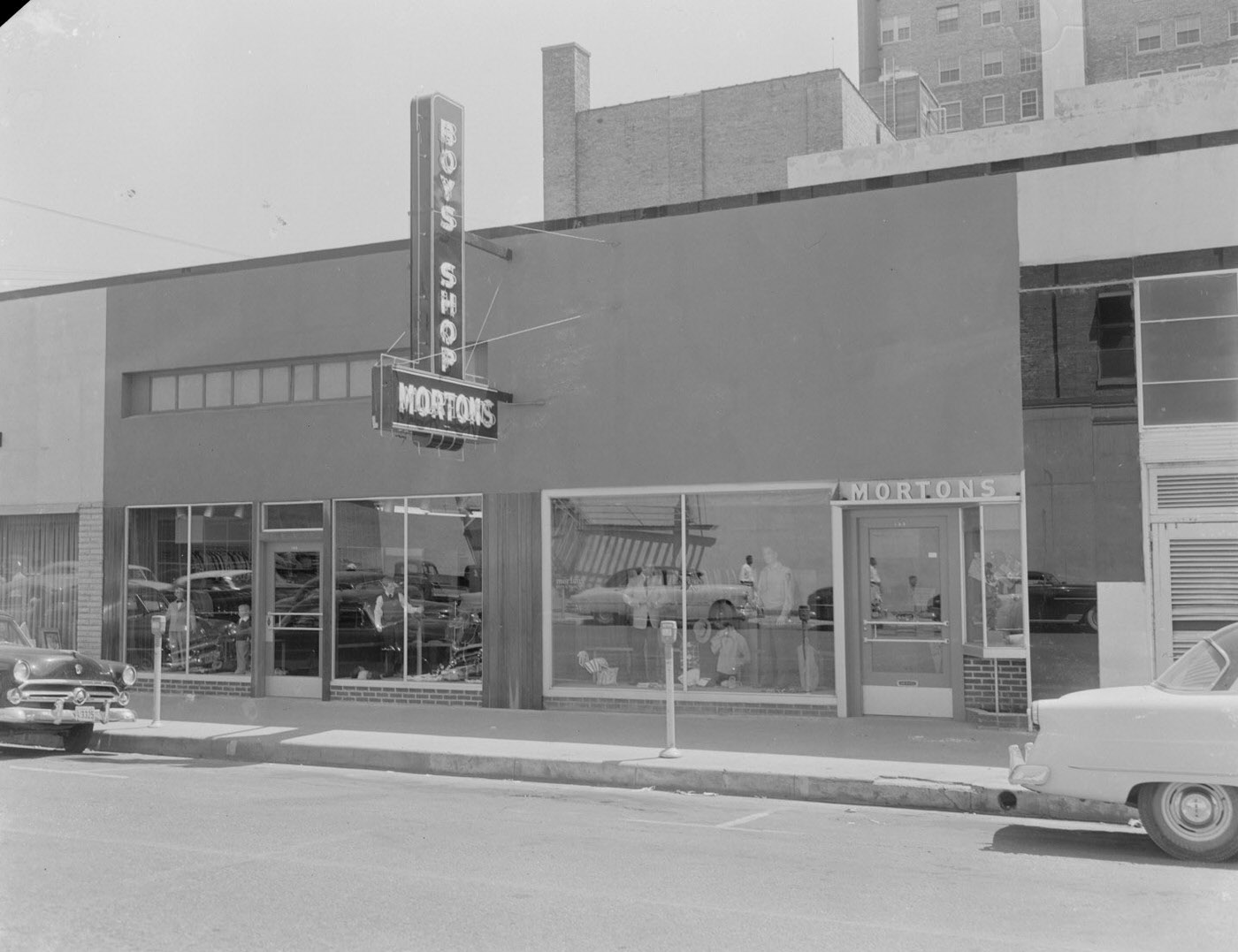
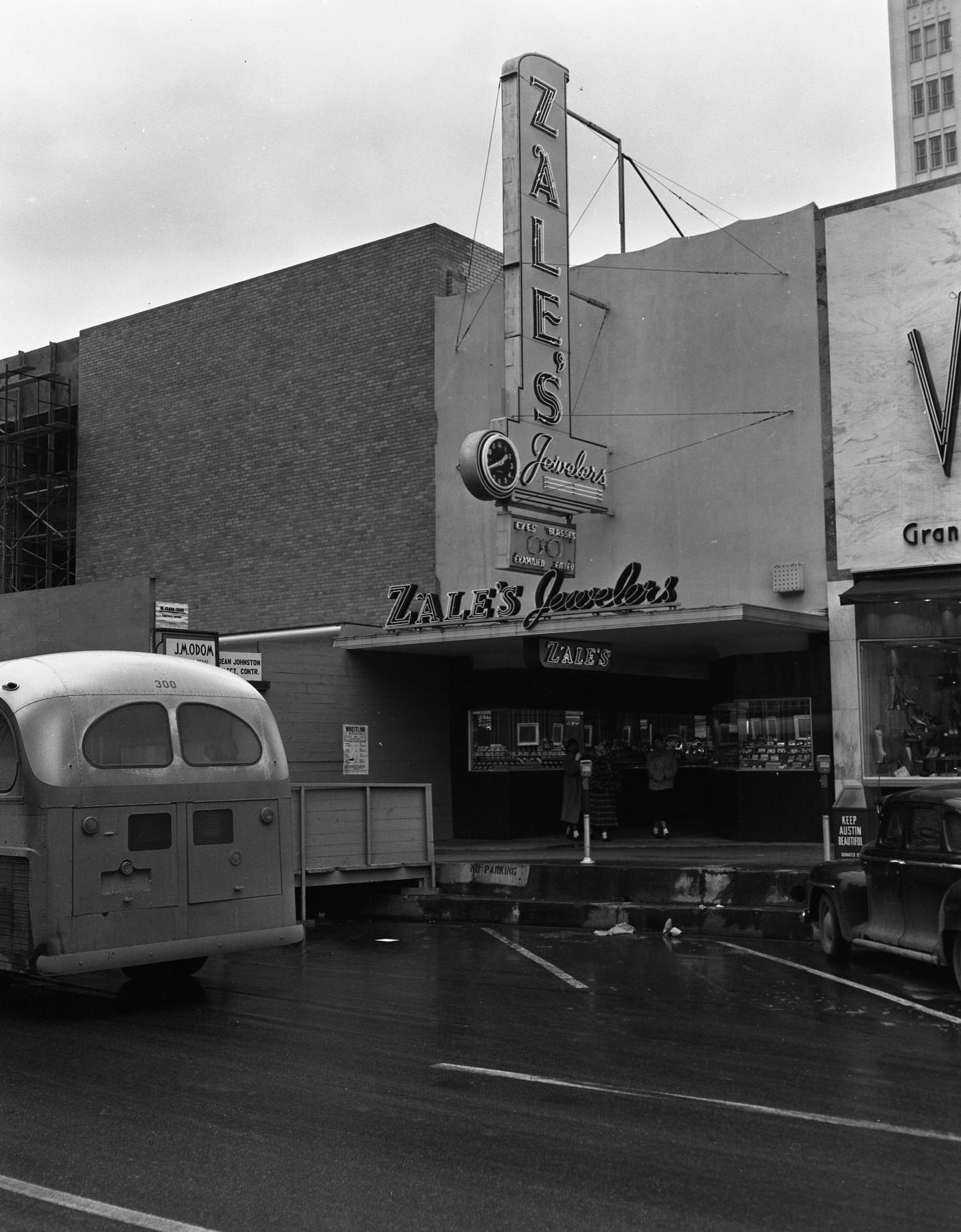
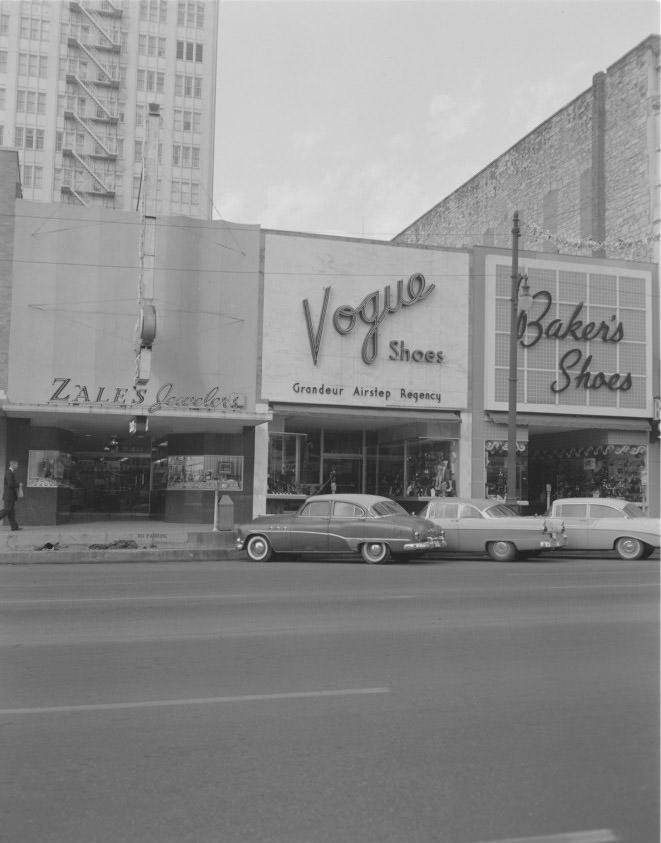
Retail along Congress Avenue and surrounding streets reflected mid-century American consumer culture at its most vivid. Shoe stores, furniture shops, clothing retailers, and drugstores competed for foot traffic. The Factory Outlet Ladies Shoe Store at 608 Congress and Syd Meyers’ Factory Outlet Shoe Company were photographed in 1956. Bill Benton Clothes was captured in 1955. The So-Lo Department Store on East 6th Street drew shoppers from across the city.
Bill Benton Clothes Store Exterior, 1955
Factory Outlet Ladies Shoe Store at 608 Congress, 1956
Syd Meyers’ Factory Outlet Shoe Co. Exterior, 1956
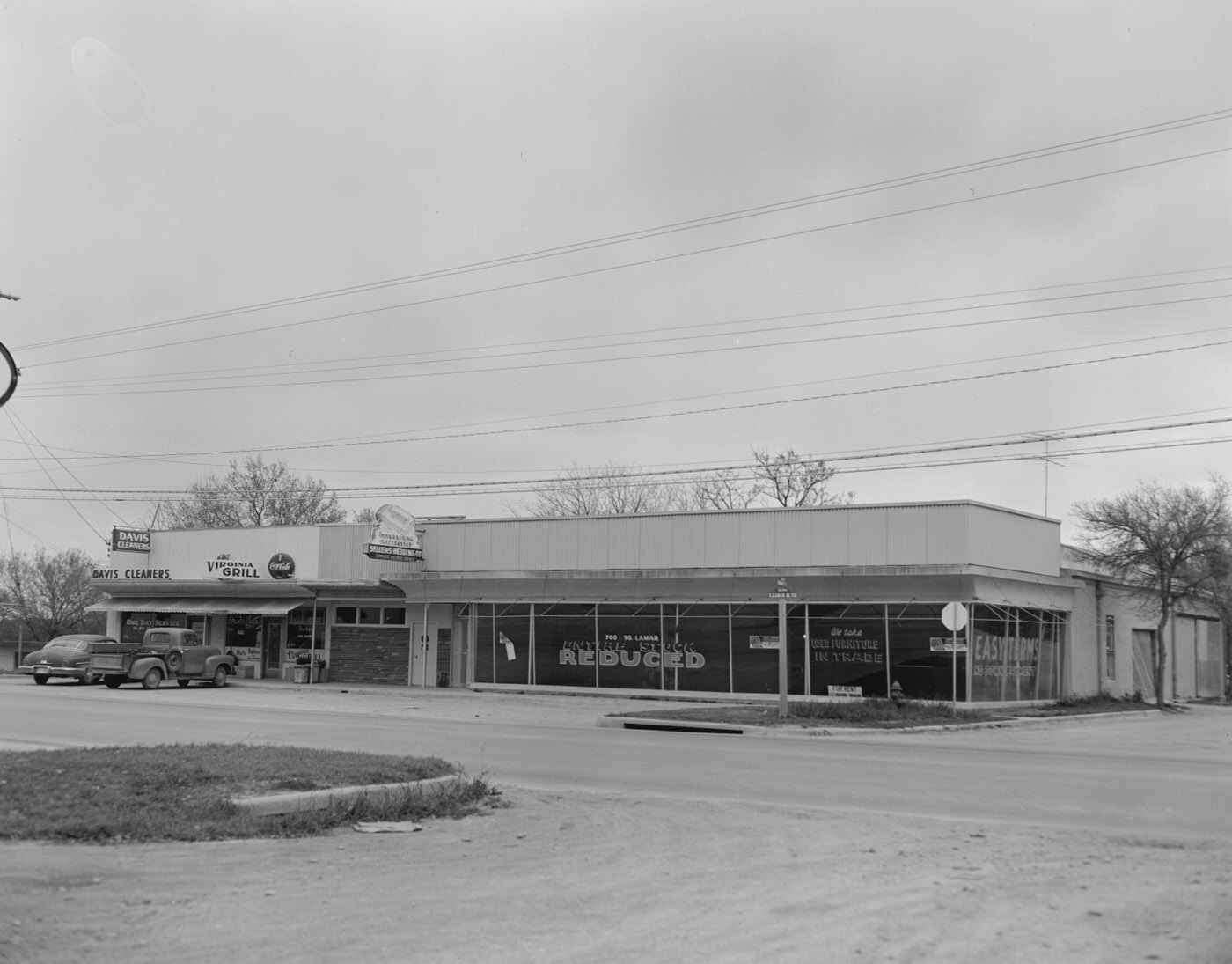
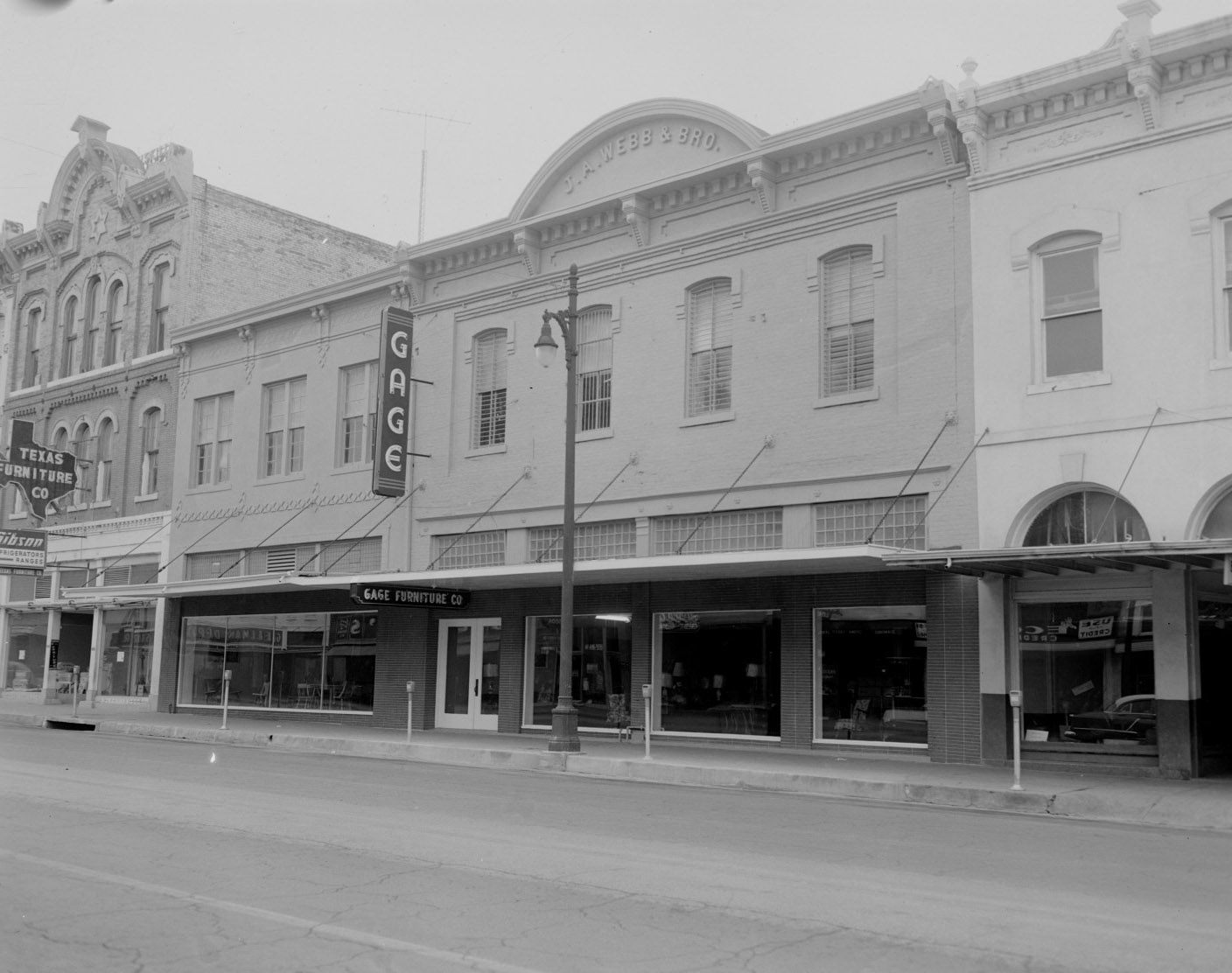
Grove Drugs Storefront on Sixth Street, 1956B.F. Goodrich Sign at 100 Congress Avenue, 1956Nash Rambler Storefront on Congress Avenue, 1958Shanks-Meyers Furniture Company, Exterior at 1105 Lamar, 1950So-Lo Dept. Store, Exterior Managed by Maynard J Wizig at 501 E 6th St., 1956South Lamar Building, Shops Including Davis Cleaners and Virginia Grill, 1958Street View of Gage Furniture Company, Austin, 1953Morton’s Boys Shop Street View, Austin, 1953
Exterior of Zale Jewelers Store in Austin, 1956
Exterior of Zale’s, Vogue Shoes, and Baker’s Shoes Stores, 1959
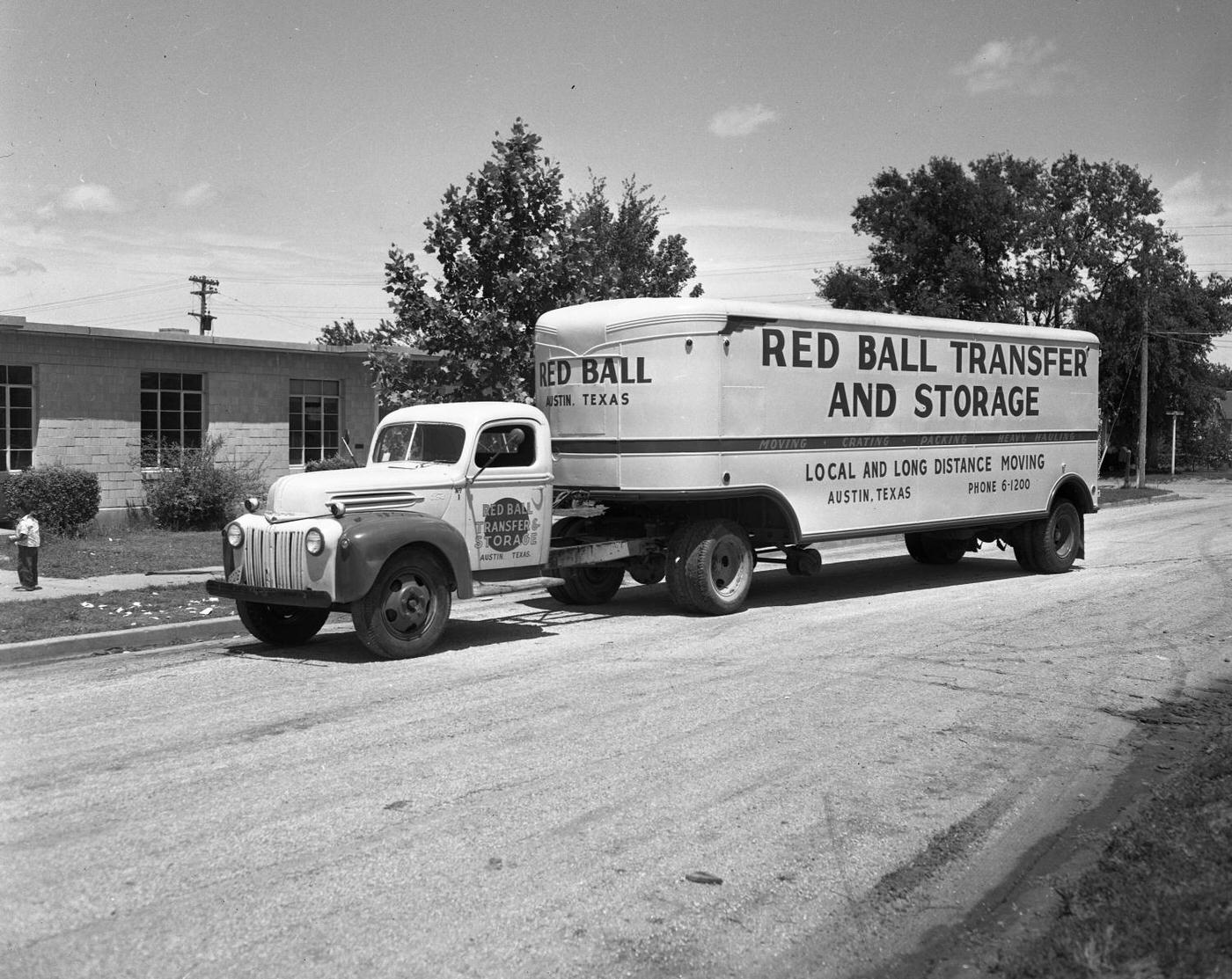
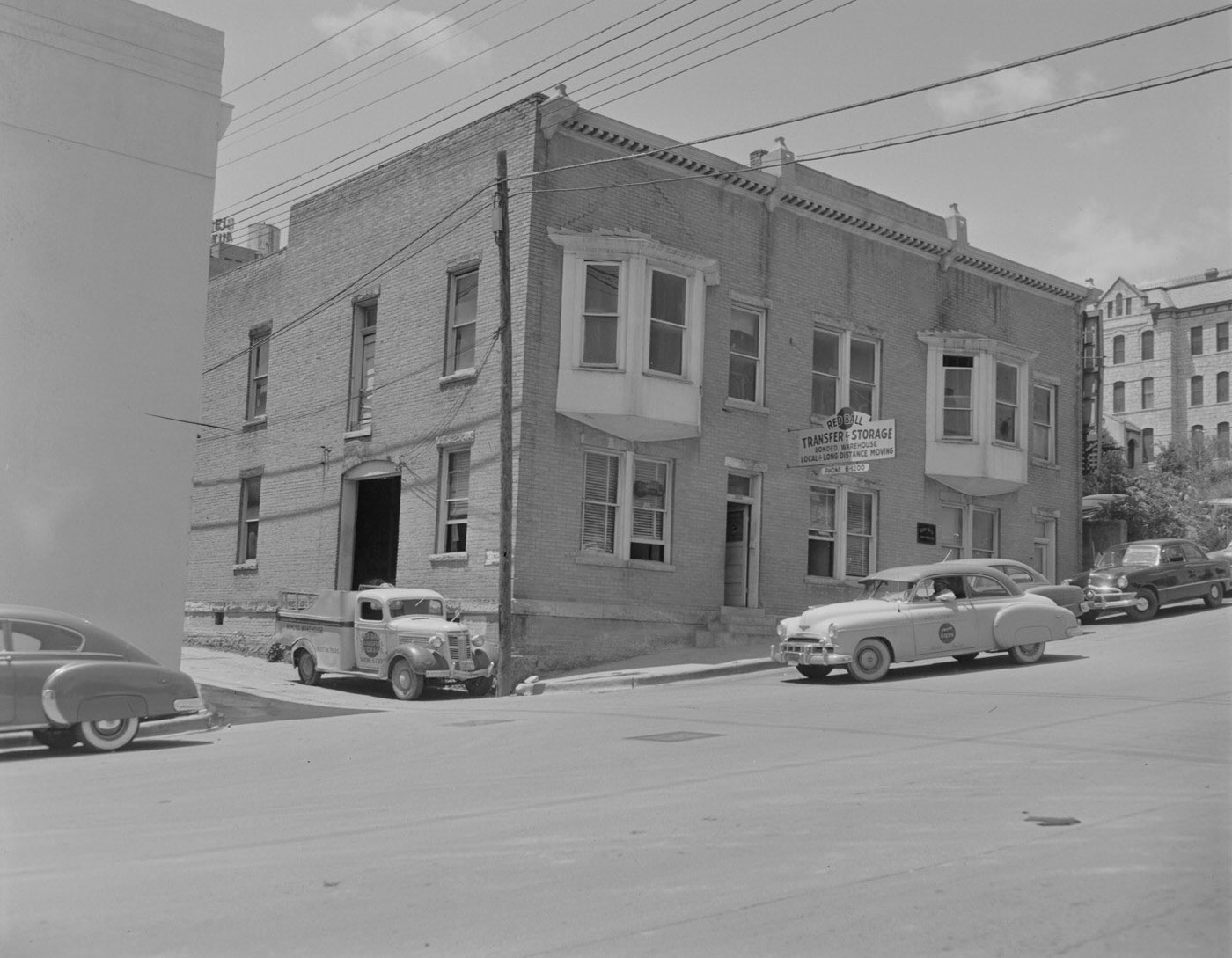
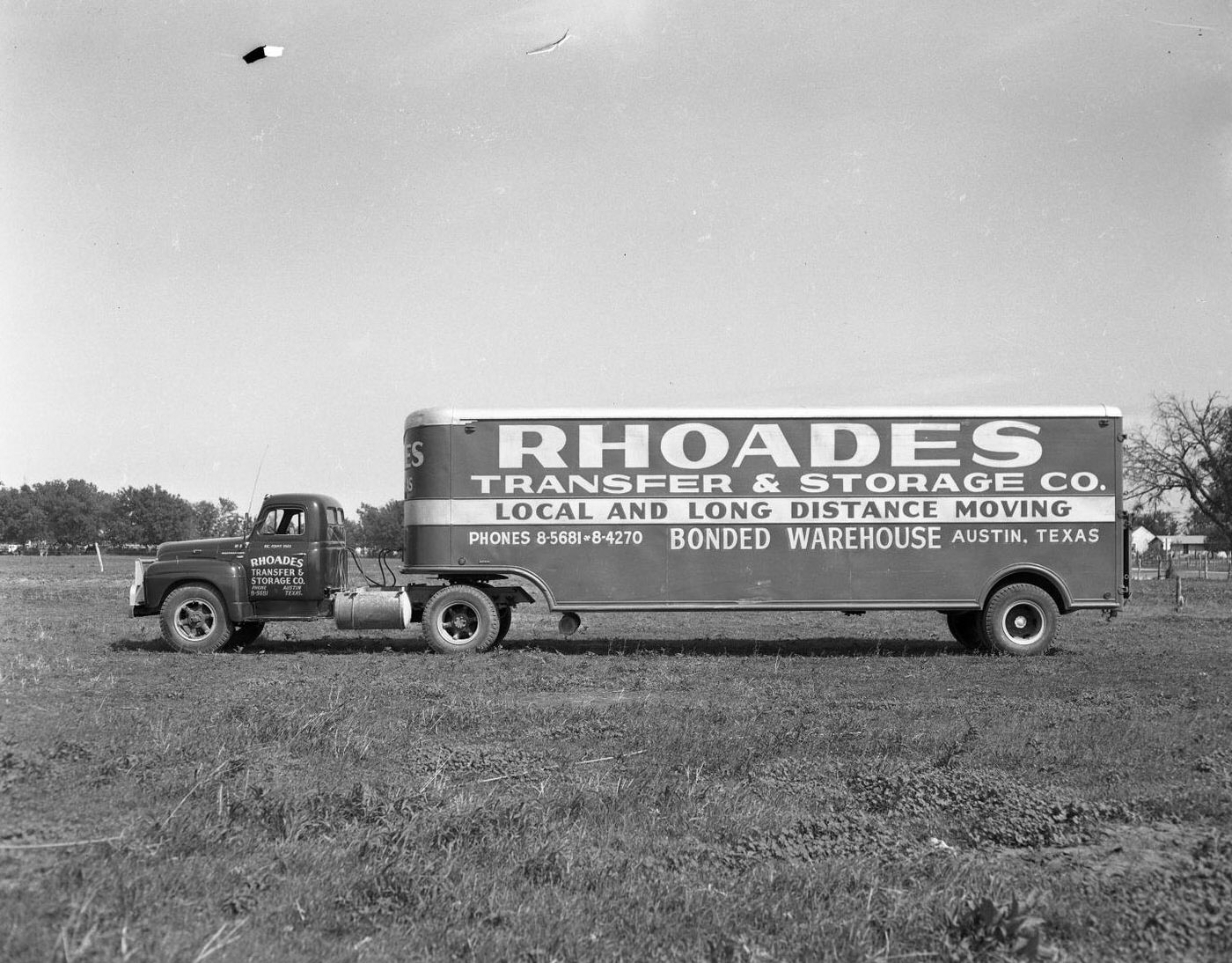
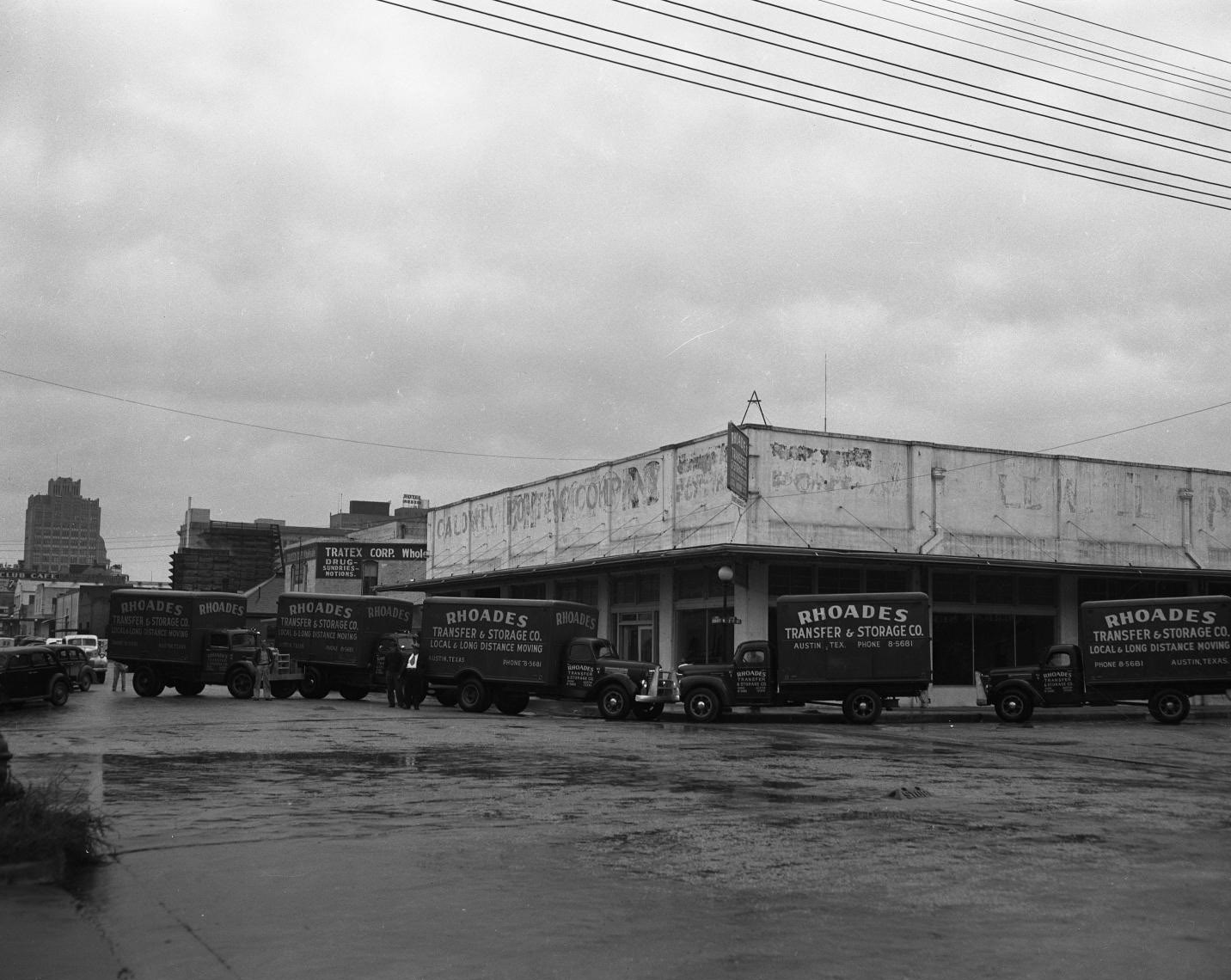
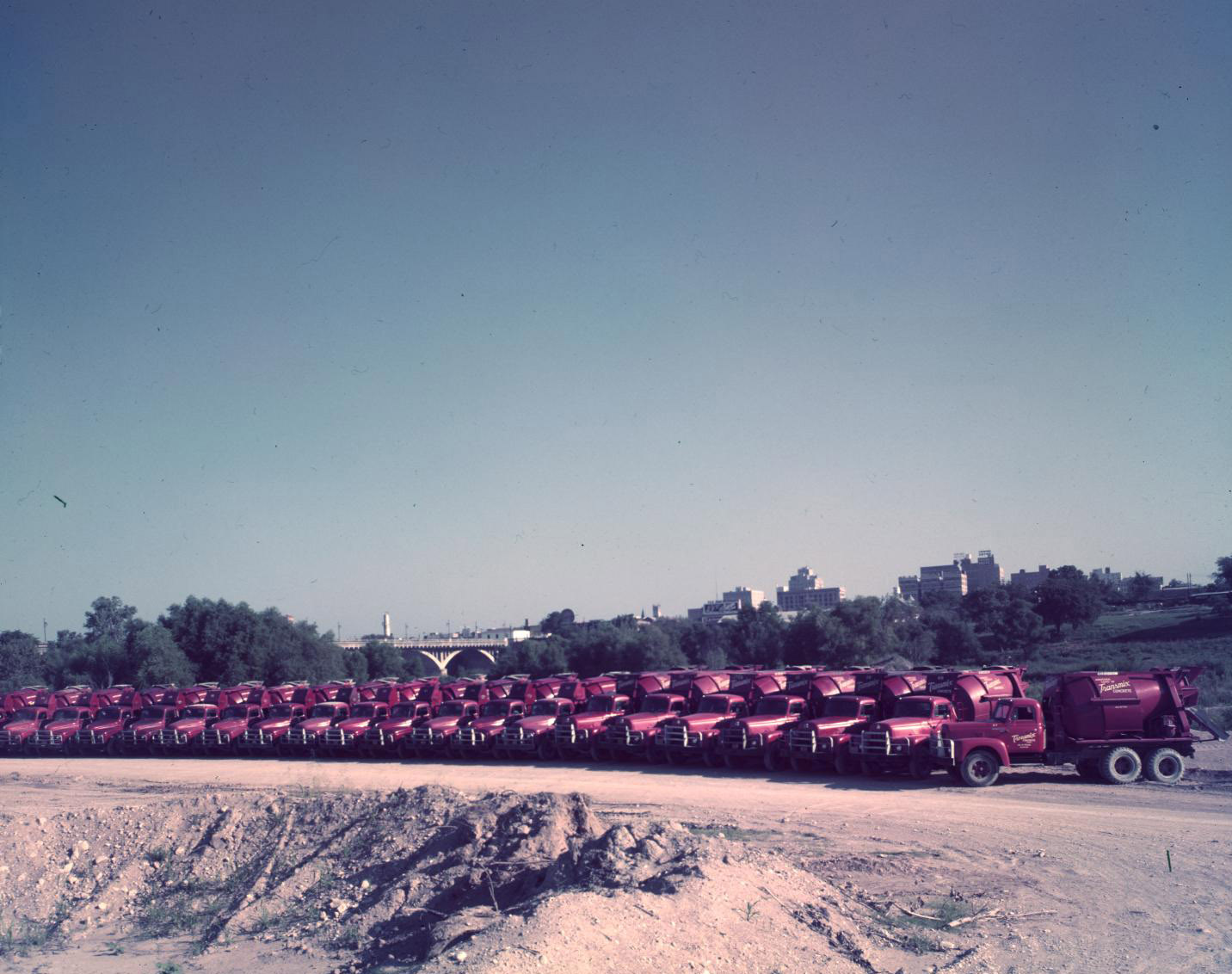
Warehousing, moving companies, and industrial firms occupied the edges of downtown. Red Ball Transfer and Storage operated out of 606 San Jacinto. Rhoades Transfer & Storage was photographed with its trucks and staff in 1950 and 1951. The Transmix Cement Company lined up trucks by the Congress Avenue Bridge in 1951, supplying material for the decade’s relentless construction activity.
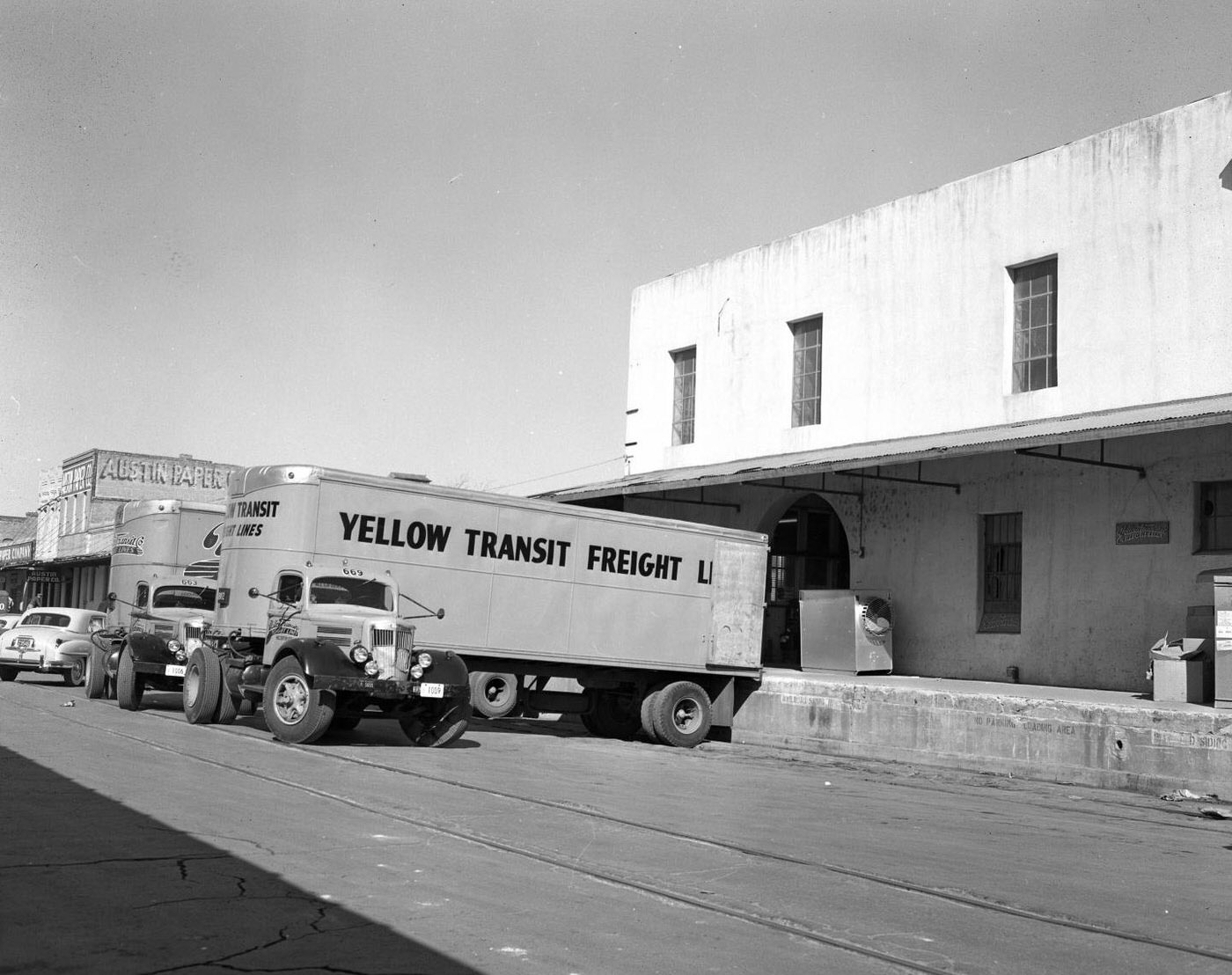
Red Ball Transfer and Moving Truck and Building, 1951Red Ball Transfer Storage at 606 San Jacinto, 1951Rhoades Truck Lines, Portrait of Rhoades Transfer & Storage Co. Truck, 1951Rhoades Transfer & Storage Equipment and Staff, 1950Transmix Cement Company Trucks by Congress Avenue Bridge, 1951
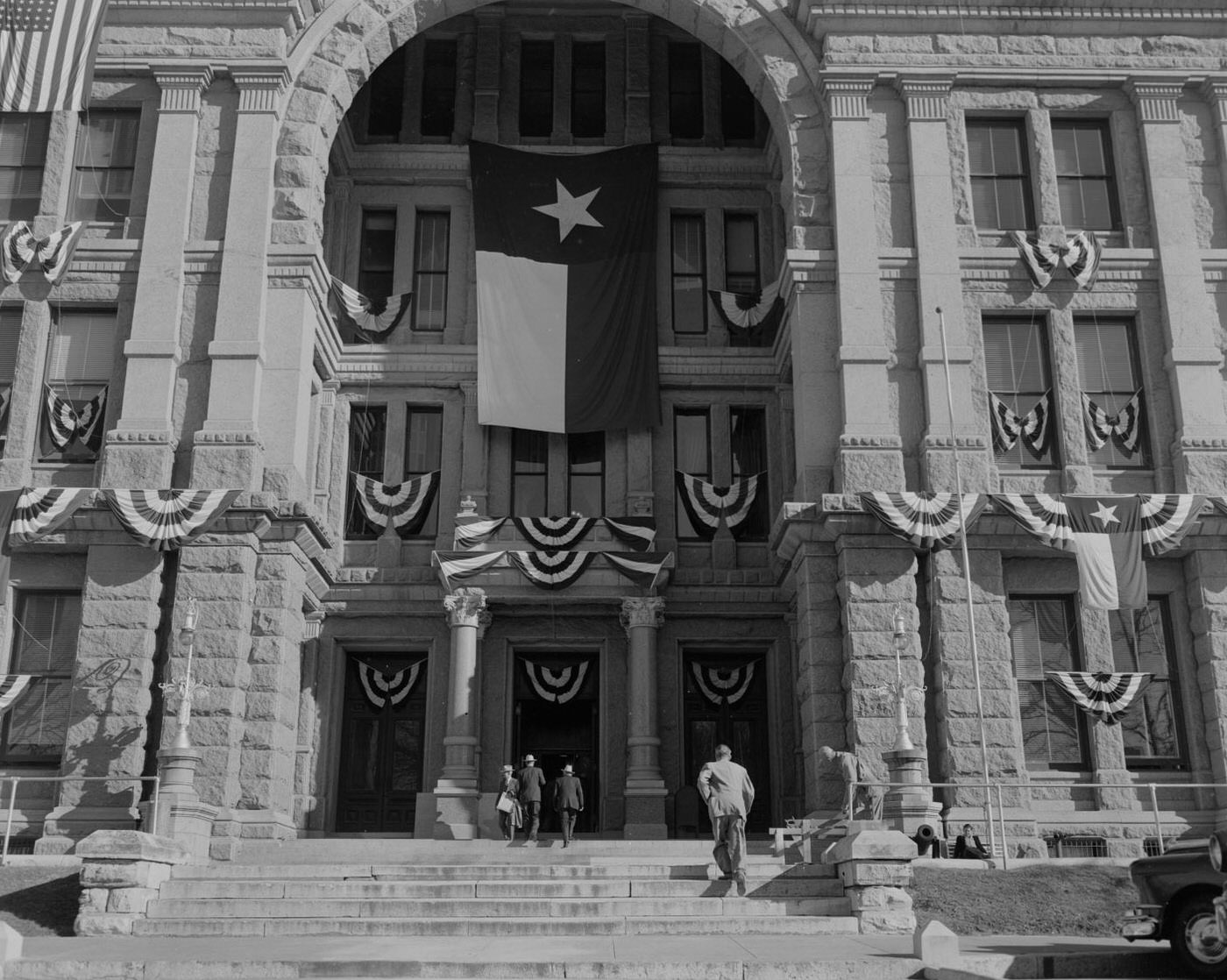
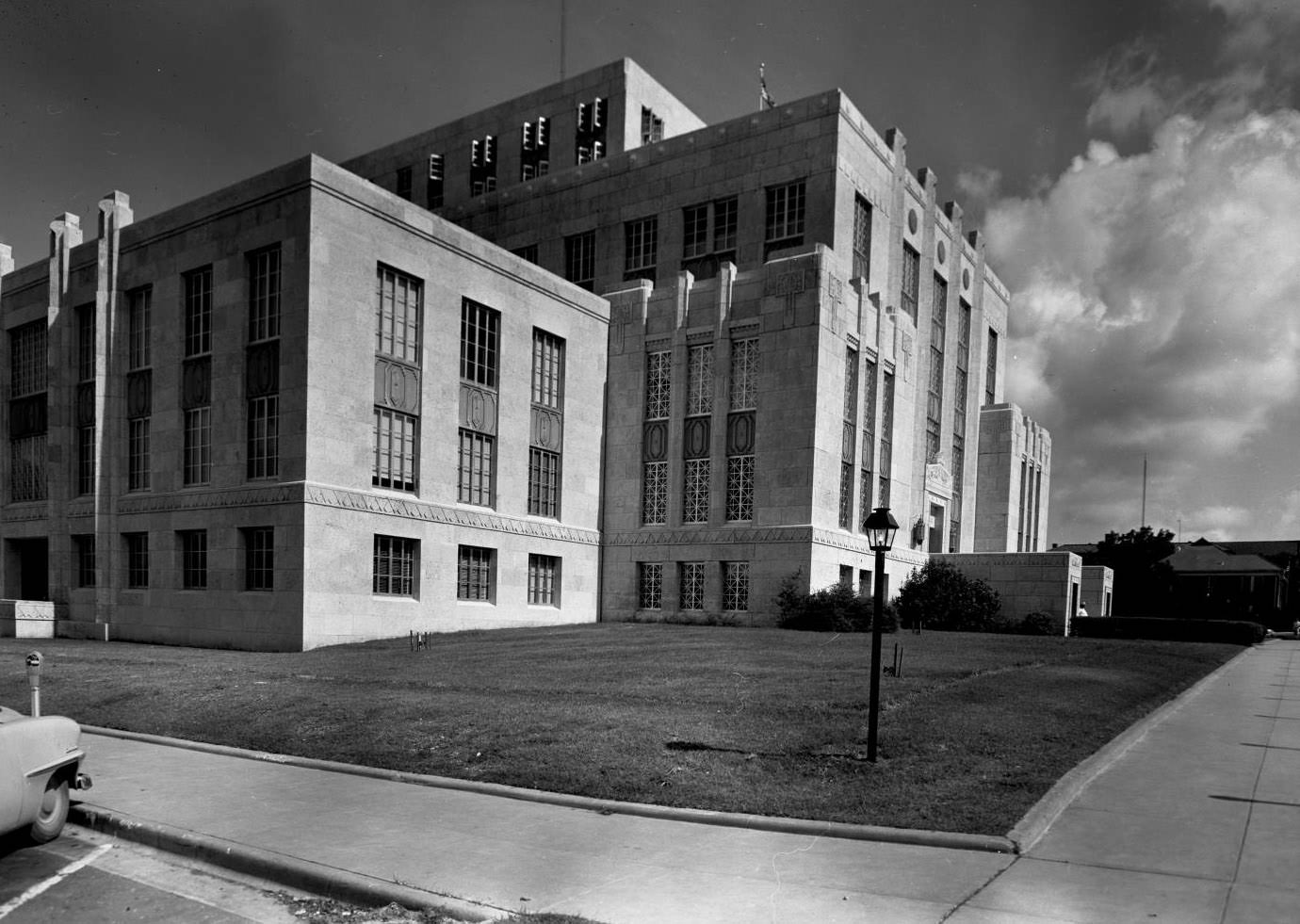
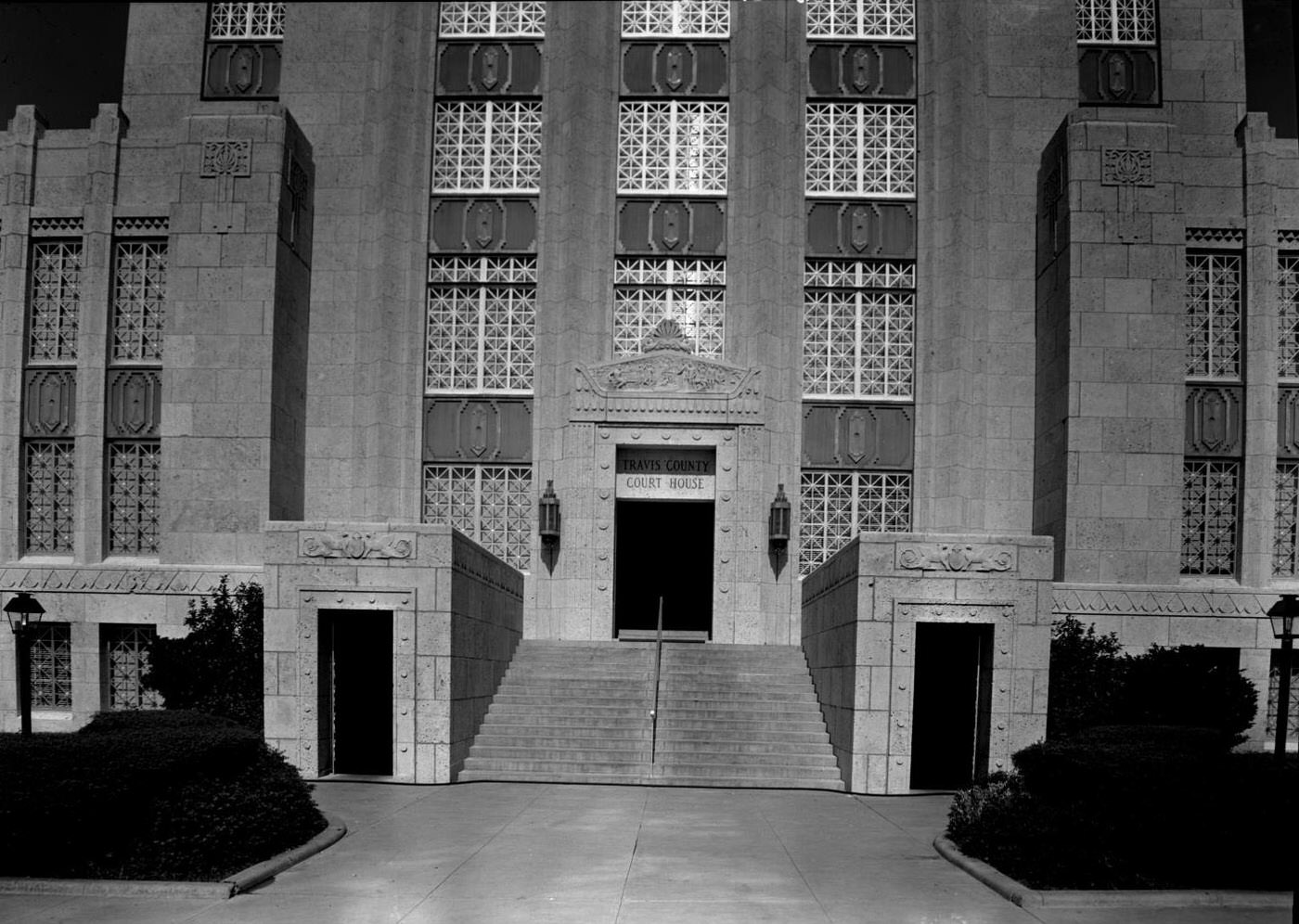
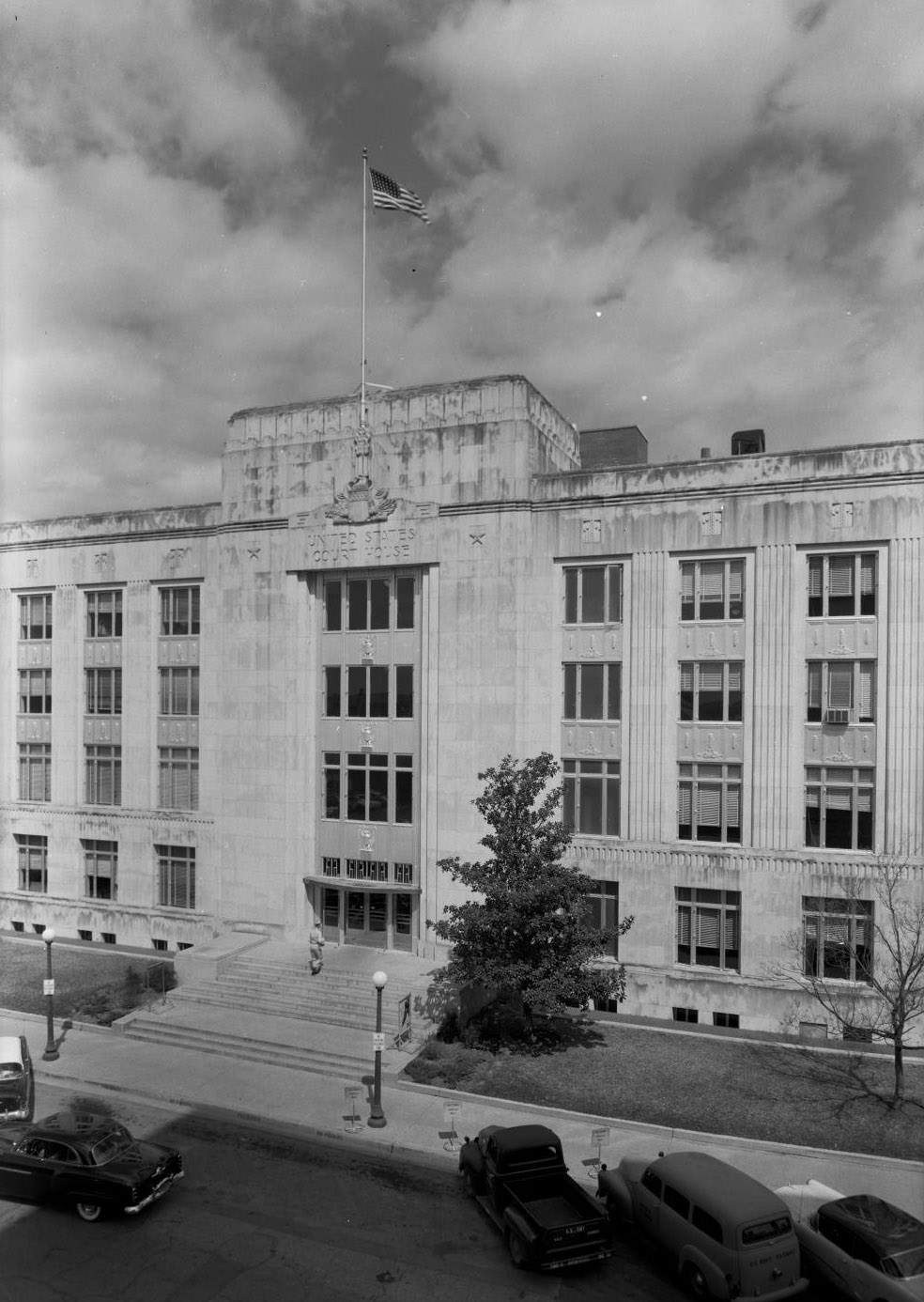
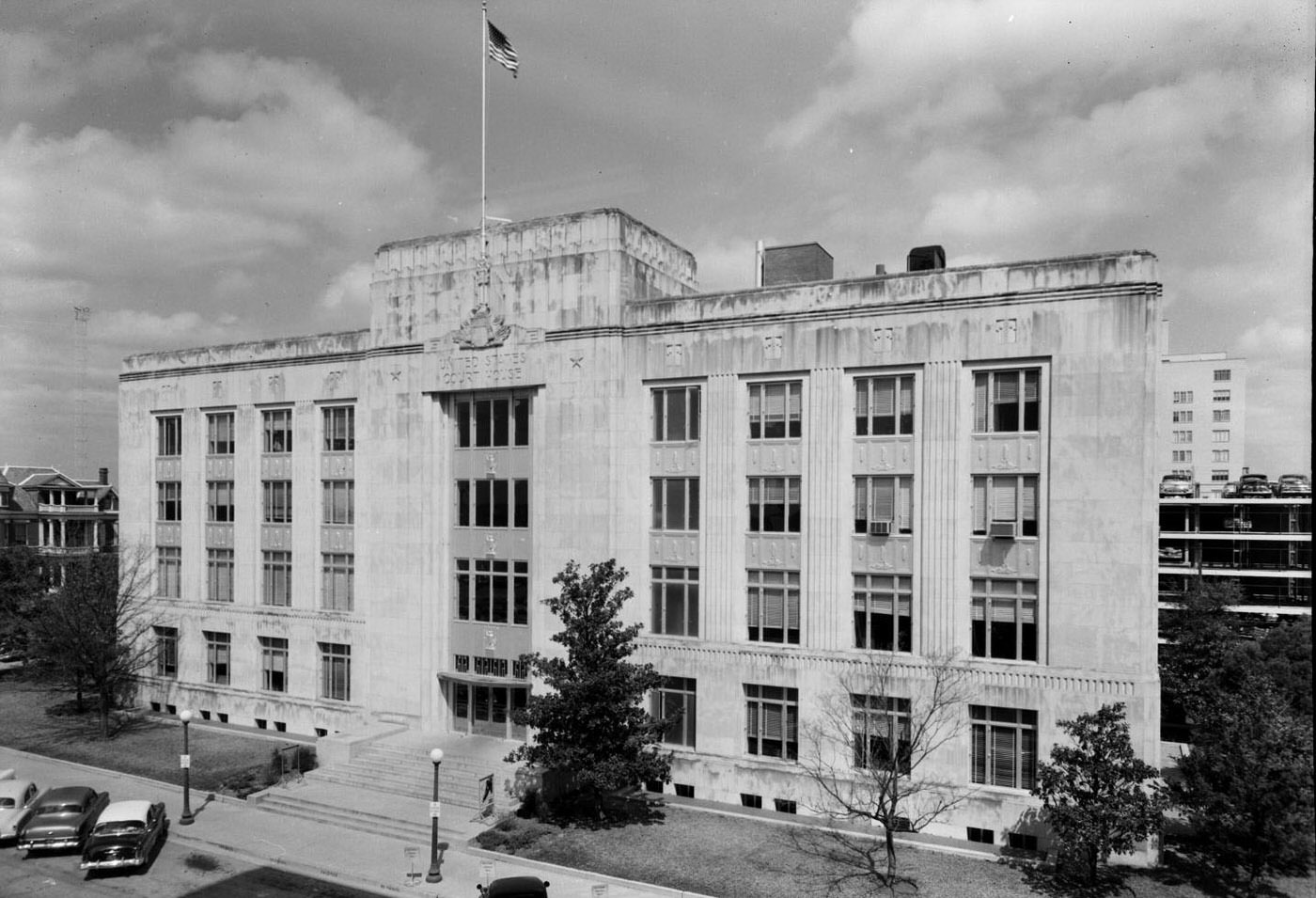
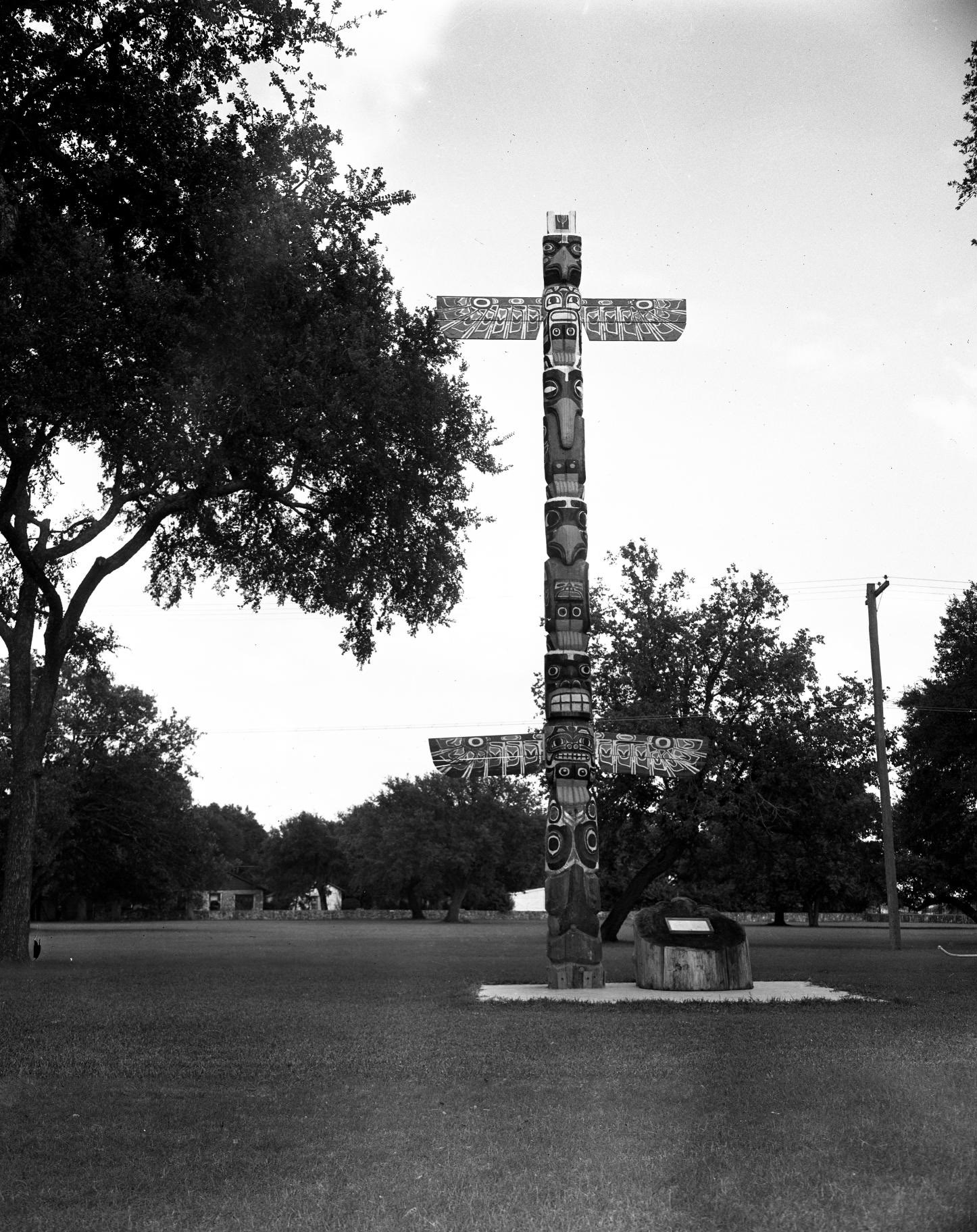
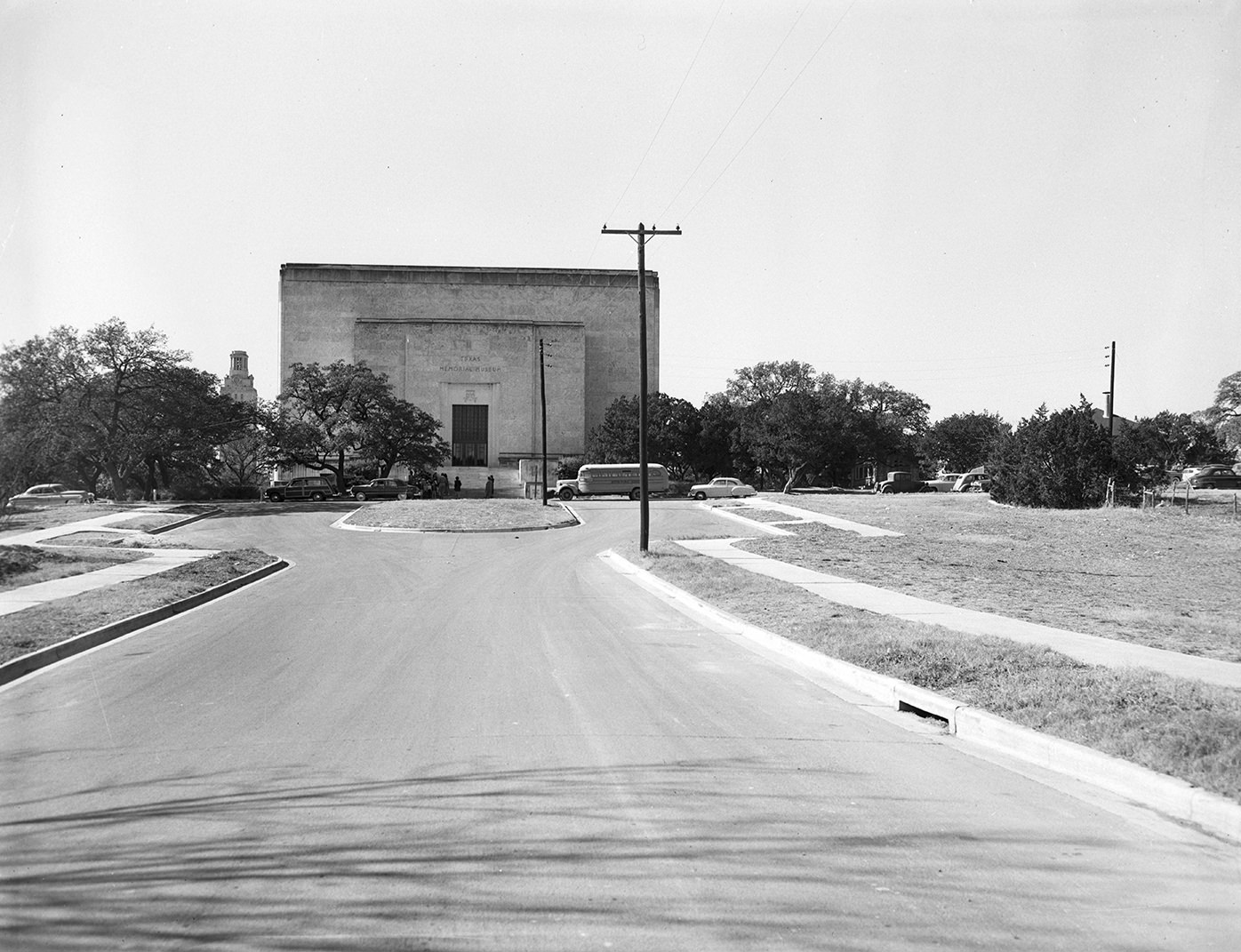
The Travis County Courthouse stood as another symbol of civic authority, its gas-lit entrance photographed from the side in 1959. The U.S. Courthouse and Federal Building were also documented in 1955, reflecting the federal government’s continued physical presence in the state capital. The Texas Memorial Museum held the city’s natural and cultural history, while the Texas Military Forces Museum at Camp Mabry maintained its own distinct character, including a totem pole on the grounds photographed in 1950.
Side View of Travis County Courthouse with Gas Light, 1959Travis County Courthouse Entrance with Gas Lights, 1959Exterior of United States Courthouse in Austin, 1955Federal Building in Austin, 1955Totem Pole at Texas Military Forces Museum, Camp Mabry, 1950Exterior of Texas Memorial Museum in Austin, 1951
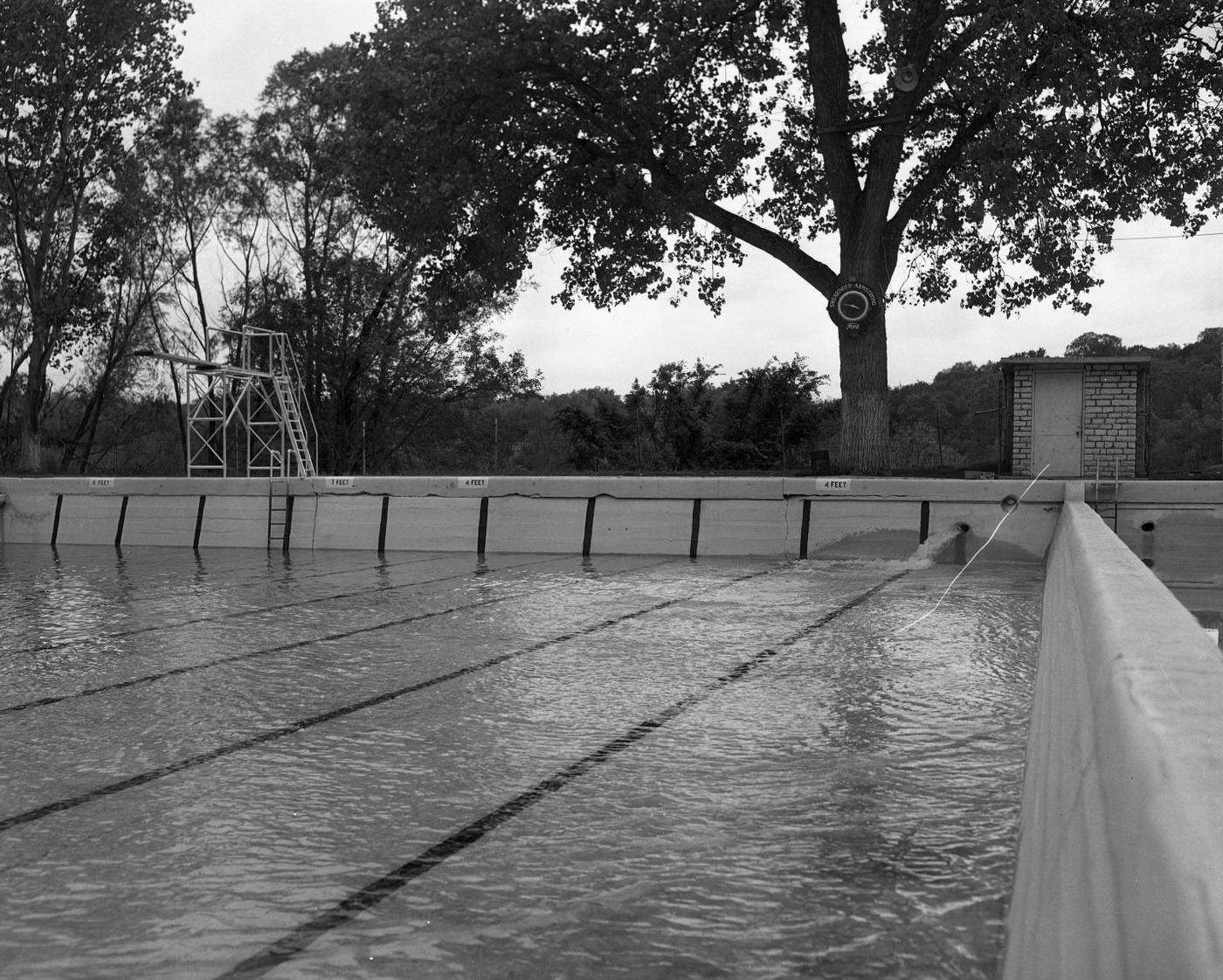
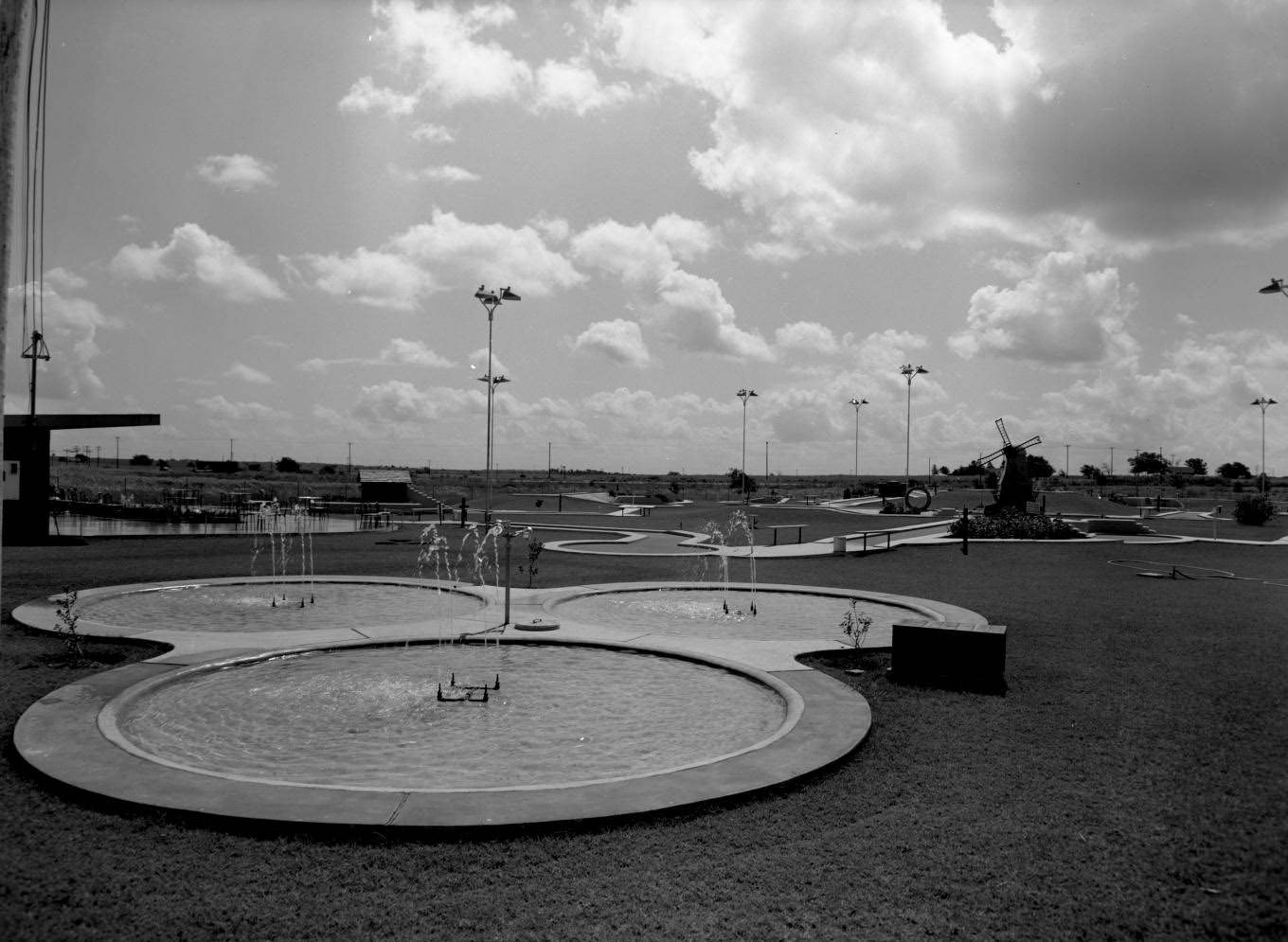
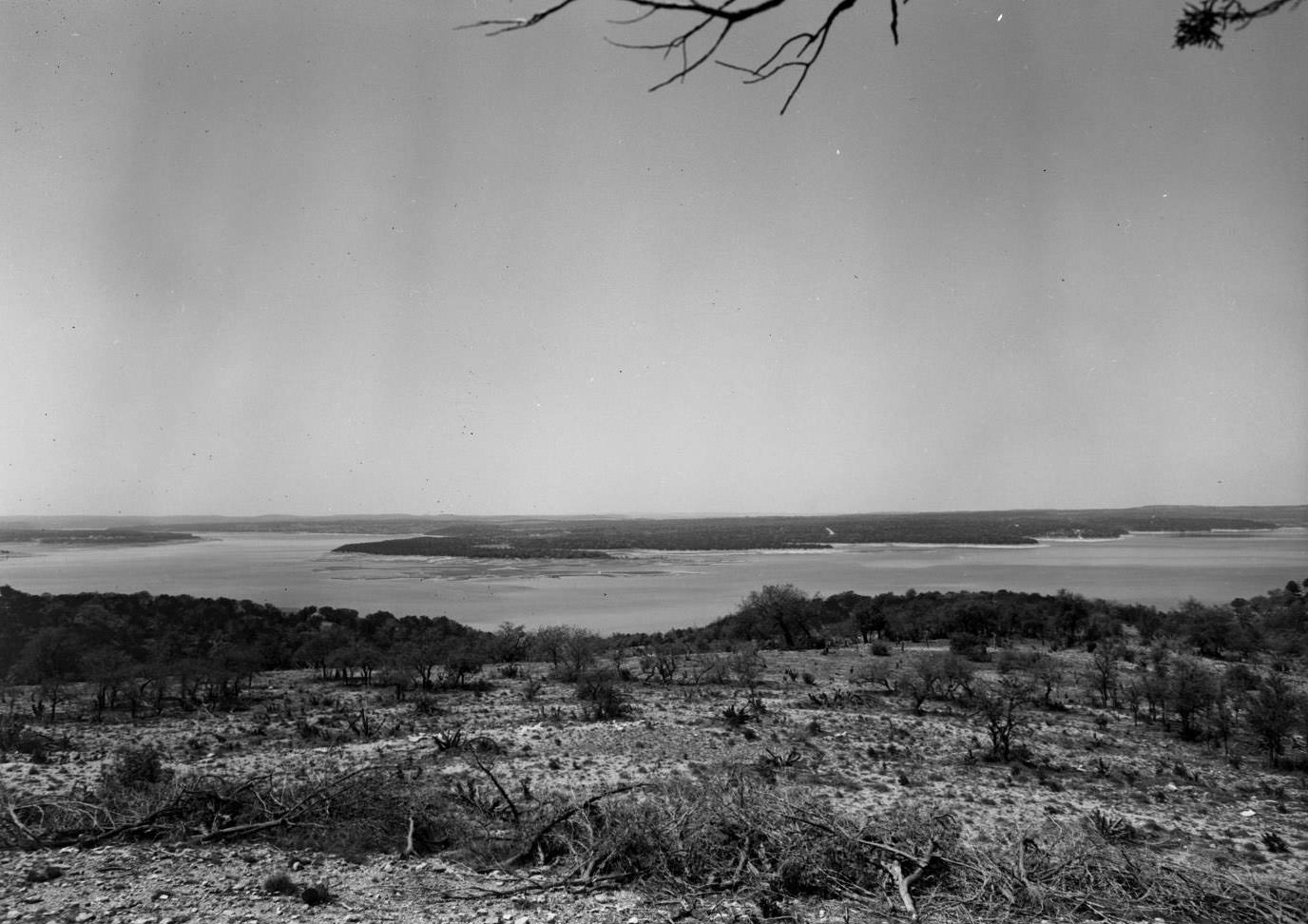
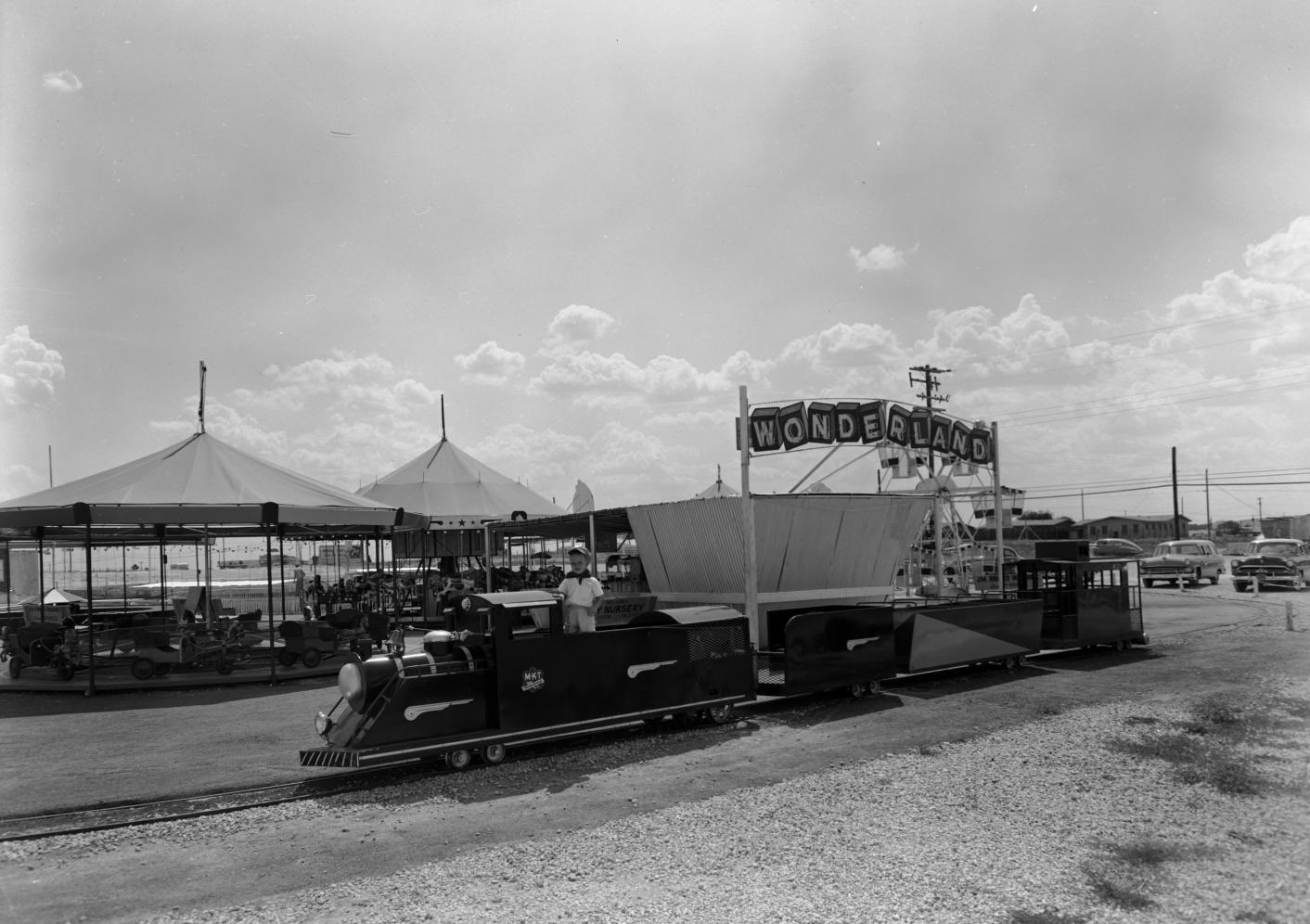
Recreation and leisure also left a photographic record. Deep Eddy Pool was filled with water in a 1950 photograph, preparing for another season of swimmers. Wonderland Kiddy Park offered children a scale model train ride in 1955. Green Acres Miniature Golf, with its windmill, opened by 1958. Lake Travis provided a natural retreat, its shoreline photographed in 1955 with a calm, wide-open view of the water.
Deep Eddy Pool Being Filled with Water, 1950Green Acres Miniature Golf with Windmill, 1958View of Lake Travis from the Shore, 1955Wonderland Kiddy Park with Scale Model Train, 1955
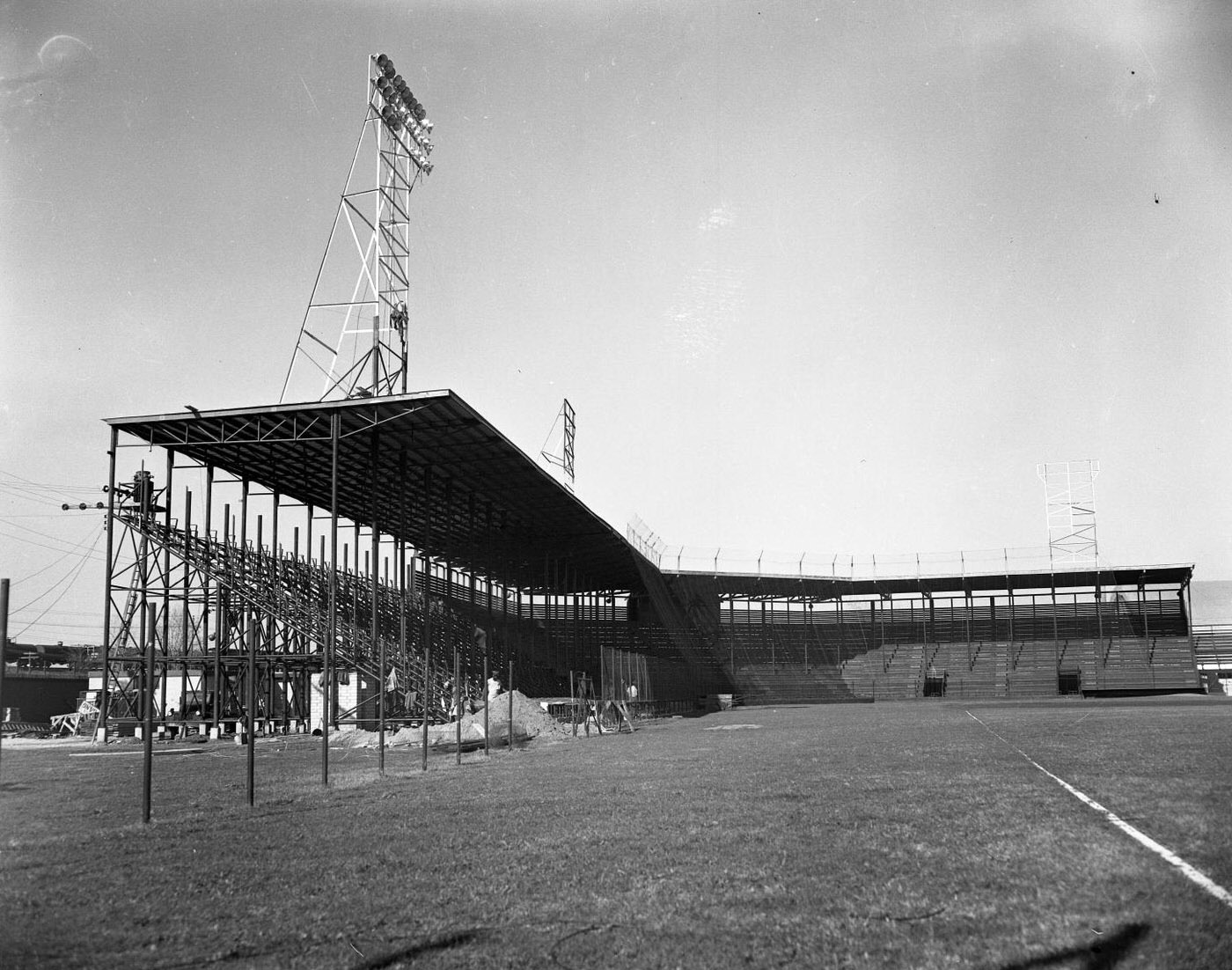
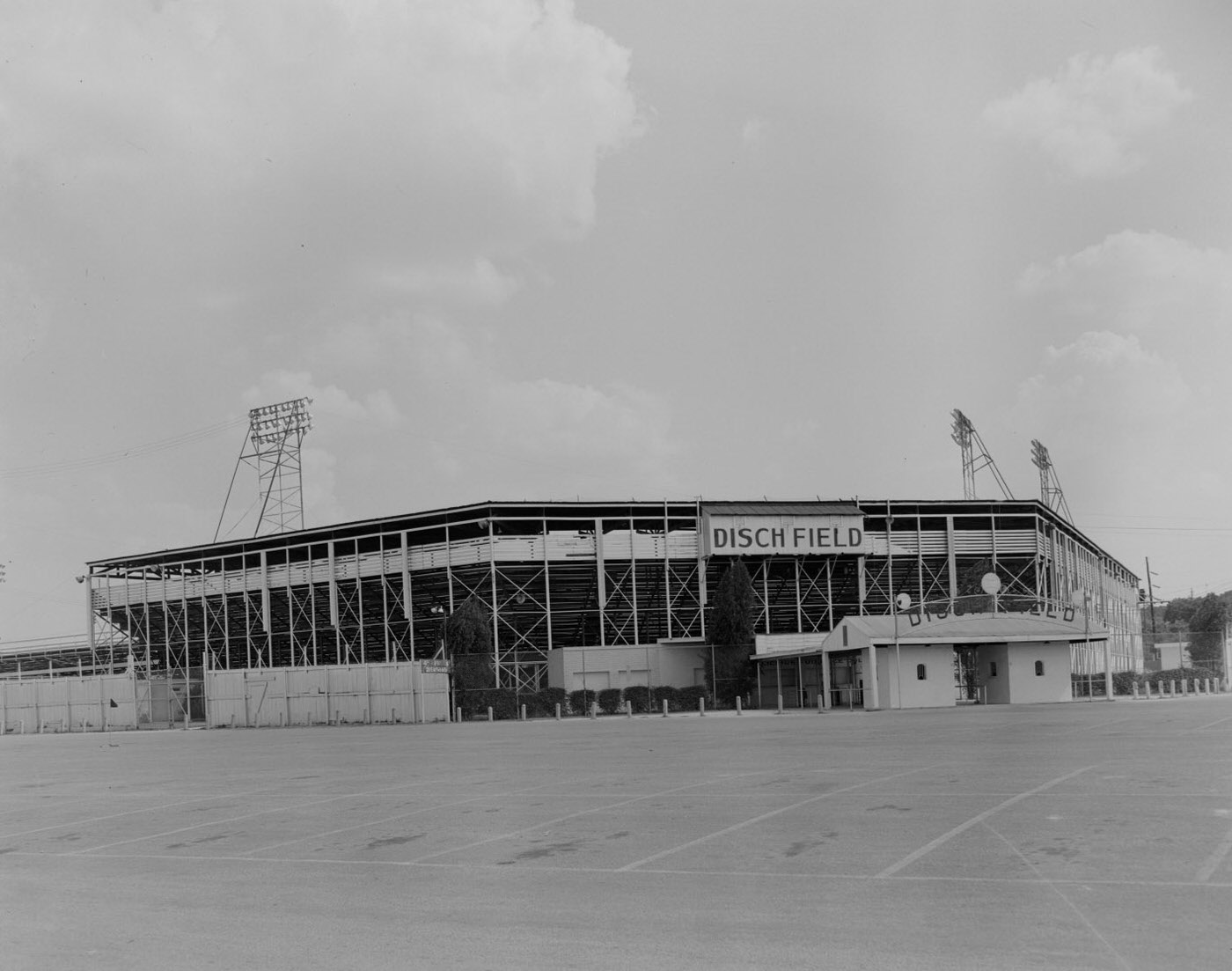
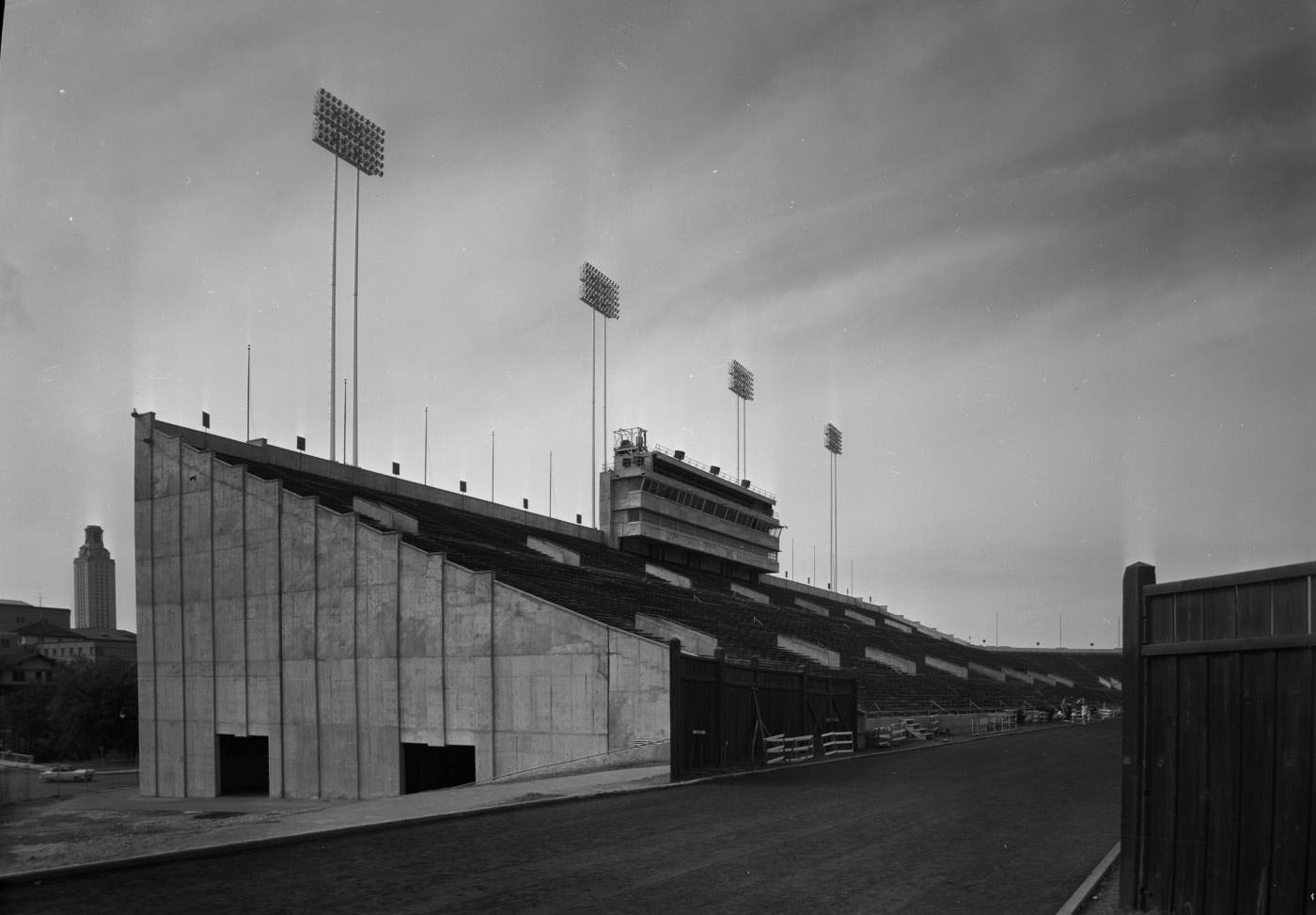
Disch Field, home to UT Austin’s baseball team, was captured in multiple photographs. Construction of the stands was nearly complete in 1950, and by 1959, the facility and its parking lot had taken on a well-worn, established look. Floodlights were installed at UT Memorial Stadium in 1956, extending the ability to play night games. These athletic facilities were part of a broader university identity that was growing more visible across the decade.
Near-Complete Construction of Stands at Disch Field, 1950Exterior of Disch Field and Parking Lot, 1959Installation of Floodlights at UT Memorial Stadium, 1956
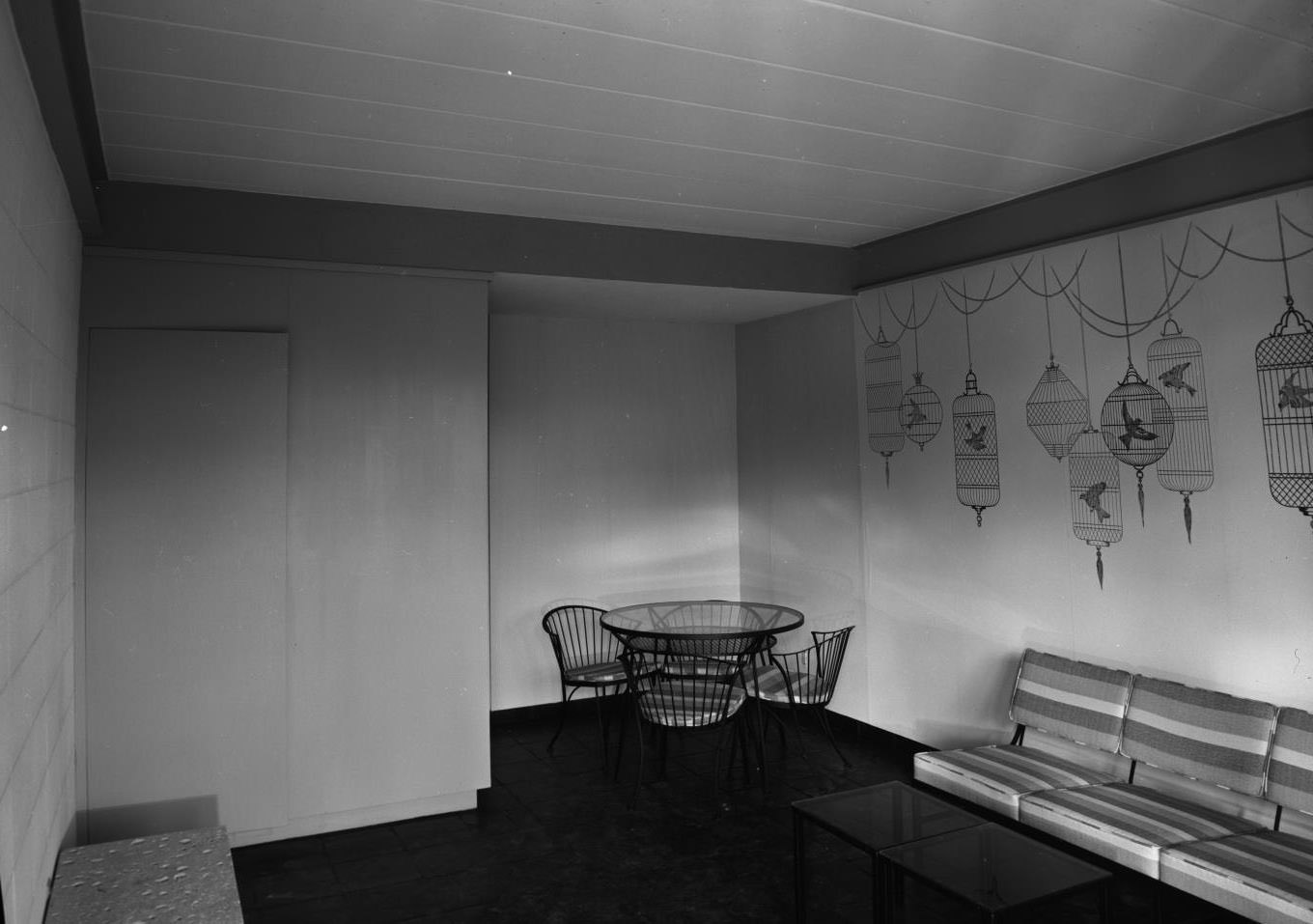
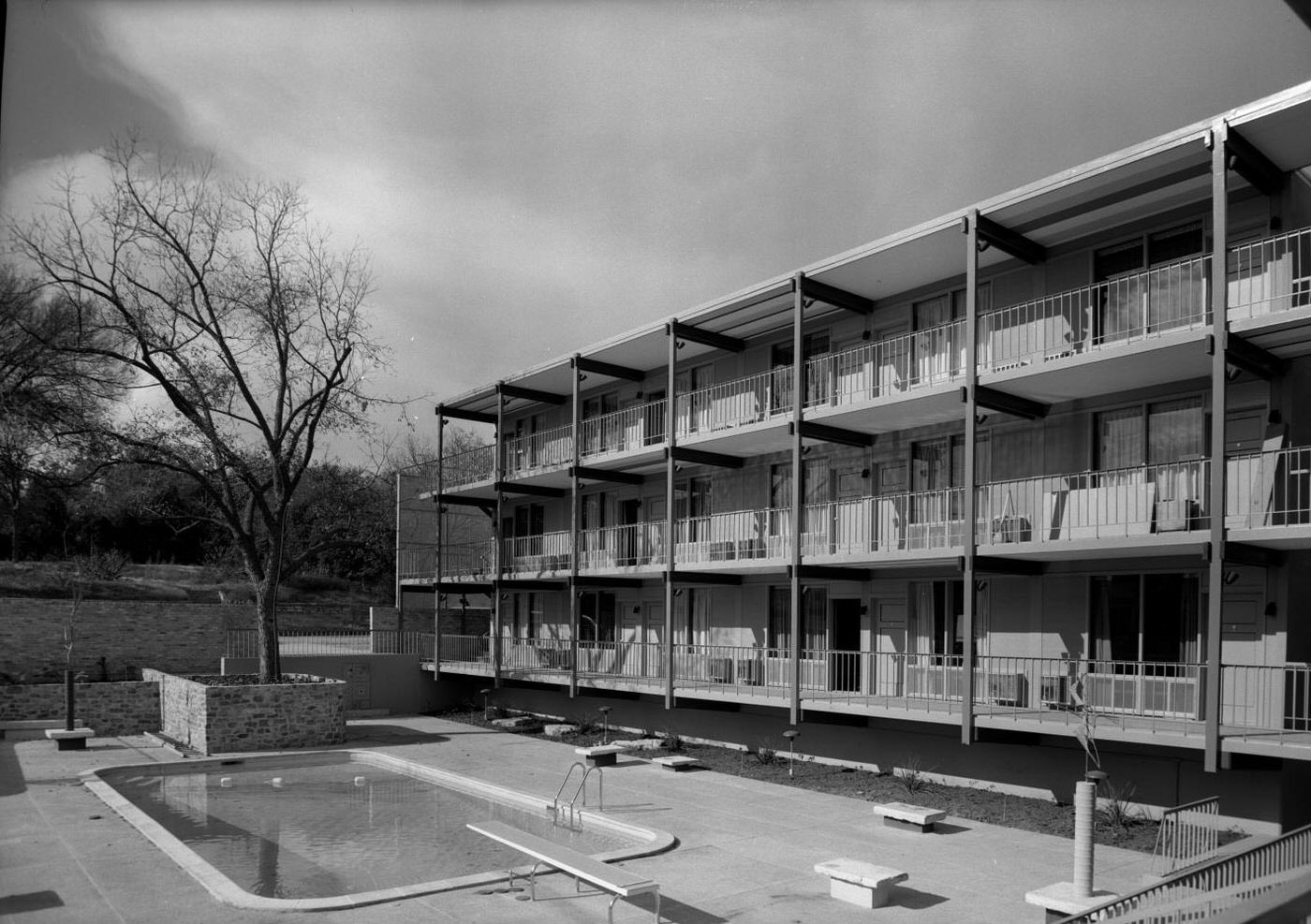
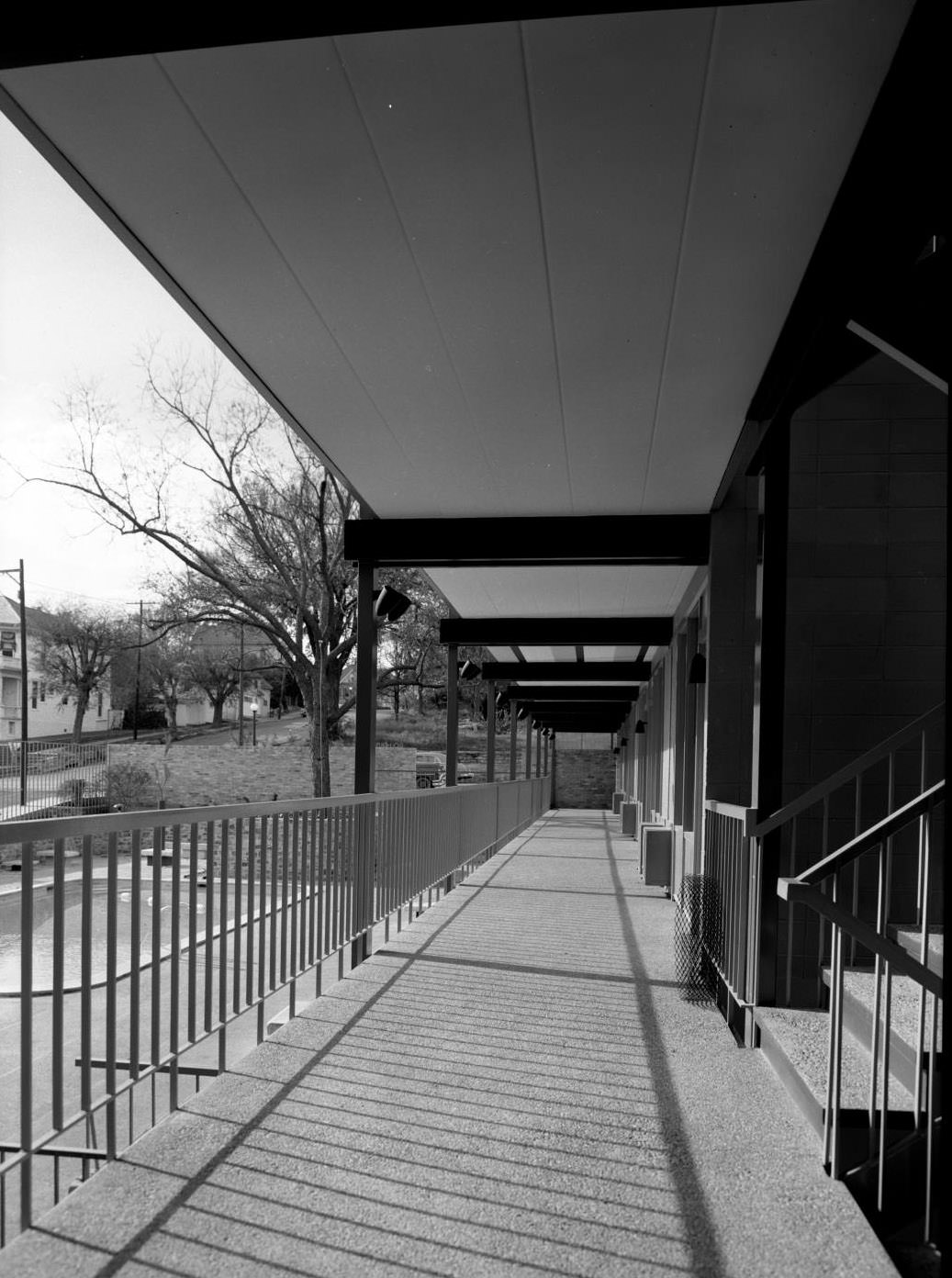
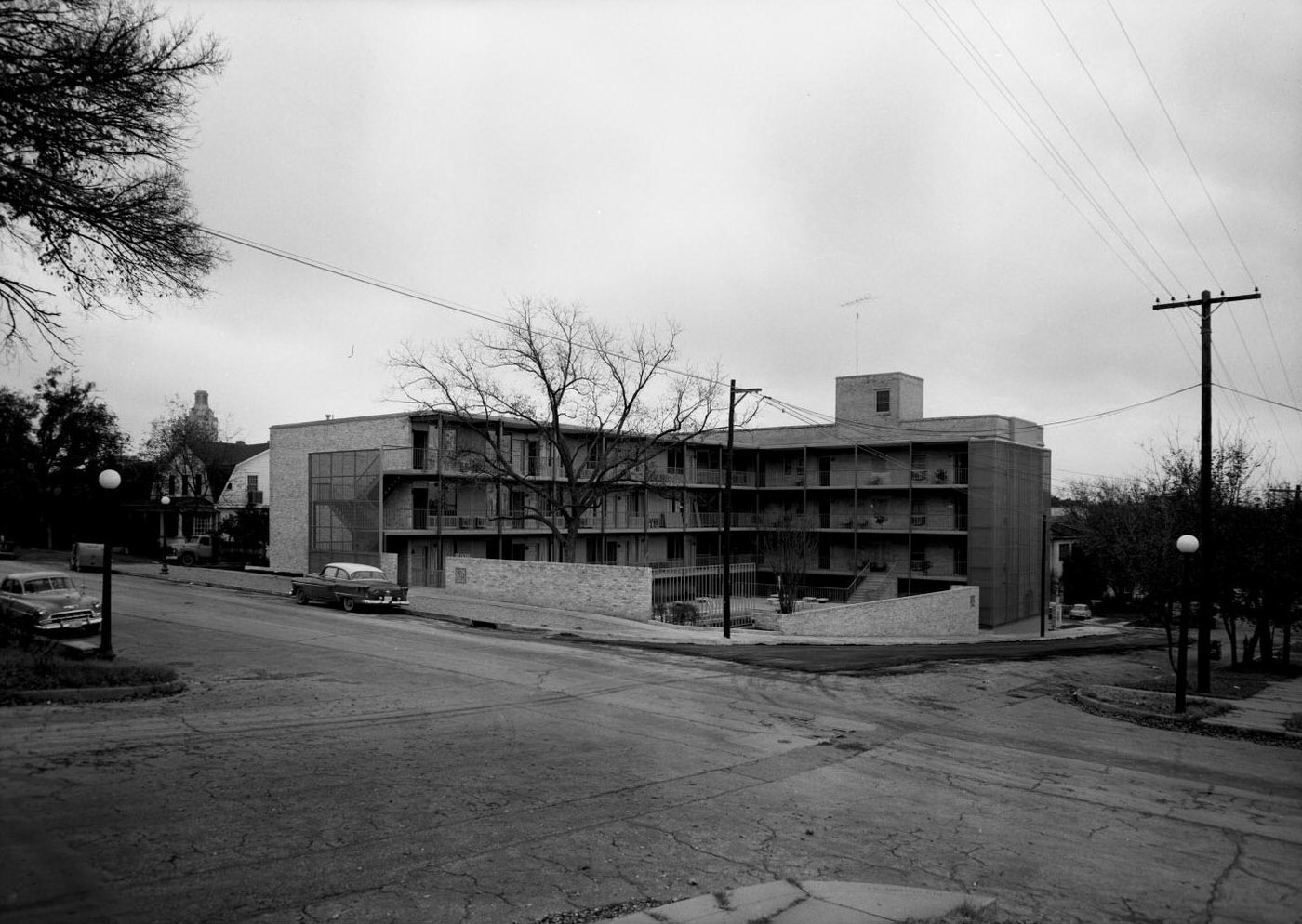
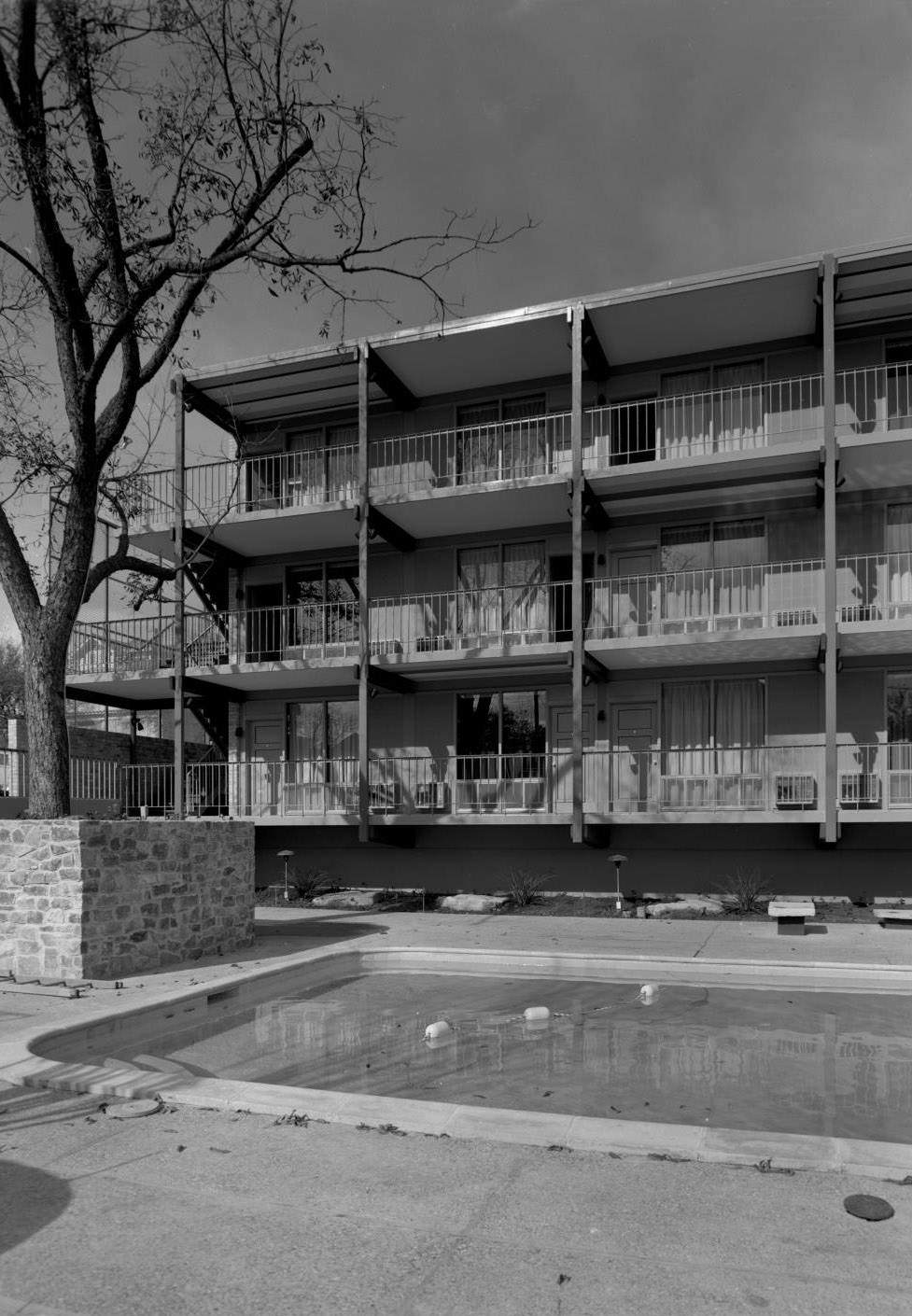
New apartment complexes began appearing as the city’s population density increased. The Rio House Apartments, photographed extensively in 1959, showed a three-story building with a swimming pool, second-floor balconies, and ornate interior wallpaper. The UT Tower was visible in the background from the southwest corner — a reminder of how close this new urban housing was to the university that helped drive demand for it.
Rio House Apartments, Interior View of Living and Dining Areas With Ornate Wallpaper, 1959Rio House Apartments, Exterior View and Swimming Pool, 1959Rio House Apartments, Second Floor Balcony View, 1959Rio House Apartments, View From Southwest Corner With University Tower in Background, 1959Rio House Apartments, Three-Story Building and Swimming Pool, 1959
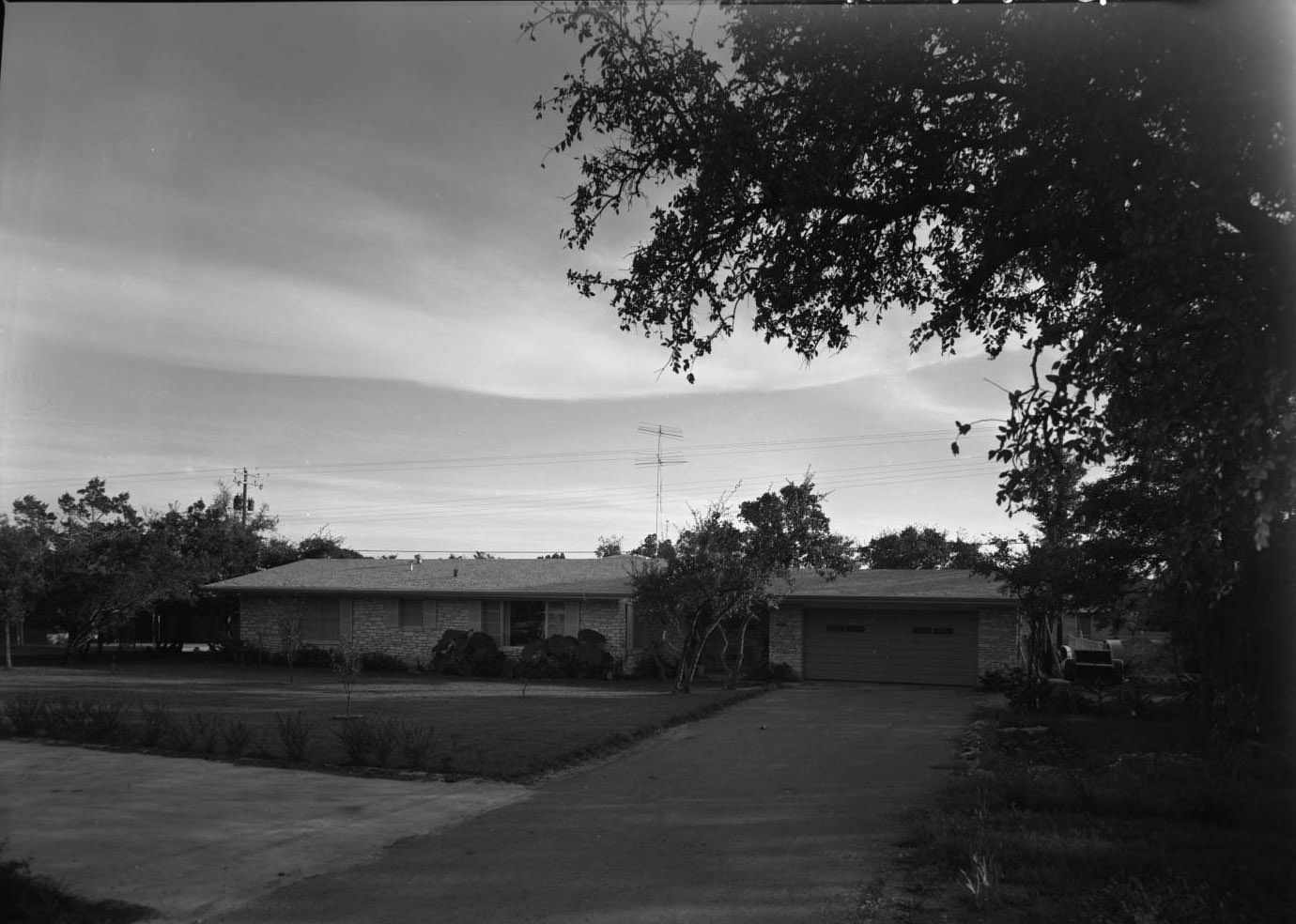
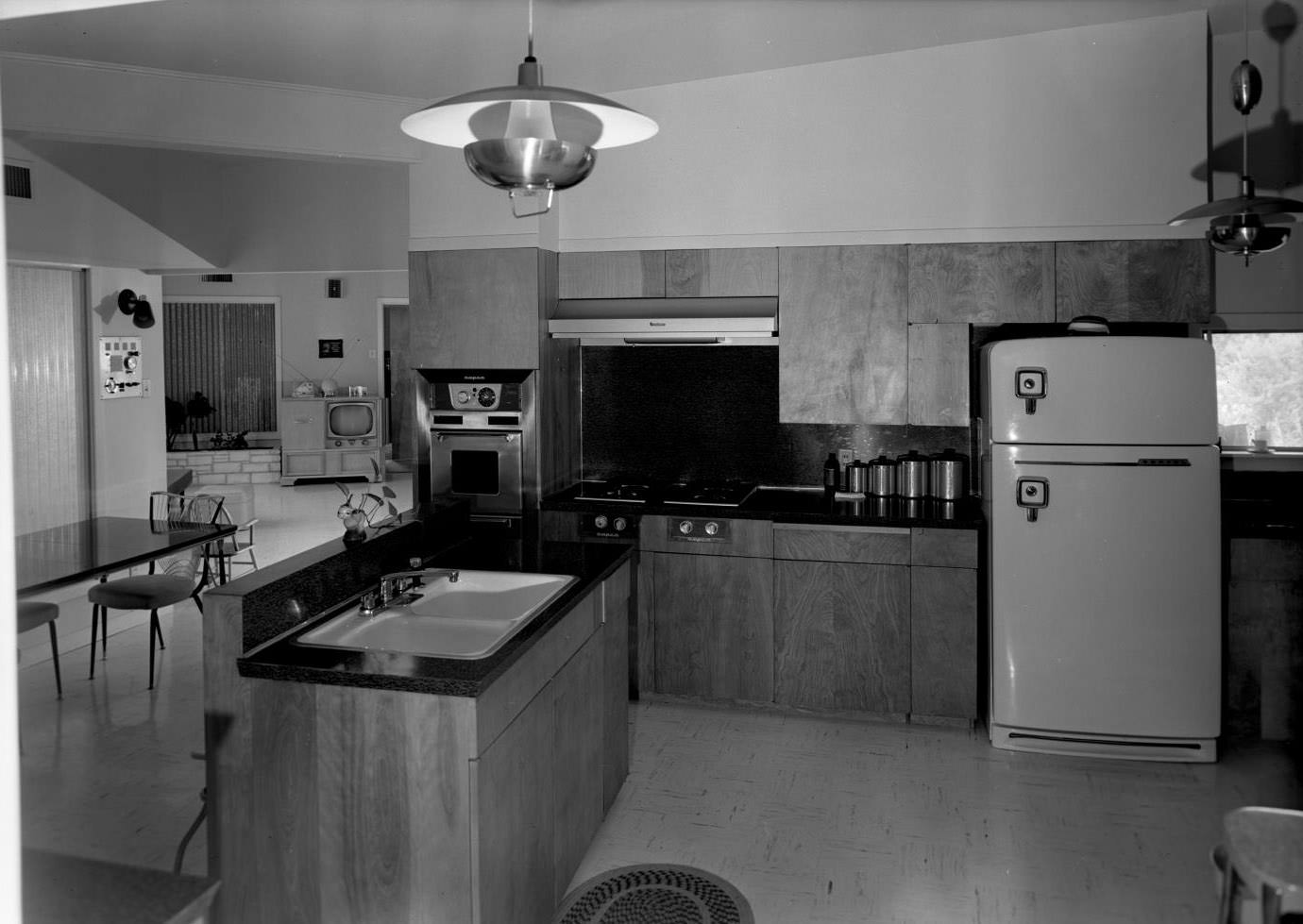
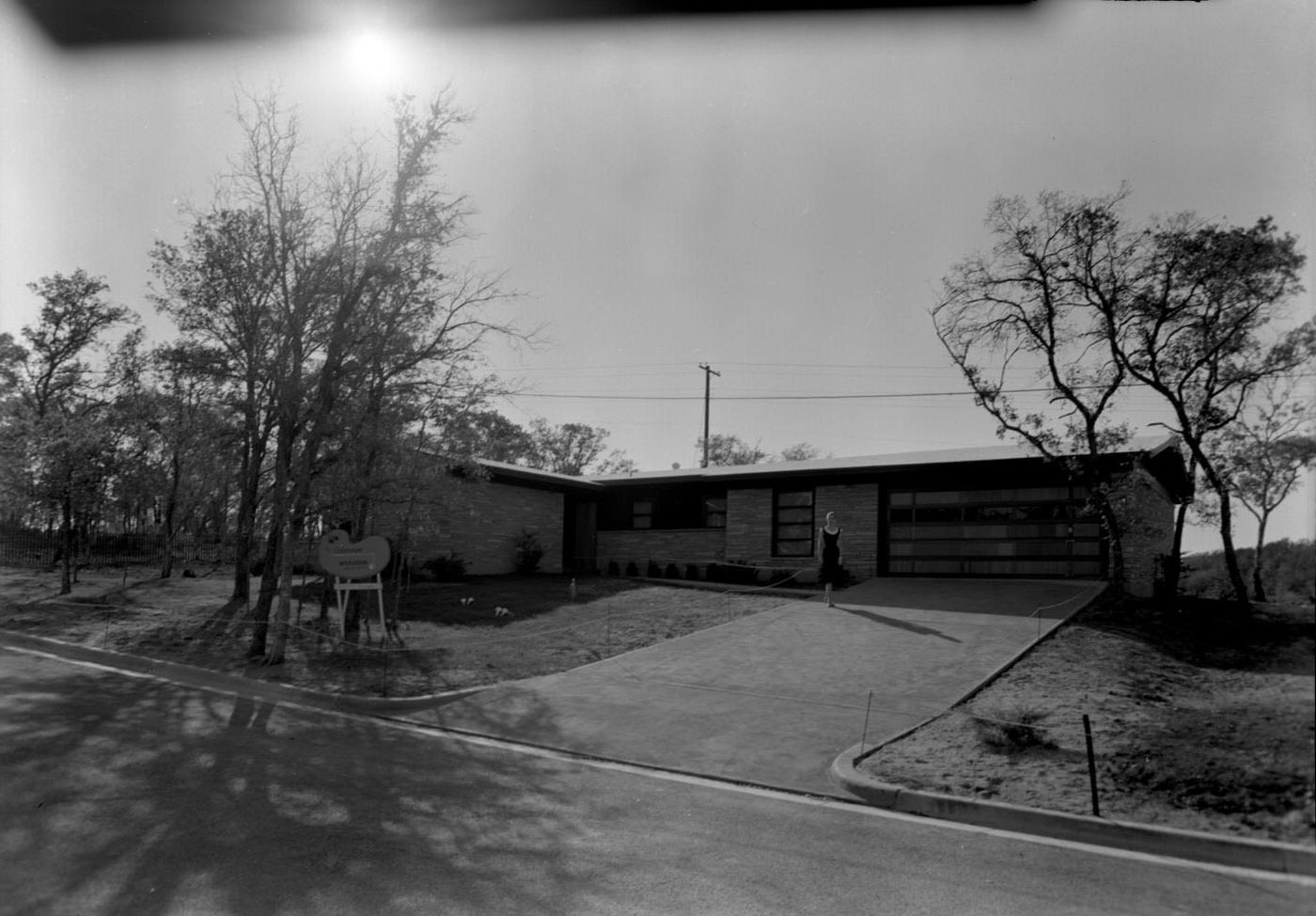
Single-family home construction defined the suburban experience. The 1959 ranch-style Harry McKee home in Rollingwood captured the era’s preferred residential aesthetic — low-slung, brick-clad, with a neat driveway. Wilkerson Built homes were advertised with a woman standing in the driveway in 1956. Inside, model kitchens like the one in the Olson House showed the era’s vision of modern domesticity, complete with new appliances and clean countertops.
1950s Ranch-Style Harry McKee Home in Rollingwood, 1959.Model Kitchen in Olson House, 1957Fireplace Installation at 2413 Pemberton Place, 1955Wilkerson Built Home with Woman in Driveway, 1956
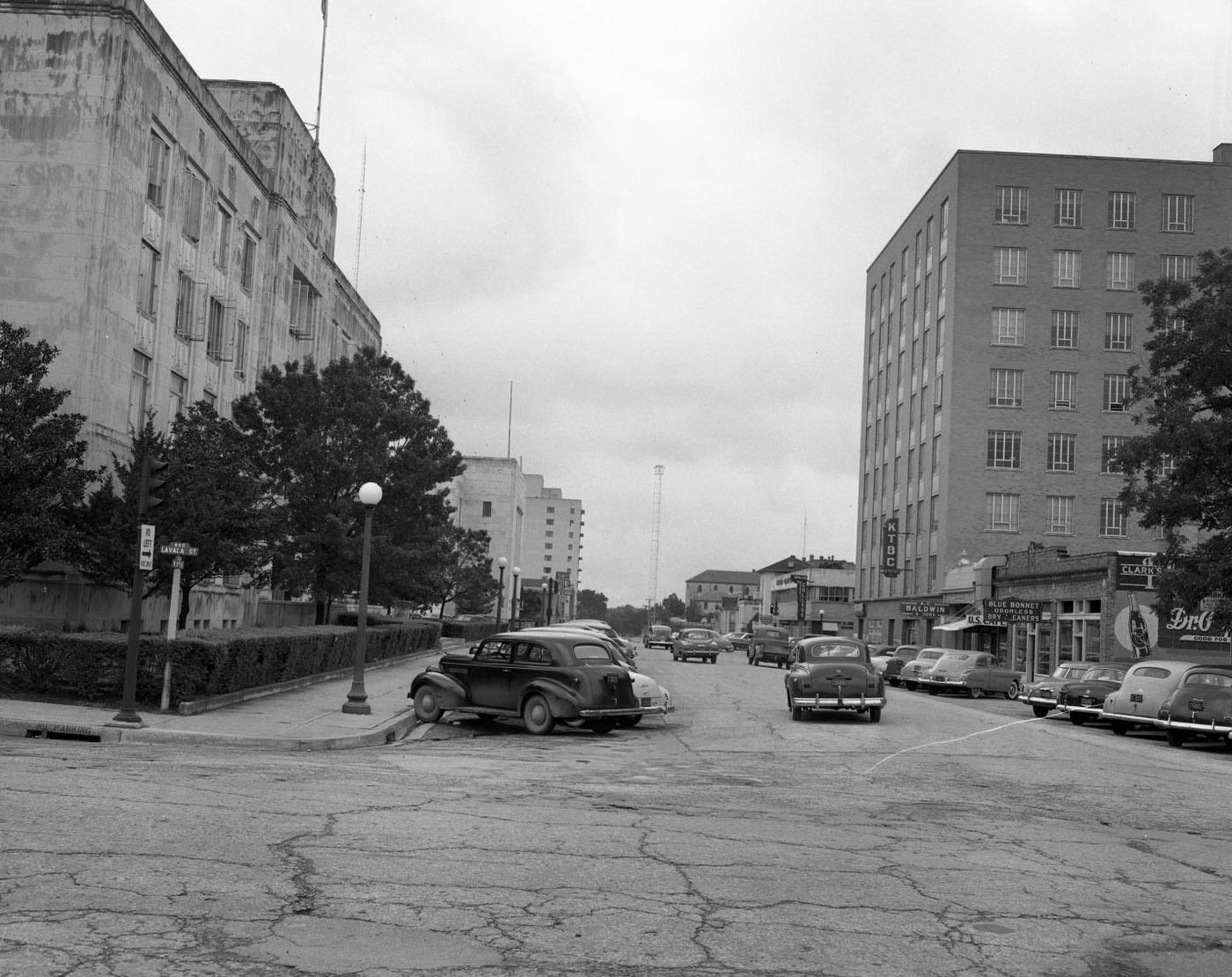
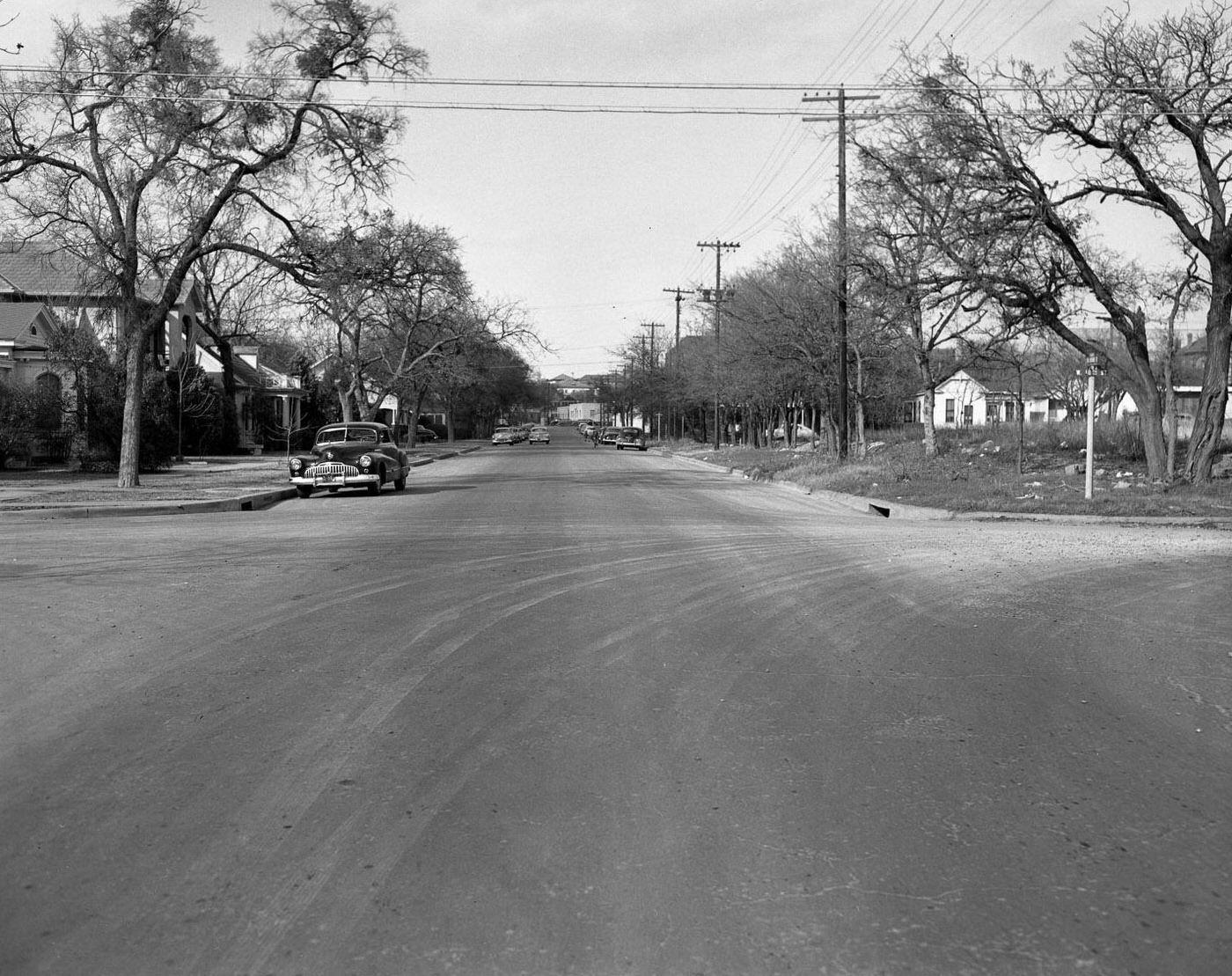
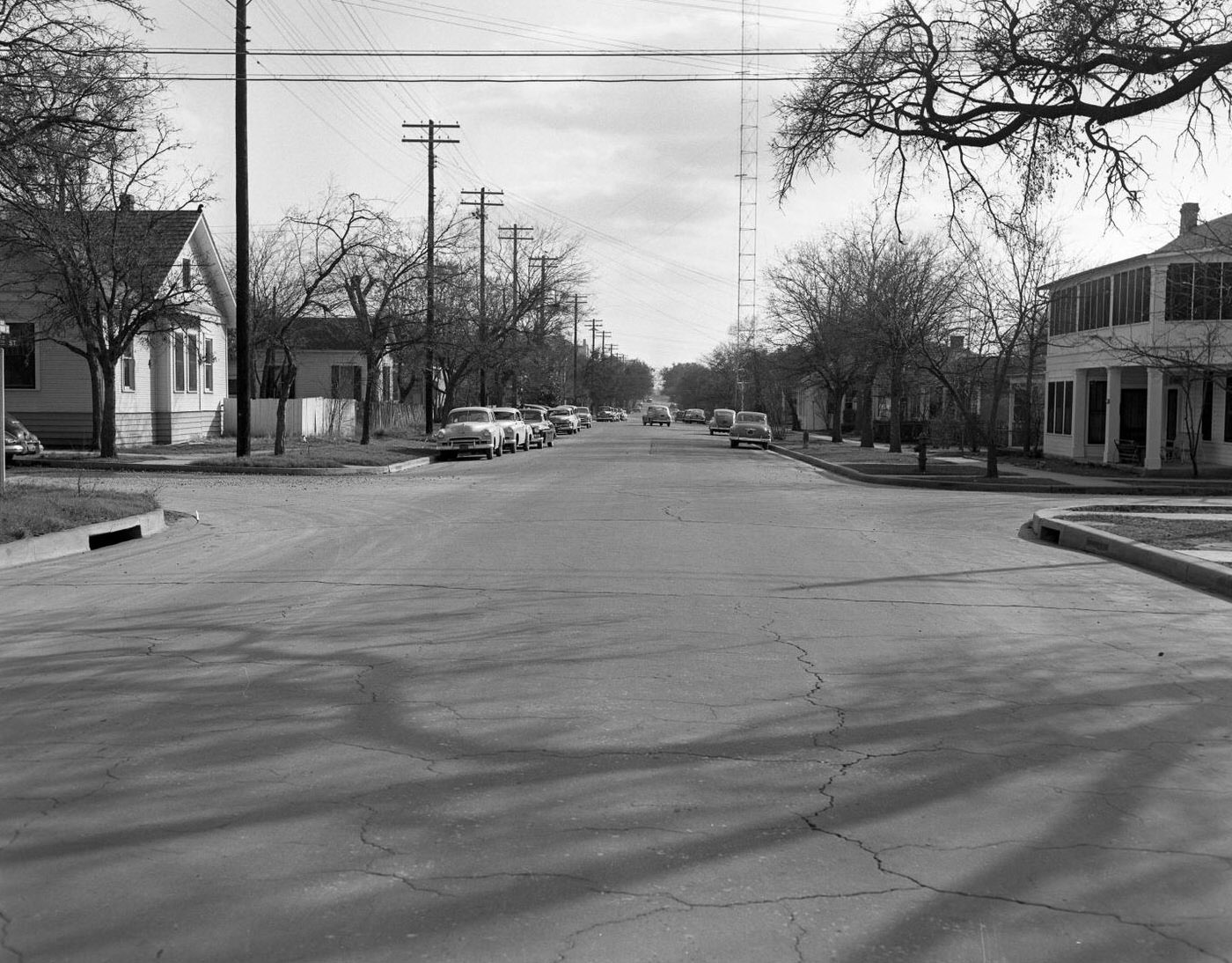
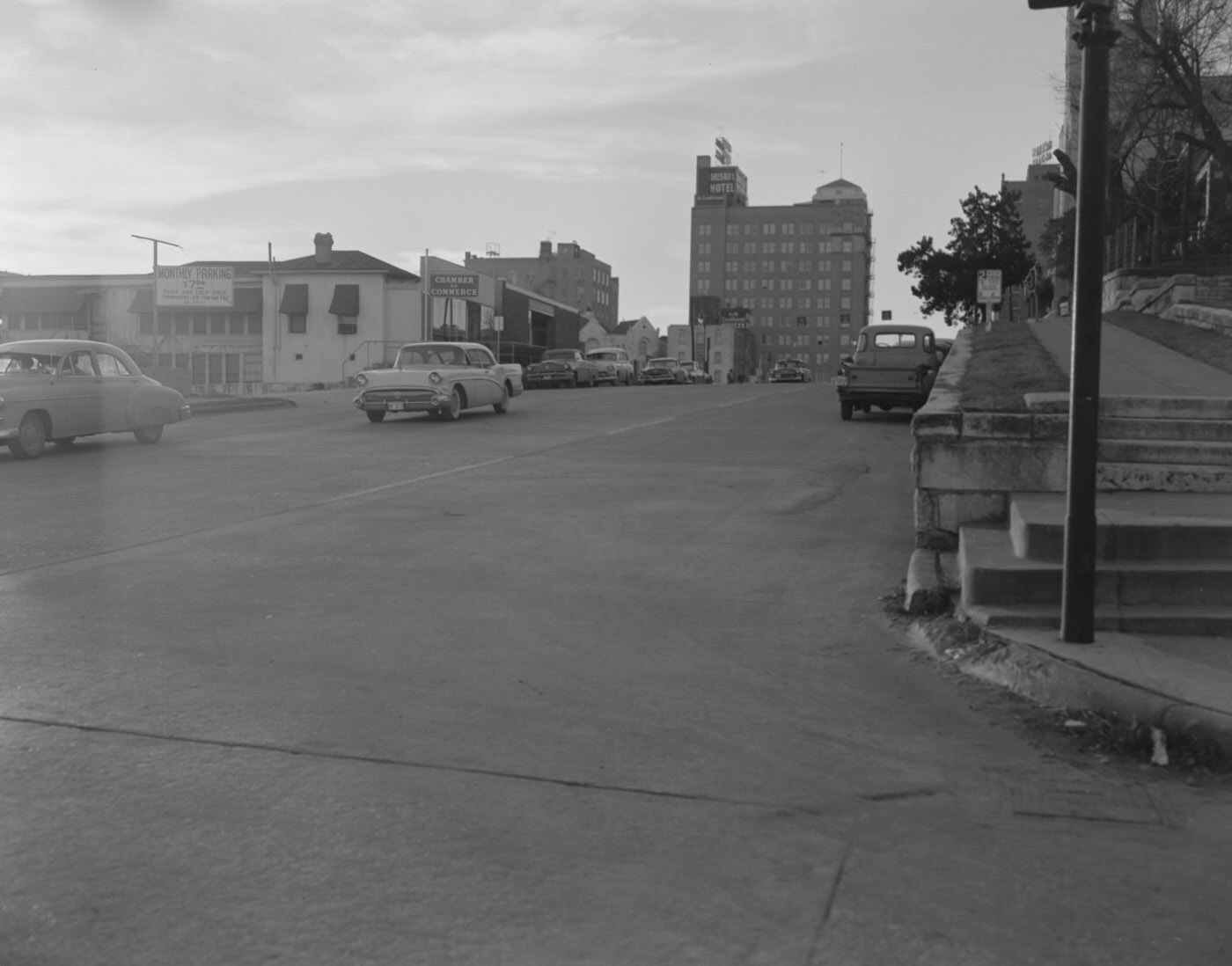
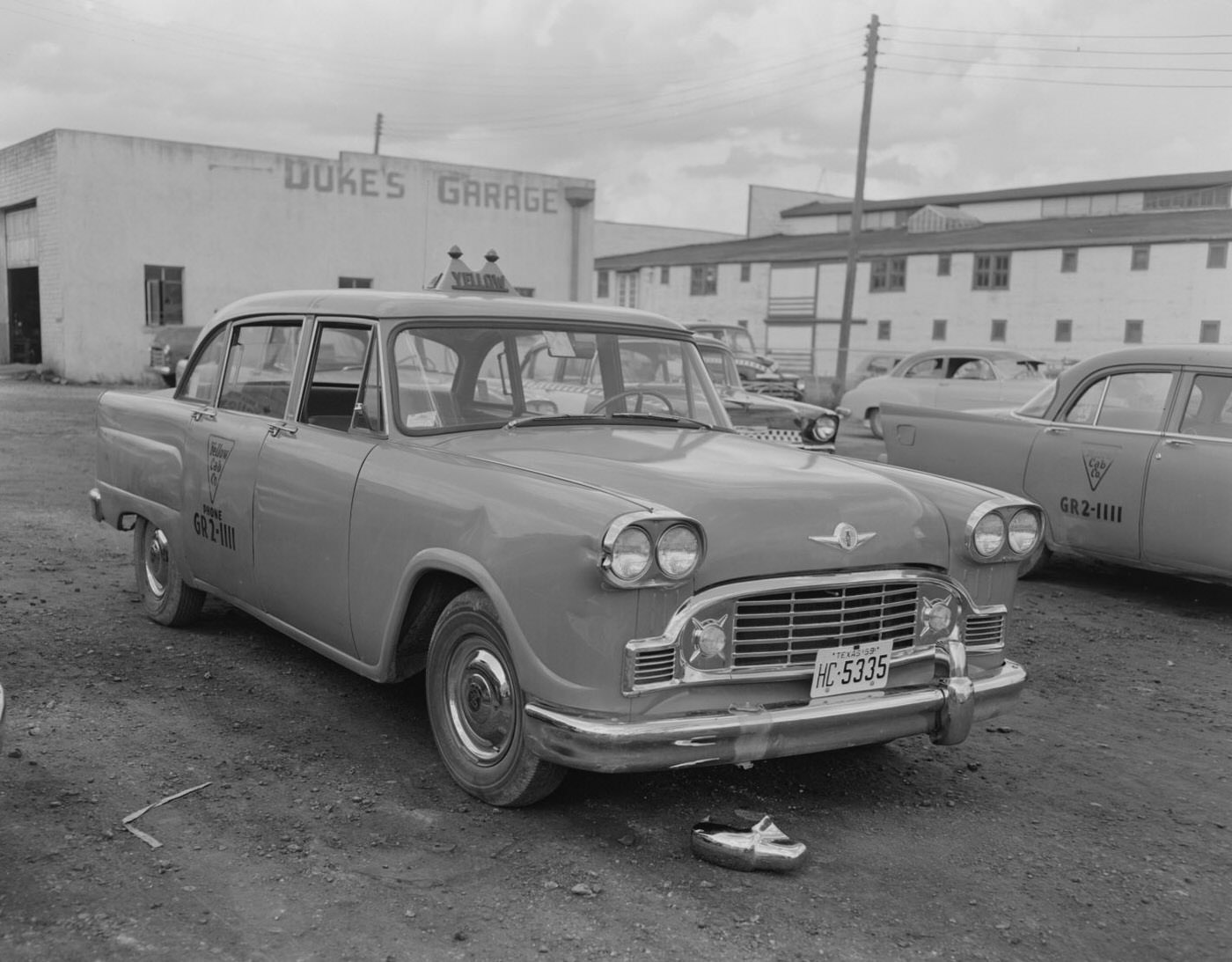
Across the decade, city streets captured the texture of everyday Austin life — street corners with parked cars, ribbon-cutting ceremonies for new businesses, Yellow Cab taxis near Duke’s Garage, and the Driskill Hotel anchoring the corner of 7th and Trinity. Each photograph tells a specific story. Together, they form a comprehensive visual record of a city growing faster than it could fully plan for, shaped by economic ambition, demographic change, and the routines of ordinary people going about their daily lives.
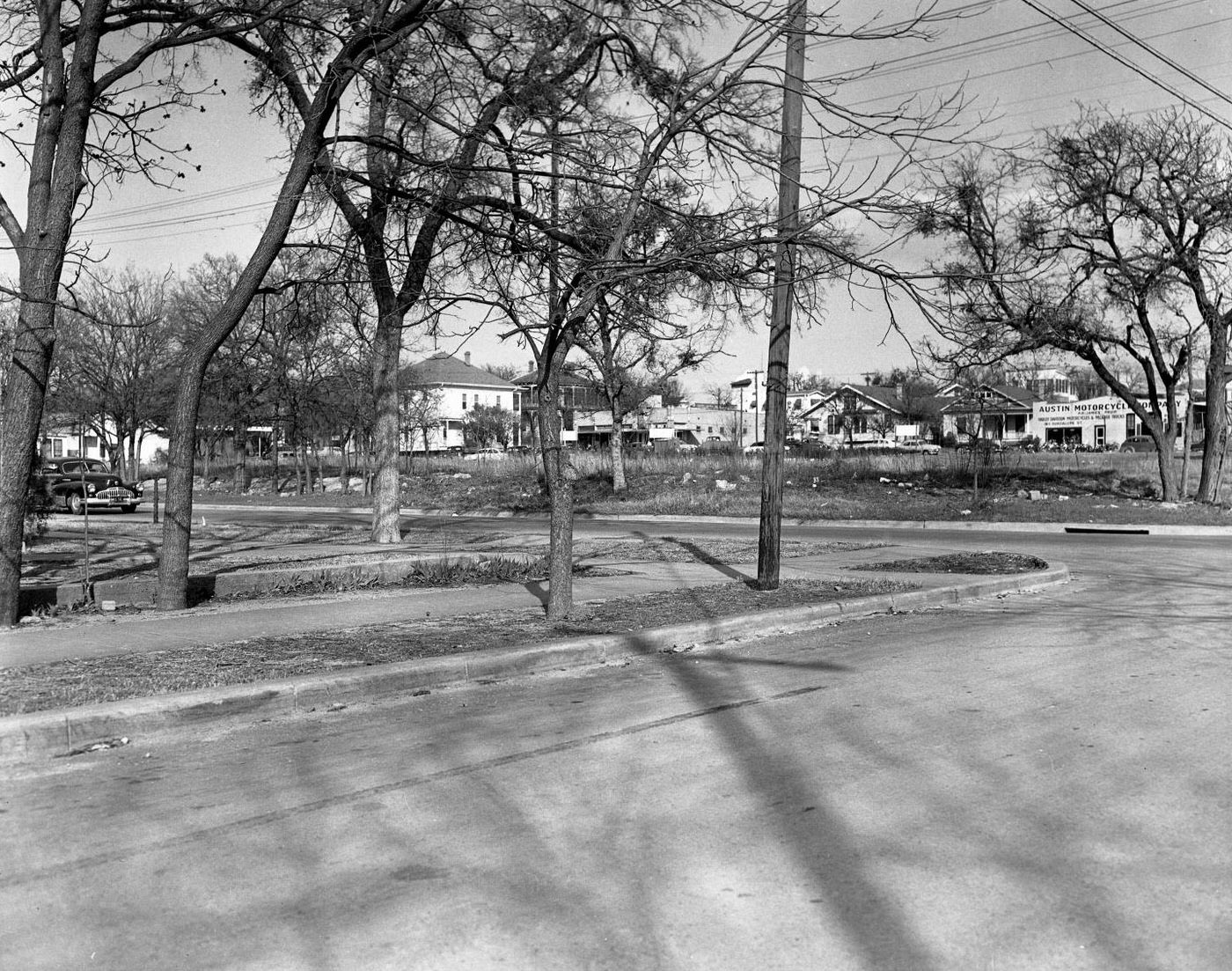
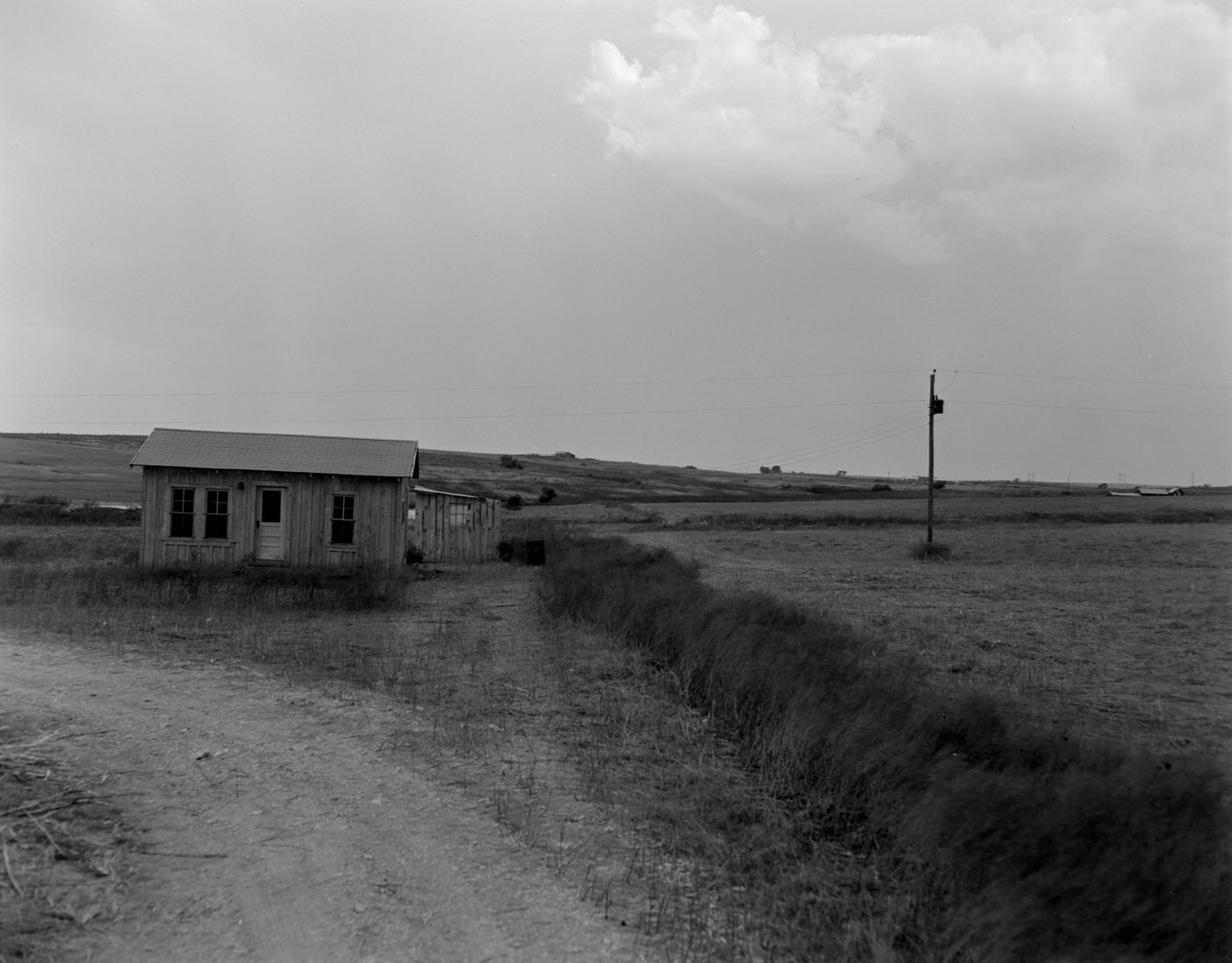
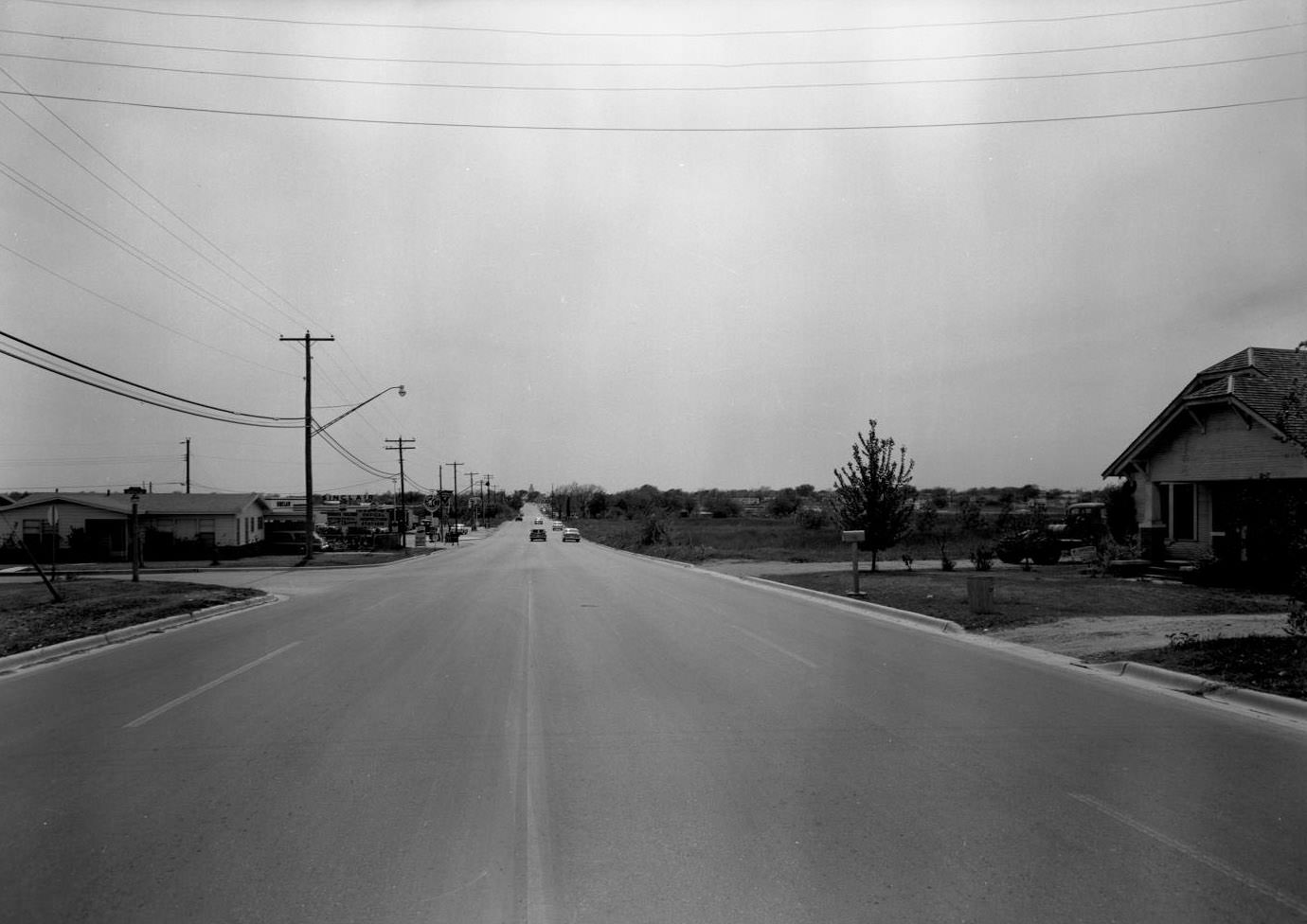
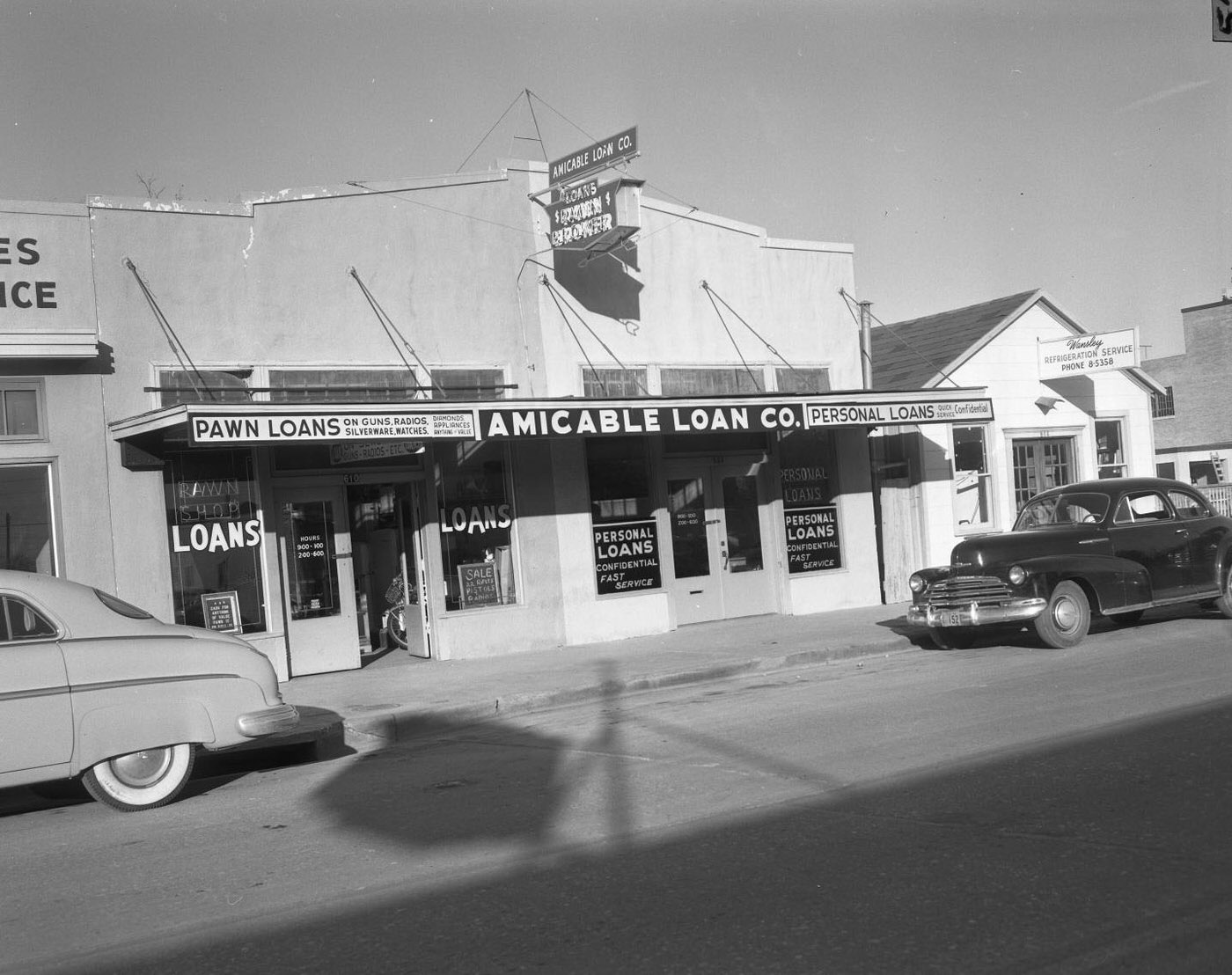
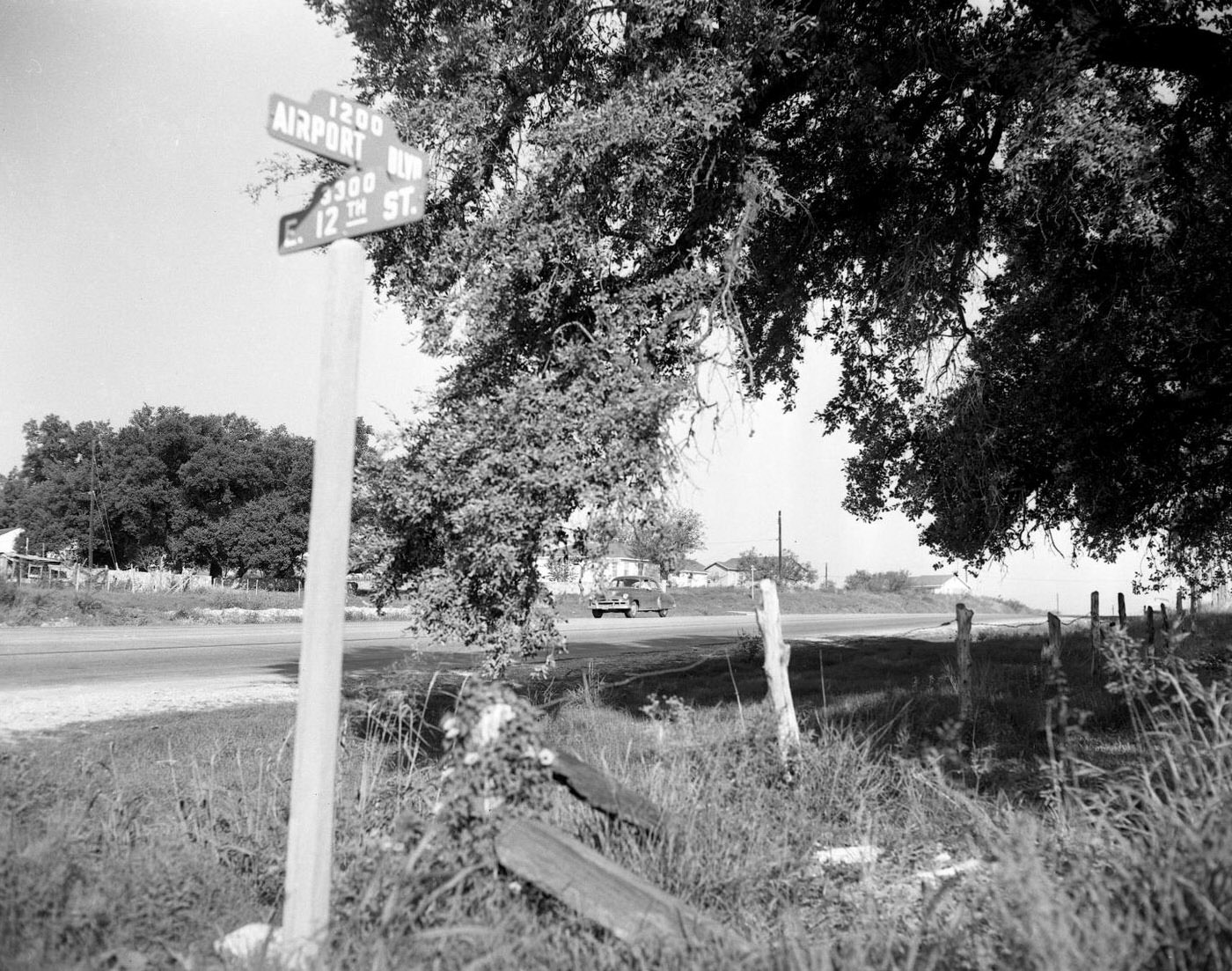
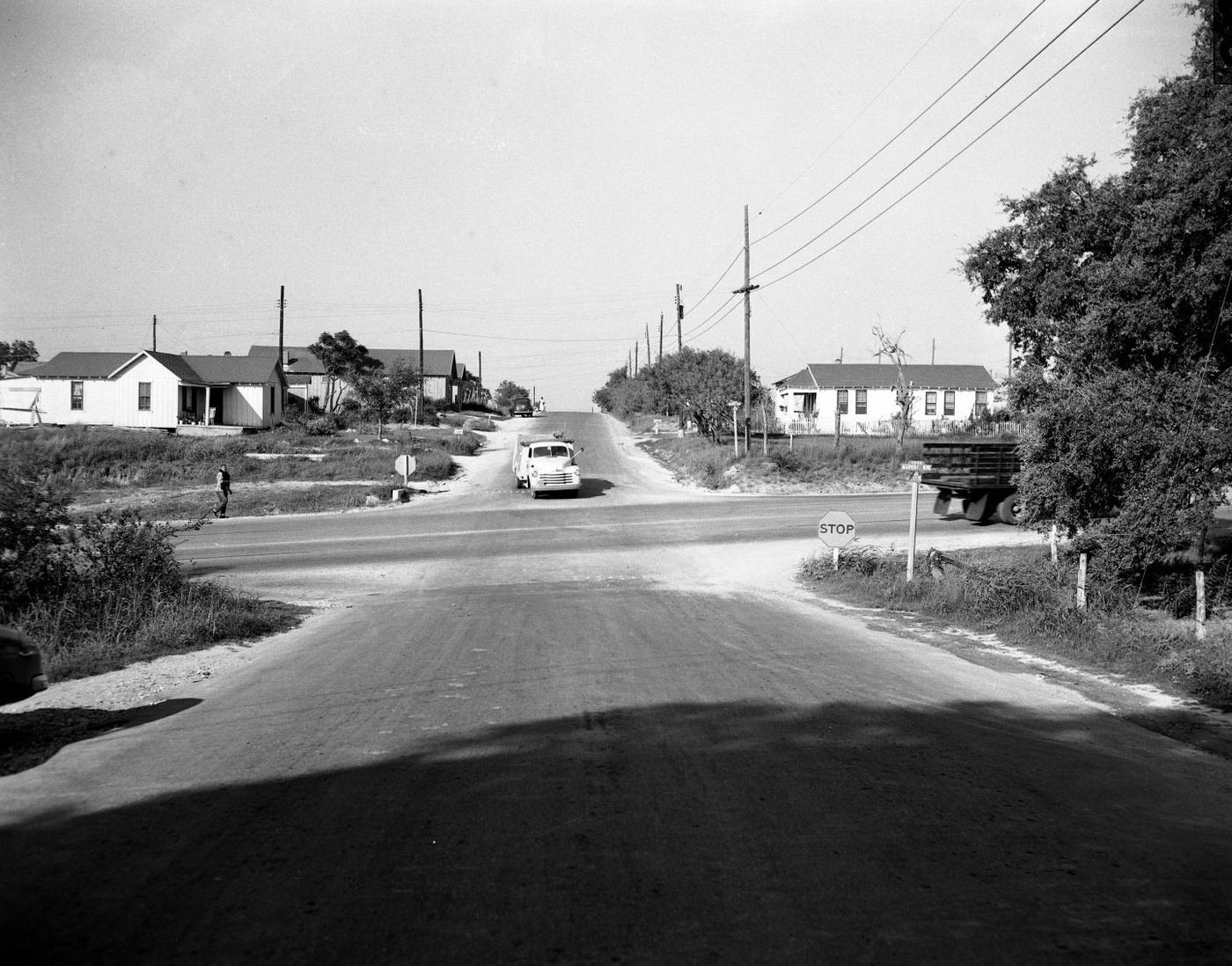
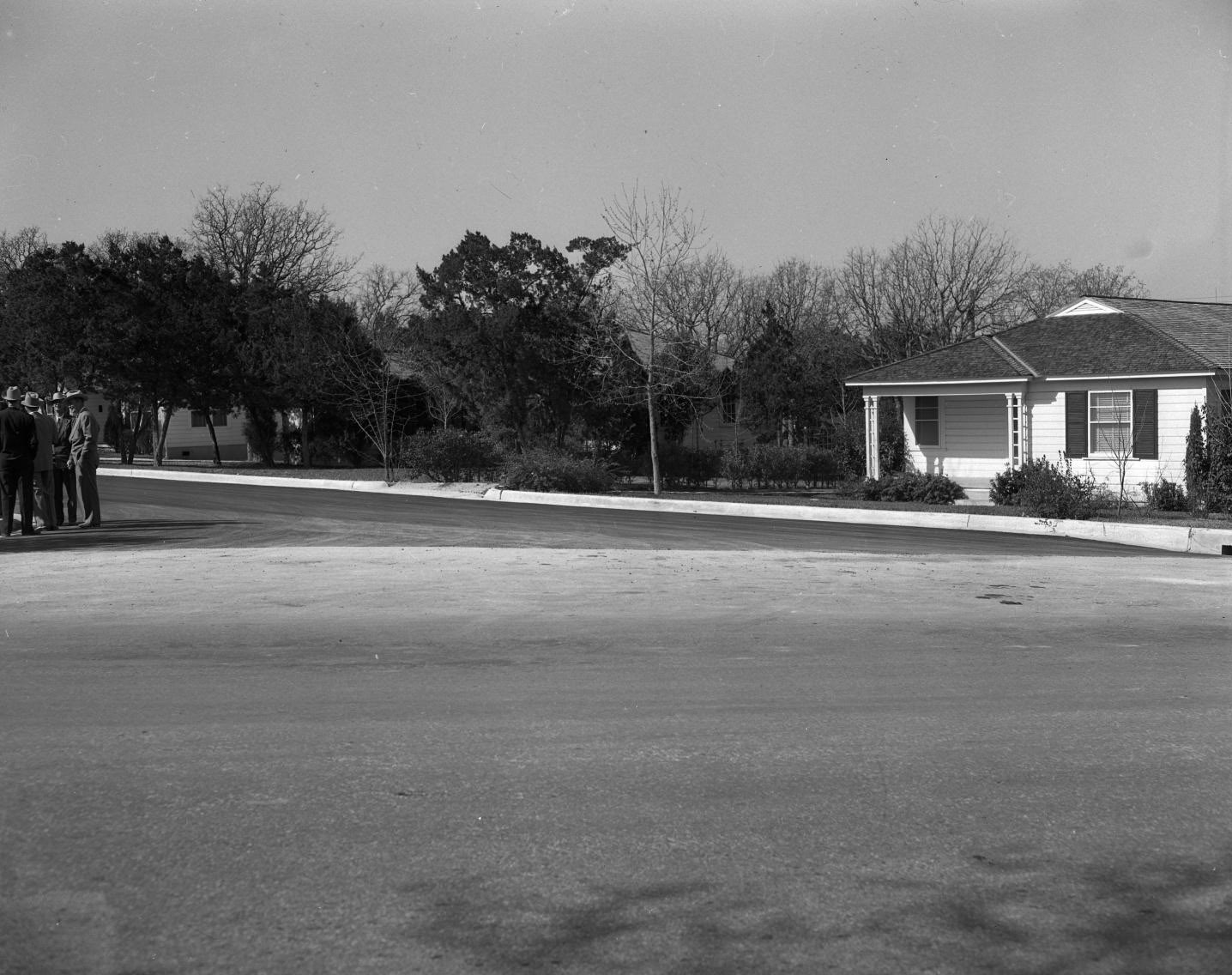
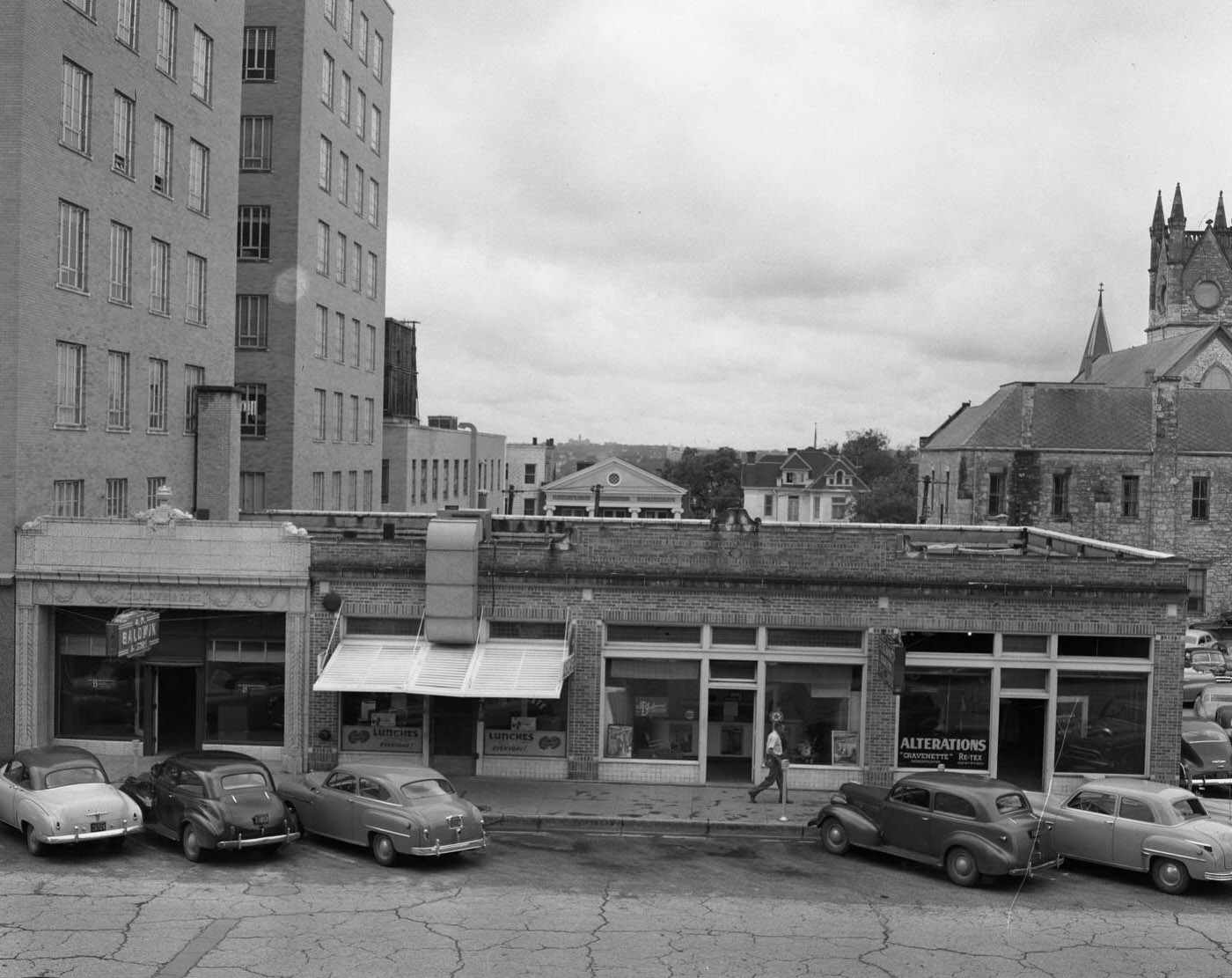
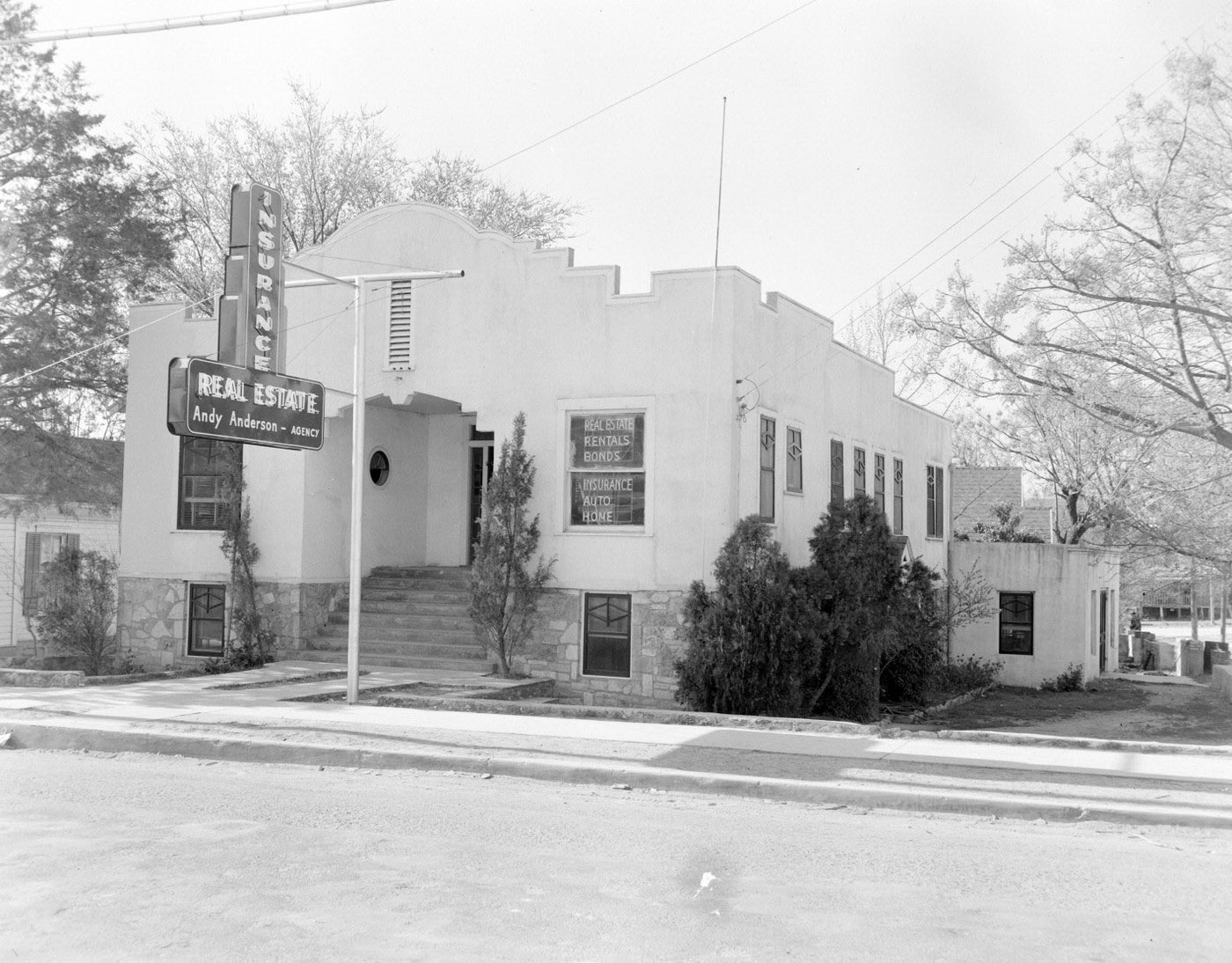
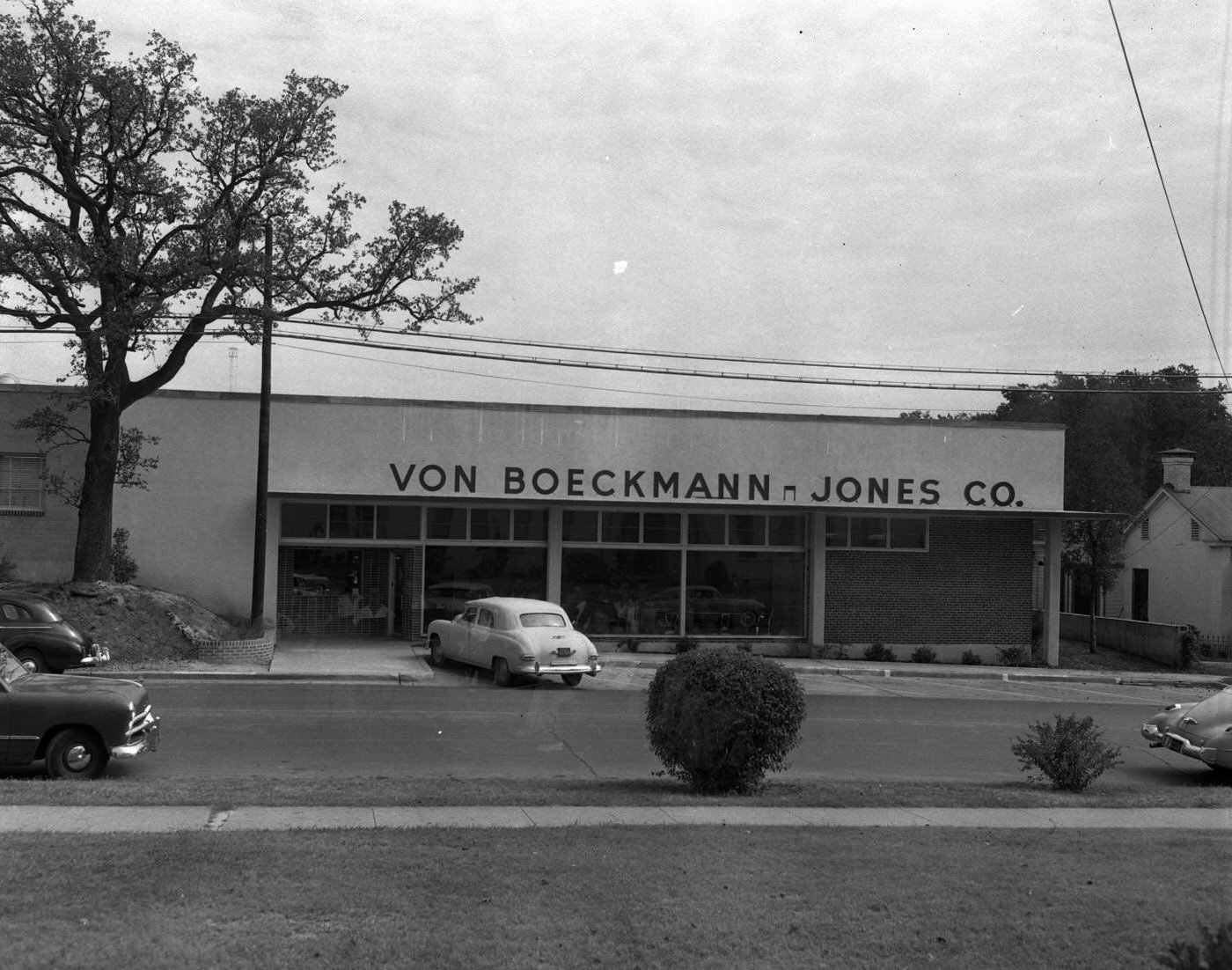
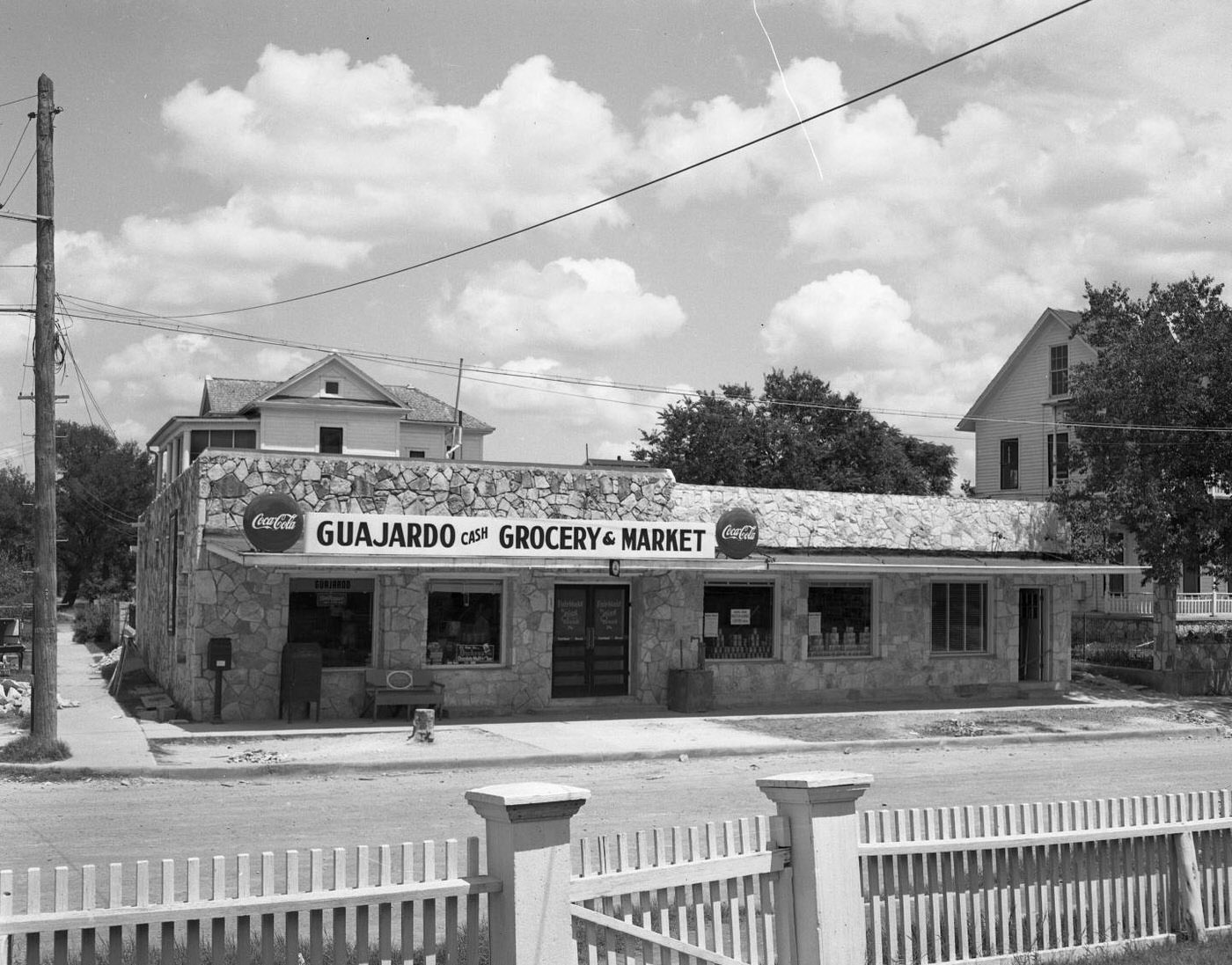
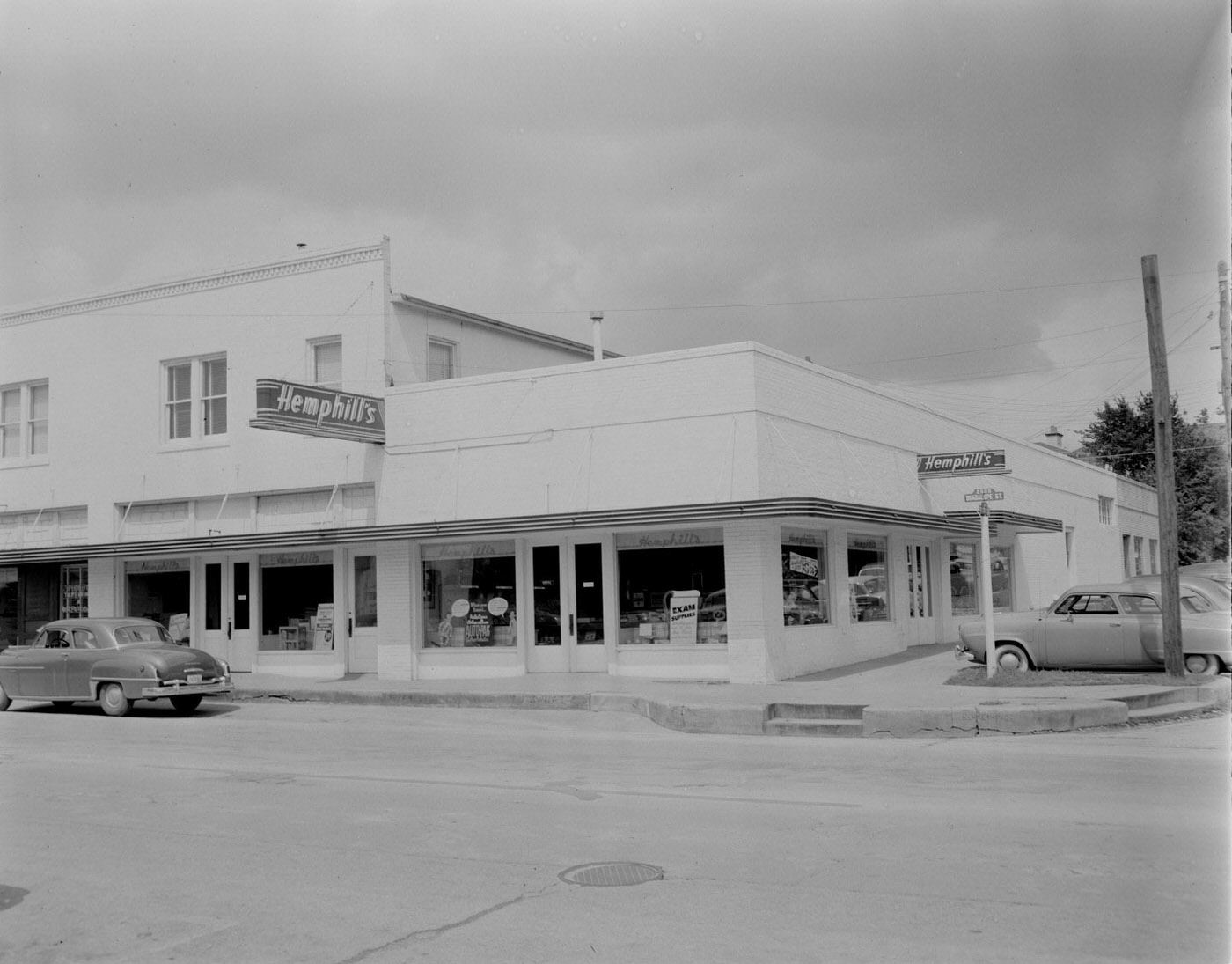
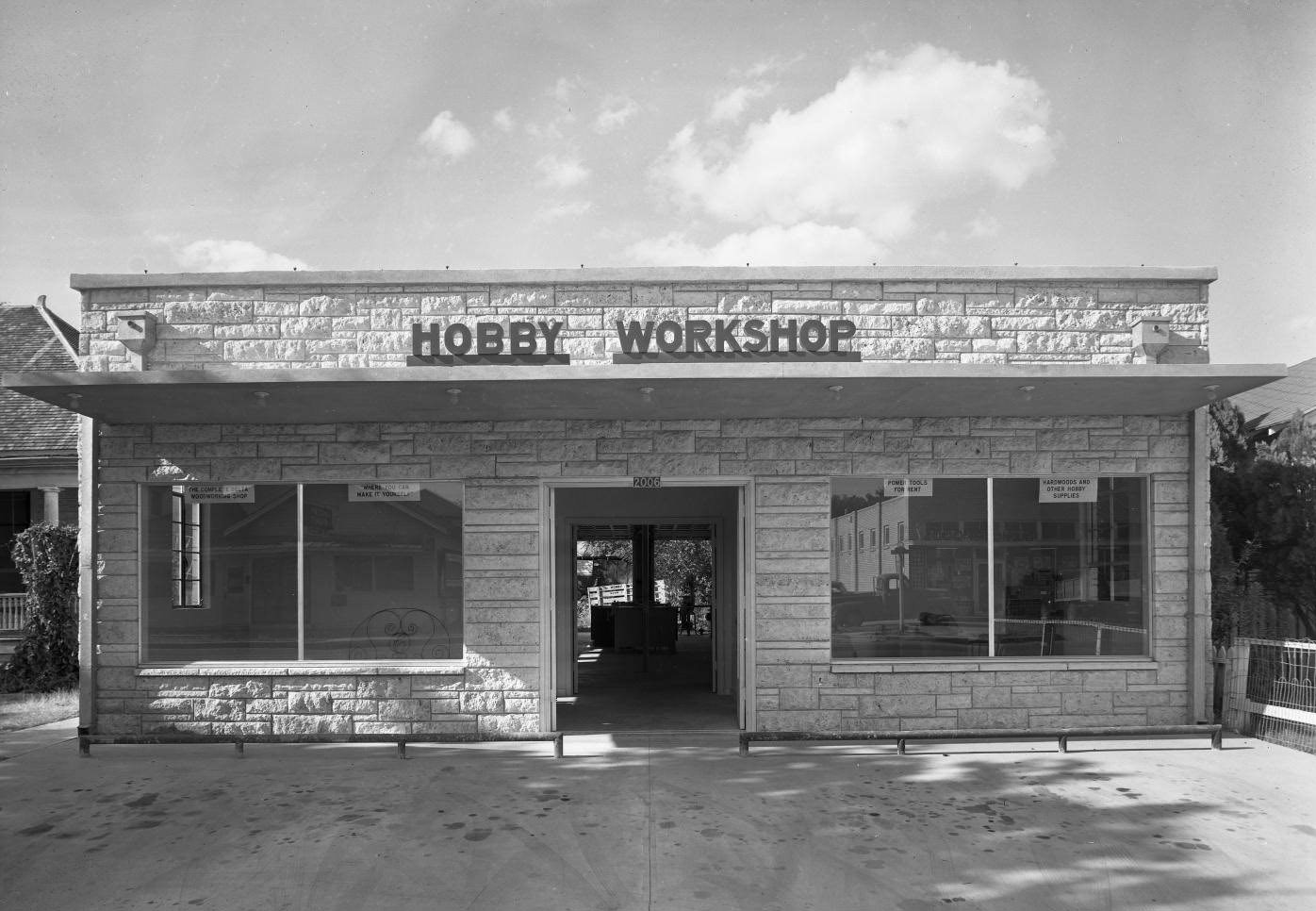
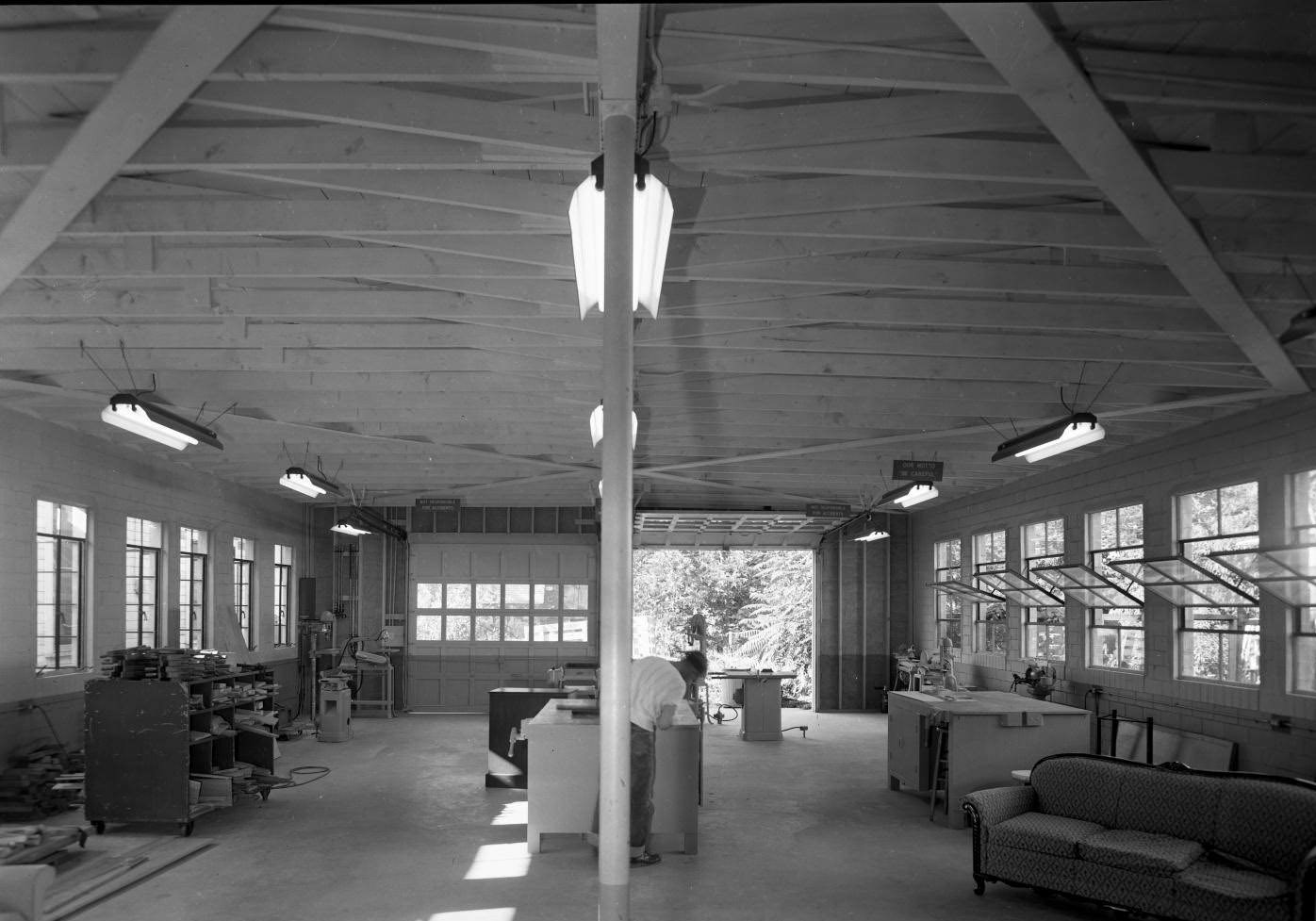
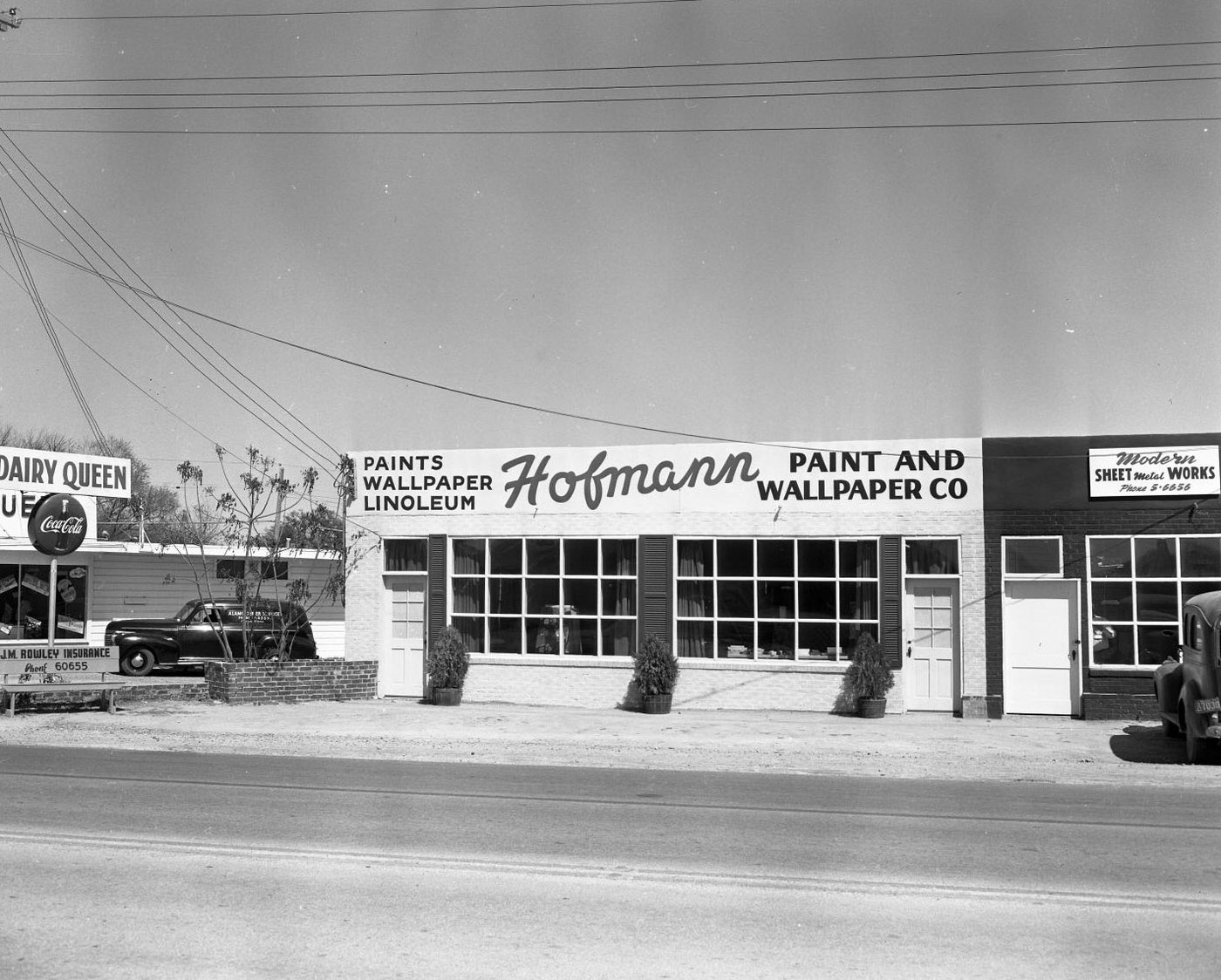
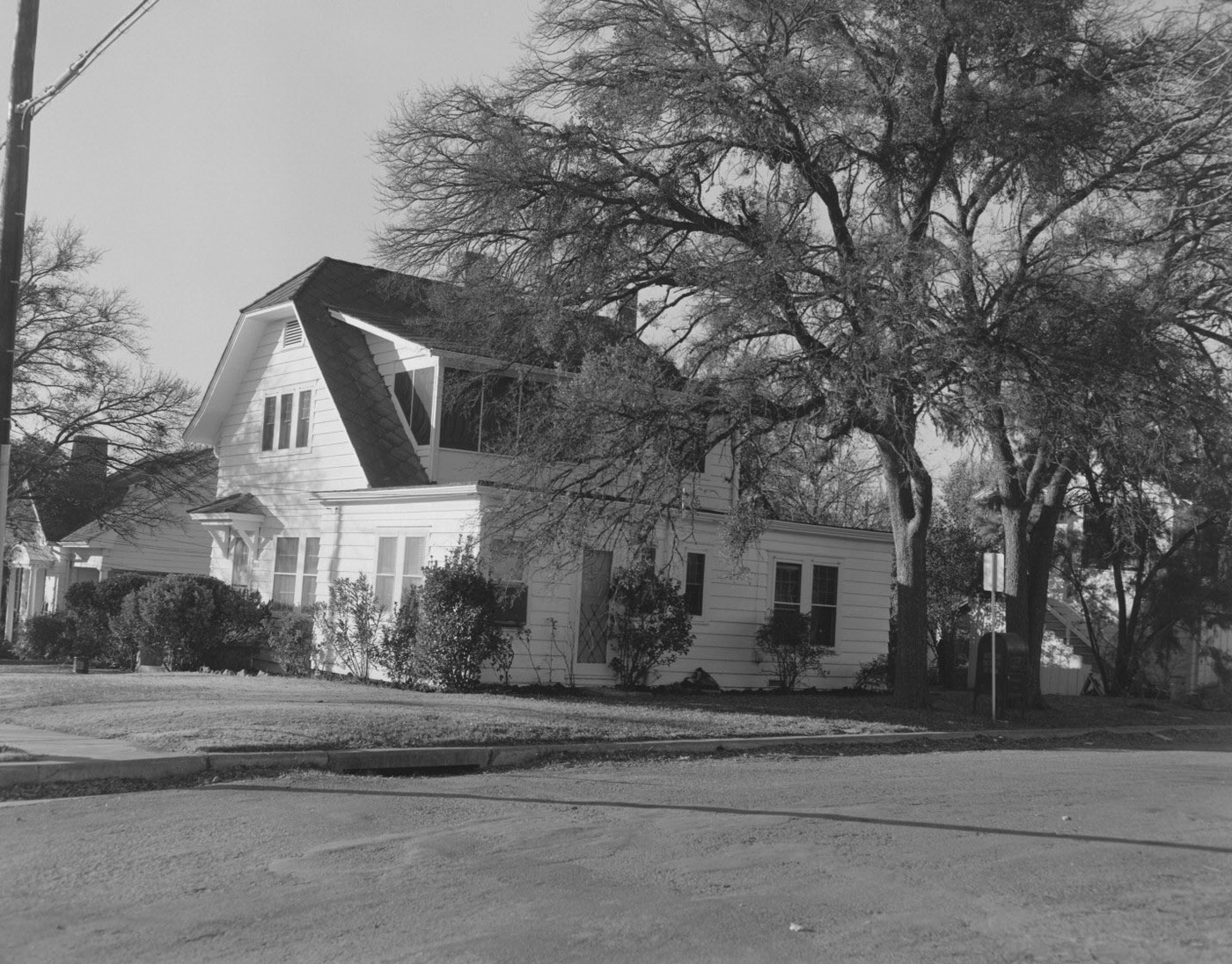
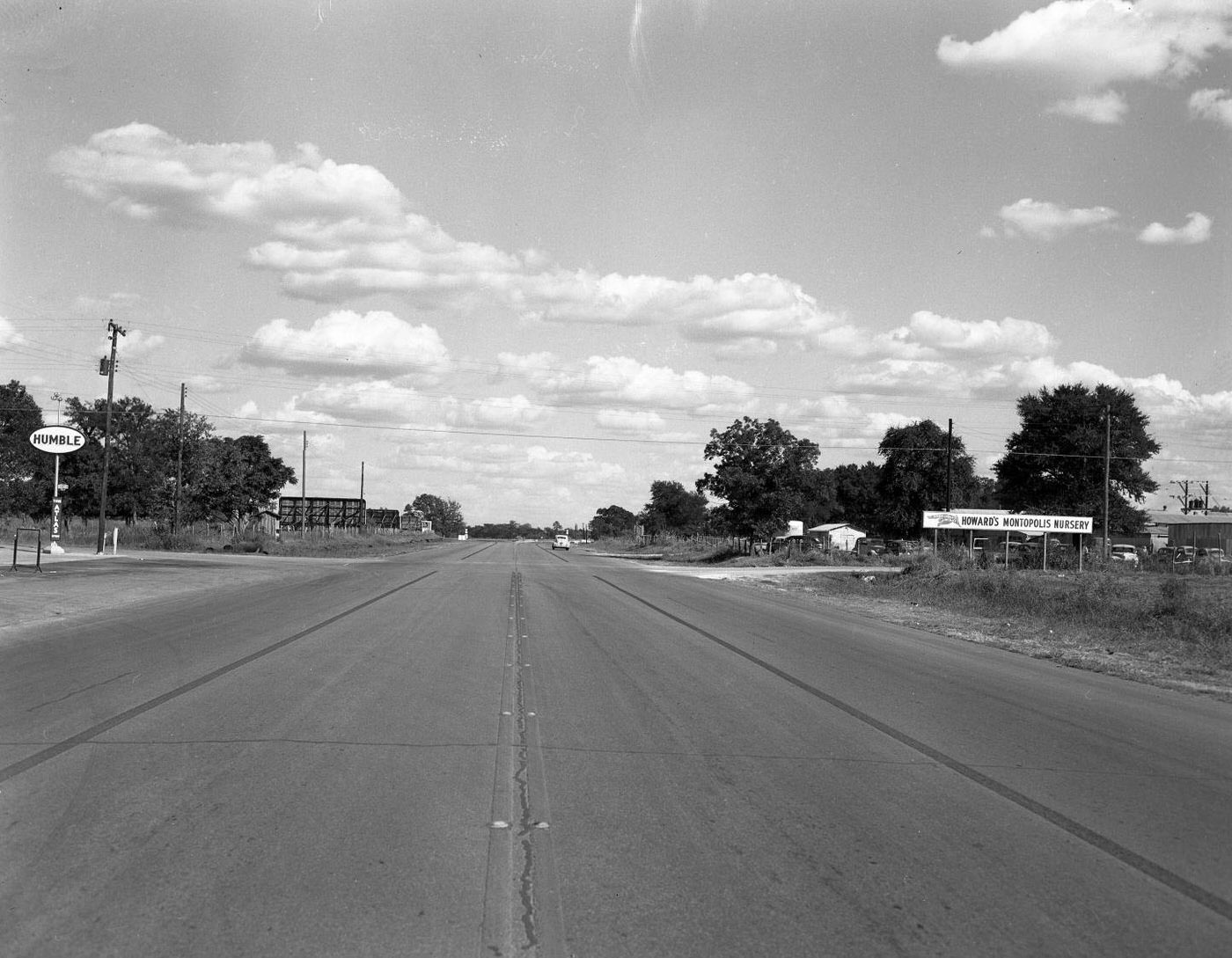
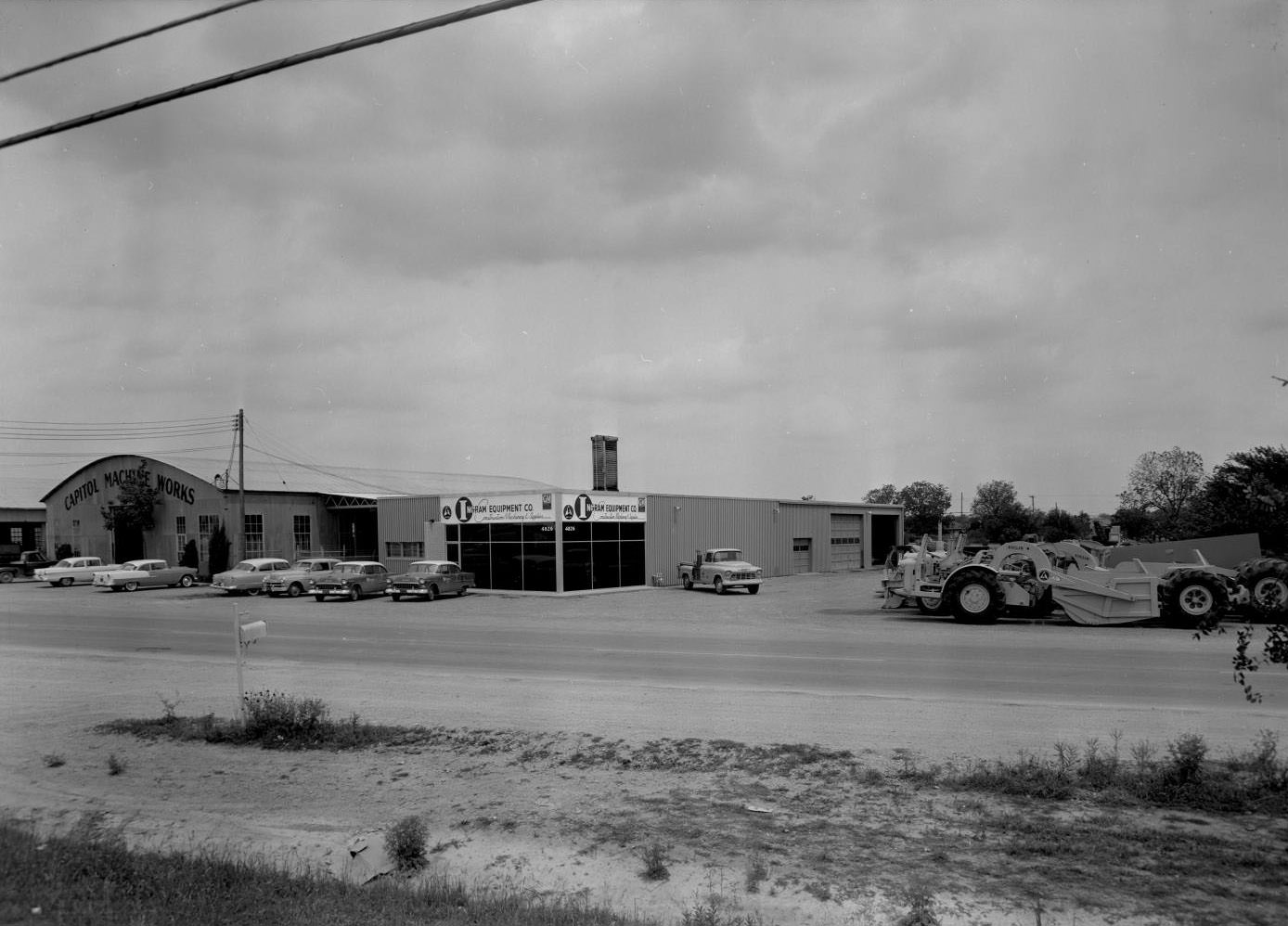
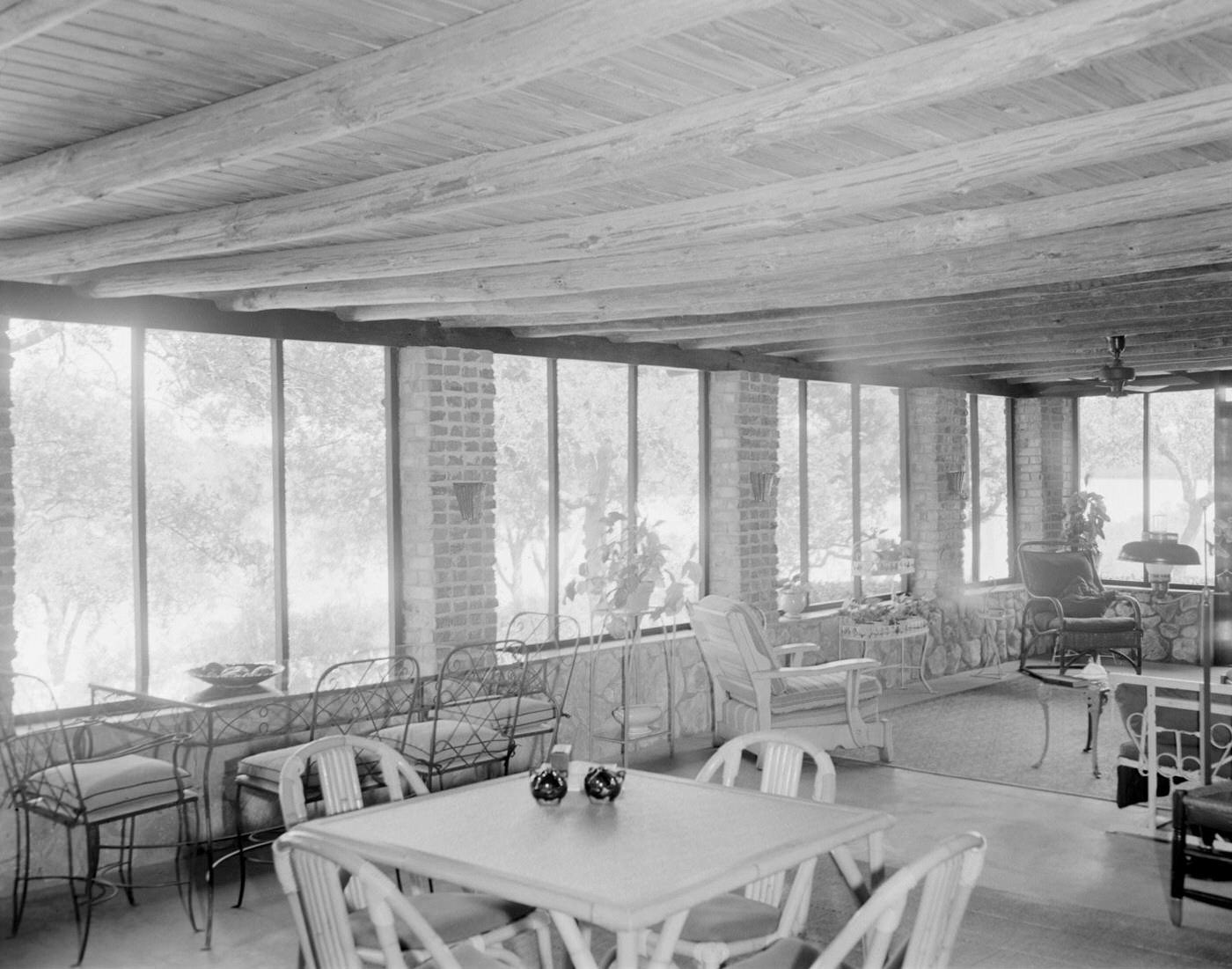
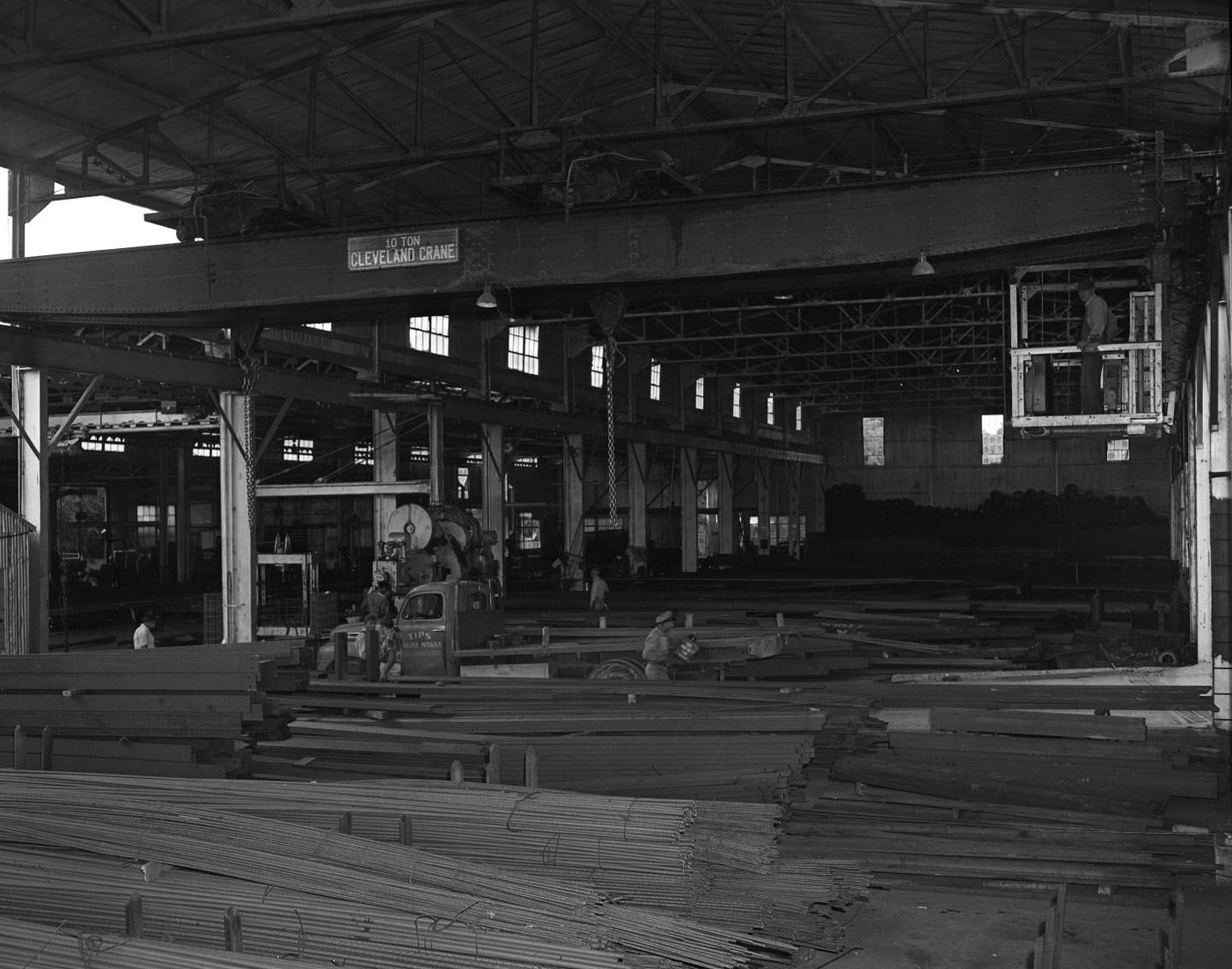
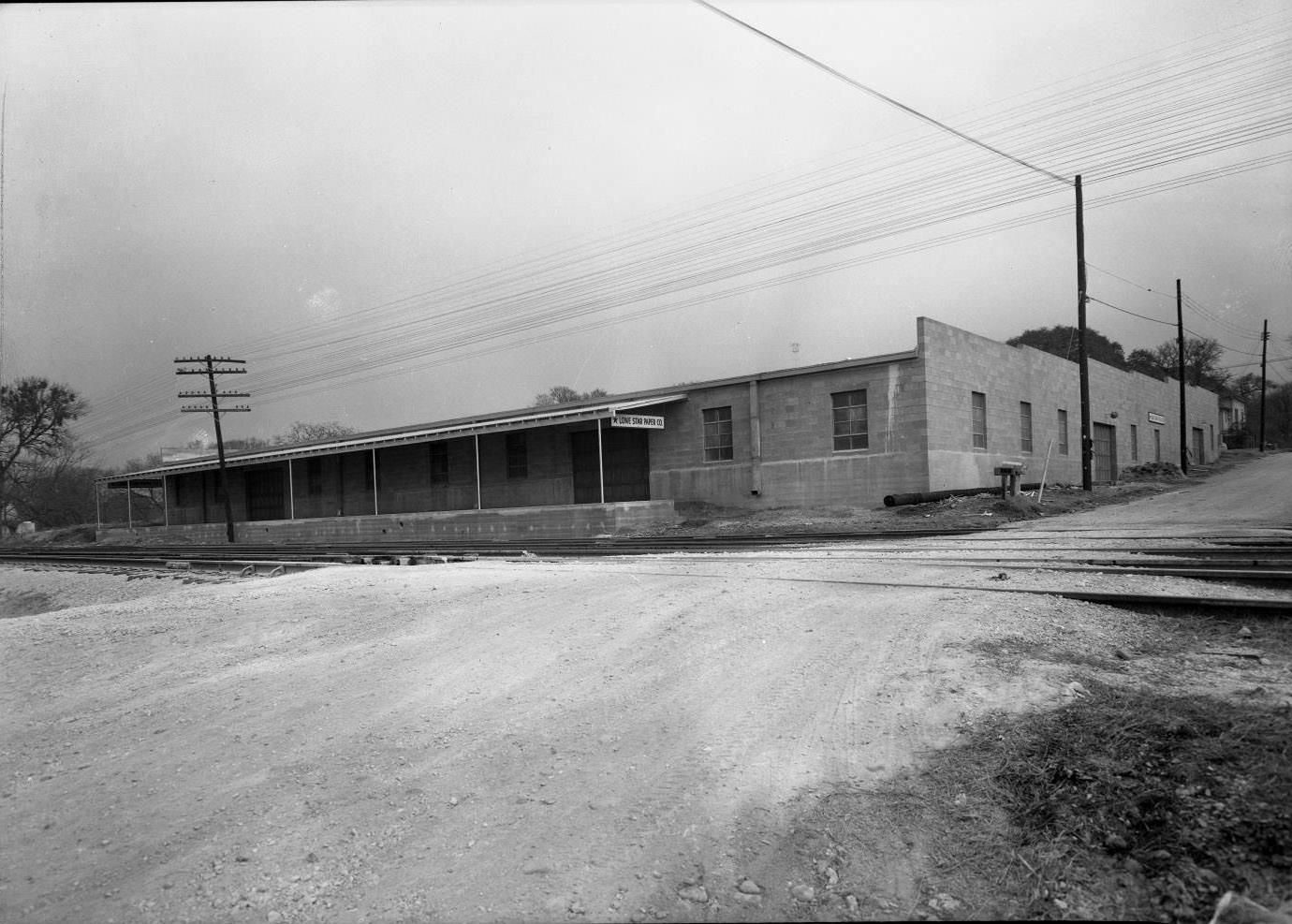
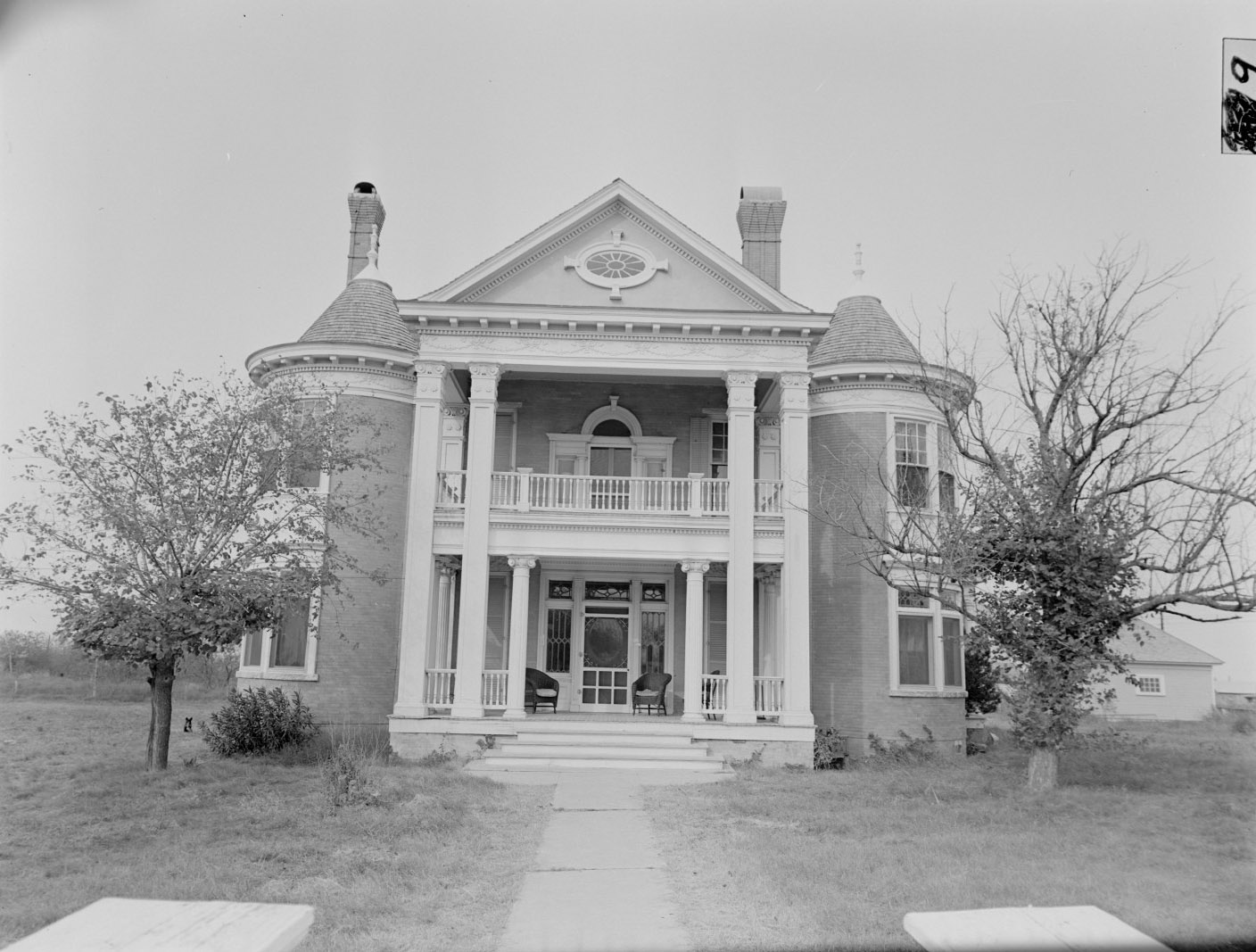
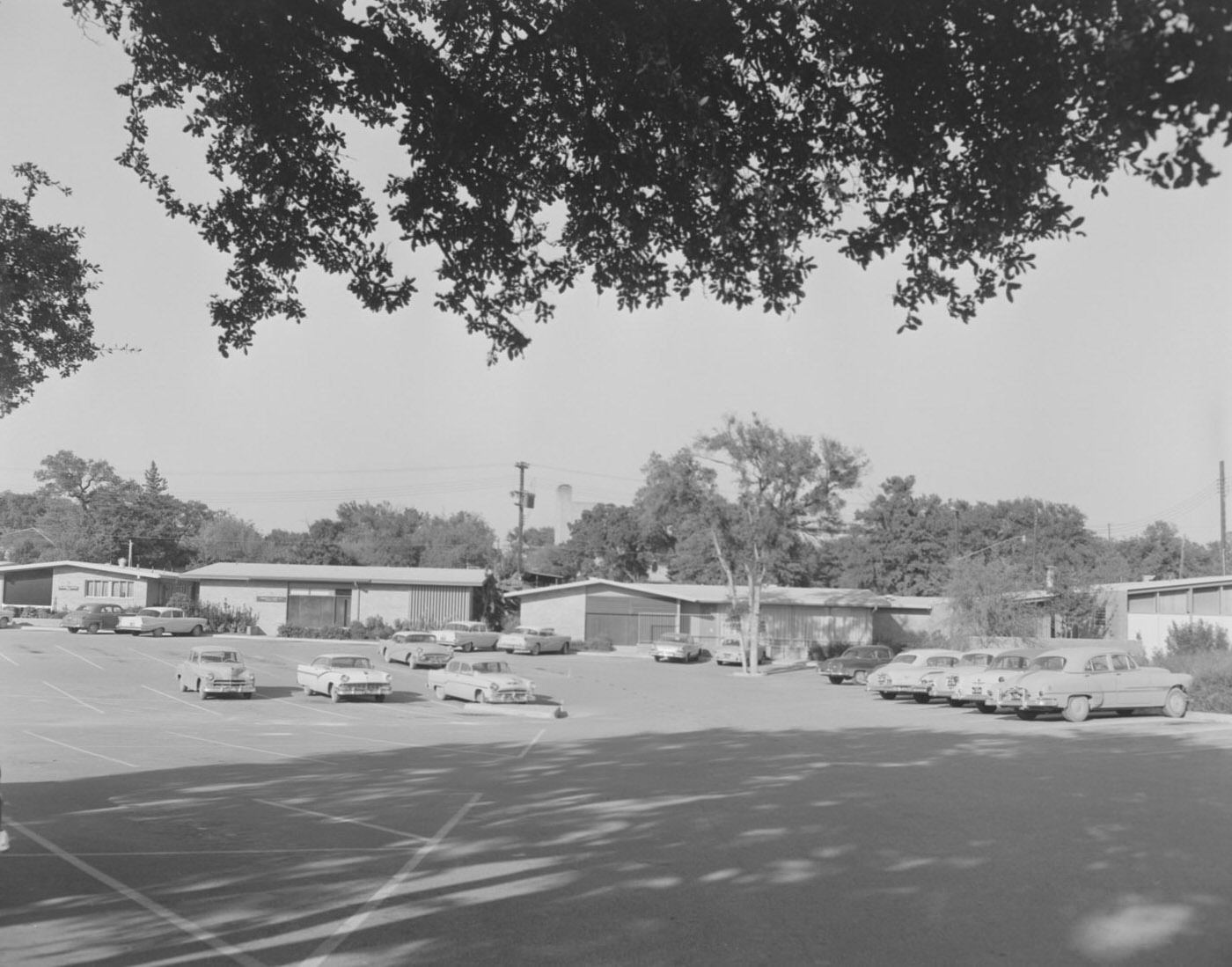
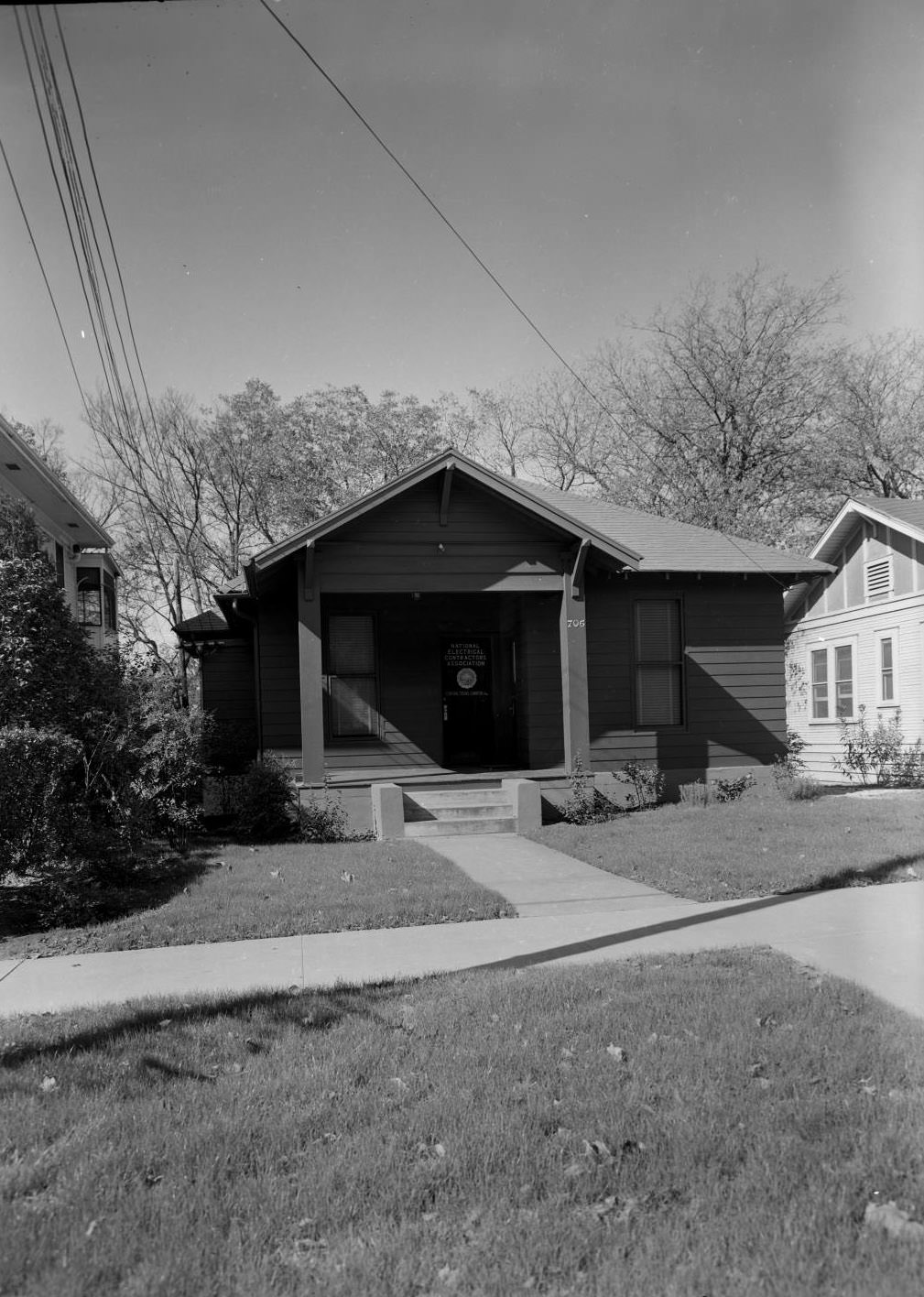
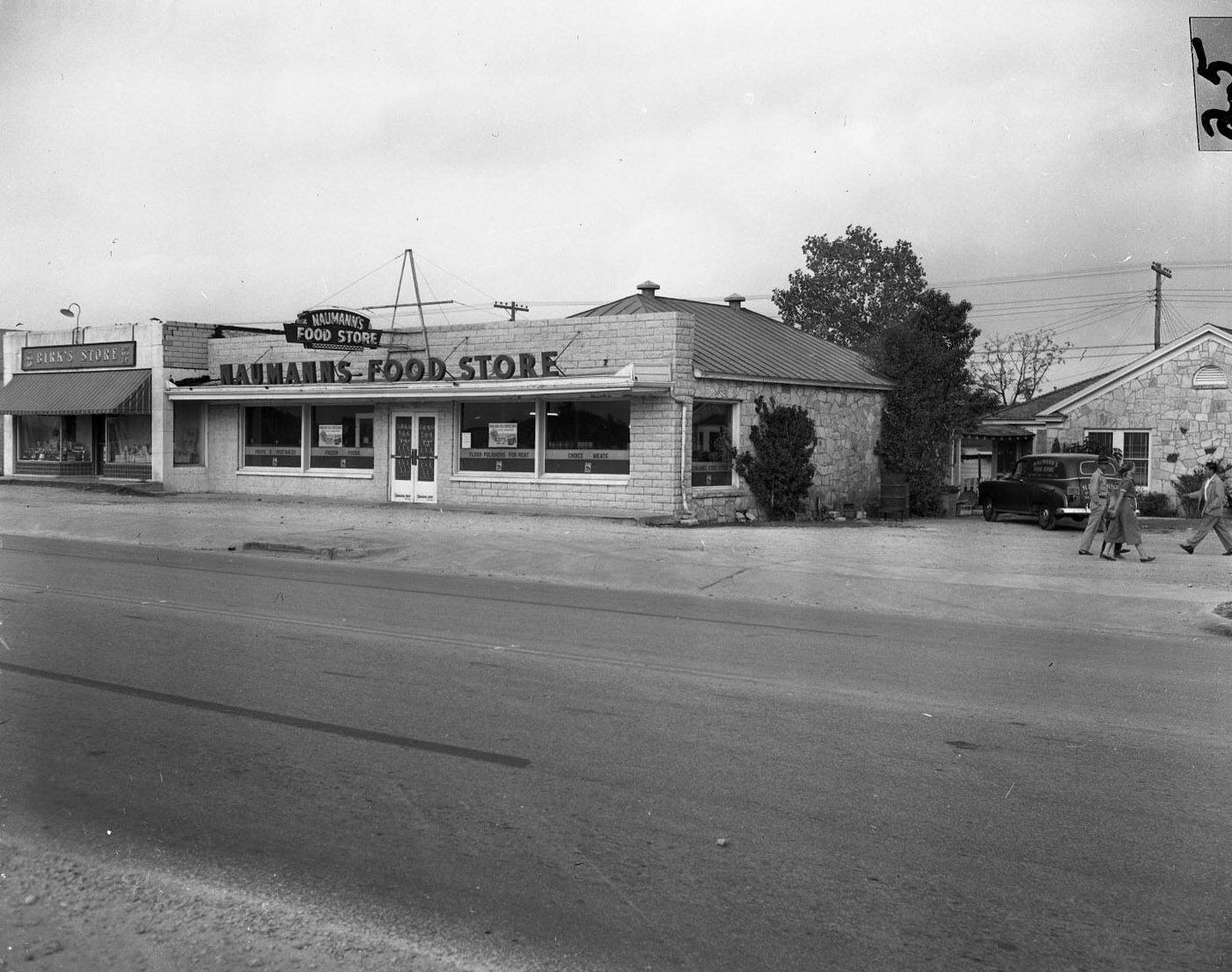
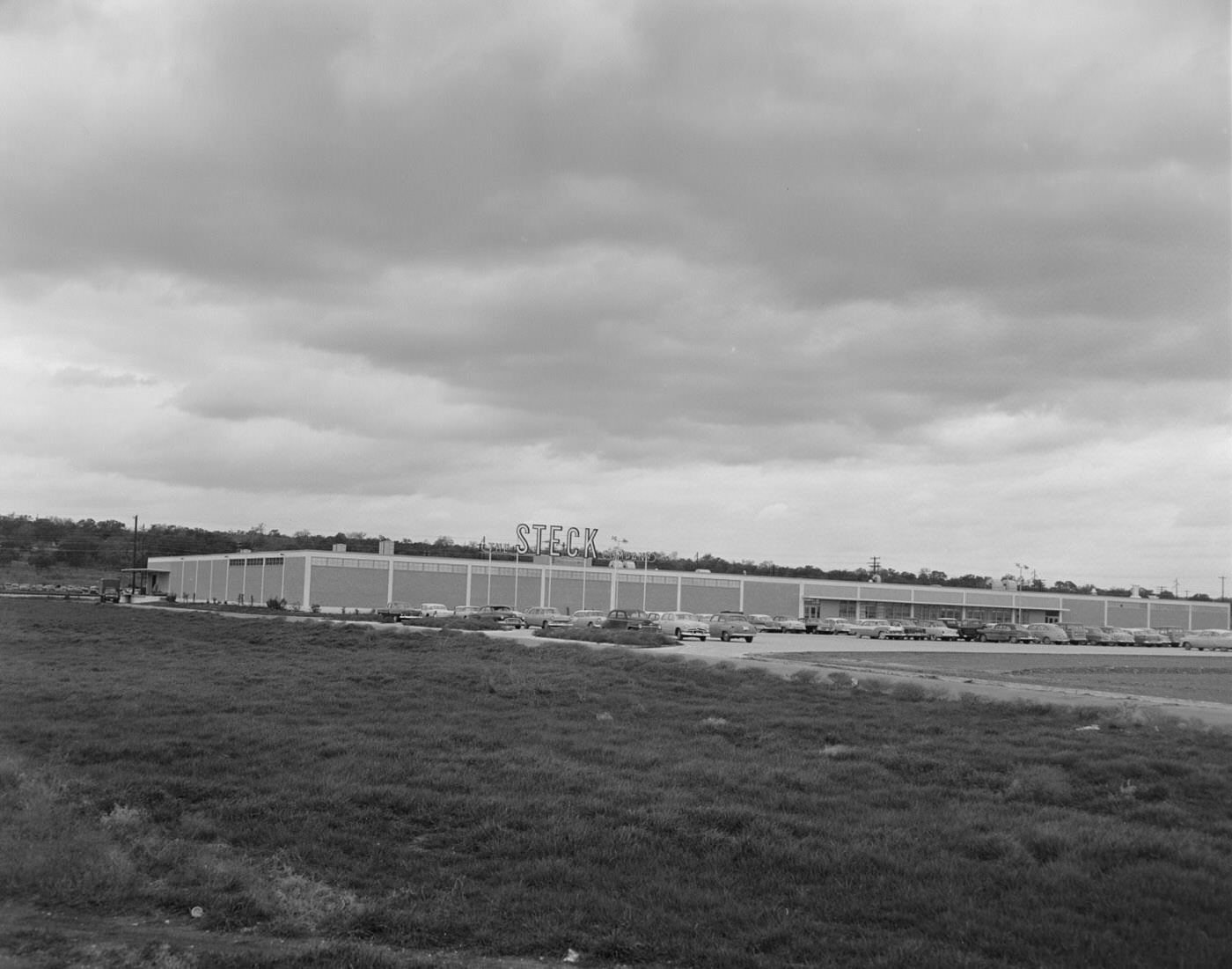
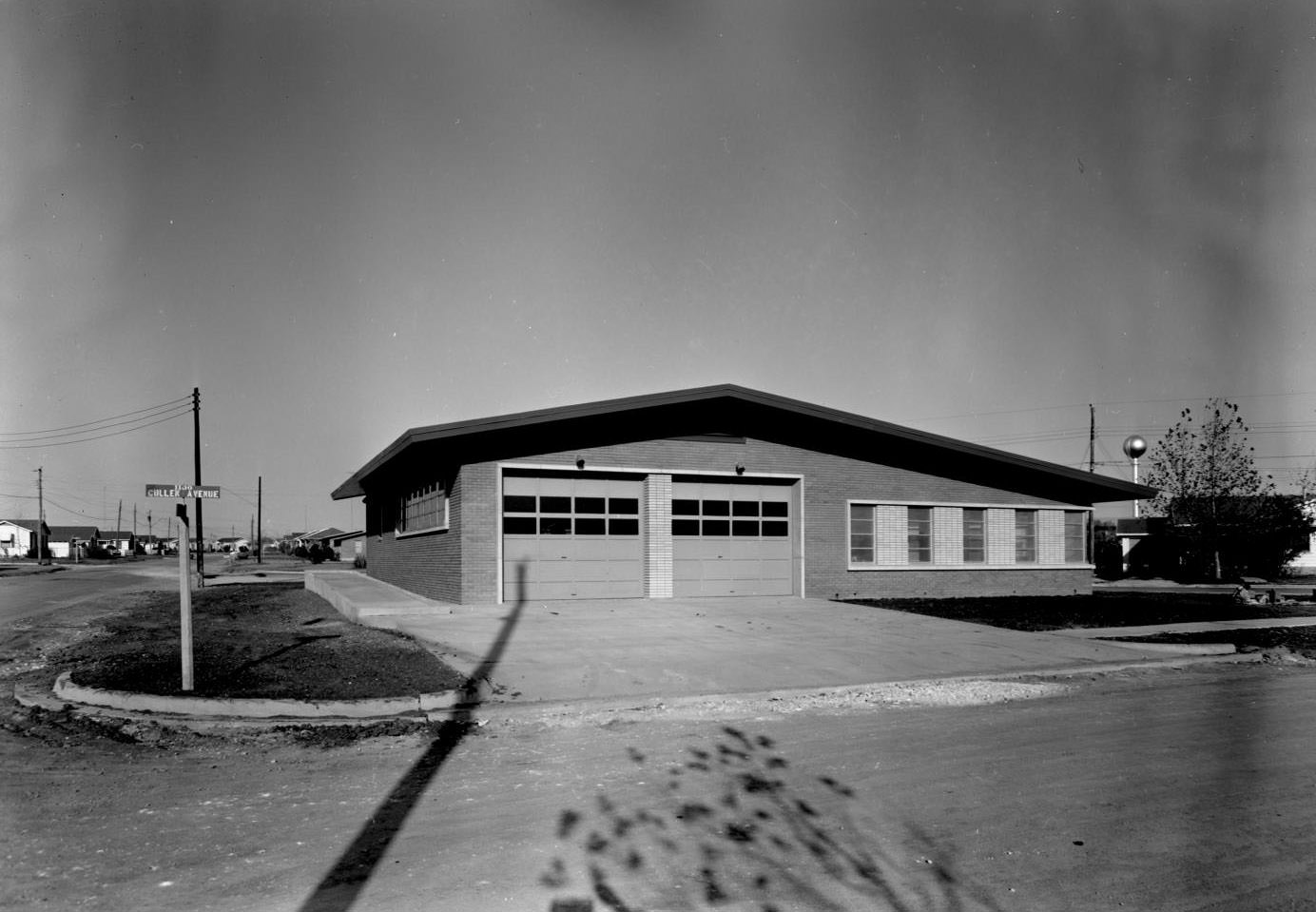
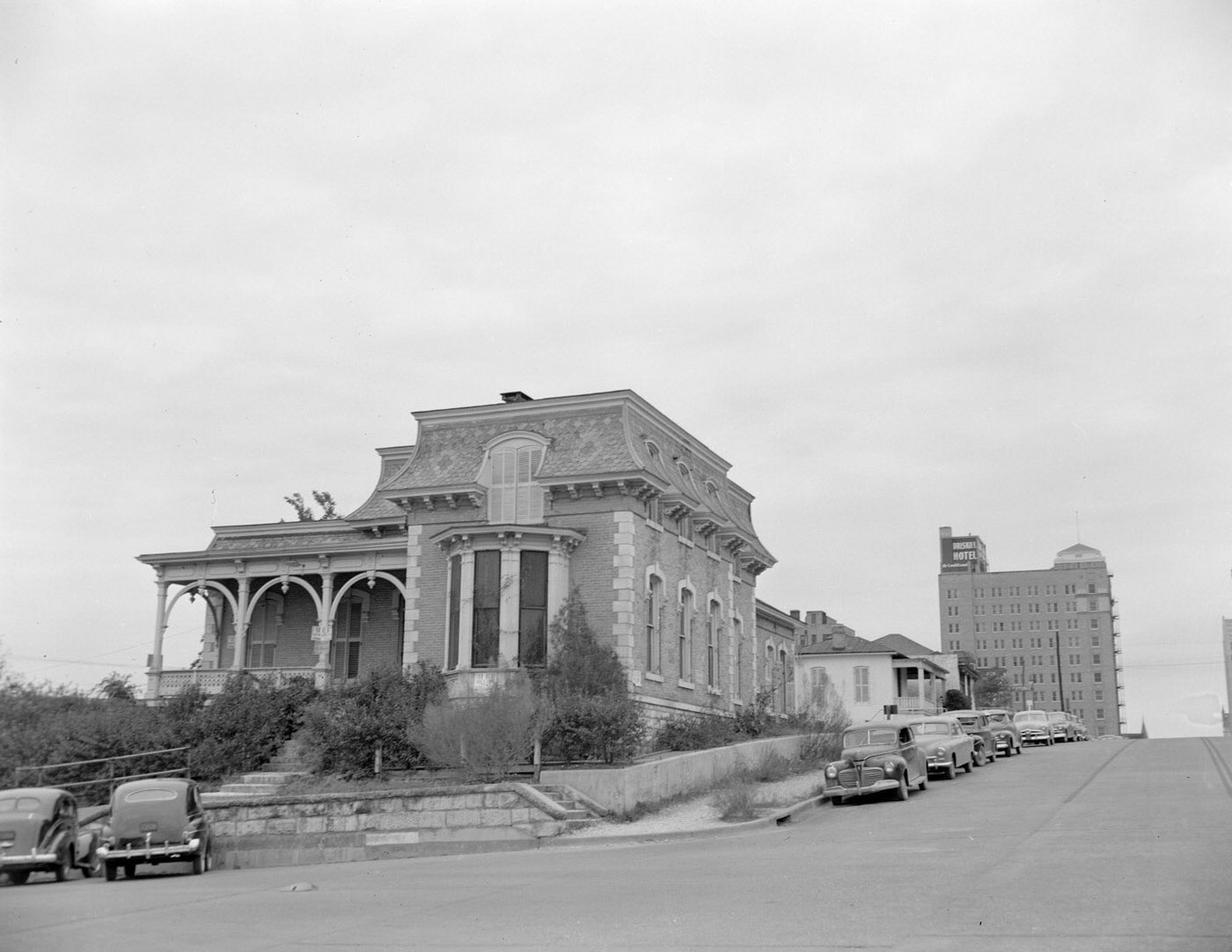
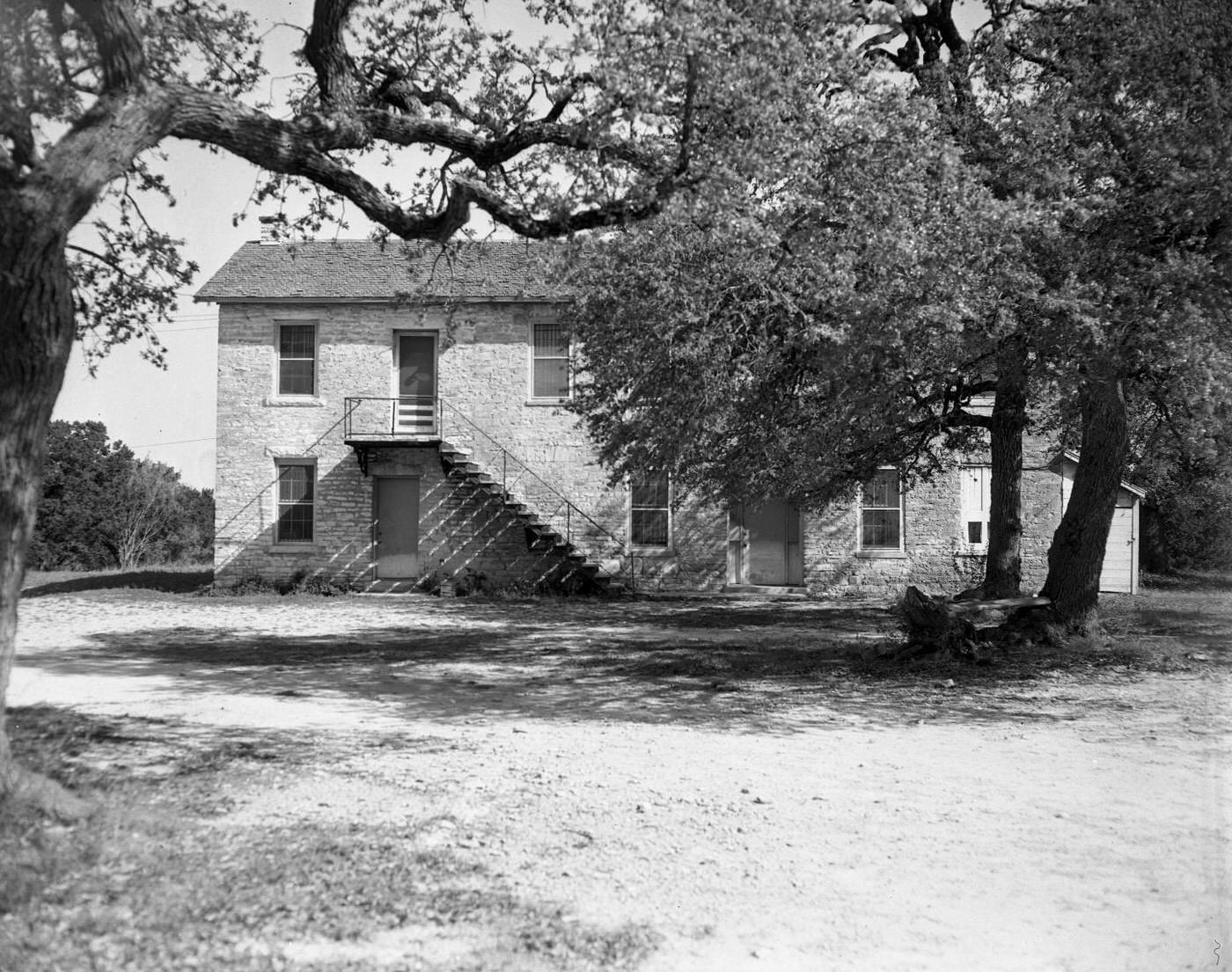
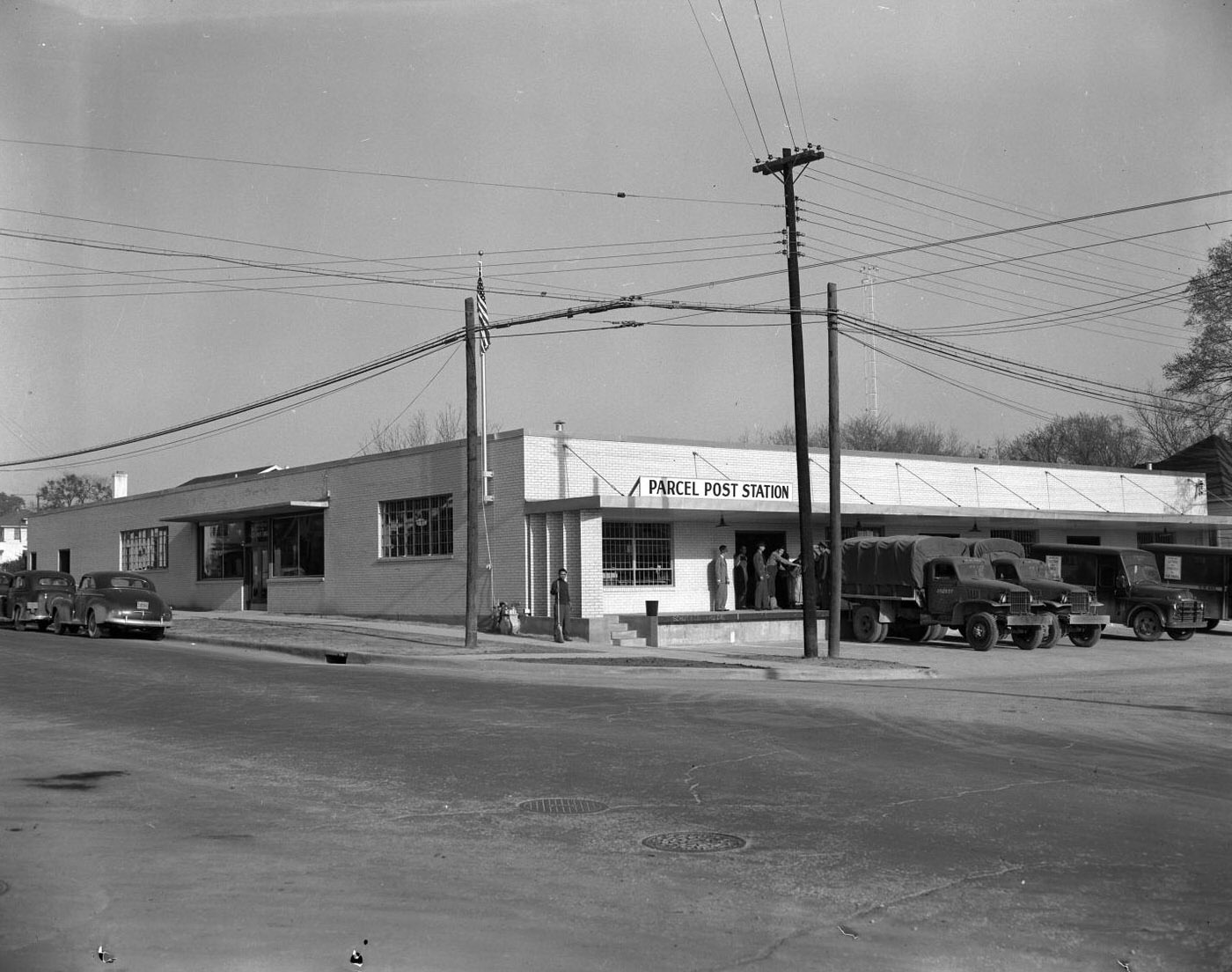
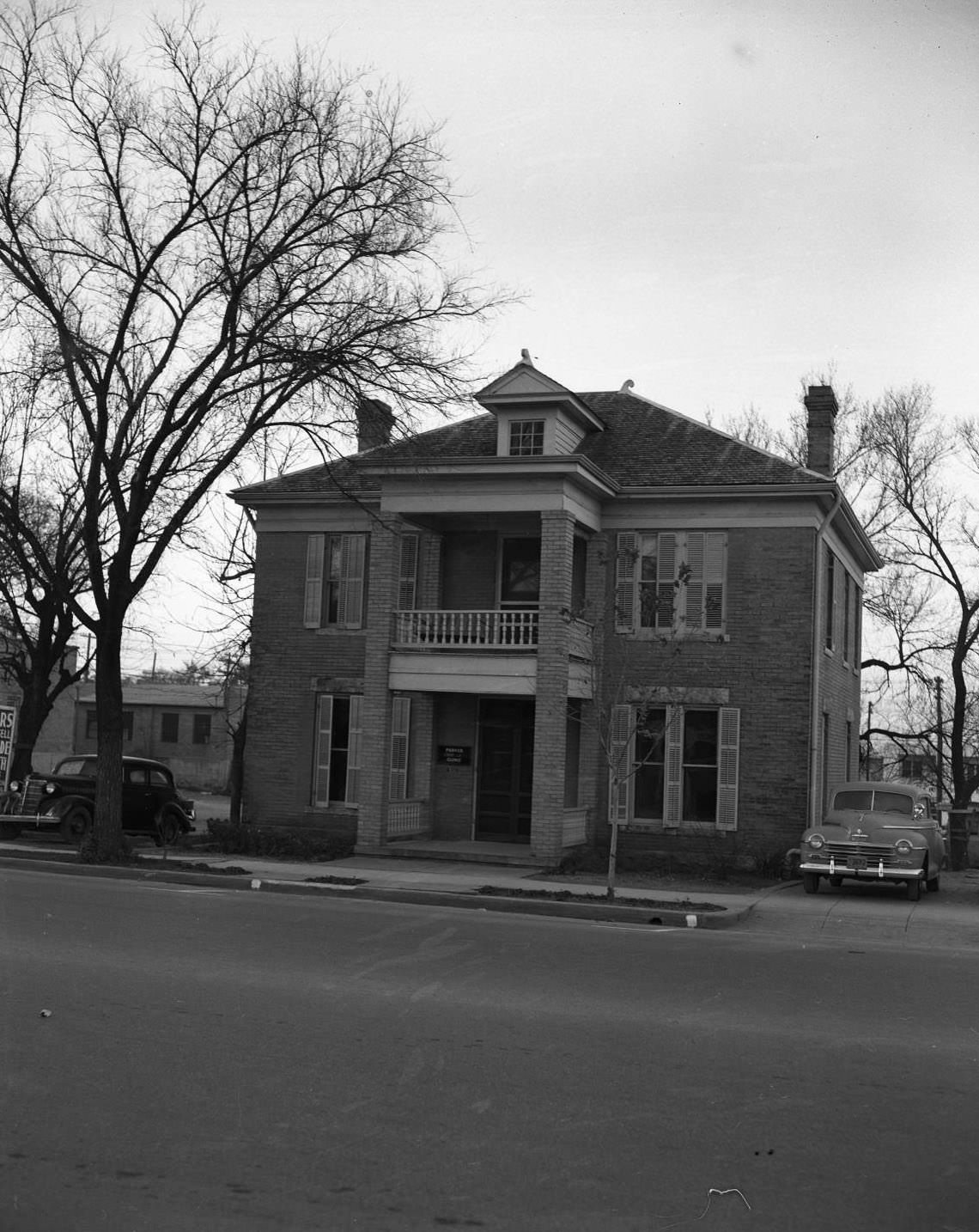
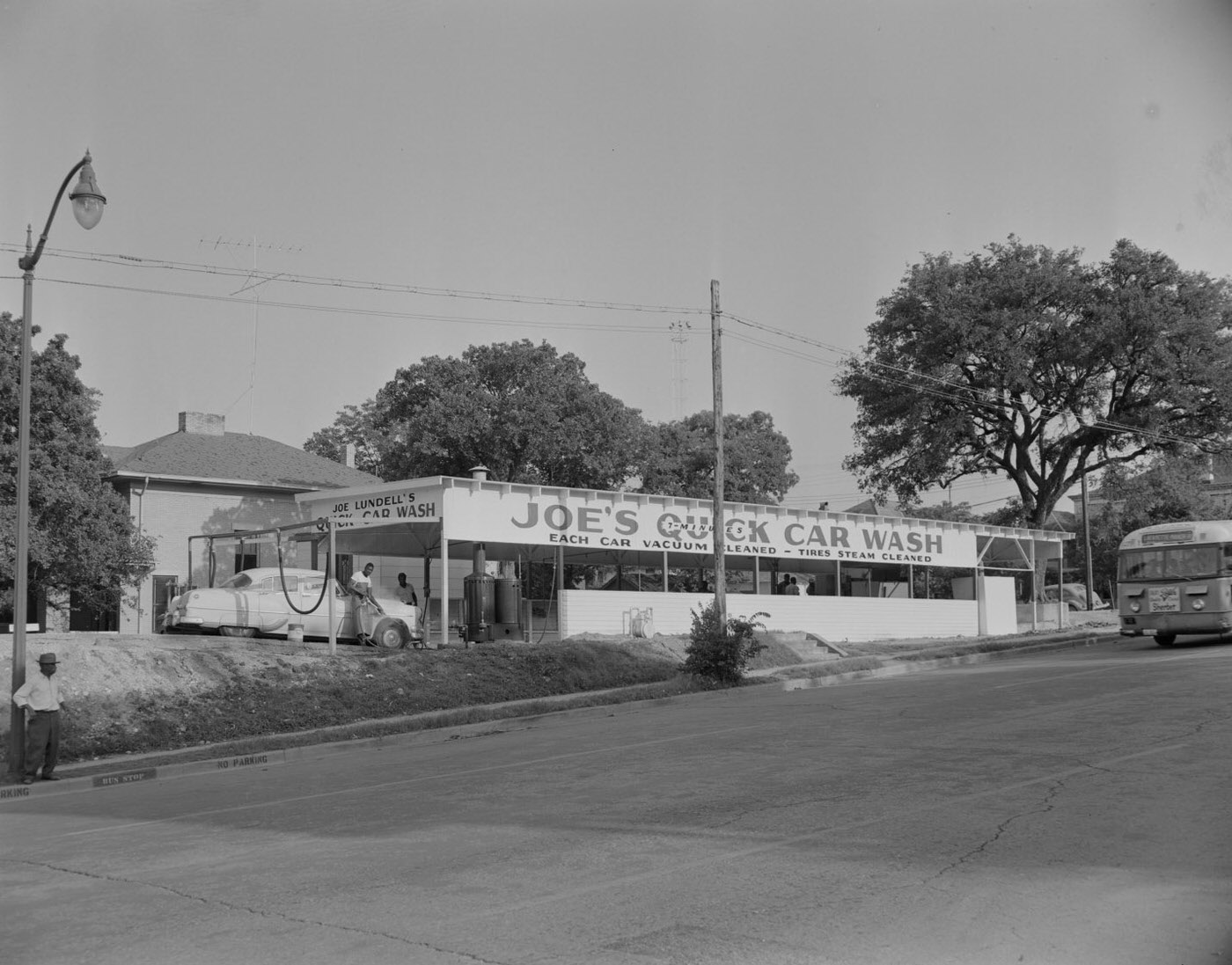
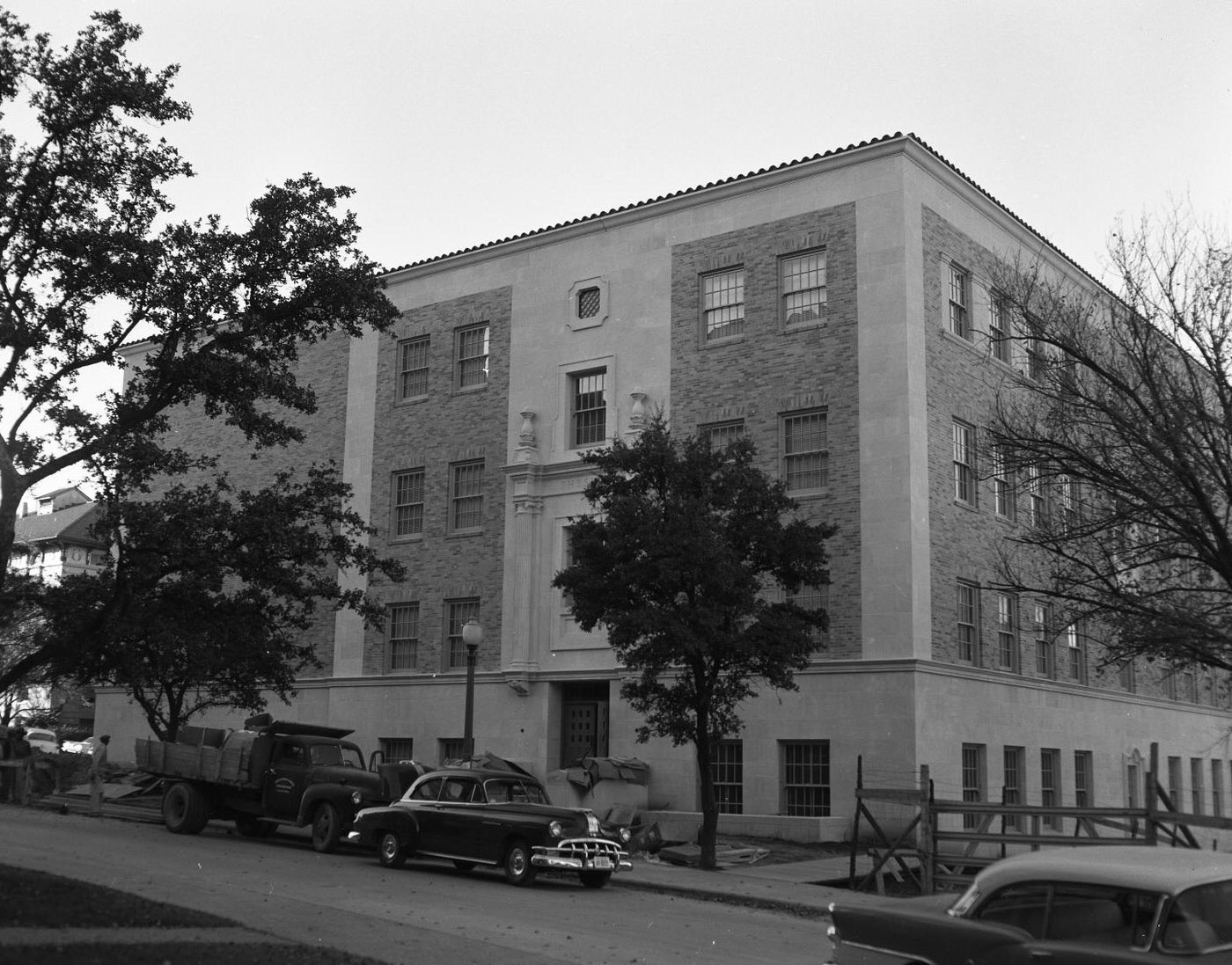
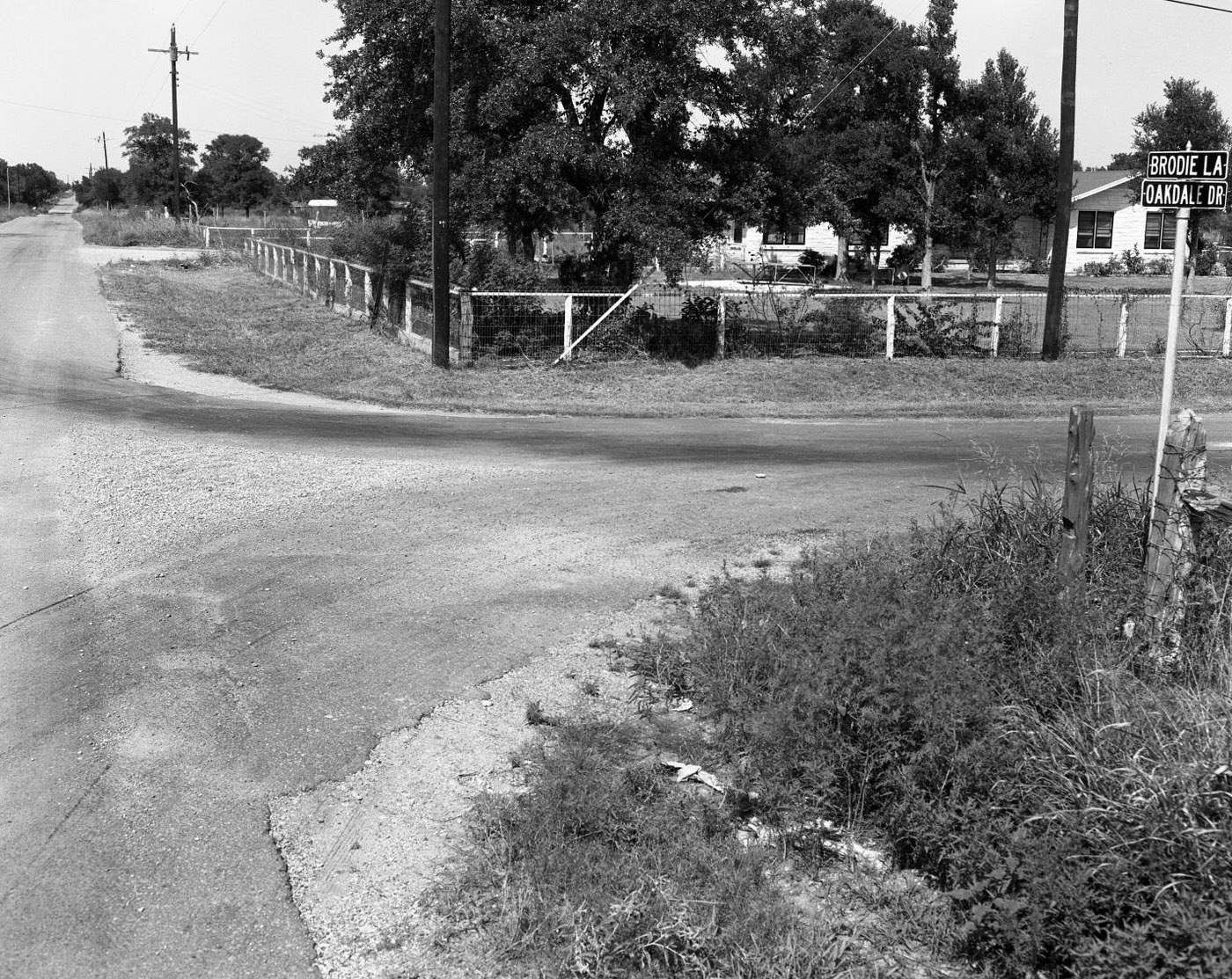
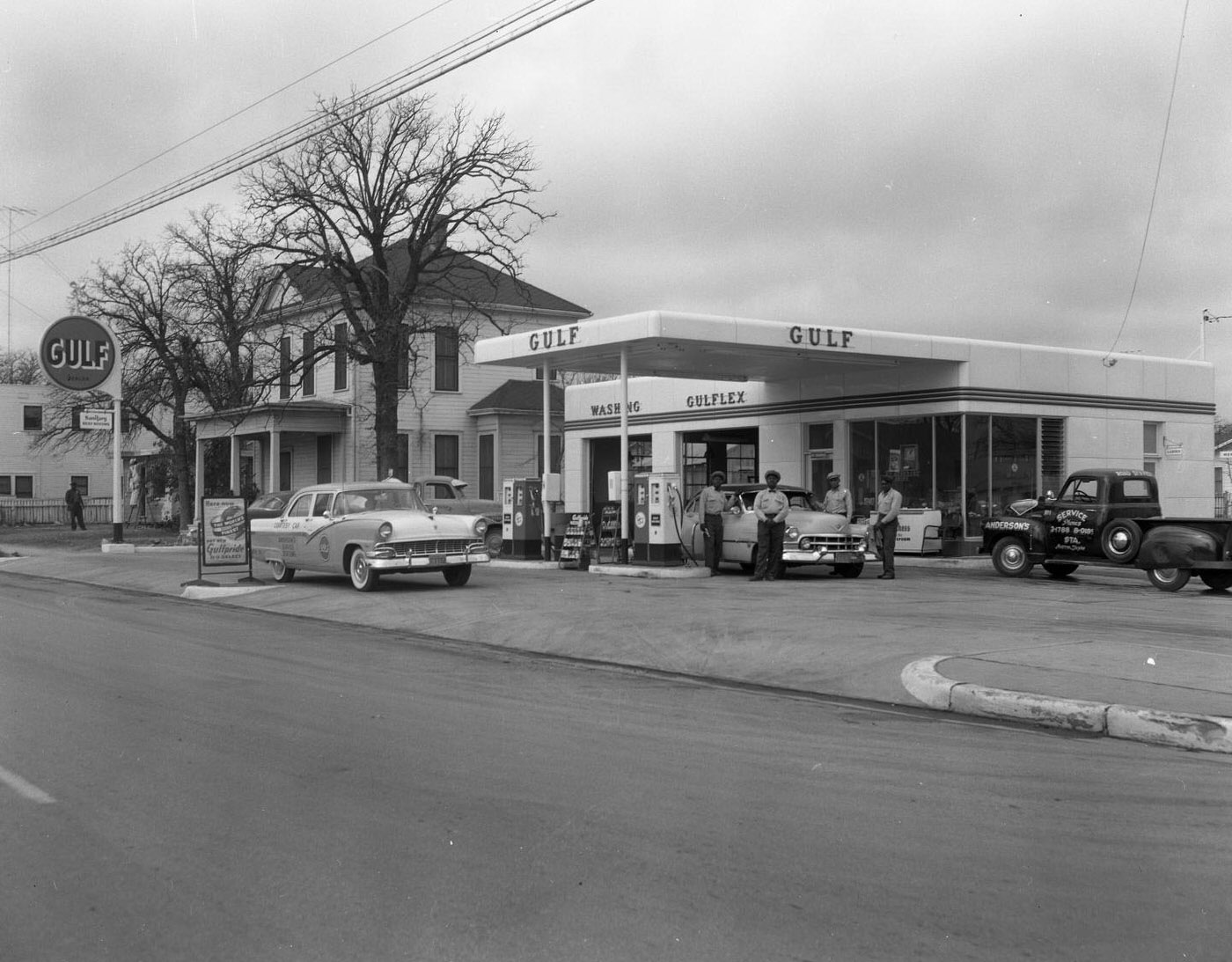
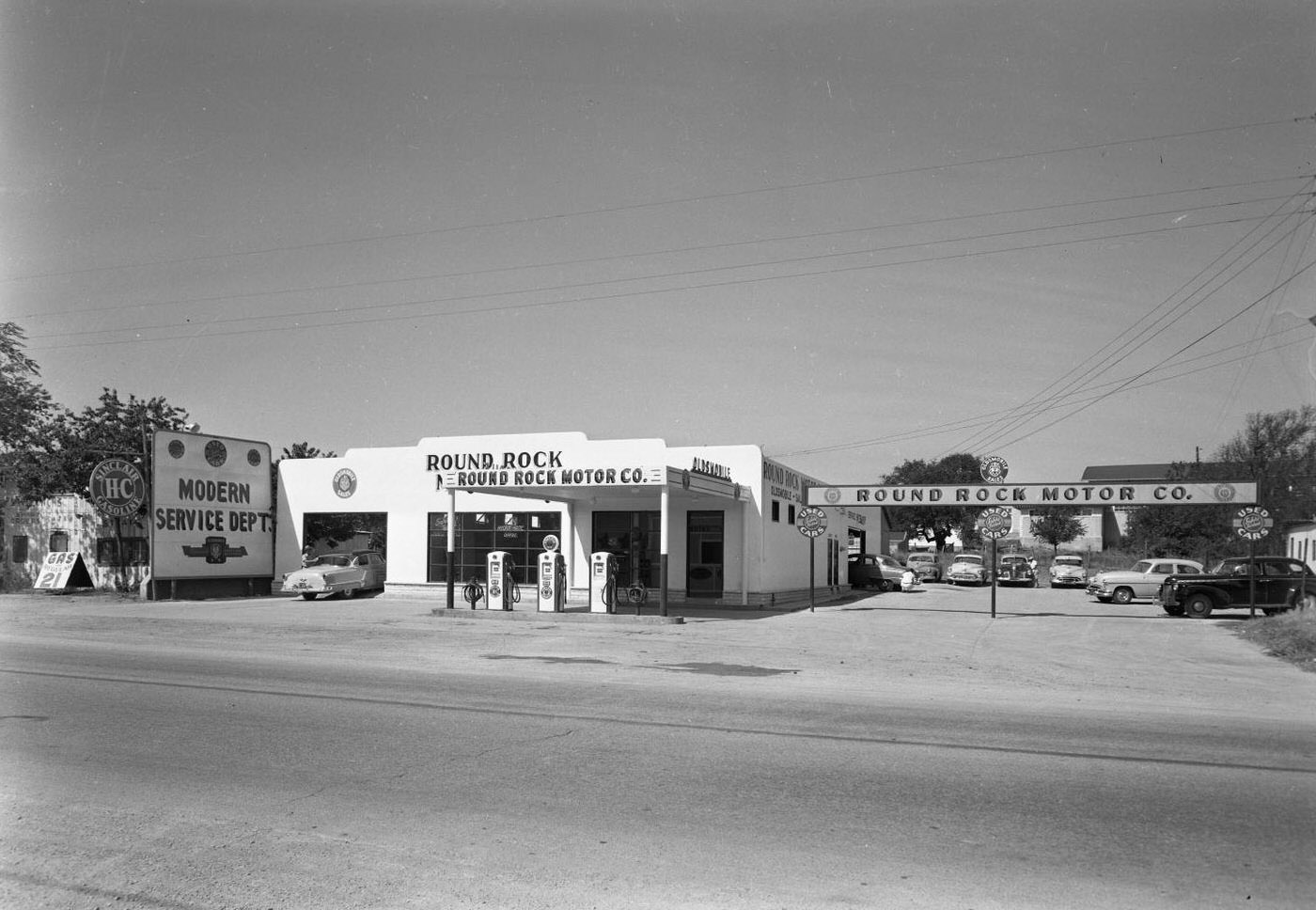
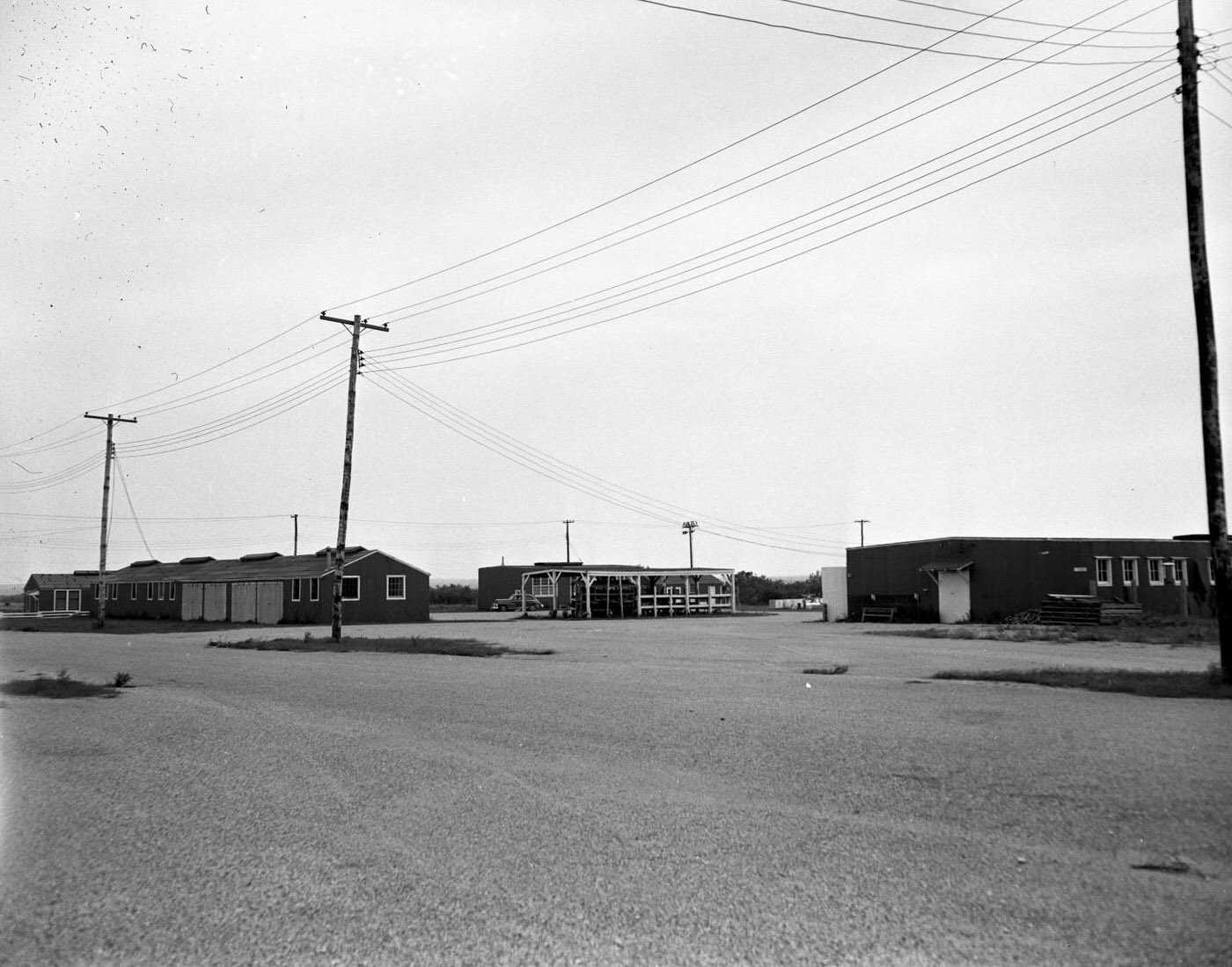
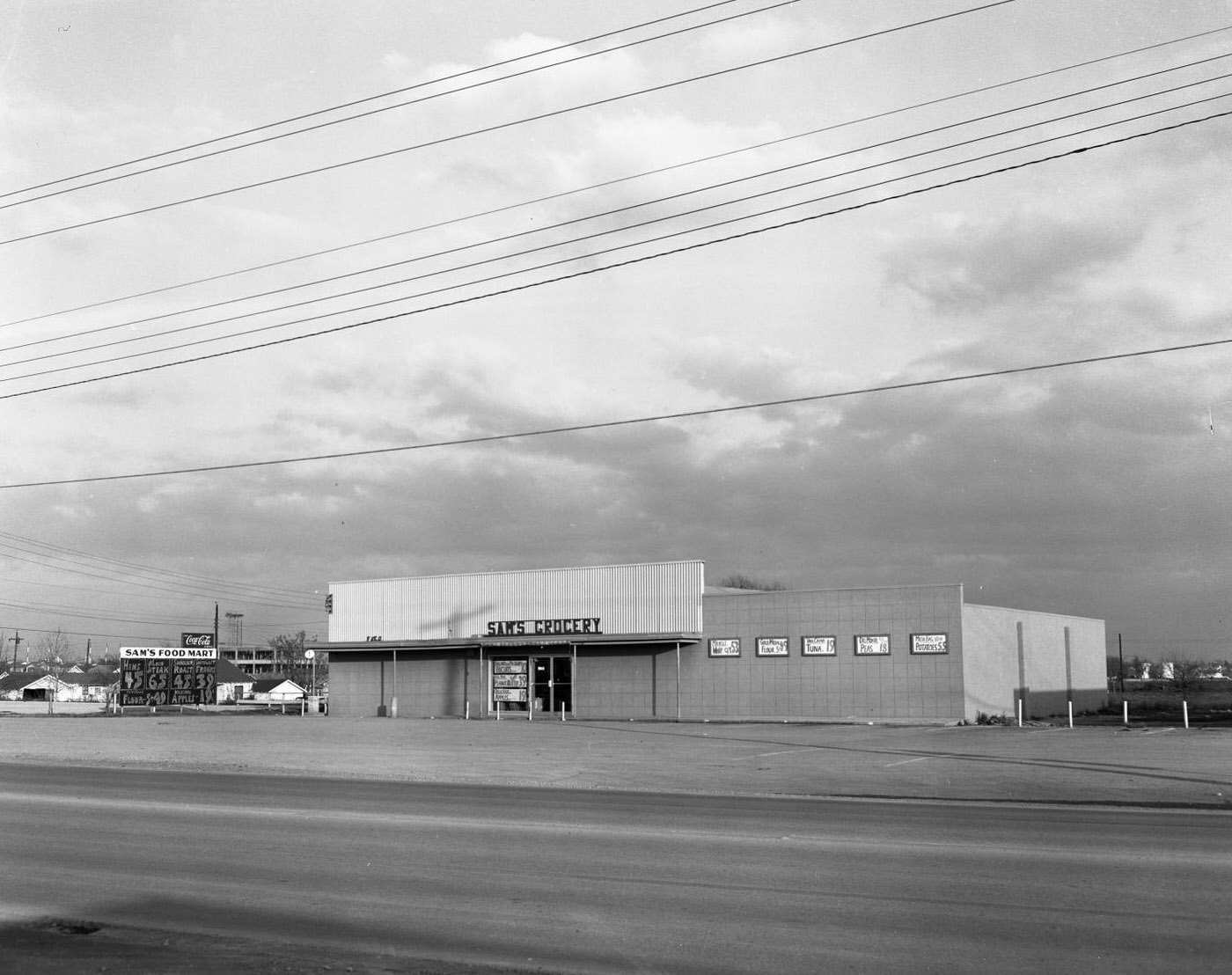
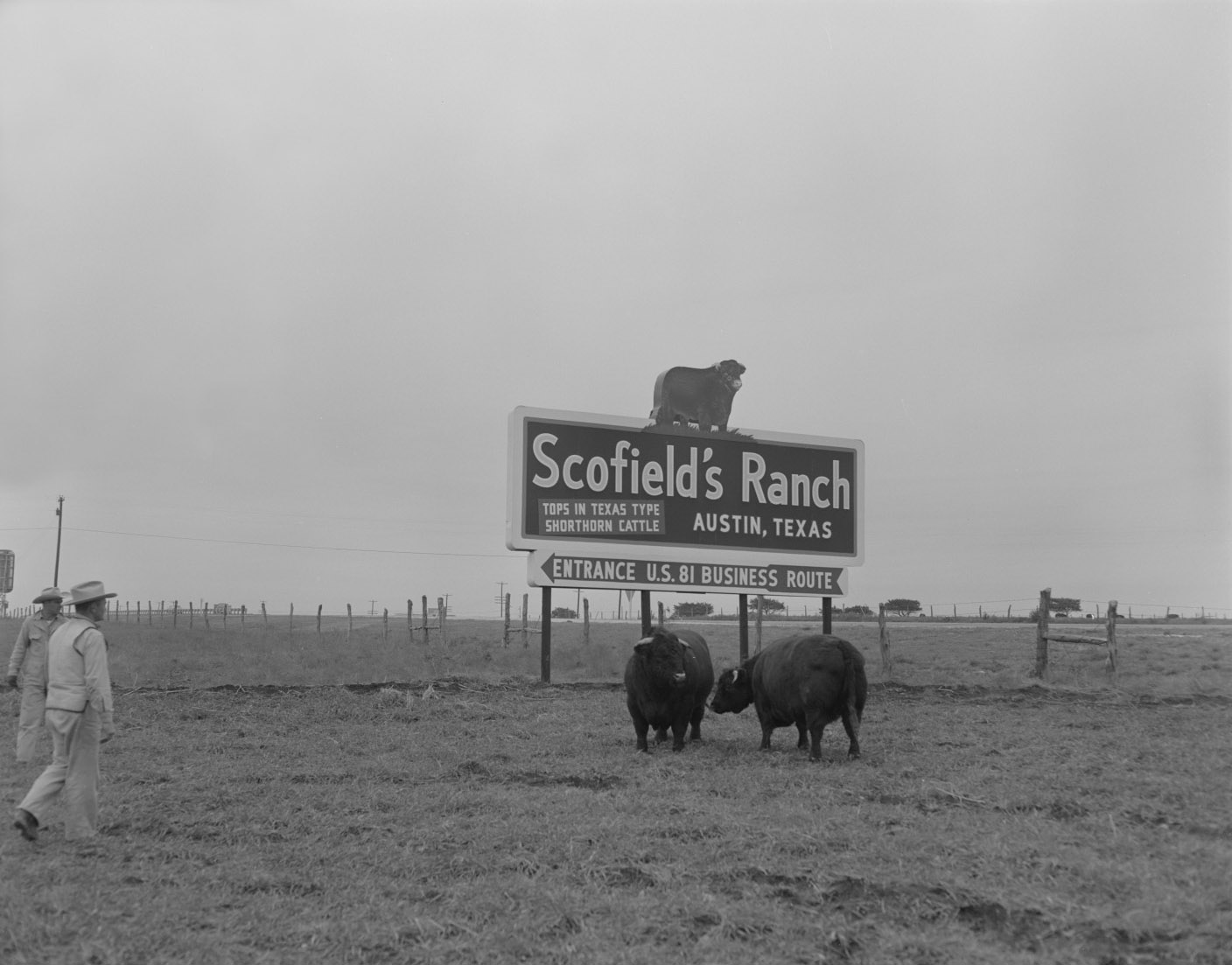
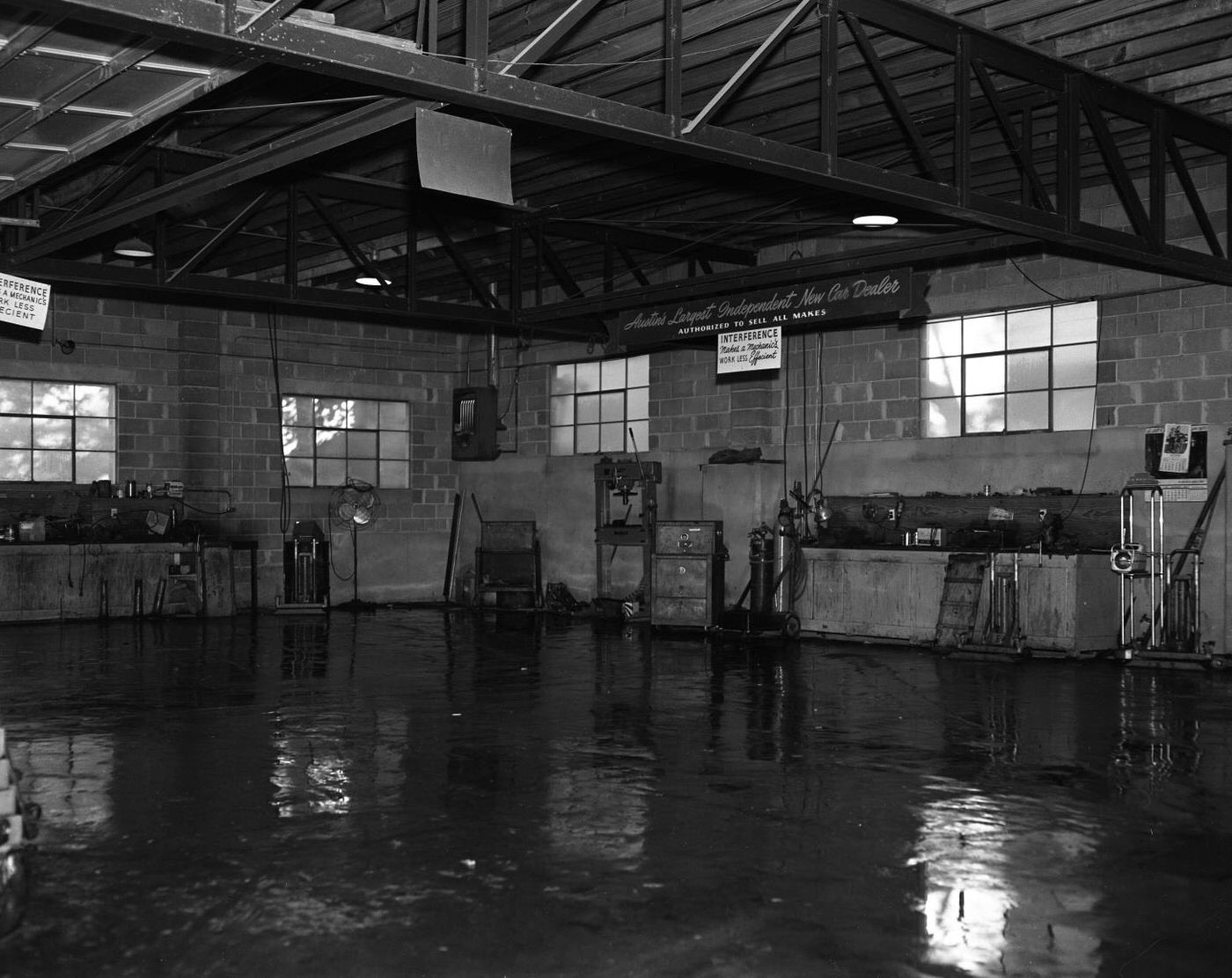
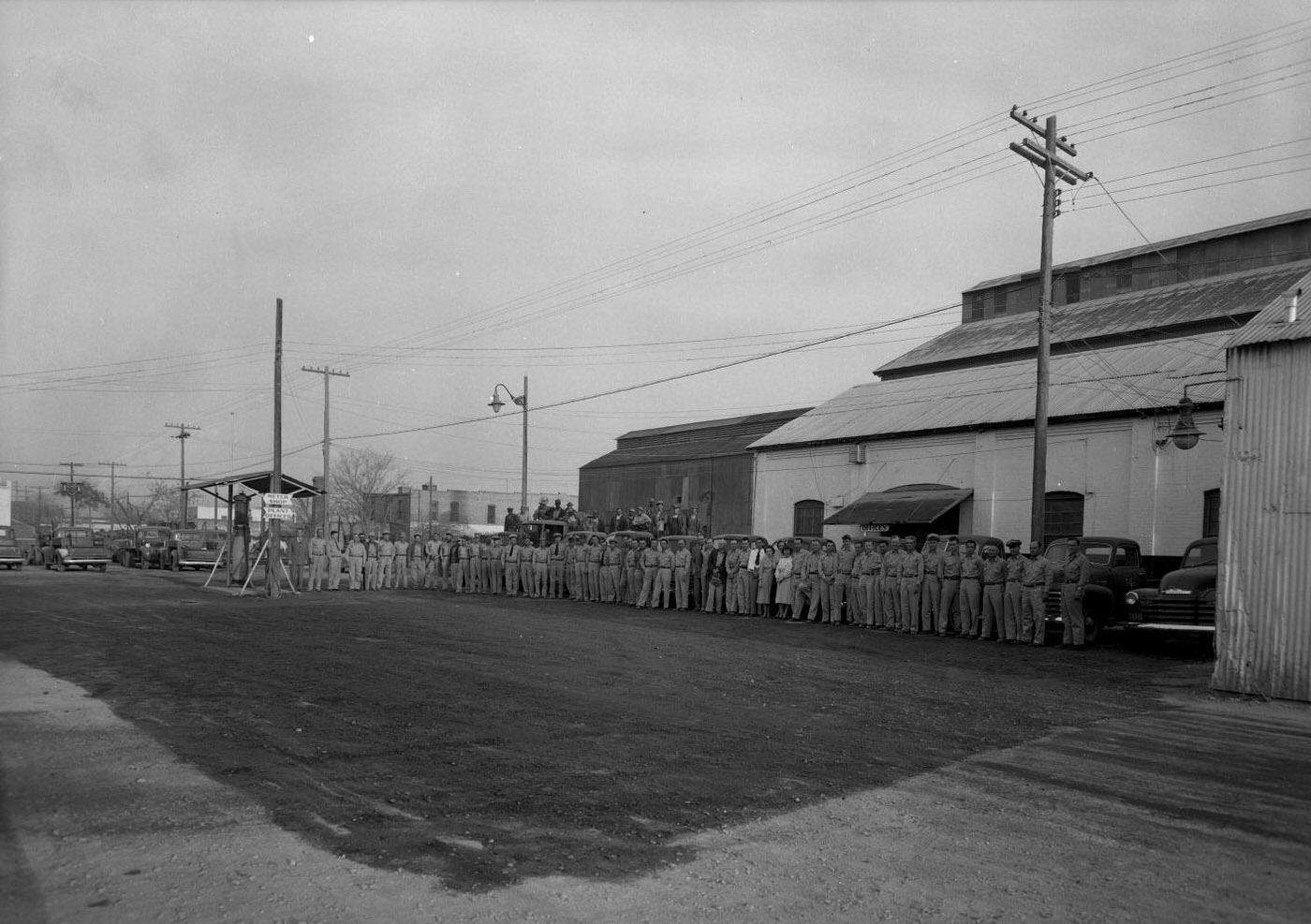
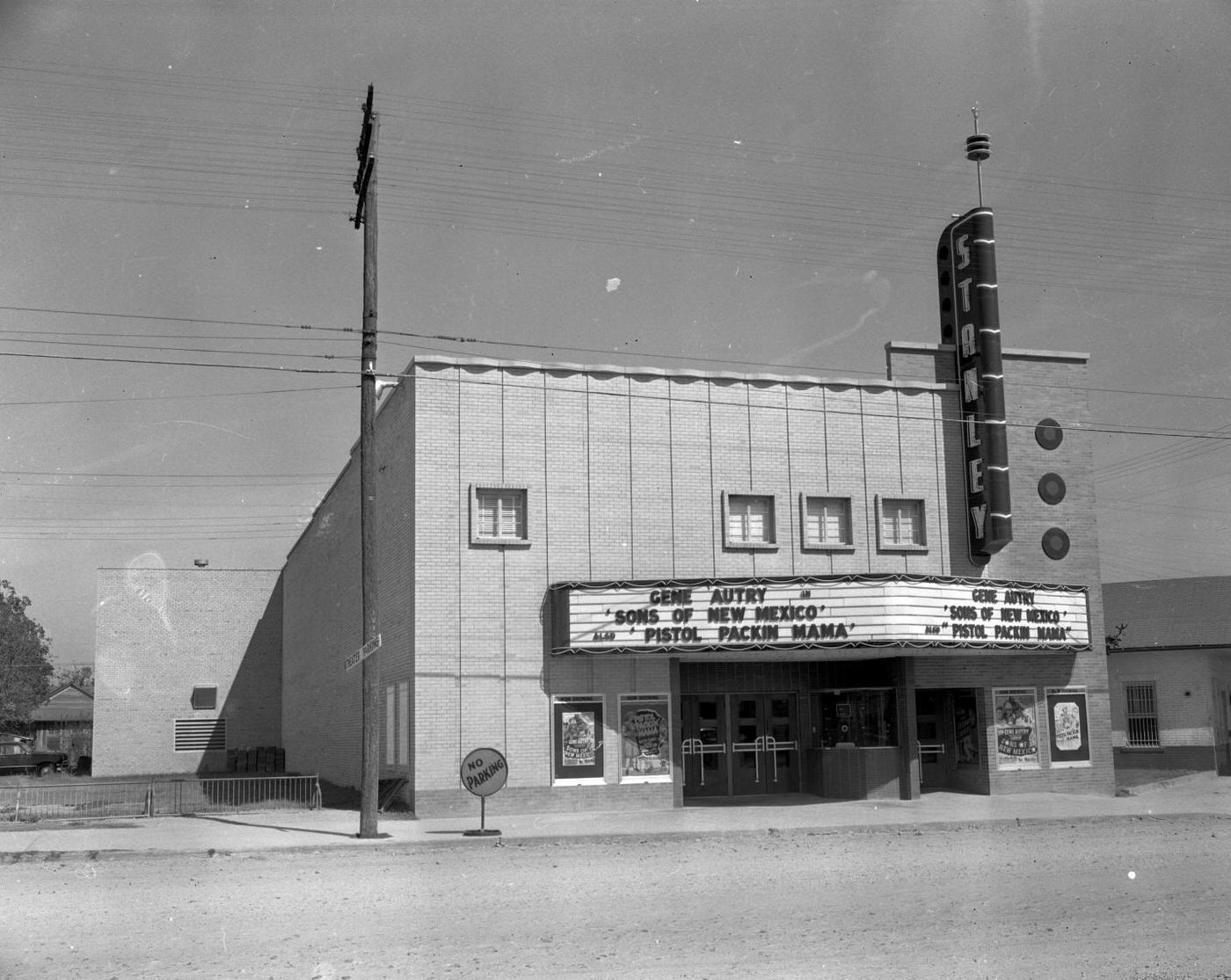
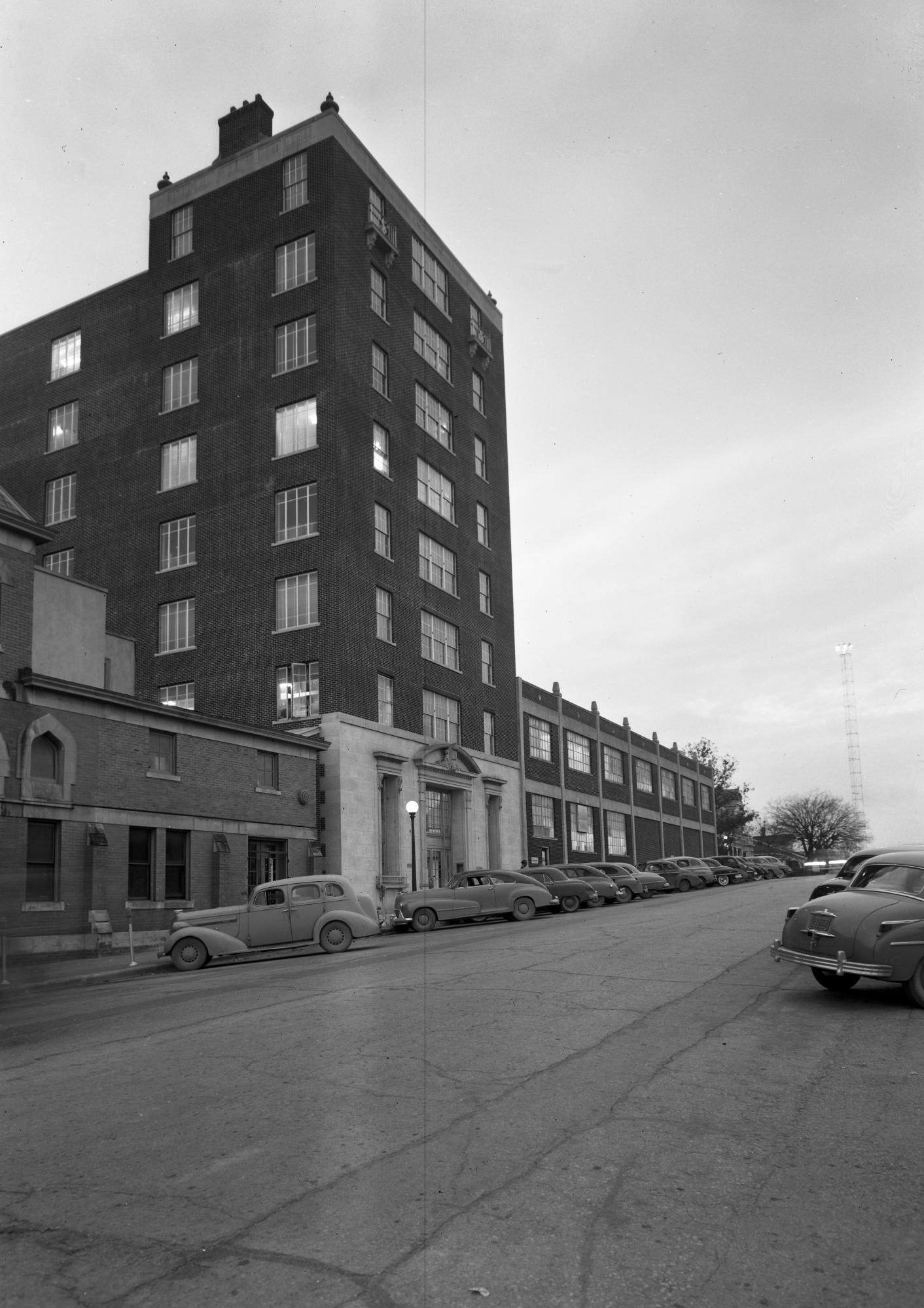
Street Scene at Cameron Road and Cloverleaf in Delwood, 1959Street View of Building with Cars, 1954Commodore Perry Hotel Exterior with Parked Cars and People, 1959Intersection of Airport Blvd and E. 12th St from Roadside, 1951Intersection of Airport Blvd and E. 12th St, Looking West, 1951Ribbon Cutting, Street Scene During Ribbon Cutting Ceremony, 1950City Street Scene near KTBC and US Cafe, 1950Another City Street Scene near KTBC and US Cafe, 1950Northward View of San Antonio Street from 16th St., 1951Southward View of San Antonio Street from 16th St., 1951Street Scene at 7th and Trinity with Driskill Hotel, 1958Yellow Cab Company Cabs Near Duke’s Garage, 1959Cars Parked in Front of the State Capitol in Austin.Andy Anderson Insurance Building with Signs, 1955Von Boeckmann-Jones Company Building, 1950Land Office Building with Adjacent Savings Office, 1954Fehr-Granger Building in Austin, 1957Fuller Mercer Funeral Service Building, 1950Glazier Frosted Foods Building, 1951Guajardo Grocery Building at 809 Lydia, 1950Hemphill Bookstore at 25th and Guadalupe, Austin, Texas, 1951.Exterior of Building at 2006 E. 1st St, 1951.Interior of Building at 2006 E. 1st St, 1951.Hoffmann Paint & Wallpaper Co. at 5429 Burnet Rd, 1955.Corner House Exterior, 1959.Road Front of Howard’s Montopolis Nursery at 719 Shady Lane, 1951.Ingram Equipment Company and Capitol Machine Works Building, 1956.Interior of Paggi House Featuring Furnishings and Decor, 1957.Stacks of Materials at Engine Works, 1950.Lone Star Paper Company Building at 404 Paul St., 1951.Bloor Manor, Texas Rest Home in Austin, 1951.Medical Arts Square with Parked Cars, 1958.National Electrical Contractors’ Association Central Texas Chapter Office, 1952.Naumanns Food Store at 4634 Burnet Rd, 1951.Exterior of New Steck Building Near Shoal Creek Blvd, 1958.North Austin Fire Station #16 at 7000 Reese Lane, 1957.Historic Home at Trinity and 7th Street, Austin, 1951.Pleasant Hill Old School Building at Onion Creek, 1950.Exterior of Parcel Post Station, 1950.Parker Chiropractic Clinic Building, 1950.Goad Motor Company Parking Lot Filled with Cars, 1954.Joe’s Quick Car Wash with Men Washing a Car, 1954.University of Texas Physics Building Exterior, 1959.Powell Property at Intersection of Brodie Ln. and Oakdale Dr., 1958.Wide Shot of Gulf Gas Station at Remington Rand Shaver Division, 1956.Round Rock Motor Company, Exterior With Cars and Sinclair Gasoline Sign, 1952.Rural Barrack Buildings, Exterior Showing Empty Property, 1950.Sam’s Grocery, Exterior Owned by Sam R Wood at 4805 Burnet Rd., 1957.Scofield Ranch Sign, Advertisement With 2 Men and 2 Cattle, 1958.Simmons Motor Company, Mechanics Work Area in Garage, 1956.Southern Union Gas Company, Employee Group Photo at Warehouse, 1951.Exterior View of Southwestern Bell Building on a Corner Lot, 1951.Construction in Progress at Southwestern Bell Building, 1950.Renovations at Southwestern Bell Main Building, 1951.House Adjacent to St. David’s Hospital, 1950.Stanley Theater in Luling, Texas Showing Gene Autry Movies, 1950.
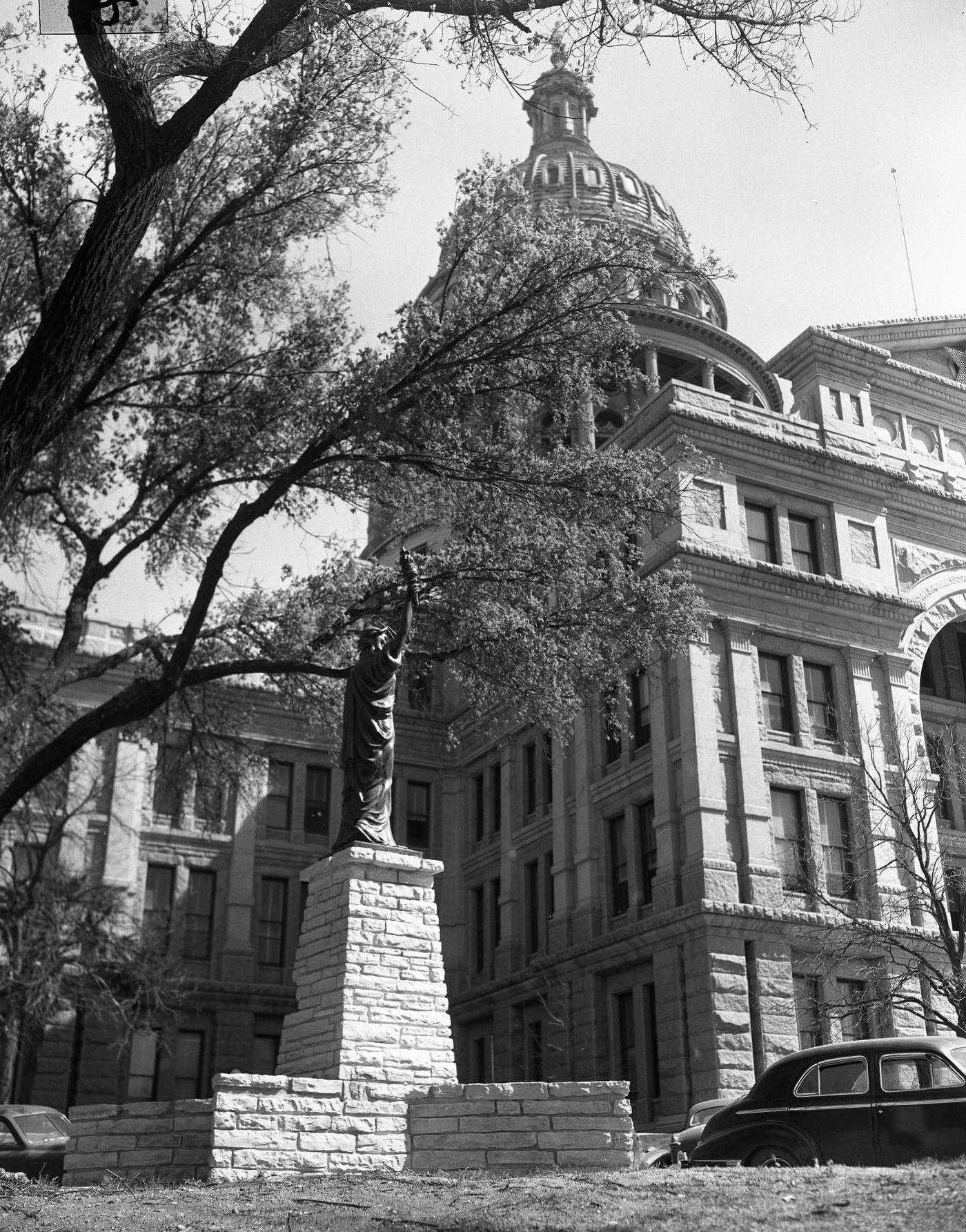
Statue of Liberty on Texas Capitol Grounds, 1952.
Exterior of The Steck Building at 205 W. 9th, 1950.
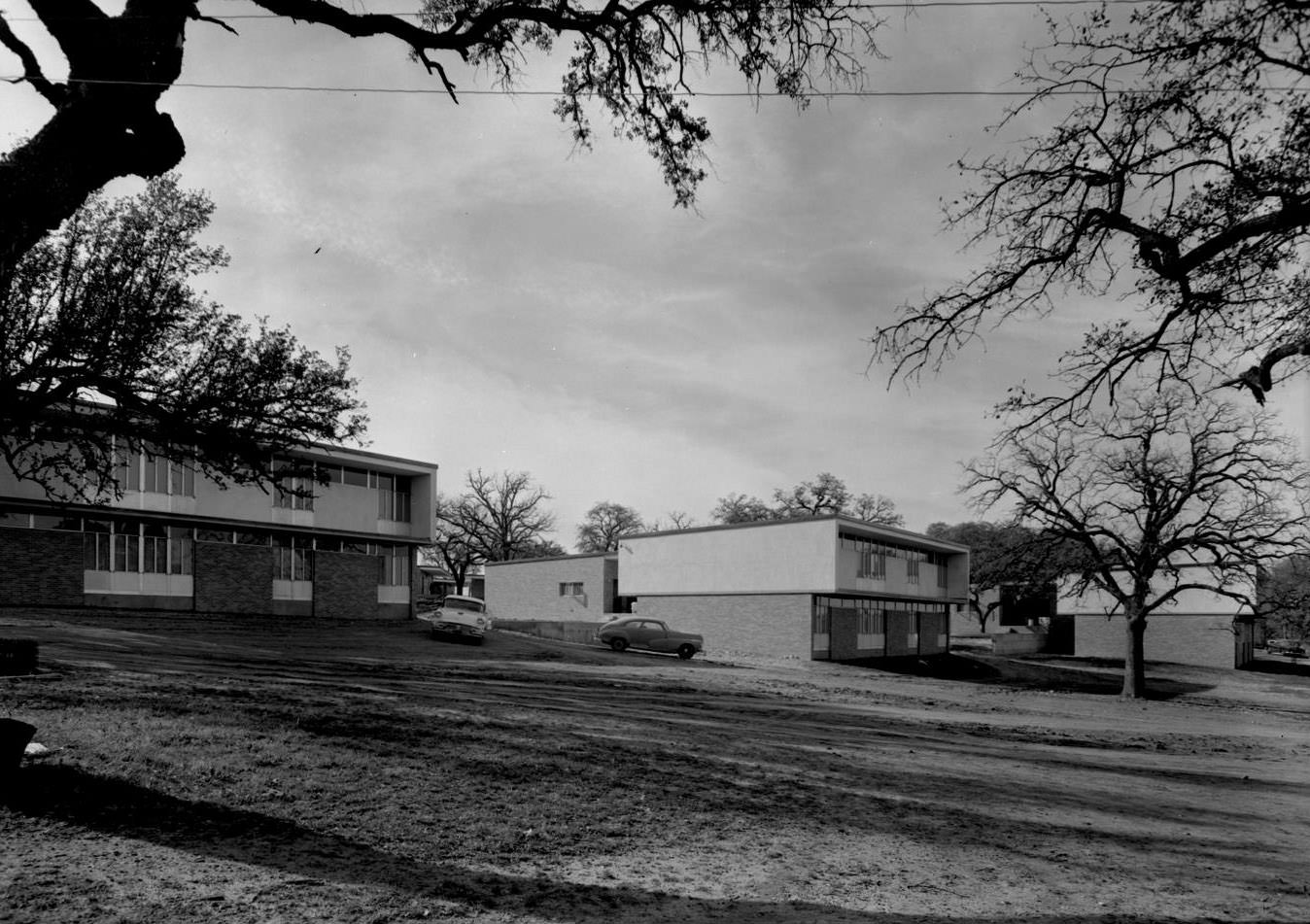
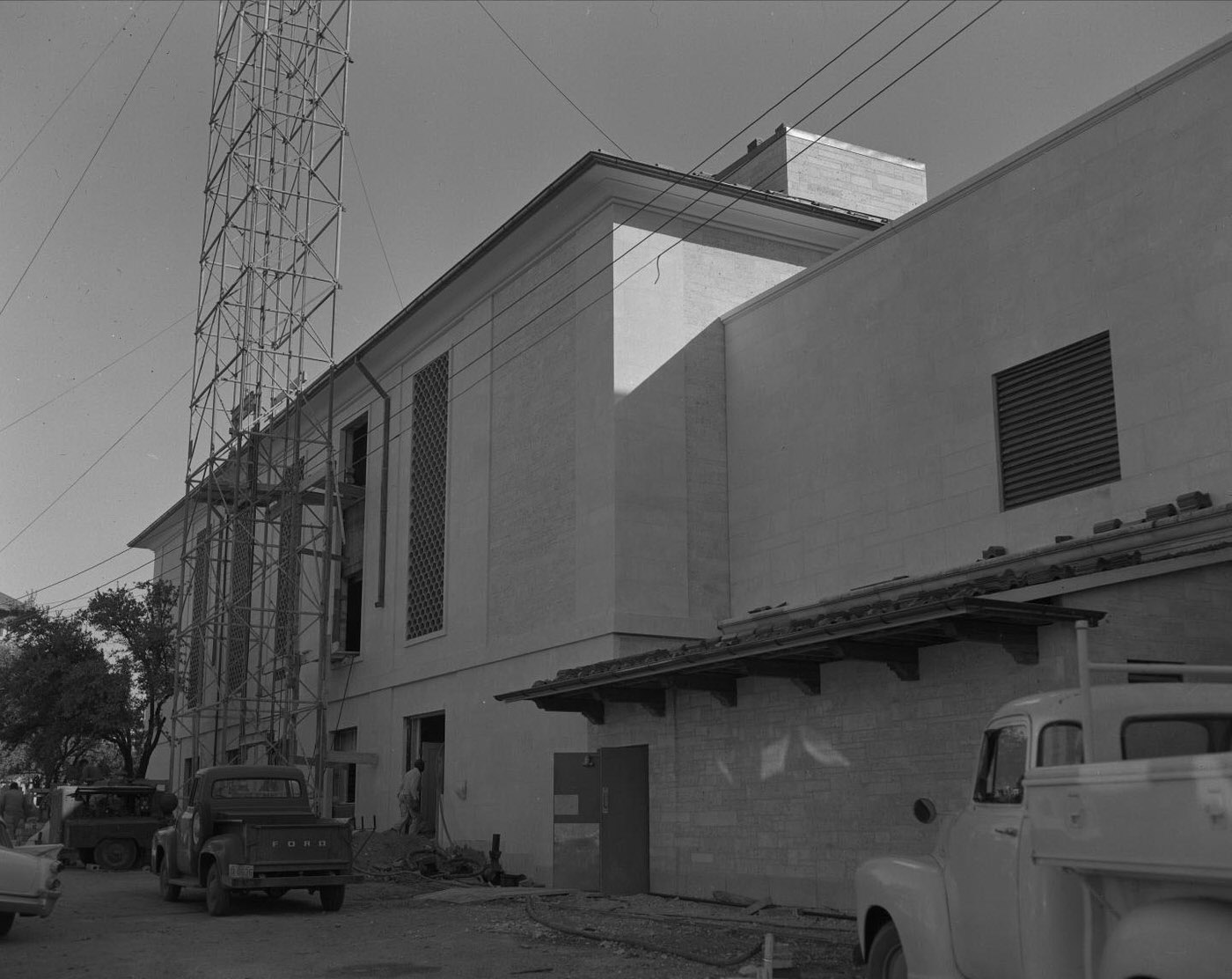
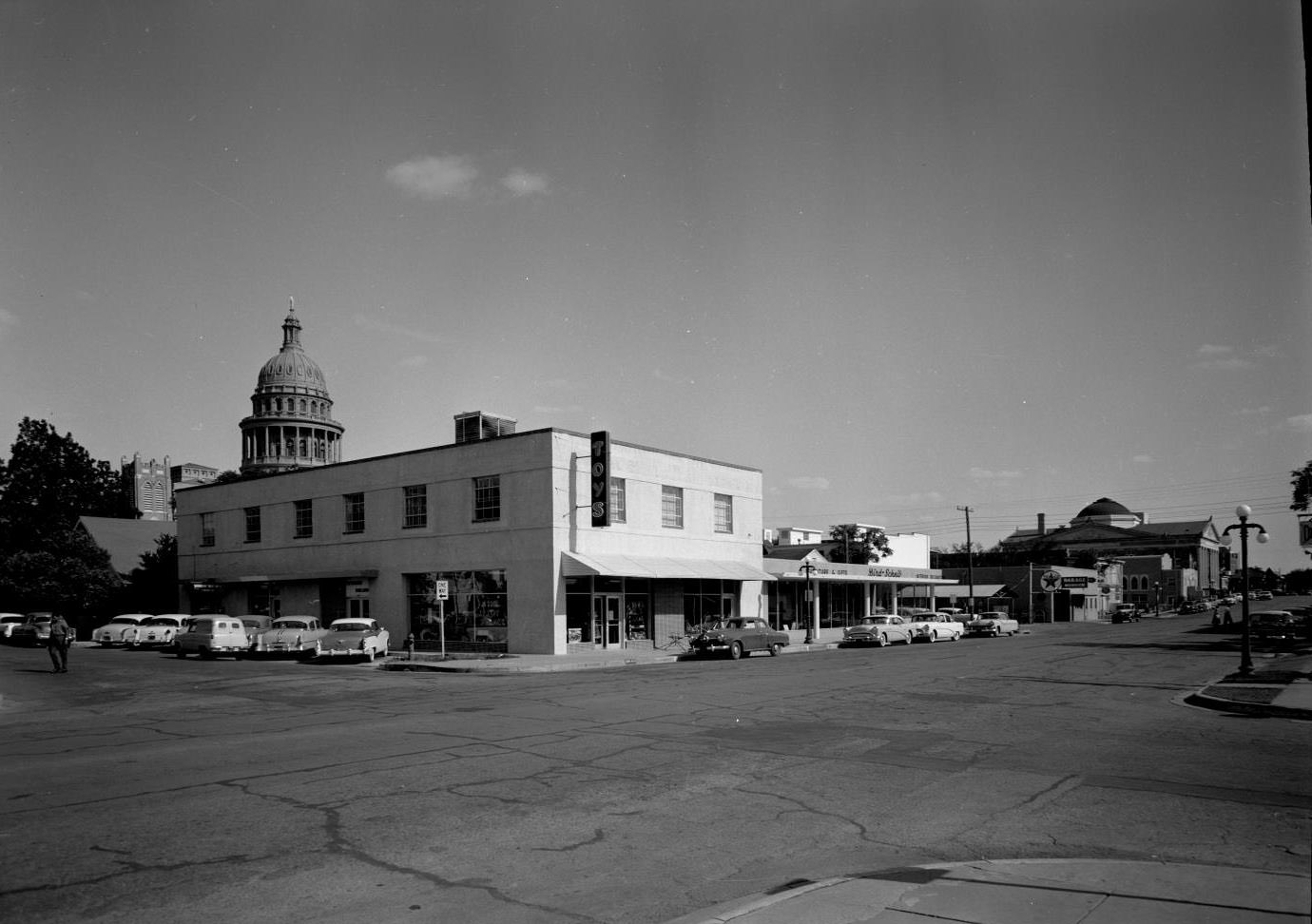
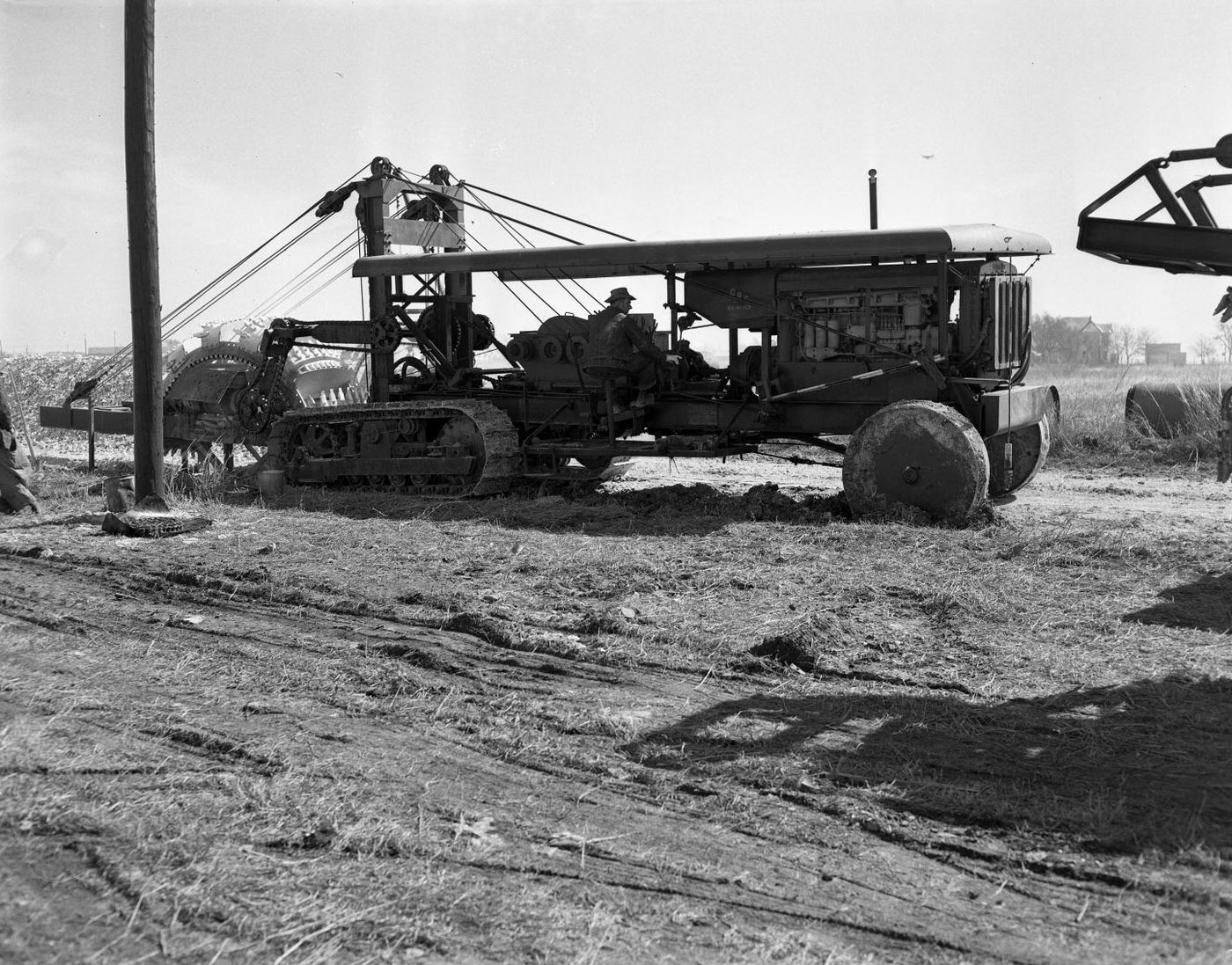
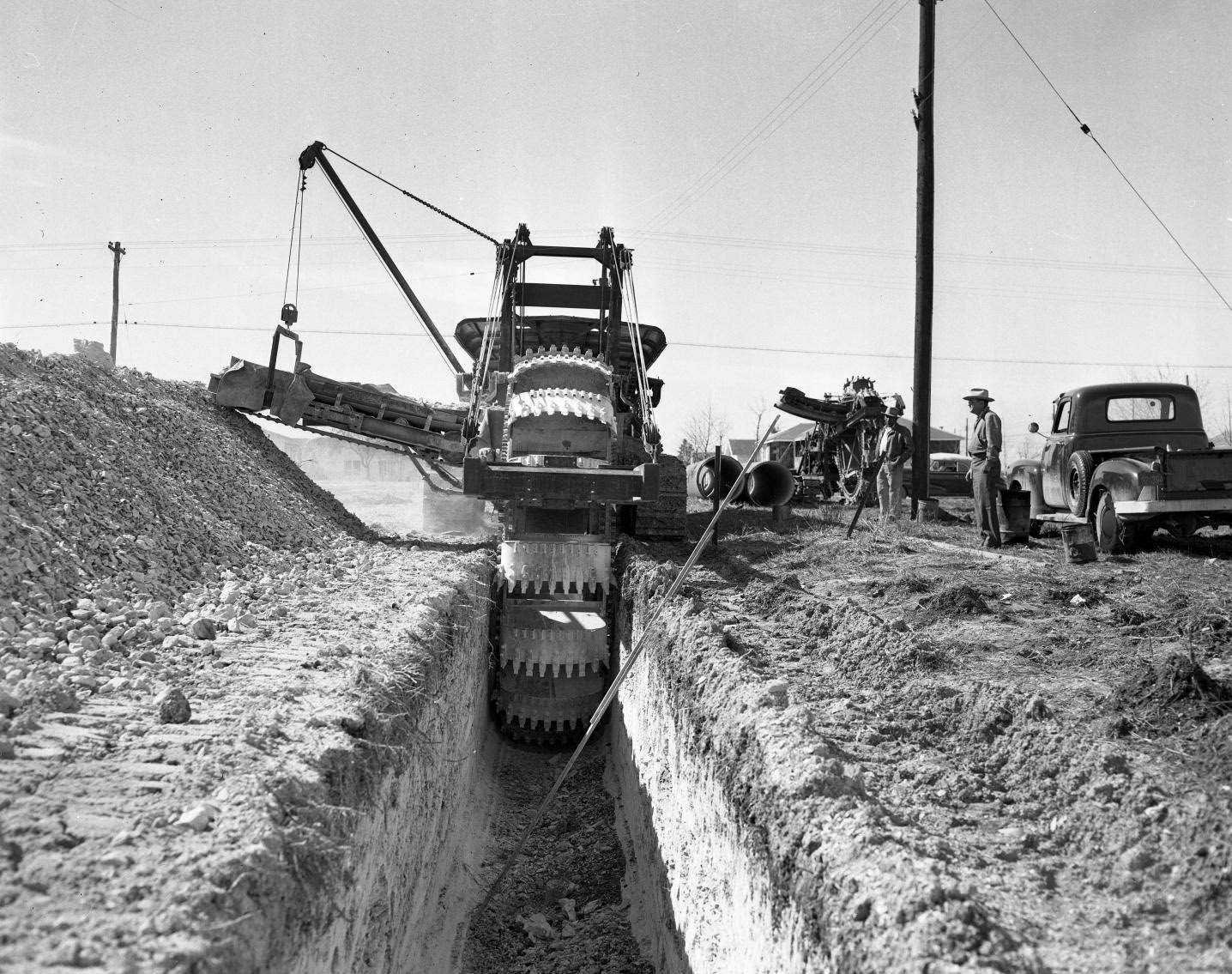
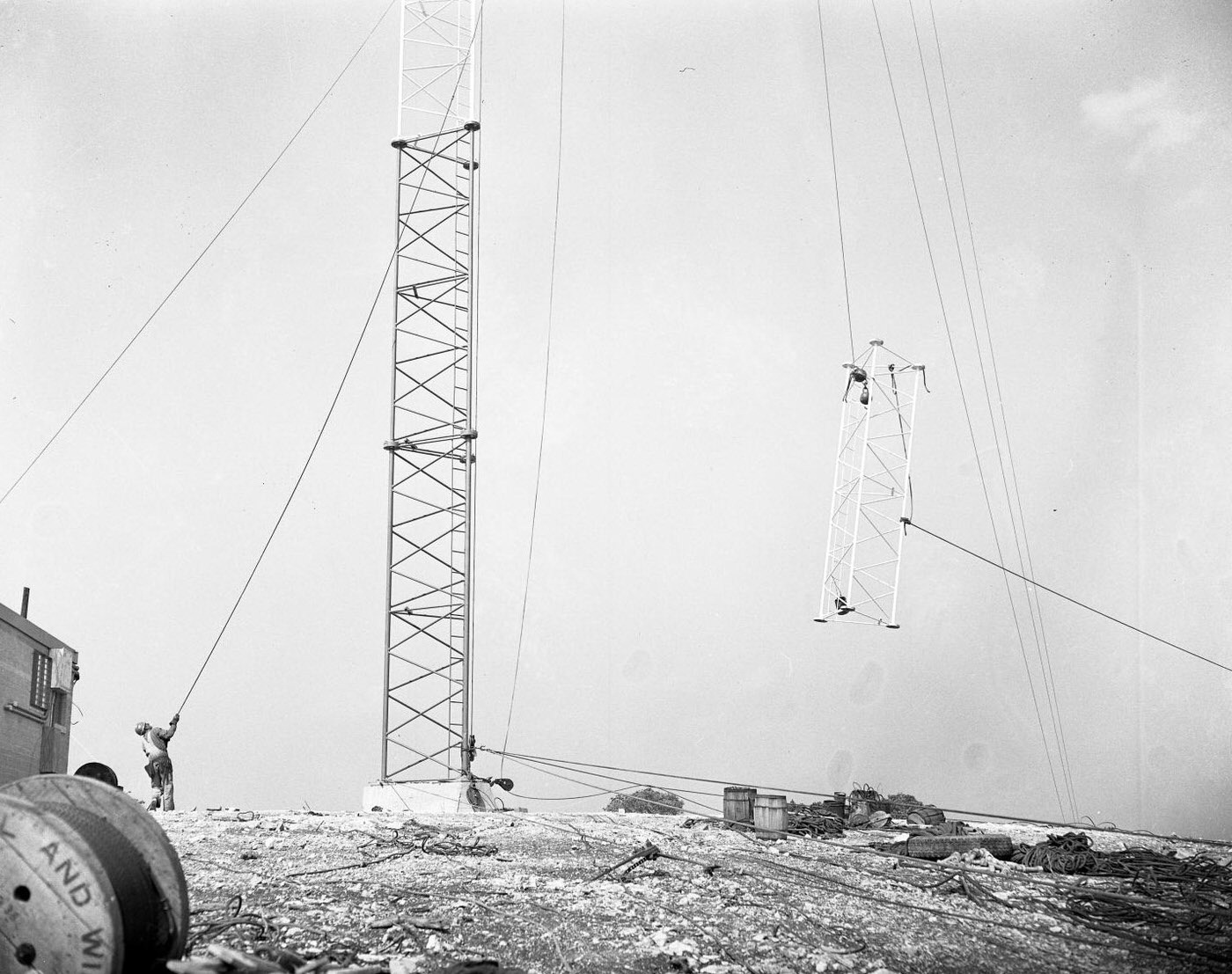
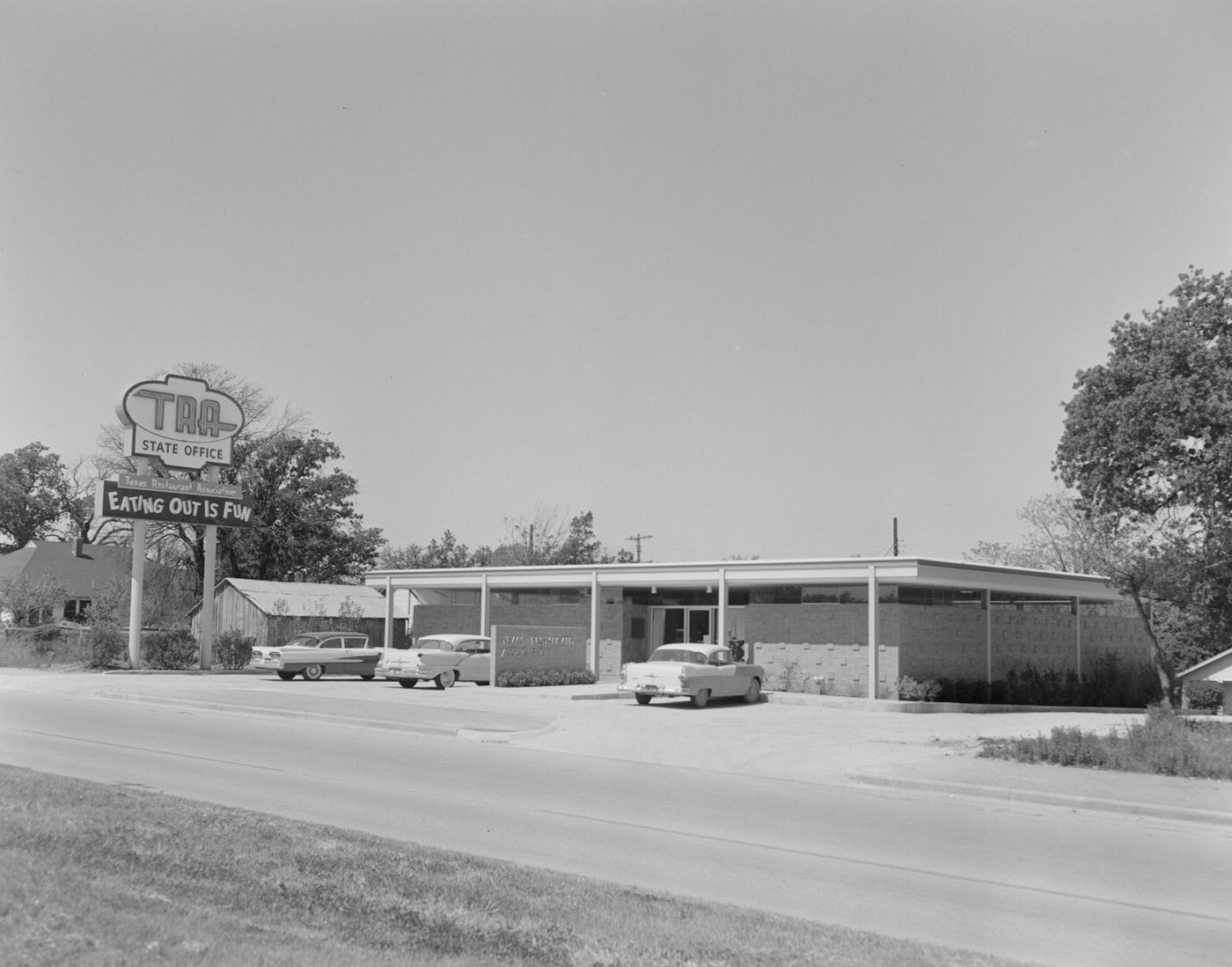
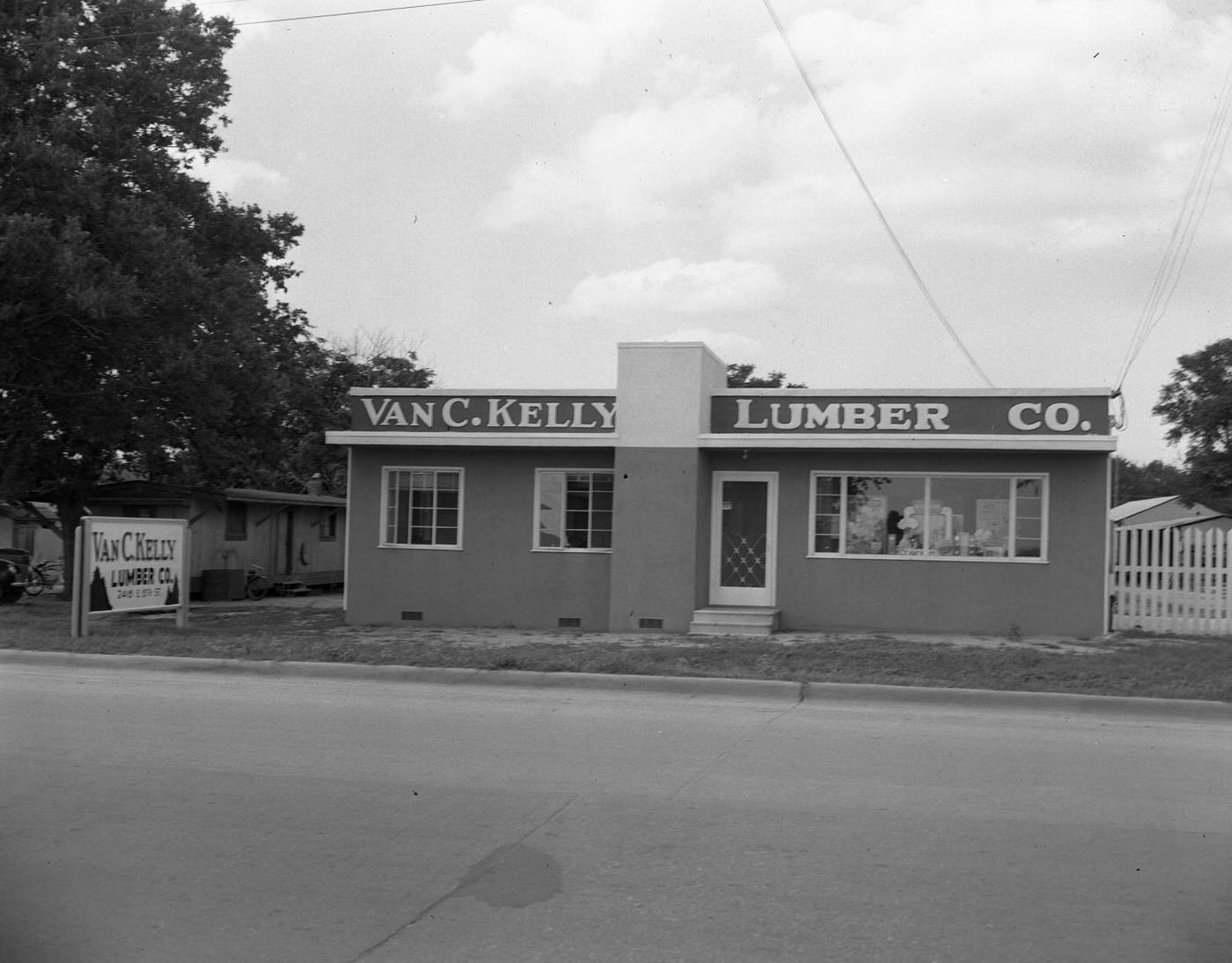
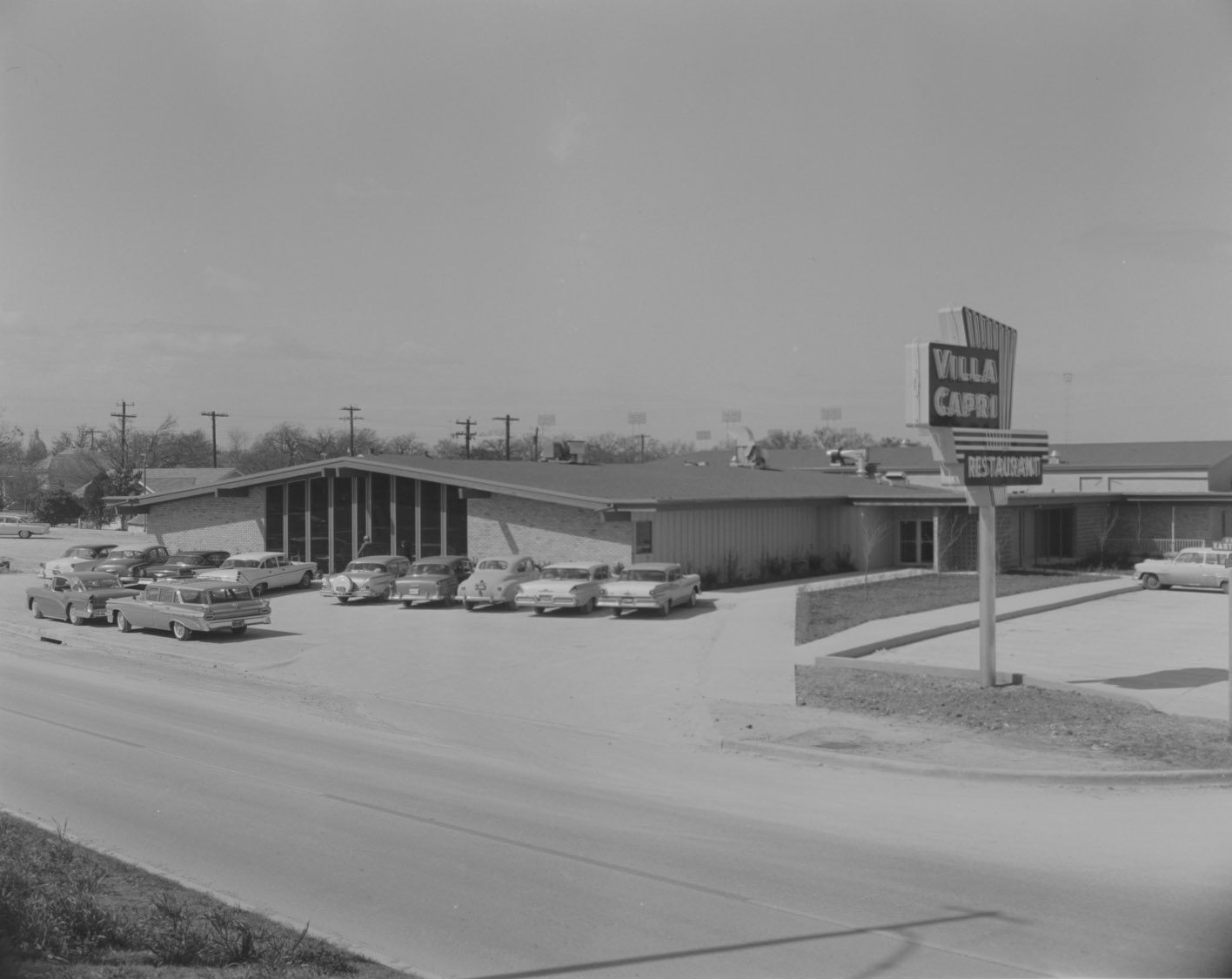
Exterior View of Housing Units at Texas School for the Deaf, 1957.Housing Units and Grounds at Texas School for the Deaf, 1957.Construction Outside Texas Union on the West Mall, 1959.Exterior of Toy Palace Toy Store with Capitol Building in Background, 1956.Trench-Digging Machinery in Action on a Field, 1951.View from Inside Dugout Trench with Trench-Digging Machinery, 1951.Metal TV Tower in the Hills of West Austin, 1952.Texas Restaurant Association State Office Building, 1958.Exterior of Van C. Kelly Lumber Company Building, 1951.Exterior of Veteran’s Administration Building, 1955.Exterior of Veterans of Foreign Wars Headquarters in Texas, 1956.Exterior of 2-J Hamburger Store with Cars Parked, 1954.Exterior of Villa Capri Restaurant and Parking Lot, 1959.Warehouse at 401 Colorado, Demolished, 1951.
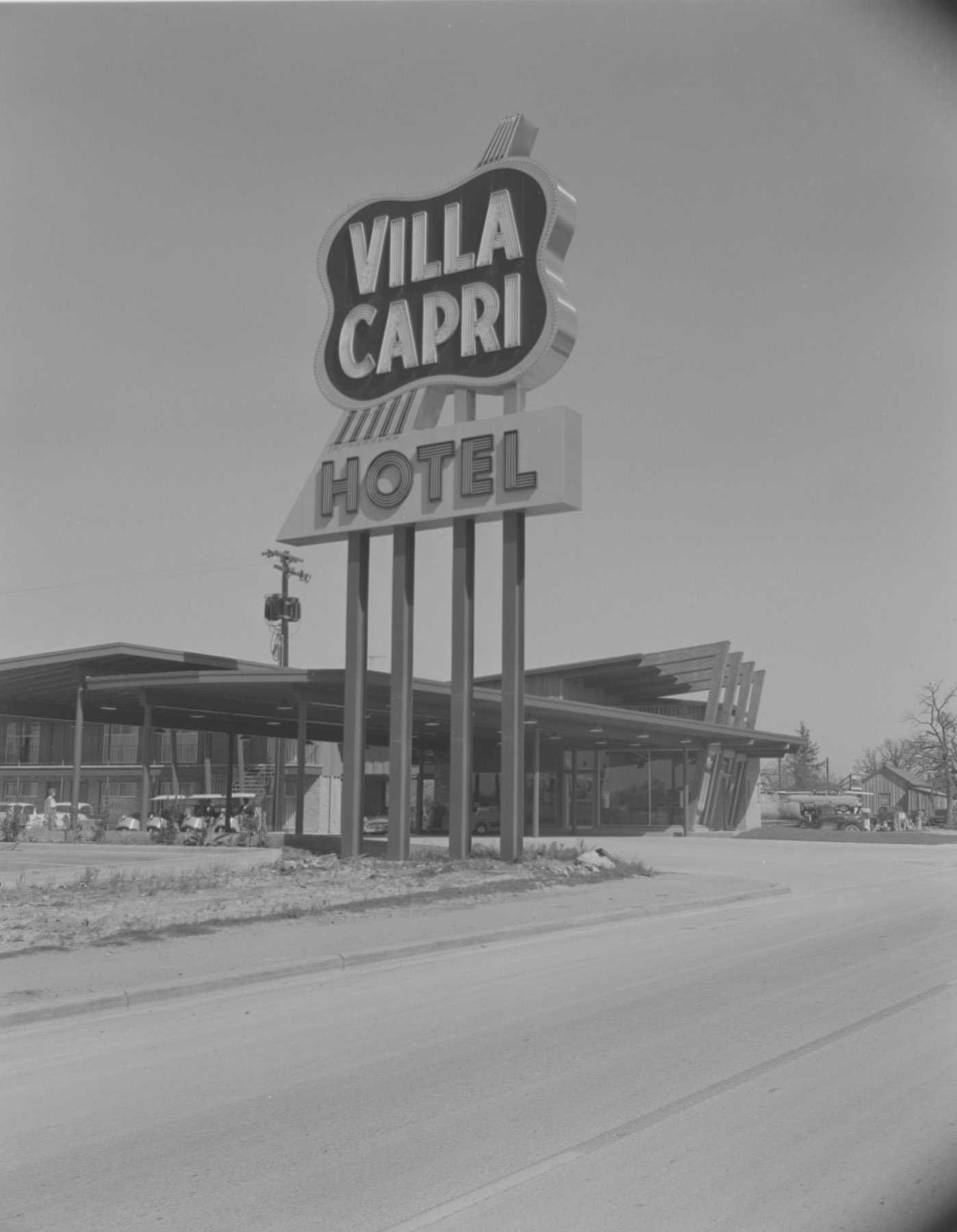
Exterior of Villa Capri Hotel Sign and Building, 1959.
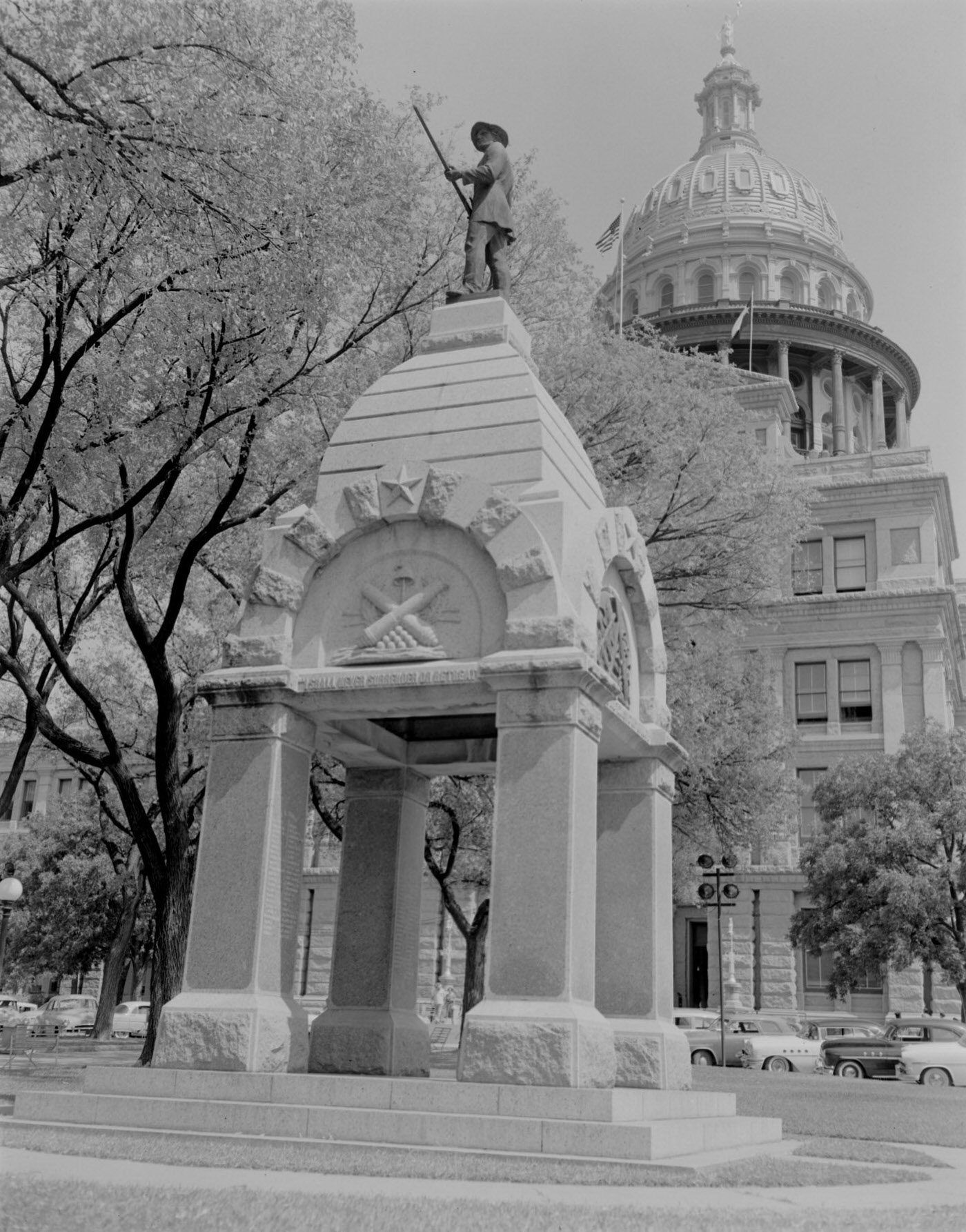
War Memorial with “I Shall Never Surrender or Retreat” Inscription, 1955.
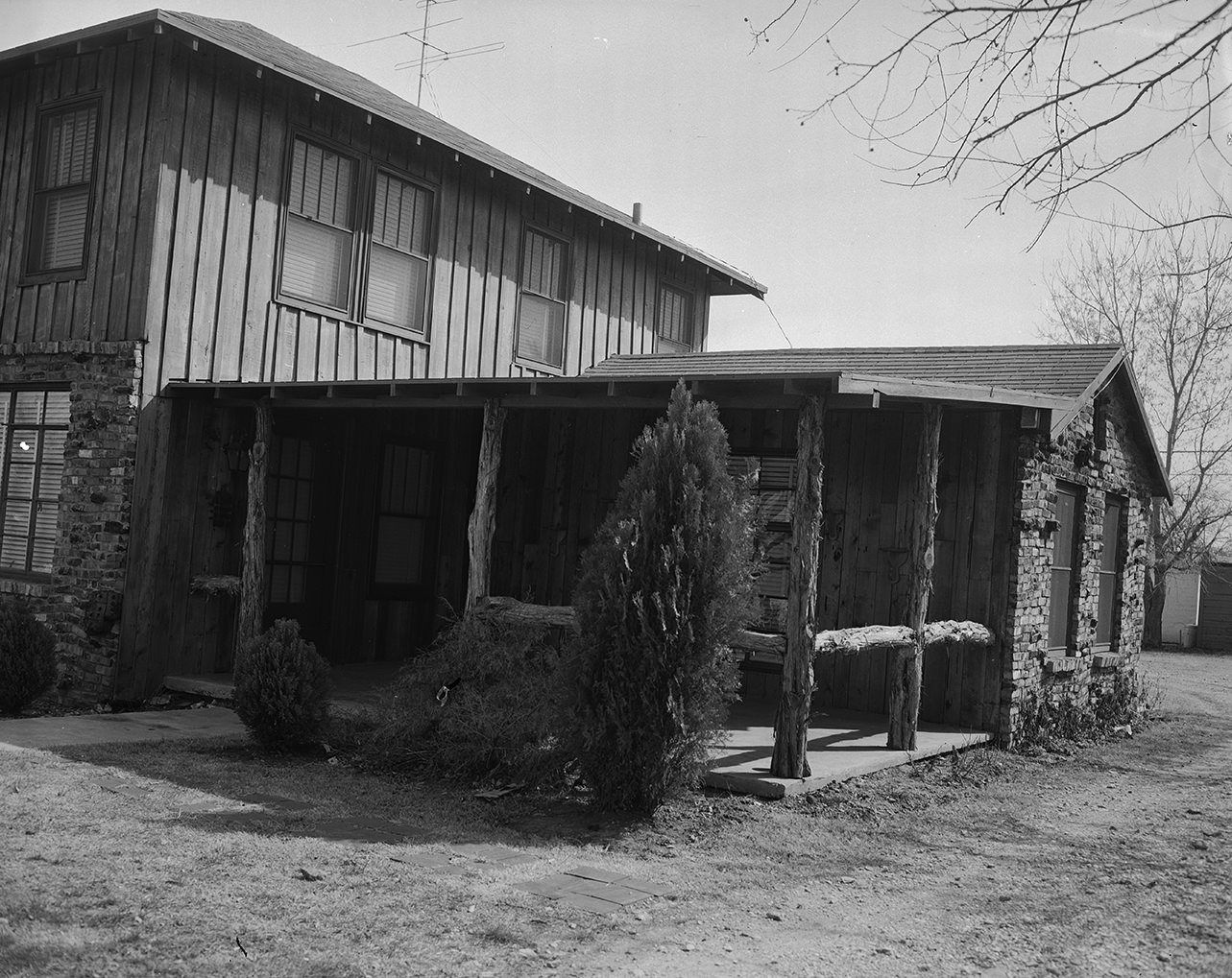
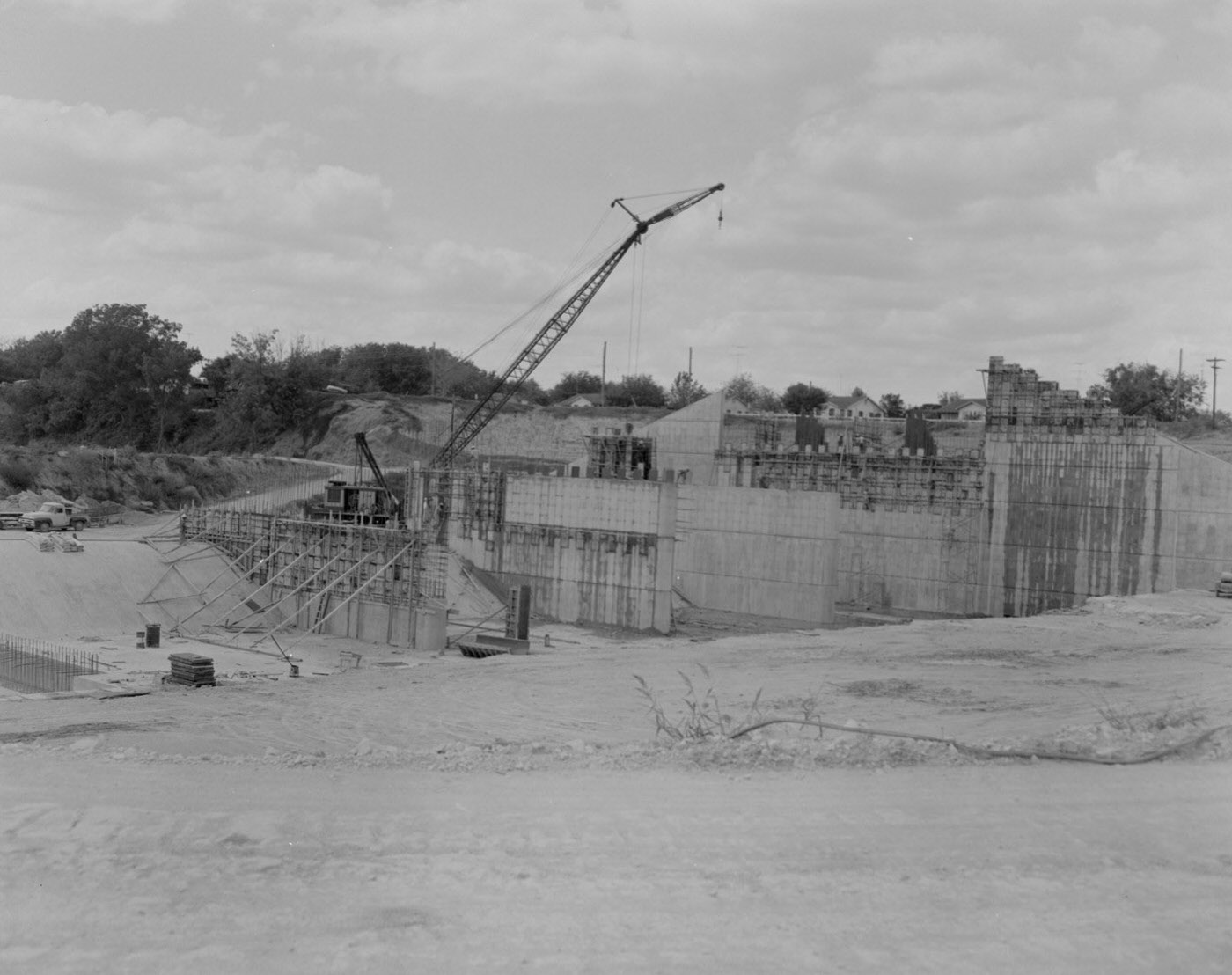
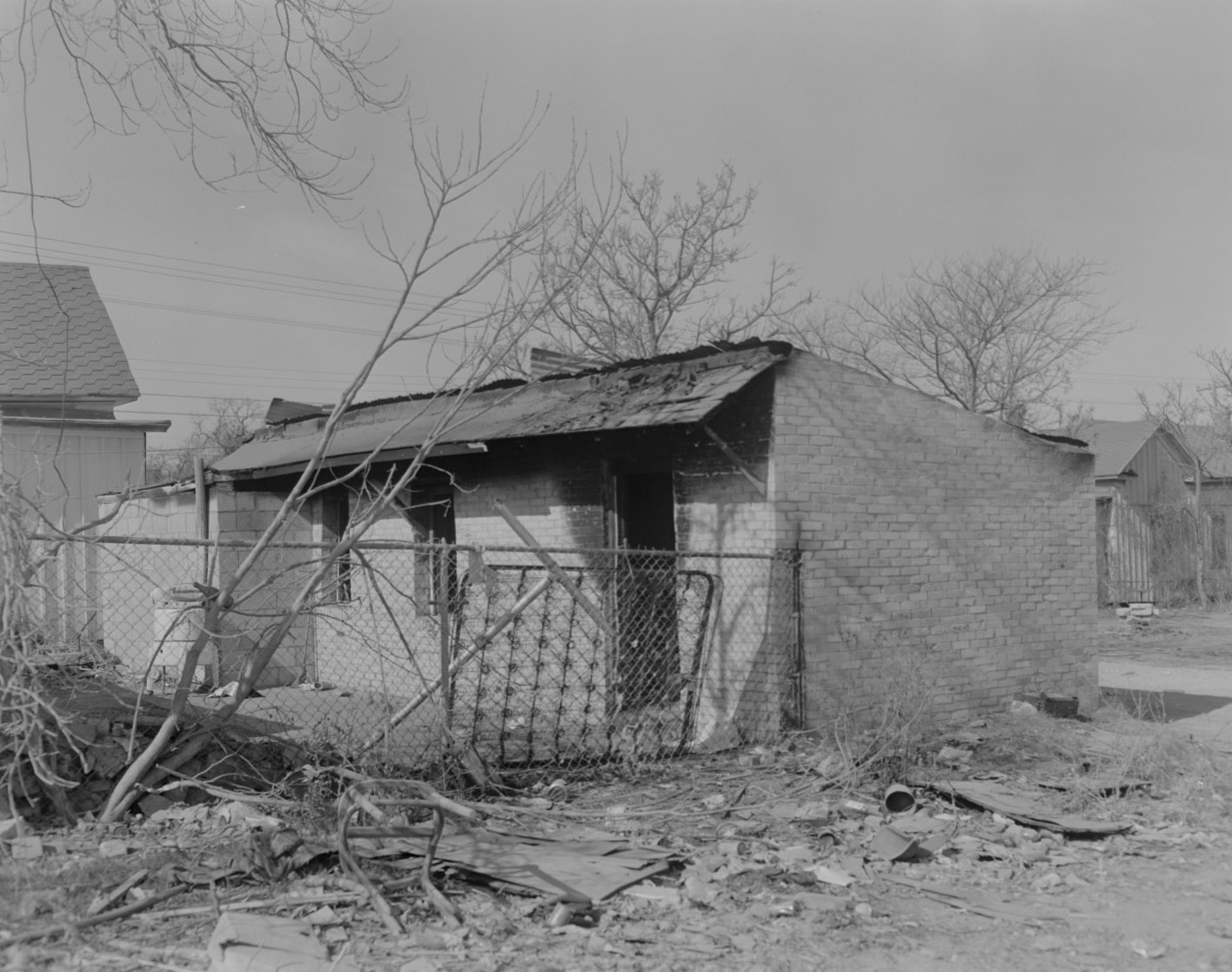
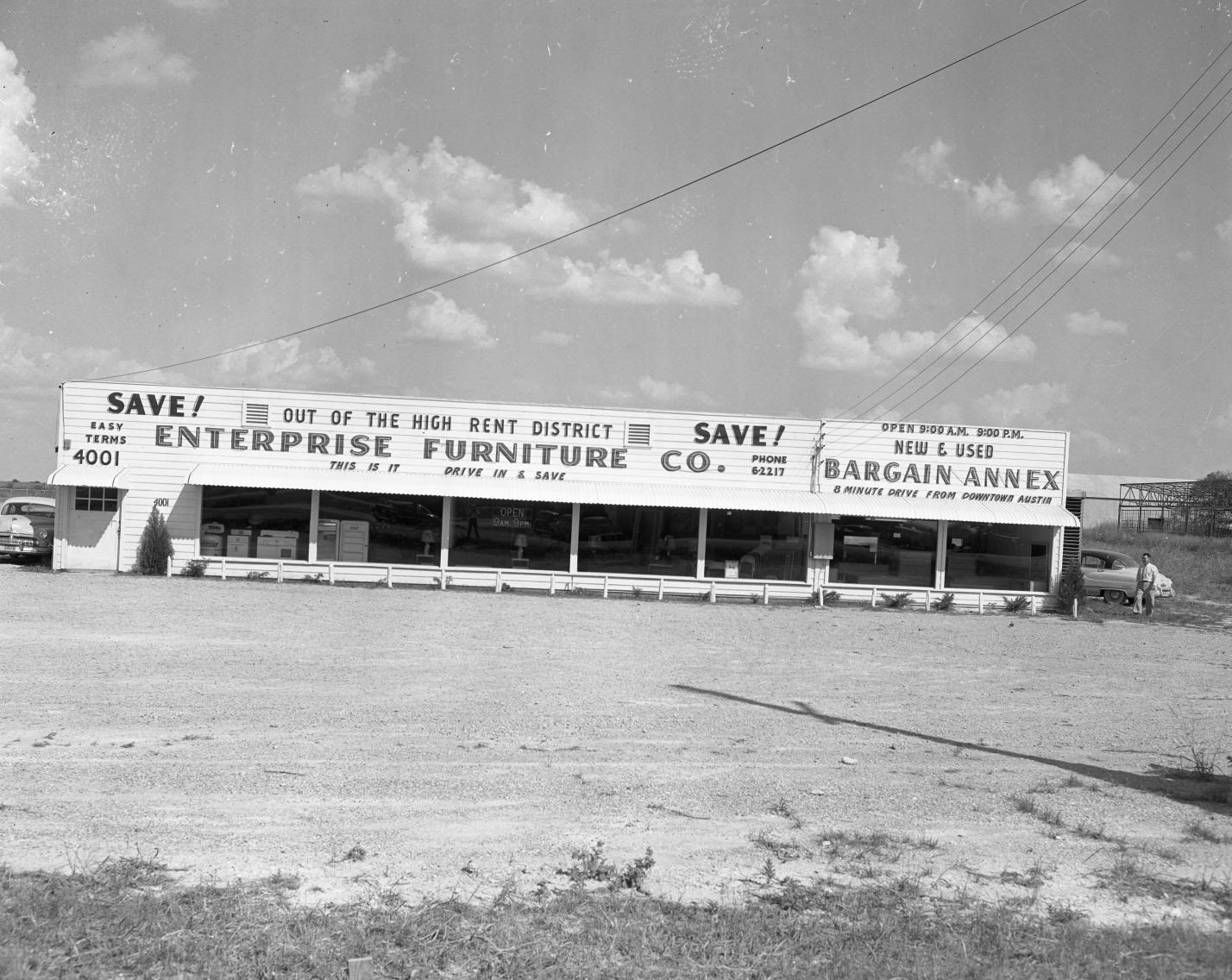
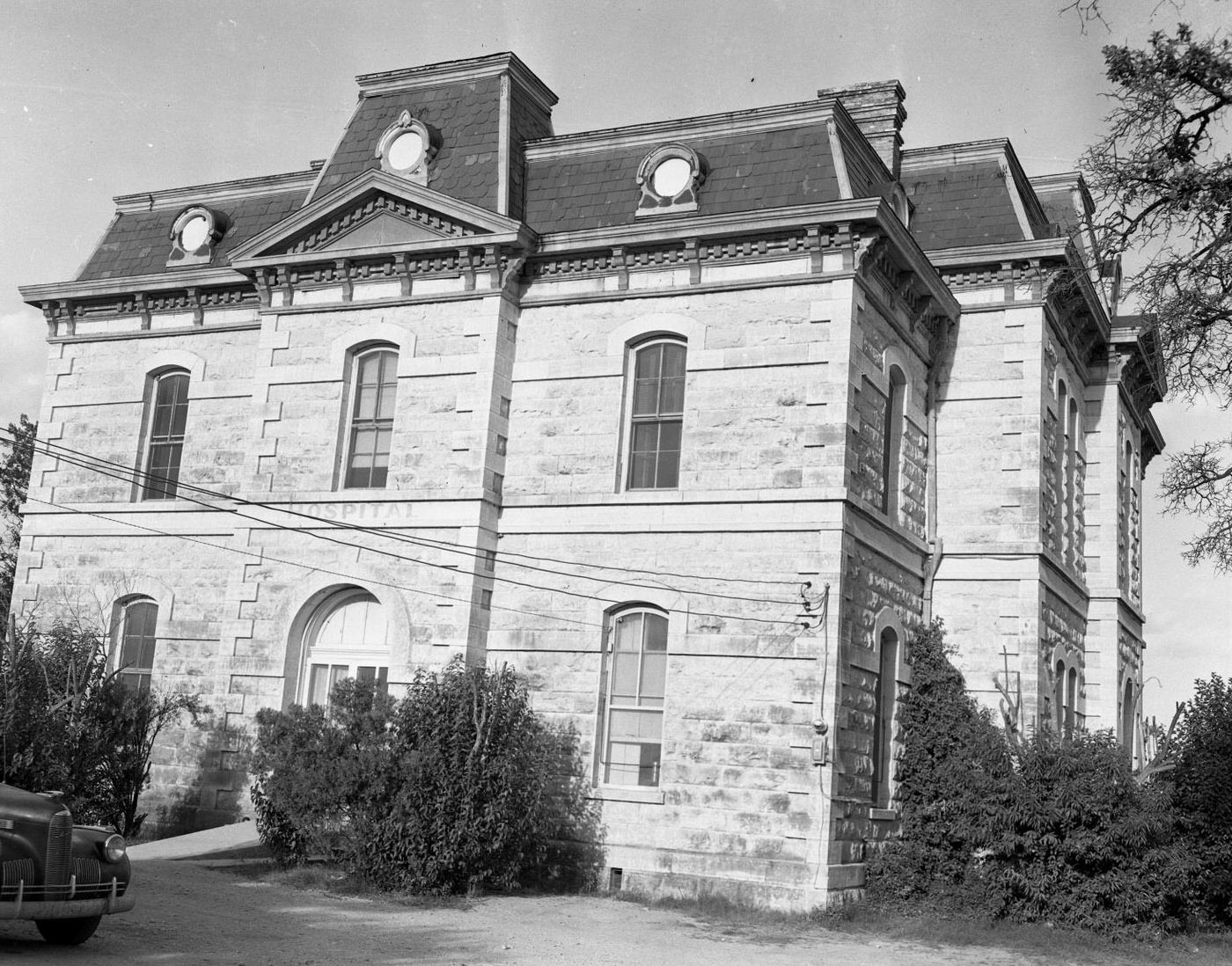
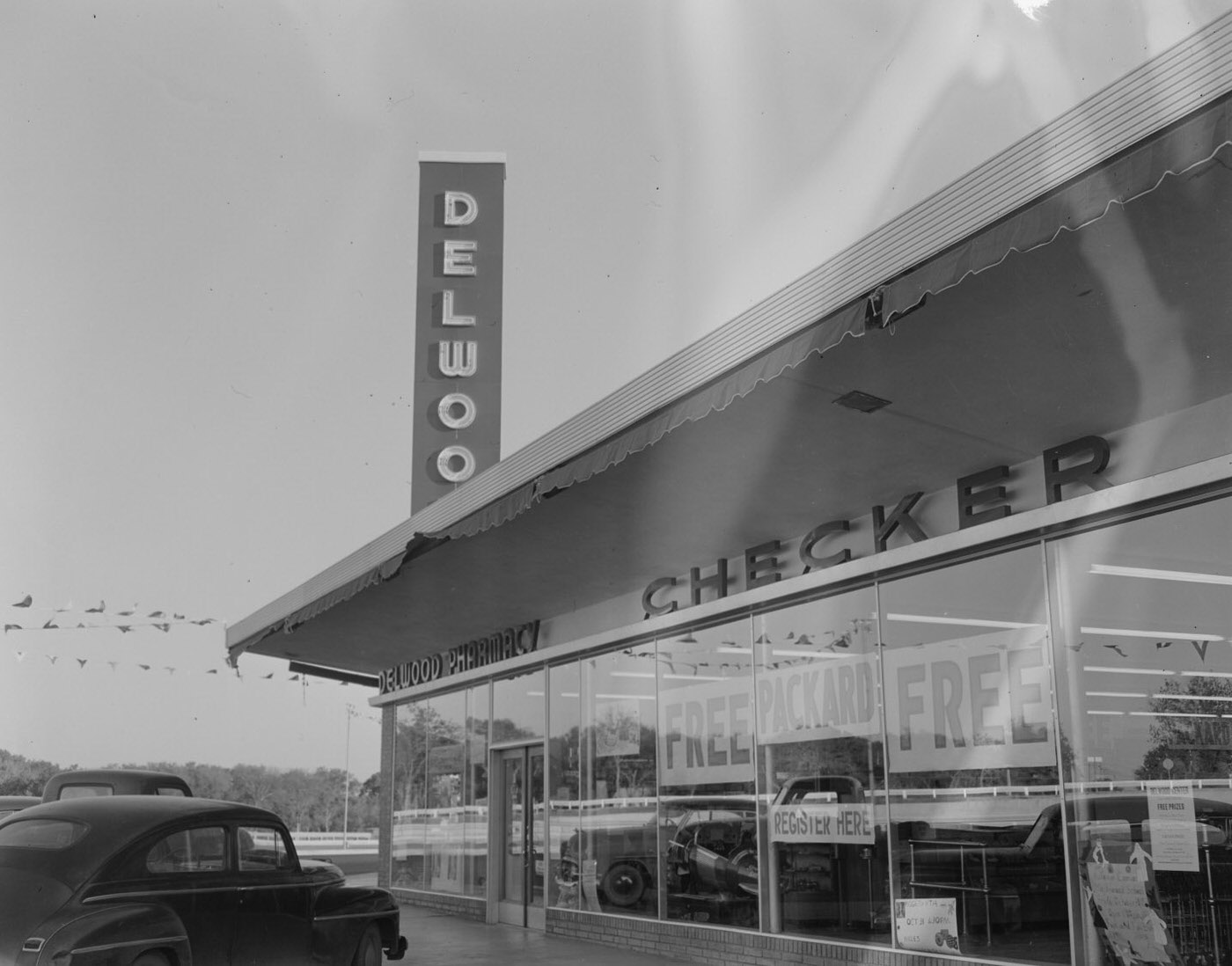
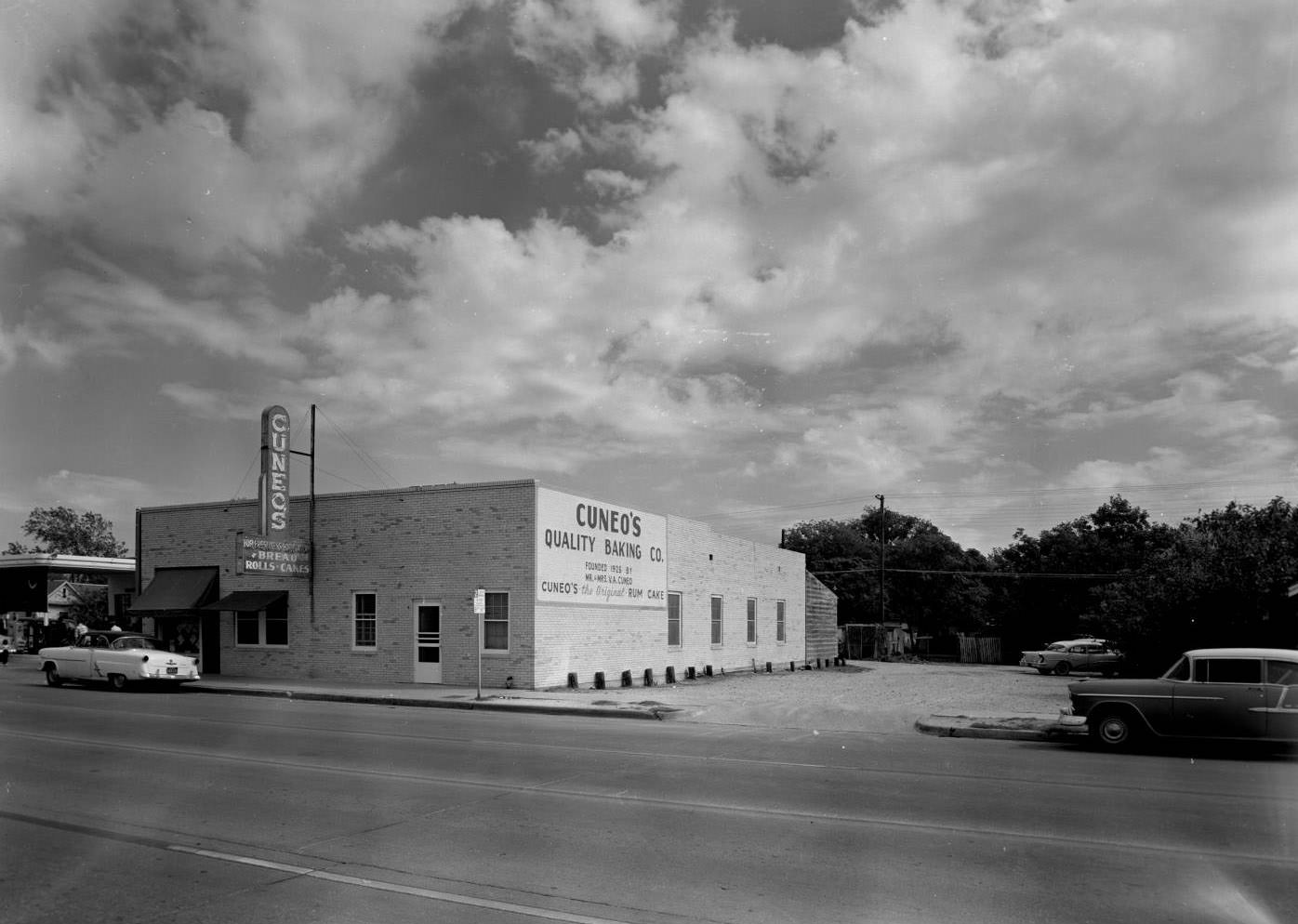
Rustic Home of Mr. and Mrs. J. H. Deitzer, 1951.Dam Under Construction, 1959Deteriorating House at 1203 Chicon Street in Austin, Texas, 1956Exterior of Enterprise Furniture Company, 1951Two-Story Stone House Exterior, 1950Delwood Pharmacy Building with Parked Cars, 1953Exterior of Cuneo’s Quality Baking Company, 1956
Kevin Clark is a historian and writer who is passionate about sharing the stories and significance behind historical photos. He loves to explore hidden histories and cultural contexts behind the images, providing a unique insight into the past.