in

What Arlington, Texas, looked like in the 1970s

At the start of the 1970s, Arlington, Texas, was a city on the move. Its population stood at around 90,643 — a number that told only part of the story. What was really happening in Arlington was a full-scale transformation. New stadiums were going up. Shopping malls were opening. A marine life park was being built from scratch. And an old downtown that had nearly disappeared was fighting to survive. These photos capture exactly what that decade looked like, street by street and season by season.

One of the first major signs of Arlington’s growth in 1970 was the opening of its retail corridor along Highway 303. Two shopping malls launched the same year: Six Flags Mall and Forum 303 Mall. Forum 303 sat farther down the highway and quickly became an anchor for commerce on that side of the city.
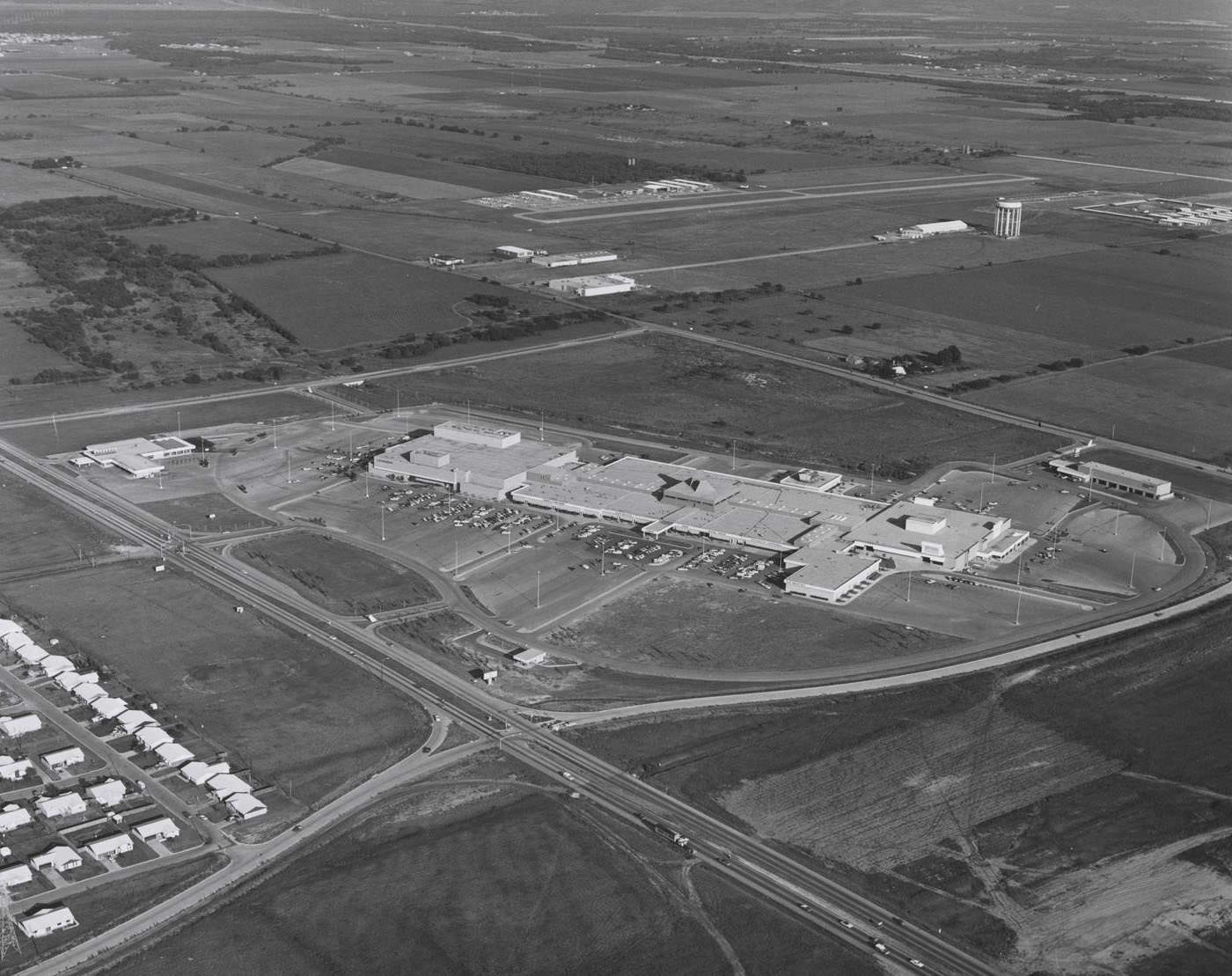
Forum 303 Mall in Arlington, 4, 1974

Forum 303 Mall was home to several major retailers, including a Leonard’s Department Store. Leonard’s was a Fort Worth institution that had expanded into the Arlington market, drawing shoppers from across the region.
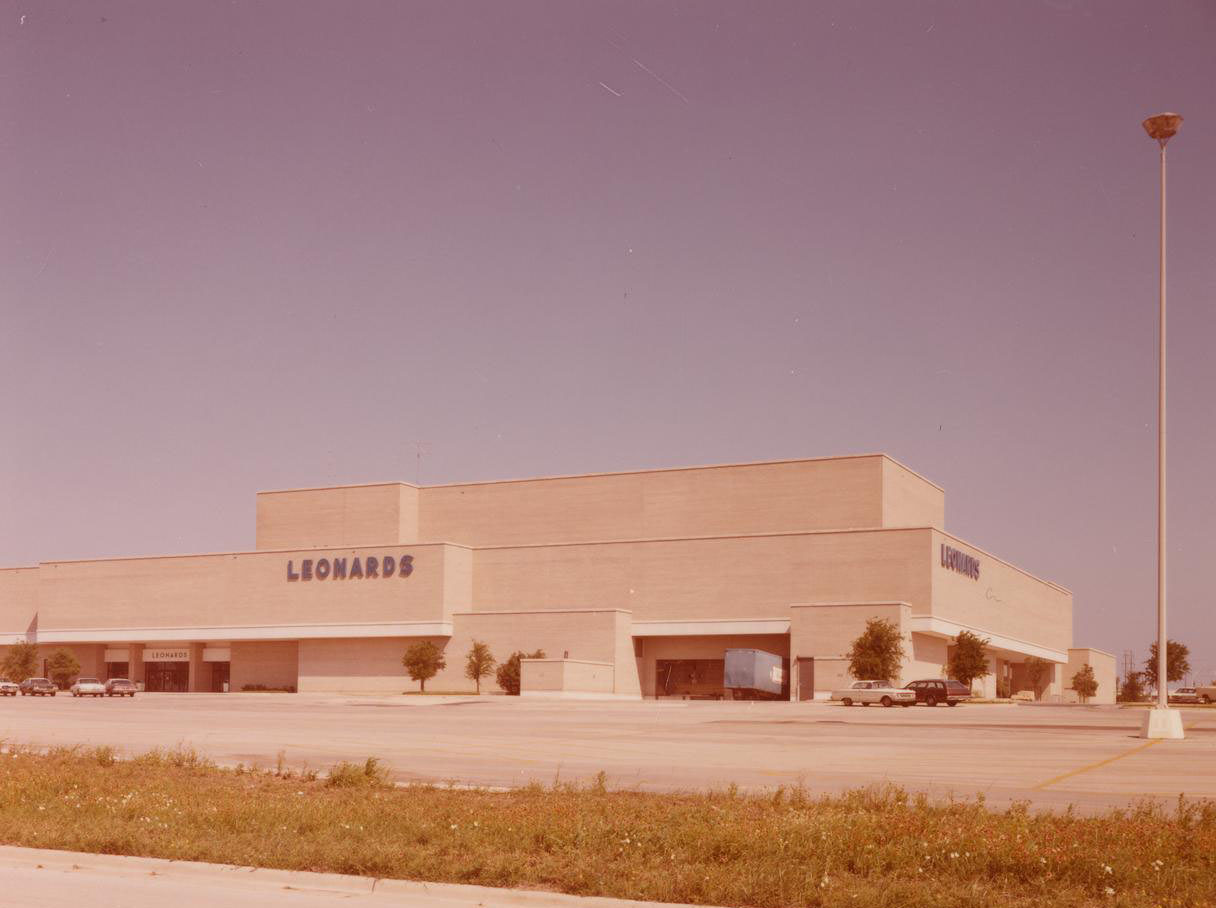
A Leonard's Department Store that is part of the Forum 303 Mall in Arlington, 1974
A Leonard’s Department Store that is part of the Forum 303 Mall in Arlington, 1974

While retail was booming on the outskirts, Arlington’s downtown core was struggling. By 1972, much of the original downtown had already been marked for demolition. Buildings that had stood for decades — a pharmacy, Hutton Pianos and Organs, Walter’s Auto Supply — were fenced off and prepared to come down.
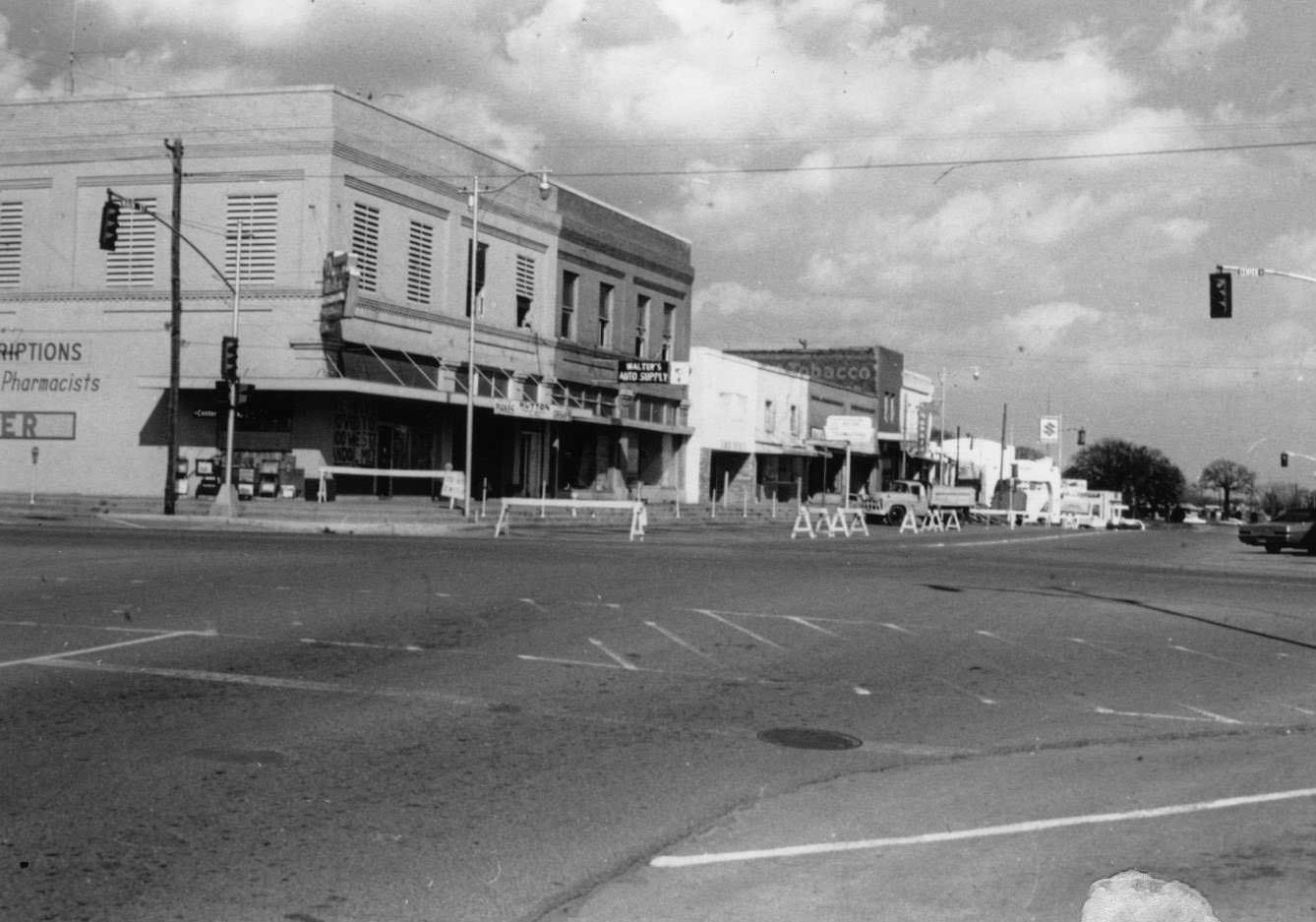
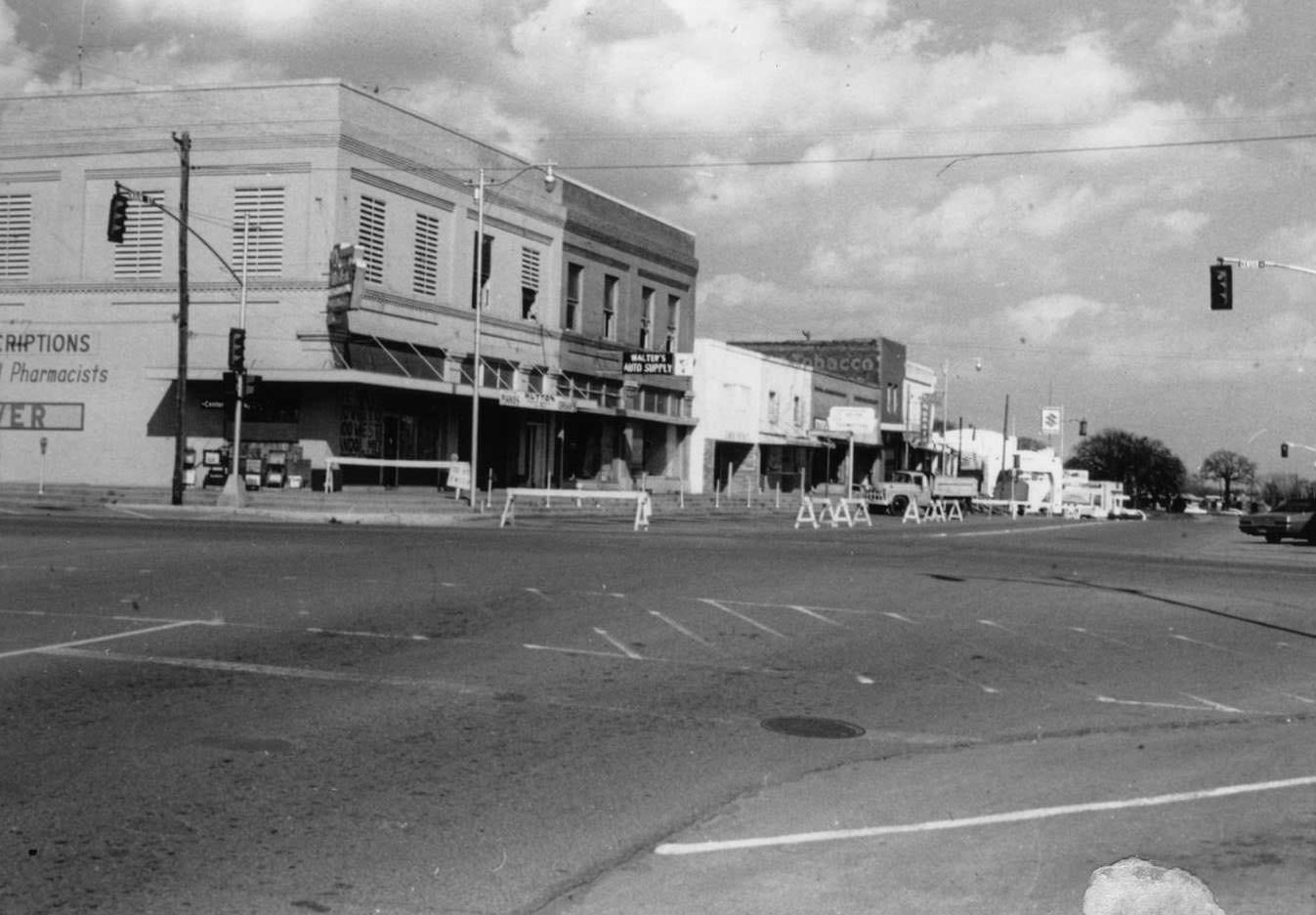
Downtown Arlington being prepared for a demolition in 1972.
Downtown Arlington Ready for Demolition, 1972

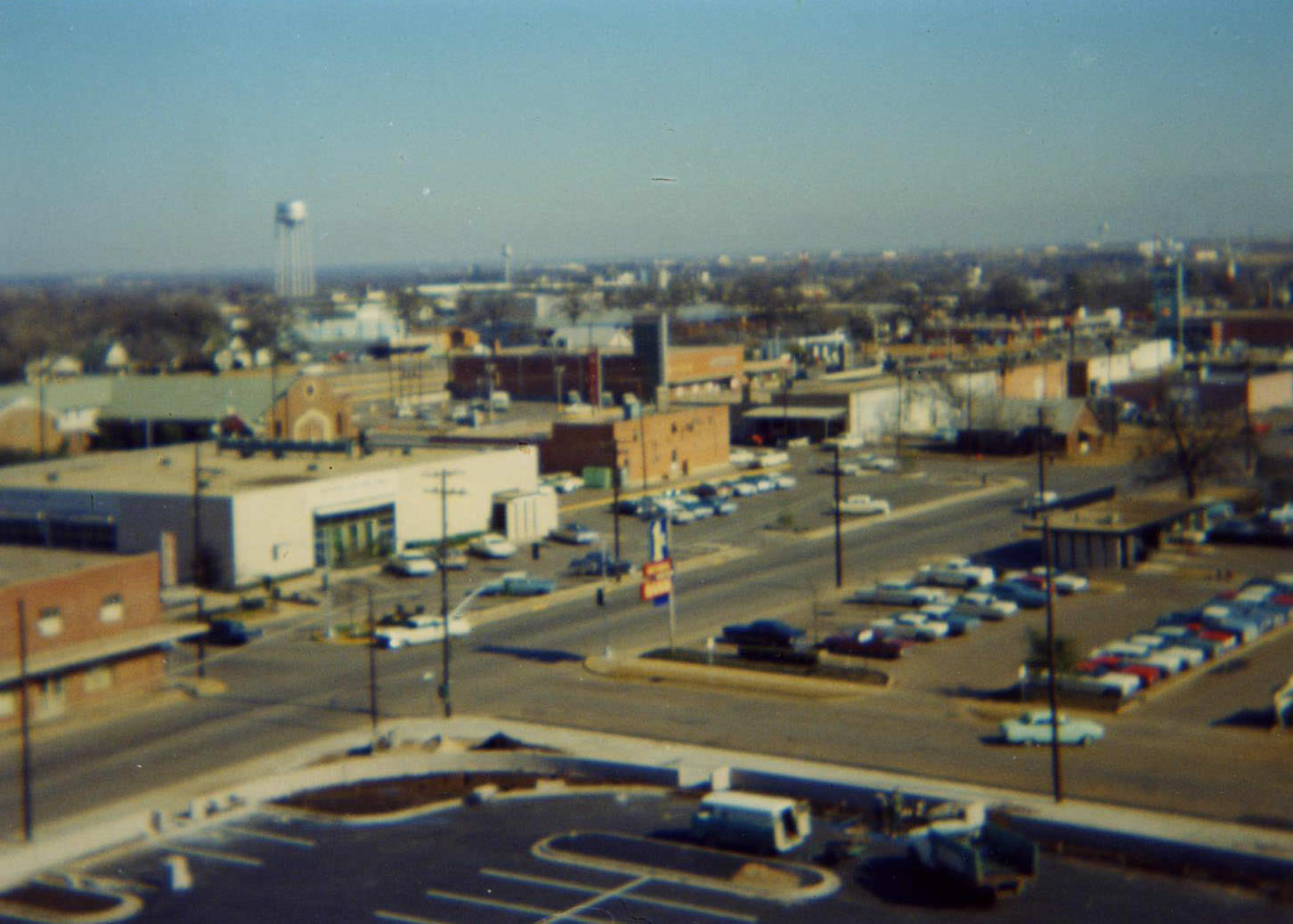
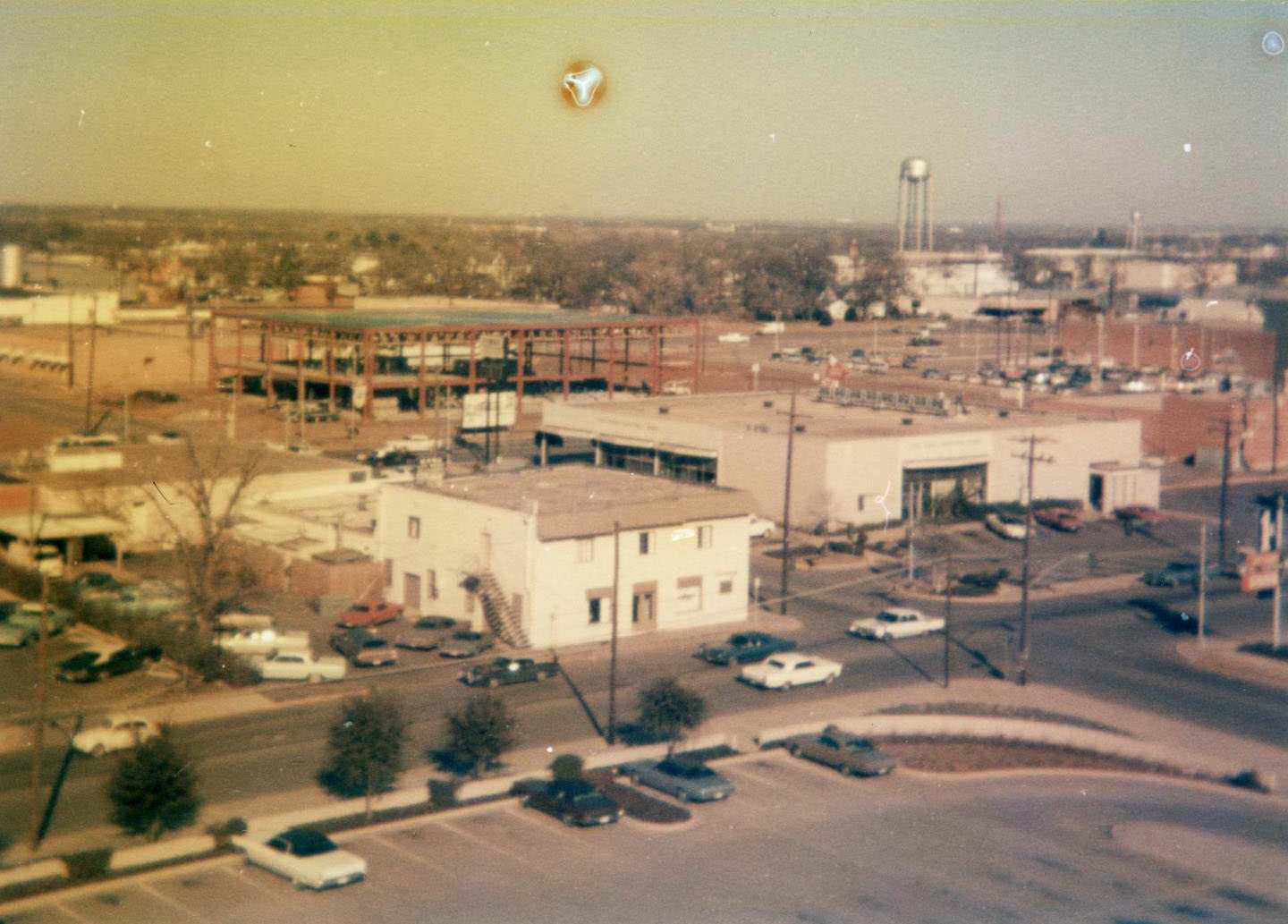
Photographers captured the last days of downtown Arlington from multiple vantage points, including the rooftop of First Baptist Church. From there, the streets below — South Center, East South, South Mesquite — spread out in a grid of aging storefronts, power lines, and parked cars. One block showed a bank under construction, signaling that not all the change was erasure. Some of it was rebuilding.
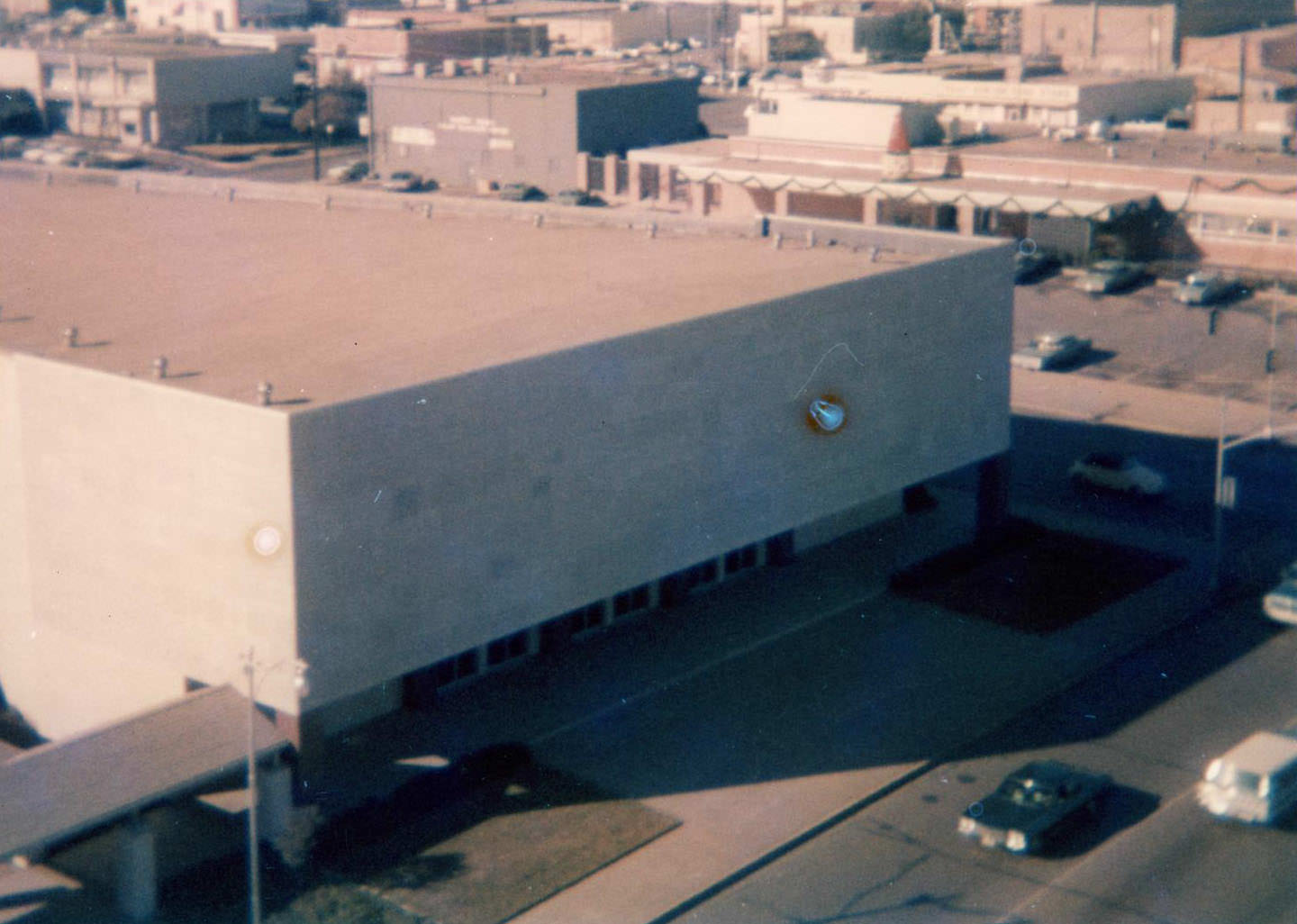
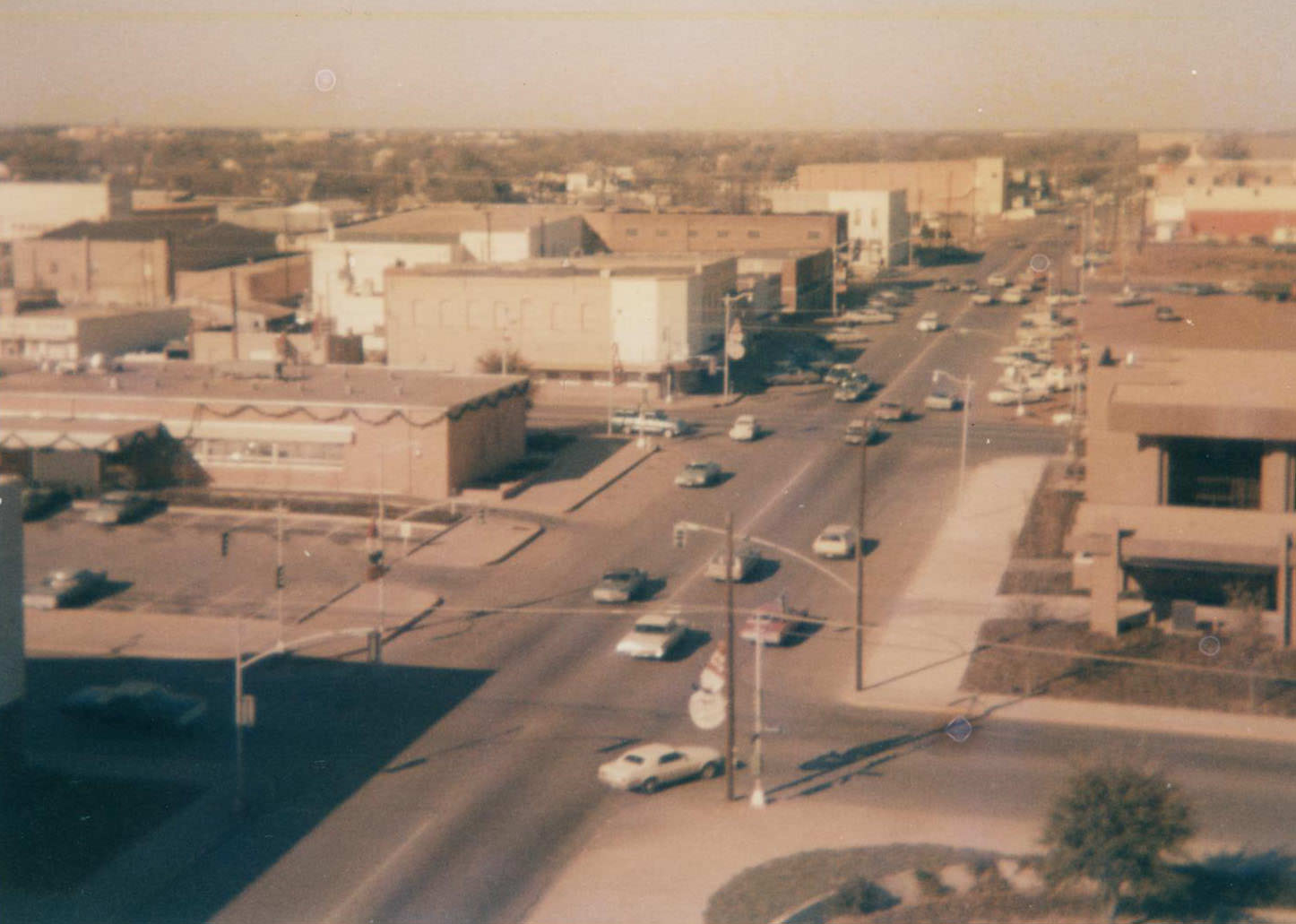
Downtown Arlington, 1973. The First Baptist Church. There are other buildings, cars, and streets.
Downtown Arlington  with buildings, cars, streets, and power lines, 1973
Downtown Arlington with buildings, cars, streets, and power lines, 1973
Downtown Arlington, 1973
Downtown Arlington.1973. A bank is under construction. The photo appears to have been taken from the roof of the First Baptist Church, facing northeast.

The intersections of Abram and Center streets in 1970 showed what the heart of Arlington looked like before the wrecking crews arrived — modest storefronts, wide roads, and the low-slung skyline of a mid-century Texas town.
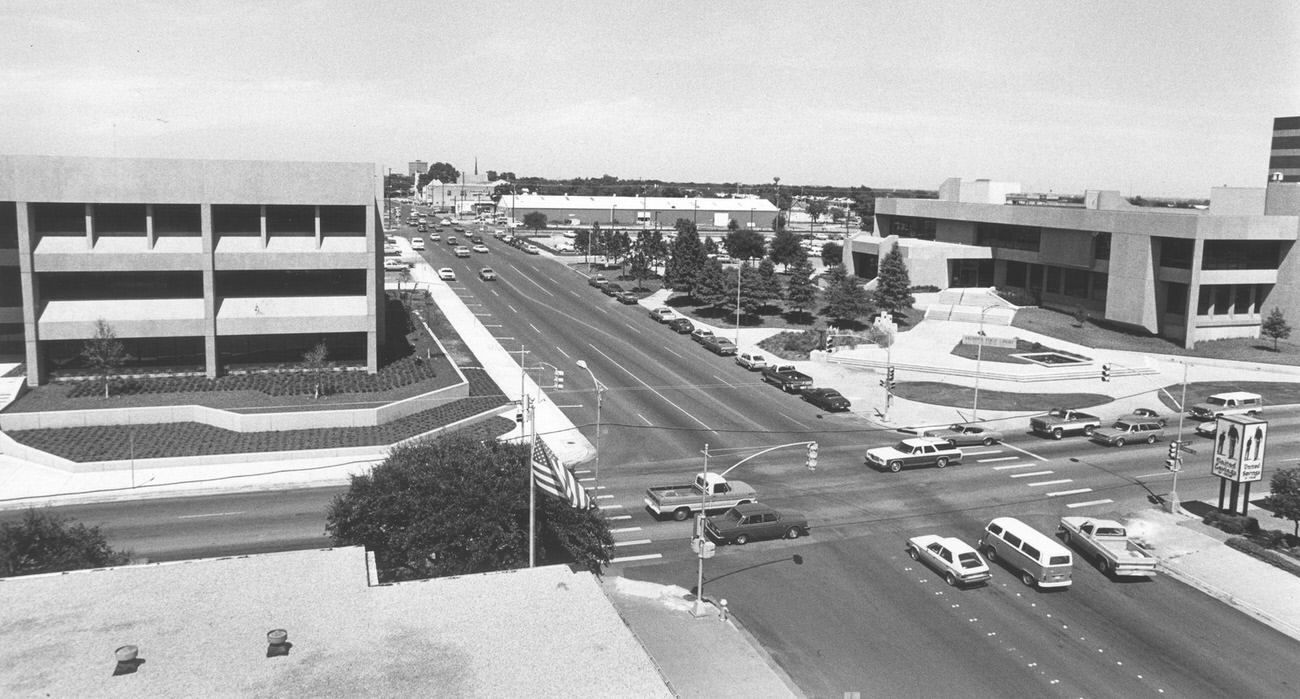
Abram and Center streets, Arlington, Texas, 1970
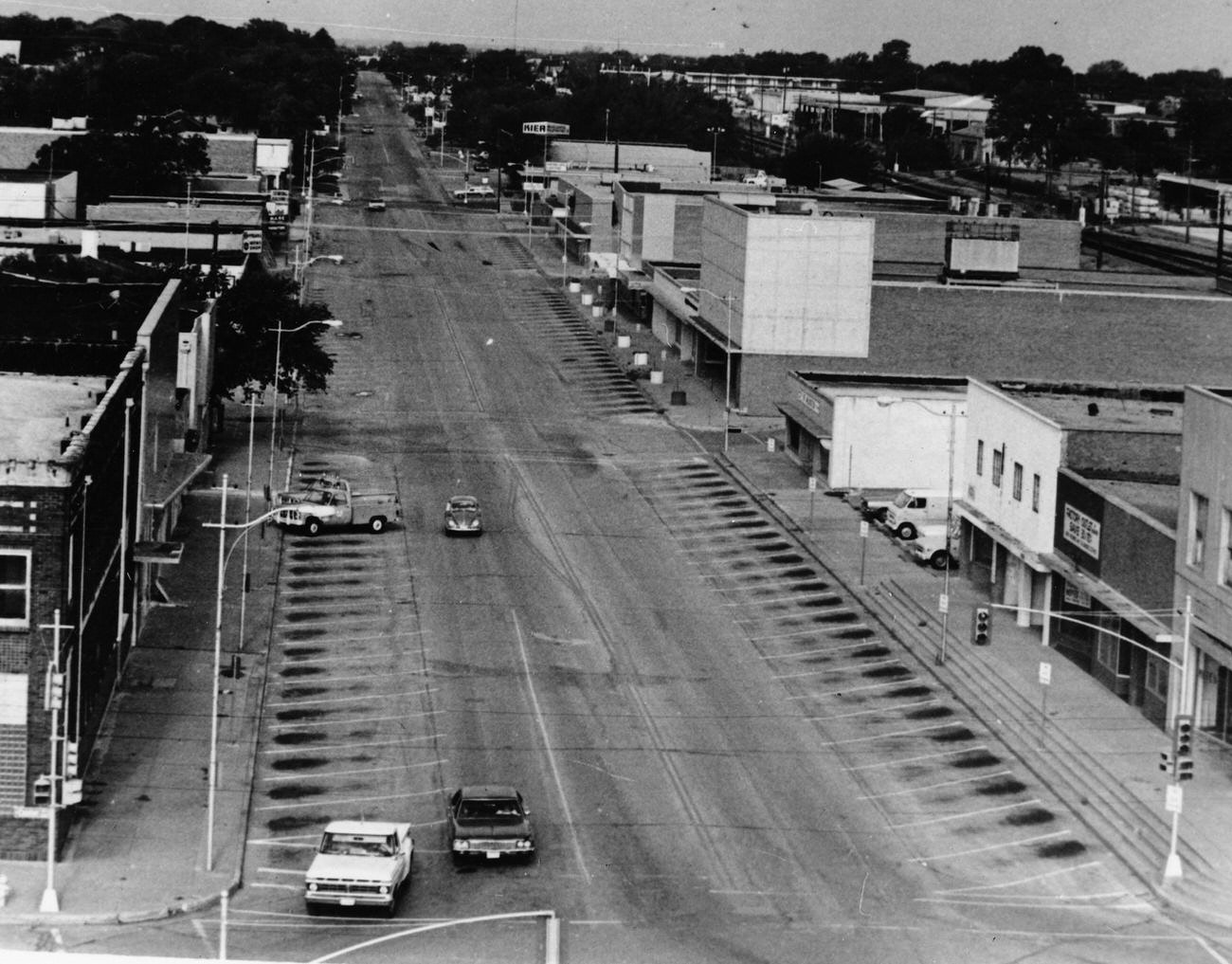
Looking east, Arlington, Texas, 1972
100 block West Main Street, Arlington, Texas, 1978

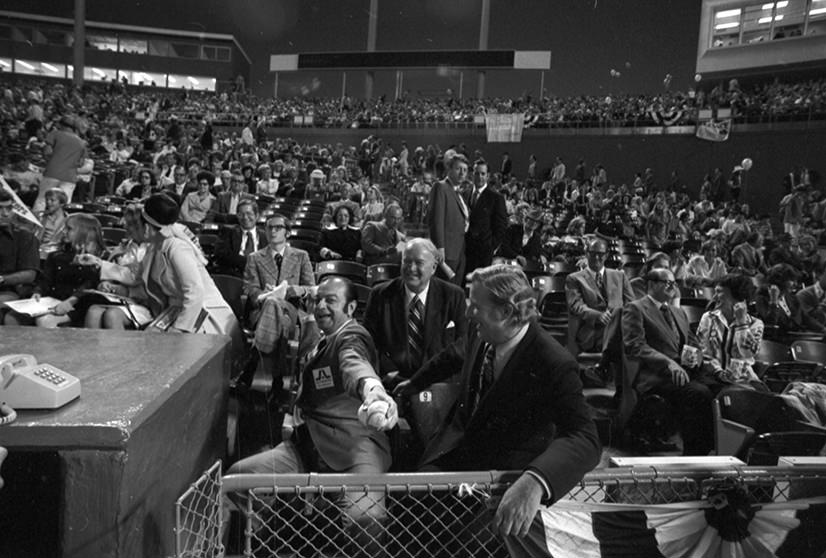
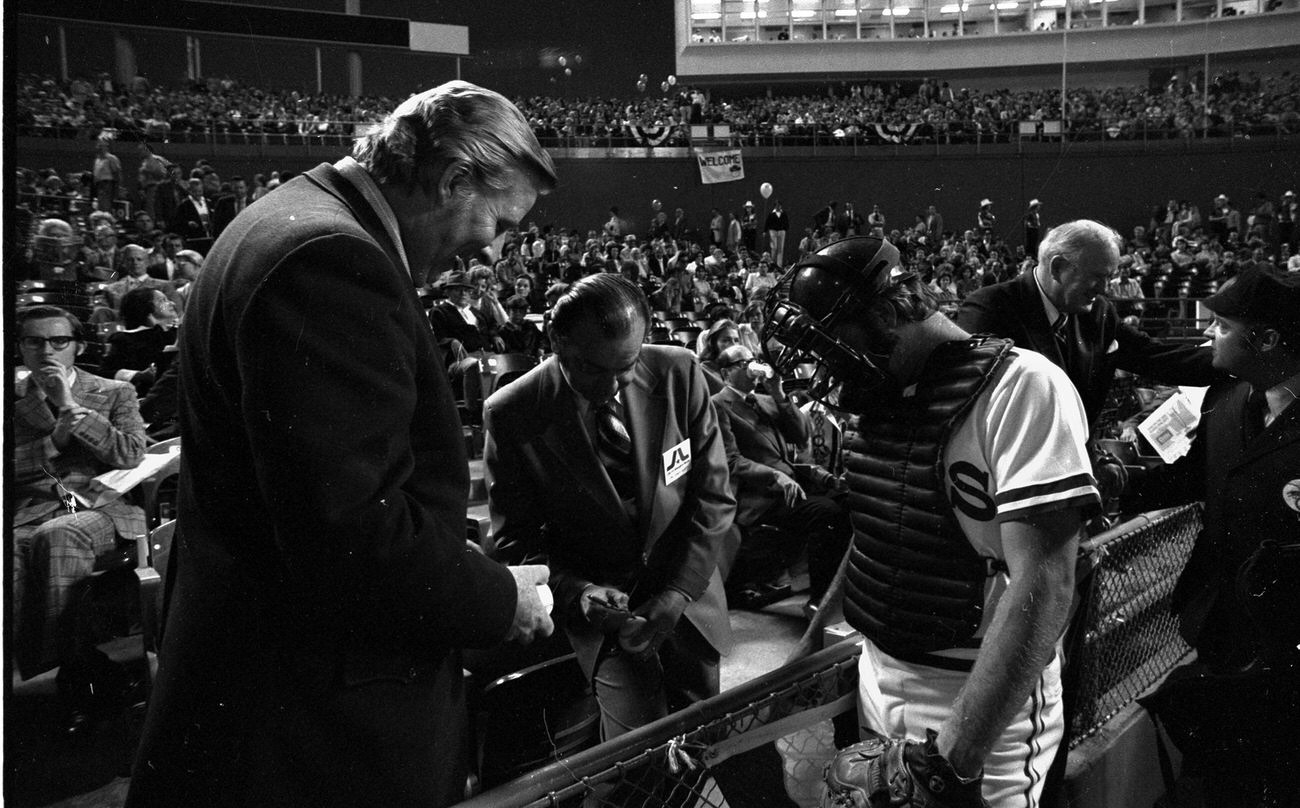
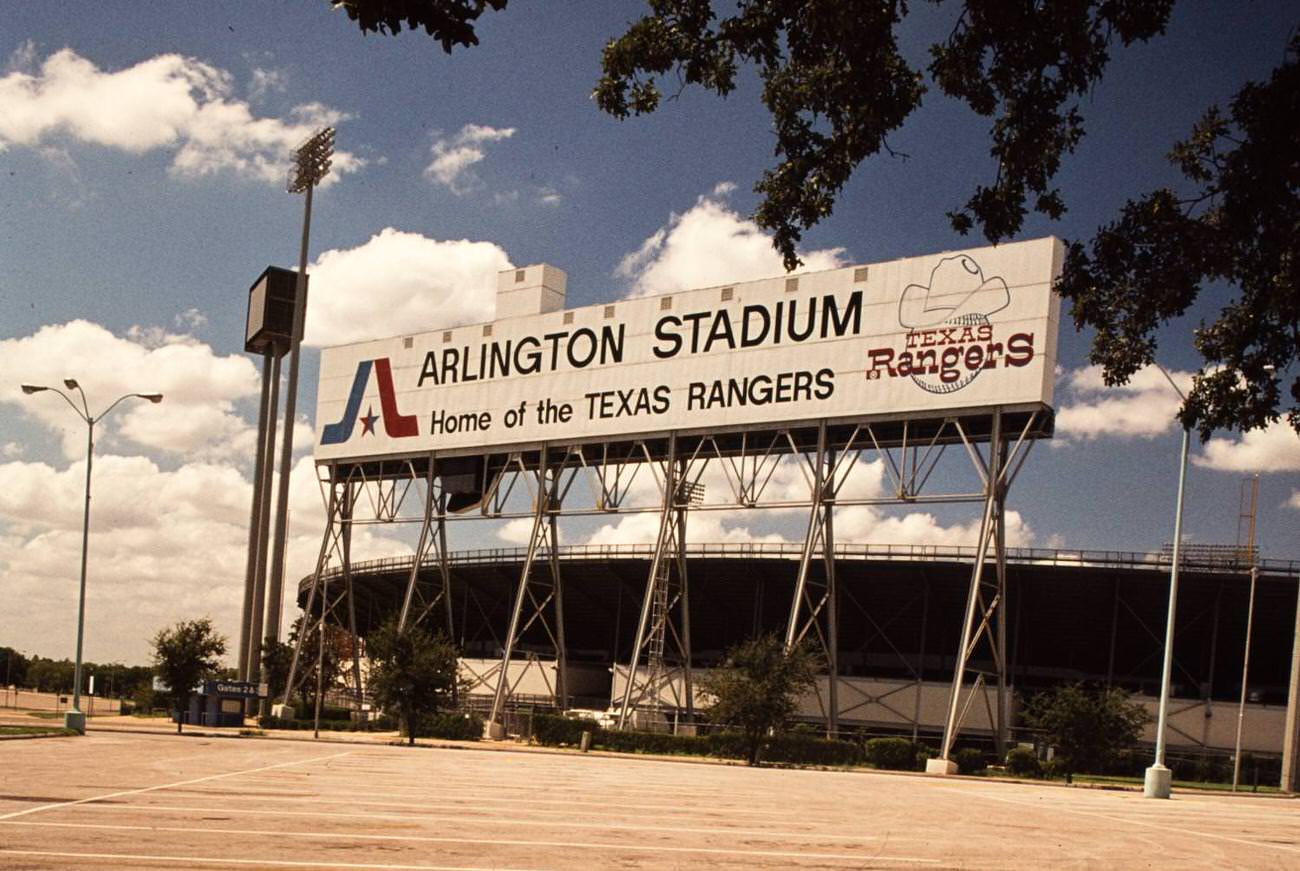
No development defined 1970s Arlington more than its baseball stadium. Turnpike Stadium — originally built for the minor leagues — was expanded and renamed Arlington Stadium in 1972 when the Texas Rangers arrived from Washington, D.C. Mayor Tom Vandergriff had been the driving force behind bringing Major League Baseball to the city, and he was on the field for opening night to prove it.
Arlington Mayor Tom Vandergriff at Turnpike Stadium, Arlington, 1970
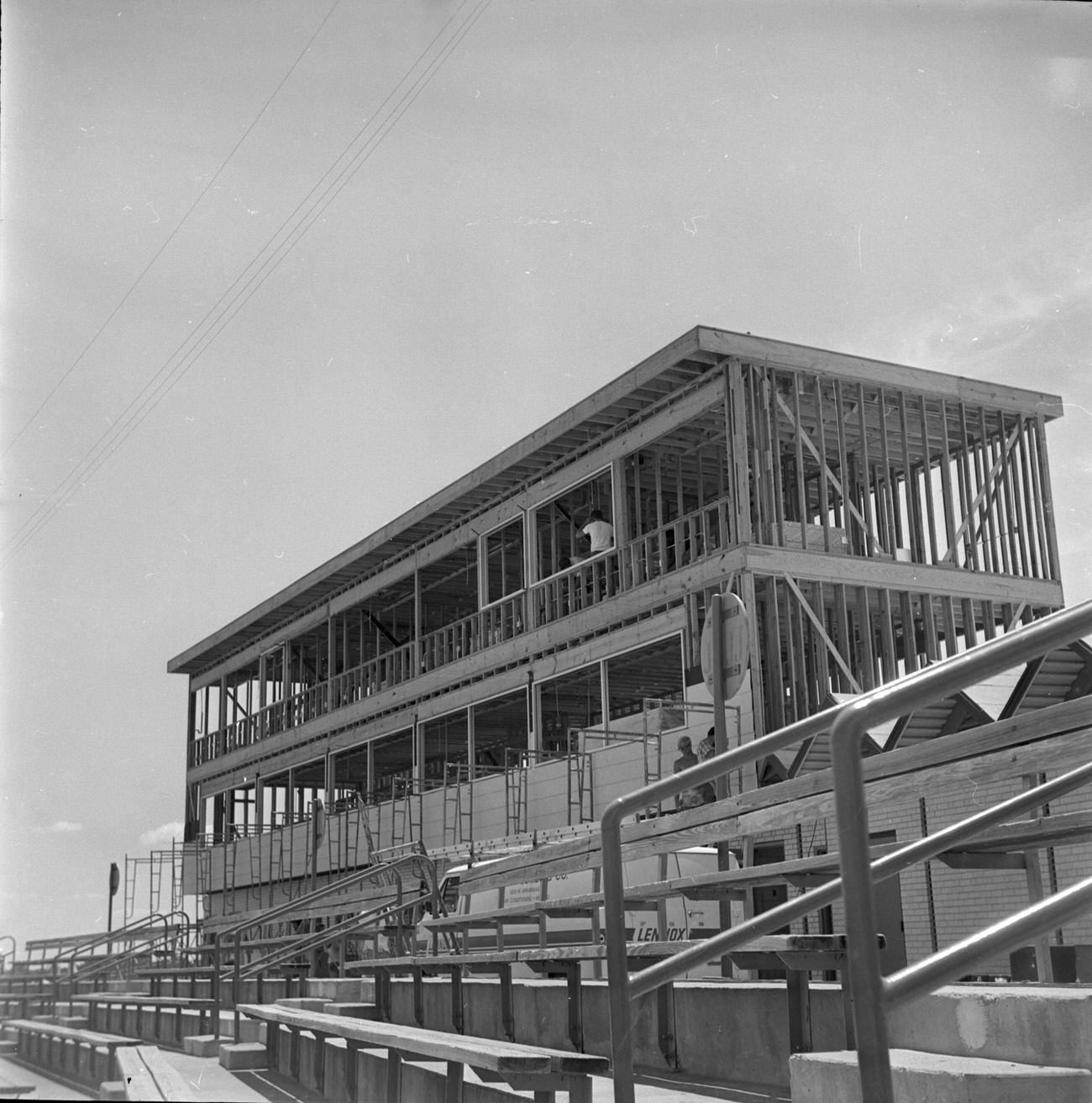
Turnpike Stadium construction; two-level press box, Arlington, Texas, 1970
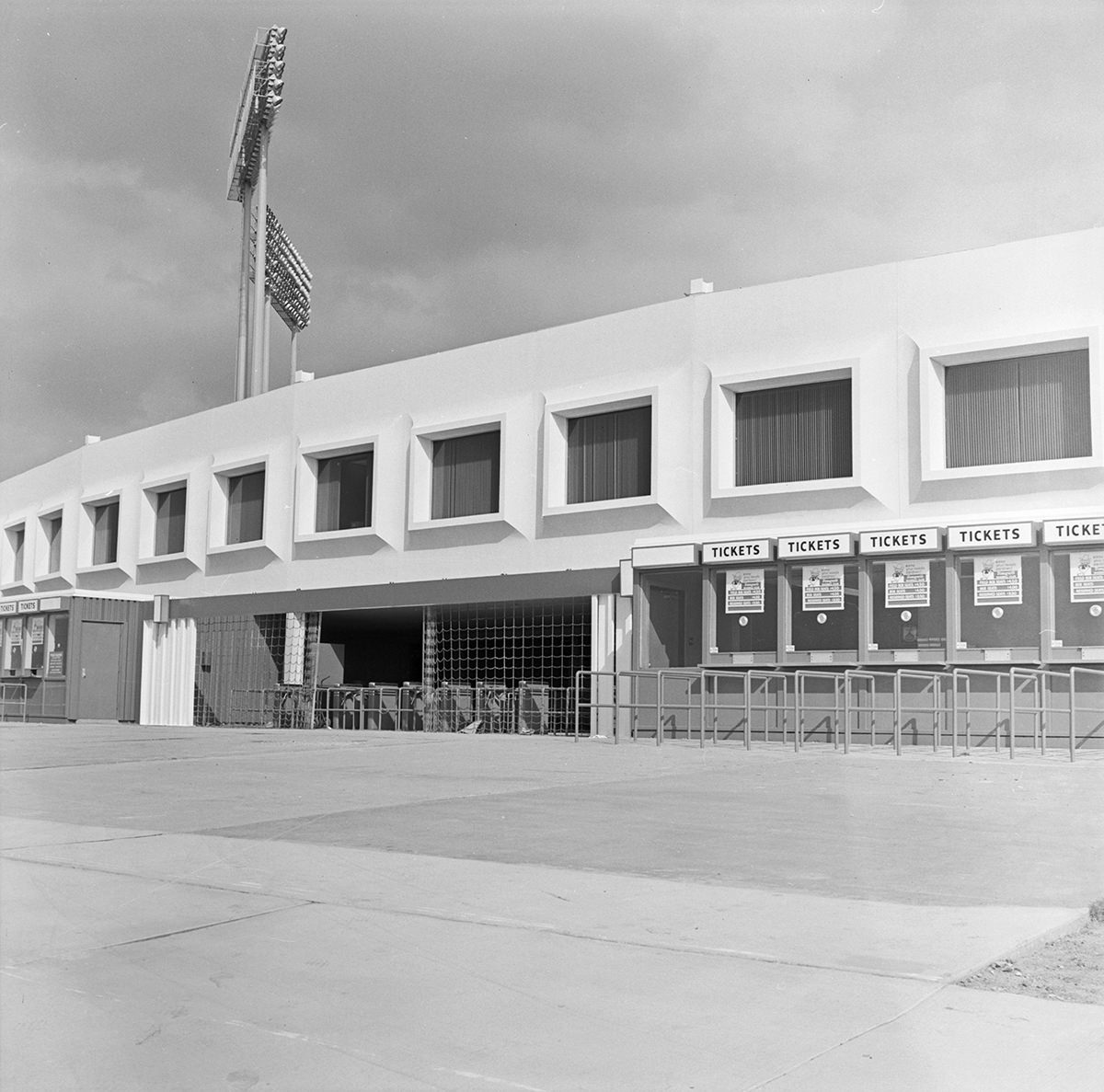
Arlington Stadium Ticket Booths, 1970

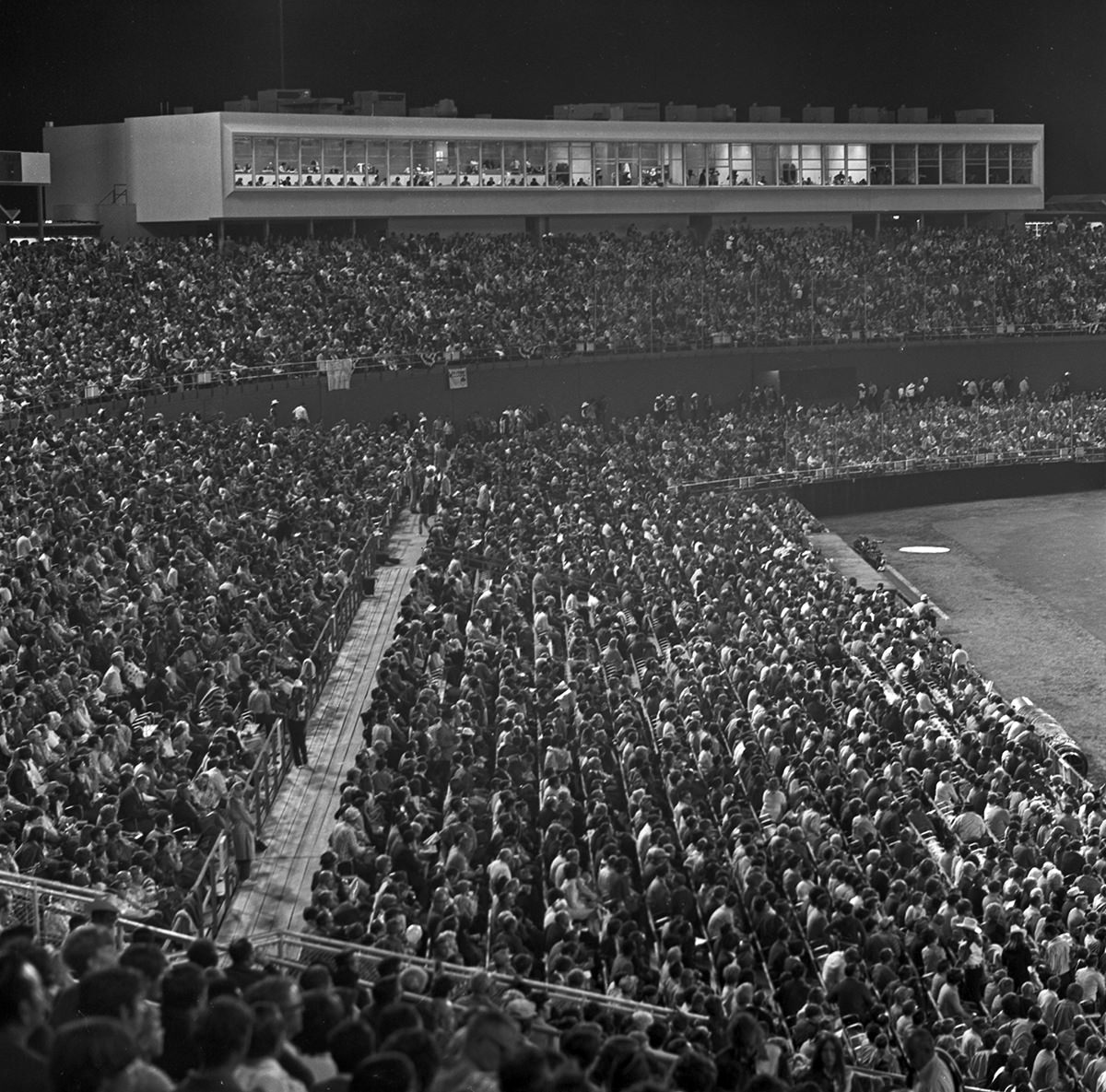
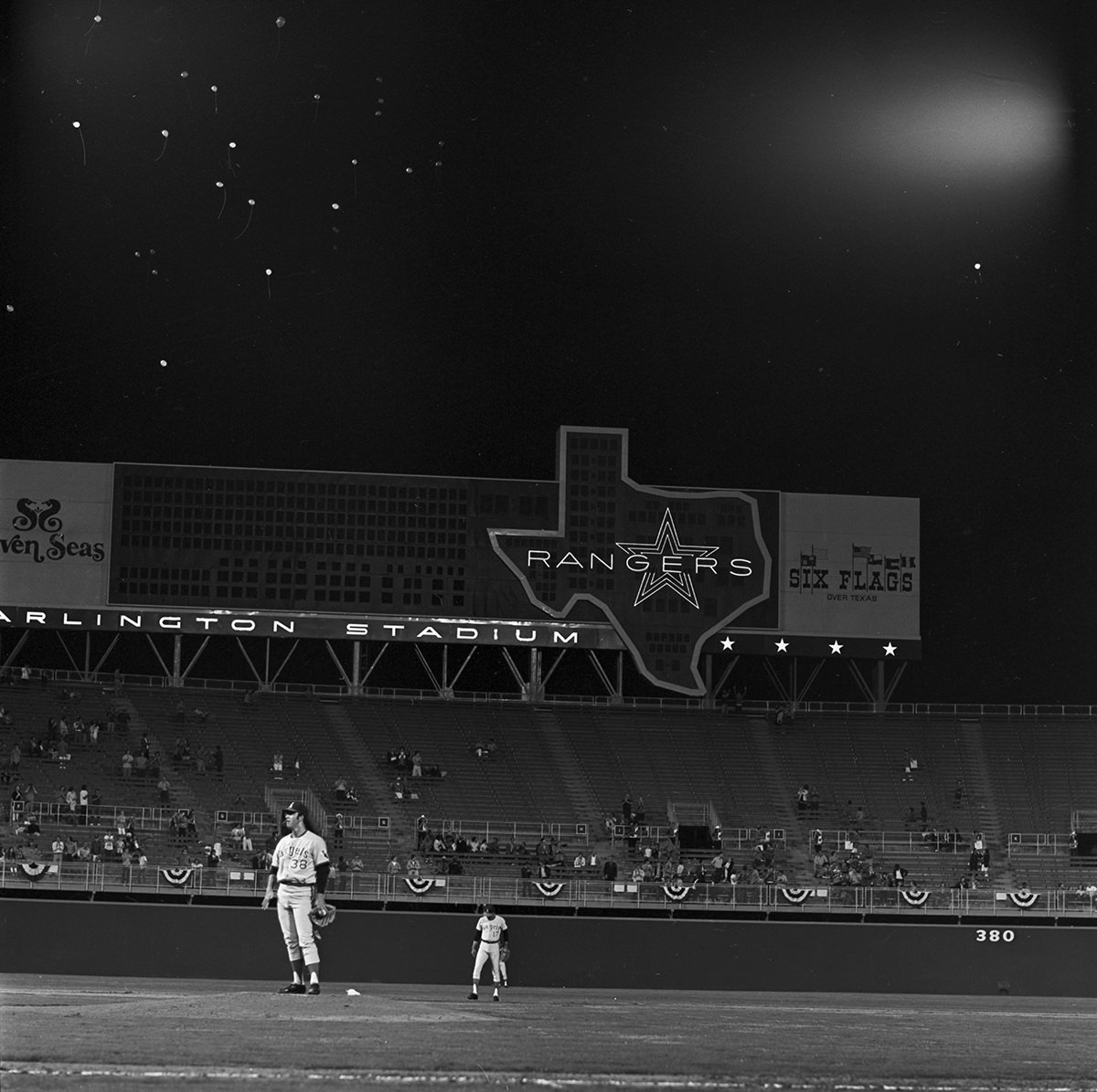
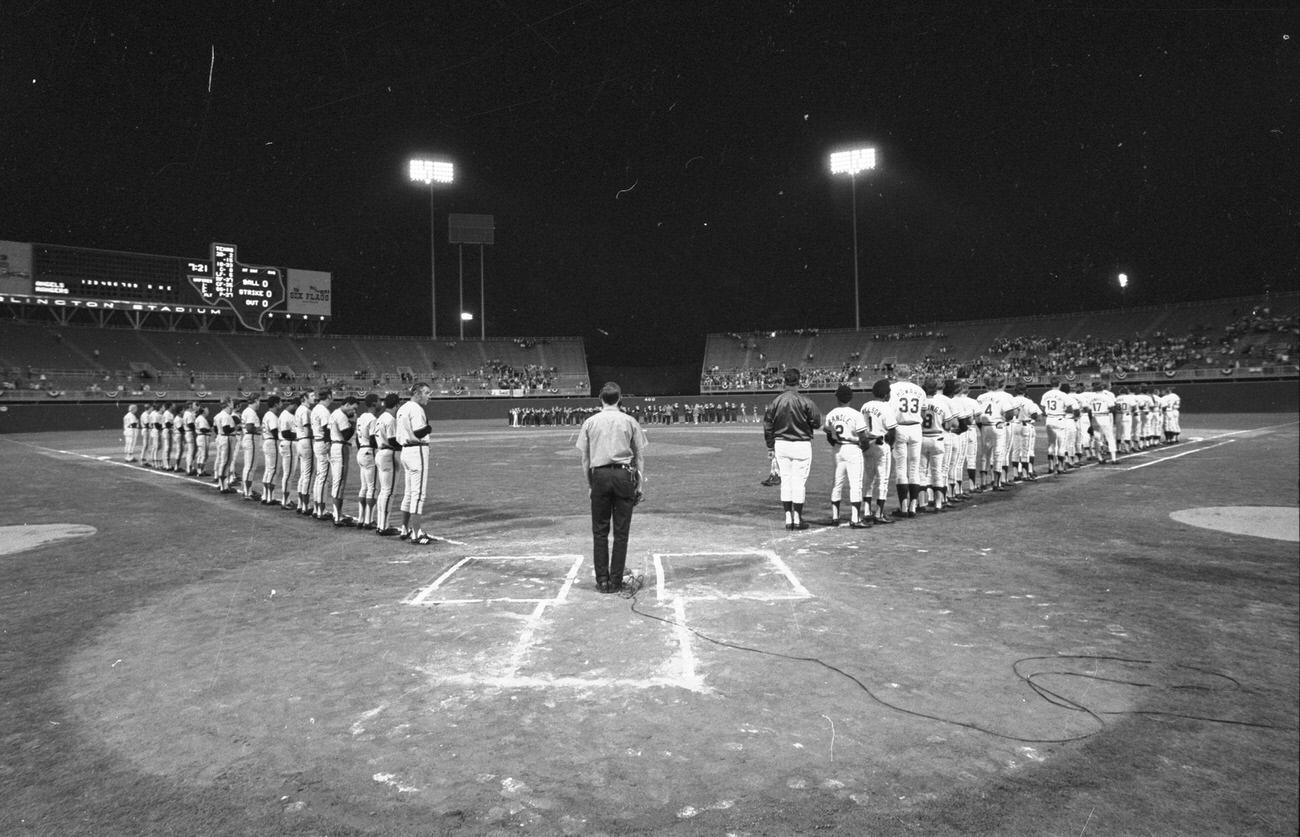
Construction on the stadium continued into 1972, and the expansion work was substantial. When it was done, Arlington Stadium could hold tens of thousands of fans. The Texas Rangers played their first home game there on April 21, 1972, against the California Angels. The crowd that filled the seats that night marked a turning point for the city.
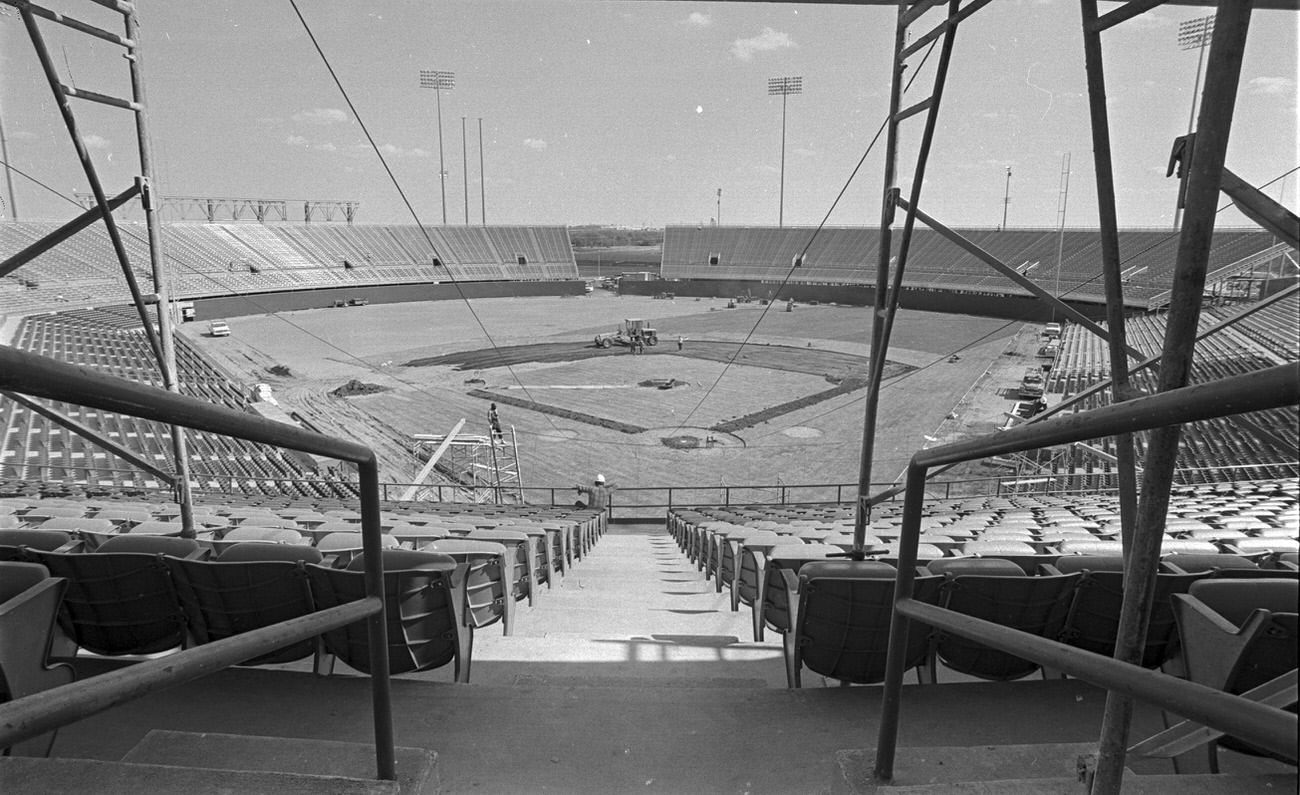
Arlington Stadium construction, 1972
Texas Rangers opening night at Arlington Stadium; Rangers vs. California Angels; players lined up for national anthem, 1972
Opening day of Texas Rangers baseball with Arlington Mayor Tom Vandergriff waiting to throw the opening pitch, 1972
Texas Rangers opening night at Arlington Stadium; Texas Ranger owner Bob Short and Arlington Mayor Tom Vandergriff signing autographs, 1972
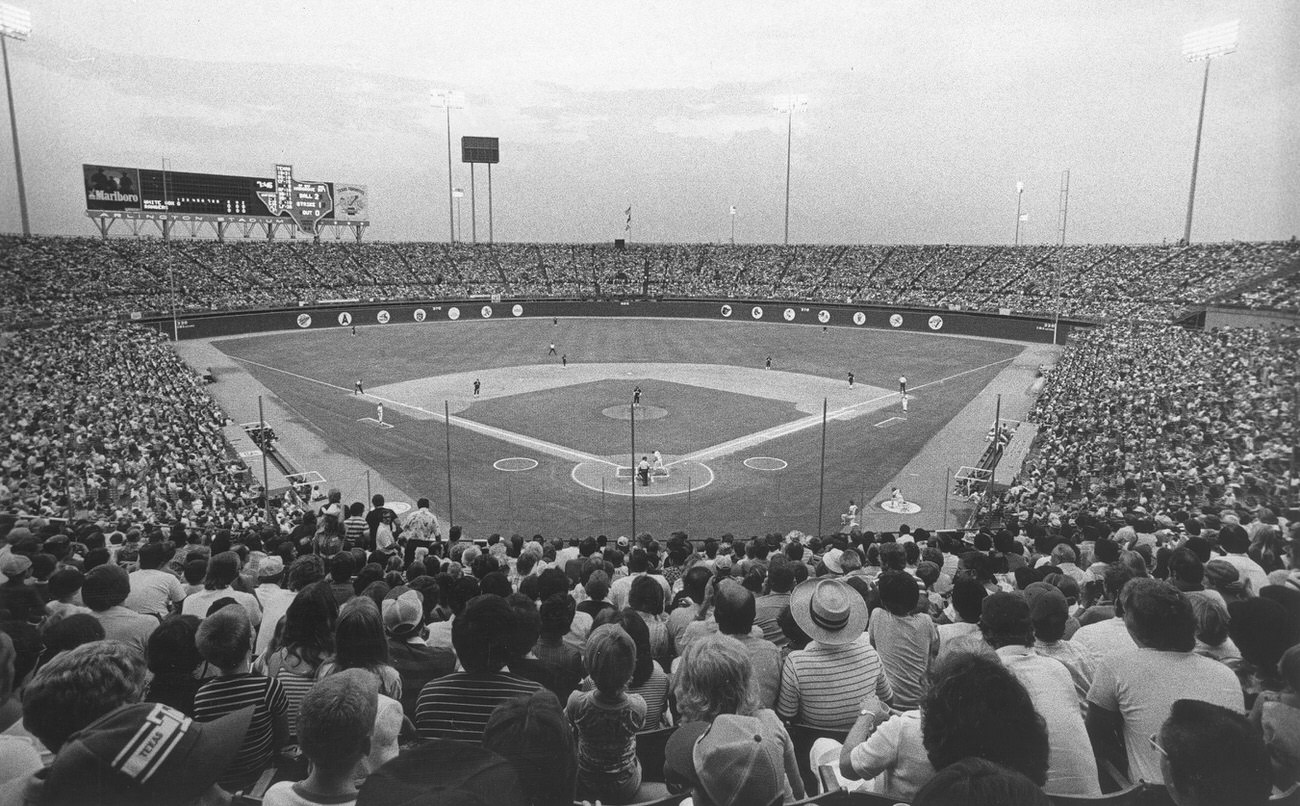
View of the crowd at Arlington Stadium for the Texas Rangers baseball team's first home game in Arlington, 1972
View of the crowd at Arlington Stadium for the Texas Rangers baseball team’s first home game in Arlington, 1972
Texas Rangers vs. California Angels baseball game at Arlington Stadium, April 1972.

Ted Williams, the Hall of Fame slugger, managed the Rangers during that first season in Arlington. He was on the field alongside the players as the franchise took its first steps in Texas.
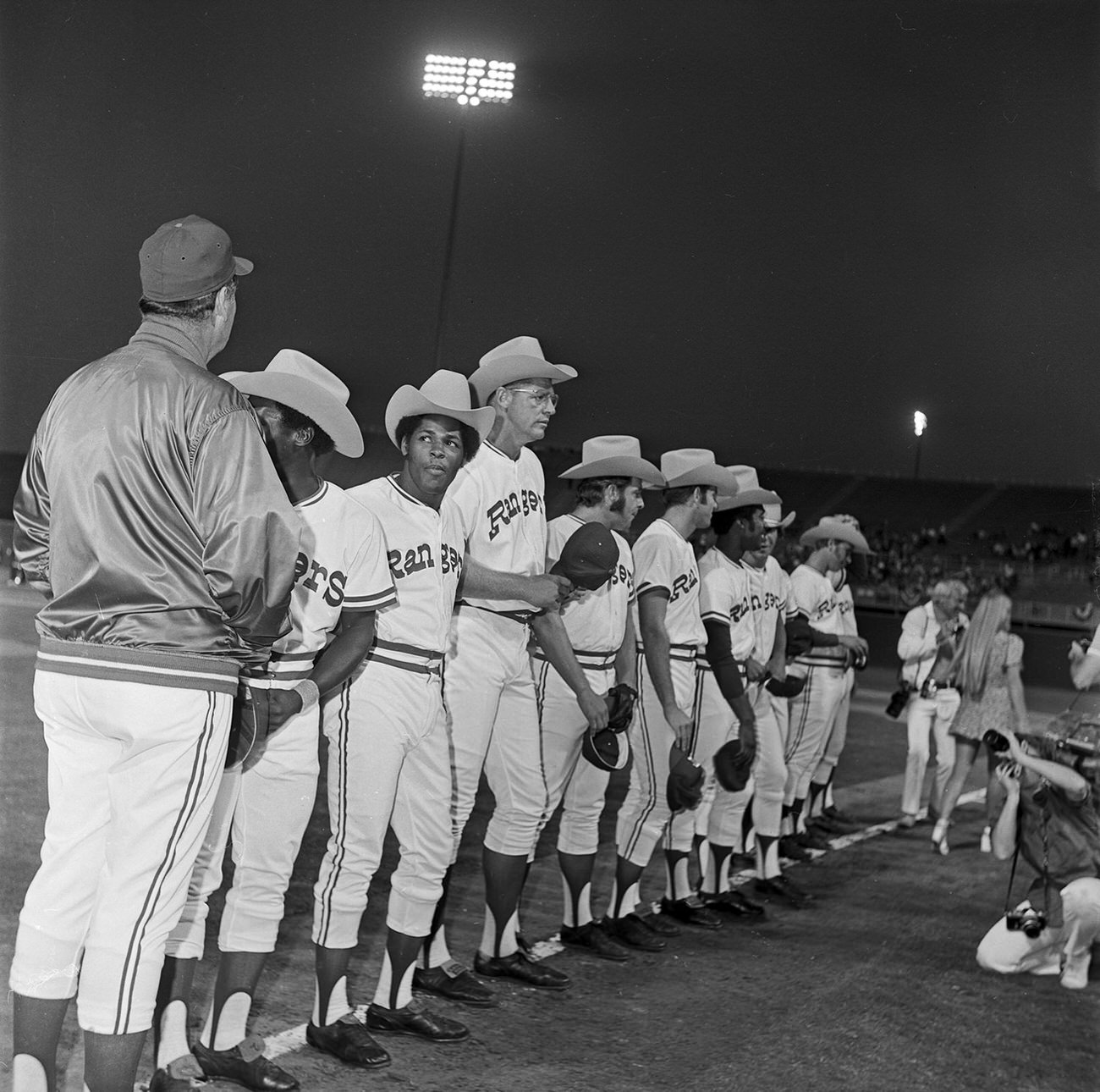
Ted Williams with Texas Rangers team members, 1972
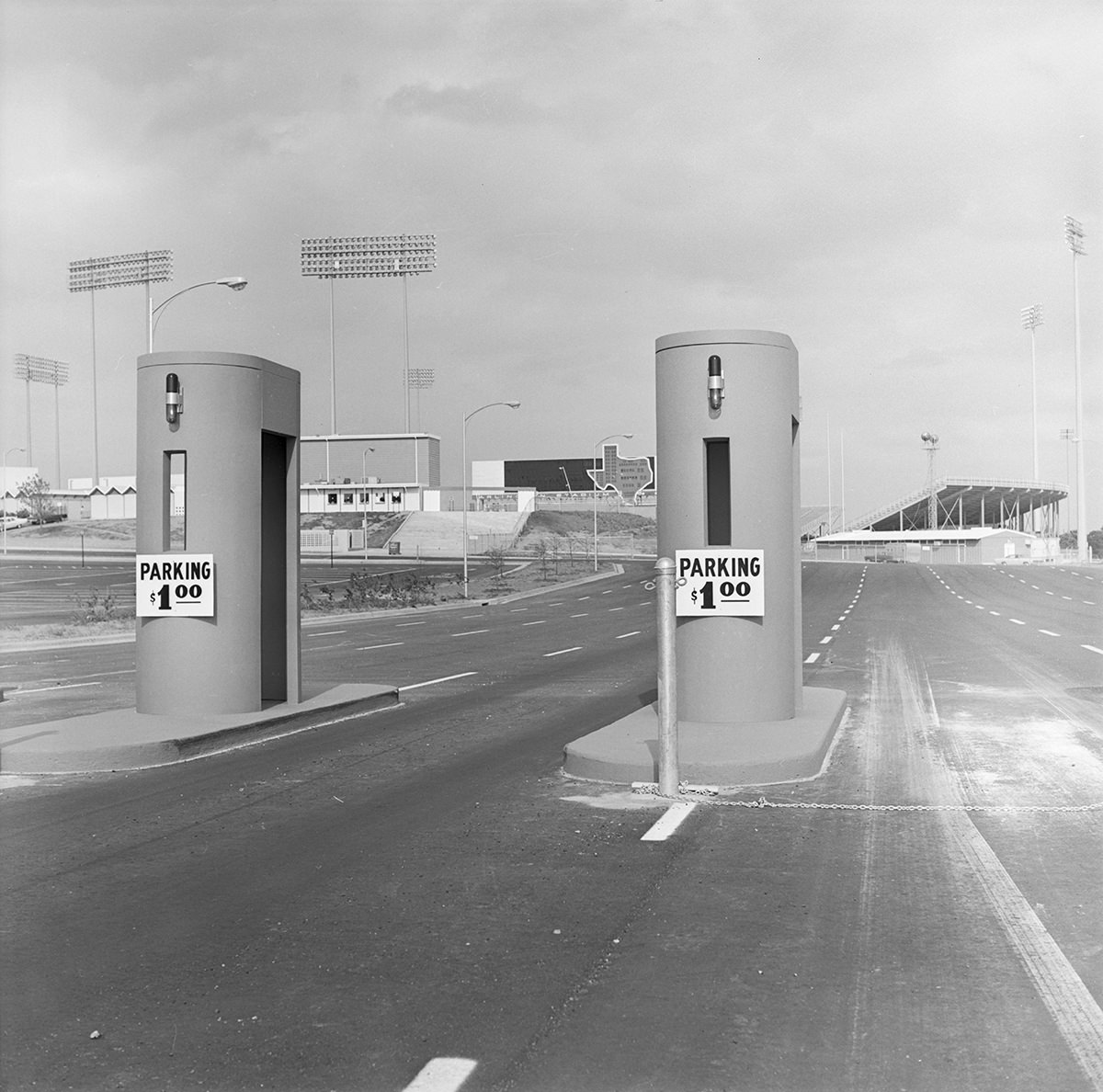
Parking entrance to Arlington Stadium, 1972
Arlington Stadium billboard, 1973
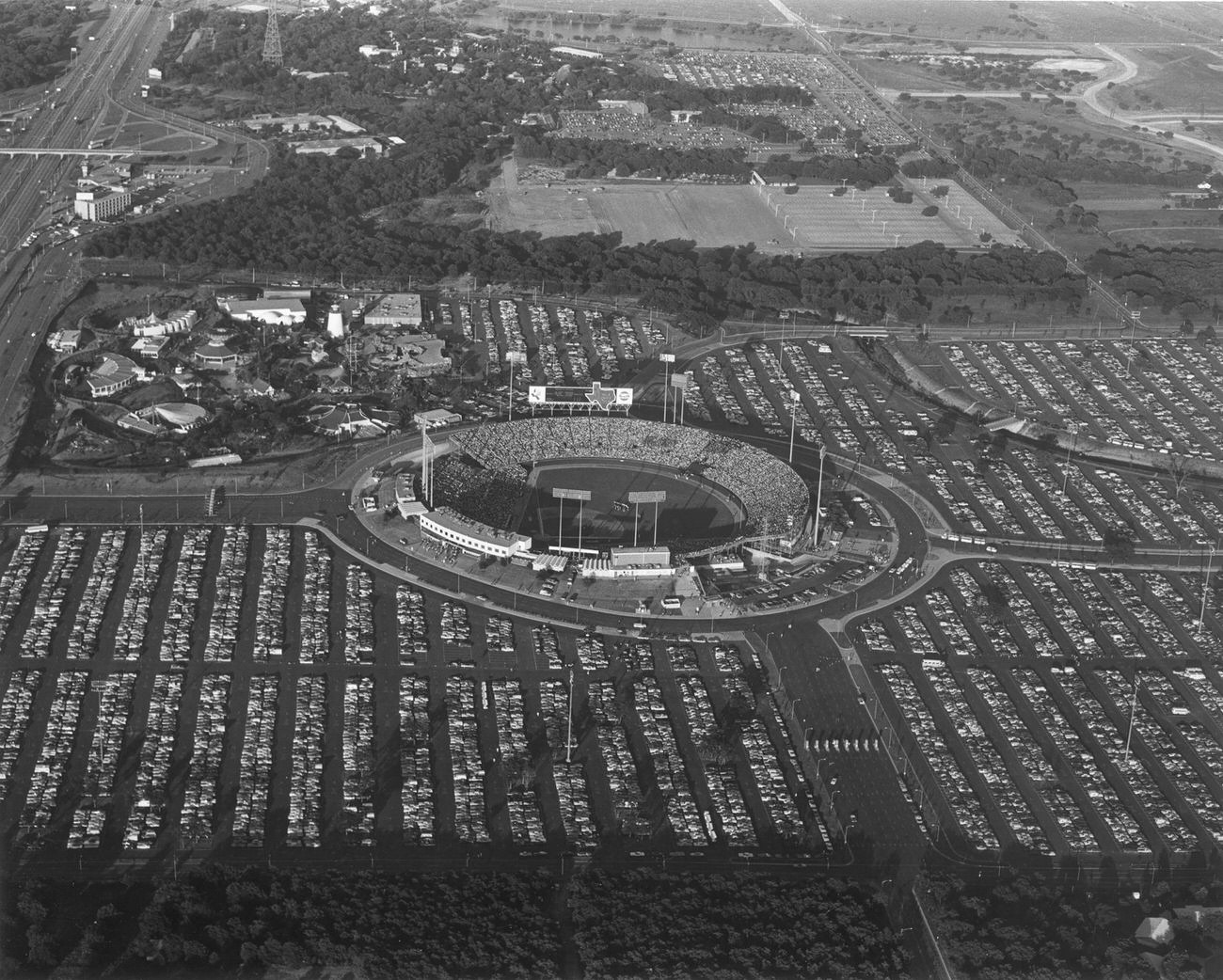
Aerial view of Arlington Stadium and parking lots, 1973

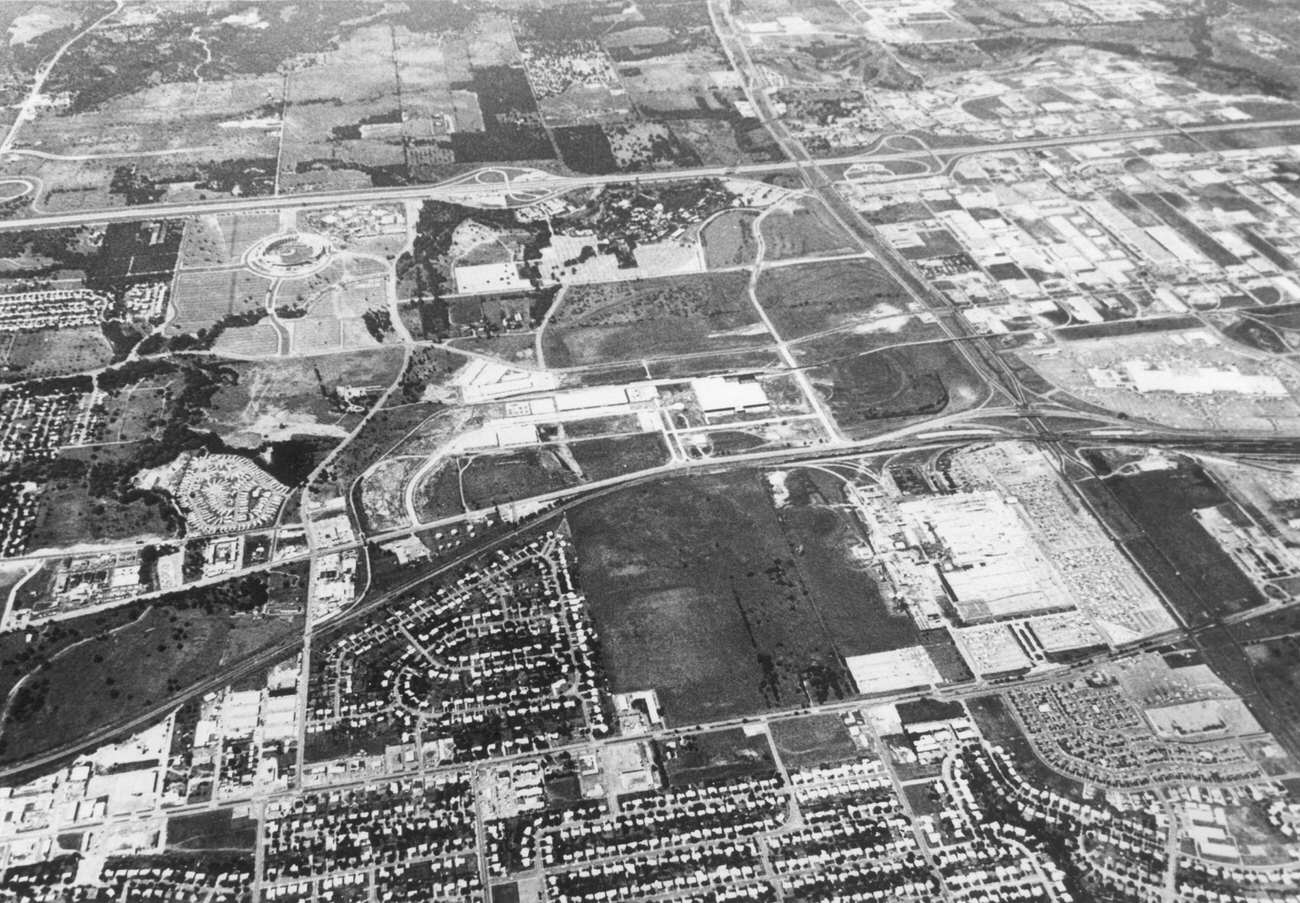
From the air, the scale of Arlington Stadium and its surrounding parking lots was clear. The stadium sat in a sprawling complex that made it a dominant landmark in the city’s landscape. Aerial photos from 1973 and 1975 show just how much land the facility consumed — and how quickly the surrounding area was developing around it.
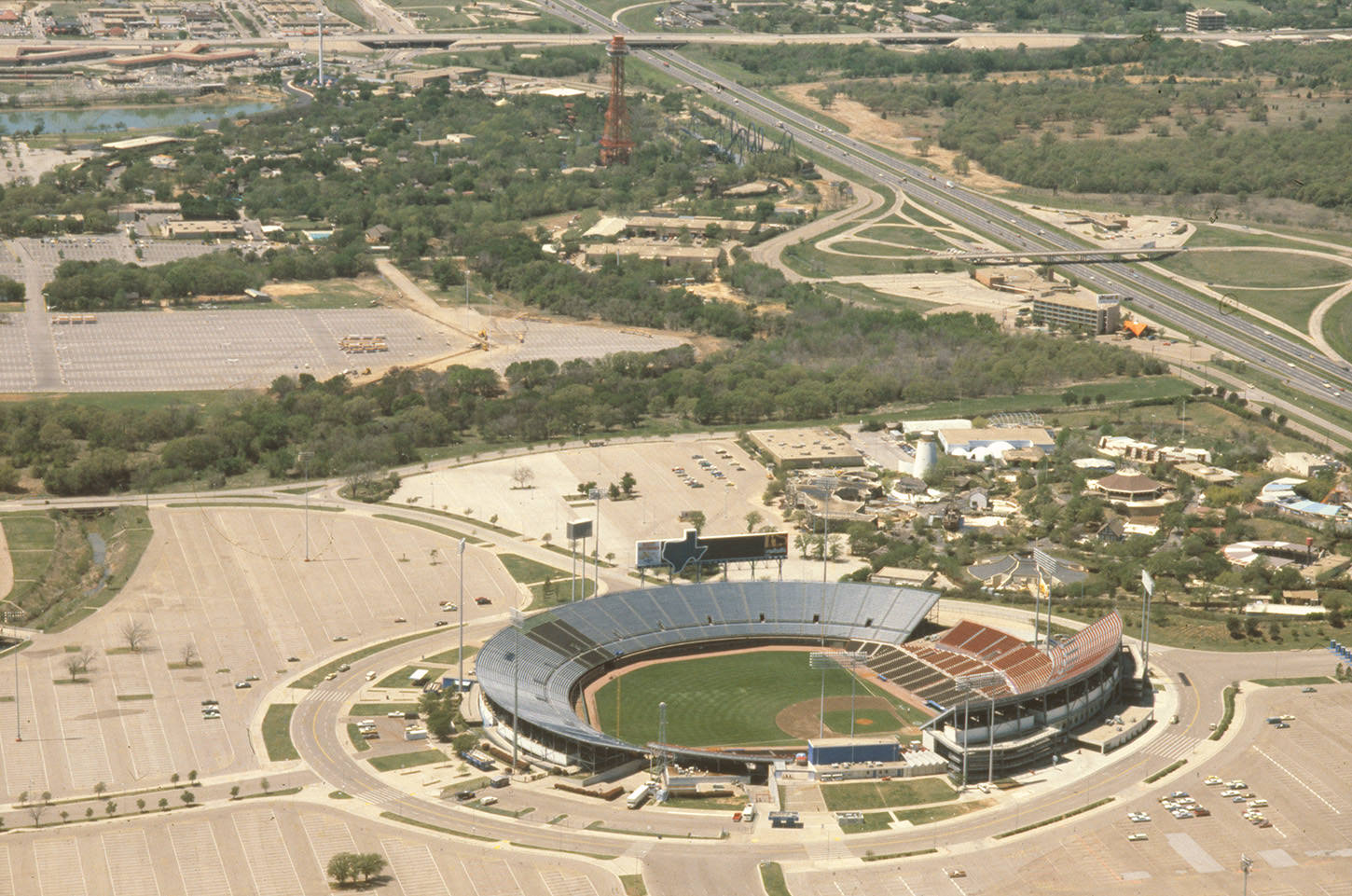
Air view of Arlington Stadium, Arlington, 1975
Arlington Stadium, 1977.

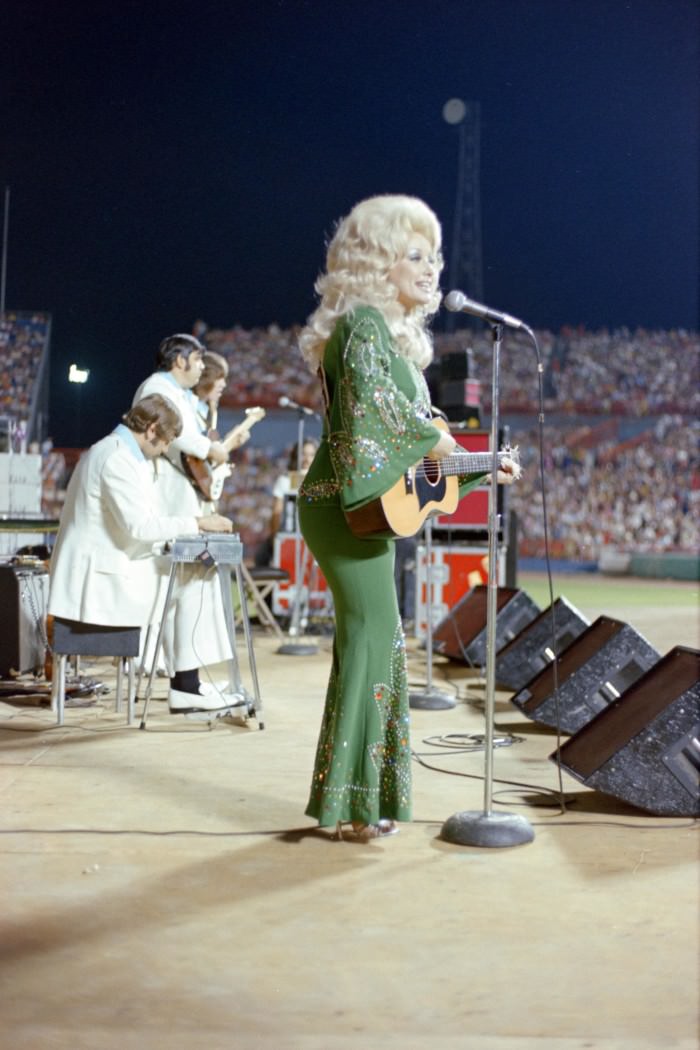
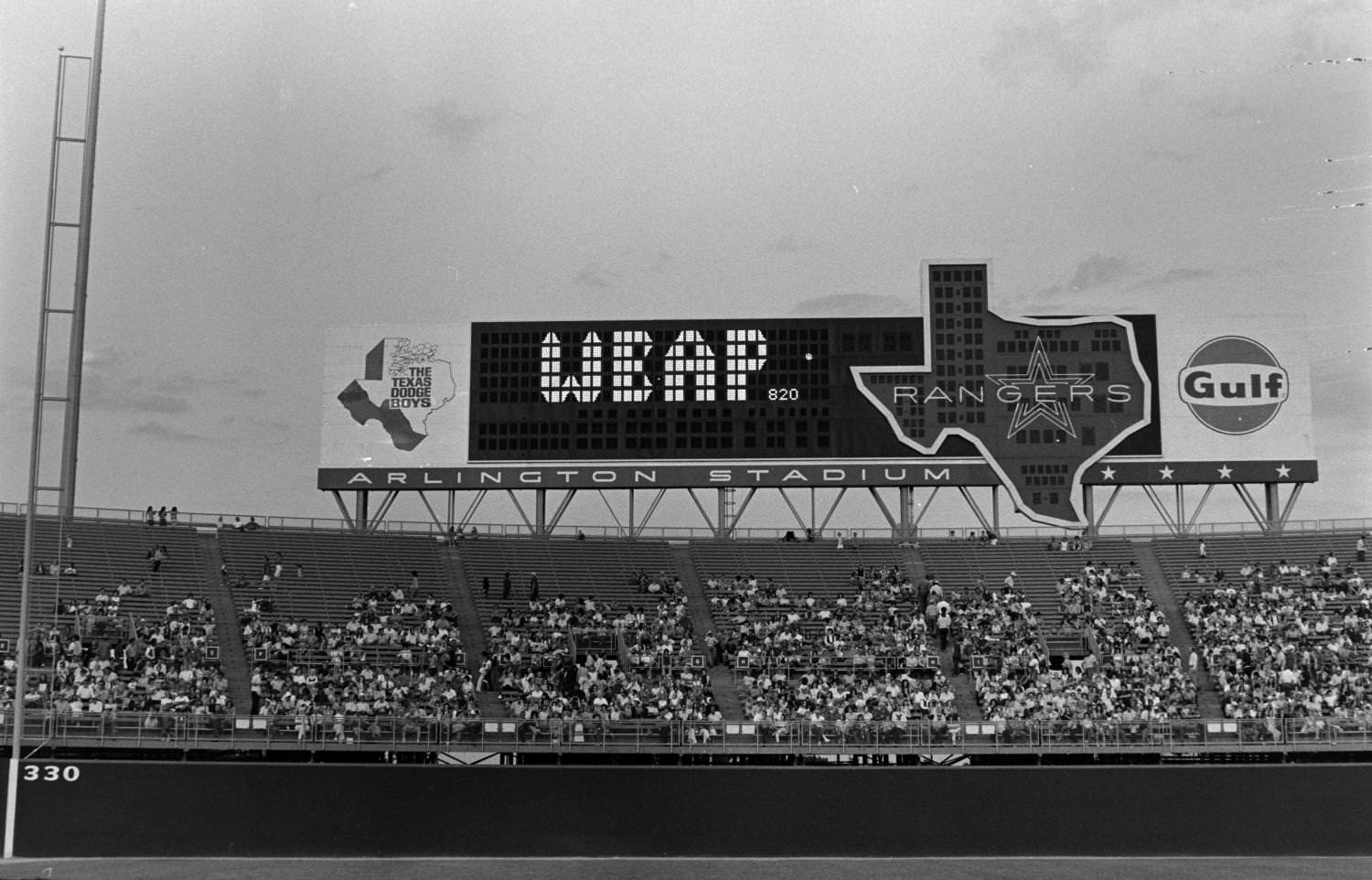
The stadium also hosted large-scale entertainment events beyond baseball. In 1973, WBAP radio held its Country Gold third anniversary event at Arlington Stadium, packing the seats with country music fans. By 1974, the event drew performers like Dolly Parton, who took the stage in a sequin-covered green outfit and performed to an enthusiastic crowd.
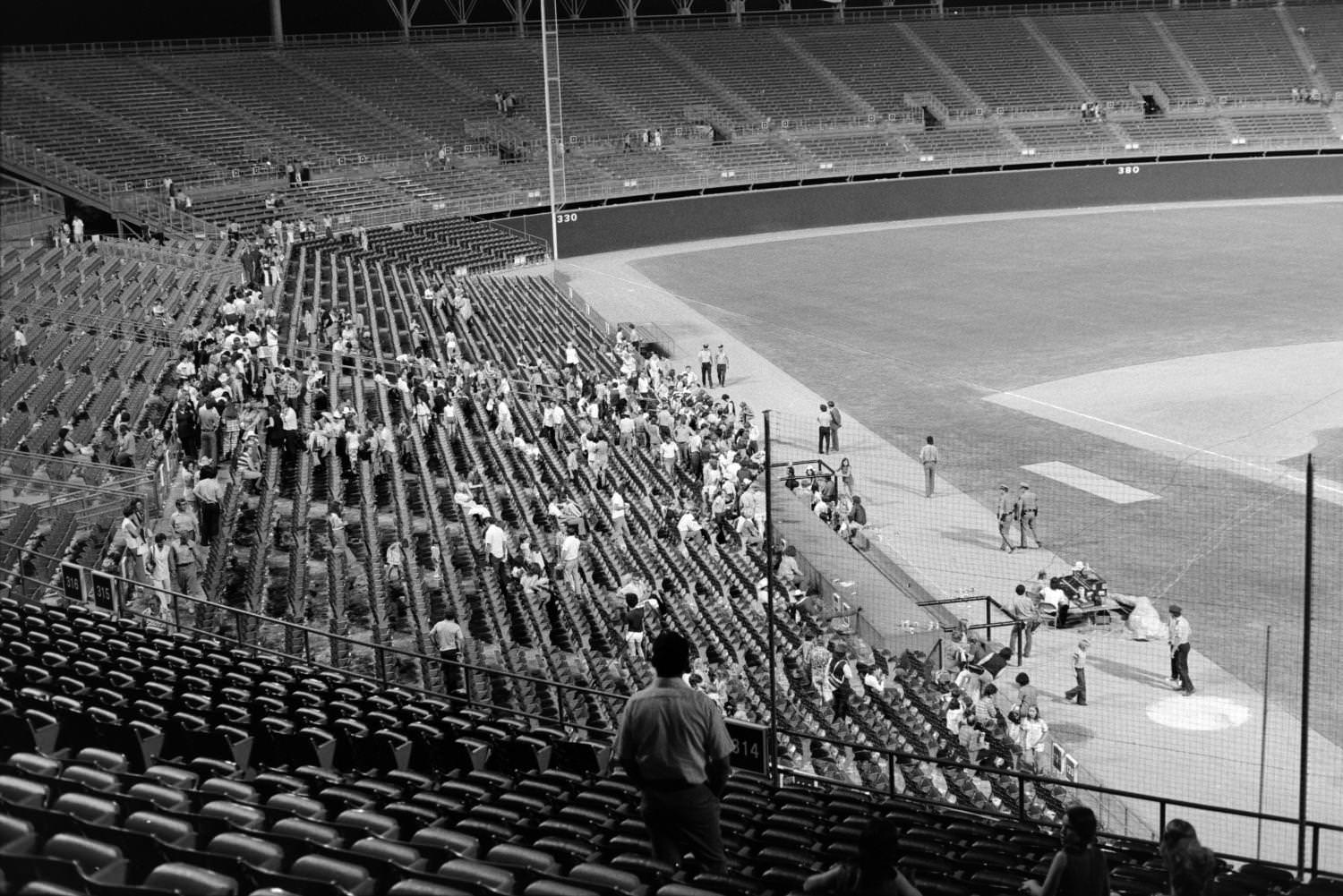
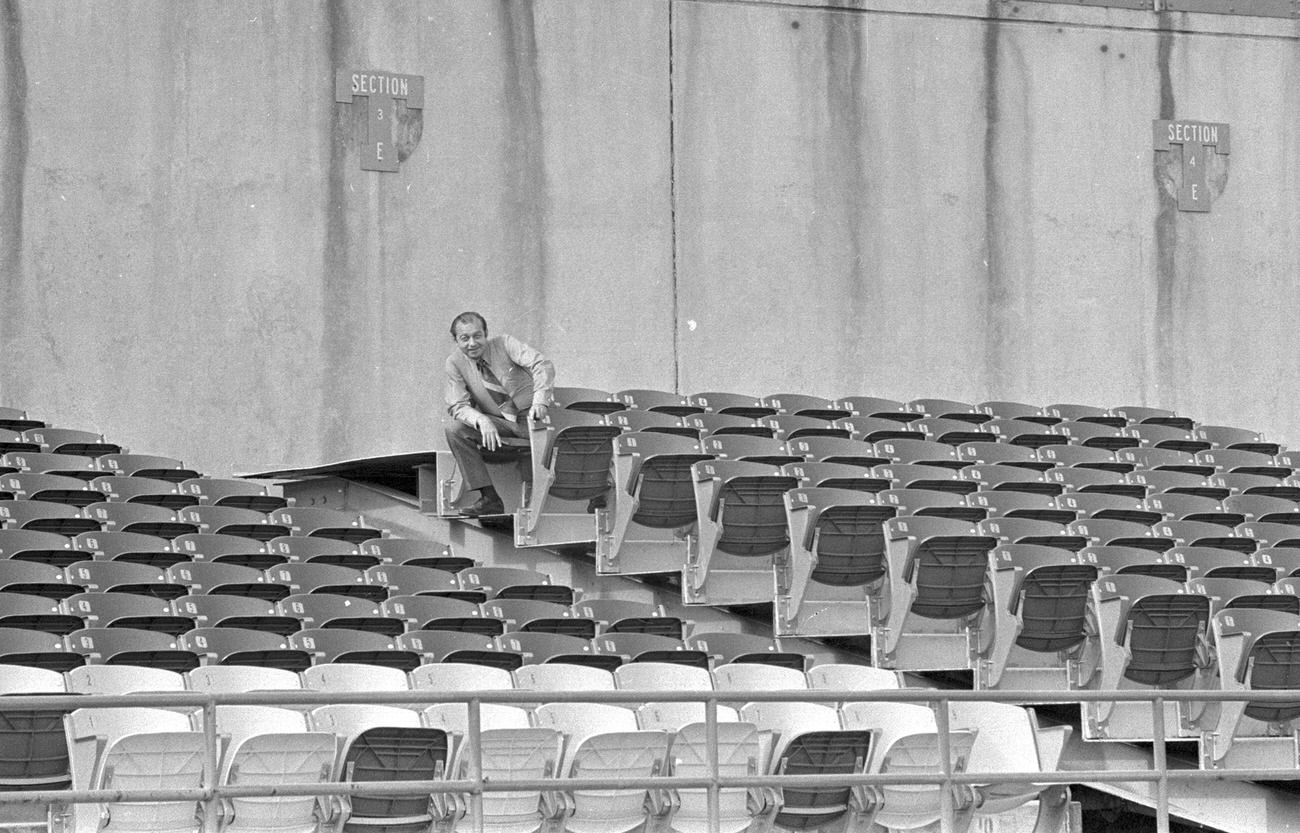
The seating at Arlington Stadium during WBAP's Country Gold third anniversary event, 1973
The seating at Arlington Stadium during WBAP’s Country Gold third anniversary event, 1973
The scoreboard at Arlington Stadium during WBAP's Country Gold third anniversary event, 1973
The scoreboard at Arlington Stadium during WBAP’s Country Gold third anniversary event, 1973
Dolly Parton performing at WBAP's Country Gold 1974 anniversary event, 1974
Dolly Parton performing at WBAP’s Country Gold 1974 anniversary event, 1974

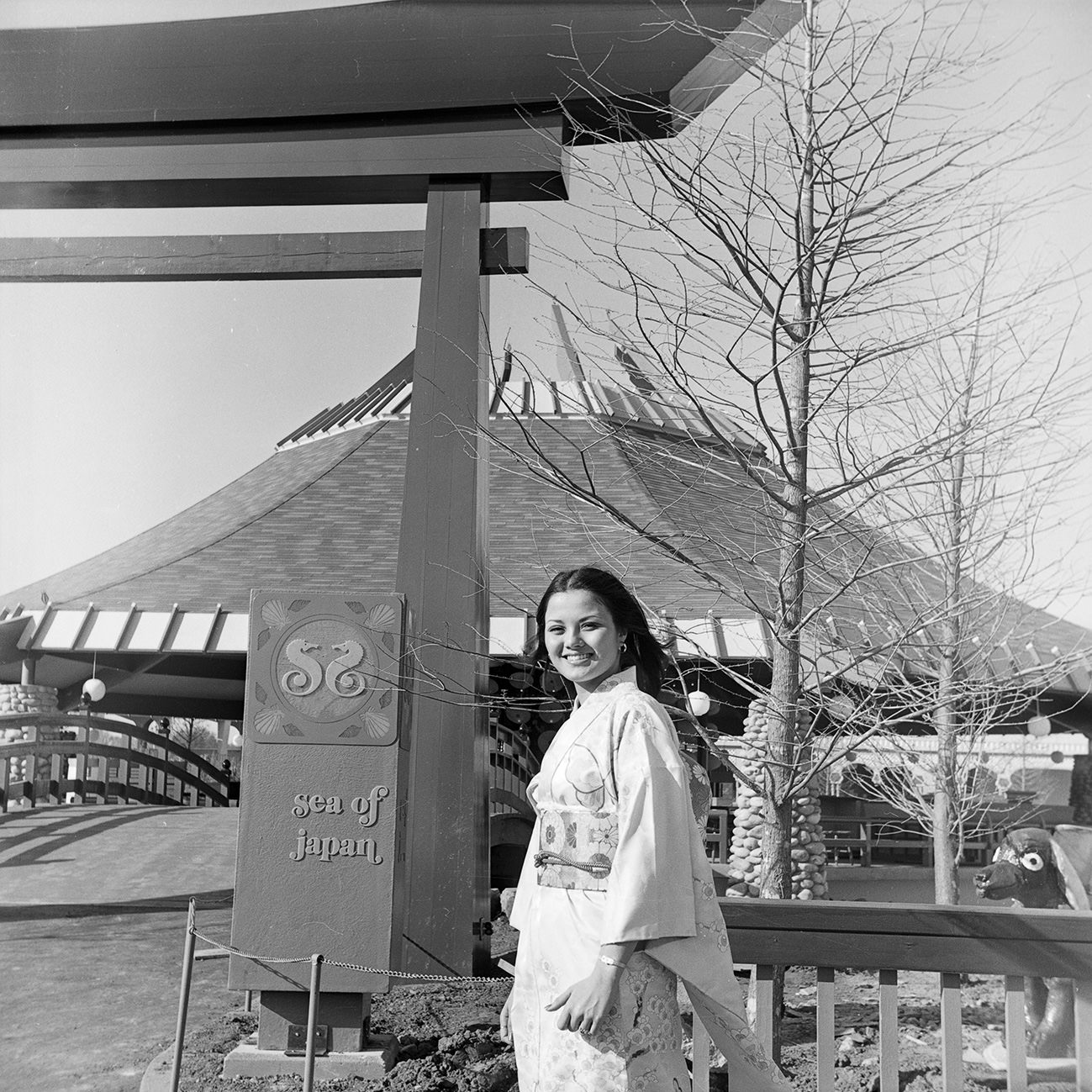
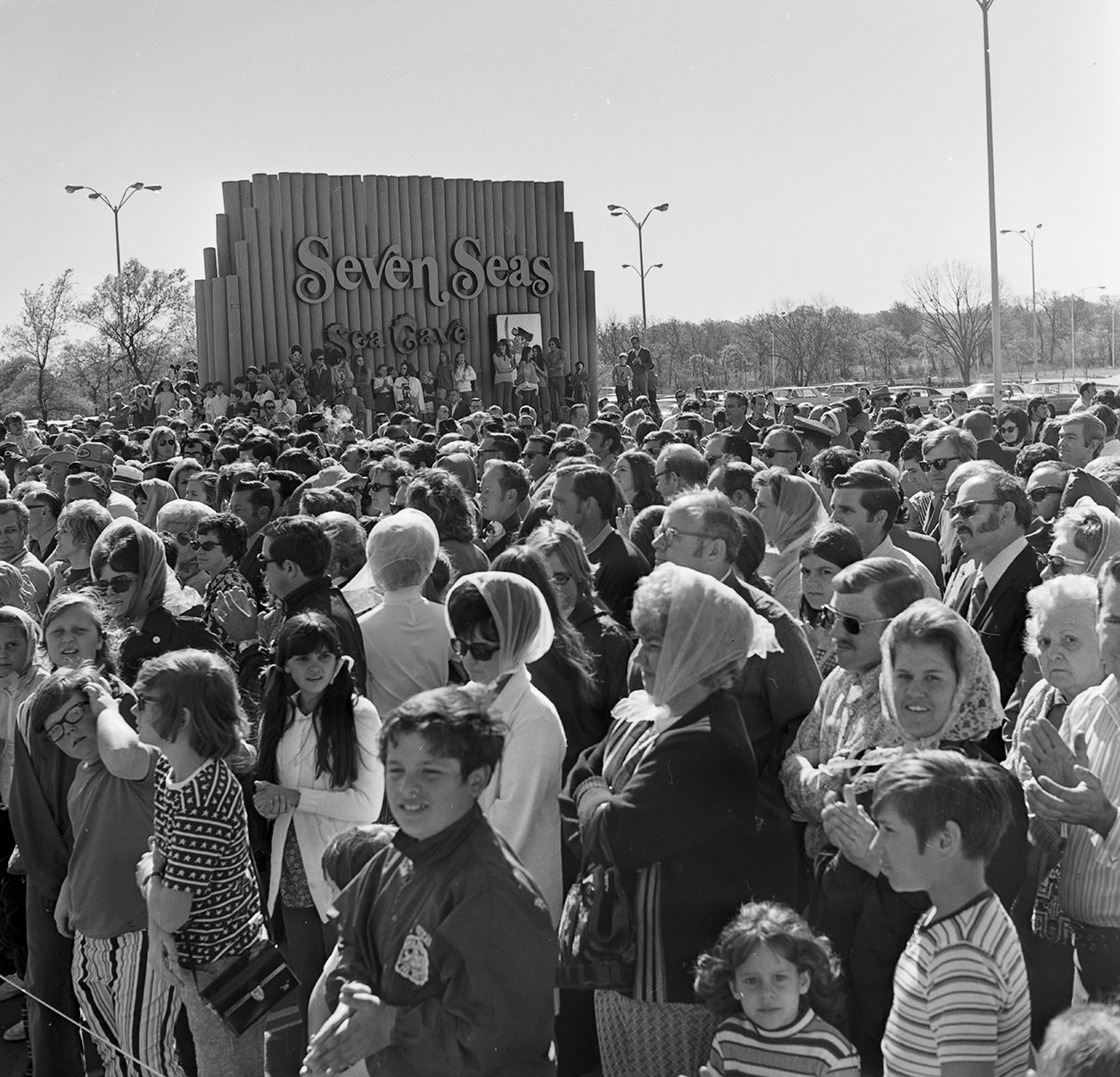
Just down the Dallas-Fort Worth Turnpike from Arlington Stadium, another major attraction was taking shape. Seven Seas Marine Life Park opened in 1972 as a marine mammal and animal theme park owned by the City of Arlington itself. Aerial photos from construction show the scope of the project — pools, tanks, and performance spaces carved out of the Texas flatland.
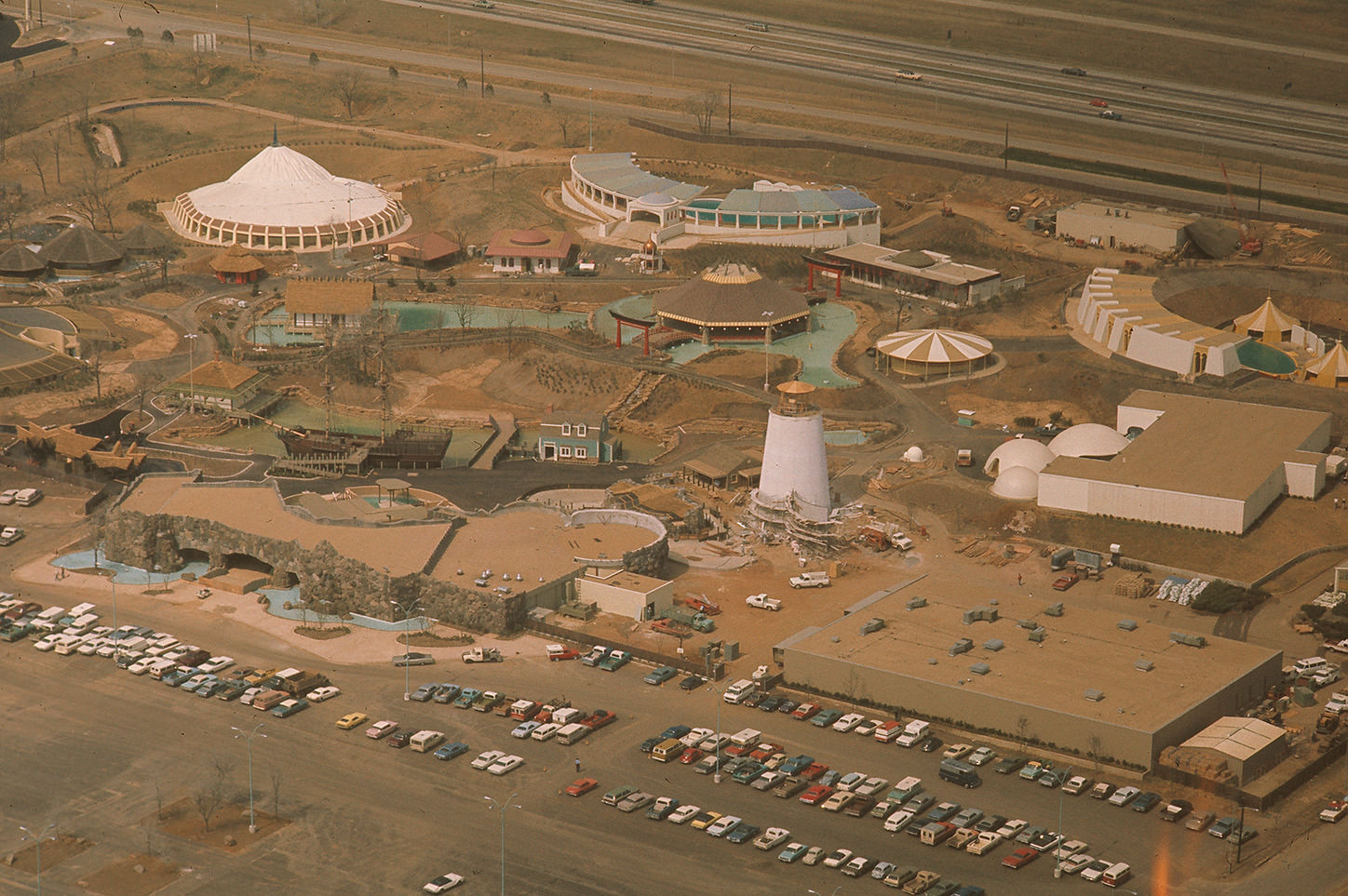
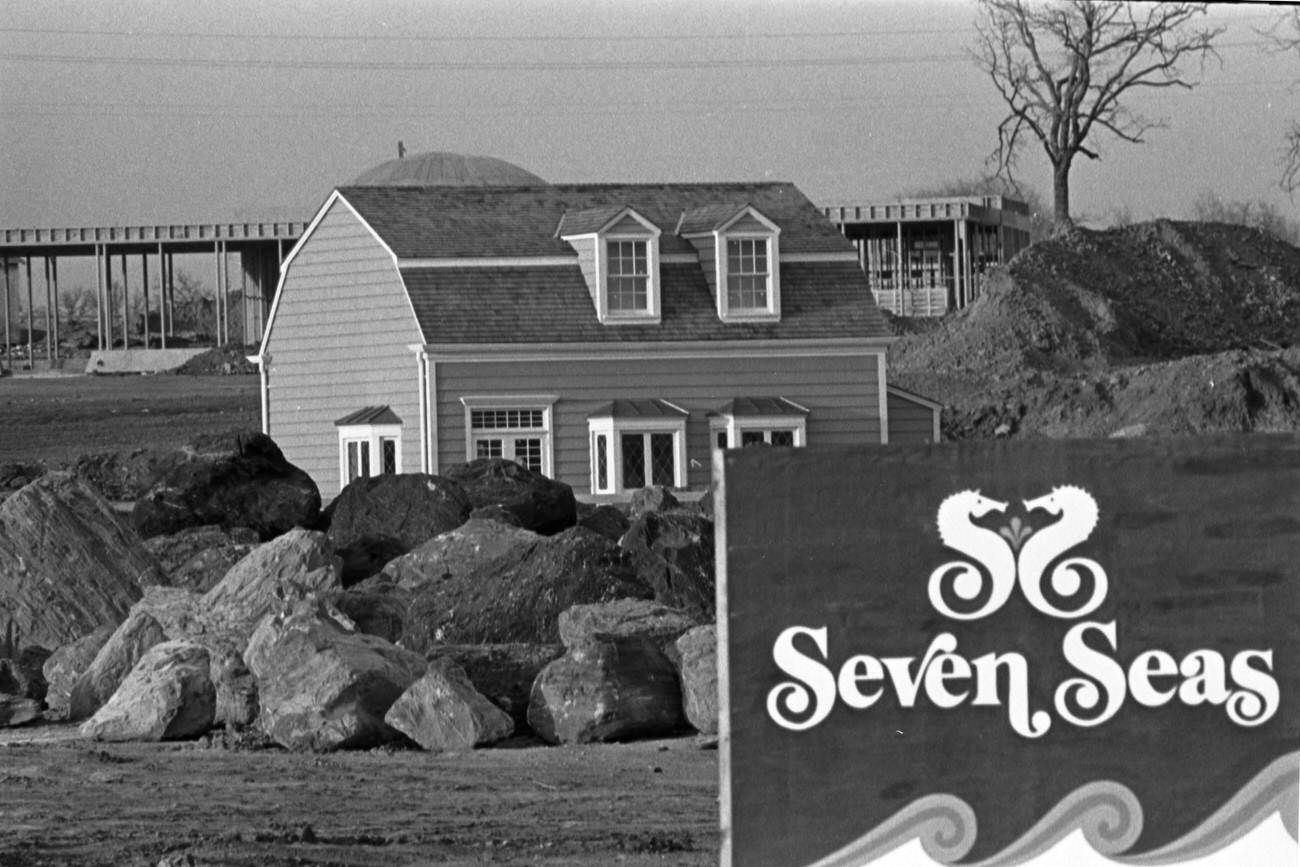
Aerial view during construction of Seven Seas Marine Life Park in Arlington, Texas, 1972
Seven Seas park, Arlington, Texas, on Dallas-Fort Worth Turnpike near Six Flags Over Texas, 1971
Arlington's Seven Seas amusement park, 1972
Arlington’s Seven Seas amusement park, 1972
Crowd at Seven Seas, Arlington, Texas, 1972
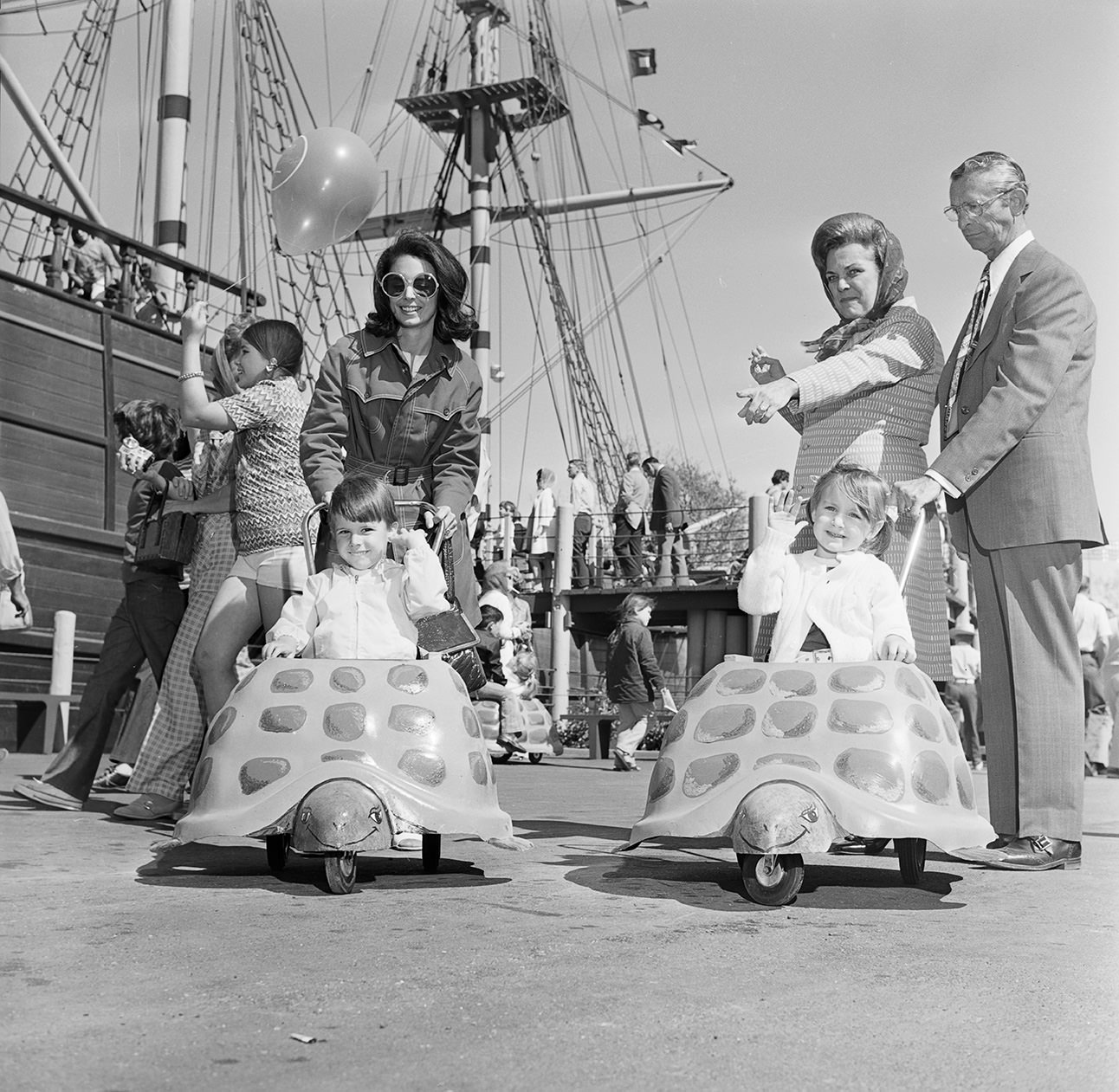
Visitors to Seven Seas, children riding in turtle cars, Arlington, Texas, 1972
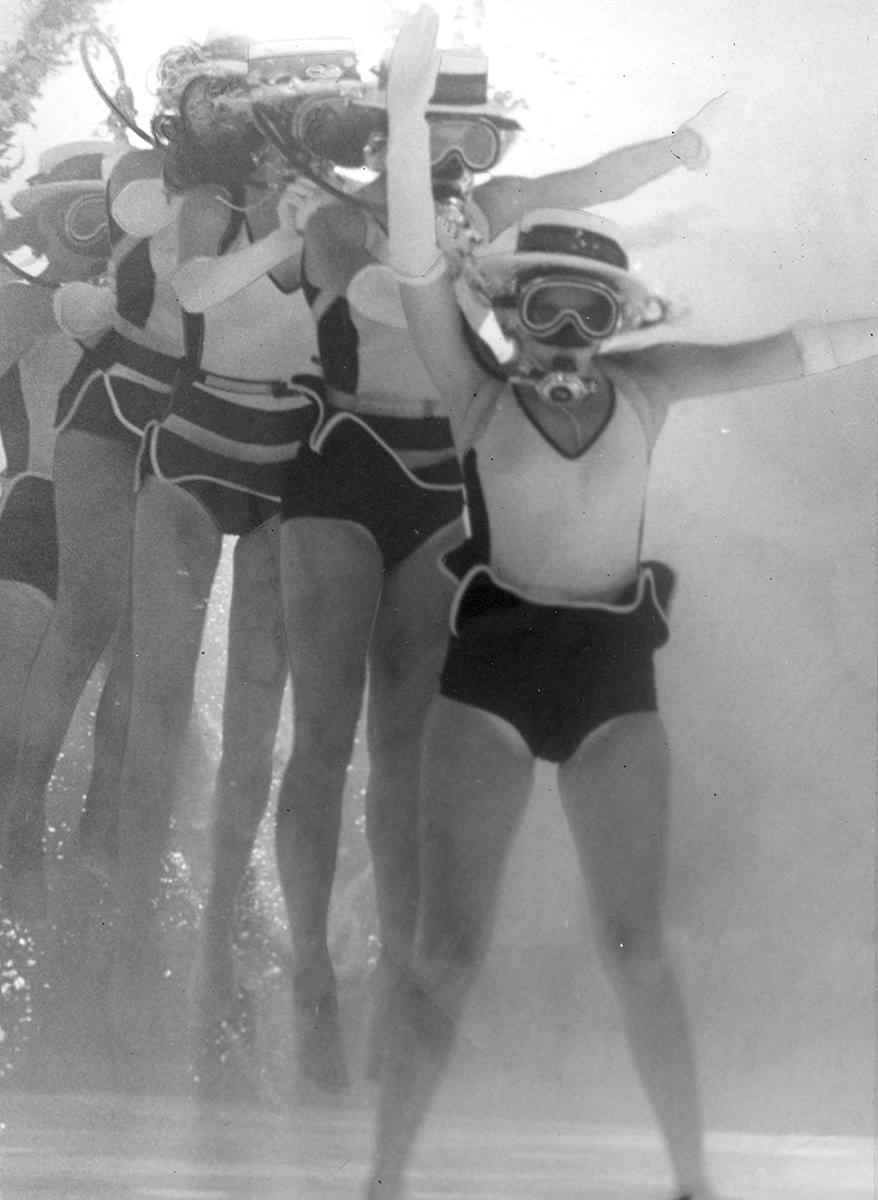
Seven Seas underwater performers, 1972
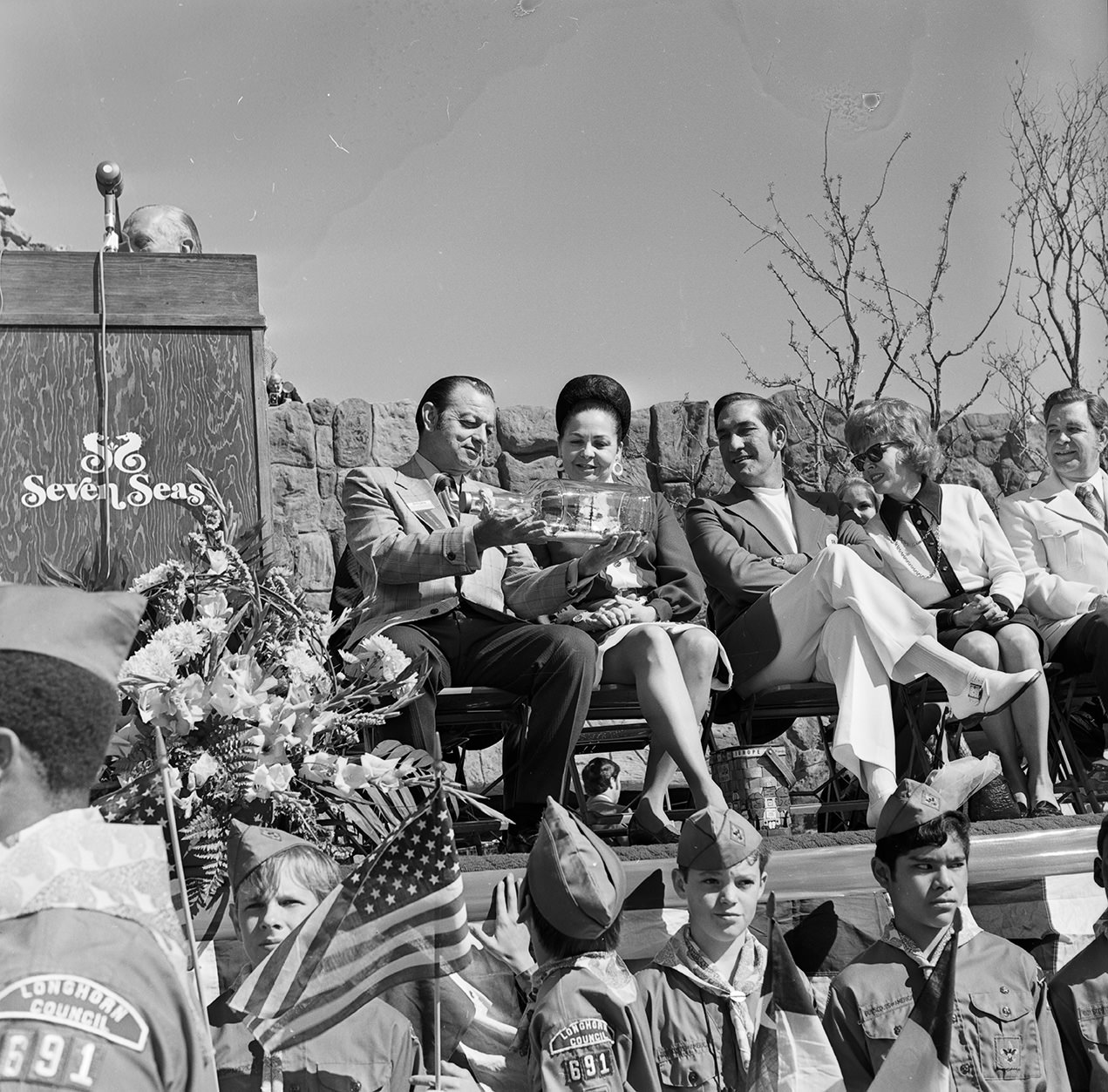
Seven Seas, Arlington, Texas Tom Vandergriff at far left, 1972
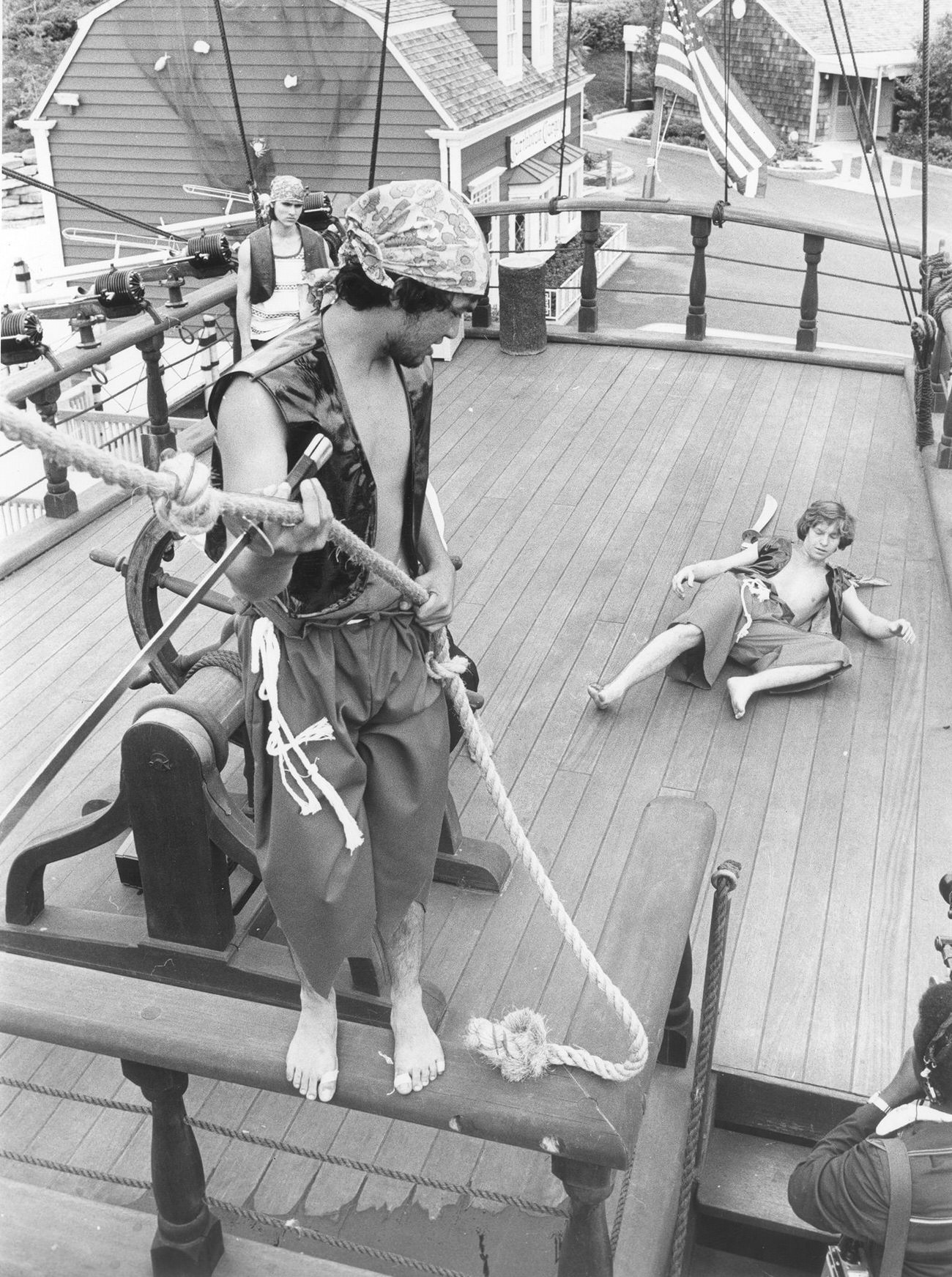
Seven Seas amusement park, Arlington, Texas ship's crew of Bona Venture. Seven Seas Marine Life Park was a marine mammal park, and animal theme park built and owned by the city of Arlington, Texas, 1975.
Seven Seas amusement park, Arlington, Texas ship’s crew of Bona Venture. Seven Seas Marine Life Park was a marine mammal park, and animal theme park built and owned by the city of Arlington, Texas, 1975.

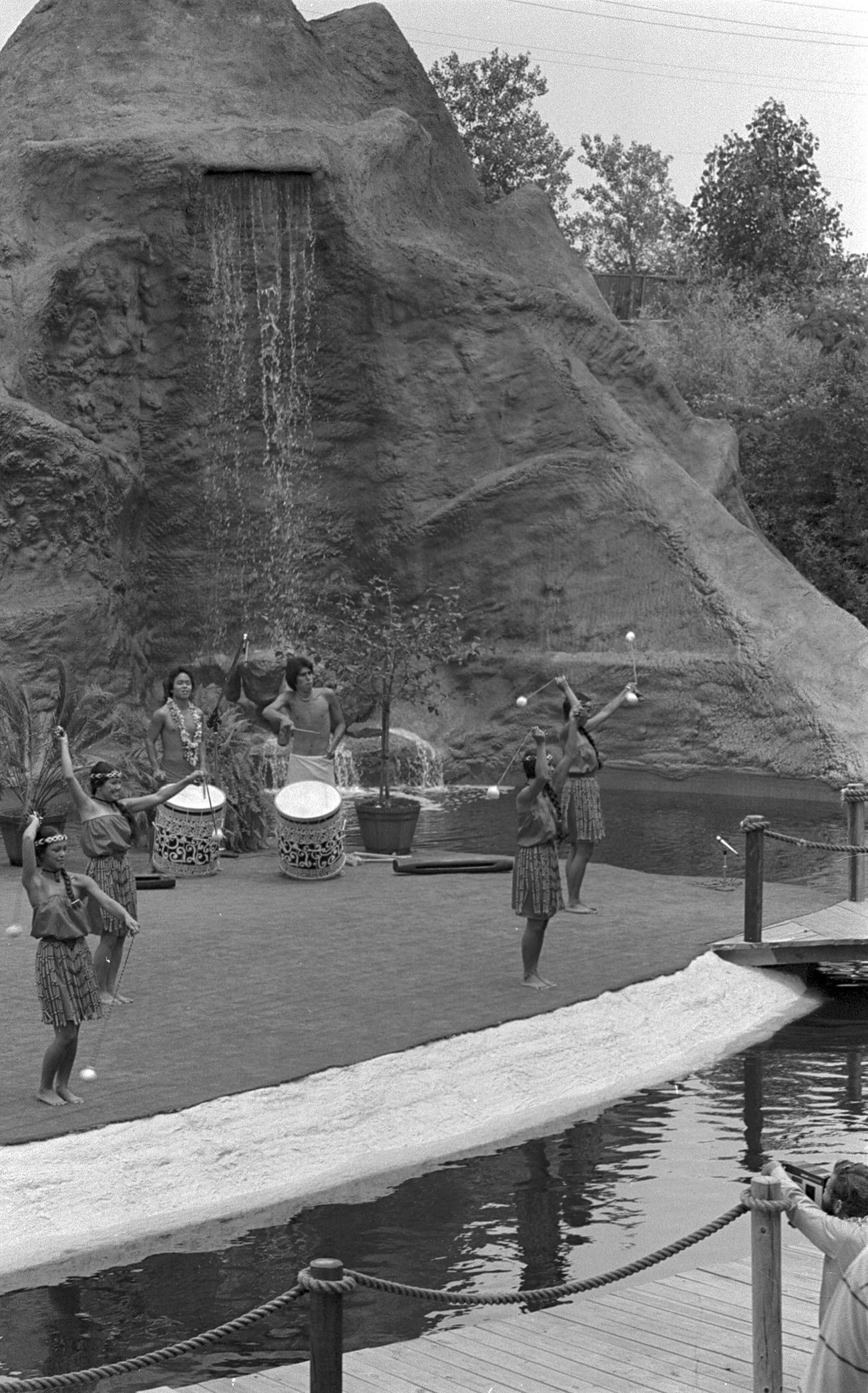
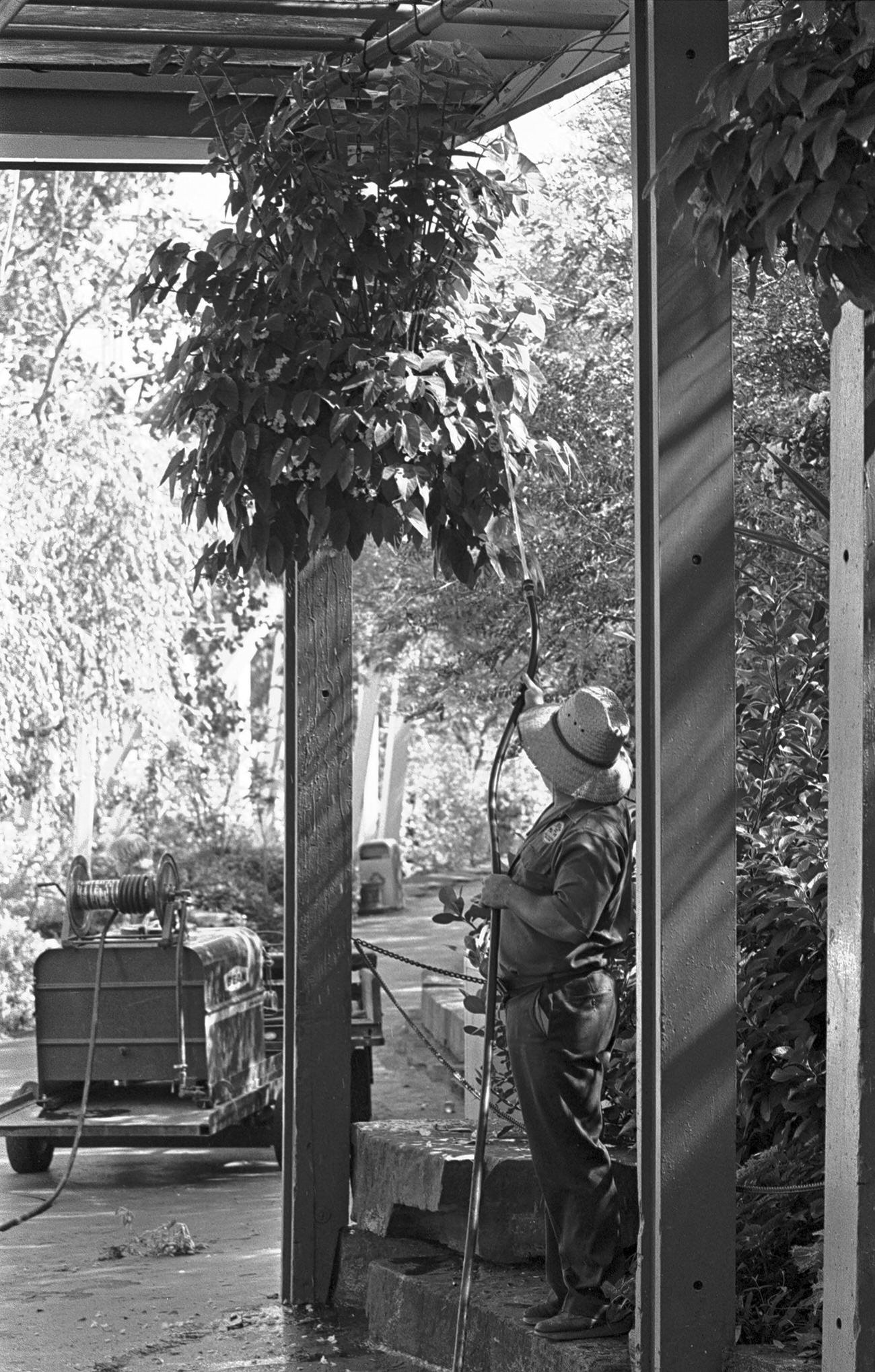
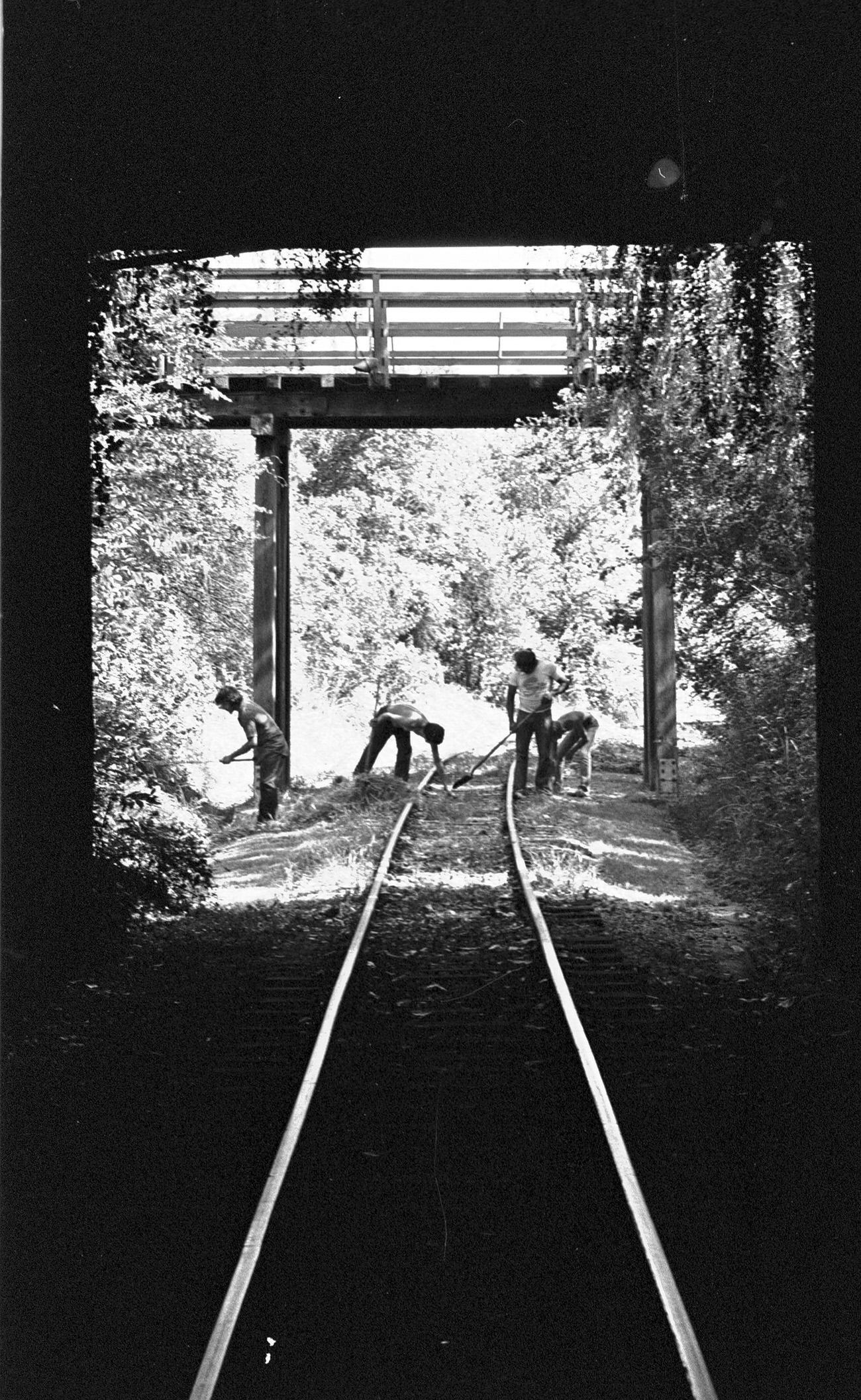
Six Flags Over Texas, which had already been operating in Arlington since 1961, continued to be one of the region’s biggest draws throughout the 1970s. The park maintained its rides, added new attractions, and brought in entertainment acts from around the country, including Hawaiian dancers in 1976. Behind the scenes, maintenance crews kept the rides running and replaced damaged greenery across the grounds.
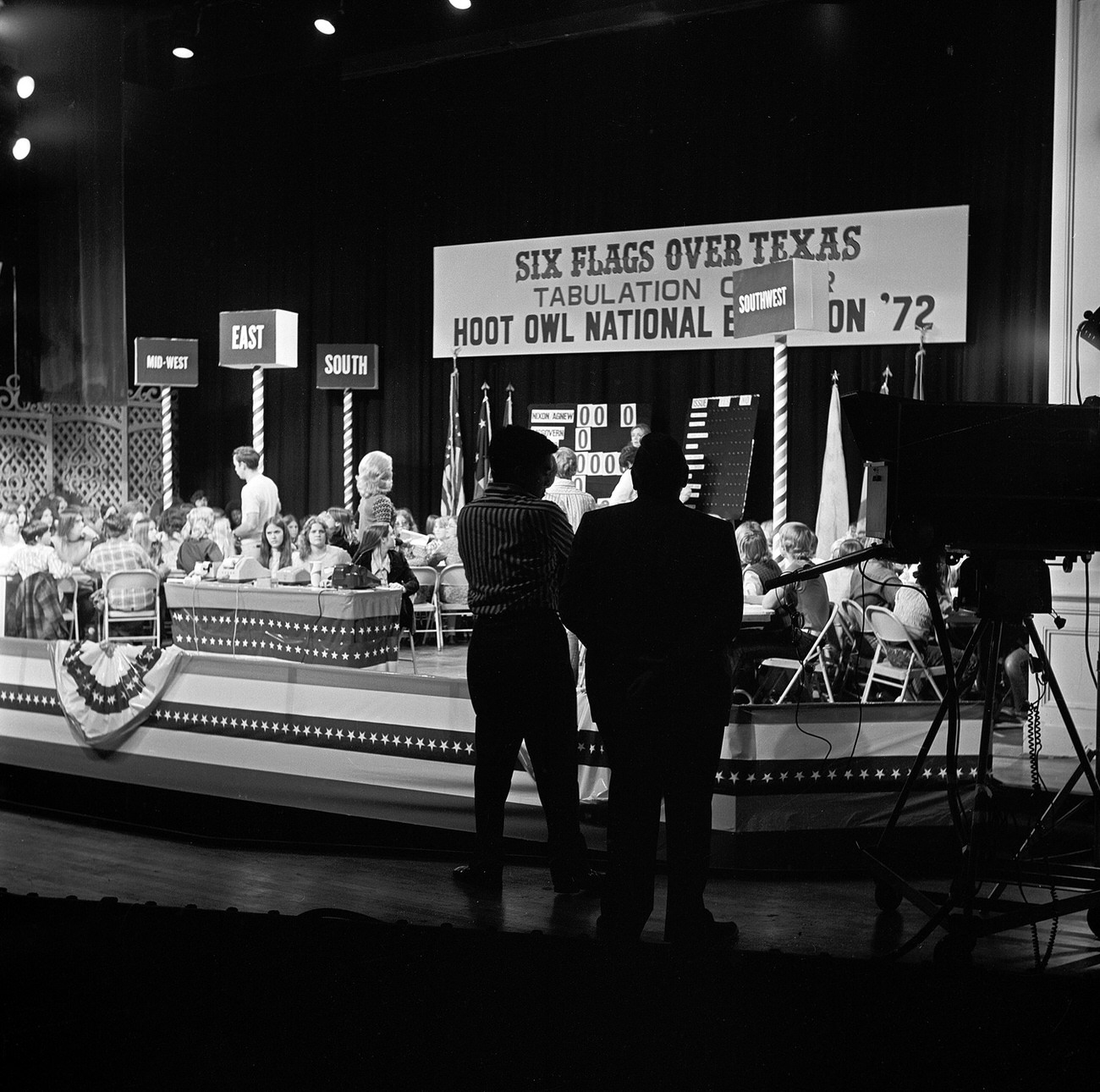
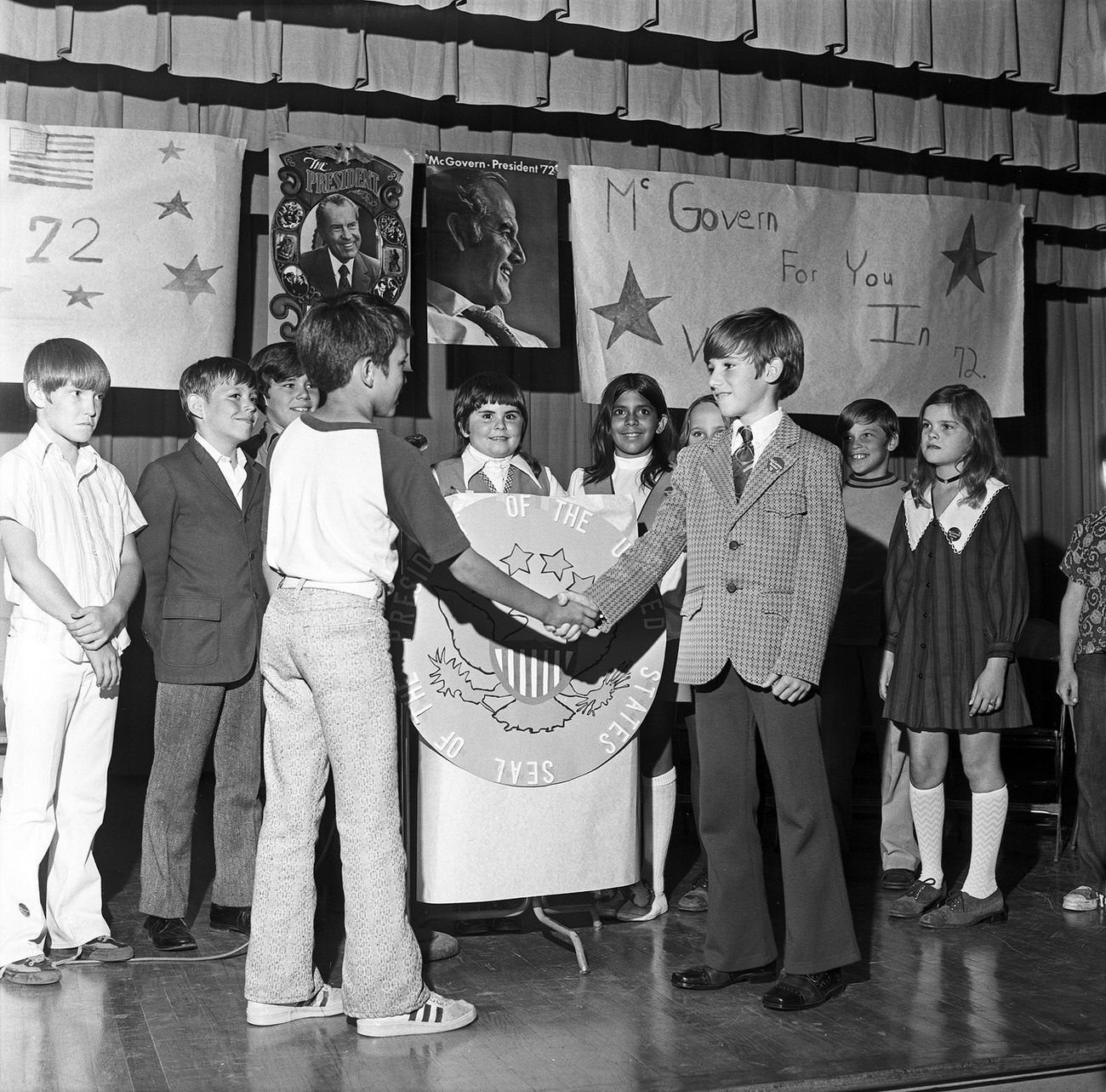
"Hoot Owl" election at Six Flags Over Texas, 1972
“Hoot Owl” election at Six Flags Over Texas, 1972
Children volunteering for a national children's poll for the 1972 presidential election, conducted by the "Hoot Owl" children's newspaper in Arlington, tabulated at Six Flags Over Texas.
Children volunteering for a national children’s poll for the 1972 presidential election, conducted by the “Hoot Owl” children’s newspaper in Arlington, tabulated at Six Flags Over Texas.
Hawaii Kai's native dancers at Six Flags Over Texas, 1976
Hawaii Kai’s native dancers at Six Flags Over Texas, 1976
Landscape crew replace damaged greenery at Six Flags Over Texas, 1970s
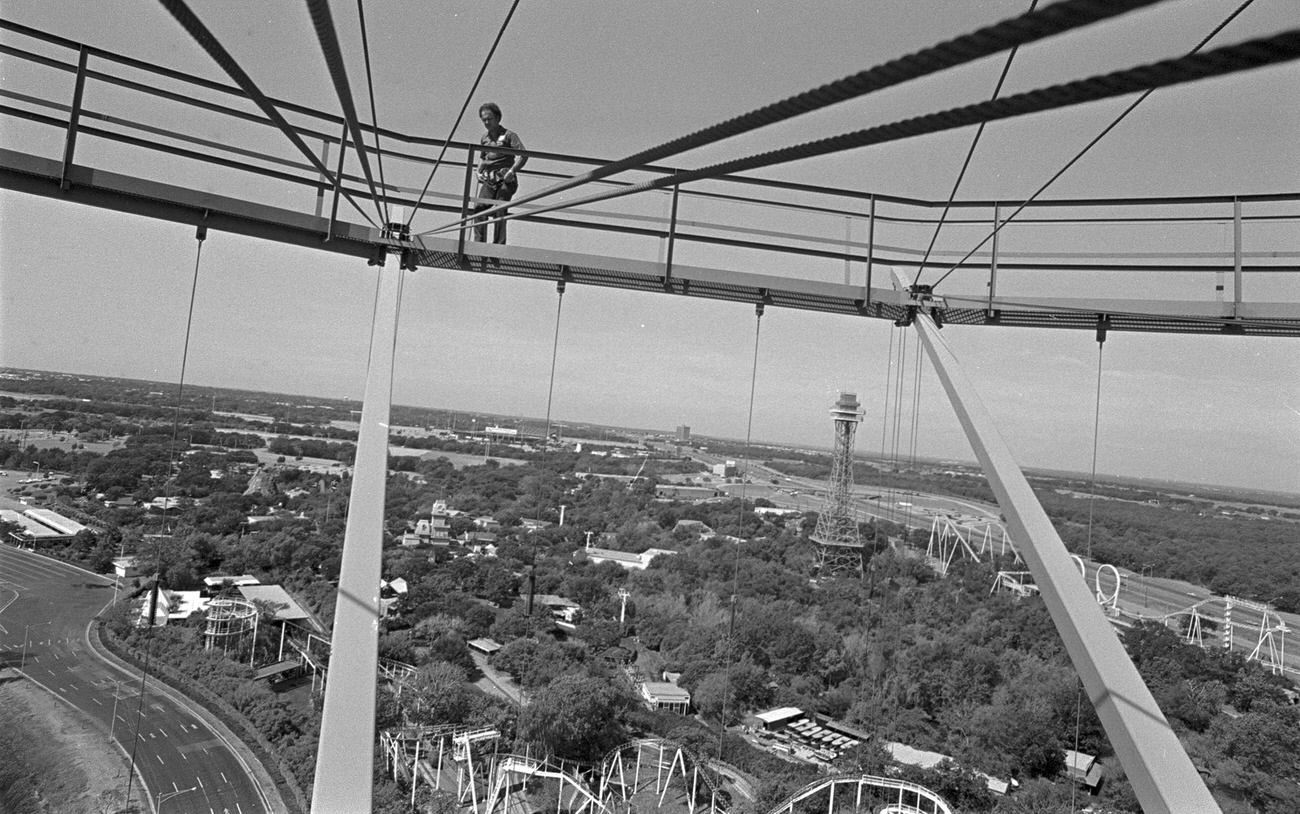
Maintenance on tracks, Six Flags Over Texas, 1978
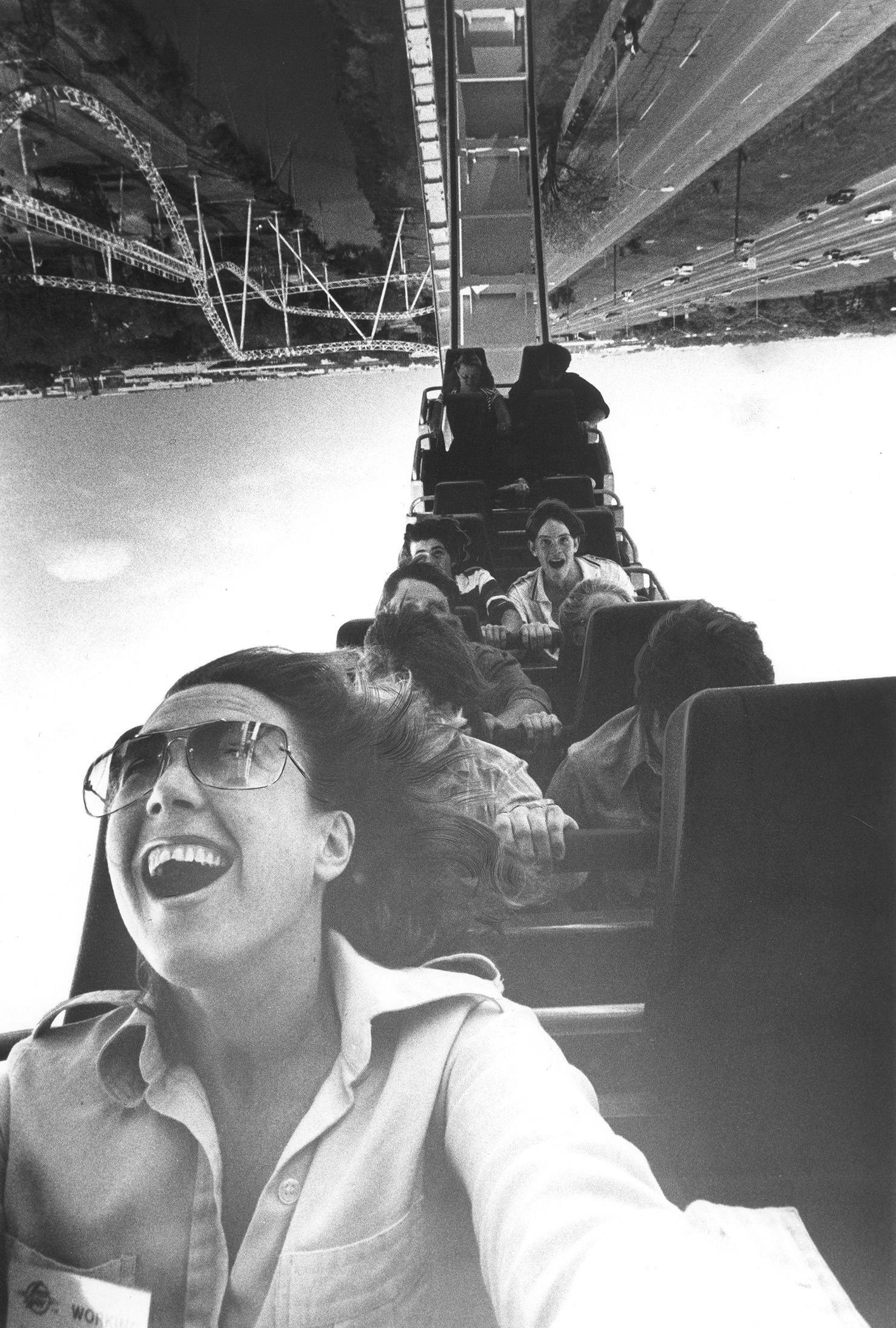
Six Flags Over Texas Chute Out ride, 1978
Six Flags Over Texas, amusement park, Arlington, Texas, 1978
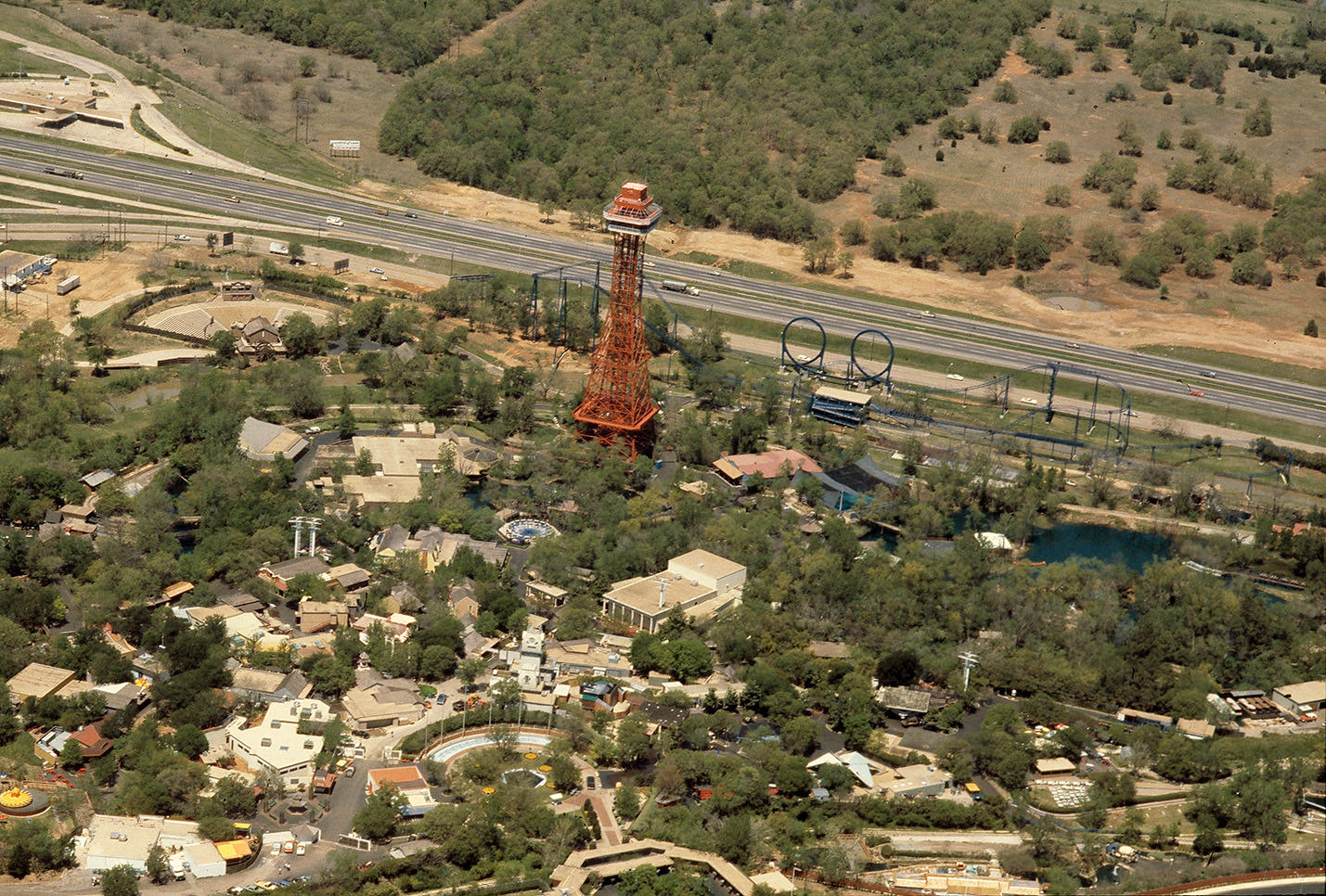
Aerial view of Six Flags Over Texas, after 1978

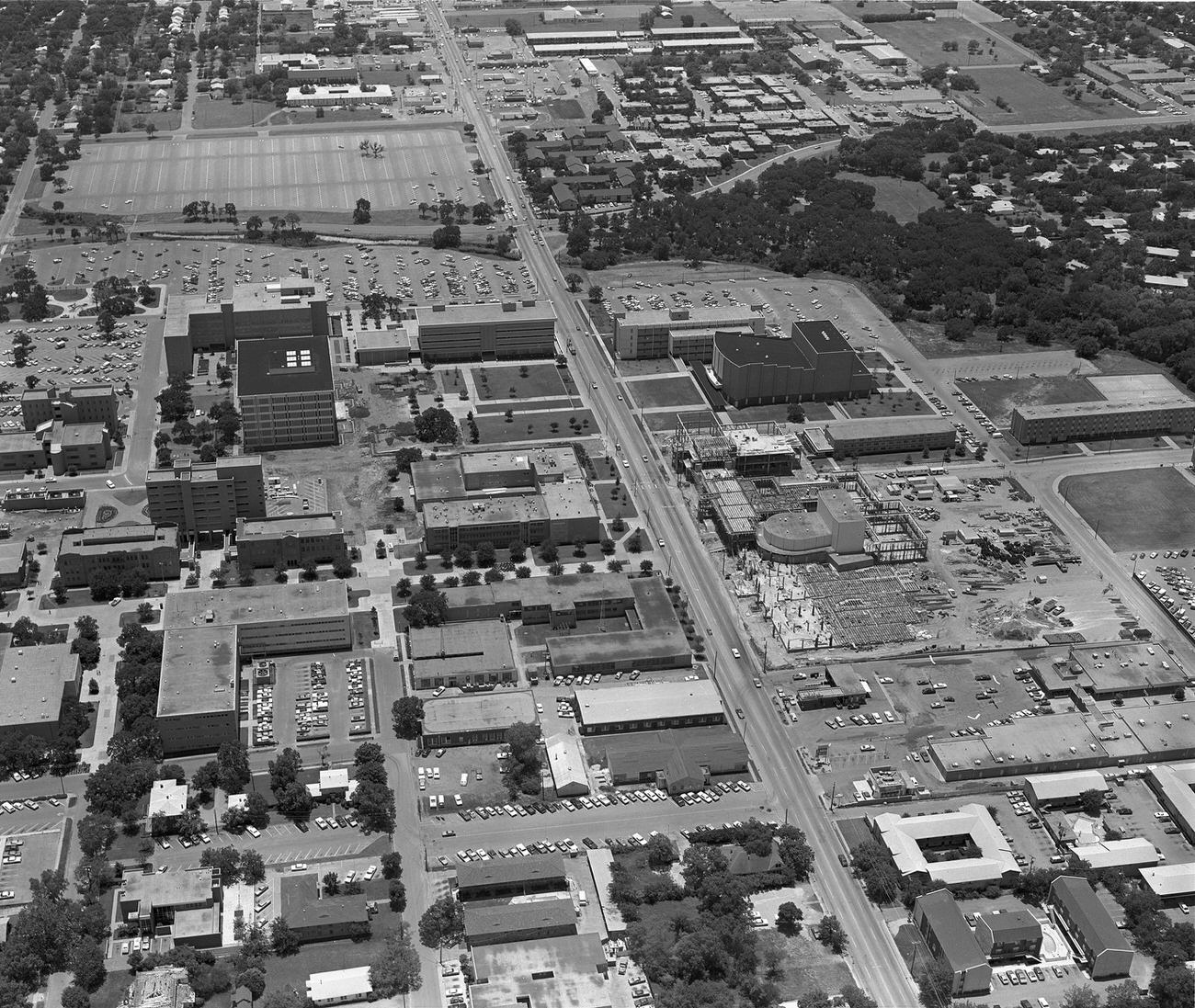
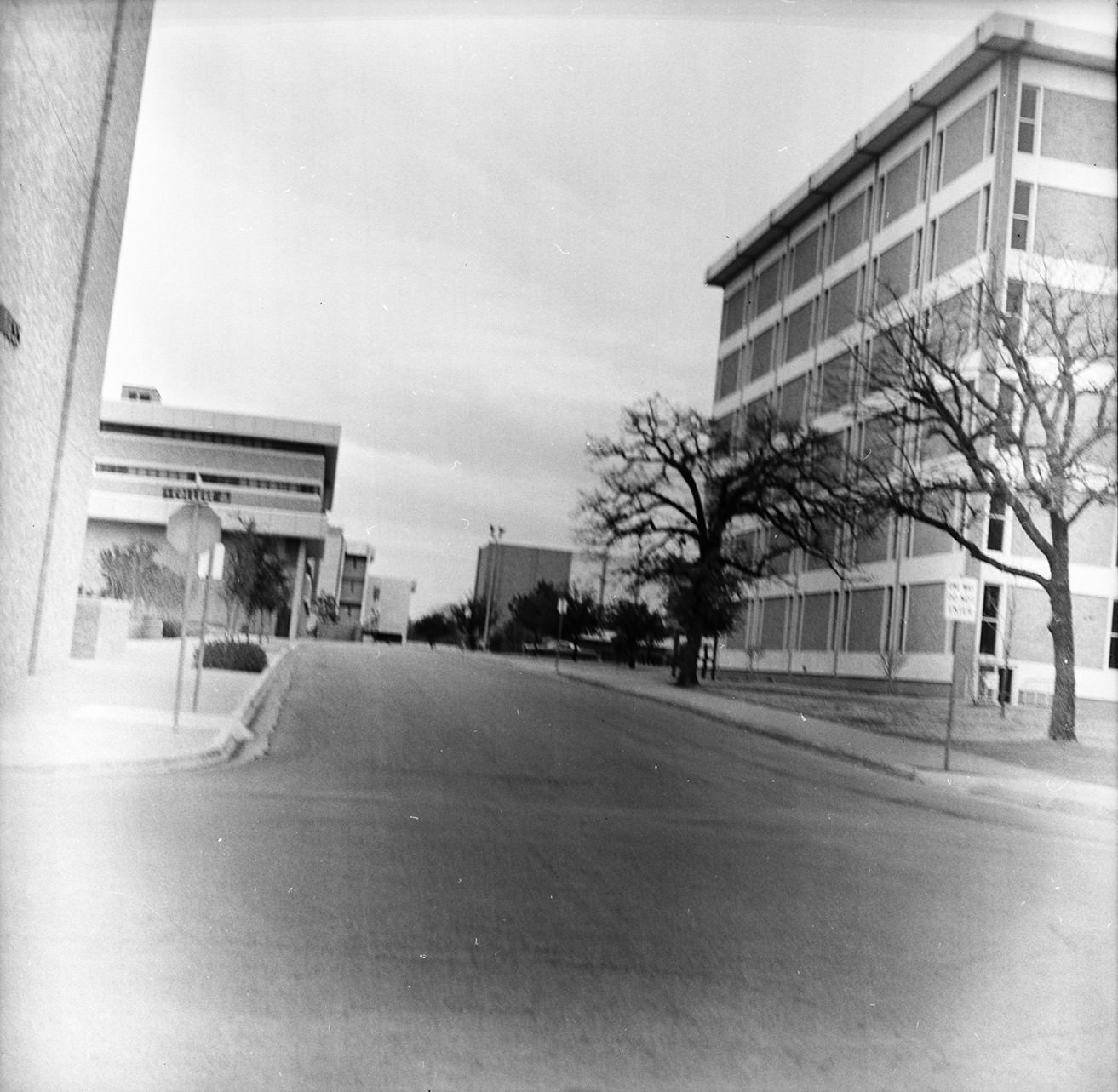
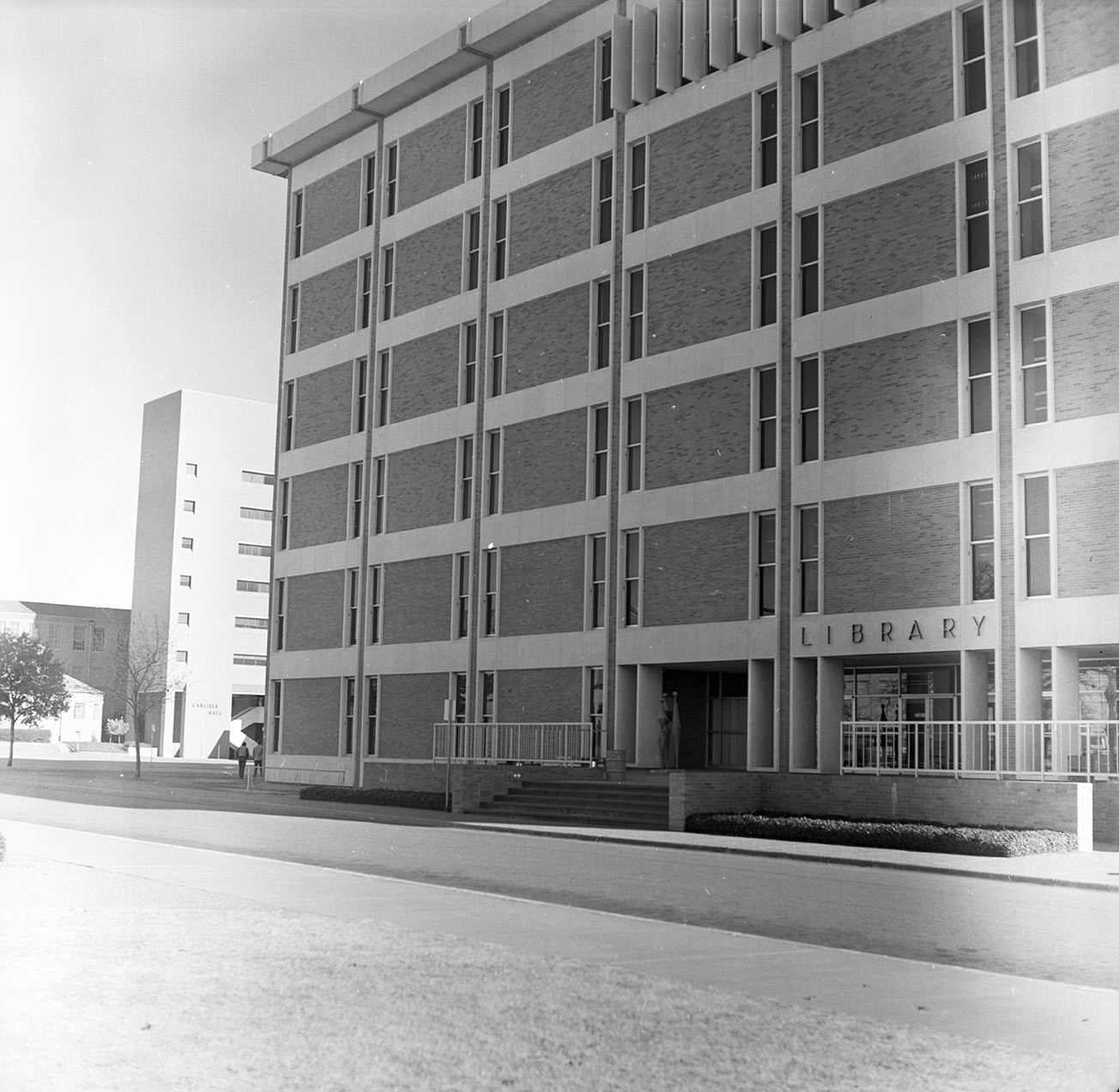
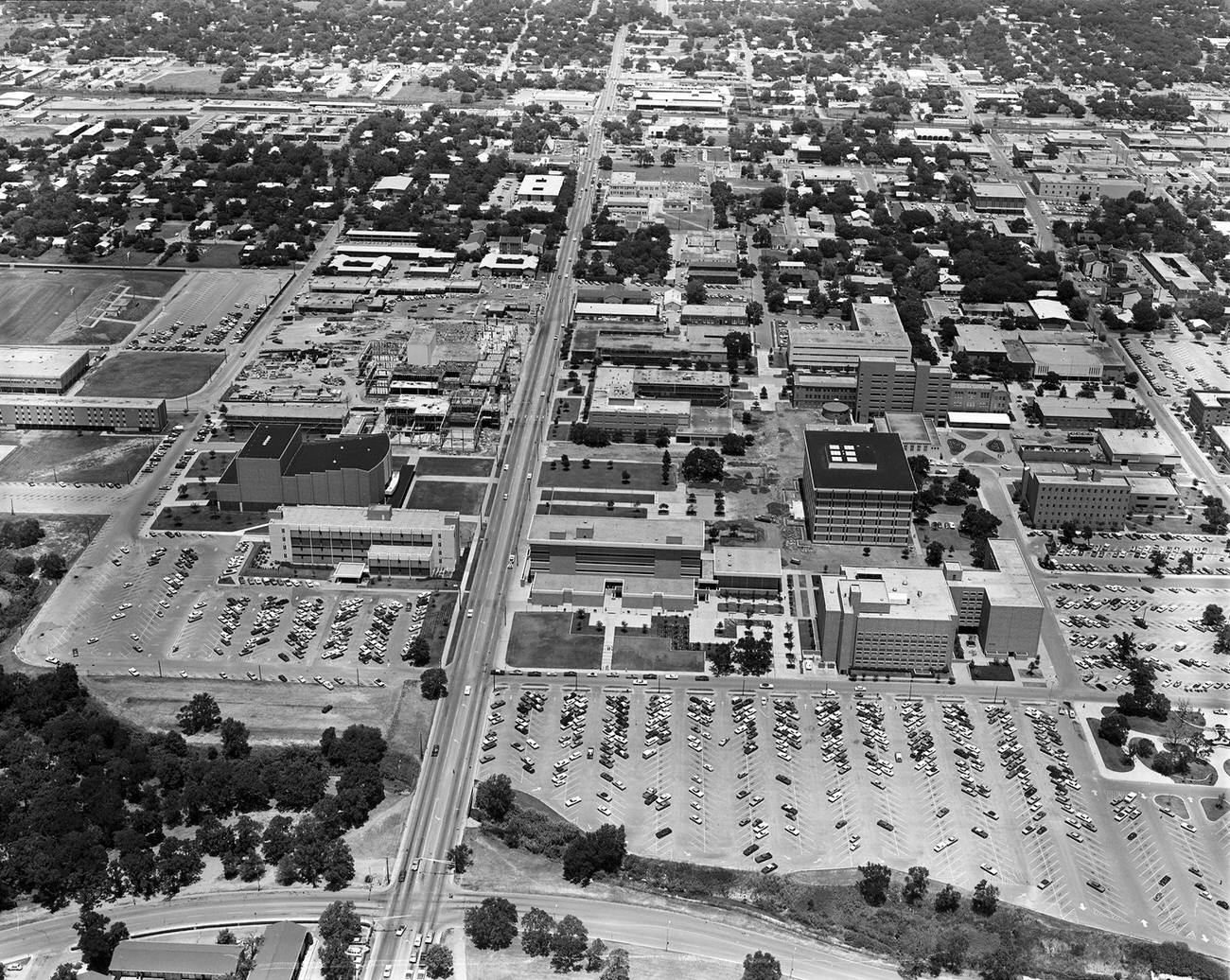
The University of Texas at Arlington was also growing rapidly during this period. The campus expanded its footprint, added new buildings, and increased enrollment. Aerial photos from 1970 and 1973 show the campus spreading northward along Cooper Street. The university’s library received a new building, photographed from both the front entrance and the south side in 1972.
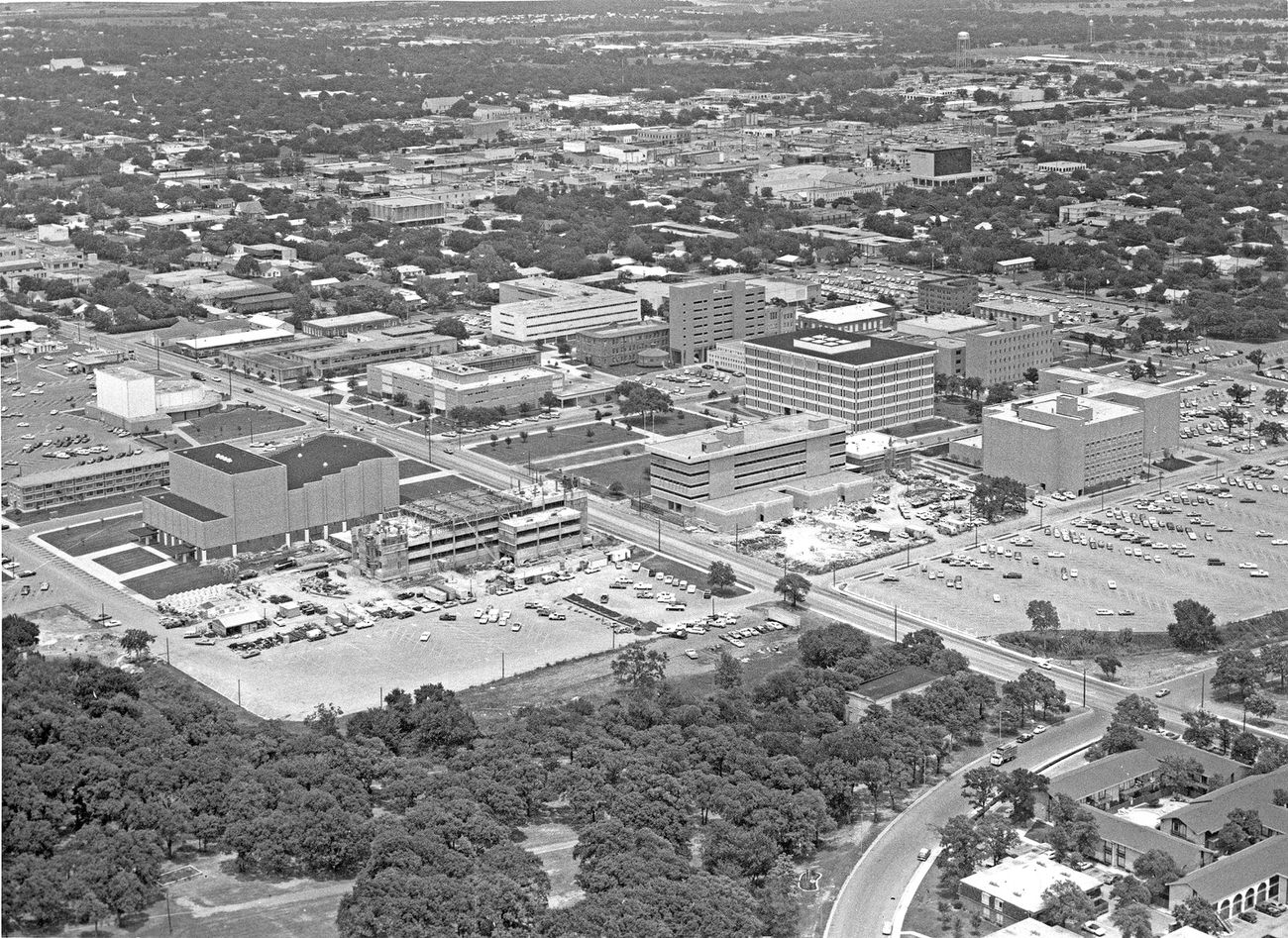
University of Texas at Arlington (U. T. A.) campus and surrounding area, 1970
Aerial of U. T. A. campus looking north up Cooper Street, 1973
An airview of University of Texas at Arlington (U. T. A.) looking south, 1973
South side of University of Texas at Arlington (U. T. A.) Library building, 1972
Front entrance to the University of Texas at Arlington (U. T. A.) library building, 1972
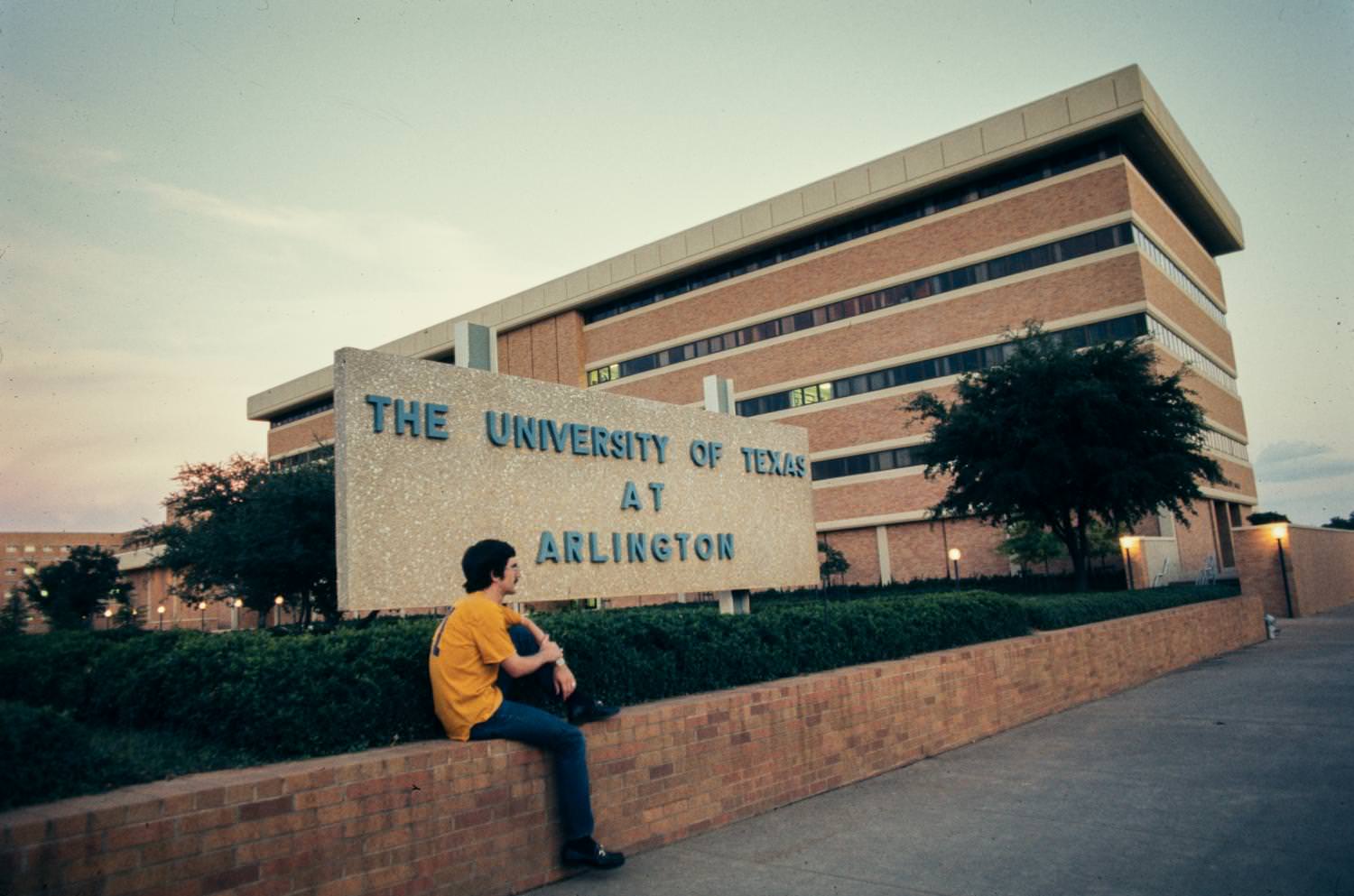
University of Texas at Arlington sign, 1973

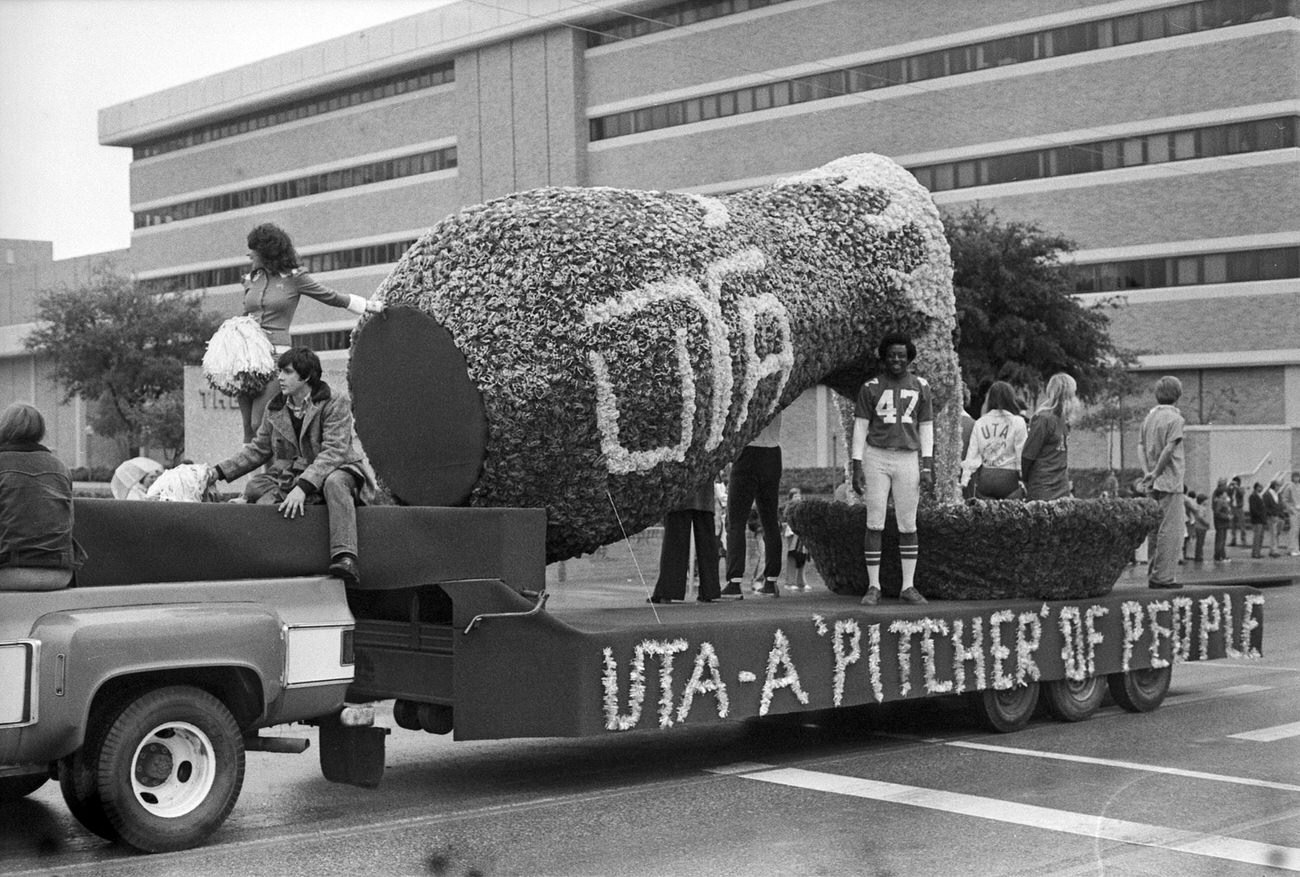
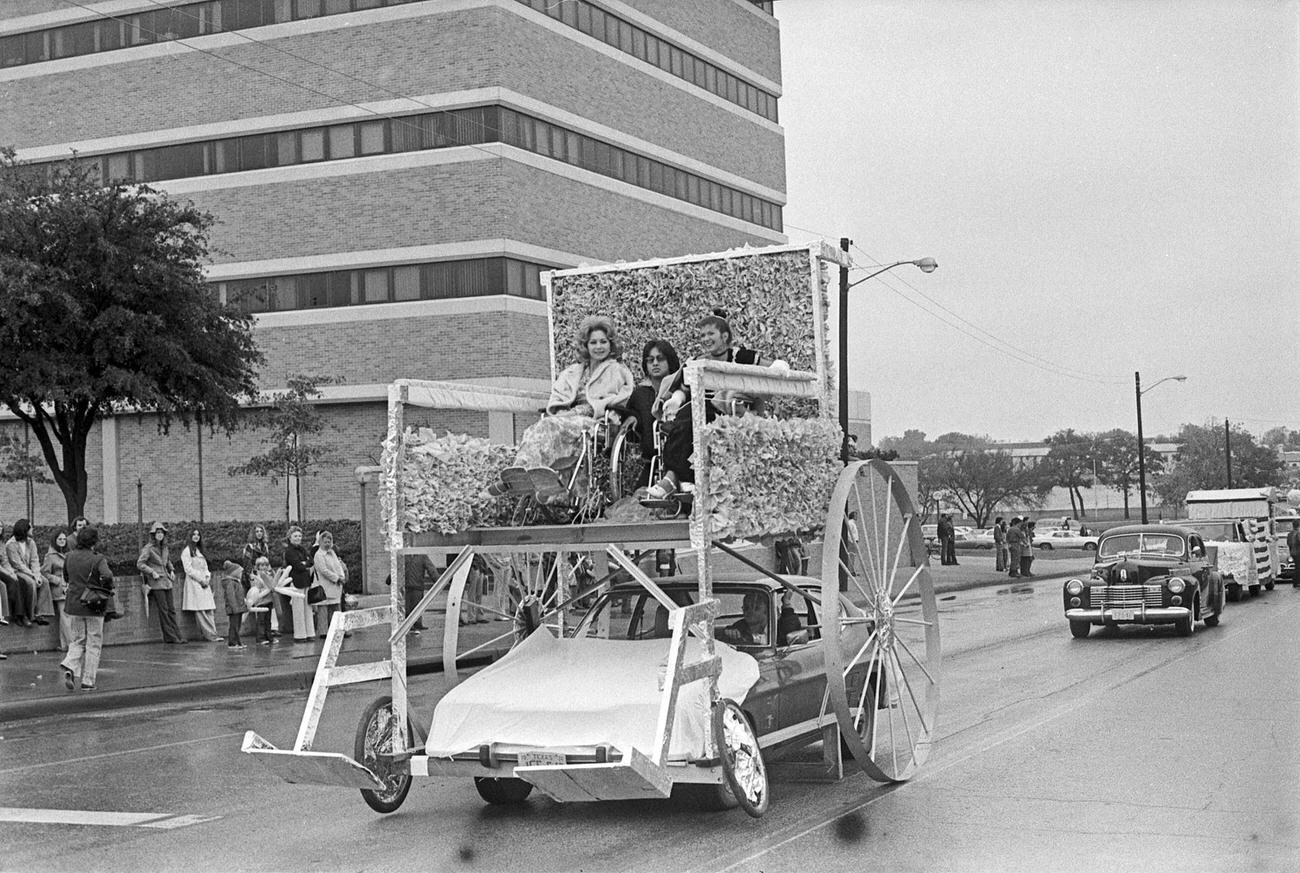
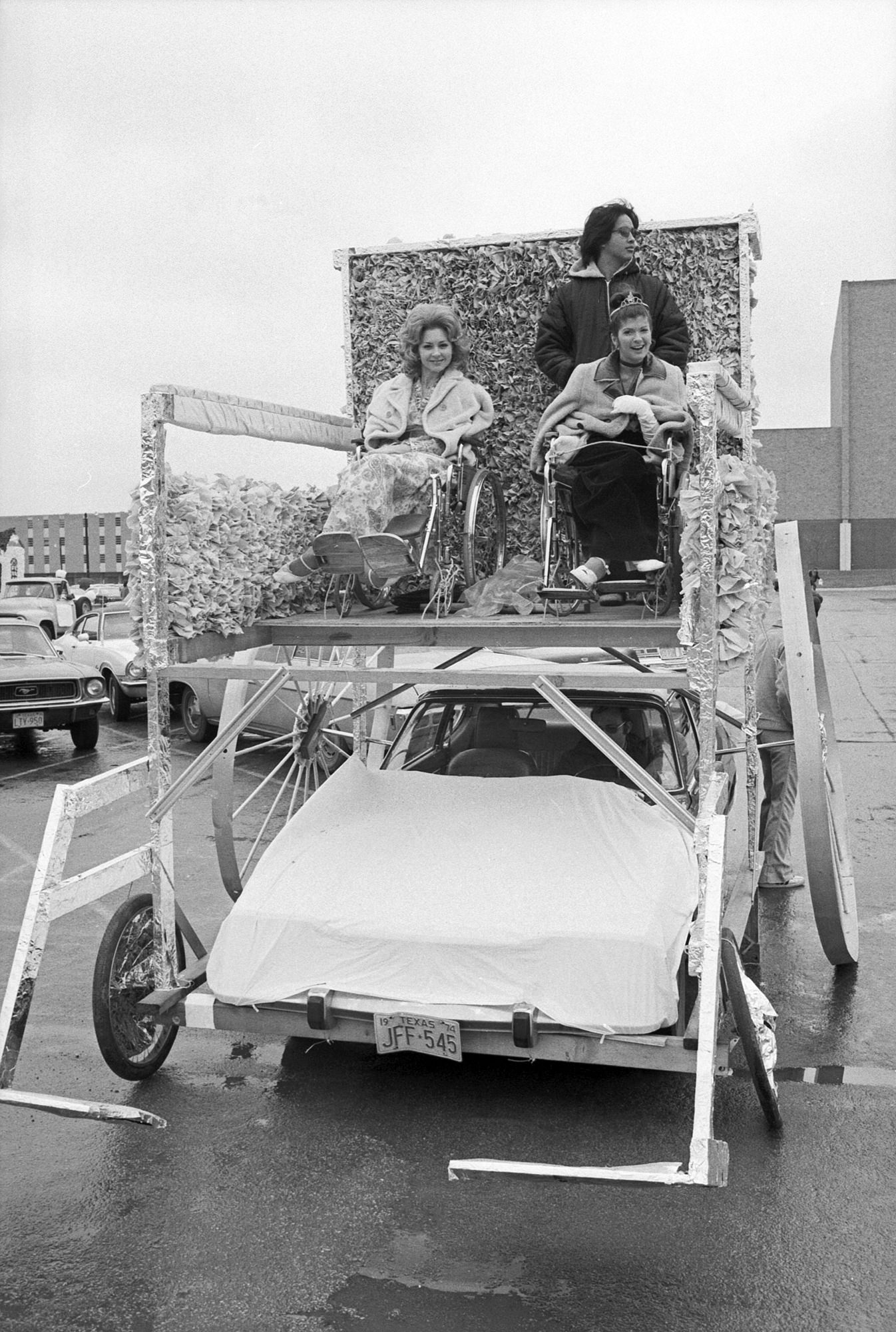
Campus life at UTA was vivid and active. On Earth Day in 1970, students staged an unusual protest: the Alpha Rho Chi architecture fraternity led mock funeral services for an internal combustion engine, with pledges in surgical and gas masks lowering the engine into a shallow grave on campus. A live oak tree was planted on top. The university’s homecoming parades were equally spirited, with floats traveling northbound along Cooper Street and student groups like the Handicapped Student Association making their presence known.
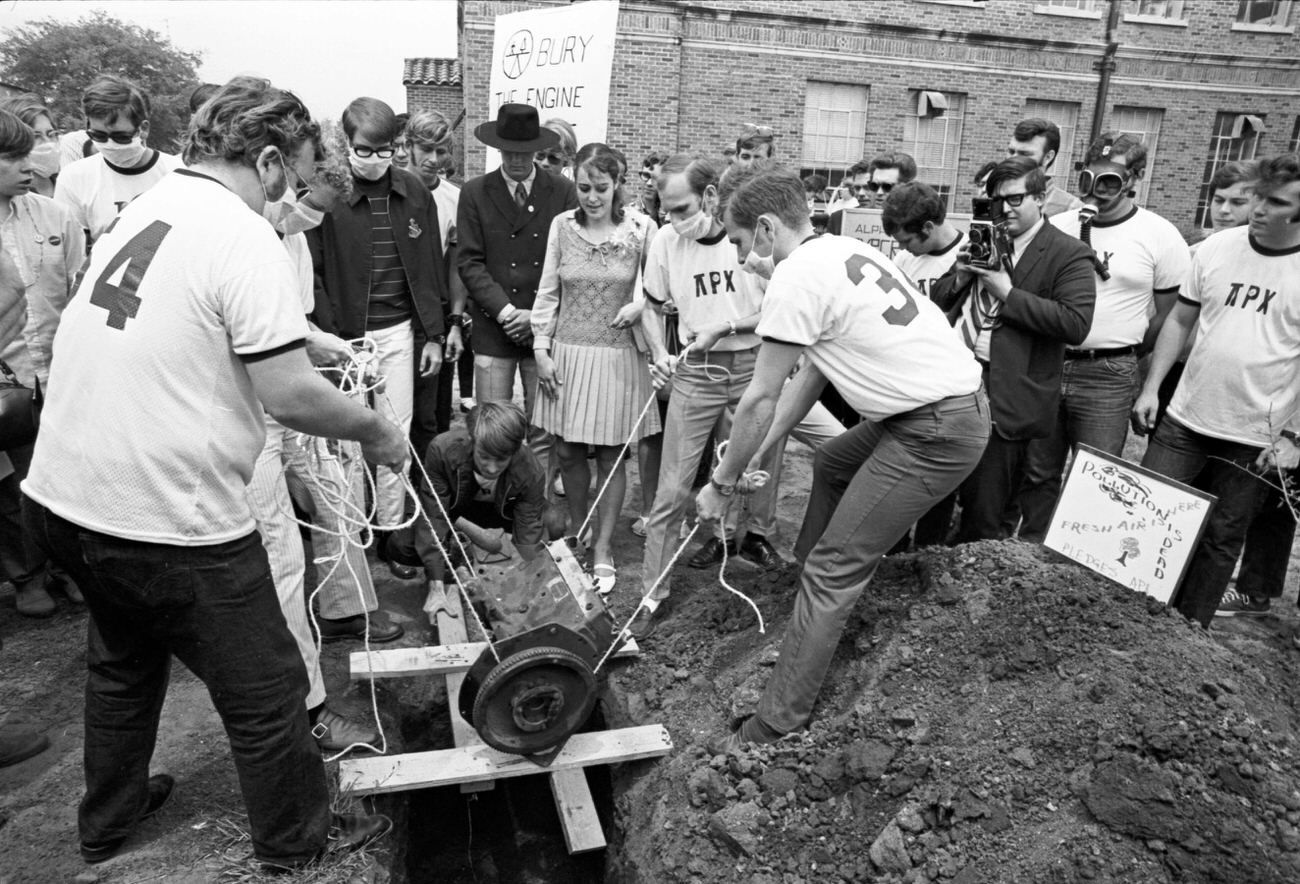
Students at The University of Texas at Arlington gathered around before dropping an internal combustion engine into a shallow grave on campus for Earth Day, 1970
UTA's Handicapped Student Association homecoming parade float. 1974
UTA’s Handicapped Student Association homecoming parade float. 1974
University of Texas at Arlington's homecoming parade, featuring a float with a design for "UTA - A 'Pitcher' of People" to reflect the diversity of people at the school.
University of Texas at Arlington’s homecoming parade, featuring a float with a design for “UTA – A ‘Pitcher’ of People” to reflect the diversity of people at the school.
University of Texas at Arlington's Handicapped Student Association homecoming parade float. The parade was travelling northbound along Cooper Street in Arlington.
University of Texas at Arlington’s Handicapped Student Association homecoming parade float. The parade was travelling northbound along Cooper Street in Arlington.
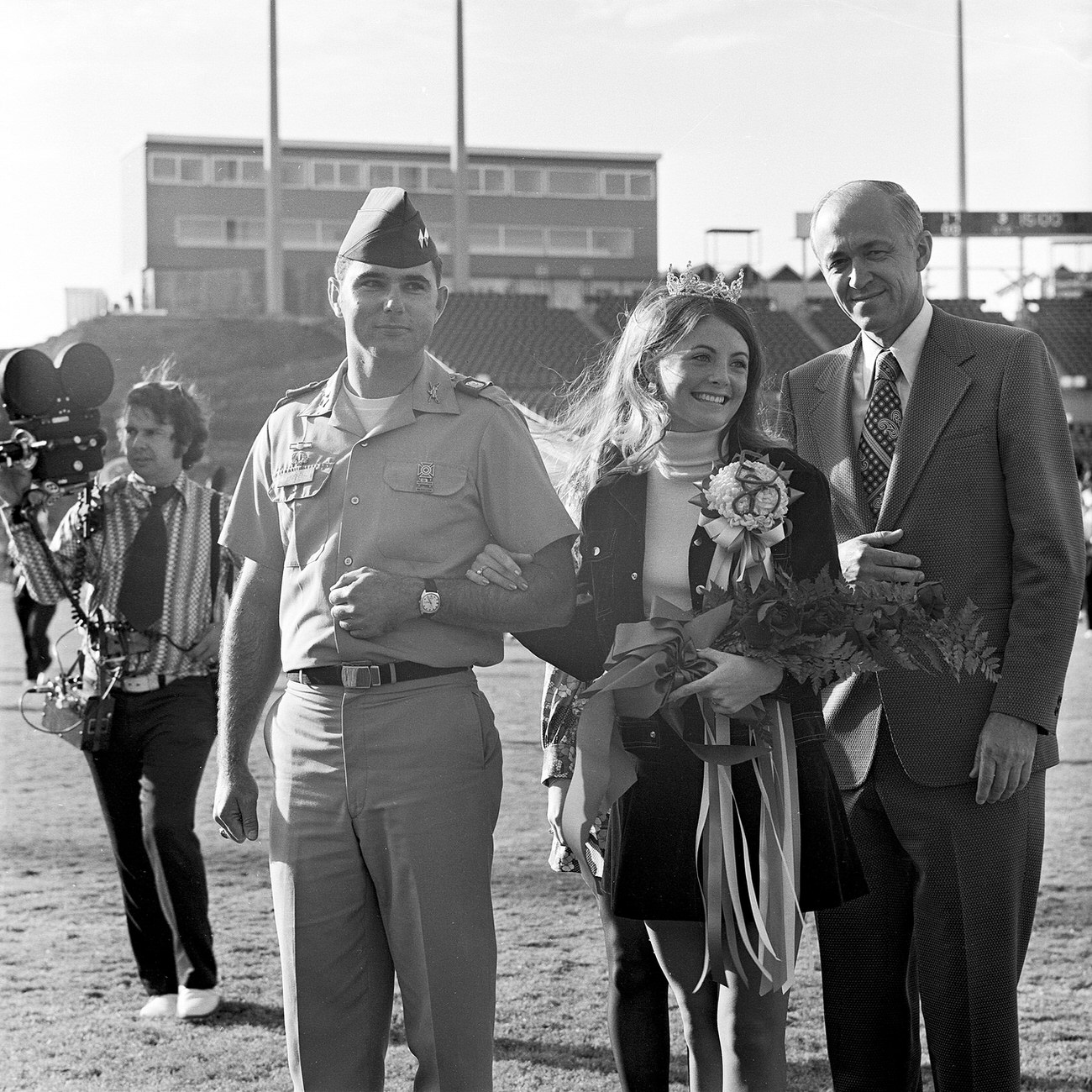
Dr. Wendell Nedderman with Linda Montgomery during homecoming activities.
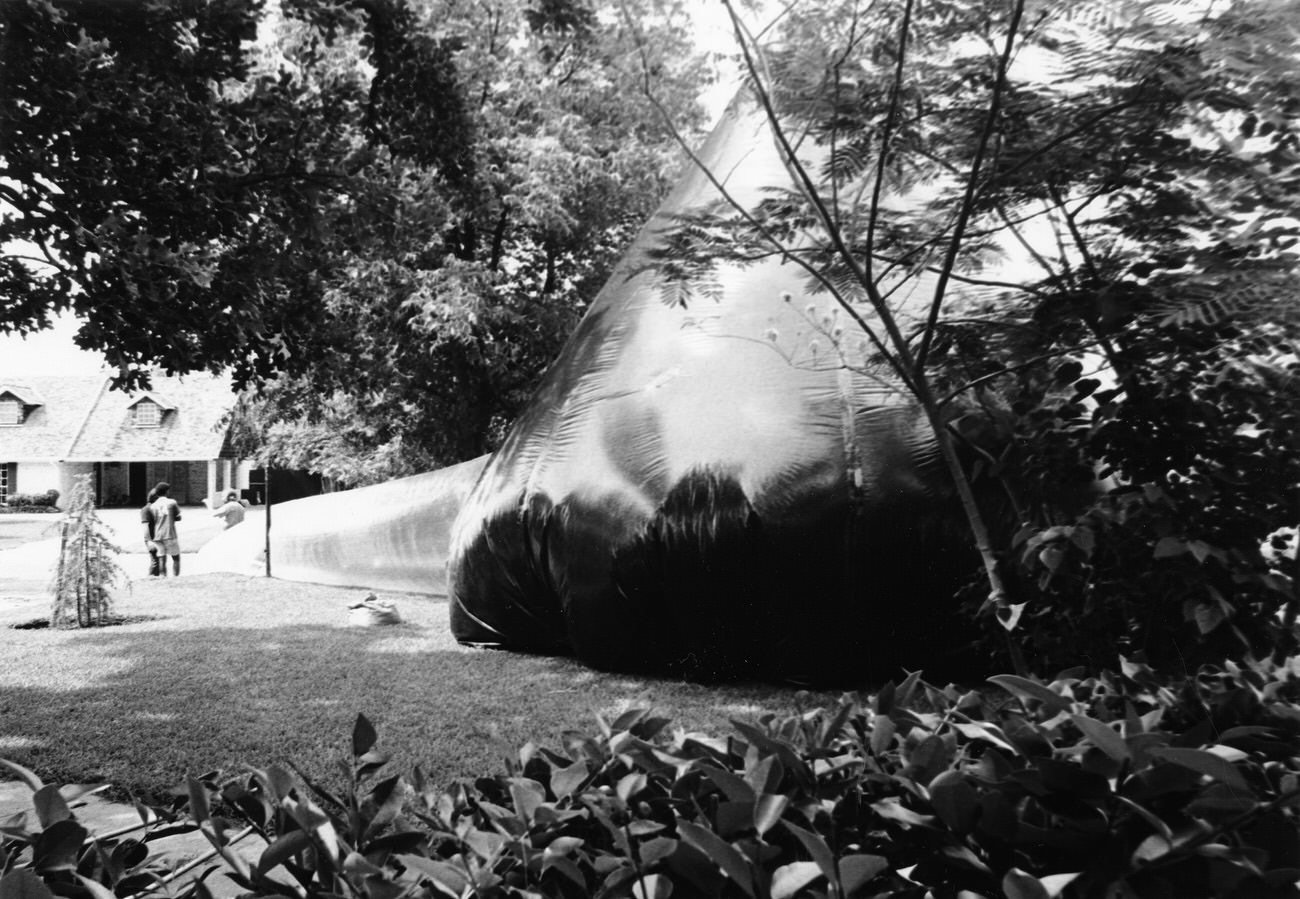
UTA's Architecture department's "Plastic City" project, 1971
UTA’s Architecture department’s “Plastic City” project, 1971
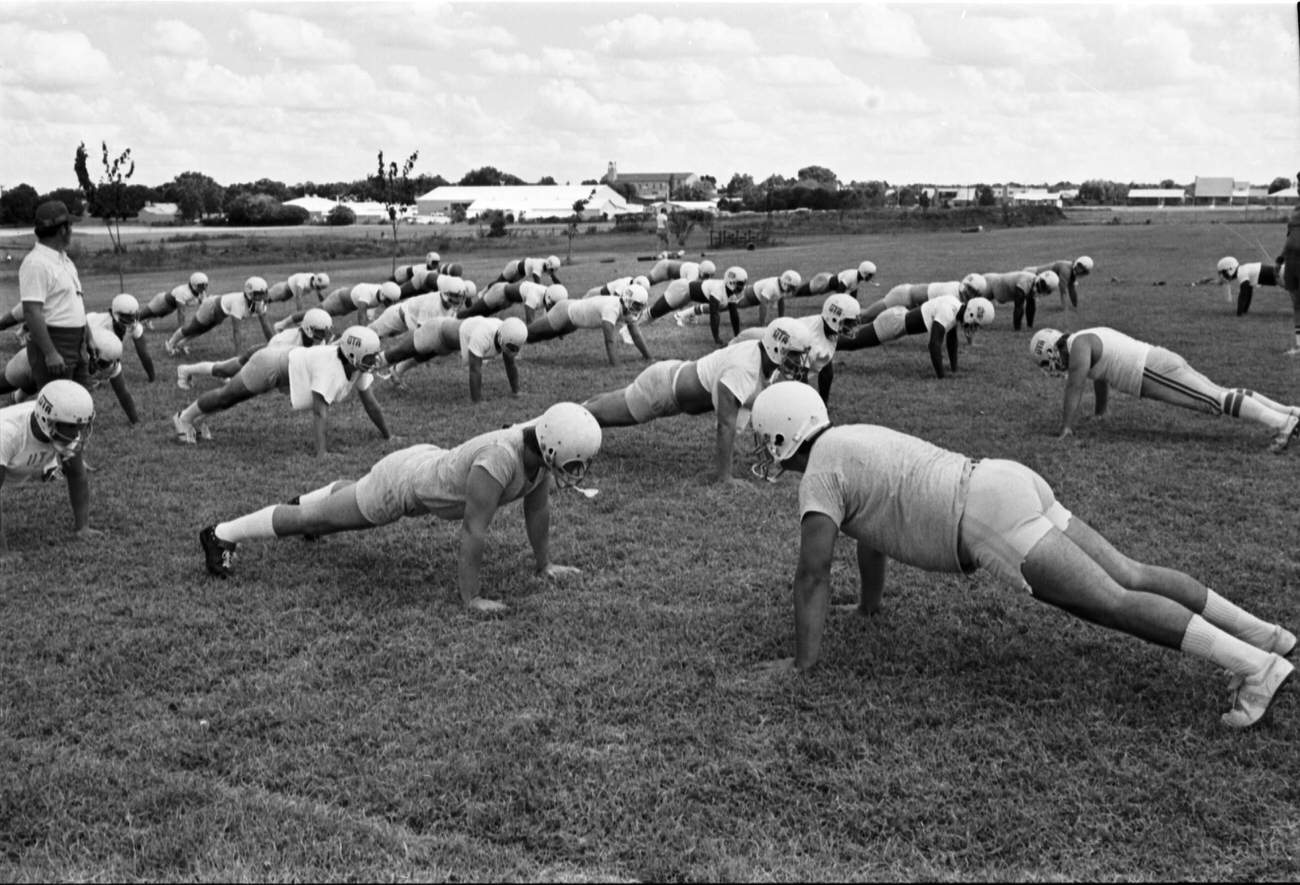
UTA Mavs football drills, 1976

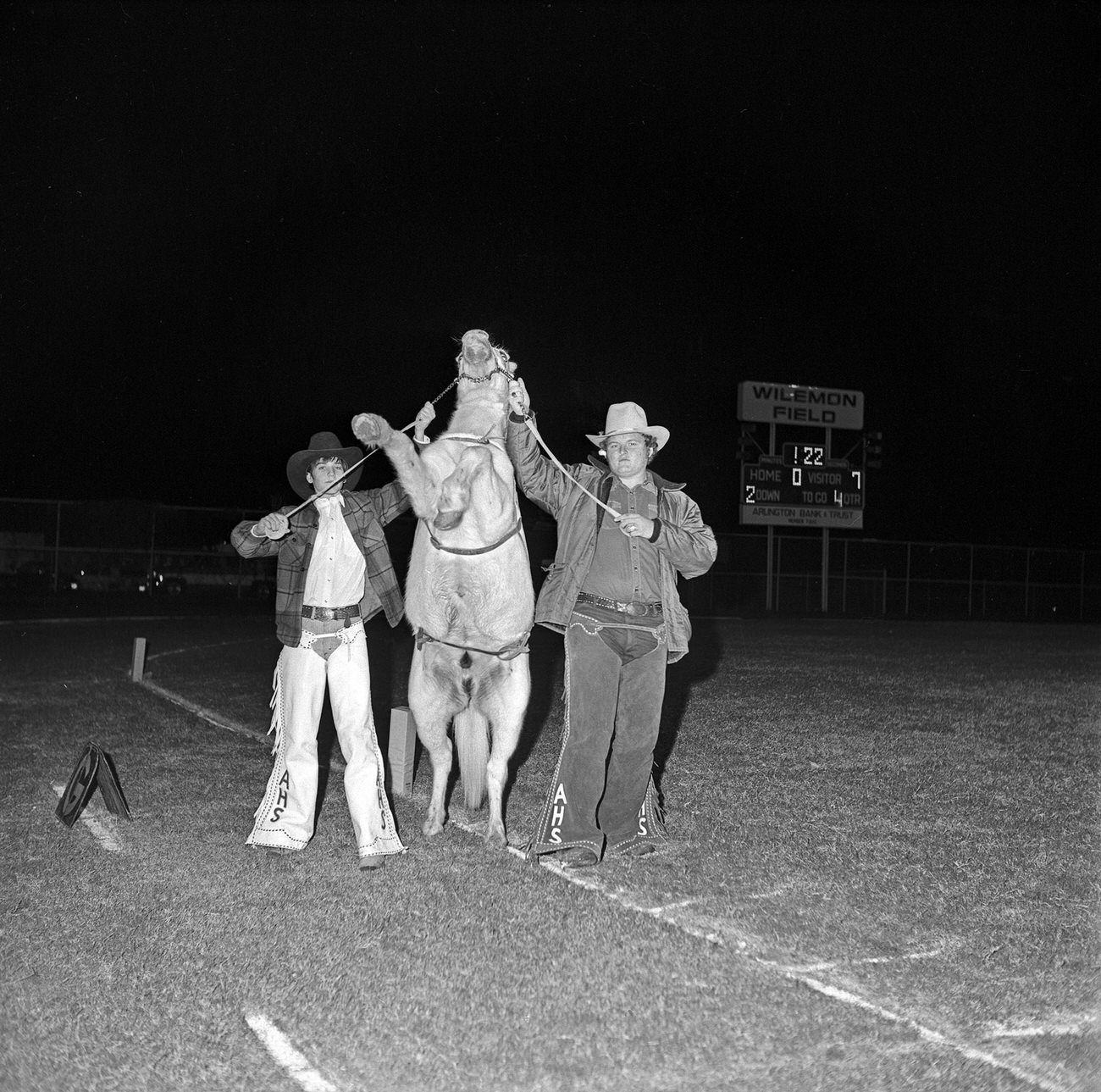
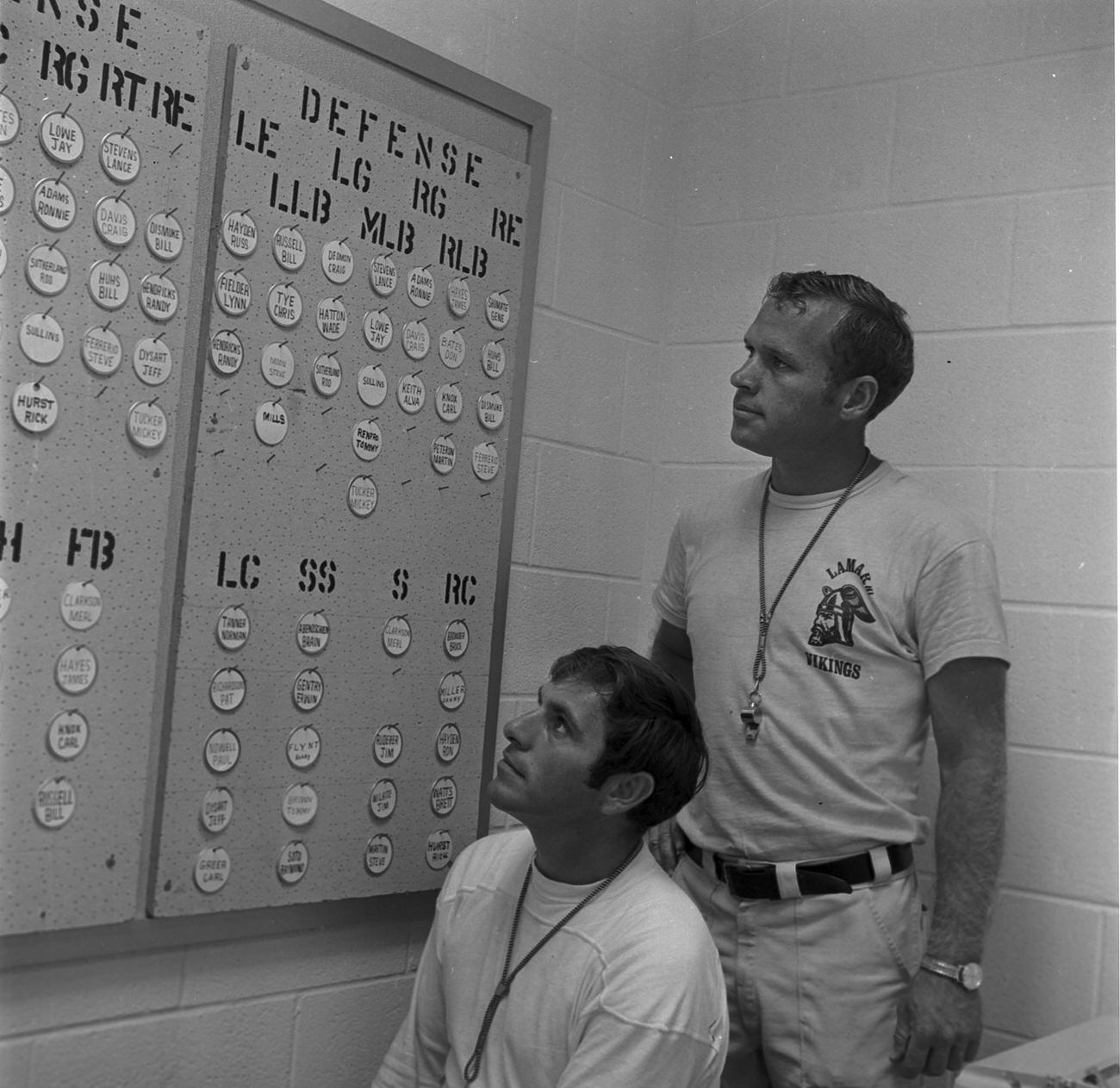
High school sports were a central part of Arlington’s community identity throughout the decade. Lamar High School’s football team drew crowds and local pride, with Coach Peach leading the team in 1970 and homecoming games bringing out the whole neighborhood. Arlington High School had its own mascot — Little Arlie, the Colts mascot — who appeared at school events in 1974.
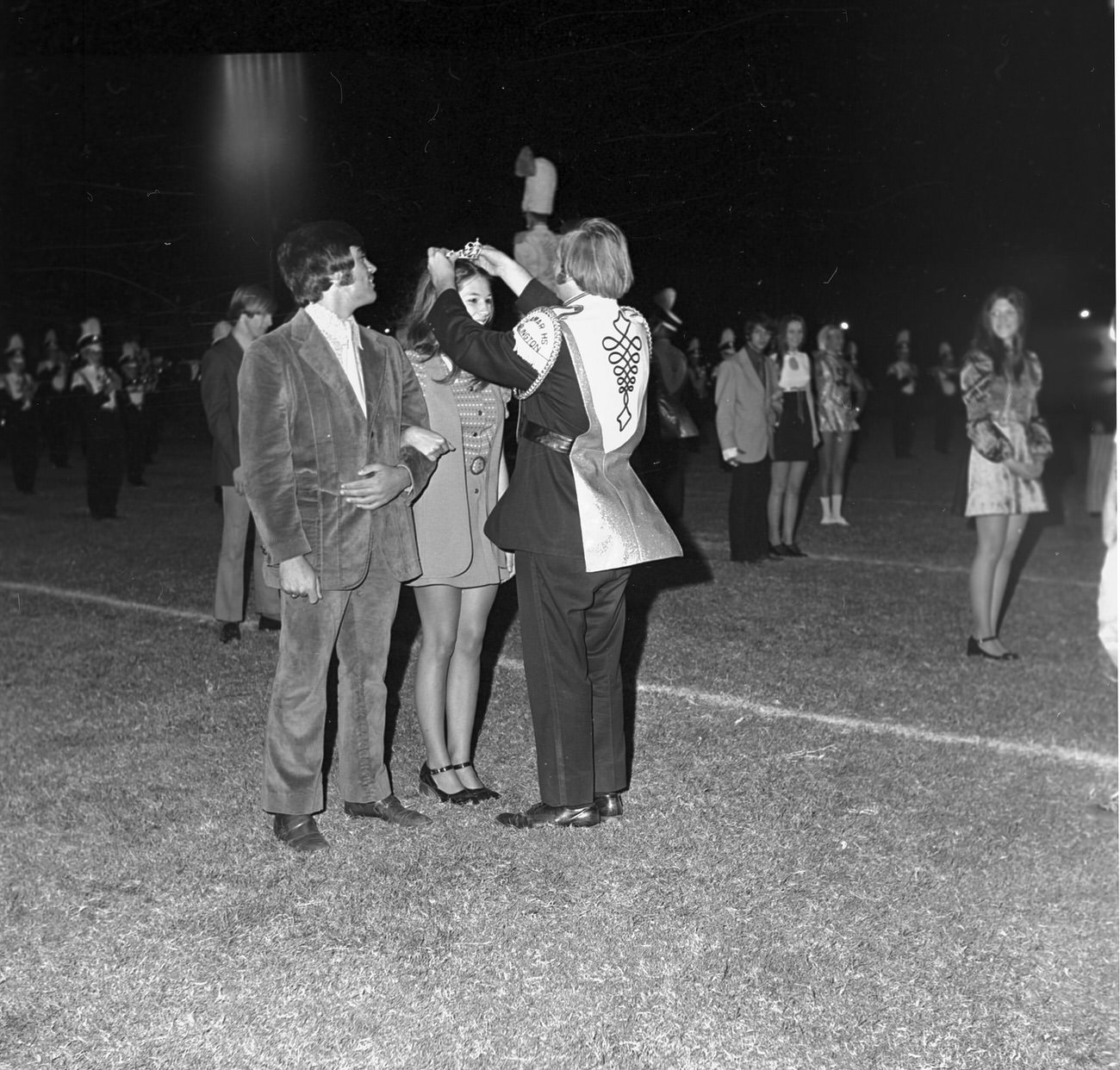
Lamar High School football homecoming game, 1971
Coach Peach of Lamar High School football, 1970
Arlington High School Colts mascot, Little Arlie, 1974
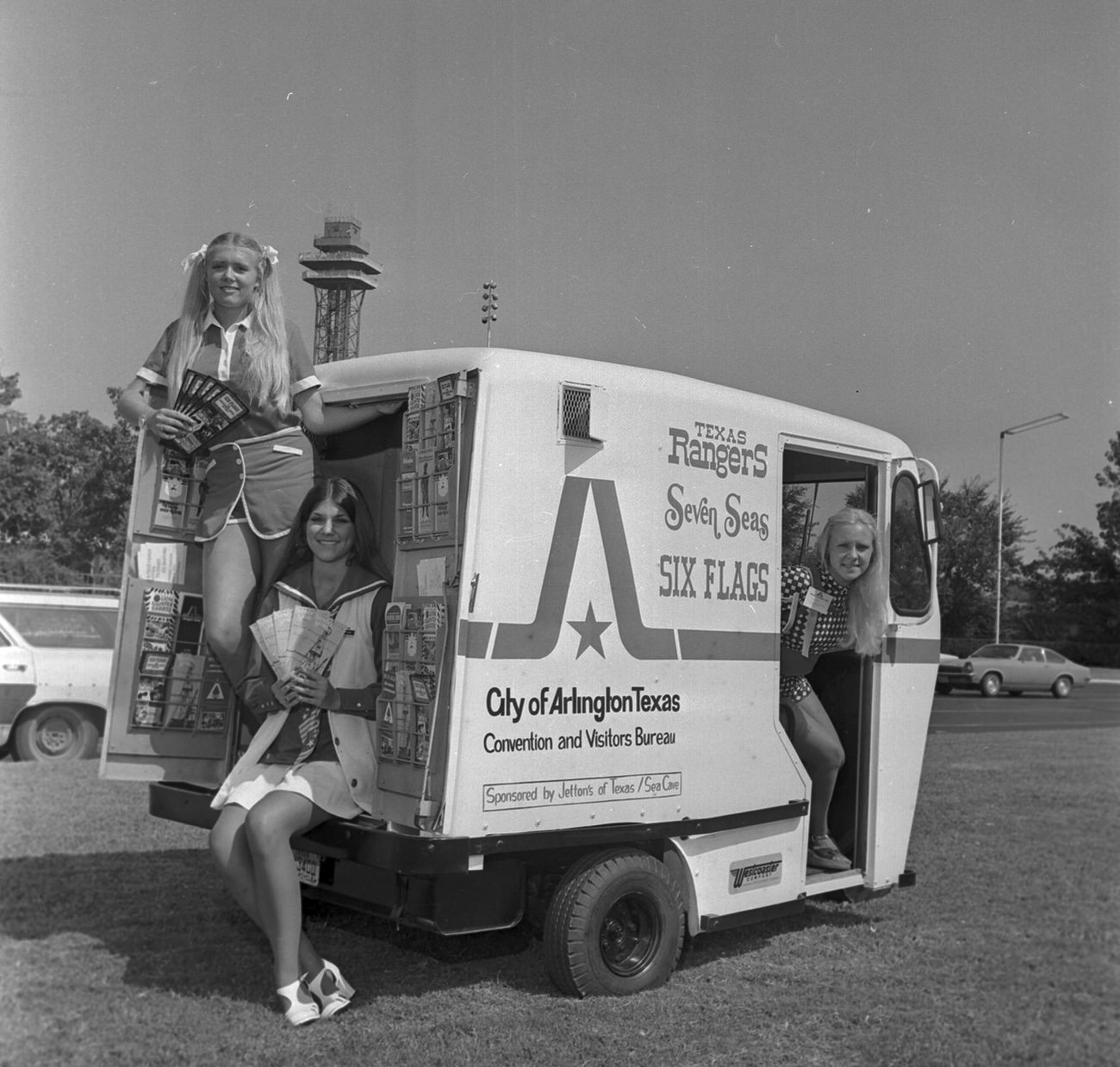
The Lamar High School Vikings students on small truck advertising City of Arlington, 1973

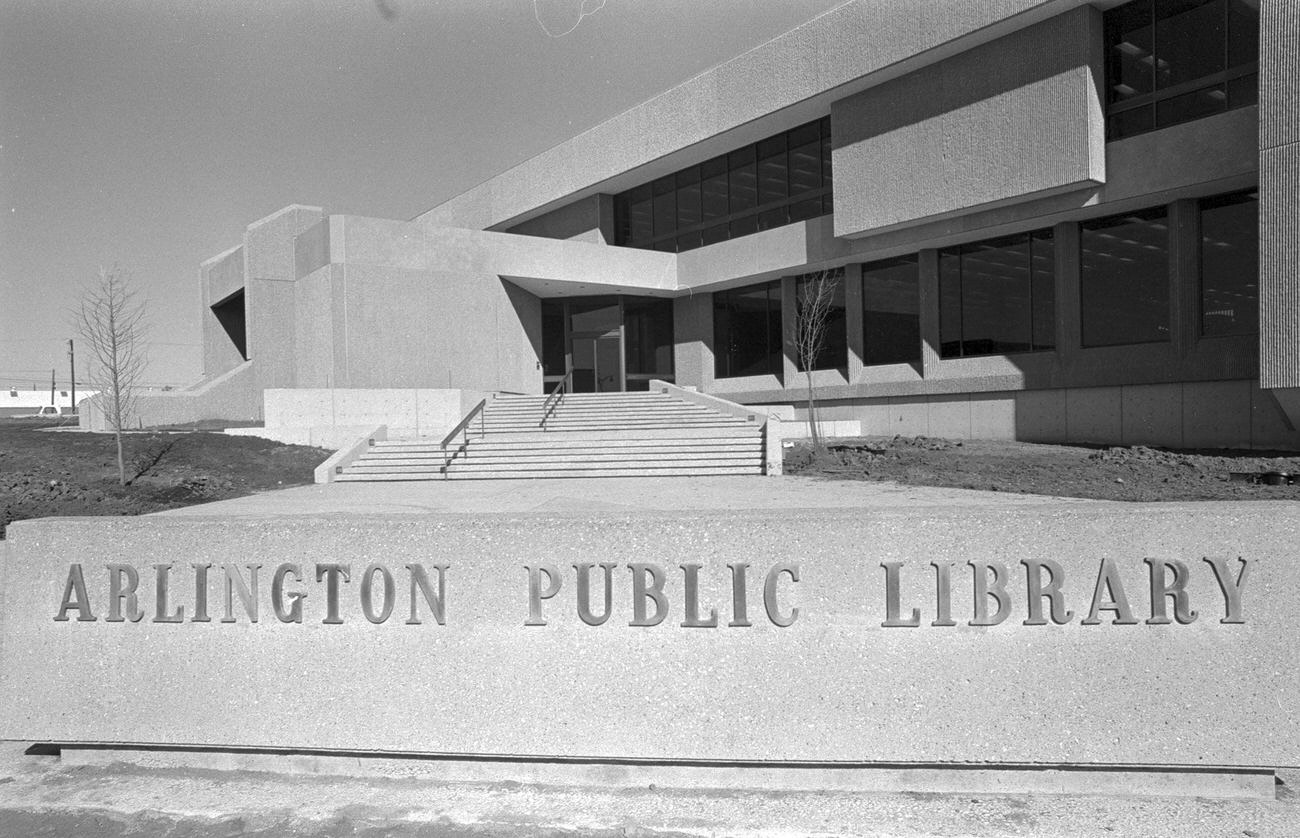
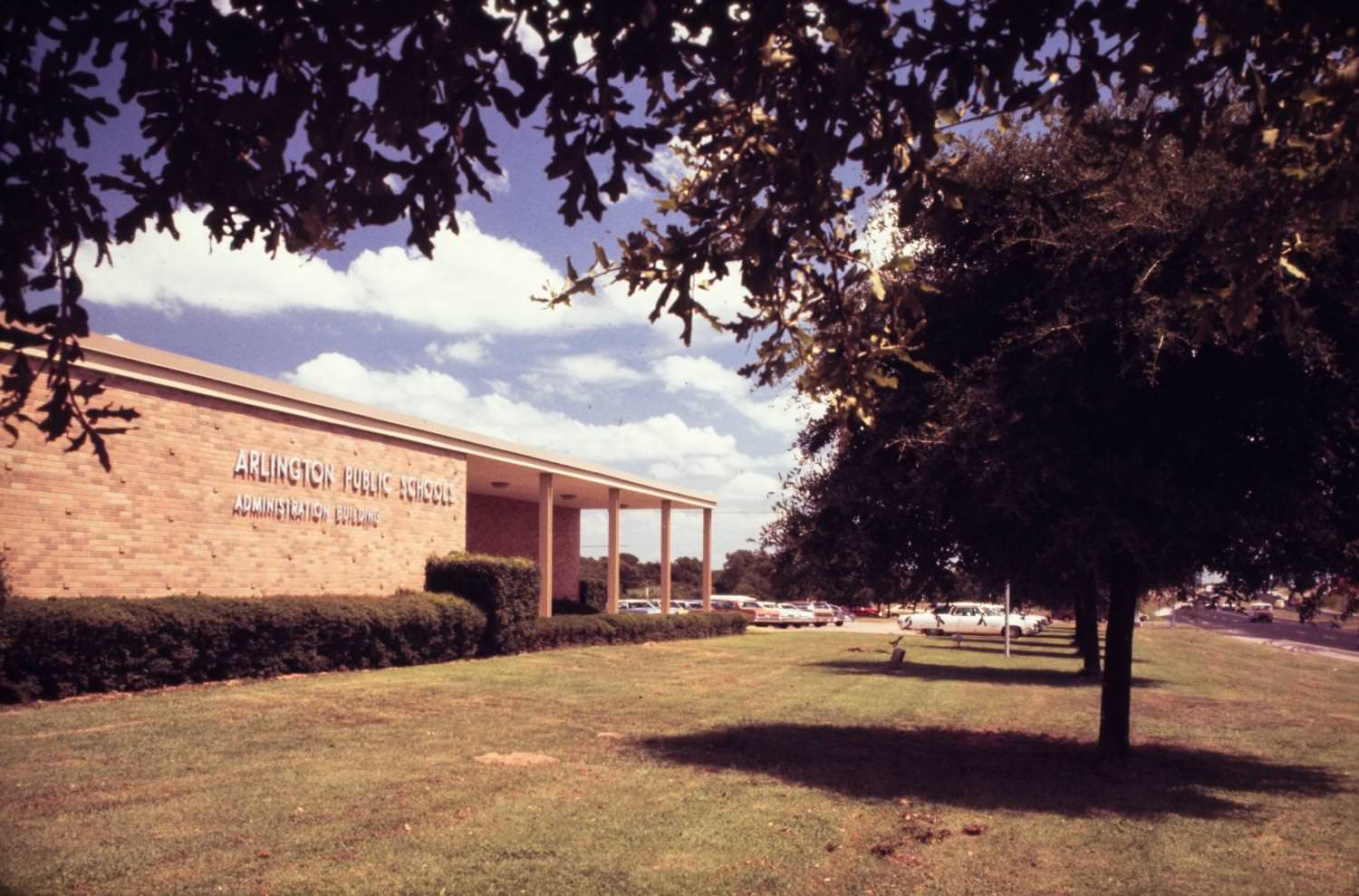
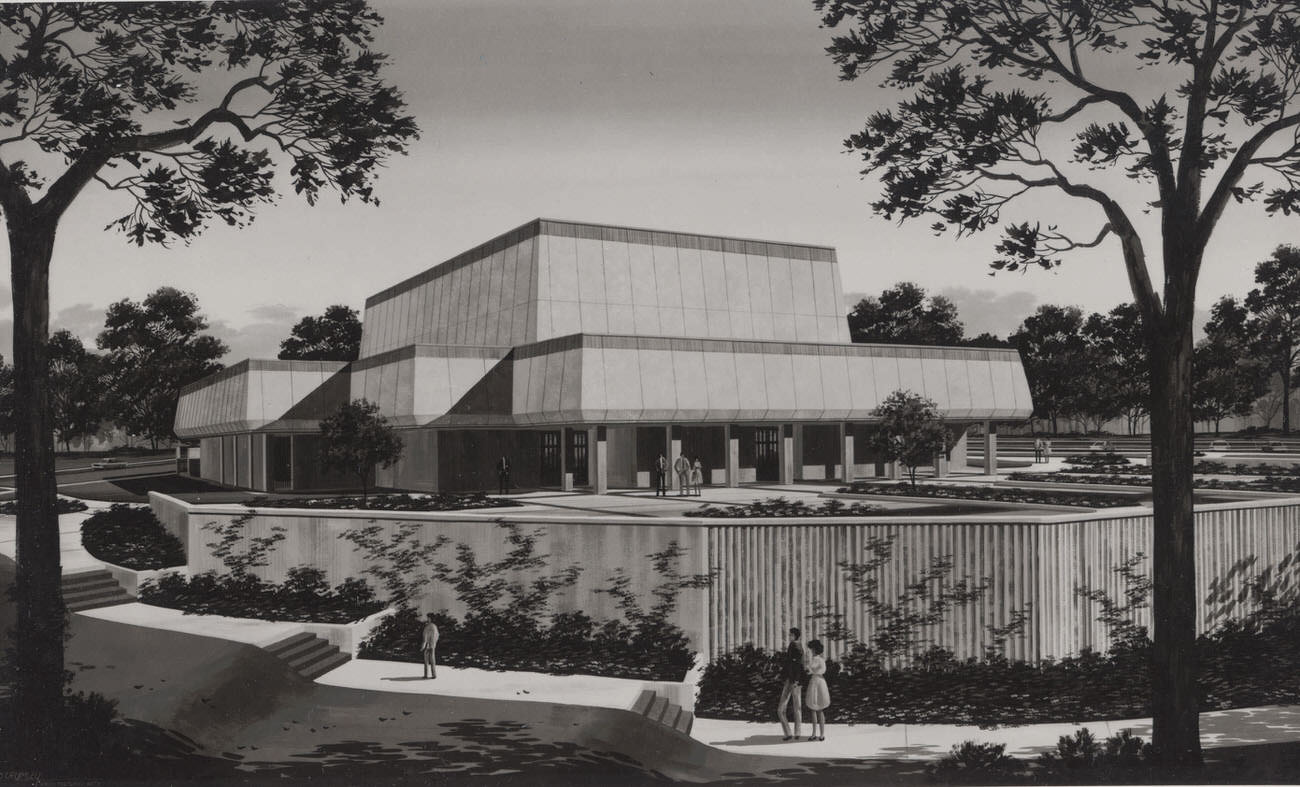
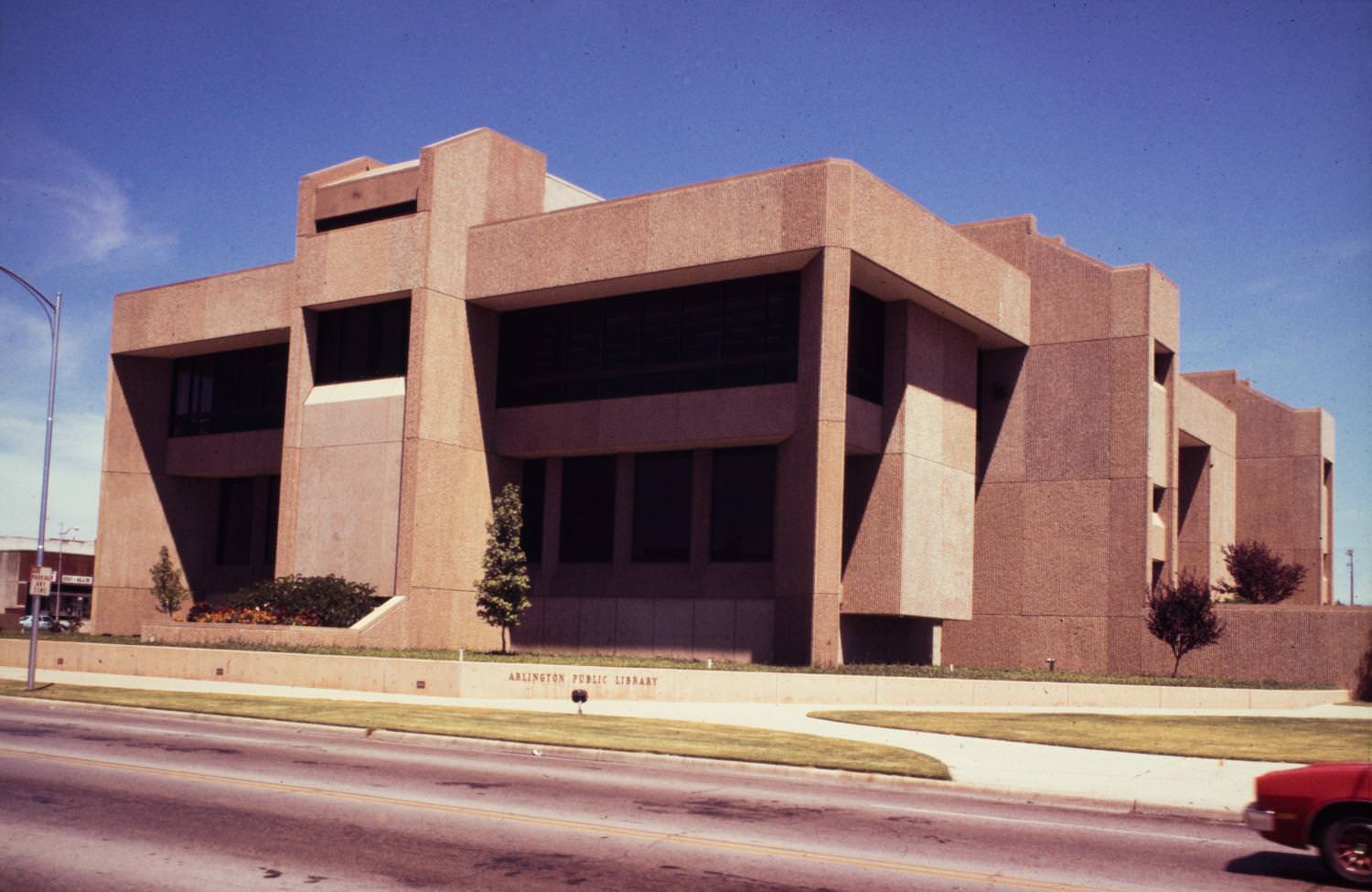
Arlington’s civic institutions were also getting new facilities in the 1970s. The city built a new public library, and Arlington Memorial Hospital continued serving the growing population. The School Administration building housed the operations of a school district that was expanding along with the city itself. Plans for the J.C. Duncan Community Center in Vandergriff Park were drafted in 1972, showing the city’s intent to invest in public spaces.
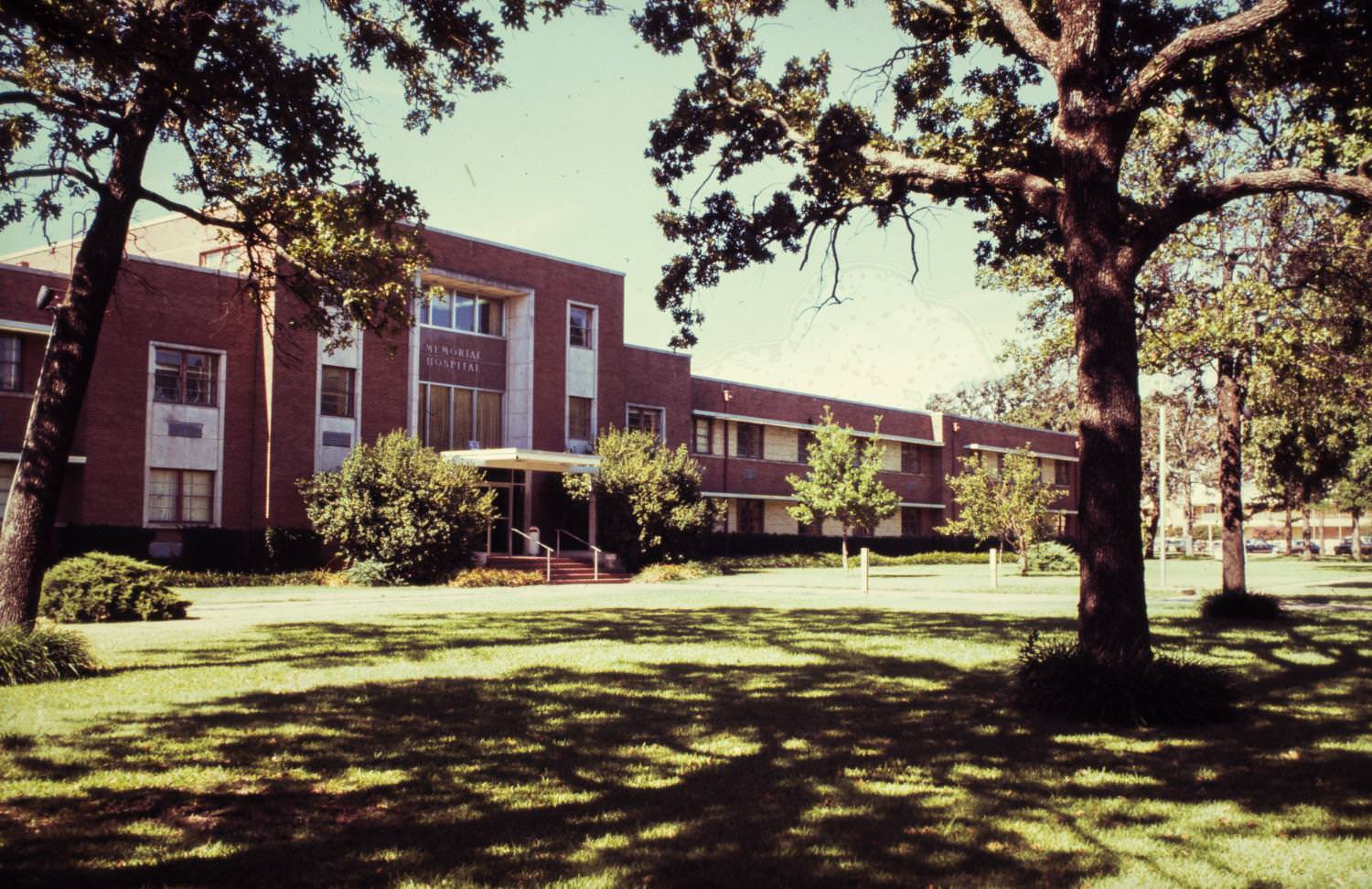
Arlington Memorial Hospital, 1973
Arlington Public Library, 1973
New public library, Arlington, Texas, 1970s
Arlington School Administration building, 1973
The architectural sketch for the J. C. Duncan Community Center in Vendergriff Park from 1972.
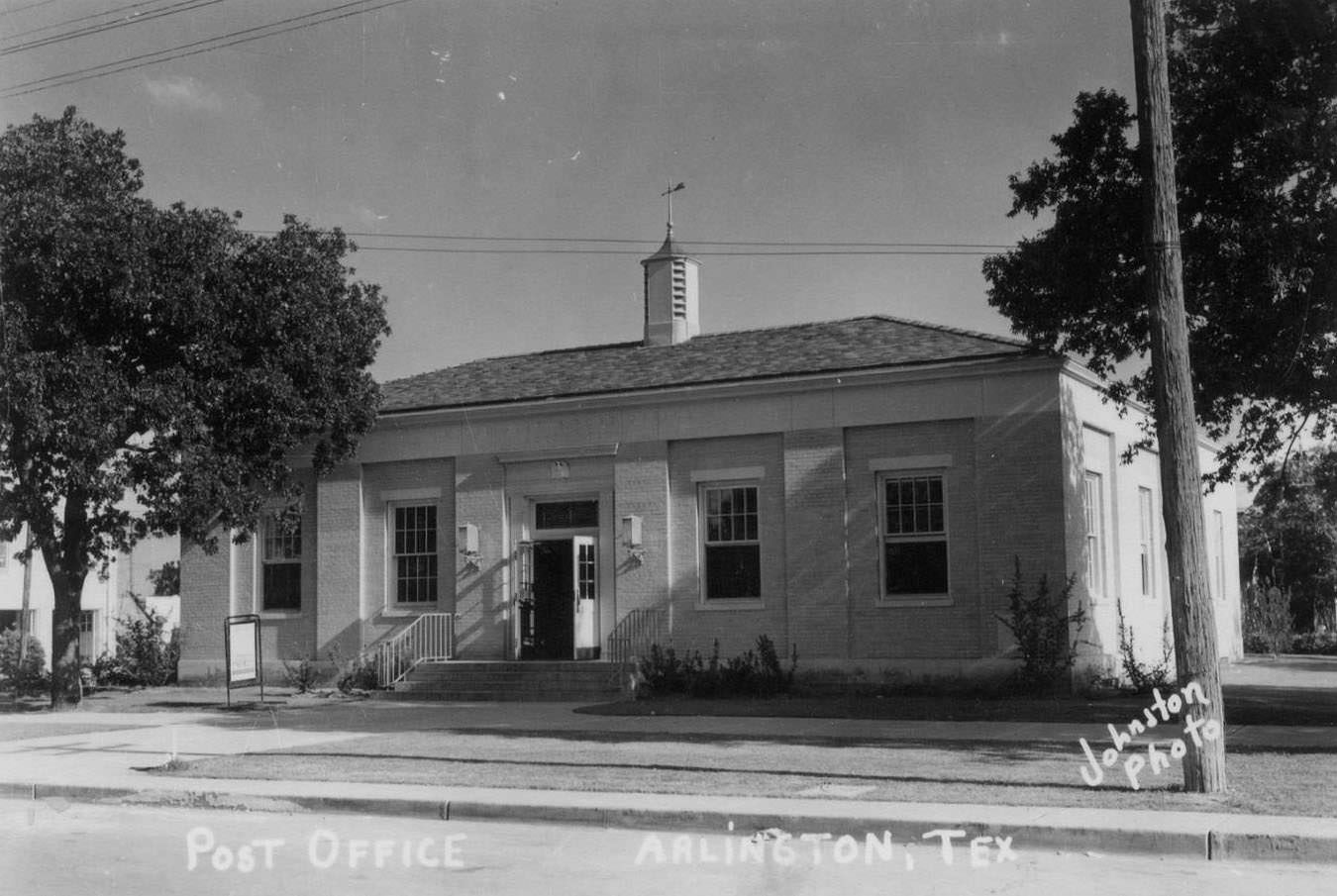
Post Office, Arlington

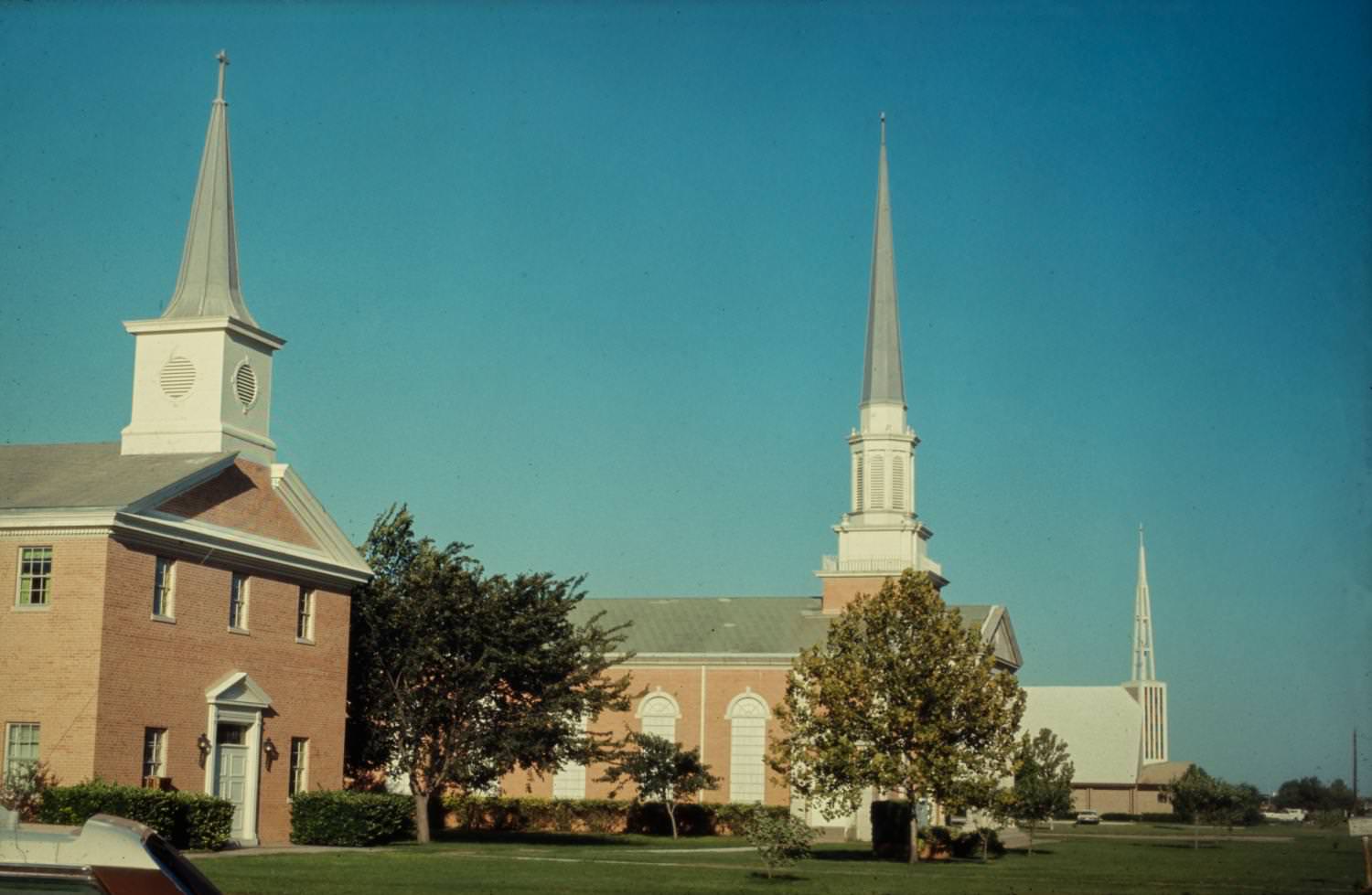
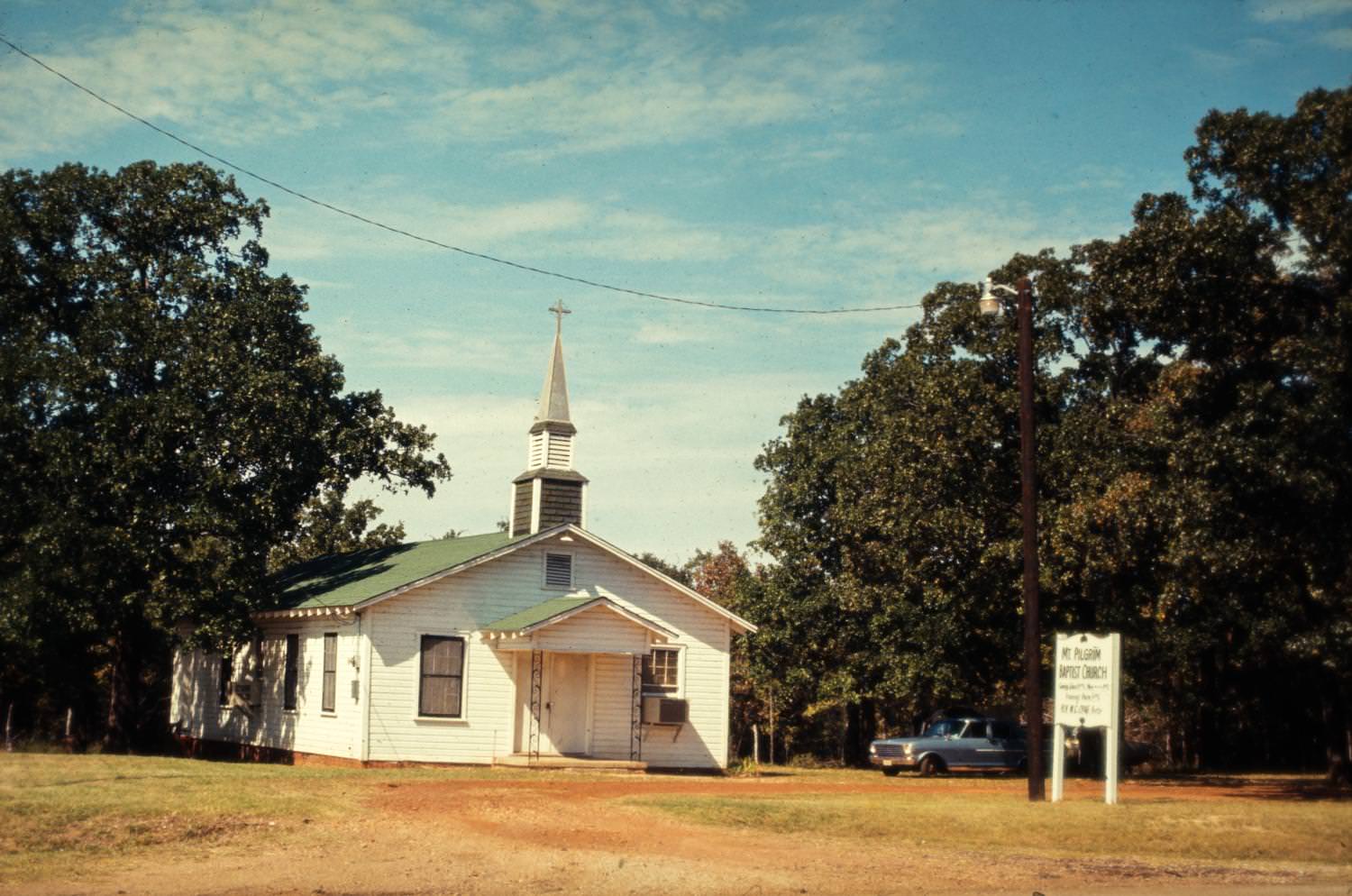
Religion was woven into the fabric of the city. Arlington had a notable number of churches, ranging from First Baptist and First Christian Church to Mt. Pilgrim Baptist Church. The stained-glass windows of Arlington First Christian Church were photographed in 1973, capturing the interior craftsmanship of one of the city’s older congregations.
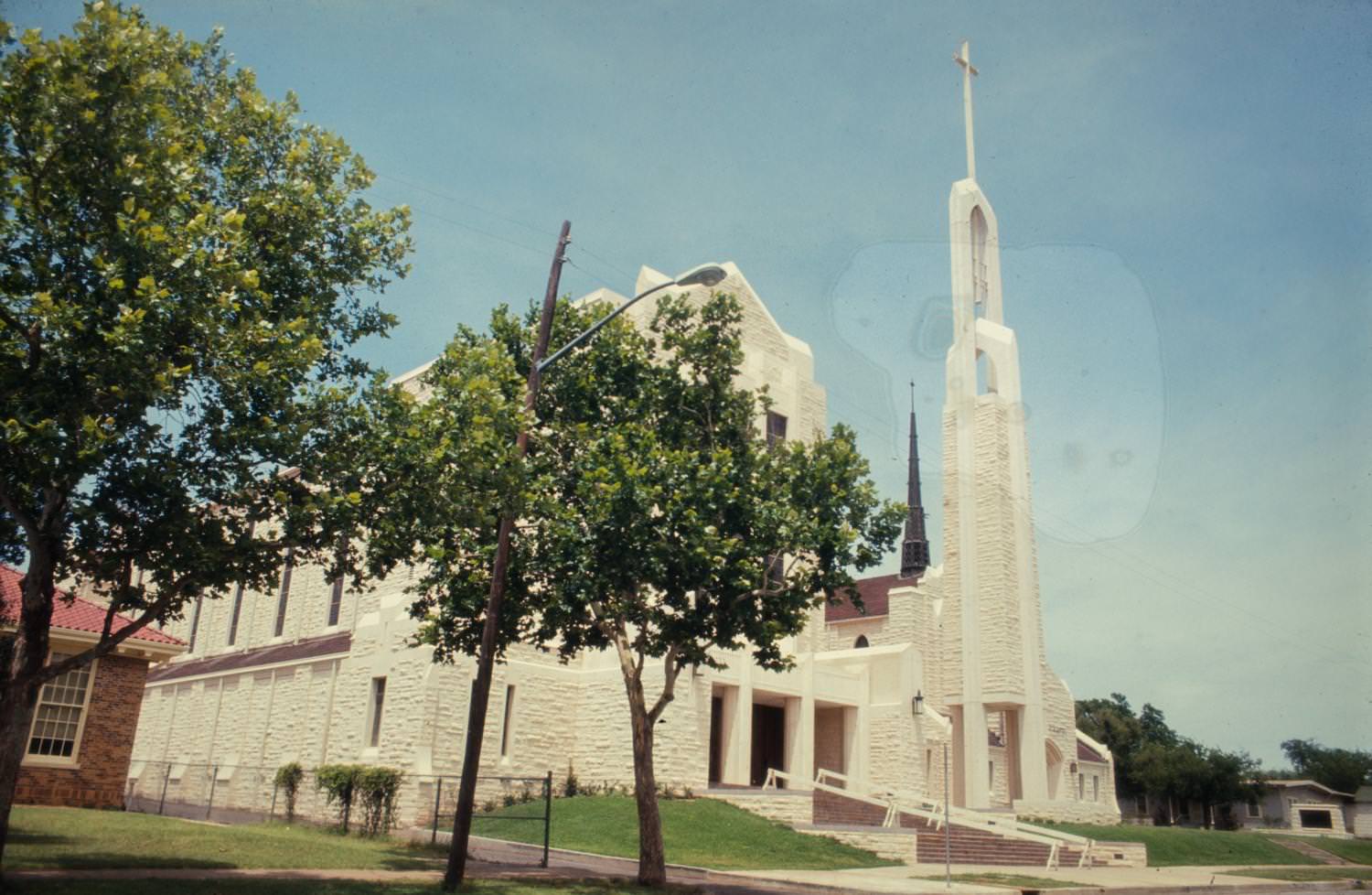
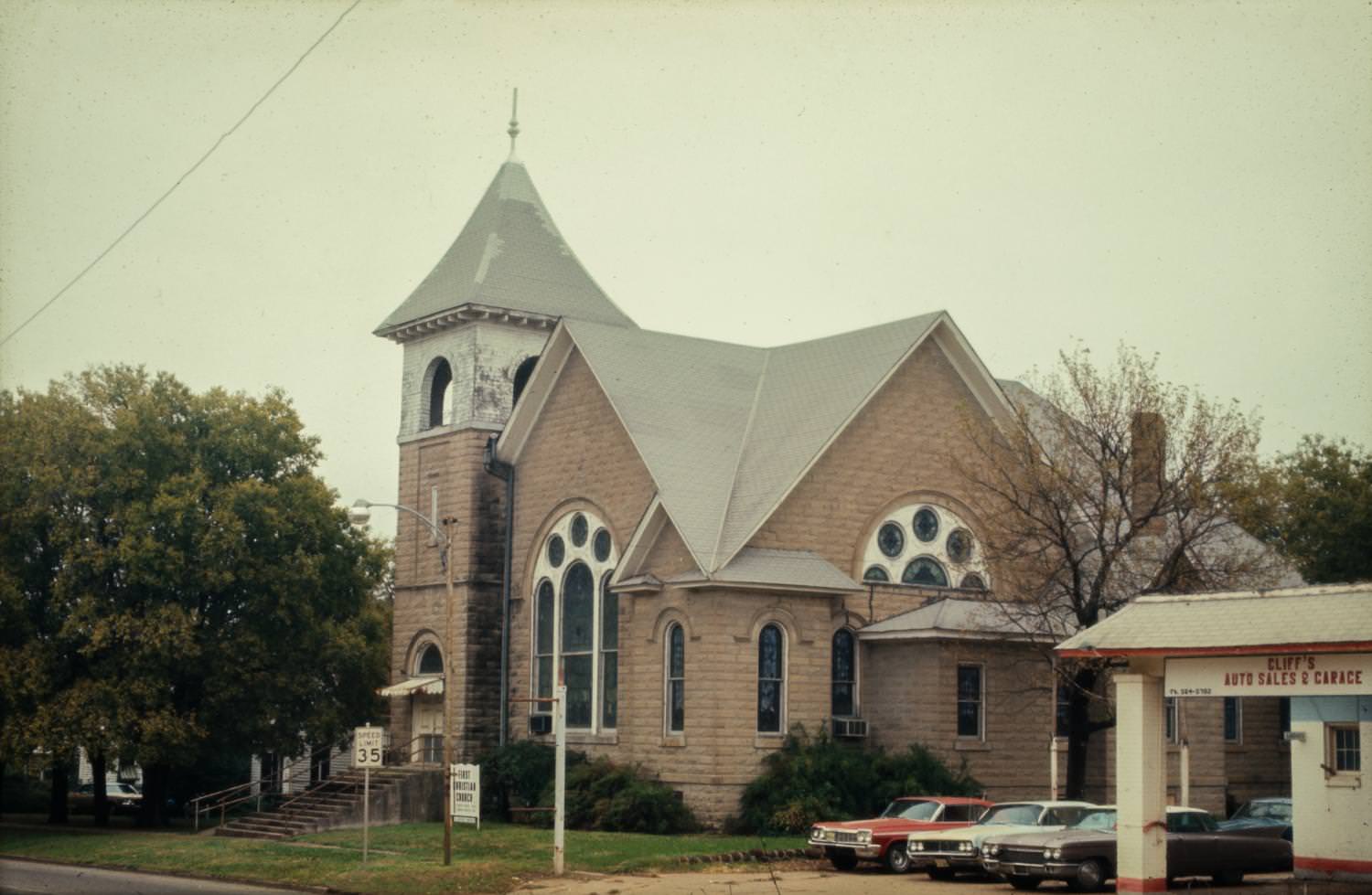
Arlington church, 1973
Windows of Arlington First Christian Church, 1973
Three churches, 1973
Mt. Pilgrim Baptist Church, 1973

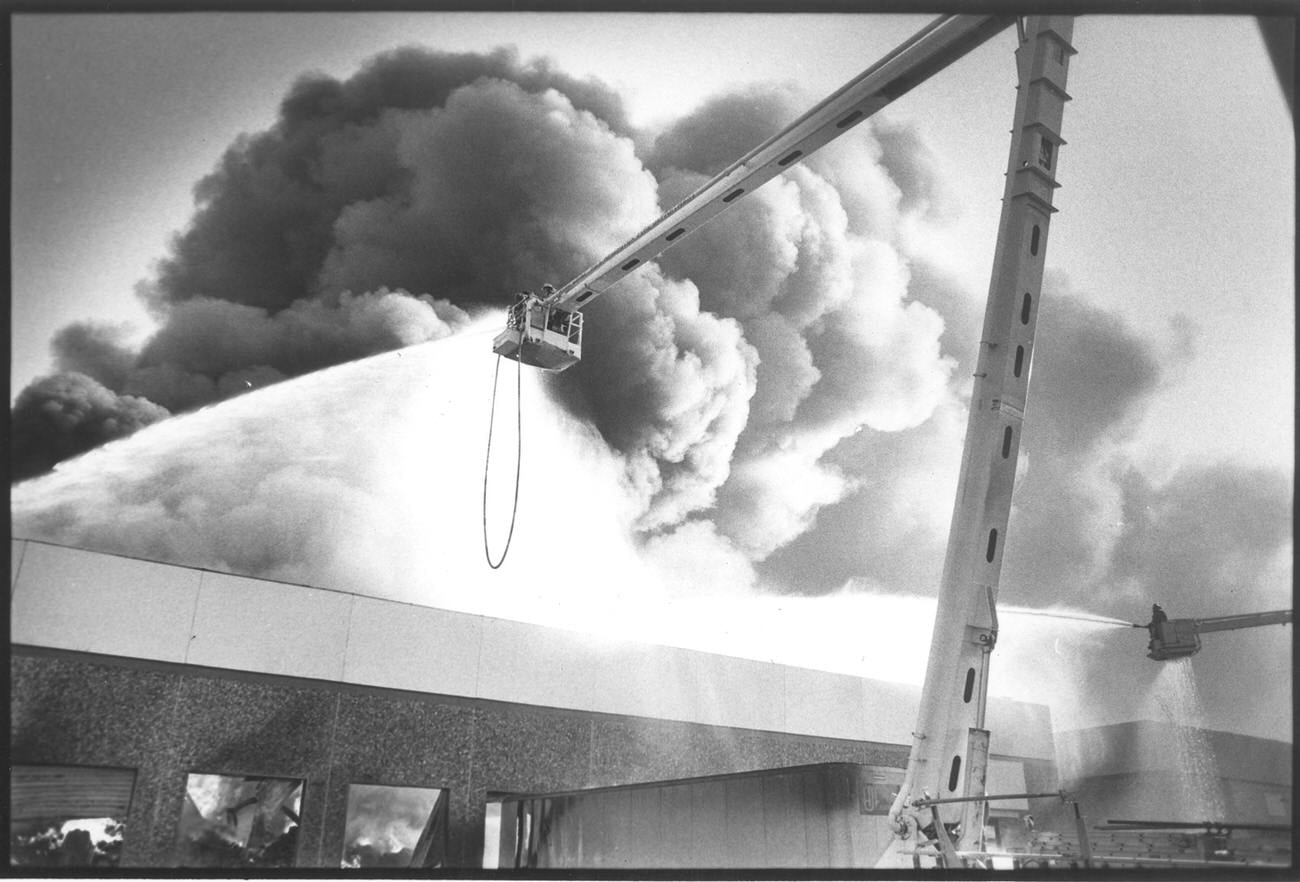
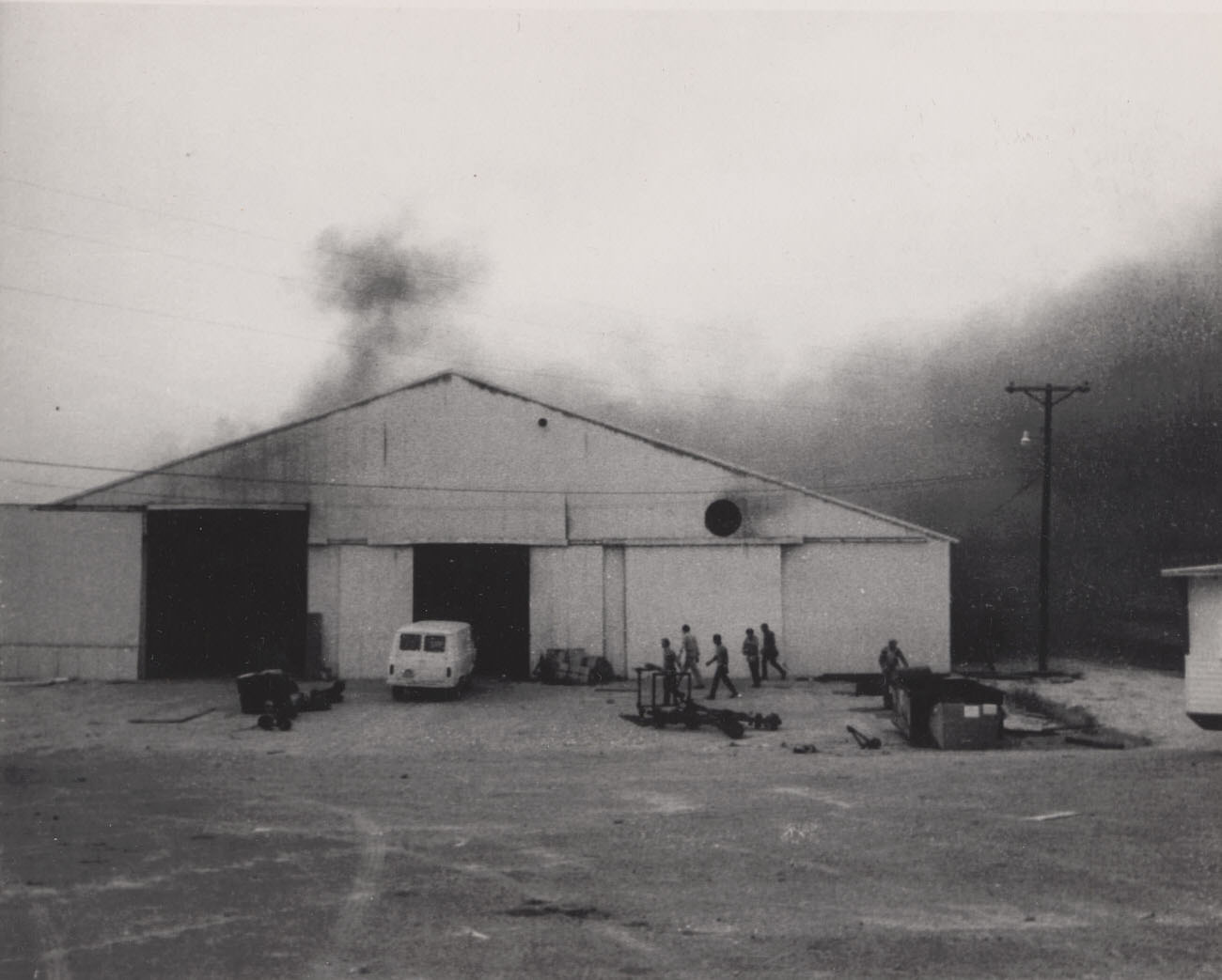
Labor tensions made news in Arlington in 1970, when four members of United Auto Workers Local 276 walked a picket line in front of the General Motors Assembly Plant. The strike put a spotlight on one of the city’s largest employers and the blue-collar workforce that kept it running. Later in the decade, a large fire broke out at a building on South Cooper Street in 1970, and a Crisco fire in the Greater Southwest area made headlines in 1979.
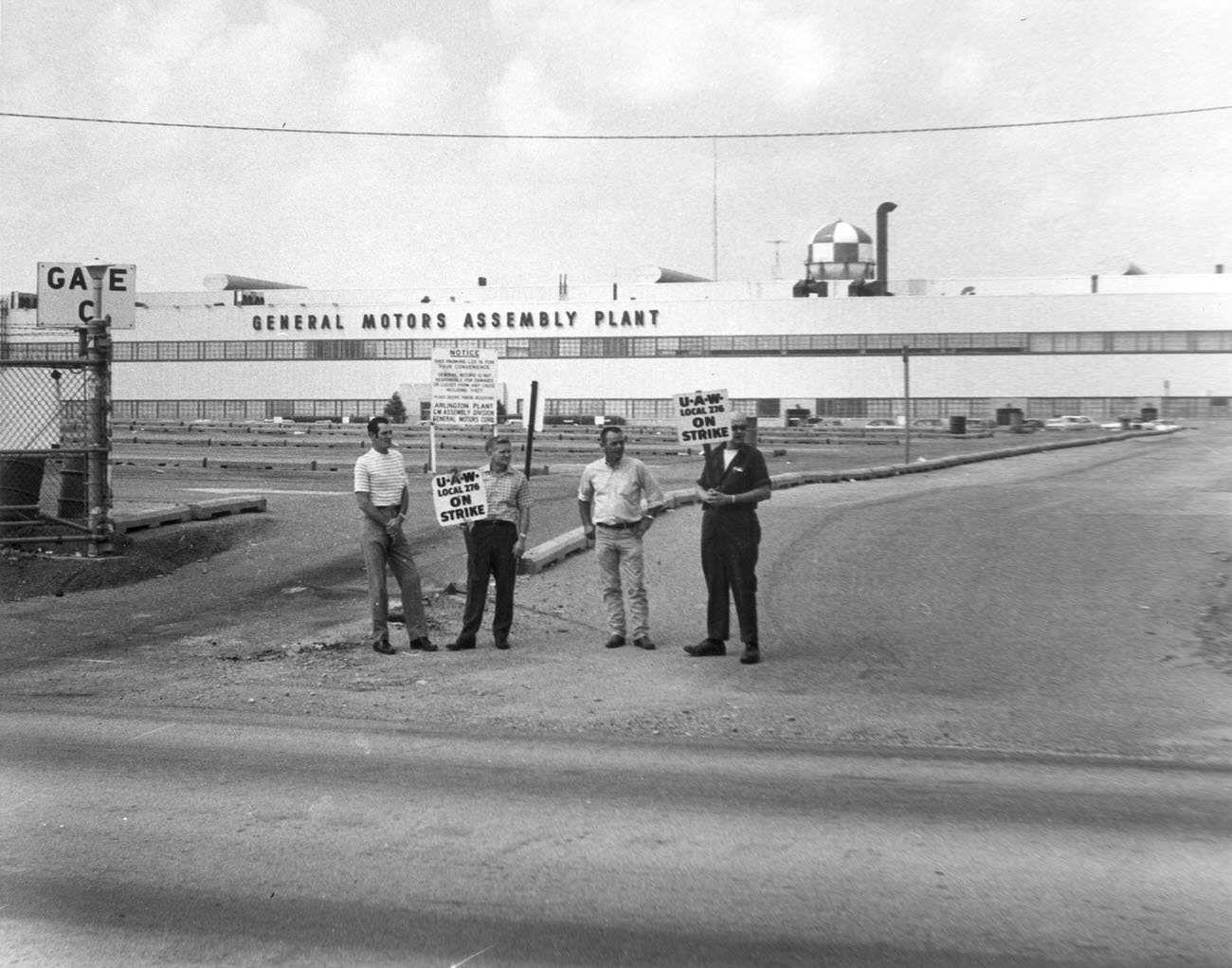
Four men from United Auto Workers (U. A. W.) Local 276 on strike in front of General Motors Assembly Plant, 1970
A building on fire a 4500 S. Cooper Street in Arlington, Texas, 1970
Crisco fire at Greater Southwest area, Arlington, Texas, 1979

Mayor Tom Vandergriff remained a constant presence throughout the decade. Beyond his role in bringing the Rangers to Arlington, he appeared at the opening of Seven Seas and was photographed at a 1976 Texas Turnpike Authority and Texas Highway Commission meeting — a sign of how closely Arlington’s growth was tied to road infrastructure and regional planning.
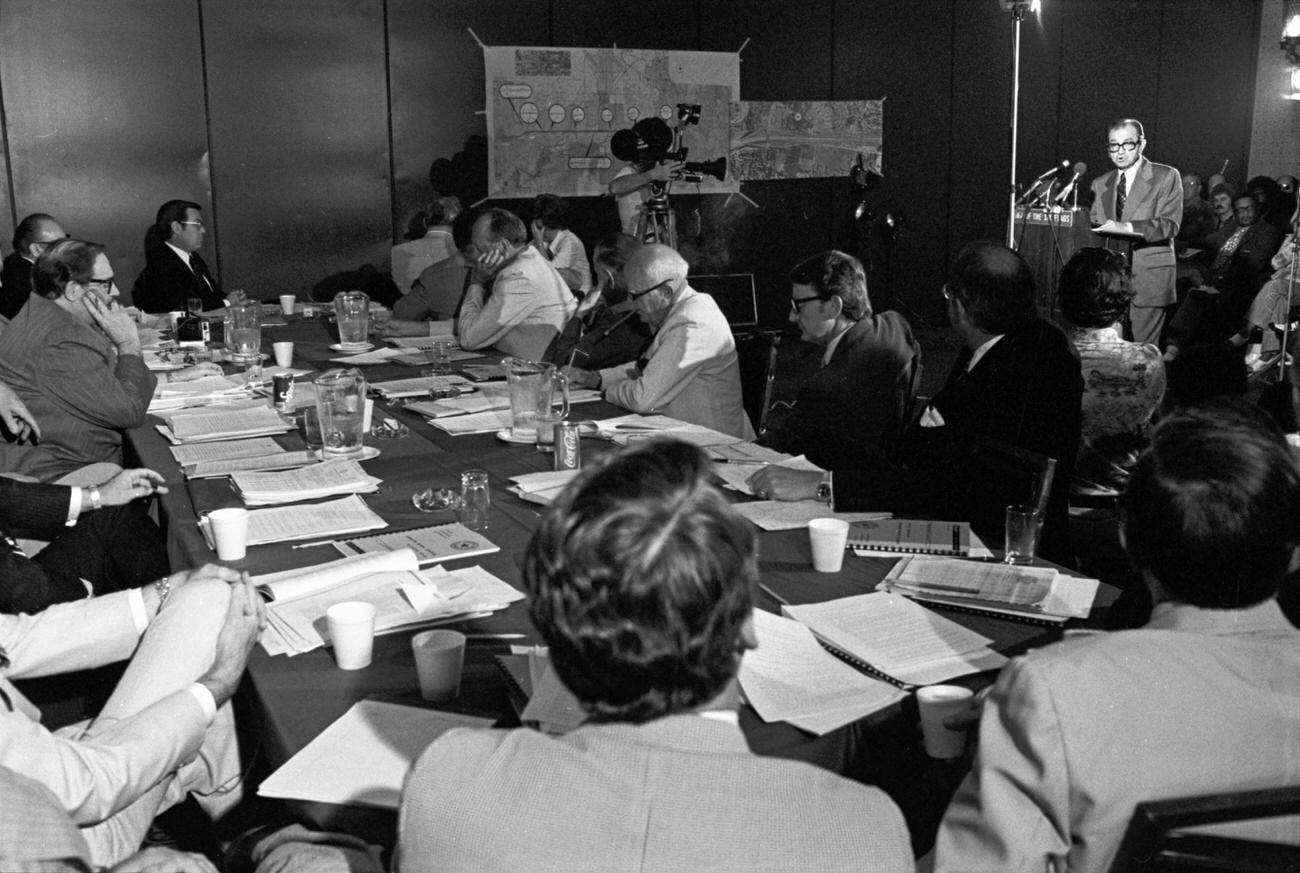
Tom Vandergriff speaking at Texas Turnpike Authority and Texas Highway Commission meeting, 1976
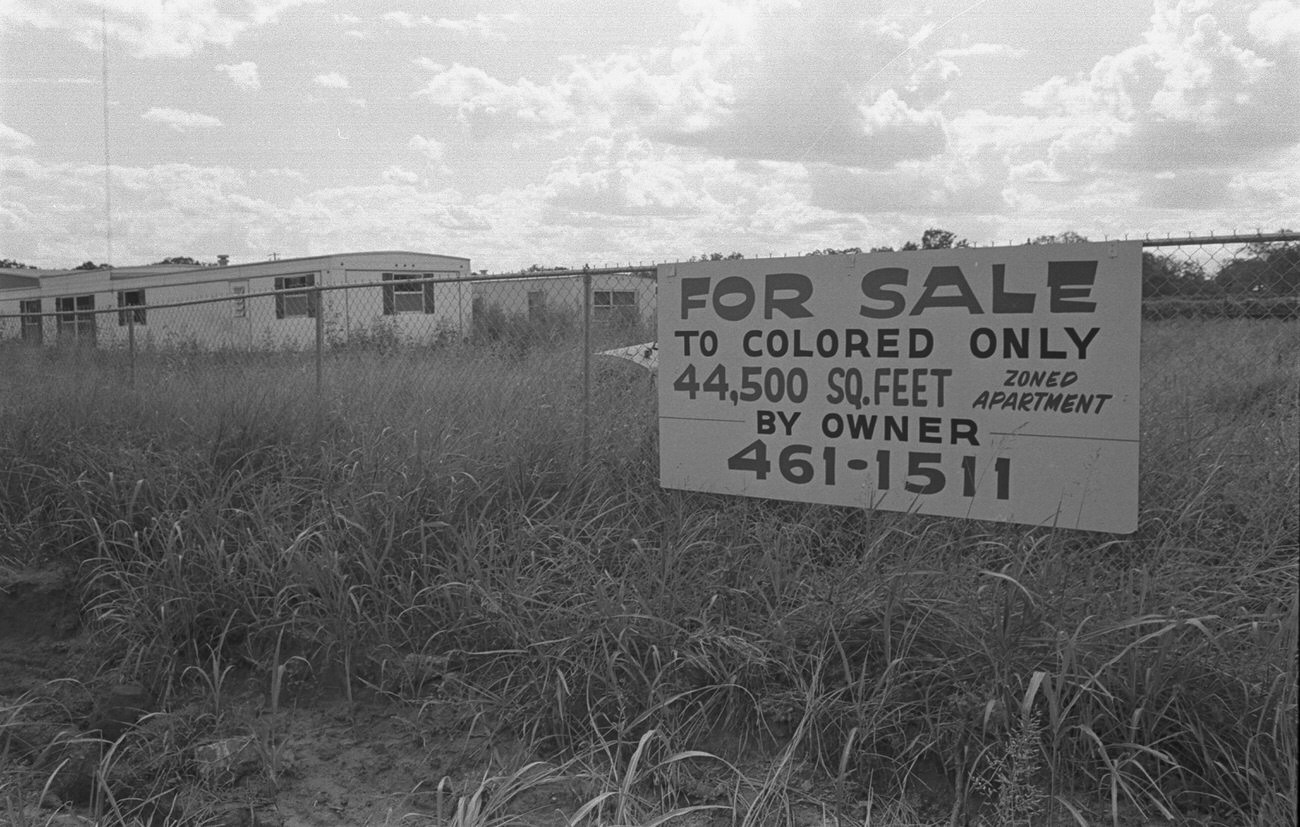
A sign in an Arlington field, 1975
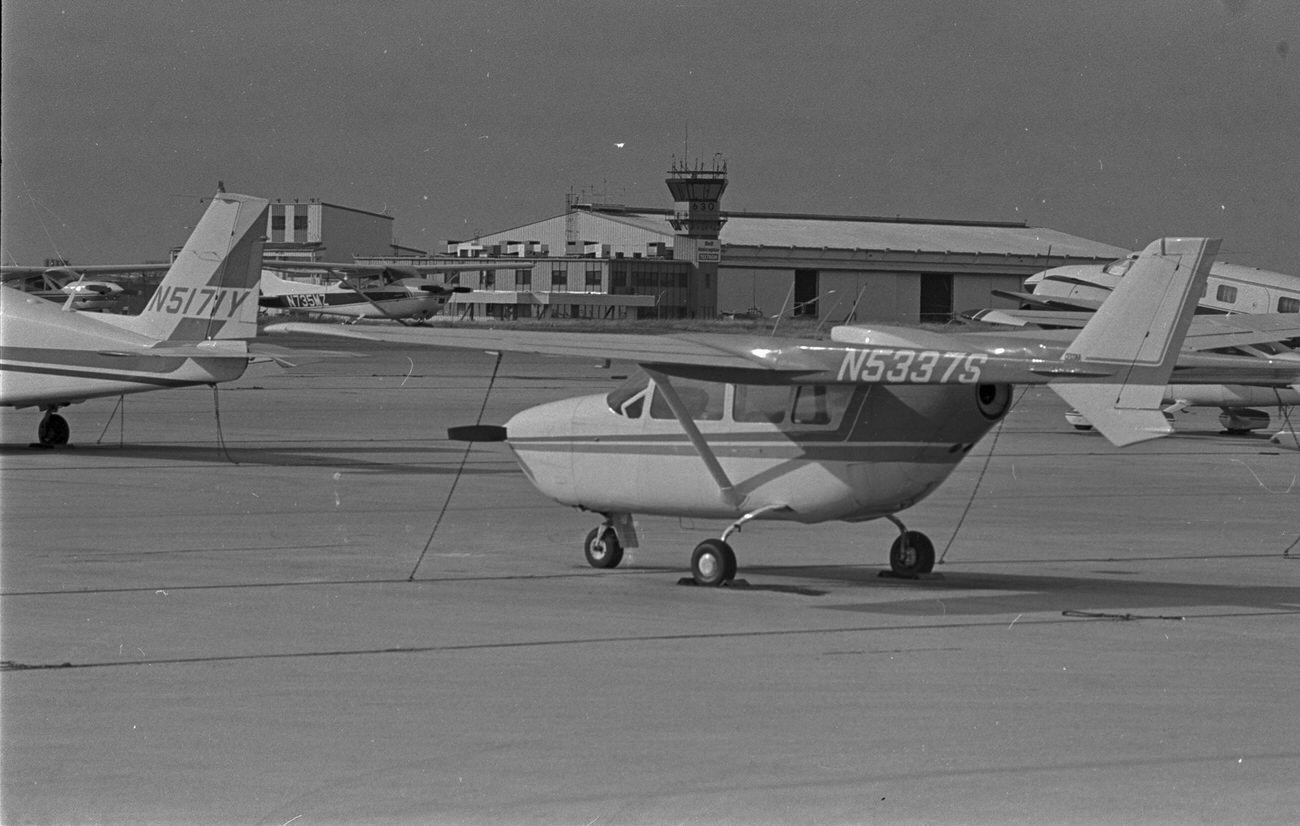
Arlington, Texas Municipal Airport, 1978
Burt Grant Beauty Salon, Arlington, Texas, 1979
Enjoyed this post? Get new ones in your inbox.
Avatar of Aung Budhh

Written by Aung Budhh

Husband + Father + librarian + Poet + Traveler + Proud Buddhist. I love you with the breath, the smiles and the tears of all my life.

Leave a Reply

Your email address will not be published. Required fields are marked *

11 Comments