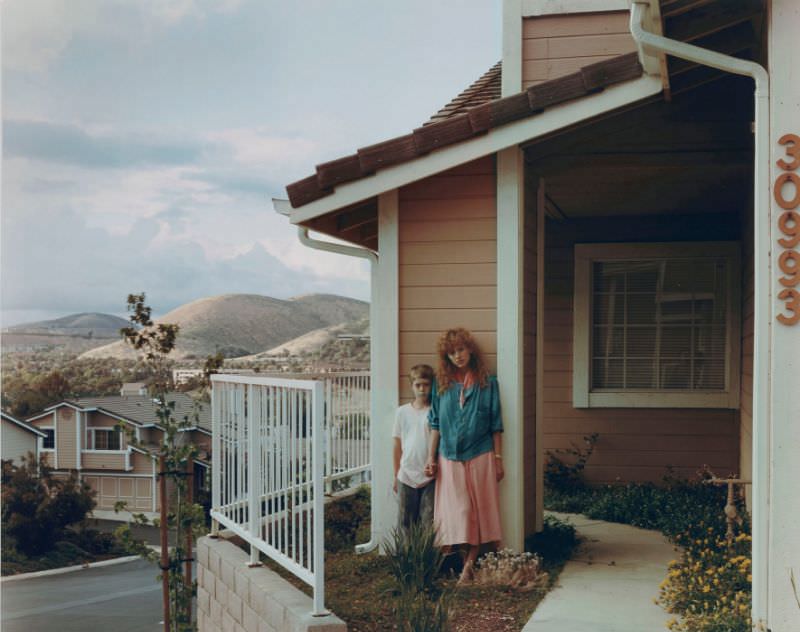

Joel Sternfeld was born in New York City in 1944. After earning a BA in Art from Dartmouth College, he became deeply interested in color theory — specifically the work of Johannes Itten and Josef Albers. By 1970, that study had pushed him toward photography. His early work used small and medium format cameras, but it was a major shift in equipment and ambition that would define his career.
In 1978, Sternfeld set out on an extended road trip across the United States. He carried an 8×10-inch large format camera — a slow, deliberate tool that forced careful composition. With it, he documented communities, cultures, landscapes, and the ordinary rhythms of American life as he found them.
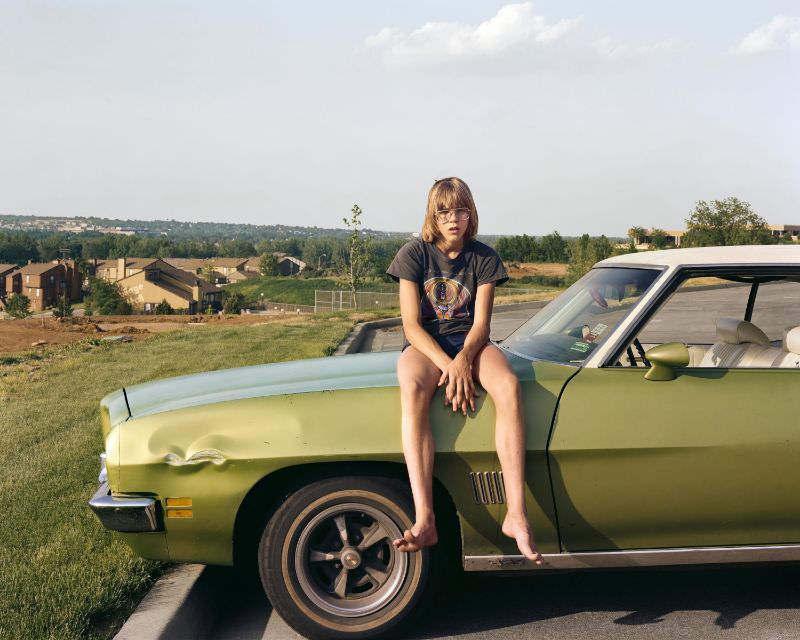
His early stops took him through Virginia in December 1978, where suburban life sat quietly under winter light. From there, the scope of what he photographed expanded quickly — from the ordinary to the spectacular.
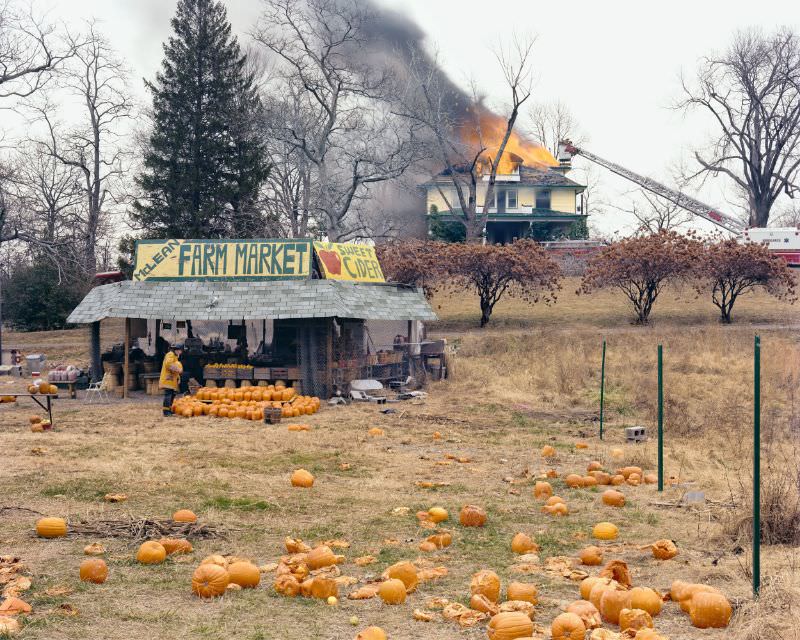
By March 1979, Sternfeld was in San Antonio, Texas, to photograph the Space Shuttle Columbia landing at Kelly Air Force Base — a rare public spectacle set against the Texas sky.
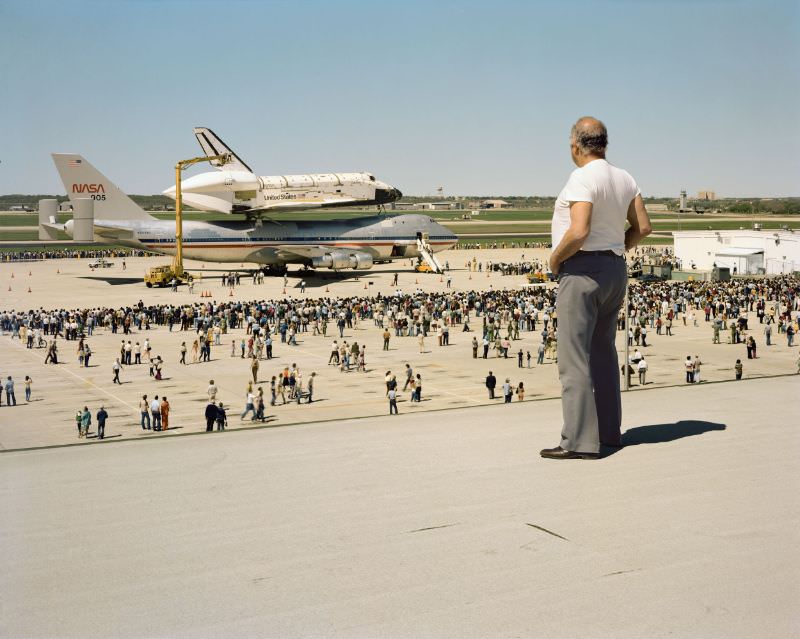
Spring 1979 brought him to Beverly Hills, California, where he made two distinct photographs in May. The images show the particular texture of wealth and leisure in that corner of Los Angeles.
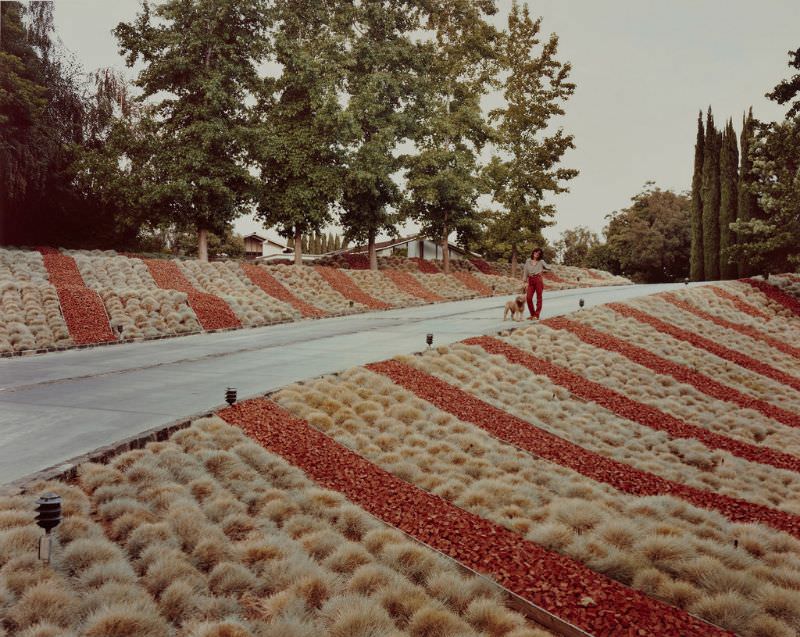
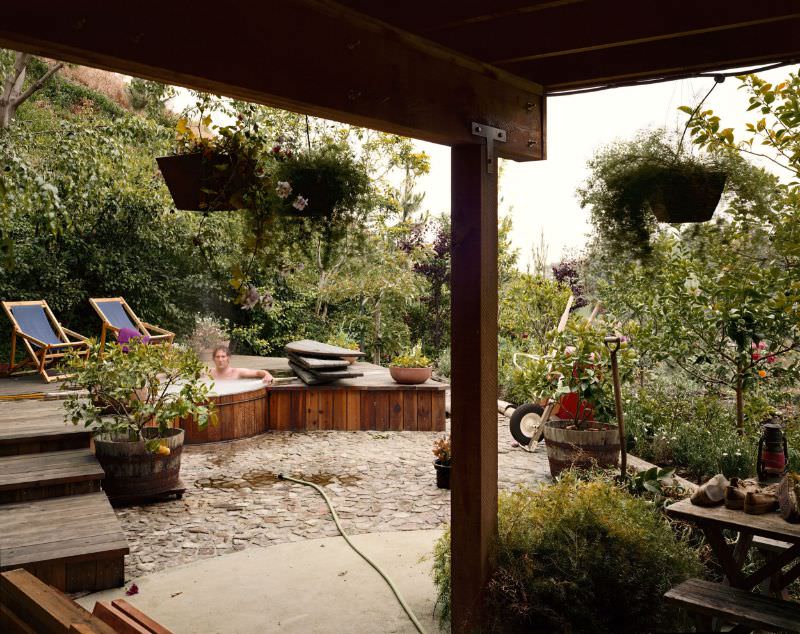
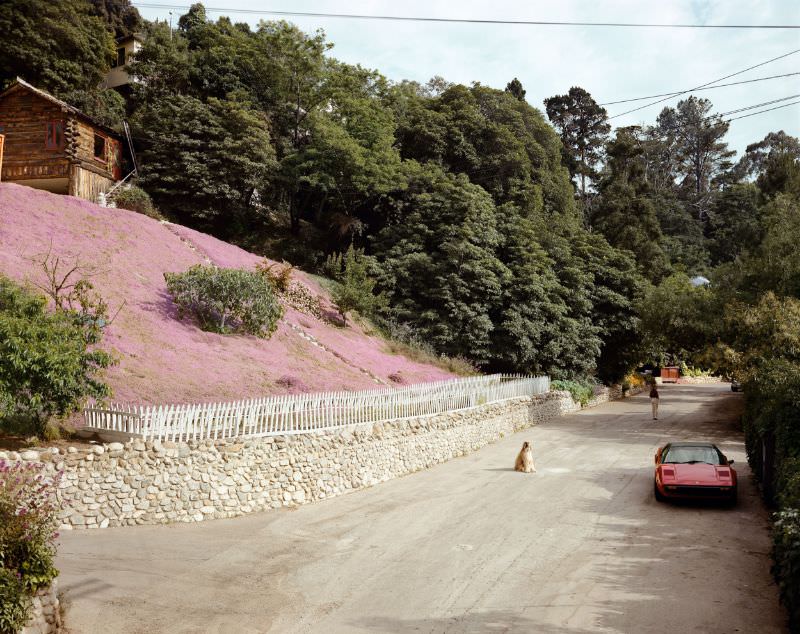
Still in Southern California that same month, Sternfeld traveled to Rustic Canyon in Santa Monica — a wooded, quiet neighborhood that stands in sharp contrast to the glamour just miles away.
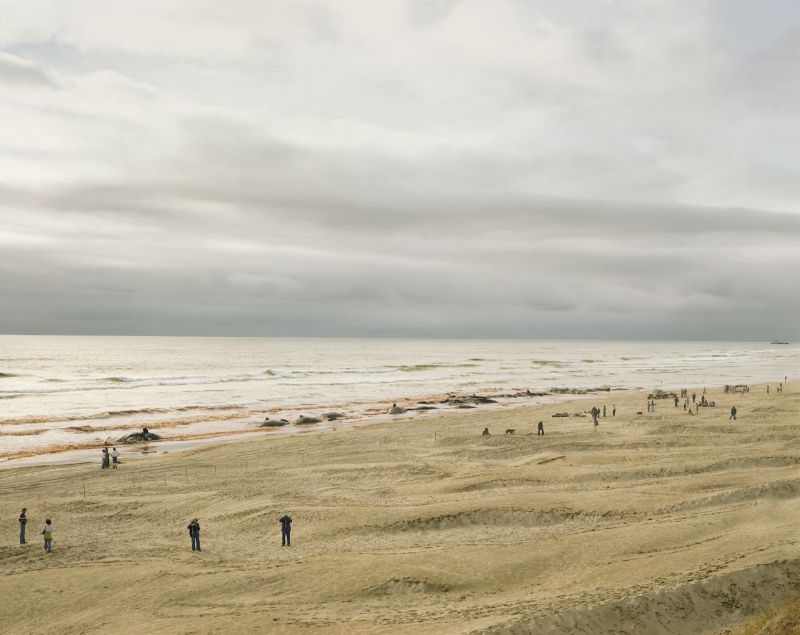
One of the most striking events Sternfeld documented occurred in Florence, Oregon, in June 1979. Forty-one sperm whales beached themselves and died along the Oregon coast. Sternfeld photographed approximately 17 of the carcasses — a jarring, large-scale scene of natural mass death on a public shoreline.
Also in Oregon that June, Sternfeld captured quieter scenes — the calm waterways of Lake Oswego and the rural setting of Sauvies Island. These images balance the dramatic whale photographs with the gentler pace of Pacific Northwest life.

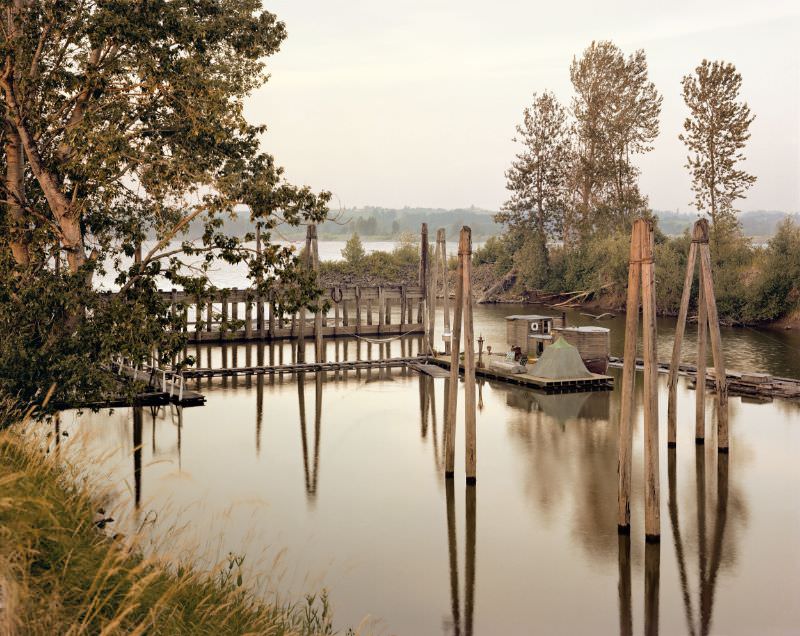
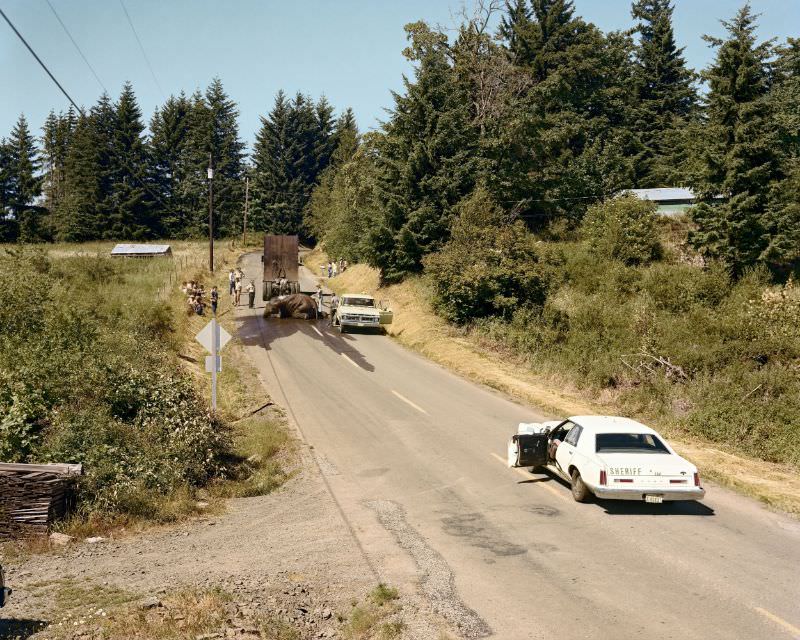
Just across the state line in Woodland, Washington, Sternfeld photographed an exhausted renegade elephant — an animal that had escaped captivity and was eventually cornered. The scene blends the bizarre with the mundane in a way that runs throughout his work.
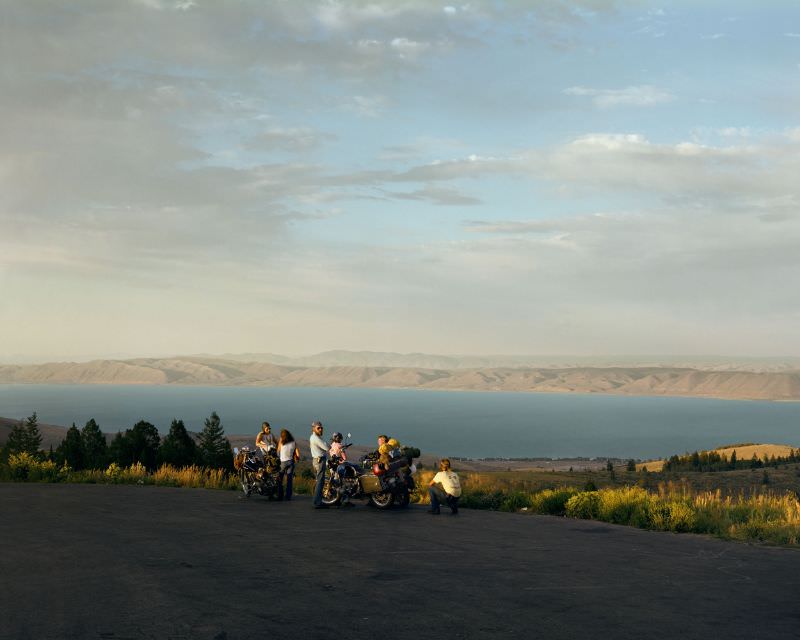
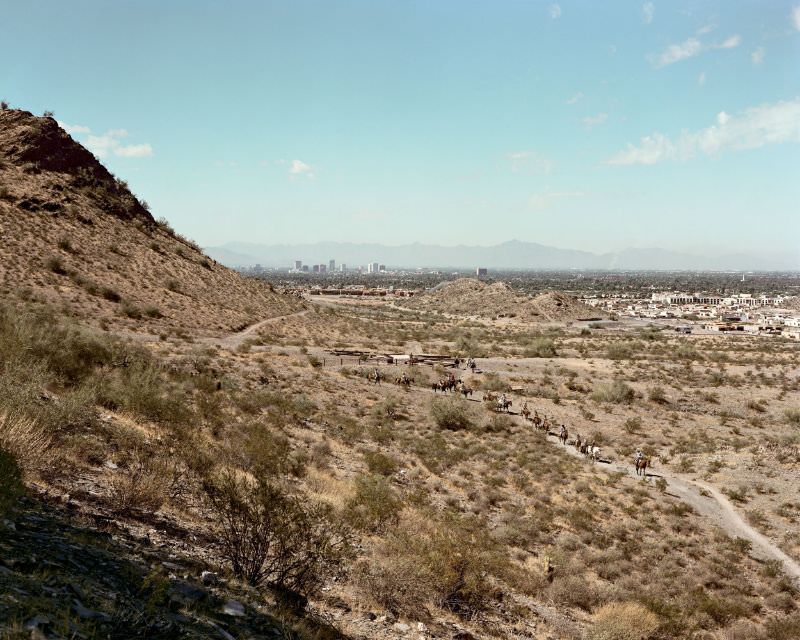
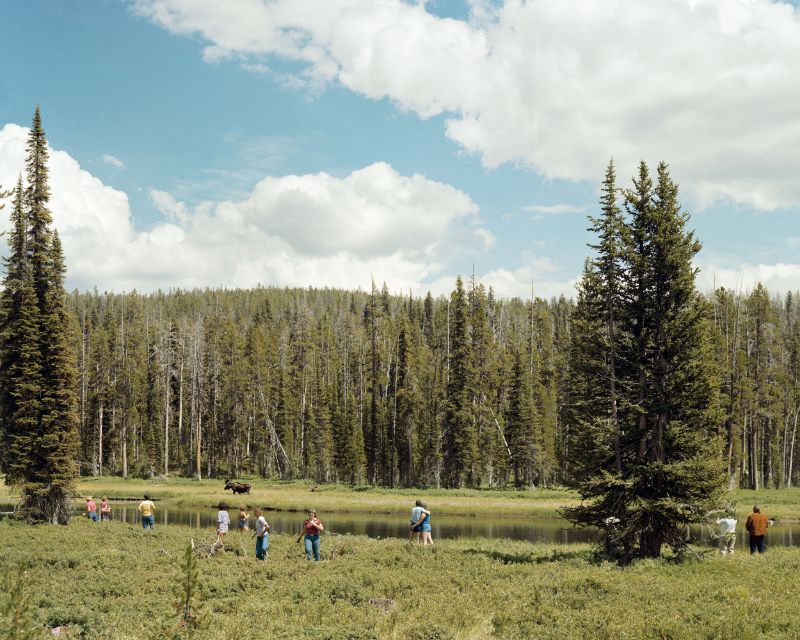
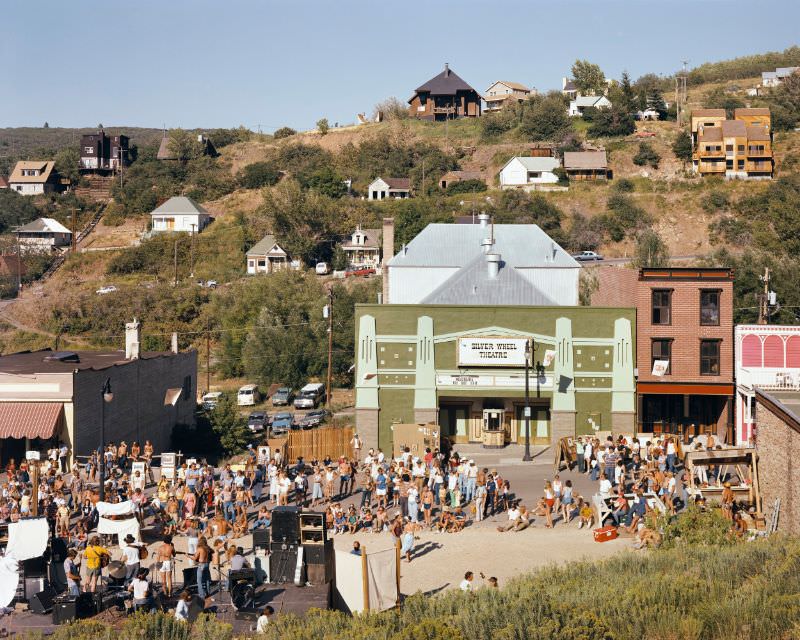
The summer of 1979 pulled Sternfeld across the mountain west. He photographed Bear Lake on the Utah-Idaho border in July, then moved into Arizona, Yellowstone, and back to Utah by August.
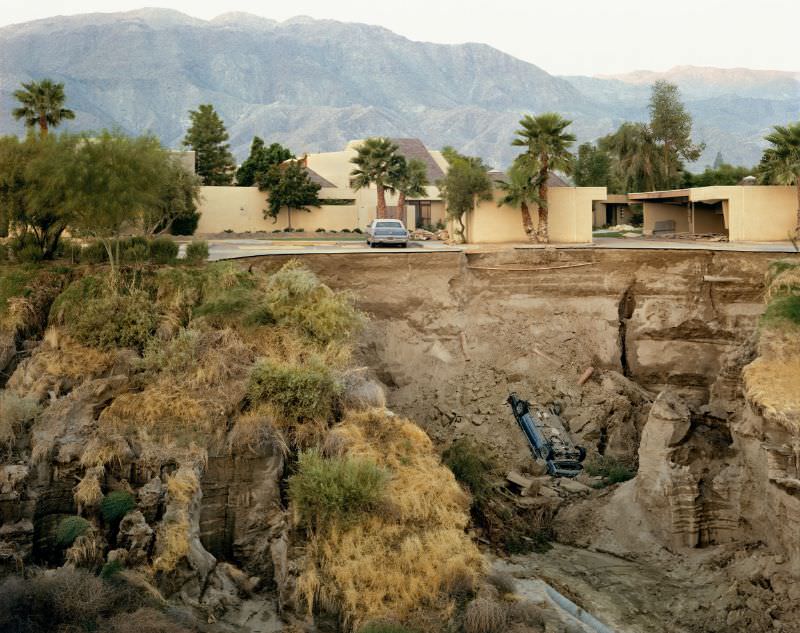
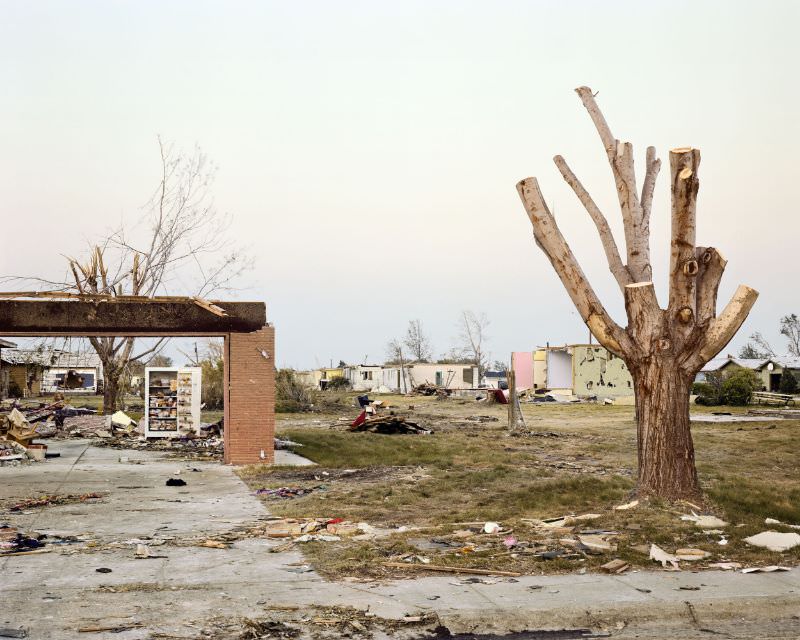
Natural disasters also found their way into his lens. A flash flood in Rancho Mirage, California, left visible destruction that Sternfeld recorded in 1979. The following year, a tornado tore through Grande Isle, Nebraska, and Sternfeld was there in June 1980 to photograph the aftermath.
The summer of 1980 also took him to New Hampshire’s White Mountain National Forest, where Swift River runs through old-growth woodland, and then south to Orlando, Florida, in September — where the newly opened Wet n’ Wild Aquatic Theme Park offered a very different kind of American scene.
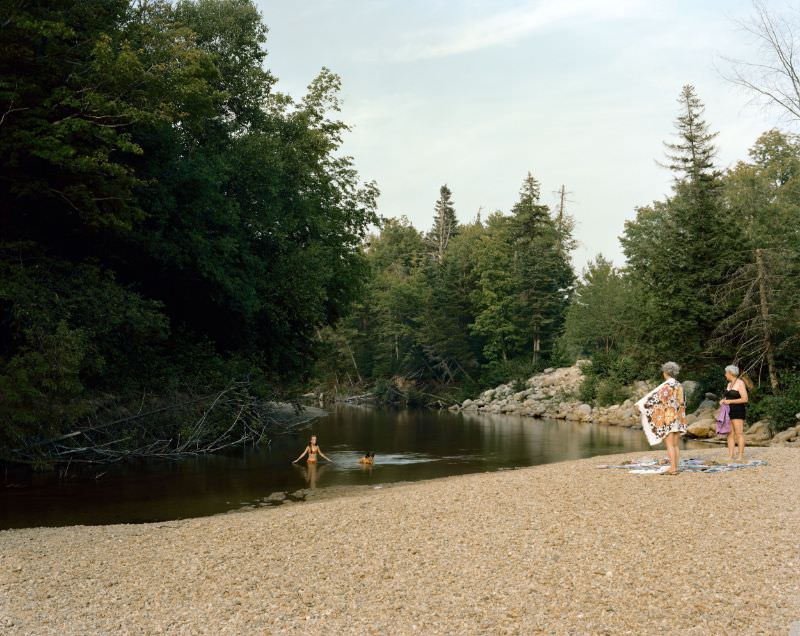
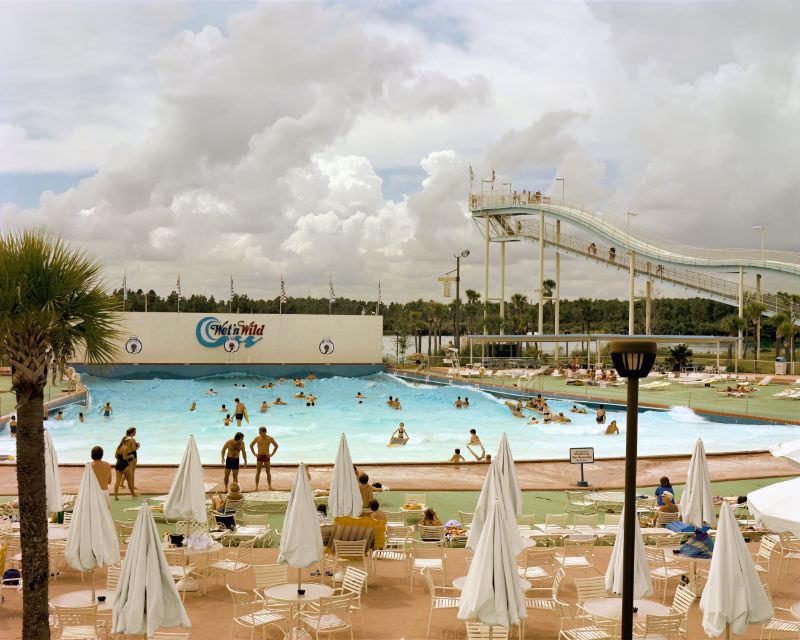
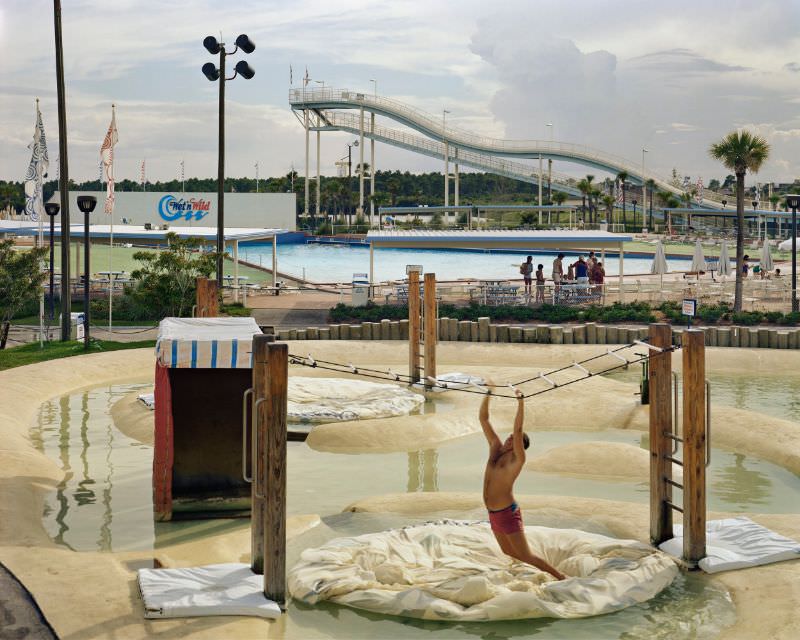
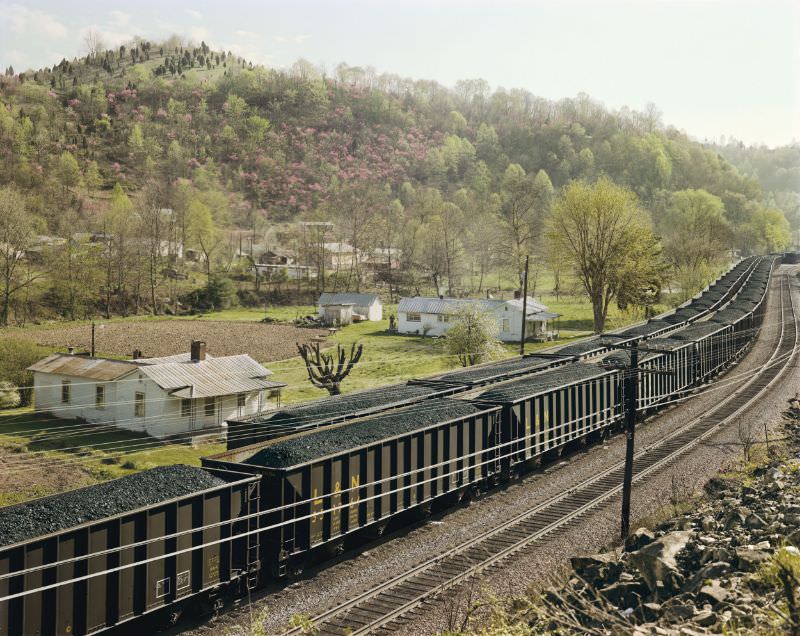
In April 1981, Sternfeld was in Coeburn, Virginia — a small coal country town in the far southwest of the state. The image sits alongside his broader record of working-class and rural American communities.
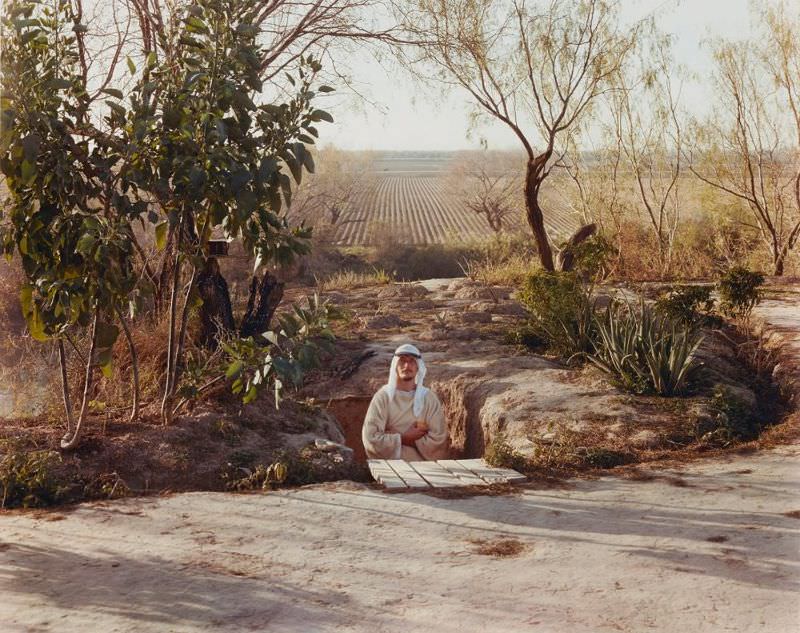
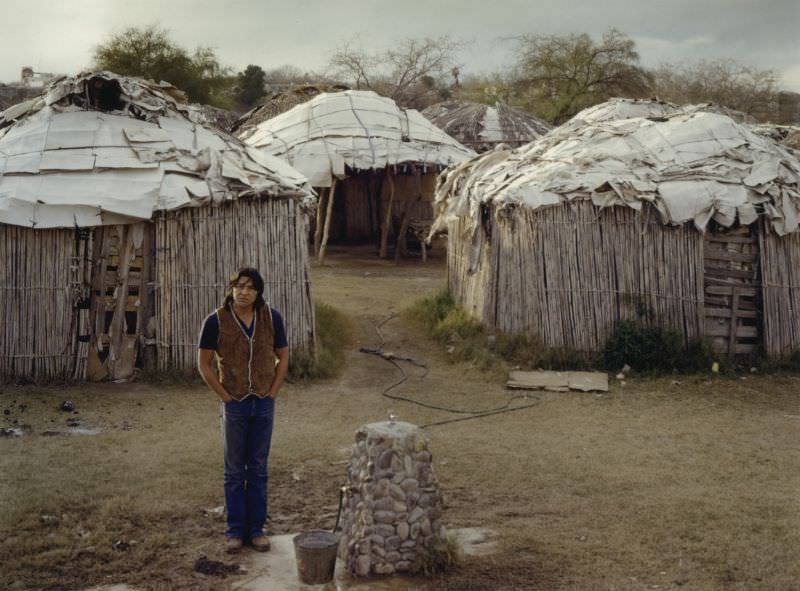
By early 1983, Sternfeld was traveling through Texas, photographing a member of the Christ Family religious sect in Hidalgo County in January, and a Kickapoo man in Eagle Pass that same month. Both images show communities that existed well outside mainstream American culture.
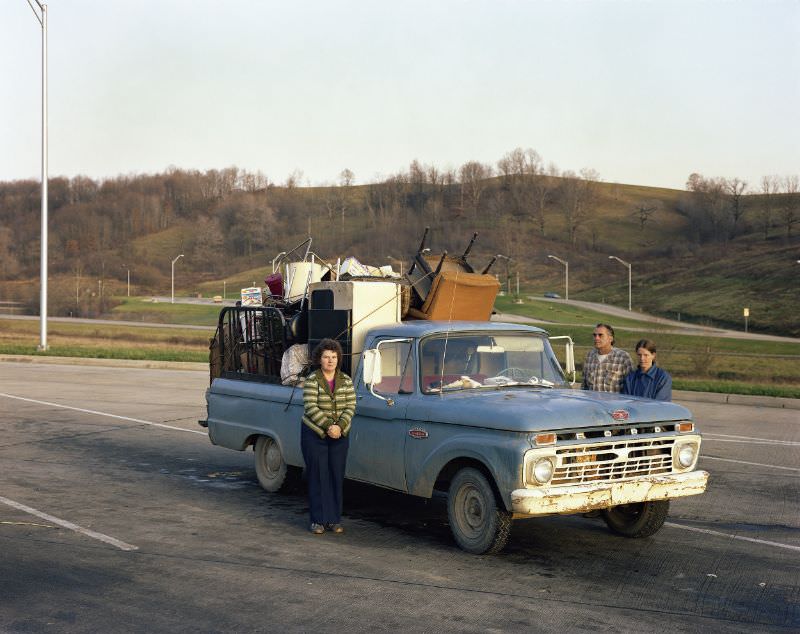
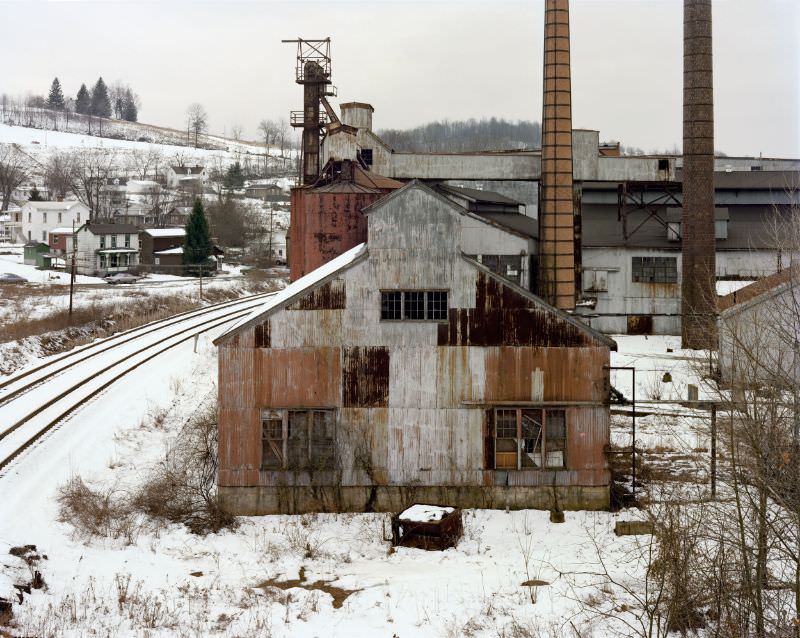
West Virginia appeared twice in early 1983 — once in Grafton in February, and again in a broader state photograph in March. Both images reflect the region’s industrial character and the lives tied to it.
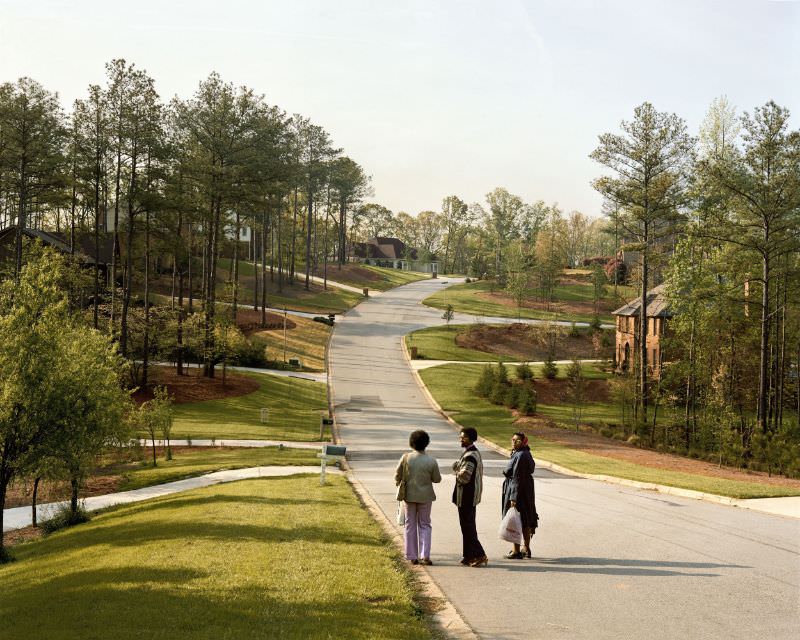
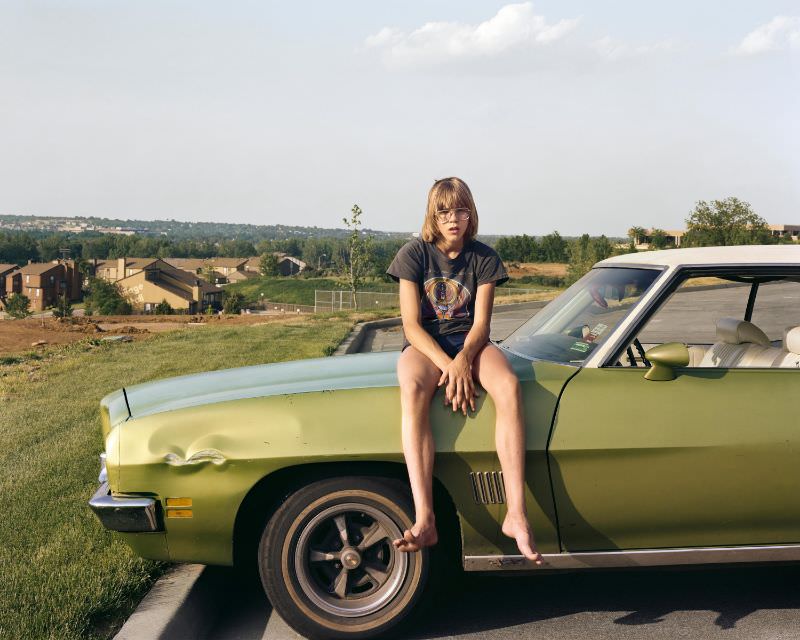
April 1983 brought him to Atlanta, Georgia, where he photographed domestic workers waiting for the bus — a direct, unsentimentalized image of labor and race in the urban South. The following month in Kansas City, Kansas, he made two more photographs documenting street-level life in the Midwest.
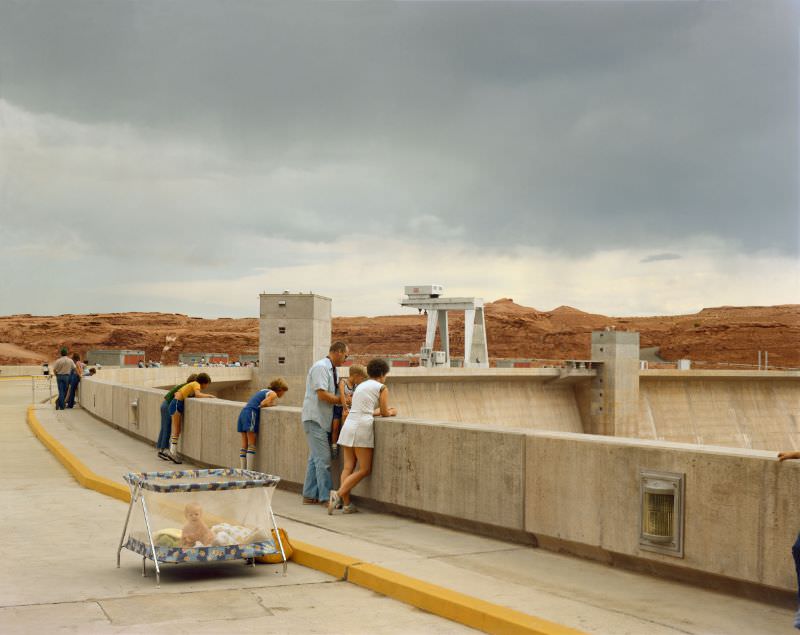
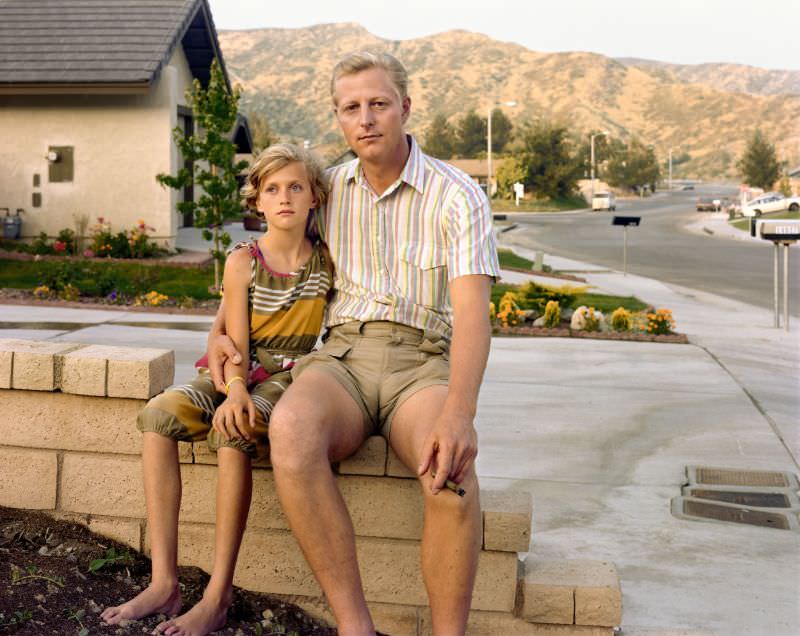
Later in 1983, Sternfeld photographed the Glen Canyon Dam in Page, Arizona — a massive federal water project that reshaped the Colorado River — and then moved to Canyon Country, California, in June.
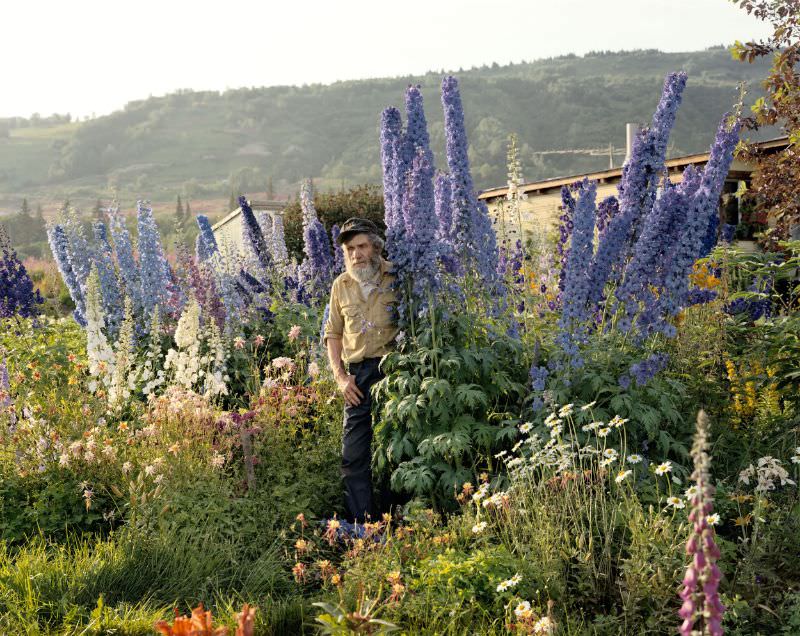
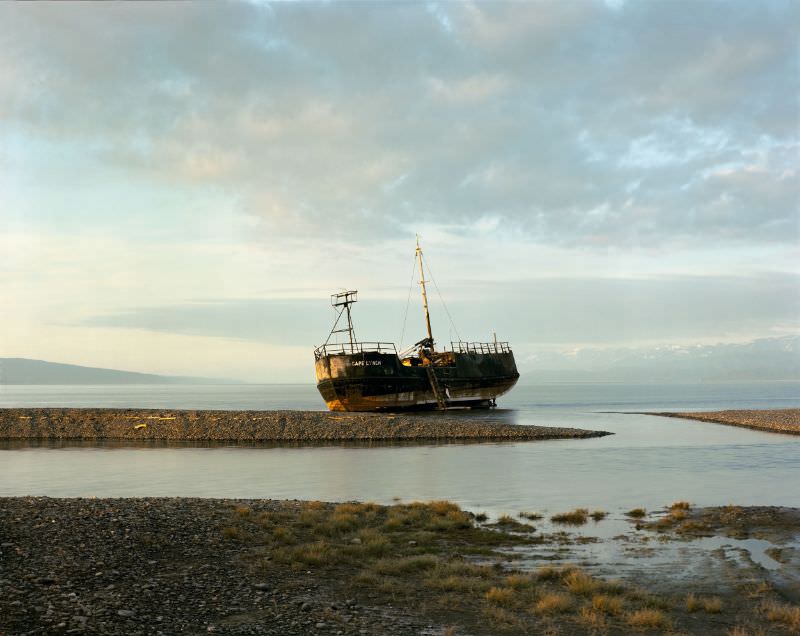
In the summer of 1984, Sternfeld reached Homer, Alaska — a remote fishing town on the Kenai Peninsula. He photographed a blind man tending his garden in June, and an abandoned freighter in July. Both images carry the particular stillness of Alaska’s long summer days.
By February 1988, Sternfeld was back in Southern California, this time in Agoura — a community in the hills of the Santa Monica Mountains northwest of Los Angeles. The photograph stands among his later work from this extended American survey.