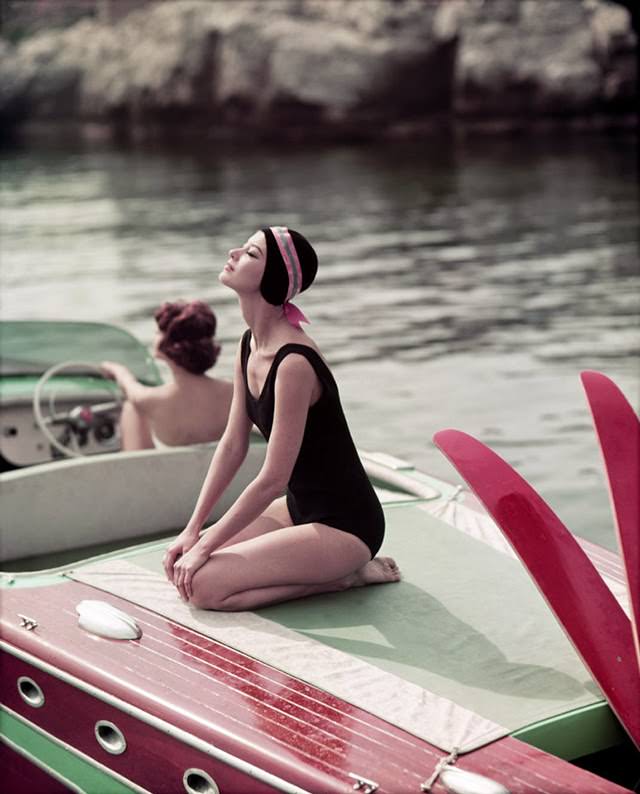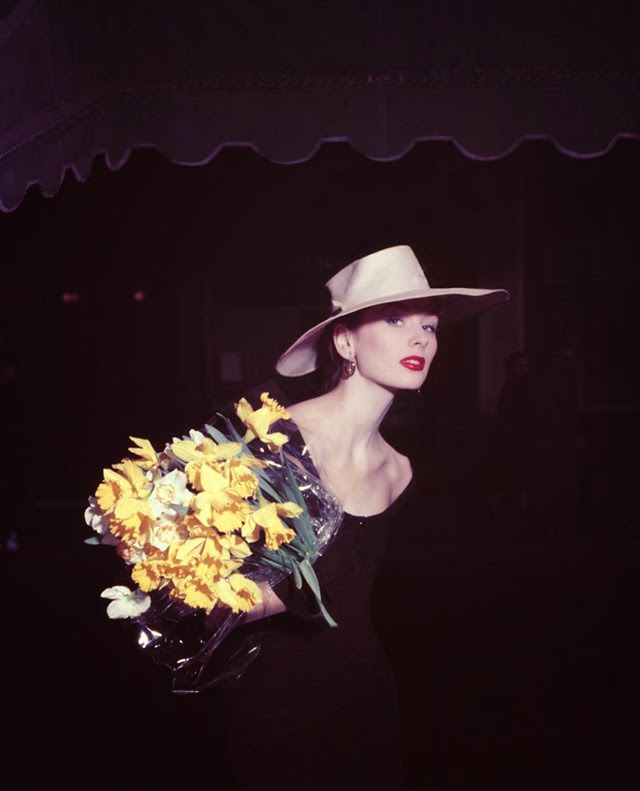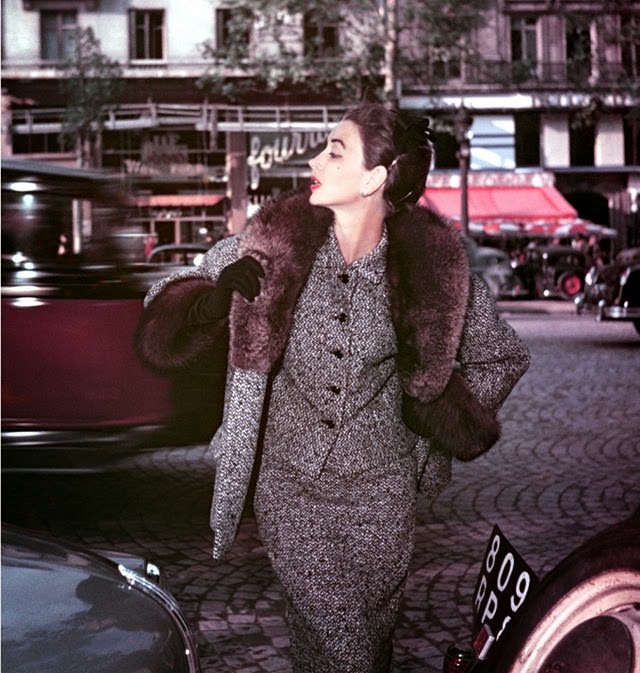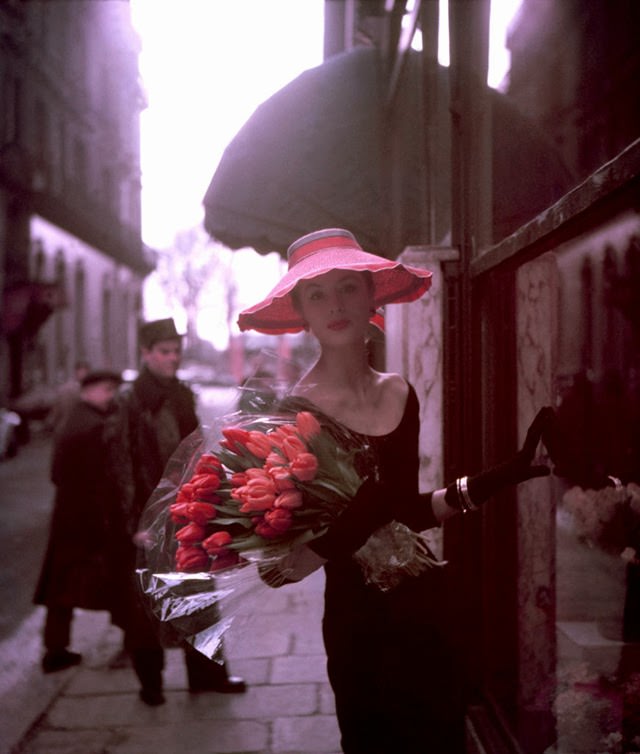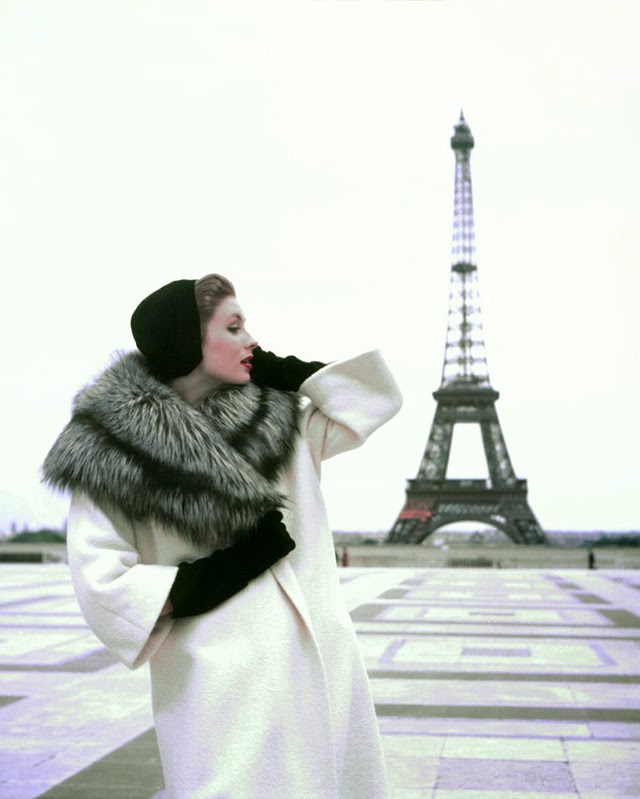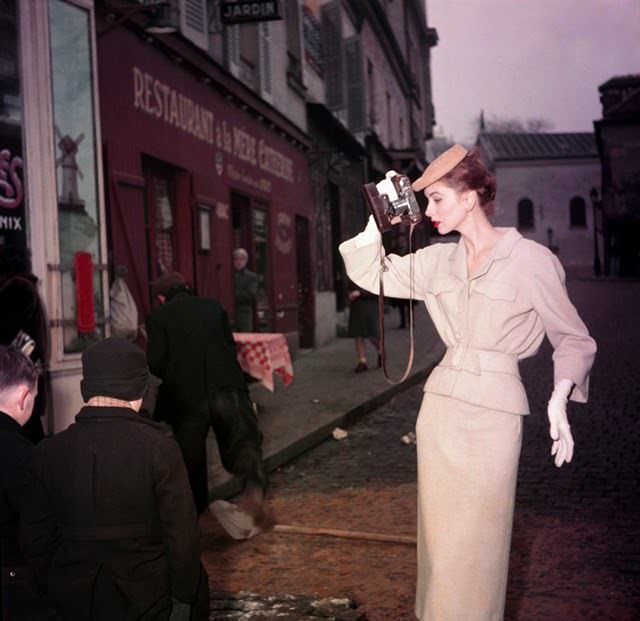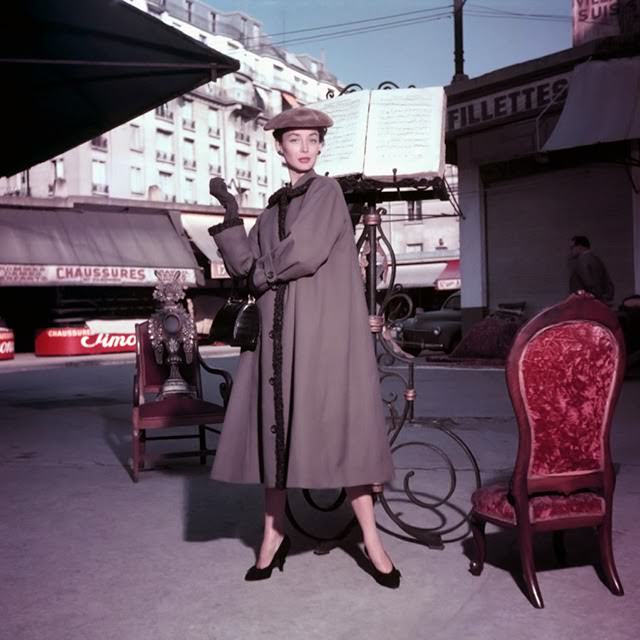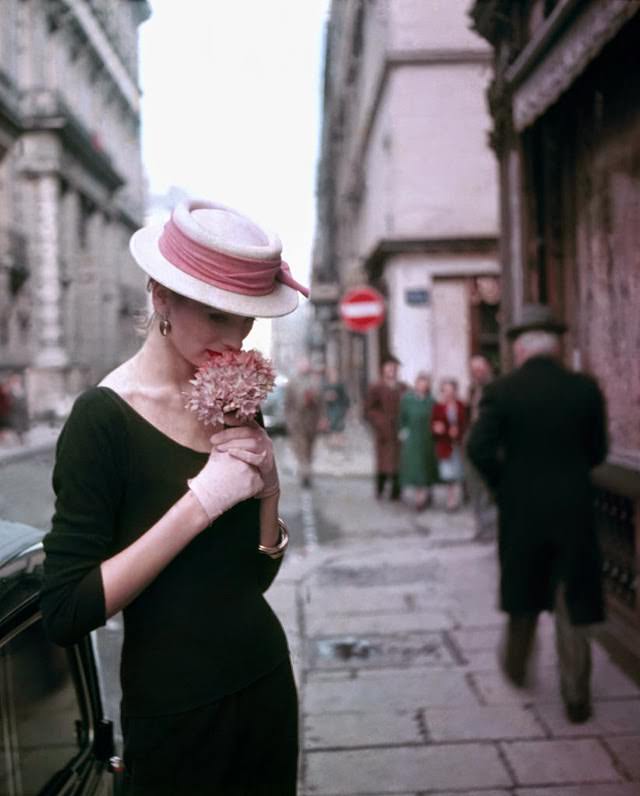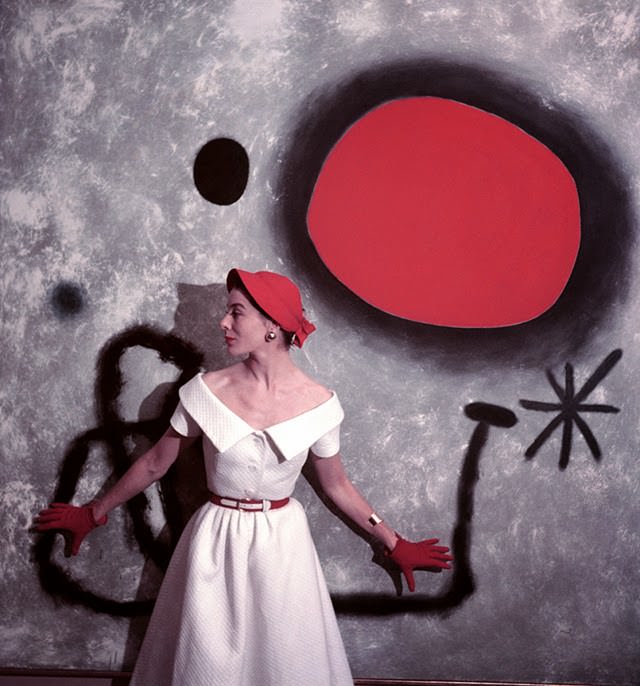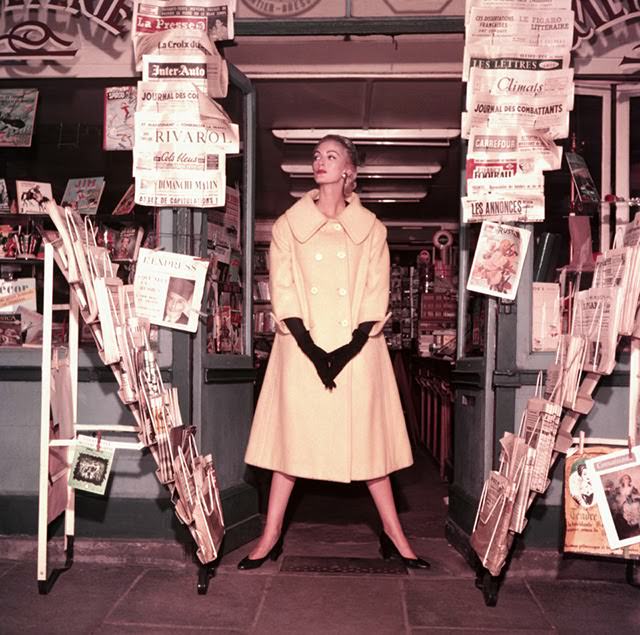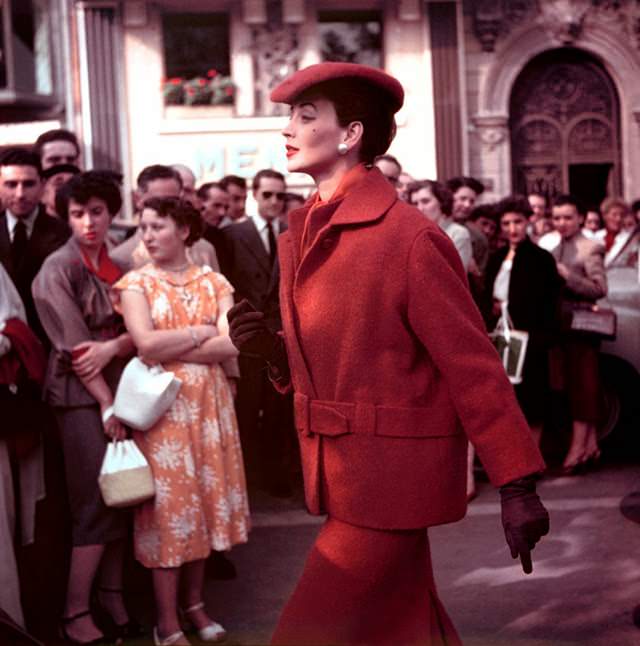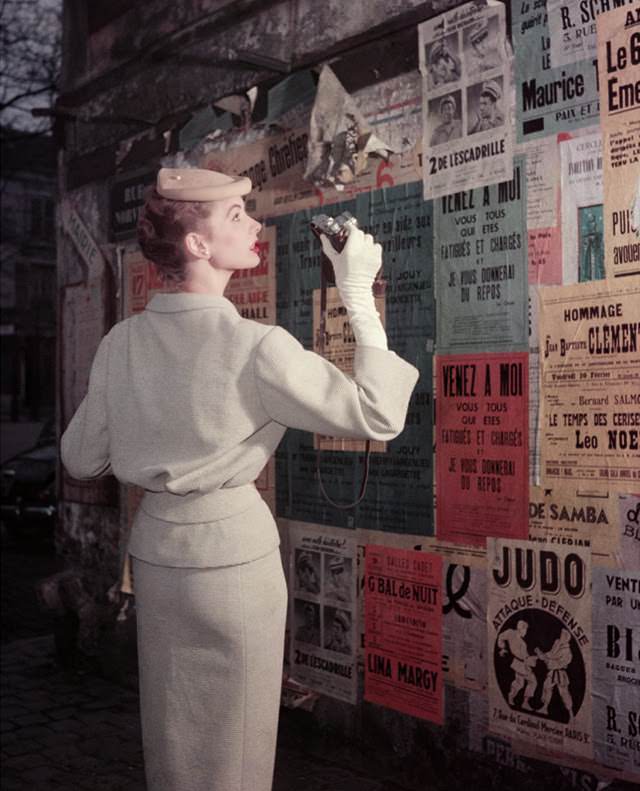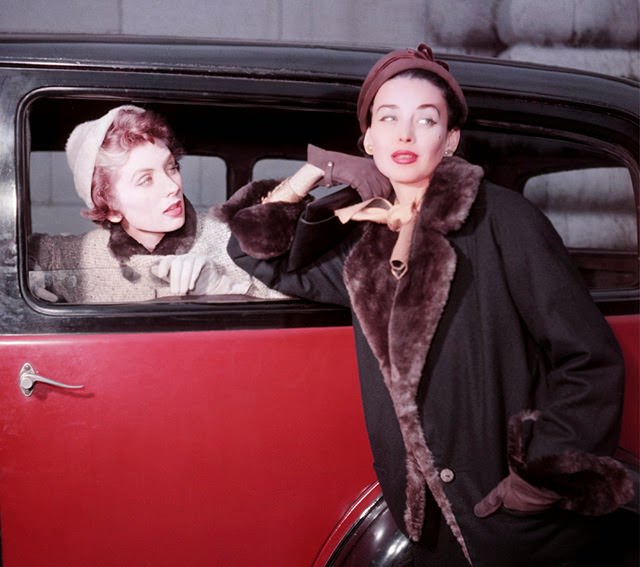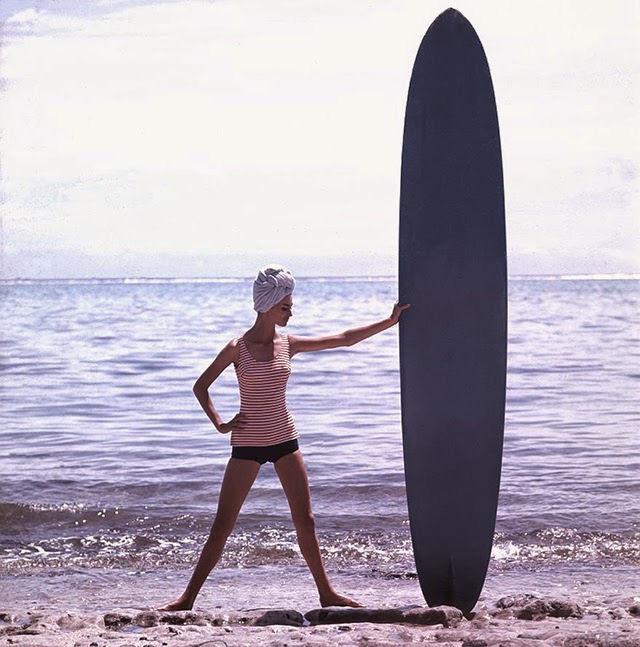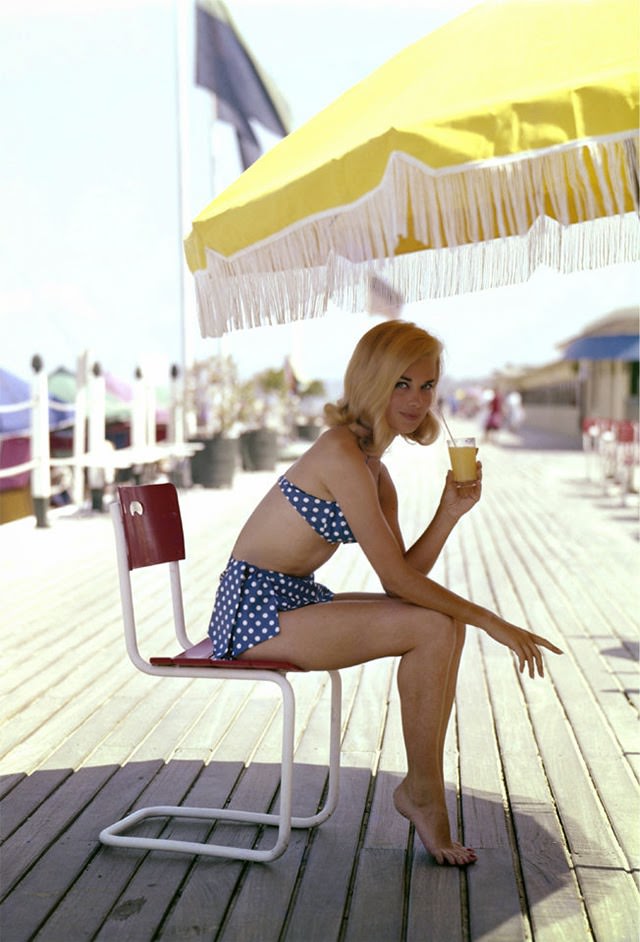

In the early 1950s, fashion magazines typically featured models who looked like statues. Photographers kept them inside quiet studios, where they stood still and looked distant. Georges Dambier rejected this rigid style completely. He believed that high fashion belonged in the real world. He took his camera and his models out of the controlled studio environment and onto the bustling streets of Paris. He placed women wearing expensive haute couture gowns directly on the cobblestones, right next to vegetable markets and local cafes.
Life on the Paris Streets
Dambier used the city of Paris as his primary backdrop. His photos capture the energy of the capital during the post-war recovery. A model in a Christian Dior dress might lean against a weathered lamp post or sit on the hood of a car in traffic. Passersby often appear in the frame, staring at the scene with curiosity. By mixing luxury clothing with everyday settings like metro stations and bookstalls, Dambier made the fashion feel accessible and alive.
The Smiling Model
Before Dambier, models rarely showed emotion in photographs. Editors preferred a look of cold elegance. Dambier changed the industry by asking his subjects to smile, laugh, and react to their surroundings. He wanted the women to look like they were enjoying their lives. He captured them eating ice cream, reading newspapers, or running to catch a bus. This approach added a layer of optimism and spontaneity that was missing from the pages of Elle and Vogue at the time.
Read more
Natural Light and Movement
Technically, Dambier relied heavily on natural sunlight rather than artificial studio lamps. He shot on cloudy days to get soft shadows or in bright sun to make the colors pop. He encouraged movement to show off the fabrics of the “New Look” era. Full skirts swirled around the models as they walked, and the wind often caught their hair. This method highlighted the texture of the silk and wool, making the viewer feel the weight and flow of the garments.
The Bardot Connection
Dambier maintained close friendships with the top models of the decade, which allowed him to get more candid shots. He worked frequently with Brigitte Bardot before she became a global movie star. In his images, Bardot appears relaxed and playful, often walking barefoot or dancing in the street. He also collaborated with famous names like Suzy Parker and Bettina. Because these women trusted him, they dropped their guarded poses and revealed their true personalities to his lens.