
Stockholm in the 1940s was a city very much alive with routine — workers crossing bridges on bicycles, children splashing in fountains, couples dancing late into the evening. The man who captured all of this was Swedish photographer Karl Werner Edmund, a photojournalist whose sharp eye and tireless work ethic produced thousands of images that documented Swedish life in remarkable detail. Edmund was the first Swedish photojournalist to hold a solo exhibition in Sweden, and he ran his own studio for over forty years. He contributed photos and articles to numerous Swedish and foreign publications, leaving behind a visual record that still holds up today.
His photographs don’t feel staged. They feel stolen from real moments — a couple leaning in at a café, a road worker stirring steaming asphalt, a homeless young man resting against a park bench. Together, they build a portrait of a city going about its day.
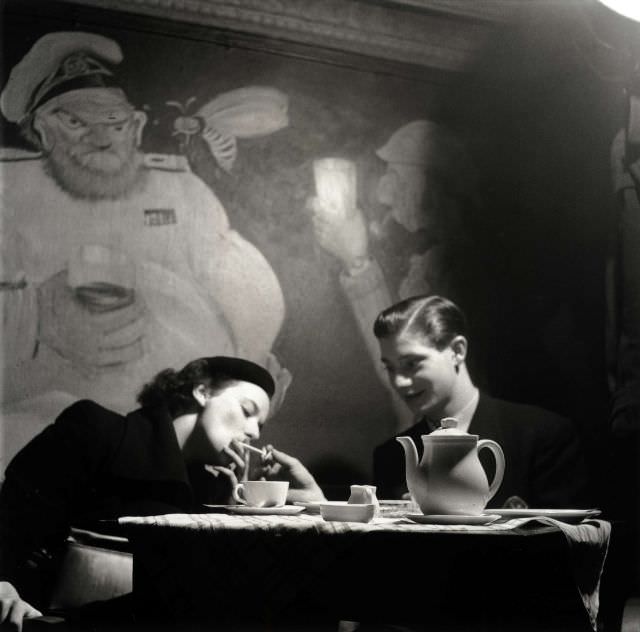
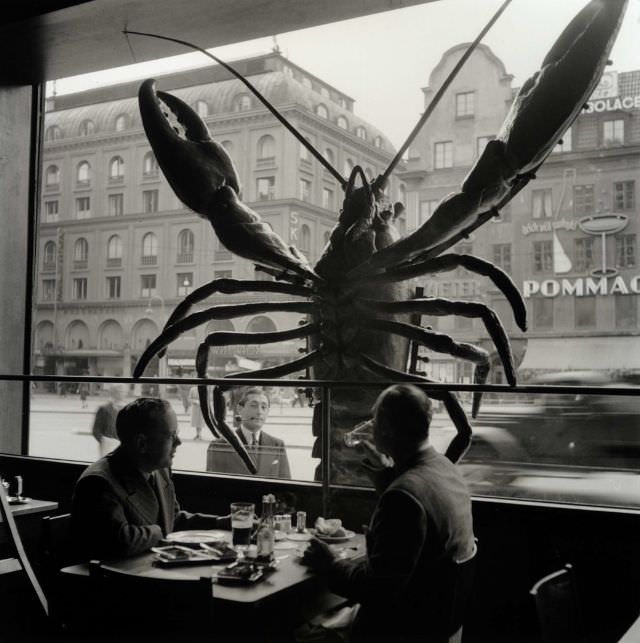
Café culture was a central part of Stockholm’s social life, and Edmund caught it naturally. Outdoor terraces and restaurant windows were equally a part of the city’s character. The Sturehof restaurant, one of Stockholm’s most recognized dining spots, displayed its identity boldly even in its storefront.
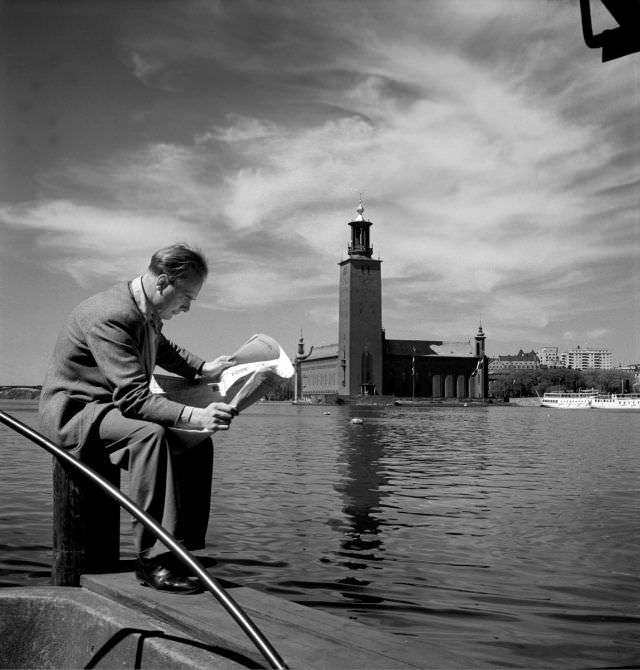
Along the waterfront, Stockholm’s geography was always present. Riddarfjärden — the bay cutting through the city’s center — appeared in the background of quiet, unhurried scenes. A man reading his newspaper on a bollard, with Stockholm City Hall rising behind him, captured the easy pace of a midday break.
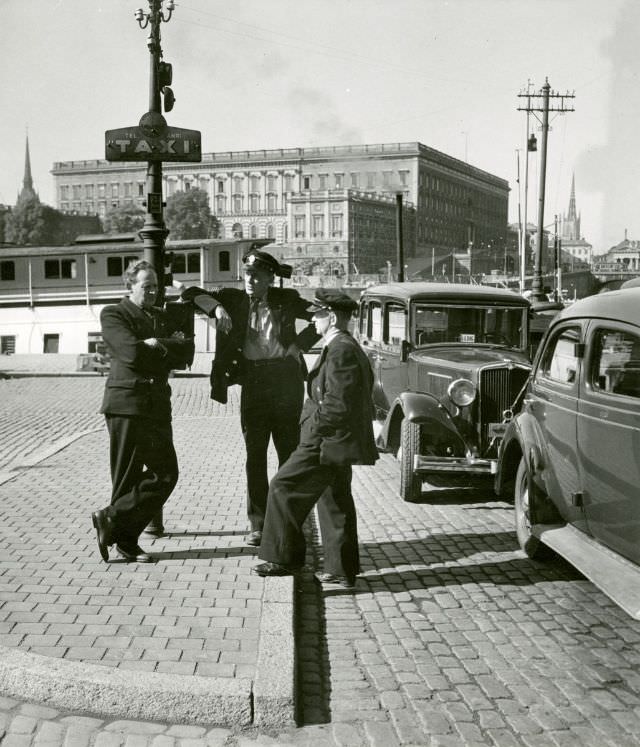
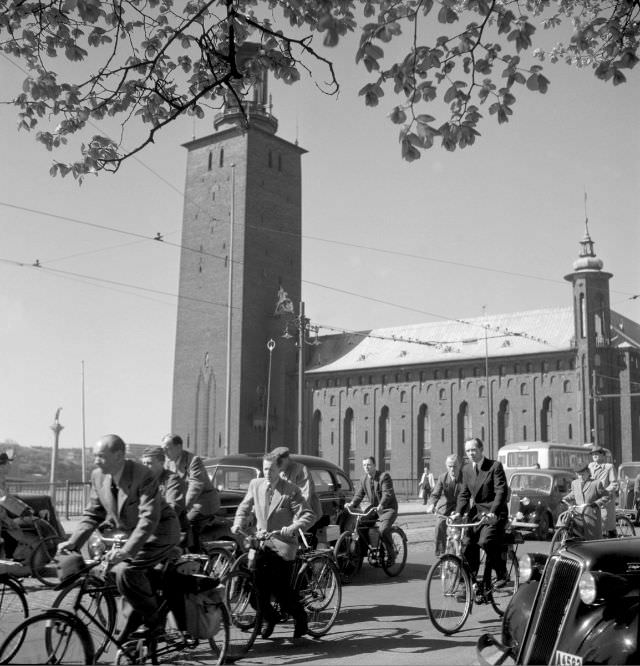
The Grand Hotel, one of Stockholm’s most prestigious landmarks, drew a steady flow of taxis to its entrance. Just as busy were the city’s bridges during the morning rush. Stadshusbron bridge filled with cyclists every day, a sight that reflected how deeply cycling was woven into Stockholm’s daily commute.
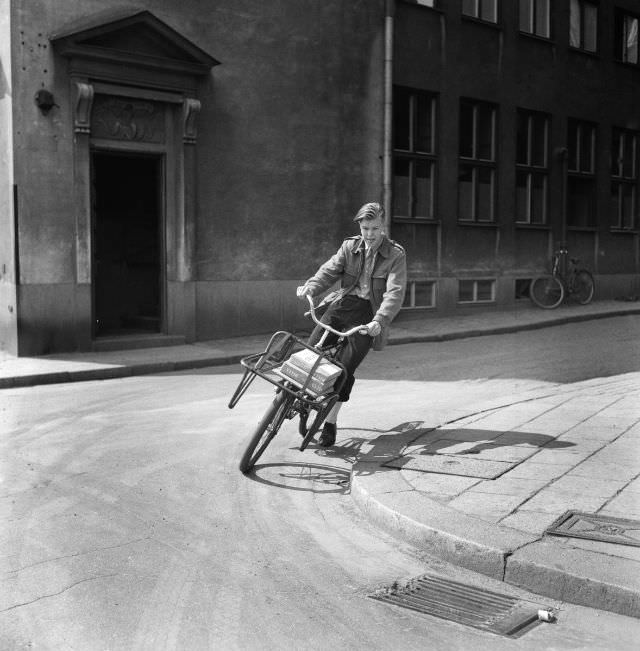
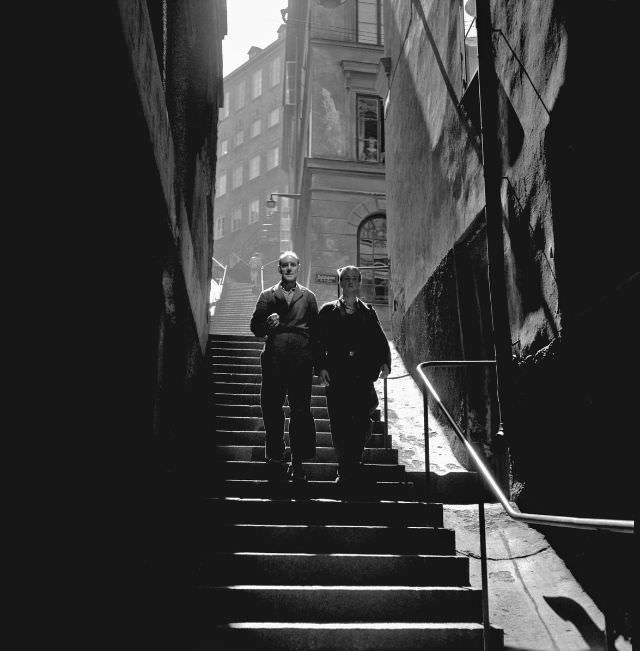
Not everyone was on a bicycle. Bicycle messengers moved packages and correspondence through the city streets, and warehouse workers navigated Stockholm’s older neighborhoods on foot. Södermalm, the large island district south of the city center, was a working-class hub where industrial labor and neighborhood life overlapped.
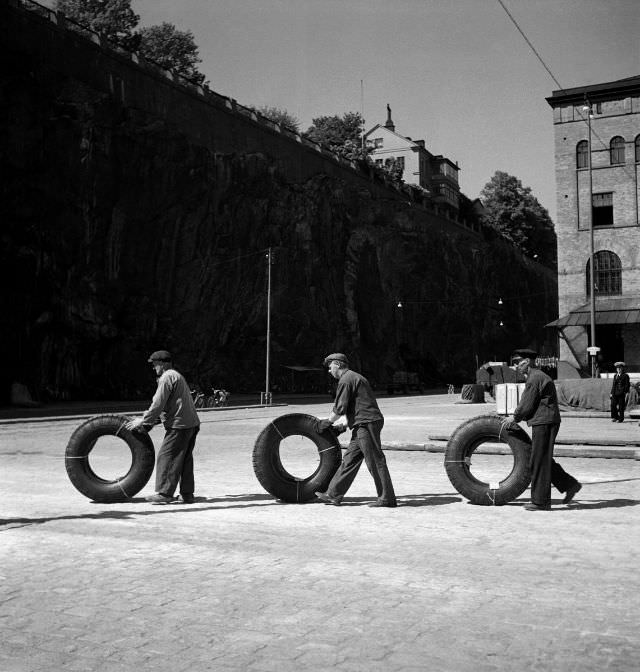
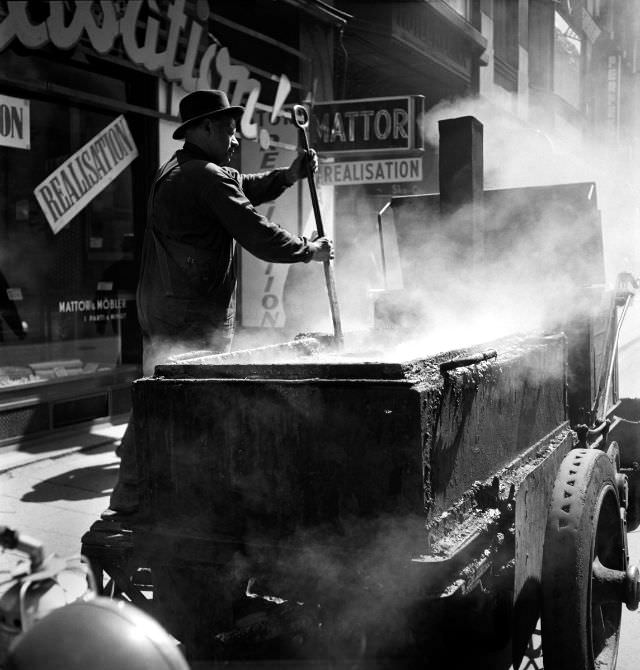
Down at Stadsgården, harbor workers rolled heavy truck tires across the docks — physical, unglamorous work that kept the port moving. On Drottninggatan, one of the city’s main streets, road workers stirred boiling asphalt in open air as pedestrians passed by.
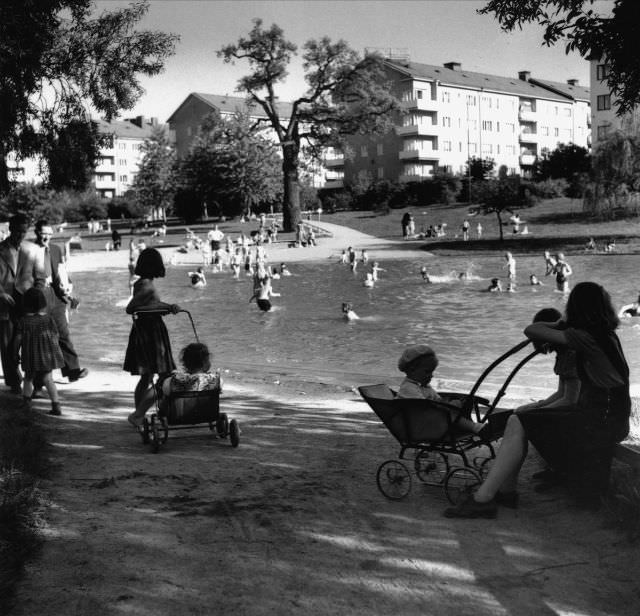
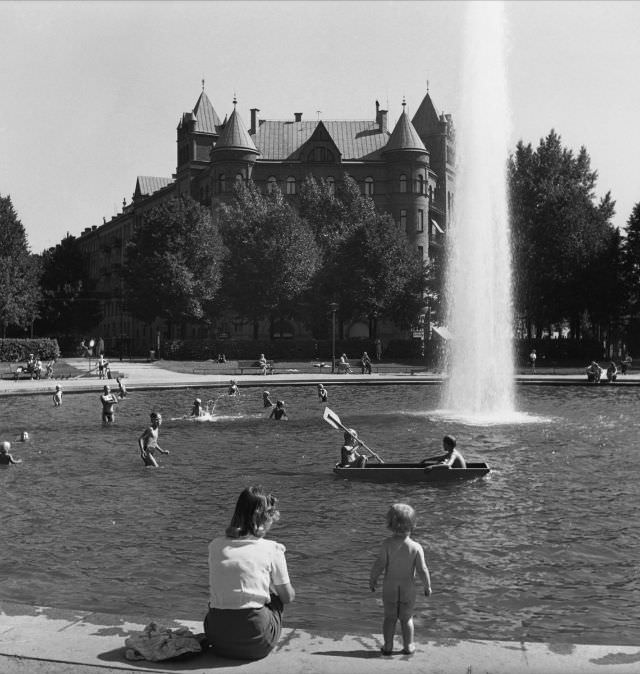
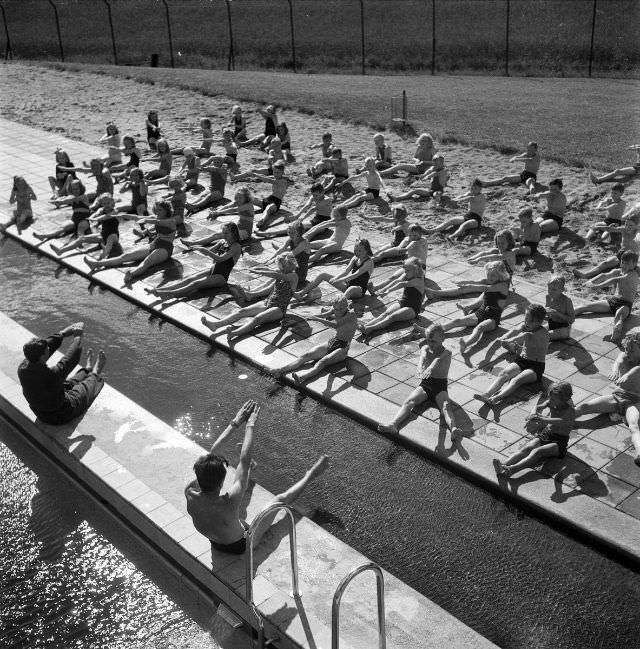
When work was done, Stockholmers found ways to unwind. The warmer months brought people outdoors in force. Fredhällsparken drew crowds for swimming and strolling along the water’s edge, while children cooled off in Karlaplan’s city fountain. At Älvsjöbadet, the public pool hosted organized swimming lessons, children lined up at the edge under open sky.
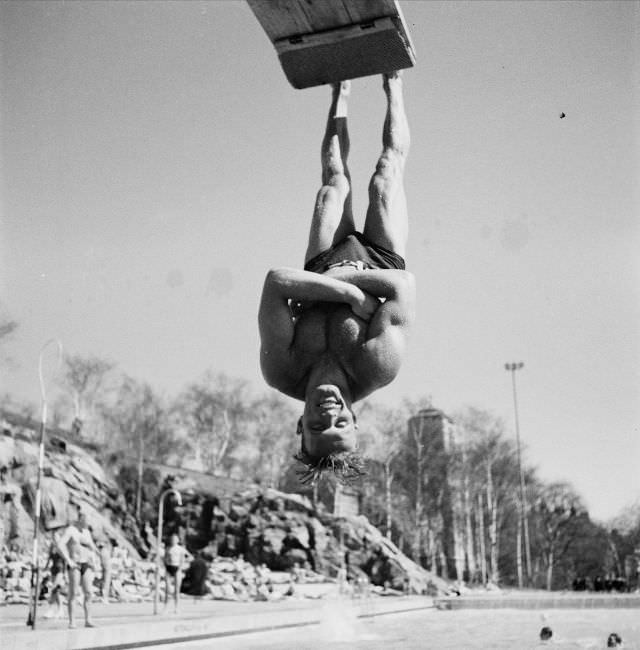
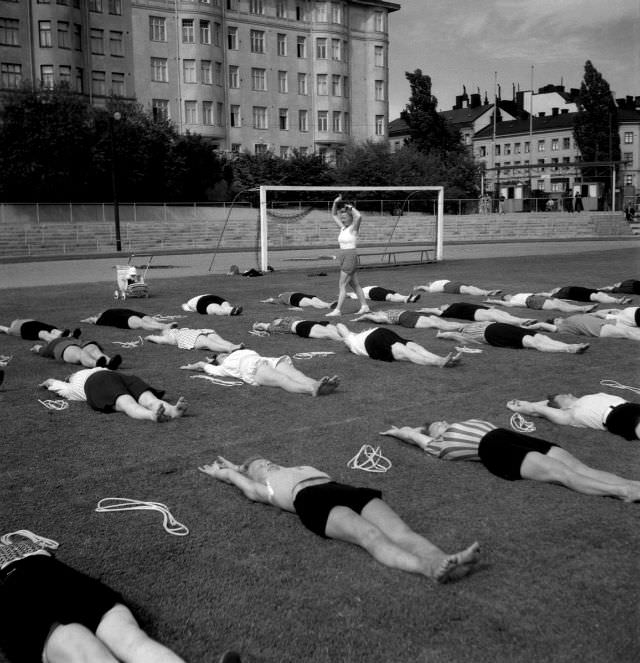
At Vanadisbadet, one of Stockholm’s popular outdoor bathing facilities, a man hung upside down from a trampoline by his feet — a striking image of summer daring. Physical fitness was taken seriously in this era, and on Södermalm’s Zinkensdamm sports ground, groups of housewives gathered for organized gymnastics sessions.
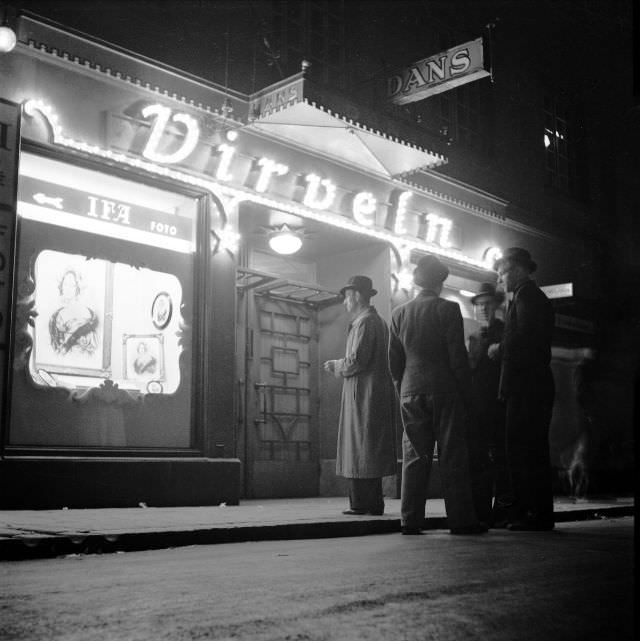
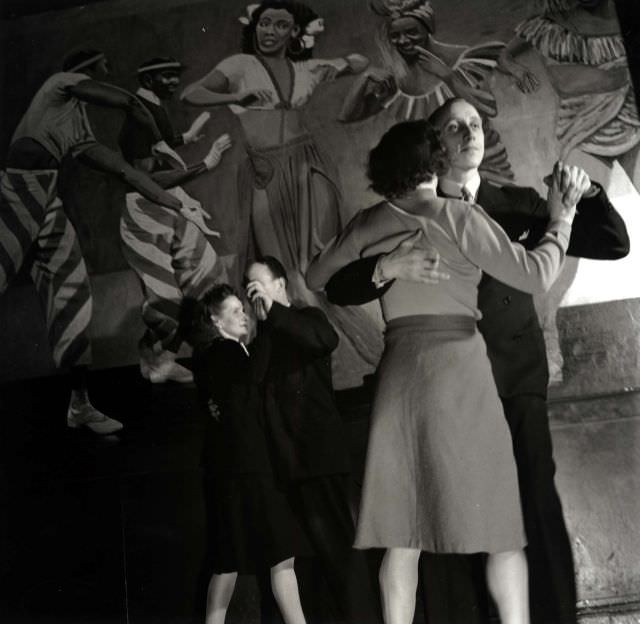
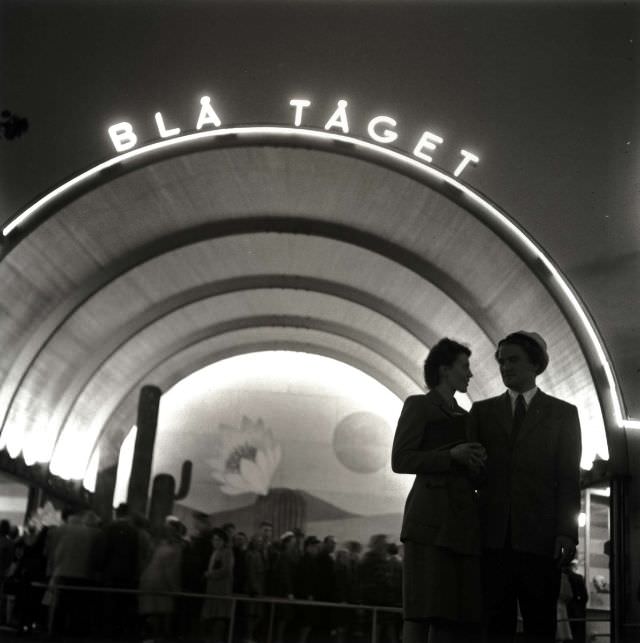
Stockholm’s nightlife had its own energy. Dance halls like Virveln attracted a younger crowd — the swingpjattar, as swing music fans were called, gathered outside its entrance before heading in. The dance restaurant Avalon hosted couples on the floor in more formal settings, while Gröna Lund’s famous Blå Tåget attraction lit up the amusement park at night.
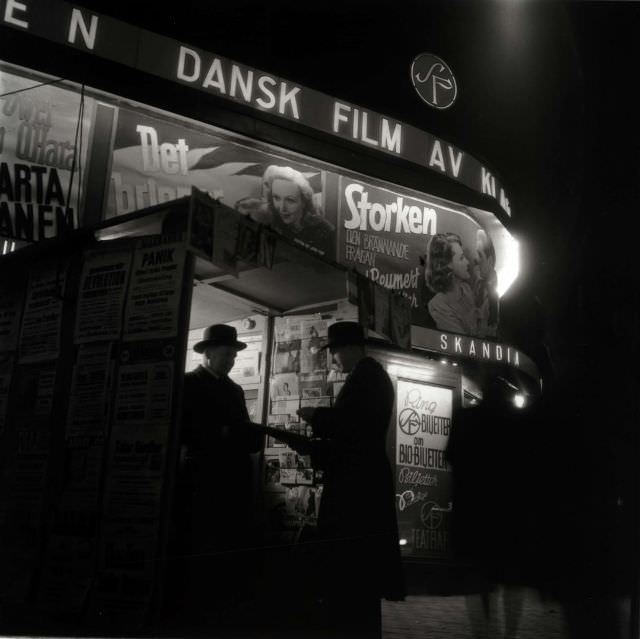
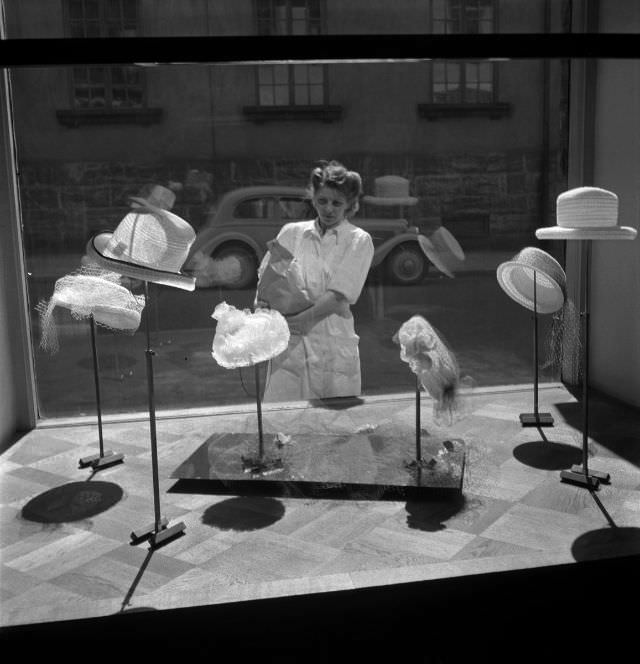
Cinema was another escape. The Skandia cinema, with its striking modernist entrance, was one of Stockholm’s most celebrated movie theaters. A woman pausing at a shop window full of summer hats on display — that too was a small pleasure of city life, unhurried and ordinary.
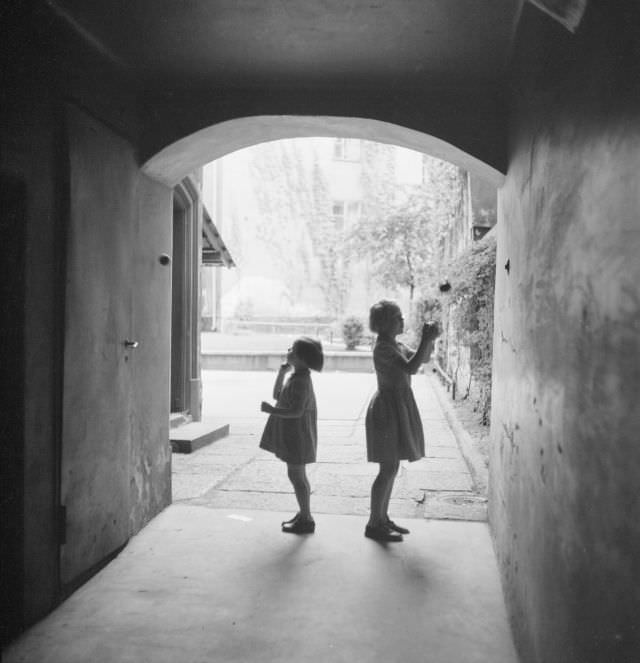
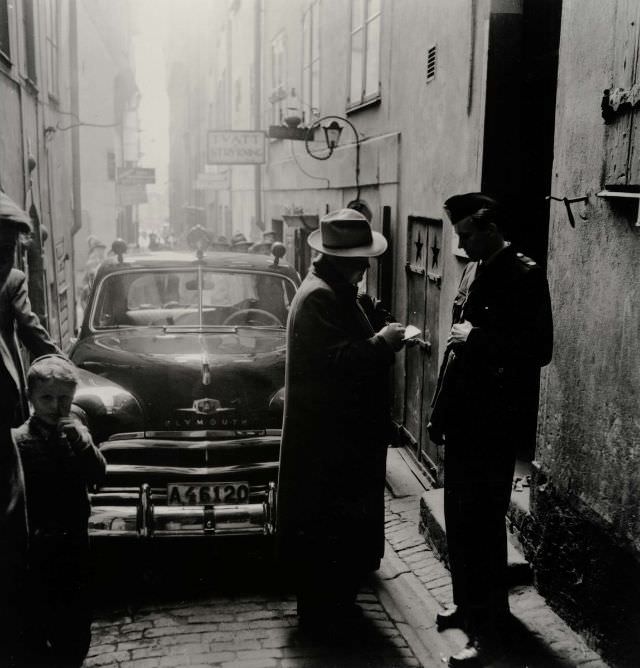
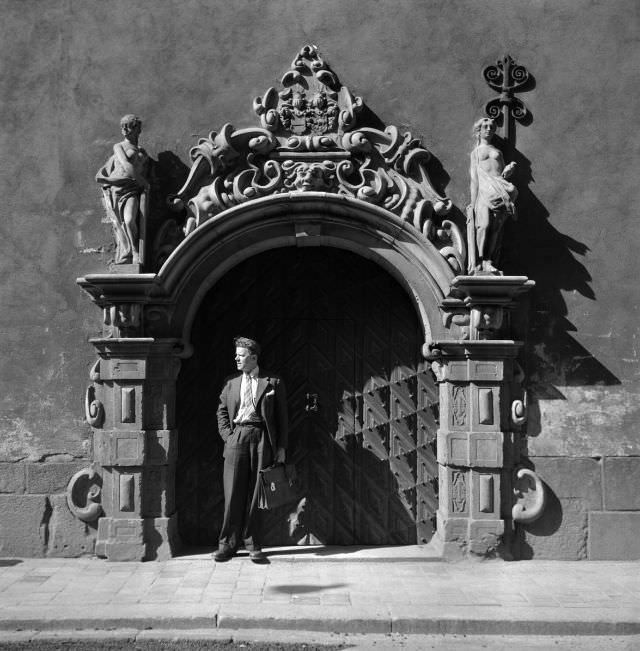
Gamla stan, Stockholm’s Old Town, appeared repeatedly in Edmund’s work. Its narrow vaulted passages and centuries-old stone walls made it unlike any other part of the city. Two little girls threw balls in one of its covered archways. A woman walked through another vault carrying balloons. Crime writer Stieg Trenter, known for his detective novels set in Stockholm, was photographed interviewing a policeman in one of Gamla stan’s dim alleyways — research for fiction drawn straight from real streets.
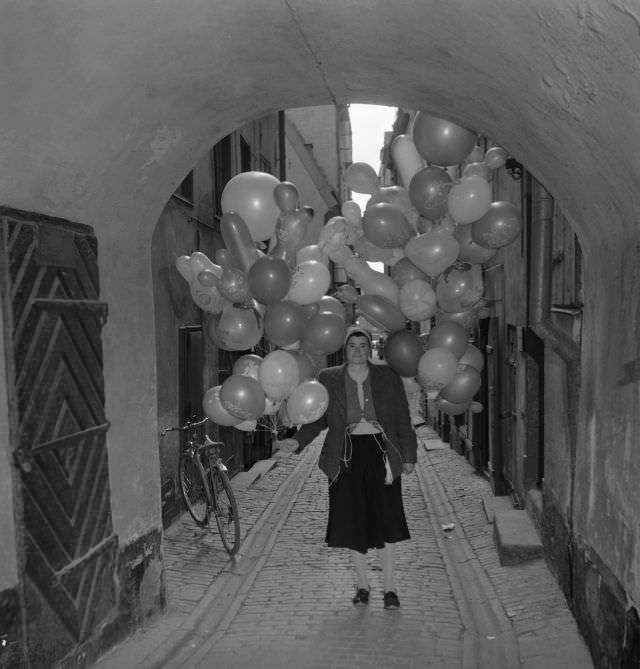
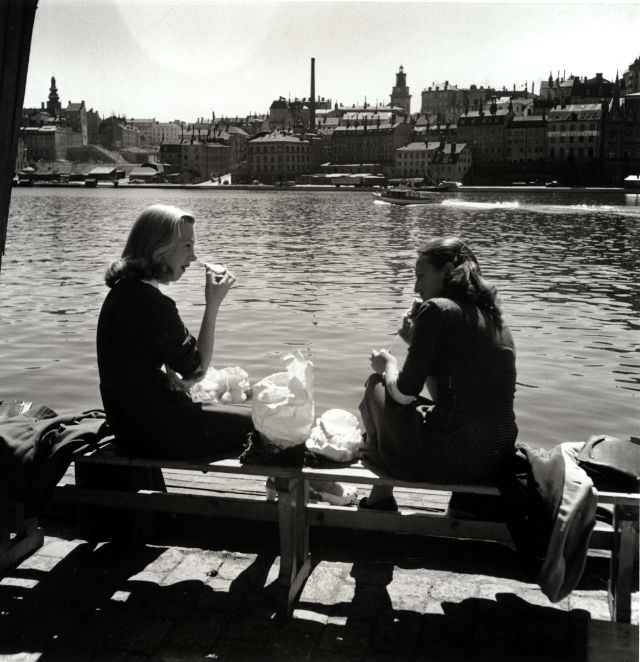
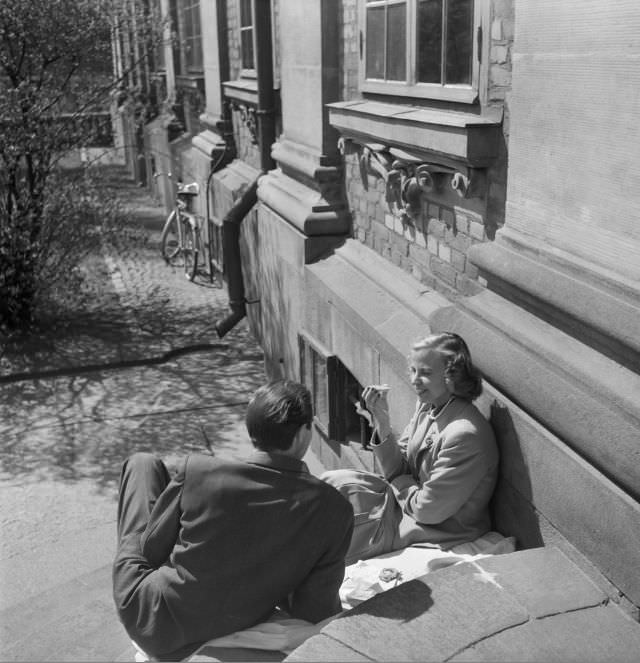
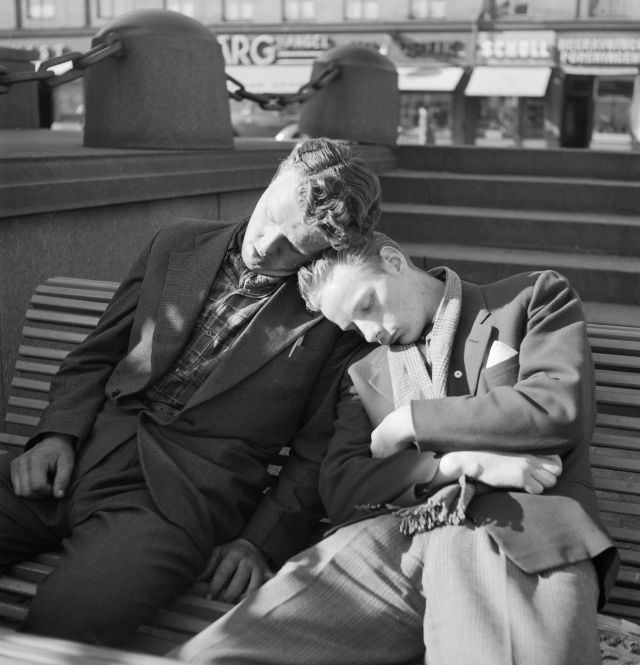
Lunchtime in Stockholm looked like stolen quiet. Office workers ate outdoors at Riddarfjärden when the weather allowed. Two people sat on the steps at Riddarhustrappan with food between them. On sunny days, young men napped at the lock, making the most of any warm hour they could find.
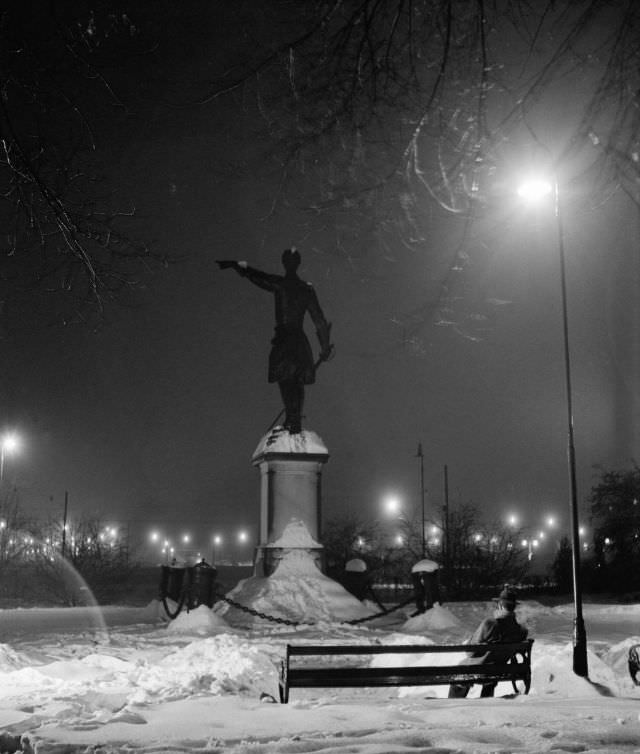
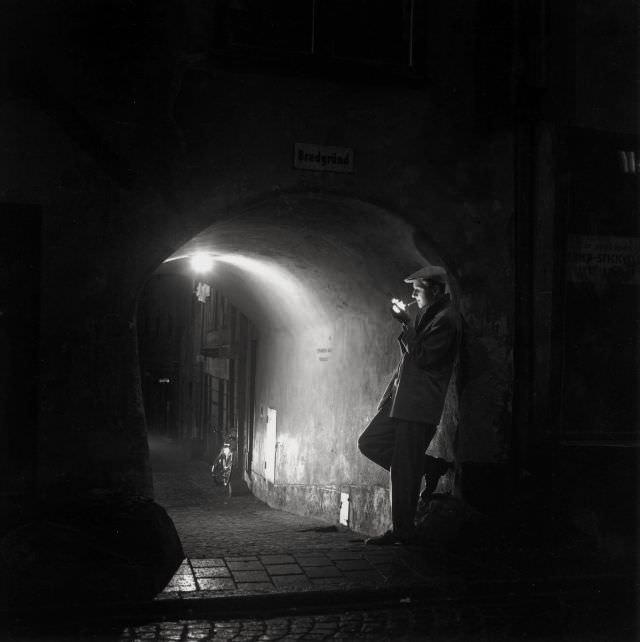
Edmund also captured moments that spoke to the city’s contrasts. A homeless young man rested on a park bench behind Karl XII’s statue in Kungsträdgården, just steps from one of Stockholm’s most prominent public spaces. Nearby, a man lit a cigarette in the narrow Bredgränd lane in Gamla stan — a simple act in an ancient setting.
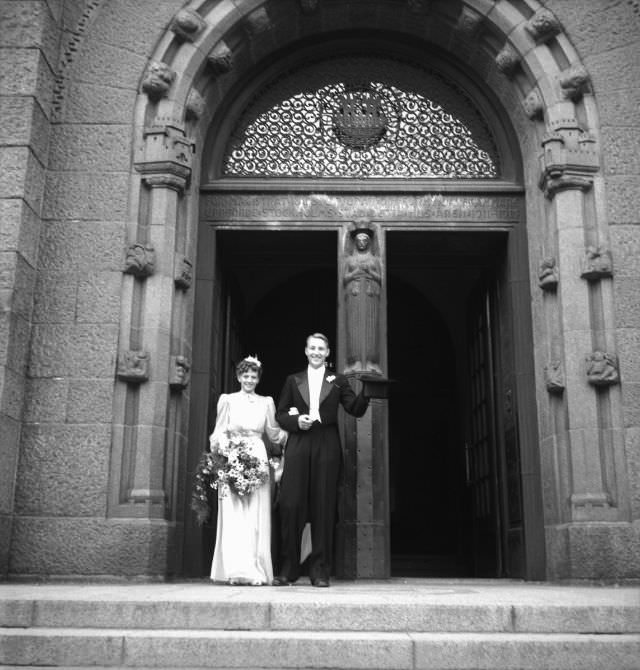
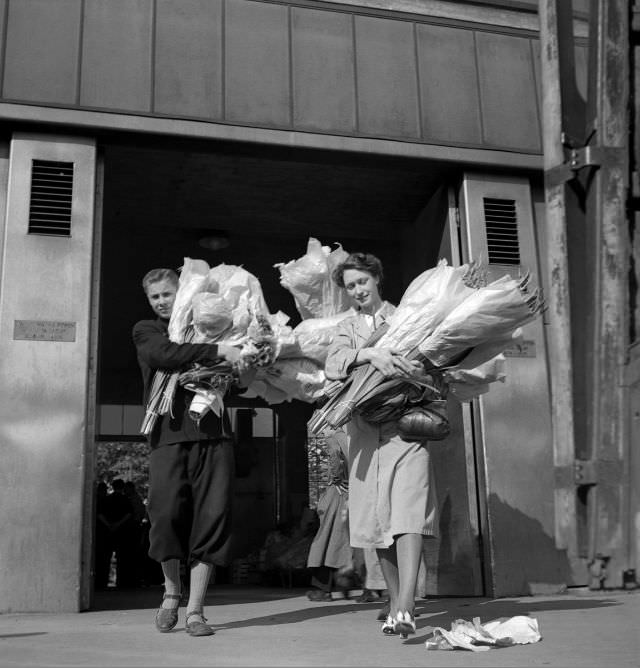
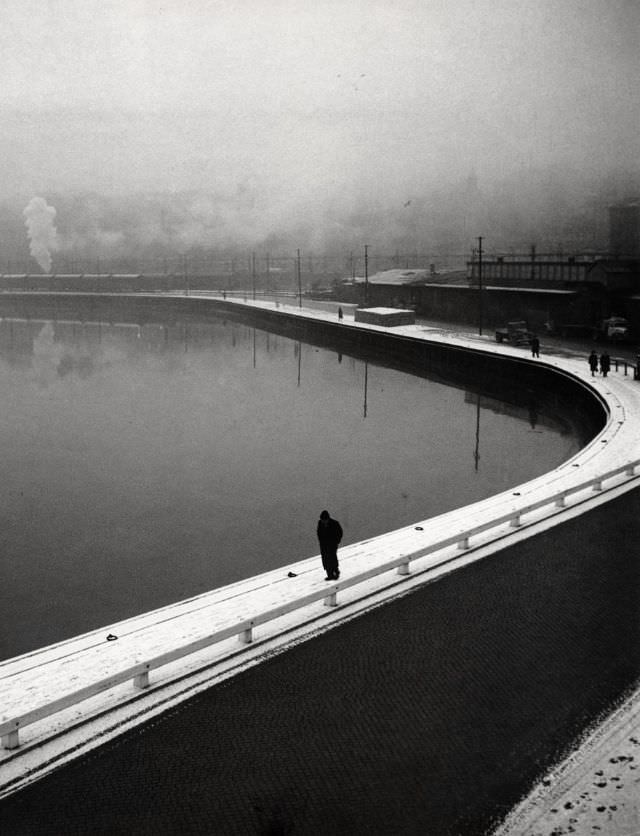
Life’s bigger milestones were there too. Stockholm City Hall, best known today for hosting the Nobel Prize banquet, was also where couples came to marry. Flower sellers outside Klarahallen offered large, fresh bundles to passersby. A lone pedestrian walked through Vintervägenvagen — later renamed Klara Strand — in a quiet corner of the city that few photographs bothered to record.
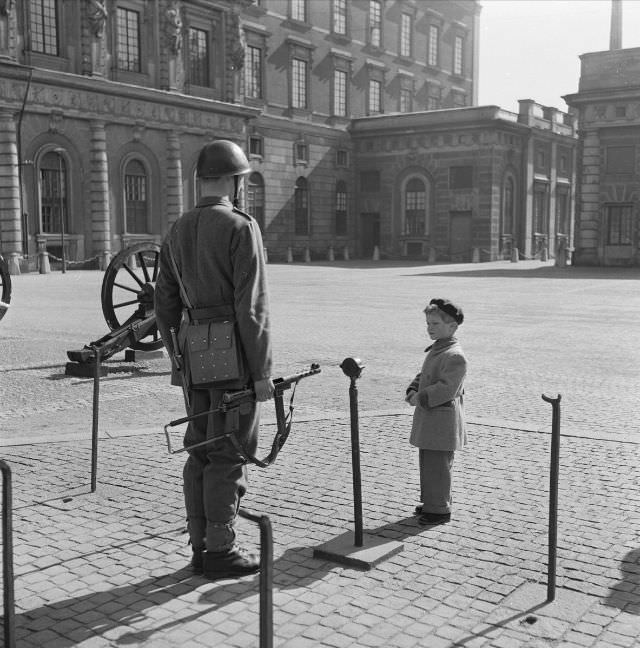
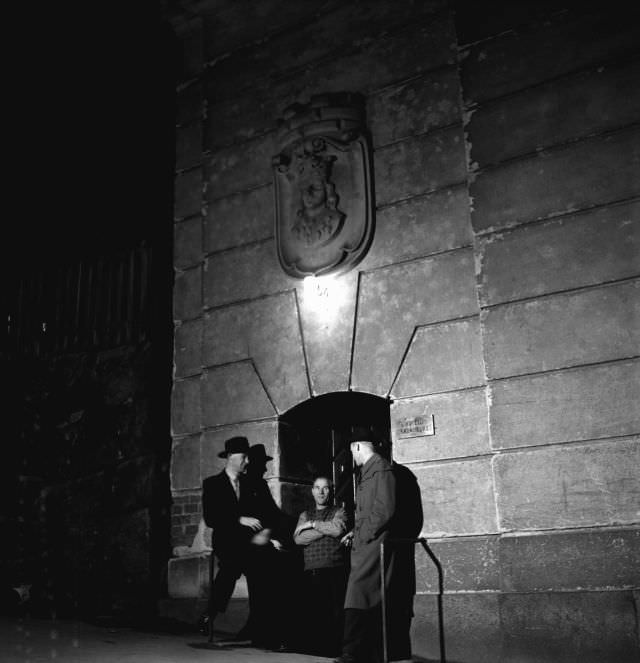
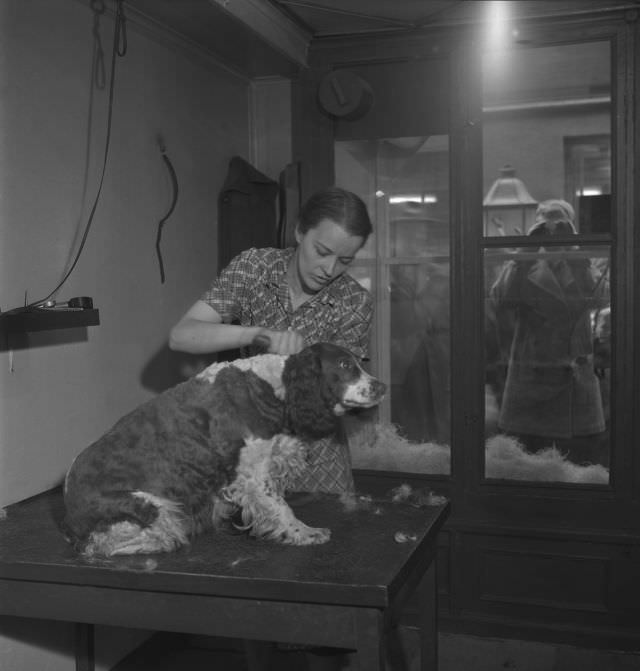
Among the more formal photographs is one of Crown Prince Carl Gustaf — later King Carl XVI Gustaf of Sweden — standing with a guard in the courtyard of Stockholm Castle. He was just a child in the 1940s, and the image places him firmly in the same city all these other photographs inhabit. Three men stood outside the bachelor hotel Kronoberg on Bergsgatan in Kungsholmen, a building that housed men living alone in the city. A woman brushed her dog in one of the quieter domestic moments Edmund chose to photograph.
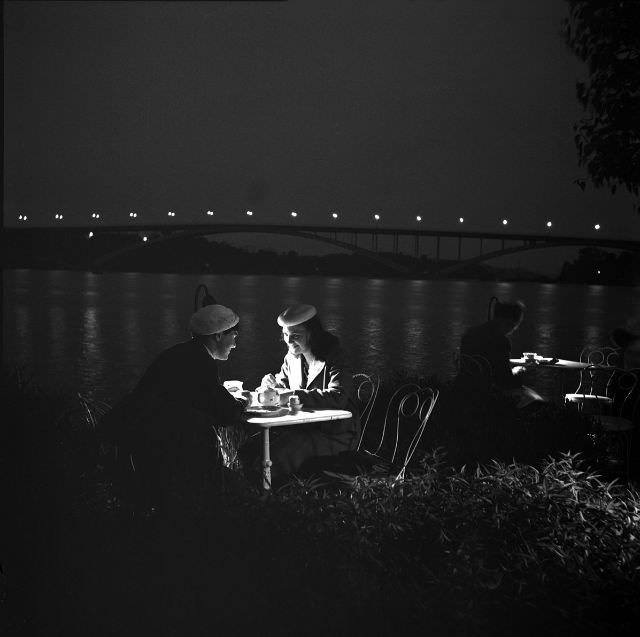
Two women sat at a table on an outdoor terrace along North Mälarstrand as evening light settled over the water. That image — like so many of Edmund’s — holds something specific: a place, a time, a mood that no written description quite replaces. These photographs are the closest thing to being there.





I had not pointed the mouth of the k-piste towards the Crown Prince!
What an ideal society they had then.
The Vipeholm experiments began in 1945.
It was fun that the outdoor cafes were not over-regulated
Very interesting! Thanks for sharing this
A story about the bike delivery guy appeared in the newspaper a year or so ago, I think in The Daily News. He is still alive and was surprised to see his young self in a picture.
The picture of the current king was fantastic.
Nice Photos Thanks for sharing…..
Nice Photos Thanks for sharing…..