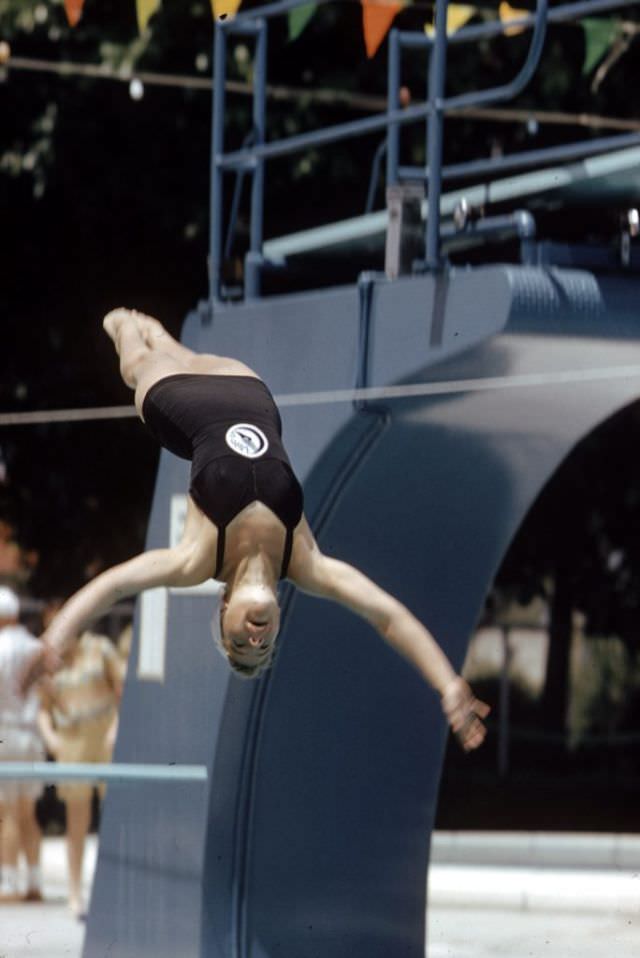
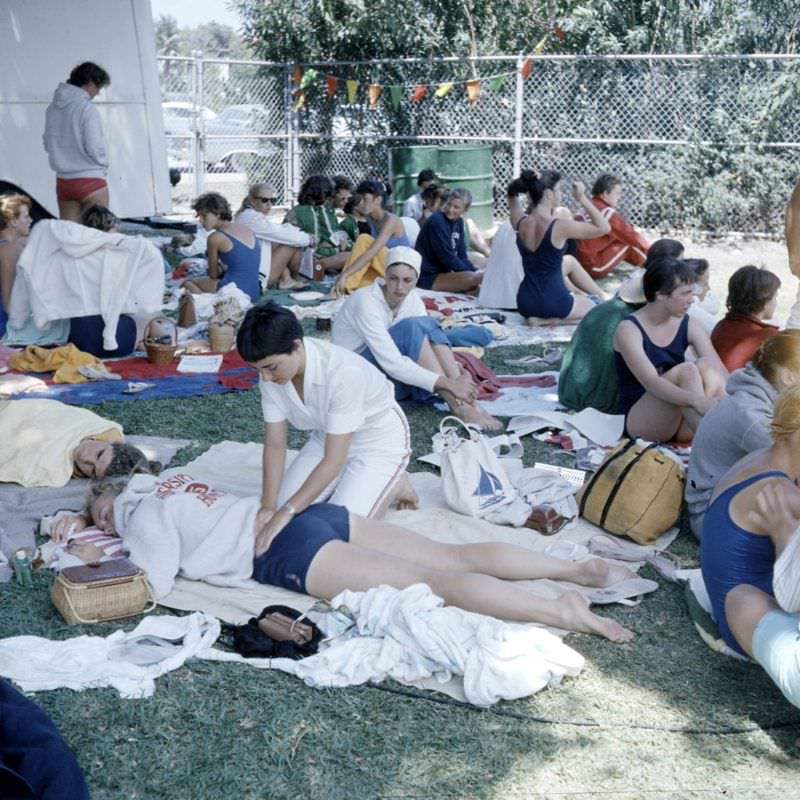
In the summer of 1959, Palm Beach, Florida played host to the Amateur Athletic Union’s Women’s Swimming and Diving Championships. The AAU was the governing body for amateur athletics in the United States at the time, and its annual championships drew competitors from across the country. Around 200 girls and young women made the trip to compete at what was one of the most prestigious meets on the national calendar.
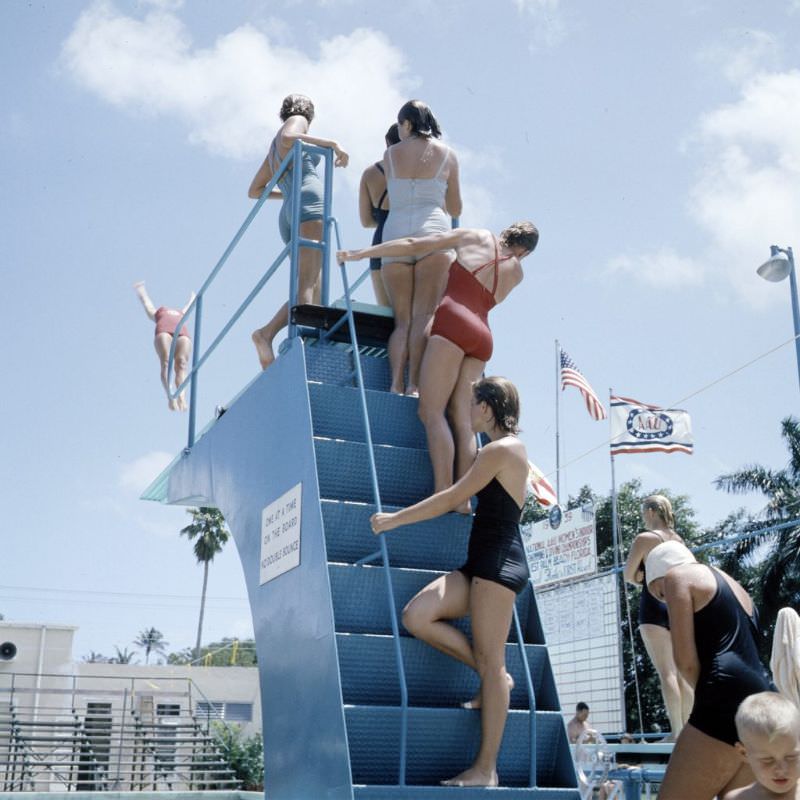
The event had originally been planned as an indoor competition, but the Florida heat forced organizers to move everything outside. That decision gave the meet an open, sunlit atmosphere that was a far cry from the dim, echo-filled natatoriums typical of indoor championships. The outdoor setting also gave photojournalist Peter Stackpole the natural light he needed to shoot the vivid color photographs he became known for.
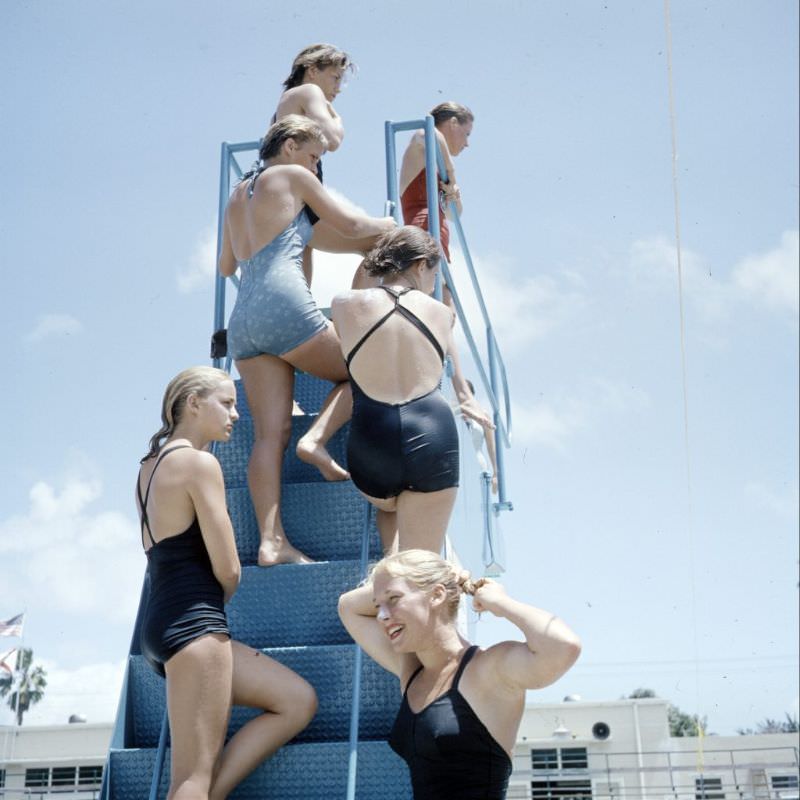
Stackpole was a staff photographer for LIFE magazine and one of the most accomplished photojournalists of his generation. At Palm Beach, he turned his camera toward the divers with the same sharp eye he brought to every assignment. His images from the meet are striking — full of color, motion, and the precise geometry of bodies suspended in midair.
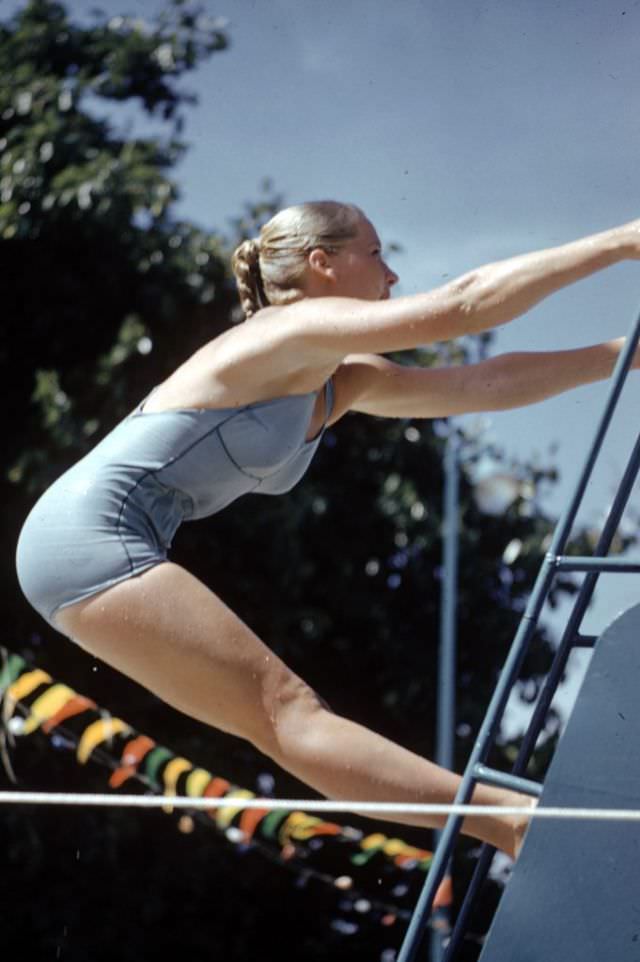
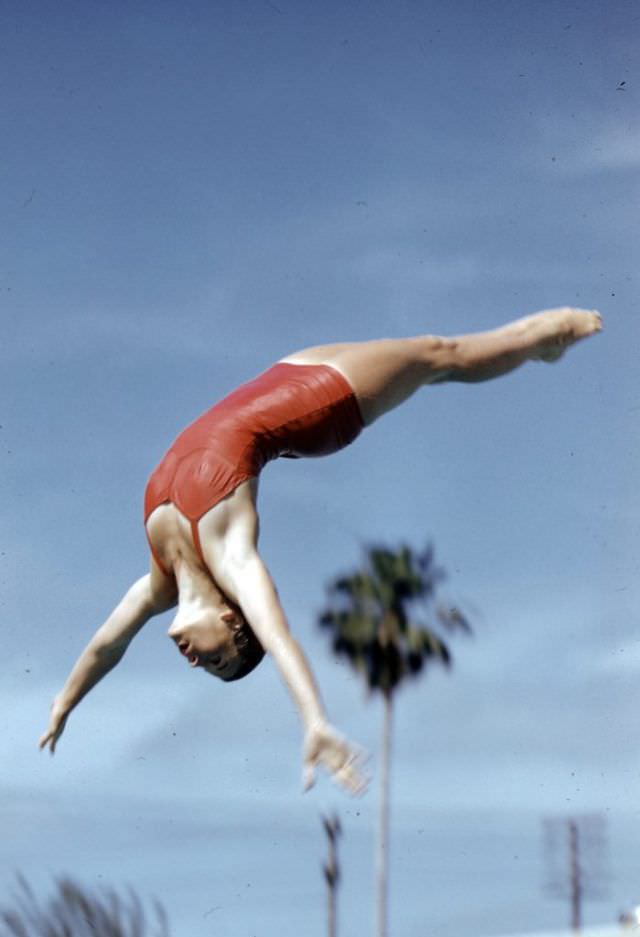
The competitors wore modest one-piece bathing suits standard for women’s athletic competition in the 1950s. These were a world away from the sleek, performance-focused suits worn by competitive swimmers and divers today. Despite the difference in gear, the athleticism on display was unmistakable. The dives required the same strength, timing, and body control that national-level competition demands in any era.
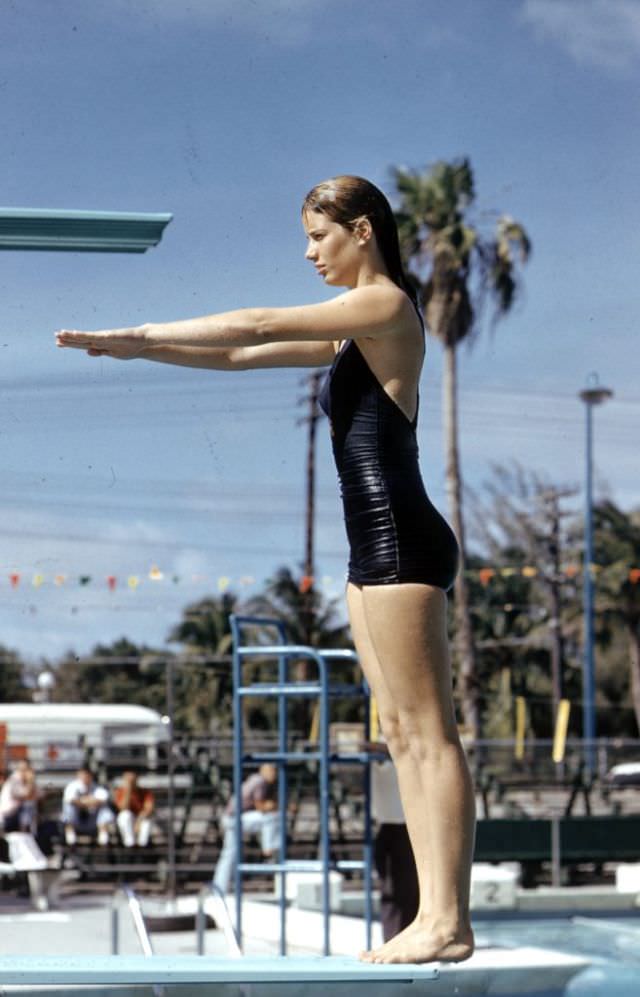
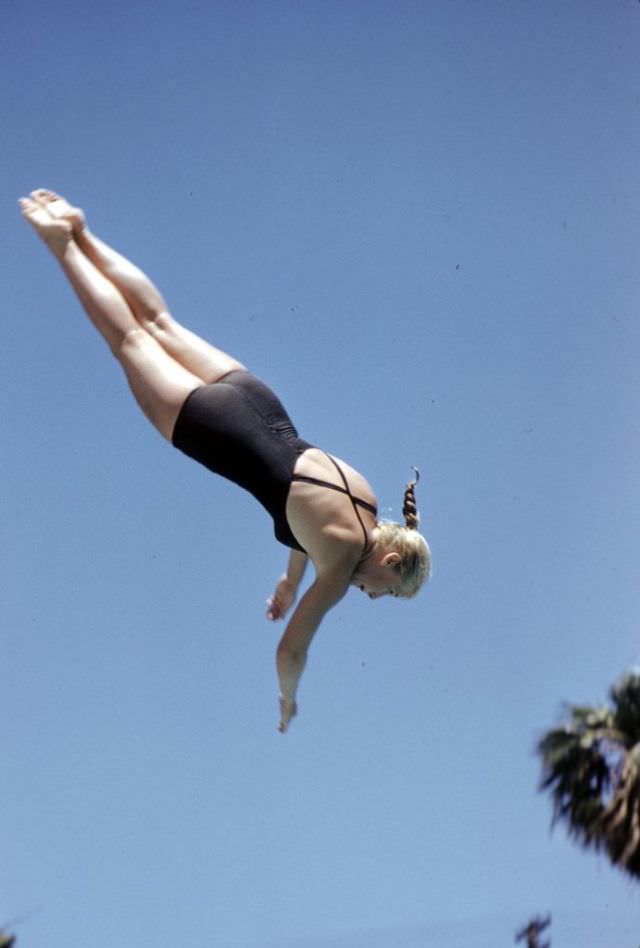
Stackpole did not document the names of the athletes he photographed, nor did he record which events took place or who won. His focus was purely visual — catching the arc of a dive, the splash of entry, the concentration on a competitor’s face before she left the board. As a result, the women in these photographs remain anonymous, their individual records lost to time even as their images survive.
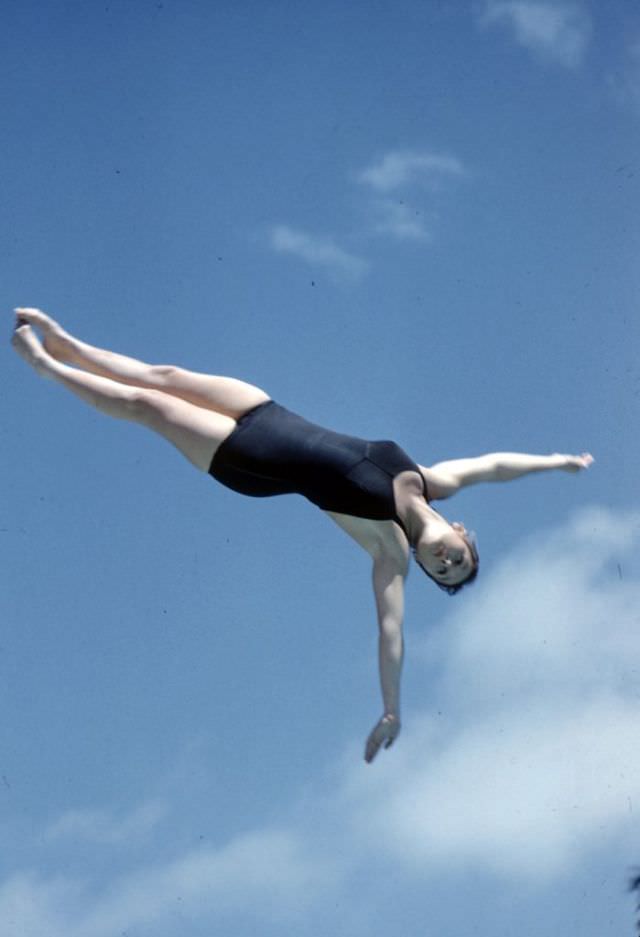
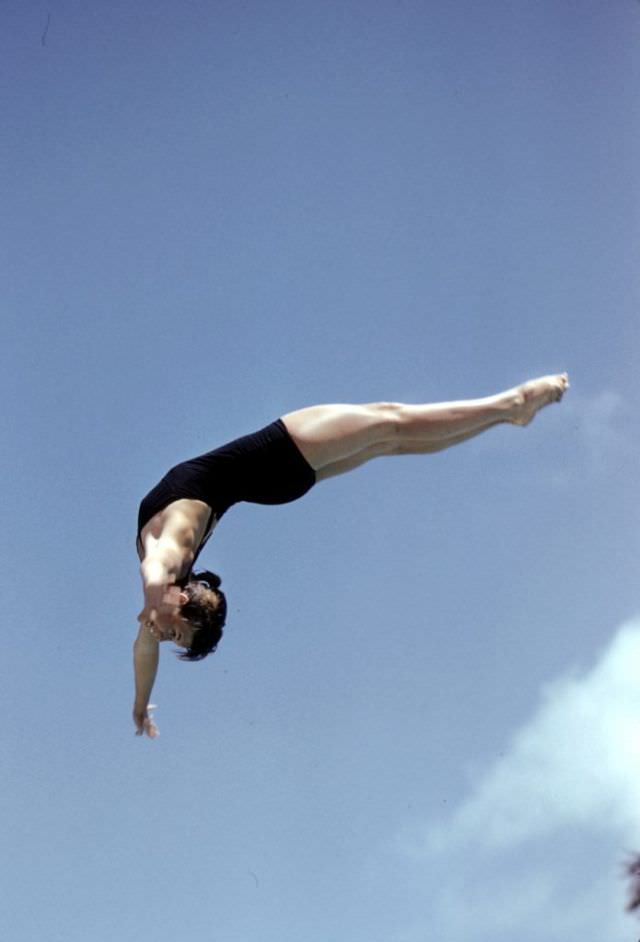
Women’s competitive diving in 1959 was a serious sport with a well-established rulebook. Judges scored each dive based on its degree of difficulty and the quality of execution — takeoff, flight position, and entry into the water. A clean vertical entry with minimal splash was the mark of a skilled diver, and competitors trained for months to perfect just a handful of dives.

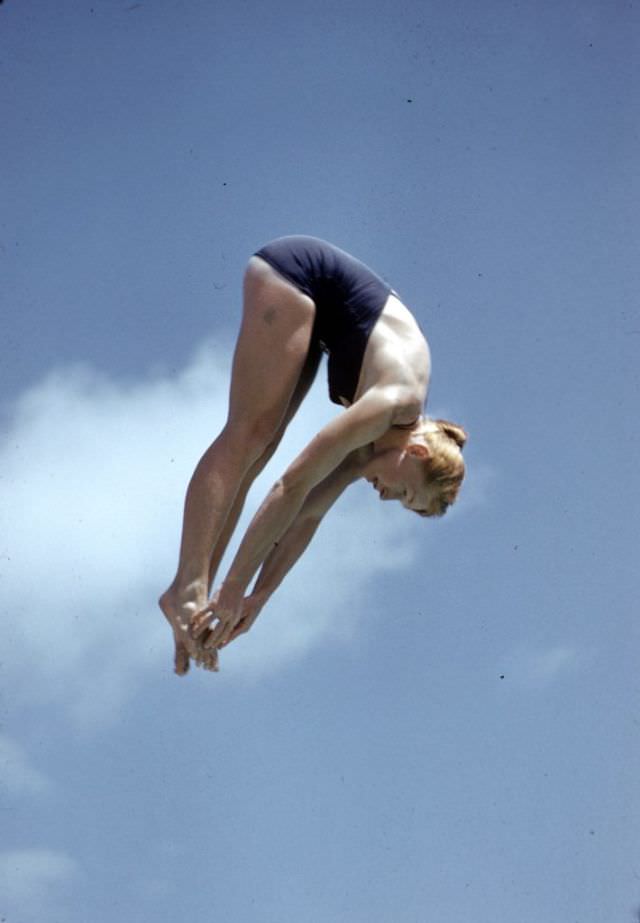
The AAU championships were the top rung of amateur competition in the country. For many athletes, placing well at this meet was a direct path toward consideration for international teams, including Olympic squads. The 1960 Rome Olympics were just a year away when these women competed in Palm Beach, making the stakes at the 1959 championships particularly high.
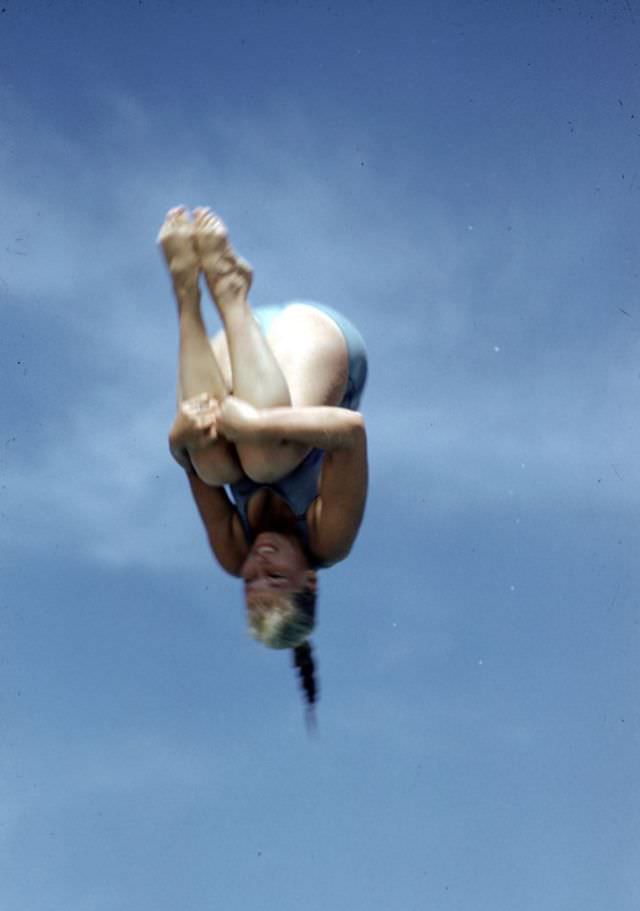
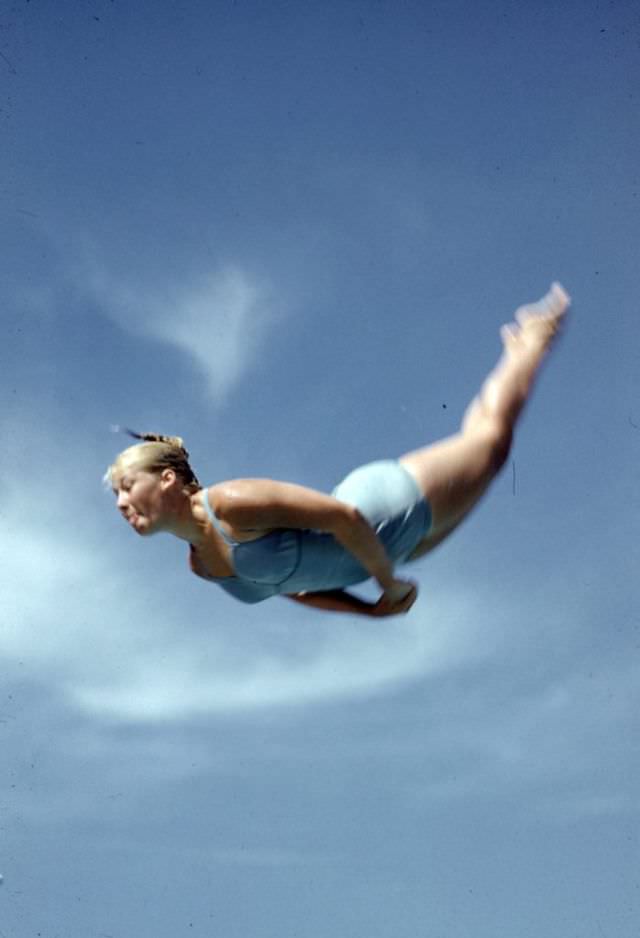
Stackpole’s photographs capture moments that official scorecards never could. A judge’s scorecard records a number. A photograph records the actual human effort behind it — the tuck of a knee, the stretch of an arm, the split second of freefall before a diver hits the water. Together, his images from Palm Beach form one of the few detailed visual records of women’s competitive diving at the national level from this period.
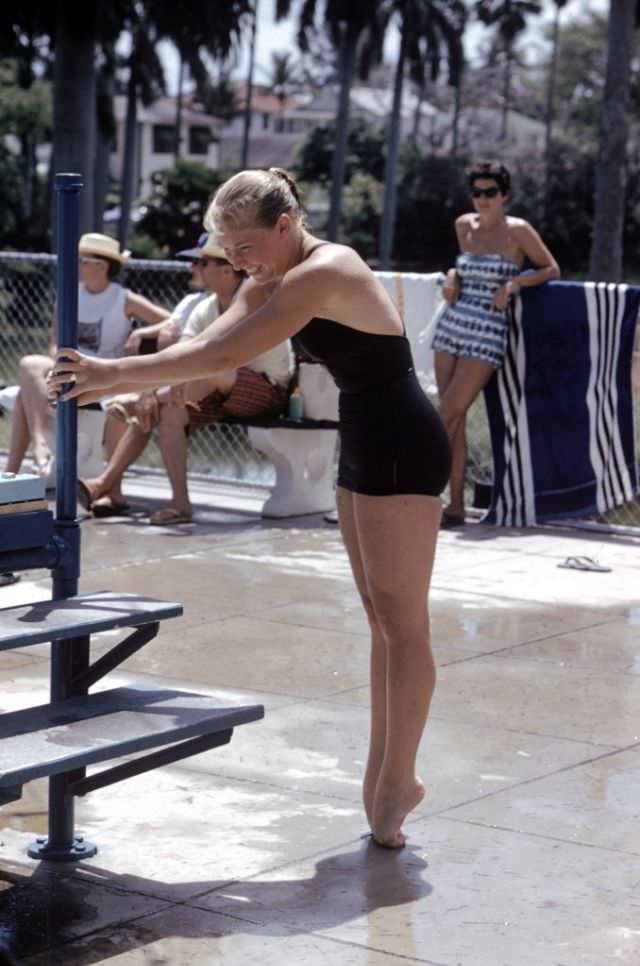
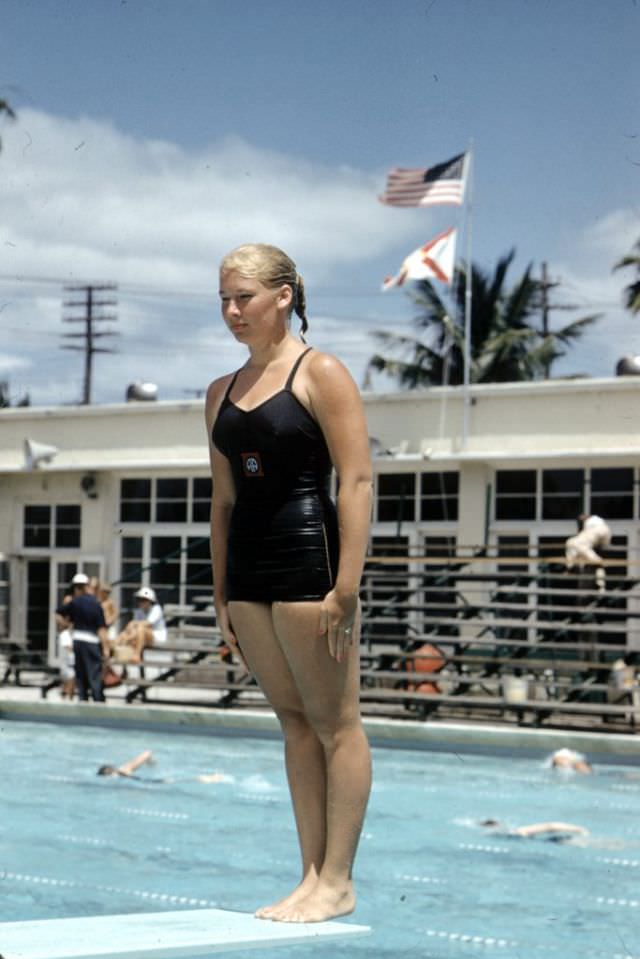
What these photographs make clear is that elite diving looked much the same in 1959 as it does today. The boards, the pool, the suits, and the rules have all changed in various ways over the decades. The fundamental challenge — launching from a platform, controlling your body through the air, and entering the water cleanly — has not. The athletes at Palm Beach met that challenge in front of judges, competitors, and a LIFE magazine camera that preserved the moment for good.