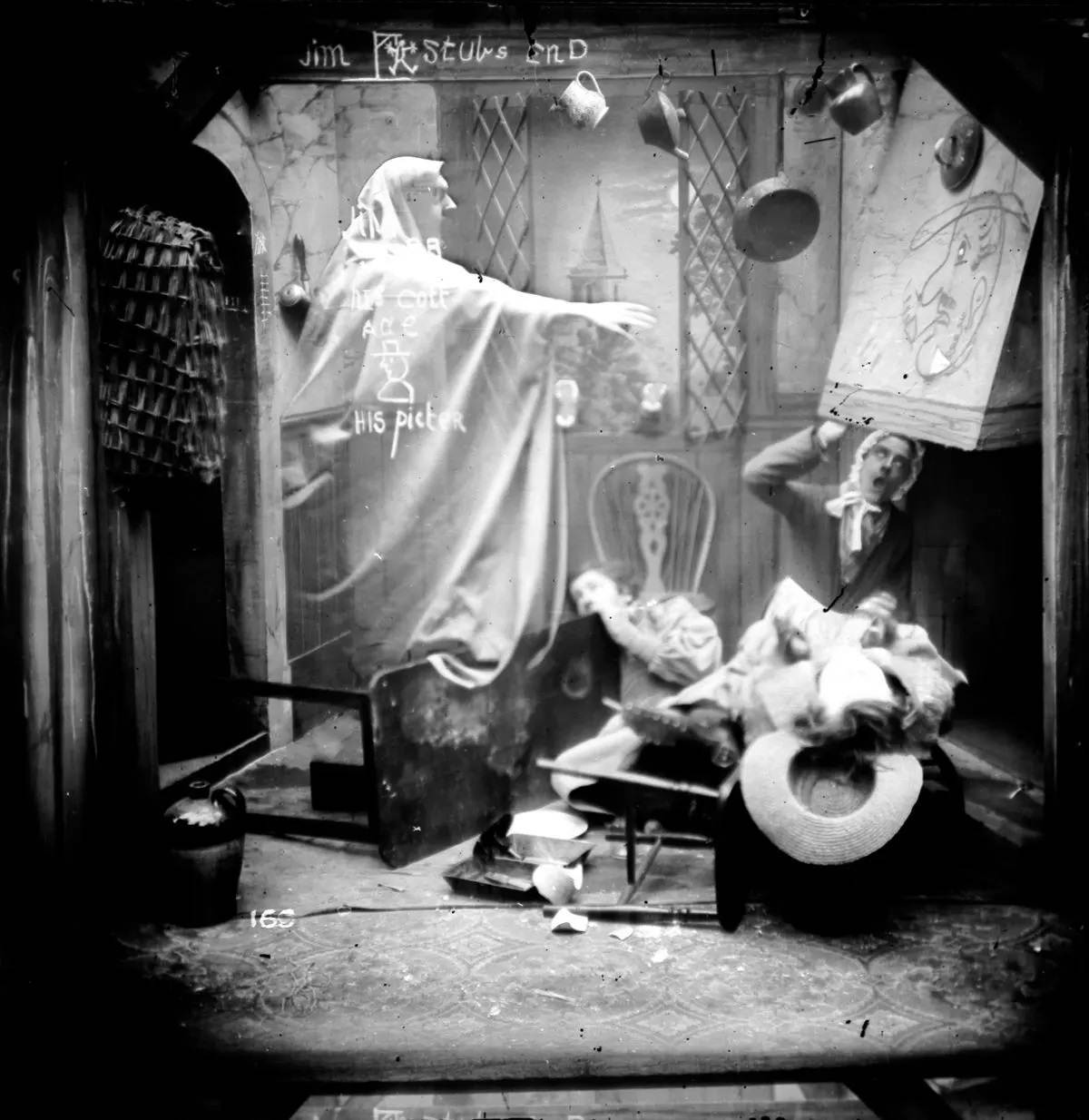
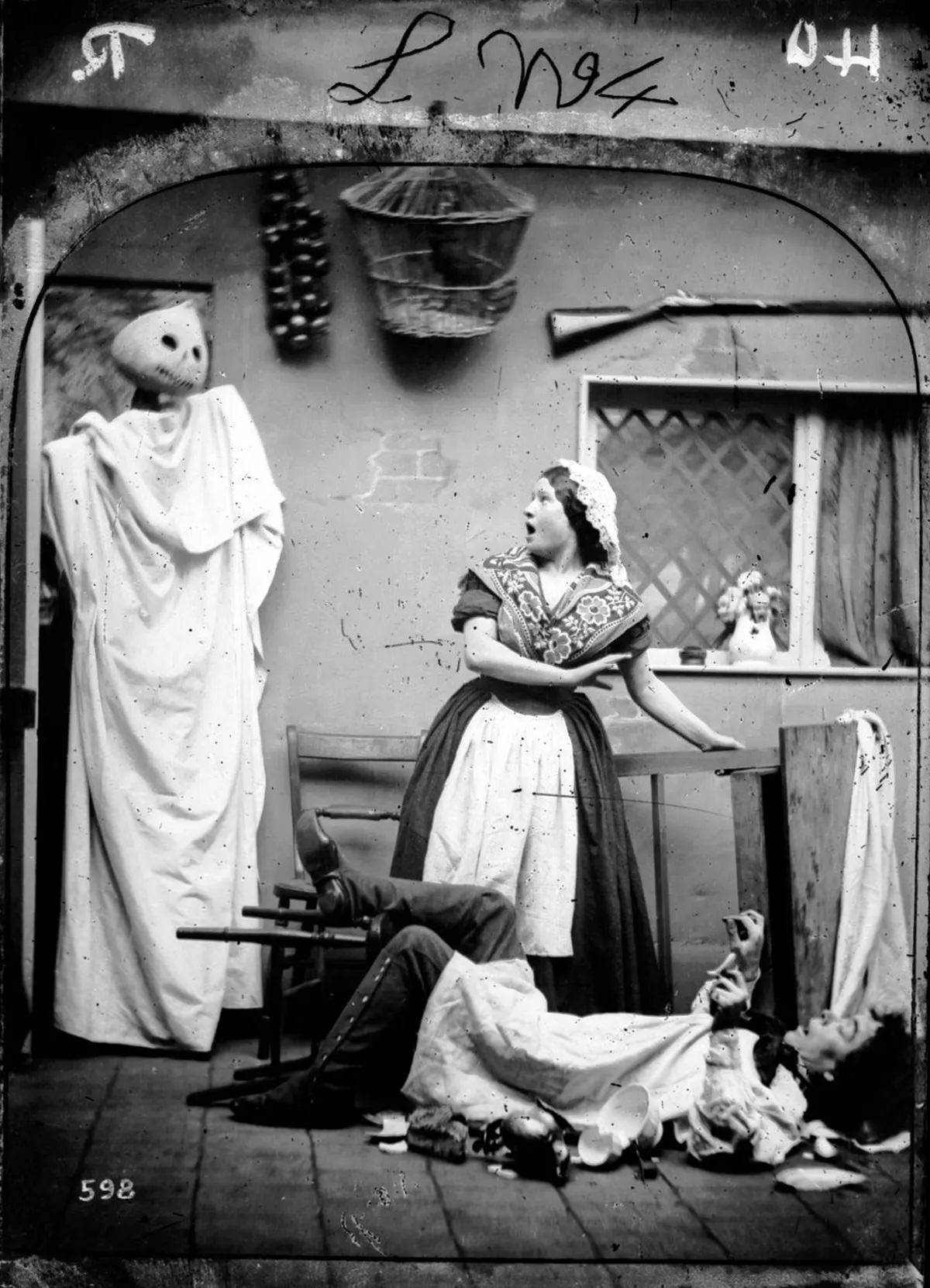
In the mid-1800s, a strange new obsession took hold across Europe and the United States. Spiritualism — the belief that the living could communicate with the dead — was spreading fast, and photographers saw an opportunity. They told grieving families something remarkable: for the right price, the camera could capture not just the living, but the dead standing right beside them.
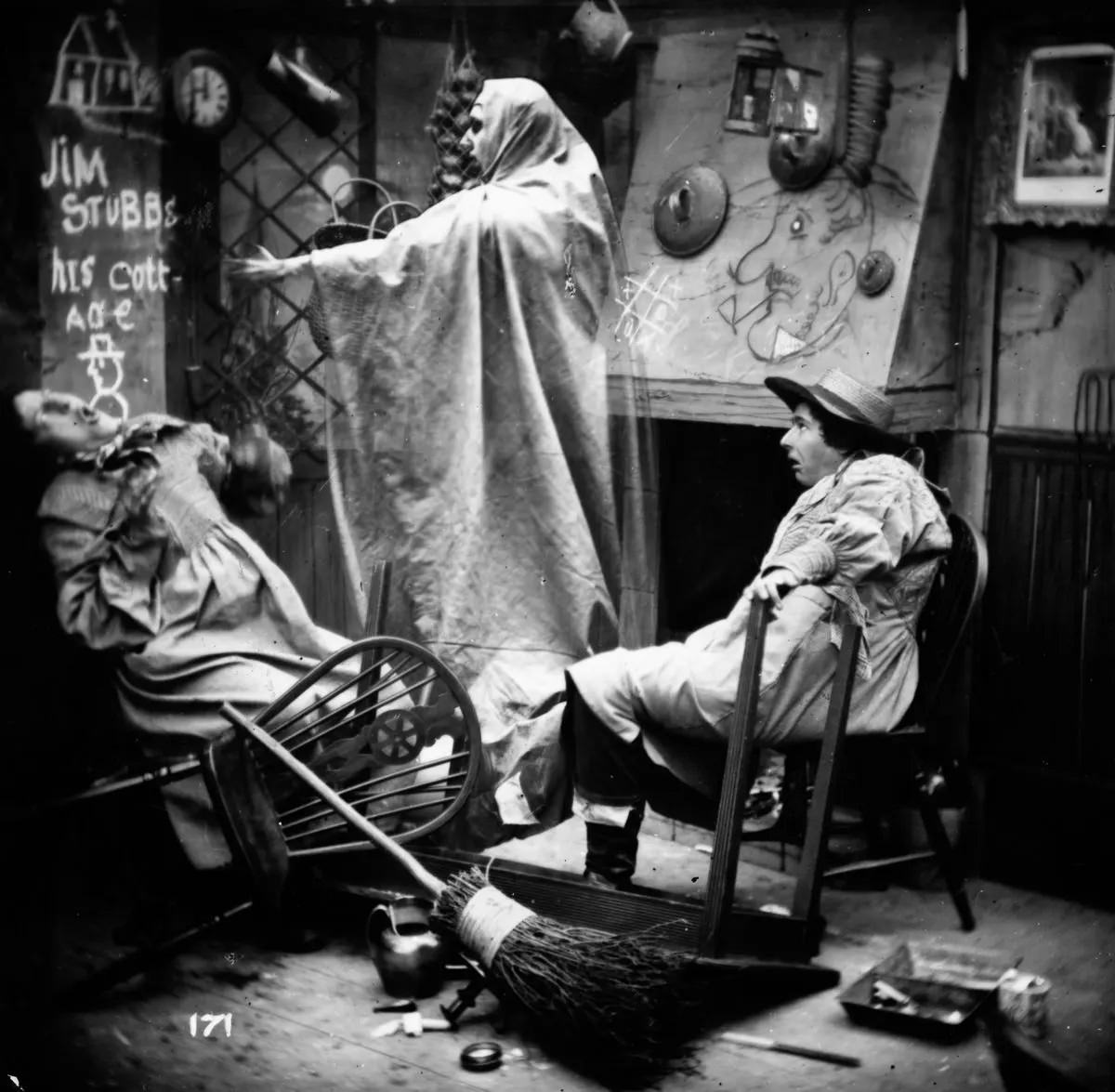
The spirit photography movement grew directly out of this spiritualist wave. Photographers advertised their ability to produce portraits where deceased loved ones would appear alongside the living sitter in a single frame. Families who had lost children, spouses, or parents were the primary customers. The images gave them something tangible to hold onto — or so they believed.
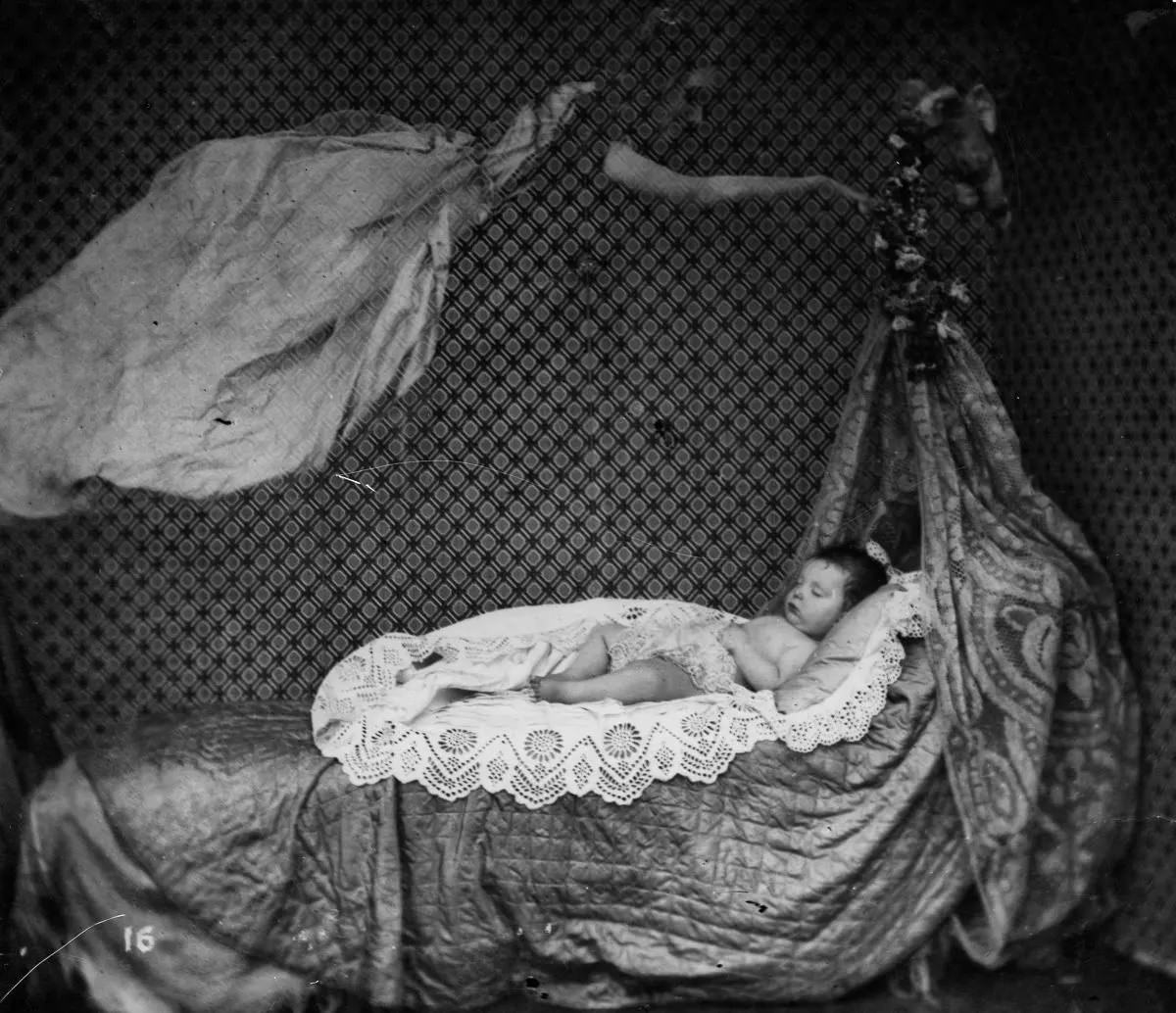
The London Stereoscopic Company was one of the key players in producing and selling these images. They packaged the photographs as stereographic cards — pairs of nearly identical images printed side by side. When viewed through a special handheld device called a stereoscope, the two images merged into one and appeared three-dimensional. The ghostly figures seemed to float in real space, which made them even more convincing and unsettling.
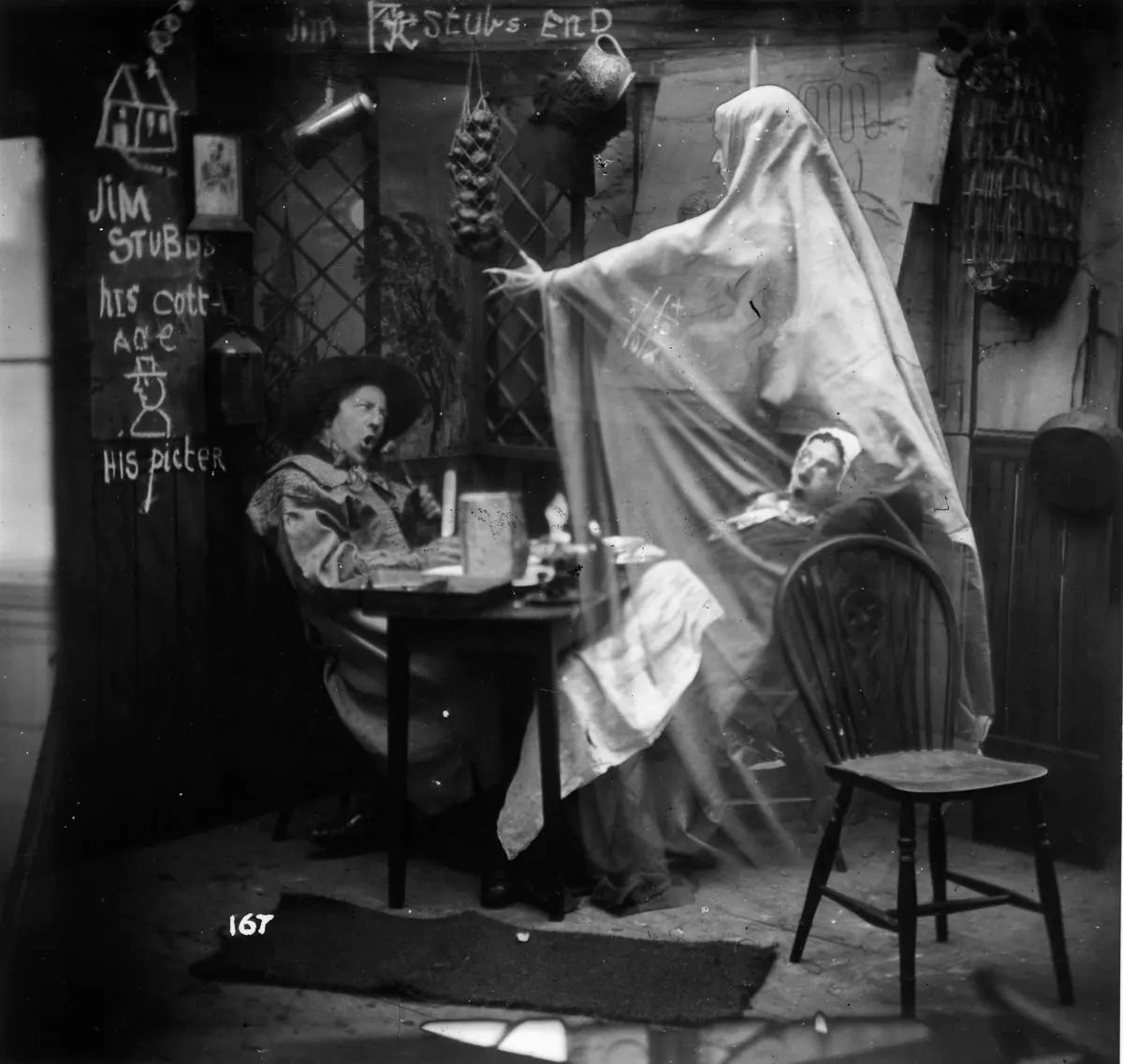
None of the ghosts were real. Photographers used a range of darkroom tricks to manufacture the apparitions. The most common method was the double exposure — exposing the same photographic plate twice. A figure dressed in pale, flowing clothing would be photographed first, and then the portrait sitter would be photographed on the same plate. The result was a translucent, ghostly form hovering over or beside the living person.
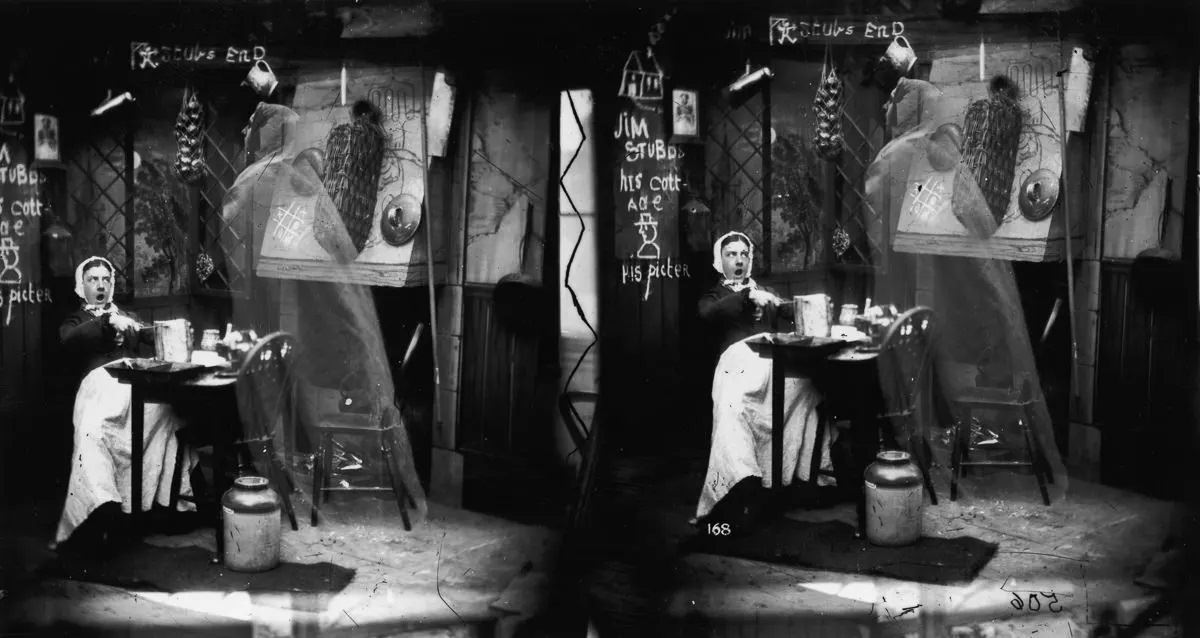
The ghostly figures varied widely in appearance from one photograph to the next. Some looked startlingly lifelike — a spirit with solid arms wrapped around the shoulders of a seated subject, appearing almost physical. Others were barely there: thin, wispy shapes that resembled drifting smoke or cotton, faint outlines hovering at the edges of the frame.
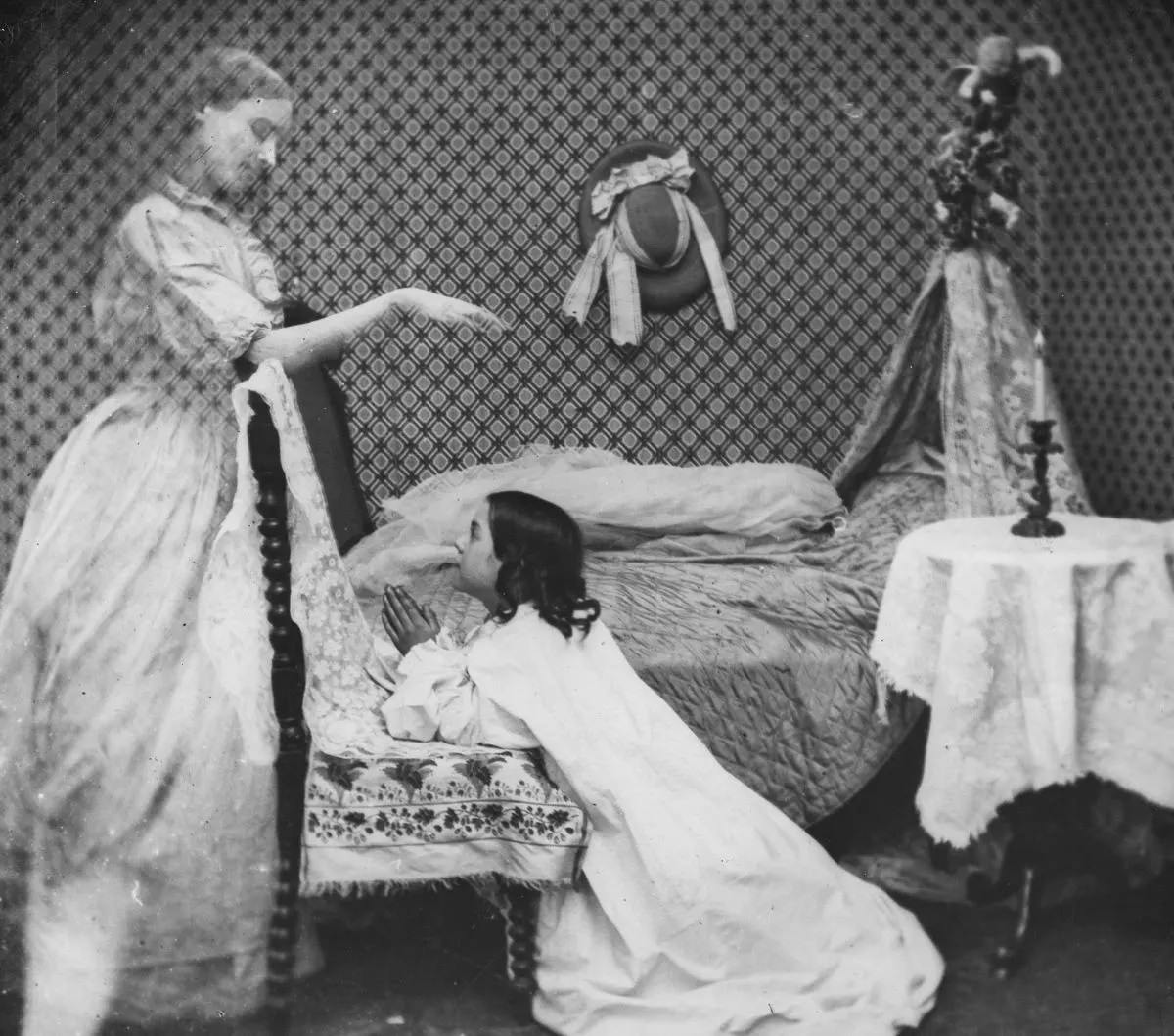
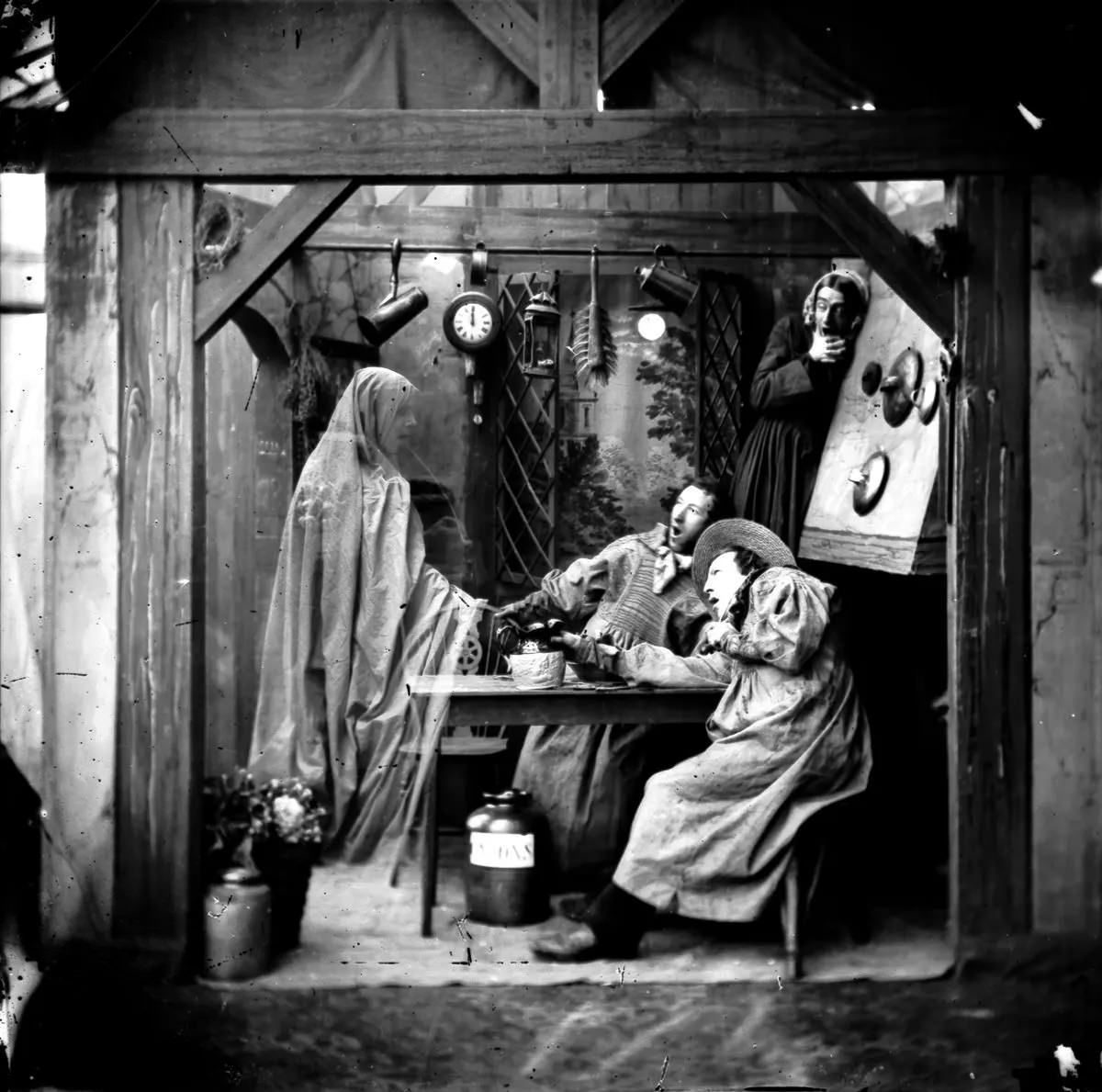
By the 1860s, some photographers abandoned the long exposure and double exposure methods entirely. Instead, they cut faces and full figures out of magazines and newspapers, then incorporated those cutouts directly into the photographic setup. The technique was faster and cheaper, and to an untrained eye, the results were just as eerie. A recognizable face clipped from a printed page could be passed off as the spirit of a specific deceased person.
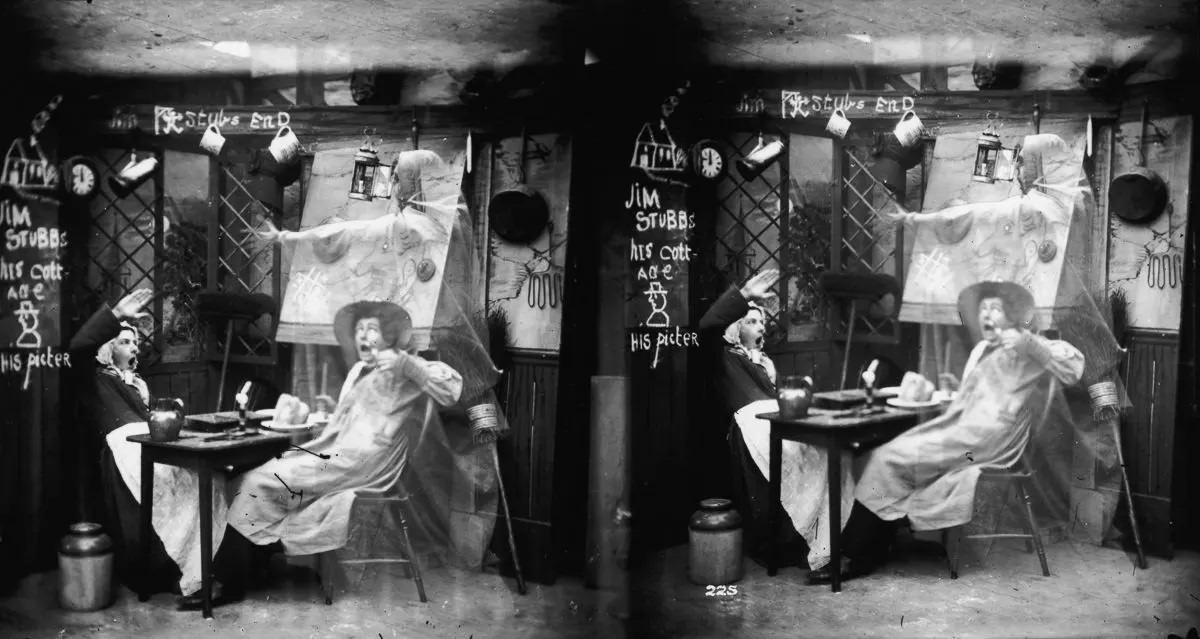
The 1880s brought a major shift. Camera technology improved and prices dropped, meaning more ordinary people owned cameras for the first time. Spirit photography boomed alongside personal photography. With more practitioners came more variety in technique and more competition to produce the most convincing ghost images on the market.
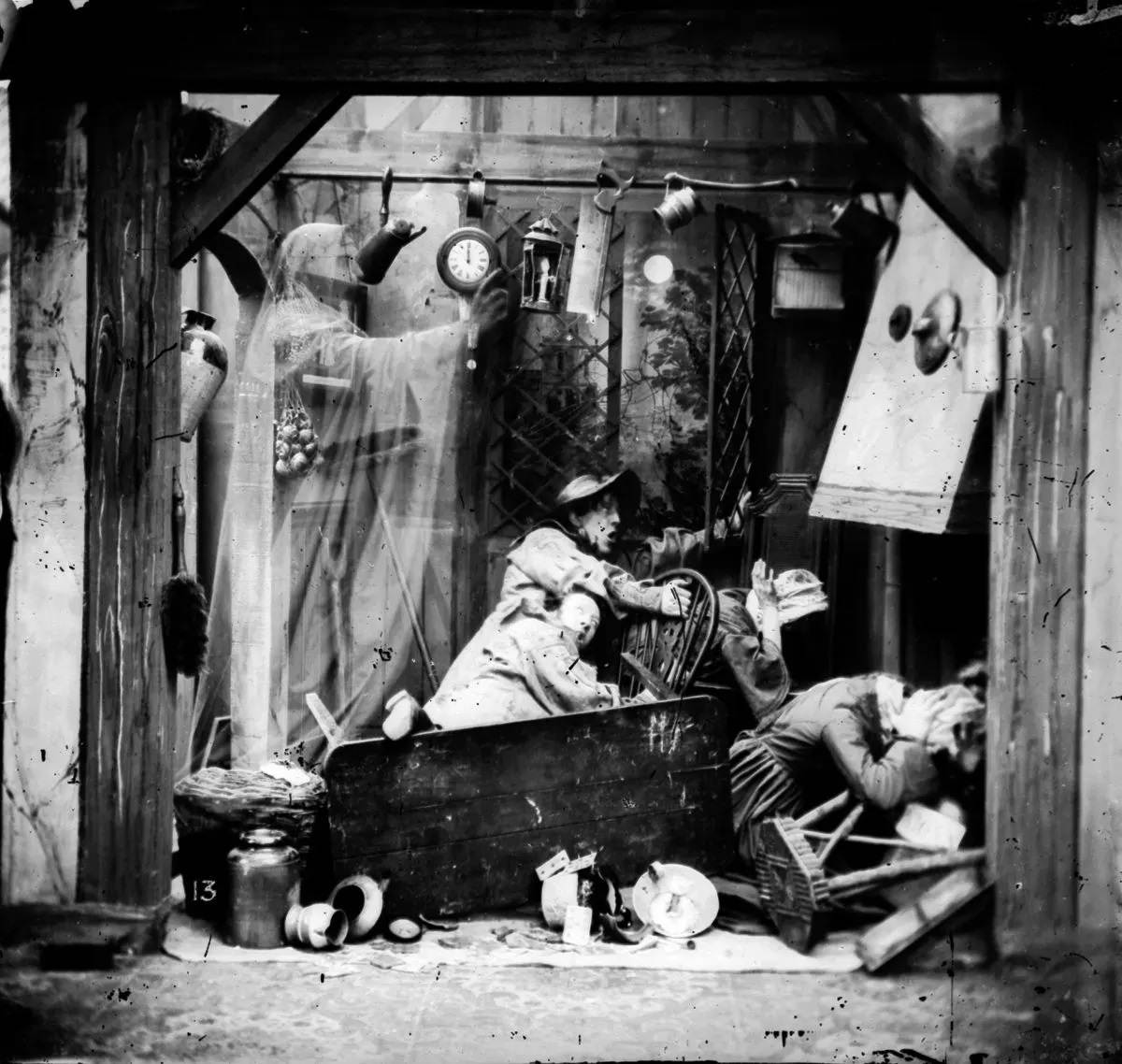
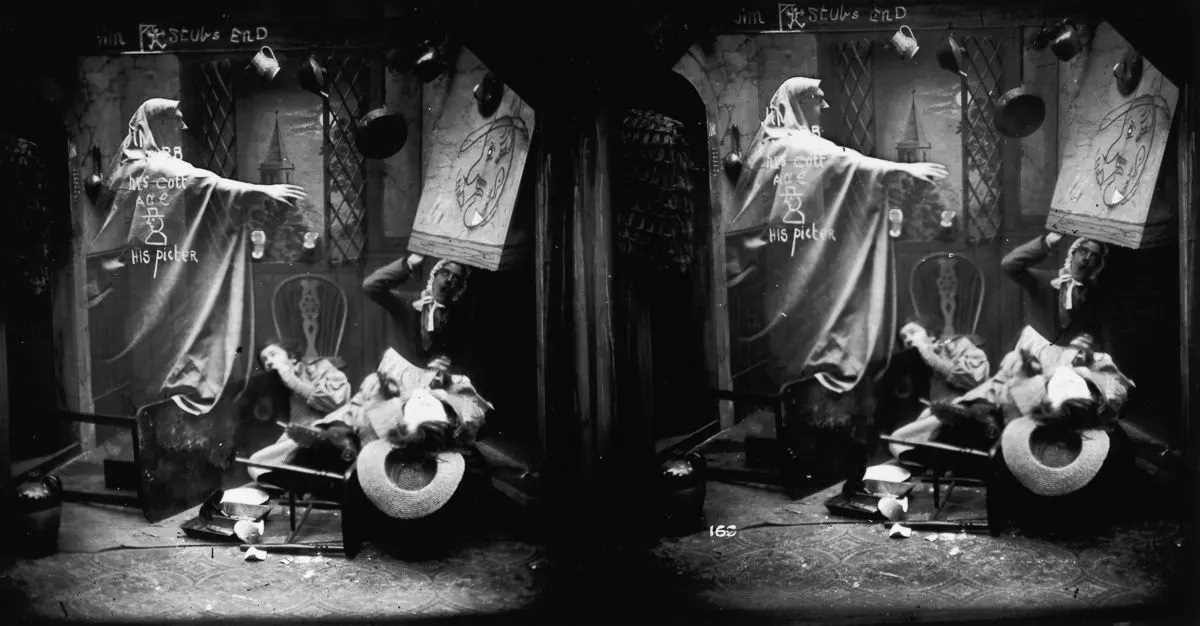
The photographs were sold widely and collected by true believers and curious skeptics alike. For those deep in grief, a spirit photograph offered comfort that science could not. The idea that a camera — a machine based on light and chemistry — had objectively recorded a ghost made the image feel like proof rather than performance.
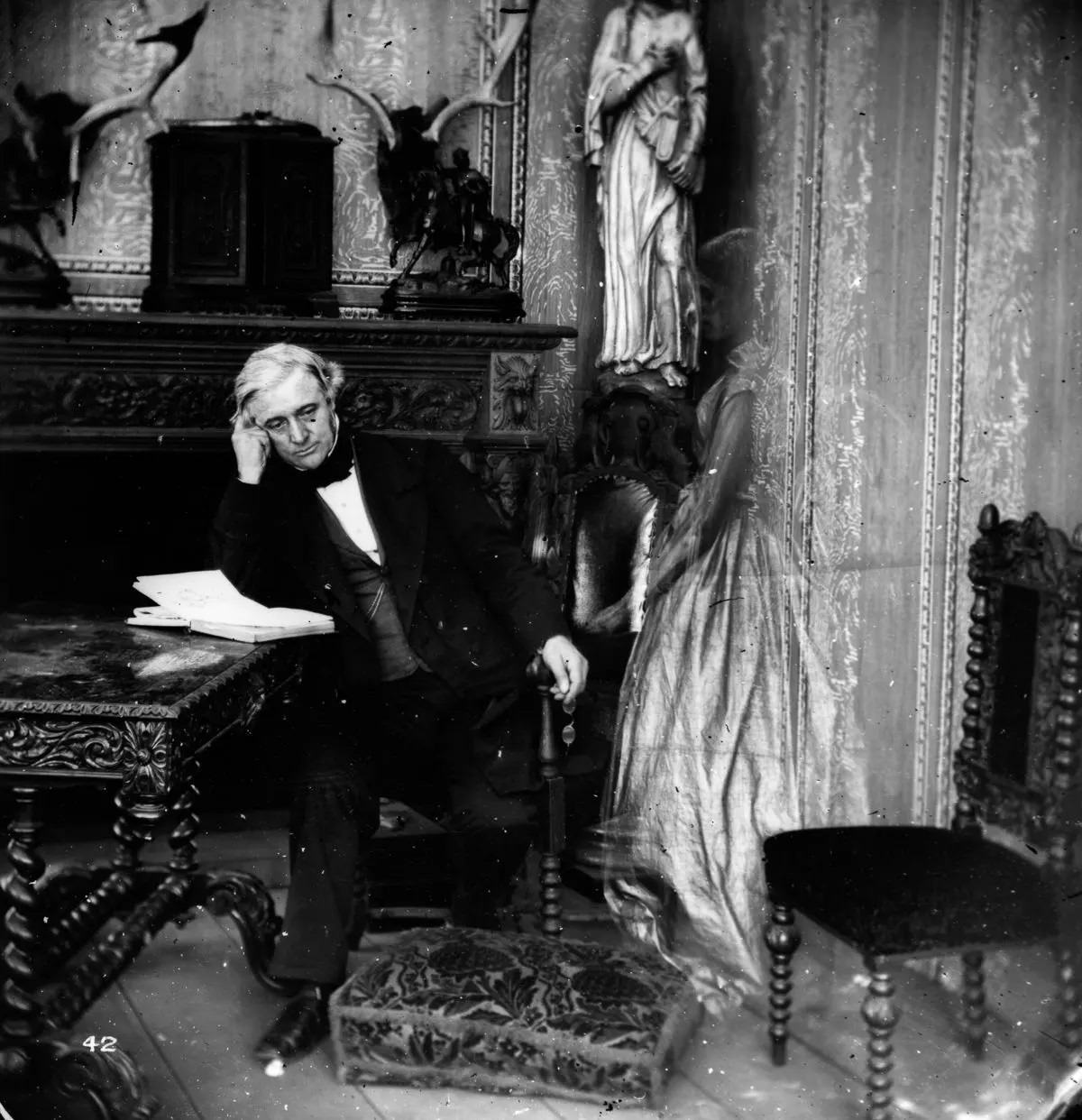
Not everyone was fooled. Skeptics examined the photographs closely and began identifying the tricks behind them. Repeated ghost figures turned up in unrelated photographs, suggesting the same physical prop or cutout was being reused across different sittings. Some spirits were traced back to their source — a face lifted directly from a newspaper portrait.
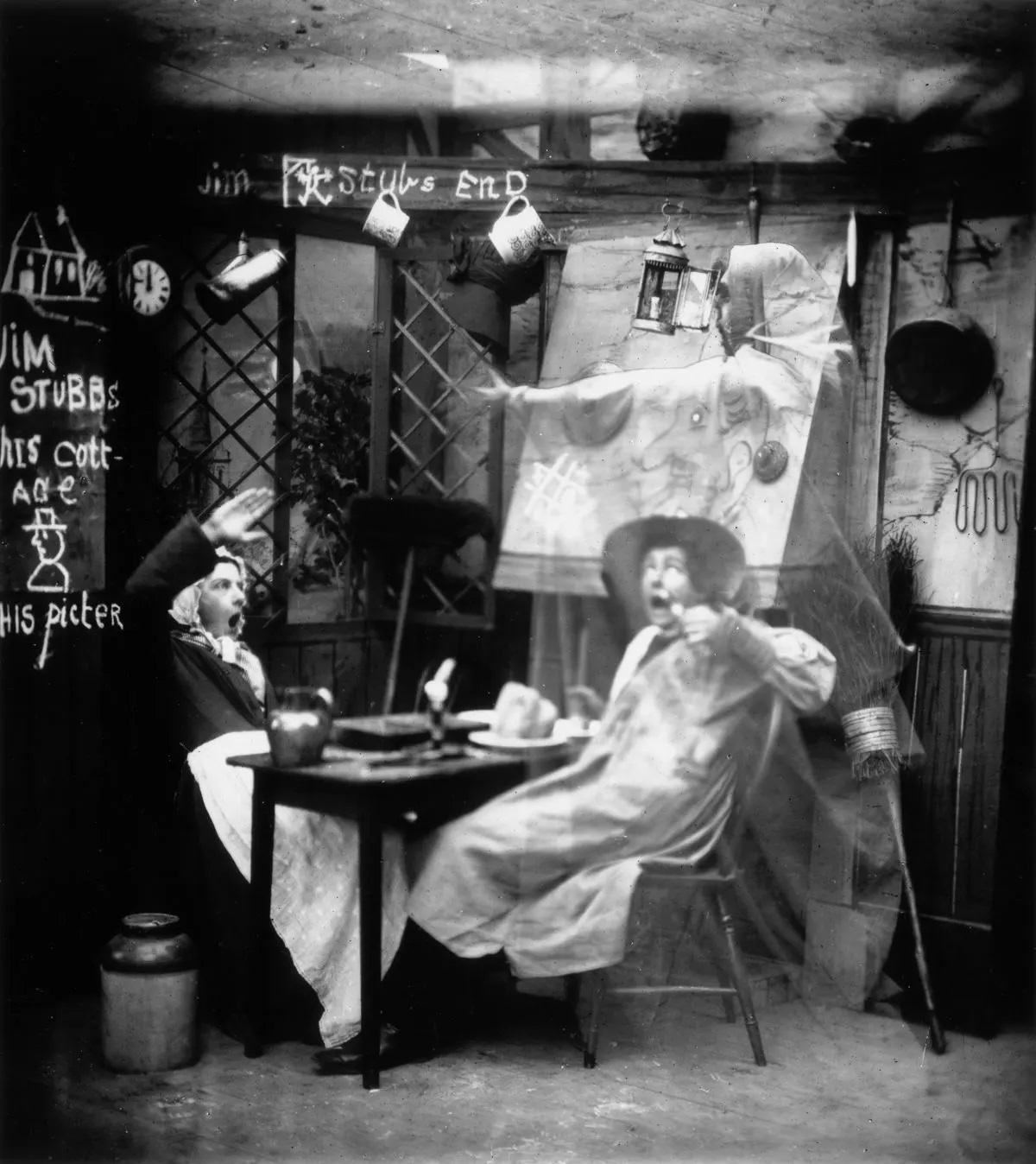
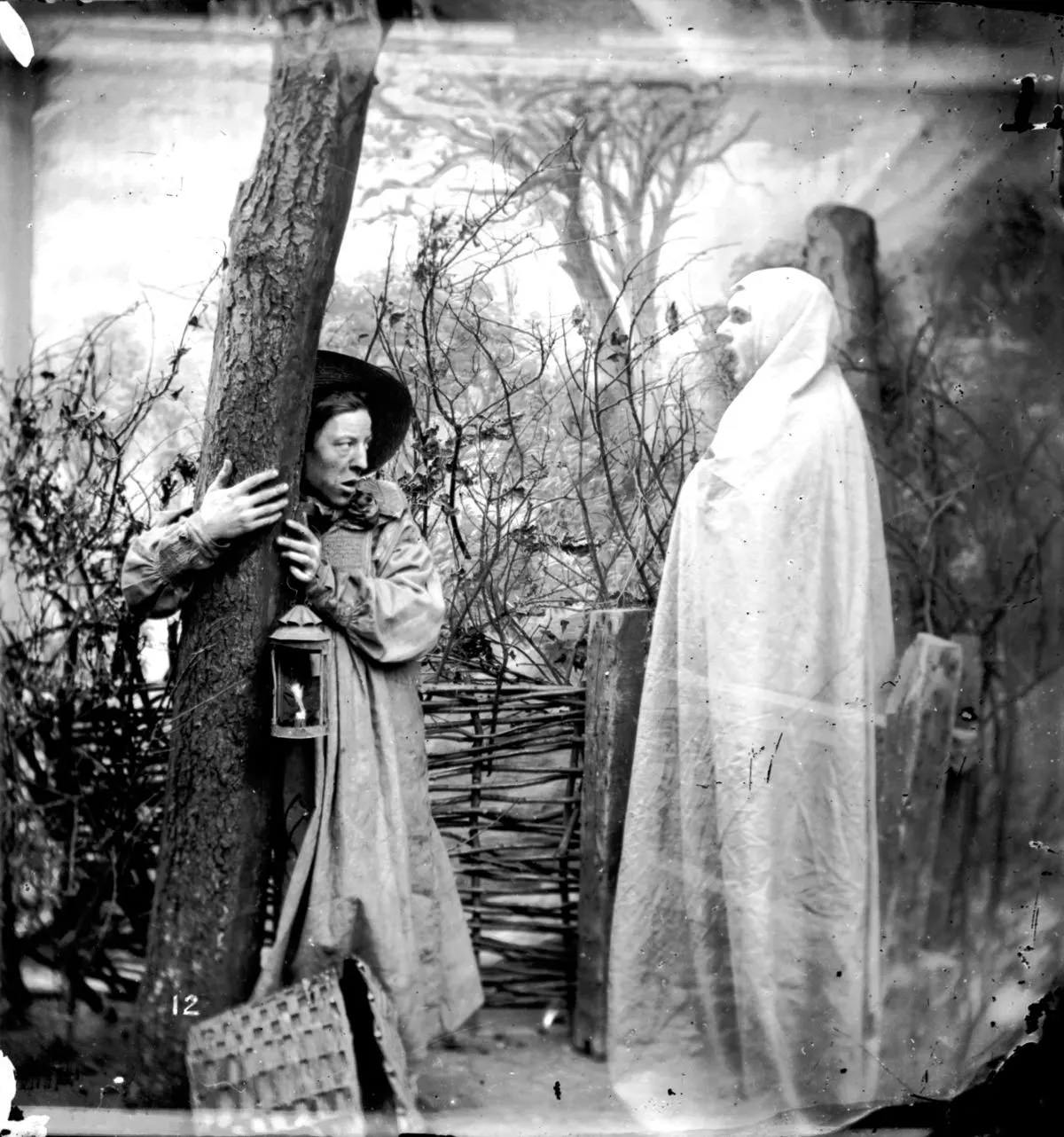
The decline of spirit photography came gradually. By the 1920s, high-profile skeptics were actively dismantling the spiritualist movement in public. Harry Houdini, the famous escape artist, was among the most vocal. He attended séances, exposed fraudulent mediums, and worked to show how the effects people attributed to the supernatural were produced through ordinary deception. Spiritualistic fraud lost much of its credibility under this sustained scrutiny.
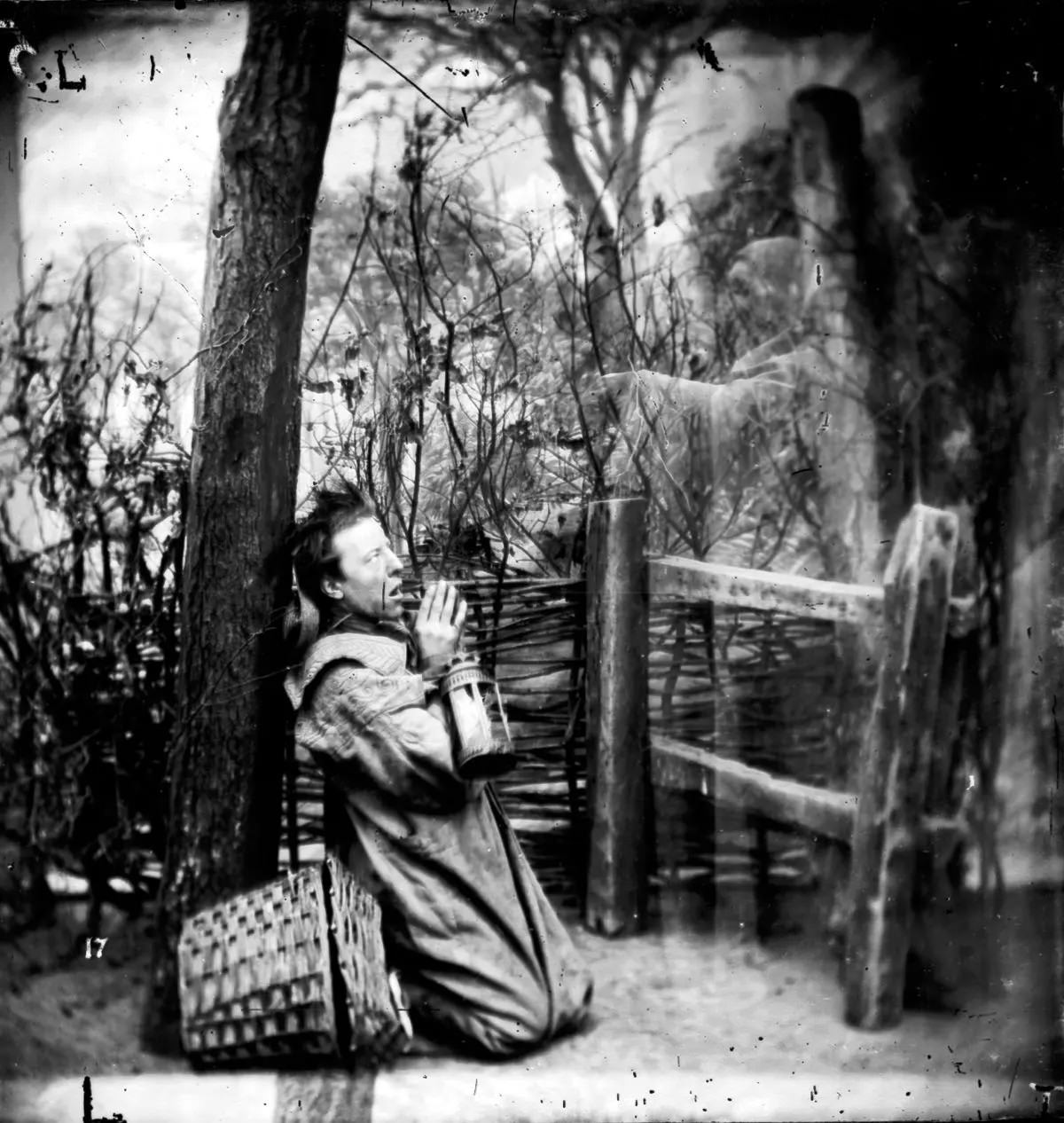
What made spirit photography so effective for so long was its use of a trusted technology. The camera was seen as objective. It recorded what was in front of the lens — or so people assumed. Photographers exploited that trust completely, turning a mechanical process into a tool for grief, profit, and fraud.