
The Tuskegee Airmen were a group of primarily African American military pilots and support personnel who served during World War II. They made up two key units: the 332nd Fighter Group and the 477th Bombardment Group. Their story is one of skill and determination in the face of both enemy opposition and the racial barriers of the era’s segregated military.
The 99th Pursuit Squadron — later renamed the 99th Fighter Squadron — was the first Black flying unit to deploy overseas. It shipped out to North Africa in April 1943, then moved on to Sicily and eventually mainland Italy. That deployment opened the door for more Black aviation units to follow. The 332nd Fighter Group, originally made up of the 100th, 301st, and 302nd Fighter Squadrons, arrived in Italy in early 1944. By June of that year, the group was flying escort missions for heavy bombers deep into enemy territory. In July 1944, the 99th Fighter Squadron joined the group, bringing the total to four fighter squadrons under one command.
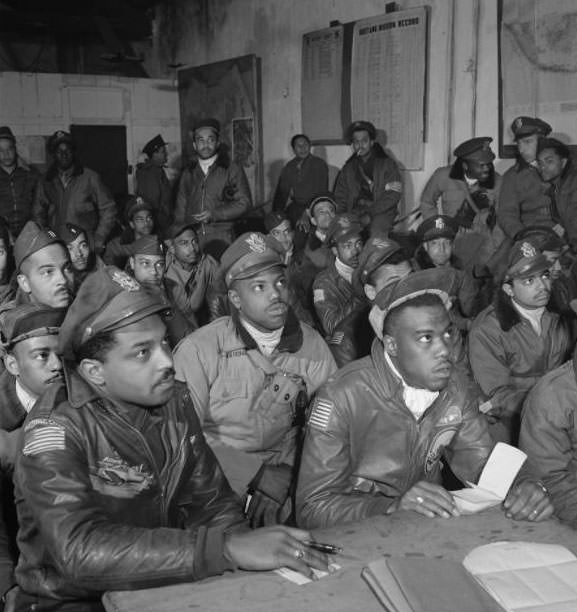
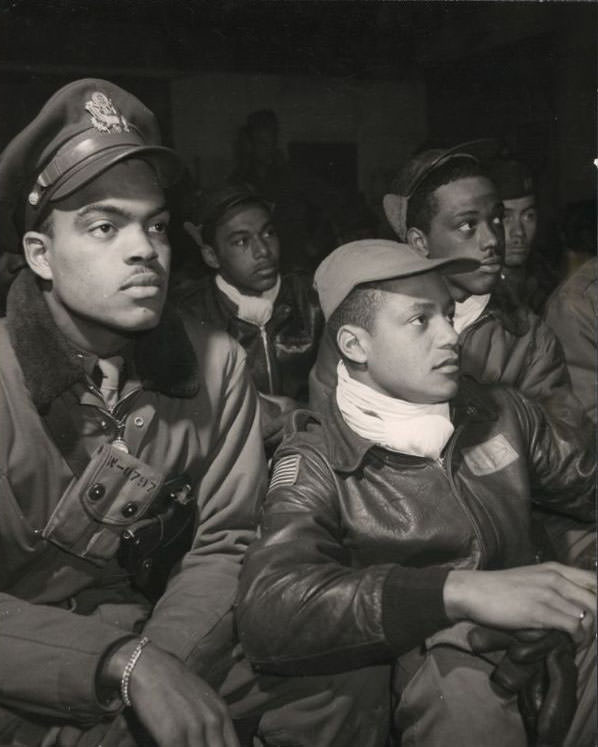
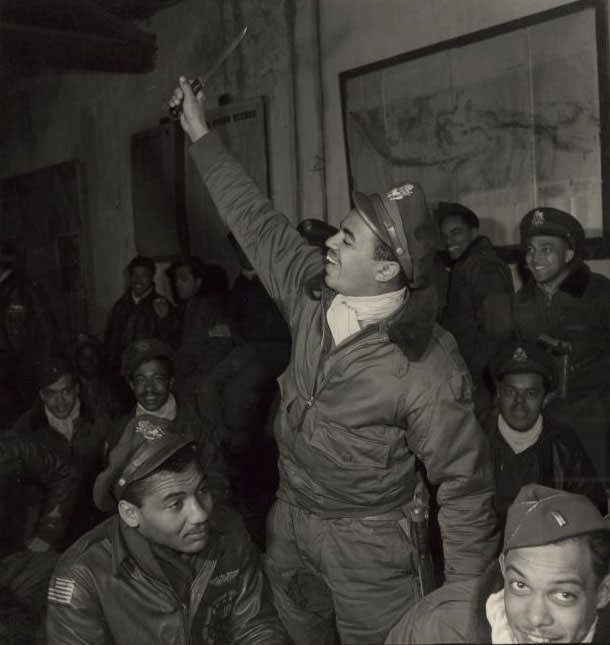
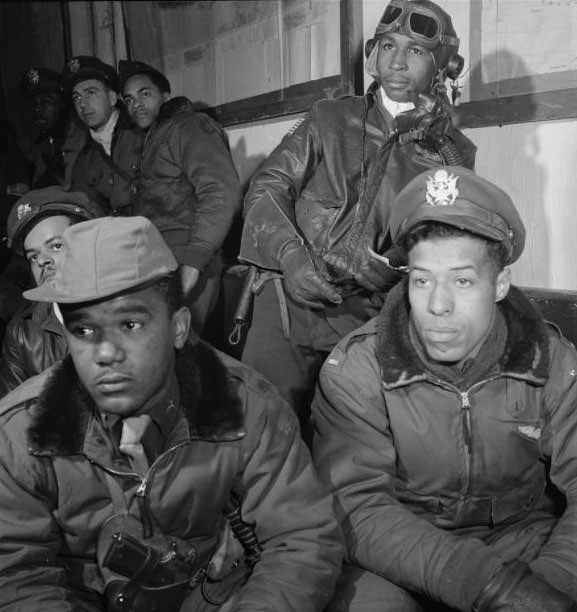
Ramitelli, Italy served as the main base for the 332nd Fighter Group. Pre-mission briefings were a daily ritual, where pilots gathered to receive intelligence on targets, enemy positions, and flight routes. These sessions were critical — the information shared in that room directly shaped whether a mission succeeded or a pilot came home.
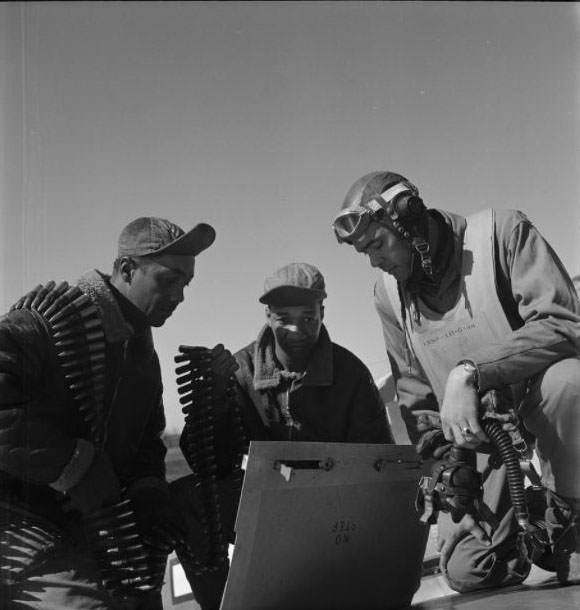
The men of the 332nd came from across the United States, trained under demanding conditions at Tuskegee Army Air Field in Alabama. On the ground in Italy, the operation required far more than pilots. Crew chiefs, mechanics, and ground support personnel kept the aircraft mission-ready around the clock.
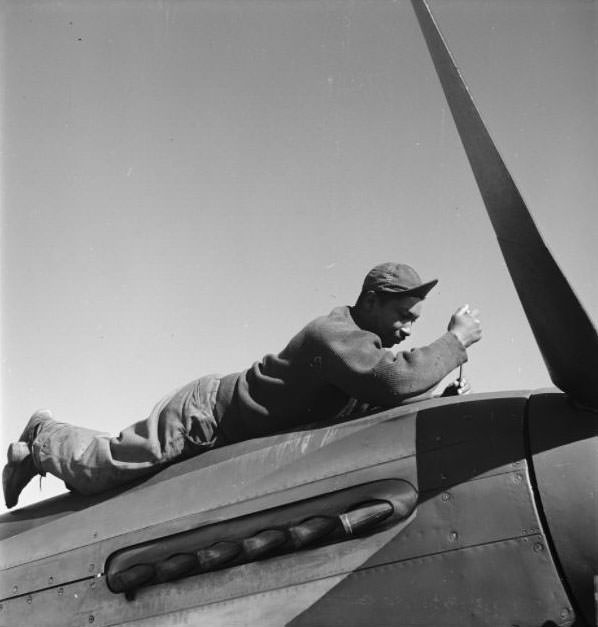
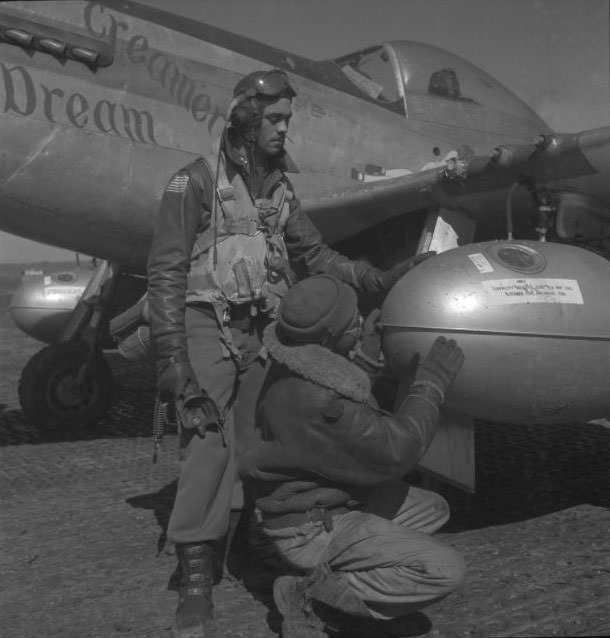
Crew chief Marcellus G. Smith of Louisville, Kentucky, served with the 100th Fighter Squadron. Crew chiefs owned responsibility for their aircraft from engine to tail. They performed pre-flight inspections, coordinated repairs, and ensured each plane was airworthy before a pilot ever climbed into the cockpit.
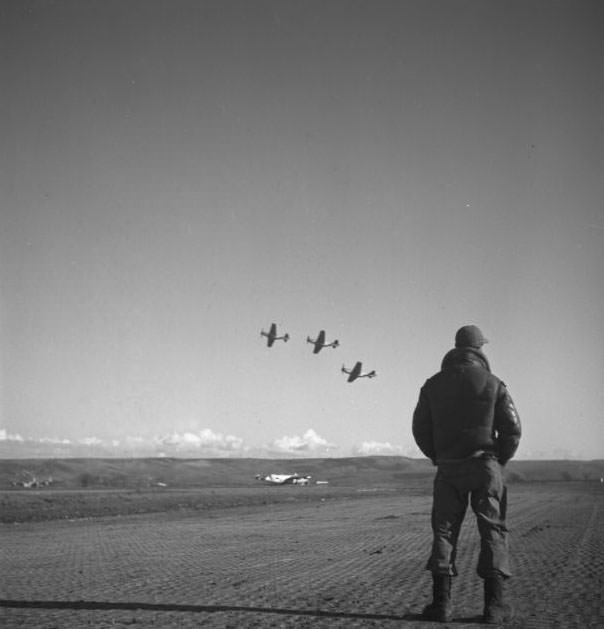
Control tower personnel played a critical role in managing the flow of aircraft during takeoffs, landings, and scrambles. Their coordination was essential at a busy combat airfield where timing errors could be fatal.
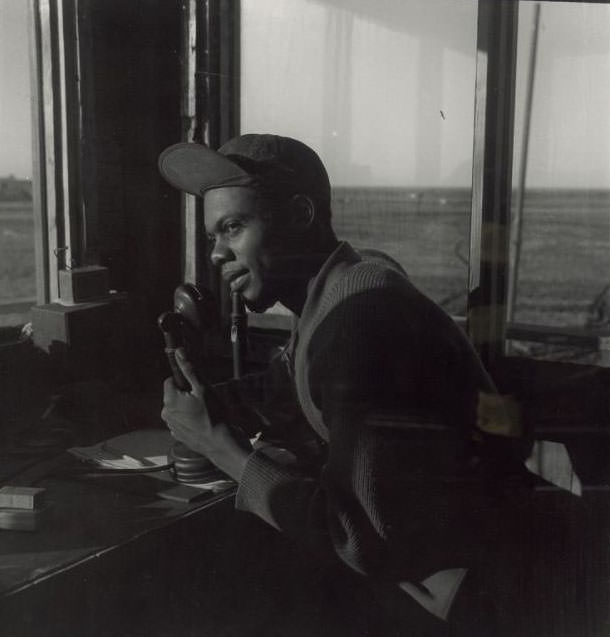
Sgt. William P. Bostic of the 301st Fighter Squadron is photographed here in the control tower, one of the key communication hubs on the base. Among the most documented individual airmen stationed in Italy was Edward C. Gleed of Lawrence, Kansas, a graduate of Class 42-K. Gleed flew combat missions with the 332nd and appears in several photographs taken at Ramitelli.
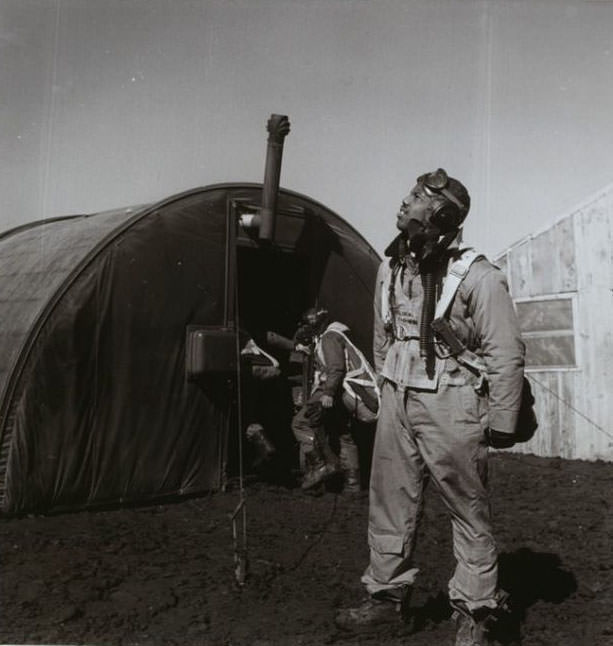
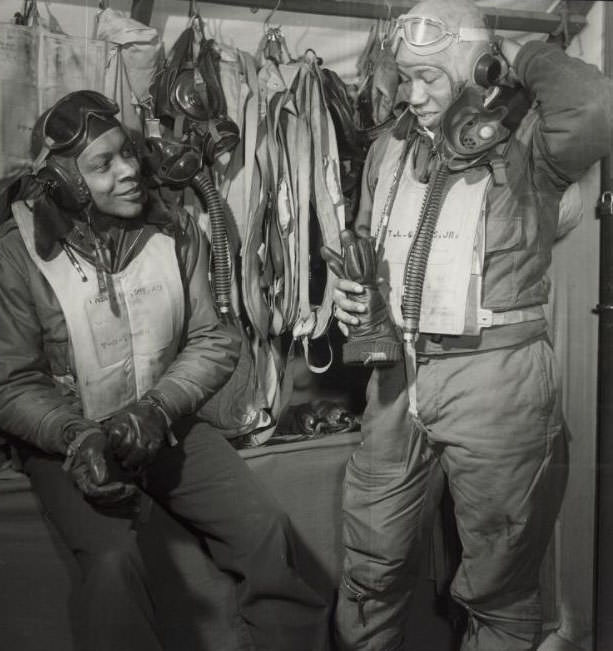
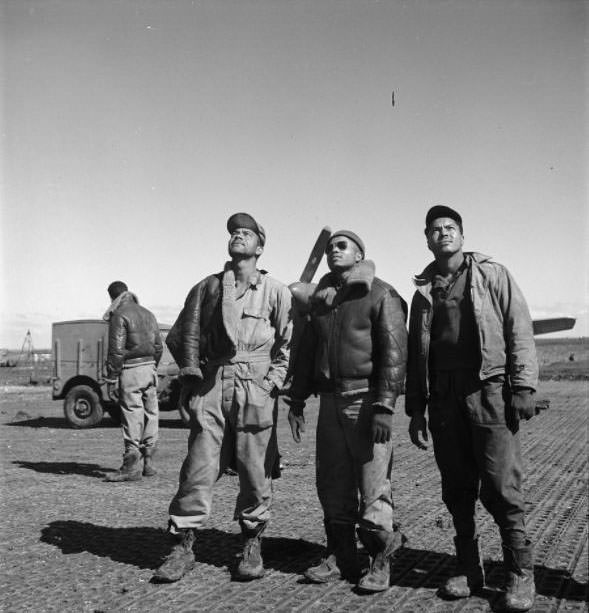
The parachute room was a fixture of daily life at the base. Pilots passed through it before every mission to collect their parachutes and other gear. Scanning the sky was second nature — situational awareness did not stop on the ground.
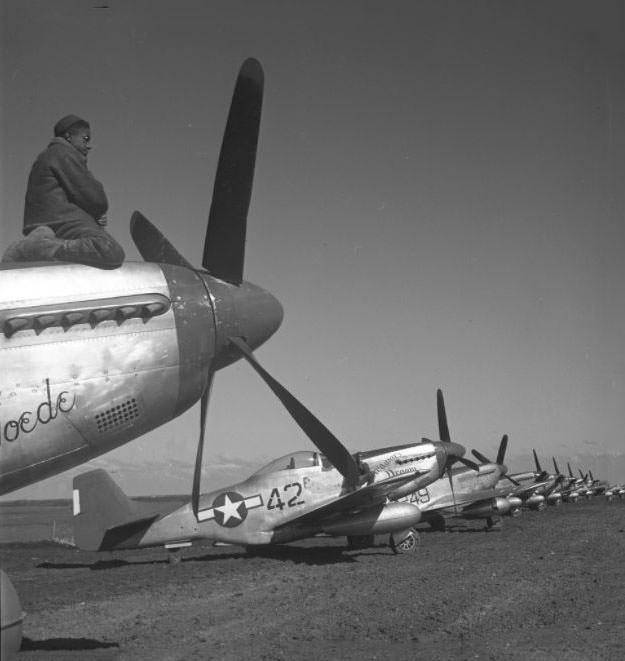
The P-51 Mustang became the primary aircraft of the 332nd Fighter Group. Pilots named their planes and took pride in their machines. Personal aircraft names like “Creamer’s Dream” reflected the individual identities the men brought to their service. Even amid the routine of combat operations, daily life at the base had its unexpected moments.
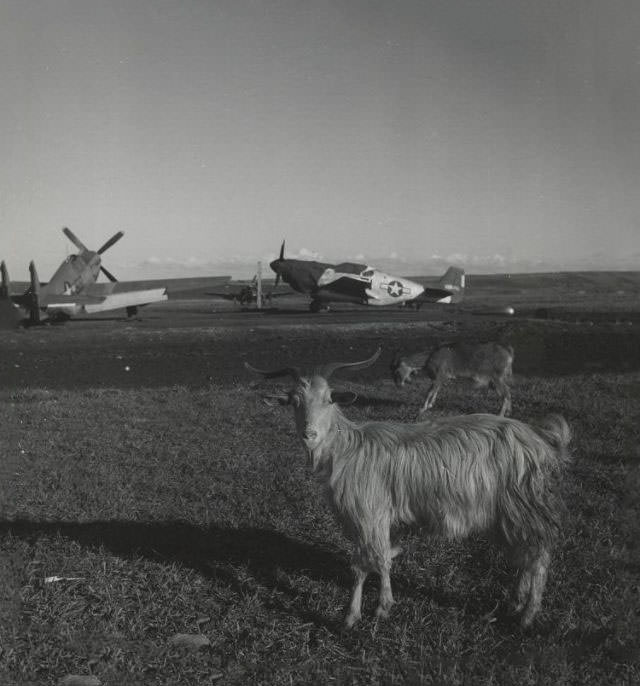
The Italian countryside met the airfield in ways that occasionally made operations colorful. Goats wandering onto the runway were a documented occurrence at Ramitelli — a reminder that the base was carved out of a rural landscape still very much in use.
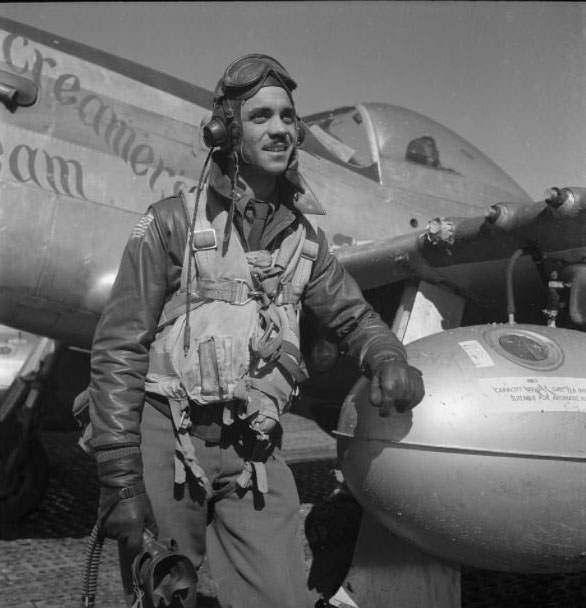
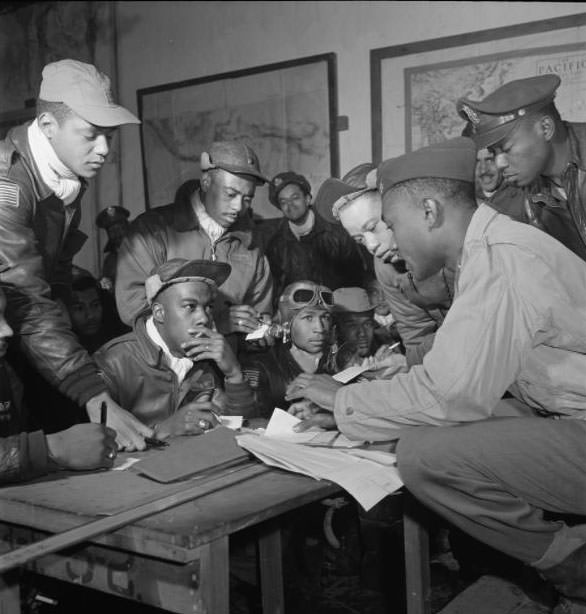
Briefings were held regularly, covering both mission-specific details and broader strategic context. These gatherings brought together pilots and officers to align before heading into the air over heavily contested territory. Photographer Toni Frissell documented many of these moments, gaining rare access to the airmen and their commanders.
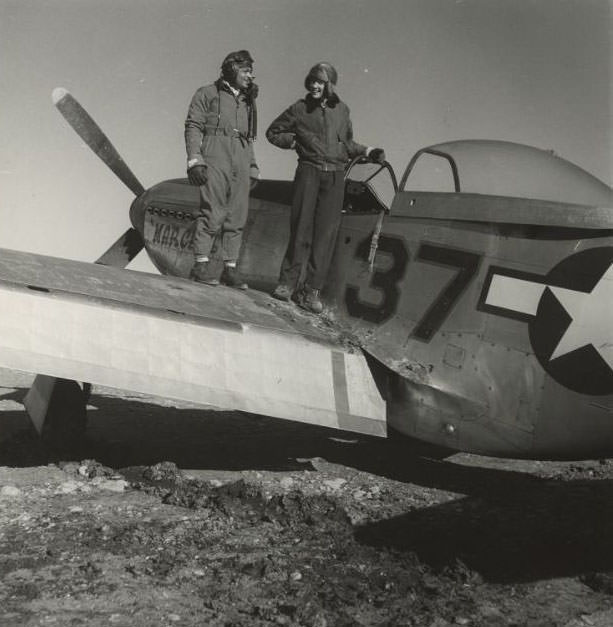
Major George S. “Spanky” Roberts was one of the senior officers of the group. Frissell’s photographs taken at Ramitelli provide some of the most detailed visual records of the 332nd’s operations in Italy. Edward C. Gleed appears in multiple images throughout this collection, reflecting his prominent role within the unit.
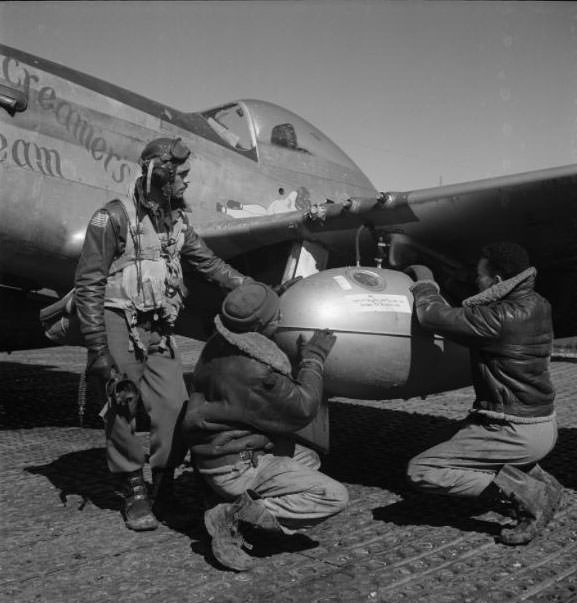
Col. Benjamin O. Davis Jr. commanded the 332nd Fighter Group and was a driving force behind its combat performance. He led by example both in the air and on the ground, and his presence shaped the discipline and professionalism the group was known for.
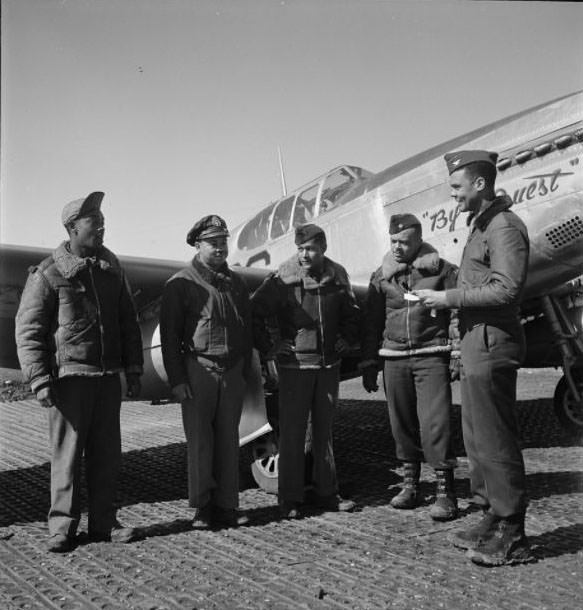
Davis is seen here presenting a war bond to the crew responsible for the best-maintained aircraft — a competition that reinforced pride in mechanical upkeep. A well-maintained plane was not just a point of pride; it was a matter of survival. Pilots and ground crews watched the skies constantly, always reading the environment around them.
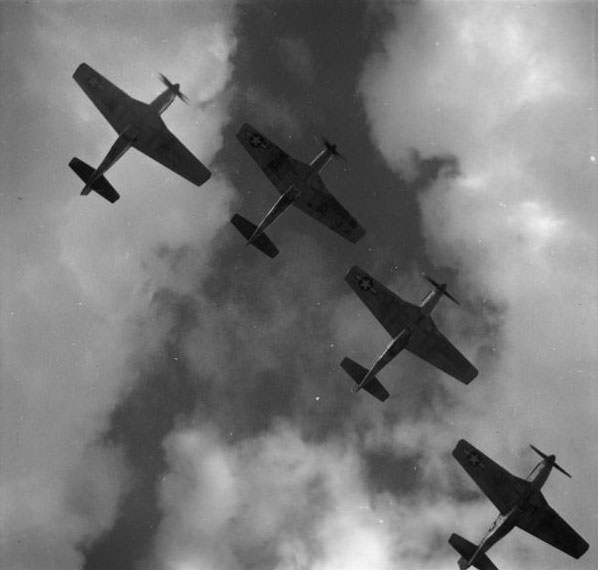
Four P-51 Mustangs fly in tight formation — the kind of disciplined flying the 332nd practiced and executed on escort missions across Europe. The group’s red-painted tail sections earned them the nickname “Red Tails” among the bomber crews they protected. Before any formation took to the sky, pilots suited up and collected their gear.
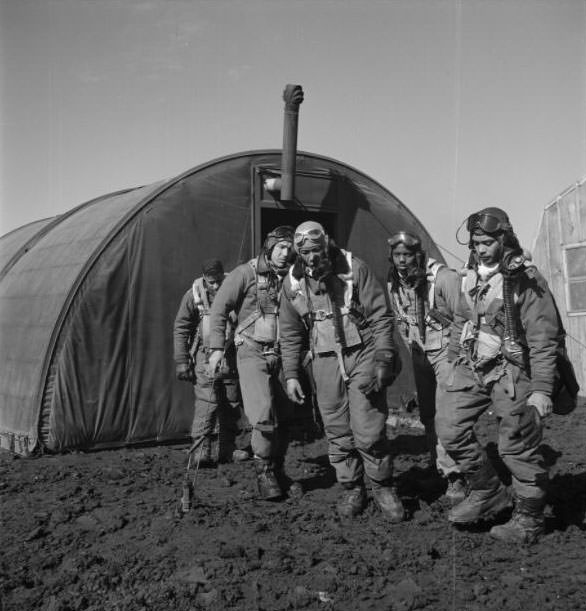
Exiting the parachute room meant a mission was underway. Each airman carried with him not just a parachute, but an escape kit — issued standard to fighter pilots operating over enemy-held territory.
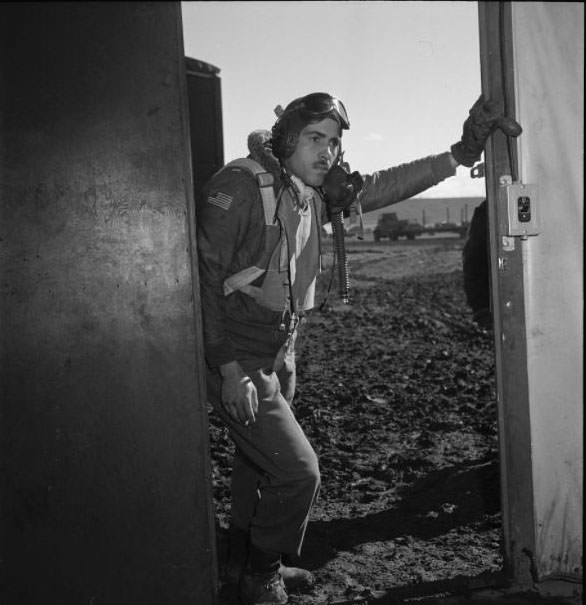
Edward M. Thomas of Chicago, Illinois, graduated with Class 43-J and served with the 332nd in Italy. Men from cities across the country — Louisville, Chicago, Lawrence — came together at Ramitelli under a shared mission. The briefing room was where that mission took shape before every flight.
Among those who appeared most often in the photographic record from Ramitelli, Woodrow W. Crockett and Edward C. Gleed were frequently documented together, both on and off duty.
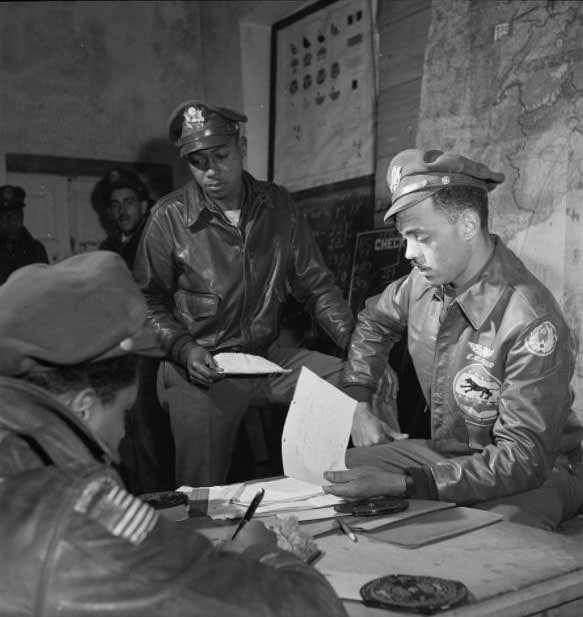
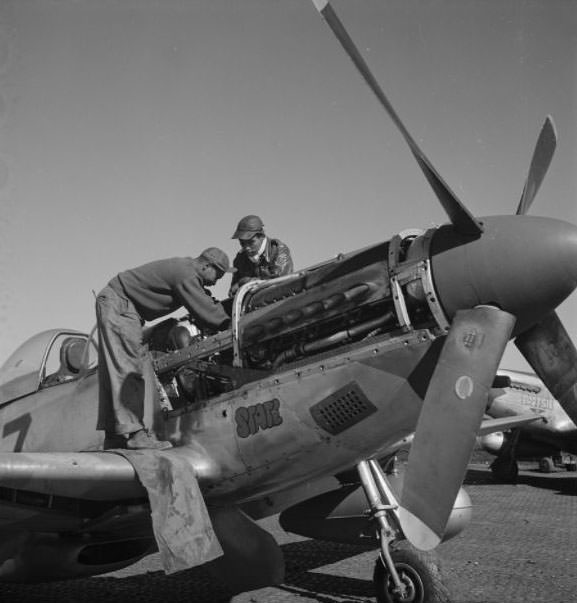
Roscoe C. Brown was one of the 332nd’s notable pilots, flying escort missions and engaging enemy aircraft over Europe. Marcellus G. Smith, the crew chief from Louisville, appears here alongside Brown — a pairing that reflects the close working relationship between ground and air crews. Before pilots like Brown launched into combat, they received one particularly grim piece of equipment.
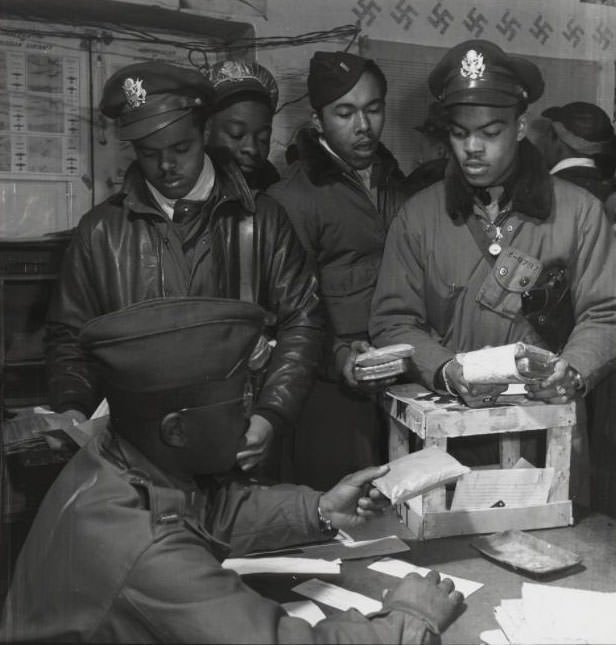
“Escape kits” containing cyanide were distributed to fighter pilots before missions over enemy territory. If captured and facing torture or execution, pilots had the option to end their own lives. The distribution of these kits was standard practice in the theater and underscores the very real dangers these men faced on every mission. Col. Davis, who oversaw these operations, is photographed here with two of his key airmen.
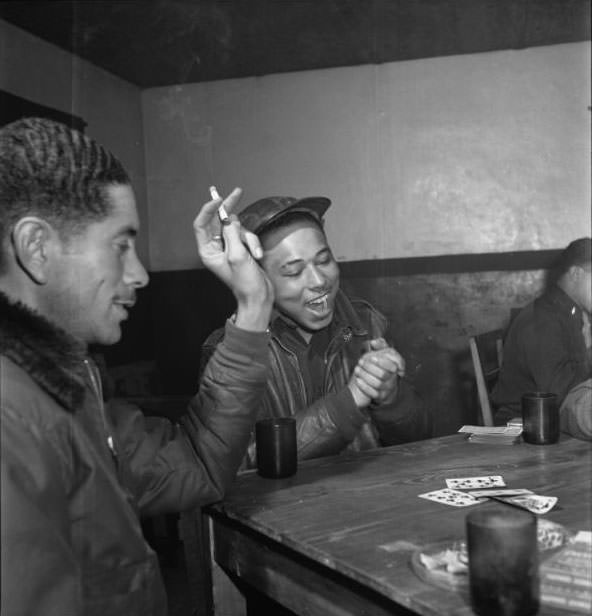
When the day’s missions were done, the men gathered in the officers’ club. Cards, conversation, and downtime were the buffer between the intensity of combat operations and the next morning’s briefing.