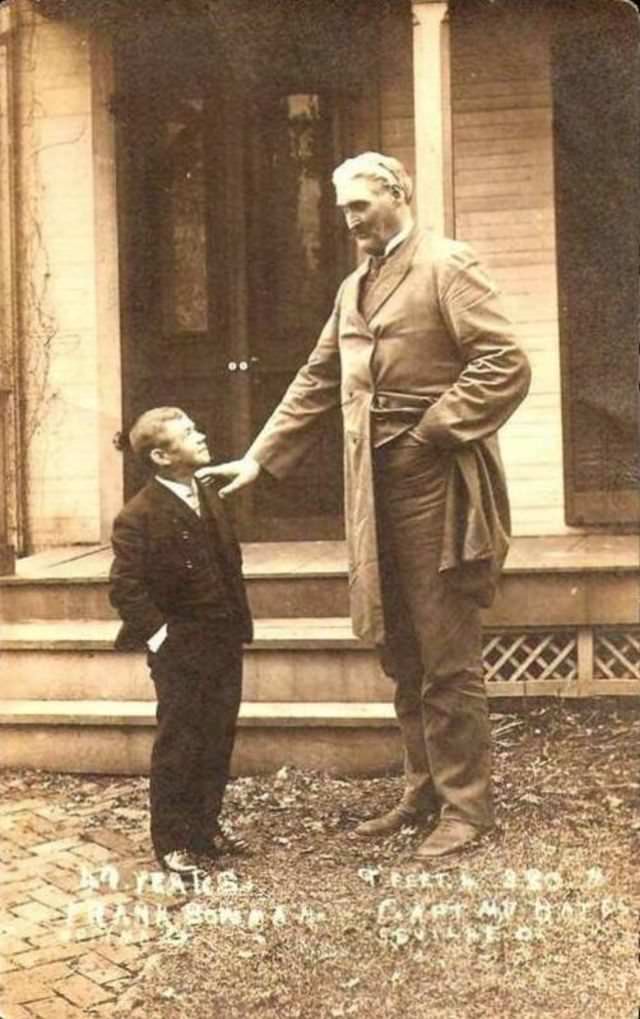
In the mid-1800s, two people on opposite sides of the Atlantic were growing up in a way that set them apart from everyone around them. By the time their paths crossed, they would become the most famous giant couple the world had ever seen. Guinness World Records would later certify them as the tallest married couple ever. Their names were Anna Haining Swan and Martin Van Buren Bates.
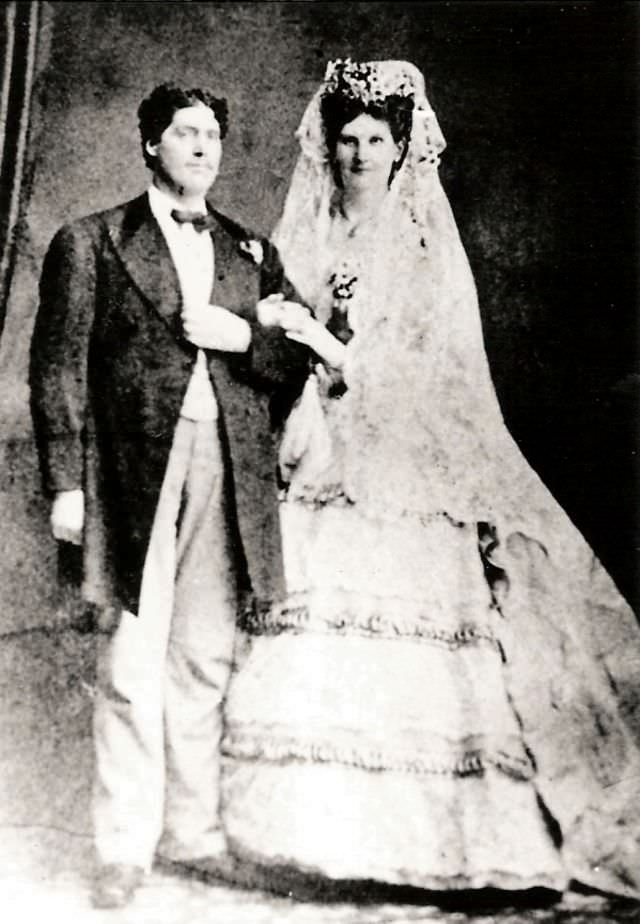
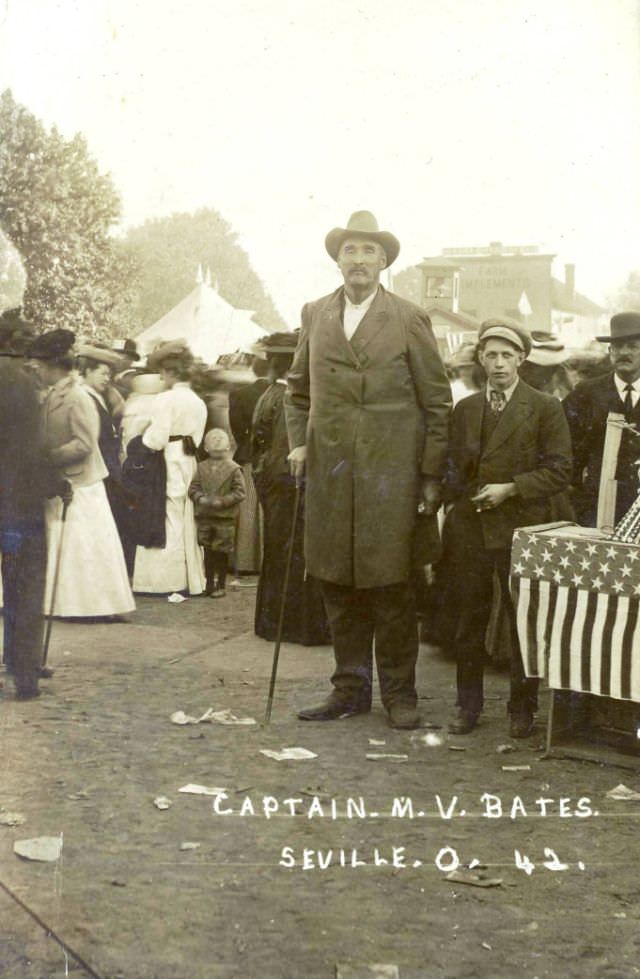
Martin Van Buren Bates was born in Kentucky, and at birth he was a perfectly average-sized baby. That changed fast. Around the age of six, his body began growing at an unusual rate. By thirteen, he already stood over 6 feet tall — a height most adult men never reach. He kept growing. By adulthood, Martin stood 7 feet 9 inches tall, or 2.36 meters. People called him the ‘Kentucky Giant,’ and the nickname fit.
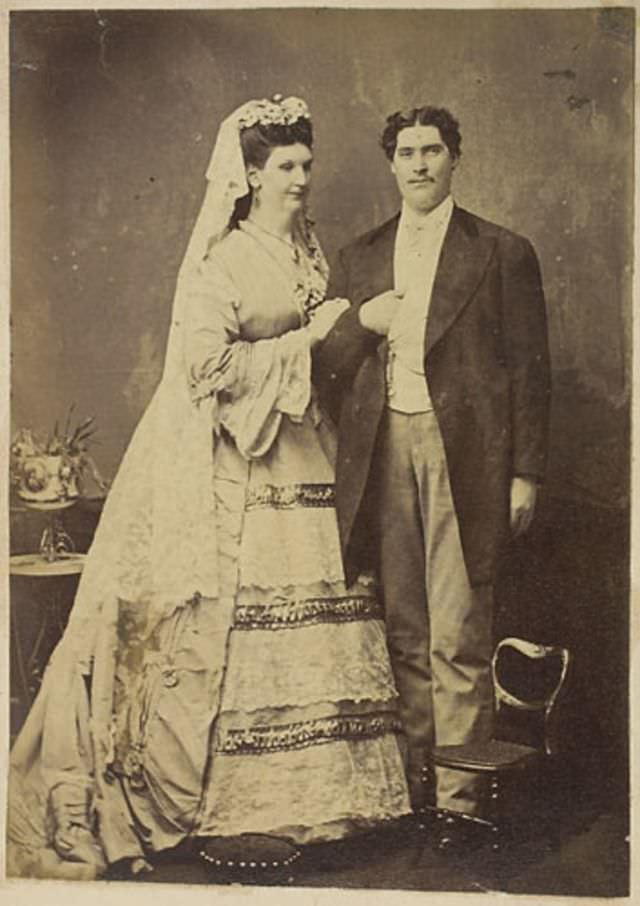
When the Civil War broke out, Martin enlisted in the 5th Kentucky Infantry of the Confederate States Army. His sheer size made him an intimidating presence on the battlefield, and his courage under fire earned him promotions. He rose to the rank of captain. His military career was not without cost, though. Martin was severely wounded in fighting near the Cumberland Gap area, then captured and taken to Camp Chase, a Union prison camp in Ohio. He managed to escape and eventually made it back to Kentucky after the war ended. He settled into civilian life as a school teacher — an unusual turn for a man who had spent years as a soldier.
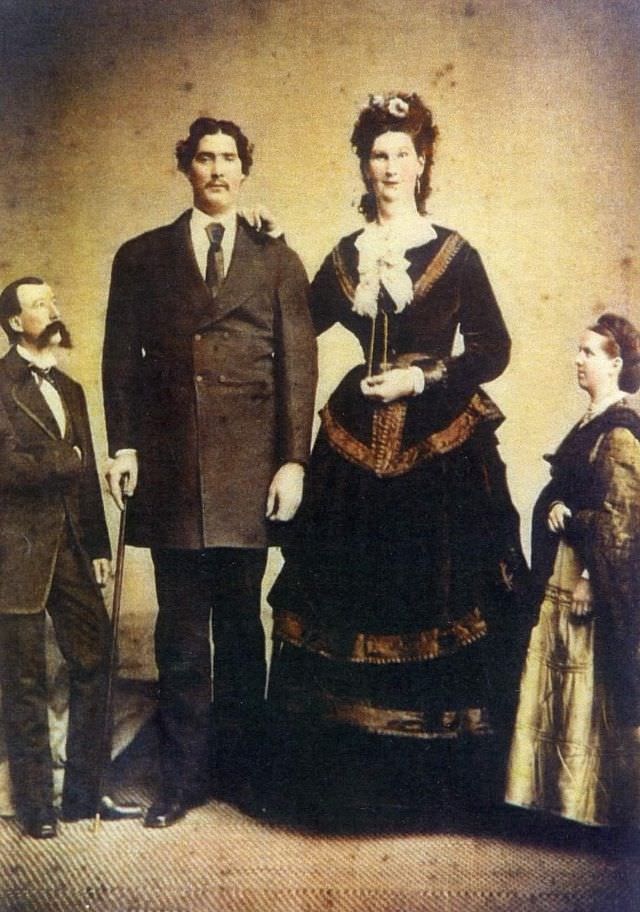
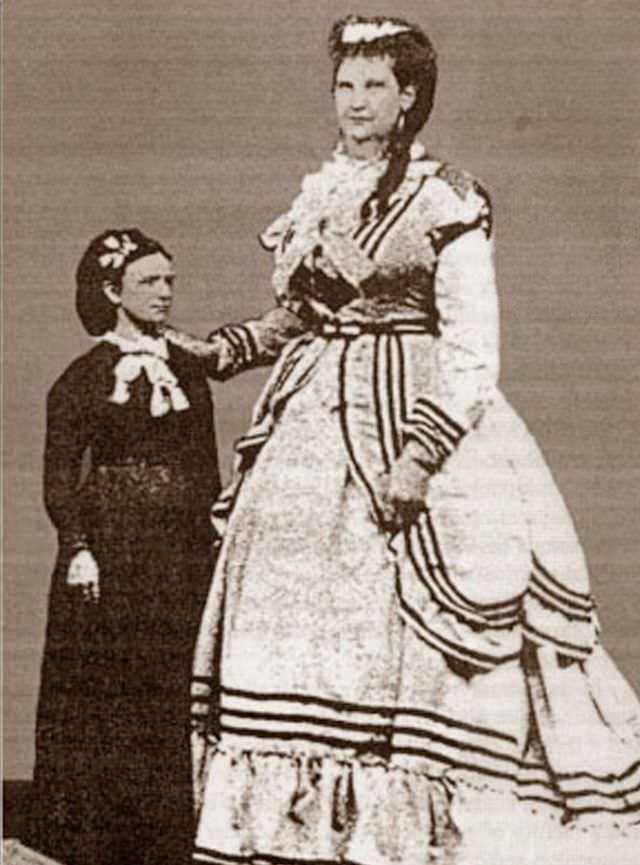
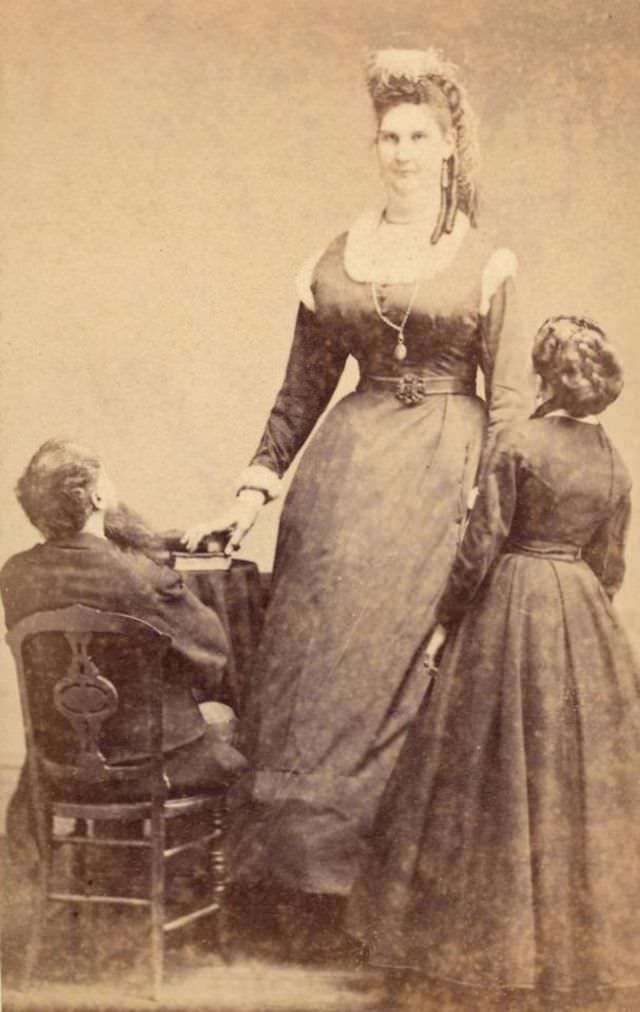
Anna Haining Swan’s story began in Mill Brook, Nova Scotia. She was born weighing 16 pounds — more than double the weight of a typical newborn. From her very first days, Anna’s growth was extraordinary. She was 7 feet tall by her 15th birthday, reaching her full height of 7 feet 11 inches, or 2.41 meters, by the time she was 18. That made her taller than Martin by two inches, and taller than virtually every person alive at the time.
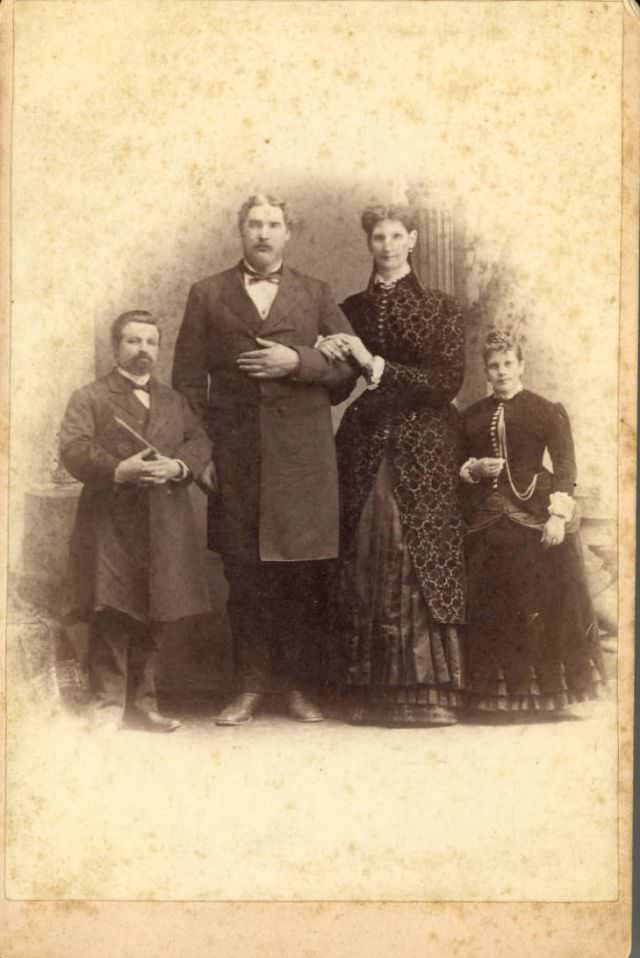
Anna was not simply defined by her height. She was educated and talented, excelling in literature, music, and acting. Those skills, combined with her remarkable stature, drew public attention. Anna performed in exhibitions and shows, which is precisely how she eventually crossed paths with Martin Bates. He encountered her while visiting a circus, and what began as a meeting between two extraordinary individuals grew into something far more lasting.
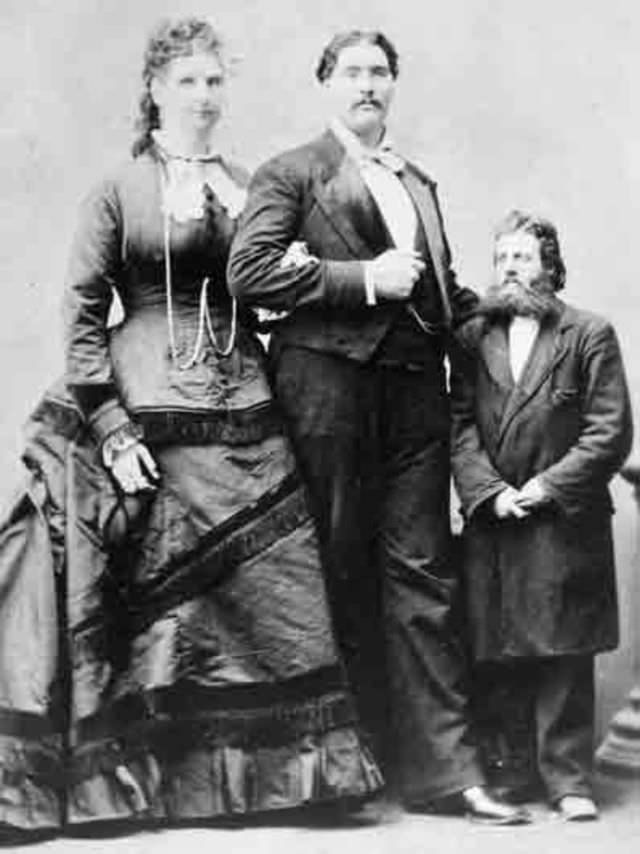
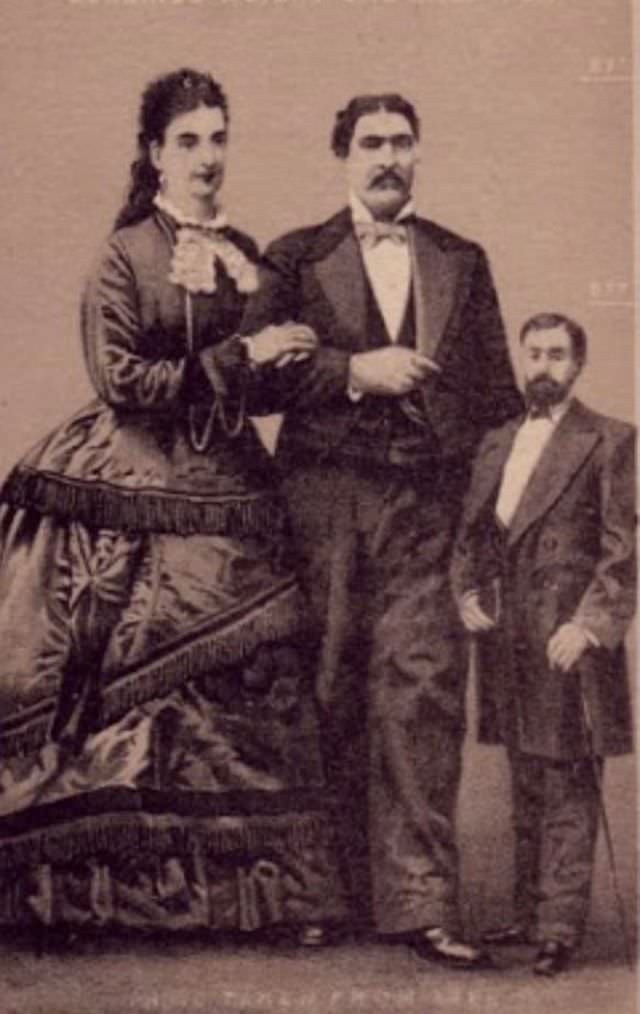
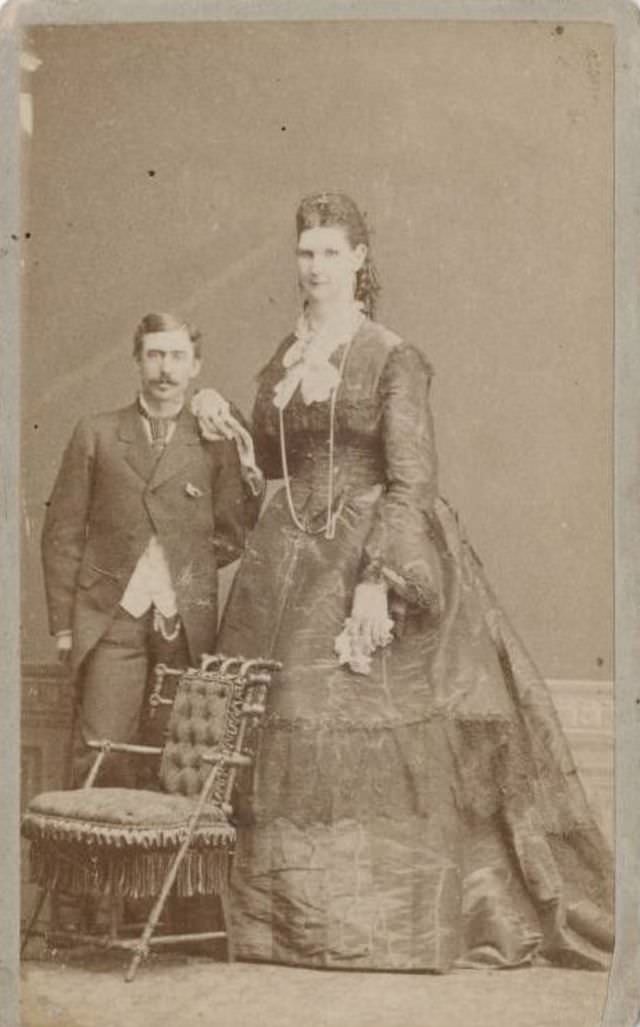
Martin and Anna married in 1871 and settled in Ohio. Together, they stood over 15 feet tall combined — a fact that drew attention wherever they went. The couple was officially declared the world’s tallest married couple ever by Guinness World Records, a title that remains attached to their names to this day.
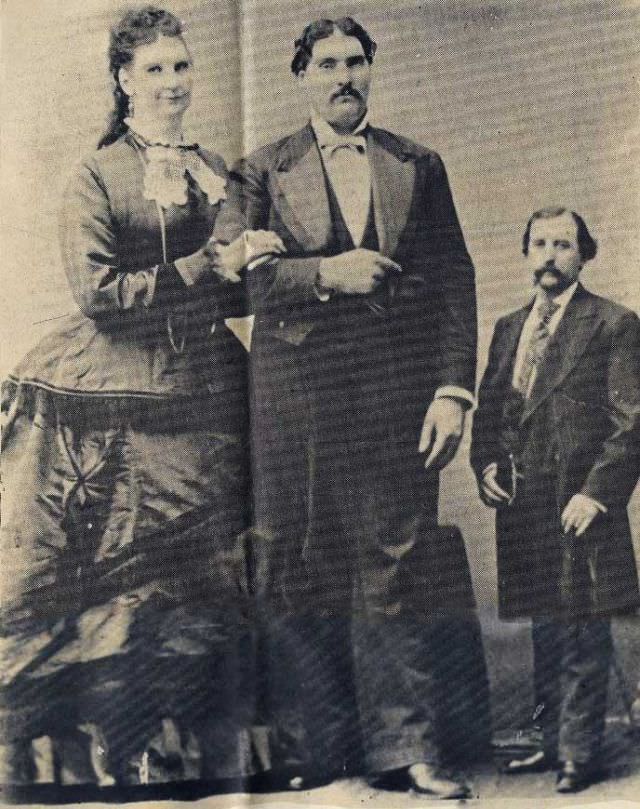
Life in Ohio was built entirely on their own terms. Martin and Anna purchased 130 acres of land — roughly 53 hectares — and had their home and all of its furnishings custom-made to fit their frames. Standard doors, chairs, and beds simply were not an option. Everything in their world had to be scaled up. By all accounts, they lived comfortably on their property, a space that finally matched the size of its owners.
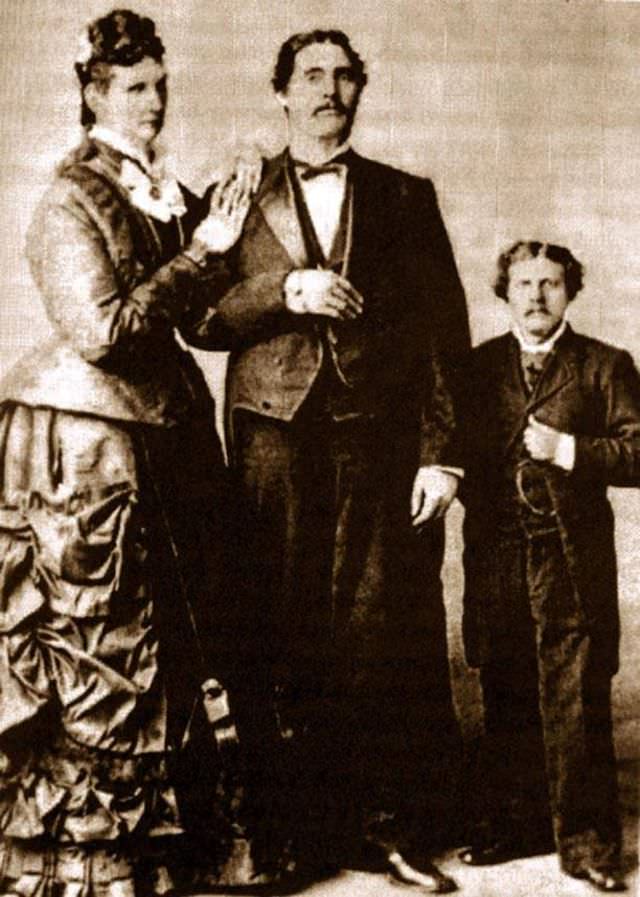
Anna conceived two children during the marriage. Both pregnancies ended in tragedy. Their first child, a daughter, was stillborn in 1872. Their son, born in 1879, weighed 22 pounds at birth — a record-setting weight — but died just 11 hours after delivery. Neither child survived infancy, and the losses were a painful part of a life that, from the outside, appeared larger than most in every sense.
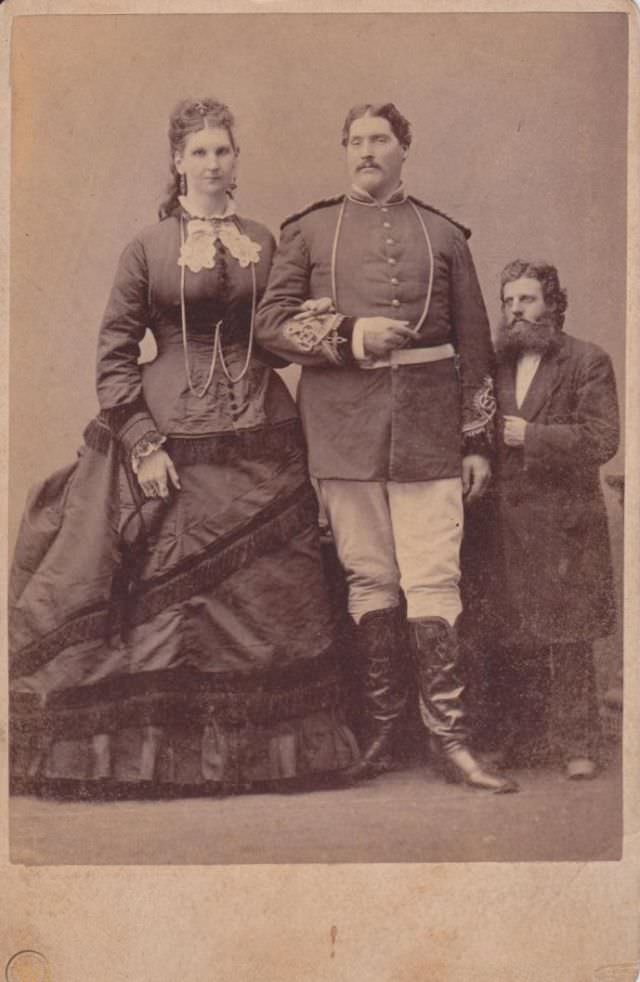
Despite the grief, Martin and Anna remained together on their Ohio farm. They were well known in their community and continued to be celebrated figures publicly. Photographs of the couple circulated widely during their lifetime, and their images were distributed as novelty cards — a common practice of the era for people who had gained fame through exhibitions and shows.
Anna Haining Swan died on August 5, 1888, from heart failure in her sleep at their home. She was one day short of her 42nd birthday. Her death was sudden and, by the accounts of those close to her, peaceful. She was buried in Seville, Ohio, where a large monument was erected in her memory — sized, fittingly, to reflect the scale of the woman it honored.
Martin outlived Anna by more than two decades. He continued living on their Ohio property after her death and eventually remarried. He died in 1919 at the age of 80, and was buried beside Anna in Seville. The two giants who had found each other in a world that was quite literally too small for them rest together in the same town where they had built their life.
The story of Anna and Martin cuts through the spectacle that often surrounded them and reveals something straightforward: two people with an uncommon shared experience who chose to build a life together. Their heights set them apart from birth, shaped every physical aspect of their lives, and placed them in front of crowds for much of their adult years.
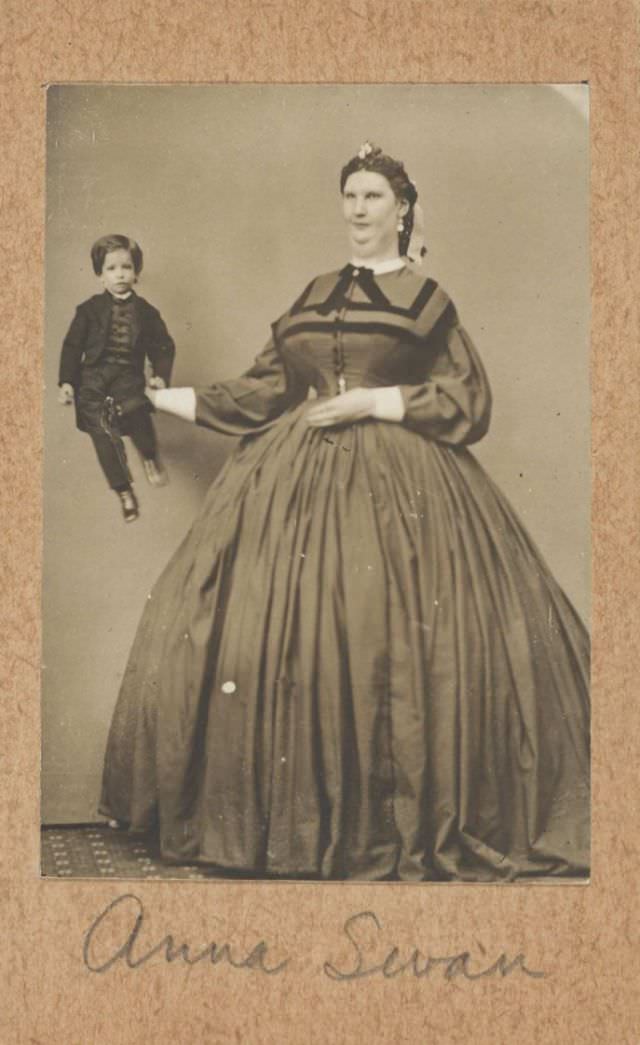
Anna’s height of 7 feet 11 inches remains one of the tallest ever reliably documented for a woman in recorded history. Martin, at 7 feet 9 inches, was among the tallest men of his era as well. Together, no married couple before or since has matched their combined stature on record.
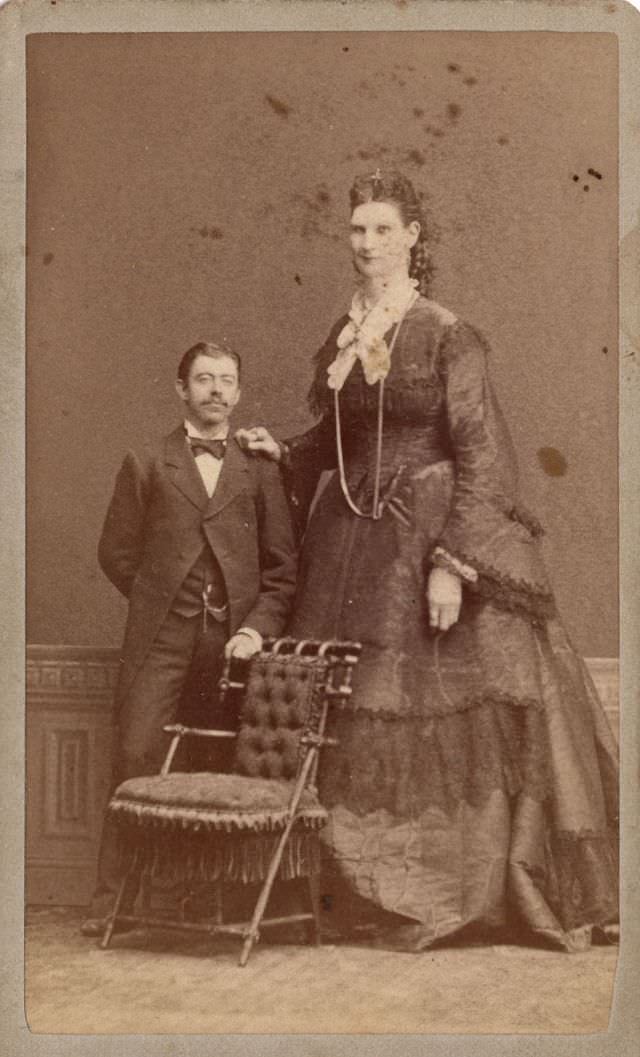
Photographs from their life together show the couple standing beside average-sized people, which makes the scale immediately clear. In one well-known image, Martin and Anna tower over a group of individuals in formal dress, their height difference from those around them measured not in inches but in what appears to be a full extra person stacked on top.
Martin’s path from Confederate soldier to Ohio farmer is one of the more unusual personal histories of the post-Civil War era. He had been a prisoner of war, a wounded veteran, a teacher, a circus performer, and eventually a gentleman farmer — all before the age of 40. His life changed direction multiple times, but his decades in Ohio with Anna represented his longest and most settled chapter.
Anna’s early years in Nova Scotia gave little indication of how widely her name would travel. She was raised in a rural setting, educated locally, and developed her talents in literature and music before becoming a public figure. Her time on stage was less about fame-seeking and more about the practical reality of being a woman of extraordinary size in the 19th century — exhibition and performance were among the few paths available to people like her.
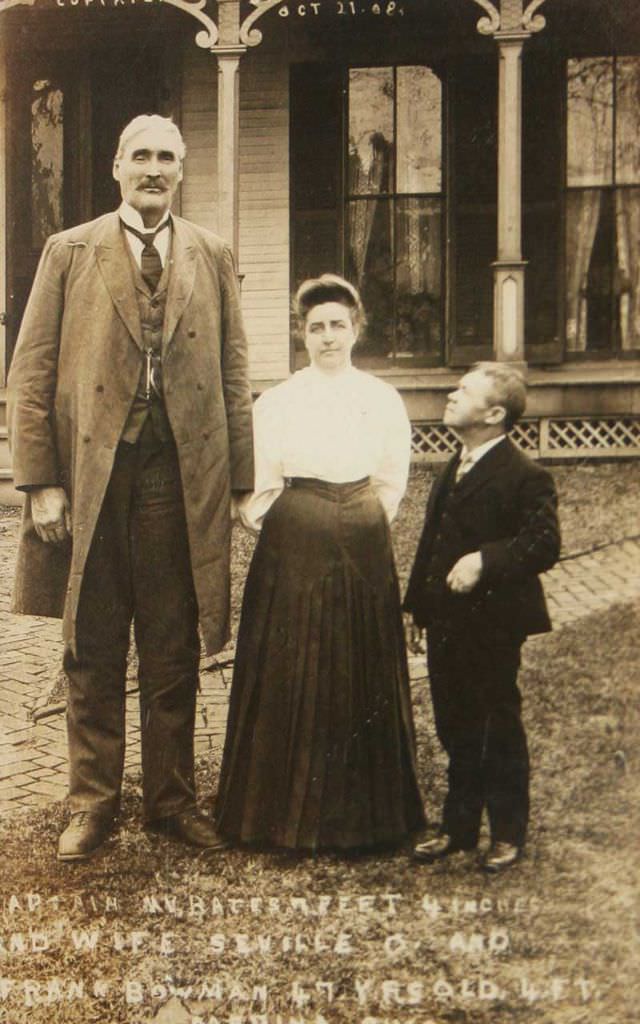
The town of Seville, Ohio still recognizes the pair as part of its history. Their grave site draws visitors, and their story is preserved in local records and archives. The custom-built farm, the oversized furniture, the world records, the tragedies, and the decades they spent together — it all happened in this small Ohio town, far removed from the circus stages where they first became known to the world.