

In 1954, Spain was a country under pressure. After World War II, Francisco Franco’s government had kept the country politically isolated, and Spain was barred from joining the United Nations. Its economic policy of autarky — a system of strict self-sufficiency that cut Spain off from international trade — was slowly strangling the country’s finances. By the late 1950s, Spain stood on the edge of economic collapse, forcing the government to abandon that approach entirely. The Economic Stabilization Plan of 1959 opened Spain’s market to the wider world. But in 1954, none of that had happened yet. These color photographs capture Spain exactly as it was during that tense, transitional period — its cities, streets, landmarks, and everyday life frozen in vivid detail.
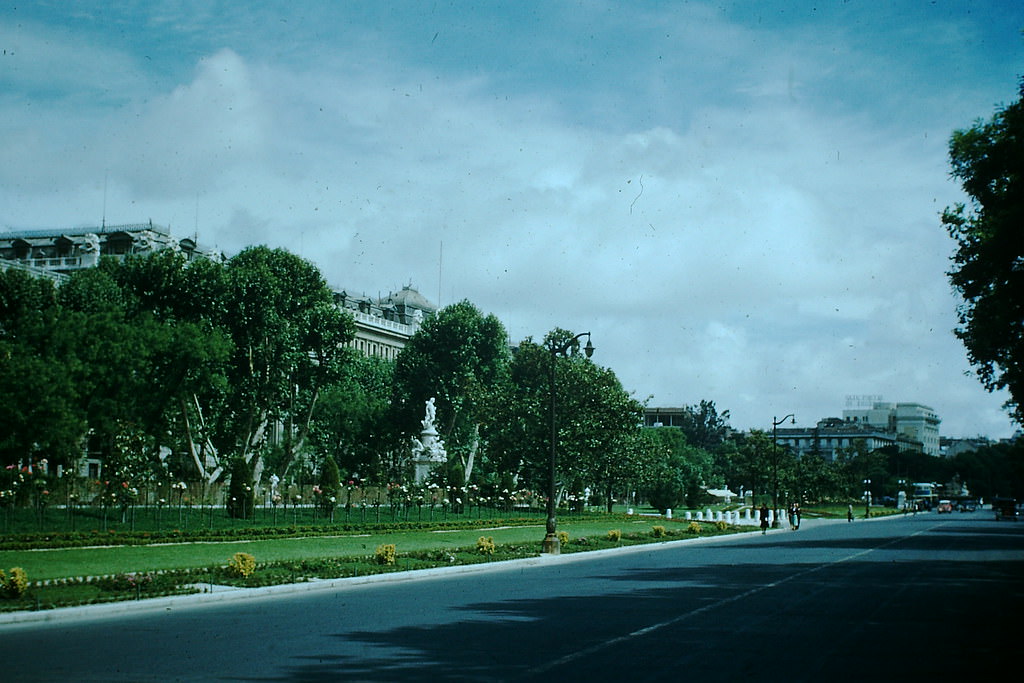
Madrid in 1954 was a city of wide boulevards, grand architecture, and carefully maintained public spaces. The Paseo del Prado, one of Europe’s most celebrated tree-lined promenades, stretched southward from the Plaza Cibeles — a fountain and roundabout that served as one of the capital’s most recognizable landmarks.
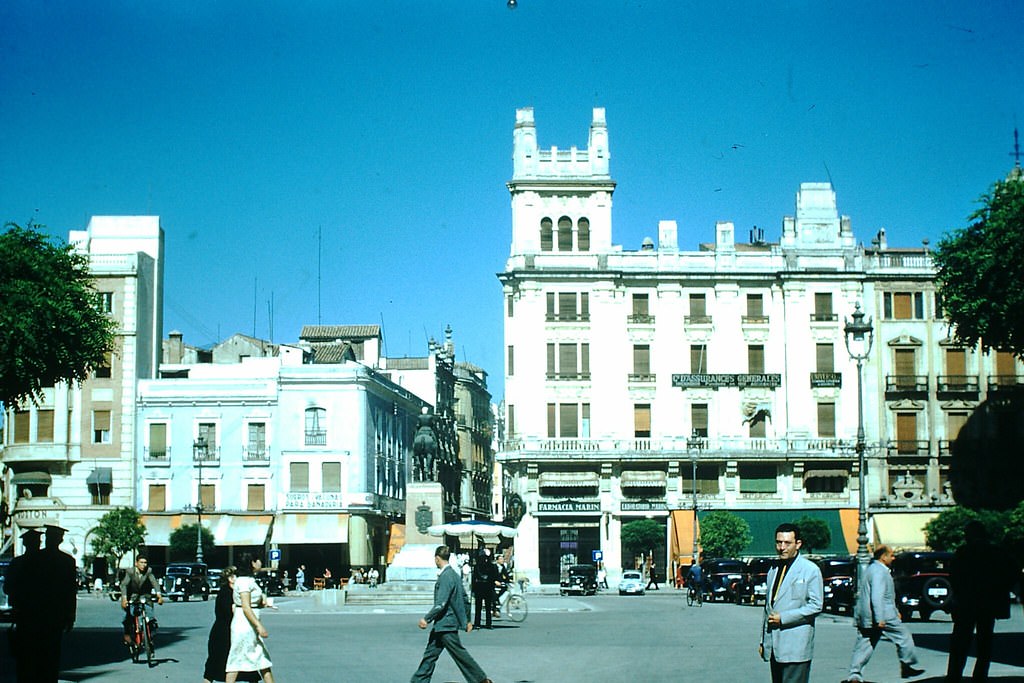
Despite the economic strain the country was under, Madrid’s streets showed a city still functioning with purpose. Traffic moved through broad roads, pedestrians filled the sidewalks, and the city projected an air of order that Franco’s government worked hard to maintain for public image.
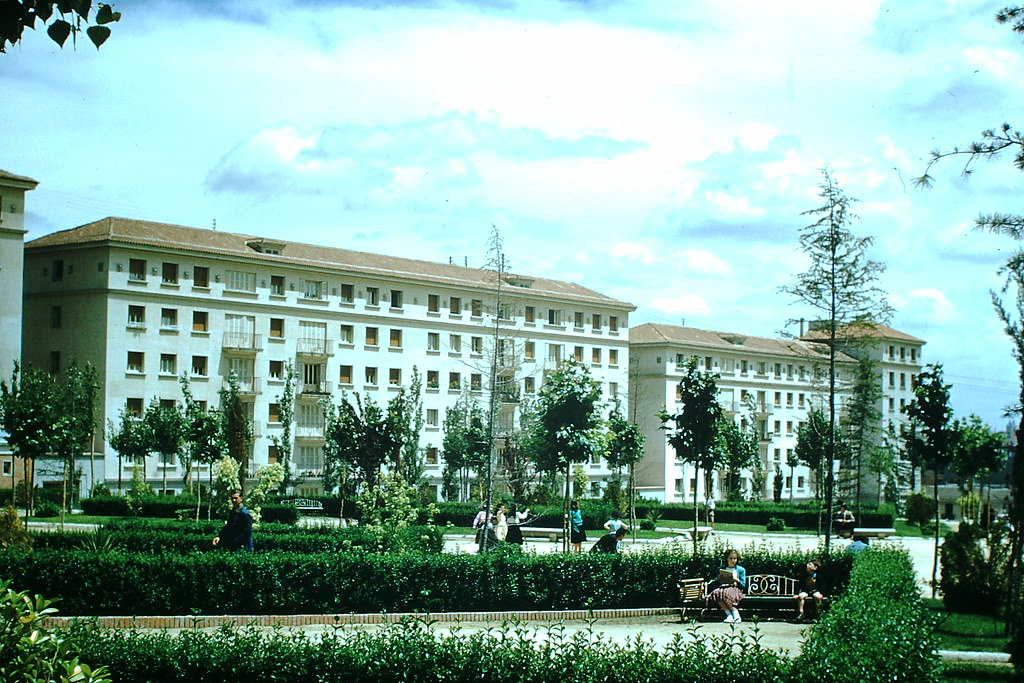
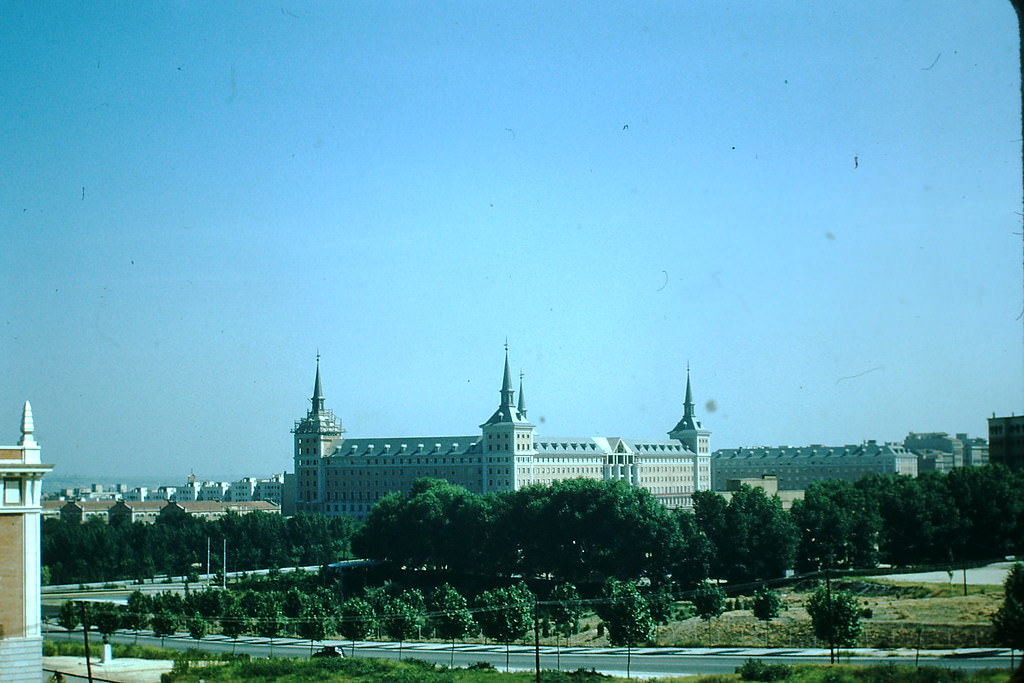
Government-built apartment blocks housed state employees, a reflection of how deeply the Franco regime controlled daily life. University City, the sprawling academic district on Madrid’s northwestern edge, had been the site of fierce fighting during the Spanish Civil War. By 1954, it had been rebuilt and expanded, now hosting institutions like the Aviation Administration.
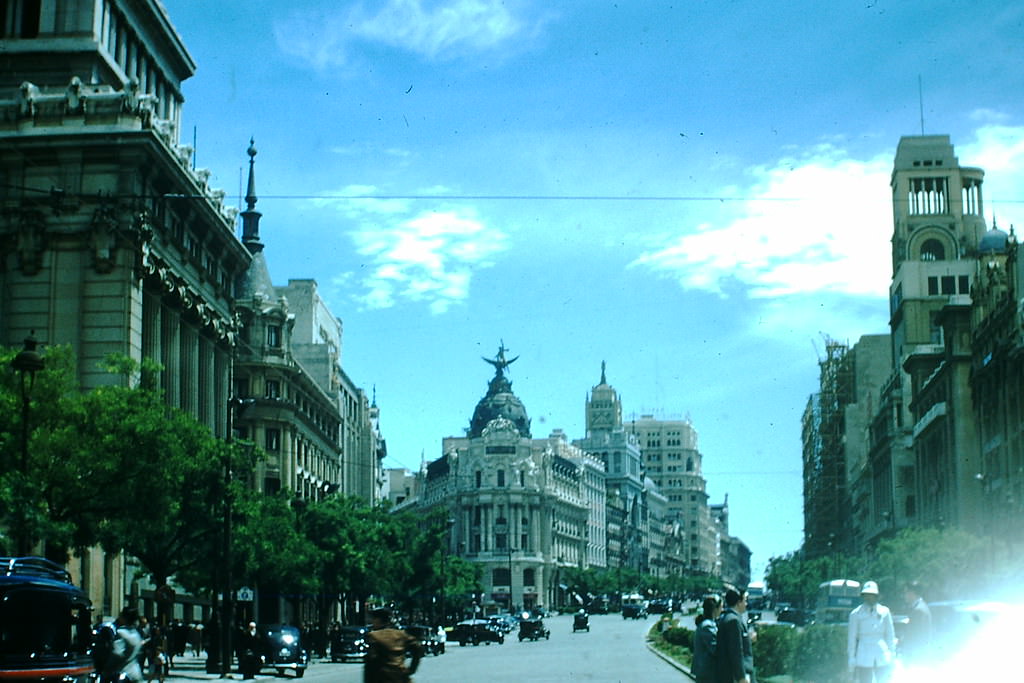
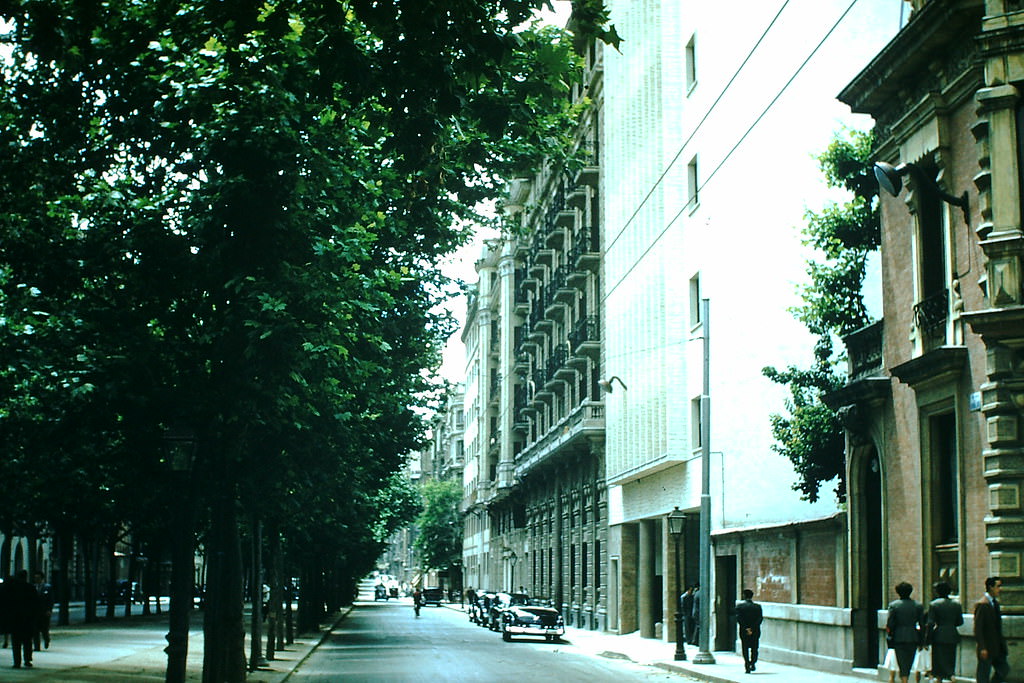
Calle Alcalá was one of Madrid’s main commercial arteries, bustling with buses and shoppers. Just a few blocks away, Calle General Mola — named after the Nationalist general who helped launch the 1936 coup — was known as the city’s most aristocratic street, lined with upscale residences and fine architecture.
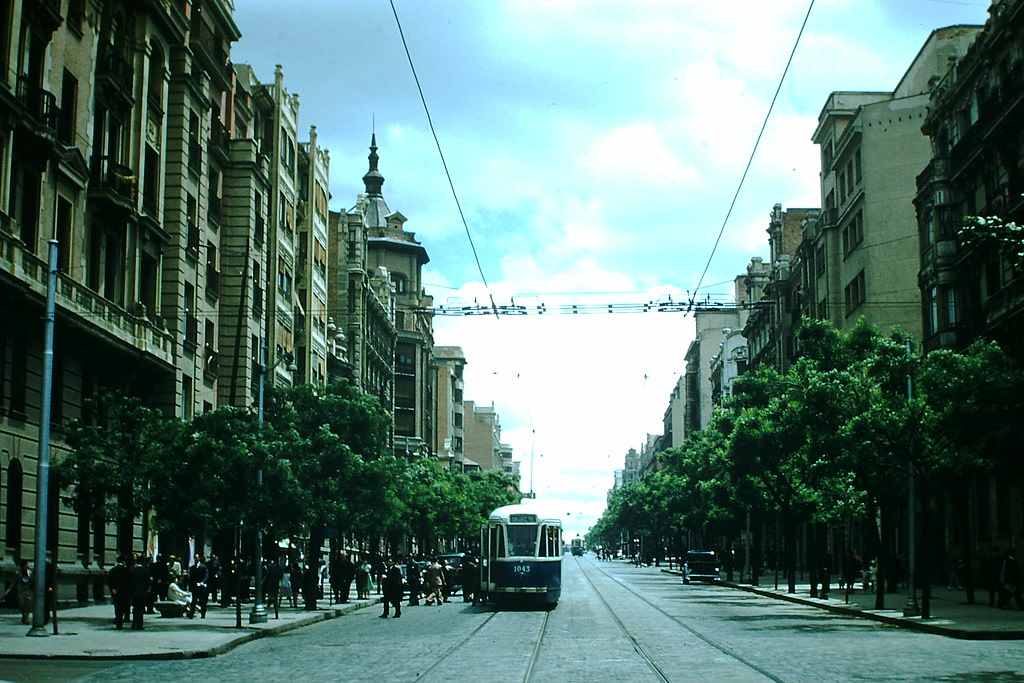
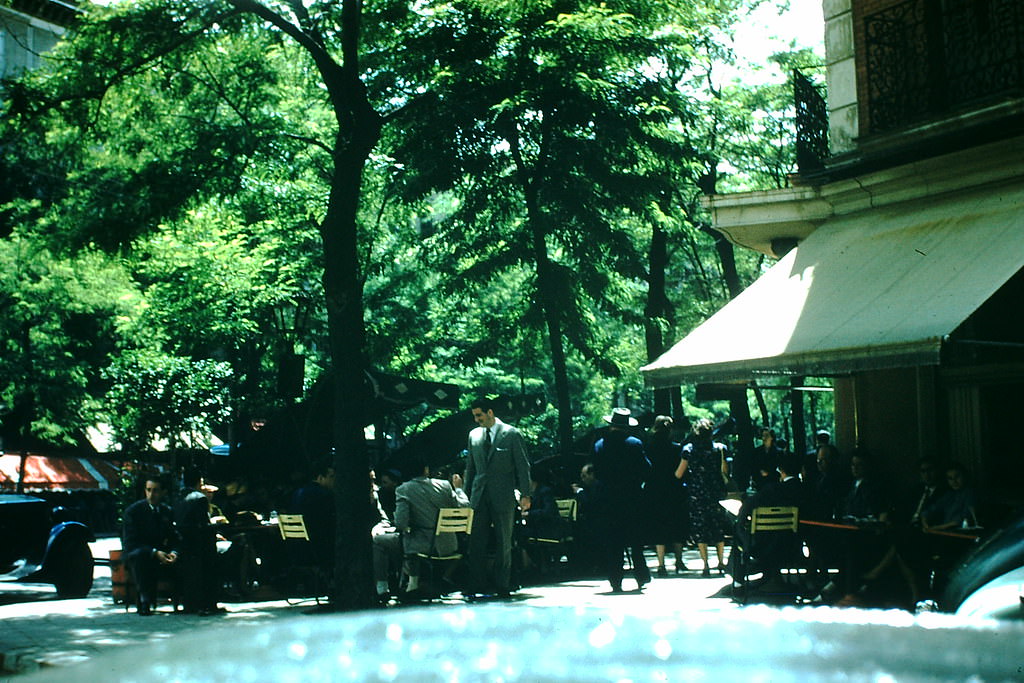
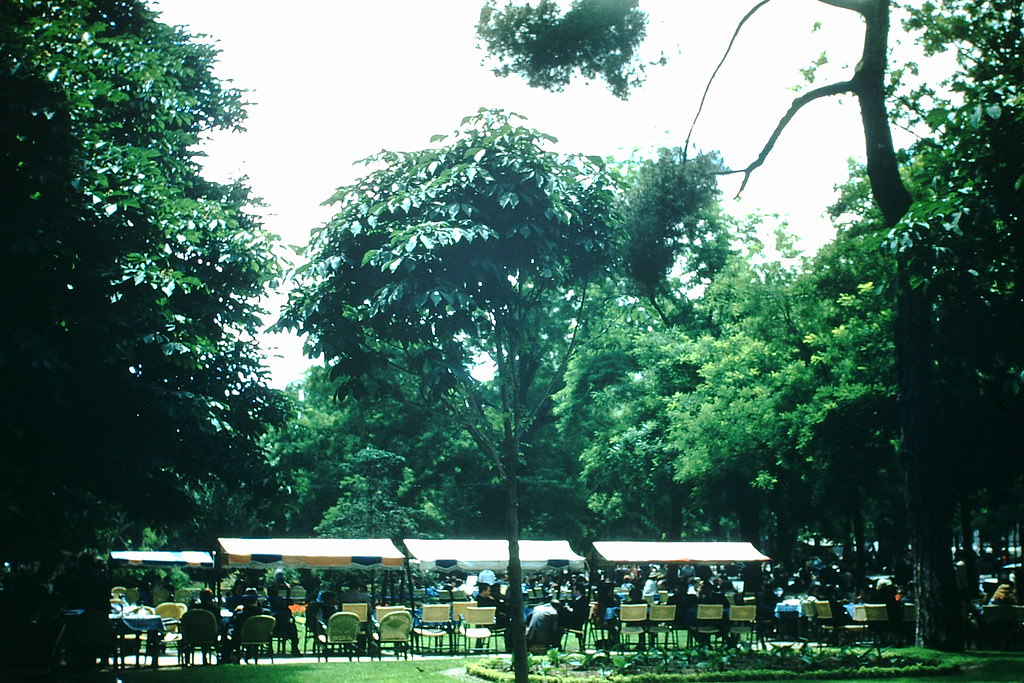
Calle Serrano was the place to be seen in mid-century Madrid. Its sidewalk cafés drew well-dressed Madrileños who lingered over coffee and conversation — a small but telling sign that even in lean times, the city’s social culture remained intact.
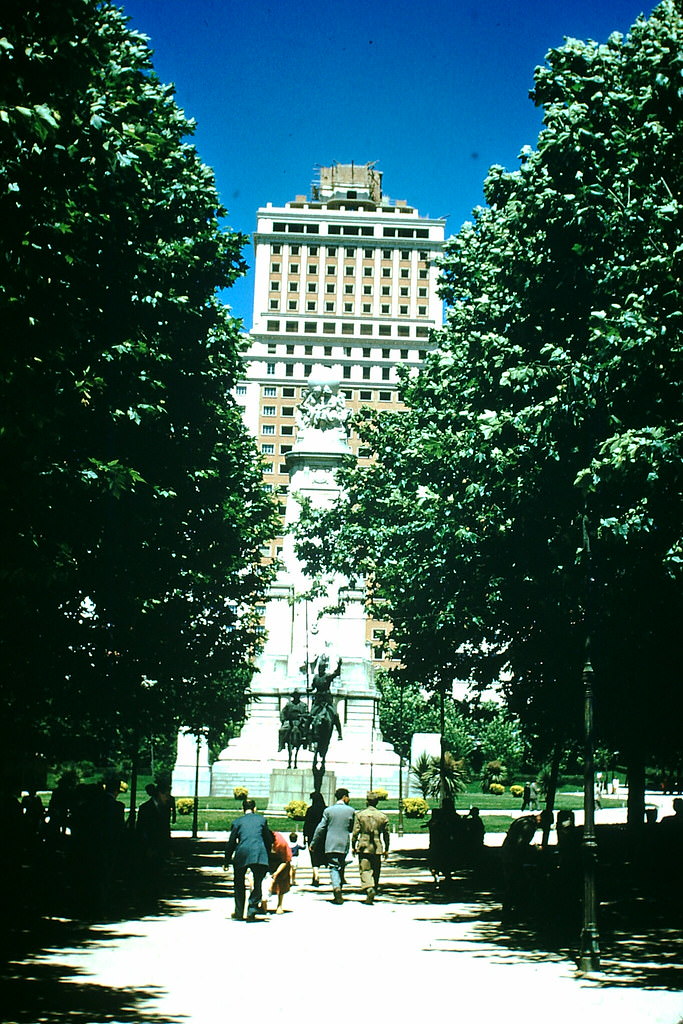
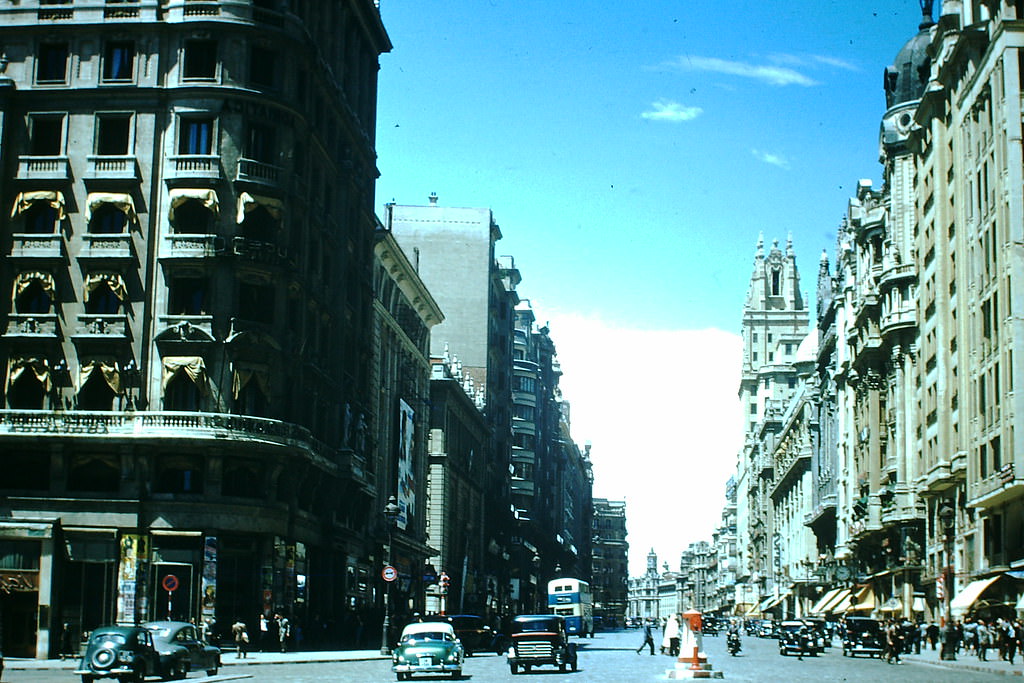
The Gran Vía, officially renamed Avenida de José Antonio under Franco in honor of the Falange’s founder José Antonio Primo de Rivera, was Madrid’s main shopping street. Its mix of cinemas, shops, and hotels made it the commercial heart of the capital.
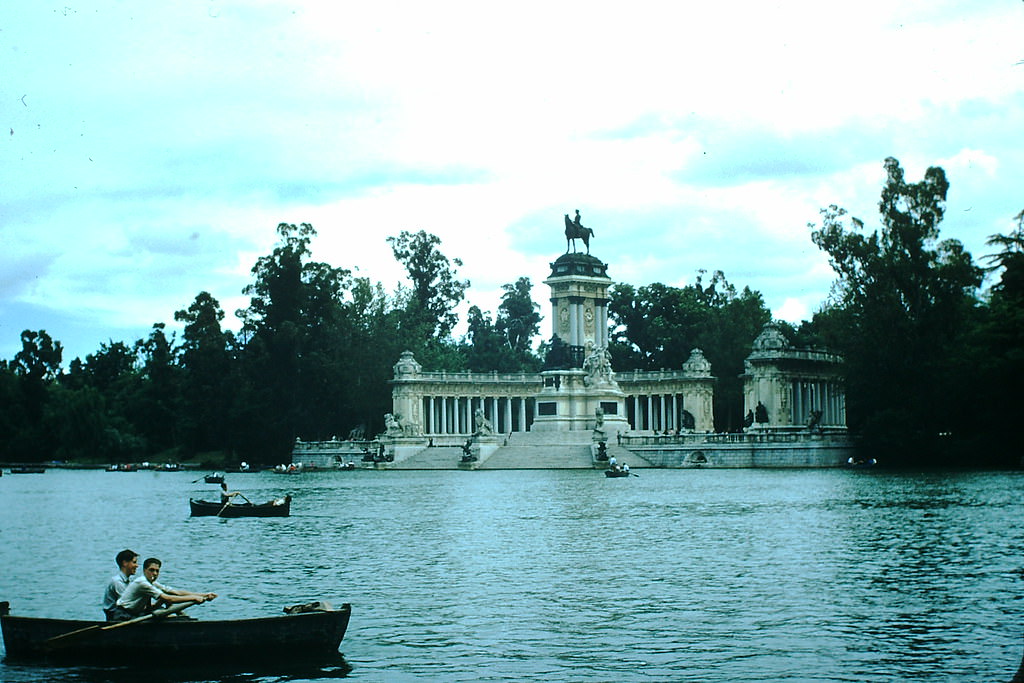
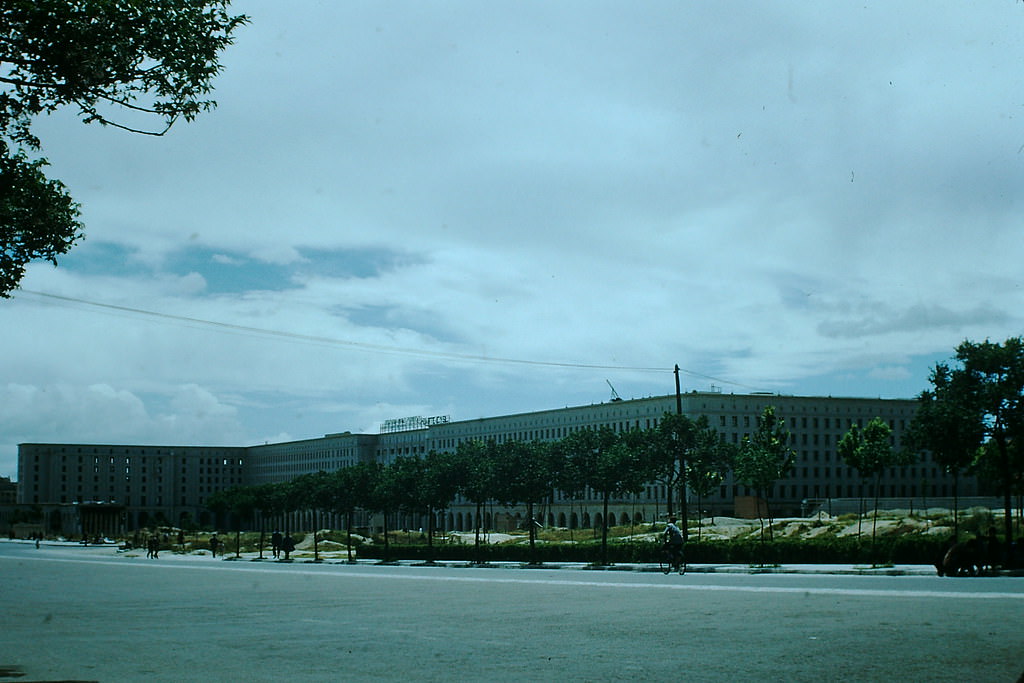
El Retiro Park offered Madrileños a green escape from the city’s stone and concrete. The lake at its center, overlooked by the equestrian statue of King Alfonso XII, was a popular spot for rowing boats and afternoon strolls. Nearby, the regime continued to construct new government administration buildings — visible symbols of state authority rising across the capital.
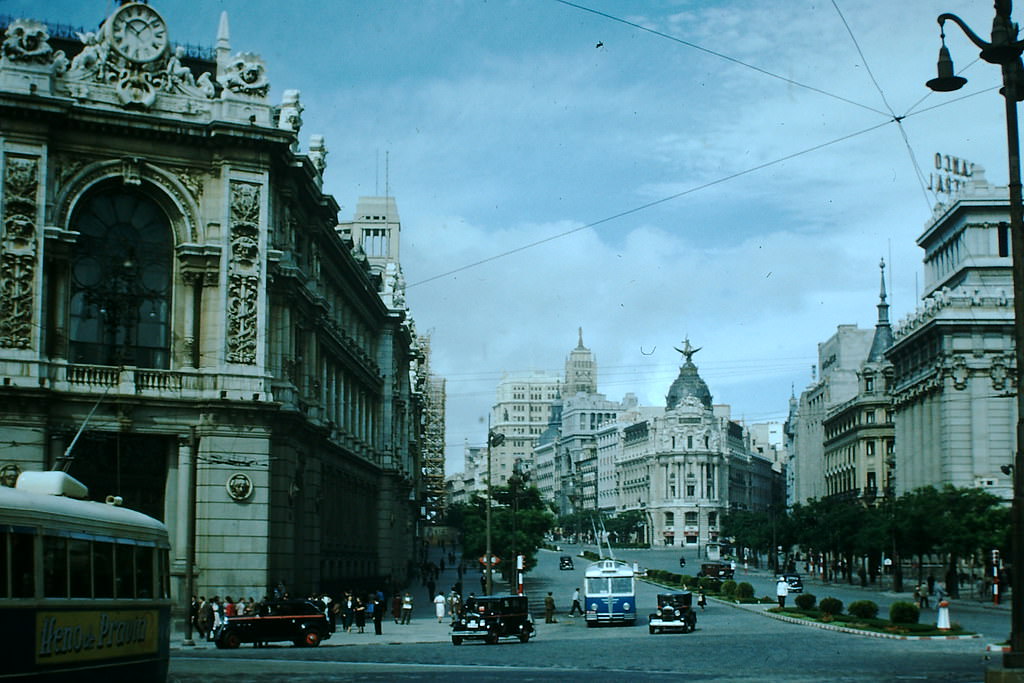
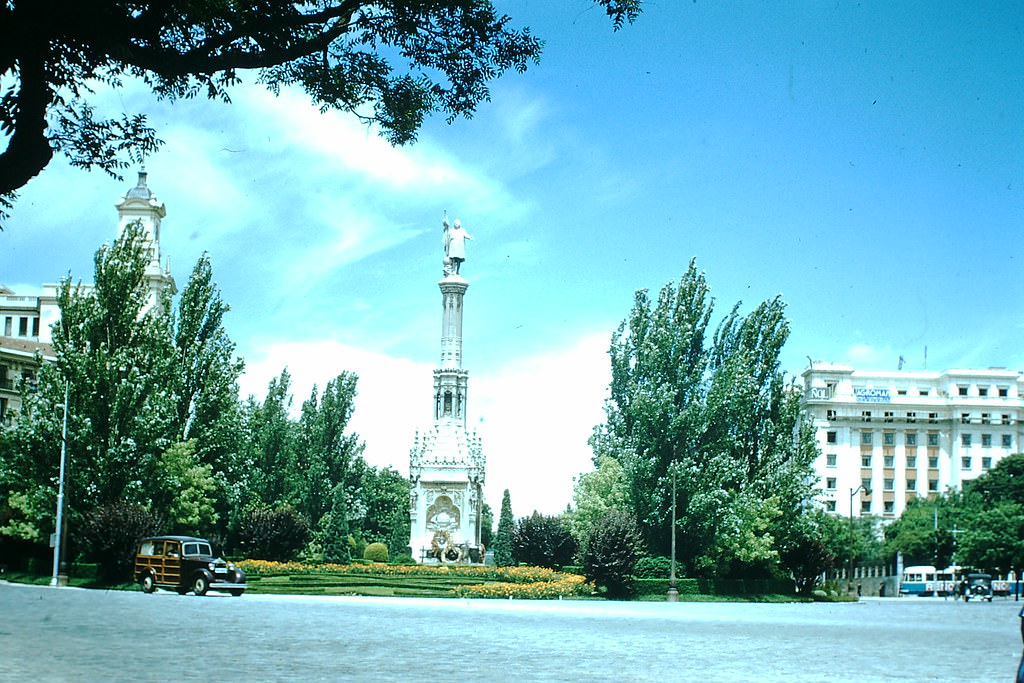
The Paseo de la Castellana formed Madrid’s great north-south spine, flanked by embassies and ministry buildings. Plaza de Colón, dedicated to Christopher Columbus, stood as a reminder of Spain’s imperial past — a past the Franco regime frequently invoked to project national pride.
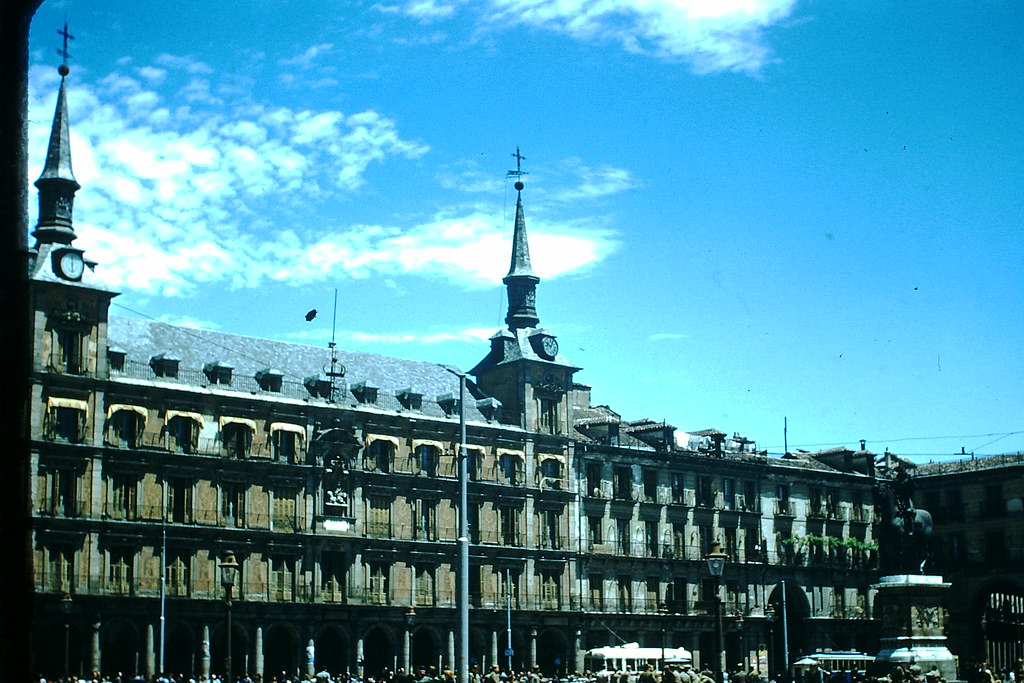
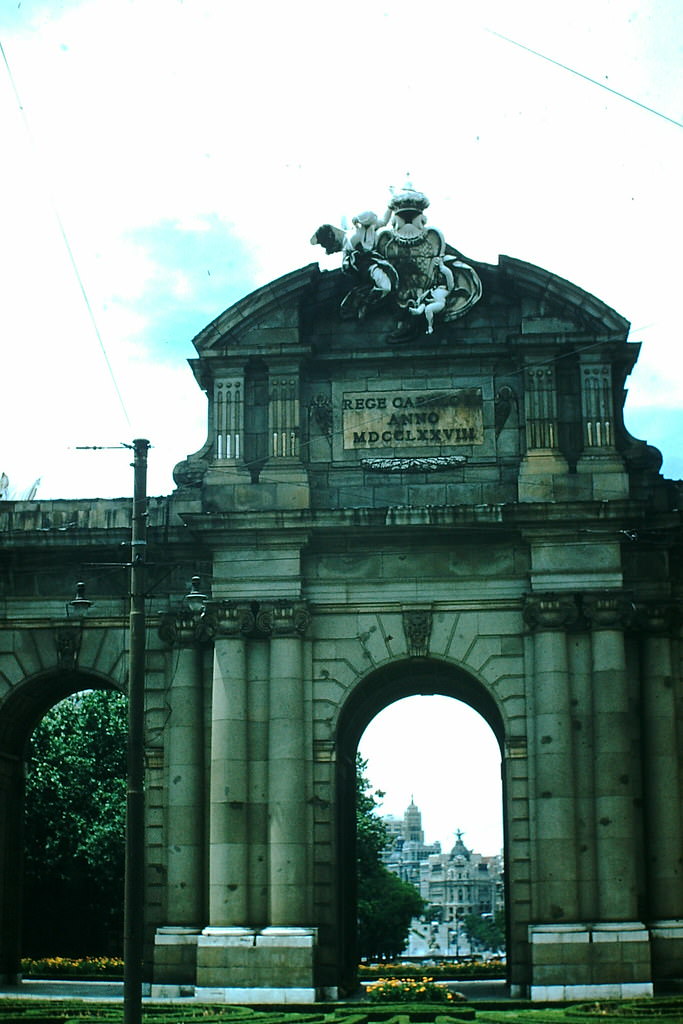
Old Madrid preserved its tightly packed streets and lower buildings from earlier centuries, a sharp contrast to the broader avenues being built elsewhere. The Puerta de Alcalá, an 18th-century triumphal arch commissioned by King Charles III, still stood as a gateway between the old city and the eastern districts.
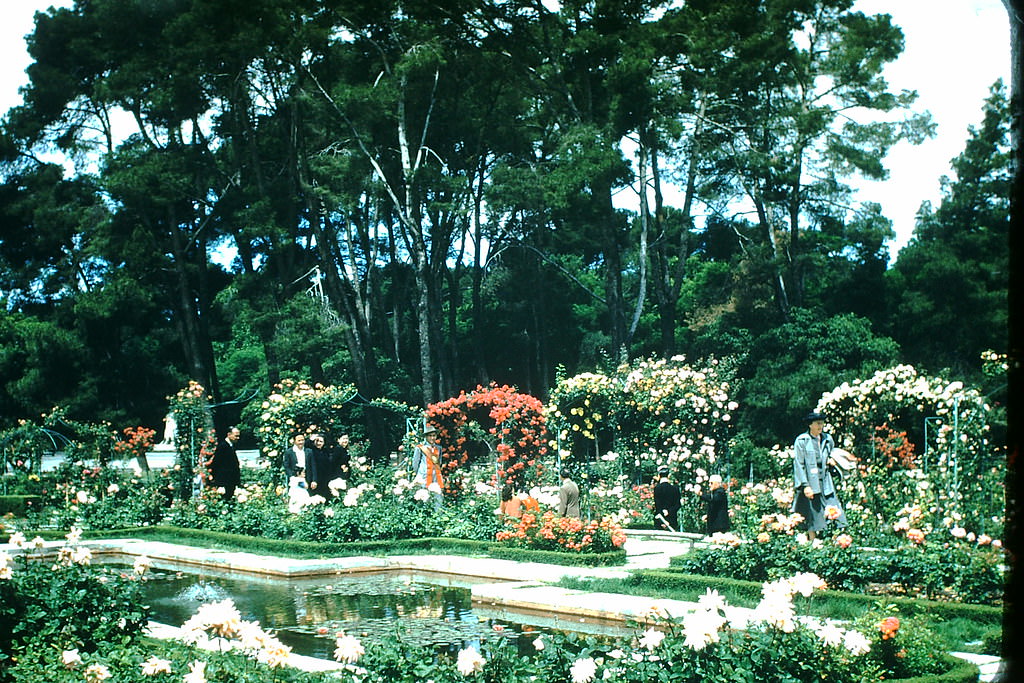
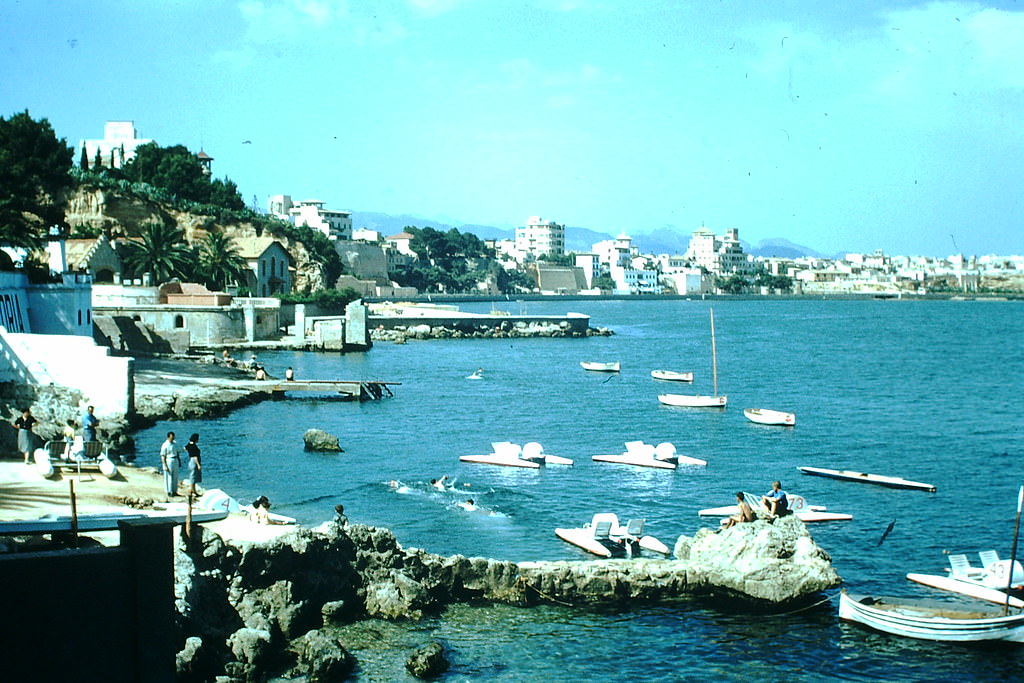
Beyond the capital, Spain’s diversity was striking. Palma, on the island of Majorca, was beginning to attract visitors with its Mediterranean coastline and hotel-lined shores — an early glimpse of the tourism boom that would reshape Spain’s economy in later decades. Retiro’s rose garden, meanwhile, showed that Madrid’s civic spaces were tended with care despite the country’s financial difficulties.
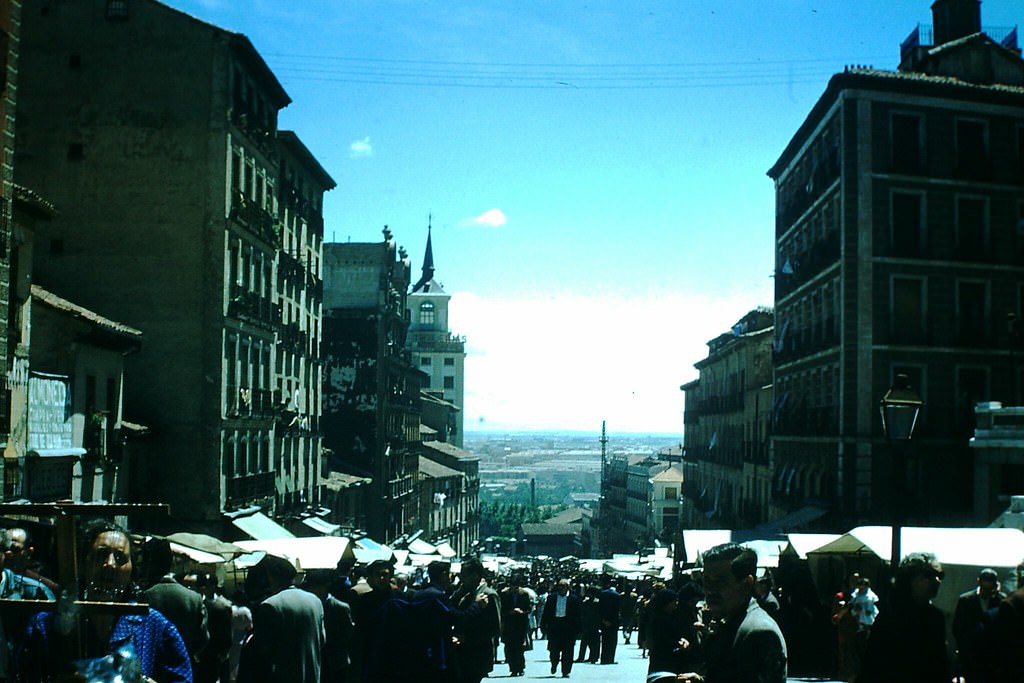
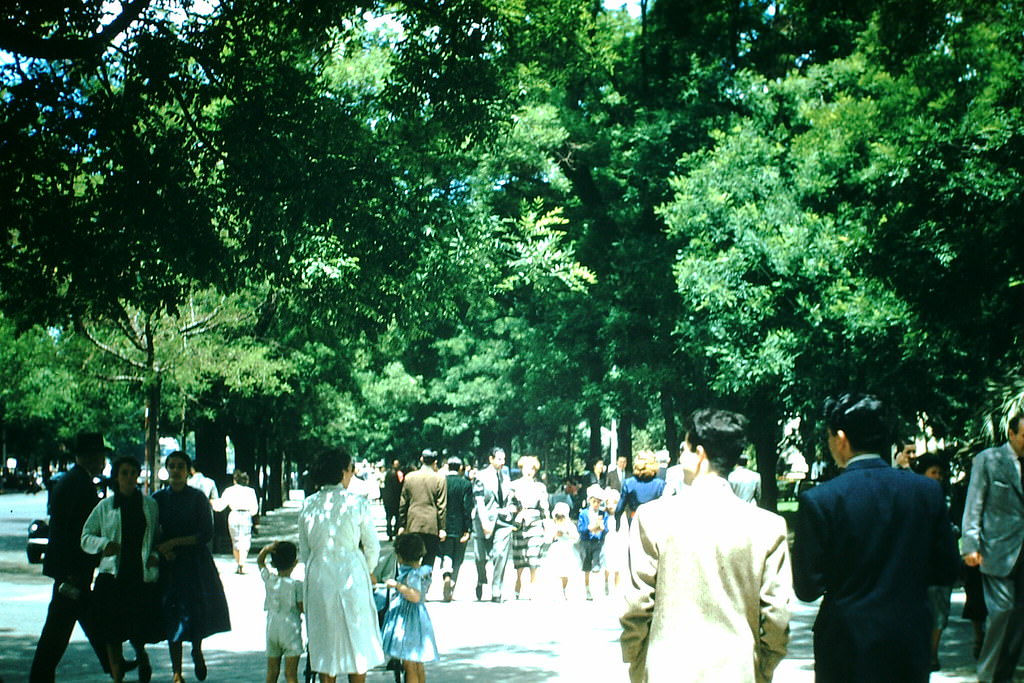
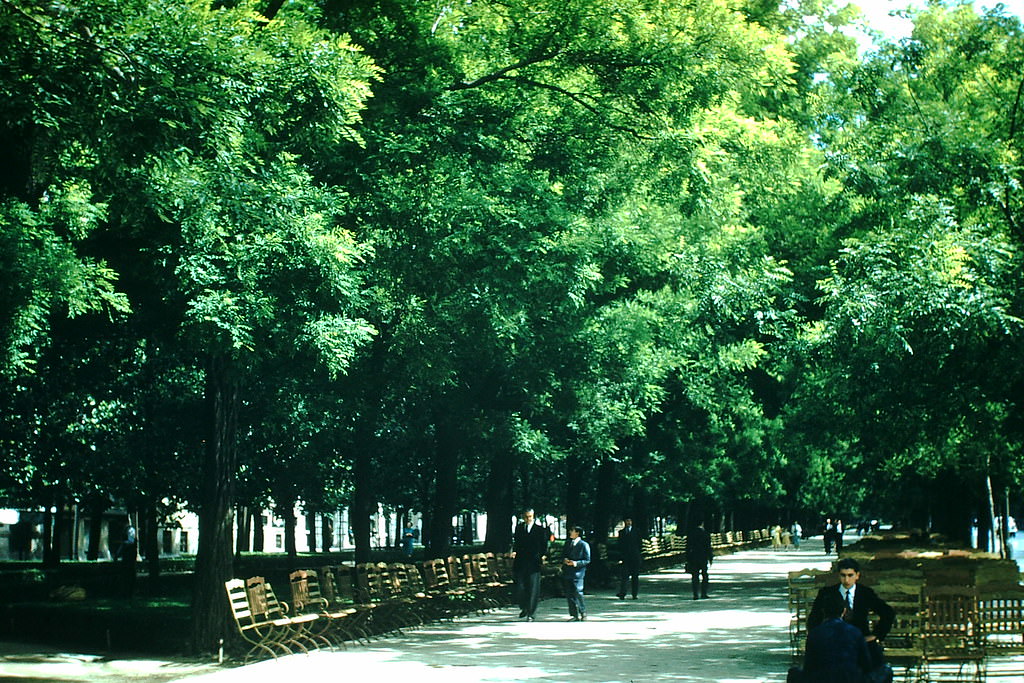
Old Madrid’s secondhand markets reflected the economic realities facing ordinary Spaniards. Goods were resold and repurposed rather than discarded. On the Paseo de Recoletos, however, a more comfortable segment of society strolled under the shade trees, a world apart from the bargain stalls nearby.
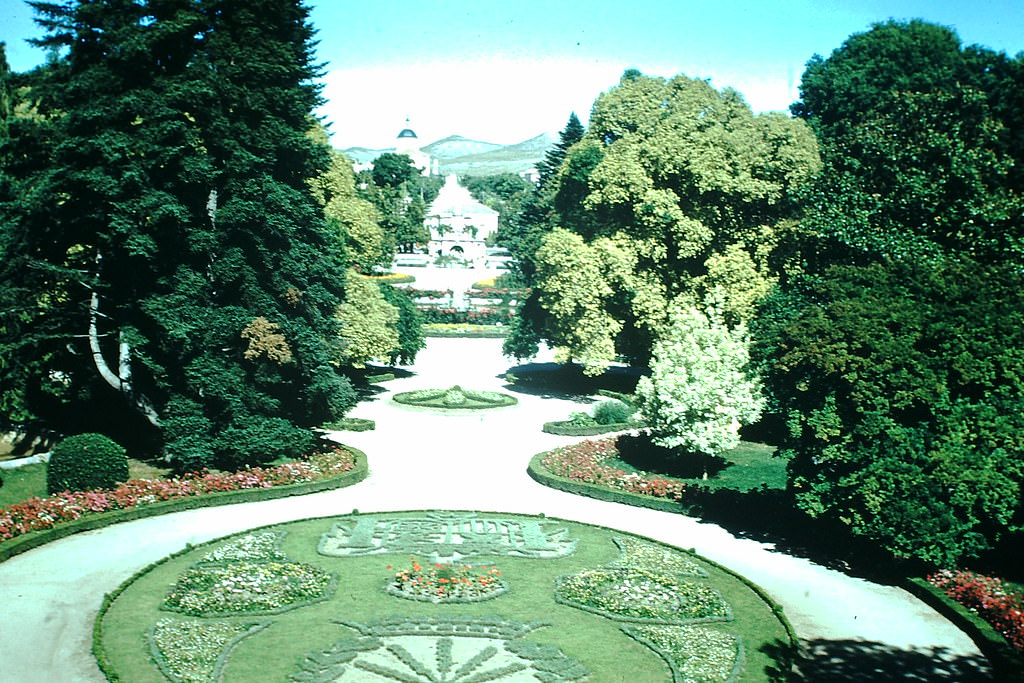
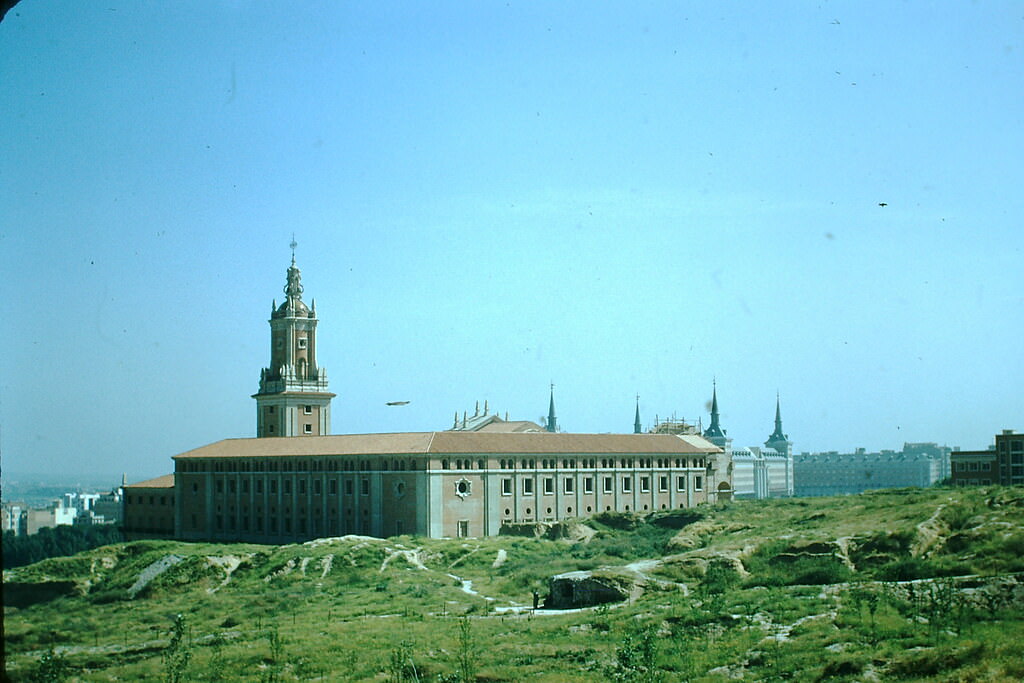
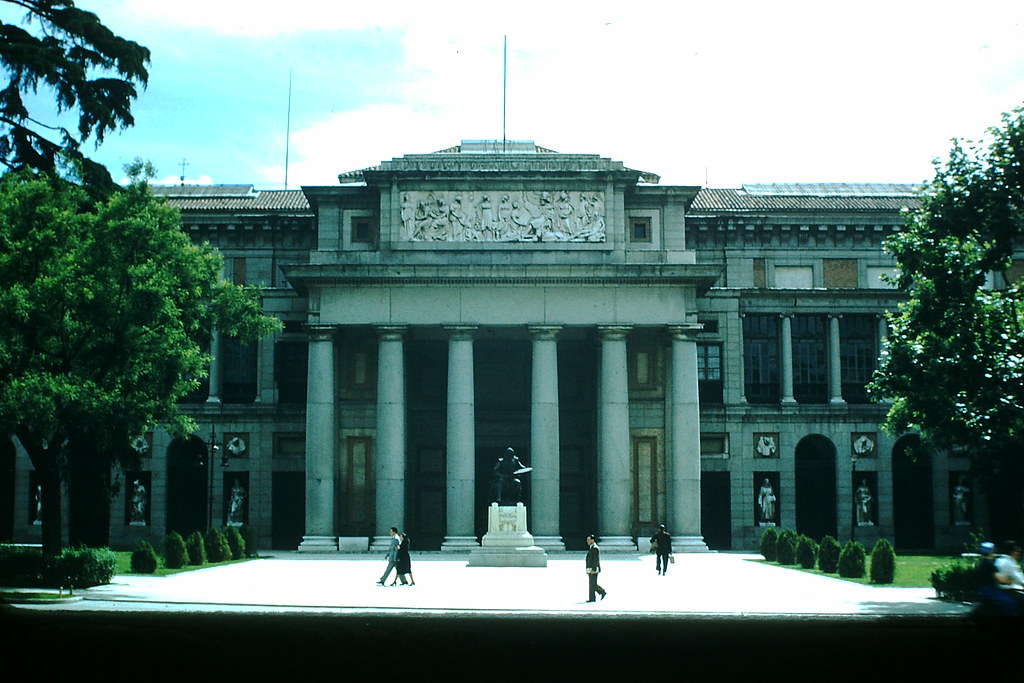
The Royal Palace gardens at Aranjuez, south of Madrid, displayed the formal French-influenced landscaping laid out for Spain’s Bourbon kings in the 18th century. The Prado Museum district and University City rounded out the capital’s cultural and educational landscape, both still bearing the scars — and the reconstruction — of the Civil War that had ended just 15 years earlier.
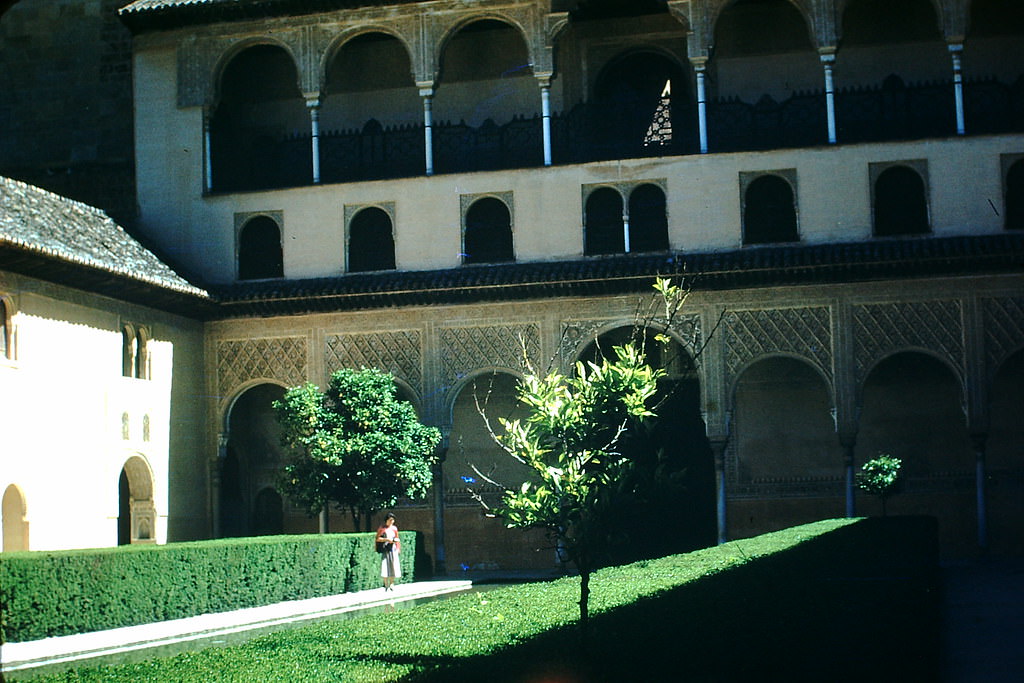
Granada’s Alhambra was already one of Spain’s most visited historic sites in 1954. The Nasrid palace complex, built by Moorish rulers between the 13th and 15th centuries, contained some of the finest Islamic architecture in the world. Its intricately carved stucco, geometric tile work, and tranquil courtyards drew visitors from across Europe and beyond.
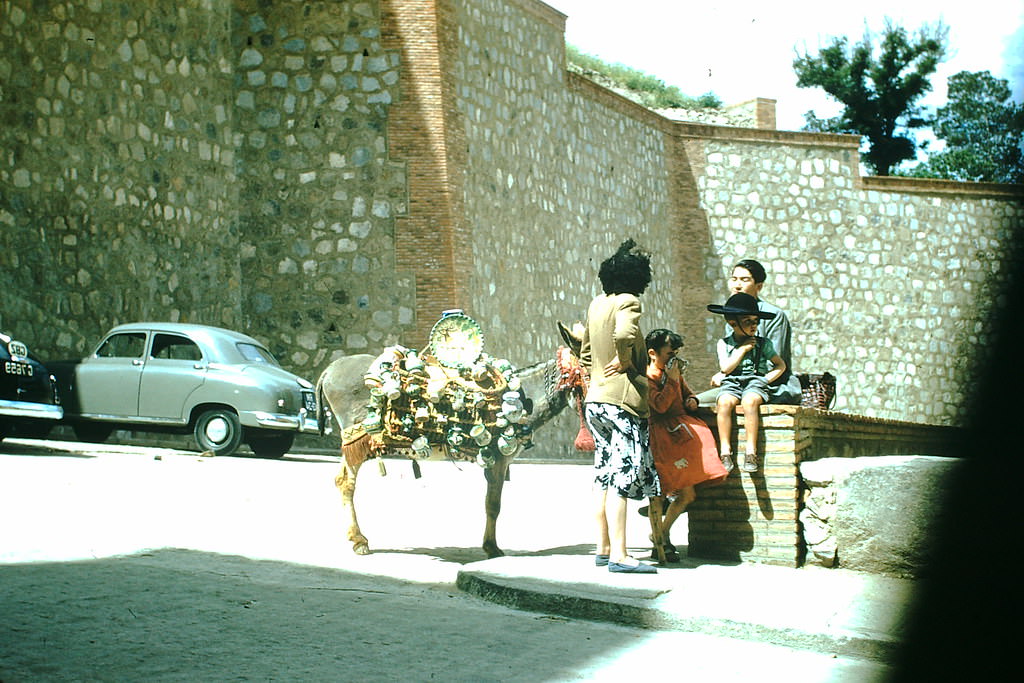
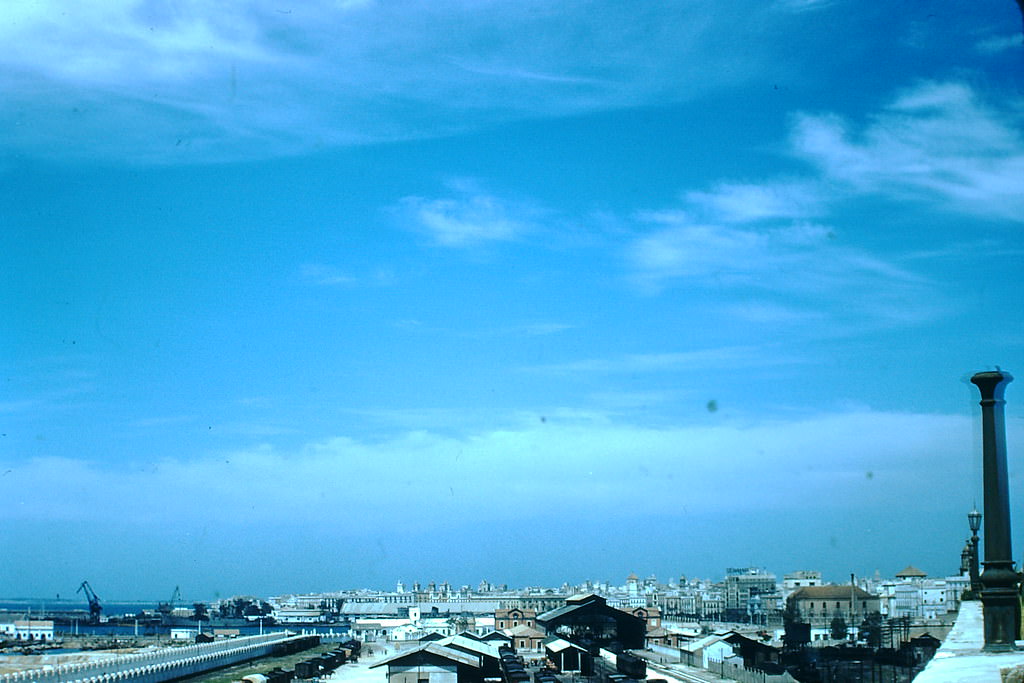
Toledo, perched on a rocky promontory above the Tagus River, had served as Spain’s imperial capital before Madrid took that role in the 16th century. Its medieval skyline — dominated by the cathedral and the Alcázar fortress — remained largely unchanged. Cádiz, one of the oldest cities in Western Europe, showed a different face of Spain: a working port city with active rail yards and harbor docks serving Atlantic trade routes.
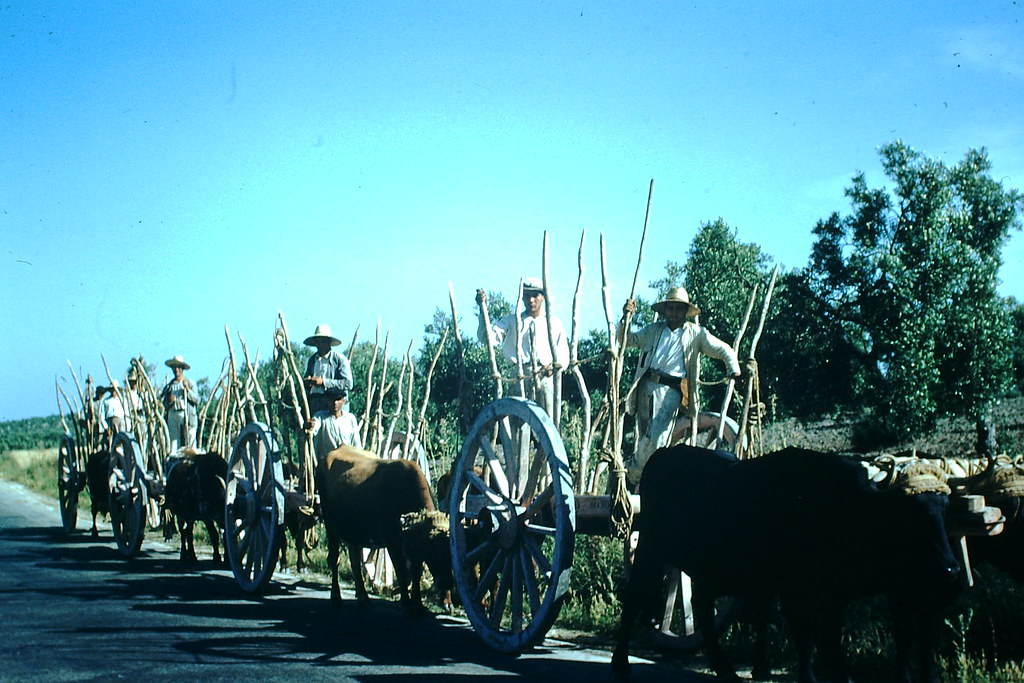
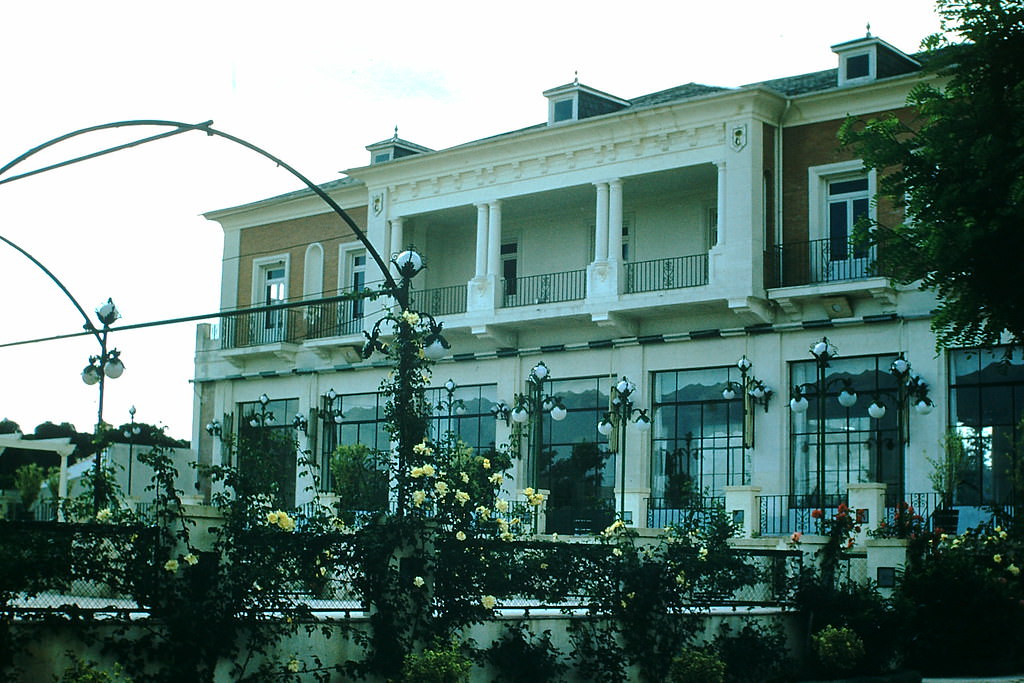
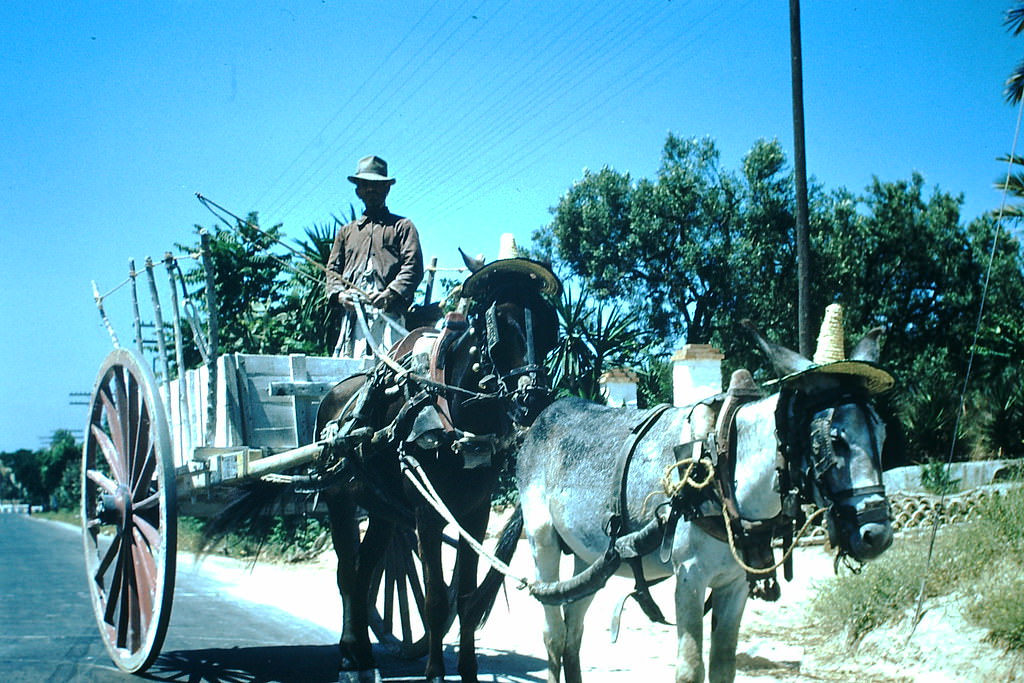
On the roads between cities, ox-drawn carretas — traditional Spanish carts — still moved goods across the countryside, a sign of how much of rural Spain remained pre-industrial. Roadside nightclubs like Casa Camora on the route to El Escorial catered to wealthier Spaniards and travelers making their way between the capital and the mountains.
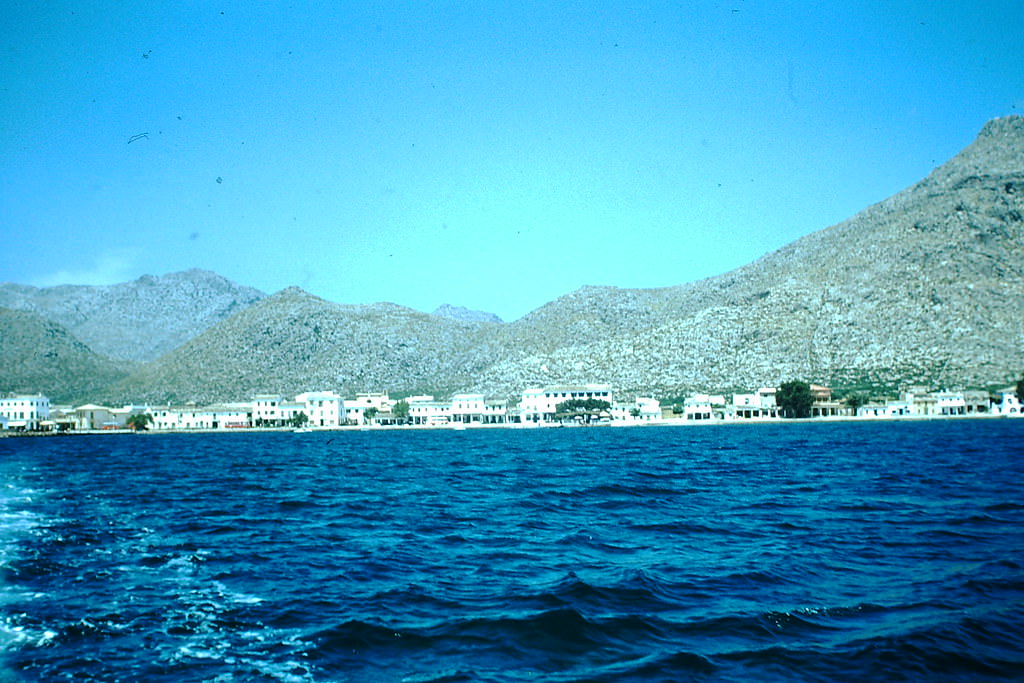
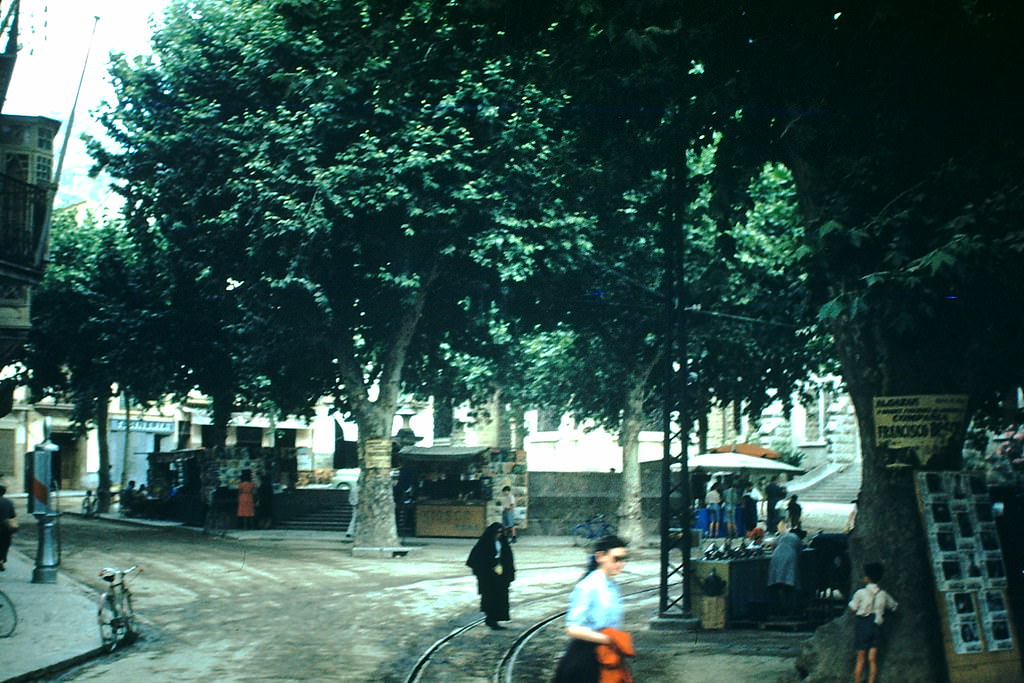
On Majorca, the bay at Puerto Pollensa and the mountain town of Sóller each offered a quieter, more traditional version of Spanish island life. Sóller’s central plaza, ringed by stone buildings and shaded by trees, was the social center of a town connected to Palma by one of Spain’s most scenic narrow-gauge railway lines.
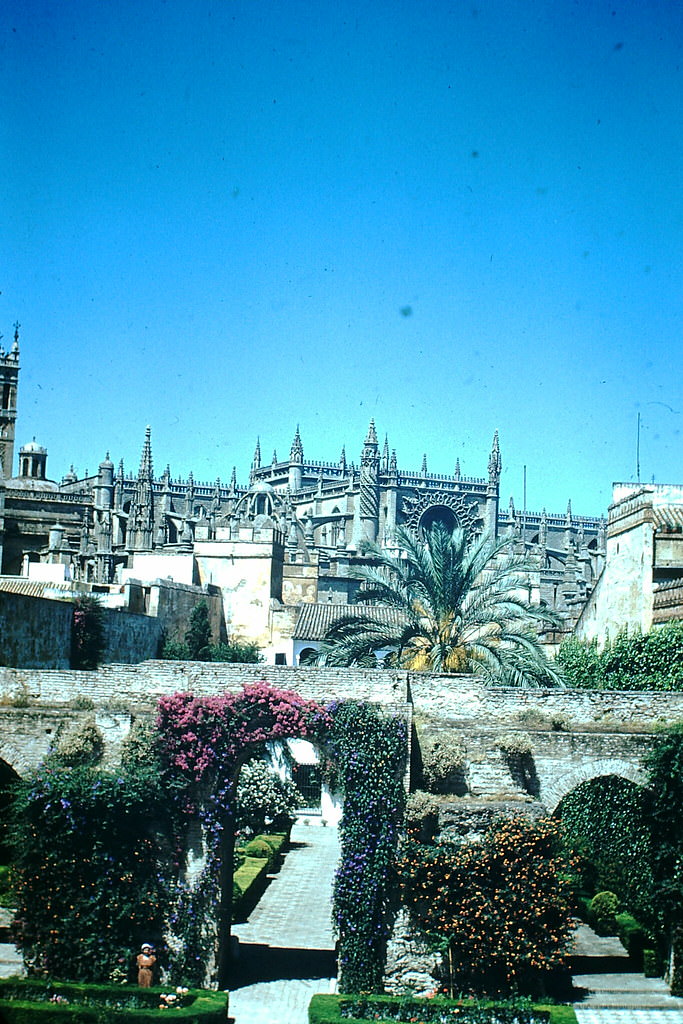
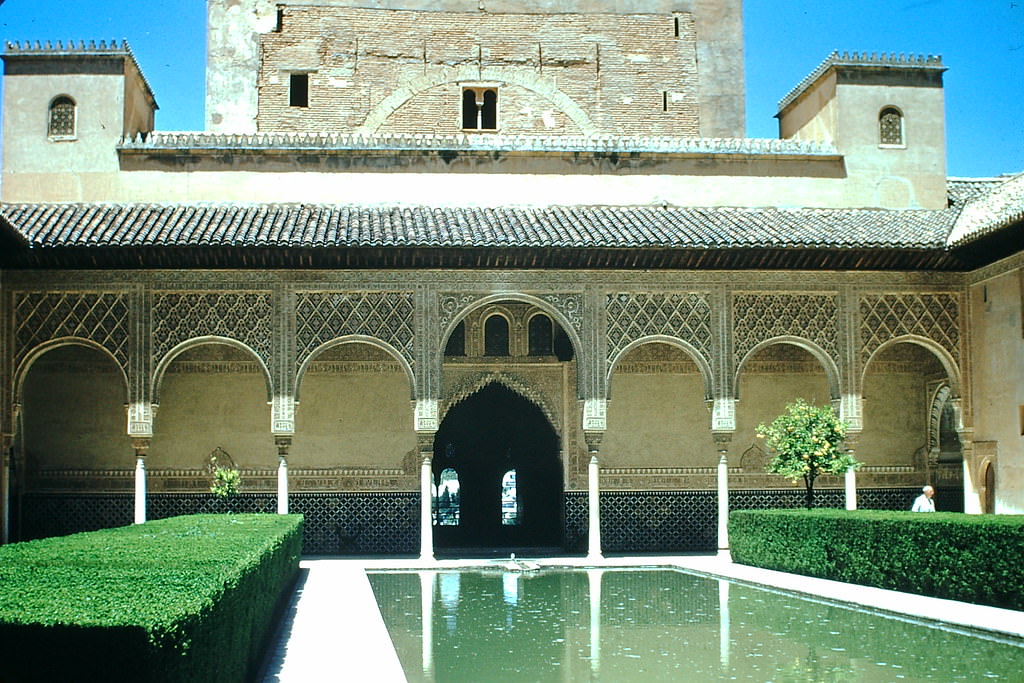
The Alcázar of Seville and the Alhambra of Granada both preserved Moorish and Mudéjar architecture that dated back centuries before Spain’s unification under Ferdinand and Isabella. Their courtyards — cool, shaded, and built around fountains — were designed to combat the intense Andalusian heat.
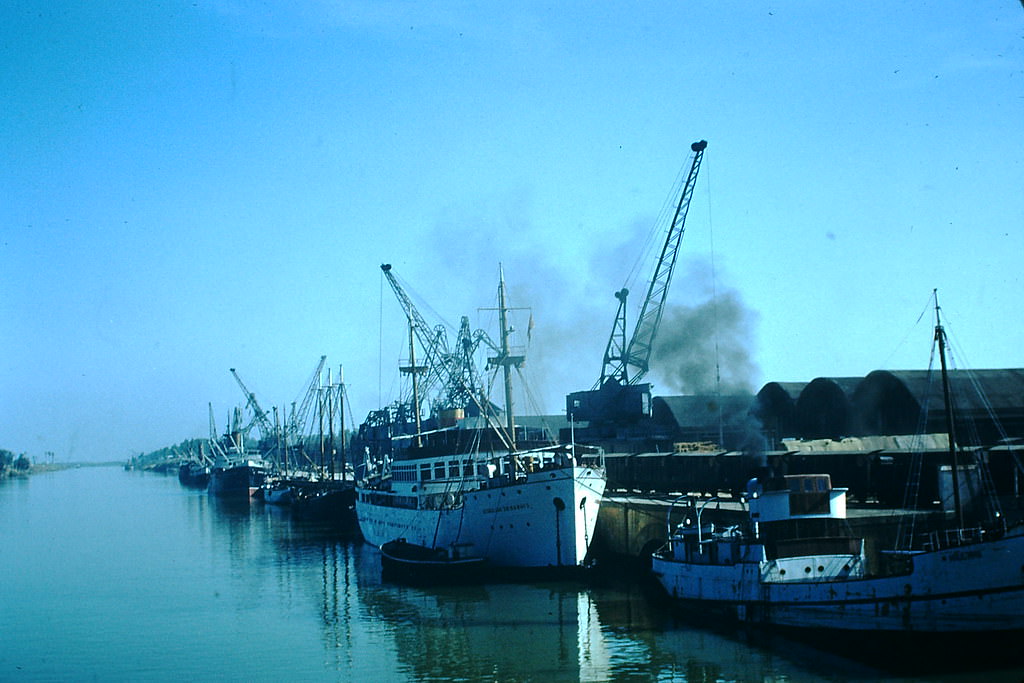
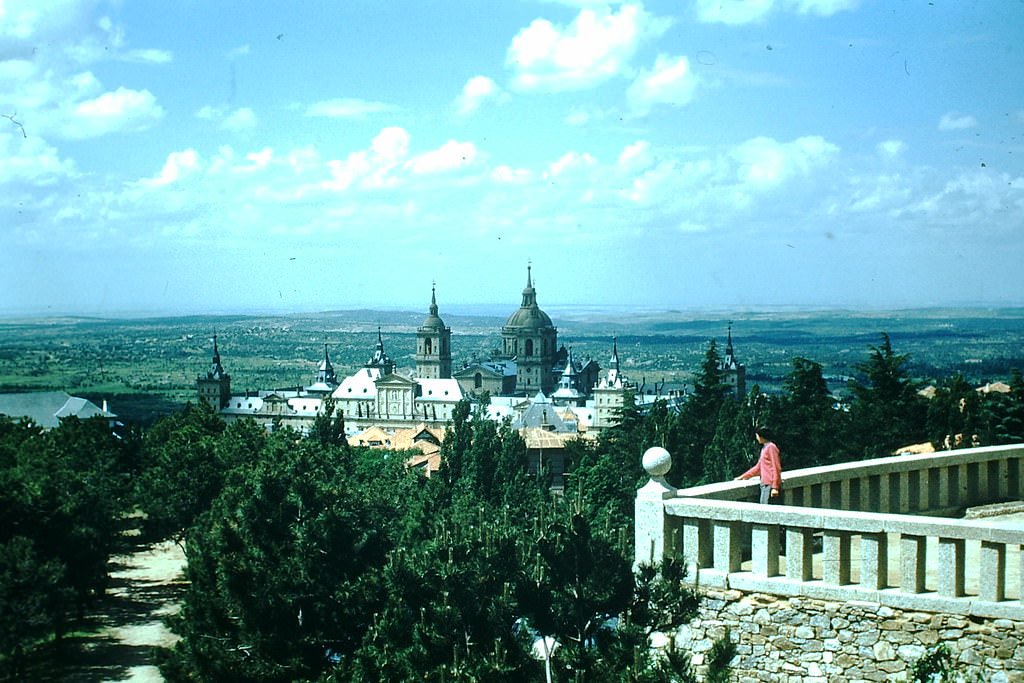
Seville’s docks along the Guadalquivir River handled cargo from across Spain’s diminished but still active trade network. North of Madrid, El Escorial — the massive royal monastery and palace complex built by Philip II in the 16th century — loomed over the foothills of the Sierra de Guadarrama, best seen from the nearby Hotel Felipe II.
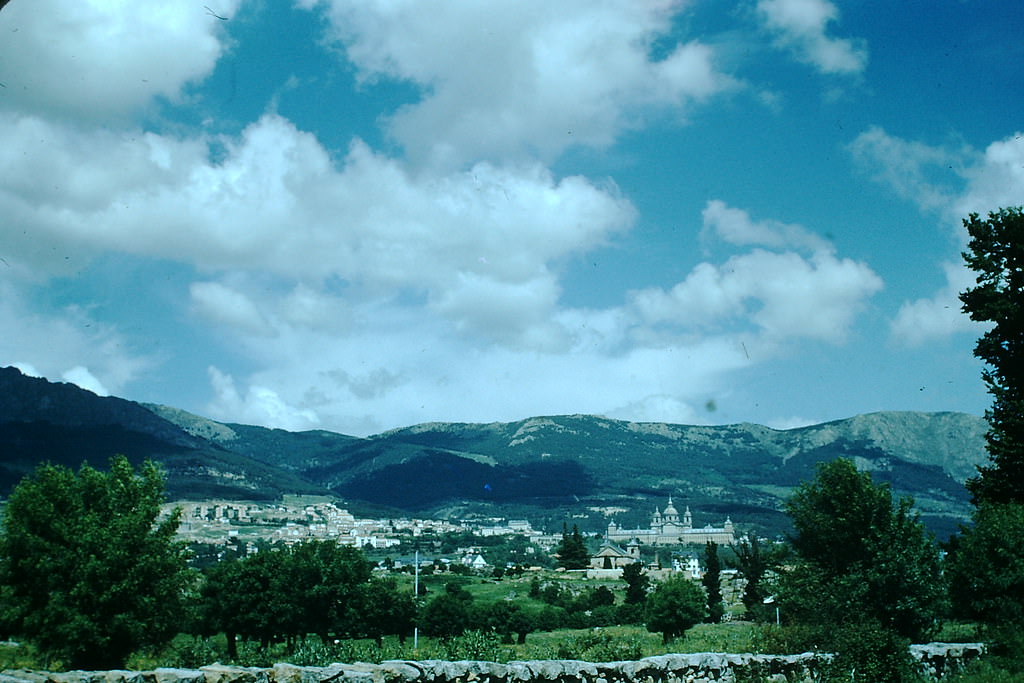
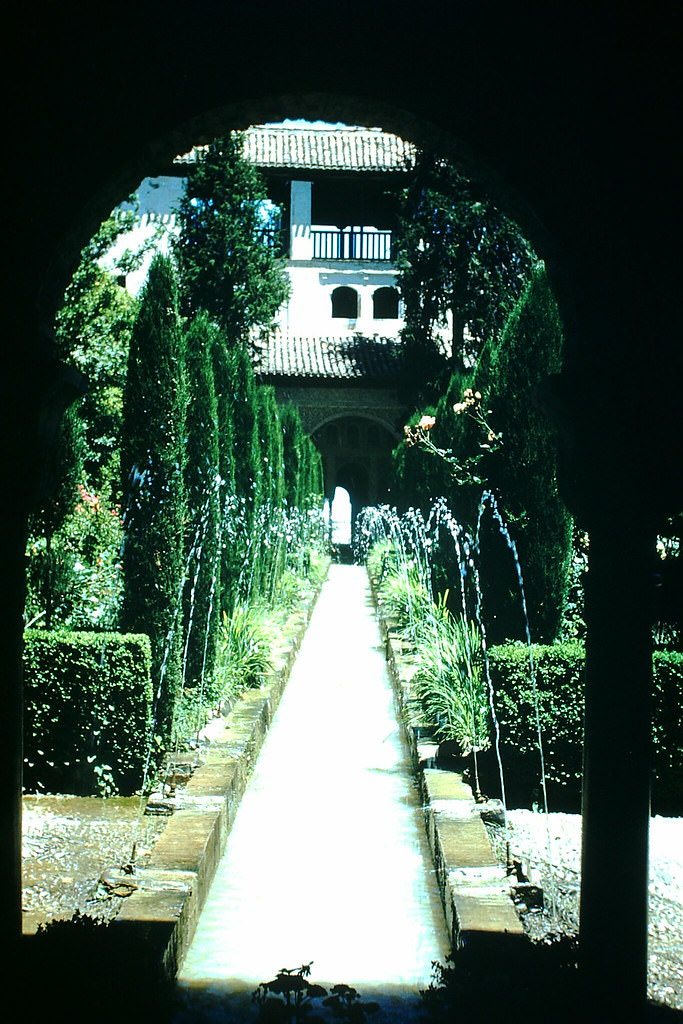
El Escorial’s severe granite façade and grid-like floor plan made it one of the most distinctive royal buildings in Europe. Back in Granada, the Alhambra’s gardens and fountains — fed by an ancient system of water channels the Moors engineered from the Sierra Nevada — filled the palace grounds with the sound of running water and the scent of roses and myrtle.
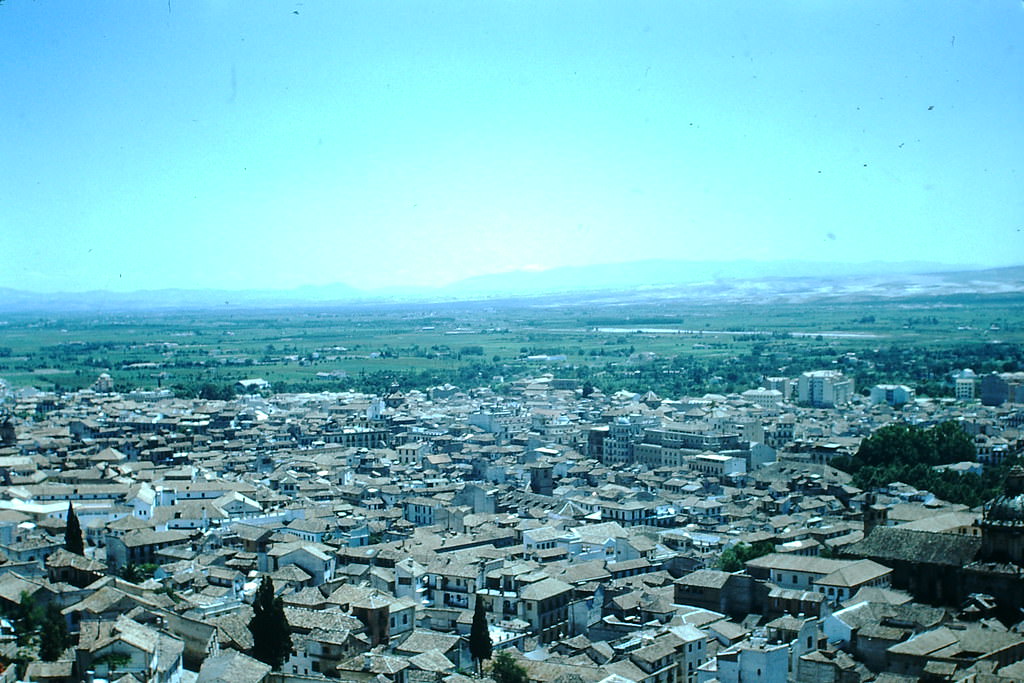
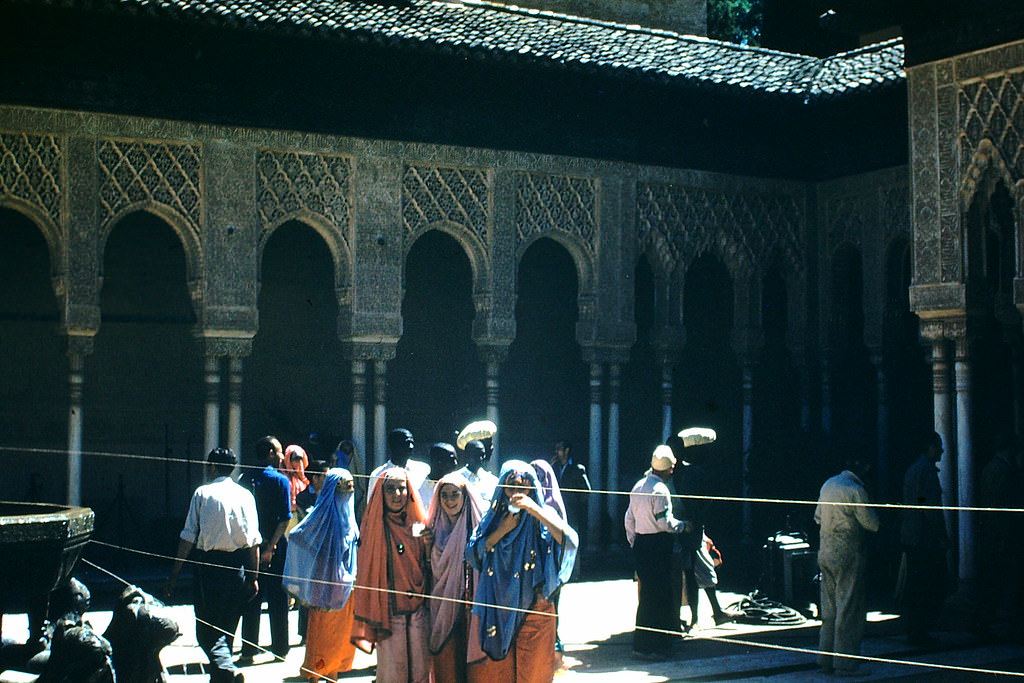
Granada’s streets below the Alhambra hill were home to the city’s Romani community, many of whom lived in the cave dwellings of the Sacromonte district. In 1954, Romani girls were a common sight near the Alhambra, selling handmade goods or performing for tourists visiting the palace.
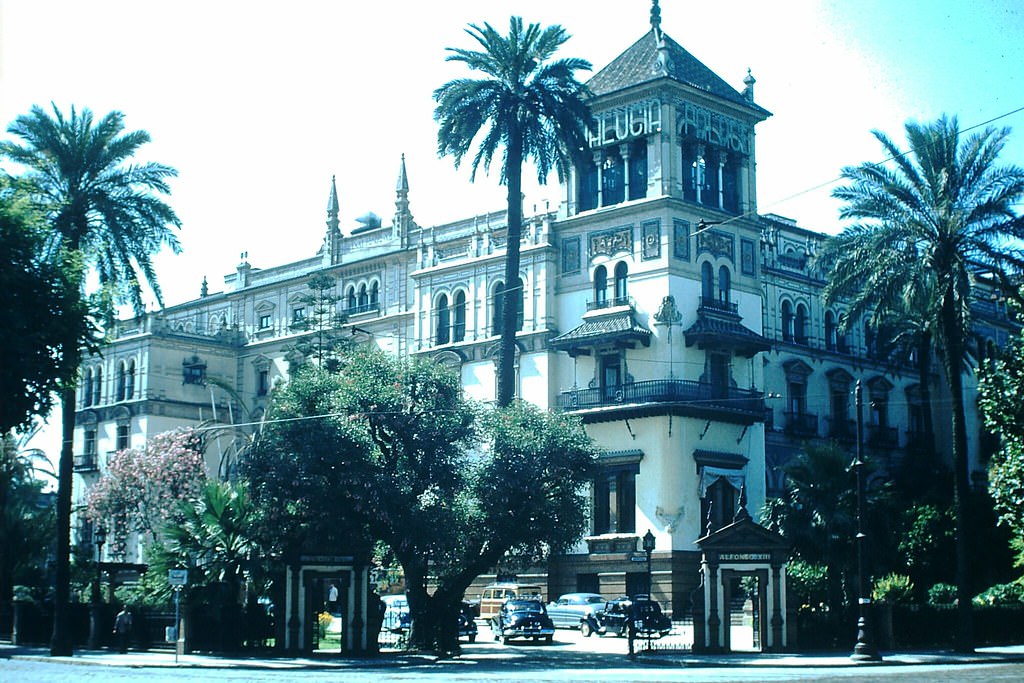
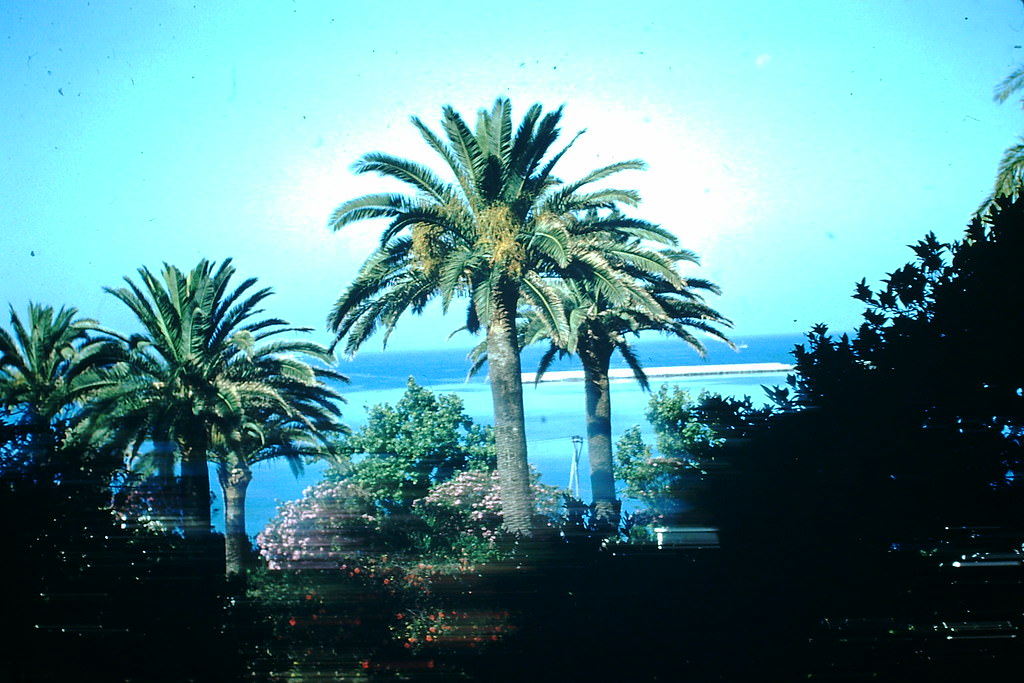
Seville’s Hotel Alfonso XIII, built in 1929 for the Ibero-American Exposition, was one of Spain’s most prestigious hotels in 1954 — a Moorish Revival landmark that hosted dignitaries and wealthy travelers. In Algeciras, the Hotel Reina Cristina sat overlooking the Strait of Gibraltar, its gardens offering views across to the coast of Morocco.
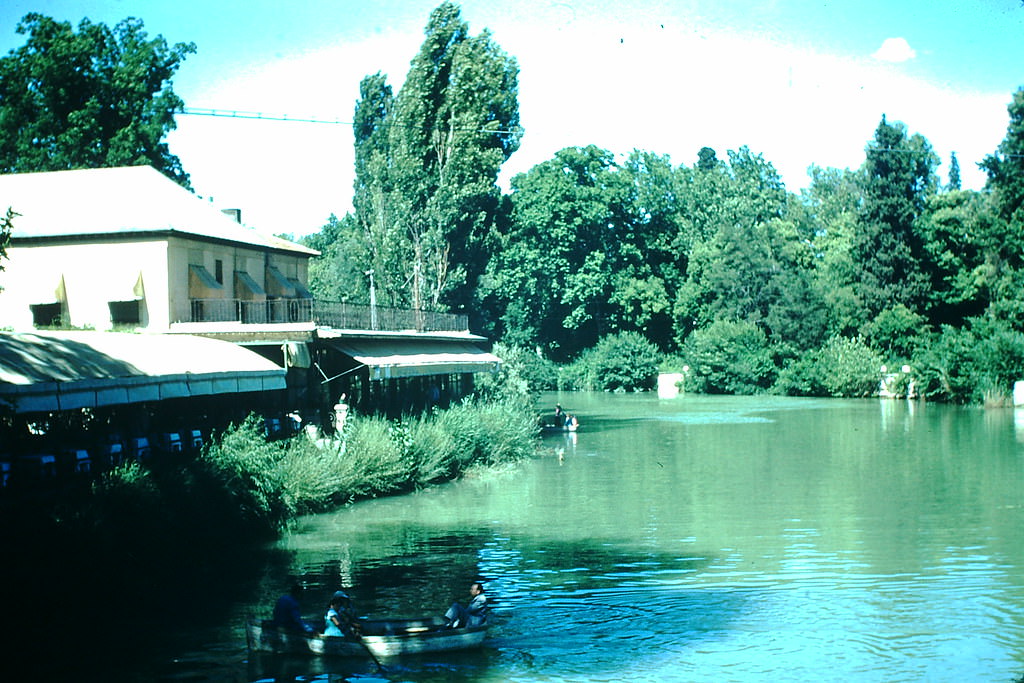
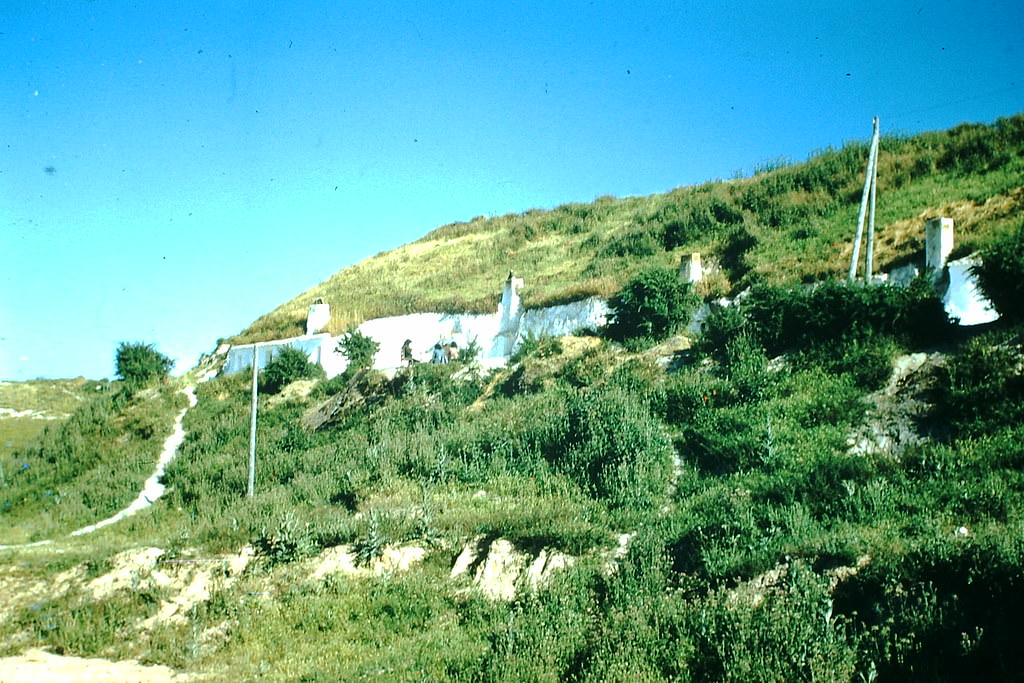
At Aranjuez, the Tagus River curved past riverside restaurants where diners ate in the shade of tall poplars. In smaller Spanish towns, houses were built directly into hillsides — a centuries-old building method that made use of the natural landscape for insulation and shelter.
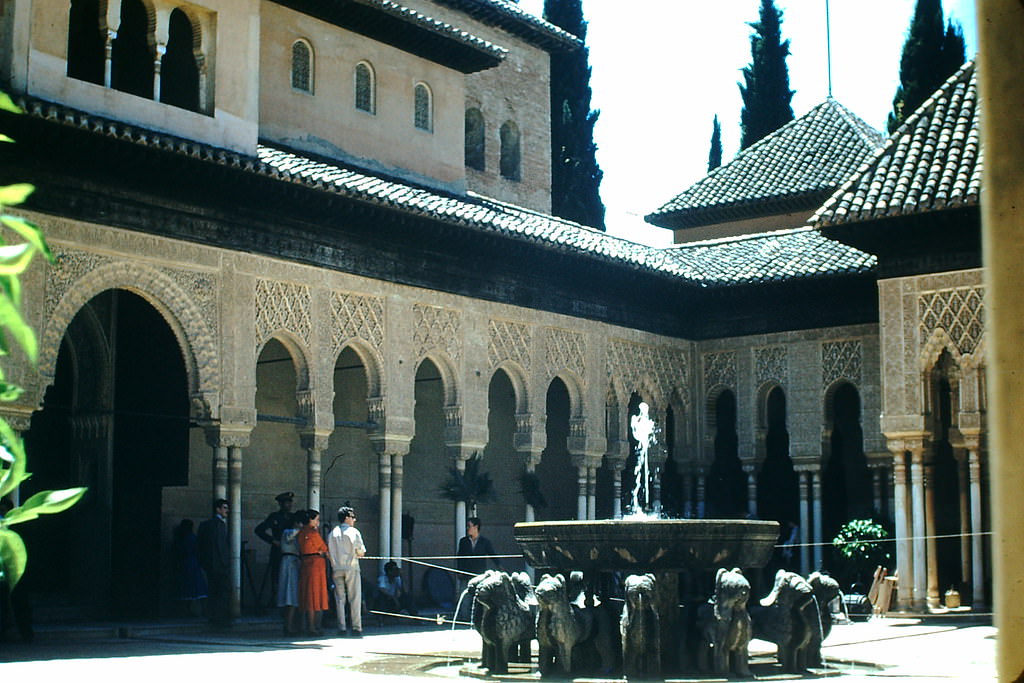
The Málaga Valley showed a mix of old and new — locals in mid-century fashions moving through landscapes that had changed little in generations. Inside the Alhambra, the Court of the Lions, named for its famous 12-spouted marble fountain supported by 12 carved lions, remained one of the most photographed spaces in all of Spain.
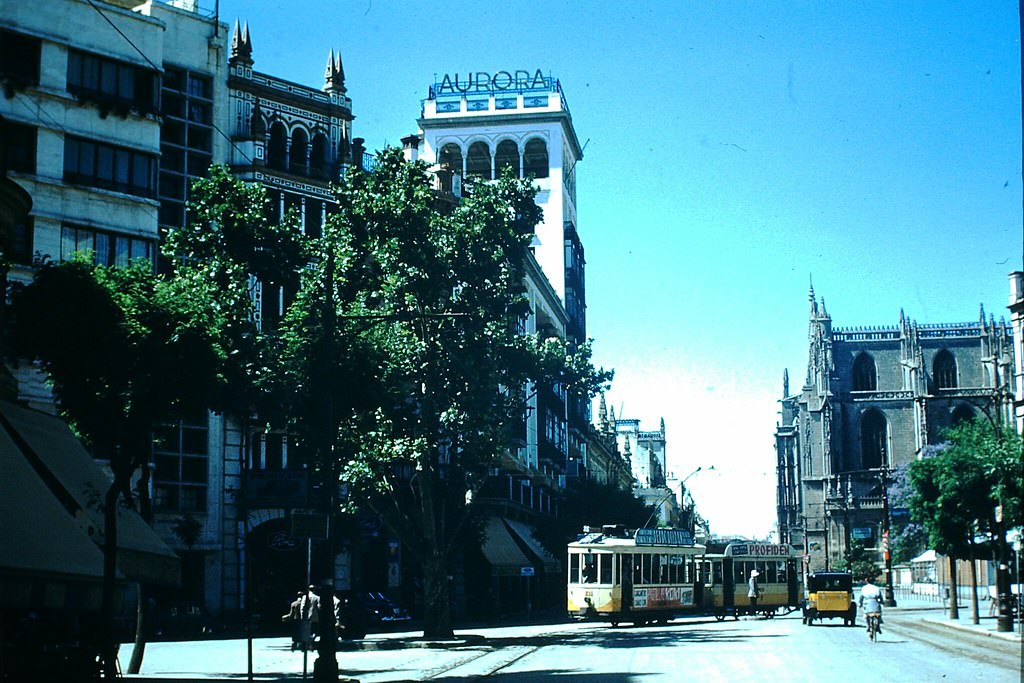
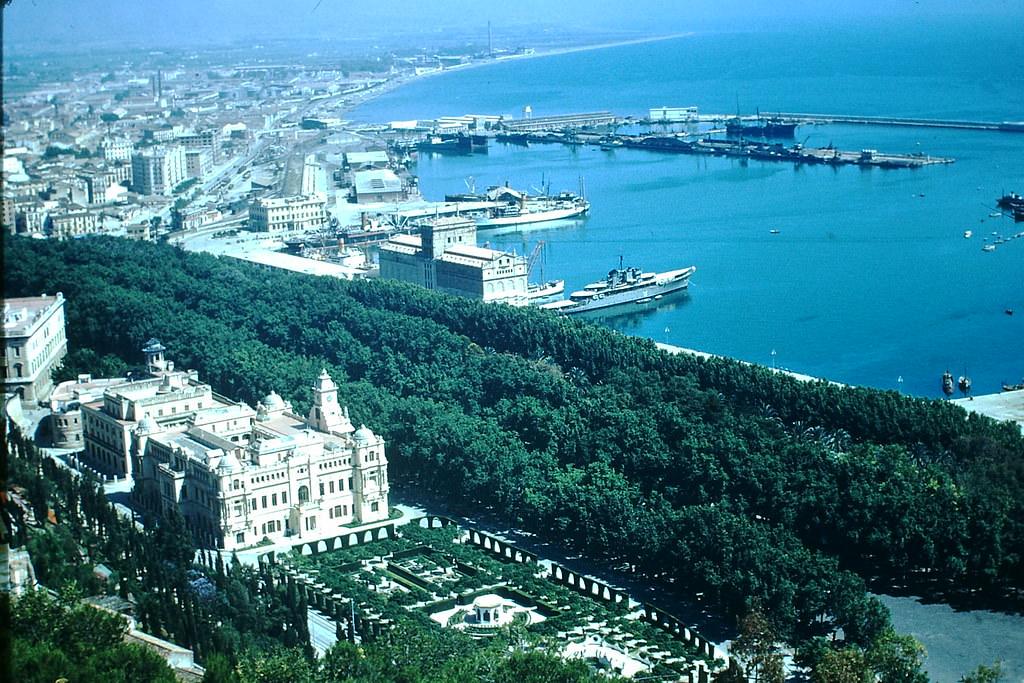
Seville’s main street in 1954 was busy with shoppers, motorcycles, and the occasional horse-drawn vehicle still navigating modern traffic. Málaga’s harbor, looking out to the Mediterranean, showed a city built on fishing and trade — though its future as a gateway for mass tourism was already taking shape.
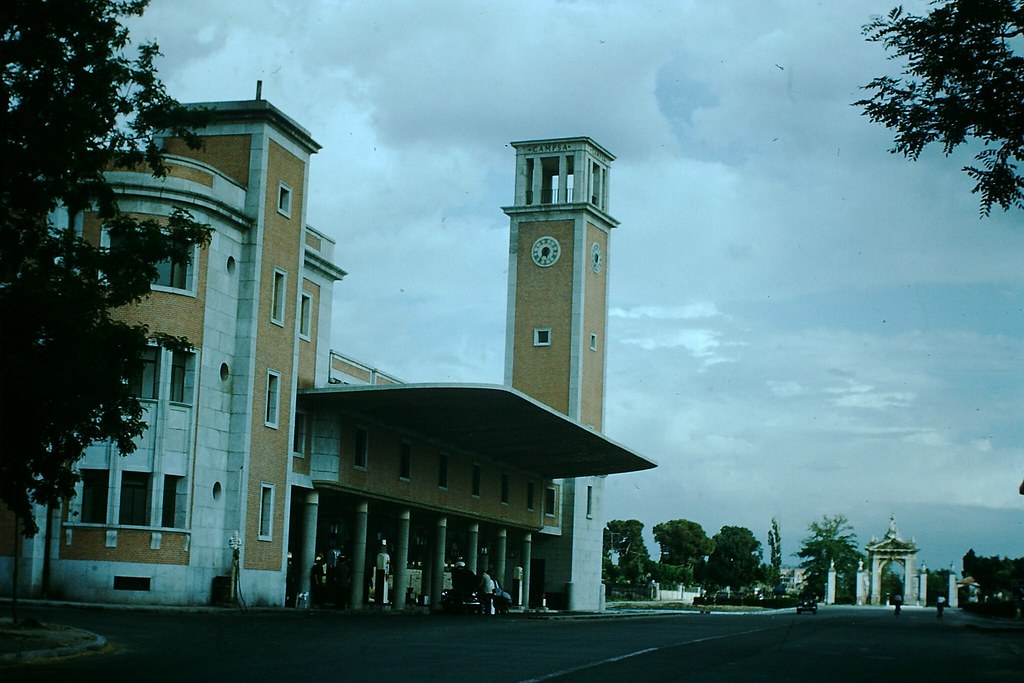
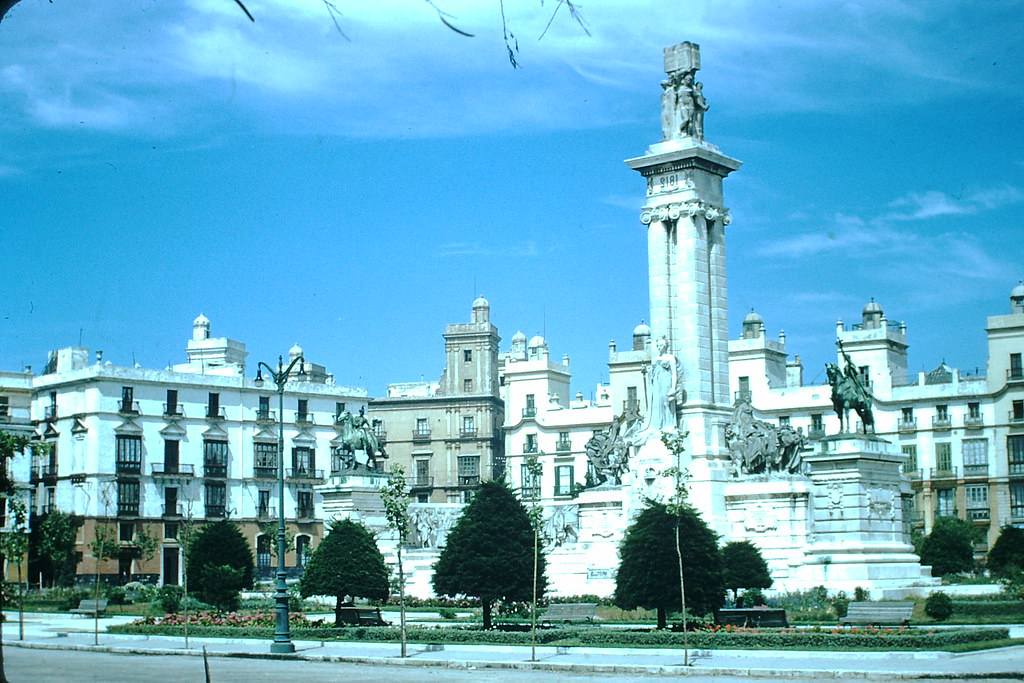
A modern gas station near Madrid was a marker of slow but real infrastructure development under the Franco regime. In Cádiz, a monument commemorated the Constitution of 1812 — the liberal constitution drafted there when Napoleon’s armies occupied most of Spain — a document that Franco’s dictatorship had long since buried.
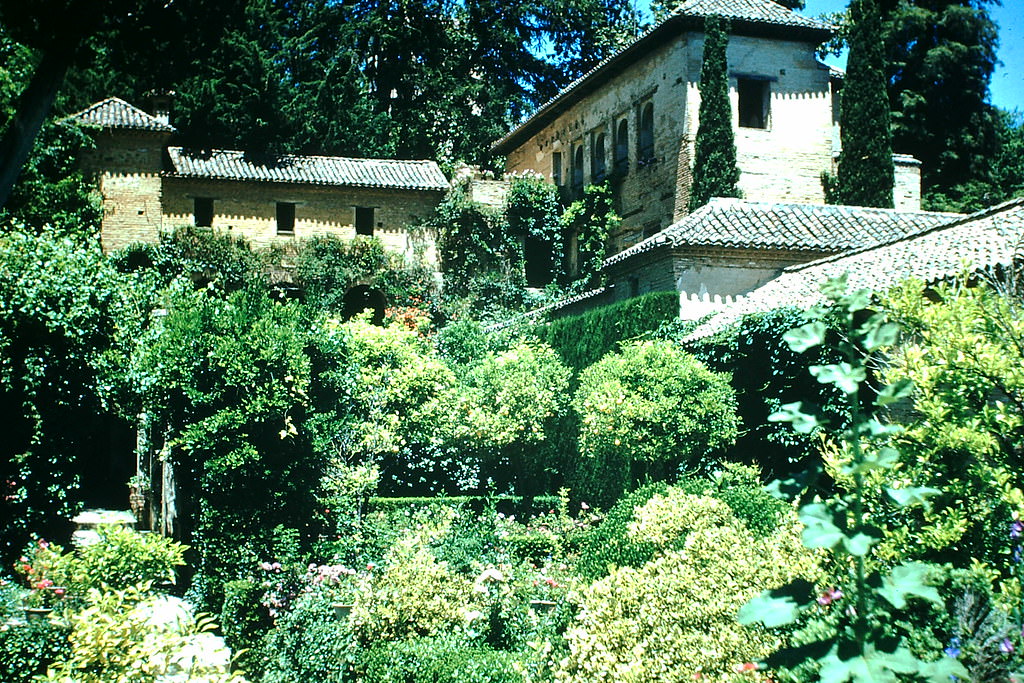
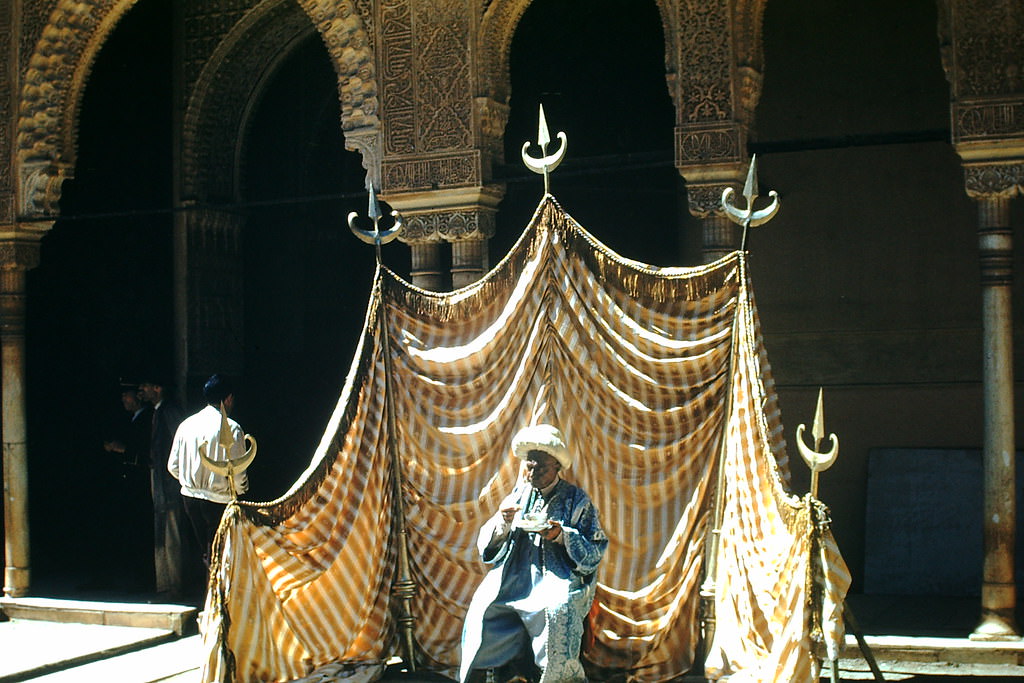
The Nasrid Palaces within the Alhambra complex served as the royal residence of Granada’s Moorish rulers until the Spanish Reconquista ended in 1492. By 1954, the Alhambra’s dramatic setting was also attracting film crews shooting on location — the palace’s arched colonnades and intricate tilework made it a compelling backdrop for cinema.
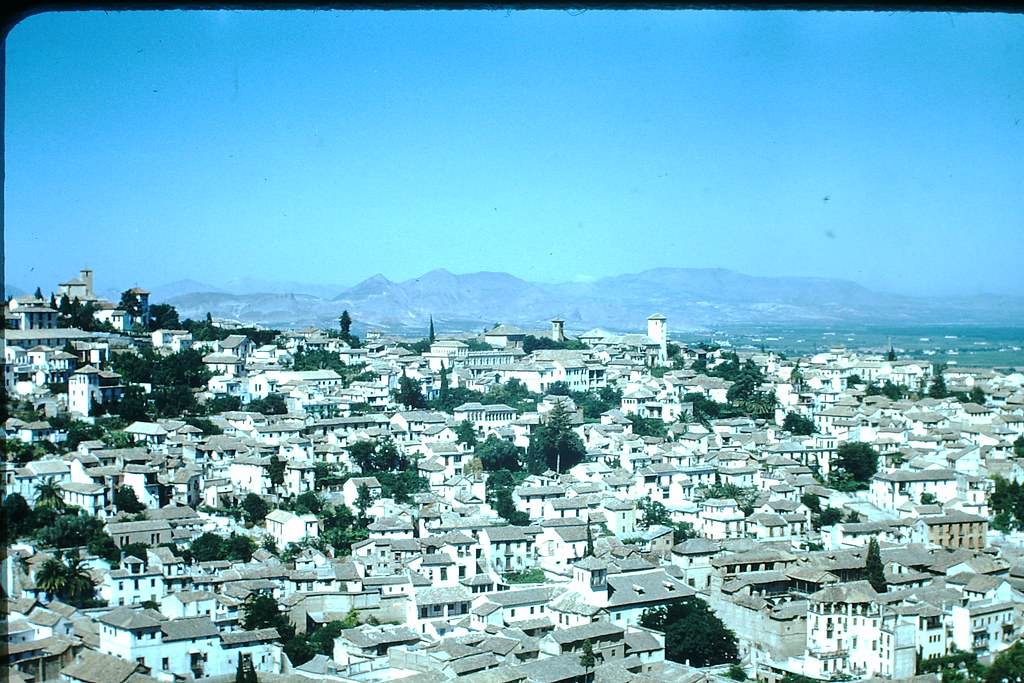
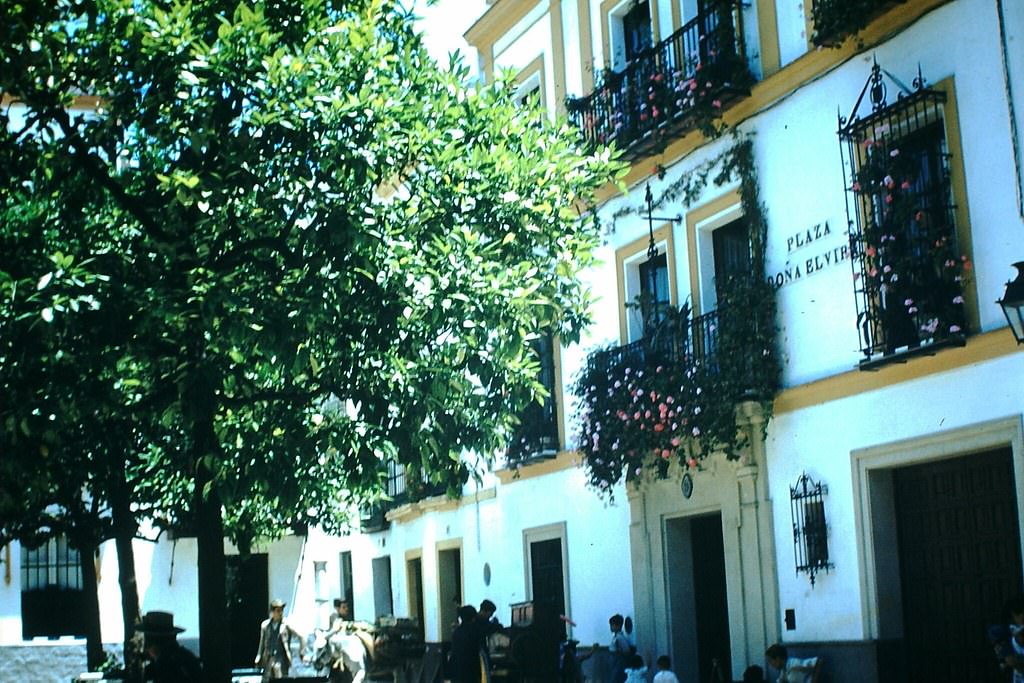
From the Alhambra’s towers, the old city of Granada spread across the valley below, its cathedral and dense neighborhoods visible against the distant mountains. In Seville’s Santa Cruz neighborhood — the old Jewish quarter — organ grinders still worked the narrow streets, earning coins from passersby in one of the city’s most atmospheric districts.
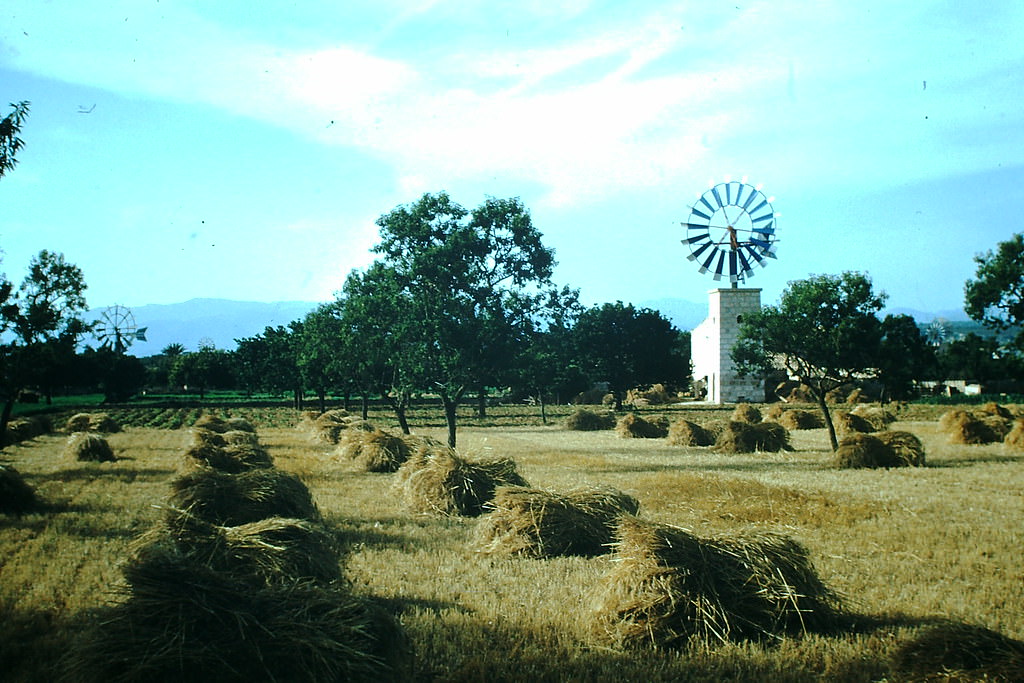
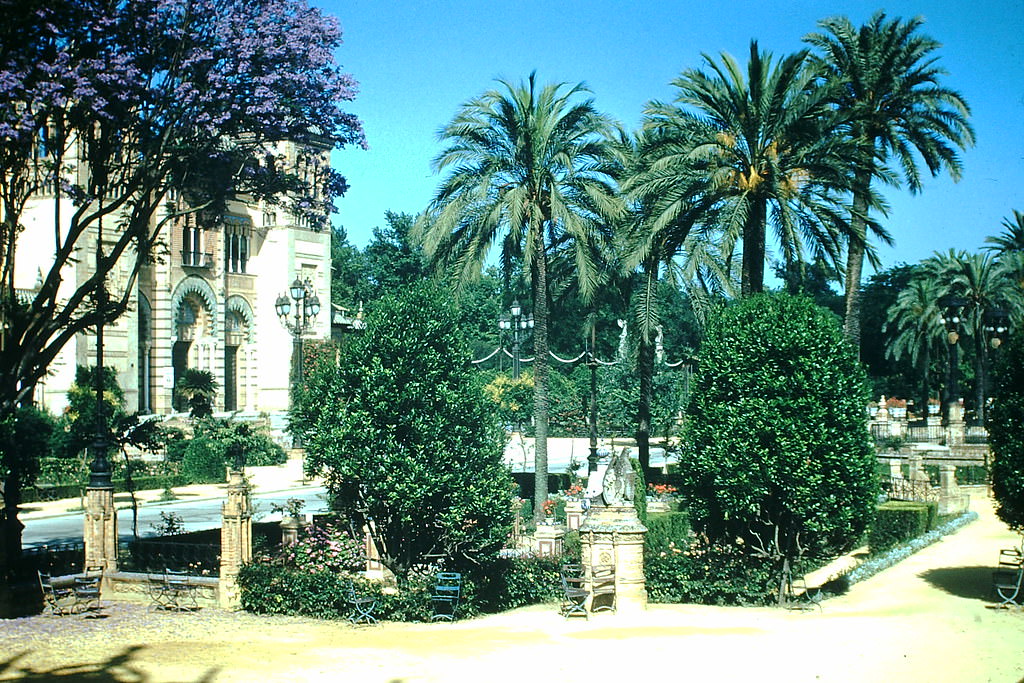
Small farms outside Palma on Majorca relied on traditional methods — stone walls, terraced fields, and livestock — unchanged from generations past. Back on the mainland, Seville’s Plaza de América, built for the 1929 Ibero-American Exposition, retained its elaborate neo-Mudéjar pavilions, which by 1954 housed city museums.
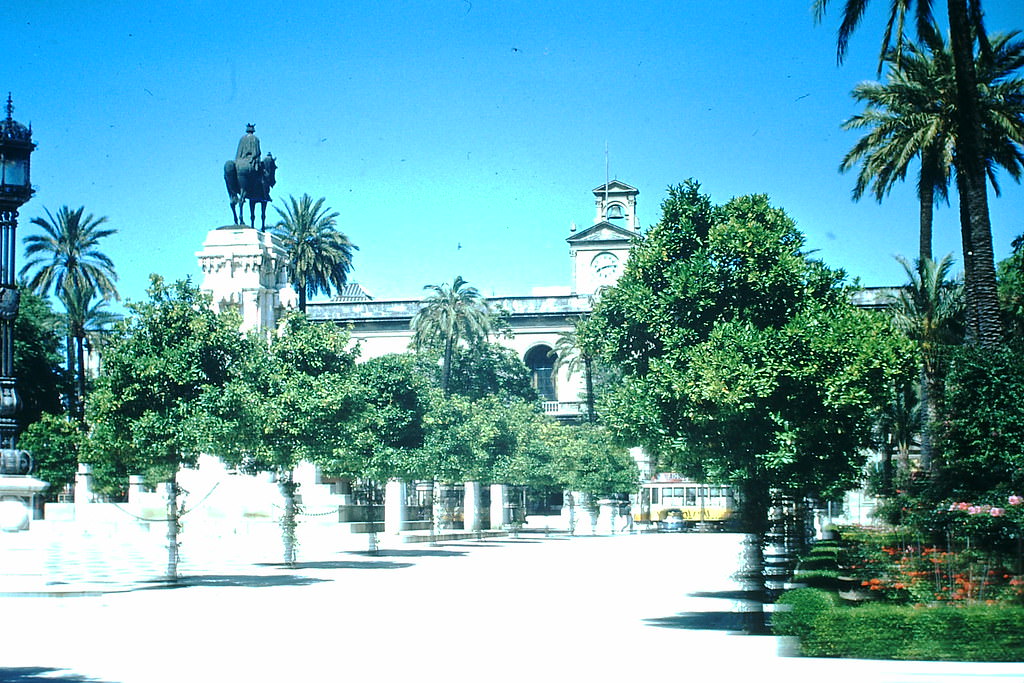
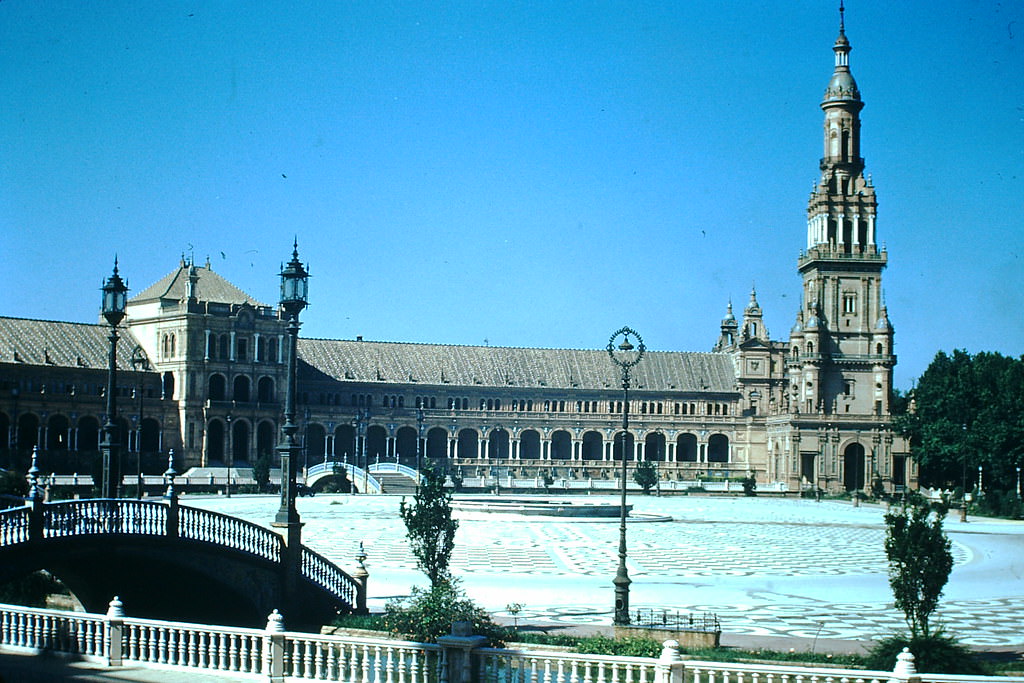
Seville’s plazas remained the social anchors of daily life. The Plaza de España, another surviving showpiece of the 1929 Exposition, featured a sweeping semicircular building decorated with ceramic tile alcoves representing each of Spain’s provinces — a striking monument that continued to draw admiration 25 years after it was built.
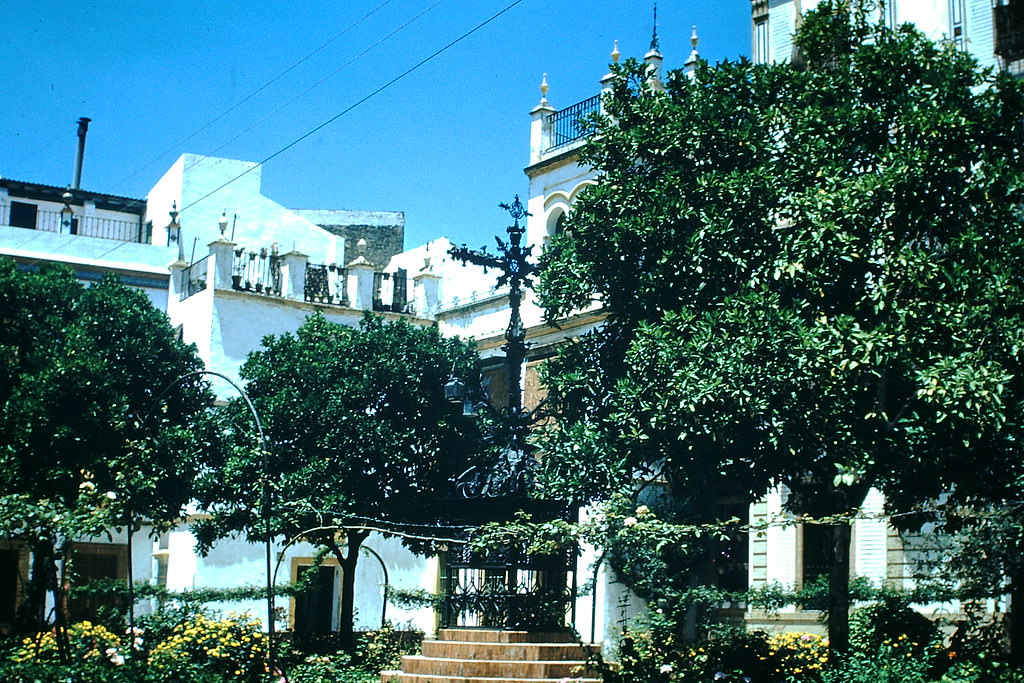
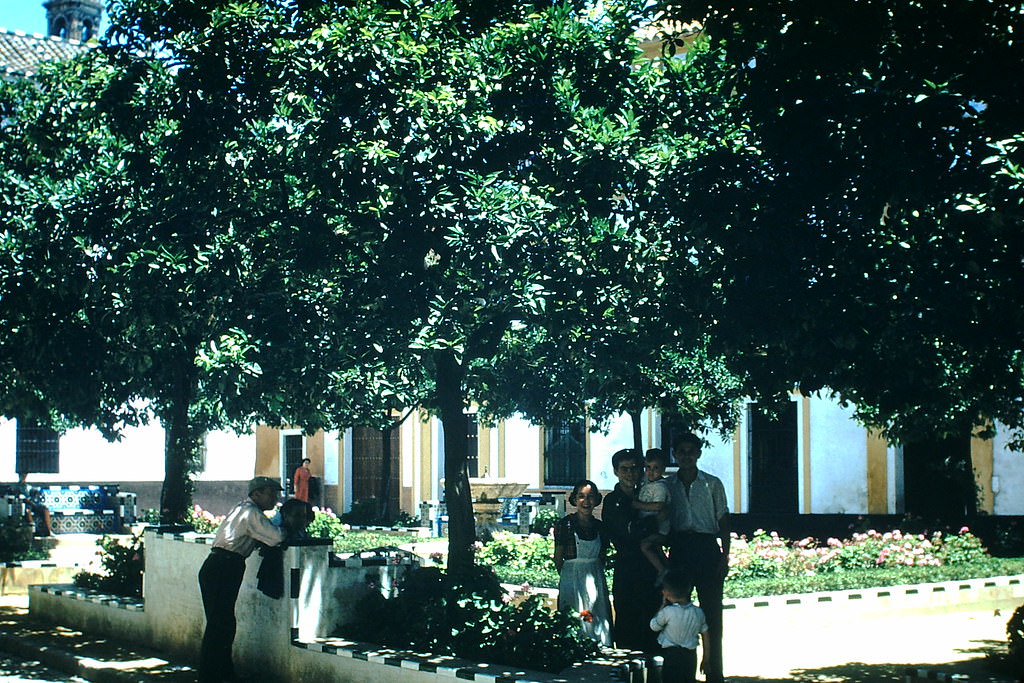
The plazas of the Santa Cruz district were small and intimate, shaded by orange trees and surrounded by whitewashed walls. They served as gathering points for locals in a neighborhood whose winding, car-free streets had kept the feel of medieval Seville essentially intact.
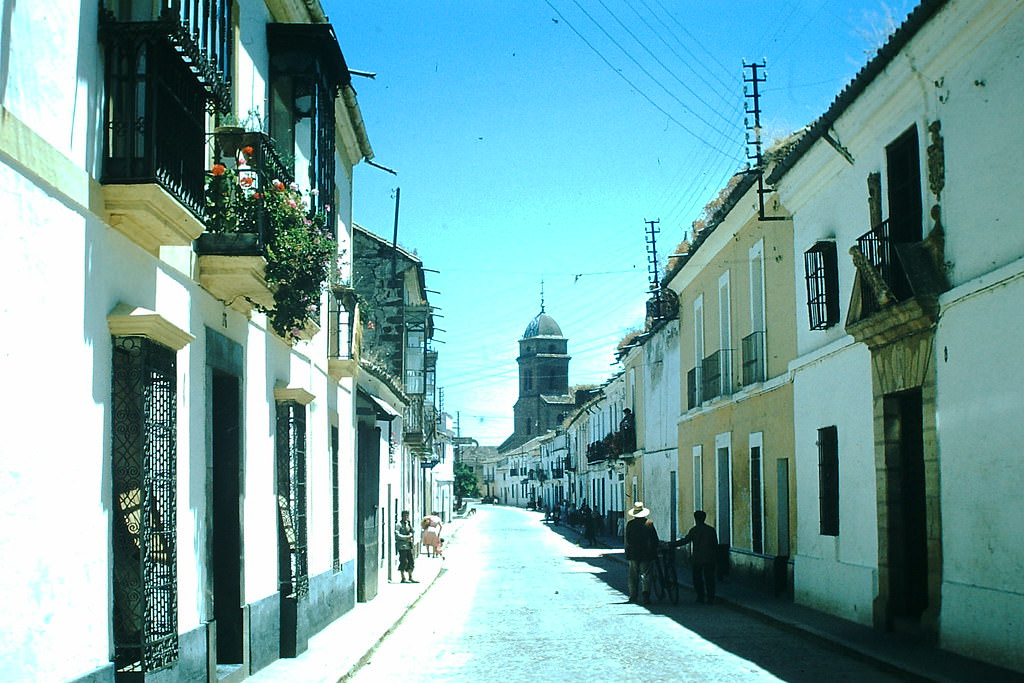
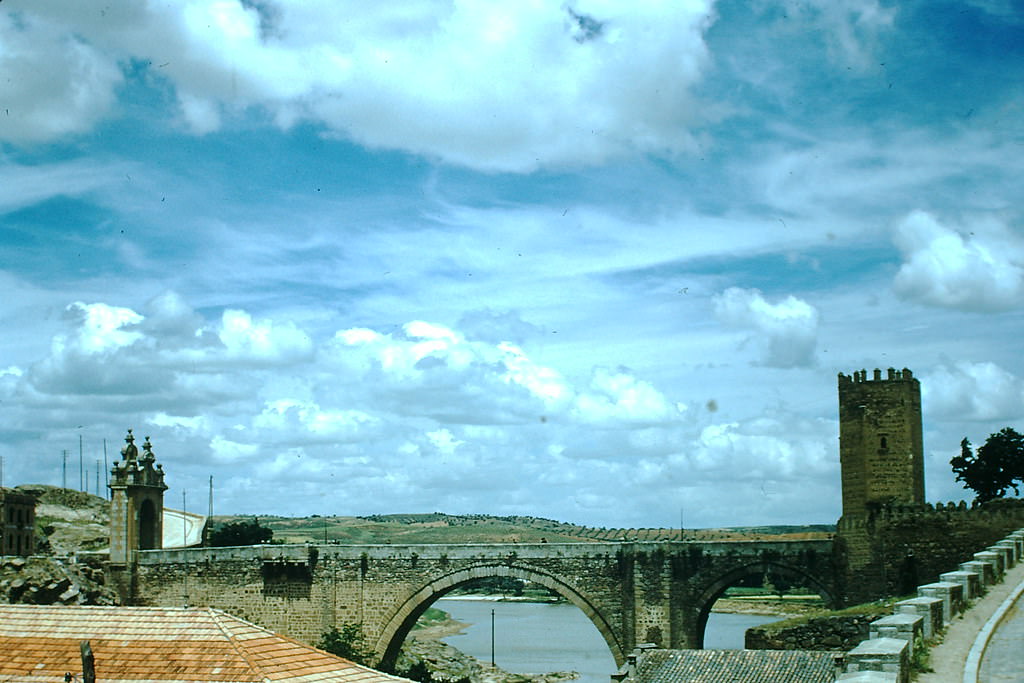
Near Bailén — the site of a famous Spanish victory over Napoleon’s forces in 1808 — a typical village street showed the spare, sun-bleached character of rural Andalusia. Toledo’s Roman bridge, the Puente de Alcántara, crossed the Tagus River below the city’s cliffs, its ancient stonework still carrying foot traffic in 1954 as it had for nearly two thousand years.
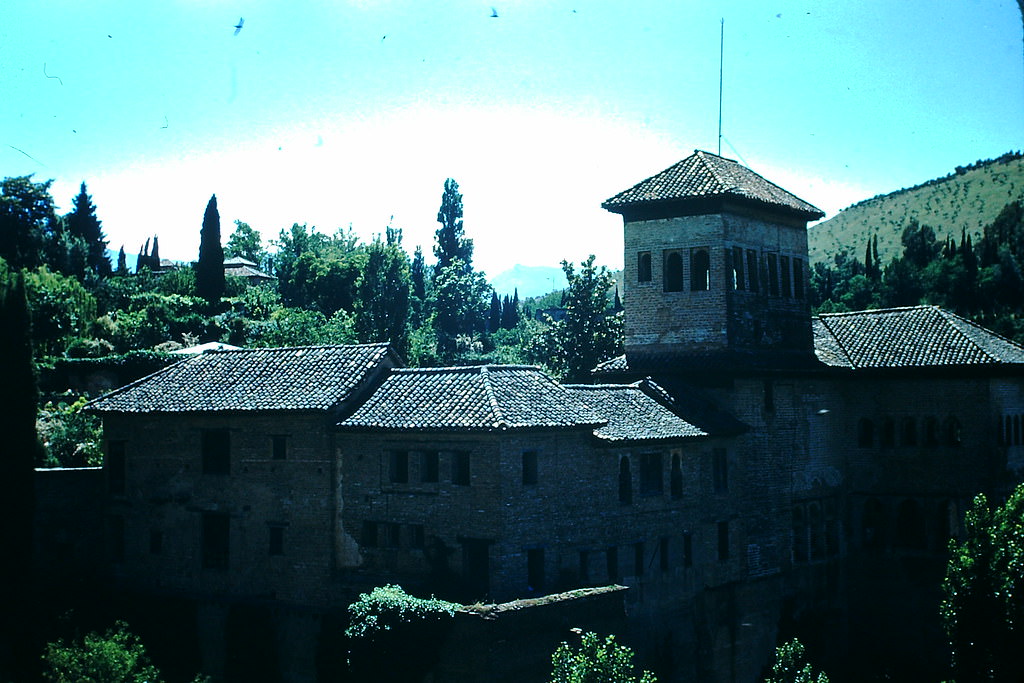
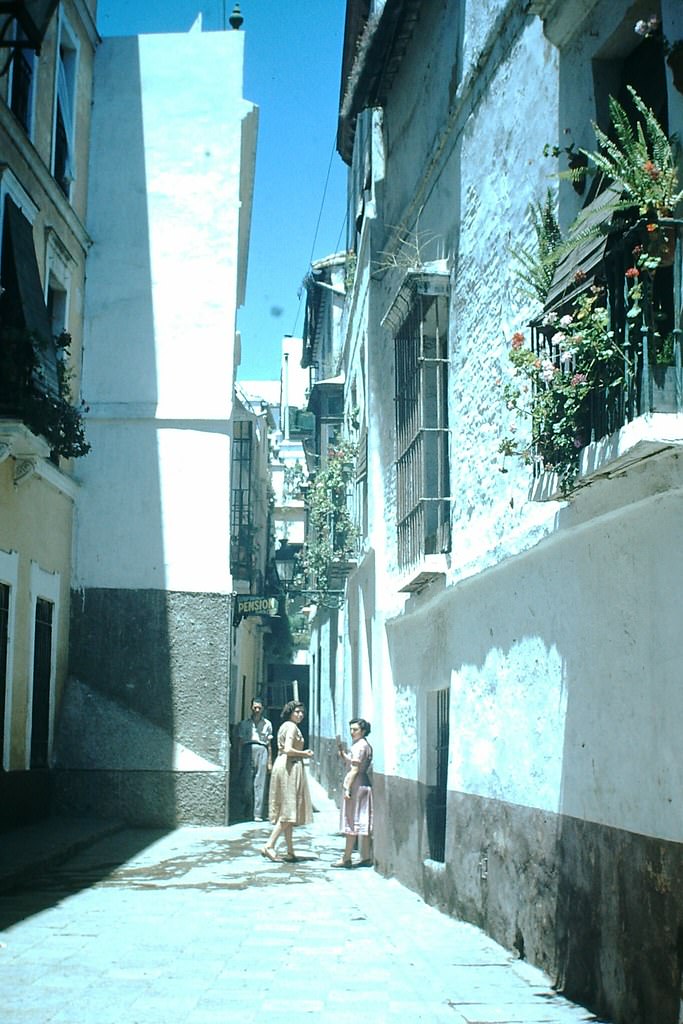
From the Alhambra’s upper terraces, the snow-covered peaks of the Sierra Nevada rose sharply into the sky to the southeast — the same mountains whose snowmelt had supplied the palace’s water system for six centuries. In Seville, the streets of Santa Cruz were narrow enough that residents on opposite sides could almost reach across to each other.
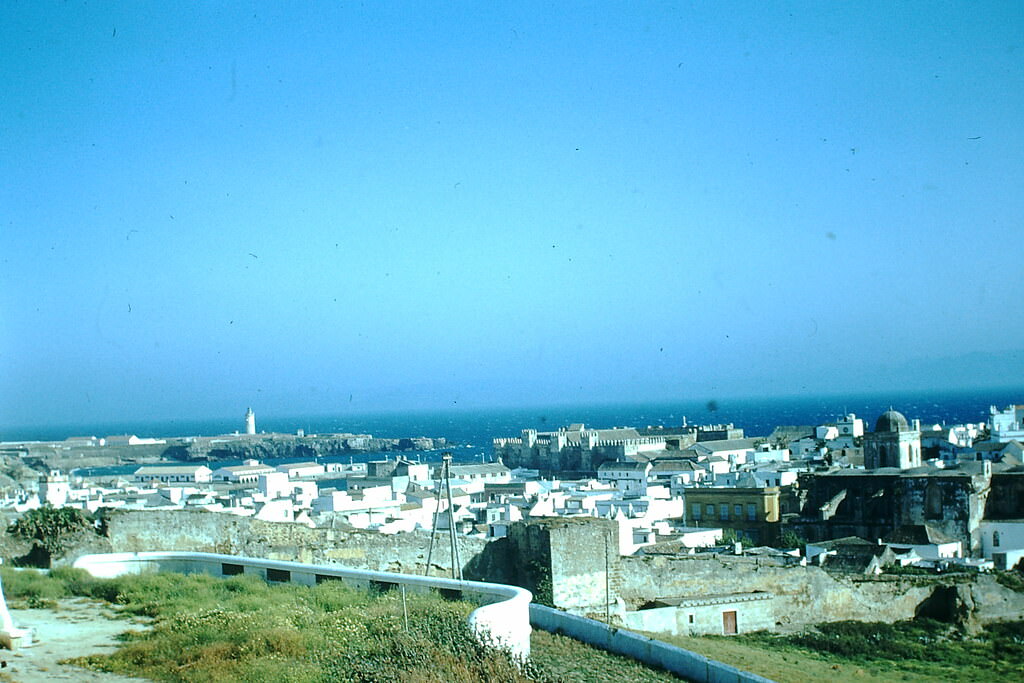
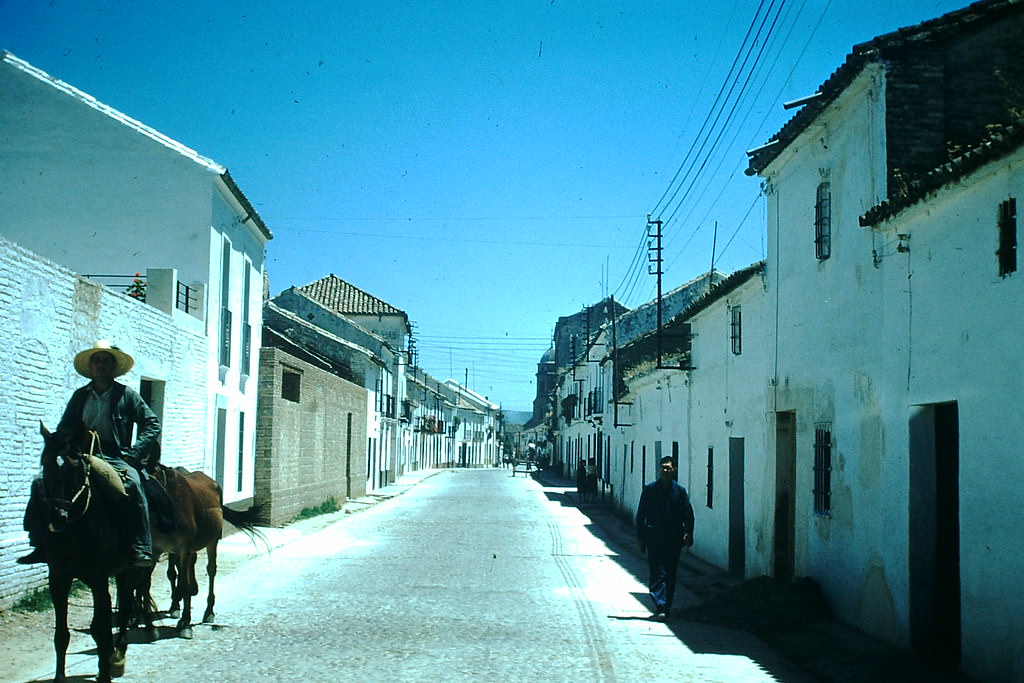
Tarifa, at Spain’s southernmost tip, is the closest point in Europe to Africa — just 14 kilometers across the strait. Its lighthouse marked one of the world’s most strategic waterways. Near Córdoba, typical village streets showed whitewashed houses with iron-grilled windows and clay-potted doorsteps, a look unchanged across generations of Andalusian village life.
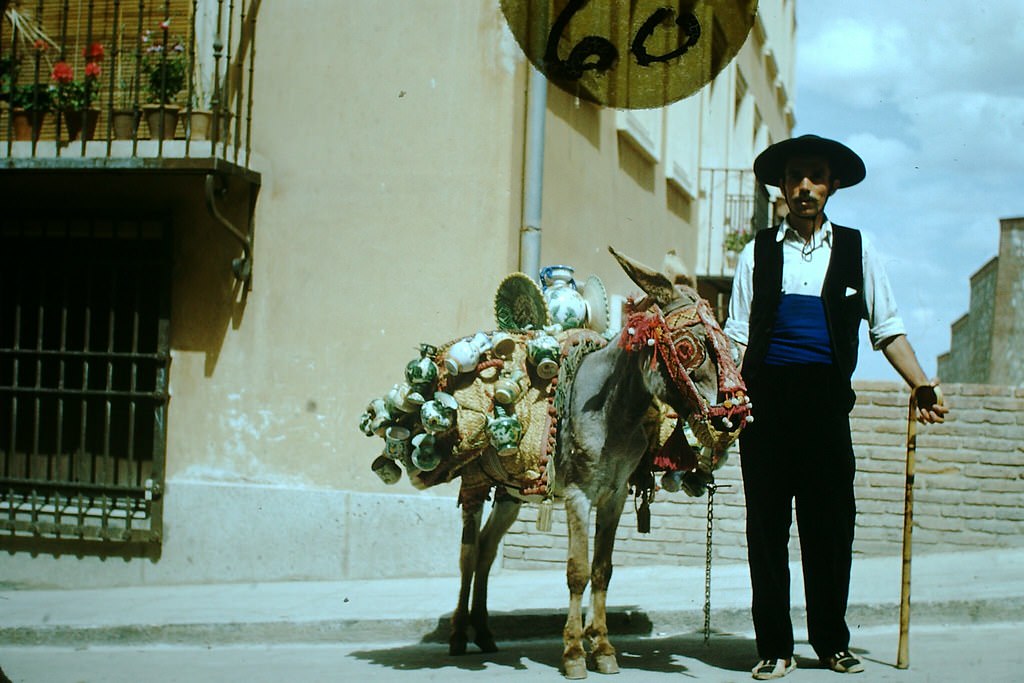
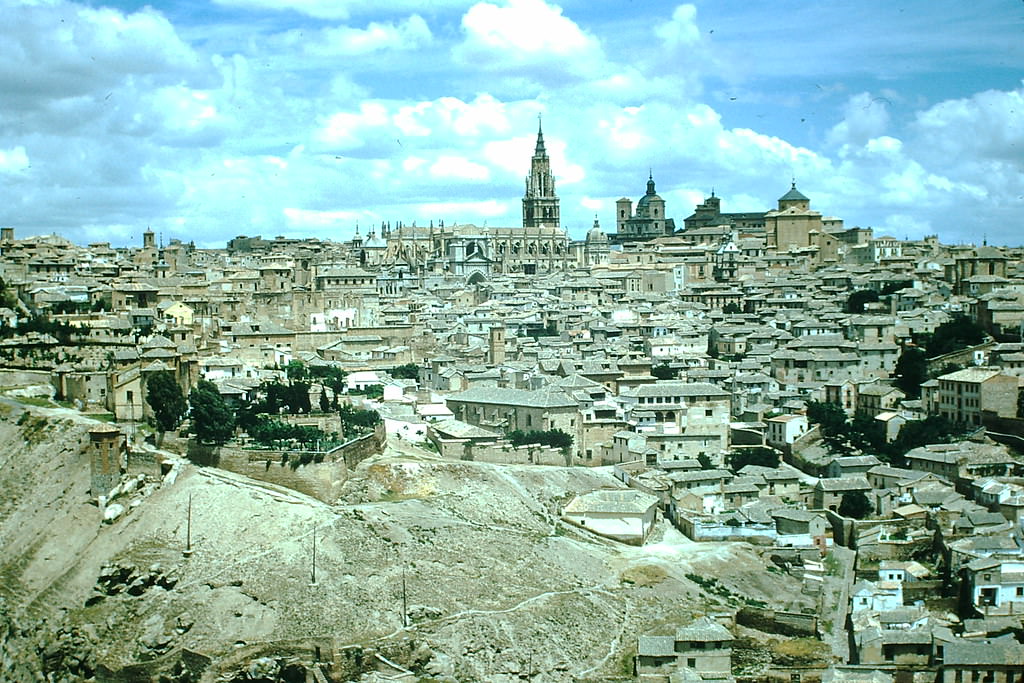
Toledo was already well established on the tourist circuit by 1954, its vendors and guides positioned to serve foreign visitors exploring the city’s layered history of Christian, Muslim, and Jewish communities. The view from Toledo’s upper streets revealed the Tagus River running far below through a deep gorge — the natural moat that had made the city so defensible for centuries.
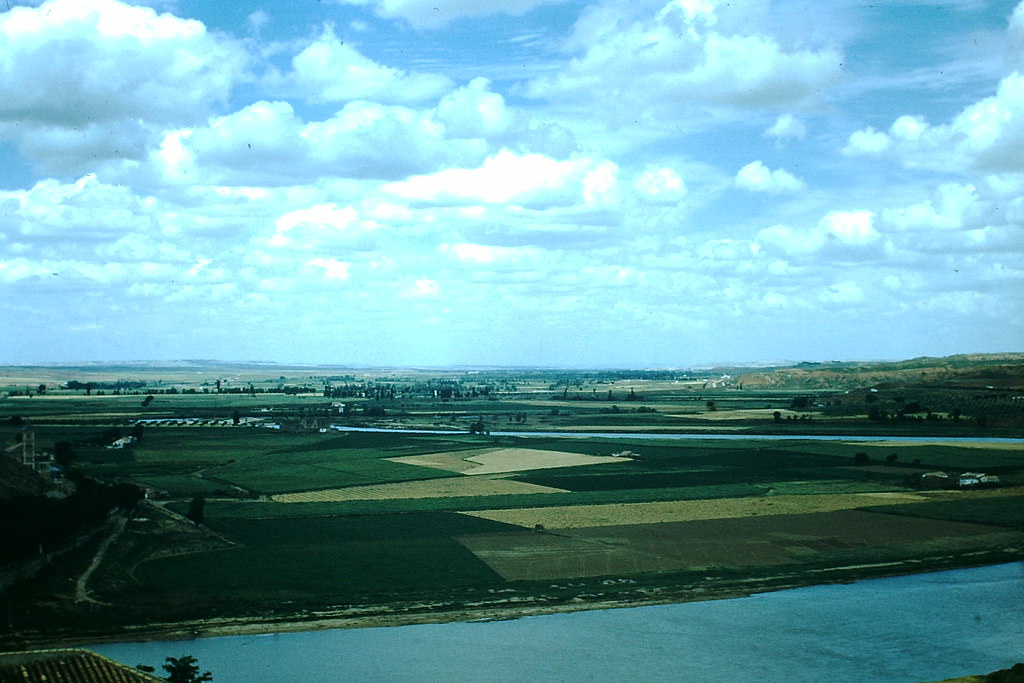
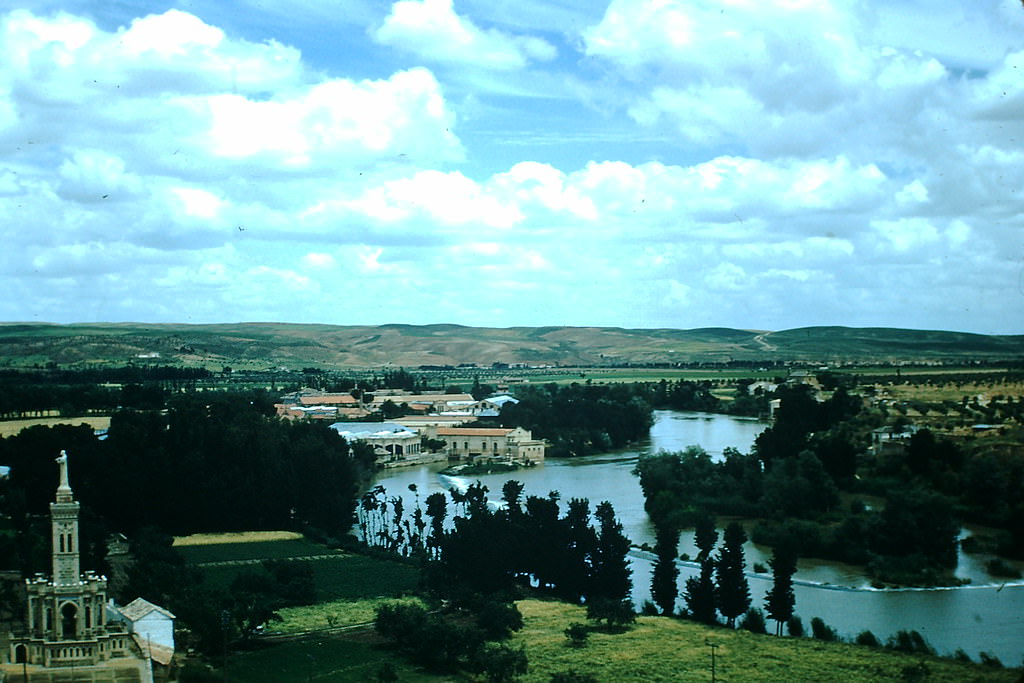
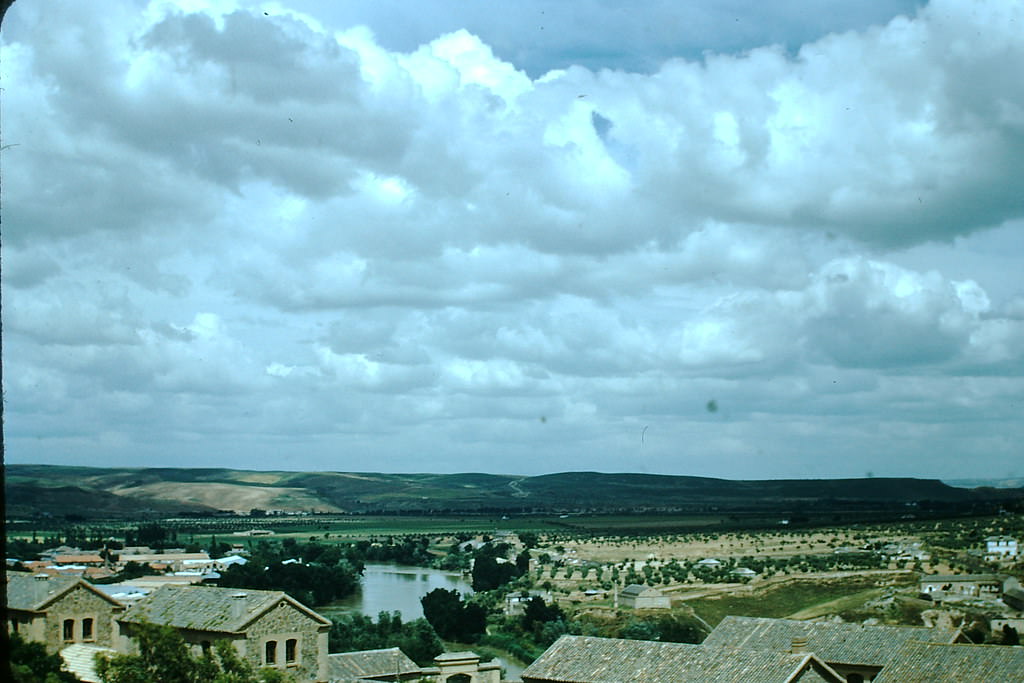
From the monastery overlooking Toledo, the Tagus Valley opened into a wide, sun-dried landscape of olive groves and rocky hillsides. The river curved around the city in an almost complete loop, making Toledo appear to sit on a raised peninsula of stone above the surrounding plain.
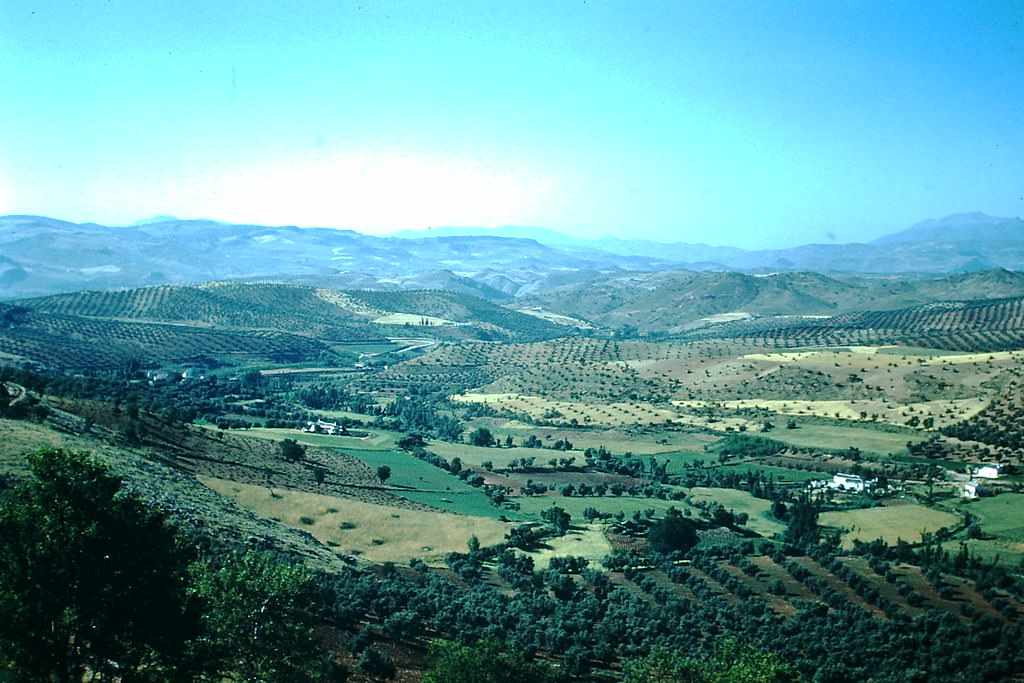
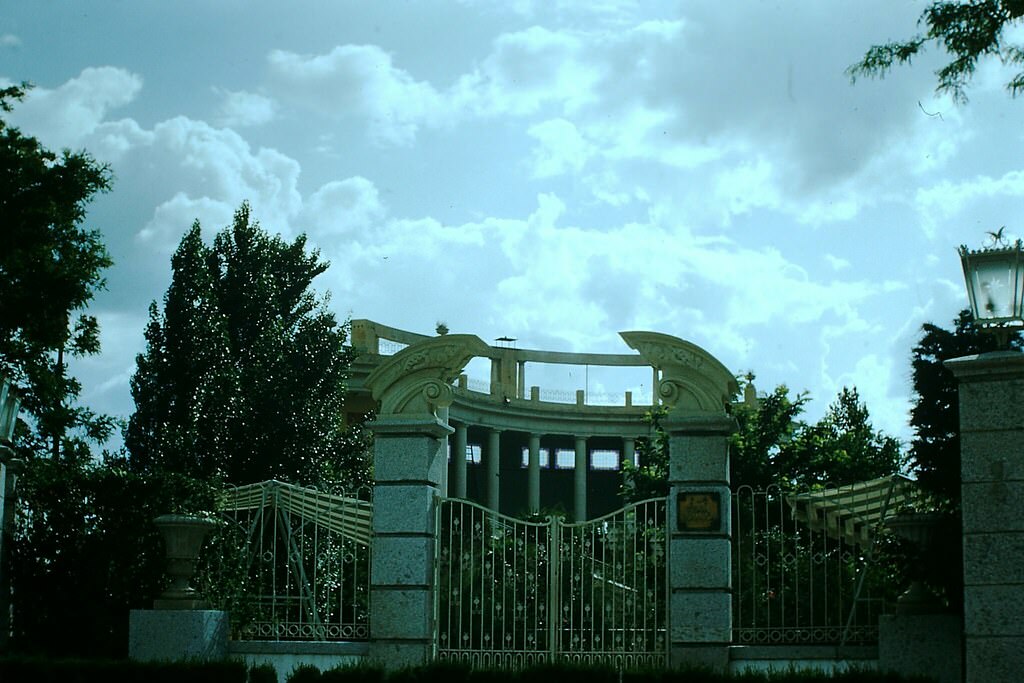
The valley near Loja on the route between Granada and Málaga was fertile agricultural land, its fields and orchards visible from the road. Outside Madrid, nightclubs like Villa Romano attracted the city’s wealthier residents and travelers looking for evening entertainment — a small but revealing glimpse into the social life of Franco-era Spain’s upper classes.
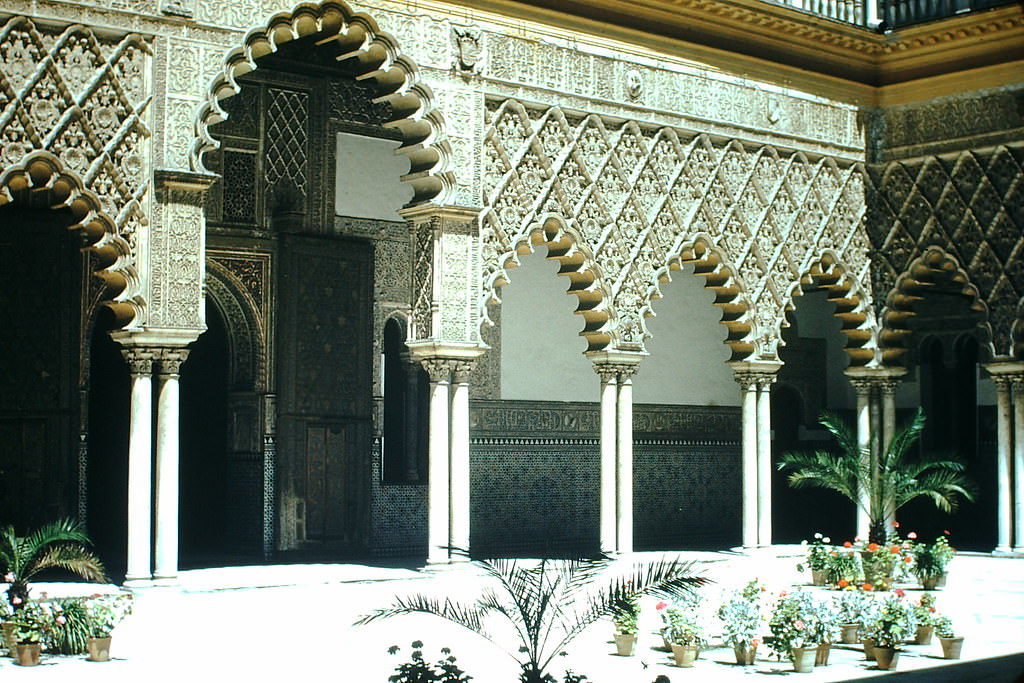
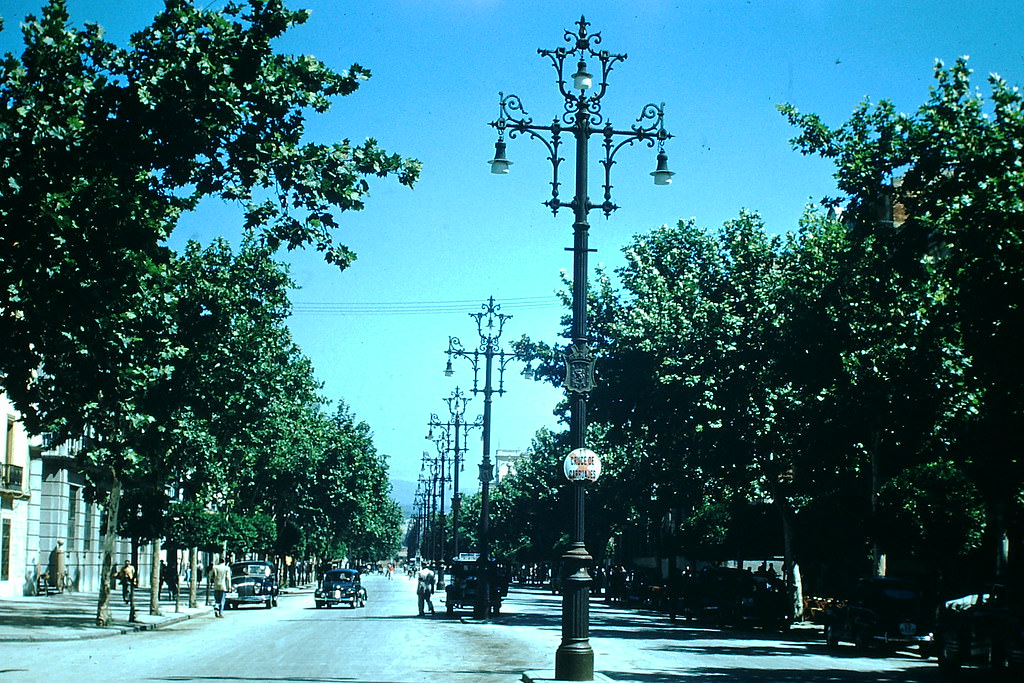
The Alcázar of Seville’s Patio de las Doncellas — the Court of the Maidens — was one of the finest examples of 14th-century Mudéjar architecture in existence, its reflecting pool and double arcaded galleries built for King Pedro I. In Córdoba, the Calle Gran Capitán honored Gonzalo Fernández de Córdoba, the Renaissance military commander who earned that title through his campaigns in Italy. These streets and palaces together told the story of a country simultaneously grappling with its present and surrounded by its remarkable past.

All Spain is Madrid
It makes me wonder how many people were shot in those places during Franco’s regime.
Unfortunately, many