In the Soviet Union, propaganda posters were one of the most powerful tools the state used to shape public behavior. They didn’t always push war or fear — many of them promoted something far more ordinary: physical fitness. From the 1920s through the 1960s, brightly colored posters plastered on factory walls, train stations, and public squares told workers, farmers, and young people to get moving. The message was simple — a healthy citizen was a useful citizen.
These posters were also products of a genuine artistic revolution. The Soviet Union gave birth to the “Russian avant-garde” movement, a bold shift in modern art that rejected traditional styles in favor of sharp geometry, flat color, and direct messaging. Artists embraced this new visual language to serve the state, producing works that were striking, clear, and impossible to ignore. Sports posters became one of the most visible results of that partnership between art and politics.
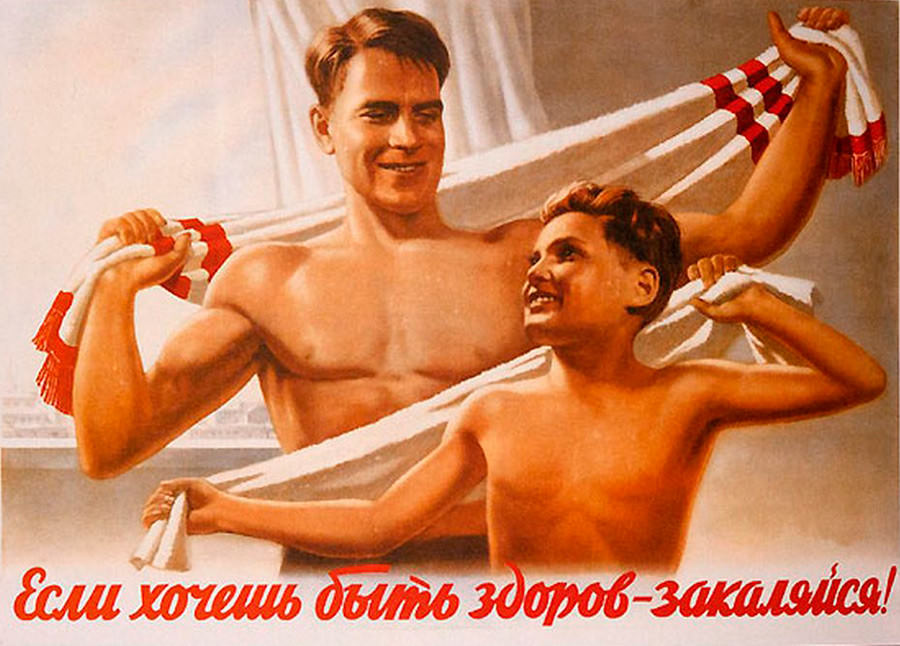
The core idea behind many of these posters was that physical toughness and good health were not personal goals — they were civic duties. Posters urged citizens to build endurance, eat well, and stay strong. The state framed personal health as something that belonged to the collective, not just the individual.
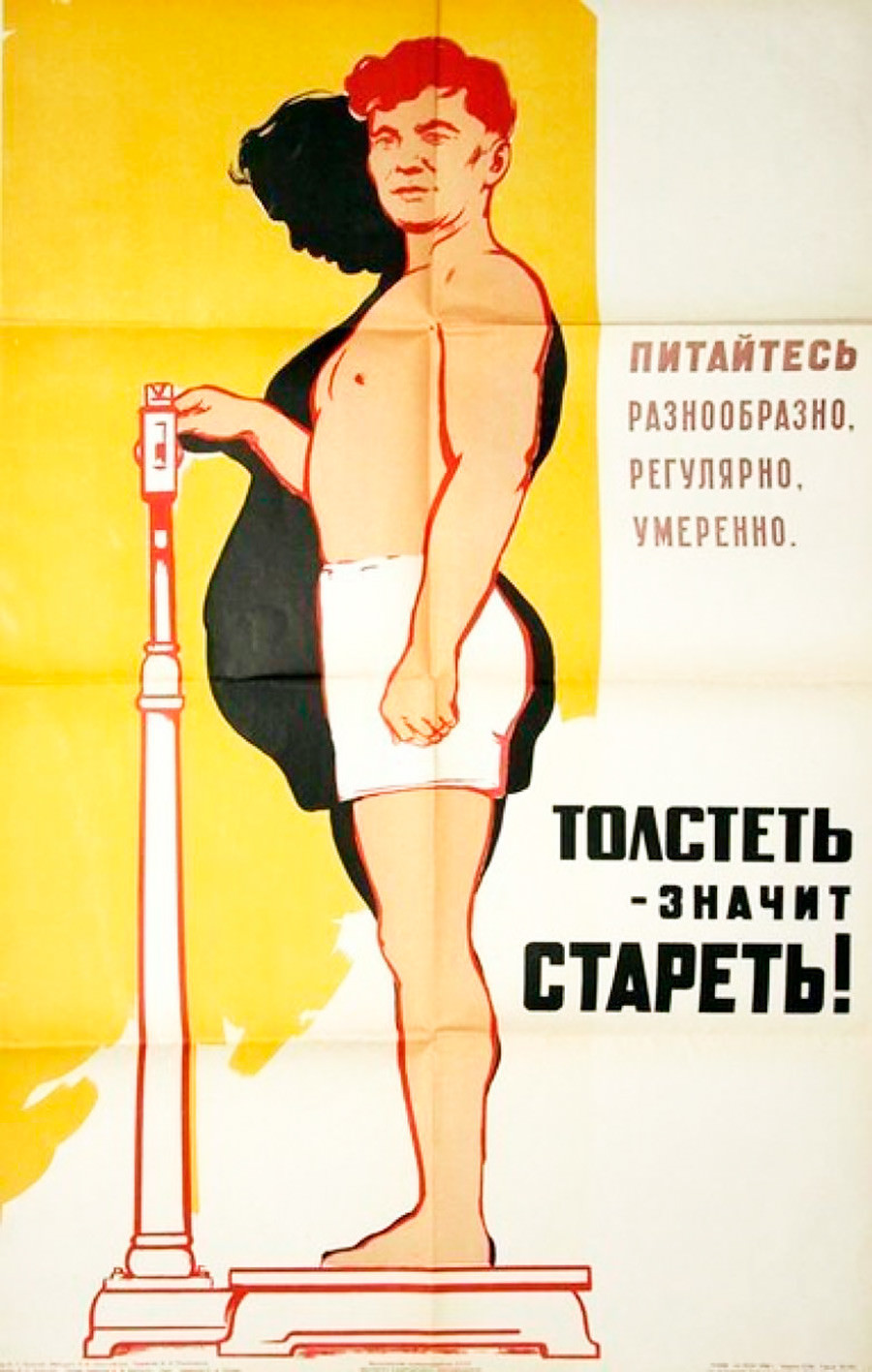
The messaging went beyond exercise. Posters also targeted diet and lifestyle, connecting daily habits to a person’s value as a Soviet citizen. Overeating was framed not just as unhealthy, but as a form of aging — a slow decline that weakened both the person and the nation.
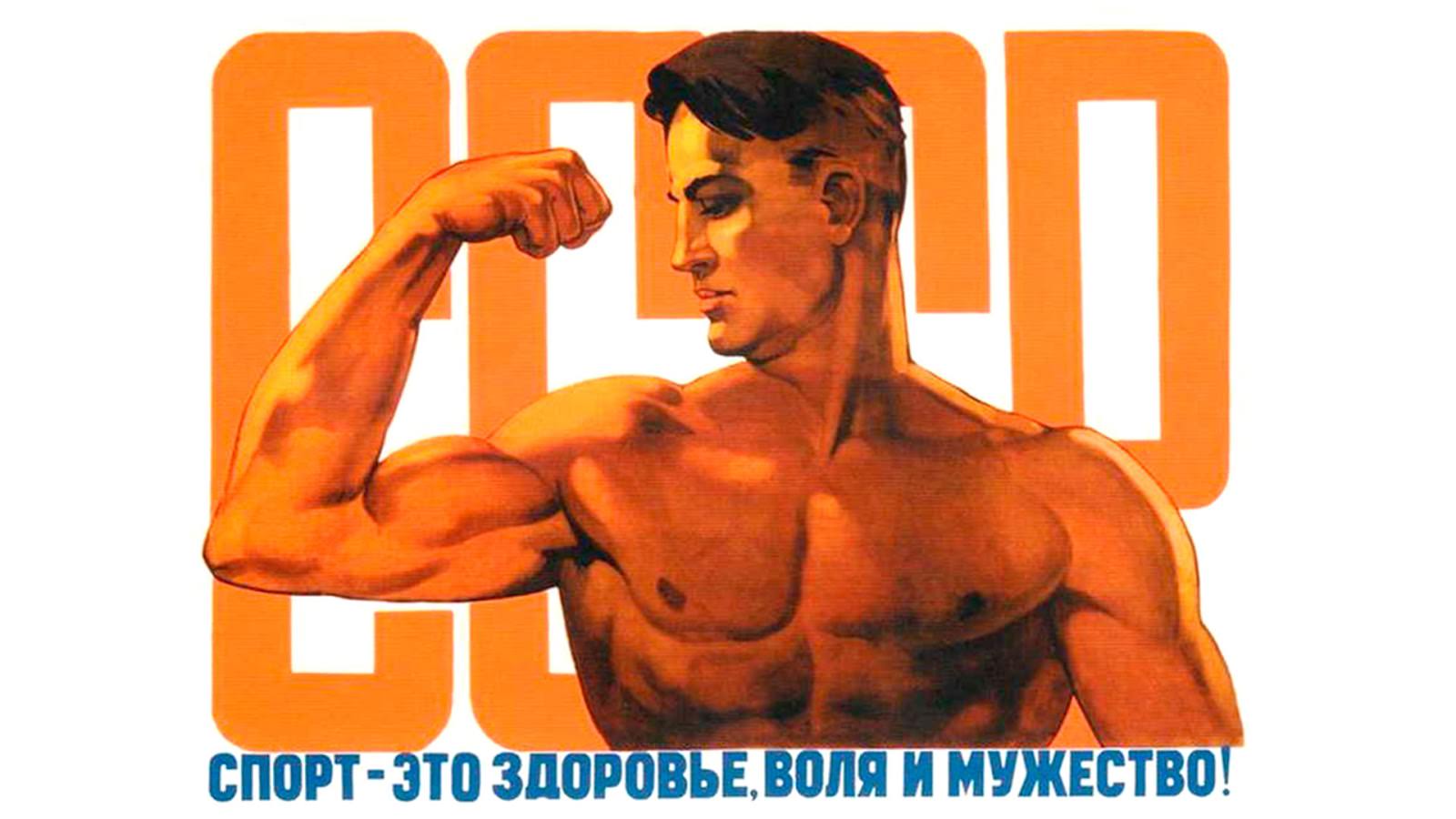
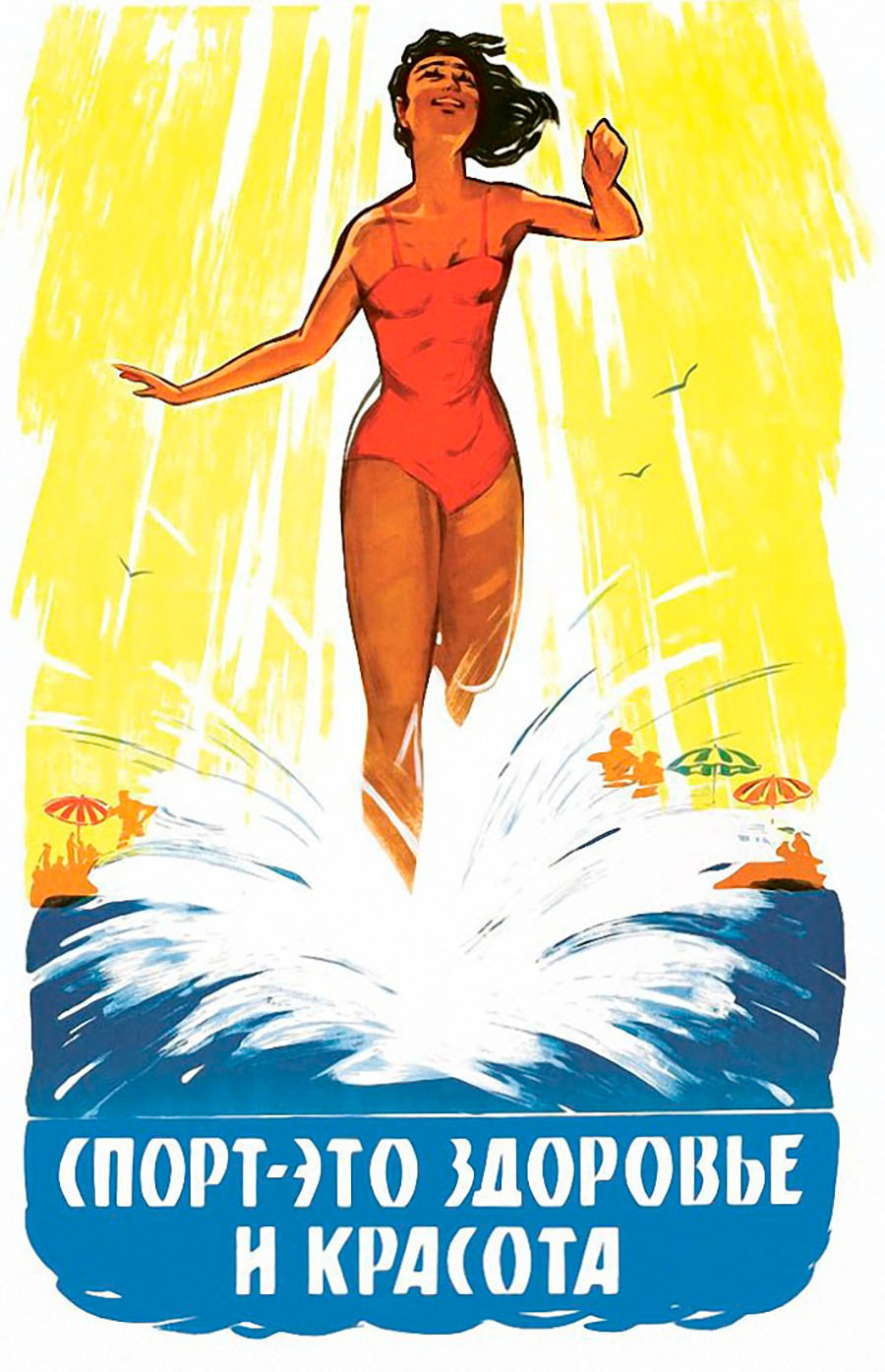
Sport was consistently tied to virtue in these posters. Willpower, bravery, beauty — these were the rewards the state promised to those who trained. The visual style reinforced the message: athletes were depicted with strong, idealized bodies, often shown mid-motion against clean, bold backgrounds. The art made fitness look heroic.
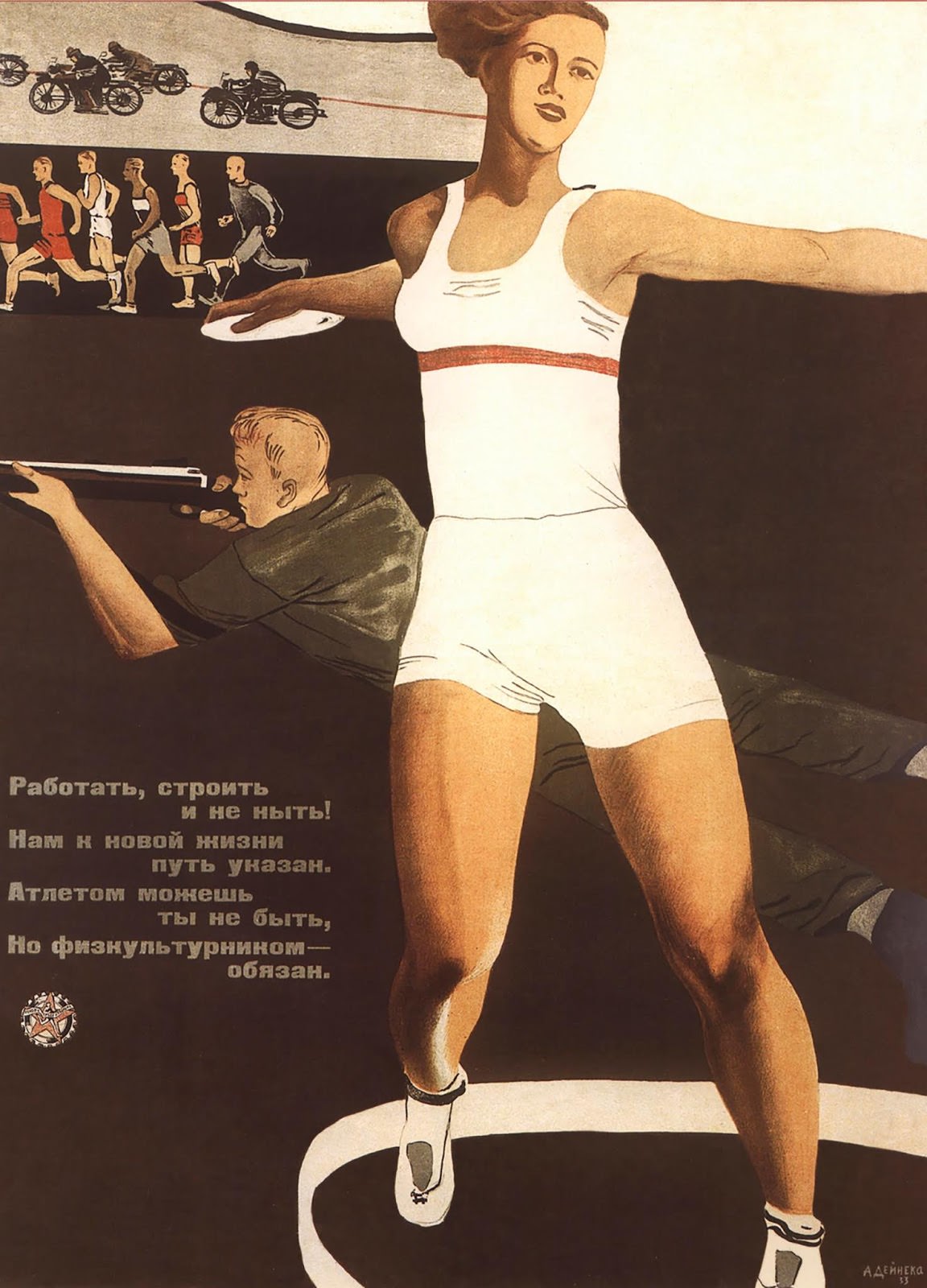
Not every poster targeted elite athletes. Many spoke directly to ordinary people. The Soviet state didn’t just want champions — it wanted a physically fit population across all classes and occupations. This poster made that expectation explicit: being in good shape wasn’t optional, even for those who had no athletic ambitions.
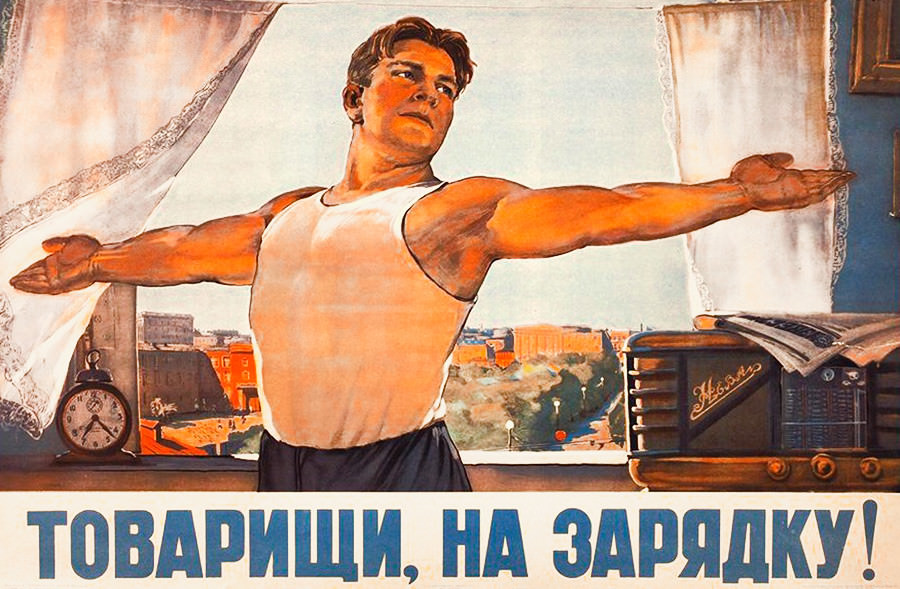
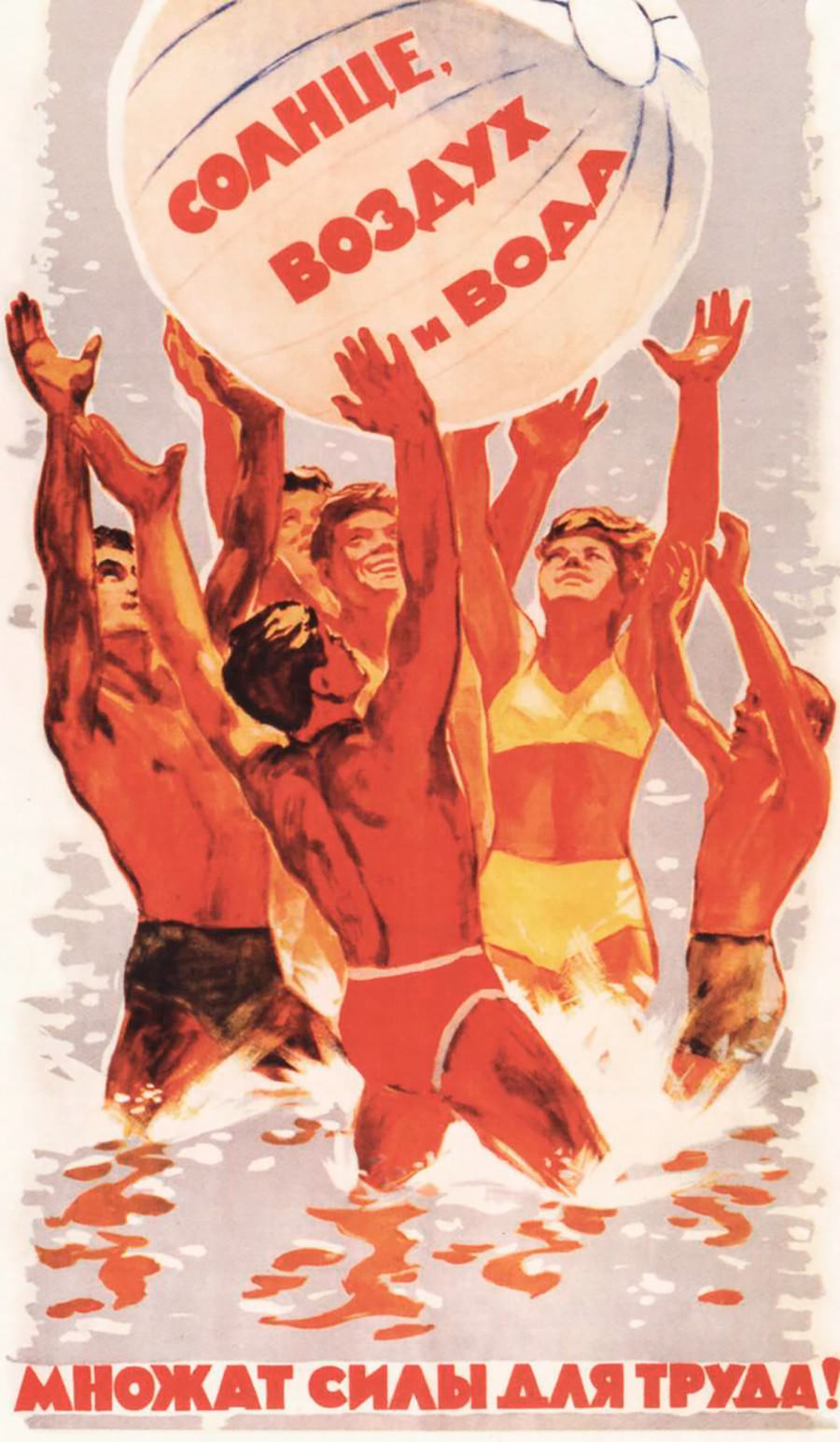
The link between fitness and labor productivity was a recurring theme. Posters connected outdoor activity — sun, fresh air, water — directly to a worker’s output. A stronger body meant more work done, and more work done meant a stronger Soviet Union. Rest and recreation were only encouraged when they served that larger economic purpose.
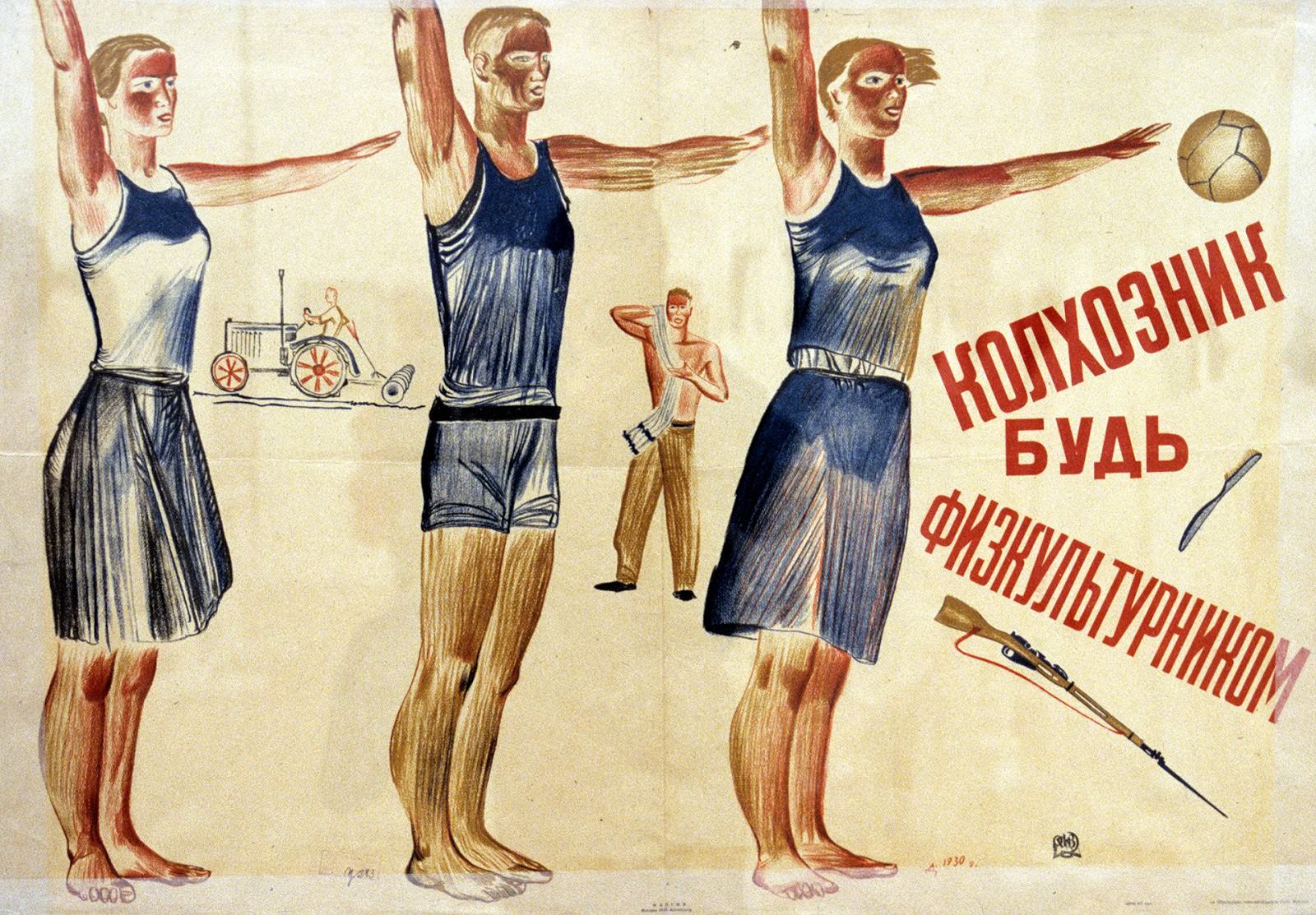
Rural workers were not left out of this campaign. Collective farmers were specifically addressed in posters that urged them to take up sport alongside their agricultural duties. The Soviet government wanted athletic culture to reach every corner of the country, from urban factories to remote farming collectives.
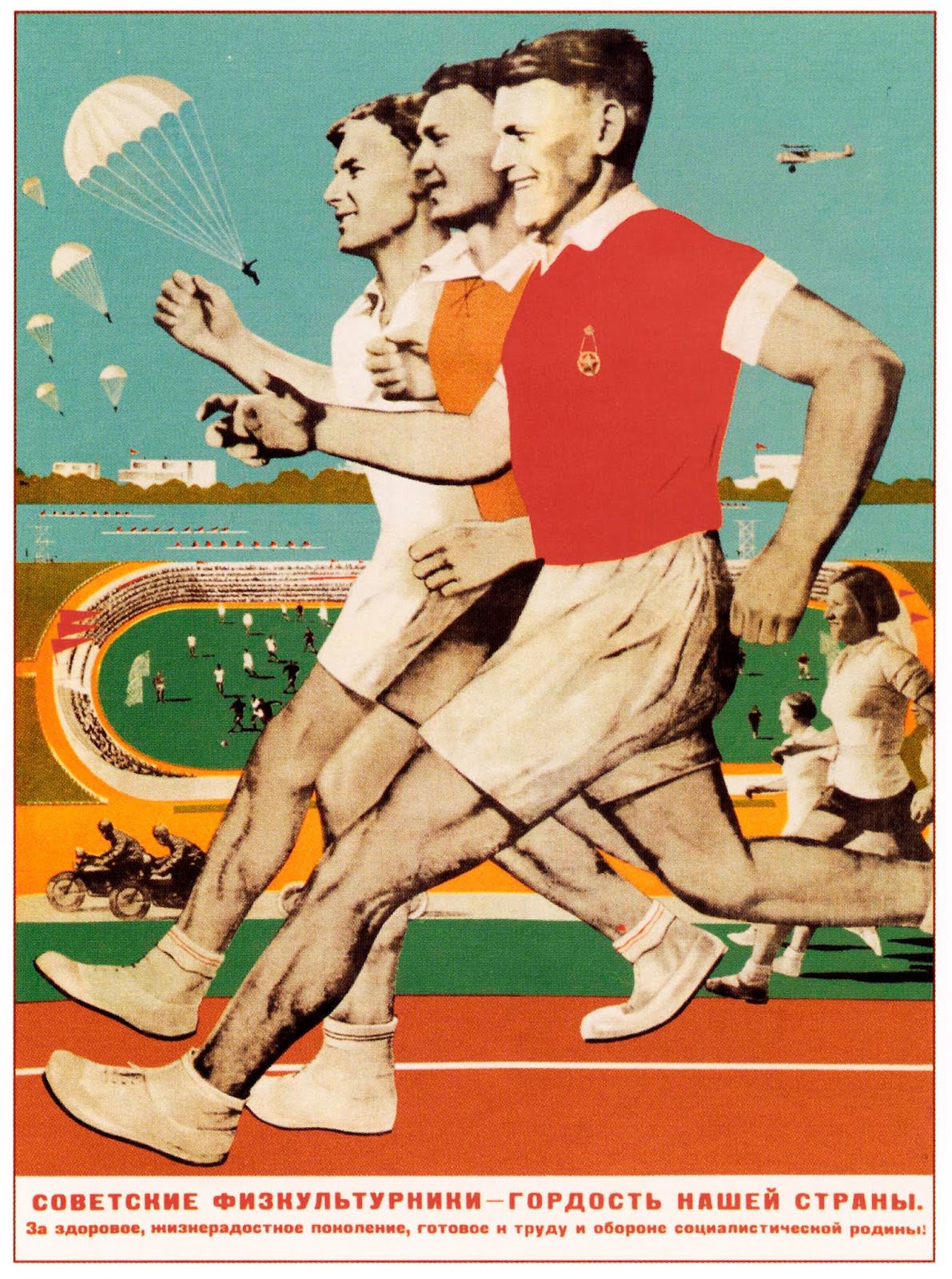
At the same time, elite athletes were elevated to national heroes. Posters celebrated them as symbols of Soviet achievement, figures the public was meant to admire and emulate. Sporting success on the world stage was treated as proof that the Soviet system worked — that it produced stronger, faster, and better people than the capitalist world.
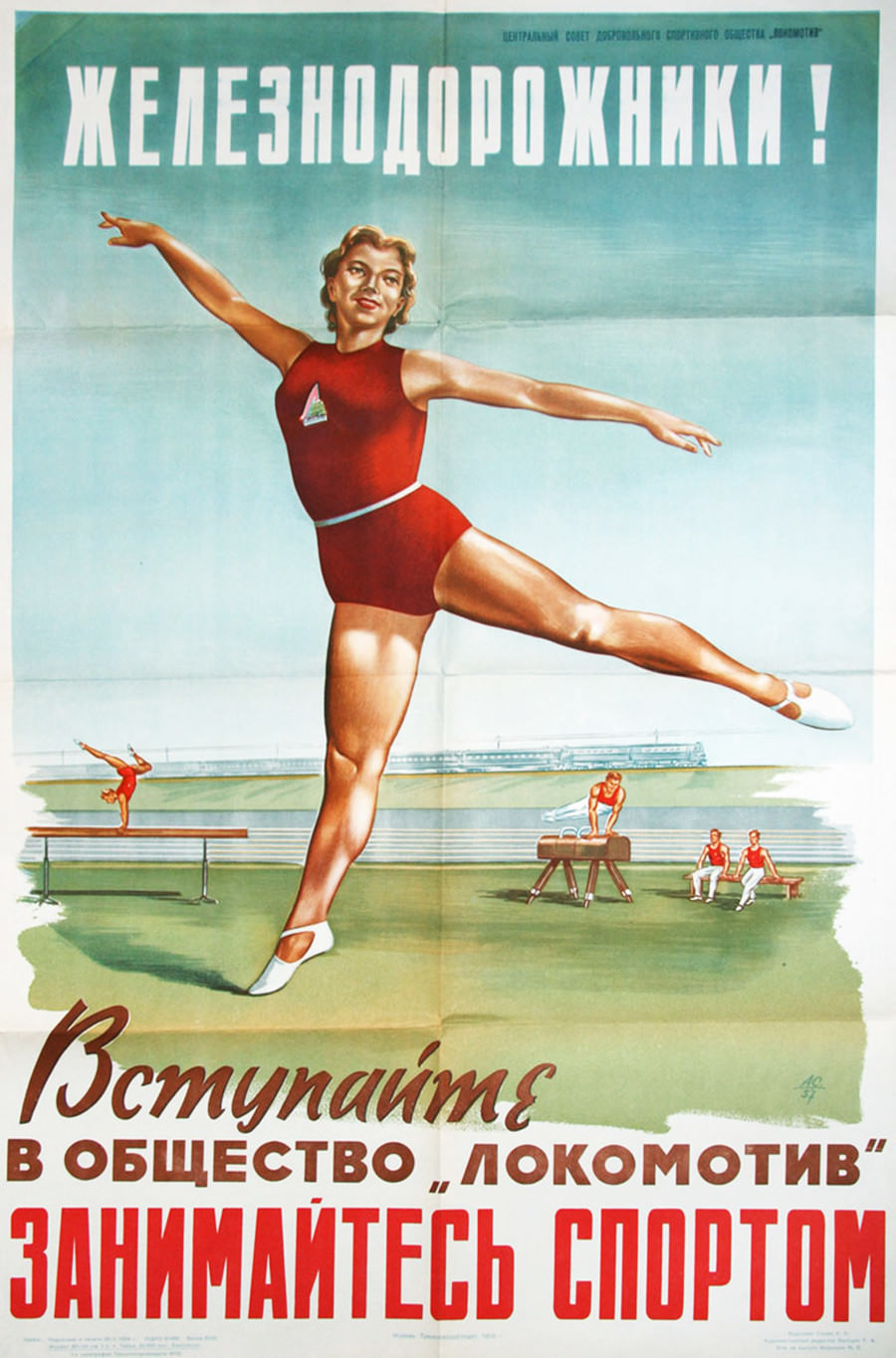
The Soviet sports club system organized athletes by their profession or workplace. The “Locomotive” club was one of the most well-known, built around railway workers. Posters like this one served as direct recruitment calls, pushing workers to join these clubs and compete under their trade’s banner. Sport became tied to professional identity.
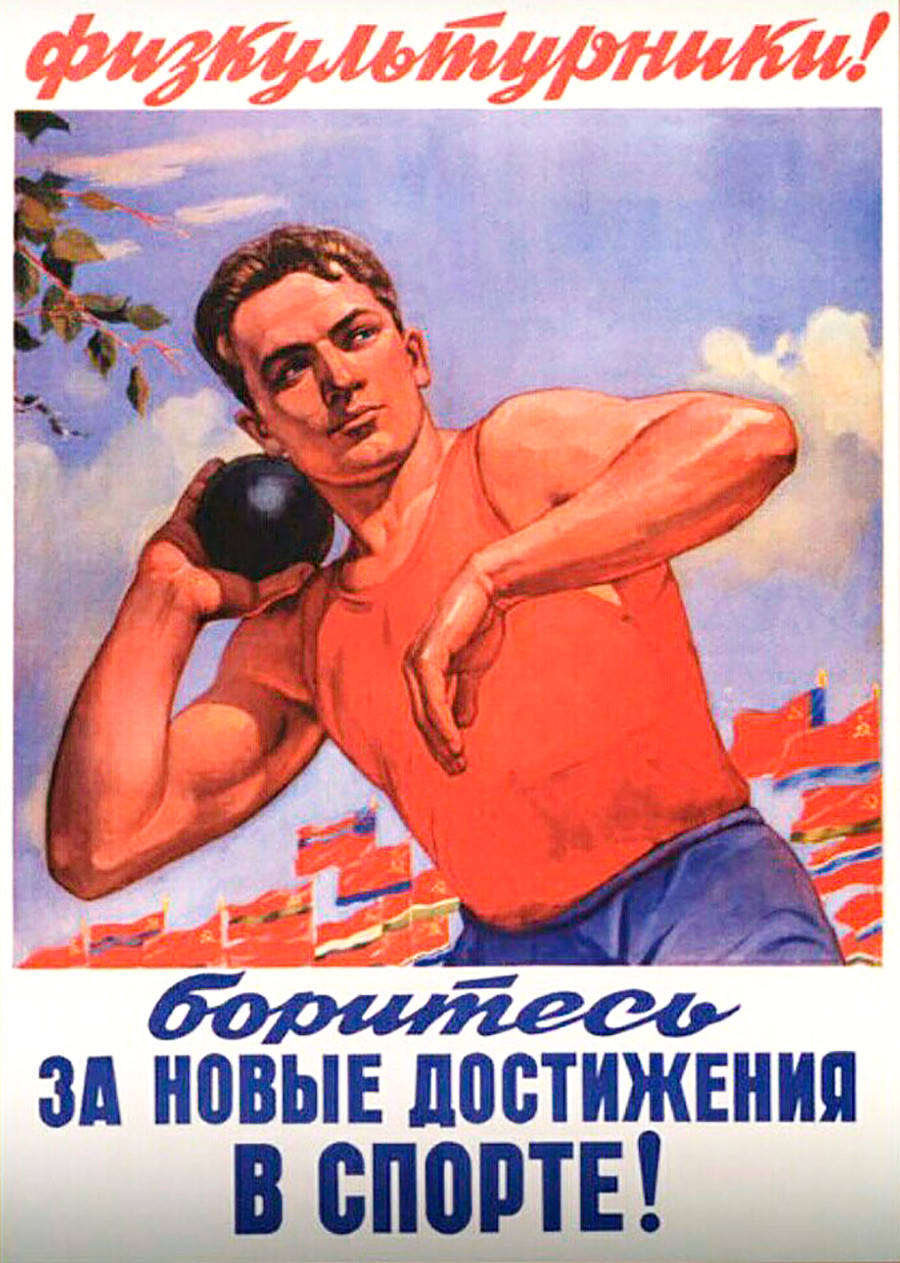
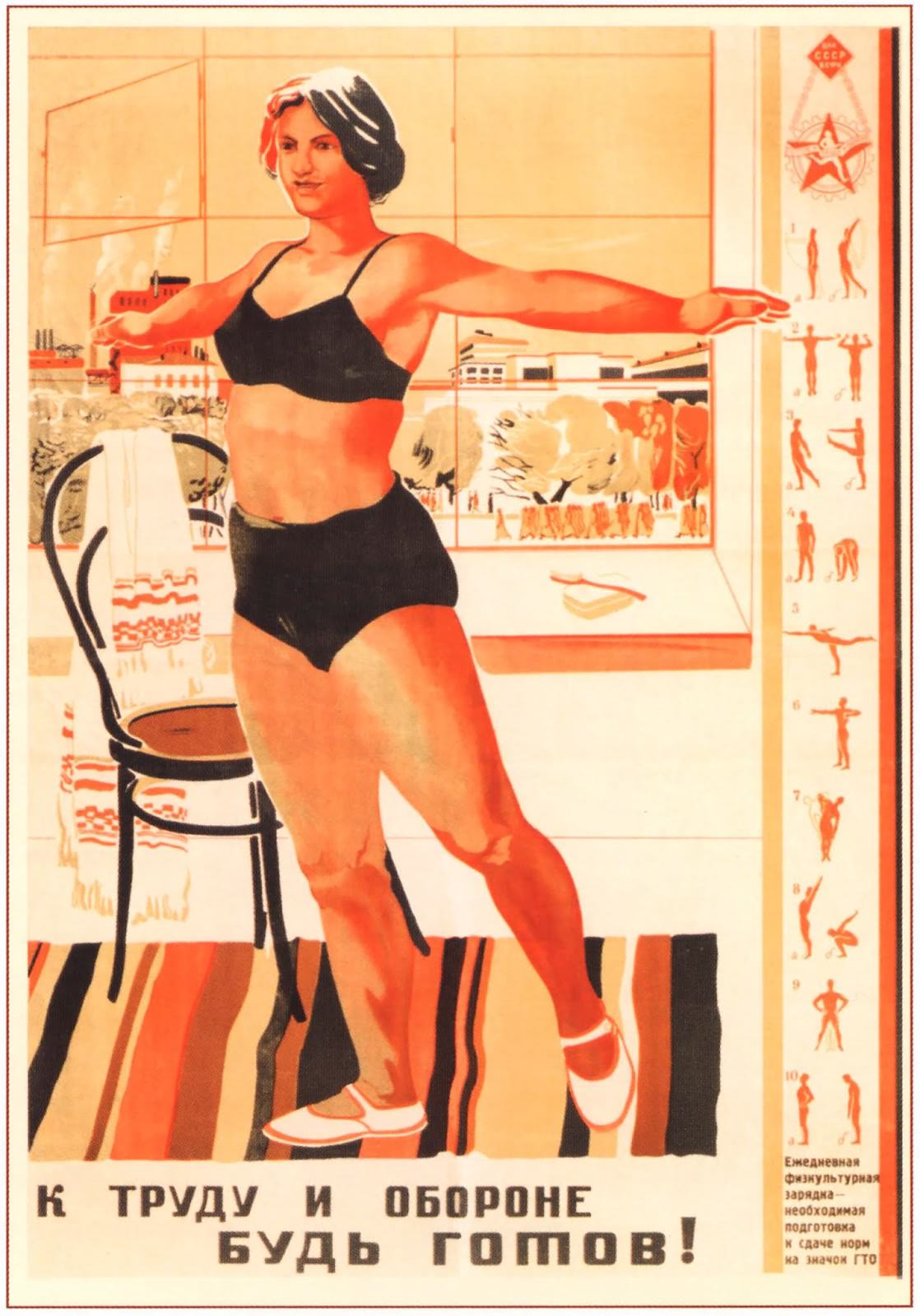
Some posters made the military connection unmistakable. “Be prepared for labor and defense” was also the name of a formal Soviet fitness program — the GTO — introduced in 1931. Citizens who passed its physical tests received badges and public recognition. The program tied athletic achievement directly to military readiness, and these posters functioned as recruitment ads for it.
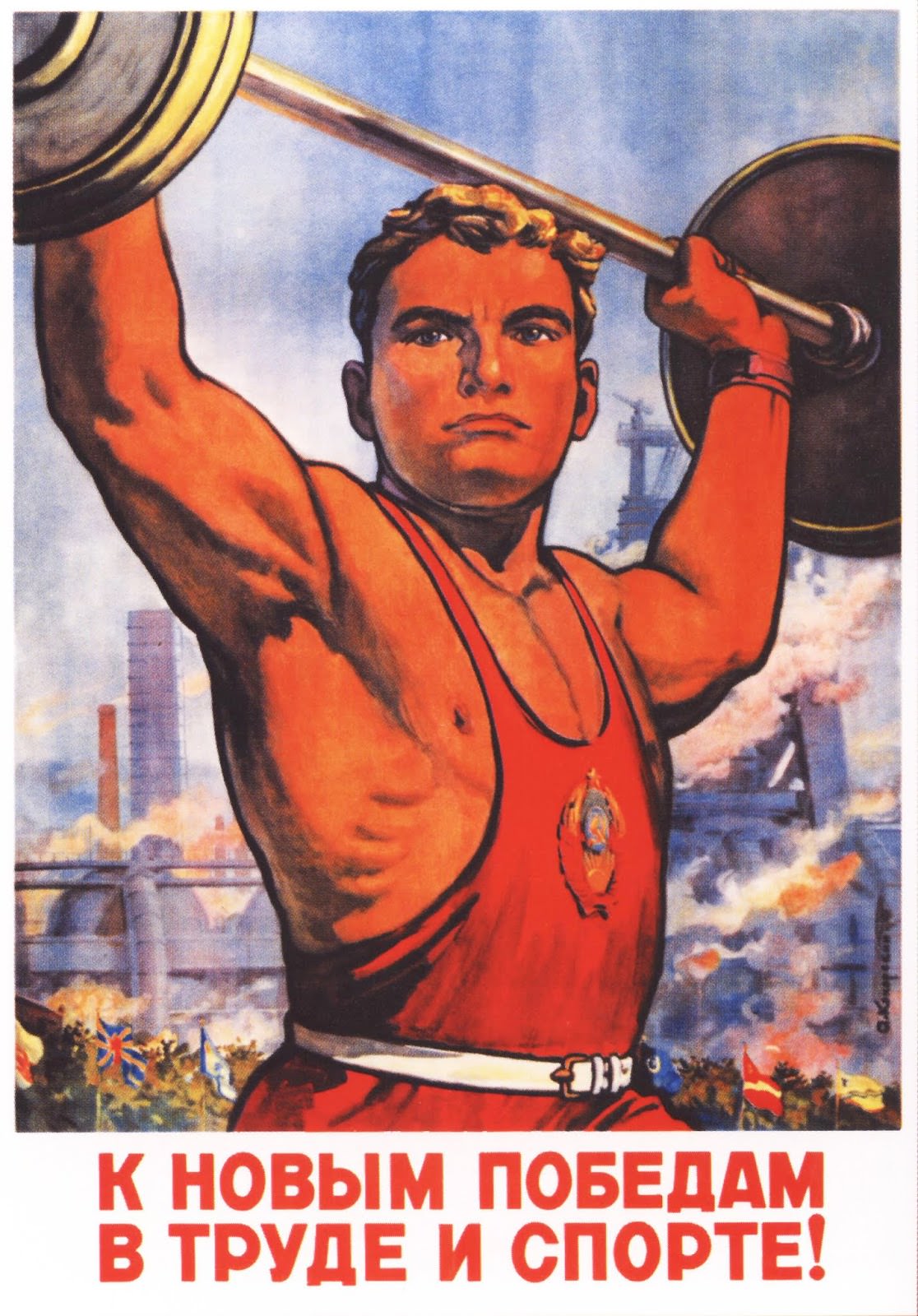
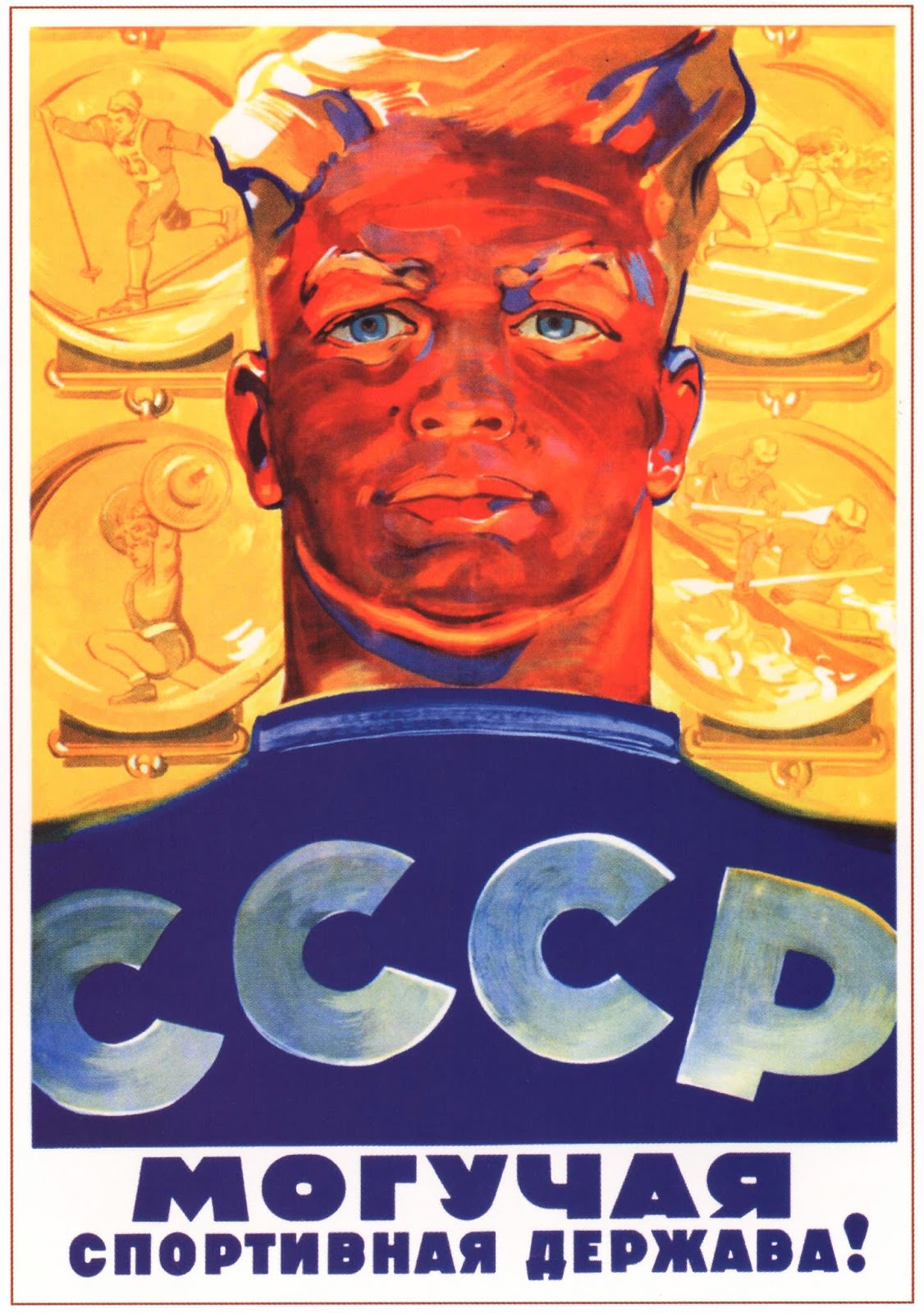
By the mid-20th century, the Soviet Union had become a dominant force in international sport. Its athletes dominated the Olympic Games, and the state used that success as a propaganda tool. Posters proclaimed the USSR a “mighty sports power” with the same confidence used in posters about industrial output or military strength. Sport was another front in the Cold War.
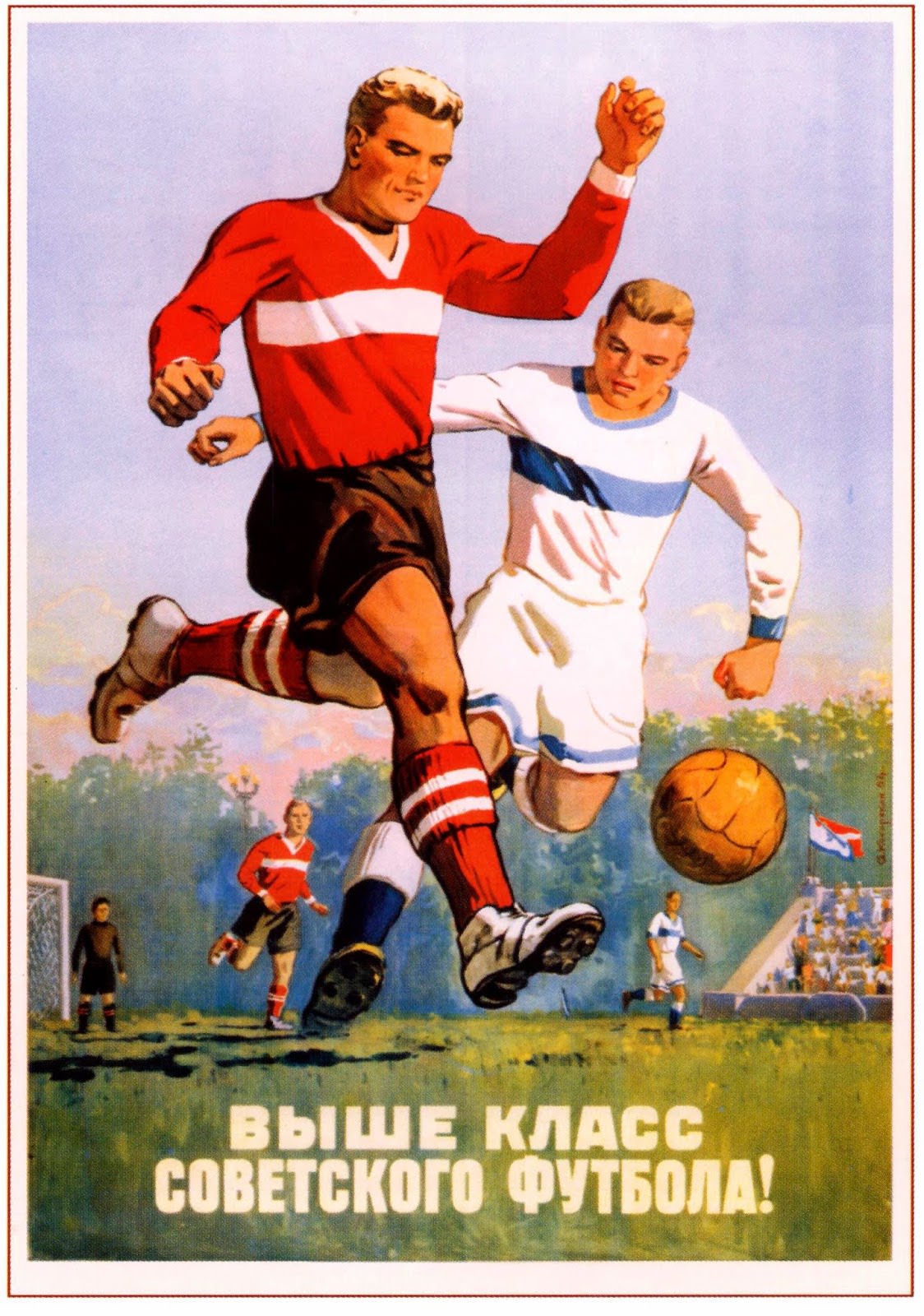
Football — known in most of the world as soccer — held a special place in Soviet sports culture. It drew massive crowds and generated genuine public enthusiasm that went beyond state-mandated participation. Posters celebrating Soviet football tapped into that organic passion while reinforcing the idea that Soviet players competed at the very highest level globally.
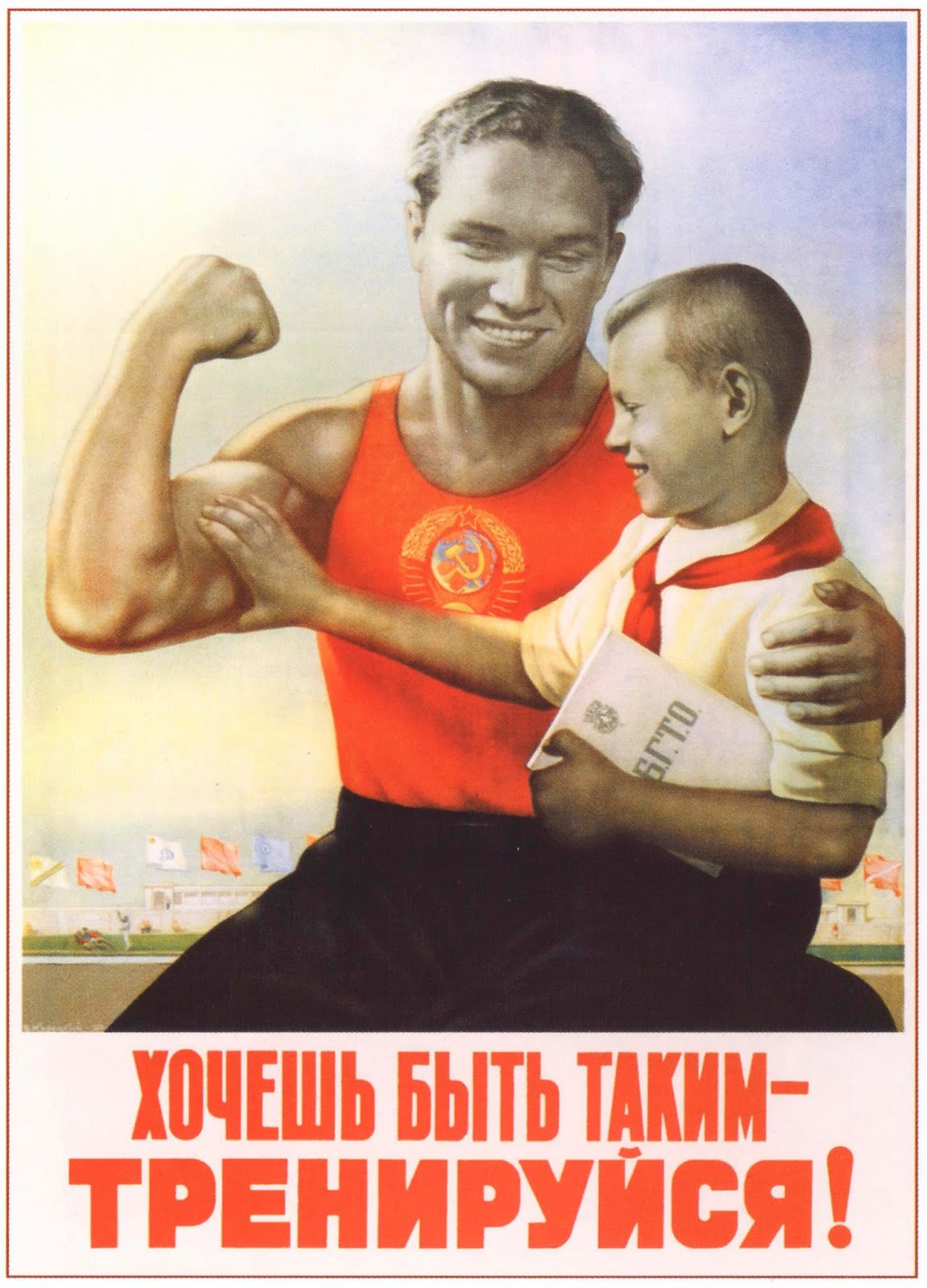
Aspirational messaging was a common tactic. Posters featured fit, confident figures — often athletes or soldiers — and spoke directly to the viewer, inviting them to match that standard through exercise. The visual format turned fitness into something desirable rather than just mandatory.
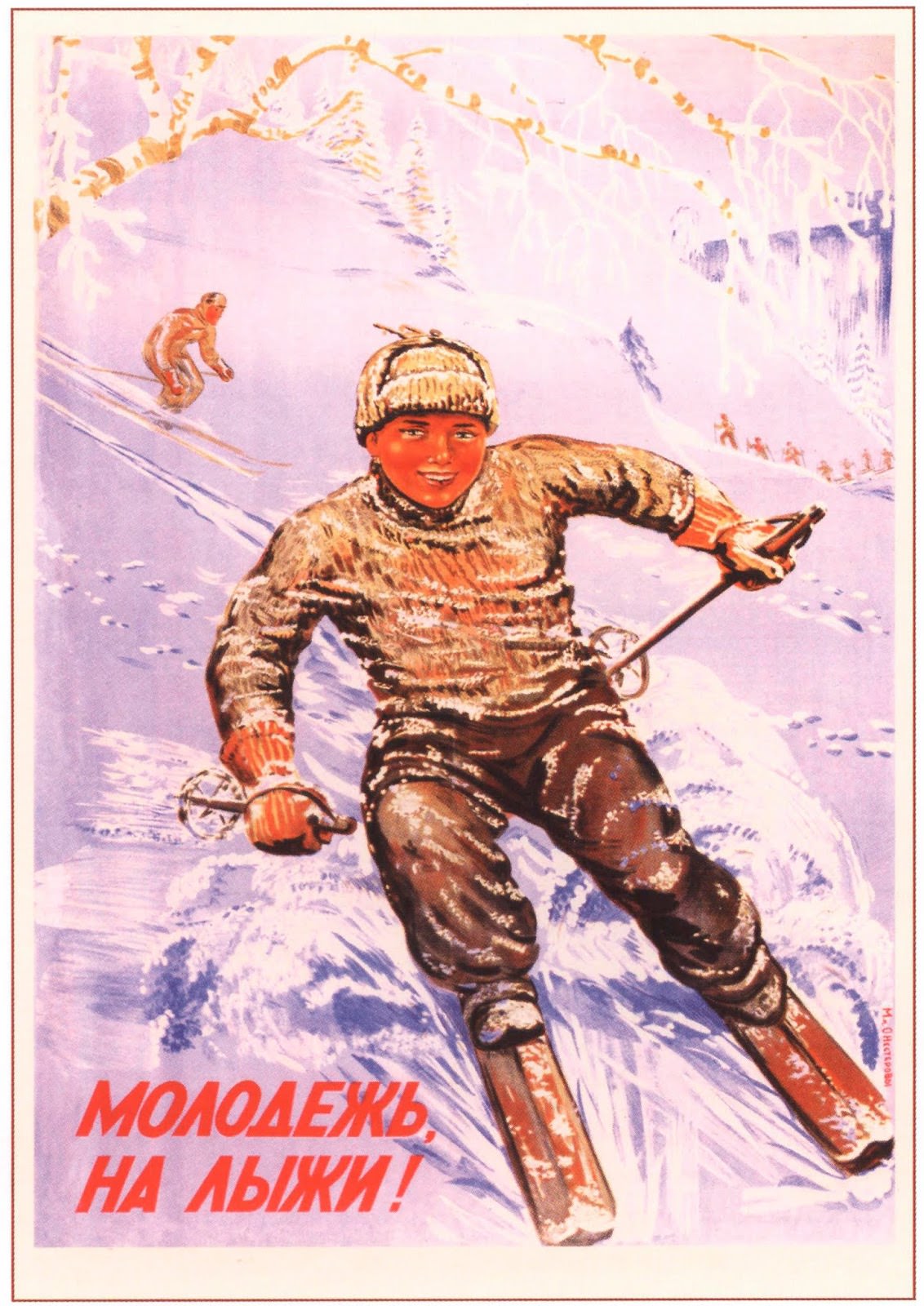
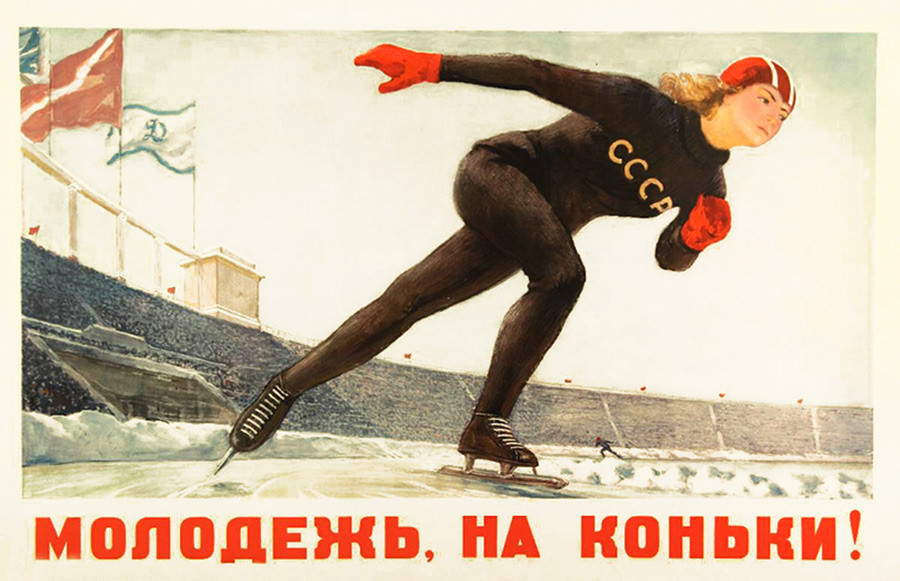
Young people were a primary target of Soviet sports propaganda. Winter sports in particular — skiing and skating — were heavily promoted, partly because the Soviet climate made them accessible and partly because they aligned with military fitness goals. Posters aimed at youth used bright colors and energetic imagery to make these activities look exciting rather than obligatory.
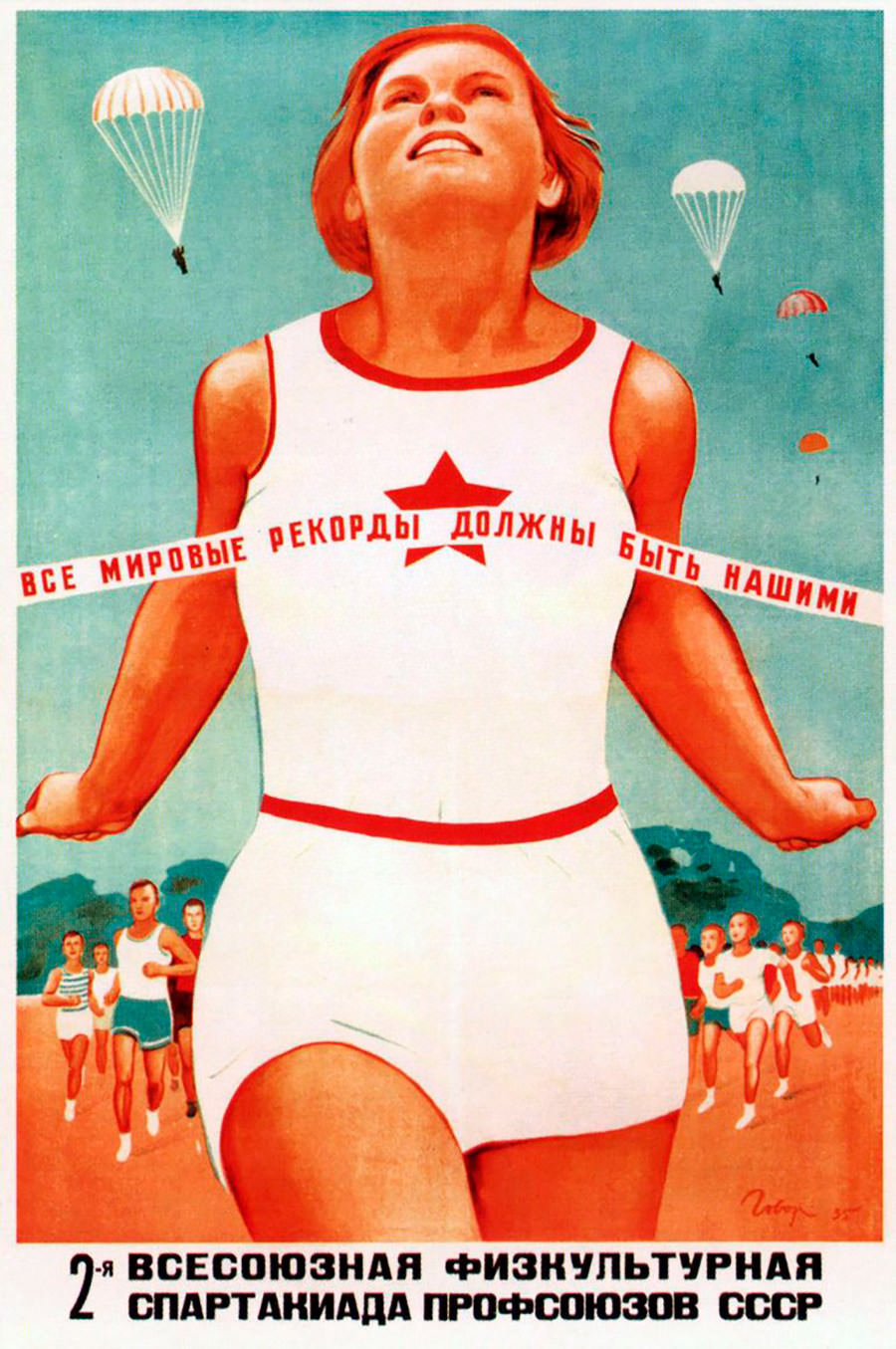
The ambition expressed in some posters was total. “We must set every world record” wasn’t a suggestion — it was a declaration of national intent. Soviet athletes trained under immense pressure to outperform the rest of the world, and posters like this one reflected that pressure while directing it outward as collective pride.
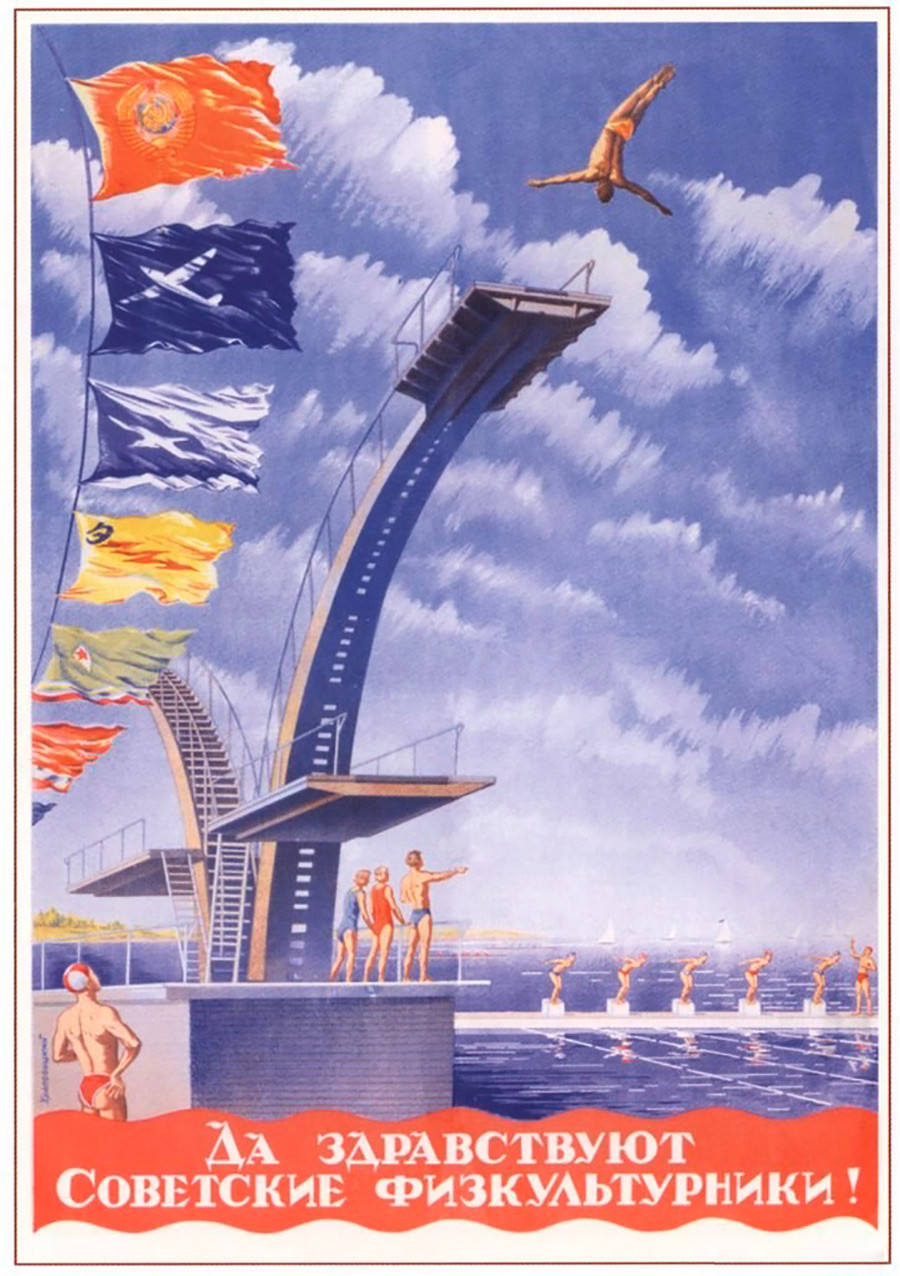
Posters also served a celebratory function. After major competitions or during national sports festivals, congratulatory posters honored athletes publicly. These weren’t calls to action — they were acknowledgments that reinforced the idea that athletes deserved the same reverence as soldiers, scientists, or workers who had served the Soviet state.
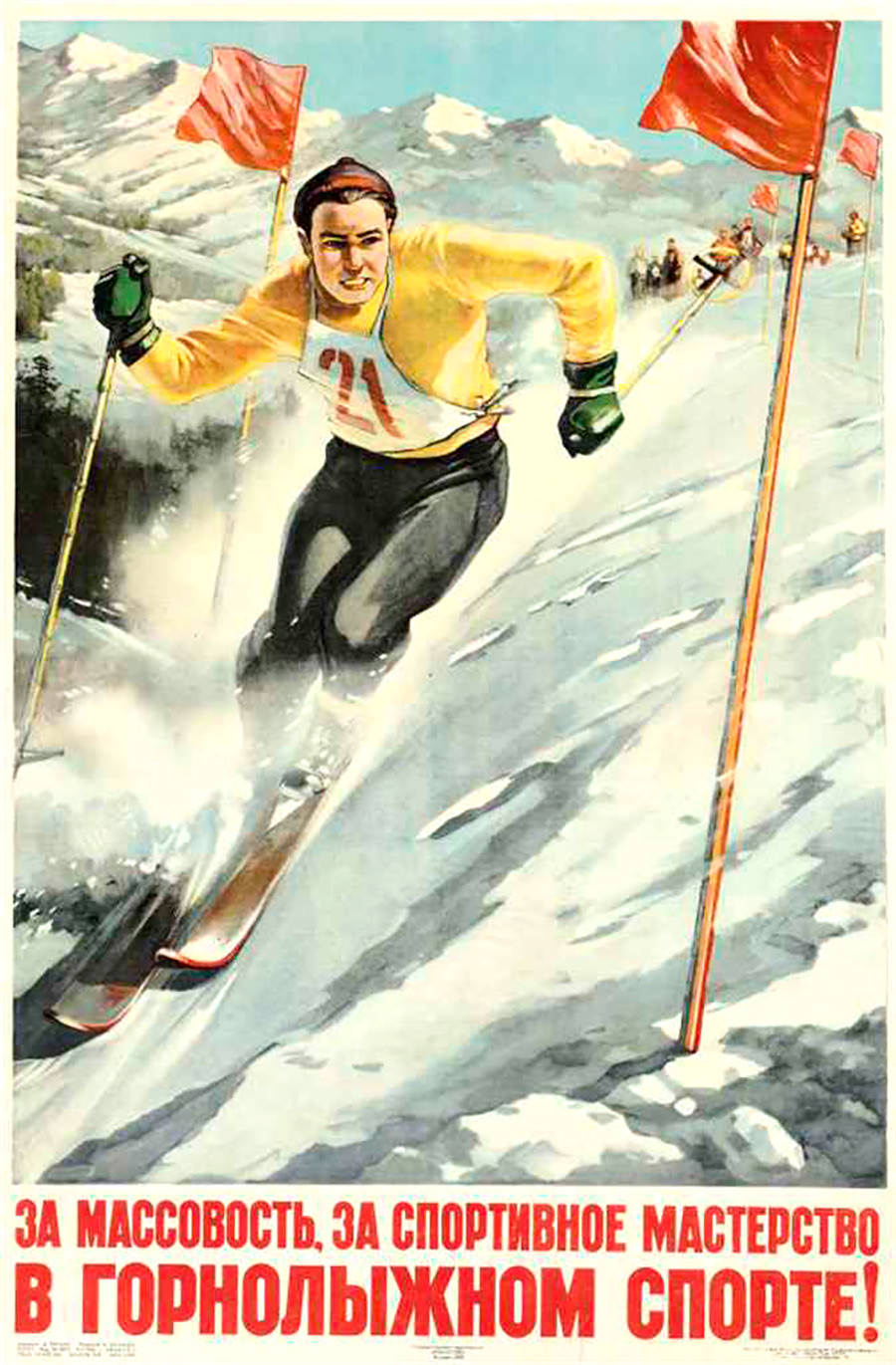
The word “mass” appeared repeatedly in Soviet sports messaging. The goal was never just to produce a handful of world-class competitors — it was to transform the entire population into active, physically prepared participants. Downhill skiing, like many other sports, was framed as something every Soviet citizen could and should pursue. These posters were the mechanism that turned that expectation into culture.