San Jose in the 1980s was a city in motion. The electronics industry — personal computers and integrated circuits in particular — was pulling workers from across the country into Silicon Valley. The city’s population climbed from 629,442 in 1980 to 782,248 by 1990, while Santa Clara County as a whole reached 1,682,585 residents. That kind of growth changed everything: the streets, the skyline, the neighborhoods, and the cost of living.
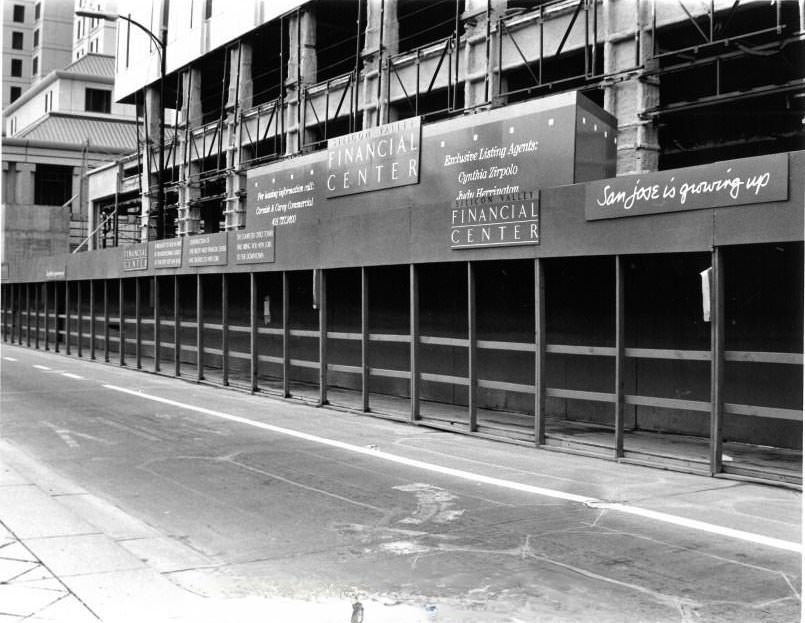
One of the most striking consequences of the tech boom was what it did to housing prices. San Jose’s housing costs rose by 936% over the decade — the fastest increase of any city in the United States at that time. By 2003, Santa Clara County’s average home price sat at roughly 330% of the national average, a direct result of the demand generated during the 1980s. Workers flooded in faster than housing could be built, and prices reflected that pressure every single year.
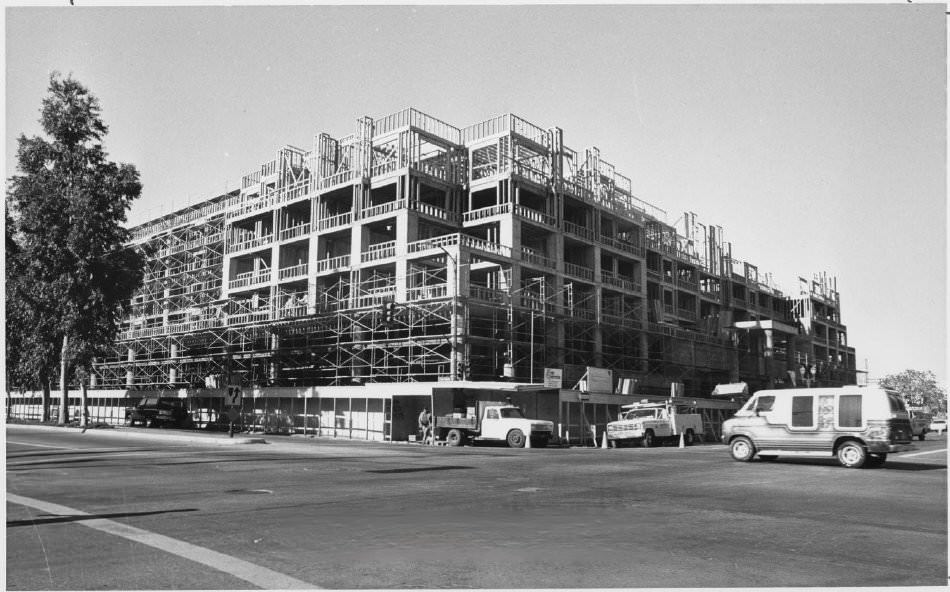
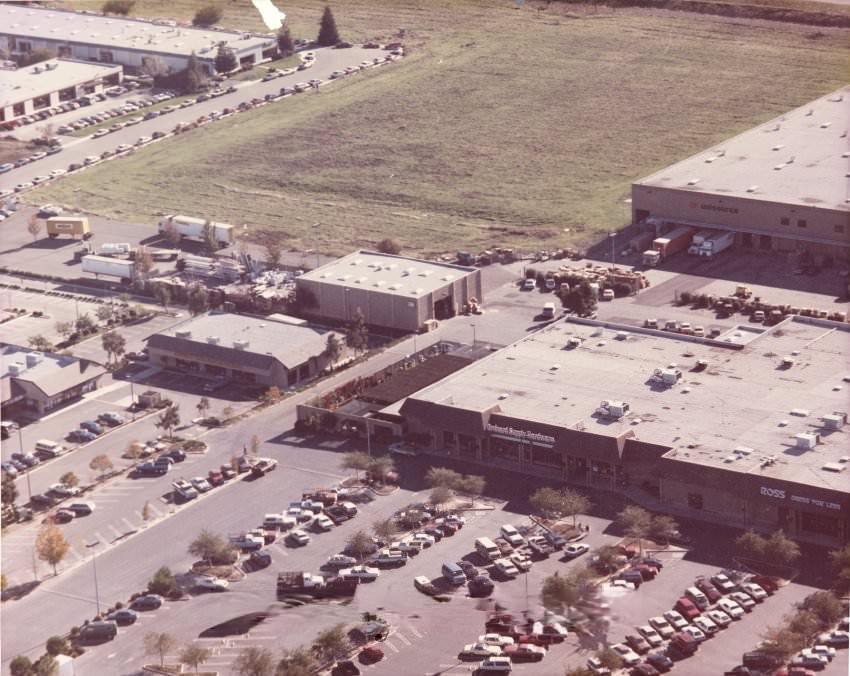
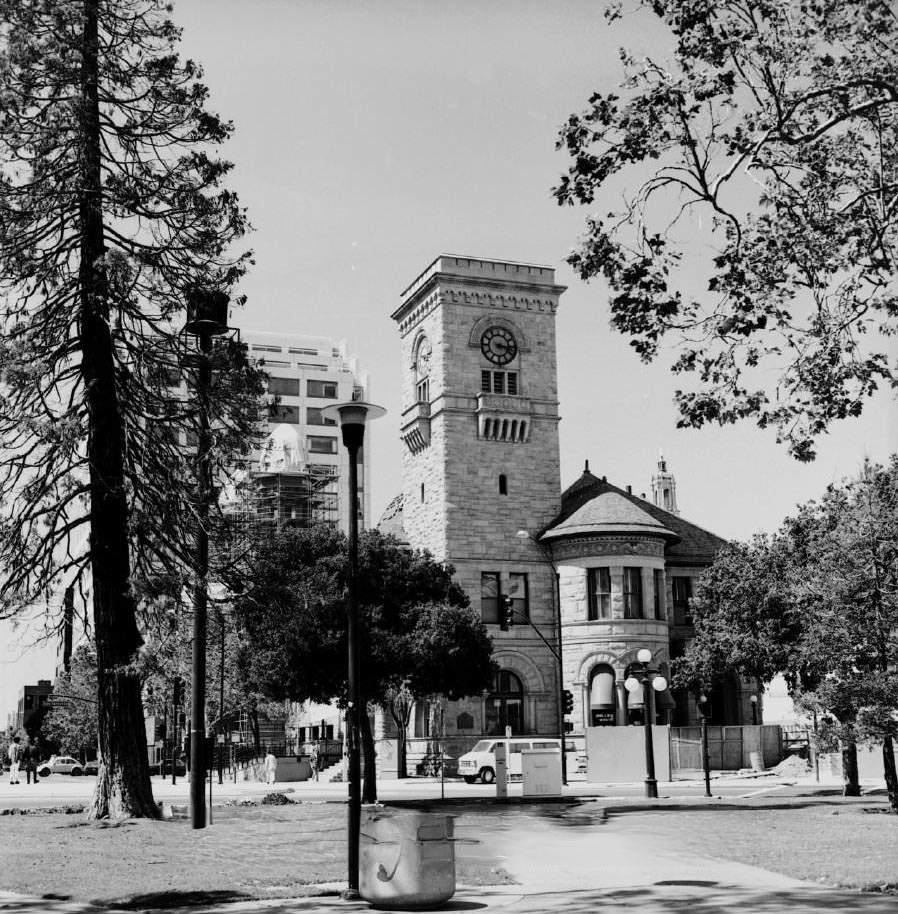
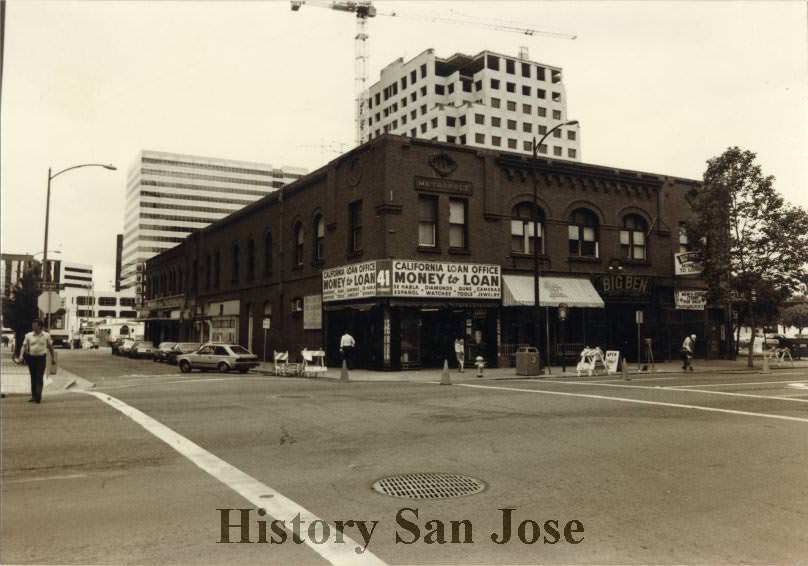
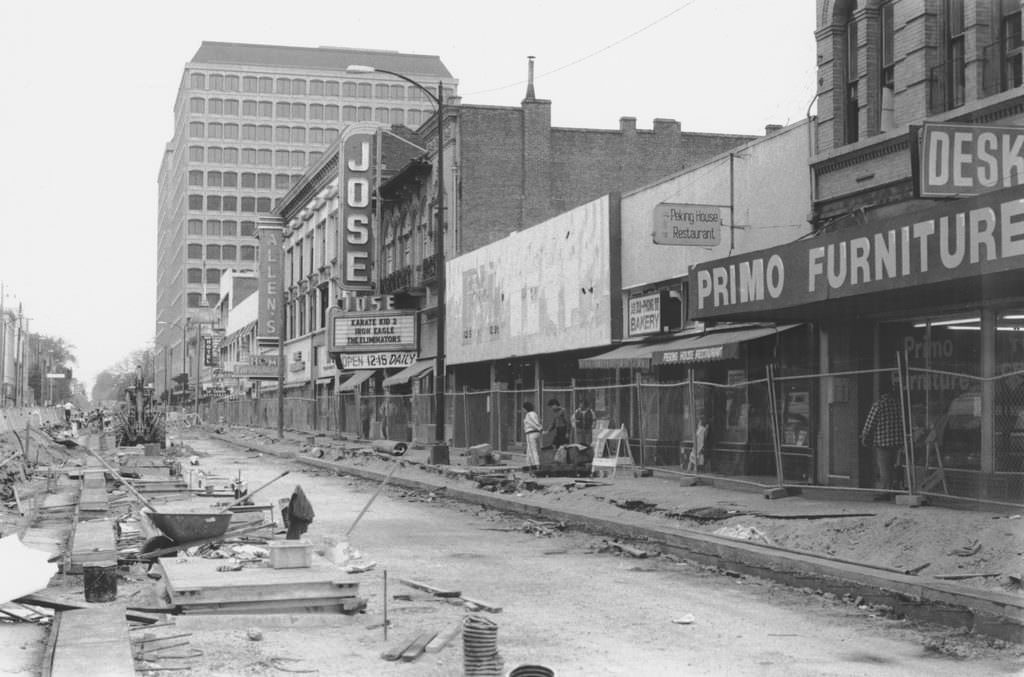
Construction crews were a constant presence across the city. New buildings went up in the downtown core and in the surrounding neighborhoods. The pace of development near institutions like San Jose State University showed how quickly the physical city was being reshaped to keep up with population demand. Cranes and scaffolding became familiar features of the landscape throughout the decade.
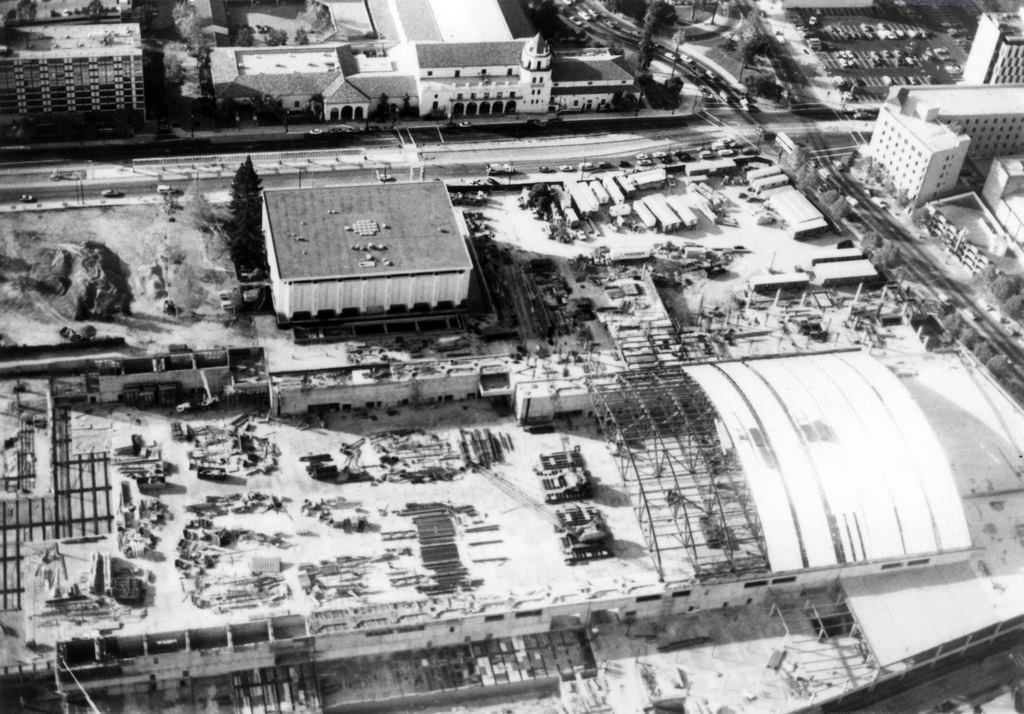
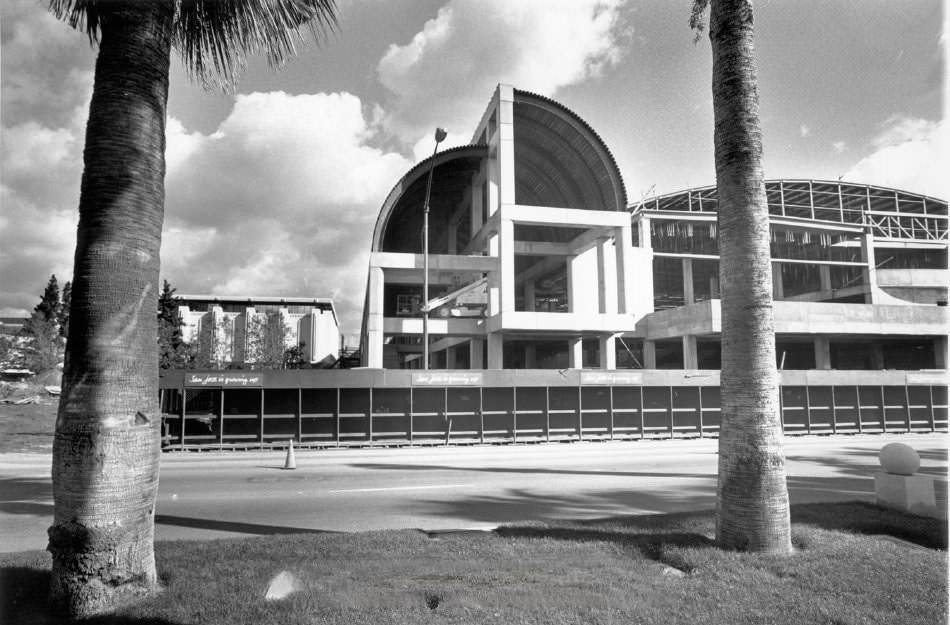
Among the largest building projects of the era was the San José Convention Center. By 1988, the scale of its construction was visible from the air, dwarfing many of the surrounding buildings and signaling that San Jose was positioning itself as a major destination for business and events — not just a suburb of San Francisco.
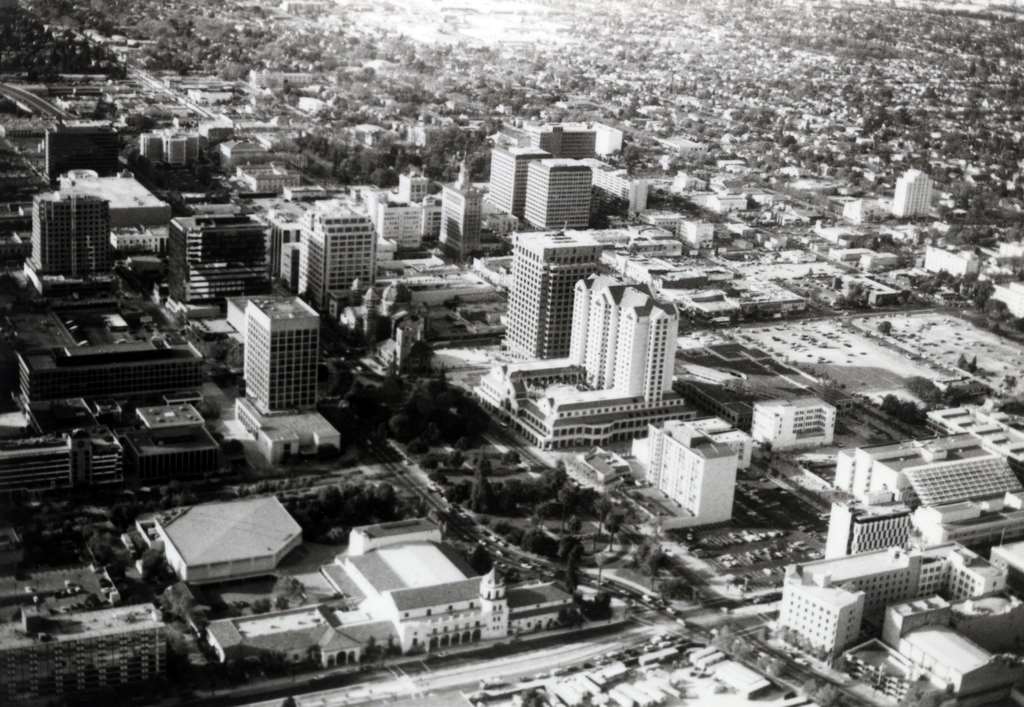
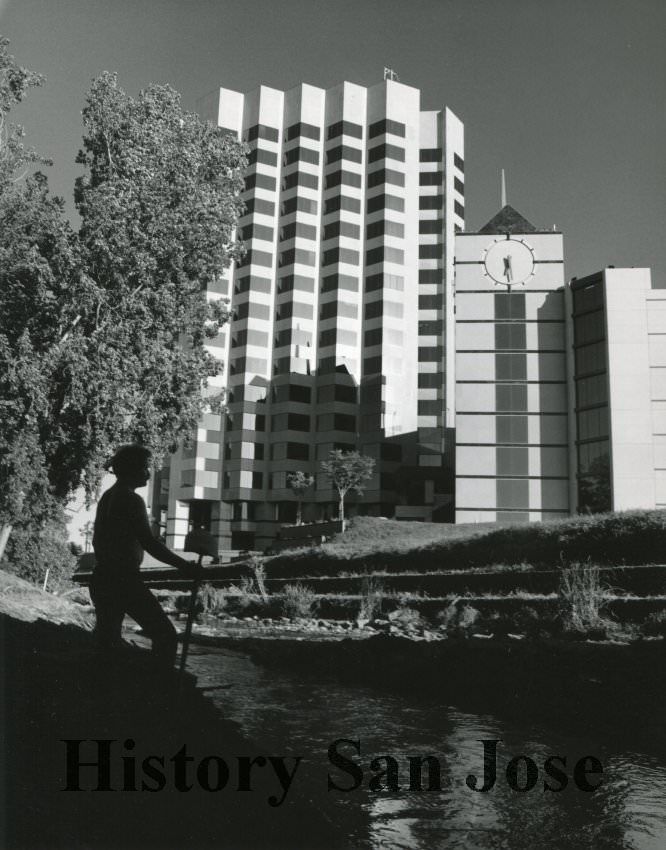
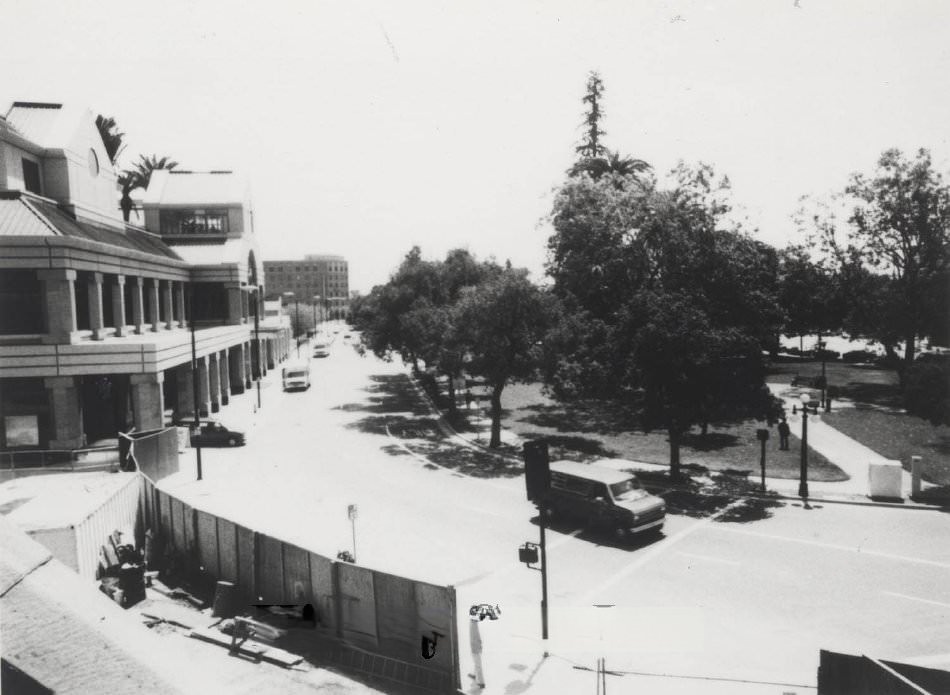
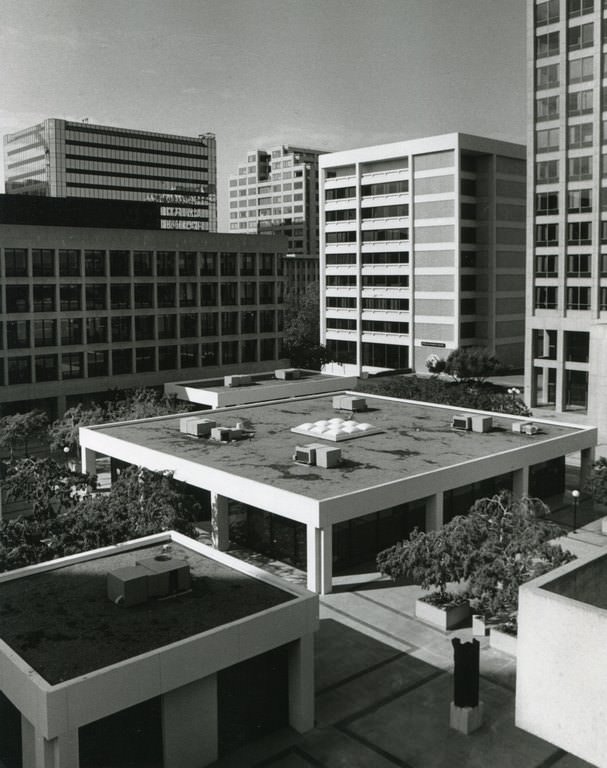
Downtown San Jose underwent serious redevelopment during this period. Market Street Plaza became a focal point, with the Fairmont Hotel going up on the site of what had once been the old Chinatown. The plaza offered a window into how dramatically the downtown core was being rebuilt, block by block, with new commercial and civic buildings replacing older structures.
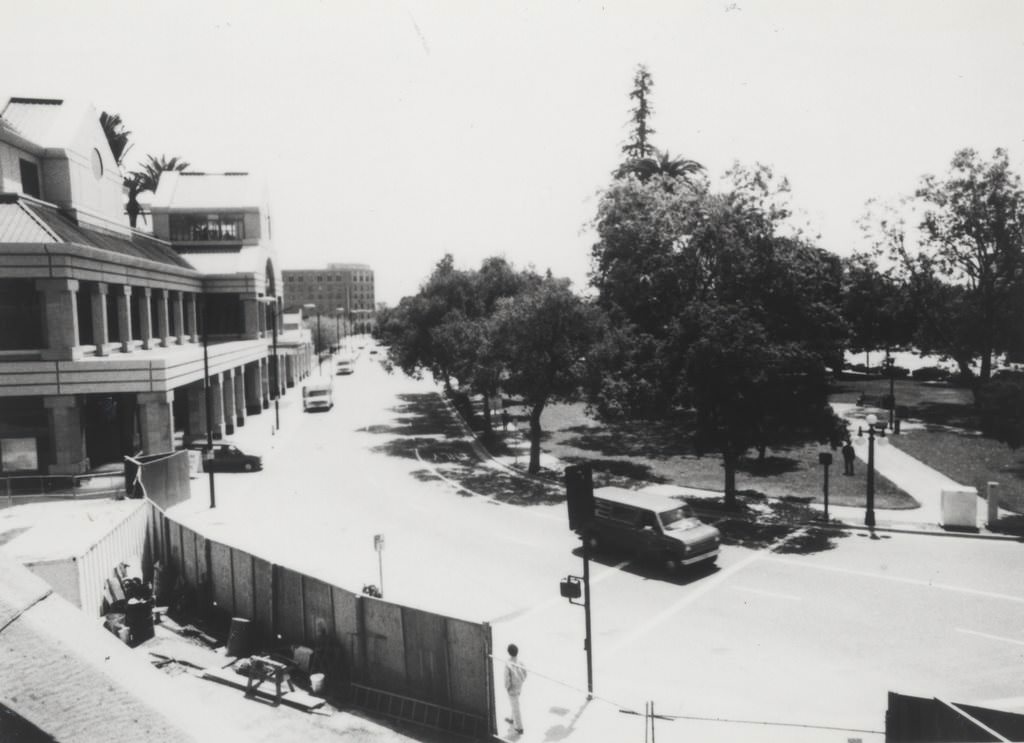
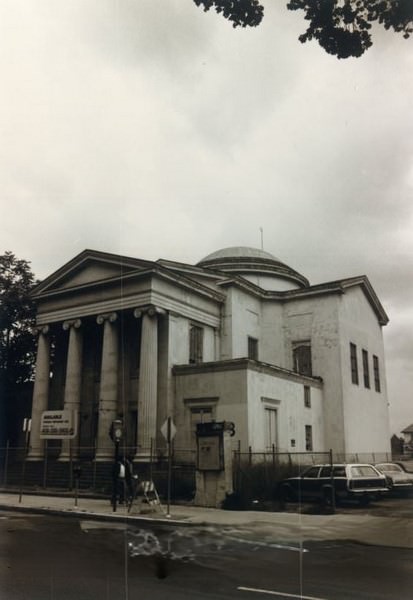
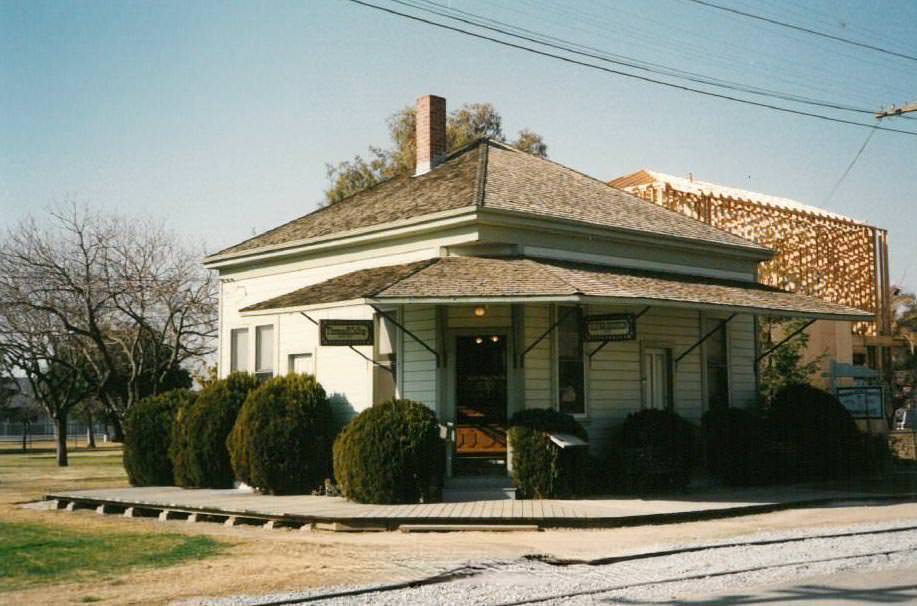
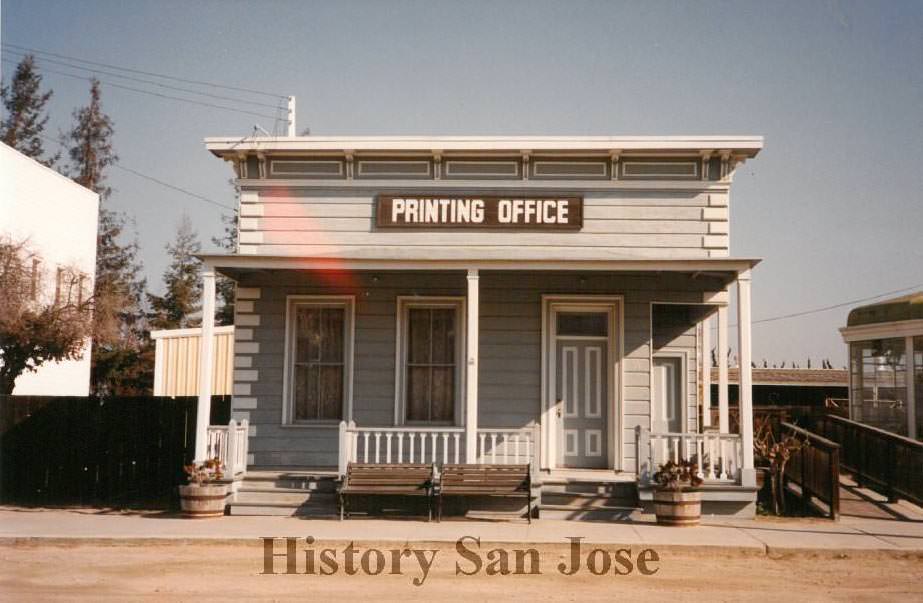
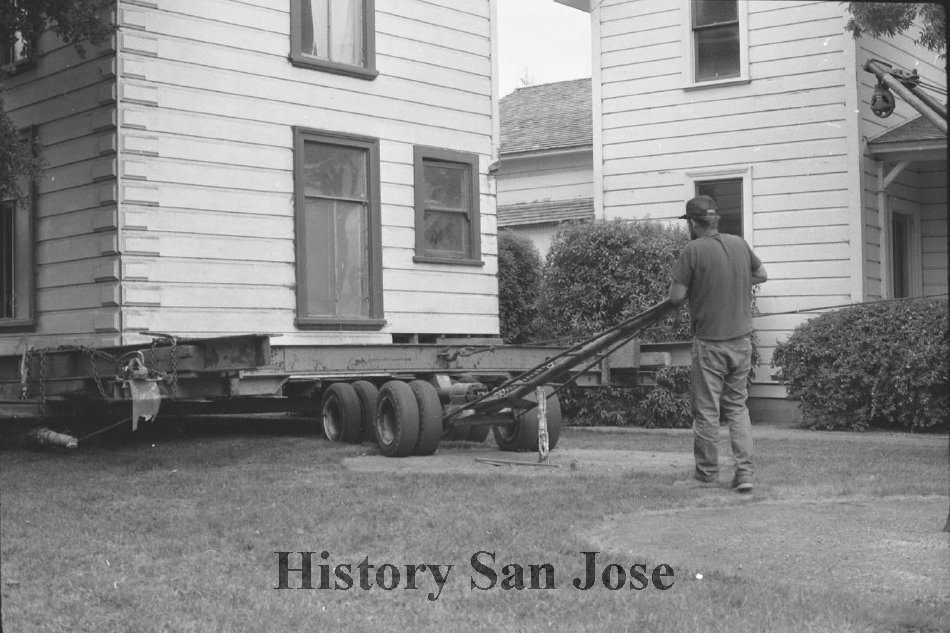
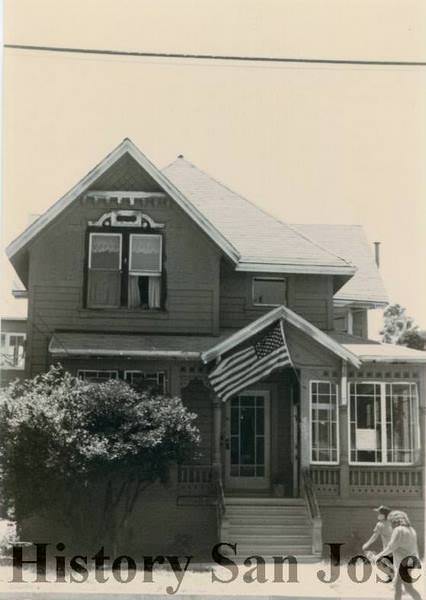
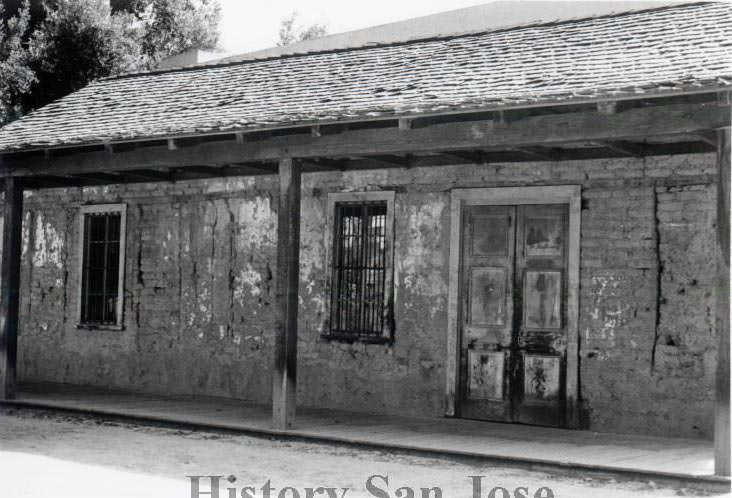
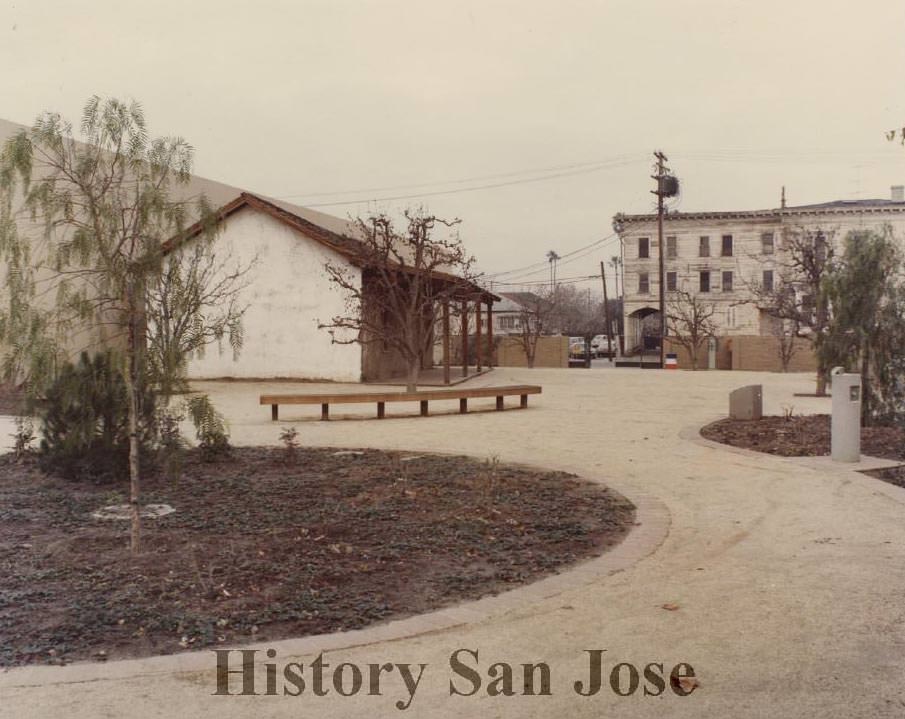
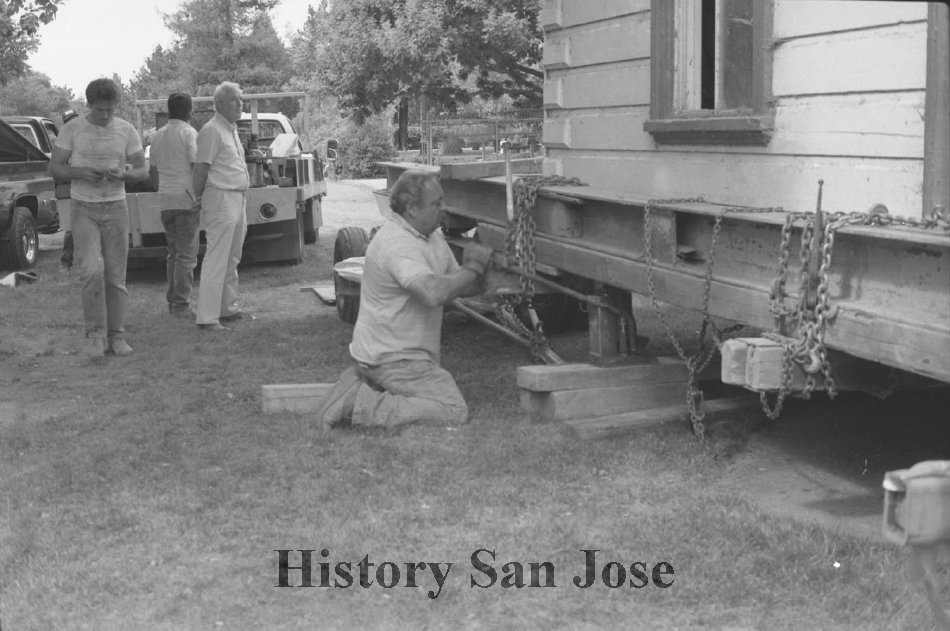
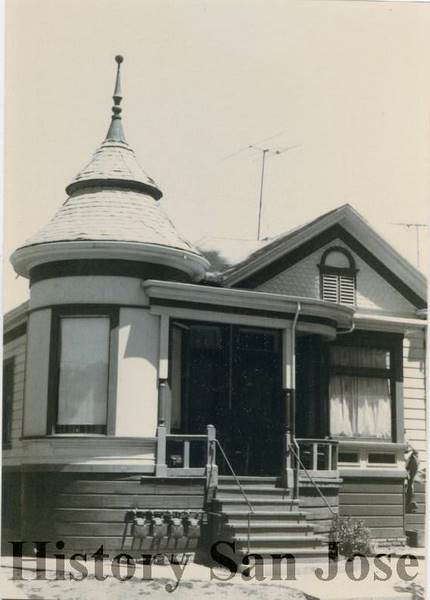
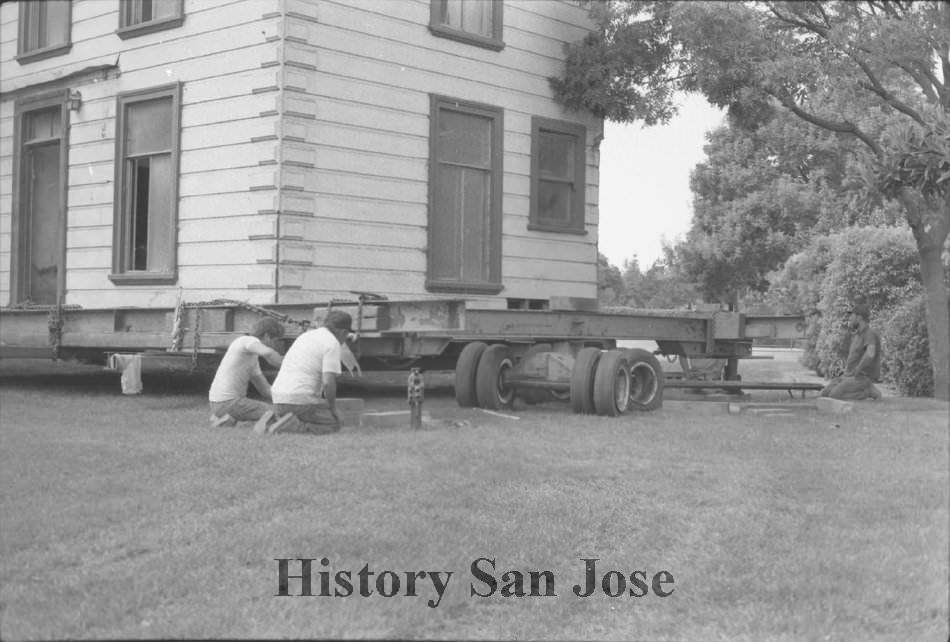
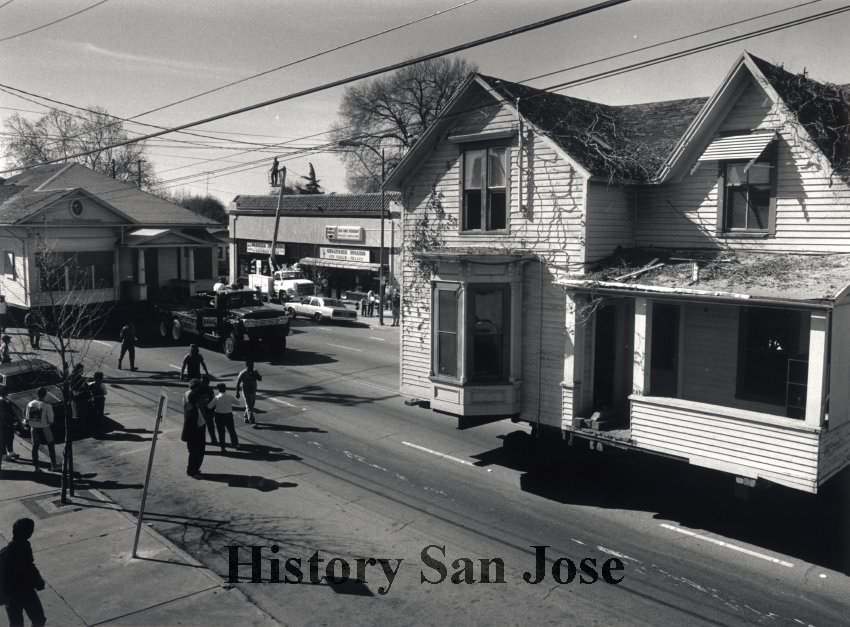
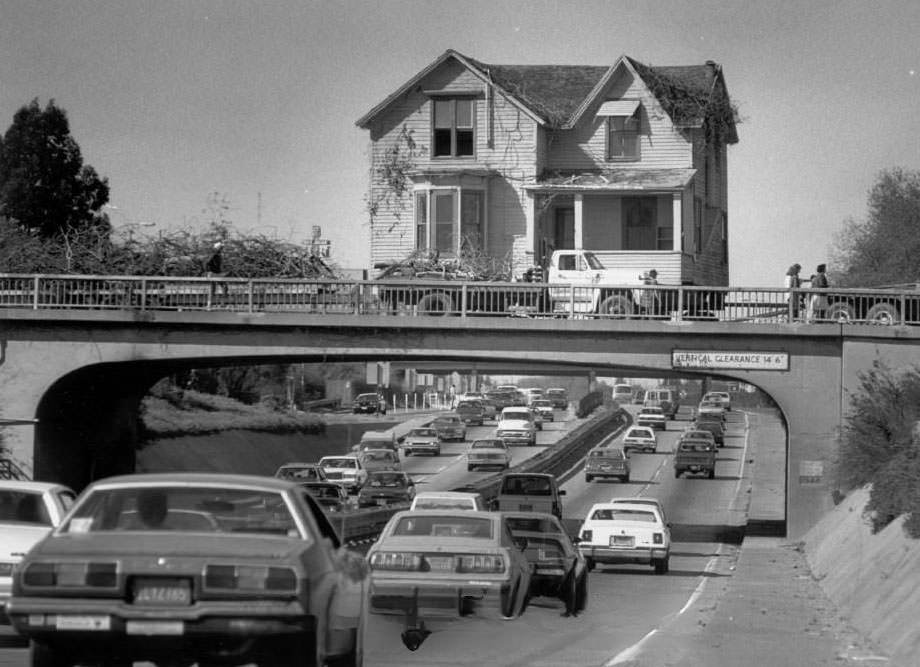
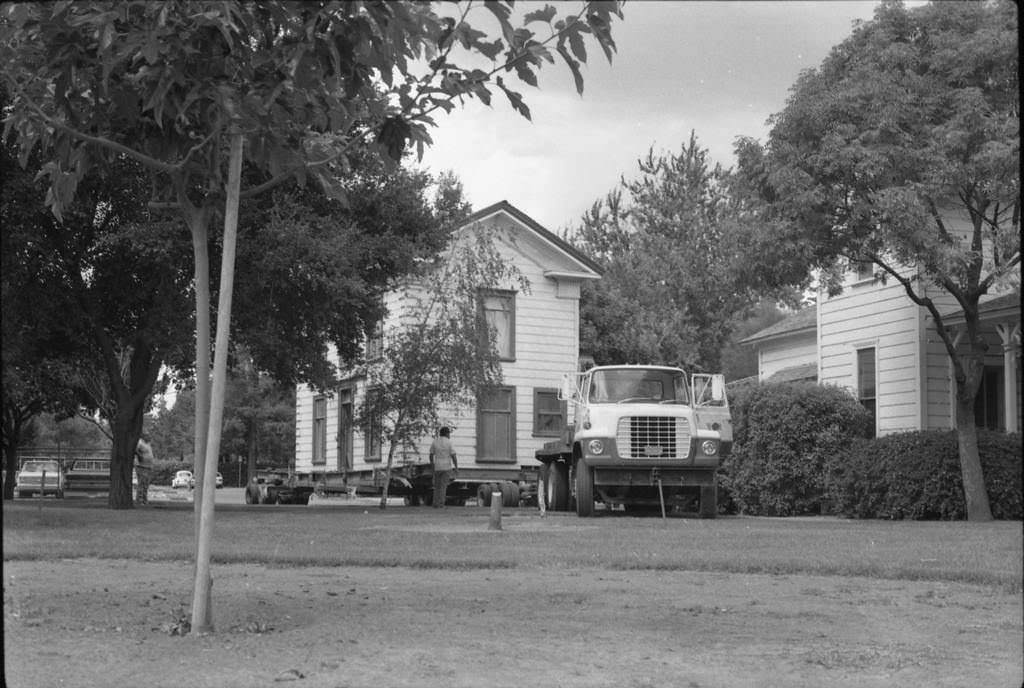
Not everything old was torn down. San Jose made deliberate efforts to preserve pieces of its architectural past, even when that meant physically moving buildings across the city. History Park at Kelley Park became a destination for historic structures relocated from around the region. Workers transported entire houses through city streets — sometimes requiring them to clear highway overpasses — to give the buildings a second life on museum grounds.
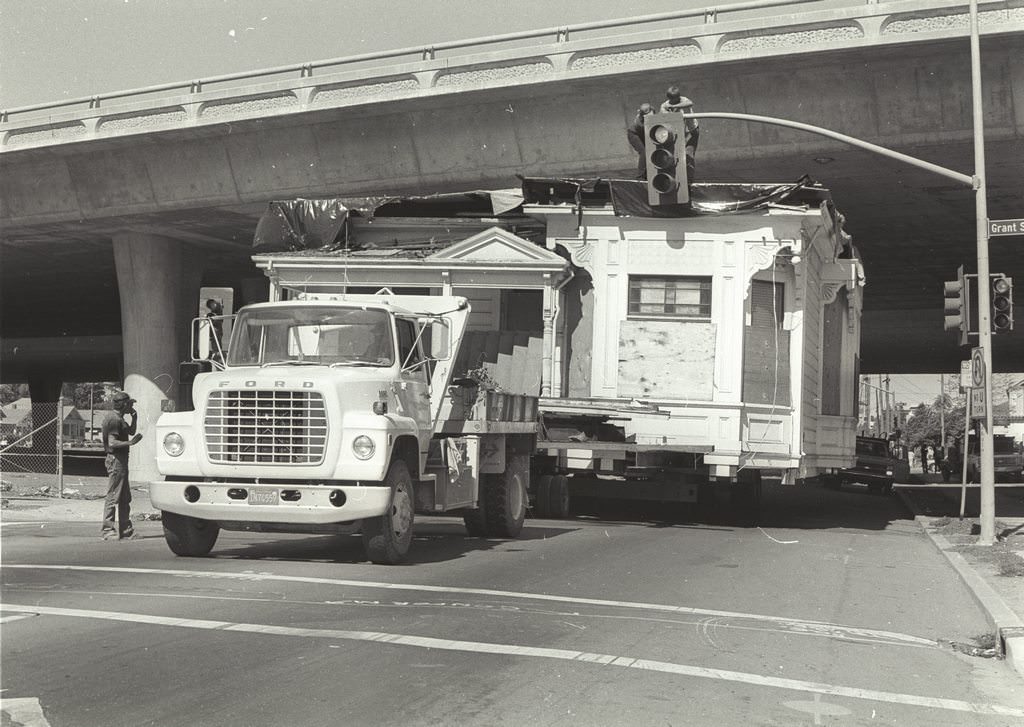
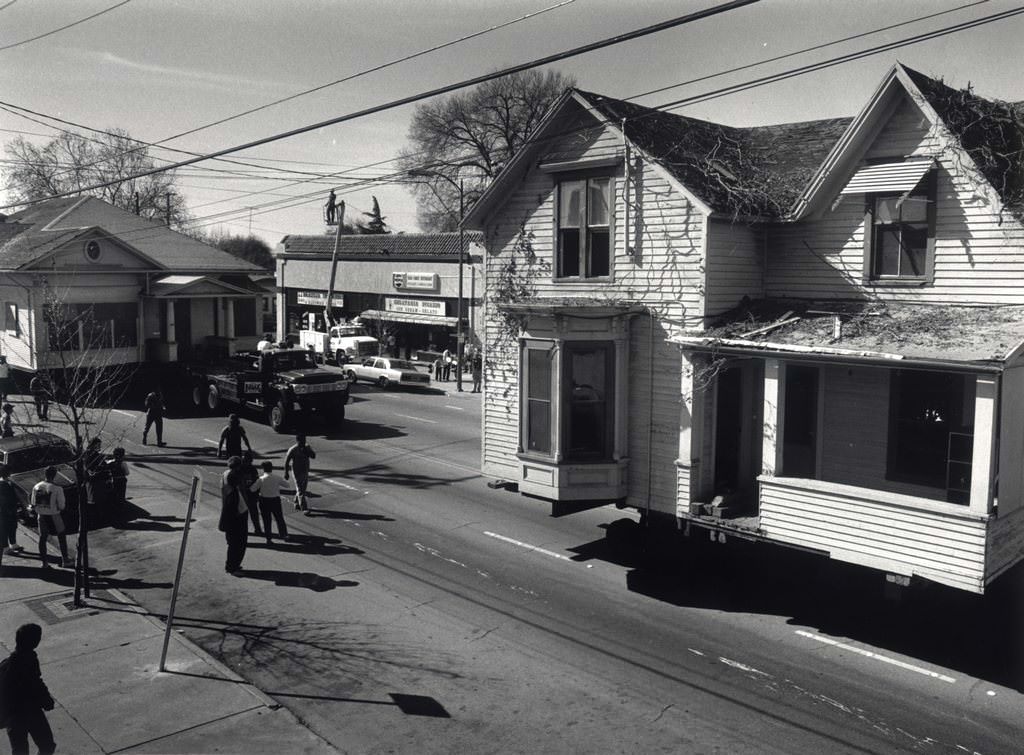
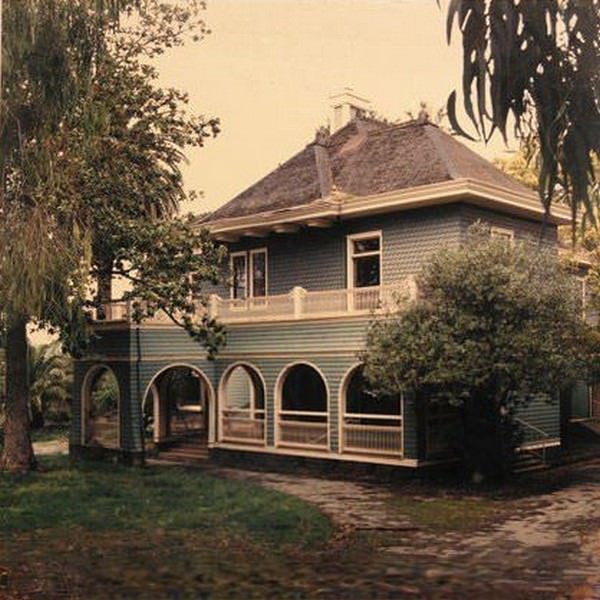
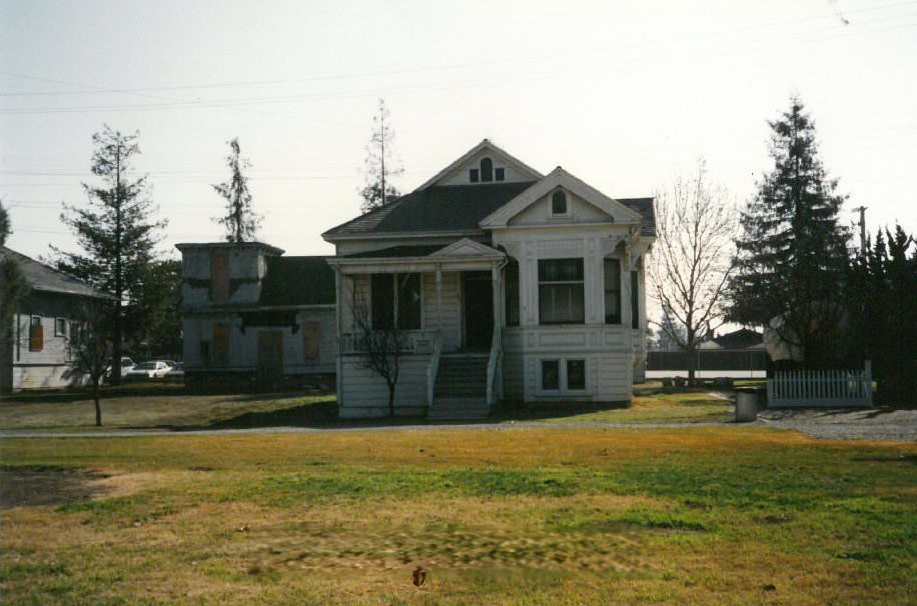
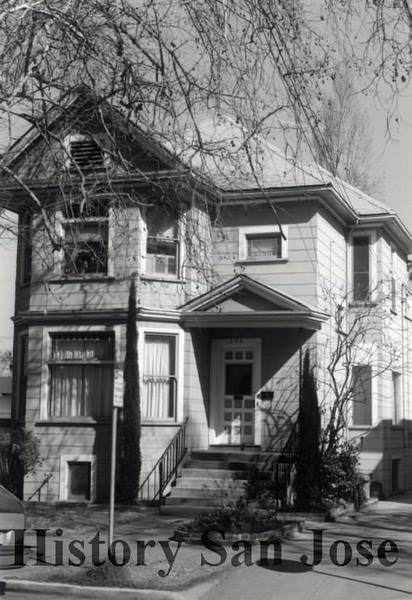
The Zanker House and the Edwin Markham House were among the structures moved to History Park during the 1980s. Crews from companies like Perez Brothers handled the complicated work of lifting and transporting these buildings. The Markham House move in 1987 and the Zanker House placement in 1986 were significant undertakings that required careful coordination through active city streets.
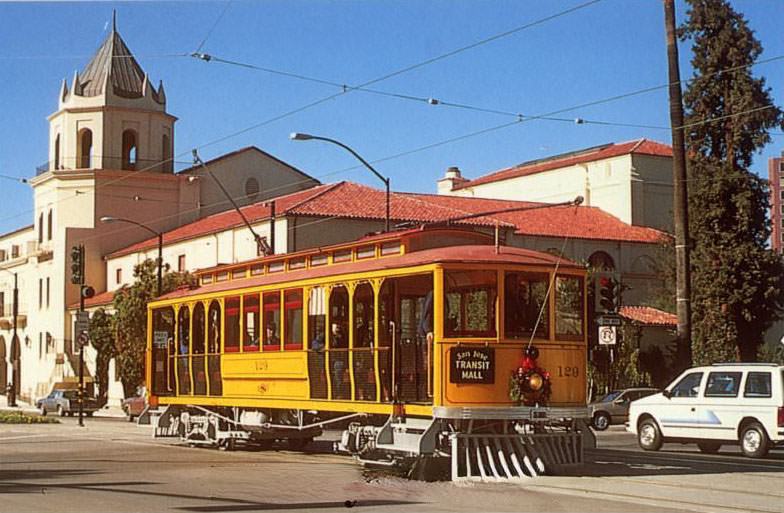
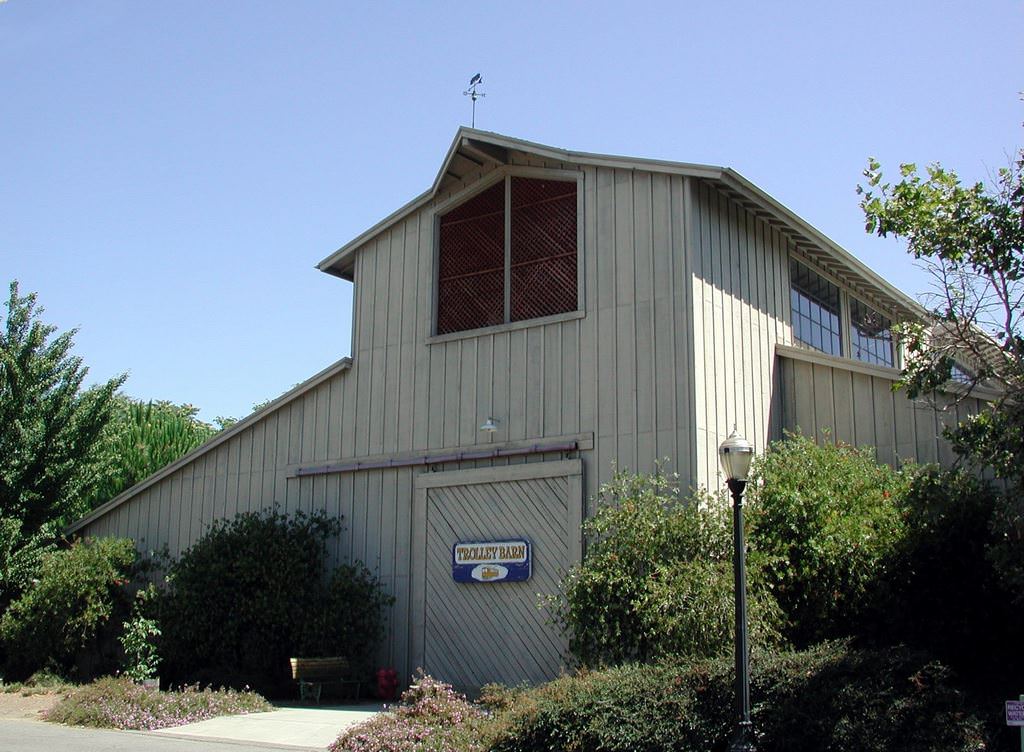
History Park itself was growing. In 1984, the Trolley Barn was constructed there as a joint project between the California Trolley and Railroad Corporation and History San José. The barn was built to house and restore historic trolleys, and tracks were laid across Kelley Park so that visitors could ride the streetcars on weekends. It was a hands-on way to connect residents and visitors to the city’s earlier transit history.
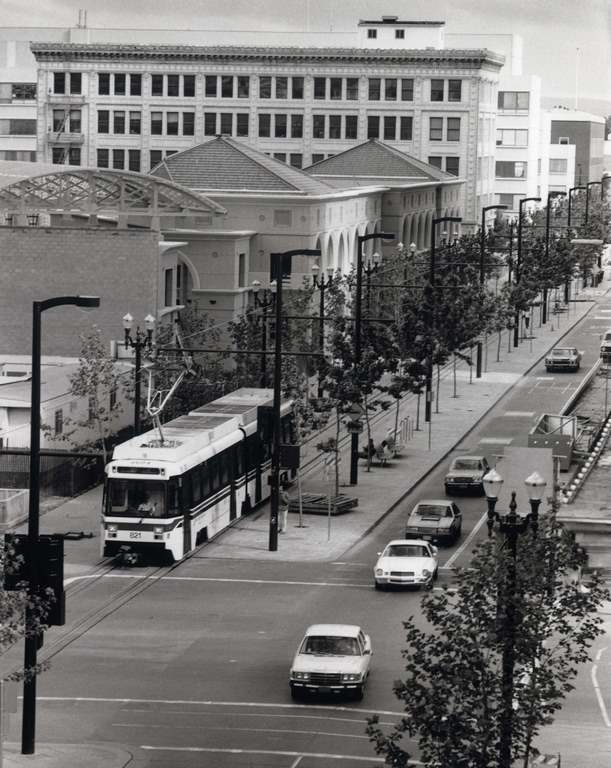
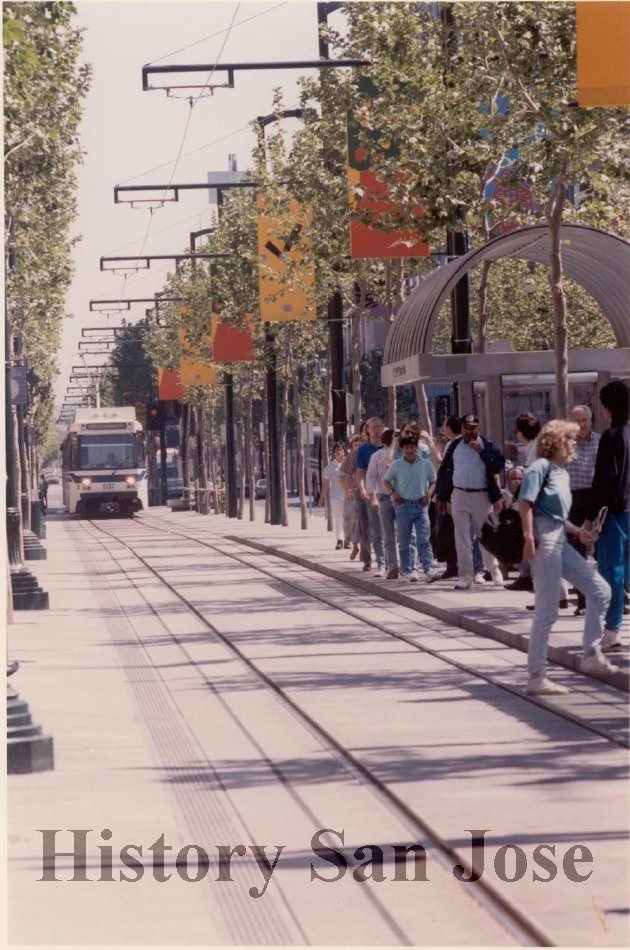
While historic trolleys were being preserved at Kelley Park, a modern light rail system was being built across the city. By 1988, Santa Clara County’s light rail was operating on South Second Street in downtown San Jose, offering a new way to move through a city that was growing faster than its roads could handle. The new transit system was a practical response to the region’s rapid expansion.
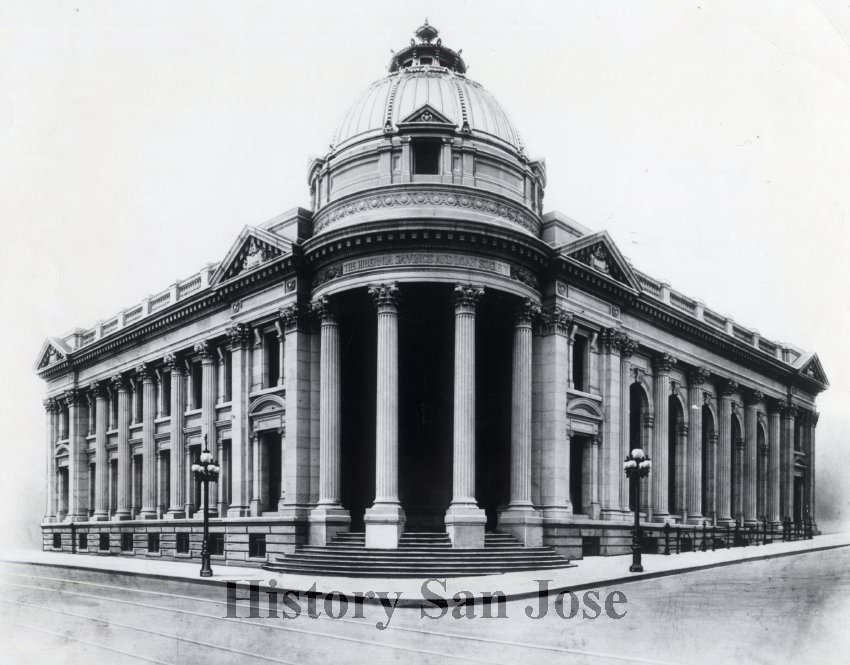
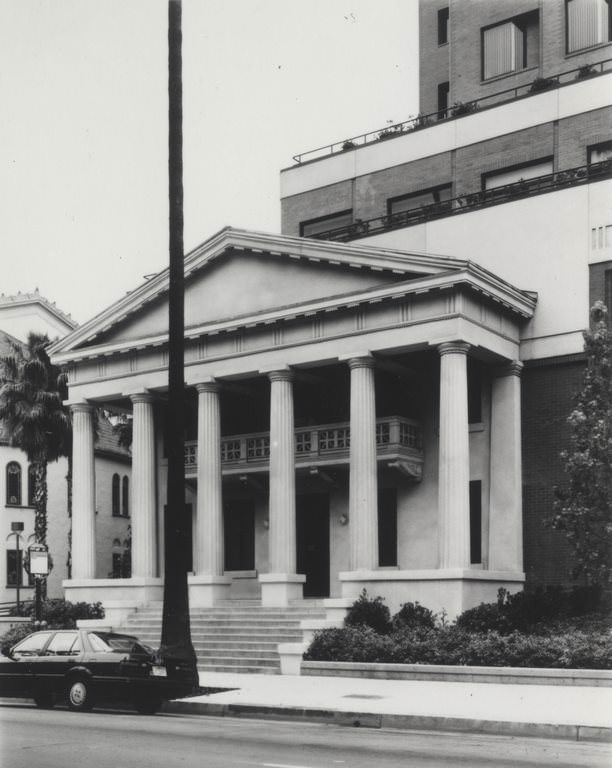
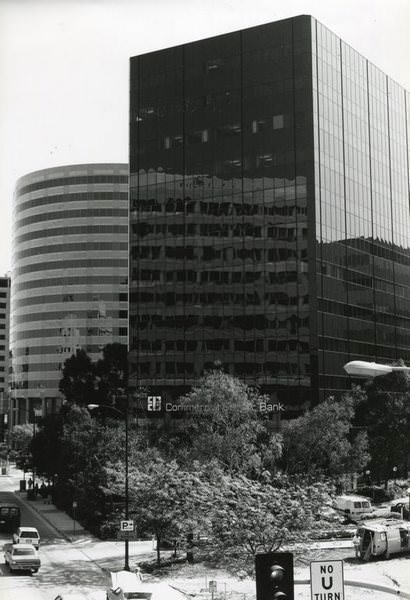
The banking sector was also changing with the times. At the corner of Santa Clara Street and Almaden, updated bank buildings reflected a sleek, contemporary architectural style that was becoming standard in financial districts across the country. The Bank of America building on the southeast corner of First and Santa Clara had a longer history — it was built in 1927, and the San José branch had originally opened in 1910 as the Bank of Italy, founded by A. P. Giannini, a native of San Jose. The name changed to Bank of America in 1930.
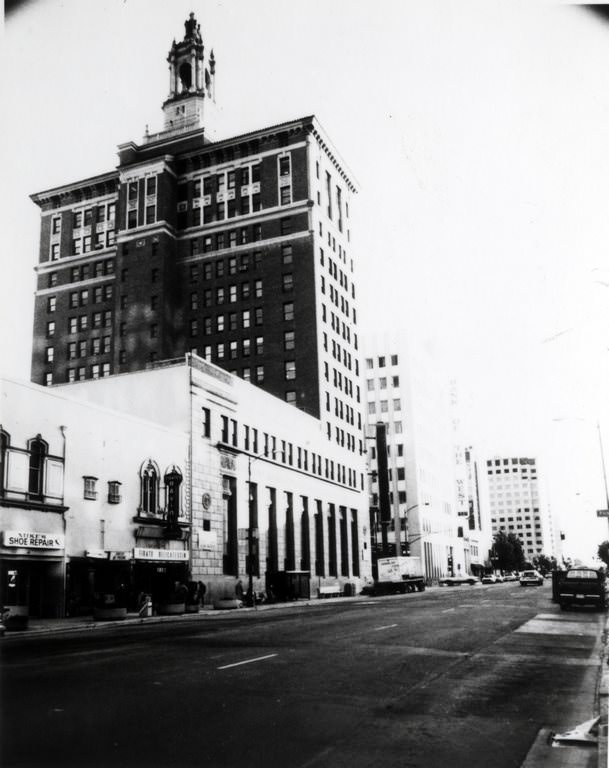
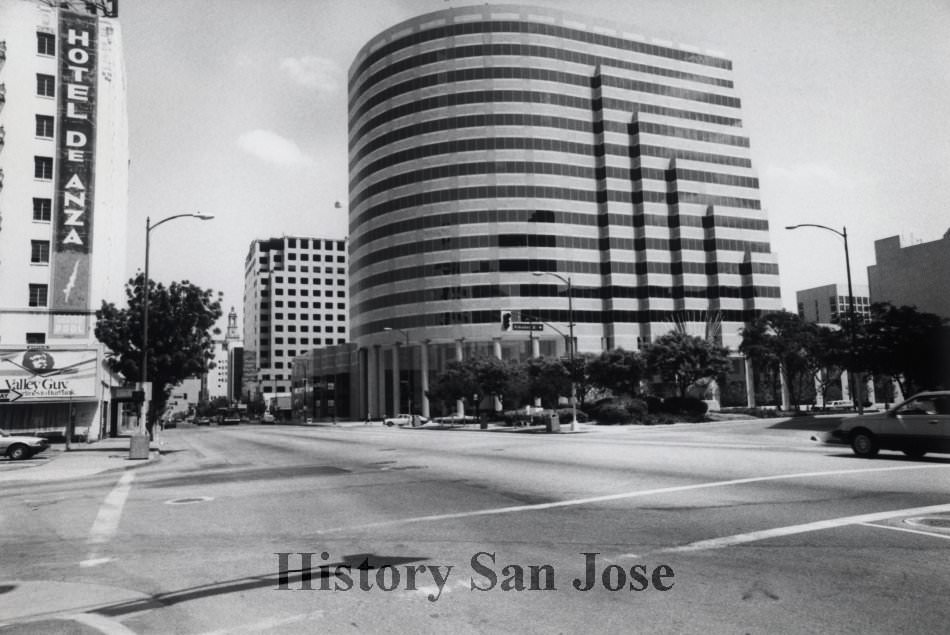
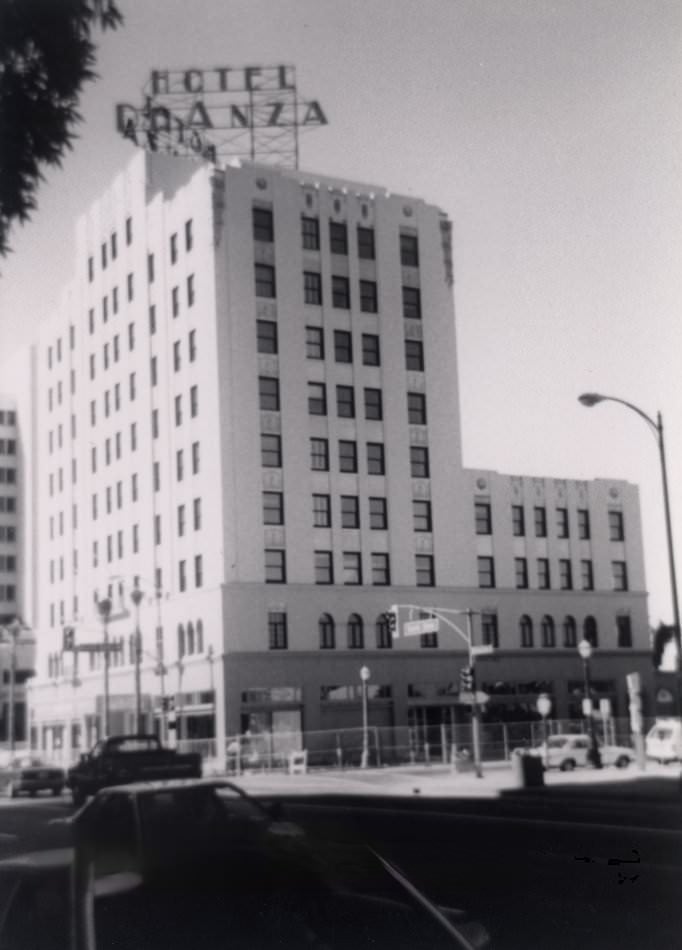
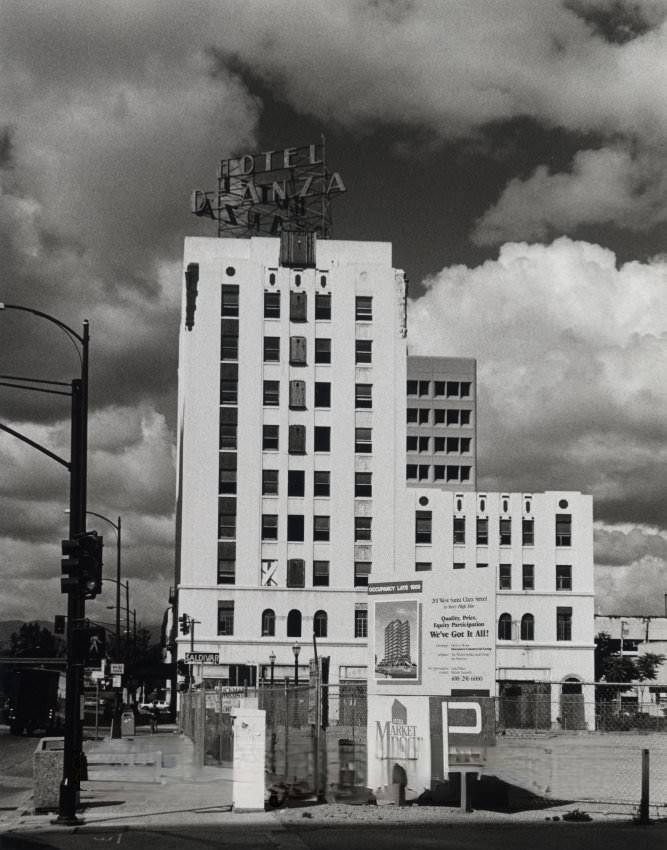
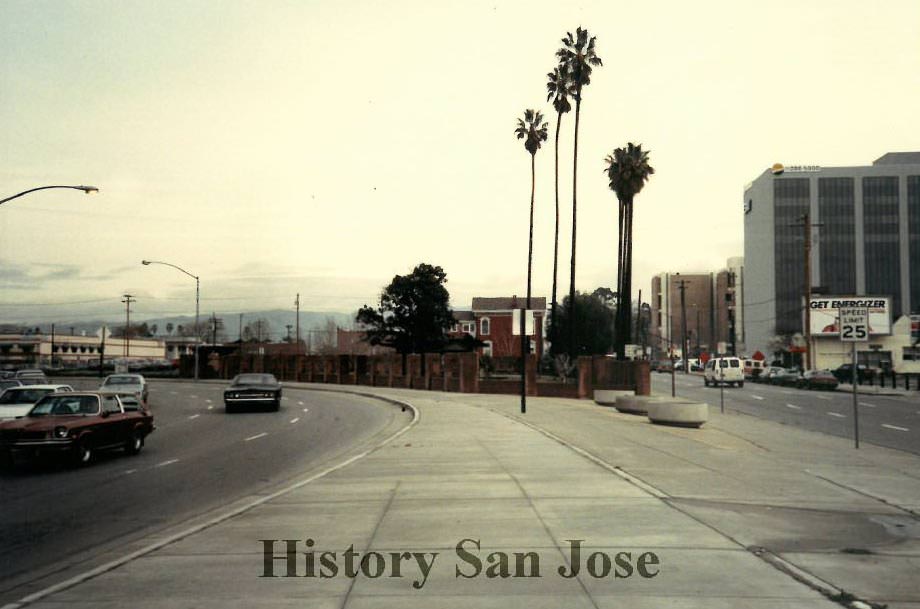
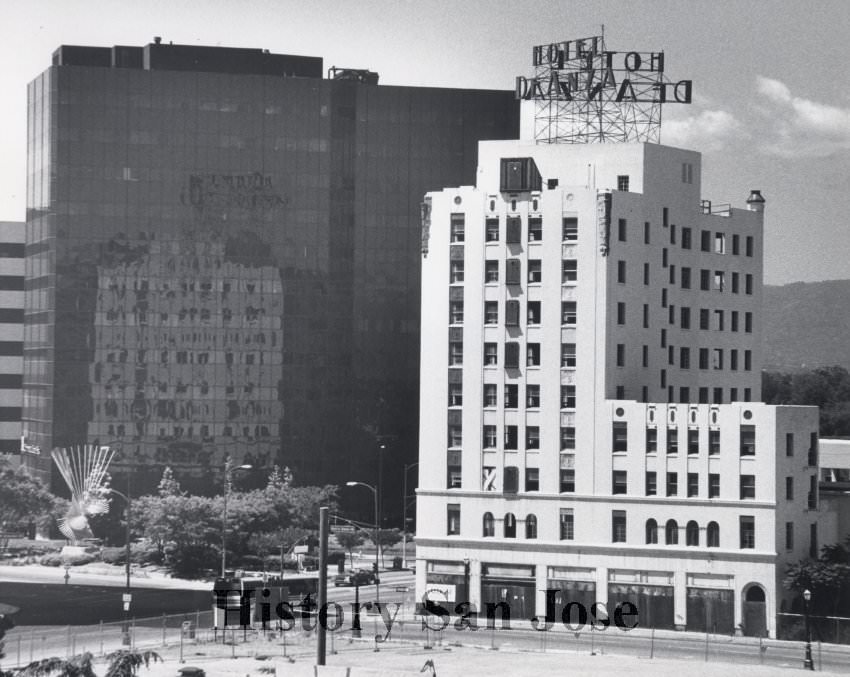
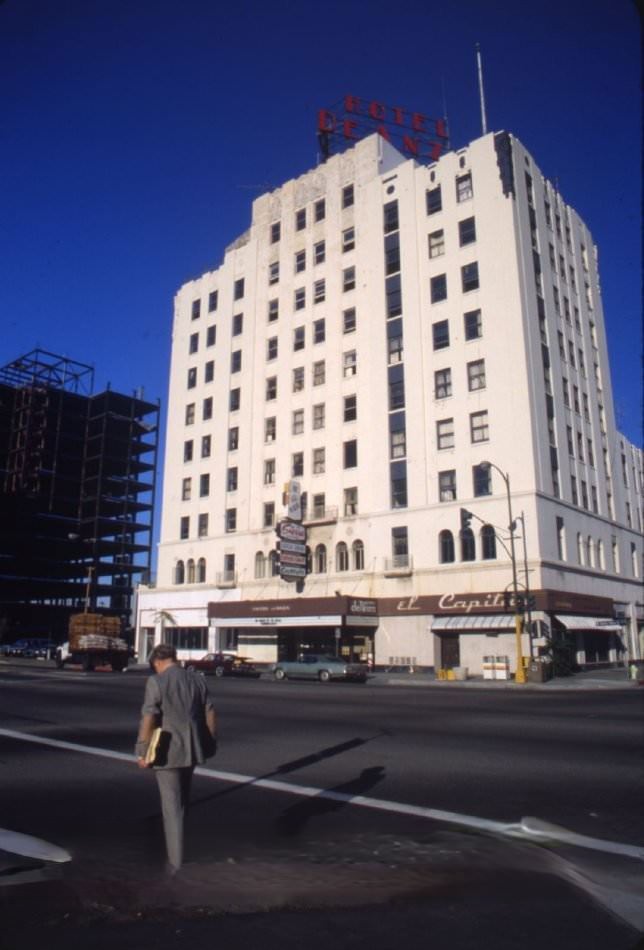
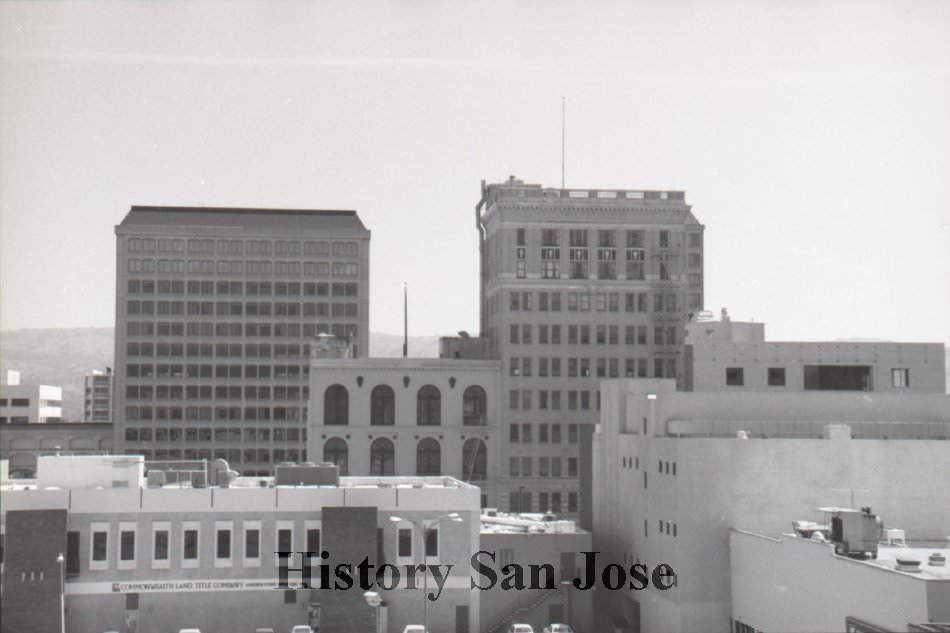
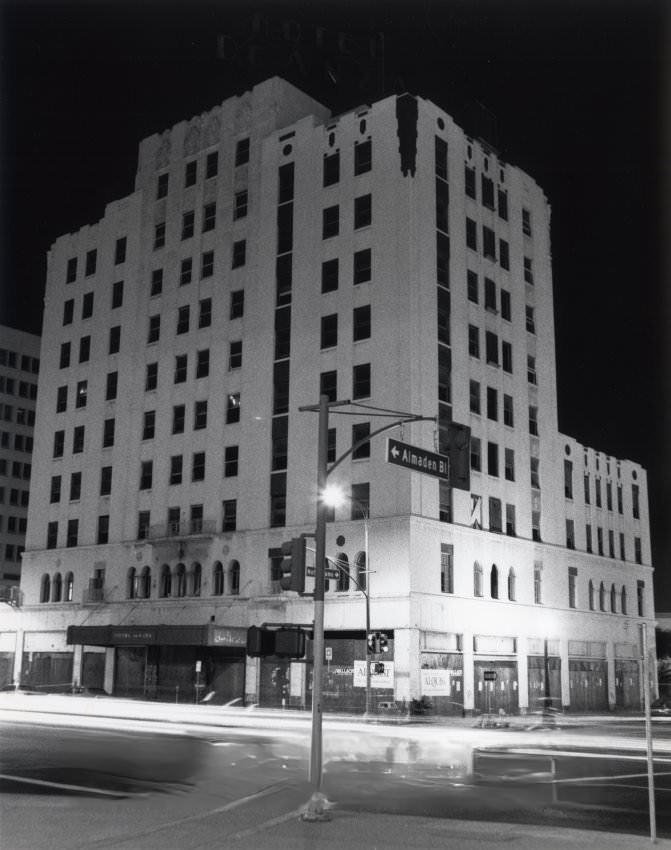
The Hotel De Anza was one of the most recognizable landmarks in the downtown area throughout the decade. Visible from multiple vantage points — including from the top of the parking lot at San Pedro and Saint John Streets — it served as a visual anchor in the changing skyline. Photographs from 1985, 1987, and 1989 show its consistent presence even as the blocks around it were transformed.
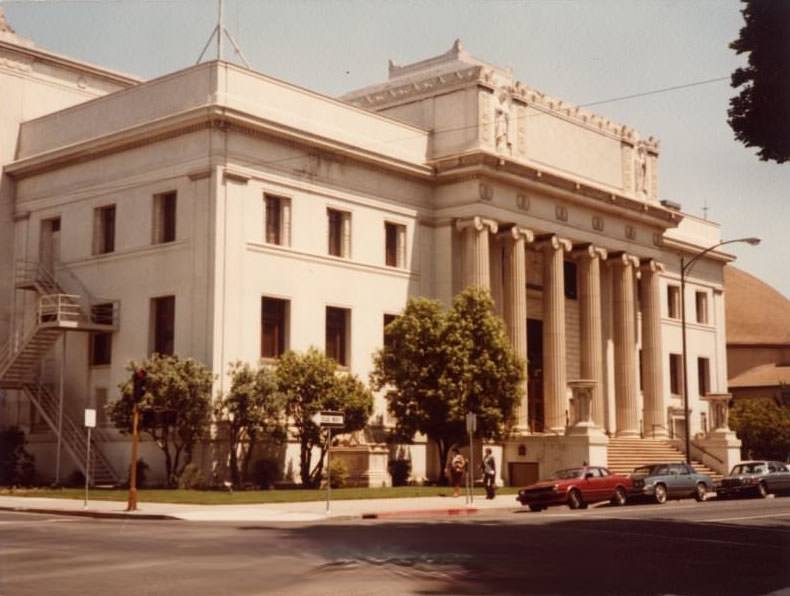
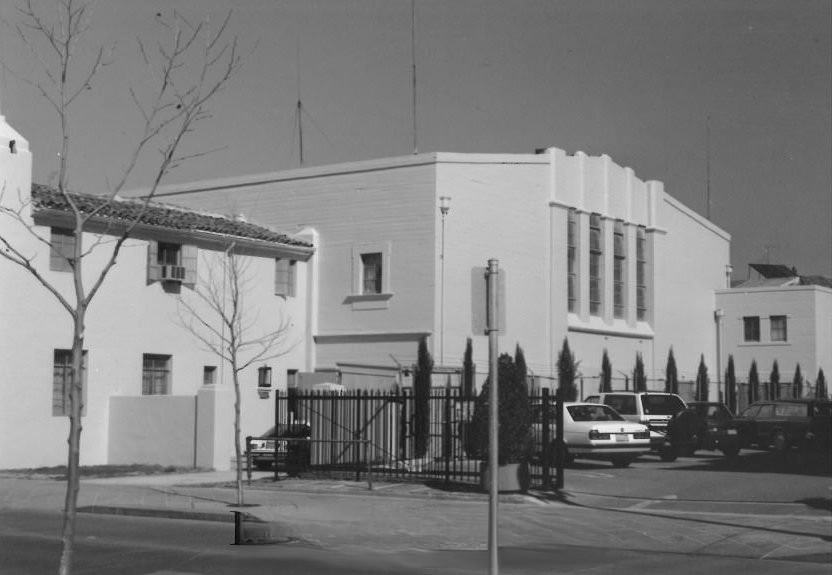
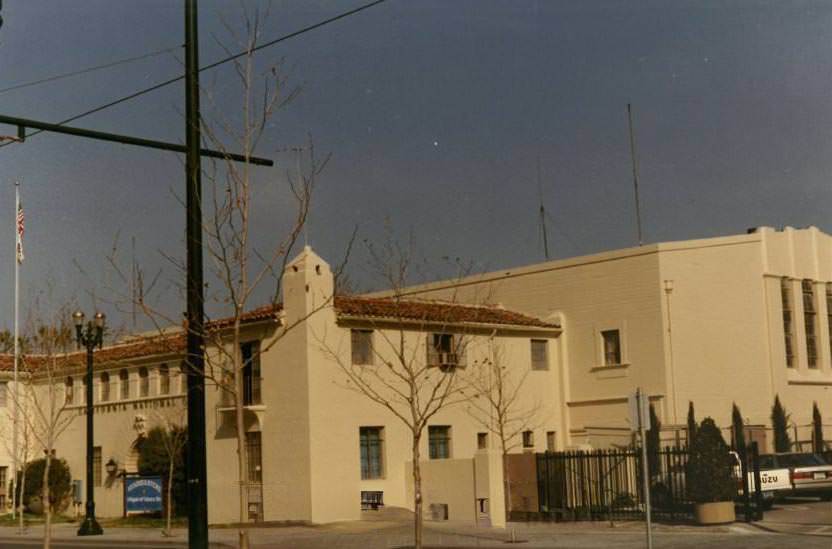
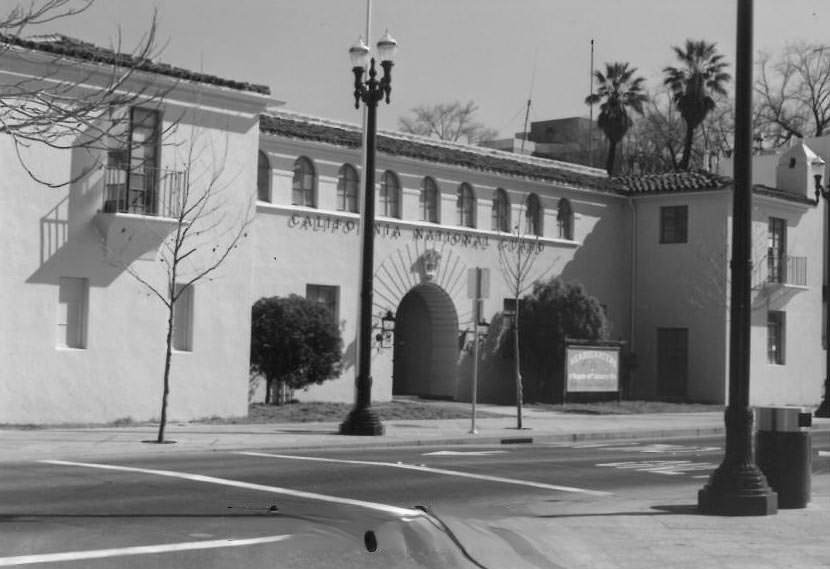
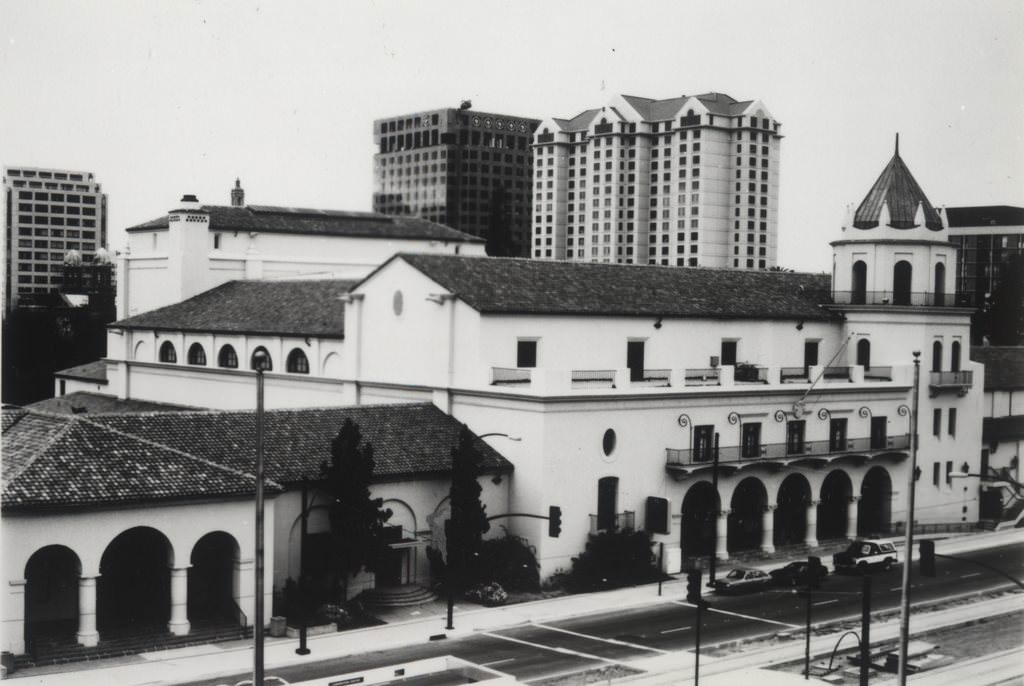
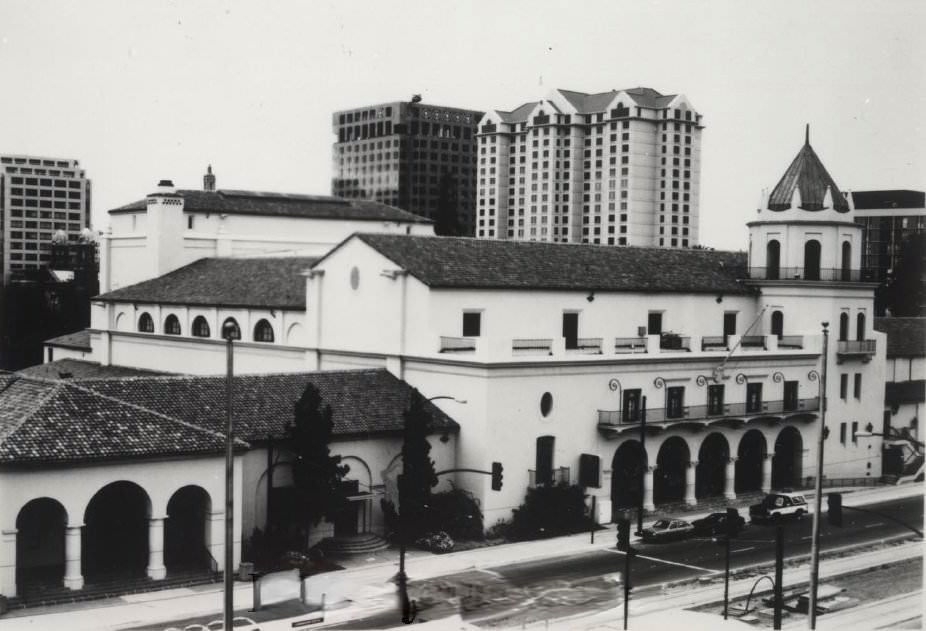
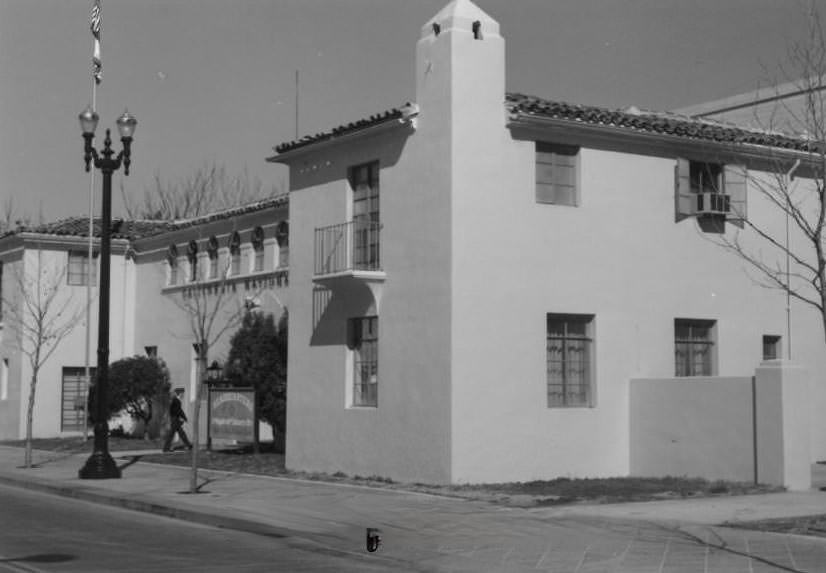
Some older civic buildings held their ground. The San Jose Civic Auditorium remained a fixture of the city, as did the San Jose Armory on 240 North Second Street, which housed the California National Guard. The armory, photographed from multiple angles in 1980, was a sturdy example of the older institutional architecture that still defined parts of the city even as newer buildings went up around it.
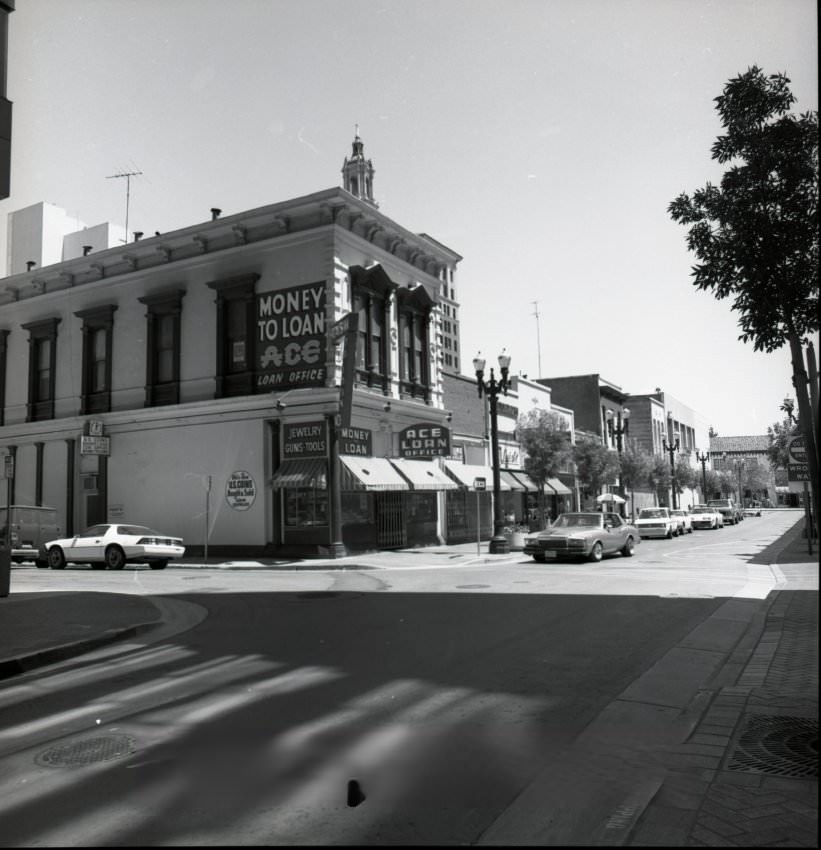
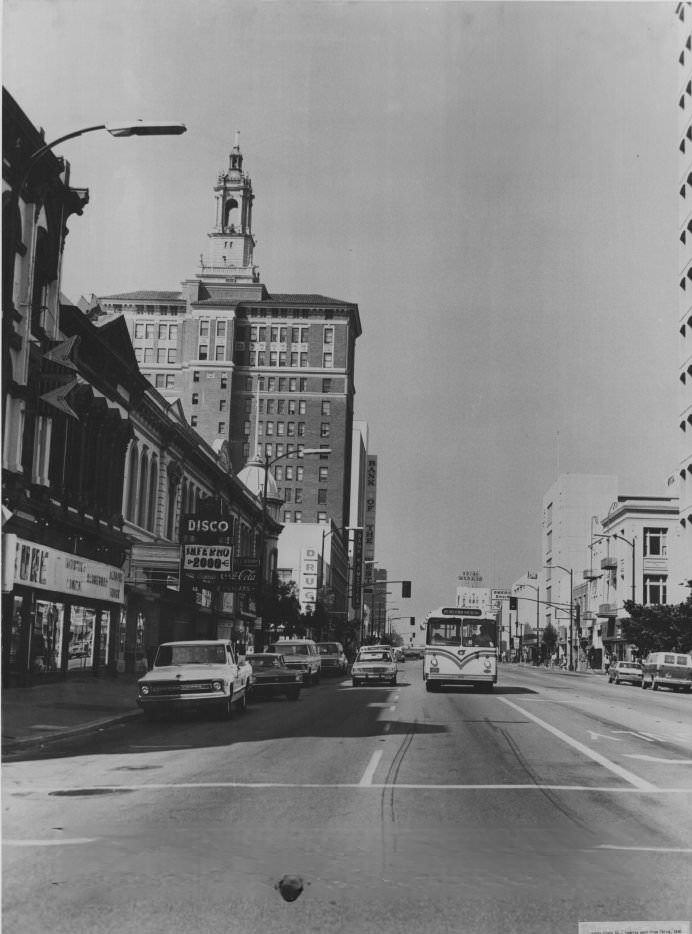
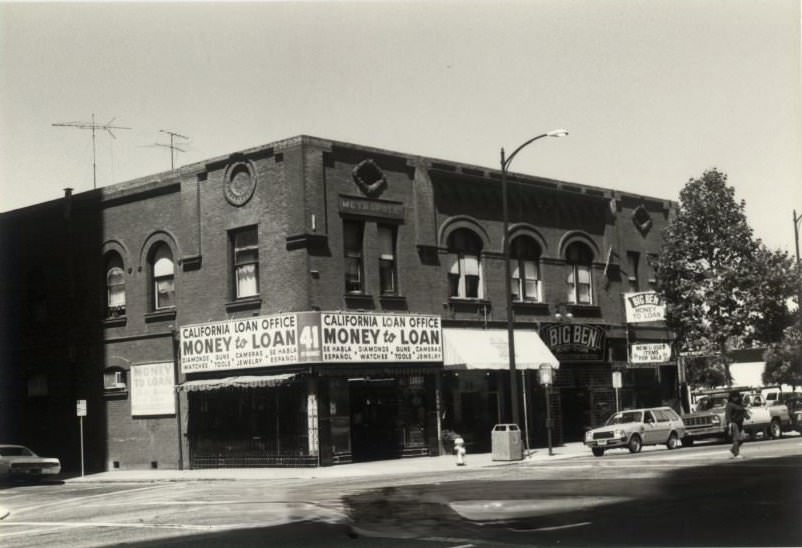
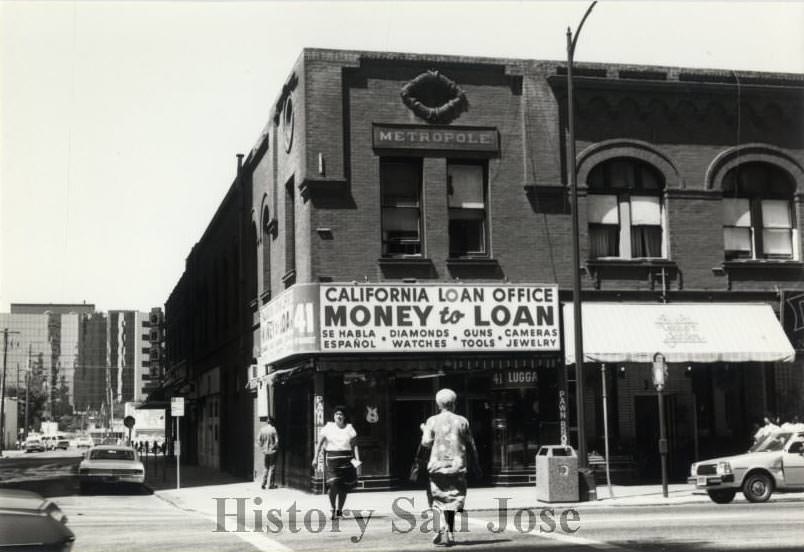
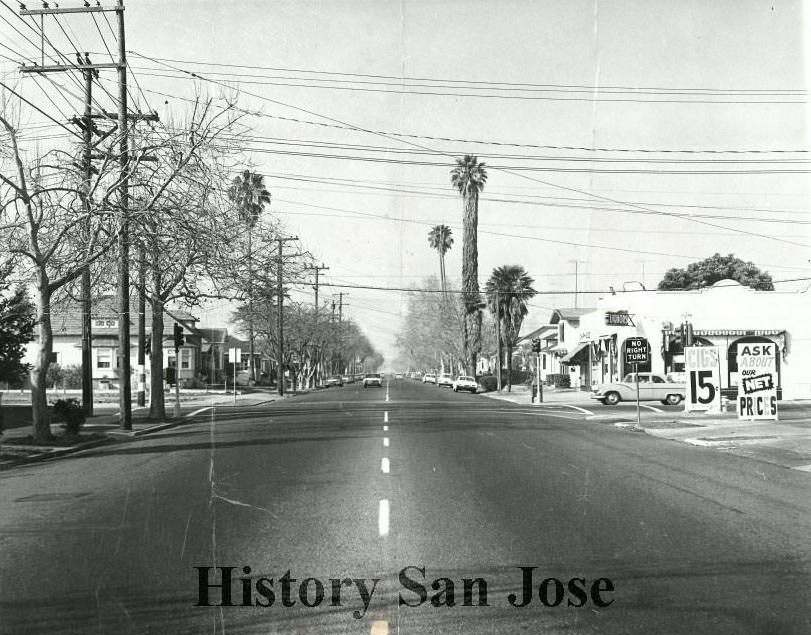
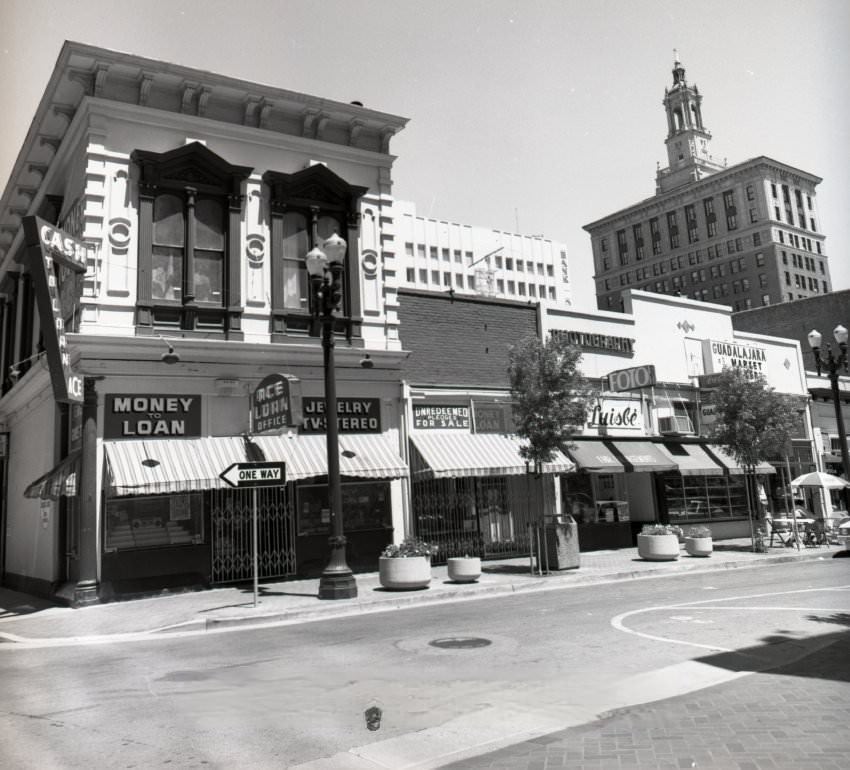
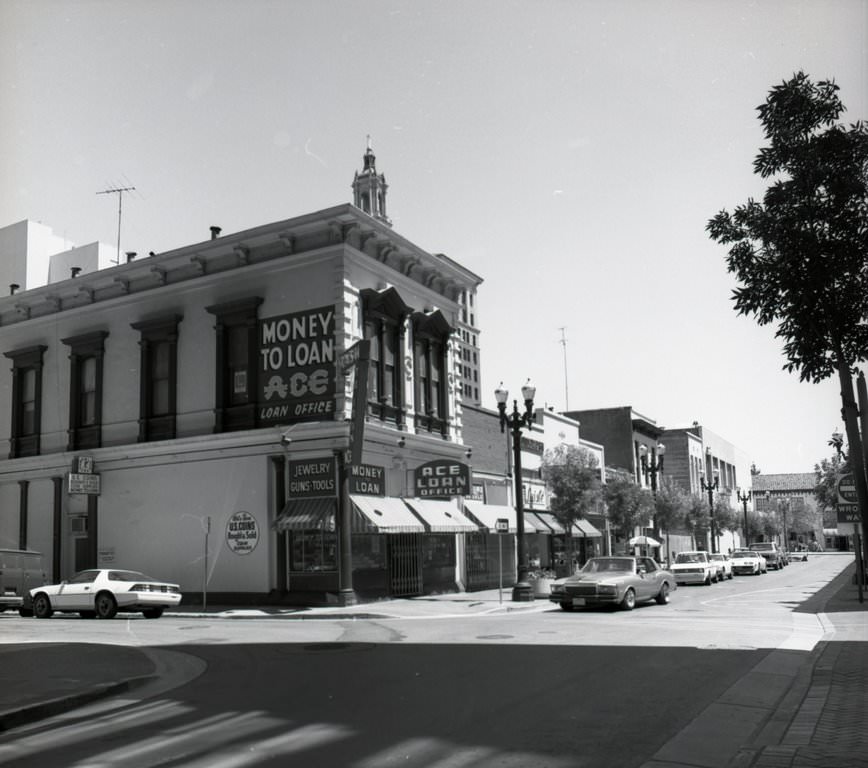
San Jose’s streets told the story of the decade in real time. Post Street, which had once been called El Dorado until 1902 and was an early red-light district, looked very different by the late 1980s. Photos from 1988 show Post Street between First and Market Streets, and the corner at Lightston Alley, reflecting the mix of old storefronts and new development that characterized much of the downtown core.
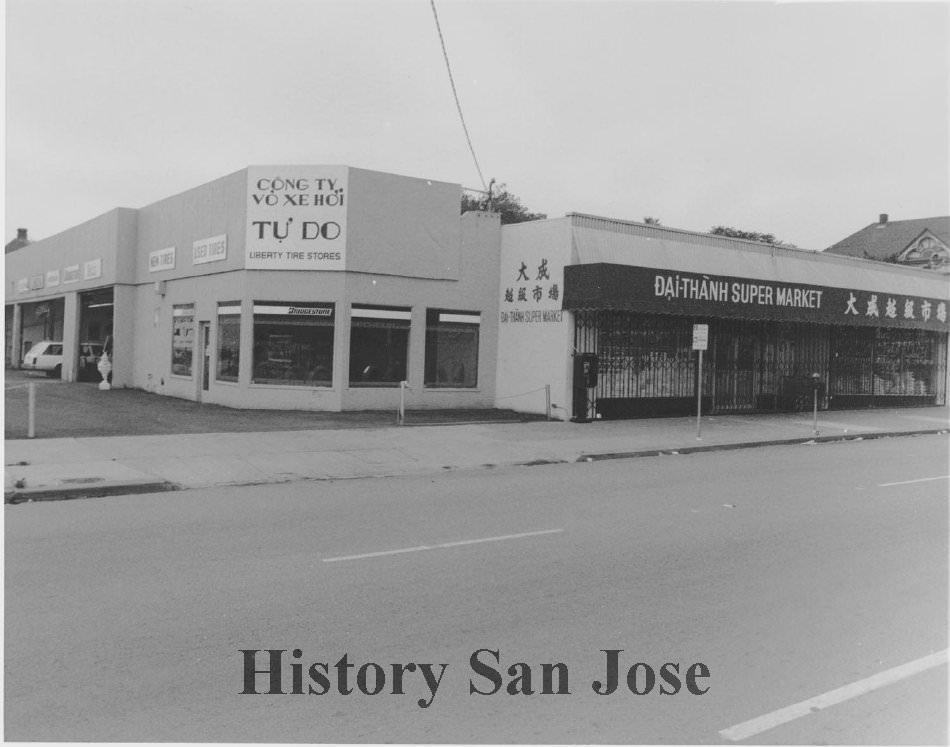
The Vietnamese American community had established a visible shopping district in San Jose by the late 1980s. It was one marker of the city’s changing demographics during a decade of rapid in-migration — people arriving not just from other parts of California, but from across the country and the world, drawn by the job market that Silicon Valley had created.
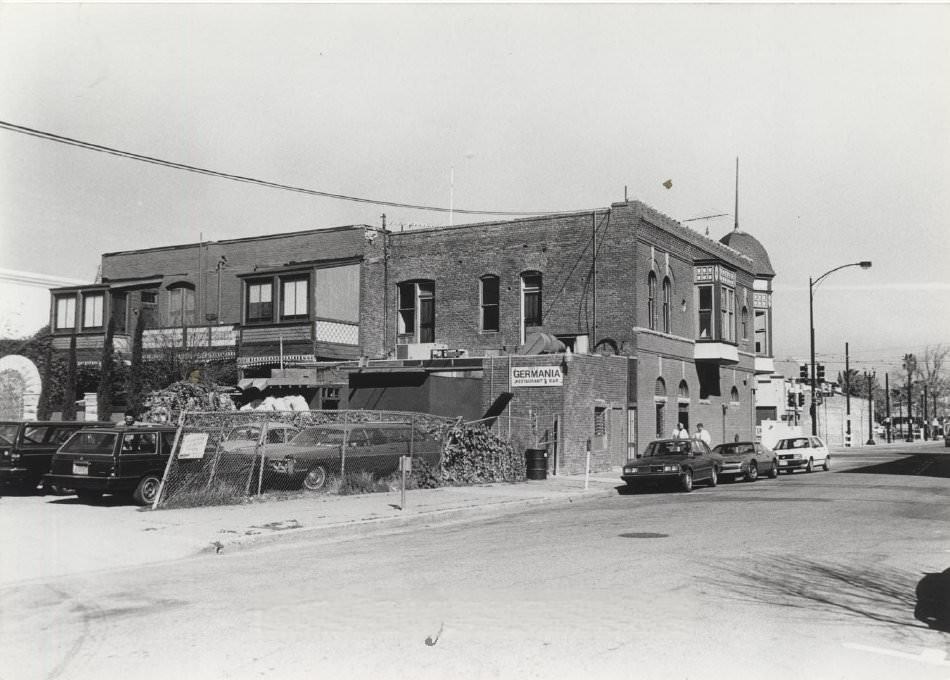
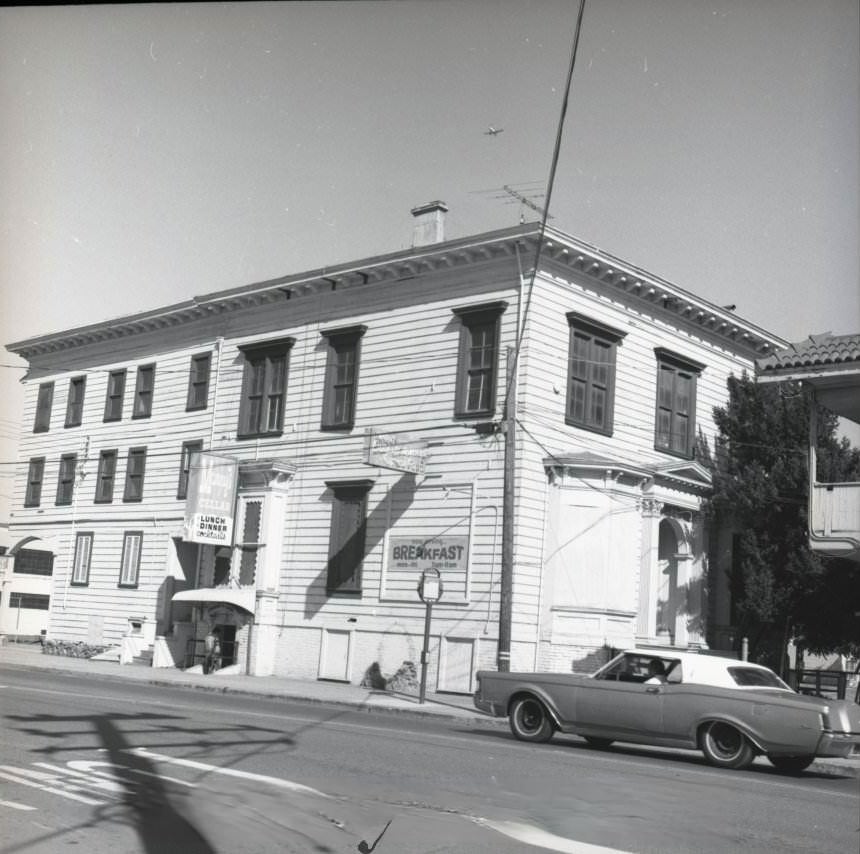
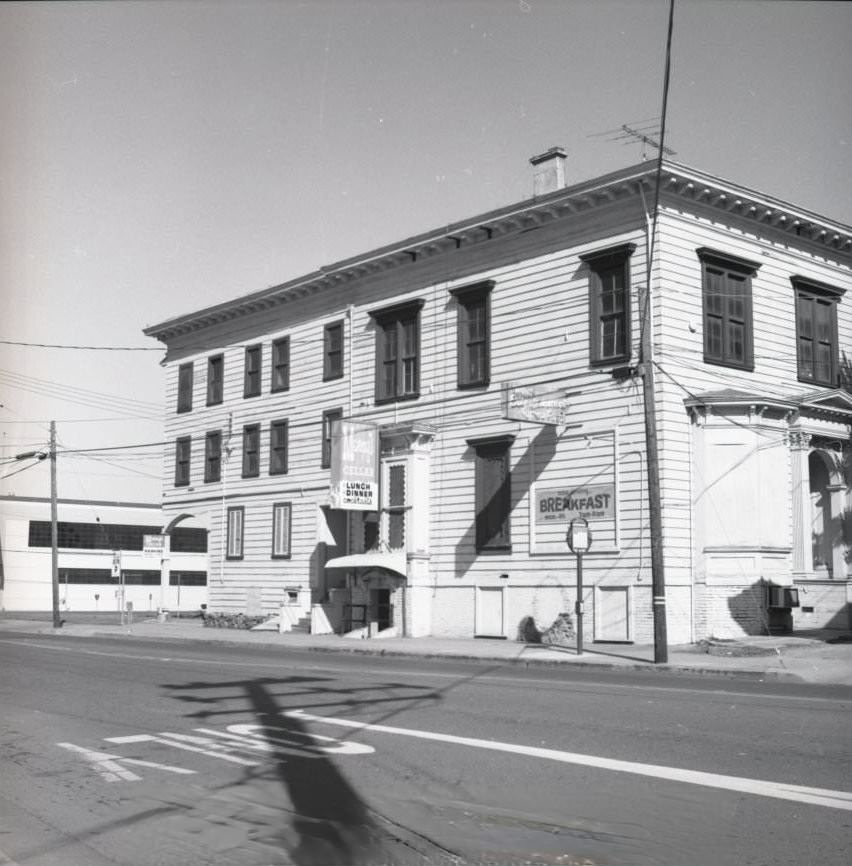
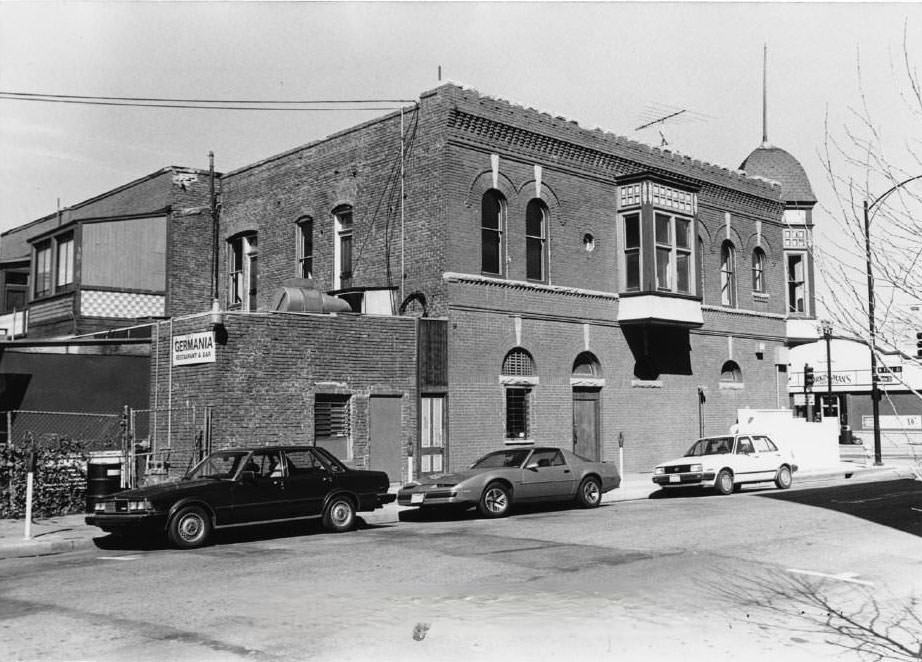
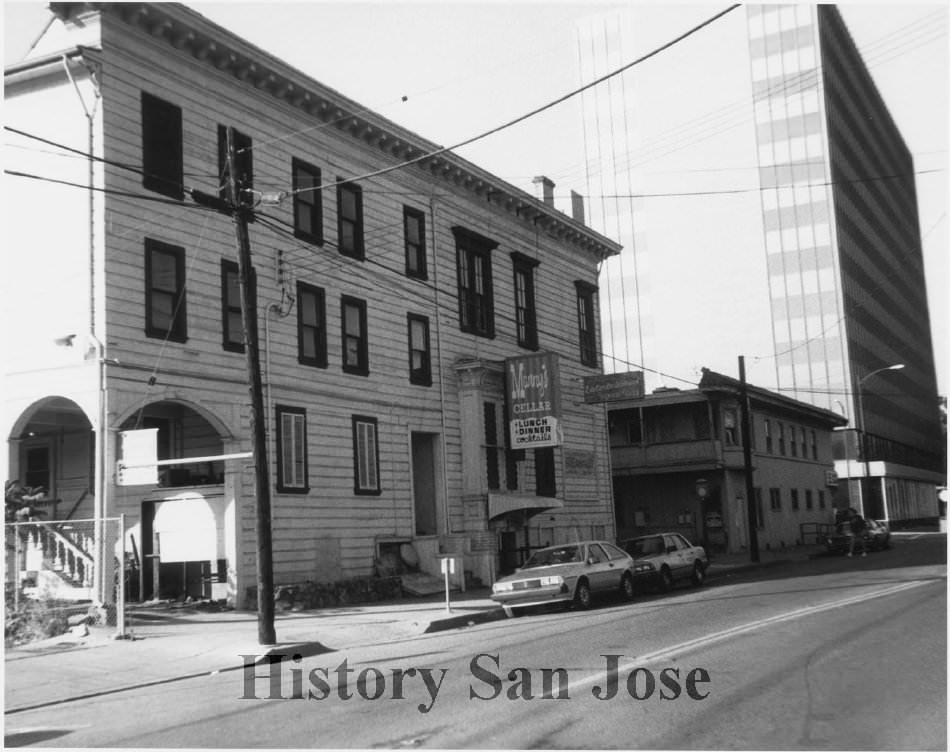
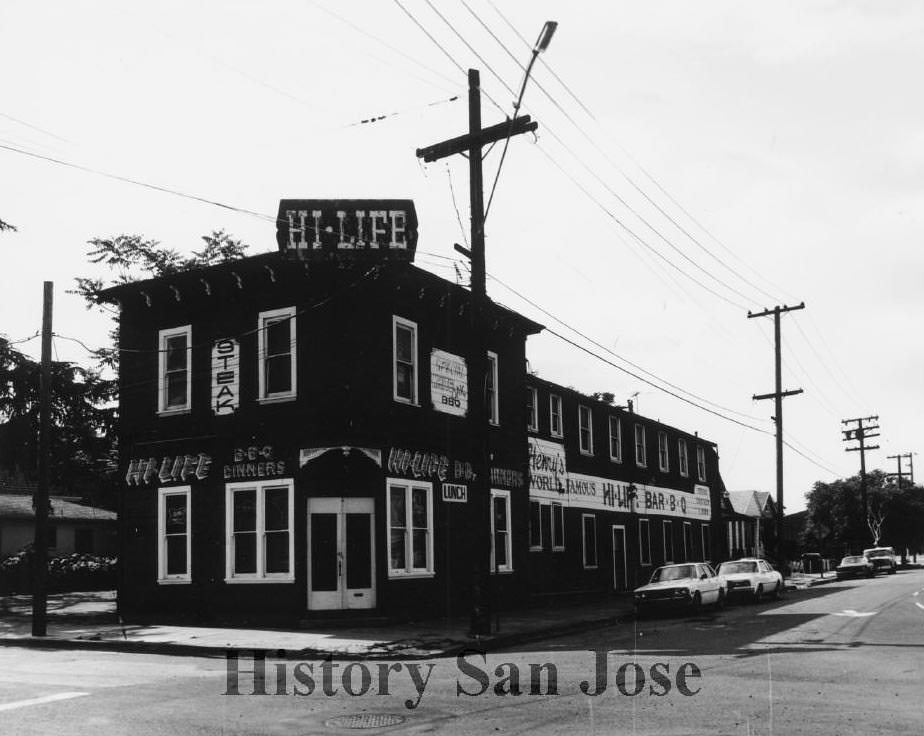
Restaurants and bars gave San Jose’s neighborhoods their character. Teske’s Germania Restaurant, on the corner of First and Divine Streets, was a longtime establishment captured in photographs from 1989. Manny’s Cellar appeared in photos from 1987 and 1988, while Henry’s Hi-Life Bar-B-Q at St. John and Pleasant Streets was another local staple that made the city feel lived-in rather than purely commercial.
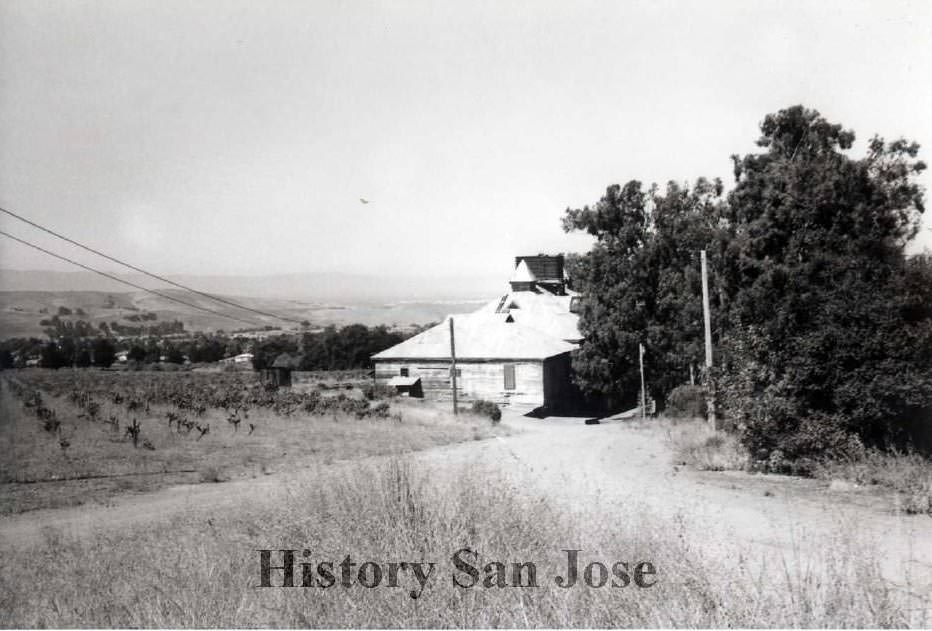
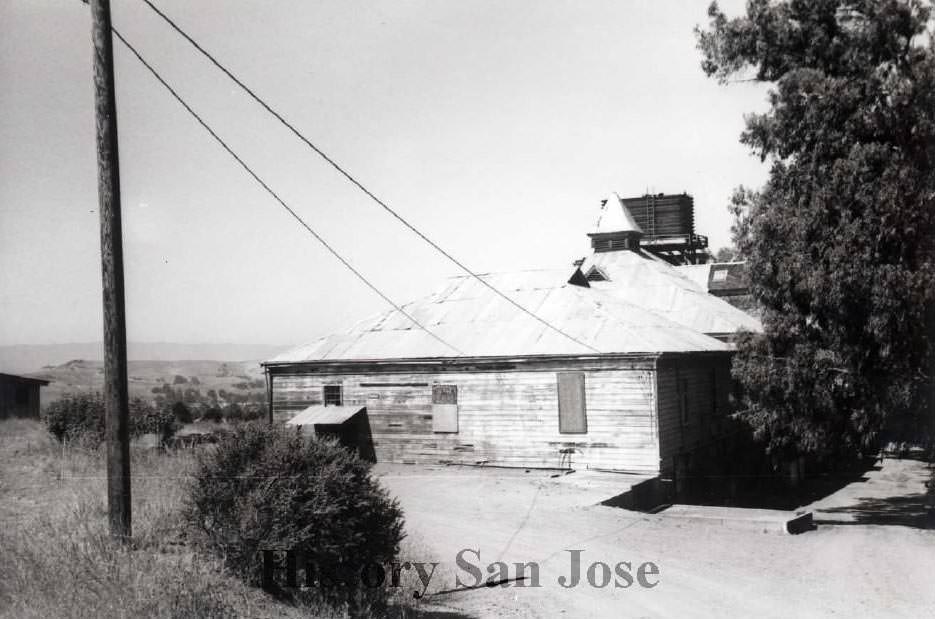
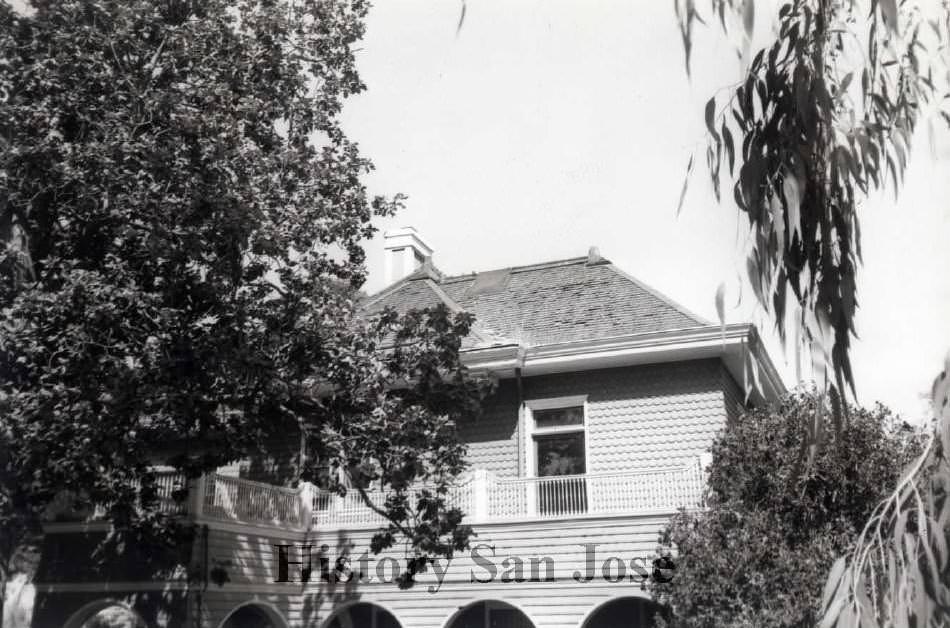
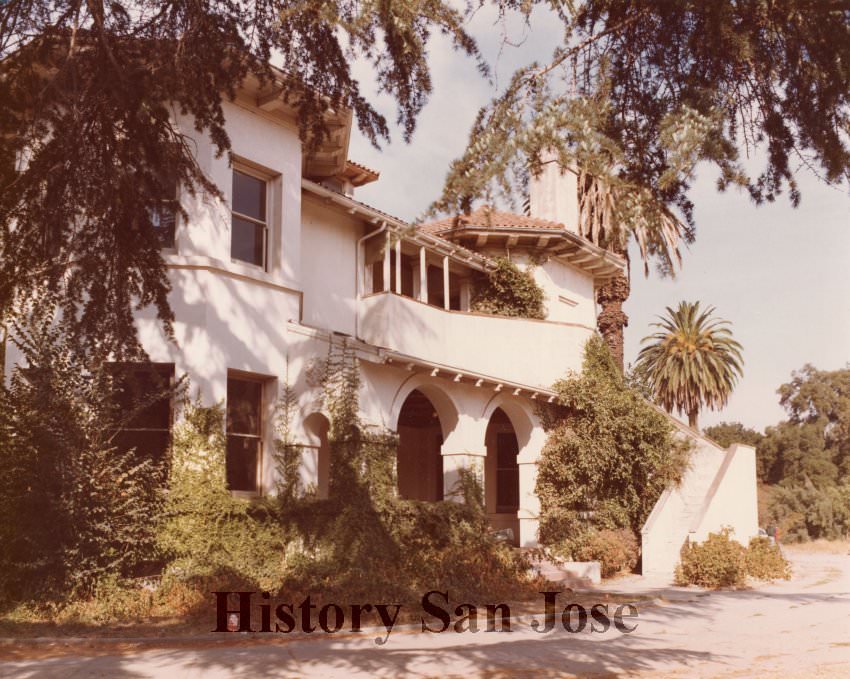
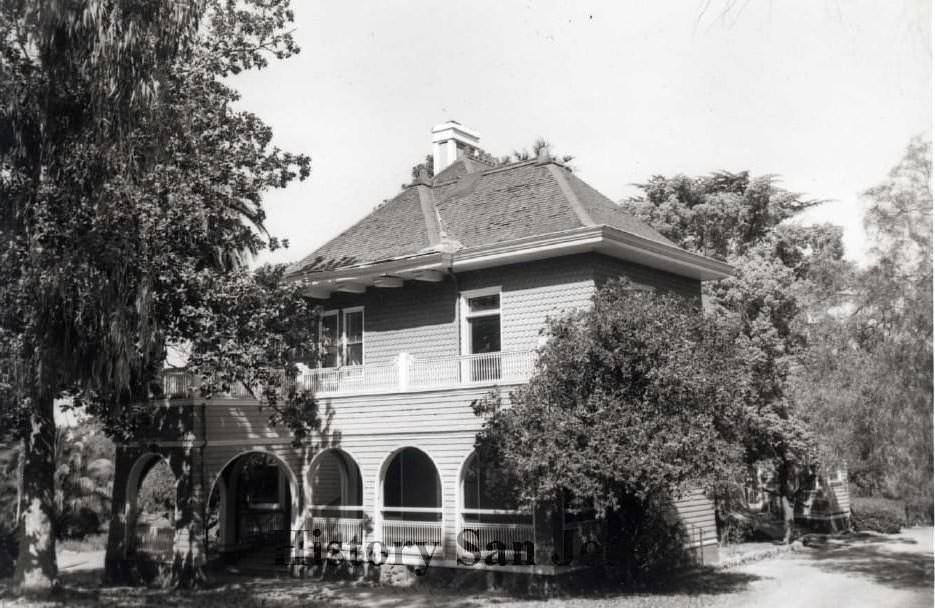
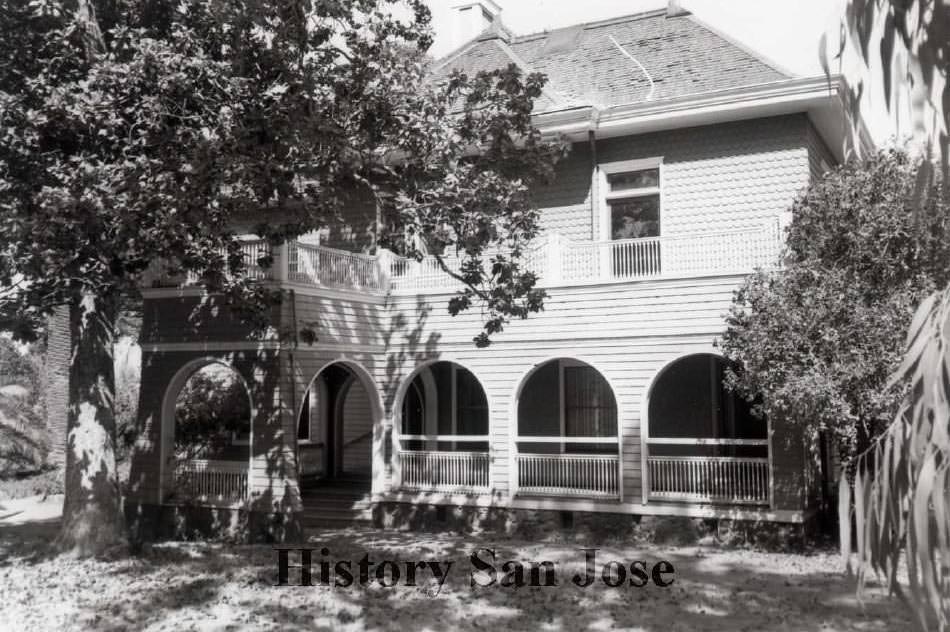
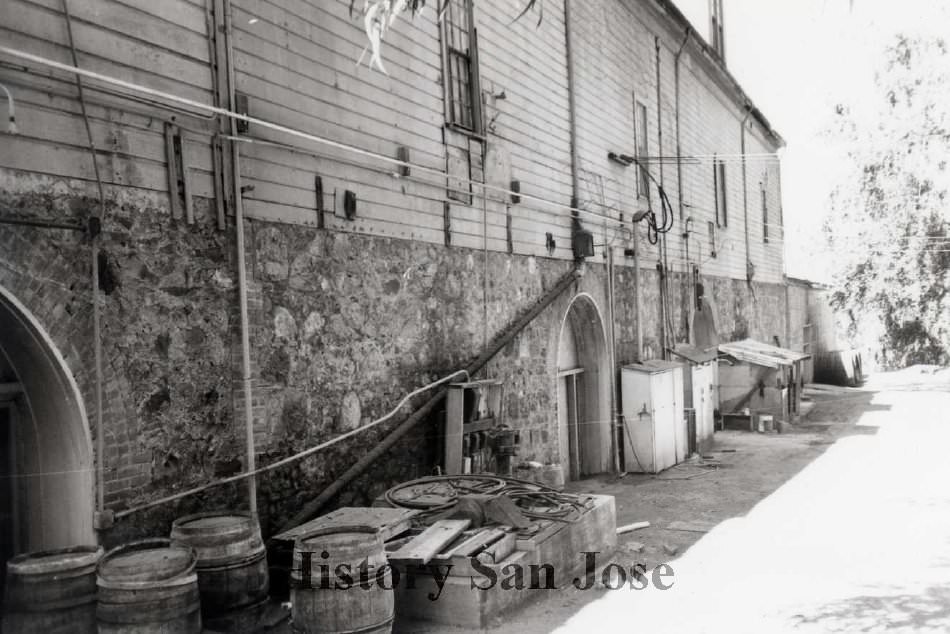
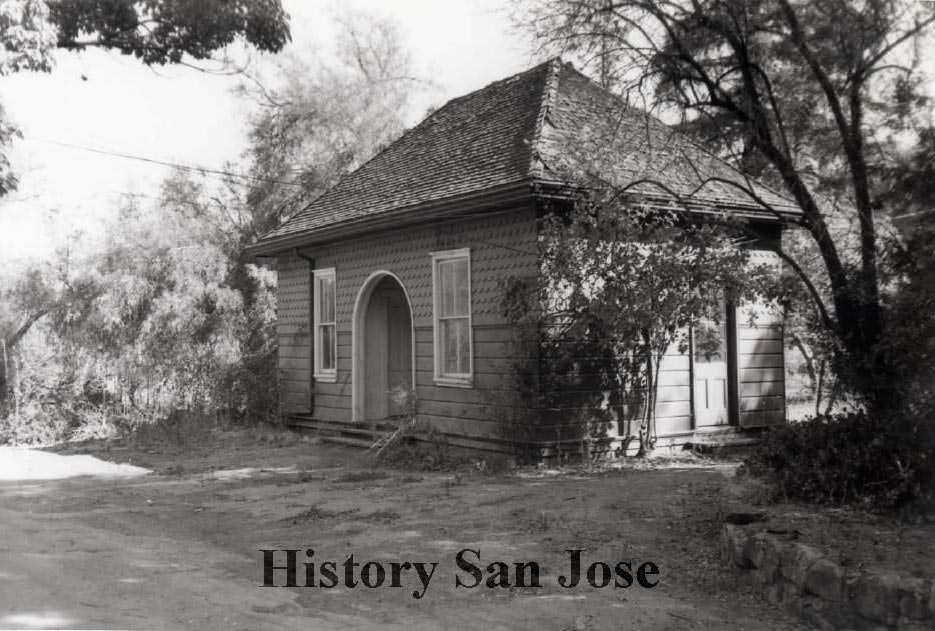
The Wehner Mansion in Evergreen Valley was another part of the city’s older fabric that photographers documented during the decade. The property included a main house, a winery building, and a summer kitchen — structures that reflected San Jose’s agricultural and European immigrant heritage, standing in contrast to the glass and steel of the tech era rising across the valley.
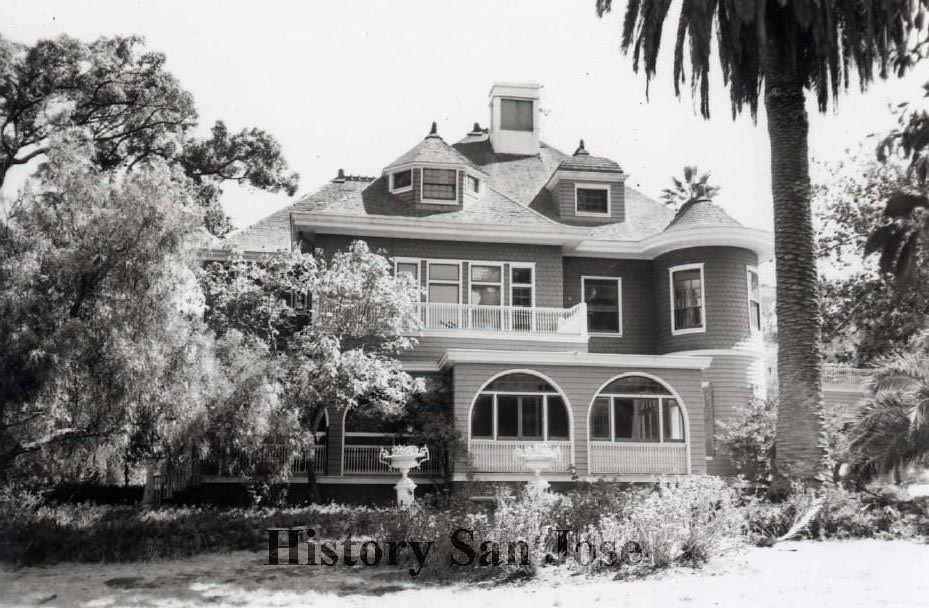
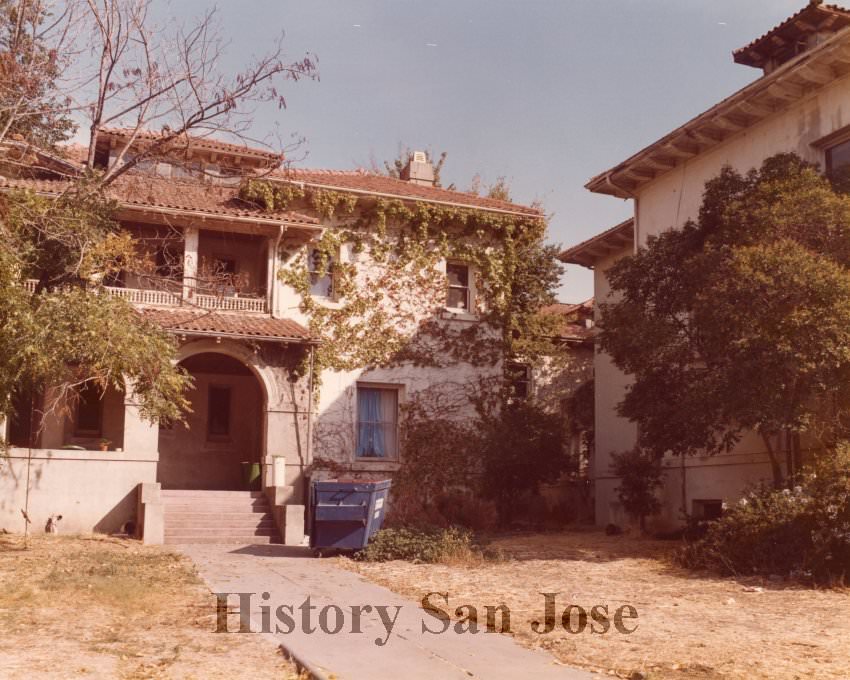
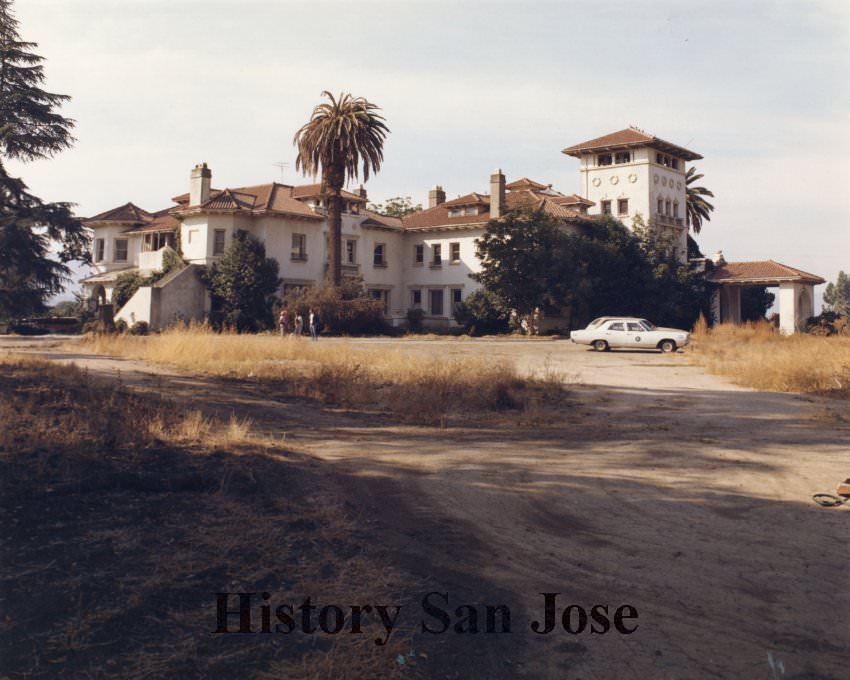
Hayes Mansion sat in a very different state during the 1980s. Before any renovation work began, photographers captured the building in various stages of deterioration. The mansion’s exterior and rooftop showed the toll that years of neglect had taken. A tree on Hobson between San Pedro and First Street was noted as marking the Pueblo Site of 1777, connecting the property to San Jose’s earliest recorded history.
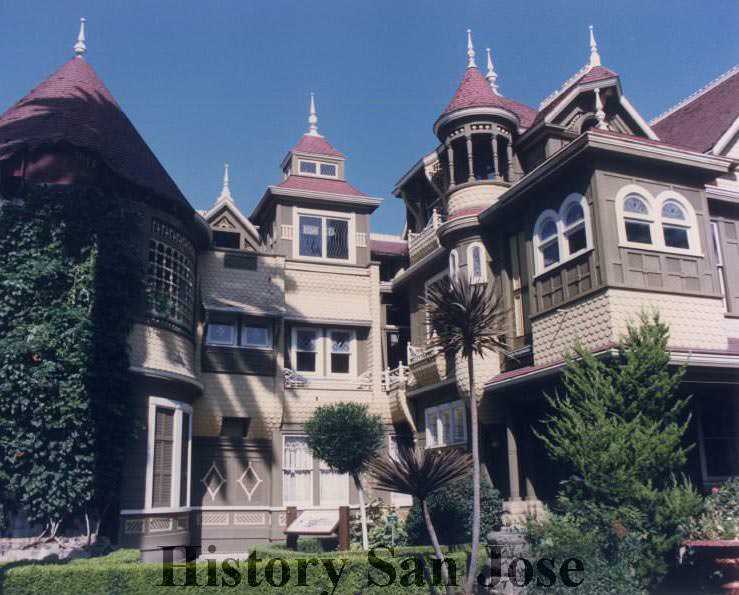
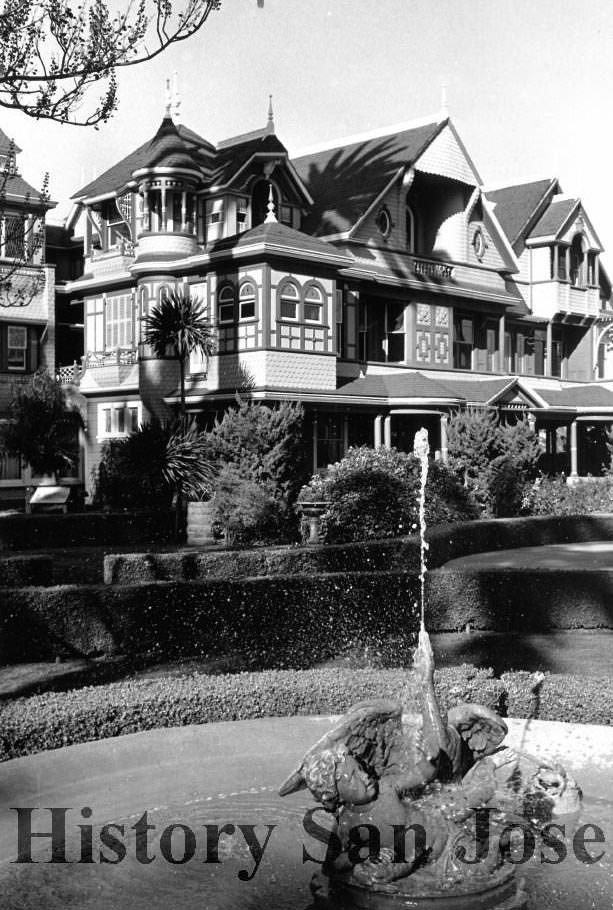
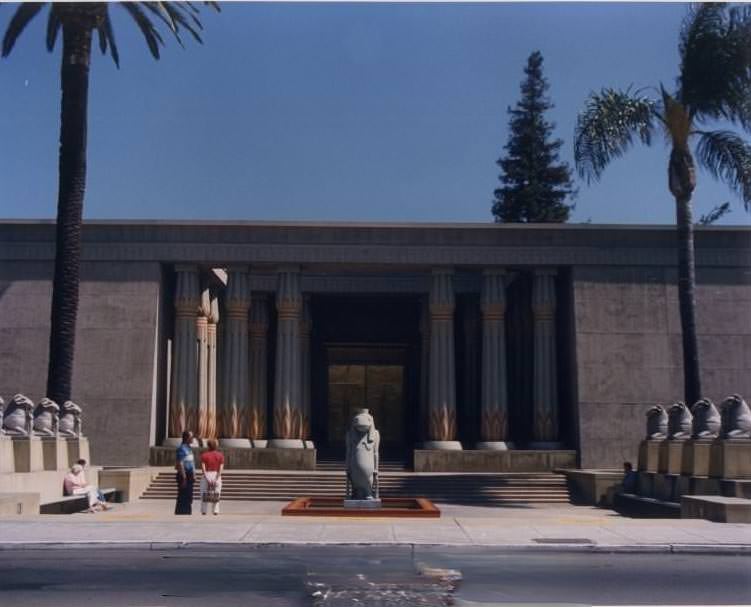
The Winchester Mystery House was a well-established tourist attraction by this point. Its sprawling exterior, photographed in 1989, drew visitors curious about its unusual architecture — the result of decades of continuous construction ordered by Sarah Winchester in the late 19th and early 20th centuries. The Rosicrucian Museum, also photographed in 1985, was another cultural institution that gave San Jose a distinct identity beyond tech.
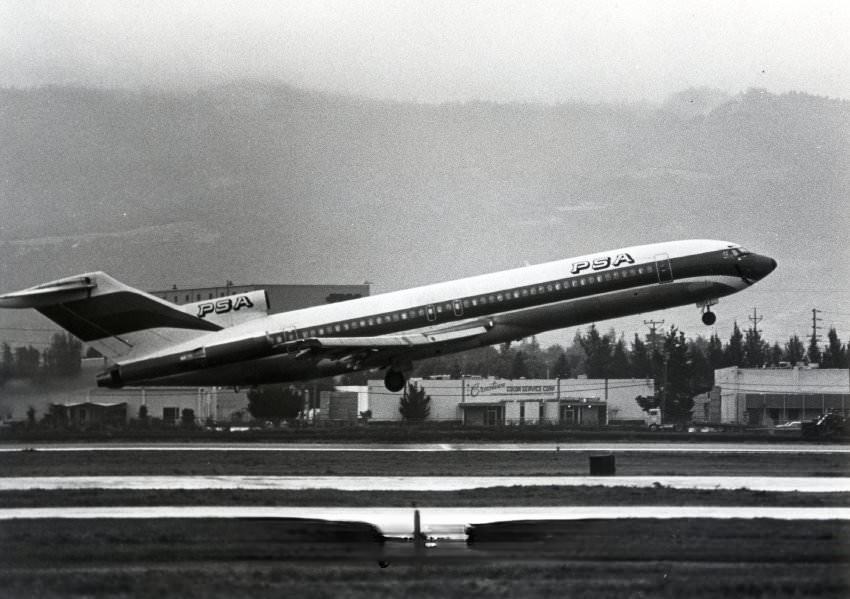
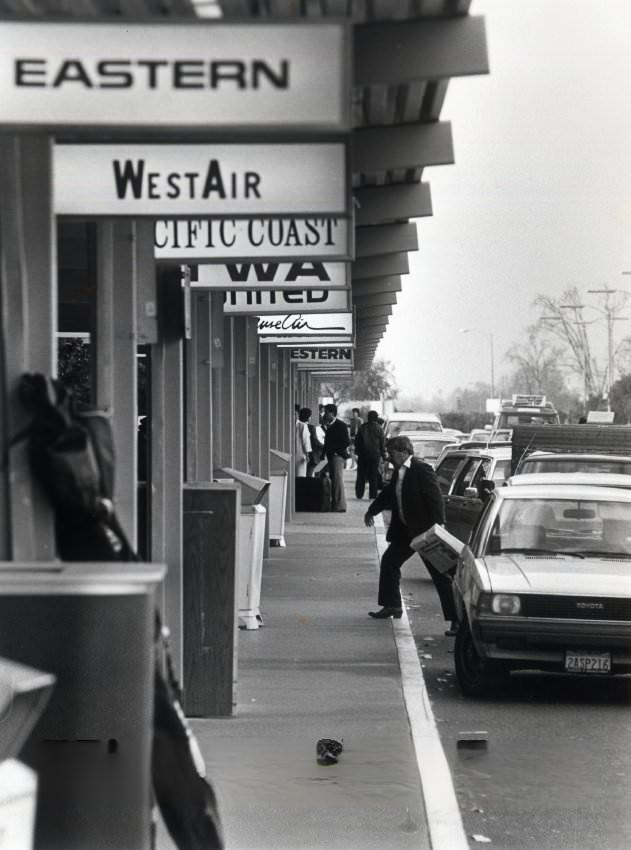
San Jose International Airport was busy throughout the 1980s. A 1980 photo shows a PSA airline jet taking off, reflecting the era’s commercial aviation landscape. By 1985, the airport’s exterior showed the infrastructure of a growing regional hub, serving the increasing numbers of business travelers and new residents flowing into Silicon Valley.
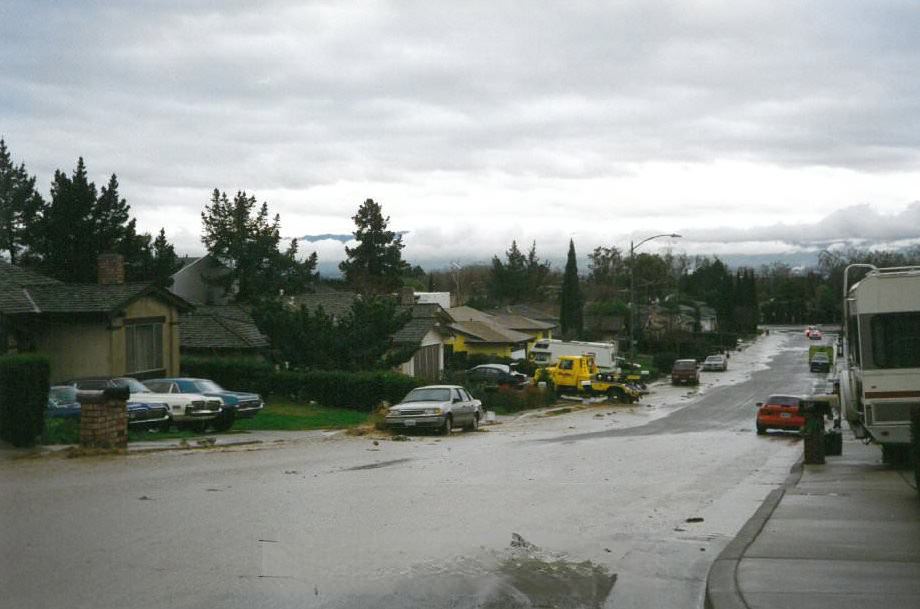
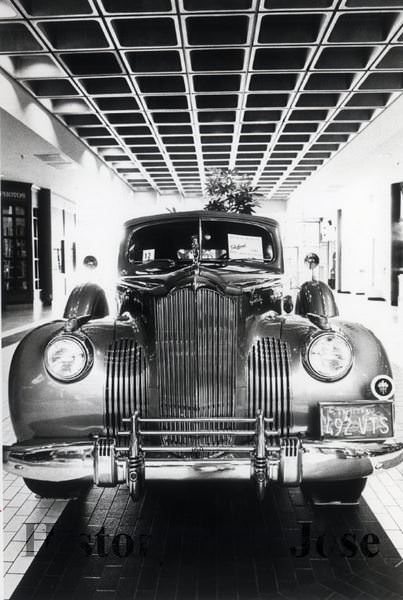
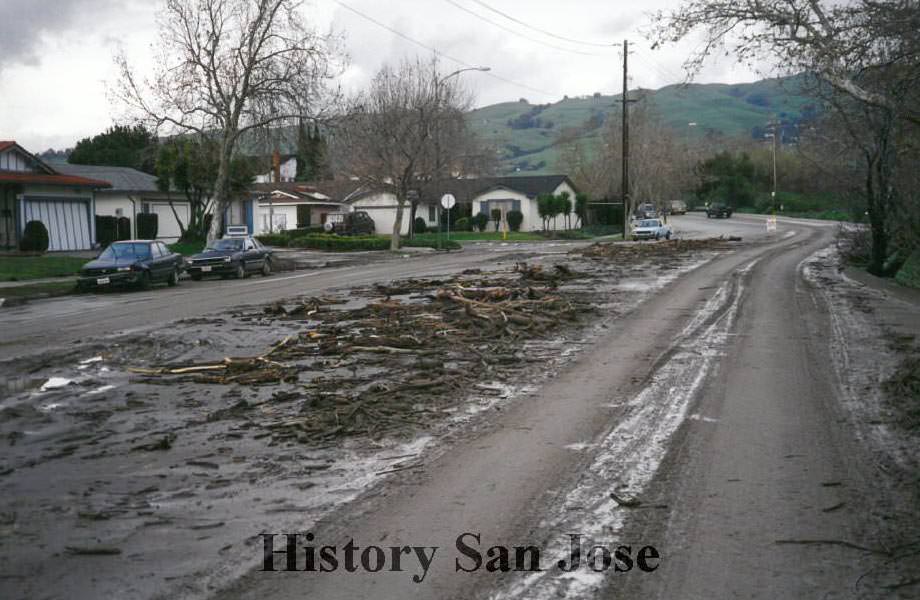
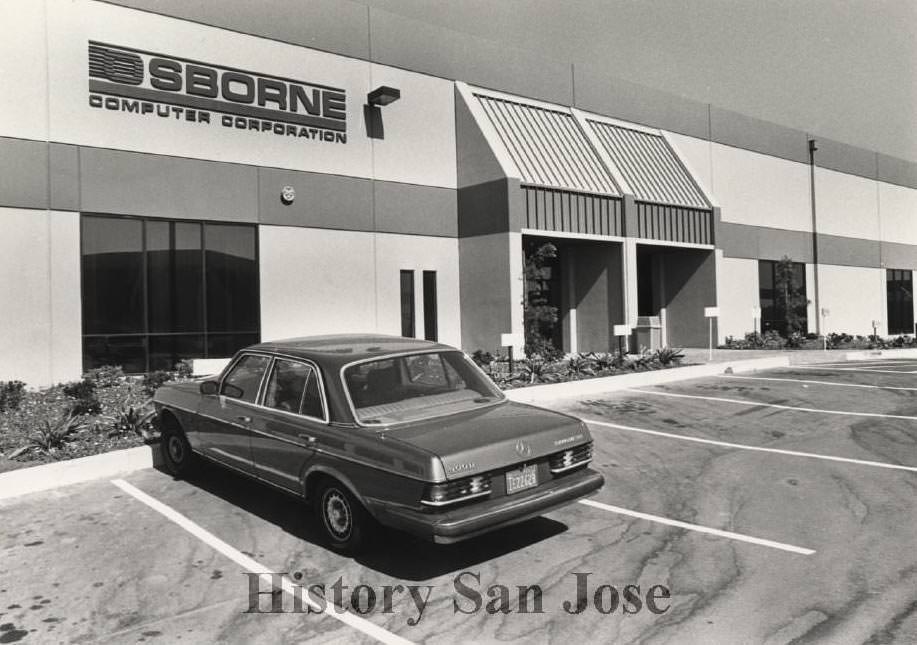
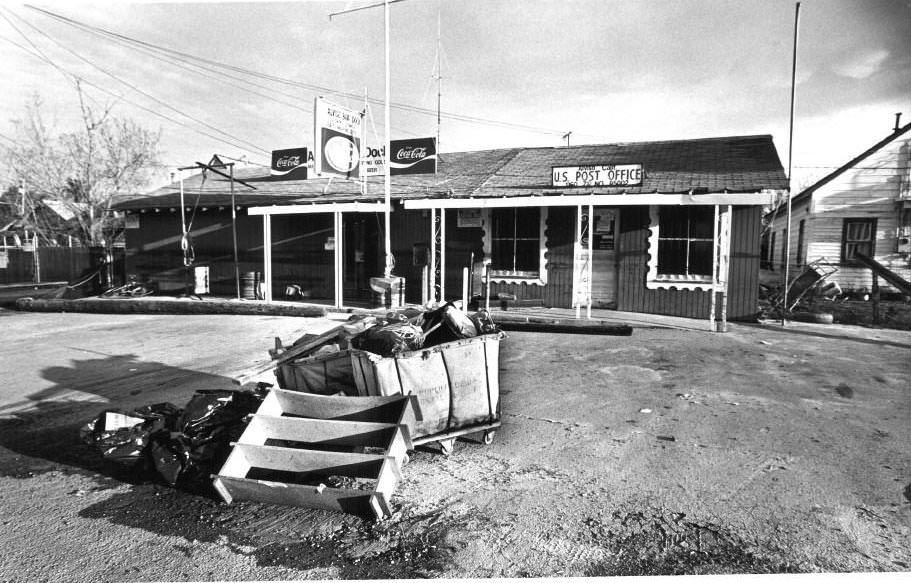
The tech industry’s presence in San Jose during the early 1980s was made concrete in unexpected ways. A 1983 photograph shows Adam Osborne’s Mercedes parked in front of company offices — Osborne Computer Corporation having produced the first commercially successful portable computer in 1981 before filing for bankruptcy in 1983. That same year, flooding hit the small community of Alviso near San Jose, damaging the local post office and leaving muddy streets in its wake.
By August 1989, San Jose had overtaken the San Francisco metropolitan area in population for the first time. San Francisco, long considered the undisputed center of the Bay Area, now ranked second. It was the clearest possible signal of what the 1980s had accomplished: a decade of rapid tech-driven growth had turned San Jose into the Bay Area’s largest city, reshaping the region’s identity in the process.