San Francisco in the 1940s was a city under pressure and in motion. World War II turned its ports and shipyards into some of the most important industrial sites on the West Coast. Thousands of workers flooded in from across the country, drawn by jobs at places like the Hunters Point Naval Shipyard and the Kaiser Shipyards in nearby Richmond. Streets that had once moved at a steady urban pace now buzzed with military personnel, shipyard workers, and civilians all navigating the same crowded blocks.
Hunters Point Naval Shipyard, 1943
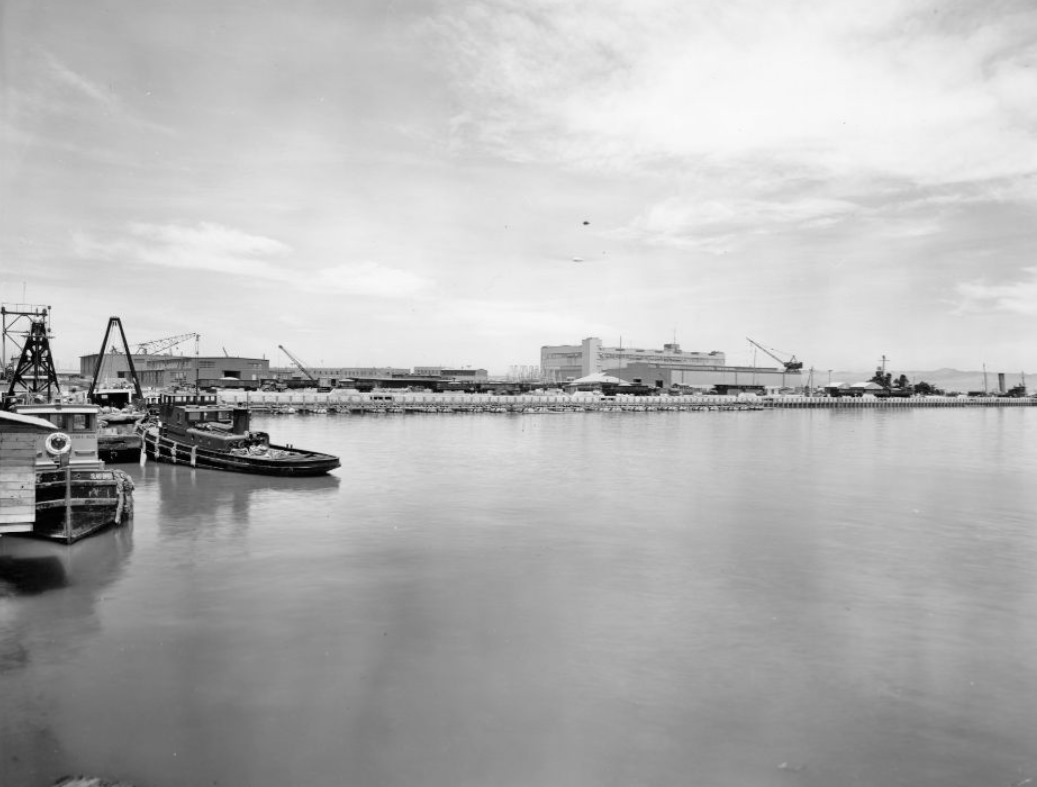
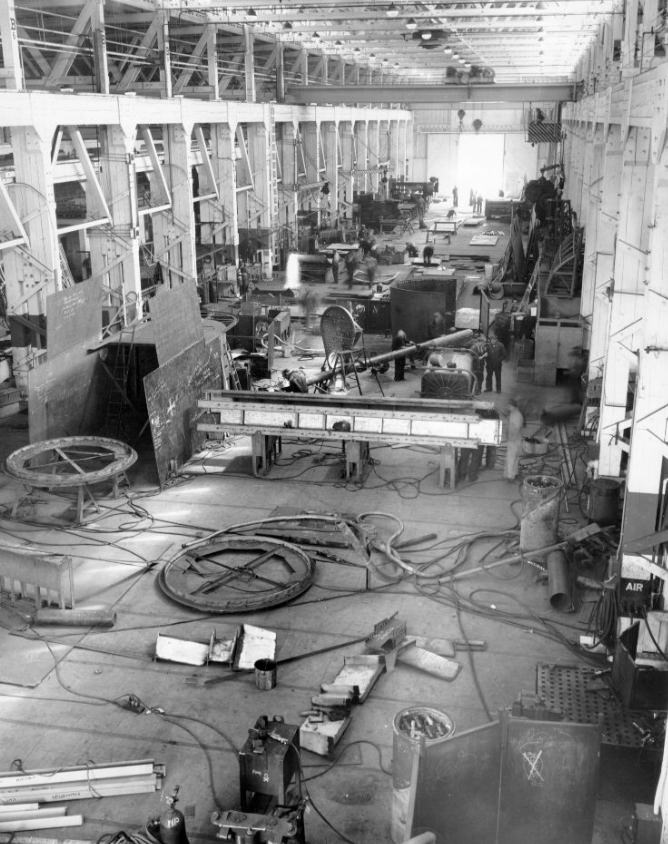
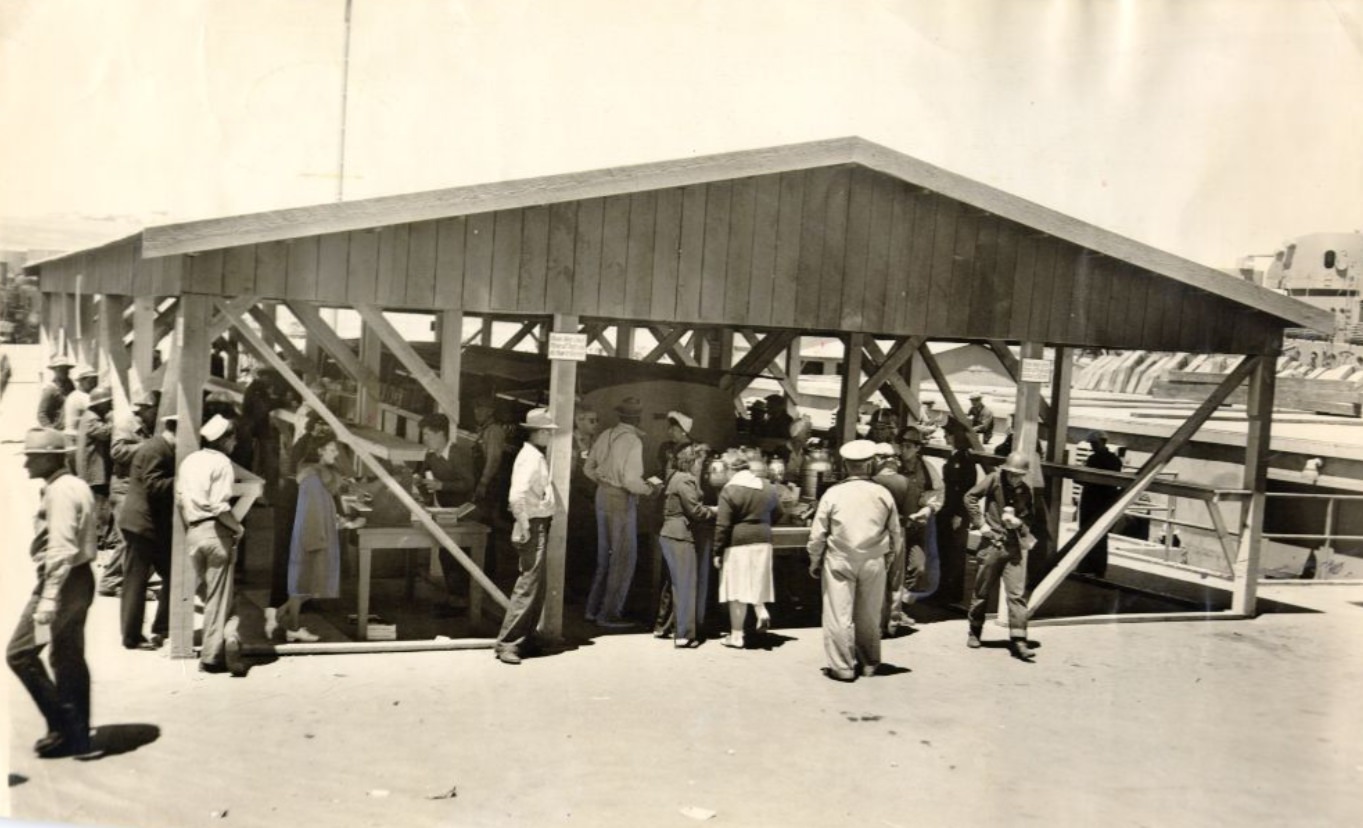
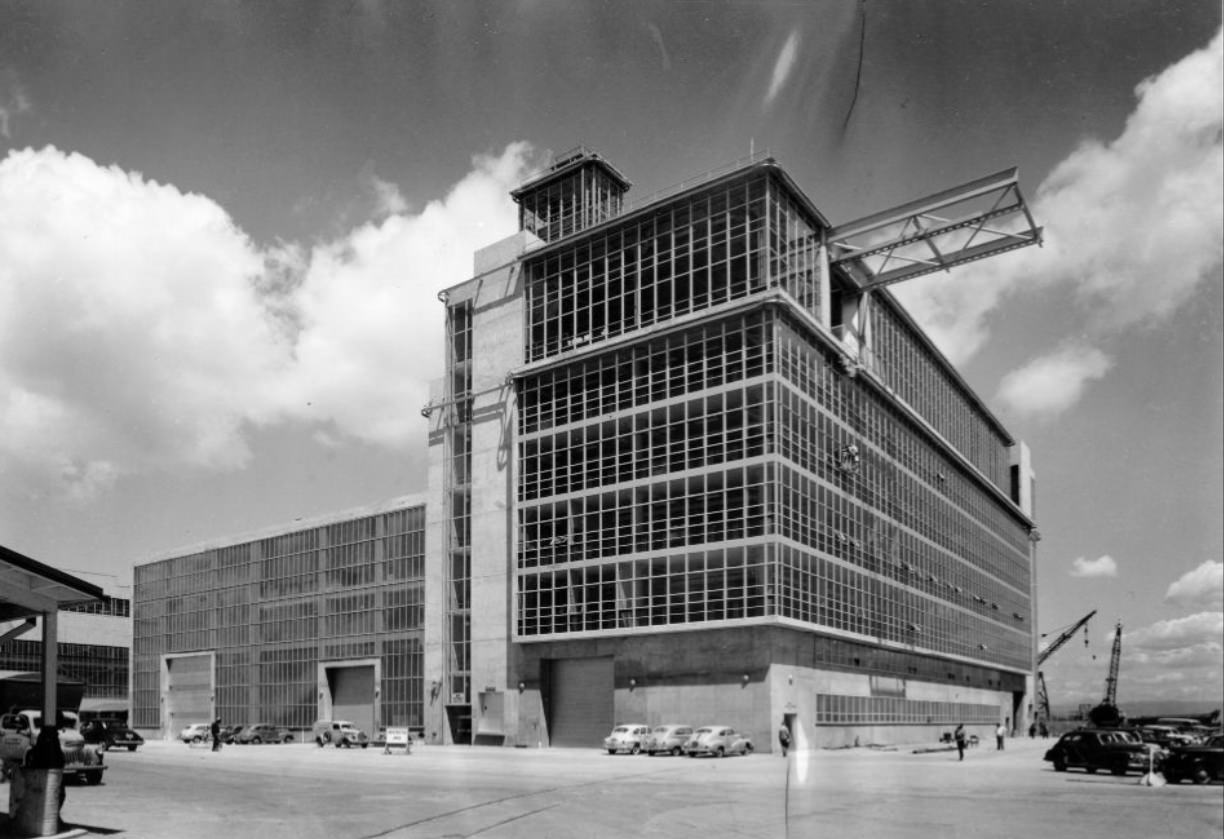
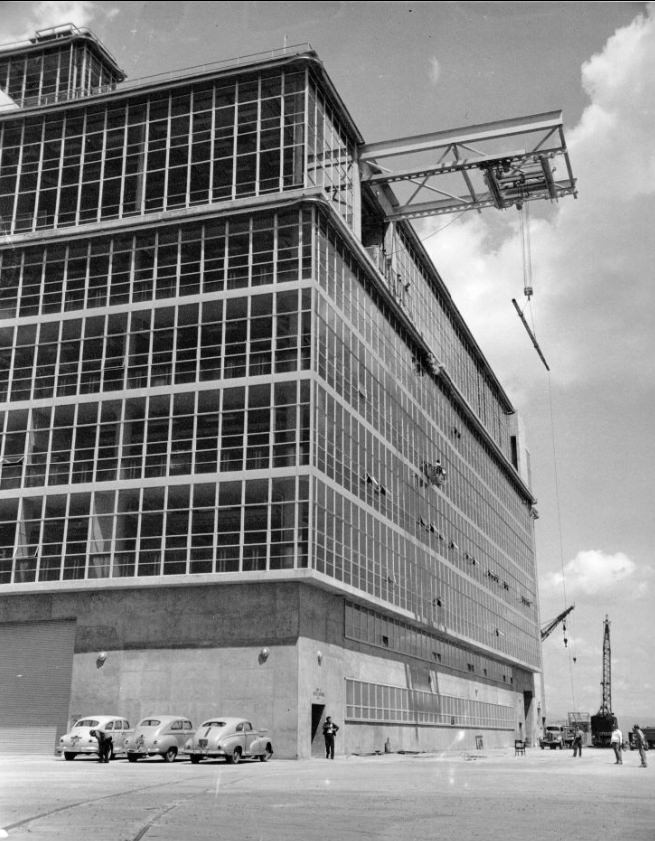
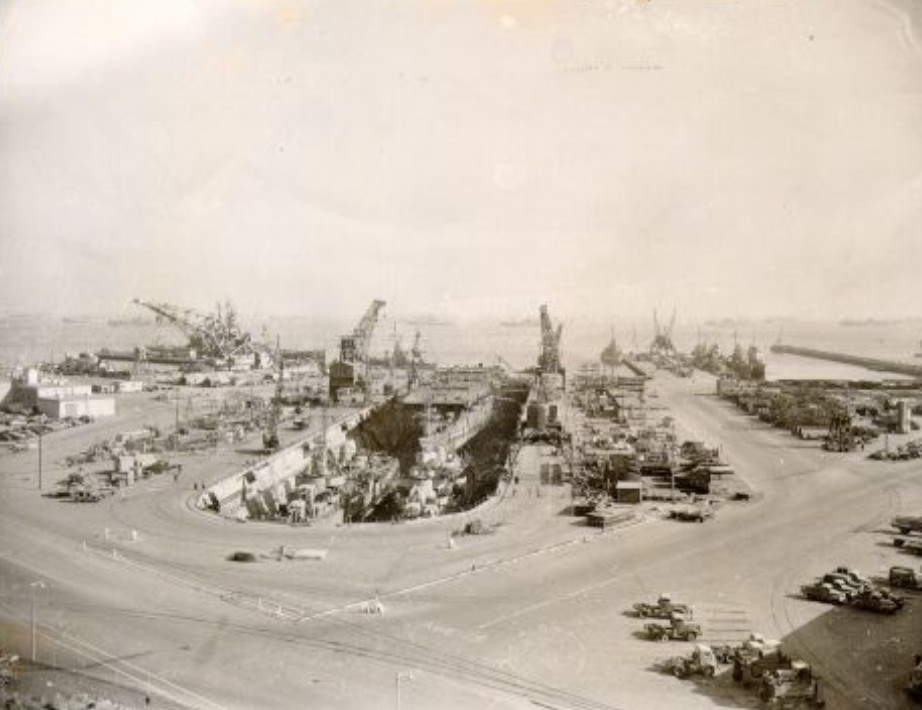
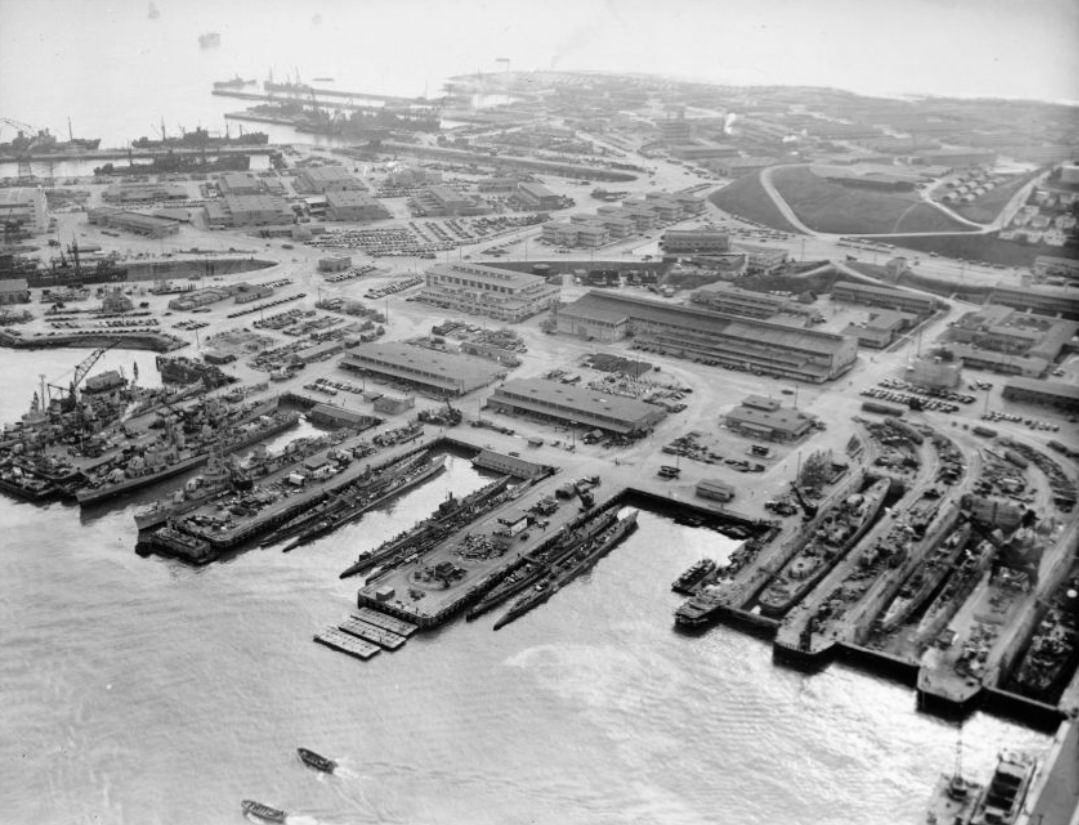
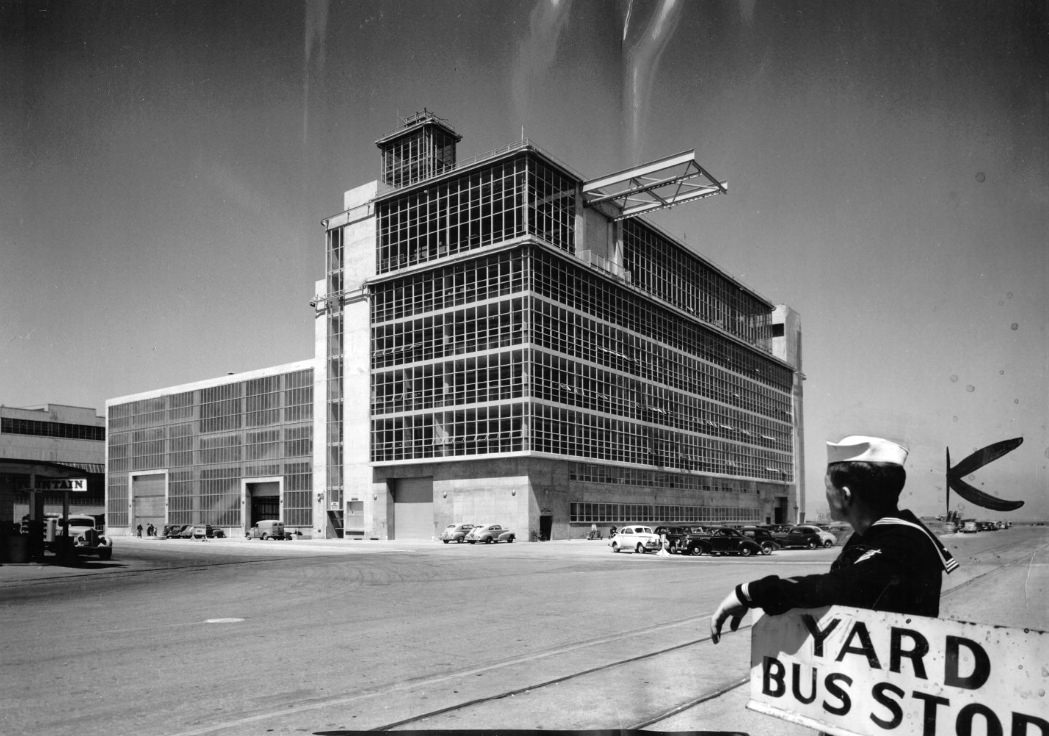
Hunters Point was the beating heart of San Francisco’s war effort. The naval shipyard employed thousands and operated around the clock. Its drydocks, welding shops, and ordnance buildings made it one of the most active military installations on the Pacific Coast. Workers arrived in shifts, and the shipyard’s cafeterias and outdoor mess areas fed enormous crowds every day.
General view of the Welding Shop at U.S. Naval Drydocks, Hunters Point, 1940sOutdoor cafeteria at Hunters Point Naval Shipyard, 1943
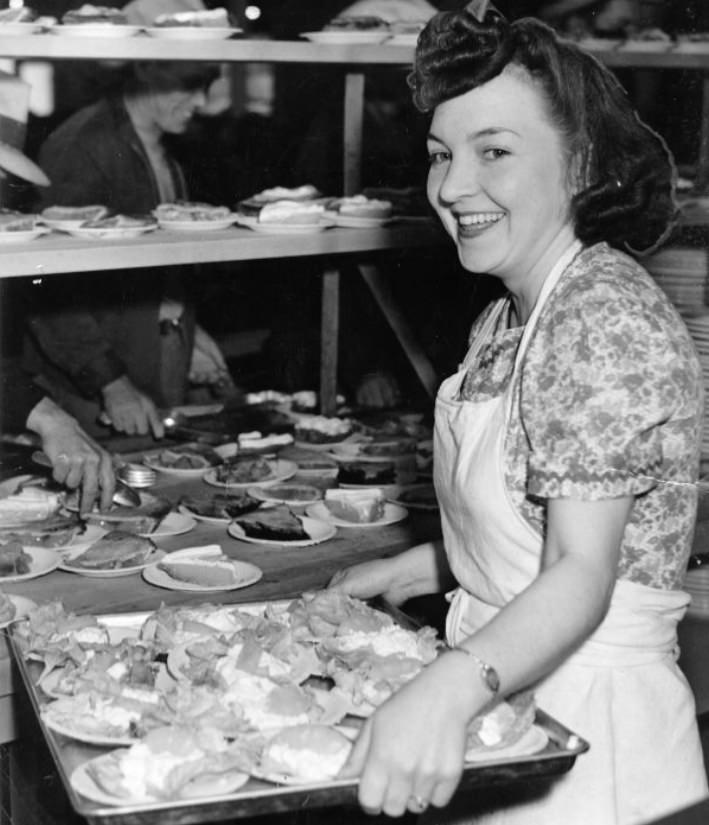
Women entered the workforce in large numbers during the war, taking on roles in shipyards, factories, and supply operations that had previously been held almost exclusively by men. This shift was visible across the city’s industrial sites, including at Hunters Point, where women worked alongside men in roles from cafeteria staff to technical operations.
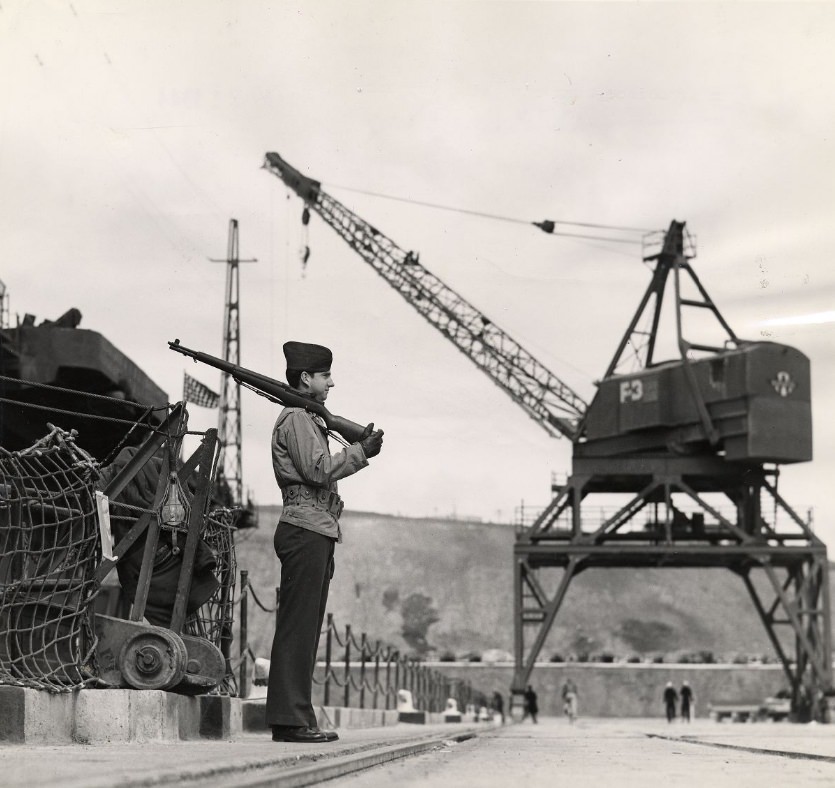
Cafeteria worker at Hunters Point Drydock, 1943Guard at Hunters Point Naval Shipyard, 1944
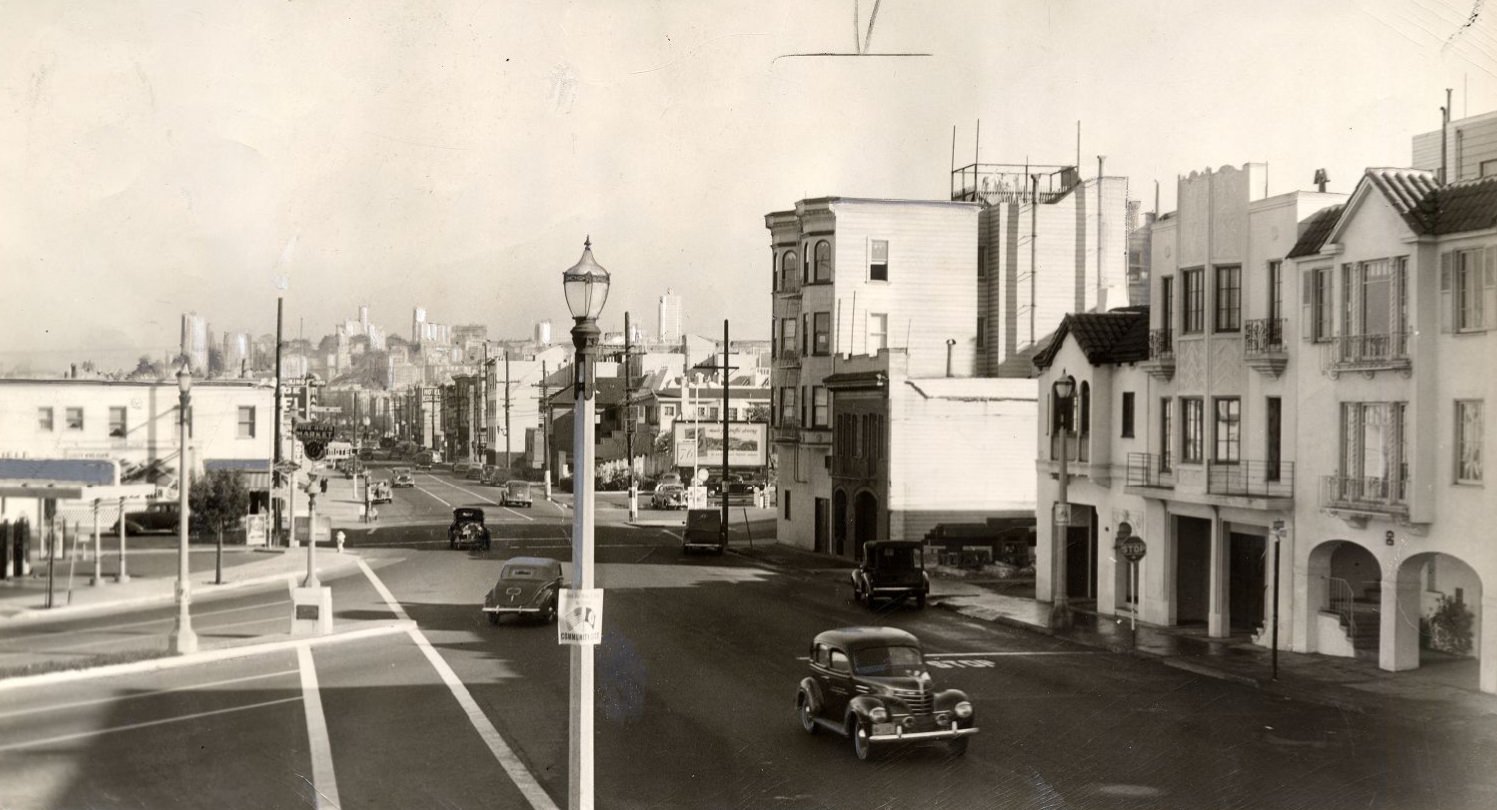
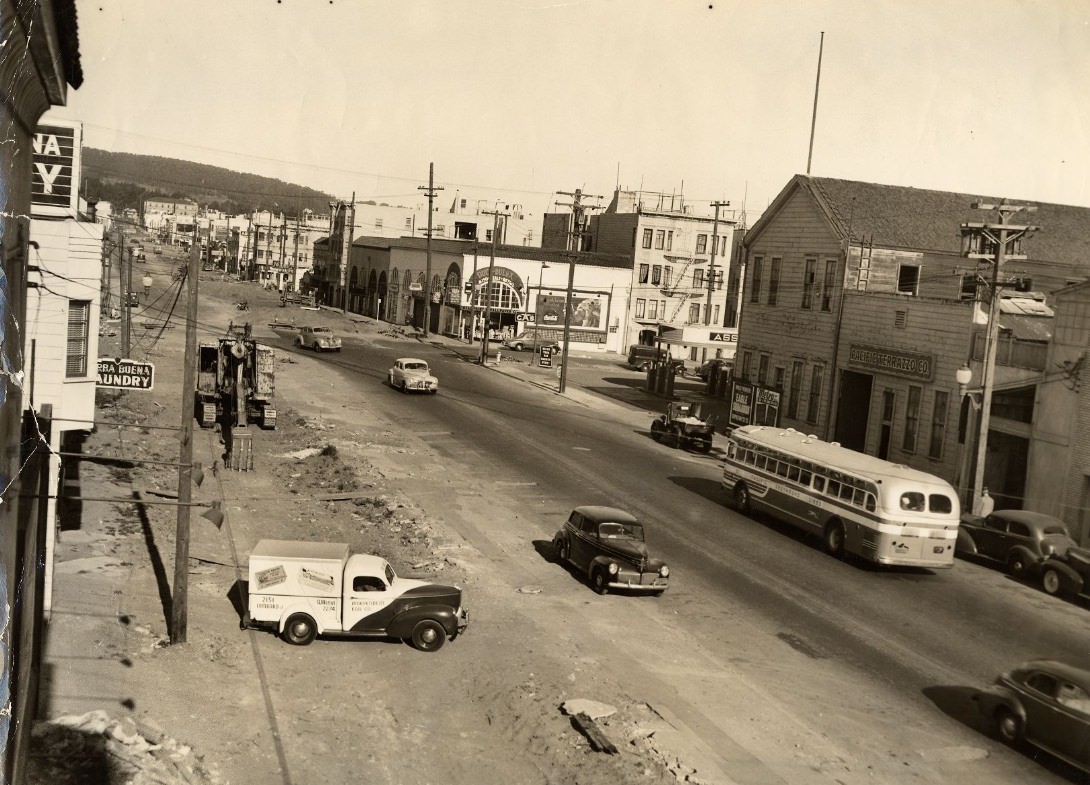
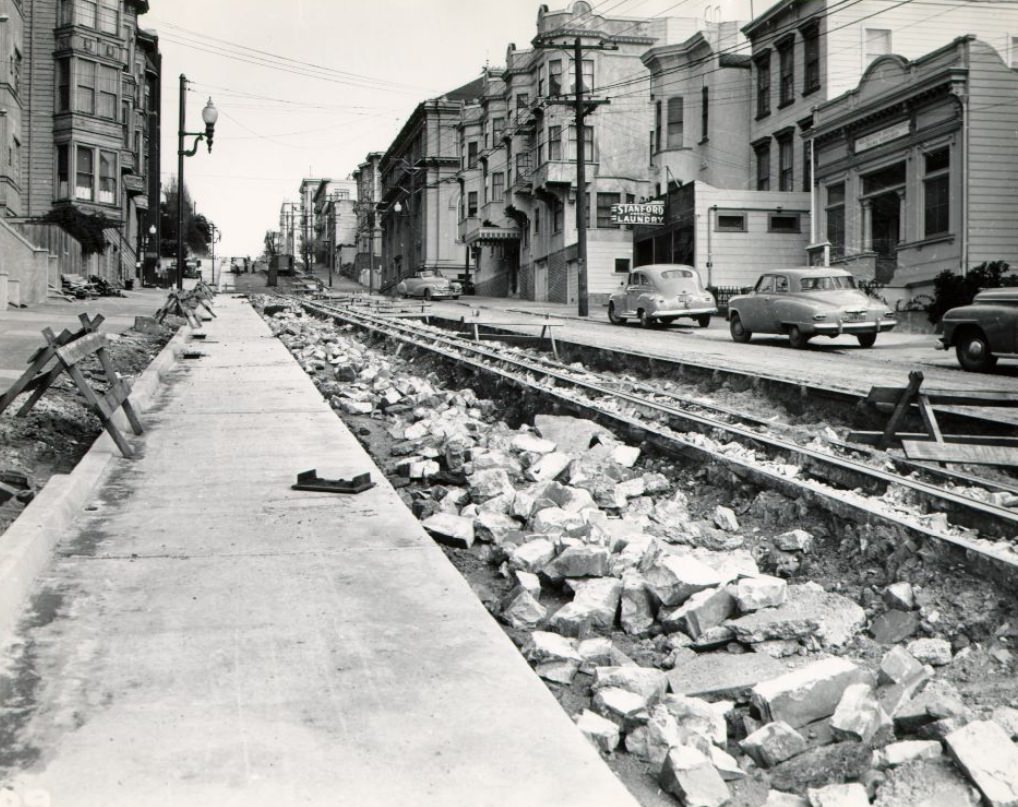
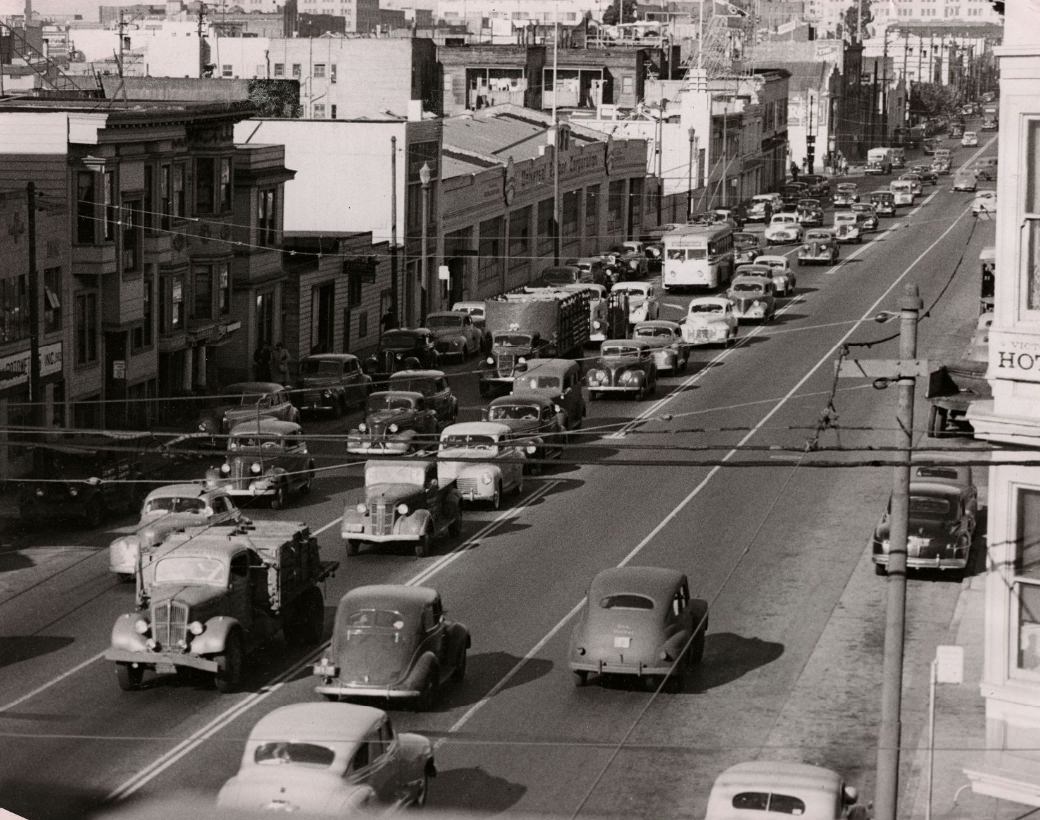
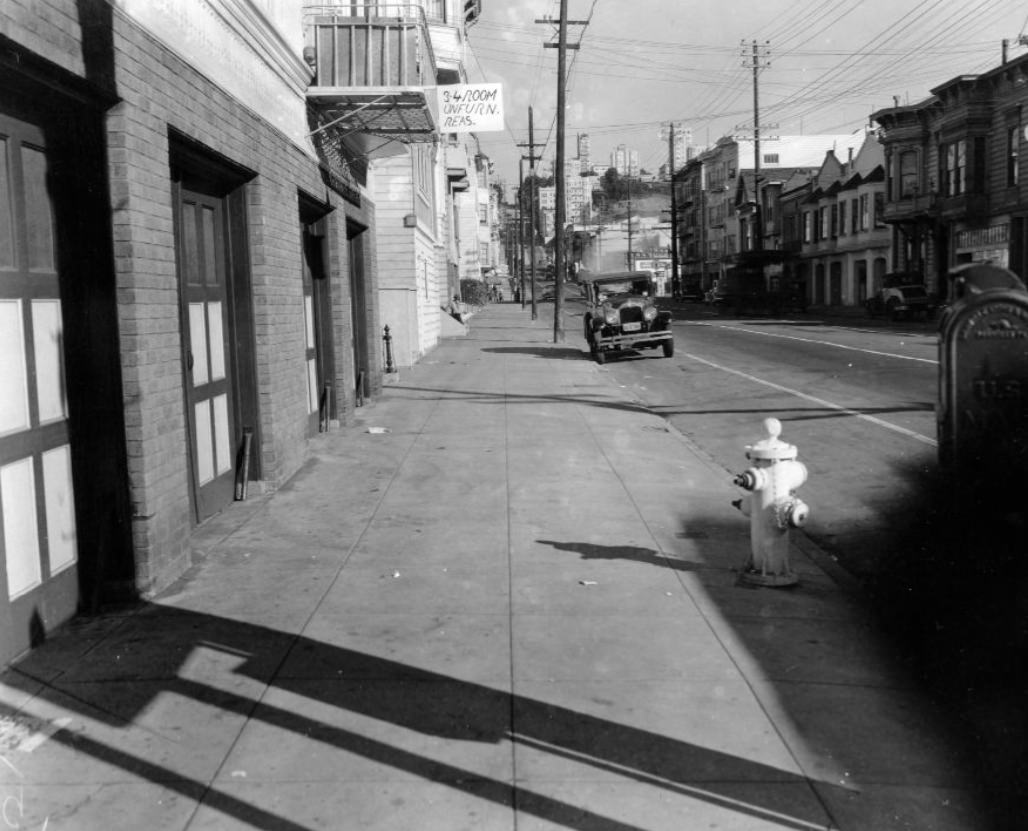
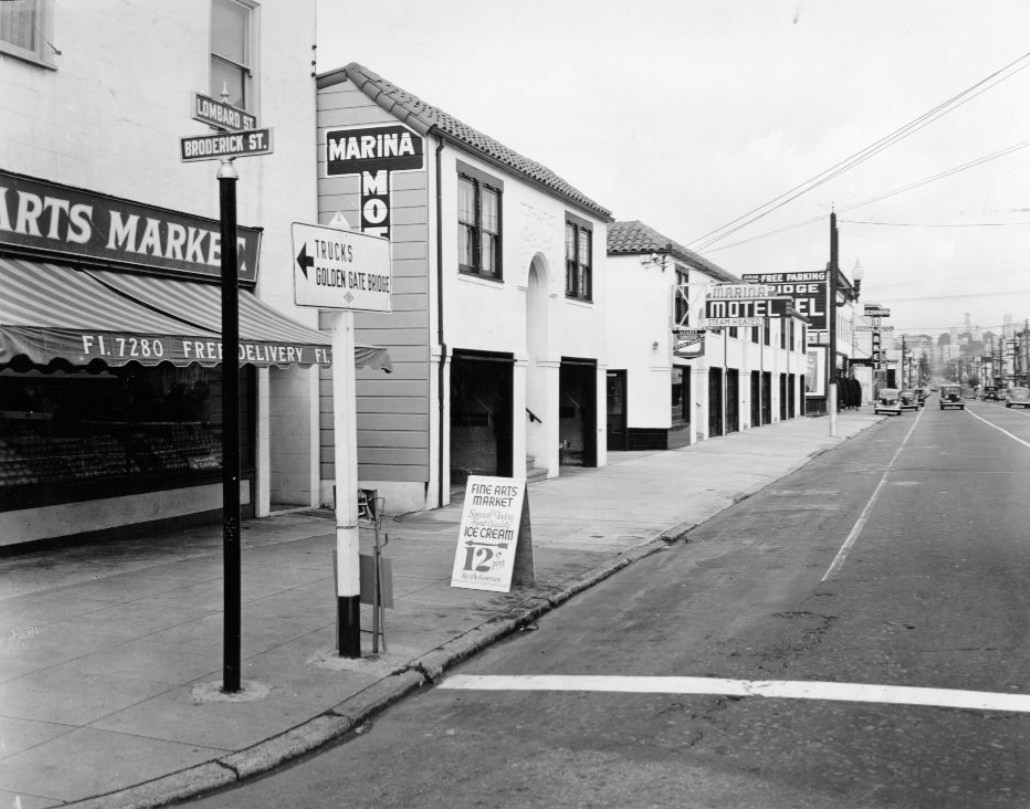
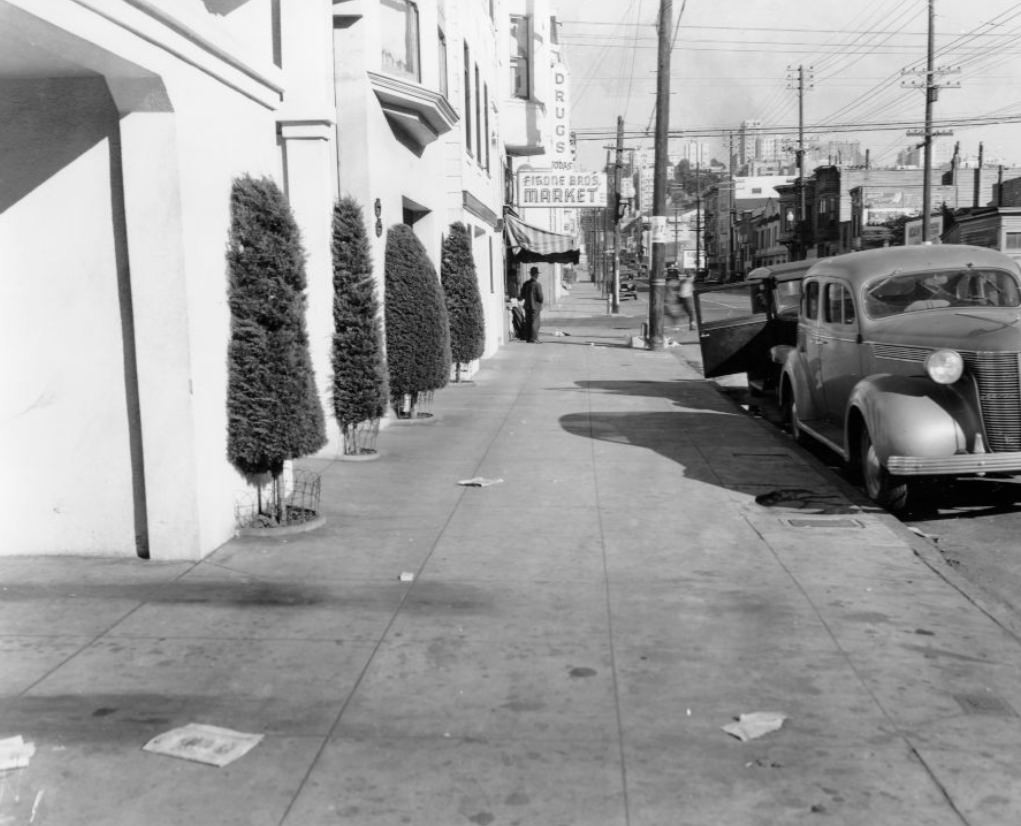
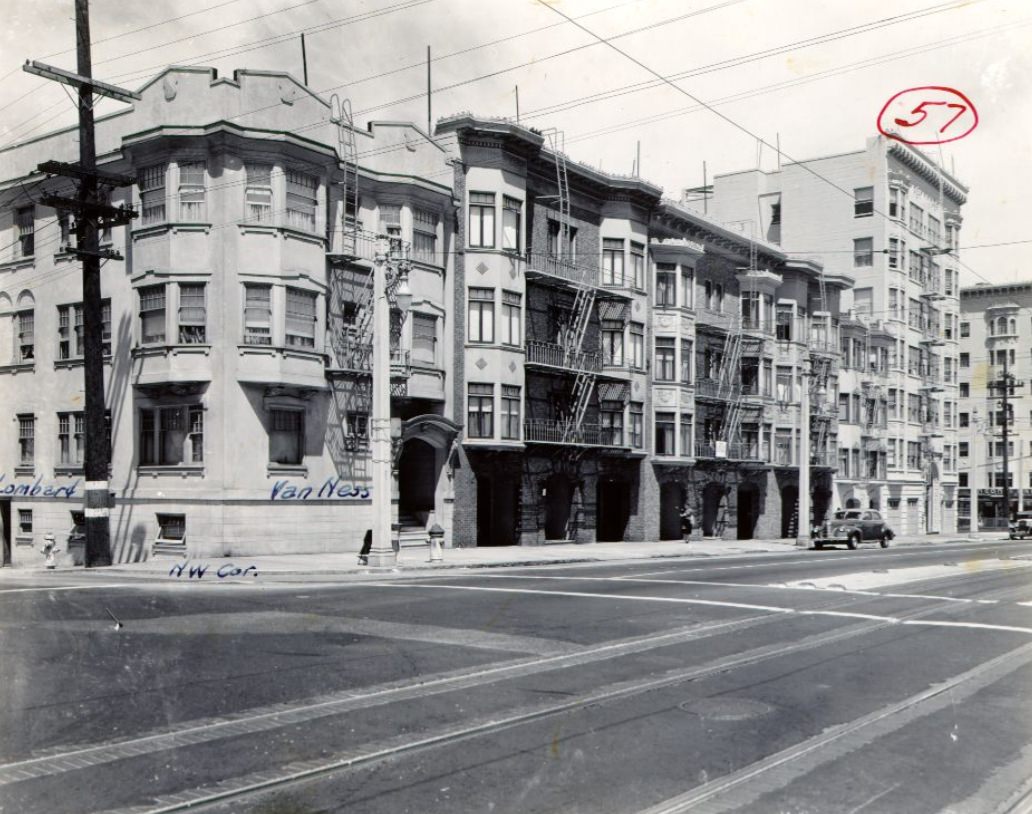
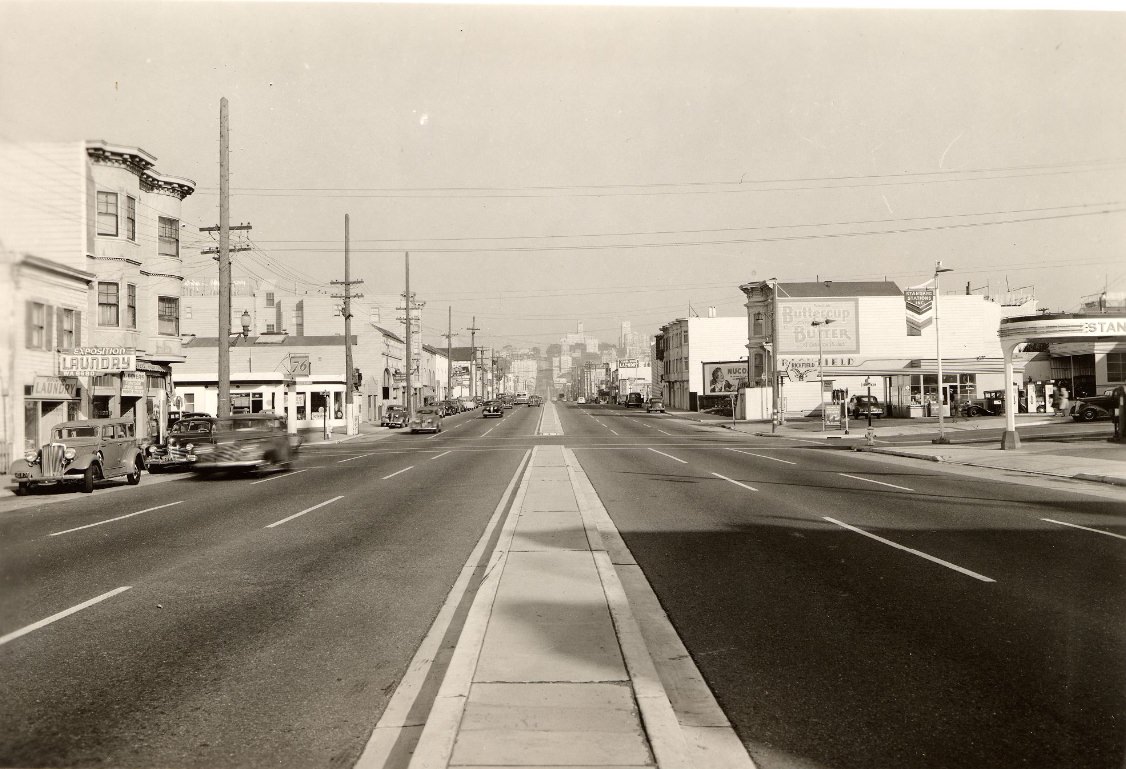
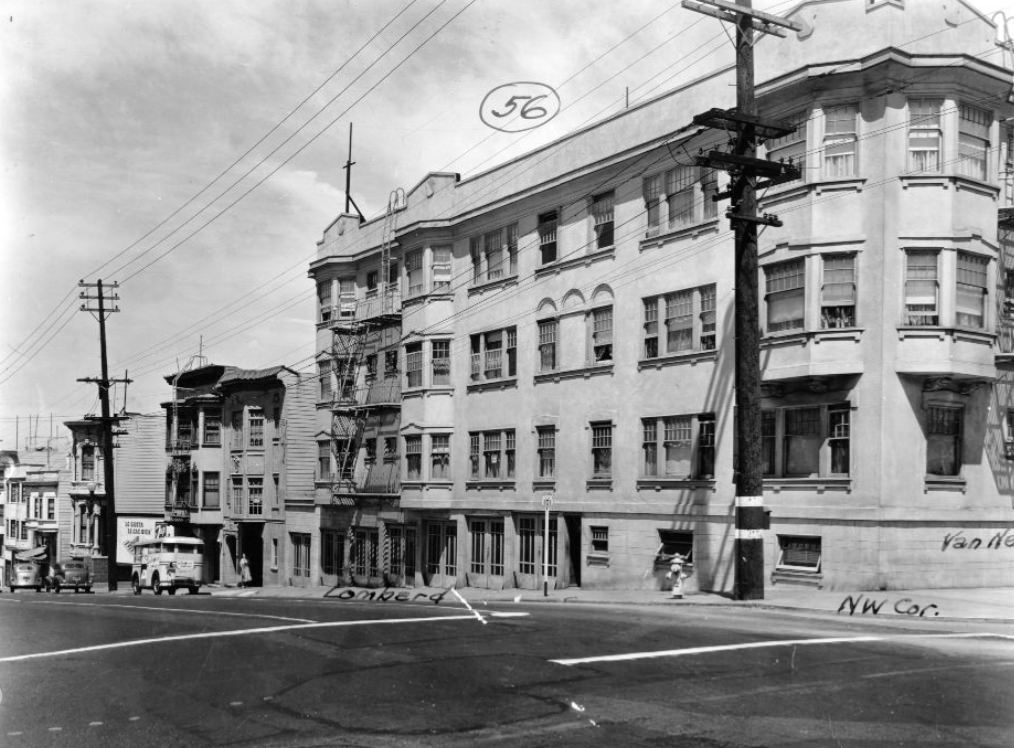
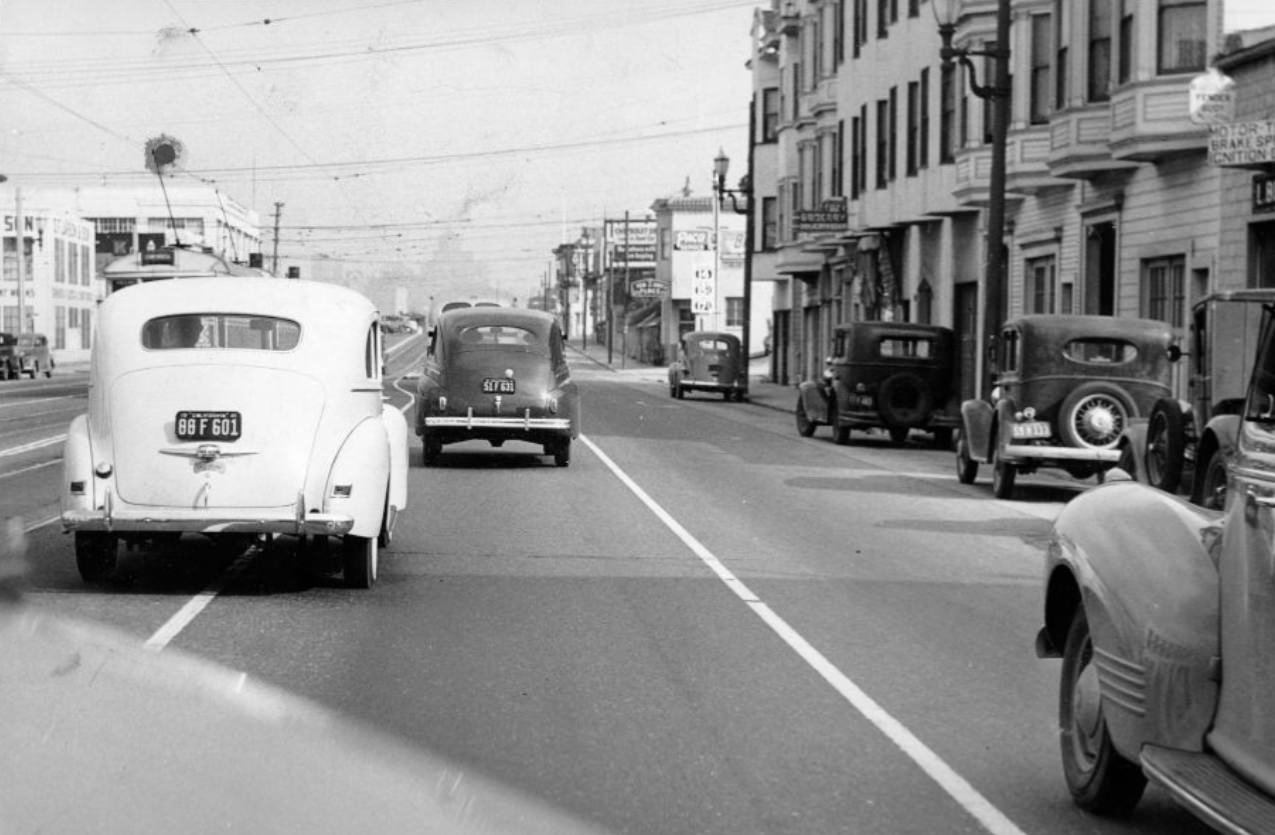
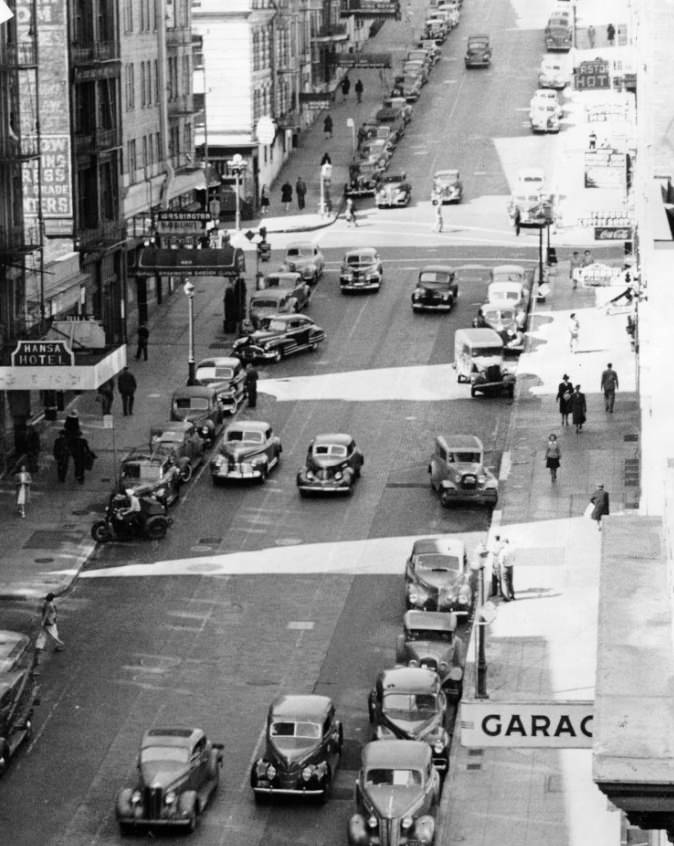
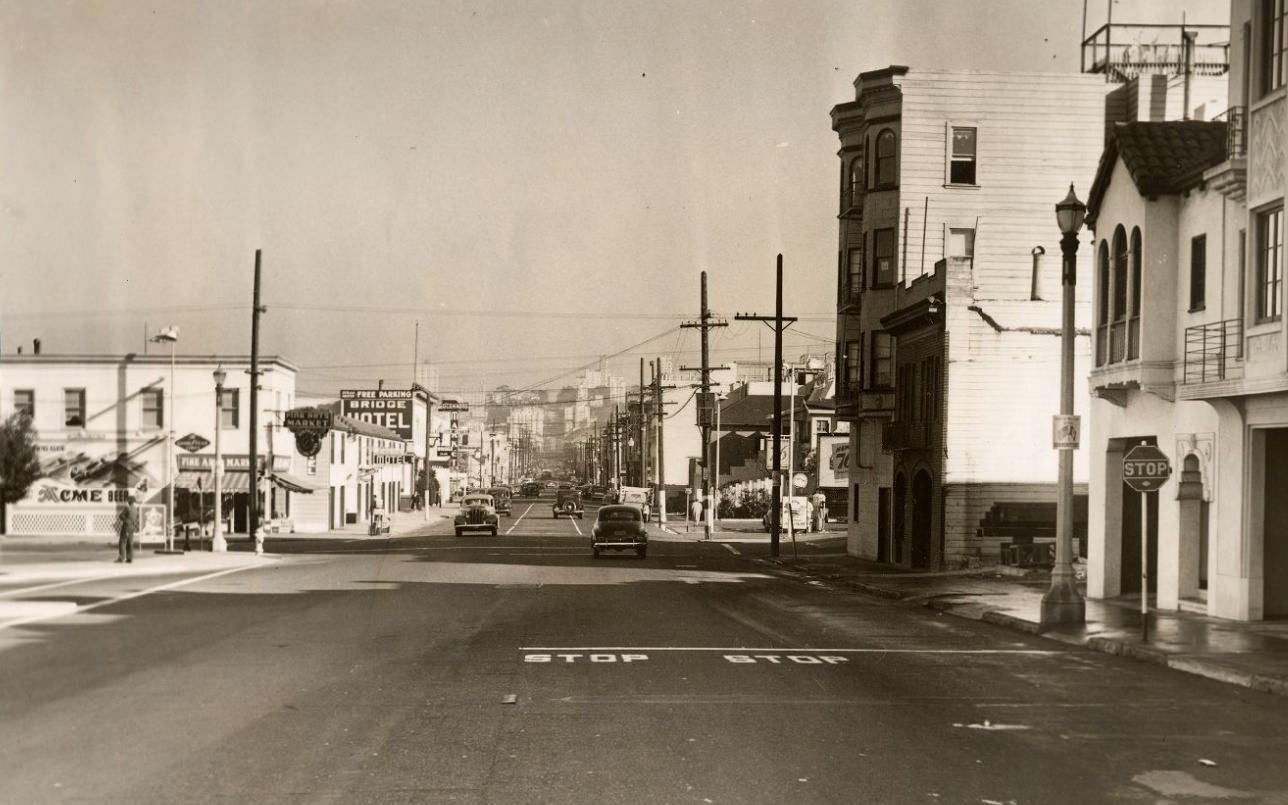
The streets of San Francisco told the story of a city stretched thin. Lombard Street, in particular, was photographed extensively throughout 1940 and 1941, block by block, documenting both its commercial storefronts and residential character. By 1942, the city had begun widening Lombard Street to handle the surge in traffic brought on by the war.
Lombard Street, 1940Lombard Street from Fillmore during widening project, 1942
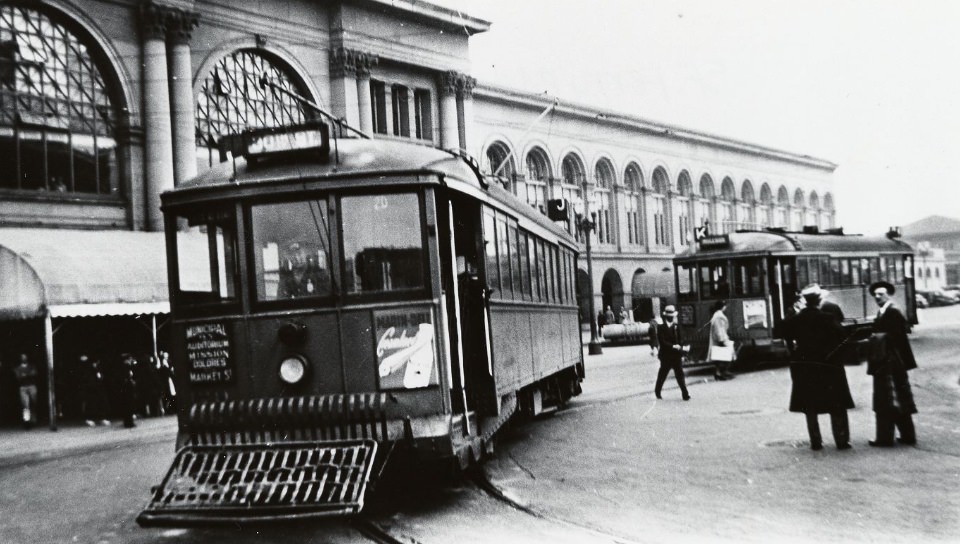
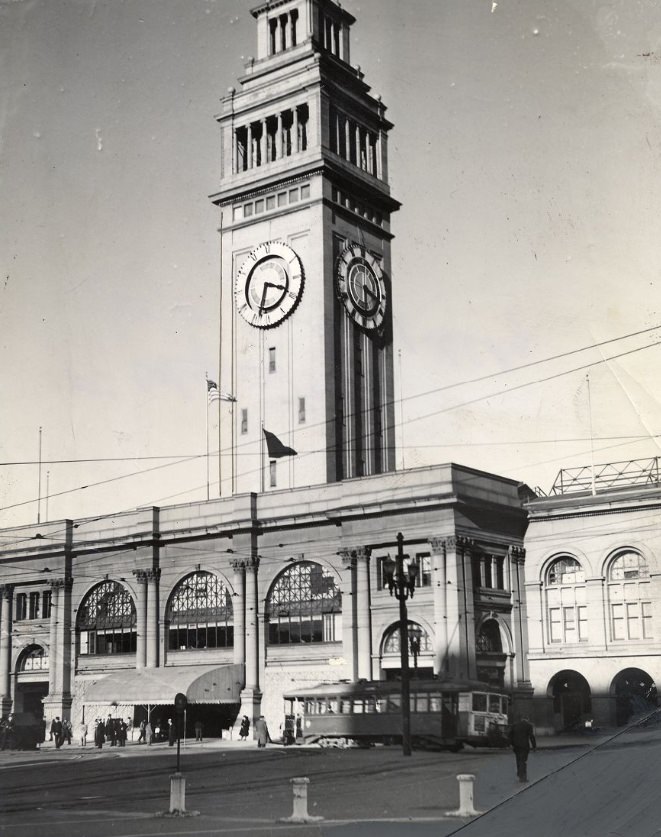
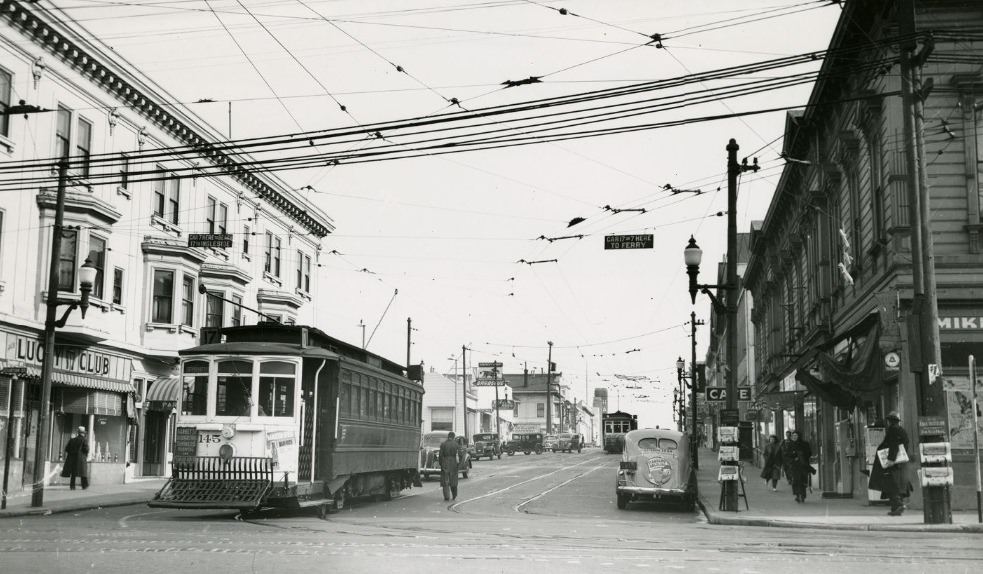
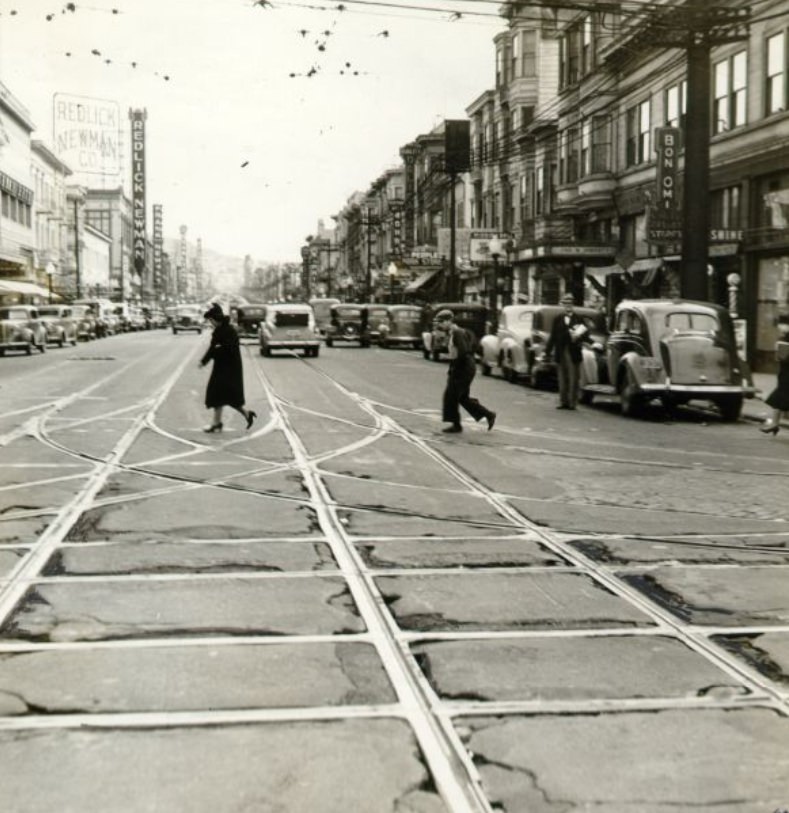
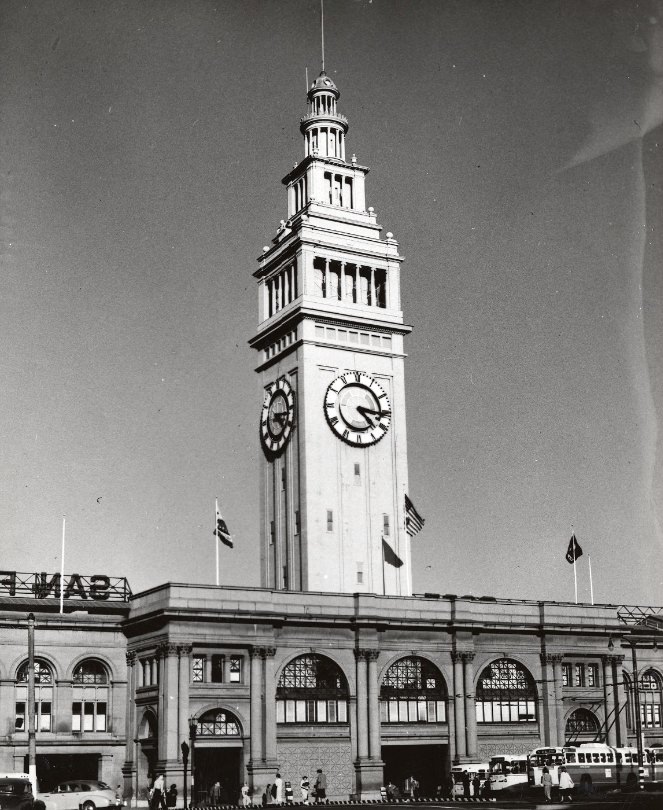
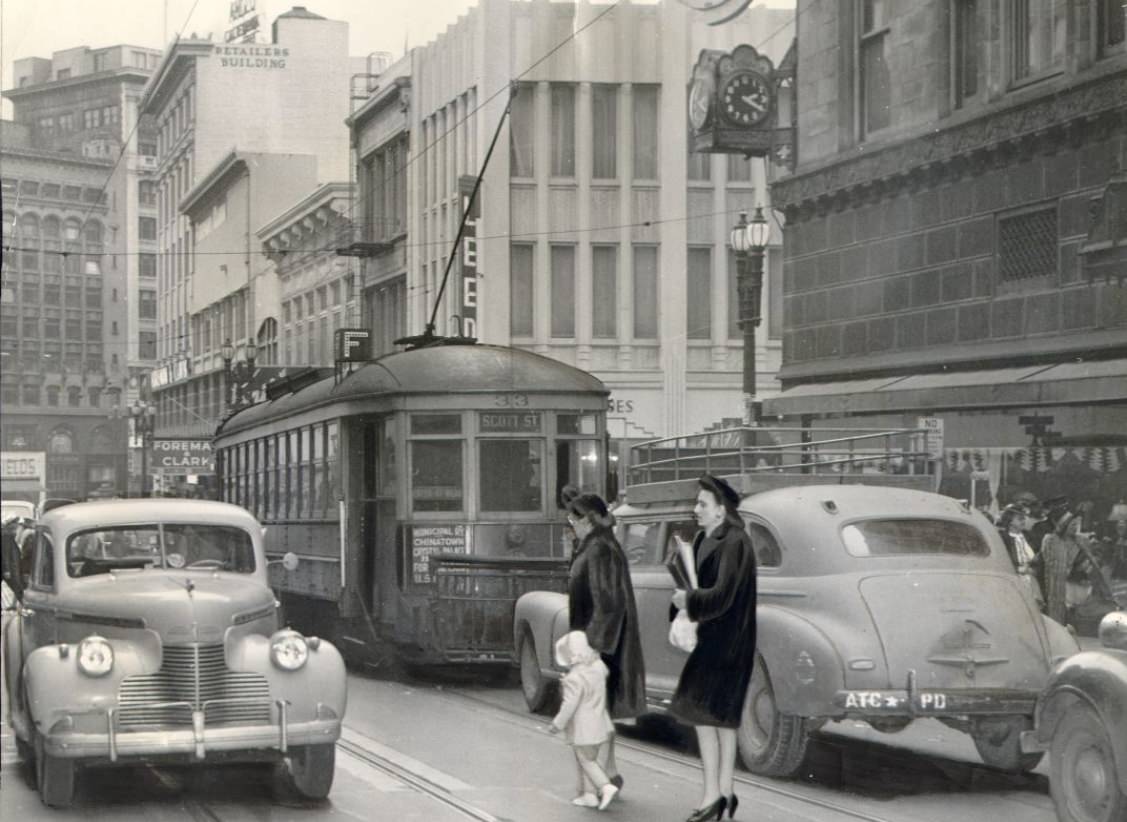
Public transit was equally important. Streetcars ran through the busiest corridors of the city, connecting workers to shipyards, civilians to shopping districts, and servicemen to the waterfront. The Ferry Building at the foot of Market Street remained a major transit hub, with streetcars lining up outside and ferries crossing the bay.
Streetcars in front of the Ferry Building, 1940sFerry Building, 1940
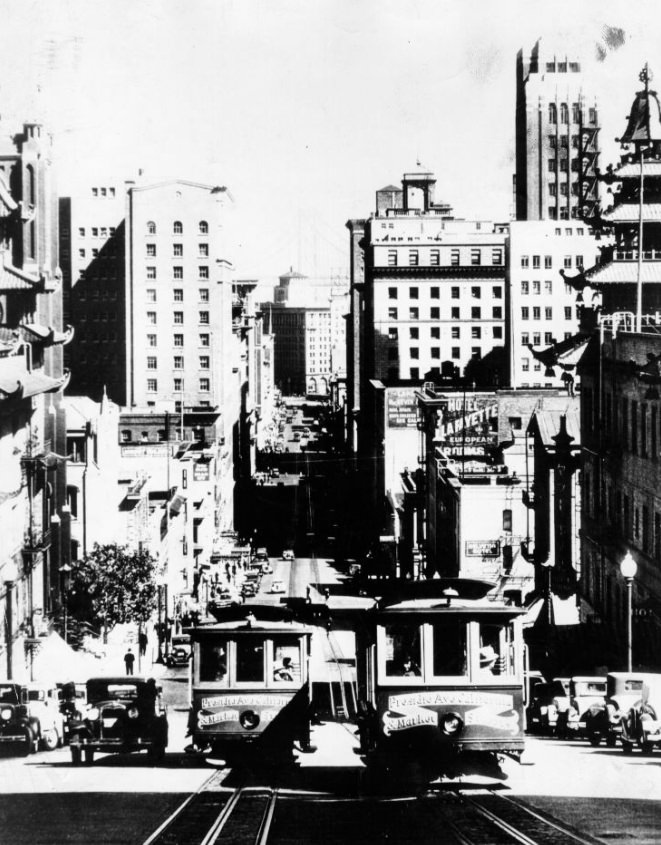
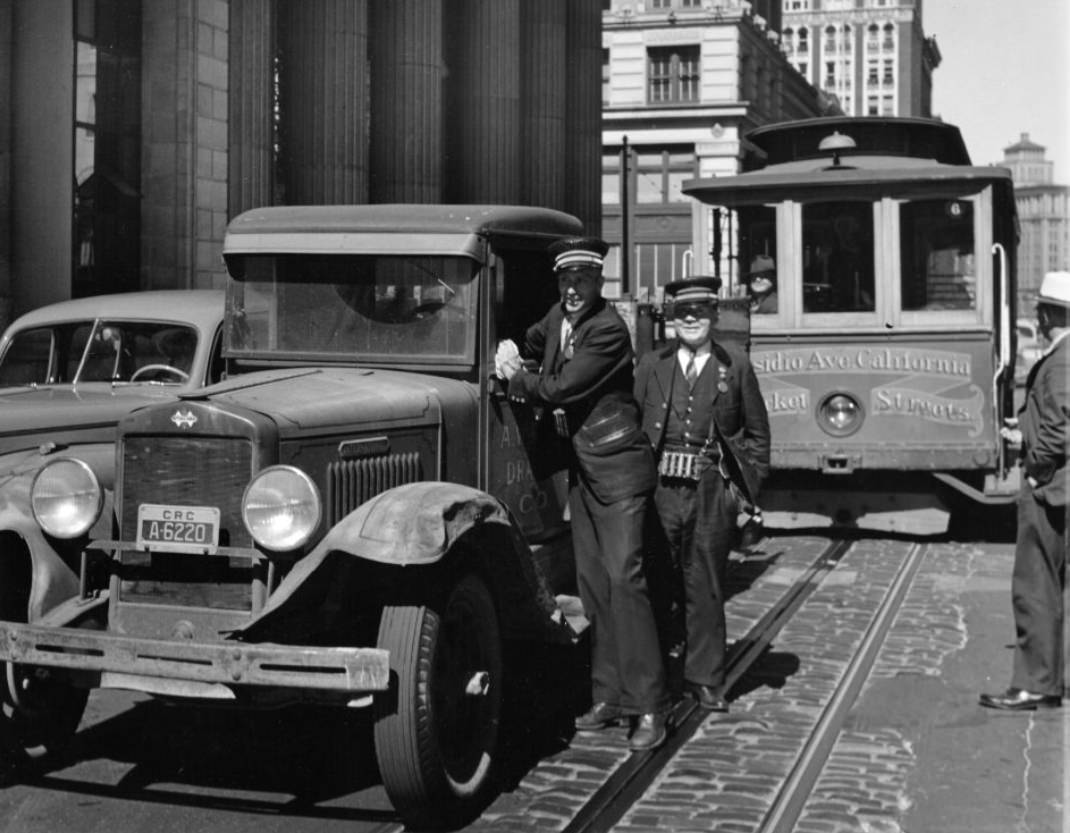
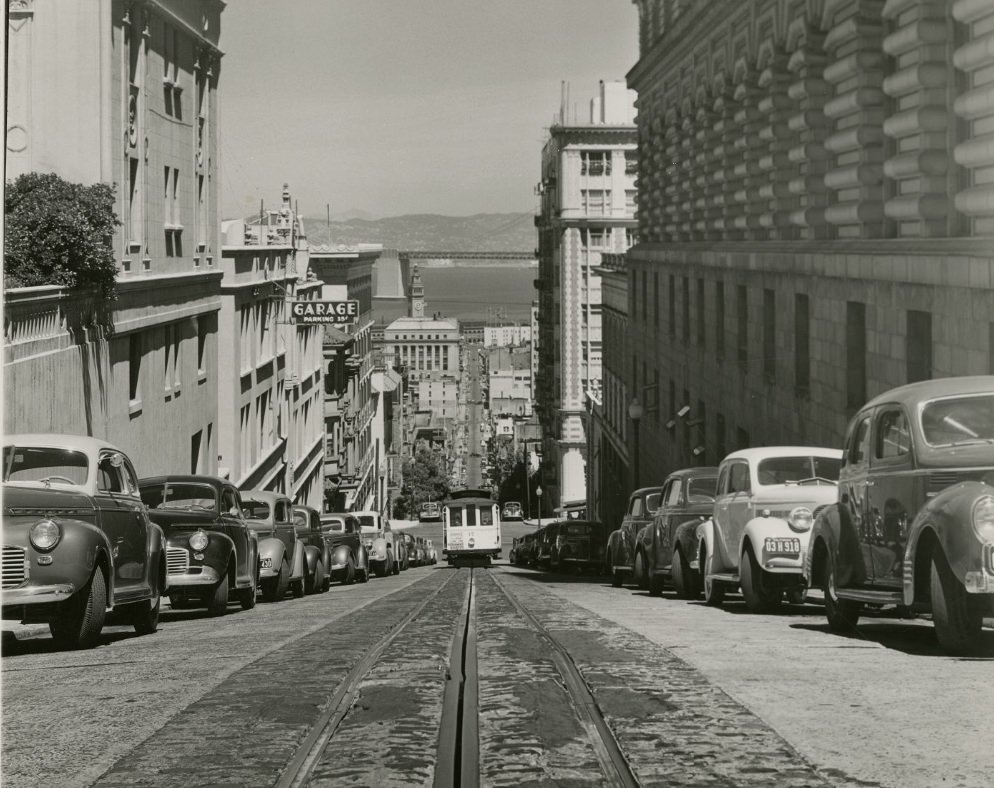
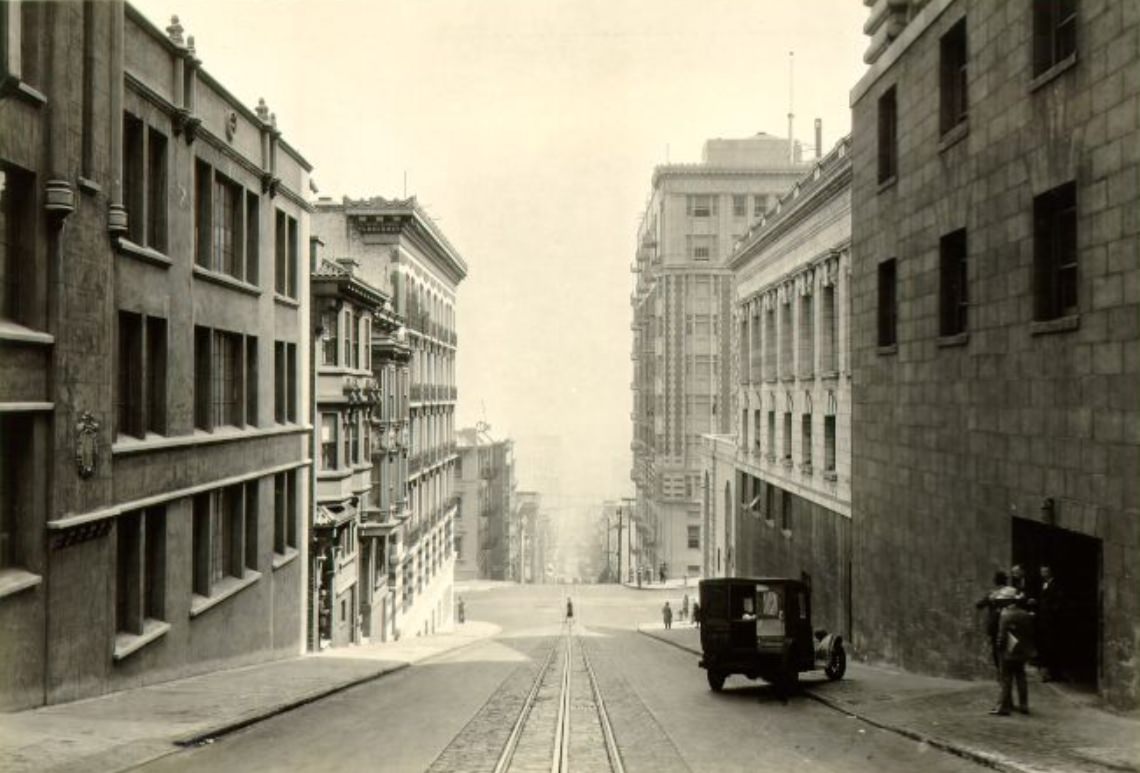
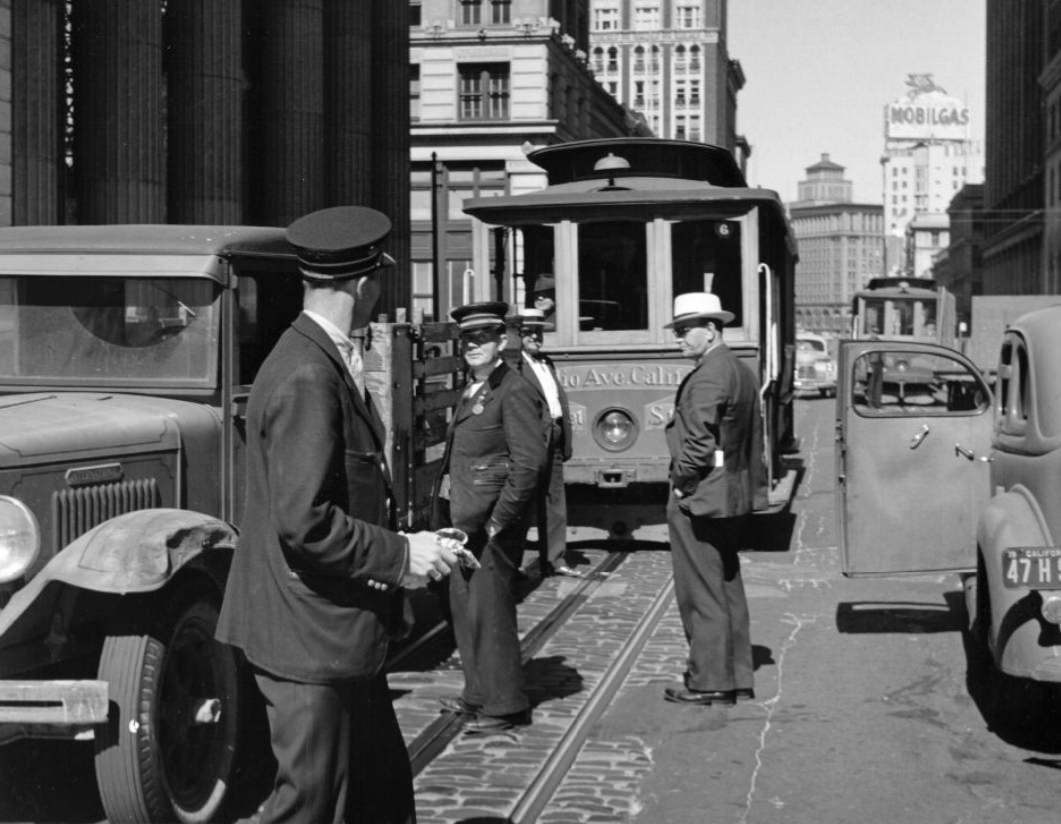
Cable cars continued to operate on California Street and other lines throughout the decade. They were as much a practical necessity as a city landmark, carrying passengers up steep hills that buses and streetcars struggled with. By the end of the decade, Sacramento Street saw cable car construction underway, a sign the city was investing in its transit network even as it rebuilt from wartime strain.
Two cable cars on California Street, 1941Cable car construction on Sacramento Street, 1949
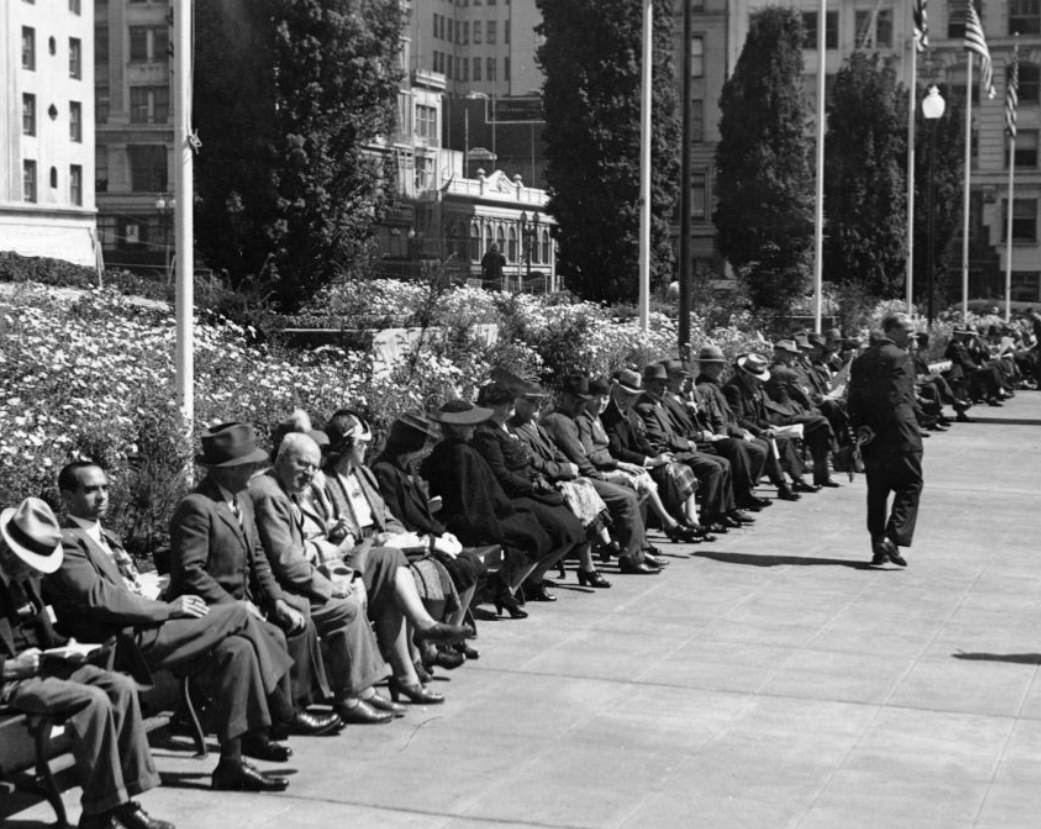
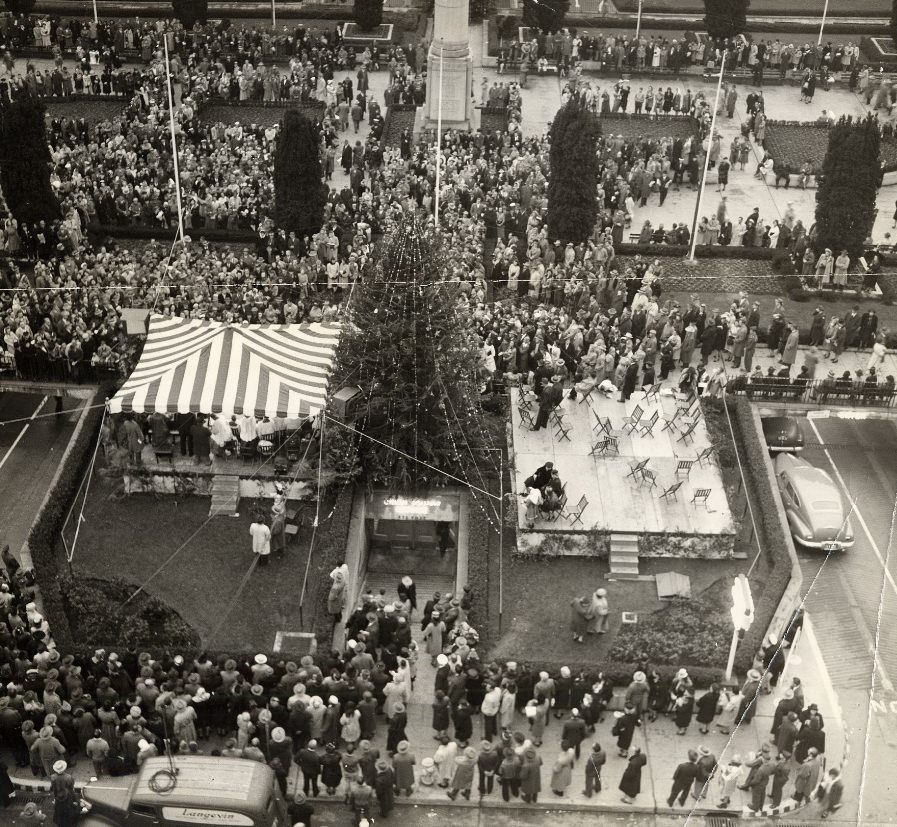
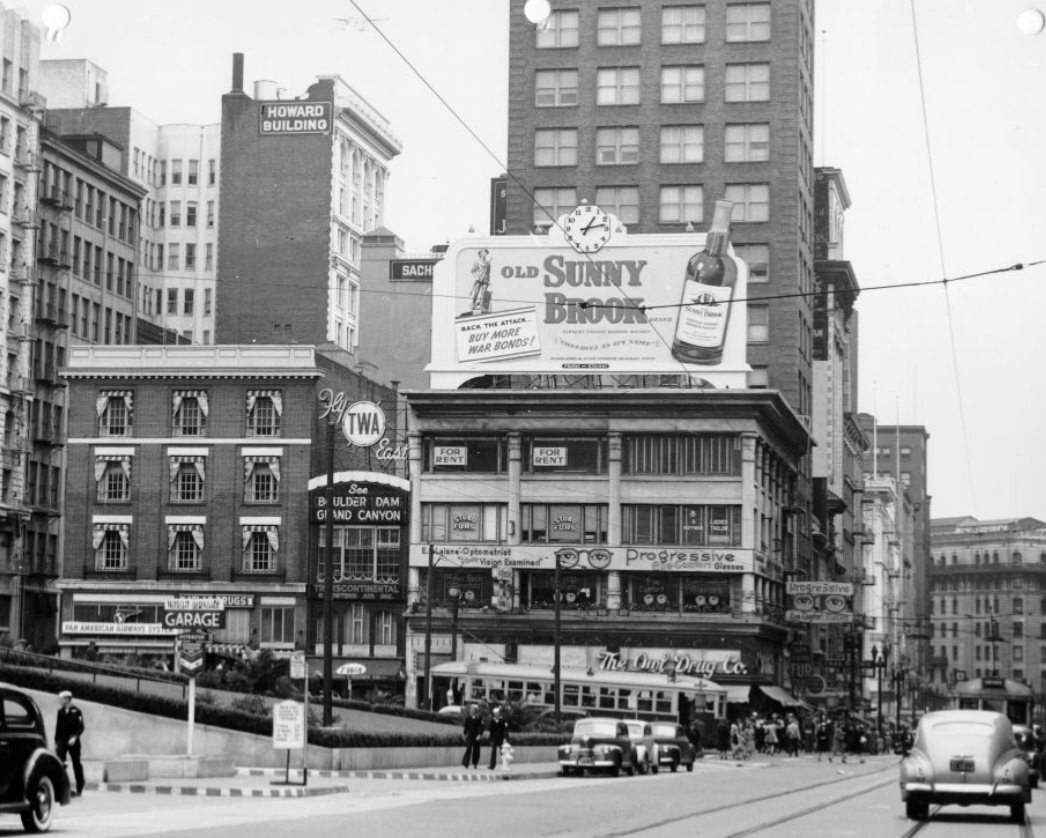
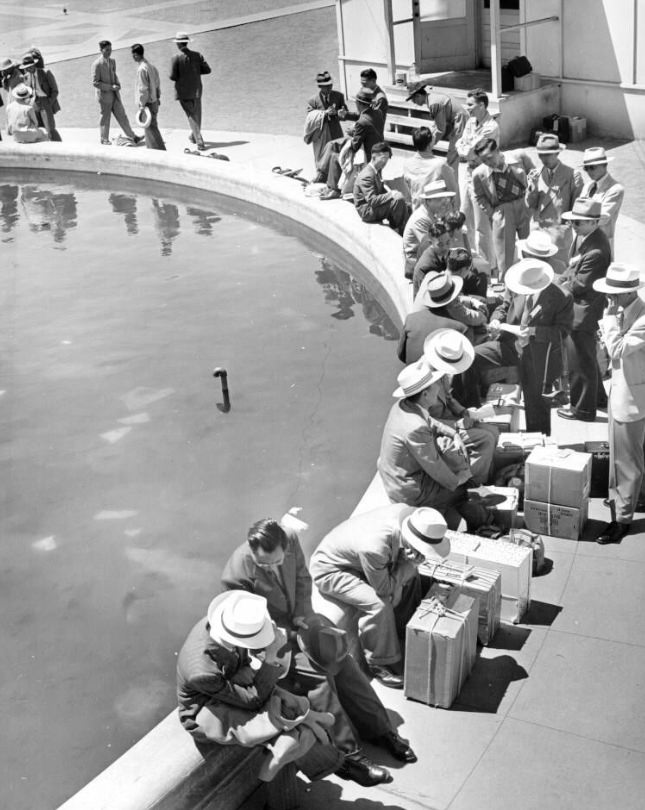
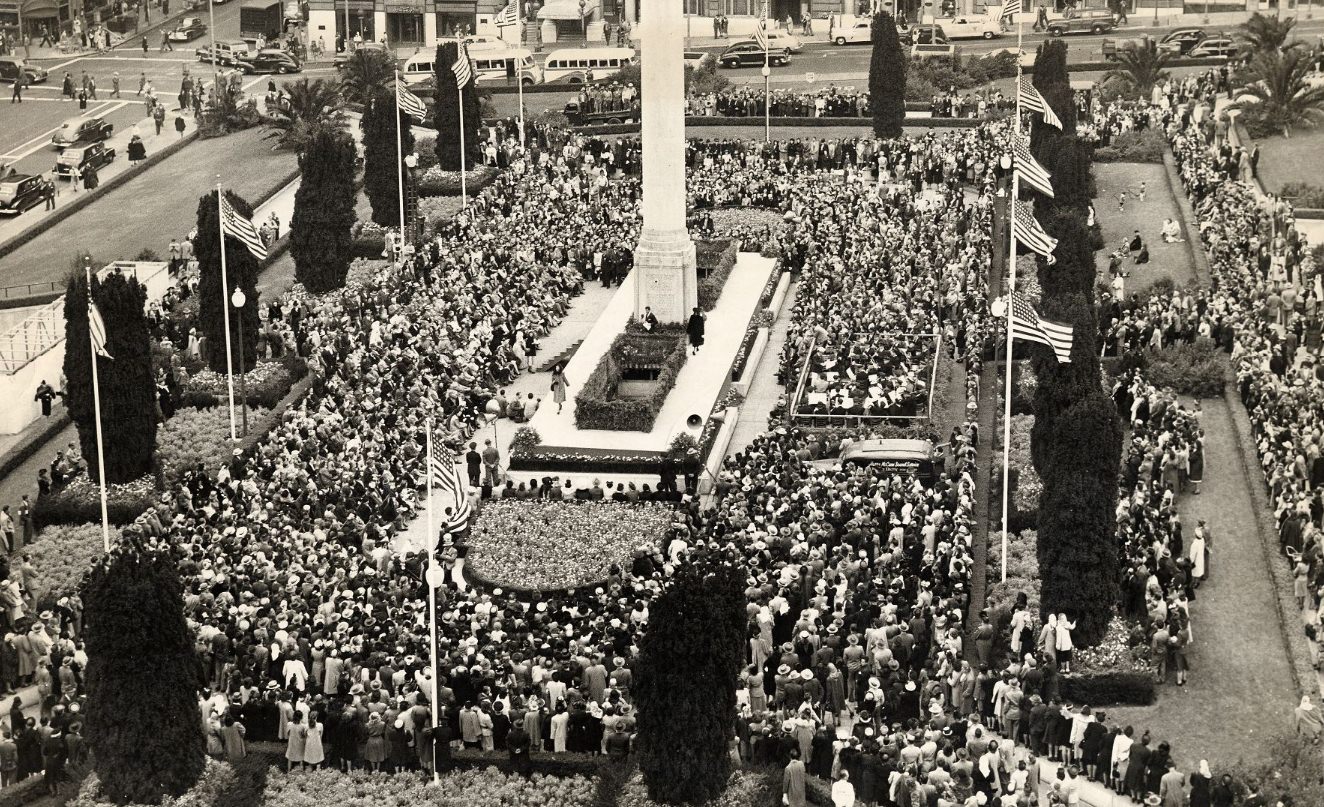
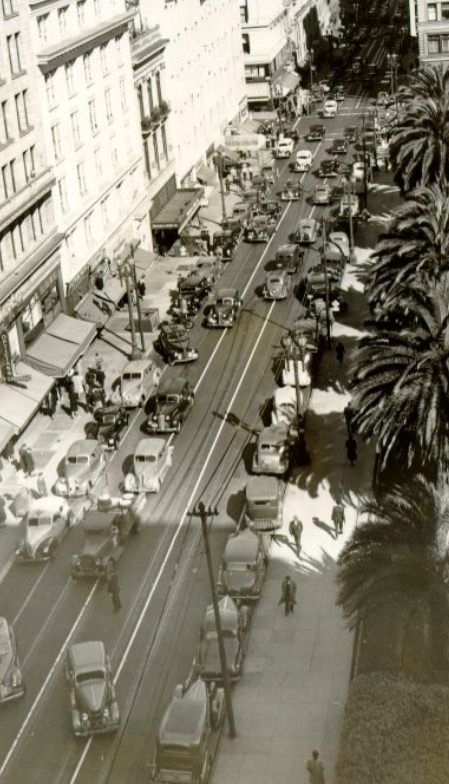
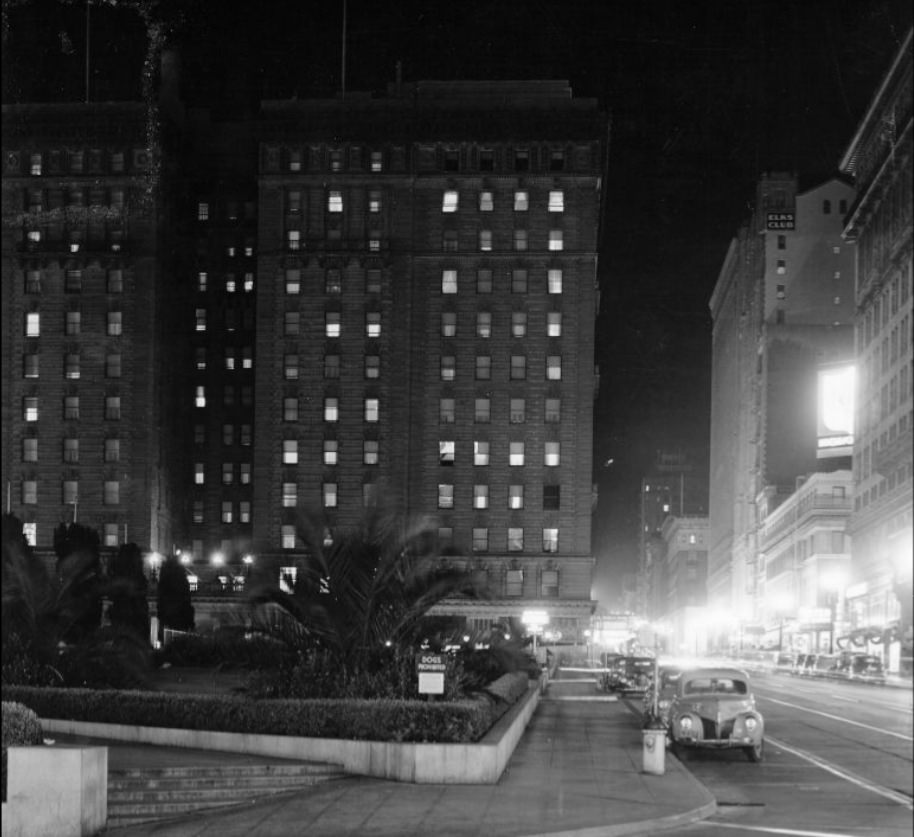
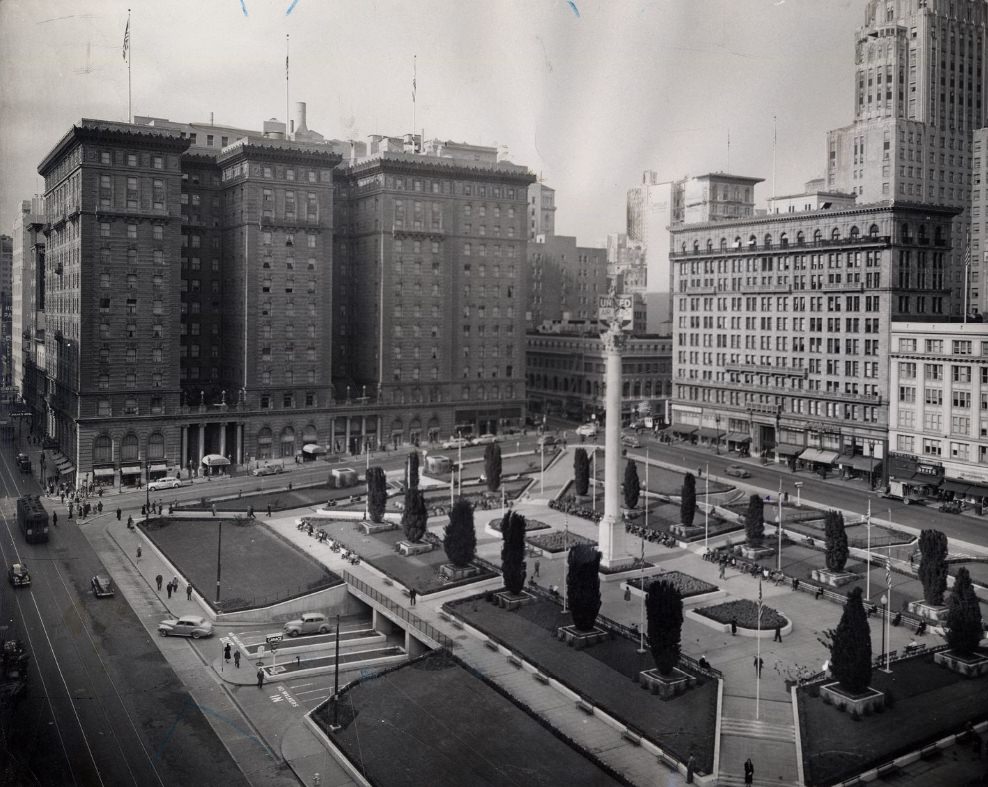
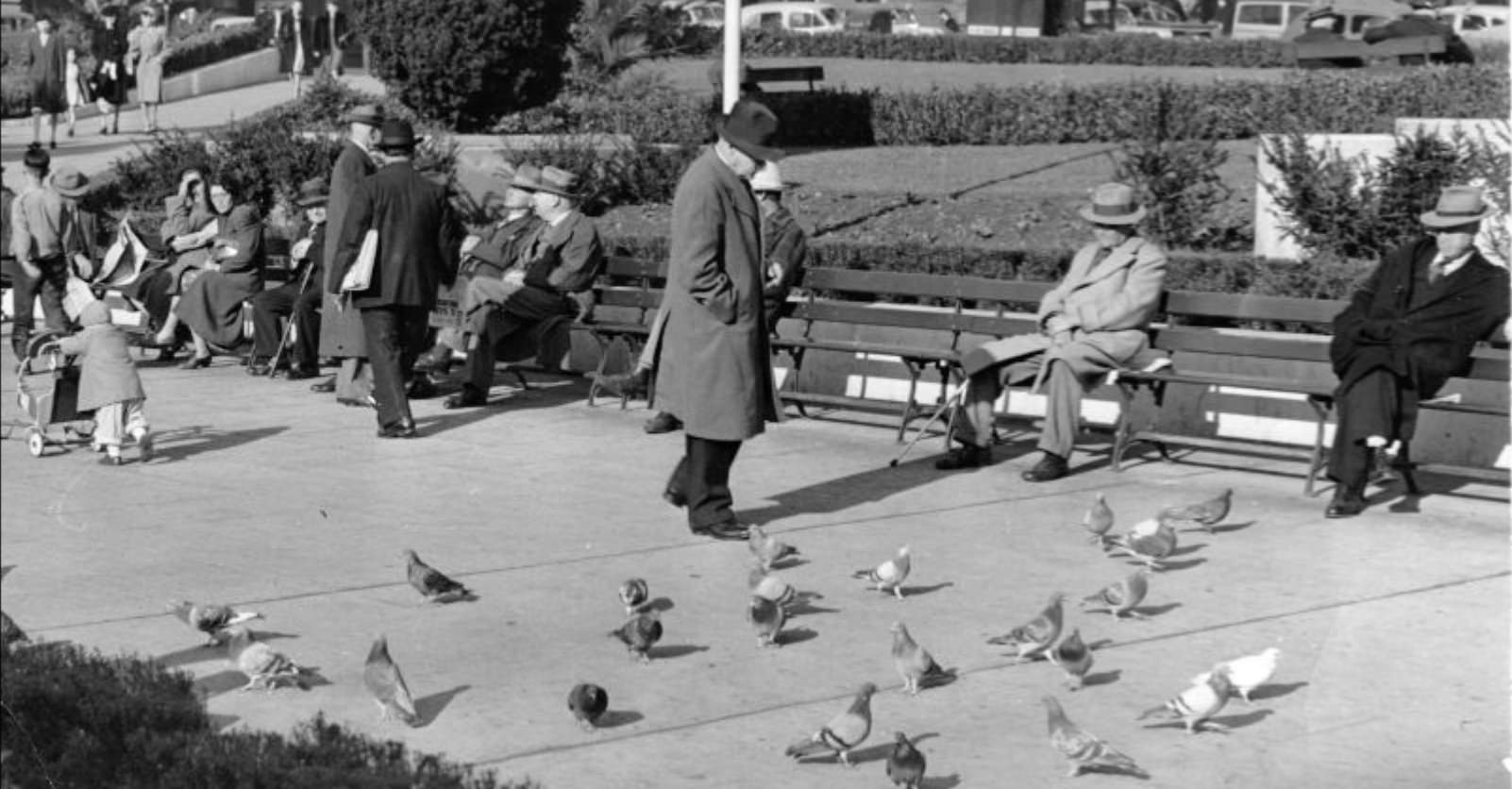
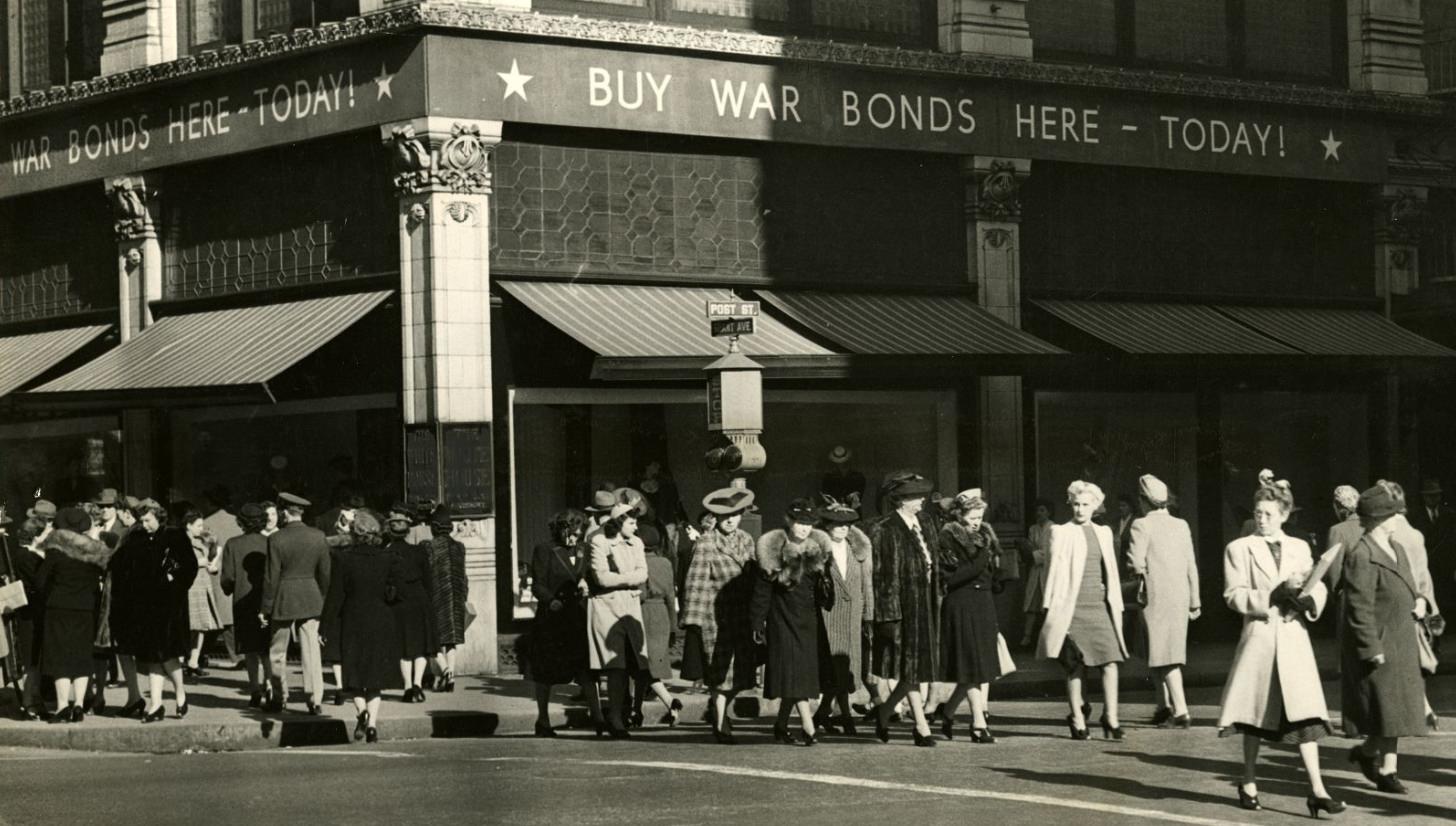
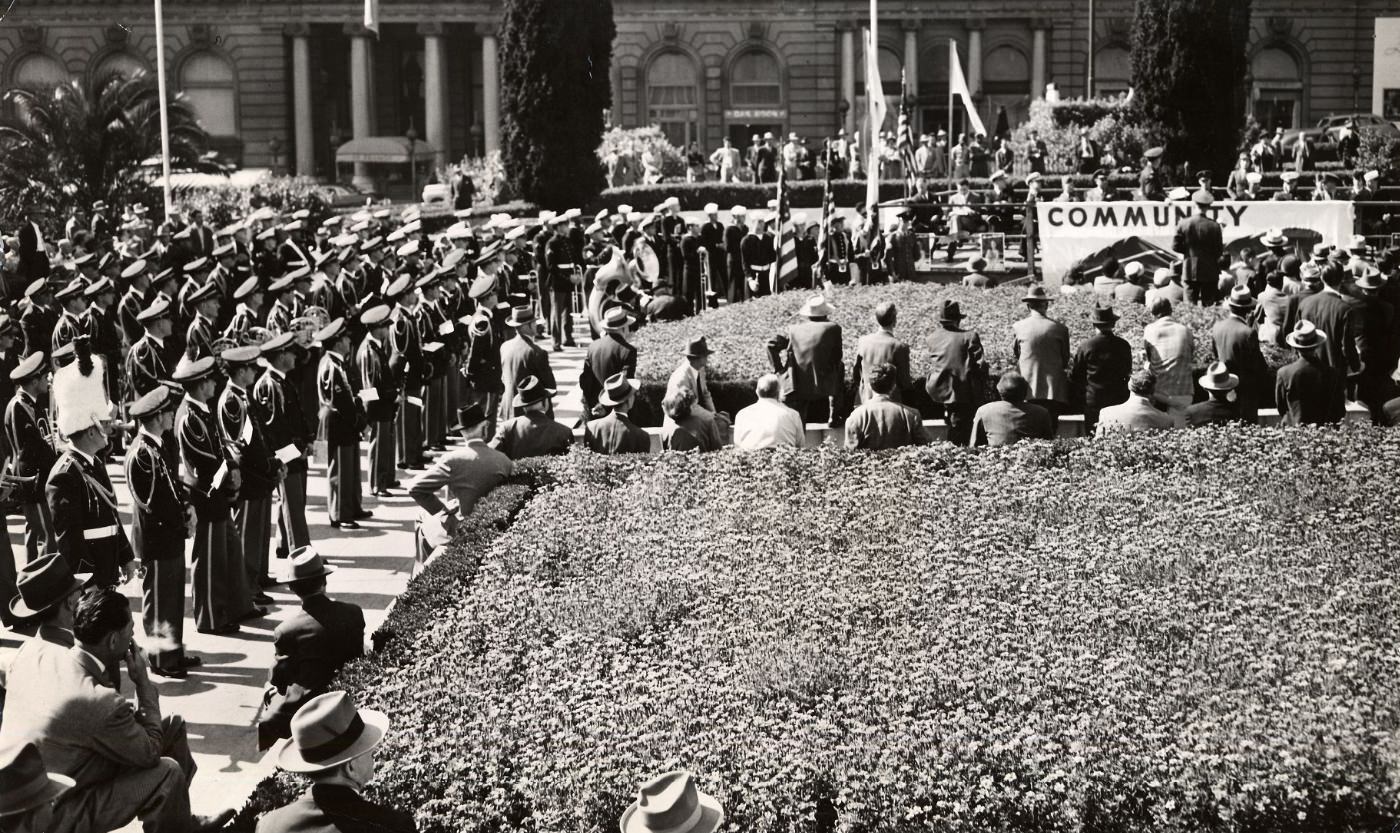
Union Square served as a gathering point throughout the decade. During the war, it was a site for bond drives and military rallies. Benches filled with civilians, servicemen on leave, and workers on breaks. After the war ended, Union Square returned to its role as a social and commercial center, hosting fashion shows, Christmas concerts, and community events.
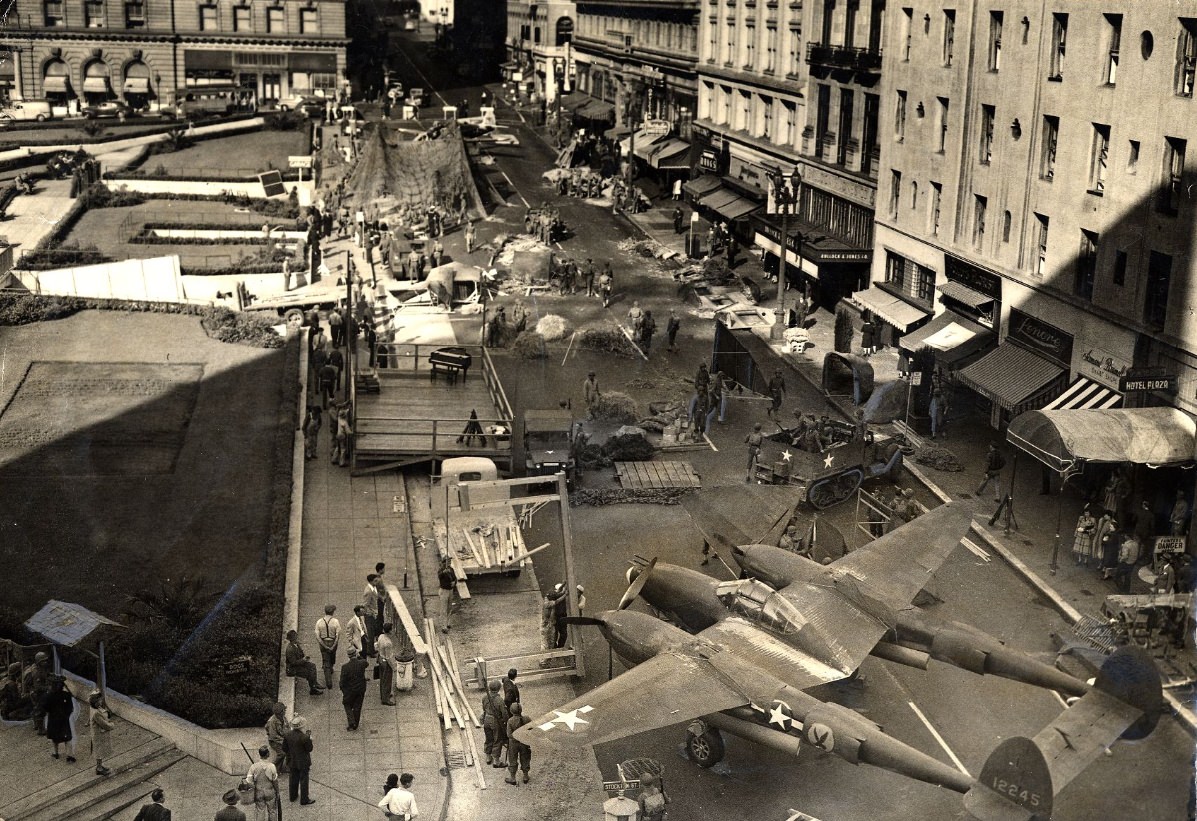
Benches lined with people in Union Square, 1942Preparations for a war bond drive on Post Street, 1943Christmas concert at Union Square with John Charles Thomas and the Municipal Band, 1946
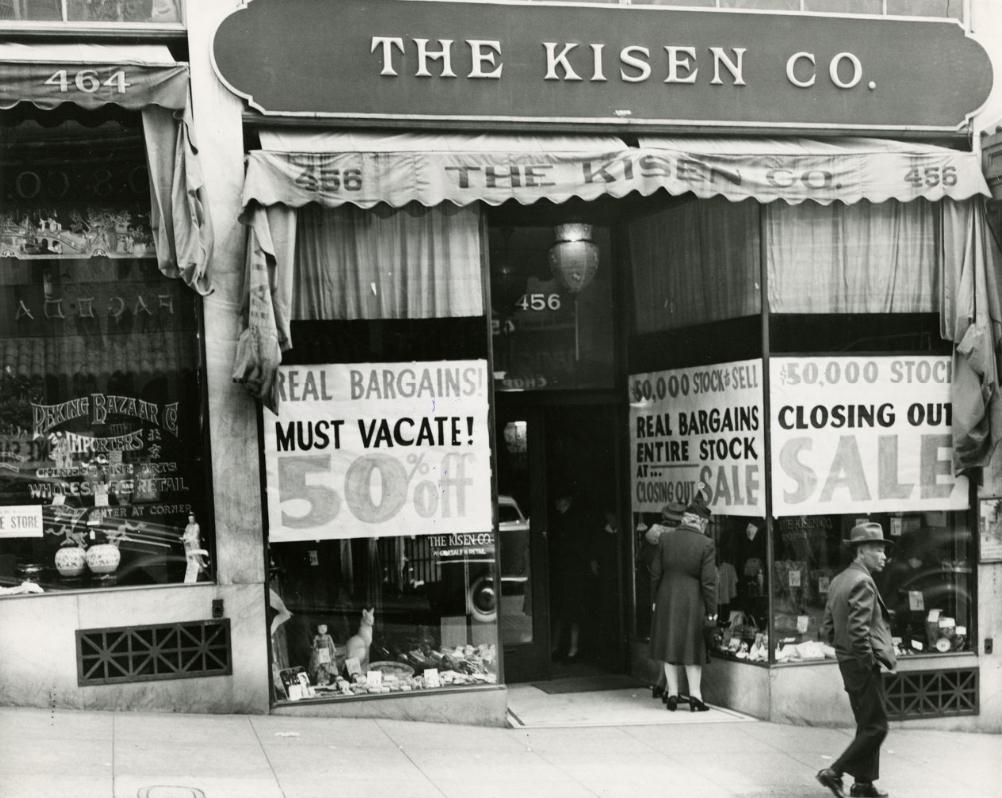
The war’s presence was felt everywhere — even in Chinatown. In 1942, Japanese-owned stores posted closing-out sale signs as Japanese Americans were removed from the city under the federal internment order. The episode left a visible mark on the neighborhood and stood as one of the decade’s most documented injustices.
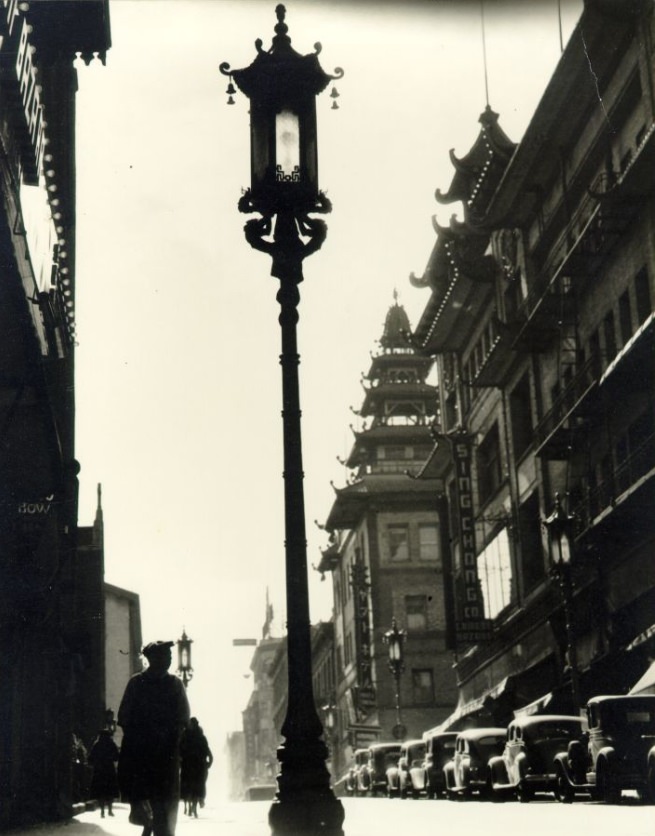
Japanese-owned store “closing out” sale in Chinatown, 1942Grant Avenue in Chinatown, 1940s
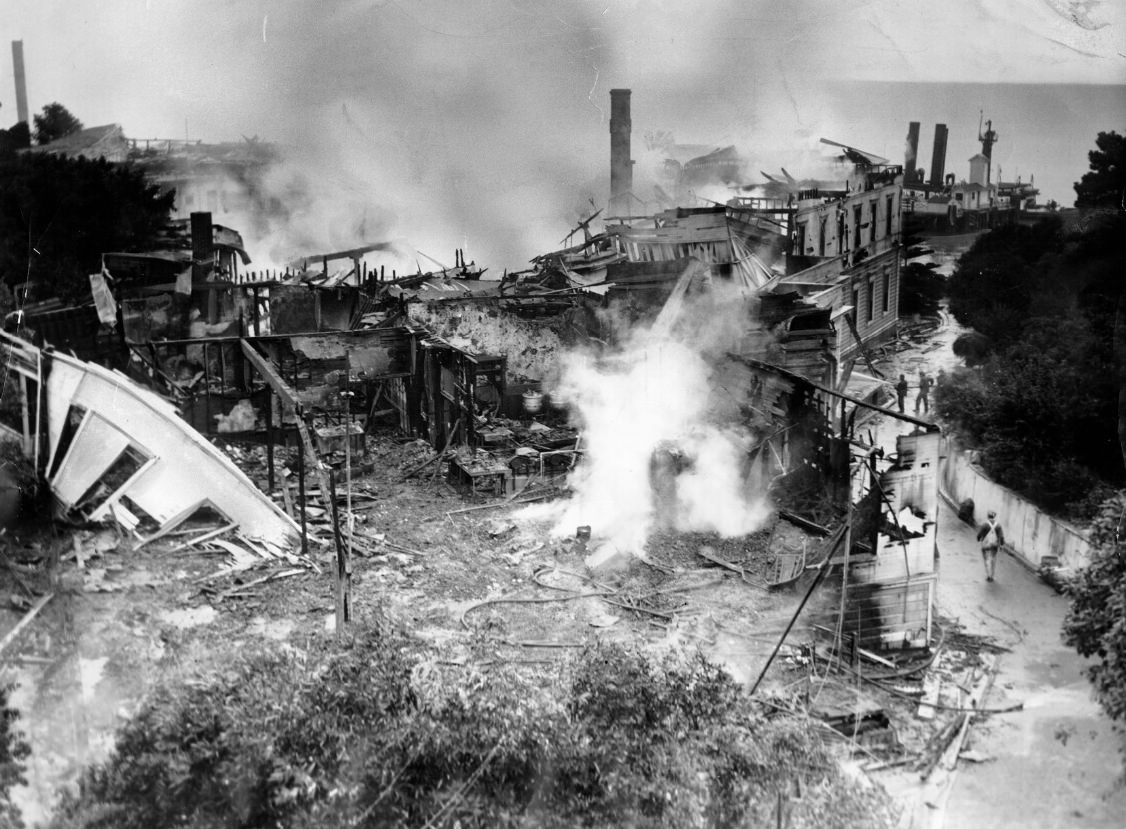
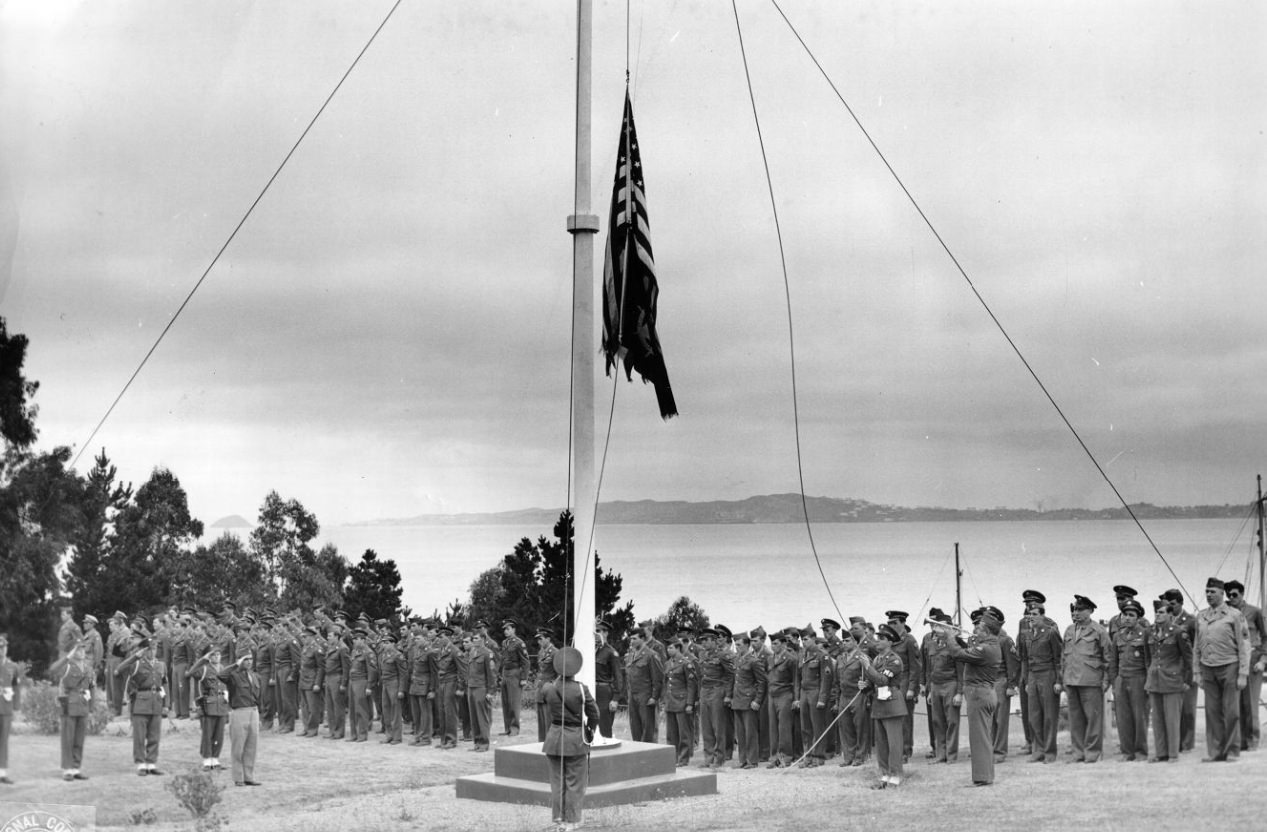
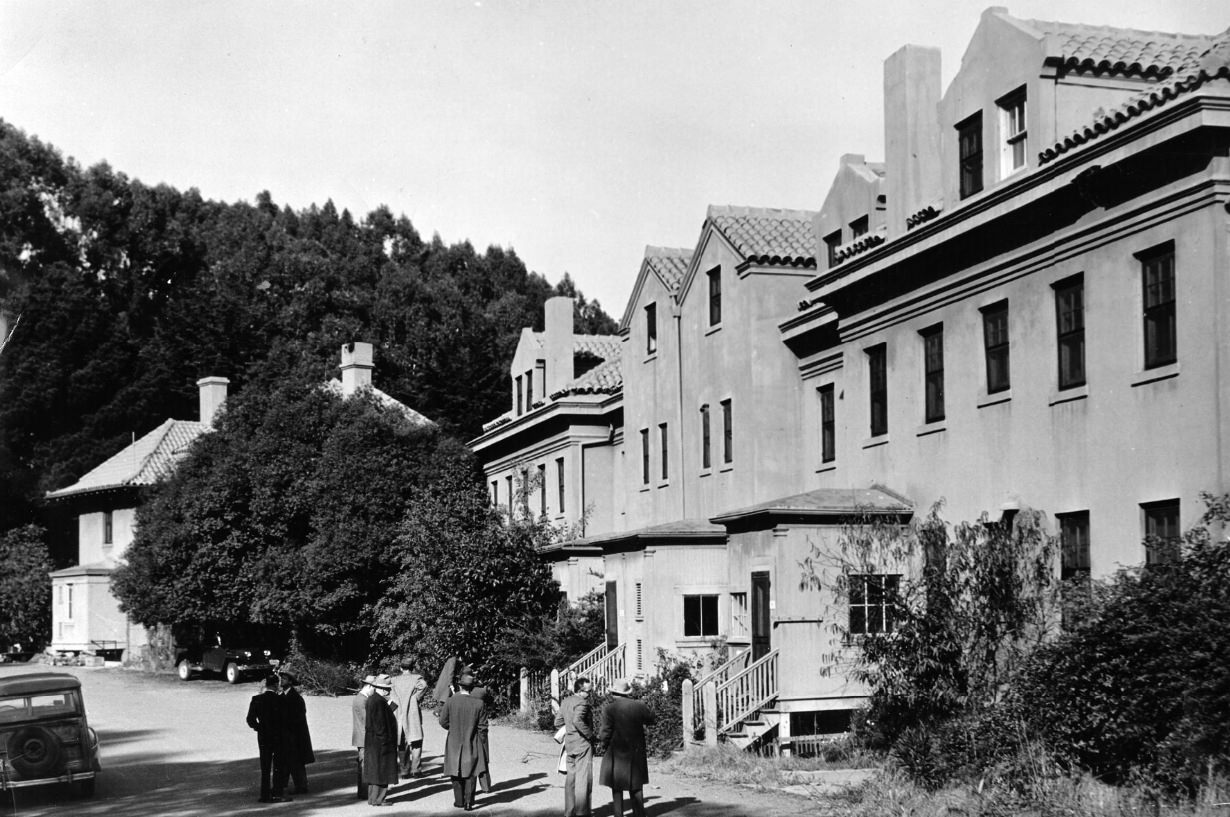
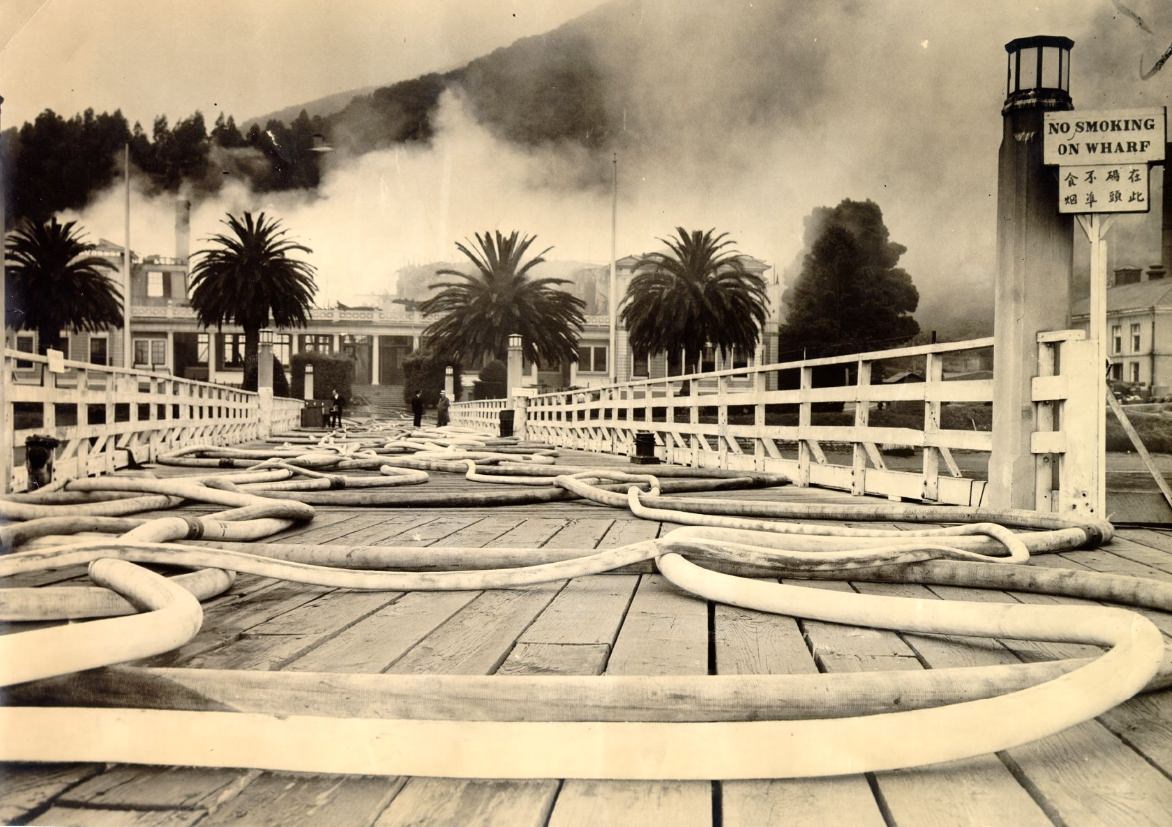
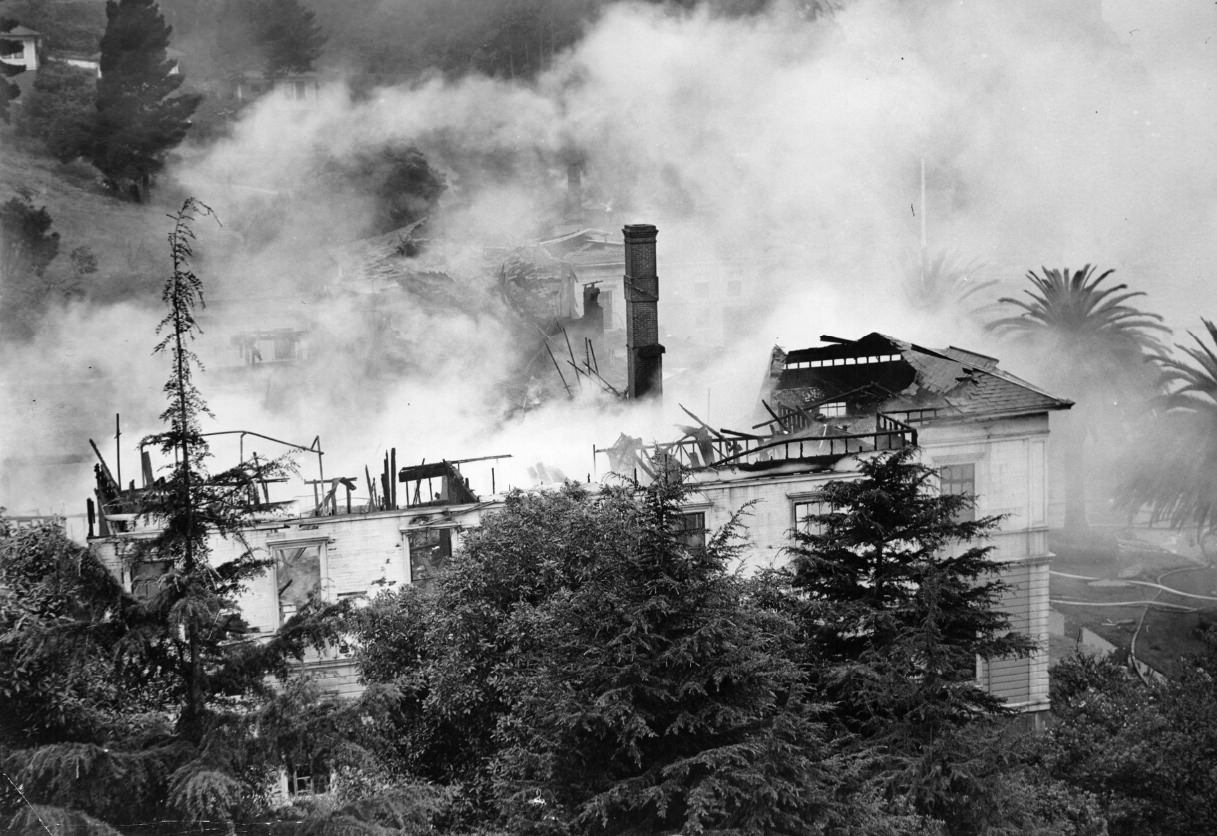
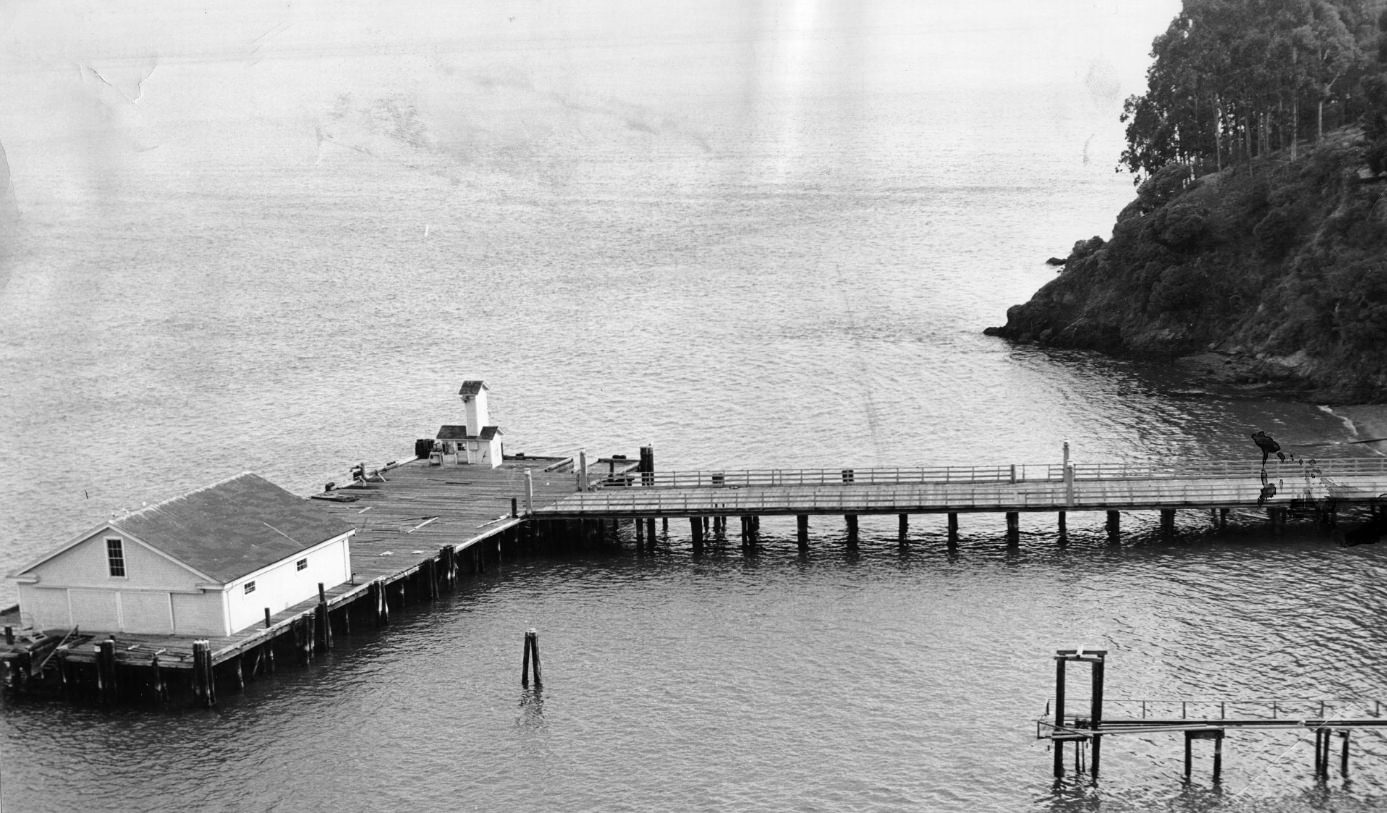
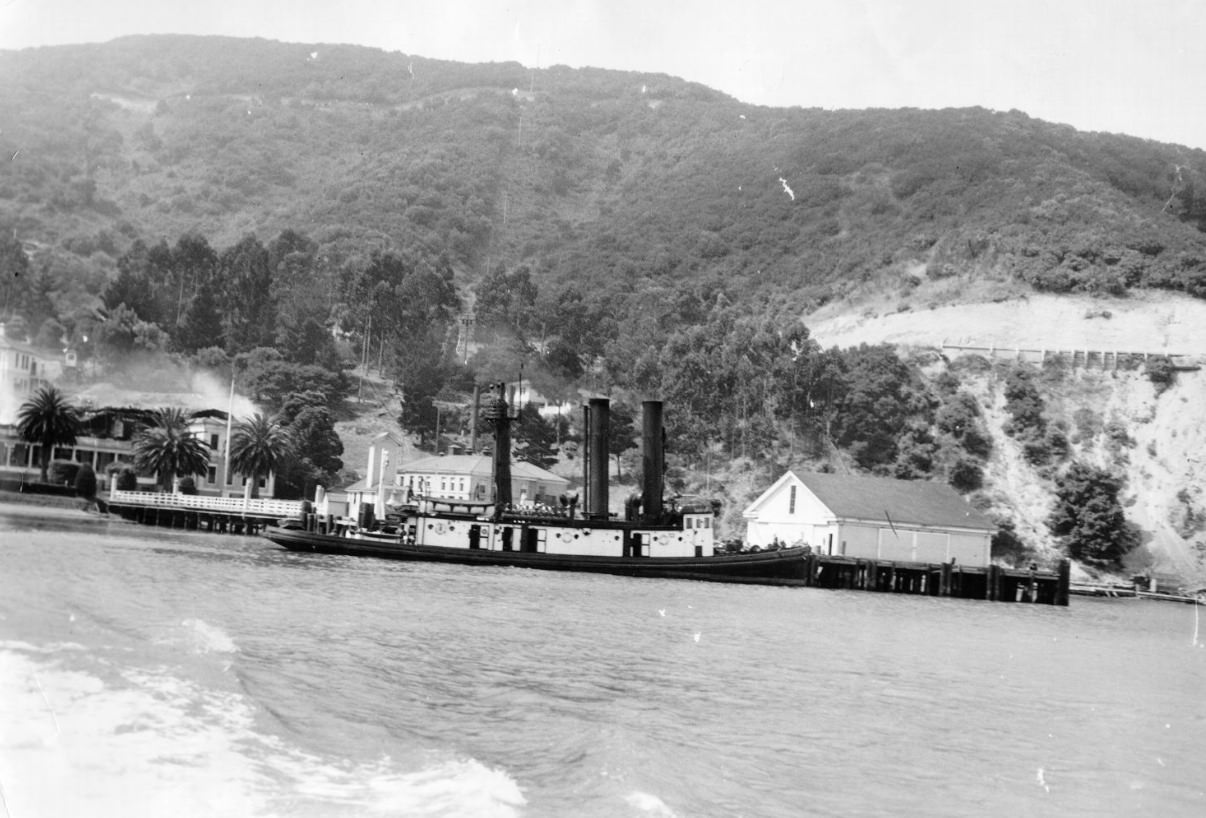
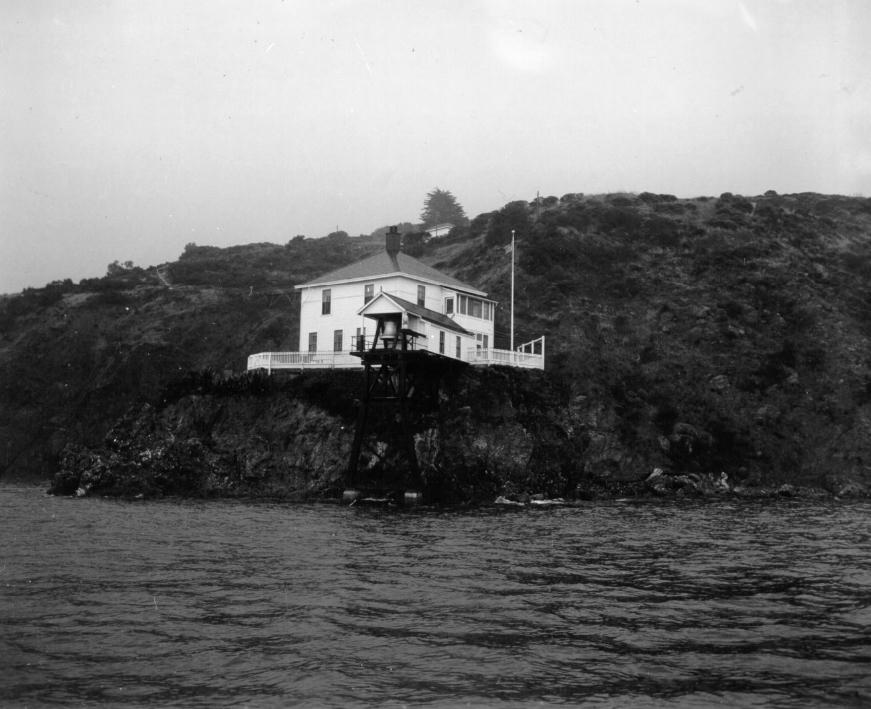
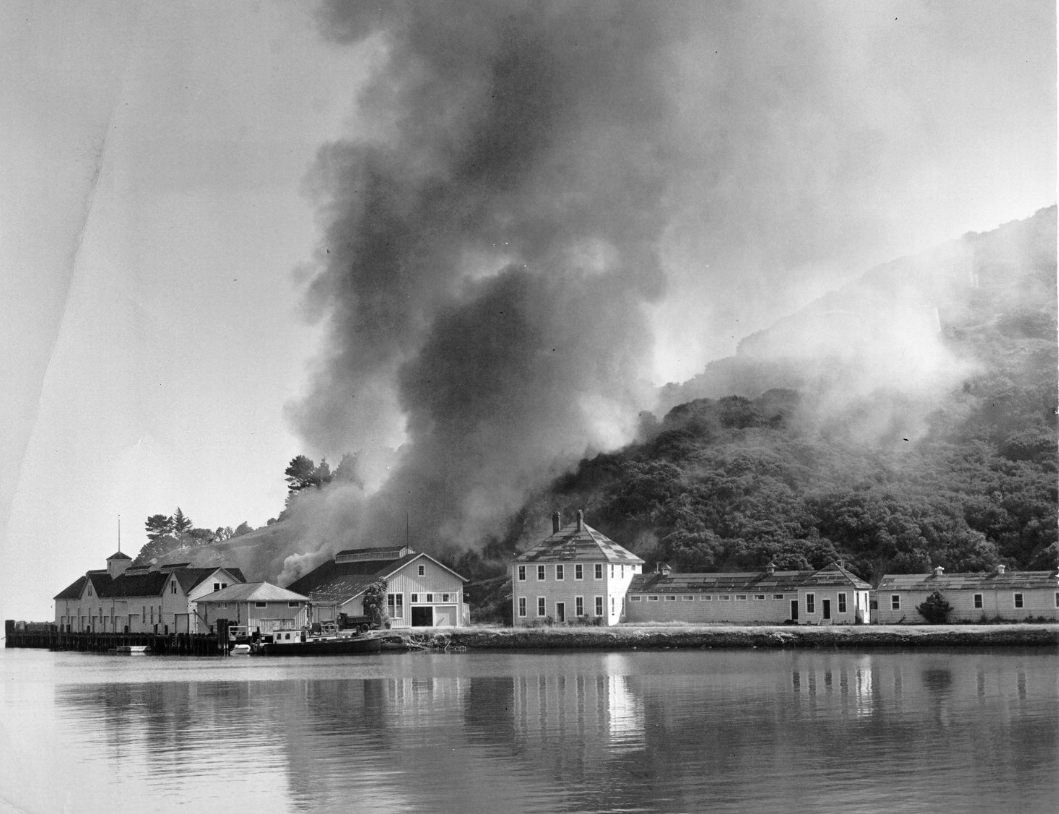
Angel Island, situated in San Francisco Bay, was an active U.S. Army post throughout the 1940s. In 1940, a fire destroyed the island’s administration building. The Army lowered its flag there in 1946 as the military presence wound down after the war. By the late 1940s, San Francisco supervisors and citizen committees were inspecting the island to determine its future use.
Burned wreckage of Angel Island Administration Building, 1940U.S. Army lowering flag on Angel Island, 1946
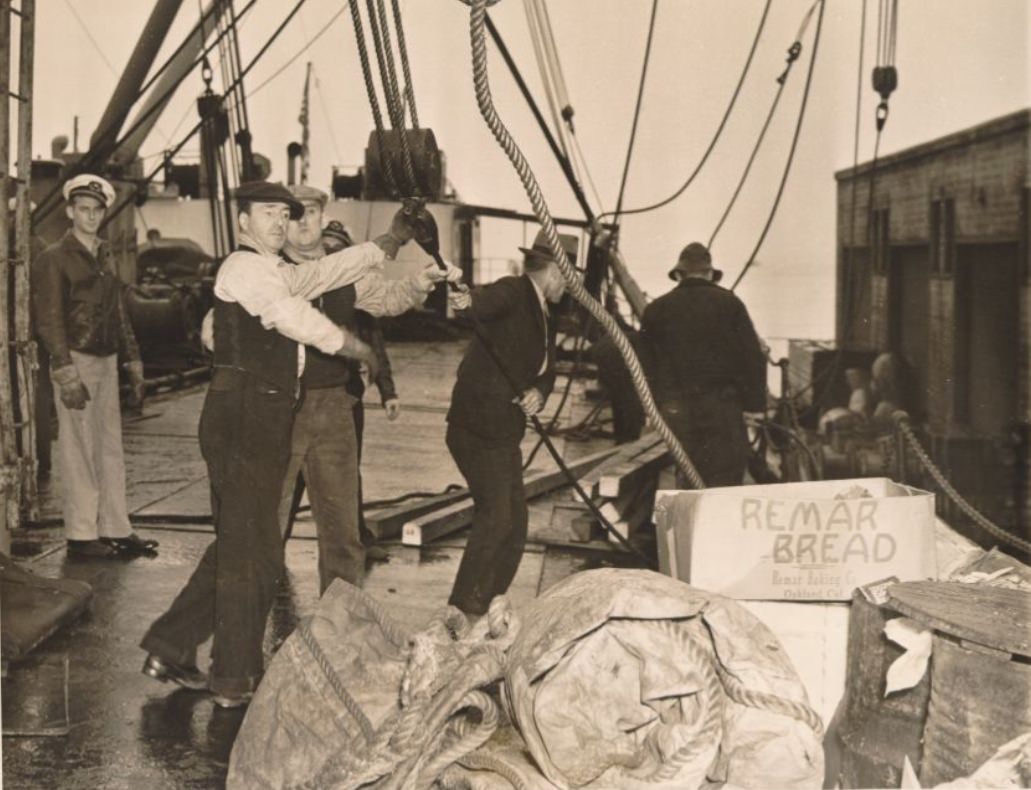
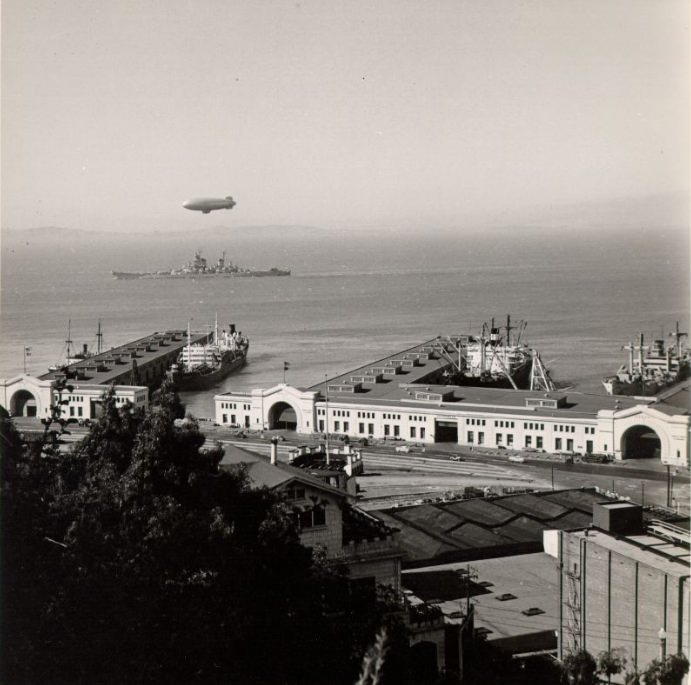
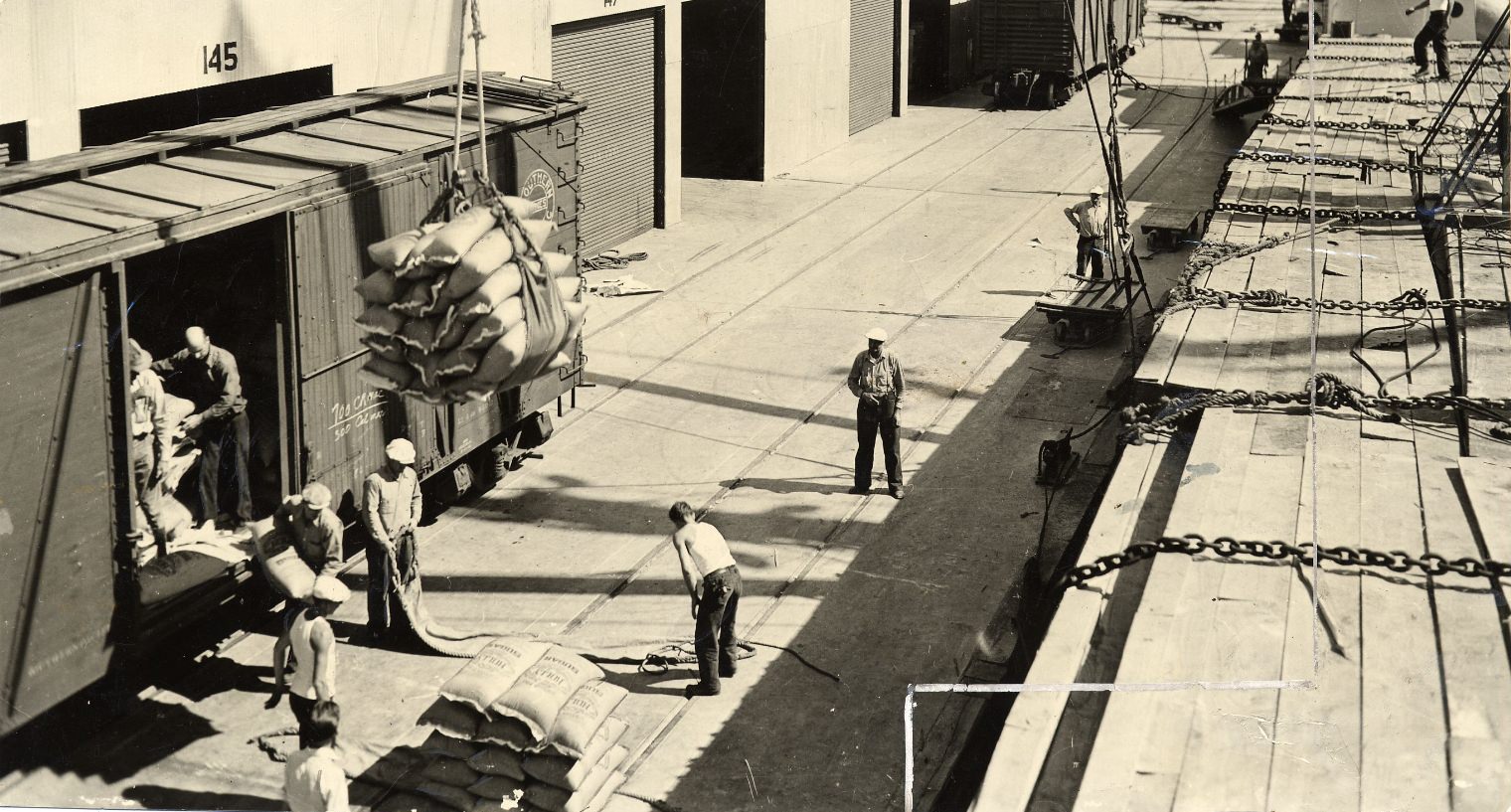
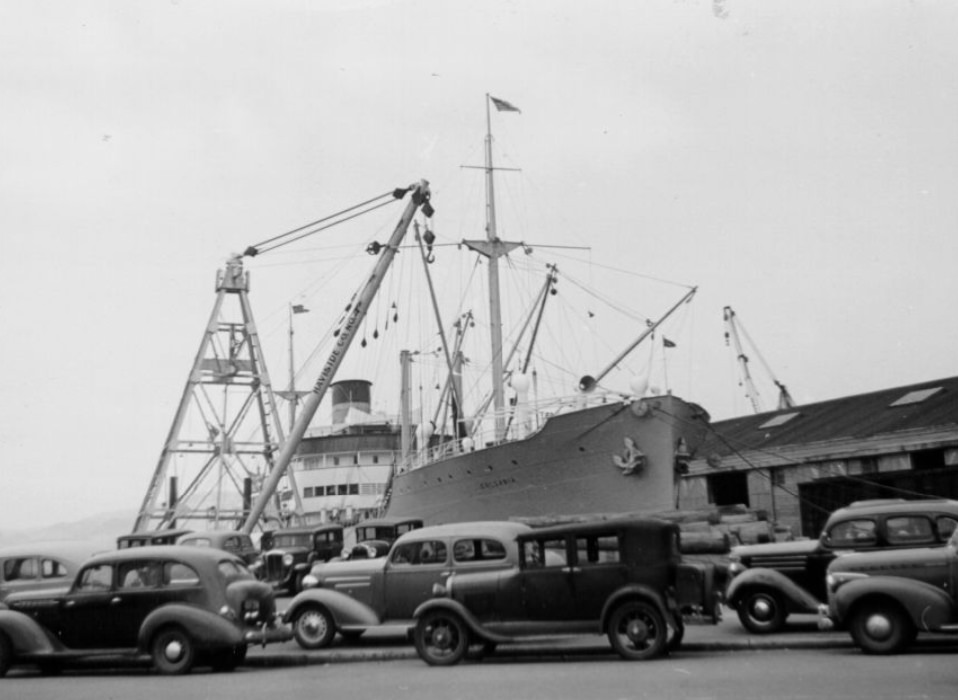
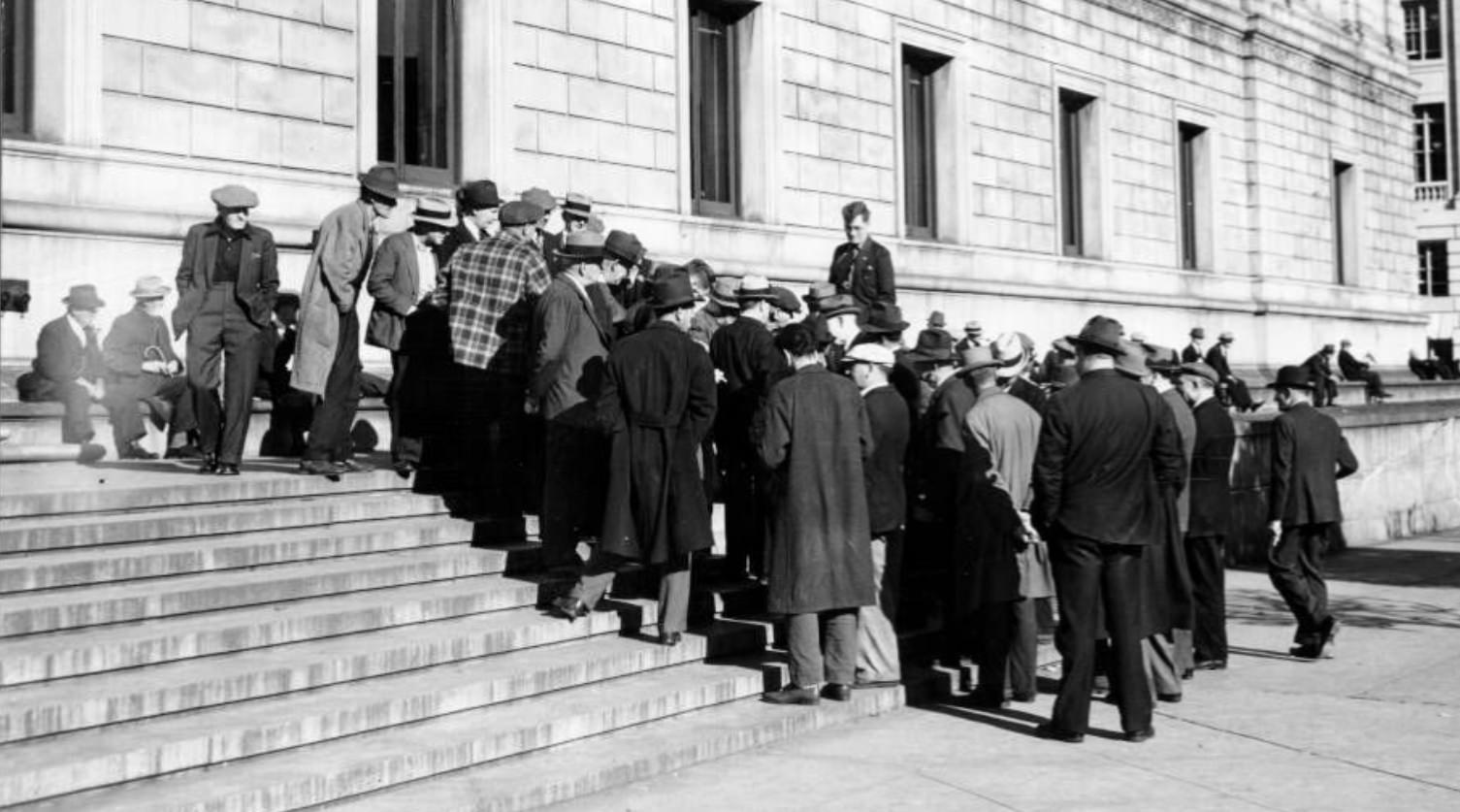
San Francisco’s waterfront stayed active throughout the decade. Longshoremen returned to work after a strike in 1940, and the docks never slowed during the war years. Ships moved through constantly — military vessels, cargo ships, and eventually, returning troop transports. A U.S. Navy blimp patrolled over the bay, visible from shore, a reminder of the military’s reach over the city’s waters.
Longshoremen back to work after a strike, 1940Blimp over a ship off Pier 34 in San Francisco Bay, 1940s
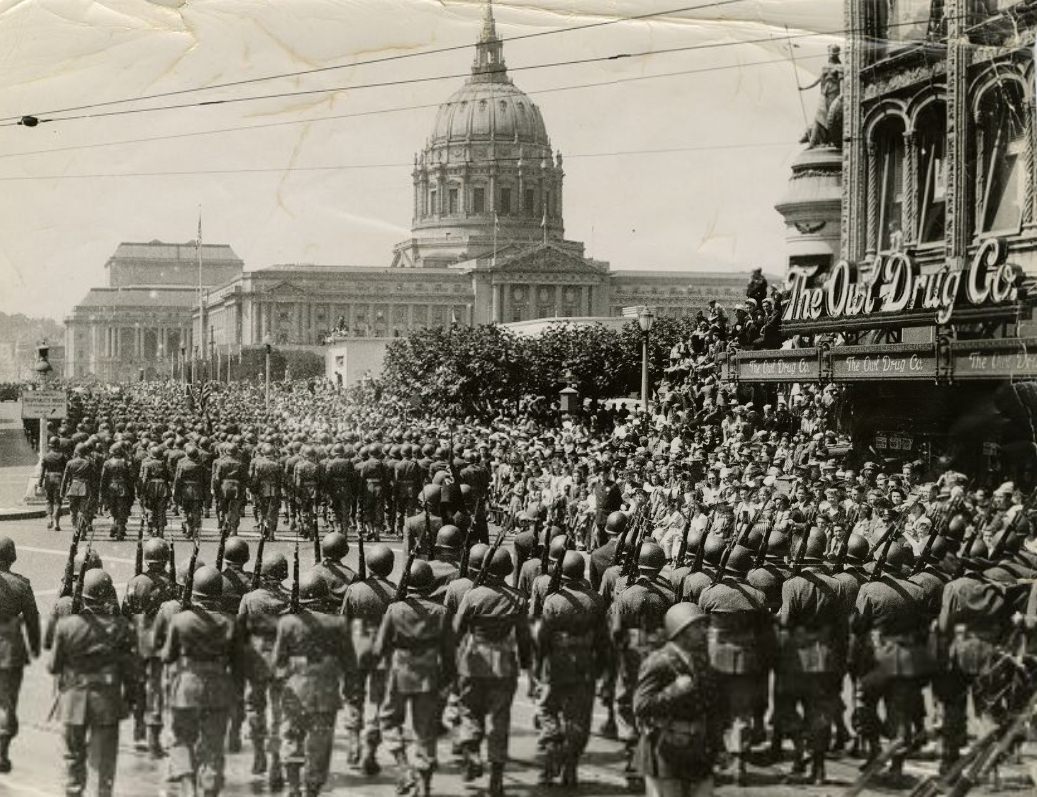
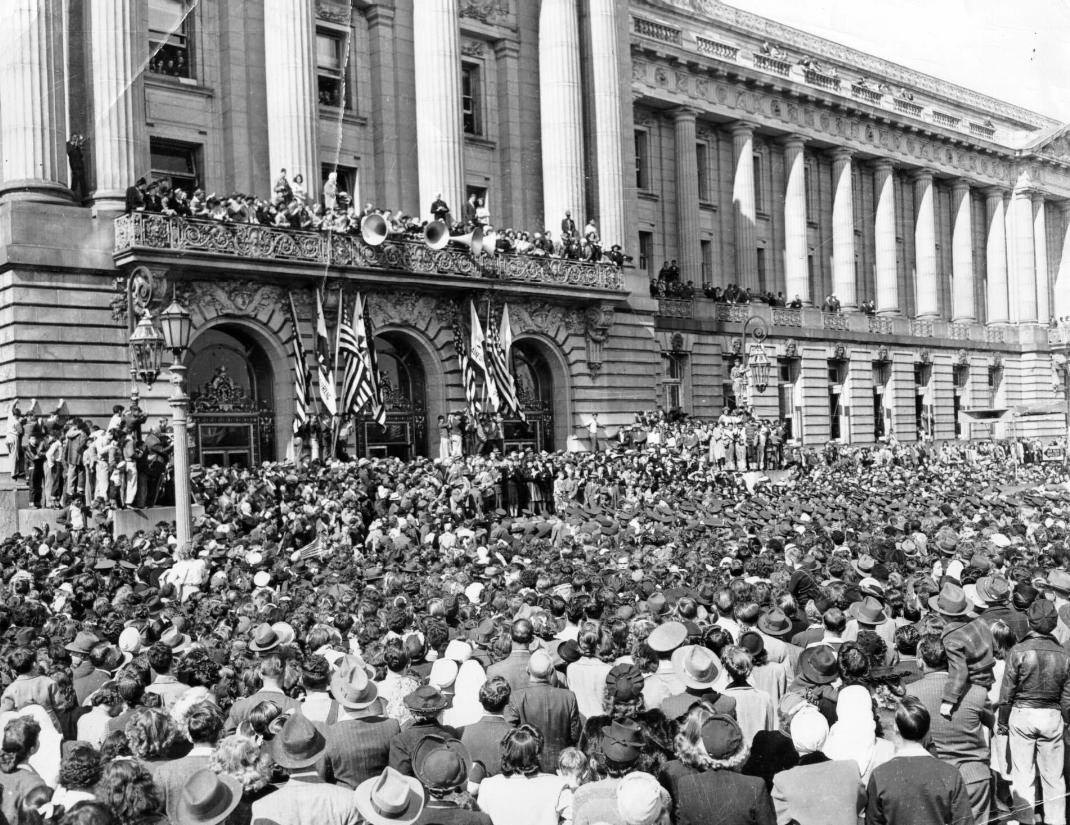
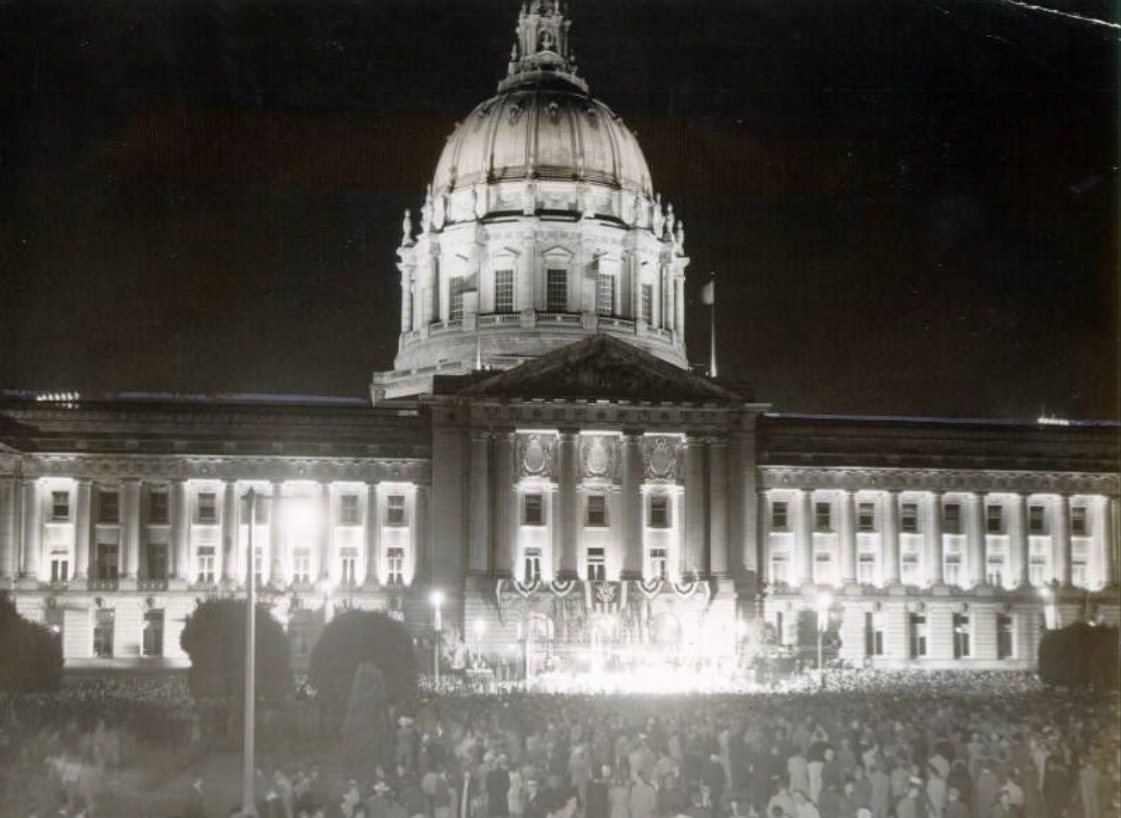
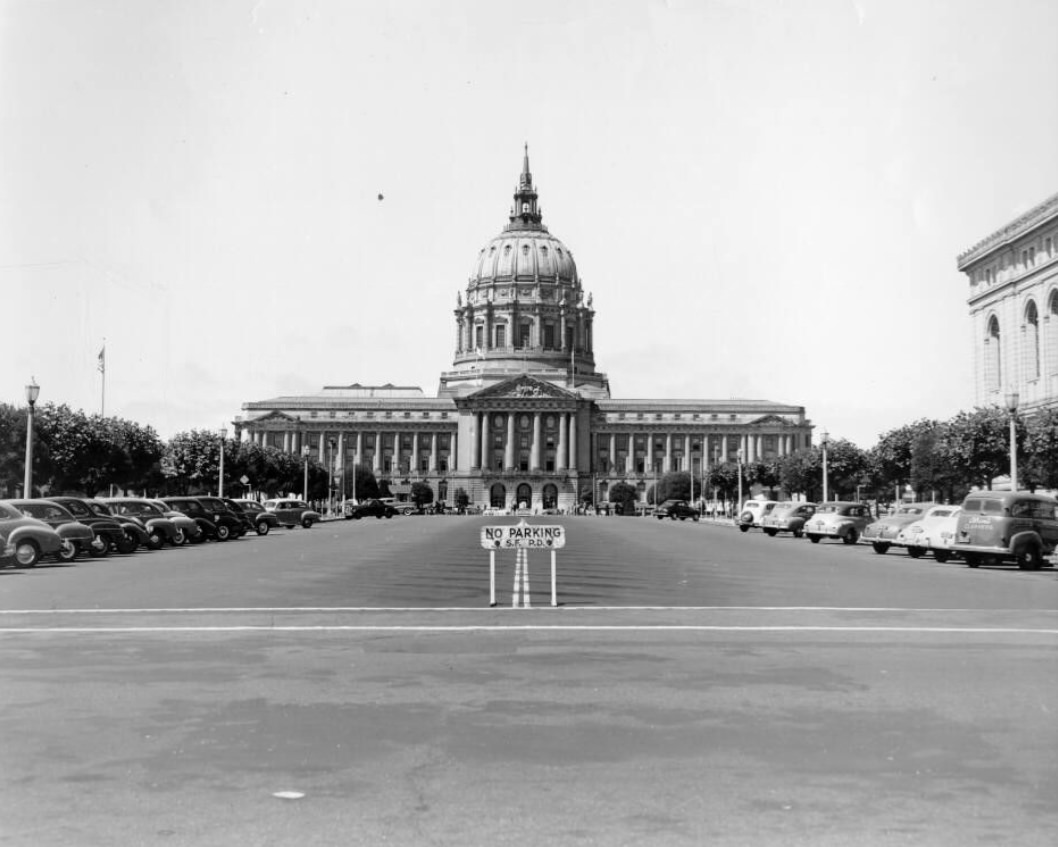
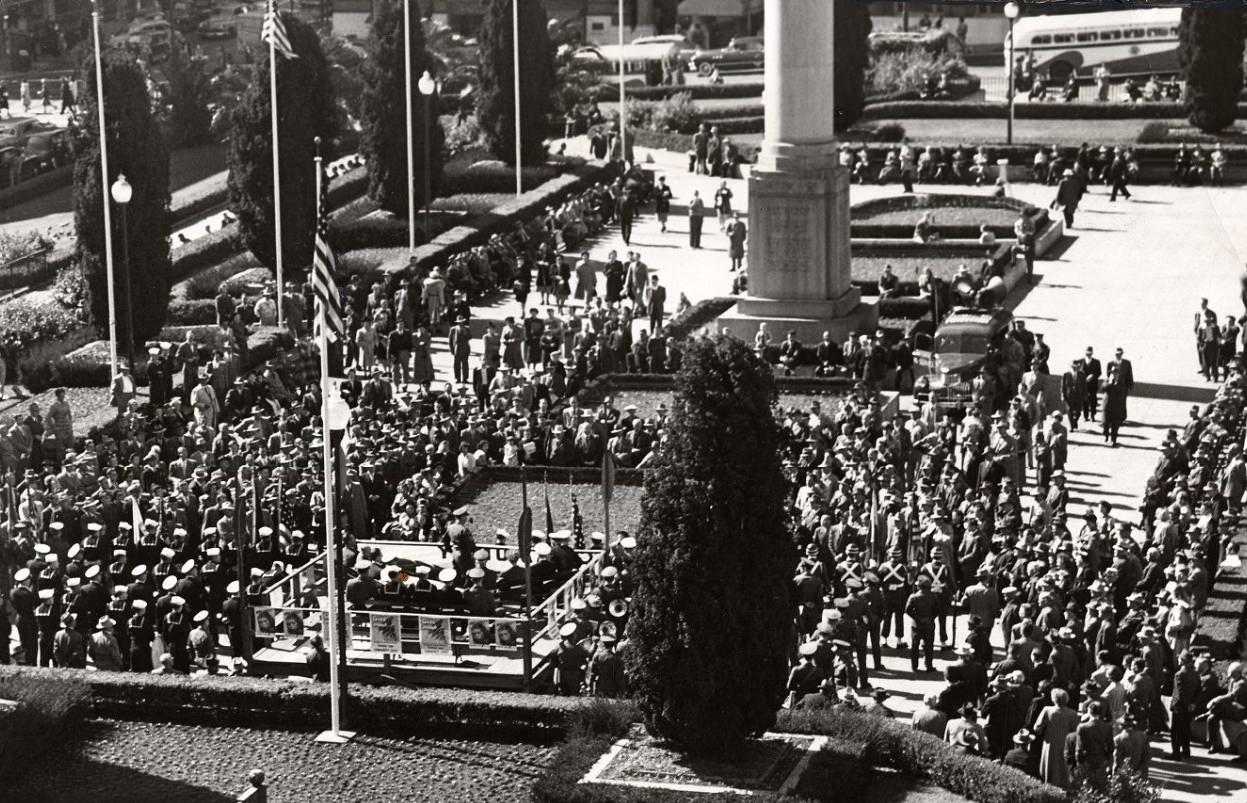
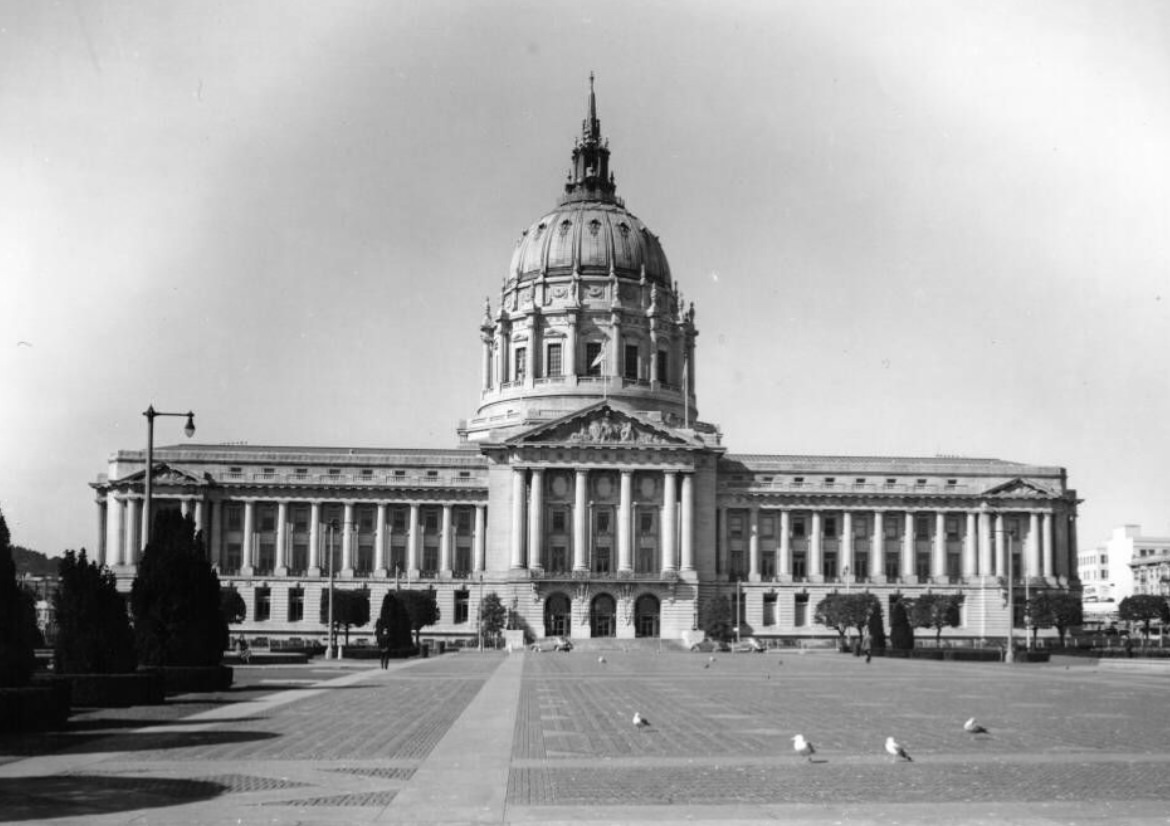
When the war ended in 1945, the city marked the moment publicly. U.S. Army troops paraded toward City Hall, and Bataan prisoners of war were welcomed at City Hall ceremonies. Ten thousand San Franciscans turned out to hear President Harry Truman speak at City Hall in 1948. The post-war city was proud and relieved, and it showed in the streets.
U.S. Army troops parading toward City Hall, 1945Bataan prisoners of war welcomed at City Hall ceremonies, 1945Ten thousand San Franciscans at City Hall for a speech from President Harry Truman, 1948
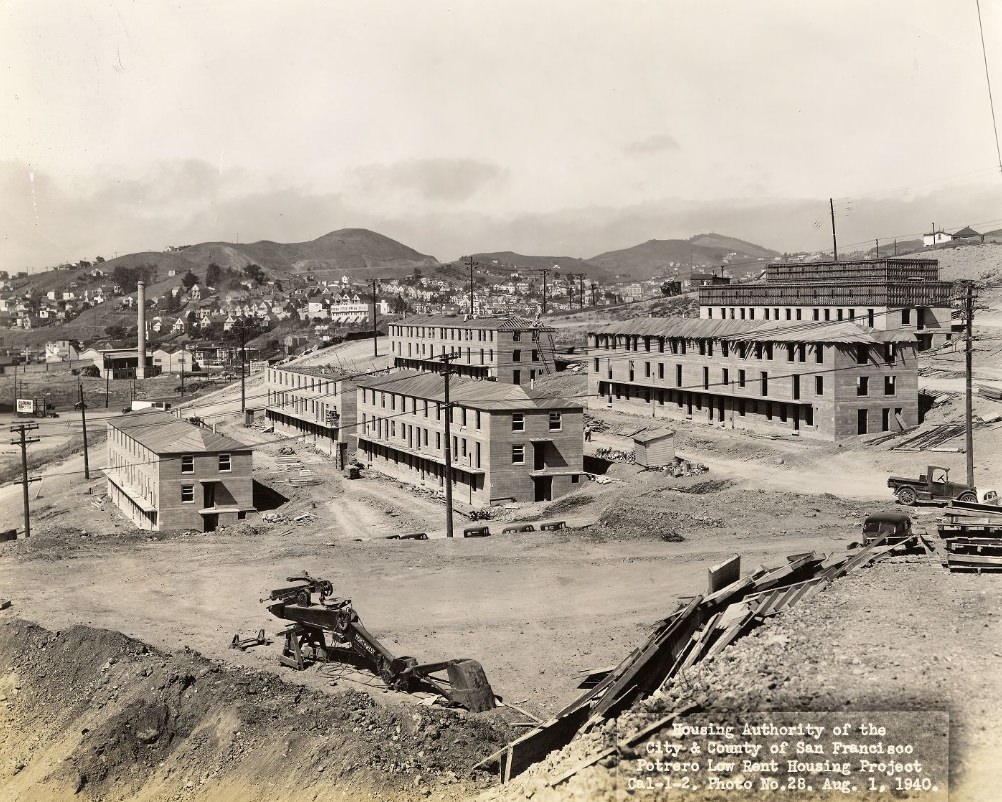
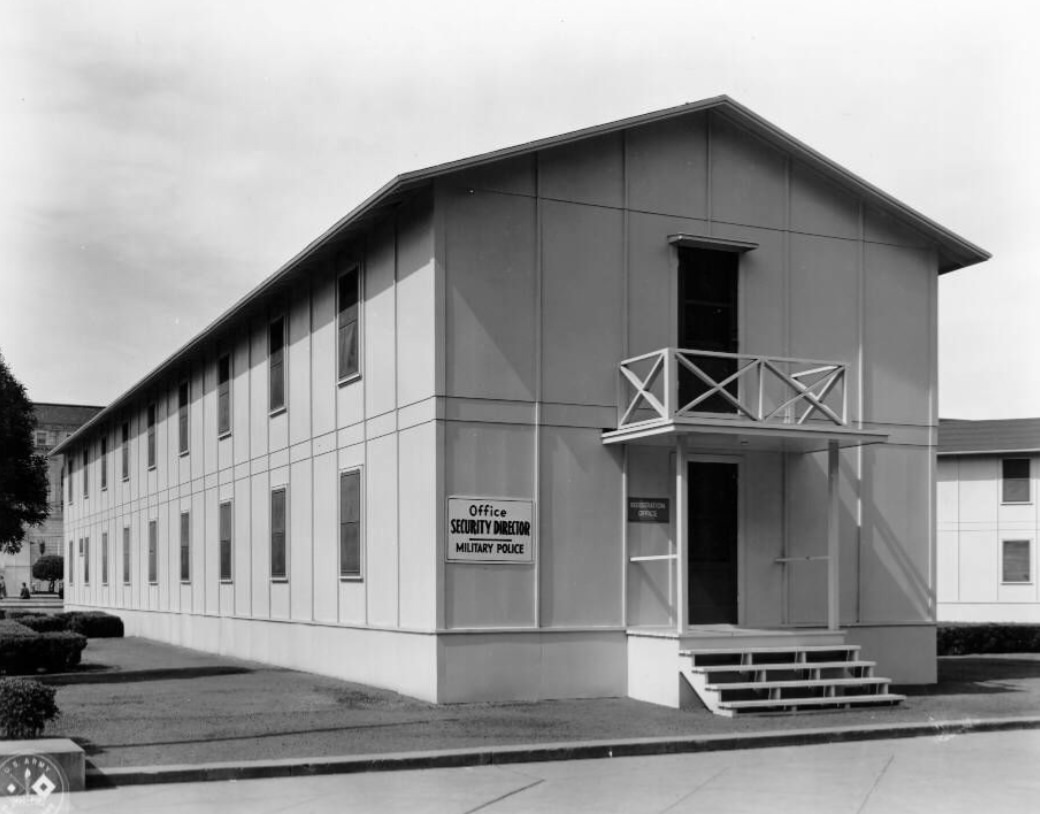
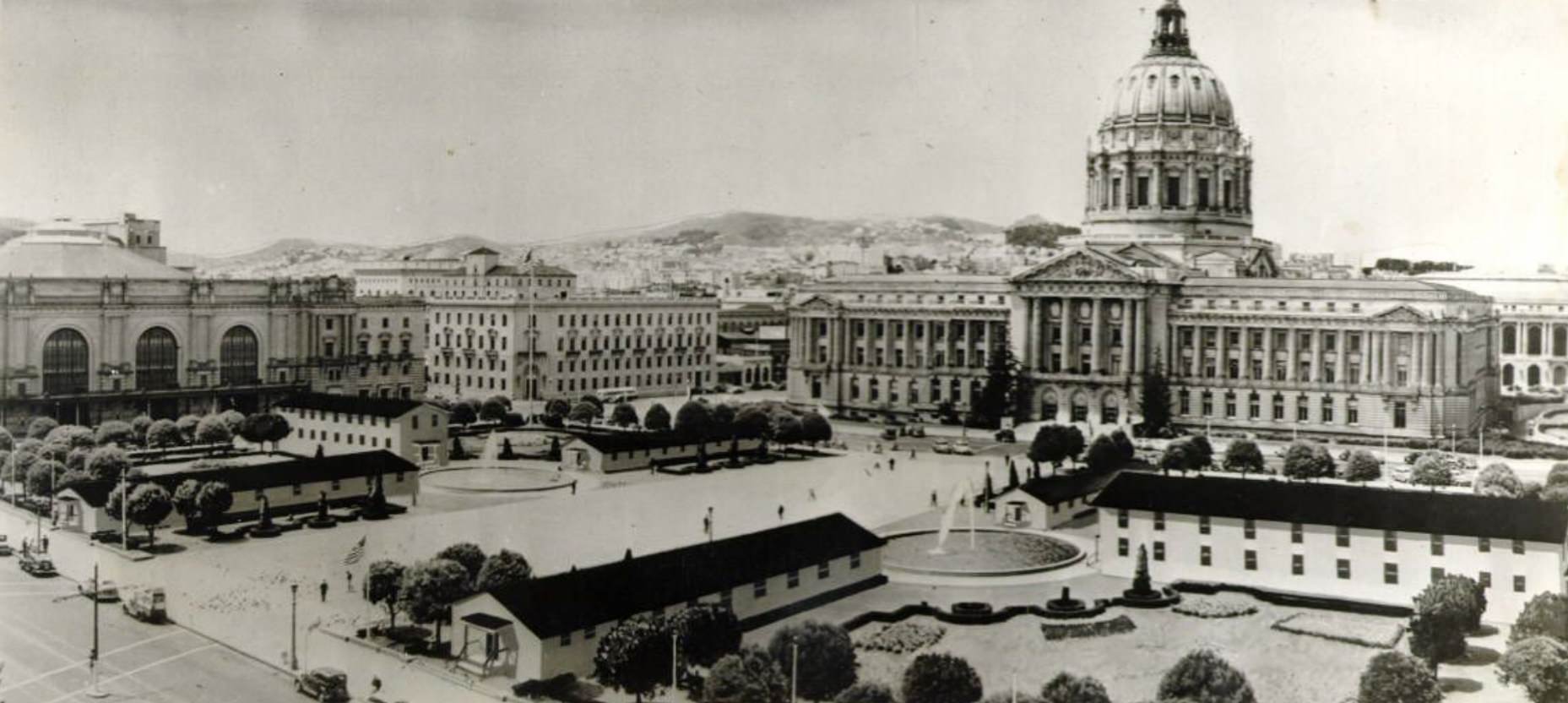
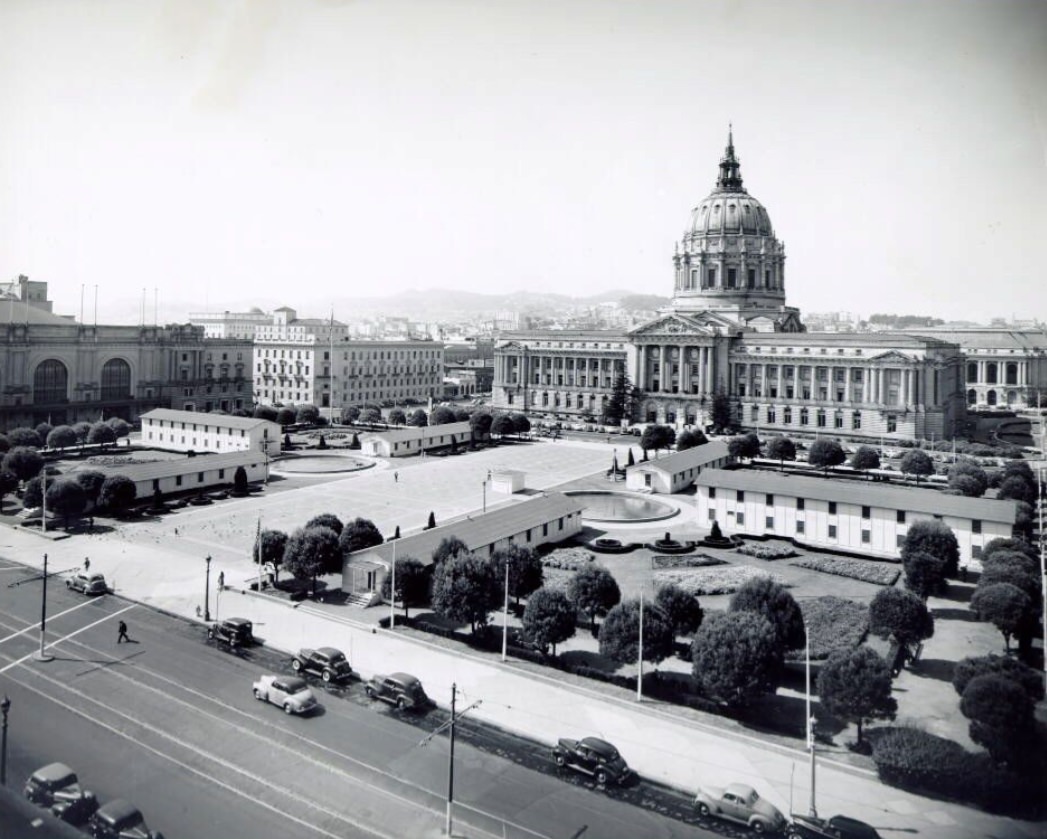
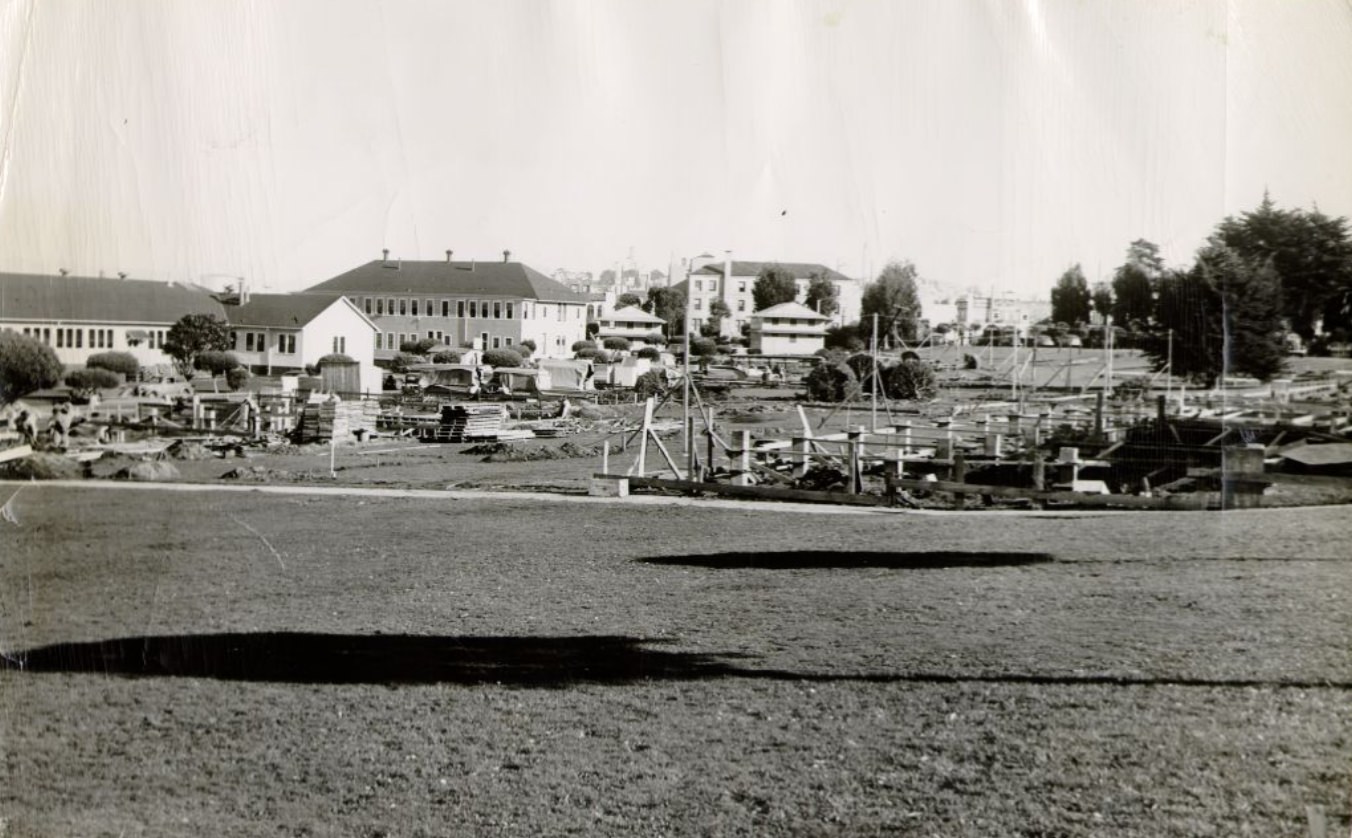
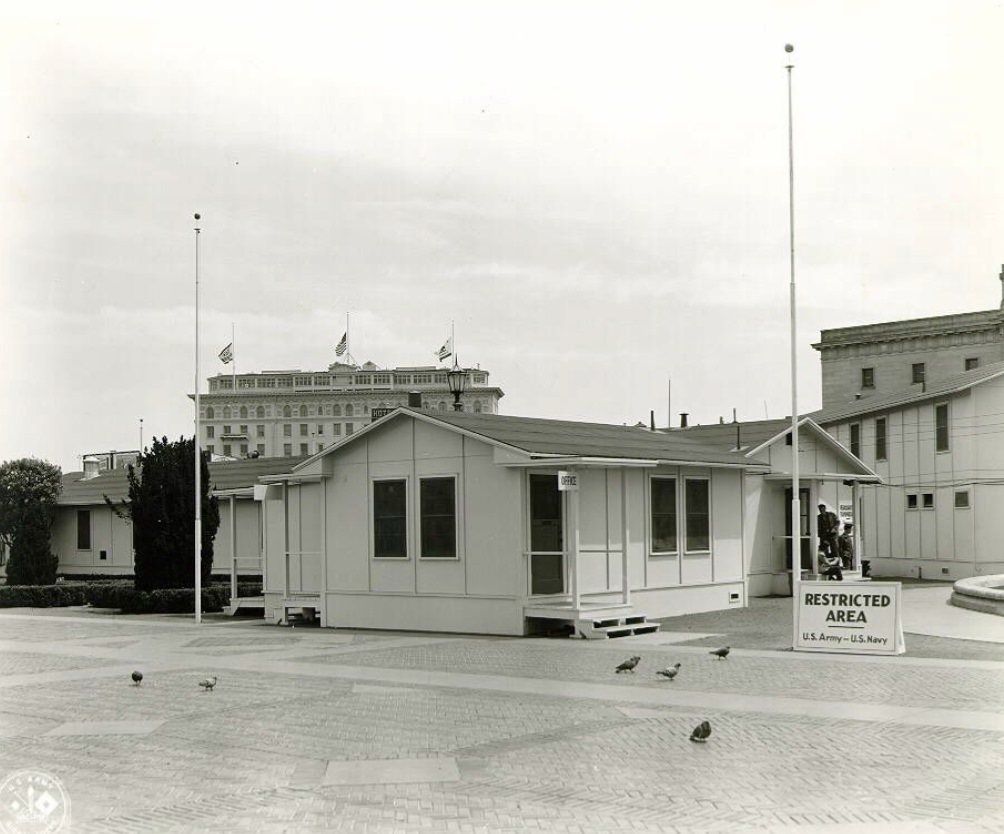
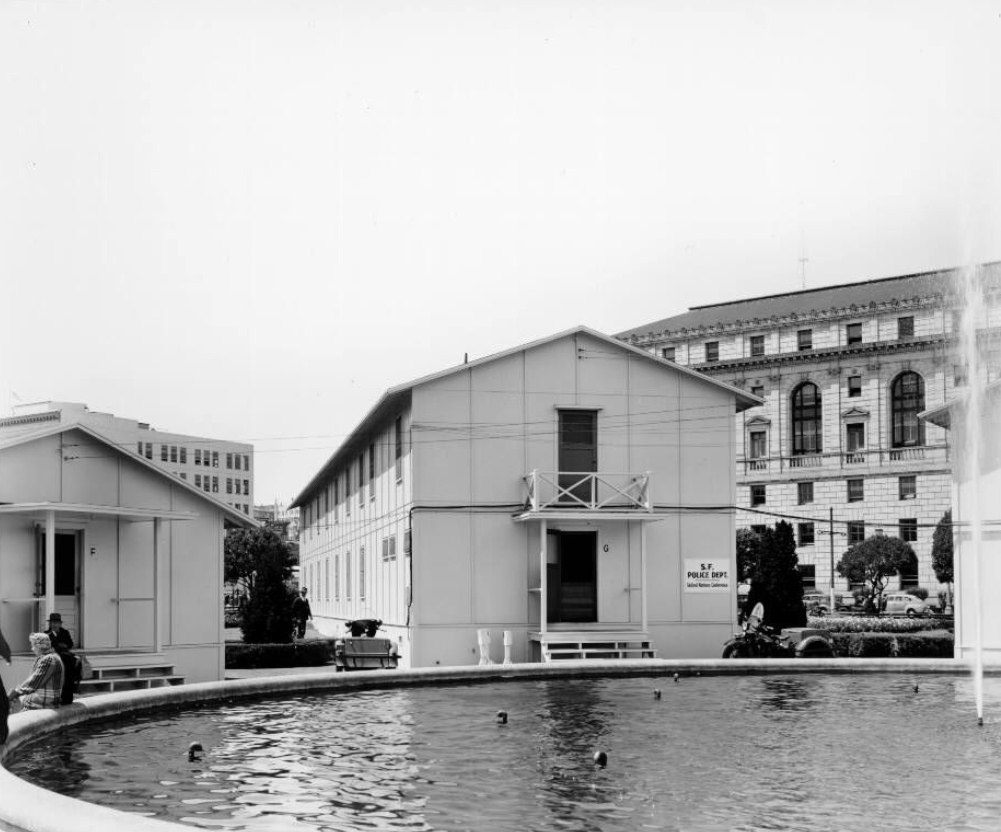
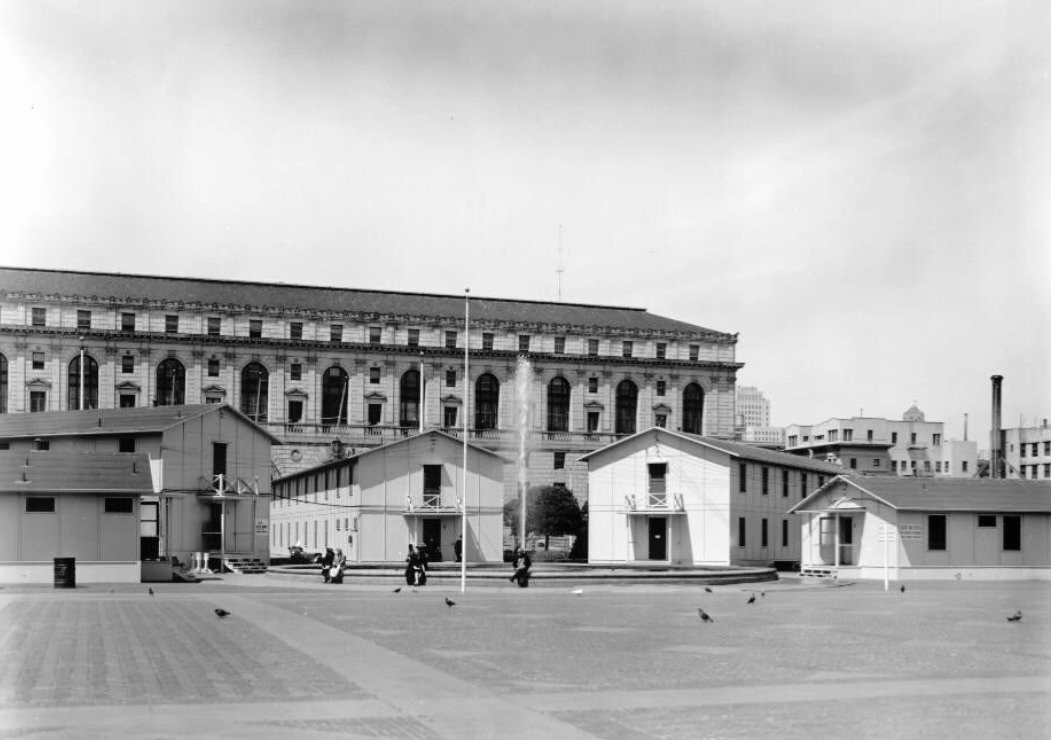
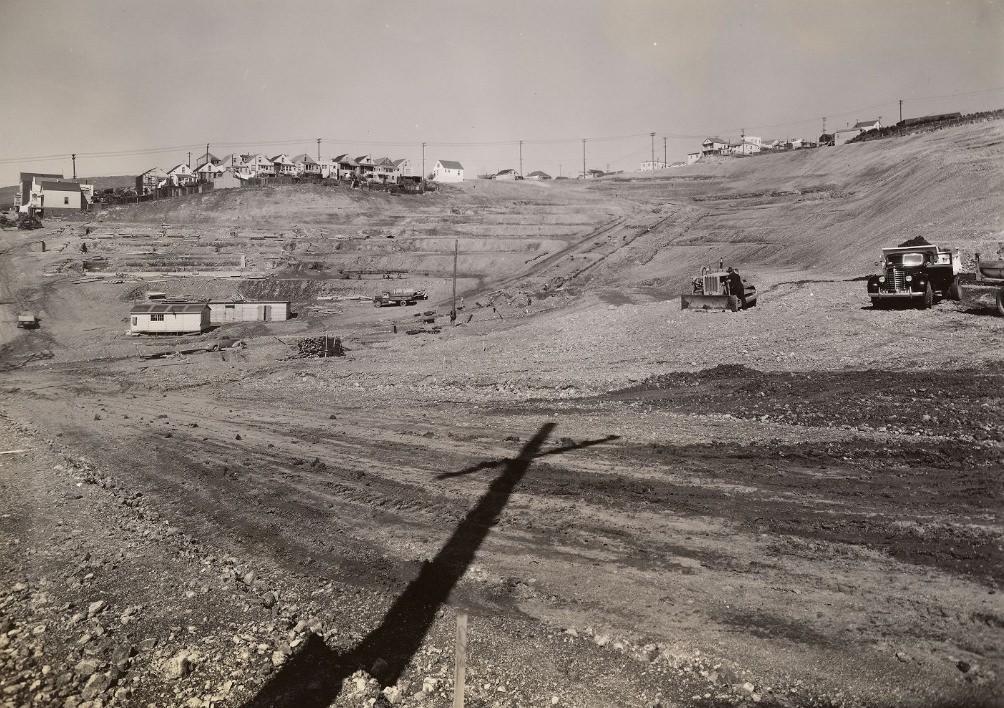
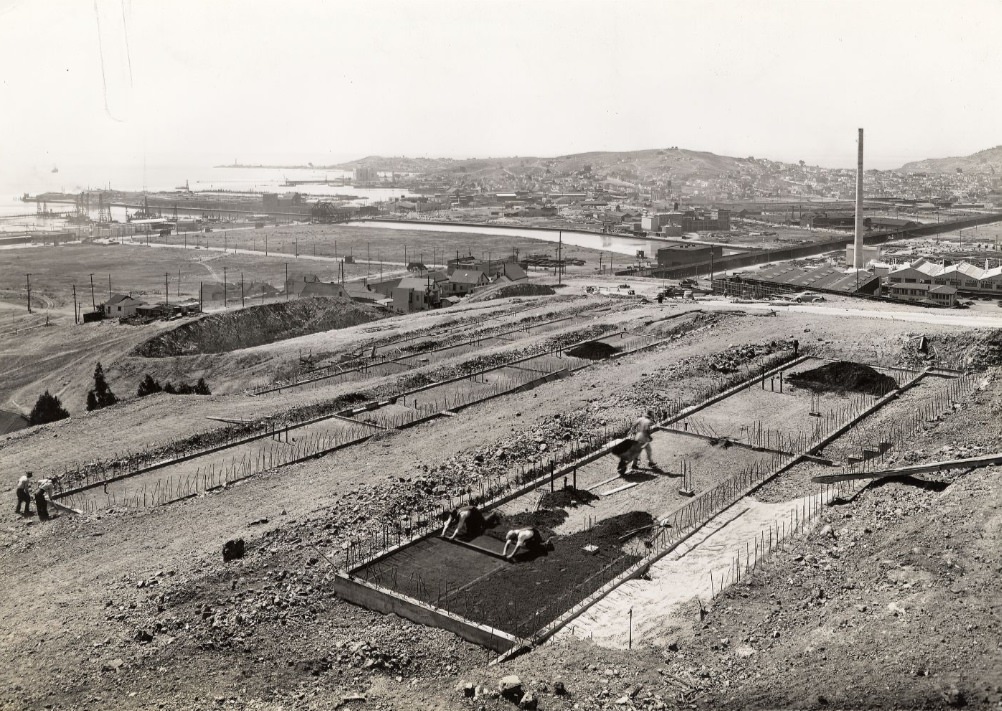
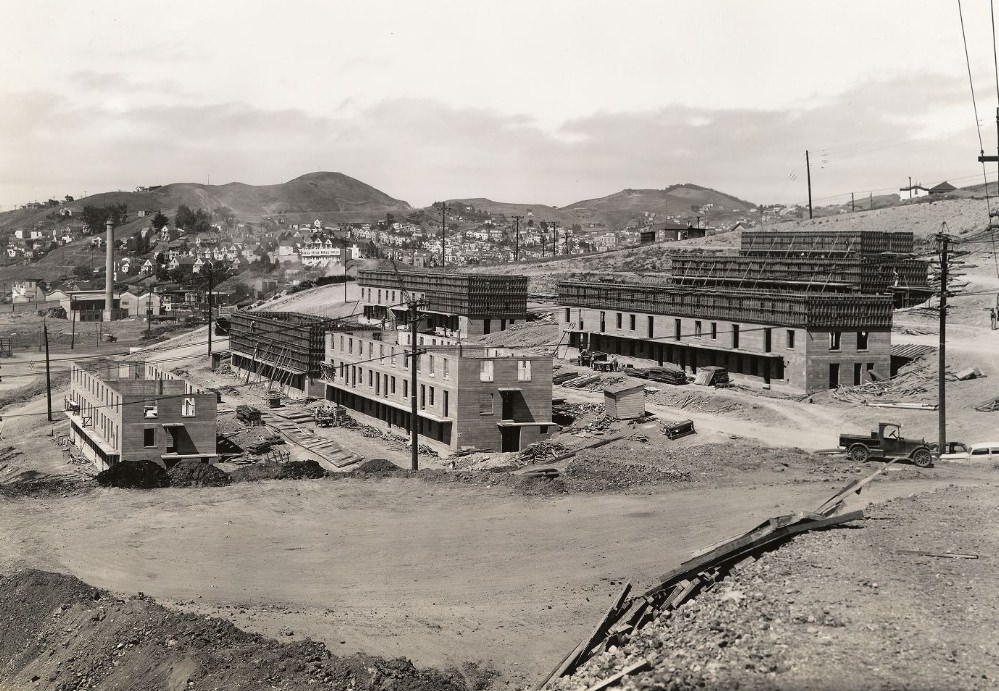
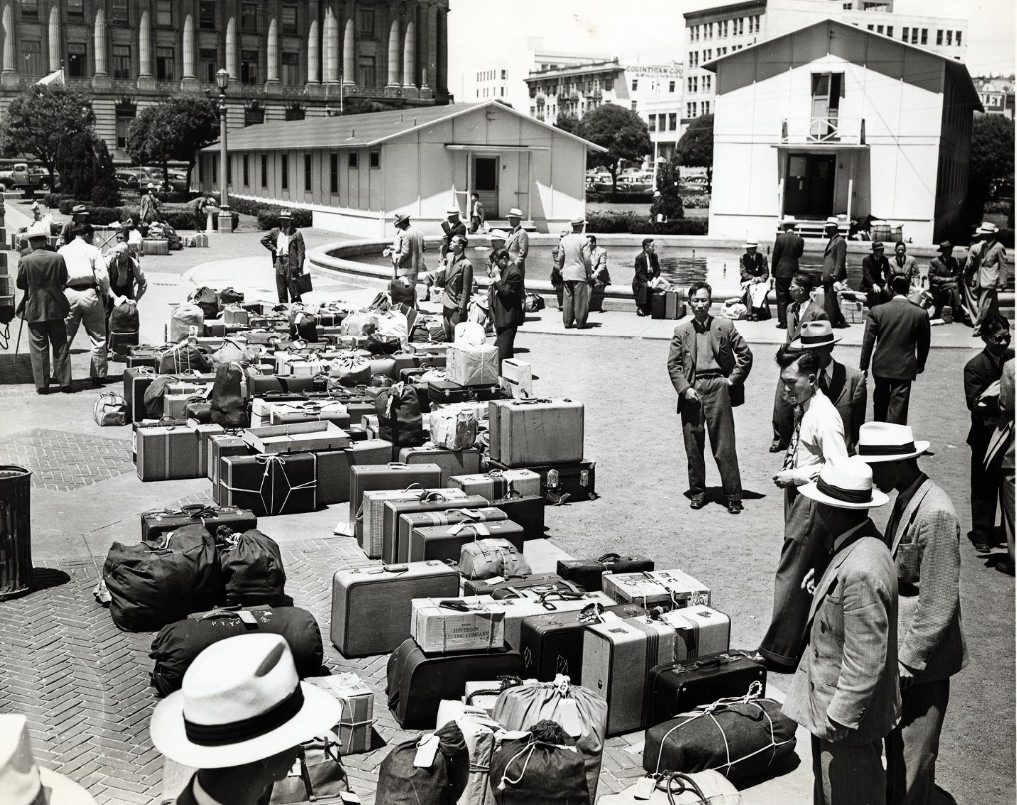
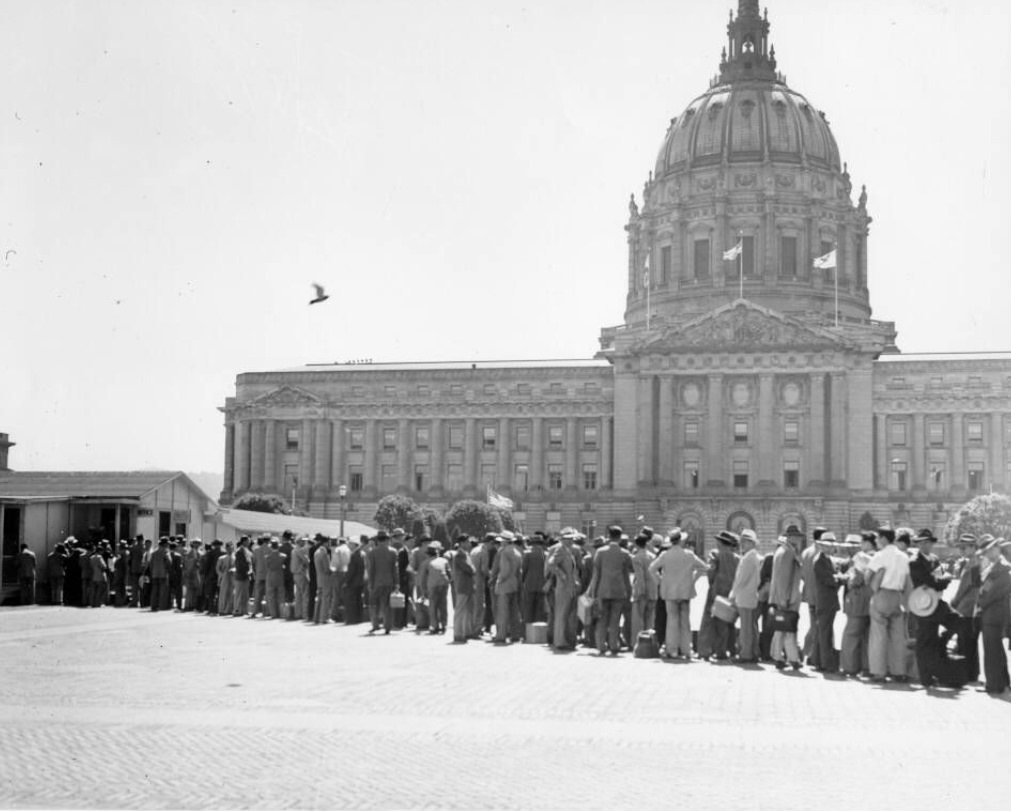
Housing construction accelerated as the city tried to keep up with its growing population. The Potrero Housing Project broke ground in 1940, and its construction was photographed in stages throughout the year. Temporary barracks appeared in the Civic Center Plaza to handle overflow demand during the war. The pressure on housing was real and immediate.
Construction of Potrero Housing Project, 1940Temporary Barracks in the Civic Center Plaza, 1940s
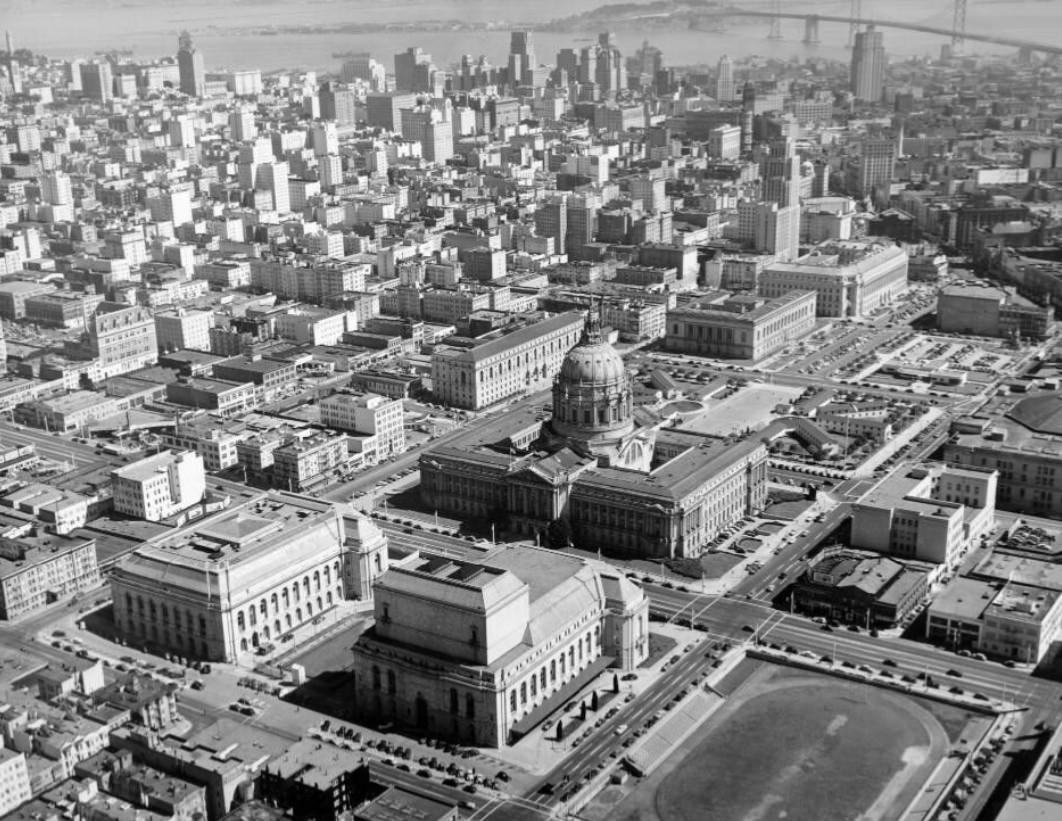
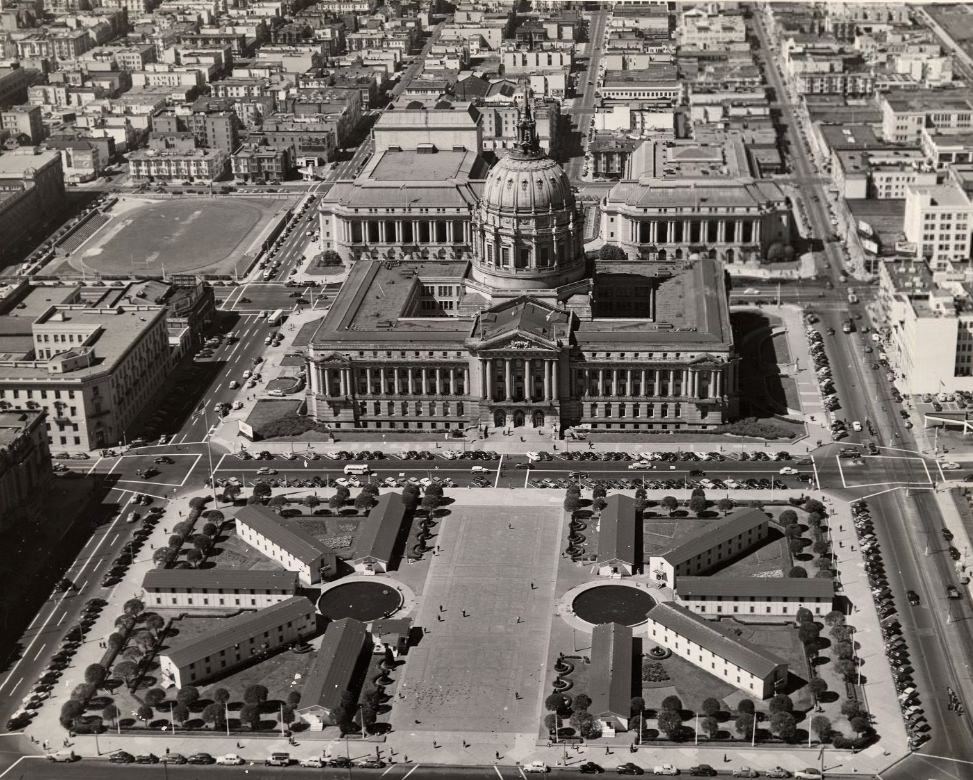
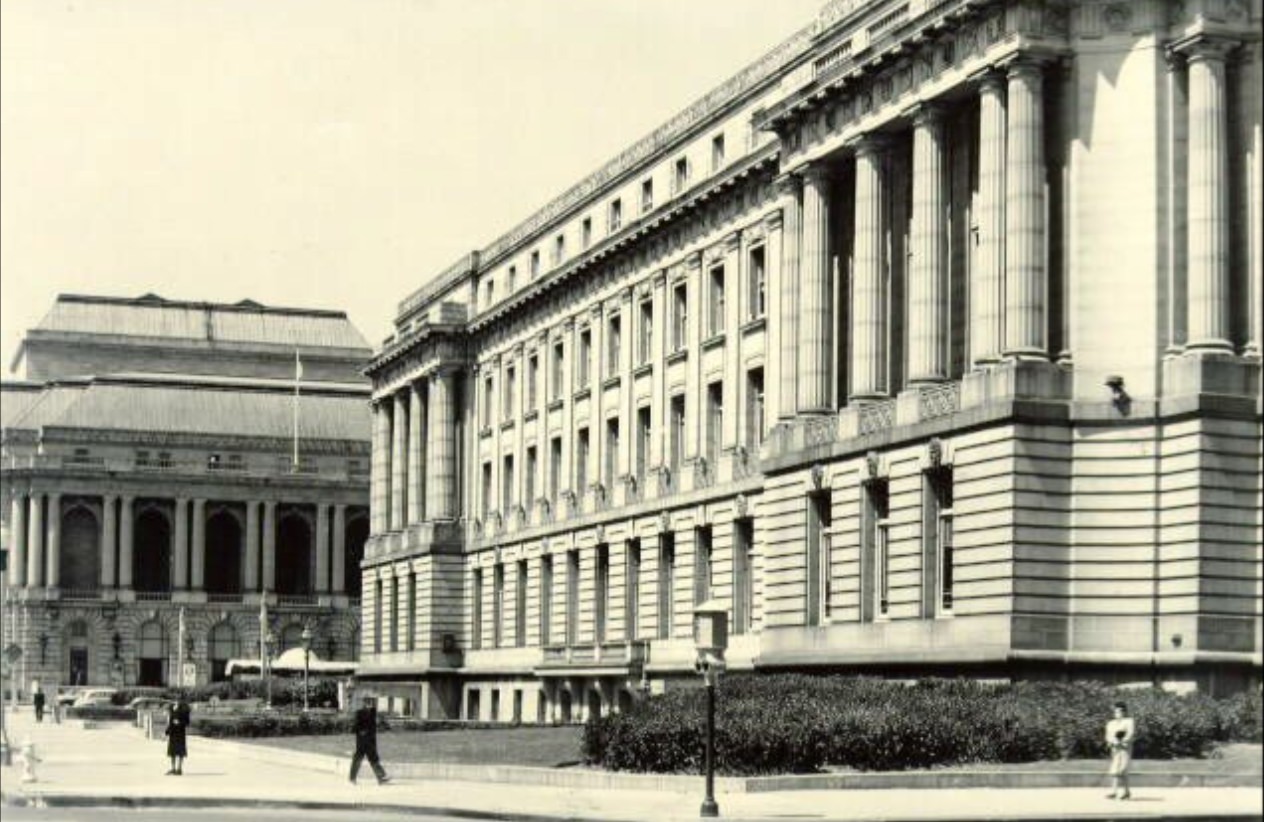
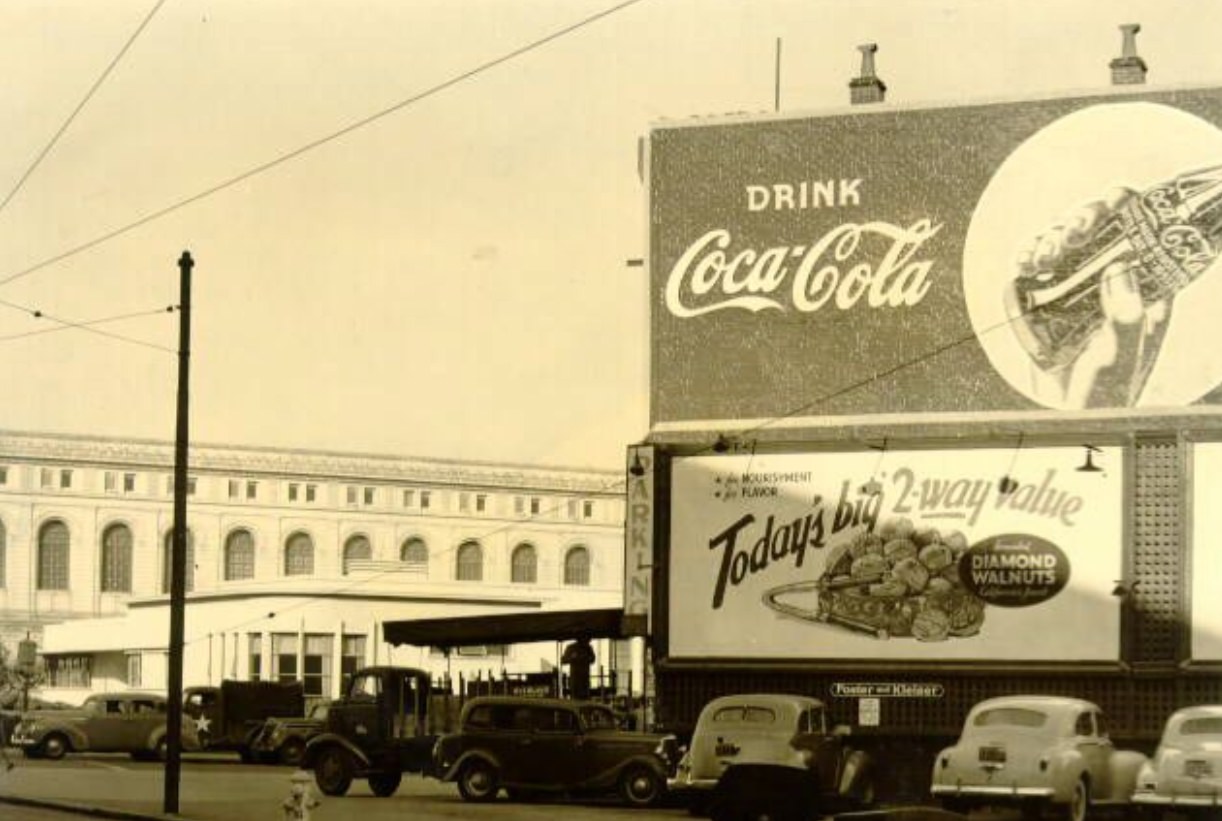
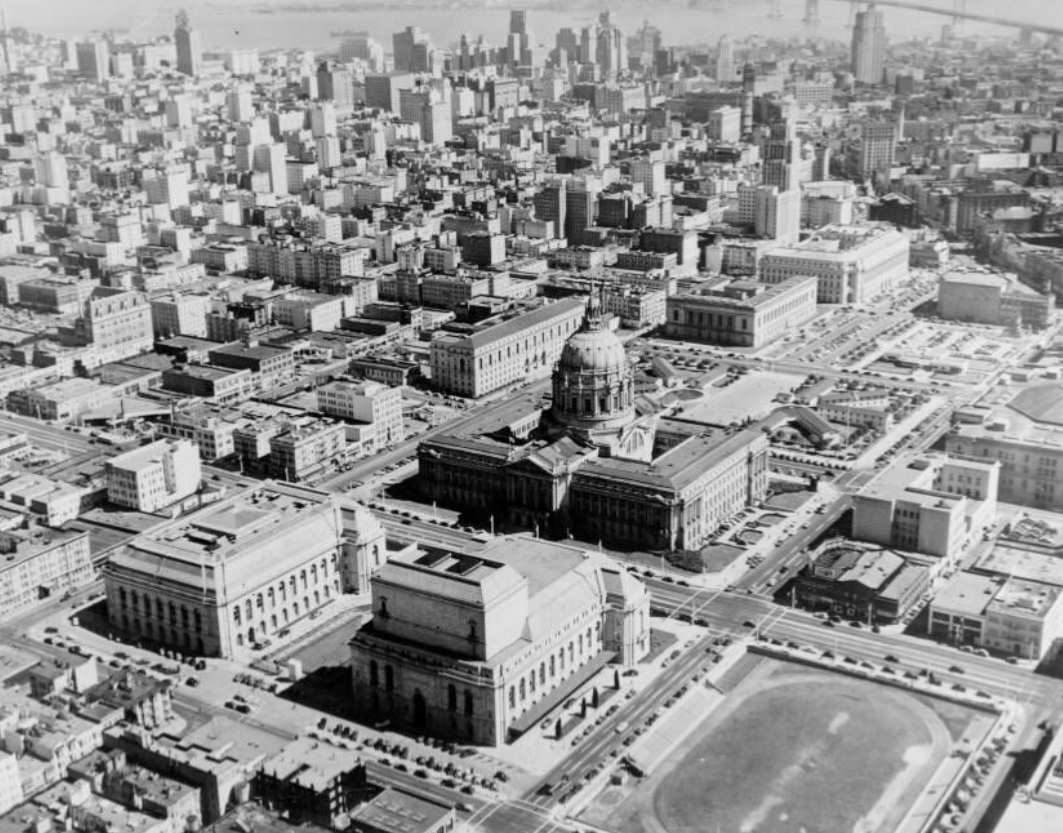
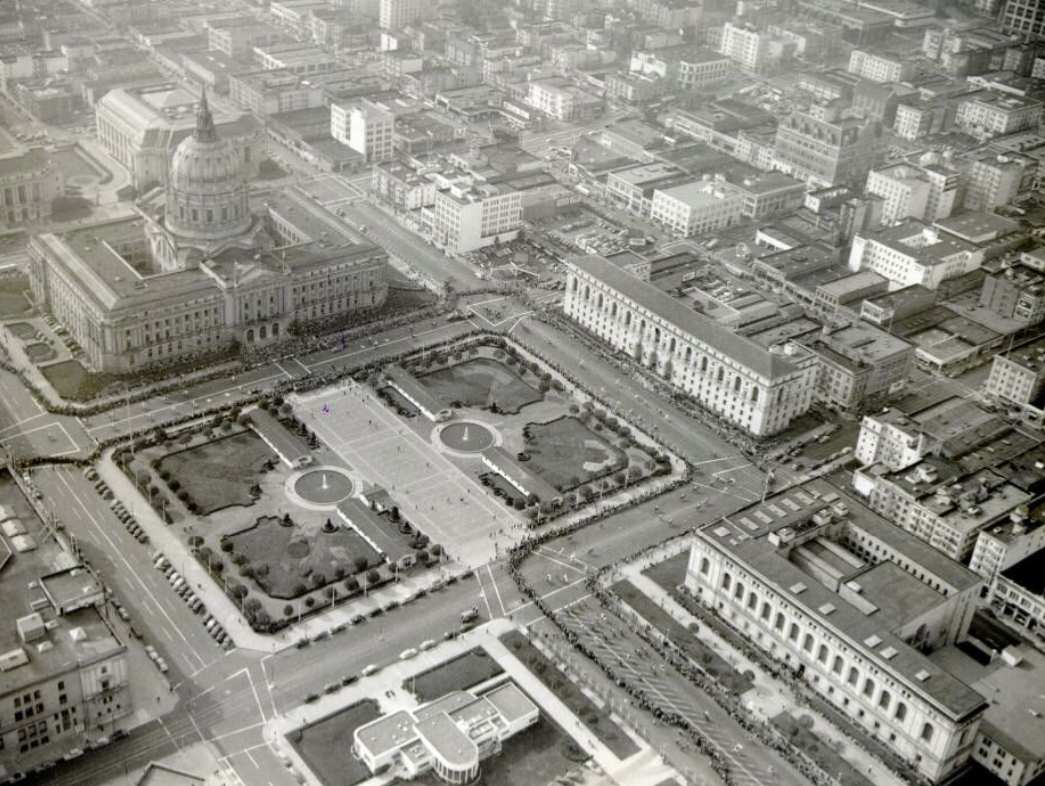
The Civic Center remained a hub of government and public life throughout the decade. Aerial photographs from 1945 show the full sweep of the district — City Hall at its center, surrounded by civic buildings, plazas, and the temporary structures that had been added during the war years. Redevelopment plans for the area were already being drawn up by 1943.
Aerial view of the Civic Center, 1945Civic Center redevelopment plans, 1943
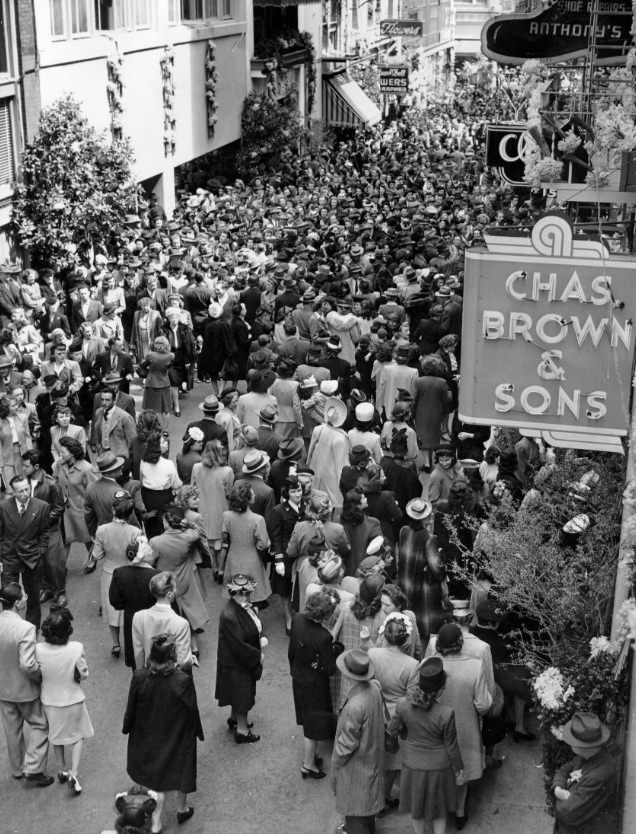
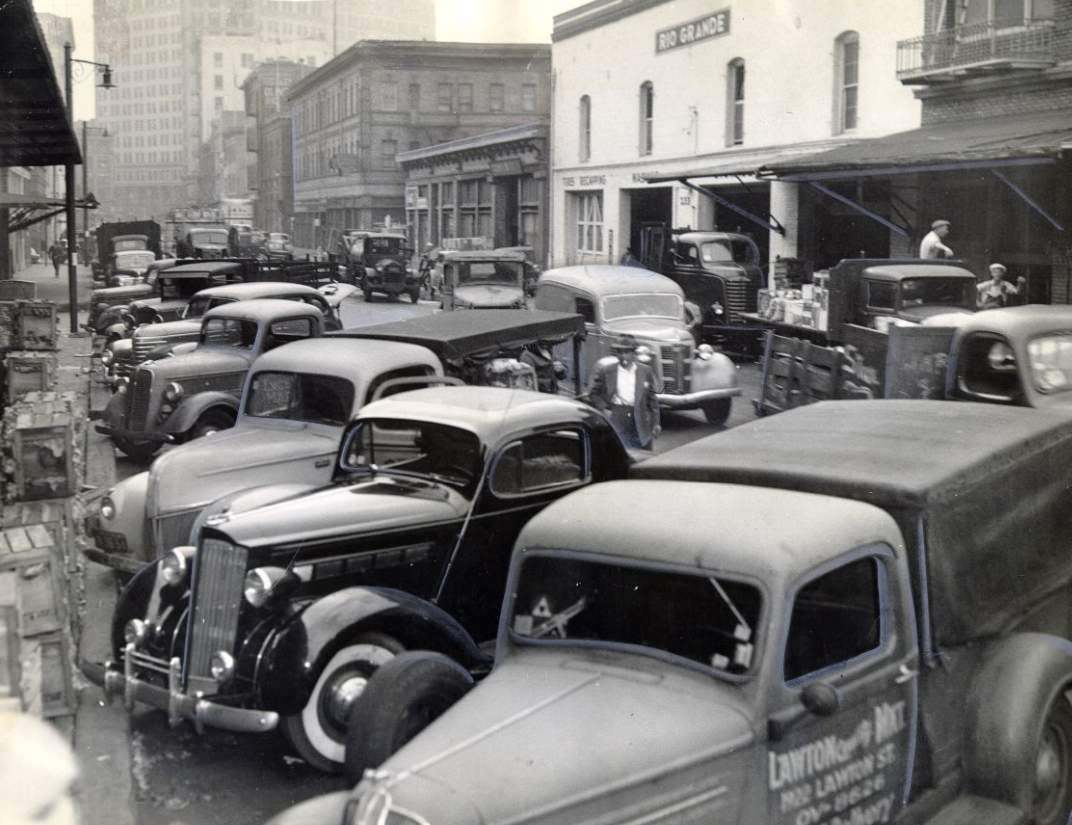
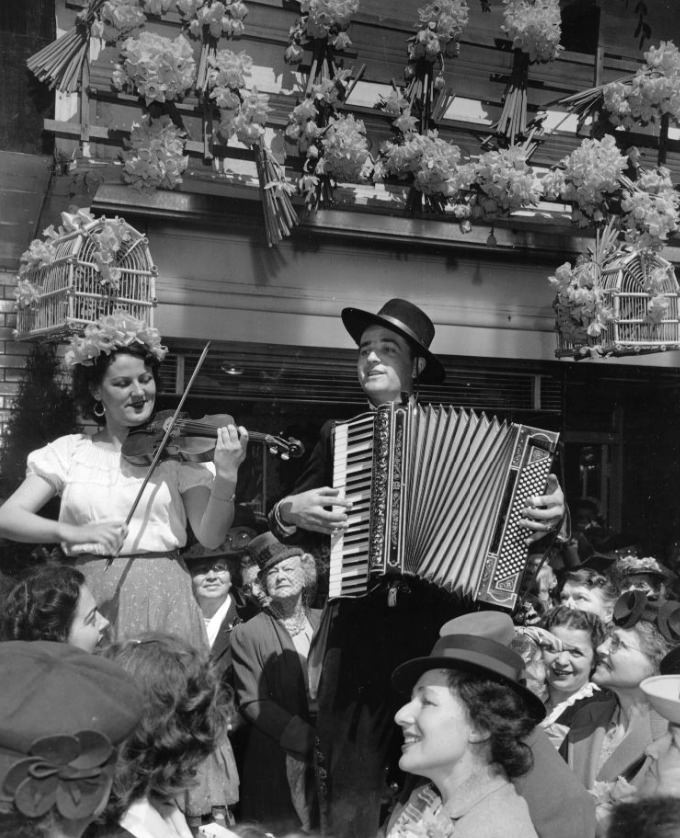
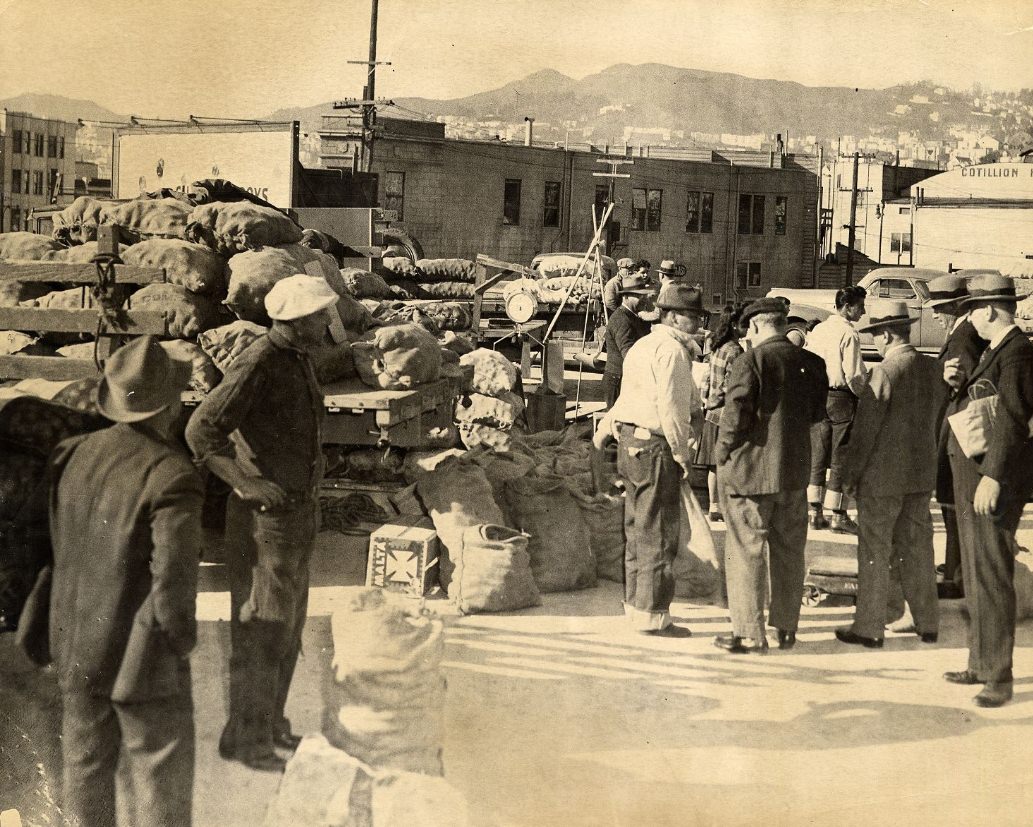
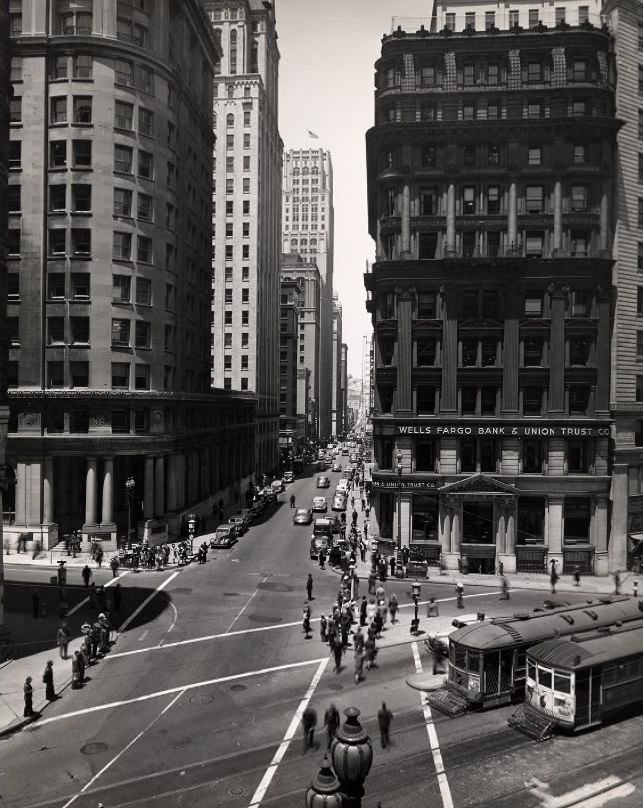
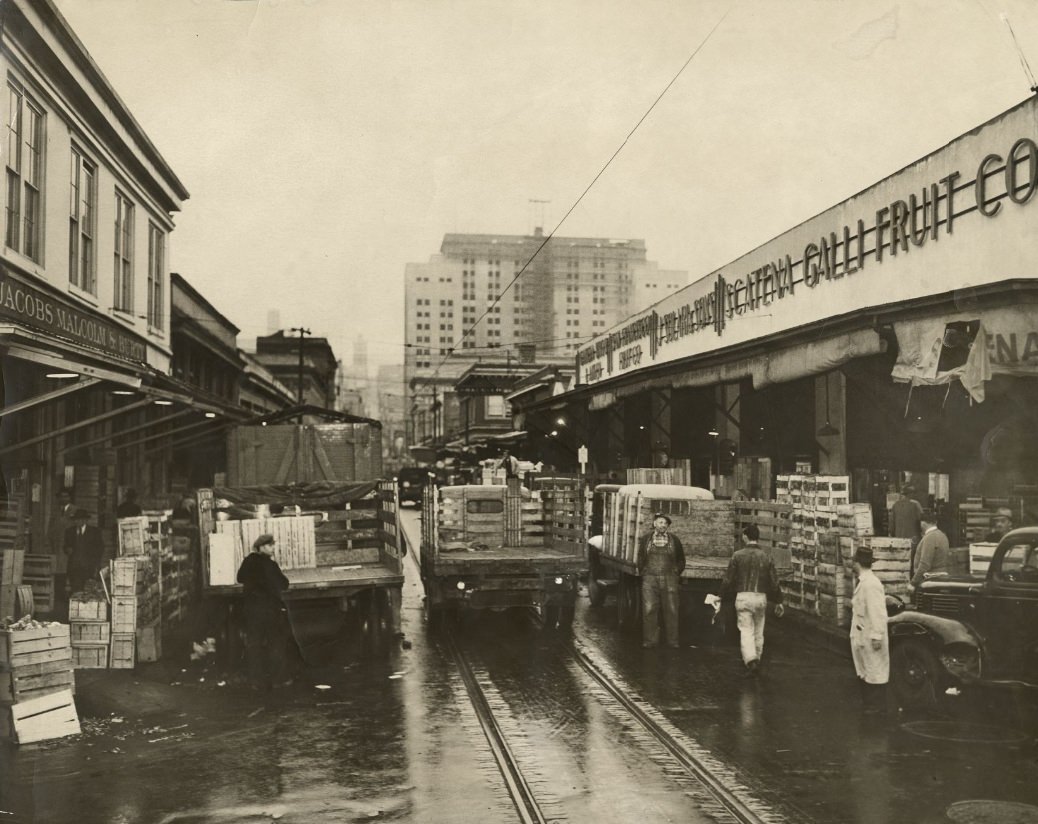
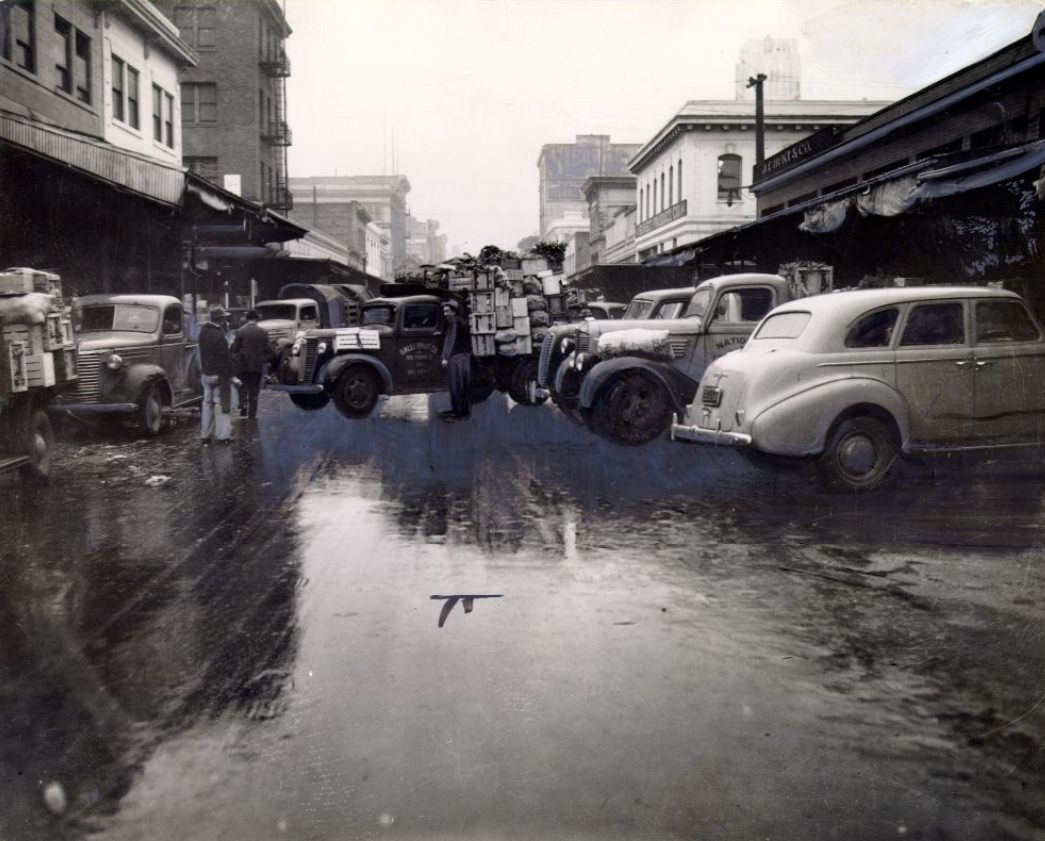
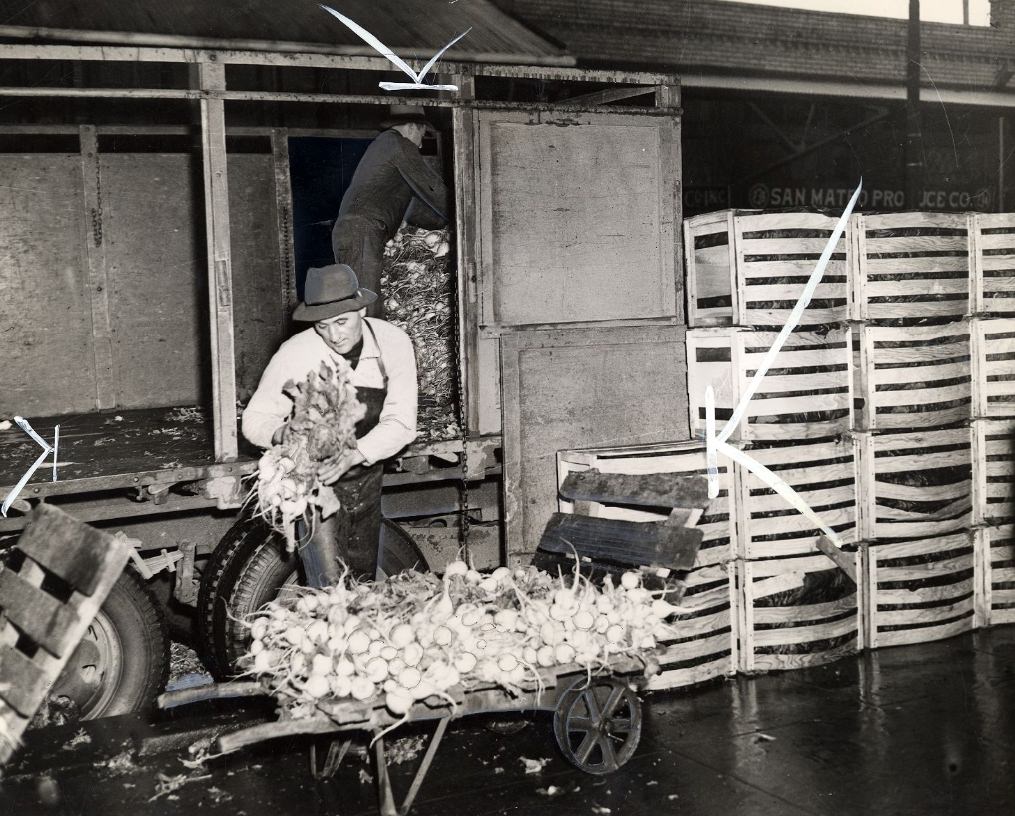
Post-war life brought new energy to the city’s commercial and cultural districts. Maiden Lane, once a rough back alley, hosted spring festivals and drew crowds. The financial district on Montgomery Street filled back up with workers. Produce markets on Washington Street ran steady operations, with delivery trucks pulling up before dawn. The city’s rhythms were shifting back toward peacetime normal.
“Spring Comes to Maiden Lane” festival crowds, 1946
Montgomery Street in the financial district, 1947
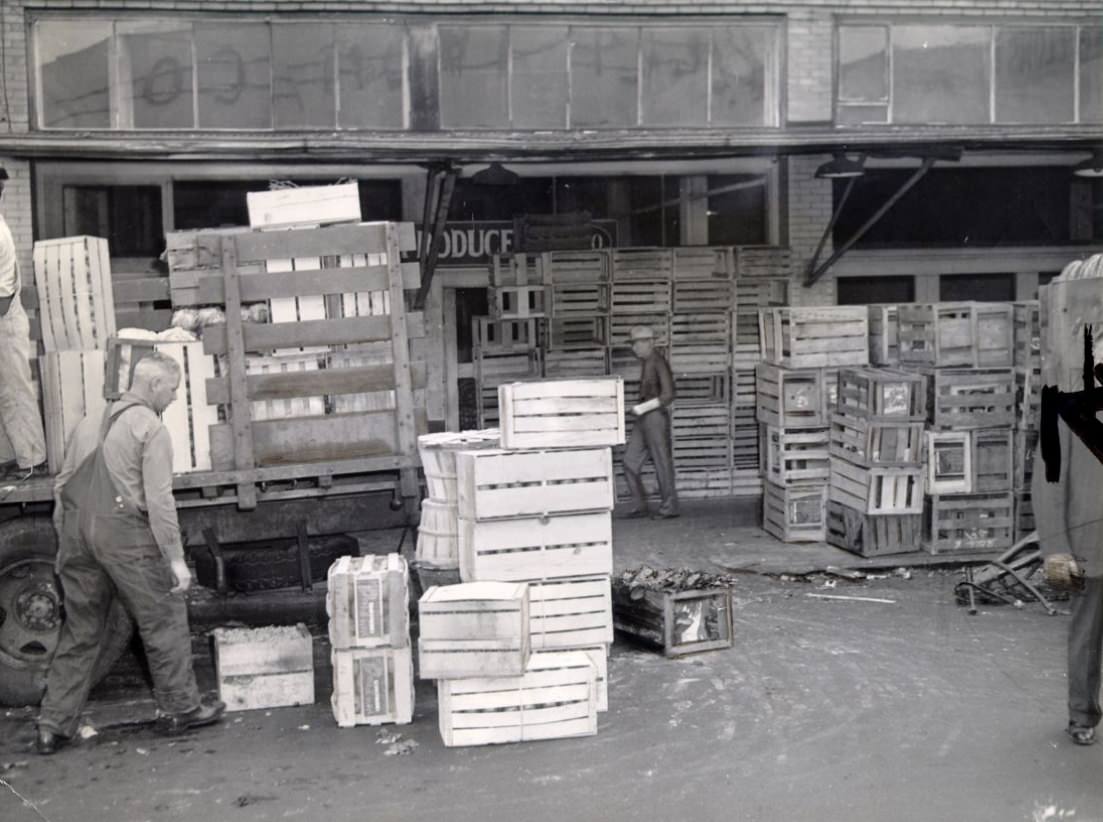
Produce markets on Washington Street in San Francisco, 1945
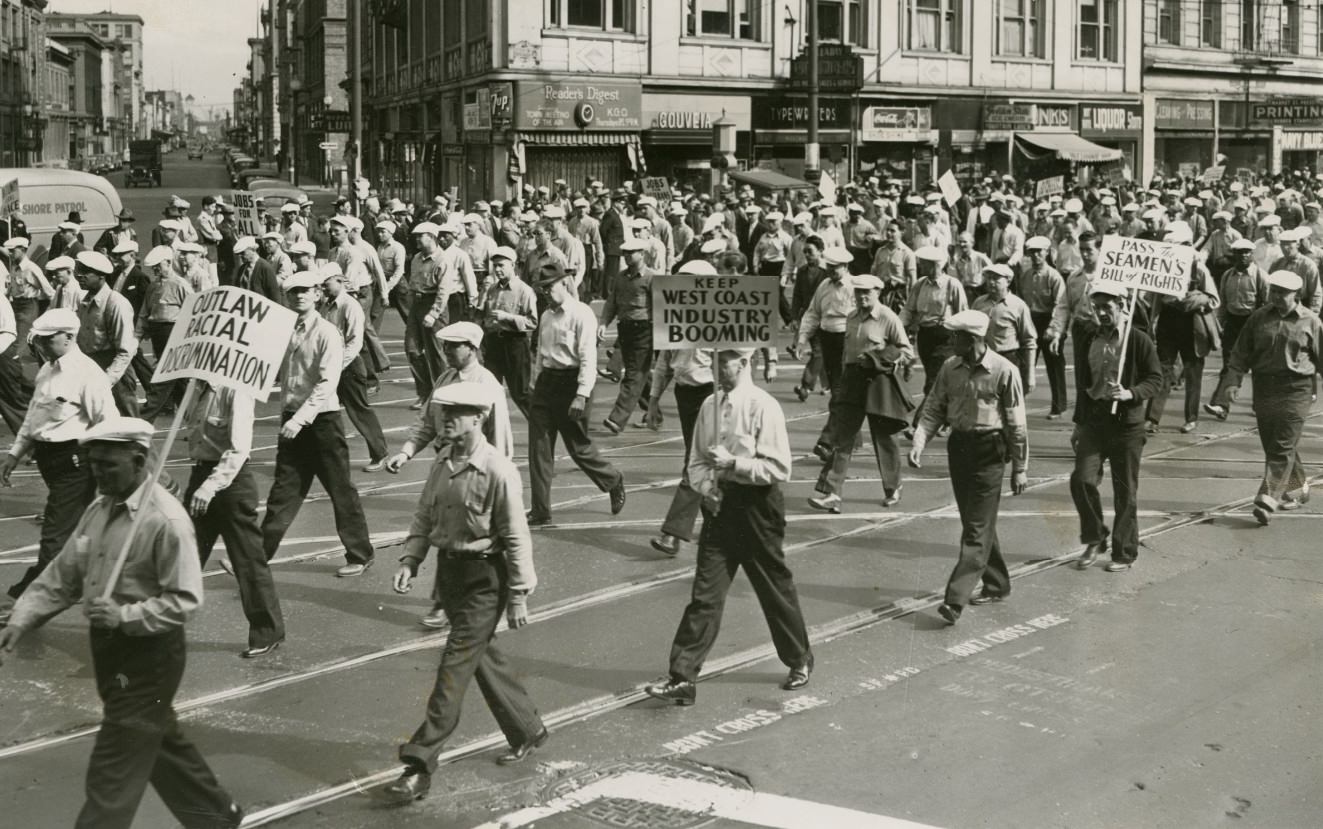
Labor remained a powerful force in the city. C.I.O. marchers filled the streets on Labor Day 1945, and naval shipyard employees held rallies as late as 1949. The waterfront’s longshoremen had long been organized, and the post-war years kept labor politics front and center. Sailors walked the streets near Union Square, and military demonstrations drew crowds to the park well into the late 1940s.
C.I.O. marchers on Labor Day, 1945Sailors walking up Geary Street by Union Square Park, 1944
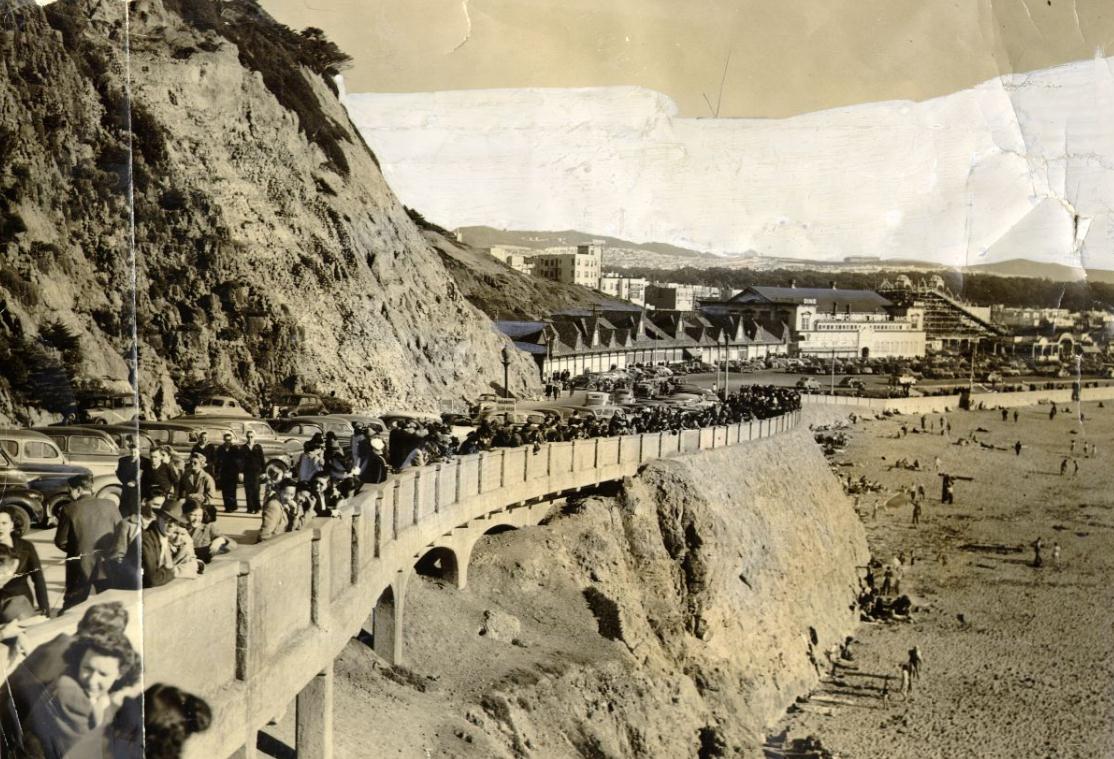
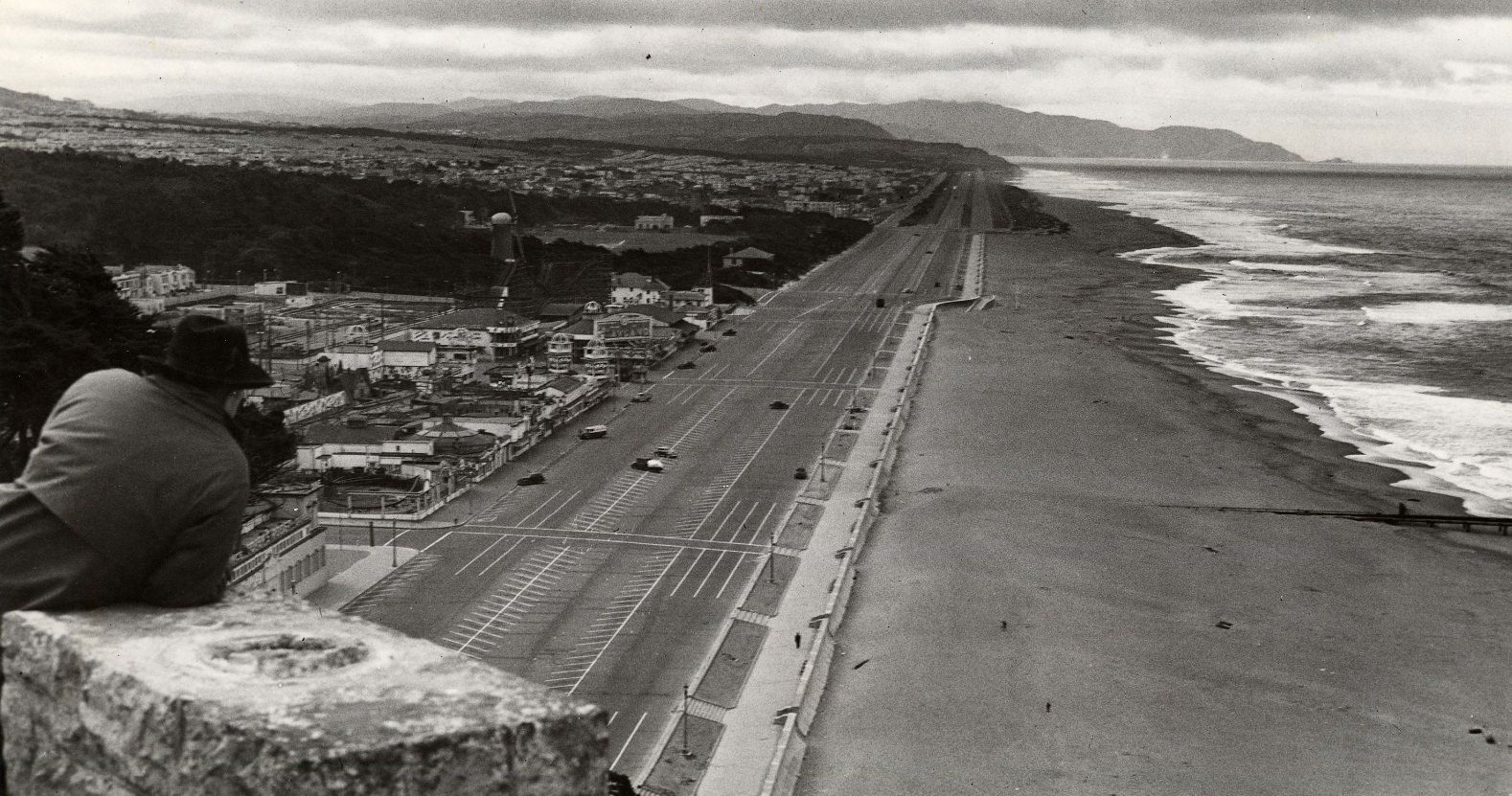
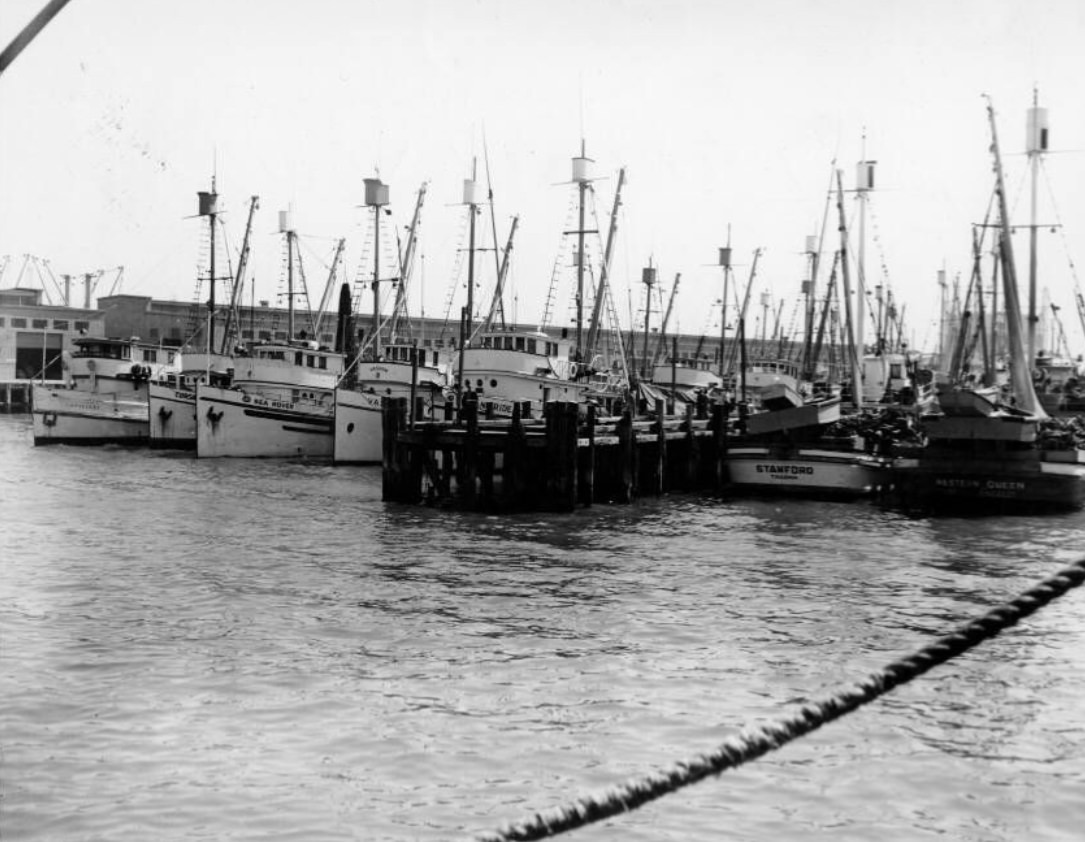
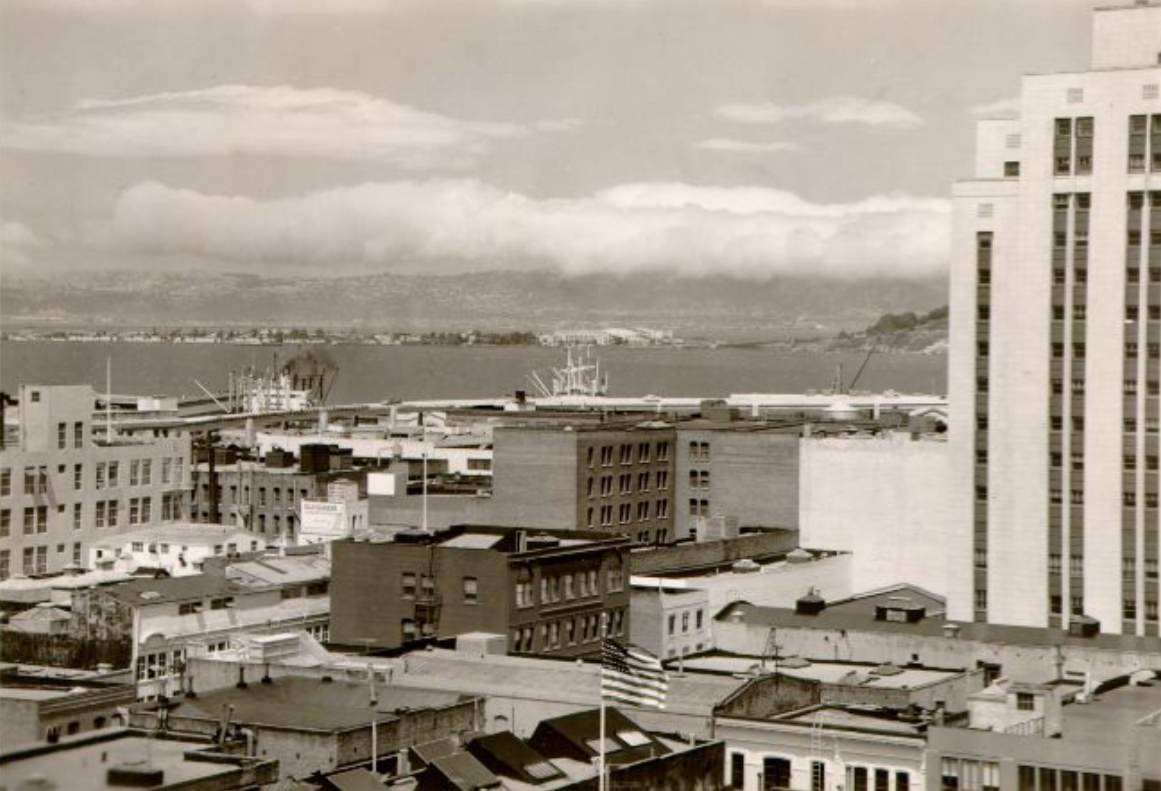
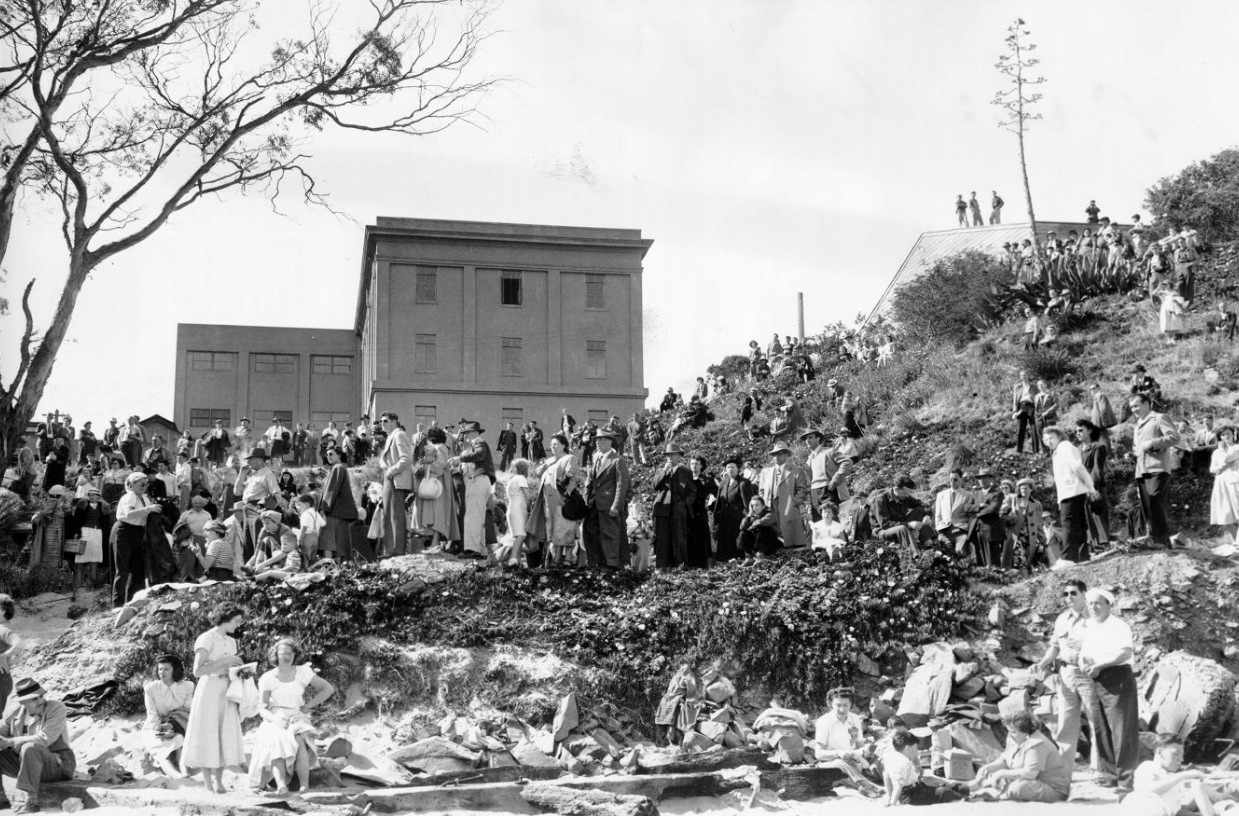
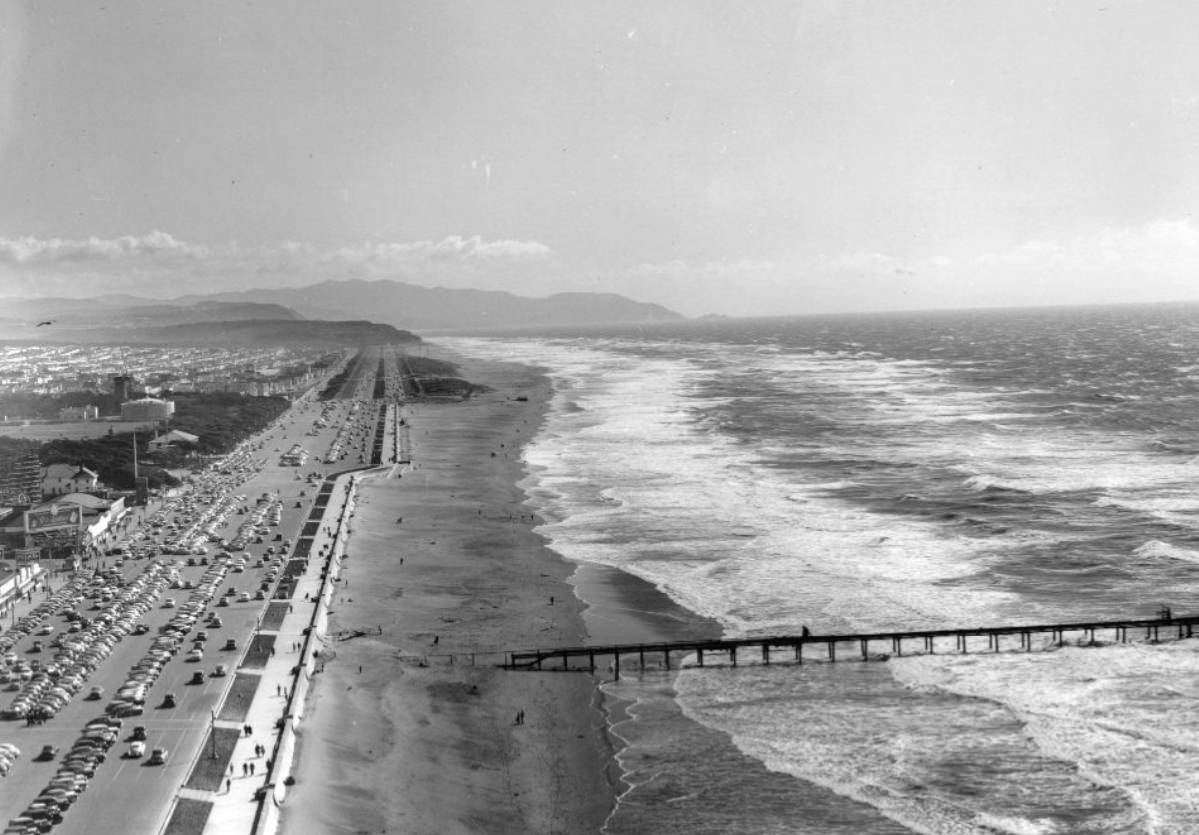
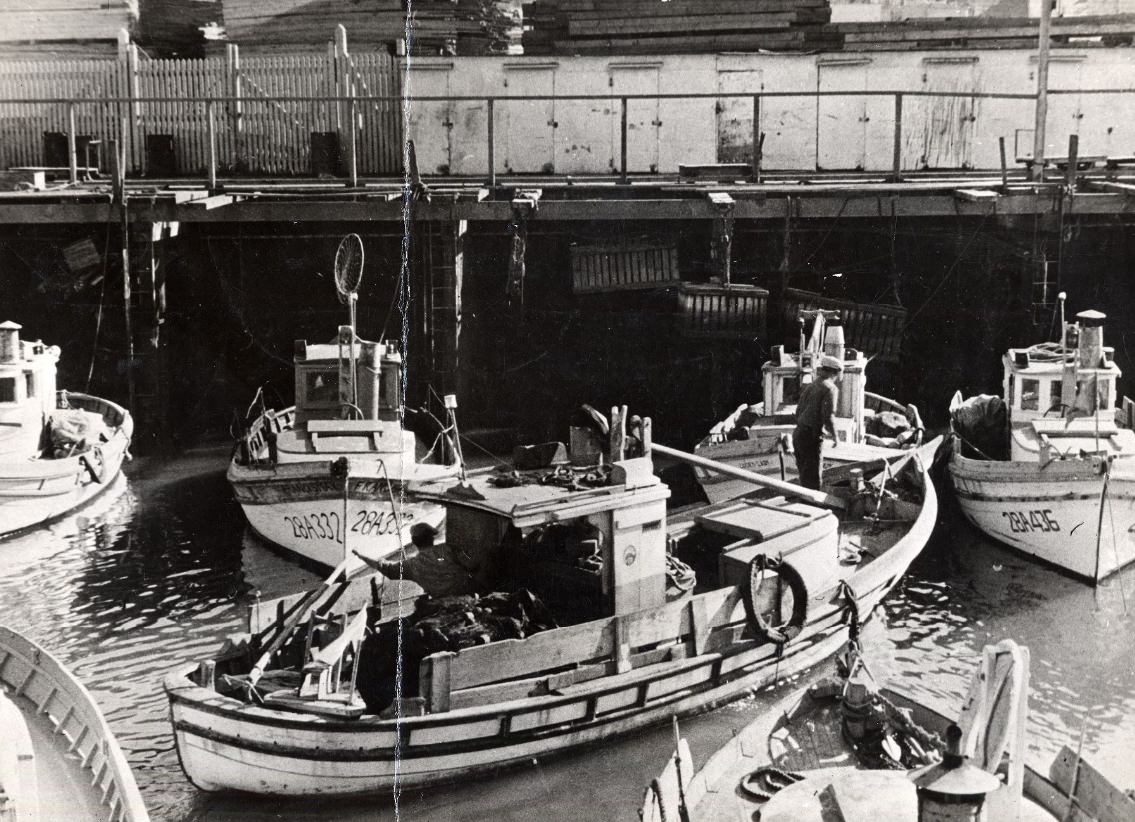
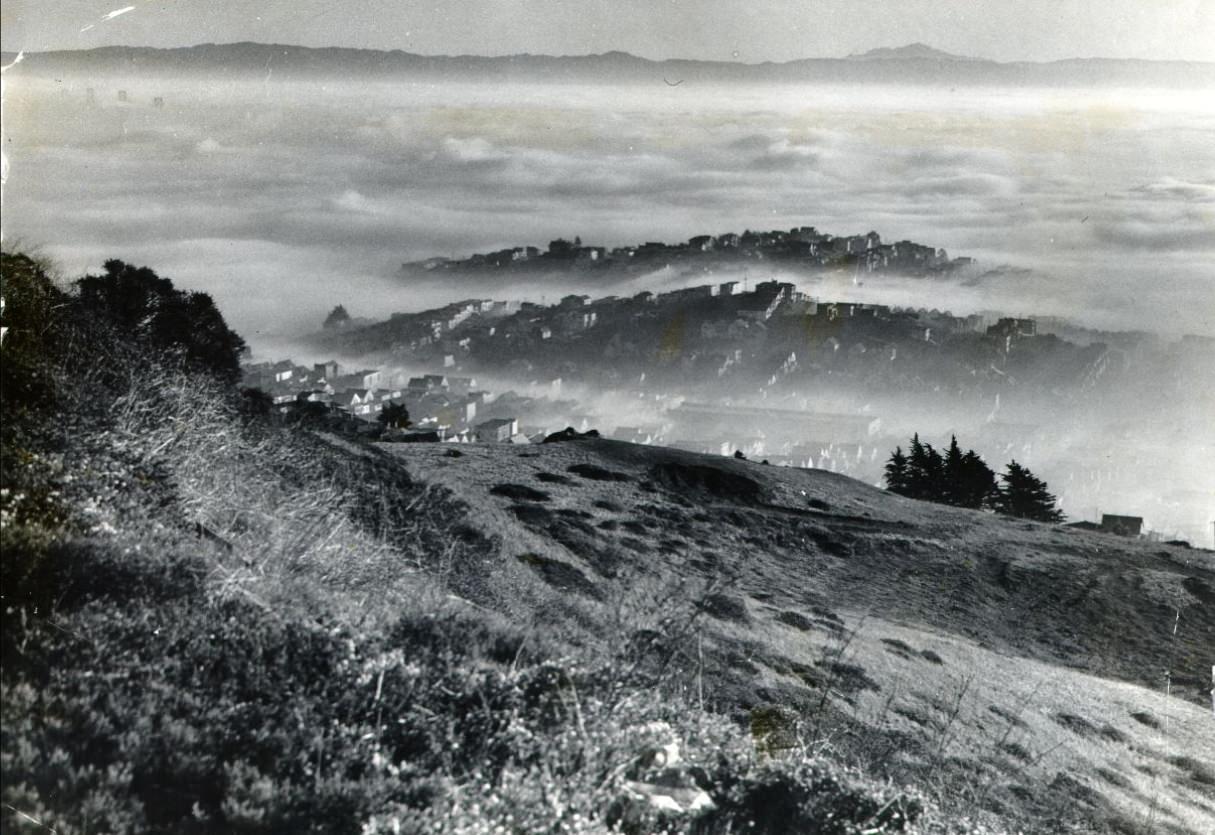
The city’s outer neighborhoods and natural landmarks remained part of daily life even amid the pressures of war. Ocean Beach drew crowds near the Cliff House in 1943. Fisherman’s Wharf kept its fishing boats running throughout the decade. Views from Coit Tower, Twin Peaks, and Russian Hill showed a city that was dense, active, and still extraordinarily scenic despite everything happening within it.
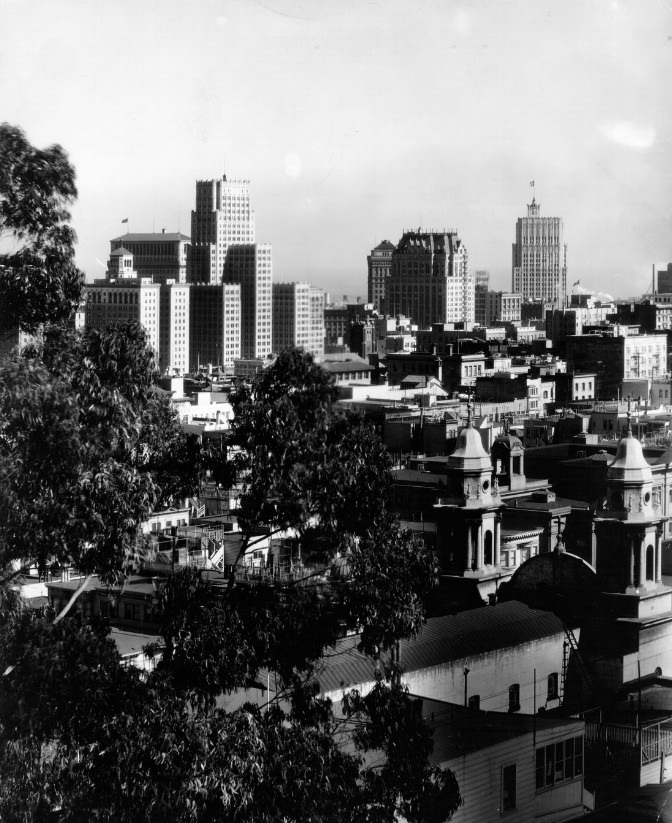
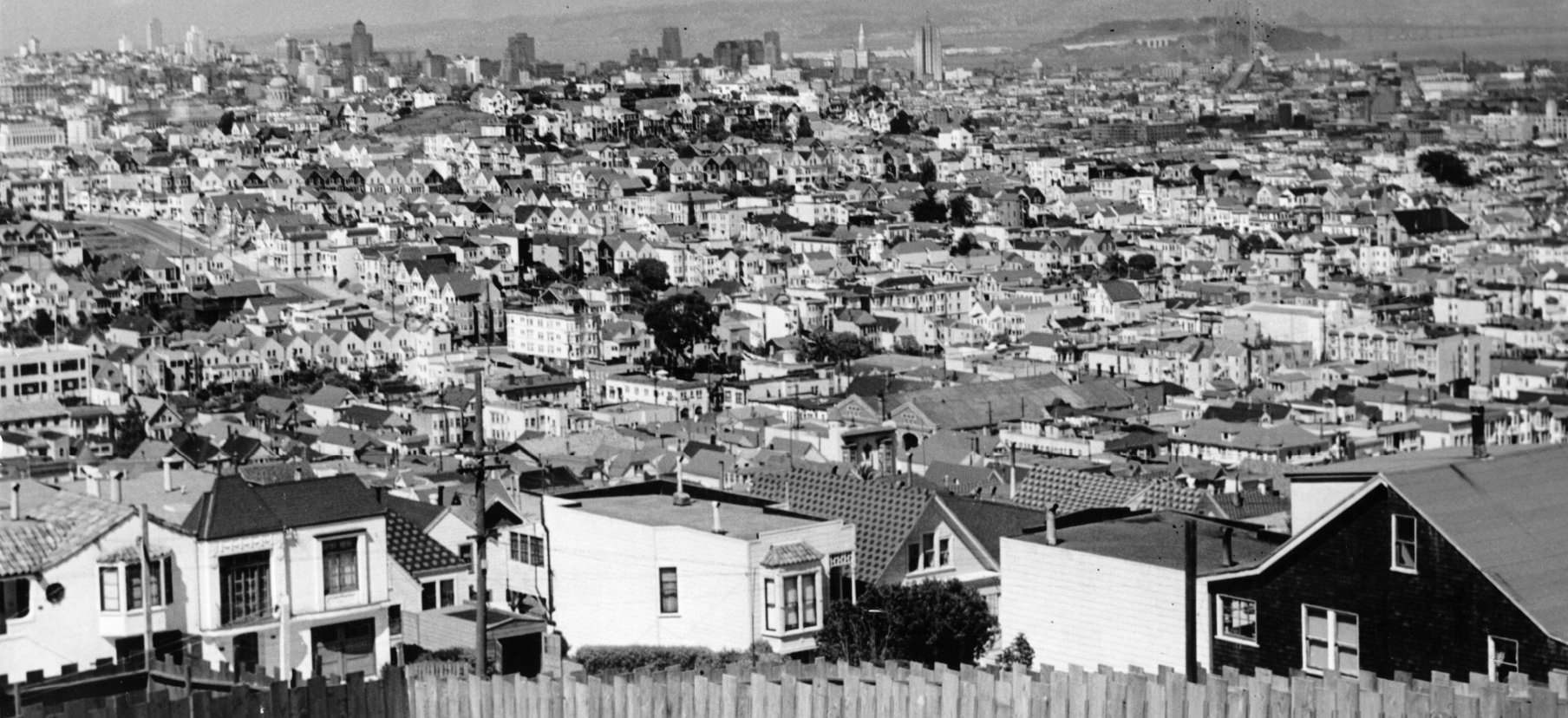
Crowds at Ocean Beach near the Cliff House, 1943View of San Francisco Bay from Coit Tower, 1940San Francisco skyline from Russian Hill, 1943
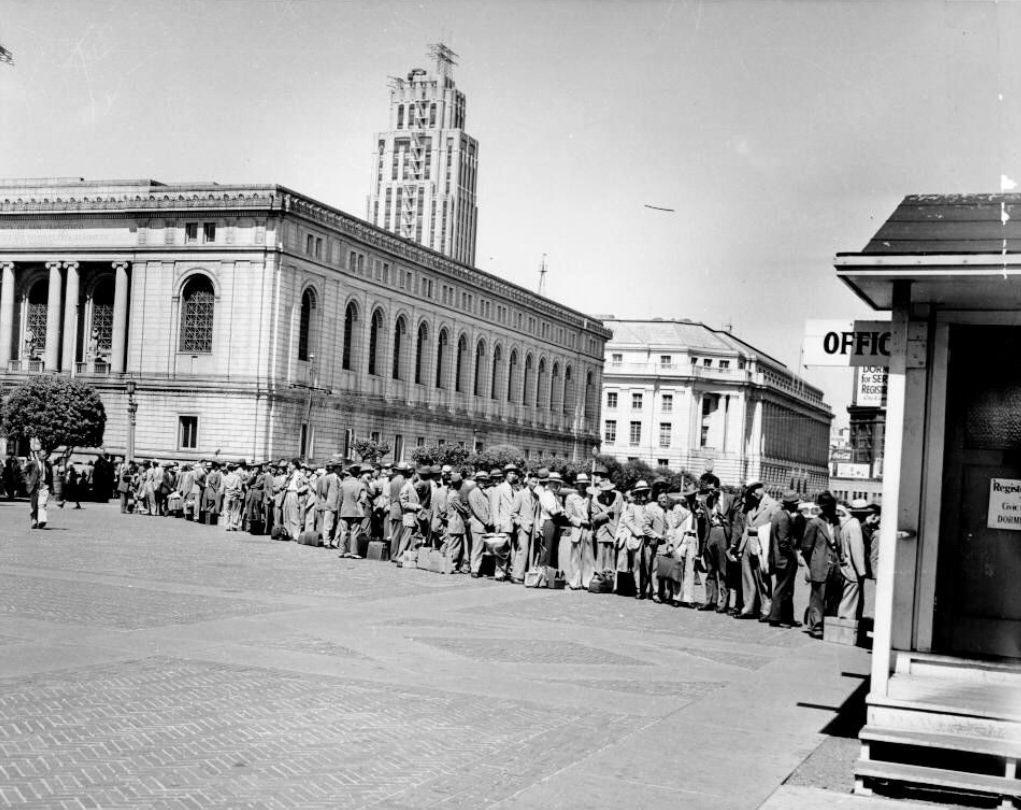
Chinese technicians passed through San Francisco in 1946, registering for housing at the Civic Center and eventually gathering at the docks to board the S.S. General Gordon for the voyage to China. Their presence reflected the city’s role as a Pacific gateway — a place where the end of the war meant not just homecomings, but departures, transitions, and a world still sorting itself out.
Chinese technicians awaiting the S.S. General Gordon to China, 1946Chinese technicians registering for housing in the Civic Center, 1946
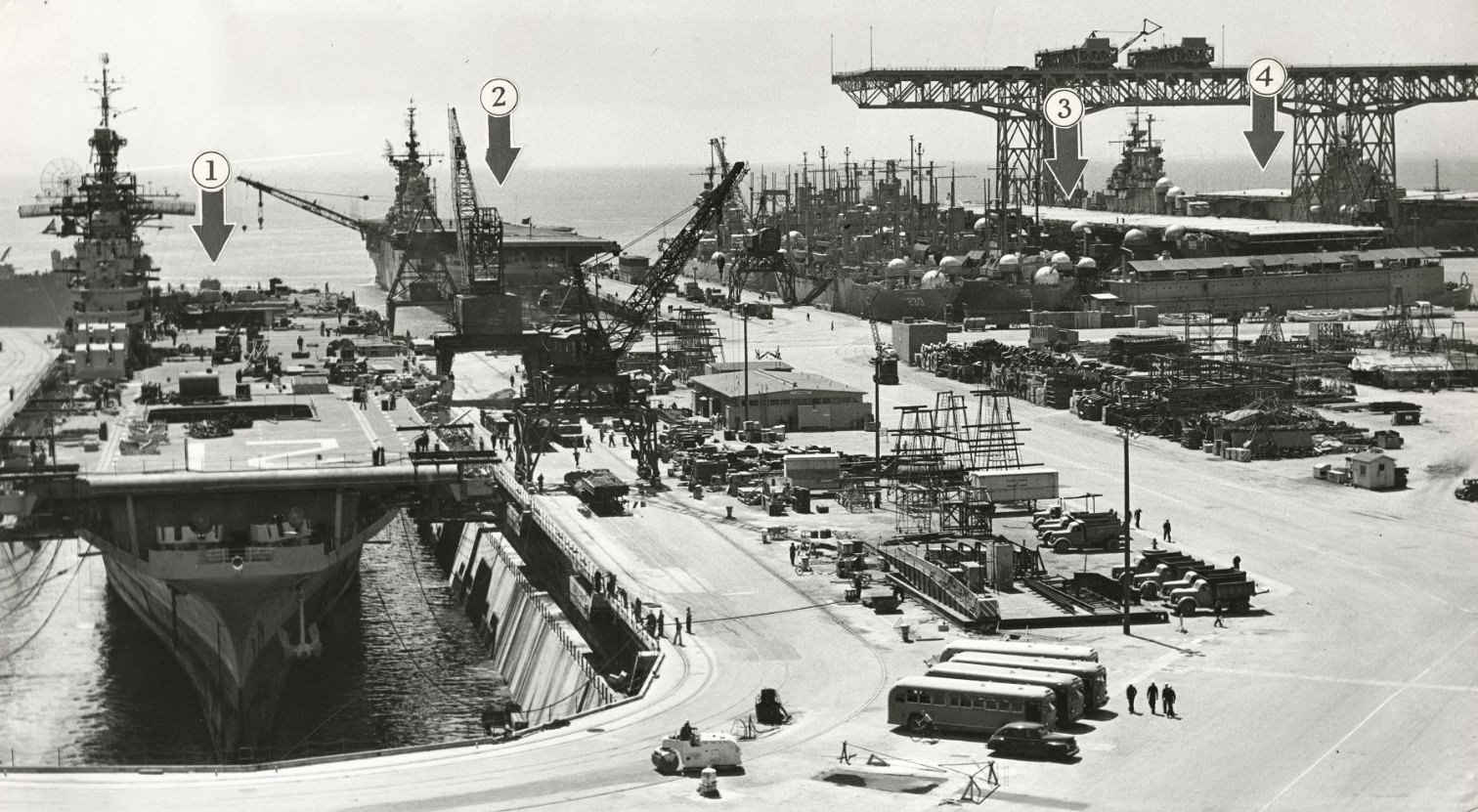
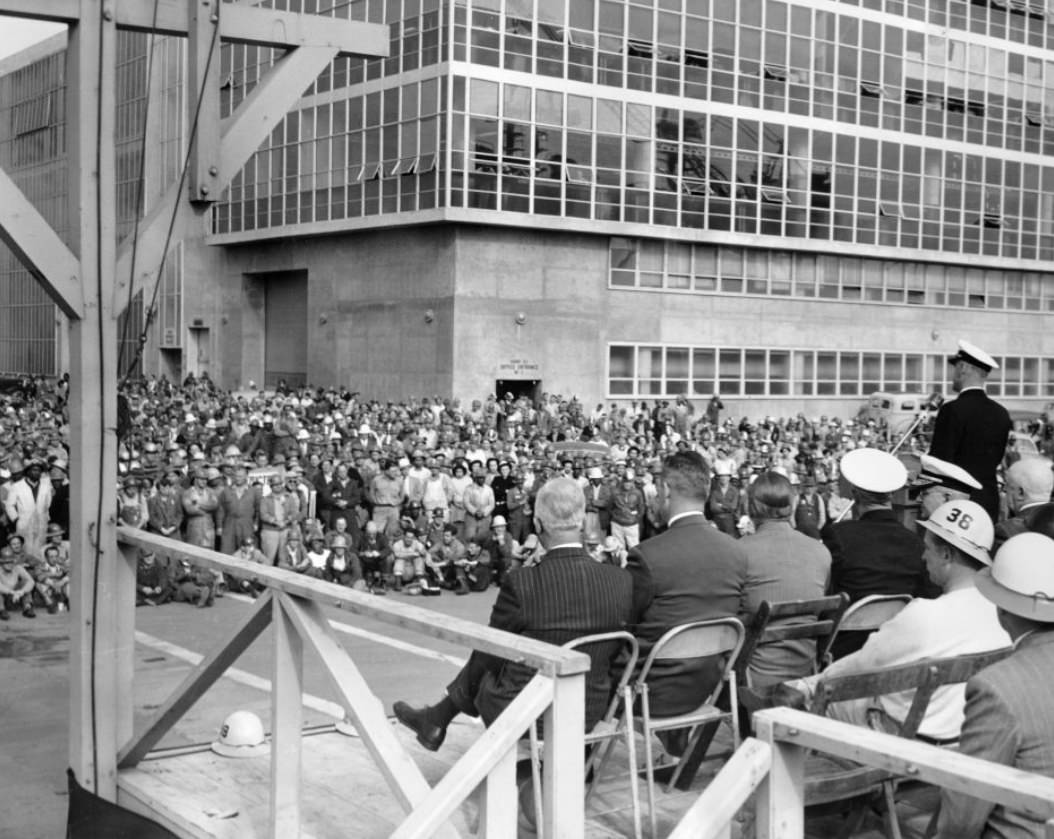
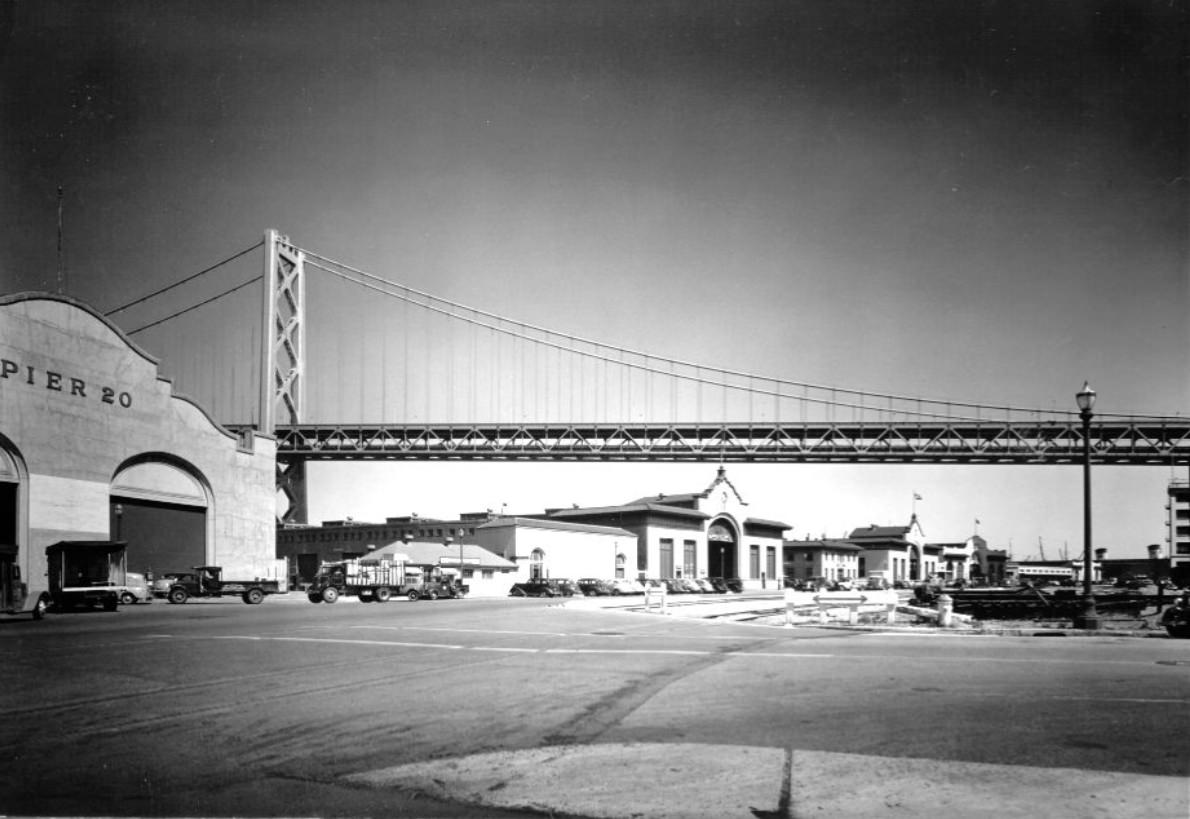
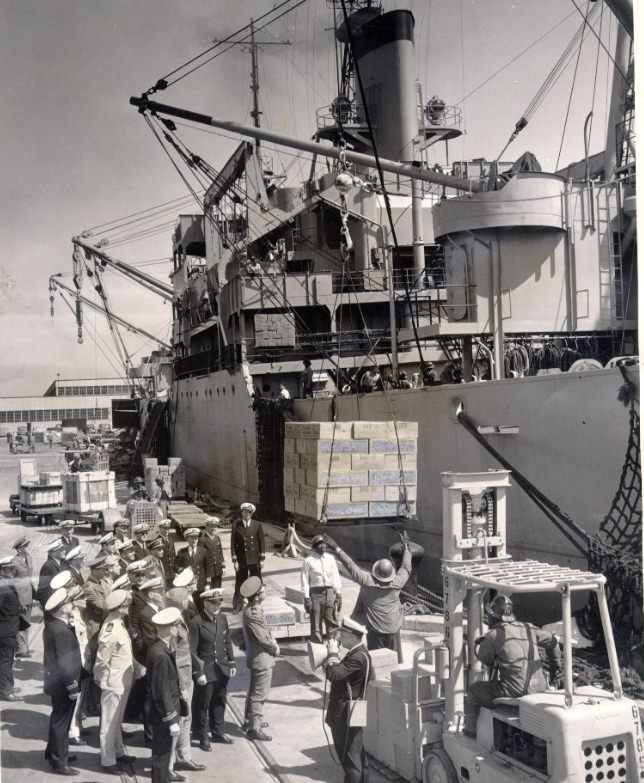
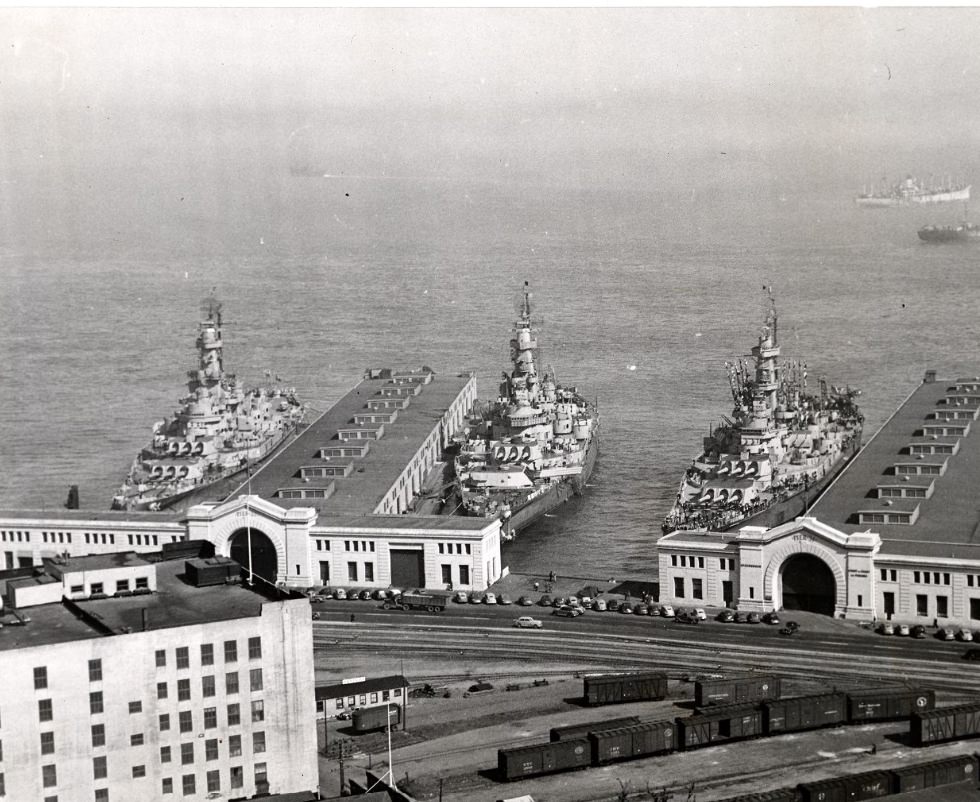
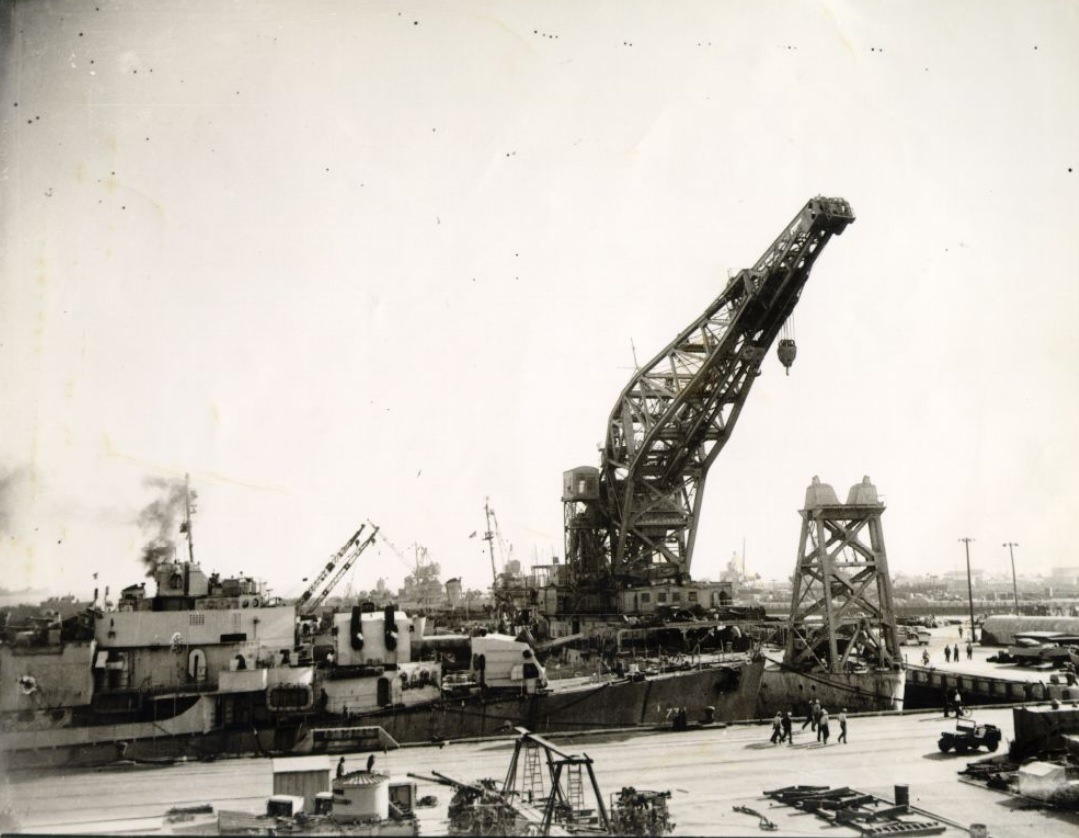
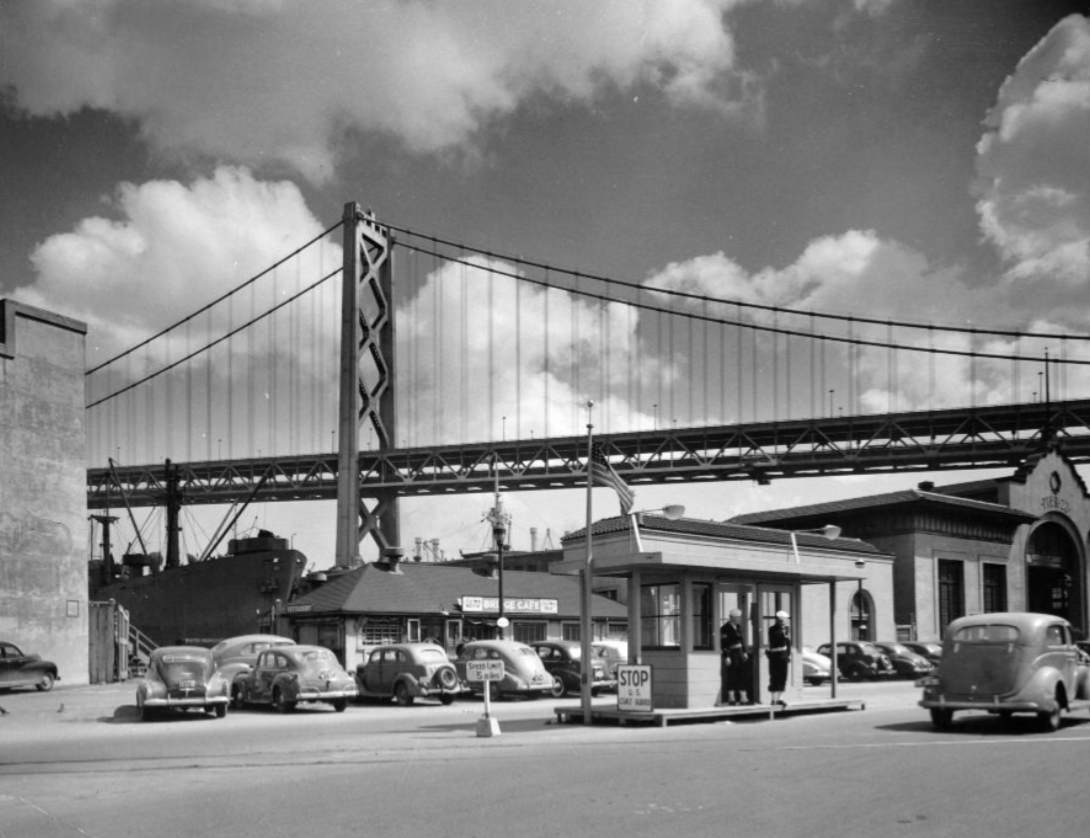
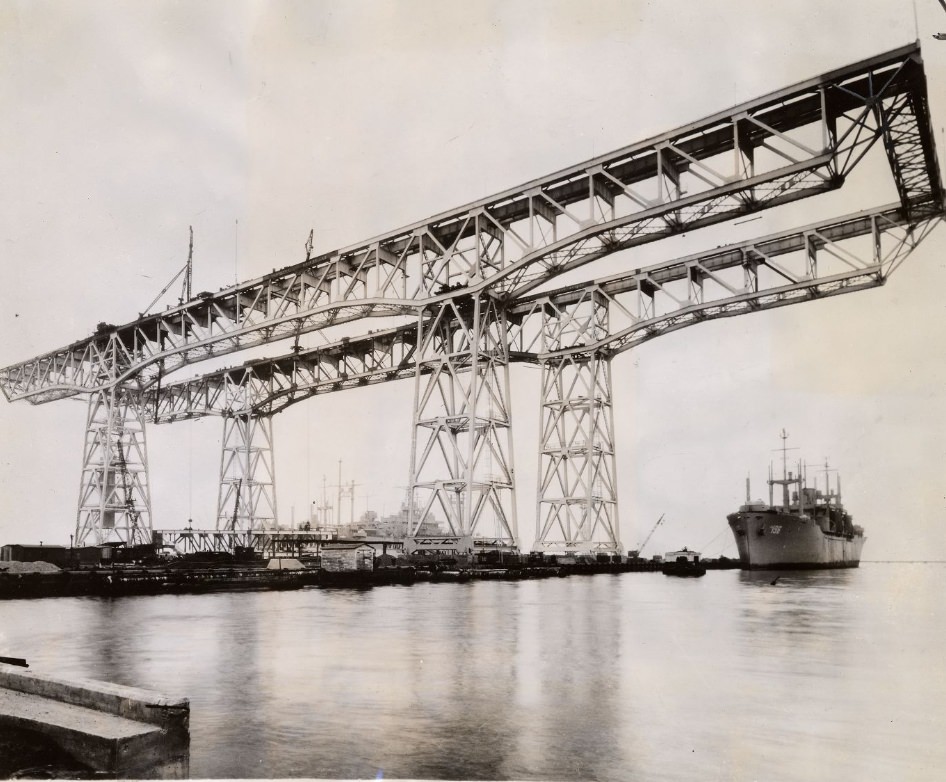
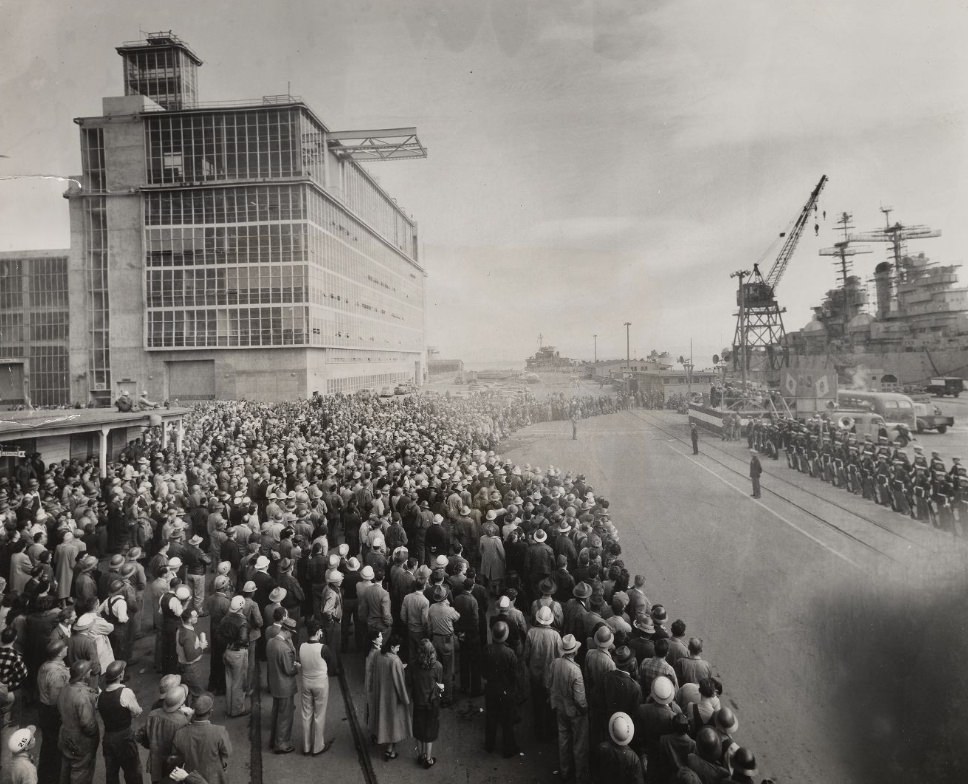
By the end of the decade, the naval shipyard at Hunters Point was still operating, with four aircraft carriers docked there in 1947 and Rear Admiral Lynde D. McCormick addressing workers in 1949. The Presidio remained an active military post. The Bay Bridge, visible from countless vantage points across the city, had become as much a part of San Francisco’s identity as the cable cars or the fog rolling in off the Pacific.
Four aircraft carriers at Hunters Point Naval Shipyard, 1947Rear Admiral Lynde D. McCormick addressing workers at Hunters Point Naval Shipyard, 1949View of Bay Bridge from the Embarcadero, 1940s
Below are more photographs from San Francisco’s streets, shipyards, waterfront, and neighborhoods throughout the 1940s — a visual record of one of the most consequential decades in the city’s history.
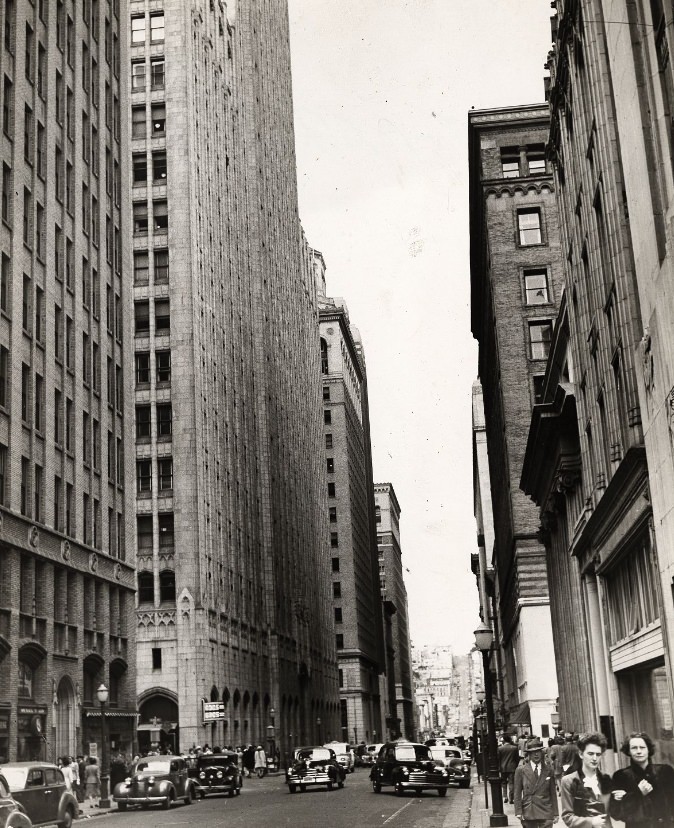
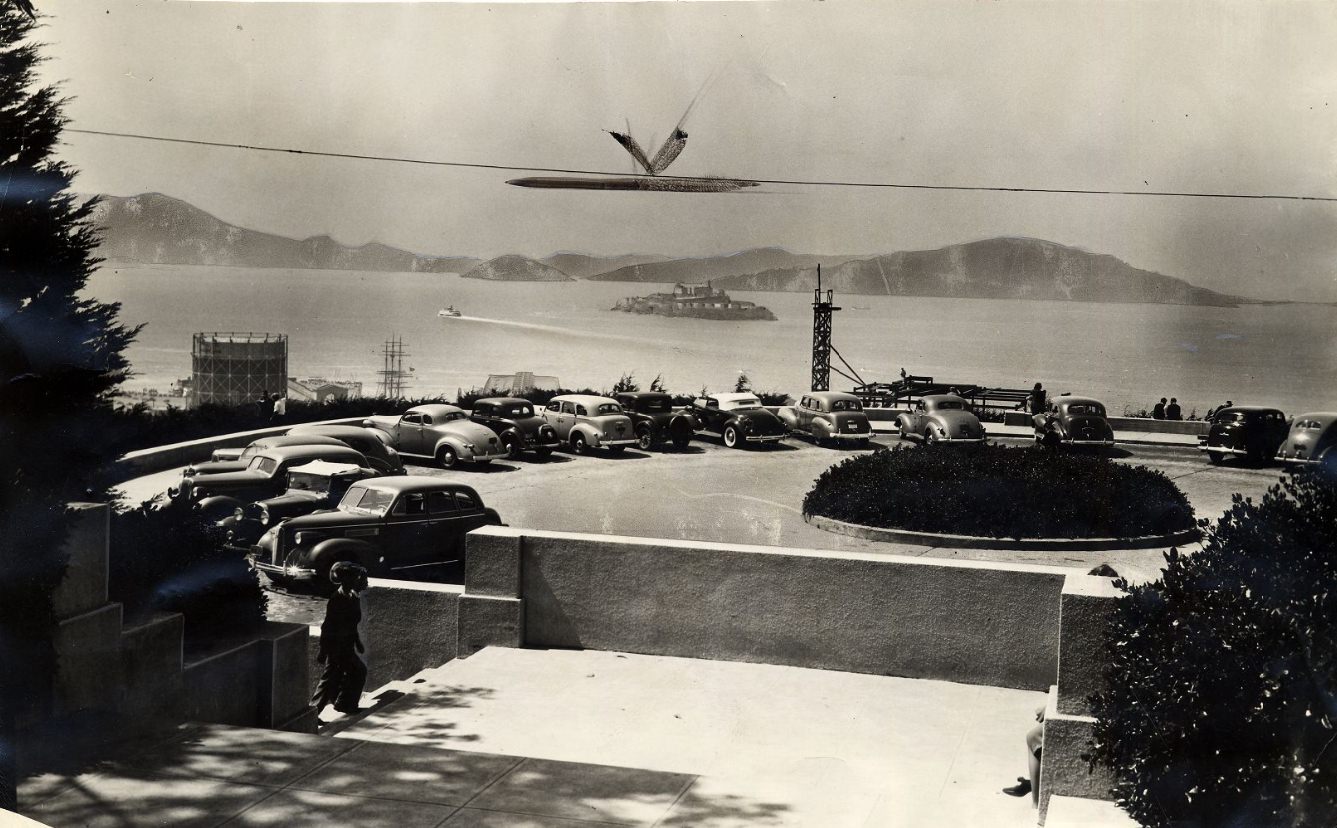
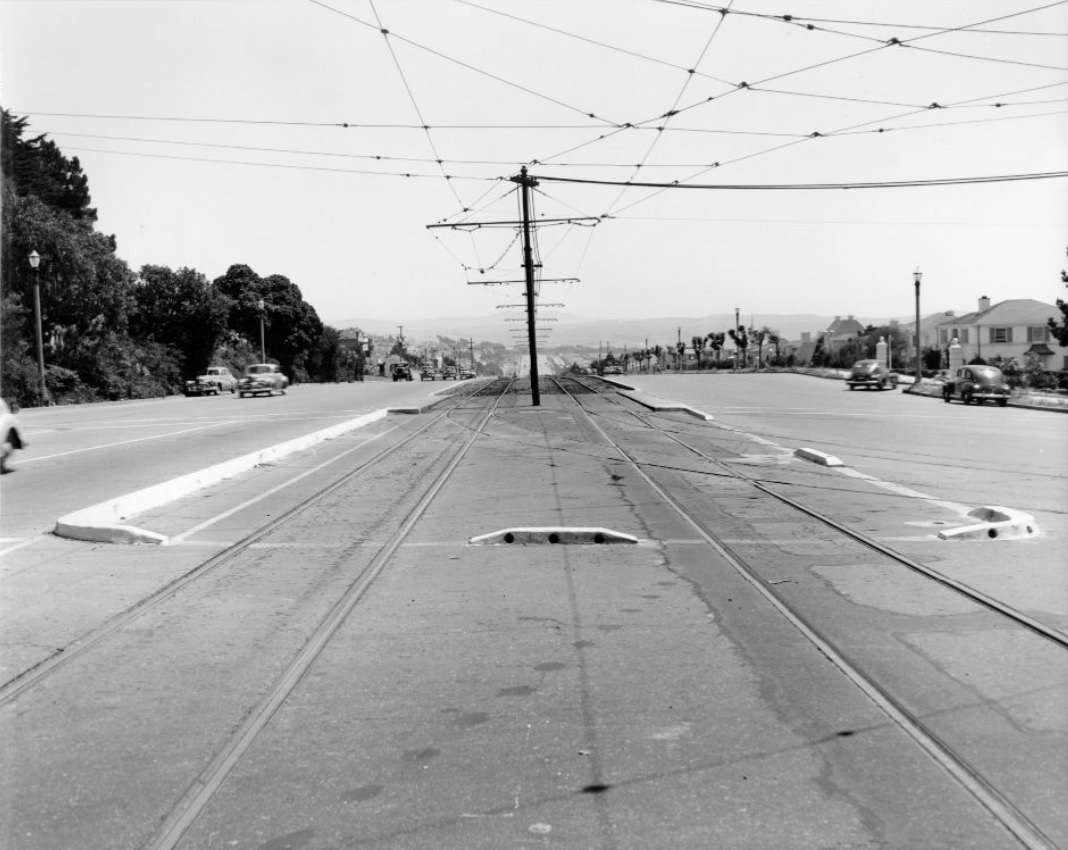
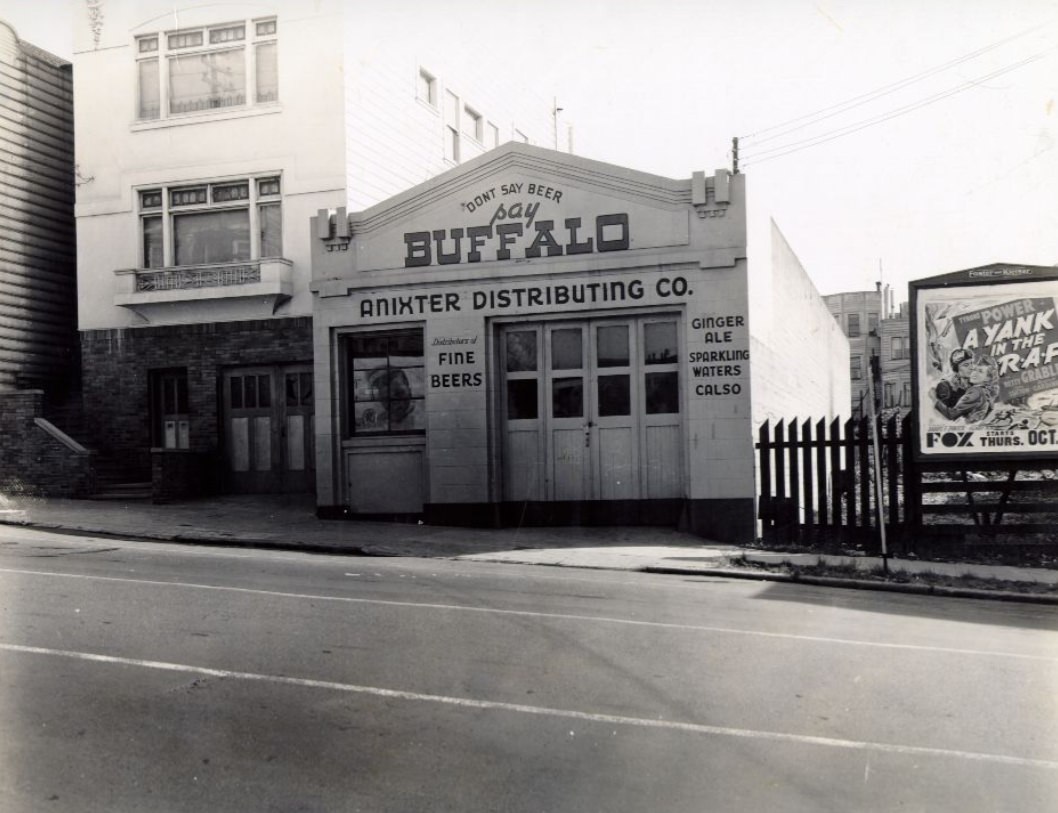
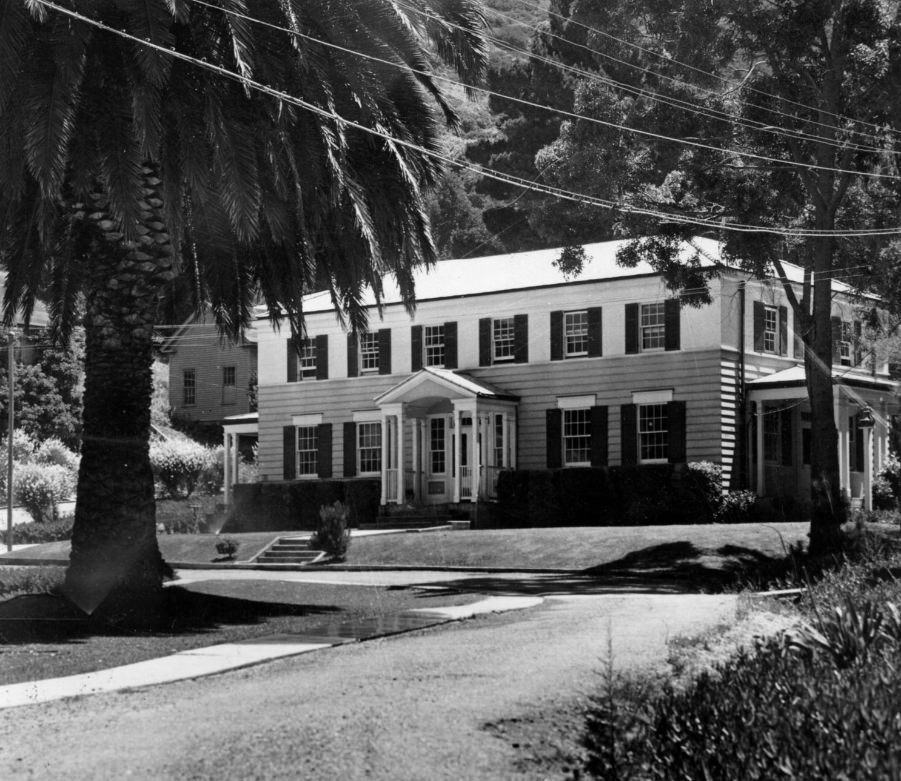
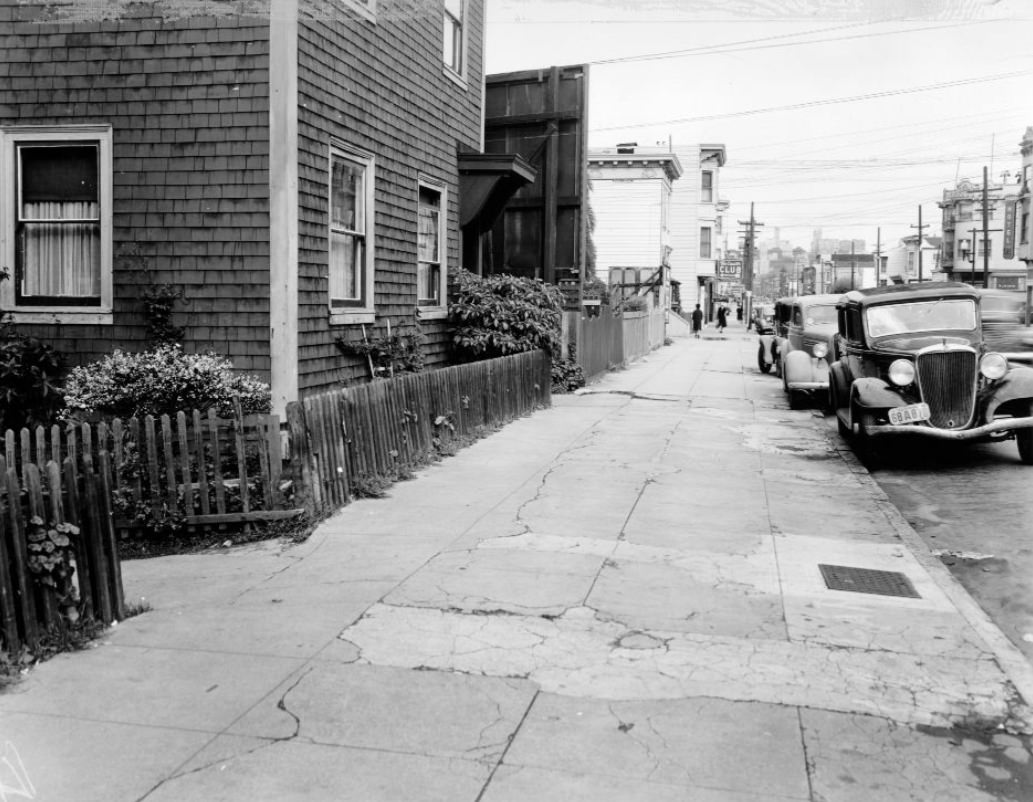
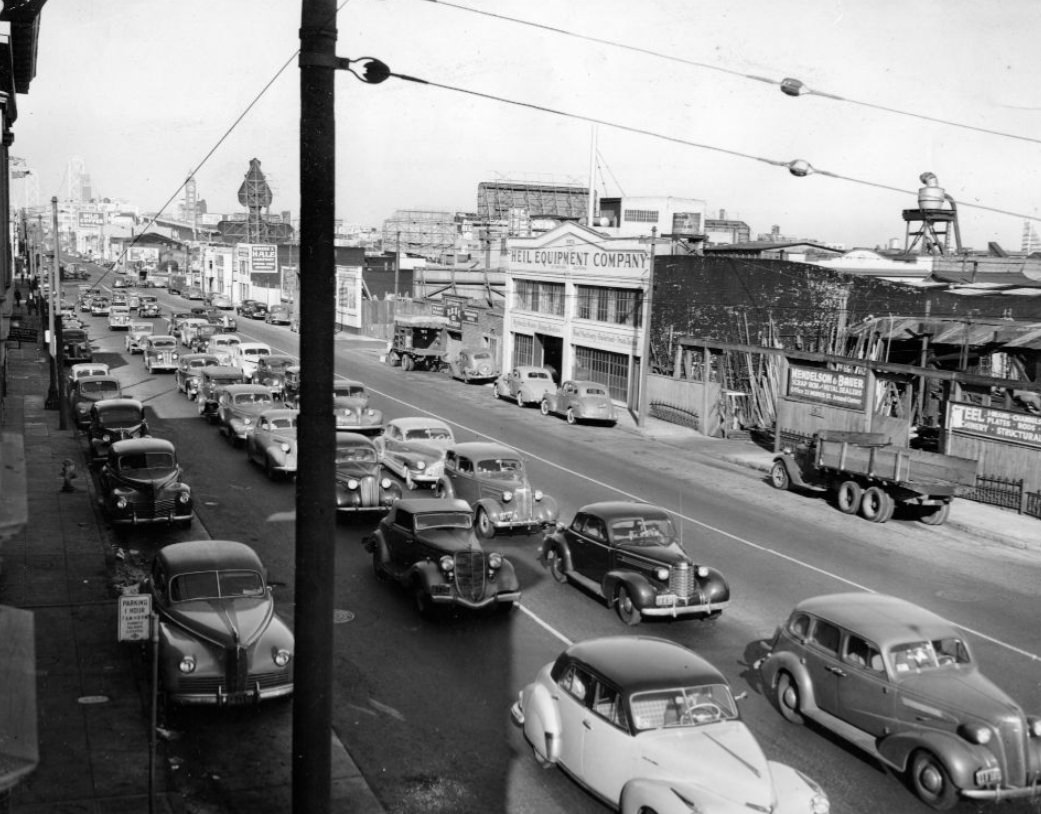
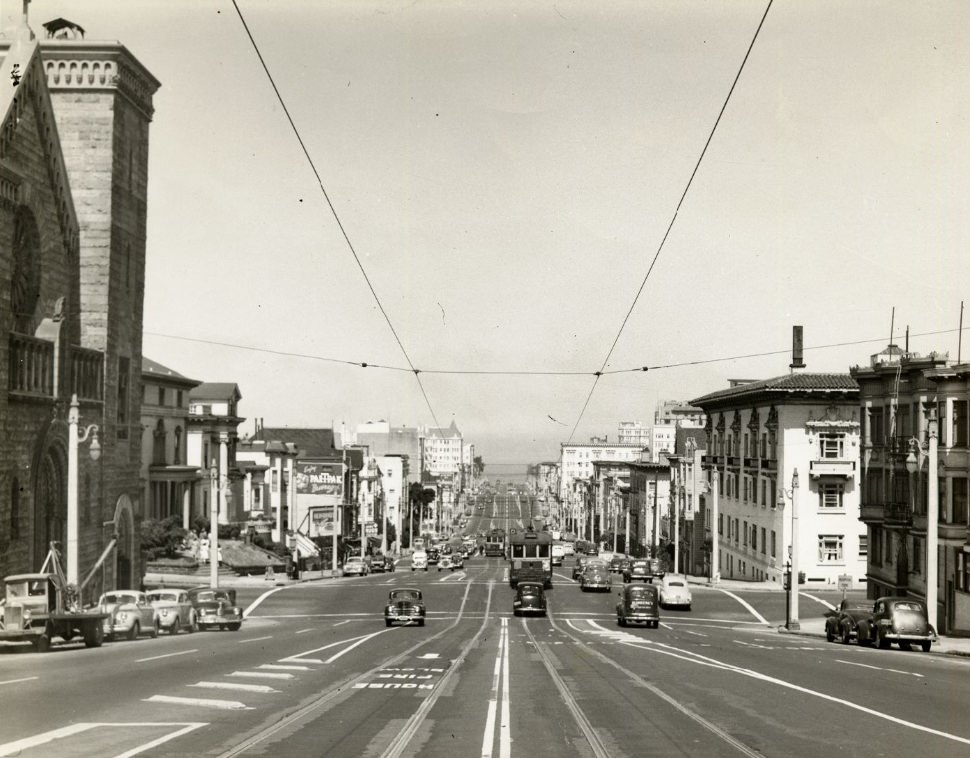
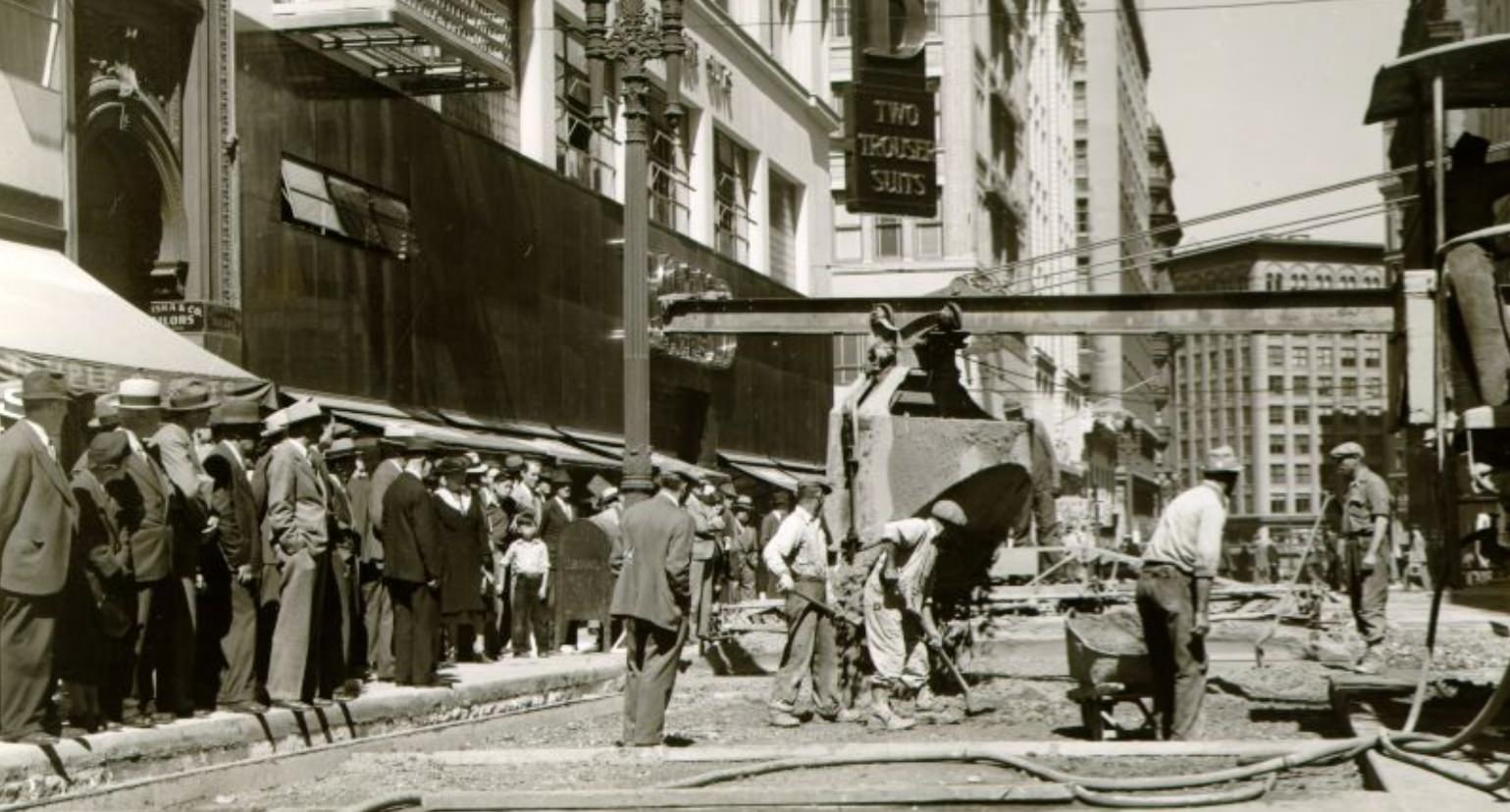
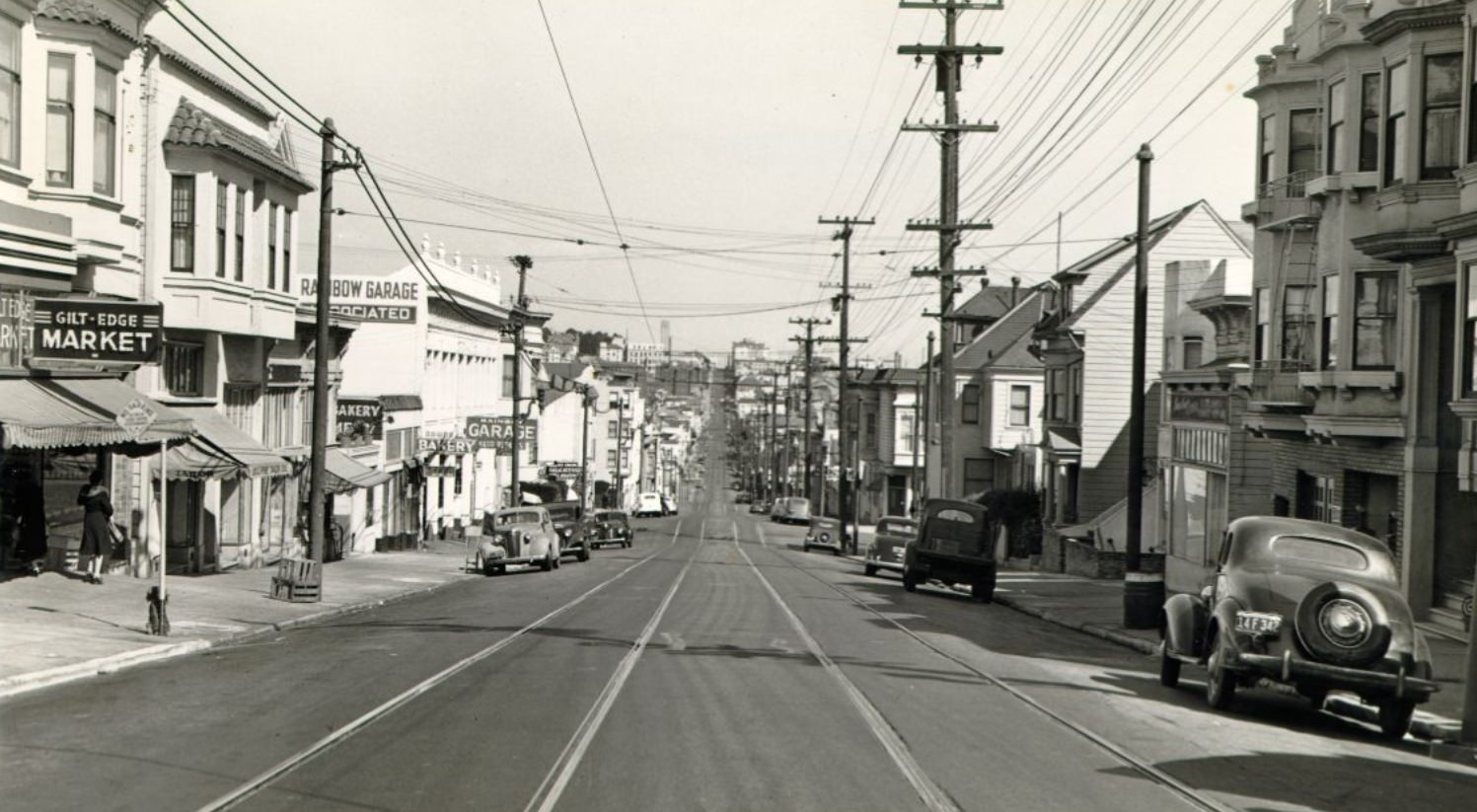
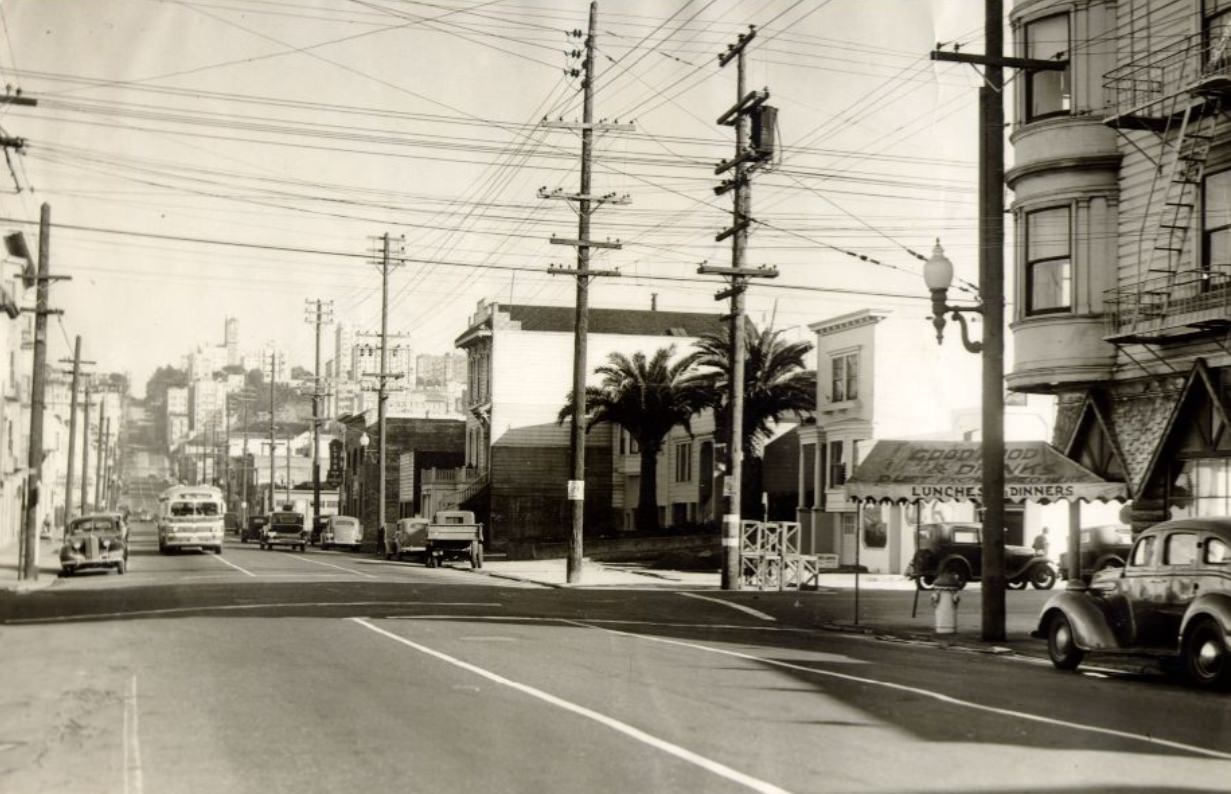
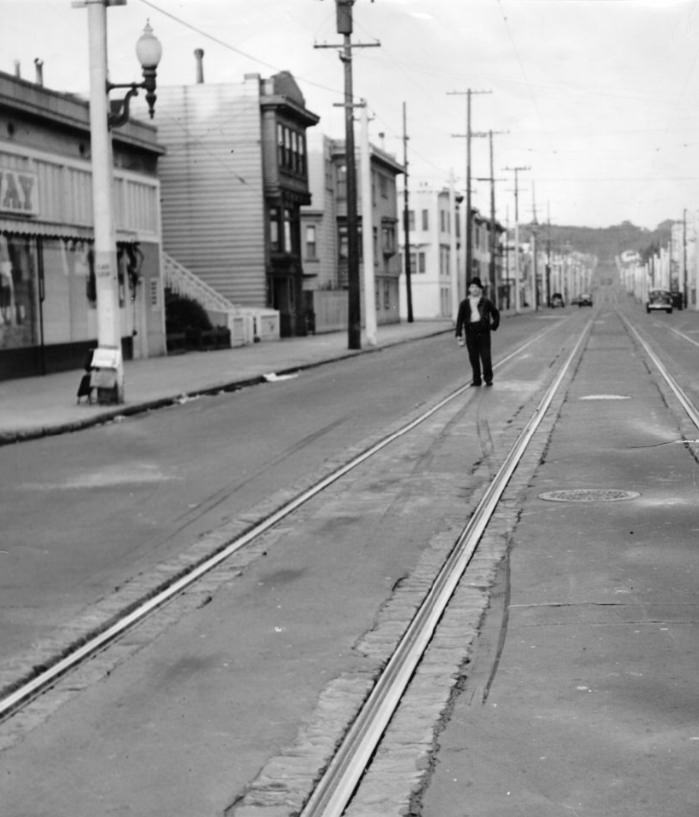
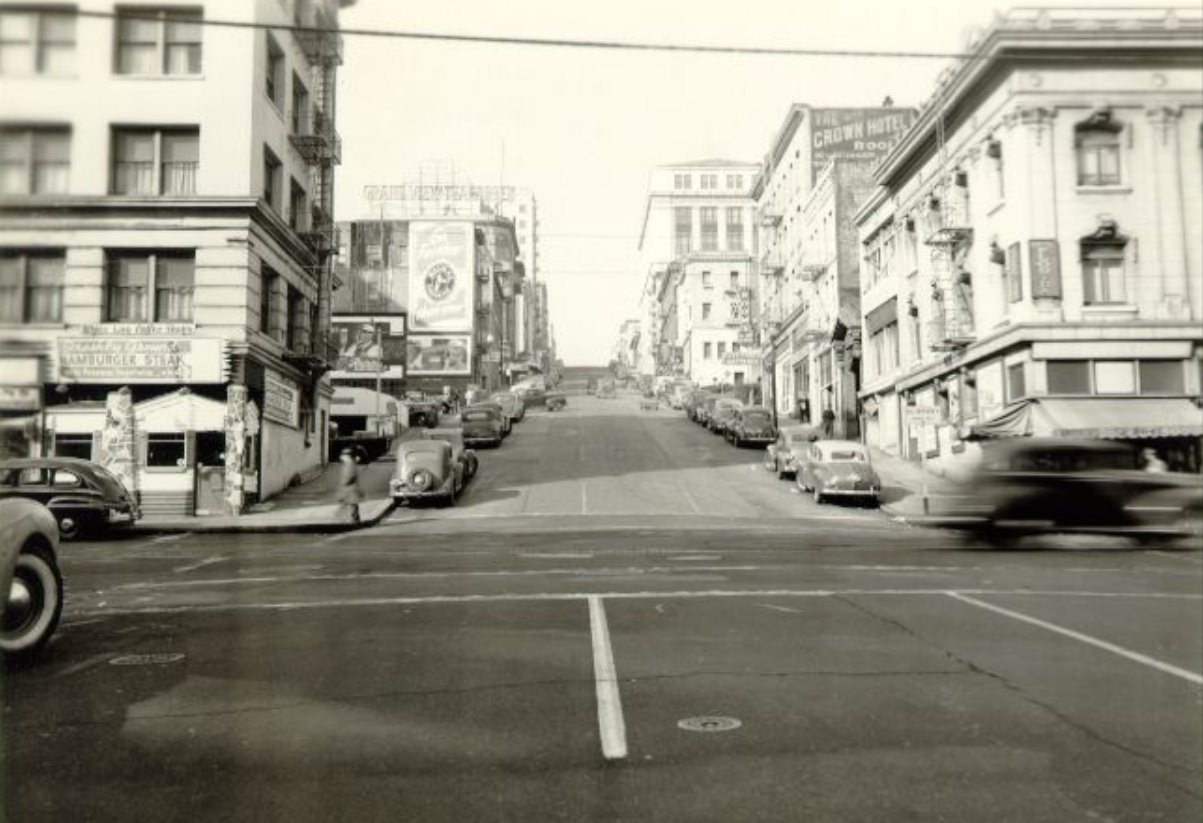
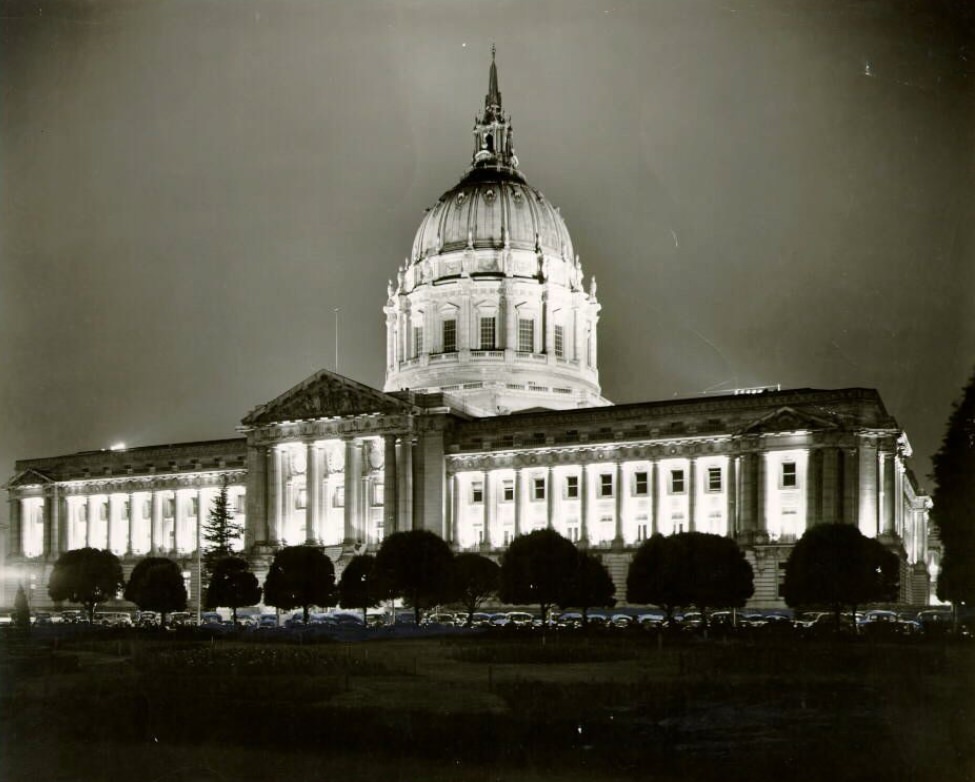
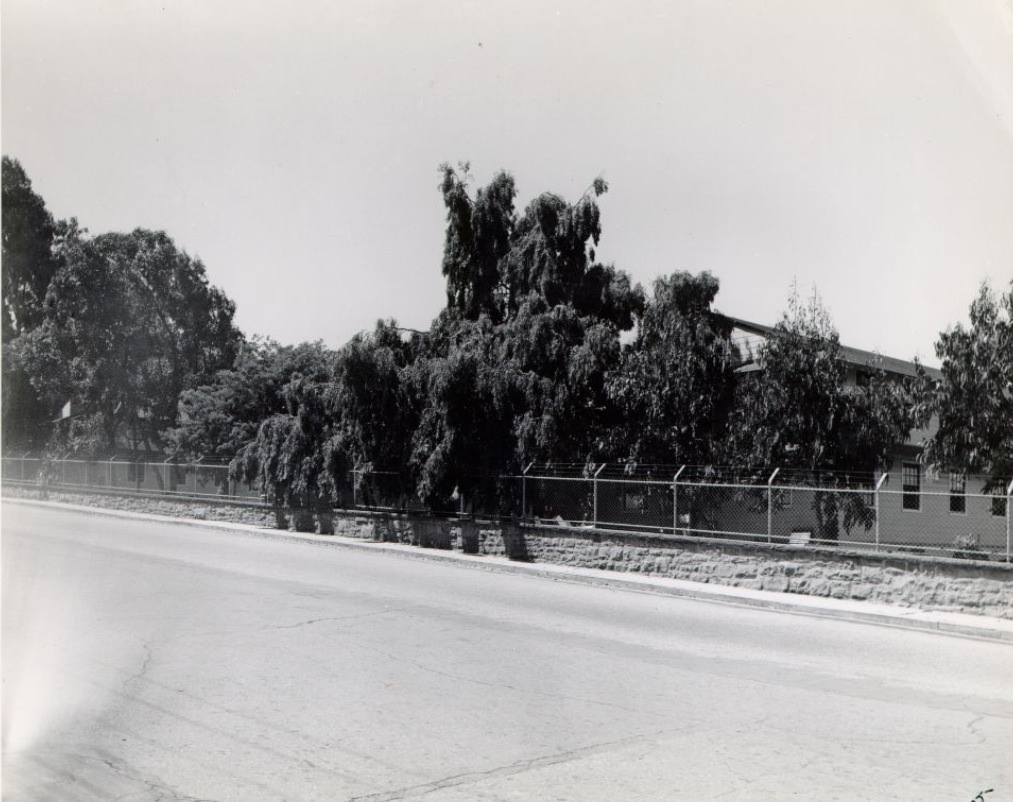
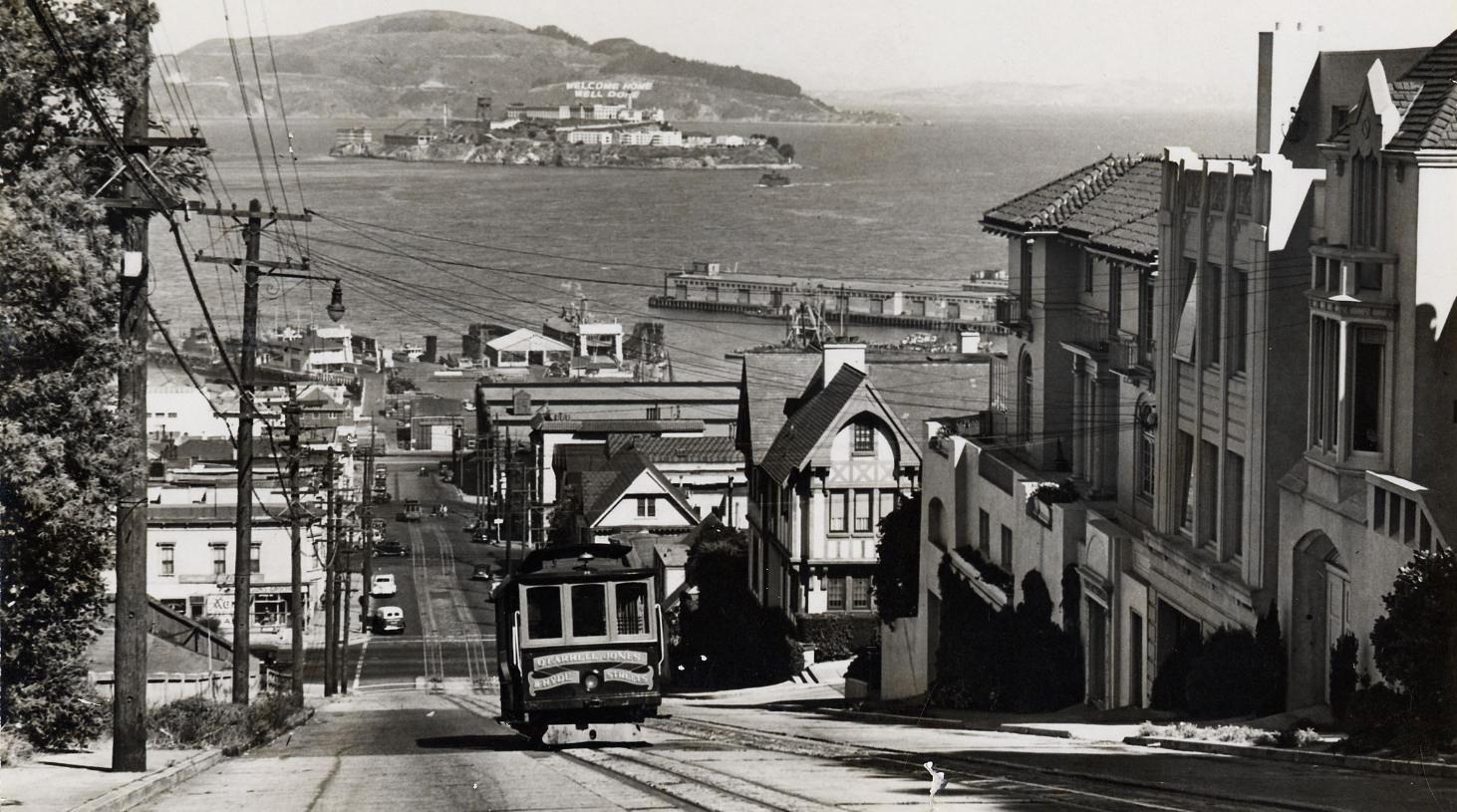
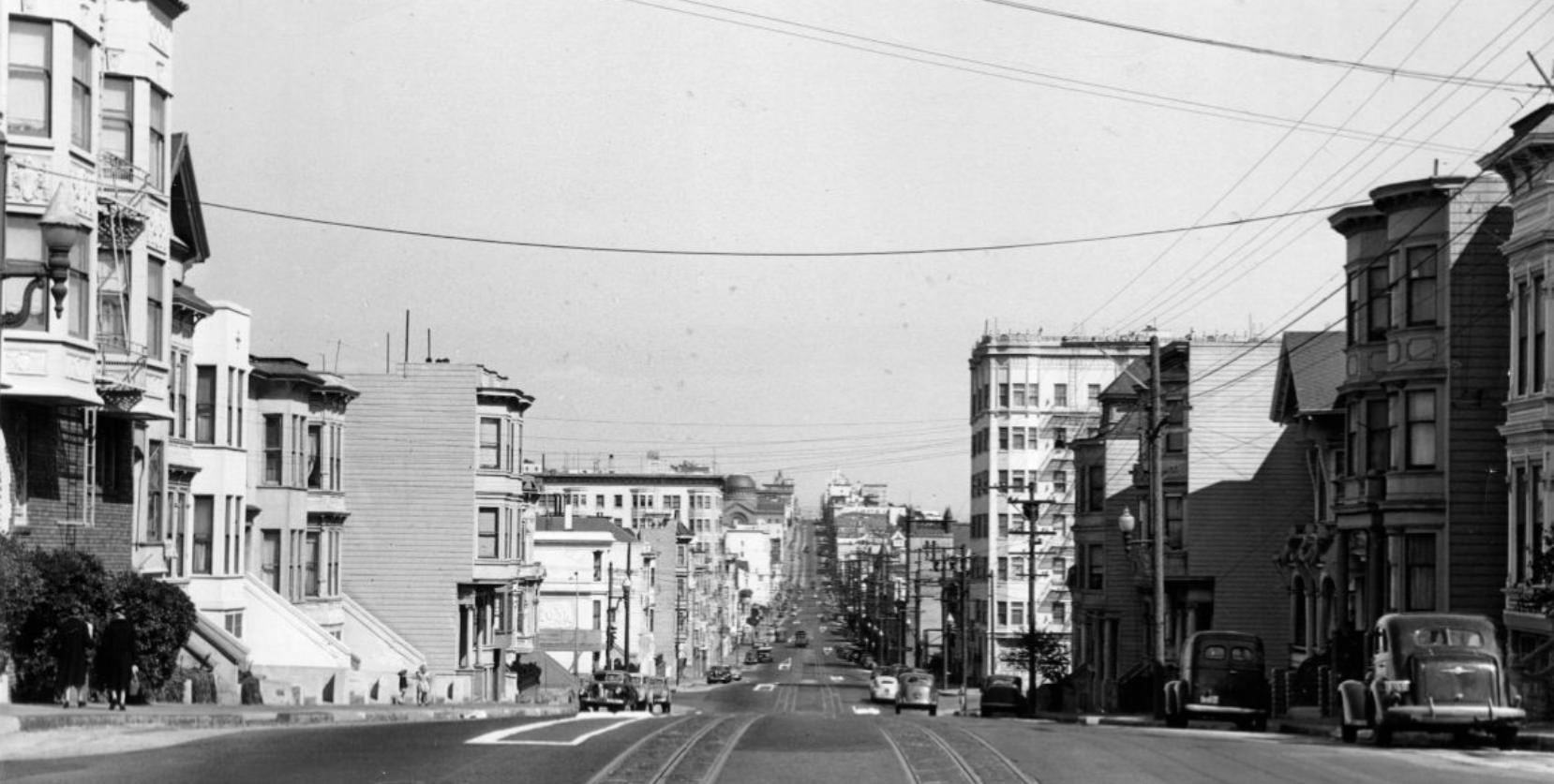
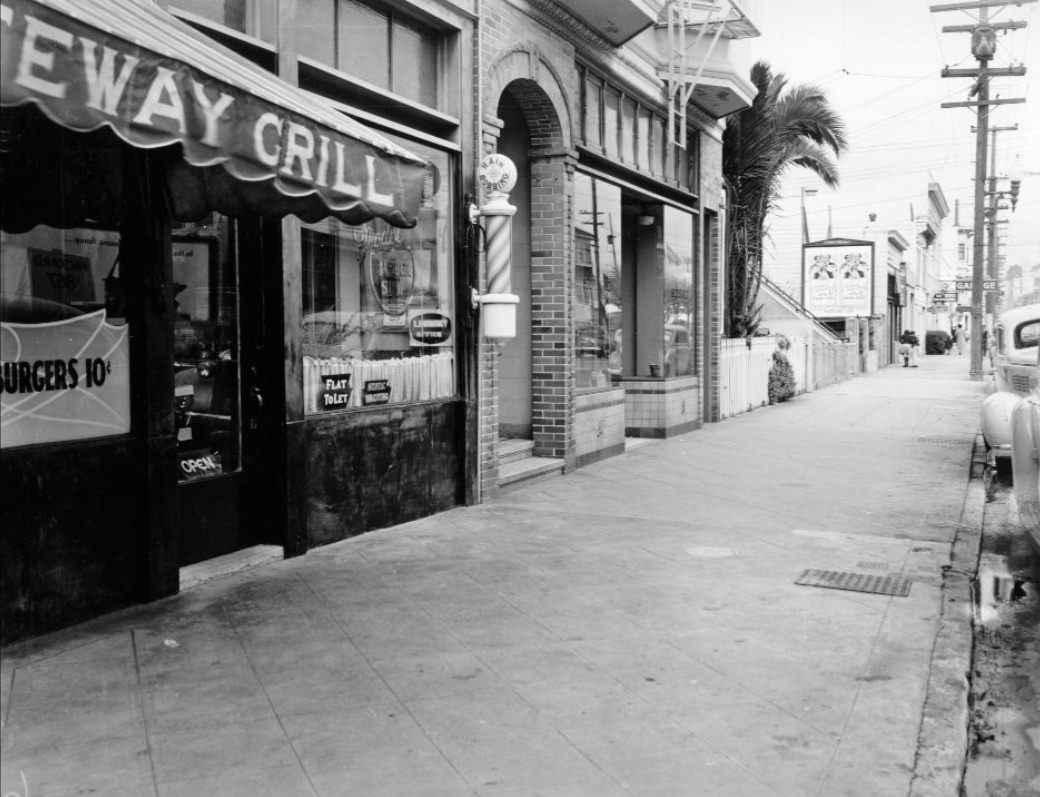
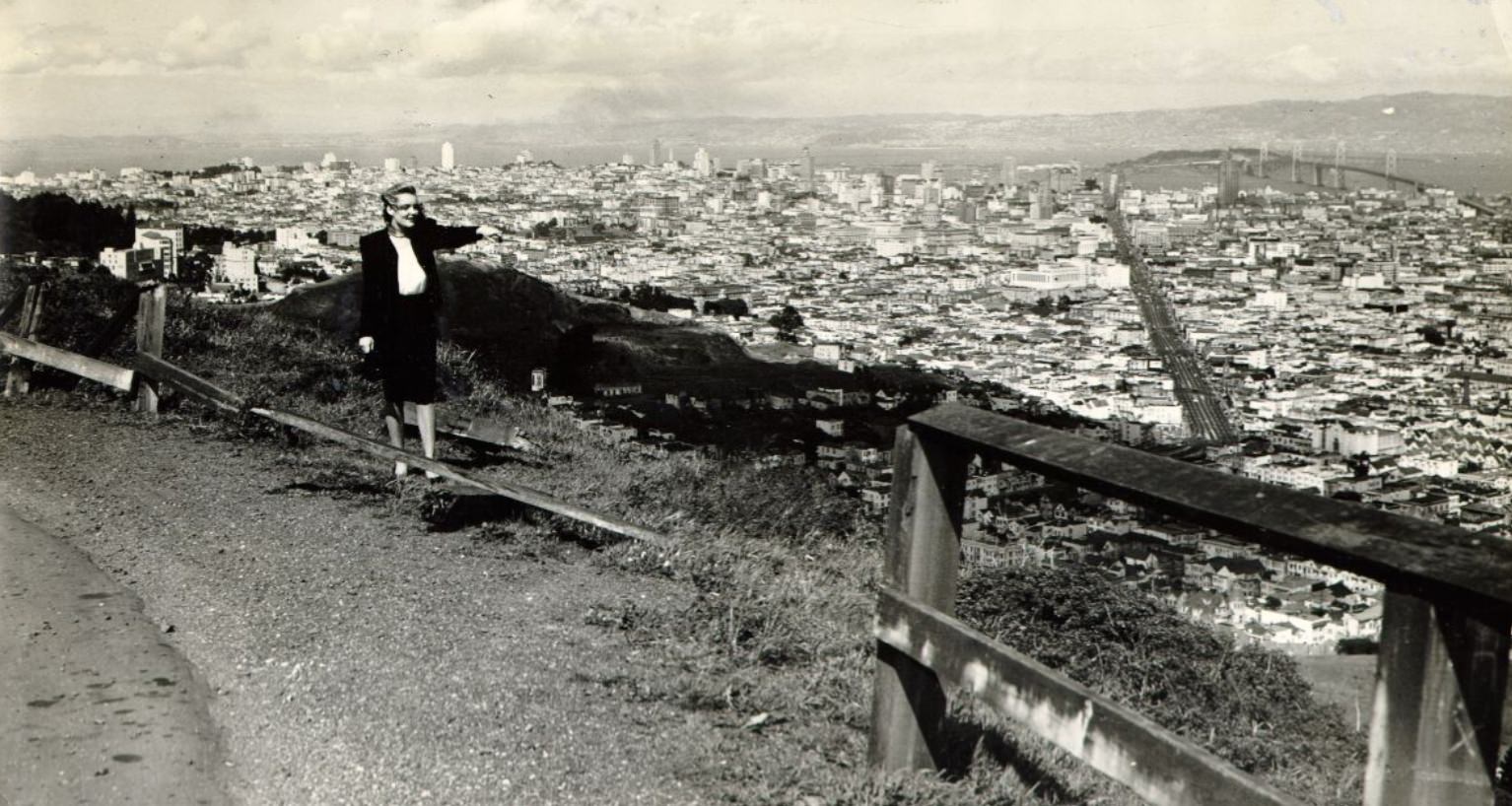
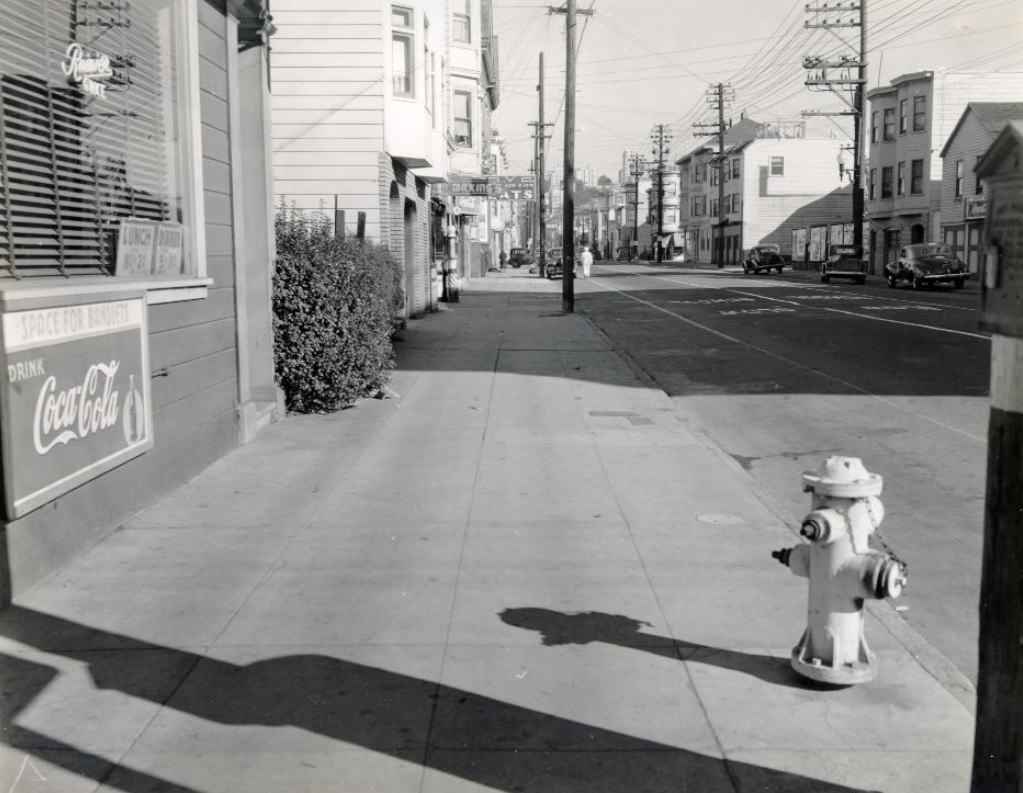
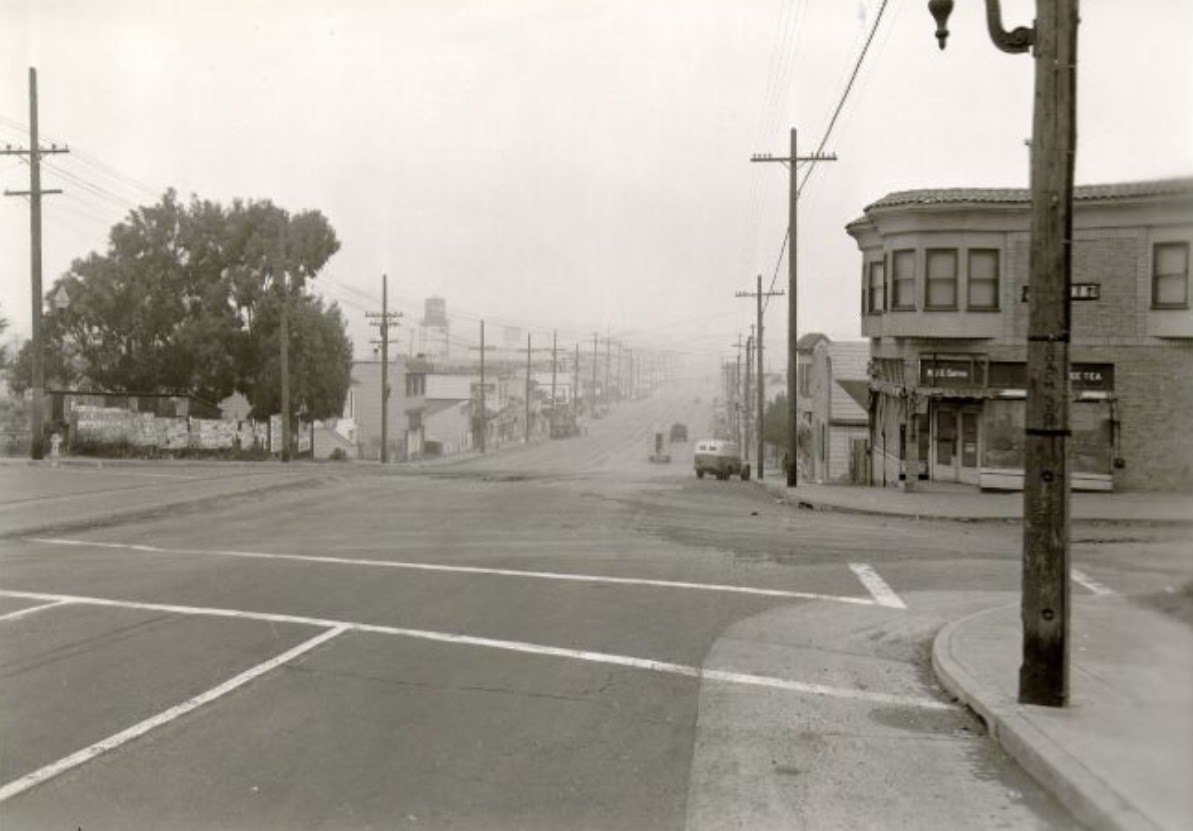
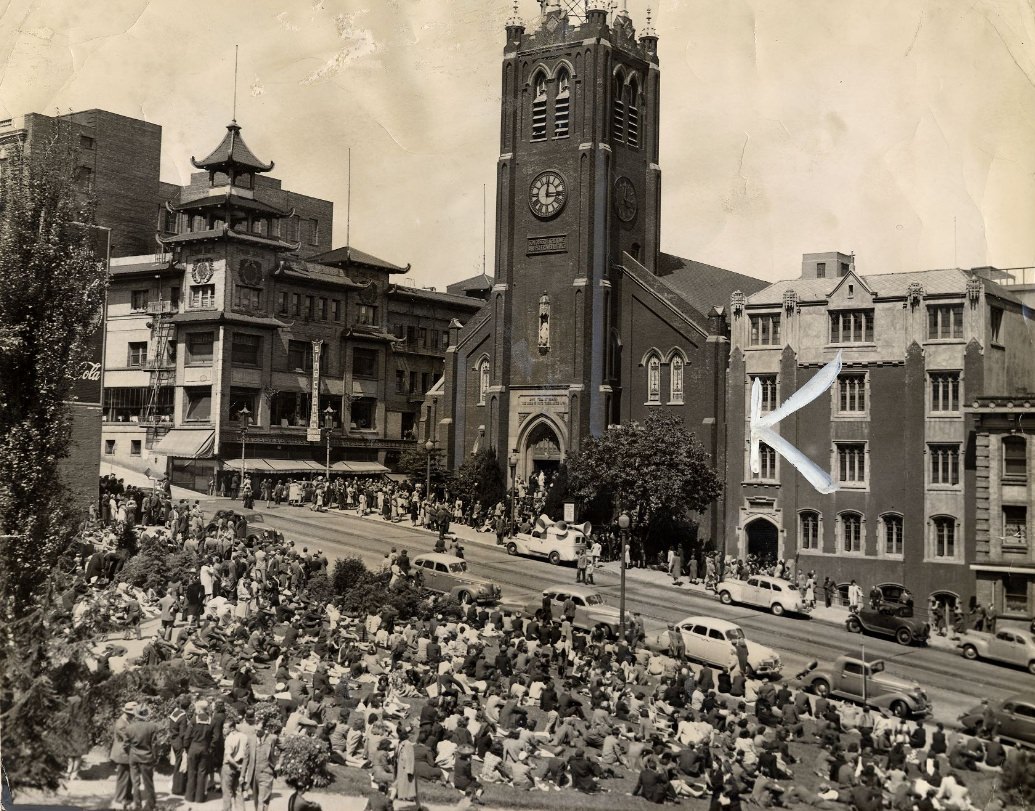
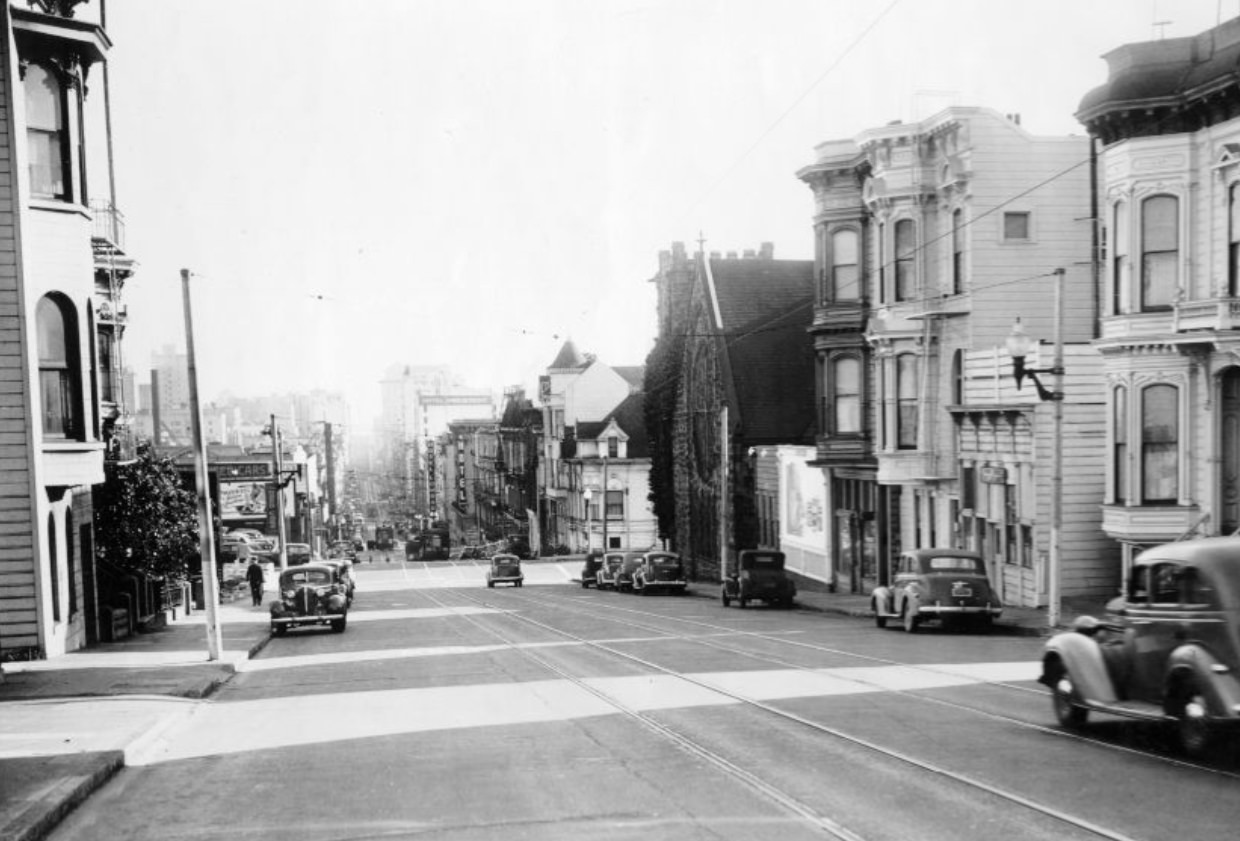
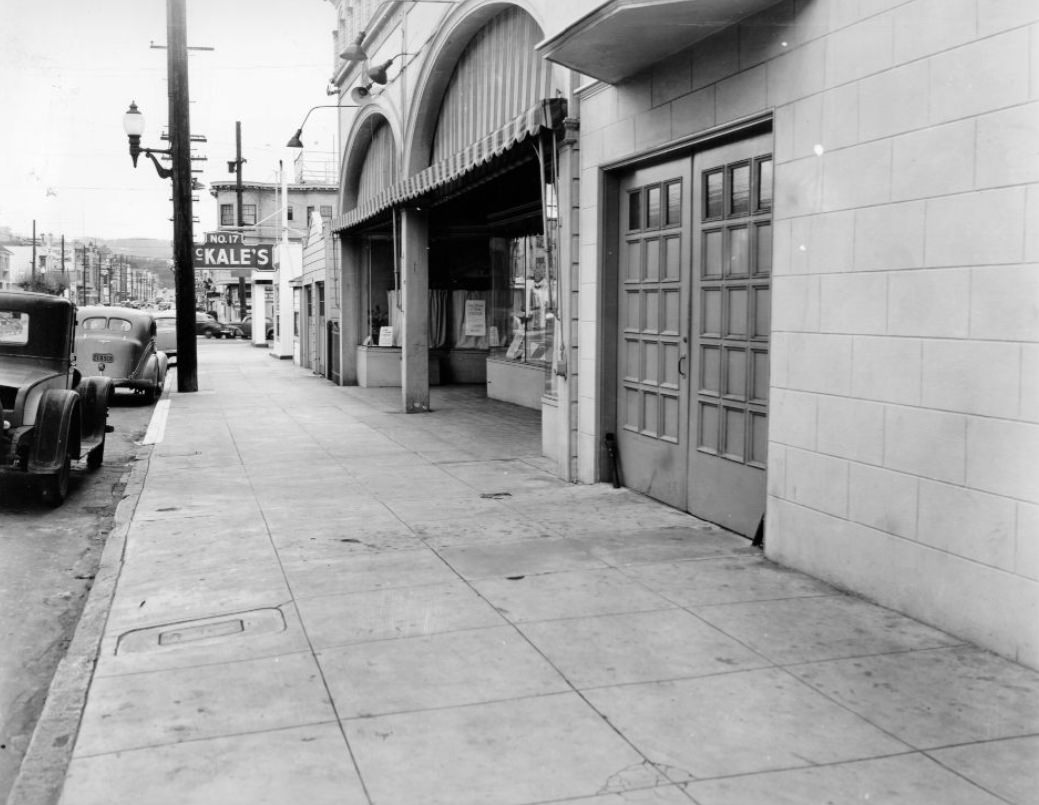
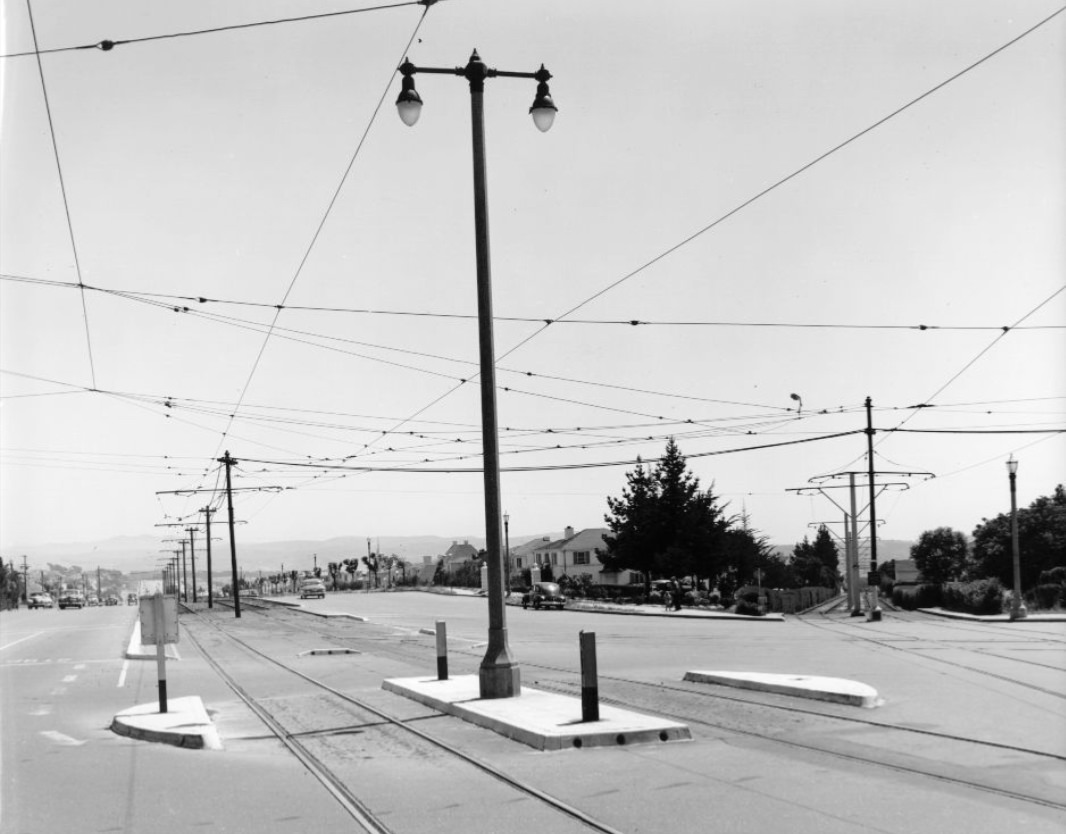
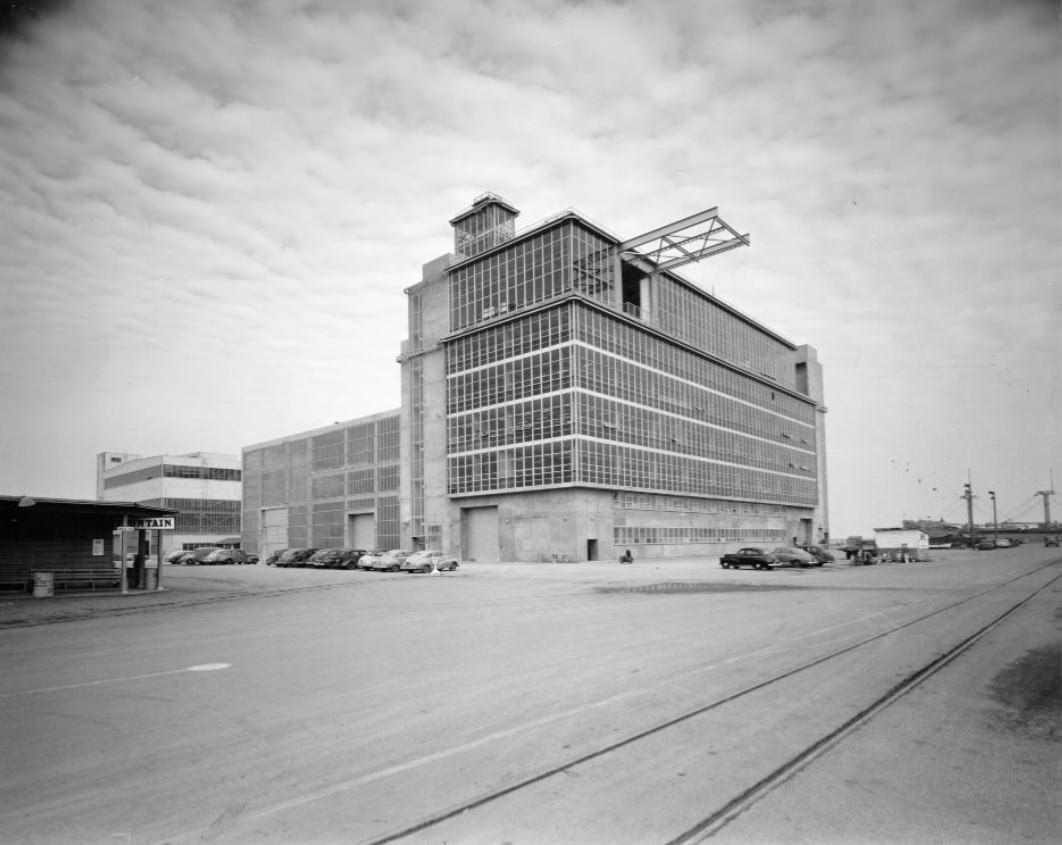
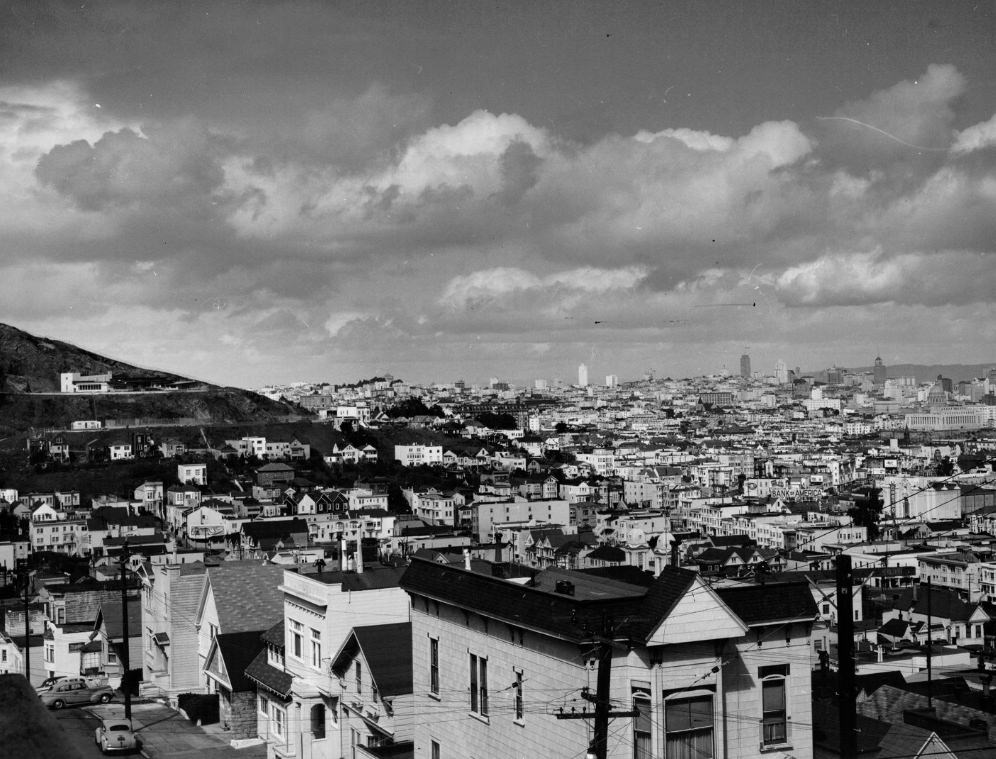
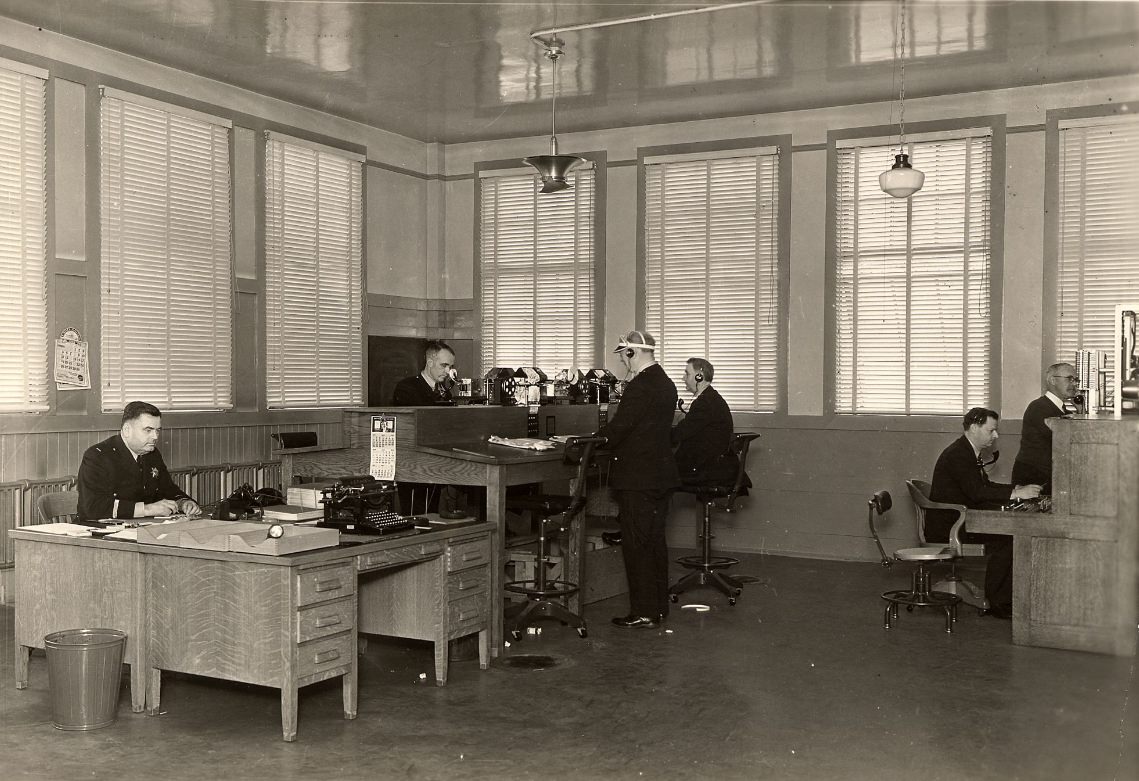
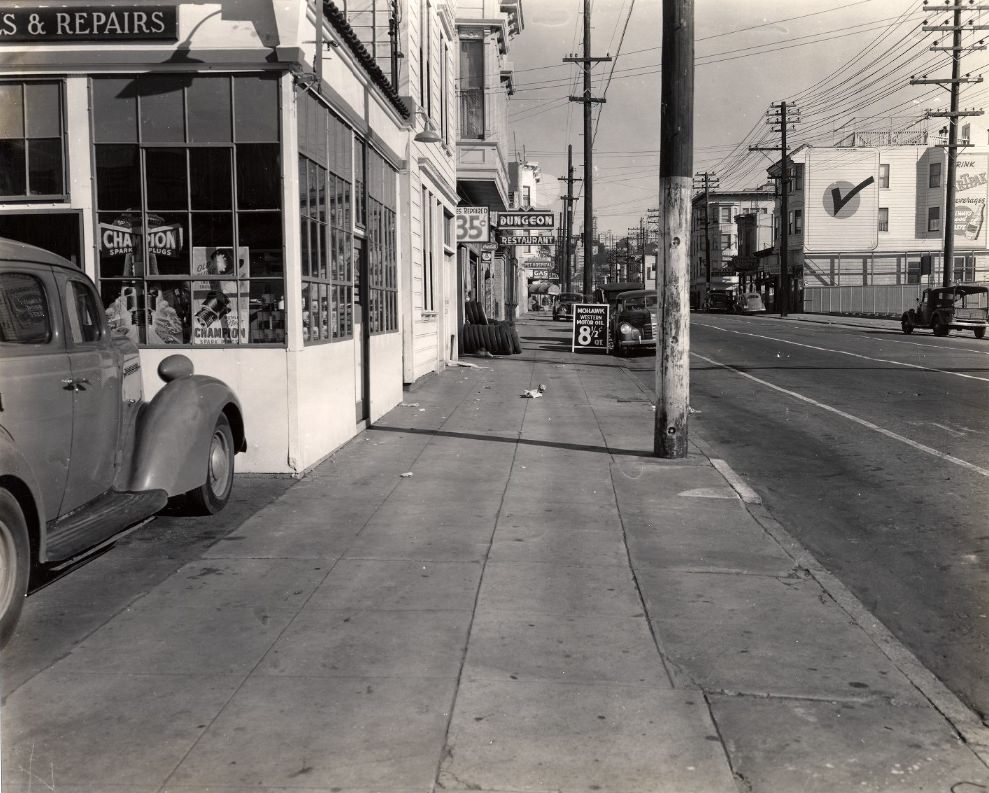
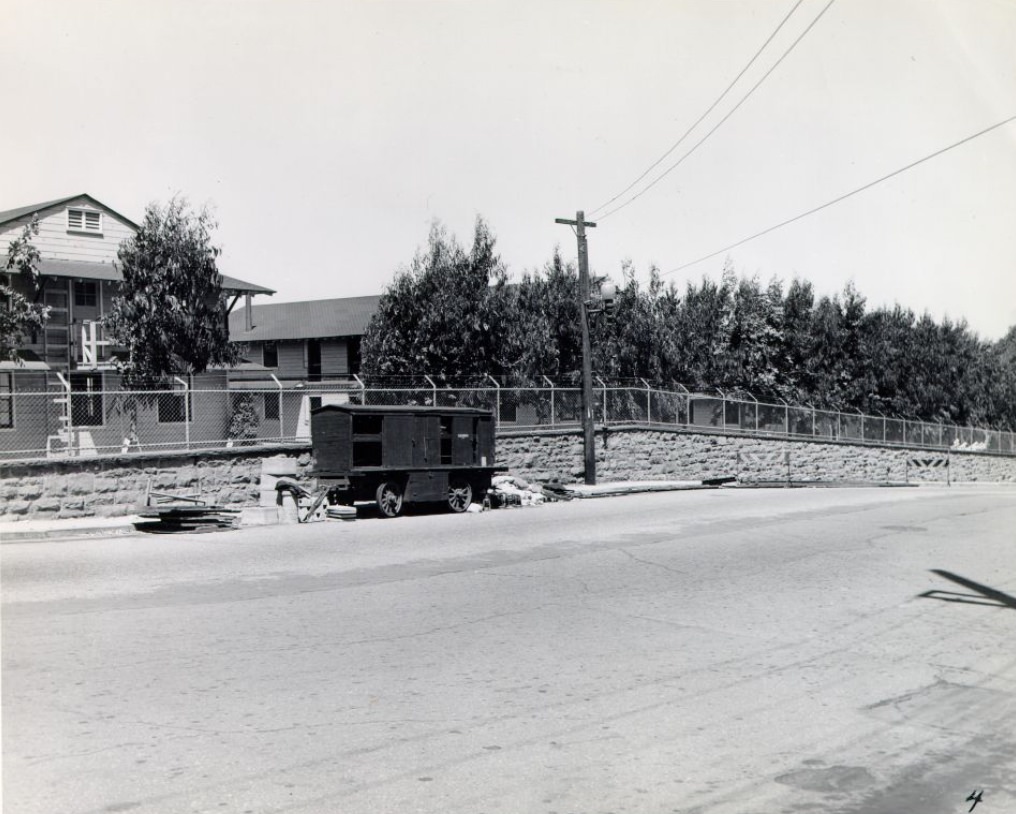
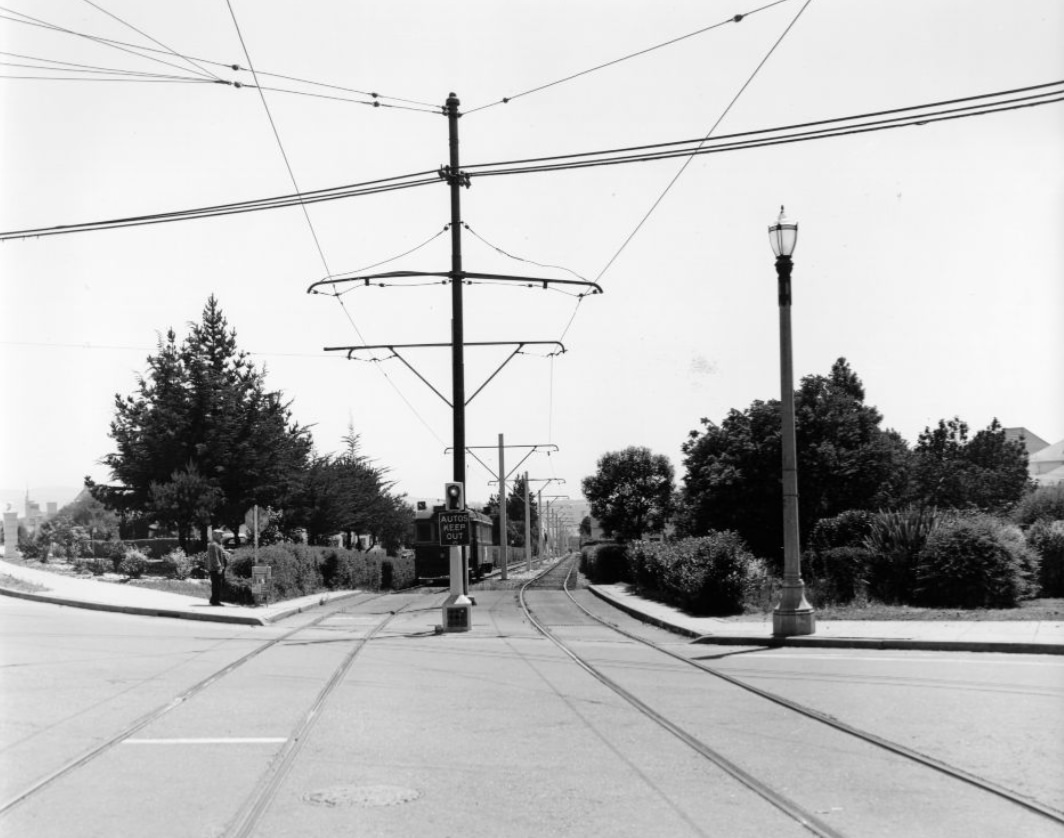
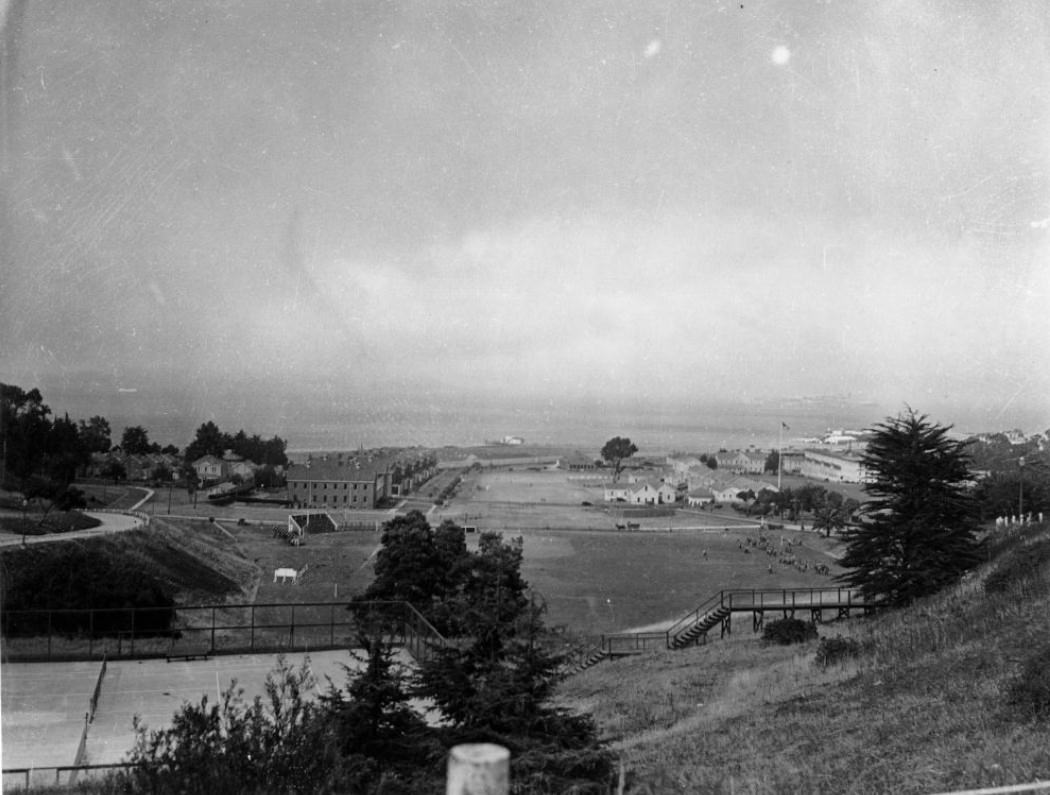
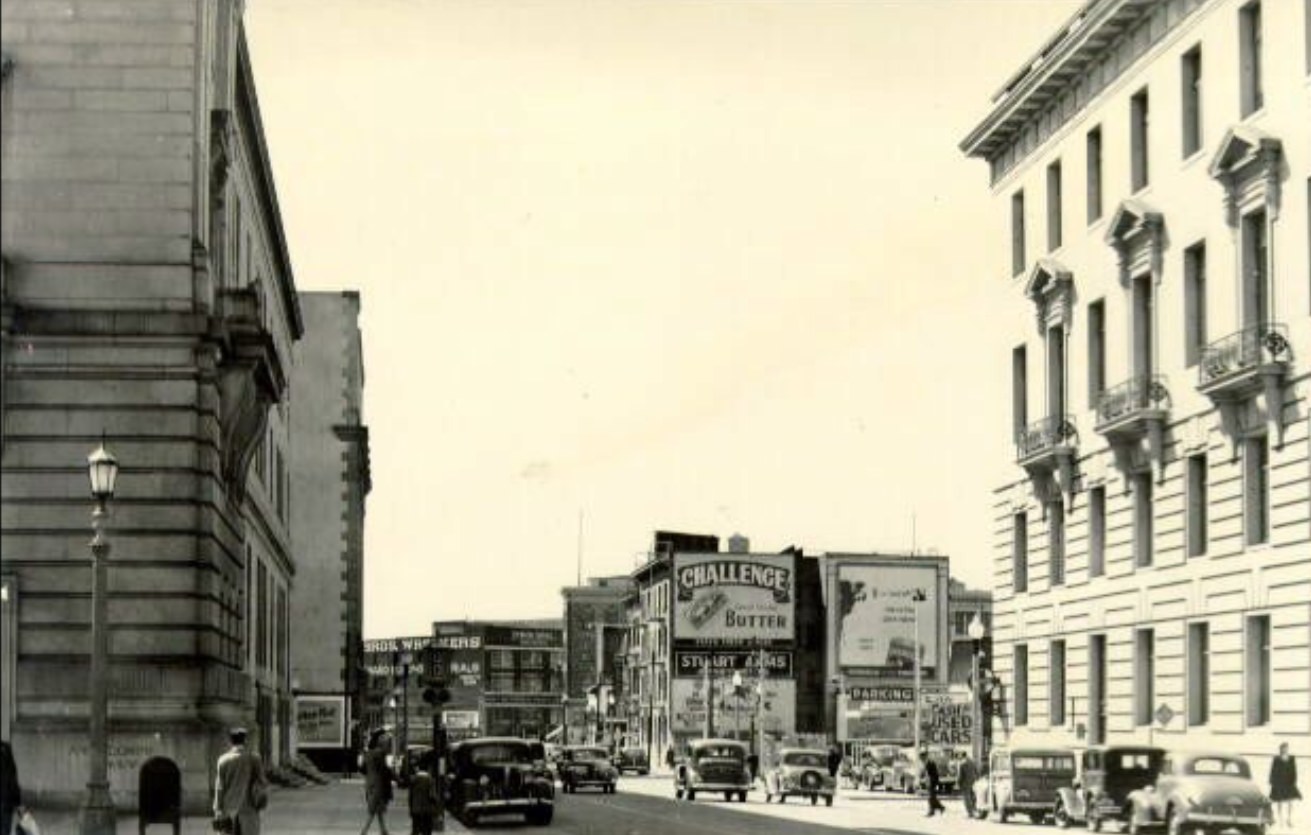
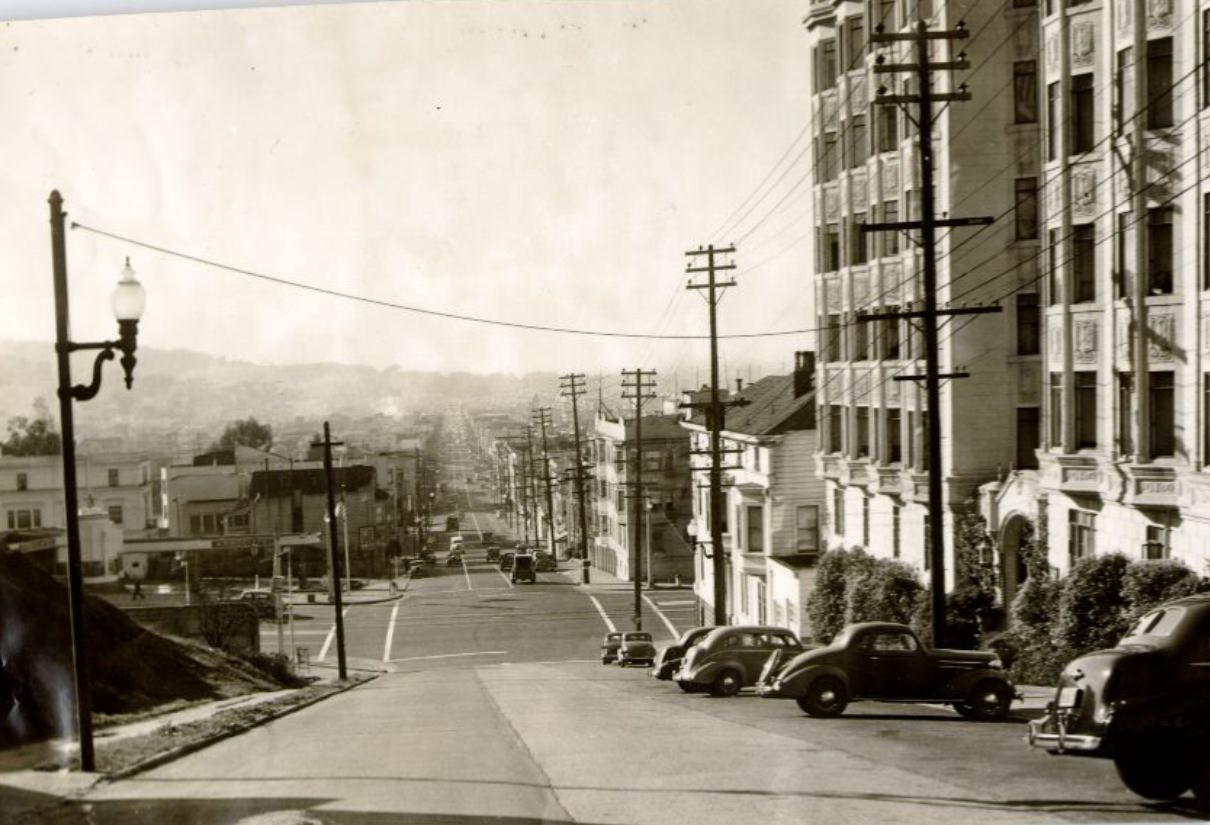
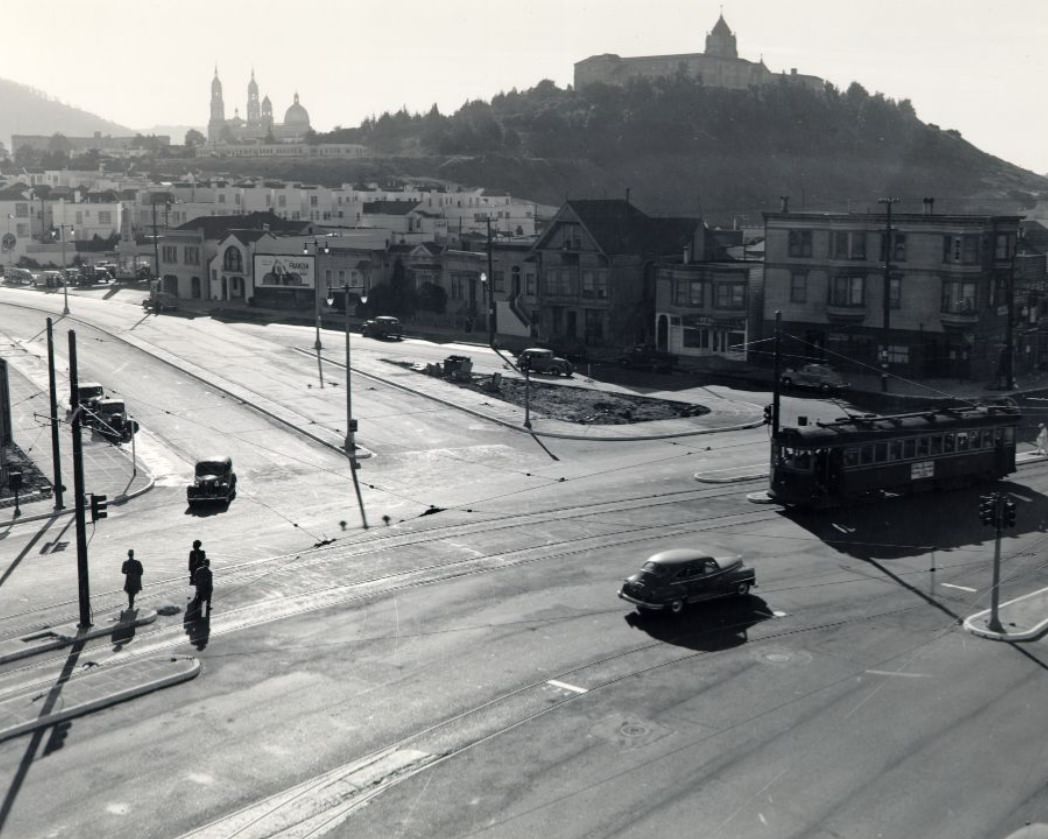
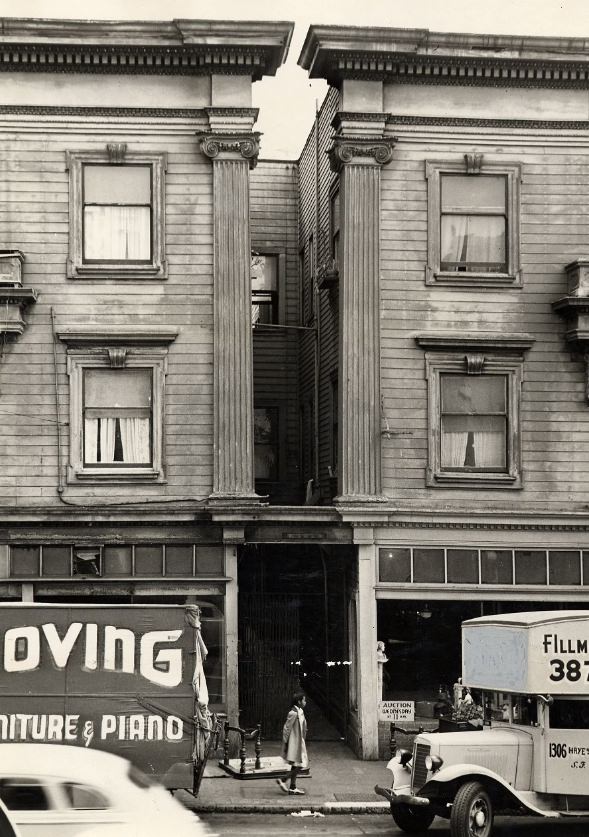
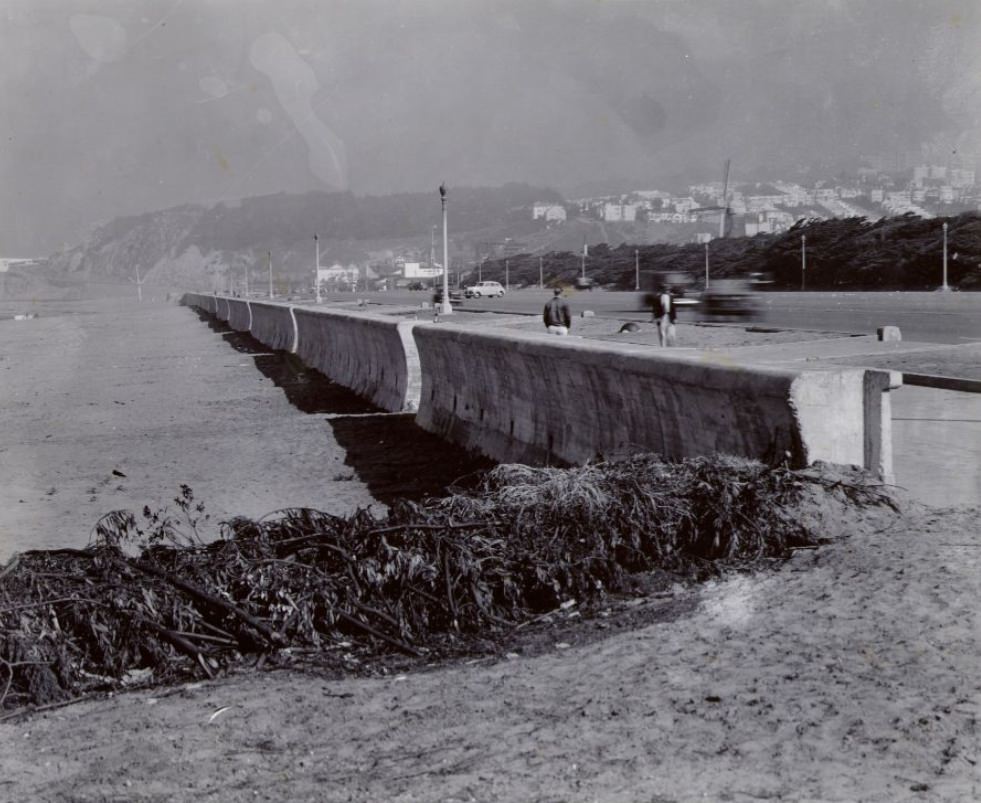
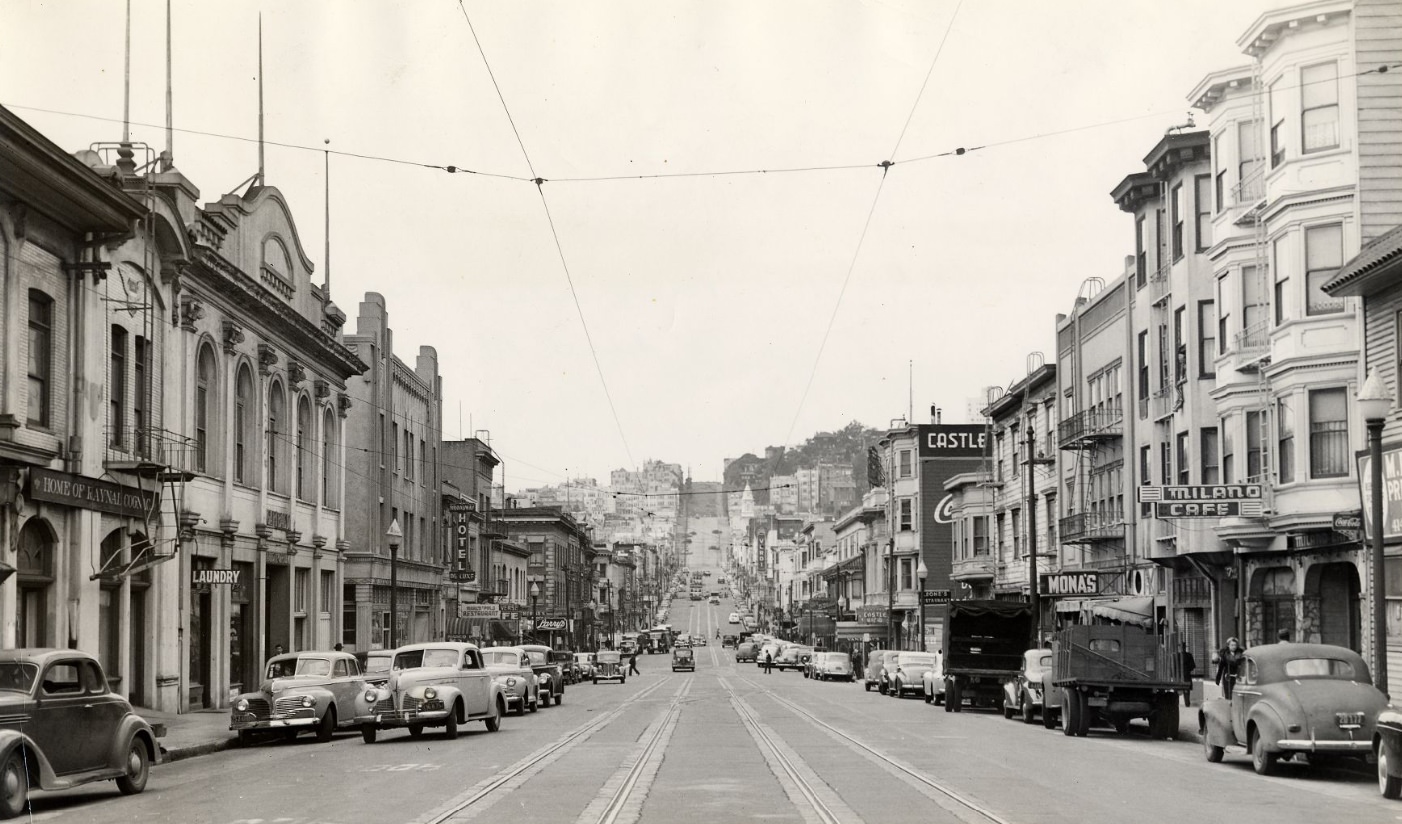
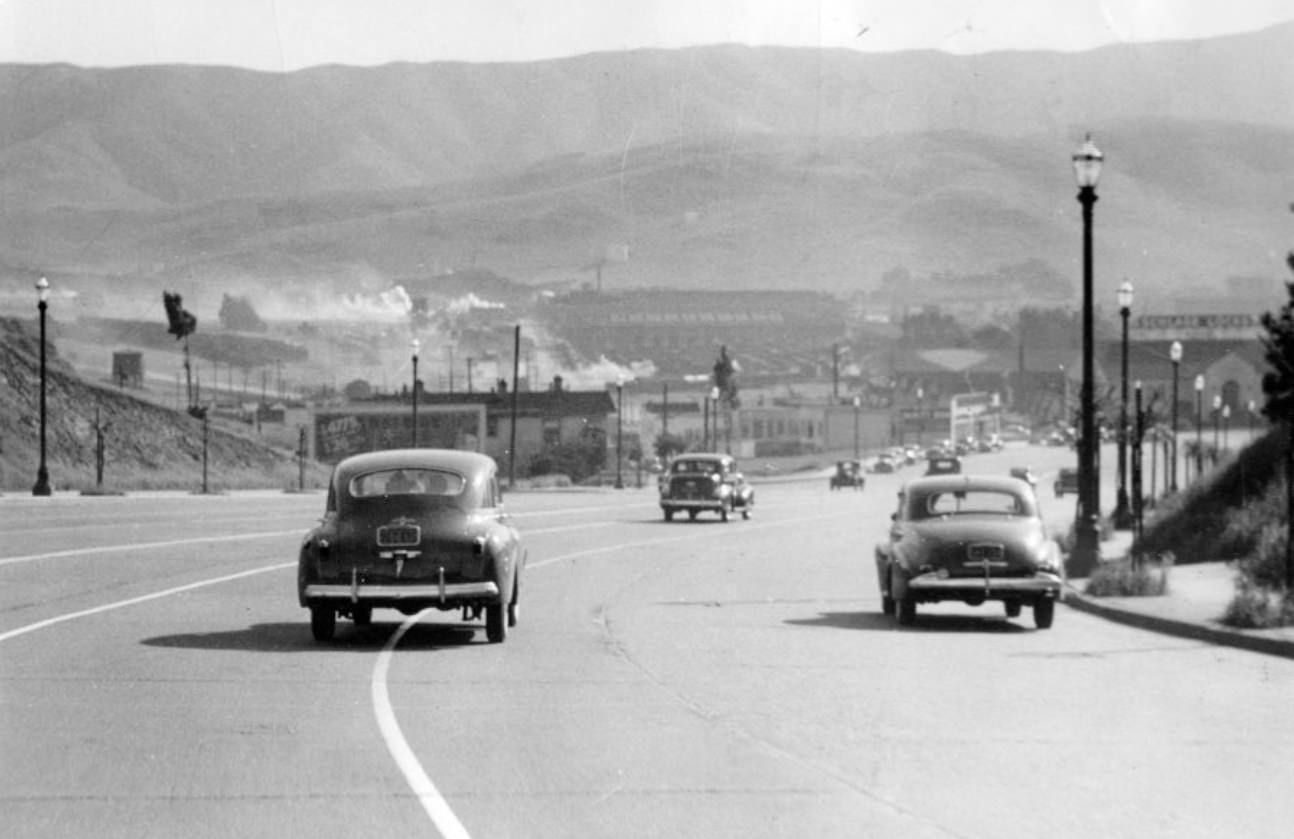
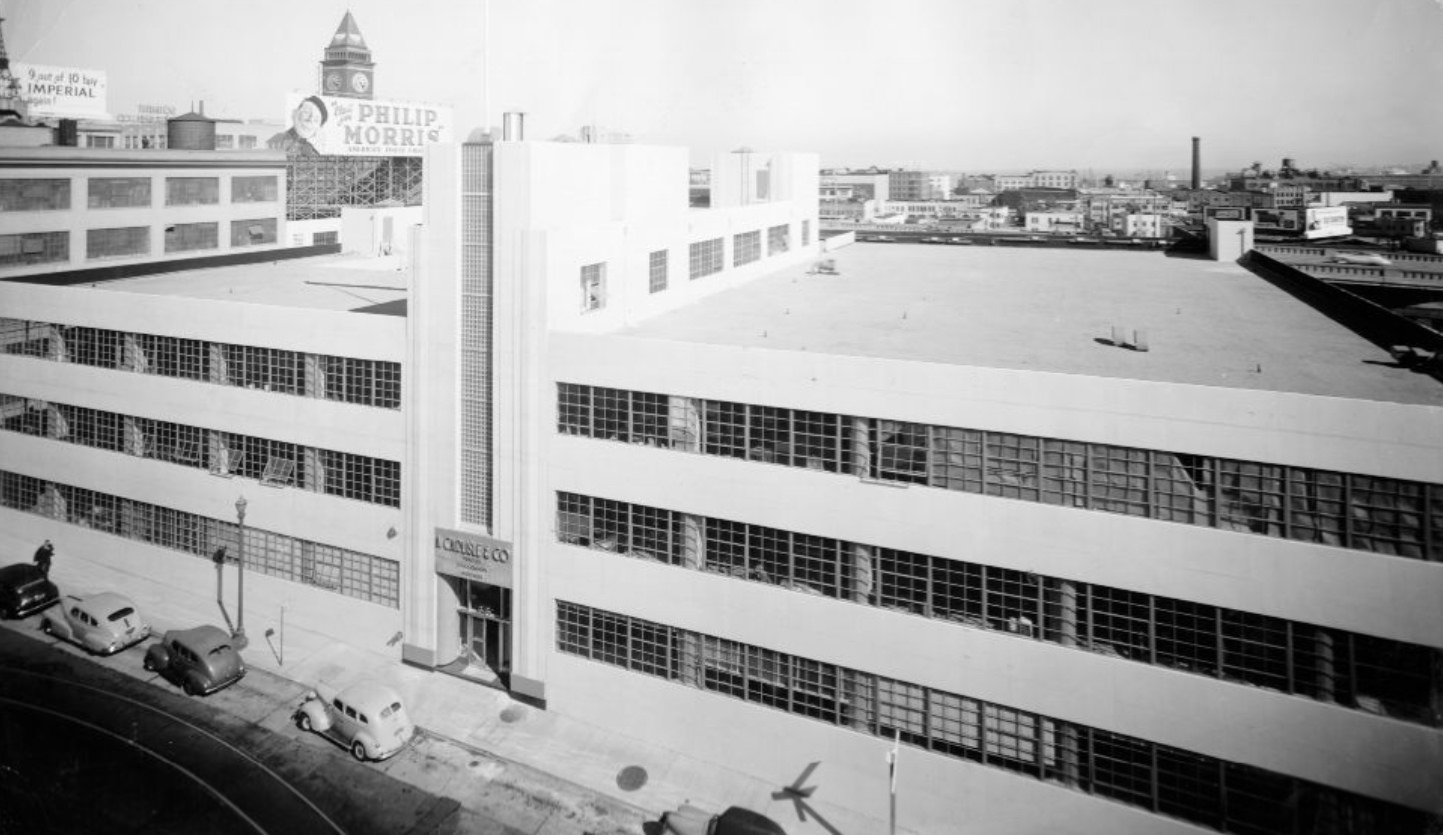
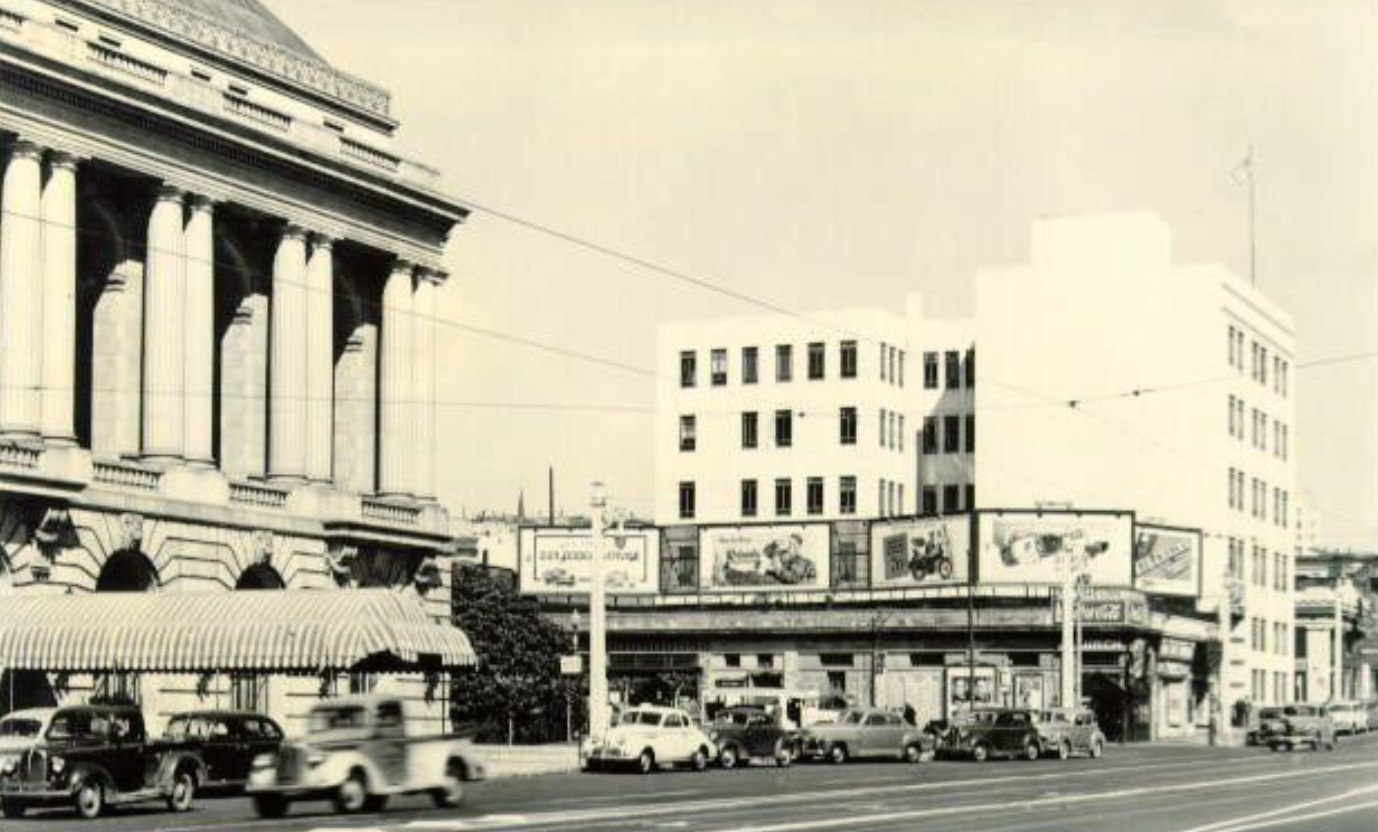
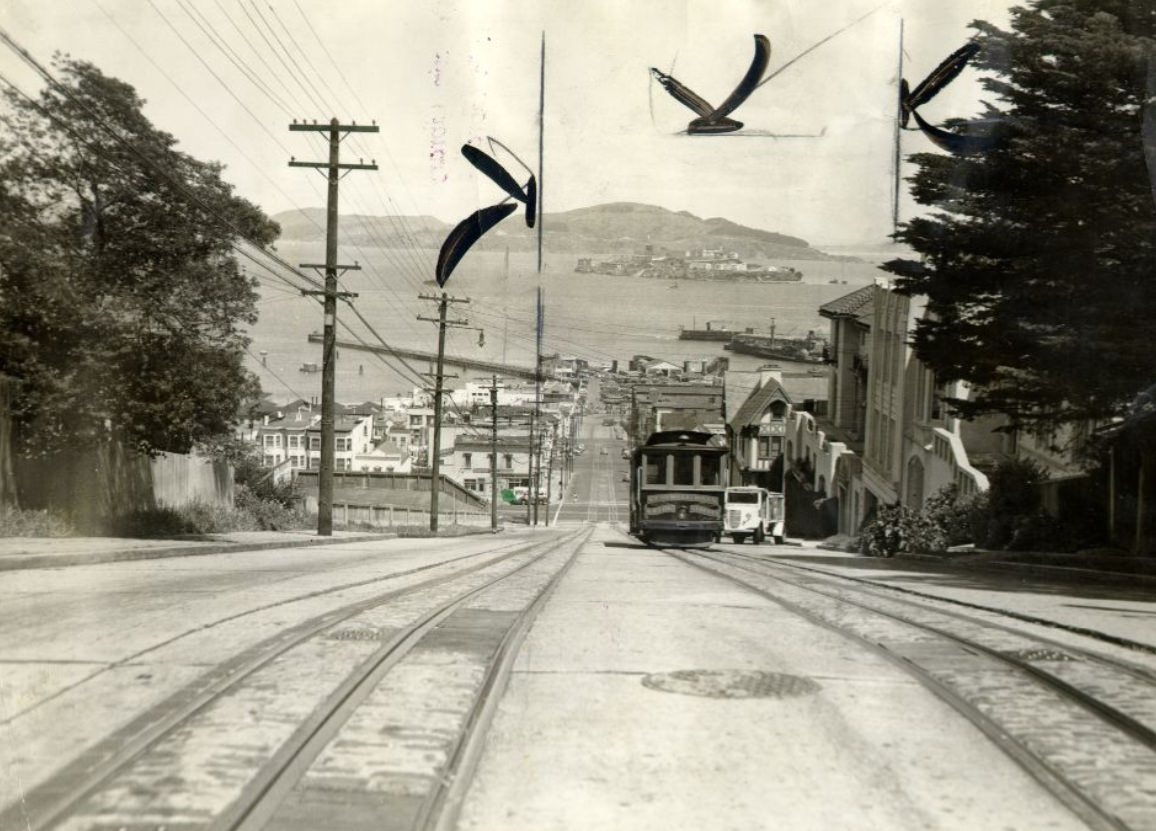
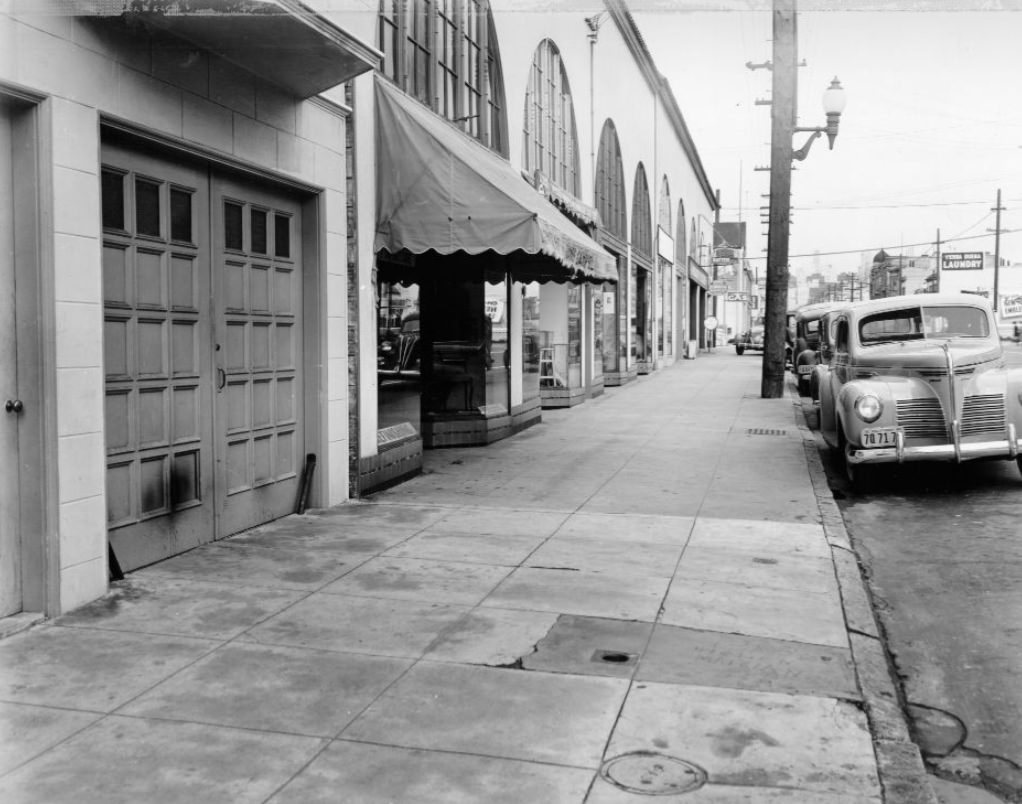
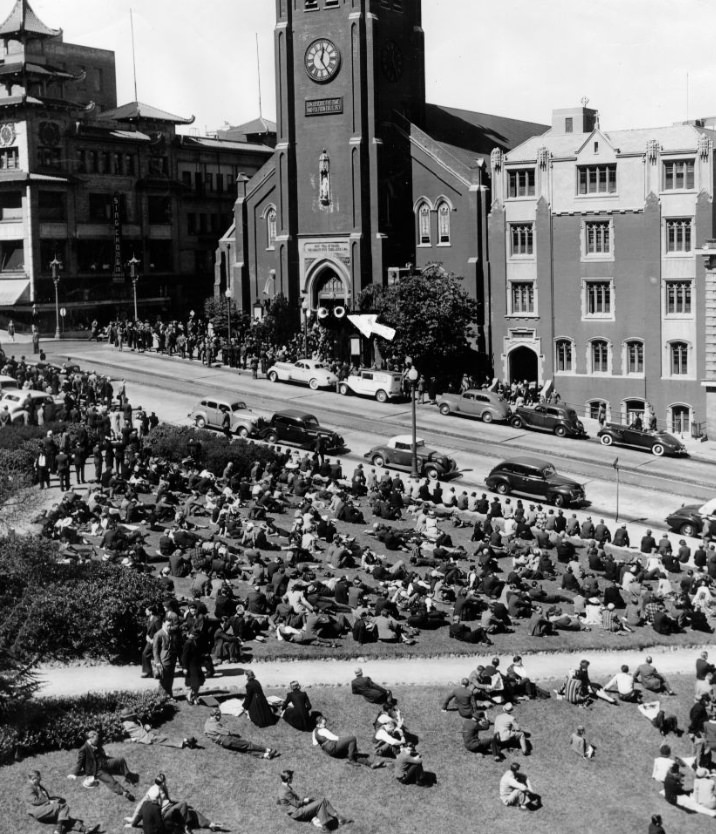
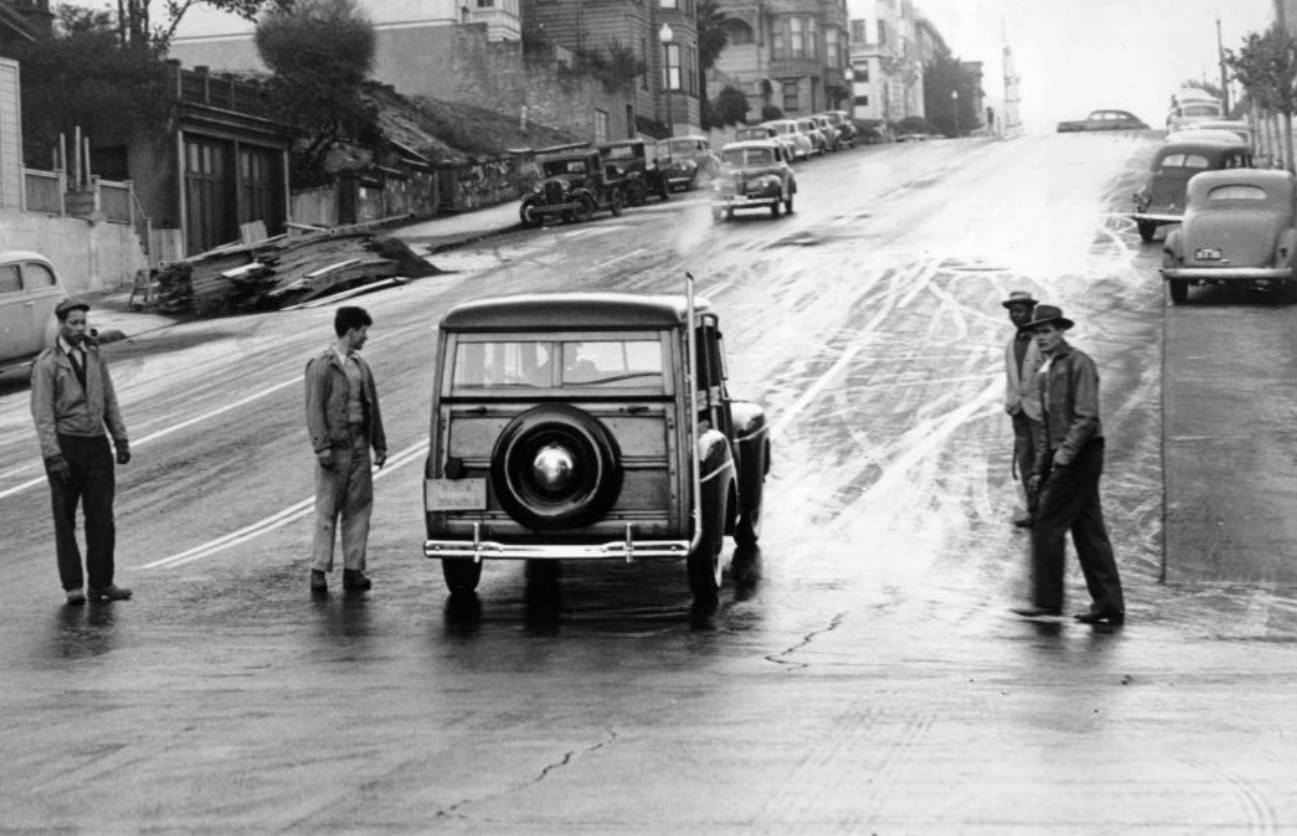
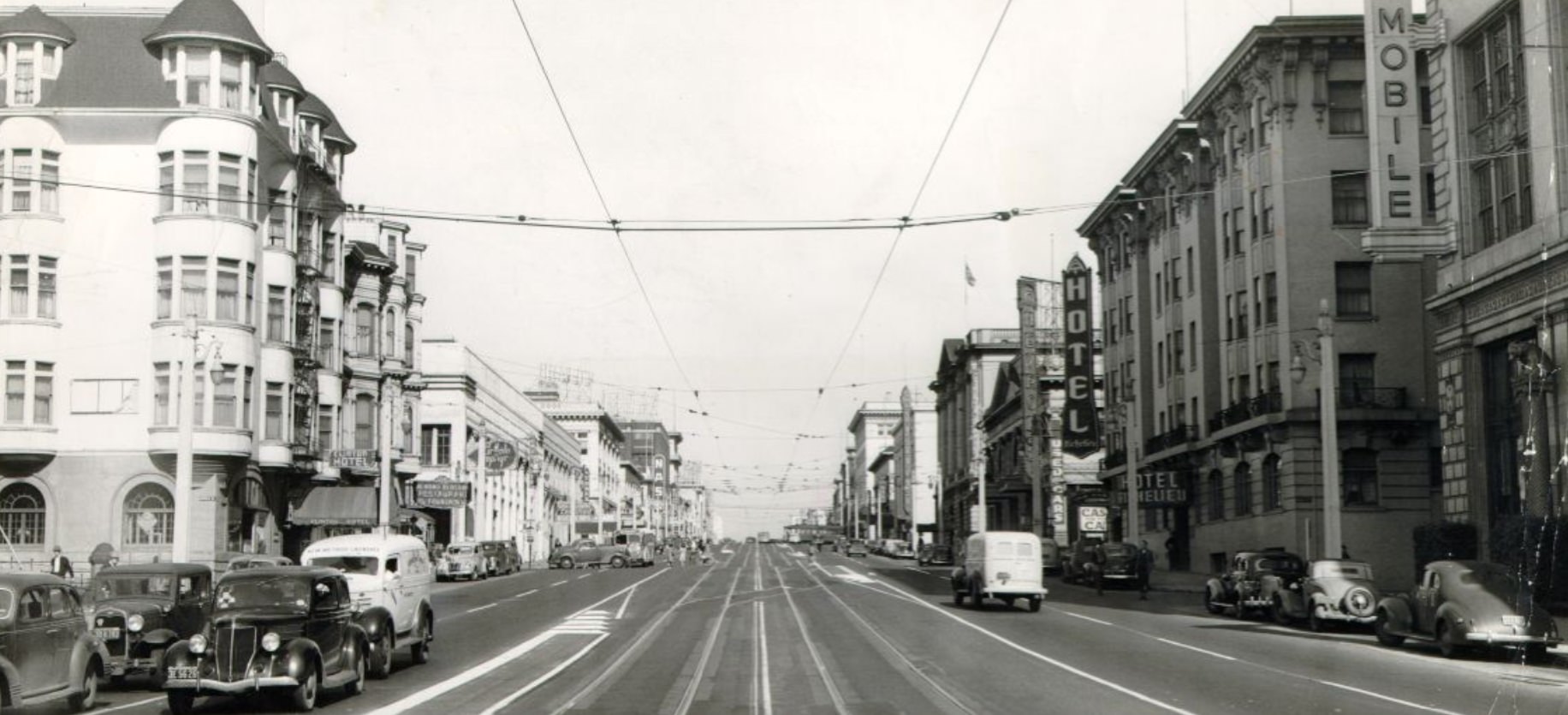
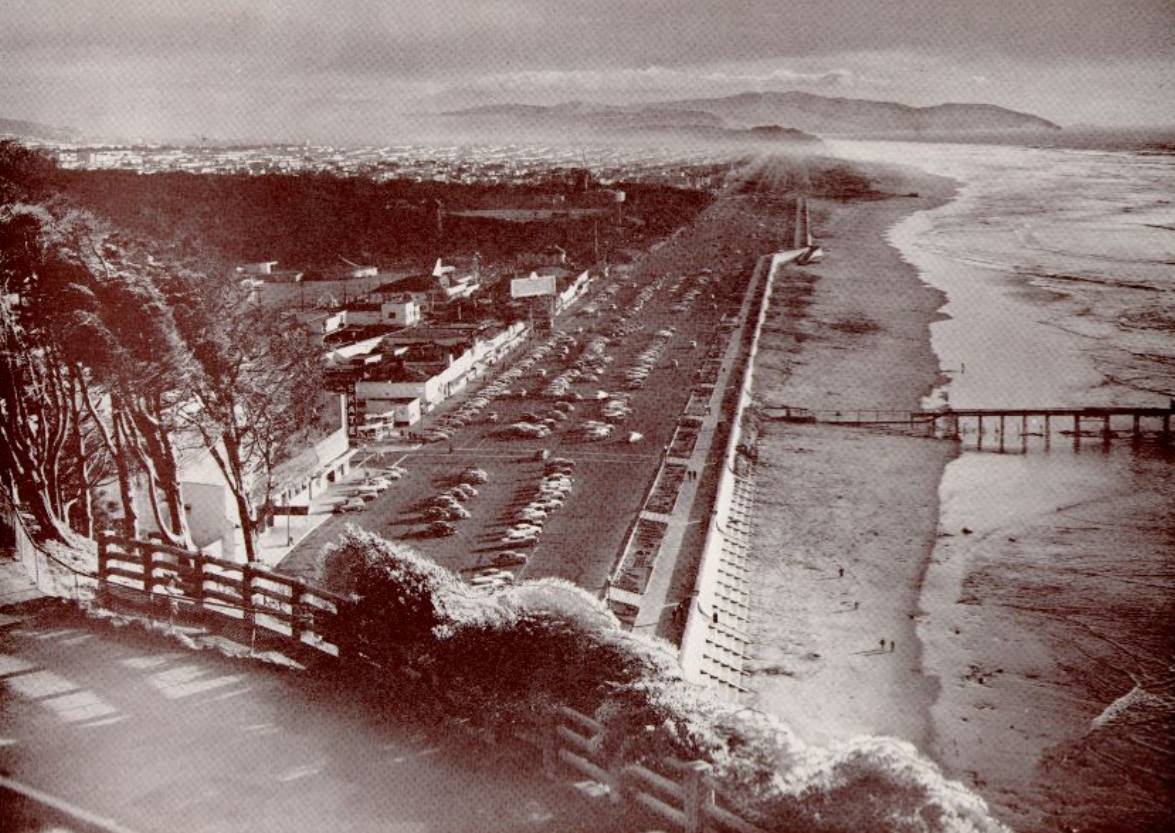
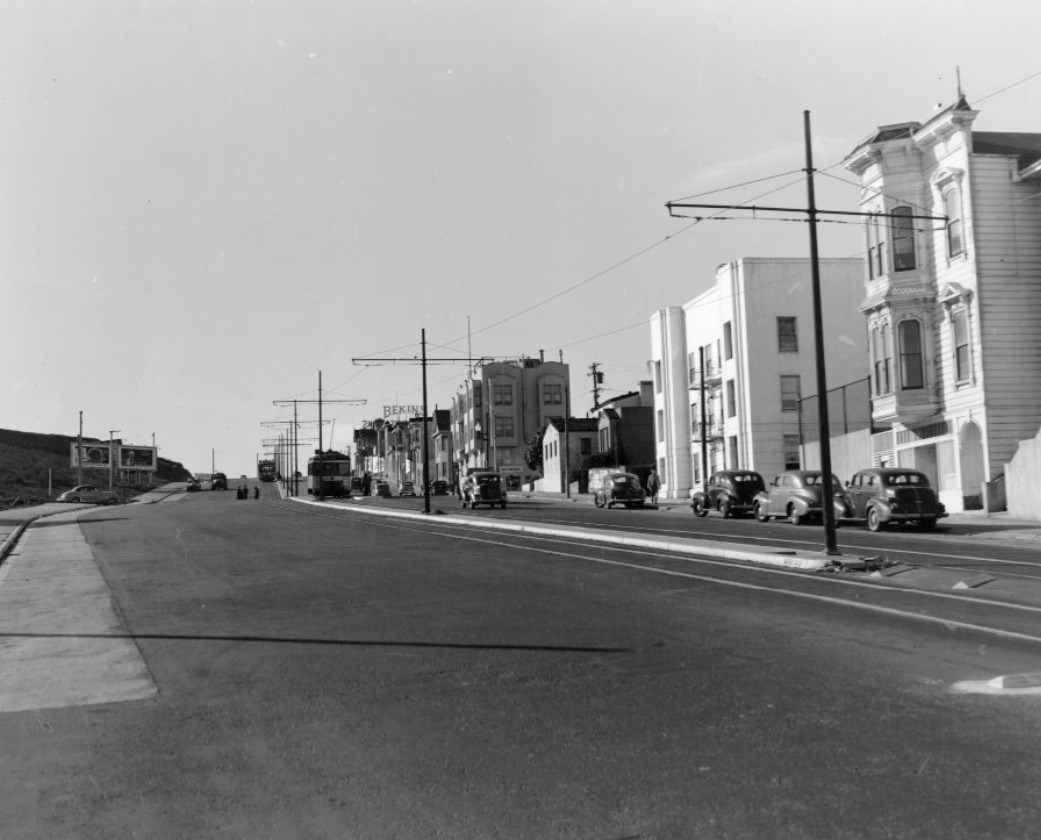
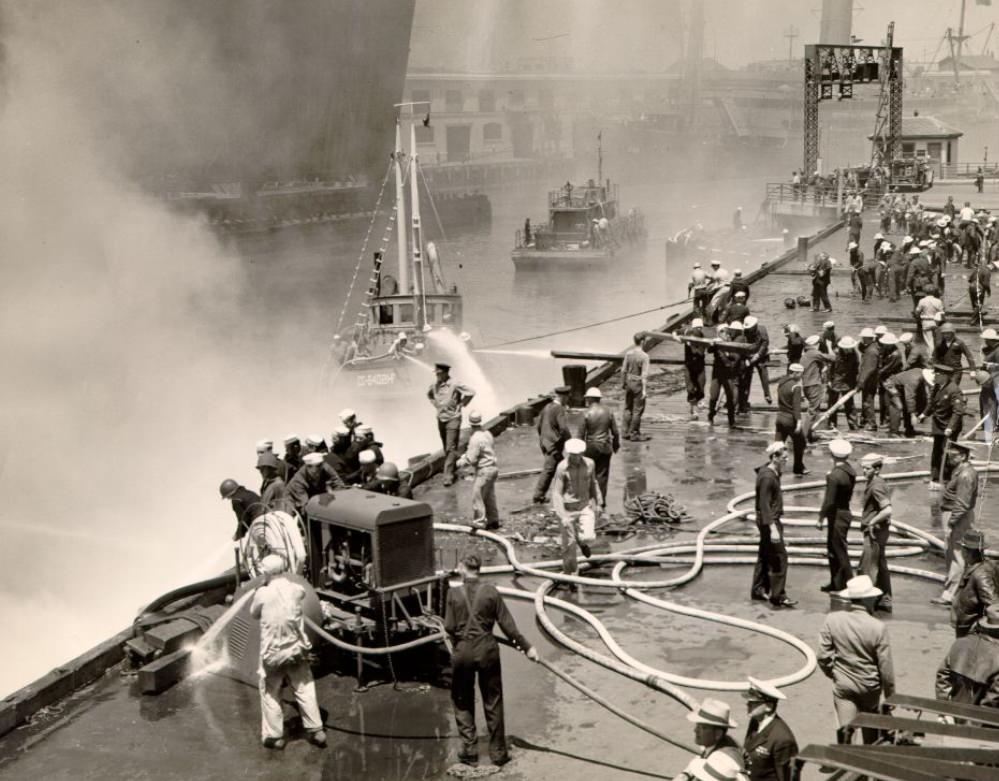
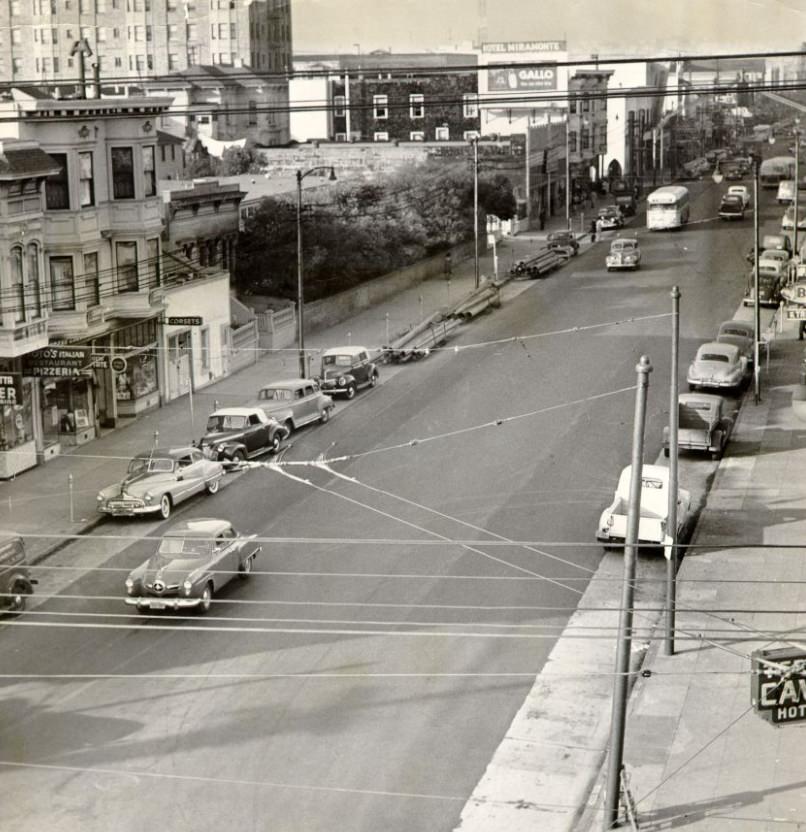
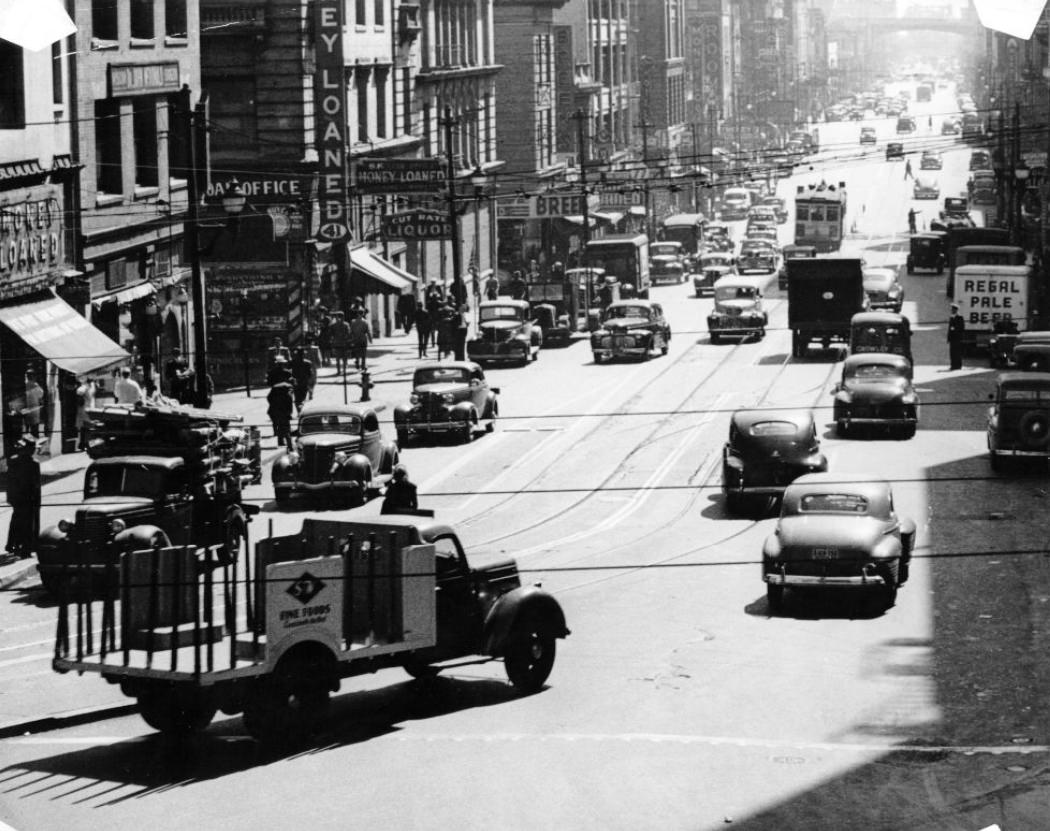
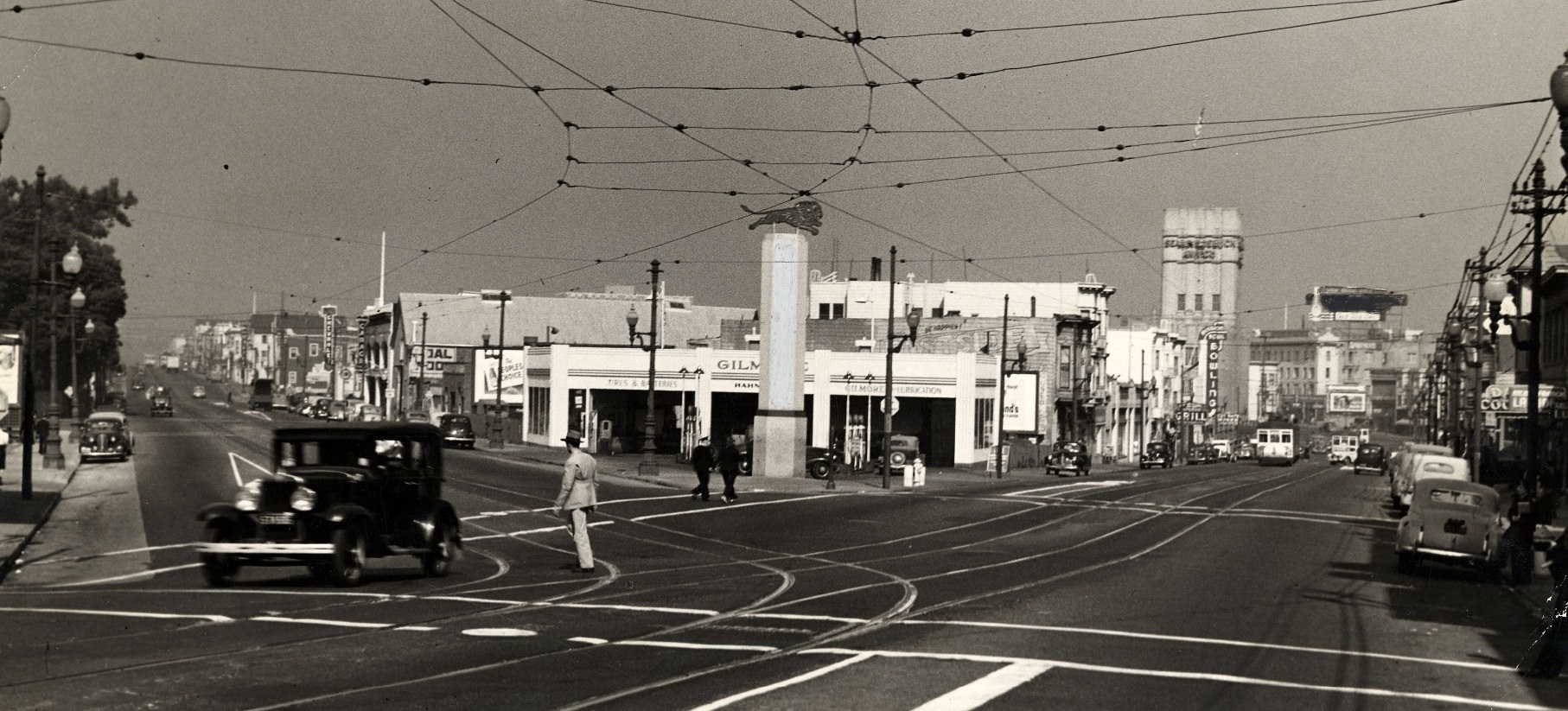
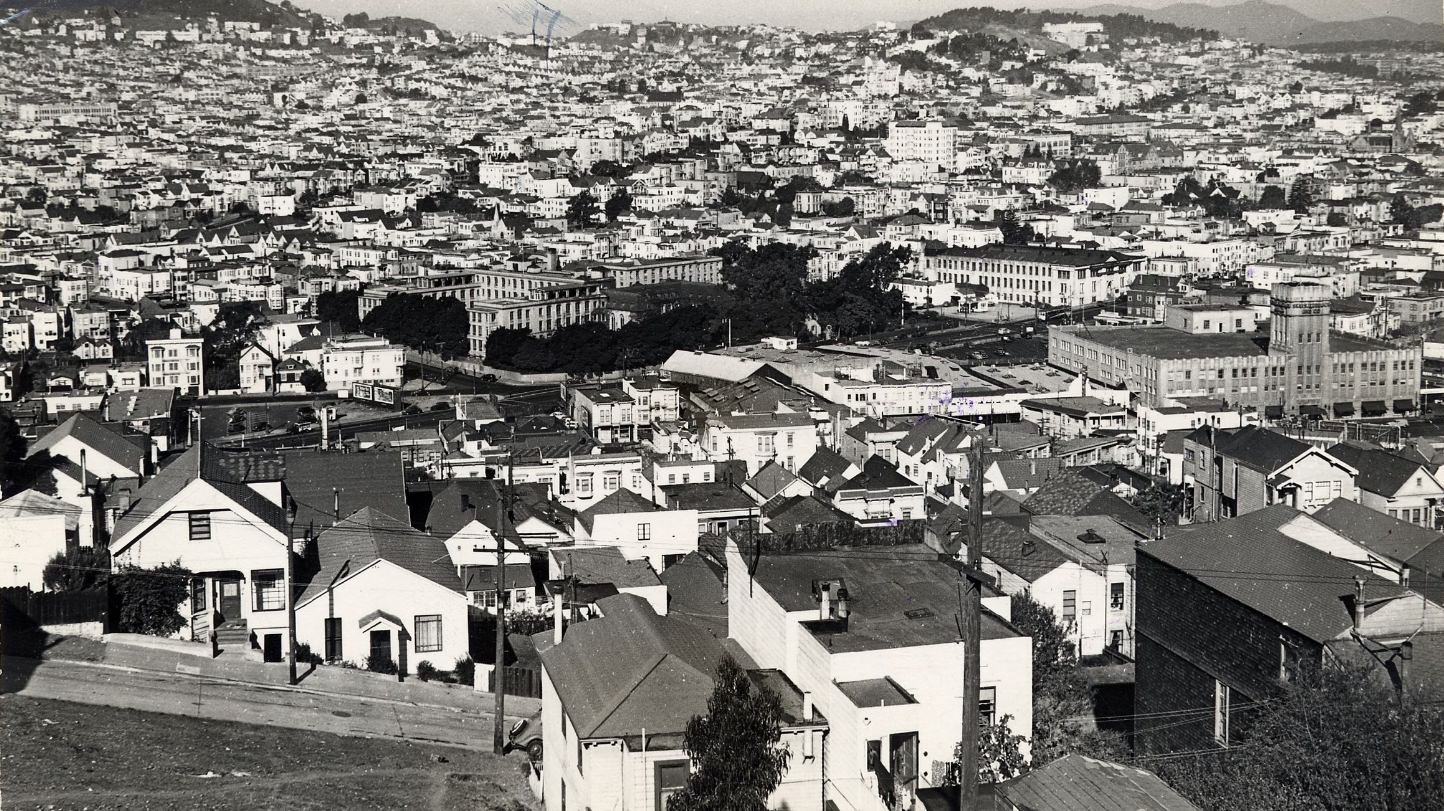
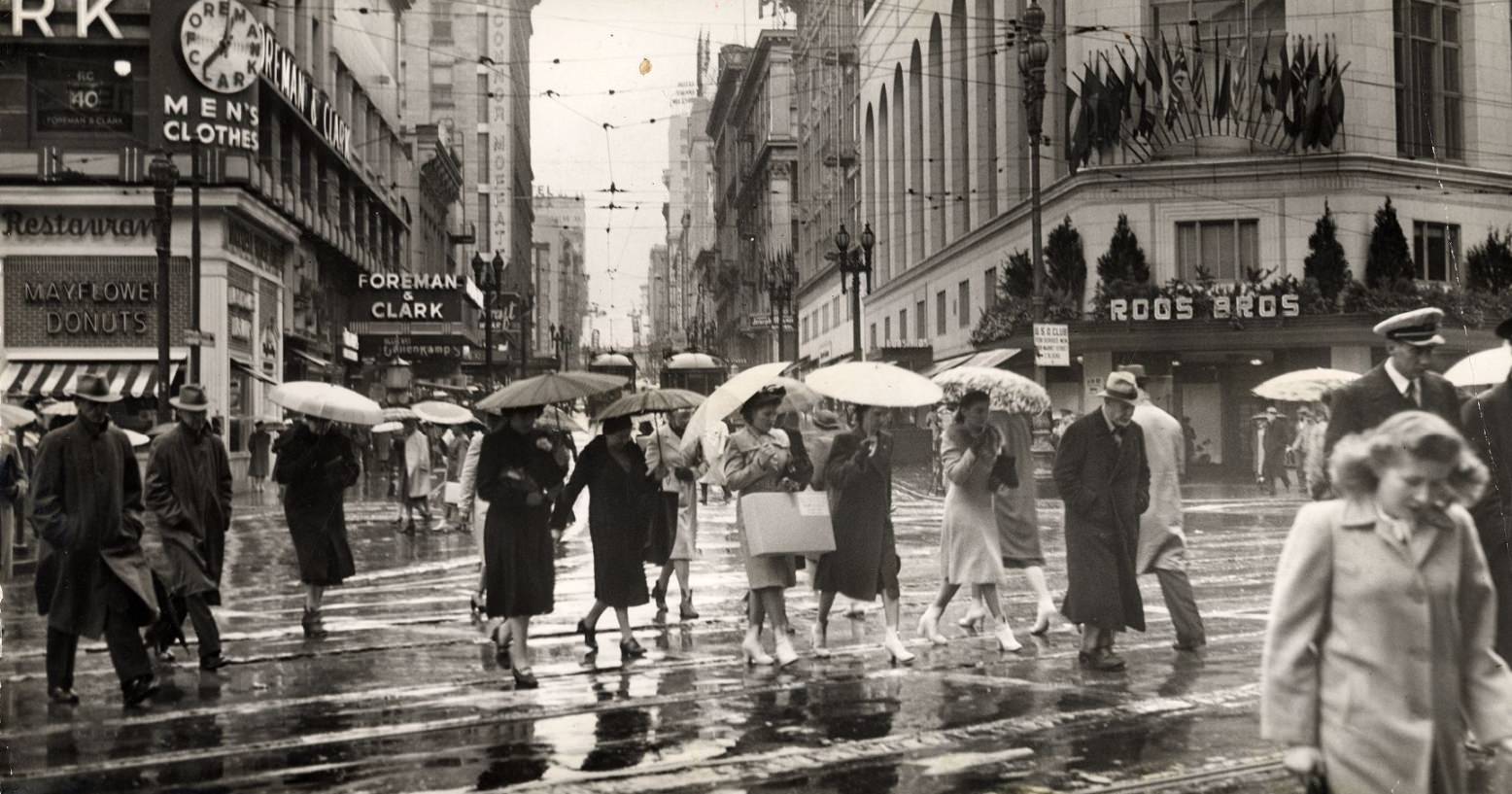
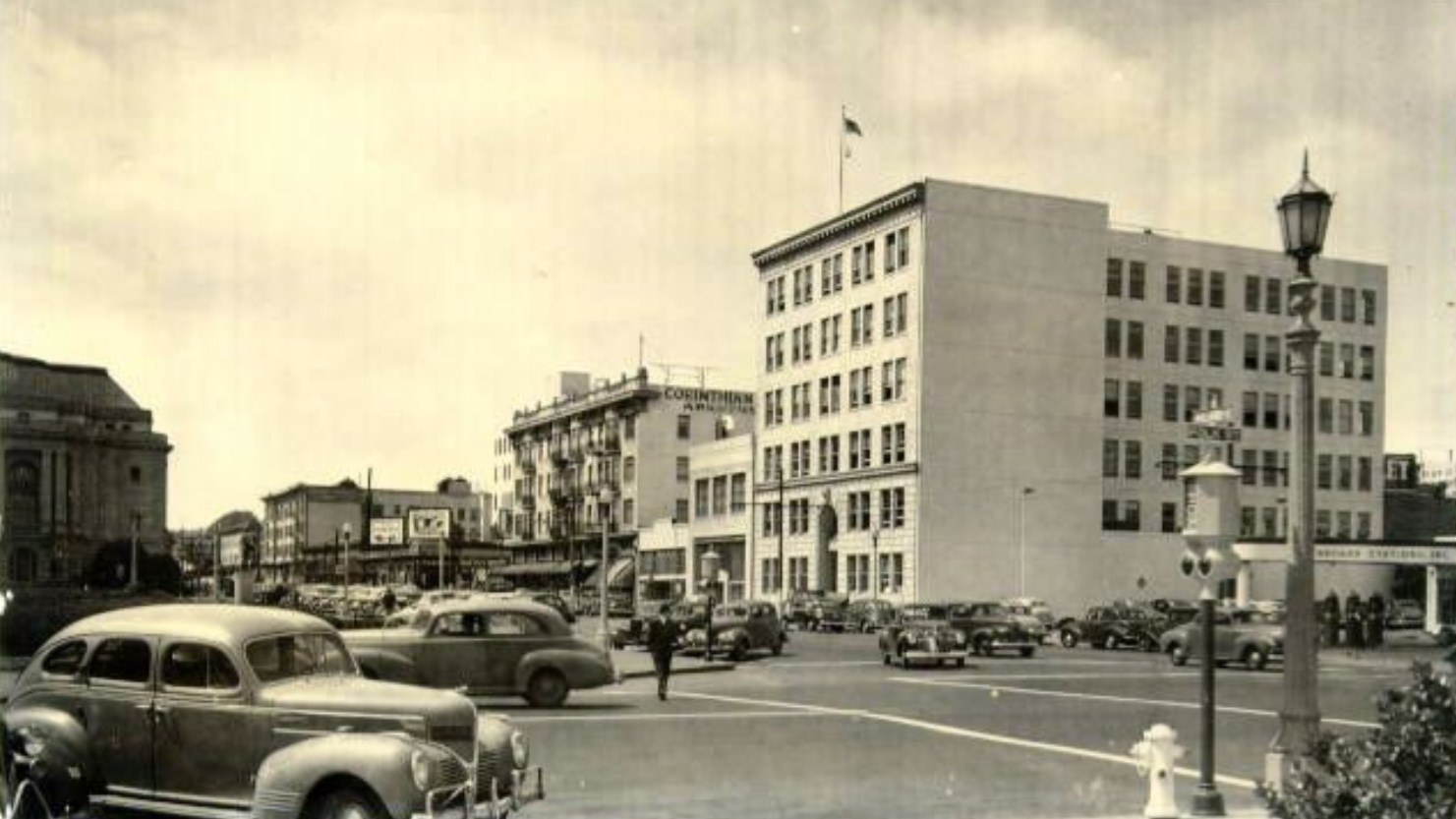
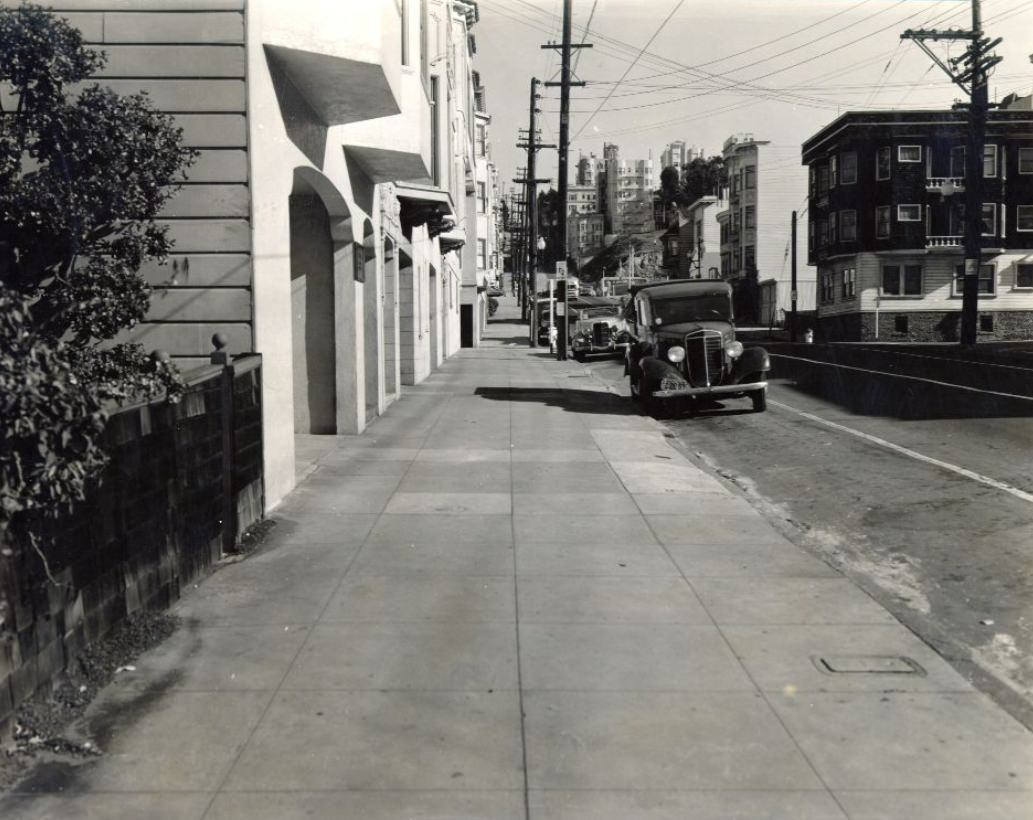
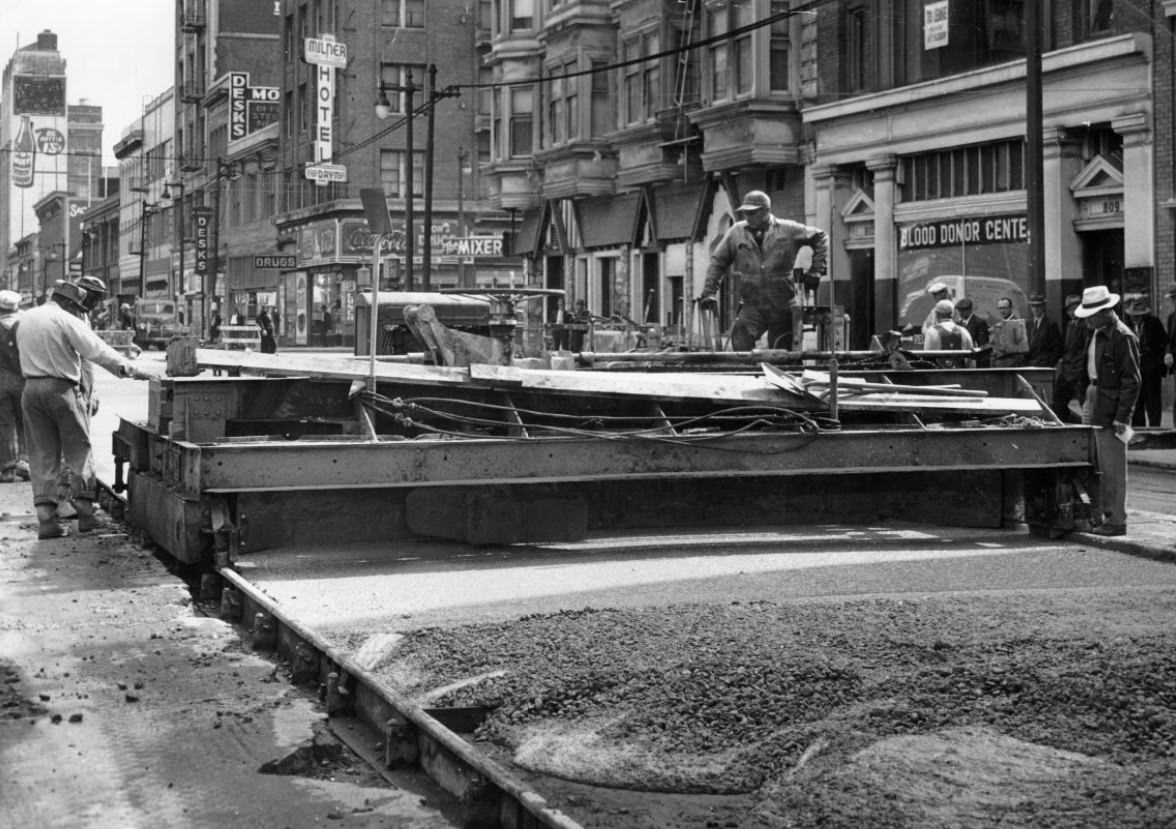
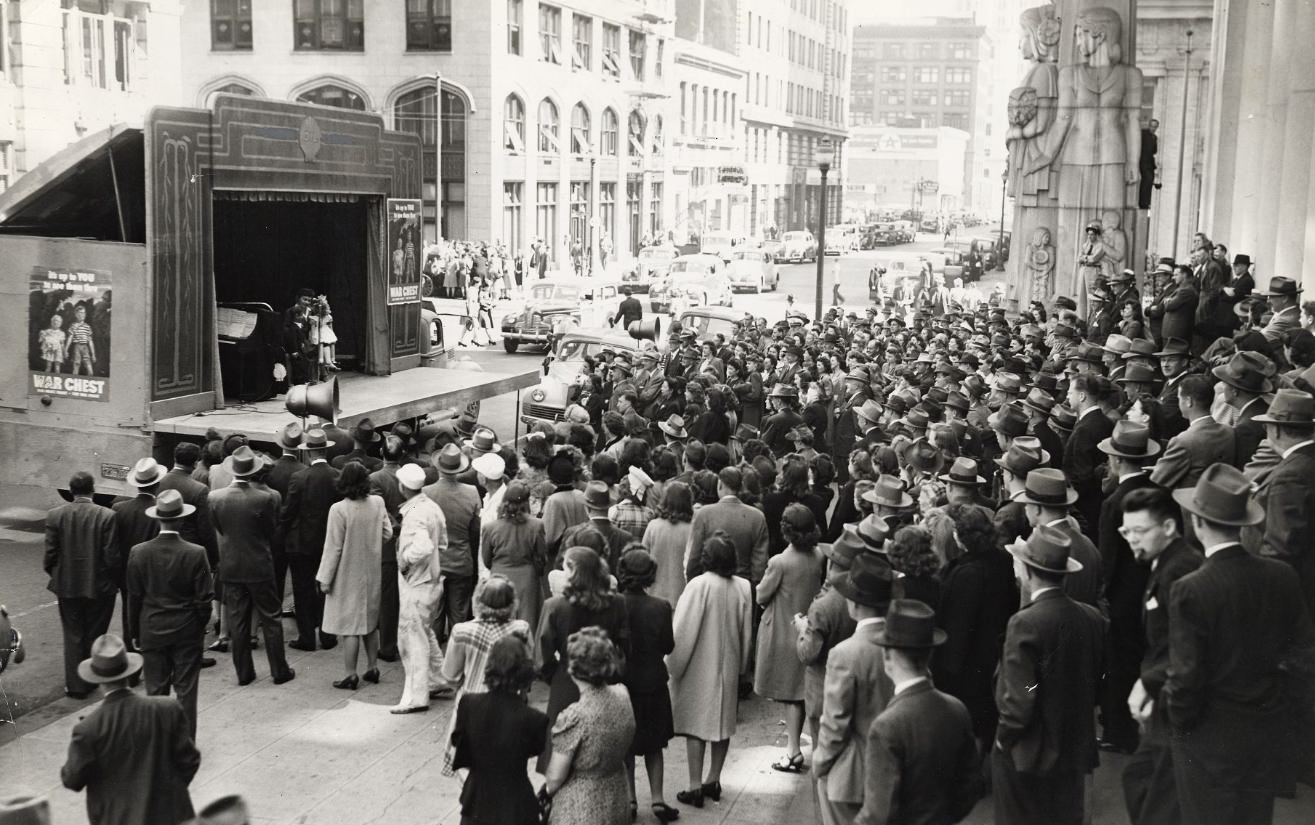
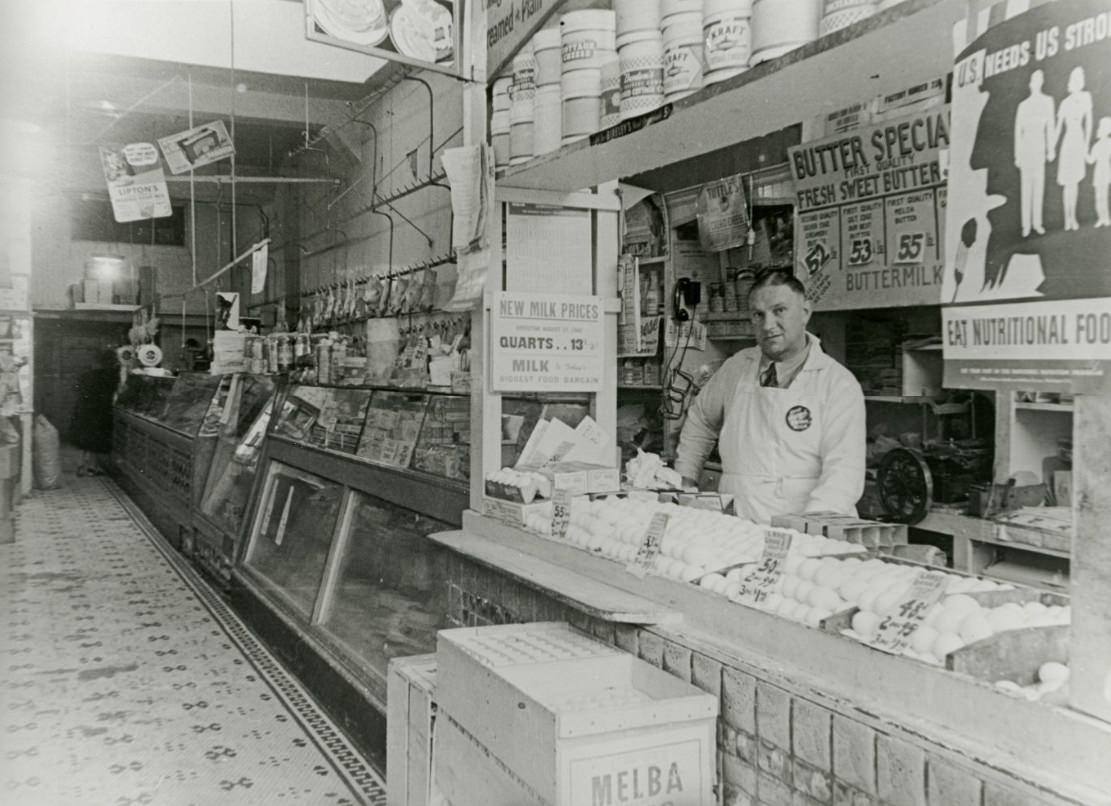
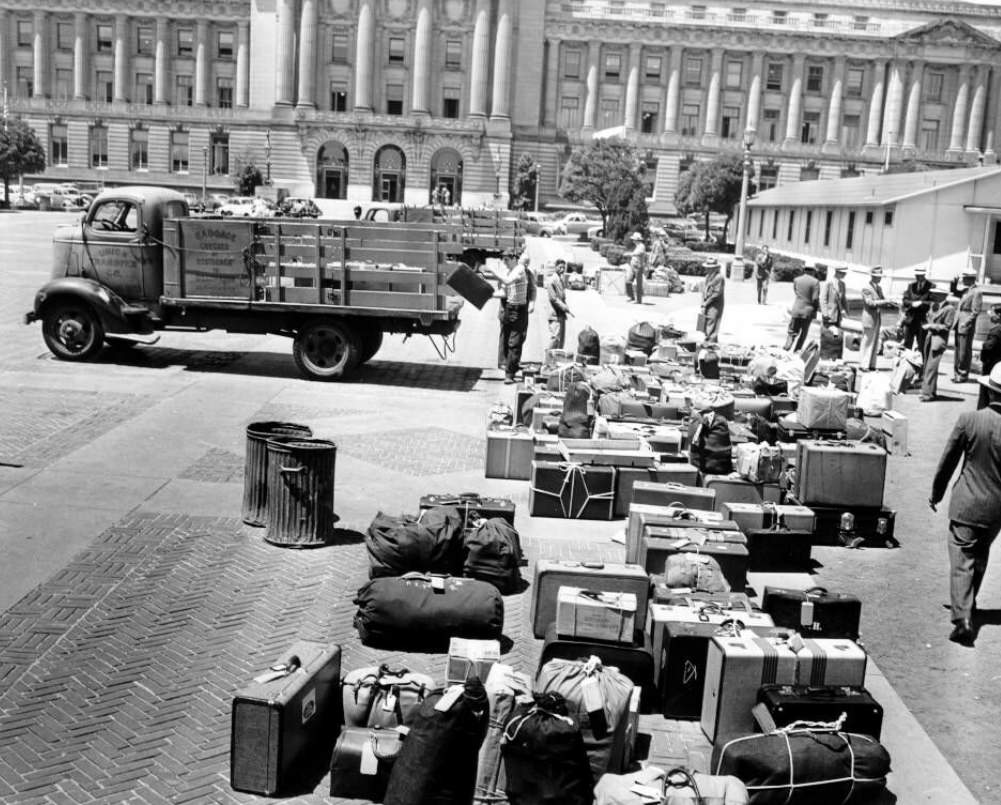
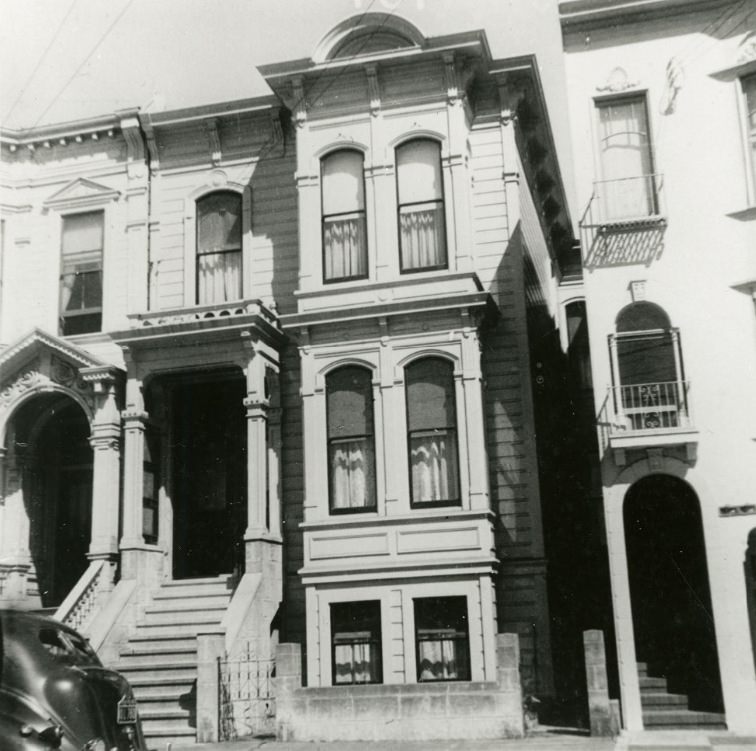
Tracks along Junipero Serra Boulevard, 1948Anixter Distributing Company on Lombard Street, 1941Angel Island administration building, 19462400 block of Lombard Street, 1940Aerial view of City Hall and Civic Center, 1945Harrison Street looking toward Fifth Street from Sixth, 1944Van Ness Avenue, 1940sSpectators watching work crew mixing cement at Post and Kearny streets, 1940View of Harrison Street from 5th Street, 1944Ocean Beach and Great Highway, 1944Civic Center district, 1945San Francisco inspection group tour Fort McDowell and Hospital Cove on Angel Island, 1948Sacramento Street looking downtown from Presidio Avenue, 1944Fashion show in Union Square Park, 1947Lombard Street, 1941Scene of hit and run on California Street, 1941Pine Street at Kearny, 1946Ordnance and Optical Shop Building at Hunters Point Naval Shipyard, 1949City Hall, 19491600 block of Lombard Street, 1940Presidio, 1946Looking down Hyde Street towards Alcatraz, 1945California and Lyon streets, 19442300 block of Lombard Street, 1940Joan Magnusson near a broken railing along Twin Peaks Boulevard, 19471900 block of Lombard Street, 1940Third Street at Jamestown, 1943Crowd outside St. Mary’s Church for Good Friday services, 1944Geary Street, 1941Harbor and Bay at Fisherman’s Wharf, 19492200 block of Lombard Street, 1940St. Francis Circle looking south, 1948Ordnance and Electronics Building at Hunters Point Naval Shipyard, 1948Skyline of San Francisco’s Corona Heights from Douglass, 1940sOfficers in the communication room at Old Hall of Justice, 19332000 block of Lombard Street, 1940Fort Mason in the Presidio, 1946California Street, 1940sJunipero Serra Boulevard, 1948Civic Center, 1943Presidio overlooking the bay, 1946Fire hoses on Angel Island wharf during blaze, 19404th & Market Street towards Stockton, 1944Stockton & O’Farrell Street, 1945
Musicians at the Maiden Lane festival, 1940s
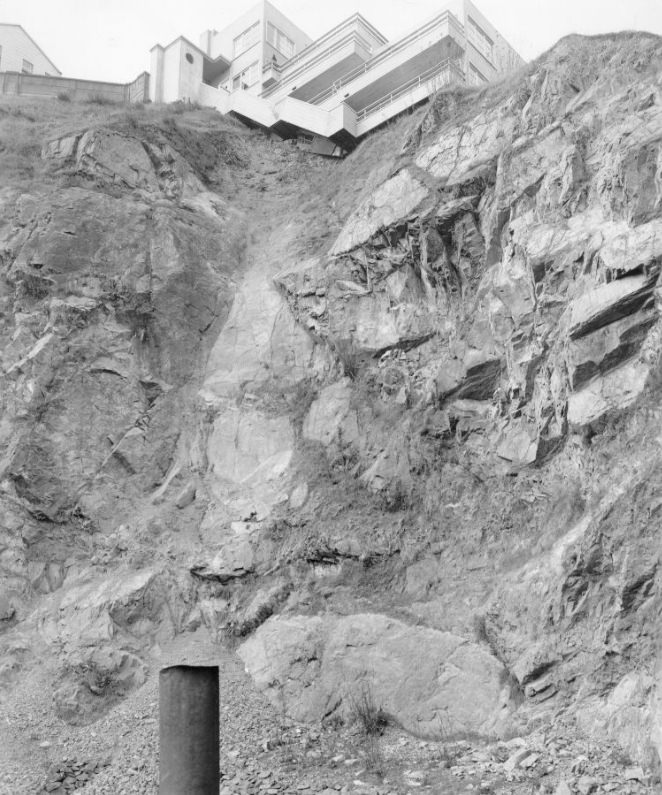
Bluff at Filbert and Sansome Street, 1942
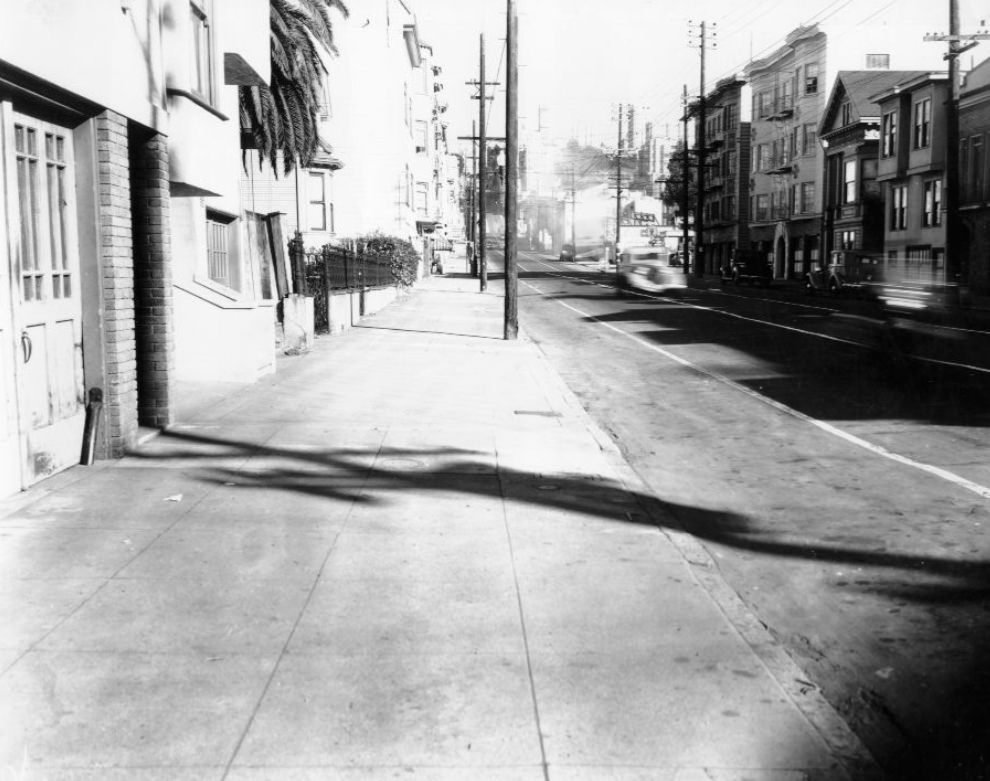
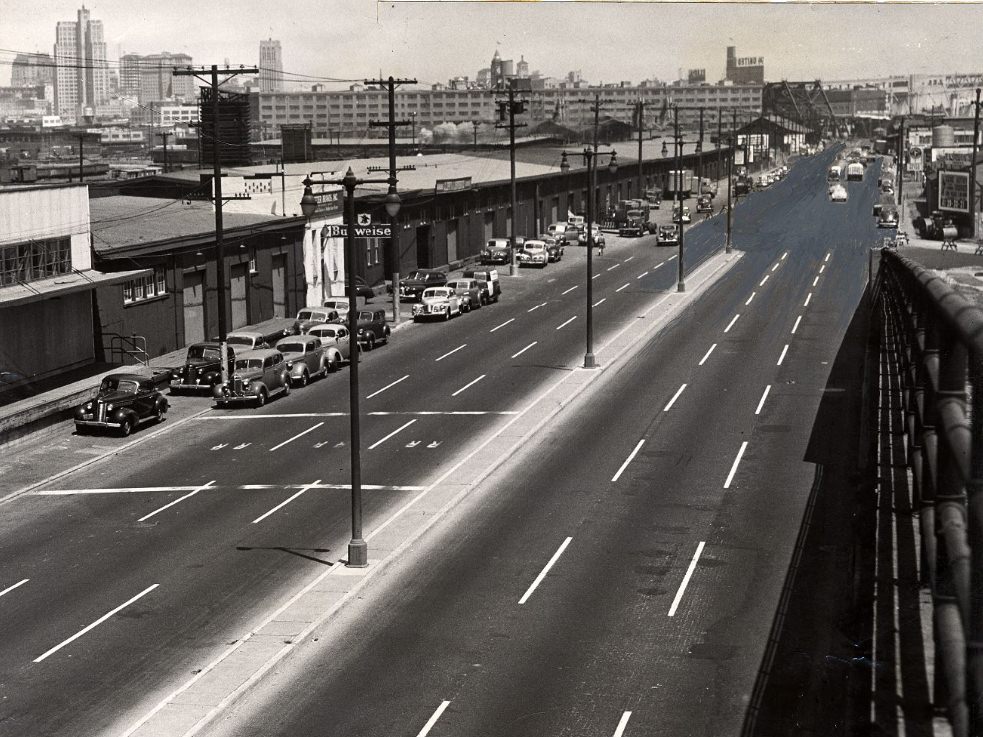
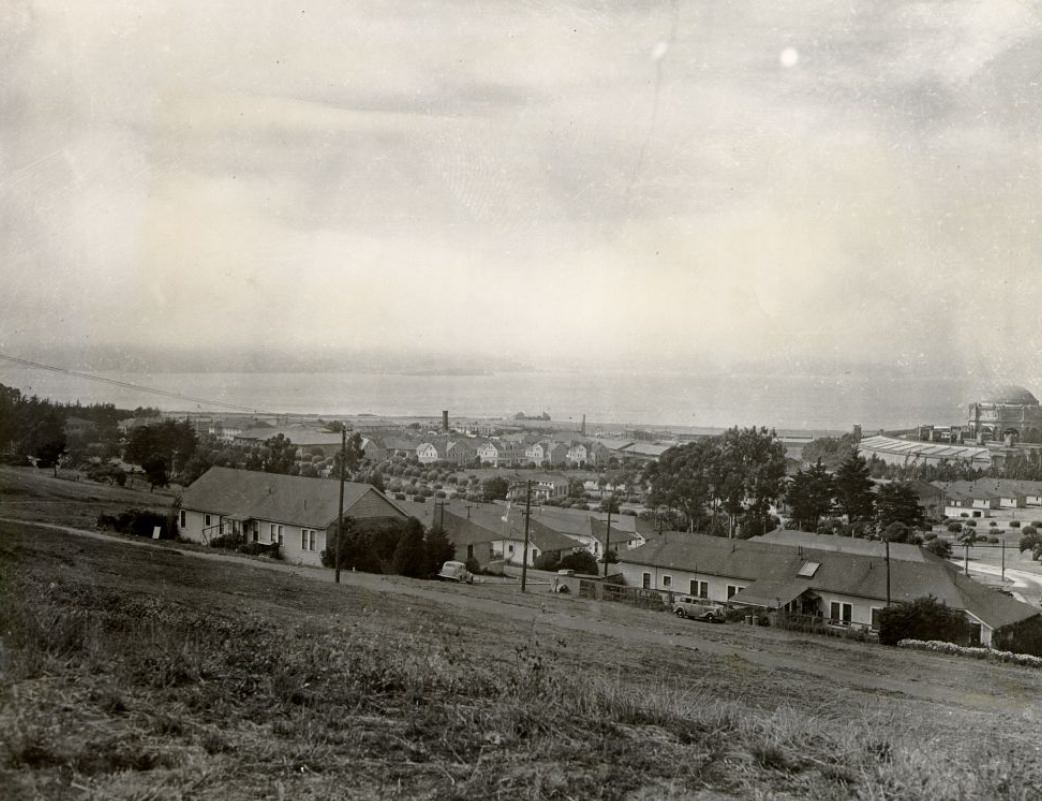
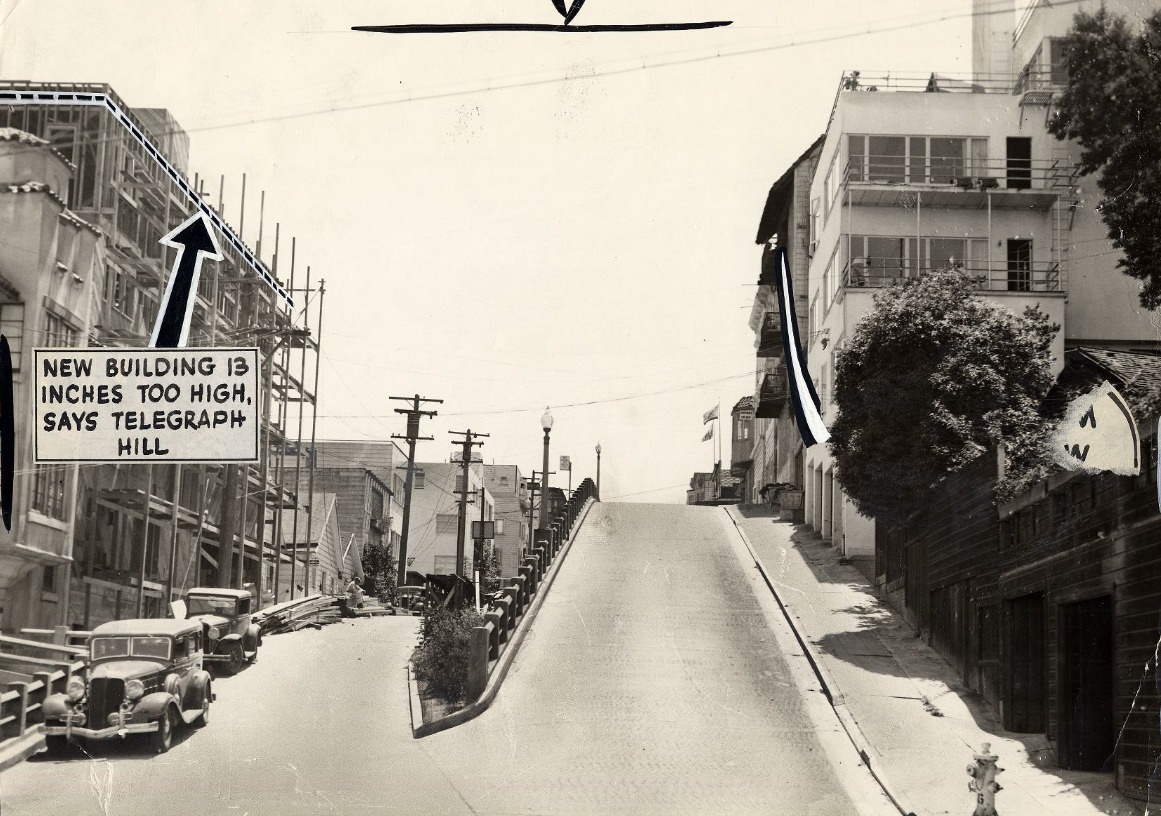
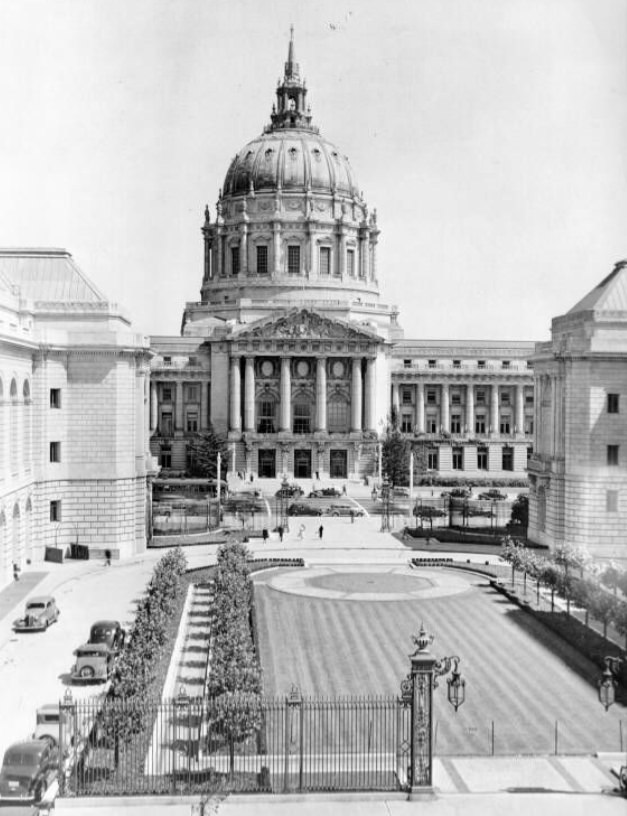
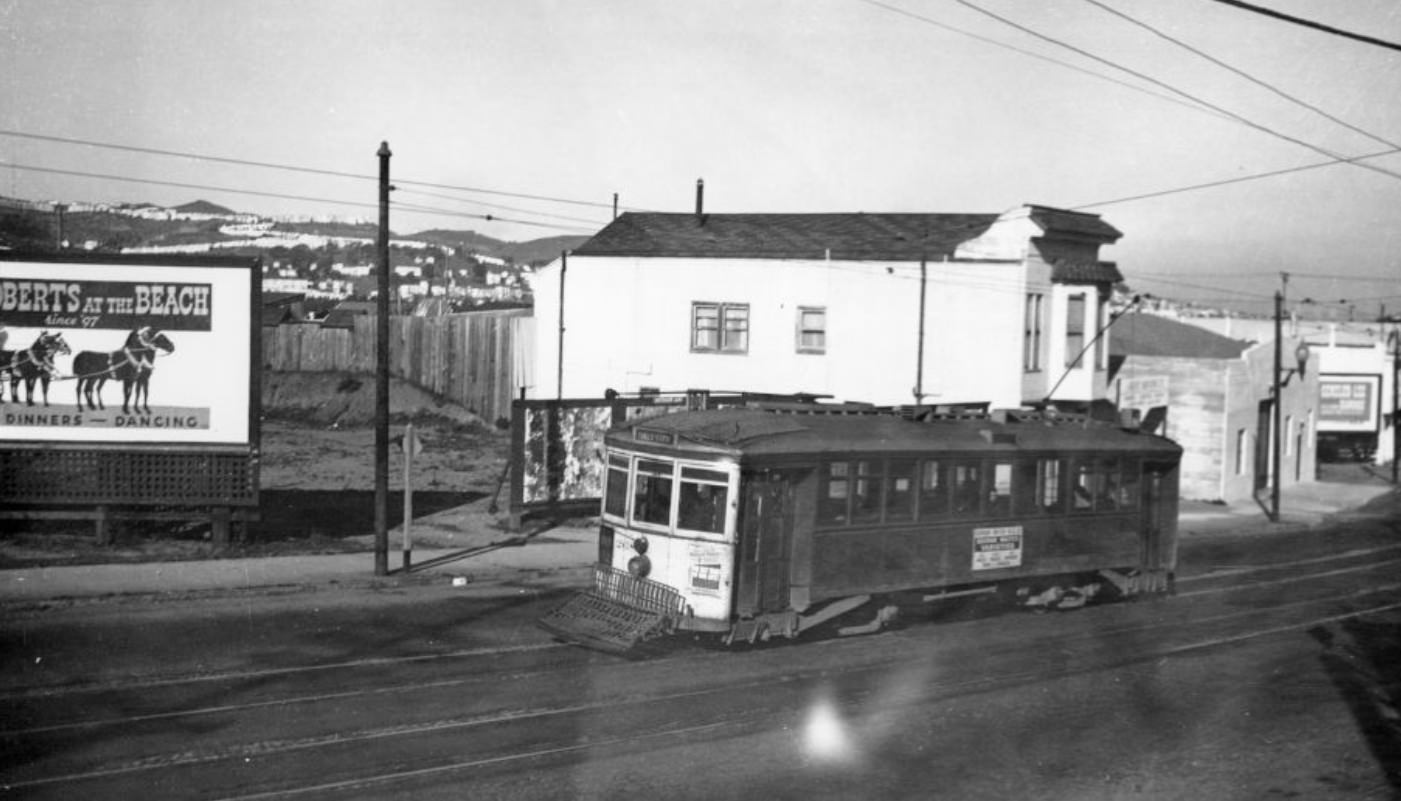
Civic Center district at Larkin & Grove Street, 19451600 block of Lombard Street, 1940Civic Center district, 1945View of Third Street from overpass to China Basin, 1949Presidio overlooking the Palace of Fine Arts, 1946Lombard Street at Van Ness Avenue, 1941Beach north of Sloat Boulevard, San Francisco, 1942Skyline of San Francisco from Douglas Street near 28th Street, 1940California Street east from Polk Street, 1944City Hall looking west on Fulton Street, 1940sView of Geary at Masonic Street facing southwest, 1948Building under construction on Telegraph Hill, 1940Rear view of City Hall, 1945Stockton and Market streets, 1944Delivery trucks at a produce market in San Francisco, 1944Lombard at Broderick Street, 1940Streetcar at Haight and Stanyan streets, 1940
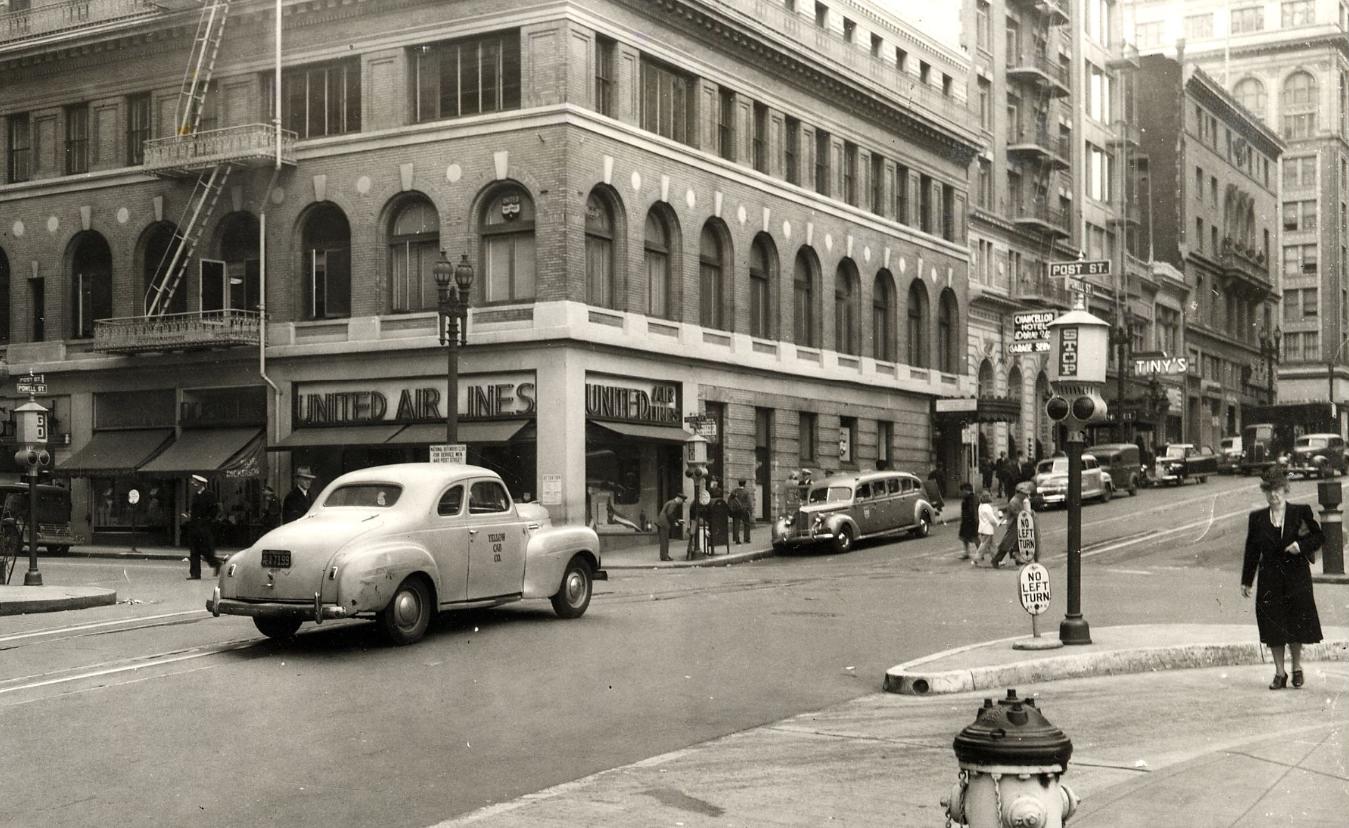
Post Street looking toward Stockton from Powell, 1940
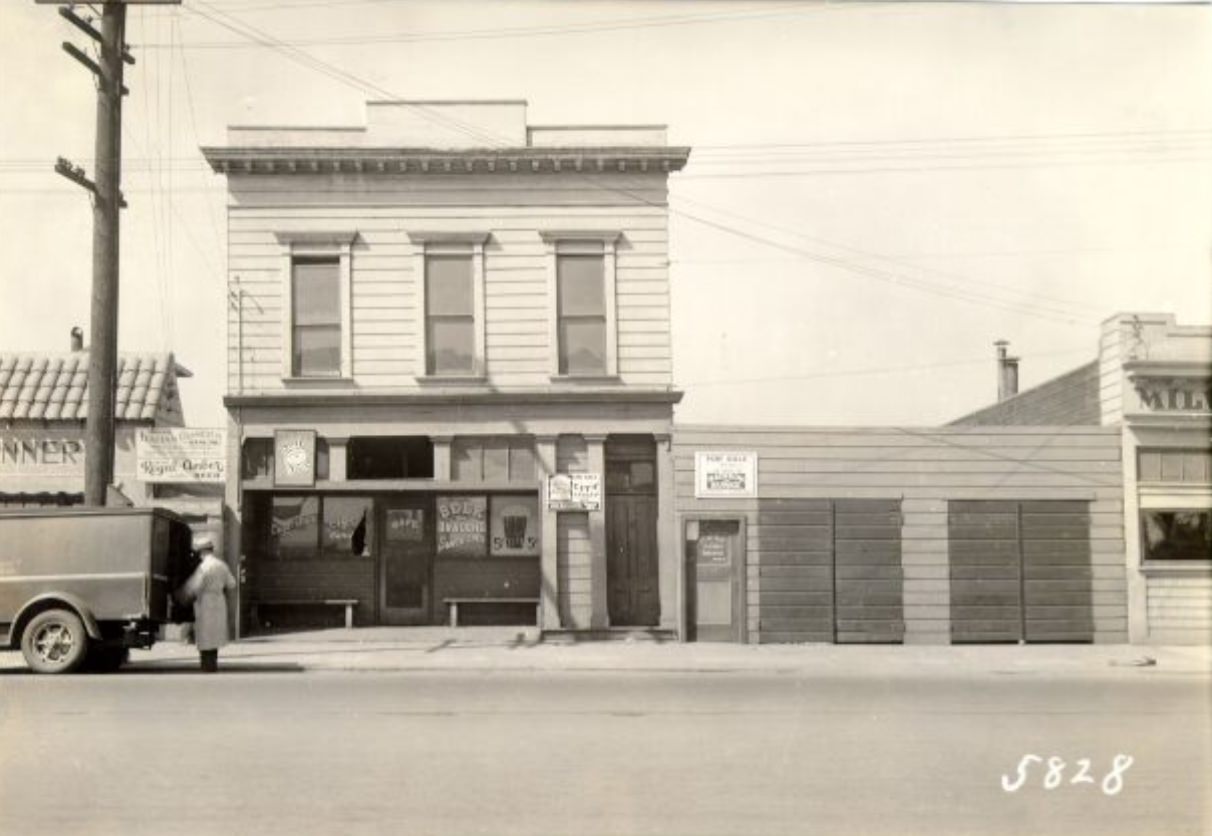
Building at 1859 Post Street, 1946
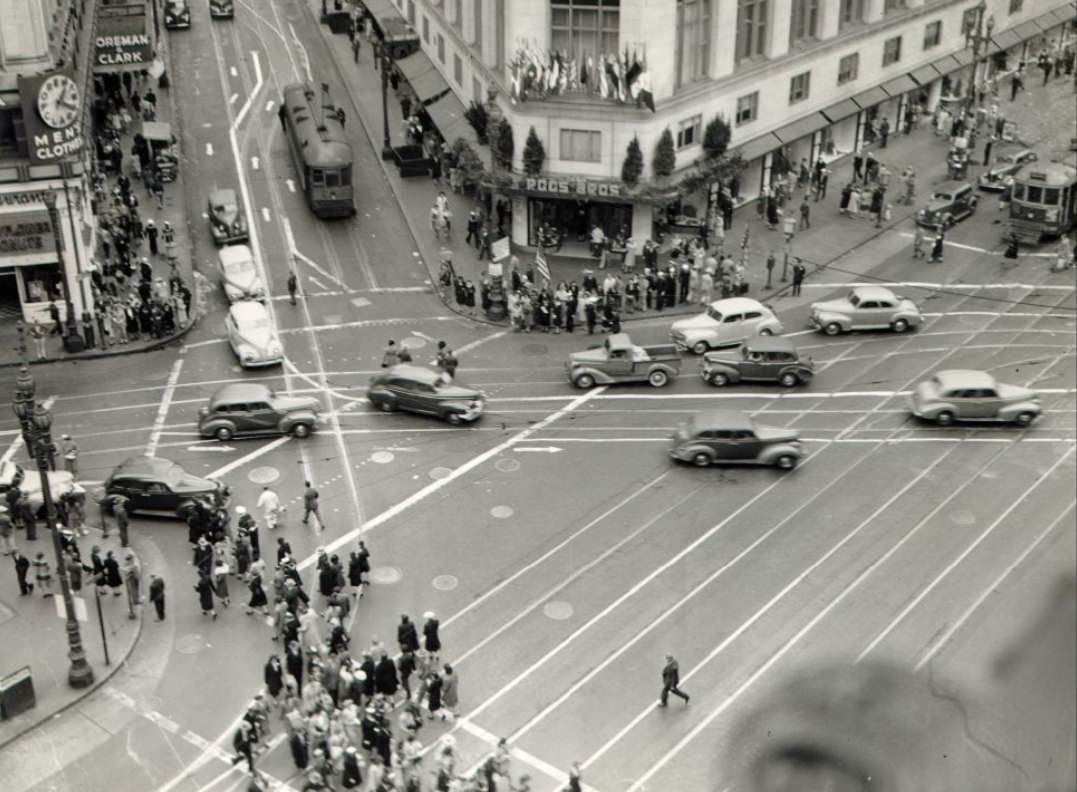
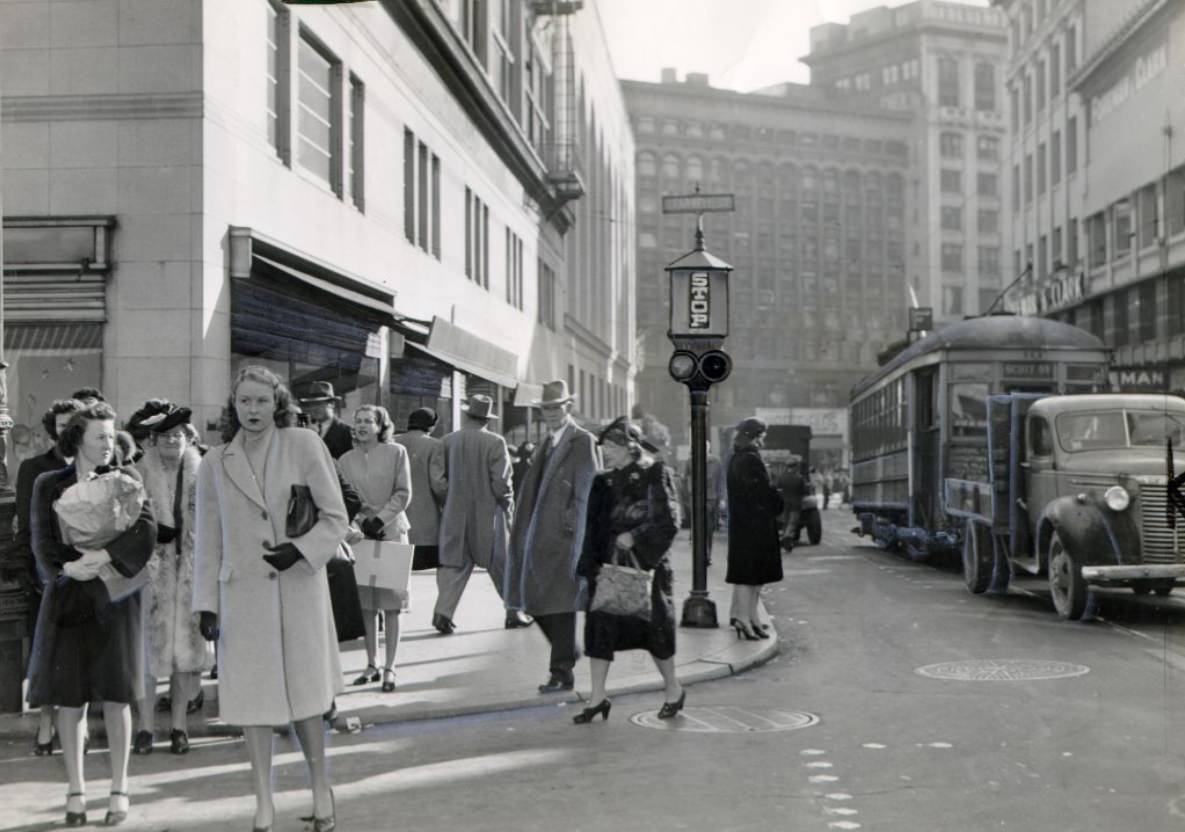
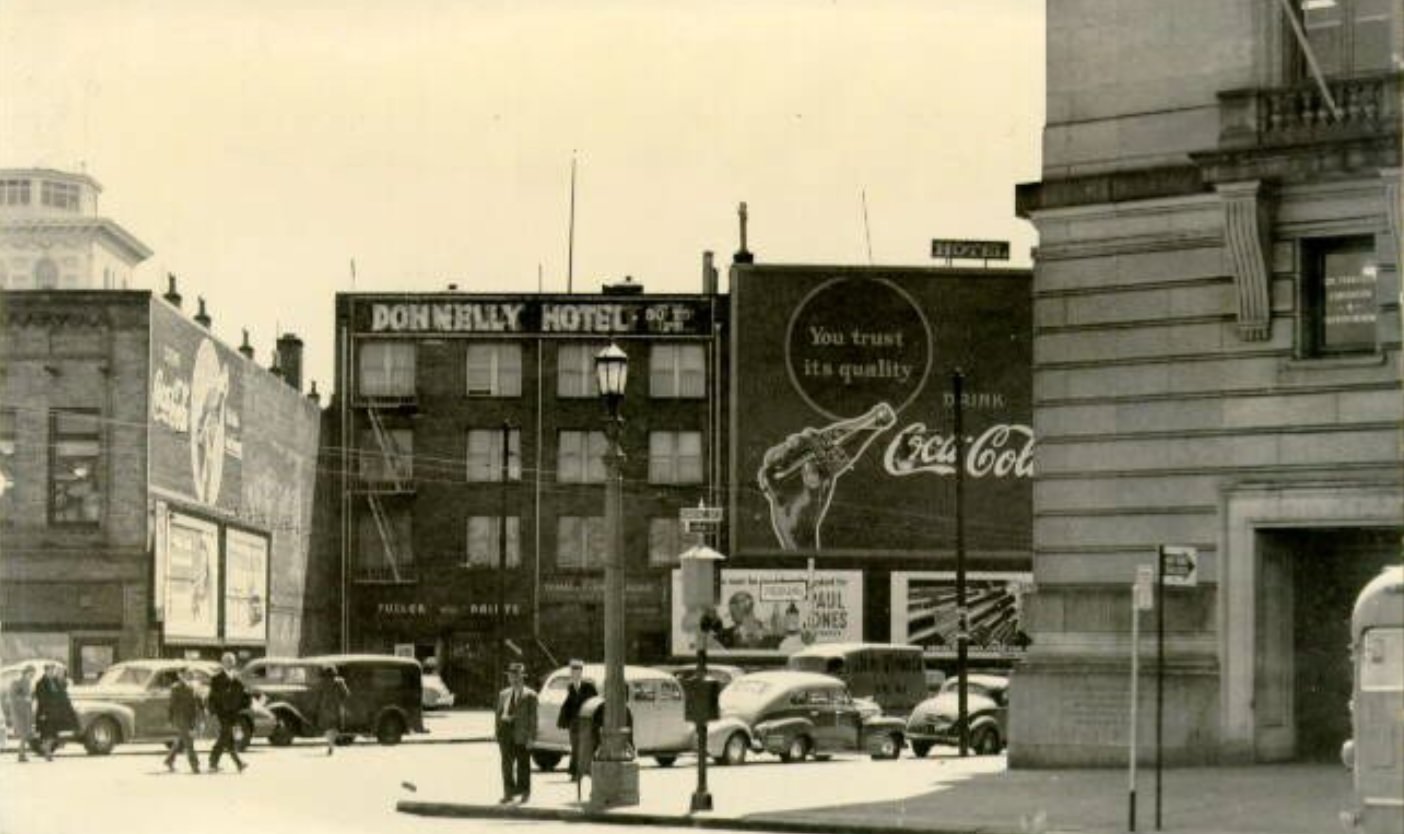
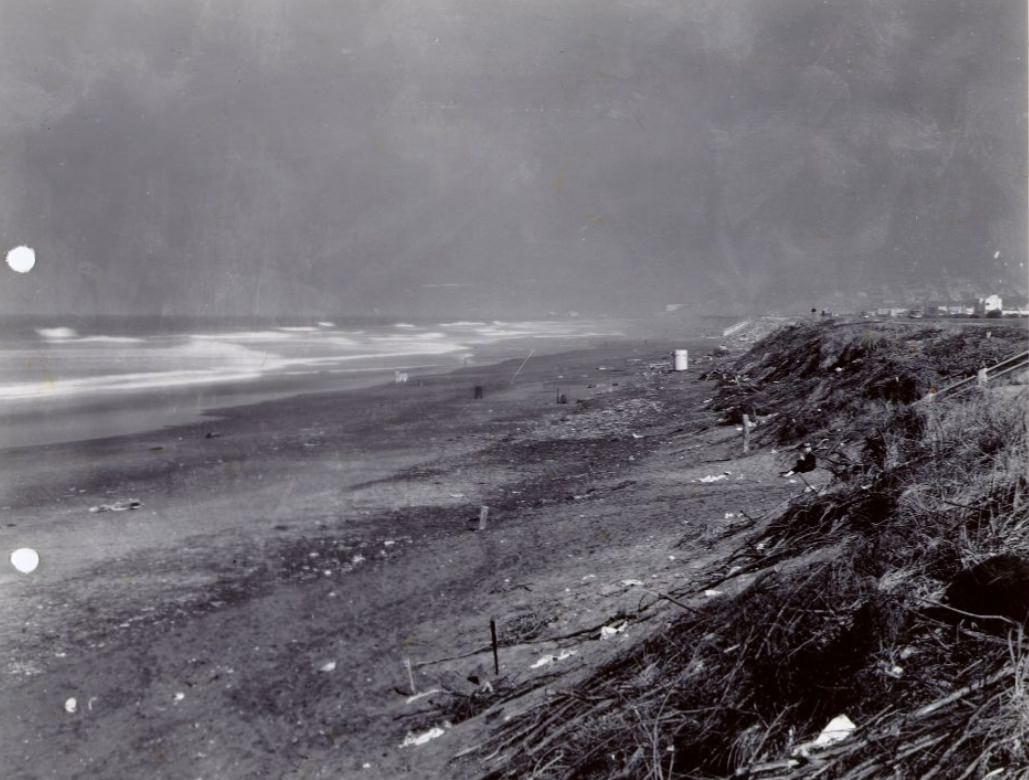
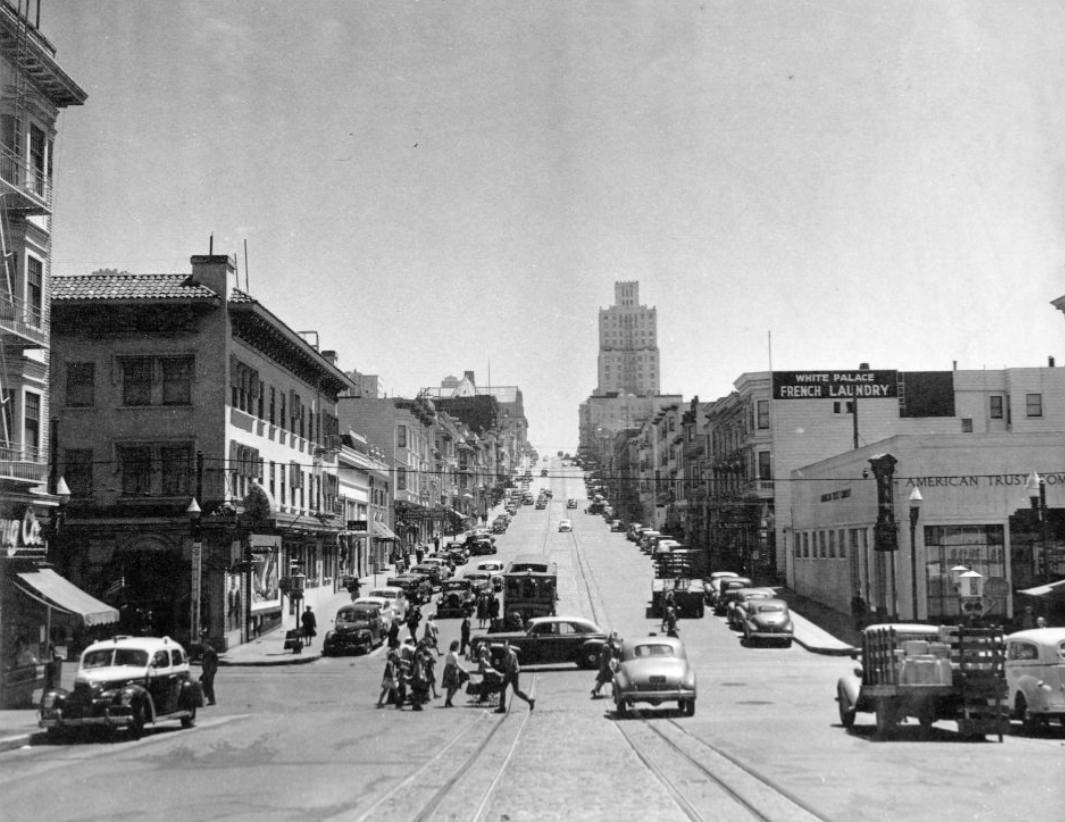
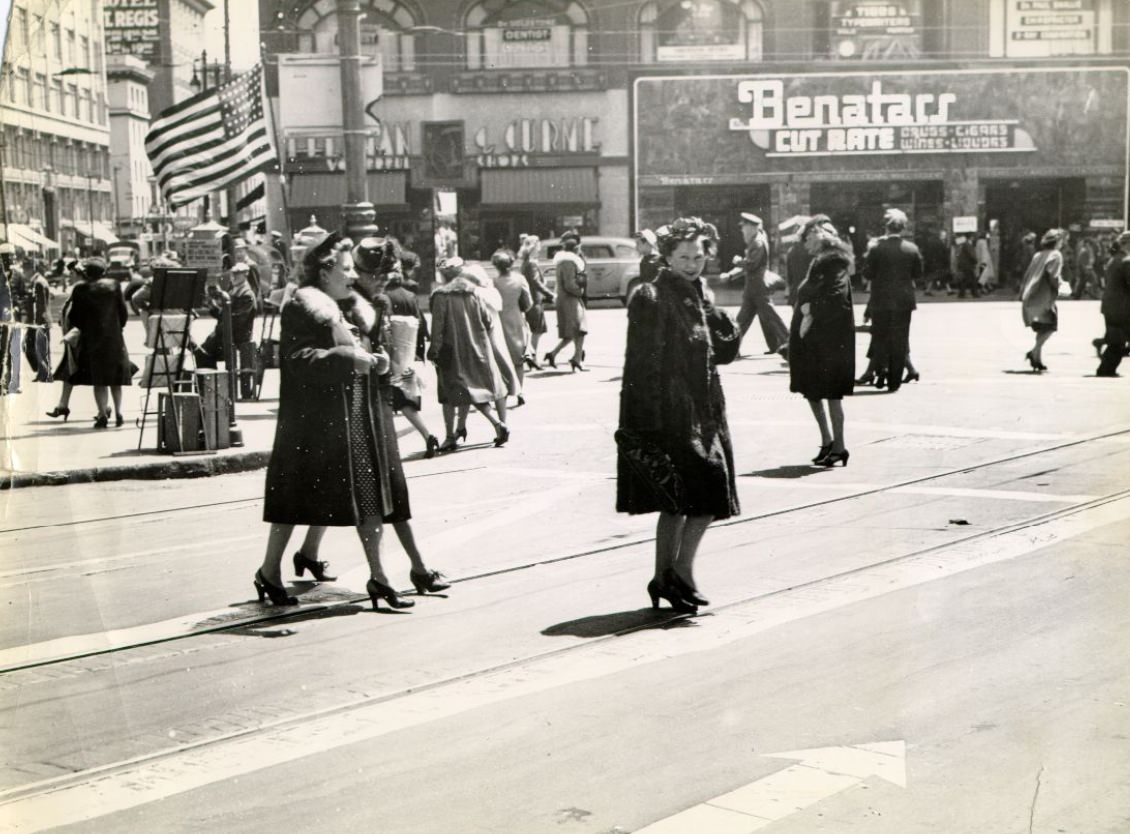
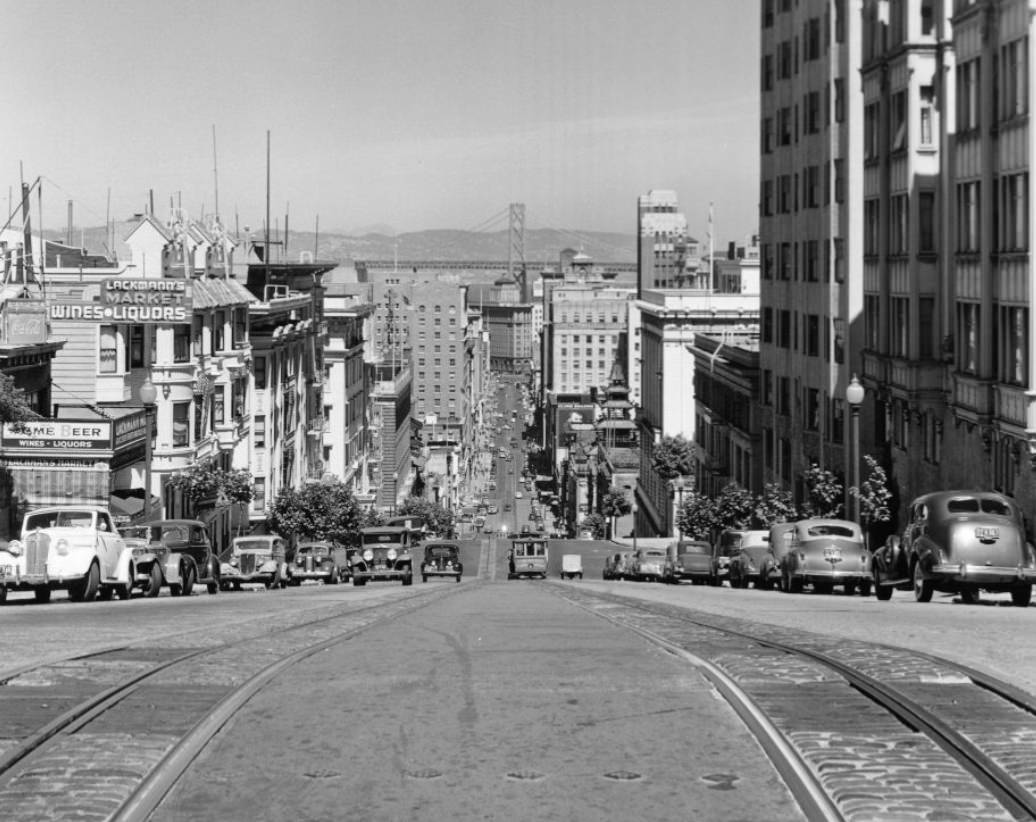
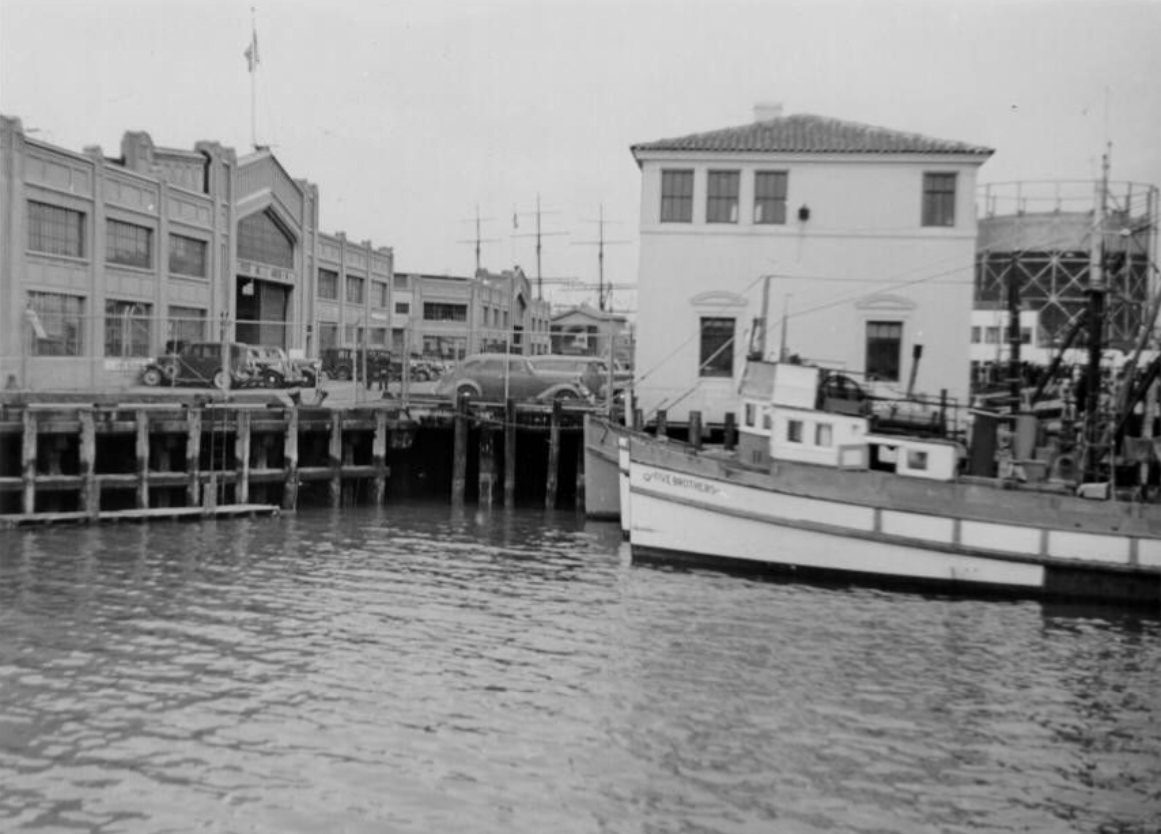
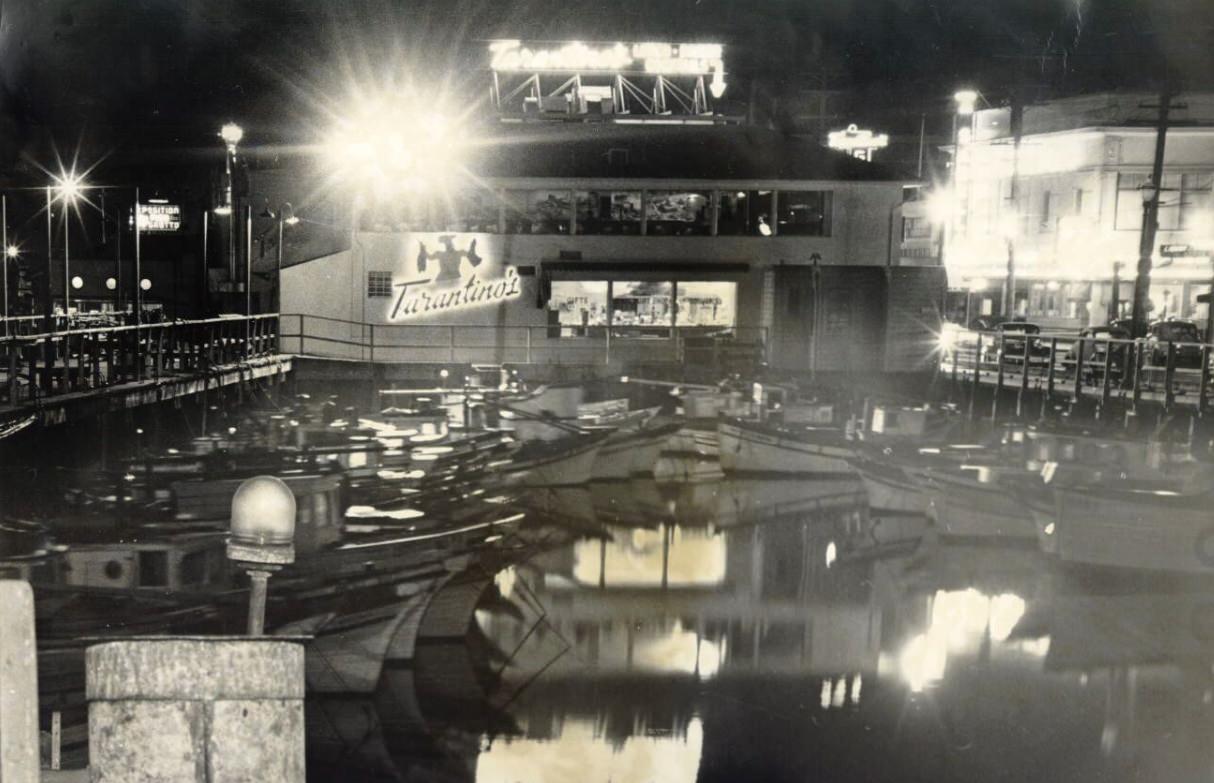
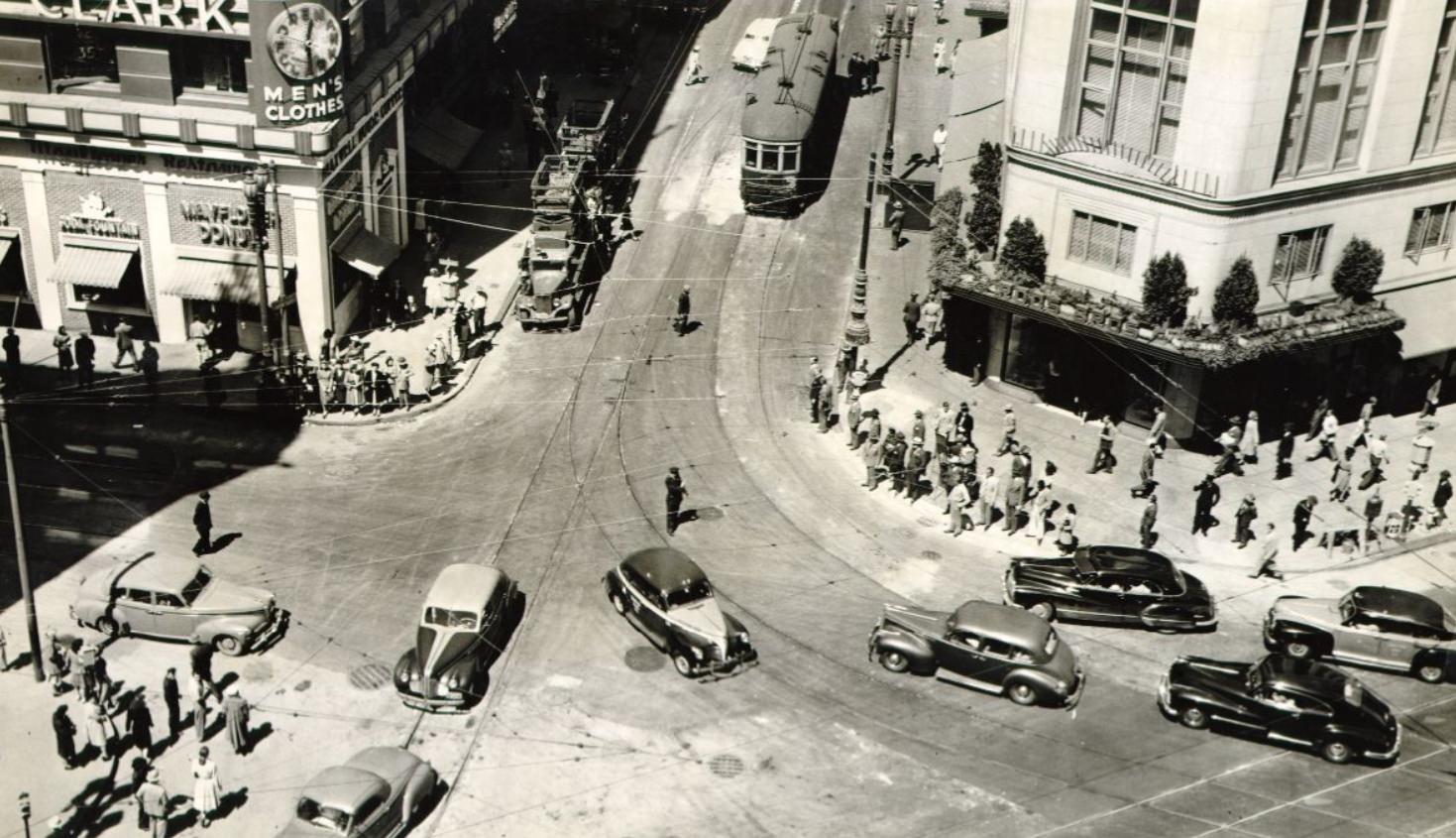
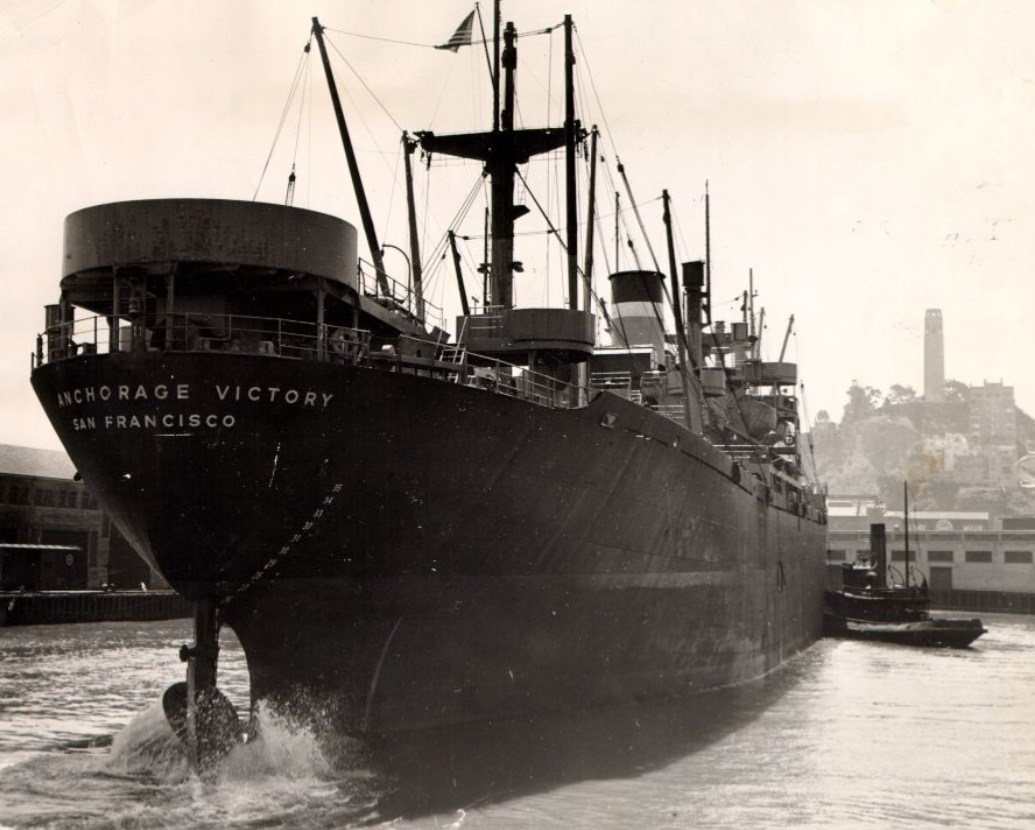
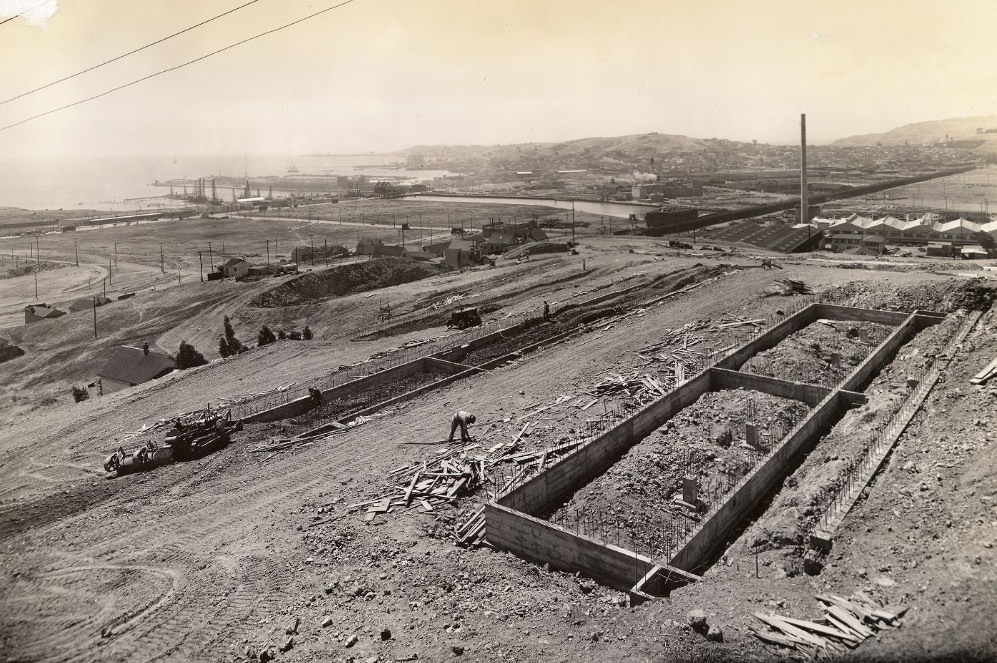
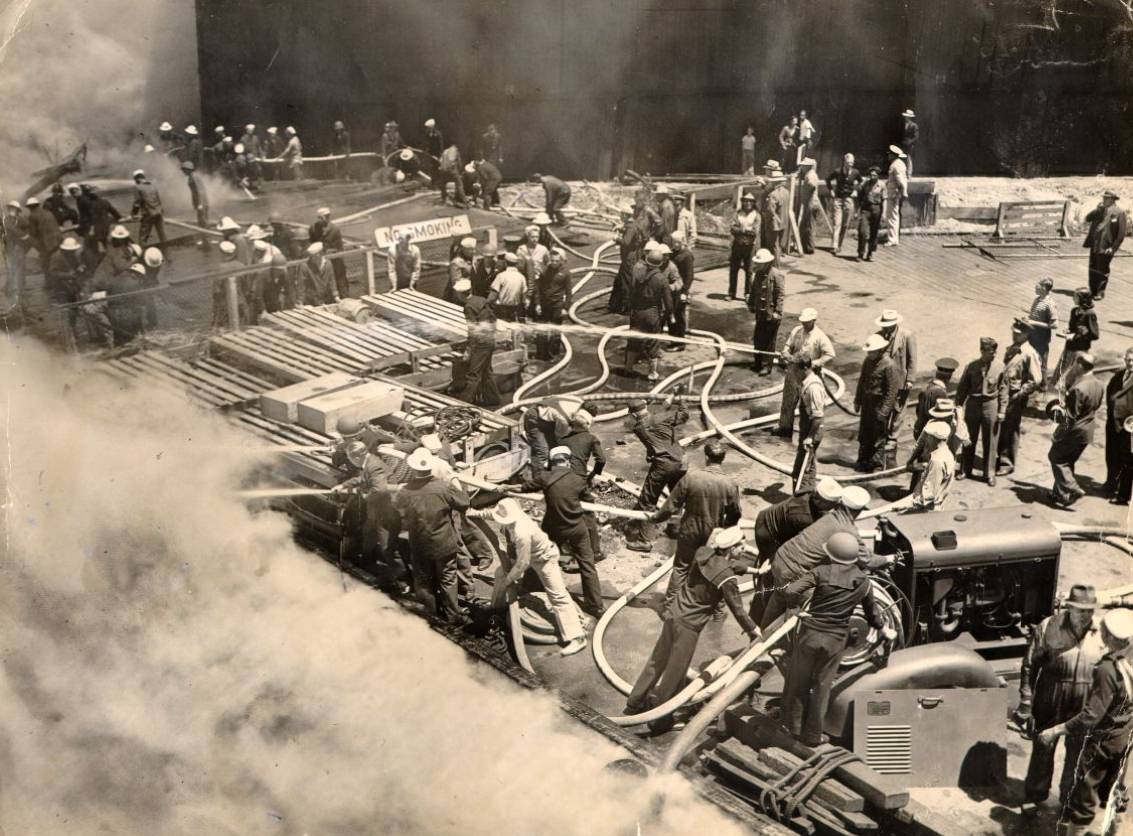
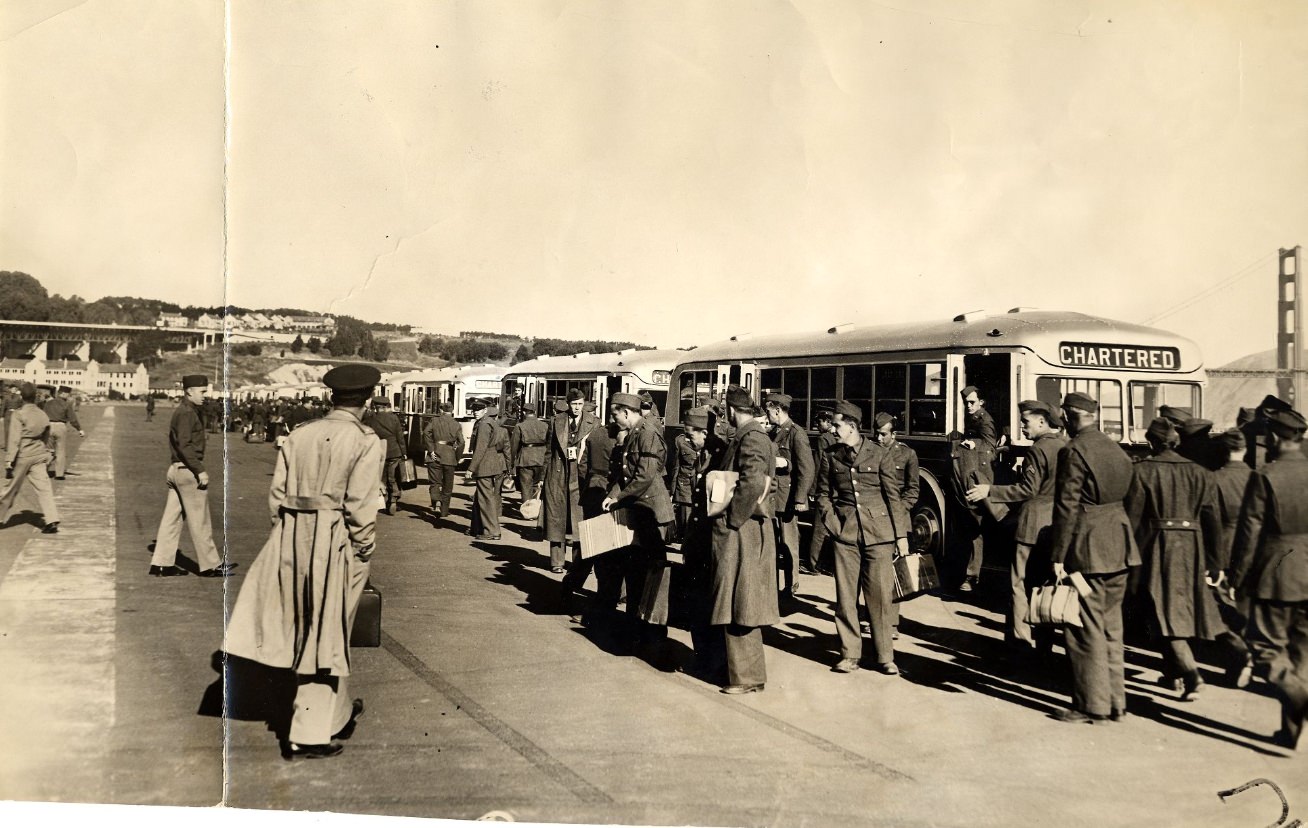
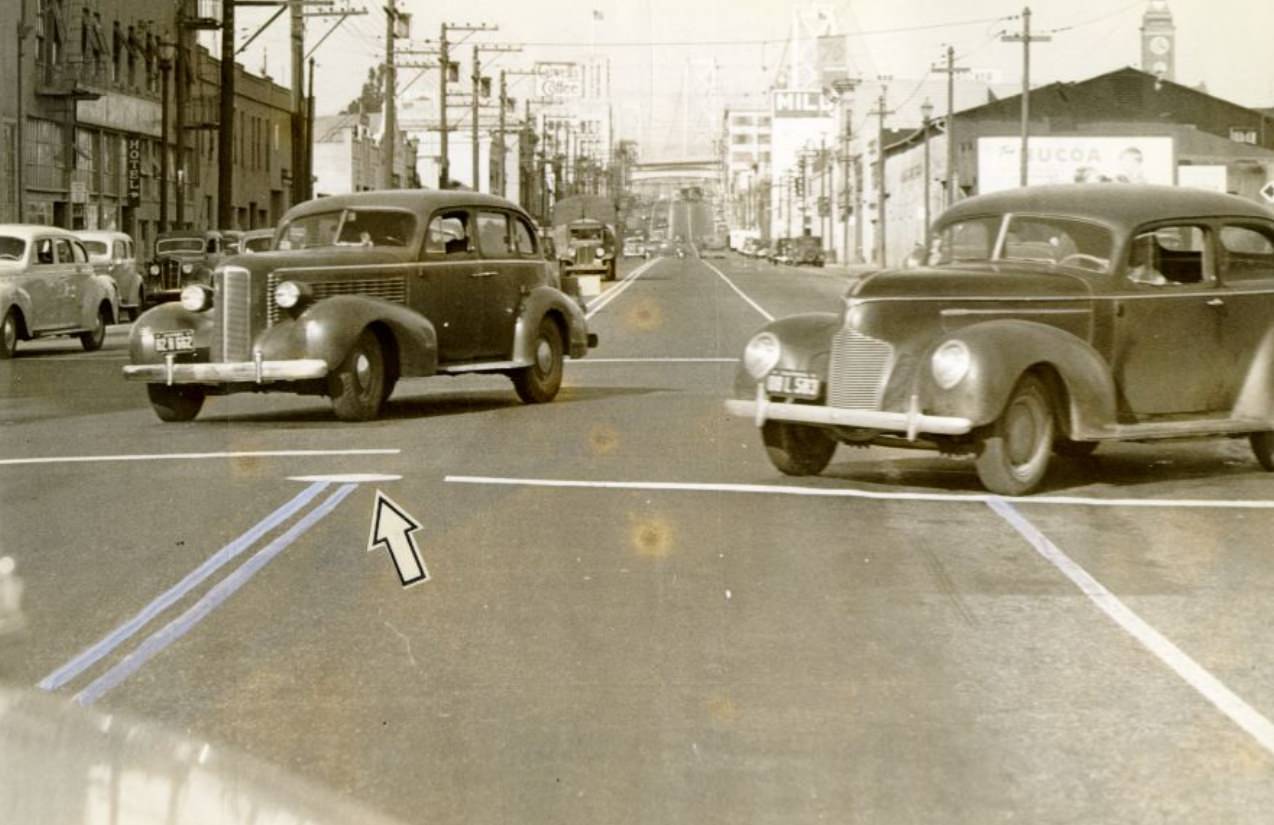
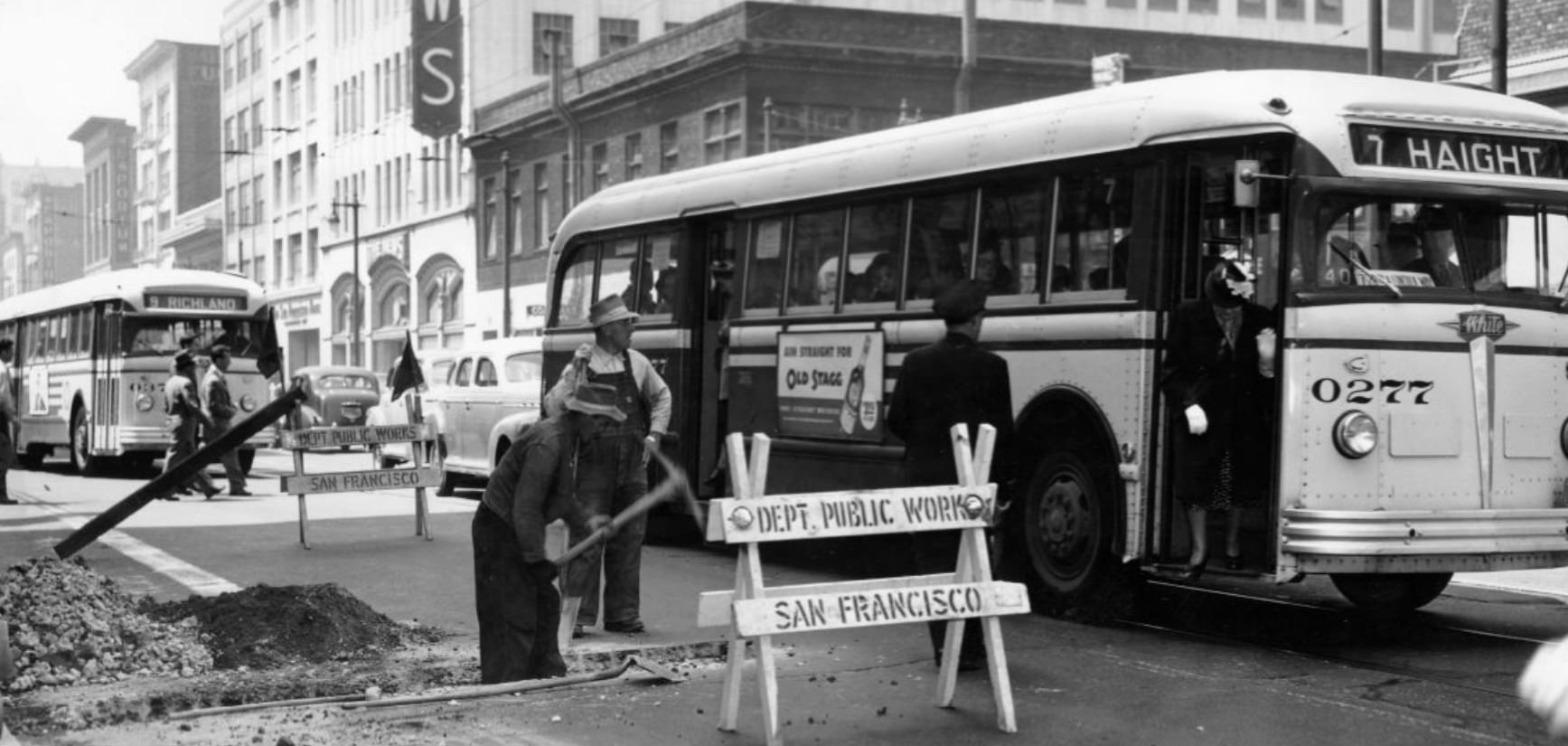
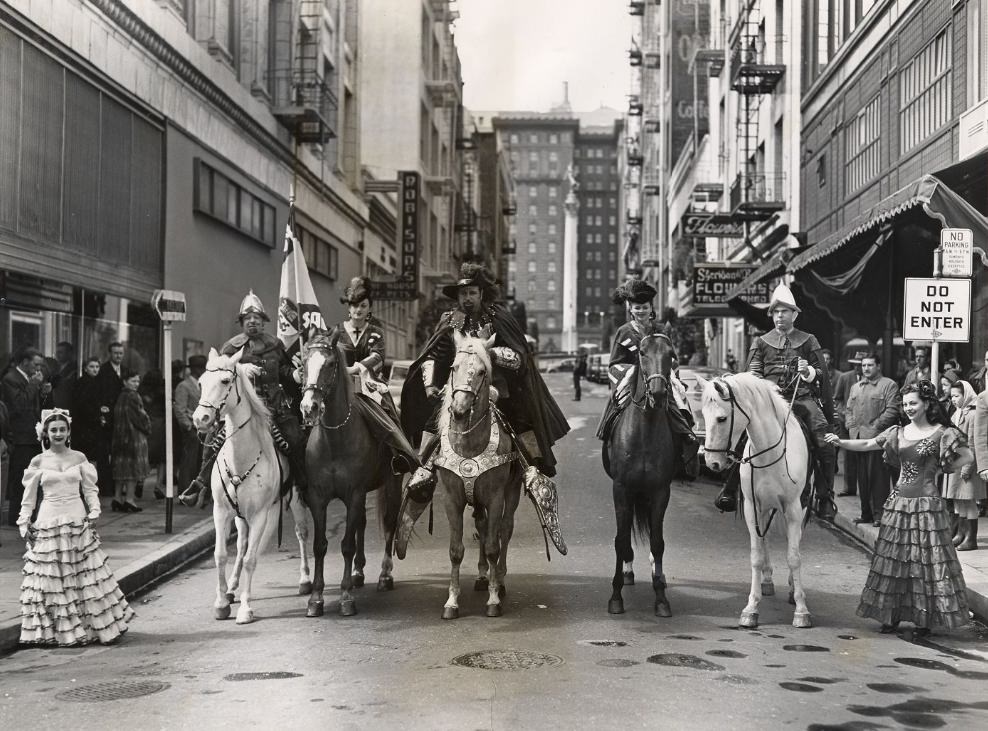
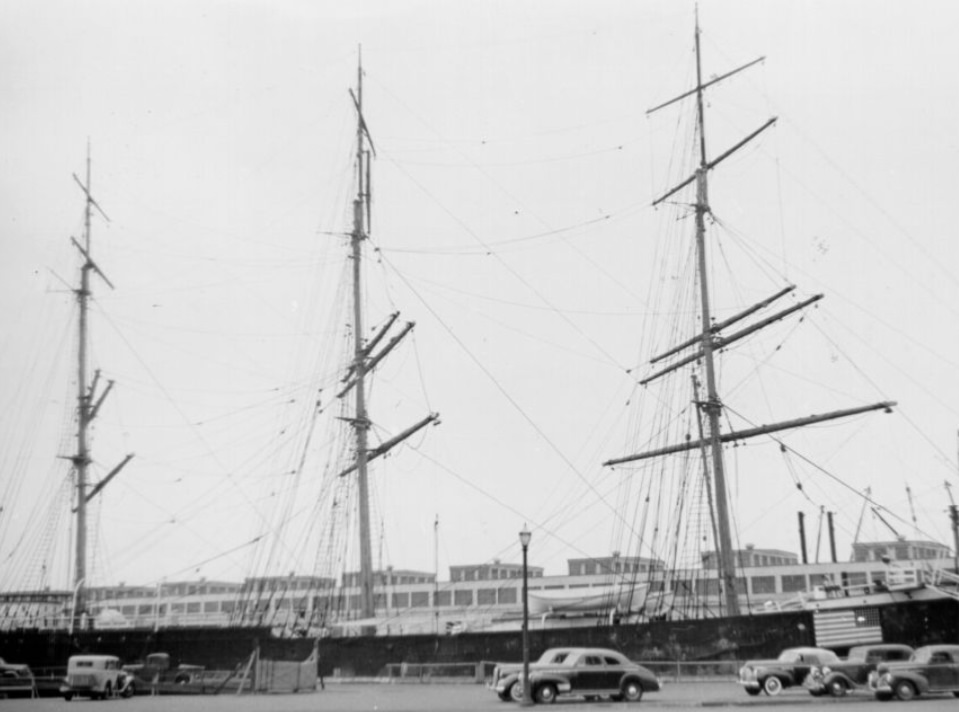
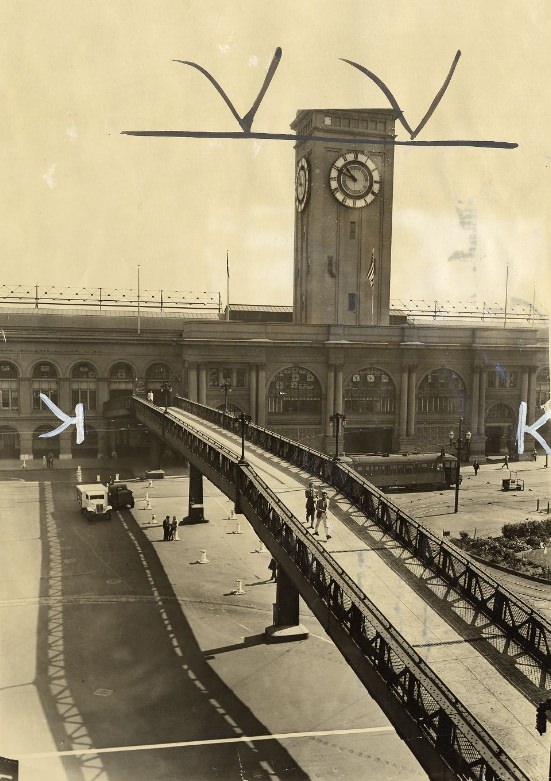
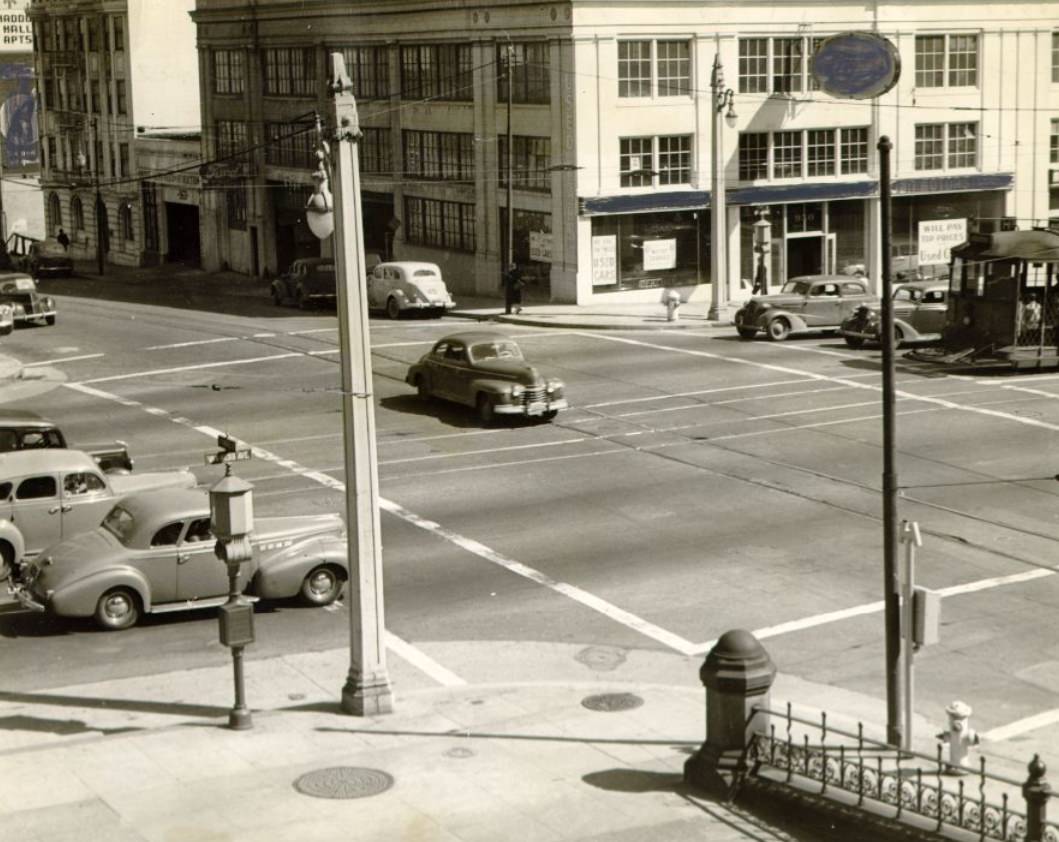
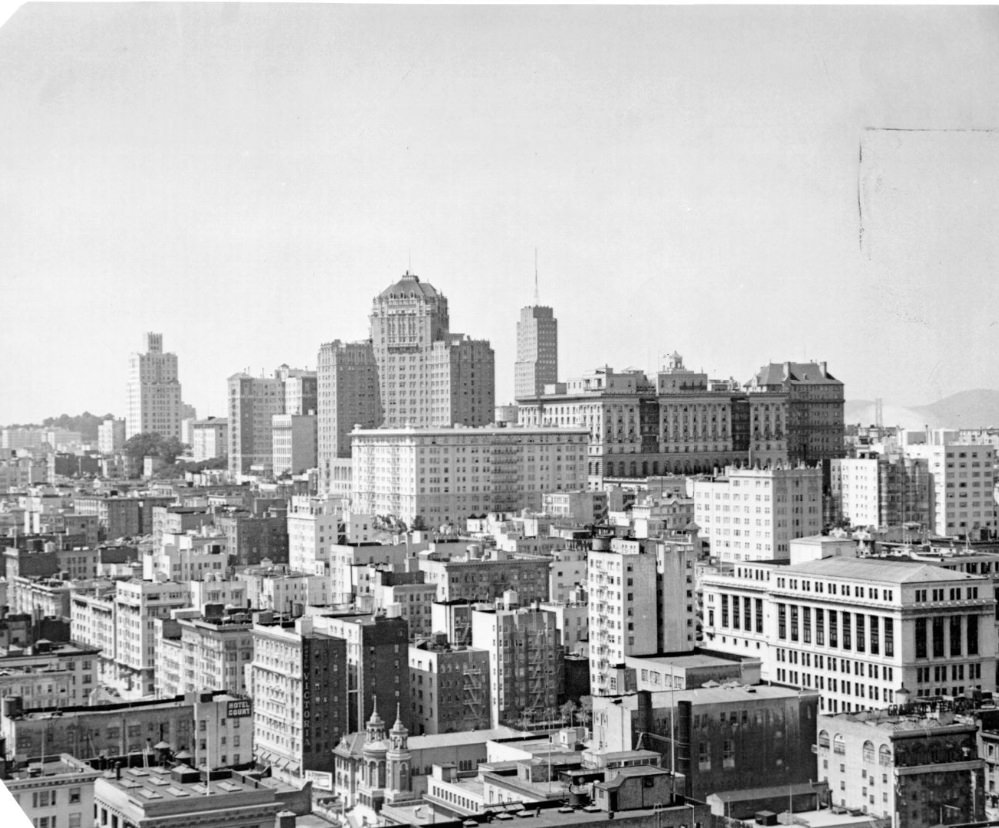
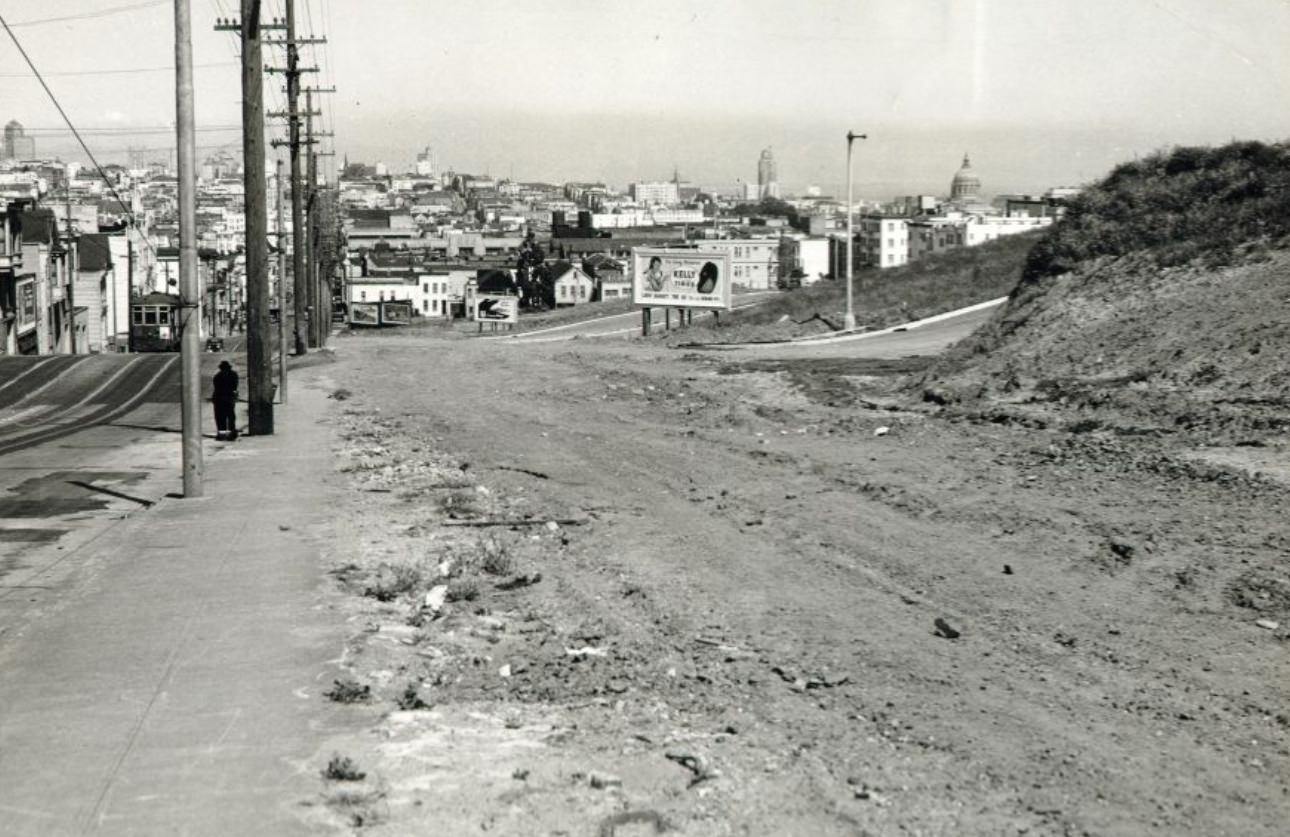
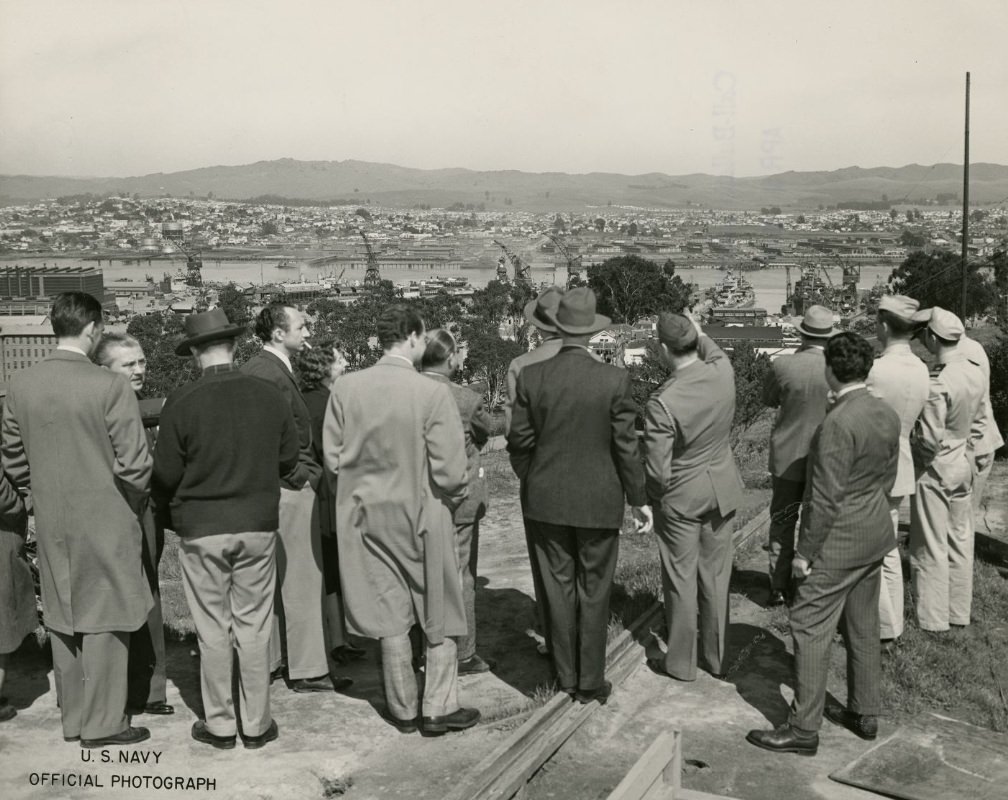
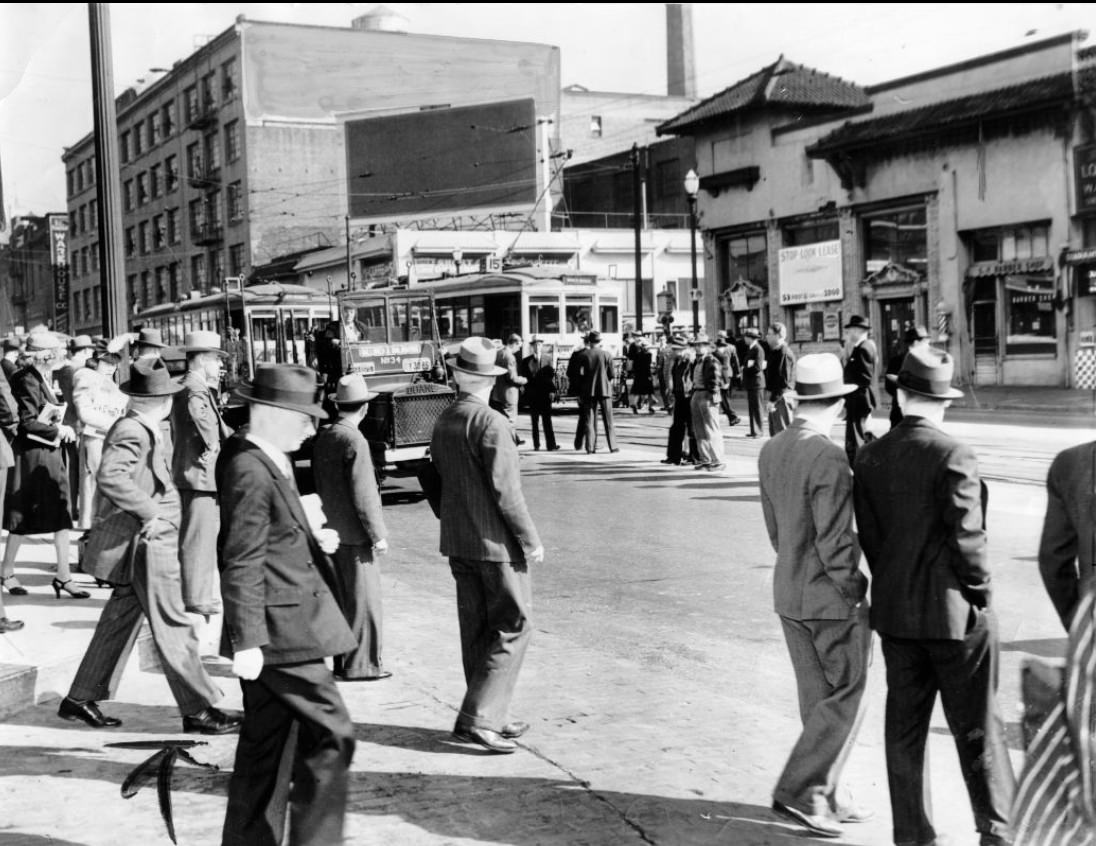
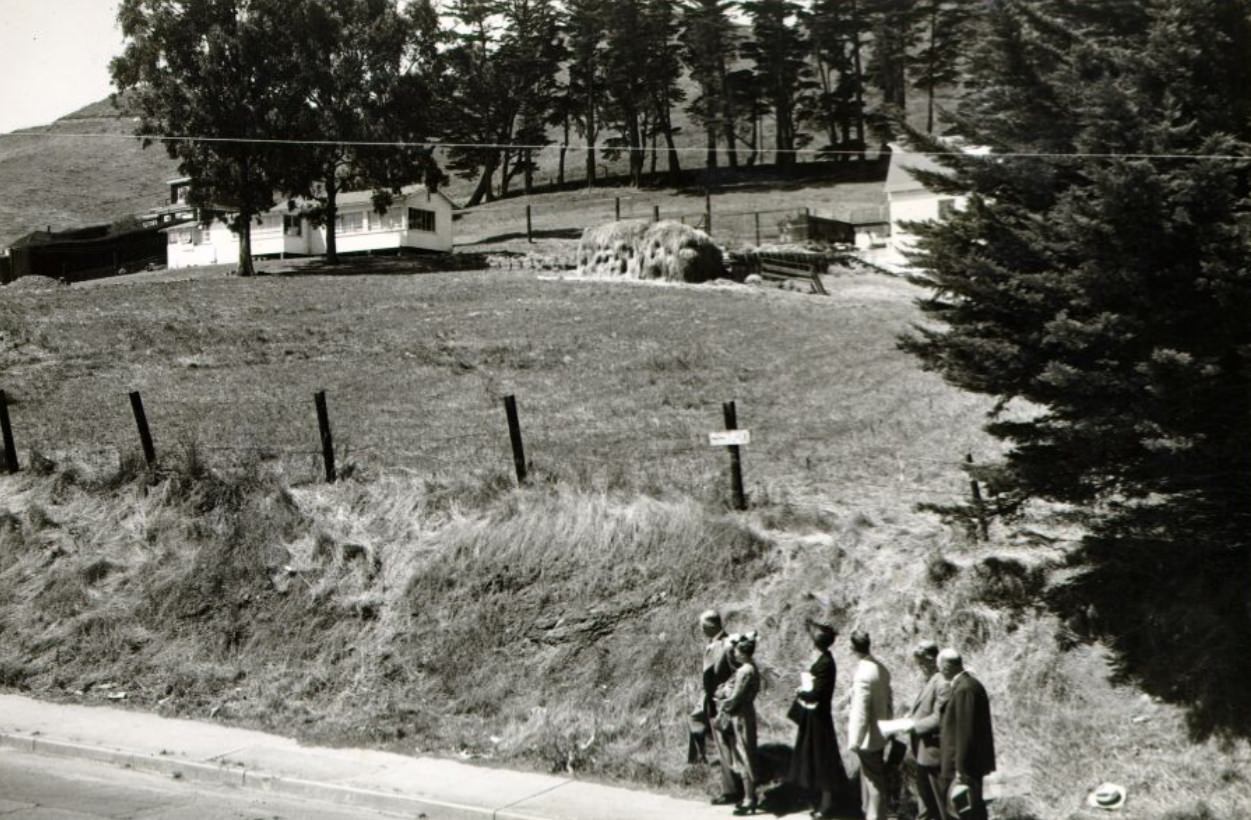
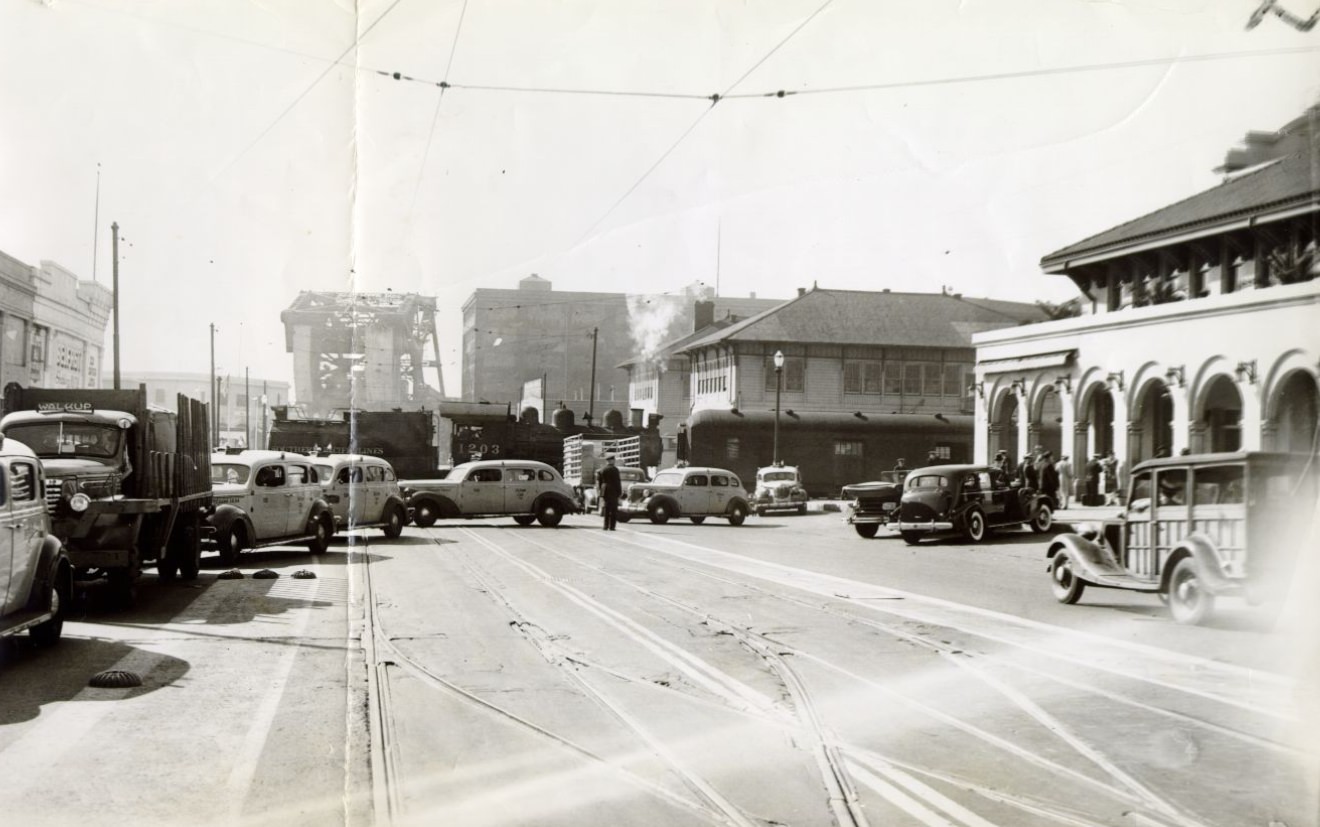
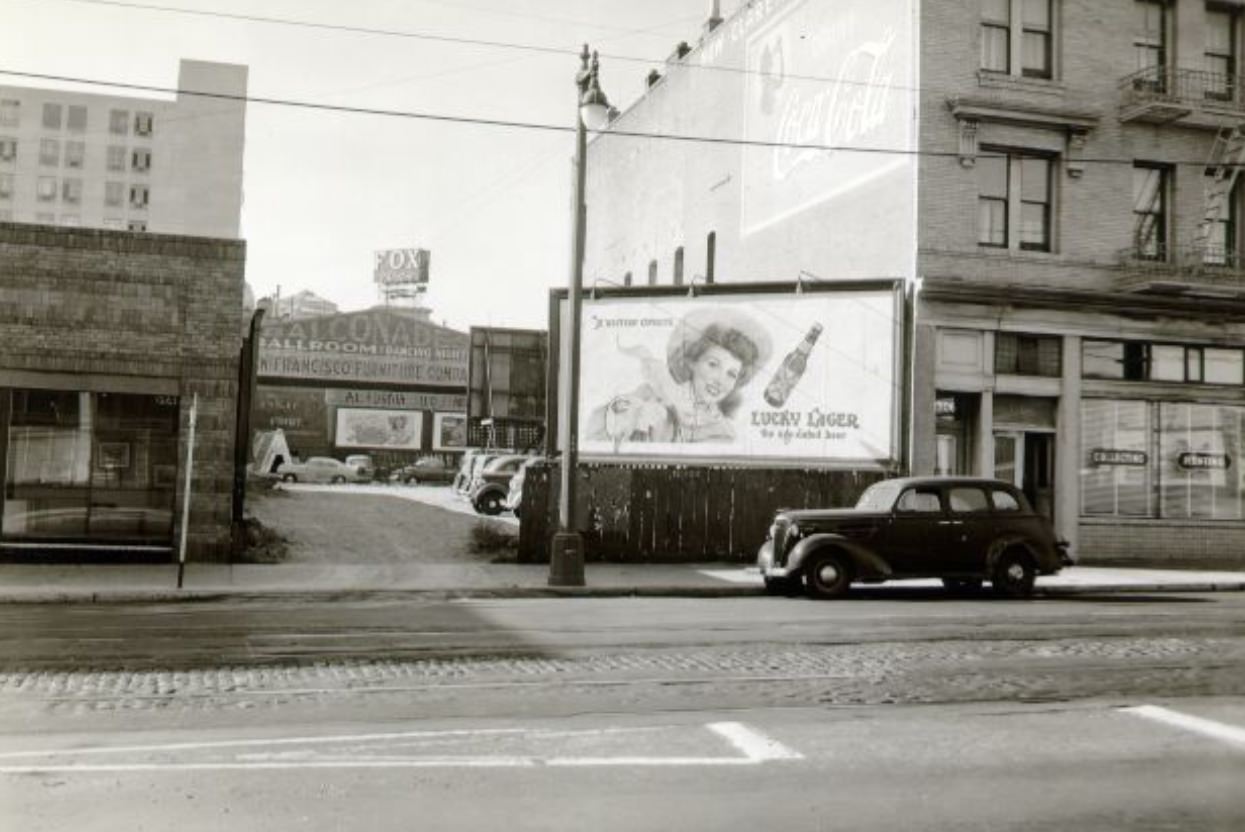
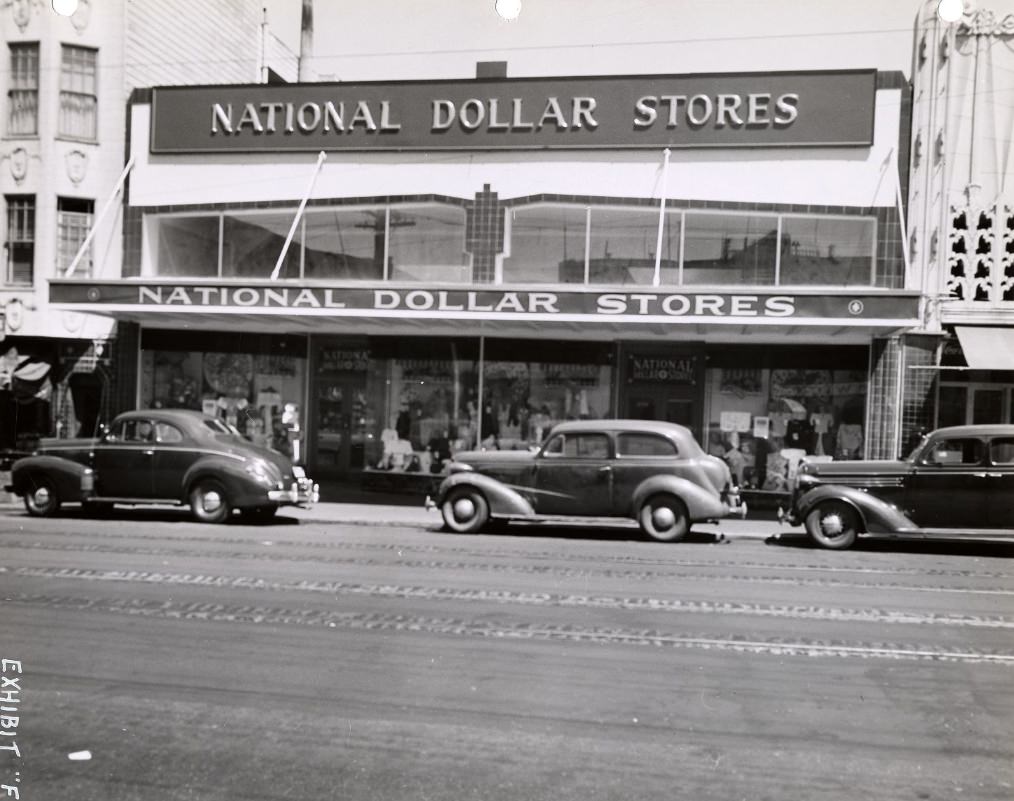
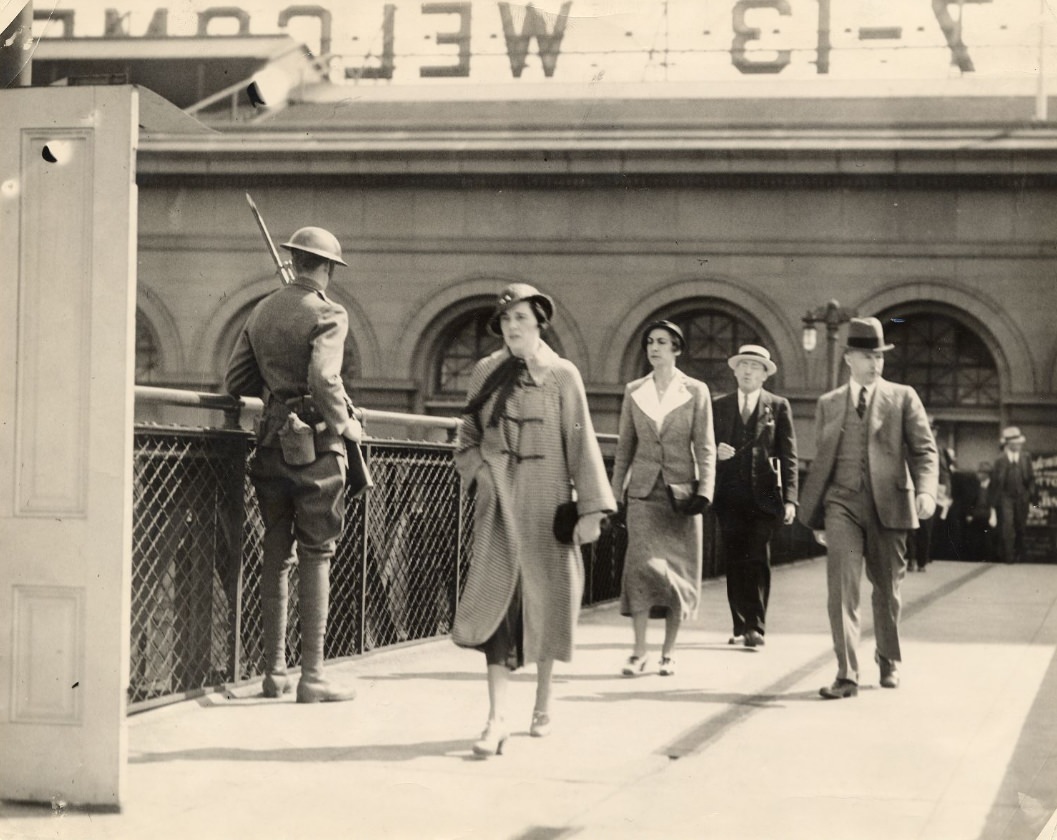
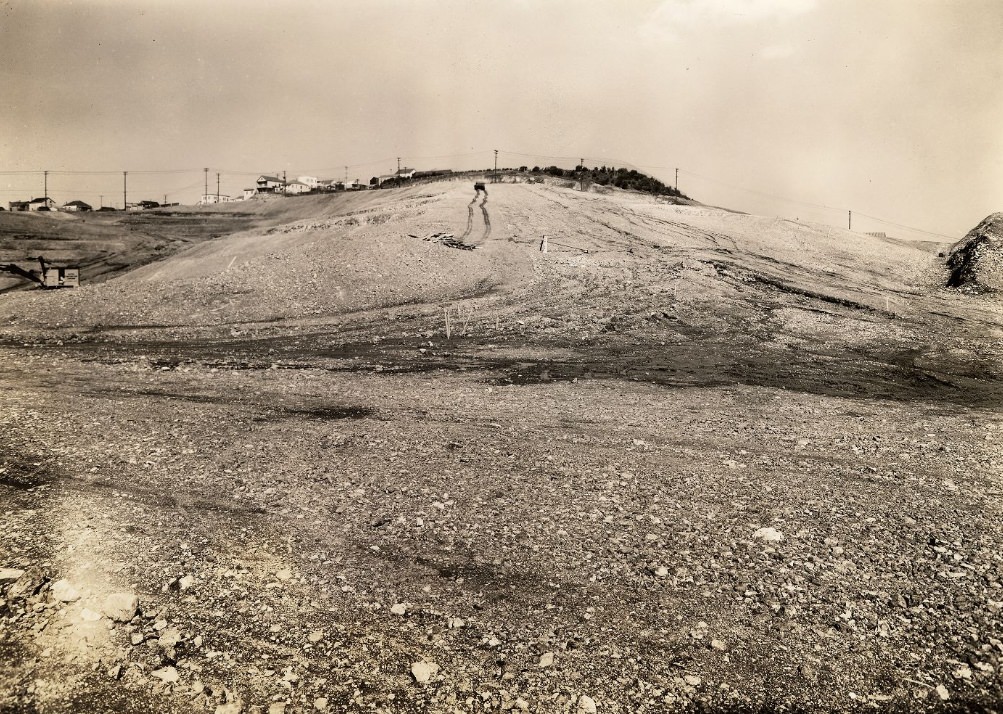
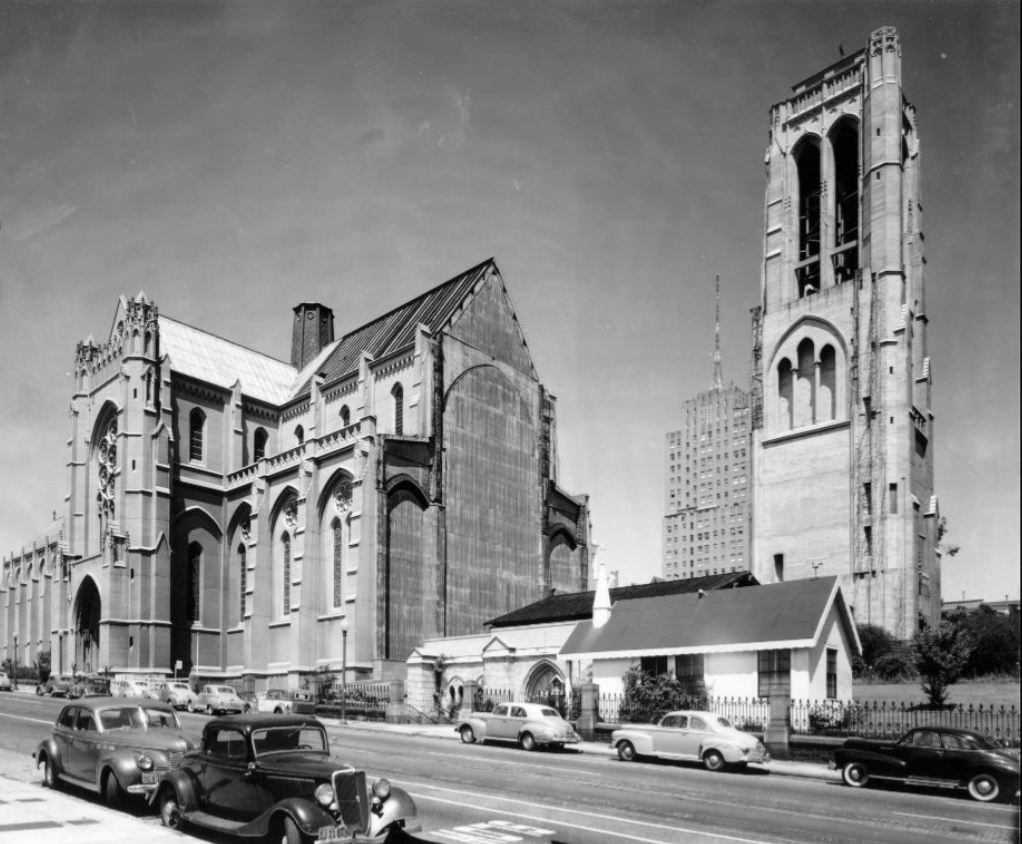
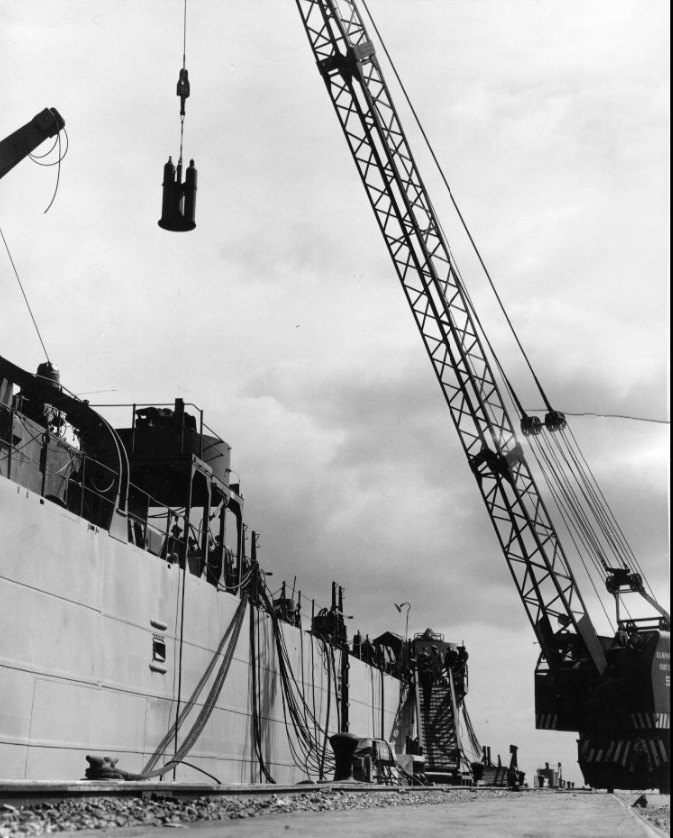
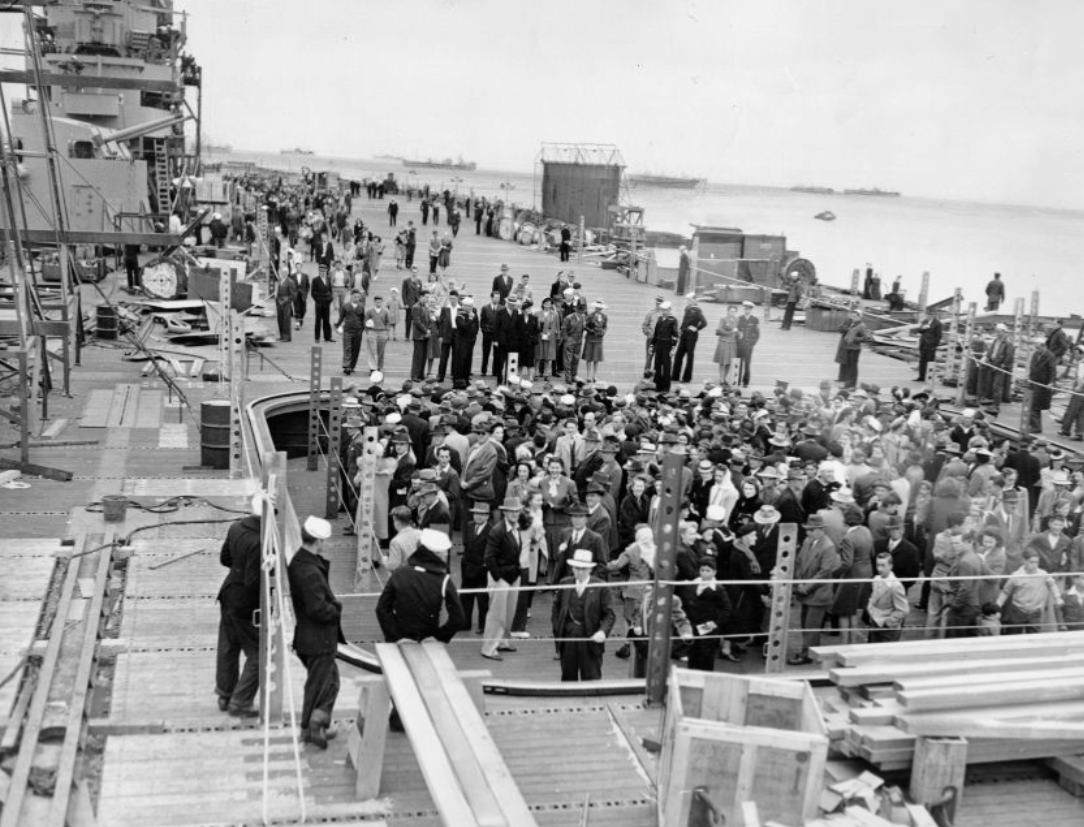
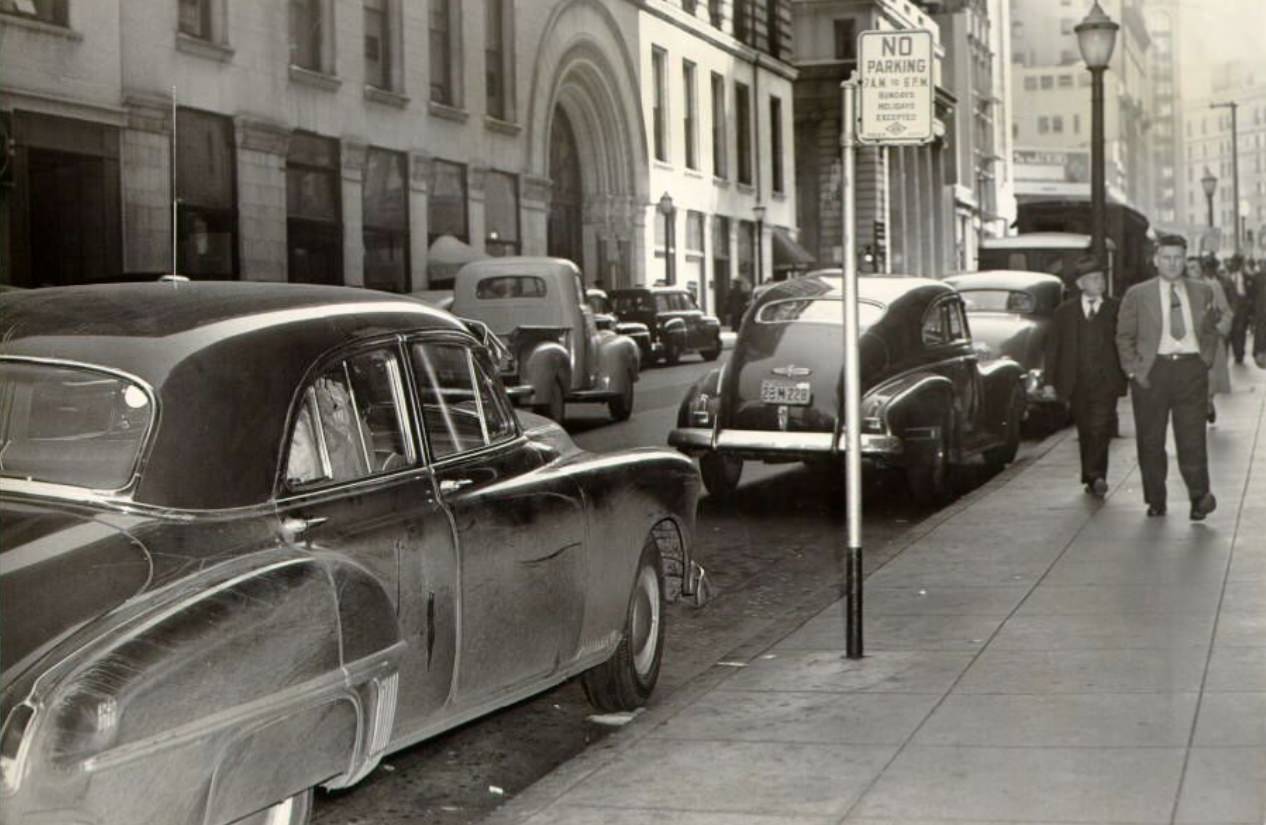
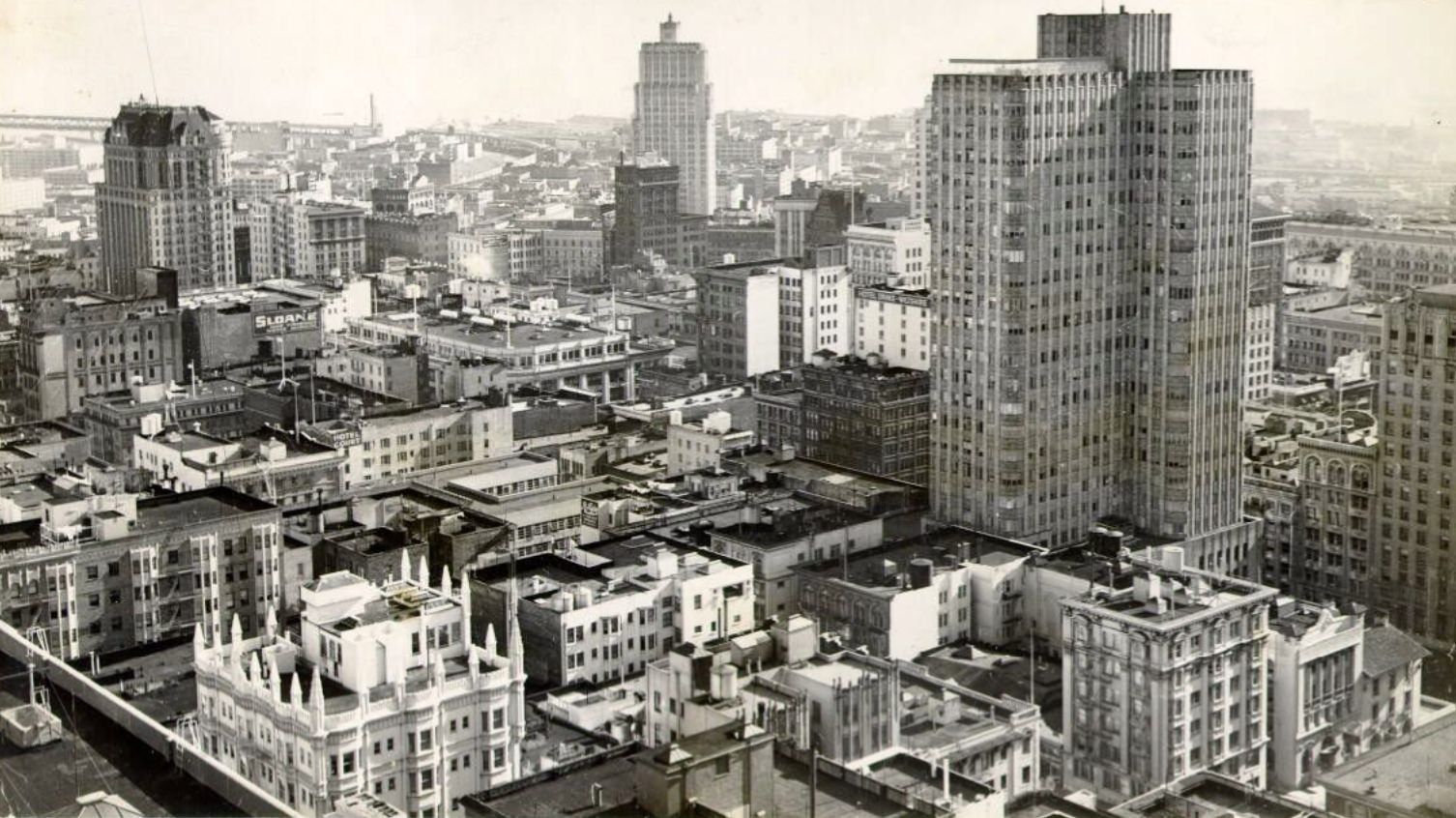
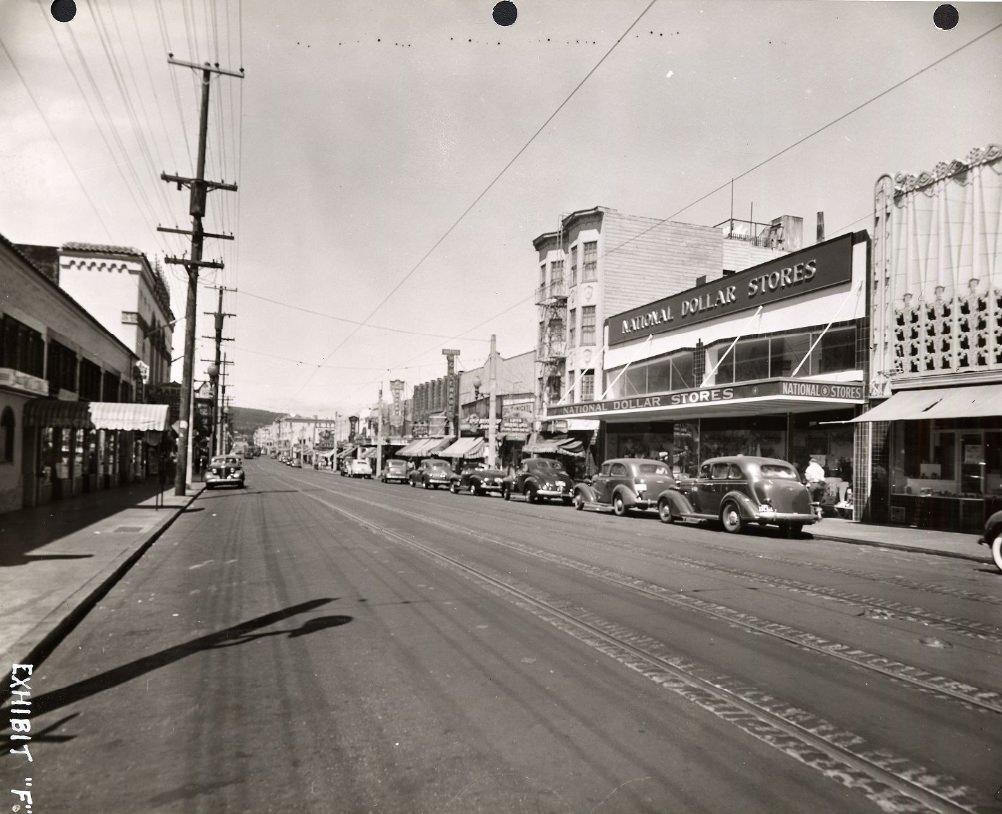
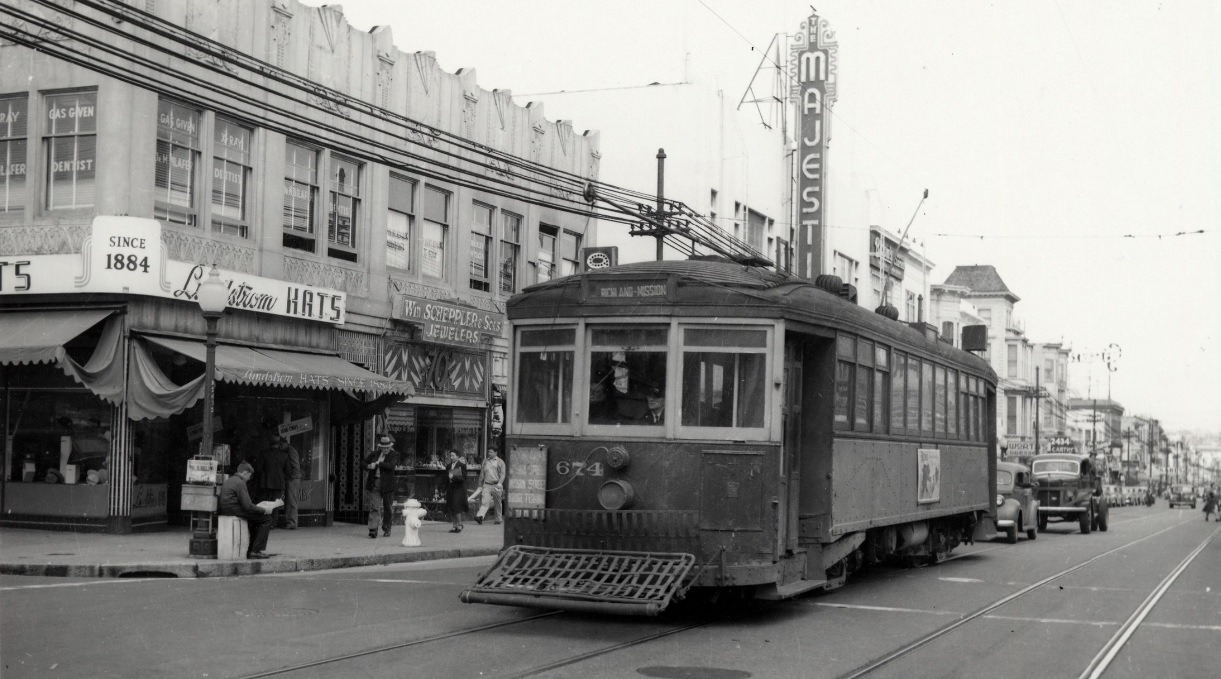
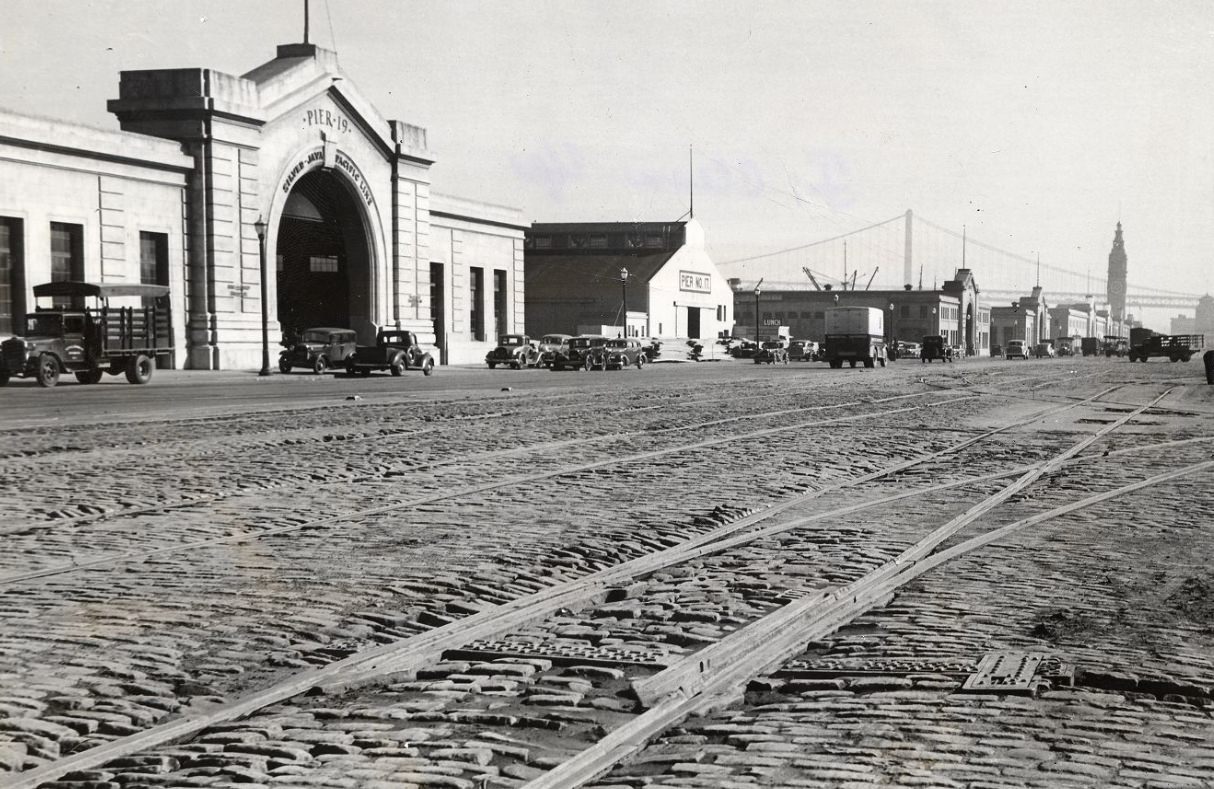
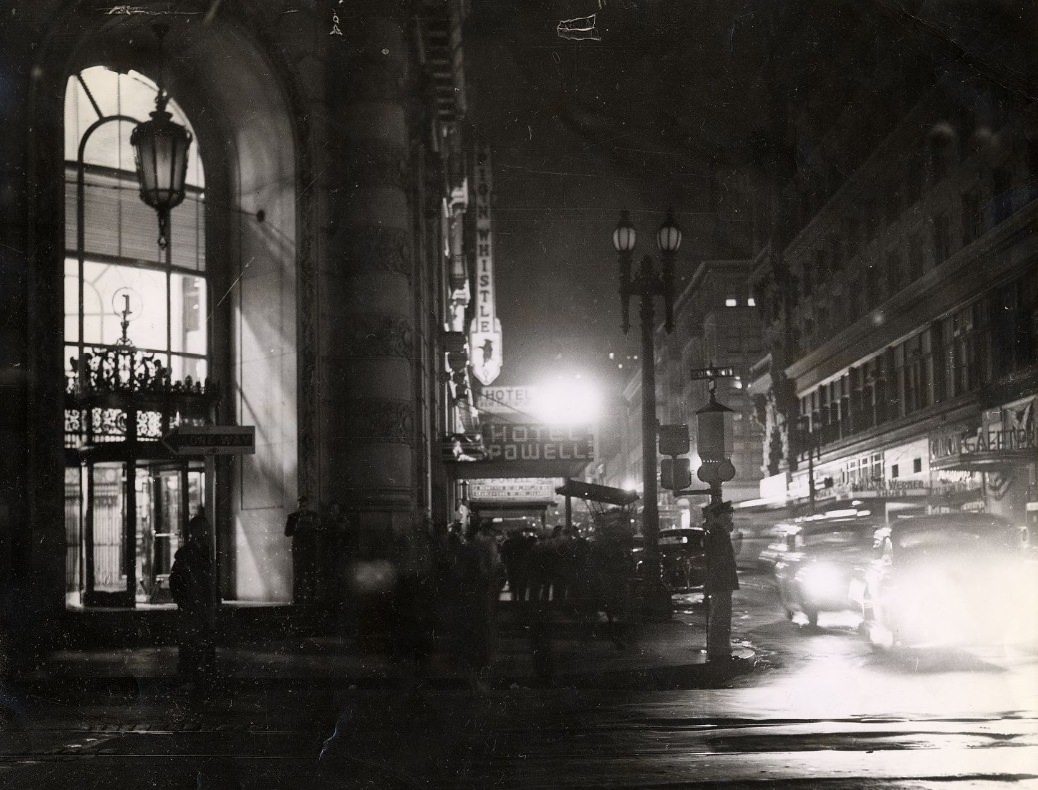
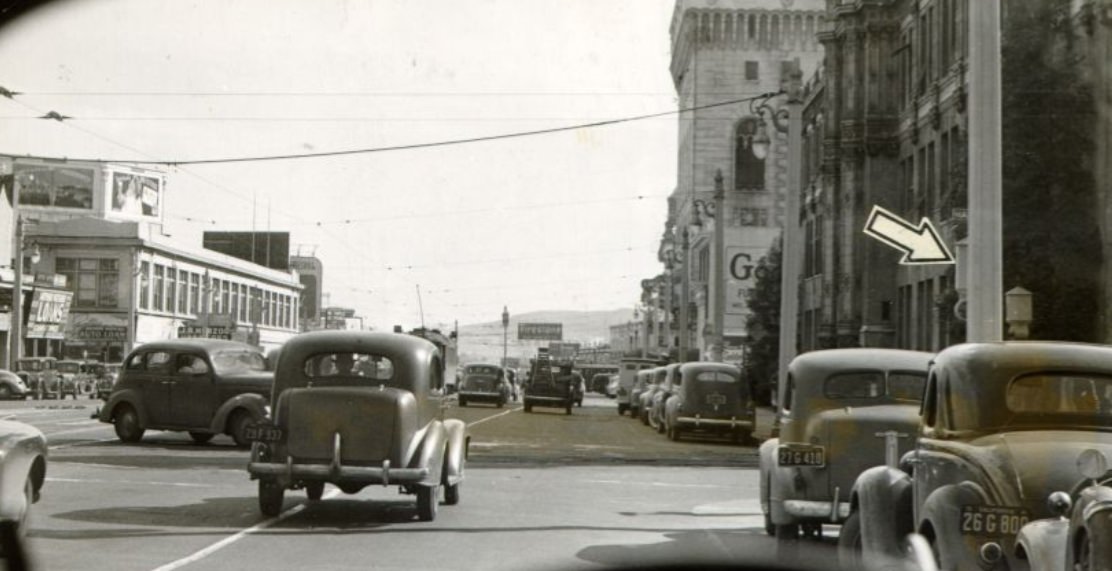
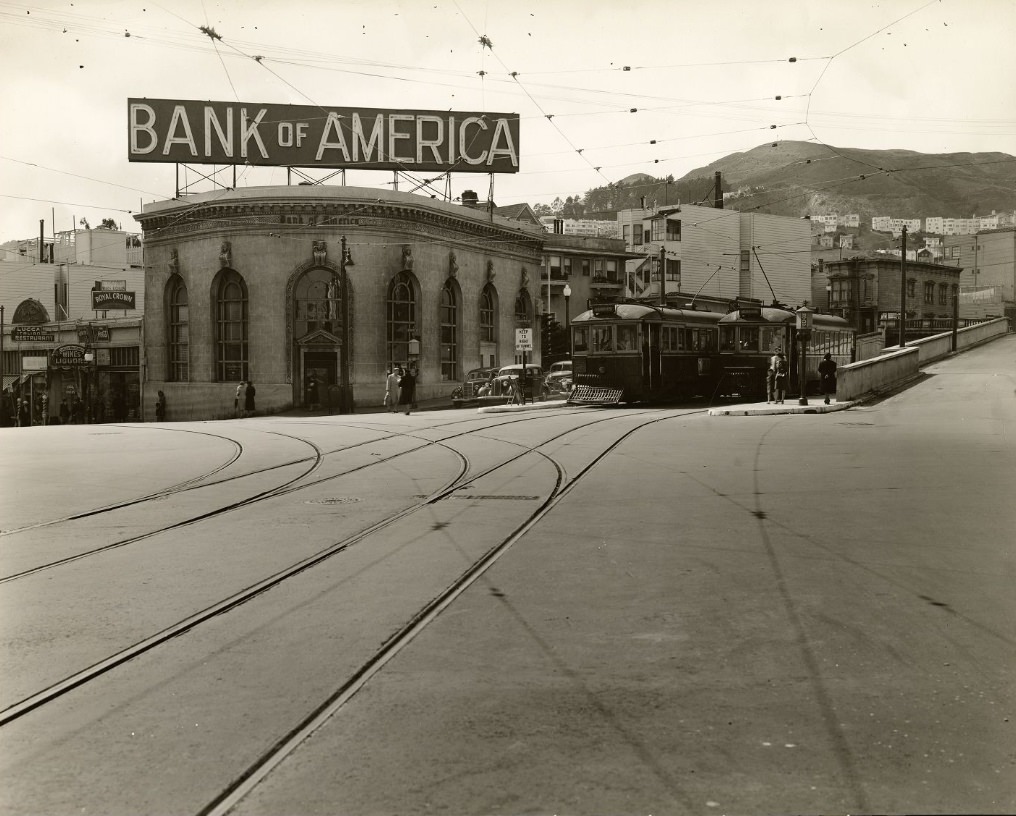
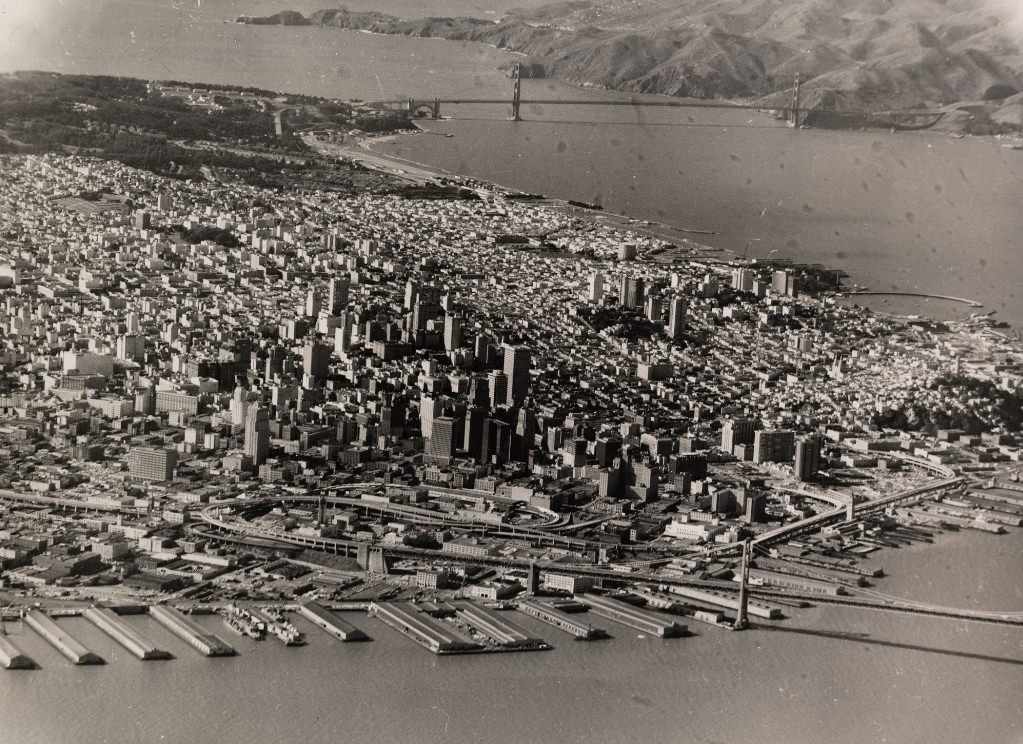
Ocean Beach, 1942Broadway & Montgomery looking towards Russian Hill, 1944California Street looking toward the Bay Bridge, 1940sFisherman’s Wharf, ca. 1939Bayshore Boulevard, 1941Fisherman’s Wharf at night, 1940sEntrance to Union Square Park at Post and Stockton Street, 1947A. Carlisle & Co. building at 645 Harrison Street, 1948Identification Bureau in Old Hall of Justice, 1941Burned administration building on Angel Island, 1940Intersection of Market, Fourth, Stockton, and Ellis streets, 19471700 block of Lombard Street, 1940Union Square Park, 1942Pine Street at Kearny, 1946Sacramento Street overlooking the bay, 1940sCivic Center district, 1945Tug boat pushing the S.S. Anchorage Victory at a San Francisco pier, 1946Intersection of Powell and Post streets, 1943Front view of 1820 Third Street, 1941Construction of Potrero Housing Project, 1940Firemen fighting fire at United Fruit Company Pier at Third and Channel streets, 1943Troops arriving by bus to the Presidio, 1941Cars turning onto Harrison Street, 1941San Francisco supervisors inspect Fort McDowell boilers room on Angel Island, n.d.Construction at the Presidio, 1941Public Works repair crew at Mission and 4th streets, 1949Civic Center district on Larkin Street, 1945People in Union Square Park, 1943Hyde Street, 1943Don Gaspar De Portola and group on horses on Maiden Lane, 1948Sailing ship at a San Francisco pier, 1940sSteel pedestrian bridge to the Ferry Building, 1942Van Ness Avenue at O’Farrell Street, 1943Downtown skyline facing northwest, 1940sGeary Boulevard near Presidio Avenue, 19472200 block of Lombard Street, 1940Press members overlooking Hunters Point from a hilltop, 1945Crowd outside St. Mary’s Church for Good Friday services, 1940Broadway between Laguna and Webster Streets, 1947Commuters leaving the Southern Pacific Depot at Third and Townsend streets, 1940Intersection of Montgomery and Market Street, 1940sPeople inspecting a farm on Twin Peaks, 1948Third Street, 1940Ordnance and Electronics Building at Hunters Point Naval Shipyard, 1948West side of Van Ness Avenue north of Lombard Street, 1940San Francisco waterfront view with Treasure Island, 1940sSan Franciscans touring Angel Island, 1949Downtown San Francisco produce markets, 1943Sacramento Street between Mason and Powell streets, 1928Mission Street, 1940Ocean Beach and Great Highway from Sutro Heights, 1940sVan Ness Avenue at Myrtle Street, 1944View of Ocean Beach from Sutro Heights, 1940sGeary Boulevard at Broderick Street looking west, 1948Coast Guard fighting a fire at the San Francisco waterfront, 1944Produce delivery truck on Washington Street, 1944Lombard Street at Pierce, 1944Fire boat at Angel Island pier, 1941Angel Island lighthouse by Fort Knox, 1946Northwest corner of Lombard and Van Ness, 1940Third Street, 1941Mission Street looking north from 26th Street, 1949Billboard for Lucky Lager beer on Mission Street, 1945Exterior of National Dollar Stores on Chestnut Street, 1945Pedestrian bridge to the Ferry Building, 1942Temporary Barracks in the Civic Center Plaza, 1940sArmed forces demonstration at Union Square Park, 1949Construction of Potrero Housing Project, 1940Grace Cathedral, 1940sTemporary Barracks, Civic Center Plaza, 1940sAerial view of the Civic Center, 1945Cargo Handling School officers at the Naval Supply Center in Oakland, 1948Work crew on Mission Street between 4th and 5th streets, 1949Ferry Building, 1940s1900 block of Lombard Street, 1940Jay-walking on Stockton Street, 1945Battleships Indiana, Massachusetts, and Alabama arriving in San Francisco, 1946Hunters Point Naval Drydocks, 1945Longshoremen loading and unloading, 1941Looking south on Third Street from Market, 1944City Hall and Plaza, 1940sMission and Valencia streets, 1944Aerial view of the Civic Center, 1940sHunters Point Naval Drydocks, San Francisco, 1944Civilians visiting the USS Hornet at Hunters Point Naval Shipyard, 1945Produce market deliveries on Washington Street, 1945No Parking sign on Montgomery looking up from Pine Street, 1949People in Civic Center Plaza surrounded by Temporary Barracks, 1940sDowntown view from the Mark Hopkins hotel, 1945Construction of Potrero Housing Project, 1940Aerial view of Hunters Point Naval Shipyard, 1946Ship docked at a San Francisco pier, 1940sMain Library with debaters outside, 1941Hunters Point Naval Shipyard, 1945Looking up Bush Street from Kearny toward Grant, 1944Men in front of a cable car on California Street, 1940sPolk Gulch Fiesta at Hyde and Jefferson Street, 1949Grant Avenue and Post Street, 1944U.S. Coast Guard station at Embarcadero, 1940sChestnut Street, 1945Fishing boat leaving Fisherman’s Wharf, 1946Inspection of Angel Island by chairman John C. Brucato and citizens’ committee, 1948Streetcar on Mission Street at 21st, 1947Guard at Hunters Point Naval Shipyard, 1944West slope of Bernal Heights looking across the outer Mission District, 1945Construction of Potrero Housing Project, 1940Lombard Street, 1941Embarcadero at Pier 19, 1940Intersection of Powell and Eddy streets at night, 1943Van Ness Avenue at Hayes Street, 1941Streetcar on Mission Street near Daly City, 1948 or 1949Bank of America branch on Castro and Market Street, 1945Intersection of Stockton, Ellis, and Market streets, 1943Civic Center district, 1945Delivery to a produce market on Washington Street, 19441500 block of Lombard Street, 1940Large crane at Hunters Point Naval Shipyard, 1947Construction of Potrero Housing Project, 1940Martial music at Union Square for a Community Chest and Military fund campaign rally, 1950Community Music Center faculty and friends, 1940sChinese technicians preparing to leave for China at the Civic Center Plaza, 1946Eleanor’s father’s car in front of their house, 1950View from Twin Peaks on a foggy morning, 1941Chinese technicians registering for housing in the Civic Center, 1946Naval Shipyard employees at a rally, 1949Workers operating a concrete spreader on Mission Street, 1944Intentional fire destroying buildings on Angel Island, 1940sWar Chest rally in front of the Stock Exchange on Pine Street, 1944Owner George working at Eagle Market on Fillmore Street, 1940sChinese technicians registering for housing in the Civic Center, 1946House on Steiner Street that survived the 1906 earthquake, 1940sOrdnance and Optical Shop Building at the naval base on Treasure Island, 1948Aerial view of San Francisco, 1965
Kevin Clark is a historian and writer who is passionate about sharing the stories and significance behind historical photos. He loves to explore hidden histories and cultural contexts behind the images, providing a unique insight into the past.
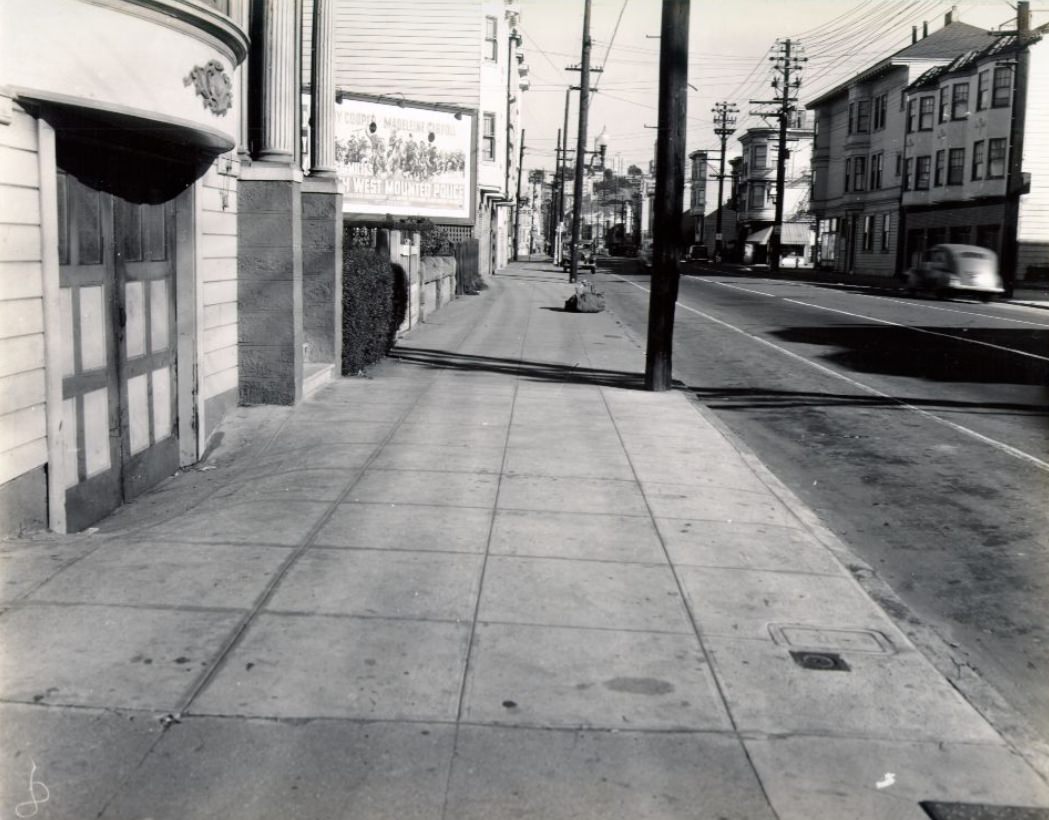
What always strikes me in these photos is when something looks weathered, old or broken down. Even back then things like sidewalks and lamppost pedestals wore out, got dirty, and looked like they could use cleaning or updating. For some reason my brain expects everything to look new.
I love old photos. But I can’t help but look at these and wish Sam Francisco evolved and grew as a city. Keeping some history is great. But many of these photos could be taken today if you replaced the old cars with Waymo’s!
Movies shot on location in San Francisco in the 1940s also contain good glimpses of the City back then. (For example, Dark Passage from 1947, with Bogart and Bacall.)






There are so many incredible photographs!
The Union Square fashion show one is awesome! What a cool venue for an outdoor event.
Herb Caen’s San Francisco
What always strikes me in these photos is when something looks weathered, old or broken down. Even back then things like sidewalks and lamppost pedestals wore out, got dirty, and looked like they could use cleaning or updating. For some reason my brain expects everything to look new.
I love old photos. But I can’t help but look at these and wish Sam Francisco evolved and grew as a city. Keeping some history is great. But many of these photos could be taken today if you replaced the old cars with Waymo’s!
Movies shot on location in San Francisco in the 1940s also contain good glimpses of the City back then. (For example, Dark Passage from 1947, with Bogart and Bacall.)
These were wonderful. Thank you for sharing.
The same but with more trains all over the place.
im particularly interested in the Western Addition neighborhood that no longer exists