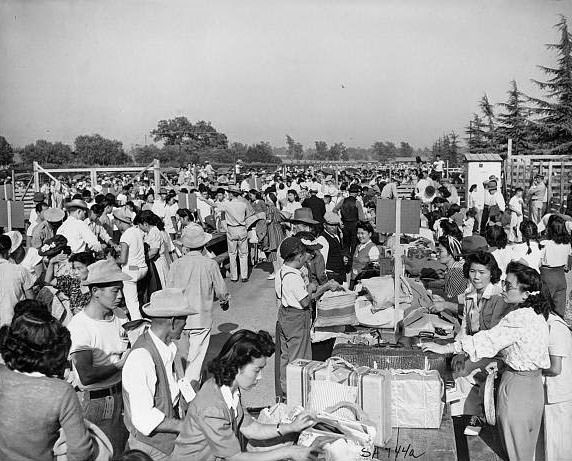
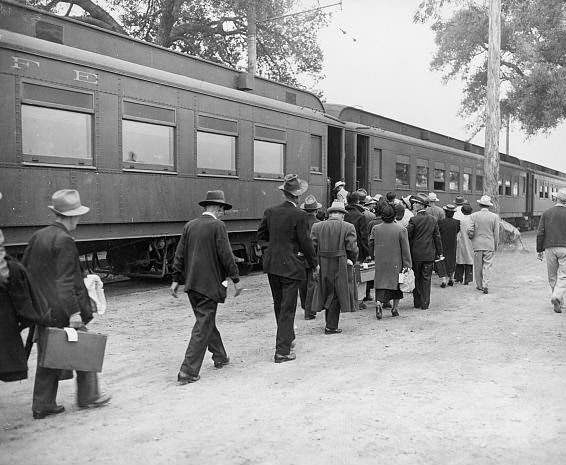
In the months following the attack on Pearl Harbor, the U.S. government ordered the forced removal of Japanese Americans from California, Arizona, Oregon, and Washington. Under Executive Order 9066, signed by President Franklin D. Roosevelt in February 1942, over 110,000 people of Japanese descent — the majority of them American citizens — were uprooted from their homes and sent to assembly centers. These were temporary holding facilities, often converted fairgrounds and racetracks, while permanent War Relocation Centers were being built. The photographs collected here document that process in stark, unfiltered detail.
The evacuation began with orders posted in public spaces telling Japanese Americans to report to Wartime Civil Control Administration stations. Families were given days — sometimes less than a week — to sell or store their belongings and report for processing. They were allowed to bring only what they could carry. At the control stations, families received identification tags and instructions before being loaded onto buses headed for train depots.
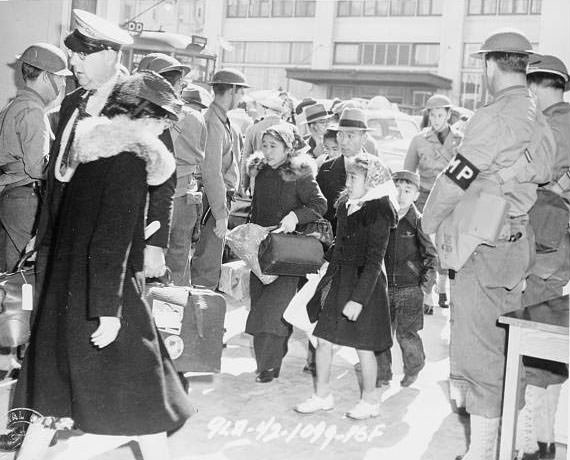
Scenes at the departure points were charged with uncertainty. Among those waiting for buses were children who had grown up as Americans and knew no other country. Some carried visible markers of conflicted identity.
![Evacuation - Two Japanese boys, one with strip "Remember Pearl Harbor" on his hat, wave good-bye [while] awaiting the bus.](https://www.bygonely.com/wp-content/uploads/2022/03/Japanese_Evacuation_in_San_Francisco_WWII_7.jpg)
Transport to the assembly centers was carried out by both bus and train. The U.S. Army Signal Corps documented many of these movements, including the loading of evacuees onto trains from their home communities.
Once at the assembly centers, evacuees encountered facilities that were hastily constructed and far from complete. At the Puyallup Assembly Center in Washington — built on the grounds of a fairground — construction crews were still at work even as thousands of detainees moved in.
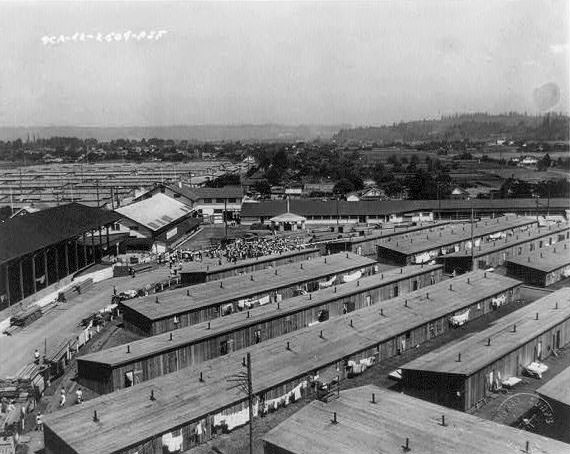
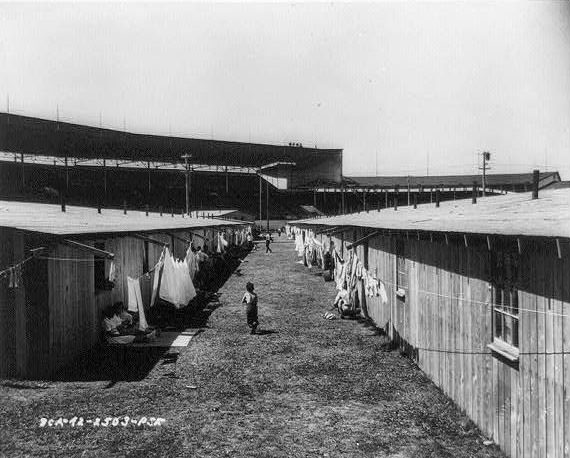
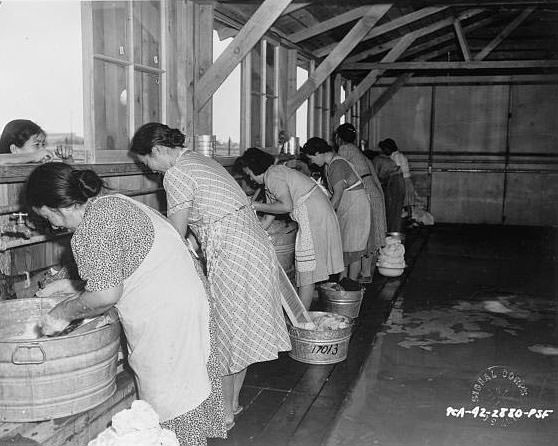
Daily life in the centers required constant improvisation. Space was tight, resources were limited, and privacy was almost nonexistent. Detainees adapted to their surroundings in practical ways, using whatever structural elements were available to manage basic tasks like laundry.
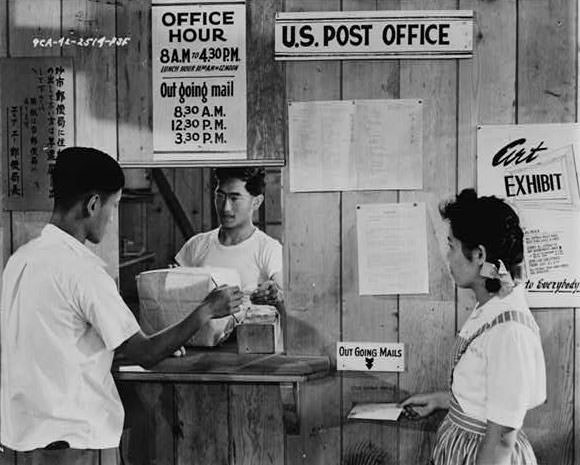
The postal service gave detainees one of their few reliable connections to the outside world. At Puyallup, evacuees used the on-site postal facility to send letters and packages, maintaining contact with friends, former neighbors, and family members who had been separated and sent to different centers.
Humor and defiance found small outlets inside the centers. At Santa Anita, a group of men sitting outside their barrack had labeled the doorway with a sardonic name borrowed from one of New York City’s most famous luxury hotels.
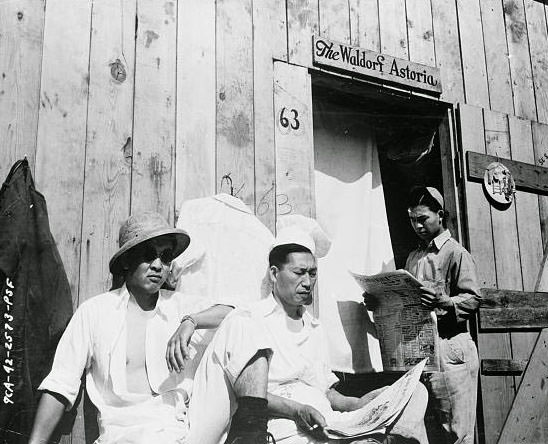
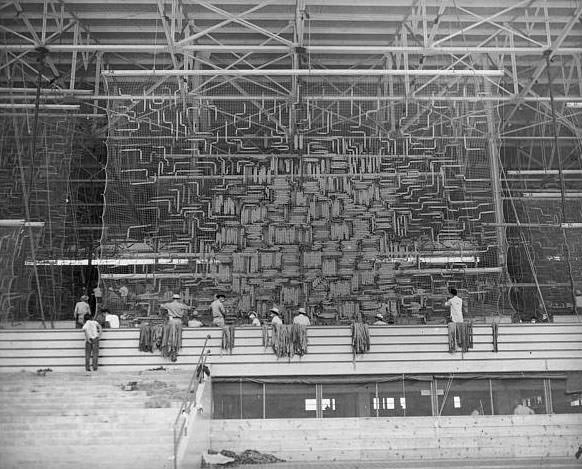
The Santa Anita Assembly Center — built on the grounds of a horse racing track in California — held over 18,000 people at its peak, making it the largest of all assembly centers. Detainees there were put to work producing camouflage nets for the military under a war production program.
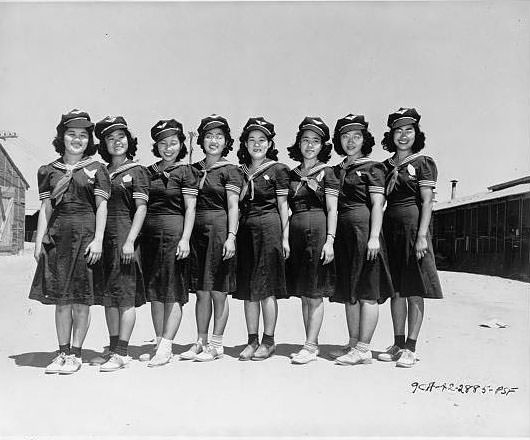
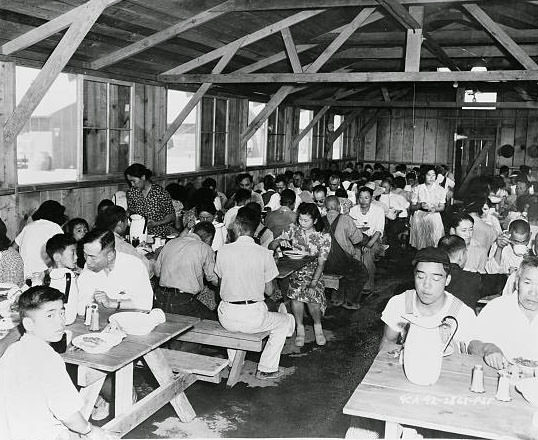
The Army organized communal systems to feed the large populations held at each center. Dining halls served hundreds at a time, staffed in part by detainees themselves. Women working as waitresses in the mess halls wore standardized uniforms as part of the organized operations.
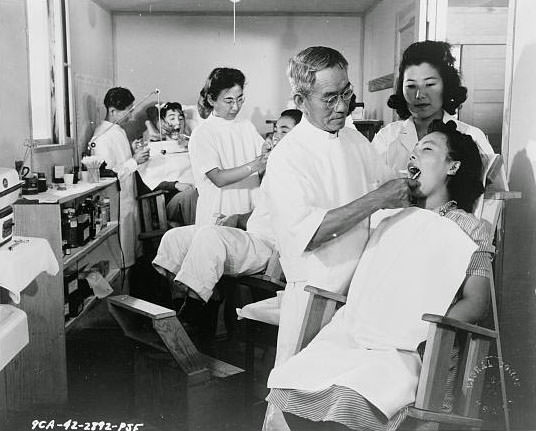
Medical care was provided at the centers, with licensed dentists and doctors drawn from the detainee population itself. The use of Japanese American professionals to staff these services was both practical and a matter of necessity, since the centers operated largely as self-contained communities.
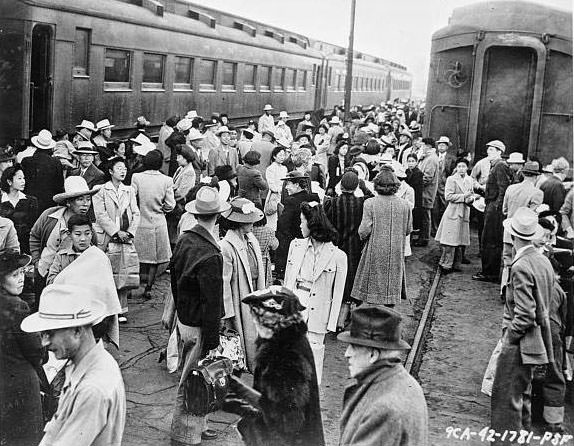
As permanent War Relocation Centers in remote inland areas were completed, the Army began moving detainees out of the assembly centers. Large groups waited at the assembly centers for their transfer orders, often unsure of where exactly they were headed.
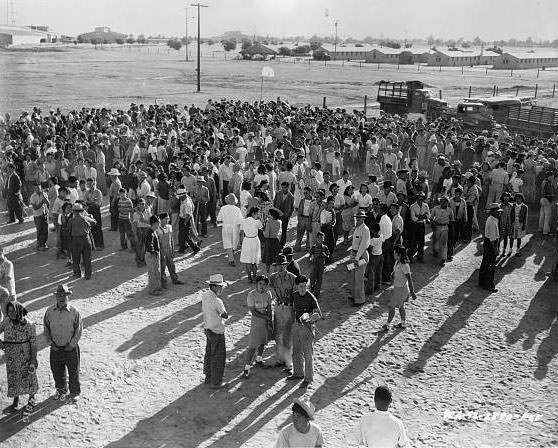
The transfer from assembly centers to War Relocation Centers was carried out entirely under Army authority. Special trains were arranged to move thousands of detainees to remote sites in states like Wyoming, Colorado, Arkansas, and Idaho. The Santa Anita center was one of the primary departure points for these transfers.