

In the late 1960s and early 1970s, large parts of Salford were defined by crumbling terraced streets, damp walls, and homes that posed real dangers to the families living inside them. These were not isolated cases. Entire neighborhoods existed in conditions that most of Britain preferred not to see. Housing charity Shelter decided to change that.
Shelter commissioned photographer Nick Hedges to document the true cost of bad housing across Britain. Over three years, from 1969 to 1972, Hedges visited areas of deep deprivation in cities including Salford, Manchester, Newcastle upon Tyne, Birmingham, Glasgow, and Bradford. His brief was clear: show the human reality of unfit housing in a way that statistics alone never could. The resulting photographs became a direct tool for political pressure, compelling Britain’s politicians to take action on housing reform throughout the 1970s.
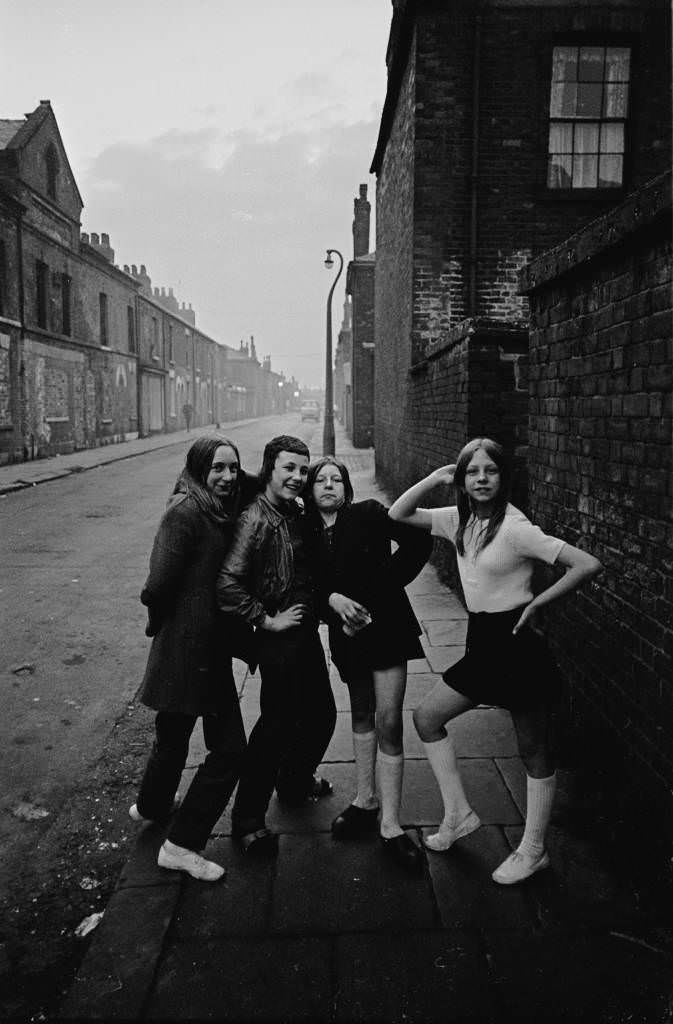
Salford in 1969 was a city mid-decline. The back-to-back terraces that had been built rapidly during the industrial revolution were now decades past their usefulness. Many lacked basic sanitation, proper heating, or structural safety. Yet families still lived in them — because they had nowhere else to go. Children grew up playing on streets hemmed in by crumbling brickwork and waste ground left behind by earlier demolitions.
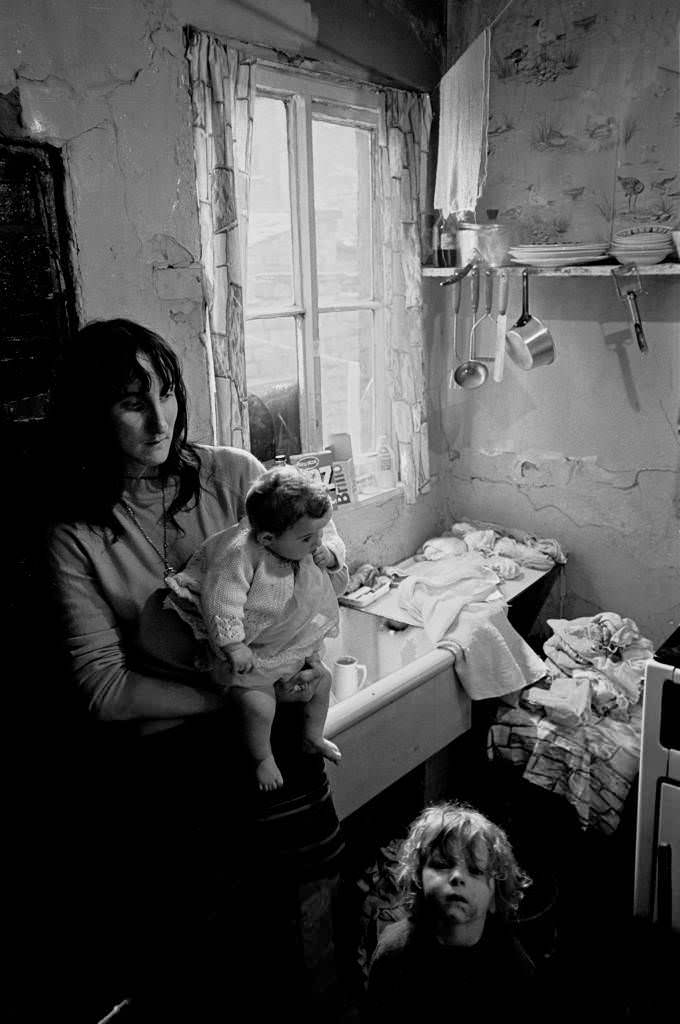
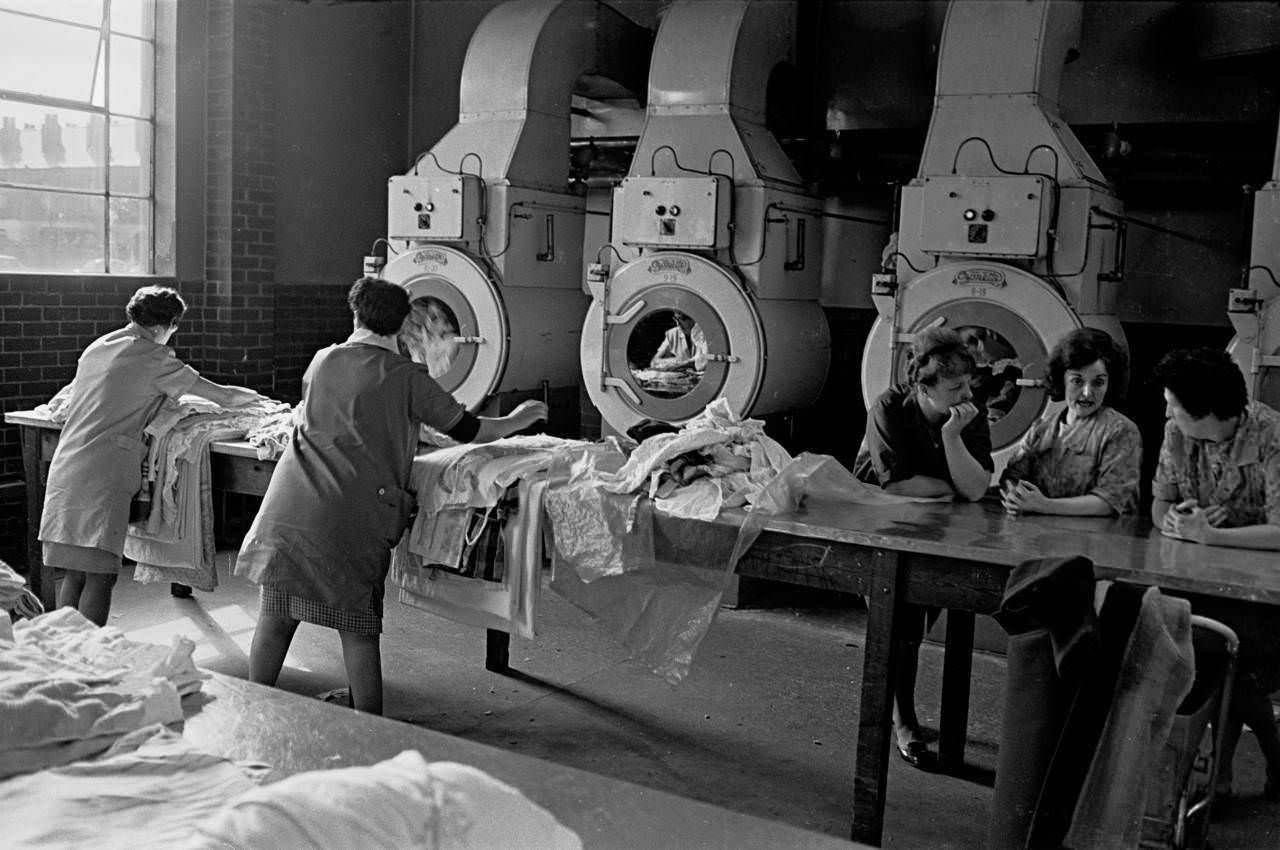
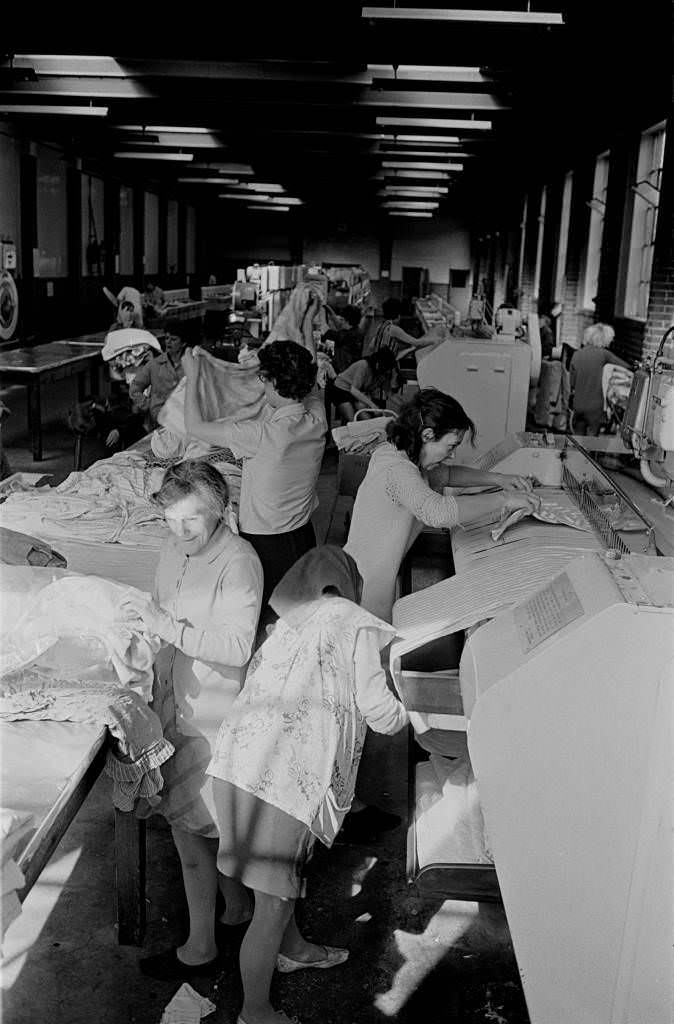
Daily life for Salford’s residents required constant effort to manage conditions that should never have existed in a modern city. Mothers washed clothes by hand or made use of the local municipal washhouses, since many homes had no adequate facilities of their own. Keeping a household running under those circumstances was exhausting, unglamorous work.
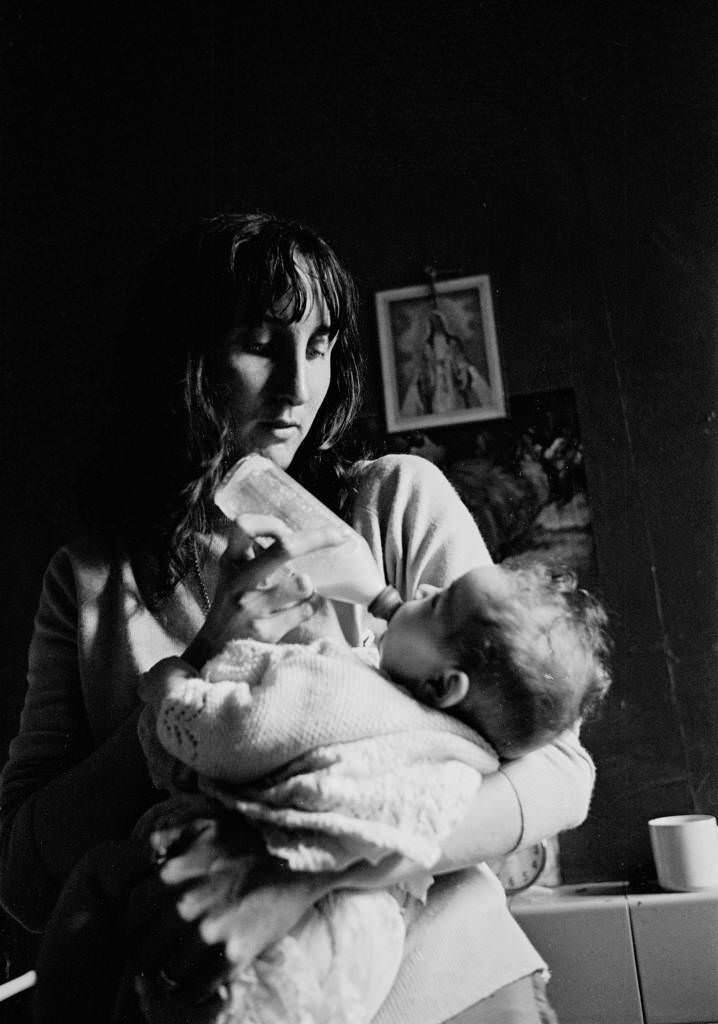
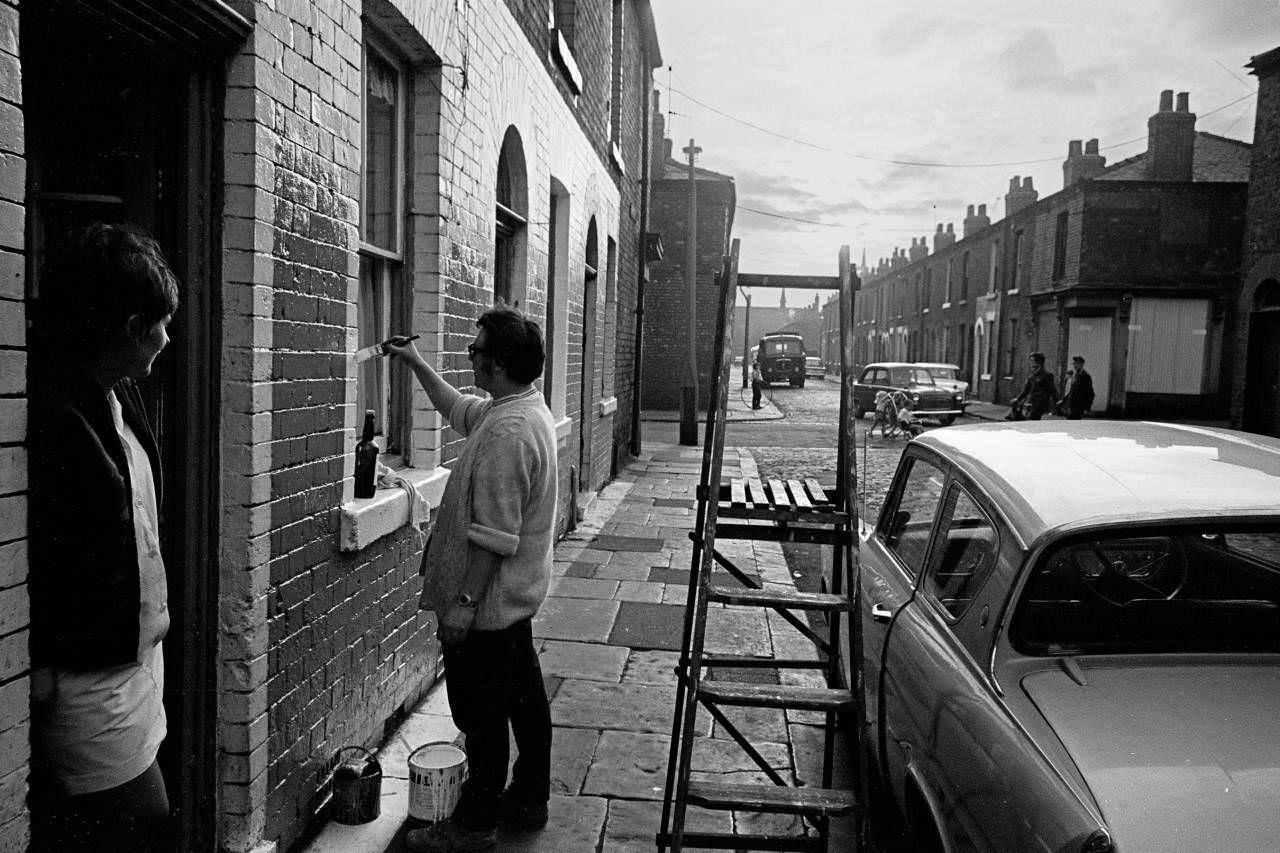
Despite the hardship, residents maintained a stubborn sense of ownership over their homes and streets. A man painting the outside of his house after a long day’s work captures that determination plainly. These were people who cared about where they lived, even when the buildings themselves were barely fit for purpose.
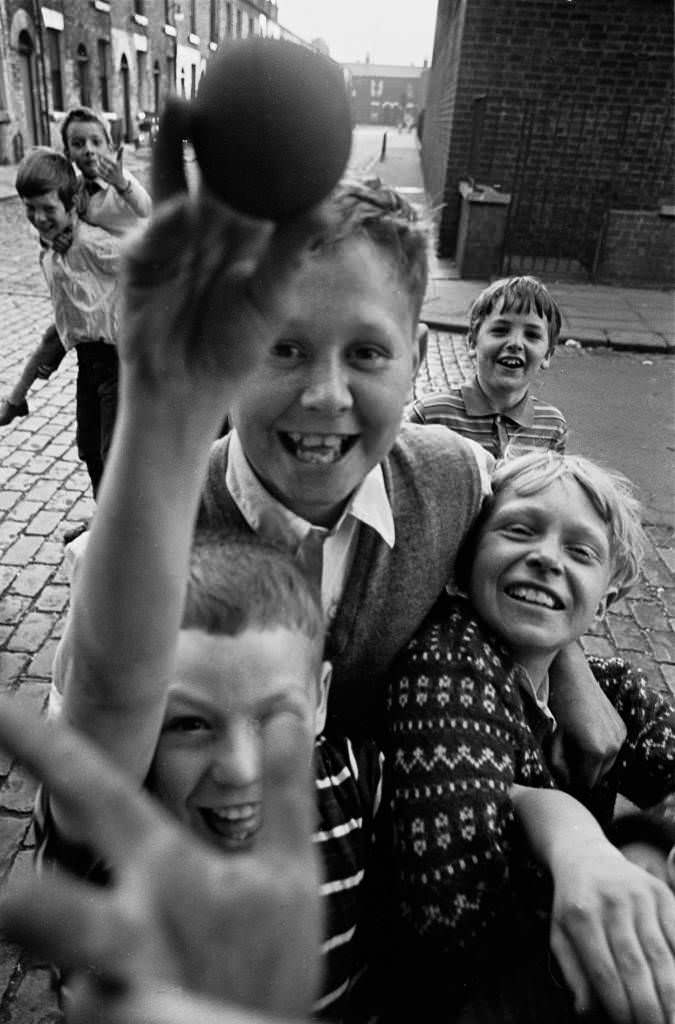
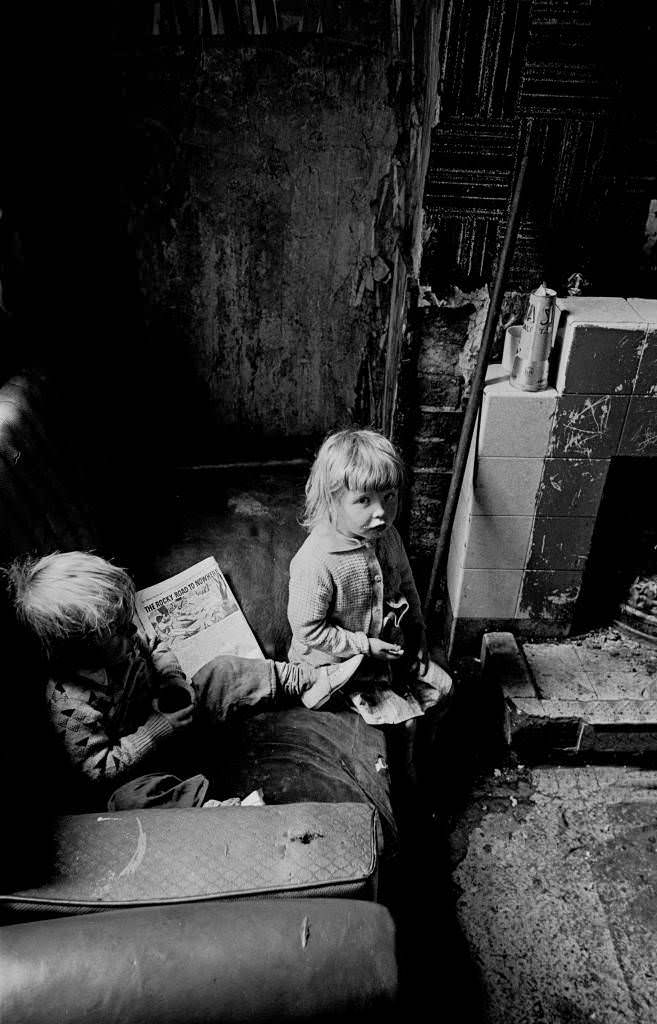
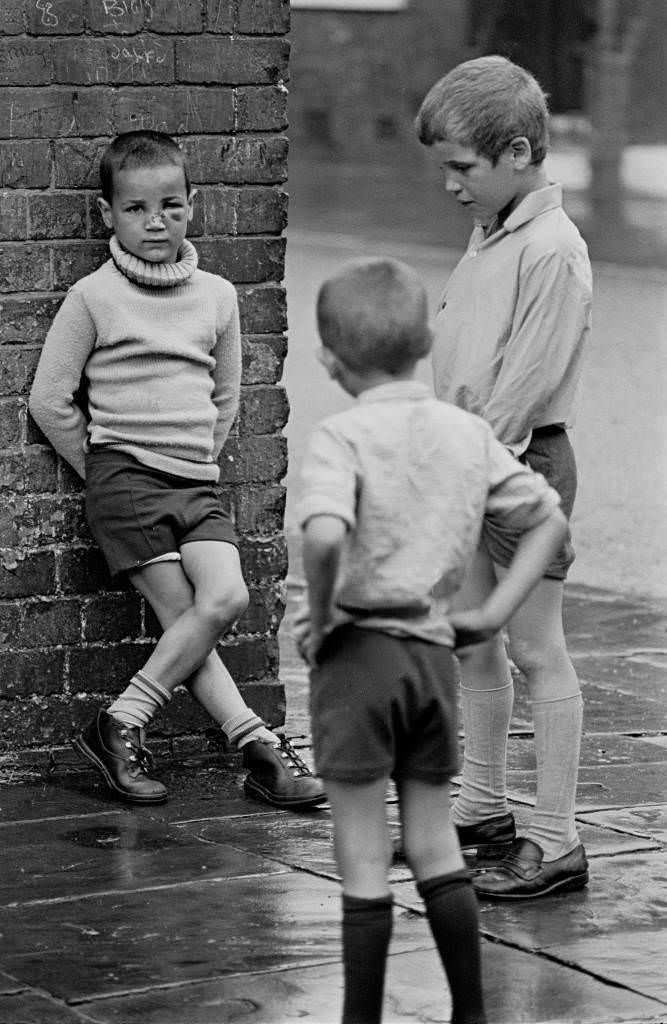
Children were everywhere in these streets and that is one of the most striking aspects of Hedges’ work. They played in rubble-strewn lots, crossed stretches of waste ground, and entertained themselves inside damp, poorly lit rooms. The contrast between childhood energy and the bleakness of the surroundings runs through image after image.
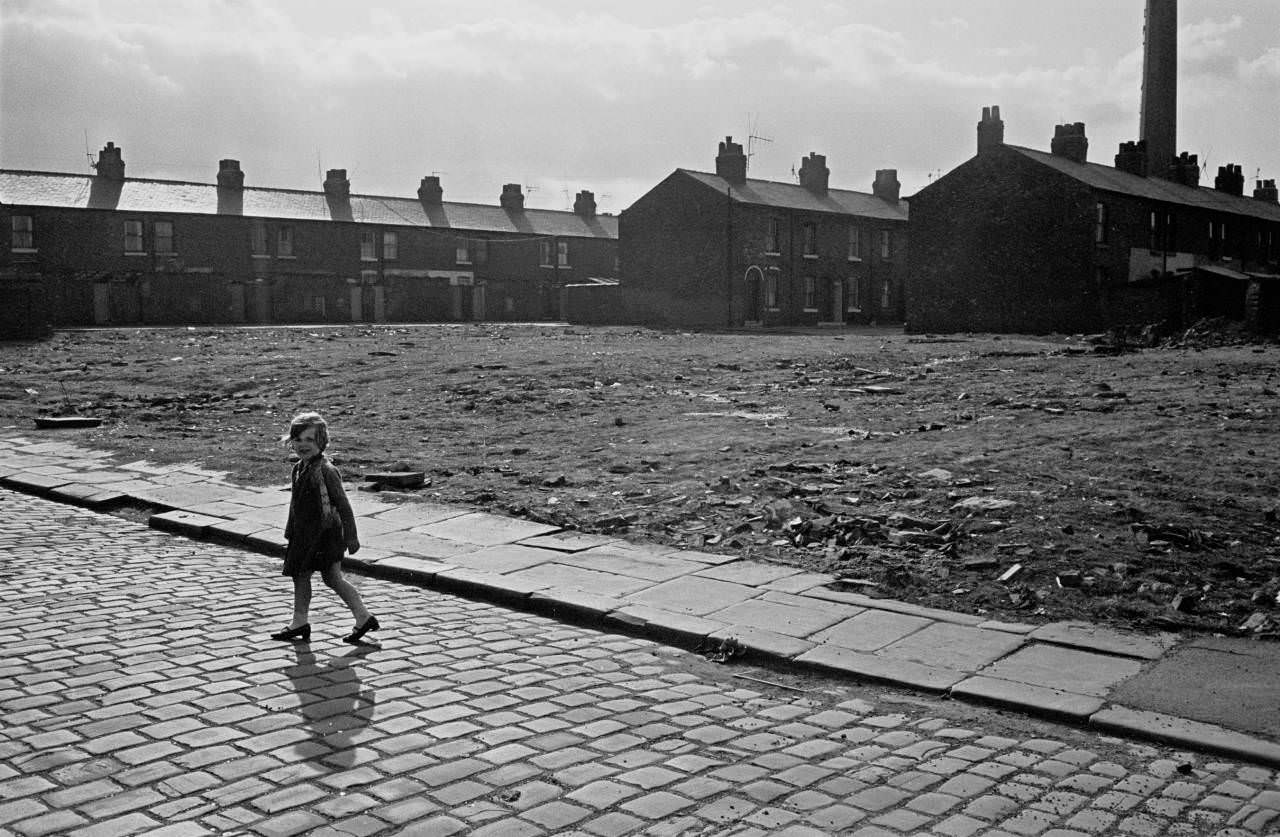
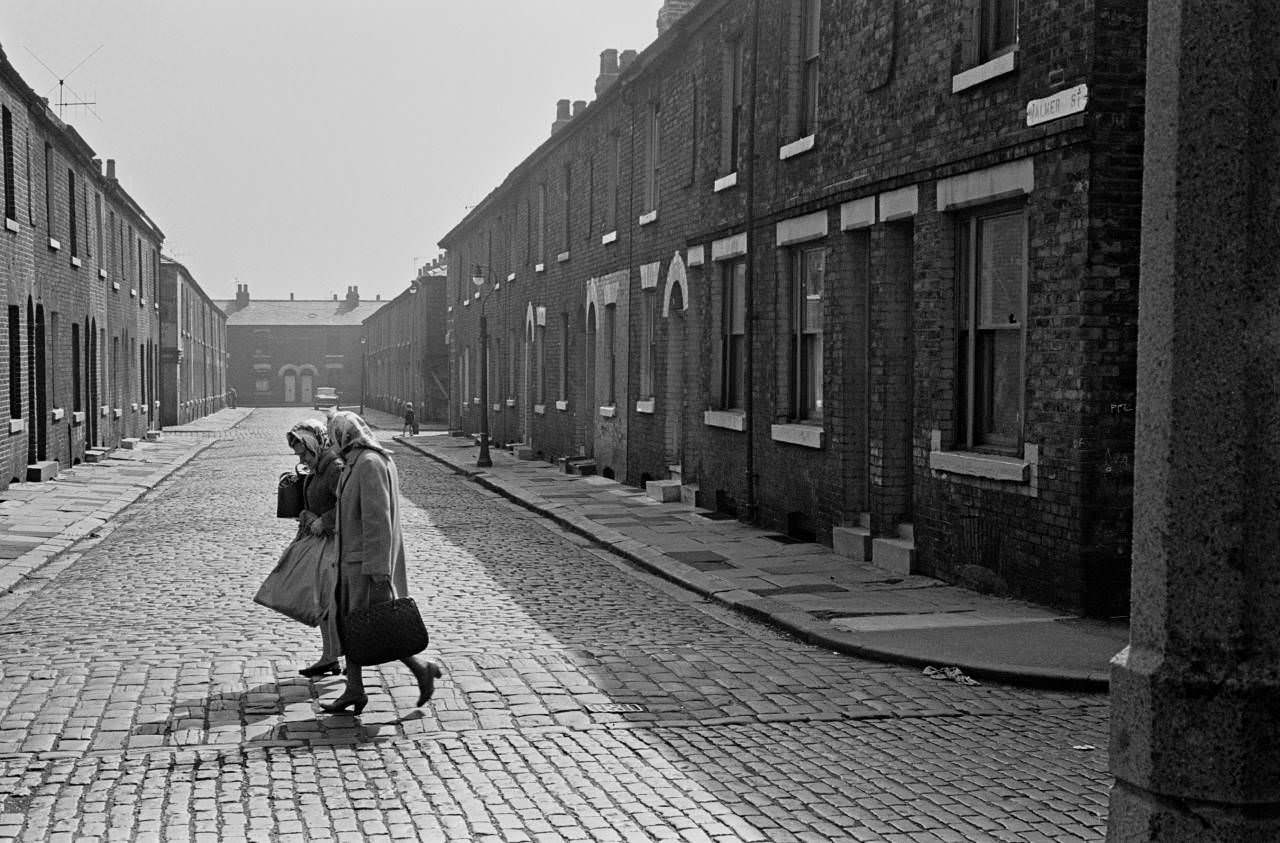
The streets themselves told the story of a neighborhood in slow collapse. Rows of terraced houses stood alongside empty plots where homes had already been knocked down. Corner shops clung on. Pavements were uneven. The built environment of Victorian working-class Salford was visibly giving way, though the process of clearance and replacement was slow and uneven.
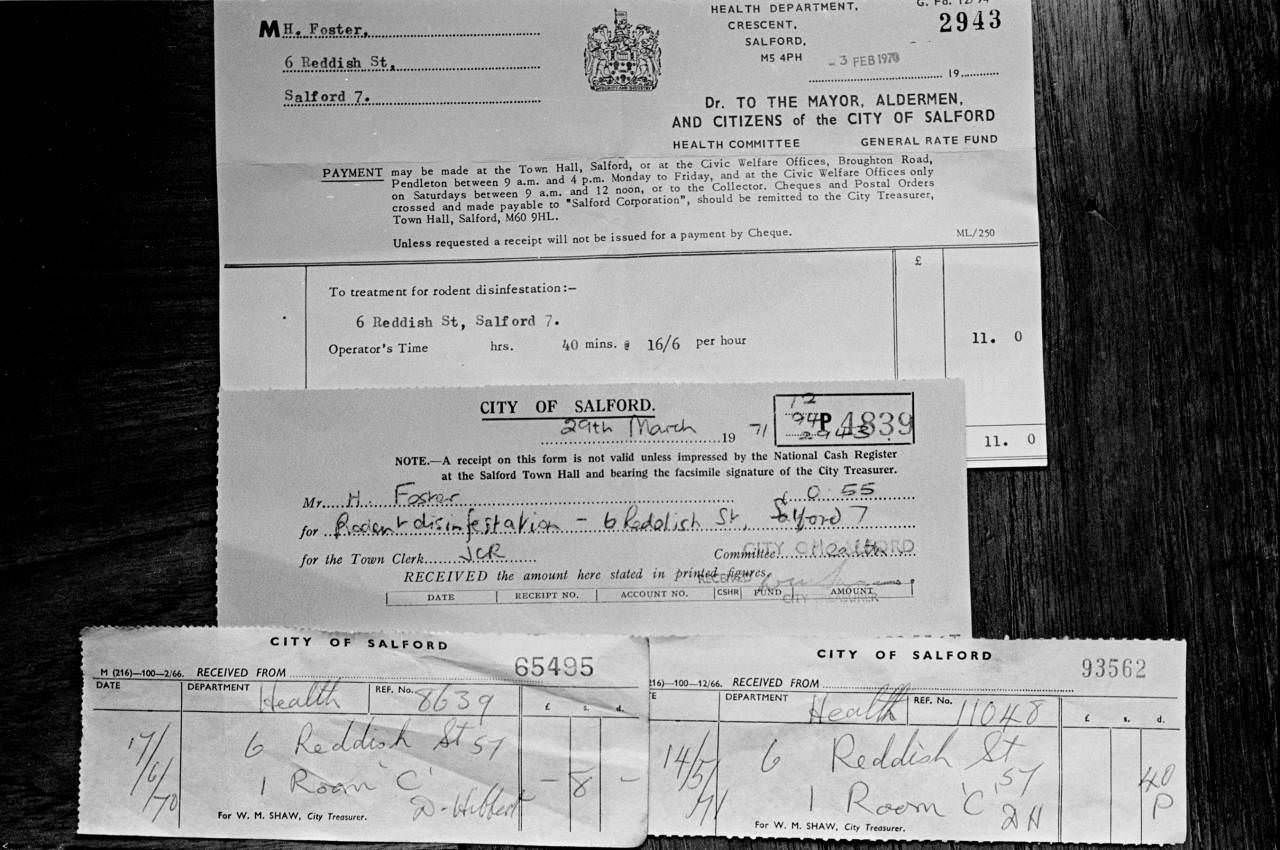
One of the more stark pieces of documentary evidence Hedges captured was not a human face but a piece of paper. Receipts for rodent disinfestation treatments dated 1971 show that rat and vermin infestations were not occasional problems but recurring, officially documented ones. Families were living in homes that required repeated pest control visits just to remain habitable.
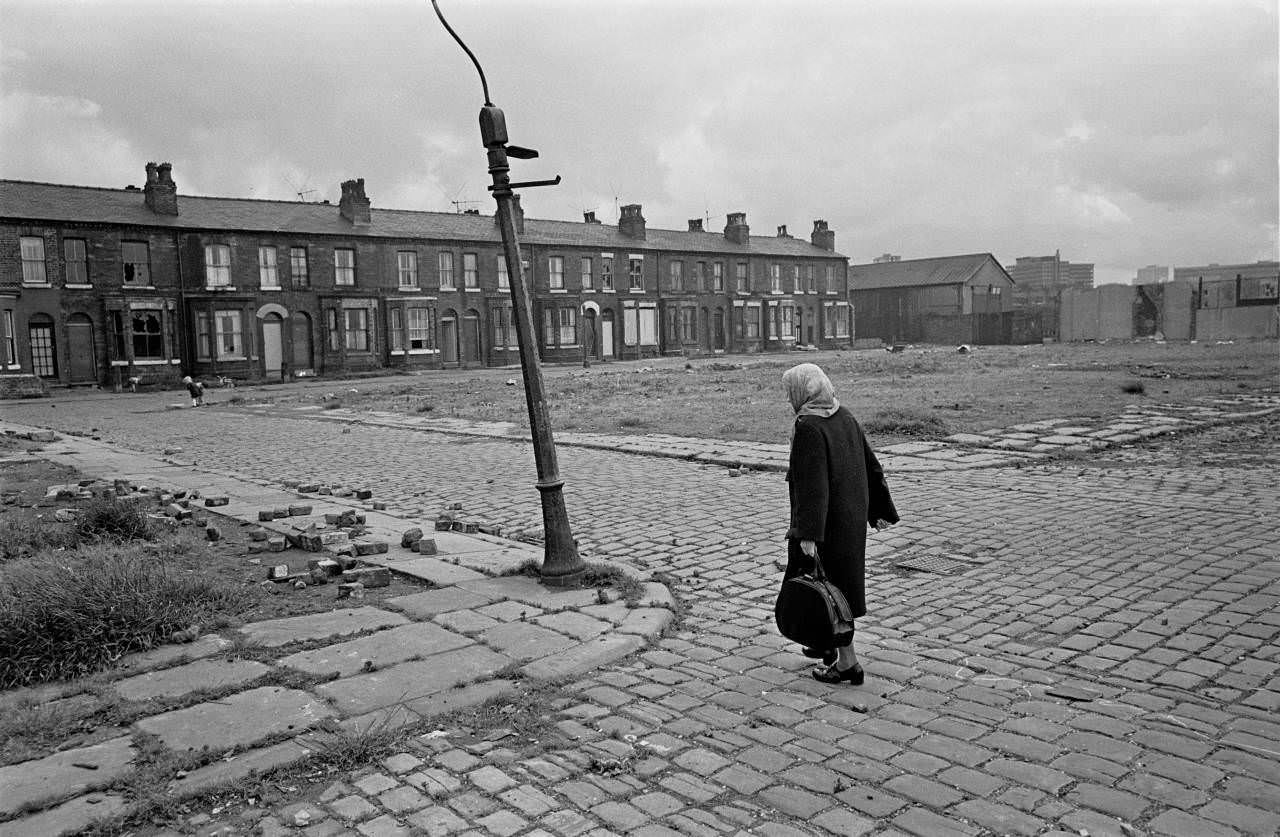
It was not only young families bearing the weight of these conditions. Elderly residents were equally trapped. A pensioner picking her way across derelict land to reach her own front door illustrates how the physical environment itself had become an obstacle for the most vulnerable people in these communities.
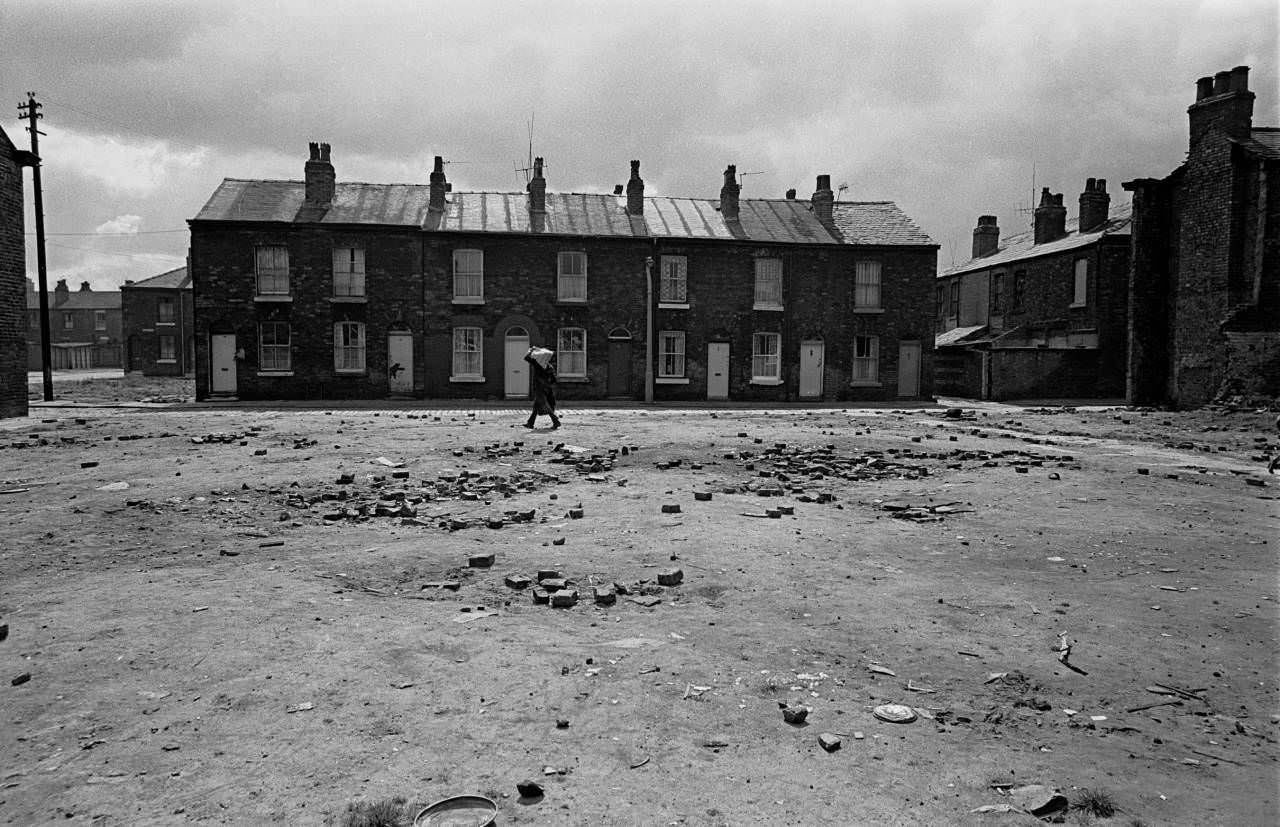
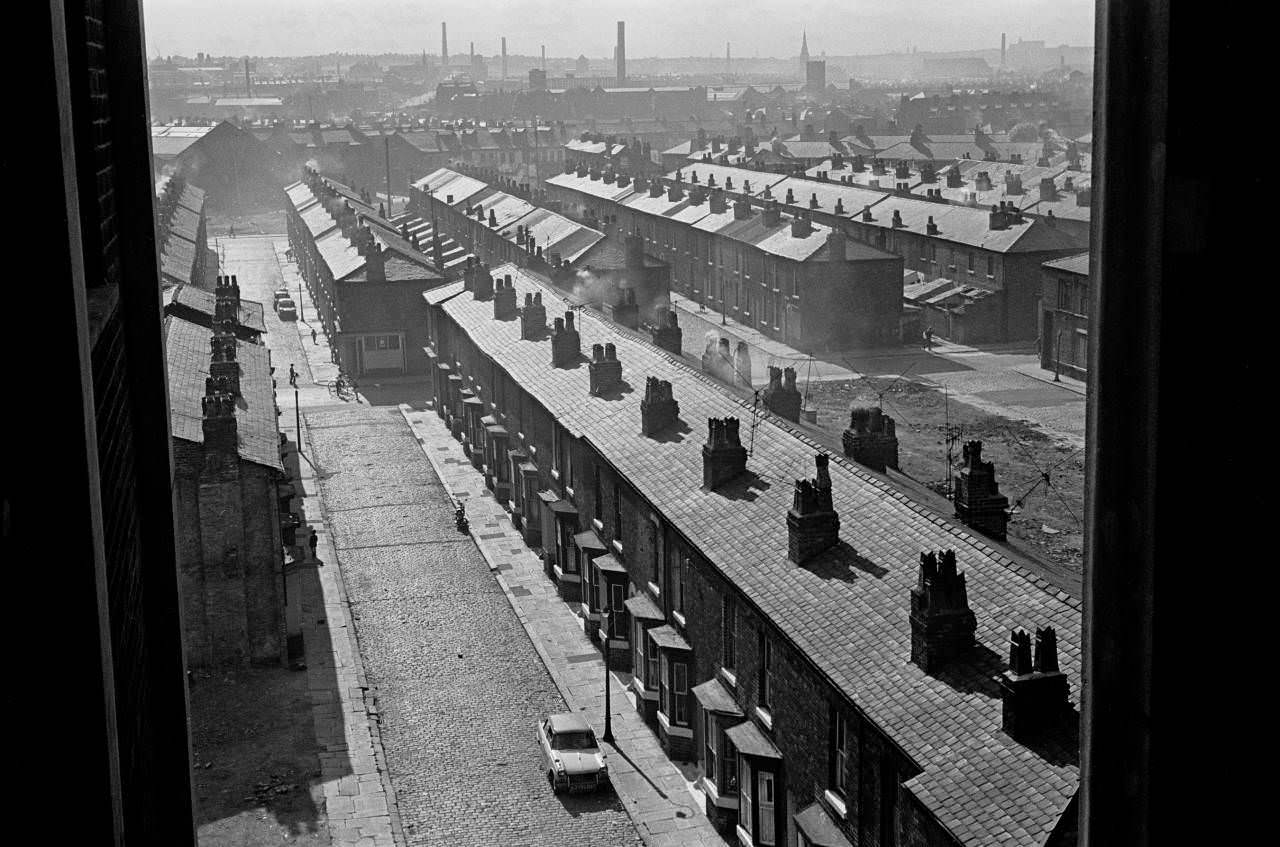
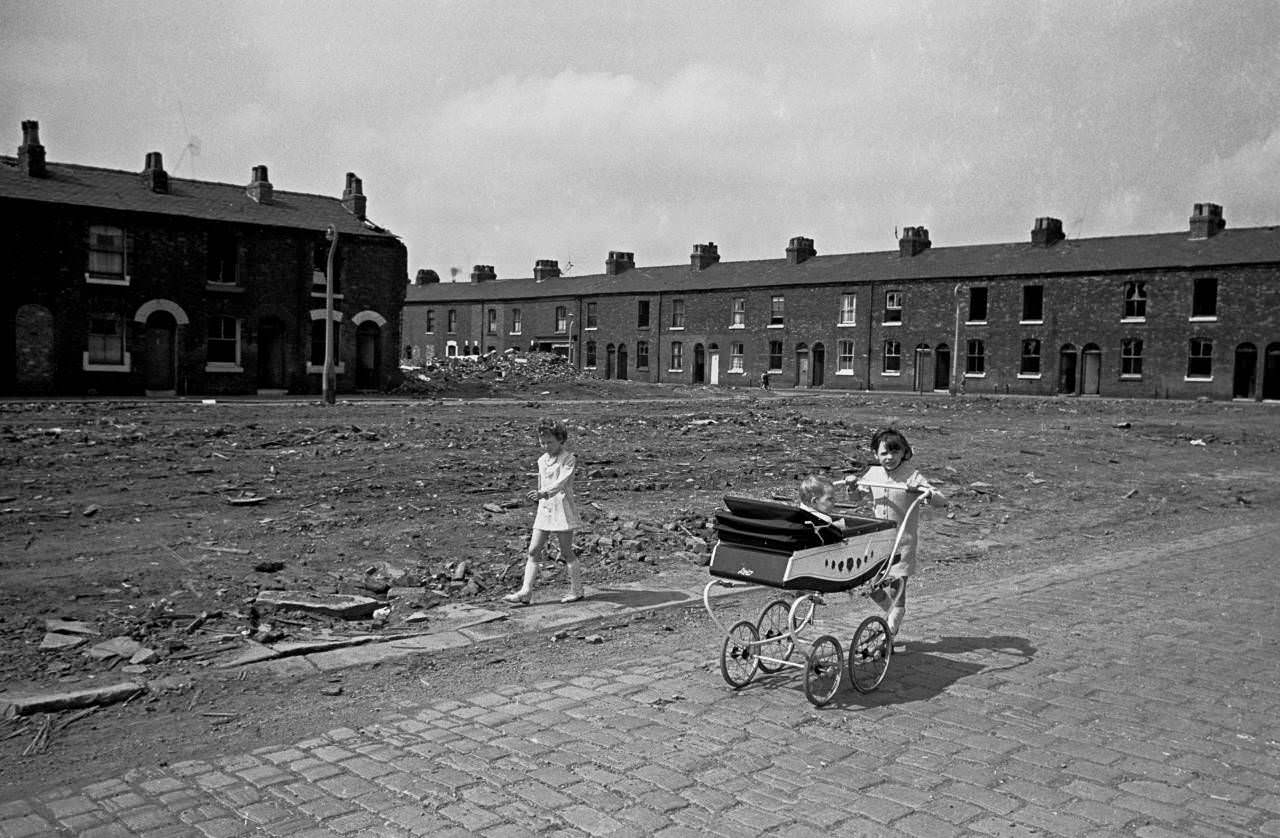
By 1971, slum clearance programs were underway across Salford, but the process created its own form of disorder. Half-cleared streets became strange, fragmented landscapes — a few occupied houses still standing alongside empty shells and rubble where their neighbors’ homes had been. Life continued in what remained, even as the surrounding streets were stripped away.
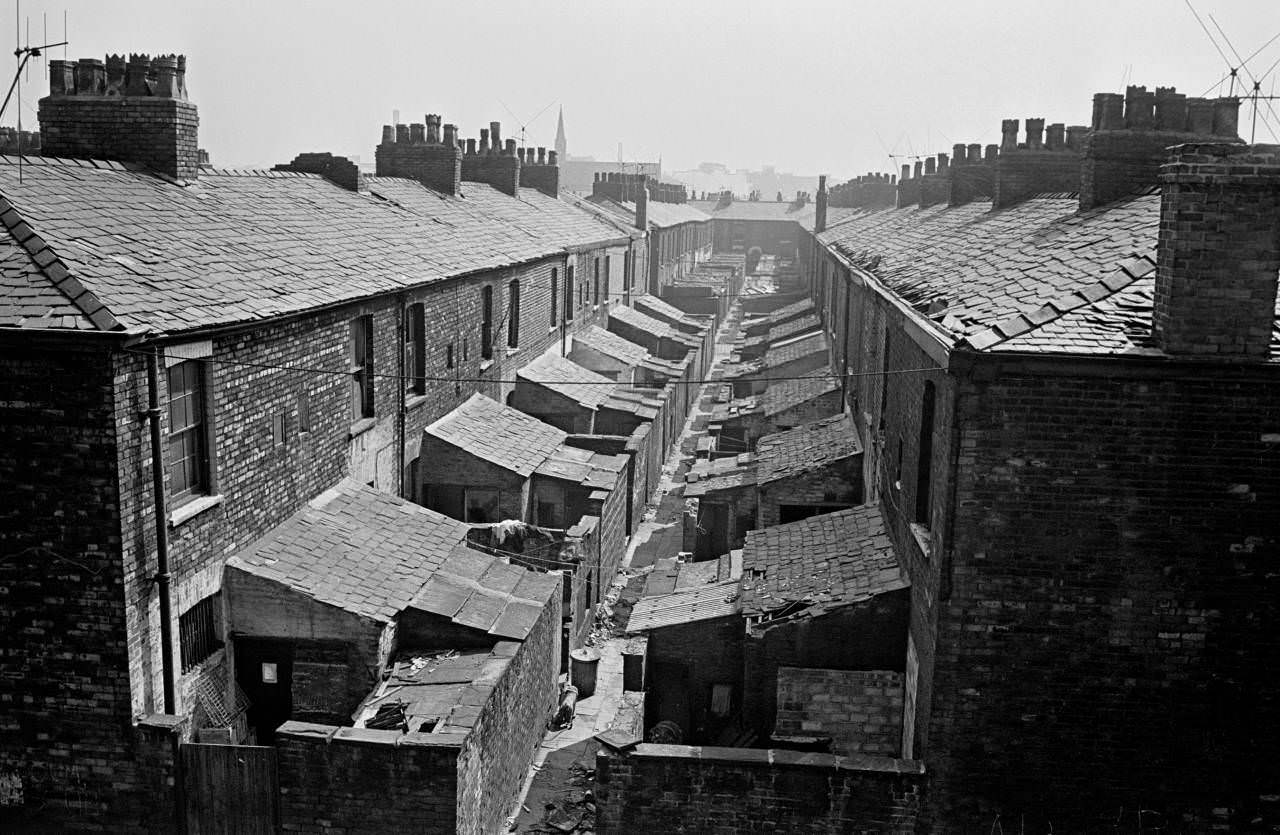
Hedges moved through these neighborhoods over three years, building a thorough visual record of what Salford actually looked like at street level. The range of his images — from quiet domestic moments to wide street scenes — gives the project a depth that a single visit could never have produced.
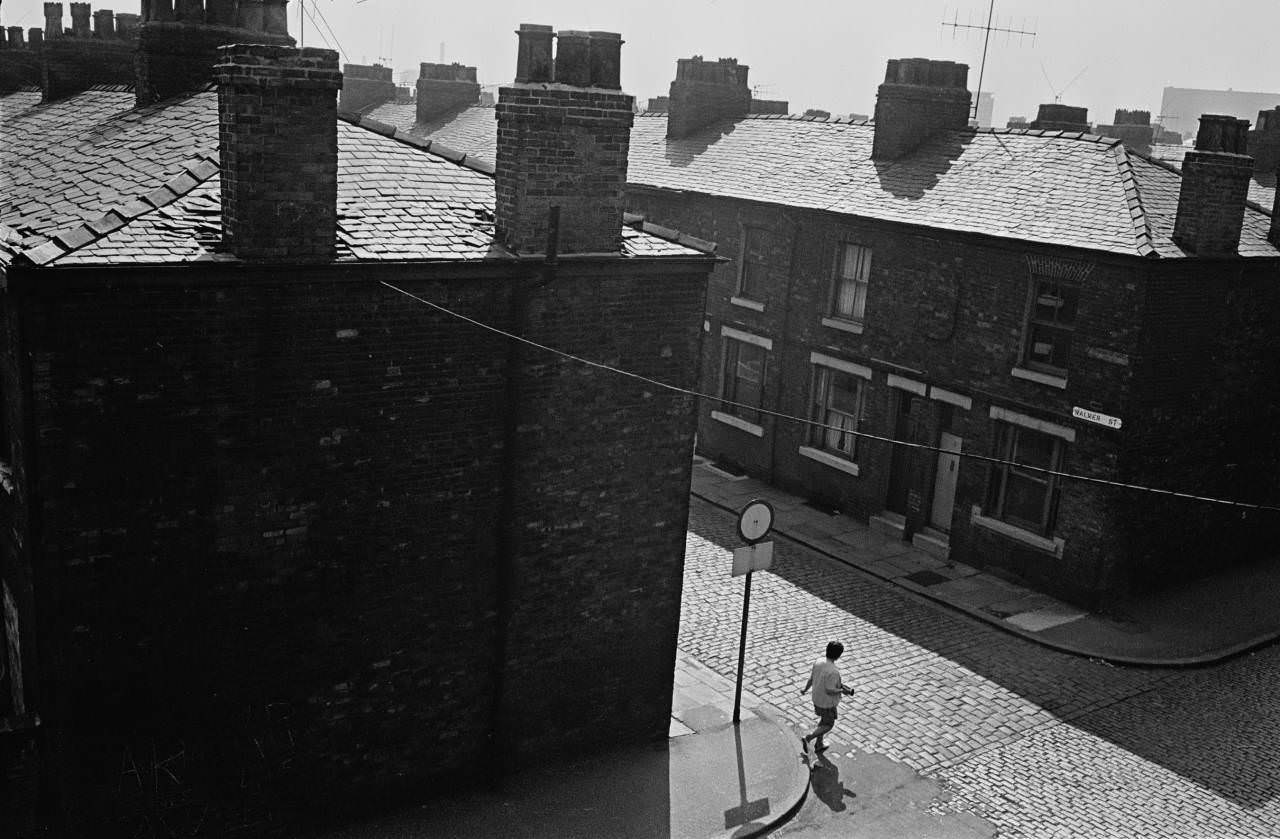
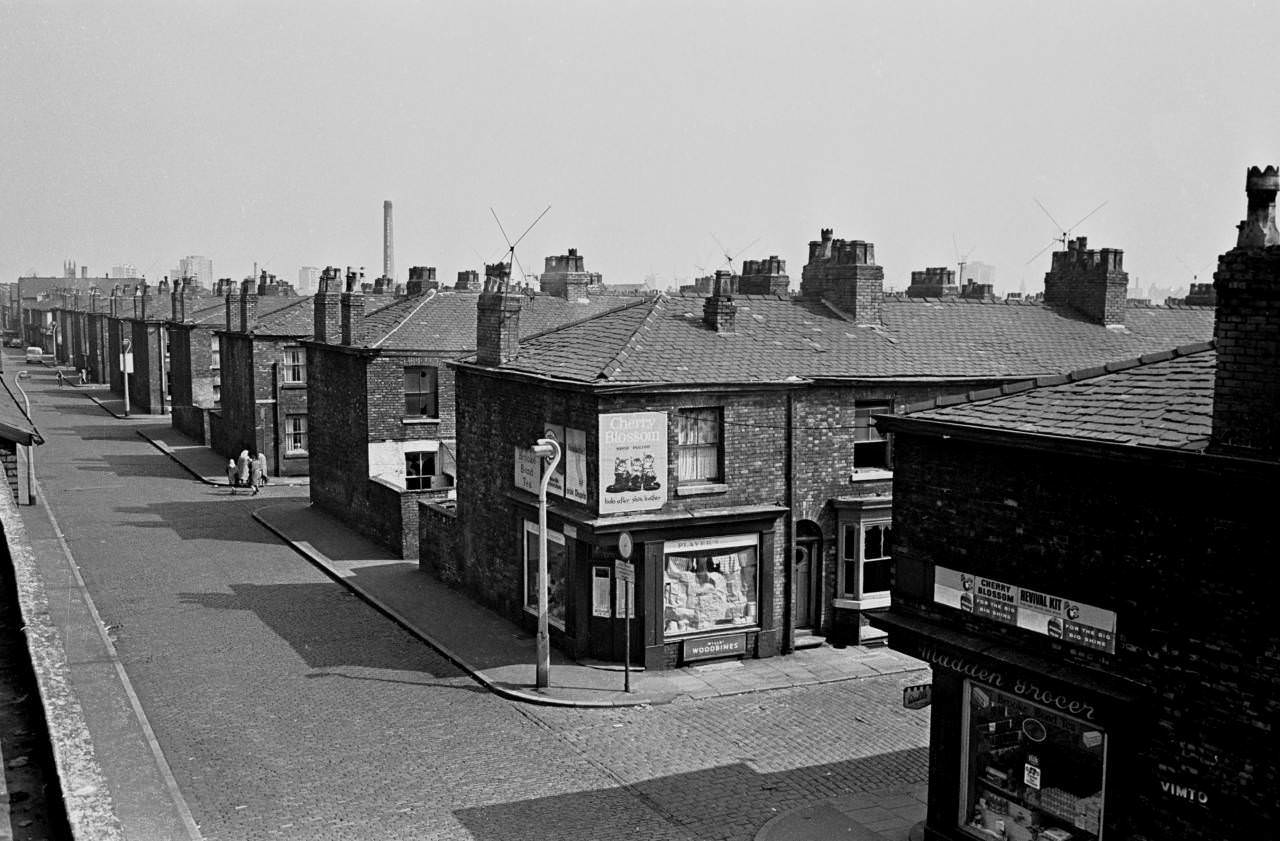
The back-to-back and terraced housing that dominated Salford’s residential landscape had been built densely and cheaply. Homes shared walls on multiple sides, limiting light and airflow. Backyards were small and hemmed in. The design that had packed workers close to Victorian factories now kept families packed into aging, deteriorating structures with no easy route out.
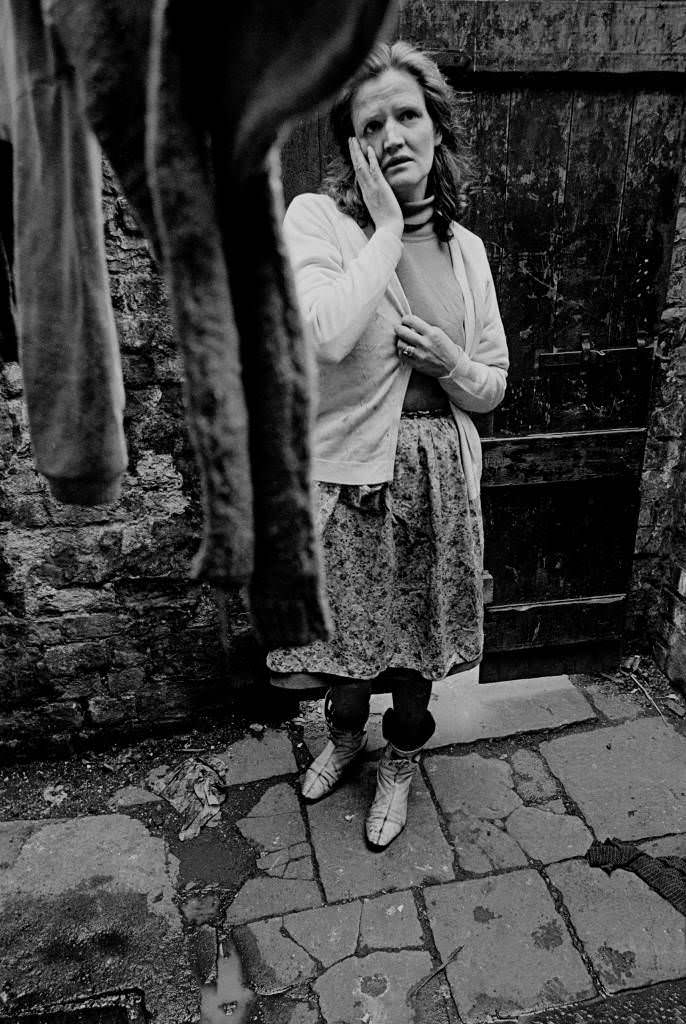
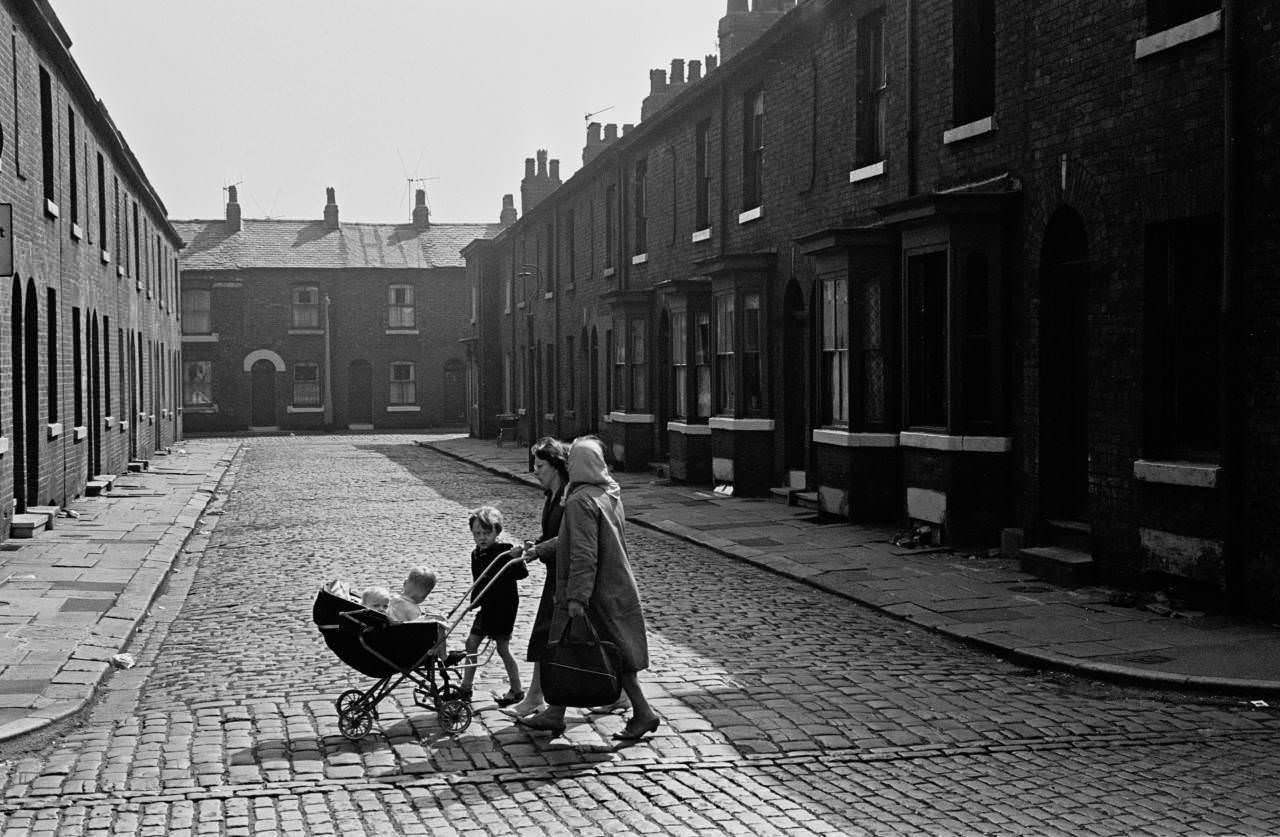
Community life persisted in spite of the conditions. Young girls pushed prams down the street. Neighbors gathered at corners. Children moved in groups between doorways and alleyways. The social fabric of these streets remained tight, even as the physical fabric fell apart around it.
The municipal washhouses Hedges photographed in 1969 are a reminder of just how basic the gaps in these homes were. Public facilities existed precisely because the houses themselves could not support proper washing and laundry. Rows of women bringing their household washing to a shared facility was not a relic of an earlier era — it was the everyday reality of Salford in the late 1960s.
Shelter’s decision to use documentary photography rather than reports and data proved to be the right one. Nick Hedges’ images gave faces, names, and daily routines to a problem that policymakers had long been able to discuss in the abstract. Across three years and multiple British cities, his camera captured what life in genuinely unfit housing looked like — not as an anomaly, but as the settled, grinding norm for thousands of families.
