

New York City’s theatre scene didn’t spring up overnight. It traces back to 1750, when the city’s very first theatre was built on Nassau Street in Manhattan. From that single building, an entire entertainment culture grew — one that would eventually reshape the social life of millions of New Yorkers across every borough.
By the early 19th century, entertainment venues were already spreading across Lower Manhattan. In 1829, Niblo’s Garden opened at Broadway and Prince Street, quickly becoming one of the city’s most fashionable nightspots. A decade later, showman P.T. Barnum was running a full entertainment complex in Lower Manhattan, drawing massive crowds with spectacle and novelty. Theatre was no longer just for the elite — it was becoming part of everyday city life.
Over the following decades, the theatre scene shifted. Venues moved from downtown Manhattan northward to midtown, eventually anchoring themselves in what became the Theatre District. That stretch of Broadway and its surrounding streets became the beating heart of American live performance. Today, 41 Broadway theatres still operate in New York City, a testament to just how deeply embedded theatre is in the city’s identity.
The 1930s were a particularly fascinating period for New York’s theatres. The Great Depression put enormous financial pressure on entertainment businesses, yet theatres — especially the grand movie palaces — continued to draw crowds hungry for an escape from hard times. Loew’s, RKO, Paramount, and other major chains operated lavish venues across every borough. The photographs below, all captured by Brad Smith, offer a remarkable street-level look at these buildings at their peak. We begin with one of Brooklyn’s most striking theatres.
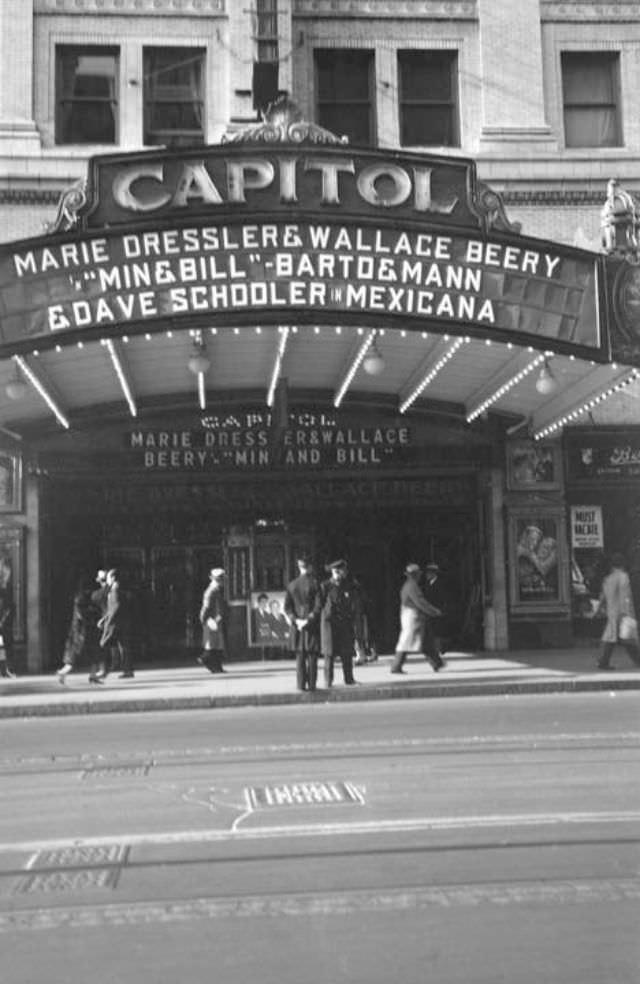
Loew’s was one of the dominant theatre chains of the era, operating venues from Brooklyn to the Bronx and well beyond New York’s city limits. The Capitol Theatre in Manhattan was among the most prominent venues associated with the chain, and it appeared frequently in Brad Smith’s documentation work throughout the early 1930s.
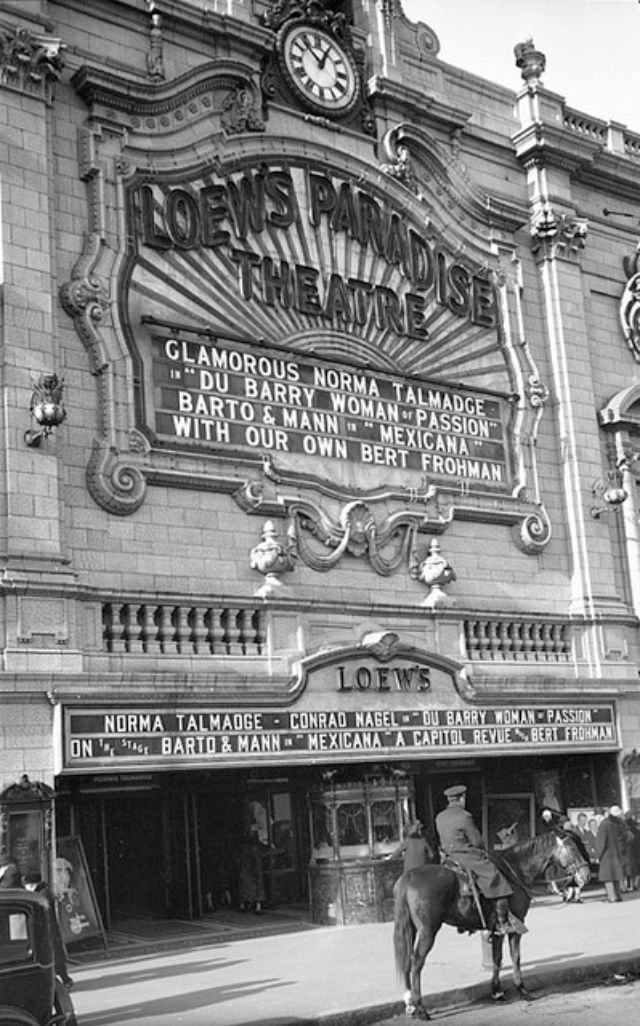
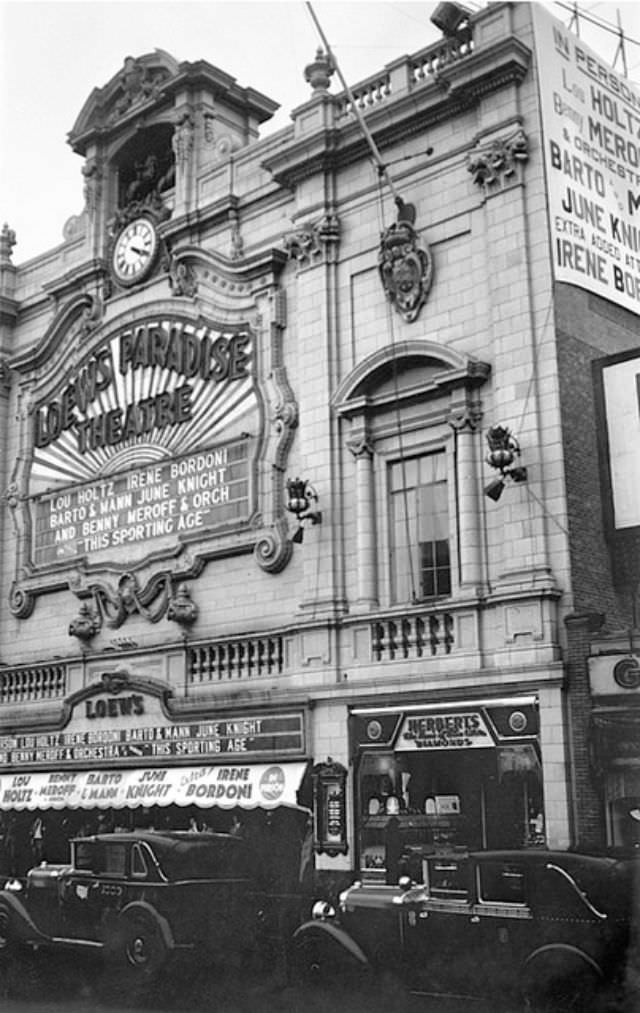
The Bronx was home to one of Loew’s most extravagant theatres — the Paradise. Opened in 1929 and designed by John Eberson, the Paradise was an atmospheric theatre, meaning its interior was built to resemble an outdoor Italian garden complete with a simulated night sky on the ceiling. It seated over 4,000 people.
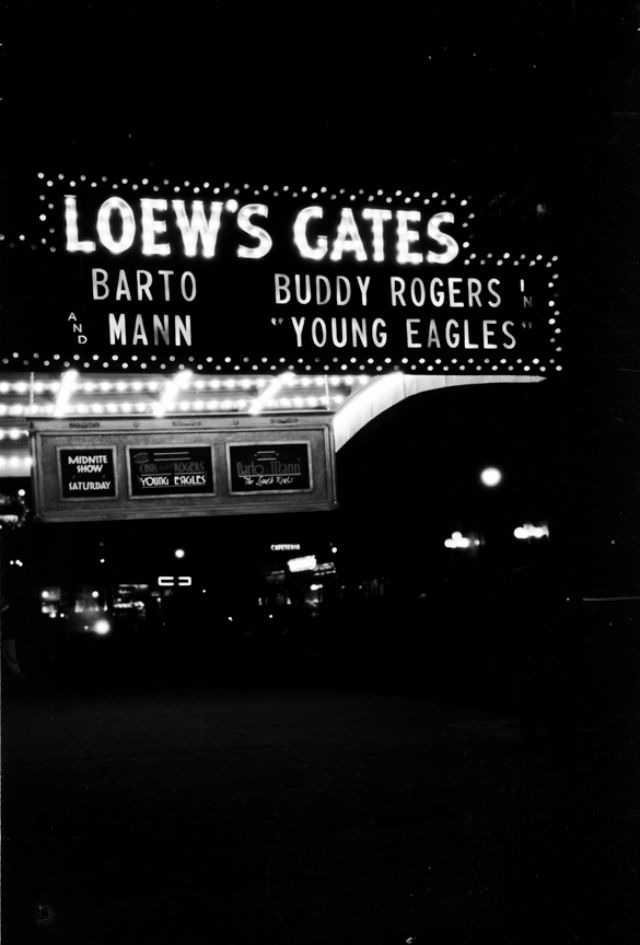
Brooklyn was particularly well-served by the Loew’s chain, with multiple theatres spread across its neighborhoods. The Gates Theatre was one of these neighborhood anchors, serving local residents who didn’t need to travel to Manhattan for a quality entertainment experience.
The Metropolitan Theatre in Brooklyn was another Loew’s flagship, built on a grand scale with ornate facades designed to signal to passersby that what lay inside was something special. These buildings weren’t just functional — their architecture was meant to impress.
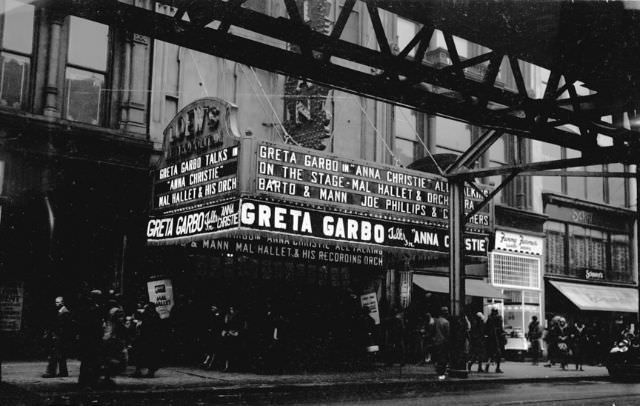
Alongside the Metropolitan, Brooklyn also had the Oriental Theatre under the Loew’s banner. The naming of theatres after exotic locations — ‘Oriental,’ ‘Valencia,’ ‘Paradise’ — was a deliberate design strategy of the era, meant to transport audiences into a different world the moment they stepped through the doors.
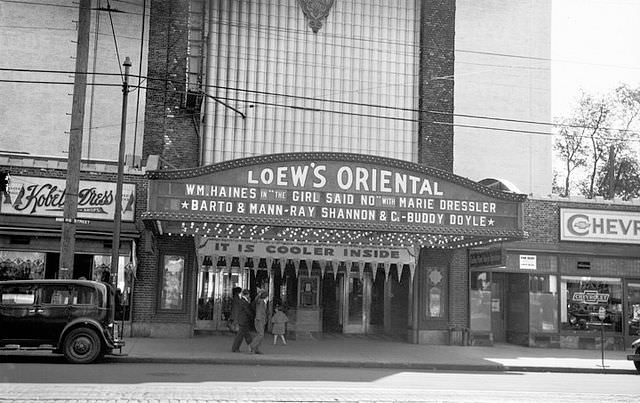
The Orpheum, photographed in January of 1930, was yet another New York venue carrying the Loew’s name. By this point, the chain’s reach across the city was extensive, giving it significant control over where and how New Yorkers consumed entertainment.
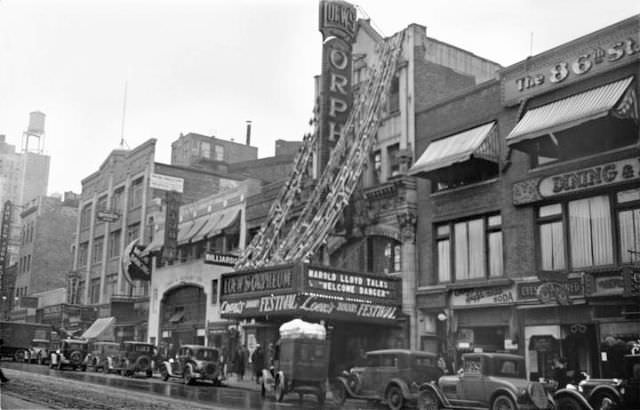
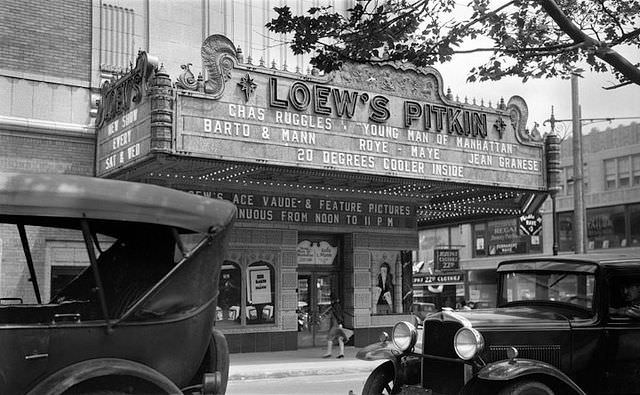
Brad Smith returned to photograph the Pitkin Theatre in Brooklyn a second time later in 1930, this time capturing a different angle of the building. The Pitkin was a major neighborhood theatre and one of the more photographed venues in his collection.
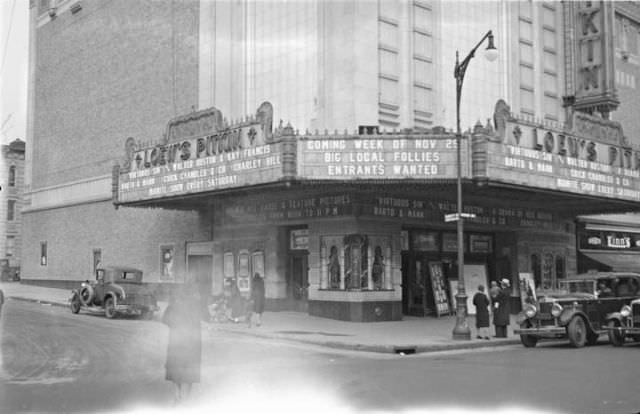
Smith’s work also extended outside New York City proper. In upstate New York, the Loew’s Rochester Theatre was a major venue in its own right, serving a city with its own vibrant entertainment culture. Smith photographed it multiple times across different years.
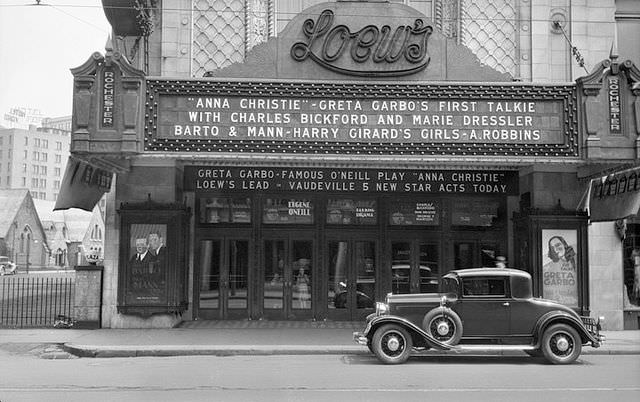
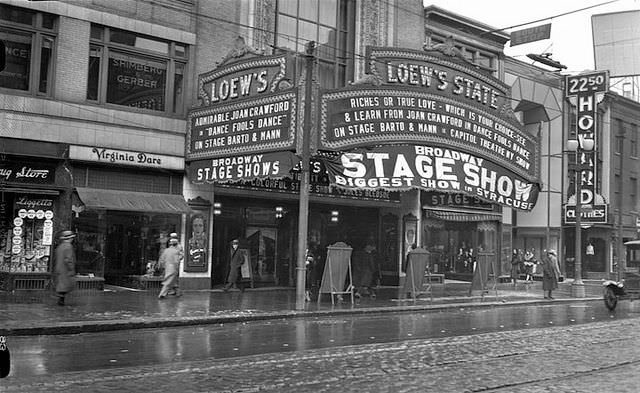
Syracuse, New York, was home to Loew’s State Theatre, a venue that survived the decades and still stands today as the Landmark Theatre. Its 1930 exterior, captured here by Smith, shows the building in its original commercial context, surrounded by the street life of a Depression-era city.
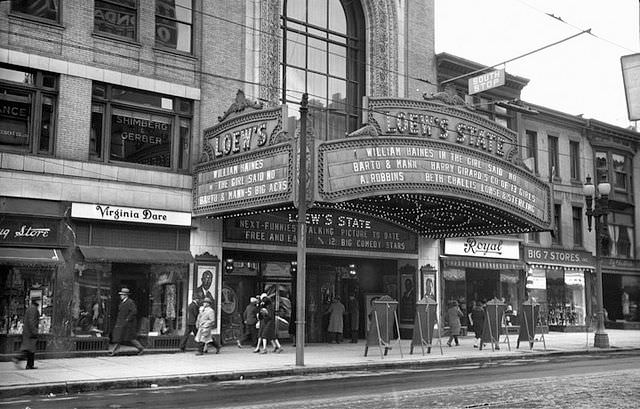
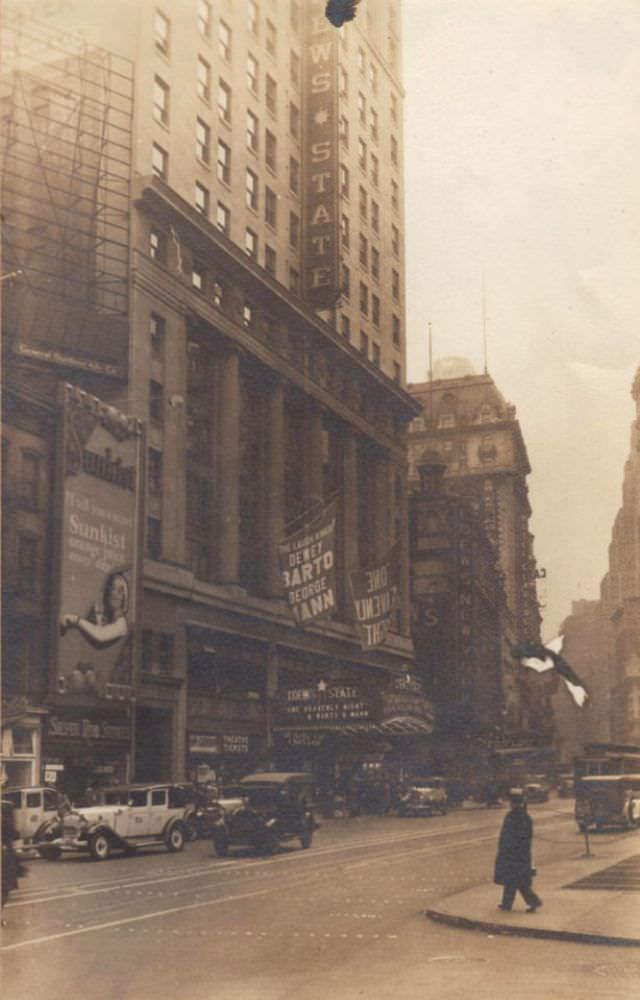
Back in Manhattan, the Loew’s State Theatre on Broadway was one of the flagship locations of the entire chain. Situated in the heart of Times Square, it competed for audiences alongside dozens of other theatres within walking distance.
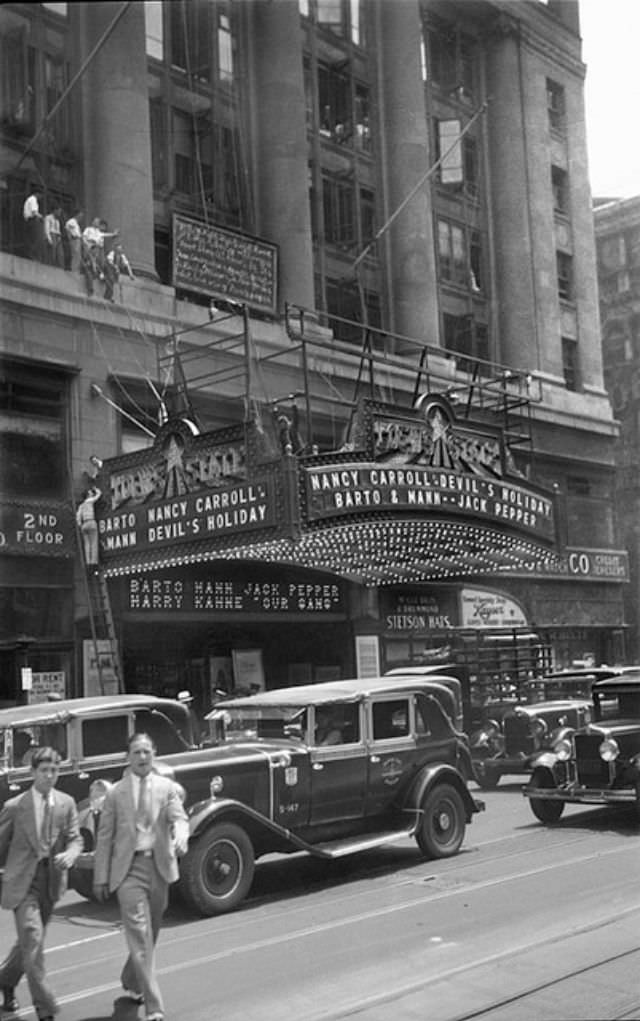
The Valencia Theatre in Jamaica, Queens, was one of the most elaborate theatre buildings in the outer boroughs. Like the Paradise in the Bronx, it was an atmospheric theatre designed by John Eberson, with an interior meant to evoke a Spanish courtyard under an open sky.
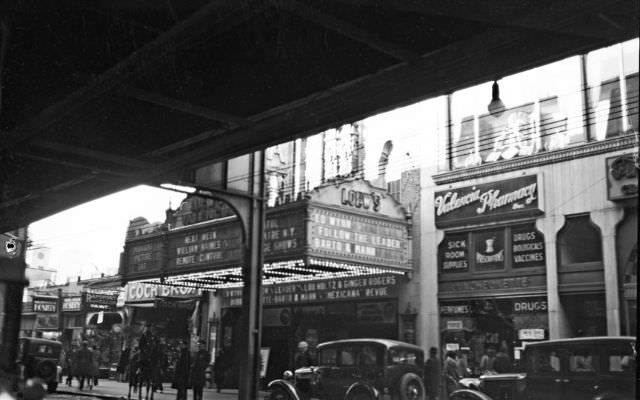
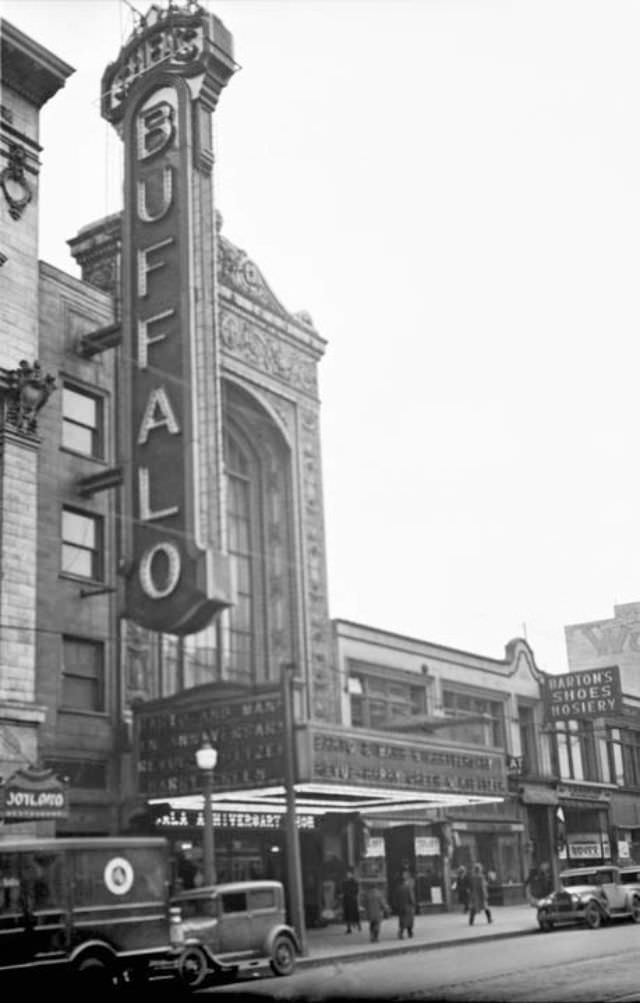
Beyond New York City, Buffalo was home to some of the most impressive theatre buildings in the state. Shea’s Buffalo Theatre, photographed by Smith in January of 1930, was a grand venue that still operates today as Shea’s Performing Arts Center, hosting Broadway touring productions.
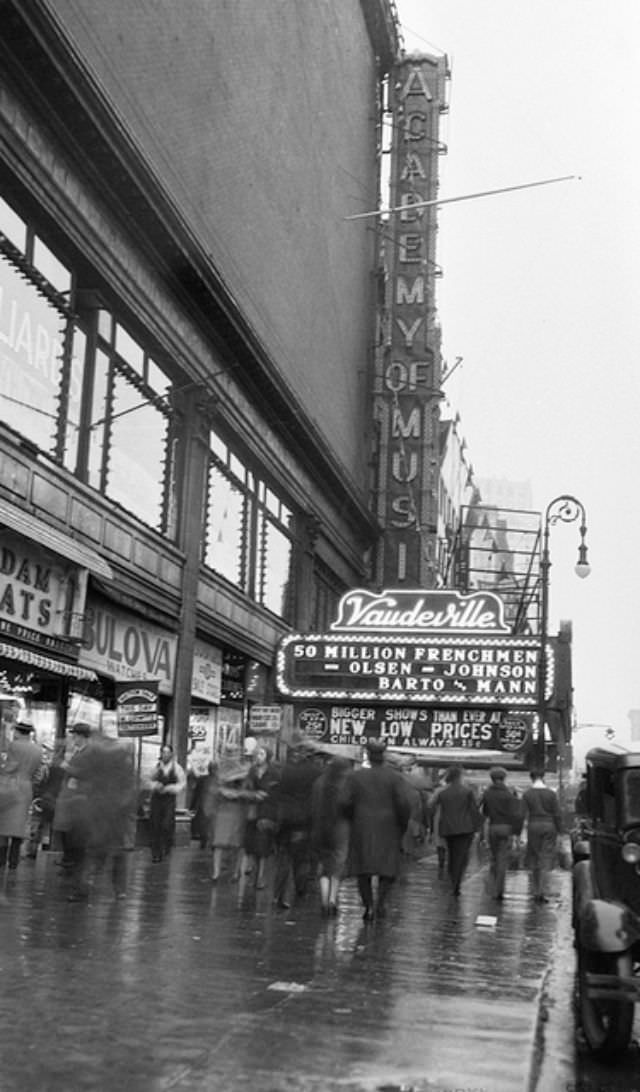
Moving into 1931, Smith’s photographs continued to document the variety and scale of New York’s entertainment landscape. The Academy of Music on 14th Street in Manhattan had a long history as a live performance venue before eventually being converted into the Palladium, a nightclub that became famous in its own right decades later.
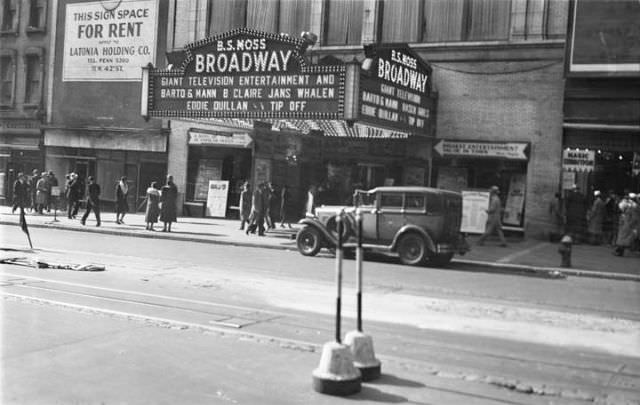
The B.S. Moss Broadway Theatre was one of several mid-sized venues operating in Manhattan outside the main Theatre District. Moss was a theatre operator who ran a circuit of houses across the city, catering to audiences who wanted quality entertainment closer to their neighborhoods.
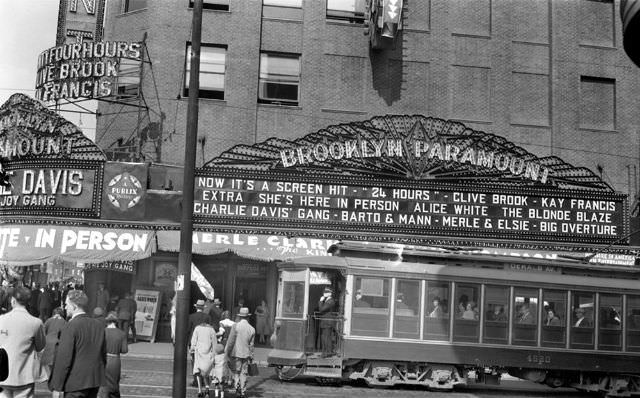
The Brooklyn Paramount was one of the most spectacular movie palaces ever built in the borough. Opened in 1928, it featured an ornate interior and seated over 4,000 people. Smith captured its exterior in November of 1931, showing the building in full commercial operation.
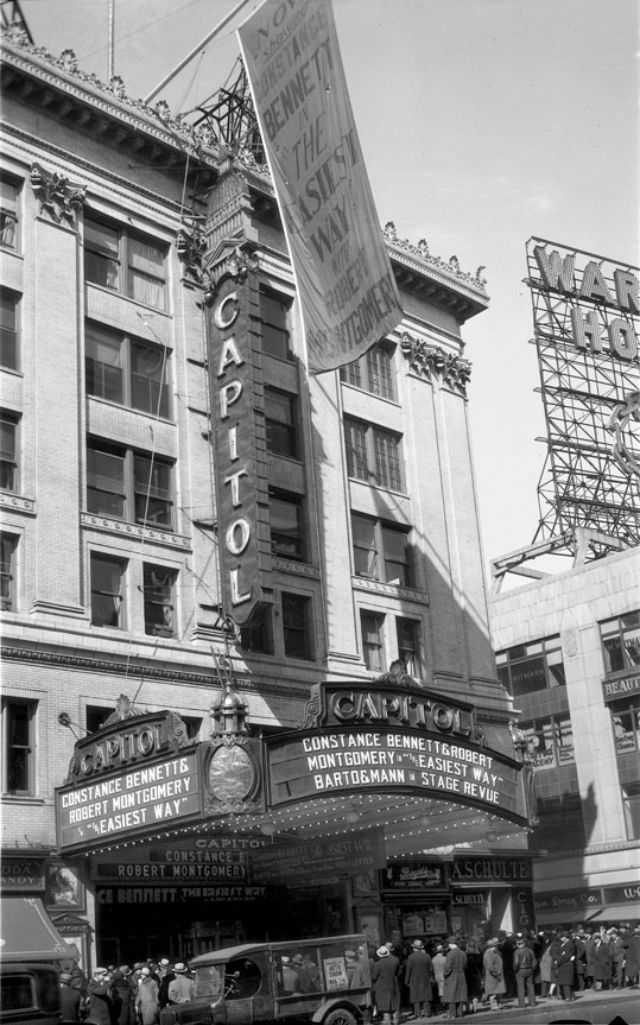
The Capitol Theatre appeared again in Smith’s 1931 work, this time photographed in late February. The repeated visits to certain venues show how Smith was systematically documenting these buildings over time, creating a visual record of how they looked across different seasons and years.
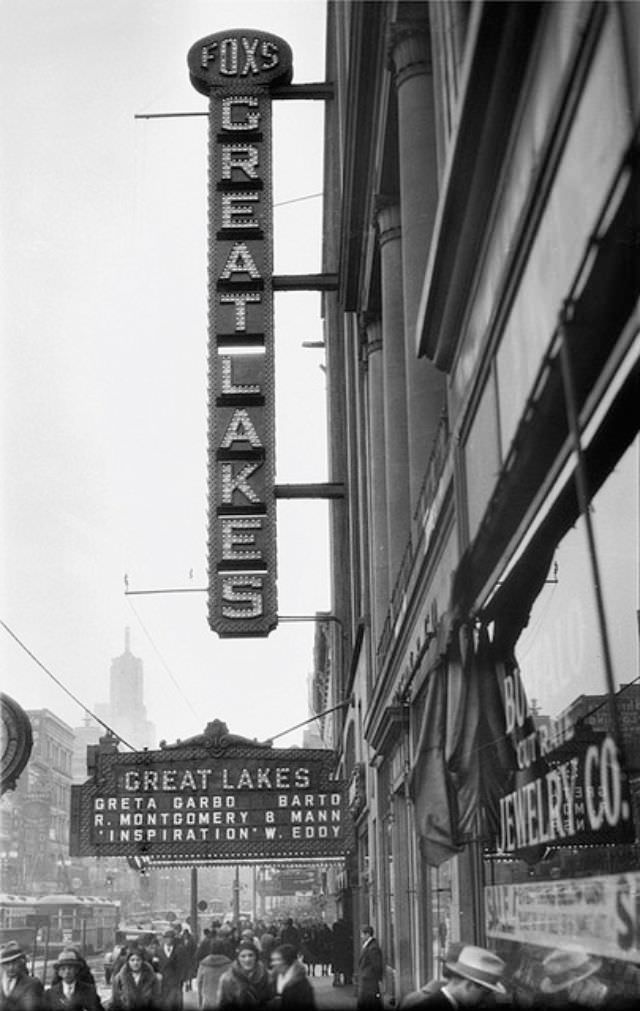
Buffalo’s Fox Great Lakes Theatre — also known as the Paramount Theatre — was another of the city’s grand entertainment venues. Photographed in February of 1931, it represented the same investment in theatrical architecture that was happening simultaneously across the entire northeastern United States.
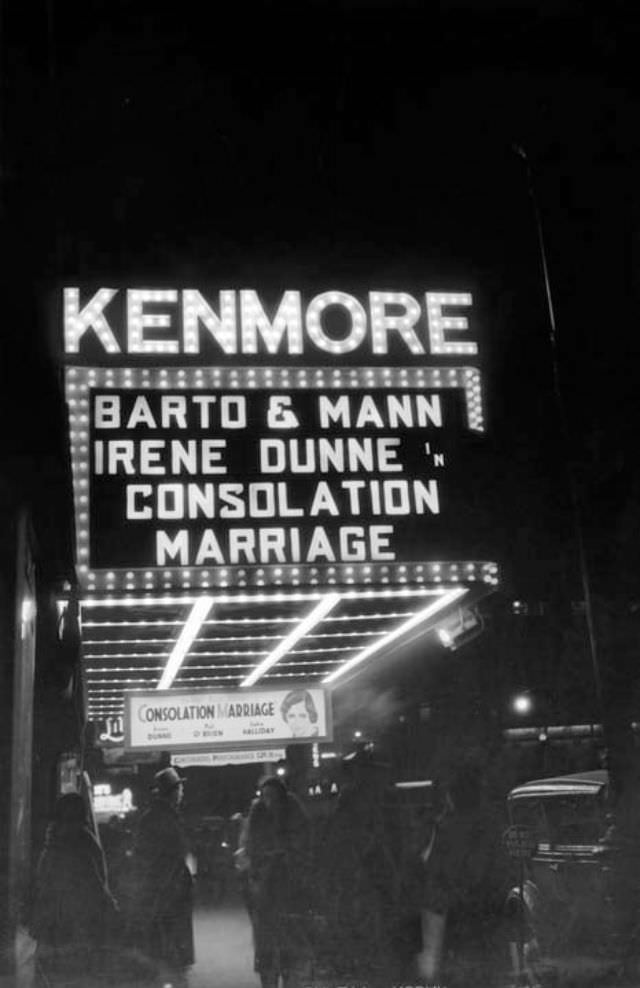
The Kenmore Theatre in Brooklyn was a neighborhood venue operating at the smaller end of the scale compared to the massive Loew’s and Paramount palaces. It served local residents in its immediate area and was one of many such community-level theatres spread throughout the borough.
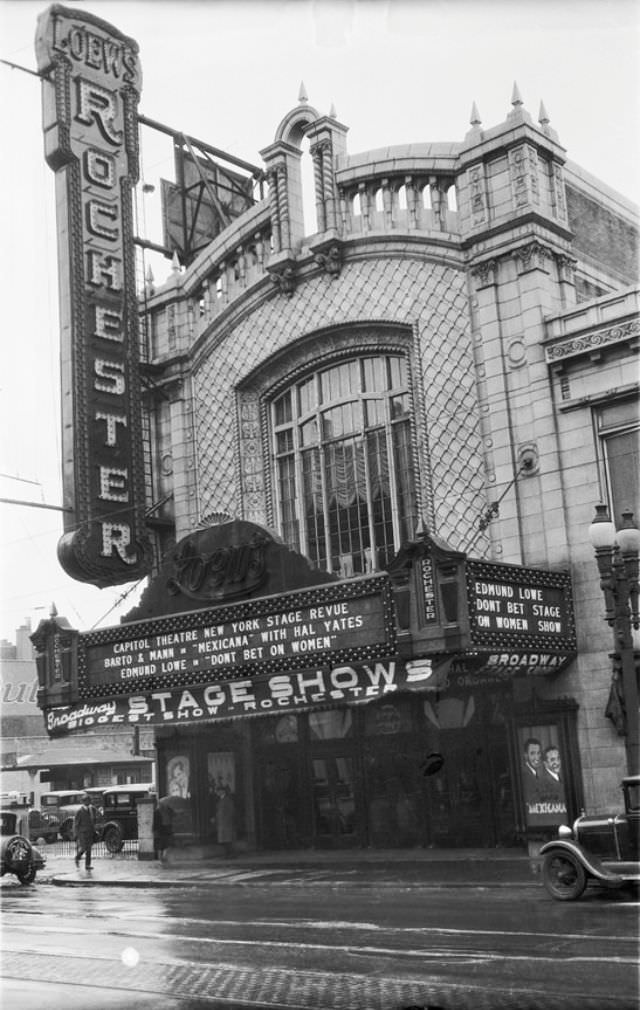
Smith revisited the Loew’s Rochester in 1931, photographing it again in February. The consistency of his documentation across multiple trips to the same venue reflects a methodical approach to archiving these buildings as working commercial spaces.
The Loew’s State Theatre in Syracuse also received a second visit from Smith in February of 1931. Comparing the two photographs of this venue across different months gives a sense of how the building’s surroundings and street-level activity changed over time.
The Loew’s State Theatre in Manhattan reappeared in Smith’s work in March of 1931. The Times Square location meant constant foot traffic and a dense commercial environment that made photographing the building a very different proposition than documenting the quieter upstate venues.
Just north of New York City, in Yonkers, the Loew’s Yonkers Theatre served audiences in Westchester County. It was part of the same expanding Loew’s network that stretched from upstate New York down through every borough of the city.
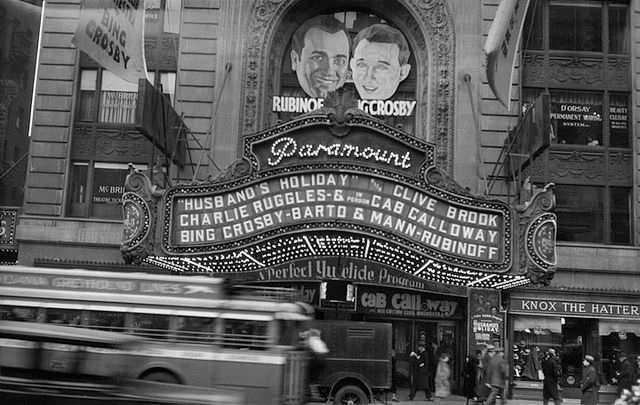
The Paramount Theatre in Manhattan was one of the most famous entertainment venues in the entire country. Opened in 1926, it was a movie palace of extraordinary scale, seating over 3,600 people. Its Times Square location made it central to New York’s entertainment geography throughout the 1930s.
By 1932, the Loew’s Paradise in the Bronx had been operating for several years and had firmly established itself as one of the borough’s premier entertainment destinations. Smith returned to photograph it again, adding another data point to his ongoing visual record of the city’s theatres.
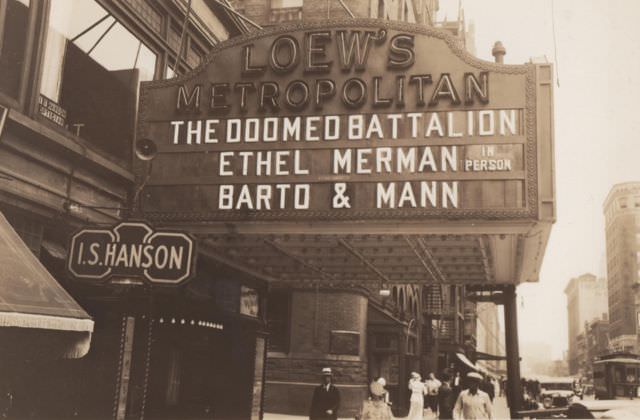
The Loew’s Metropolitan in Brooklyn also appeared again in Smith’s 1932 work. By this point, the Great Depression was at its worst, yet these theatres remained open and active. For many Americans, a cheap ticket to a movie or a live show was one of the few affordable pleasures left.
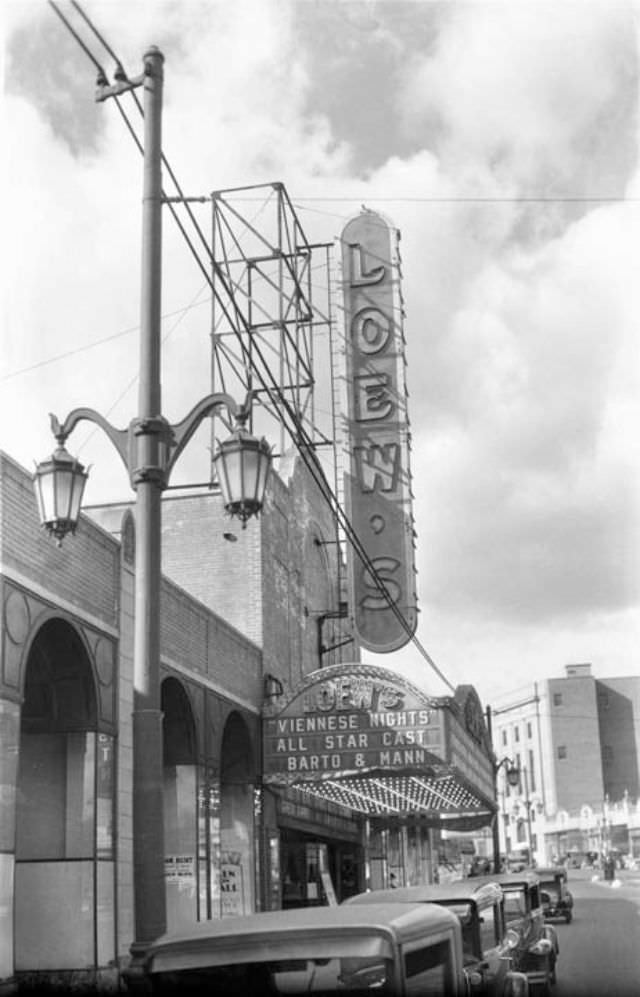
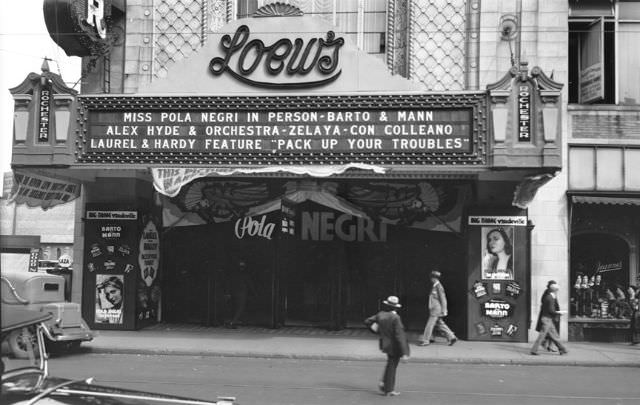
The Rochester theatre received Smith’s attention again in September of 1932, his third documented visit to the venue. The exterior of the building is shown here in the context of a bustling upstate city street, complete with the signage and storefronts of the era.
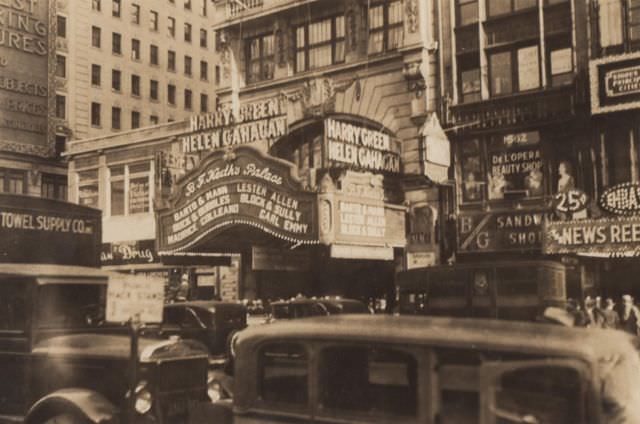
The Palace Theatre on Broadway had a particular distinction in the entertainment world — it was considered the top of the vaudeville circuit. To play the Palace was the ultimate achievement for any vaudeville performer. By 1932, vaudeville was giving way to film, but the Palace remained a landmark.
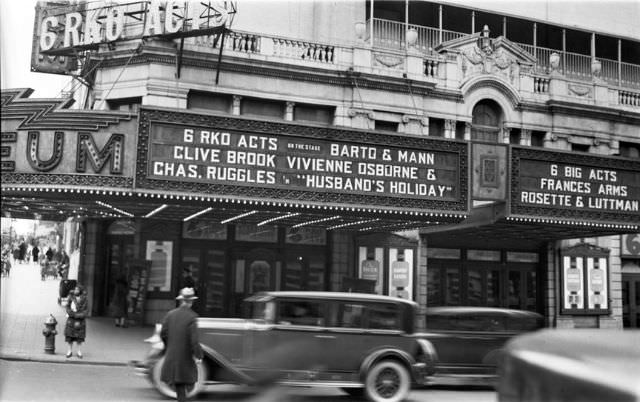
The RKO Coliseum Theatre was one of several venues in New York operated by the RKO circuit, a major competitor to the Loew’s chain. The Coliseum’s name suggested scale and grandeur, in keeping with the trend of giving theatres names that evoked a sense of the epic.
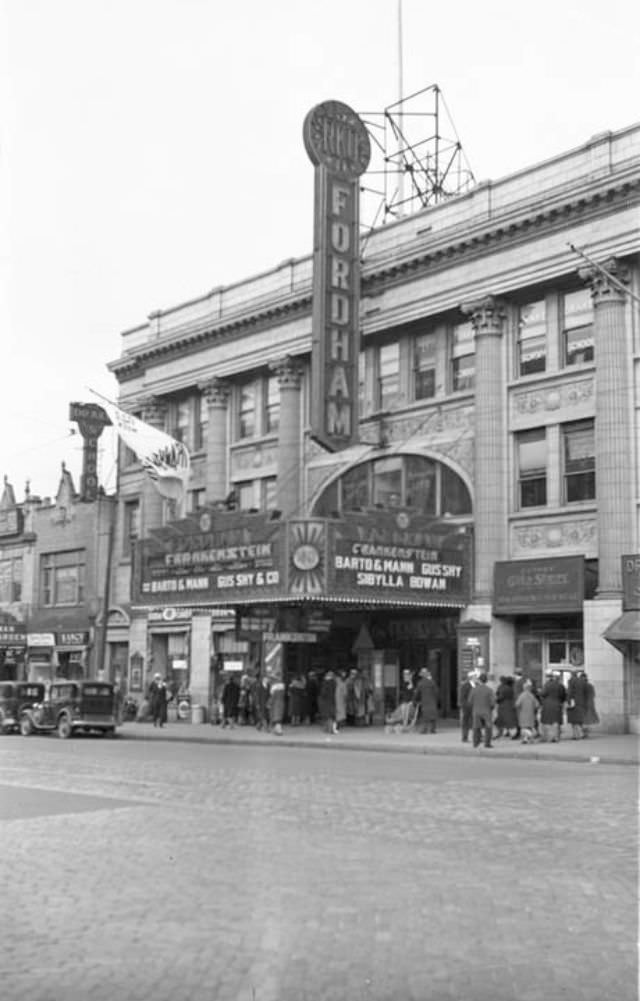
In the Bronx, the RKO Fordham Theatre served a neighborhood audience just as the Loew’s Paradise did, though at a different scale. Photographed in January of 1932, the Fordham represents the middle tier of New York’s theatre ecosystem — substantial but not palatial.
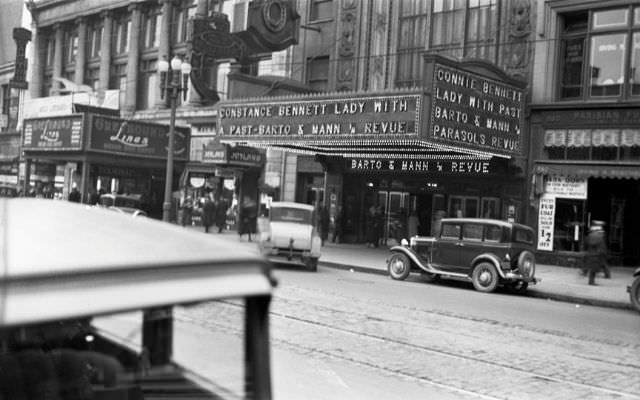
Shea’s Buffalo made another appearance in Smith’s collection in February of 1932, its second documented visit. The theatre’s prominent facade dominates the street-level view, illustrating just how much physical space these entertainment venues commanded in their surrounding neighborhoods.
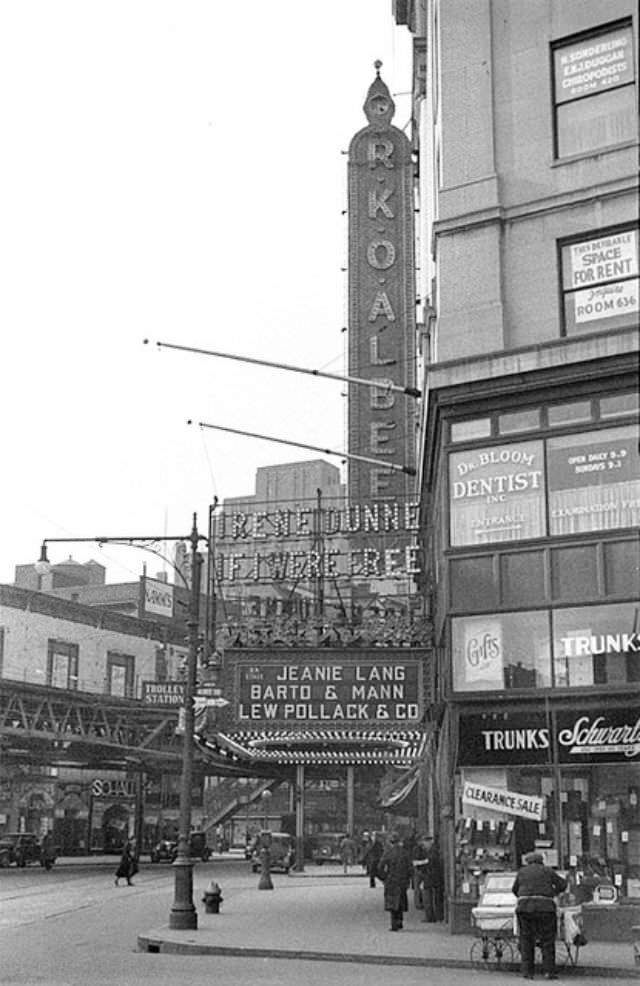
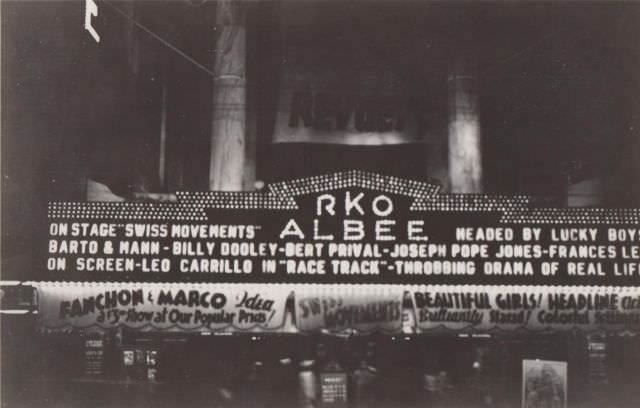
The RKO Albee Theatre in Brooklyn was one of the more prominent RKO venues in the outer boroughs. Named after vaudeville impresario Edward Franklin Albee II, it was part of a theatre chain that stretched across the country. Smith photographed it in 1933 from multiple angles.
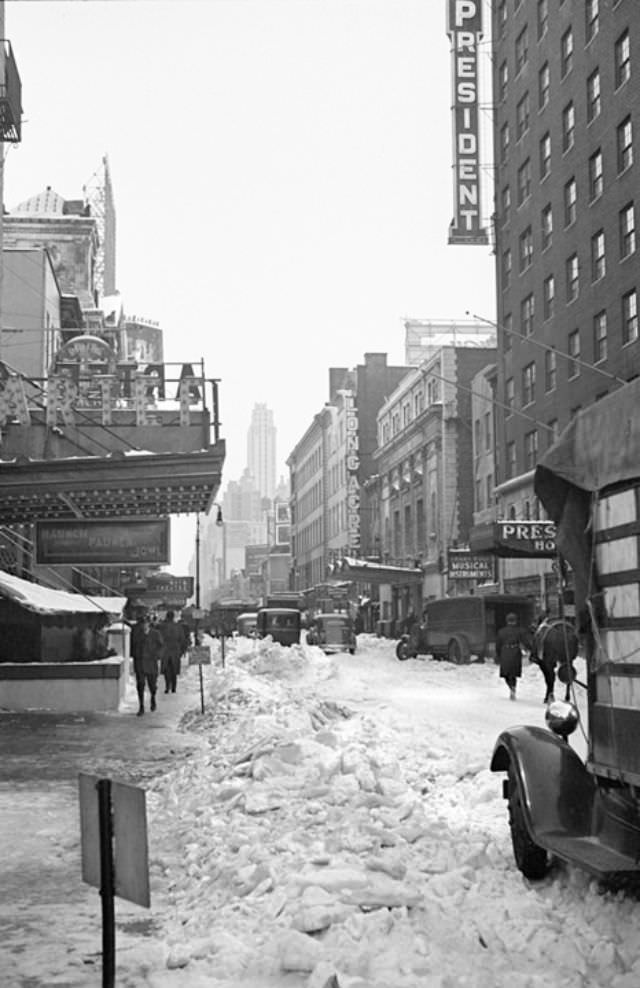
By 1935, Smith was documenting a wider range of venues, including some of the smaller legitimate theatres that operated outside the big chains. The Artef Theatre was a Yiddish-language workers’ theatre that operated in New York, while the Longacre was a Broadway house that had been staging plays since 1913. Both are captured here on the same street.
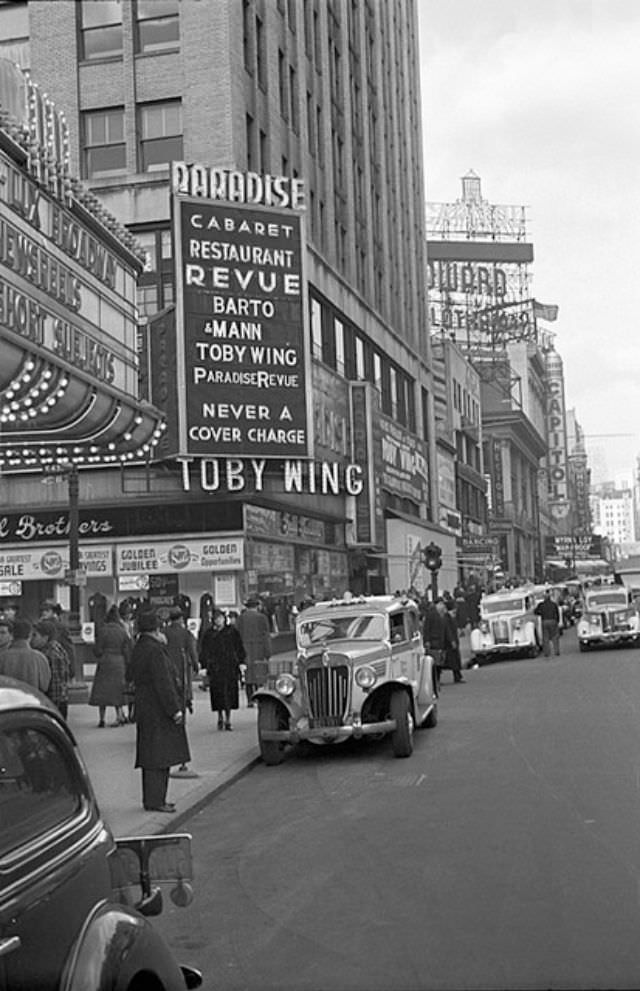
The Brill Building at 1619 Broadway was already a hub of the music industry by the late 1930s. Inside, the Paradise Cabaret Restaurant offered dining and entertainment in a setting that catered to the creative and commercial worlds colliding within that one address. Smith photographed it in 1937.
The Paramount Theatre appeared again in Smith’s 1937 work, more than five years after his earlier photograph of the same building. The two images together show how little the exterior had changed, even as the entertainment industry around it shifted dramatically with the rise of sound films and radio.
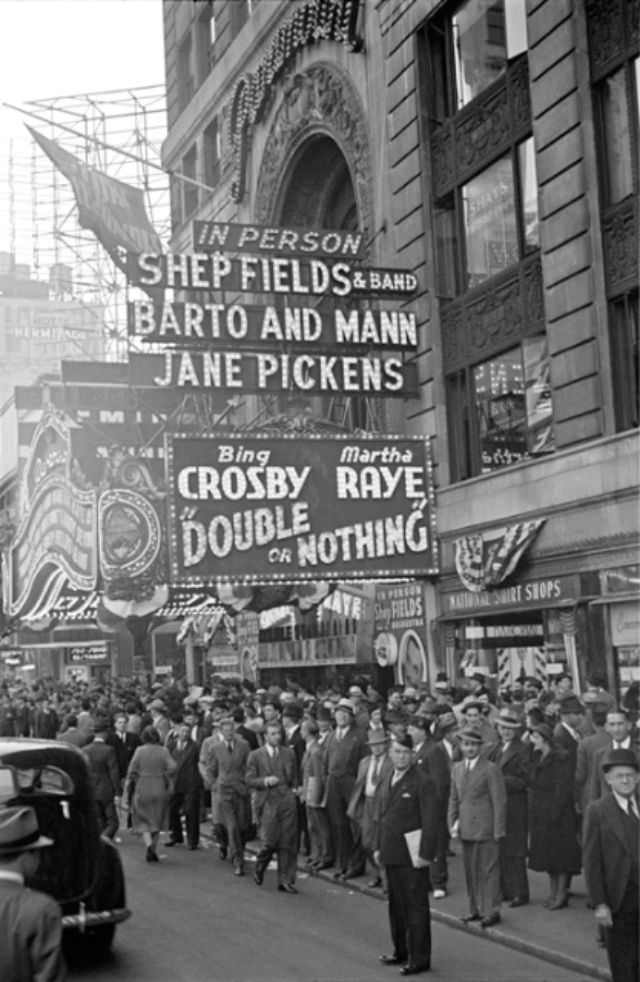
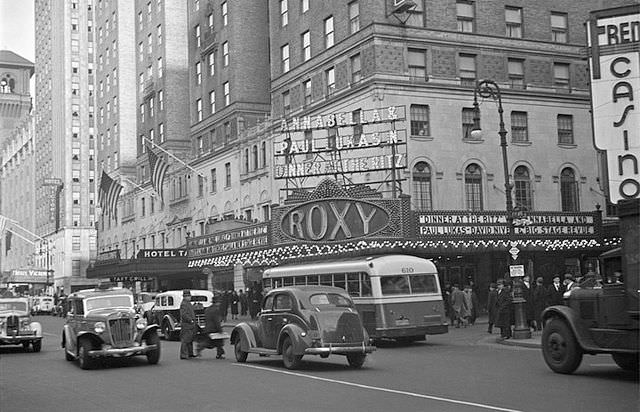
The Roxy Theater was one of New York’s most celebrated movie palaces. Opened in 1927 and known as ‘The Cathedral of the Motion Picture,’ it seated over 5,900 people, making it one of the largest theatres in the world at the time of its opening. Smith photographed it in 1937, when it was still operating at full capacity.
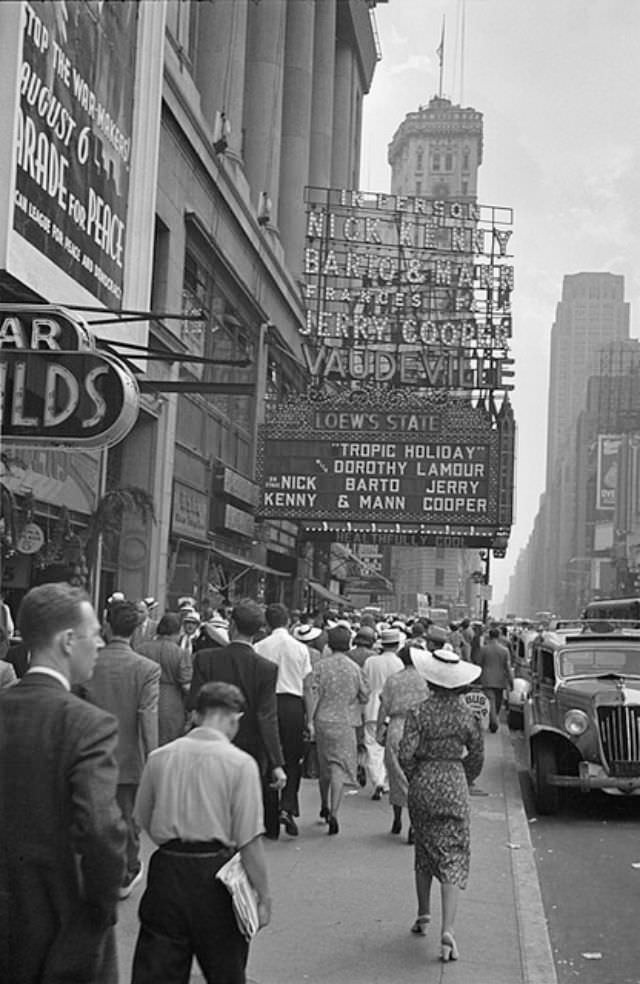
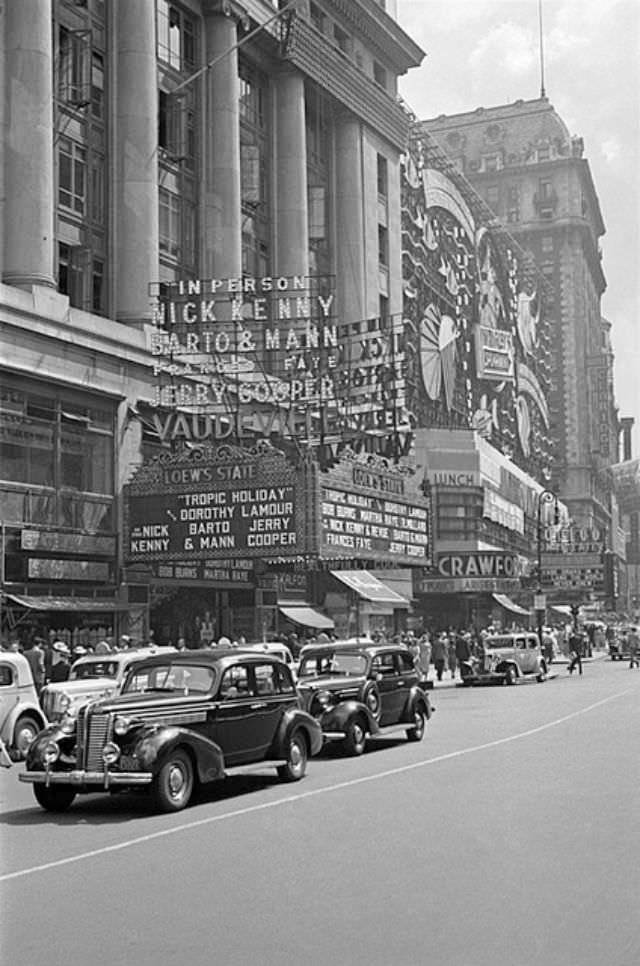
In August of 1938, Smith returned to the Loew’s State Theatre in Manhattan, capturing two separate photographs of the building. These images, taken at the same time, show the theatre from slightly different perspectives and capture the dense commercial signage typical of Times Square in the late 1930s.
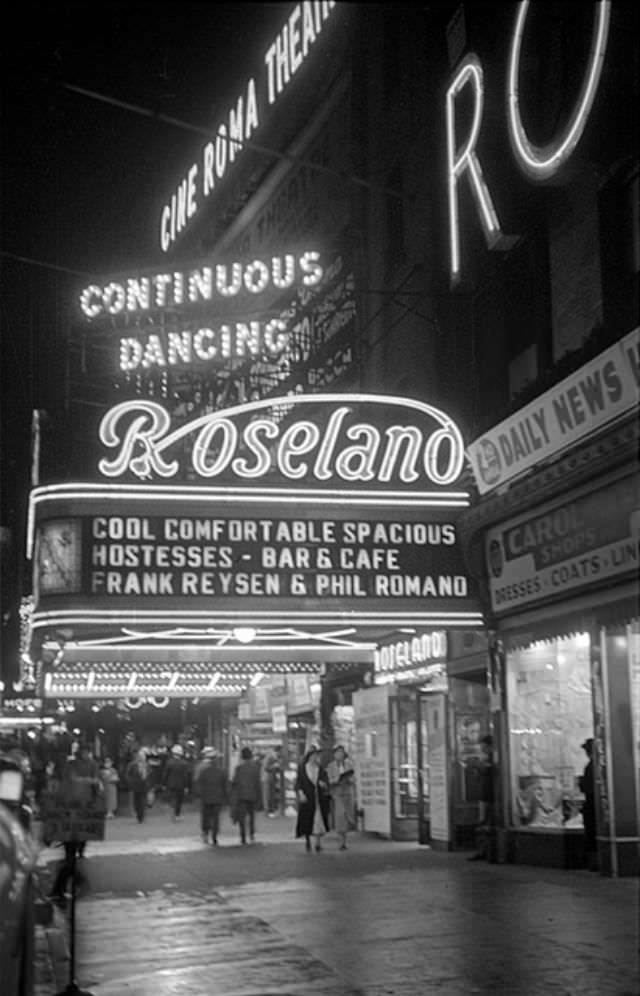
One of the most distinctive venues in Smith’s collection is the Roseland Ballroom, photographed in 1938 alongside the Cine Roma Theater. The Roseland was a dance hall rather than a traditional theatre, but it was very much part of the same entertainment landscape — a place where New Yorkers came to escape, socialize, and be part of something larger than their daily lives.

I remember those days of ditty boxes and stickball in these photos. I can almost smell the bagels in the air. This is a great post.
Barto & Mann must have been pretty damn popular
Chas Ruggles.
These are awesome, but they’re pictures of movie theatres
“It is cooler inside”, so great.