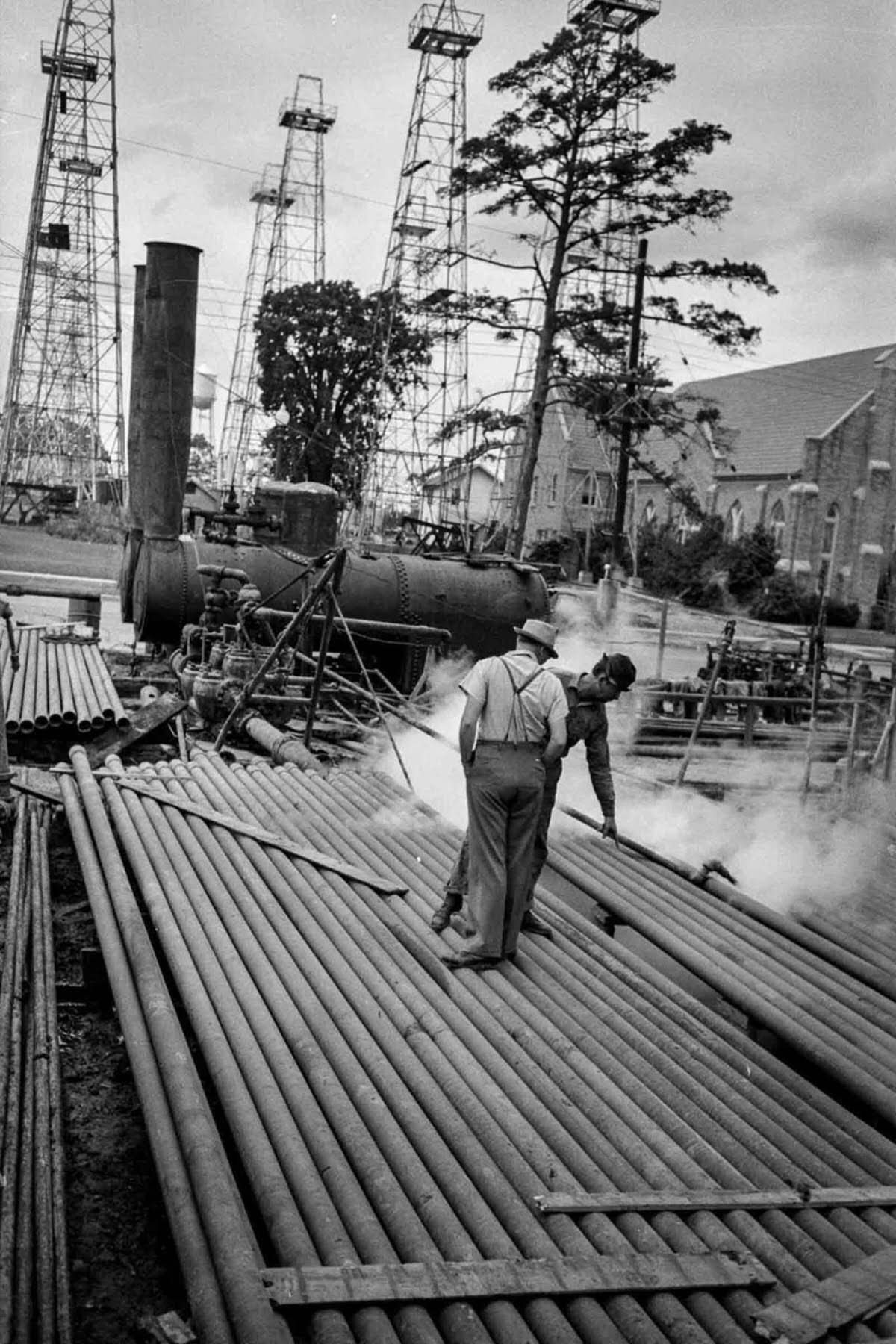
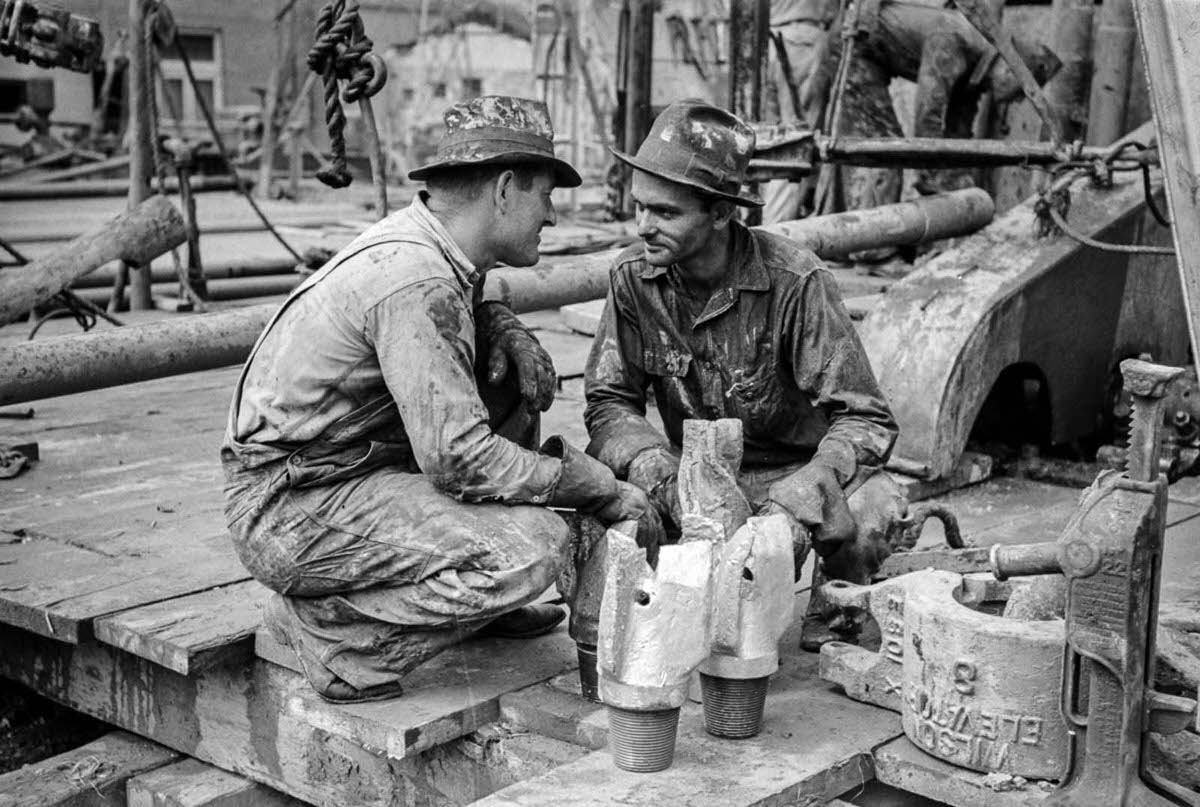
On October 3, 1930, Columbus Marion Joiner — known simply as Dad Joiner — struck oil in East Texas and changed the country forever. His discovery revealed the largest petroleum deposit found up to that point in American history, arriving in the depths of the Great Depression when the timing could not have been more significant. The field stretched across 140,000 acres and parts of five counties, and it set off one of the most chaotic oil booms the United States had ever seen.
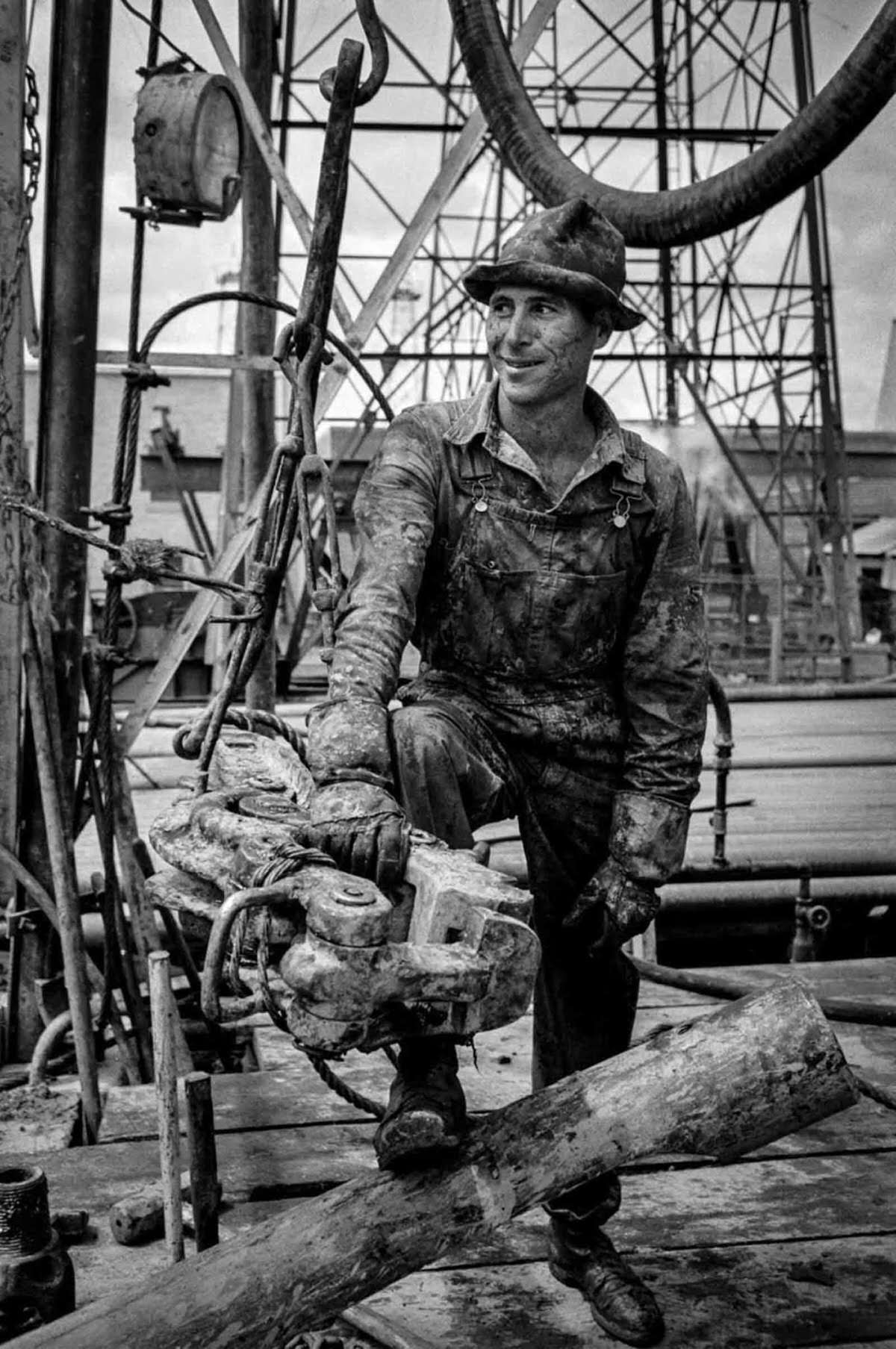
Unlike earlier fields such as Yates or Big Lake, which were controlled by one or just a few large operators, the East Texas field had no central plan and no governing authority. Hundreds of small, independent operators rushed in and began drilling however and wherever they could. Landowners carved their holdings into tiny mineral leases — some measured in mere feet — and sold them off to the highest bidders. The town of Kilgore became the heart of the boom. Wells were drilled in front yards, between buildings, and along city streets. One single block in Kilgore held forty-four active wells.
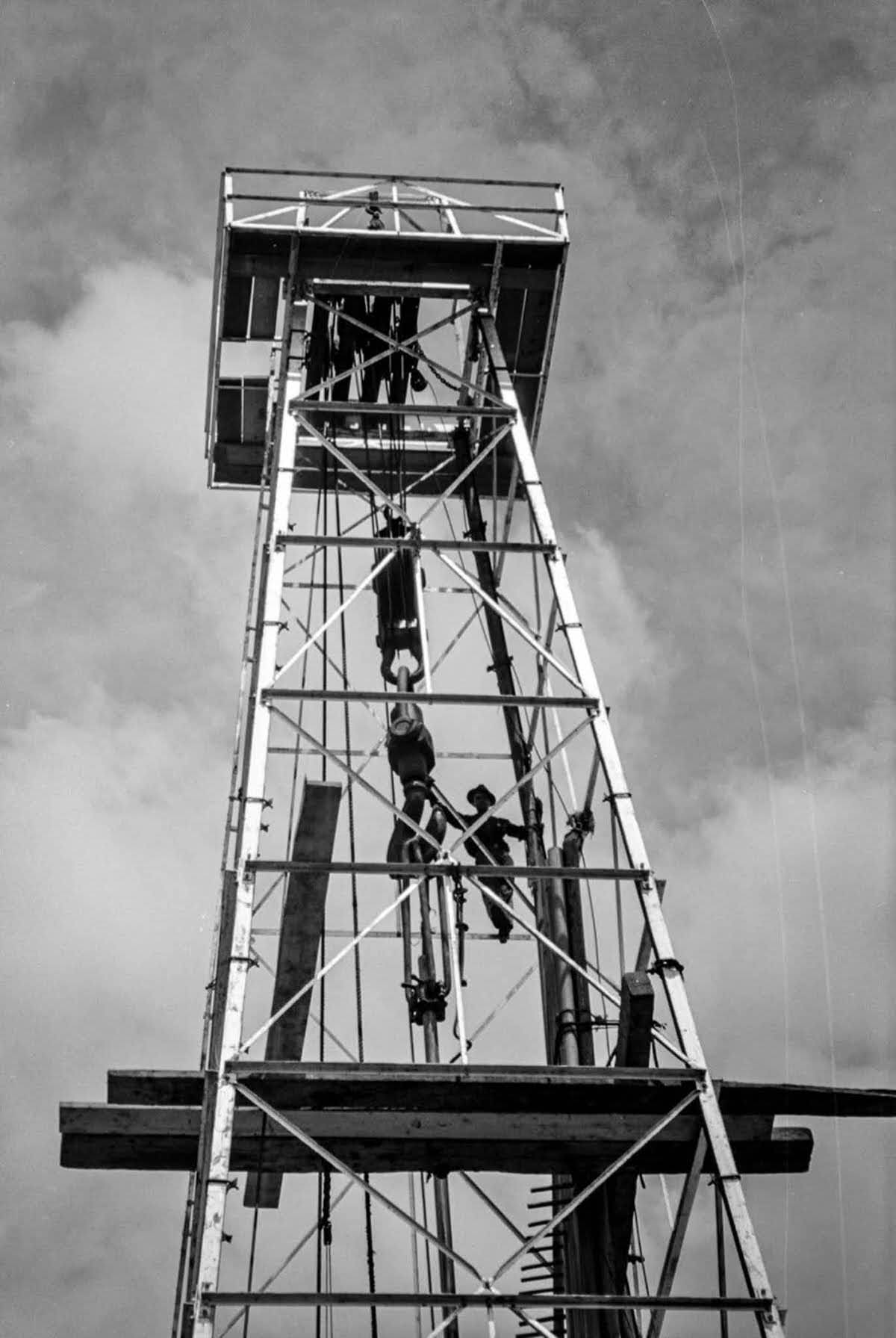
The legal rule driving this frenzy was the “rule of capture,” rooted in an 1889 Pennsylvania Supreme Court decision. Under that ruling, oil belonged to whoever pulled it out of the ground — even if that oil had migrated from a neighboring lease underground. Every operator had every reason to drill as fast as humanly possible. Speed was survival. If you drilled too slowly, your neighbor’s well could drain oil that sat beneath your own land.
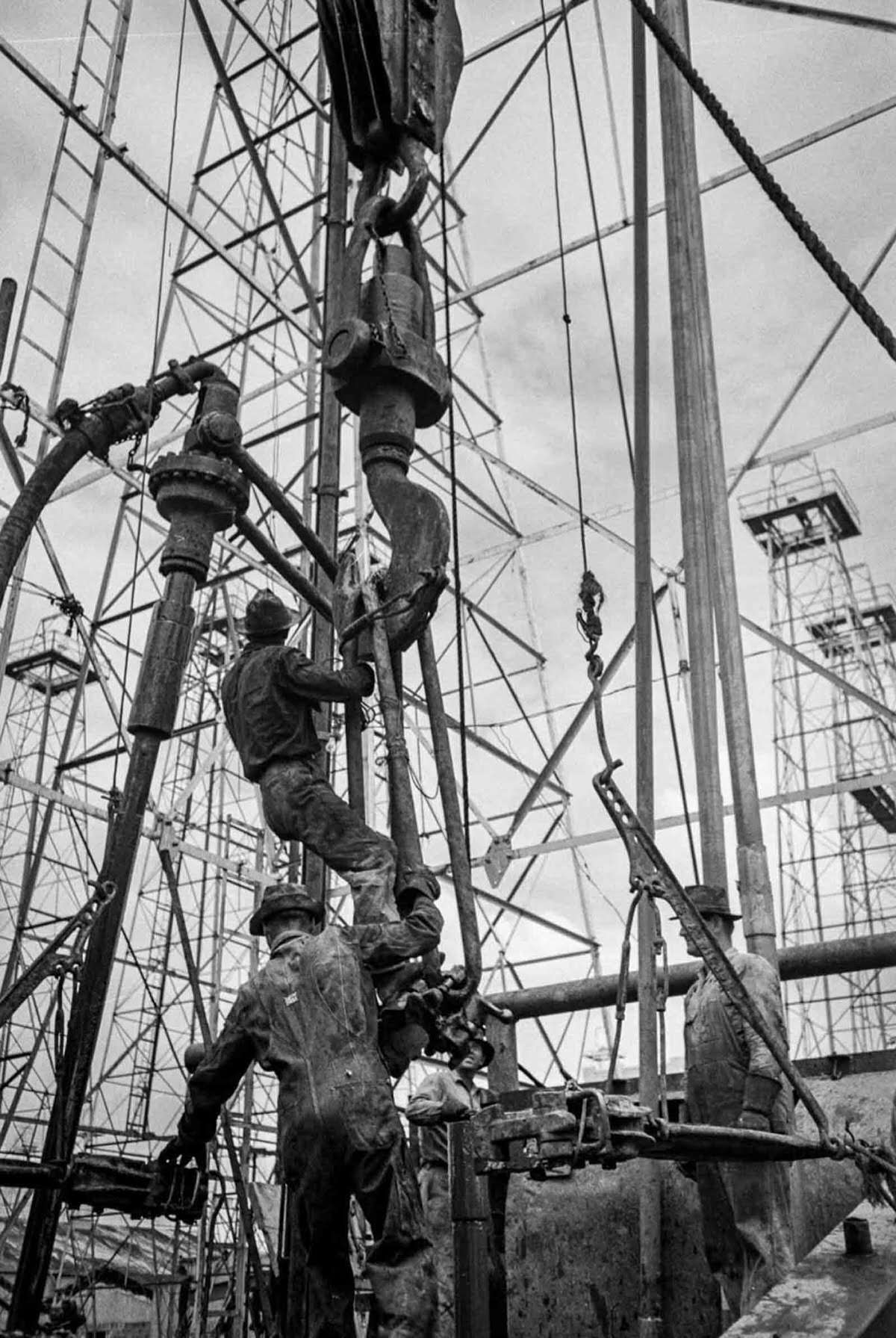
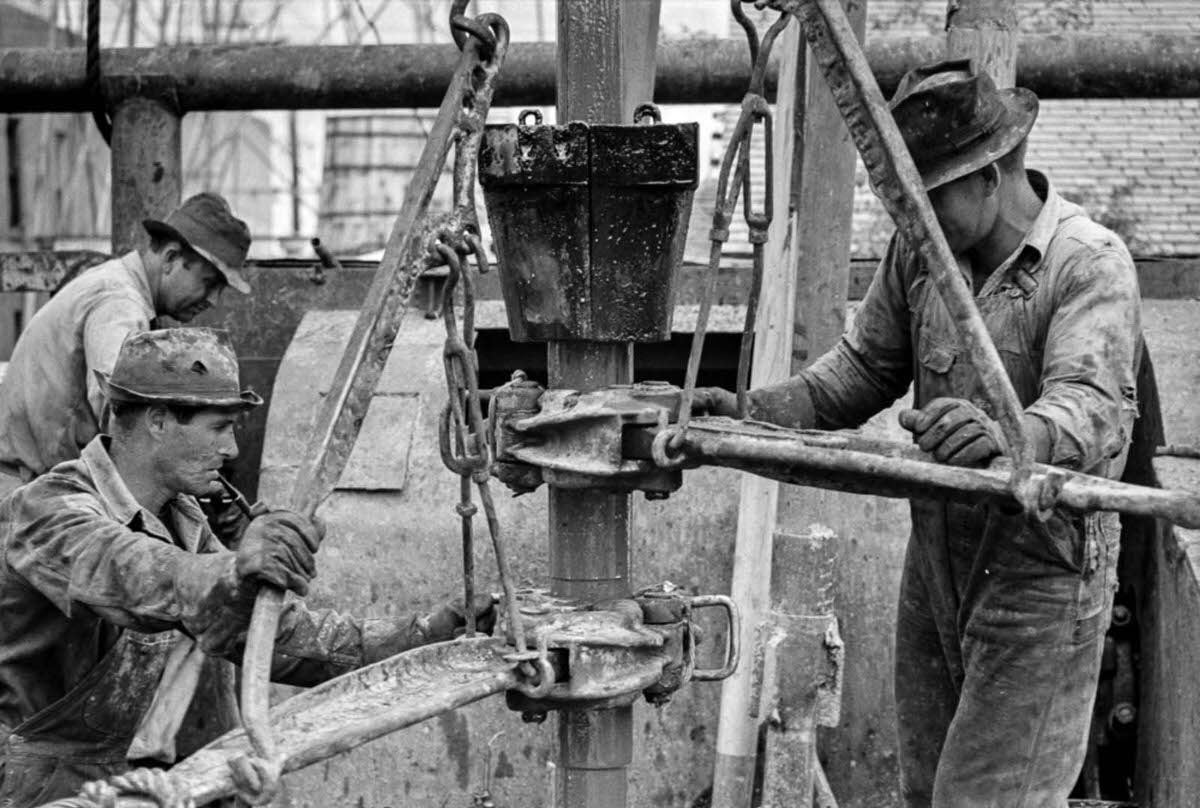
The men who made this boom run were called roughnecks. Their work was physical, relentless, and dangerous. High up on the derrick or down in the mud at the drill floor, there was no safe or comfortable place to stand. A roughneck working near the top of a wooden derrick in 1939 had no harness, no safety net, and no margin for error.
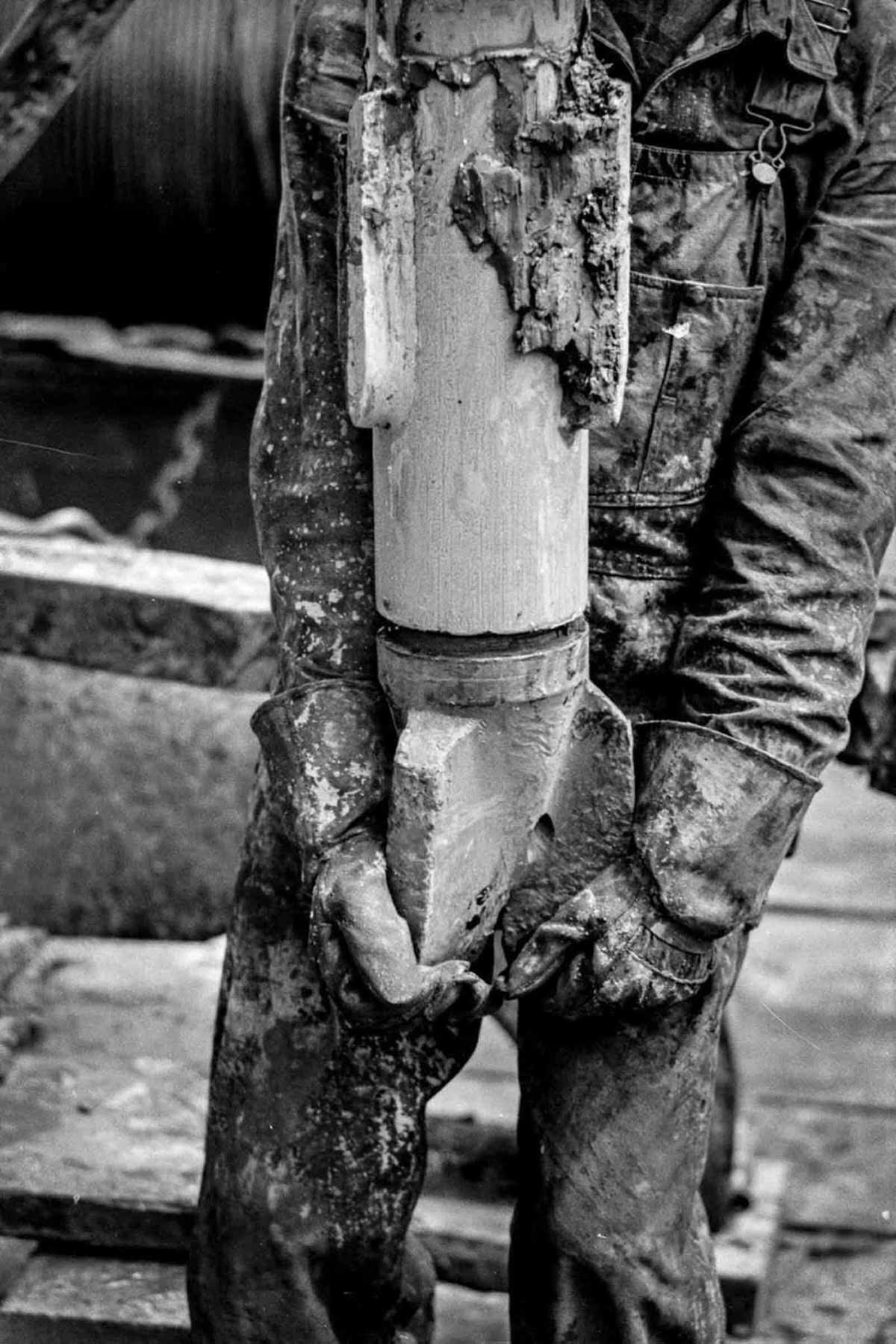
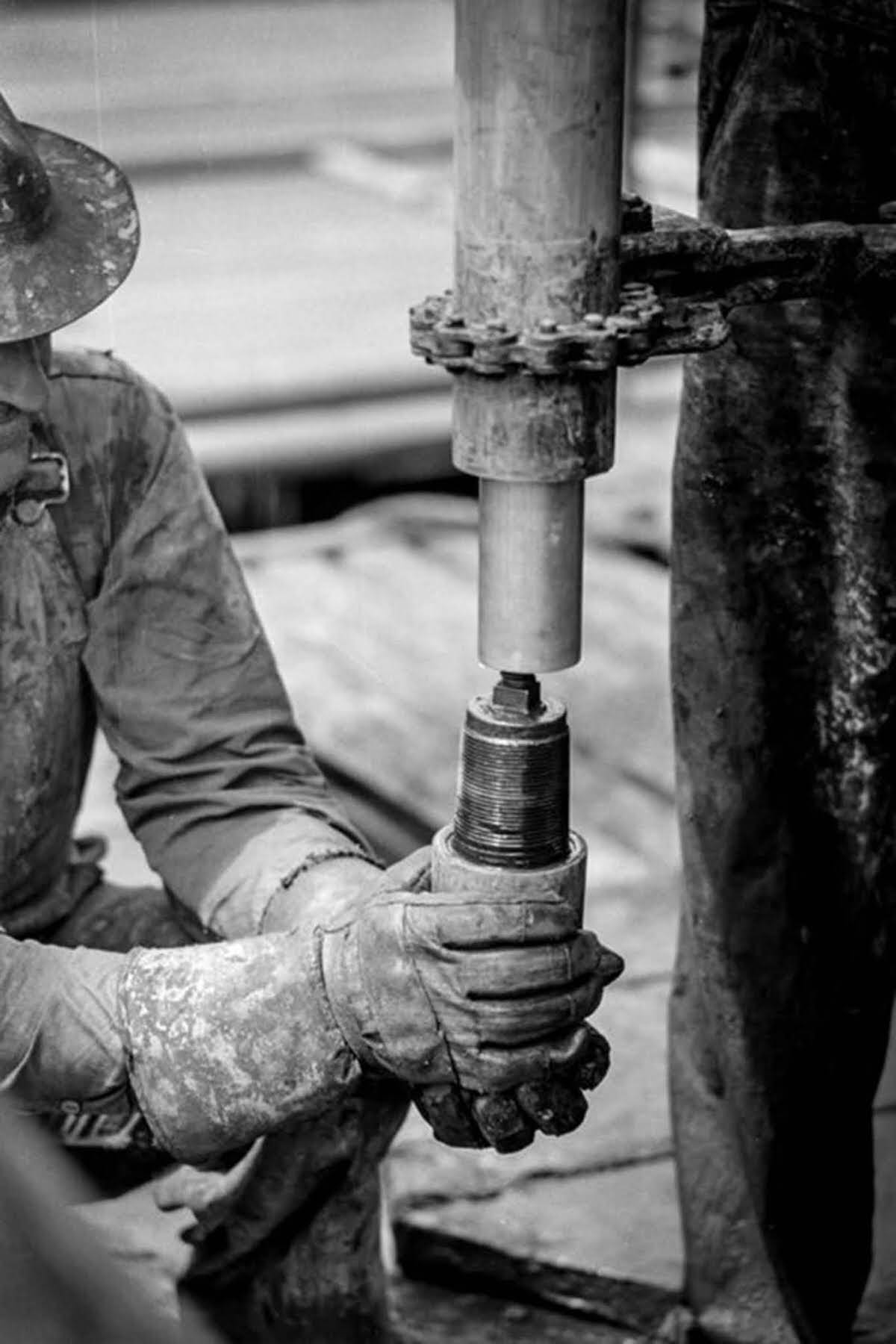
Drill bits took a savage beating underground and came back caked in heavy drilling mud. Workers handled these tools constantly, inspecting them for wear and swapping them out when they dulled. The drilling mud itself served a critical purpose — it cooled the bit, carried rock cuttings up to the surface, and helped keep the borehole from collapsing.
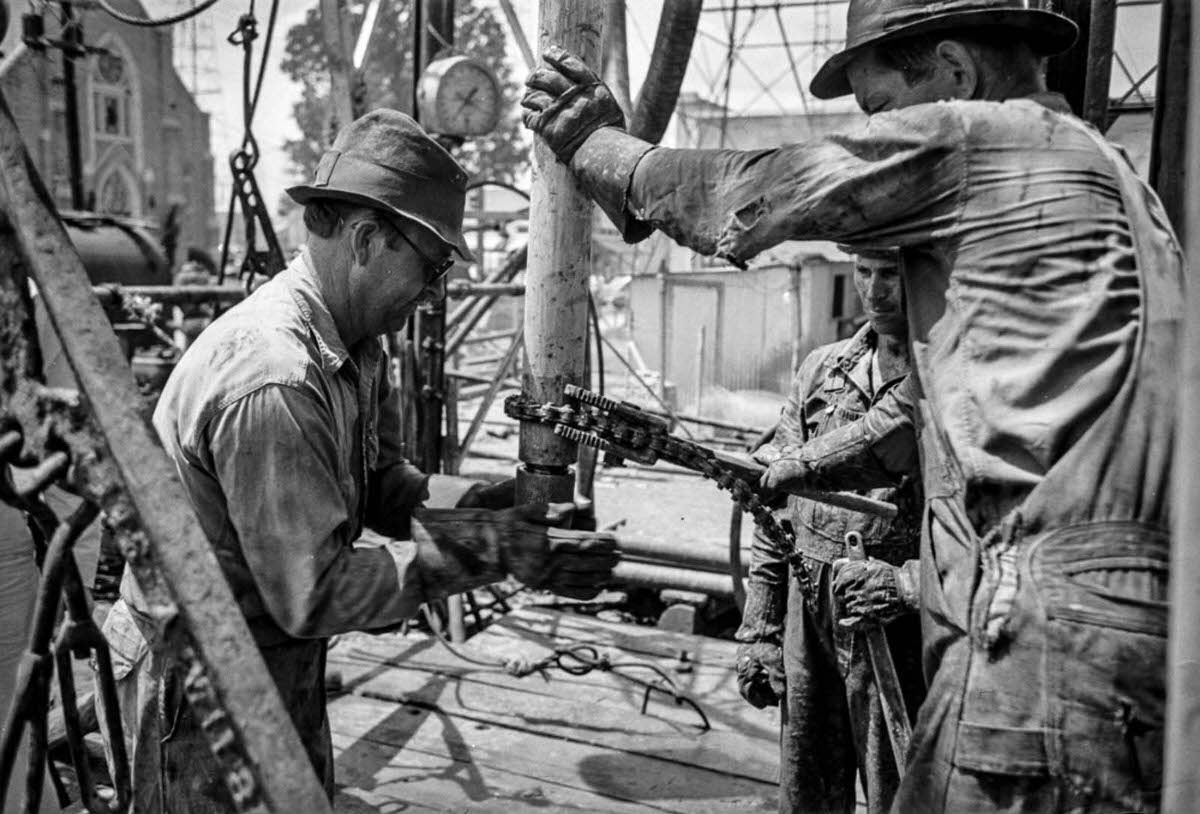
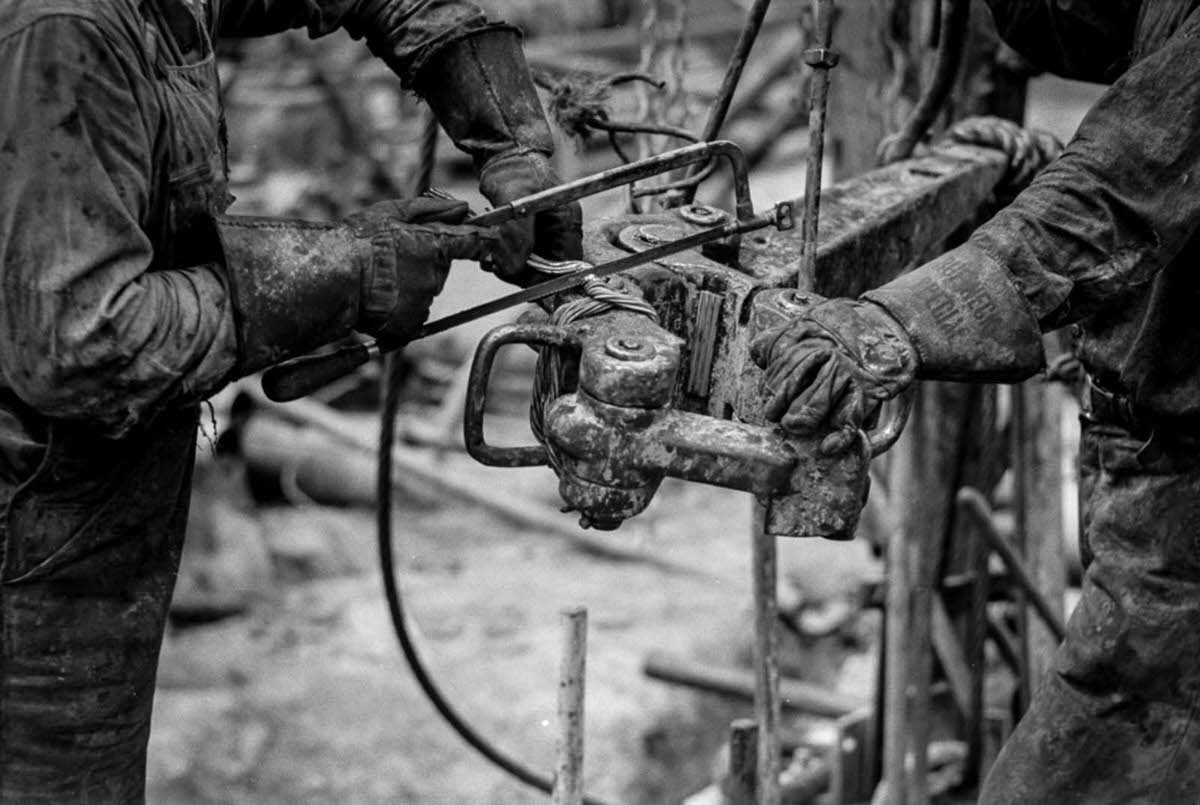
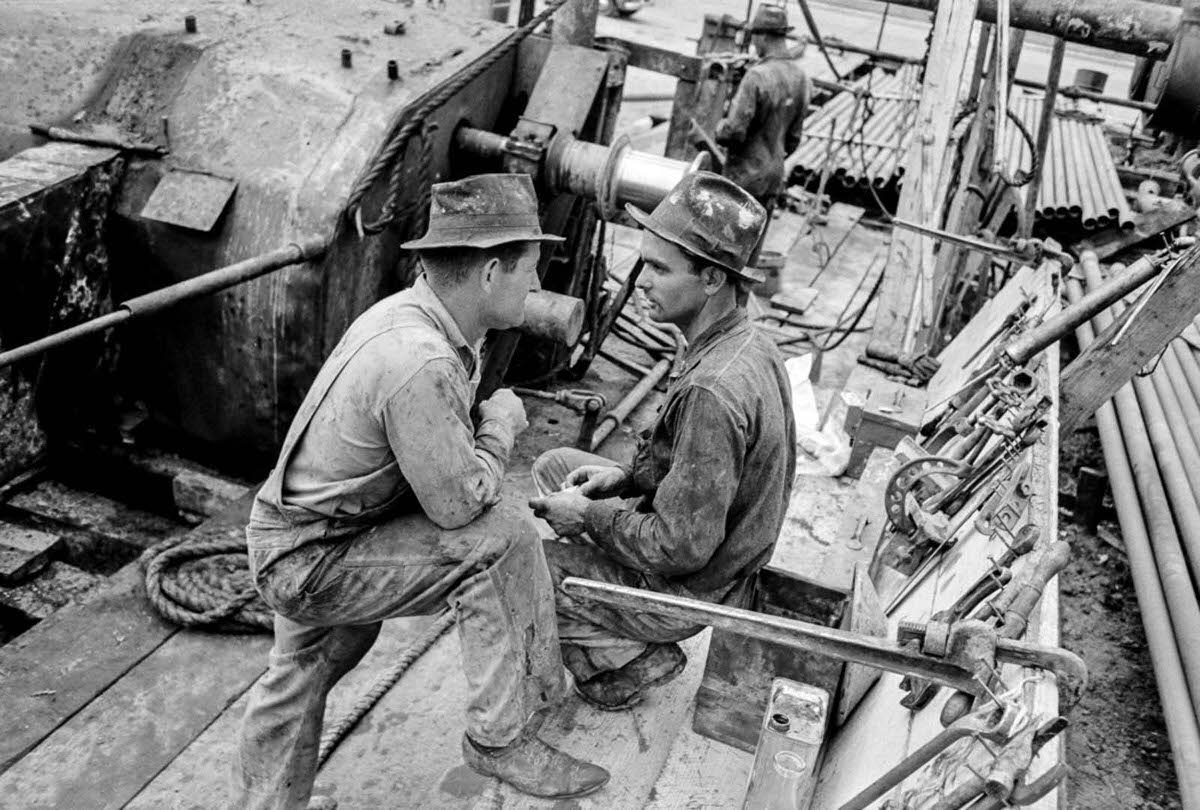
Equipment failure meant lost time, and lost time meant lost oil. Roughnecks maintained and repaired their own tools on the spot. Pipe wrenches were among the most essential tools on any rig — large, heavy, and unforgiving. Keeping them in working order was part of the job, done between pipe runs or during any spare moment.
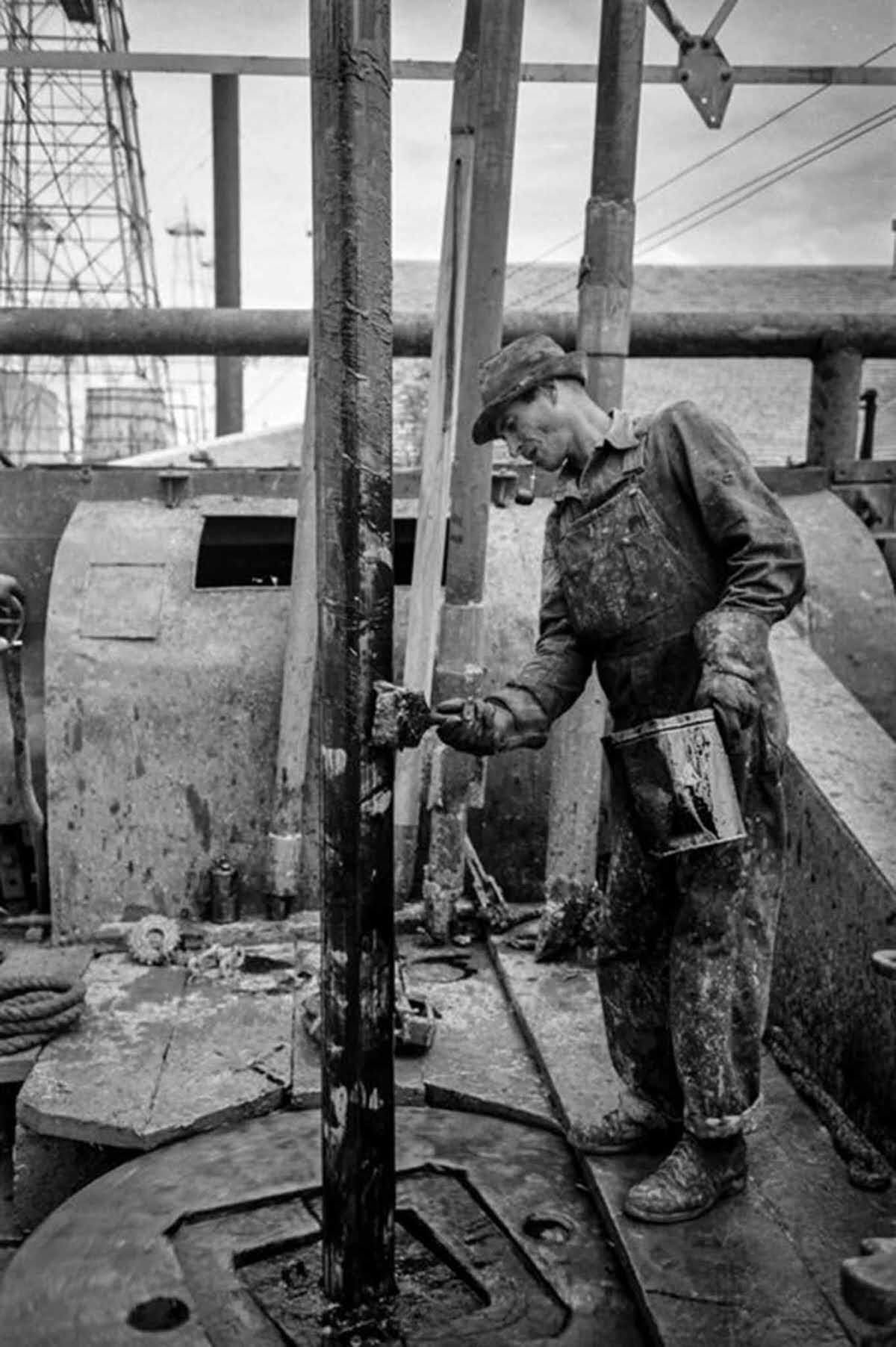
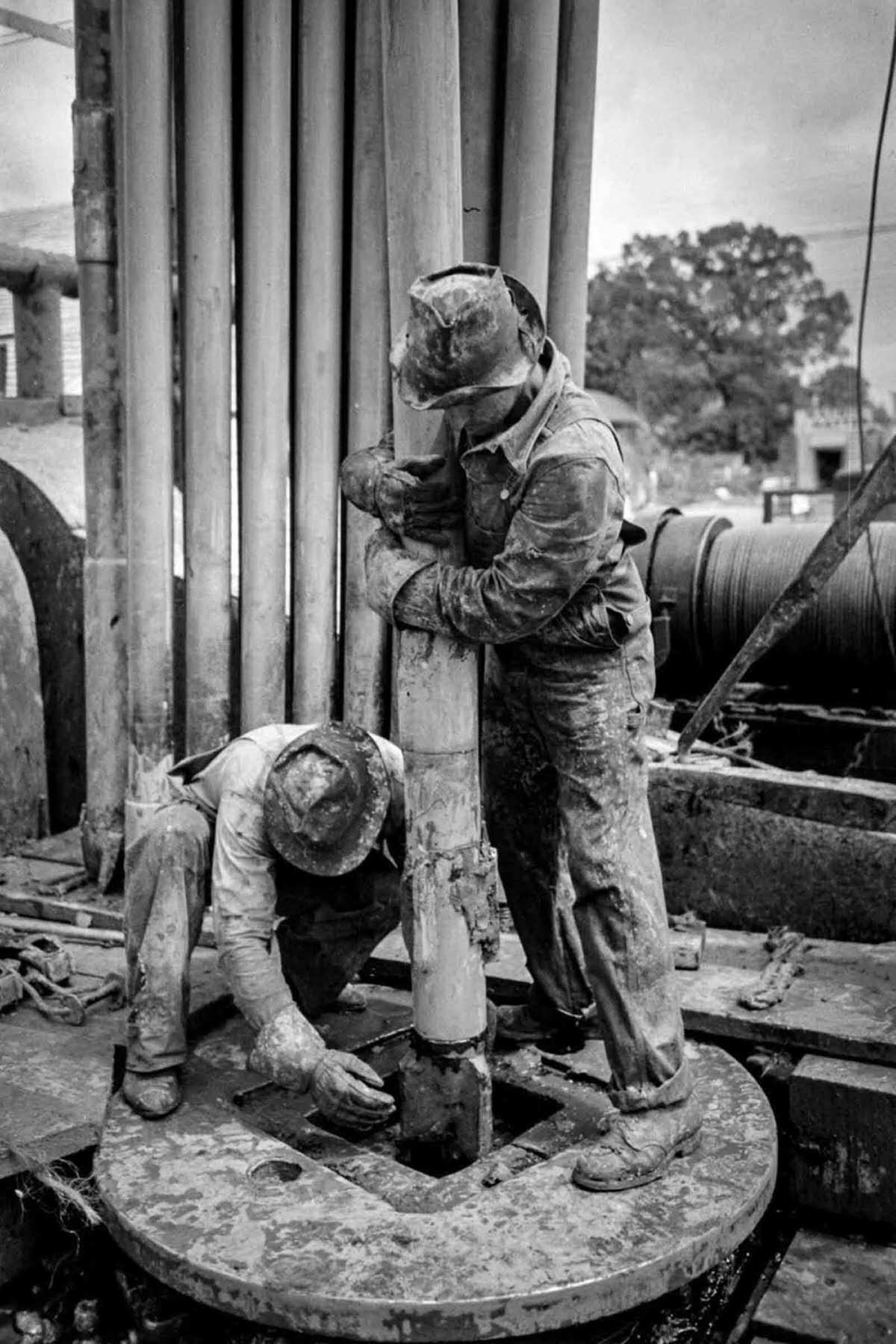
Greasing the drill stem was a routine but necessary task. Without lubrication, the threaded connections on pipe joints would seize or wear out far ahead of their time. Every connection point on the string of drill pipe running thousands of feet into the earth had to hold under enormous torque and pressure.
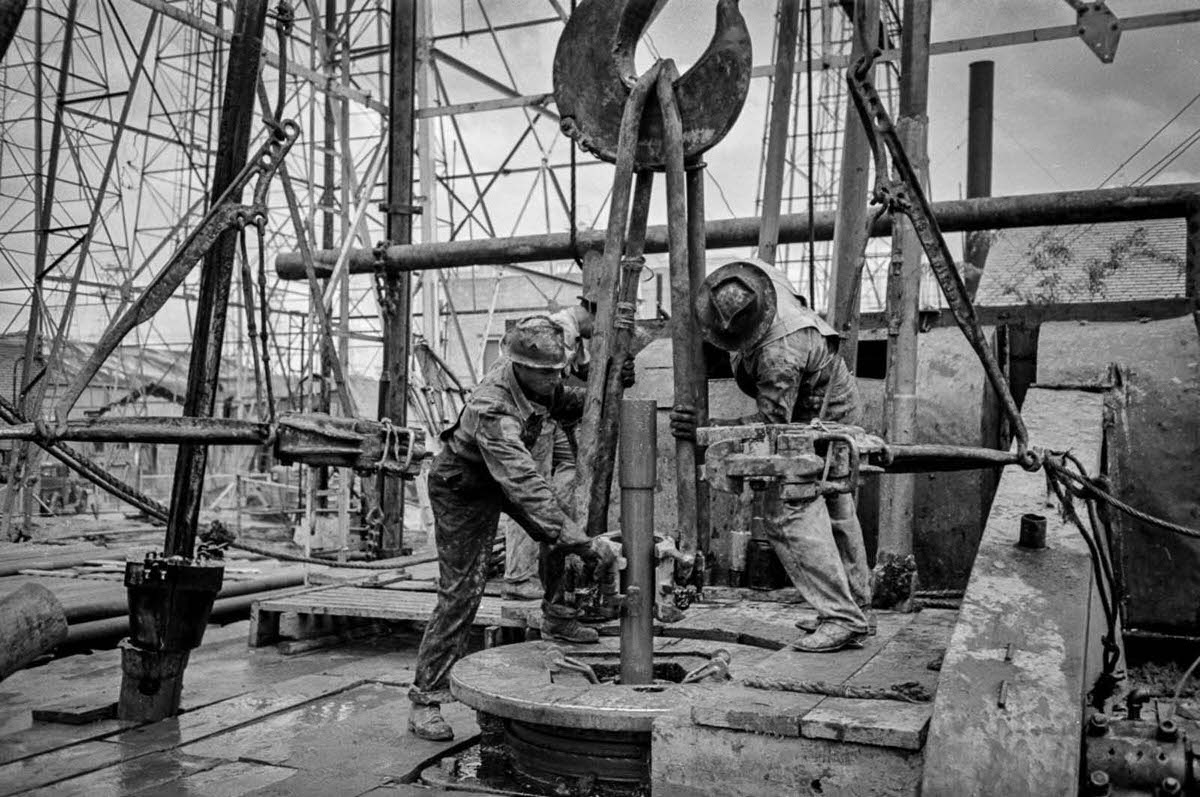
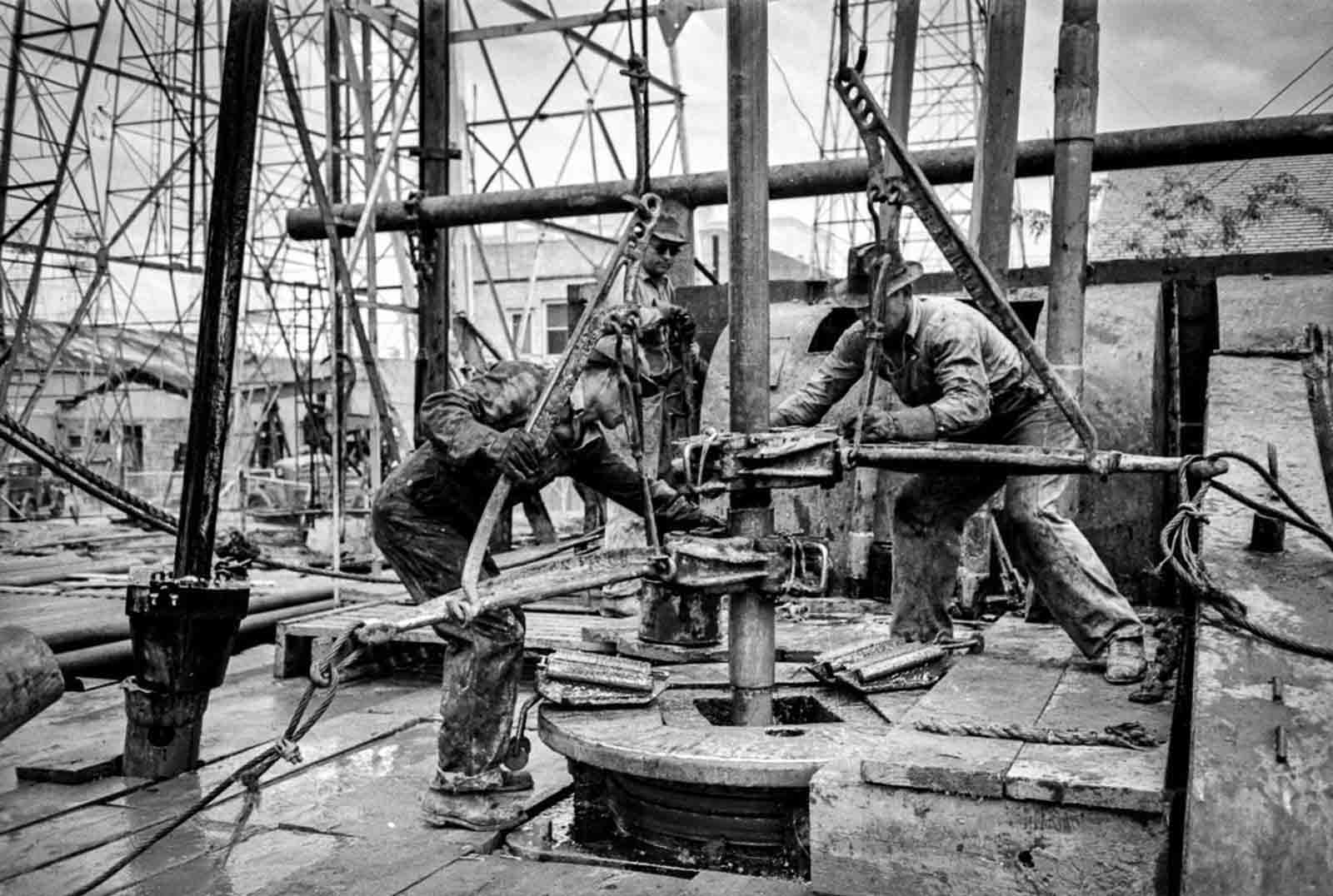
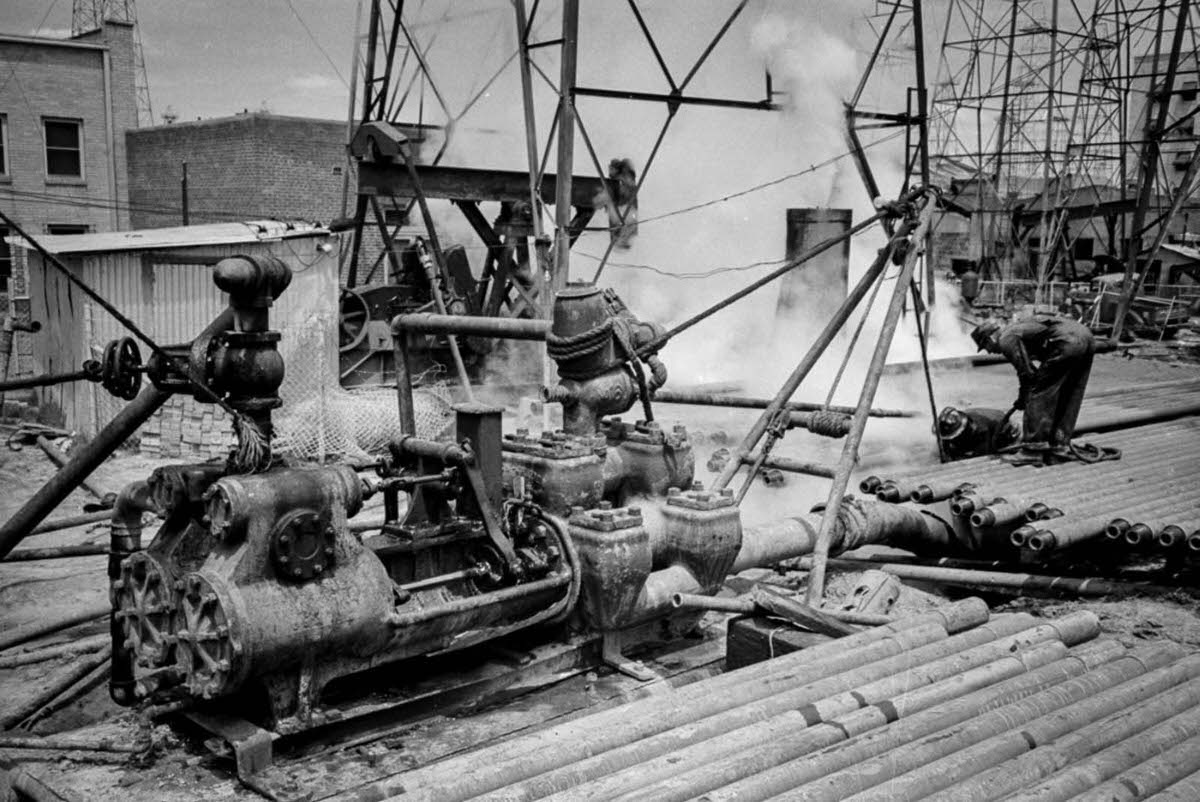
Pulling pipe out of the hole — called tripping out — required the crew to work in tight, coordinated sequences. Each stand of pipe had to be uncoupled, racked, and stacked without delay. A misstep could send hundreds of pounds of steel swinging across the drill floor.
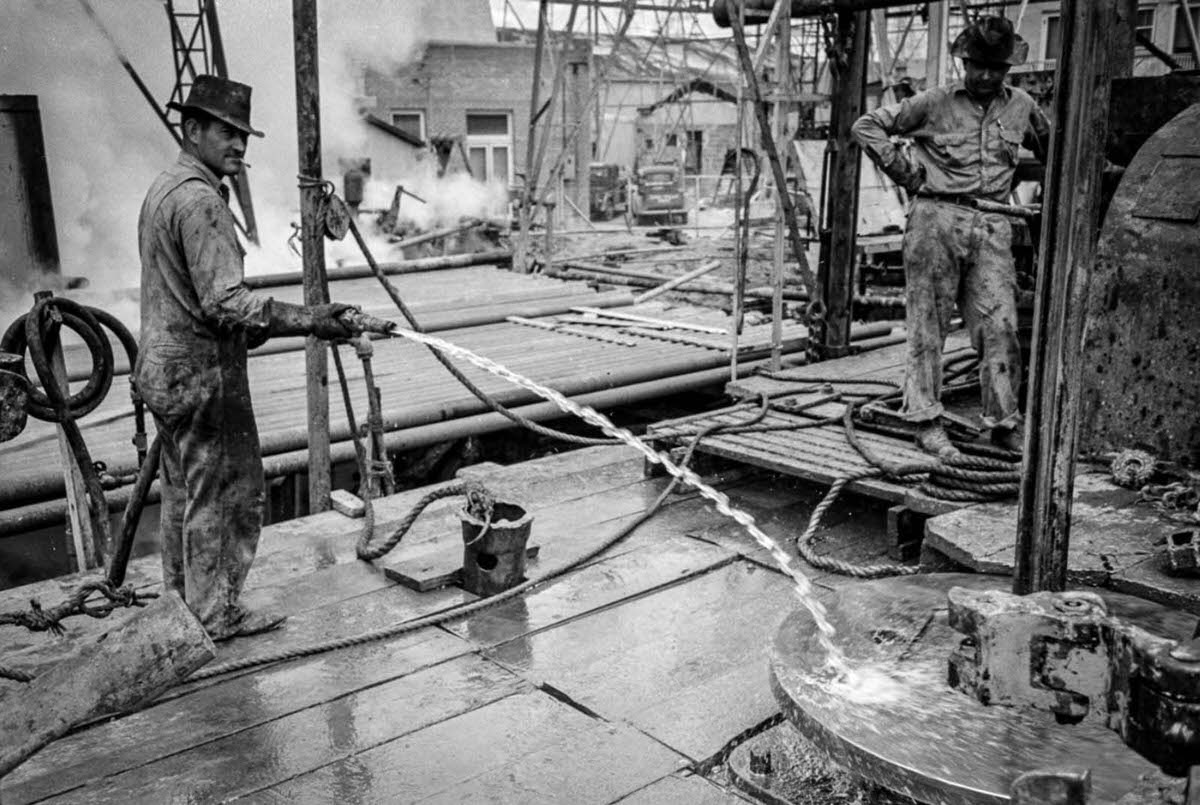
The rotary table sat at the center of the drill floor and spun the entire drill string. Mud, oil, and rock cuttings constantly covered it. Hosing it down was not a matter of cleanliness — it was maintenance. A rotary table clogged with debris could seize, stopping the entire operation.
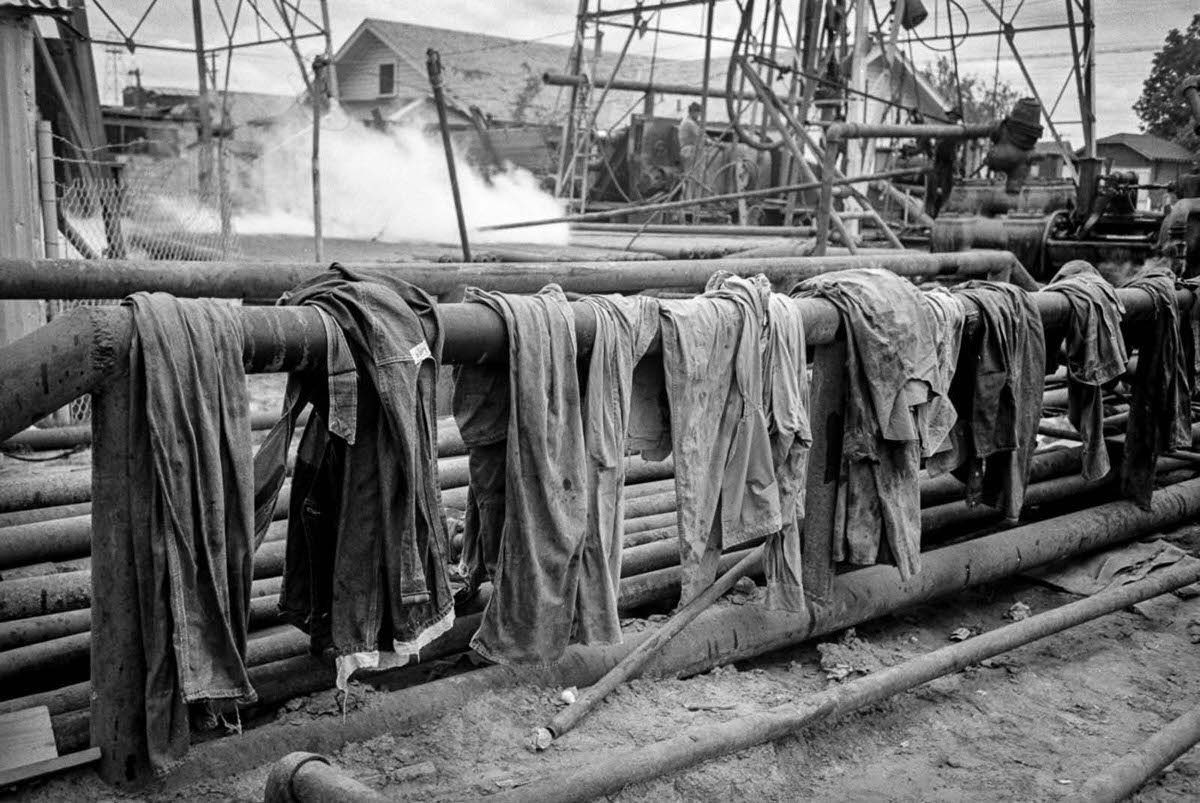
Between tasks, glimpses of daily life on the rig come through clearly in these 1939 photographs. Wet work clothes hang from a steam pipe to dry — a makeshift solution in a place with no locker rooms or dry spaces. The men worked in whatever they had, and they dried it where they could.
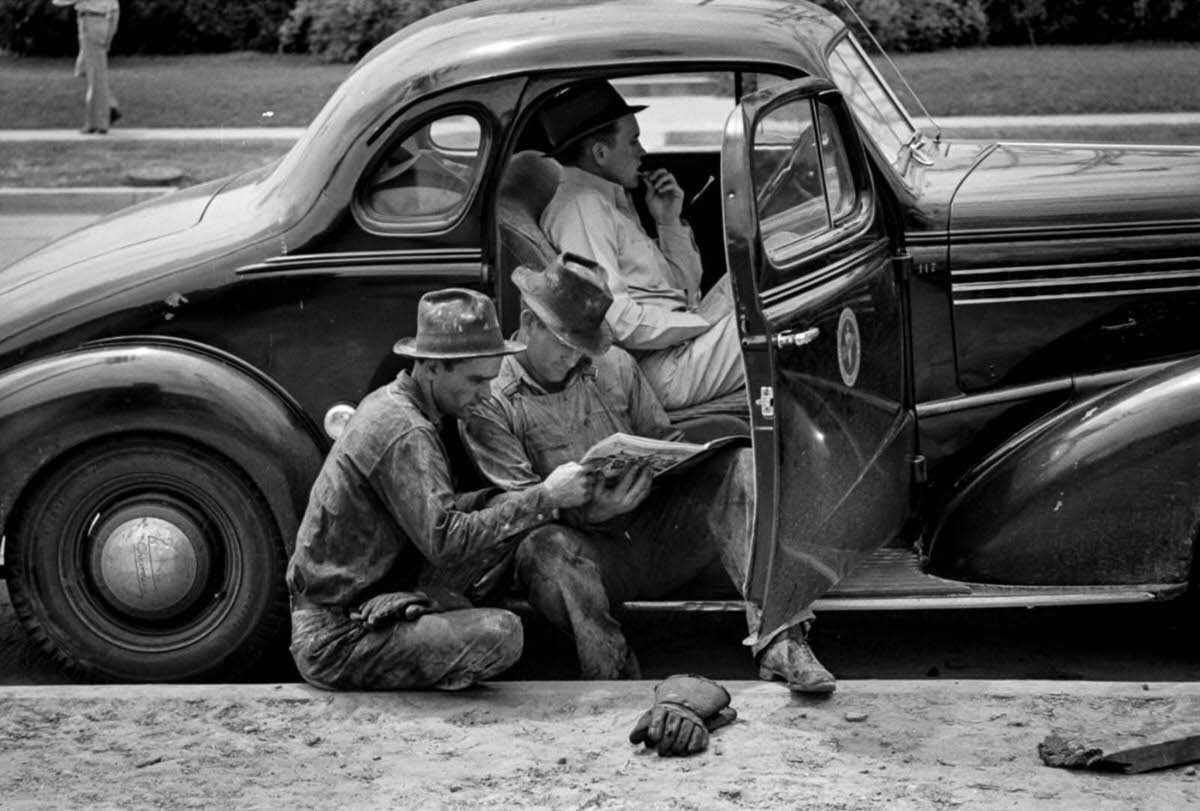
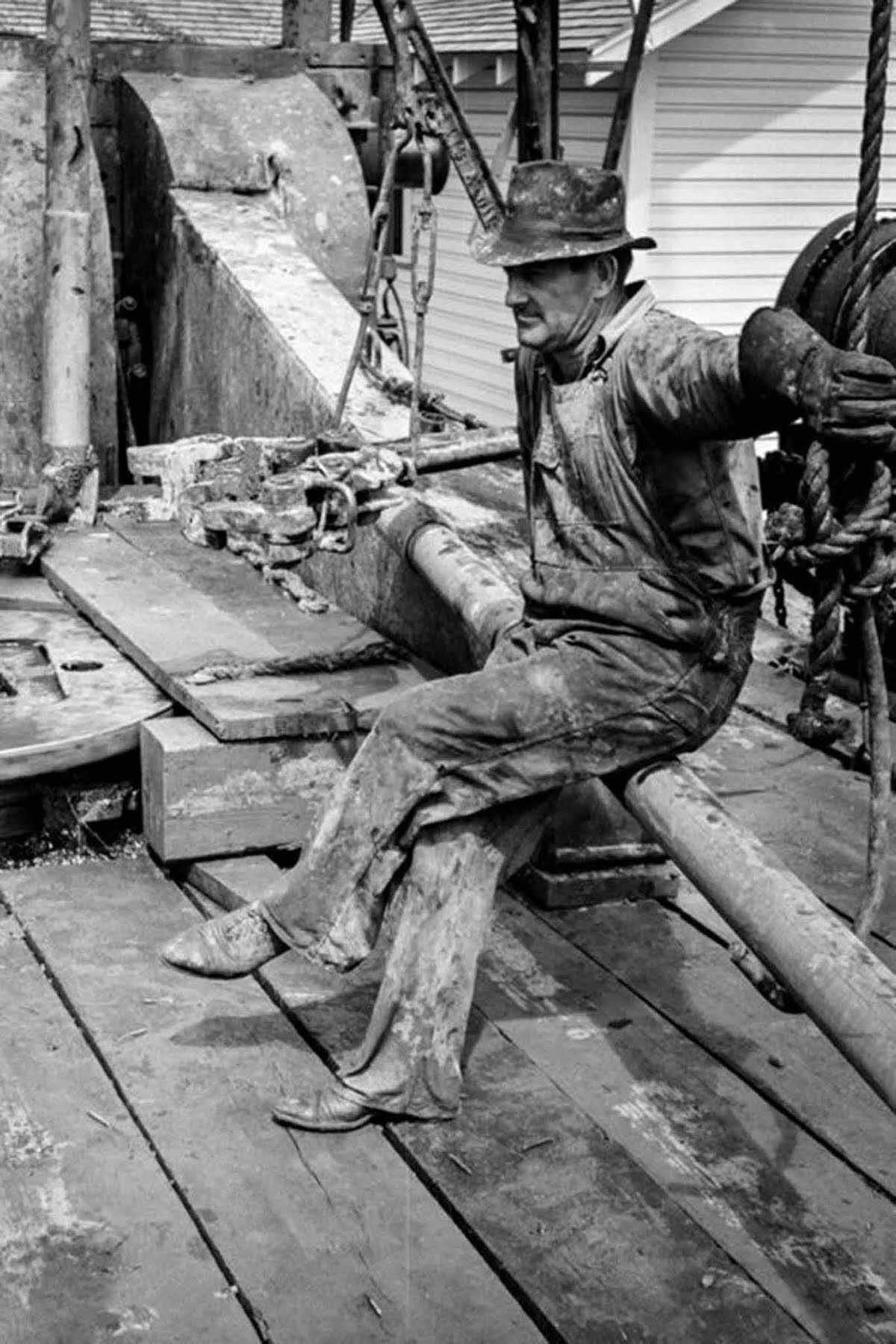
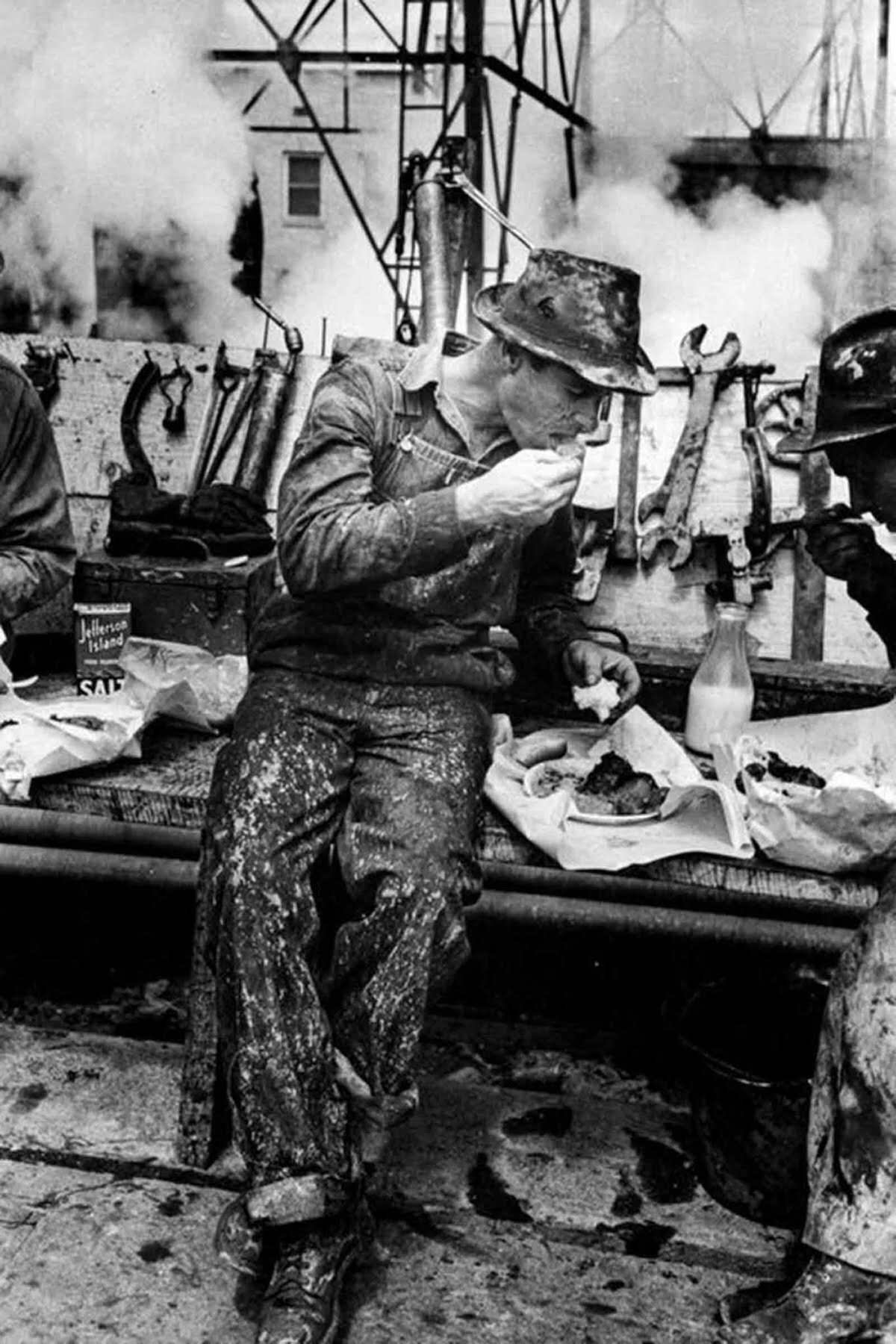
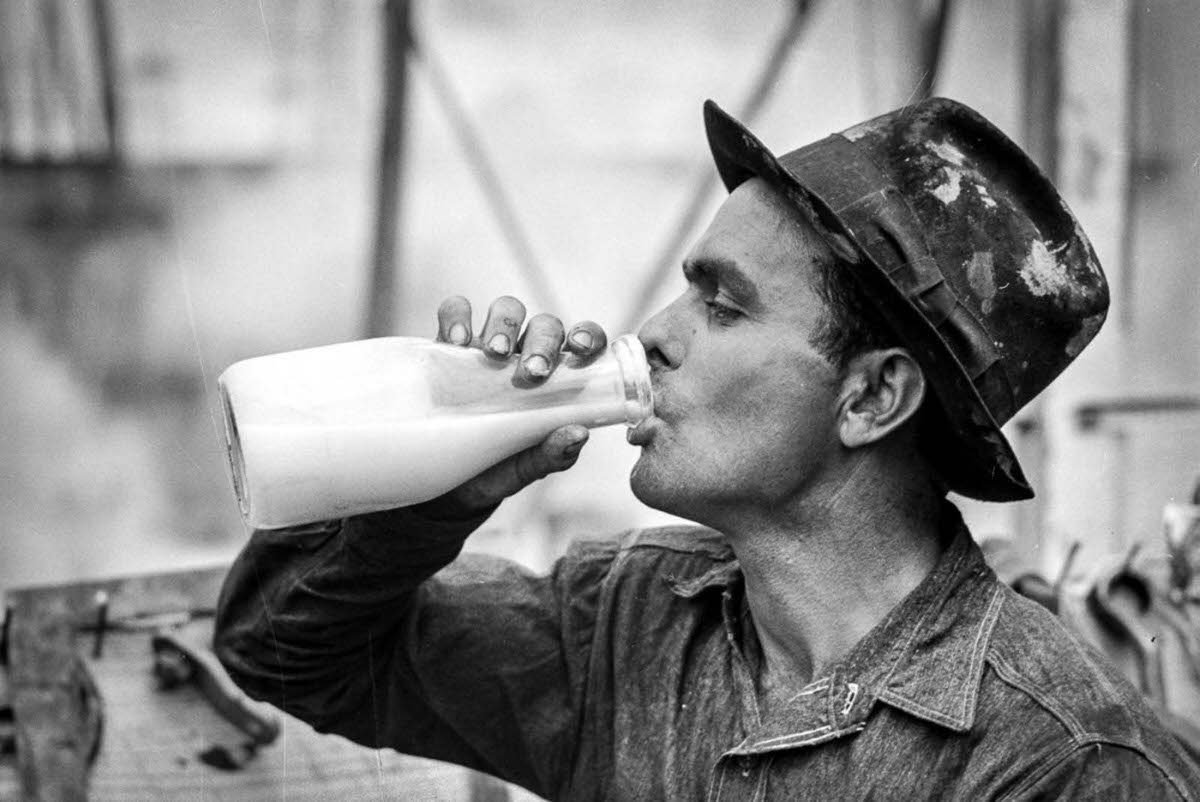
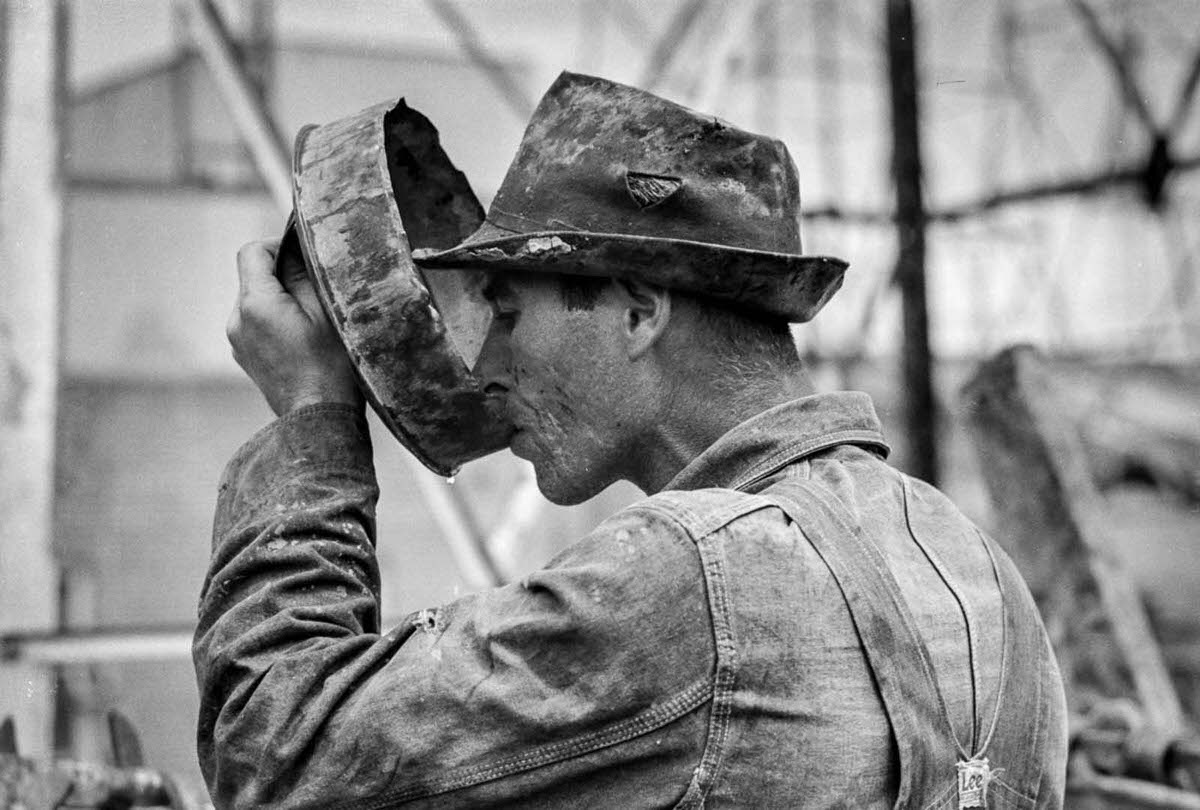
Breaks were short and workers made use of every minute. Reading a newspaper, eating lunch on the ground near the rig, or resting against a stack of tools — these were the only reprieves in a long, physically punishing shift.
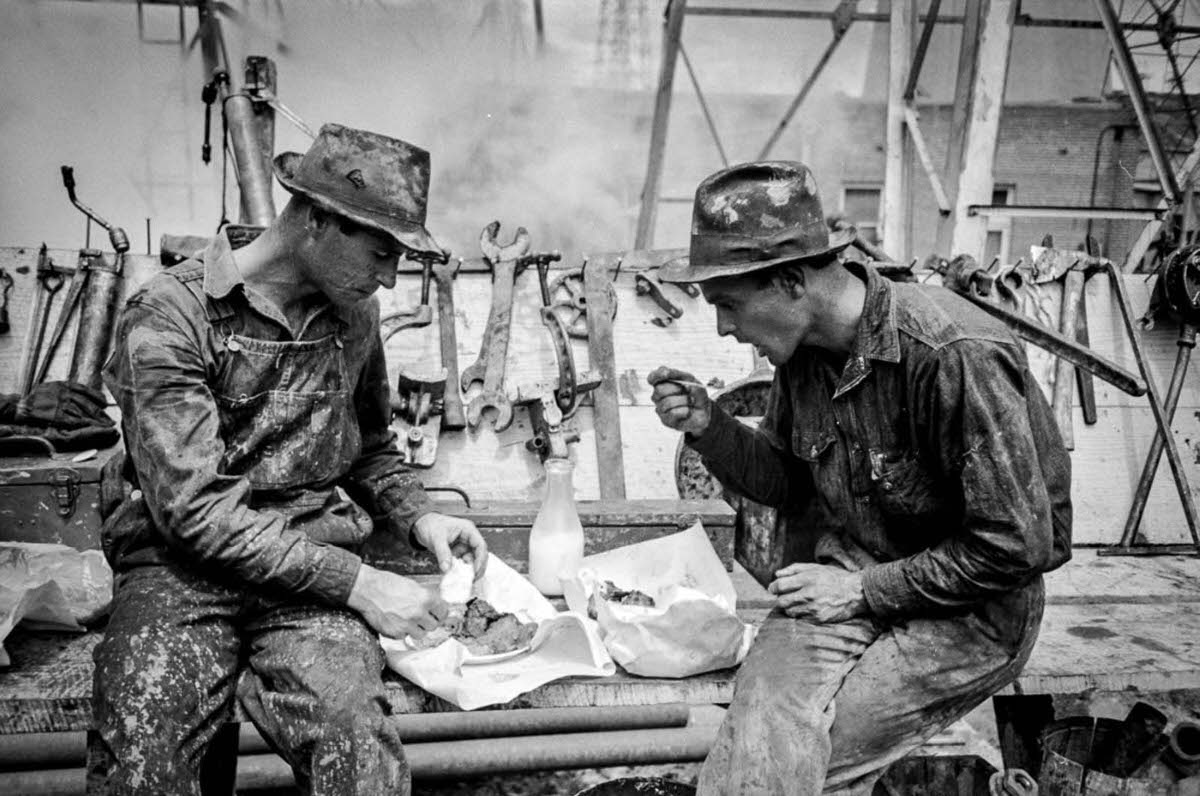
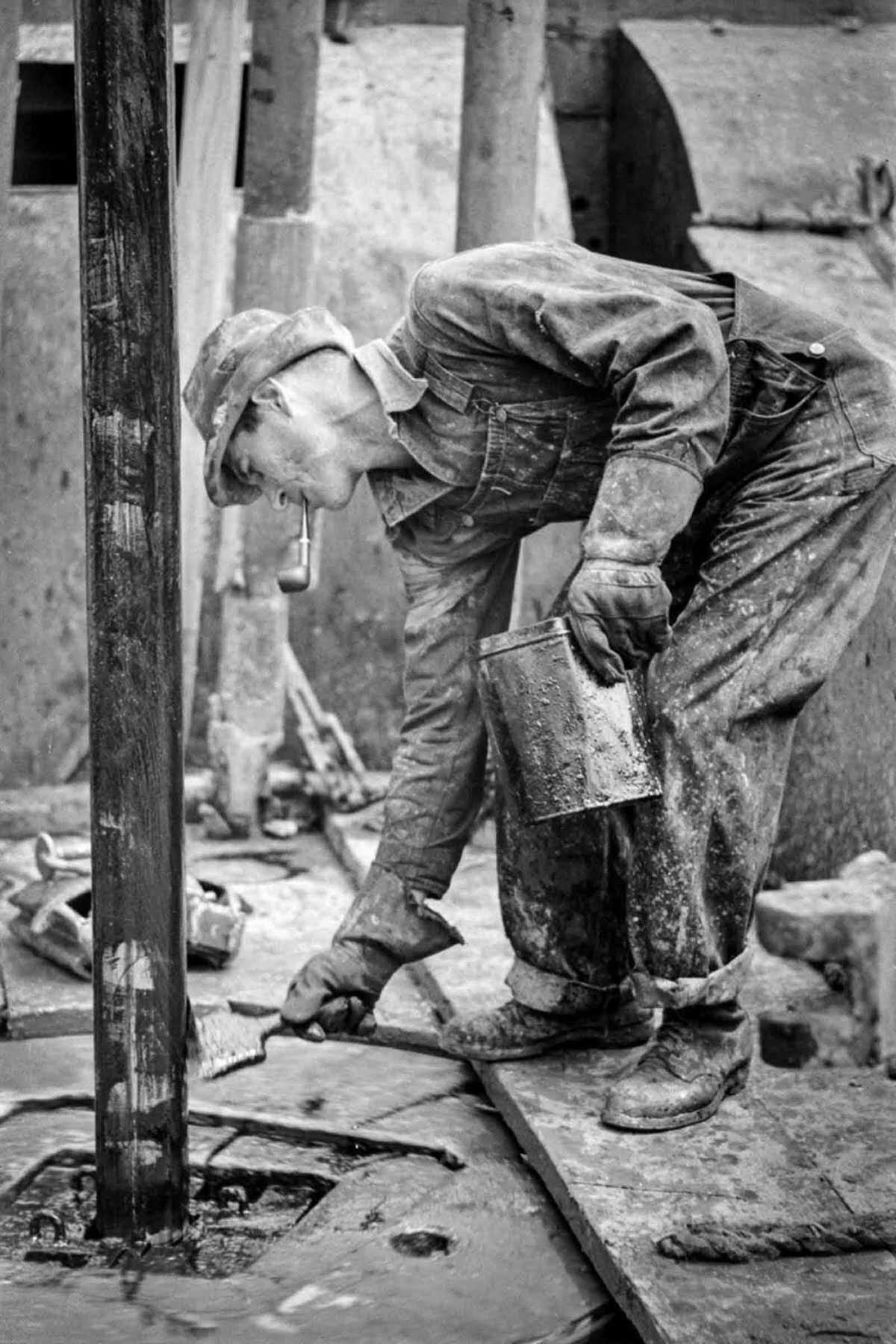
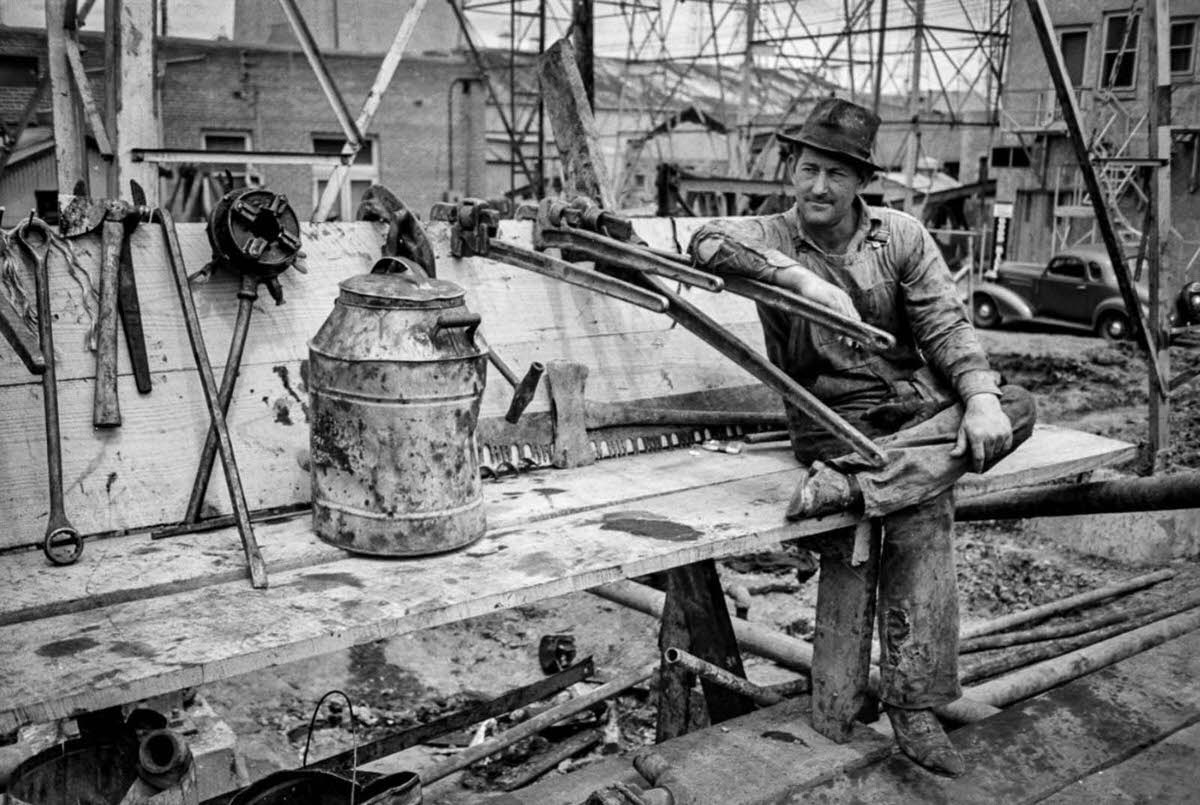
The East Texas field ultimately produced over 5.42 billion barrels of oil. It remains the second-largest oil field in the contiguous United States and ranks first in total volume of oil recovered since its discovery. At its peak, the sheer density of drilling operations was unlike anything seen before in American oil history — 30,340 historic and active wells across five counties, many of them drilled by men exactly like the ones pictured here.
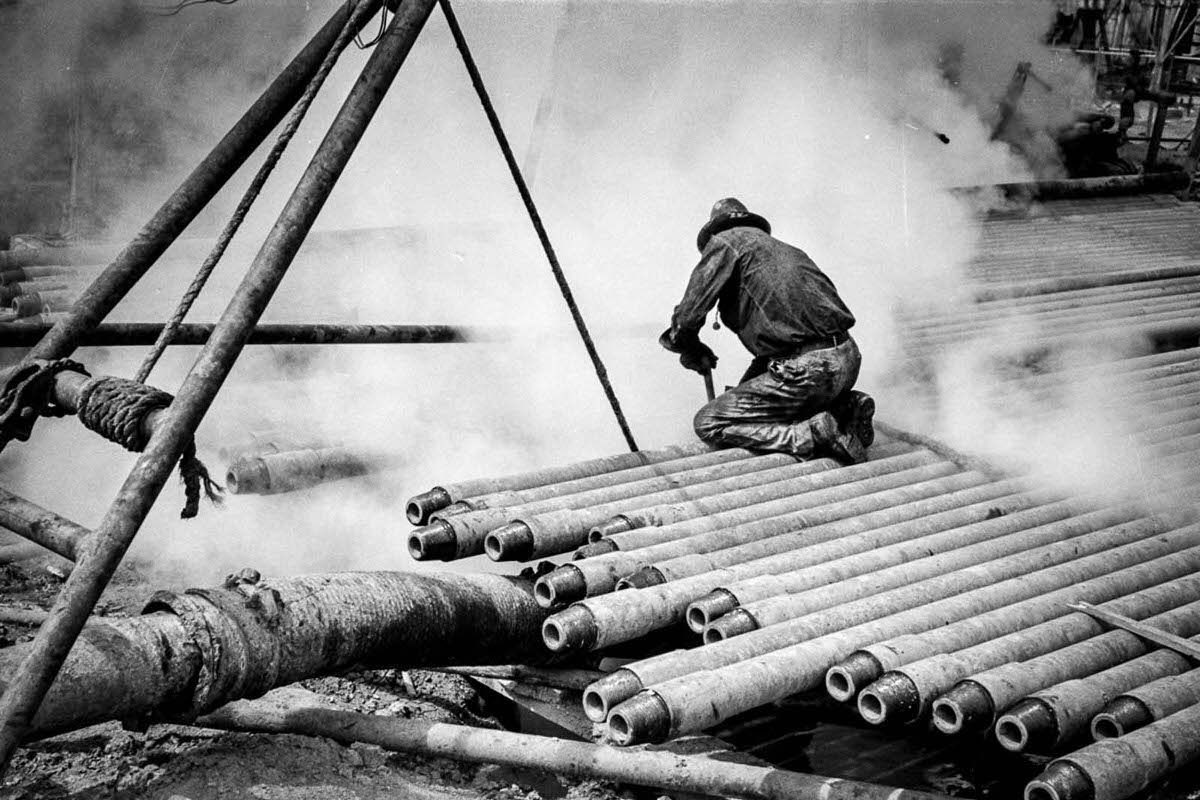
The slush pit collected the drilling mud and cuttings that circulated back up from the hole. Working in and around it meant contact with a thick, foul mixture of mud, oil, and ground-up rock. It was one of the dirtiest jobs on the location, and it still had to be done.