
Prague in the 1980s was a city caught between centuries. Its cobblestone streets and Gothic spires had survived wars and occupations, but the decade found the city firmly under communist rule. The Czechoslovak Socialist Republic controlled daily life — what people bought, where they worked, and even what signs hung above hotel doorways. Yet the city itself remained striking. Its medieval core was largely untouched by the kind of commercial development that had reshaped Western European capitals, and that frozen quality is exactly what makes these photographs so valuable today.
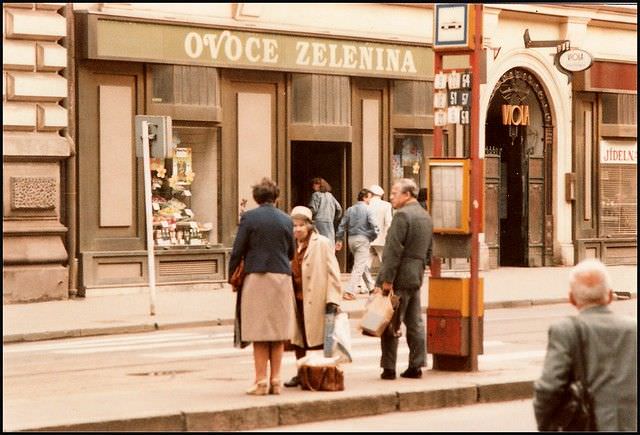
The Nové Město, or New Town, formed the beating heart of everyday Prague. Despite its name, the district dates back to 1348 when Charles IV expanded the city. By the 1980s it was a dense urban neighborhood full of tram lines, department stores, restaurants, and ordinary people going about their days under a socialist system.
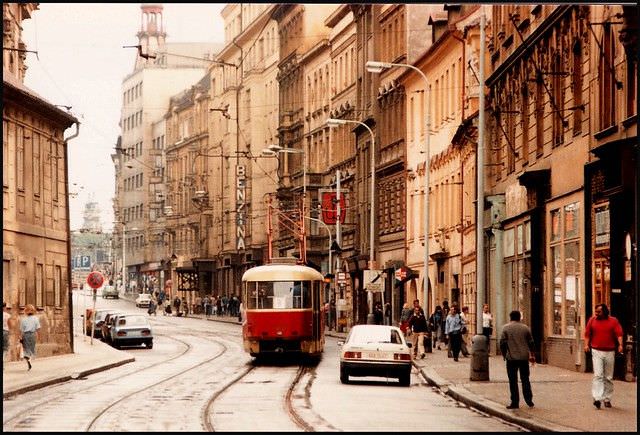
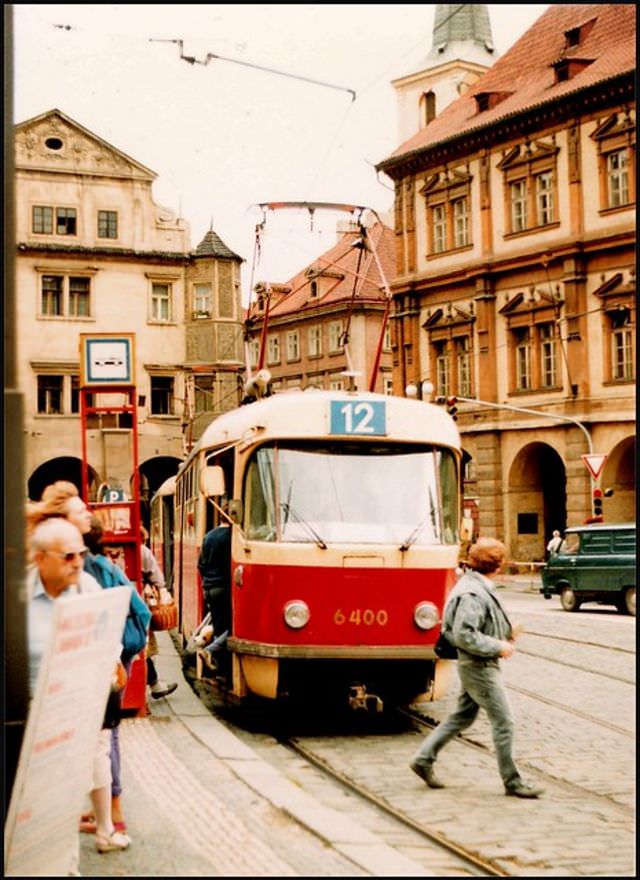
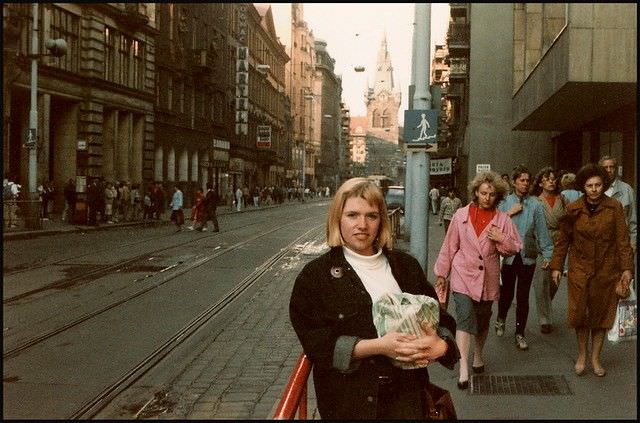
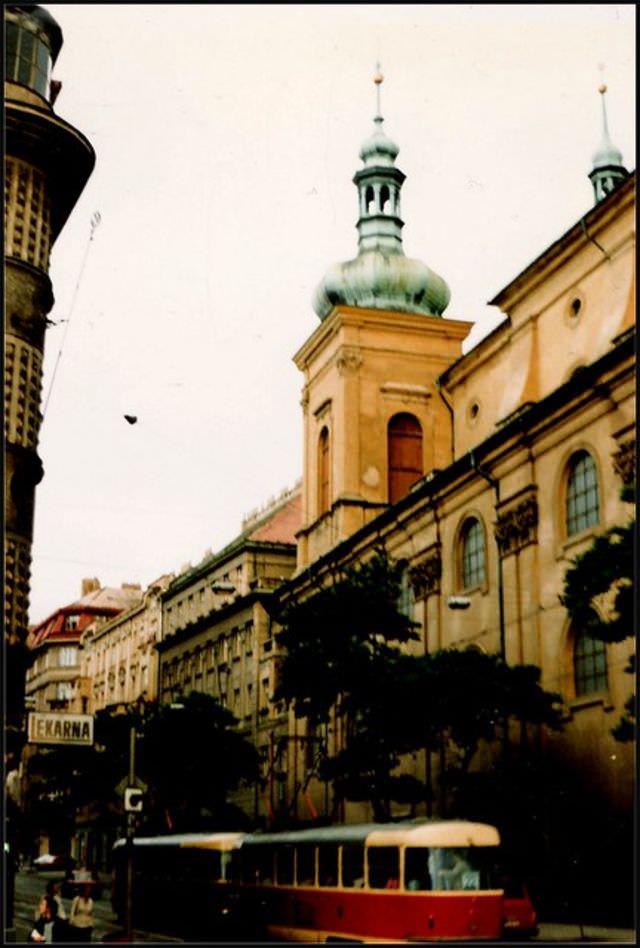
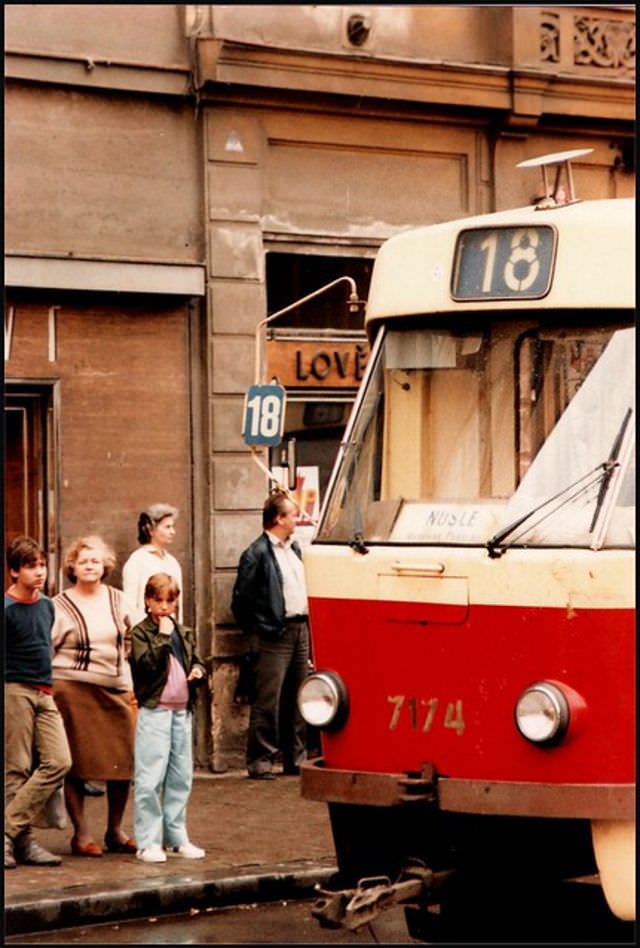
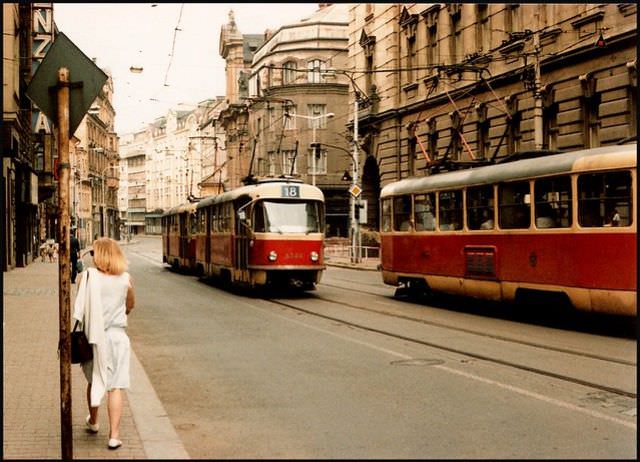
Trams were the backbone of Prague’s public transit in the 1980s. The city’s network was extensive, and the red-and-cream carriages threaded through nearly every district. They were not just practical — they were a constant visual feature of the city, moving slowly through narrow streets that had not been built with motorized vehicles in mind.
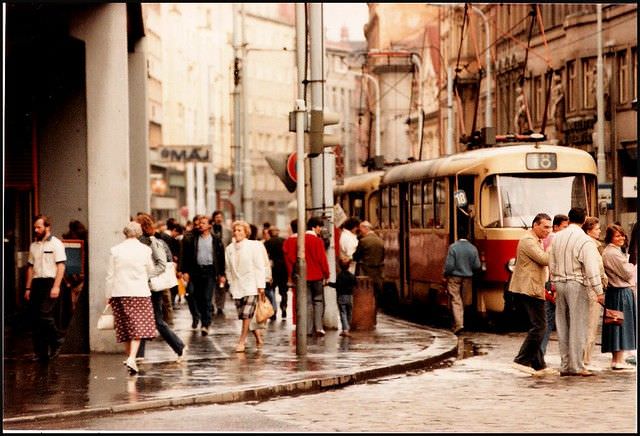
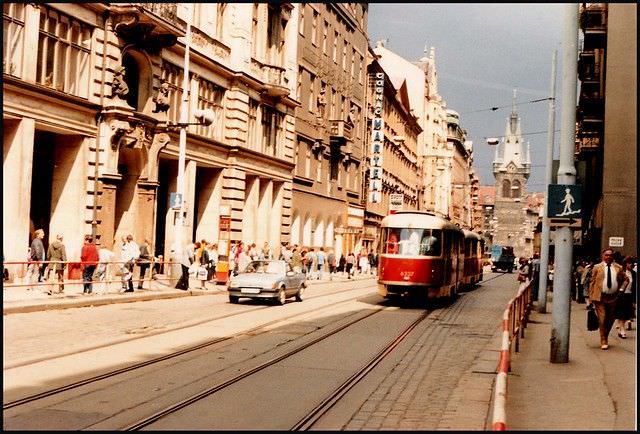
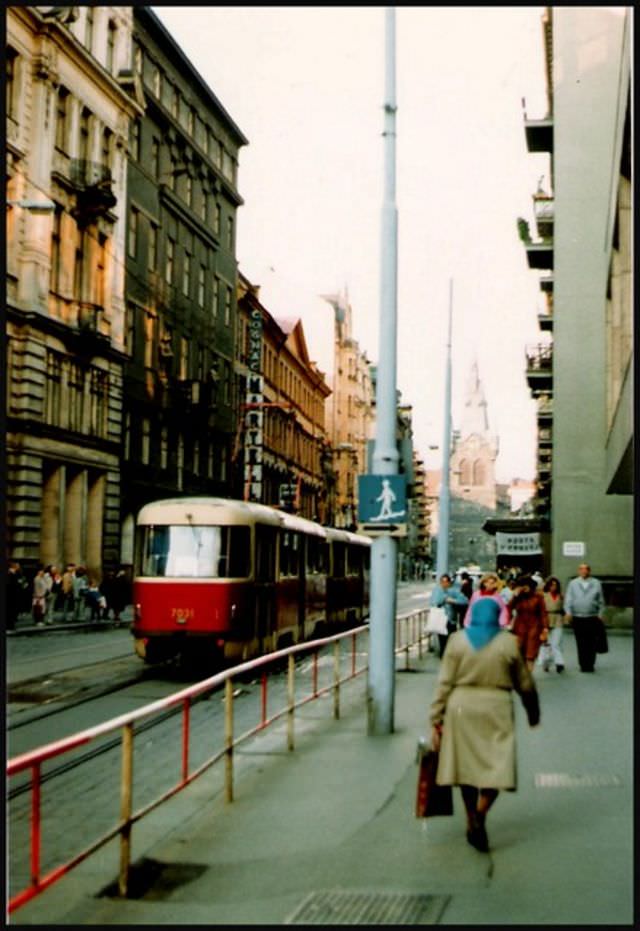
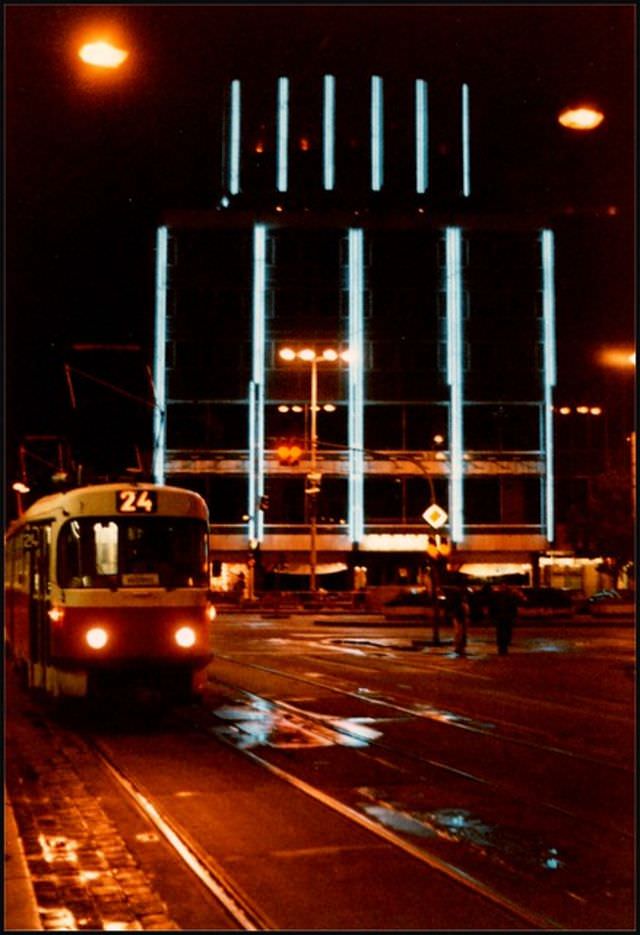
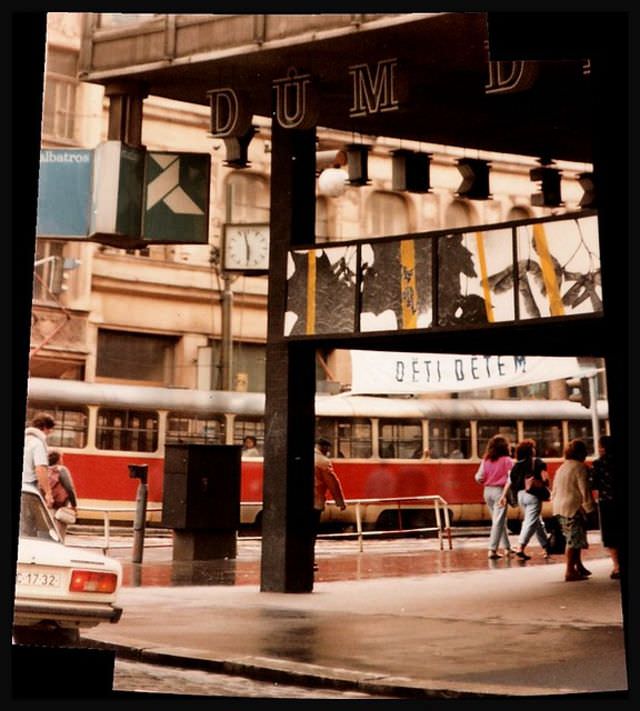
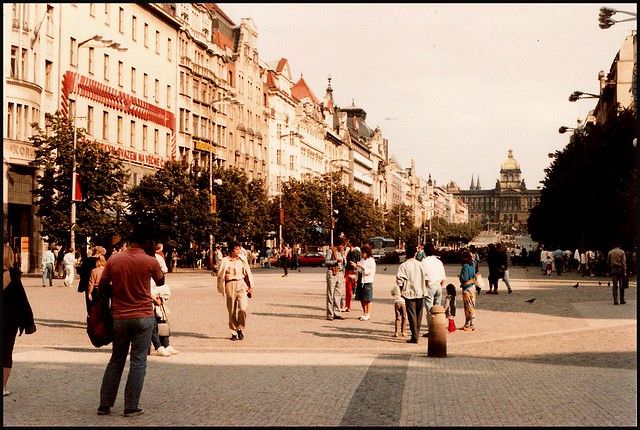
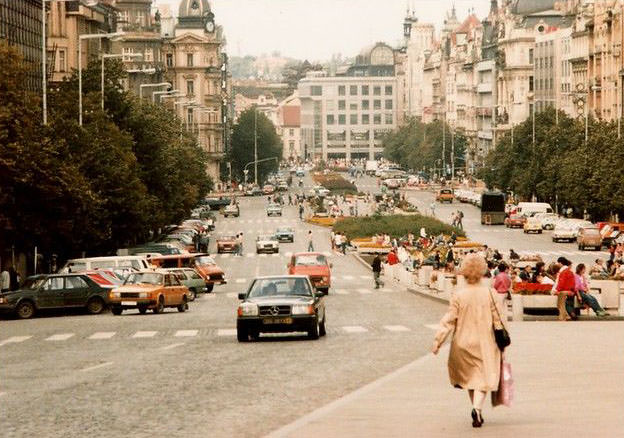
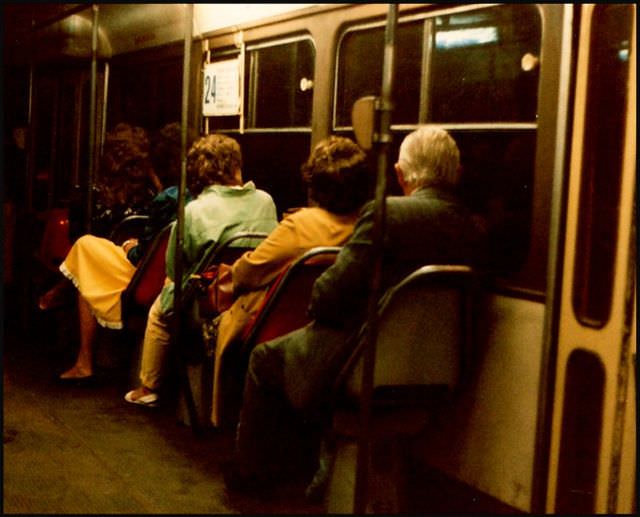
After dark, the trams kept running. Václavské Náměstí — Wenceslas Square — remained active into the night, with the Dům Dětský department store lighting up the corner. The square itself was less of a square and more of a long boulevard, stretching from the National Museum at one end down to the busy commercial streets of Nа Mustku.
Národní Třída — National Avenue — connected Wenceslas Square to the National Theatre along the Vltava River. This street carried both trams and pedestrians, and its wide pavements made it one of the city’s main arteries. The Nové Scena, the theatre’s modernist extension, stood at the far end as a symbol of state-sponsored culture in the socialist era.
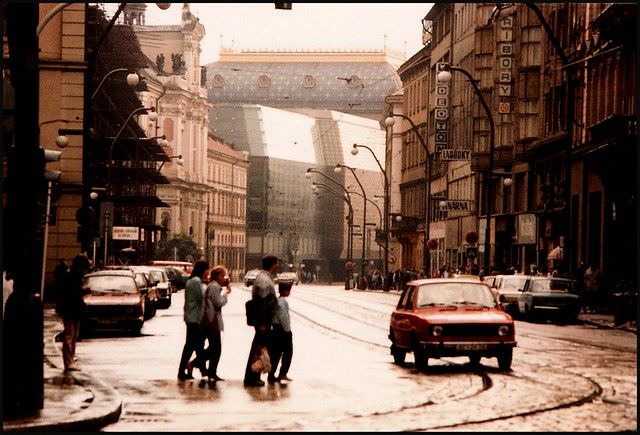
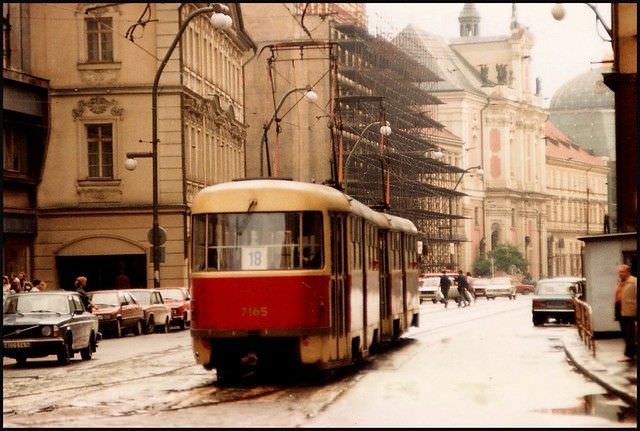
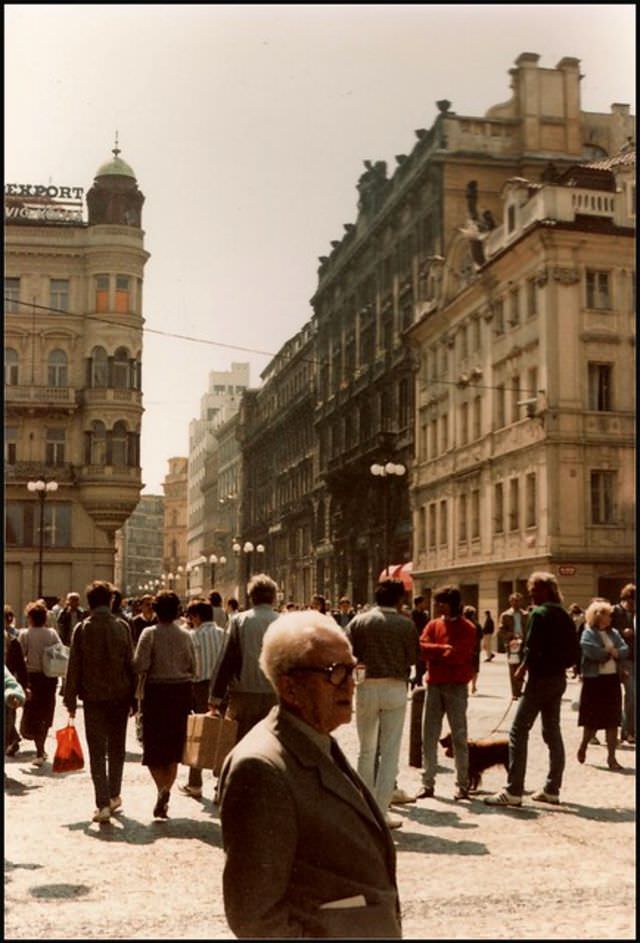
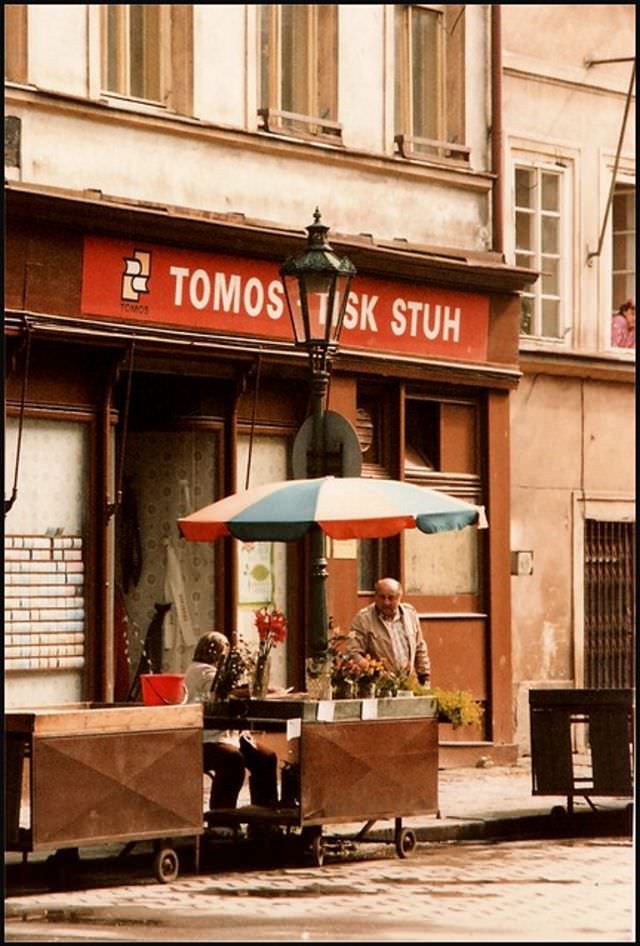
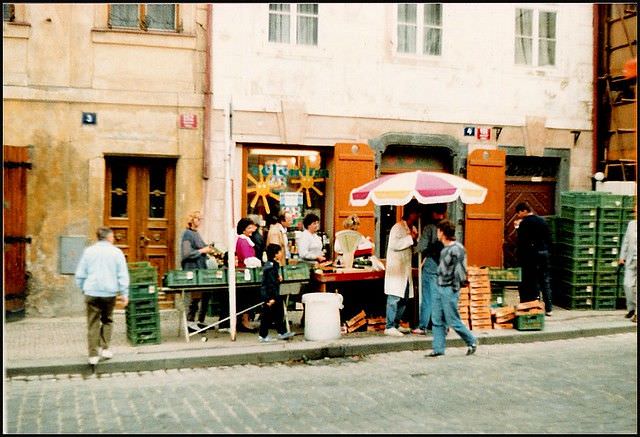
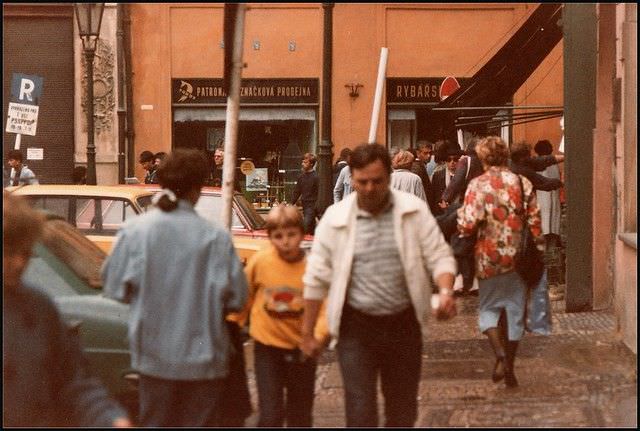
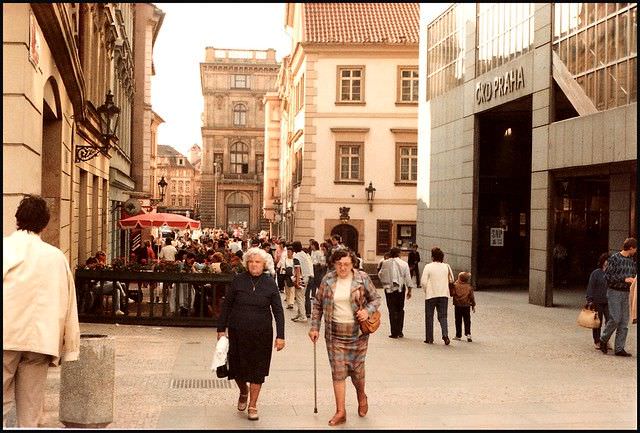
The Staré Město, Prague’s Old Town, offered a different atmosphere entirely. Its narrow lanes and medieval squares had changed little in outward appearance over centuries. Small cafés and second-hand bookshops lined the Old Town Square, and shoppers browsed flower stalls and vegetable vendors set up in the open air. These were not tourist markets — they served local residents who depended on them for everyday goods.
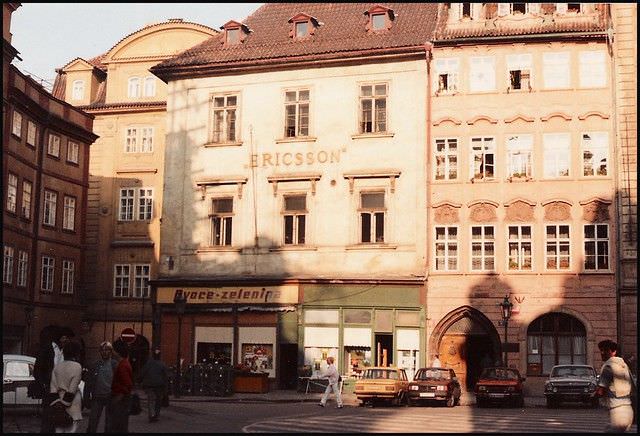
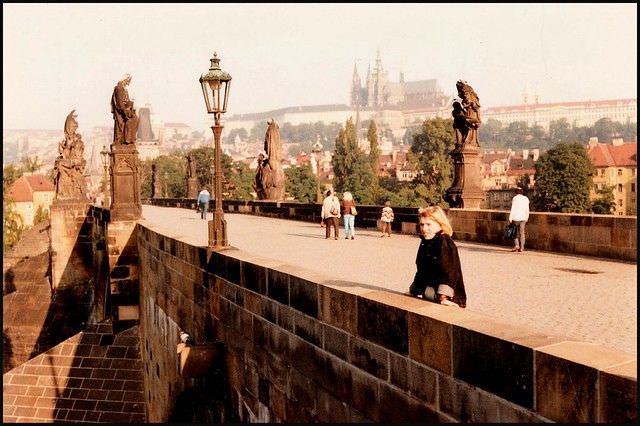
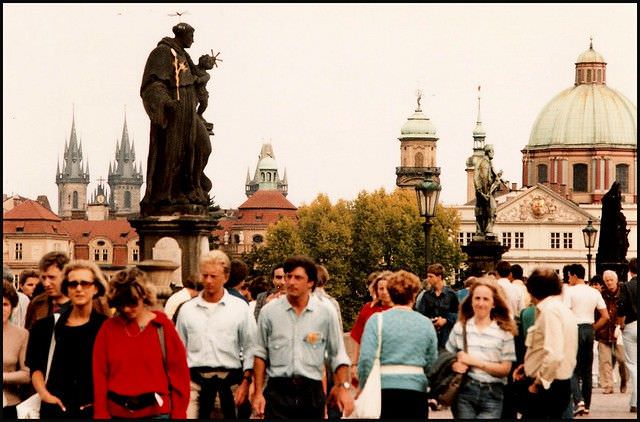
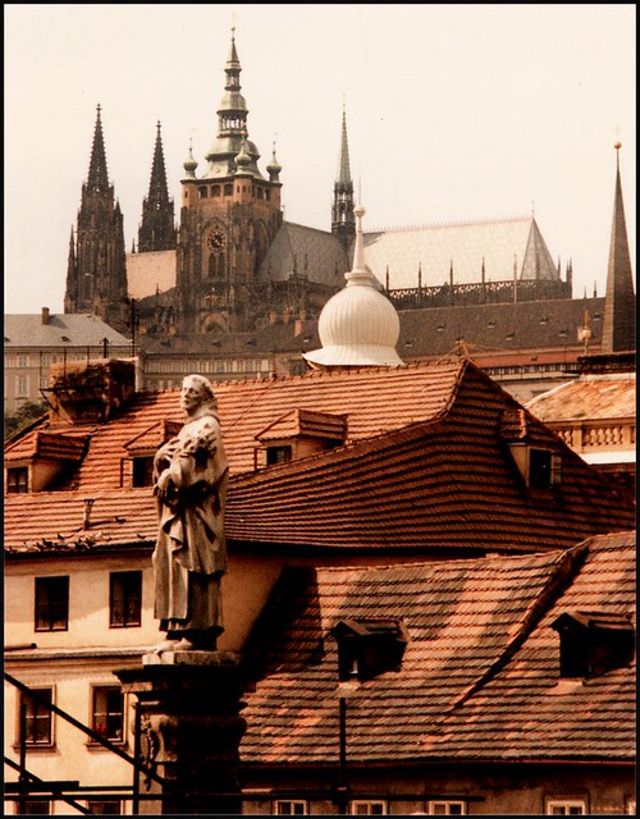
The Charles Bridge connected the Old Town to Malá Strana, and in the 1980s it was nothing like the tourist-packed crossing it would become after 1989. Students and ordinary Praguers crossed it at lunchtime. Vendors were few. The stone statues of saints lined the bridge’s parapets in silence, with St. Vitus Cathedral rising above the rooftops of Malá Strana beyond.

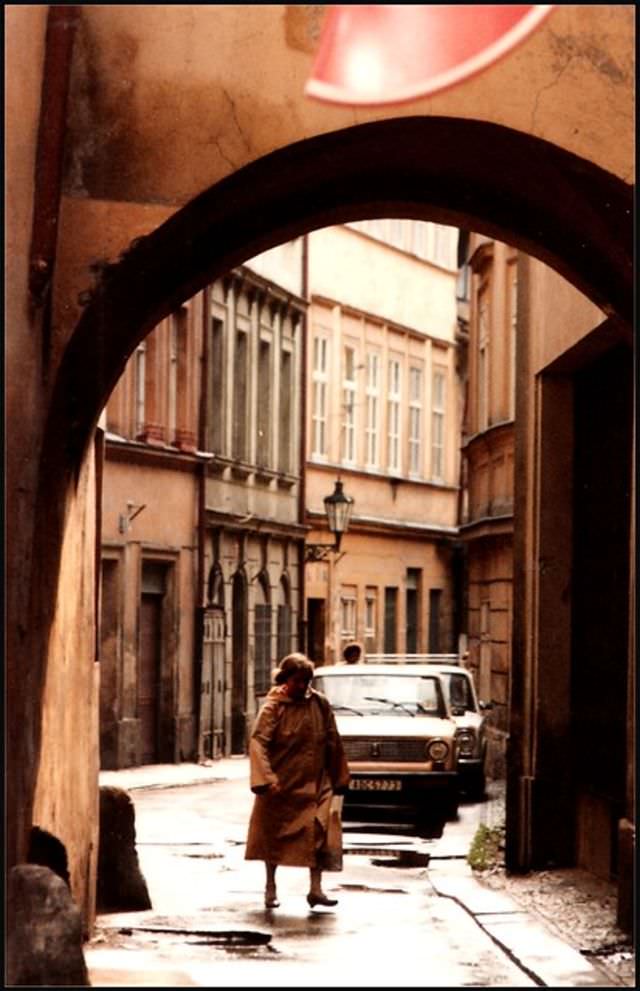
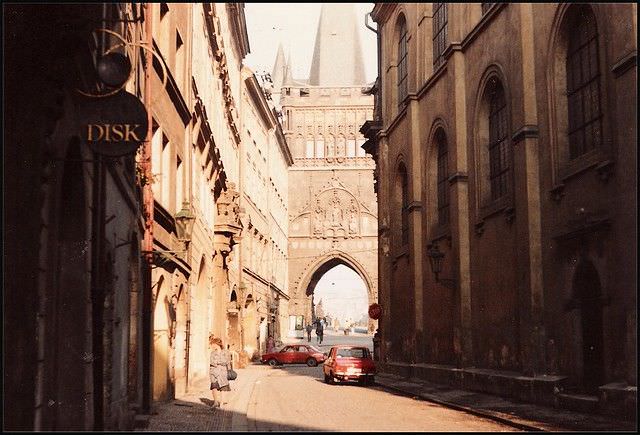
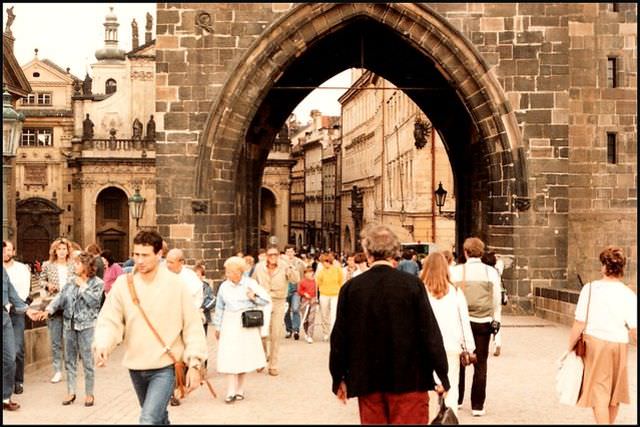
Karlova Třída, the road running from the Charles Bridge toward the Old Town Square, passed beneath the stone arch of the Old Town Bridge Tower. Looking back through the arch gave a framed view of the street and the medieval architecture beyond — a perspective that photographers found irresistible and that remains one of Prague’s most recognizable sightlines.
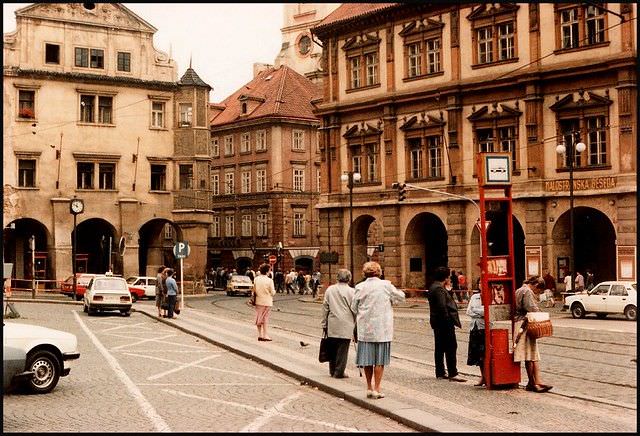
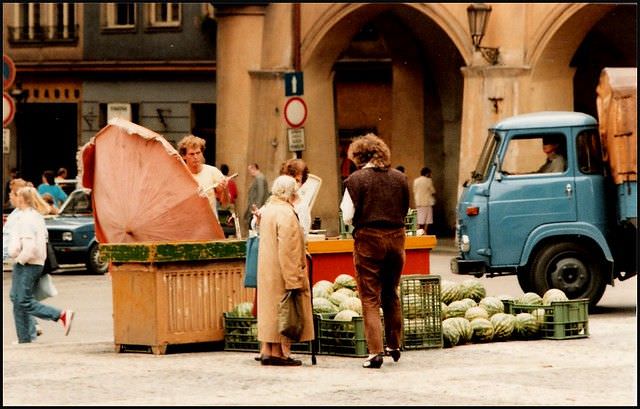
On the western bank, Malostranské Náměstí served as the central square of Malá Strana, or the Lesser Town. Tram stops here saw a steady stream of passengers boarding and alighting, with watermelon sellers setting up stalls nearby during summer months. The Church of St. Nicholas dominated the square from its northern side, its green dome a landmark visible from across the river.
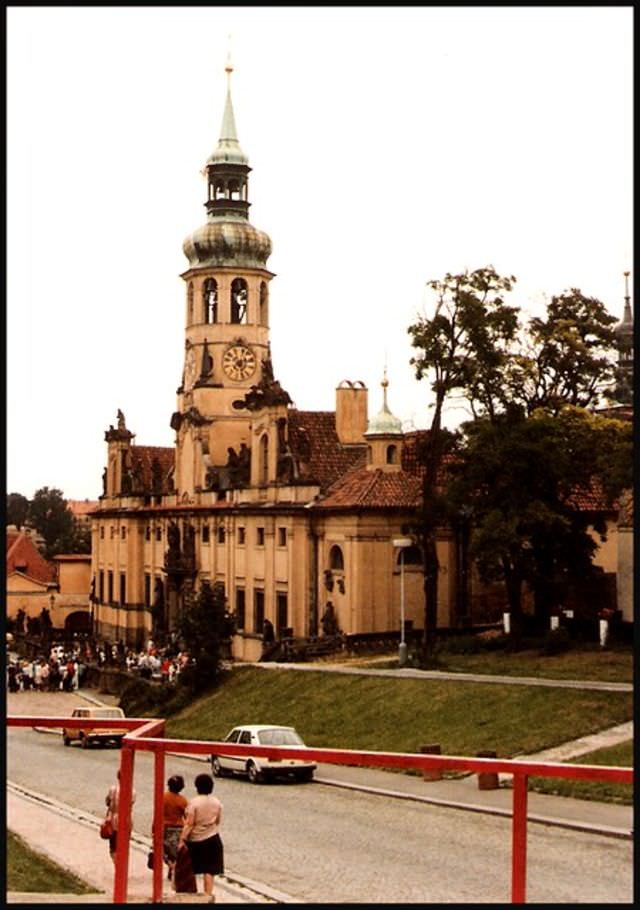
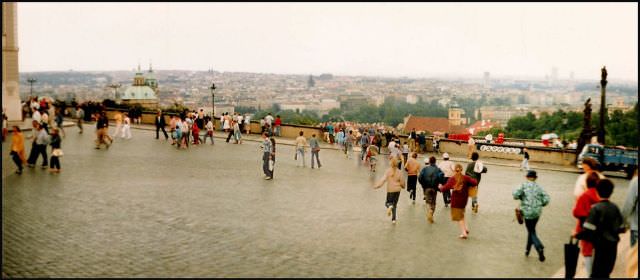
Above Malá Strana stood the Hradčany district, home to Prague Castle and its surrounding palaces and churches. The Our Lady of Loreto church, with its famous carillon of bells, occupied a prominent place near the castle complex. School groups arrived by the coachload, spilling out onto the castle plaza with the city spread out far below them.
Josefov, Prague’s Jewish district, sat within the Old Town and held some of the city’s oldest and most significant buildings. Maiselova Street had once been the main road through the Jewish ghetto before the district was largely demolished and rebuilt in the late 19th century. Široká Street still ran through the former ghetto. The Old-New Synagogue on Pařížská, built in the 13th century, remained in active use — one of the oldest functioning synagogues in Europe.
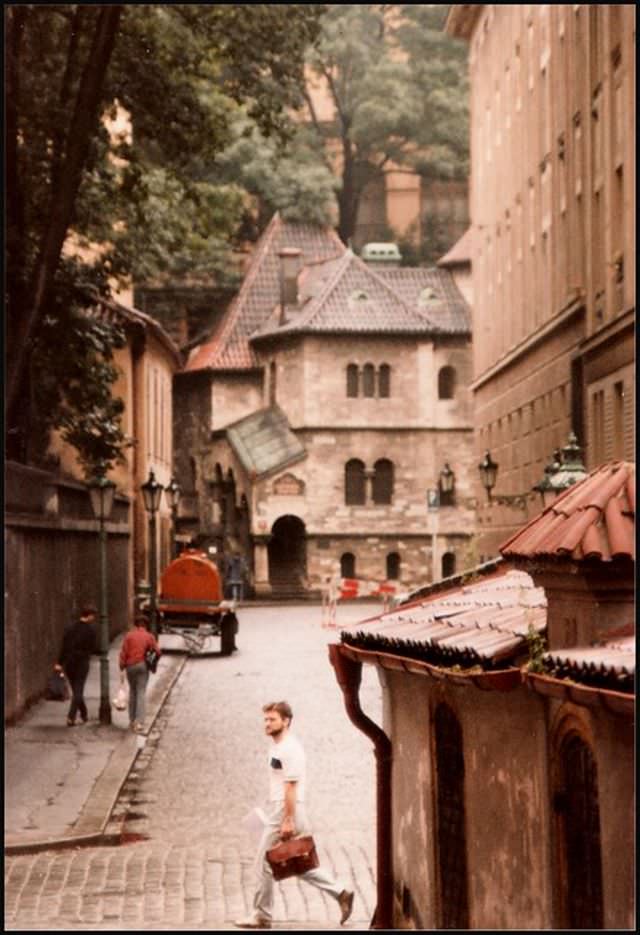
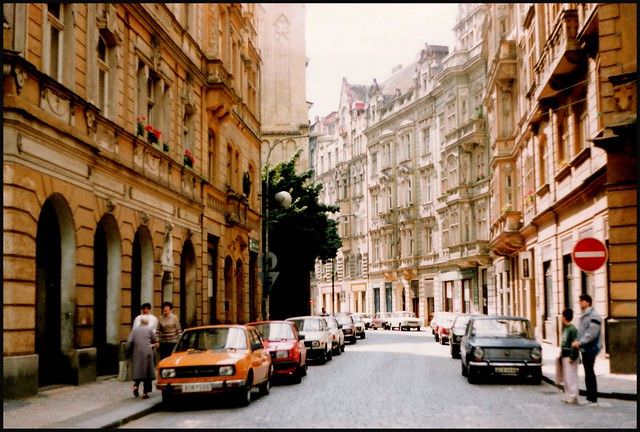
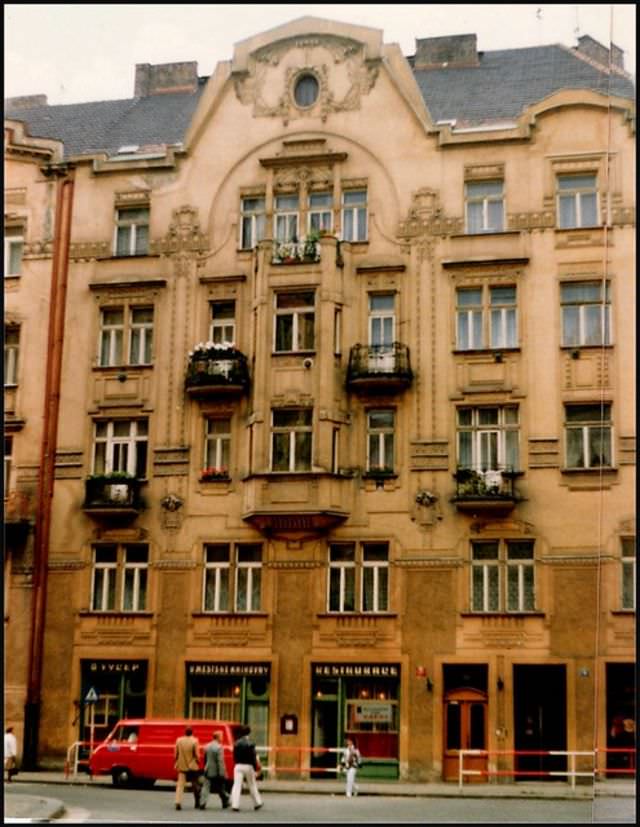
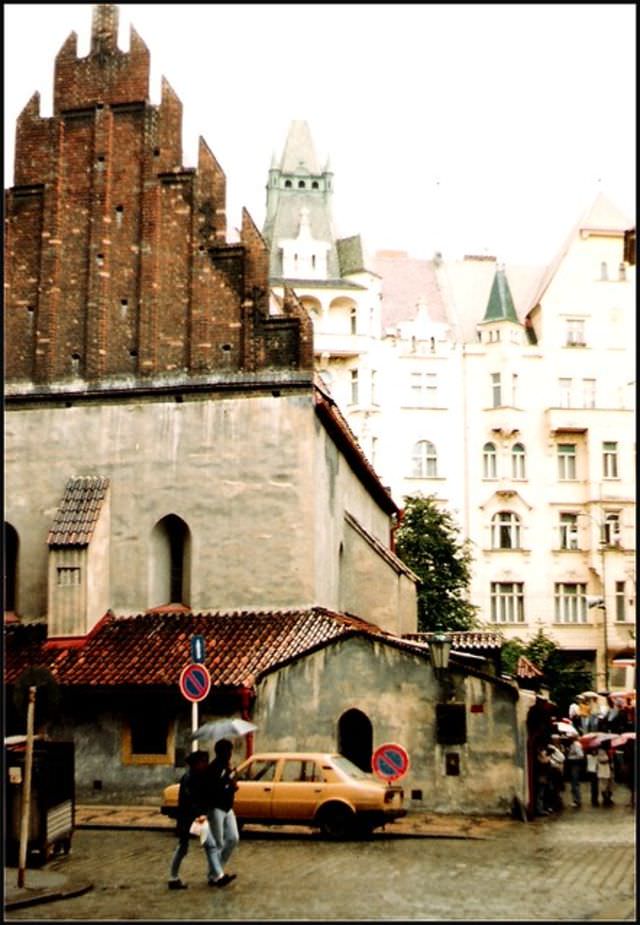
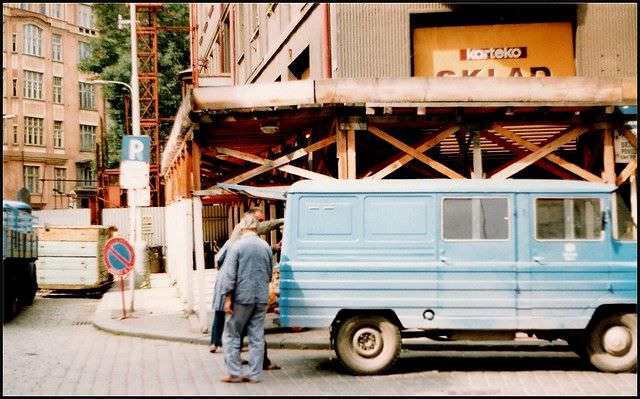
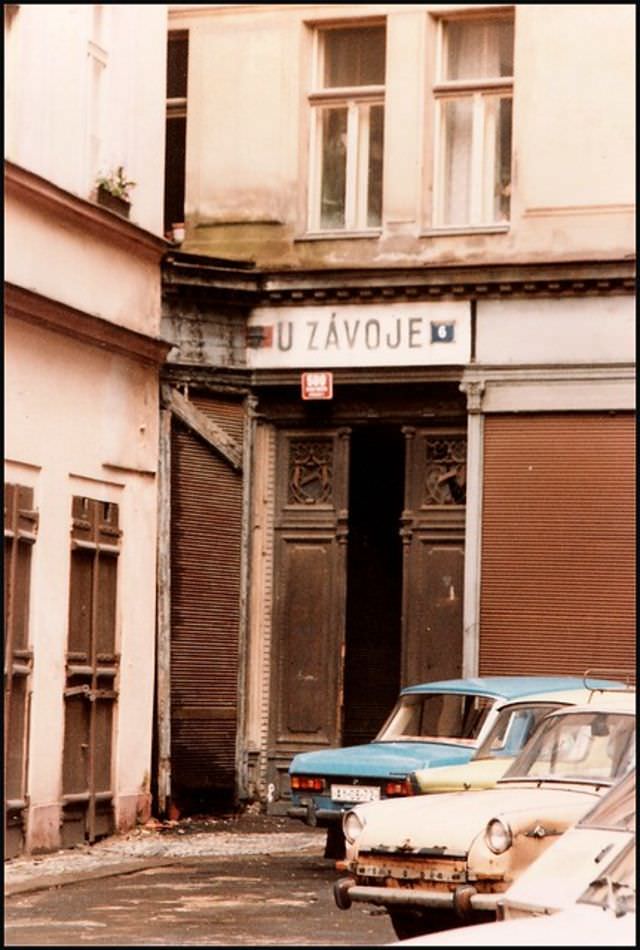
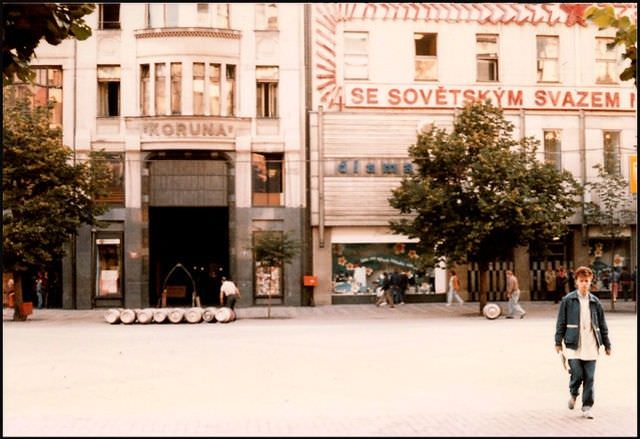
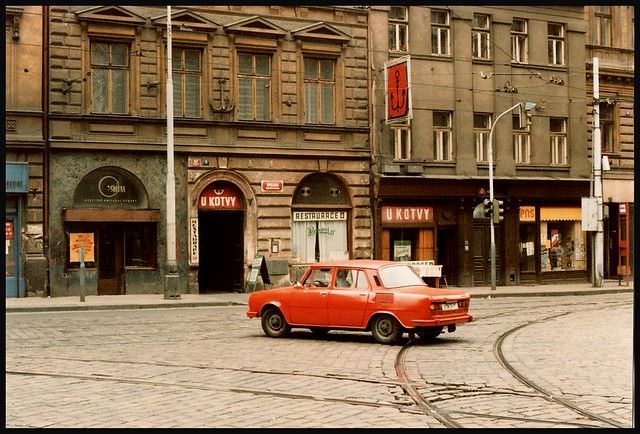
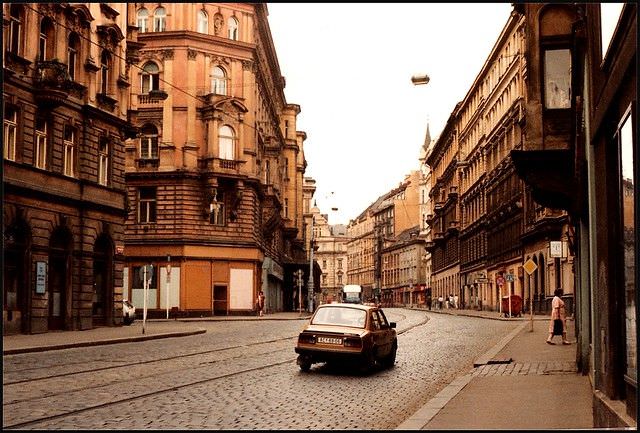
State socialism left visible marks on the city’s commercial life. At the Koruna hotel, barrels of beer were rolled up to the entrance beneath a sign promoting the virtues of the socialist state. Shops operated on state schedules. The Škoda — Czechoslovakia’s own car brand — was one of the few vehicles most residents could own, and it turned through tight city intersections with the efficiency of long practice.
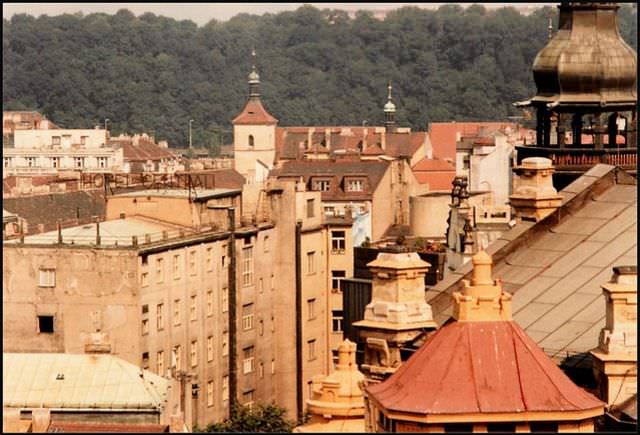
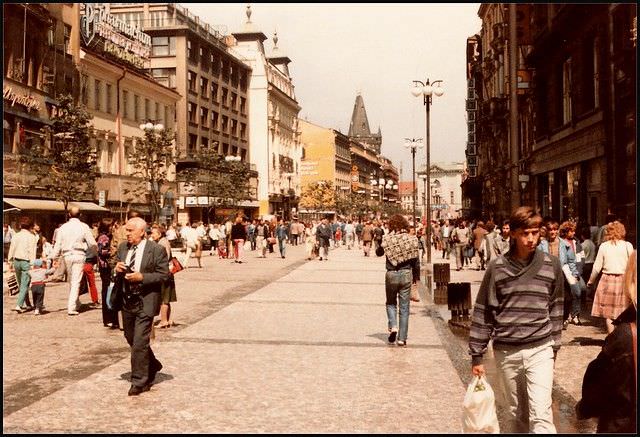
The Powder Tower stood at the edge of the Old Town, offering one of the best elevated views over the city’s rooftops. From its parapet, the layers of Prague’s architecture were clear — Gothic, Baroque, and Art Nouveau buildings standing side by side, largely unaltered. Nа Příkopě, the pedestrian street running from the base of Wenceslas Square toward the tower, saw heavy foot traffic from shoppers and workers throughout the day.
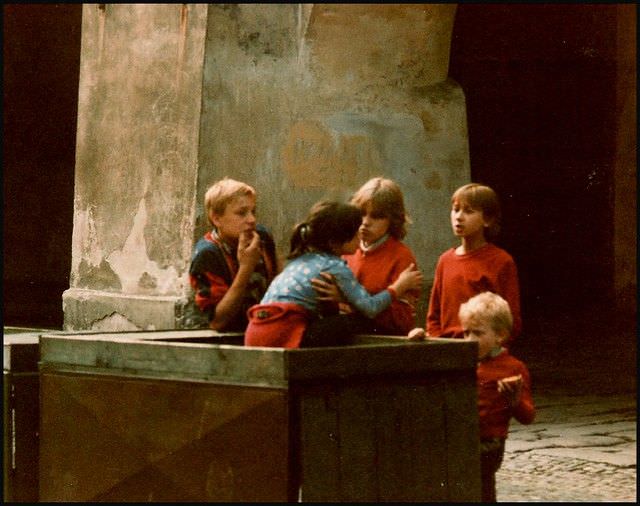
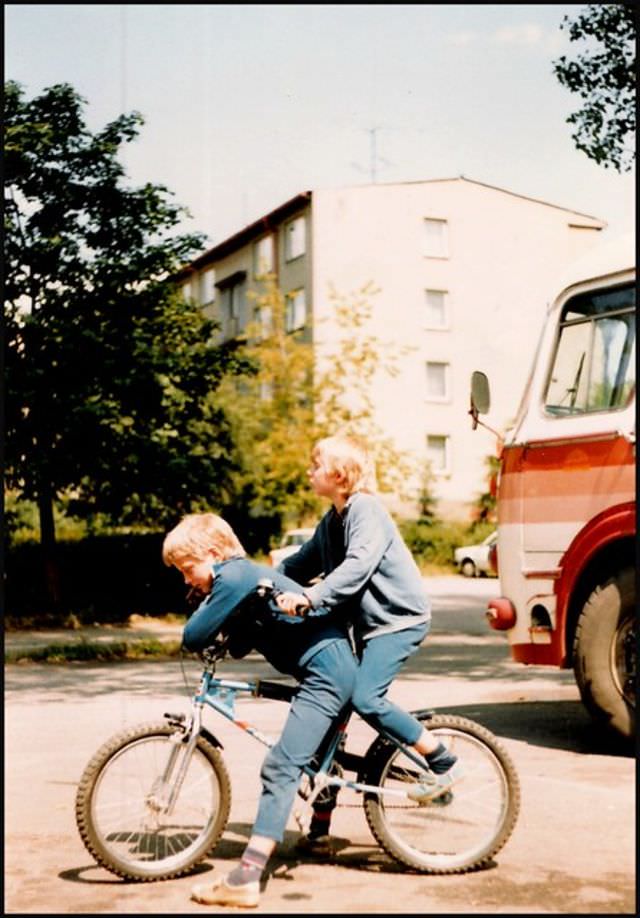
Children played in the spaces the city made available to them. In the Rycíssa district, kids climbed over an empty market stall when the vendors had packed up and gone. Near the Moser glass factory in Karlovy Vary, two children played beside the workers’ apartment blocks that housed the factory’s employees and their families. Life in these neighborhoods was structured around work, school, and the rhythms of a state-controlled economy.
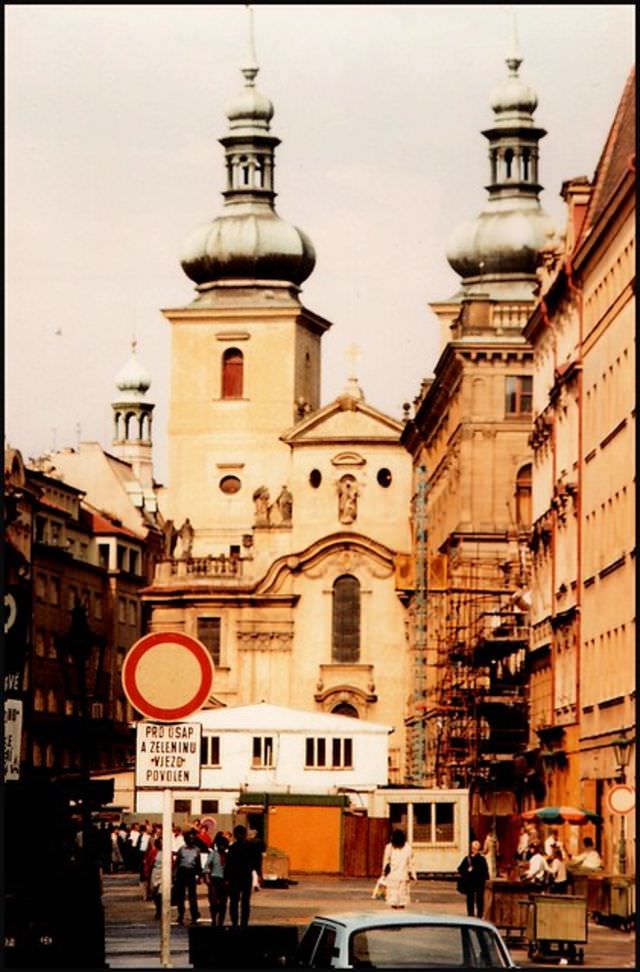
Prague’s churches stood throughout the city in various states of official attention. The Church of St. Ignatius, just off Charles Square in the Nové Město, was a Baroque structure built by the Jesuits in the 17th century. By the 1980s, under an officially atheist government, religious buildings were maintained more as heritage sites than active centers of faith, though worship continued quietly.
Eastern Prague at night looked very different from the illuminated center. Trams still ran through the darker outer districts, their headlights cutting through streets with far less foot traffic and far fewer lit shopfronts. The contrast between the historic core and the surrounding residential neighborhoods was sharp, and these nighttime routes captured that divide plainly.
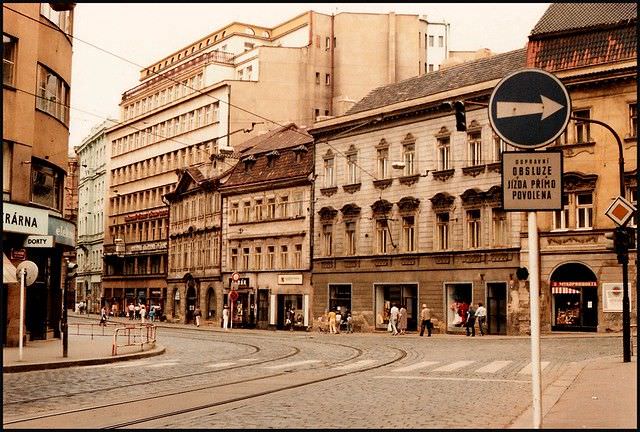





I remember it and it looked even worse in reality.
People live in the city’s centre, which is sad to see. The place is mostly dead, with apartments turned into Airbnb for drunken tourists. For a few months, it was possible to get a cheap rent there during Covid, but now tourists are coming back
However, the street looked just like this. Even though there were new things like McDonald’s restaurants and Western clothes shops, there was still an 80’s – 90’s feel to the city.
Tram stops look exactly the same today.
Jakoze nekdo vyvolal starej film z vejltu do Praglu?
Jo, fascinujici…
Bez turistu je to hezky. Jenom je videt, jak komunisti na nic ani nesahli a naprosto vsechny domy jsou v predvalecnem stavu.
Na druhou stranu tehdy ještě centrum Prahy bylo živý město, kde bydleli lidi, navíc opravdu levně. Byť to bylo částečně i za cenu postupnýho chátrání, takže centrum mělo tak trochu “italskou” patinu. A není úplně pravda, že nesáhli na nic, významný památky se udržovaly a nezřídka i náročně rekonstruovaly. Na konci 80. let tak třeba přišla rozsáhlá rekonstrukce celýho Staroměstskýho náměstí.
Co nám každopádně zůstalo (resp. se ještě výrazně zhoršilo), je zamoření města auty. V tomto ohledu žijeme pořád v osmdesátkách.