In 1955, a German-designed portable shelter caught the attention of campers and travelers across the world. Its shape was unmistakable — it looked exactly like a giant orange. The curved plywood segments that formed its walls were modeled after the peel of the fruit, and the name stuck: the Orange-Peel House. It sold for $150, the equivalent of roughly $1,700 today.
The shelter came apart into a set of individual curved segments, along with a flat floor, all constructed from plywood. When broken down, every piece stacked neatly onto a small trailer, making it easy to haul from one campsite to the next. The whole system was designed for people on the move.
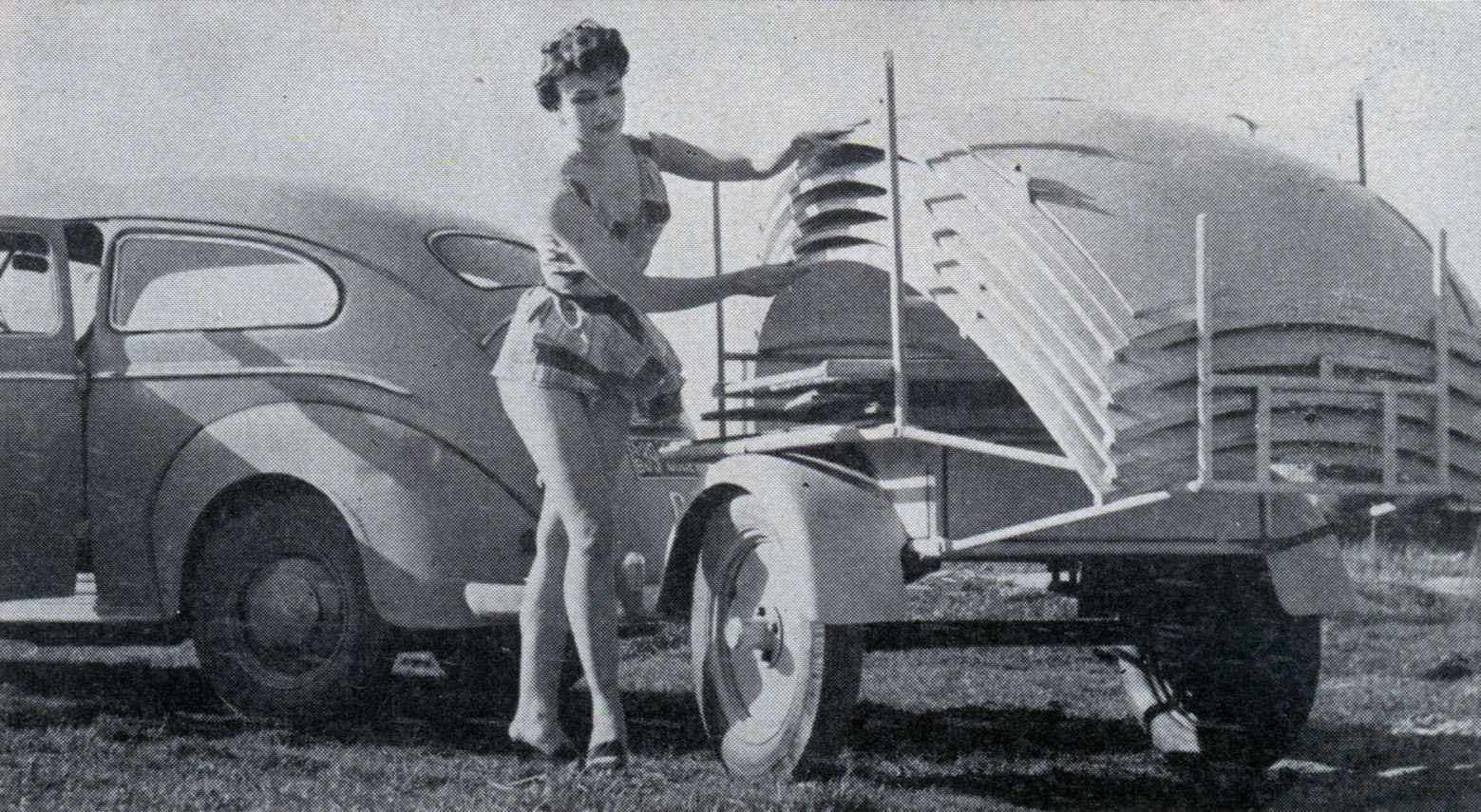
Setting up the shelter required no special tools or skills. The process started with laying out the parts and assembling the floor as a base. From there, each curved segment was mounted onto the floor and clipped to its neighbors, one by one. The whole structure locked together through a series of fasteners that held the segments firm.
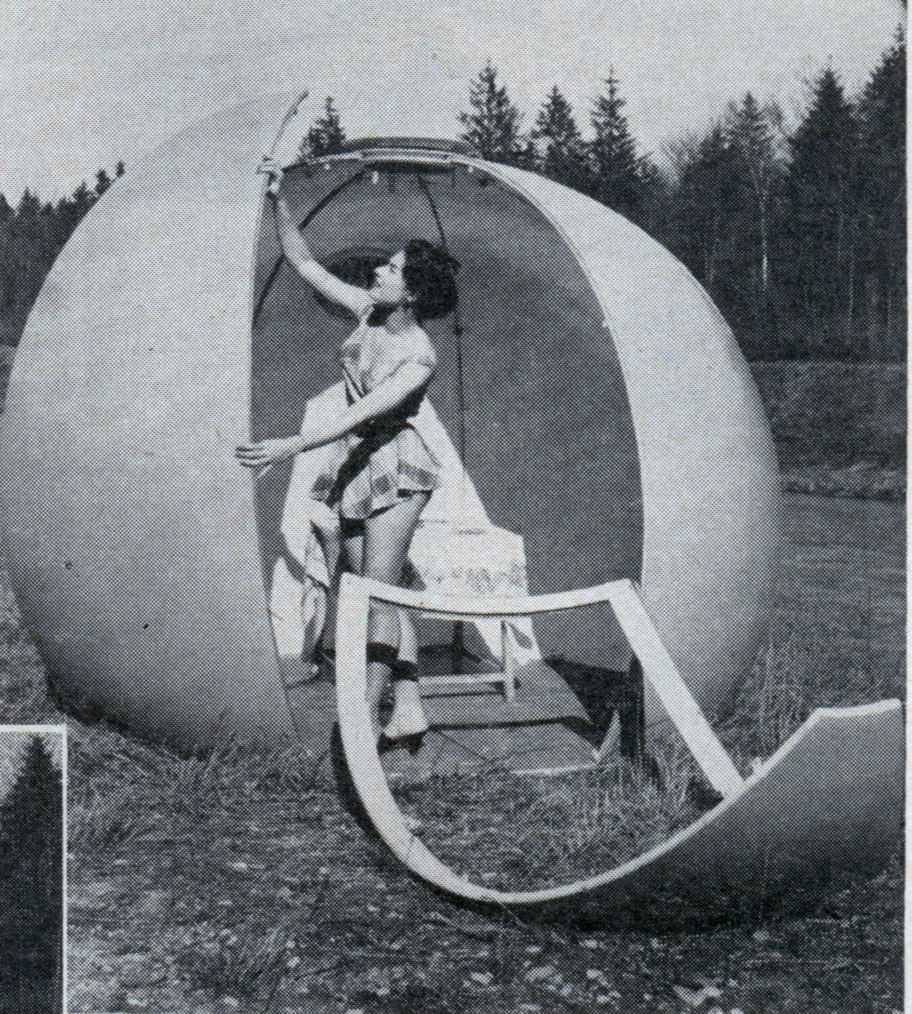
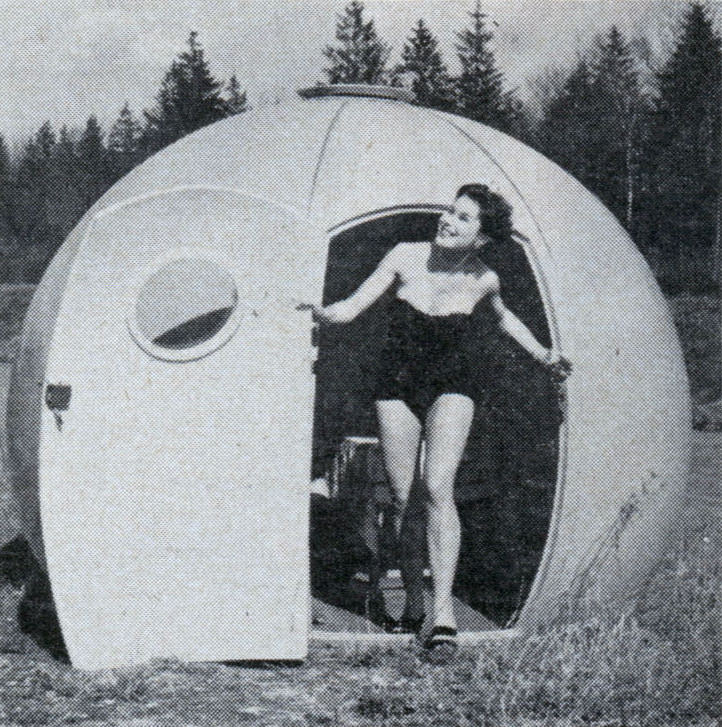
From start to finish, assembly took just 15 minutes. The finished shelter included two windows and a door, which was built directly into one of the segments. Once standing, the rounded structure was surprisingly sturdy and offered genuine protection from the elements. It worked as a campsite shelter, a tourist cabin, or even a beach house.
The Orange-Peel House represented a very practical answer to a real problem — how to bring a proper shelter along without hauling heavy, bulky gear. Every part of the design, from the curved plywood sections to the clip-together assembly system, focused on speed and portability. For explorers and campers in the mid-1950s, it offered something genuinely new: a real structure that could go wherever they went.