By 1990, Moscow was a city on the edge of enormous change. The Soviet Union still existed on paper, but its foundations were cracking. Just one year later, on December 25, 1991, the Russian Soviet Federative Socialist Republic formally became the Russian Federation, and the USSR ceased to exist. These photographs, taken by hasmonek in 1990, capture Moscow in its final full year as the capital of a superpower — a city that had no idea how completely its world was about to change.
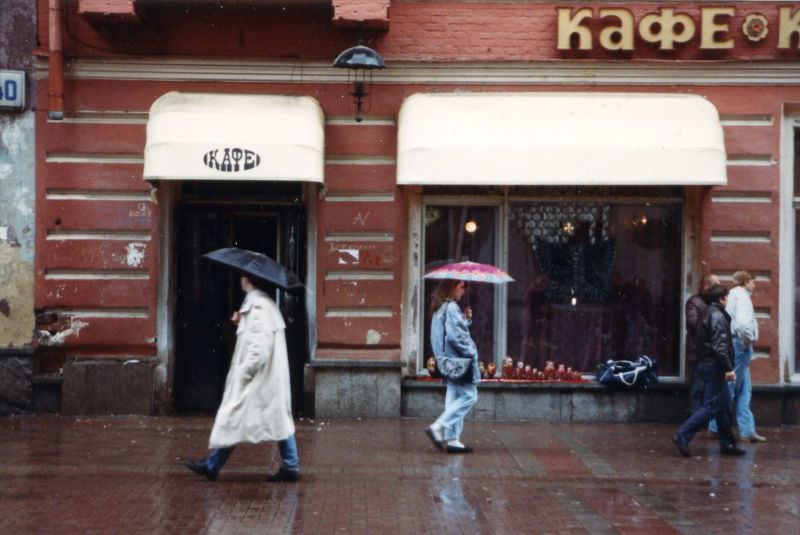
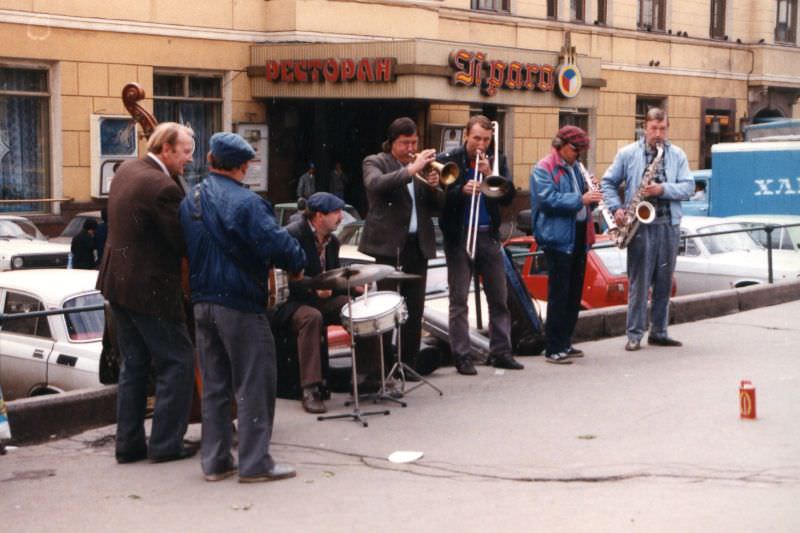
One of the most familiar gathering places in Moscow was Arbat Street, a pedestrian zone that had been a hub of Soviet-era culture and street life. By 1990, it was crowded with artists, vendors, and ordinary Muscovites going about their daily routines — a snapshot of urban life that would look dramatically different within a decade.
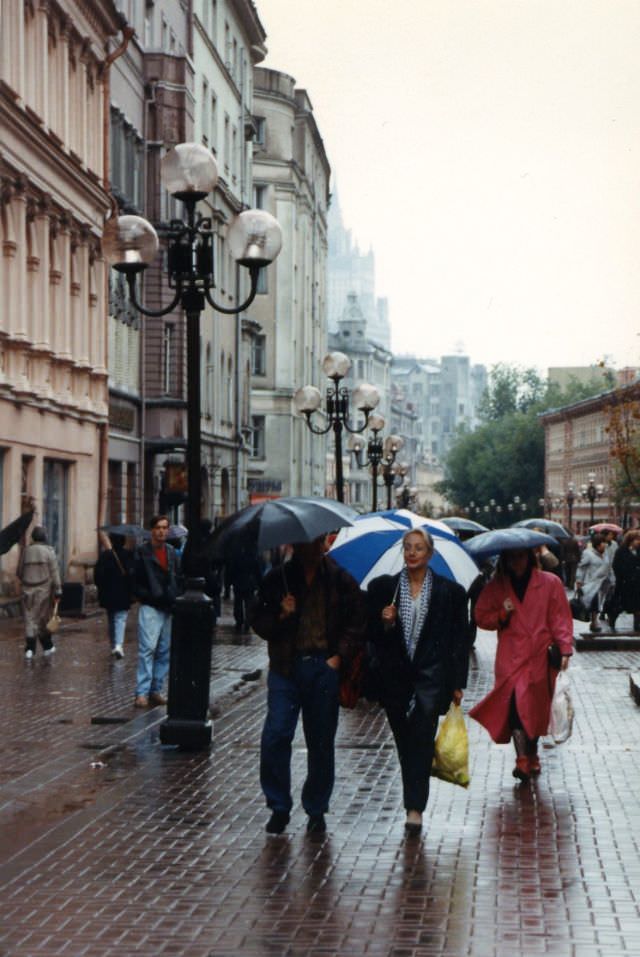
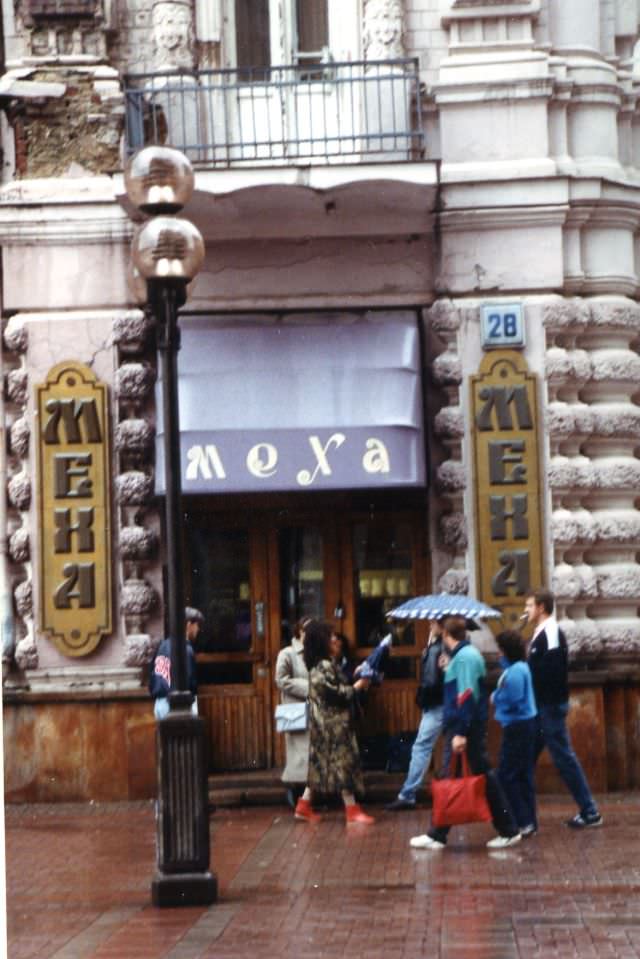
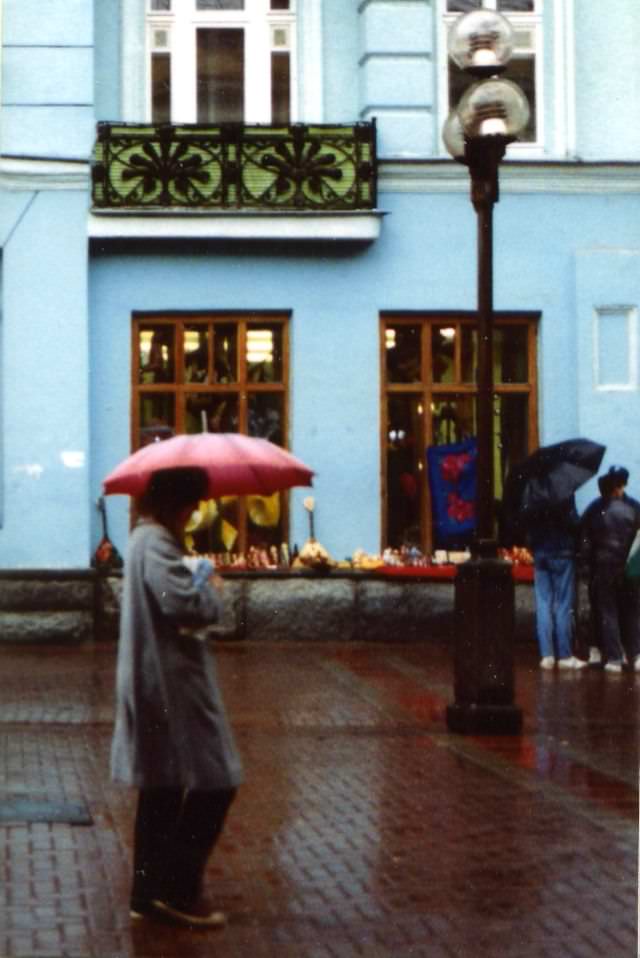
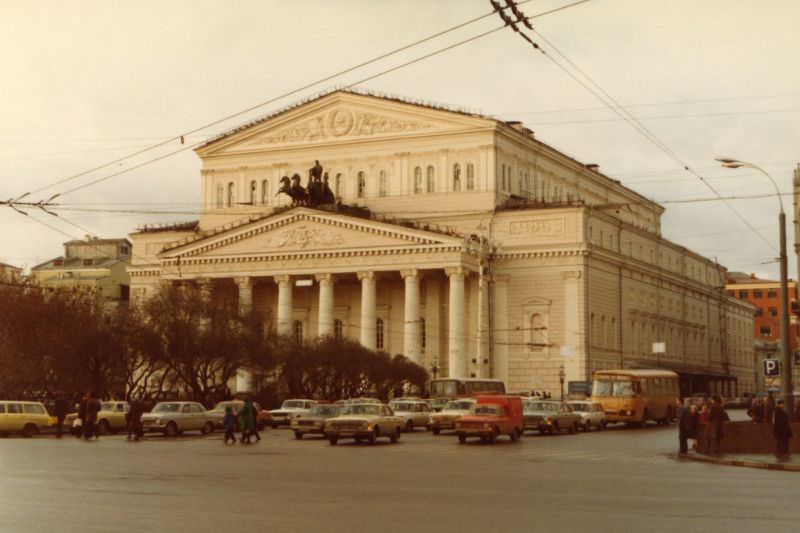
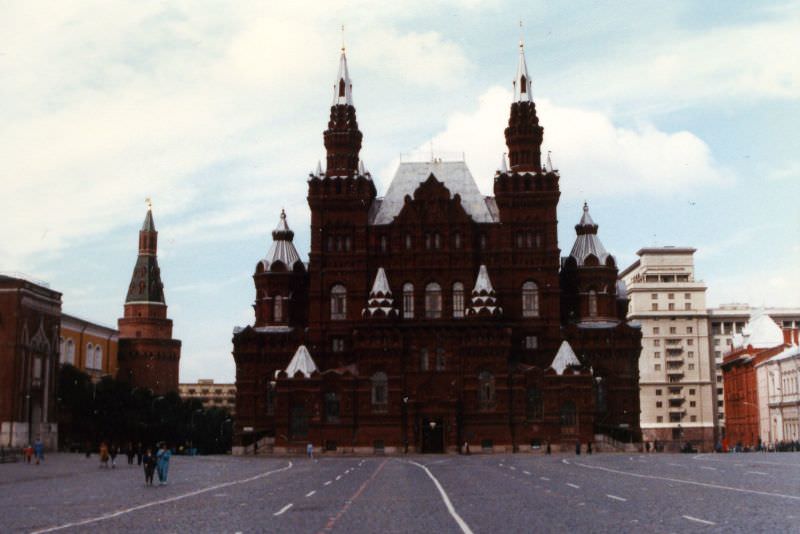
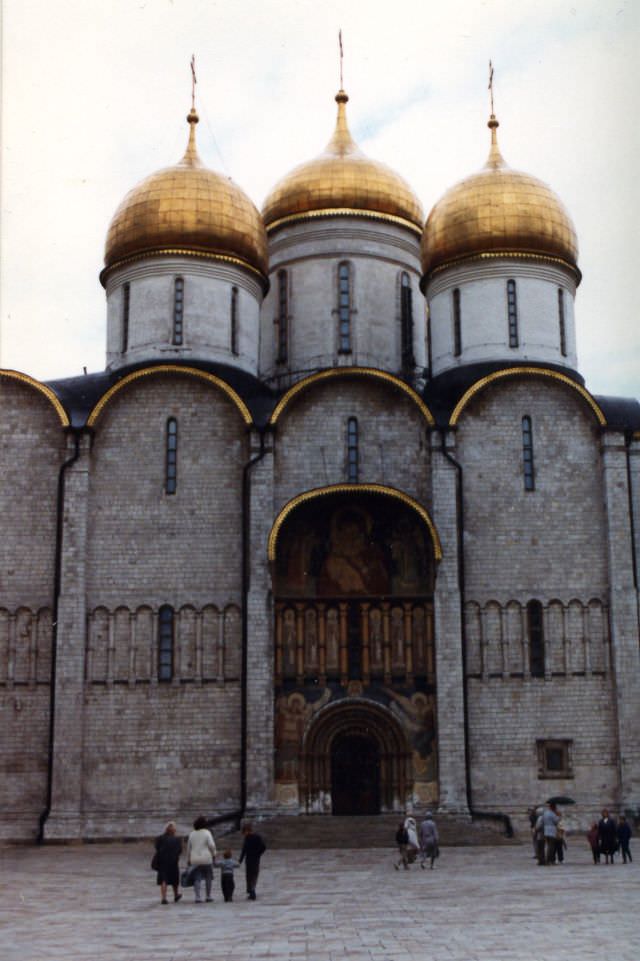
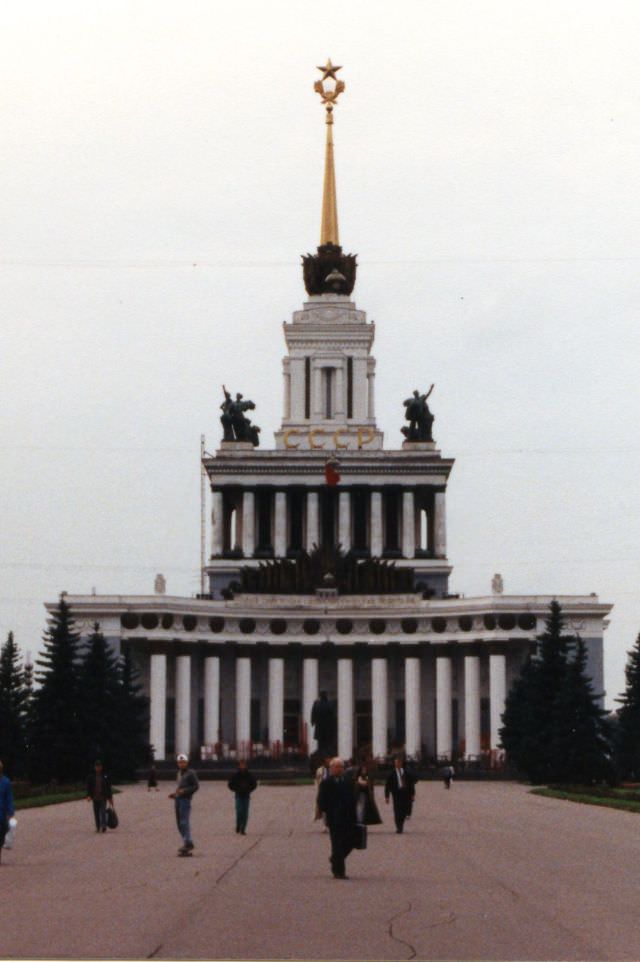
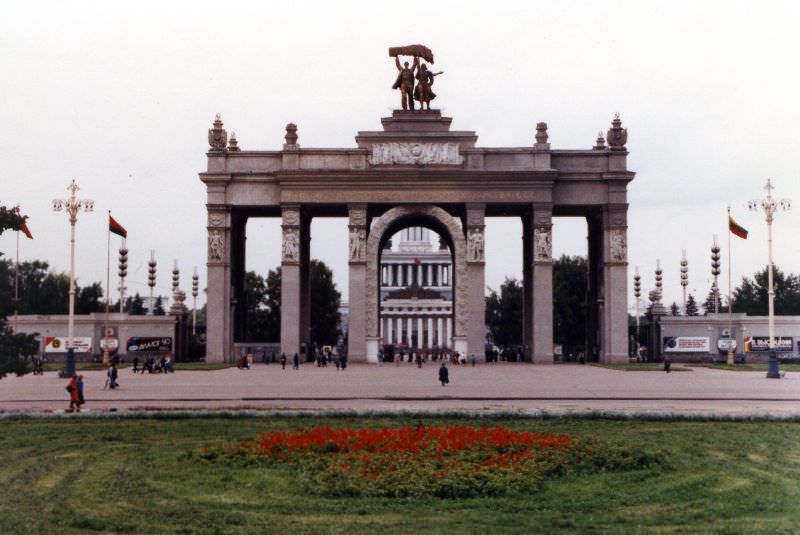
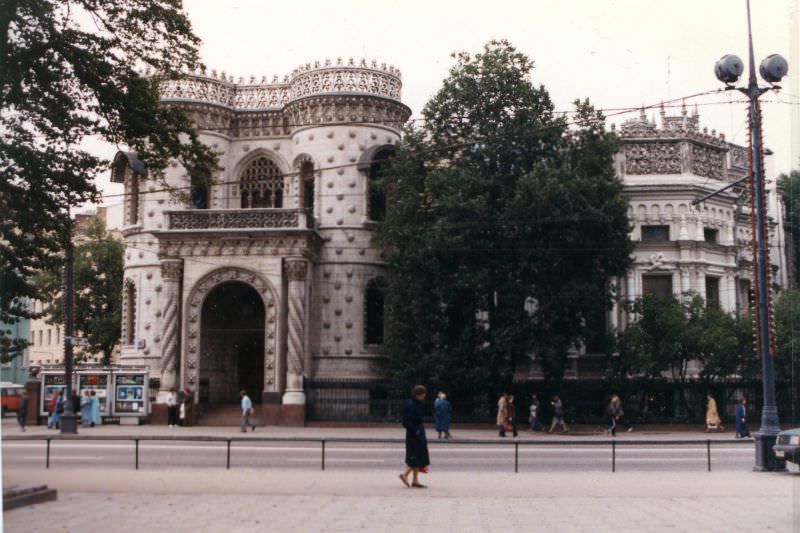
Moscow’s architecture in 1990 still bore the heavy stamp of Soviet urban planning. Massive civic buildings, apartment blocks, and state institutions defined the skyline. The city’s population at the time sat just below nine million people — a number that would climb past ten million over the following two decades as Moscow transformed into a post-Soviet metropolis. In the years after the collapse, many of these historic structures were renovated on a scale the city had never seen before, particularly churches that had been neglected or repurposed under Soviet rule.
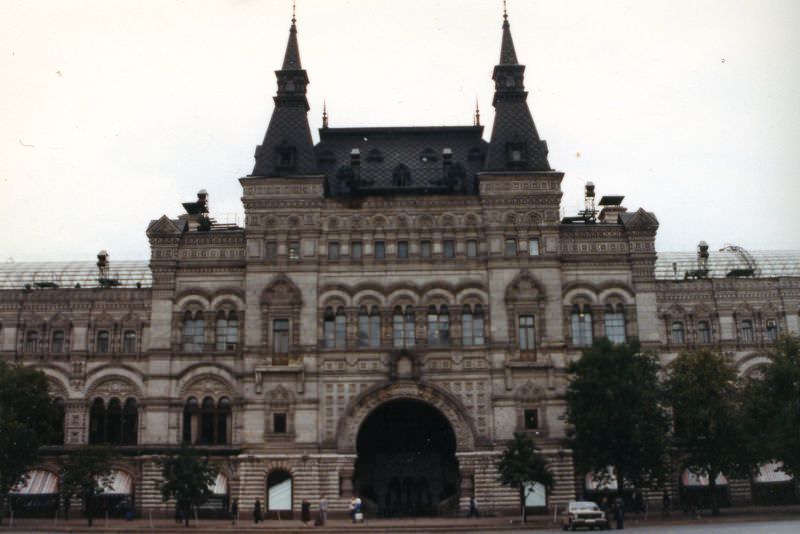
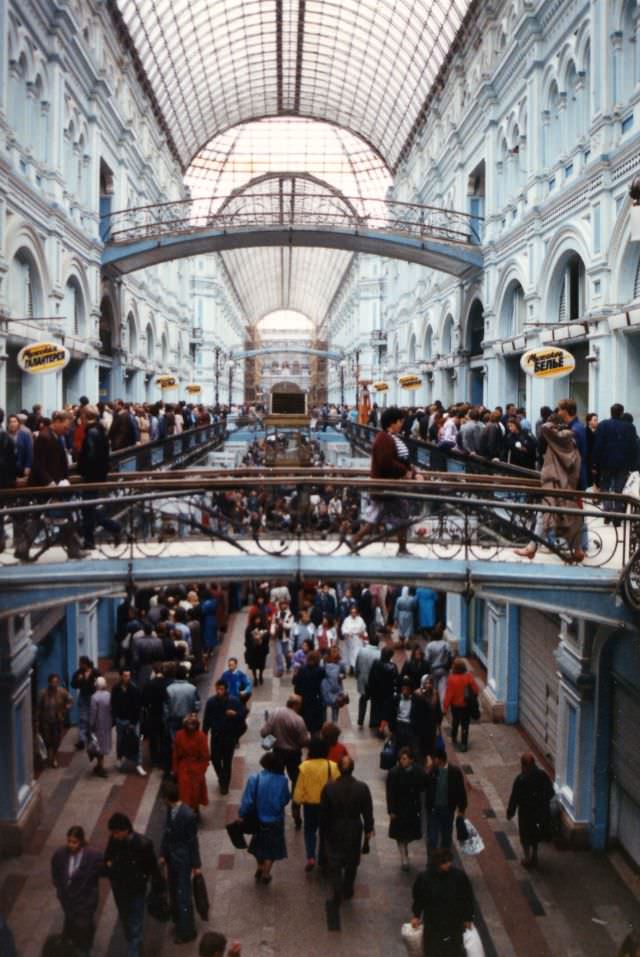
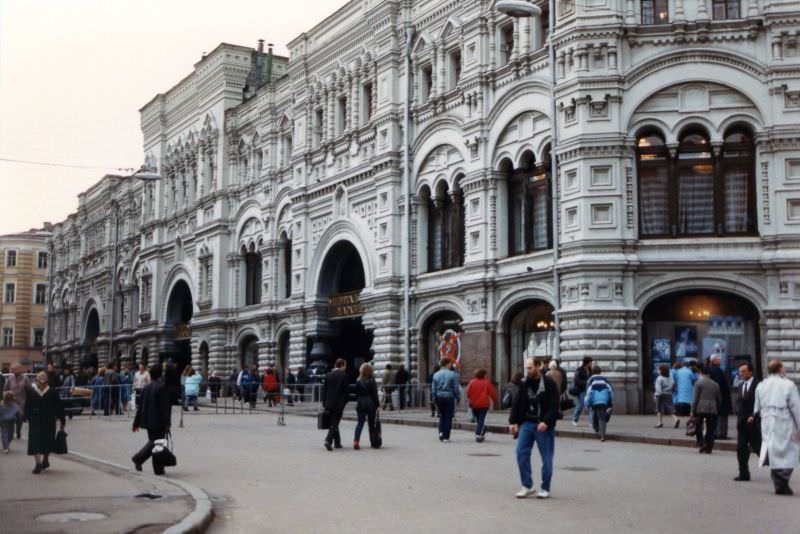
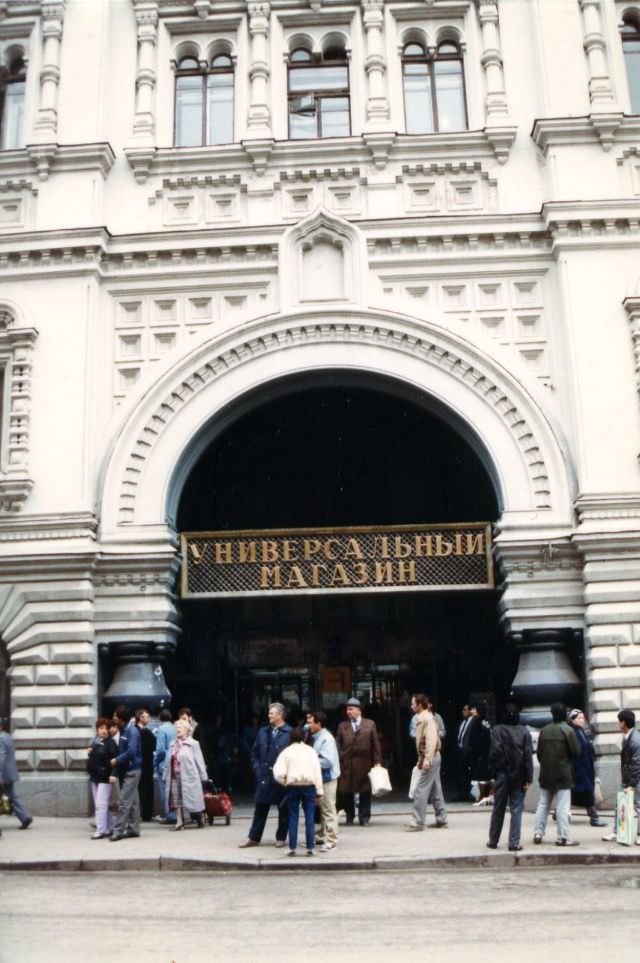
GUM, the massive state department store facing Red Square, was one of the most recognizable retail spaces in the Soviet Union. In 1990, it still operated as a state-run shopping center, offering goods to Muscovites under a centrally planned economy. Within a few years of the USSR’s collapse, foreign investment would pour into Moscow, replacing state stores with Western-style supermarkets, car dealerships, restaurants, and casinos. The GUM of 1990 represents the last chapter of that old economic order.
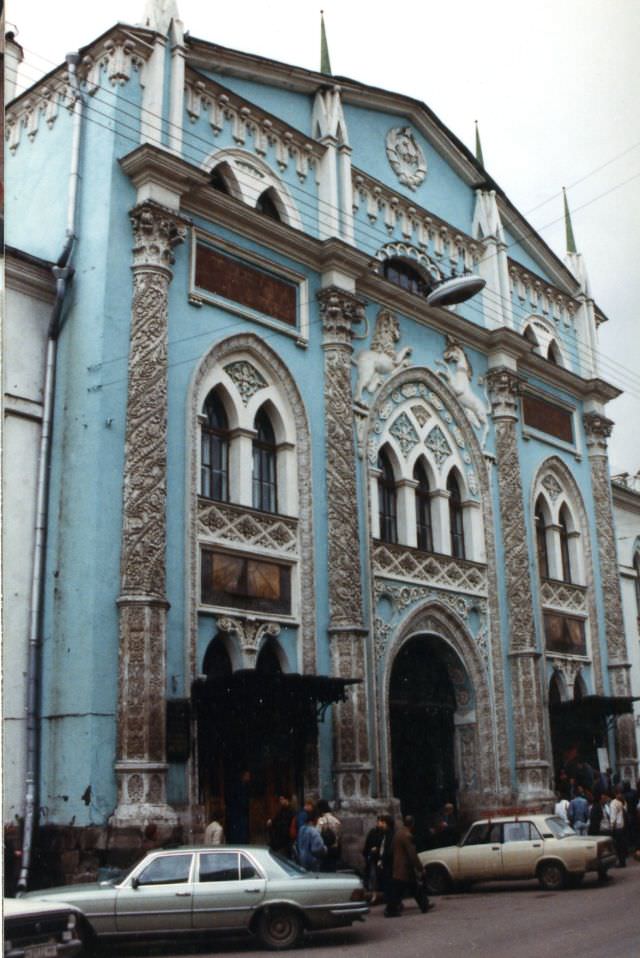
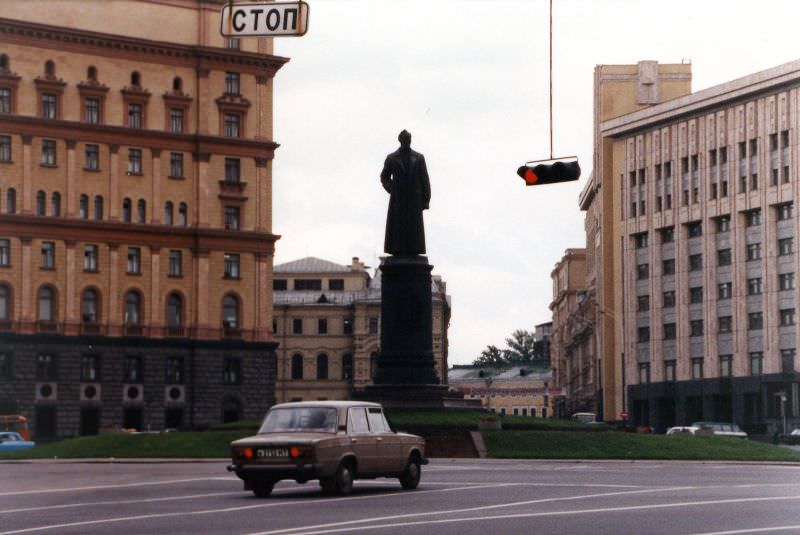
No building better symbolized the power of the Soviet state than the KGB’s Lubyanka headquarters. Sitting at the center of Moscow, the Lubyanka was the nerve center of the Soviet security apparatus — the place where surveillance, interrogation, and state control were administered for decades. In 1990, the KGB was still fully operational, though the political ground beneath it was shifting fast.
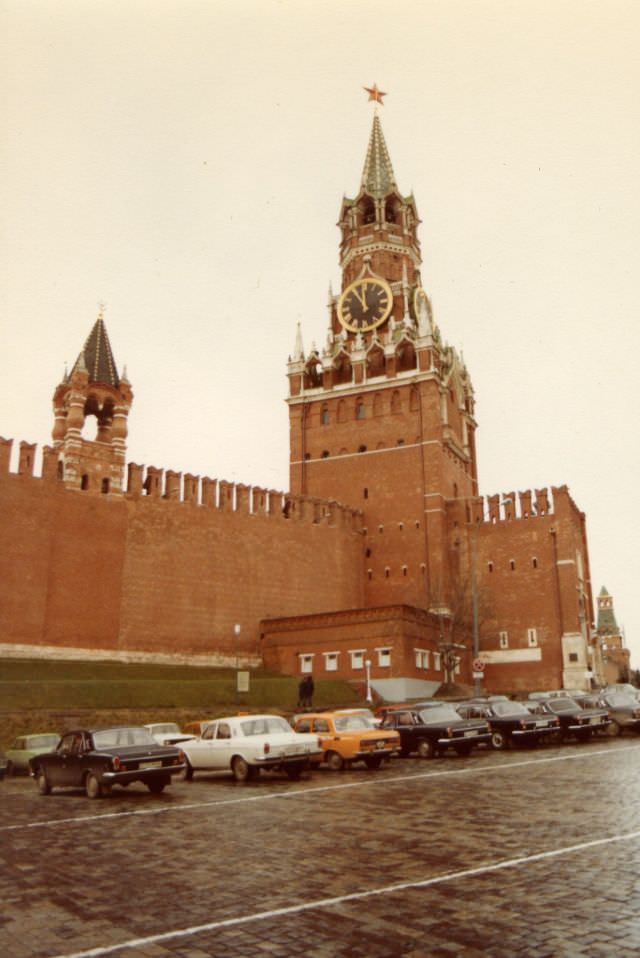
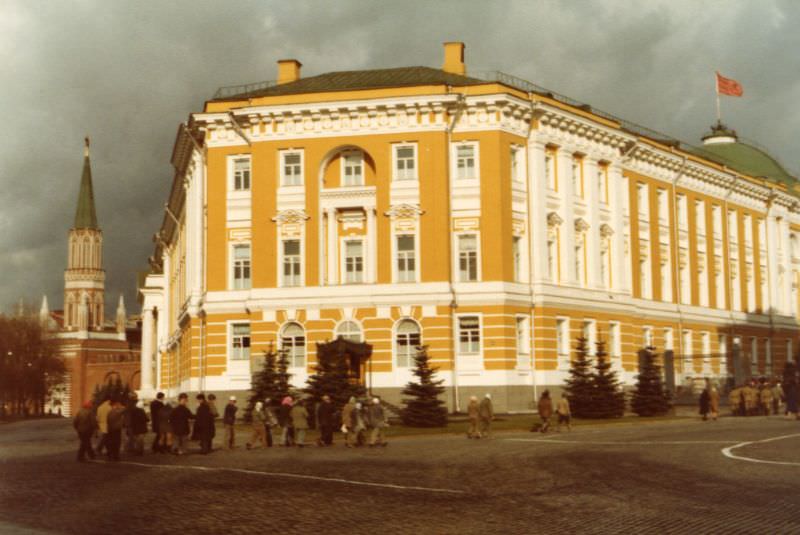
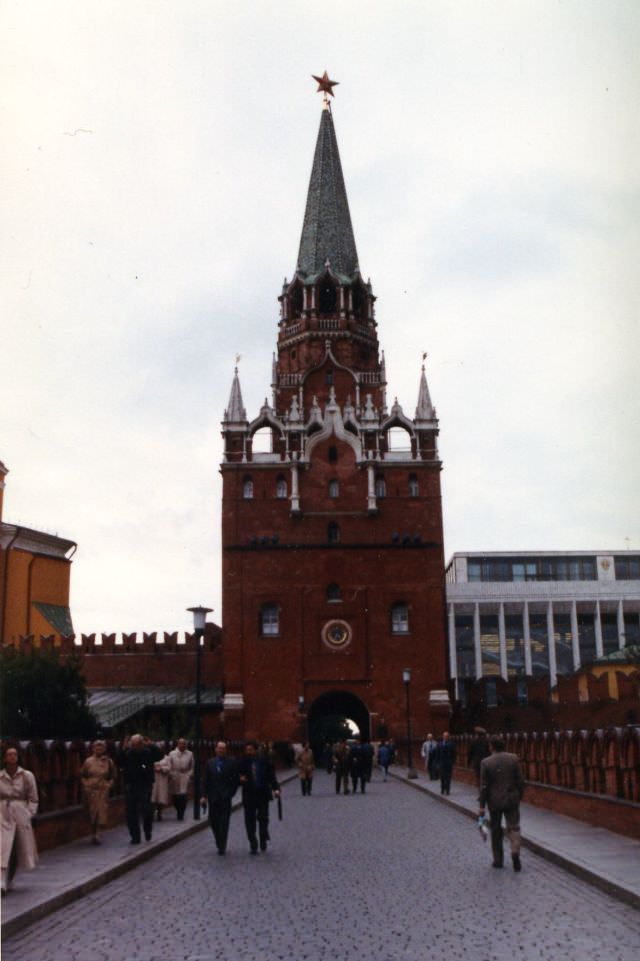
The Kremlin, Moscow’s ancient fortress and the seat of Soviet power, dominated the city’s skyline and its politics in equal measure. In 1990, it was the workplace of Mikhail Gorbachev, whose policies of glasnost and perestroika had set the chain of events in motion that would end the USSR. The Kremlin’s towers and walls had stood for centuries, witnessing the rise and fall of empires — and in 1990, they stood on the eve of another seismic shift.
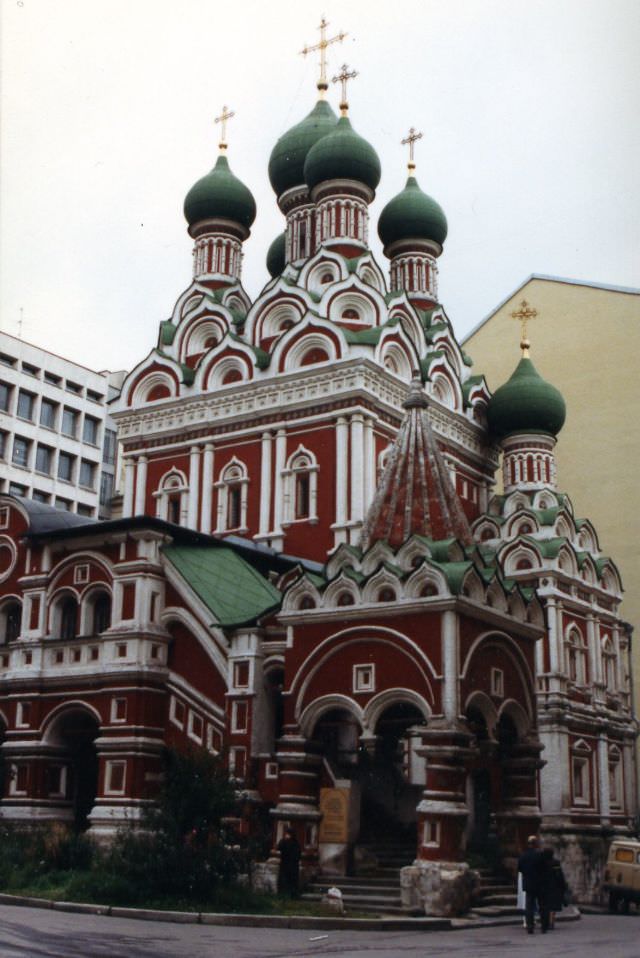
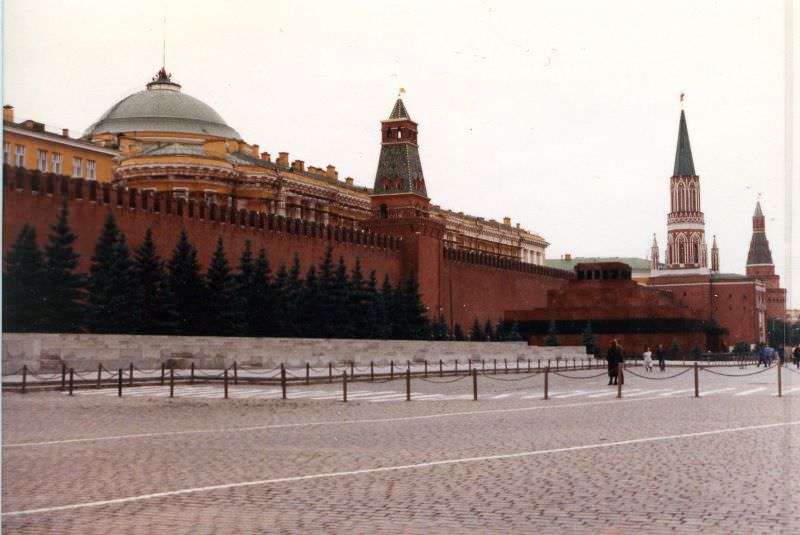
Lenin’s Tomb on Red Square was one of the most politically charged sites in the entire Soviet Union. Vladimir Lenin’s embalmed body had lain there since 1924, and the mausoleum served as both a pilgrimage site and a platform from which Soviet leaders reviewed military parades. In 1990, the honor guard still stood watch, and visitors still lined up to enter — a ritual of Soviet reverence that felt increasingly out of step with the country’s political direction.
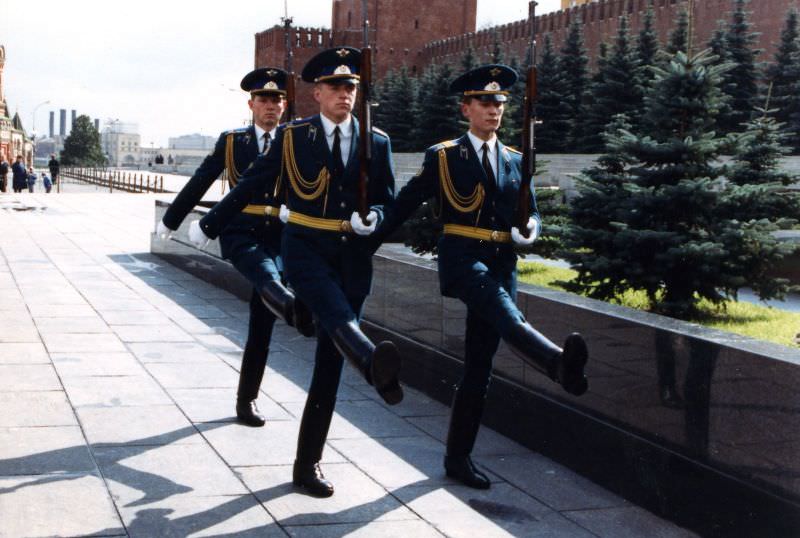
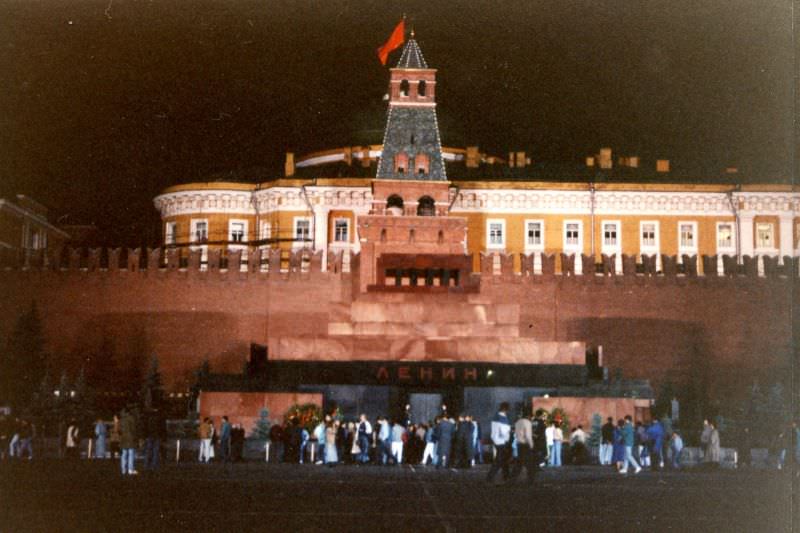
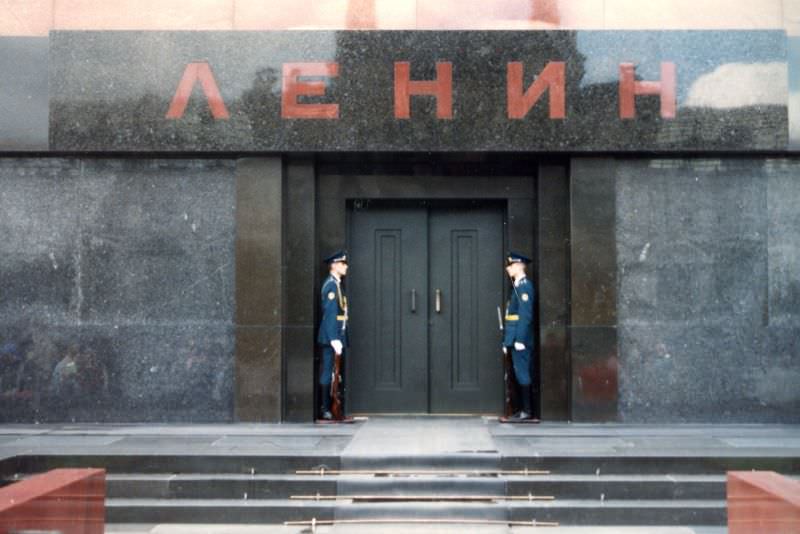
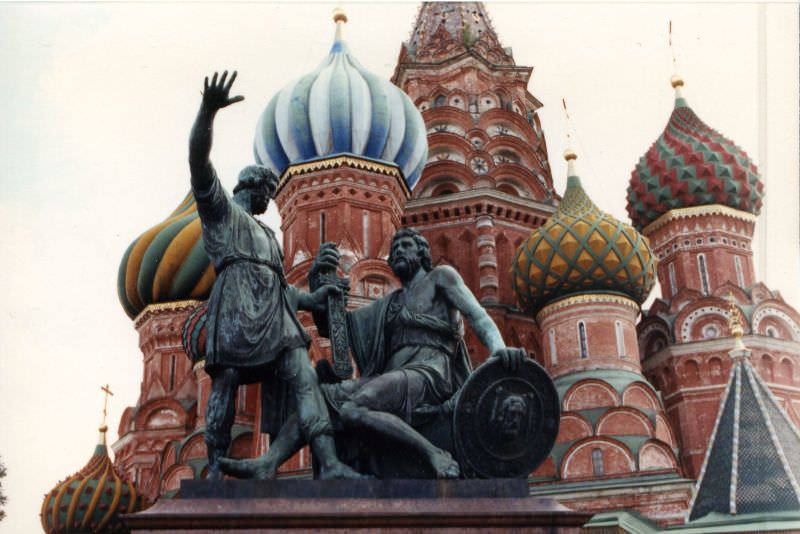
Moscow’s public monuments were everywhere in 1990, scattered across squares, parks, and intersections. They honored Soviet heroes, wartime sacrifices, and ideological milestones. These statues and memorials were physical statements of state identity — many of which would be removed, relocated, or recontextualized in the years following the Soviet collapse.
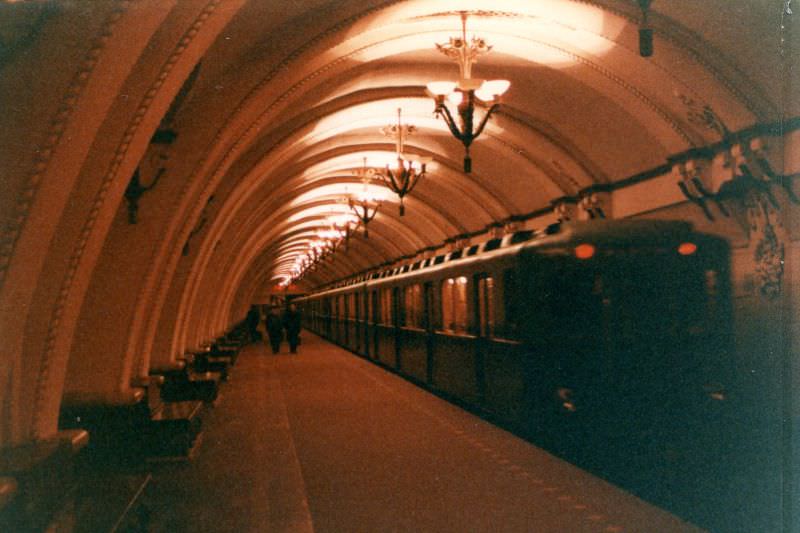
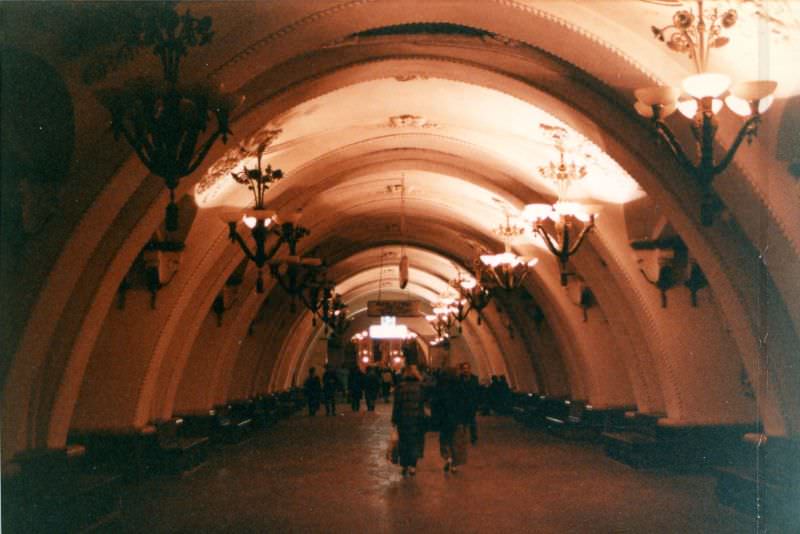
Beneath the streets, the Moscow Metro was — and still is — one of the most elaborate subway systems ever built. Constructed from the 1930s onward, its stations were designed to function as underground palaces, lined with marble, mosaics, and grand chandeliers. In 1990, millions of Muscovites rode these trains every day, passing through stations that were as much works of art as they were transit hubs.
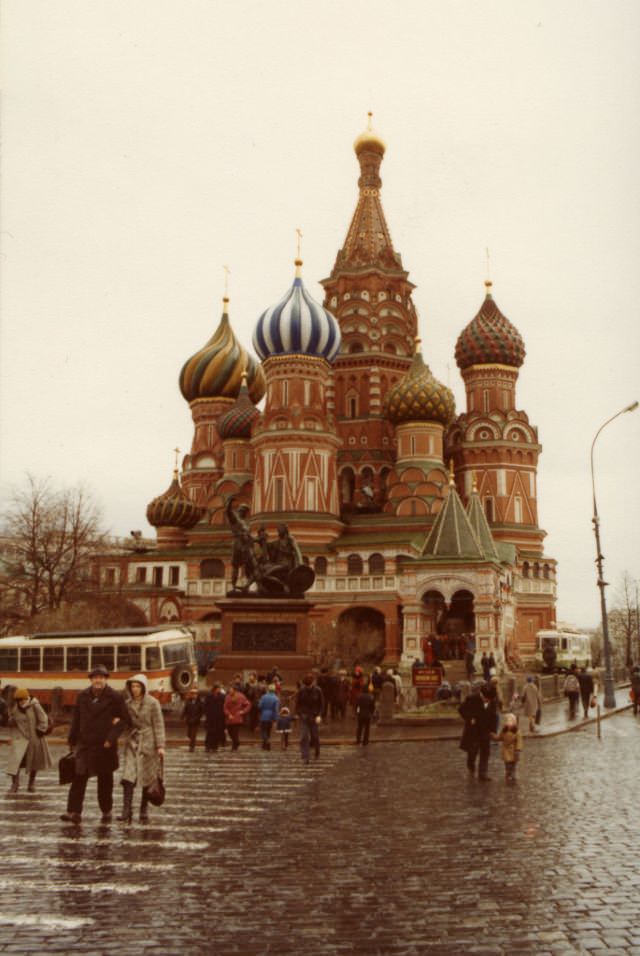
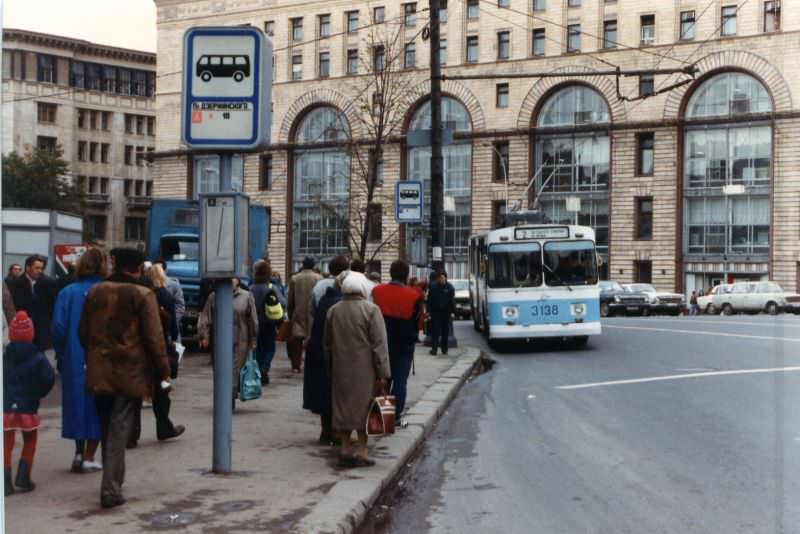
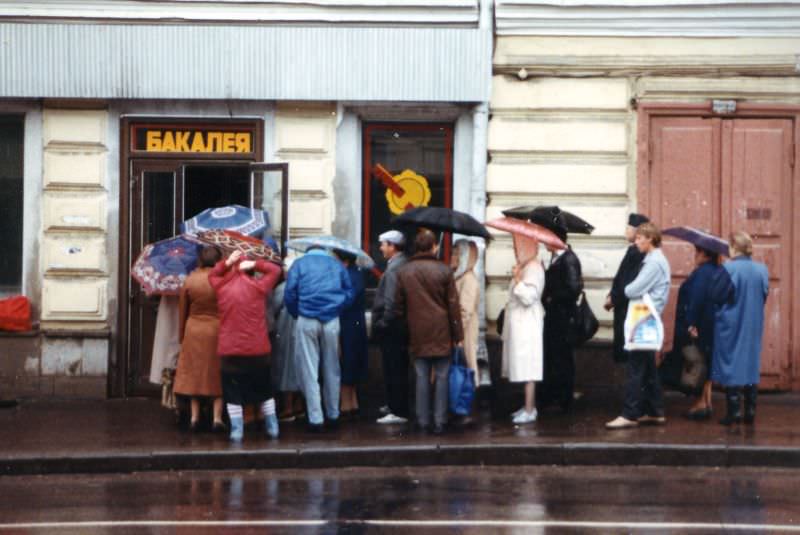
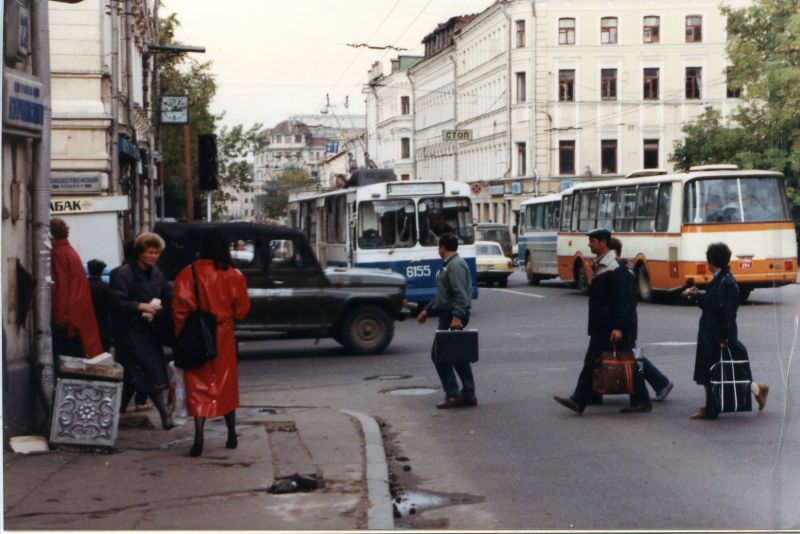
Out on the streets, daily life in Moscow in 1990 carried on with the weight of uncertainty in the air. Queues, trams, pedestrians in winter coats, and state-owned storefronts were all part of the everyday fabric. Moscow’s industrial output was still intact that year — it would drop sharply after the dissolution — and unemployment remained under three percent. The economic turbulence of the 1990s, including the bank failures and ruble devaluation of 1998, was still years away.
Few structures in Moscow are as instantly recognizable as St. Basil’s Cathedral. Built in the 16th century under Ivan the Terrible, the cathedral’s multicolored onion domes have made it one of the most photographed buildings in the world. In 1990, it anchored the southern end of Red Square just as it had for four centuries — indifferent to the political storms swirling around it, as permanent as the stones it was built from.