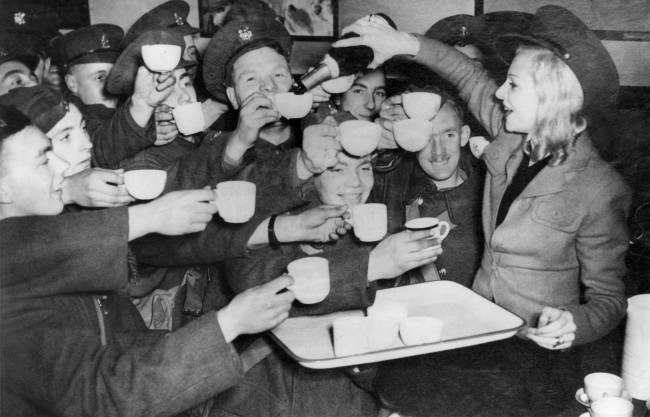
By November 1939, just weeks into World War II, British actress Miss Claire Luce had already set up a canteen at London’s St. Pancras station — pouring champagne for soldiers heading to the front. It was a small gesture, but it meant everything to the men passing through.
Mobile canteens were trucks, vans, and converted vehicles fitted to prepare and serve food. They traveled to wherever troops or civilians needed feeding — front-line positions, bombed neighborhoods, railway stations, and air raid shelters. The concept existed during World War I, but it was far less organized. By 1939, military planners and volunteer organizations had turned it into a full-scale operation.
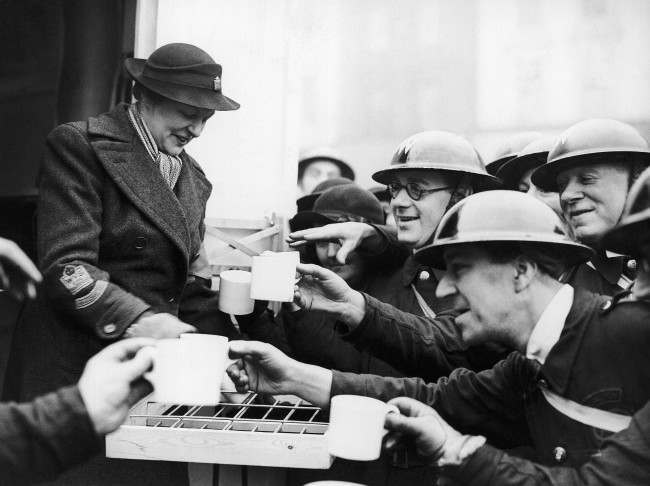
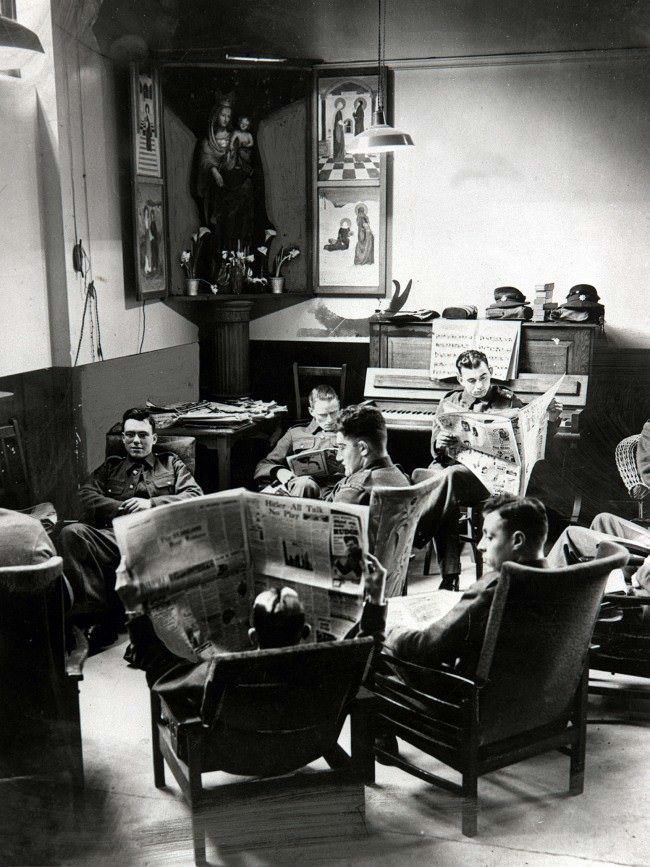
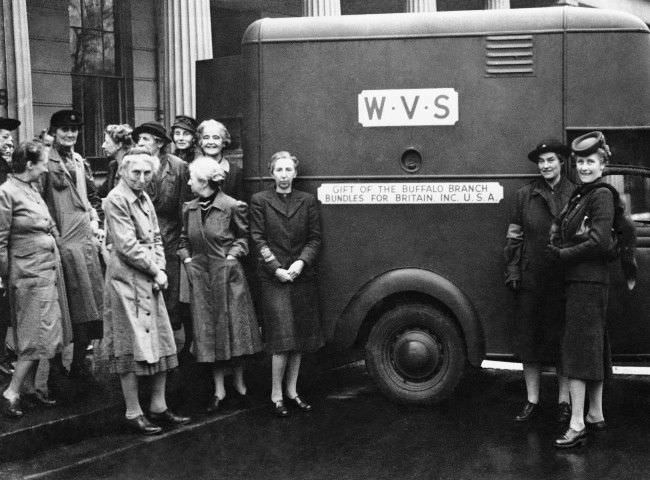
In Britain, the Women’s Voluntary Service (WVS) was at the heart of the effort. Women volunteers drove food-laden trucks to soldiers across the country. Churches, civic halls, and railway stations became canteen hubs. The Catholic Women’s League set up a canteen and recreation space for troops in St. Peter’s Hall, Westminster Cathedral Yard, as early as 1939.
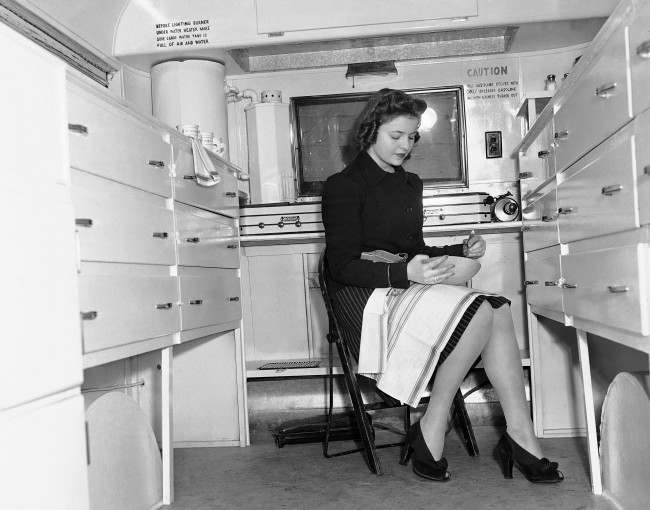
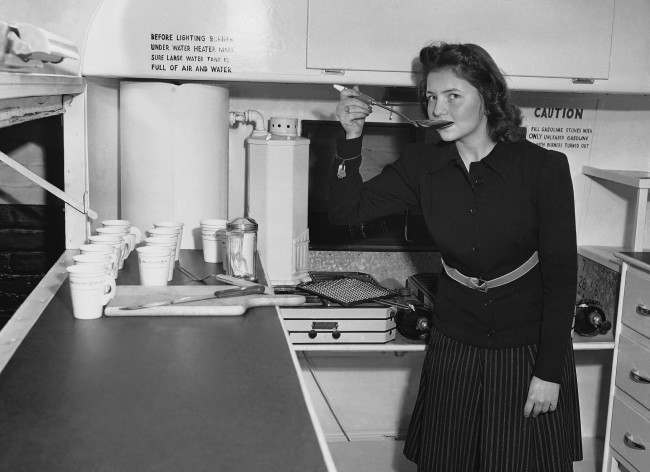
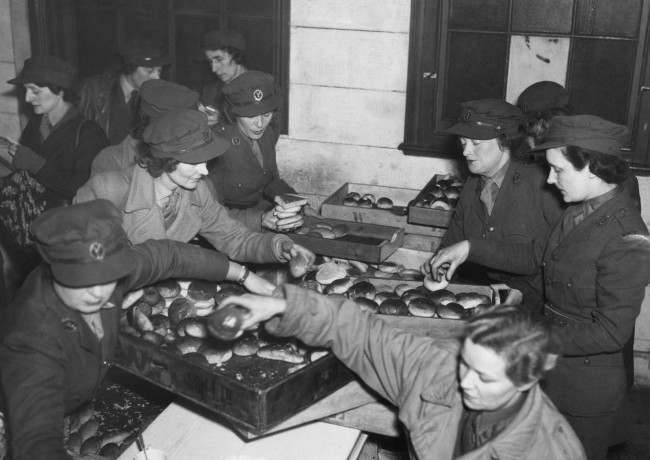
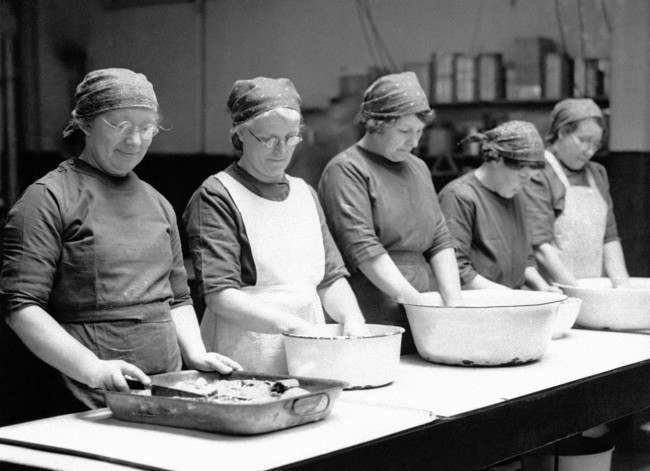
Running a mobile canteen required real physical labor. Workers cooked, loaded supplies, and served food in tight, cramped quarters — often under difficult or dangerous conditions. Women staffed the majority of these operations, both on the road and in fixed canteen kitchens.
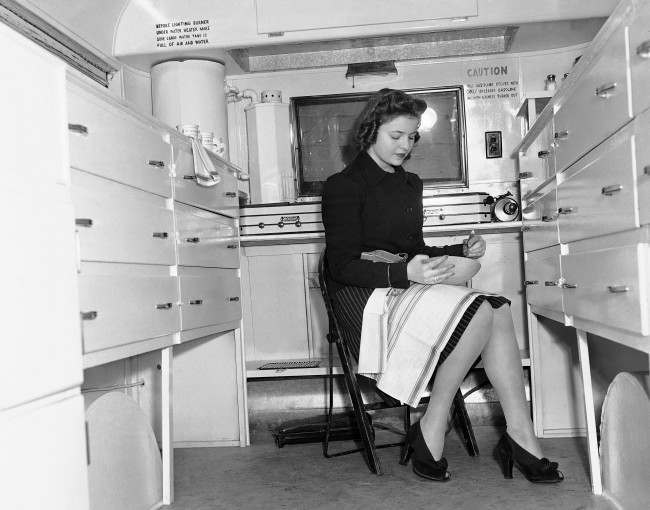
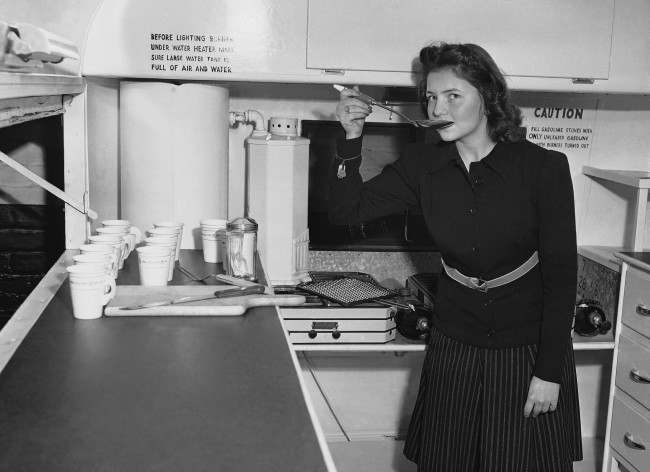
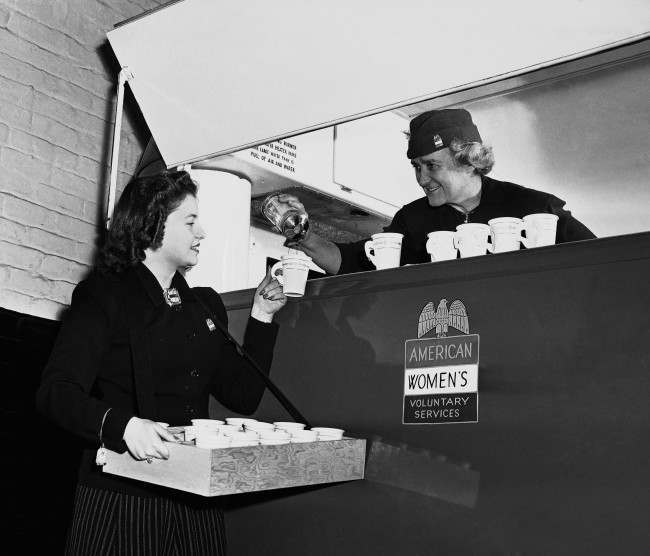
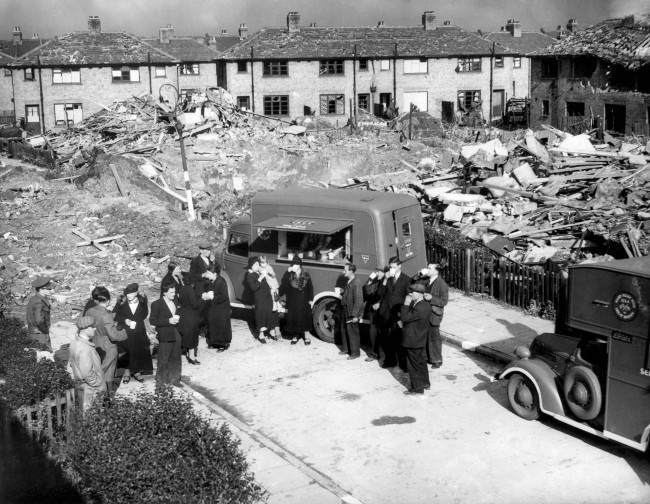
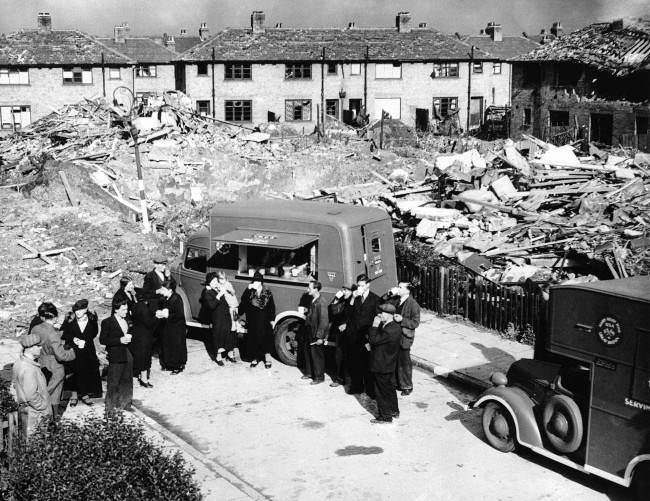
After the German Blitz began pounding London in the autumn of 1940, feeding air raid victims became urgent. American donors responded to Lord Woolton’s appeal to London caterers by funding 50 mobile canteens through the Allied Relief Fund — then pledged to double that number to 100 vehicles. The first of these new canteens hit London’s bombed streets on October 9, 1940.
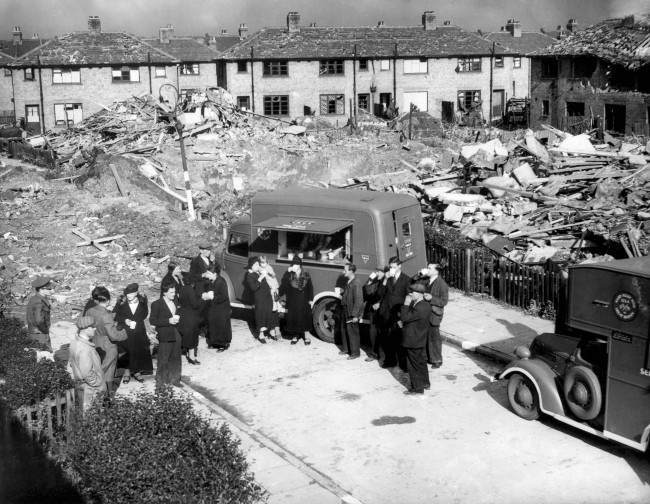
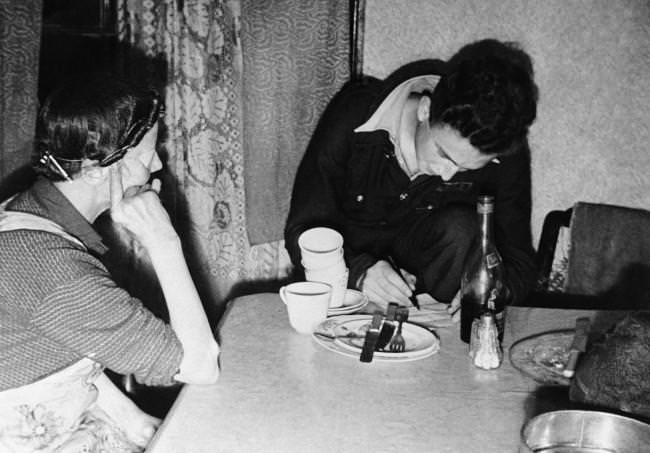
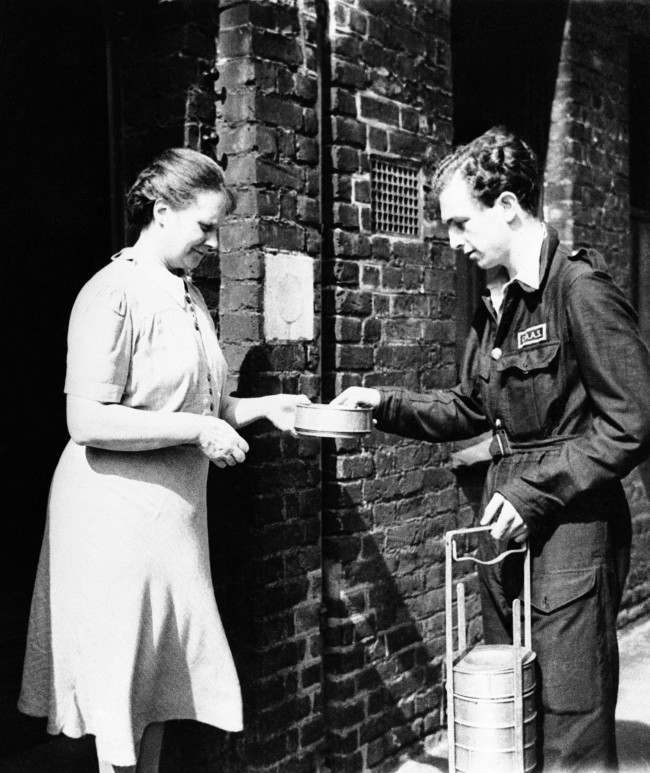
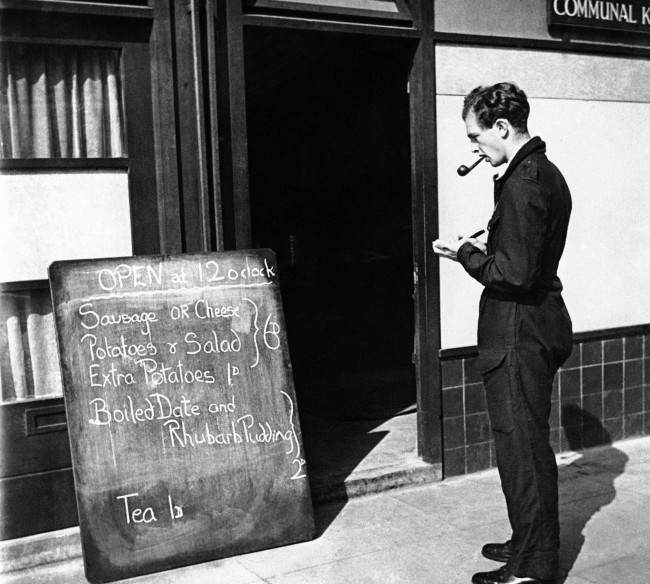
Mobile canteens didn’t only serve soldiers. In London, canteen driver Christopher Ounsted made daily rounds in September 1941, visiting elderly, blind, and disabled residents who couldn’t leave their homes. His canteen — a gift from the United States — was designed for air raid emergencies. During a lull in the Blitz, it was redirected to serve the city’s most vulnerable people. Ounsted would first visit a communal kitchen to copy the day’s menu, then present each person on his route with the options so they could choose their own meal.
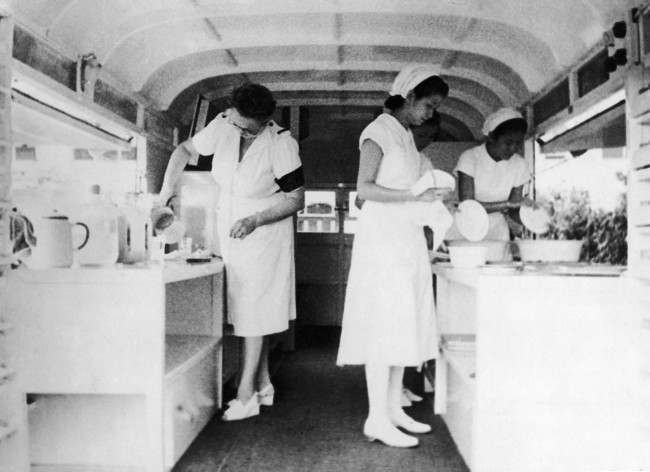
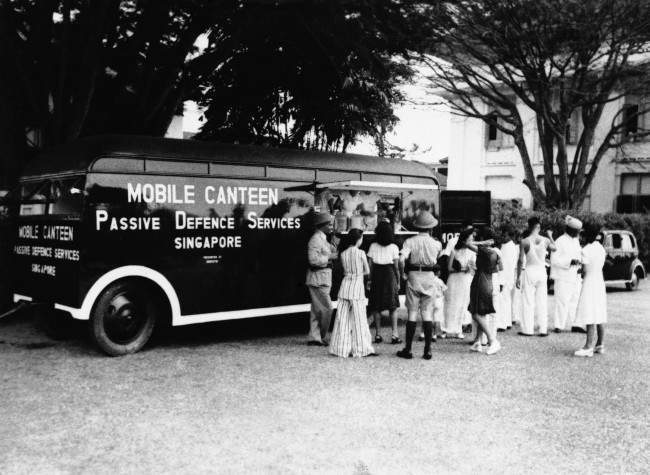
The canteen effort extended far beyond Britain. In Singapore, just weeks before the city fell to Japanese forces in February 1942, European and Chinese women were still operating mobile canteens as part of the Passive Defense Services. They served food and refreshments across a city under active attack.
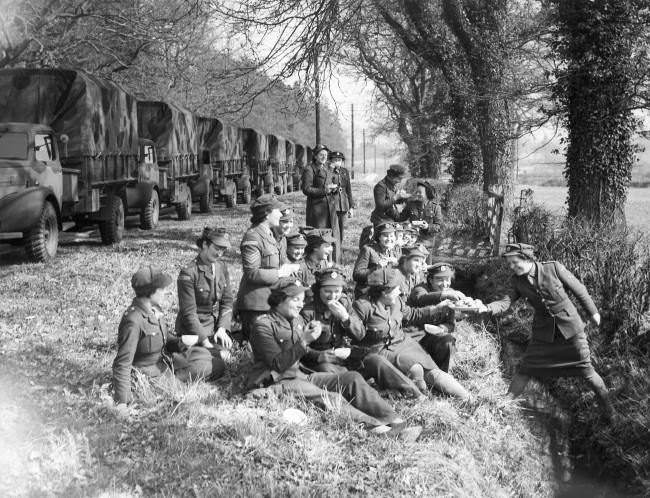
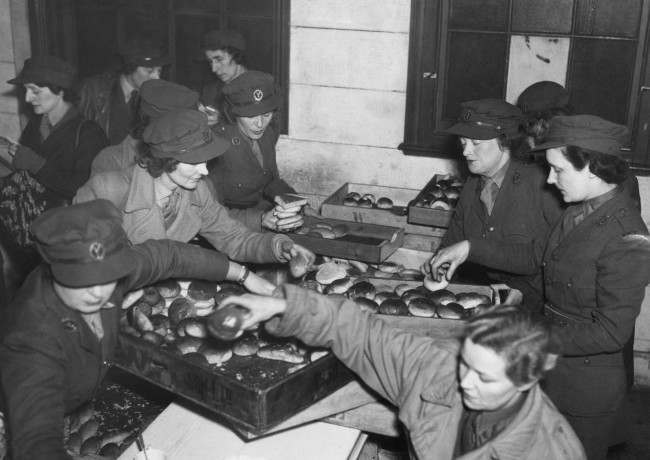
Back in Britain, canteen stops were built into military logistics. When a convoy of trucks driven entirely by ATS (Auxiliary Territorial Service) personnel completed a 100-mile journey from Bedfordshire to Gloucestershire in March 1942, a mobile canteen was dispatched from headquarters specifically to meet them mid-route.
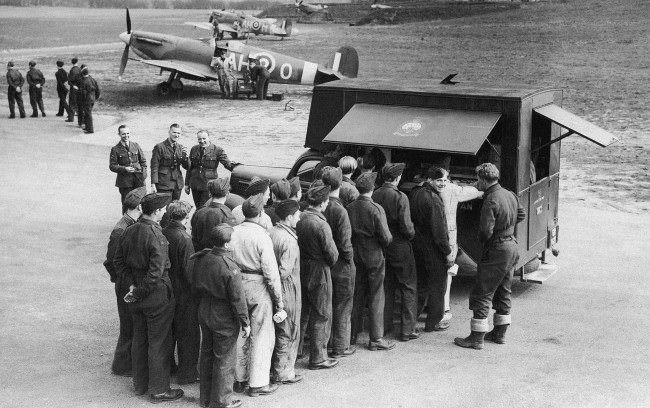
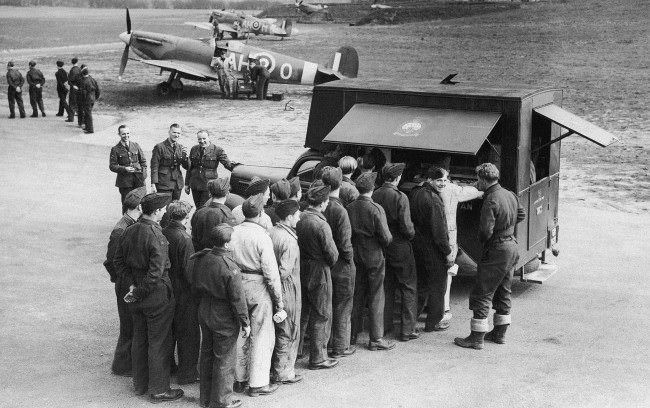
At Royal Air Force bases, the NAAFI (Navy, Army and Air Force Institutes) ran mobile canteens right at the flight lines. Norwegian ground crew stationed in Britain with their Spitfire squadron lined up for refreshments at the NAAFI canteen in the dispersal area — a routine that kept personnel fueled between sorties.
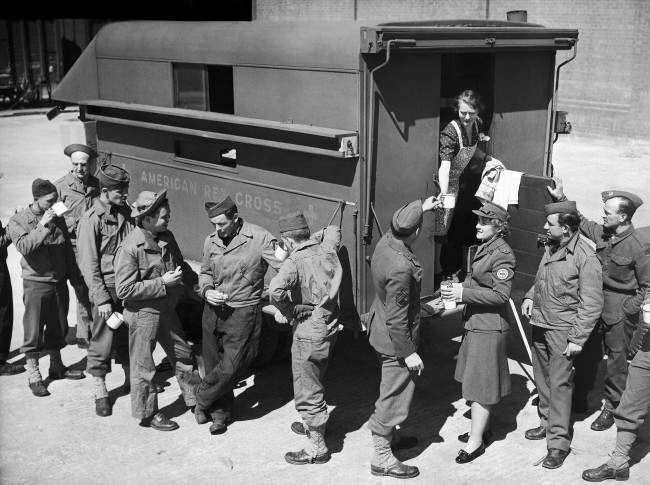
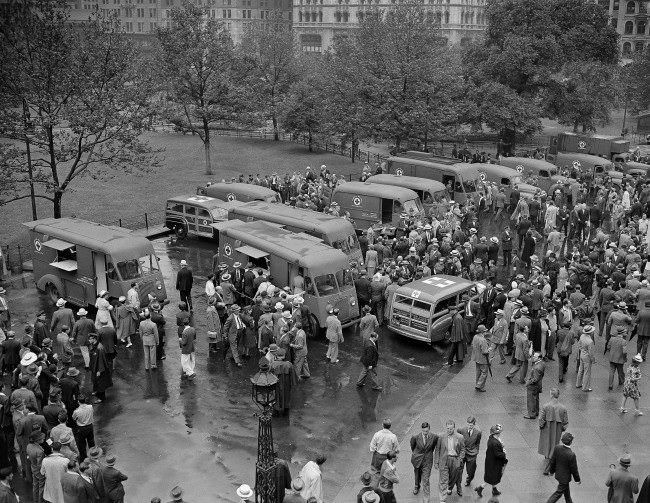
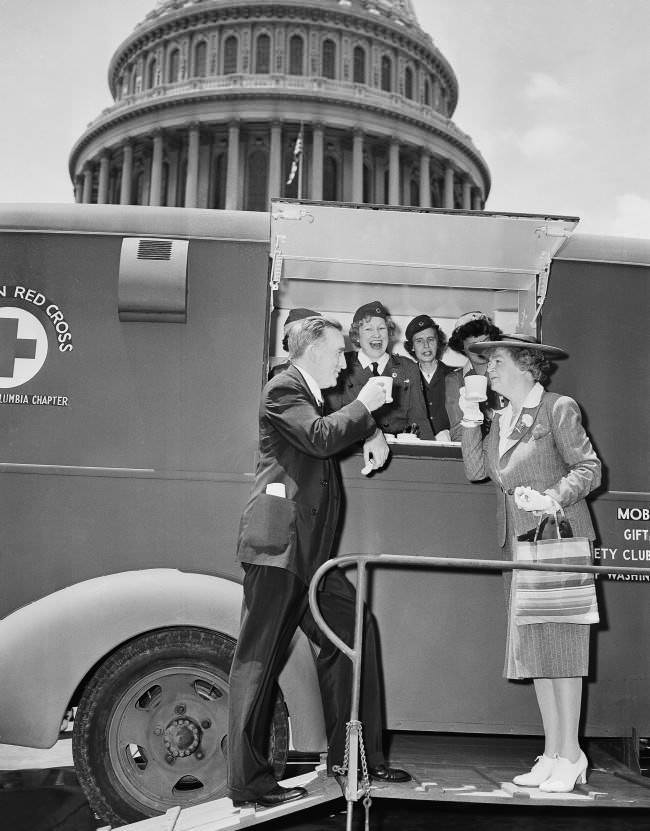
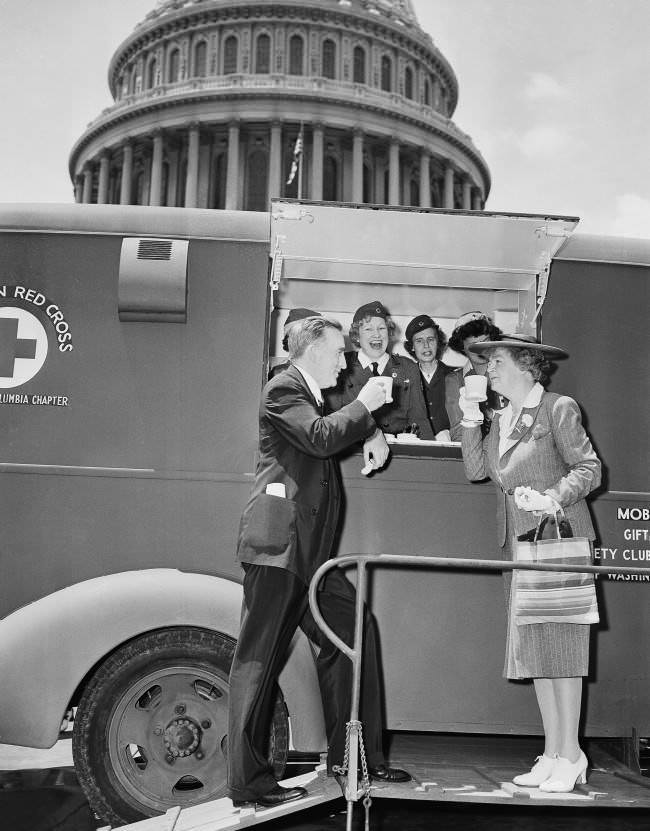
When American troops began arriving in Northern Ireland in May 1942 in the largest AEF deployment of the war so far, an American Red Cross mobile canteen was waiting on the quay. Red Cross worker Miss Louisa Farrand of New York City handed hot coffee to soldiers as they disembarked. The Red Cross also acquired mobile canteen units for Washington, D.C., ready to deploy if the capital came under air attack.
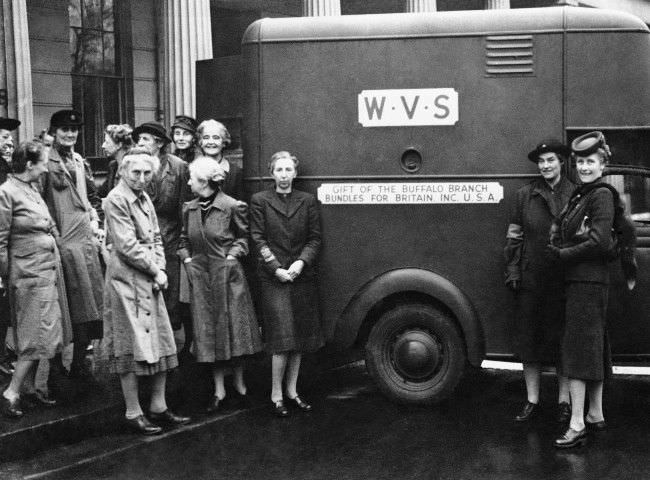
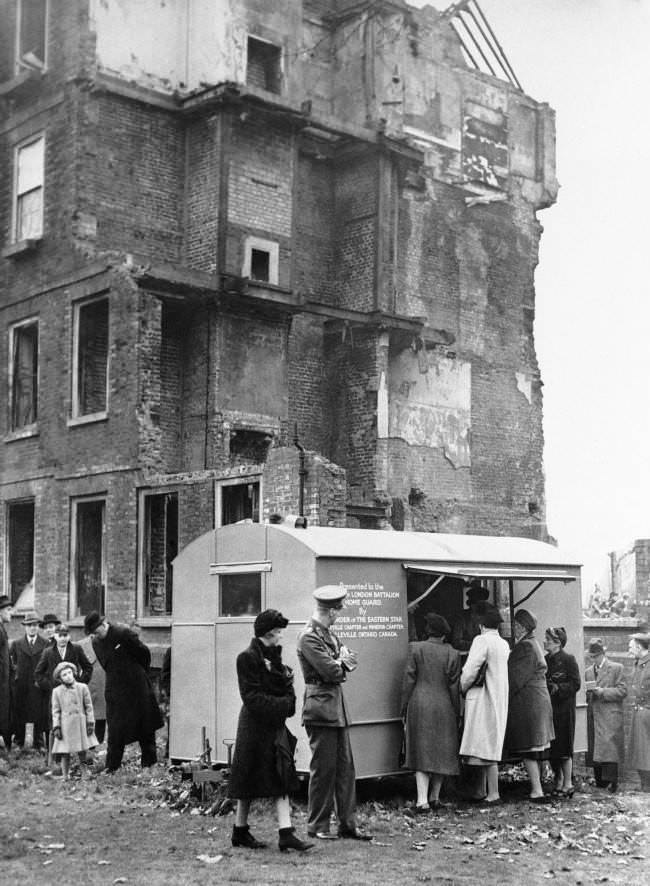
Funding for canteens came from across the Allied world. In January 1943, the Buffalo, New York branch of Aid to Britain donated a mobile canteen to London. Lady Iris Capell, Vice Chairman of the WVS, accepted it on behalf of the organization. Canadian donors also gifted a canteen to the London Home Guard, presented at a ceremony chaired by Canada’s High Commissioner, Vincent Massey.
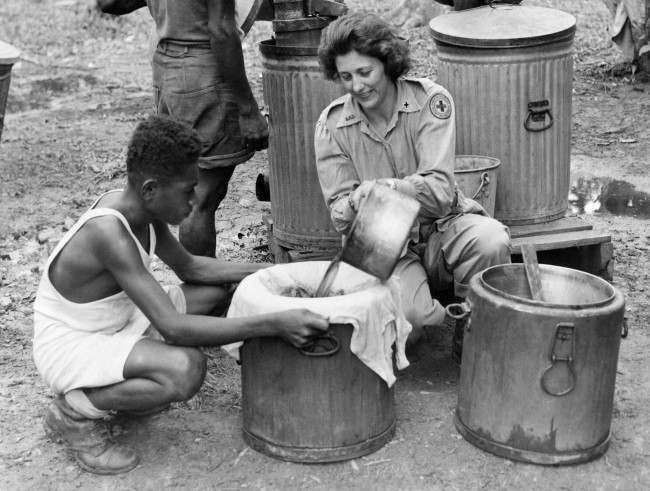
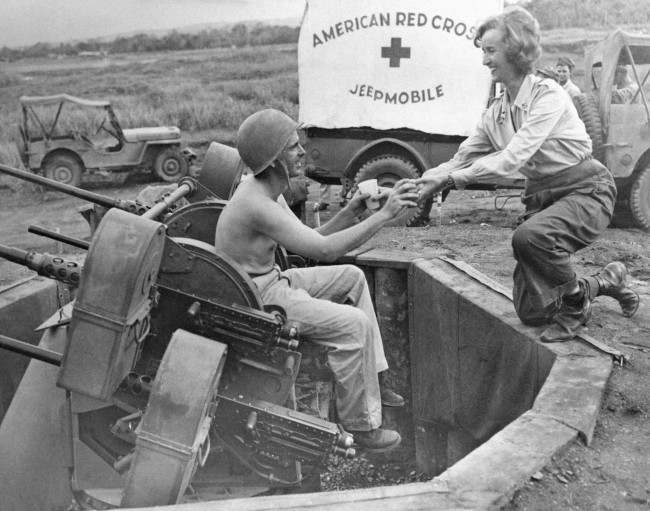
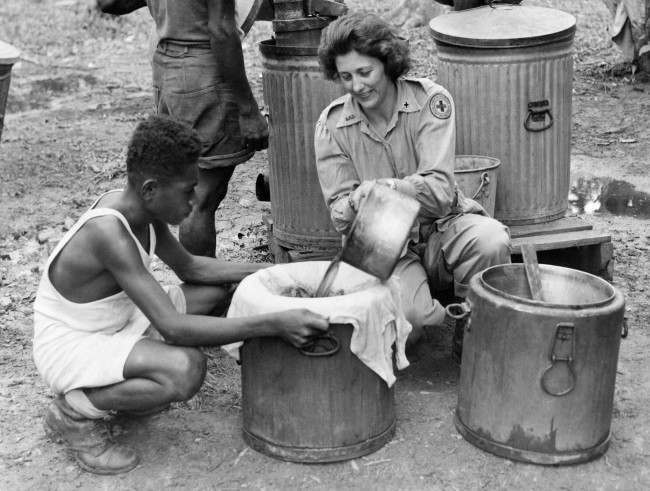
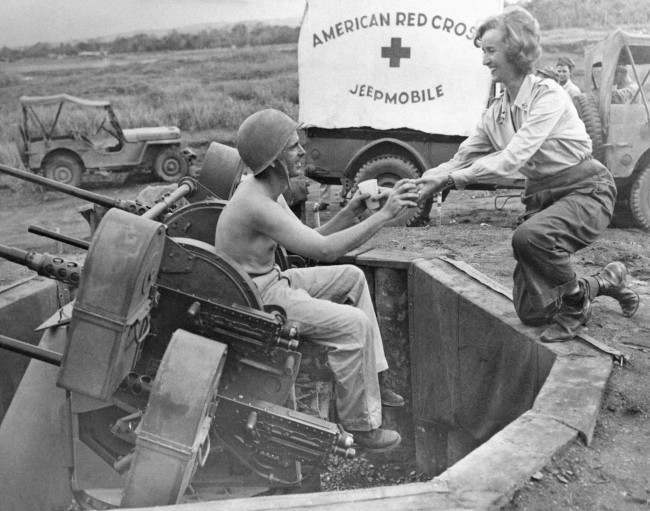
By late 1944, mobile canteens were operating in the Pacific as well. American Red Cross worker Marie Salcheider filled large vats with freshly brewed coffee at a base in Dutch New Guinea, preparing them for transport to isolated positions. At a nearby air base perimeter, Red Cross worker Roxane Pollack delivered coffee and doughnuts directly to Private First Class Marvin Clover as he stood guard at his gun position.
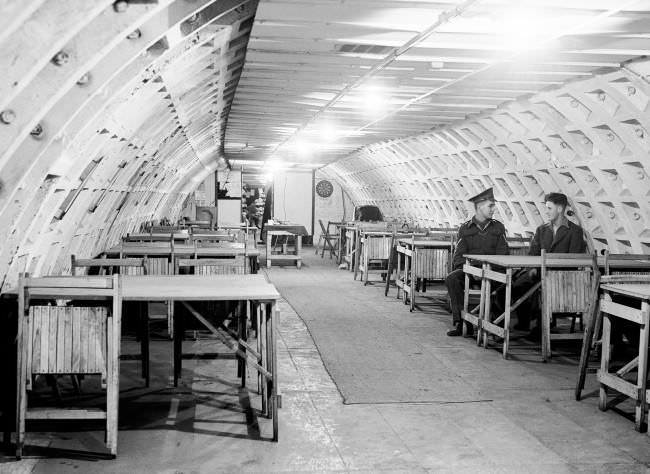
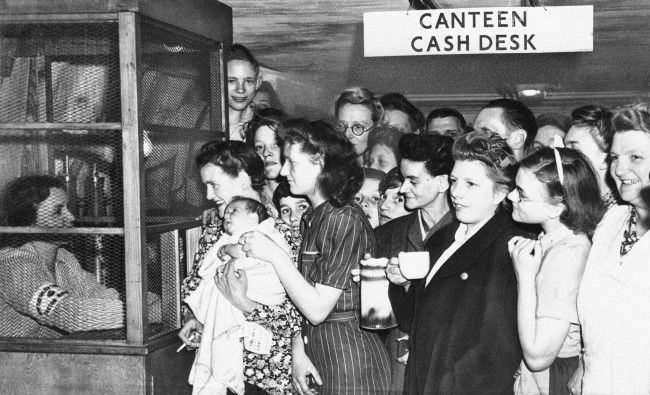
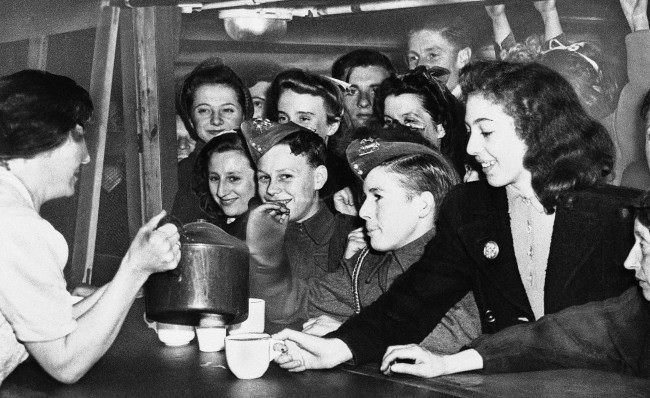
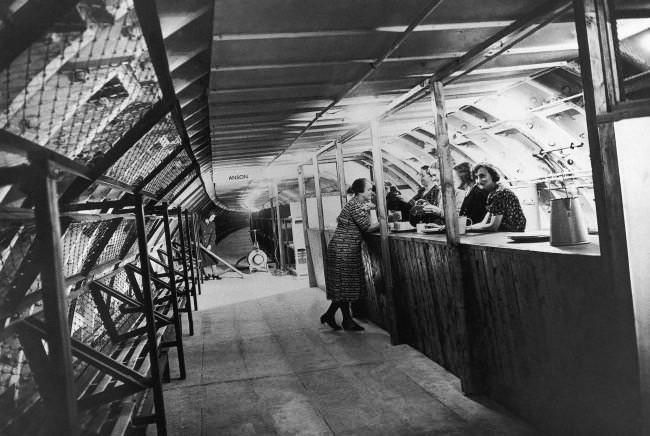
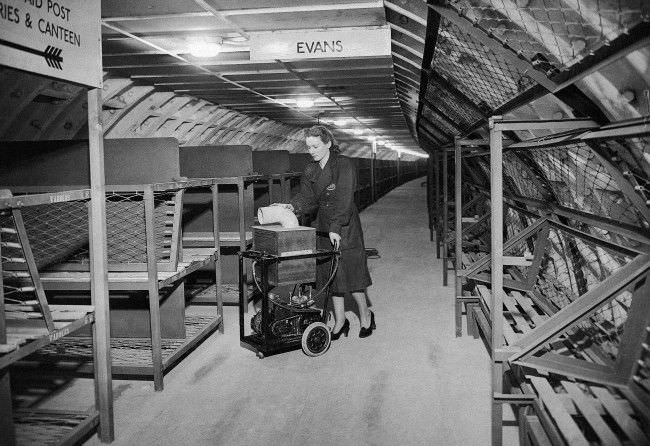
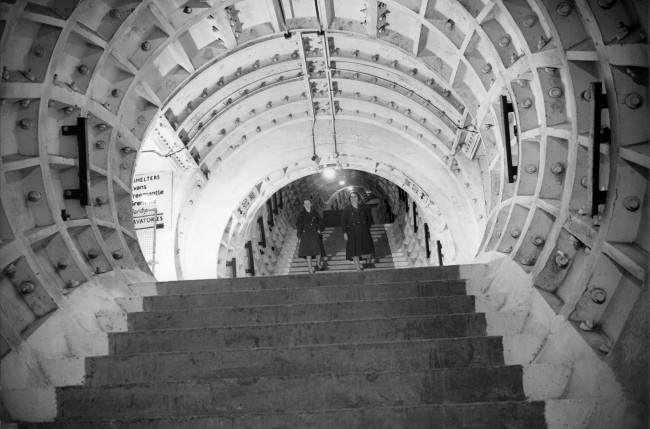
Underground shelters in London became cities in miniature. Deep beneath the tube stations, thousands of civilians sheltered from bombing raids in tunnels equipped with bunks, sick bays, and canteens. By July 1944, with V-1 flying bombs hitting London, crowds packed the canteen desks to buy food and refreshments. The shelters were designed to hold up to 8,500 people each, and eight were built across the city.
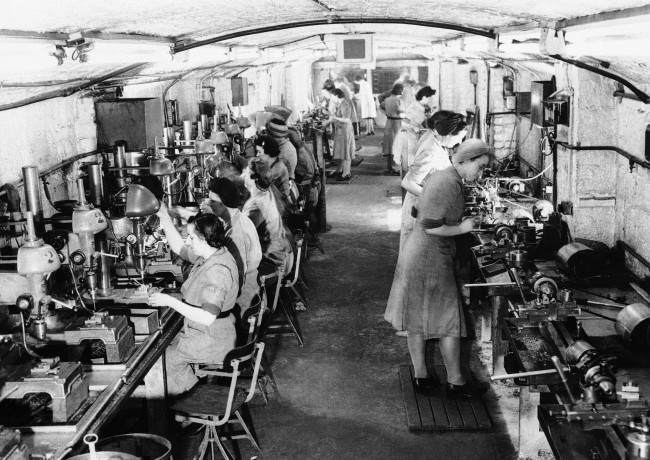
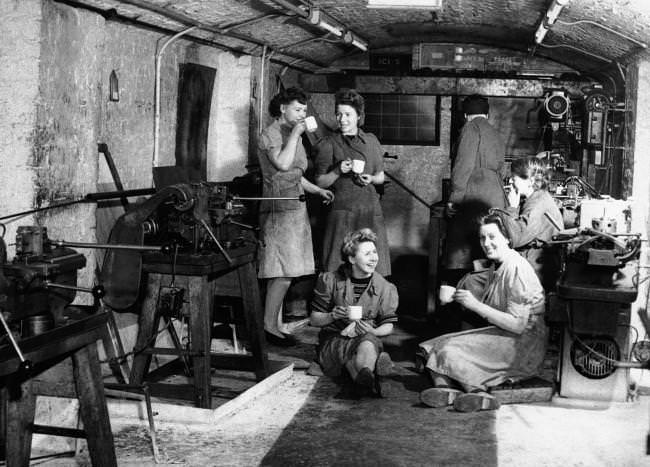
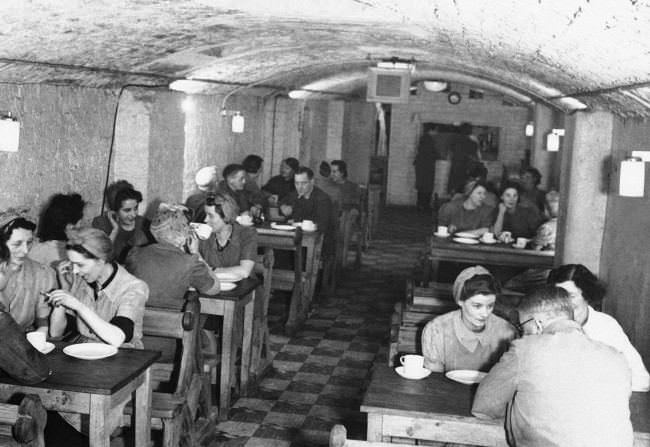
War production also relied on canteen infrastructure. In a hidden network of 20 underground tunnels on England’s west coast, hundreds of women manufactured war materials around the clock. Their factory — converted from tunnels discovered during construction work — included a full canteen, a rest room, and even a night club with a bar. Workers broke for tea during a five-minute morning pause and ate lunch on pews salvaged from a nearby bombed-out church.
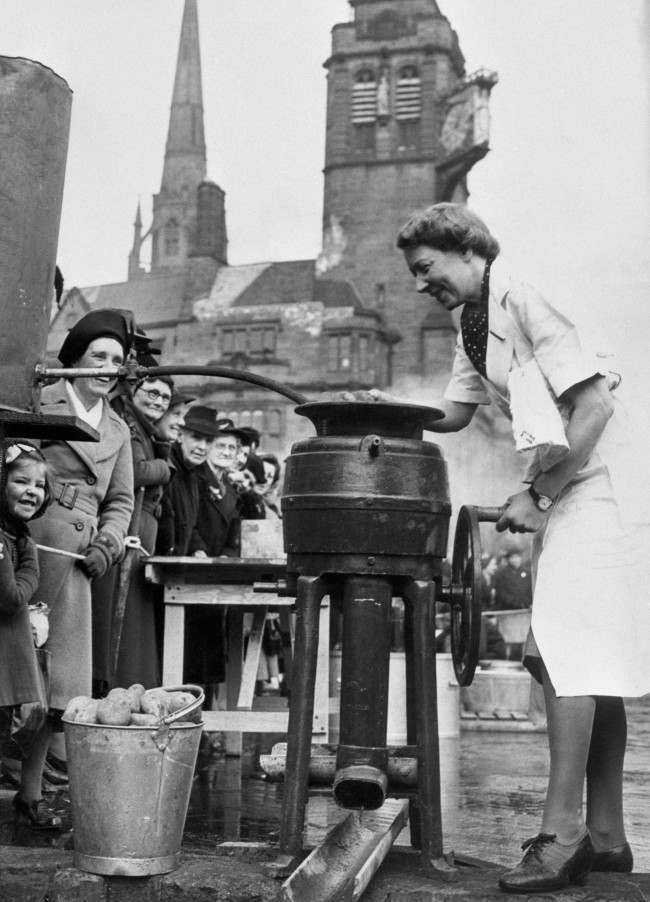
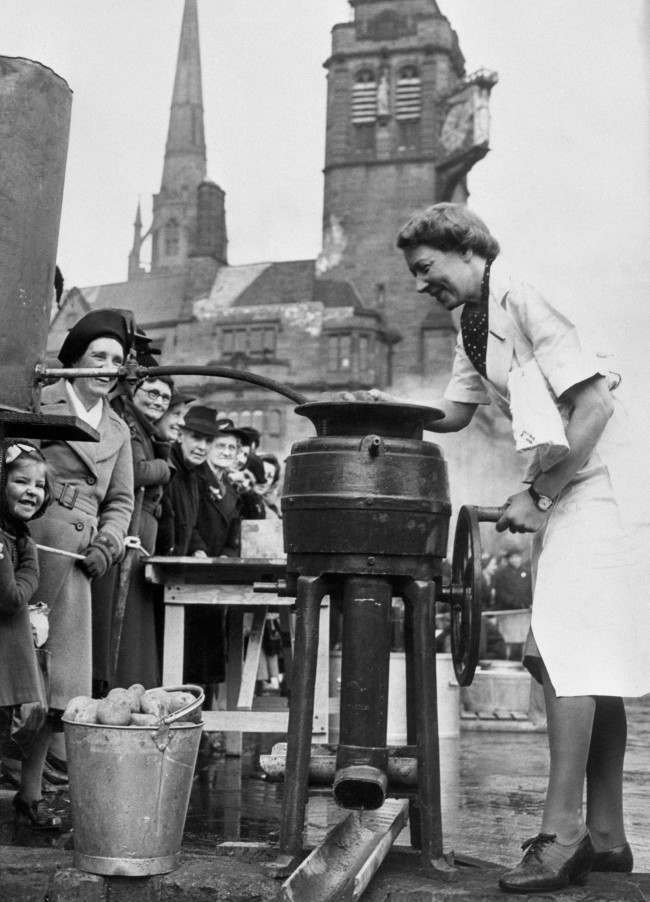
Britain’s Ministry of Food had prepared ambitious emergency feeding plans. Lord Woolton announced arrangements to provide over 20 million hot meals a day — or 5 million full-course meals — to 20 percent of the British and Northern Irish population in a crisis. Semi-mobile canteens like the one operated on the streets of Coventry were part of that readiness plan.
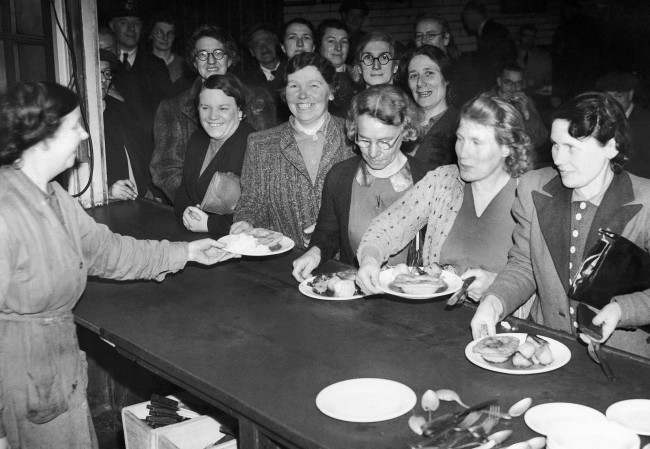
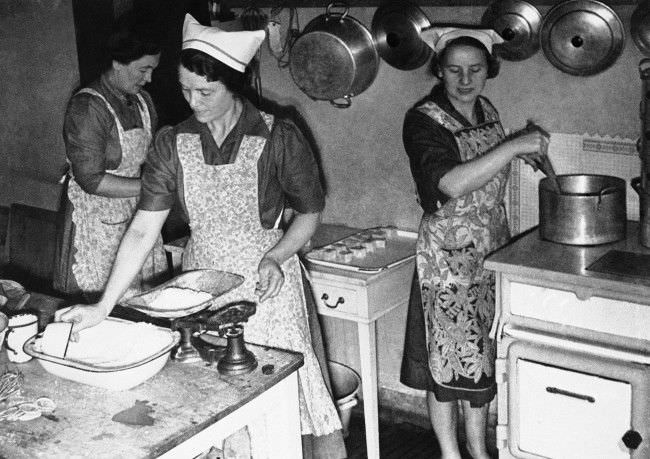
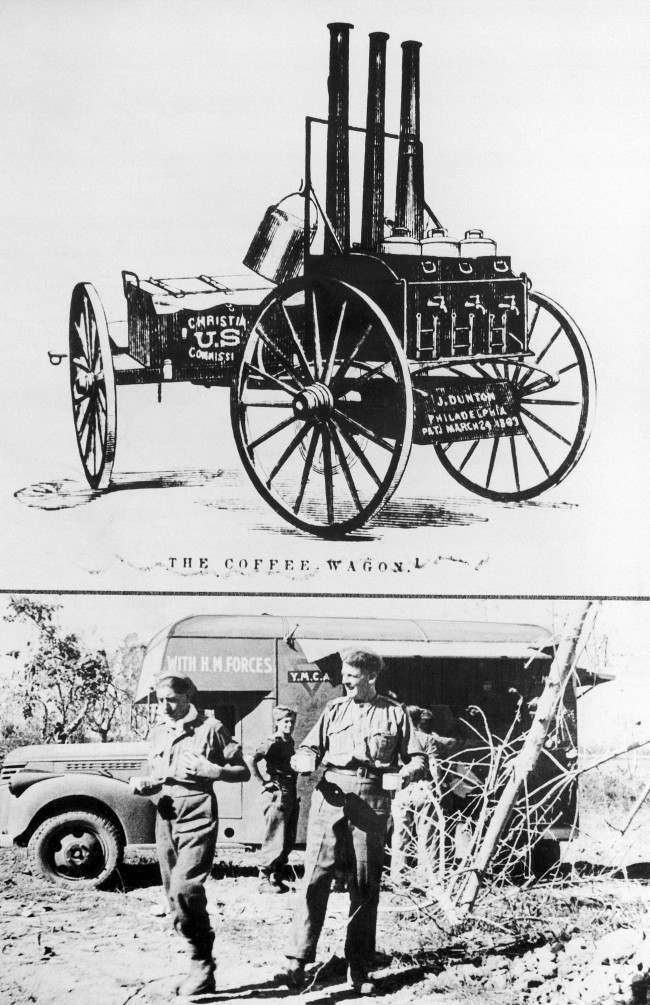
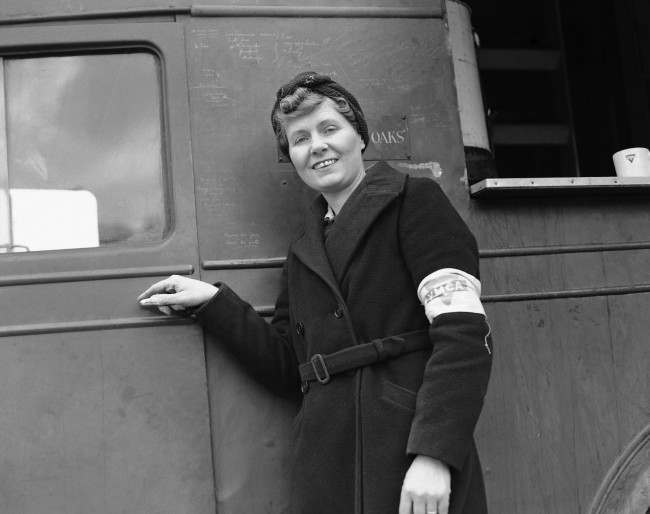
Volunteers came from every walk of life. Violet Attlee, wife of Deputy Prime Minister Clement Attlee, drove her own YMCA canteen van through London in February 1944. The menus were simple — hot stew, soup, sandwiches, coffee, and tea — but training cooks to fill the demand was taken seriously. Britain’s National Training School of Cookery in London ran classes to prepare men and women for canteen kitchen work throughout the war.
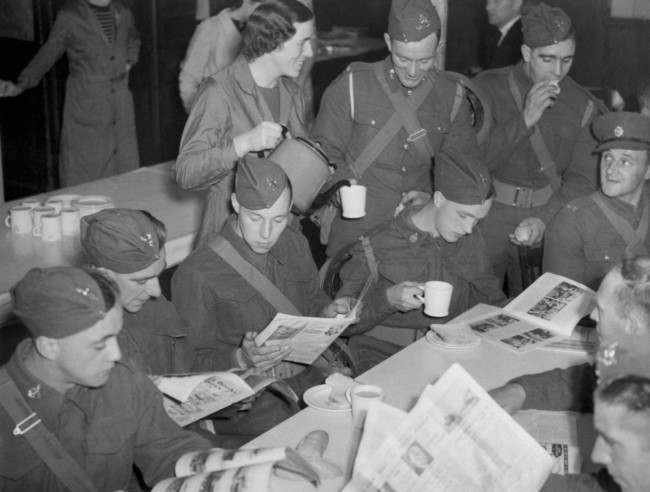
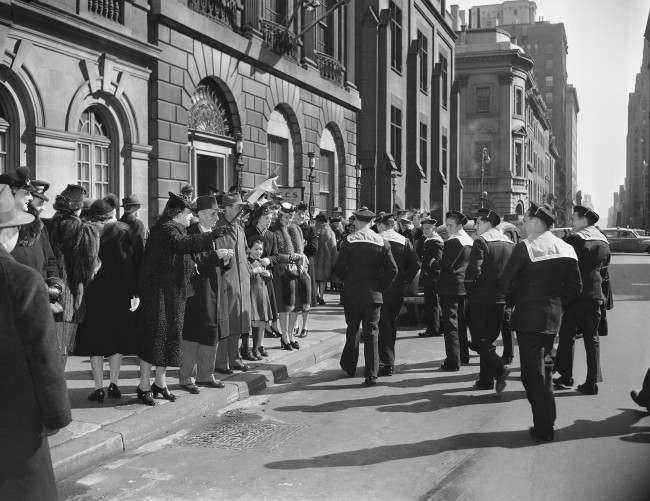
The reach of the canteen network extended to Allied naval personnel as well. In February 1943, 100 sailors from the French battleship Richelieu attended mass at St. Patrick’s Cathedral in New York, then gathered at the Cathedral Canteen on East 51st Street. Railway stations across London converted parcels offices into canteens for troops in transit, with volunteers serving tea to soldiers who might be waiting hours before shipping out.
To meet the growing demand for trained canteen cooks, Britain opened dedicated cooking schools. At the National Training School of Cookery in London, students — mostly women — learned to prepare large-scale meals. Pies, puddings, and other British staples were on the curriculum, with instructors training new cooks to serve hundreds of people efficiently.
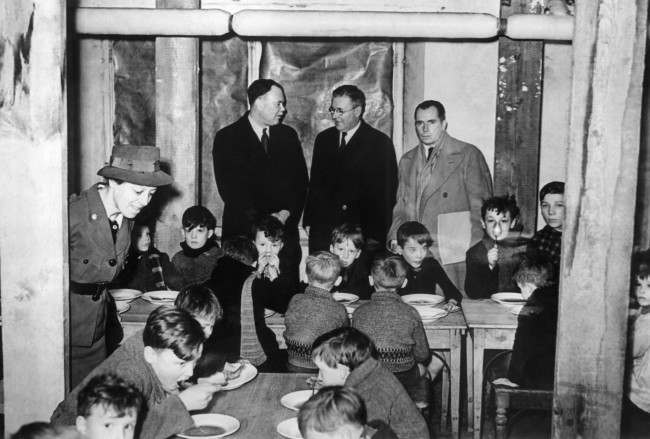
The canteen system also reached occupied and war-affected Europe. In January 1941, an American relief delegation visited a canteen established inside a Brussels school in German-occupied Belgium — a facility that kept civilians fed in a city under occupation. Across the Channel, post office women trainees in Britain broke from their studies in February 1942 for canteen lunches, part of a broader effort to keep the civilian workforce functioning as men left for military service.